The Flag Incident
pp. 66-67 · Read in the full issue
The reaction among Europeans was
Liiiacu.
For 20 years, ever since Samoa passed from German to British control, the nationals of the two great Empires have lived together, in a friendly and reas onable fashion. The British accorded full citizen rights to the Germans, as a matter of course, and saw no reason why the Germans should not keep alive their love for their Fatherland, and preserve their national institutions. The Ger mans, on their side, have honourably observed the obligation to be loyal to the Government under which they live.
All well-informed people know that the territorial dispositions made at Ver sailles in 1919 were “cock-eyed”, and that there could be no peace in Europe until readjustment was seriously under taken; but that was no reason why there
should be international friction in the little European community in Samoa.
The Munich Settlement, on September 30, was received by Samoan Europeans with intense relief. It removed the threat of a wholly undesired war between Britons and Germans, and it meant, at long last, the recognition of a European policy of international appeasement.
One well-known German, Mr. P. Ber king, let his enthusiasm run away with his discretion. He is a man well in formed on international affairs, and no doubt recognised the meaning of the Munich agreement.
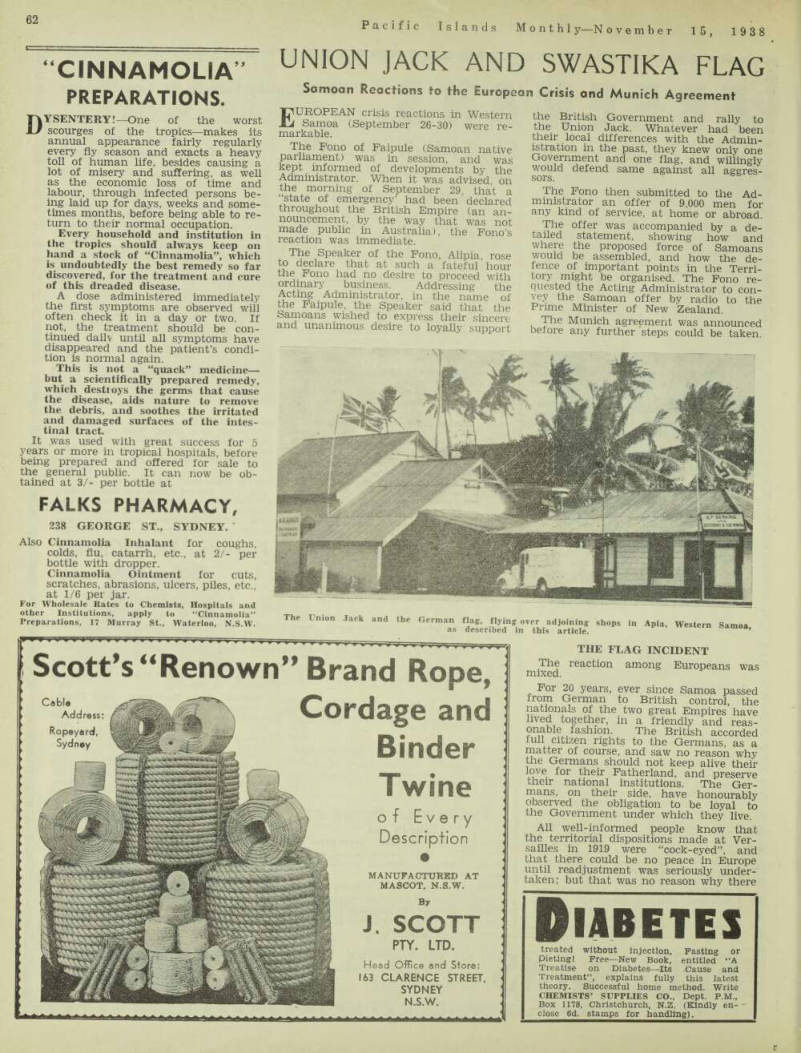
So, above his butchery, on the main street, he hoisted a large swastika (Ger man) flag.
The British residents were surprised at first, and then they became some what grim. They felt that the Nazi emblem had an impudent flaunt to it.
Did the German suggest that Munich represented a win for Hitler aggressive ness, rather than a victory for common sense? Did they think that the British lion had his tail down?
Within a short time, a Union Jack was hoisted over the shop of Mr. Adair, bootmaker and saddler, next door to Mr.
Berking. It was a little bigger, and a little higher than the swastika flag.
Honour was satisfied. Britons and Germans grinned amiably, and went about their daily tasks. Union Jack and
German flag flapped amiably together in the same breeze —as shown by the photograph on the opposite page.
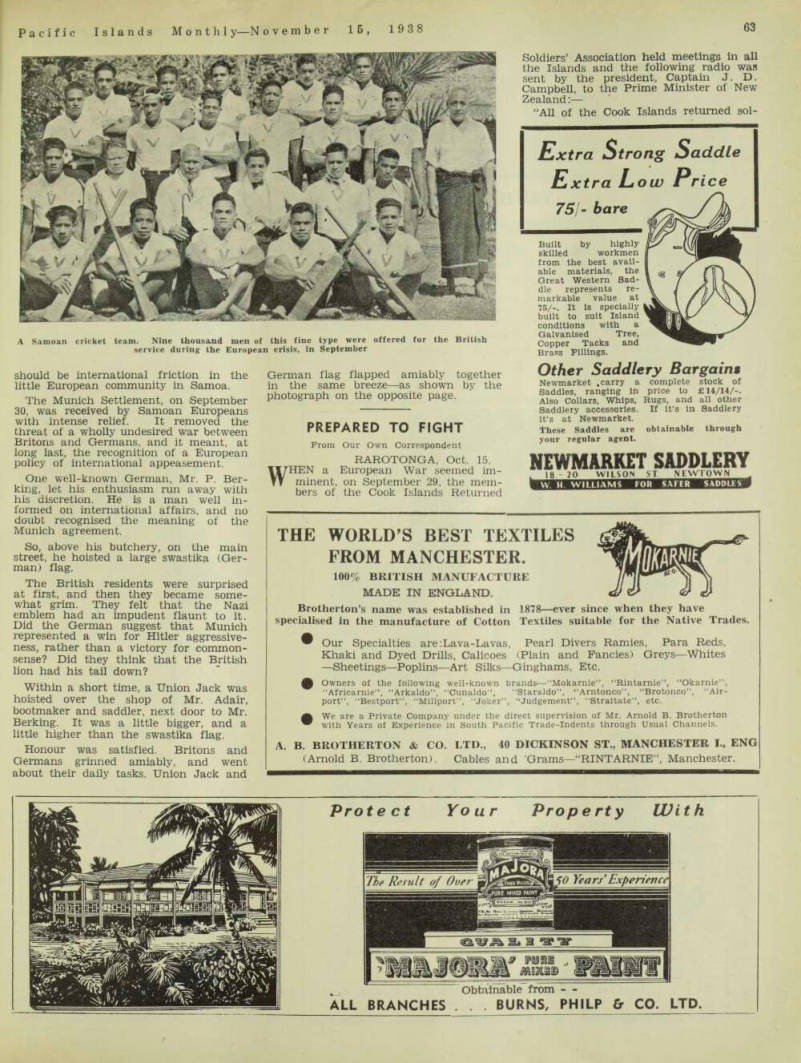
A Samoan cricket team. Nine thousand men of this fine type were offered for the British service during the European crisis, in September