Kaisinik
pp. 17-18 · Read in the full issue
Model Village in Place of Cannibal Den
By K.R.
JN the early days of the Morobe goldfield, New Guinea, the Saiinkora-Lambura- Kaisinik natives incurred the wrath of the miners by killing and eating their native carriers.
The carriers were sent out from the gold field to Salamaua for supplies, and they were waylaid by the Kaisinik villagers who were persistent cannibals.
So prevalent did these killings become that a punitive expedition set out against
the cannibals, as a result of which much native blood was shed. The expedition culminated in the firing of Kaisinik vil lage, and the subjection of the tribesmen. lon Idriess in his Gold Dust and Ashes says: “Kaisinik was burnt. A red history was blotted out when that ill-famed village went up in smoke.” That took place 10 years ago.
Recently I visited Kaisinik with the ob ject of making a mental comparison with the past, and it seemed to me that no
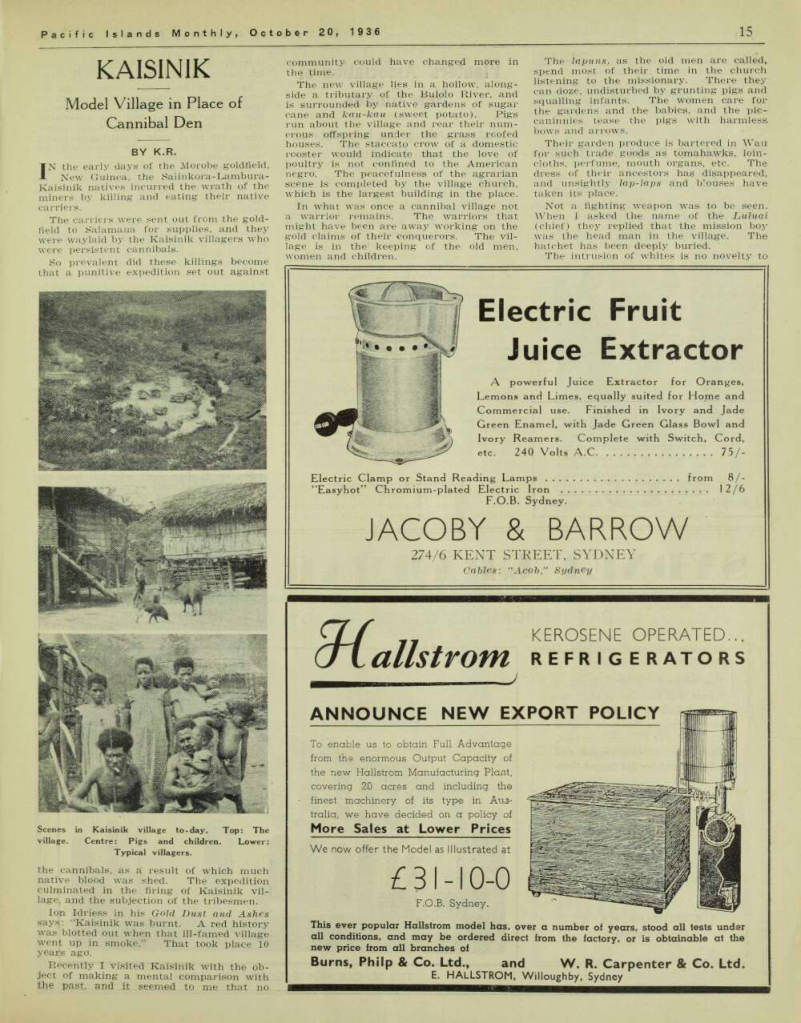
community could have changed more in the time. ■ The new village lies in a hollow, along side a tributary of the Bulolo River, and is surrounded by native gardens of sugar cane and kau-kau (sweet potato). Pigs run about the village and rear their num erous offspring under the grass roofed houses. The staccato crow of a domestic rooster would indicate that the love of poultry is not confined to the American negro. The peacefulness of the agrarian scene is completed by the village church, which is the largest building in the place.
In what was once a cannibal village not a warrior remains. The warriors that might have been are away working on the gold claims of their conquerors. The vil lage is in the keeping of the old men, women and children.
The iapuns, as the old men are called, spend most of their time in the church listening to the missionary. There they can doze, undisturbed by grunting pigs and squalling infants. The women care for the gardens and the babies, and the pic caninnies tease the pigs with harmless bows and arrows.
Their gai’den produce is bartered in Wau for such trade goods as tomahawks, loin cloths, perfume, mouth organs, etc. The dress of their ancestors has disappeared, and unsightly lap-laps and b’ouses have taken its place.
Not a fighting weapon was to be seen.
When I asked the name of the Luluai (chief) they replied that the mission boy was the head man in the village. The hatchet has been deeply buried.
The intrusion of whites is no novelty to
Scenes in Kaisinik village to-day. Top: The village. Centre: Pigs and children. Lower: Typical villagers.
those people. Regarded with indifference, I wondered what the feelings of these people were towards the whites generally, for many of them must still remember the night when their homes went up in flames, and the traditional life of their village was destroyed for ever.