Koitaki Para Rubber
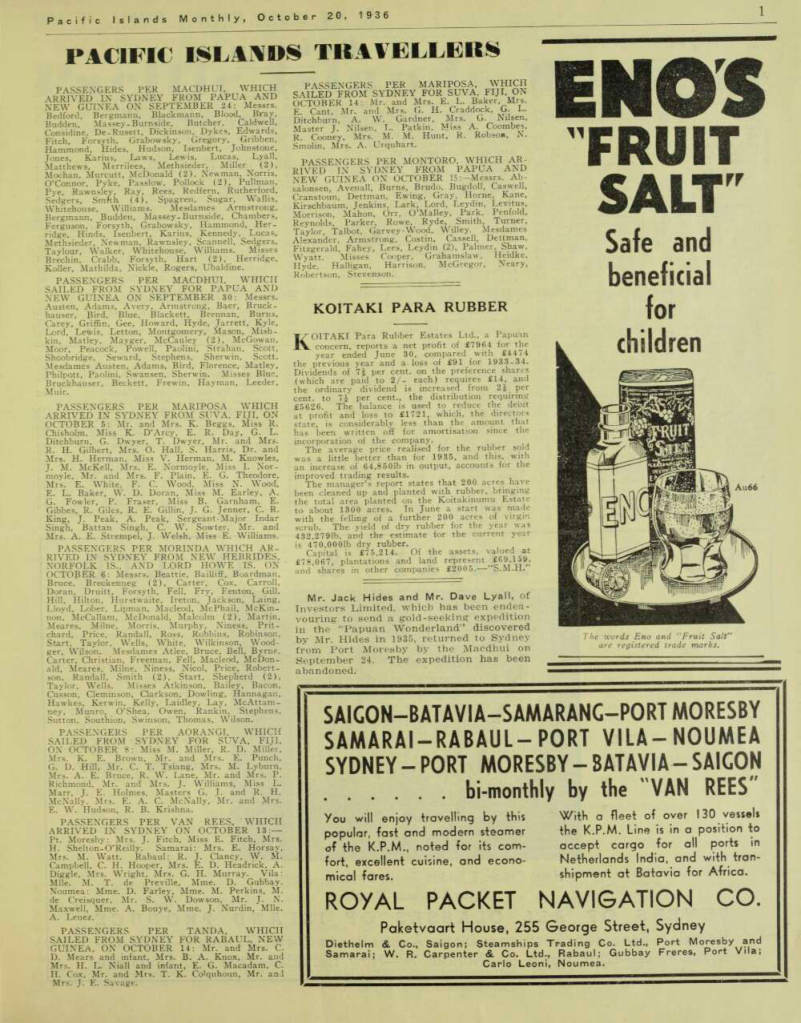
Estates Ltd., a Papuan concern, reports a net profit of £7964 for the year ended June 30. compared with £4474 the previous year and a loss of £9l for 1933-34.
Dividends of 7i per cent, on the preference shares (which are paid to 2/- each) requires £l4, and the ordinary dividend is increased from 2J per cent, to 7h per cent., the distribution requiring £5626. The balance is used to reduce the debit at profit and loss to £1721, which, the directors state, is considerably less than the amount that has been written off for amortisation since the incorporation of the company.
The average price realised for the rubber sold was a little better than for 1935, and this, with an increase of 64,8501 b in output, accounts for the improved trading results.
The manager’s report states that 200 acres have been cleaned up and planted with rubber, bringing the total area planted on the Koitakinumu Estate to about 1300 acres. In June a start was made with the felling of a further 200 acres of virgin scrub. The yield of dry rubber for the year was 432,2791 b, and the estimate for the current year
is 470,0001 b dry rubber.
Capital is £75,214. Of the assets, valued at £78,067, plantations and land represent £69,1 09. and shares in other companies £2005. —“S.M.H. ’
Mr. Jack Hides and Mr. Dave Lyall, of Investors Limited, which has been endea vouring to send a gold-seeking expedition in the “Papuan Wonderland” discovered by Mr. Hides in 1935, returned to Sydney from Port Moresby by the Macdhui on September 24. The expedition has been abandoned.