Fiji’S New Broadcasting
p. 68 · Read in the full issue
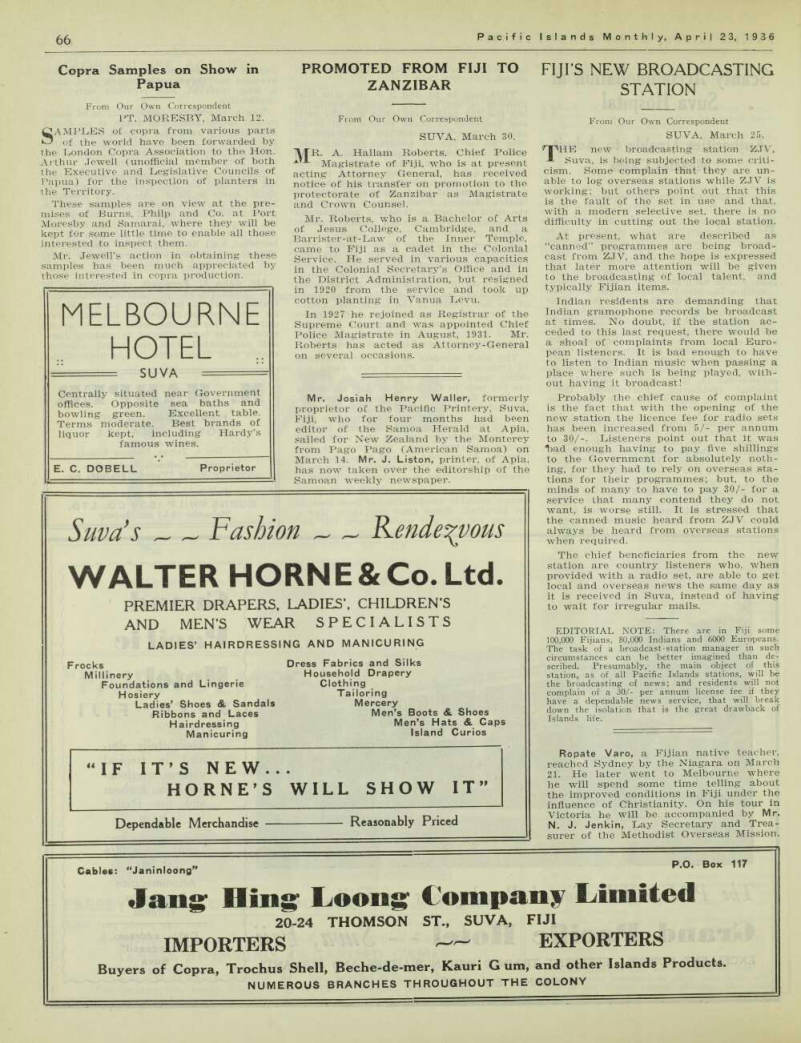
Station
From Our Own Correspondent SUVA, March 25.
THE new broadcasting station ZJV, Suva, is being subjected to some criti cism. Some complain that they are un able to log overseas stations while ZJV is working; but others point out that this is the fault of the set in use and that, with a modern selective set, there is no difficulty in cutting out the local station.
At present, what are described as “canned” programmes are being broad cast from ZJV, and the hope is expressed that later more attention will be given to the broadcasting of local talent, and typically Fijian items.
Indian residents are demanding that Indian gramophone records be broadcast at times. No doubt, if the station ac ceded to this last request, there would be a shoal of complaints from local Euro pean listeners. It is bad enough to have to listen to Indian music when passing a place where such is being played, with out having it broadcast!
Probably the chief cause of complaint is the fact that with the opening of the new station the licence fee for radio sets has been increased from 5/- per annum to 30/-. Listeners point out that it was load enough having to pay five shillings to the Government for absolutely noth ing, for they had to rely on overseas sta tions for their programmes; but, to the minds of many to have to pay 30/- for a service that many contend they do not want, is worse still. It is stressed that the canned music heard from ZJV could always be heard from overseas stations when required.
The chief beneficiaries from the new station are country listeners who, when provided with a radio set, are able to get local and overseas news the same day as it is received in Suva, instead of having to wait for irregular mails.
EDITORIAL NOTE; There are in Fiji some 100,000 Fijians, 80,000 Indians and 6000 Europeans.
The task of a broadcast-station manager in such circumstances can be better imagined than de scribed. Presumably, the main object of this station, as of all Pacific Islands stations, will be the broadcasting of news; and residents will not complain of a 30/- per annum license fee if they have a dependable news service, that will break down the isolation that is the great drawback of Islands life.
Ropate Varo, a Fijian native teacher, reached Sydney by the Niagara on March 21. He later went to Melbourne where he will spend some time telling about the improved conditions in Fiji under the influence of Christianity. On his tour in Victoria he will be accompanied by Mr.
N. J. Jenkin, Lay Secretary and Trea surer of the Methodist Overseas Mission.