New Guinea’S Trade
p. 69 · Read in the full issue
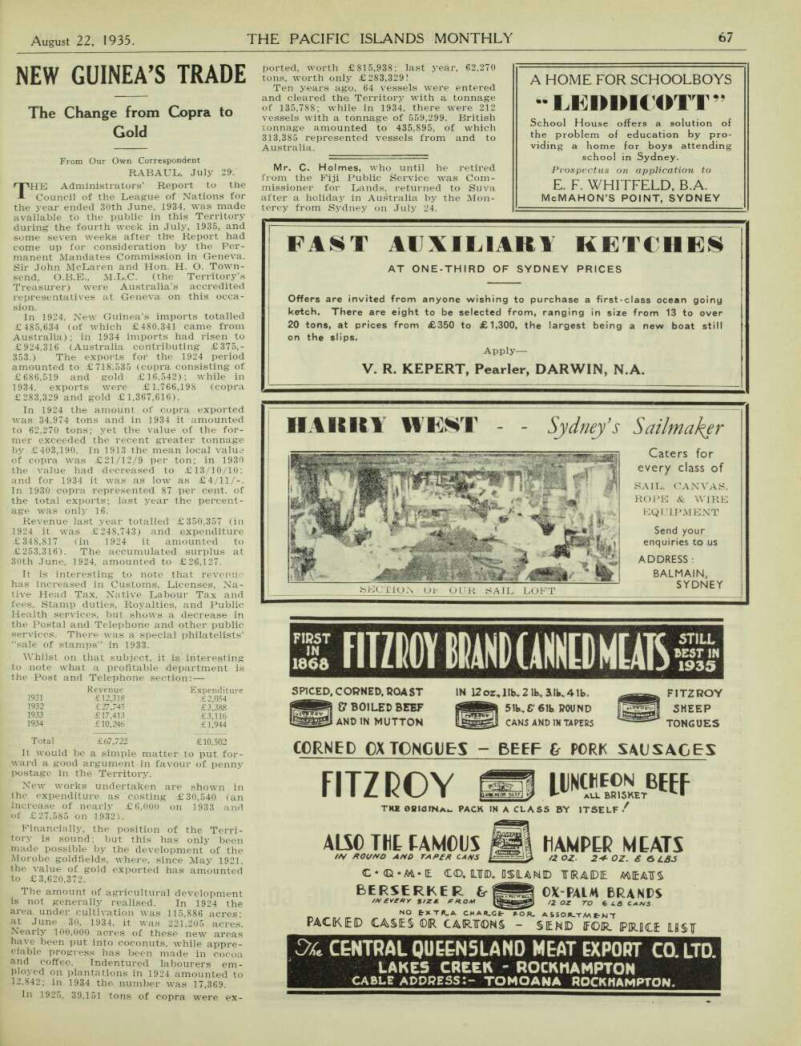
The Change from Copra to Gold
From Our Own Correspondent
Rabaul, July 29.
THE Administrators’ Report to the Council of the League of Nations for the year ended 30th June, 1934, was made available to the public in this Territory during the fourth week in July, 1935, and some seven weeks after the Report had come up for consideration by the Per manent Mandates Commission in Geneva.
Sir John McLaren and Hon. H. O. Town send, 0.8. E., M.L.C. (the Territory’s Treasurer) were Australia’s accredited representatives at Geneva on this occa sion.
In 1924, New Guinea’s imports totalled £485,634 (of which £480,341 came from Australia); in 1934 imports had risen to £924,316 (Australia contributing £375,- 353.) The exports for the 1924 period amounted to £718,535 (copra consisting of £686,519 and gold £16,542); while in 1934. exports were £1,766,198 (copra £283,329 and gold £1,367,616).
In 1924 the amount of copra exported was 34,974 tons and in 1934 it amounted to 62,270 tons; yet the value of the for mer exceeded the recent greater tonnage by £403,190. In 1913 the mean local value of copra was £2l/12/9 per ton; in 1930 the value had decreased to £l3/10/10: and for 1934 it was as low as £4/11/-.
In 1930 copra represented 87 per cent, of the total exports; last year the percent age was only 16.
Revenue last year totalled £350,357 (in 1924 it was £248,743) and expenditure £348,817 (in 1924 it amounted to £253,316). The accumulated surplus at 30th June, 1924, amounted to £26,127.
It is interesting to note that revenue has increased in Customs, Licenses, Na tive Head Tax. Native Labour Tax and fees, Stamp duties, Royalties, and Public Health services, but shows a decrease in the Postal and Telephone and other public services. There was a special philatelists’
“sale of stamps” in 1933.
Whilst on that subject, it is interesting to note what a profitable department is the Post and Telephone section:
It would be a simple matter to put for ward a good argument in favour of penny postage in the Territory.
New works undertaken are shown in the expenditure as costing £30,540 (an increase of nearly £6,000 on 1933 and of £27,585 on 1932).
Financially, the position of the Terri tory is sound; but this has only been made possible by the development of the Morobe goldfields, where, since May 1921, the value of gold exported has amounted to £3,620,372.
The amount of agricultural development is not generally realised. In 1924 the area under cultivation was 115,886 acres: at June 30, 1934. it was 221,205 acres.
Nearly 100,000 acres of these new areas have been put into coconuts, while appre ciable progress has been made in cocoa and coffee. Indentured labourers em ployed on plantations in 1924 amounted to 12,842; in 1934 the number was 17,369.
In 1925, 39,151 tons of copra were ex
ported, worth £815,938; last year, 62,270 tons, worth only £283,329!
Ten years ago, 64 vessels were entered and cleared the Territory with a tonnage of 135,788; while in 1934, there were 212 vessels with a tonnage of 559,299. British tonnage amounted to 435,895, of which 313,385 represented vessels from and to Australia.
Mr. C. Holmes, who until he retired from the Fiji Public Service was Com missioner for Lands, returned to Suva after a holiday in Australia by the Mon terey from Sydney on July 24.
Revenue Expenditure 1931 £12,318 £2,054 1932 £ 27,745 £3.388 1933 £17,413 £3,116 1934 £10,246 £1,944 Total £67,722 £10,502