Wooing Tourists
p. 13 · Read in the full issue
Hotels for Norfolk and Lord Howe Islands
NOW that primary producers in the Pacific Islands are suffering severely from the prevailing low prices offered for their products, an attempt is being made to develop the tourist traffic.
So far as the islands of Norfolk and Lord Howe are concerned the position is being investigated by the Australian au thorities. The New South Wales Gov ernment has proposed to erect a large boarding house on Lord Howe Island, ap parently directed and run by public ser vants and an attempt is to be made to attract many more tourists to the island.
The Lord Howe Islanders, however, are up in arms against the proposal. They do
not wish to have their beautiful island spoiled by hordes of tourists; and they certainly object to having an organization of government employees forced upon them. The boarding-house, according to the plan, is to be built with the Islanders’ own accumulated savings from the palm seed industry, and the islanders are con vinced that if that should be done their savings will be lost. No one has any con fidence these days in the ability of public servants to conduct any kind of trading business.
In the case of Norfolk Island, it is re ported that “several persons have applied for a hotel license and it is understood that a group is prepared to erect a build ing to meet the increasing tourist traffic.”
For a long time residents of Norfolk Island have been making a living from the pro duction of bananas and beans; but the bottom appears to have fallen out of both markets and a number of plantations have been abandoned.
Motorists on a
Historic Spot
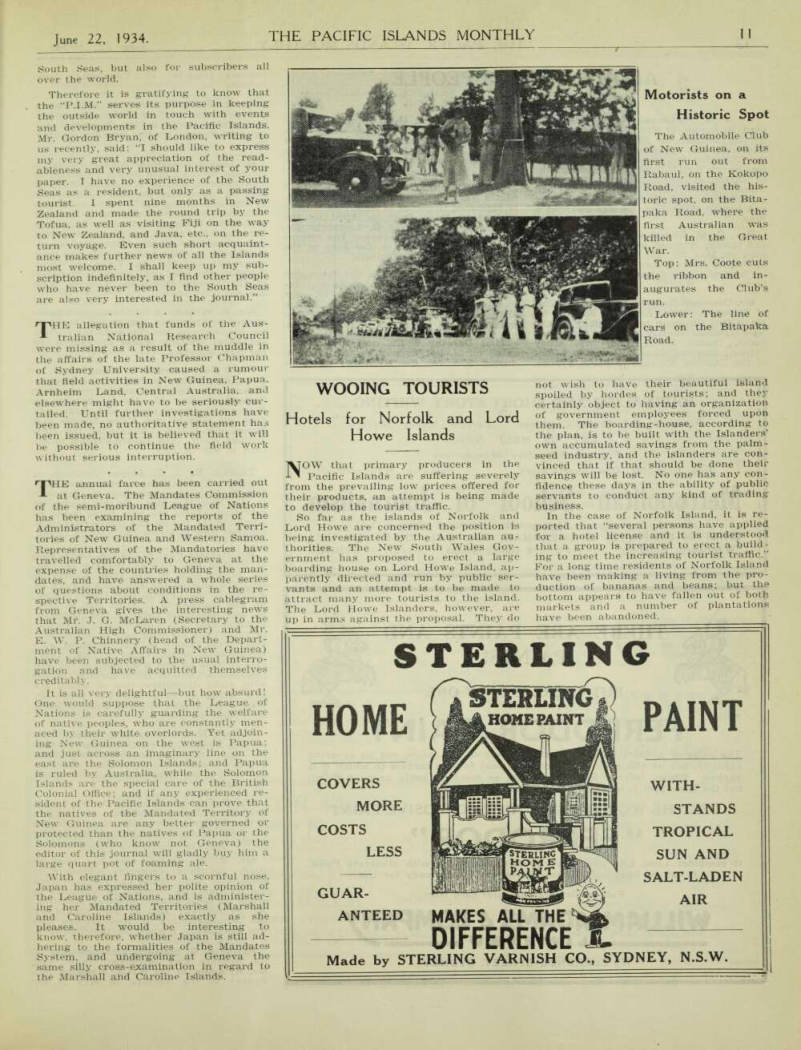
The Automobile Club of New Guinea, on its first run out from Rabaul, on the Kokopo Road, visited the his toric spot, on the Bita paka Road, where the first Australian was killed in the Great War.
Top: Mrs. Coote cuts the ribbon and in augurates the Club’s run.
Lower: The line of cars on the Bitapaka Road.