“Soft City Strangers”
p. 35 · Read in the full issue
Their Sad Experiences in N.I.
From Our Own Correspondent.
Norfolk Is., Dec. 9.
AT daybreak on Sunday, November 26, the Strathnaver, sister ship of the Strathaird (which spent last Boxing Day with us) steaming south from Noumea, dropped anchor off Kingston for the day.
As on previous holiday occasions, the sea was like glass, the reef without a ripple; and by ten o’clock the island was alive with crowded lorries, cars, sulkies, and galloping horses, bearing fair freight of pretty girls in the shortest shorts that ever were seen, or veiled in flimsy frocks that blew over their heads, while pink and blue and yellow silk undergarments were displayed as racing colors.
From end to end of our little island they rode, under gallant escort of gentle manly fellow passengers; up Mount Pitt and down by bush tracks to the romantic depth of banana valleys or rocky cliff edge—having a simply grand time. But when they came to dismount from their blown steeds, and step down into the waiting launches, for transport on board, sad sights were seen, sad cries were heard.
Burnt and blistered by our summer sun, saddle-sore and skinned from thigh to ankle, the soft city strangers lamented their rashness and contemplated with dis tress their two last days aboard, to be spent with soothing oils and lotions and meals taken from the nautical equivalent of mantelpieces.
Apart from such unforeseen disaster, the day was a glorious success, and, as usual, Norfolk was voted the crowning experience of the entire cruise. From Captain Ohlson down—he is Commodore of the fleet and retiring after this next voyage! Hornet—we are promised every living soul on board as a permanent resi dent some day. The genuine success of the visit is guaranteed by the fact that the Mongolia is already booking passen gers for a visit here on January 21 or thereabouts and the Strathnaver will be seen again sometime in March—on her
return from this next voyage to England.
It is also a fact that Messrs. Burns, Philp, Ltd., who control our regular mail and passenger service, are belatedly en tering the lists with their motor vessel, the Macdhui, and bringing tourists here at the New Year for two whole days.
Nothing succeeds like success.
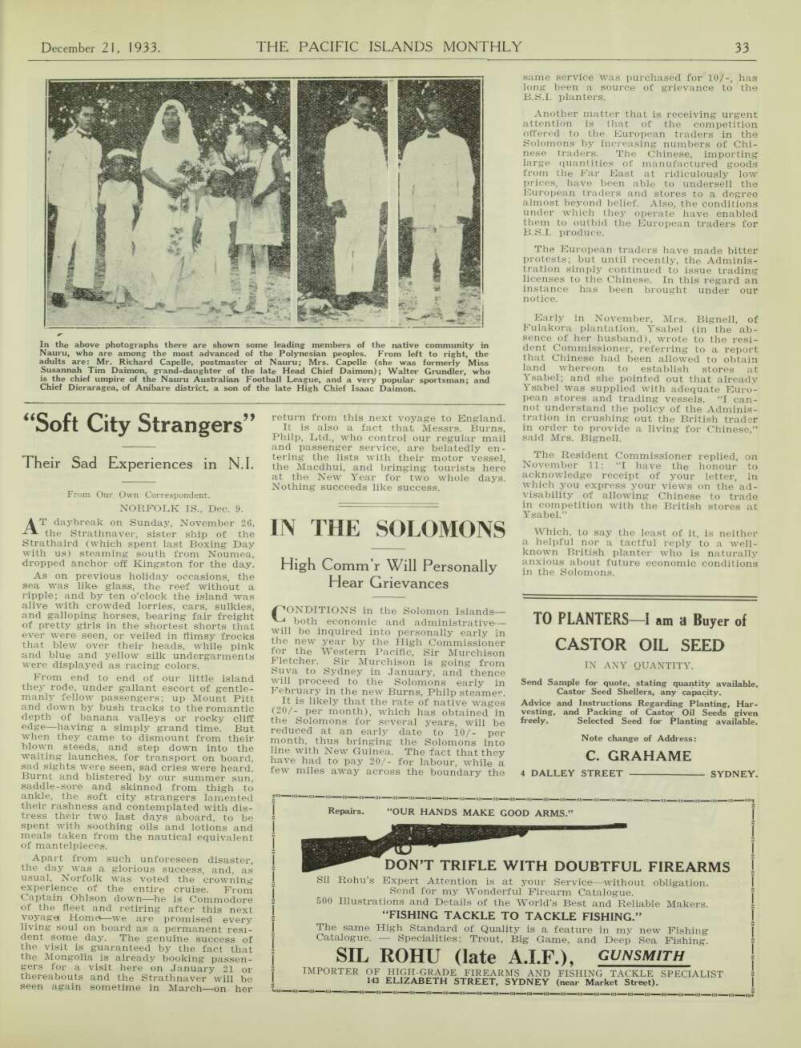
In the above photographs there are shown some leading members of the native community in Nauru, who are among the most advanced of the Polynesian peoples. From left to right, the adults are: Mr. Richard Capelle, postmaster of Nauru; Mrs. Capelle (she was formerly Miss Susannah Tim Daimon, grand-daughter of the late Head Chief Daimon); Walter Grundler, who is the chief umpire of the Nauru Australian Football League, and a very popular sportsman; and Chief Dieraragea, of Anibare district, a son of the late High Chief Isaac Daimon.