Zebu Cattle.
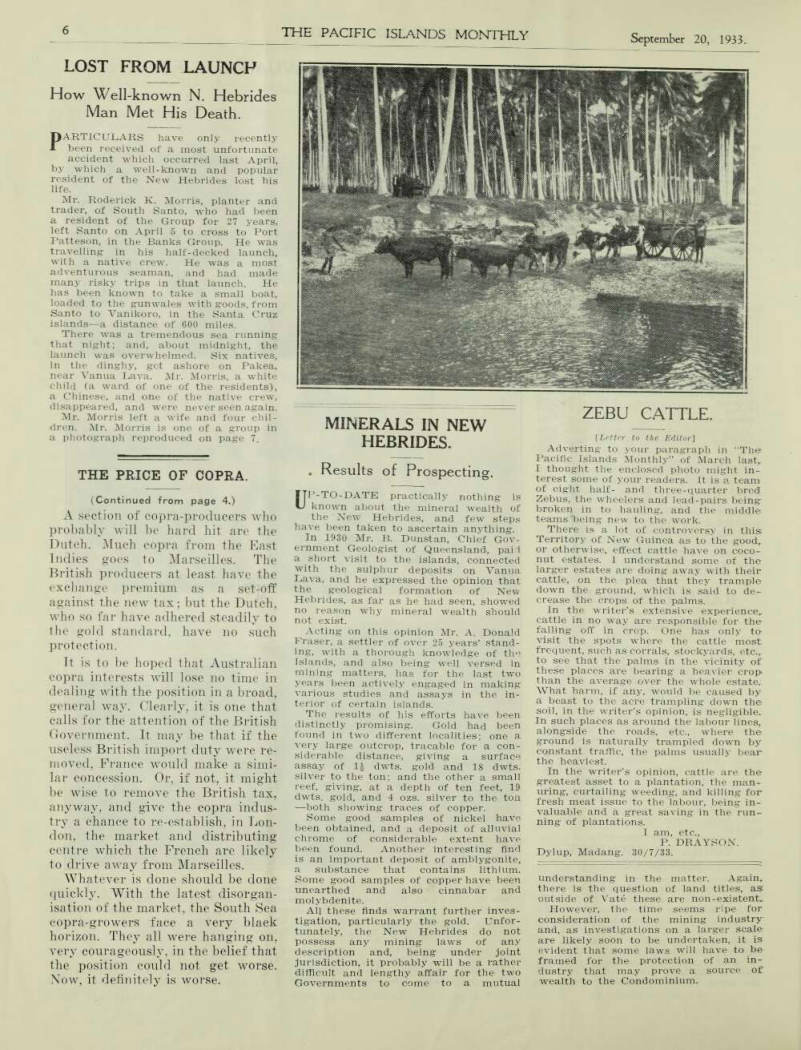
[Letter to the Editor ] Adverting to your paragraph in “The Pacific Islands Monthly” of March last,.
I thought the enclosed photo might in terest some of your readers. It is a team of eight half- and three-quarter bred Zebus, the wheelers and lead-pairs being broken in to hauling, and the middle, teams being new to the work.
There is a lot of controversy in this: Territory of New Guinea as to the good, or otherwise, effect cattle have on coco nut estates. I understand some of the larger estates are doing away with their cattle, on the plea that they trample down the ground, which is said to de crease the crops of the palms.
In the writer’s extensive experience,, cattle in no way are responsible for the falling off in crop. One has only to visit the spots where the cattle most frequent, such as corrals, stockyards, etc., to see that the palms in the vicinity of these places are bearing a heavier crop than the average over the whole estate.
What harm, if any, would be caused by a beast to the acre trampling down the soil, in the writer’s opinion, is negligible.
In such places as around the labour lines, alongside the roads, etc., where the ground is naturally trampled down by constant traffic, the palms usually bear the heaviest.
In the writer’s opinion, cattle are the greatest asset to a plantation, the man uring, curtailing weeding, and killing for fresh meat issue to the labour, being in valuable and a great saving in the run ning of plantations.
I am, etc.,
P. Drayson.
Dylup, Madang. 30/7/33.