N.G. Moratorium.
p. 48 · Read in the full issue
Extended Till June, 1934.
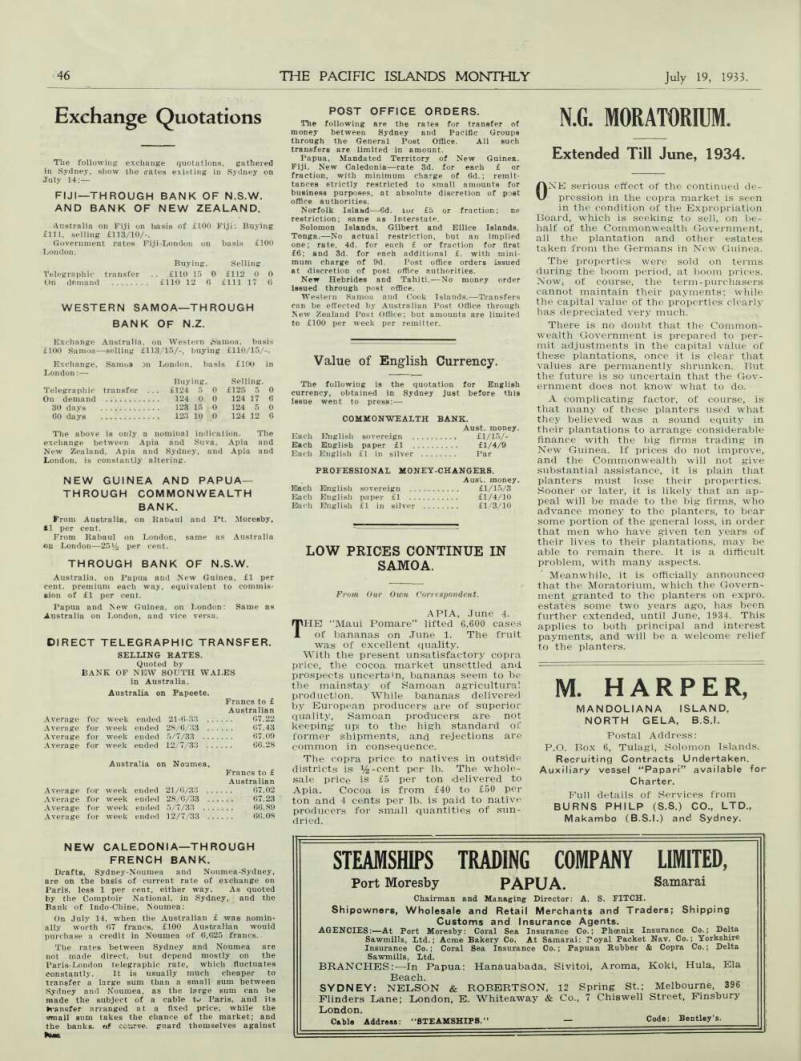
ONE serious effect of the continued de pression in the copra market is seen in the condition of the Expropriation Board, which is seeking to sell, on be half of the Commonwealth Government, all the plantation and other estates taken from the Germans in New Guinea.
The properties were sold on terms during the boom period, at boom prices.
Now, of course, the term-purchasers cannot maintain their payments; while the capital value of the properties clearly has depreciated very much.
There is no doubt that the Common wealth Government is prepared to per mit adjustments in the capital value of these plantations, once it is clear that values are permanently shrunken. But the future is so uncertain that the Gov ernment does not know what to do.
A complicating factor, of course, is that many of these planters used what they believed was a sound equity in their plantations to arrange considerable finance with the big firms trading in New Guinea. If prices do not improve, and the Commonwealth will not give substantial assistance, it is plain that planters must lose their properties.
Sooner or later, it is likely that an ap peal will be made to the big firms, who advance money to the planters, to bear some portion of the general loss, in order that men who have given ten years of their lives to their plantations, may be able to remain there. It is a difficult problem, with many aspects.
Meanwhile, it is officially announced that the Moratorium, which the Govern ment granted to the planters on exproestates some two years ago, has been further extended, until June, 1934. This applies to both principal and interest payments, and will be a welcome relief to the planters.