Standing The Strain.
p. 15 · Read in the full issue
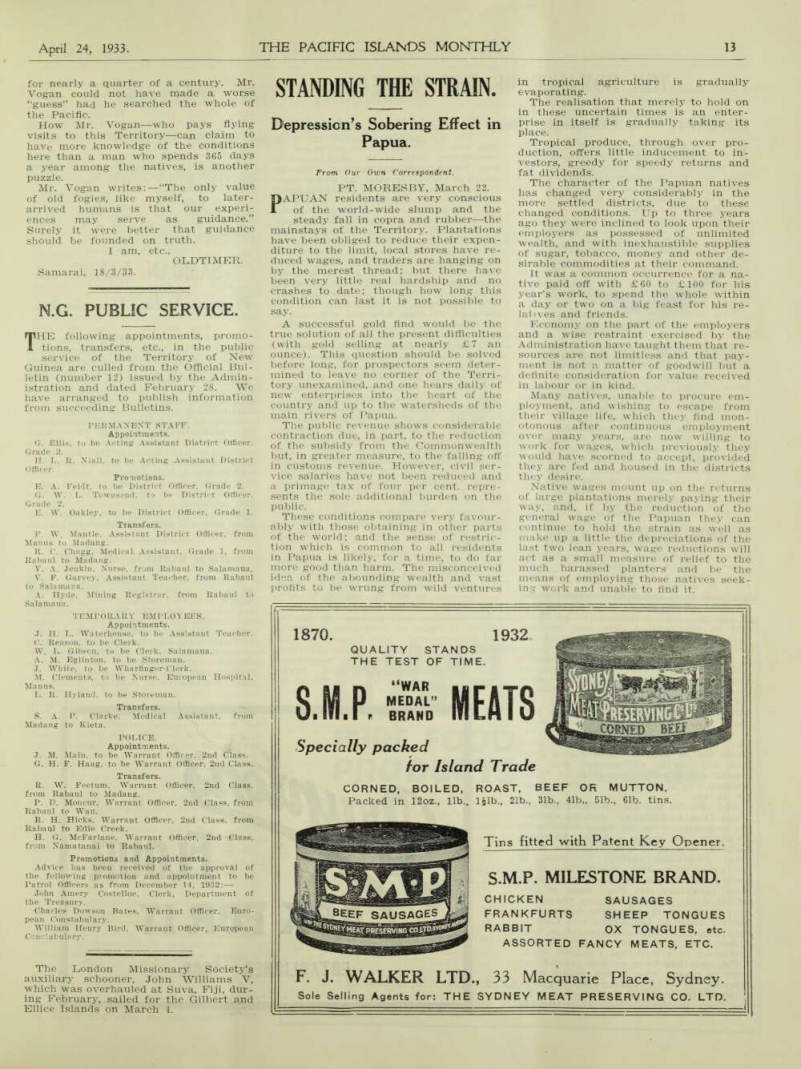
Depression's Sobering Effect in Papua.
From Our Own Correspondent.
Pt. Moresby, March 22.
PAPUAN residents are very conscious of the world-wide slump and the steady fall in copra and rubber —the mainstays of the Territory. Plantations have been obliged to reduce their expen diture to the limit, local stores have re duced wages, and traders are hanging on by the merest thread; but there have been very little real hardship and no crashes to date; though how long this condition can last it is not possible to say.
A successful gold find would be the true solution of all the present difficulties (with gold selling at nearly £7 an ounce). This question should be solved before long, for prospectors seem deter mined to leave no corner of the Terri tory unexamined, and one hears daily of new enterprises into the heart of the country and up to the watersheds of the main rivers of Papua.
The public revenue shows considerable contraction due, in part, to the reduction of the subsidy from the Commonwealth but, in greater measure, to the falling off in customs revenue. However, civil ser vice salaries have not been reduced and a primage tax of four per cent, repre sents the sole additional burden on the public.
These conditions compare very favour ably with those obtaining in other parts of the world; and the sense of restric tion which is common to all residents in Papua is likely, for a time, to do far more good than harm. The misconceived idea of the abounding wealth and vast profits to be wrung from wild ventures
in tropical agriculture is gradually evaporating.
The realisation that merely to hold on in these uncertain times is an enter prise in itself is gradually taking its place.
Tropical produce, through over pro duction, offers little inducement to in vestors, greedy for speedy returns and fat dividends.
The character of the Papuan natives has changed very considerably in the more settled districts, due to these changed conditions. Up to three years ago they were inclined to look upon their employers as possessed of unlimited wealth, and with inexhaustible supplies of sugar, tobacco, money and other de sirable commodities at their command.
It was a common occurrence for a na tive paid off with £60 to £100 for his year’s work, to spend the whole within a day or two on a big feast for his re lapses and friends.
Economy on the part of the employers and a wise restraint exercised by the Administration have taught them that re sources are not limitless and that pay ment is not a matter of goodwill but a definite consideration for value received in labour or in kind.
Many natives, unable to procure em ployment, and wishing to escape from their village life, which they find mon otonous after continuous employment over many years, are now willing to work for wages, which previously they would have scorned to accept, provided they are fed and housed in the districts they desire.
Native wages mount up on the returns of large plantations merely paying their way, and, if by the reduction of the general wage of the Papuan they can continue to hold the strain as well as make up a little the depreciations of the last two lean years, wage reductions will act as a small measure of relief to the much harassed planters and be the means of employing those natives seek ing work and unable to find it.