£3,000 For N.I.
p. 31 · Read in the full issue
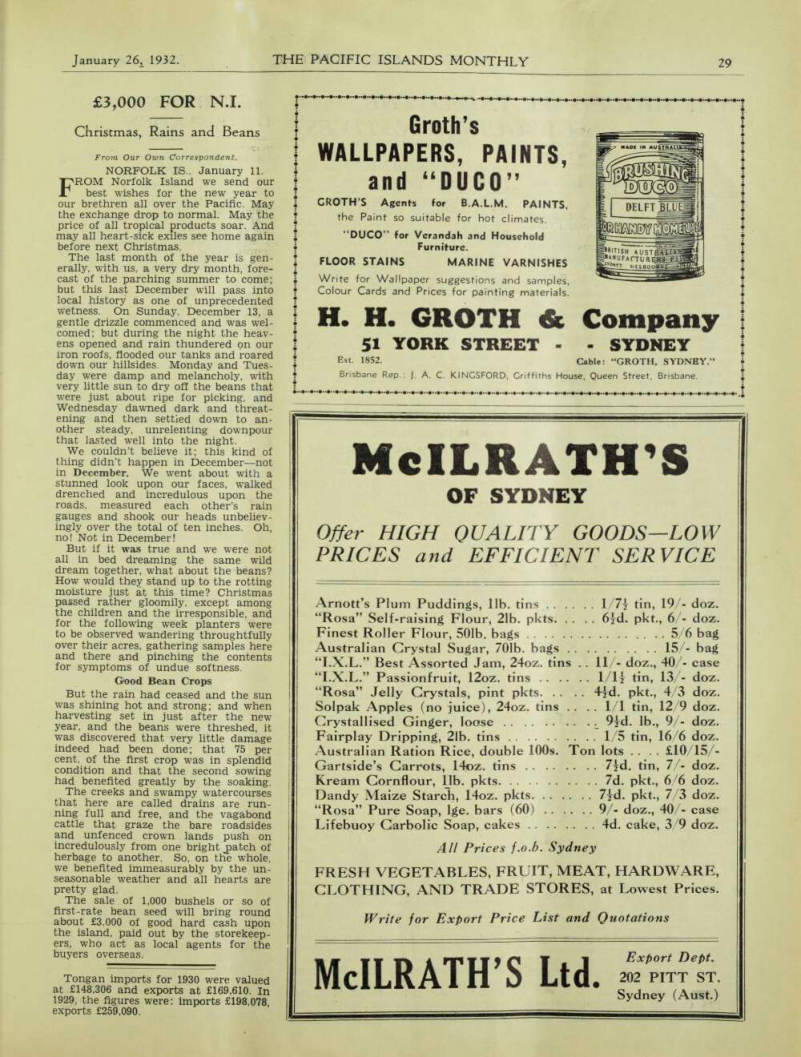
Christmas, Rains and Beans
From Our Own Correspondent.
NORFOLK IS.. January 11.
FROM Norfolk Island we send our best wishes for the new year to our brethren all over the Pacific. May the exchange drop to normal. May the price of all tropical products soar. And may all heart-sick exiles see home again before next Christmas.
The last month of the year is gen erally, with us, a very dry month, fore cast of the parching summer to come; but this last December will pass into local history as one of unprecedented wetness. On Sunday, December 13, a gentle drizzle commenced and was wel comed; but during the night the heav ens opened and rain thundered on our iron roofs, flooded our tanks and roared down our hillsides. Monday and Tues day were damp and melancholy, with very little sun to dry off the beans that were just about ripe for picking, and Wednesday dawned dark and threat ening and then settled down to an other steady, unrelenting downpour that lasted well into the night.
We couldn’t believe it; this kind of thing didn’t happen in December —not in December. We went about with a stunned look upon our faces, walked drenched and incredulous upon the roads, measured each other’s rain gauges and shook our heads unbeliev ingly over the total of ten inches. Oh, no! Not in December!
But if it was true and we were not all in bed dreaming the same wild dream together, what about the beans?
How would they stand up to the rotting moisture just at this time? Christmas passed rather gloomily, except among the children and the irresponsible, and for the following week planters were to be observed wandering throughtfully over their acres, gathering samples here and there and pinching the contents for symptoms of undue softness.
Good Bean Crops But the rain had ceased and the sun was shining hot and strong; and when harvesting set in just after the new year, and the beans were threshed, it was discovered that very little damage indeed had been done; that 75 per cent, of the first crop was in splendid condition and that the second sowing had benefited greatly by the soaking.
The creeks and swampy watercourses that here are called drains are run ning full and free, and the vagabond cattle that graze the bare roadsides and unfenced crown lands push on incredulously from one bright jpatch of herbage to another. So, on tlie whole, we benefited immeasurably by the un seasonable weather and all hearts are pretty glad.
The sale of 1,000 bushels or so of first-rate bean seed will bring round about £3,000 of good hard cash upon the island, paid out by the storekeep ers, who act as local agents for the buyers overseas.
Tongan imports for 1930 were valued at £148,306 and exports at £169,610. In 1929, the figures were: imports £198,078, exports £259,090.