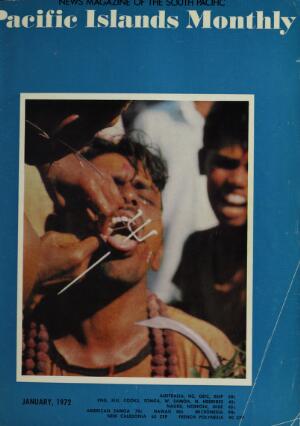
Pacific Islands Monthly
incwo /v\AOAz.iiNt ur mt buum mui-Kj
January, 1972
Australia, Nz, Geic, Bsip 50C
PNG, FIJI, COOKS, TONGA, W. SAMOA, N. HEBRIDES 45c
Nauru, Norfolk, Niue 45C
AMERICAN SAMOA 70c HAWAII 80c MICRONESIA 90c NEW CALEDONIA 65 CFP FRENCH POLYNESIA 90 CF?
Our Cover
This Indian firewalker, devotee of the Goddess Kali, sits with eyes staring in a trance while a silver trident is driven through his tongue.
There will be no blood and no wound. Sheree Lipton took the picture before a firewalking cere mony in Fiji described on p. 40.
Advertisements & other items, pp. 2-4 (2 items)
What’s
the Stout got that the
Land Cruiser and
these other Toyotas
got?
Quality and guts.
The TOYOTA LAND CRUISER has got 4-wheel drive. 6-cylinder 155 HP engin Fantastic gear combinations of six forwc speeds and two reverse. It doubles as versatile family fun car, too.
Then there's the big horse pickup, TOYO STOUT. The front and rear axles, suspensi and powerful brakes feature the stoutness those used in heavier duty trucks. Plus packs a 1 06HP engine. Big cab and cargo bo Plenty of legroom in front and space in ba And the split bench se has cushion comfc You get pow
safety, econo
and stoutne too.
I*
S'S'/SS,,
Wssss, i ■ Hj
TOOA TRUCK
But you mj like the dual re wheel TOYOI DYNA. You d choose a heavy dJ pickup. Or a bigJ payload platform truo Even a double cab and livery van. With either a hu ky 106 HP gasoline engine an economical ZOHPdiesel jc Or you may want the big a The TOYOTA TRUCK. Six big m< els built to take the rough and tous With 130 HP diesel or 155 HP reguli fuel engines under an alligator bonijl Got room for a Toyota?
TOOIAD/NA
DISTRIBUTORS: TERRITORY OF PAPUA «. NEW GUINEA. ELA MOTORS LIMITED: Burns Philp House. Musgrove Street. Port Moresby.
Popuo / US. TRUST TERRITORY MICROL CORPORATION: P.O. Bo* 234. Sa.pan, Mor.pna Islands. Trust Territory of the Pacific Islands/ FIJI ISLAND AUTOMOTIVE SUPPLIES CO , LTD., P O Bo* 355, / AMERICAN SAMOA BURNS PHILP (SOUTH SEA) CO , LTD., Pago Pago / WESTERN SAMOA BURNS PHILP (SOUTH SEA) LTD., Ap,a / GUAM RICKY’S AUTO CO., P.O. Bo* MSB. Agana / NEW HEBRi DES BURNS PHILP (N.H.) LTD , Vila / SOLOMON ISLANDS ZEPHYR SERVICE STATION PTY LTD., Honiara / NEW CALEDONIA SOCI- ETE D ImPORTaTION AUTOMOBILE DU PACIFIC, Noumea / TAHITI ETABLISSEMENTS EMILE A MARTIN & FILS, B P 61 Papeete
Proved best by test
on one
toughest truck
testing courses!
At* I \ t Proved best of all by thousands of owners!
INTERNATIONAL TRUCKS
ACCO Series trucks (with GVW ratings from 15,000 lb. to 35,000 lb.) have been testedand proved-underthe worst conditions you could ever imagine ... conditions far worse than any you are likely to meet!
A top seller in Australia, the top truck in the carrying field, ACCO Series trucks are the ones to buy if you want the best!
Get full details today from your local distr ?™i ! C 47U 4 MEA g N E W CMfOONu''"'' t ° ,U fl]l : JSSts&SuS* Umi '" 1 ' 0 P - Box 450 ' SUVA SYONEY f E "!s.W ! Br ° S ’ Pty ' Liniited ' GP °- BOX 3838 '
EXPORT SALES DEPT.
International Harvester Company of Australia Pty. Ltd. 171-205 City Road, South Melbourne, Vic. Aust. 3205.
Please send me complete details of the ACCO Series Trucks
NAME,
ADDRESS
POSTCODE
butor or send coupon.
ISLANDS: Solomon Motors Limited, P.O. Box Cl 6,
HONIARA. GUADALCANAL BSIP. "SOLMOT"
TAhItI : Tahlti Produits shel,tex Bolte Postale 350, PAPEETE,
6710/E/FP
* m 'Vm & K « V ni f 1 "/ r f\
agTT.
This many shaves
from one blade:
And more. In fact you’ll probably give up counting. It’s the miracle polymer coating on the edge that gives you unbelievably long lasting comfort, more smooth close shaves than any other blade, every one as easy as the first... shave after shave after shave after shave after shave luSPnbt after shave after shave... ■li; Gmet+e
STAINLESS STEEL
BLADE
- 3 to
Stain!
I
10 ISLANDS MONTHLY— JANUARY, 1972
The Editor's Mailbag
Tune From The Grave
Sir, —Now that corpses and the spirits of deceased persons have started to enter Fiji’s national con tests, people still alive may reckon time has come to take a disturbed look at this trend. Unhealthy, what?
Not the sort of thing, seriously, you’d expect. The music section of our national anthem contest was won by a dead man. Actually, he’s been dead for quite a while, the authorities explained helpfully. Such posthumous diligence is, surely, rather remarkable.
Were this the only anomaly at tached to Fiji’s so-called “new” anthem, the matter might be allowed to rest. But it is not the only anomaly. By an astounding coin cidence, all the judges seemed to come from the same place—Suva.
Amazingly, the various prizewinners all came from the same place—Suva.
TTie hidden equation is not too difficult to unscramble. Anthem-wise, Suva virtually equals Fiji. Therefore Suva’s anthem equals Fiji’s anthem, automatically. People were prodded frantically into producing their com positions: more than 100 entries of some sort were harvested. And then the odd thing was that only one tune ever seemed to be played. When are we to be allowed a chance to listen to some of the others?
Our good Minister for Commerce and Industry, the Hon. Mr. Vijay R. Singh, has started beefing about Fiji’s broadcasting services being “too anaemic”, as having no decent debates or discussions. All right. But wasn’t Mr. Singh himself being a bit anaemic allowing the anthem to shoot through as we’ve got it now? The scheme originally was that it should have some words in Hindi. What’s happened about these words in Hindi?
But for Mr. Singh’s seeming sudden mack of anaemia, a substantial chunk 3f Fiji’s populace might have had mthem-type material to chant in their )wn tongue.
His desire to have broadcasting nicked up is to be applauded.
Should he still be requiring juicy dis cussions, let him start wading into this )ne.
Though very ready to congratulate he prizewinning family which riumphed in the poetic field, and lot intending to be horrid at all, I juestion whether the winning words constitute a masterpiece of English vriting. For instance, we stand united
at one point, under “noble banner blue”. What have we here, exactly?
A noun, both preceded, and im mediately followed, by an adjective.
Good English? Some sort of English, possibly. But is that good English?
Maybe some learned person from the University of the South Pacific could kindly deliver an opinion on this point.
I beseech other archipelagos, likely to have to face in future years the task of finding an anthem, on no account to follow Fiji’s method; i.e. of having some small musical oligarchy, recruited all from the same spot, remembering some tune that they heard played the previous year, then pushing that forward for the anthem.
This practice of pinching dead men’s tunes—and without their per mission, I suspect—strikes me as being ethically a bit dubious—not to speak of the appalling bankruptcy of inspiration implied.
The Fiji judges should have been roped in, I reckon, from the largest expanse organisable. Possibly even Fiji’s public as a whole could have been trusted to do a little judging— instead of being treated the entire time, anthem-wise, like irresponsible kids. These days, with a wireless in pretty well every home, and a work ing tape-recorder in plenty of places, the idea is not quite so crazy as it may sound.
I hope that anyone sharing with me these few poor simple thoughts will not hesitate to air them and so help to lift youthful Fiji out of the dark, soul-deadening clutch of artistic totalitarianism.
M. E. Basden (Rev.)
Savusavu, Fiji.
Niue Fights Back
Sir, —I refer to the paragraph under the heading in the “Tropicalities” section of PlM’s November issue “The horror of a $1 million hand out!”
Firstly, Mr. Peren, as a very senior public servant in New Zealand and one whose knowledge of Niue’s affairs is packed into a few hours stopover with the touring New Zealand parliamentary delegation, should have known better than to discuss with any citizen, respected or otherwise, the whys and the where fores of New Zealand’s financial obligations to Niue. It seems to me that Mr. Peren took delight in telling reporters that a respected Suva citizen, “had expressed horror that 5,000 Niueans received a Si million a-year handout between them”. To cap it off, Mr. Peren volunteered to interpret the expression of horror as, “The suggestion was that this was immoral, that it was too much . . . that chaps ought to look after them selves”. As an after-thought Mr.
Peren hastened to add that New Zealand did indeed have a respon sibility to Niue. Mr. Peren’s next statement, implying that New Zealand aid would be distributed more equally throughout the region in future, was contradicted by no less an authority
than Mr. Lapwood, Senior Govern ment Whip of the New Zealand House of Parliament.
Secondly, the respected Suva citizen obviously knows nothing about Niue and Mr. Peren was naturally not in a position to enlighten him, otherwise I am sure the former would not have said what he did say.
As a full blooded Niuean (the name is an adoption—progress if you like), I deplore the implication that we Niueans are a pack-of-no-hopers who live like lords on handouts from the New Zealand taxpayer. Anybody would think that the $1 million (as if such a sum would go far nowa days!), is doled out among the 5,000 Niueans to spend as they wish! It’s not for me to say to what extent New Zealand is obliged to Niue.
Rather, suffice it for me to point out that we Niueans are New Zealand citizens who happen to live 1,500 miles away from the mainland.
I merely point this out because it’s a fact and the respected Suva citizen can draw his own conclusions on that count. It is also a fact that it is only in the last decade that New Zealand aid to Niue has reached a level worth arguing about—s2o,ooo in 1941/42 f‘20.000 in 1951/52, $475,000 in 1961/62 and $1 million in 1971/72 No one with a little sense of pride and responsibility wants handouts especially more so if other people take every opportunity to remind us of the fact. To be an aid-recipient is downright embarrassing at anytime, but to have one’s face rubbed in the
Letters
charity plate is bloody humiliating!
Even so, anyone who understands a little of the situation and the relation ship between New Zealand and Niue will quickly appreciate that there are some inescapable facts—for example, New Zealand aid, essential to the survival of Niue, is never a question of simply writing out a cheque. We have to convince New Zealand that we need the money and that we deserve some help—no easy task, I can assure you.
If our horrified friend in Suva can show me that Fiji would not jump at the opportunity to receive a $1 million handout from New Zealand, or if he can tell me that Fiji has never received any handouts from the UK, I’d be willing to go along with him. But if he can’t, then all I can say is that he is either envious or he does not know the meaning of the word immoral. Let’s face it—the prin ciple is the same whether New Zea land aid to Niue is $2OO per head or whether UK aid to Fiji is less than $2OO per head. If 5,000 Niueans get $1 million from New Zealand, it’s because we have helped ourselves first and deserve to be helped!
Finally, what’s so horrific about every Niuean being able to read and
write; being able to maintain one oc the highest standards of health ii this region; being able to hack ai international airport out of solic coral, the standard of which is secono only to those in Nadi and Tahiti coconut plantations intercropped witf cattle without the benefit of runninj water supplies; and, above all, maim tain an egalitarian society where no one goes hungry and probably, have the highest standard of living in thi; region!
If there’s a moral in this case, i can only be that New Zealand has seen fit to ensure that her subjects who live in Niue don’t lag too far behind their cousins who live on the mainland.
What’s immoral about that!
Terry M. Chapman.
, — JLX M.M. XJ. 1 • Niue. • See also the letter from a con federate on p. 121.
Stamp Design
Sir, —I wish to draw your attention! to (PIM, Oct., p. 72) regarding “A.
New Guinea sing-sing for Christmas”., These stamps were designed by Bette Hays and not Nancy. Would you be good enough to make mention of this error?
(Mrs.) Bonny Dun.
Strathfield, Sydney. • Sorry Bette, but the fault lies with the PNG Department of Posts and Telegraphs in its Press release 809/8/10.
There are more letters on p. 117.
Advertisements & other items, pp. 5-7 (1 item)
Shirley Baker and the King of Tonga
NOEL RUTHERFORD
Tonga is the sole survivor of the Pacific Island kingdoms which flourished during the nineteenth century. The success of this small state in preserving its identity in an age of imperialism depends mainly on the work of two men, the Tongan King George Tupou I and his chief adviser, the renegade missionary Shirley Baker. This book, based largely on the letters and diaries of people in Tonga at the time, provides the first account of this remarkable partnership.
Dr Rutherford is a Senior Lecturer in History at the University of Newcastle. $9.00
OXFORD UNIVERSITY PRESS
If you would like to receive regular news of forthcoming Oxford books please write to us at GPO Box 2784 Y Melbourne 3001
Sir William MacGregor
K*V° YC * ™ s Of Sir William McGregor (1846ini 9 h h T Se - fr ° m h . u . mble beginnings in Scotland to prominent medical and administrative positions in the British Colonial Service. He began his career m the Seychelles, then went to Fiji where he filled practically every administrative position including acting as governor. He was then success- .vely m charge of Bntish New Guinea, Lagos and Newfoundland and finally became governor of Queensland. Yet despite his meteoric rise MacGregor was never content. He felt never fully accepted by the British elite, while his plans sometimes clashed with those of the Colonial Office.
Fl r^\f arS u^ ter b,s death, however, it can be seen that more of his ideas could have been profitably adopted for, apart from its historical significance his approach to colonial problems has considerable modern relevance.
Recommended price $15.00
OXFORD UNIVERSITY PRESS
If you would like to receive regular news of forthcoming Oxford books please write to us at G.P.O. Box 2784 Y Melbourne 3001
tlamapyne on cupboard doors and walls.
Glamapyne
transforms rooms
into havens of
comfort and beauty
Glamapyne Is Pyneboard, a building board surfaced on both sides with durable, easily cleaned melamine plastic laminate. Glamapyne is ideal for kitchen cupboards, furniture and built-ins. Choose from II popular woodgrains and crisp white. Matching edge laminate available.
I MELAMINE SURFACED PYNEBOARD
glamapyne
r .. 11 aboard built-in, quick easy construction.
Save money on
time and labour
with Pyneboard
Pyneboard is a quality particle board, as easy to work with as softwood. The board can be cut to any shape. Off-cuts can be butt glued and used, reducing wastage. A good range of sizes is available including 16' x 6' sheets in fine surface Pyneboard.
PYNEBOARD
FOR FURNITURE AND BUILT-INS
evpnßT CA. C o AD AUSTRALIA BY pyneboard ptv. ltd.
EXPORT SALES: 5 O'CONNELL STREET, SYDNEY. AUSTRALIA 2000
EXP.P.2IBJL
Pacific Islands
Monthly
FOUNDED BY R. W. ROBSON IN 1930.
Owned And Published By
Pacific Publications (Aust.) Pty. Ltd.,
29 Alberta St., Sydney, N.S.W., 2000.
Postal Address: G.P.O. BOX 3408, SYDNEY
N.S.W., 2001.
Telegraphic Address: PACPUB, Sydney
Telephones: 61-9197, 61-7101, 61-4369.
Chief Executives: Managing Director: R. W. Robson.
Executive Director/Publisher; Judy Tudor.
Executive Director/Business Manager: Selwyn Hughes.
Executive Director/Chief Editor: Stuart Inder.
Pacific Islands Monthly
Editor: Stuart Inder.
Assistant Editor: John Carter.
Advertising Manager: W. A. Gasnler.
Representatives
Fiii: Pacific Publications (Fiji) Ltd., Fiji Times Building, 20 Gordon Street, Suva. Tel.* 25601 Fiji Times Office, Mayfair Building, Namoli Ave., LAUTOKA. Telex; 1144. Tel.: 60-422.
Papua New Guinea: LAE, P.O. Box 227; RABAUL, Mr. Steve Simpson, P.O. Box 433 c/- Rabaul Photographic. Tel.: 2677).
French Polynesia: Distribution—-Hachette Paci fique, 10 Ave Bruat, Papeete.
New Zealand: Pacific Publications, C.P.O. Box 2229, Queen St., Auckland. Tel.: 485-155.
United Kingdom: S. R. Warman, Park House 22 Park Street, Croydon, CR9 3NP. Tel.i 01-6884177.
Overseas Newspapers (Agencies) Ltd., Cromwell House, Fulwood Place, London, W.C.l. Tel.: 01-242-0661. Cables: WESNEWS, London, DS4.
Japan: Advertising—Universal Media Corpora tion, C.P.O. Box 46, Tokyo. Tel.: 666-3036.
Victoria: Advertising—Wilke & Co. Ltd., 37 Brown's Road, Clayton, Vic., 3168. Tel.: 544-8222.
Queensland: Advertising—Beale Media Services 232 St. Paul's Terrace, Fortitude Valley, Qld 4006. Tel.: 51-5827.
Subscription Rates:
"Pacific Islands Monthly" is air-freighted to all subscribers and agents in the Pacific Islands; copies to other areas go by surface mail.
Australia (including Lord Howe and Thursday Is.), B.S.I.P., Gilbert and. Ellice Is.: $5.50 Aust.; Papua-New Guinea, Norfolk Island, Nauru, Tonga and New Hebrides: $5.00 Aust.; New Zealand: $5.50 NZ; Fiji, Cook Islands, Niue and Western Samoa; $5.00 (local currency); American Samoa: $8.00 US; U.S. Mainland Micronesia (including Guam): $10.00 US; Hawaii: $9.00 US; New Caledonia: 750 French Pacific francs; Tahiti and French Polynesia: 850 French Pacific francs; United Kingdom and elsewhere; £3.25.
Copyright ©, 1972,
Pacific Publications (Aust.) Pty. Ltd.
For the editorial contents of this issue, see p. 21
Advertisements & other items, pp. 7-20 (4 items)
Ific Islands Monthly—January, 1972
Burns Philp
>5
\ r i I
\ i m
THE PACIFIC
FIJI,SAMOA,TONGA,NIUE Is,NORFOLK Is.
BURNS PHILP
[SOUTH SEA]
REGISTERED OFFICE: SUVA, FIJI,
TELEPHONE NO: 22661
TELEX NO: FJ1127
Code Address: "BURNSOUTH'
SHIPPING AGENCIES
The New Zealand Shipping Co. Ltd.
Shaw Savill & Albion Co. Ltd.
Blue Star Port Line (Management) Ltd.
Bank Line Ltd.
General Steamship Corporation Ltd.
Compagnie des Messageries Maritimes Royal Interocean Lines Daiwa Navigation Company Ltd.
Sitmar Line Flotta Lauro (Lauro Lines) Australasia Pty. Ltd.
Tonga Shipping Agency.
EXCLUSIVE
DISTRIBUTORSHIPS
INCLUDE
Akai Taperecorders Sunbeam Appliances Dunlop Products Hitachi Electronics Holden Motor Vehicles Rolex Watches Revlon Cosmetics Pentax Cameras Massey-Ferguson Tractors Olympic Tyres Penfold Wines
AGENTS FOR
Queensland Insurance Co. Ltd.
Shell Company (P. 1.) Ltd.
Bureau Veritas
ASSOCIATED COMPANIES
Burns Philp (New Hebrides) Ltd.
Burns Philp Trustee Co. Ltd.
Automotive Supplies Co. Ltd.
Corrie & Co. Ltd.
Wrought Iron and Steel Construction Co. Ltd.
Bish Ltd.
SPECIALISED SERVICES
Expert advice on Shipping; Forwarding; Customs formalities; Insurance.
COMPLETE TRAVEL
SERVICE
accredited agents for the
INTERNATIONAL AIR
TRANSPORT ASSOCIATION
OVERSEAS AGENTS: SYDNEY • LONDON • SAN FRANCISCO
cnx
Crackers
tasteasij
they’re
urei 7.
buttered ■
Clix are crisp Brockhoff CHx are crispgolden crackers that are tender at heart. Eat them just as they are, straight from the pack. N'P fresh into dips, nibble wrth dnnte or top with savoury spreads.
Oven-crisp Brockhoff Chx Crackers are ready for anything, they taste as if they’re already buttered. 9 8l * s
There’s value, variety and quality in
BROCKHOFF BISCUITS
6441/8 X 6V4
MERCHANDISE
FROM
BRAZIL • BELGIUM
DENMARK • FINLAND
FRANCE • HOLLAND
HONGKONG • ITALY
JAPAN « SOUTH AFRICA
SWEDEN a TAIWAN
UNITED KINGDOM a WESTERN GERMANY
automotive parts • air conditioners • agricultural sprayers and tractors 9 brushware • bakery machinery • car batteries • dry batteries • biscuits • biscuit making machinery • bottle coolers • gas stoves • battery chargers • beer • carpets • canned vegetables • concrete mixers • canned meats • champagne • chickens • curtain materials • confectionery • clocks 9 ceiling fans • cigars • clothes pegs e cosmetics • cement blockmaking machinery • deep freezers • drycleaning machinery 9 decorative plywood • ready made doors • dish washers • essences • electrodes • electric tools o floor tiles 9 furniture 9 fork lifts 9 floor coverings 9 generators • garage lifts 9 hardwood 9hardboard 9 household appliances 9 insulation paper
THROUGH THE INTERMEDIARY OF:
DEMKA
TO inner spring mattresses 9 garage jacks 9 laminated plastic sheets 9 liqueurs 9 louvre blades o lamps and fittings 9 milk 9 motor cycles 9 outboard engines 9 pressure lamps 9 perfumes 9 ports and sherries 9 plywood 9 passenger vehicles 9 plastics 9 paper bags 9 PVC 9 piping and fittings 9 petrol and diesel engines pianos 9 refrigerators 9 radios 9 sealing equipment 9 sanitary ware 9 stainless steel sinks 9 spin dryers 9 sanitary napkins 9 serviettes 9 slicers 9 trucks 9 tubular furniture 9 timber 9 toilet paper 9 tractors 9 towels 9 tyres and tubes 9 tape recorders 9 umbrellas 9 vinyltiles 9 vodka 9 whisky 9 washing machines 9 wash basins 9 window glass 9 welding equipment 9 wines, etc., etc.
BRITISH SOLOMON ISLANDS • FIJI
NEW CALEDONIA • AMERICAN SAMOA
WESTERN SAMOA • NORFOLK ISLAND
PAPUA NEW GUINEA • COOK ISLANDS
WALLIS & FUTUNA ISLANDS • TAHITI
GILBERT & ELLICE IS. • NEW HEBRIDES 2-12 CARRINGTON ST. (SHELL HOUSE), SYDNEY. CABLE: "DEMKAY", SYDNEY
Wf f v \ \ A i < ¥*•■ You’re Sitting on Top of the World...
With the Fufiset IOOOW Executive Chair!
n n y ,° c n l COnfined , behi " d 3 desk knows his Productivity, efficiency and work output greatly de- Executive’cha'ir' 3 C ° mfort That s whv smart managers in 52 countries choose the Fujiset 1000 W The extremely comfortable, durable Fujiset Executive Chair features a stylish, rugged fabric upholstered seat top with tough vinyl seat edges and backrest, attractively constructed on a beautifully finished base with 2 inch hooded casters.
Every outstanding Fujiset product is designed for comfort and unctional convenience, and the Fujiset Executive Chair is available of anToffice eCtlon ° f COl ° rS metal finishes to enhance the decor Besides the above, 30 different I — —i chairs and desks for office use I are available from us. vi ■■ ■ ■■■_ «■
Fujiset Trading Co., Ltd.
21, 2-CHOME YOYOGI.SHIBUYA-KU,TOKYO 151,JAPAN
Phone: Tokyo 379-3210 Cable Address: CHAIRFUJISET t ■S
DISTRIBUTORS WANTED
m m 52 it
SOME OF THE FIRMS
WE REPRESENT ARE:
Frappier (French Brandy) Huvet (French Brandy) Sunshine Biscuits Sunrise (Confectionery) Flamenco (Instant Coffee) Quaker Products (Oats, Jets) Merchants (Canned Soft Drinks, Cordials) Hancocks (Spaghetti, Cereals) Melbourne Canning (Jams) Water Wheel (Flour, Sharps, Wheat) A. P. & D. (Twisites, Twirlies) Edward Zorn (Margarine, Cooking Fats) Allens (Confectionery) Robert Timms (New Guinea Gold Instant Coffees and Teas) Highness (Canned Vegetables, Fruit Juices) S.P.C. (Abalone) Lunchtime (Honey) Wing Lee (See You Sauce) Magnet (Mattresses) Esteel (Cookware) Warner-Drayton (Fans) Mitchell's (Abrasives) Regent (Swiss Watches) Gainsborough (Furniture) Austramax (Pressure Lanterns) Preservene (Soap Products) Lawn Chair; Tubco (Garden Furniture) Sunrise Lustertone (S.S. Sinks, Plumbers' Supplies) Electronic Industries (Electrical Household Appliances) Jex (Steelwool) Arnbro (Folding Beds) Elmaco (Plastics —Electrical Fittings) B.X. (Plastics) Franklite (Light Fittings)
S. E. TATHAM
& Co. Pty. Ltd.
MELBOURNE, AUSTRALIA
G.P.O. Box 8, Cables "SET"
Telephone 60-1125
EXPORT AGENTS
PACIFIC ISLANDS
AGENTS
Australian buying and shipping agents for the Gilbert and Ellice Islands Colony Wholesale Society Eg 1 1 3*
DIRECT ENQUIRIES WELCOMED
Associate Company
E. TATHAM (FIJI)
Suva, G.P.O. Box 671.
Lautoka, P.O. Box 366. 1
LTD
SINCE 1924
the Maharajah
invites you aboard
his giant new
Fblace in the Sky.
There’s a new way to cross the world. Join us at Nadi, or Singapore, or Sydney, and Air-India’s Maharajah service is yours as always. And then from Bombay fly on to Europe and London (and New York if you wish) in Air-India’s giant new 747 . . . big, beautiful, uniquely magnificent and the first of its kind between India and Europe. The Air-India 747 is truly a Palace in the Sky. Ask any Travel Agent. treats you like a Maharajah - worldwide TAKE A BREAK - HALFWAY TO EUROPE Modern India is one of the world’s great travel bargains. You can see a whole lot of India on your way to or from Europe at no extra air fare ... the colour, the contrast, the excitement of a country that stretches from the snow-capped Himalaya to the fringed beaches of the South. On your' way to Europe, take a break. Take a tour in India at no extra air fare.
DELHI
TTA
In
OMBAY
* ...M *o* 25204 A 327.86
morris
MH hedstrom
LIMITED
HEAD OFFICE; SUVA-FIJI
LONDON OFFICE:
MORRIS HEDSTROM LTD.,
Park House,
22 Park Street,
CROYDON, CR9 3NP.
• GENERAL MERCHANTS
• PRODUCE BUYERS
• IMPORTERS & EXPORTERS
• PLANTATION OWNERS
• COMMISSION & INSURANCE
AGENTS
AUSTRALIAN REPRESENTATIVE:
W. R. CARPENTER & CO. LTD.,
(MERCHANDISE DIVISION),
The A. £r N.Z. Building,
68 Pitt Street,
SYDNEY, 2000.
Registered Cable Addresses:
MORRISHED -SUVA, APIA, NUKUALOFA. $ SUVAMARK LONDON. • MORSTROM SYDNEY.
AGENTS AND DISTRIBUTORS FOR,
SHIPPING
China Navigation Company Lloyd's Lloyd Triestino AAatson Navigation Co.
Mitsui OSK Lines Oceanic Steamship Co.
Pacific Australia Direct Line Pacific Far East Lines Ltd.
MOTOR
Alfa-Laval A.R.A. Airconditioners Assoc. Battery Makers of Aust. Ltd.
Champion Spark Plug Co.
Chrysler U.K. Ltd.
D. H. Davies & Co. Ltd.
Ferodo Ltd.
Ford Motor Co.
Fram Filters Ltd.
Good year Tyre & Rubber Co.
Hayter Exports Ltd.
Howard Rotavators Pty. Ltd.
Napier Bros. Ltd.
Norton-Villiers Outboard Marine International W. H. Wylie
EMI
Addis Limited Benford Ltd.
Crittall-Hope Export Electrolux Ltd.
Imperial Chemical Industries Ltd.
James A. Jobling Ltd.
John Steventon & Sons (Export) Ltd.
H. & R. Johnson Ltd. , Kelvinator International Inc. (Leonard Refrigerators) Longines SA Marley Floor Tile Co.
Nippon Kogaku (Nikon Cameras) Noritake Co. Ltd.
Olympus Optical Parker/Eversharp Pen Co.
Pilkington Bros. ltd.
Procter & Gamble Ronson Ltd.
Rowntree & Co. Ltd.
Sanyo Electrical Singer Australia Ltd.
Wiltshire File Co. Pty. Ltd.
Winstone Ltd.
Yorkshire Imperial Metals
LIQUOR
Bacardi International Drambuie Liqueur Co. Ltd.
Guinness Exports Jas. Hennessy & Co.
John Dewar & Sons Ltd.
McWilliams Wines Pty. Ltd.
Tanqueray Gordon & Co. Ltd.
PHARMACEUTICALS & COSMETICS
Burroughs Wellcome & Co. N.Z. Ltd.
Ciba Laboratories Cynamid DHA Pty. Ltd.
Elizabeth Arden Glaxo Laboratories Ltd.
Lentheric Perfumes Max Factor Rimmel Ltd.
Smith & Nephew Ltd.
West Silten Pharmaceuticals
A
great bunch
of flours
Robert Hutchinson makes the greatest bunch of flours in the Pacific. Bakers’ flour. Uor Superlitc cake and sponge flours, Biscuit flour and cracker flour.
Wheafen sharps and wheaten meal.
We’re particularly proud of our bunch of flours. So we have a technical advisory service to help you use them properly.
So next time you see a Robert Hutchinson flour (or even one of our Hutmill stock feeds), remember it’s just one of the bunch. ■r V mr m.
Mm %
ROBERT
HUTCHINSON
LIMITED
the flour people
Hartington Street, Glenroy, Victoria, Australia. 3046. Telephone Melbourne 306 7261
mb % ,*s NEW ZEALAND Agents: Allan G. Mitchell (N.Z.) Ltd.
NORFOLK ISLAND Agents:
Norfolk Island Sporting Centre Ltd.
"jji% lines, write to: Yajima
EQUIPMENT
The TABATA line offers the importer a complete range of RUBBER
SKIN & SCUBA DIVING
EQUIPMENT and ACC-
ESSORIES for both the professional and amateur. Years of specialized manufacturing experience has established our line's
REPUTATION FOR QU-
ALITY, ATTRACTIVE
and PRACTICAL DESI-
GNS and VERY COMP -
ETITIVE PRICES. We a-
Iso offer a varied line of rubber sundries for golfing, skiing and other popular sports.
For full particulars on our
Manufacturers TABATA CO., LTD
81dg.,2-2Yoshi cho, Nihonbashi .Chuo-ku.Tokyo Cable:"EASTAßA’’Tokyo TELEX:2S2 -2806 EASTABATA TOK Tel: (663)8651-5 J
Highly competitive Low priced Wide range
ROYAL DOULTON
BATHROOMWARE.
r 1 Concorde "1 50" Suite Concorde "Pedigree" Suite "Flair*
AOk
y ROYAL
Doulton
-^AUSTRALIA#-
20" x 16" Wall Basin "Cameo 77" Vanity Basin ---I For full details send coupon now to : Export Manager, Doulton Potteries Pty. Limited, P.O.
Box 181, Chatswood. N.S.W. 2067. Australia. Please -i ponifarwiAisro loaflpt I mail your "Bathroom Scene” sanitaryware leaflet.
Name Company Address (in full). 26/1/7 Country
Hey! Are you in the right place? esf And at the right time too!
liiLMWiTiTYrrgrrr
1972 r 6 et service for the islands- starting April The Pacific islands’ own airline-Air Pacific will bring the people of the islands a faster, more comfortable service with the introduction of their first British Aircraft Corporation One-Eleven 475, Rolls Royce powered, pure jet aircraft.
A taste of luxury travel when you visit your neighbouring territories. Faster, more convenient connections with international trunk lines.
For the latest timetable and fares, contact the nearest office of Air Pacific-the Pacific islands’ own airline.
PaCMFMC
( Formerly known as Fiji Airways) General Sales Agent for Air New Zealand, BOAC, QANTAS and TAA. 1625
IIWUWO M FG-200
echosounder
FRA 10
radar
Picking your way among
islands,reefs,and sea traffic?
For FG 200 luriher information please contact
FRA 10
Don’t leave it to chance. Leave it to Furuno marine radars and echo sounders. Whether you pilot a f ishing boat,pleasure boat.tug,or ferry, you need not leave navigation to chance. The precision Furuno Radar model FRA-10and the portable Furuno Echosounder model FG-200arefhe ideal navigational aids for you !!
Why not take your chance with Furuno ?
Other main products: Radiotelephones, Loran Receivers, Fish Finders, Facsimile Receivers. Automatic Direction Finders, Sonars, etc. 0
FURUNO ELECTRIC
CO., LTD.
9 52,Ashihara-cho.Nishinomiya City,Japan.
Cable: FURUNO NISHINOMIYA
r a s For
RUM
at its best... say
OVERPROOF AND UNDERPROOF
In 5 oz. and 13 oz. flasks and 26 oz. and 40 oz. bottles.
BLENDED AND BOTTLED BY JOHN WALKER & SONS LIMITED. 3%
JWO7U
rrszzzzxTZZzzazczz.
i new audio product from
*pans audio-only specialist
*3 -'5 '3"f s f
Tsui's 210 A solid-state
and SW/MW tuner with stereo amplifier
seldom find a high-class receiver and stereo amplifier in compact package. But here it is.
210 A offers flawless reception in
MW and SW bands and boasts big-receiver characteristics as extratuning meter, direct tape monitor i, and high-sensitivity ferrite bar na. -on circuitry throughout guarantees tional signal-to-noise ratio and very for fine-grained. wide dynamic range high-linearity sound.
All of this is housed in one luxurious walnut cabinet with silver-gold aluminum panel. Uncompromising quality from the inside out. From Sansui, Japan's audioonly specialist.
"*T* W “ OTBi,s ll °- PO Bo * •** >C «, 7 n ,CEN> F ' l P ° “ OX ’ 65 M ' "'«»"■ T.I: 385 / .OUCAiWIUt COW« ‘ * ON ‘ * T “"»“ ■>•<>. Box 32,6, Bcoko! ■ . ...XT’ '""“""'•"—P—-'. To, CO., X. s ”'.^o^' ! '
% .'.-■vV?** I m "Mi m v- V m
SKJ<a
i-?.' ' m
Arnott’s Cracker Biscuits...
always crispy-fresh and
good to eat!
Always keep Arnott’s famous Cracker Biscuits handy for parties, for light snacks, for nibbling anytime.
They’re always crisp and fresh, ready to go with your favourite foods or just to eat straight from the pack.
The triple-wrapped packs keep the biscuits fresh.
Q rnott’s famous Biscuits
There is no Substitute for Quality 1602
Cific Islands Monthly—January, 1972
9
LCIFIC ISLANDS MONTHLY—JANUARY, 1972
Up Front
with the Editor
PlM’s aim is to inform Islanders about events in the Islands.
But in its 41 years it has had a secondary objective which it seems to have taken up because the necessity was there—that of explaining the Islands to the rest of the world. This is a public relations function, undertaken as a service to the Islanders who, after all, provide us with our bread.
It is a hard task. For one thing, PIM isn’t read by the rest of the world. Nearly all of its circulation is within the Islands, and it mostlv preaches to the converted when it attempts to use its own columns this way Thus it must fall back on extracurricula functions to get a message across. It has to give lectures, write articles for influential mainland aewspapers and magazines, or make ■adio broadcasts. PIM does all these itings, but broadcasting enables us .o reach the widest audiences. PlM’s bunder, R, W. Robson, made good ise of that medium in the 30s and 10s as a regular commentator on affairs, and for many years low I have also been using radio ummentaries in Australia, and occaionally in New Zealand, in an effort o explain developments in the slands to anybody who will listen.
There is never a shortage of grist or the mill. What does Fiji’s latest •udget mean for Australia? What ? behind the new series of South 'acific Forums? What are the pros nd cons of Micronesia’s moves torards a new political status? Is tustralia storing up bad will for Self by not allowing a regular uota of Islanders in? Won’t Aus- •alia realise, please, that new power hgnments are developing in Ausaha’s part of the world among
Rories wdb
ipect from We Sn? * 801ath Pacific Com f Wic r fo adiDB OVer V S***
Le bdn reLn?™ K find I
peatmg a number of emes over and over. I have been ying that the whole of the Islands ustra! lans' 1 too k 8 heed i S t!™ usiraiians took heed of it. I have .en saying that Australia’s trade barners have to be ught if we are to do more than
merely pay lip service to the need for inter-Pacific co-operation.
These are themes that just have to be understood by Australians if we are not to earn a reputation for being ignorant, self-centred gits. They are not merely matters to be under stood by an Australian government; unless Australians themselves under stand that those are real people out there in the Islands, and that they have some real problems, the gov ernment will deserve all the prob lems if gets.
I am not, of course, the only man to bring Islands affairs regularly to the attention of mainlanders. There is a small group of politicians, churchmen and academics, and oc casionally journalists, who work along the same lines, but occa sionally I am depressed at how little effect we have on public opinion. I suspect we might even have none at all.
For this reason I warmly applaud when Islands leaders such as Fiji’s Ratu Mara, and Albert Henry of the Cooks, speak out for the benefit of Australia and New Zealand. The blunter their comments the better I like it, because only plain speak ing from responsible people will get the Islands message across to an Australia so engrossed in itself and its own domestic issues.
While remaining silent, responsible Islands leaders from the emergent territories are being upstaged by the noisy ratbag fringe of some so called New Guinea leaders, who spend more time in Australia than in New Guinea addressing demon strations, giving Press interviews, hogging the news columns. These people know how to get attention, and there is no reason why they shouldn’t get as much of it as they can win for themselves to express their minority views about what
should be done in New Guinea.
But the danger is that while Aus tralians continue to be occupied in swallowing their varied ration of New Guineana in the newspapers and on radio and TV, they will con tinue to be oblivious to the fact that the more politically, socially and economically advanced Island groups such as Fiji, Tonga, Western Samoa and the Cooks need just as much help and attention.
The whole of Papua New Guinea, not merely some New Guineans, is upstaging the South Pacific on the Australian stage, and the Islanders to Australia’s east are going to have to do more publicly to draw atten tion to their problems. There are no dividends in being a wilting wall flower in these days of the mass media.
Official diplomatic channels have their uses, but they also have great disadvantages. The Nauruans would still be a colonial people, their phos phate still in the hands of the BPC, if Head Chief Deßoburt had con tinued to put his views merely to the Canberra bureaucracy, where they were promptly marked CONFI DENTIAL and allowed to build up a thick file. No bureaucrat involved in those early negotiations ever gave Nauru a hope of gaining complete independence, and it was laughable to think it could take over the phos phate.
Attitudes changed dramatically when Deßoburt went direct to the Australian people for support. He got it, and in face of public opinion the government took the Nauruans seriously.
Next month in Canberra it looks as if, at this time of writing, we will have the second South Pacific Forum, attended by the leaders of the self-governing Island territories, Fiji, Tonga, Nauru, Western Samoa and the Cooks. I hope these men won’t keep all their plain talk to the closed sessions of the conference room. I hope they’ll share their views and fears and ideals with the Australian public. They’ll be doing themselves a big favour.
Stuart Inder
Advertisements & other items, pp. 21-26 (3 items)
15
ACIFIC ISLANDS MONTHLY—JANUARY, 1972
Guinea
Keep well informed
on
New Guinea affairs
by reading
NEW
GUINEA
AND AUSTRALIA,
THE PACIFIC AND
SOUTH EAST ASIA.
75c a copy ($2.80 Aust. a year) at your bookstore, or direct from: The Sydney and Melbourne Publishing Co. Pty. Ltd.
29 ALBERTA STREET, SYDNEY,
N.S.W. 2000.
(Postal Address: Box 1813, G.P.0., Sydney, N.S.W. 2001.)
f^rS -f (J 4 9 >
... a family
portrait from
Yorkshire Imperial
Since 'Yorksil' the iatest addition to the Yorkshire family was introduced he's been hogging all the limelight. So we decided it's high time we gave more exposure to big brothers 'Yorkshire' and 'Yorkway'... all 'stars' in their various applications for use with light gauge copper tubing.
'Yorkshire' is of course the original capillary fitting with inbuilt solder ring. 'Yorkway' is long socket length for end feeding hard or soft solders.
'Yorksil' with short socket for economical silver brazed joints.
Ask your supplier for Yorkshire Imperial fittings: —
YORKSHIRE
IMPERIAL
YORKSHIRE IMPERIAL AUSTRALIA PTY. LTD.
144-154 Milperra Road, Revesby, N.5.W.2212. Tel.; 77-0561 Melbourne: 569-0859, Brisbane: 36-0455, Perth: 24-1017, Adelaide: 57-4445
YL./4B
{PeteAs I w
fILTE 11
1592 A
Paris, Rome, Tokyo—
wherever the jet routes meet, Peter Stuyvesant is there.
A wide new world of taste.
Rich choice tobaccos.
Miracle Filter— so much more to enjoy! mm.
IUGU C^g E SIZE
t oba ccoS
WORLD COPYRIGHT.
20 * i 6 n (0 £ The International Passport to Smoking Pleasure.
fOR w
the '
OVER 50
most t*
bbahp
pacif ,c
ISIAI*® 5 -
(jilleApie
ANC
HOR
ANCHOR
FLOUR
MAINTOP HIGH PROTEIN
BISCUIT FLOURS AND WHEATMEALS
Gillespie flours are milled from selected high quality Australian wheats and are entoleted for purity. Their consistent high quality has made them the best-known, most asked-for, brands of flour in the Islands. (Entoletion is a special purification process which reduces the risk of insect infection.)
GILLESPIE BROS. PTY. LTD.
HEAD OFFICE: BRISBANE OFFICE:
S 2 UNION ST., PYRMONT, SYDNEY, N.S.W. CABLE ADDRESS: ALBION, BRISBANE, QUEENSLAND. (G.P.O. BOX 2518, SYDNEY, 2001). "GILLESPIE", (P.O. BOX 8, ALBION, BRISBANE, 4010).
PHONE: 660-4933 SYDNEY AND BRISBANE PHONE: 6-1121
KAVIENG
•• e«J
•* RABAUL *
MADANG
KIETA
LAE
PORT MORESBY
• HONIARA
SAMARAI
BRISBANE
SYDNEY
Were on
the run..
24 hours a day
7daysaweek!
It’s true! Our 4 ships “New Guinea Chief,”
“Island Chief,” “Coral Chief,” “Papuan Chief” are always on the run providing fast, regular, efficient services between Sydney, Brisbane,' Port Moresby, Samarai, Lae, Madang, Rabaul,’
Kavieng, Kieta and Honiara.
And because of side-port unit-loading, all our ships stay on the run, with a minimum of tied-up’ time in port. Side-port unit-loading is a fast, safe, efficient method of handling cargo.
If you would like to see how you could save money on unit-loading, let us show you our 20 minute film “Cargo Revolution” ... Then we will have your cargo on the run. :
JB,New Guinea Australia Line
A«st^1 e BRISB P A°N R F T wT B r Y r h Ste ?T h c ip l Trading Co - Ltd - SYDNEY-Swire & Gilchrist Pty. Ltd
& a m 2 m m u %
pleasure in
one-har Music and news for people on the go.
From National, three dependable entertainers. 1 Pocket-size cassette tape recorder (Model RQ-2125). Easy operation. Built-in sensitive condenser microphone. k Auto-Stop mechanism shuts off recorder at end of tape. Monolithic 1C for unexcelled performance, and AC/battery operation. Weighs 1-5/8 pounds. 2 Portable radio (Model R-419). MW, plus three shortwave bands covering the range from 1.6 MHz to 26.1 MHz. 8 transistors. Tone and volume best in this class through 10cm PM dynamic speakers. Weighs 3-5/16 pounds. 3 Combination radio, cassette tape recorder and record player (Model SG-110).
AC/battery operation. Radio is MW/SW; record player is 2-speed (33-1/3 and 45rpm) with ceramic .partridge and sapphire stylus. Multi-purpose meter as a recording level meter, tuning meter and battery checker. Weighs 9-7/16 pounds.
NATIONAL
i % ..ft » t i it. . —L. ..i A, » 4- 1 I /-I
Acific Islands Monthly—January, 1972
In This Issue
General
The Sullivan Feature 48 Great Barrier Reef 79 Islander aircraft 102 BPs brighter outlook 104 Copra prices 105 Pacific Forum 135
American Samoa
Ghosts, gods and ghouls 73 Vietnam medals 131 Judges' conference 135 Committee's visit off ... 135
Cook Islands
Legislative Assembly 25 'Art gallery' 39 Cruise ships to call 92 New party ... 129
Fiji
Anthem antics ii Sue Wendt's "Fiji Talanoa" 30 Fantastic fire-walkers 40 Indians "part of Fiji" 44 Book in colour 85 First Uni. graduation 97 Chief Justice's post 98 Bird study 98 Sugar price up 104 Building development 125 Japan ties 125 NZ migration 131 Ratu Mara's court win 134
French Polynesia
Tahiti letter 32
Gilbert And Ellice Islands
Political changes 22
Nauru
Air service 135
New Caledonia
Political realignment 23 Helen Rousseau's diary 34 Nickel project 105
New Hebrides
Politics 22 Signs of land rush ending 39,129 Ship collision 93 From culture to politics 97 Hotel changes 99 Jimmy Stephens 123
Niue
Money well spent? ii, 121 First hotel 134
Papua New Guinea
Historic Link with royalty 71 Queen Emma remembered 72 1968 elections analysed ... 82 Coastal shipping 89 Fierce shipping competition 91 Lost tribe 99 Coffee slump 106 Cure for drinking 127 Gazelle problems ... 27
Solomon Islands
Parties shape up 26 Lae airport move 131 Political changes 22-23 Cyclone damages 23 Pig raising 85 Wharf system . 92 Concrete ships 93 Traditional carvings ... 117 Provident fund 125 Japanese gift 129
Tonga
Shipping success 87 Ship charter 89 Oil failure 134
U S Trust Territory
Political status 25 Shipping trial 93 MILI changes ... 103
Western Samoa
Historic link with royalty 71 Stamps depict legends 75 Film censorship 99 Parliamentary pay rise 99 Excess govt, spending 103 Fewer Samoans 134 Road Plans 134
DEPARTMENTS: The Editor's Mailbag, ii. Up Front with tthe Editor, 15; People, 28; From the Islands Press, 47; Magazine Section, 71; Yesterday, 77; Book Reviews, 79; Shipping, 87; Cruising Yachts, 94; Tropicalities, 97; Business and Development, 102; Shipping and Airways Information, 107; Letters, iii, 117; Postscripts, 125; In a Nutshell, 134; Deaths of Island People, 135.
Advertisers' Index, 136.
Pacific Islands Monthly
It's 1972, And The Old Order
Changeth In The Western Pacific
By Judy Tudor
The Western Pacific High Com mission, which Britain created by the Pacific Order in Council in 1877, loses one of the stars in its crown with the New Year when the Gilbert and Ellice Islands Colony becomes responsible direct to Whitehall and not to the High Commissioner in Honiara, BSIP. This happens from January.
The only WPHC territories left are the Solomons and the New Hebrides and doubtless the New Hebrides would be going it alone also if it were not for the fact that it is an Anglo-French Condominium. The pro tocol, which is the constitutional basis for the present government, has provided an effective barrier to most political progress ever since it came into operation in 1914.
Political reforms and advancement for the New Hebrides, which will give elected representatives a more positive voice in the affairs of the country, are in the works, but it is expected that it will be some time before they come into operation. Mean time, there is much discussion and negotiation beetween France and Brit ain, while the Advisory Council re mains just that.
Officials are always quick to point out in the New Hebrides that the administering powers rarely, if ever, fly in the face of Advisory Council wishes. Nonetheless, government by proclamation goes on—as, for ex ample, the added value tax on sub divided land which came into oper ation last August, before the coun cil had discussed it.
On the face of it, it seems incred ible that the condominium which has bright economic prospects, should have the form of government that it has, while the GEIC, which at the moment seems to have very dim economic prospects indeed, has a majority of elected members on its Legislative Council and an Executive Council on which elected members have semi-ministerial responsibilities.
Sir Michael Gass visited the GEIC as High Commissioner in early Dec
ember and addressed the Legislative Council. He took the opportunity to point out some of the changes that will come with the new set-up.
The colony will now be respon sible direct to the Foreign and Com monwealth Office, London; it will have a Governor of its own (Sir John Field has been Resident Com missioner, GEIC, since 1970); and the High Court of the Western Pacific will continue to include the colony in its jurisdiction.
But, according to Sir Michael, it will probably cost more for it to go it alone; it may not be so easy to recruit necessary overseas staff nor to arrange interchanges between staff in the colony and BSIP or New Heb rides. Finally, it has formidable econ omic problems—“especially the prob lems of maintaining standards of living and the social services they have learned to expect . . .”
Few people who know anything about the colony will disagree with Sir Michael on his assessment of the economic prospects. The colony has a phenomenally high birthrate, a present population of about 56,000 scattered over three dozen atolls whose total areas is 380 sq. miles and whose natural vegetation consists of coconuts and pandanus and little
else. Some post-war relief from pop ulation pressure was gained by mig rations to the Solomon Islands but this has ceased and is unlikely to be revived.
The economy at present is based largely on Ocean Island phosphate but this will be worked out in about eight years. In those eight years some other industry—increased copra production, fishing, tourism or some thing else—has to be developed to take the place of phosphate, if the colony is to maintain even its present population at its current standard of living.
There are no indications that this will be done in time, or even whether it will ever be physically possible.
During his December visit the High Commissioner announced that, along with its independence from WPHC. the GEIC was to gain more territory —the five British central and southern Line Islands of Malden, Starbuck.
Caroline, Vostock and Flint which have hitherto been administered dir ectly by the WPHC. (The Line Islands of Fanning, Washington and Christ mas are already administered as the Line Islands District by the GEIC).
The new possessions are regarded as generally useless coral atolls. All are now uninhabited although there are indications that some have been per manently inhabited at some time; most have been worked for guano.
Caroline, Vostock and Flint have also been worked for copra—generally by Tahiti interests in recent years. Mal den and Starbuck carry only stunted vegetation but at the time of Malden’s European discovery there were stone ruins which were believed to have been built by people from Manihiki.
The BSIP and the New Hebrides in January are to get a visit from Mr.
Anthony Kershaw, parliamentary Under-secretary of State for Foreign and Commonwealth Affairs, who will look at “the needs and other interests of people there”. He will be in the BSIP January 5-11 and in the New Hebrides January 11-15.
Sir John Field, first GEIC Governor and last Resident Commissioner.
power struggle
Splits and new front in New Caledonian power struggle
The budget session of New Cale donia’s Territorial Assembly was brought to a rushed conclusion a week before Christmas as more stresses and strains became evident over economic and political issues.
The island is now fast approaching its five-yearly renewal of the 35member Territorial Assembly and recent rumours suggest the elections could be called for any time after March 10.
Latest split among major parties has occurred in the pro-Administra tion Union Democratique. At a party rally over the second weekend in December, 25 - year - old Noumea school teacher Luc Steinmetz was elected party secretary-general, oust ing Noumea Mayor Roger Laroque.
On December 14, Michel Kauma announced in the Territorial Assembly (where he replaced the late Edouard Pentecost) that he had resigned from the Union Democratique, together with three other sitting members— Roger Delaveuve, Roger Pene and Lionel Cherrier, the last-named having just joined the assembly when Senator Henri Lafleur gave up his seat saying he wanted to devote more time to attending to the territory’s interests in Paris.
The Union Democratique and sympathisers (the Entente ’ group), formerly held 11 seats in the Terri torial Assembly. After the recent split in the former anti-Administration
group Union Caledonienne, a split resulting in the formation of a six man group of Liberals, this six plus 11 bloc had suddenly produced a pro-Administration majority in the assembly.
But before Christmas the situation changed as follows: Entente (inch Union Demo cratique) 7 New breakaway group . . 4 Union Caledonienne . . 12 Liberal 6 Union Multiraciale . . 4 Mouvement Populaire Cale donien 1 Union Civique 1 The four-man breakaway from the Union Democratique was followed by a Press statement next morning from Jean-Pierre Aifa of the Union Cale donienne announcing that his group had joined with Union Civique (in cluding Gerald Rousseau) and formed a “Caledonian Front for Autonomy” ( Front Caledonien pour I’Autonomie) .
Among the officially-stated aims are a modification of the political statutes of the territory to allow a greater decentralisation from Paris, with the island still remaining within the French Republic.
As forces withdrew to consolidate their positions over the vacation, 1972 promises a spectacular tussle over the Autonomic issue.
Mr. Geoffery Kuper, of Taura plantation on the Solomon Islands' Cape Surville saw his barometer drop to 27.4 ins. on the night of December 6. Outside the house the air was still and stars shone in a clear sky. A few miles away, all hell was let loose. Mr. Kuper was stand ing in the eye of a 100-knot cyclone which left one man dead, 2,500 homeless and hardly a tree standing on Santa Ana and Santa Catalina. Coming from north of Santa Cruz, the cyclone flattened the Rural Health Clinic at Namuga and almost destroyed the Manivovo mission station.
Whole banana groves were devastated, floods ruined gardens and the few trees left standing between Maniovo and Tawa roga were leafless. An old man, Fengo, of Santa Catalina, was killed by a falling coconut tree. Most of the people in the area are now living in caves and leaf shelters. The two pictures above, taken by Philip Vahia, show left, the carved posts and mortuary canoes, all that re mained of the old custom house at Nat oghera on Santa Ana, and right, broken and defoliated trees on the hills behind Star Harbour. Dead birds lay in the debris and hundreds of fish were blown out of the sea and on to the land.
Another Look
A select committee of the BSIP Governing Council—the legislature of the Solomons— is to make recommendations on a new BSIP constitution.
This follows passing of a motion in the council—moved by Mr. M. Mamaloni—asking for a return to the ministerial system instead of the present committee system. Mr. P.
Salaka asked for a form of free association with Britain. The select committee includes all elected members.
Serious Threats Of Inflation Take
The Glitter Off Fiji's Christmas
From SUE WENDT, in Suva
Fiji s festive season lost some of its glitter when the committee ap pointed by the government to con sider inflation released its findings on December 14.
While listing 30 recommendations designed to alleviate inflationary pressures, the committee—consisting of government, commerce, employer and trade union representatives—drew a gloomy, overall picture.
It warned of serious danger to the viability of Fiji’s major export in dustries and described a disturbing general atmosphere of accelerating wage demands, widening margins in the economy’s distributive section, and increasing land prices.
The seasonal spirit of goodwill showed signs of strain too during the budget debate in the House of Representatives in December.
Harsh words flew back and forth on several occasions as the Opposi tion dutifully launched its attack on the government’s handling of the economy. The debate was inter rupted at one stage when accusations of “intrigue” from the Opposition benches brought angry denials from Minister of Communications, Works and Tourism, Mr. Charles Stinson.
The row ended with a warning for Mr. Stinson from the Deputy Speaker Mr. R. D. Patel, a govern ment declaration of support for the same minister and indignant protests by the Opposition as the House was adjourned until the next morning.
The disturbance arose after Mr.
Stinson complained about what he called a five-year campaign by some Opposition members to depict him as a dishonest man.
Speaking about tourist resort pro jects, Mr. Stinson had again ex pressed his displeasure over a photo graph of himself (appearing) with out his permission in an advertise ment by a development company.
Opposition interjections included a demand for an official inquiry.
Mr. Stinson retorted that some Opposition members had gone out of their way to involve him in in trigue.
“I can say honestly they can go for the next five years and they won’t find anything against me be cause I am an honest man,” he said.
Elsewhere during the budget debate, Minister for Fijian Affairs and Local Government Ratu George Cakobau criticised the Opposition for making remarks which suggested ministers were “drones living on the public purse”.
Such remarks were most objec tionable, said Ratu George, and were contrary to what the government had been trying to do in promoting integration and a spirit of co-oper ation between the races in Fiji.
The cost of the government mini sterial system had been attacked earlier in the House by Opposition member Mr. Ujagar Singh.
“It appears to me the time will come when every member for the Alliance caucus will become a mini ster or assistant minister,” Mr. Singh declared. There were 11 ministers, five assistant ministers and provision for another three assistant ministers —a total of 19. This meant that for every 26,000 people in Fiji there would be one minister or assistant minister.
Lip service had been paid to equi table distribution of opportunity and narrowing the income gap between urban and rural populations, said
Mr. Singh who advised that the real solution was to do away with “back scratchings” and the habit of “pleasing the caucus members by these exag gerated emoluments”.
Mr. Singh said the Opposition had gone in detail into a proposal for a tourist industry tax—if 150.000 tourists were charged $3 landing tax, government revenue would increase by about $500,000.
“This money would go a long way to overcoming the government’s in ability, or unwillingness, to find enough funds for free education, in creases in family assistance to des titutes and the provision of subsidies to farmers and people wanting to start small businesses,” said Mr.
Singh.
Tourism came in for its share of criticism with Alliance backbencher Mr. R. H. Yarrow warning that it could become a “many-headed mon ster” and Opposition members in sisting that the people at large were not getting a fair share of the pro ceeds.
Opening the Opposition’s “case” against the budget, Leader Mr. S.
M. Koya accused the government of failing to put forward any positive proposals to combat inflation.
He called for the establishment of a central bank and criticised the operations of the trading banks, (whose lending policies discriminated against the ordinary people, he said) and the Fiji Development Bank.
No trading bank in Fiji was locally owned. “I firmly believe that in the interests of the country we will have to set up our own trading bank very soon,” he said. “If other govern ments can come on to our soil and exploit our financial resources for profit, so can we. We have failed miserably in this.”
He pointed a finger at the busi ness people—they had a right to make a profit, but they should also have a social conscience. If big bus iness continued to send large profits overseas and did not do enough to help the economy and the workers, proper legislative action would have to come.
He criticised the function of the Fiji Development Bank and said farmers had complained that they
Mr. S. M. Koya . . . attacked the govern ment over the economy.
could not obtain loans from this source.
Mr. Koya’s sentiments in relation to the FDB were echoed in the in flation committee’s report, which called for a “more imaginative ap proach in its lending to farmers and fishermen”. The 30 recommenda tions included the continuation of selective price control, as part of an overall policy on incomes and prices. The report recommended that all dividends exceeding a reasonable return should be treated as income for tax purposes. Otherwise, the pres ent five per cent, tax should remain as an incentive to local investment.
Also recommended were: • In creased taxation on a range of luxury goods; • The setting of guidelines by the government for the overall restraint of credit and, • The intro duction of legislation governing the terms and conditions of credit sales.
Lending for home construction should be restrained, except finance for non-luxury, owner-occupied housing and for the Housing Autho rity.
Restraint in the growth of the public service was recommended, and the report said there was a con tinuing need to watch closely the growth of recurrent expenditure. A critical review of government pro cedures and practices should be in itiated.
The committee urged crash courses to teach skills in the building industry, and shades of localisation—recom mended that Fiji’s immigration au thorities be instructed to consider favourably applications for recruit ment of overseas supervisory and skilled personnel for the construction industry.
On land transactions, the com mittee said the government should prohibit transfer of titles to over seas buyers— except for approved de velopment purposes.
The report observed that consumer prices in Fij had risen at rates roughly comparable with those in Australia and New Zealand. Among several ‘undesirable consequences” of this trend was a rise in export prices relative to import prices—thus re ducing Fiji’s exports and causing a deterioration in the balance of pay ments. Inflation of this type could seriously endanger the viability of Fiji s major export industries. . Jhe general overall picture of rising costs and prices was creating a widespread expectation that price rises would continue—“a state of psychology that is dangerous,” the report said. Such an expectation would cast doubt on the government’s ability to achieve its Development Plan Six targets.
No taxation without misrepresentation?
Al ben Henry, Premier of the Cook Islands, had to be kidding in his spirited defence of his government’s record which was attacked by the Opposition United Cook Islands Party in the Legislative Assembly in December. The government was under fire because elections are looming in the Cooks.
Waxing wrathful at an accusation that his Cook Islands Party Government had broken its earlier election promise not to tax people, the Premier declared, “This government has not and never will tax the people”.
And how was the government able to raise the wind without taxing the people? He had the answer. There was a vehicle tax, vehicles weren’t people. There was a dog tax, but the dogs were taxed because they were dogs and not human beings.
Opposition Leader Dr. Pupuke Robati, thought he had the Premier when he asked him: “Who is paying our welfare tax; is it not the people?” Mr. Henry was ready. “If you have a dollar you pay three cents to welfare tax, and if you have no dollar, you don’t pay three cents. So therefore, it is not the people who are being taxed, it is the dollar.” The Opposition remained unimpressed.
Borrowing from the Bible, Mr. Henry castigated his opponents for their attempts to defeat his government. “What God has brought together, let no man put asunder,” he thundered, mixing politics with matrimony, and added that as leader of the CIP it was his duty to establish the rock on which the country was built.
But the most ominous statement came from Director of Health Dr. Joseph Williams. After a reference to a proposed amalgamation between the opposition UCIP and Dr. Tom Davis’ new Democratic Party, Dr. Williams said: “This government knows this country will be polluted in future by unwanted people,” and so is introducing legislation to cure this ailment.” He did not enlarge on this theme and there was no further reference to it in the session, which stretched from November to late December.
Micronesians hopeful
From a Saipan corres P° n dent The next round of the US- Micronesian talks on the future political status of Micronesia will begin in Palau at the conclusion of the 50-day session of the Congress of Micronesia, which opens in Palau on j anuary 10 .
There are now brighter hopes on both sides for success. Since the Hana (Hawaii) meeting in October, which isolated the main differences in attitudes, there has been much serious activity by the US. Washington has indicated it will be flexible on the vexed termination issue, provided the Micronesians recognise the basic US interest in Micronesian defence and foreign affairs. The US will probably not insist that a Micronesian free association with the US can be terminated only by mutual consent—a stand which the Micronesians object to as giving the US final control.
By holding the talks after the Congress instead of before, as had been planned, both sides will have the advantage of seeing all the issues aired
by Congress, thus enabling solutions to be arrived at quickly. A three week visit to Micronesia, which ended on December 18, by Ambassador Arthur Hummel, Jr., director of the ° ff,ce of Micronesian Status Negoti atlons in Washington, has also helped smooth over the differences that emerged at Hana.
This °ff ice has been established to support Ambassador Franklin Haydn Williams, President Nixon’s personal representative in charge of negoti atl°ns, and Hummel is thus Williams’ chief assistant. The status negotiations are separated from ordinary TT administration, which incidentally underlines the importance President Nixon attaches to the negotiations, In v * ew °f tbe separation of the political talks from day-to-day ad ministration, High Commissioner ? dward Johnston no doubt wondered in December why he should have been singled out by arsonists, who set fire to his hom e. The fire in Government House, Saipan, was dis
(Continued on p. 112)
covered in the early hours of Novem ber 30 when the Johnstons were visiting Guam. Three or four rooms were damaged and all the HiCom s
personal belongings were destroyed.
Bedclothing had been piled in the centre of one room and apparently doused with a highly inflammable fluid. The Johnstons are living with friends.
This attack recalls the destruction by fire of the main Congress ol Micronesia building on Saipan las?
February, presumably by disgruntlec
Marianas people who want the Marianas district to be freed fron the Trust Territory and attach itsel to the US. But nothing has hnkec the Government House fire with thi element, and no theories have beei advanced officially.
But Majuro’s lively weekl; Micronitor , after commiserating witl the Johnstons, actually congratulate! the arsonists, seeing the fire as “symbolic act” by the breakawa faction to underscore their senou intentions, and added, you [th arsonists] have no future but th escalation of such acts into more an more alarming demonstrations c your intent for self-determination It wasn’t an editorial to win th paper any medals from supportei of the rule of law.
uncertainty at PNG polls
New, younger voters pose uncertainty at PNG polls
From a Port Moresby correspondent
Nominations closed on December 29 for the PNG general elections that begin on February 19.
Party-wise the situation is confused, for several reasons. Two of the three main parties recently held party con ventions and endorsed candidates for various electorates. However, many candidates have qualifications making them eligible to stand in any one of several electorates, and some, en endorsed for one electorate, have sub sequently decided to stand in another in which they feel they have a better chance of success, to the embarrass ment of their party which has already endorsed another candidate for that electorate. In another case a sitting member who had announced that he would not stand again executed a Melba and re-nominated after another member of his party had put in his nomination.
To add still further to the con fusion some candidates standing as in dependents are probably doing so be cause they think they have a better chance of winning that way, and if and when elected will declare their party affiliation.
These, of course, are just a part of the growing pains of party politics, still so new to Papua New Guinea.
So by and large the chances of the three major parties—United Party, Pangu, and People’s Progress Party are very much wrapped in mystery.
Then there is that dark horse, the New Guinea National Party, of which energetic young Highland progressive, Thomas Kavali, was the only repre sentative in the last House, but which is credited with having ambitions to capture a number of Highlands seats.
Adding to the uncertainty, a very substantial proportion of the voting strength will be that of new voters.
In 1968 the voting age was 21; in 1972 it is 18.
This means that not only those young people now between 18 and 21, but also those between 22 and 24, will be voting for the first time. How they will vote is anybody’s guess, but it may be said that they represent the most sophisticated and politically aware sector of the voting com munity.
A good deal of interest will centre on the Port Moresby urban situation.
The former member for Moresby Open, Percy Chatterton, is not re
nominating, and with the growth of Port Moresby’s population the elec torate has been split into two, Moresby Coastal and Moresby In land.
Voting in the Moresby Coastal Electorate will be dominated by the traditional Motu and Koitapu vil lages now swallowed up by the town, though the migrant settlement vote will be important too.
The most likely contender for this seat seems to be Mahuru Rama Rarua, a leading figure in the co operative movement in Papua, and, a decade ago, a nominated member of the old Legislative Council. He will have to fight off a strong attack, how ever, from Pangu’s national president and trade union leader, Gavera Rea.
In the Moresby Inland Electorate the voting strength rests with expat riates and non-local indigenes, includ ing a large number of Highlanders.
In 1968, the latter had the option of voting in their home electorate, and many did so. This time, provided that they have been living in the electorate for more than six months, they will have to choose between voting in it or not voting at all.
Albert Maori Kiki, secretary of Pangu Pati, well-known trade union
leader and author of Papua New Guinea’s first New Guinean autobio graphy, is the most likely contender for this seat; but he could lose it if the Highlanders in his electorate united to bring about his downfall.
The Central Regional Electorate, covering the whole of Papua’s Cen tral District, is to have a woman can didate, and a very erudite one too.
Originally from Papua’s south-eastern extremity, Miss J. M. Abaijah, young, attractive and sophisticated, received her secondary education in Australia, joined the Department of Public Health, and specialised in Health Edu cation.
In this field she has undergone specialist training at the University of London and in the Philippines, and has visited a number of other coun tries. Accustomed as part of her job to talking with villagers, particularly with village women, and standing on a “fair go for Papua” platform, she should be able to give her male op ponents a run for their money. In deed, those who have called for re served seats for women on the ground that they have no hope of winning in an open contest with men may have to eat their words.
Another high-ranking candidate from the Department of Public Health is Dr. Reuben Taureka, one of the first indigenous medicos to graduate from the Fiji School of Medicine in the days before Papua New Guinea had its own medical college, and one of the founders of Pangu Pati, is contesting the Rigo- Abau Electorate in the eastern part of the Central District—his home ground. He is opposed by two former
Mr. Tony Voutas . . . leaves parliament for the political back-room.
Mr. Michael Somare, returned unopposed in the East Sepik.
MHAs, Dirona Abe, who represented the electorate in the first House and was under-secretary for Public Health, and Scotty Uroe, who represented it in the second House. This will be a hard-fought contest.
Another Fiji-trained medico stand ing is Dr. Frank Aisi, who comes from the Yule Island area of Papua, but who is standing in the Northern District, where he has been working for a number of years as a medical officer.
Over in New Ireland, well-known and much travelled broadcaster Chris Rangatin is a candidate. If he wins, he will start his parliamentary career with the advantage of having watched the charade from the Press gallery for years!
Tony Voutas, who defeated former Speaker Horrie Niall for the Morobe Regional seat in the 1968 elections, is standing down to become Pangu’s back-room boy, a job for which, as a graduate in political science, he is well equipped. It remains to be seen whether the party’s indigenous candi date will be able to hold this seat in the face of intensive United Party campaigning in what has hitherto been a Pangu stronghold.
A rumour that the Mataungan As sociation might boycott the national elections as they have boycotted local government council elections has proved unfounded. Mataungan can didates have nominated for each of the four East New Britain electorates Most interest will centre perhaps on the association’s charismatic John Kaputm, who is standing for Rabaul Open; but Oscar Tammur’s success or failure to hold his present seat of Kokopo Open will be watched with interest. The association’s president Damien Kereku, i s standing for the East New Britain Regional seat.
Two members have retained their seats without a fight—Pangu Pati’s parliamentary leader Michael Somare had no opposition in the East Sepik Regional, and Brere Awol, in the West Sepik Coastal Open, also found himself the lone candidate when the nominations closed.
A last minute surprise nomination was that of Bill Fielding, who was member for Northern Regional and chairman of the Public Accounts Committee in the last House. He has recently been in the news as a mem ber of the hard-line United Party delegation which visited Canberra to urge the secondment of Australian Army personnel as leaders of police not squads in Papua New Guinea.
He has now switched electorates and nominated for Central Regional.
On the afternoon of Wednesday,
(Continued on p, 112)
December 29, the nomination period having closed at noon, the number of candidates notified to the Chief Electoral Office in Port Moresby for the 100 seats of the Third House of Assembly was 530, with the likeli hood of further last minute nomina tions being notified from outlying returning officers during the next few days.
There will be several electorates with more than 10 candidates. These include Moresby Coastal with 11 contestants, seven of them from Hanuabada. This should be a nice exercise in mutual throat-cutting!
The Gazelle, 1971-72
From “TO NGINARAO”, in Rabaul
The Gazelle Peninsula has be- C9me synonomous with strife and disorder Fully equipped riot squads tour the region in trucks.
Riot squads, again fully equipped, parade m the streets of Rabaul. A man has been killed. People are on tna for his murder. People are in gaol for not paying their council tax. Administration officers only vi sit vfiJages wffh an armed escort. r i\ s ere “fis tension—this air of all pervasive violence? And yet other people can move around the Gazelle, into and out of the villages, without escort. Why can they do this? We are told that the strife on the Gazelle is between the various groups within the Tolai community between the Council group, the Mataungan and the Warbete.
There have been many outstanding Administration officers m the Gazelle who have worked h f . people over the years.
The Tolai Cocoa Project was an outstanding example of what was done by the people and these officers together. These men from many different departments consuited with the people and sought their views before acting. And yet we still have strife on the Gazelle and one of the best of these officers, District Commissioner Jack Emanuel, has died. Why?
Unfortunately there have always been some Administration officers who take the attitude, “we are here to rule” The Gazelle has had its share of these men and therein lies one of the causes of the present situation. When some of them looked down on” the Tolai people, showing it by actions and
words, this naturally built up re sentment.
There are, too, far too many examples of the following- A senior Administration officer, the chief speaker at a very important Gazelle function, said in Pidgin in referring to the then dissenting groups, “They are like dogs who eat the crumbs that fall from the council table”. This kind of thing has made many non-dissenters into dissenters. The present campaign to discredit the leaders of the dis senting groups on the Gazelle is only a continuance of this atti tude and can only add to the bit terness. How can anybody seek to settle problems with people when they are deliberately setting out to destroy them in the eyes of their own people?
There are other causes that are also basic to the problem. Land is an obvious one. Forty-one per cent, of the total land is alienated.
The population density on the re mainder is something like 350 to the square mile, including rocks, cliffs, mountains—the lot. The pre sent holders of the alienated land have paid for it in good faith even though it is held under a system that no Melanesian can understand because it is foreign to him. The Administration is largely only the inheritor of this problem but as such is deeply involved, A third obvious source of griev ance is the Tolai Cocoa Project, This was built through loans that have now largely been repaid by growers agreeing to receive less for their beans on the clear under standing that they, the growers, would own the project. The project
Rabaul, focal point of the Gazelle, with the Mataungan stronghold of Matupi Island in the foreground.— Photo: Norman Janke.
is now being taken over by a com pany in which the growers must purchase shares if they wish to participate. The growers believe they have already paid for equity in the company and that no one has any right to the assets of the project except the growers them selves.
There are many more problems on the Gazelle but the three men tioned illustrate the depths to which they go. The vast majority of the Tolai people see these mat ters as problems which must be solved.
Are they to be solved in the Mataungan way of non-co-opera tion, so that the seriousness of the situation is so dramatised that it is completely intractable, and collapses, and they can pick up the bits?
Are they to be solved in the council way of co-operating with the Administration and so winning some kind of solution for the people while, like the Mataungans. the council uses whatever means are at its disposal to coerce people into following its leadership?
Are they to be solved in the Warbete way of withdrawal from involvement?
Are they to be solved in the Ad ministration way of riot squads on intimidation patrols, road blocks and marches through Rabaul streets?
It is strange to see the mild re action of the Administration to the hooliganism and lawlessness in the Western Highlands where a Euro pean has also been killed, com pared with its reaction on the Gazelle, where the majority of the people believe, rightly or wrongly, that they have legitimate griev ances.
All four groups on the Gazelle have been indulging in mutual re criminations designed to destroy each other’s leadership. There is no future in this and absolutely no possibility of a solution whilst it is indulged in. It is an expensive hobby that our country cannot afford.
There can be no solution to the Gazelle situation until more-crea tive approaches are made to the problems by all parties. Amongst the three Tolai groups it could come through a careful look by the various leaders at their basic prob
lems and a recognition that real solutions to these problems will not be found while they are divided.
Then there needs to be some truly imaginative action by the Ad ministration, the House of As sembly and the Australian Govern ment. This could involve the “early retirement” of certain quite senior officers and a more careful psycho logical assessment of the attitudes of overseas recruits. The Adminis trator has said that the country has no room for those who create racial strife. And yet ... !
Then the land problem needs the kind of approach that Britain made to this problem in the so called white highlands of Kenya.
This will cost real money and would apply to other areas besides the Gazelle. The House of As sembly would need to bring pres sure on the Australian Govern ment for what could easily amount to $3O million as a special grant.
This would allow for the re purchase of the alienated land and its return to the people of Papua New Guinea where there are real land needs. This would mean the present holders of the land would be justly compensated and the just needs of the people met. But will the new House of Assembly have the courage to seek this kind of money from Australia?
And the Tolai Cocoa Project?
Surely the actual growers, whether they be Mataungans or council or Warbete, collectively own the pro ject? The Mataungans do not own it. The council has absolutely no moral right to claim to own it. The Warbete would not claim to own it. The growers are the true share holders.
Maybe too, we need to take a new look at what localisation means. Does it simply mean put ting New Guineans into positions formerly held by overseas people to do the job exactly as the over seas people did it? Or must it ulti mately come to changing methods and approach so that things are done in the Melanesian way? Don’t cry “inefficiency” because the overseas way is proving peculiarly inefficient in its ability to reach many people in any really effective way. This too is part of the Gazelle problem.
Jack Emanuel has died. Why did he die? Perhaps the forthcoming trial of the 14 accused will really look for the reasons behind his tragic, unnecessary death.
People
• Judge Arthur A. Morrow, American Samoa’s Public Defender, has announced his intention to retire on December 31, but he will still be busy—writing his observations on the development of the territory’s legal system since his arrival in 1937 as Chief Justice. He retired from that position in 1965 and has served as Public Defender ever since. He will still serve as Lands Commission chair man. • Niue’s Resident Commissioner, Mr. S. D. Wilson, whose three-year term of office ended in October, will serve for another year, which will begin in February when he re turns from holiday in New Zealand.
Mr. Wilson, who joined the NZ De partment of Island Territories in 1957, first arrived on the island in 1958 and served for 3i years as adminis trative assistant to two former resi dent commissioners, Mr. A. O. Dare and Mr. D. W. R. Heatley. © Mr. A. P. Lutali has been appointed a permanent judge on the bench of the High Court of American Samoa. He succeeds Judge T. M.
Tauala, who retired at the end of November. Judge Lutali has been serving as a temporary judge.
O Well-known Fiji personality Mr. Gerald Barrack has been appoin ted managing director of Pacific Harbour Estate Management Ltd., supervising the management of estates now being developed at Deuba near Suva by Pacific Hotels and Develop ments Ltd. Suva-born Mr. Barrack, 37, is at present a director of Car penters (Fiji) Ltd. and will take up his new appointment on March 1.
He is chairman of the Port of Suva Labour Utilisation Board, a member of the Labour Advisory Board and council of the Fiji Employer’s Con sultative Association. He played a prominent part in the negotiations which led to the settlement of the month-long Fiji dock strike last April.
He was a member of the committee appointed by the government to com bat inflation and is a member of the Public Service Commission. • A special survey by the Angli can Church in Papua New Guinea to help it in its localisation pro gramme is being done by one of the
church’s young English priests, Dr.
Robin Gill, a teacher at Newton theological college in the Milne Bay District, who is also a trained social ogist. Dr. Gill is interviewing both brown and white churchmen to dis cover what their attitudes are towards localisation, what is happening about localisation in their areas, and what the problems seem to be. He will concentrate particularly on the min istery, but localisation in other parts of the church’s life and work will also come under scrutiny. It is expec ted that his report will be ready about June. • Mr. Bruce McCrindle, principal of Mangaia’s Junior High School, in the Cook Islands, completed his two year term in December and returned to New Zealand with his wife and four children. • Mr. Albyn Mark, of Otago (NZ) University, and his wife, Mar ivee, arrived in Rarotonga in early December and travelled on to Man gaia Island to begin anthropological studies. Mr. Mark’s particular interest is community ecology.
He is a lecturer on social anthro pology and Mrs. Mark is completing her master’s degree at the same uni versity. They will stay on Mangaia for three months and hope to learn the language. They plan to return for short periods in the next three years to complete their studies. • Mr, P. D. Macdonald, a former Colonial Secretary in Fiji, is a director of a new public real estate company which has been formed in the dominion. The company, Fiji
Property Centre Ltd., will invest in shop and office development in the Suva city centre, apartment blocks and houses.
The public will be offered 250,000 $1 shares. Other directors are Mr.
Denis Williams, formerly Secretary for Fijian Affairs and Local Govern ment, Mr. David P. Ragg, chairman of the Fiji Visitors Bureau, Mr. M.
M. Patel, of Ba, Mr. R. S. Reddy, of Suva, Mr. S. A. Shah, of Suva, and Mr. Pete Slimmer, of Nadi. • Captain M. M. Joy, first Fiji born man to train as a marine pilot, has obtained his pilot’s licence, second class, for Suva Harbour. A supernum erary senior marine officer. Captain Joy joined the government marine ser vice in 1959 as an apprentice. He was given his mate’s certificate in 1965 and his master’s certificate of com petency the following year. His new licence entitles him to pilot vessels of up to 480 ft and 7,500 tons and in three years time he can sit for his first class licence covering vessels of unlimited length and tonnage. • Miss Cecilia Kave, a 22-year old Cook Islander, has gained her BA degree in New Zealand. Cecilia attended Rarotonga’s Tereora College after having won the Pomare Medal at Ngatangiia Primary School at the age of 11. • The Anglican Bishop of Tonga, the Rt. Rev. Fine Halapua, ordained his son Winston as a deacon at a service in St. Paul’s Church on Dec ember 19. Also ordained was Pau Likiliki. Both ordinands will serve in parishes in Fiji. • A welcome is assured for the latest arrival on the Pacific Islands publishing scene, Pacific Perspective, a journal which will be launched in March from the University of the South Pacific. With lecturer in politi cal science Sione K. Tupouniua, ofj Tonga, as editor, the journal, to ap pear twice a year, will contain articles on social, political and economic mat ters as well as commentaries on affairs current in the area. Tupouniua was educated in Harvard and Oxford.
Dr. Robin Gill.
Mr. S. C. Warnock who has been ap pointed manager of the bank of New South Wales' branch at Vila, the first in the New Hebrides.
Mr. Warnock was an administrative offi cer in the bank's New South Wales divisional administ ration before open ing the Vila branch.
By Jumbo Jet
To Cold Pees
And Porridge
From JUDY TUDOR . in London
Like the advertisements say— BOAC takes good care of you on all six continents. Nevertheless, most of the weary passengers who dis embarked at their destination after the airline’s recent official Jumbo-jet inaugural, Sydney-London, would have settled for fewer continents on the way; or at least fewer stops on them.
Among the passengers were 60-odd free-riders—representatives of Press, radio, TV and tourist organisations, from Australia, Fiji, New Hebrides, Samoa and other South Pacific countries. I was one of those guests.
The new BOAC service from Sydney calls at Darwin, Hong Kong, Delhi, Teheran, Beirut and Frankfurt—a schedule designed with inter-Asian traffic potential in mind rather than for the comfort of those passengers who, if they have any sense, or whose hurry isn’t desperate, will break their journey somewhere along the way.
Apart from the preliminaries in Sydney and the schmozzle at the London end—which includes an hour’s wait for luggage, or more if you are unlucky—it’s an elapsed time of 36 hours, most of it with one’s backside glued to a seat.
However, few of the free-riders are novices at the game. They know what economy-class air travel is all about; that in airline economics, space is money and you get what you pay for. They also know that no 14,000 mile inaugural undertaken under lATA rules for free-riders which allow no break of journey, can be a rest cure. But few who were invited turned down the offer and, in the event, the flight turned out much like expected. But plus.
The plus consisted of the Jumbo itself, which is too big for its own good in airports not yet geared to handle them, including London’s Heathrow, at the moment still in a shambles of rebuilding. In this depart ment, Sydney’s Mascot and Fiji’s Nadi can show the rest of the world a great deal about how to handle these air giants.
Either because of novelty or because in this route BOAC has got itself a gold-mine, the aircraft was, with its free-riders, filled to capacity.
The difficulty may be imagined of getting 300 people off and on at way-stops where the plane is anchored
(Continued on p. 133)
up to a quarter of a mile from the terminal.
This problem was solved in the majority of places by—for security reasons—not letting passengers off at all although this solution compounded another. As soon as the aircraft came to a halt, passengers got up and crowded the aisles, taking the Jum bo’s greatest selling point—“room to move about”—literally at its pro moter’s word.
At the same time, gangs of air port staff invaded the plane to service the monster, so the whole thing be came a heaving mass of passengers stretching their legs or trying to put their heads out the doors to breath some unprocessed air; of people cleaning carpets or lavatories or gathering rubbish; of ground crew and crew filling huge steel contrap tions with used food containers and bottles, and taking on new food and drink. Even with the passengers kept on board, few turn-arounds were ac complished from woa-to-go in less than two hours.
Those paying passengers who could, broke their journey at Hong Kong.
But they were replaced by 90 other bodies. We soldier on and the real tedium begins. By then night has descended, and when flying ever west ward it stretches away interminably into a dawn that never seems to come. Bemused by the 6,000 miles already covered, torpid in the warm air, claustrophobic by the continual presence of 6 ft passengers on either side, you are borne on and on and on.
The second “dinner”, if you are ready for it; the headphones which, once plugged in, produce on seven channels anything from English humour to “gems from stage and screen”; the movie which is enjoy able if you can master the sound system and no one taller than 5 ft sits in front of you—all this only seems to add to the strange sense of euphoria that grips you as you bore on into the tunnel of night.
But finally you do emerge from it into the Mediterranean dawn, at Beirut. And here, mercifully, you are allowed to disembark into buses, are whisked across the tarmac past a company of soldiers mounting a guard for some Arab big-wig, and are herded into a dark terminal in the process of rebuilding, by a frantic little Lebanese ground hostess who seems to fear bombs, hi-jackings and varied abominations.
Twenty minutes later you are
(Continued next page)
herded back again but not before you are gone over for weapons by the same frantic girl using a clicking device like a giant bottle opener.
Rather like a wash-room lady who keeps a saucer full of 20-cent pieces in full view to encourage other patrons, a brass bowl stands at her elbow and in it is a short, curved, elaborately scrolled dagger.
Next stop Frankfurt; foggy, wet, gloomy, where we stay on board “for security reasons”. London, by con trast, has hazy blue skies and thin, pale-gold sunshine, last remnant of the test autumn for years.
The sun of course does not last.
It is succeeded in the following weeks by spasms of rain, sleet, white frost, black ice on the roads, more sun, snow and fog, because this is England in November and early December, and Mr. Heath has not been able to change that.
Nor anything else, as a natural bom conservative I’m reluctantly bound to say.
England after a generation of social security and soft living, goes on her inevitable way—goes according to some people to perdition or the Common Market or perhaps both.
There are just more people, more motor traffic, more congestion and a fantastic jump in the cost of every thing from pins to porridge in the three years since I was last here.
Officially the UK’s galloping inflation is blamed on the sudden hike in wages and salaries in the 1969-70 period.
Unofficially, people believe that the change to so-called decimal currency has had a lot to do with it.
As the French found out a long time ago, all Englishmen are mad— but never more so than in their awful new money, with 100 New Pence to the £, nothing to take the place of the old 10-bob note except a six sided coin, which is almost indistin guishable from the 10-penny piece and therefore the delight of taxi drivers and others who operate in the dark—and all of it requiring extra large pockets and purses to accommodate the quantities of change you are forever being lumbered with.
This is bad enough; but worse is the fact that the coins are not called new pence, or pence, but “pees”. A newspaper is now four pees; a gallon of petrol 35 to 37 pees (equivalent to 70 odd Australian cents); fares on the underground come in five pees, 10 pees or 15 pees. I’ve always thought Australians took the prize for reducing the language to the lowest common denominator. Somehow I d thought better of the English, up till now.
Advertisements & other items, p. 35 (1 item)
29
2'ACIFIC ISLANDS MONTHLY—JANUARY, 1972
fiji talanoa
With Sue Wendt, In Suva
A VISITOR once remarked to me that everyone he'd met in Fiji exhibited signs of what he called "that mad troppo disease—maiua".
He meant, I gather, the admittedly prevalent local philosophy of never doing today what might reasonably be put off until tomorrow —or better still, next week.
It's a tropical malaise with which Islanders are born and which sooner or later infects almost everyone who comes here to live.
Mostly, it's too darn HOT to hurry.
Newcomers might be forgiven for think ing that nothing ever disturbs Island somnolence, even matters of world shattering importance—but, in fact, Fiji fairly seethes with change. There's no room for tropical torpor in an independent country and things do get done. Eventu ally. Sometimes sooner than one expects.
At the moment however, the govern ment is particularly sensitive to criticism of its policies by people "with little knowledge of the facts". Sometimes they are high-powered, transient businessmen seeking to finalise deals within two or three days—virtually an impossibility in Fiji—and frequently they are people with no real interest in Fiji's future. But there are some too who've had to wait month after frustrating month for some decision on policy, usually relating to land.
Recently, Minister for Communications, Works and Tourism, Mr. Charles Stinson, attacked critics who "come here and within five minutes are shouting that this or that is wrong; that things are done differently in some other country; and that Fiji, over night, should change policies which have evolved from long and practical ex perience of the local scene". He conceded respect for critics who knew the facts and, genuinely believing that a policy was wrong, made no bones about it. How ever, while policies should be flexible enough to change with changing circum stances, they could not be continually altered every time a critic appeared.
Predictably enough, when summing up Fiji's post-independence progress, govern ment ministers have all declared them selves well-pleased with development— and, although the country is beset with spiralling domestic costs and growing in
fiation, they speak with confidence of the "sound overall financial position".
Finance Minister Mr. W. M. Barrett is "most impressed" by Fiji's international credit-worthiness and has announced that firm arrangements have been made for acquiring the $75 million needed to ac complish Fiji's current five-year develop ment plan. Even the prophets of doom, strangely silent of late, have to admit that the fledgling dominion has done better than they expected.
While Fiji's impact on the international newspaper scene is hardly spectacular, the low-key nature of most reports is indicative in itself of the country's stability.
During a recent sojourn I made in London (having been rocketed into the cooler climes, troppo disease and all, via Air India's Boeing 747 inaugural from Bombay to New York) it was interesting to see the "Sunday Times" devote part of its weekly colour supplement to countries of the South Pacific. Sadly, Fiji warranted about four inches—enough for the writer to note that Indians outnumber Fijians and that Americans, succumbing to the lure of "romantic Fijian legends", are investing enthusiastically in land. A far from-probing look at Fiji, but as Tourism Minister Stinson commented recently: "Most visiting journalists have not re turned to Fiji since independence because steady peaceful progress makes few head lines . . ."
Incidentally, Tonga also got two inches and a photograph of "the planet's heaviest head of state, King Tupou IV".
The king was described as having a "forthright attitude" towards visitors and quoted as saying, "If too much tourism happens, we will be like Hawaii where there are no more Hawaiians".
For Fiji people returning home after even brief trips away, it's astonishing to discover afresh just how much DOES
happen in these deceptively sleepy
islands.
Take the six weeks from late October
to early December for instance ... a virtual hurricane of activity!
Suva City Council announced that muni* cipal land rate values would increase by nearly four times to $51,725,270 —and landlords, by way of reply, predicted big increases in rents for flats, shops and houses. Tenants in cheaper accommoda tion, around $3O a month, looked like suffering the most. Suva fair rents officer Mr. Alfred Yaya was preparing for a flood of appeals against rent increases, some of them up to 100 per cent. One landlord, owner of 60 flats, claimed that he would now have to pay $5OO in rates for one of his properties, compared with $BO previously. Landlords were planning to appeal against the revaluations.
Motorists were informed that because of the steep increase in road accident claims, insurance companies would in crease premiums from January 1. Third party premiums for private cars would rise from $4 to $B, light goods vehicles from $6 to $2O and buses from $35 to $6O. Rates for business cars and heavy goods vehicles would double and the premium for taxi and hire cars would jump from $5 to $3O. insurance com panies explained that while rates had not changed in the past 17 years, third party claims had risen last year by 173 per cent.
A new awareness of drug-trafficking in Fiji was seen, with Police Commissioner R. T. M. Henry announcing that the police would take a tough line on the matter.
Although it hadn't been a serious problem to date, he said, the use of drugs, particu larly marihuana, appeared to be on the increase. Police knew that "hard" drugs, including LSD, had been used locally.
A short time later, two Suva men were gaoled for nine months for buying \ lb marihuana for $6O from a Ba farmer. The farmer was later fined $3OO for trading in the drug. Shortly afterwards a Suva market vendor was fined $lOO for possess ing five tubes of semi-liquid opium.
From drugs to drink—the government upheld a previous decision to allow a
second brewery in Fiji, despite protests from Lautoka citizens, but pressed the long-established Carlton Brewery (Fiji) Ltd. to reduce the strength of Fiji beer. The local product has about the same alcoholic content as Australian beer, but is stronger —and cheaper—than imported British, New Zealand and European varieties.
Carlton Brewery revealed that six months of tests had not produced anything which "would be to the taste of the local drinkers" but added that experiments would continue.
And sex! Fiji's campaigning senators called for a curb on "sex films", with lively lady Senator Anaseini Qionibaravi speaking out against films depicting deviation from normal, healthy behaviour and those portraying bloodshed and violence. The recently-screened "Killing of Sister George", "No man's Island" and "My Lover, My Son" came in for special mention. The Ministry of Social Services said it was preparing a new set of censor ship directions for the Film Control Board —and "The Fiji Times" announced a new film advertising policy. Illustrations or text which conveyed the impression that violence, sex deviations, racial antagonisms or strife were desirable natural or accept able forms of behaviour would not be
accepted. Descriptions like "the greatest ever" and the "most exciting film of all time" would also be rejected.
What one senator called the "devil of inflation" had increased its rampage and schoolteachers, hotel and catering em ployees, shop assistants, and municipal and airport workers were all seeking pay increases. Housewives found they could afford only the cheapest cuts of meat and one doctor's wife commented in private that her husband would have to increase his fees, because she'd been charged $1 a pound for fillet steak!
In an effort to combat inflation, the Prime Minister, Ratu Sir Kamisese Mara, launched a programme designed to open up direct channels of communication be tween employers, workers and the govern ment. He held two meetings, one attended by top businessmen and the other by about 20 of Fiji's most powerful trade unionists. Because there was more scope for building up personal under standing between the parties, the PM said, a small country like Fiji might succeed in formulating a policy for beat ing rising costs where bigger countries have failed.
On the industrial scene, a New Zealand firm, Cubitt-Wells, won the million contract to rebuild the Nadi Airport terminal building; a dozen or so inter national firms had tendered for construc tion of the proposed Nadi-Suva highway, due to start in March or April; two big British companies were jointly investing $400,000 to make bed mattresses and foam packing materials in Fiji; a Japanese business consortium of 32 big companies was conducting an investment survey and plans for several new hotel projects had been announced.
Fiji experienced its fair share of sensa tion too. "The Fiji Times" gave us these headlines: "Youth Says He Was Punched By Police"; "Mother and Daughter Hacked to Death"; and "Husband Told Mother To Have Sex With Her Sons". They all appeared on the one day!
Who says nothing ever happens in these islands?
A free trip is a free trip in anybody's language, and that helps smooth the way on even the bumpiest, problem-prone inaugural flight. I recently took the Air- India Boeing 747 inaugural from Bombay to New York, and churlish though it seems, most journalists feel duty-bound in these instances to point out anything that's less than perfect. Only fair to the paying passengers!
Too much free champagne had first class invitees queuing for the toilets. The movie was awful. The curry didn't sear
the throat as a self-respecting curry should.
Having said that, let me add that during its Boeing 747 inaugural from Bombay to New York, the "airline that loves you" spared no effort to prove it.
Like most first-timers to the Jumbo, I had reservations. Too big, too many people, too impersonal . , . the usual.
I was pleasantly surprised. One's mental concept of how an aircraft should be expands somehow, along with one's leg room—and, after the Jumbo, even the 707 seems cramped.
Air India's decor "Inspired by the Lyrics of Love" —is something special, Mogul arch decorations adorning the windows, jewel-coloured seats blending with pastel wall panels, on which legends of Lord Krishna are depicted. Even the name of the aircraft, the Emperor Ashoka, adds atmosphere.
Up a spiral staircase in the sumptuously appointed Maharaja Lounge, a young woman (Indian hostesses never SEEM like hostesses) dispenses champagne or what ever with enigmatic grace, unruffled by the gauche approaches some Western males seem obliged to make. She's gloriously swathed, Rajasthani-style, in shimmering silk.
The service was good as was the choice of both Indian and Western music for individual listening; the male stewards were handsome and friendly; the sari-clad hostesses enchantingly self-possessed. The curry was probably hot enough for average tourist taste—and if everybody didn't proceed lemming-like to the toilets at the same time, there'd be no problem at all!
Mr. Charles Stinson ... hit at critics who know what's wrong with Fiji after five minutes.
Ratu Sir Kamisese Mara . . . chatting up industry.
Tahiti
Letter
From James Boyack
December was a month of labour unrest and rain (18.5 inches in four days) in Tahiti. The Papeava River jumped its banks to create the yearly flooding of shops in the eastern third of Papeete, and the labour move ment surged forward with an equally sudden burst of activity.
Last month I mentioned a narrowly-averted strike at the privately-owned Martin Electric Company. A November truce was negotiated when the bosses agreed to permanent “indexation”, a procedure which links salaries to the SMIG, the government-calculated cost-of living index. Needless to say. the cost of living in Tahiti has been sky-rocketing in the past few years. Inflation is too mild a word to describe what salaried people are trying to contend with.
Labour leaders, and particularly Charles Taufa, whose Workers’ Union Federation groups almost half of the 24.000-man work force, have decided that it is time to share the money-cake more equitably. They claim, and not unreasonably, that the CEP-induced (nuclear experimental centre) prosperity of the late 1960 s has made local businessmen rich, and, despite the fact that it has provided jobs where before there were none, it has made the French Polynesian worker, para doxically, poorer. Which is to say that money is not buying very much these days.
The 34-year-old Taufa, who is also a rising political star (elected to the Territorial Assembly in 1967, he made the strongest run at autonomist Mayor Tetua Pam brun’s Papeete job in an election early in 1971), has decided to lead a total frontal assault on every employer’s bank book.
He stage-managed the Martin cease-fire for what he considers a landmark victory. He established “index ation” as a precedent for future negotiations with every, until now, “unindexed” private employer. His love-affair with “indexation” is wonderfully reasonable. He figures that the bosses will be forced to hold prices down to keep salaries in check. If they fail to do so, at least the workers will not be the principal victims of rising prices.
There is another side to the coin, of course. The economy is giving off squeaky noises. All the CEP money which kept it well-lubricated in the 1960 s is running out. The French nuclear programme has peaked.
The major job has been done. Future tests, of which there will definitely be a few in the winter of 1972, and
then probably an annually diminishing number until the mid-19705, will be refinement exercises. Experience has satisfied the experts that fewer men and materials are necessary for tests than were used until 1968. The first French hydrogen device was detonated that year, and since then, personnel cutbacks have grown in pro portion to test successes. The winding-down process was announced officially in 1970, and confirmed in 1971, by military leaders.
As a result, businesses grossed between 10 and 40 per cent, less during the year just ended than last. The atomic boom is really ending.
Then there is that currently fragile child of the future, tourism, which will have to be carefully nurtured if free-flowing military money is to be replaced by American dollars. The two largest hotels here, the Tahara’a Inter-Continental and the UTA Maeva Beach, both 200-room, lUSS million establishments, ran at ap proximately 50 per cent, capacity in 1970 despite the fact that almost 50,000 people visited Tahiti. Their com mercial viability is a key to whether future large hotel investments will be made in the great number necessary to make tourism island-supporting (Travelodge, Australia intends to break ground for a 200-plus room hotel shortly).
That the Taaone, the island’s fourth largest hotel, closed in September, was not a gesture to bolster investor confidence. Add the fact that businessmen, especially those that seek overseas properties, have an innate abhorrence of strong unions, and one can glimpse the difficult context in which Mr. Taufa has set off on his crusade.
The Workers’ Union Federation president wants to unionise everyone. His battle plan is working so far.
He considers immediate “indexed” salary raises the
first priority.
Taufa’s most impressive victory averted a messy strike against Air Polynesie, the inter-island airline affiliate of UTA-French Airlines. A three-day walk out, which would have stopped flights between the islands and conceivably could have grounded some in ternational traffic, was avoided hours before the strike deadline. Company officials agreed to raise lower-level salaries by 8.5 per cent. This was the full amount the union said the cost-of-living had risen since previous salary adjustments. The minority making 60,000 CFP
or more were to receive less of an increase. The union accepted an immediate 4 per cent, raise, retrospective to December 1, and the principle that the additional 4.5 per cent, would be guaranteed for a specific date during January talks.
Union boss Taufa told more than 120 Air Polynesie employees that “indexation”, modelled after the Martin settlement, was the basis of their raise. He counselled that the deal, for the moment, was good, and promised that the fight for permanent “indexation” had only begun.
He waved his hand at the side of the room in which stood the brown-uniformed, brown-faced baggage porters (no tipping is allowed), and told them, “This is your victory, a victory for the lower salary levels”.
An Air Polynesie strike might have had resounding repercussions. Locally hired workers at the CEP (mili tary), CEA (scientific) and other nuclear-test-related organisations, formed a union for the first time. Taufa helped them draw up complaints which revolved around the fact expatriate Metropolitan workers are dispropor tionately better paid than they. Mr. Taufa told me these defence-oriented workers would have walked out in sympathy with the Air Polynesie employees to demon strate their own grievances.
After immediate “indexation” raises are won in various domains, thereby establishing the Workers’ Union Federation as a powerful bargaining agent, Mr. Taufa will pursue his long-range goal. This is to set up a workers’ convention which defines a contractual relation ship between every worker and his employer. The con vention would establish “professional classifications” with guaranteed minimum salaries at each level. It would also permit a well-informed evaluation of the territory’s job needs. This in turn would be a career training guide for the 20 to 30,000 young people Mr. Taufa expects to enter the job market in the next 10 “unimaginable” years.
Mr. Taufa organised a one-day “warning” strike at the Hotel Maeva Beach in December. Some guests grumbled about the reduced service (Director Rene Eschenlohr worked the reception area), but the dispute over five dismissals was resolved to everyone’s satisfac tion.
Other strikes have been threatened by the union federation against the banks here, and Mr. Taufa pro mised that office and store employees would be getting his attention shortly. f or the record, a number of experts, including Charles Poroi. the President of the Chamber of Com merce, accused Mr. Taufa of having political motives this " 1S SUdden emer B ence in the limelight. Taufa denies A differently motivated one-day strike pitted public school teachers against institutions run by the Protestant cl ? urc hes. When the vicious rhetoric sub sided (the Territorial Assembly and the Administration had a surprisingly vociferous public buck-passing of biame for procrastination in dealing with this long standing dispute), the problem and solution were rela tively clear-cut.
The dispute concerned control of public subsidies to private education.
Everyone agreed that the church schools have done a decent job and should continue to be subsidised. But how should the money be spent? The church schools have always used the subsidies as they saw fit. Although the money was specifically doled out for teacher salaries anything extra found its way into school building pro-
This has antagonised the public school teachers who reel the growing educational needs of the territory are their responsibility. The public school teachers don’t begrudge salary supplements, but they do resent public bank-rolling of projects which duplicate and therefore undermine their own efforts. The teachers closed the public schools to dramatise this resentment.
The strike was triggered when church pressure forced the Territorial Assembly to release CFP 21-million to the private schools. This sum, written into the 1971 budget a year ago, had been withheld pending finalisation of an accord (“convention”) reached by all the con cerned parties after a two-year debate. This “convention” set up temporary, mutually acceptable guide-lines for the use of public funds.
Administrative red tape delayed application of the convention and gave the church the time it needed to bully the funds free (Catholic teachers had their own one-day strike several months ago in an unsuccessful bid to rip off the money then).
When the funds were released, the public school teachers screamed betrayal. They had been promised there would be no money without the “convention”.
Mr. Jacques Drollet, Director of the Tipaerui Teacher Training Centre (and also president of the influential Tahiti Tourist Development Board), at once simplified and complicated the crux of the dispute when he said, “The church schools operate only in and around Papeete. The majority of their students are Metropoli tan papaas’ and Chinese, and other urban, goal-oriented youth.
We in the public schools are the real missionaries We don't stay in town getting fat and drinking good wine. We are responsible for the education of 98 per cent, of those who live outside the Papeete agglomera tion. Our students are the French Polynesians them selves. Our principal concern is to create a Polynesian elite. This is not anti clerical. It is our mission, which is to maintain and develop French culture, particularly where the needs are greatest, in the outer islands”.
When bad tempers unleashed by the strike had cooled, it was clear that the “Loi Debre”, the Debre Law, would have to replace the interim “convention” soon. This French law, not yet applied to overseas terri tories, defines the relationship between public and pri vate schools and places restrictions on the use of public monies by private institutions. Its application, expected in 1972, would end the current dispute once and for all.
It has eliminated similar tensions in France.
"The fragile child of the future, tourism, will have to be nurtured if free-flowing military money is to be replaced by American dollars." Here is part of the American-owned Bali Hai Hotel on Moorea.
nickel slump
Food, wine and the nickel slump
New Caledonia Diary
with
Helen Rousseau
in Noumea
December was a difficult month of decision-making for the Cale donians—difficult in deciding what to eat over the festive season.
For dining at home, one Noumea supermarket offered over a hundred varieties of cheeses flown in from France; another store displayed some 40 different varieties of pate (liver paste), while for those dining out, one hotel offered an evening’s enter tainment at SAS7 per person.
As far as eating is concerned, of course, the French don’t have to wait for Christmas to give themselves a treat. Yet months before the end of the year one food exporting firm had circulated Noumea residents with a detailed catalogue of its wares, all from the one region of France. The colourful brochure invited its readers to take a “promenade through Perigord” and sample all manner of foods from snails cooked in champagne to birds such as larks stuffed with goose liver and truffles. The same ex porter offered partridge and pheasant roasted in port wine, besides jellied woodcock and thrush, or quail stuffed with grapes heated in cognac.
Similar birds, uncooked and
fully feathered, are offered in Noumea supermarket freezers, to gether with local and imported meats. The accompanying wines are marked at up to $12.50 per bottle.
When it comes to cheeses, one might almost conduct a personality test by studying a gourmet’s selec tion. At the Prisunic supermarket, Noumea shoppers may choose from the ‘“Delights of the Gods” (Delices des Dieux), cheeses “Verified by the Priest”, the “Purity of the Alpine Snow” and “Droppings of the Devil” or “flavoured with garlic and herbs”.
The tins of liver paste offer an equally amazing assortment, from duck’s liver in cognac to liver of turkey with truffles, those moulds that are sniffed out by animals under European forest trees.
Special festive season menus were offered by restaurants and hotels. It was the Chateau Royal which invited Caledonians, at $57 a head, to spend the night of Saint Sylvester (New Year’s Eve) dining and wining, with a six-course meal, preceded by aperitives and accompanied by unlimited quanti ties of white and red wine besides champagne. Onion soup was offered at 2 a.m. to subdue the
effects of these New Year revels.
Needless to say, the festive season brought a wide selection of gifts, although it looked as though some stores had extravagantly ordered their goods before news of the nickel market recession was well understood. One of the choicest imports was the $A17,000 Lamborghini car, shipped in for the sth Automobile Salon in December. Any man who had for gotten to order his wife a Lam borghini could still hope to redeem himself, however, with the aid of an elegant box of chocolates, flown in from France at $45 the box.
Those who found these options too embarrassing, still had the choice of flying off for a less inflated Christmas in Australia or New Zealand. ☆ ☆ ☆ Of course, not all December was Christmas. The month began with 40 cars hurtling 1,200 miles around the island in the sth Cale donian Safari. The event took on extra glamour with two racing drivers flying out from France to compete —Jean-Pierre Beltoise and Gerard Larousse. Though skilled on the racing circuits of Europe,
Dilemma at Christmas . . . what to eat? What to drink?
they were apparently ill-equipped for the Caledonian trial and both abandoned within 16 hours of the start.
Among the 23 finishers, one other metropolitan French couple came seventh, Caledonian drivers in Peugeot 504 s took three of the first four places, while Australians Evan Green and Doug Stewart finished 14th and 18th respectively.
The Australians were fortunate in being lent cars on arrival in Noumea, since their own specially prepared Chrysler Valiant Galants did not reach the island till after the trial, due to a wharf dispute in Sydney. The two cars were later able to give a spectacular speed display, however, on an ex pressway leading out of Noumea.
Between the Safari and the Automobile Show, Caledonians were able to turn their thoughts to the sea, when the Noumea Port Captain, Mr. Roland Morin, held an exhibition of his paintings and etchings at the city’s Cultural Centre. The centre itself, up be hind the cathedral, commands a remarkable view of the harbour and ships which Mr. Morin has taken so much pleasure in study ing. Many seamen who have fallen into difficulties in Cale donian waters know the Port Captain for his sympathetic assistance. It was thus hardly surprising to find one shipwreck among his pictures, the old wreck of the Neo-Hebridais which is particularly well preserved in the Bay of Kouaoua, an East Coast
nickel-loading point,
☆ ☆ ☆ Meanwhile, below the Cultural Centre exhibition, at the Territorial Assembly, the 35 councillors were working during December to steer the island into safe waters during what threatens to be the hard year of 1972.
The territorial budget was finally approved at approximately SABO million, of which $l4 million was earmarked for invest ment and equipment expenditure.
Major slices of this amount were allocated to housing and urban development ($A2.5 million), road and bridge construction ($3.3 million), Noumea port extensions ($1 million), construction of schools, dispensaries and adminis trative buildings ($3 million), be sides aid for primary production
to the value of almost $300,000.
Under the current depressed conditions operating on the nickel market, production by the Societe Le Nickel in 1971 was not expected to exceed 46,000 tons of metal. In 1972, the Administration claims the SLN is expected to produce over 50,000 tons of metal. As far as nickel ore is concerned, however, some Japanese buyers have stated that their country’s purchases in the Japanese financial year beginning April 1, 1972, cannot be expected to rise far above two million tons. This would be possibly no more than half the 4.3 million tons purchased during the French export quota days of 1970-71.
Territorial revenue will of course be jeopardised by these export sales dropping below the original optimistic provisions of the Sixth Plan.
Nickel export tax generally provides more than a quarter of the funds for the territorial budget.
When the nickel recession was announced late June, however, the revenue from this source began to fall below expectations. By the end of October, 1971, this tax was yielding over $l3 million for the year, but this was still $2 million below the estimates.
The flow of imports into the territory had also begun to show a slowing down by October.
although at that stage their value ($l7O million) was still 25 per cent, above that of the same 10 months in 1970.
In a bid to maintain the accele rated rate of investment witnessed throughout 1970, the Administra tion was awaiting almost SA2 million in loan money for further road construction, while also seek ing a $25 million loan from the island’s newest bank—the Banque de Paris et des Pays Bas (PARIBAS), scheduled to open in March.
The promises of a big nickel expansion programme have lured many new settlers to Noumea— some 15,000 in fact, during the 18 months to the end of June, 1971.
With this added population pressure, by the end of 1971 Noumea residents were weary of nights spent embarrassingly with out water, of office time wasted in waiting for saturated telephone wires to connect and of mornings spent without electricity as old services were reinforced.
As 1972 came into view, there must have been many a wish cast for the water pipes, the telephone lines and the electricity wires.
The passing of the old year also brought the departure of certain folk from the territory. Mr. Numa Daly, a director of Maison Barrau
• Continued on p. 36.
Australian Vic Roffey's 40th anniversary return visit to Noumea in November gave the island plenty to talk about. In honour of his solo flight to Australia in 1931, the New Caledonian post office issued a special 90 franc stamp. Asked how he had operated his flour bomb raids over Noumea, Roffey told PIM that a Caledonian friend used to drive an open Citroen at about 20 mph while the "Golden Eagle" flew overhead to bomb it. Was it the passenger or the pilot who dropped the bomb? "Always the pilot," Roffey insisted. "I couldn't risk the passenger throwing it into the wings: they were only made of Irish linen painted over, you know."
New Caledonia Diary
store and well-known to visiting businessmen, retired at the end of the year and was planning to settle in Sydney. Mr. Daly’s grand father, James Daly, had migrated to New Caledonia in 1862 with two other men from Australia— who thus became the founders of the Cheval and O’Donoghue families in Noumea.
Other departures included popu lar young couple Bob and Judy McCumstie, who left for Canberra after Bob had served for two years as economist at the South Pacific Commission.
Meanwhile, the new SPC secretary - general, Mr. Fred Betham, has been settling in at headquarters opposite Anse Vata beach. But Mr. Betham confessed he had had little time for swim ming since taking up his new duties. There are so many SPC dossiers to study that Mr. Betham in December had not had time to take out his golf sticks or use his tennis racquet in Noumea.
First impressions have obviously been happy ones as Mr. Betham says he expects a flow of family and friends from Western Samoa to visit him during his three-year term of office. And he has an other rather special item he would like to import from Western Samoa —some of the Vanda orchids which flower so beautifully in his home islands. The orchids grow so profusely that Mr.
Betham already had 4,000 plants in his own garden. Before arrang ing their importation to Noumea, however, the new secretary general was intending to visit Papua New Guinea (via Australia) in mid-January. He has also been busy preparing the 25th anni versary of the SPC, which falls on Sunday, February 6.
An Open Day is planned for the public to visit the commission on February 5. Official ceremonies, including a flag-raising, will be held on Monday, February 7.
Many islands are printing special stamps for the anniversary and the Caledonian issue is to be post marked at the SPC headquarters.
Further ahead on the com mission calendar, the opening of the next annual South Pacific Conference has now been set for September 18, 1972, in Apia, Western Samoa.
Advertisements & other items, pp. 42-44 (1 item)
Aguaranteed
The most comprehensive book ever published on the Pacific Islands . llth EDITION
PACIFIC ISLANDS YEAR BOOK
PRICE: Australia and P.N.G., $9.50 Aust., plus 75c posted; Pacific Islands and overseas countries, $9.50 Aust., plus 85c posted; U.S.A., $12.00 U.S. posted.
Pacific Publications (Aust.) Pty. Ltd.
Tony
Charlton
says:
m
“Right now, you can earn
aGUARANTEED
a.a. with
O
month y dividend
cheques, through
Blocks of flats, factories, shopa project of The Atlas Fund Pty. Ltd. ping centres income-earning properties that you could not afford on your own can now be yours through participation in a project of The Atlas Fund Pty. Ltd. All it takes is $l,OOO or more, and you become partowner of an expertly selected property guaranteeing you a return of 11% p.a. and offering: 1. Security. 2. Capital growth. 3. Monthly income. 4. Negotiability.
“The newest project of The Atlas Fund Pty. Ltd. is filling rapidly, and you should act now to take full benefit of this high-return investment.”
SEND FOR OBLIGATION-FREE 24-PAGE BOOKLET.
NAME
ADDRESS
POST NOW TO:
PHONE ,
PIMT/72
AF2B
M
THE ATLAS FUND PTY. LTD.
61 MacArthur Place, Carlton, Victoria, 3053.
Independent Trustee, Burns Philp Trustee Co. Ltd.
Also at 667 Ipswich Road, Annerley, Old. 195 Me'bourne St., North Adelaide.
COME
ON DOWN!
n. See your Travel Agent or AIR NEW ZEALAND for further information.
AM NEW Ml AND
KNOWS THE SOUTH PACIFIC BESTi
mm s Freshen up down South in a clean, green country where even the prices keep you cool.
There's more of everything you ever wanted to do and it's all only a few comfortable hours away by
AIR NEW ZEALAND DC-8.
Come on down to New Zealand, the clean, green country with the clearest skies in the South Pacific.
When only the best will d 0... and isn't that all the time?
is ending
Signs that New Hebrides land rush is ending
From a Vila correspondent
It seems that, four months after its publication, the New Hebrides’ legislation aimed at stopping specu lative land subdivision is beginning to have its effect.
Since that time the subdividers have been sitting back on their haunches and thinking hard about ways and means of circumventing the legislation, but it doesn’t look as if they have had much luck.
There are now clear indications that the more inflated land prices are beginning to fall.
Even so, according to people in terested in developing the islands eco nomically, the high prices are still frightening off potential hoteliers, ranchers and industrialists.
“Take just one plot of land near Vila,” said Joe Mulders, secretary of the New Hebrides Chamber of Com merce, recently, “four and a half acres and a good potential hotel site but they’re asking a quarter of a million dollars for it—with no ser vices! It’s been on the market 16 months and still no sign of a buyer —and we’ve had any number of hotel people come here looking for sites.”
Another block cited by Mr.
Mulders is only one hectare and not even suitable for an hotel site, but it is still priced at between $lOO,OOO and $llO,OOO.
It is not only hotels that are being put off. Several people genuinely in terested in cattle raising have been unable to overcome the problem of the high cost of land.
' Grossly inflated and bearing no relationship to the land’s true econo mic value,” is how a British financial development adviser, Alan Collings, describes prices.
"If the New Hebrides becomes an associate member of the European Common Market, exports from here will obtain preferential rates. This means an ideal climate in which to develop light industry, but land prices are frightening away worthwhile de velopment.”
Mr. Collings has spent the past
two and a half years as member of a team advising the three Western Paci fic High Commission territories on economic development.
He points out that Vila land prices have been close to those of central industrial sites in Sydney or Mel bourne. Fully serviced central in dustrial land in Sydney is currently being offered at between $90,000 and $170,000 an acre. For comparison, a H acre block in Vila—no services —was advertised recently at $131,000!
However, Hawaii still maintains its ban on Hawaiian residents purchasing New Hebrides land, and the word about the land legislation, and the even tougher immigration laws, is spreading in the other main specula tive markets in South East Asia. (Vietnam has been a prime target “take your Vietnamese bride to the New Hebrides”—you can’t take her home to Mom.) Other factors are the less-than happy economic situation in New Caledonia and, of course, the general decline in world financial conditions.
The prognosis then would seem to be a continuing fall in land prices and, let us hope, a return to sane and organised economic progress in the New Hebrides.
The condominium chants the litany of every other Pacific territory; “Who wants another Honolulu?”
'Art Gallery'
Cook Islands 'Art Gallery'
The Cook Islands have gone to one of the great Ren aissance artists, Giovanni Bel lini, for five of their six Christmas stamps. The issue comprises five Bellini paint ings in full colour of the Virgin and Child in denominations Ic, 4c, 10c, 20c, and 30c, and as shown above, a striking re production of the famous painting “Holy Family in a Garland of Flowers”, the joint work of Jan Brueghel and Pieter Van Avont. As can be seen in the illustration, this stamp is in small souvenir sheet form, the whole making an exact reproduction of the painting. It is a 50c stamp with a surcharge of 5c to be devoted to Cook Islands’ charities bene fiting children. The five Bel lini stamps are printed in small, convenient sheets of eight stamps with a decorative corner label bearing a pro file of Queen Elizabeth II indicating the classical origin of the stamp design.
The souvenir sheet illustrated above is here reproduced in actual size. The stamp itself is perforated for detachment if required.
of Fiji
Fantastic fire-walkers of Fiji
From VIJENDRA KUMAR, in Lautoka
It is an hour before sunrise. In the courtyard of the Waiyavi Kali Temple, near Lautoka in Fiji, hun dreds of spectators brave the chill morning breeze and crane their necks towards a 33 ft long and 6 ft wide pit of fire glowing with red-hot embers.
A saffron-robed Hindu priest steps out from a tiny, domed temple, with a ball of marigold flowers in his hands. Following him are a dozen zombie-like men and women and an 11-year-old girl. Each is wearing a simple saffron-coloured robe and carries over the head a small bam boo-framed spire decked with flowers.
Pierced through the earlobes of some are small silver tridents. Some have the sharp spikes pierced through their tongues, cheeks and noses.
The strange procession reaches the fire-pit, which has been burning for three days. Thirteen tons of dogo mangrove trunks have burnt to
red-hot embers and the heat is so intense that some spectators have beads of sweat on their brows. The priest pauses at one end of the fire pit and chants some ancient Vedic invocations. He then throws the ball of marigolds into the bed of fire.
Miraculously, the tender flowers remain utterly unsinged. The golden flowers are as fresh as the golden rays now struggling to rise over the mountains to the east of Lautoka.
The priest, whose name is Irsappa, nods his head and the 11-year-old girl unhesitatingly steps on to the bed of fire. Her naked brown feet contrast with the red embers. There is no acrid smell of burning flesh, or heart-rending cries of pain. She walks slowly across the pit and steps out unharmed at the other end.
Others follow, one after another in this ritualistic ceremony which lasts from 15 to 30 minutes. The priest now steps into the fire and gently
he picks up the ball of marigolds.
They are still unsinged.
Is it a miracle or magic? Or is it grand deception?
I cannot fully explain the phen omenon. But it is no hoax, as the most sceptical spectators who have seen the fire-walkers in action all agree.
I have talked to some of the men and women who have walked on fire and the priest, Irsappa, and I am convinced fire-walking is a cult whose secret is known and closely guarded by only a few. The secret was brought to Fiji by some of the indentured labourers who were brought from India a hundred years ago to work on the sugar plantations.
It has been passed from generation to generation by word of mouth, and is still alive in Fiji.
The fire-walkers begin living in the temple grounds 21 days before the ceremony of the hot coals. They live on
Priest Irsappa in his traditional priestly dress. In his left hand he carries the "urke", a small drum, on which he plays with his fingers during a fire-walking ceremony. The hypnotic rythm from the drum often sends the fire-walkers into a slow, trance-like dance on the fire-bed. Over his right shoulder he carries the "veerjati", or a fibred-whip, which he uses for flagellation of the fire-walkers. Around his neck are prayer beads. His face is painted with incense ash. He carries a walking stick too, though it plays no part in the ceremony.
Comparatively few visitors see the Indian fire-walkers of Fiji perform their ancient ceremonies, yet these are a spectacular part of life in the new Pacific dominion. The fire-walkers do not commercialise what they regard as sacred. A correspondent here reports on the . . .
simple, vegetarian meals and are led in their daily prayers by the temple priest. Strict taboos on sex, smoking, liquor and meat during this period impose an inflexible discipline on the participants.
This period may be described as the ‘conditioning phase’. Persons who have some incurable illness or have been ill and have vowed to walk on fire usually volunteer. The temple has either a wooden or bronze idol of the goddess Kali goddess of death and destruction in her several manifestations representing various aspects of life. The devotees concentrate upon her during the pray ers and gradually attain a trance-like state.
On the eve of the fire-walking ceremony, the priest prepares a ball of marigold flowers and places it on the idol’s head. Then begins the long ordeal of prayer, in which members of the public are freely invited, to obtain the goddess’ blessing to walk on fire. One of the strangest things in this strange ritual is the manner in which the goddess signifies her blessing. Observers have said that the idol actually moves slightly so that the ball of flowers drops into the priest’s lap. This is an indication that the fire-walking can proceed without any risk.
At about three in the morning, the devotees and the priest go to a river to bathe. They then have the tridents driven into them, as we see on our front cover picture.
They pick up the kargam the bamboo-framed spire covered in flowers. This is their cross which they must carry through the fire.
They then walk in procession to the temple, with the tridents through their flesh, and begin the fire-walk ing.
Priest Irsappa told me that none of the fire-walkers felt any pain when the tridents were driven in. There was no blood, he said, and one dubious doctor from Lautoka Hos pital had examined some fire-walk ers for signs of scars. He found none.
Fire-walkers themselves have told me they felt nothing when walking on fire. In fact, they spoke of a par ticular coolness on their soles. No one has ever seen any burn marks on their soles.
Any person irrespective of race, religion or sex can safely walk on fire provided he or she faithfully observes the instructions of the priest. One literally places one’s fate in the hands of the man who alone holds the secret of fire-walking. There are no such beings as professional fire-walkers. “Miraculous cures” of illness or affliction have been repor ted by men and women who
have crossed the fiery bed. I have spoken to several fire-walkers whose faith in the healing powers of fire and of the officiating priest is unshakeable, and here are the stories of some of those interviewed by me.
RENUKA DEVI, a 13-year-old local school girl, took a vow that she would walk on fire for five successive years because Western medicine failed to cure her of some complicated chest ailment. She has already walked thrice once each year.
“Almost immediately after I fin ished walking through the fire the first time, my pains stopped,” she told me. Though I’m completely cured, I must fulfil my vow, other wise the goddess would get angry and punish me.”
Asked how it felt walking the bed of burning embers, Renuka said she did not feel anything on her feet.
AMBIKA PRASAD, a 12-year-old schoolboy, had pains in his knee and despite several injections at the hospital, he found difficulty in walk ing and playing because of the con tinuing pains. He also has walked on fire three times and has two more walks ahead of him.
“I had no feeling in my soles.
I was not scared. I had complete faith in the priest,” he told me.
RANGA SWAMY, a 32-year-old carpenter in normal life, took a vow to walk on fire for five years for the sake of his daughter, seven-year old Muniamma. She had lost all her hair and was almost completely bald.
Within a year after his first walk, the girl began growing hair and now has a luscious cascade of black hair. She too will walk on fire for five years, starting next year, Ranga Swamy said that when walk ing through the fire-bed he felt as if he was crossing a cool watery stream.
“I was fully concious and knew that I was walking on fire. Through the power of the goddess, I was pro tected,” he said.
NALINI, a three-year-old girl who was crippled from waist down was carried through the fire and made to step on the embers by her uncle, Sadasiwan. She gradually gained power in her useless limbs and with in a year had lost all disability. I have seen her playing in the temple
• Three-year old Nalini, crippled from waisf down, is carried through the fire by her uncle, Sadasiwan. Near her raised foot lies the ball of marigold flowers Priest Irsappa says that in the centre of the ball of flowers is the shadow of the goddess—smiling and urging on the child.
Europeans cai
grounds. Her unde and the priest Irsappa calmly explained: “It’s all through the power of the goddess.”
I recently met one Indian who had led a party of fire-walkers to Tonga for a demonstration, who said that the 21 days abstinence was a ritual that could be dispensed with. The priest had chanted certain words in Tonga and his men walked the fire safely without having undergone the temple disipline.
“It’s some sort of magic,” he said.
“The priest is able somehow to kill the fire for a period.”
Indian fire-walking in Fiji al though a magnificent spectacle has not been commercialised. Compar atively few tourists get to see a cer emony, yet all ceremonies in Fiji are open to all, free of charge.
A move some time ago by one temple to turn the ceremony into a tourist show was hastily halted after angry Hindus condemned it as cheap ening a sacred ceremony.
There still are, however, some un scrupulous priests and men who would put on a show for personal financial gain. The Waiyavi temple priest, Irsappa, has cold contempt for this breed of priests and fire walkers.
In private life, Irsappa is a laundryman employed at Lautoka Hospital. Like most other priests, he has this outside job to support his family and devotes his evenings and free days to the temple and to min istering to the needs of people who flock to him daily. His work at the temple is voluntary; he receives no money for it.
The Waiyavi Kali Temple holds its annual fire-walking usually in September. Other temples fix their own times. About a dozen temples in Fiji hold annual fire-walking cere monies. Each ceremony is announced in advance through the radio and the Press.
Priest Irsappa told me that the ceremonies at his temple are norm ally seen by more than 500 people.
Each year, he said, there would be only a few tourists. “There is no res triction on taking photographs,” he added. “We would, of course, expect visitors to show proper respect be fitting such a sacred ceremony”.
He told me of a European visitor who had been so impressed by the fire walking that he began visiting the temple regularly. The man had a boil on his elbow which he would expose to the sacred flame of a brass lamp in the temple. He had full faith in the healing power of the sacred fire
walk on fire
and it did not surprise him when his sore healed in a short time.
“Even a European can walk on fire if he is prepared to undergo the necessary discipline for the required period. I will welcome any person wanting to participate in the ceremony with faith and respect for it,” said Priest Irsappa.
Irsappa said he learnt the secret of fire-walking from a guru who had come from India. He has been offi ciating in fire-walking ceremonies for the past 22 years and he says he has never had any mishap.
“It is all through the power of prayer,” he said.
He does not know which book the prayers originally came from. He admits that there is a special prayer hymn, which is the key to the secret.
It is believed that the cult dates back several hundred thousand years. Sita, King Rama’s queen, was asked to go through a trial of fire to prove that her chastity had not been vio lated by the King of Lanka (Ceylon), named Ravana, who had carried her away while she was in exile.
The story forms an important chap ter in the immortal Hindu epic, Ram ayana. Sita sat on a funeral pyre but the flames did not affect her.
Priest Irsappa believes that the cult started then and that Sita’s defiance of fire came because of her divine spirit. The cult worships Sita, or Dropati or Kali all believed to be different manifestations of Kali.
Though Indian fire-walkers in Fiji have not dared defy naked flames, it is believed possible.
There are Fijian fire-walkers, who come from the island of Beqa. They and the Indians differ in one basic way. The Fijian fire-walkers walk on a type of volcanic stone mostly found on Beqa island. The stones are heated in fire until they become white hot.
The Fijian fire-walkers do not undergo the kind of penance the Indians do by piercing their face with spikes.
There is a theory that both Indian and Fijian fire-walkers and ano ther tribe in Europe known to walk on fire originally came from South India. This is still just a theory.
Will Indian fire-walking in Fiji survive in the face of modern edu cation and social changes?
As long as there is a willing son or a disciple, a guru will pass on the secret to him.
No actual count has been taken of the priests who have control over fire, but the number is hardly likely to be more than 30 or 40.
It is no easy task to find dedicated
young men willing to show humility and faith and the necessary strength to carry this burden. For, whenever a man, woman or child wants to step on to the coals, it is the priest alone who knows if thev will walk unharmed, and that is a very great responsibility.
Once bald, Muniamma now has a rich growth of hair. She began growing her hair after her father walked on fire for her sake. She too will walk on fire soon.
Advertisements & other items, pp. 47-48 (1 item)
VIJENDRA KUMAR is a Fiji-
born journalist attached to the Lautoka office of "The Fiji Times". Fie is a former schoolteacher. Fie wrote this report on fire-walking especially for PIM.
Hints for a
Lovelier Complexion
By a leading
Skin-Care Consultant A SOFT, dewy complexion that is cared for and pampered all through the year is a foundation on which you can confidently build your beauty. Here are some suggestions for skin care beautifying that will make you even lovelier tomorrow and the days ahead.
A Lovely Lasting Bloom
PAMPER your skin every day with tropical moist oil to bring out a lovely, fresh bloom that never fades. Smooth oil of Ulan lightly over every inch of your complexion so that its isotonic properties can assist Nature to maintain the natural oil and moisture balance of the skin. The Ulan oil not only helps tissues to keep young and pliant, but used as a protective skin-cherishing base beneath make-up. it will endow the skin with the very foundation of breathtaking beauty every woman desires,
A Beauty Facial
A N occasional facial steaming will do wonders for your complexion.
Commence by cleansing the face and neck thoroughly with a mild lemon cleanser, then lubricate the skin with a little tropical oil of Ulan. Pay particular attention to the sensitive areas surrounding the eyes (crows feet lines) where a little extra oil should be gently tapped in.
With a towel over your head, steam over a basin of hot water for a few minutes to soften the skin and clear the pores.
When the warmth has stimulated the circulation dry off with a soft towel and then massage in a further film of Ulan oil to give the surface skin silky softness and youthful loveliness.
A Beautiful Neck
A BEAUTIFUL face deserves a beautiful neck . . . routine toning is of immense value for it prevents the neck and throat from becoming slack and lined. Soak a pad of cotton wool in lemon Delph freshener and briskly pat both neck and throat in an upward and outward direction, whipping up the circulation so that sluggish skin cells are reactivated and any tendency to sallowness is corrected. Follow this with a smoothing of moist oil of Ulan to give the neck clear, smooth beauty.
Chinese
Walk The Fires
Fire-walking, according to the Encyclopaedia Britannica , has been practised over the ages in China and in the time of Kublai Khan. Taoist Buddhists held a great festival of the High Emperor of the Sombre Heavens. The priests walked through a great fire carrying images of the gods. They held that they would be unscathed if they had faith but they were, in fact, severely burnt. Frazer’s Golden Bough describes a fire-walking festival held by the Dosadhs, an Indian caste in Behar and Chota Nag pur. The encyclopaedia comments: "The interesting part of fire-walking is the alleged immunity of the per formers from burns. On this point, authorities and eyewitnesses differ greatly”.
It also quotes Frazer regarding the fire-walkers of the Chinese province of Fukien where the chief performers were labourers. They fasted for three days and had no sex relations for a week during which time they were taught by the priests in the temple how they were to perform their task.
The encyclopaedia makes no mention of flagellation or the use of skewers in connection with fire-walking.
A girl and a woman, palms clasped with flowers between them in the tra ditional Hindu sign of worship, walk over the fire-pit. Fol lowing them is a man dressed regally like a goddess.
Fiji-Indians
are more Fijian than they think
From SUE WENDT, in Suva
Anyone with temerity enough to describe Fiji as “little India in the Pacific” is very much persona non grata these days. Obvious links with India, however, are as much part of the Fiji scene as coconuts and Fiji beer.
Business is better than ever for importers of Hindi-language movies.
Indian pop songs and classical music can now be heard over the English language radio station (as well as the Hindi station) and a goodly propor tion of newspaper space is devoted to news from India.
Mosques and temples can be found even in the backblocks; handcraft and souvenirs imported from India sell alongside Fijian baskets and Japanese radios. Curry and roti is almost a national dish—a shortage of sharps constitutes a major crisis!
Despite a growing preference for trendy Western-style clothing among the more citified young, the graceful sari is here to stay.
Despite this emphasis on “things Indian” in Fiji however, it’s somehow surprising to find a growing awareness about the Pacific Islands within India itself. During a recent visit as guest of its efficient tourist organisation and of Air-India, I found myself following in the footsteps of King Taufa’ahau Tupou of Tonga and his retinue. The visitors had made quite some impact and the stature and bearing of Islanders prompted fre quent comment.
Quite ordinary people tourist guides, shop assistants, customs clerks—remembered an earlier visit by Fiji’s Prime Minister Ratu Sir Kamisese Mara. They spoke parti cularly of independence and the fact that Indians outnumber Fijians—and speculated that Fiji’s Indians must be much better off than they would be in India.
They pointed out that the cheap ness and availability of university education had created an enormous over-supply of graduates in India. If they could get jobs at all, engineers worked in petrol stations, scientists as clerks, other graduates as bus conductors. The many Fiji students at Indian universities were lucky, they felt, because there were jobs for them at home.
One effect of this job-shortage for graduates is the high standard of India’s government tourist guides.
Low paid even by Fiji standards, many are professional people glad of the job because it pays better than most other positions available to them.
Of the five guides who conducted me throughout various parts of India, two were graduates and another was studying for her Master of Arts degree, majoring in English litera ture. All were interesting and know ledgeable. One was studying German and another planned to attend Japan ese language classes, facilities for
which are provided by the govern ment tourist office.
My guide in Bombay had met many Fiji Indians, there on business trips or because of sentimental or family ties. She recalled that while they’d found India fascinating, almost all had said they wouldn’t want to live there. The differences were too great and for them, there were far more opportunities in the Islands.
While Fiji Indians may find the land of their forefathers unexpectedly alien in some respects, according to New Delhi journalist Samuel Rajappa an Indian visiting Fiji for the first time comes in for some surprises too.
Having married a Fiji girl in India two years ago, Mr. Rajappa spent six weeks in Fiji in November- December, meeting his wife’s family.
As chief sub-editor for India’s longest
These attractive Indian girls—in one of the many pictures in the new and en larged edition of James Siers' "Fiji in Colour"—are wearing the sari, one of the oldest dress forms in the world. The day after the picture was taken, the girls, in all probability, would be wearing Western style frocks. In most Indian families in Fiji, the sari, which enhances the innate gracefulness of the Indian woman, is worn almost all the time by the women but only on special occasions or holidays by the young girls. (See Book Reviews, p. 85.)
'A new patriotism abroad'
established English-language daily, The Statesman, he was also gathering material for special articles about Indians in Fiji.
“Although it might not seem obvious to non-Indian people, Fiji born Indians are definitely orientated to their Islands environment,” he remarked to PIM. “Their whole way of life is different, even the language, which is a mixture of many dialects.
Indians here are more Westernised than they realise.
“I was most surprised however, by the importance attached to old traditions, particularly within the Hindu community.
“Although almost a century has passed since the first immigrants arrived here, the thinking of many Fiji Hindus seems to date back two or three hundred years!
“Some religious traditions are bound by factors which are no longer practised in India.
“The Indian fire-walking ritual, held annually in Fiji, does not take place anywhere in India.
“It never was a regular religious practice, yet people here feel it is a necessity for spiritual religious purification.
“An uprooted community always wants to cling to something that gives it a sense of identity. But the fire-walking ritual is completely re moved from reality.”
Mr. Rajappa described Gumming Street, Suva’s duty-free shopping centre, as “an eyesore to a non-Fiji Indian and also to Fijians.”
“Not because of its appearance but because of what it represents,” he said. “It is controlled by one sector of the Indian community, who came here as traders and have little in common with descendants of the original immigrants. There is no excuse for its existence.
“Many of these traders could benefit Fiji by re-investing their profits in new and larger premises, thereby creating employment potential. Instead—and they told me this themselves—they hoard their profits in banks outside Fiji.
“This has happened because Fiji lacks a central banking authority to control the outflow of funds.”
Mr. Rajappa said he’d been sur prised to find a tendency for some young Fiji Indians to identify them selves with caste, despite a remark able breakdown of the caste system among the older generation, “This applies mainly to descendants of the original immigrants. They seem to be searching for some identity,” he commented.
“It is rather amusing to see the way the son of a person of low caste will take the name of a higher caste. This just does not happen in India.
“But there seems no difficulty in Fiji about taking a different name.
People here arbitrarily decide which caste they belong to.
“Other Indians who came to Fiji— to trade or to practise professions— don’t do this because they already have a sense of identity. I found three clearly-defined groups—those who came to trade and who have put down no roots, those who came for professional reasons and who have identified with Fiji, and the descen dants of the original immigrants, who chose to come as indentured labour ers.”
Determination to retain “identity” has so far kept the three main races of Fiji from adopting a common ethos: the Indians because they are unsure of their future here and reluctant to relinquish home ties in case of crisis; the Fijians because change threatened to swamp their own Island traditions—and Euro peans because the majority never have seen Fiji as home. But things are changing.
Fourteen months after indepen dence, partly because many “out siders” have been forced to make a decision about taking Fiji citizenship and have decided to do so, there’s a new patriotism abroad.
Summarising his government’s achievements during the first year of independence, the Prime Minister said he couldn’t recall any stage in his lifetime when the people of Fiji were more united than they were now.
Peace was very much in the interests of the Indian community, he said. Up to independence their political history was the exploitation of fear in their minds that they might be evicted from Fiji.
“There should not be any such fear now,” he added.
“The constitution regards anyone as citizens of Fiji—those who were born here and those who have ap plied to become citizens . . . peace and not fear should be uppermost in the minds of the Indians.
“They should look for leaders who will promote peace and work with other races for the further develop ment of Fiji.”
For Indians, real proof of their permanent place in Fiji would be for Fijian-owned land to be made avail able to them, on long leases. Land is still their greatest hunger. Without land, they say, how can there be roots?
Ownership of the land is safe guarded for Fijians in the constitution.
If Fiji’s hard-working Indians could at least share in utilising it over worthwhile periods of time, they might benefit not only the subsistence level landlords, but boost Fiji’s agri cultural output.
Fiji is not little India in the Pacific any more. It’s an Island nation.
A typical Indian tailor's shop almost anywhere in Fiji, with the familiar sewing machine on the right. The majority of shop keepers are Gujeratis and, often, the shop is the centre of family life, especially at weekends when the whole family flocks to the shop to keep father company.
Gumming Street in Suva is composed mainly of such shops.
Advertisements & other items, pp. 52-55 (2 items)
WTeMeM
Made in the tropics for people in the tropics ...
QUALITY BISCUITS
and
lop laste
CAKES
first for freshness! first for flavour!
Available right now at
C. SULLIVAN'S
DEPOTS
IPDR®
News magazine of the South Pacific
For more than 40 years Pacific Islands Monthly has been reporting on events in the Pacific Islands. Not the glossy travel brochure version but the significant things. Social and political changes, commercial development, historical background, extracts from the Islands Press, personalities and PlM's correspondence columns are a noted exchange mart of Pacific Islands opinion.
Take out a subscription and dip yourself each month into the real South Pacific.
USE THE FORM OVERLEAF TO BECOME A REGULAR READER
SUBSCRIPTION FORM
Australia (including Lord Howe and Thursday Is.), B.S.I.P., Gilbert and Ellice Is Papua-New Guinea, Norfolk Island, Nauru, Tonga and New Hebrides ..
New Zealand Fiji, Cook Islands, Niue and Western Samoa American Samoa U.S. Mainland, Micronesia (including Guam) Hawaii New Caledonia Tahiti and French Polynesia United Kingdom and Elsewhere ..
Please enrol me as a subscriber to “Pacific Islands
Attached find payment of for
subscription.
□ NEW □ RENEWAL
(CAPITAL LETTERS)
Monthly”.
. . . years
NAME
ADDRESS
COUNTRY
PACIFIC ISLANDS MONTHLY
Box 3408, G.P.O., Sydney, N.S.W. 2001, Australia. 29 Alberta Street, Sydney, N.S.W. 2000.
B JANUARY, 1972—PACIFIC ISLAND'S MONTHLY
J
From the
Islands Press
Extract from a letter in the 'Fiji Times' by J. T. Jiuta, Nadi Airport: There has been a lot of controversy about the strength of beer and the establishment of a new brewery. I, as a beer drinker, feel the strength of beer at present is fust right. . . Beer at the moment is at its best and to lessen its strength is only spoiling it and the pride beer drinkers have in their local product.
From the Republic of Nauru's Government Gazette: Under the Births Column omit Sirene Caryl Divine Damaris Jerilyn Jane Capelle and insert Tricia Damaris Claudette Lovinda Divine Capelle.
From 'This and That' in the 'Tonga Chronicle': Ever since it was announced that Kumifonua No 1 well had produced no results, there had been a marked change in the attitude of the people to the oil drillers, one man told us. The Friendly Islanders had become not quite so friendly. This was not new to him, however. He said he had experienced the same reaction in other places when hopes had not been fulfilled and the locals seemed to hold the oil men responsible.
Extract from a letter in the PNG Information Department's 'Our News' by Charlie Daiva, Bakoiudu Catholic Mission, Central District: ... I often read and hear that many of our eountrymen plan to overthrow the white man after the Big Day”. These people don't appreciate what the white man has brought us. I doubt very much whether we have sufficient men to replace overseas officers, even though the people are enthusiastic and interested in self-government. I think it would be better if the country is economically independent before seeking political independence. Finally, I don’t want us to drive this country into the same state as Nigeria.
Report in the BSIP 'News Sheet': Honiara police were called to Nughu island, off Gela, after receiving a report that some Malaitans were cutting open wartime ammunition on the island. ... To tamper with bombs is not a crime in itself, though it can be very dangerous.
To cause an explosion with a bomb is a crime.
It can also be fatal for the criminal.
Letter from Ten Tingaia Kaburoro in the GEIC Information Notes: It is very nice and pleasant to have our big pay members of the Legislative Council because they are trying to fight for anything their people or constituencies might need.
As far as I have seen they have firstly fought for their big pay increase and, secondly, we haven't seen any good result of their work. In order to prove that they are fighting for themselves, while they have the chance, is to recall how many times or how much we received in the way of donations from UK. I think much money has been donated from UK funds and we never hear from any member the word "Ko raba". They never say "thank you" for such donations and neither did the former members of the House of Representatives. May I say now while I have the chance "Ko raba" to Miss UK! She is a kind and generous country and may I say to Legco members You go and buy expensive shorts and sunglasses with your monthy pay of $100."
Extract from the 'Fiji Times 7 report of an interview with the Rev. P. K. Davis, former leader of the Methodist Church in Fiji, on leaving for a new post in Australia: “There are two extremes to be avoided in race relations.
One is excessive emphasis on racial differences which overlooks people’s basic needs. . . . The other extreme is the kind of superficial prattle about unity that ignores the God-given differences in people of different cultures. It is common for each racial group to talk about unity. What they mean is that everyone should fit into their racial pattern. Fijians, Indians and Europeans in Fiji are all guilty of this.”
From a report in the 'Micronesia Shipping News 7 : These days Francisco Filial (of Saipan) is a freelance master carpenter, always busy. One has to arrange for his services well in advance. There is one thing, though, for which he will interrupt any job, any time: to build a coffin. Francisco Filial has been the official ‘deadbox’ maker for the Carolinian people of Saipan ever since the war. He does not charge for this service.
“Altogether I think I have made 70 or 80 deadboxes,” he says. “I like to help my people when they’re sad.”
From a letter by "Stability First 77 in the 'Norfolk Islander 7 : One wonders these days where Norfolk is heading. .
We have here in our midst the pilfering from the boats which has become the illegal practice of the adults. What about the obscene reading matter gracing the bookshops? Have these people any conscience about morals? The films and the radio come into the same category except that these two things are seen and heard by all the public— children growing up in this corrupted media. Fancy a radio announcer asking for beer to drink while on the air! Then, looking back on the public meetings and the attitude to the company ordinance—one wonders what the outcry was really all about. Those that yelled the loudest should have a fresh look at the situation. It seems fairly obvious that certain company men are still making trips to Norfolk Island to register companies. (One of these men went so far as to say Norfolk Island had a crisis).
More than this, they are not only forming companies still, they are also buying land at prices that Norfolk islanders will never be able to buy back.
Wake up Norfolk islanders—is not this the crisis, if we have one? No wonder these men want self rule.
The Sullivan People
Jack Connor
Albert Landon
Denis Sullivan
Chairman Of Directors
Bob Bolling
Ron Knight
John Mehegan
Melbourne
Mark Israel
Suva
Alan Kerr
Auckland
Charles Sullivan
Founder Of The Group
Frank Dunn
Brisbane
Claude Israel
Suva
Roland Cottin
Noumea
Alec Witham
London
Chris Donald
Rabaul
Henk Bodewes
Kieta
Also RON LAWSON (HONIARA), JOHN EMERY (LAE), BEN LODWICK (RABAUL), TONY ROBERTSON (PORT
Moresby), And John Audet (Mt. Hagen).
The Sullivan Story-50 Years Of
Trading Around The Islands
By John Carter
How do you make four shillings grow into a multi-million dollar trading company? For one formula, because there must be as many as there are millionaires, search the records of the C. Sullivan Group of Companies, of Margaret Street, Sydney. Better still, ask the man who did it—Charles Sullivan.
If the average tycoon, the self made man and founder of a big business out of almost nothing is a little under average height, square shouldered and compact, eyes set well apart, firm chinned, a ready talker and a natty dresser, then Charles Sullivan is an average tycoon. But he wouldn’t like the word.
He doesn’t see himself as the iron man, certainly not now, at the age of 81, retired and chafing under the penalties imposed by a recent stroke.
Not that it’s got him down. He still looks 20 years younger than he is, dresses as if he’s got a board meeting every day, enjoys talking about the old days when he became one of that select bunch, the Island Agents. Hard work, the ability to get on with people, salesmanship— of goods and self—and luck is the recipe for making a company like Sullivans.
This year, the firm he founded celebrates its first half century.
World War I was four years away in the future when Charles Sullivan, nearly 20 years old, decided to get out of his English birthplace, Liver pool, which wasn’t exactly a haven of peace and prosperity for a work ing-class Merseyside Irishman. He worked his passage to New Zealand as a steward in the steamer Cornwall and arrived with four shillings and no firm idea of what he wanted to be.
He stayed three weeks in New Zealand, then gave it away and sailed to Sydney in the Ulimaroa. Tram conducting was his first job but it didn’t last long and he turned to trade unionism, which satisfied, for a time, his aspirations to be a fighter for socialism and working class up lift.
As organiser for a clerks’ union, he’s recalled many times since, he was thrown out of all the best retail shops
in Sydney. Salesmanship was some thing he was good at and he became a representative for produce merchant T. McHugh, who had his offices in Sussex Street. But, he was still casting around for his niche in life and swapped his job for that of a self employed NSW country hotel keeper.
He had married in Sydney Susan Menzies, daughter of the printer at the Melanesian Mission headquarters on Norfolk Island. Several children later, the Sullivan family moved to Norfolk Island and Charles built a store at Middlegate where son Denis, now chairman of Sullivans, was born.
They were on the island during World War I, at the end of which he brought his family back to Sydney and returned to McHughs.
His big chance came early in 1922 when he talked himself into an agency for Paterson, Laing and Bruce Ltd. which took in New Caledonia and the New Hebrides. He’d found his vocation at last and he worked hard at it. He learned French—he had to —and worked hard at that too, be coming fluent in the language.
It was hard going in the Islands
50 years ago but Charles Sullivan had guts, drive and imagination as well as a wife, five children and £4O capital when he founded his company.
He opened an office in Sydney’s George Street North in a building crowded with Bohemian types, and he staffed it with one girl. They were hand-to-mouth days. To save travel ling expenses he sometimes worked his passage to the two territories as an assistant purser.
His reputation grew with his sales and it wasn’t long before other com panies were attracted to Sullivans.
In the face of tough opposition from other Island agents, in the field long before him, Charles got two im portant agencies, Gillespie Brothers and Nestles, for New Caledonia.
He’d turned the corner and by the mid-1920s he reached the first mile stone—a month’s turnover of £l,OOO.
Other companies tried to take his agencies. He had to fight even ship owners to get his Gillespie flour into New Caledonia but he captured a large slice of that market. Today, with restrictions removed from the importation of flour into New Cale donia, Sullivans are again selling large
quantities of Gillespie flour in the island.
He earned the reputation of being a hard fighter but a fair one and years later one of his doughtiest op ponents, Bruntons of Sydney, com plimented him on the good job he had done. What’s more, Bruntons made Sullivans its agents in Tahiti and Fiji.
With a firm footing in the two French-held territories, Charles Sul livan set his sights on New Guinea, but the going there was harder still in the late 19205. As all purchasing was controlled by the Administration he made little headway but he was fortunate in another way. He met V. G. Smith, one of the best-known agents in the territory and represen tative there for Dewars, Nestles and Paterson, Laing and Bruce.
Smith took him under his wing, showed him a few wrinkles like sample packing and introduced him to those who mattered, but he made little headway and had to withdraw.
But not for good, as it turned out.
But there were also successes. He spread his net to Fiji, Tonga and the Samoas and by the early 1930 s was well established with new offices in Kent Street and a staff comprising his brother John (who died in the 19505), a girl, and a boy, Sydney sider Albert Landon, Albert was engaged on a temporary basis because, as Charles Sullivan told him, the times were uncertain—Australia was in the throes of the Great Depression.
Forty years on, Albert is still there as company secretary, and still on
a temporary basis because his ap pointment was never confirmed!
Fresh from school in 1934 came son Denis as an office junior, and another, but later acquisition was a partner, George Step, well known in shipping circles as freight manager for Messageries Maritime. The firm went into the import business and, with French colonial stomachs in mind ’ im P orted olive oil, Vichy water and man y continental food lines, World War II killed that trade and George Step had to retire in 1941 through ill-health, dying a few years
Sullivans' first foot in New Guinea was at Rabaul in this building which was formerly a club for elderly Chinese. Now there is a new building which is pictured on p. 53.
later. Earlier, in 1939, Ron Knight joined the staff from Exporters Pty.
Ltd. as shipping clerk. Ron is now director of C. Sullivan (Export) Pty. Ltd., chairman of directors of C. Sullivan (NG) Pty. Ltd., and chairman of directors of E. V. Law son Pty. Ltd.
In 1941 V. G. Smith, the friend of the tough New Guinea days, came back into the picture. He became Charles’ partner—here’s another facet of Charles Sullivan’s character; never forget a friend—but the renewed association was shortlived. Smith was dead of a stroke a few years later.
The war years were also tough.
The only links between Sydney and the Islands were those the war lords considered were essential to strengthen the sinews of war. But Sullivan survived, and with the war over, entered a new phase.
The Japanese were cleared out of New Guinea. Denis Sullivan, who had been with the AIF in Syria, came back home. The Nestle agency was extended to include Tahiti.
Fiji, so far as Sullivans was concerned, was consolidated, Dur ing the war years, Claude Israel, a Morris Hedstrom’s director, managed MH’s Sydney office and he and Charles Sullivan became close friends. When Claude was com pulsorily retired from MHs in 1949 at the age of 60—and he was far from being finished—it was decided that he would open an office in Suva for Sullivans. A new subsidiary, C.
Sullivan (Pacific Islands) Ltd. was formed with the shares held 50-50 by Charles Sullivan and Claude Israel.
The original idea was that Claude and his wife Doris would work for the company in the mornings and play golf in the afternoons, but it didn’t work out that way. The new company burgeoned so quickly that they had to work in the afternoons as well. In the 19505, Claude’s son Mark resigned as branch manager of Morris Hedstroms and joined Sullivans.
Today, the Suva-based company has a staff of 20 at Suva and three Lsutoka nn H thprp ic onnfKor partner, Australian company Kiwi “ts-there's a sentimental link
The new warehouse and offices at Rabaul.
The Sullivan story
with New Zealand—which, in con junction with United Empire Box Company, Auckland, established Kiwi United (South Pacific) Co. in Suva, which manufactures cardboard cartons, paper and plastic bags. The Kiwi-Sullivan team has now branched out in the field of development of local industries with the support of the Fiji Government.
Charles Sullivan had always coveted the New Guinea field and in 1952 he took a sea trip around the big territory, re-establishing con tact with importers. The following year Ron Knight began a round of regular visits and this time Sullivans made it stick. A new subsidiary C Sullivan (NG) Pty. Ltd. was formed.’
It struggled in the doldrums for several years, and then, about 1960, Tom Runciman, an Edinburgh-born Scot, ex-GEIC Wholesale Society, answered an advertisement in Bris bane for a manager for Sullivans.
He was engaged and sent to Rabaul and shortly after the company secured the distribution franchise for WD and HO Wills for cigarettes, cigars
and tobacco produced at their Madang factory.
Years of experience round the traps in New Guinea was brought to Sullivans in 1958 by Jack Connor who was appointed as Ron Knight’s assistant. Jack, who had many years in New Guinea as manager for Colyer Watson and worked at Kavieng, Lae, Madang and Rabaul, is now handling the firm’s activities in Tahiti, plus areas outside the traditional Pacific trade.
The fortunes of C. Sullivan (NG) Pty. Ltd. spiralled with the tobacco smoke and in next to no time a branch was opened in Lae under the manage ment of John Emery, a well known Lae citizen, who had been in New Guinea most of the time since 1936 and is one of those who can talk first hand about the nightmare walk overland from Lae to Port Moresby a few miles ahead of the Japanese Army.
At one time Lae’s main thorough-
Lazy days at sea . . . Charlie Sullivan with Le Capitaine on board the Messa geries Maritimes steamer "Pacifique" somewhere between Sydney and Santo in the leisured days when travel was by ship and there was no commuting by relaxation-robbing planes.
Copper into gold
fare was called Emery’s Road until John’s brother had a fight with the district commissioner who got his revenge by changing the name to Huon Road.
New blood was infused into the company when, in 1969, Bob Bolling, a Sydney accountant, became sec retary of the New Guinea subsidiary and later group general manager.
Wholesale warehouses were plan ned throughout PNG. One went up in Port Moresby in October, 1968 with Bob Hayes, formerly with Gillespies at Madang, as manager.
It now ranks second in size and importance to the Rabaul branch Copper was found in Bougainville in the late 1960 s and it looks as if the copper mines will be a gold mine for Sullivans. As Kieta developed, Sullivans sent out representatives from Rabaul and in November, 1969, it was decided to open a branch m Kieta. Chris Donald, son of wartime coast watcher Toby Donald, opened the branch under Francis Seeto s house. The only accommodation Chris was able to find for himself was in the construction workers’ mess. His wife, who is a nursing
Mult!-Million Dollar Baby
sister, had to bed down where she worked, at the Kieta Hospital 10 miles away.
As Kieta and nearby Arawa have grown, so have Sullivans and a ware house was opened there in June, 1971 with Hank Bodewes as manager.
Chris Donald is now 2IC in Rabaul being groomed for a senior manage ment job.
Mount Hagen was the next card in the PNG Sullivan pack. As the Wills franchise involved attention to the Highlands, a small branch was opened in September, 1970, at Mount Hagen under Tony Robertson who joined the group in 1967 as a trainee executive.
It is probably the hardest nut that Sullivans have ever had to crack.
Stock has to be brought from Lae by road which is cut now and again by landslides and floods but the branch is forging ahead.
C. Sullivan (NG) Pty. Ltd. has become a multi-million dollar baby employing about 100 people, most of them “locals”, with a go-ahead, localisation policy and European style accommodation for its indigen ous employees who are working as sales reps, and clerical staff. One local recently had a trip to Sydney for training.
The Mount Hagen branch has established close contact with the tribesmen, the out-of-town stores being serviced by indigenous sub-con tractors, and the firm has just adver tised for a PNG University under graduate for executive training.
An associate company in Rabaul has a board comprised entirely of New Guineans, including a Sullivan nominee.
It’s but a short leap from Bougain ville to the Solomons. Sullivans went into the protectorate on July 1, 1971 when it acquired all the shares in E. V. Lawson Pty. Ltd. of Honiara, an old-established concern dealing as a general agency and in insurance.
Rapid expansion is planned on New Guinea lines and at present a new warehouse is being built com plete with bond store, freezer and offices. Latest move has been to team up with Mariano Kelesi, the Govern ing Council chairman of the Health and Internal Affairs Committee.
Sullivans will establish a warehouse on a co-operative basis on Malaita to supply itinerant hawkers who deal direct with the villagers.
From Charles Sullivan and his one girl staff of 1922, Sullivans now employs more than 200. Exporting offices have been opened in Brisbane,
established in 1949 with Frank Dunn in charge; in London 1954, with Alec Witham; in Auckland 1954, Alan Kerr; and in Melbourne 1969, John
Mehegan.
There are representatives’ offices at Noumea and Vila, and resident representatives Ken Hutton, in Santo, and Henri Lent at Papeete.
With a portfolio of six subsidiary companies, it was decided to form a holding company in 1969 so that heading the list as the company
embarks on its second 50 years is C. Sullivan Holdings Ltd.
Charles Sullivan, at 81, is now retired and living at Neutral Bay and son Denis is chairman of directors, heading a “young” management team.
Five are in their 50s and three of these have more than 30 years’ ex perience with the company. Five are in their 40s, four with not less than seven years with the company, and four are in their 20s and early 30s.
A training scheme is in full opera tion with five or six youngsters being groomed for the job of guiding Sul livans further along the success road towards the firm’s 100th birthday.
• Charlie Sullivan remembers—see p. 60.
Early days remembered
Charles Sullivan was bound to get ahead. He had the drive and the initiative and he had the imagination.
He was also an “angry young man” in his young days in Sydney and wanted to put the world right.
When he soon found that he couldn’t, he piped into his Island operations the steam which he would have generated in political campaigns.
There was plenty of competition but he beat it.
“We beat competition because we were probably giving better service than some of the old ones,” he told PIM. “They were getting lazy, and you can’t afford to do that in this business.”
He also got involved in local activities, all part of an Island Agent’s job. Once in Noumea he found himself playing manager, trainer and second to an English boxer who was fighting a Frenchman.
The Frenchman was good and things didn’t look too rosy for the English man until Charles Sullivan got to work on him.
He did all that a second should.
He swabbed him down between
rounds, flapped the towel and laid down strategy. Best of all he was a strategist, and the fight a tough one.
The Englishman won, narrowly.
“Here was I,” said Charlie, “trying to make sales to New Caledonians and advising a boxer on how to beat a Frenchman! I got a lot of dirty looks for a while.”
To the New Hebrideans on Male kula Charlie was something of a magician. He was in the middle of a crowd of them one day when he decided to show off his ability as a juggler, on which he prided himself.
He had three oranges passing from one hand to the other and then up in the air when he had an idea. He took out his false teeth—“ Witc hcraft” cried the eyeball-popping natives —and added them to the circle. Later, holding them in his hand, he advanced on the natives, who fled. There is no record as to whether his sales improved in that area.
As a personality, he obviously ap pealed to French writer Pierre Benoit, who was once a fellow-passenger on one sea trip around the New Hebrides.
Benoit wrote a book, Arromango, in the 1950 s and included Charlie as a ready-made character.
With his memories of the Islands
(Continued on p. 62)
Always the natty dresser! Charles Sullivan, the debonair, young man about Sydney, at the start of his career.
Rum for executioner
of 50 years ago, Charlie has enough material for several books. They’ll never be written but, if they were, they would be coloured and violently.
He tells of being upset in the early days with the treatment of natives and of the handicaps ticket-of-leave men carried in New Caledonia. There was one sickening sight there that he never forgets. A crowd of Tonkinese plantation labourers had been sent to the guillotine for the murder of a plantation owner.
As each head fell into the basket, the executioner fortified himself with rum but in the end his resistance to the alcohol ran out before the supply of victims, and he became too drunk to carry on with the grisly job and collapsed.
Here’s another angle to the man.
He once received a letter from Spain —in Spanish. He couldn’t read it.
That irked him because he believed that a businessman should be equal to almost anything. So he learned Spanish and now speaks it fluently.
He’d have done the same if the letter had come from an Eskimo.
Being England-born, Charlie never kissed the Blarney Stone but he’s always had the Irishman’s charm to help him on his way. During World War 11, when travel between the Islands was difficult, he talked himself into a free flight from Noumea to Sydney in a United States bomber. He got on well with Admiral Halsey, the US naval com mander, and once had a fistful of the admiral’s long cigars to prove it.
Everything was grist to Charlie’s mill. “I’d sell any thing I could get my hands on,” he said. “There were plenty of customers among the planters in the New Hebrides. No other agents were seeing them at all.”
He once did very well in New Guinea after he discovered that big stocks of imported German pianolas, or player pianos, were held in bond in Sydney. This was not long after World War I, and the pianolas had not been sold because of the war, and could be bought cheaply. Charlie bought them for as little as £5 each and sent them to New Guinea for £4O, where the European population was delighted to buy them.
“There was hardly a plantation who didn’t have one of my German pianolas in the end,” recalls Charlie Sullivan from his big stock of Islands memories.
Advertisements & other items, pp. 57-78 (2 items)
N. B. LOVE are pleased to be
associated with SULLIVANS on
the occasion of their
50th ANNIVERSARY.
N. B. LOVE FLOUR, WHEATMEAL
and SEMOLINA Products are obtainable through SULLIVANS OUTLETS in New Guinea and Pacific Islands.
N. B. LOVE (QLD.) PTY. LTD.
CLAPHAM JUNCTION, BRISBANE, AUSTRALIA.
Phone: 48-5131. Telegraphic: "LOVEFLOUR".
Little things from Holbrooks
mean a lot.
r q white vinegaf r 0, 1 temaltviiieg# sweet mustard
pkkles
- •’Wet white I Spanish olive 5 gh ei*& It’s the little things that really make a meal.
That’s why it’s important that the little
things you buy HOLBROOKS
come with a big name. fe- Reckitt & Colman Export, agents for Holbrooks and Keen’s products, sincerely congratulate C. Sullivan & Co. on 50 years of service to the Pacific area. 098.P.148
f*c; f ' I / and everybody loves
Adams
cakes & pies
c*es a
-a*
DAIRY
MEAL
FEEDS
CREST MILLS PTY. LTD.
are proud of their long association with:
C. SULLIVAN (EXPORT)
PTY. LTD.
Congratulations on your 50 years of trading in the Pacific Islands.
Poultry, pig, cattle and all animal nutriements available throughout the Pacific Region from our mills in Sydney and Fiji.
CREST MILLS PTY. LTD.
P.O. BOX 6, ROZELLE, N.S.W. 2039.
Always keep a few on hand
Play safe.
, m
m ll
m w m S 3 3* H m a
BAND-AID
P| a Stic
strips
'f’WoH
(OJ&J JJBA4II
W r 818
Mj A Q-
- 5Hi l& 44#
FIELDER'S FOODS PTY. LTD
CONCRATULATE
C. Sullivan (Export) Pty. Ltd
w>Millf@rd
•$ MIXED FRUITS
3 IBS. MSTT
ciisl!
. . . on their
50Hi ANNIVERSARY
Fielder's Foods Pty. Ltd., are proud to have been associated with C.
Sullivan (Export) Pty. Ltd., during their first 50 years of trading in the Islands.
Fielder's Foods Pty. Ltd., manufacture: Aunt Mary's Baking Powder; Mum's Baking Powder; Fielder's Cornflour; Brunton's Plain and Self Raising Flour; Palm and Ranee Curry Powder; Mum's Cullinary Essence and Colours; Mum's and Aunt Mary's Custard Powder; Millford and Aunt Mary's Dried Cake Fruits.
FIELDER'S FOODS PTY. LTD.,
SYDNEY, AUSTRALIA
r ll** and everybody loves
Adams
cakes & pies
AJC CONGRATULATES
C. SULLIVAN
(EXPORT) PTY. LTD.
on 50 years service to the people of the pacific
THE NAME FOR
QUALITY
in jams, canned fruits, pie fruits and tomato products
TRADE
MARK
AJC
20 Garden St., South Yarra, Victoria, 3141, Aust.
fcSfc
leading exporters of frozen foods to the Pacific Islands are proud to be associated with
C. SULLIVAN (Export) Pty. Ltd.
in celebrating their 50 years of trading.
Scotts suppliers of frozen vegetables, poultry, seafood, smallgoods, bakery products, dairy foods, ice-cream products and meat. makers of fine foods since 1882.
Congratulations to C. SULLIVAN
-Sr 4
xxxx
ixxxx
(NEW GUINEA) PTY. LTD.
from Castlemaine Perkins Ltd./ on their
50th ANNIVERSARY
of Trading in the South Seas.
The Popular Beer ((SfUNtl|
XXXX
fASUEMftliij
XXXX
castumainc rCBwiM Brewed from the finest Ingredients by Castlemaine Perkins Limited, Brisbane, Queensland, Australia.
QBB Butter
is made by The
Butter Marketing
Board, Hamilton, Queensland, Australia
'is3 W*
A| JSTr
A Ua
best way to
Birthday”
The creamiest butter makes the tastiest fare - and QBB Butter has a delicate flavour that can't be equalled. Made from South Queensland’s finest dairy cream, it’s processed by an ultra modern plant dedicated to making sure that fine flavour comes right to your table.
Congratulations
TO
C. SULLIVAN (EXPORT) Pty. ltd.
ON
THEIR FIRST 50 YEARS OF SUCCESSFUL
TRADING IN THE PACIFIC ISLANDS
JACKSONS (CORIO)
MEAT PACKING
GEELONG, VICTORIA.
Manufacturers of: • CITADEL • FANFARE • KEIDONE • PURITAN
QUALITY CANNED FOODS
BROOKSIDE METAL (AUSTRALASIA) PTY. LTD.
BUYERS OF ALL TYPES OF NON-FERROUS
SCRAP METALS
Sydney's leading non-ferrous metal merchants take this opportunity to express their hearty congratulations to their Island Agents,
C. SULLIVAN (EXPORT) PTY. LTD.
on their 50th anniversary P.O. BOX 113, CHESTER Hill, N.S.W. 2162.
TEL: 728-1711, TELEX AA 23069
New Perfume *New
•New Color
d* e^ e with pure natural olive oil for the mildest skin care a soap can give it o &
even
bette
the gift of fresh dairy
goodness a
romes in
Longlife
Liquid
MILK
high quality milk from PAULS FOODS LTD Montague Road South Brisbane Old. Australia mtup * in the new easy-to-store square pack
IAZ *4 a*
\ m Kt the best contact between you and the road
'firestone
More Safety . . .
More Mileage in every Firestone Tyre 030.P.31
I
CONGRATULATIONS
to the C. Sullivan
Group of Companies
on their
50th ANNIVERSARY
Best St. Julien Wines from South Australian yineyards available through C. Sullivan (Export) Pty. Ltd.
Supplied by— Dorado Distributors Pty. Ltd., 663-665 Lygon Street, North Carlton, Victoria 3054, Australia.
C^oncfratii
on 6 To
C. SULLIVAN (EXPORT) PTY. LTD.
on reaching their 50th year of export service From
J. P. CRANLEY PTY. LTD.
Exporters of: Potatoes • Onions • Pumpkins • Garlic Fresh Fruit and Vegetables Poultry Foods 57-59 Coronation Drive, Brisbane, 4000. Phone 21-4633 Market Section Block A, Brisbane Markets, Rocklea, Brisbane. Phone 79-4242 Cables-Telegrams: "CRANLEYCO" Brisbane.
Congratulations to
C. Sullivan (Pacific Islands) Limited a member of the Sullivan Group of Companies Fiji Agent for:
AUSTRALIAN PAPER MANUFACTURERS LTD.
short cute to Heinz
kind of quality*
* mu 4 X I I o ■ m mi j i B mm
|iICICO
i&tErTA»Mi I Allies# n i We believe that food should be as pure, as fresh and as tasty as possible. And at Heinz we strive for this kind of quality everytime.
Take our unique Baby Food Peak-Nutrition cooking Process.
By this method we capture all the goodness, proteins, vitamins and minerals that are lost in other ordinary cooking methods.
And the care we take in preparing Baby Food we take in all our products.
So when you buy Heinz you know you are getting a product that for taste, freshness, quality and price has absolutely no equal. l_r T . i • X i 1
W. ANGLISS & CO.
(AUSTRALIA) PTY. LTD.
Suppliers to Pacific Islands of
OX & PALM CANNED MEATS
IMPERIAL CANNED MEATS
MARSHALLS CANNED FISH
DONALD COOKS CANNED FRUITS &
VEGETABLES
FRESH MEATS
SMALLGOODS
9
HAM & BACON
congratulates
THE SULLIVAN GROUP
on the achievement of
50 YEARS
of increasingly successful trading with the Pacific Islands We are proud to be associated with
THE SULLIVAN GROUP
m m .
ATAsnrv
SPM
iW mi 141 *5
KRAFT
KRAFT
PL Cream
Spre^Rfe
KRAFT
*** *»*» uwttc *1 •« •«<- «** SSM style s=fc -*>
Kraft
H di «1H Si m
Kraft congratulates
the Sullivan Group
on their 50th birthday
RAF'
MCISTIMO TRADE MARK
What would shopping
he like without
distributors like Sullivan’s?
You see, we prepare Maxwell House and Tang hundreds of miles away in Australia.
And there’s quite a lot of work involved before you can buy them at your local store.
Things like ordering, packaging,
customs and paperwork. Not to mention transport and hazardous shipping.
Once, your grocer had to spend half his time doing work like this.
But now, people like Sullivan's take care of it for your grocer.
The result?
Less trouble for your grocer —more service for you: 1. You can always buy Maxwell House and Tang whenever you need them. 2. You can always be sure they’re fresh, in perfect condition. 3. You don’t pay a penny more.
EXPORT DIVISION
So that’s how distributors make shopping easier for you.
And why we are pleased to congratulate Sullivan’s on the occasion of their 50th Anniversary of service to the people of New Guinea.
GENERAL FOODS LTD
c Jftmotts Limited
congratulate the
Sullivan Group on
50
ofService
to the
Pacific
c lslands
£ ■* V ♦ Nl nt * m \\vn m s> as !»* ' S'* se ;c.'-
Qrnotts famous Biscuits
There is no Substitute tor Quality Y 6
3&S
Rally ho!
The searing sun of South East Africa ’7l blazed down upon the drivers of 113 cars as they raced across burning sands, dried sloughs, plunging straight over tumbling weeds and dried bones turned white under the dry and ofttimes steaming heat of the desert. Car by car dropped out, sometimes due to mechanical failure, ofttimes tumbling end over end landing against solid embankments, or cracking into large boulders hidden by the drifting sands until there were only 32 entrants left in the 1971 East Africa Safari. A battered, white silty-sand covered Datsun 240-Z driven by Edgar Herrmann and Hans Schuller covered the 3,900 mile course which included 620 of the toughest miles thru Tanzania ever driven in a rally competition... to sweep a winning stake of Ist, 2nd & 7th in outright, class and team events...for the second year in a row. - In 1970, a very wet year for rallies in East Africa, the Datsun 1600 SSS ploughed through gully washes, swift moving shallow streams, through torrential downpours... to come in Ist, 2nd, 4th and 7th in outright, and Ist in team and class event.
A great victory!
M Sweltering heat prevailed in the 1969 East Africa Safari Rally in the world’s toughest, gruelling jungle-to-mountain 3,100 mile course—and the Datsun emerged triumphantly as the top winner —sweeping Ist through 6th places in class event, outright 3rd and sth and taking Ist in team event.
An unparalleled triumph!
Datsun research and engineering has come a long way since they entered their first African Rally in 1963 with two Datsuns completing the course, although there were no prizes that year.
It has been good years for, in every rally, Nissan has learned and benefited from the knowledge and experience acquired through the rugged rally courses —and Nissan’s technology gained from these experiences goes into each and every car that rolls off their assembly line. See your nearest distributor for a true rally winner.
To bigger and better things —to Datsuns a cheering Rally Ho!
NISSAN MOTOR CO., LTD.
DATSUN
DATSUN
Around the islands with: BOROKO MOTORS LTD. Port Moresby, Lae, Madang, Mt. Hagen. RABAUL GARAGE LTD pa7?7i? <t S a L I D ’ va . Lantoka. MORRIS HEDSTROM LTD. Apia AGENCE ALMA. Noumea PENTLCOST PACIFIC S.A. Port Vila, Santo. R.C. SYMES PTY. LTD. Honiara. B.F. KNEUBUHL. Pago Pago SIRIUS SERVICE STATION. Norfolk. SOCIEDADE AGRICOLA PATRIA E TRABALHO LDA. Dili JACOB ENTERPRISES Nauru. RICKLEMAN BROTHERS. Nukualofa. J.C. TENORIO ENTERPRISES. Saipan. J&G MOTOR CO LTD Guam
the Sullivan Group distributes
The finest Flours and Sharps!
in the South Pacific." vV
% €0 7/ r> \ Seafoam Mills at Brisbane, Toowoomba, Roma, Maryborough, Rockhampton
SEAFOAM FLOUR MILLS
Queensland's largest flour milling organisation a division of
The Queensland Co-op Milling Assn. Limited
Head office—Box 7 PO. South Brisbane, Qld. Cable address: "Seafoam", Brisbane. manufacturers of— High quality products from Queensland hard wheats SEAFOAM (high protein oaker's flour) TOPIC (protein rich) EXCELSIOR and SILVERSPRAY (export flours) SHARPS and MEALS
SOyears
of business
The Nestle Company wishes to
take this opportunity to con-
gratulate the Sullivan Group of
Companies on their 50th an-
niversary.
CHOCO-LEMON CHEESE CAKE
[Combine 8 oz. crushed sweet biscuits j and 4 oz. melted butter. Press into an 8” [deep foil lined cake tin. Dissolve 1 pkt. [lemon jelly crystals in 1/3 cup hot water. [ Beat 3 4 oz. pkts cream cheese until [softened. Blend in the cooled jelly. Beat 1 1 cup well chilled NESTLE’S IDEAL MILK [until doubled in volume. Blend into [cheese mixture together with 1 tbsp. lemon rind. Melt 1 pkt. NESTLE’S CHOC- [ BITS over hot (not boiling) water. Add 2 [tbsp. hot water. Blend until smooth. Cool. [Place 2/3 of lemon mixture in crumb [crust. Drizzle with chocolate. Swirl, cover with remaining mixture. Chill well.
Decorate. Serves 6 8.
;ST. CLEMENT S DELIGHT
Soak 3 lev. tsp. gelatine in a little cold water. Dissolve over hot water. Whip 1 cup of well chilled NESTLE’S IDEAL MILK until doubled in volume. Gradually [beat in 3 lev. tbsp. sugar and the [gelatine. Peel and remove pith from 4 [oranges. Cut into pieces. Stir orange, [juice of 1 lemon and a little yellow food [colouring (optional) through mixture. [Spoon into serving dishes. Decorate with [orange segments. Chill well. Serves 6. k
iIALL SPOON MEASUREMENTS ARE LEVEL
■ UNLESS OTHERWISE STATED. 8 FL. OZ.
CUP USED.
milk & treat*.
tolled info
NESTLE
Ideal
CREAM
MIL
Great new cooking ideas new creaminess and richness in everything you cook!
Because Ideal is milk and cream
it’s cool, creamy and delicious ...and Pauls made it just for you
\PAULS/
ice cream
‘Acific Islands Monthly—January, 1972
Magazine Section
The Duke And The Servant Girl
And Their South Seas Family
In an article I wrote in PIM in February, 1969, I reported that Richard H. R. Parkinson, one of New Guinea’s most distinguished pioneers, could have been an un acknowledged member of the Danish royal family. This naturally was of interest to many scores of people in the South Seas who are descended from the large family established in New Guinea last century by Parkin son and his equally-prominent wife.
But in 1969 I could provide no evidence of the royal connection.
Now, an article in a recent issue of a Danish magazine, Senderjysk Manedsskrift, No. 4 of 1971, gives the result of research done by Dr.
Arthur Vaag, a Danish writer. This article indicates that through a Danish royal duke’s romantic and carefully-hidden affair with a humble servant girl the Danish royal family was connected with a semi-royal family in Samoa in the latter half of last century, and with the pioneer enterprises of the Coe family in New Britain between 1880 and 1910.
The story starts with Richard Robert Parkinson, who was born in Newmarket, England on May 16, 1817. As a young man, he entered the service of the Duke of Augustenberg, in Saxe-Coburg-Gotha, or Schleswig, then part of Denmark. Christian August was the Duke of Augusten berg—a man of some distinction, ap parently a .nephew of the King of Denmark, and married to a member of a noble family.
Louise Sophie Caroline Pruning was born in Augustenberg on March 20, 1824, daughter of a master shoemaker. She died in 1915, aged 91. Those who knew her in later years said that in her youth she must have been very attractive. She entered the service of the Duke of Augustenberg in her late ’teens.
In 1844, Louise became pregnant.
The duke and his people showed deep
By R. W. Robson
concern. Soon afterwards, it was an nounced that Louise would marry Richard Robert Parkinson, now 27, a small man who was formerly a jockey and now was in charge of the duke’s stables.
The marriage took place on October 10, 1844. The baby was bom exactly five weeks later; and on December 12, 1844 it was christened Richard Heinrich Robert Parkinson.
This was the child destined to be come a pioneer planter in far-off New Guinea.
The putative father, R. R. Parkin son, disappeared immediately after the marriage. It was stated in 1860 that his whereabouts were unknown.
Louise lived on quietly in her father’s house. Apparently the family had ample means. Young Richard was well educated, and he spent eight years as a teacher in Heligoland, which at that time belonged to
England. He was a good-looking man, and notable as a writer, musician, actor and scientist.
When he was 31 years old, Parkin son joined the famous German South Seas corporation of Godeffroy, and was sent by them as a surveyor to Western Samoa. There he met the Coe family, and in 1879 he married Phoebe Coe, then only 17.
In 1879 Phoebe’s sister Emma Coe, had left her English husband, James Forsayth, and had gone to primitive New Guinea with Captain Thomas Farrell. They were never married but. as Mr. and Mrs, Farrell, they established the planting and trading empire over which Emma later presided as “Queen Emma”.
The Parkinsons joined Emma there in 1882 (two years before Germany annexed) and it was Parkinson who laid out and planted New Guinea’s first planned coconut plantations, on a magnificent area behind Rahim and Kokopo, on the Gazelle Peninsula.
Parkinson’s achievements have been described many times. His book, Thirty Years in the South Seas, is probably the most valuable work of reference on early New Britain. He died in 1909.
Phoebe lived a somewhat tragic life after that, suffering much in two wars. She died in a native village in New Ireland in 1944, during the Japanese occupation. They had 12 children and their descendants are widely known in the Islands and in Australia.
The Augustenberg family was directly related to Alexandra, who married King Edward VII of England, and to that princess who married Wilhelm 11, Emperor of Germany.
Dr. Haag’s researches show that the people of Augustenberg believed that the duke and not the man from the stables was the father of Louise’s child.
They were almost certainly right.
The duke’s eldest son, Frederick
R. H. R. Parkinson.
(who suffered much in the political turmoil caused by the struggle between Danes and Teutons for the ownership of Schleswig-Holstein, and never reached the dukedom) was tall and of distinguished appearance, whereas the groom was not. The records show that Frederick and young Parkinson were very much alike.
Furthermore, the duke took care of Louise and the boy. After he was chased away from his ducal residences by Prussians around 1855, he bought himself a fine residence elsewhere in that region, and in the later years of her long life Louise occupied that mansion and died there.
There is no record of it, but it seems likely that Queen Emma of New Guinea, who toured extensively in Europe in the first decade of this century, would have visited her brother-in-law’s mother, to whom Parkinson was much attached.
Well, there is the material for a true-life romance. I hope someone writes it—and pays tribute to Dr.
Haag, for digging up the interesting facts.
Tough Times At
Ralum Plantation
By a special writer.
New Guinea in the time of Richard Parkinson and Queen Emma was tough and dangerous, for there was no rule of law and little or no pro tection for life and property even when a trader asked for it. Written complaints made by Emma to the captain of a visiting British warship in July, 1884, are examples of some of the problems faced by the planters of the day.
The complaints were made over the name of Thomas Farrell, to Captain A. T. Dale, HMS Diamond.
But the documents were actually signed by Mrs. Farrell—Queen Emma —as Farrell had been absent in Sydney for several months.
The documents were dated July 9, 1884, at Ralum Plantation, New Britain, and presumably were handed to Captain Dale.
The complaints are about the standover tactics of another German planter, Augustus Coenen. Farrell had already reported him to the German consul at nearby Matupi, to the British Deputy Commissioner there, and to the German consul general—all with no result.
The Germans had only offered to give Coenen a good talking to, and
the British Deputy Commissioner, Hugh Hastings Romilly, could only suggest that, as there was an absence of any proper authority, Farrell was justified in protecting his property against Coenen “in any way you can”.
This wasn’t good enough for Farrell/Queen Emma, who said they were bringing the matter before the Royal Navy in the hope that Captain Dale could “suggest some means by which such a dangerous and principled man may be removed”.
What were the compaints?
Firstly that Coenen had “per petrated a swindle” on Farrell in February, 1883, by selling him a large tract of land that didn’t belong to him, and Farrell consequently had to pay the rightful owners.
Secondly, in August, 1883, Coenen had arrived on the plantation with a party of armed natives and preceded to fire on the plantation labourers,
wounding one. There would have been more bloodshed had not Parkin son intervened. a third complaint was that in January, 1884, Coenen was caught withi a team of his labourers stealing coconuts from Farrell’s palms at three o’clock in the morning, g ut it was a f our th incident that i ncensec i the Farrells. On March 18, 1884? they sa j d there had been a ser j o us disturbance in their planta tjon i a hour line because of a false rumour deliberately spread to the workers by Coenen to the effect that some of their tribesmen had been killed during an attack on Farrells recruiting vessel. No such attack had taken place, they told Captain Dale, The Farrells alleged: “It is beyond doubt that Coenen instigated the kanakas to riot, telling them that the natives aboard the Belle Brandon were all killed (well knowing at the
Queen Emma's old bungalow at Ralum— now destroyed.
same time that it was untrue) and urged them to demand payment from Mrs. Farrell for their lives; also telling them, finding that Mr. Parkin son was absent, to kill the Buka boys [on Farrell’s plantation] and then make fast Mrs. Farrell, Mrs. Parkin son and the other women; also sup plying them with arms to carry out these diabolical outrages. The natives made the attempt, as suggested by Coenen, but were happily frustrated by the Buka boys and white people in the neighbourhood.”
Queen Emma got her reply from Captain Dale on July 20. It was brief and to the point: “I have to inform you that I have received a letter from the Assistant High Commisisoner for the Western Pacific, stating that he has issued a notice to the effect that ‘Her Majesty’s Government will in no way recognise or assume responsibility in connec tion with the purchase by British sub jects of land in the Pacific Ocean not being British territory.’
“No complaint can therefore be entertained with regard to cases of trespass on land the ownership of which is not recognised: and you can have no authority to prohibit persons landing on the open beach, or to hinder them making use of ground which by native custom has been used for meetings for the sale of merchandise.
“It is my duty also to warn you that a stop must be put to the dangerous habit of making use of firearms to drive away trespassers from property over which, as already pointed out, no claim is recognised.
(Captain) A. T. Dale.”
Queen Emma, at the time she lived in New Britain.
More facts on Queen Emma
The recent publication, by Pacific Publications, of the second edition of my book Queen Emma of New Guinea has brought me many letters from all over the world.
The story of Emma’s love-life, and of how she built her trading and planting empire in the South Seas is also the story of how New Guinea was created and shaped between 1870 and 1914. This has stirred the interest of historians and students of sociology, as well as readers who seek colourful stories of the South Seas.
Some correspondents have corrected some of my history. For example, where I reported that the urn containing Emma’s ashes disap peared mysteriously from her mat-mat (cemetery) at Kokopo after World War I, I said that according to one local story the ashes were taken away and scattered over the sea, near Gunantambu.
But lan Hudson writes me from Mount Hagen; ‘’My grandfather, E. T, Hudson, was a friend and associate of Coe Forsayth (Emma’s son) and it was my grandfather who brought the ashes back to the Forsayth family in Sydney.”
Other people have assured me that the ashes found a resting-place in Sydney’s South Head Cemetery.
A letter came from Mr. M. C. Wilson, for some years a plantation manager in the Kokopo district, Gazelle Peninsula, who is now taking a specialised course in tropical agriculture in Armidale, NSW, I asked him what had happened to the mat-mats of Emma and R. H. R. Parkinson, which I found several years ago buried in secondary jungle growth behind Ralum, and the old tombstones of which gave me so much valuable material for the Emma story.
Mr. Wilson has kindly written the story of what has happened to those famous plantations established by Emma and Parkinson, and which were the beginning of the New Guinea copra industry, and it will be
published in PIM shortly.
R. W. Robson.
History seekers opened
Pandora s Box of Samoan ghosts, gods and ghouls
From a Pago correspondent
When the American Samoa His torical Society was appointed by Governor John M. Haydon to con duct an extensive study of possible historical sites in this South Pacific territory, no one realised just how extensive the study would be.
Chairman Tuiteleleapaga Napoleone II and his commission found not only sites worthy of national re cognition, but they opened a Pandora’s Box of ghosts, gods, warriors and legends.
During visits to nearly every vil lage on the territory’s five major islands, members of the commission were welcomed at traditional ava ceremonies. Then they listened as talking chiefs narrated stories of great deeds and mysterious happenings.
Although most Samoans have a cautious respect for ghosts, or aitus, the ones of legend are good-hearted apparitions for the most part. The villagers of Alofau, for example, owe a lot to their aitus.
The combined ghosts of Samoa once travelled throughout the islands in long boats, calling at each village to claim the most handsome men, the most beautiful women and the best orators.
The Alofau aitus, who loved their village and did not want to see it looted of its finest people, told the others the villagers were suffering from a terrible disease which caused sores, or po’u. Alofau was by-passed, but to this day the villagers are known as po’ua people.
Some of the efforts of the Alofau aitus proved a bit frustrating to them.
As a gesture of goodwill, they once placed a huge stone on a mountain so the people could easily determine the boundary between their south shore village and Masefau, on the north shore. However, the people of both villages would sneak up the mountain at night and push the stone back and forth, in an effort to claim more territory. Finally, the ghosts ended the nocturnal cheating by depositing the stone in the bay at Alofau, where it rests today.
Samoa has a multitude of ancient
gods, but perhaps the most fascinating —and certainly the most envied—were the goddesses Samui’iafe and Letelesa.
Although they possessed great beauty, they were capable of making them selves more beautiful if they wanted a man. But they could change into handsome men if a lovely woman caught their eye.
Another personality with an ability to deceive was the famed warrior Nafanua, who fought bravely and was never known to retreat. Once, while Nafanua pursued the enemy across a battlefield in Western Samoa, a strong wind blew the flower cover ing from the upper part of the warrior’s body. The wind revealed to all that the feared Nafanua was, indeed, a woman.
The introduction of Christianity to American Samoa in the mid-1800s is evident in many of the legends of the territory.
A huge flat stone in the village of Faga’alu is said to cover the house and remains of a man named Sioleli, one of a few villagers who remained home to rest while the others at tended church. Witnesses said the stone flew down from a nearby mountain and crushed Sioleli’s house, and the chiefs accepted the incident as a manifestation of God’s power and wrath.
The beautiful coastal village of Vaitogi, according to the chiefs there, was once as bad and sinful as Sodom and Gomorrah. The people would not work and supplied their needs by rape, theft and plunder.
In the autumn of 1886, a man in a nearby village started a fire to clear a taro patch. The flames raced toward the wicked Vaitogi and eventually consumed it, despite every effort to control the blaze. Finally, the minister of Vaitogi called on all other ministers in the area to join him in prayers for Divine help in stopping the fire.
Two days later, a huge storm cloud formed over the area, and the flames were extinguished by a torrential downpour.
The people of Vaitogi still devote
The 'cannibal' story
the two days of September 14 and 15 to prayers of thanksgiving, and no one is allowed to enter or leave the village until the morning of the third day.
Vaitogi also claims perhaps the best known of all Samoan legends, that of the turtle and the shark.
According to the story, a blind woman and her daughter fled from Western Samoa because of daily human sacrifices there and settled in a village near Vaitogi. The sacrifices were eventually stopped, so the old woman felt she should do something to show her gratitude.
“My child and I will jump off the rocks at Vaitogi. I will turn into a turtle and my daughter will turn into a shark,” said the old woman, who also taught the villagers a song.
“Every time you want me to serve you, you will sing the song,” she said. “My daughter and I will emerge and frolic for you, and the people of all countries will come to see us.”
Today, visitors from all parts of the world visit Vaitogi to hear the people of the village sing the old woman’s song on the cliff overlooking the pounding surf.
One of the possible historical sites on the main island of Tutuila is in the remote northshore village of Aasu, where the French Government constructed a monument to mark the spot where 11 French sailors were killed when they came ashore for water on December 11, 1787. Even that incident has created a legend.
Rumours spread that the sailors were slain by visiting Western Samoans and eaten by the villagers of Aasu, who were denounced as cannibals by other Samoans.
However, the chiefs claim the cannibal story is untrue. The real story, they say, is that an early High Chief, Lea’e, once scolded his son, who ran away to the mountains.
When the father pursued the boy he found that his son had turned into a huge eel with blessing powers and was residing in Aasu stream. When the villagers went to the stream to receive the blessings of the huge eel, they found thousands of small ones, which they ate.
Because the eel was originally a human being, the chiefs said, the people of Samoa jokingly call the people of Aasu cannibals because they eat eels.
Courtesy is also the basis of many Samoan legends.
One spot in the village of Faga’alu
is known as alugaloa or “long pillow.”
It seems a group of travellers once stopped at the home of a woman named Ape, who gave them food and offered them lodging. Only one young man thanked Ape for her generosity, and she instructed him to sleep at the end of a long bamboo pillow.
During the night, she killed the un grateful travellers with a heavy club, sparing him.
The small island of Aunu’u, off the eastern tip of Tutuila (PIM wrote about the island in December), has a wide variety of attractions, including an ancient clay pit, rock carvings and a lake of quicksand. But it also has mosquitoes. According to legend, a young girl from the Manu’a islands
visited Aunu’u and was disappointed by the cool reception she received.
In retaliation, she opened a coconut shell and released millions of mosquitoes which covered people throughout the island.
Only a few mosquitoes remain today, but the people of Aunu’u— who must bring visitors through the heavy surf in long boats—are among the most hospitable in American Samoa.
The Manu’a group of three islands, which lies 60 miles to the east of Tutuila, has played a major role in the history and culture of Samoa.
However, the people are very reluctant about sharing their stories and legends. High Chief Tufele told the historical society’s commission that those who have probed into the ancient stories of Manu’a, whether they were Caucasian or Samoan, suffered serious consequences.
He told of a Caucasian, or palagi, who took notes about Manu’a legends and then became so ill upon his return to Tutuila that he devoured his manuscripts. Tufele also noted that a Manu’a youth who wrote plays and songs about his homeland’s history was killed in a bus accident.
For obvious reasons the legends of Manu’a will thus remain untold.
These stamps, released in Western Samoa in September, depict two legends, left, the god Tagaloa lifting Upolu and Savaii out of the sea, and, right, Mount Vaea and the Pool of Tears.
This monument was constructed in Aasu, American Samoa, by the French Govern ment to mark the site where 11 French sailors were slain on December 11, 1787.
Reports that the sailors were eaten touched off charges of cannibalism against the villagers, but the chiefs have a legend to refute the charge.
Advertisements & other items, pp. 82-84 (1 item)
For a real job of good, deep p
m * > For a real job of good, deep p m our MF6S is acres ahead in any field The MF6S Disc Plough is a most practical-implement that can be used on any farm and it's more than a match for the hardest job! It's equally suitable for deep or shallow ploughing in hard or light soils. There’s plenty of clearance beneath the beam and between the discs on the MF6S for handling heavy surface trash without clogging. 26" or 28" plain discs or 28" notched discs are available to suit all conditions. Once-a-season lubrication is all the disc bearings ever need. You'll find the MF6S an easy plough to set up and easy to adjust. Take your choice of 2, 3 or 4 disc sizes.
MF The MF6S Disc Plough is perfectly matched to the MFI6S tractor. Being fully mounted means you can take the plough anywhere the tractor will go and for precise implement control on the linkage, nothing equals the famous Ferguson System. What’s more, there’s plenty of deep down lugging power available from the MFI6S and the speed range is most flexible.
Multi-Power flip-switch changing on the move with 12 forward speeds is available.
Like to see an MF6S Disc Plough and MFI6S Tractor go through their paces on your farm? Then set the date . . . vour MF distributor will demonstrate!
Massey Ferguson
World's largest maker of tractors, headers, cane harvesters, diesel engines, hackhoes and loaders.
MF72009 ASK YOUR MASSEY FERGUSON DISTRIBUTOR FOR COMPLETE DETAILS ... THE MAN TO SEE IS HERE
PAPUA NEW GUINEA
Ela Motors Limited, P.O. Box 75,
PORT MORESBY
Branches and Dealers throughout Papua New Guinea
FIJI, TONGA, WESTERN
SAMOA AND OTHER SOUTH
PACIFIC TERRITORIES
Motor Division, Burns Philp (South Sea) Co. Ltd., P.O. Box 355,
SUVA, FIJI
Branches throughout the region
NEW CALEDONIA
Pacific Motors, S.A.,
B.P. 41, NOUMEA
BRITISH SOLOMON ISLANDS
R. C. Symes Pty. Ltd.,
HONIARA, GUADALCANAL
Ets, Donald,
P.O. Box 131, PAPEETE
NEW HEBRIDES
CONDOMINIUM
Pentecost Pacific S.A., Santo and Port Vila
in your work with
4; % •-V BS r G.iW. Bedford Industrial Diesel Engine, Models 330, 330 T.
CLAE make engines. Engines for trucks. For boats.
For industry. Generators, power units and pumping sets.
CLAE are proud of its hard-earned reputation as the most reliable name in the business of precision.
They look after you from the moment your enquiry is received. And they keep looking after you—long after the sale is made—by efficient, expert sales service and by the very largest spare parts department in the country.
If your equipment is not running as well as it should —if your costs are too high—if you’re too long off the job through costly delays in finding spare parts —you NEED Clae!!
CLAE Parts and Service back-up guarantees down-time being kept to an absolute minimum.
Send us details of your application NOW.
It’ll be different from all the rest, and that’s the kind of challenge we like the best.
ca Ti B G.M. Bedford Diesel Generator Sets, Models 220 G and 330 G.
CLAE 8D145 Diesel Marine Engine, 145 h.p.
Paragon P4OO Series Hydraulic Transmission.
Clae Engine Sales & Service, I 31 Hoskins Ave., Bankstown, N.S.W. 2200. 8 Clae Engine (Old.) Pty. Ltd., Lavarack Ave., Eagle Farm, Queensland 4007.
Please send me details of i Name
Address.
4
ihe power
f .Date.
Yesterday
With the Pacific slowly recovering from the devastation of World War 11, 1951 closed on a peaceful note after a fairly steady sort of a year with no major upheavals and only the faintest of stirrings of political consciousness among the Island peoples. The winds of change blowing from elsewhere had hardly shaken a leaf but another sort of wind brought tragedy.
If PIM had come out 20 years ago this month with black bordered pages everyone would have understood, especially after turning to page 19.
There were sad headlines on that page — Hurricane in N. Hebrides kills over 100.
It struck, of all times, on Christmas Day. Six small vessels were sunk, three more were believed lost and devastation was complete over the whole area of Ambrym and Epi, already almost overwhelmed by a volcanic eruption, and the south-eastern part of Malekula. At Epi 49 natives died in a landslide.
Just over a month later, on January 28, it was Fiji's turn. The worst-ever hurricane with winds of more than 150 miles an hour—it's still the record blow for Fiji—cut a swathe 35 miles wide across Viti Levu, killed more than 20 people and did damage estimated at £1 million. But that story had to wait until the February PIM came out.
A few days earlier the Solomons suffered, but their hurricane, said PIM, was only a "young" one. Young it might have been, but it was lusty enough to sweep away wharfs, sink ships and blast villages.
It wasn't the only bad news either.
Three people were killed when a Qantas Dragon plane crashed on the Menyamba River, 20 miles northwest of Mt. Hagen in PNG. They were pilot S. Peebles, of Madang; K. Kear, civil aviation airport inspector, and Robert Kennedy Earle, the Wabag A.D.O.
The Cook Islands people had some bad news also, although it wasn't as tragic as a hurricane or a plane crash.
They lost a whole cargo of kumeras (sweet potatoes) valued at £lO,OOO.
The cargo, 200 tons of it, arrived at Auckland in the "Waitemata". There it was discovered to be infested with "white-fringed weevil". As New Zealand hadn't the weevil, which is sudden death to kumera crops, and attempts to destroy the weevil in the cargo by fumigation failed, the whole cargo
was destroyed. The NZ Minister of Agriculture at that time had a name which is now very familiar—Holyoake.
Still in sombre vein, PIM recorded the deaths of several prominent Island people, chief among whom was Adi Litia Cakobau, grand-daughter of King Cakobau and mother of Ratu Edward Cakobau, who is now Ratu Sir Edward Cakobau, Fiji's Minister for Labour. Adi Litia, who died at Bau island, was the daughter of Cakobau's second son. Her mother was Tupoutoa of the Royal House of Tonga.
Other deaths were those of Major F. G. L. Holland, former Director of Education in the GEIC, Mr. Francis Seymour Whitcombe, retired mariner and writer of short stories, who lived in Fiji for many years, Mr. Charles B. Hill, old Suva worthy, Mr. William Young, Papua resident for over 40 years.
Miss Mamie Nora Christian, of the Pitcairn Christians, and Mr. W. H. (Bill) Carpenter, a director of W. R. Carpenter and Co., who died suddenly on January 16.
There were also many tears shed on Suva wharf on January 8 but Fijians can usually find a rainbow in the tears and there were cheers and laughter when thousands packed the decorated streets and waved farewell to the soldiers who were off to fight the communist terrorists in the Malayan jungle. They sailed in the migrant liner "Asturias" and, as the crowds cheered, an RNZAF Catalina flew low over the ship.
Although there had been no official comment, the Methodist Church, to which 90 per cent, of the Fijians belonged, was very unhappy about the whole thing. PIM said the Methodist Church had pointed out the "serious effect on the Fijians of the withdrawal of many hundreds of their most promising young men at a critical time in their economic, political and
social history."
Well, two decades later, somebody should be able to put the thing in its proper perspective.
On the same page PIM also reported that 30 Italian men were on their way to the New Hebrides to work for Mr.
Charles Graziani of Santo, and that their wives and families would follow when the men had settled down. There was, apparently, a shortage of labour in the condominium. Things have changed. There are now more than 1,000 New Hebrideans working in New Caledonia!
Talking about New Caledonia, PIM reported the creation in Paris of a Committee "for the Defence of the Pacific Franc." Prominent in its creation was Mr. Lenormand, the newly-elected Deputy for New Caledonia. The idea was to counter any move by the "Metros" to lower the exchange rate.
PIM said, "The Pacific franc is the most valuable of the francs used in the French Union." It listed exchange rates as: £1 sterling, 187.37 Pacific francs; £1 Aust., 141.75; SUSI, 64.0.
Today, the hotels in Noumea will give you 98 CFP for your Australian dollar and the Bank of Indo China 112 CFP, which gives the hotel people a nice profit.
PIM has always liked a bit of fun.
It loves to retail the chit-chat, the local gossip and scandal and the over-the-fence confidences. It retailed a story 20 years ago about the official salute accorded the Governor of Papua.
When Sir George LeHunte was Governor, PIM recalled, he was always greeted with a salute when he returned to Port Moresby. How was it worked because there were no guns at Port Moresby?
PIM told how the Head Gaoler, John Macdonald, put plugs of dynamite in open kerosene tins with detonator and fuse attached and placed them at calculated distances apart in the grass on top of Paga Hill. When the "Merrie England" with the Governor aboard appeared around the Point, John would run from one tin to the other, lighting the fuses at the correct intervals. The combination of tin cans and dynamite gave his Excellency the required number of big bangs.
Vila's main street, a picture taken only weeks before the hurricane which, however, left the island of Efate almost unscathed.
Advertisements & other items, p. 86 (1 item)
in high places...
We have friends
m %
Like these tribesmen
In fact we have friends all over Papua New Guinea from the tropical coast to the palm fringed islands of New Britain to the highlands. We’ve covered a lot of territory in the 31 years we have been flying here and we now serve 50 centres throughout Papua New Guinea. We find it fascinating. The stone-age living side-by-side
in Goroka
with modern civilization. Ancient cultures and traditions that died out centuries ago in other lands are still part of everyday life. All in all it is a fascinating country and the best way to see it is with the Territory’s own airline... Ansett Airlines of Papua New Guinea...we will fly you in air-conditioned comfort to the stone-age and back again!
ETT
AIRLINES OF PAPUA NEW GUINEA
in conjunction with ANSETT AIRLINES OF AUSTRALIA
Book Reviews
The battle for Australia's Great Barrier Reef Province
It’s known as Australia’s Great Barrier Reef, but that’s not a correct description of the tremendously com plex maze of reefs, atolls and islands extending for more than 1,200 miles up the east coast of Queensland, en compassing an area of 100,000 square miles.
It’s not a reef but a complex, and the width of the complex varies from 10 to 15 miles at its narrowest point near Cape Melville in the north, to nearly 200 miles in the south, near Mackay. Parts of the reef are lofty islands, others are solid coral plat forms sometimes extending hundreds of feet below the sea floor.
In total they comprise the most extensive series of coral reefs that has ever existed and almost certainly the largest structure on earth today that has been created by living organisms; and far superior in strength than anything man has been able to devise.
There is a steamer track through this complex—one of the ocean high ways of the world, able to take the largest ships. This track has been closely surveyed and is studded with almost 100 lighthouses and beacons, and the pilots of the Queensland Coast and Torres Strait Pilot Service make it a safe highway as they pilot millions of tons of shipping every year through the longest single stretch of pilotage in the world.
It wasn’t always so. Last century the region was one of the most dangerous waterways of the southern hemisphere, and had claimed hundreds of ships (including, for a time, Captain Cook’s Endeavour) , and a long list of famous mariners from Cook on has paved the way for these shipping lanes. Many of today’s charts still bear the original survey marks.
One of these mariners, explorer Captain Matthew Flinders, on his voyages around the Australian con tinent in the early 1800 s, was the man who first described the reef as
the Great Barrier Reef, and the name appears on all today’s maps.
But this great complex is only a barrier in small sections. As it is not a single reef or even a series of reefs, there is today a move among geolo gists to change the name of the area to that of the Great Barrier Reef Province. With the advance of science they hope that the increased knowledge of the reefs will enable them to be grouped according to their affinities with one another.
Attitudes to the reef are changing in other, more vital, ways. The eleva tion of the word “ecology” to popular usage has helped load up the band wagon with those who insist that the reef must be preserved as a unique national heritage, its resources pro tected. But there are those who want it developed as a great tourist centre, with a proper selection of hotel sites to enable the reef to be seen at its best. And there are still those who see it as an economic asset of even wider scope—an area to be exploited for its minerals and possibly for oil, a place where new harbours may be built and reef passages widened to give easier access to exploitation of the minerals of the inland and the seashore. Mineral and oil explora tion permits today cover almost the entire area of the reef province.
Quite obviously all these people cannot have their way, and already there has started the battle for the Great Barrier Reef.
What is happening on the reef now, what has happened, and what should happen? The facts are available in two recent books—lsobel Bennett’s The Great Barrier Reef, and Patricia Clare’s The Struggle for the Great Barrier Reef.
Marine biologist Isobel Bennett is well-known in the South Pacific. She has five other books to her credit, two of them in conjunction with the late Professor W, I. Dakin, of Sydney University, for whom she worked as secretary when she first joined the university staff in 1933. She retired
from the university only two months ago.
The Great Barrier Reef is the most splendid production of any of Miss Bennett’s works. In large format, with 139 colour photographs and 300 black and white illustrations, this handsome volume is as attractive as it is informative, and as valuable to the scientist as to the layman. It is thus popular science—imaginative, readable, authoritative—the Compleat reef book.
As well as a history, and predic tions for the future, there are fully illustrated sections on corals, shells, reef animals and reef life, including fish (some superb colour photography here). Maps, an extensive biblio graphy and both general and scientific indices, add to the value.
Isobel Bennett of course discusses the threat of the crown-of-thorns starfish, which has been destroying coral reefs throughout the Pacific. She puts the picture in perspective this way: “All the theories put forward, all the opinions expressed, are mere speculation, both as to cause and effect. Quite simply, no one knows.
Whether the infestation of the star fish over the past 10 years is cyclic or not, a natural phenomenon oc curring maybe once every 100 or 200 years, one very certain fact remains.
With vastly expanding human activities, the environmental con ditions of the waters of the Reef Province will never again return to the undisturbed and unspoiled state of bygone days—conditions which, a century ago, would have permitted rapid and extensive regrowth of devastated corals.”
Patricia Clare is not a marine biologist. She is a long-time Sydney journalist with an observant eye and a graceful writing style who became interested a few years ago in the conflict of interests that she saw was beginning to develop. So she went looking for the facts, and The
Struggle for the Great Barrier Reef is the result.
It is not a picture book, although there are some pages of excellent colour and black and white photo graphs which help illustrate her theme. This is a book of fact which enables us to identify plainly the pressures and counter-pressures at work. There is a detailed report on the crown-of-thorns controversy, far more detailed than Miss Bennetts’, with all sides presenting their theories!
There are disturbing chapters on the hunt for oil and minerals. At all times Patricia Clare presents her facts very well indeed, and this turns out to be a handbook of pertinent
information that will have many uses, There is an appendix, but un fortunately no index, Barrier Reef in Colour, by Hector Holthouse, also published recently, is not in the same league as the other two, but it was never meant to be It is a slim book of never-notable colour pictures produced with an eye on the tourist market, and adds nothing to our knowledge of the area .—Earl Woodbury (THE greater barrier reef, by * s T ° bel Bennett. Lansdowne Press. $12.95.
The Struggle Pgr The Greater
barrier reef, by Patricia Clare Collins - $7-95. barrier reef in s£2s)™’ by Hector Holthouse - Ltd.
This map, reproduced from “The Great Barrier Reef," by Isobel Bennett, shows clearly how commercial interests tend to view the reef's exploitation. Black areas are reserved for mining licences, shaded areas are oil permits. Tourist resorts are identified by numbers.
Advertisements & other items, pp. 88-89 (1 item)
Qantas Givesyou
4 GREAT JET WAYS
AROUND THE WORLD
Qantas offers you four jetways to London, .
Europe and around the world. Choose between the Singapore-Bangkok way or the Hong Kong-Orient way when you fly West. Or if you’re travelling East you have a choice of the Tahiti-Mexico way or the Honolulu-U.S.A. way.
Any way you want it. Qantas will take you there. Check your Qantas Travel Agent. i %,'M -4 Australia’s round the world Airline, 4 QANTAS. with AIR INDIA, AIR NEW ZEALAND, BOAC and MSA.
(Advertisement)
I need rest—
baby's exhausted,
too—
What would
you do?
I've tried to be an attentive mother but so many times I've felt at a loss to know just how to comfort my little one.
Baby, having arrived so much later than Tim and Jen, I'd really forgotten the distressing symptoms that come with teething troubles.
Then, in desperation I remembered Fisher's Teething Powder.
You'd be amazed what an effective and soothing aid they are to baby's sore gums, digestive disturbances and intestinal upsets which are natural teething disorders.
Another great virtue of Fisher's Teething Powders is their safety.
They do not contain Calomel, Opiates, Bromides or any harmful substances. Even if the baby by mischance should eat several, they could do no harm.
By giving your baby a Fisher's Teething Powder as needed, you not only keep the little one happy and well, but save yourself all those upsets and nervous tensions that beset a mother when her baby suffers distress. Be sure to get a supply of Fisher's Teething Powders from your chemist or store. Only 30 cents for 20 powders, write direct to Fisher & Co., Manufacturing Chemists, 17 May St., St. Peters, N.S.W. Postcode 2044.
RAMBLER'S
GUIDE TO
NORFOLK
ISLAND
$l.OO at bookstalls or from Pacific Publications (Aust.) Pty. Ltd., Box 3408, G.P.0., Sydney (plus 18c postage).
history ?
Lessons from history ?
The candidates are at the barriers in the race for seats in Papua New Guinea’s enlarged House of As sembly—the House which everybody expects will bring the territory to self-government before its term is up four years from now.
It’s a pity that the majority of those standing, or their campaign managers, aren’t equipped to read and absorb the wealth of information to be found in The Politics of Dependence, because it could possibly do them some good. As it is, the book will probably be read only by a small number of specialists with sufficient interest and grasp of English, and then go into the archives alongside all the other fragments of political history of emerging ter ritories.
The Politics of Dependence is a competent academic survey of the 1968 elections to the PNG House of Assembly, the assembly which has just finished. It is the result of ex tensive field work done during that 1968 election campaign by a team of researchers from the Australian National University, and it gets to us in its present form because of the editorial collaboration of A. L.
Epstein, R. S. Parker and Marie Reay—with Parker also providing a masterly summing-up of the facts that emerged from the field studies.
Not every electorate was studied, but certainly those likely to provide most interest were. These included Rabaul, Port Moresby, the Highlands and Bougainville.
The university had made a similar study of the 1964 elections for the First House of Assembly, and thus in the 1968 survey it was able to make comparisons. Do these com parisons help us predict trends in the 1972 elections? That, of course, is the question, and the editors have made no attempt at prediction them selves. A close study of the material should nevertheless repay the earnest candidate.
About half of those candidates who stood for a second time in 1968
were defeated; and the studies reveal that less-conservative Europeans were elected in 1968 than in 1964; that those indigenous members tended to be elected who had some acquaintance with the white men’s ways; that indigenous members conducted their campaigns with greater mildness, stooping less to personalities and mud slinging than European candidates (and that a milder campaign was what the 1968 electors preferred); that political party affiliations were distrusted by most electors, and the parties in any case were not strong enough to make an impact; that there was no “national” politics, the interests of electors and can didates not extending beyond local horizons, and there was actual sus picion of other parts of the territory.
There was also, in some areas, both anti-European and anti-Administra tion sentiments reflected in the voting. Some of this was due to disillusionment about the record of the House of Assembly, or more parti cularly about the record of the local member. Constituents did not see it as an advantage to have their elected member appointed an assistant minister, or whatever, where he then would be more interested in being a “government puppet” instead of watching the interests of the elec torate.
Disillusionment and lack of under standing of parliamentary govern ment were some reasons why elec tors in some areas stayed away from the polling booths in droves. There was nothing to be gained by voting again—not after the last disastrous experience. And anyway, it was the Administration which really governed, not the elected members.
One of the themes that runs through this 1968 material is criticism of the lack of a political and electoral education programme throughout the territory at that time.
Since 1968 the Administration has certainly been aware of those deficiencies; there has been a much greater effort, which has been helped by an increase in the number of Administration radio stations and Administration news-sheets. Thus we might get renewed interest at the forthcoming ballot. And with the increased importance of political parties since 1968 we might also expect a different picture in that quarter. We will soon know, but one hopes we will not have to wait another four years before we can read the collected results of the 1972
election study.
SI.
(The Politics Of Dependence:
Papua New Guinea 1968, edited by A. L.
Epstein, R. S. Parker, Marie Reay. Aus tralian National University Press. $8.95).
Advertisements & other items, pp. 90-92 (2 items)
Concessionaires
FIAT
American Samoa Silver Star Transport.lnc.,
P.O. Box CB-4, PAGO PAGO.
Fiji Motibhai & Co. Ltd.,
P.O. Box 40, BA.
New Caledonia Agence Automobile S.A.,
P.O. BOX 842, NOUMEA.
New Guinea New Guinea Motors Pty. Ltd.,
P.O. Box 1027, BOROKA. ,
New Hebrides Societe Bourgeois & Cie.,
P.O. BOX 28, PORT VILA.
New Zealand Torino Motors Ltd.,
P.O. BOX 6240, AUCKLAND.
Norfolk Island Red Rental Ltd.,
P.O. Box 147, NORFOLK ISLAND.
Solomon Islands Chan Wing Motors Ltd.,
P.O. BOX 820, HONIARA.
Tahiti Societe Tahitienne, D’Autompbile S.A.R.L.,
P.O. BOX 1723, PAPEETE.
Western Samoa E. A. Coxon & Co. Ltd.,
P.O. Box 38, APIA.
m - * 1& II m /A m 2 ■m «£ . :■ \ V . m W Bg» £-* VV
Everyone should have at least
one Italian love affair.
(With a Rat.)
Of all the cars in your life, you will always remember your Fiat.
Made in Italy for people who love their cars.
Fast, beautiful and responsive. . ’UJm When will your Italian love affair begin? dkc h« s |isf yll n^ r ’ i 6O , 8 c ?’ twin overhead camshaft, 90 bhp, 100 mph, disc brakes on all 4 wheels, 4 speed synchro gears, heater/demister. 63*3
Rod Russell-Stone Glenys Neale Brian Edwards Peter Kvam John Carey Carson Taukum
Cargo advisers
to the Territory.
If you have a problem cargo or a cargo problem then the best way to solve it is to talk to the expert "Cargo Advisory Service" team at Conpac. There are two separate teams.
One at Port Moresby and the other at Lae. These teams were specially trained by Conpac to assist you in finding the fastest, most efficient, most economical way of shipping urgently needed or problem cargoes to and from the Territory. If you want expert advice ... the best advice.
You'll get the right answers at Conpac. Conpac also serves you better with Direct services to Port Moresby and Lae.
When you ship with Conpac your goods arrive the fast way. Conpac specialises with separate direct services from Sydney/Brisbane to Port Moresby and to Lae.
MV ''Nimos'' offersa 17 day turnabout to Port Moresby.
MV "Tenos" has a 19 day turnabout to Lae.
All cargo service.
Our ships are designed to serve. So well carry any cargo you name - from a king-sized bulldozer to a radio active cobalt unit. It's no problem for Conpac.
Our ships are versatile and are designed to carry containers, pallets, flats, refrigerated cargo and any heavy lifts you like to name.
Exclusive. Simple cargo documentation.
Only Conpac offers simplified standard import/export documentation. Large shippers will find it saves valuable time and money-. Small to large shippers can still use the highly suitable existing documentation. Only Conpac offers you a choice.
Ship your cargo the fast, efficient way - through Conpac. Offices are located at Musgrave St. Port Moresby.
Phone: 2369. And at Macdhui St. Lae. Phone: 2269.
eoNPne
CONTAINERS EXPRESS LINE
SYDNEY: 7 Bridge Street. Phone: 2 0547. BRISBANE: 133 Mary Street. Phone: 31 0391 25835 C0N27.87
Acific Islands Monthly—January, 1972
Pacific stories
retold
The University of Hawaii Press, which seems to have increased its output of South Pacific subjects recently, has now added a paper back series to its list—Pacific Clas sics—and launched the enterprise with three titles at once.
These are a novel of Captain Cook’s final voyage, The Return of Lono, by O. A. Bushnell (U 552.25); Fay G. Calkins’ day-to-day account of life in the Samoas as the American bride of a Western Samoan, My Samoan Chief ($1.95); and R. L.
Stevenson’s In the South Seas, an early account of his trips through the South Seas including the Marquesas and the Gilberts ($2.95).
A varied selection, one might think. Stevenson’s classic was first published more than 70 years ago and has been reprinted before, but Fay Calkins’ book is little more than 10 years old, and although the author gives us a warm and observant picture of modem Samoan life, the book really cannot claim to be a classic. But the publishers explain
that they do not intend to reprint in this new series only classics, or those books that have stood the test of time—that they intend to reprint a number of “notable works . . . some that were published obscurely and little noticed at first, but are now recognised as works of outstanding literary value, and others that initially enjoyed wide popularity but later were unjustly neglected. . . .”
My Samoan Chief is no doubt regarded as an example of the first, and In the South Seas an example of the second. So Pacific Classics won’t merely concentrate on clas sics, but range more widely among what one might call “good reading”.
It’s a commendable policy which could put a variety of interesting Pacificana within easy reach.—FW. ☆ Some of the wide selection of the “Islands in colour” type of coffee table, touristy books are apparently doing well. James Siers’ Fiji in Colour, published by A. H. and A. W. Reed,
has now come out in a new and revised edition, with additional pic tures taken at the Fiji independence celebrations in October, 1970. His individual character studies are parti cularly good, and many old friends of all races are recognisable. Polish born Siers, a photo-journalist who has lived in New Zealand since 1944, has published a number of books of Island pictures since 1968. ☆ Pig Raising in the British Solomon Islands Protectorate is a small, at tractively produced and illustrated book (some of it in colour) by former BSIP veterinary officer D. F. de Fredrick, aimed at helping the BSIP pig industry. It’s directed at enter prising village pig farmers, com mercial producers, missions and agricultural field staff, and what it has to say is of equal value to the pig industry in other islands. Among the points covered are housing and husbandry systems, diet, reproduction, growth rates, diseases and recom mendations for better pig raising.
The services of de Fredrick in the Solomons were provided under the Australian South Pacific Aid Pro gramme, and our copy came from the publishers, the Agricultural Information Service of the BSIP Department of Agriculture, Honiara.
Advertisements & other items, pp. 93-96 (2 items)
85
*ACIFIC ISLANDS MONTHLY—JANUARY, 1972
Book Wholesale Co. Pty. Ltd.
64 Day Street, SYDNEY, 2000
WE DISTRIBUTE:
TEACH YOURSELF SERIES (including 43 languages, from Afrikaans to Yoruba).
HODDER PAPERBACKS (Love Story, Origami, Up the Organisation).
THAMES & HUDSON "WORLD OF ART" and DOLPHIN paperbacks. ★ AVON (U.S.) paperbacks Sole Agents. ★ STUDIO VISTA and LORRIMER film books in paperback.
PAPINEAU GUIDES TO ASIA (revised annually).
FABER and MACMILLAN paperbacks. ★ A.H. & A.W. REED'S Australian titles.
MILLERS LIMITED
MARINE & GENERAL ENGINEERS
BARGE & BOAT BUILDERS FOUNDRYMEN
BOILERMAKERS SHIP REPAIRERS
METALOCK AGENTS
FIJI'S LARGEST BARGE—built for Marine Pacific Ltd., by MILLERS, of course!
Vessels up to 1,000 tons can be overhauled and fitted out at Millers' wharf and slipping facilities are available to Millers on the Government slipways. Millers have the largest workshops in Fiji, which house the latest machinery, providing prompt and efficient service. Millers can handle almost any job—Building Construction, Automotive Engineering, Joinery, Air Conditioning and Refrigeration plus Furniture and Upholstery factories.
L_ / A/7 I
FIJI.
BOX
296, SUVA,
PHONE 23031.
The Samoan-American gi who founded a
commerial empire in 19th century New Guinea Pacific Publications is proud to announce the reprinting of Queen Emma, by R. W. Robson. Queen Emma was first published in 1965 and has been out of print for a considerable time. However, due to a continued demand for the book, the publishers have now printed a limited second edition.
The new edition will contain photographs not previously published, as well as bringing other relevant information up to date.
Emma
R. W. ROBSON
Use the form overleaf when ordering
ORDER FORM mmmmi
"QUEEN EMMA" sells in Australia and P.N.G. for $4.00 Aust. plus 30c posted; Pacific Islands and overseas countries $4.00 Aust., plus 70c posted; U.S.A. $5.40 U.S., posted.
Please send. . copy(ies) “QUEEN EMMA ” to
NAME
ADDRESS
(BLOCK LETTERS, PLEASE)
for which payment of is enclosed.
Pacific Publications (Australia) Pty. Ltd.
29 Alberta Street, Sydney, N.S.W. 2000. (Postal address: Box 3408, G.P.O., Sydney, N.S.W. 2001) When ordering ask for our Pacific book catalogue
JANUARY, 1972—PACIFIC ISLANDS MONTHLY
Pacific Shipping
Tonga s big success story
From a Nukualofa correspondent
The MV Olovaha, Tonga’s inter island ferry boat, must now be regarded as the big success story of 1971 in the field of local shipping in the South-west Pacific region.
The Olovaha, formerly the Queen of the Isles, was purchased with the assistance of British Government Aid funds at the end of 1970 and entered service in February, 1971.
The ship operates twice weekly between Nukualofa on Tongatapu, Pangai in Ha’apai and Neiafu in Vava’u, with occasional calls at Ha’afeva in Ha’apai.
In the ship’s first six months in service the number of passengers and the quantity of cargo carried was more than 100 per cent, above what was forecast, and the ship made a healthy profit. The success of the venture has confounded many local sceptics, who are only too keen to believe that all of Tonga’s projects must go the way of the now famed Pago Pago desiccated coconut venture.
With the recent installation of air craft seats in the observation lounge, to replace the old bench-type seats, the Olovaha now offers what must rate as the most comfortable inter island travel service in the region. The aircraft seats were purchased from Qantas and are from Electra air craft. A surcharge of 50 cents for the trip from Nukualofa to Pangai or Pangai to Neiafu, and of $l.OO for the trip from Nukualofa to Neiafu is charged for the aircraft seats.
The average Tongan, who prefers to avoid the expense of the observa tion lounge, is still, however, travel ling in conditions far superior to those found anywhere else in the region. Below-deck saloons and covered deck seating, together with refreshment facilities and hostesses
to assist passengers, particularly those with children, all make for a most comfortable voyage. A far cry certainly from the rigours of travel on the hatch of the Aoniu, which formerly served!
It is hoped that the aircraft seats will make it easier for tourists to visit Vava’u, where the Port of Refuge Hotel is now nearing com pletion at Neiafu. The main problem for tourist travel is the fact that the Olovaha is not air-conditioned, and it is a wonder that the government did not have this facility installed before the ship entered service in Tonga. If and when the new Vava’u airstrip is built then this problem will only affect the hardy tourist who continues to travel by sea.
In December the Tongan Cabinet approved construction of a 2,100 ft runway for small aircraft including Britten Norman Islanders, at Holonga, about 5i miles from Neiafu. A tender for its construction has been accepted “in principle”. It was submitted by D. G. Sundin and Co., builders of the Port of Refuge Hotel. Tonga hopes to extend the airstrip at a later stage to 5,400 ft, to take the HS 748.
The Olovaha’s new regular service has encouraged the movement of produce from Vava’u to the Nukua lofa market and has made it easier for handcraft sellers from Vava’u to visit Nukualofa to sell their goods.
The Tongans, who have always been great sea travellers (although, since they get seasick so easily one would
not think it) are travelling more and more and Vava’u and Ha’apai are no longer the isolated outposts of the kingdom that they were.
The Olovaha operates from the Vuna Wharf in Nukualofa, where a new passenger terminal was recently opened. Before the construction of the Queen Salote Wharf, Vuna Wharf was Nukualofa’s only wharf for overseas shipping. Over the past five years it has tended to be used only for local shipping. The disused customs shed on Vuna Wharf has recently been fitted with toilets, a canteen, ticket sales booths and baggage handling and sorting facilities, and now makes a really excellent pas senger terminal.
There is no doubt that some of the other Pacific countries should take a long and close look at Tonga’s improved inter-island shipping services and see what improvements can be made in their own services.
Other developments on the water front are: On September 23 His Majesty the King declared in his speech from the Throne, made at the closing of the 71st Parliament, that thought must be given to changing the role of the D.V. Hifofua and the oil barge Lolomana’ia, and replacing them with a modern oil tanker.
As PIM reported, the words were hardly out of the king’s mouth, when as if by royal command, the Lolomana’ia sank in 700 fathoms of water, 15 miles south east of Vatoa
"Olovaha", the ex-queen, heroine of a big success story.
Island in Fiji’s Lau Group. The Lolomana’ia, in the tow of the Hifofua, has for the past 10 years supplied Tonga with bulk fuel supplies from the Vuda Point fuel depot in Fiji. The kingdom’s oil requirements are now being supplied by the Pacific Mariner, a modern oil tanker which serves the S.W. Pacific area and is operated by the Dilmun Navigation Co.
Appropriately enough, 14 of the 16 crew members of the Pacific Mariner are Tongans, supplied under a recent crewing agreement. The ship’s first call to Tonga was made recently and the vessel discharged her cargo through a new pipeline to the oil storage tanks, whilst lying alongside the Queen Salote Wharf.
Formerly, fuel oil was unloaded in Touliki Harbour, but this will no longer take place because of the new Queen Salote Wharf pipeline. Touliki Harbour may well now be made available to the ever-increasing number of yachts which call at Tonga. The future of the Hifofua is now very uncertain and she is likely to be offered for sale in the near future.
Essential to Tonga’s policy of ex panding its merchant marine, and of providing crews for foreign shipping companies, is the availability of good quality trained crews.
Over the past year, with the com missioning of the fishing vessel M.F.V.
Ekiaki and the Olovaha, together with the provision of Tongan crews for foreign-owned ships such as the Pacific Mariner, there has been quite an acute shortage of well-trained seamen. The solution to this problem is now in sight with the recent an nouncement that the government has approved Tonga’s Marine Depart ment chartering a training ship.
The Walborg is an 87 ft long, broad beam top-sail schooner which was built in Denmark in 1897. The ship is owned by Mr. Desmond Sanft, a Tongan who until August, 1970, was resident in New Zealand.
Mr, Sanft sailed the Walborg to Tonga from New Zealand via Fiji, and announced even before his arrival that he would offer it to the Tonga Government.
The Walborg is now to be put under the charge of one of the Tonga Marine Department’s ex perienced masters and will fulfil a valuable service in training seamen for a future career at sea. This is certainly an imaginative solution to the marine training problem which all Pacific countries either have or must face at some time or another.
Another Name-Change
For The 'Tsingtao'
The Tsingtao will go into service mid-January, with a Tongan name on the Tonga-Australia service, which also takes in boths Samoas and Fiji.
She has been chartered from the China Navigation Co., with an option to purchase. It is likely that the charterers, the Tonga Shipping Agency, will exercise the purchase option this year.
The Tsingtao will replace the Niuvakai, which will go to Japan in January for extensive refit. The Niuvakai, on her return to Tonga, will take up some other service.
The Tsingtao, 5,156 tons, was once the Island Chief, operating between Australia and New Guinea ports for the New Guinea Australia Line. She was on the run before the present Island Chief. She is a sideport loader, and has first-class accommodation for six passengers.
On the initial run, after dry-dock ing in Hong Kong, she will sail from Melbourne to Sydney, Suva, Lautoka, Pago Pago, Apia and Nukualofa. The charter was arranged by Captain Chris Hill-Willis, manager and super intendent of the Tonga Shipping Agency. Captain Hill-Willis went to Hong Kong for the delivery voyage with a Tongan skipper who will be master on the regular service. The ship will be crewed by Tongans.
The Tsingtao has almost double the capacity of the Niuvakai, which will be welcome as her Australian agents.
Burns Philp, have often had to turn away cargo. Unfortunately, on the outward voyage from Nukualofa little cargo is offering.
Png Govt. May Fix
Coastal Freight Rates
Papua New Guinea coastal ship ping companies, operating on feeder routes, will have maximum rates set by the Administrator, Mr. L. W.
Johnson, unless they can justify increases of up to 34 per cent, imposed in November. The Admin istrator is empowered to fix maximum freight rates for the coastal trade.
Rejecting the idea of a govern ment-owned national shipping line, a commission of inquiry into coastal shipping in Papua New Guinea has, instead, advocated the formation of a National Shipping Finance Corpora tion to buy a $1 million share in the territory’s coastal shipping trade over the next four years.
In that way, the commission, under Captain J. W. Lewin, of Melbourne, argued, coastal shipping would be come identified with local industry.
The corporation would be a sub sidiary of the PNG Investment Cor
poration. The commission suggested the National Shipping Finance Corporation should buy a quarter share in the companies operating the main inter-port services.
Those companies which did not wish to come into the scheme would have to pay a tax of 1.5 per cent, of their gross freight charges. Such a tax would place them at a dis advantage with competitors who had joined the corporation.
One other advantage of the finance corporation would be to give the government a better idea of what maximum freight rates on the main inter-port routes should be.
Until such a corporation was
formed, the commission recom mended, there should be interim in ? creases in freight rates of five and 10 per cent, on a limited number of routes. These are mainly the routes out from Port Moresby, the Lae- Vanimo and Madang-Port Moresby routes, up five per cent, and the Madang-Kieta route, up 10 per cent.
The rates for all inter-main port I shipping were fixed to operate from f January 1, The new corporation is seen as “the thin end of the wedge to socialise all forms of private enter prise” by Mr. H. D. Underwood, managing director of Steamships Trading Co. Ltd.
Mr. Underwood said that if the commission's recommendations re garding the “penalty” tax on com panies opting out of the scheme were established, the way would be open to tax all forms of commercial activity to enforce “local equity”.
But his company agreed completely with the encouragement of native participation in commerce.
Administrator Mr. Johnson has promised that the government will have a close look at the scheme.
Fierce Competition
For New Service
Shipping circles in Australia and Papua New Guinea have their doubts about a new Australia-PNG service, which Refrigerated Express Lines plans to launch in February. This will put at least 17 ships on the service, some of which carry on to other PNG* BFOUpS after dischar g in g in The new service will start at a time when ships on the run are leaving Australian ports only two-thirds to three-quarters full. The depressed copra market is having an adverse effect on development in PNG.
A representative of one Australian shipping company said that at present there was not “one decent contract for building or further development”.
It was the materials for such projects which helped to fill their ships.
Shipping at present offering a service from Melbourne, Sydney and Brisbane to Papua New Guinea com prises: Conpac, 2; New Guinea Aus tralia Line. 3; Amplex, 1: Karlander, 5; Nauru, 2.
Refrigerated Express Lines proposes to start a Sydney-Brisbane-Port I Moresby service with the Moresby !
Express, and a Sydney-Brisbane-Lae service with the Lae Express. In the melting pot is another one—Sydney- Bnsbane-Kieta with the Kieta Express. I
but if it does eventuate it will not be till later this year.
Mr. Peter Dent, managing director of REL, told PIM that as Melbourne shippers had shown interest in the proposed new services, it was possible that at least one would be extended to take in that city. The new ships had been specifically designed for the Australia-PNG trade. Their speed and modern cargo handling equip ment would allow each ship to main tain a three-weekly schedule, giving 17 voyages a year. They will carry unitised and general cargo and Aus tralian-built 20-ton containers for both dry and reefer cargo. The ships were built in Holland, have been chartered from their West German owners, Terra Schiffarts GMBH and will carry German officers and crews.
Keen competition on the Australia- PNG service is likely to become fierce when REL starts. But it will not become cut-throat for REL intends to apply conventional rates.
However, REL will offer an alter native—an all-inclusive door-to-door tariff for Australian exports, enabling Australian shippers to quote beyond cif.
The service will operate as New Guinea Express Line, a division of
Rel.
Cruise News Good
News For Cooks
When Matson Line sold the Mariposa and Monterey to Pacific Far East Line a year ago, Raro tongans, saddened at the thought that a 10-year friendship had ended, were told by the liners’ officers and crews that they would do their best to con vince the new owners that the Raro tonga stop should be reinstated. The last call was in November, 1970.
Now, Pacific Far East Line Inc. has announced that the two ships will be calling again on the Cook Islanders. The first is scheduled for January by the Monterey and there will be eight calls during 1972.
The Cook Islanders welcomed a new caller on December s—Westours MV West Star, which was making the first of 14 regular visits, a cruise programme regarded by the Cook Islands Tourist Authority as a “major breakthrough”.
But it was Sunday, and the visiting Americans, who fly from the United States to either Papeete or Suva to join the ship, were told by the wel coming Minister of Internal Affairs and Tourism, Mr. T. A. Henry, that, in the Cook Islands, Sunday was still observed as a day of rest.
About 40 of the 220 passengers were ashore for 4i hours for a tour round the island, a swim and a pro gramme of religious songs by the Seventh-day Adventist choir and the Pue Youth Club.
With his swimming gear in his hand, Westours’ director, Mr. Koval, told Mr. Henry he would sooner have heard more hymn singing than swam. • Two New Hebrideans studying at the Honiara Technical Institute have been awarded their master’s certificate at the end of a six-months course. They are Captain Johnson Vuti and Captain Leith Nasak.
No Priority In Bsip
For Side-Loaders
A new system of booking wharf berths has been introduced in the BSIP. Any type of ship will be given a berth reservation, provided the scheduled time of arrival is advised at least 14 days ahead and $2OO is paid. The new system follows break down of a trial reservation system under which side-loading container ships were given priority.
If more than one application for a berth is received for a particular day the rule of “first received, first reserved” will apply. The ship granted a reservation will be allowed six hours after scheduled time of arrival to take
up the berth. After six hours the reservation will lapse.
The Ports Authority will not recognise amendments to arrival times after the 14 days’ advance notice is given, though $lOO will be refunded if the ship does not take up its reservation.
There is a final proviso that the refund scheme will be subject to the approval of the Financial Secretary.
Shipping circles have generally welcomed the new system.
Tnt Reduces Its
Stake In Tasman Union
Thomas Nationwide Transport will own one-third of Tasman Union Ltd., previously the Union Steam Ship Co. of NZ Ltd. The earlier intention was that it should own half of the com pany, with NZ interests controlling the other half. Two other Australian shareholders in Tasman Union are Adelaide Steamship Co. and Mc llwraith McEacharn Ltd. A big NZ shareholder is RAO Holdings Ltd., of Tauranga, which has subscribed $1 million. RAO Holdings showed an interest in the USS Co. soon after the original TNT takeover bid.
Fourth Time Unlucky
For 'Rogovoka'
The Fiji Government ship, Rogovoka, was damaged by fire on November 30. The main engine caught fire and the smoke caused lamage in the cabins. The Degei, another Government ship, was in the irea, carrying the Prime Minister, Ratu Sir Kamisese Mara. She went o the Rogovoka’s assistance and took )ff eight passengers. When the fire vas out, the Rogovoka sailed to Suva it reduced speed. It was the fourth ime the Rogovoka had been in a nishap. Once she was trapped by ides, and twice earlier she was lam aged by fire.
►Hips Leave After
F Ila Harbour Collision
Temporary repairs were made in 'ila to two ships, the Northbank, nd the Woltersum, after they coi ned in the harbour. The Northbank fas badly damaged in the bow, and ie Woltersum was holed on the port ide. After temporary repairs, the forth bank sailed for Japan and the / oltersum for Santo and Marseilles.
Rial Run For
He 'Robert Debrum'
The US Trust Territory vessel MV obert Deßrum could earn up to 5,000 a voyage carrying produce irgoes through the Ponape and tarshall Islands districts, think gov •nment officials who conducted a
feasibility study for a regular ship ping service for the outer islands.
The Robert Deßrum’s trial run began and ended at Ponape with calls at Pingelap, Kusaie, Ebeye, Majuro and Ujelang. The Kusaie- Ebeye leg was worth about $l,OOO, half of which was as cash transac tions with the Kusaie Farmers’ As sociation and the other half concerned with private shipments to families and relatives in the Marshalls.
Trawler Grounds
On Sepik Reef
A trawler from the Indonesian Department of Fisheries ran aground on Vanimo village reef in the West Sepik District of New Guinea on December 9. The captain and crew of 11 were all brought safely ashore early the following morning. The vessel’s propeller shaft broke after noon outside Djayapura and the ship drifted until it grounded on Vanimo reef.
Concrete Hulls
Favoured In Bsip
Two Solomon Islands companies have ordered concrete-hulled ships.
A new company, the Ysabel Develop ment Company, has ordered a 50 ft cargo carrier capable of carrying 40 tons and having cabin space for 22 bunks. It will be in service early this year.
A 30 ft vessel has been ordered by Mr. Patresio Bubuli, of Balo, Guadal canal for general cargo and passenger traffic. His company is also building a 27 ft boat for game fishing and passenger traffic. It will be open for charter,
Where Have All
The Masters Gone?
The masters of Burns Philp ships were well known in many parts of the South Pacific as part of the local scene. Since Burns Philp started to run down its fleet a few years ago, these masters have had to look else where.
Some are still operating to the Pacific Islands with other shipping lines, others have become pilots, and still others have taken on supervisory stevedoring work. This is the break down of what the last eight masters are now doing: Masters —Brett Hilder (Karlander), Mai Lawson (Nauru Pacific).
NSW pilots —J. Ealey, Mick Costelloe.
Supervising stevedores {in Sydney ) D. Barr, R. Ashen, J. Munden.
Burns Philp marine superintendent —C. Cole.
The tradition of the sea dies hard.
Advertisements & other items, pp. 98-103 (2 items)
Reliability
IN ANY WEATHER IN ANY CRAFT
J . Lees 475 & 150-180 Never a moment’s worry when your craft is powered by a Lees Marine Engine. Economical too! Backed by an efficient service throughout Australia and the Pacific, covering instant replacement of spare parts . . . and expert advice free.
Send for Brochure with details of Marine Engines, orbitrol power steering, casale V-drive, jets, gearboxes, cooling systems, etc. . . . it’s FREE.
LEES MARINE LIMITED
PRIVATE BAG, PAPAKURA, N.Z.
PHONE: 86-019 PAPAKURA
FOR ALL YOUR SHIP REPAIRS
Structural
Electrical
■■MllSrStiteh
Diesel Injection
Boiler Making
iron & Brass
Founders
■ ! fa i 3 1 / i mm * m wife f ?. - % v.:.J
CABLES:
"BISHLIMITED"
G.P.O. BOX 172,
SUVA. FIJI ISLANDS.
BISH LIMITED
H29BL
(ESTABLISHED 1906)
Works phone: 23021, 2302 22668, 22669, 22660.
A/H Workshop: 2302 Manager: 2373 Asst. Man.: 2373
FIGHT Glare Strain
with ZEISS UMBRAE
ZEISS UMBRAL Sunglasses are made in two tints absorbing either 65% or 85% of visible light.
They protect and soothe the eyes in conditions of extreme strain. 85% lenses are recommended for use because of glare effects off water or for those who are sensitive to light. In other cases 65% lenses will give adequate protection.
Distributing Agents for
CARL ZEISS PTY. LTD.,
Sydney.
BRECKWOLDT & CO.
PTY. LIMITED
Rabaul • SYDNEY • KIETA
• WEWAK • PORT MORESBY • LAE
• MADANG • MT. HAGEN
• HONIARA (8.5.1. P.)
PROUDS (FIJI) LIMITED
The Triangle, Suva, Fiji
HOME-STUDY
NAVIGATION COURSES!
for professionals
Coastwise Navigation 8 lessons Celestial Navigation Boating & Seamanship 18 lessons 20 lessons These courses have been written by professional navigators for the boating profession.
They are correspondence courses designed for home study.
Examinations are at the end of each lesson which are corrected by the School.
FREE DESCRIPTIVE BROCHURE!
An illustrated descriptive brochure giving full details of the courses is available upon request from the school.
Department P COAST NAVIGATION SCHOOL (Pacific Division), 45 Chandos Street, St. Leonards, N.S.W. 2065. Phone: 439-7999.
KERR BROS.
THE
rrnggcs©
trailers
PEOPLE FOR THE PACIFIC ISLANDS
It Pays to Buy WEEKS the
Big Value Trailer Range!
From 3 ton up to 10 ton, 2 or 4 wheels, tipping and non-tipping. Weeks trailers are specially designed for heavy duty work and long life. From the Weeks range, you will find a trailer to suit your particular carrying application. For further details, please write to
KERR BROS. PTY. LTD
w <k
ISLAND MERCHANTS,
65 YORK STREET, SYDNEY. CABLES: CAREFULNESS, SYDNEY.
Start summer precautions against disease carrying insects with . . .
The Insect Spray
that is
Completely Safe,
Completely
Effective
3 T
Rigid testing selects only
pure, safe ingredients.
In formulating insect sprays, the aim is maximum effectiveness against many species of pests with maximum safety for humans and pets. A.N.I.
Research Chemists are at work worldwide to ensure that concentrated Pea- Beu aerosol insecticide satisfies in all respects. Its active insecticidal ingredient is pyrethrins . . . proven the most potent insect-killing substance available. All raw materials must conform to rigid specifications of chemical purity. A programme of progress checking then operates at every stage of processing from mixing the insect-killing concentrate and highgrade ‘carrier’ to injecting the propellant which produces Pea-Beu’s highspeed spray. Rigid quality control of every stage of manufacture ensures that Pea-Beu is brought to you in the purest, safest and most effective form.
Because of this Pea-Beu is also really effective against every type of insect pest including flies and mosquitoes.
Pyrethrins: Nature’s
pest control
From the small, innocent-looking white Pyrethrum daisy, modern chemistry extracts pure pyrethrins.
This syrupy fluid is so deadly to all insects, even the microscopic quantities carried in droplets of Pea-Beu spray kill instantly on contact. Yet pyrethrins are absolutely m. harmless to the human system, even in infants. Pea-Beu aerosol insecticide is also guaranteed safe near any warm-blooded domestic animal and near food. Even in the pure state, the odour of pyrethrins is neither overpowering nor unpleasant.
Harmless to spray
freely anywhere
As a powerful space spray, Pea-Beu effectively rids any room of dangerous flies, mosquitoes and other biting insects and plays a major role in family health-protection. In addition it is perfectly safe to spray in kitchen cupboards or on pantry shelves, with no risk of food contamination. The unique strength of the Pea-Beu formula kills the toughest cockroach and colonies of ants rapidly too, yet cannot affect humans or pets in any way.
Pea-Beu aerosol insecticide is so strong it is effective in
killing flies, mosquitoes and
every type of insect Powerful Pea-Beu kills all insects—yet it’s so pure it's safe to spray anywhere.
pest.
She?
Pea-Beu-the safe, powerful insecticide
NEED A BOAT ?
■:v *
we build 'em all
in steel
■ TRAWLERS ■ CARGO BOATS
■ WORK BOATS ■ LAUNCHES
SHIP REPAIRS WHARF & SLIP ACCOMMODATION
1 HORN
ENGINEERING
PTY. LIMITED
ROTHERHAM ST., KANGAROO POINT, BRISBANE 4169 PH. 91 5544
DIESEL ENGINES
New and reconditioned 4 H.P. to 350 H.P. air and water cooled
DIESEL ELECTRIC
PLANTS
Up to 175 KVA
DIESEL PUMPING
PLANTS
Diesel Engines for all applications including truck and marine installations.
Large stocks, parts and service exchange accessories for 71 and 53 series GM diesel engines.
Full range NISSAN diesel engines and parts.
MACQUARRIE INDUSTRIES
Pf-y. Ltd., 133 Bakers Road, Coburg, Victoria 3058.
DIESEL PARTS N.S.W.
Pty. Ltd., 38 Adderley Street, Silverwater, N.S.W. 2141.
93
&CIFIC ISLANDS MONTHLY—JANUARY, 1972
Cruising
Yachts
• Escape From Paradise,
47i ft gaff-rigged cutter, formerly the TALLY HO, left Rarotonga on November 26 for Honolulu with skip per-owner Jim Price and Cook Islander Taua Tua on board. Mr.
Price said he may call at Penrhyn and Christmas islands. American Jim Price has lived in Rarotonga for about 25 years, and he married and raised a family there. With the ex ception of one daughter, his wife and family now live in Honolulu. He plans to join them and sell Escape from Paradise in Hawaii.
Tally Ho was wrecked in August, 1968, while loading copra at Manuae, a small island in the Cook Group.
The yacht had been bought in England by New Zealander Jim Louden who was sailing her to NZ to use her for commercial fishing.
She was towed to Rarotonga by the ex-trawler, HEATHER GEORGE, which had called at Rarotonga during a voyage from England to NZ. The badly-damaged cutter was sold to NZ businessman Mr. “Mattie” Thompson, who had some repairs made, but later abandoned the venture.
Tally Ho was put up for sale by the Cook Islands’ Receiver of Wrecks, and Jim Price and Don Beer bought her. They completed repairs and intended to use her to bring cargoes of frozen fish from the northern Cooks to Rarotonga, but the plan was dropped. Mr. Beer transferred his rights to Jim Price. • SAY ON ARA, 33 ft ketch, arrived at Rarotonga from Bora Bora on November 23 with Dick and Iris Bellinger of Seattle, USA, on board.
With them was their cat Mataro (Tahitian for “sailor”). The Bellin gers had spent two years in Honolulu and will spend the hurricane season in Rarotonga. They plan to moor their yacht in Ngatangiia lagoon, the most sheltered spot on Rarotonga during hurricane weather. BAHIA, a visiting 40 ft American yawl, will join them there. Bahia arrived with Lou and Carol Blake on board. She left Los Angeles in February, 1970, and has called at Acapulco in Mexico, Marquesas, Tahiti, Bora Bora and Huahine. • MAURI KOA, a 28 ft sloop, which has been a tropical home for
New Zealanders lan Singleton and his wife Robyn for nearly five years, arrived back in New Zealand early in December. After building Mauri Koa, lan and his wife set sail from their home port of Paremata in February, 1967, and made for New Caledonia. They also dropped anchor in the New Hebrides, the Solomons and New Guinea. They have been in New Guinea for more than two years.
During their months ashore at various stops. Robyn has worked as a secretary and lan as a jack-of-all trades including carpentry and planta tion worker. Some of their time was spent with various tribes in the New Guinea Highlands. Future plans are to build a bigger boat and then set sail again. • LANDSEER 111, a 43 ft yawl from Sydney arrived at Rabaul in November after a six-month cruise of the Great Barrier Reef. On board were owners Don and Robyn Cole man with 18-month-old daughter Aussa. • lONA, 40 ft NZ ketch brought owners Cliff and Fran Bird and daughter Donna, age 5, to Kieta for the cyclone season. Since leaving New Zealand two years ago, lona has cruised to the New Hebrides and the Solomons.
9 Spirit Of Barbary, 27 Ft
NZ gaff-rigged cutter, was the first of four yachts to arrive at Kieta in the same week. She is home for Sandy and Bernie Watt, who have moved to Kieta for the cyclone season after spending four months at Rabaul.
Others in the convoy were
Falcon V, Wa And Destiny.
Falcon V, a 55 ft ferro-cement ketch, had been on a five-month cruise from New Zealand through Fiji, New Hebrides and the Solomons. Built initially for the 1966 Auckland to Suva race, Falcon V has a hull with experimental reinforcing construction.
During the present cruise, owner skipper Neale Shanahan is carrying out durability tests for Marley Sutherland. Also on board are Larry Rayner, Carl Rosieur and Gunther Werner. Wa, a Swedish-built P2B, called in at Kieta en route for Rabaul where she will stay for the cyclone season. Owners Pete and Addie Eastman left Santa Barbara in the United States in January and have made calls at the Marquesas, Penrhyn, the Gilberts, Cooks, Nauru and the Solomons. Destiny, a 30 ft plywood cutter with single-hander Mike Thurston on board, made a brief stop at Kieta on her way to Rabaul after a 15-month cruise
through Micronesia, the GEIC, Fiji, the New Hebrides, the Solomons and Bougainville. • UNDINE, trimaran is now in Suva after having been stranded at Ogea, Lau, since October 1. Owner, Karl Redell, and his wife, Rebecca, helped by local people, patched the main hull before she sailed. Ship wrights will replace the main hull bottom. Mr. Redell said that when the Undine was repaired he and his wife would sail to the New Hebrides.
They are from California and expect to be away from home for about five years. o KARLOO, 30 ft Waterwitch class sloop and owners Geoffrey and Ruth Goodman, 2i years away from Melbourne, arrived in New Zealand from Fiji towards the end of Novem ber, very pleased with their best-yet ocean passage —no winds forward of the beam, and 1,000 miles from Kadavu Island to Whangaroa Har bour covered in 10 days. Now they propose to spend the summer con tacting friends made last season, and discovering more of NZ’s delightful cruising grounds. • THE REBEL, 107 ft three masted, schooner-rigged Baltic trader, arrived at Rarotonga on December 10 from Papeete, bound for Fiji. On board were the owners, Mr. and Mrs.
Alan E. Davis, and captain Roy Jack son. Crew comprised Francis Michaels, Bob Bolton of Fiji. Robert Ebermayer, Bruce Bowyer and Daniel Hagen of the USA and Michael McNeela from England. Travelling as a guest of the owners was Mr.
Chris Bay. The Rebel was bought in Denmark, and a new crew was signed on at Tahiti. The owners plan to charter the vessel in Fiji on one-day cruises for 40 passengers and longer cruises for 12 to 14 people. The holds will be converted into state rooms.
Advertisements & other items, pp. 104-106 (1 item)
Export Clerk
Required for small Export Office
NO AGE LIMIT
PART TIME OR FULL TIME
Experience with export procedure, typing, general office work, some knowledge of shorthand essential.
Excellent salary for good worker.
Applicant must be versatile, have initiative and ability to work independently.
SYDNEY 26-1109
KENWOOD MAKES
THE MAGIC MORE POTENT
KL-4080 KW-5066 ; mi l>“<' m ... m - KF 601 y >
KX-7010A
KA-4002 the sound approach to quality
KENWOOD
TRIO ELECTRONICS, INC.
or minute information, write to: IP —SECTION TRIO Spell it perfection and temporarily misplace your headphones. You'll want to live every beat of new Kenwood stereo direct now that a real breath-of-life system is waiting to take you away-not astray-to where your sights are set.
A whole new world of exciting, throbbing sound.
Kenwood sound surround, and the mix and match magic that's yours in Kenwood components are as beautiful as they are potent.
Kenwood components were meant to be mixed and matched .. .and sound-engineered to make the magic of sound reproduction more potent!
KA-4002: KP-3021: KW-5066:
KX-7010A:
KF-6011: KL-4080: KH-51: 95W Solid State Stereo Amplifier.
Electrical Automatic Stereo Turntable. 4-Head Solid State Stereo Tape Deck.
Stereo Cassette Deck with Tape Selector.
Solid State Audio Denoiser. 50W Damped Pipe Duct 3-Way 4-Speaker System.
Stereo Headphones with floating speaker unit.
INC. 6-5, 1-chome. Shibuva SHih
r V-
The
China Navigation Company
was launched on theYangtse
ninety nine years ago
In 1873 the China Navigation Company commenced operations with two paddle steamers, the "Glengyle” and the "Tunsin,” serving the Yangtse River trade.
Today, the China Navigation Company provides
the most extensive network of cargo routes within the area bordered by Japan, Tahiti, New Zealand, Australia and the Malay Peninsula.
The two paddle steamers have been replaced
by twenty-six cargo ships.
The Company’s early dependence on the
Yangtse and the China coast for its living is marked nowadays only by the names of some of its ships . . . traditionally of those towns and provinces in China where the Company grew to its present high standing.
The China Navigation Companyhas become synonymous
with experience . . .
reliability . . . speed . . . service. -the name that For further details and all enquiries there are Agents at the following ports: Melbourne: P. & 0. Lines of Australia Pty. Ltd.
Brisbane: Wills, Gilchrist & Sanderson Pty. Ltd.
Papua and New Guinea: Steamships Trading Co. Ltd., Port Moresby, Samarai, Lae, Madang, Rabaul, Kieta.
Wewak: Kavieng: Burns Philp (New Guinea) Ltd.
Fiji: Morris Hedstrom Ltd., Suva, Lautoka.
Western Samoa: Morris Hedstrom Ltd., Apia.
Tonga: Morris Hedstrom Ltd., Nukualofa and Vava’u.
Tahiti: Etablissements Donald, Papeete.
Japan: Swire McKinnon, Tokyo, Yokohama, Osaka, Kobe and Nagoya.
Eastern Managers; Butterfield & Swire, 9 Connaught Rd., Central, Hong Kong.
New Caledonia: Etablissements Ballande, Noumea. 8.5.1. P.: British Solomons Trading Co. Ltd., Honiara.
New Hebrides: Les Comptoirs Francais des Nouvelles-Hebrides, Vila and Santo.
V,
VCNJ SWIRE & GILCHRIST PTY. LTD.,
General Agents in Australia, 8 Spring Street, Sydney. Phone: 27-4701.
THE CHINA NAVIGATION CO LTD
Member of the Swire Group
SGO26
Tropicalities
The politics of culture
There is much interest locally in what appears to be the New Hebrides’ first political party, which as PIM indicated in December has mutated rapidly out of the New Hebrides Culture Association.
That association’s journal, New Hebridean Viewpoints, appeared for the first time in August, and the New Hebridean National Party published its manifesto and constitution in the second issue of Viewpoints.
The manifesto is brief and to the point: “To promote, to preserve, to revive and encourage New Hebridean culture. To seek the advancement of New Hebrideans socially, educat ionally, economically and politically in relation with New Hebridean cul ture and Western civilisation.”
However, primary unwritten aim of the party, says its president Mr.
Aiden Garae, is to replace the Na- Griamel movement as leader organisa tion for New Hebrideans.
“Na-Griamel is anti-government and non-productive,” says Mr. Garae.
“What we want is to advise and try to guide the government.”
The National Party’s immediate target is Na-Griamel leader Jimmy (President Moses) Stephens, whose semi-religious hold over his followers seems to be the only thing holding together a now shaky and disap pointed organisation. Several feelers have been put out by National Party leaders but as yet Mr. Stephens has given no indication of his intentions.
If he accepts the invitation to join forces it will mean to some extent the eclipse of his star. On the other hand it will give to Na-Griamel fol lowers the intellectual leadership they have so far lacked. (It is worth ad ding that it would also give the National Party an “instant member ship” of several thousand).
Aiden Garae is a shy man, soft spoken and almost retiring, but he has a first-class brain and—more rare the ability to apply it to achieve ms ends. He is also far from being the only bright young man involved, and the eight officers and other lead ing figures in the party constitute a useful assembly of brainpower.
At present the National Party is centred on Santo, the second town ship of the New Hebrides, but if it is to achieve national importance it will have to diversify and, preferably, obtain its committee members from different parts of the group. As in so many parts of the Pacific there is a considerable tendency to identify, if no longer with a village, then with an island, and “Man Tanna” is not yet content to be led by “Man Santo”.
That the political pace on the other side has not slowed, is assured by a statement in the October issue of the New Hebrides’ other new journal, Nakamel, that a second political party, the Union of New Hebridean Peoples (Union des populations Neo- Hebridaises) will be publishing its manifesto shortly.
In at least one aspect it will be more enlightened than the opposition —it assures a welcome to all races and nationalities whereas only New Hebrideans can be full members of the National Party. The statement promises that the Union party’s objectives will be social, economic and political but, if Nakamel is any thing to go by, political objectives are likely to take second place to a fairly narrow set of economic aims.
The crunch for both parties comes in the shape of the 1914 Protocol which still, with minor amendments, shapes the constitution of the con dominium. Unless there are some radical changes made shortly in the Protocol, politics will lack a forum.
An advisory council, which is the form the New Hebrides legislature takes, is hardly the vehicle for active politics.
Ice-cooled king
breaks protocol
Four thousand pounds of ice helped cool King Taufa’ahau of Tonga dur ing. the University of the South Pacific’s first graduation ceremony on December 3—but 2,000 guests felt the heat in what must have been one of the most unusual graduation halls ever.
The ceremony, which tried to be stiffly formal but somehow slipped in to South Pacific-style informality, took place in the masi and palm leaf
• Continued on p. 98.
When representatives of the Australian Department of Trade and Industry took one look at Celine Lum (pictured above), one of the eight hostesses at the Aus tralian Trade Display in Suva in November, they said: "That's for us". But they were talking about the charming gown Celine was wearing, a creation in brilliant red with specially woven black and white braid featuring the symbol of the Textile Council of Australia. The gown is sleeve less with a stand-up collar and deep front slit. The collar and front opening are trimmed with braid and the ankle-length, slim-fitting skirt is slashed on each side to mid-thigh and also trimmed with braid.
The gown—and the girl—produced so many favourable comments that it's now been decided that all future trade dis plays by the department will have hostesses in similar gowns.
decorated Laucala Bay hangar, a great bam of a place which once housed Sunderland flying boats of the RNZAF.
The ice. brought from a local butcher who reported that the order had cleaned him out, was used in an air-cooling system which lowered the temperature for VIPs on the dais.
It was the King’s first visit to the university, of which he is chan cellor—and for the 43 graduates and for university officials it was the first tangible milestone in the USP’s progress.
Unexpectedly, the King rose to ad dress the gathering, stood throughout his 20-minute speech and then for another 20 minutes, shaking hands with the graduates and presenting their diplomas and certificates.
The Fiji Times interpreted the King’s action as “having broken protocol, because it is not the normal thing for a King to deliver an address standing up”.
The university started in 1968 with 54 foundation students. During 1971, 630 were doing full-time stud ies and by 1974, the figure is expected to reach 1,000. About 20 per cent, of the student population comes from outside Fiji.
Fiji lawyers object
to Australian as CJ.
Seventeen Fiji lawers were petition ing in December against the appoint ment of Australia’s Mr. Justice Nimmo as the new Chief Justice of Fiji.
They protested that it was “wrong in principle” for an Australian judge to be appointed to the post and were seeking a special general meet ing of the Fiji Law Society to discuss the situation.
The government was intending to make legislative changes to accom modate Mr. Justice Nimmo. The 62 •year-old judge of the Australian Commonwealth Industrial Court is at the constitutional retiring age for Fiji judges. The government had arranged for the Australian Govern ment to pay part of Mr. Justice Nimmo’s salary—a move the lawyers didn’t like either.
"It is unbecoming for independent Fiji to be dependent upon a foreign power for part-payment of the Chief Justice,” they declared in a motion.
“The sovereignty of Fiji becomes
questionable.”
The 17 lawyers pointed out that the Fiji Law Society now opposes membership of the society by Aust-
ralian and New Zealand lawyers.
This came out of a motion at the 1970 annual general meeting, calling for Australian and NZ lawyers to be excluded from practice in Fiji.
This policy would change, the 1970 motion said, if Fiji lawyers were al lowed to practice in Australia and New Zealand “irrespective of the colour of their skin”.
The Fiji Law Society has 59 mem bers, including the Leader of the Opposition, Mr. S. M. Koya, who, by mid-December, had kept very quiet about his own reaction to the appointment.
It was reported though that he had been strongly in sympathy with the 1970 motion barring Australian and New Zealand lawyers.
Islanders present
the Jailhouse Rock
There was choral singing in the Auckland (NZ) magistrates’ court house on December 7. The singers, arrested at dawn in a swoop by NZ Immigration Department officials on illegal immigrants, were whiling away the time before appearing in court.
The department’s net, cast by three officials and 24 policemen, gathered in 38 Pacific islanders, most of them Tongans, alleged to have arrived in the country as stowaways or in yachts which had landed at out-of the-way spots on the coast.
Twenty-one of them, 20 Tongans and a Samoan, appeared together in the court and 10 admitted overstay ing their three-month permits. They
were detained until they could be deported.
Two other Tongans admitted ille gal entry, one as a stowaway in the liner Kuala Lumpur and the other as a crew member of a yacht.
Seventeen were released after quest ioning because they had applied for extension of their permits, and charges against five more Tongans were with drawn at the request of the Immigra tion Department. The others had their hearings postponed.
Illegal immigrants are giving the NZ authorities a headache, and the drive on December was only the first of many expected to be launched in the next few months.
According to immigration officials there are between 200 and 300 ille gal immigrants in the country, some of whom had paid large sums of money to cruising yachtees to land them in the country.
Down in the forest
nothing stirred!
Fiji has about 75 species of native birds but few are often seen and their survival is. threatened, bird lovers think.
Nearly all are small, shy creatures which have been driven inland to refuge in areas of bush and forest by invading hordes of immigrant mynahs and bulbuls. The latter spec ies, squabbling, greedy and aggres sive, got to Fiji from Asia by hit ching rides in ships. They have estab lished themselves in such numbers, and, in the case of the mynahs, have become such domineering, noisy nuisances, that it’s often asked if Fiji has any bird life but these two.
If you look carefully in the bush the local birds are still around. But for how much longer? New Zealand ornithologist Mr. Archie Blackburn, of Gisborne, put this question after studying birds in Viti Levu, the main island. His findings are alarming; he thinks that timber milling is threaten ing to wipe out big areas of natural rain forests and the birds living in them.
Some birds live exclusively in cer tain small areas of forest and have not been seen to move out of them.
One in particular has never been seen outside the limits of a few square miles of forest in the Nad arivatu Highlands, an area where logging and afforestation with impor ted pines is going on. Mr. Blackburn says that milling in the Nausori High lands, behind Nadi Airport, and on Kadavu, Fiji’s fourth biggest island, is leaving little behind except a few saplings and odd species of trees that have no commercial value.
Mr. Justice Nimmo.
According to him the rate at which rain forests are being slashed down could have dire consequences, not only on native flora and fauna, but even on the climate of major forest areas. There was no policy which would ensure the replanting of log ged areas and it seemed unlikely that the forest would regenerate naturally, he said.
Acting Conservator of Forests Mr.
A. N. Loweth isn’t worried. He doesn’t think they would mill for ests beyond recovery and regenera tion, and so far 9,000 acres of natural forest have been preserved as nature reserves.
But that doesn’t relieve the gloom oyer the Fiji Museum whose assistant director, Mr. Fergus Clunie, is afraid that “large-scale timber felling must be regarded as constituting a very probable threat to the survival of many forest-dwelling birds”.
Sex films, long hair
upsetting Samoa MPs
Sex films, long hair, beards and mini-skirts are upsetting Western Samoa’s MPs, who called for more censorship for films and new laws banning long hair, beards and short skirts when parliament met in Decem ber.
One MP, Laufili Time, instanced “Ryan’s Daughter” as an example of bad film censorship, saying that one man who saw the film with his sons had to leave the cinema in disgust when a scene which showed a simulated sexual act was shown. Such scenes, he said, tended to lower the morals of the young. The standard of sex films now being shown was deplor able and was not a true reflection of the motto, “Samoa is founded on God”.
“If we are to see that type of film, we might as well change the.motto,” said Laufili Time.
Prime Minister Tupua Tamasese agreed with him but added that the present arrangements for film censor ship were all that could be done under the existing law.
The trouble lies in the interpre tation of the words ‘sex’, ‘violence’ and ‘obscene’. These could be inter preted in many ways, so cabinet is now considering a much more de tailed law on film censorship,” said the Prime Minister.
He said that the present committee comprising three of the country’s most reputable citizens was doing the best job it could under the cir cumstances.
All the films entering the country were being censored twice, firstly in the country of origin and secondly in Western Samoa by the Censor-
ship Committee. Perhaps something could be done to enforce the age classifications, he suggested.
Another MP, Faigamaa Sapa, said imported customs like long hair, beards and mini-skirts were a threat to Samoan culture and should be banned by law. They were already prohibited in some villages, he said.
More money for
W. Samoa's MPs
Western Samoa’s parliamentarians have received with silent satisfaction the news that the Head of State, His Highness Malietoa Tanumafili 11, has approved salary increases for them.
In a country classified as one of the poorest nations on earth, (accord ing to a United Nations survey), it would be expected that such an action would be criticised in some quarters.
Critics could and did say the salary increases were unnecessary in view of the very poor state of the economy.
It was even suggested at the public meetings of the commission of en quiry into MP’s salaries that mem bers should devote their services free to the country.
In spite of that, the general feeling has been that the ordinary MP is underpaid, sometimes over worked, often has to travel long dis tances between his constituency and parliament and is unable to meet the costs involved in the nature of his work.
This is hardly surprising today since, to get into parliament, more than one member has often had to give money, food and other property to his matai voters, the village and the district.
When the commission’s report came out, it was in favour of the in creases and in a very short time it
had obtained His Highness’s okay.
So that as from January 1, 1972, the salary of private members goes up by $5OO to $1,500 a year and the allowance by $lOO to $5OO a year.
The Speaker’s salary jumps to $3,000 a year and the expense allow ance to $5OO, while the deputy speaker’s salary is increased to $2,000 and the expense allowance to $5OO.
The Prime Minister’s salary re mains at $4,500 but his allowance is increased to $2,500. Cabinet minis ters’ salaries remain at $3,500 but their allowances will be increased to $1,750.
Lost tribe, again
Once again, the last lost tribe of Papua New Guinea has been dis covered. This time it’s in an area bounded by the headwaters of the Nomad, Damami, Cecilia and Car rington rivers in the now familiar —“most inaccessible and isolated area” to be found anywhere in the territory. An administration patrol, during a 3 3-day trek covering 512 square miles, has found a group of 100 people believed to be the last major group that had never seen a white man. The patrol found five remote “Stone Age” hamlets with small communities which had no well-developed political organisations, did not engage in warfare or sorcery and had little ritual in their cere monies. This, normally, is cannibal country.
Laufili Time
The Coconut Radio
PlM’s coconut radio says there’s a little bit more than meets the eye to the announce ment in the British New Hebrides news-sheet of Decem ber that the Peacock-sponsored Lokalee Beach Hotel at Hog Harbour, on Espiritu Santo, is shrinking its operations.
According to Mr. Lindsay Barrett, in the story, the move is not permanent and things will be back to normal when the hot season is over. Meanwhile, he says, there has been a cut-back on staff and 12 of the 20 bed rooms have been closed. Break fast, lunch and bar facilities continue, but patrons take their evening meal at the newly established Tree Fern Lodge nearby.
What we’ve heard is that Lokalee Beach is looking for a buyer. Which goes to show there is more to the tourist business than just building the hotels.
Footnotes
Last Thoughts
From The
Assembly Floor
“TTiE House stands adjourned until a date and hour to be fixed by Mr. Speaker”.
So ran the traditional formula, but in fact Papua New Guinea’s second House of Assembly had run its appointed course. Three days later it was prorogued and writs had been issued for the election of a new and enlarged House early in 1972.
For me, that moment in the early evening of November 26 was my last on the floor of the Chamber, though I am still technically “Mem ber for Moresby” till polling closes on March 15 and, thereafter, I shall, no doubt, sometimes be seen watching the performance of my successors from the gallery. 1 say “successors” because with the rapid growth of Port Moresby my electorate has been split into two.
For me, too, it was inevitably a moment for looking back over the years which have passed
since 1 entered the then newly established House of Assembly in 1964.
Enjoying as I do debate for the sake of debate, the first House was a good House. We were all “independents”, tending to fall in to loose groupings, the make-up of which was in a state of constant flux according to the subject being debated. This may not have made for good Westminster-style gov ernment, but it did make for good debate. One could advance ar
guments with the expectation that they would be intelligently listened to and met by intelligent counter-arguments. And a member who spoke without having done his homework was liable to be shot down in flames.
The only trouble was that the official mem bers, who were in effect the “government of the day”, could never tell until the moment of divi sion which way the cat was going to jump.
Since 1968, during the life of the second House, the informal groupings of earlier days have gradually coagulated into parties. This has made for better government in the sense that the Administrator’s Executive Council, which has now become the government of the day, and
which comprises a majority of elected members holding ministerial rank, has been able to some extent, though not completely, to foresee the re ception likely to be given to its proposals.
On the other hand, the standard of debate has steadily deteriorated, derision and abuse more and more taking place of reasoned argument.
Only the skilful control exercised, generally good humouredly but always firmly, by Speaker John Guise, has prevented the abuse from becoming personal. In this respect at least we can claim
With Percy Chatterton
in Port Moresby
to be a jump ahead of some par liaments to our south.
It is a wry thought, and ra ther a frightening one, that party politics, which only a few years ago was a dirty word here, now seems well on the way to becom ing a religion, with all a religion’s emotional overtones. All we need now is a little red (or yellow or blue) book of the Leader’s thoughts, to be waved aloft and chanted from.
More and more as I look
back over the last 1\ years I find myself wonder ing whether we got off to the wrong sort of start in 1964. In spite of the ear-bashings about nat ional unity to which we have been subjected to, we are probably further from real national unity now than we were when the second House assembled in 1968. True, we have listened to innumerable pious platitudes about national unity, and we have adopted a national flag, and incidentally a very decorative and attractive one. But to me we seem further away from reality than ever, with the rifts widening rather than narrowing.
Were those who warned that party politics would endanger the development of national unity
right after ail?
Were we ready for the 1964 concept of a popularly-elected, Westminster-style national parliament?
Should it have been a parliament in which ■ members were not even required to be literate?
Would it have been better to work up from the bottom, from local councils through district councils, and perhaps regional councils, to a nat ional assembly, instead of starting at the bottom (in 1951) and the top (in 1964), with the gap between still unfilled in 1972?
These are the sort of questions, which any one who has sat in the House over the years may feel like asking.
Should the establishment of “area author ties’' at district level, currently being approached by the government with inexplicable timidity, have been begun 10 years ago? I think that it should. The material for them was ready to hand.
Already local government councils were holding district conferences, and, although these conferen ces had no statutory authority, they were organ ised with central government encouragement and assistance. All that was needed was that they should be given legal status and a measure of authority in the fields of government and develop ment at district level.
Thfig is all that the proposed area authorities apparently in implementation of an off-the-cuff comment of Mr. Gorton’s at the tail end of his Papua New Guinea tour really are. Yet the government has approached them as if they were some sort of potentially dangerous animal. It has decided to establish one as a pilot project in New Ireland, presumably on the theory that if the animal should run amok it won’t be able to ram page through the country at large.
True, there has been a minor break-through, hereas a year or so ago the government was talking m terms of the establishment of area au thorities throughout Papua New Guinea over a long period of time, it has now pruned that period down to two years.
On the other hand, there are already signs of panic at the possibility that the establishment ot area authorities may involve genuine decentral isation. It has been suggested that district com rmssioners should be given more power. What tor. lo defuse the area authorities before thev lave even started? y It is of course true that if we do get genuine iecentrahsation of decision making it will be tecessary to have a representative of central gov ernment in each “area”, whether district-or egion, in which local decisions are being made Jut his work will be very different in character
from that of the present district commissioners and it would be better to give him a new title less redolent of the more colourful facets of old-time colonial government. (Did not a now retired commissioner tell us that as a young man he had decided to apply for a cadetship in the pre-war New Guinea Dist rict Administration after seeing a film version of Sanders of the River?) The new-style central government represen tative will need to get his results by consultation, persuasion and even compromise rather than by sabre rattling, and his power should not exceed that of being able to delay the implementation of locally-made decisions until the central execu tive has had an opportunity of deciding whether to assent to or disallow them.
It is often claimed that our present base level representative bodies, the local government councils, are ineffective. Perhaps they will be more effective when their lines of communication are through representative bodies at intermediate levels to central government, instead of as at pres ent through the bureaucratic chain of control to central administration.
In the meantime, I haven’t actually seen any slit trenches in Happy Valley, as central administ ration s headquarters in Port Moresby have been so felicitously nicknamed. But 1 get an impres sion that they may be digging in out there, in pre paration for the Last Stand of Sanders of the River!
Speaker John Guise . . . good humoured but firm, and a skil ful controller.
Advertisements & other items, p. 111 (1 item)
•Acific Islands Monthly—January, 1972
Business and Development
Islander is still flying high
The 32 Britten-Norman Islander aircraft in the Pacific Islands will not be without service or spares be cause Britten-Norman Ltd. is in re ceivership. Britten-Norman went into receivership on October 26.
A new company, Britten-Norman Bembridge Ltd., has been formed to take over Britten-Norman Ltd., and is producing and servicing aircraft.
Its headquarters is now at Bembridge airport, Isle of Wight.
Eight companies are now tendering for Britten-Norman Bembridge Ltd., and this company will go to the highest bidder. Because of legal re quirements relating to the receiver snip it was not possible to offer Britten- Norman Ltd. for tender.
Islander Aircraft Sales Pty. Ltd., of Sydney, distribute Britten-Norman Islander aircraft and supply the spare parts in the South Pacific. Most oper ators do their own servicing, which is very little with these aircraft.
Britten-Norman Islanders carry nine passengers, and are powered by either 260 hp or 300 hp engines.
This is how they are distributed in the Pacific Islands: New Guinea, 12; Tahiti, 6; New Hebrides, 5; New Caledonia, 4; Fiji, 2; BSIP, 2 (one just going into ser vice), and Western Samoa, 1. There are a further 19 in Australia and New Zealand.
More than 300 Islanders are flying throughout the world.
Undoubtedly the sale of the Britten- Norman company is from a position of strength, as the basic trading position—a good aircraft selling well at a fair price—is excellent. The company ran into trouble when a big loan was called in. The founders, Mr. lohn Britten and Mr. Desmond Norman, are still on the board of the new company, Britten being re-
sponsible for operations and Norman for sales.
The receiver, Mr. Monty Eckman, has told all distributors that he aims to keep the company in operation and make it profitable.
Fiji’s domestic airline, Fiji Air Services, is confident that it won’t suffer any setback following the fin ancial troubles of Britten-Norman.
Fiji Air is to take delivery in January of its second $95,000 Britten- Norman Islander.
The distributors, Islander Aircraft Co. of Australia, became a significant shareholder in the newly-reconstruc ted Fiji airline in 1971.
“We have been led to believe that the recent appointment of a receiver to Britten-Norman will have no immediate effect on Fiji Air Services, “Mr. Crompton told PIM in Decem ber. .
“There are ample spare part stocks available for at least another 12 months without any further produc tion. The receiver is continuing to trade and the production line is pro ceeding as normal. We understand it
is likely that the manufacture of the Islander and Trislander aircraft will remain in the UK.
“The Islander is an extremely good product, highly marketable, and it’s our belief that if anything, all activities surrounding the Islander and Trislander will, in fact, grow as a result of the proposed take-over.
Mr. Crompton, 29, was seconded from Hawker de Havilland last year to supervise the restructuring and refinancing of Fiji Air Services, in which Hawker de Havilland has a major shareholding. He has now been recalled to Hawker de Havil land to become divisional general manager, general aviation. His suc cessor, also seconded from Hawker de Havilland where he was export manager, is Mr. Bryan O Loan.
Fiji Air Services, is forging ahead with encouraging vigour. Now re ported to be riding a “trend of profit ability”, it has long-term plans to go public, probably by the middle of 1973.
Its directors expect to see a con firmed dividend policy before then
Fiji's old capital of Levuka on the island of Ovalau and the slopes behind form a perfect backdrop for this shot of a Fiji Air Services' Islander aircraft.
Photo: Nitin Lai, Fiji Visitors Bureau.
and Fiji Air’s 49 shareholders, 42 of them Fiji firms or individuals, are very happy with the way things are going.
Since being revitalised with new capital and efficient management, the airline has acquired land for an air strip at Sigatoka; opened a new office in Suva; negotiated for land to build a hangar at Nadi; inaugurated a fort nightly service to Futuna; taken de livery of one Islander and ordered another.
Arrival of the new Islander will enable Fiji Air to operate a whole network of services in areas where the lack of fast, comfortable trans port has been a drawback.
A new service will operate to the Plantation Village airstrip on the island of Malolo Lailai, starting on February 1.
It will cut the journey from Nadi Airport to Plantation Village to 13 minutes. From Plantation Village, guests bound for nearby Castaway resort will be transported by boat.
“We’ll operate 16 return services a week to the Castaway-Plantation strip, with morning and afternoon flights seven days a week and ad ditional midday services on Saturday and Sunday,” Mr. Crompton told
Pim.
“The cost per person is expected to be under $8 each way,”
The airline plans to operate in and out of the proposed 2,500 ft Sigatoka strip by February. This strip, being built on leased land two miles from The Fijian hotel, is being financed by Fiji Air itself.
It will obviate the need for road travel for guests at The Fijian, the Reef Hotel and Tubakula and for Sigatoka residents.
Sixteen direct return services between Nadi and Sigatoka are planned per week, in addition to the seven indirect services which are cur rently part of a Nadi-Korolevu-Suva coastal linkup.
A 2,500 ft airstrip at Deuba is neanng completion and Fiji Air ex pects to start flying there, mainly on a charter basis for Pacific Hotels and
Developments Ltd., this month.
Since the beginning of October, the airline has operated two return services a day (Monday to Friday) to the island of Ovalau.
Visitors can enjoy an all-inclusive Ovalau day tour—involving the return flight, sightseeing, lunch and afternoon tea —• for $lB.
Completion is expected this month of the airstrip being built at Lakeba in the Lau Group, and Fiji Air has set February 15 as the starting date for regular services between the isolated island group and Viti Levu.
Hie airline is budgeting to fly in excess of 3,000 hours during 1972, and has plans to acquire a further aircraft towards the end of the year.
Overspending earns
a rebuke in W, Samoa
The Samoa Times recently argued that the constitution could not be the supreme law of Western Samoa if government departments continued to spend far above their annual esti mates.
The constitution allows for over expenditure of 1 per cent, but during 1970 over-expenditure amounted to $308,853 or 4.6 per cent, of the total budget.
According to the report of the acting controller and chief auditor, Mr. Tom Overhoff, the departments
which exceeded their limits were: Agri culture $13,472, Broadcasting $4,554; Customs $37,166; Health $72,279; Post Office $12,501; Public Works (Civil Aviation) $496; Electric Power scheme $9,672; Public Works (Harbour equipment) $40,449; Radio $1,526; Treasury stores $116,738.
Said Mr. Overhoff: “It seems that government departments do not take the commitment returns seriously.
This was clearly demonstrated at the end of 1969 when audit established that amounts owing to firms as at December 31, came to over $120,000 while the commitment returns for that date produced a total figure of $1,633.”
He criticised many irregularities in government departments.
UK raises price
for Fiji sugar
A very bright spot amid Fiji’s Budget deliberations in December was the news that sugar sales to Britain during the next three years would earn an extra s2i million for the dominion.
The Prime Minister, Ratu Sir Kamisese Mara, told a delighted House of Representatives on Decem ber 17 that Britain had agreed to increase its basic price for Common
wealth-produced sugar from $9O a ton to $lO5.
Taking into account additional payments received by less-developed exporters, Fiji will receive from Britain a minimum of $l2O a ton and a maximum of $l2B a ton. The previous scale was minimum $94 a ton and maximum $99 a ton.
Thus, for 1972, 1973 and 1974, Fiji will get the basic $lO5 a ton for its Commonwealth quota of 140,000 tons —plus the extra pay ment, which will be calculated annu ally and will depend on the world price.
The Prime Minister explained that at the top and bottom ends of the scale, the maximum rate would apply when the world price of sugar fell below $69 a ton and the minimum when the world price was more than $B6 a ton. “In very rough terms it means getting well over s2i million extra per annum for Fiji from this source,” he said.
Burns Philp happier
For many years the chairman of Burns Philp and Co. Ltd., in his annual address to shareholders, has referred to the unprofitability of the shipping division. This year was no exception, but future similar refer ences are unlikely.
The company has now sold all its ships. The last was the Montoro, at the end of 1970, so the financial year, just ended had to bear the final voyage accounts of the Montoro, in addition to those of ships sold some months earlier.
The chairman, Mr. J. D. O. Burns, said at the annual meeting that the coming year should see Burns Philp enjoy financial benefits from shipping—in its role as an agent and by complete elimination of the heavy losses the company had suffered for so many years in running its
own ships.
BP’s role as shipowners is now con fined to inter-island vessels operated by subsidiary companies, in the islands where they form an integral part of the local trading pattern.
Mr. Burns, generally, was opti mistic, even allowing for depressed prices for copra and cocoa, and rising costs in the retail stores division.
Trading interests in Papua New Guinea continued to expand, more tea had been planted in the territory, and in spite of low prices, new plant ings of coconuts and cocoa were made as labour and conditions al lowed.
He was happy about the activities of Burns Philp (SS) Co. Ltd., even though that company suffered sub
stantially from the long dockworkers’ strike in Fiji.
He expected good results from the three Travelodges in Fiji, and expan sion of the tourist industry in Western Samoa and Tonga.
Mr. Burns gave some credit to the Prime Minister of Fiji, Ratu Sir Kamisese Mara, for Fiji’s smooth transition from colony status to that of an independent dominion. ‘This has, in no small measure, been due to the personal qualities of its Prime Minister and the unify ing influence he has brought to bear on its multi-racial customs and pro blems”, Mr. Burns said.
Results from the New Hebrides were satisfactory in spite of depressed copra prices.
New nickel project 1
After five years’ unsuccessful nego tiations in Paris, the International Nickel Co. of Canada (INCO) has just submitted to the French Govern ment a new project for treating nickel in New Caledonia.
The new INCO project was sub mitted at the request of the French Government, following the non-reali sation of the COFIMPAC project. In an official communique issued in Noumea on Christmas Eve, INCO announced that if a rapid agreement is reached with the French Govern ment, the first part of the new pro ject could enter into production to wards mid-1974.
The new factory, involving around $B5 million investment, would pro duce some 7,000 tons of nickel per year in the south of the island. About 1,100 people would be employed dur ing the construction stage with about 400 persons required to operate the new plant.
Questions still to be resolved with the French Government include a definition of the mining reserves, the establishment of a long term fiscal policy and the financial structure of the new company. It is expected that the new venture would allow INCO a majority shareholding, whereas in the old COFIMPAC project, French interests were to have had a majority
holding.
The production of the above initial 7,000 tons would be “Sinter” pro duced by the “IRAL” process in the first step of a three-stage project. The ultimate production target would be at least 100,000 tons of metal, al though the company declined to indi cate what process would be used at the final stage.
The starting date for construction of the first unit of the INCO plant now depends upon approval from the Paris government.
Mill Man Resigns
Local Micronesian control of Micronesia Interocean Line Inc. is now complete. President and acting general manager Gilbert Hofling, the last non-Micronesian executive, re signed at a special meeting of the board at Saipan on December 14, because he was not happy with the new set-up which followed govern ment intervention in October. A Micronesian management committee was created and the company’s shares were placed in a trust controlled by the Trust Territory Attorney-General.
Advertisements & other items, pp. 113-114 (1 item)
Crop Driers
COCOA, COFFEE & COPRA
mm 31 Illustrated is a Rotary coffee or cocoa dryer capable of handling wet beans straight from the fermentry. Can be supplied with auto
cleaning brooms.
Nu - Way fully automatic burner.
Heat exchanger designed to burn rubber-wood and coffee husk. (Patent pending)
C.P. ENGINEERING MANUFACTURE:
DRYING EQUIPMENT:
Industrial, Commercial and Agricultural. Rotary, cocoa, coffee, copra driers. Heat exchangers— oil, coffee, husk or solid fuel fired. Air heaters —oil fired.
FURNACES FOR:
Heat treatment, normalising stress relieving, metal melting and forging.
STEEL FABRICATION;
Design, manufacture and installation.
POLLUTION CONTROL:
After Burner, gas scrubbing and Cupola water spray systems.
AGENCIES FOR BURNER EQUIPMENT;
Nu-Way, Eclipse and Carlisle gas; Todd oil and gas, Nu-Way Benson air heaters.
INCINERATION:
Domestic, Commercial, Industrial, Pathological, Municipal, noxious fumes and chemical wastes.
Sole Agents in Queensland and New Guinea for NU-WAY OIL BURNERS CP
COMBUSTION & POLLUTION
ENGINEERING
PTYLTD
Cnr. Boundary Road and Priority Street, Wacol Industrial Estate, Brisbane, Qld. 4076.
Telegrams and Cables: "COMPOLENG" Brisbane. Telephone; 72-2611.
PETER FISHER TRADING
PTY. LTD.
321 PITT STREET, SYDNEY, 2000, AUSTRALIA
TELEPHONE: 26-1109 CABLES; "FISHERION", SYDNEY
EXPORTERS TO THE PACIFIC
ISLANDS
Some of the firms and products we represent: BRYANT & MAY matches MAURI BROS, yeast
PMU FOOD PRODUCTS
TOOHEYS beer FRENCH KNIT car seat covers REPCO automotive parts CRAVEN confectionery BROWNBUILT office furniture
ADVANCE CONTAINERS
HARDIE'S building products
SEBEL furniture BEARD beds and mattresses HUNTER DOUGLAS furniture WHITE ABBEY Scotch whisky PETROMAX pressure lamps CHI ETON lAN biscuits ATLAS plastic ware POLARIS stainless steel ware
ADVANCE PLASTICS
WALKER frozen meat BOND'S underwear
ANDY spotlights
COUNTRY CLUB shirts WILLOW metal ware FILLETTA tinned fish
PAULCALL TOOL INDUSTRIES
AND MANY MORE
Supplying butchers’ knives, cooks’ knives, sheath knives and pocket knives from Switzerland, Sweden, Norway, Finland and other countries.
Machettes and hush knives from Portugal, Spain and other countries.
Funds bail out planters
The copra market shows no sign of improvement; in fact, the trend m November and December was for prices to fall even further, except where they were propped up by stabilisation or reserve funds. The glut in Europe, where there is a buyer’s market, is the main cause of the continued low prices.
Planters along Fiji’s southern Vanua Levu coast have laid off more than 100 cutters. One estate reported it had not cut copra for two months.
That estate, however, was fortunate enough to find a market for whole nuts, and the first shipment was to leave Fiji in December. For obvious reasons, the owner of the estate would not say where he was selling.
Western Samoa should be exper iencing a boom in copra because production for 1971 was expected to reach 17,000 tons, compared with 10,976 tons in 1970. But any benefits from the higher production will be quickly offset by the lower prices.
Mr. H. Thomsen, secretary of the Copra Board of Western Samoa, echoed the feelings of growers throughout the Pacific when he re marked, “We all hope that the situa tion will soon improve”.
New Guinea prices, paradoxically, were higher in December than in the previous month, by $7 a ton, thanks to a lift in the bounty from the stabil isation fund.
In Tonga, prices were reduced by $3.70 a ton in December, but single nuts remained at 1.2 cents. The Ton ga Copra Board said it had no alter
native but to reduce prices because of the depressed state of the market, and because it was virtually imposs ible to predict the future of the market.
In the New Hebrides, after a lift to $53 in November, the price was back to $4B on December. Prices in the BSIP were unchanged in Dec ember.
The price has been reduced by $lO a ton (from January 3) in the US Trust Territory, “because of the continuing decline in world prices, and the possibility of worsening of the West Coast shipping situation”.
The Copra Stabilisation Board chair man, Mr, Eusebio Rechucher, said the board would have spent $278,000 of its reserve funds by January 2 to help the copra producers to main tain a stable price.
The reduction date, January 3, was fixed to allow producers to earn as much as possible before the Christ mas and New Year holidays.
Copra is the second biggest export item in the TT, and was expected to earn about $1.6 million in 1971.
That represented a harvest of about 12,000 tons.
NEW HANGAR.—NZ contractors Colson Builders (Cook Islands) Ltd. have almost completed the founda tions for the new hangar to house the internal Cook Islands airline’s planes at Rarotonga. The hangar will have facilities for Air New Zealand’s needs, a deep freeze and a mess.
Advertisements & other items, p. 115 (1 item)
Ma. E. Eagle & Sons
PTY. LIMITED.
VfTtA national Established 1947.
HAtVfSTf* Dealers for International Harvester Always on hand a large range of new and used, light and heavy duty Trucks q Tractors • Earth Moving Industrial and Agricultural Equipment.
We specialize in urgent Supply and Despatch of Spare Parts Orders to anywhere, particularly International Harvester Parts.
A. E. EAGLE & SONS PTY. LTD , P.O. Box 385, Gosford, N.S.W. 2250. Australia Phone; Gosford 250458.
Produce Prices
(Unless otherwise stated, quotations are in Australian currency. Australian dollar equals $l.OO New Zealand; 97 cents Fiji; 89 sene Western Samoa; $l.OO Tonga, 46.6 new pence UK, 113 French Pacific francs, 1.19 SUS.)
Copra
Copra industries are controlled through copra boards in NG, the Solomons, the GEIC, both Samoas, Fiji, Tonga and the US Trust Territory.
New Hebrides, the Cooks, French Polynesia and New Caledonia don't have boards and copra is either sold individually by growers to overseas ouyers or used for local making of soap, etc.
The boards were born after World War II and their functions, which vary among terri tories, include orderly selling overseas, main taining stabilisation funds, raising government revenue and developing copra on long-term bases.
NEW GUINEA: The board, with planters' raps, directs distribution and sales and pays planters. Shipments are made to UK, European markets and to Australia and Japan, and coco nut oil mills on New Britain.
Latest prices, delivered main ports, were: hot-air dried, $llO per ton; FMS, $lO7 per ton,- smoke-dried, $lO5 per ton.
FIJI: —The board fixes prices on Philippines copra, taking into account freight, taxes, selling costs, shrinkage, etc. Prices recently were: Ist grade, $F88.25; 2nd grade, $F78.25, CAS, $F57.75.
WESTERN SAMOA; The board makes pay ments to producers through its agents—local firms—and sells the copra on the open market with a portion to Abels Ltd., NZ. Recent prices; Ist quality, $84.10; 2nd quality, $70.40.
TONGA; All copra is sold to the board which sends it to Europe and the open market. Recent prices to growers were T 570.70 Ist grade, and T 558.70 2nd grade, per ton.
Per coconut 1.2 c.
SOLOMON IS.:—All production through board at prices based on Philippines rates. Output goes to the UK, Japan, Australia and the rest to the open market. Recent prices were: Ist grade, $100; 2nd grade, $96; 3rd grade, $B6 per ton, BSIP ports (Honiara, Yandina and Gizo).
GILBERT AND ELLICE—2£c per lb (Ist grade); 2c per lb (2nd grade).
NEW HEBRIDES: Copra sold direct by planters to France and Japan. Official market
price on Dec. 7 was $4B. Marseilles 82£ French francs (per 100 kilos) Dec. 15.
LOOK IS.: —Copra goes to Abels, Ltd., of AucKland, who operates NZ's copra crushing mill. Prices for Oct. 1 to Dec. 31 were fixed, subject to freight adjustment, at $NZ147.48 Ist grade, hot air dried, $NZ145.39. Ist grade, sun dried, and $NZ143.85 standard grade.
Us Trust Territory: $122.50 (Grade 1),
$112.50 (grade 2), $102.30 (grade 3), delivered district centres; $llO (grade 1), $lOO (grade 2), $9O (grade 3), picked up outer islands.
Other Produce
BECHE-DE-MER: Chang Sing Loong Co., Suva, quote 45c (4 in. to 10 in.).
Honiara.—Live slugs, over six inches, black —six for 10c, other colours—l2 for 10c.
CHILLIES.—SoIomons, Honiara, Tabasco, grade one, dried 22c per lb; long red, grade one, dried, 12c per lb.
COCOA.—lslands rates are based on Ghana prices. Ghana price on Dec. 23 (Jan./Mar. shipment) was spot £stg 191.5 ton, c.i.f., UK, Continent.
Dec. 23, Quote No. 1: In store Rabaul, export quality, $3OO per ton, delivered ex wharf Sydney, $370. Quote No. 2: Best quality ex wharf Sydney $395 (Jan./Mar. shipment); in store NG ports, $3lO (Jan./Mar. shipment).
W. Samoa.—No recent quotes.
Solomons.—4 cents a lb delivered to a fermentary, 3 cents a lb at buying points.
COFFEE.—PNG: Dec. 23, good quality, A grade, 36£c per lb; B grade, 34£c; C grade, 32£; Y grade, 32 (ex-store Sydney).
W. Samoa. —Recently, WSTEC ground and dried beans, 49 sene per lb (wholesale).
CROCODILE SKlNS.—Honiara: $1.89 to $2.25 per sq. in.
Green Snail Shell.—S3So A Ton F.O.B.
(nominal).
PAPUAN GUM.—Graded gum $215 per ton, f.o.b.
PASSIONFRUIT.—Cook Islands, Islands Foods Ltd. pays growers NZ2.5c per lb for good fruit PAPAW.—Cook Islands, Island Foods Ltd. pays growers NZ2c per lb for good fruit.
PEANUTS. P-NG: Sydney agents reported recently f.0.b., Lae; Kernels —white Spanish 17.25 c lb.
PEARL SHELL. —Torres Strait Pearlshellers' Assn, has no recent quotes. Solomons. — Honiara, mother of pearl blacklip 15c lb, gold lip 20c lb. Cook Islands. —Penrhyn, 20-25 c per lb, del. Rarotonga 33-35 c per lb. French Poly nesia.—Tuamotu, Gambier shells, to $l,OOO per ton, Papeete.
PYRETHRUM.—NG growers 17c lb, flowers RICE (Aust.):—PNG: Dried brown, 112 lb bags, $123 a ton, 40 lb bags, $133 a ton; vitamin enriched white, 56 lb bags, $136.50 a ton; all f.o.w. Sydney/Melbourne. Pacific Is lands: Calrose med. grain, white, 56 lb bags, SAI2B-SAI33 a long ton. Kulu long grain white, 56 lb bags, SAI64-SAI67 a long ton. All prices f.o.w. Sydney/Melbourne.
RUBBER.— PNG prices is based on Singapore rates which on Dec. 10 were: No. 1 RSS (Malayan cents a kilo fob), Dec. shipment, 88-91.75; Jan. 91.75-94; Feb., 93.75-95.50.
SANDALWOOD. —New Hebrides, landed on the beach, Vila and Santo, no recent quotes.
SHARK FINS: Chang Sing Loong Co., Suva, offers 75c per lb for Ist quality, 45c for mixed quality.
TROCHUS.—BSIP 4c to 5c per lb (with one buyer offering 7c to 8c).
TURTLE SHELL.—BSI: 20c to $1.20 per lb, depending on size and quality.
VANILLA BEANS. Prices recently were: White and yellow label processed standard packs, $7.50; green label $7.40, c.i.f., Sydney.
Tonga.—sT4.2o, f.0.b., Nukualofa; $T4.50, Mel bourne.
Uk, Us Quotes
COPRA. —LONDON, Dec. 23, Philippines, in bulk, SUSISS (Dec. reseller) per long ton, c.i.f,. UK/North European ports; US Pacific coast, b SUSI 33, s SUSI 36.
Coconut Oil.—London, Dec. 23, £Stg!26
(Dec./Jan.). , ... .
RUBBER.— London, No. 1 RSS spot (per kilo),
Dec. 4-10 (Dec. shipment, c and f), 14.79 new pence-15.20; Dec. 22 (Jan./Feb. shipment, c and f), 14.32 new pence).
Exchange Rates
FIJI. —Through Bank of NSW, ANZ Bank, Bank of NZ, Bank of Baroda, First National City Bank. Sterling £ on Fiji $, buying £1 = $F2.085; selling £1 = $2.11. Aust. $ on Fiji $, buying $A1.0117 = SFI, selling $A1.0288
= Sfi.
WESTERN SAMOA.—Through Bank of Western Samoa, controlled from NZ, seller $A1.2470 to SWS Tala 1.
Norfolk Is., Papua New Gulnea.—Aus
tralian currency used; no exchange payable in transactions with Australia.
FRENCH PACIFIC COLONIES.—Pacific francs (CFP) are used in New Caledonia, New Hebrides (Jointly with Australian dollars), Wallis and Futuna Is., and Fr. Polynesia. French Bank, Sydney, on Dec. 29, quoted: Selling, Noumea and Papeete, 113 Pac. francs tb the sAust.; Paris-London: Buying, 13.3125 francs to the £ (commercial —export and import transactions). 13.34 francs to the £ (financial —nearly all )ther transactions). Also £ equals 242.6818 Pac. francs; 5.50 CFP to 1 metropolitan franc.
Banks should be approached for daily quotes.
Stock Market
Sydney Stock Exchange share price index for ordinaries on Nov. 26 was 410.78. On Dec. 24 it was 498.69.
Sydney
Sellers
ANG Hold. 1.00 . .
Nov. 26 Pec. 24 1.10 1.00 Bali Plantations .50 .45 45 Burns Philp 1.00 . . 3.25 4.00 Burns Philp (SS) 2.05 4.00 b3.00 Carpenter .50 . . . • 2.04 2 30 Choiseul Plntn. 1.00 • b2.72 b2.90
C.S.R. 1.00 ...
4.24 5.20 Dylup Plntn. .50 . . .56 b.60 Fiji Industries 1.02 . • bl .80 2.10 Kerema Rubber .50 . .10 b0.07 Koitaki Rubber .50 . .55 .55 Lolorua Rubber .50 . .18 .19 Makurapau Plntn. .50 .66 .63 Mariboi Rubber .50 . .15 .13 PNG Motors .50 . .48 .47 Plantation Hldgs. .50 .85 .80 Queensland Ins. 1.00 3.28 3.85 Rubberlands, .50 . b.09 b.06 Sogeri Rubber, .50 . .50 .50 Sth. Pac. Ins., .50 . bl .36 bl .67 Steamships Tdg., .50 .70 .72 Territory Brewery, .50 .35 .35
Oil And Mining Shares
Bougainville .50 . bl .60 2.65 Buka Min. .10 . . .02 .02 £
C.R.A. .50 ... .
4.60 6.80 Cultus Pacific .25 .16 b.ll Emperor .10 . . .32 .42
Highland Gold .20 .
.13 .15 NG Gold Ltd. .35 . .30 .45 Oil Search .50 . .16 .18 Pacific 1. Mines .25 .06 b.04^ Placer Dev.* . . . 21.00 25.50 Southland .25 . . * No par vail'® .50 .72
NG Coffee slump
hits growers
Papua New Guinea has plenty of coffee but not enough coffee export stamps to allow the coffee to get to world markets, so the Coffee Market ing Board has offered to help growers by buying their coffee on a first payment basis.
Payment will be made at the rate of 14c a lb for clean, dry parchment in bags or 18c a lb for green coffee in bags ready for export. This will protect the grower who would not be forced to sell his coffee outright under the existing depressed price conditions.
The board has already approached the Australian Government for help in obtaining the best possible terms for the disposal of PNG’s coffee crop, and the board’s chairman, Mr. A. L.
Hurrell, was planning to go to Aus tralia to discuss the situation with the Commonwealth Government.
Meanwhile, the board is again registering forward contracts for ship ment in the April-September period, but this will be to a limited extent.
The International Coffee Organisation is to be asked to make known its attitude to the provision of export stamps for the six-month period.
Shipping
& Airways Information
Sydney - West Irian - Indonesia
P.N. Djakarta Lloyd Shipping Company operates a six to seven weeks' cargo service from Indonesia to Sydney, Melbourne and Fremantle; there are inducement calls at Brisbane.
Details from John Manners and Co. (Aust.) Pty. Ltd., 4 Bridge Street, Sydney (27-9164).
Aust. - West Irian
Karlander New Guinea Line with Slembe operates cargo service every nine weeks from Sydney to Djayapura.
Details: Karlander Aust. Pty. Ltd., 19-31 Pitt Street, Sydney (27-6301).
SYDNEY - NZ - FIJI/TAHITI - UK Chandris Lines, with Australis, Britanis and Ellinis, maintains a twice-monthly passenger service from Sydney via NZ, Suva (Australis), via N?,/ Tahiti (Britanis and Ellinis).
Details from Chandris Line, 135 King Street, Sydney (28-2451).
Sitmar Line, with two liners, operates a six-weekly passenger service from Sydney, Mel bourne or Brisbane to Southampton, UK, via NZ, Papeete, Panama and Lisbon.
Une ' 22 Brid9 ' S,ree ’- SYDNEY - LORD HOWE IS. - NORFOLK
Is. - New Caledonia
Karlander operates 16-day service from Sydney to Lord Howe, Norfolk and New Cale donia.
Details from Karlander Aust. Ltd,, 19-31 Pitt Street, Sydney (27-6301).
Charqeurs Caledoniens, with the Ville de Noumea operates two-weekly passenger/cargo service Sydney-Noumea.
Details: Hetherington Kingsbury Pty Ltd 4 Bridge Street, Sydney (27-1671).
Sydney - Geic - Honolulu
Columbus Lines operates monthly passenger cargo sailings from West Coast, US to Aus nu 3S * a ' M r fu turn A in9 - via Tarawa ' GEIC and Hono lulu to Nth. America. • .P eta jl« om Columbus Overseas Services Pty Ltd., 333 George Street, Sydney (29-2101).
Sydney - New Caledonia -
New Hebrides
Polynesia maintains three-weekly passenger sailmgs—Sydney, Noumea, Vila and Santo Detads from France Australia, 261 George Street, Sydney (27-2654). y
Sydney - Brisbane - Noumea
Sofrana, with Capitaine Scott, operates a fortnightly service.
Details from France Australia, 261 George Street, Sydney (27-2654). 9
Aust. - Fiji - N. Caledonia
Fiii-Australia Line's MV Taiyuan offers a 8..- t K ree * Wee j y e P ass enger/cargo service ‘ ro ? 1 “ r| sbane and Sydney, to Lautoka, Suva and Noumea.
Details from Swire and Gilchrist, 8 Spring Street, Sydney (20-522), Morris Hedstrom Ltd!
Suva and Lautoka.
SYDNEY - NZ - FIJI - HAWAII -
Canada - Us
- P a " d . 2 L ‘ners call regularly at Auckland, Suva and Honolulu on eastbound and westbound between Sydney end the US; occasional calls at Pago Pago and Tonga.
Details from P & 0 Lines of Aust. Pty Ltd., 55 Hunter Street, Sydney (2-0317).
SYDNEY - NZ - FIJI - AM. SAMOA -
Hawaii - Cooks - Tahiti
Shaw Savill's Northern Star and Ocean Monarch make round-the-world voyages each year, and also cruise in Pacific. They sail from Southampton, alternately via South Africa and Panama, calling at Sydney Wellington, Auckland, Suva, Pago Pago, Hono lulu, Rarotonga and Papeete.
Details from Shaw Savill and Albion, 8a Castlereagh Street, Sydney (28-1481).
Australia - Fiji - Nauru
Nauru Pacific Shipping Lines operates regu lar passenger/cargo service from Melbourne and Sydney, to Suva, Lautoka and Nauru.
Details from Nauru Pacific Shipping Lines, Wales Corner, 227 Collins Street, Melbourne (654-4977).
AUSTRALIA - FIJI - US - NZ Karlander (Aust.) Pty. Ltd. operates three weekly cargo services from Melbourne and Syd ney for Suva, Lautoka, Los Angeles, San Francisco and Auckland with sideport door ships, Woolgar, Slevik and Wyvern.
Details from Karlander (Aust.) Ltd., 19-31 Pitt Street, Sydney (27-6301); F. H. Stephens pt Y n 554 Flinders Street, Melbourne 62-3333); Burns Philp (SS) Co. Ltd., Suva and Lautoka.
Australia - New Caledonia -
Fiji - New Hebrides
Messageries Maritimes Line with Grange operates monthly cargo service from Adelaide, Melbourne, Port Kembla (occasional), Sydney, Newcastle (occasional), and Brisbane (occa sional), to Noumea, Suva, Lautoka, Port Vila and Santo, Inquiries from France Australia, 261 George Street, Sydney (27-2654).
Australia • Png
*,*9n np . a . c Pacific Express (Burns Philp and AWP Line) operates three-weekly passenger cargo service from Sydney and Brisbane to Lae with Tenos, and to Port Moresby with Nimos.
Details from Burns Philp and Co. Ltd 7 Bridge Street, Sydney (2-0547).
New Guinea Australia Line's vessel Coral Chief operates every 15-17 days from Sydney to Brisbane, Port Moresby and Samarai (alt. voyages); Island Chief operates every 20/22 days from Sydney to Brisbane, Lae and Rabaul, calling Kavieng alt. voyages; Papuan Chief operates every 21 days from Sydney and Brisbane to Honiara and Kieta; New Guinea Chief operates every 21 days from Sydney and Brisbane to Rabaul and Madang.
All are cargo services. [retails from Swire and Gilchrist, 8 Spring Street, Sydney (20-522).
Amplex NG, with Jette Bue, operates monthly cargo service Sydney-Rabaul-Lae, Fulleborne, Wilelo and Bakada.
Details: Hetherington Kingsbury, 4 Bridge Street, Sydney (27-1671).
AUST. - PNG - BSIP - NEW HEBRIDES Karlander New Guinea Line's seven cargo vessels call at Brisbane, Lord Howe, Port Moresby, Samarai, Rabaul, Lae, Madang, Wewak, Kieta, Honiara, Gizo, Yandina, Manus, Vila, Santo, Norfolk Island. Three carry passengers.
Details from Karlander Aust. Ltd., 19-31 Pitt Street, Sydney (27-6301).
AUSTRALIA - PNG - NAURU - GUAM Nauru Pacific Shipping Lines operates five weekly passenger/cargo service from Melbourne and Sydney to Port Moresby, Lae, Madang, Rabaul, Nauru and Guam.
Details from Nauru Pacific Shipping Lines, Wales Cnr., 227 Collins Street, Melbourne. (654-4977).
Australia - Guam
Karlander New Guinea Line operates a five weekly cargo service from Sydney, via Bris bane, to Guam.
Details: Karlander Aust. Ltd., 19-31 Pitt Street, Sydney (27-6301).
Australia - Png • Far East
Austasia Line, with Malaysia, runs six-weekly cargo/passenger service from Australia to PNG and Malaysia.
Details: Macquarie Travel, 183 Macquarie Street, Sydney (221-3799).
E. and A. Line passenger ships, Cathay and Chitral, make monthly round voyages from Melbourne, Sydney and Brisbane calling at Port Moresby, Manila, Hong Kong, Keelung, Kobe, Nagoya, Yokohama, Tokyo and Rabaul. details from E. and A. Line, 55 Hunter Street, Sydney (2-0317).
FAR EAST - FIJI - NEW ZEALAND China Navigation operates a three-weekly cargo service from Hong Kong to Lautoka, Suva NZ ports, Manila, Kaoshiung, Keelung, Hong Kong.
Details from Swire and Gilchrist, 8 Spring Street, Sydney (20-522).
Royal Interocean Lines operates monthly passenger/cargo service with three ships from Djakarta (alt. months) Bangkok, Pt. Swetten ham, Singapore to Suva, Lautoka and NZ.
Details from Interocean Australia Services, 261 George Street, Sydney (2-0573); Burns Philp (SS) Co. Ltd., Suva and Lautoka.
Far East - Png - Bsi
China Navigation operates monthly cargo service from Japan and Hong Kong to Wewak, Madang, Lae, Rabaul, Kieta, Honiara, Port Moresby.
Details from Swire and Gilchrist, 8 Spring Street, Sydney (20-522).
FAR EAST - NEW GUINEA - S. PACIFIC China Navigation Co. Ltd. operates monthly cargo service from Japan to NG and South Pacific ports.
Details from Swire and Gilchrist, 8 Spring Street, Sydney (20-522).
Europe - Tahiti - W. Samoa
Fiji - N. Caledonia - Nz
Nedlloyd Lines operates from Europe three weekly cargo service via Panama to Tahiti, Apia, Fiji and New Caledonia; every alternate month from the Continent to Tahiti, New Cale donia and NZ.
Details from Interocean Australia Services, 261 George Street, Sydney (2-0573).
North Europe - New Caledonia
Hamburg/Sued operates monthly cargo ser vices from Ounkirk to Le Havre to Noumea, via Panama.
Details from Columbus Overseas Services Pty. Ltd., 333 George Street, Sydney (29-2101).
Europe - Tahiti - New Caledonia
Messageries Maritimes operates five cargo services a month from north and Mediterranean European ports to Papeete and Noumea, one returning direct from Papeete, two returning direct from Noumea, one returning via Japan (after Noumea) and one returning via NZ (after Noumea).
Details from Messageries Maritimes, 332 Pitt Street, Sydney (61-6664).
JAPAN - GUAM - FIJI - SAMOA -
N. Caledonia - N. Hebrides
Daiwa Line runs a monthly cargo service from Japan via Guam to Suva, Lautoka, Pago Pago, Apia, Vila, Santo and Noumea.
Details from Burns Philp (SS) Co. Ltd., Suva.
Japan - New Guinea
Mitsui and China Nav. vessels provide fortnightly cargo services from major Japanese cities to major NG ports and return.
Details from Swire and Gilchrist, 8 Spring Street, Sydney (20-522).
New Zealand - Cook Is.
Moana Roa (40 passengers) makes monthly tr,p s from Auckland to Rarotonga, with calls at Niue and lower Cook Islands when cargo warrants. • I Det J ai i s „ from NZ Department of Maori and Island Affairs, Wellington (71-846) or any office of Union SS Co. of NZ Ltd.
Lorena, on charter to Cl Shipping Co. Ltd., operates three-weekly freight service from Auckland to Rarotonga and call at Aitutaki alt voyages. Also calls at Lyttelton Detads: Silk and Boyd, Box 131, Rarotonga, or CIS Co., Box 448, Auckland J.f n * charter t 0 Gammon-Milne, calls monthly at Whangarei and other NZ ports en route to Rarotonga.
Nz - Cook Is. - Tahiti
cor ° m Shipping Co. Ltd. operates a 24-day service from NZ to Rarotonga and Papeete.
R^^Rniw™" 1 H « lm . Shipping Co. Ltd., John (33*946? d 9 ' ° Custt)ms St - E - Auckland NZ - FIJI - TONGA - SAMOAS - NIUE IS Umon Steam Ship Co. of NZ Ltd. operates three vessels from Auckland. Tofua (passenger cargo), calls at Suva, Pago Pago Aoia fnnr au ' T Ukualofa ' Suva, 9 Auckland, every four weeks. Taveum (cargo only) calls at Lau- J? ka ' A Suva ' Pa 9° Pago, Apia, Nukualofa, Suva, with tt" 3S ° e i ery f ? ur weeks f <> P rovid e with Tofua a regular alternate fortnightly service. In addition, Waimea (cargo only) leaves Tauranga and Auckland at approximately six Tamjni mtervals on the route followed by Oetaiis from any office of Union Steam Ship Co., Fi|i, Tonga, Samoa, Auckland.
NZ u *, NORFOLK - N. CALEDONIA - AUST
°cargo Sel, servTc^ Urr ’AucMalid
Details from Holm Shipping Co. Ltd John ( 8 33- e 9 5 46) 8U1 dm9, Customs St - E - Auckland NZ - N. CALEDONIA - N. HEBRIDES - FIJI • WALLIS IS. - NG ■ BSIP - TAHITI Sofrana, with four ships, operates caroo sfn^m 6 fr \ri Au c ckland and Tauranga (NZ) to lT ea V. .Santo'0 ' Suva, Lautoka, Futuna D^aiU e^r 0 G m BSIP ?7 rtS and Tahiti * '
ft'Tox
R , Nz - Fiji -Us
Crusader cargo ships call at Levuka and lono ulu on NZ-US west coast trips D oJ ,s „ from Crusader Shipping Co Ltd P(l ox 3649, Wellington (46-439). ‘ "
Tnnn T £ NGA * F,JI * AUSTRALIA Tonga Shipping Agency operates a five-week %s? Nukusio,a - *"• rat X a %riTsX; a. nd Co - l,d - 7 Th V- ' PANAMA - SAMOA - FIJI ■ ® ri|i Direct Service, cargo only i s main r e mon';h. COnf - e, ; enCe , vessels ' filing at r monthly intervals out of London via 'toteil' f° r AP o a ' Suva and Lau toka.
Details from Burns Philp (SS) Co. Ltd., Suva.
K - PNG - BSIP - GEIC - N. HEBRIDES -
N. Caledonia
rvicr frnrn ? perafes 3 monthly direct cargo c Europe, Via South Africa, to Pt q Rabauf^nd'w 13 -' Mada " 9 ' Wewak, Kavi g, Rabeul and Honiara, occasionally extend d ?anJfnf Wa r y ila ,' Sant0 ' Kieta, Djayapura d Yandma. Each alternate month vessels sail Mor«bV Ca " direC ' Details from Bank Line (A'asia) Ptv Ltd 9 George St., Sydney (27-2041). V ‘
Will Us / Japan • Micronesia
WILI W |th several inter-island passenger ■ US re's t °K eS a „ l T 9U , lar serviCK j Guam tn .1 and Ja P an ' via Honolulu lnd!nn am c,-° 3 w ma l° r Micronesian ports ' Udm 9 Sa, P an - Yap, Koror, Ponape, Truk >aie, Kwaialem and Majuro ' details from MILI, PO Box 468, Saipan
Us - Hawaii/Samoa - Australia
Pacific Far East Line operates monthly ser v.ce from Los Angeles with the Samoa Bear, h^n ea and A D merica Bear to Sydney, Bris bane Melbourne, Burme, Auckland, Pago Paqo Honolulu, and Los Angeles. All carry passengers* (27 5272). PFEL ' 50 Y ° Un9 St 'eet, Iydsey
Us - Fiji/Tahiti - Australia
•x Lm ® Ltd - operates regular cargo ser vices from US Gulf ports to Australia and NZ Cal i s at , Su / a ' La D Ut0 L a . and Pa P e ete on demand! s rom Bank Line (A/asia) Pty Ltd 269 George Street, Sydney (27-204).
Far East Line cruise ships, Mariposa and Monterey operate regularly from San Fran- n 3 e,es ' Moorea, Papeete, Rarotonga, Auckland, Sydney, and return via Suva Niua cisco Pa9 ° Pa9 ° and Honolulu t 0 San Franfr ° m PFEL 50 Y ° Ung StFeet ' Sydney USA - TAHITI - SAMOA - FIJI - NEW
Caledonia
Thn P r a c ;f c J s lt nds , Transport's Thorsgaard, Thorsisle and Thor I operate three-weekly cargo services from North American west coast ports to Papeete, Pago Pago, Apia, Suva, Lautoka, Noumea and occasionally Santo Vila i ♦P etai I s n fron 2 Trans-Austral Shipping Pty Ltd., 19 Pitt Street, Sydney (27-2441).
Cook Is. - Tahiti
Silk and Boyd Ltd. operates service from Rerotonga to Tijhm with Bodmer, Akatere, and Manutai for general cargo and passengers.
Donlfd Pa„«!e. a " d B<,Vd - Raro,on9a - «•
Advertisements & other items, p. 118 (1 item)
The Bank Line
MONTHLY SERVICES
U.K., CONTINENT to PAPUA-NEW GUINEA & SOLOMON ISLANDS PAPUA, NEW GUINEA to NORTH AMERICA & U.K., CONTINENT SOLOMON ISLANDS, FIJI, TONGA, SAMOA AND TARAWA to U.K.,
CONTINENT
☆ U.S. GULF/AUSTRALASIA VESSELS CALL AT FIJI WHEN REQUIRED
FOR PARTICULARS APPLY:
THE BANK LINE (AUSTRALASIA) PTY. LTD., SYDNEY, N.S.W,
nedlloyd Koninklijke Nedlloyd nv
REGULAR SAILINGS BY FAST, MODERN, CARGO VESSELS
from CONTINENTAL PORTS via PANAMA to
PAPEETE, APIA, SUVA, LAUTOKA, NOUMEA and
NEW ZEALAND
other ports called at subject to sufficient inducement
heavy-lift facilities —refrigerated space—cargo deeptanks
For further particulars apply to agents
Ets. Donald Tahiti, Russell & Sommers (Wellington) Papeete. Ltd., Wellington, N.Z.
Morris Hedstrom & Co. Ltd., O. F. Nelson & Co. Ltd., Lautoka. A P' a - Carpenter's Fiji Ltd., Suva.
Agence Maritime Pentecost, Noumea.
Interocean Australia Service* Pty. Ltd., Sydney.
Airways
Trans Pacific Services
US - HAWAII - BRISBANE - SYDNEY Qantas with 7075, operates via Brisbane Frandsco^on *Thurs. ThurS '' departi "9 San SYDNEY - Fiji . TAHITI - MEXICO mit a n# BS « Wlth 707 t' °P erat « twice weekly nul jS *5 yd - ney r? n Tues - and Fri - and return Acapulcof eXICO C 7 ° n TueS ‘ and Sat ‘ Stops at
Sydney -Fiji - Hawaii - Canada
A i r 'j W,th DCBs ' °P er ates weekly services out of Sydney on Sat. and Vancouver on Thurs.
SIDNEY - NZ - HAWAII - TAHITI - USA ■ A,r : NZ . , w, ]. h D CBs, operates out of Sydney Sat. f ° L ° S A " 9eles ° n Wed ' Fri ' SYDNEY - FIJI - HAWAII - US Qantas, with 7075, operates daily services between Sydney and San Francisco via Fiji L e - X th eP 7/7^ UrS ;l and Hon olulu (from Jan 19 Jirlc l 4 S ' M A On -' Wed ' Sat -)- Additional' ser vices between Aust. and Fiji on Fri., Sat. and and° A^Hn ith V + Clos ; °P erates fr om Melbourne Thnrc y p,- 6y c * to }° s Angers on Tues., murs., Fn Sat. and Sun., and Los Angeles to Sydney and Melbourne daily except Mon. and American Airlines, with 7075, operates three Honolulu « ! S tS c fr ° m , S / dney t 0 Nadi and u°"° u u J Sat ;' Sun -/ Mon.), returning from Honolulu to Nadi and Sydney Thurs., Fri. and
Sydney - Fiji - Hawaii
American Airlines, with 7075, operates dav- Frl^ t Saf^ 3 ' Un ‘' on,/ riming Thurs., SYDNEY or NOUMEA - US (via FIJI,
Nz Or Tahiti)
Mn U n TA '. Wl ?. operates out of Sydney on sit W7 d Fri - and Noumea on Mon., Wed. and «>at., NZ on Thurs.
SYDNEY - US (via N. CAL., FIJI,
B . Or Hawaii)
-Wltuht u h 7 f 7 , 3 ' arrives Sydne y from Los Angeles, via Honolulu and Nadi, on Sun., Tues.
days T * lUrs ‘ and leaves on return flight the same PanAm, with 7075, operates five days a n e^ k i retu I n fi ; ans -Pacific service out of Sydney and Los Angeles; Mon., Wed. and Fri. flights to Australia go to Melbourne and return to Sydney the same day. Mon. Sydney-LA flight is via Noumea and Honolulu. Jets connect with services to London, Europe and Far East. Jets tly Sydney-Hawaii non-stop both ways Wed rn. and Sat.
Melbourne - Fiji
Qantas with 707 s operates Fiji, Sat. and Sun. (Sun. flight via Sydney)
Melbourne - Fiji - Us
Qantas, with 7075, operates from Melbourne Sun 53 " Franc,sco via Fiii on Tues. , Fri. and
Melbourne - Fiji - Hawaii
American Airlines, with 7075, operate day ight flights from Melbourne Tues. and Thors* leaving Honolulu on return Tues. and Sun *' MELBOURNE - NZ - HAWAII - US ' Air-NZ, with DCBs, leaves Melbourne for Los Angeles via Auckland and Honolulu, Wed. and Sat. and returns Wed. and Sun.
NZ - AM. SAMOA - TAHITI or
Hawaii - Us
PanAm, with 7075, operates out of Auck land, via Tahiti, on Mon. and Wed., and via American Samoa and Honolulu on Thurs. and Sat. Los Angeles and San Francisco American Airlines, with 7075, operates out of Auckland to Honolulu, via Nadi on Wed. and on Mon. a„7 WeT “° '° A ° Cklan,i ' via Nadi NZ - FIJI - HAWAII . US Air-NZ, with DCBs, leaves Auckland for Los Angeles, via Fi|i and Hawaii on Thurs. and leaves on return same day.
Fiji . Hawaii
American Airlines, with 7075, operates out of Honolulu to Nadi daily (Wed and Fri ?uh? tS H^| a P /m 9 ° Pago l' a u d from Nadi t 0 Hono * PaJo) d V M ° n ‘ 3nd ThurS ’ fli9hts via Pa 9°
Canada - Fiji
w A ‘ r Wlt l?» DCBs ' °P erat « from Vancouver to Nadi on Mon., returning Wed.
Indonesia Or Malaysia - Usa (Via
Darwin, Noumea, Nz Or Tahiti)
UTA with DCBs, operates a weekly service Tphv\ karta r t 0 a OS An 9 e| es (connection at Tahit,) on Tues. A Noumea-Singapore flight op- DSa„a on on M T"hnrs Tl ' eS ' vi *
Australia-Far East
Sydney - Png - Far East
rj n an,as ' w [ th 7075, operates services out of fnH H V nnn n ir Mon - ar L d Wed ‘ to Port Moresby and Hong Kong, and return from Hong Kong on lues, and Sun. via Manila. 9
Australia-New Zealand
+r=.? an r as ' A ' r ‘ Nz . an£ t BOAC operate regular ml?or Ta N7 ian •t erVICeS - u QantaS and Air-NZ link dties NZ 85 W h Australian east coast
Australia-Pacific Islands
(For other schedules touching these islands see also trans-Pacific services.)
Melbourne - Nauru
Air Nauru, with a Falcon Fan iet ooeratM S k s y nn MelbOUrne ' Br i Sbane ' Honiara ' Nauru ' b ut llt k e Januafv^th f ° r - Honiara (Solomons). In twice wfth S an V 'F2B ,S j et expected »■> be CoUins'si., ° ffice ' 227
A . Sydney • Fiji
services to'NJ ith t ?o7s ' operates weekly on Wed Nd ‘ ° n TUeS- ' returnin 9 to Sydney
Sydney - Lord Howe Is.
Airlines of NSW, with flying-boats, operates four times weekly, return services from Rose Bay, Sydney, to Lord Howe. Extras on holidays.
Sydney - New Caledonia
Qantas and UTA operate Sydney to Noumea Mon. (2 flights), Wed., Fri., Sun.; and Noumea to Sydney on Mon., Wed., Fri., Sat. and Sun.
Sydney - New Zealand ■ Fiji
BOAC, with VClOs, operates services out of Sydney on Mon. and Sat., and out of Nadi on Tues. and Sun. NZ call is at Auckland.
Sydney - Norfolk Is.
Qantas, with DC4s, operates three times weekly. More in holiday periods.
Australia - Png
TAA and Ansett, with 727 s or DC9s, operate 14 times a week from Brisbane, Sydney or Melbourne to Pt. Moresby.
TAA Fokkers operate Townsville, via Cairns, for Port Moresby on Mon., returning same day by same route. Tues., Townsville via Caims to
Port Moresby, and Port Moresby to Brisbane, via Cairns, Townsville, on Thurs.
Ansett, with Fokkers, operates Wed. service Cairns-Port Moresby-Cairns-Townsville, and a Thursday service Port Moresby-Cairns.
New Zealand-Pacific Is.
(See also trans-Pacific services.)
Nz - Am. Samoa
PanAm, with 7075, operates from Auckland to Pago Pago on Thurs. and Sat., and returns on Wed. and Fri.
Nz - Fiji
Air-NZ, with DCBs, operates daily return services from Auckland to Nadi with BOAC, using VClOs.
Nz - Fiji • Am. Samoa
Air-NZ, with DCBs, operates services out of Auckland on lues, and Sat. and from Pago Pago on lues, and Fri.
Nz - Tahiti
UTA, with DCBs, operates weekly from Auckland on Thurs. and returns Wed. Air-NZ, with DCBs, operates weekly, from Auckland on Sun., returning Sat.
Nz - New Caledonia
UTA, with Caravelles, operates weekly from Noumea on Tues. and returns Wed.
Air-NZ, with DCBs, leaves Auckland Sundays for Noumea and returns same day.
NZ - NEW CALEDONIA - NEW HEBRIDES UTA, with Caravelles, operates weekly from Auckland to Vila, via Noumea, on Wed. and returns Mon.
Nz - Norfolk Is.
Air-NZ, with chartered Qantas DC4s, operates once weekly, leaving Norfolk Is. on Sat. and Auckland on Sun.
Nz - Fiji - Hawaii
Air-NZ with DCBs, operates out of Auck land to Fiji and Honolulu on Thurs., and out of Honolulu to Fiji and Auckland on Thurs.
Nz - Fiji - Hawaii
American Airlines, with 7075, leave Auck land for Honolulu, via Nadi, on Wed. and Fn. and return over same route Mon. and Wea.
Inter - Territory Services
Chile • Easter Is. • Tahiti
LAN-Chile, with 7075, operates weekly, leav ing Santiago Thurs., arriving Papeete Thurs. evening, dep. Fri. evening, arr. Santiago Sat.
Stopover Easter Is. each way.
Details LAN-Chile, 11th floor, Carlton Centre, 55 Elizabeth St., Sydney (28-9629, 28-5621).
Fiji - Geic
Air Pacific, with 7485, operates from Suva to Tarawa via Nadi and Funafuti on Satur days and returns to Suva via Funafuti and Nadi on Sundays.
Geic - Nauru
Air Pacific and Air Nauru each operate fort nightly between Nauru and Tarawa (weekly service).
Nauru - Marshall Is.
Air Nauru makes a fortnightly flight Nauru- Majuro and return.
Fiji - Western Samoa
Air Pacific, with 7485, operates one service a week from Nadi to Apia via Suva, leaving Fiji Thurs. Return service from Apia to Nadi via Suva, leaves Apia Mon.
Polynesian Airlines, with 7485, operates one service a week from Nadi to Apia, leaving Nadi on Mon. Return service from Apia to Nadi, leaves Apia on Thurs.
Western Samoa - Tonga
Polynesian Airlines, with 7485, operates a twice weekly service from Apia to Tonga, leav ing Sun. and Wed. from Apia, arriving Tonga on Mon. and Thurs. respectively. Return semce leaves Tonga on Tues. and Fn., arriving Apia on Mon. and Thurs. respectively.
FIJI - N. HEBRIDES - BSIP ■ P. MORESBY Air Pacific, with 7485, operates from Suva on Wed., Fri. and Sun., via Vila and Santo, to Honiara. Planes leave Honiara on Tues., Thurs. and Sat. for Suva. On Mon. 748 s fly direct to Pt. Moresby from Honiara and return to Honiara same day, staying overnight before flying to Fiji Tues.
Fiji - Tonga
Air Pacific with 748 s operates from Suva to Nukualofa four times a week.
Fiji - Wallis/Futuna
Fiji Air Services operates weekly services tc W SUVa Fut 6 - 6 AM. SAMOA - HAWAII American Airlines, with 7075, operates ou of Honolulu to Nadi daily (Mon. and Wed. vi Pago Pago), and Nadi to Honolulu (Wed. am Fri., via Pago Pago). ie FIJI - AM. SAMOA ■ COOK IS.
Air Pacific (chartered by Air-NZ) witl HS74Bs, operates fortnightly se ™“; f r ° m to Rarotonga, via Pago Pago (technical stop]
returning via Aitutaki and Pago Pago. Service leaves Nadi on Thurs. and returns on Fri.
Hawaii - Am. Samoa
PanAm, with 7075, operates from Honolulu to Pago Pago on Wed., Thurs., Fri. and Sat,
Hawaii - Am. Samoa - Tahiti
PanAm, with 7075, operates to Tahiti, via Pago Pago on Thurs. and Sat. and to Tahiti i on Tues. and Sat.
Hawaii - Micronesia - Okinawa
Continental-Air Micronesia with 727 s operates
from Honolulu, Wed. and Sun. via Midway r i op on M' Kwajalein, Majuro, Ponape, : Truk, Guam and Saipan; Tues. to Okinawa from Guam and Saipan. Return to Honolulu Wed and Sat.
New Caledonia - New Hebrides
UTA, with Caravelles, operates four return services a week, out of Noumea on Mon., Wed Fri. and Sat., making a call at. Vila.
NEW CAL. - WALLIS IS. - NEW CAL UTA, with Caravelles, operates a twice monthly service, leaving Noumea on the second and third Thurs, of the month.
New Guinea - West Irian
TAA operates DC3s Madang to Djayapura and return alt. Tues.
Png - Solomons
TAA operates Fokker and DC3s three times weekly. Wed. aircraft leaves Pt. Moresby for Honiara, returning Thurs. Tues. and Sat. air craft leave Rabaul for Honiara via Buka, Kieta Muntta Yandina, returning Wed. and Sun. A daily Fokker also leaves Pt. Moresby direct to Kieta, returning next morning.
Tahiti - Us
UTA, with DCBs, operates on Mon., Tues., Thurs., Fn., Sat. (non-stop from Papeete to n A ?9 e,es )' . an d returns the same day.
PanAm, with 7075, operates to San Francisco, via Los Angeles on Mon., Tues. and Fn.,- to San Francisco, via Honolulu on Tues. and bat. ; and to San Francisco, via Pago Pago and Honolulu, on Sun. and Thurs.; from San Francisco via Honolulu and Pago Pago to Tahiti on Sat., and from San Francisco/ via Los Angeles, to Tahiti on Mon., Wed. and Sat. frnm r PaA c CBS ' . fl ' eS t 0 L ° S An 9 e, « from Papeete on Sun., leaves Los Angeles Fri.
W. Samoa - Am. Samoa
Polynesian Airlines, with DC3s, operates between Apia and Pago Pago (four service*, Fn • three Mon., Thurs., Sat., Sun,; two Tues..
Ned., all flights 45 min.).
W. Samoa - Fiji
, Po| y n ®. s,an Airlines, with 7485, operates \pia-Nadi on Thurs. and Nadi-Apia on Mon.
Tonga - Niue - W. Samoa
Poynesian Airlines, with 7485, operates veekly service from Tonga to Niue, leaving ues., arriving Niue Mon., leave Niue Mon irnve Apia same day.
Tahiti - Cook Is.
'Ll ahlt, f With r> Piper Aztec ' operates char er service from Papeete to Rarotonga.
Internal Services
.. Fiji
n^ t « aC i fiC 'i With H ? 748s ' DC3s a "<* Herons /hi M a .,cn 9 “ ar . Se^ vices Labasa, Matei. adi, Nauson and Savusavu. l /n" i i^ ir^ Servi - es '. with Beech Baron and Nor nrniJi. l er * !l ir . Craft ' operates to Ovalau Is., nJta-Vc N tado i? regular service basis.
Uetails; F 111 Air Services, P.O. Box 1259 Jva (telephone 22-666).
French Polynesia
l^nH*r P c olynesie '. with Dc4s ' Twin Otters and landers, operates to Bora Bora, Huahine oorea, Rang.roa, Raiatea, Manih,' and Mar iflfuT- Air „ Po, y nes 'e< P.O. Box 314. 4 r ß T a lr e,m '.. ap^e,e ' and UTA offices.
Air Tahiti, with light aircraft, operates artlf AVJ 106 / r °D m - Pa P fiete t 0 Moorea and n?iro. S 7nd e Manihl' 6 *' B ° Fa B ° ra ' Huahina ’
Gilbert And Ellice Islands
Air Pacific, with Herons, operates regular
s. ■srajsr- Bu,ari,ari -
Guam - Us Trust Territory
Continental-Air Micronesia with 727 s and DC6s operates regular service connecting Honolulu Okinawa and Guam with Saipan, Rota, Yap Palau, Truk, Ponape, Kwajalein and Majuro. ' Details from Air Micronesia, Saipan Air Pacific Inc. (not connected with the Fiii based Air Pacific with Piper Navajos, operates and Rn fi erV,Ce i , L nkmg Guam ' Saipan, Tinian, r 3n . d T cha -? er services are available t 0 °ther Trust Territory islands.
Details, Air Pacific Inc., Saipan.
Lagoon Aviation Inc. with Grumman Wid -9P® r ? t i es charter services for the Mar shalls district, based on Majuro.
Papua New Guinea
TAA operates scheduled services throughout the territory, and has Fokker, DC3 and Twin Otter aircraft available for charter.
Ansett operates throughout the territory Gain'd 2SJEBSS! in Ce " ,ral - WK,em - Territory Airlines, a charter and third level airhne, operates from Madang, Goroka, Mt.
SSgSft STres. and Mendi ,0 Hl9hland and Macair operates throughout the territory.
Bougainville Air Services operates charter and fare services daily throughout Bougain 'n Cessna and Britten-Norman Islander aircraft Detads; Kieta, Phone 159, Buka Phone 16.
New Caledonia
Air Caledonie, with Twin Otters, and Is landers operates regular services to Houai n&n S a/i ° f Pl M es ' ls,e ° uen ' Kone ' Koumac, Litou, Mare, Noumea, Ouvea Touho, Mueo celep, Tiga.
Details from Air Caledonie, Noumea.
New Hebrides
Air Melanesiae with Britten-Norman Islanders operates to Santo, Malekula (Norsup and Lamap],
Aoba (Walaha and Longana), Pentecost (Lono rorej, Erromanga, Tongoa, Aneityum, Tanna and Vila. Twenty-one direct flights connect with all UTA flights Noumea-Vila and return.
Details from Air Melanesiae, P.O. Box 72, Vila.
Solomon Islands
Solair, with Beech Barons and Islanders operates to Auki, Avu Avu, Barakoma, Beilona Is., Fera Is., Gizo Honiara, Kira Kira, Marau, Munda, Parasi, Sege, Yandina, Santa Cruz, Mono, Rennell Is. Choiseul Bay and Ballalae.
Details from Solomon Islands Airways Ltd., Box 23, Honiara, BSIP.
Advertisements & other items, pp. 119-126 (5 items)
Cific Islands Monthly-January, 1972
Furness Interocean
CORPORATION
I
GENERAL AGENTS
310 Sansome Street, San Francisco, California 94104 Telephone WU 340929 RCA 27207 (415)398 2000 INTERCO B SFO INTER UR Cables
INTERCO"
POLYNESIA LINE, LTD.
Fast independent, regular liner service - Freight and Passenger - between U.S. West Coast and the South Seas
INTEROCEAN NEW ZEALAND, LTD.
Operators, brokers and agents
serving New Zealand and the South Seas
CUTLASS STEAMSHIP CORP
Liner service from U.S. and Canadian Pacific Ports to
Manila, Bangkok and ports in
Borneo, Java and Malaysia
FIJI
W. R. Carpenter & Co. (Fiji) Ltd.
F O Box 299, Suva Telephone: 23801 Cables. Camohe
PORT AGENTS:
SAMOA
Kneubuhl Maritime Services Corp Pago Pago.
American Samoa Telephone. 32617 Cables: Kneubuhlinc
TAHITI
Maison Morgan-Vernex Boite Postale 449 Papeete Telephone: 309 Cables: Morex
INTEROCEAN
NEW ZEALAND
P. O. Box 3637 Wellington Telephone: 71-233
UNION STEAM SHIP CO. of N.Z.
LIMITED
Serving the Pacific for nearly 100 years.
Regular Sailings by Modern Vessels
From Auckland to Lautoka, Suva, Pago Pago, Apia, Niue, Vavau, Nukualofa. Also from Tauranga to Lautoka, Suva, Apia* Nukualofa. Regular sailings from Australia to New Zealand to enable transhipment of cargo to all the above ports.
Ship your cargo by a Union Company Vessel.
BRANCHES AT ALL MAIN AUSTRALIAN, NEW ZEALAND AND ISLAND PORTS.
PACIFIC ISLANDS TRANSPORT LINE
Owners: Thor Dahls Hvalfangerselskap A/S—Sandefjord, Norway.
Motor Vessels "Thorsisle", "Thorsgaard" and "Thor I"
Regular Freight and Passenger Services between Pacific Coast Ports of U.S.A. and Canada and TAHITI - SAMOA - TONGA - FIJI - NEW CALEDONIA
NEW HEBRIDES
general steamship corporation ltd.
General Agents 400 California Street, San Francisco, California, U.S.A AP Ltd~ BUrnS Ph ' lP (S ° Uth Sea) Com P3ny, PAPEETE Agence Maritime Internationale Tahiti.
PAGO PAGO—G. H. C. Reid & Co.
NOUMEA—Etablissements Ballande. fMSA EY r Trans^ u . stral Shipping Pty. Ltd.
SU ud~ Burns Phl p (South Sea) Com P af, y.
LAE/RABAUL— Bums Philp (New Guinea) Ltd.
Po N",elles A H e Wd e^ mptOirS Fr * nc * is
|K
DIRECT MONTHLY SERVICE
JAPAN-GUAM-SOUTH PACIFIC
GUAM-TARAWA-SUVA-NUKUALOFA-LAUTOKA
PAGO PAGO-APIA-NOUWIEA-SANTO-VILA
JAPAN • WEST IRIAN • DILI
HONGKONG-DJAJAPURA-BIAK-MANOKWARI
SORONG-DILI
FLEET
"FIJI MARU" D/W 9,840 T
"ELLICE MARU" 9,9351
"SAMOA MARU" 9,519 T
"PALAU MARU" 6,494 T
"TOKELAU MARU" 11,997 T
"RYUKAI MARU" 3,787 T
"TAHITI MARU" 9,058 T
"BIAK MARU" 6,430 T
AGENTS;
GUAM: Atkins, Kroll (Guam) Ltd.
TARAWA; The Wholesale Society, APIA; Burns Philp (South Sea) Company Ltd.
PAGO PAGO; B.F. Kneubuhl., Inc.
NUKUALOFA: Tonga Shipping Agency.
SUVA: Burns Philp (South Sea) Co. Ltd.
LAUTOKA: Burns Philp (South Sea) Co., Ltd.
NOUMEA; Agence Maritime Pentecost.
SANTO: South Pacific Fishing Co. (N. 1.1.) Pty. Ltd VILA; Burns Philp (New Hebrides) Ltd.
HONIARA: British Solomons Trading Company Ltd.
PAPEETE: Establissements Baldwin.
HONG KONG; Ike Maritime Co. Ltd.
SINGAPORE: The Borneo Company (Singapore) SDN BHD.
DJAJAPURA; P.N. Pelajaran Nasional Indonesia.
BIAK: P.N. Pelajaran Nasional Indonesia.
SORONG: P.N. Pelajaran Nasional Indonesia.
DILI: Sang Tai Hoo.
THE DAIWA M/yiCATIOM CO.*LTD.
OSAKA: "DAILINE" TOKYO; "FUNEDAILINE"
HEAD OFFICE:
No. 2, 5-CHOME AWAJIMACHI
HIGASHIKU, OSAKA.
TEL. OSAKA (203) 1871-5.
TOKYO OFFICE:
No. 20, 3-CHOME KANDA-NISHIKI-CHO
CHIYODAKU, TOKYO.
TEL. TOKYO (292> 2441-5.
NOUMEA
BRISBANE
Jr
The
M.S.TAIYUAN
is going
around in
circles to keep
your delivery
schedule
straight
LAUTOKA
SUVA
The cargo-passenger ship, M.S. Taiyuan, does the ‘round trip’ Brisbane, Sydney,
Lautoka, Suva, Noumea and
return in just 21 days. It’s a fast, regular service every 3 weeks that will keep your delivery schedule straight and on time.
Member of the Swire Group V
ODD©
General Agents: SUVA— Morris Hedstrom Ltd. SYDNEY— Swire & Gilchrist Pty. Ltd.
Agents in: MELBOURNE— P. & 0. Lines of Australia Pty. Ltd. BRISBANE— Wills, Gilchrist & Sanderson Pty. Ltd.
NOUMEA —Etablissements Ballande, Service Maritime. LAUTOKA —Morris Hedstrom Ltd.
Tm-o
BANK OF NEW SOUTH WALES
New branch at
VILA,
NEW HEBRIDES
The BANK OF NEW SOUTH WALES offers residents of the New Hebrides and oversea organisations a full range of domestic and international banking / financial services through its new Vila Branch.
the
BANK OF NEW SOUTH WALES
WALES
1200 offices throughout Australia, New Zealand, Papua New Guinea, Fiji and other islands of the Pacific.
Three branches in London. Special Representative offices in New York, Tokyo, Hong Kong and Singapore.
VILA BRANCH: RUE HIGGINSON, VILA, NEW HEBRIDES
MANAGER: S. C. WARNOCK
26568 A 87119.86
w » ic 700 m
RT-293F
KT-270
The TOSHIBA Trio of IC Sound
As Soothing as the
Ocean Breeze!
As cool and soothing as the sea-wind that sweeps the shore, the TOSHIBA trio of IC sound brings you total relief ... a feeling that carries you out of this world.
KT-270 The mechanically styled cassette tape recorder with the most advanced features, such as the IC head, high performance IC amplifier, "Quick Selector" and four-way selection of power source RT-293F The professional performance cassette tape recorder with IC head, pushbutton controls, automatic shut-off and built-in 3-band radio IC-700 The 3-band (AM/FM/SW) perfect tone IC radio featuring Field Effect Transistor, switchable Automatic Frequency Control, provision for AC/DC operation.
tfoSuba
TOSHIBA
...In Touch with Tomorrow
mm
ili
MS • % fen aa*ai
HBS
R®£ : m am* *« mm m fl m** h 1 s •, , .* - 8S I >.» Ai ttl*| I <&1
«SfAiJ 1
"■•«ti».«iii v. 9•» ik l n*. >' Ji tl
MEOW
♦/ tH
»«AOE
MARK
SUNTOHf
3M lo Kft*^ v *r,
STEEL
i BKWWTS
0# Ft’
sime*s2S
■w&Smmm tm c COMPBHV rlftrmai
SVDHBV ..iJmi
Of
111
lcific islands monthly—januaky, 1972
Micronesia
112
(Continued from p. 25)
PNG ELECTIONS
(Continued from p. 27)
PACIFIC ISLANDS MONTHLY —JANUARY. 19
Acific Islands Monthly—January, 1972
Letters
Art forms of the Solomons
Sir, —As a longtime resident of the BSIP and subscriber to Pacific Islands Monthly, formerly BSIP government herbarium officer, and for 15 years or so the honorary curator of the original Solomon Islands Museum collections, I am most interested to note the traditional and unique art subjects of your cover picture in November.
The carved ceremonial bowl with —in this case—a shark motif (but frequently a marlin, bonito, or flying fish) and embellished in the unique Solomon Islands traditional style with delicately cut pieces of the Chambered Nautilus shell ( Nautilus pompilius) is known to the ethnically similar people of Santa Anna island, neigh bouring Santa Catalina island (more correctly called Oa raha and Oa riki respectively), and Star Harbour, at the extreme eastern end of San Cristoval, as an apira.
Ceremonial apira, some of which measure 10 or more feet in length are always decorated with shell inlay, but the forms of apira used for family domestic purposes or ordinary village feasts are rarely, if ever, decorated thus. Neither the apira nor the two figurines illustrated are carved in ebony, as described, which is quite unknown in that part of the Solomons, but are carved from either a brown hardwood or one or other of the two species of softwoods usually used on the two islands.
The apira, figurines, and other carvings are traditionally glazed and blackened with a mixture of the resin of the cricket-ball size fruit of a forest tree Paranari glaberrima and ground charcoal or, more commonly, by means of a less resinous but oily liquid prepared from an unidentified tree and ground charcoal. On Guadal canal, a vine is also used for the same purpose. Paranari resin is also traditionally used for securing the shell inlay, and is in common use throughout the protectorate for seal ing and waterproofing the rattan-sewn joints of the islanders’ remarkably graceful, swift and buoyant gondola like canoes, made from hand-hewn planks.
The apira and two figurines illustrated most probably originate from Santa Catalina, rather than Santa Anna, and this form of the
ceremonial bowl, or variations of it sometimes combined with frigate (or man o’war) bird motif, is the com monest style applied to these items.
In fact, however, there is a great diversity of designs used for these vessels, some entirely in the shape of a frigate bird, others of traditional canoe shape, sometimes combinations of birds and fish, human and dog figures, etc.; but all are highly unique and of exceptional artistic merit. I have examples of at least seventy styles in my possession at present.
Apira were—and still rarely are— used by pagans for making ceremonial presentations of food—usually small fragments of pork and native vegetab les—to pagan deities. They were usually made in the past by profess ional village carvers, who were paid in traditional shell money ( faga ), or otherwise, for their services. The carvers who showed the most skill and initiative in creating new designs usually found greatest favour for their products, so there was always an incentive to maintain a high standard of artistic skill. Some styles are reminiscent of Grecian and Egyptian art forms.
The special personal form of apira used by women is usually round in outline, smaller, and less ornate than that used by men. Occasionally, instead of nautilus inlay ( reoreo ), the large circular end of the cone shell Conus litteratus (meta ) is used.
Considerable anthropological research has been done during recent years in this area, and archaeological evidence suggests that Santa Anna has been occupied by the present people for at least 1,500 years— probably much longer—and the islanders’ unique art forms have evolved over a long period of time.
Both Santa Anna and Santa Cata lina are raised coral atolls, the former being about 8 miles in circum ference and originally built around the summit of a submerged mountain peak which now, at 500 ft altitude, forms the head of the island. The former lagoon has been transformed
PIM's November cover, discussed in the accompanying letter.
into two picturesque lakes, widely separated—Wairafa, which is almost a mile diameter and 100 ft deep, and Waipiapia, merely a few feet deep and surrounded by a narrow belt of swamp and moss forest, of particular botanical interest, which is bedecked with a considerable number of orchid species. Santa Catalina, less than half the area of Santa Anna, has no surface water, and drinking water is obtained from several wells.
Apart from a small area of fertile volcanic soil at 400-500 ft altitude on Santa Anna, the soils of both islands are poor and impoverished as a result of intensive gardening by large communities over a long period, and the present 1,100 or more islanders —who are apparently of mixed Melanesian and Polynesian ancestry (the latter being particularly obvious on Santa Catalina where many of the people are tall, fair skinned and blond-haired) and are a very hospitable, dignified, clean living and intelligent community— are unable to produce sufficient copra from which to obtain a reason able monetary income, so necessary for the payment of taxes, school fees and passages, etc. for their children receiving secondary education in distant places, apart from the few civilised luxuries they enjoy.
Many have migrated to other parts of the protectorate as government and private employees, and, as such, have reached high positions of trust and responsibility. An outstanding example is Mr. Silas Sitai, MBE, a Santa Anna man, who is chairman of the BSIP Governing Council and Honiara Town Magistrate.
Until a year or two ago, traditional wood-carving on the two islands and in the Star Harbour was a dying art, retained by only a few of the older men, particularly on Santa Catalina island. I know of only one wood carver in Star Harbour at present.
The fact that it was carried on until recent years was mainly due to the encouragement given by the late Mrs.
Augusta Kafagamurironga Kuper, locally and affectionately known as Kanana (Mother), descendant of the former paramount chief on Santa Anna, who died about two years ago.
She was the widow of German national, Mr. Henry Kuper, and both she and her husband were always highly respected by the communities of both islands, and Star Harbour.
As a result of more recent interest shown by small yacht visitors from overseas, occasional visiting BSIP residents, and particularly my own personal efforts to encourage a strong revival of these unique art forms by my offer to find local and overseas outlets for all fine quality items
traditionally handcrafted, it has been most gratifying, during the recent three months that I have lived with my Santa Anna friends as a member of the community, to see the manner in which many younger men on both islands are commencing to follow, with pride, the artistic skills of their elders and ancestors, while seeking— on my advice—to maintain, and even improve on, their high standards.
I have managed to sell a limited number of the apira and other traditional carvings to art con noisseurs and appreciative visitors passing through Honiara, but I am jarnestly endeavouring to establish m overseas interest and demand for hese original works of art on behalf md at the request of these fine slanders, so they may have a firm md continued income from their werseas sales and an incentive for hem to retain their precious skills. therefore write this letter—and I pologise for its prolixity—in the lope that you will kindly give it space a your columns and that some of our more discerning readers may e sufficiently interested to contact ie in relation to this art which, at ne present time, is only sparsely re resented overseas almost solely in mseums.
.O. Box 376, Foniara, BSIP.
G. F. C. Dennis.
Niue Fights Back
Sir,—Why is it that whenever the ibject of aid to the Pacific Islands raised, Niue is always quoted as ceiving more than its fair share, nd why is it also that whenever tie Niue is mentioned, the aid is in inably referred to as a “handout”— aplymg I suppose that we grovel at e feet of a rich uncle, grabbing in ir grubby little hands any juicy tie tit-bits which he may care to ipart and appropriately showing our atitude by much bowing and fore ck tugging! (PIM, Nov., p. 32, lotmg a NZ Foreign Affairs officer)!
Niue has often been referred to as e Cinderella of the South Pacific; e butt of some rather unkind jokes!
Jt throughout this ribbing we have eferred to remain silent, for the nple reason that we have far better ings to do than involve ourselves petty parochial bitching. We’re agmatists ... we leave the talking others. Verbal diarrhoea is not e of our failings.
If that “respected citizen of Suva” s any doubts as to the wisdom of r tnbal wisemen to spend $1 mil n, let me assure him that the money not being dissipated on worthless ejects such as building a new air
port, up-grading roads, electric power reticulation, land development, and other such mundane matters. No sir!
We prefer to spend it on extremely profitable undertakings such as developing a new variety of water proof spinach for skin-divers, staging a lavish musical production by the Niue Youth Orchestra accompanied by Roy Rogers on “Trigger”, etc.
It’s as well, I think, to recall the words of the late Senator Robert Kennedy when he said: Some men see things as they are and say why . . I dream of things that never were and say why not!
Hima Douglas.
Wellington, NZ.
Jimmy Stephens
Sir, —My friends Charlene and her husband Jacques Gourghechon, just having left for France, I would like to reply to Mr. W. G.
Chester’s letter (PIM, Nov., p. 28).
As he is in doubt about whether Charlene has a good understanding of the people of the Pacific, I can inform him that Charlene spent several years around these islands.
Two were spent in the New Hebrides, where she did not “study” natives in Santo or Vila towns, but lived for months amongst them in the bush, and so learned probably more about them than Mr. Chester’s letter suggests.
The strange part of it all is that when she first came to the Hebrides she defended Jimmy Stephens.
What positive results has Jimmy produced?
Roads, hospitals, schools are all provided by the Administration and missions; the numerous co-ops are thriving, all native-owned and making profits.
Mr. Chester talks about a cruising store ship and says that this service had been worked out through Jimmy Stephens’ efforts. Well, this is big news, as about a dozen of these ships are running around here, some native owned, and even two 400 tonners are providing the native co-ops with the goods, even delivering ice-cream to the faraway Torres Islands.
I don’t know Mr. Chester or the organisation he claims he belongs to, but I have been here for 17 years, and happen to know Jimmy Stephens very well, and I would advise Mr.
Chester to come here and have a closer look. He may change his mind, like Charlene did.
Just in case Mr. Chester thinks the wrong thing about me writing this letter, I do not own one square foot of land and I have a New Hebridean wife.
E. W. Lamberty.
Santo, New Hebrides.
Advertisements & other items, pp. 127-134 (2 items)
1
PAPUA
NEW GUINEA
PRINTING CO.
PTY. LTD.
Commercial job
printers to the territory.
And we also can supply your regular and specialised stationery needs.
PAPER RULERS
RUBBER STAMPS
We welcome your mail orders.
P.O. Box 633, Port Moresby P.O. Box 759, Lae P.O. Box 30, Mount Hagen Cables & Telegrams: Printer Port Moresby and Lae
X >
o'\'(. LTD. *
% Established 1890 offering merchants in the Pacific, buying service giving prompt, careful and expert attention to all requirements.
For that service with a difference, cable "Success", Sydney.
Representing Manufacturers of: Tilley Lamps, Success Footwear, Del Monte Products, Murray Valley Drinks, etc., Lingman Italian Gas Ranges, Success Petrol Washing Machines, E. W. Pipe Fittings, Sharp Calculators, Success Canned Fish, and other leading Brands.
r co
HIGHEST PRICES OBTAINABLE ON THE WORLD MARKETS
FOR YOUR
SHELL - COCOA - COFFEE - COPRA - ETC.
1 Macquarie Place, Sydney, N.S.W. 2000
G.P.O. BOX 5315, SYDNEY, 2001.
CABLES: "TAITCO", SYDNEY.
Seatrans House, Gore St., Auckland, N.Z.
P.O. BOX 2044, AUCKLAND, N.Z.
CABLES: "TAITCO", AUCKLAND.
pa O
CsK|
w
TIME TO TURN
GRASS
INTO LAWN!
A model available to suit all conditions and every purpose.
Obtainable from:
SUVA MOTORS LTD.
Suva, Lautoka.
ISLAND PRODUCTS LTD.
Port Moresby.
NEW GUINEA CO. LTD.
Rabaul, Madang, Lae, Mount Hagen, Minj, Goroka. $ M 2
SOUTHERN PACIFIC INSURANCE
COMPANY LIMITED
Head Office: Equitable Life Building, 80 Alfred Street, Milsons Point, N.S.W., 2061.
Specialising in Pacific Island Insurance requirement! for over 30 years. e FIRE • FIRE AND VOLCANIC ERUPTION • HOUSEHOLD COMPREHENSIVE • MOTOR VEHICLE e COMPULSORY THIRD PARTY • COMPULSORY WORKERS' COMPENSATION
• PUBLIC LIABILITY • MARINE
Enquiries invited for all classes of insurance from special representatives ati RABAUL: Jack T. Ray—Manager for Papua & New Guinea, Mango Avenue. P.O, Box 123 LAE: Alex B. Barker—Manager at Lae, Kam Hong's Building, Central Avenue. P.O. Box PORT MORESBY: H. A. K. McKee—Manager at Port Moresby, Maloney's Building, Cuthbertson Street. P.O. Box 136. SUVA-FIJI: L. M. Rolls—Managed for Fiji! McGowan's Building, Margaret Street. P.O. Box 521.
□ IhMnFT
MADE IN GERMANY
Petromax products exclusively available from:
Breckwoldt & Co.
Head Office: Hamburg / Germany □rmßf
fit 111' * • 1
£
jf fen
P^TD.d
a 7 II our branches are:
BRECKWOLDT & CO. (N.G.) PTY. LTD.
P.O. Box 222, RABAUL.
P.O. Box 1549, Boroko, PORT MORESBY.
P.O. Box 185, MADANG.
P.O. Box 1188, LAE.
P.O. Box 72, KIETA.
P.O. Box 237, MT. HAGEN.
P.O. Box 178, WEWAK.
BRECKWOLDT & CO.
P.O. Box 47, APIA.
BRECKWOLDT & CO. (5.1.) LTD.
P.O. Box C 5, HONIARA.
Looking for a door that
WON’T WARP or
TWIST?
PLACAROL
DOORS
Made by Commonwealth New Guinea Timbers Ltd, Bulolo, New Guinea Available from plywood suppliers in the Territory & Pacific area PB
SPECIALIST EXPORTERS
POTATOES ONIONS
GARLIC BLUEPEAS
FRESH FRUIT AND VEGETABLES
N.Z. DAIRY BOARD GHEE
GERRARD WIRE TYING EQUIPMENT
GENERAL MERCHANDISE COOLER
FREEZER
Current Quotations from:
Turners Supply Company Limited
P.O. Box 1370, AUCKLAND.
Cables "TUSCO" Auckland.
PACIFIC EXPORT DIVISION of TURNERS & GROWERS LTD. Wholesale Fruit and Produce Merchants, Auckland, New Zealand.
The only book telling the vivid history of Tahiti from its discovery to the present day
Robert Langdon’s
TAHITI: ISLAND OF LOVE
PRICE: SOFT COVER; Australia and P.-N.G., $1.95 Aust., plus 25c posted; Pacific Islands and overseas countries, $1.95 Aust., plus 33c posted; U.S.A. $2.75 U.S. posted.
Available from:
PACIFIC PUBLICATIONS (AUST.) PTY. LTD.,
29 Alberta Street, Sydney, N.S.W. 2000, Australia. (Postal address; Box 3408, G.P.0., Sydney, N.S.W., 2001, Australia.)
YOUR NEXT LEAVE
Modem up to the minute homes at Palm Beach, Avalon, Newport, Church Point, Mona Vale, etc., available to Island Residents for Holidays. Write for information
J. T. STAPLETON PTY. LTD.
ESTATE AGENTS,
133 PITT STREET, SYDNEY, 2000. 25-5305, 25-1737 also Box 32, P. 0., Avalon Beach, Sydney 2107. 918-2221.
A BRACE WITH
A TWIST OR TWO
A common-or-garden brace ?
Hardly.
There are a few twists to every Rabone Chesterman brace, that make for unbeatable value; like the smooth-action ratchet, quick release mechanism and unbreakable polypropylene top and handle.
The one illustrated has a universal chuck; most have a fully clad ball bearing head ; and there is a choice of finishes, chromium, nickel or bright steel.
As all Rabone Chesterman Tools, they are reasonably priced, and available from Tool Dealers, Ironmongers and D.I.Y. Shops Rabone gH Chesterman A member of the RCF Group of Companies Whitmore Street Birmingham 818 SBD England
FLEXIBLE POWER
M ■\ ■ i
wtwa. .
We have built Fork Lift trucks to lift 55,000 lbs U Trucks for container shipping Fork Lift with grabber holds for timber and log work in forests and on the wharves log skidders for moving logs sideways or any way required. Model illustrated features a 4 speed power-shift transmission, and power steering.
Power comes from a 100 h.p. Ford diesel unit.
Over the years we’ve acquired a lot of 'knowhow’ on loading problems for every conceivable type of product if you've a problem then we’ll solve it for you. Just ask us! Our deliveries are prompt our prices competitive.
LEES INDUSTRIES LIMITED
PRIVATE BAG, PAPAKURA, N.Z.
PHONE: 86-019 PAPAKURA
Continually growing
in popularity
HELLABY’S CANNED MEATS
‘CROWN’ ■■
‘PACIFIC’
‘ARROW’ ■■
i c^'s: v>^ £* *
MORE PORTS /MORE OFTEN
with
KARLMUDER
KARLANDER NEW GUINEA LINE: Serving; Pt. Moresby, Samarai, Lae, Madang, Rabaul, Wewak, Manus Is., Kieta, Honiara, Yandina, Gizo, Vila, Norfolk Is., and Lord Howe Is.
KARLANDER KANGAROO LINE: Serving; Los Angeles, San Francisco,
Auckland, Melbourne, Suva, Lautoka.
AUSTRALIAN TERRITORY LINER SERVICES: Serving,- Melbourne,
Sydney, Newcastle, Brisbane, Weipa, Gove, Thursday Is.
Managing Agents
KARLANDER (AUSTRALIA) PTY. LIMITED
19-31 Pitt Street, Sydney
General Agents
Brisbane: f. H. Stephens Pty. Ltd.
Melbourne: F. H. Stephens (Vic.) Pty, Ltd.
Pt. Moresby: Carpenter Shipping Agencies.
Samarai: Burns Philp (N.G.) Ltd.
San Francisco: Transpacific Transportation Co.
Los Angeles: Transpacific Transportation Co.
Madang: B. J. Back Pty. Ltd.
Yandina: Levers Pacific Plantations Co. Ltd.
Santo: Burns Philp (N.H.) Ltd.
Lord Howe Is.: R. Wilson, Leanda Lei.
Thursday Is.; Torres Industries Ltd.
Manus Is.; Edgell & Whiteley Ltd.
Rabaul: Rabaul Trading Co. Ltd, Honiara: E. V. Lawson Pty. Ltd.
Kieta: Breckwoldt & Co. Pty. Ltd.
Lae: N.G.G. Trading Company.
Wewak; Burns Philp (N.G.) Ltd.
Fiji: Burns Philp (S.S.) Ltd.
Gizo: British Solomon Trading Co.
Vila: Burns Philp (N.H.) Ltd.
Norfolk Is.: Burns Philp (S.S.) Ltd.
m
Complete your project
on schedule with
Australian construction equipment
In Australia, South-East Asia, Africa and South America, Australian construction equipment is helping create new cities, ports and highways hydro-electric projects in freezing mountain conditions massive mining schemes in remote desert and tropic areas.
Wherever it goes it has earned a reputation for rugged dependability, low maintenance requirement, and ease of service.
Competitively priced Australian construction equipment can help you to quote lower cost on contracts; and its reliability under all conditions can help you achieve completion onschedule.
Whatever the nature of your construction project it will pay you to look to Australia for tractors, bulldozers, graders, rippers, scoops, rollers, cranes and a wide range of equipment for special applications.
what's in
Australia
for you?
Find out today. All you have to do is contact the Australian Government Trade Commissioner who will put you in touch with suppliers of Australian products: cnr. Pratt and Joske Streets, SUVA (P.O. Box 1252). Tel; 25624.
Australian Department of Trade and Industry
Cific Islands Monthly—January, 1972
Portraitists
Closer ties
Japan hopes to establish diplomatic relations with Fiji within the next six months, Mr. Seiya Nishida, deputy chief of the Japanese Embassy in Canberrra, said at the end of Nov ember. “Japan is interested in this region,” said Mr. Nishida just before leaving Suva at the end of a four day visit.
Upward trend
A $3 million block of shops and offices which W. R. Carpenter (South Pacific) Ltd. will build in downtown Suva is the biggest single investment m Fiji announced by the company for some years. To be called Dominion House, the nine floor build ing will replace a ramshackle wooden building between Scott and Thomson streets, near the Suva Post Office.
Fhe latest overseas hotel company to mnounce its firm intention to move uto Fiji is America’s huge Holiday Inn chain. It says a 120-unit hotel vill open at Saweni Beach, five miles mtside Lautoka and 10 from Nadi \irport, in 1973.
BSIP workers’ fund
The Solomons may have a National rovident Fund like the one which as been going well in Fiji and which irovides, on retirement, a lump sum r a pension for all wage earners, ne Fiji scheme is compulsory with ontnbutions coming from employers nd employees. The fund now counts s , to^ al contributions by the million nd has become a valuable source m loans for both government and avate developers. Mr. Robinson, ho manages the Fiji National Pro dent Fund, carried out a survey in le Solomons last year. His report idicates that such a fund could be in successfully in the BSIP.
’olynesian theory
On a busman’s holiday in Sydney December was PlM’s old friend id one-time assistant editor Robert mgdon, these days executive officer the Pacific Manuscripts Bureau,
Autralian National University, Can berra. Object of the visit: To do the last few pieces of research at the Mitchell Library for a spare-time book he is writing tentatively entitled The Lost Caravel. The book is about a Spanish ship, a caravel, that disappeared in the eastern Pacific in 1526. Langdon believes that the ship was wrecked on an atoll in the east ern Tuamotus, that the crew survived, inter-married with the local women, and that over the next two-and-a half centuries their descendants spread throughout eastern Polynesia, thereby creating a Hispano-Polynesian community by the time of Captain Cook. This is the explanation, Lang don thinks, for the Caucasian strain among the Polynesian race that has long puzzled scientists. It sounds like a book that might set the cat among the pigeons.
Festival stamps
Philatelists will have a field day it the first South Pacific Festival of in Fiji from May 6-20 next fear. At least eight Island territories vill produce a special stamp or a tamp series to mark the festival. Fiji md Western Samoa will produce one tamp, Papua New Guinea, New Nauru, Niue, and Tonga ire planning a series.
The Gilbert and Ellice Islands are lesigning a special souvenir cover on vhich to display their own stamps, tamps will also come from the tooks, the Solomons, the New lebrides, Pitcairn Island, Norfolk sland, the Tokelaus and Tahiti.
Cheers! Ooops!
Mr. Moukunu Kokare, of Pan una, Bougainville, came up with a right idea for curing the drink roblem in PNG.
He told the PNG Commission of iquiry into Alcoholic Drink, which as been sitting for several months, lat it would be better if some way )uld be found of limiting consump □n. He suggested a compulsory ad tive to alcohol which would make jople so violently ill after about ie fifth drink that they would be lable to carry on drinking.
On the subject of total prohibition, [r. Kokare said he had been told at if prohibition came all the Aus ahans would go home. But he ought prohibition for indigenous inkers should be considered.
He would remind those who cried discrimination” that they had a ecedent for discriminatory legisla >n in the laws on adultery.
Peace peals
Japanese ex-servicemen, who fought in the Solomons, have clubbed up to buy a bell for the Roman Catholic mission church at Logu in the Shortlands, just south of Bougainville.
Japanese newspapers gave wide publicity to an appeal for a 5-cwt bell from the Shortland Develop ment Company and the ex-service men rallied round and bought the bell which was cast in Japan. It was shipped to the Shortlands in a Japanese ship, the Taiyo Maru 25, and now takes the place of an old gas cylinder gong.
Land of hope
Land prices in the New Hebrides are shooting up so fast and high that developers, especially those in the tourist industry, were being frightened off, Mr. Joe Mulders, sec retary of the NH Chamber of Com merce, said at November’s end.
A 4J-acre block near Vila, which was not serviced, had been on the market for the last 16 months; ask ing price—s2so,ooo. Another block, only about two acres and not suit able for a hotel site, was offered at between $lOO,OOO and $llO,OOO.
Mr. Mulders suggested New Heb ridean people should lease their land for development, not sell it, and make as a condition of the lease a seat on the developing company’s board, and shares.
Japanese volunteers
This Peace Corps, VSO, VSA, call ’em what you will volunteer scheme, is rapidly becoming an all nations effort. There are Australians, New Zealanders, British and Ameri cans doing volunteer work in the South Pacific. Now they’ll be joined by Japanese.
The Western Samoa and Japanese governments have signed an agree ment for the employment in Wes tern Samoa of Japanese volunteers, the first in the South Pacific although there are about 1,000 work ing in Asia, Africa and Central America,
Doctor in politics
Dr. Tom Davis, renowned Rarotonga-bom research physician, has formed his political party with which he hopes to topple Premier Albert Henry from his seat (PIM, Nov., p. 31). Dr, Davis, who left his job in the United States to become a Cook Islands politician, has named
the new party the Democratic Party and has been elected leader.
Defending criticism of the govern ment, Dr. Davis said: “A good gov ernment stays in power because of its good deeds, not because of its threats of reprisal to individuals or groups, who criticise it or do not sup port it. . . . Blanket acceptance of all policies of a government is a cer tain way to ensure the eventual cor ruption of that government.”
Asked about the premier’s offer of help in getting a job, Dr. Davis said he would be glad to have Mr. Henry campaign for the Democratic Party.
Young Hero
Seven medals won in Vietnam were presented at a ceremony in Pago Pago in November but their winner, Fiatele Te’o, was not there to receive them. He was killed in a brush with the Vietcong in June, be coming the 19th Samoan to die in combat in Vietnam.
Fiatele’s parents, Mr. and Mrs.
Mutia Taulago Te’o, received the medals from Governor John M.
Haydon. They were the Bronze Star for heroism, the Purple Heart, the Good Conduct Medal, the National Defence Medal, the Vietnam Service and Vietnam Campaign medals and the Combat Infantry Badge.
Fiatele was only 18 when he died.
Airport move
Lae, may move its airport 25 miles to Nadzab, one of New Guinea’s famous wartime airfields.
At present just a strip of bitumen hidden by tall grass, the airfield was the major base for allied assaults against the Japanese positions in New Guinea. Now, town planning experts 1 Russel, Taylor and Partners want it brought out of retirement to serve Lae which, they forecast, will be come the territory’s largest town with a population in 1990 of 99,000.
Exodus
New Zealand MP Mr. D. A.
Highet wants to do a deal with Fiji over the “more than 24,000” Fiji people who, he says, wish to emigrate to NZ. “We should do all possible to bring these people out in as large a number as we can assimilate”, he told the NZ Asia-Pacific Association. In return a large percentage of tourists visiting Fiji could be diverted to NZ instead of Australia. According to Mr. Highet there are more than 24,000 applications for entry into NZ on the files of the NZ High Com mission offices in Fiji.
Advertisements & other items, pp. 135-143 (5 items)
Icific Islands Monthly—January, 1972
&'want CaMu/ufA
wmt (kdSwufA
&wm&t CmiSmifA
&wa«t CadiaMfJL
o *“r It’s worth saying over and over again because there’s a glass and a half of pure, fresh, full-cream milk in every half-pound of Cadbury Dairy Milk Chocolate. No other chocolate can possibly give you that creamy, creamy Cadbury taste. Look for the famous purple wrapper.
CADBURY
DAIRY MILK CHOCOLATE
the biggest selling block chocolate in Australia M 04/32/0
o^r,
76 Years' Experience
Selling
"SERVICE"
to the Pacific Islands
NELSON & ROBERTSON
PLANTATION HOUSE, 197 CLARENCE STREET, SYDNEY
CABLES: "IVAN", SYDNEY, BRISBANE. TELEX; AA22381, SYDNEY.
ISLAND MERCHANTS
SHIPPING AGENTS
TRAVEL AGENTS
INSURANCE AGENTS
REAL ESTATE AGENTS
Branch Office; Nelson & Robertson Pty. Ltd., 303 Adelaide St., Brisbane, Old.
New Guinea Representatives; Rabaul Trading Co. Pty. ltd., Rabaul Lae Madang Kieta.
PTY. LIMITED
(Established )
PRICKLY
HEAT?
relief is swift with
ISOPHYL
(for adults)
EGOZITE
(for infants or young children) ask your family chemist!
EGO LABORATORIES PTY. LTD
MELBOURNE
Specialists for Dermatological preparations
GENERATING SETS
New and used sets up to 600 kVA.
STONE CRUSHERS
Jaw and Gyratory types.
MINING EQUIPMENT
Ball Mills. Hammer Mills.
Disintegrators.
WINCHES
Air, electric and diesel engine powered.
AIR COMPRESSORS
Both electric and diesel engine driven from 80 cfm upwards.
D. H. BERGHOUSE
PTY. LTD.,
61-65 MACARTHUR STREET, ULTIMO,
SYDNEY, N.S.W. 2007, AUSTRALIA.
Cables: "Bergmachines", Sydney.
NOW YOU CAN HAVE A CUMULATIVE INDEX TO THE
FIRST 15 YEARS OF RIM
You can find in a few seconds anything PIM ever published from issue No. 1, August 1930, to July 1945, on any subject, whether a two-line snippet or a major article. Nearly 10,000 people are listed in the biographical section alone. This valuable, detailed index contains 228 pp. measuring 11 by 8* inches, cloth bound, printed on tough paper.
Price in Australia and P-NG, $25.00, plus 80 cents registered post; elsewhere $1.05 registered post; USA, $30.00 US, including registered post.
PACIFIC PUBLICATIONS (AUST.) PTY. LTD.,
BOX 3408, G.P.0., SYDNEY, N.S.W. 2001.
Australia,the
healthy country
Many things make Australians healthy. Perhaps the major reason for their health is Australia itself. It has been called the lucky country. It is a land of bright sunshine, clean air and green pastures.
A rich land with thriving dairy herds and abundant dairy products...butter, cheese, skim or full cream milk powder, ghee, sweetened condensed or evaporated milk, butter oil, infants’ and invalids’ food.
These same dairy products are available here.
Pure, fresh and nourishing. Try them today.
Australia’s best is the world’s best. austtra-ua Always look for the word AUSTRALIA’ on the label. \ Trade enquiries to; the Australian Trade Commissioner in your area, or to the Australian Dairy Produce Board, G.P.O. Box 1657 N, Melbourne. 3001. Australia. 7533
KEEP YOUR COPIES OF
"PIM" INTACT
H
Folder is neat and
handy
A folder in which you can bind 12 copies of "Pacific Islands Monthly" yourself. The folder—similar to the illustration alongside—has a dark green plastic cloth cover with "Pacific Islands Monthly" in gold letters on the back. It will keep your copies of "P.1.M." in their original condition and make a handy reference library of Pacific Islands affairs. A handsome addition to any library.
Price: $3.00 Aust.
$3.50 U.S. post free.
PACIFIC PUBLICATIONS
(AUST.) Pty. Ltd.
29 Alberta Street, Sydney, N.S.W. 2000, Australia.
Ask for FOUREX—the clear sparkling amber beer...
available in BOTTLES, CANS and STUBBIES
The Popular
‘ Its Quality Never Varies’
Wholesale Distributors:
C SULLIVAN
(NEW GUINEA) PTY. LTD.,
Port Moresby, Lae, Mt. Hagen, Rabaul, Kieta, Lautolca and Suva, Fiji.
AGENCIES:
R. Bensley—Madang. Ping Shee & Co. —Wewak. E. V. Lawson Pty. Ltd. — Honiara, British Solomon Islands.
i£STIXNAIS
Brewed from the finest Ingredients by Castlemaine Perkins Limited, Brisbane, Queensland, Australiau
BENEFIT FROM 86 YEARS
OF INSURANCE EXPERIENCE
QUEENSLAND
INSURANCE
Company Limited
(INCORPORATED 1886 IN AUSTRALIA)
HEAD OFFICE: 82 Pitt Street, Sydney FIJI—Branch Office, Suva, Manager for Fiji: K. Galloway.
LAUTOKA, BA, LEVUKA, LABASA—Bums Philp (South Sea) Co. Limited. District Manager at Lautoka: U. Singh.
PAPUA-NEW GUINEA—Branch Office, Port Moresby: Manager for Papua & New Guinea: D. J. Granter.
SAMARAI, LAE, MADANG, RABAUL, KAVIENG,
MT. HAGEN—Bums Philp (New Guinea) Limited.
District Manager at Rabaul: C. D. Dickings. Acting District Manager at Lae: B. Wain. District Manager at Mt. Hagen: G. F. Donnelly.
HONIARA (b.s.i.p.)— Breckwoldt & Company (s.i.) Pty. Limited.
NOUMEA-W. Johnston.
VILA—Bums Philp (New Hebrides) Limited.
SANTO—Bums Philp (New Hebrides) Limited.
NORFOLK ISLAND—Bums Philp (South Sea) Co. Limited.
TAHITI—Arthur Chung; Immeuble B.I., Front deMer, Papeete OTHER SOUTH SEA ISLANDS—Bums Philp (South Sea) Co. Limited.
Assets exceed $A65,000,000
A holiday in Fiji is not complete without a stay at
KOROLEVU MACHHOTtt
Korolevu, the South Pacific's most famous resort, is a must for all visitors to Fiji. Situated on the beautiful Coral Coast of Viti Levu, Korolevu is a holiday-maker's dream. The beautiful curving white sand beaches and the shimmering palm fronds make a stay at Korolevu a truly memorable occasion.
KOROLEVU-I-WAI, NADROGA, FIJI.
Sales Representative: Shaul International Hotel Representatives, 34th floor Australia Square, Sydney, N.S.W., 2000, Australia’
Telephone: 27-4601. Cable: "Rephotel", Sydney.
Shaul International, 6th Floor, 330 Collins Street, Melbourne, 3000, Victoria, Australia.
Other Northern Hotels at Suva, Sigatoka, Nadi, Lautoka, and Ba.
KOROLEVU BEACH HOTEL,
AVAILABLE FROM :
JAMES SANDY PTY. LTD.
637 GARDENERS ROAD, MASCOT,
N.S.W., 2020, AUSTRALIA.
• GLASS MERCHANTS
• ALUMINIUM STOREFRONTS
• ALUMINIUM WINDOWS AND DOORS
• SHOWER SCREENS
• MIRRORS
SANDYS
EXTRUDED ALUMINIUM
ADJUSTABLE LOUVRES
FITTED WITH ALUMINIUM OR GLASS BLADES
FOR SUN AND VENTILATION CONTROL
SANDYS EXTRUDED ALUMINIUM GLAZING BAR FOR
ECONOMICAL SIDEWALL GLAZING
tropic or temperate climate —Fibreglass Refrigerated
units by George & Ashton exceed all requirements George and Ashton moulded fibreglass refrigerated units are unaffected by rust, rot, fatigue, weathering or corrosion. No joints to harbour vermin, so cleaning is easy. Used for any type of vehicle or as static storage units. Any size units can be supplied assembled or in prefabricated sections for easy shipping and erection on site.
Approved by N.Z. Depts ■ of Health and Agriculture.
GEORGE &
ASHTON
P.O. Box 2056, South Dunedin.
New Zealand.
Phones 54-108, 54-109 George & Ashton (P. 1.) Ltd.
Box 296, Suva, Fiji.
Phone 26-249.
FIJI NUffS
The Fiji Meats unit illustrated is the second supplied to this Company
Don't let your
family down
You've worked hard to give them a home, schooling and security. Don't let that hard-won security erode away because you continued to overlook making out a Will. With a properly planned Will, you can be certain in the knowledge that your property will eventually pass to the people you specify, and also that your Estate will be as large as possible after probate and duties. In this regard, we invite you to take advantage of the advisory service we provide, entirely free of
obligation Our specialists in Estate Planning
will be delighted to help you plan your Will most efficiently, or to discuss it fully with your solicitor or accountant.
T HAT
T HE
BURNS PHILP TRUSTEE
COMPANY LIMITED
OP Ca AFV UIMICTD A T/—k n . -r-r*. i ~r r~ r- EXECUTOR o ADMINISTRATOR • TRUSTEE * ATTORNEY • AGENT Fiji Office: Mr. A. W. Cooper, Resident Manager, Rodwell Road, Suva. Telephone: 24 661 Head Office: 51 Pitt Street, Sydney, 2000.
Telephone; 241 1021. Telegrams: "BURNSTRUST," Sydney Branch os and/or Registered Offices: Parramatta (N.S.W.), Canberra Melbourne, Brisbane, Adelaide, Fremantle (W.A.), Port Moresby (Papua).
BP34
THE
YORKSHIRE INSURANCE
CO. LTD.
(Incorporated in England) A MEMBER OF THE GENERAL ACCIDENT GROUP OF COMPANIES
ALL CLASSES OF INSURANCE
AUSTRALIAN HEAD OFFICE: 10-12 Spring Street, Sydney Group Manager for Australia: R. M. Trotter PAPUA AND NEW GUINEA BRANCH: Douglas Street, Port Moresby.
Manager: H. M. Harvey.
- „ , CHIEF ISLAND REPRESENTATIVES
M M °T by ' u, mes c. s , ervice !. Pty - Ltd - ; Rabaul ' A - s - p - (N.G.) Ltd.; Lae, Radio Cabs (Lae) P Ltd.; Madang, W. Stokes; Manus, Edged & Whiteley Ltd.; Honiara, 8.5.1. P., E V Lawst Ltd.; Suva, Williams & Gosling Ltd.; Noumea, R. Laubreaux; Norfolk Island, Martin's Agend Apia, E. A. Coxon & Co.
W. H. GROVE & SONS LTD.
Established 1896
EXPORTERS
P.O. Box 490, Auckland, New Zealand.
Telegraphic and Cable Address: 'Grove' Auckland. • Entrust your requirements to the firm with more than 70 years' practical experience in exporting to the Pacific Islands.
Accredited Agents tor The New Zealand Dairy Board, The New Zealand Apple and Pear Marketing Board and exporters of all classes of New Zealand manufactured goods and produce. • IN FIJI as W. H. GROVE & SONS (FIJI) LTD.
Make light work of it!.
s’, , T.
I y
OTHER HANOI PRODUCTS!
'Handi' range of quality products also includes: a portable Twin-Burner Stovette and 'Handi' Pumpless Petrol Iron.
Keep a
HANOI handy!
No need to fumble and fume! Throw light on the subject with a 'Handi'. It's twice as bright as electric light. Completely stormproof. Simple and safe to use. •i
PRESSURE OPERATED
One filling gives 12 hours of brilliant 300 candle-power lighting. Built to last, with chromed, rust-proofed finish. Petrol or Kerosene models.
Ask for Handi! Everywhere!
HANOI WORKS PTY. LTD.
Compo Rd., Salisbury North - Ph. 472122
BRISBANE, QUEENSLAND, AUSTRALIA
Classified Advertisements
Per line, 950 Aust.; Minimum rate. 4 lines.
POSITIONS WANTED
U.S. LICENSED aircraft mechanic. Heavy recent experience, in air taxi operations.
Qualified DC-3 through modern twins and turbines. Seeks South Pacific Island based position. P.O. Box 1147, Kealakekua.
Hawaii, 06750.
HAN, single, 40, looking for general office ivork in South Pacific area. 50-60 wpm ;ypist, no shorthand. Have training in IBM 50 129 and Unlvac 1710 keypunch. Radio ind TV copywriter. Good office organiser.
H. Johnson, 1308 Montana, Apt 3 El Paso, Texas 79902.
PEN FRIENDS
S THERE SOMEONE in Nauru, or any ndependent island, who is willing to ntertam friendly correspondence with an tallan young man and, eventually, stamp ;xchange? If yes. write to: Giovanni de ta"y Casella Postale 97, 70100, Bari.
ADY in Australia would like to corespond with a well-educated gentleman, ref over 40 and single. Please write •alifT ° B ° X 369 ’ Hurstville > 22 20, Aus-
FOR SALE
INEMA FOR SALE. Located in the heart the capital of the Solomon Islands oniara. For details please write to the ontara P ° ,nt Croz Tbeatre - p O Box 17,
JNCRETE BLOCK MACHINE. Makes
r?/; S*?*’ edglngS > screen -bku^s 8 irden stools—up to Bat once and 96 r * * A * O7 cl f - maln Ports. Send Far ™ Resea rch. Lonmderry, N.S.W.. 2753 'rf ET f; =?« eel wor kboats; 30 ft., $7 500 loVo $ 6O 0 ft big refrigerated s P ace I’ 0 ,.' 60 ft -> 240 h.p. Caterpillar, $57 500’ bt; Briliianf ard st " Brlsbai * : MOTOR brand new Perkins >r 2 1 1 45 t0 S l HP r M Wl ? Bo^-WaSe?
gSFStuSS 1
~.raM,chaeba M,chaeb 8
for sale
USED EQUIPMENT
EX BOUGAINVILLE
ie Cat. D 8 track-type dozer.
V ° 35 D>n on , Euclid rear -dump trucks veral AArn Co . mPak " f ° rk,ift trucks truck A s AC ° lnternational Petrol engine veral 6 c. yd "Moulang" transit mixers.
Enquiries to:
PIONEER CONCRETE OR
>. TOWNDROW, Box 125, Arawa,
T.P.N.G.
'• KENNEDY, Box 116, Toowong,
Old. 4066.
BOOKS, MAGAZINES, ETC.
ALL BOOKS AND JOURNALS ON AUST-
RALASIA AND THE PACIFIC BOUGHT
AND SOLD. Catalogues issued and sent free on application. Correspondence invited. Berkelouw 15-19 Boundary St £ U |9?r tters Bay ’ s y dne y> 2011. Phone’:’
BODEN’S BOAT DESIGNS PTY. LTD.
685 George St., Sydney. 2000 Get your Bodens Boat Designs and Boat Building Book from newsagents everywhere. Posted direct $A2.20 surface mall.
EVERYTHING FOR BOATS. 24 page
catalogue airmailed for one dollar bill (A. or U.S.) or equivalent. Thomas Foulkes (PI), Lansdowne Rd.. Leytonstone, London, E.ll. y
TRADE ENQUIRIES
C. S. JOHNSON YOUNG CO., Box 423 Hong Kong. Export: Camphorwood chests,’ dress materials, plastic flowers, hardware, rattan and porcelain ware. Import’
Fungus, sharkfln. p
GEM CUTTING
We offer a comprehensive range of saws, grinders, polishers and tumblers for the hobbyist. Write for a free catalogue to— Rytime-Robilt Pty. Ltd., 218 Bay Road, Sandringham, Victoria, 3191.
ACCOMMODATION
VISITING BRISBANE?
st»v at TOWER MIU MOTU. First class air-conditioned accommodation, T.V., Private bathroom and verandah with a delightful view. Two restaurants.
From $lO.OO per day.
Book through your Travel Agent or Airline office or direct to 239, Wickham Terrace, Brisbane. Telephone 31-1421.
PARK VIEW MOTEL—BRISBANE
Quiet location—opp. Botanic Gardens.
Single, double, family suites, all with retrig., air conditioning, phone, TV, radio tea making facilities, from $lO. Pool and restaurant.
Phone 31-2695—Telex 40270.
Write for coloured brochure— Park View Motel, 128 Alice St, BRISBANE Old., 4000.
WANTED
FREEHOLD LAND
Am interested in buying a large tract of freehold land in the South Pacific. Might pay cash.
Please write: "PAM", c/- Box 3408, G.P.0., Sydney 2000, Australia.
Icific Islands Monthly—January, 1972
published by pacific publications (ADST.I PTY. 2« Albetta Street Sydney,2ooo “ P
Life with Jumbo
133
Life with Jumbo (Continued from p. 29)
CIFIC ISLANDS MONTHLY—JANUARY, 1972
Nutshell
In a Nutshell
Prime Minister’S Damages.
—Fiji’s Prime Minister, Ratu Sir Kamisese Mara, agreed in December to accept $5OO damages as a settle ment of a libel action against Pacific Daily (Fiji) Ltd., publisher of Pacific Review.
The Prime Minister claimed dam ages for libel in an article in the January 26 issue of Pacific Review, alleging that he had used public money for a political campaign.
Mr. K. C. Ramrakha, for the de fendants, expressed “extreme regret” in the Supreme Court for “comment which went beyond mere political comment on the public conduct of the Prime Minister and imputed mot ives of corruption and dishonesty”.
FEWER SAMOANS. Western Samoa used to have one of the fast est rates of population growth in the world. Lately, however, there have been signs that the rate of growth seems to be decreasing, and if this trend should continue in future the danger of overpopulation may be averted. According to a preliminary count of the census which was held on November 3, the total population of Western Samoa was 143,547, com prising 74,227 males and 69,320 females, representing a 9.3 per cent, increase over the 1966 census total of 131,377. The 1966 total repre sented a 15 per cent, increase over the 1961 census total. However, the rate of increase for the period 1966- 71 would have been 16 per cent, if the number of those who emigrated was taken into account. The corres ponding rate for 1961-66 would have been 19 per cent.
Judges Galor E.—The
first Judicial Conference ever held in the South Pacific Islands will open m Apia on January 10 and end in Pago Pago on January 13. Attending the conference are the chief justices of American Samoa, Western Samoa, Australia, the Cook Islands, Fiji, French Polynesia, Guam, Hawaii, Nauru, New Zealand, Papua New Guinea, Tonga, the United States Trust Territory and the United States.
GENEROUS AUSSlES.—Western Samoa’s road construction and main tenance programme has been receiv ing a big boost lately, thanks largely to the Australian South Pacific Aid Programme, under which Australia
has channelled heavy road equipment worth $A56,000 in 1969, 5A160,000 in 1970 and $A233,000 in 1971 into Western Samoa. As a result, road construction and maintenance have generally been speeded up and greatly improved in quality. Australia is con tinuing its aid and on their way tc Western Samoa are two bulldozer: and two graders for the road-sealinj programme in Savaii and soon to joh them are a rock crushing unit anc two rollers. The Minister of Works Tupuola Efi, has announced that h( will seek further aid from Australii worth SAIOO,OOO.
Niue’S First “Hotel”.—Wor]
has begun on Niue’s first governmen guest house, a 20 double-bedroome* building featuring an unusual eight sided core block which includes lounge overlooking the sea, dinin room, entry foyer, shop, office an kitchen. There will be accommodi tion for up to 40 guests in 10 dowr stairs and 10 upstairs rooms, eac with its own shower and toilet facil ties and a verandah with a view ( Alofi Bay. Design is by Mr. T. C. I Hayward, senior overseer in charj of building services, and the cost $220,000. Opening date is mid-197 NO OIL STRIKE.— Tonga’s hop* of riches through an oil strike been abandoned—at least for the pr sent. Drilling on the site of Kumifom No. 2 at Hofoa on Tongatapu w stopped at the end of Novemb when no signs of oil or gas we found at 5,529 ft. The future of c exploration in Tonga will depend ( a meeting of the consortium partne in Europe in a few months after ge logical information obtained in t exploratory drillings has been studie Meanwhile, there’s another search f treasure in Tonga—the bullion frc the wrecked English privateer au Prince which sank off Haapai 1806. Mr. Joe Tu’ilatai Mataele, w says he has permission from the gc eminent to look for the treasure, i tends to dive for it some time January. He said that he and 1 partner, Mr. Charlie Orotera, a Js anese fisherman married to a Tong girl, had seen what looked like stroi boxes on the ocean floor covered lumps of coral. Articles brought Nukualofa by Joe and Charlie November, believed to be from 1 wreck, were said by the police to brass. Later, Mr. Mataele shov three brass bars to people Nukualofa.
AERIAL BATTLE.—The fight operate a domestic airline for Pa[ New Guinea looks like being a thr cornered one, with Qantas enter the lists against the two Austral
“locals”, Ansett and TAA. Mr. R. J.
Ritchie, Qantas’ general manager, visited PNG early in December to size up possibilities of running an airline for an independent PNG.
Qantas, he said, was willing to run such a service which would also operate to Guam and was also inter ested in establishing a chain of tourist hotels in the territory. His company was willing to operate for, or on a share basis with, the PNG Govern ment.
Murder Charge.—One Man
has been charged with murder, three people were killed, eight wounded and 180 arrested after a weekend of battles in the Western Highlands of New Guinea in the middle of Decem ber. The murder charge follows the Jeath by stoning near Togoba, seven miles east of Mt. Hagen, of a Euro pean, 32-year-old John Bradshaw, Df Queensland. Riot squads using ;eargas, were out twice during the weekend.
No Samoan Visit.—The Fact
finding tour of American Samoa by i US Congressional sub-committee in jarly December was cancelled. The Congressmen were to have heard evidence regarding legislation for the provision of an elected governor for American Samoa and also planned o investigate complaints about con ditions under Governor John M.
Taydon, and then go on to Micro lesia. Latest news is that two of the our team. Interior Committee staff members from the US House of Rep resentatives, will visit Guam, Palau md Saipan between January 6 and 14.
Nauru Service.—Air Nauru
expects to inaugurate its twice-weekly 7 28 jet service between Melbourne md Nauru, with onward legs to Majuro and Tarawa, on January 29. fhe republic’s independent airline in ends to give Fiji’s Air Pacific a run or its money in the region, and lopes to build up tourism over its ectors.
Gaoled For Man
SLAUGHTER.—Edwin Muller, a !8-year-old Swiss national, of Basle, Switzerland, was gaoled for 18 months vhen he was found guilty at a Lae itting of the Supreme Court in PNG )f manslaughter. The prosecution had illeged that Muller had aimed his :ar at three men in boundary Road, -ae last January and had killed foby Kakle.
South Pacific Forum.—The
second South Pacific Forum will •egin in Canberra in late February, Drobably February 23, and will be ittended by the President of Nauru md the Prime Ministers of Fiji, Western Samoa, Tonga, and the Cooks.
Deaths of Islands People
Mr. W. J. Hughes President of the PNG State branch of the RSL, Mr. William John Hughes died suddenly in Lae on December 3, aged 58.
Born in NSW, Mr, Hughes, as a member of the 2/33 Battalion in World War II took part in the Kokoda campaign. He was with the battalion when it returned to fight its way into Lae and, when the war ended, he decided to stay in Lae.
He joined the police force but later became manager of the government’s Bubia agricultural station, retiring in 1969 through ill-health. He was state vice-president of the RSL from 1963 to 1970 when he became presi dent. He was also chairman of the territory’s Churchill Trust, and in 1968 was awarded the MBE for his services to the RSL and the com munity.
There was a large crowd of mour ners at the funeral service held with military honours and conducted by the Lutheran Bishop of New Guinea, Dr, John Kuder.
Mrs. E. A. M. Kilbourne A Known to all Norfolk Islanders as unt Mrs *~ Il^ abe , th nel A a Mary Kilbourne died in the islands hospital on December 2 after collaps ing at her home in Steele’s Point two weeks before. She was aged 75.
The daughter of the late Mr. and Mrs. Patterson Quintal, she married M r. Charles Kilbourne in 1928. He predeceased her and there are a son John and three daughters, Mrs. Mary Selby, Mrs. Win King and Mrs. Edith Christian, Mr R J Christoffersen A retil . ed Fiji civil servant, Mr.
Richard John Christoffersen has died at his home in Woy W oy, New South Wales at the age of 68 .
A New Zealander, Mr. Christof fersen joined the Fiji civil Service - n 1924 and served most of his time in the Posts and Telegraph Depart ment, including a period as Post master at Suva. From 1941 to 1946 he was in the Post Office Savings Bank and from 1946 until his retire ment in 1952 on health grounds fol
lowing an accident he was in the Government Audit Office, Since his retirement, he has lived mainly in Australia, first in Sydney, then at Bowral and later at Woy Woy.
In 1927 he married Jessie Viti Williams, daughter of Captain and Mrs. Frank Williams, of Suva. She will continue to live at Woy Woy.
There are two sons, Richard, who is with the Australian Overseas Tele communications Commission, and Ken, who is with Air Pacific and lives in Suva.
Mrs. P. Ralston Mrs. Pat Ralston, wife of Mr. Ted Ralston, Administration Accountant on Norfolk Island, died in hospital in Sydney on November 25.
A Norfolk Island resident for many years, Mrs. Ralston played an active part in island affairs and was one of the founders of the Norfolk Island Flora and Fauna Society of which she was president.
Mr. John Metuatini The cousin of Cook Islands Premier Mr. Albert Henry, 50-year-old Mr.
John Metuatini, of Rarotonga, died in Vaiola Hospital, Tonga in Nov ember while on his way home from New Zealand.
Mr. Metuatini was a passenger in the Lorena when she broke down on the voyage from Auckland to Raro tonga and was towed into Nukualofa by the Tonga tug Hifofua. He had a heart attack on board the Lorena on November 10 and died the fol lowing day.
He was returning to the Cook
Islands at the request of his cousin, the Premier, who asked that he should be buried in the Kingdom. He was buried in Telekava Cemetery on November 12.
Mr. Metuatini, who was unmarried, had lived in Auckland for 20 years.
Mr. V. G. H. N. Edwards Norfolk Island lost one of its “old timers” with the death on November 19 after a brief illness of Mr. Vic tor Gustav Hunn Nobbs Edwards, who was in his 71st year.
The second son of Robert and Emily Edwards, Mr. Edwards, known to all as Mate, was sexton of the island’s cemetery at Kingston for 40 years, a task he took over from his father. He was also caretaker of the Administration offices. In his younger days he sailed with the whaling boats.
Mate was best known for his mode of transport—the horse—and he and his horse were among the island’s best known residents.
His wife, Lully, died in 1964 and he is survived by his brothers Ted and Bill (Ike) and sisters Julia, lima and Elsie.
Mrs. N. A. Ferrier-Watson Mrs. Norma Athol Ferrier-Watson, a descendant of a pioneer European family in western Viti Levu, Fiji,
died on November 27, aged 58. She was the daughter of Charles Kennedy, whose family settled at Sigawa, on the banks of the Ba River in 1864.
Mrs. Ferrier-Watson was active in community life in Nadi, as a JP, in the Red Cross, as a member of the Board of Visitors of Nadi Hospital and a member of the Nadi Township Board.
Miss J. Beglen Miss Joan Beglen, education adviser to the Diocese of Melanesia in 1970, died in Sydney in October.
Her association with the diocese began 21 years ago when she began a teaching career in the Solomons and spent 18 years at St. Mary’s School in Pamua, becoming head mistress on the retirement of Miss Nellie Stead.
Mrs. Tereora Chaplin Mrs. A. E. Tereora Chaplin died in Essex, England, in November, aged 82. She was born in Rarotonga, the daughter of Rev. J. J. K. Hutchin of the London Missionary Society, who is said to have been the first head master of the LMS secondary school established in Rarotonga in 1895, and named after his daughter, Tereora, This school was closed in 1911, but about 1964, Tereora Col lege was re-established on Rarotonga.
Writing from England, Mrs. Tereora Chaplin’s son-in-law, Mr. H. W.
Pethick, said that Tereora Chaplin “was a most lovable woman who retained all her interest in, and thoughts for, the people of Raro tonga.”
Captain L C. Boulton One of the Islands’ best-known and popular skippers, Captain L. C. Boul ton, OBE, has died in the Auckland Sailors’ Home at the age of 84. He was 14 when he first went to sea.
He was a familiar figure in the Cook Islands as master of the Islands trader, Maui Pomare, joining the ser vice in the 19305. His last appearance on the Cook Islands run was in 1955 but he made one last trip in the Maui Pomare in 1961 when he was 74. He captained her on her delivery voyage to Hong Kong after she had been bought by the Australian Pacific Shipping Company and placed on the Hong Kong service.
Ashore, Captain Boulton had two hobbies, music and languages, and he amassed a great deal of knowledge about both, being fluent in several languages including some of the Island dialects.
He had been living at the Sailors’
Home in Auckland for about five years.
Advertisements & other items, p. 145 (1 item)
Impact Sound
WE CARRY THE FULL RANGE OF
EMI RECORDS AND TAPES
IMI
THE GREATEST RECORDING
ORGANISATION IN THE WORLD
EMI'S CURRENT TOP-SELLERS
• "IMAGINE" JOHN LENNON PAS 10004
$5.95 PLUS POSTAGE
• "FIREBALL" DEEP PURPLE SHVL 793
$5.95 PLUS POSTAGE
• "GLEN CAMPBELL COUNTRY" SENC 9845
$2.75 PLUS POSTAGE
For prompt attention send money order or cheque to: —
IMPACT SOUND, 449 HUNTER ST.,
NEWCASTLE, 2300, N.S.W.
Index to Advertisers
Adams, H. 51, 53 Adams Ind. 42, 91 Air India 7 Air NZ 37 Air Pacific 11
Ajc 53
Angliss, W. 62
Apm 60
An sett 78 Arnott, Wm. 14, 65 Atlas Fund 36 Aust. Dairy Board 127 Bank Line 108 Berghouse 126 Bethel! Gwyn 104 Bish Ltd. 88 BP 2, 131, cov. iii Book Wholesale Co. 85 Breckwoldt, Wm. 120 British Tobacco 38 Bnockhoff's 4 Brookside Metal 56 Brunton & Co. 116 Carpenter, W. R., 119, cov, iv Castlemaine Perkins 54, 128 Clae Engine 76
Classified 133 Coast Navigation 90 Colgate 57 Commonwealth Timbers 120 Combustion Eng. 103 Cranley, J. P. 59 Crest Mills 51
Csr 1
Conpac 84 Cottees 64 Daiwa Line 112 Demka 4 Dept, of Trade 124 Dorado 59 Doulton Potteries 10 Eagle 105 Ego 126 Fiat Motors 82, 83 Fielders 52 Firestone 58 Fisher & Co. 81 Fisher, Peter 104 Frigate Rum 12 Fujiset 5 Furuno Electric 12 George & Ashton 130 Gillespie Bros. 18
Gillette ii Grove, W. H. 132 Groupe Pentecost 118 Handi Works 132 Heinz, H. J. 61 Hellaby 123 Horn Engineering 92 Hutchinson, Robert 9 International Harvester li Jacksons 56 Johnson & Johnson 52 Karlander Line 123 Kerr Bros. 90 Kraft 63 Lees 88, 122 Love, N. B. 49 Macquarie 93 Massey-Ferguson 74 Matsushita 20 Millers Ltd. 86 Morris Hedstrom 8 Nederland Line 108 Nelson & Robertson 126 Nestle Co. 69 Nissan 66, 67 Northern Hotels 129 Oxford Press Hi, iv
Pacific Islands Transport Line 111 Pauls Foods 58, 70 PNG Printing 121 Qantas 80 Qld. Butter Board 55 Qld. Co-op. Milling 68 Qld. Insurance 129 Rabone Chesterman 122 Reckitt & Colman 50 Rothmans 17 Sandy, J. 130 Sansui Electric 13 Scotts 54 Southern Pacific Insurance 119 Stapleton, J. T. 121 Sullivan, C. 48 Swire & Gilchrist 19, 96, 113 Tabata Co. 10 Tait, W. S. 118 Tatham, S. E. 6 Tokyo Shibaura 115 Toyota cov. ii Trio Electronics 95 Turners Supply 121 Union SS Co 111 Webster, D. 46 Yorkshire Imperial 16 Yorkshire Ins. 131 Zeiss, Carl 89
Advertisements & other items, pp. 147-148 (1 item)
Burns Philp (New Guinea) Limited
GENERAL MERCHANTS
SHIPPING AND CUSTOMS AGENTS
Head Office: Champion Parade, Port Moresby.
PHONE: 2202. TELEX: PM 116. CABLE ADDRESS: BURPHIL.
Subsidiary Companies Hotel Moresby Ltd.
Ela Motors Ltd.
Local Laundries Ltd.
Moresby Hire Services Ltd.
Papua Hotel Ltd.
The B.N.G. Trading Co. Ltd.
The Port Moresby Freezing Co. Ltd.
Overseas Agents Burns, Philp & Co. Ltd. All Aust. States.
Burns, Philp & Co. Ltd., London.
Burns-Philp Co. of San Francisco.
Burns Philp (South Sea) Co. Ltd.
Burns Philp (New Hebrides) Ltd.
Agents for Burns Philp Trustee Co. Ltd.
Queensland Insurance Co. Ltd.
Lloyds of London.
Stewarts & Lloyds (Australia) Pty. Ltd.
Shell Company (Pacific Islands) Ltd. 9
BRANCHES:
Distributorships include British Paints Buckingham & Carnatic Textiles Byford Products Citizen Watches "CeCoCo" Machinery Conditionaire Air Curtain Doors Hardie's Building Products Heuga Tile Floor Coverings Jean Patou Parfums "John" Valves Johnson Ceramic Tiles Kienzle Clocks Marcel Rochas Parfums Mikimoto Pearls National Radios & Appliances Noritake Chinaware Rolex Watches Ronson Products Rover Power Mowers Sunbeam Appliances, Mowers & Rural Products Exporters of Coffee & Cocoa Beans, Peanuts, Rubber Shipping Agents for Bank Line Ltd.
Campagnie Des Messageries Maritimes Chandris Line Cogedar Line Containers Pacific Express Line Cunard Steamships Co. Ltd.
Eastern & Australian Steamship Co. Ltd.
P & O Lines of Australia Pty. Ltd.
Nederland Line Royal Dutch Mail Societe Francaise de Navigation The French Line Union Steam Ship Co. of N.Z. Ltd.
Airline Agents for Ansett Airlines Qantas Airways Ltd.
Trans-Australia Airlines International Air Transport Association Representatives Travel Department For World Wide Travel
URNS PHILP (New Guinea) Ltd.
FOR SERVICE AND REAL VALUE
% 9 \
WORLD TRADERS
IN THE PACIFIC
EW
GUINEA
* * m H v
SUVA
o.
r/ A4BER GO
it / •6 zw /
feHABY
V
SYDNEY
V ¥ 197
FEB
14 z c % ☆
AUCKLAND
NEW ZEALAND
The WJ R. Carpenter Group has been a major trader between the Pacific Jslands and the rest of the world for more than 55 years. As a grower, buyer and processor of island produce such as copra, coffee and cocoa beans the Group has contributed to the economic progress of the area and
of its peoples.
Associated companies of the Group in the Pacific Islands include:
PAPUA AND NEW GUINEA
W. R. Carpenter (T.P.N.G.) Limited Coconut Products Limited New Guinea Company Limited Boroko Motors Limited The Group is also a wholesaler and retailer and holds many
leading agencies, including
• NISSAN/DATSUN • FORD • DEWARS WHISKY
• ELECTROLUX • GORDON'S GIN
• EVINRUDE • VICTA
FIJI
W. R. Carpenter (South Pacific) Limited Carpenters (Fiji) Limited Morris Hedstrom Limited Millers Limited Island Industries Limited Suva Motors Limited
W. R. CARPENTER & COMPANY LIMITED
68 PITT STREET CABLES: UX OFFICE:
00 r‘ "rAimmic" 99 PARK ST . CROYDON. CR9 3NP
Page scans (148)
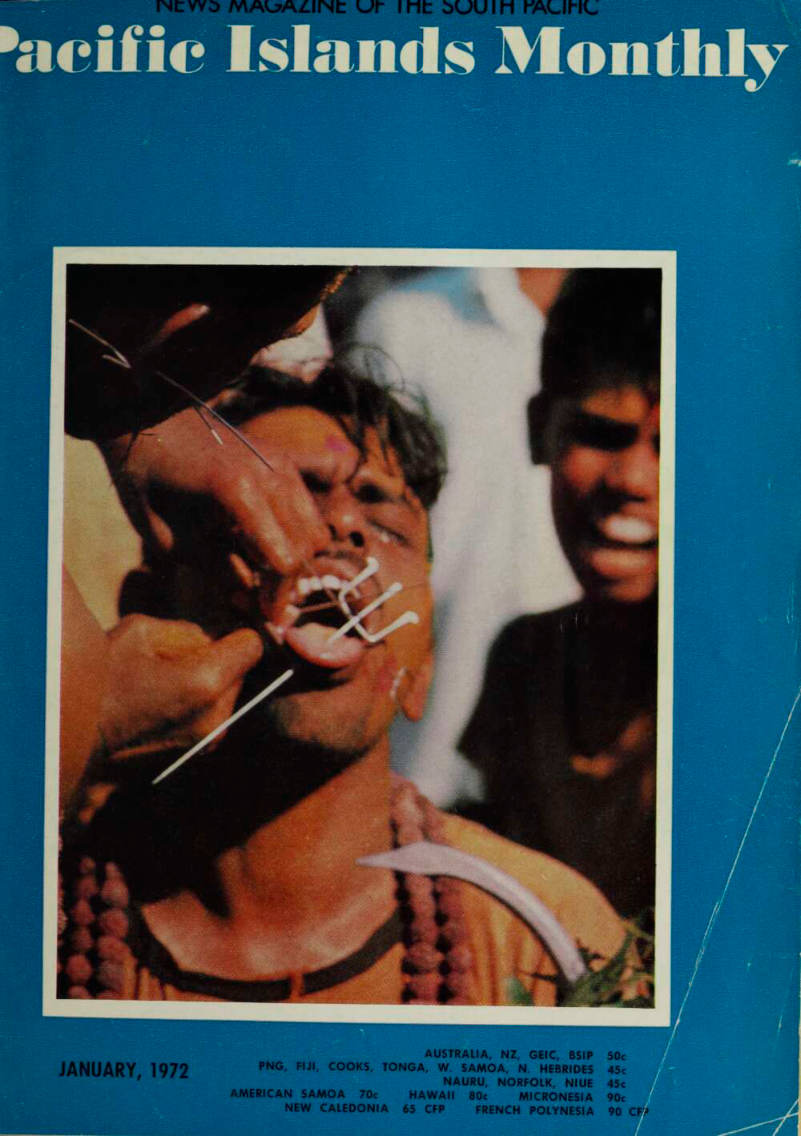 1
1 2
2 3
3 4
4 5
5 6
6 7
7 8
8 9
9 10
10 11
11 12
12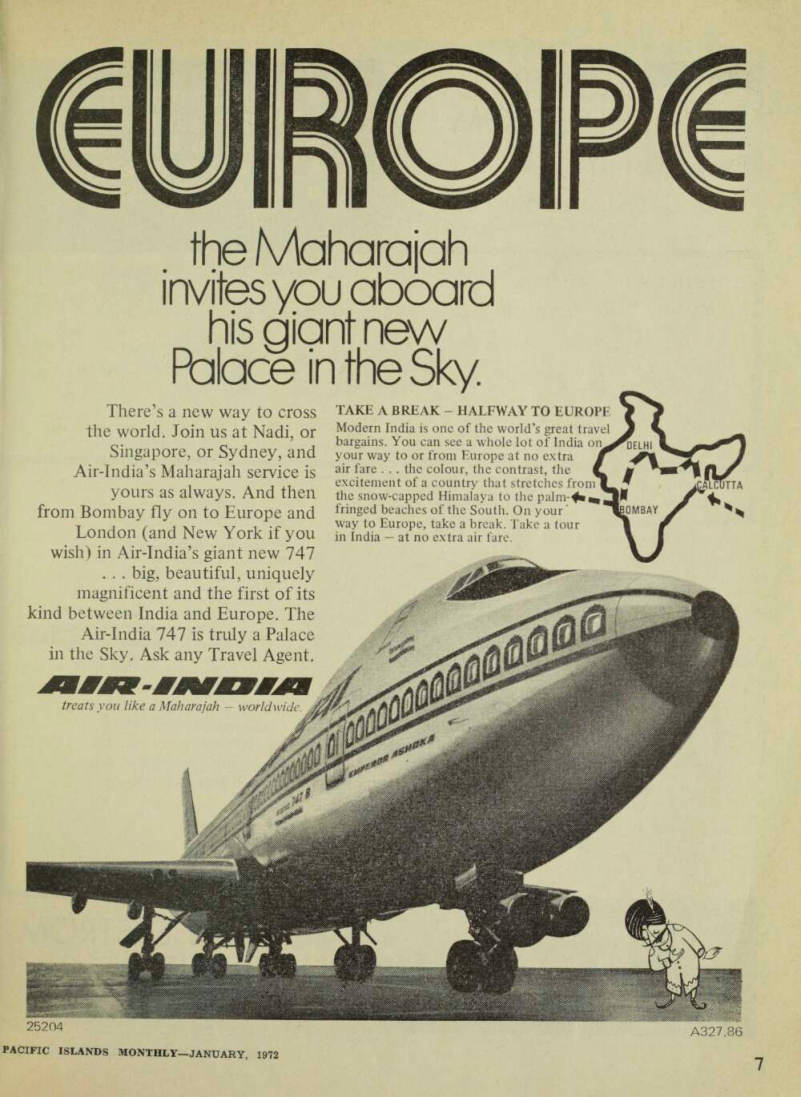 13
13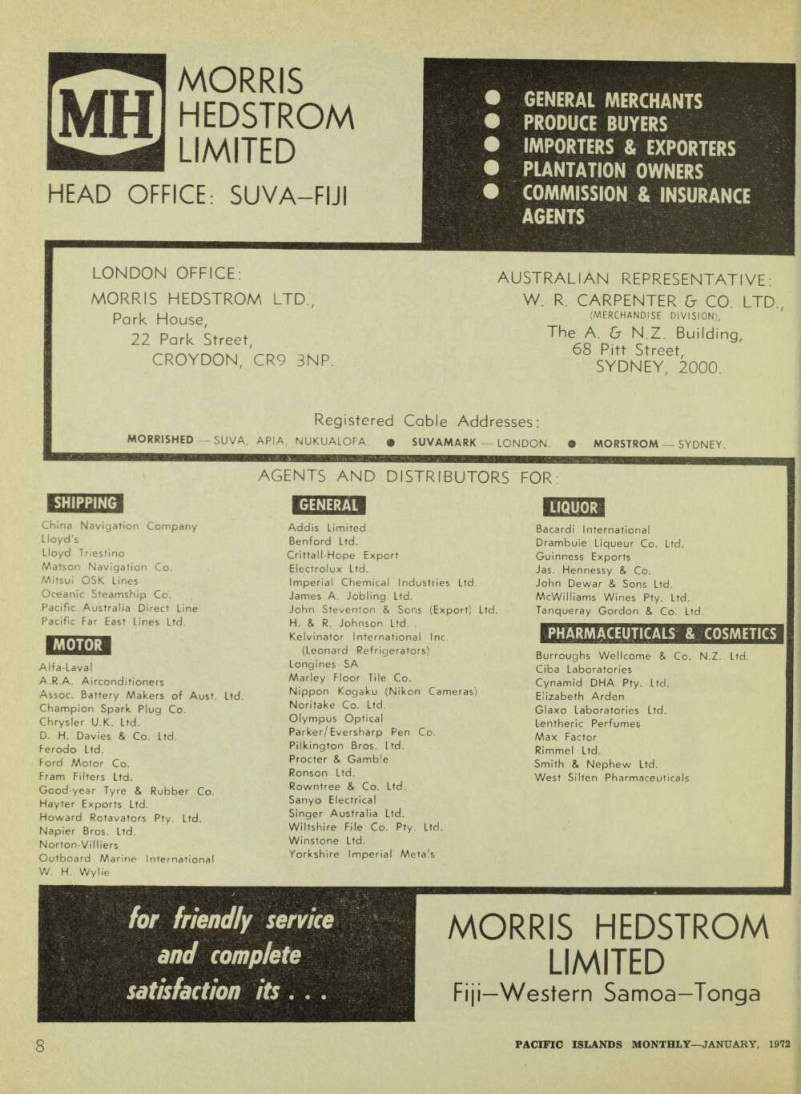 14
14 15
15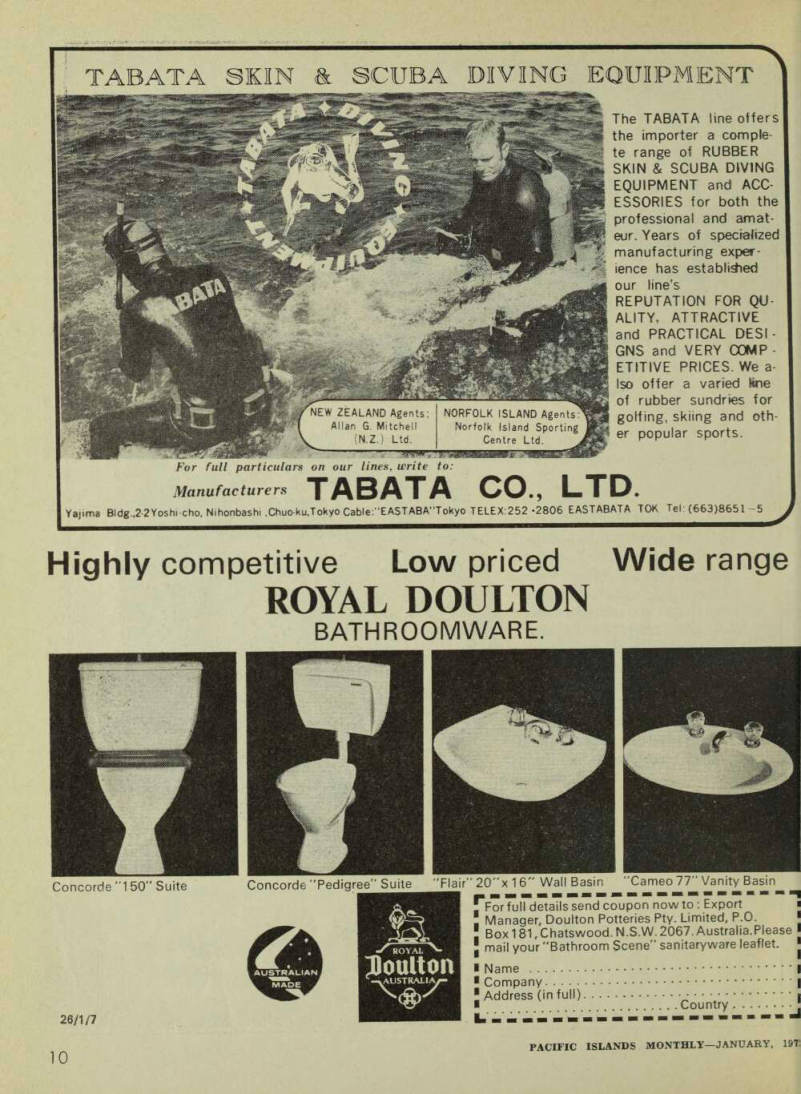 16
16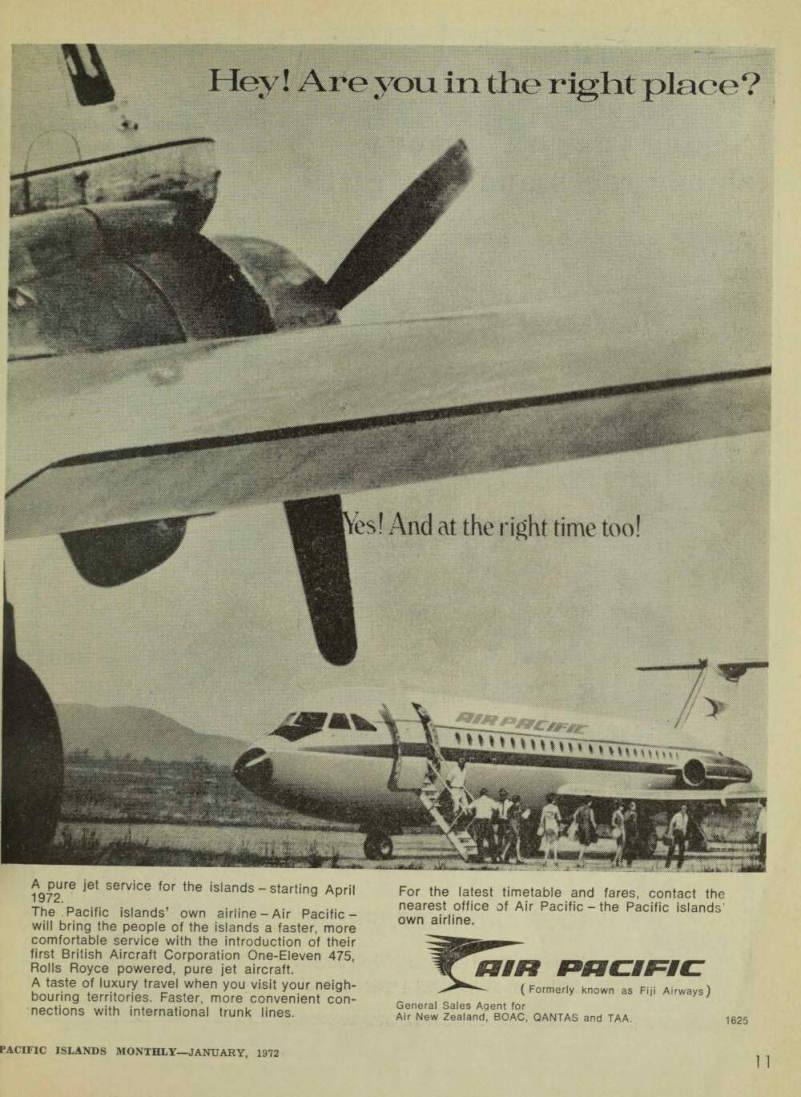 17
17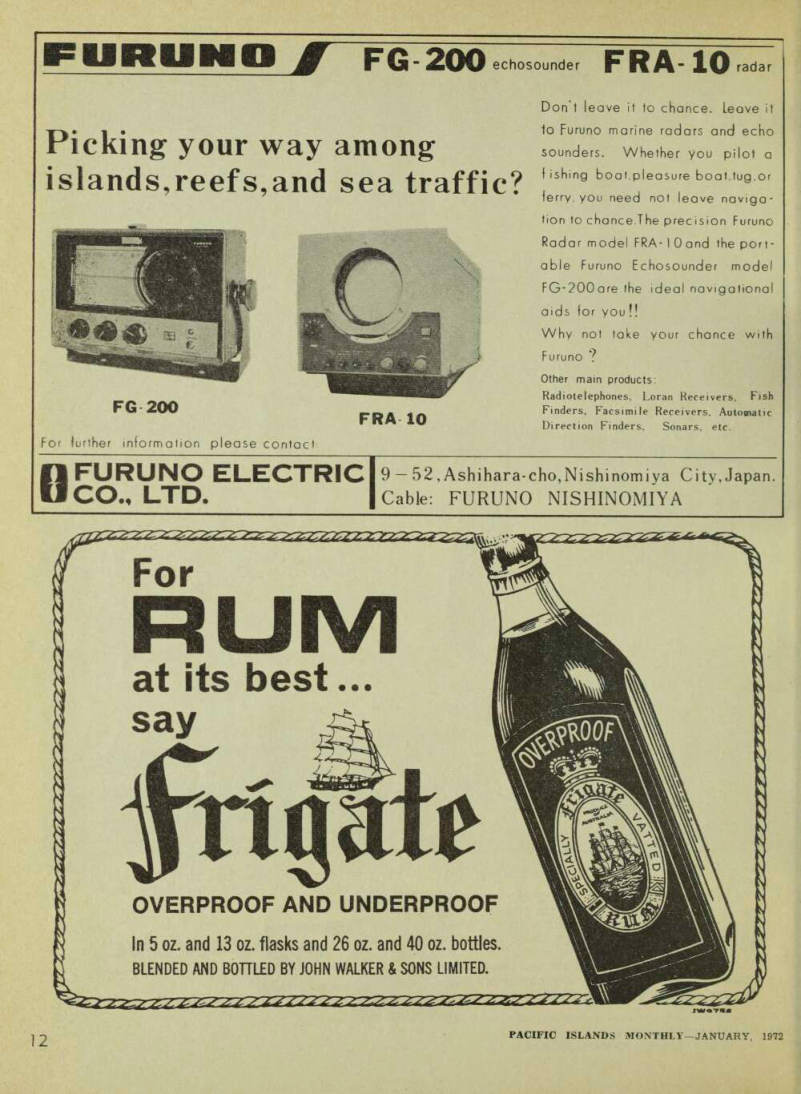 18
18 19
19 20
20 21
21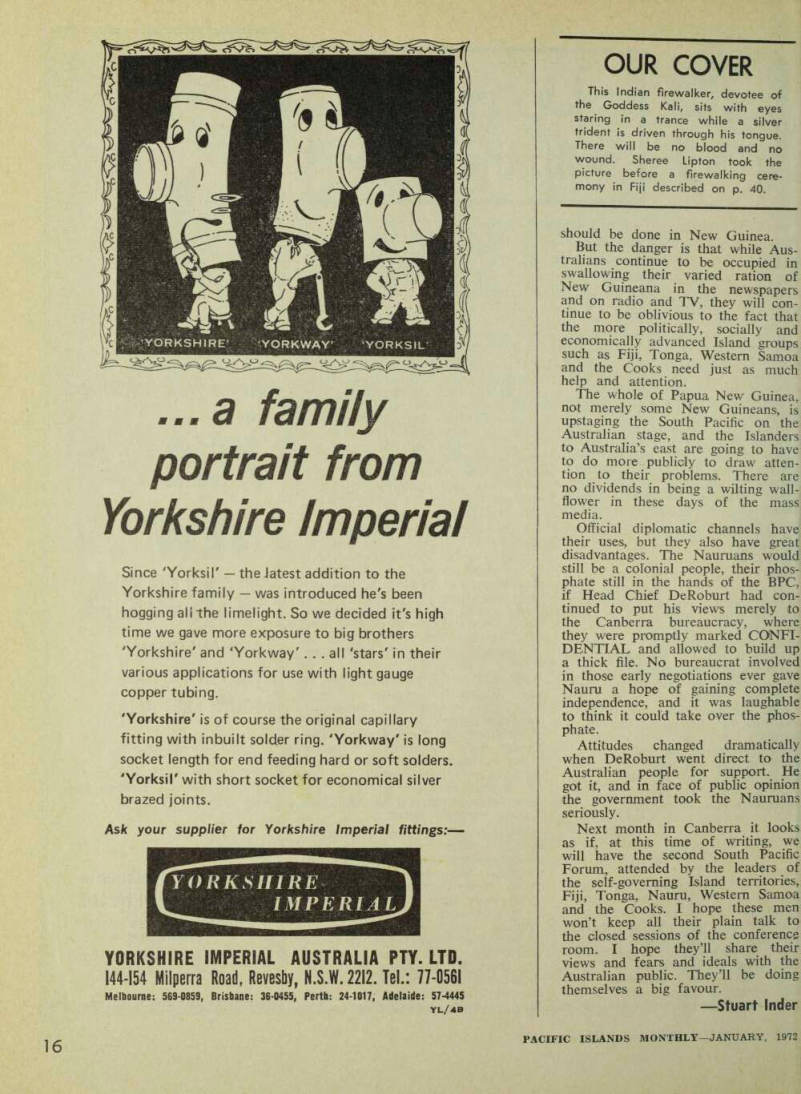 22
22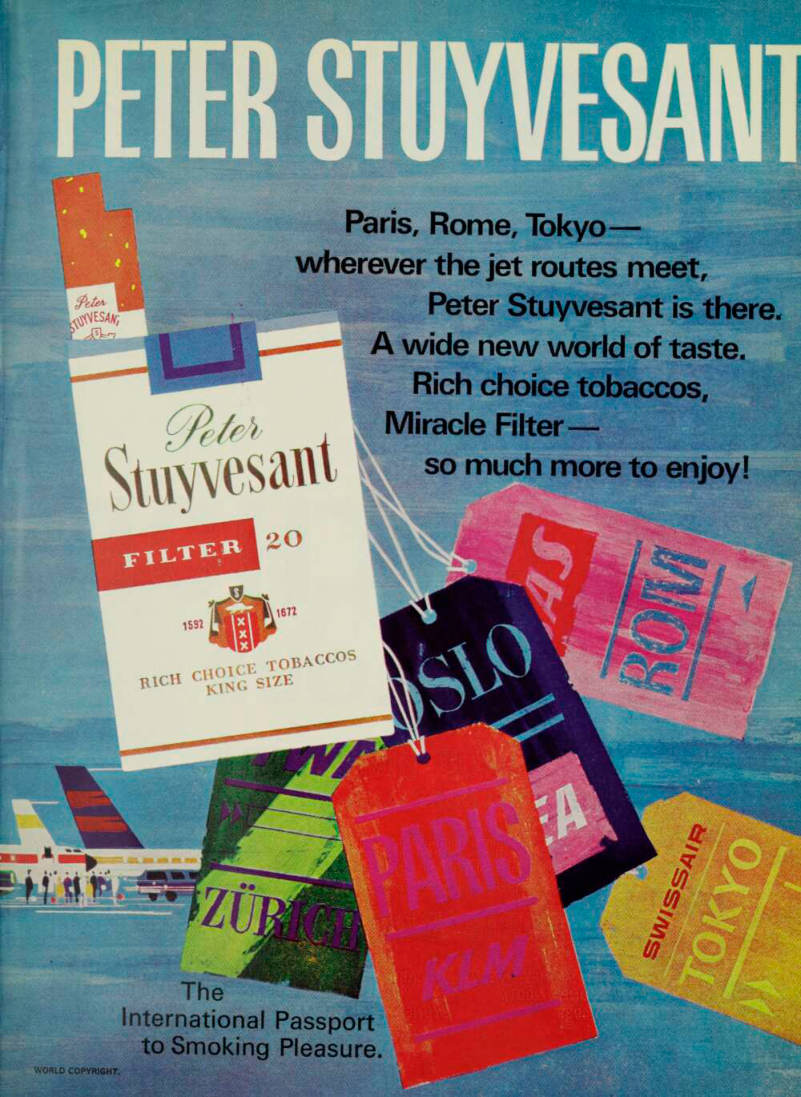 23
23 24
24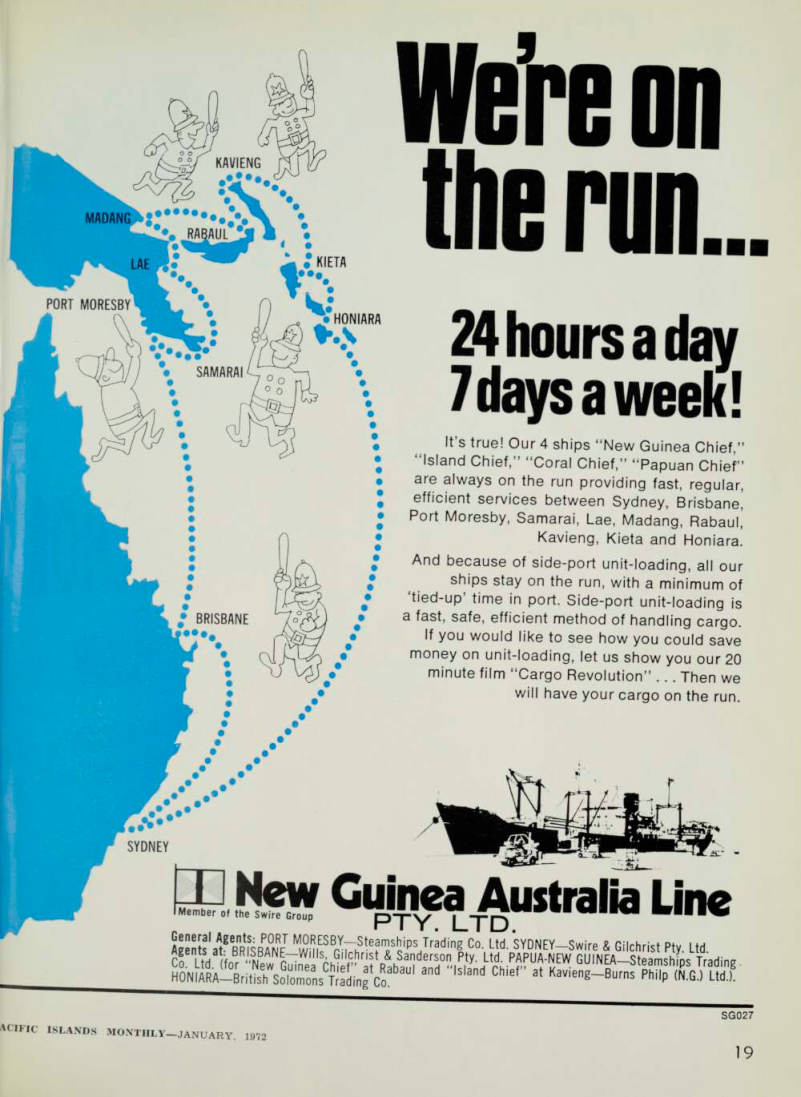 25
25 26
26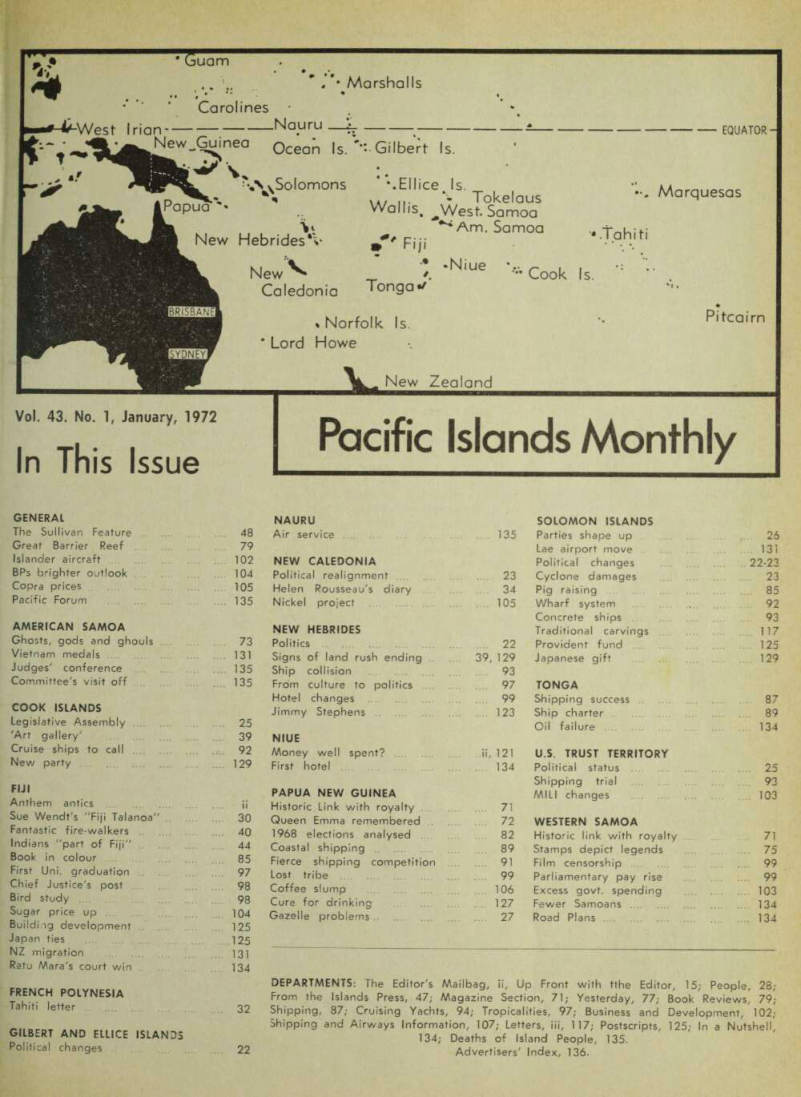 27
27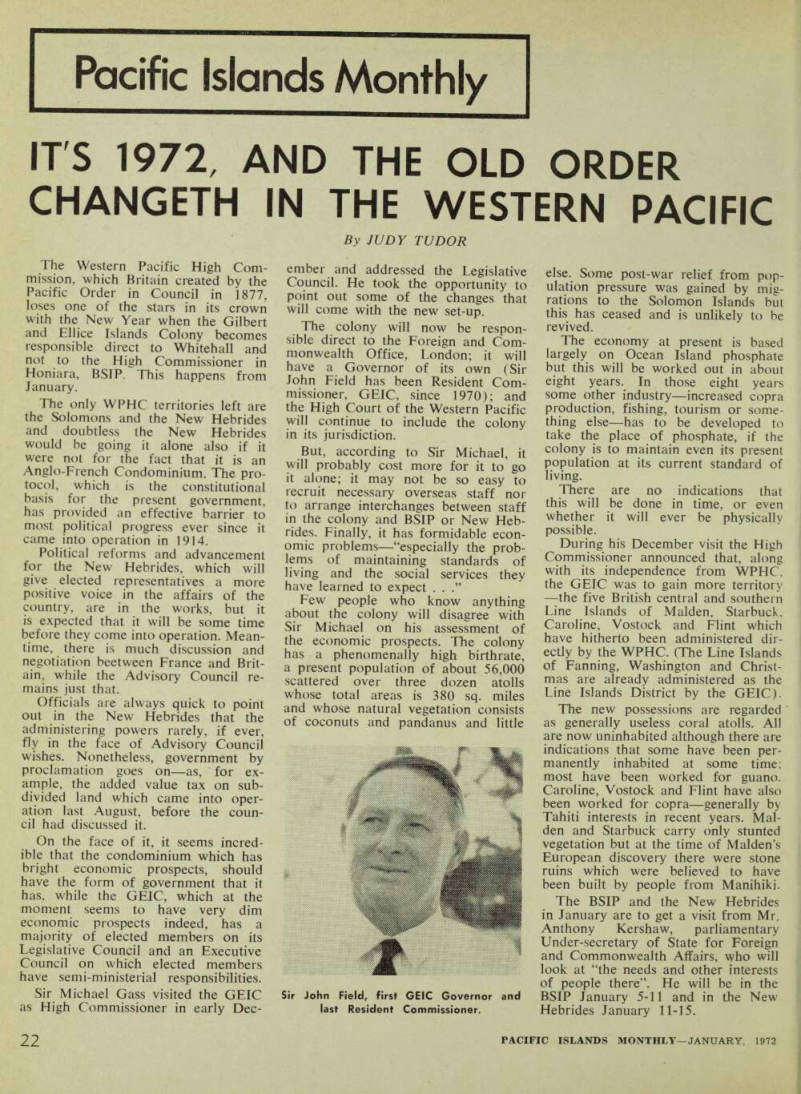 28
28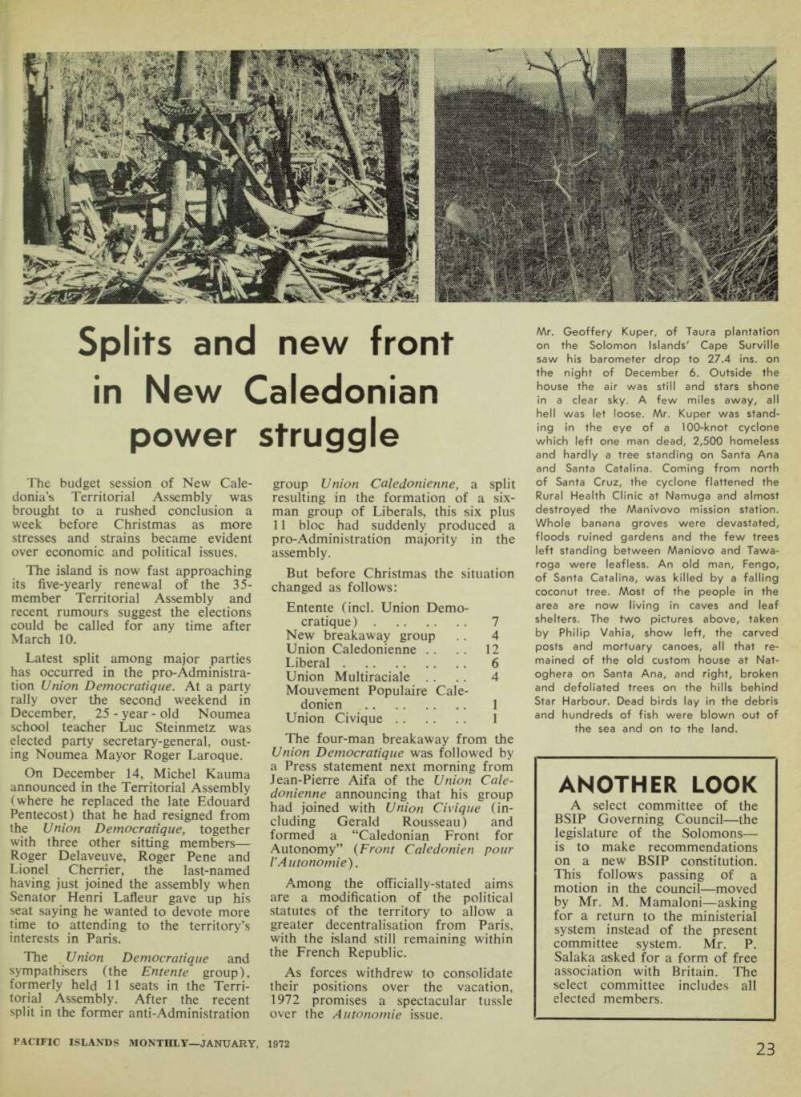 29
29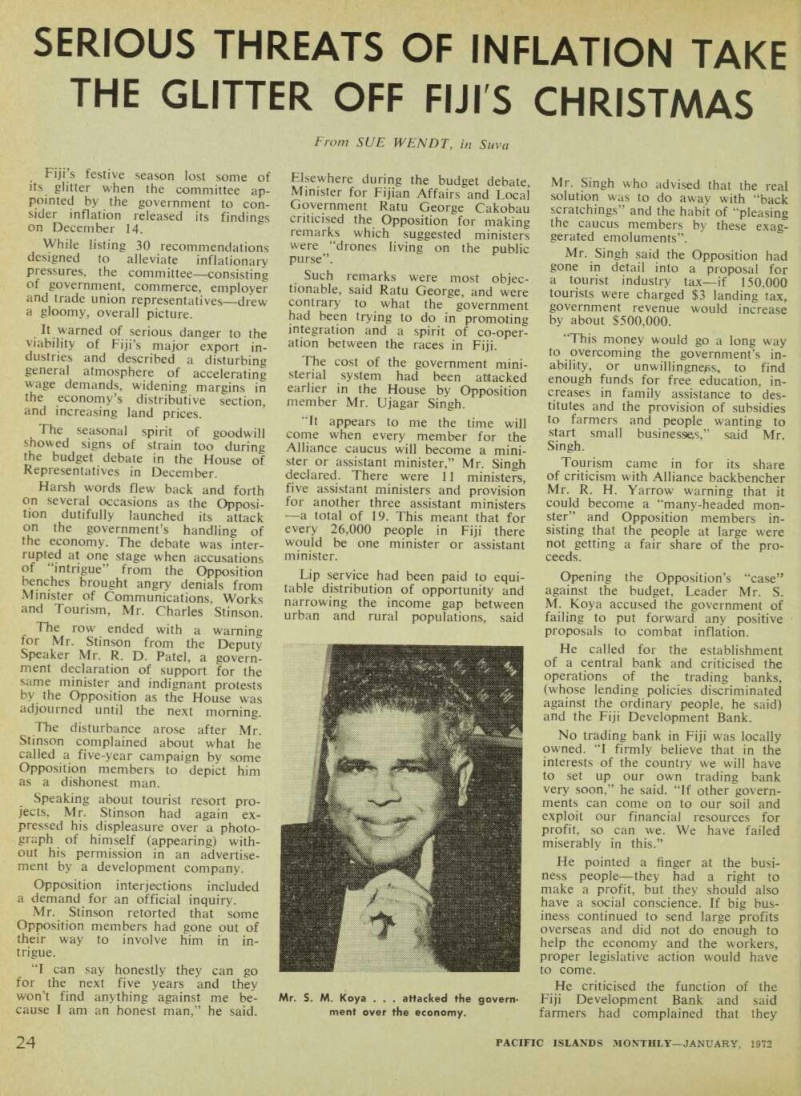 30
30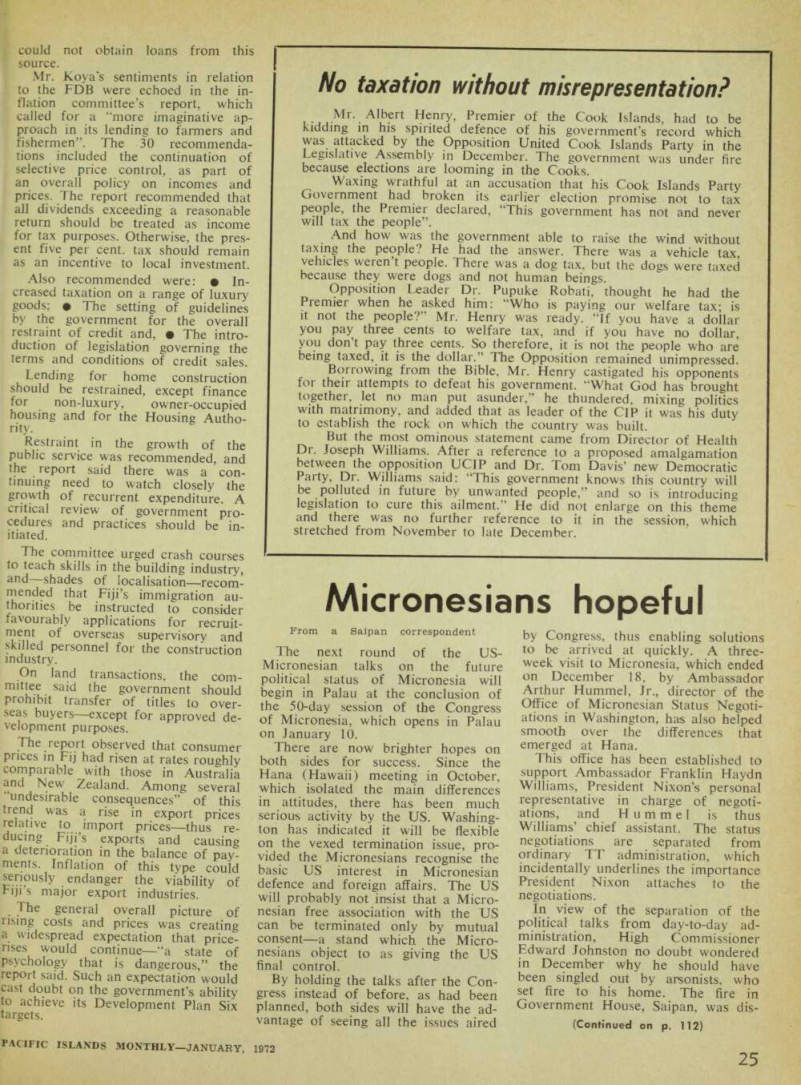 31
31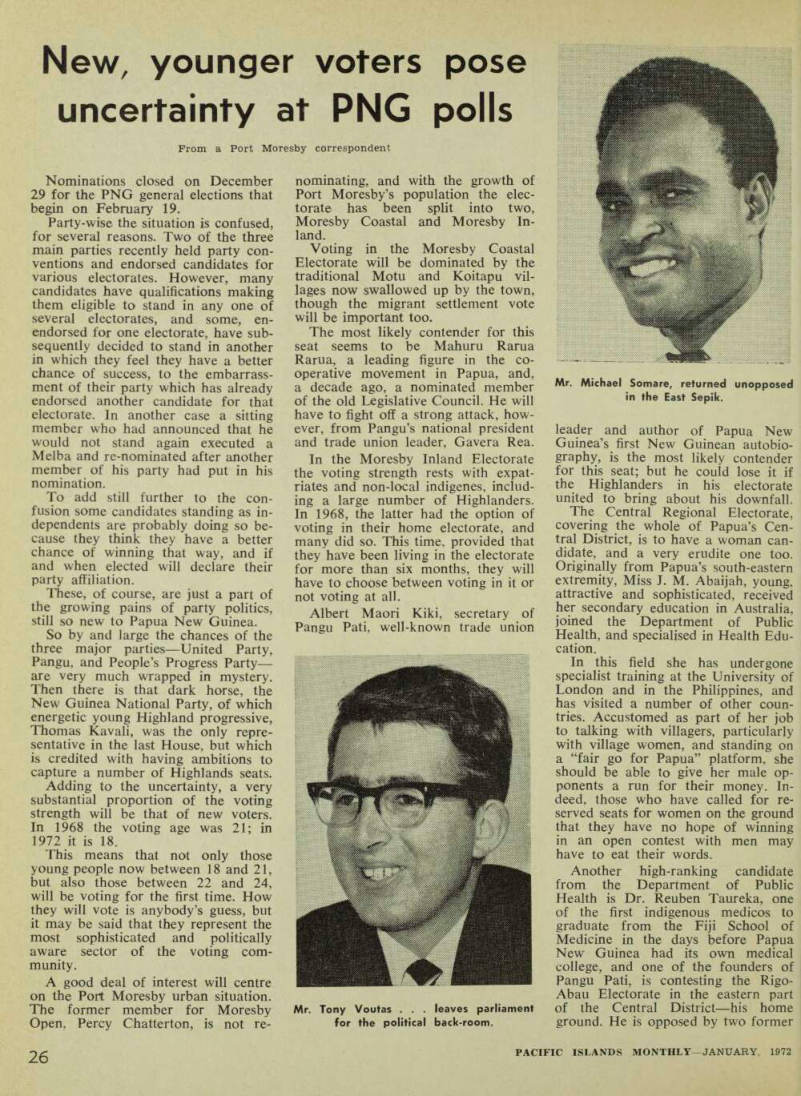 32
32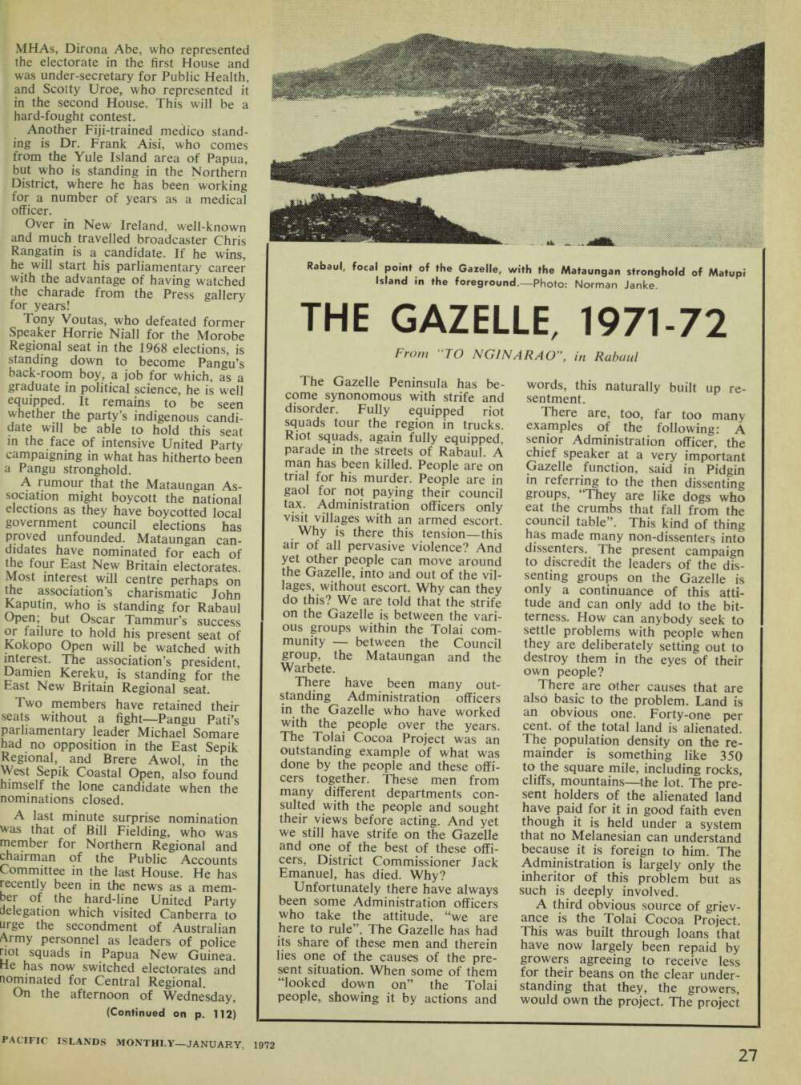 33
33 34
34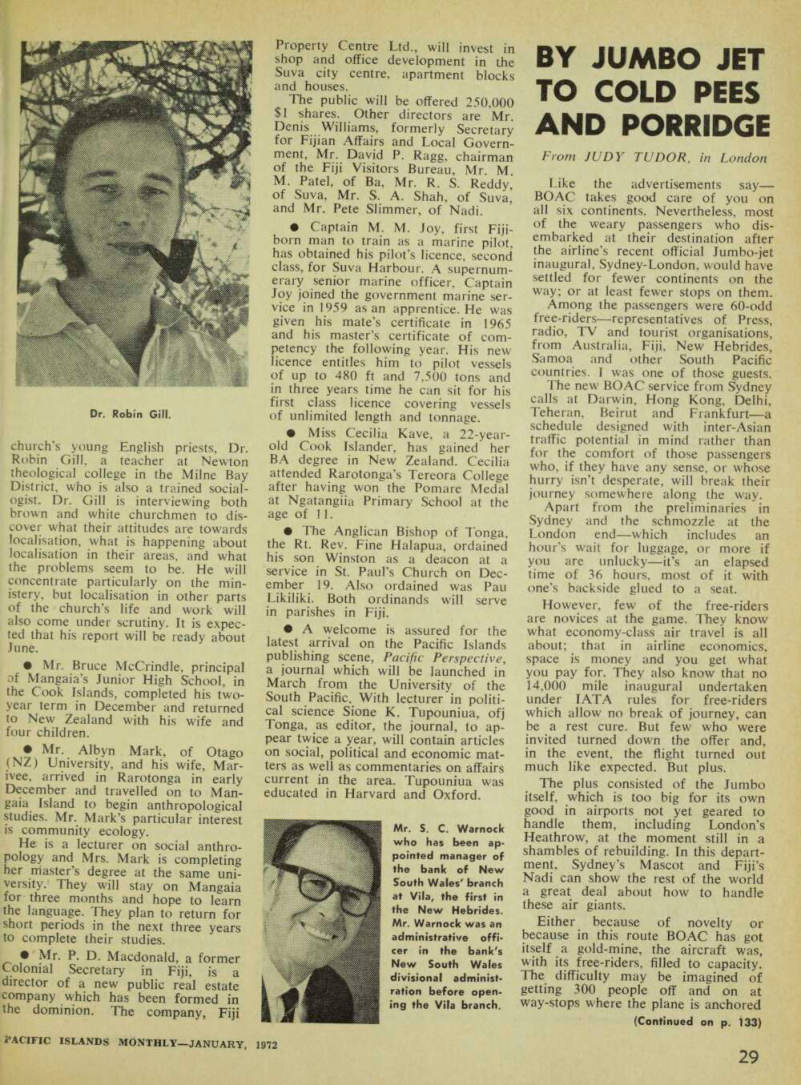 35
35 36
36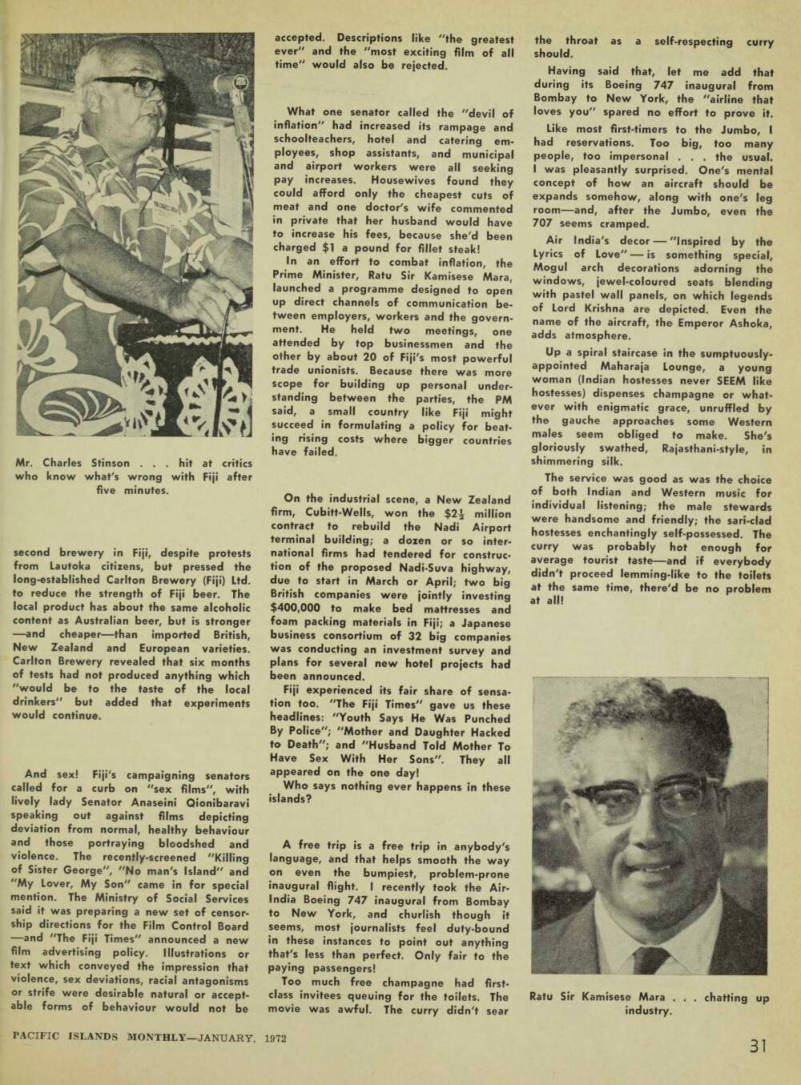 37
37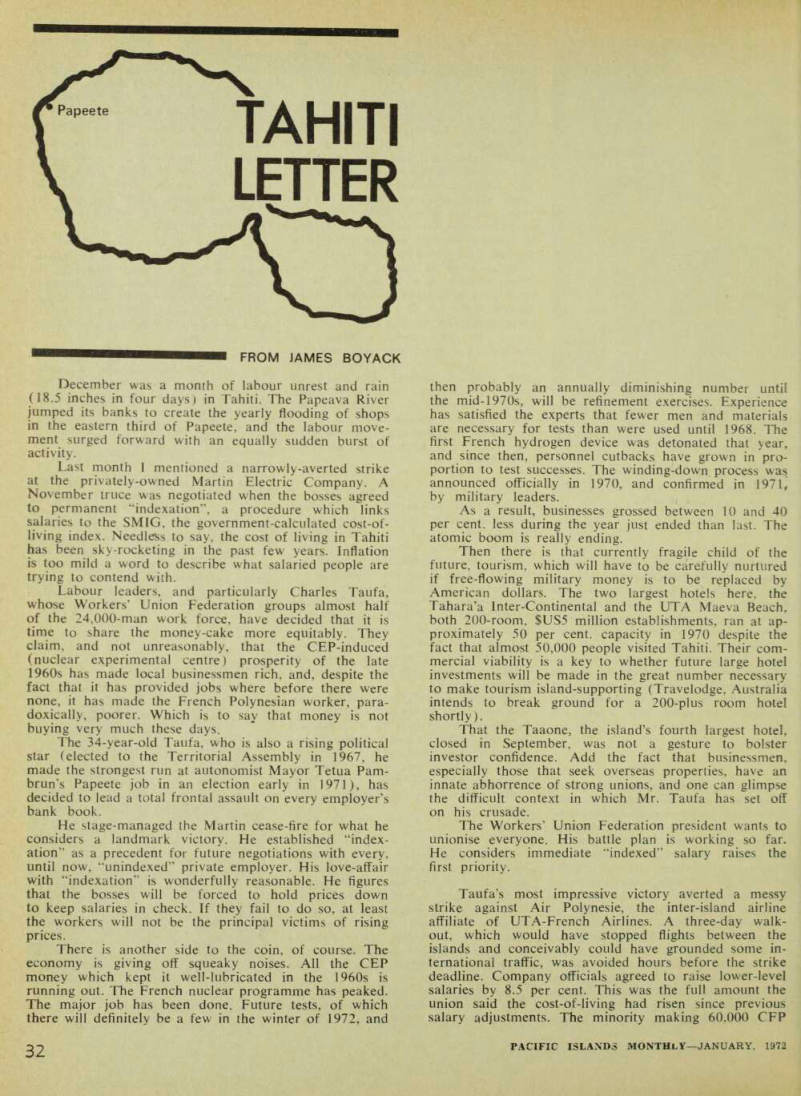 38
38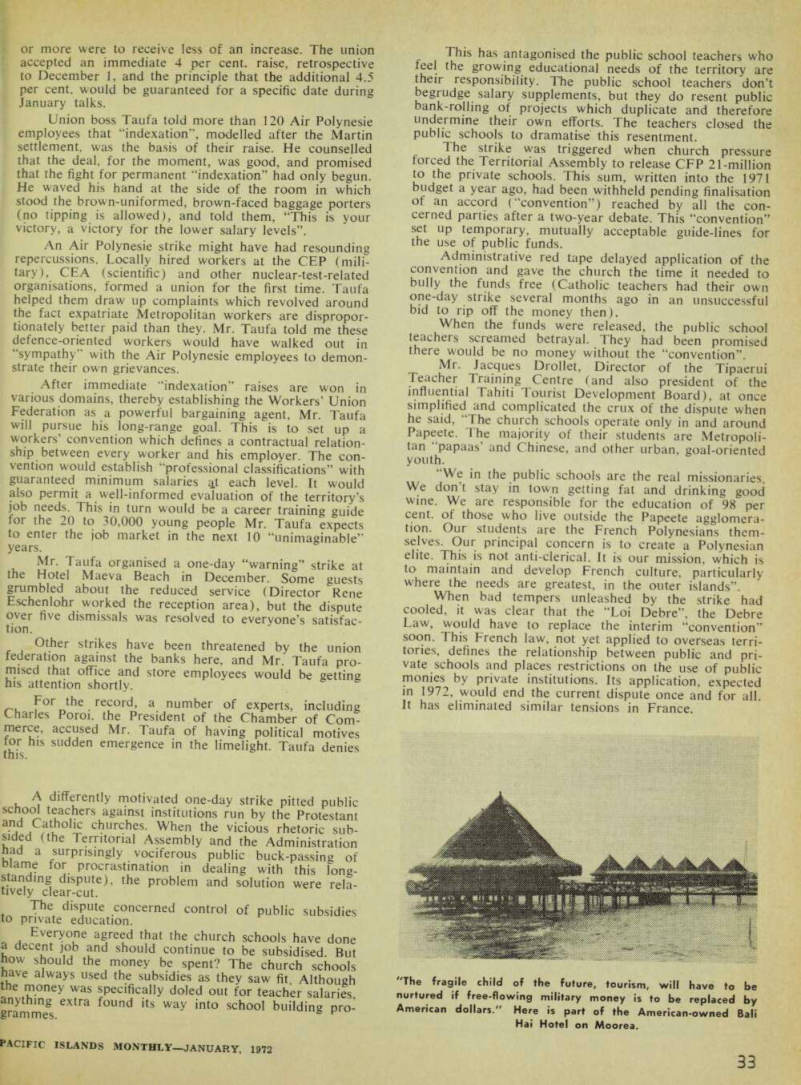 39
39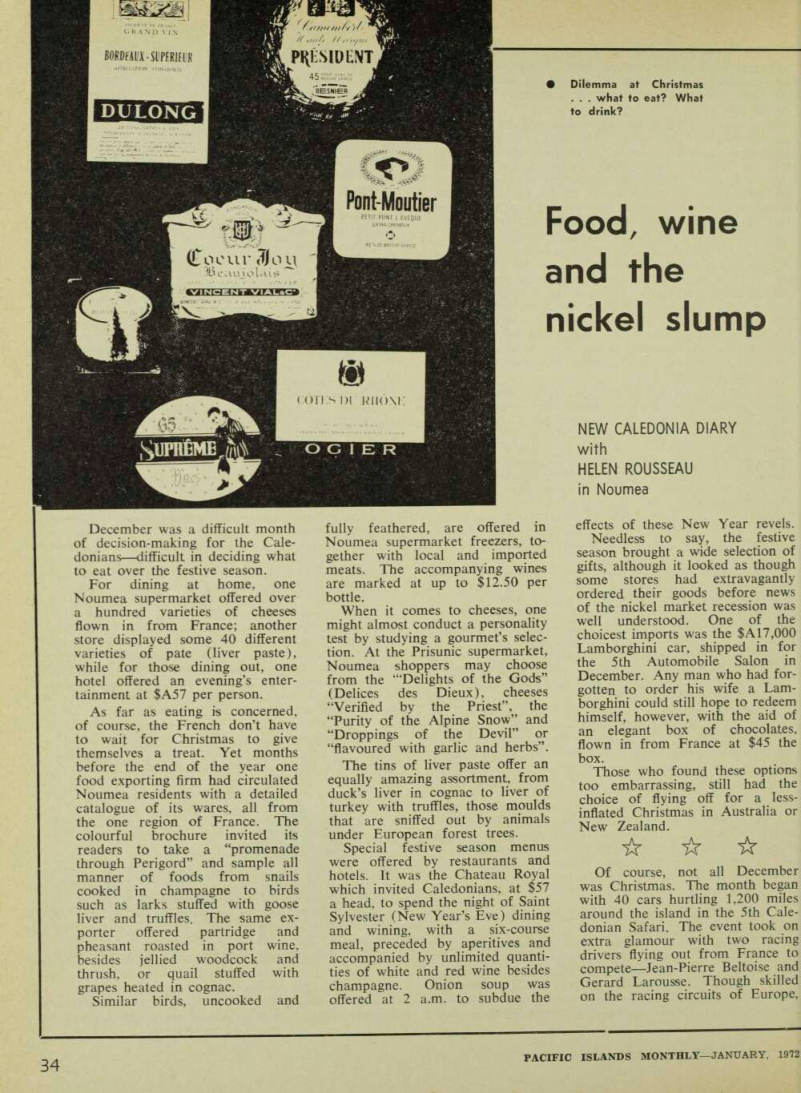 40
40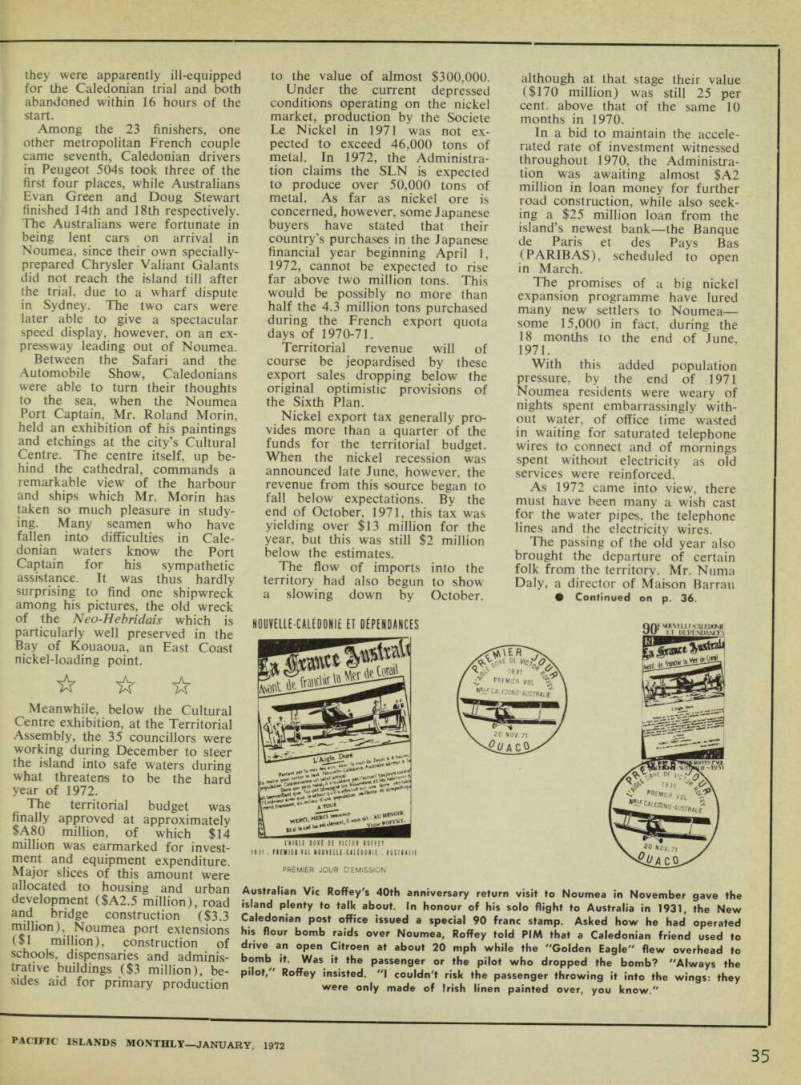 41
41 42
42 43
43 44
44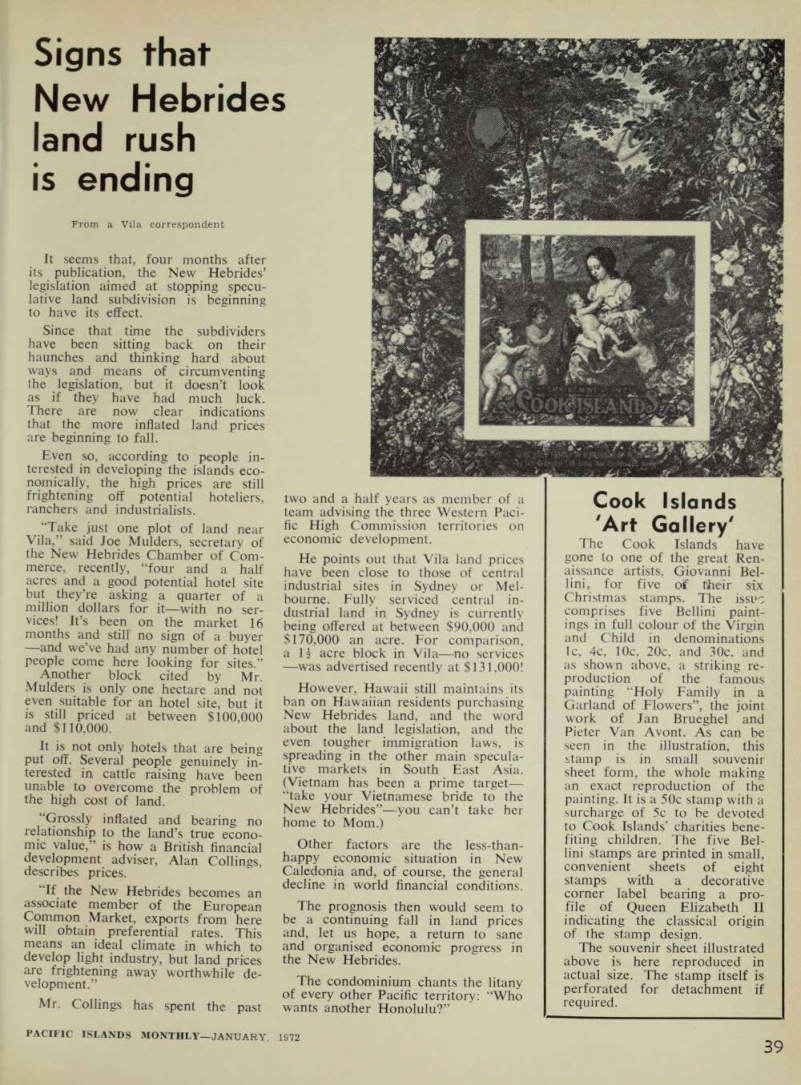 45
45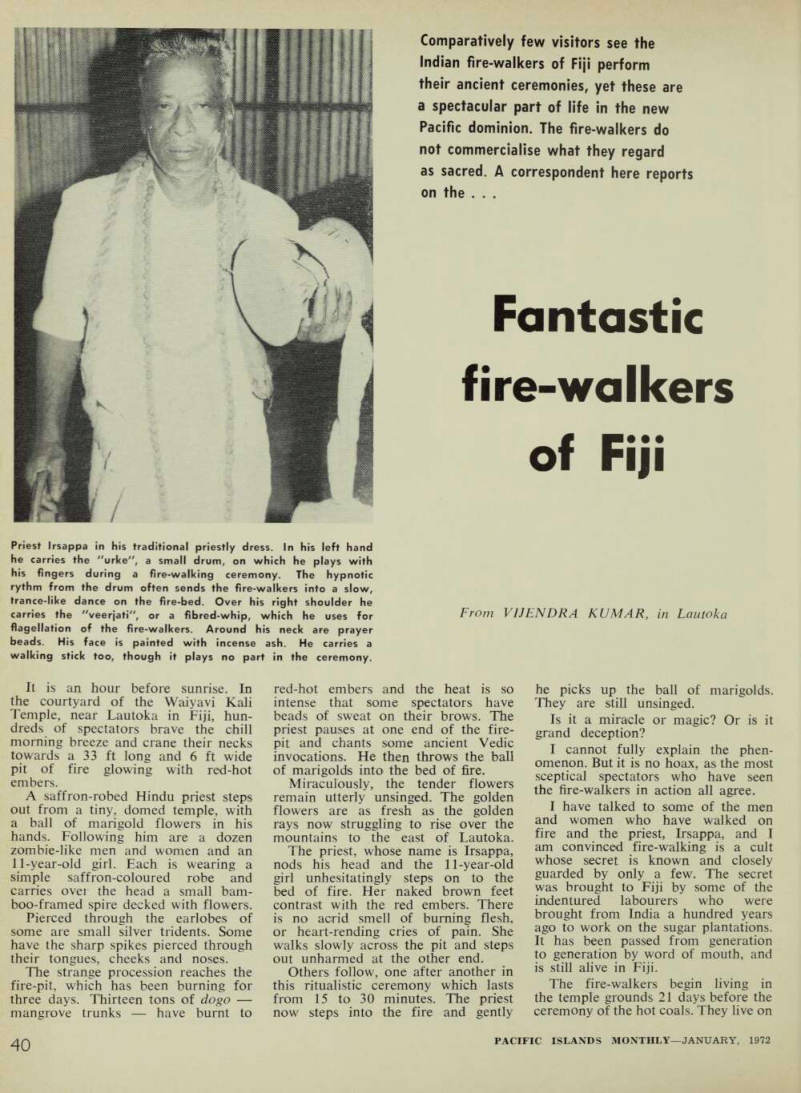 46
46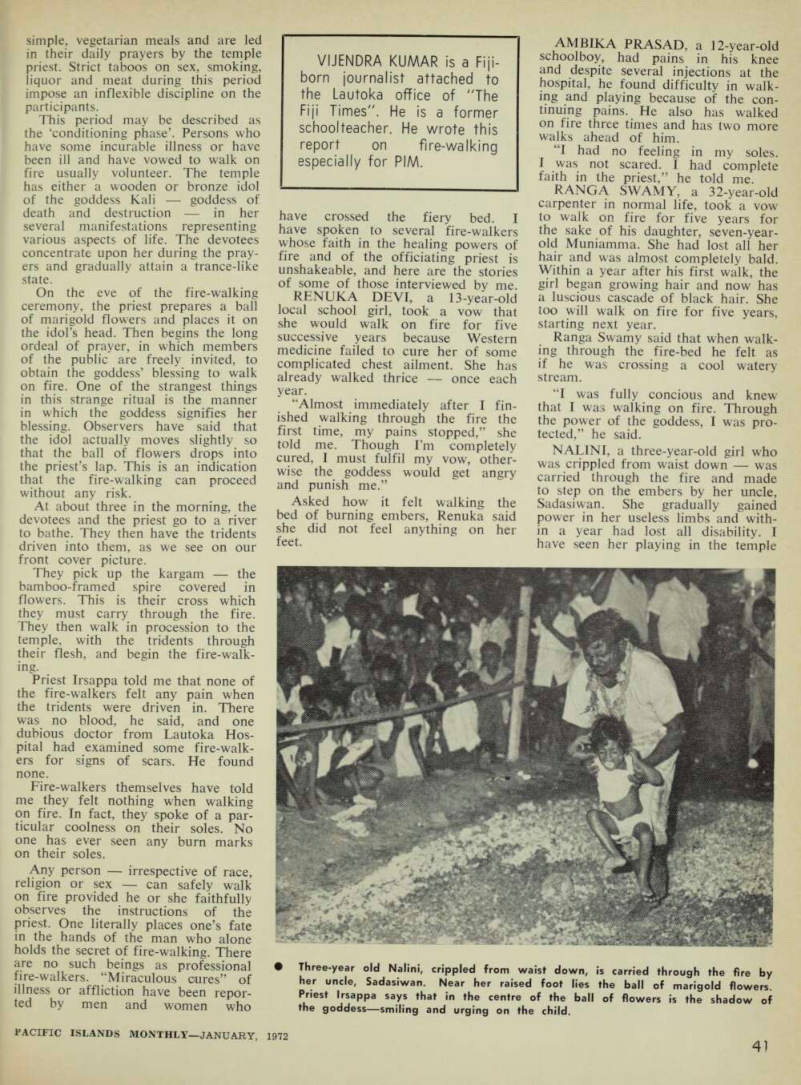 47
47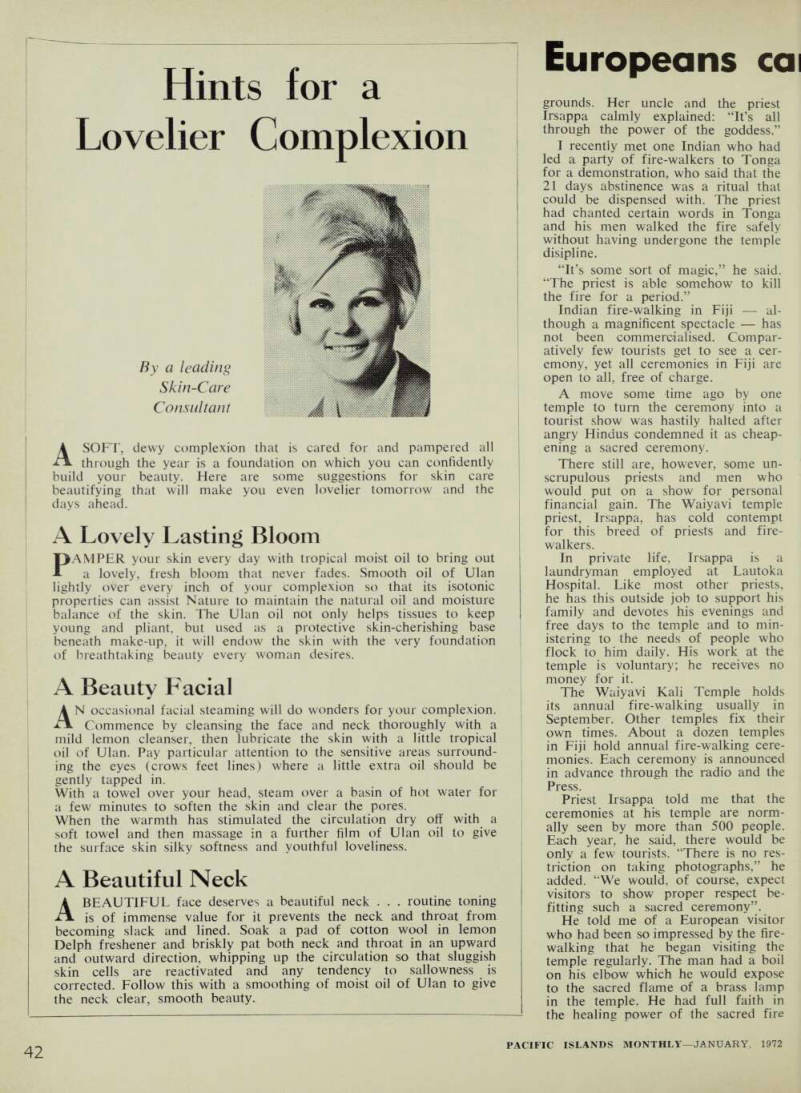 48
48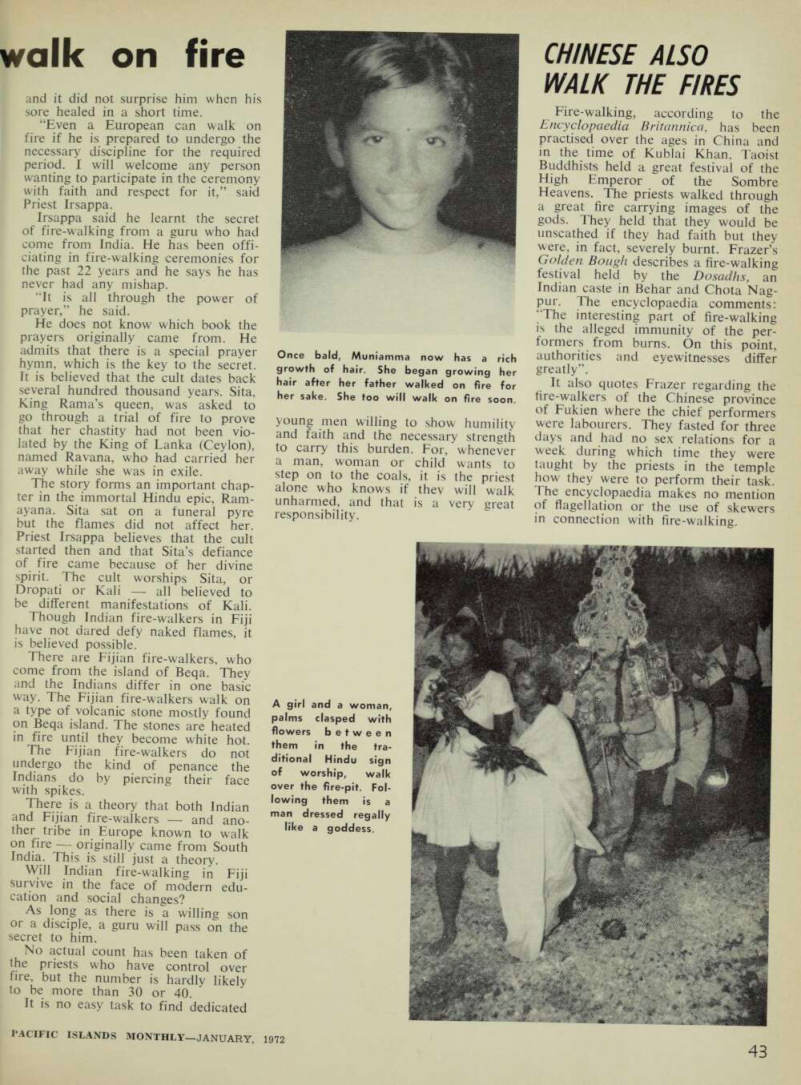 49
49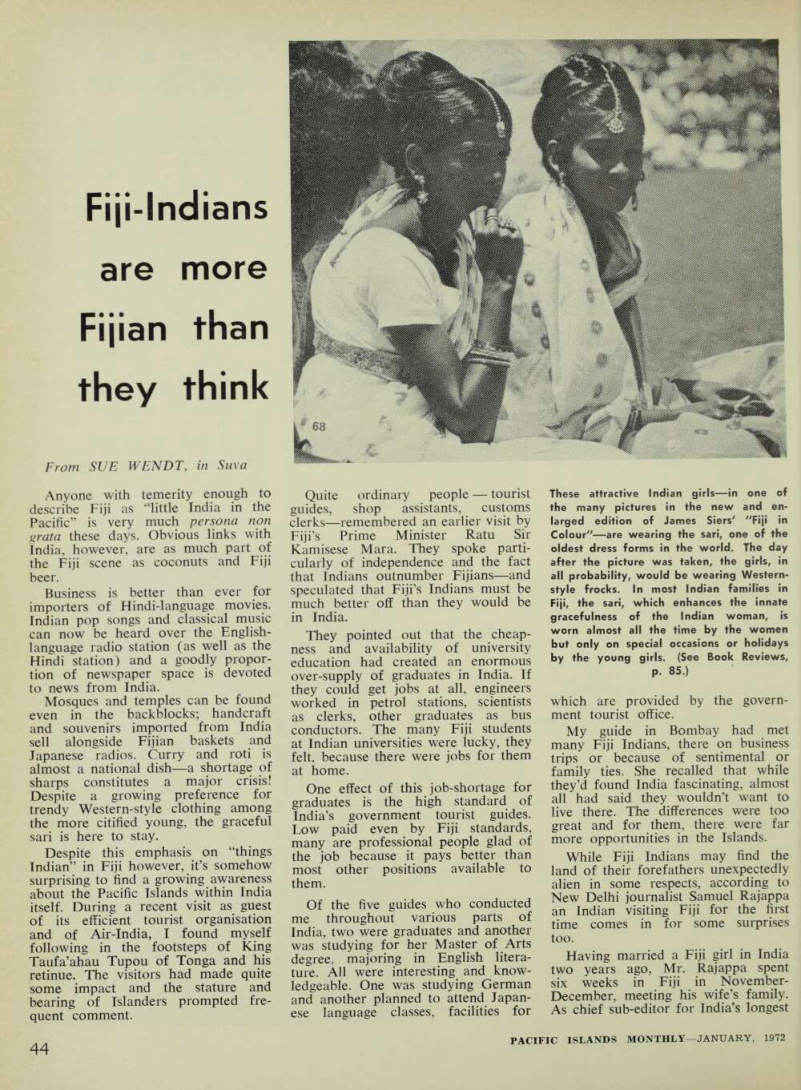 50
50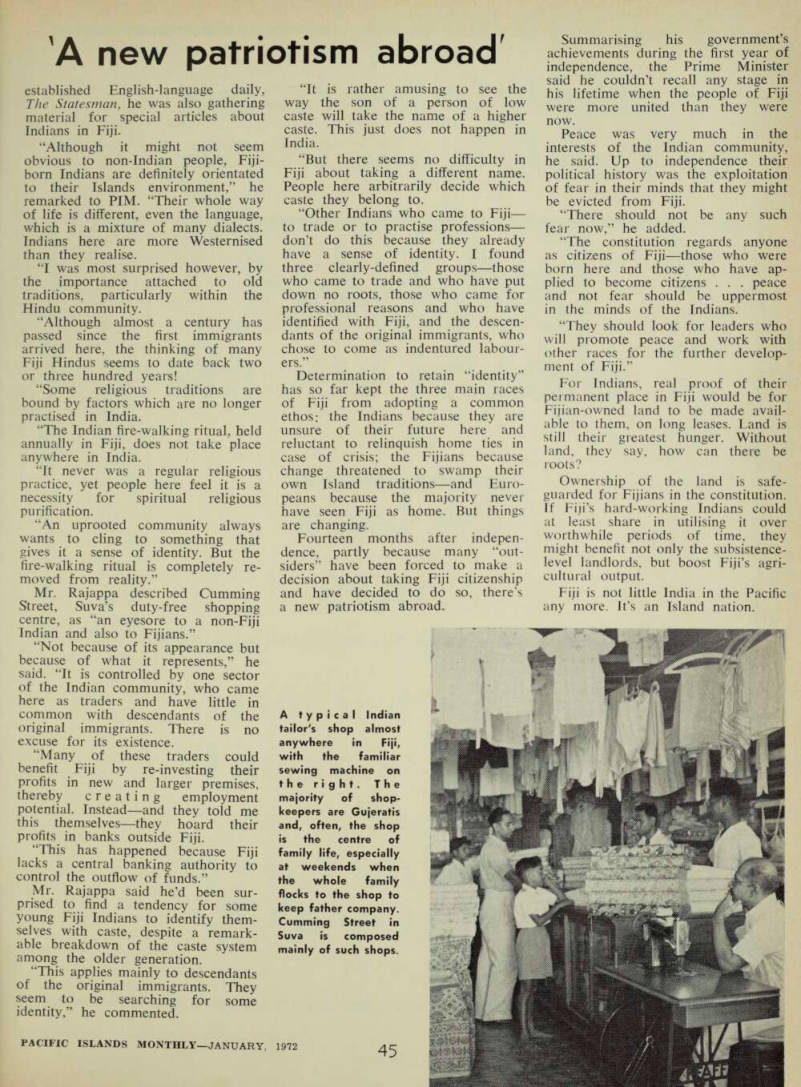 51
51 52
52 53
53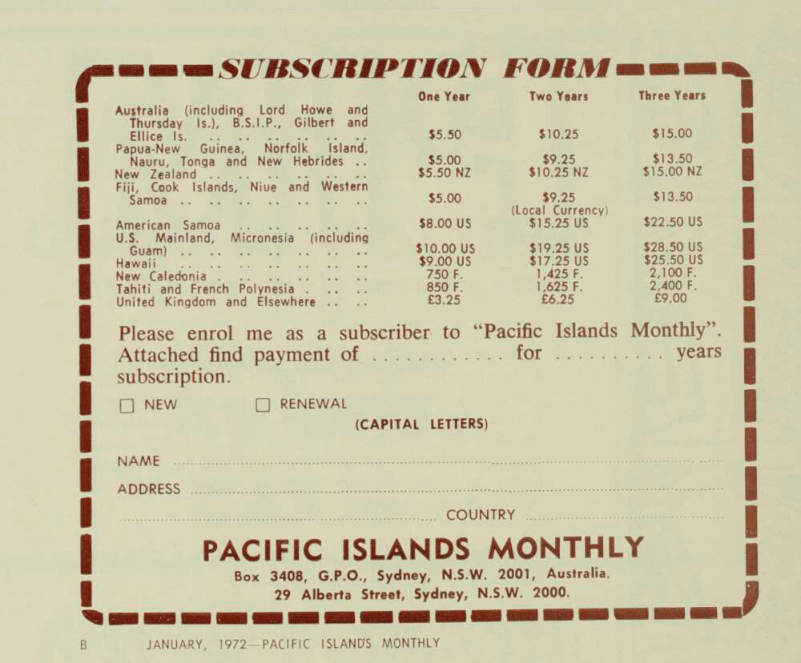 54
54 55
55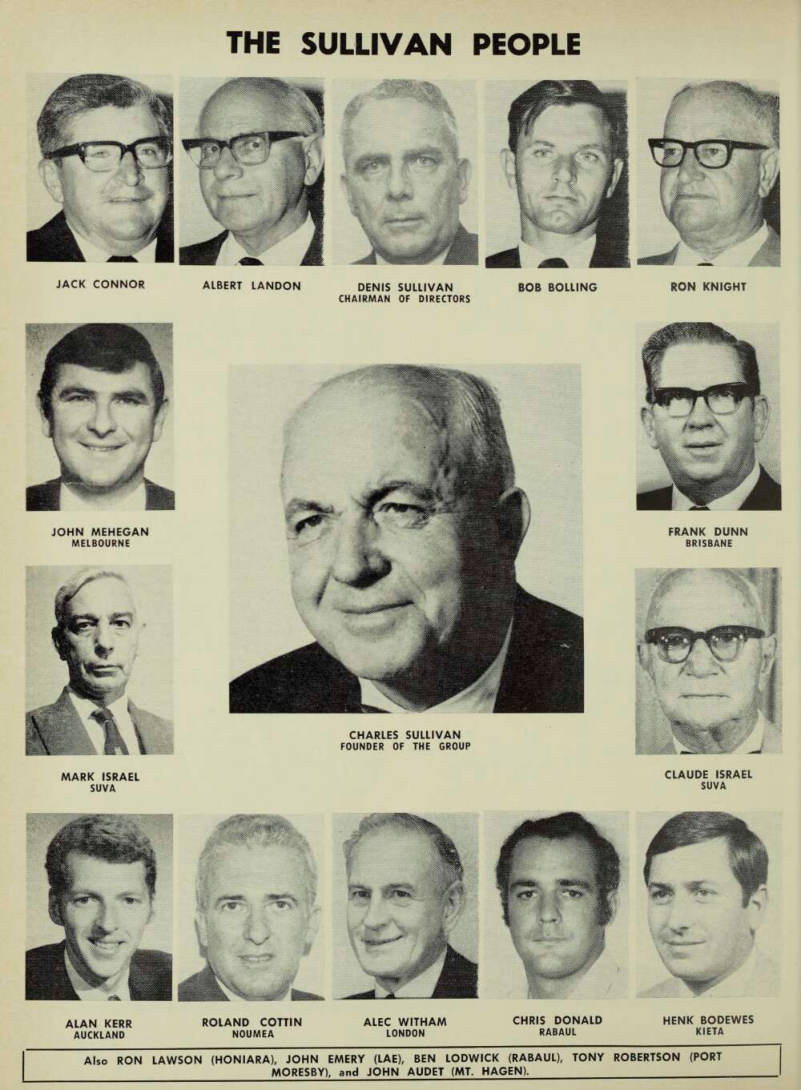 56
56 57
57 58
58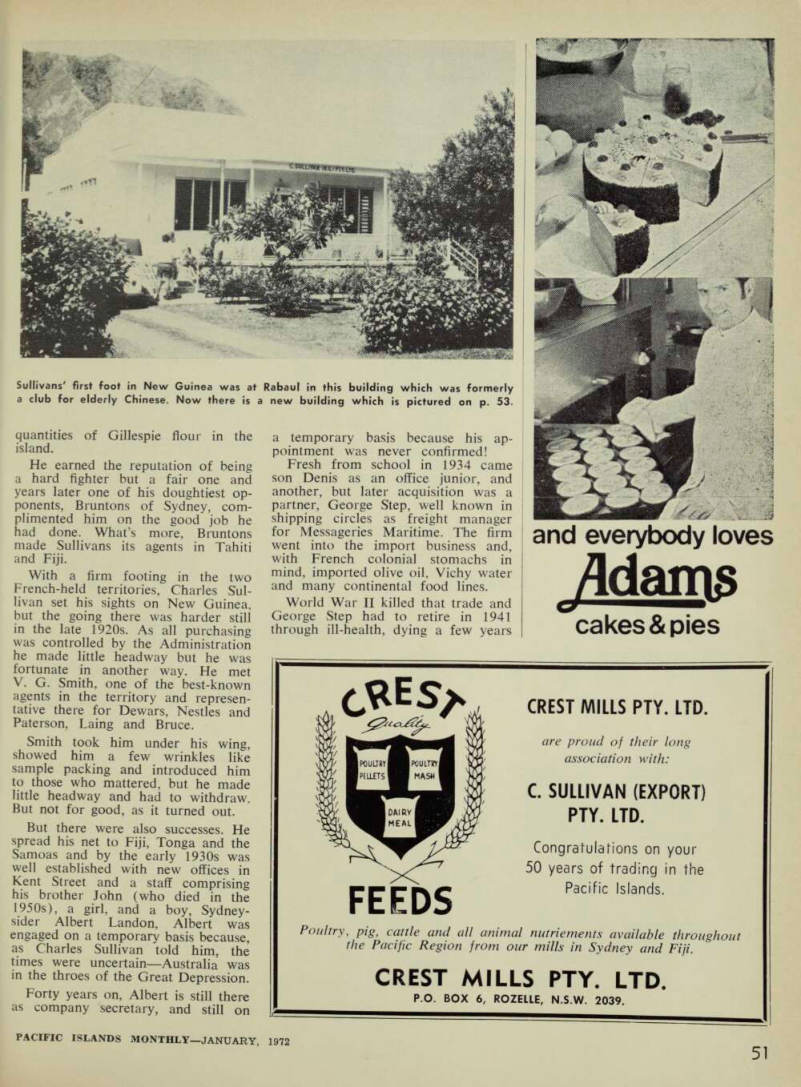 59
59 60
60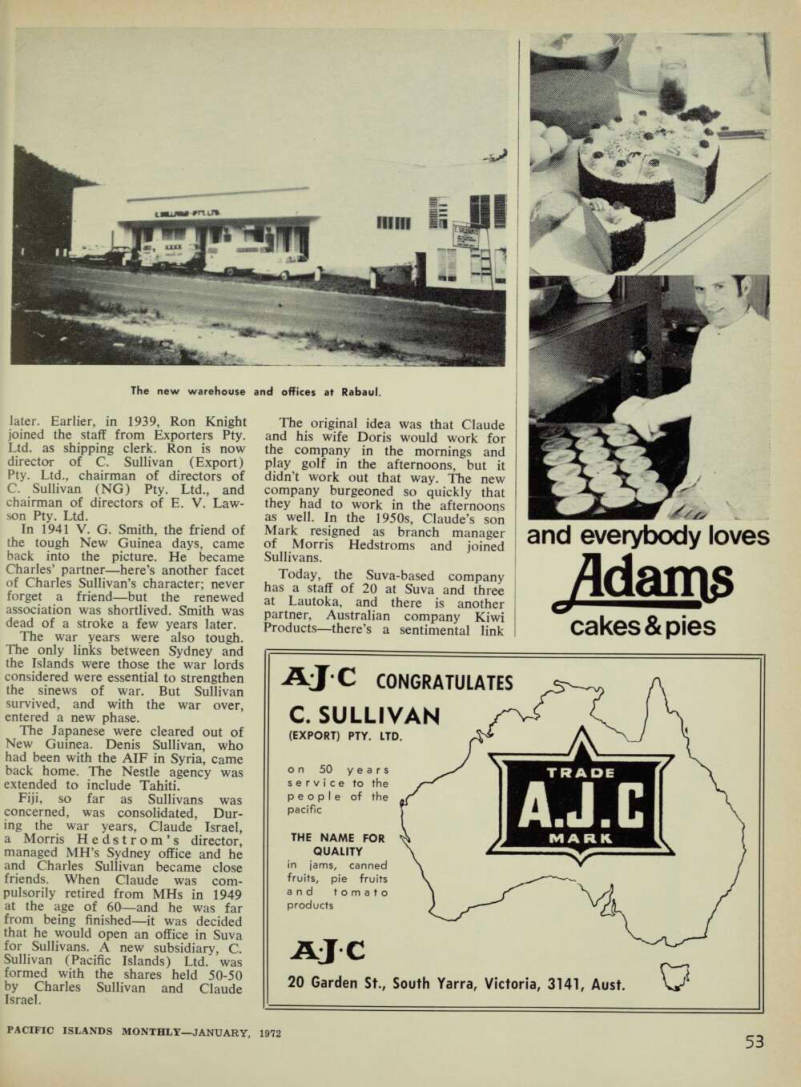 61
61 62
62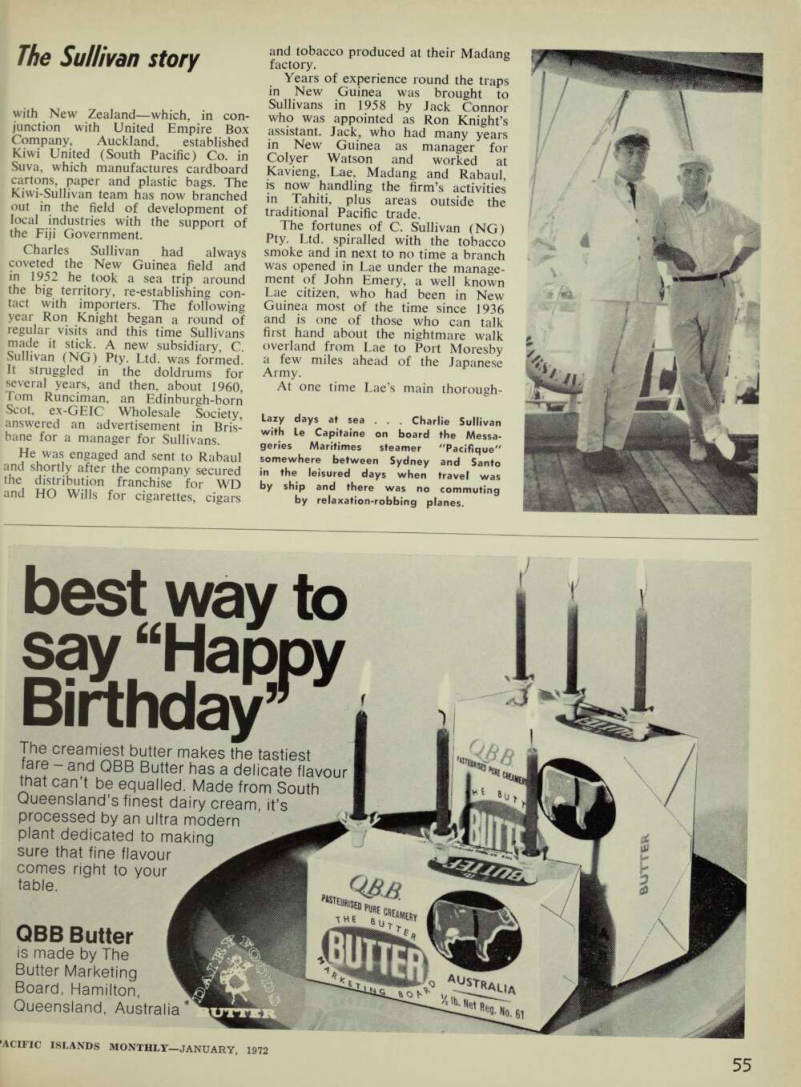 63
63 64
64 65
65 66
66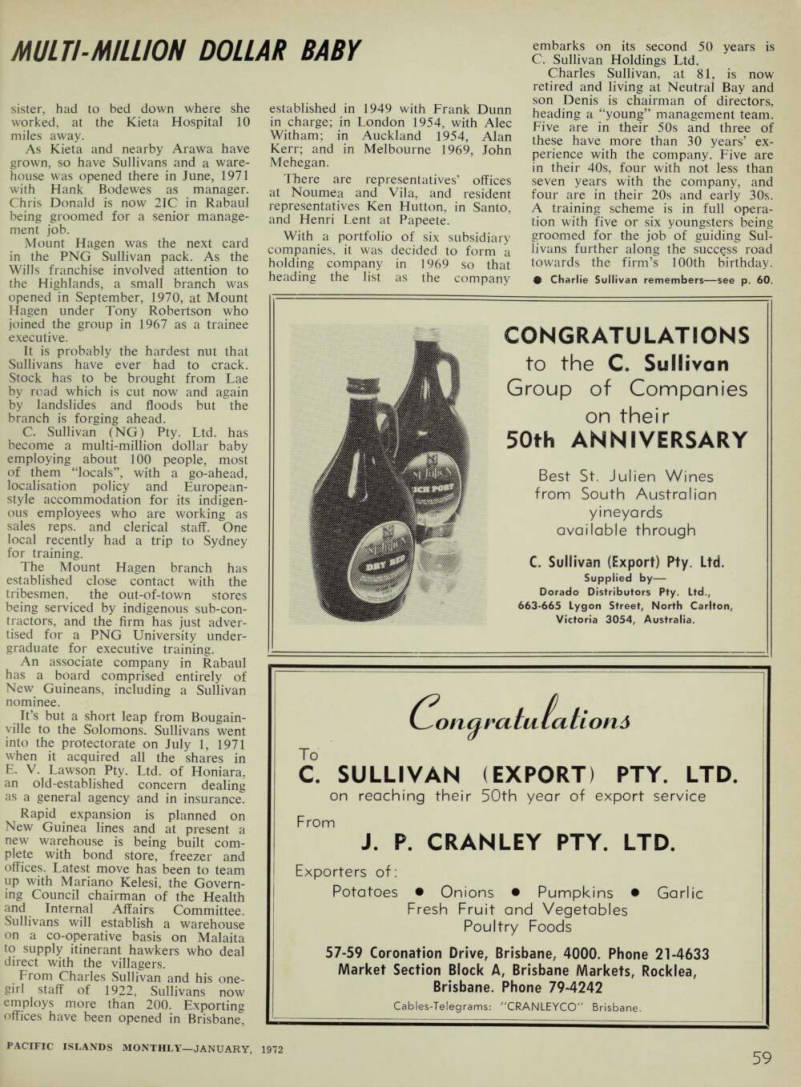 67
67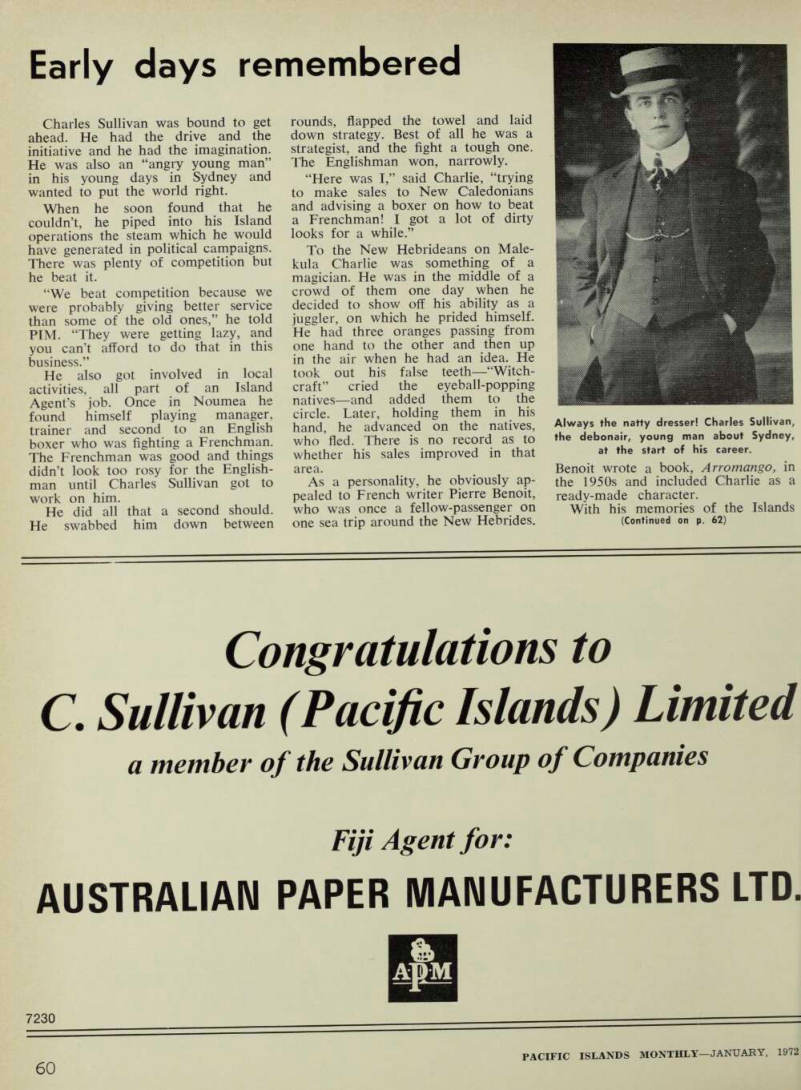 68
68 69
69 70
70 71
71 72
72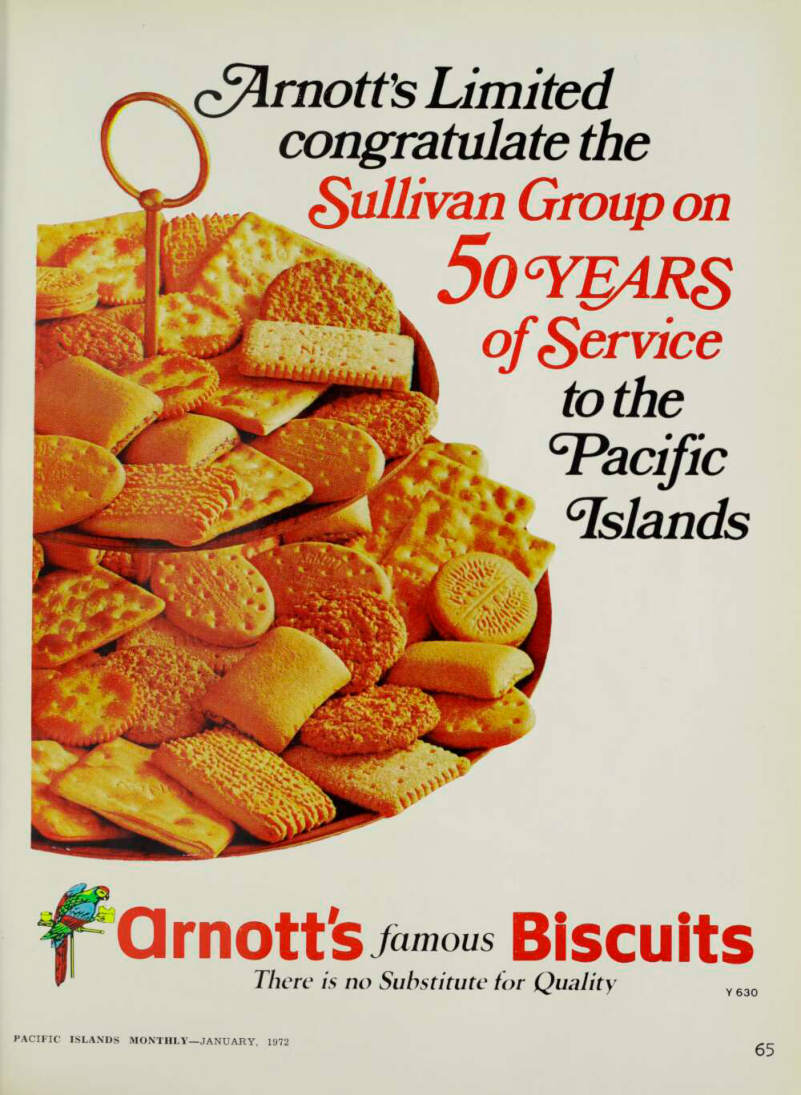 73
73 74
74 75
75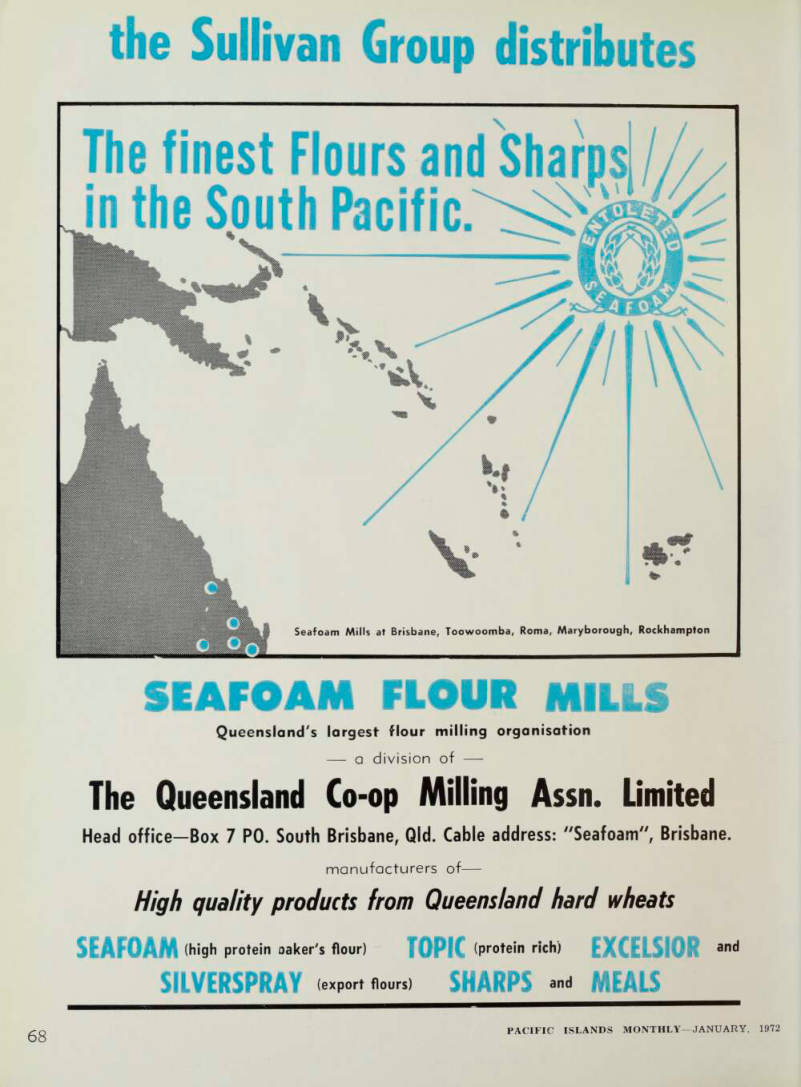 76
76 77
77 78
78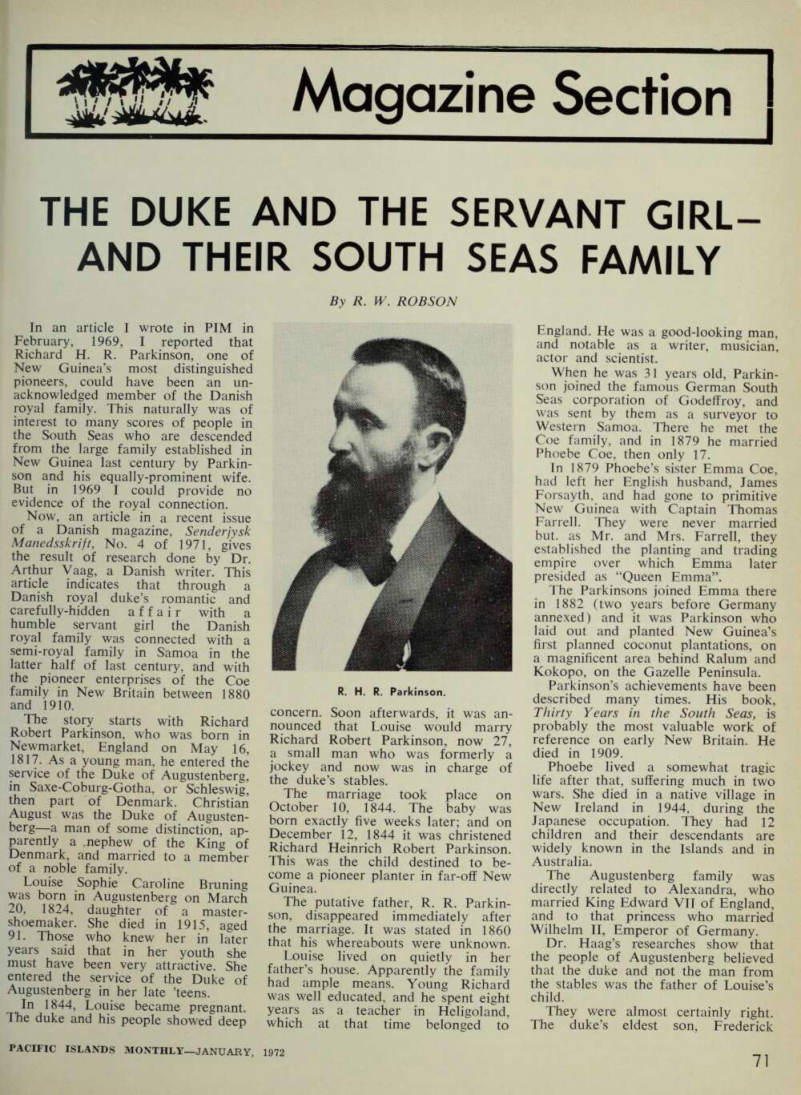 79
79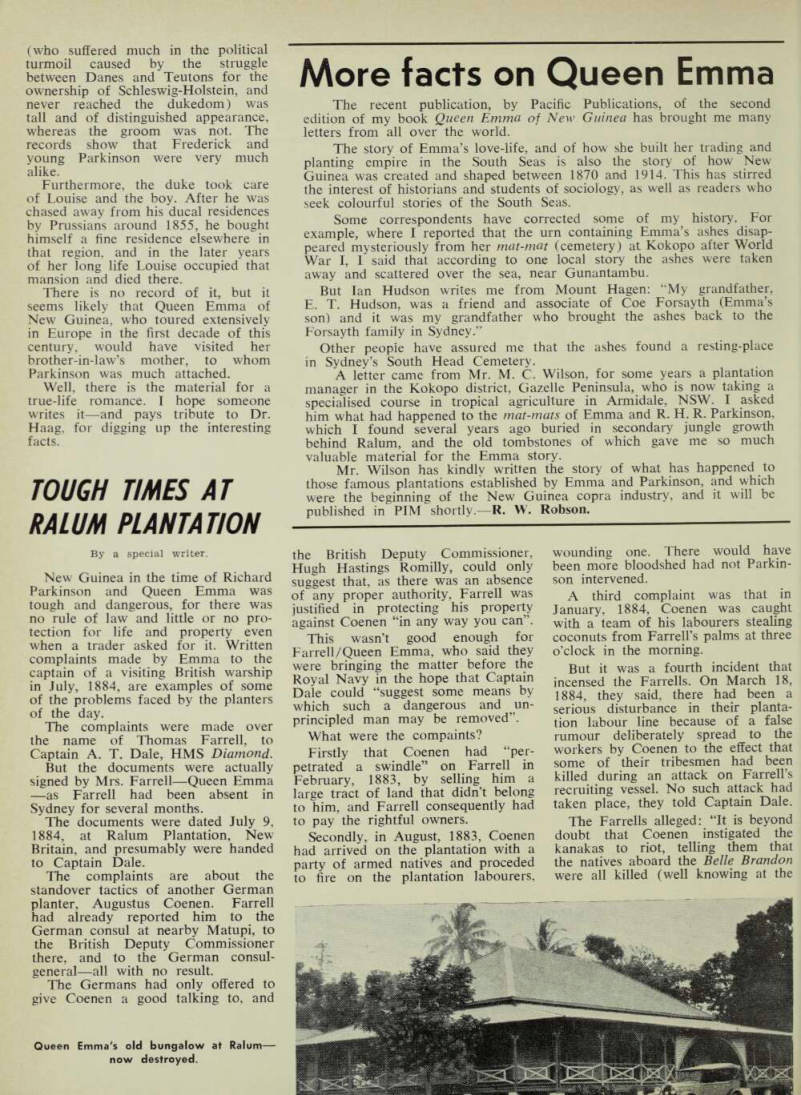 80
80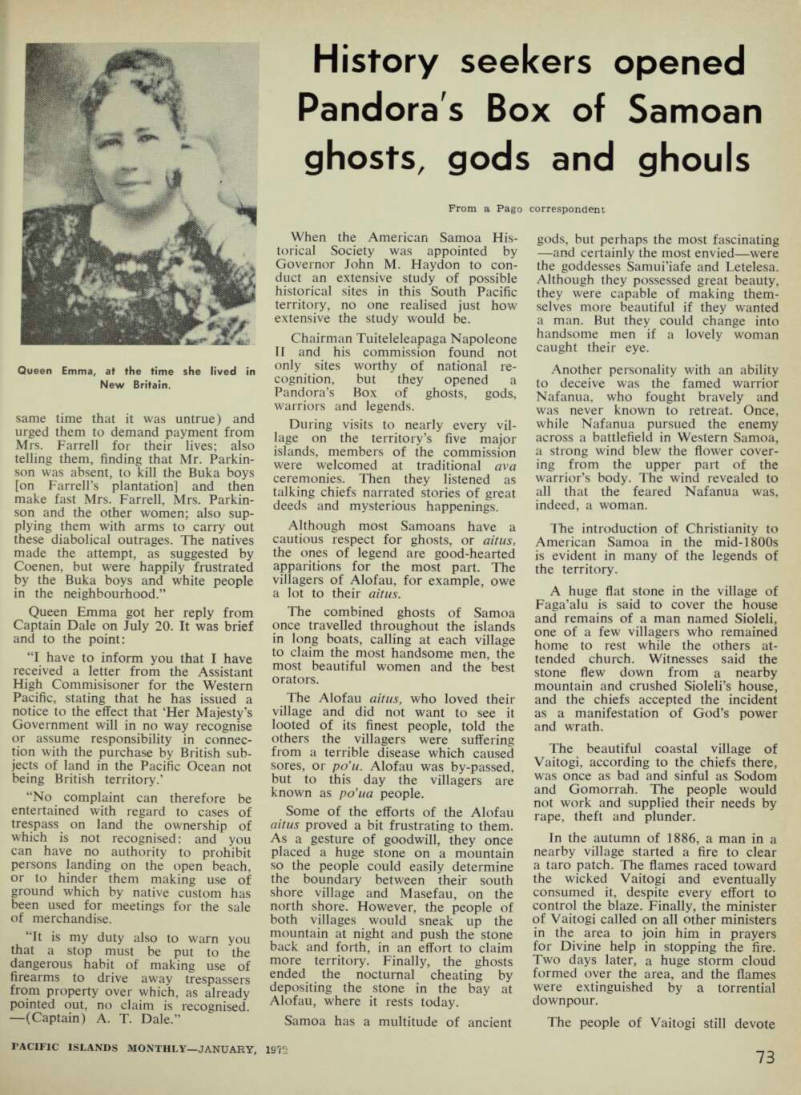 81
81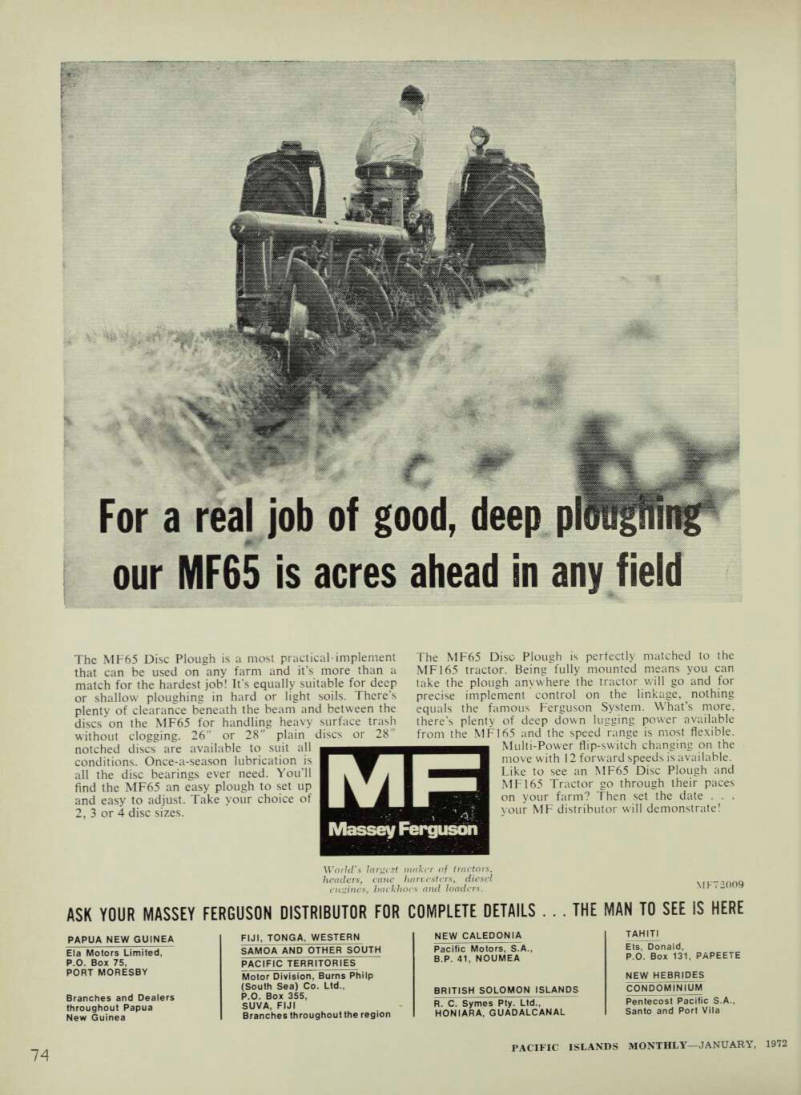 82
82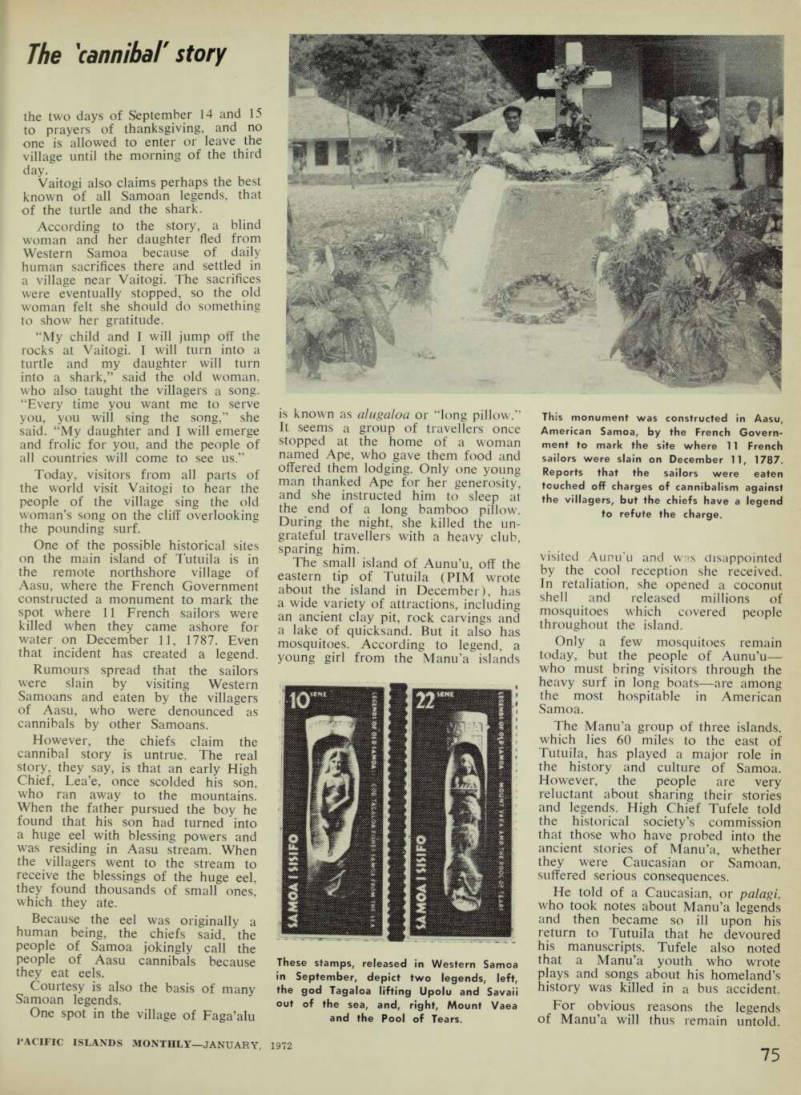 83
83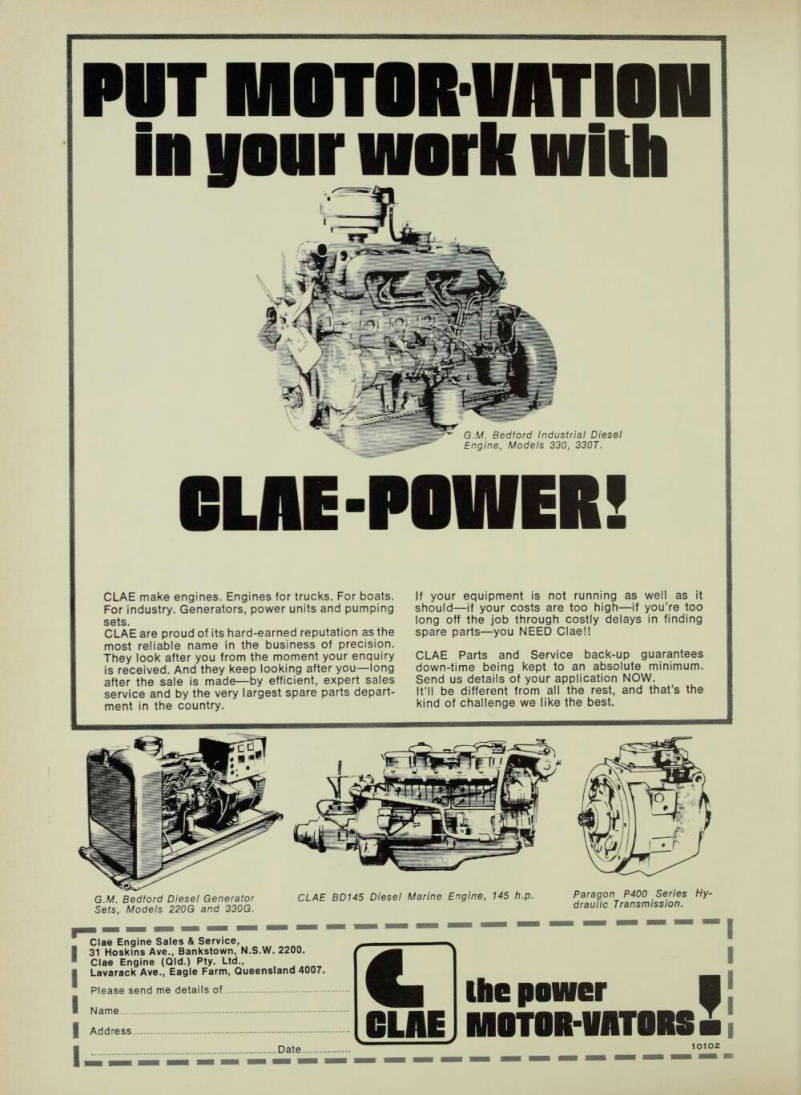 84
84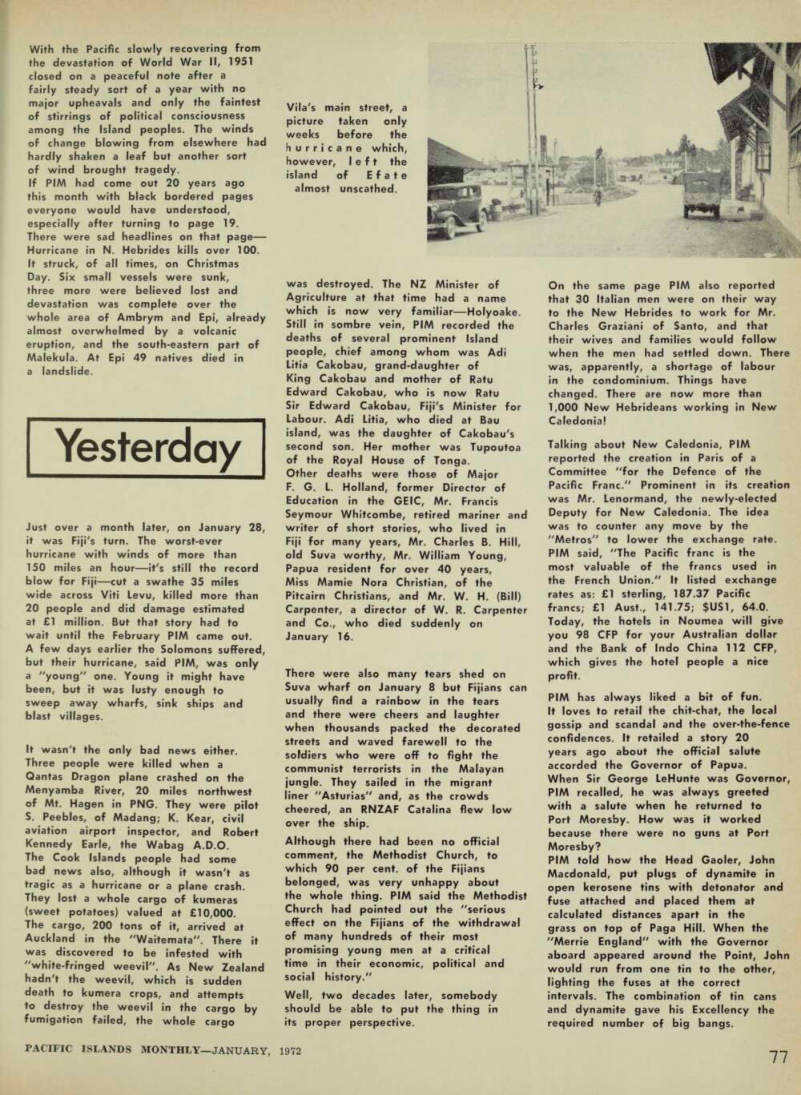 85
85 86
86 87
87 88
88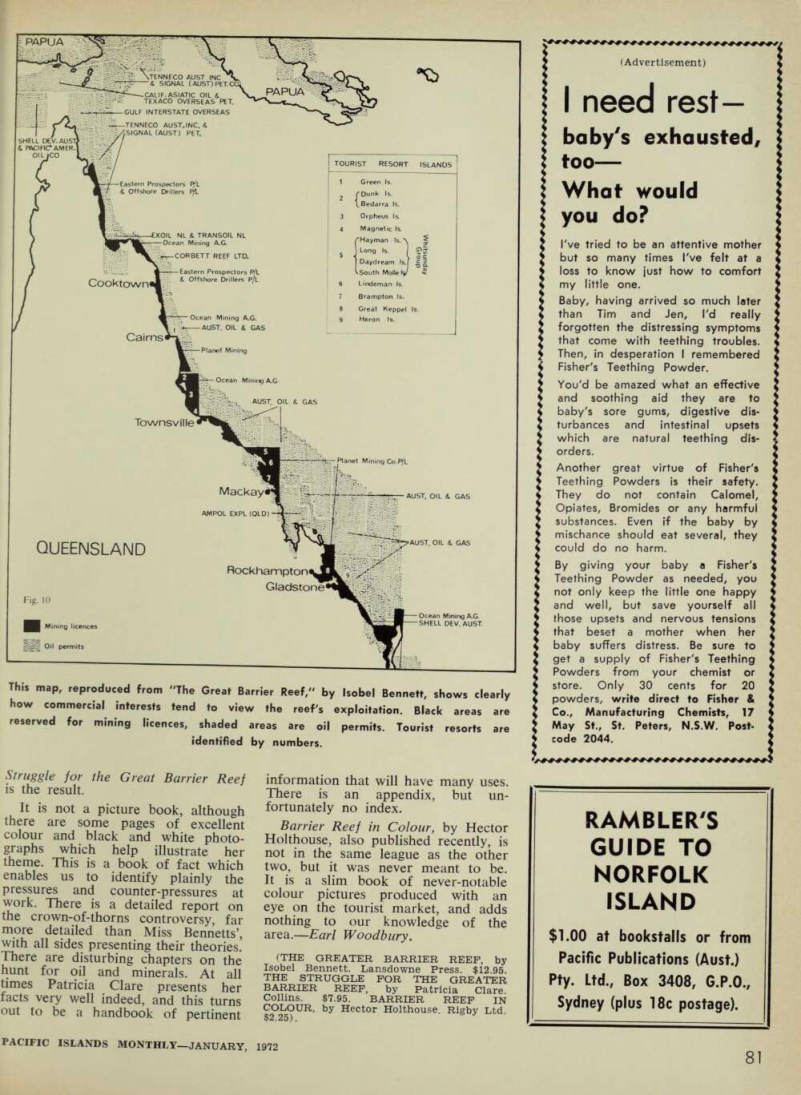 89
89 90
90 91
91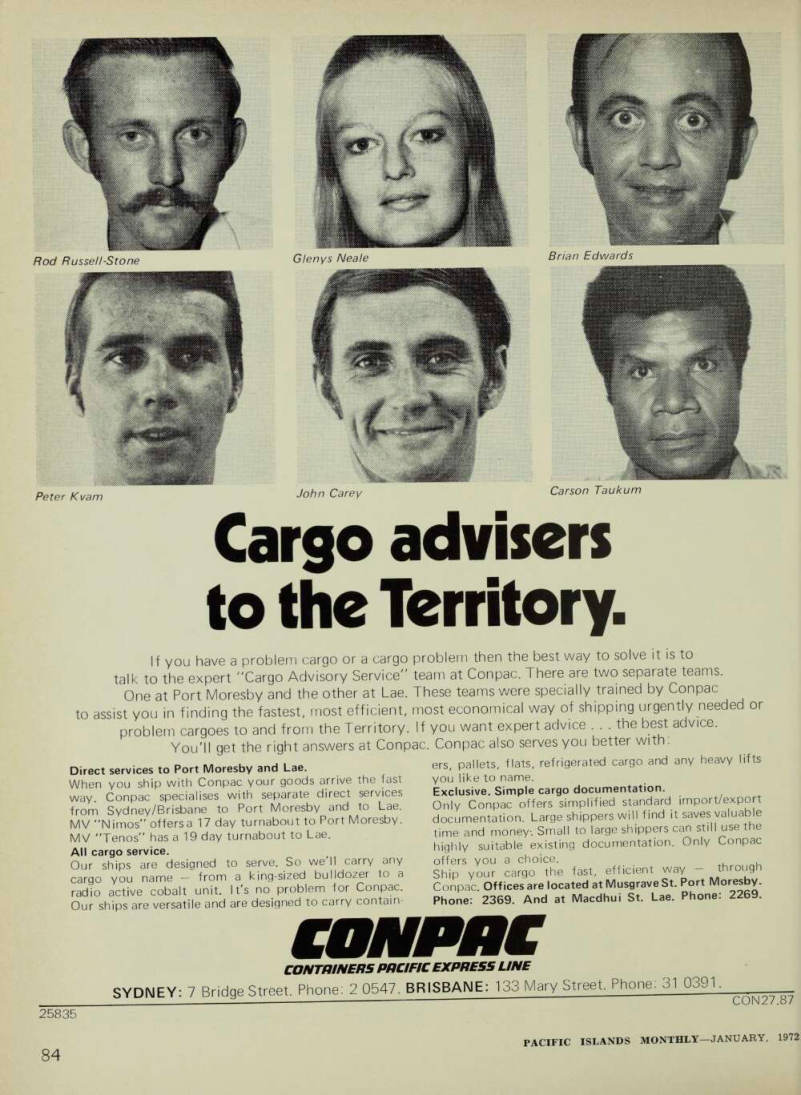 92
92 93
93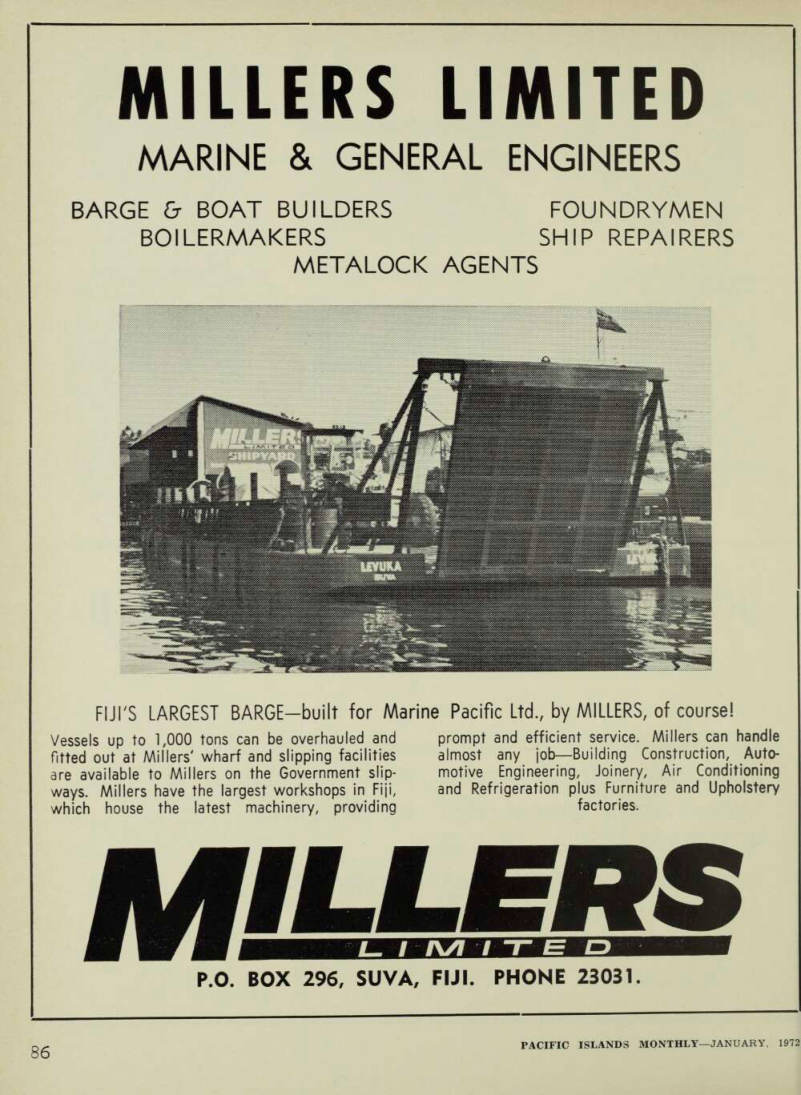 94
94 95
95 96
96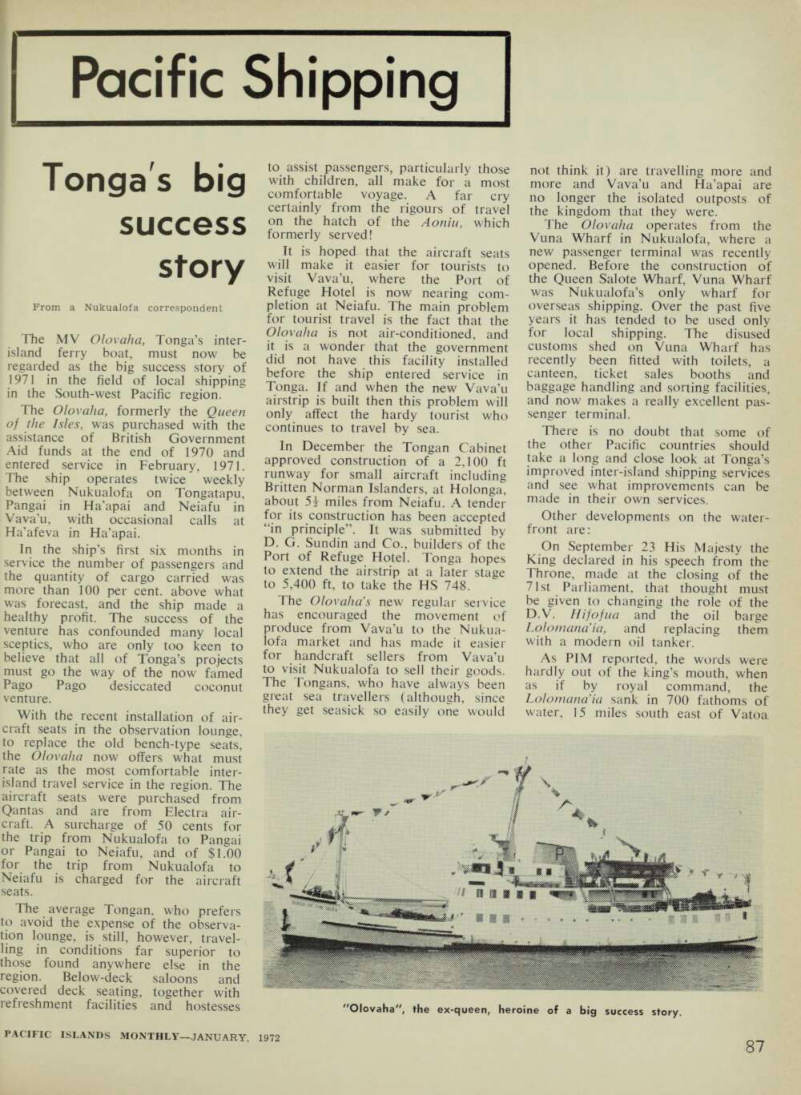 97
97 98
98 99
99 100
100 101
101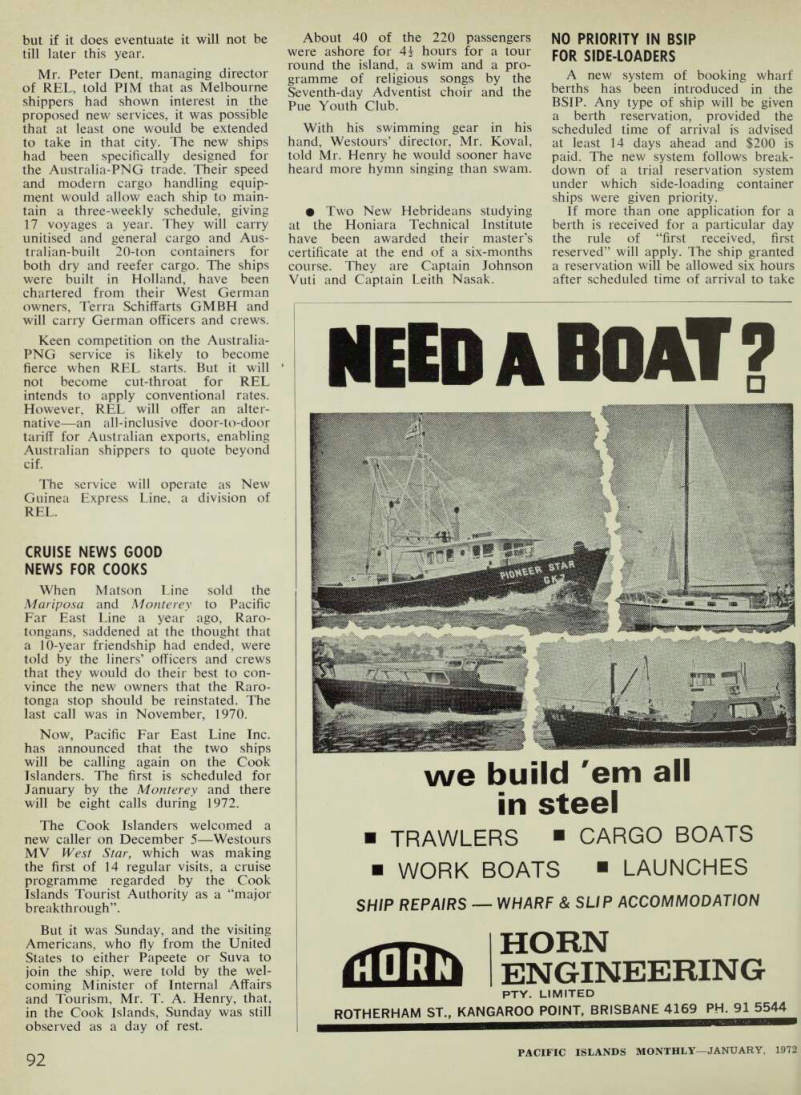 102
102 103
103 104
104 105
105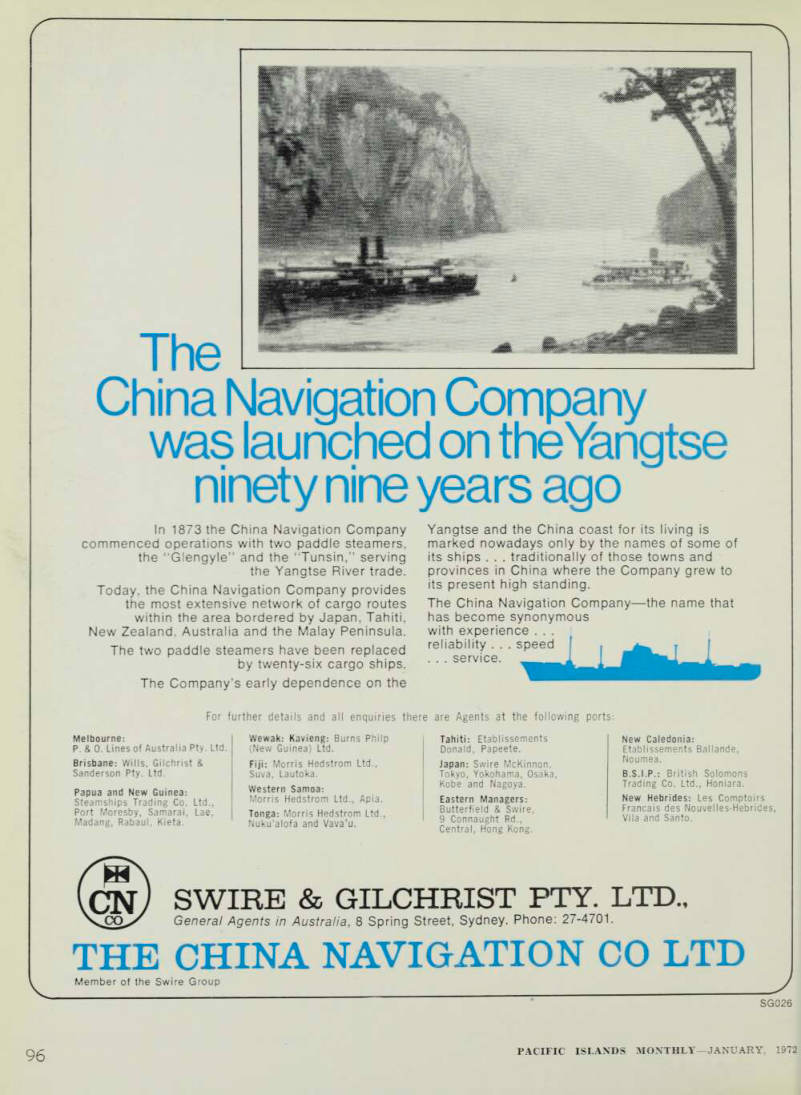 106
106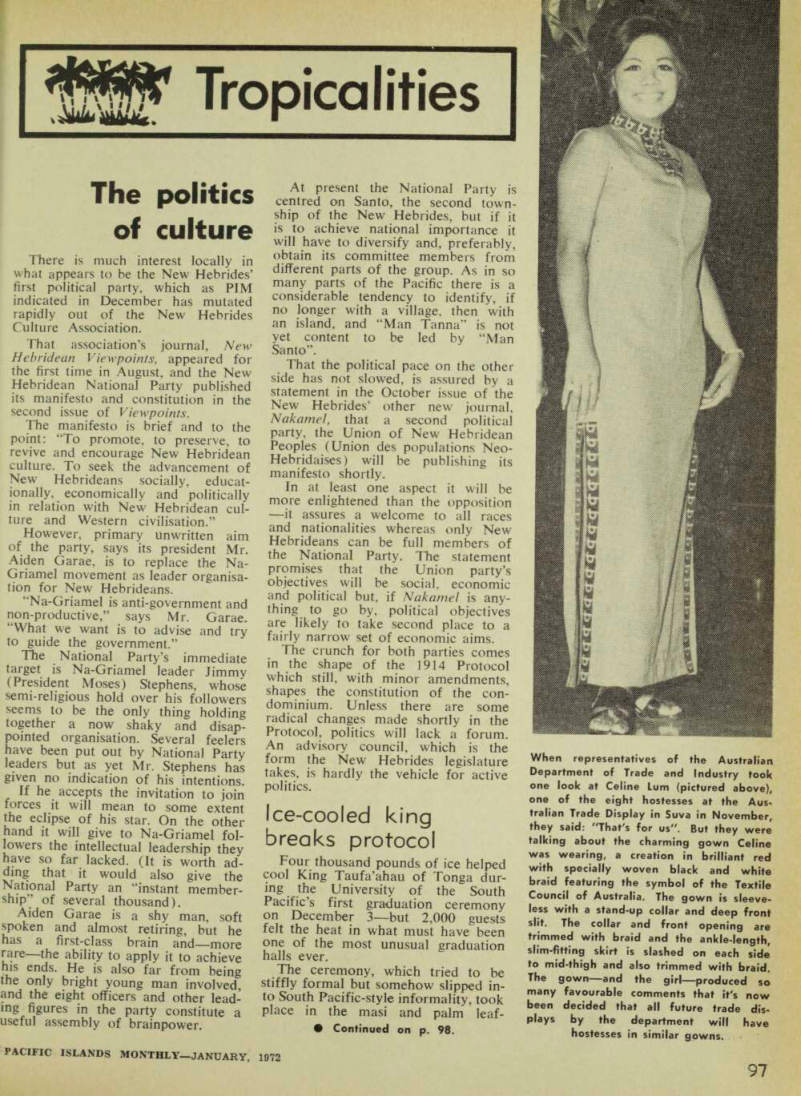 107
107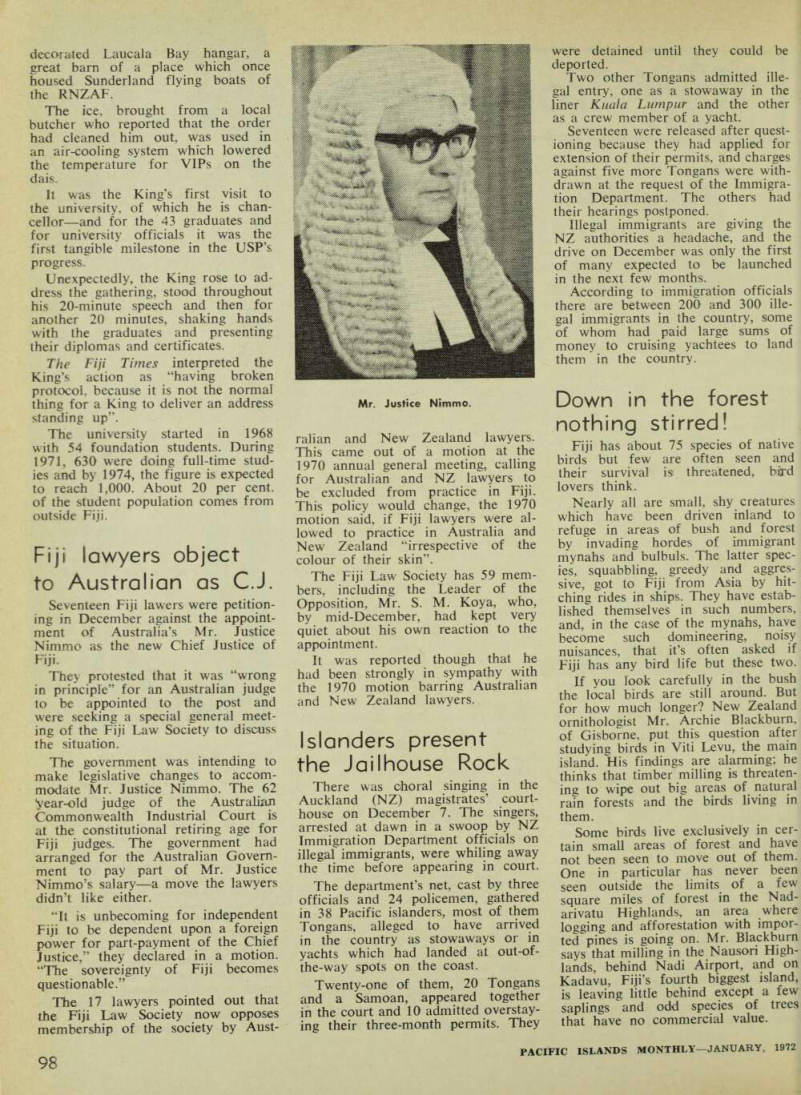 108
108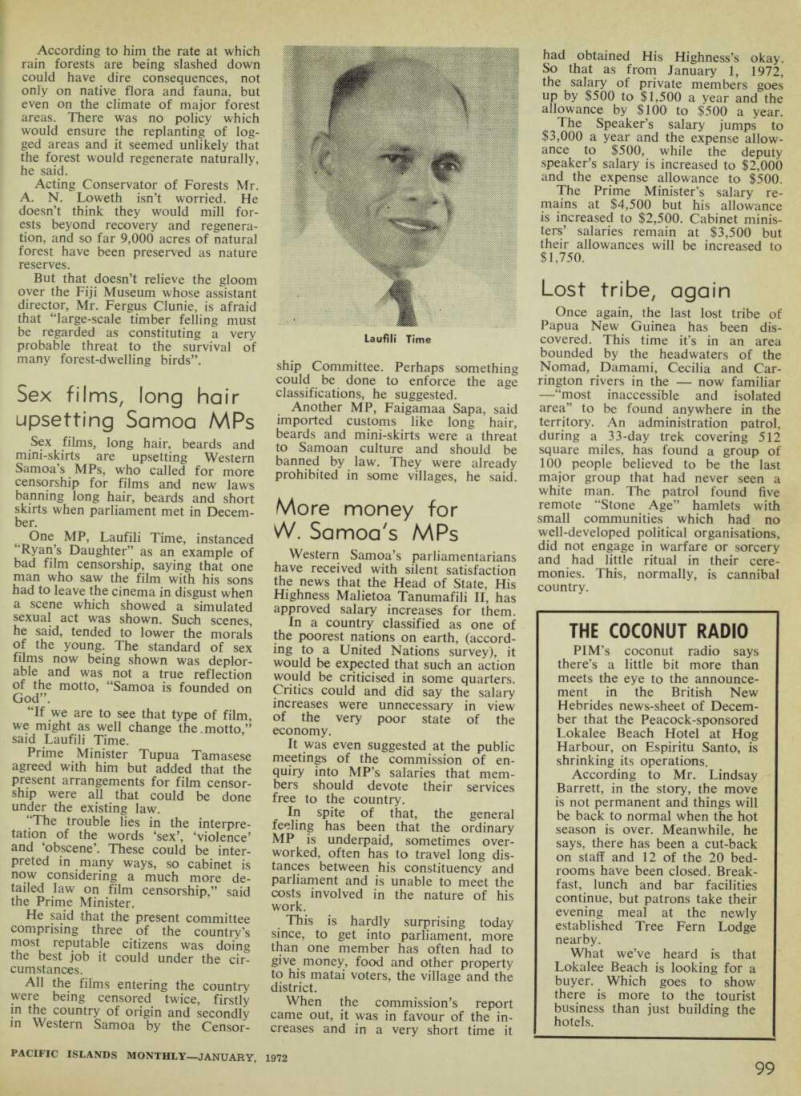 109
109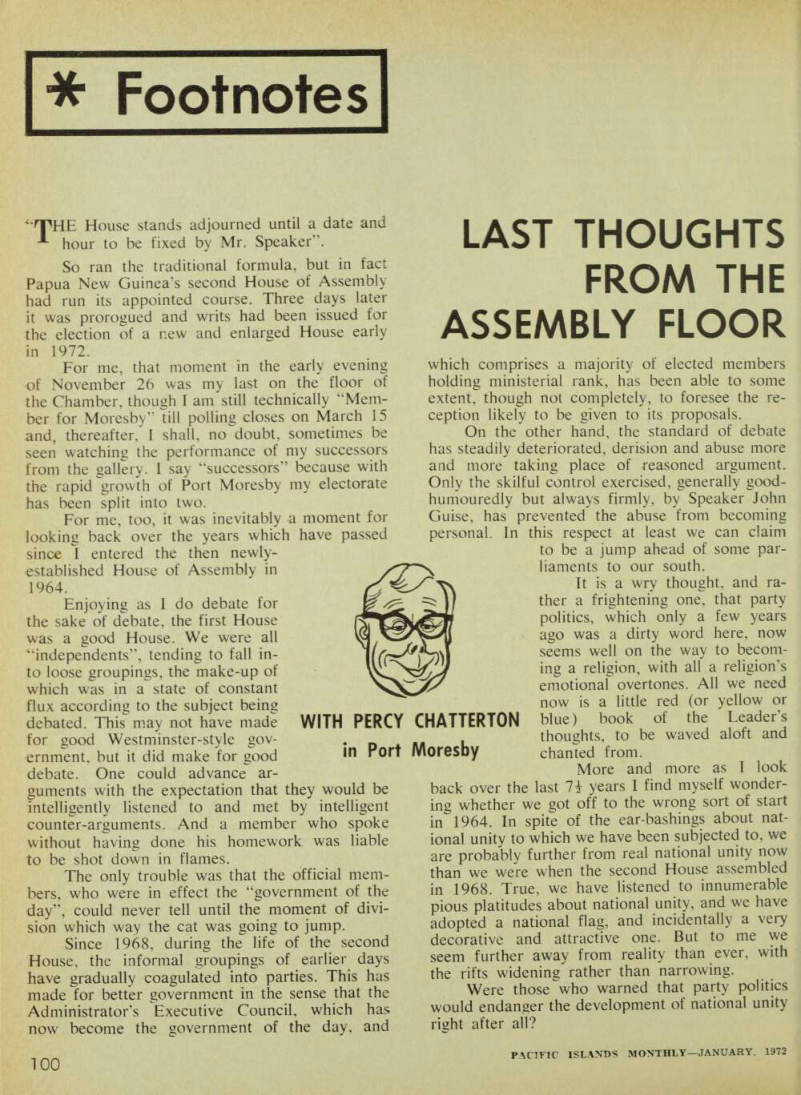 110
110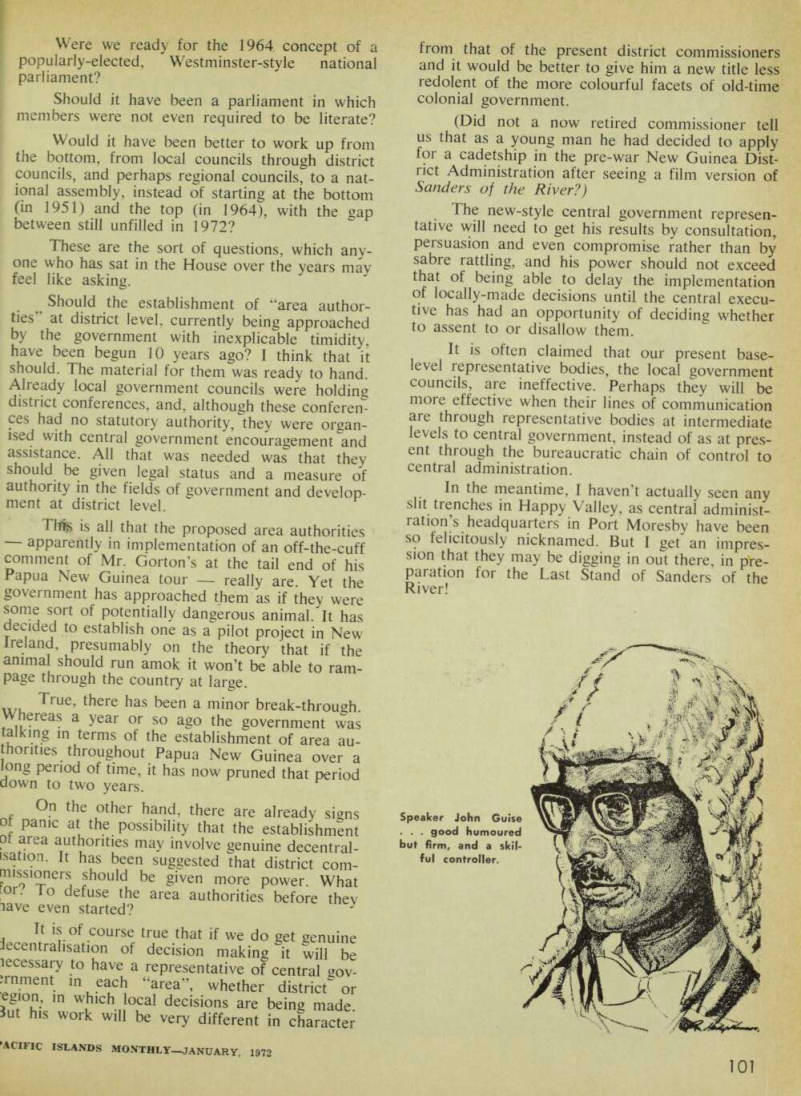 111
111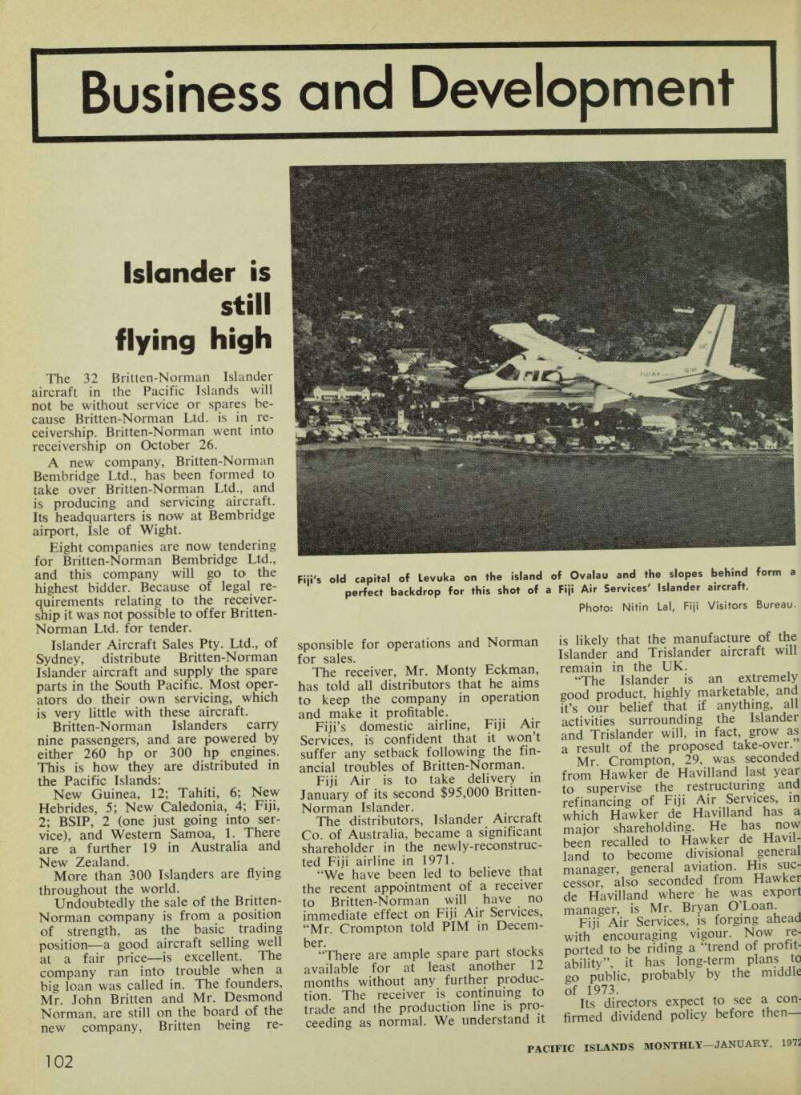 112
112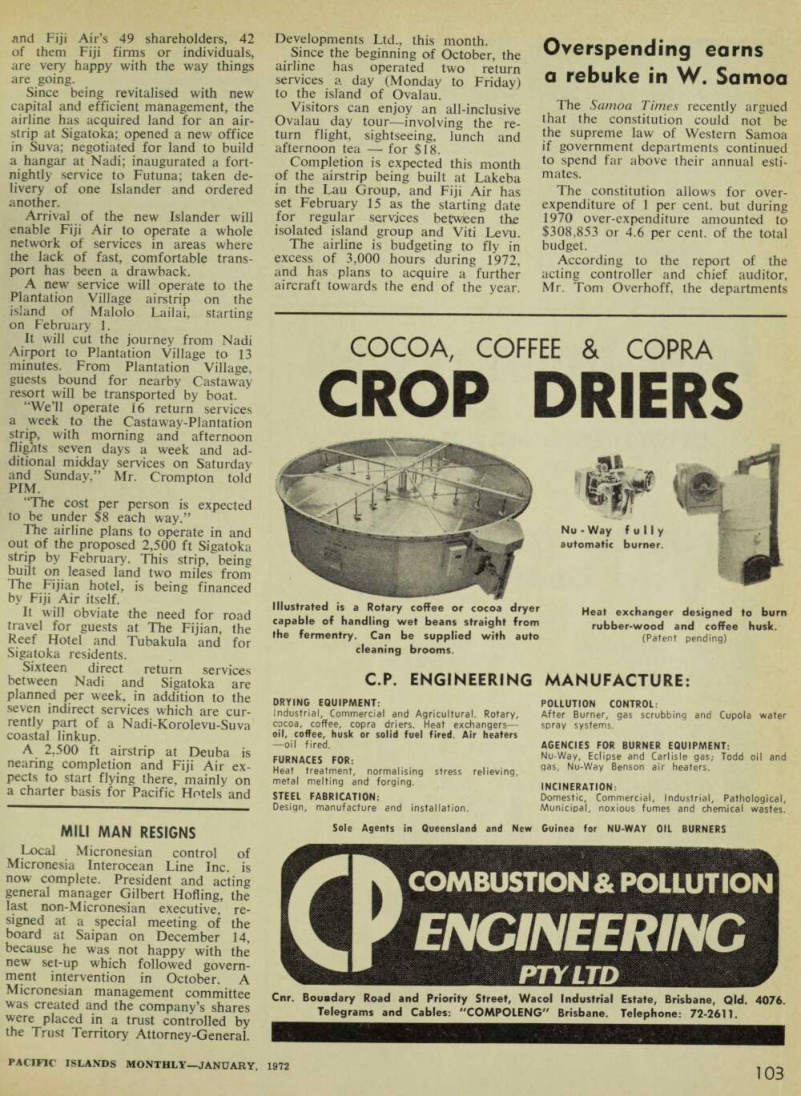 113
113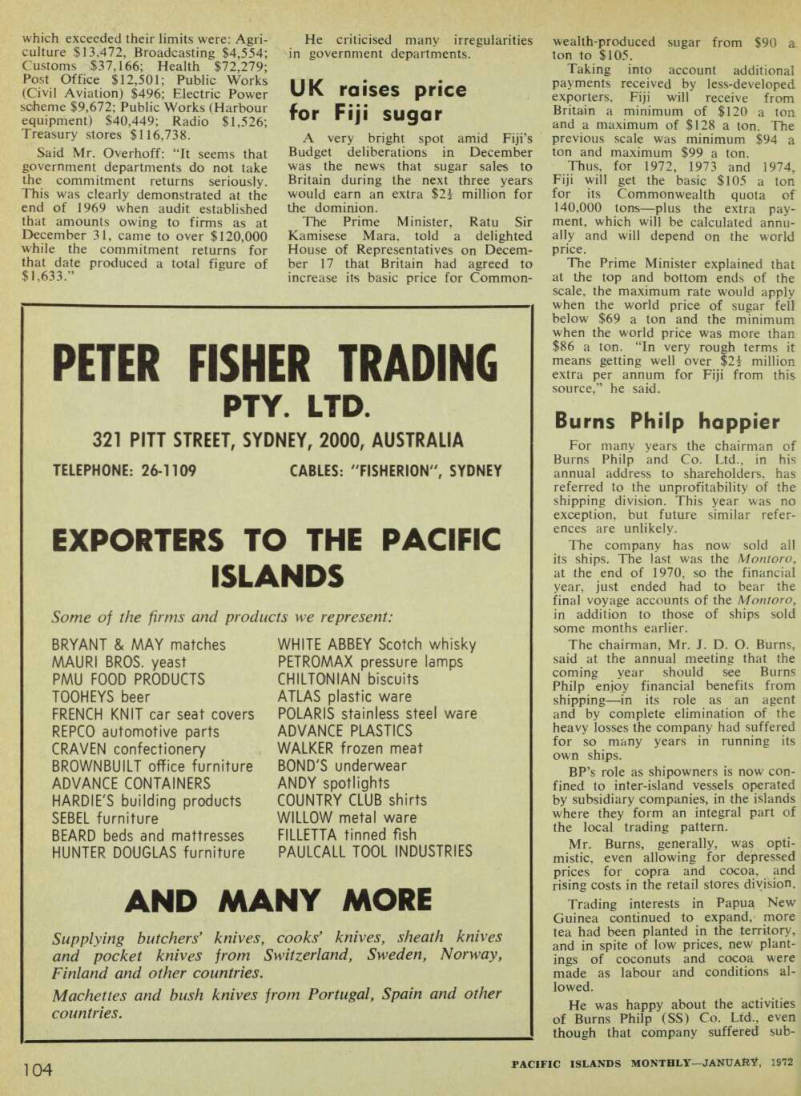 114
114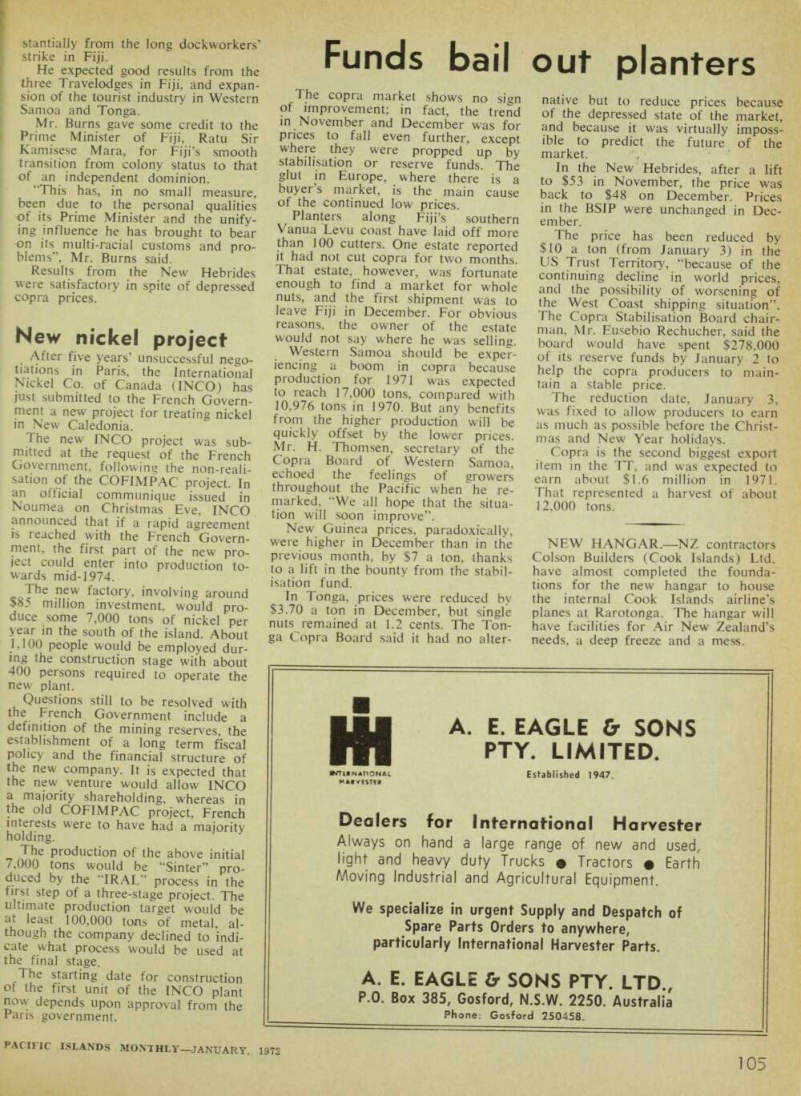 115
115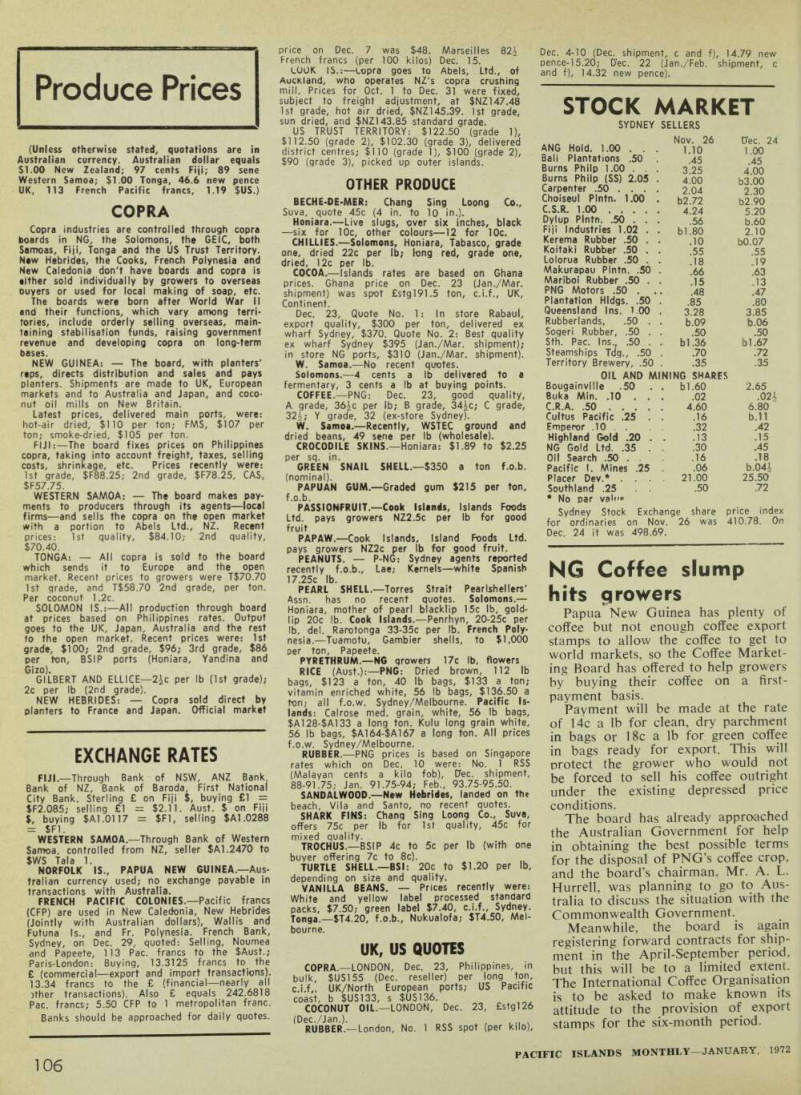 116
116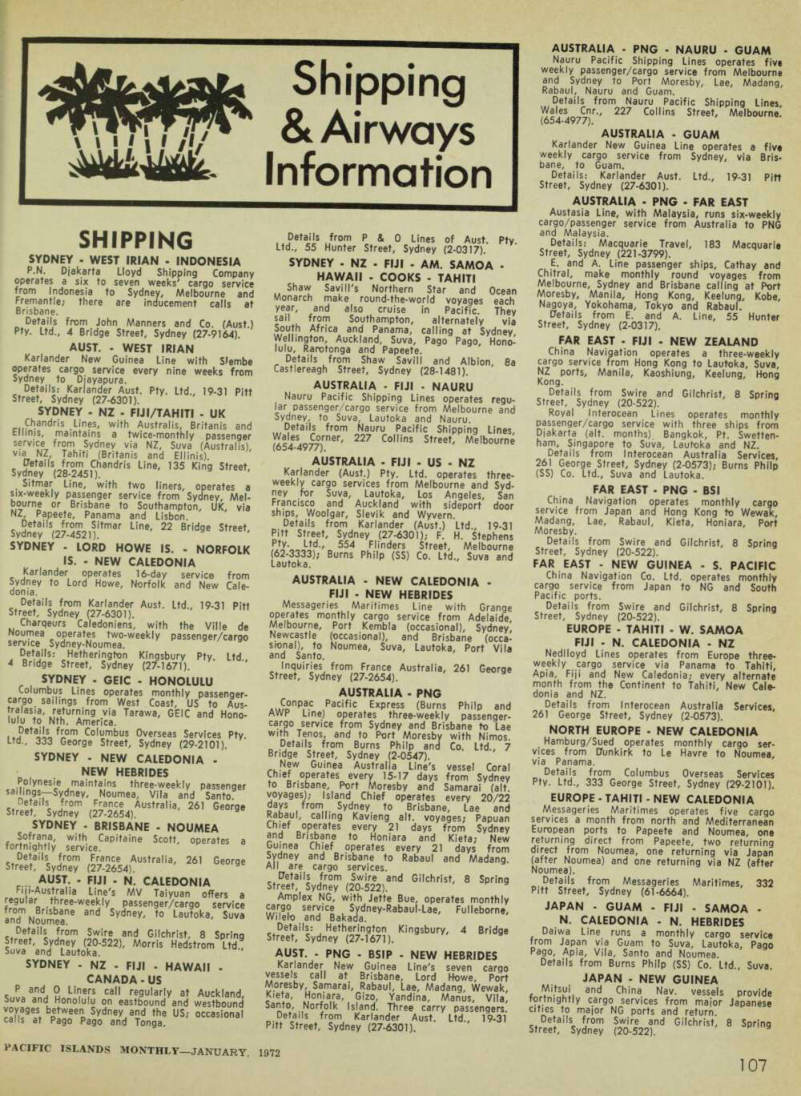 117
117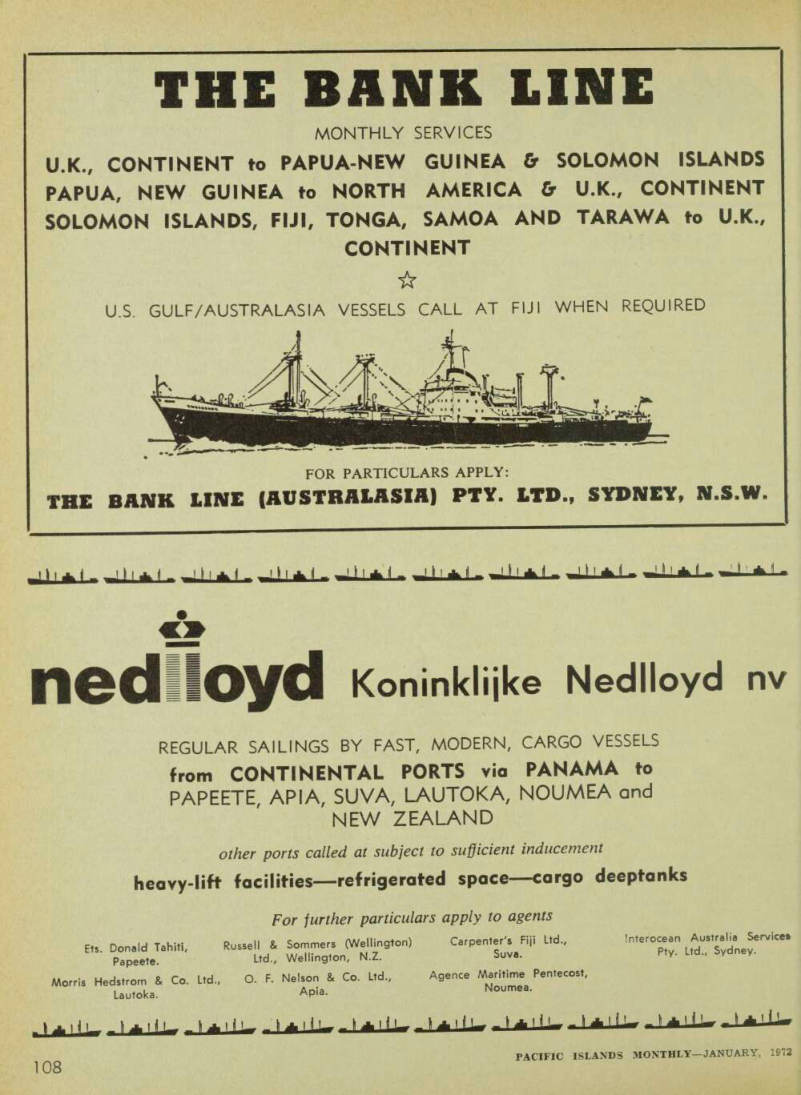 118
118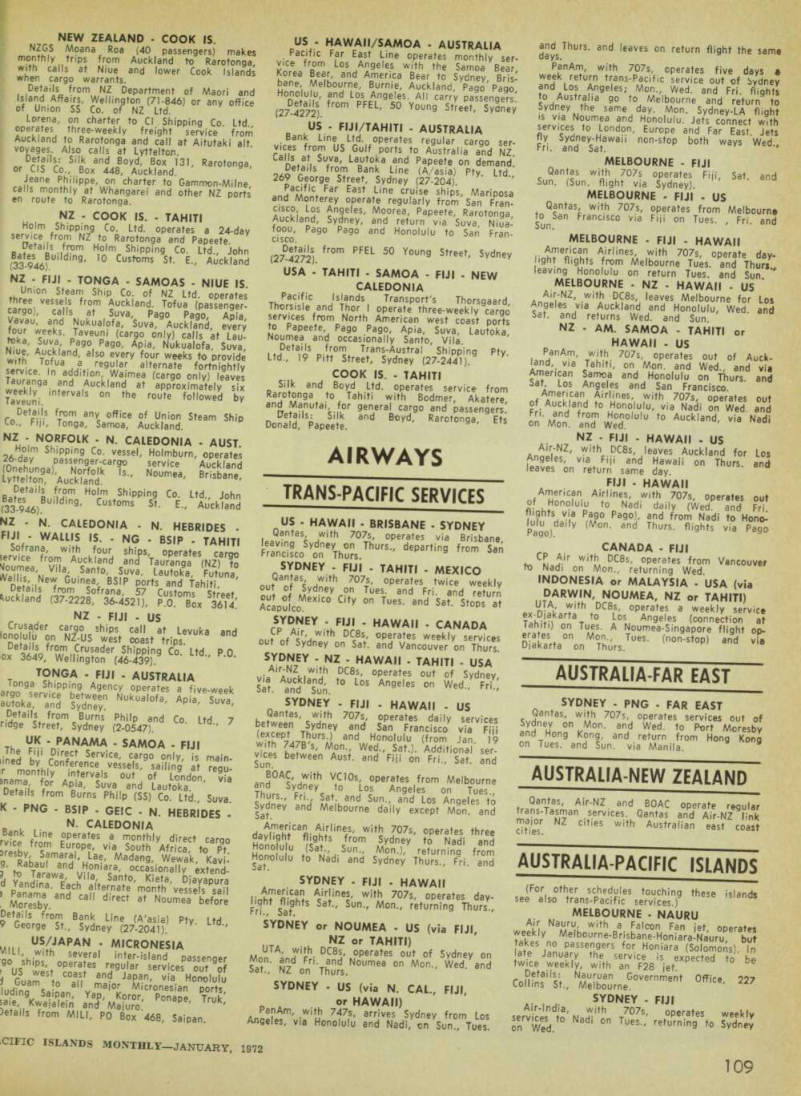 119
119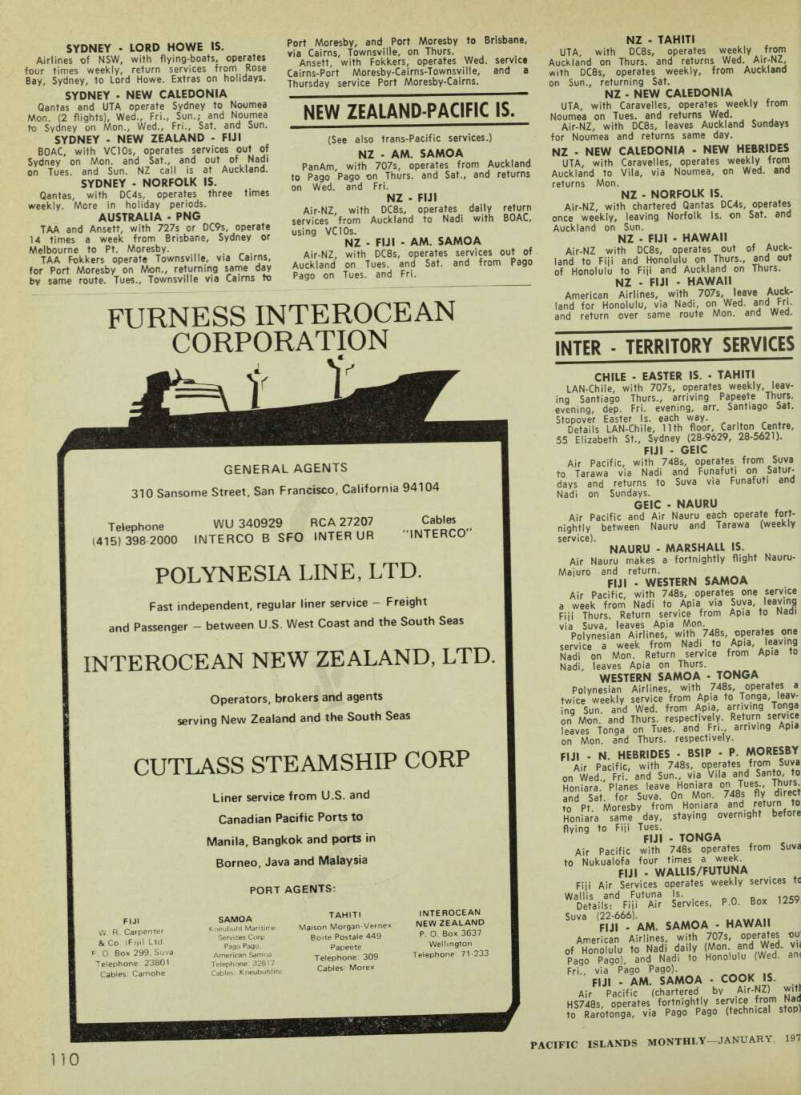 120
120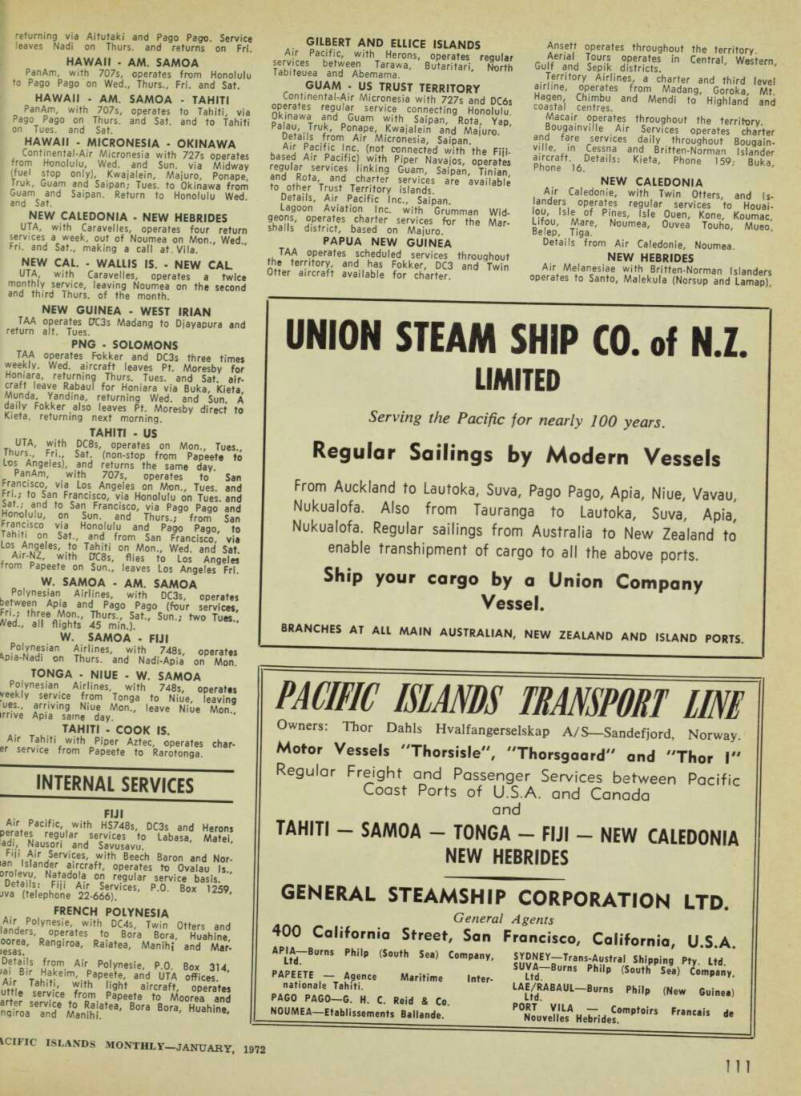 121
121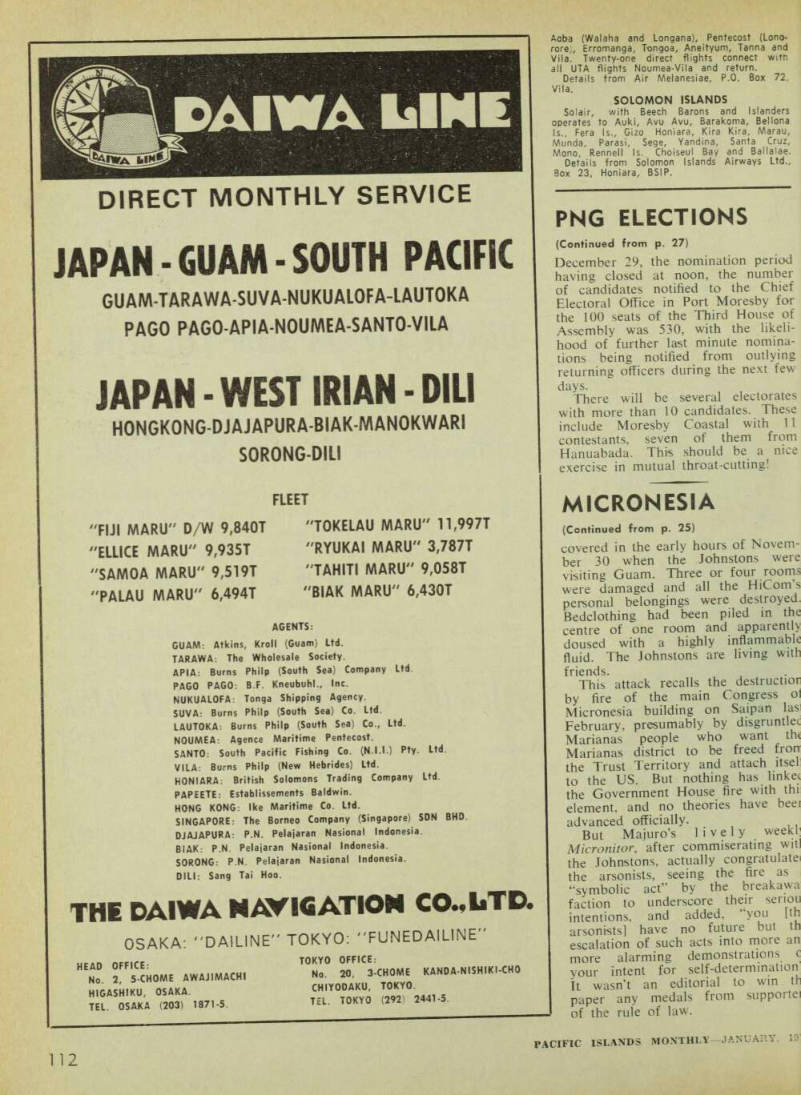 122
122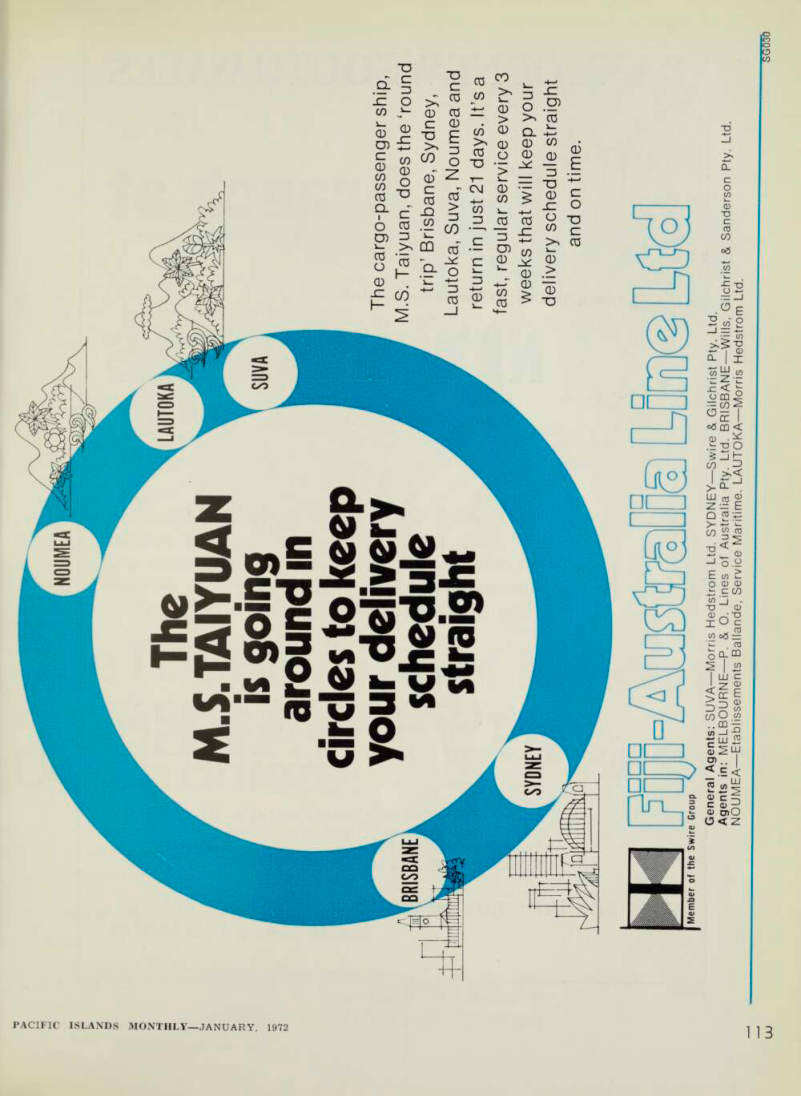 123
123 124
124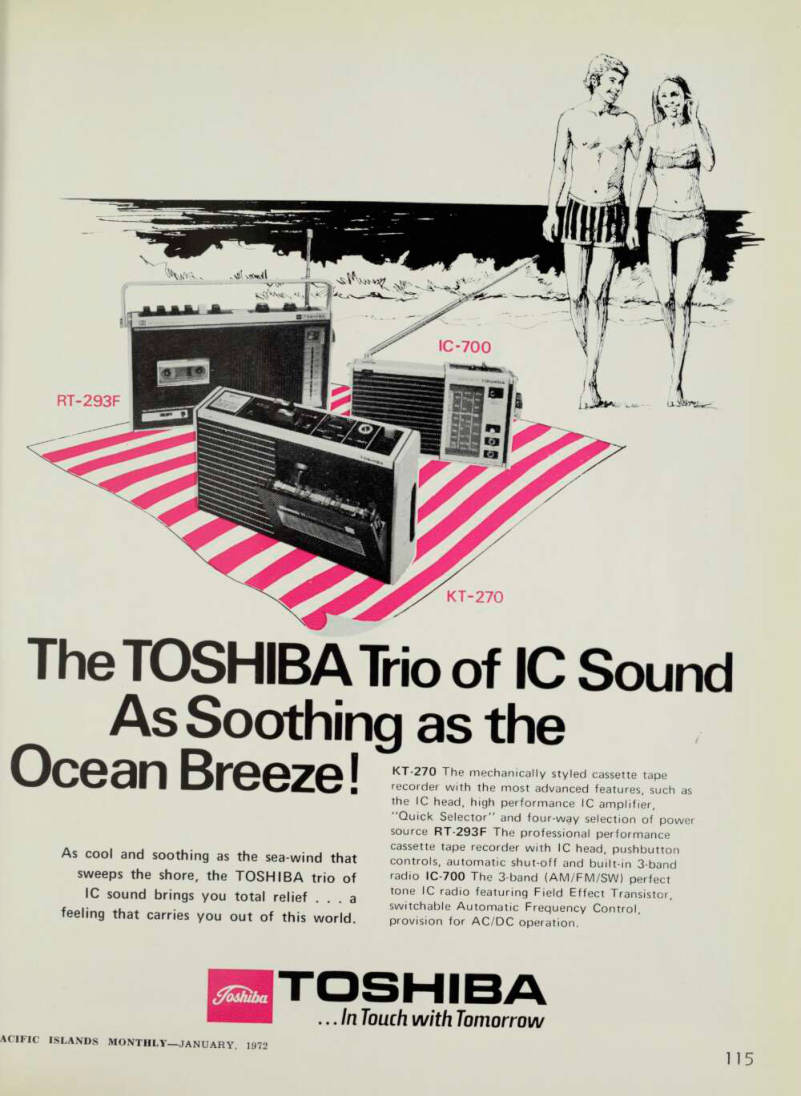 125
125 126
126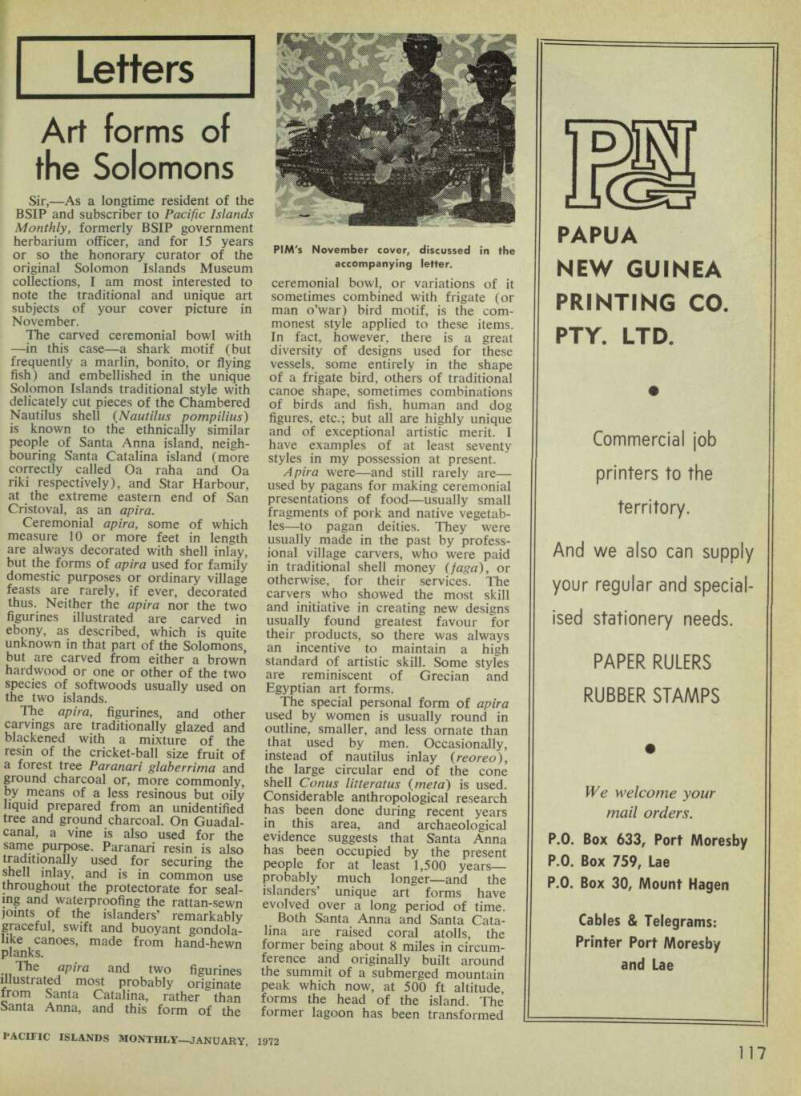 127
127 128
128 129
129 130
130 131
131 132
132 133
133 134
134 135
135 136
136 137
137 138
138 139
139 140
140 141
141 142
142 143
143 144
144 145
145 146
146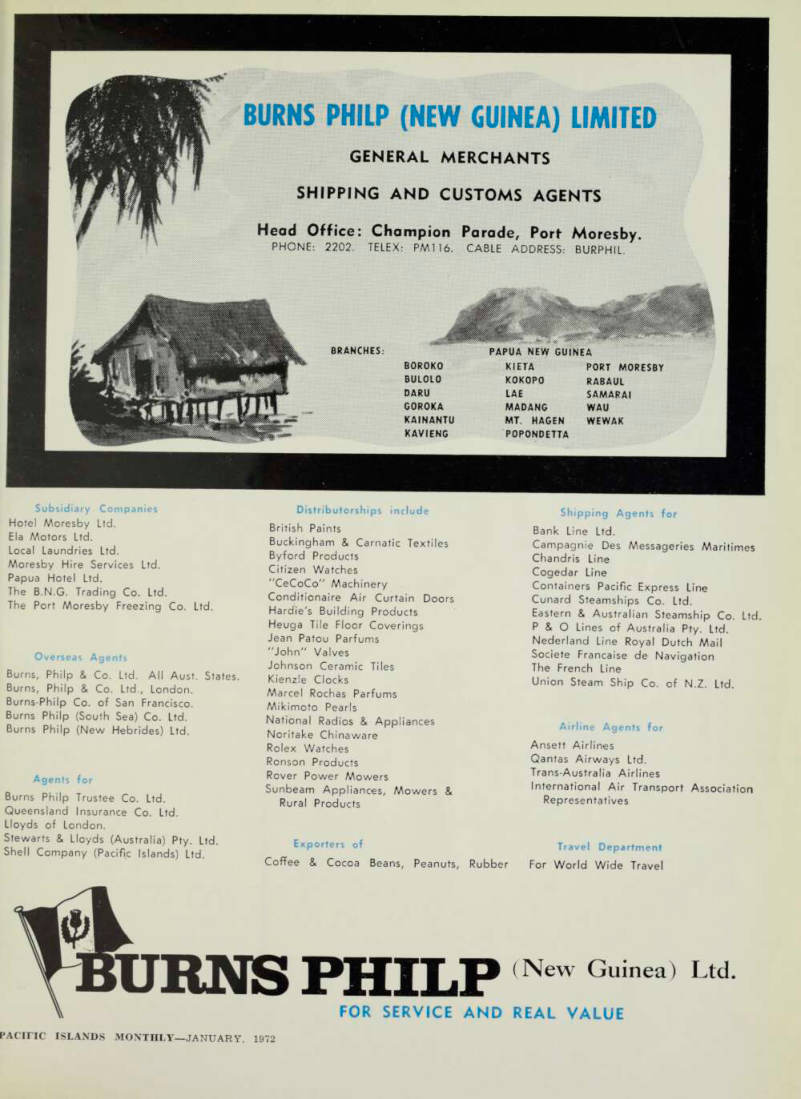 147
147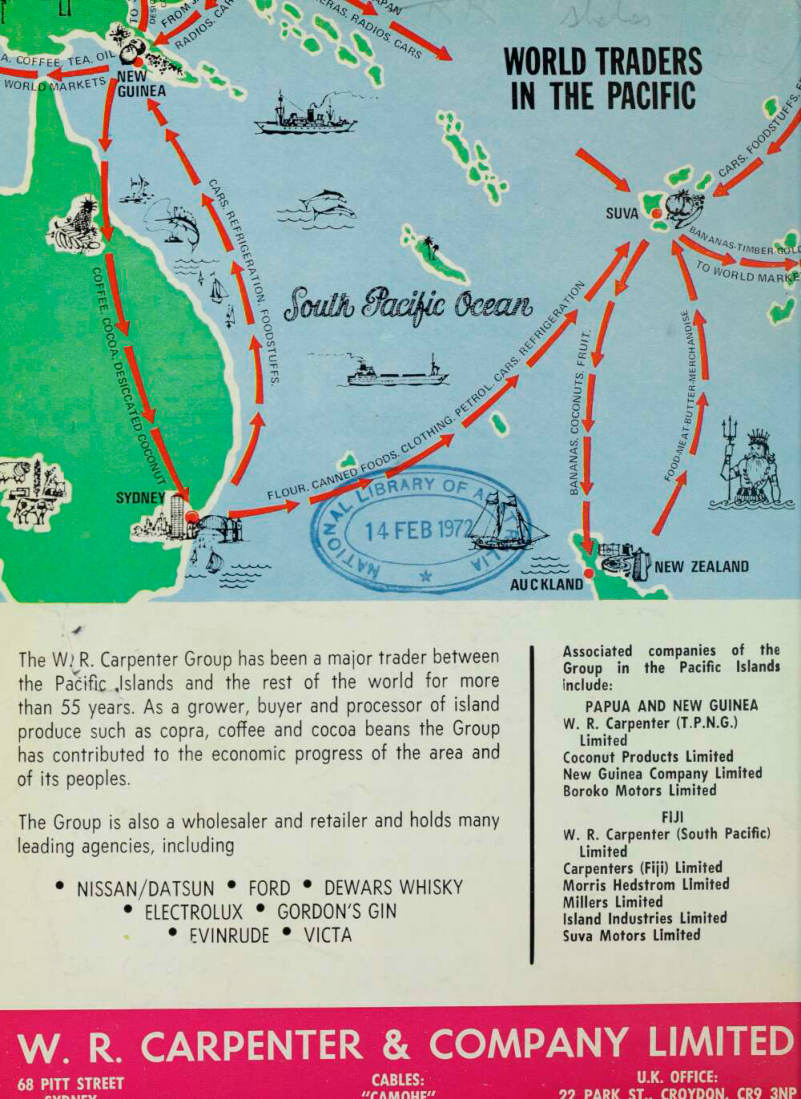 148
148