Monthly
Pacific Islands Monthly
Suva
Games
Preview
See Inside
August, 1963
Vol. 34. No. I.
srj
tered at G.P.0., Sydney, and at P. 0., for transmission by post as a Newspaper
Advertisements & other items, pp. 2-4 (2 items)
See Australia with TAA
Wherever you want to g 0... Whatever you want to d 0...
See more, enjoy more, do more than on any holiday before,
and even save money!
Save on TAA Tourist Class Fares. You can fly TAA from Port Moresby to Brisbane and back for only £69.6.0.
Regular TAA Sunbird services from Lae and Port Moresby to Australia connect with flights to all States linking the Territory to more than 90 ports throughout Australia.
Money saving TAA budget holidays.
There are dozens to choose from in such famous places as the Gold Coast, Central Australia, the Barrier Reef Islands.
TAA Travel Service makes all your holiday arrangements . . . plans personal itineraries and tours . . . arranges accommodation and local tours at your destination.
CONTACT YOUR NEAREST TAA TRAVEL ADVISER:
PORT MORESBY:
Len Vaughan, Cnr. Cuthbertson and Douglas Sts., 'Phone 2101.
RABAUL:
Max Knop, “Augusta House", Mango Avenue, 'Phone 2702.
GOROKA:
Bud Foster, Goroka Airport, 'Phone 8.
LAE:
Tim Acton, Coronation Drive, 'Phone 2311.
MADANG;
Henry Ohlmus, Kaislan Avenue, 'Phone 78 or 268.
FLY TAA SUNBIRD SERVICES
throughout the Territory of Papua New Guinea—and to Australia, l-AE
PORT MORESBY
CAIRNS
TOWNSVILLE
ALICE SPRINGS
BRISBANE
SYDNEY
ADELAIDE
Sv I %
V CANBERRA
MELBOURNE
HOBART
« 8 *
»JJ 9 A mi
/h a//tveaMers ..
Kerosene LANTE
Robert Gillespie’s bring to the Pacific Islands Coleman’s lightweight lanterns. These popular brand-name lanterns maintain a steady, dependable light in high winds and torrential rains. Triple nickel-plated with brass founts. Two models available: No. 237—up to 500 c.p.; No. 249—up to 300 c.p. .. . both tested to 200 lb. pressure. Quick to light . . . just preheat with methylated spirits. No need to repump each time lantern is lit . the positive shut-off valve keeps pressure in the fount. Easily serviced and spare parts readily available.
Representatives for the Pacific Islands: m Colt
ROBERT GILLESPIE PTY. LTD.
22 Young St., Sydney 334 Queen St., Brisbane Cable: "Robergill".
ROBERT GILLESPIE (N.G.) LTD.
Rabaul, Port Moresby Lae, Madang
PEARCE & CO., LTD.
Suva
HAVE YOU
NOTICED
HOW MUCH
BETTER
GILBEY’S
GIN '7
IS!
So why mix with others? 1
GILBEY’S
GINA
3003/a
1
P ACIFIC ISLANDS MONTHLY AUGUST. 1963
Pacific Islands
Monthly
A product of Pacific Publications Pty. Ltd., 29 Alberta St., Sydney.
Publisher: R. W. ROBSON.
Editors:
Judy Tudor Stuart Inder
Manager; SELWYN HUGHES.
Telephones: Ma9197, Ma7Ioi,
MA 4369.
G.P.O. Box 3408, Sydney.
Telegraphic Address; PACPUB, Sydney.
Annual Subscription Rates:
(Aust. currency; includes surface postage) Pacific Is.—P.-N.G., Fiji, Samoa, Norfolk, Nauru, 8.5.1., Cook Is., Tonga, G.&E.
Grp., Niue, New Hebrides, and Br. Pacific Is £1 4 0 French Pacific Territories .£l7O Australia and N.Z £1 10 0 U.K., British Commonwealth and Foreign (40/- Stg.) £2 10 0 U.S.A. and U.S. Pacific Territories ($7.00 U.S.) £3 13 Single Copies (postage extra) 2 6
Branch Office In Papua-Ng
Pacific Publications (NG) Ltd., Theatre Building, Fourth St., LAE. Tel.; 2577 Miss Pat Robertson, Manager.
Branch Offices In Fiji:
Suva: Fiji Times Building, 20 Gordon St.
Tel.: 5601.
Lautoka: Fiji Times Office, Vidilo St.
Tel.: 420.
Representative In N.Z.:
J. D. Whitcombe, P.O. Box 5179, Auckland.
Representative In Hawaii:
C. C. Spencer, 203 Yap Bldg., 3465 Waialae Ave., Honolulu. Tel.: 775538.
Representative In U.S.A.:
R. G. Craib, Box 1455, San Francisco 1, California. Tel.: Mission 8-1075.
Representatives In U.K.:
W. D. Ashburn, 73 Cheapside, London, E.C.2. Tel.; City 2355.
H. A. Mackenzie, 4A Bloomsbury Square London, W.C.I. Tel.: Holborn 3779.
MELBOURNE OFFICE: Newspaper House. 247 Collins St. Tel.: 63.7053.
AGENTS: All main trading firms and stores in the Pacific Islands.
Pacific Publications Pty. Ltd. is the Australian agent for THE FIJI TIMES.
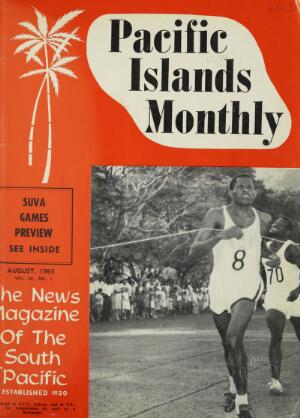
THE COVER: The strain of the race is clearly on Kahi Vela's face as he breasts the tape to win the gruelling 880 yards at the Papua-New Guinea Athletic Cham pionships in July. His time was 2 min. 2.7 secs, and he will be one of the hundreds of South Sea islanders who meet in Suva in late August for the First South Pacific Games. See the special Games pre view in the centre of the magazine.
In This Issue
General
Malaysia's Effect On Pacific 11 BOAC's New Office 31 BOAC's Pacific Air Gap 33 South Pacific Games Preview Foil. 74
American Samoa
Who Are the Samoans? 29 New Name for the "Turtle" 119 Road to TV Towers 121
Cook Islands
Ship Lost on Reef 8 Assembly "To Blame for Mess" 27 NZ Reporter's Survey 59 Islanders in New Zealand 65
Fiji
Governor Says Goodbye 7 UN Committee on Colonialism 13, 51, 55 Death of Two Leading Citizens 19 RNZAF Base at Laucala Bay to Close 23 Film Censorship 3] Search for Minerals 45 Chances of University 49 Savusavu Turns It On For Tourists 57 Spotlight on Kadavu 81 More Ships Visiting Fiji 95 PAYE Income Tax Plan 121 Sugar Price Boom 131 Banana Industry Stagnant 131 Gold Industry Prospects 131 New Branch for Bank of Baroda 132 Development Loan Success 132 Exports Up 132
French Polynesia
Nuclear Base Labour Problems 41 NZ Protest On Base Rejected 43 Rapa: Lonely, Neglected Island 77
Gilbert And Ellice Islands Colony
Executive, Advisory Council Plans 7 Latest Census Figures 70
Lord Howe Island
Flying Boat Wrecked 8
Nauru
Resettlement Progress 9
New Caledonia
Repatriation of Vietnamese 17 Latest Census Figures 70 "Open Go" Drinking Approved 117 Parachuting Tragedy 117 Dead Rats Cause Concern 117
New Hebrides
Repatriation of Vietnamese 17 Erromanga Timber Possibilities 71 Rat Menace on Matasso Island 117 Bastille Day Celebrations 123 Lopevi Volcano Erupts 123 Chamber of Commerce Officers 127 New Slipway, Freezer for Fishing Co. 132
Niue
Islanders in New Zealand 65
Norfolk Island
Work on Kingfisher Hotel 123
Papua-New Guinea
Refugees from West Pose Problem 5 Pacific Is. Mines Ltd. 9 Appeal Sought in Land Case 17 World Bank Mission Survey 21 New Political Party 25 Old and New In Aviation 27 Death of J. C. (Tommy) Thomson 33 Trobriand Islands Pearls 83
Highlands, A Real Eye-Opener 85 New Book by Olaf Ruhen 88 Baiyer River Dairy Farm 119 Anthropologists at Work 119 Bougainville Timber Rights 119 Smallpox, Tuberculosis Campaigns 123 New Uniform for Constabulary 123 Registration of Company Documents 132 Kinjibi Shows Profit 132 Coffee Exports 132 Copra Board Surplus 132
Pitcairn Island
Fears Over Nuclear Base 45
Solomons
New Post for Sir David Trench 15 Stevenson Relic Found 15 More Power for Local Councils 35 More Primary Schools Operating ... 117 Baga Island Ships First Timber 119 Co-operative Societies 119 Success of Anti-Malaria Campaign ... 119
Aerial Photographic Survey 123
Cocoa Co-operatives 132 Copra from Vanikoro 132
Tokelaus
Islanders in New Zealand 65
Tonga
"Back to Newington College" 27 First Water Reticulation System 47 Radio Broadcasts Popular 72 Minerva Reef Epic 87 Ship Bought for Copra Board 95
United States Trust Territory
Survey on Development 121 Accelerated Schools Programme ... 121
Western Samoa
Membership of SPC Proposed 6 Threat to Ban Newspapers 7 Two Ships on Reefs 8 Muddled Thinking 13 Stevenson Relic Found in BSIP 15
DEPARTMENTS: Commentary, 11; Topicalities, 27; From the Islands Press, 69; Magazine Section, 77; New Books, 87; Pacific Shipping (with own index), 95; Territories Talk-Talk, 113; In a Nutshell, 117; People, 124; Deaths of Islands People, 129; Commerce, 131; Travel Talk, 135; Shipping and Airways Time tables 137.
Advertisements & other items, p. 6 (1 item)
Gloss-Masta
MANUFACTURED TO WITHSTAND ALL
TROPICAL CONDITIONS
British Paints Limited
GLOSS-MASTA
BRILLIANT GLOSS ENAMEL
H ok r a m
Hli
• •A
iilliiii
'iissssr I l ri,is h Painls Umil^ l "°> «N 0 TTt'e»To«
COVERS
sr/lur#? *sSo^
GREATEST
SPIOUR
range One coat covers any colour.
For interior and exterior use.
Gloss-Masta is specially manufactured to stand up to the rigorous tropical climates. It dries overnight with a brilliant, luxurious, porcelain-like finish that looks and wears like baked enamel. In fact Gloss- Masta sets a new standard of exceptional brilliance ... the more you wash it the better it looks Gloss-Masta completely withstands boiling water, steam, grease and all cooking fumes.
So very easy to use . . . Gloss-Masta comes to you in the world's greatest colour range . . . ask for your Gloss-Masta colour card at the nearest British Paints Limited depot or store.
mos
rcoat|
ac ct 1
Undercoat
b. S ««rf ac©*'
ALL PURPOSE
UNDERCOAT
for
paint's and enamels
SOLD AND RECOMMENDED BY.
MAXIMUM RESISTANCE TO MOULD
AND FUNGUS IMPORTANT:
For maximum protection against fungus and mould growth always treat new or previously painted surfaces with British Paints Limited's anti-mould solution.
NEW GUINEA:
Burns Philp (New Guinea) Limited: Wau Burns Philp (New Guinea) Limited: Bulolo Burns Philp (New Guinea) Limited: Lae Burns Philp (New Guinea) Limited: Madang Burns Philp (New Guinea) Limited: Goroka Burns Philp (New Guinea) Limited: Wewak Burns Philp (New Guinea) Limited: Kavieng Burns Philp (New Guinea) Limited: Rabaul Burns Philp (New Guinea) Limited: Kokopo Burns Philp (New Guinea) Limited: Daru Burns Philp (New Guinea) Limited: Kainantu ,\am Hong: Lae Scotts New Guinea: Lae fang Mow: Wewak Laurie Chan: Rabaul Wong You: Buka Passage—Bougainville
PAPUA:
Burns Philp (New Guinea) Limited: Port Moresby Burns Philp (New Guinea) Limited: Boroko Burns Philp (New Guinea) Limited: Samarai Burns Philp (New Guinea) Limited: Popondetta
HONIARA:
A. C. Blair Ltd.: Honiara Ho Kee: Honiara Coral Industries
FIJI:
Burns Philp (South Sea) Co. Ltd.: Suva Burns Philp (South Sea) Co. Ltd.; Lautoka
NORFOLK ISLAND;
Burns Philp (South Sea) Co. Ltd.; Norfolk Island
Games Venue
Hundreds of people from places as far away as Tahiti and the Gilbert and Ellice Islands Colony will get their first glimpse of Suva in the next few weeks when they arrive in the Fijian capital for the First South Pacific Games. The Games will be held from August 29 to September 7.
Suva (left, photographed by Rob Wright) will be the main venue of the Games. A four-page lift-out preview of the prospects of the competing territories will be found in this issue following page 74.
Refugees From The Pose P-NG Problem
Pose P-NG Problem
The only place that the border between West New Guinea and Australia’s New Guinea territories has any positive existence is on the map. On the ground, it runs through swamps of the Fly River, in the Sepik heads through trackless rain forest, and cuts across jagged limestone ridges in the central Star Mountains.
Nobody can be sure where it is, give or take a few miles.
BUT in July, a big group of native people made one fact quite plain —they did not want to go on living on the western side of it, and became refugees from Indonesia.
With wives, pigs, and all the food they could carry, they made their way overland from borderline villages just east of Merauke to settlements of kinsfolk along the upper and middle reaches of the Bensbach River, in Papua. it took several weeks for the main body of people to cross into what, indisputably, was Australian Territory, but the movement still goes on, and as well as patrol officers can estimate, upwards of 400 men, women and children have changed sides.
Many small groups of West Papuans have crossed the borderline, in canoe and on foot, since Dutch rule ended in October last. Some have been permitted to stay, others u/pi-p Q P nt wv But there never had been anything like the mass movement to the Bensbach River, and the Australian Administration was confronted with a situation it found impossible to control.
First news of the migration was flashed by Patrol Officer S. H.
Cooper, when he found a steady
stream of people heading eastwards through his camp at Weam, a few miles east of the border. Weam had been established late last year to help enforce the “closed border policy adopted as a protection against disease and subversion, from an Indo nesian western half of the island, Like the posts at Vanimo, Imonda, Green River, Amanab and Kiunga, j ts j G b was to screen all migrants, and turn back those without tra ditional rights extending over the in visible border. It was also a keystone j n a quarantine system devised to provide a buffer zone of immunity against the ingress of smallpox and cholera, Vaccinated . . . t A medical team was to Weam to vaccinate ‘he migrants and quarantine their animals Special air drops of thousands of pounds of sup- P. had to be made because the new b £ht aircraft strip a closed b y heav y rams * Meanwhile, with an embarrassing border situation looming, Western District Officer lan Holmes was sent to try to persuade the people to re turn to their home villages. He failed. The westerners expressed
plainly their dissatisfaction with the new Indonesian rule, although it is not clear whether anybody actually claimed he feared for his safety.
As Holmes was talking to one group, a jeepload of Indonesian troops, on border patrol duties, ar rived to try to persuade the Papuans to return. They drove right up to his camp. The Indonesians asked if they could speak to the Papuans, and Holmes invited them to carry on where he left off. But several hours later, they gave up.
The Indonesians spent that night under Australian tents, sharing Aus tralian food, and next day set off along the rough track back to Merauke. Reluctantly, Australia de cided that the unwanted migrants would have to be allowed to stay.
There were ties of kinship between them and the Bensbach people, and they did in fact own some land in Australian Papua.
Quarantined
The newcomers were accepted by the Bensbachs, who actually offered extra land for food gardens. The Ad ministration imposed a strict quaran tine, forbidding movement outside a defined area for six months. It was made clear that menfolk must build houses and establish settlements, and would not be permitted to move to the towns to seek employment.
No news of the movement was re leased by the Port Moresby Ad iministration until all threat of a border “incident” had passed. When it did come, the announcement showed all the signs of having been wrung from unwilling lips. The names of responsible officials were obviously lacking from the statements that appeared in the Press. The De partment of Information offered no information on the situation.
The political situation around Merauke has always been a confused one. Inter-tribal jealousies go back
many years. There is a substantial Indonesian settlement of long-standing and at the same time, the area has been a centre of intense nationalistic feeling. During the “confrontation” period in 1962, Indonesians and pro- Dutch faced each other with anger, and at times with weapons. The United Nations managed to ride out its seven-months interregnum with only one or two incidents at Merauke, but it could do nothing to solve basic issues, and left behind an unstable and potentially dangerous situation.
Earlier Attempts
The refugees to Weam tried to move into Australian Territory 10 months ago, but were then persuaded to adopt a policy of “wait and see”.
Whether they are moving now out of a traditional fear of insecurity or because of repressive Indonesian measures could make a big difference to Australia.
Their presence on Australian terri tory is an affront to Indonesian nationalism, and a continuing chal lenge to the Indonesian claim that Papuans welcomed the end of Dutch colonialism.
The situation has all the ingredients of a major international incident, should Indonesia choose to exploit it. That she has not so far done so, but has in fact apparently publicly ignored the situation, gives some hope for the future.
But Australia should have learnt, from Weam, that its New Guinea ad ministration cannot exist in a political vacuum. Sooner or later, it must stand and talk to Indonesia across the border with West New Guinea.
London Meeting Proposes
Samoa's Entry To SPC
. ve member nations of the South Pacific Commission met m London in July for a round-table talk on future develnn ments in the Commission.
jl/TAIN purpose of the meeting was to discuss the entry of Western Samoa to Commission membership.
It was proposed that Samoa should be admitted as a full member, but ratification of this has to be made by the various Governments.
No official announcement has been made by any of the five Governments involved about the London talks—nor, in fact, has it been announced that talks took place—but it is expected that a firm announcement on Samoa’s position will be made before the next session of the SPC, in Noumea in October. Developments will be dis cussed at that meeting.
Samoa became an independent State in January, 1962. The question of her future role in the SPC had been discussed by member Govern ments both before and after indepen dence, but no firm policy had been arrived at.
As a full member, Samoa itself would benefit directly from the work of the Commission and thus would be in a somewhat different position
from any of the present five members —Britain, the US, France, Australia and New Zealand—all of whom are metropolitan powers, whose terri tories benefit.
General Talks The London talks also ranged over general proposals affecting the Com mission’s future development, includ ing ways of allowing the indigenous people to take a more active part in the work of the Commission through a re-arrangement of functions. Pro posals have had to be referred back to the member Governments.
The talks also discussed a re arrangement of financial quotas, made necessary by the departure of the Netherlands from the SPC last year and the new proposals affecting Samoa.
The Secretary-General of the SPC, Mr. W. D. Forsyth, was not at the talks but he flew to Canberra for dis cussions while the talks were still continuing, and later flew to Apia for discussions with Samoan officials.
Although the London talks were not designed as a review conference of SPC activities, they did fulfill that role to some extent and it is now possible that a formal review con ference will not be held. Presumably, many of the member Governments believe that the occasional changes in direction the SPC needs to keep it an active and important force in the South Seas can be made through constant liaison via normal Govern ment channels, and not through any big and formal review conference of the type held in Canberra in 1957.
AN OLD FRIEND RETURNS: US businessman Mr. Fred Hargesheimer, who was shot down over New Britain during the war while serving with the US forces, was visiting Rabaul again in July to check progress on the school he is having built for the villagers who helped him. He founded a trust fund in the US to do it.
With Mr. Hargesheimer this time was his son Dick, 18 (left). Mr. Hargesheimer is explaining to two Nonga Hospital orderlies how his aircraft was shot down.
Photo: C. H. Meen.
Advertisements & other items, p. 8 (1 item)
Full Games Cover In
SEPTEMBER PIM
PIM staff reporters will be at the South Pacific Games to bring PIM readers a full coverage of results, personalities and events.
You II find it all in the September issue.
Executive
GEIC To Have Executive Council
An Advisory Council for the Gil bert and Ellice Islands Colony legally came into existence on July I —and with it came the announcement that the Colony is also to have an Execu tive Council. order which brought the Coun cil into being was made by the Acting Western Pacific High Commis sioner, Mr. M. D. I. Gass, while at Tarawa on July 1 during a tour of the GEIC. On June 29 he unveiled a commemorative plaque for the Coun cil Chambers, which are at present being built at Bairiki, Tarawa. Mr.
Gass made the announcement about the Executive Council.
Up till now, the GEIC has been the only British Pacific territory with out any form of council representing the whole territory.
The Colony has been moving to wards these important constitutional steps for some time. Some years ago the Magistrates’ Conference, at which the native magistrates of every island gathered from time to time for dis cussion and instruction, gave place to the Colony Conference, held every two years.
In this the magistrates were joined by other members, some elected and some nominated. Views were ex changed on many aspects of the de velopment and administration of the CoJony, but this conference was an administrative arrangement rather than a constitutional concept.
Meanwhile administration of the individual islands had passed from a body entirely appointed by the Resi aent Commissioner to the partially elected Island Councils.
Unofficial members of the Ad visory Council are: Messrs. E. H G Blaeklock Tebai* Tiba, Falani Pase hka, Tobmabma Kirimaua, Kau bunang lete, Kiabuke Maio, Tebao Klb ° boua Batika > and Moe- These members represent a good cross-sect! oo ° f the various regional, Colony 3 and re Iglous inter ests in the f n nT h< o °^ cial members are the Assis tant Resident Commissioner, Mr R Angdoni, the Chief Medical Officer,' Ur R. K. Bowman, the Senior Assis tant Secretary, Mr. R. G. Roberts, the Information and Broadcasting Officer Uatioa, and Mr!
Henry b Naisah, a senior executive ° Wltb Government.
The Council meets in September.
Governor Says
Goodbye
The retiring Governor of Fiji, Sir Kenneth Maddocks, continued his round of Pacific farewells in July and August. He leaves Fiji in Sep tember.
The new Governor will be Mr.
Francis Jakeway, 48 (pictured above) who has been Chief Secre tary of Sarawak, since 1959. Sir Ken neth has been Governor of Fiji since 1958.
Below, Sir Kenneth was welcomed by the Deputy Premier of Tonga, Prince Tu’ipelehake, when he arrived at Nukualofa by RNZAF Sunderland on July 4 for his farewell visit there.
With his back to the camera is the British Consul in Tonga, Mr. E. J.
Coode.
Mataafa Threatens
To Ban Newspapers In Western Samoa
The continual criticism of the Western Samoan Government in the two weekly newspapers in the country has now irked Prime Minister Mataafa so much that he is talking of doing away with them. The two newspapers are the long - established Samoa Bulletin and the three-year-old Samoana.
IYJATAAFA vehemently criticised the two papers in a radio speech at the beginning of the year for what he called their “unfounded and false criticisms”. ( PIM, Feb. p. 127), and on July 16, he said in the Assembly in effect that if they did not shut up, the Assembly should shut them up.
The matter was raised when a member claimed the newspapers were “undermining authority” by publish ing letters from villagers which were not always true.
Mataafa said in the Assembly: “Our present legislation and set-up is going side by side with long standing custom and tradition, but the intro duction of newspapers is a newly in stituted venture in this country.
“There is provided in the Constitu tion the right of free expression of opinion in newspapers by citizens of our country, “However, if we feel newspapers conflict with custom or are not in the best interests of the country, it is up to this Assembly to do away with the existence of newspapers in our country.”
Outspoken Editorial
Mataafa’s latest outburst imme diately brought an outspoken editorial from Samoana whose managing editor, Mr. R. F. Rankin, is a natura lised Samoan of New Zealand birth.
Samoana said that if the Prime Minister’s statement was to be taken seriously, then Western Samoa’s Con stitution was not worth the paper it was written on.
“The primary purpose of the Con stitution is to protect the people from the alienation of their rights by op pressive laws and lawmakers,” the paper said. “Always the first step in the alienation of these rights is the suppression of the Press. Further more, any such step would be in de
fiance of the UN Charter of Human Rights.”
Samoana pointed out that Mataafa was wrong in saying that newspapers were something new in Samoa, as they had, in fact, been published off and on since before the Prime Minis ter was born. One had played such a significant part in the achievement of Samoan independence that it was “in gloriously banned by the administra tion”.
Samoana admitted that Western Samoa had occasionally been sub ject to “very poor journalism” over the past decade. But it thought this was a small price to pay for “the benefits derived to the country from the freedom of the Press to make en quiries and direct the spotlight of publicity on abuses that would other wise have never been revealed and to help the public form an intelli gently critical outlook without which no democracy could long survive.”
Pacific Reefs Claim
Three More Ships
REEFS in the South Pacific claimed three more victims in
July—the Samoan trading vessel
Fa’asalafa, the Cook Islands trad ing vessel Siren, and Burns Philp’s Samoan cutter Aolele.
The Fa’asalafa, owned by the Oldehaver Co., of Apia, struck a rock near Apolima, off the western end of Upolu, on the night of July 17 while on her way to
Sala’ilua, Savaii. She was badly holed and was abandoned.
The Siren, an auxiliary ketch owned by Don Silk and Bob Boyd, of Rarotonga, struck a reef while trying to enter Avatiu Harbour, Rarotonga, on the night of July 12, which was moonless and over cast. She became a total loss.
The Aolele, which was on her way from Apia to the Tokelaus to transfer a medical team from one island to another, ran aground on a reef at Swain’s Island, about 350 miles north of Apia, on July 25. Salvage was impossible.
Flying-Boat Wrecked At Lord Howe
The “write-off” of a Sandringham flying-boat following storm damage to her at Lord Howe Island in July may speed up a decision on whether the island will get a land airstrip.
ANSETT Flying Boat Services, which owned the Sandringham, one of two it used on the service from Sydney, do not plan to replace her until they know what the future of the flying-boat service is going to be.
“What’s the point in spending a small fortune on another flying-boat if the Government decides to put in a landing strip?” said the company’s general manager, Captain Stewart Middlemiss.
“We have been attempting to get a decision on the strip one way or another for a long time, and now somebody better make up their mind.
In the meantime we’ll fly one aircraft and hope the islanders will be sympathetic to the difficulties. We’ve done a pioneering job there and the service is no money-maker.”
The damaged Sandringham was the recently-overhauled Pacific Chieftain, which reached Lord Howe from Sydney on July 4, with a big party of NSW bowlers en route to Suva for the South Pacific Bowls Carnival.
Overnight the aircraft broke from her moorings and grounded on the lagoon beach. Almost every able bodied man on the island turned to and got the aircraft back into the lagoon, but the following day, after another wild night of weather, the Sandringham was found partly sub merged at its new moorings.
Attempts to bring her ashore failed and she was eventually blown ashore in such a damaged condition that she was stripped and abandoned.
A second Sandringham which picked up the bowling party later had to turn back to Noumea and the party arrived in Suva too late for the carnival.
Three stages in the life and death of the flying boat "Pacific Chieftain . Top shows how she was found on the beach the first morning after she broke away from her moorings. Sand bags on one wing helped right her, and she was taken into the lagoon again. Next morning (lower left) she was found with one wing under water, and after vain salvage efforts she was finally dragged to Old Settlement Beach (right) and stripped.— Photos: Dick Morris.
Optimistic Report On Misima Goldfield
Misima Goldfield
An independent geologist reported in July that Papua’s Misima goldfield was the most important and promising mineral deposit known to him in Australasia.
'HE report of the geologist, Mr.
Frank G. Forman, of Perth, was ade available at the annual meeting Pacific Island Mines Ltd., in Syd y on July 31. Mr. Foreman had en sent to the field to study old :ords of pre-war operations on isima, and to assess exposures made iring recent developments by Pacific and Mines.
A fortune in gold was taken out of isima before the war, but opera ins closed down in 1941, because the war, and only in recent years is Pacific Island Mines, a newly rmed company, been proceeding th explorations. New Guinea ople with knowledge of the early ining days have always said that isima could make more fortunes le day.
Chairman G. W. Noe reported to e annual meeting that the pro amme of exploration of the Umuna id subsidiary lodes on Misima, hich had been going on since De mber, 1959, was completed only on ily 20. The full results of assays ere not yet known, but “the results ceived so far are most promising”.
The company, said the chairman, now had nearly exhausted the sub scribed funds; but an Australian in vestor, Mr. John G, Fuller, of Syd ney, had provided the company with an interest-free loan of £lO,OOO (which he could convert into shares at par) on condition that he received an option over a further 322,000 2/6d shares at par.
Interest of New Group Mr. Fuller had joined the board, and it now was proposed to finance major exploration and development through an association with “one of the large overseas mining groups”.
The chairman said that Mr. Fuller, before committing himself to Misima, had sent Mr. Forman to the field at his own expense.
It was also reported that the com pany is severely handicapped in its operations at Misima by lack of com munications. The Catalina flying-boat service to Deboyne lagoon (30 miles away) is not satisfactory, and the Administration again will be asked
to provide an air-strip.
New View
Of Suva
Air pollution from Fiji's cement factory Lami, Suva, is a controversial issue in [?]e Suva area. This cent photograph, ken by the Fiji [?]blic Relations oflfice, illustrates the Feet. Immediately love the factory is [?]robaba Peak, a vourite haunt of [?]imbers and bush alkers.
Photo: Rob Wright.
Latest On Nauru Resettlement Progress
Nauru Resettlement Progress
The Nauruans in July were still discussing resettlement proposals made by the Australian Government.
THERE is a possibility they are in terested in settling on either Fraser or Curtis Island off Queens land, if various problems can be worked out satisfactorily for all con cerned.
There has to be agreement made with the Queensland Government about the terms on which either island could be made available; there has to be agreement with the Nau ruans on the conditions under which they would occupy the island; there has to be general agreement among the three trustee powers of Nauru about the final resettlement proposal.
Generally, progress has been re ported as satisfactory with all sides confident that a solution will be found.
Advertisements & other items, pp. 11-12 (3 items)
9
ACIFIC ISLANDS MONTHLY AUGUST, 1963
England - U.S.A. - Europe
CANADA - SOUTH AMERICA -
SOUTH AFRICA - JAPAN
Burness will arrange steamer and air reservations on all principal services for travel anywhere.
BOOK NOW FOR 1963 AND 1964.
No service fees charged.
STEAMER AIR RAIL
GREYHOUND RESERVATIONS
COMPLETED.
Individual itineraries —a speciality—
prepared FREE.
Tour Planning, Maps and Brochures Supplied.
Book Now With
JAMES BURNESS TRAVEL
ST. JAMES BUILDING,
107 Elizabeth Street, Sydney, N.S.W.
Phone: BW 1417
OFFICIAL PASSENGER BOOKING AGENTS
MORRIS
HEDSTROM
LIMITED
HEAD OFFICE: SUVA, FIJI
LONDON OFFICE
Morris Hedstrom Limited Barclay's Bank Buildings, 73 Cheapside,
LONDON, E.C.2.
AUSTRALIAN REPRESENTATIVE
Morris Hedstrom (Aust.) Pty. Limited Wales House, 27 O'Connell Street,
SYDNEY
REGISTERED CABLE ADDRESS:
DEUMBA—SUVA, MORRISHED—LEVUKA, MORSTROM
SYDNEY, SUVAMARK—LONDON, MORRISCO
NUKUALOFA, DEUBA—APIA, CODES: ALL
General Merchants Produce Buyers Importers and Exporters
Ship Owners
Plantation Owners Commission and Insurance Agents
AGENTS & DISTRIBUTORS FOR:
Adhesive Tapes, Ltd.
Bush Radios, Ltd.
Bowater—Scott Corporation, Ltd.
China Navigation Co.
John Dewar Gr Sons, Ltd.
Electrolux Limited.
Evinrude Outboard Motors.
Ford Motor Co.
General Electric Co. Ltd.
Goodyear Tyre Gr Rubber Co.
Guinness Exports, Ltd.
Hedley, Thomas Gr Co. Ltd.
Imperial Chemical Industries, Ltd.
Matson Navigation Company.
Mobil Oil Australia Pty. Ltd.
Max Factor & Co. Inc.
Parker Pen Company.
Ransomes, Simms & Jefferies, Ltd.
Rootes, Ltd.
Smiths English Clocks, Ltd.
Tanqueray Gordon Gr Co. Ltd.
Taubmans, Ltd.
Yorkshire Imperial Metals Ltd.
For Friendly Service and complete satisfaction it's Morris Hedstrom Ltd. in Morris Hedstrom Limited are
LLOYD'S AGENTS
in Fiji and Samoa
FIJI - SAMOA - TONGA
10
AUGUST, 1963 PACIFIC ISLANDS MONTHL
Commentary
Malaysia Can Affect-
South Pacific's Future
THE government of Malaya, under pressure from Great Britain, has joined with Singapore, Sarawak and North Borneo, to form the new Federation of Malaysia. Malaysia— at the beginning, at any rate—will be a friendly unit of the British Common wealth. The map on this page shows the significance of that.
To the north of Malaysia lies south east and central Asia, wherein are at least 1,500 millions of people, mostly hungry and under-privileged, and drifting steadily into the influence of Communism.
To the south and east of Malaysia lies Oceania—the West European countries of Australia and New Zea land, and many Islands Territories which are part of the Europeans’
South Pacific political structure.
Inevitably, over-populated Asia will attempt to move into under-populated Oceania. Japan, in 1941-1945, tried to do just that by force of arms.
Communist Asia will seek the same end, perhaps by force, but certainly by social, economic and political penetration.
The British, awake at long last to a danger that has been perceptible to less sluggish thinkers since World War 11, now are trying to establish Malaysia. This is being done pri marily as a tidier way of administer ing a jumble of scattered Asian terri tories, but actually to provide some barrier between a hungry Red Asia and the well-endowed countries of the South Pacific, The establishment of Malaysia by the British is at least as significant to us as was the bumbling act of Aus tralia, the United States and the United Nations in throwing the Dutch nut of West New Guinea, and ad rutting the Indonesians.
The South Seas’ Europeans, with slanders help, probably could hold ne Indonesians on the 144th Meri lian, but, alone and unaided, we l v ® r keep back the masses •f Red Asia. With the West com tutted to the military defence of the iew nation of Malaysia, our South acific security problem is simplified, ut, of course, that does not remove re danger of socio-political pene ation.
As was to be expected, the an ouncement of the Malaysia plan ;veral months ago was greeted with shrill squawking by Indonesia.
This, yelled Soekarno, is an attempt to stifle the nationalist growth of the Malayan peoples.
Probably, he is right. It would not be in the interests of the South Pacific’s European nations that a man like Soekarno should be per mitted to extend his Malayan empire over all the related communities, from Java and Sumatra, across Borneo, into the Philippines. Unchecked, and encouraged in his Napoleonic dreams by what he imagines was his “vast military success” in West New Guinea, that probably is what he would try to do.
An imperialist Indonesia could be a direct menace to the security of the South Pacific. Indonesia, already, is dominated politically by its 3,000,000 Communists, An Indonesian empire presided over by the conceited and unpredictable Soekarno, and extend ing right across our northwest into the Philippines, would give Asia the corridor into the South Pacific that Asia wants.
So Soekarno howled, and stirred up the Philippines; and that “independent republic”, despite America’s attempts to play it down, howled also.
This phase ended when Soekarno was persuaded to meet the Malayan Prime Minister, Tunku Rahman, and Philippines President Macapagal, in Manila, in June. After they had soothed him—and entertained him with a bevy of dancing-girls, which he never can resist—he reluctantly agreed that the formation of Malaysia might proceed, if the people of North Borneo and Sarawak were consulted, and accepted the proposed Federation.
In June, North Borneo and Sara
wak (mainly Malay) readily signified assent; Singapore (mainly Chinese) also accepted, with some reluctance; little, oil-rich Brunei would not come in; and so the four (Malaya, Singa pore, Sarawak and Borneo) agreed in London, on July 8, that the Federa tion of Malaysia should come into being on August 31.
Surrender to Soekarno Whereupon Dr. Soekarno, in Djakarta on July 11, again cut loose, with renewed threats of “confronta tion”.
He accused Tunku Rahman of breaking his promise that the will of the people in the British territories should be ascertained before the Federation was formed and said: “I declare openly here that we, the Indonesian people, not only disagree with Malaysia, but we oppose Malaysia at all costs.”
On the face of it, this was a decla ration that his cold war upon the countries planning the new Malaysia would be resumed. The Tunku strongly denied he had broken his promise, in any way.
The Australian Prime Minister, re turning from London and Washington on July 14, said that United States regarded the formation of Malaysia as a “Commonwealth matter”; and added that Australia was behind Britain in this plan.
All parties worked on Soekarno, and got him to another “summit” on July 31.
But Soekarno beat them. It was announced, August 5, that the Malaysia plan will be held up while some UN agency “ascertains the will of the peoples of North Borneo”.
UK’s surrender to the truculent In donesian President was not explained.
It all goes to show the delicacy
of the situation that governs the future of our South Pacific world, in relation to Asia.
However, behind that ugly political cloud over our northwest frontier, there is a bright spot. It appears as a crack in the hitherto mighty wall of Muscovite-Oriental Communism.
Signs of an ideological split be tween Russia and China have been apparent for some time, and even while Soekarno was putting on his anti-Malaysia performance in June- July, the bitter quarrel between Euro pean and Asian Communists came out into the open, and Western leaders and commentators were beginning, cautiously, to hope it was irreconcil able, and to forecast a change in the shape of the 16-years-old Cold War.
While China is insisting, savagely, that there shall be no let-up in the Communist attack upon the Western system, even if it means nuclear war, the Russian bloc, under Khrushchev’s leadership, shows now a disposition to argue that the two systems— Communism and Capitalism—can “co-exist” peacefully—and let the best system win!
If there is to be a new and better relationship between the West and the Soviets, the effervescent Soekarno may be cut down to size and put back in his box with a jar that could have interesting political results.
Muddled Thinking In
Western Samoa
WESTERN Samoa’s Prime Minis ter, Fiame Mataafa, once had the reputation of being something of a playboy and not the type of man who could successfully take on the responsibilities of a high office. But when he got his present job he proved his critics wrong, for his own sense of responsibility has appeared to grow at the same pace as his political responsibilities. He has been one of those plants destined to flower late.
It is a sharp disappointment, then, that he has thought fit—and not for the first time—to attack the Samoan newspapers, this time in terms which clearly must be construed as an at tack on Press freedom and on demo cratic government.
This line will win him no friends, but many bitter critics, in the coun tries on which Samoa must lean so heavily in the next few years.
To ban the Samoan Press would be folly so preposterous that Mataafa and any Assembly members who hap pen to think the same way should purge their minds of the thought without waste of time.
Britain Should Stand
Firm in Fiji
THE UN Special Committee on Colonialism deserves the scorn with which its recent pronouncements on Fijian affairs have been greeted in that Colony.
Most of its members showed them selves incapable of constructive advice on a difficult set of problems, no doubt because of their in excusable ignorance of conditions in Fiji. Even the shire councillors of Bandiwallop, debating the need or otherwise for a new public urinal in the town, could be counted upon to arm themselves with more factual information on the subject than was apparently thought necessary by mem bers of this international forum in debating the affairs of another country.
Some of the odd statements in the general debate are reported on p. 51 but the most useless came at the end, in the form of a Russian-inspired resolution calling on Britain to institute a common roll and transfer all power to the people of Fiji.
This completely overlooked the fact that the Fijian people, who are in the minority to the Indian popula tion, have said clearly they do not want independence or to lose their ties with Britain. A common roll would result in their political and economic extinction.
The assertion by Britain that its policy was to bring the races closer together in a working partnership, to make one nation, able to be in dependent if that is what its people eventually chose, was ignored by the committee in the scramble of most of its members to condemn out of hand the myth of colonialism.
In these circumstances Australia’s attitude to the committee’s final resolution was a peculiar one. Aus tralia generally gave Britain support during the debate (although not always with as much enthusiasm as one had the right to expect), but abstained from the vote. This abstention was correctly described by the New Zealand Herald as having “earned no credit for Canberra”.
Apparently the view is held in Canberra that nothing is to be gained by Britain or the Fijians cocking the snook too high at the committee, be cause the committee may be expected to be with us for a long time yet.
According to this view, the com mittee is not entirely composed of extremists, and too blunt a reaction in Fiji might serve to alienate the
The final resolution passed by the Committee of 24 noted, “with regret”, that the “adminstering power has still taken no effective steps to transfer all powers to the people of Fiji,” and that' “the Fiji Constitution, in par ticular those sections governing the electoral system and the composition and functions of the Legislative and Executive Councils, are not based on generally accepted democratic prin ciples”. The resolution also affirmed “the inalienable right of the Fijian people to self-determination and national independence and invites the administering power to work out, together with the people of Fiji, a new constitution providing for free elections conducted on the principle of one man one vote, and the creation of representative institutions in the territory; to take immediate steps for the transfer of all power to the people of this territory, and in ac cordance with their freely expressed will and desire and without conditions or reservations, to work out with the co-operation of the people themselves the integration of the different communities in the social, economic and political fields.”
committee’s moderate members, who on the next occasion would be in clined to throw in their lot with the extremist Soviet bloc. In other words, Fiji should attempt to make friends, not enemies, on the committee.
There is always something to be said for making friends. And certainly a comparison of the original Soviet draft resolution with the final one will show that the Afro-Asians considerably reduced the fire and brimstone language of the original so that it finally ended up as something moderate enough when compared with the usual immoderate anti colonial standards of the UN.
And it is also true, for this is what the Canberra view seems to be pro posing, that Fiji might as well get used to the UN spotlight.
But expediency, plus the desire for friendship at any cost, has brought about the downfall of too many Gov ernments with right on their side but timid souls at the helm. Britain is right to stand firm.
If the Fijians do need some educating as to what to expect from UN members in a changing world, then certainly the type of people to be found in the Committee on Colonialism are in more urgent need of lessons in the art of recognising problems and proposing practical solutions instead of political slogans.
By voting with Britain against the resolution, Australia could have added a clear voice of protest. Instead she invites identification as a rather gutless wonder who turns the other way when her friends are being attacked in a back alley.
Advertisements & other items, pp. 13-16 (3 items)
Acipic Islands Monthly- A U G C S T , 1963
August, 1963 Pacific Islands Monihl
Erinmor
Nothing
quite :
like
s T*a 'O rvrv- *'"•••;, o^vh There really is nothing quite like Erinmore’s rich, satisfying flavour.
It comes from a century-old blending process SECRET to the makers of Erinmore.
Treat yourself to a tin of Erinmore today -taste the rich flavour of this cool, slow-burning tobacco!
ERINMOR
FLAKE AND MIXTURE IN VACUUM TINS ,
If he’s not eating as well as he
should try a little
MAR MITE
the appetite
builder
HAST AND VtGtTAIU
MAKES YOUNGSTERS HUNGRY AS YOUNG LIONS
Finicky eaters soon become hearty eaters when you give them Marmite on toast ... as a hot drink . . . blended into soups and gravies. Out on its own for sparking tired appetites, making youngsters hungry as young lions! Saves money, too, because you use much less. At good grocers everywhere. 3 <r. • % H
MI4A
Sir David Trench
For New Post
HE Western Pacific High Commis sioner, Sir David Trench, in July appointed Governor and Com ider-in-Chief of Hong Kong in session to Sir Robert Black who is ring. ir Robert will leave Hong Kong at end of March and Sir David is jcted to take up his new appoint t soon after. r David Trench is at present on e and is expected to return to iara on September 3. He took up oost of High Commissioner early 961 and he has been a popular in the post. His successor has been announced. le WPHC is senior British officer he Solomons, the Gilbert and e Islands Colony and the New ides.
Sir David Trench.
Was A Long Way
Solomons' Find Stevenson Relic Was A Long Way From Home
Back of the wireless station on Vavaya Ridge in Honiara, some Solomon Islanders started digging a garden for themselves and up came an oblong brass plaque.
A S it appeared to have an inscription on it they handed it over to the police. The piece of brass measured 11 inches by six inches and appeared to have been a long time in the ground.
It was cleaned and photographed by the police, who found the in scription read: “This seat is the gift of the Robert Louis Stevenson Club, Edinburgh, to the official cus todians of the grave”. A quotation read: To love is the great amulet which makes the world a garden, and ‘hope which comes to all’ out wears the accidents of life and reaches with tremulous hand be yond the grave to death.”
The Government decided to make inquiries in Edinburgh, and in Apia, Western Samoa, where Stevenson lies buried—and the Apia inquiries soon brought results.
The plaque was last seen about 22 years ago on a seat which had been placed alongside the track to Mt. Vaea to give visitors a place to rest during their hour-long climb.
The seat is not there now. Both the seat and the plaque had been donated by the Stevenson Club of Edinburgh.
How did the plaque wander from Apia to the Solomons?
Nobody can be certain, but both
the Honiara police and Samoan Police Superintendent A. Phillip have a pretty shrewd suspicion that it was a case of wartime souveniring.
Samoa 22 years ago was filled with servicemen, many of whom moved to northern battlefields including the Solomons. And no doubt the Steven son plaque went with them.
Samoa will now ask for the return ° f / , plaque, and a new seat will probably be built to go with it.
Vila Church
This new Presby terian Church which in July was nearing completion in Vila, New Hebrides, fol lows the attractive modern trend in design. The church replaces one de stroyed by the big hurricane of two years ago.
Photo: Reece Dis combe.
Advertisements & other items, pp. 17-18 (3 items)
15
ISLANDS MONTHLY ADGDST, 1963
New Painting
Manual Helps
All Boat Owners
This complete Boat Painter’s guide has been compiled after 80 years research by International Paints ... the world’s leading manufacturers of marine paints. Designed to make boat painting more efficient and economical, this comprehensive 36-page guide deals with marine painting in detail. Not just a handbook, but a complete manual! Buy your copy of the International Boat Painter’s guide now only 4/ from leading marine suppliers and paint stores or write, enclosing money order or postal note to:—
INTERNATIONAL MAJORA
PAINTS PTY, LTD.
P.Q. Box 4. Concord. N.S.W.
Introducing
CORRASCOPE FILMS
in Beautiful Colour!
50 ft. (8 mm.) £Stg.2/5/- 100 ft. (16 mm.) £Stg.s/15/-
175 DIFFERENT SUBJECTS
Japan Hong Kong Philippines Veitnam Bangkok Singapore Borneo Ceylon India Teheran Greece France Italy Spain Switzerland Netherlands England U.S.A. Panama Peru Bolivia Honolulu Tahiti Fiji; Etc.
Catalogues Upon Request
FILMO DEPOT
313 Marina House, Hong Kong.
on Tb« Sl9B oi a 2 k v a., 240 volt, single phase, flange mounted ALTERNATOR coupled with the Lister 1,500 r.p.m., 3.6 h.p. diesel This is a low priced unit, manual start and remote stop if required. Weight: 440 lbs. Price: £295 c.i.f. T.N.G. 2/15 volt, 50 amp. electric start, heavy duty, BATTERY 'HARGING SET. Available as 24 or 32 volt, as ordered, charge rate can be manually selected at required charge rom 10 to 50 amps. Weight: 74 lbs. Price: £lOB/10/- c.i.f.
T.N.G.
quality product
2 k.v.a., 240/24 volt, direct coupled electric start or r control DIESEL SET. Complete with control panel and I charging board. Powered by 3.6 Lister engine at 1,500 Weight: 470 lbs. Price: £395 c.i.f. T.N.G.
SB 1,500 watt PETROL SET, 240 volt output fitted with ‘
HEAVY DUTY INDUSTRIAL ENGINE. Will operate
toasters and most domestic appliances as well as f electric* saws and hand took Weight: 120 lbs.Pr.ee, watt £lOB/10/-; 1,500 watt, £146/10/-; 1,950 watt c.i.f. T.N.G.
Write for pam\
distributed by: , ..
STEAMSHIPS TRADING COY LTD. Port Moresby, Popendetto, So
(PETROL SETS ONLY) BUI
TUTT BRYANT (PACIFIC) LTD. Port Moresby, Lae, Rabaul COLYER WATSON (N.G.) LTD. toe, Madang, Goroka, Rabaul Manufacturers: BRAYBON BROS, PTY. LTD., 27-33 Washingtan Street, Sydney, Ausj
16
AUGUST. 1963 PACIFIC ISLANDS MONT
New Hebrides To Lose
Its Vietnamese First
Sixty Vietnamese from New Cale donia and 490 from Vila, New Hebrides, are expected to be on their way back to North (Communist) Vietnam in the British liner "Eastern Queen" by August 1.
The "Eastern Queen" arrived in Noumea on June 10 to start re patriating the Vietnamese, but the Vietnamese refused to embark until a supervisory mission from North Vietnam arrived. Later, it was de cided that only 60 Viets would leave from Noumea on the first voyage — these being people who were origin ally in the New Hebrides —and that the rest would go from Vila.
The "Eastern Queen" was expected to leave Vila for Haiphong about July 31 or August 1. On her second voyage, she will take 550 Viets from Santo. After that the full-scale repatriation of Viets from New Cale donia will begin.
The Viets were brought into New Caledonia and the New Hebrides as indentured labourers before the war.
Because of diplomatic difficulties they have been there ever since.
Appeal Sought
In New Guinea
Land Case
Leave to appeal against the judg ment of P-NG Chief Justice Mann in the Varzin land case will be sought in the Australian High Court, it was announced in Port Moresby in July.
The Administration and the Custo dian of Expropriated Property will make the application.
THE Mann judgment was delivered in Port Moresby in June.
There has been uneasiness among property owners in New Guinea in recent months (see June PIM, p, 11, and July PIM, p. 19), since the Pub lic Solicitor in New Guinea, on be half of Tolai natives, challenged the validity of the Varzin plantation title.
This changed to alarm when Mr. Jus tice Mann interpreted the Ordinances governing the situation as giving him authority to go back to the period before the issue of the New Guinea land titles, and to examine the condi tions that then existed. Hitherto, it had been understood, the conditions pre-dating the issue of titles could not be re-examined, because such titles
had been issued in accordance with the Torrens system.
It is believed that both the Austra lian Minister for Territories, and the Administrator take a grave view of the possible effect of the Mann judg ment on all freehold lands security in the Territory. It is likely, therefore, that all possible means will be taken to expedite the hearing of the appeal by the High Court.
The suggestion has been made — and is under consideration—that a combination of Territory property owners should brief counsel, so that they may be associated with the Ad
ministration’s appeal to the High Court.
Officialdom, however, may dis courage such a move by private pro perty owners, in case it should be misunderstood by the natives.
“The Tolais will be very cross if they lose the final decision,” writes an old Rabaul resident. “I do not know what they will do—but they can make a further appeal, I suppose, with no cost to them.”
The Varzin land title challenge, heard by Chief Justice Mann, was prepared by the Public Solicitor at no cost to the Tolais.
Advertisements & other items, pp. 19-20 (1 item)
jmwysyj?
m
HELLABY’S
CROWN BRAND
canned meats
A\ & AY HELLA BY LTD.
AUCKLAND
RATS?
OR MICE?
:ill them with Flick-Rid Rat & Mice sait. Flick-Rid kills quickly, surely— hey eat, then disappear and die. ’llck-Rld is clean, safe, ready-to-use safe to humans). ivailable everywhere in 8 oz. and 4 lb. jackets, and in 30 lb re-usable pail.
A QUALITY PRODUCT OF W. A.
FLICK & CO.
AUSTRALIA’S LEADER IN PEST
CONTROL
flick
or any Pest Control problem contact your
EW GUINEA—
Steamships Trading Co., Port Moresby. (Phone 5774, a.h.).
P. L. James & Co., Rabaul.
A. Woodward, Wewak.
New Guinea Co., Lae & Madang.
IJI—
W. A. Flick & Co., Bank of NSW Bldg., Suva. (Ph. 3425).
EW CALEDONIA—
Societe Havraise Caledonienne, Noumea. £
fUCK PtST COHTROI
Flick
FUCK RID
ISSR. /n
30 LB. PAIL.
■ resident Flick Man through
BURNS PHILP & CO LTD.
BRANCHES IN—
Fiji: Suva, Lautoka, Labasa, Rotuma.
Western Samoa: Apia.
American Samoa: Pago Pago.
Tonga: Nukualofa, Haapai, Vavau.
Norfolk Island.
Niue Island.
New Hebrides; Vila, Santo.
8 OZ. PKT.
Write for catalogue of products and special export price schedule to: W. A. Flick & Co. Pty. Ltd., 73 Victoria Ave., Chatswood, N.S.W., Australia.
“Remember—one Flick and they’re gone!”* n / / s
often.
0
PmPimpM iron
Australia's best selling non-electric Iron! For reliability, ease of handling, and excellence of quality at a low price, you can't beat the HANOI! It's simplicity itself to operate—NO PUMPING IS REQUIRED. IT'S IMPOSSIBLE TO OVERFILL THE FUEL TANK and one filling does approximately 2 hours effortless ironing. Attractively finished in nickel plate. Spare parts always available.
The PORTABLE OUTDOORS COOKER at a sensible price!
Twin independent burners for fast cooking. Twin tanks for double capacity. Steel case, when opened, acts as triple-wind shield. Rustproof. Noisy or silent burners as required. Small or large porcelain enamel ovens also available separately. HANOI —the lowest- priced QUALITY Twin Burner Portable!
Better buy HANDI! Available at leading stues or direct from manufacturers: —
i:r±i;i»i
WORKS./
Compo Road, Rocklea, phone 47 2121
BRISBANE QUEENSLAND AUSTRALIA
Kempthorne
Death Of Bishop Kempthorne At 77
The Right Rev. Leonard
Stanley Kempthorne, who retired
last year as Bishop in Polynesia, died in Suva on July 25 in his 77th year. He was Bishop in Polynesia for 39 years, during which he saw the Anglican
Church soundly and effectively
established in the diocese. He was a kindly, sincere and much beloved man.
DISHOP KEMPTHORNE was born TT lr l Nelson, New Zealand, in 1886. de originally intended to be a doctor, )ut decided to devote himself to mis nonary work during his studies in -ondon when he became closely asso rted with the Students Christian Jmon.
He was ordained by the Bishop of Villesden in 1914 as deacon of St. aul s, London. In the same year c went to West Equatorial Africa, ’ nd m 1920 to the Diocese of Sinea ore. 6 While in England in 1923, he was hosen as Bishop of Polynesia, a locese which takes in Fiji, Tonga, am(^’„ the Cook Islan <ls, Tahiti and ie Gilbert and Ellice Islands. Its eadquarters are in Fiji.
On his arrival in Fiji, Bishop empthorne found there were only vo priests to help him, few 5f c ? es ’ ver y hole money, dded to these problems was the fliculty of getting about in his far ing diocese.
I Bishop Kempthorne got about.
He used trading schooners, cutters [ and visiting warships to call at other islands, and in Fiji he walked.
He used to relate that once, when he had to cross a flooded creek in the Tailevu district, he had to hold his head as high as he could to keep his nose out of the water.
“You afterwards got dry,” he said, “by just keeping on walking, /here was no drip-dry then, but just drip.”
Until 1931, when the services of a priest were obtained, the Bishop visited Samoa once a year, and at first he had to hold his services in a cinema.
The Bishop was particularly proud of the new multi-racial school at Denison Road, Suva, Another source of pride was that he saw the begin ning of Holy Trinity Cathedral to replace the old Pro-Cathedral.
To solve the problem of obtain ing sufficient priests for the diocese, the Bishop established St. John’s House in 1958 to train students for the ministry.
Bishop Kempthorne was also greatly interested in the settlement of Solomon Islanders at Wailoku, Na, Matata (Lami), Wailailai (Levuka) and the Campbell Settlement at Savu savu.
Bishop Kempthorne was the second Bishop in Polynesia—after Bishop Twitchell. In many of his travels, he was accompanied by his wife who was of great assistance to him in all his work.
Macduff Dead
Mr. Justice
The Chief Justice of Fiji, Mr. Justice MacDuff, died suddenly in Suva on July 11 He was buried next day with military honours. This was the last photograph of h 'm (taken by Stan Whippy, of "The Fiji Times"). For details, see p. 129.
Advertisements & other items, pp. 21-22 (3 items)
19
ACIFIC ISLANDS MONTHLY_ a U G U S T . 1963
Haig
' Advertisement
Warm Weather
Make-up
To look your prettiest on brilliant summer days take extra care in the application of makeup, to prevent it from looking caked and greasy. Before beginning your make-up, cool and tone your complexion with delph lemon freshener, patting gently with cotton wool until the skin is clean, clear and refined. An important point—the h , otte 1 r J , tfa e day the lighter should be your make-up. Heavily applied foundation and powder means a greasy and caked makeup. Use a film of petal smooth oil of ulan as a powder base as this will encourage a matt appearance. If you use rouge apply it lightly; too much rouge means a florid complexion when you get overwarm. Then powder lightly.
• • • • Margaret Merril.
"HANDBOOK OF FIJI"
countries) 7
PACIFIC PUBLICATIONS PTY. LTD.
29 Alberta St. (G.P.0., Box 3408), Sydney, Australia.
Don’t be Vague
ask for
Haig
* Haigs
THE
OLDEST
NAME IN
SCOTCH
WHISKY
NEWW
Ri / / A
kills all resistant
crawling insects I
A wonderful new pest killer is here—a residual pressure spray that kills all resistant ’roaches, ants, fleas, silverfish, bugs, etc. Available now from Flick Agents in New Guinea, Fiji, New Caledonia; and from Burns Philp Branches.
“Remember —one Flick and they’re gone!
I
PRESSm
SPRAY
r * KILLS
' RESISTANT
COCKROACHES
ANTS
AND
/ A
w mmm fl m r*| II It -V 1 Iff am-?
W. H. GROVE
& SONS LTD.
Established 1896
P.O. BOX 490, AUCKLAND,
NEW ZEALAND.
ISLAND
MERCHANTS
REPRESENTING
MANUFACTURERS
THROUGHOUT THE
PACIFIC ISLANDS
In Fiji as
W. H. GROVE & SONS
T C T A N D S Month
i n c V A C I F I C ISLAINUa
Takes A Practical View
World Bank Mission To NG Takes A Practical View
It is no secret, along the Administration corridors of Konedobu, Port Moresby, that Australia is relying on the visit ing mission from the World Bank, currently in the Territory, to produce a formula for economic viability that will enable her to bow out of Papua-New Guinea when the signal is given in the political arena.
GIGANTIC health programmes have long been accepted as the order of the day in the Territory. The need for more strenuous efforts in educa tion has gradually been realised. And the Territory has proved itself cap able of adopting changed outlooks in the social and political fields.
But never has anybody seriously suggested that the Territory could balance its budget. Suddenly, with the onrush of political events, has come the realisation that the ability to pay its own way is one of the most important pre-requisites for in dependence in Papua-New Guinea.
At present, internal revenues ac count for about 30 per cent, of public expenditure in Papua-New Guinea.
The balance comes from the annual free grants made by the Australian Government. The country depends heavily on imports, and according to world market fluctuations, exports, nearly all of them primary, meet only 45 per cent, to 55 per cent, of the external funds required.
Stress on Economy The report of Sir Hugh Foot’s visiting UN mission made clear last year that economic development must keep pace with the political. Hence the equal emphasis the Foot report placed on the extension of the fran chise and parliamentary representa tion, and the stimulation of economic growth in the Territory.
Australia, which for so many years resented proposals of direct UN assistance in New Guinea, saw the wisdom of a thorough investigation by a World Bank mission. However, as in the matter of reform of the Legislative Council, she felt com pelled to point out, perhaps rather petulantly, that she had thought of it first.
The World Bank team of 10 ex perts is now well on its way through the morass of problems that make up the economic situation in Papua-New Guinea. At first guarded in their statements, and reluctant to venture
opinions, members of the mission have started to give clear hints as to the tenor of their report which is still a long way from the drafting stage.
As might be expected from such a group of practical men, their ad vice to Australia is going to be practical and direct —diversify in dustry, and make every penny spent on development count for produc tion and economic growth.
Members have been staggered at the reliance of the highlands areas on one crop—coffee. The mission, hav ing bumped in a Land-Rover convoy from Kainantu to Lae, looked back appalled at the funds spent on sealing suburban streets in Port Moresby; having flown over the vast grassy hillsides of the Highland valleys, asked why a cattle industry was so slow to develop; seeing the teeming
World Bank Mission Members
Kenneth R. Iverson . . . Assistant Director of the Development Services Department of the World Bank. Joined the Bank’s staff almost four years ago.
Marinus van der Mel . Chief Economist . . . Head of the Public Finance and Financial Institutions Section of the Economic Staff of the Bank.
P. C. Chambers . . . Agricultural Pro duction Adviser . . . formerly Director of Agriculture and Forestry in Hong Kong.
Leonard H. S. Emerson . . . Education Adviser ... for the last 18 months Educational Planning adviser on the UNESCO Educational Investment Pro gramming Mission to the Sudan.
Richard J. Lund . . . Industry and Power Adviser . . . Assistant Technical Director of the Batelle Memorial Institute in Columbus, Ohio, USA.
Campbell P. McMeekan . . . Livestock Adviser . . . Agriculturalist in the World Bank’s Technical Operations Department.
Lawrence O. Roberts . . . Public Health Adviser . . . WHO Area Representative, based in Sydney.
Konrad Studnicki-Gizbert . . . Trans portation Adviser . . . Chief of the Economics Division, Air Transport Board, Canada.
Horst von Oppenfeld . . . Agricultural Economist . . . Visiting Professor from Cornell University at the College of Agri culture, University of the Philippines.
James Anthony Simmons . . . Economist . . . Economist with the World Bank in the Western Hemisphere Department.
Hair Should “Glow”
to be Beautiful
To give the hair a glow of new beauty the home stylists re sponsible for these simple casual styles, shampooed their hair with a glow giving type of shampoo.
This gave the hair deep glowing tones as if looking into the depths of amber. The hair was silkily soft yet more manageable display ing the highlights in their full brilliance. Note how Karin used “Creamed” “Peek-in” Glow for her fine soft hair whilst Wendy used “Clear” for her normal hair.
To give her hair that glow of loveliness, and reveal the beauty of the highlights Karin sham pooed her hair with “Creamed”
“Peek-In” Glow shampoo. Then to retain this beauty and enhance the highlights, Delphset Hair Spray was used to keep the softly natural waves in position.
A beautiful sheen and rich colour tones were imparted to the hair when Wendy used the “Peek-In”
Glow “Clear” shampoo. To help in setting and to keep this casual style in position, the hair was sprayed with Delphset Hair Spray.
seas around the islands, asked why no canneries had been built.
Nothing Starry-Eyed
At a meeting of the Kokopo Town Advisory Council in July, mission leader Mr. K. R. Iverson came out with a statement that proved mem bers had not picked up any starry eyed ideas of a great industrial future for the Territory.
“You’ll go nowhere without im proving your agricultural economy,” he said. “You can have secondary industries only if the people have purchasing power, and purchasing power can come only from a better balanced and more efficient agricul tural economy.”
The members, in private conversa tions along their route, have indicated that they are inclined to think Aus tralia’s expenditure on social services praiseworthy, but economically fool hardy.
They have left clear impressions behind that they would like to see health and welfare budgets trimmed, and works programmes give priority to schemes that will directly en courage economic development. They are likely to propose schemes such as a canning industry for Rabaul, combining Japanese tuna-fishing skill with Tolai canning labour, as a means of attracting foreign capital, and pro viding local employment.
Employment Need
Less spectacularly, there will prob ably also be heavy emphasis on the need to capitalise on every crumb of an idea to boost employment and help swell export earnings.
Other economists have indicated that without fortuitous discovery of oil or other mineral deposits, the best hope for economic advancement of the Territory lies in marshalling the vast labour reserves of the country for planned agricultural development.
With inter-tribal strife virtually a thing of the past, and with even the modest increase in efficiency in sub sistence farming that has come from the use of implements like spades and bush knives, a reservoir of “labour hours” has been created that is waiting to be tapped.
One of the main jobs of the World Bank mission will be to find the means, through incentives, to divert this labour potential to profitable production.
The saving grace for the economy of Papua-New Guinea may well prove to be the highly-developed subsistence life of the vast bulk of the popula tion. From this basis of stability, economic growth and even viability may spring.
Advertisements & other items, p. 24 (1 item)
‘Celebrity’!”
'S A, -=>' ■« 'h ! \
“Meet a
m says the “Chair-mari It’s one of the latest Sebel chairs. It was designed to fit a definite specification.
“We want a glamorous chair,” we were told, “not too showy, but with a quality look. It must stack, too, because the chairs must be stored away from time to time, so that we can use the room for another purpose.”
The instructions went on . . .
It must be strong, too. Use square tube if you can, because that will help get it away from the ‘kitchen furniture’ look.”
Not too expensive, either!
Well, it certainly wasn’t easy to meet these specifications.
Square tube, while being very desirable, is terribly difficult to manipulate and taper and bend. But, after a great deal of trial and error, we succeeded, as you can see. The “Celebrity” chair is now one of the leaders in the wide range of Sebel furniture.
‘CHAIR-MAN’
HERE ARE JUST A FEW ITEMS FROM THE WIDE RANGE OF SEBEL FURNITURE If you're thinking of buying a quantity of chairs or tables for a a hall, club, hotel, etc., perhaps you'd better ask us for a copy of our quantity price list. Also ask for the Sebel 44-page catalogue and the most informative “Complete Chair Manual.”
For a quantity of 200 or more, the “Celebrity” chair, in the version without arms, costs £6/14/3 plus sales tax. And it’s worth every penny!
SEBELS (AUST.) LTD., 96 CANTERBURY ROAD, BANKSTOWN, N.S.W. 70-0771
SCI.B4
Fiji's RNZAF Laucala Bay Base Close
The Royal New Zealand Air Force flying-boat base at Laucala Bay, near Suva, is to close down as a result of a New Zealand Government decision to buy Lockheed Hercules transports.
tTtHE Government has ordered three Lockheed CI3OE Hercules, and has also decided in principle to buy five maritime versions of the Hercules, A fact-finding team will shortly go to the US to make a final evaluation on these.
The RNZAF News, which is published at RNZAF Headquarters, Wellington, reports: . , , . .
The transport and maritime versions of the Hercules will replace other ageing and obsolete RNZAF aircraft, notably the venerable Hastings, which after many years of in-
tensive flying are now approaching the end of their useful life, and the trusty Sunderland flying-boats, which have enjoyed an unrivalled period of service dating back to 1938. With the passing of Sunderlands, the flying boat base at Laucala Bay will close and the new maritime aircraft operated from New Zealand.”
The Wellington correspondent of the Auckland Star reported recently that the maritime Hercules would be operated from Whenuapai, “with possibly some operations being car ried out from forward strips in the Pacific Islands”.
Advertisements & other items, pp. 25-26 (1 item)
frigate
SELF
PLAIN AND
RAISING
FLOUR.
Ci&k fob
ESTABLISHED 1868
Agents for Fiji, Tonga and Samoa: C. SULLIVAN (PACIFIC ISLANDS) LTD., Suva, Fiji
i j j.j~j jj jjj j j/~m For
RUM
at its best. . say
frigate
9td B(ended. % Overproof. underproof, in quoits, pints & Sos flosks.
Ny BLENDED AND BOTTLED BY JOHN WALKER AND SONS LTD. [S S rr T**.f j i i f * Z'tj rr~r * r/f7>/j r ///X
YEOMANS 2.60 Model TRITTEB
£ m
FRITTER 2.60. PRICE: £1,350 F.O.R. SYDNEY.
BUILT LIKE
CONSTRUCTION
EQUIPMENT
Will chop
and load
almost anything
The Tritter is
tough enough
to work
anywhere
your med. H.P.
tractor can go
FARMERS AND GRAZIERS, SHIRE
COUNCILS, AIRPORTS, GOLF
COURSES, ETC.
Cuts, loads and unloads crops and grass for silage and green feeding all without the operator leaving the tractor seat . . .
AND
brush, scrub, bracken, regrowth and rubbish for clean-up jobs.
Pulverizes rocks, sticks and stones, weed and regrowth, and spreads it evenly over the land (with carrier basket off). m TRITTER 2.60. LC. PRICE; £945 F.O.R. SYDNEY.
The 2.60 Tritter is available also as a land conditioner only. Model 2.60 LC. pulverizes scrub, regrowth, brush, bracken, stones, sticks to turn jungle into mowable pasture land.
YEOMANS
PROPRIETARY LIMITED
537 ELIZABETH STREET, SYDNEY, N.S.W., AUSTRALIA.
Spotlight On
New Party Puts Spotlight On P-NG Politics
Papua-New Guinea has never been a fertile field for political parties, and considerable doubts have been expressed about their value. But with the historic elections for the Territory’s new House of Assembly less than eight months away, a new party has been founded, and possibly now is the time for it.
CALLED simply the New Guinea Party, it is only the second such organisation to be launched in the Territory. The first, the United Pro gress Party, in which Mr. R. F.
Bunting was a leading light, won some seats in the Legislative Council at the elections of 1961, but failed to get two important candidates placed, and not long afterwards ceased to exist as a political entity.
It was, it was admitted then, “before its time”.
The New Guinea Party is being viewed in the Territory with all the suspicion that a hotel guest looks at mince on his breakfast menu. For the NGP is essentially a re-heat of the leftovers of the United Australia Movement, a right-wing organisation all but annihiliated at a meeting in Port Moresby last year, when it sought public support in the Terri tory.
Its sponsors are the same two Sydney men, solicitor Bruce Miles and barrister Jack Birney who launched the UAM. Its office bearers —Charlie Kilduff, president; Owen Powell, vice-president (both Port Moresby lawyers); and Mick Leahy, general secretary (pioneer NG ex plorer and miner, now a farmer of Zenag in the Morobe district); were amongst the leading local supporters of the UAM.
A New Direction Mr. Miles admits that the NGP has taken up where the UAM left off, but he says the NGP is a more advanced step altogether, because the UAM was not a political party so much as “a general group dedicated to influencing the minds of the people who made the laws”. The UAM, which also had supporters in Aus tralia, was in reality a committee of about 100 men who thought the same
and who carried no party member ship credentials.
Mr. Miles says that the NGP will, on the other hand, attempt to in fluence the minds of the electors, and thus get active supporters into the law-making bodies.
Messrs. Miles and Birney visited New Guinea in July, with a con stitution which they had prepared privately in Sydney, and which they announced ready-cooked. While in NG they approached Mr. Leahy to take on the job as secretary.
Asked in Lae by the New Guinea Times-Courier if a public meeting would be held to start the party and approve the draft constitution, Mr.
Miles remarked wryly that he was a little wary of public meetings in the Territory.
The constitution, as announced, outlined as one of the main objectives of the party, the securing of a close association between Australia and Papua-New Guinea, with representa tion in the Federal Parliament. But it calls for Territory independence if the Commonwealth Government re fuses such representation.
The party also lays stress on the
need to protect Papua-New Guinea from attack from outside, either military or political; calls for the development of Papua and New Guinea as one state, and demands full Territory citizenship for all bona fide residents, irrespective of race, and equal political rights for all citizens. Observers in the Territory see the inclusion of the latter planks in the party platform as an attempt to gain popular support.
The UAM also had as one of its aims the securing of an elected New Guinea member in the Federal Par liament, and at the time put the proposal specifically to the Minister for Territories, Mr. Hasluck. Mr.
Hasluck told the UAM that Cabinet had rejected the idea as being un necessary.
Nobody takes the platform about political independence very seriously, either in or outside the party. Some of the office-bearers take the view that the party platform in its present state is just a political beginning, but at least something to build on. As a party, they think, it will get New Guinea people thinking politics—and enough of the electors’ interest will rub off on the NGP to make it a going concern.
The party is probably aiming to get the greatest public support for its defence policy, and already it seems clear that one of its election issues
is going to be the Indonesian threat from across the western border.
The immediate problem is to find candidates to stand. The party or ganisers have let it be known they would like to contest all 10 reserved (for non-indigenes) electorates if nominees are forthcoming. The task of finding, screening and priming the candidates is going to fall principally on general secretary Mick Leahy.
It is anticipated that little diffi culty will be found in getting people to stand for the seats of North Markham, which includes the Huon Peninsula and Lae; South Markham, covering the Wau-Bulolo area; the Highlands, extending from Kainantu
almost to Telefomin; and East Papua, which includes the whole of the Northern and Milne Bay Districts as well as the south-eastern section of the Central District.
There may be takers also for Port Moresby and one or two of the is lands electorates. It will be interest ing to see who these personalities will be.
The Chances?
And their chances? Not very bright, according to the best-informed observers in the Territory.
Main support will come from plan tation and business interests, who stand most to gain by the implemen tation of a water-tight union with Australia, and from that section of the Public Service that holds bleak hopes of finding rehabilitation within the Australian employment structure after independence.
But it must not be forgotten that even in the reserved electorates vot ing will be from the common roll, and the number of enthusiastic NGP supporters on a list of some 40,000 to 50,000 people is likely to be very small.
The party’s only hope of seeing a representative in the House of Assembly seems to lie in securing dynamic candidates, long-time resi dents who already have the friend ship and confidence of a large section of the native people.
Mr. Mick Leahy.
Advertisements & other items, pp. 27-28 (2 items)
Summer Beauty
Advertisement
Keep your complexion soft and beautiful without the slightest qualm of wrinkle dryness even in the hottest summer weather. All you need do is to smooth in a film of moist oil before you take to the sun being sure to give special attention round your eyes where the moist oil of ulan should be generous.
Dark glasses will give your eyes added protection and look thoroughly becoming with their new and enchanting frames.
When you come home, especially if you have been swimming, slip into a cool bath before massaging your body with oil of ulan. And finally remember, although the sun is wonderful, don’t overdo the sun-bathing.
Take to the sun gradually. ... Margaret Merril.
LEY
YA
YARDLEY
(dA*~mCZA Uroll t y
for
men Shower Talc, with deodorant, After Shaving Lotion, Anti-perspirant Deodorant for Men,
STEAMSHIPS TRADING COMPANY LTD.
PORT MORESBY, SAMARAI and POPONDETTA
Wholesale and Retail Merchants, Shipowners, Planters, Sawmillers, Slipway Proprietors,
Engineers, Shipping, Customs and Insurance Agents
MANAGING AGENTS FOR: AGENCIES:
COCOALANDS LTD. NEW GUINEA-AUSTRALIA LINE.
MARIBOI RUBBER LTD. CHINA NAVIGATION CO. LTD.
RUBBERLANDS LTD. LOLORUA RUBBER ESTATES LTD.
KEREMA RUBBER LTD. HARVEY TRINDER (N.G.) LTD.
SOLE DISTRIBUTORS for:
HILLMAN, HUMBER AND SUNBEAM CARS
INTERNATIONAL HARVESTER CO. OF AUST. LTD
International Motor Trucks.
International Industrial Tractors and Equipment.
ARMSTRONG-HOLLAND PTY. LTD.
Earth Moving and Logging Equipment.
FOWLER ENGINEERING PTY. LTD.
Transportation and Material Handling Equipment.
WILLYS-OVERLAND EXPORT CORPORATION
Jeep Vehicles.
McCormick-International Farm Tractors and Equipment.
Australian Agents:
NELSON & ROBERTSON PTY. LTD., 197 Clarence St., Sydney and Stanley St., South Brisbane
26
AUGUST, 1963 PACIFIC ISLANDS MONTHL
Tropicalities
Although New Zealand’s Minister for Territories, Sir Leon Gotz, has stated that it would be a waste of of public money to send a Parliamentary fact-finding committee to the Cook Islands (see p. 59), a man we know in Rarotonga claims such a committee will soon be hot-footing it in that direction to find out “just what has gone wrong with the Cooks”.
WHETHER this is the case or not, our man has definite views that the Cooks’ first Legislative Assembly is largely to blame for the mess things are in.
He says this body has earned a reputation among the people for “ig noring the electors, and being utterly incompetent, dominated by three offi cial members—the Resident Commis sioner, Treasurer and Secretary—and a grinder of private axes”.
Gripes!
“Putting matters briefy,” he says, “during the past two years the Legis lative Assembly has spent the better part of £2 million (£750,000 annual subsidy from NZ plus local revenue).
This sum has largely gone on entirely unproductive capital expenditure.
“For instance, £B,OOO (estimated) has been spent on erecting a power station in the Ngatangiia district of Rarotonga. It has now been discov
ered that insufficient subscribers are available to make it worth while operating this station. Anyone could have told the LA that before the pro ject was ever begun.
“The Cook Islands’ biggest and proudest white elephant, the notori ous cooler, which cost £250,000 to build, again lost £16,000 last year without arousing comment by the members. The cool store attached to the cooler lost £12,000 ditto without comment.
“Some £30,000 has been voted to build a laundry in Rarotonga. This will replace the present laiundresses who cope satisfactorily with the washing of the hospital.
“The emporium will also be oblig ing enough to launder the clothes of the junior clerks ensconced in the boarding house called Rarotonga Hotel, and ditto the linen of the Moana Roa.
“I believe it is hoped that from all over the great wide Pacific Ocean hurrying liners and fast cargo boats will turn aside from their courses to get their laundering done by Raro tonga. (I visualise advertising posters of Rarotonga in the near future dis playing soap suds instead of surf on the reef, and lines of washing flut tering in picturesque manner between the jagged peaks of the skyline.) “The vast octopus of the Public Works Department, growing in healthy manner if not productive strength, was last year voted a gen erous £332,630, or almost half of the total NZ subsidy for the Cook Islands for the year.
“At a time when NZ is announcing the gradual reduction of European official staff in the Cook Islands* two or three new houses at some £4,000 each were erected in Rarotonga for European officials.
“Schools, springing up everywhere, still cost £l,OOO per room or perhaps a cool £lO,OOO per school. They must, of course, be built up to NZ stan dards; nothing cool and cheap could possibly be used in the Cook Islands!”
Our man hasn’t finished his out burst yet. He takes his second breath and continues: “The LA in its wisdom, never got round to talking about subsidies for the wretched and utterly bankrupt
Old And
New
Yet not so widely apart are these two New Guinea aircraft —the top one is a Fairy Fox which made the first direct flight to New Guinea in 1935, and the bottom one the latest arrival a TAA Piper Aztec which recently be gan charter services on New Britain.
Piper pilot is a for mer Rabaul police man, Noel Von Hoff.
In the Fox, taken at Wau, are Mr. J. C.
Thomson, looking at the camera, and Ray Parer, with his back to the camera. See p. 33 for details of this.
OLD BOY: When Sydney's famed Newing ton College celebrated its centenary in July, one of its oldest Old Boys, Moulton Finau, 80, flew from Tonga to go back to school. But it was just for old time's sake. Mr. Finau, who still practises law in Tonga, left Newington in 1901. His son, Tonga's Taxation Commissioner Lupeti Finau, was also educated there, and Lupeti's son, Stephen, is currently a student. Tonga's Premier, Prince Tungi, was also educated at Newington.
planters who lack money for manure, wire netting, tractoring and seeds.
“No one seems to have pointed out to the Hon. Members that without the planters the Cook Islands are nothing, “When I taxed one young member on this point, he assured me that ‘social development must come before economic development. I mean, we must build good houses and schools and roads before we put money into land,’ he said.
“I assured him equally strongly that this extraordinary theory was directly opposed to all writers on politico-economy, and everything that had ever been done in colonial ad ministration throughout Africa for the past 100 years.
“Recently I inquired of another Hon. Member; ‘I know the Resident Commissioner rules the roost in the Legislative Assembly, but do any of you ever get round to challenging some of the statements he makes?”
“ ‘Oh. no,’ the Hon. Member re plied. ‘We never do that.’
“ ‘Just what do you do, then?’ T asked.
“ ‘Oh, we go home and talk about it to our families,’ he said.
“The Maori population of Raro tonga simply ignores the Legislative Assembly as a great waste of time.
“While the proceedings of the pre sent session were being broadcast the other night, I did a snap check by car of households in my district. Out of seven homes I visited, two were lis tening to Radio New Zealand, three sets were switched off, one was broad casting Radio Rarotonga but the owner confessed he had been asleep, and the seventh was tuned in to KFBK in California.
“This is typical, alas, of the general interest being shown in the advent of self-government. The Cook Islanders just refuse to believe in it or take it at all seriously.”
Samoa For The Samoans:
But Who Are They?
THE policy of the Government of American Samoa is that that ter ritory should be developed as much as possible for the benefit of the Samoan people. But it seems quite a few people there have been thinking lately that the Government’s idea of who is a Samoan is rather cock-eyed.
Under recently-enacted laws, if you are a Samoa-bom, full-blooded or part-Samoan who has served in the US armed forces, thus acquiring US citizenship, you are regarded as an alien in your own country. This means that you cannot buy or own land in American Samoa, you can not work there without the Govern or’s permission, and you cannot be a member of the local legislature.
And if you were born in American Samoa but don’t have 51 per cent.
Samoan blood, you cannot be a shareholder in the Government sponsored Samoan Development Cor poration, which was formed to give the people of the terrtory a chance to participate in the economic growth.
Local people who do not have 51 per cent. Samoan blood, but who were born, brought up and have spent their working lives in American Samoa consider that their exclusion from the Samoan Development Cor poration is unfair discrimination.
The corporation has exclusive rights to build and run hotels in the territory. So if you have only 49 per cent. Samoan blood or less, you cannot go into the hotel business even if you own the most desirable
SIGNS OF THE TIMES; It's been a long time since Rabaul's Queen Elizabeth Park was last closed to paying customers only, but this happened in July when the Terri tory Athletic Championships were held, and the Suva Games Fund Appeal was considerably swelled. The sign announces the races in Pidgin. Lower photograph shows a brand new sign now being used in Rabaul by the bomb disposal unit. For 18 years they have been making do with a rough sign on a piece of tin. On the
day the new sign appeared practical
jokers carted it off, but it turned up later.
piece of land for a hotel in the whole of Tutuila.
“Ask yourself if this is consistent with the principles of justice and equality of man, which is the very foundation of our Democracy,” Pago Pago’s News and Views Bulletin, which is published by the local Chamber of Commerce, said recently.
It added: “Hotel development in American Samoa should be a right and privilege extended to anyone born in American Samoa—regardless of colour, race, creed or blood count.”
The same paper said that colour, race, creed and blood count should not be considered in determining whether you are an American Sa moan or not. The only criterion should be: Were you born in Ameri can Samoa? Moreover, no law should arbitrarily take away a man’s citizen ship rights because he happened to be a citizen of the United States.
“There have been many things wrong in certain policies and actions by this present Government Adminis tration,” News and Views Bulletin went on, “but nothing quite as insult ing, ill-considered and foolish as the present alien status of Samoans and part Samoans born here, but who are United States citizens.”
Suva Finally Got
It on Sunday
JI film censors, endowed with a little authority, are not slow to use it when the opportunity comes along, but something went wrong re cently when the film, Never on Sunday, which is said to glamourise prostitution, was scheduled for ex hibition at a Suva cinema.
They stepped in promptly and banned it, but found out the very next day that it had just been shown at the Nadi Airport cinema.
That sort of thing had happened before because films can be censored twice in Fiji, at Lautoka and at Suva.
The Lautoka censors had given the film an A classification (suitable only for persons over 17).
Had the proprietor of the Suva cinema been aware that the film had been screened at Nadi Airport he could have obtained the censor’s cer tificate from there, and could have shown the film without referring it to a Suva censor.
Anyhow, in this case the exhibitors appealed against the Suva ban to the Fiji Film Control Board.
The board, without seeing the film,
approved the ban of the censor, Mr.
James Grundy, but when the exhibi tors kicked up a fuss at this they agreed to see it, saying that they thought the exhibitors wanted a deci sion urgently, and that was why they had rejected the film.
After seeing it, the five members of the board unanimously passed it for adult exhibition. (One member con fided later that if he had had to pay money to see Never on Sunday, he would have walked out.) The next development was the re signation of Mr. Grundy, who gave no reasons.
And the final development was that the management, which had planned to screen Never on Sunday three times, showed it on five nights, and at
two matinees, and had full houses every time.
Fiji’s theatre operators claim that there is no need to censor films in the Colony, anyway, because all English-language films are censored in New Zealand before they reach Fiji. The Colony could save several thousands of pounds spent each year on censorship if it accepted the NZ ratings. Not to mention a few red faces.
The Faces At The
Bar Room Window
USHERS Hotel, whose New Guinea Bar was a meeting place of Islands identities for a generation (until the hotel closed its doors a couple of years ago) opened again
for business in July—with an entirely new face and new purpose.
The block is now BOAC House and the ground floor where the old bar was is now taken up with the BOAC booking office—whose decor includes a lake, a marble bridge, and a fantastic illuminated cloud mural.
We were on hand for the last day of business for the New Guinea Bar —so it was fitting we should turn up for the first day of business for the new tenants.
We had a nice time, thank you, but something was missing. Although there were aviation pioneers galore, there were none of the men who had helped make aviation history in New Guinea and the islands, and who used once to make a group of their own at the bar.
We drank BOAC champagne (beer and rum were the drinks in the Islands’ bar) with Bob Hewlett, for merly of Suva, who now represents the Fiji Visitors Bureau through his prosperous Sydney PR show, and with Bob Allender, former TEAL publicity manager, who recalled the time he went down with mumps at Fiji’s Korolevu Beach Hotel. But we all agreed that it wasn’t the same.
Ushers really was just a distant memory.
The Pacific Air Gap
WHILE we’re on the subject of aviation, and on BOAC in par ticular, there are still many people wondering whether BOAC proposes to bridge its South Pacific gap be tween Auckland and Honolulu, and if so, how. Does it want to fly the South Pacific, and if so will it fly its own flag or make some arrangement with, say, TEAL?
BOAC is playing its cards pretty close to the chest at the moment, but our tip is that it quite definitely plans to close the gap and that it wants to fly its own aircraft. There is traffic enough for BOAC, TEAL and Qantas across the Pacific.
But we suspect BOAC can’t move until the Americans finally settle the last of their big Pacific basin aviation review and say just what rights out of Honolulu and Pago they are pre pared to give whom. The Americans certainly have been at that particular exercise for a long time—surely too long.
First Flight Recalled
WE had a talk the other day with Captain H. T. (“Bunny”) Ham mond, who had arrived from Mel
bourne where he learned that Mr. J.
C. Thomson, known to everyone as “Tommy”, died suddenly in Septem ber last year. It was the first we had heard of Mr. Thomson’s death.
“Tommy” Thomson will be re membered by many NG old hands as Ray Parer’s passenger on the first direct flight from Australia to New Guinea in 1935 in a Fairy Fox. They arrived at Wau with only two drops of petrol in their tank! Their arrival coincided with the opening of the Parer family’s new hotel at Wau.
“Tommy” lived in New Guinea for about three years, engaging in several
activities, one of which was operating the Parer mine. During the war he worked with ANGAU on small ships plying between Australia and the Ter ritory. He managed the Officers’ Club at Lae in 1944.
“Tommy’s” Melbourne flat was decorated with many New Guinea souvenirs and mementos, and he al ways retained his interest in New Guinea affairs. Mrs. Thomson still lives at St. Kilda, Victoria.
Said “Bunny” Hammond: “All the old hands of New Guinea aviation seem to be passing on now”. But “Bunny” himself is still most active.
Advertisements & other items, pp. 30-36 (3 items)
Blue Ark" Essences Will Produce
Attention, Essence
A BETTER PRODUCT
Established 1882 * * O <P A U. kt r *7 V °0 R M* Unsurpassed for—
★ AERATED WATERS AND CORDIALS
★ SYRUPS
★ CONFECTIONERY
★ CAKES, BISCUITS AND PASTRY
Orders should be placed through your usual Islands' Agents
ALFRED LAWRENCE
& COMPANY PTY. LTD.,
437 Kent Street, Sydney, Australia W orld-wide Suppliers of Essences and Edible Colours
• Compact, silent, self priming. Needs no foot valves. Once installed, will operate continuously for years without attention of any kind. • Handles any proportion of air and water.
Handles all liquids, all waters, slush, sludge and solids in suspension with equal ease. • Efficiency not impaired when sand, silt or corrosives enter the line. • Only one moving part. No valves or gears. Gives positive suction lifts of up to 25 ft. discharges against heads of up to 300 ft. • Types available for all industrial, agricultural, irrigation, domestic and marine needs. Contact your nearest agent or write now for details. AGENTS' ENQUIRIES INVITED.
Umi
PUMP
MONO PUMPS
HEAD OFFICE: 132 BURWOOD RD., BURWOOD, VIC.
N.S.WALES: 982 ROCKY FT. RD, KOGARAH.
SOUTH AUST: 119 WAYMOUTH ST., ADELAIDE.
Q'lD; ALFRED SNASHAU, ANTHON, LTD
W.A.: ATKINS (W.A.) LTD. N.Z.; DALHOFF & KING. Agents throughout Papua and Pacific.
MP6I/16R
YOUR NEXT
LEAVE
Modern up to the minute homes between Dee Why and Palm Beach available to Island Residents for Holidays.
Write for information to:—
J. T. STAPLETON
PTY. LTD.,
ESTATE AGENTS ,
133 PITT STREET, SYDNEY.
BL 5305, BL 1737
or any of the Branch Offices located at Dee Why, Narrabeen, Mona Vale, Avalon or Palm Beach.
c\C Specialising in Pacific
Islands Insurances
FIRE —MOTOR VEHICLE-
MARINE—HULLS AND CARGO-
EMPLOYER’S LIABILITY.
BONDS —in accordance with Administration Ordinance —COPRA insured from drier to buyer—and all other classes arranged at lowest current rates.
Established Agencies throughout the Territory of Papua and New Guinea.
RABAUL, T.N.G.
Managing Agents: New Guinea Co., Ltd.
Island Representative: G. D. A. Kent, Rabaul Branch.
SUVA, FIJI
Colony of Fiji Branch Office: McGowan’s Building, Margaret St., Suva.
Branch Manager: L. M. Rolls.
Southern Pacific Insurance
Co., Ltd.
Head Office: The Wales House, 66 Pitt St., Sydney.
s
“I flew faster than a bullet!”
“Boy! A V-Jet really travels. Our Qantas pilot said it’s faster than a shot from a colt .45. So you’d think they’d call it the Cowboys and Indians Route to London. But Qantas calls it the Kangaroo Route. I suppose they’re right, because Mum and Dad decided to take their time and we hopped from city to city. We saw Singapore, Bangkok, India, the Middle East and Europe. Next time I’ll bring my snapshots to show you . . . me on an elephant in Calcutta . . . on a camel in Cairo ... me and a Swiss Guard in Rome —I’ve got dozens of photos. We took a month to get to London but our V-Jet could have got us there in under 27 hours flying time if we’d wanted to. There’s lots of flights to choose from.” (Note: Qantas flies five services a week from Australia to London on the Kangaroo Route —and you can return round-the-world through the U.S.A. and Honolulu. See your Travel Agent or Qantas for details.)
QANTAi
42 YEARS OF DEPENDABLE SERVICE
QANTAS EMPIRE AIRWAYS LIMITED, in association with Air India. 8.0.A.C., S.A.A. nnrl TPM on RA 7R
GROCERY
ORDERS
FOR
EXPORT
... a specialty of Sydney's leading
Export Grocery and Provision House
GROCERY WHOLESALERS
PTY, LTD.
(FORMERLY TRADING AS McILRATH'S PTY. LTD.)
A comprehensive range of well-known brands always available All orders carefully assembled and packed by experienced personnel.
Write for a copy of our complete price list —it will be sent post free by return mail.
Prices are f.o.b. Sydney . . . No buying commission or additional charges for ordinary cases or packing.
GROCERY WHOLESALERS Pty. Ltd.
ROSS AND HEREFORD STREETS, GLEBE, SYDNEY, AUSTRALIA
l) mm wmmm s m m
THE NEW IMPROVED INTERNATIONAL
Rugged, dependable and fast, the new Superloader can shift a full ton of material with every bucketful, the powerful pryout rams rolling the bucket back a full 40° at ground level so that full loads can be won even from low piles. Other features include . high horsepower/payload ratio . . . excellent operator comfort and visibility . . . fast hydraulic action, low carrying position
. . power-assisted steering, small turning
radius . . . rugged frame . . . outstanding traction and easy accessibility for maintenance. Available with 55 horsepower diesel engine or 52 horsepower kerosene engine.
International A4O-2 Superloader is Australian made and designed for utmost efficiency under all conditions —essential equipment for fast, economical, high-profit material moving operations. □ HI
FEX . 107/ HBB5/FP
INTERNATIONAL HARVESTER COMPANY OF AUSTRALIA PTY. LTD.
District Sales Offices in Australian Capital Cities. Works: Dandenong, Geelong and Port Melbourne, DISTRIBUTORS: SOLOMON ISLANDS: Solomon Motors Pty. Ltd. Honiara. TAHITI: HrnUe P NEW HEBRIDES, Kerr Bros. Limited, Sydney. FIJI: Niranjan's Service Station, Suva. PAPUA AND new uuinla Steamships Trading Company Limited, Port Moresby and Samarai. Dealers: New Guinea Goldfields Ltd., N.G.G. Trading Co., Lae; Rabaul Trading Co. Ltd., Rabaul.
For
,'Cr-
speci
on Under or any occasion Black Tan best for m shoes!
Kiwi moisture lasts the through
KIWI
SHOE POLISH
TURNERS & GROWERS LTD.
AUCTIONEERS FRUIT & PRODUCE MERCHANTS
AUCKLAND NEW ZEALAND
WE SPECIALISE IN THE EXPORT TO THE TROPICS
OF NEW ZEALAND PRODUCE, POTATOES, ONIONS,
APPLES AND FRUITS IN SEASON
All Inquiries to our Export Organisation:
Turners Supply Company Limited
Box 1370 Cables: Auckland, N.Z. “Tusco”, Auckland.
Til
itll
S'-;*!-
vXJ°
e --*© O x* 0* %> o* H° e° »* A Australia's Finest Particle Board
PYNEBOARD
FOR FURNITURE AND BUILT-INS
v " ■ Pyneboard furniture does not need framework, panels simply screw and glue together to form strong rigid units . . . you’ll save on labour and material costs . . . and no board is wasted, because Pyneboard off-cuts can be glued together and used.
Pyneboard is proofed against borers and termites
AVAILABLE AT LEADING
ISLAND MERCHANTS
PII7A
pyneboard] size Range
BIG
means you buy the size you need.
Thicknesses: Yj", S A” > *U" > Immediate shipment from Sydney or first available vessel.
32
AUGUST. 196 3 PACIFIC ISLANDS MONTHL3
34
AUGUST, 1963 -PACIFIC ISLANDS MONTHL
Local Councils In
The BSIP To Have More Power
A bill to grant new and more )owers to local native councils
yas presented by the BSIP
jovernment at the Legislative
Council meeting in July.
PHE bill is seen as a step towards L self-government for the Solomon slanders.
The bill provides for a system of )cal government applicable to every ne in the Protectorate. It will re lace a 1953 ordinance on local overnment.
The bill follows the provisions of rdinances on local government in ther colonial territories, with some lodifications to suit local conditions.
It provides for the establishment f councils by warrant of the High ■ommissioner.
It is intended that all areas of the rotectorate shall come under the uthority of either a local or town auncil, and that all residents in each area, regardless of race or ationality, shall be able to stand for ection, vote in the elections, and be ibject to council by-laws.
Other provisions of the bill are: • A council shall be a body cor arate capable of sueing and being fed and of acquiring, holding and isposing of movable and unmov-
Me property.
• All members of a council shall be elected. • A warrant establishing a coun cil shall specify what functions shall or may be performed by the council. • Councils shall have the power to make by-laws to put into effect the functions conferred on them, but a by-law shall not have effect until ap proved by the High Commissioner. • A council may levy rates on everyone within the area of its authority, and these shall be payable into council funds. • Council messengers shall have powers of arrest without warrant cor responding with those of the police, and all persons so arrested shall be taken as soon as possible before a
police officer, a native court or a magistrate.
The bill will abolish the existing Native Tax.
Initially, most councils are expected to levy a basic rate similar to the Native Tax, but other rates, including property rating, may be introduced.
Suva Beauty
Marries
Well - known Suva beauty Miss Tuila Wendt, daughter of Mr. and Mrs. Alf Wendt, was married recently at the Cen tenary Methodist Church, Suva, to Mr.
Bill Kyler, an Ameri can student who has been serving as a District Officer in Fiji under a Ford Foun dation grant. They will live in the US.
Photo: S. A. Whippy.
To cherish a clear, youthful complexion, areas where age signs first begin to show should be given extra rich nourishment at night.
Massage gently with Ulan vital ising Night Cream along the deeper expression lines in an upward and outward movement.
Be very careful with the delicate skin tissues around the eyes.
Advertisements & other items, pp. 37-42 (4 items)
35
ACIFIC ISLANDS MONTHLY AUGUST, 1963
Potatoes & Onions
Established Cable Address:
1870 “ WEYSEAS , SYDNEY ”
Place yourselves in the hands of Specialists for your requirements in
FRESH FRUIT & VEGETABLES
POTATOES & ONIONS
★ We invite your inquiries WEYMARK S SON (Overseas) Pty. Ltd.
14-18 STEAMMILL STREET, SYDNEY, N.S.W.
LAE : PORT MORESBY
CATERPILLAR 944
RUBBER-TYRED TRAXCAVATOR
Regd. Trade Mark Also available Caterpillar 922 & 966 Traxcavator
XHD944
IHfIEPUf
fU y . • •- * Vi :
HASTINGS DEERING (NEW GUINEA) PTY. LTD.
Are You a Regular Subscriber?
PACIFIC ISLANDS MONTHLY
. keeps you abreast of news and developments in all the islands Territories. Recognised as THE News-Magazine of the South Seas, PIM provides a complete coverage of affairs and events, and presents their significance against the wider background of the entire Pacific scene.
Place your order with:
PACIFIC PUBLICATIONS PTY
Technipress House, 29 Alberta St„ Sydney, Australia, G.P.O.
ANNUAL SEAMAIL
SUBSCRIPTION RATES:
British Pacific Islands, 24/- Aust.; Australia and New Zealand, 30/- Aust.; French Pacific Territories, 27/- Aust.; U.S.A. and U.S. Pacific Territories, $7 U.S.; Elsewhere, 50/- Aust. (40/- Stg.).
LTD.
Box 3408, Sydney
w 3 New edition
ENCYCLOPAEDIA
BRITANNICA
now available direct from the publisher on Book a Month Payment Plan
HOW WILL THEY MEASURE UP
AGAINST THE KIDS NEXT DOOR?
Your children will have to compete just as you re competing now in the adult world.
That’s one of the biggest single reasons why so many families have Encyclopaedia Britannica in their home. The Britannica is an easy source of reference the whole family can use. It is the world's most complete collection of facts and
knowledge excitingly explained by leading authori-
ties. r: *
n,in
you get all 24 volumes now—pay later!
All 24 handsome volumes of this world-renowned reference library will be delivered to your home NOW direct from the publisher. You pay later at a cost so low it is as easy as buying a book a month!
Equivalent to a library of 1,000 books.
Just think of a subject—and you'll find it in the Encyclopaedia Britannica—whether it is information on the rules of a sport, the background of a religion, how to build a brick arch in a fireplace, or the science of launching a guided missile.
The new Britannica almost “televises" information to you, with 25,042 magnificent photographs, maps, and drawings. In every respect, Britannica is the largest and most complete reference set containing 27,357 pages and over 38,000,000 words.
Preview Booklet Offered FREE.
Simply fill in and mail the coupon today, and we will send you . . . without cost or obligation . . . a copy of our beautiful, new booklet which contains an exciting preview of the latest edition of Encyclopaedia Britannica.
MAIL COUPON NOW FOR FREE BOOKLET
ENCYCLOPAEDIA BRITANNICA, DEPARTMENT E.B. (2) 54
300 Castlereagh Street, Sydney, N.S.W.
Please send me, free and without obligation, your colourful Preview Booklet which pictures and describes the latest edition of ENCYCLOPAEDIA BRITANNICA —and also complete information on how I may obtain this magnificient set, direct from the publisher, on the Book a Month Payment Plan.
Address City Zone State In New Zealand, write E. 8., Post Office, Box 1303, Wellington.
ANSETTANA
GOLDEN ORCHID SERVICE
m rJ> UK ill
FINEST SERVICE TO THE MAINLAND
Flying to the mainland? One ticket is all you need when you fly Ansett- ANA. Just walk into any Ansett-ANA or Ansett MAL office and they’ll take care of everything. You get one ticket and it takes you from any point in Papua/New Guinea to any port on Ansett-ANA’s vast mainland system.
You‘ll enjoy the luxury of big Ansett- ANA DC6B airliners three flights weekly to Brisbane and Sydney. Plus speedy prop-jet Friendship services to Cairns and Townsville.
From reservation to destination, you’re in good hands all the way when you fly Ansett-ANA . . . with extra service, extra attention, extra experience.
ANSETTANA
GOLDEN ORCHID SERVICE
Corner 4th St. and Coronation Drive.
Lae. Phone 2291 Champion Parade. Port Moresby. Phone 2113 <£• / #*■ “A. -A C ° y °U fly ANSrf
Minchinbury Makes Memorable
What Magic in this name! The romantic moment, the joyous celebration, even the simple meal... Minchinbury sets an air of gaiety that makes for never-to-be forgotten moments Visit the Penfalds Wines display Booth No. 21 at the Australian Trade Fair in Suva during September
MINCHINBURY
White Seal Champagne Brut Champagne Sparkling Burgundy Sparkling Moselle
A PENFOLDS PRODUCT. WINEMAKERS SINCE 1844
PW545
-h womm -'0 111 m sl iii **»
S UNSHI^
augdst . 1963 -pacific islands month
38
AUGUST, 1963 PACIFIC ISLANDS >IONTHL\
Problems Over
France Faces Labour Problems Over Pacific Nuclear Base
France has run into a couple of problems in obtaining labour for its projected nuclear testing base at Mururoa Atoll, in the Tuamotu Archipelago, and asso ciated projects elsewhere in
French Polynesia.
ONE is that few of the 3,000 Tahitians living in Noumea are eager to return home to work on the base; the other is that Tahiti does not want members of the French Foreign Legion to be included in the labour and tactical troops.
The Governor of Tahiti, Mr. Aime Grimald, found that most Tahitians in Noumea were reluctant to go home to work on the base when he made inquiries among them recently to find out what skilled labour was available.
PlM’s Noumea correspondent says the Tahitians generally have adapted themselves to life in New Caledonia; that they have good jobs there, and in many cases own their own homes.
Opposition to having members of the Foreign Legion as workers on the nuclear base was expressed in a unanimous resolution passed recently by Tahiti’s Territorial Assembly. The resolution was to be sent to President de Gaulle.
French Defence Pattern The Assembly said in the resolu tion that it had been officially in formed that two battalions of Legion aires—labourers and engineers—were to be sent to French Polynesia, and it expressed astonishment that it had not been consulted.
The Assembly acknowledged the military value of the Legionaires, but said that “grave inconveniences” could follow the contact of a peace loving population with elements noted for their violence. It asked that any military labour force should be drawn from forces other than the Foreign Legion.
Mr. Grimald told the Assembly that it had exceeded its powers in protesting against the Legion. The Assembly then agreed to soften the wording of the resolution, but it re mained unanimously opposed to the arrival of Legionaires.
A recent article by the French Minister of the Armed Forces, Mr.
Pierre Messmer, makes it clear that
the building of the base at Mururoa is a result of France’s determination to become an independent nuclear power.
The article was published in the Revue de la Defense Nationale for May. A translation of it was sent to RIM by the French Embassy in Can berra.
Atlantic Alliance In his article, Mr. Messmer said: “The choice made in 1949 to associate France with its neighbours in Europe and in the United States in the Atlantic Alliance led to the creation of NATO and almost led to the European Defence Community.
“This alliance has permitted Europe, thanks to American protec tion, to resist Soviet pressure and to reconstruct itself materially and even militarily.
“From the start, the chief problem of the Atlantic Alliance has been the possible use of the atomic weapon, for, since 1945, and for a long time to come, the nations have been divided into two categories: those which possess atomic weapons and the others.
“Only the first are capable of de fending their freedom and their life; the others are doomed to subservience or satellite status.
“The nuclear weapon does not permit France to become one of the world’s giants, but it does permit it to be a quantity to be reckoned with as soon as its vital interests are at stake.
“That is why the Americans and Russians are hostile to the appearance of national nuclear forces which make their policy of hegemony more diffi cult, and risk compromising its re sults. That is why the nuclear arma ment of France is at the heart of
French-American relations.
“Later, it will come into the fore front of European policy, for Europe cannot build itself into an entity merely on the basis of economical and technical communities, although these are necessary.
“In order for Europe to exist, it will have to assume the burden and the responsibility of its defence, and, for that, possess nuclear weapons.
“When we reach that point, we shall see that France’s possession of national nuclear weapons will be a keystone in the building of Europe, and, because of this, the subject of the most impassioned debates.
“The dominant characteristic of our military policy is the decision
taken by General de Gaulle to give France a nuclear arsenal, and this decision has such consequences that it will direct the destiny of our country for a long time to come.”
Mr. Messmer said France would have three systems of armed forces, one of which would be the strategic nuclear force, or striking force. TTie “first generation” of this force would comprise 50 Mirage IV bombers with a range of 1,550 miles without re fuelling, and of 2,975 miles with re fuelling in flight by C-135 tanker planes.
Each plane would carry a fission bomb with a blast equivalent three times that of the Hiroshima bomb.
The first planes with the first bombs
would be operational before the end of 1963, and the 50th plane would be delivered by the end of 1966.
Beginning in 1968-69, the “first generation” force would be succeeded by a “second generation characterised by the thermonuclear bomb and the missile”.
Mr. Messmer said that France’s military budget was 3.7 billion dollars, or 22 per cent, of the national budget.
He added: “France knows and feels that it can only be defended with good weapons, i.e. with atomic weapons. A military policy that or ganises the manufacture of those weapons will give the French people confidence in themselves and will justify the sacrifices asked of them.”
Advertisements & other items, pp. 43-44 (2 items)
Kraft Processed
You enjoy the goodness of a
gallon of milk in every pound of
CHEDDAR CHEESE
AUSTRALIA’S FINEST PROCESSED CHEESE
Hg mi Available in 20z., 4oz. f 12oz blue cans.
Available in Boz. blue cartons vream Che«* € Spread All in slim re-usable glasses.
Kraft Cheddar is made under the most hygienic conditions from creamy, dairy fresh milk. It takes one gallon of milk to make every pound of Kraft Processed Cheddar Cheese—that’s why it is the ideal food for health, strength and energy. Kraft Cheddar can be used in so many different and exciting ways ... sandwiches, salads, grilling or cooking. Kraft Cheddar Cheese keeps its mild, consistent flavour in all temperatures.
For quick-spreading sandwiches and savouries try
KRAFT SPREADS
4 Delicious Flavours • Blue Cheese Spread • Gorgonzola Cheese Spread • Cheddar Cheese Spread • Cream Cheese Spread KR4378
Australia’s
finest food
products come
to the Pacific
ETA SUPER SPREAD
TABLE MARGARINE
—that's creamy rich . spreads easily, tastes delicious!
nlot
Pilot
MAR6AWN!
COOHNb
A USTRALI^M«
PILOT COOKING MARGARINE
—makes cooking richer, bakes lighter, moister cakes that taste terrific!
SNOMIST
—bakes the best bread ever —a rich, golden crust and a fine, tender crumb. mm
KREAMOLENE
—the hydrogenated vegetable shortening for confectionery and frying purposes.
MARRICKVILLE MARGARINE PTY. LTD.
All enquiries to: Mr. W. Cridge
Box 84, P.O., LAE
NEW GUINEA
Marrickville Margarine Pty. Ltd.
Edinburgh Road
MARRICKVILLE, N.S.W.
Marrickville Margarine (Qld.) Pty
Box 5, P.O., CANNON HILL
BRISBANE, QLD.
. Ltd
NEDERLAND LINE ROYAL DUTCH MAIL
AMSTERDAM, HOLLAND
ROYAL ROTTERDAM LLOYD
ROTTERDAM, HOLLAND
Regular sailings by Fast, Modern, Cargo Vessels from
EUROPEAN PORTS and U.K. via PANAMA
PAPEETE, NOUMEA, HONIARA, PORT MORESBY, RABAUL
LAE and MADANG
Vessels are equipped with refrigerated and (deep) freezing cargo space.
Also equipped with facilities for self-loading and discharging of heavy cargo of up to 240 tons.
Most vessels are equipped with comfortable, air-conditioned, passenger accommodation. to For further particulars apply to Agents —
ETS. DONALD TAHITI,
Papeete.
AGENCE MARITIME PENTECOST,
Noumea.
BURNS PHILP (NEW GUINEA) LTD.,
Port Moresby and Lae,
WM. BRECKWOLDT & CO.,
Honiara.
NEW GUINEA COMPANY LTD.,
Rabaul and Madang.
42
AUGUST, 1963 PACIFIC ISLANDS MONTHL
France Rejects
NZ Protest
The French Government has re jected New Zealand's protest against French preparations for nuclear test ing in the South Pacific. The NZ Prime Minister, Mr. K. Holyoake, an nounced this in NZ's Parliament in July.
He said France had told NZ that suspension of testing without effec tively controlled suspension of pro duction and progressive elimination and verification of stocks of nuclear weapons would leave other Powers in possession of nuclear arms and France without them.
Advertisements & other items, pp. 45-46 (1 item)
FOUNTAIN Self-Raising FLOUR
3 • 111
raiSlS
The superior quality of Fountain
Self-Raising Flour is maintained
from the mill to your kitchen by
the special 3-individual wrap-
ping-for-the-tropics packs. 2 lb.
packets or 2 lb. and 7 lb. tins.
FOUNTAIN Self-Raising FLOUR
Fountain Self-Raising Flour is a FIRST
PRIZE WINNER at the ROYAL EASTER
SHOW, SYDNEY.
Try this Prize-Winning
Recipe for Scones
3 cups Fountain Self-Raising Flour I teaspoon of salt 1 teaspoon of butter, f pint of milk Sift flour three times with salt added. Rub in butter with fingertips. Mix with a knife.
Knead well and bake for 15 minutes in a moderate oven.
Other Famous
Fountain Products
Rich, Red
FOUNTAIN
TOMATO SAUCE
Vacuum sealed.
Vitamin-filled
FOUNTAIN
TOMATO JUICE.
FOUNTAIN
SOUPS, SPAGHETTI
and
BAKED BEANS
W. C. DOUGLASS LIMITED, FOVEAUX STREET, SYDNEY, AUSTRALIA.
AIU
aUAUTYPAINTS
ALL COLOURS
ill
WALPAMUR
QUALITY PAINTS
FOR EVERY PURPOSE
FOR EVERY SURFACE
Made in New Guinea by
THE WALPAMUR CO. (N.G.) LTD
LAWES ROAD, KONEDOBU, PORT MORESBY
Telephone: 4420
"Living In Fear"
Pitcairn Islanders "Living In Fear"
THE people of Pitcairn Island are living in fear of what the future holds for their island as a result of the French Government’s decision to hold nuclear tests in French Poly nesia, according to a recent editorial in the island’s roneoed newspaper, Pitcairn Miscellany.
The editorial said the Pitcairners also held fears for the people of the neighbouring Gambier Archipelago, many of whom were close relatives.
“Why should we, a helpless hand ful of people, be swept aside like a straw in the wind?” the editorial asked.
“Surely somewhere in the hearts of the French Government and its leader, President de Gaulle, there must be a feeling of guilt, that through their actions, people are hav ing their freedom to live as they wish taken from them.”
The editorial said the French claimed their possession of nuclear bombs and other weapons of mass de struction would greatly assist in main taining liberty in the world, and that it was therefore essential for them to carry out the proposed tests.
It added; “At about the same time as Pitcairn was being settled by Flet cher Christian and his party, in France, a woman, Madame Roland, was being led out to be executed. As she approached the guillotine, she cried out, ‘O Liberty! What crimes are committed in thy name.’ This could easily be the cry of Pitcairn today,”
Fiji Will Intensify
Mineral Search
The search for mineral deposits in Fiji has continued for years, some times in spasms, and sometimes, when there has been the prospect of a strike, with unabated enthusiasm.
Geologists recognise that there could be vast deposits in the Colony, but the big question has been to find them in payable quantities.
Now with a fairly strong team of experts the drive to find minerals, which will materially help the Colony’s economy, is being in tensified.
The total scheme envisages re
current expenditure of £247,000 and capital expenditure of £75,000 be tween 1963 and 1969. It provides for a new headquarters, new equip ment and additional staff, The primary object of the scheme is to acquire geological information and by interpreting it to help in the search for natural resources.
Geological mapping on a regional scale is the necessary prelude to more detailed investigations. The depart ment has been given a target of 1969 to finish the preliminary mapping of the whole of the Colony, At the same time the department will start a more specific survey of mineral resources and will systemati cally assess mineralised areas.
Advertisements & other items, pp. 47-48 (1 item)
Morris Hedstrom
(AUST.) PTY, LTD.
We are Australian Agents for:
MORRIS HEDSTROM LTD., Fiji, Tonga,
West Samoa.
W. R. CARPENTER & CO. (FIJI) LTD, Suva.
MILLERS LTD, Fiji.
NEW GUINEA CO. LTD, Rabaul, Kavieng, Madang, Lae.
ISLAND PRODUCTS LTD, Port Moresby.
G.&E.I.C. WHOLESALE SOCIETY, Tarawa.
MORRIS HEDSTROM
(AUST.) PTY. LTD.
ISLAND MERCHANTS
Wales House, 27 O'Connell Sh, Sydney Box No. 2512, G.P.0., Sydney. Phone: 8L5421.
Cable Address: "Morstrom", Sydney.
Bank of New Zealand, Sydney; Bank of New South Wales, Sydney
FOR HEAVY-DUTY, HIGH-SPEED DIESEL ENGINES -
THREE OILS IN ONE!
n n m m % M % S Give your diesel trucks the triple benefit of Rotella lubrication.
Rotella 20W/40 Multigrade Oil combines the properties of: * A light, free-flowing oil at low temperatures. * A lubricant of ideal viscosity for short-duration, medium-duty running. * The high viscosity of a heavy oil with maximum film strength and minimum oil consumption at higher temperatures.
This one grade of oil will suit all vehicles in your fleet all year round (Rotella Multigrade adjusts itself to seasonal temperatures) and will give maximum protection against sludge, piston lacquering and piston ring sticking.
SHELL
ROTELLA
20W/40 MULTIGRADE
DIESEL OIL
Tonga Gets Its
Water Laid On
From S. A. Fanamanu fpONGA’S first water reticulation -*• system, using underground water resources, has been installed at the village of Houma, about eight miles from Nukualofa. The system was installed under the direction of a project engineer of the World Health Organisation, Mr. B. L. Adan, of the Philippines.
Water is pumped up by a wind mill to two 5,000 gallon elevated tanks, from which it is reticulated all over the village by public taps, and also in the village of Vaotu’u about half a mile away. An electric motor has been installed to be used instead of the windmill in calm weather.
The water supply system is de signed to enable houses in both villages to be connected to it without affecting the pressure in the main.
Representatives of member countries of the South Pacific Health Service inspected the system when they arrived in Nukualofa recently for their annual conference. The delegates also visited similar water supply schemes in other villages on Tongatapu.
These schemes are part of a UNICEF/WHO-assisted School
Sanitation and Community Water Supply Project, requested by the Government.
The project takes in 20 village Government primary schools and 27 associated villages. Besides piped water, each school has a septic tank system using locally-made lavatory seats. A drinking fountain and a 100-ft hose to facilitate cleaning are
also provided for each school.
The new latrines are a big improve ment on the old, unhygienic pit latrines that were in common use; and the new water supply systems have produced flourishing flower gardens around the thatched Tongan houses and along the roadsides, Windmills are becoming a common sight on the island.
Windmills like this one are now pointing their sails to the clouds on Tongatapu as they pump underground water supplies.
Advertisements & other items, pp. 49-50 (1 item)
P&O-Orient Lines
/r
fif
iff
mmmm
■ i in "%'f- ID ii- »«U .ft', !!!»»? •!SMme!S& 0 <** SK n ,*.«•** : * V.. - Vt
Travel in Big Ship Comfort
In the big stabilized and fully air-conditioned P & O - Orient liners - the largest and fastest ships operating from Australia to Europe via Suez and to the Far East and North America - there’s every facility to have a good time. To bask quietly and comfortably under the priceless therapy of sea air and sunshine. Good food, splendid service - and bright company whenever you feel like it. Experienced travellers know the advantage of P & O - Orient liners in size, space, speed, service and safety - and the many extras available free of charge in these palatial ships.
P&O-ORIENT LINES
Consult any Authorized Travel Agent WORLD-WIDE SERVICES VIA SUEZ - VIA THE PACIFIC AND THE FAR EAST
SPCI
LOOK TO
FABRICS PTY. LTD.
3
for the world's
best plastic fabrics
• FAMOUS BOLTA "VINELLE" the glove-soft expanded vinyl upholstery fabric. • BOLTA "NAUTOLEX" DECKING and associated Marine upholstery. • "BOLTA-SUEDE" the fabulous wash'n' wear clothing outerwear fabric.
BOLTA "TOLEX" shoe materials. • TEXTILEATHER for covering portable radios, grams, etc. • Plastic materials for BOOKBINDING, TRAVEL GOODS, etc.
Sole Agents and
Distributors in
Australasia and
Pacific for the famous
Boltaflex plastics
• Complete stocks available in our Sydney Warehouse for immediate shipment. • Send for FREE SWATCHES and information on any requirements in PVC and other plastic materials. • OUR AAR. RON GOSS WILL BE CALLING on all major centres between Tahiti and Ceylon during August. 187 Parramatta Road, Camperdown
University May
Chances Of Fiji University May Be Surveyed
A university within the South Pacific Islands is a dream often discussed, but one that is only a little closer to reality than it ever was. No South Seas territory has any plans for a university at present, although an education commission currently working in Papua-New Guinea will report on the possibility of establish ing a university there.
WEST New Guinea, under the Indonesians, claims to have a university, but this is something of a joke. A university without stan dards is worse than no university at all—a point which was made the other day by Mr. Harold Houghton, Deputy Adviser on Education in the UK Department of Technical Co operation, after he had finished a fact-finding tour of Fiji.
Mr. Houghton paid particular at tention to the possibilities of establish ing a university in Fiji, and said bluntly he could see no hope of Fiji being in a position to award its own degree within the next 20 years.
The best Mr. Houghton could promise was a university college, but not for the next five years at least.
He agreed there was ground for thinking seriously about the establish ment of such a college as soon as the Colony knew its own needs for trained manpower, and as soon as finance could be found.
Must Be A Good One He said that when he returned to England he would recommend that the UK Government send a team of education experts to Fiji to examine the matter thoroughly—as New Guinea is doing.
Mr. Houghton said that in all his discussions about higher education he had assumed that Fiji did not want anything but a good university.
“Nobody would have the slightest use for a bad university,” he said. if Fiji rushed into the project without the proper groundwork she would get something the very reverse of what she wanted, and certainly nothing of which she could be proud.
Mr. Houghton said there was a lot of goodwill in New Zealand towards establishing a Fiji university, and probably also in Australia although help from that quarter was an unknown quantity.
Mr. Houghton said he would like o see other territories like the BSIP, me New Hebrides and Tonga as the recruiting ground for a university college - When asked if they could be active partners in establishing a university he said that the suggestion did not make sense at present because the 2*-" er territories lacked resources. If Fiji had to wait for them to come m she would wait a long time, he said.
A university college would be closely affiliated with a university overseas, and the course would be regarded as an integral part of the degree course of that university.
He added: “A lot of establish ments in India are awarding degrees which I honestly think would not help the holder”, he said. “Some of these degrees I would not regard as the equivalent of good honest sixth form work in a secondary school in Fiji”.
Advertisements & other items, pp. 51-52 (1 item)
A
r 7 L ¥
sfe
fM A HEALTHY CHILD . . .
THANKS TO GLAXO BABY FOOD
Glaxo milk-food gave me the right start to a healthy, happy childhood.
It’s pure, nourishing and easily digested. There’s no check to baby’s steady progress with Glaxo.
PERFECT MILK-FOOD FOR BABY
1.8 GLAXO LABORATORIES <N.Z.» LTD.. PALVERBTON NORTH. N.Z
DUNLITE
HAS THE ANSWER TO All YOUR
LIGHTING AND POWER PROBLEMS
For over 30 years Australia's
finest power plants.
Dunlite, the recognised leaders in lighting and power plants, can supply all the power needs for your home and plantation. A Dunlite plant will operate all your appliances at the most economical rate —even such equipment as coffee machinery, workshop tools, and other plantation equipment. Every Dunlite plant is guaranteed, expertly designed, conservatively rated and robustly constructed for longer life and greater efficiency. The compact design ensures better all-round economy and trouble free operation —with safer working. And the Dunlite plant can be maintained by unskilled labour every plant is fully run-in, tropic proofed and thoroughly load tested. 240 Volt AC Single and 3 phase 1 to 60 KVA
12 KVA 3 PHASE £621/12/-
18 KVA 3 PHASE £749/-/-
% Packed, delivered FREE main Pacific Ports.
Similar Dunlite AC plants have been supplied to the Administration of the Territory of Papua and New Guinea. ★ Write for new, informative Dunlite brochure.
HOW TO CHOOSE YOUR POWER PLANT
XA/U . rWidina on a new power plant you need to check that the plant of your choice has all the features you S' The newDunlhe brochureSw” shfp wha, To look for in a plan.-,he required size of your equ.pmen,and the application that is possible from each type of plant.
WRITE DUNLITE FOR A FREE COPY
Simple to operate Completely safe Portable Robust construction
DUNLITE HI-RATE BATTERY
CHARGER FOR 5 & 12 VOLT BATTERIES This charger will charge at trickle, normal or high rate charges. Special design transformer and tapping gives complete control of charging currents without use of resistors. £25 packed F. 0.8.
Manufacturers of:
• PETROL OR DIESEL
AC & DC PLANTS.
• BELT DRIVEN AC
& DC ALTERNA-
TORS AND GENE-
RATORS.
• DC ELECTRIC
MOTORS.
• AC POWER PACKS.
Write for Free Literature and Expert Advice.
DUNLITE BELT DRIVEN
ALTERNATORS
The easiest and least expensive way to convert existing plant to 240 V AC. Can be coupled to existing stationary engine to operate all AC appliances, motors, etc.
Simplicity to instal— no intricate wiring— easy to maintain.
Available 1,2, 4,6, 10 KVA single phase ... 10 to 60 KVA three phase.
2 KVA . £Bl 4
4 KVA
6 KVA
10 KVA
12 KVA
18 KVA
£lOO 16 £164 10 0 £196 14 £l9B 16 £217 14
MANUFACTURED BY:
DUNUTE ELECTRICAL COMPANY LTD.
Tavistock Street, Adelaide, Sth. Aust.
Telegrams; "DUNUTECO".
DISTRIBUTED BY:
RURAL SERVICES PTY. LTD., 65 Ipswich Rd., Woolloongabba, Brisbane.
STEAMSHIPS TRADING CO. LTD., Port Moresby.
N.G.G. TRADING COMPANY, Lae.
NEW BRITAIN ELECTRICAL CO., Rabaul.
I reiurn uiatcam /K 1 tl \ I TIT ftnrnlr;!
U.N. Ignorance
On Fiji Affairs
Appalling
From a Suva Correspondent
The appalling ignorance of
Fijian affairs shown by Afro- Asian members of a 24-man United Nations Special Com mittee on Colonialism, which met in New York in June and July, brought some astounded re actions in Fiji.
THE UN did nothing to advance its aims in the Colony as a re sult of the woeful, sometimes ridicu lous standard of the comments in New York.
The burden of the UN comment by people representing such places as Iraq, Yugoslavia, Cambodia, Poland, Ethiopa, Tanganyika and Syria was that Britain should do something urgently to give the poor down trodden citizens of Fiji their inde pendence. The fact that the Fijians have specifically said they don’t want independence doesn’t appear to have got through.
There were UN suggestions that Fiji’s racial divisions might develop “along the same dangerous lines” as in British Guiana.
Many of the delegates repeatedly referred to Fijians when apparently they meant the entire population of Fiji, which is more than half Indian.
Others suggested that the Executive Council was controlled by the Gover nor and was merely “an instrument by which the Fijians were prevented from exercising the power of govern ment”, and that a majority of the members of the Legislative Council were “hand picked” by the Governor.
Fijian members of the Legislative Council were quick to say, with usual Fijian dignity, that some of the more voluble members should put their own houses in order before telling another country what to do. The four European elected members supported them, but the four Indian elected members chose to remain silent.
Russia's Request
During the committee’s delibera tions, Russia suggested that a UN “fact-finding team” be sent to Fiji.
The Soviet delegate (Mr. Vladimir Brykin) said the committee could visit other colonial territories in the Pacific and report back before the next General Assembly in September.
Particularly some of the nonsense Mr. Brykin spoke left people in Fiji gasping. He had most of his facts wrong.
He said that Britain was cutting off the people of Fiji from contact with the outside world, and had given the UN extremely sparse information about the Colony.
The information, Mr. Brykin said, provided a picture of a “classical, old time colony, with unlimited power in the hands of the Governor”. Photo graphs in a London newspaper had shown the Governor and his wife borne aloft on a sort of dais by native Fijians “as if it were a Rolls- Royce”.
[Similar treatment is accorded to other persons of high rank. It could even happen to Mr. Brykin himself should he make an official visit to Fiji and be received with traditional Fijian ceremonial.] Tentacles The Russian delegates said the British had their “tentacles” on all activities of the islands, including sugar, pineapple and copper. [The British interest in sugar is practically nil. The growers get the biggest rake-off from sugar. There is now no pineapple canning—that in dustry folded up eight or 10 years ago. Presumably when he spoke of
copper, Mr. Brykin meant copra, for there is no copper industry in Fiji.
Britain has no interest in copra, ex cept that she buys a large slice of the Colony’s output at good prices.
Local interests (predominantly Fijian) control all the copra, except perhaps the Morris Hedstrom plantation, Taveuni. As Morris Hedstrom’s are now owned by W. R. Carpenter and Co. Ltd., this plantation could be said to be Australian-owned.] Mr. Brykin said agriculture was largely in the hands of plantations owned by British companies, and “plundering” methods of land tenure meant high rents and erosion of the land. [This claim defies interpretation. It does not fit any known fact about agriculture in Fiji today.] Mr. Brykin went on that the Governor could overrule any decisions of the Legislative and Executive Councils. [ln theory the Governor could. In practice the Governor has not over ridden a Legislative Council decision for very many years, and Executive Council proceedings are confidential, and nobody tells what happens there.] The British delegate to the com- Mr. Cecil King, in putting Britain’s case, said the communities of the Colony had to “come together in a common effort for the common good” and it was one of Britain’s major objectives to do this. Com munal ties and interests played a large part in the thinking of the Fijian and Indian communities, Mr. King told the committee that the franchise had been increased in April, when Fijians and all women voted for the first time. Each of the three major races had increased representation in the Legislative Council. The council now had to consider measures to be taken in political, economic and social fields.
With an expected increase in popu
lation from 428,000 to 500,000 by 1968 it was essential to expand agri cultural production to maintain the present standard of living.
The Australian delegate, Mr. David Hay, defending Britain, said there was no need for the committee to take immediate action.
“The primary task of the ad ministering authority must be to pro mote common cultural, social and economic purposes which will tend
to stimulate political aspirations which will be aspirations of both groups,”
Mr. Hay said.
Those aspirations, in turn, would de termine where self-government would be granted, and the committee should avoid imposing its views from out side.
Mr. King, before the committee went into a huddle to decide what it would do, took the opportunity of dealing with a petition sent to the UN Secretary-General (U Thant) by the “Fijian Western Democratic Party”.
The document claimed that the Fijian people, “although constituting over half the population”, were not adequately represented in the ad ministration and were mere automa tons.
This party was founded by Apisai Tora, also known as Mohammed Tora, a Fijian turned Muslim.
Mr. King warned the committee against heeding the opinions of a party which had been on the losing side in the recent general elections.
Later, after the committee had also discussed British Guiana, Mr, King laid it right on the line when he said Britain did not intend to share its responsibilities, and no “investi gators” from the committee would be allowed in any British colonial territory.
In Fiji this announcement was widely acclaimed.
(See also stories on pp. 13 and 55.)
Their "own Rolls-Royce". This picture of the Governor and Lady Maddocks being carried ashore at Kabara recently was the one that upset the Russian delegate.
Advertisements & other items, pp. 53-56 (1 item)
Revise
Your Will
This Month
Early in the new financial year is the right time to contact your Solicitor and bring your Will up-to-date in every respect. The longer this revision is postponed, the greater the risk of overlooking changes that vitally concern your beneficiaries.
If you have named a private Executor, this is your opportunity to transfer all responsibility to Burns Philp Trust. There is no more practical safeguard; Executorship is too important to be entrusted to any individual.
The Company’s services are fully explained in a 20-page brochure. Ask for a free copy at any branch of Bums Philp (New Guinea) Limited, Burns Philp (South Sea) Limited, Burns Philp (New Hebrides) Limited, or write to the Trust Company’s nearest office.
DIRECTORS: James Burns Joseph Mitchell P. T. W. Black Eric Priestley Lee MANAGER: L. S. Parker
SECRETARY: E. R. Overton, F.A.S.A.
a a mnt V The
BURNS PHILP TRUST
COMPANY LIMITED
Executor • Trustee • Attorney Custodian Trustee • Administrator Head Office: 7 Bridge Street, Sydney.
Telegraphic Address: "BURNSTRUST”, Sydney. Box 543, Q.P.O Tel.: 2-0547 Also Registered Offices at Melbourne, Brisbane, Port Moresby (Papua), and Vila (New Hebrides).
Canberra Agent: Burns Philp Trustee Company (Canberra) Ltd.
Landtrust Building, East Row, Canberra City, A.C.T.
OUTFIT
FOR. THE 1963-64 BOATING SEASON WITH
LARGEST RANGE OF MARINE EQUIPMENT IN AUSTRALIA, OVER 10,000 LINES & SIZES
"SKARSTEN"
SCRAPERS
WORLD RENOWNED
Strip your boat, home or table of paint or varnish with the amazing Scarsten Scraper. Ejectable blades make the unit everlasting.
A SCRAPER FOR EVERY JOB-
HENDERSON
PUMPS
The high capacity marine bilge pump capable of dealing with gals, of water per minute. An English diaphragm pump that is self priming, lightweight and non-corrosive.
Approved for lifeboats and small boats.
C.Q.R.
ANCHORS
The Anchor for every boat.
Proven throughout the world for their terrific holding capacity. Sizes: From 5 lbs to 120 lbs.
"PAINS"
DISTRESS SIGNALS
t. 8 A full range of ships parachute rockets, lifeboat parachute rockets, red flares, orange smoke signals. Approved. A must for safety in the Islands.
RYPRENE MARINE WET MUFFLERS
(A) up to (B) up to (C) up to Models 125 h.p. (petrol) 55 h.p. diesel —£14/15/8. 125 h.p. (petrol) 55 h.p. diesel—£l3/2/6. 175 h.p. (petrol) 90 h.p. diesel —£17/10/5.
MADE OF NEOPRENE IN AUSTRALIA
WINCHES
Many sizes in galvanised iron and bronze.
• CHAIN
In black & galv. in all sizes
• WIRE
In stainless steel & galv.
• BRASS BOLTS AND SCREWS
• GALVANISED BOLTS, NUTS,
WASHERS.
W. KOPSEN PTY. C LTD
376-382 KENT ST., SYDNEY
COUPON ;
Please post further details on: 'SKARSTEN" [ 1 "PAINS" [ 1 '
RYPRENE" [ ] "C.Q.R." t 1
HENDERSON" [
'WINCHES" [ ]
Phone: 29-6331 (11 lines)
Cables: "KOPSEN" Sydney
• NAME
J ADDRESS,
U-.
P.I.M. 8
MUNGO SCOTT PTY. LTD.
Established 1894
AUSTRALIAN
QC uj mm
SYDNEY
AUSTRALIA
FLOUR MILLERS
SUMMER HILL, NEW SOUTH WALES
Cables & Telegraphic Address: SUPERB, Sydney
I “Friendship” is the largest prawn trawler (58 ft.) on Australia’s east coast and is powered by a
CUMMINS MARINS ENGINE
fuelled for 150 b.h.p. at 1,800 r.p.m
CUMMINS
t r A (Built by K. F. Bartow Pty. Ltd. at Baltina for Mr. Rex Montfordl
This is one of
CU
S - POWERED
croft built and building on the N.S.W.-Qld. coast Fishermen recognise the proven reliability and uel economy of Cummins Marine Diesels —six mmmins-powered vessels operate out of Ballina, CS.W., with four more being built there. Cummins ngines are providing the power for other trawlers >ased, and building, too, at Brunswick Heads, luka and Southport.
Cummins build a complete range of rugged lightweight marine diesels in 24 models from 100 h.p. to 1,120 h.p., with correctly matched power to type of boat, size, speed and type of work. Ask your nearest Cummins sales office for complete specifications of the Cummins Marine Diesel most suitable for your boat.
CUMMINS DIESELS from 90 to 175 h.p. are manufactured in Australia at Ringwood, Victoria
by CUMMINS DIESEL AUSTRALIA
CUMMINS DIESEL SALES & SERVICE “
SYDNEY:
Ferndell Street, Sth. Granville. 632-0231
MELBOURNE:
Prince's Highway.
North Clayton. 746-8691
BRISBANE:
Links Avenue, Eagle Farm. 68-2146
ADELAIDE:
Cavan Road, Kilburn. 62-1936
PERTH:
Norma Industrial Estate, Melville. 30-2106
TASMANIA:
28 Alanvale Road, Launceston. 6-2326
Fijians Won't
Be Rushed
Four Fijian members of the Legis lative Council, three of them elected, were quick to issue a statement saying that the United Nations Special Com mittee on Colonialism should not in terfere unless the people of the country sought it through their acknowledged leaders.
THESE members were Ratu Edward Cakobau, who is Council of Chiefs representative in the Legisla tive Council, Ratu K. K. T. Mara, Semesa Sikivou and Ravuama Vuni valu. The other two Fijian members of the Council, Ratu Penaia Ganilau, and Ratu George Cakobau, were in the United States at the time.
Their colleagues in Fiji were con fident that Ratu Penaia and Ratu George would agree with the view expressed. Incidentally, Ratu Penaia and Ratu George, were ordered by the Fijian Affairs Board not to go anywhere near the committee.
The statement read: “Whatever the committee of 24 might have to say about the govern ment of our country, the Fijian mem bers of the Legislative Council, on be half of our people, want it to be known that we do not desire their interference nor are we impressed with their much publicised utterances.
“As far as the political future of this Colony is concerned, in January this year we submitted a memorial to the United Kingdom Government for consideration and approval. Until a decision has been made on it, we are quite happy to wait.
Don't Interfere “We refuse to be rushed or dra gooned into making rapid and ill conceived political changes. The com mittee should therefore not interfere in our own affairs unless we, the people of this country, seek its assis tance through our acknowledged leaders.”
The four European elected mem bers of the council supported the statement by the Fijians.
Mr. J. N. Falvey said, “We should keep in mind that the Communist members of the committee must have obtained their misinformation from people in Fiji. The sources are not hard to guess”.
Mr. R. G. Kermode said that Fiji did have problems, which she was seeking to solve amicably. But it was irritating to read statements by some members of the committee, telling
Fiji what to do when, in their own countries, they did not nave me general harmony prosperity and contentment which Fiji enjoyed. tie said a responsible and construetiye debate would be of help, but anything along those lines was too much l?xr eXp6 u Ct f 5u m TT^ T c . om , I ? ittee of the UN, when the UN itself, as a body, advocated that lack of education, political immaturity or lack of economic stability or independence, should not stand in the way of pohhcal independence.
Mr. R. A. Kearsley considered that the idea of sending a UN fact-finding mission to Fiji was harmless enough in itself, as Fiji had nothing to be ashamed of and a great deal more
to be proud of than Syrians, Iraqis, Ethiopians and Cambodians, He suspected that the fact-finding mission idea originated in Fiji, and there was cause for suspicion that efforts were being made locally to engineer a situation which would ap- P ear t 0 J ustif y UN intervention of the West New Guinea variety, to be followed by complete independence severance from Britain, a common roll, etc.
Mr. F. G. Archibald said that con sidering there were three main races in Fiji, the record for racial harmony was unsurpassed anywhere in the world. He had yet to hear of any desire to break away from British rule.
Advertisements & other items, pp. 57-58 (1 item)
Nuts?
Unlike the monkey in our illustration, whose service is somewhat whimsical, we, at Colyer Watson, offer a service which you can thoroughly rely on.
Also, unlike the monkey, we are able to offer you a complete range of first class products to satisfy your every need. So, if you do want nuts, you can have them; but, if you want a car too (Humber, Hillman or Sunbeam) it's yours—through Colyer Watson, of course.
Our prices are most competitive, too! » * A i « % ms
VUts
Colyer Watson for —Efficient Service—Top Quality Products
—FOR EVERYTHING YOU NEED
Distributors of: Humber, Hillman and Sunbeam Cars. Commer Trucks. Willys Jeeps and Trucks. Bentall Coffee Machinery. Coventry-Victor Diesel Engines. Metters Refrigerators. Sherwin- Williams Paints. Killrust Paints. Primus Appliances. Vaughan Radio-Telephones.
V.B.W. Tools. Rental Soap. British Ropes Ltd. Ushers Green Stripe Scotch Whisky.
COLYER WATSON (ij LTD.
RABAUL • MADANG • GOROKA • LAE GENERAL MERCHANTS , ... AS *° CIAT ! D Colyer Watson Pty. Ltd., Sydney, Melbourne, PLANTATION PROPRIETORS Brisbane, Fremantle.
Colyer Watson & Co. Ltd., Wellington, Auckland, SHIP OWNERS Christchurch.
For a healthier, happier
life in the tropics ...
ONE MYADEC
CAPSULE DAILY
HELPS MAI
NORMAL HEALTH!
Hot, humid conditions in the tropics cause heat exhaustion. High temperatures and steaming humidity combine to make the body perspire more freely, with resultant loss of important vitamins and minerals.
This daily deficiency is further aggravated by today’s modern methods in the storage and cooking of foodstuffs, which actually destroy part of its natural vitamin-mineral content.
One Myadec capsule daily, for just 9d. a day, supplies factors essential for resistance to infection and for maintenance 01 normal appetite. These factors are also important for healthy nerve tissue and improving digestion.
Promote maximum good health in the tropics. Ask y*J ur chemist or supplier of Parke-Davis pharmaceuticals for Myadec —the carefully compounded 9-vitamin, 11-mineral capsule.
PARKE-DAVIS
MYADEC
VITAMIN-MINERAL CAPSULES
Bottles of 30 Capsules .. . 22/6 * Bottles of 100 Capsules ... 60/
MYADEC
CAPSULES
mmm. fat or « 9 9 m m t il
Savusavu Turns
It On For
The Tourists
Savusavu, a beautiful gem of the tropics on Fiji’s “forgotten island” of Vanua Levu, had an opportunity to show its stuff on June 26, when P & O-Orient liner Orcades spent a day there with 1,500 Australian tour ists. It was the first visit of an overseas liner to Savu savu. \I ANUA Levu people have been » complaining for years—with some truth—that the main island of Viti Levu, on which Suva is situa ted, always takes the cream from international tourism. They say that Viti Levu designs its tourists’ traps to keep visitors on that island once they land by ship or air.
Last year the P & O-Orient top brass, on the look-out for something different, decided to try Savusavu as an experiment.
The experiment was such a success that within 24 hours of the Orcades’ departure in June the Union Steam Ship Co. Ltd., of Suva, agents for P & O, announced they would recom mend another P & O-Orient liner to make a cruise there next year.
Savusavu is not normally equipped to handle such an invasion, for it has little more than a dozen shops, most of them well-worn wooden shacks, a small hotel, only sufficient transport for local requirements, and no wharf capable of taking such a large liner (although a good wharf nevertheless).
But those handicaps did not deter Savusavu. The people set to work with their well-known enthusiasm to arrange entertainment, a Fijian feast, reef exploring and shell collect ing expeditions, a visit to a copra plantation and a tour for photo graphers.
P and O also played a part in tak ing ashore portable equipment, such as conveniences and bathing sheds, a buffet to cater for those who did not go to the feast or where unable to be fed at the Hot Springs Hotel, or at Mr. C. G. O. Parr’s estate, Muanicula, which operates on a miniature Korolevu scale.
The Hot Springs Hotel was well decorated, and the management pro vided an extra lounge which, before
it was transferred to the hotel, served Savusavu as a town hall. Unable to cope with the influx of visitors on a scorching day, even with an augmented staff, the hotel had to call on the Orcades to lend a few stewards to help out.
Fijians came from villages many miles distant to watch the Orcades sail to within half a mile of the wharf before dropping anchor. As the visitors were ferried ashore in the ship’s boat they were given a warm welcome, and the women were garlanded with flowers.
At Yaroi Village the tourists saw a copra-cutting contest, and the cook ing of Fijian dishes such as yams,
dalo, and pigs in a lovo (under ground oven). They saw Fijian handi crafts being made, and watched Fijian women perform a number of mekes.
The visitors bought Fijian baskets and mats by the hundred, but prac tically ignored duty-free transistors, tape recorders, and cameras, which Suva traders had sent to Savusavu a day or two beforehand in the hope of extra trading before the Orcades called at Suva next day. The general reaction of the tourists was, “We want do our shopping at Suva tomorrow”.
Which is exactly what the Savusavu people hoped they might feel.
Advertisements & other items, pp. 59-60 (2 items)
Warnock Bros. Limited
AUCKLAND, N.Z.
Manufacturers of well known brands of Laundry Soap
KIA ORA" AND 'NATURU
Also: "Foam" Soap Powder Detergent "Electric" Pumice Sand Soap Obtainable from Auckland and Island Merchants
KINKELDER Spraying Equipment
Produced by Leading European Specialists in Plant Protection There is a model for
PLANTATION,
EVERY BUDGET and
Most makes of Tractors With the "KINKELDER" LOW VOLUME mist blowing system you can SAVE UP TO 40% on your Spraying Costs— Write for free brochure describing this system to: Sole Distributors for Pacific Islands —
KERR BROTHERS PTY. LIMITED
4 O'Connell Street, Sydney P.O. Box 3838, G.P.0., Sydney. Cable Address: "Carefulness".
PREMISES
LEAD TO
INCRt^
LET FRANK G. O’BRIEN SHOW YOU HOW TO INCREASE YOUR BUSINESS Modernisation brings in greater turnover and increases net profit.
Prefabricated shopfronts, and complete shop interiors, which can be installed by local builders. Wide range of counters, gondolas and display fittings available.
OUTSIDE INSIDE
p ■\ **
'BISTE'M
SARY
ft ?' R i JL. Enquire through your usual Island merchant. Use our planning and advisory service.
FRANK G. O'BRIEN LIMITED
AUSTRALIA'S PREMIER SHOPFRONT AND SHOP FITTING SERVICE 223-231 Botany Road, WATERLOO, N.S.W.
FoBl.{
August. 1 9 6 3 -Pacific Islands M O N T H 1 I
NZ Reporter Lifts The Lid
Off The Cook Islands Stew
In normal times, the 18 scattered atolls and islands that make up the New Zealand-administered Cook Group seldom merit more than three or four columns of news space in NZ newspapers in the course of a month.
BUT times have not been normal lately—not since the Auckland Star sent reporter Noel Holmes to the Cook Islands to write the first ob jective report on the territory since another Star reporter, Antony Alpers, did the same thing about seven years ago. (PIM, Nov., 1957, p. 107).
Beginning on May 30, Holmes pub lished a series of 12 “state of the nation” articles which really lifted the lid off New Zealand’s administra tion of the territory.
The articles brought a point-for point reply from the Minister in charge of the Cooks, Sir Leon Gotz, that occupied almost as much space as the articles.
Holmes’ main conclusion was that, despite a subsidy from NZ of £750,000 a year, the Cook Islanders were so badly off economically that a parliamentary fact-finding commit tee should be sent to the group at once to see how matters could be improved.
The gist of Sir Leon Gotz’s reply was that Holmes had painted a dis torted and rather gloomy picture of conditions in the group and that a fact-finding committee was un necessary.
To this Holmes replied that it would be more accurate to say that he had painted a picture that the Minister did not want to see.
Angry Despair
Holmes’ series of articles began with the charge that, despite appear ances, many Cook Islanders were on the verge of angry despair.
The reason for this was that too many of them were flat broke—so much so that they could see no sign of ever being able to make ends meet.
Worse still, a “significant section” of the islanders were deeply and hopelessly in debt to the New Zea land Government and people, who had committed them to expenditure over which they had no control, debiting them with 5 per cent, in terest, which not one in 20 of them understood.
The people in debt, Holmes said, were citrus growers on Rarotonga,
Aitutaki, Mauke and Atiu who were involved in the Government’s citrus replanting scheme.
This scheme, begun in 1939 and modified in 1945, provided for the Government to plant and maintain growers’ plots, debiting the growers with the cost of labour and materials and charging interest on the debts.
To get the debts paid off quickly, repayments were fixed at two-thirds of the cash return for the crop—i.e. 10/- to the Government if the grower got 15/- for a case of fruit.
Further Into Debt However, on Atiu and Mauke, the cost of producing a case of fruit had been higher than the market price for the fruit, so that growers got fur ther into debt with every case they produced.
As a result, all 279 growers on Atiu and Mauke were still in debt; while on Aitutaki, 190 out of 201 were in debt, and on Rarotonga, 115, out of 214 were in debt.
The total debt amounted to £177,000, on which the NZ Treasury had been collecting 5 per cent, in terest. This had recently been reduced to 1 per cent.
Holmes said that the citrus scheme had been a failure for four reasons.
Plots were too small for economic working, the type of trees planted had not been a happy choice, nobody had anticipated that the scheme would be so costly to run, and no thought had apparently been given to whether all the fruit produced could be marketed.
However, Holmes suggested that the scheme would be helped along if
New Zealand's Minister of Island Territories, Sir Leon Gotz.
Fruit Distributors Ltd., the NZ organ isation which markets Cook Islands fruit under charter to the Govern ment, was replaced by one with a strong growers’ representation, with the first duty of ensuring that all pos sible fruit was disposed of in NZ.
He also thought that growers should be given a 49 per cent, interest in Island Foods Ltd., a NZ company (Greggs, of Dunedin) which has suc cessfully operated a juicing plant and cannery on Rarotonga since 1961 and which is expected to take 120,000 cases of citrus fruit this year. (This company pays growers less for their fruit than they get on the export mar ket.) Debt "Should Be Cancelled"
Holmes added that as NZ tax payers would never again see the money they had put into the citrus scheme, the debt owed by growers should be cancelled without qualifica tions.
Turning to other crops, Holmes said that before Cook Islanders were encouraged to cultivate such things as coffee, peanuts, pepper and spices, they should be given a written guarantee that their harvests would be accepted and paid for at fair world prices.
As for copra, he suggested the set ting up of copra boards on the nor thern atolls to make sales through a central board on Rarotonga, thus eliminating the loss of profits to middle-men. He said the adoption of modern methods should also be en couraged and the making of coconut oil considered.
On bananas, Holmes said that an inquiry should be made into the economics of exporting bananas in the hand or bunch.
Holmes also suggested that: • Rarotongans should be given a vote on the vexed question of allow ing Japanese tuna fishermen to land on Rarotonga with catches of tuna for canning, as many people there had fears about undesirable repercus sions resulting from such an arrange ment. • Efforts should be made to deve lop tourism in the group. • Because of the poor shipping services in the Group, the possibility of developing an internal air service should be investigated.
Holmes said that if air strips had been built—as the late Prime Minis ter Peter Fraser had wanted to do years ago—instead of spending money on relatively unsuccessful reef blasting, many of the problems of the
group, particularly those concerning the perishability of fruit, would have disappeared by now.
Holmes said there was one aspect of NZ’s administration that could not be criticised. This was its willingness —in fact, its determination—to give the Cook Islanders independence as quickly as possible.
However, some Cook Islanders were a little bewildered at having re sponsibility thrust on them so sud denly, and many were having second thoughts about their decision last year to take over their own affairs.
“We can well afford to make haste slowly, allowing the Cook Islanders to take over only when they feel like doing so,” Holmes said.
Holmes said that NZ had done good things in the Cook Islands, especially in the fields of health, edu cation and housing, and that where he had no criticism he was full of praise.
Well-Meaning Bumbling
He added that he had a high re gard for those administering NZ’s Island territories; that Sir Leon Gotz undoubtedly had a more intimate knowledge of the Pacific and its prob lems than any of his predecessors; that the Resident Commissioner, Mr.
“Oily” Dare, and his Administration officers could not have been more helpful; and that many of them went out of their way to point out past mistakes and steps that might be taken to improve matters.
“It can be said quite truthfully,”
Holmes added, “that if we have bumbled in the past, it has been well meaning bumbling; if we have suf fered from a lack of continuity of policy, it has been the system at fault rather than the people involved.
“I imagine that some controversy
might follow these articles. This is to be welcomed for, as was the case in 1957, nothing but good can come of a public examination of our record in the Islands.”
In his reply, Sir Leon Gotz agreed that nothing but good could come from Holmes’ public examination of the record, but he said that Holmes had over-emphasised many of the shortcomings and had made some errors of judgment.
On Holmes’ charge that “too many islanders are broke,” Sir Leon said: “I have seldom met an Islander who felt that he wasn’t.
“For all that, I don’t intend to dis pute this point, except to say that the efforts over the past years to im prove housing and health conditions, to diversify crops and teach improved methods of cultivation, to explore new outlets for locally-grown crops and to encourage secondary industry into the group have been directed at rectifying this situation. It cannot be done over night.”
To refute Holmes’ statement that Cook Islanders had no hope of being anything else but broke, Sir Leon quoted export figures for the past three years. He said that exports
Mr. A. O. Dare, Resident Commissioner in the Cook Islands.
rose from £464,000 in 1960 to £598,000 in 1961, and to over £710,500 last year.
“These figures represented an in crease of 28.8 per cent, in 1961 and 18.8 per cent, in 1962, and I doubt whether any country could show such spectacular results in its efforts to raise production and put more cash in the pockets of the people,” Sir Leon said.
“To anticipate any possible criti cism that I am painting a rosy picture to justify my administration of the portfolio of Island Territories, let me quote some interesting facts from 15 years ago.
“They reveal that average export receipts in the Cook Islands rose from £256,000 during the period 1945-52, to £435,000 during 1953-57 and to £535,500 in 1958-62.
“I would agree that there is room for still further improvement, but if too many Islanders are ‘flat broke’ now. 1 fail to see how they survived at all 15 years ago.”
Sir Leon Gotz said that Holmes’ suggestion that a Parliamentary fact finding committee should be sent to the Cooks was “completely unneces sary” and would be a waste of public money. He added wryly: “The last Parliamentary committee resulted in the citrus replanting scheme, which is so much criticised by Mr. Holmes.”
However, Sir Leon said that the citrus scheme should not be judged as a failure without considering it “in its proper perspective as the major contributor to the economy of the Cook Islands”.
No Incentive “Without this scheme,” Sir Leon said, “there would be no canning fac tory and, therefore, no incentive to embark on a major pineapple replant ing venture, or to harvest other pro ducts such as passionfruit and pa paws; there would be less opportunity for employment, less earnings from inter-island freights on citrus fruit, and less revenue from taxation and other sources for the Legislative As sembly.
“I agree that the position of growers on two of the four citrus producing islands is not happy. But the fact that, at the end of last sea son, 99 growers on Rarotonga and 11 on Aitutaki had fully cleared their debts, speaks for itself.
“The number of debt-free growers is steadily rising year by year as pro duction continues to increase.”
Sir Leon said that the reduction of interest rates on growers’ loans from 5 to 1 per cent, and the aboli tion of interest on loans made to the Fruit Control Scheme had given im
mediate relief, particularly to growers whose indebtedness was high.
More important, a decision to re duce the rate of debt repayment from two-thirds to one-half of the proceeds from the sale of fruit had imme diately put more cash into the pockets of growers on the three islands now supplying their entire crop to the canning factory.
Sir Leon added: “In spite of this, however, I readily concede that some other means of assistance should be looked into.
“At the same time I cannot agree that all debts should be written off.
“The key to the continuing suc cess of the citrus replanting scheme lies in increased production.
“Unless individual producers are prepared to make the necessary effort to raise production to an economic
level, they will always be in financial trouble, no matter what other con cessions are granted in the future.”
Sir Leon Gotz said that he did not think that the charter of Fruit Distri butors Ltd. should be revoked, as, in his opinion, it had “done a very good job in promoting the sale of citrus produced in the Cook Islands at the best price obtainable.” However, it was unfortunate that Cook Islands citrus, through no fault of its own, did not appeal to every palate in NZ.
Sir Leon agreed that Holmes had made a good point in suggesting that growers should have an interest in the Gregg cannery, but he thought the company should be given time to find its feet before this issue was taken further.
Sir Leon said that Holmes’ sugges tion that Cook Islands growers should be given written guarantees that their harvests would be accepted and paid for at fair world prices was “com pletely impracticable”.
Copra Boards Necessary
But he agreed that the setting up of copra boards was necessary to ex ploit the available potential through out the group, and he said this matter was being actively considered by the Cook Islands Legislative Assembly.
Referring to the proposal to can Japanese-caught tuna, Sir Leon said: “The possibility of a tuna-canning in dustry is certainly a live issue in the Cook Islands.
“On my recent visit I made it quite clear that when negotiations between Greggs and the Japanese interests concerned had been concluded, the full proposals would be presented to the Legislative Assembly for consid eration and final approval.
“The fears held in Rarotonga that, by intermarriage, the Japanese might acquire land rights is, of course, quite ridiculous, as, unlike under New Zea land law, it is not possible in the Cook Islands for land to become owned by persons other than Cook Islanders or the Crown.
“Without going further into the pros and cons of the proposal, the de cision whether or not to allow the establishment of a local tuna-canning industry will be decided by the elected representatives of the people of the Cook Islands, and nobody else.
Private Enterprise
On tourism. Sir Leon said; “Let Rarotonga have a tourist industry by all means, but surely it is up to private enterprise to encourage and develop this theme.”
Referring to transport, Sir Leon said: “Possibly internal (air) services will come in time, but let’s concentrate on other priority development problems first.
“I readily agree that the general condition of inter-island shipping leaves much to be desired, and it was for this reason the NZ Government introduced a subsidy scheme years ago to induce local owners to raise standards.
This scheme has been taken up by the Assembly under the new financial arrangements and the three licences offered by the Assembly were eagerly taken up. This augers well for the future and we hope very soon to
see at least two ‘classed’ ships in operation.”
On self-government, Sir Leon said: “Political development must go hand in hand with economic, social and cultural development, and for that reason NZ has submitted to the As sembly a plan of constitutional steps which could be taken to lead the people to full internal self-govern ment.
“There is no intention to bustle them into accepting a programme for the future. On the contrary, the mem bers of the Cook Islands Legislative Assembly have been asked to give full and careful consideration to the suggested timetable and then to de
cide for themselves what their poli tical future is to be.
“If they have any reservations about the political development plan, their wishes will be observed.”
No Proof In reply to Sir Leon’s reply to his series of articles, Holmes said that the Minister had produced no proof that he had painted a distorted pic ture of Cook Islands conditions. Sir Leon’s figures showing that exports had increased since the war did not prove that the islanders were better off.
“We might just as easily note that the subsidy from NZ was £ 18,000-odd immediately after the war and today it has grown to something like £750,000,” Holmes said.
“That is, while exports have merely trebled themselves, the subsidy has been multiplied 40-odd times—from which we might deduce that the Cook Islanders are spectacular losers in the struggle for financial independence.”
Holmes added that Dr. R. G. Cro combe, of the School of Pacific Studies, Australian University, had asserted in a recent paper that the per capita income from Cook Islands exports, corrected to values of the day, was actually less now than it was in 1924-28.
Holmes reiterated his suggestion that Rarotonga should have the final vote on whether Japanese tuna fisher men should be allowed into Raro tonga, as elected representatives of (say) Penrhyn or Mauke were not deeply concerned about the matter.
Summing up, Holmes said: “No matter how hard we have tried, we have been unable to make the islands self-supporting, while maintaining for the people a reasonable standard of living.
“Nor has anybody been able to suggest any way of making the islands self-supporting. All the indica tions are that we will have to sub sidise the territories for ever.”
Women working in the citrus-packing shed at Avarua, Rarotonga.
Advertisements & other items, pp. 61-66 (1 item)
OiandsMadeYOuhd
THE
YORKSHIRE
INSURANCE
CO. LTD.
(Incorporated in England)
ALL CLASSES OF
INSURANCE
Including
Fire Accident Guarantee Motor Workers Marine
PAPUA AND NEW GUINEA BRANCH
James Arcade, Cuthbertson St., Port Moresby.
Manager, K. S. Ewing.
CHIEF ISLAND REPRESENTATIVES
Port Moresby . . , E. A, James & Co.
Rabaul A.S.P. (N.G.) Ltd.
Lae Paul Hyman Madang . . . Rabaul Trading Co. Ltd.
Manus ... Edgell & Whiteley Ltd.
Honiara, 8.5.1. P. . . E, V. Lawson, Ltd.
Suva ... Williams & Gosling Ltd.
Noumea R. Laubreaux Norfolk Island . . . Martin's Agencies Apia E. A. Coxon & Co.
OiandsMadeYOuhd
Vigour Renewed
WITHOUT OPERATION
If you feel old before your time or suffer from nerves, brain and physical weakness, you will find new happiness and health in an American medical discovery which restores youthful vim and vigour quicker than gland operation. It is a simple home treatment in tablet form, discovered by an American doctor. Absolutely harmless and easy to take, but the newest and most powerful invigorator known to science. It acts directly on your glands, nerves and vital organs, builds new, pure blood, and works so fast that you can see and feel new body power and vigour in 24 to 48 hours. Because of its natural action on glands and nerves, your power and memory often improve amazingly.
And this amazing new gland and vigour restorer, called Vi- Stim, has been tested and proved by thousands in America, and is now available at all chemists here. Get Vi-Stim from your chemist to-day. Put it to the test. See the big improvement in 24 hours. Take the full bottle under the guarantee that it must make you full of vim, vigour and energy, and feel 10 to 20 years younger, or money back.
Vi-Stim
To restore i Vim and L Vigour
W. H. GROVE & SONS LTD.
Established 1896
Islond Merchants
16-18 FANSHAWE STREET, AUCKLAND
Telegraphic and Cable Address: “Grove”, Auckland. P.O. Box 490, Auckland. New Zealand Entrust your requirements to the firm with more than 60 years' practical experience in the Island trade.
REPRESENTING MANUFACTURERS
THROUGHOUT FIJI, SAMOA, TONGA, NEW HEBRIDES, NEW CALEDONIA, SOLOMON ISLANDS, SOCIETY ISLANDS, COOK ISLANDS, NIUE, PAPUA,
NEW GUINEA, ETC.
SHIPPERS OF ALL CLASSES OF NEW ZEALAND MANUFACTURES AND PRODUCTS SPECIALLY PREPARED FOR THE ISLAND TRADE WE HANDLE ALL KINDS OF ISLAND PRODUCE IN FIJI as: W. H. GROVE & SONS (FIJI) LIMITED
• To Islands Cordial-makers . . . Pastrycooks . . . Confectioners . . . Canners . . .
FOLLOW THE EXAMPLE OF
AUSTRALIA'S LEADING FOOD PROCESSORS
WHO FOR 30 YEARS HAVE CONSISTENTLY USED
GOLD BADGE
FINE QUALITY
ESSENCES and EDIBLE COLOURS
COLD
BADGE
BRAND
AND
CO. LTD.
Samples are available for manufacturers We are Flavouring Specialists producing highly concentrated soluble essences for the food industries and invite your enquiries, either direct or through your usual buying channels.
KEITH HARRIS & CO. LTD.
Sefton Road, Thornleigh, N.S.W.
Cables: Kehar, Sydney 1015 Ann Street, Valley N. 1., Qld.
Cables: Keharbris, Brisbane
r e V * I
r£RGer
paints
ore
ia,, y -S-loted
and
lead.
free
for
r *op, CA .
C °NO,t,o Ns
BERGER FULL GLOSS
HOLDS ITS GLOSS LONGER
Berger Full Gloss is the best enamel paint for kitchens, bathrooms, woodwork. Why? Because it's steamproof, greaseproof and heatproof. Its high coverage power means most times a one-coat job on suitable surfaces. The glossiest, most durable enamel of all smooth coatings, Berger Full Gloss is available in many modern sparkling colours that stay colour-bright year after year. . COLYER WATSON (NEW GUINEA) LTD., BURNS PHILP (S. SEA) CO. LTD.
Agents: BURNS PHILP (NEW HEBRIDES) CO. LTD., BURNS PHILP (NEW GUINEA) LTD.
SI47A
More work at less cost!
WITH MASSEY-FERGUSON 560 TOOLBAR AND MATCHED TOOLS There's no finer combination to produce more work at less cost than a Ferguson System tractor equipped with a MFS6O Toolbar and matched tools.
If you want to furrow, plant, till or cultivate, quick changes of attachment make it possible for you to spend more productive time on the job less in making adjustments.
581 DISC HARROW
is tool bar mounted for Cat. 1 or 2 tractors. An extremely manoeuvrable harrowfor orchard, vineyard, cane and small-field cultivation.
Available with straight or arched bars for either Cat 1 or Cat 2 tractors and built for rugged use, the 2" square steel bars will hold any settings you like to clamp on, take all the punishment your land can hand out.
This is the way to low-cost farm mechanisation. Ask your Massey-Ferguson Distributor for full particulars.
560 TOOLBAR RIGID
TINES. Double Toolbar is built up as a rigid tine cultivator. Light or medium tines. Wide range of points. 560 PLANTER is ideal for market gardeners, maize, peanut and other row crops. All-metal seed and fetiliser hop per with adjustable partition.
560 TOOLBAR
SPRING TINES.
Identical to those used on Massey-Ferguson Drill Cultivators. Points are available to suit all cultivating requirements.
J&r MASSEY-FERGUSON
W DISTRIE
world leader in farm mechanisation
DISTRIBUTORS:
For all your Canvas Goods Quality Canvas and Workmanship Made to measure —made to last
FREE QUOTATIONS AND ADVICE
MILLERS LIMITED, Suva & Lautoka, Fiji
G.P.O. Box 296, Suva.
Cables: "Lumba", Suva.
■ ii WM : . ■ ■ :S
beef
m ED
Uli
■ i V m
‘SALISBURY” and “PALM’
CANNED MEATS ARE SPECIALLY PACKED FOR THE PACIFIC ISLANDS
PAT DRIPPING
PAT LARD
SANDWICH PASTES
LAMB & GREEN PEAS
STEAK & KIDNEY PUDDING
Also KEGGED MEATS
FROZEN MEATS
SMALLGOODS
BULK DRIPPING AND LARD
ORNED BEEF
DRNED MUTTON
lEATREAT
KEEP TONGUES
AUSAGES & TOMATO
Price Lists: We will be pleased to forward price lists on application
WESTFIELD FREEZING CO. LTD.
Postal Address: Private Bag, C.P.0., Auckland, New Zealand. Cables: "FIIALORA , Auck an
Islanders In New Zealand
New Zealand
About 6,500 islanders from the Cook, Niue and Tokelau Islands were living in New Zealand at March 31, 1963, says the annual report of the NZ Department of Island Territories.
Of these more than half live in the Auckland metropolitan area, although there are small communities in Wellington, Hawke’s Bay and Tokoroa, and some, especially Cook Islanders, are widely scattered throughout New Zealand as far south as Invercargill.
The number of islanders arriv ing in New Zealand during 1962 —either as visitors or for long term residence —was less than in previous years, there being 563 from the Cook Islands and 176 from Niue.
On the whole their health and general conduct is good, says the report, and the majority find little difficulty in adapting them selves to their new environment.
In addition to welfare services provided by the Departments of Education, Justice, Maori Affairs and Labour, widespread welfare work amongst islanders in New Zealand is carried out through church organisations, of which the Pacific Islanders’ Congrega tional Church and the Roman Catholic Church are numerically the most important. To assist these two churches in their welfare activities among the islanders the Government makes available an annual subsidy.
Advertisements & other items, pp. 67-70 (2 items)
South
The new look for an old friend
MORESBY PAPUA iNEWWS
EXPORT SPECIAL
a- ''/•iifiv'
SOUTH
PACIFIC
LAGER
PACIFIC BREWERY
SOUTH
PACIFIC
The Territories’ finest
LAGER
Brewed just right for your taste
Via U Lai... msU3Tizras3T3>i
Shse fr7ohey...l/70/mm pmfite /
• Low initial cost, running costs, labour cost and fuel consumption.
Strong construction, excellent design, for dependable running in any tropical weather.
Easy to erect, operate and maintain Q Runs on oil or solid fuel, with either natural or power driven draught.
There’s a CHULA COPRA DRYER TO SUIT YOUR PLANTATION Please write for full details and the name of your nearest agent.
TYN
ST . PETER’S FOUNDRY, WALKER ROAD. NEWCASTLE UPON TYNE
We have been providing efficient:
BUYING
and SELLING^
L SERVICE
Since 1890
I
■jw*;
tINC E 19J4
S. E. Tatham & Co. Pty. Ltd.
414 COLLINS STREET, MELBOURNE, AUSTRALIA
Cables: “SET” Telephone: 60-1125 Australian Buying & Shipping Agents for Gilbert fir Ellice Islands Colony wholesale Society
Pacific Islands Agents
For many leading Australian manufacturers of
• CONFECTIONERY • BISCUITS
• CANNED MEATS • FLOUR & RICE
• MILK PRODUCTS • SOAP PRODUCTS
etc., etc.
Resident Representatives in
PAPUA and NEW GUINEA
FIJI, TONGA and SAMOA
BRITISH SOLOMON ISLANDS
GILBERT & ELLICE ISLANDS
FRENCH TERRITORIES
and Associate Organisations throughout the World Our watchword is SERVICE!
fresh ... sparkling cooling
RESCH’S
SPECIAL EXPORT
PILSENER
Specially brewed for tropical climates . . . never affected by even the hottest temperatures . . . refreshing . . . cooling . . . invigorating.
SRI
Proved! The Best Made!
BYRON' 3 P° int linkage
ROTARY DRAIN DIGGER
£135 F. 0.8. MELB.
RIPPERS £6 EXTRA.
Cleans existing drains ... dig new drains!
The 'Byron' 3 point linkage Rotary Drain Digger outda.es old Whed .. . depth is adjustable from tractor seat. New offset blades means 25/„ less operating power Cleans existing drains and digs accurately concaved drains from I in. to 22 m. deep and 24 ,n. or 28 tn. wide, quick, efficient and trouble free because of its heavy mam frame.
JOHN BYRON
RURALPTY. LTD.
I
POST THIS COUPON TODAY!
Please send details of the "Byron" Rotary Drain ] Digger
26 LONSDALE STREET, DANDENONG, VICTORIA, AUSL
I NAME
I ADDRESS
I
PI.M. AUGUST
August, .963 Pacific .Slands Monthly
From the Islands Press
MUCH of the report (of Wes tern Samoa’s Public Accounts Committee for the year ending December 31, 1961) makes sorry reading—a tale of inefficiency, a disregard for the articles of the Constitution, lack of co-operation between departments, and some downright dishonesty.
Monies have been spent in ex cess of appropriations and Cab inet Ministers have exceeded the powers given them by the Consti tution and have ignored recom mendations in previous reports.
There are continuing losses and increasing administration costs due to weaknesses in control and su pervision in various departments.
Perhaps the most disturbing fea ture of the report is the large in crease in dishonesty and irregu larities, involving a total sum in excess of £1,270.
Fifty-five cases occurred in 1961 compared with 17 in the previous year, and of the 55, government employees were involved in 25 of them, which is more than the total number for the three pre vious years.
Altogether the report has not in creased the confidence of the pub lic in the administration or the Government. —Editorial in the “Samoa Bulletin”, Apia.
THE blundering that recently re sulted in $15,000 going down the drain, plus the precious time and sweat lost in the construction of the new terminal building (at Tafuna Airport, American Samoa) must not be allowed to go un noticed.
The forms of pre-stressed con crete that were intended to be the main support of the airport ter minal building were bent in dif ferent angles and somehow upon erection it was discovered that they did not fit. Besides this, the placing of the reinforced steel rods in these forms was such that ap proximately half of the structural strength of these forms was lost.
There are now approximately 60 of these forms lying around at Tafuna at a cost of approximately $280 each which cannot be used.
Who is responsible for this?
The people of the United States
and the people of American Samoa pay in the long run for costly mistakes like this. We must demand of our local administra tion a speedy correction and some sort of safeguard to ensure that this type of waste does not occur again.— Editorial in “News and Views Bulletin,” Pago Pago.
THE mass of material of a sor did nature, made available to our youth as well as the adults of this Colony (of Fiji), has a defi nite detrimental effect upon the thinking of the people who feed upon it.
A perusal of film advertisements reveals so many labelled, “Persons under 17 not admitted”. By the description of many of these films, it often seems a pity that anyone at all is admitted.
In my opinion, the portrayal of lurid, passionate, sensual material glorifying the lower nature of man and woman is one of the reasons for the increase of crime labelled indecency, indecent exposure and indecent behaviour.— Letter from K. J. Tamavua, in “The Fiji Times”.
WHILE attending the new In fant Welfare Clinic in Port Moresby at the same time as a Papuan woman with her baby, I discovered that a very vigorous campaign of non-discrimination was in full swing. We were care fully ushered in the same door, attended by the same sister and ordered similar treatment.
But here the non-discrimination ended. While both our babies were ordered almost the same treat ment, mine was only ordered, the other was GIVEN free, together with a supply of milk, vegemite, bottle and teat.
I am quite prepared to pay for milk, vitamins and medicines that my family needs, and I realise that some of the Papuans are not in a position to do so. But, please, can’t we stop all this nonsense of “There must be no discrimina tion?” There is discrimination, and it is against us!— Letter from “Expatriate Mother” in the “South Pacific Post”, Port Moresby.
Census Figures
Tell An Old Familiar Tale
More evidence of the popula tion explosion going on all over the Pacific was revealed by recent censuses in New Caledonia and the Gilbert and Ellice Islands
Colony.
IN New Caledonia, preliminary re sults show that the island now has a population of 82,000 —an increase of 13,520 in the past seven years.
The Melanesian proportion of the population is now 45 per cent., and the European is 35 per cent. The re maining 20 per cent, comprises Wall isians, Tahitians, Vietnamese and In donesians.
Forty-two per cent, of New Cale donia’s population lives in Noumea — 35,500 against 22,250 in 1956. Of this figure, 61 per cent, are Europeans, 24 per cent. Wallisians, Tahitians and Indonesians, and 15 per cent Melan esians.
GEIC Figures
In the Gilbert and Ellice Islands Colony, preliminary figures indicate a 30 per cent, increase since the last census in 1947. This means that the population is now about 46,800 com pared with 36,000 16 years ago.
The preliminary figures also show that Tarawa’s population has increased by 121 per cent, since 1947, and there have been increases of 75 per cent, and 131 per cent, at Abemama and
Aranuka respectively.
To cope with the increase, which is particularly acute in the Gilbert Islands, the Solomons’ Land Depart ment recently completed a survey of 57 plots for the resettlement of Gil bertese families in the Shortlands.
A further 40 lots of smaller areas, comprising well planted coconut land, have been surveyed on Laumono and Bakaulonai Islands. These smaller lots are to be complementary to some of the garden land plots on the main land.
Three village sites have also been surveyed at Komaliae Point, Ko maliae Bay and Malehuna Point.
Advertisements & other items, p. 72 (1 item)
\
Ml L oM =SS , . . because there is a glass and a half of pure, fresh, full-cream milk in every half pound of Cadbury’s Dairy Milk Chocolate
MD2S/2PC/9
Erromanga, The Martyr
Isle, May Hear The Woodsman's Axe Again
The New Hebrides island of Erromanga, once famous for its sandalwood trade and the number of missionaries murdered there, may be in the news again soon as a forestry centre.
A FIVE-LINE paragraph in a re cent news bulletin issued by the French Administration in the New Hebrides suggests this.
The paragraph said simply that a Mr. Williams, “equally representing M. Rouleau, now absent from the archipelago”, had left Vila for Erromanga on June 10 in the vessel Bel Ami to investigate the possibility of exploiting timber resources in the south of Erromanga, Two things that make this news item significant are: • It is understood that joint forestry legislation, drawn up earlier this year, was designed to cover the possible exploitation of timber on Erromanga. (The chief Forestry Officer in the BSIP, Mr. K. W.
Trenaman, made a special visit to Vila to discuss the legislation.) • M. (Claude) Rouleau, men tioned in the news bulletin, has had his eye on Erromanga’s vast, but little-known timber resources for more than 10 years.
Dense Forests In a letter to PIM in March, 1952, M. Rouleau said that the density of the forests on the south of Erro manga was so exceptional that the forestry people of Australia and New Zealand would find it difficult to be lieve that such stands of timber could exist.
He said the density of kauri and tamanu was considerable. Over 150 million super feet of timber had actu ally been surveyed, but it was more likely that twice that amount was available.
Roads, M. Rouleau said, would have to be built and considerable capital put into bulldozers, milling machinery, shipping, etc. But with Australia’s building needs, this vast quantity of excellent timber at her doors should easily provide the stimulus for the necessary capital.
M. Rouleau also made these points: Lane Pool, an Australian forestry expert, had described the forests in
a radio broadcast as the most beauti ful he had ever seen. • Erromanga had no fever, an equable climate, a rich soil capable of growing every kind of temperate vegetable and fruit, and was excellent for stock. But its exploitation had undoubtedly been held back by its early history of savagery.
Erromanga is some 60 miles south of Vila. It is 35 miles long and 25 miles wide at its broadest point, with three peaks from 2,500 to 3,000 ft high.
Most of its coast is steep-to, the southern coast is cliffy, and there are no good harbours. But anchorages may be obtained in Cook, Narevin and Polenia Bays on the eastern side, and in Dillon Bay on the west.
Erromanga has had a reputation for savagery ever since the first Euro pean visited it. Captain Cook, the first visitor, named a high headland on the east coast Traitor’s Head “from
The Rev. John Williams, Erromanga's first missionary martyr.
the treacherous nature of its inhabi tants”.
Some 50 years later—in 1825 Captain Peter Dillon, the discoverer of the fate of La Perouse, found two or three pieces of sandalwood at Port Resolution. Tanna, and was told of an abundance of that wood at neigh
boring Erromanga.
News of this discovery brought scores of sandalwood ships to Erro manga during the next 30 to 40 years.
But some of the sandalwooders were so ruthless in their methods that hundreds of natives were killed.
The natives, in retaliation, cut off and massacred several sandalwooding crews, and murdered half a dozen missionaries between 1839 and 1872.
The famous LMS missionary, the Rev.
John Williams, was the first to die there.
However, sandalwood fetched such high prices on the China market that the sandalwooders were prepared to take almost any risk to get it. They did not give up their trade until—as one of them wrote in the late 1860’s —“we now have little to remind us that at one time the sandalwood grew on every hill and clustered in every valley of Erromanga”.
Blackbirding Trade
By that time the missionaries had made some progress, but the notorious blackbirding trade was in full swing and hundreds of Erro mangans were inveigled off to work on the cotton and sugar plantations of Queensland and Fiji. Many of them did not return.
The labour trade went on into the
early years of this century—until the native population had declined from several thousands to 800 or 900.
Since then, little has happened at Erromanga apart from the establish ment some years ago of a sheep sta tion, now abandoned because of lack of shipping. By 1960, the population was down to 589.
Meanwhile, the forests on the southern side of the island have been
growing undisturbed and virtually
forgotten. But the woodsman’s axe may soon be heard there again.
If it is, the New Hebrides’ trade in timber, which was the prime cause of bringing Europeans to the Group, may have its greatest boost for more than a century.
Advertisements & other items, pp. 73-74 (1 item)
Beauty
Advertisement
Lemons That Bring
Give your complexion radiant loveliness with a special type of beauty lemon. It has remarkable properties for beautifying the complexion as it clears, refines and tones the skin to youthful loveliness. It melts out plugged pores, closing them to a beautifully fine texture and gives the skin a glorious bloom. It also helps to clear spots and to quell a greasy nose. This beauty lemon is available from chemists and toilet counters in freshener form.
Ask for Lemon Delph Freshener.
QUEENSLAND
INSURANCE
CO. LTD.
(Incorporated 1886 in Australia)
Assets Exceed <£18,000,000.
Head Office:
QUEENSLAND INSURANCE
BUILDING, 80-83 PITT STREET,
SYDNEY.
Specialists in South Sea Fire,
Marine & Accident Insurance
Apply to: — FIJI —Branch Office, Suva; R.
Quartermaine, Manager and at
LAUTOKA BA LEVUKA
LABASA
Burns Phllp (South Sea) Co.
Limited.
NOUMEA—W. Johnston.
VILA —Burns Philp (New Hebrides) Limited.
SANTO—Burns Philp (New Hebrides) Limited.
PAPUA & NEW GUINEA
PORT MORESBY —R. D. Kennedy,
Manager for Papua & New Guinea.
PORT MORESBY—SAMARAI—LAE
—MADANG—RABAUL—
KAVIENG.
Burns Philp (New Guinea) Limited.
Resident Officer at Rabaul: R. P. Hiley.
Resident Officer at Lae: D. J. Granter.
HONIARA (8.5.1. P.
Wm. Breckwoldt & Company.
PAGO PAGO:
Burns Philp (South Sea) Co. Ltd.
G. H. C. Reid & Co.
OTHER SOUTH SEA ISLANDS:
Burns Philp (South Sea) Co. Ltd.
Also at any of the Company’s Offices in Australia or N.Z.
BURNS PHILP (New Hebrides) LTD.
REGISTERED Office: VILA, NEW HEBRIDES
Branch office at SANTO
Exporters, Importers and General Merchants
Commission, Shipping and Customs Agents
Representatives for BURNS PHILP TRUST CO. LTD., QUEENS- LAND INSURANCE CO. LTD., and LLOYD’S OF LONDON, Agents for SOCIETE DES PETROLES SHELL DES ILES FRANCAISES DU PACIFIQUE, and numerous overseas manufacturers of all classes of merchandise.
Sydney Agents: BURNS, PHILP & CO., LTD., 7 Bridge St.
San Francisco Agents: BURNS-PHILP CO. OF SAN FRANCISCO INC., 311 California St.
London Agents: BURNS. PHILP & CO., LTD., 35 Crutched Friars. E.C.3.
A. B. DONALD LTD.
AUCKLAND, NEW ZEALAND
Cables and T'grams.: "KINGDOM” Auckland. P.O. Box 1509.
Fruit Grain and Produce Merchants. General Merchants. Shipowners and Island Traders
PACIFIC ISLANDS BRANCHES
General Merchants (Wholesale & Retail) & Shipowners Importers & Exporters
ETABLISSEMENTS DONALD TAHITI
QUAI DU COMMERCE, PAPEETE. Telegraphic address: "DONALD, PAPEETE Branches throughout the Marquesas Islands
A. B. DONALD LTD.
RAROTONGA COOK ISLANDS
Branches throughout the Cook Islands
It’s Like Licking
Four Ice Creams At Once
Ever since last May when ZCO, the Tonga Broadcasting Commission’s station, began a request session of popular songs called “The South Pacific Hour” on Monday evenings, the station has been bombarded with re quests not only from Tonga, but from the United States, Aus tralia, New Zealand, Samoa, Niue and Fiji.
So many requests have come in, in fact, that the station has appealed to listeners several times to hold their requests until the hundreds already on hand have been played.
Much of the success of the programme, according to a Nukualofa correspondent, is due to the programme’s special announcer, the Hon. Ve’ehala, a young, NZ-educated noble.
“He speaks four languages fluently — English, Samoan, Fijian and fongan,” the correspondent says, ‘‘and he switches from language to language so smoothly while announcing that it is as if he is licking four cones of ice cream at the same time.”
The correspondent adds that the station’s chief announcer, Uliti Palu, whose “romantic voice” is heard on ZCO every day, has had so many marriage proposals locally and from over seas that he is “thinking of establishing a harem”.
Advertisements & other items, pp. 75-76 (1 item)
Scm/*CC
THE CHINA NAVIGATION CO. LTD
(A British Company incorporated within the United Kingdom) I
Passenger Liners:
M.S. "SHANSI"
M.S. "SOOCHOW"
M.S. "ANKING"
M.S. "ANSHUN"
Regular services between Australia, Papua and New Guinea.
Scm/*CC
Regular monthly service with
the modern mot or ships:
"CHENGTU"
"CHUNGKING"
"CHEKIANG"
(Cargo only)
Connecting Japan, Hong Kong,
New Guinea, Solomon Islands, New
Hebrides, New Caledonia, Fiji and
Tonga, returning Japan direct.
-V v mm For further particulars please apply to Agents or refer to the weekly advertisements in the “South Pacific Post
AGENTS:
PAPUA; Steamships Trading Co. Ltd., Port Moresby, Samarai.
Cables: "Steamships".
NEW GUINEA; Colyer Watson (N.G.) Ltd., Lae, Madang, Rabaul.
Cables: "Colyeram".
KAVIENG: New Guinea Co. Ltd. WEWAK: lan A. Simpson Ltd.
NOUMEA; Etablissements Ballande Rue de L'Alma, Boite Postale 18, Noumea.
HONIARA: British Solomons Trading Co. Ltd.
VILA: Les Comptoirs Francaise des Nouvelles-Hebrides.
JAPAN: Butterfield & Swire (Japan) Ltd., Tokyo, Yokohama, Osaka, Kobe. Cables; "Swire".
FIJI: Morris Hedstrom Ltd.
SANTO: Les Comptoirs Francaise des Nouvelles-Hebrides.
APIA: Morris Hedstrom Ltd.
NUKUALOFA: Morris Hedstrom Ltd.
TAHITI: Establissements Donald.
EASTERN MANAGERS: Butterfield & Swire Ltd., 9 Connaught Road Central, Hong Kong. Cables: "Swire".
General Agents in Australia (WIDE A VII 111 DTV |T V% 6 bridge street, Sydney. • ° ,WS * WMifcfc V* I V • CABLES: "SWIRESHIP". BU 1712.
Choose your
size from
the
Electrolux
new economy line
\ v Full range of models Low priced Economical to run Luxuriously equipped Efficient Renowned for reliability
NEW COMPRESSOR REFRIGERATORS
For homes with electricity. These elegant models are fitted with extremely economical cooling units which compress electricity costs to the minimum.
KEROSENE REFRIGERATORS
For perfect cooling in non-electrified areas. Electrolux kerosene refrigerators are completely silent and have no moving parts to wear ou + The new Electrolux economy line offers you a full range of refrigerators which caters for everybody with both compressor models that really economises on eelctricity and kerosene models.
There's a wide range of sizes, all beautifully equipped, with plenty of space for food and large bottles. You'll find exactly what you need—in the size that you want —in the Electrolux new economy line.
Distributed by:
W. R. CARPENTER & CO. LTD.
and their agents.
NEW GUINEA CO. LTD.
RABAUL, MADANG, LAE, KAVIENG, KOKOPO.
BURNS PHILP (N.H.) LTD., Vila, Santo
ISLAND PRODUCTS LTD.
PORT MORESBY.
E. V. LAWSON, Honiara
Help Papua-New Guinea Team
International Experience Will Help Papua-New Guinea Team
South Pacific Games Preview
From Kevan Gosper, P-NG team manager at the Perth Games and a former Australian Olympian.
A strong, enthusiastic team of 70 sportsmen and women will represent Papua-New Guinea at the first South Pacific Games. The team, headed by Mr. C. Y. McCubbery as general manager, will take part in athletics, basketball, soccer, lawn
tennis, boxing and swimming.
THIS will be the largest contingent of any kind to represent the Territory in any international forum, but not the first.
Last year, P-NG entered the stage of international sport at Perth by sending 10 athletes, four boxers, one weightlifter and seven lawn bowlers to the British Empire and Common wealth Games.
The experience gained there will stand the team in good stead at Suva.
The Territory’s track and field reprentatives, captained by the ex perienced and speedy Bruce Richter, contains good material by South Pacific standards.
At the Papua-New Guinea Terri tory Championships and Suva Games trials, held in Rabaul in July, certain performances were most encouraging.
Bruce Richter won the double sprint with an “even time” 100 yards and a snappy 22.3 sec. 220 yds. He capped these performances with a fine anchor leg in the short relay in what appeared to be his best run of the championships. Richter, with Commonwealth Games experience and more than six “sub-10” sec. 100 yds. sprints behind him, will be a strong contender for sprint titles in Fiji.
The high jump event should estab lish the supremacy of New Guinea's
Edward Laboram in the Pacific.
Laboram rose to 6 ft. 6 in. in Perth last year before he was eliminated.
This proved both his ability as a jumper and his big-time competition temperament.
His best performance since is 6 ft. 5 in. and only the lack of any close competition for the past 18 months has prevented him from
going higher.
The javelin event will probably re veal the superiority of Fiji, as they have throwers capable of 230 ft. or more. New Guinea’s best is infantry man Oe who is currently throwing the spear around 210 ft. This lad is a steady performer who represented P-NG in Perth in 1962.
Our other representative, high
jumper Laboram, is now around the 200 ft. mark and expresses shy con fidence of equalling Oe’s distance.
A new event to New Guinea is the pole vault. However, from out of nowhere a student, Malatana, came out at the recent Territory Champion ships and soared over an uncoached 11 ft. 3 in. This was a spectacular performance even though world records for this event are beyond 16 ft. With technical assistance, Malatana may ascend to 12 ft. at Suva.
Among the Territory’s other repre
sentatives, miler Mike Joyce is run ning under 4 min. 35 sec. for the four-lap event. Charles Harrison is sprinting the 440 yds. at 50 sec. as well as broadjumping 22 ft. 6 in. and triple jumping 45 ft.
P-NG’s remaining three sprinters Vuia, Sale and Muga are even time runners for the 100 yds., with Vuia capable of 22.5 sec. for the 220 yds.
Vela and Joyce will both contend the 800 yds., Vela being the better of the two with the ability to run a two-minute half mile.
Hiob will throw the discus credit ably, and jumping performances by Tolom and Bola should register be tween 22 and 23 ft. Quarter-miler Maina and sprinter Muga will make up the balance of the men’s athletics team.
Two women athletes, Lydia Ellison and Iva Haro, will be the first two Papua-New Guinea women to repre sent their country in international sport. Lydia is considerably superior to any other girl in the country and runs strongly. However, the women athletes have a big gap to bridge before they approach the Betty Cuthbert-Wilma Rudolph standard.
Tremendous Progress
Considering that 18 months to two years ago a pair of running spikes was literally unheard of in P-NG, tremendous progress in athletic stan dards and general public support has been achieved.
The standard of organisation and conduct of the Territory Champion ships held in Rabaul equalled any meeting of similar size I've seen any where in the world.
Editors’ Note: P-NG’s basketball soccer, tennis and table tennis teams, and its boxers and swimmers are also expected to provide strong com petition at the Games. The swim ming representative on the council of the Territory’s Games Association, Mr. G. Toogood, says swimming trials on July 7 were “highly success ful”.
Bruce Richter, of Port Moresby, winning the 100 yds. sprint in the record Territory time of 10 sec. flat at the P-NG amateur athletics championships at Rabaul on July 6. Left to right are Muga, Richter, K. Wong, J. Vuia and Sale. The photo was taken by C. H. Meen.
Advertisements & other items, p. 77 (1 item)
I
p A C I F I C ISLANDS MONTHLY AUGUST, 1963
Some Dark
Tonga Tipped For Rugby
Horses At
The Games
Tonga’s best hope of winning
a gold medal at the South Pacific Games may rest with its rugby team.
TONGA built a strong, determined team to beat Fiji in 1959, and if most players of that team are still playing, it will be hard to beat.
Tonga's game is based on hard slog ging play in the forwards to wear the opposition down, giving the backs a chance late in the game.
Boxing is another field in which Tonga will probably do well, particu larly in the heavier divisions.
Because of lack of detailed infor mation about the capabilities of sportsmen in American Samoa, Niue, the Solomons, Gilbert and Ellice Islands. French Polynesia and the New Hebrides, it is difficult to assess the chances of those territories at the Games.
Other Territories However, it can safely be said that American Samoa will probably put up a good showing in basketball as basketballers there get plenty of prac tice against US Navy teams.
Unless athletes from Niue, the Solomons and the New Hebrides pull some unexpected performances out of the hat, it looks on paper as if their chief purpose will be to gain ex perience and show the flag.
The dark horse of the Games could well be French Polynesia. This terri tory will have a strong contingent of 48 athletes, whose performances, ex ceot in soccer, are little known in other parts of the Pacific. In soccer.
French Polynesia will undoubtedly provide New Caledonia and Fiji with strong onoosition.
The GEIC’s contingent, a small one. may show out in athletic events, as four of the athletes, currentlv working at Nauru, have been training under former Australian Olympian R.
Morgan Morris. In trials for the Games, they are reported to have produced “most reasonable times”.
Nauru. which will have the smallest Games team, could well carry off a disproportionate number of medals as one of its four represen tatives will be Morgan Morris, who has no doubt passed on much of his Olympic know-how to the other three.
Cook Islanders To Concentrate
Concentrate On Three Fields
From a Rarotonga Correspondent The Cook Islands team, announced on June 21, consists of six boxers, six tennis players and nine athletes (eight men and one woman). The male athletes will compete in the 100. 200, 800. 1,500, 5,000 and 10,000 metres races, and the 4 x 100 metres relay.
IN recent trials, none of the male athletes bettered the records of the Fijian Amateur Athletic Associa tion.
The best prospects in the 100 metres event are Kimi Henry and Tu tavake Tutai, who covered 100 yards on June 15 in 10.4 sec. These two runners also look the best bets for the 200 metres. They have registered 23.2 and 23.5 sec. respectively over 220 yards.
In the 800 metres event, Maruaau Nooau Raui should be well in the running. He has done 880 yards in 2 min., 8.7 sec., which is 4.1 sec under the Fijian association’s record.
Reasonable Chance
The same runner seems to have a reasonable chance in the one-mile race. In one trial for this event, he registered 4 min. 46.6 sec. This was 13 sec. below his previous best time, but 11 sec. under the Fiji record.
In the 10.000 metres event, the best Cook Islands prospect is Ka Paid, who has done six miles in 38 min. 34.5 sec.
Marion Puri, the onlv woman athlete from the Cooks, will take part in the 100 and 200 metres events. In trials over 100 and 200 yards on June 15, she registered times of 12.2 and 28 sec. respectively.
Western Samoa May
Win Gold Medal For Basketball
From R. F. Rankin, in Apia Western Samoa’s women’s basketball team is the only Samoan team likely to win a gold medal at the South Pacific Games, according to a local basketball official—and a good
many other knowledgeable sports
followers in the territory agree with her. However, there might be some surprises at individual
sports, particularly running.
OUR basketball team is easily the best we have produced yet,”
Mrs. Ene Sofara, a selector, said in mid-July.
“Basketball has been improving every year and this team is much stronger than the Samoan team which made a very good showing in Fiji about four years ago.”
Mrs. Sofara said the team was particularly strong in attack. In the final trials before selection, goalie Sialafua scored 16 times out of 17 attempts.
There were 19 teams in the senior basketball competition in Western Samoa this year and the sport is growing stronger every year.
Although the standard in rugby has been steadily improving and the Samoan team could surprise, officials are not predicting any easy vtctories.
“It’s not a bad team,” says selector coach Mr. H. A. (Ash) Levestam.
“but I am afraid we might be out weighed. Average weight of the for wards is 14 stone and of the whole team about 13 stone 10 lb.”
Mr. Levestam said that he and fellow coach Gordon Lorimer were concentrating on fitness and team work. The back line was very fast and had several really outstanding players, but some experts saw a weak ness in the inside backs. The for wards were fit, tough and mobile, Mr.
Levestam added.
Referee's View New Zealand international referee R. Forsyth, who refereed a couple of main games in Samoa earlier this year, claimed that the best Samoan club teams were on a par with any club team in Taranaki, his home province and the home of a number of All Blacks.
In men’s volleyball and basketball.
organiser Sam Atoa says: “We are going in as the underdogs, but we could surprise.”
The team is largely made up of schoolboys. In inter-island basketball matches with Tutuila, honours have gone either way and no superiority has been established.
Volleyball was introduced by the Latter Day Saints Mission about five years ago and is now extremely popular in the villages. The team expects to do better in volleyball than basektball.
Although athletics is only in its infancy in Samoa, some quite im pressive talent has already been un covered.
Coach Bob Batchelor, a former field star in the US, makes the follow ing predictions based on this year’s performance figures from other terri tories: Shotput, second or third; women's discus, second or third; men’s 1,500 metres, first; women’s 800 metres, second or third; hop step and jump, second or third; and women’s relay, second or-third.
Tennis Chances Slim Western Samoa’s tennis team has been weakened by sickness and by the fact that two top women players are representing the country in basketball.
However, even at full strength the team is only of the standard of a strong country or suburban club in New Zealand.
The men are strong natural players and will give any competitor a good game, but only one of the women players is above the generally poor average.
In short, in tennis. Western Samoa seems to have little chance of reaching the finals.
Licked!
This new series of Fiji stamps which will commemorate the First South Pacific Games includes a picture of hockey players—but hockey is not one of the sports at the Games! The error occurred because the designs for the stamps were chosen in the middle of 1962 when it was thought that hockey would be in the programme. Royal approval had been given to the designs and printing had started before hockey was omitted from the final programme. Many of the de signs are based on Rob Wright photo graphs. The stamps were released on August 6, but there will be a special cancellation at the temporary Buckhurst Park post office (the main venue for the Games) on the opening day of the Games.
Fiji Expects To Do Well In
Many Fields At The Games
From Norman Baxter in Suva Fiji sports officials are confident that Fiji will put up a strong fight in most sports at the Suva Games, and that in athletics, boxing, swimming and table tennis it should do par ticularly well.
THE Fiji athletics team has a good ch?nce of taking out several medals because they will be used to the track, even though weather has hampered training. Aspirants for selection in the team have been training hard.
In the men’s track events Fiji has a wealth of sprinters, but Olympic and Commonwealth Games man, Sitiveni Moceidreke, is a doubtful starter because of a spiked ankle.
In the distance events, coaching has brought to light hitherto unknown talent, and the final trials are expected to see several runners return good times.
Viliame Liga (javelin) and Mesulame Rakuro (discus and shot) have had a wealth of overseas experience.
Mesulame has taken part in two Olympic Games and three Commonwealth Games. Viliame was in the 1962 Commonwealth Games and has had several seasons in Queensland.
In the jumping events Fiji is not so well off, but again contenders have been improving rapidly under coaching. The pole vault, hurdles, hammer throw and steeplechase are not normally included in Fiji programmes, and it is difficult to assess Fiji’s chances.
Three women stand head and shoulders above all other contenders —Ana Ramacake and Maca Vakalala (1962 Comonwealth Games) in the sprints, and Turukawa in the shot, discus and javelin, With the exception of the high jump, pole vault and perhaps the 400 and 1,500 metres, Fiji should be well up in the men’s events.
The lack of information about women athletes in other territories makes it difficult to assess the Fiji women’s chances, but it seems reason able to suggest that they should do well, Soccer T _..., , * n S r°^ ce r’, s team should have a useful blend of experience and youth, well able to battle with the New Caledonia team, which must start favourites. , e return of J. I. Lai and Vmod [r a I ] ot related) from NSW, where they played for a year, will strengthen team considerably. Both players toured NSW in 1961, and L I. Lai pluyed for Fiji as far back as 195*..
L Warner, who has had experience of soccer in England, looks certain to be selected. (Over)
Fiji’s rugby team will be weakened by the loss of several players to English Rugby League.
"Old hands” still playing good rugby include Jo Saukuru, a prop forward, Tomasi Naidole a clever centre, Eremasi Lovodua, a match winning winger in his day, Nemesio, halfback, Inoke Tabualevu, an attack ing five-eighths and a brilliant goal kick, Nacanieli Nabaro, once a fine lineout forward, and Jone Tabaiwalu, a tough lock, who can last out 80 minutes of hard rugby.
Fiji boxing officials are confident their team will do well.
Maiula Lasarusa, who went to Perth and was never really fit there because of an illness, has been boxing well since his return and recently knocked out Malcolm Burnell, of Sydney. Moses Evans, a bronze medal winner at Perth, is expected to do well among the light-middleweights.
Among the light - heavyweights, Josefa Tukana could easily be the winner. At Perth he gave a much more experienced boxer from Scot land considerable trouble for the first two rounds.
A promising middleweight is Cama Tuimasi, who has only been boxing for a year. Welterweights Sainivalati Cawa and Josefa Tusoba are strong contenders for places in the team.
Of the heavies, two policemen, Peniasi Kali and Veramu, stand out, and whoever is in the team may take a medal.
Swimming
Much more organised swimming in the last 12 months has given Fiji swimming officials high hopes that the Colony will gain a few medals.
At the first Games trial, the police team recorded 1 min. 58.9 sec. for the 4 x 55 yds. relay, which is a good time by any standards.
But over the longer distance of 4 x 110 yds. no team has recorded anything like a proportionate time.
At a recent carnival, Sefanaia Koroi, a contender for a place in the Games team, swam the 220 yds, breaststroke in 3 min. 11.9 sec.
Marika Sau, a policeman, has done the 110 yds. backstroke in 1 min. 25.3 sec.
Among the women, Adi Winikiti has done the 440 yds. freestyle in 6 min. 50.6 sec., and Anareti Ranadi recorded 1 min. 19.3 sec. for the 110 yds. freestyle.
Under an American coach, Mr.
Tom Hill, the US Vice-Consul in Fiji, the Fiji indoor basketball squad has made good progress.
Mr. Hill thinks Fiji has a chance, but it will meet strong opposition from New Caledonia and American Samoa.
As indoor basketball in Fiji is
played predominantly by Chinese, most of the Colony’s representatives will be Chinese. Cliff Hoy may be the only European and Terio Vaka tawa the only Fijian.
With several players of almost the same standard, the Fiji table tennis selectors named 12 men and six women to take part in trials before choosing their teams of four men and two women.
Table tennis was firmly established in Fiji six years ago, and with intense competition each winter the standard of play has improved rapidly. Those who have been overseas have lifted
their play.
Tennis Fiji’s tennis team is a mixture of overseas players with wide ex perience, and local men and women who have done well in Fiji title play.
B. Morgan, the No. 1 man, won the Fiji open singles in the last two sea sons, and is in peak form. K. Ladd, runner-up to Morgan in 1961, is a former member of the New South Wales squad, and is capable of play ing top-class tennis.
Two others, Rahimzullah and Sat yanand, have dominated Indian tennis for the last three seasons.
Fiji’s four women players, Miss Fay Blomfield, Dr. Annie Lowe, Mrs.
June Carver and Mrs. A. Connolly have had plenty of experience. The first three are winners of champion ships in Fiji.
Women's Basketball The women’s basketball team was the first named and it had a good blend of age and youth, and a hard core of experience. Three of the team. Anarieta Vakalala. Lucy Mar. and Ruci Koroi, toured New Zealand with a Fiji basketball team in 1958.
Fiji expects its strongest opposition will be from Western Samoa.
Volleyball
In volleyball, Fiji is merely "flying the flag”, for, as host territory, she felt bound to enter in each sport.
Volleyball is played but little, and midway through July there was not even an organised body of any sort to conduct the game.
Then a Suva Association came into being, and after negotiations with Nadi it was decided to meet towards the end of the month to form a Fiji Association, which will barely be affi liated with the Fiji Amateur Sports Association in time for the Games.
As in most other sports, those in terested in volleyball do not know how they measure up with players in other territories.
High Hopes Of
New Caledonia Has High Hopes Of Several Medals
New Caledonia’s contingent of 68 athletes has high hopes of carrying off medals in a number of fields in the South Pacific Games. It will probably do par ticularly well in soccer, tennis and table tennis, and in several swimming and athletics events.
THE contingent will consist of 18 soccer players, 20 athletes (in cluding two from Wallis Island), 10 basketballers, eight tennis players, eight swimmers and four table tennis exponents. Ten officials will accom pany the contingent.
In soccer. New Caledonia will probably field the strongest team in the Games. For several months, the players have had the benefit of a coach especially sent from France to prepare them for their Fiji contests; and just before leaving for Suva, they will have gained valuable ex perience from three matches against Ajaccio (Corsica), which recently won the amateur championship of France. The Ajaccio team was due to arrive in Noumea on August 12.
New Caledonia’s swimmers are something of an unknown quantity, as, until the New Caledonian Swimming League was formed in Noumea a few months ago, organised swimming in the territory had been sadly neglected for several years.
Valuable Experience
New Caledonia’s basketball team expects to defend its colours honour ably following valuable experience gained against a touring New Zealand team a couple of months ago.
New Caledonia’s chances in table tennis depend largely on whether any Vietnamese players are included in the team. The Vietnamese are the best table tennis players in the terri tory, but up to mid-July it was not known whether they would consent to play under New Caledonia’s emblem and colours.
PIM has received little information on the capabilities of New Caledonia’s athletes, but it seems fairly certain that its team of 20 will win a medal or two.
In tennis, the territory will prob ably put up a strong performance as that sport is well to the fore in New Caledonia.
Advertisements & other items, pp. 81-82 (1 item)
Deep Freezer
Electrolux
Kerosene
Electrolux kerosene-operated deep freezer conserves up to 100 lb. dry weight of pre-frozen packaged foods for many weeks in tropical ambient temperatures as high as 100 deg. Fahr. (38 deg. Cent.) or even higher, provided there is a drop at night. Even fresh foods (meat, game, fish, vegetables, butter, etc.) may be kept for several weeks or many times longer in C 80 than in an ordinary refrigerator.
Uses no ice or electricity. The Electrolux C 80 operates anywhere by kerosene, economically and with high efficiency.
Anywhere
in the Tropics . . . r I I ■¥ % // % i I m-
NEW GUINEA CO. LTD.
Rabaul, Madang, Lae, Kavieng, Kokopo 5.C.1.E., Noumea
BURNS PHILP (N.H.) LTD.,
Vila, Santo
ISLAND PRODUCTS LTD,
Port Moresby
E. V. LAWSON LTD.,
Honiara
BURNS PHILP (SOUTH SEA) CO. LTD.
GENERAL MERCHANTS AND SHIPOWNERS
SHIPPING, CUSTOMS AND AGENTS
Fiji:—
SUVA.
LEVUKA.
LAUTOKA.
LABASA.
SAVU SAVU.
BA.
SIGATOKA.
TAVUA.
ROTUMA ISLAND.
TAVEUNI.
BRANCHES
Samoa:—
APIA.
PAGO PAGO.
Tonga:—
NUKUALOFA.
HAAPAI.
VAVAU.
NORFOLK ISLAND.
NIUE ISL/ND.
Agents for: —
QUEENSLAND INSURANCE CO. LTD.
BURNS PHILP TRUST CO. LTD.
SHELL COMPANY (P. 1.) LTD.
Shipping Agents for:
THE NEW ZEALAND SHIPPING CO. LTD.
(Regular First Class. One Class and Tourist Class Passenger Service from NEW ZEALAND PORTS to UNITED KINGDOM, via PANAMA.)
SHAW SAVILL & ALBION CO. LTD.
(Regular First Class. One Class and Tourist Class Passenger Services from NEW ZEALAND PORTS to the UNITED KINGDOM, via PANAMA; and via AUSTRALIAN PORTS and SOUTH
AFRICA.)
PORT LINE LTD.
(One Class Passenger Service from NEW ZEALAND PORTS
to UNITED KINGDOM, via PANAMA.)
BANK LINE LIMITED
GENERAL STEAMSHIP CORPORATION LTD
(Pacific Islands Transport Line. M.V. "Thor I" and M.V.
"Thorsisle".)
BLUE STAR LINE
(Regular One Class Passenger Service to UNITED KINGDOM.)
CUNARD LINE
(General Passenger Agents for Trans-Atlantic Services, Canada and U.S.A., to and from Europe.)
COMPAGNIE DES MESSAGERIES MARITIMES
(Regular First Class and Tourist Class Passenger Services from FRENCH OCEANIA to MARSEILLES, via PANAMA.)
BRITISH INDIA STEAM NAVIGATION CO. LTD.
ROYAL INTEROCEAN LINES
(Regular cargo sailings Chinese Mainland Ports, Hong Kong and Singapore to Fiji en route to New Zealand ports.)
NEDERLAND LINE ROYAL DUTCH MAIL/ROYAL
ROTTERDAM LLOYD
(Regular sailings to U.K./Europe via Panama and Suez.
First and Tourist Class Passenger Services.)
INTERNATIONAL AIR TRANSPORT
QANTAS EMPIRE AIRWAYS LTD.
TRANSPORTS AERIENS INTERCONTINENTAUX
AGENTS AND REPRESENTATIVES
FOR:-
N.V. Appelton Pty. Ltd. (Naco Sunsash
Louvres).
Ardath Tobacco Co.
Bradford Insulation Industries Pty. Ltd
Brush International Ltd.
A. J. Caley & Sons.
Dunlop Rubber Co. Ltd.
General Motors-Holden's Ltd.
Hercules Cycle & Motor Co. Ltd.
Charles Hope Ltd. (Cold Flame Refrigerators).
Huntley & Palmers Ltd.
Joseph Lucas (Exp.) Ltd.
Massey-Ferguson (Export) Ltd.
S. Maw Son & Sons (Surgical Dressings).
McAlpine Refrigeration Ltd.
McLeay Duff & Co.
Mullard (Overseas) Ltd.
O'Cedar Ltd.
Robinson, Thomas & Son Pty. Ltd.
S.F. Appliances Ltd.
Slazengers (Aust.) Pty. Ltd.
Sleepmakers Pty. Ltd.
Standard Motor Co.
Stewart & Lloyds (Aust.) Pty. Ltd.
ASSOCIATION REPRESENTATIVES for
TASMAN EMPIRE AIRWAYS LTD.
ALITALIA :: PAN AMERICAN AIRWAYS
REGISTERED OFFICE; SUVA, FIJI
Code Address: HpURNSOUTtPI
Magazine Section
Pacific Islands Monthly
Lonely, Neglected
Rapa Makes Do
Without Money
By Joe Pachernegg, who visited Rapa recently with his wife, Benita, in their yacht “Okeanos”
Seven hundred miles south-south-east of Tahiti, in the kingdom of eternal winds and the mighty albatross, is the island of Rapa, a tiny speck of mountainous land in a vast and empty sea. It is the last outpost of Polynesia towards the cold Antarctic.
FORTRESSES (pares) on the steep ridges of the mountains bear witness to the heroic past of the few hundred people who live there, vir tually forgotten by the modern world.
A century or so ago, the waters around Rapa were sailed by many square-riggers and Yankee whalers.
Now they are empty and visitors to Rapa are rare.
Our visit to Rapa in the Okeanos was one of the highlights on our re cent voyage from Tahiti to Val paraiso, Chile, and one of the re wards for all our labours and hard ships of the past.
Heavy rain and wind-swollen clouds hung over the ocean as we approached the island early one mor ning. Visibility was limited to only a few miles.
Then, as the sun rose higher and the sky began to clear, Rapa suddenly appeared as a steep cliff jutting out through the murk over the sea, less than 10 miles away towards the south.
We steered towards the eastern part of the island—towards Ahurae Bay.
As the bay opened up ahead, we saw a few red roofs of a settlement nest ling peacefully on the edge of the sea beneath the mountains. This was Ahurae, one of Rapa’s two small vil lages.
At the entrance to the bay, a husky boat’s crew rested on their oars, awaiting our approach.
“lorana!” they shouted, as we downed sails and they came alongside with a few strong strokes. Although the morning was fresh and windy, the
men were clad only in tattered shorts.
They had leis on their heads and were full of laughter. An old man called Tuaraina came aboard.
“Good evening. Me pilot,” he said confidently, shaking our hands. Then his knowledge of English deserted him, and he simply took the wheel and steered the Okeanos into the anchorage off Ahurae.
Visitors Galore Many boatloads of curious and in quisitive islanders were soon all around us, shouting the warm greet ing of “lorana!” They crowded on board and tumbled below, critically examining our unexpected ship and her treasures from the outside world.
With them, came other visitors — the famous flies of Rapa, a big, blue black, utterly persistent species. They seemed to enjoy our unexpected arrival just as much as the people.
Meanwhile, the people having heard that we had not eaten break fast, they pressed us generously to come ashore at once and eat with
them. This was the beginning of a hapny and friendly association that lasted throughout our visit.
Rapa is about four miles long by four miles wide. It is of volcanic ori gin, with ridges and valleys running down to the sea like the tentacles of a giant octopus.
In the lower parts, the valleys are covered with brushwood, and a few crooked trees are scattered here and there. On the slopes and the knife sharp ridges is a hardy type of grass.
Otherwise, the mountains are bare.
Some time in the distant past, Ahurae Bay, now a deep scar in the land, must have been a mighty crater which exploded in a terrific eruption.
It is a bad anchorage for small ships.
Even on so-called calm days, a fresh breeze whistles through the entrance to the bay. At other times, strong willywaws frequently sweep over the mountains in chain-torturing gusts.
In our case, a jagged coral bank astern of us was just waiting for our anchor to drag. So after several an xious days and nights, we found a
• Wind - blown rain clouds almost in variably hang over lonely Rapa, which is in the track of the South-East Trades.
Below: Joe Pach ernegg inspects Morongo Ute, one or Rapa's oI d fortresses.
more protected and peaceful anchor age behind Katuni Point, a longish distance from the village.
From our yacht, the remains of Rapa’s fortresses were clearly visible on the jagged peaks and the ridges.
Clouds and cool mountain winds swept them always.
With awe and profound respect, we frequently thought of the hardy race who built and lived in them. Ac cording to history and word-of mouth, 400 to 500 people lived in each one in the old days, now many generations ago.
About a dozen, much eroded for tresses still exist. The names of some of them are Morongo Ute, Pukatake take, Vairu and Ruatara. Thor Heyer dahl, the well-known Norwegian an thropologist, excavated Morongo Ute during his Easter Island expedition several years ago.
One beautiful day, we wandered up to Morongo Ute. It was quiet up there. A herd of wild goats was wan dering over the ridges some distance away, while the wind played in the grass and whipped eerily around the walls of the fortress.
Clouds drifting endlessly in from the sea frequently veiled the island’s pinnacles and the other fortresses from our view. In the clear periods, we could see the water-filled taro patches down at the end of the bay glittering in the sun like carelessly strewn mirrors.
Morongo Ute consists of steep earthern walls and large platforms, where the old warriors used to live in grass houses called -fare aretu. It is on a roof-shaped ridge, at the other end of which is Pukataketake, the fortress of a neighbouring clan. Be tween the two, there is a deep ditch right across the ridge.
An attack on these fortresses must have been a difficult undertaking, for an enemy caught in the ditch could have been speared like a bogged pig.
The total population of Rapa at one time is estimated to have been between 6,000 and 8,000. But con tinuous warfare between rival clans apparently reduced it to only a few
• TOP: The people of Rapa prefer their old-style reed houses, called "fare niau" to more solid constructions of coral blocks.
• CENTRE: A chief of Rapa, Tavana, and one of his men.
• BELOW: These husky, healthy islanders are typical of the people of Rapa, where the women do as much hard work as the men.
Photos: Joe Pachernegg.
thousand before the white man came; and the arrival of the white man reduced it even further.
Rapa was discovered by Captain Vancouver on December 22, 1791.
When the first missionaries arrived from Tahiti in 1826, its population was estimated at well over 2,000.
Ironically, so it is said, the first ship to bring the white man’s God also brought diseases, which wiped out the people by the hundred. Forty years ago, the population of Rapa was down to 120 christianised souls.
As the men of Rapa were (and still are) good seamen, many left the island in the 19 th century in schooners from Tahiti. Whalers and passing sailing ships also took many away. Others, again, were taken off by Peruvian slavers to work—and die —on the guano islands off the coast of Peru.
The few men who remained on the island were almost worth their weight in gold and did not move a finger.
All work was done by the women and girls, and the men, when hungry, were fed by the women by hand.
The Amazons Nowadays, the women still do much of the hard work, but it is shared by the men. The hardest jobs are digging and planting the taro patches, which involves standing all day up to the hips in muddy water; and rowing the narrow, Yankee-type long boats.
At rowing, the women and girls can keep a better stroke than the men, which is something you would have to go a long way in this world to see elsewhere.
The population of Rapa now stands at about 450, with a bigger proportion of children than any other island in Polynesia that we have seen. The ratio is actually about 150 children to 100 men and 200 women.
The islanders are simple, good hearted people, who asked us to be their guests many times during our stay. Their staple food is poi, taro, bananas and fish. Food grows in abundance as the island has a tem perate climate and plenty of rain.
The more substantial houses on the island are of coral blocks. They are built with much labour. Mortar is made from sand and burnt coral. The architecture is square and squat, with a strong French influence.
Many of these houses are roofless ruins as a result of the cyclonic winds which sweep over the island. Others are tightly shuttered and unused, as the people prefer to live in older tvpe reed houses called fare niau.
These are cosy and slightly dejected (Next page please)
lean-to’s which stand in the shadows of the real houses.
Grassy roads wind through the vil lage of Ahurae, punctuated here and there by very modern-looking water taps. Uncultivated flowers grow brazenly near the continuous trickles from the taps.
There are also some carefully nur tured plots of tobacco, for imported cigarettes are almost unknown.
The French Administration in Tahiti maintains a weather station on the island, and —to judge by the noise and eagerness of the pupils—a pretty efficient school.
A small aid post in a slightly ne glected state is apparently mainly used for confinements. Another build ing in Ahurae is a tightly-shuttered co-operative trade store, which seems to be in a permanent state of empti ness due, no doubt, to lack of goods and lack of money. Money, in fact, is virtually non-existent. Not once during our two-week stay did we hear the word mentioned.
A ship from Tahiti comes to Rapa twice or, at most, three times a year.
The island has little to export, although a much bigger trade could be developed if the French Adminis tration took an interest in the island.
Cattle, for example, seem to thrive; potatoes, tomatoes and coffee are do ing fine; and many varieties of fruit trees could be introduced. At present, Tahiti imports potatoes and coffee from America and France at scream ing prices.
The only white man who lives on Rapa is, surprisingly, a French noble man, Count le Champs de Verneix.
The count, a friendly man of over 60, spent some years with the Australian Army during the war.
He speaks excellent English and re members nostalgically the days he spent in Australia. On the far end of Ahurae Bay, he has built himself a little homestead —hidden among orange trees and coffee bushes, and isolated from everybody.
The count first came to Rapa in 1930. “1 had a title, inheritance and wealth,” he says, “but also duties towards my family.
“Now I am free. Here on Rapa, I live close to the earth, and everything I need I produce myself. Here I have peace.”
The count now devotes himself to growing coffee and raising cattle— a crossbred strain of Angus and Hereford which came originally from Australia.
The count says that the reason his coffee grows so well is that hundreds of people are buried under his land.
And he adds: “They were not killed in the fighting, but in the epidemics.”
This warm-hearted race has cer tainly suffered frightfully under the advance of the white man’s civilisa tion; and it is to be hoped that the Administration will do something to improve the island’s sanitation and give the people a better economic future.
Advertisements & other items, p. 84 (1 item)
Magazine Section
yesterday
The issue of PIM for
August, 1943, was mainly a
hotch-potch of small bits and pieces. “Real news from the Pacific front is scarce these days—or dwarfed by events in the Mediterranean,” a staff writer said. Such news as there was included the follow
ing items:
Captain C. E. Hart, a Solomons Islands planters who had remained on his plantation in the Tulagi area after the Japanese invasion, told in Sydney how he had re covered his valuable collection of stamps from the pockets of a dead Japanese soldier a week after it had been stolen from his house.
American writer Robert Dean Frisbie, who had just published a book called Marooned by Request, the story of his and his family’s experiences on Suwarrow Island during a hurricane in 1942, was expecting to leave Rarotonga for service with the US forces in Hawaii. * * * Wasps, reportedly, were being rushed to New Guinea by plane to kill green bugs that threatened the food crops cultivated in Army operated farms in the forward areas. “One is moved to wonder”, a PIM writer wrote, “what has become of the super-wasps that were native to most parts of New Guinea; but perhaps these wasps spurn such trival prey as green bugs—they prefer humans on the hoof”. * sf* * Western Samoa, less affected by wartime conditions and limitations than most other Pacific territories, was enjoying prosperity. But householders were complaining about lack of fresh meat. The shortage had been caused by the opening, about a year earlier, of a number of restaurants and ham burger shops which took much of the fresh meat available. * * * Three parties of American draft dodgers, who had sailed in small cutters from California to Tahiti, had shipped out again as crew
members of a cargo ship, leaving their cutters behind. On their arrival in Papeete, they had been treated as enemy aliens, were kept under guard, and were told to get going or their boats would be confiscated. * * * After months of persistent effort, the Board of the Methodist Overseas Mission received an official assurance that some of its missionaries would be allowed to return to Papua. Due to a mis understanding, Methodist mis sionaries had been sent to Aus tralia during the general evacuation of Papua in January and February, 1942, while mis sionaries of other denominations were allowed to remain.
Tongan Delicacy
In these columns in the May issue of PIM, we published a picture of an old Tongan octopus seller in Nukualofa, taken by August Hettig just before the war. We asked whether Nukualofa still had any octopus sellers. The answer, apparently, is yes, as Mr.
Hettig has now sent us another octopus picture, reproduced above, which shows how the Tongans spread an octopus in the sun to dry before cooking it for food. Mr. Hettig says that a "feke" (Tongan for octopus) is a delicacy among Tongans, especially when boiled in coconut cream—which turns it an almost chocolate colour— and eaten with baked yam.
Advertisements & other items, p. 86 (1 item)
Bryant & May’S /J.
YOU KNOW THEY
ALWAYS LIGHT
BUY THE QUALITY YOU TRUST!
Bryant & May's Crown matches are a quality known and trusted for years throughout the Pacific Islands. Every strike is a certain light because the match heads and waterproof striker are specially made for tropical conditions. Don't accept substitutes.
ALWAYS INSIST ON
BRYANT & MAY’S /j.
QUALITY SAFETY MATCHES Wr
E2 V
Spotlight On The Old And The New
Colourful ceremonies, feasting, and a wide variety of entertainment marked the 102nd anniversary of the Richmond School at Richmond, Tavuki, Kadavu, recently. The school is believed to be Fiji’s oldest existing school with a continuous record of service.
The Governor, Sir Kenneth Maddocks, and Lady Maddocks, making their last official visit to Kadavu, attended the celebrations, during which a memorial grove of coconuts was planted. The picture at left shows a big yaqona (kava) root being presented. At right is Richmond’s new £2,500 church which was
officially opened by Lady Maddocks. The church was erected by a Fijian builder and paid for by the people of Kadavu. It has seating for 320 people.
Kadavu is Fiji’s fourth largest group of islands.
When the Methodist Church held its first conference at Tavuki, Kadavu, the seat of the Roko Tui Kadavu, in 1857, it was decided that the island should stand on its own feet as a circuit, and that a school for Fijian children should be started there. Accordingly, in 1861, the Richmond School was established.
Photos: Rob Wright
Advertisements & other items, p. 88 (1 item)
Wake up tired appetites with Continental soup
mm
■rii
Cn m *ar m m m ■■■%? fl Wake up tired appetites with Continental soup
I II BRAND M
When jaded appetites need gentle coaxing, simply serve four big bowls of appetising Continental brand Chicken Noodle. Its rich, tempting chicken aroma and flavour will make your family want to eat. Continental brand’s fine ingredients are flavour-sealed in a moisture-proof foil packet. Try Continental brand Chicken Noodle Soup tonight!
Taste the home-made goodness in Continental brand Soup C 5.106
Trobriand Islands
Pearl Buyers Had
The Came Sewn Up
By Basil Hall
The Trobriand Islands, off the northern coast of Papua, are as near to the islands of one’s dreams as any in the wide Pacific Ocean.
THE people are fair-skinned and pleasant, the climate is good and even pearls were to be had there before the war.
Those who bought the pearls really had the game sewn up. Of course, they had their troubles.
For one thing, the village people, who lived along the three-fathom lagoon around which the island of Kiriwina wraps itself, were apt to be busy with garden work about the end of the year when skin-diving conditions were at their best.
Any inducement to go swimming for pearls aroused official wrath, for an offering of cash or hand-out kai kai, was rightly considered to be no substitute for a well-filled yam house.
Pink Champagne to Match Besides that, the ruling prices for pearls had dropped between the two World Wars. The happy days when Russian aristocrats matched pink champagne with rosy-tinted Trobri and Island pearls and Indian nabobs offered fantastic amounts for any thing that took their fancy, were gone forever.
Pearls worth about £9,000 are shown among Papua’s list of exports in 1911. But, when I was in the Trobriands at the beginning of 1939, the declared value of pearls sent abroad had fallen to something like £2,000.
Not that anyone paid much regard to figures, for, unlike other kinds of fishermen, pearlers keep their own council, and seldom talk about the “big ones.”
Whatever their size, pearls ob tained in the Trobriands were never of first quality. What made them attractive was that they were to be had without much outlay, and pearl buying—as distinct from the pearl shell trade as it is understood in places like Torres Strait—could be relied on to show a reasonable profit.
The small, thin-shelled oysters, locally called “lapi lapi,” have al ways provided an easily-gathered form of food, and, for that reason, the Papuan Administration reserved the fishing rights exclusively for the natives.
Pearls found could be looked on as a bonus, and there were enough to keep several full-time buyers happy.
Among the buyers was Raphael Brudo, who had once lived in Paris, and who dealt direct with associates in France and elsewhere. A cul tivated man with a prodigious know ledge of pearls, he was always good company.
A nephew of his named Henry was a buyer on his own account, but Brudo’s keenest competitor was Charley Lumley, who, helped by a kindly and energetic wife, was even more active in shipping yams and other garden produce to the Papuan mainland.
Down Sinaketta way, Vic Poole, another old-timer, was smoke-drying beche de mer. Because his boys were diving for these cucumber-like creatures that add a spice to Chinese cookery, he was obliged to take out a pearl-buyer’s licence.
Such a licence cost £5O a year, but with that bit of paper, all a man needed to set up in business was a couple of caddies of tobacco and a roll of old newspapers for cigarette making.
He could hardly go wrong. All he had to do was sit on his veranda, and wait for things to come in.
Mainly it would be seed pearls or blisters still attached to the shell, but every now and then a pearl of gem class would turn up.
Prices paid differed widely. I remember one pearl of five carats being bought for 6/- in cash plus five sticks of tobacco, a box of matches and three handfuls of betel nut.
As against that, a pair of arm shells of the kind to which the Tro briands Islanders attach great ritual importance, were hanging on a nail in Henry Brudo’s store. Years be fore his father had bought them for £7.
Graded Wax Beads Although old men used to come in just to look at them, theft had never been attempted. It was gen erally understood that the armshells could only be redeemed with some outstanding pearl.
Charley Lumley’s principals in Australia sent up sets of graded wax beads to give him some idea of what was wanted.
But Raphael Brudo could string a necklace with the best of them, and numbered among his clients dealers in Bombay who yere always on the look out for pearls of unusual shape. (Over)
TYPES OF PEARLSHELL; Second from the left is a "lapi lapi" oyster shell from the Trobriands with a pearl blister. Next to it (right) is a black lip shell, below which are two beads cut from fresh water mussel living in the Mississippi River, which is now a base for culture pearls. The big shell (top) is a gold lip MOP. The two at each end of the bottom row are trochus.
On a previous visit to India, he took with him a selection of pearls weighing 6 lb. avoirdupois and sold them for £2,000.
In the lush days that were still talked about, he might have got five times as much.
There are experts in Bombay who can almost remake a pearl to en hance its value. However, that sort of thing is a chancy business at best, for, in removing one or more layers of nacre from a pearl to im prove its shape or colour, there is no certainty of success. And, which ever way it goes, the pearl is left smaller.
Sometimes a pearl is bleached to improve its appearance. For this operation tropical sunshine is essen tial.
The pearl to be treated is first drilled in the ordinary way, then placed in a tightly corked bottle of clear glass containing peroxide of hydrogen, to which one-third of its weight of ether has been added.
In direct sunlight the ether be comes heated and expands, setting up enough pressure within the bottle to force the bleaching agent into the minute spaces between the onion-like skins of the pearl.
There are tricks with probes and tiny minors and ultra-violet rays, mainly directed towards the detec tion of fraud.
Culture pearls would never stand a chance of getting by—or that’s what pearl-buyers in the Trobriand Islands used to say in those carefree days before the war.
Pearl buyer Raphael Brudo photographed at Losuia, Trobriand Islands, in 1939.
Advertisements & other items, p. 90 (1 item)
Nchor
You can Depend on CRAMMOND
CTR 25
TRANSISTOR POWERED
TRANSCEIVER
P.M.G. approved throughout Australia Papua and New Guinea Width: 17 in.
Height: 10 in.
Depth: 11 in.
Weight: 30 lbs.
Designed and Engineered by
CRAMMOND RADIO
MNFG. CO. PTY. LTD.,
463 Vulture Street,
BRISBANE, QUEENSLAND.
Territory Distributors
AMALGAMATED ELECTRONICS LTD.
PORT MORESBY
Gillespie’s Anchor Floor is milled from selected high quality Australian wheats and is entoleted for purity. Its consistent high quality has made it the best-known, most asked-for brand of flour in the Islands. (Entoletion is a special purifying process which reduces the risk of insect infection).
GILLESPIES
NCHOR
FLOUR
GILLESPIE BROS. PTY. LTD., ANCHOR FLOUR MILLS, SYDNEY Cable Address: Gillespie, Sydney.
Ng's Highlands Are A
Real Eye-Opeher
By Elizabeth Burchill
To visitors, travel in the Highlands of New Guinea opens up a whole new world of wonder, and to those who have lived in other parts of Papua and New Guinea it provides a fascinat ing experience.
AFTER a spell of nursing in Rabaul with the Administration, I flew to Mt. Hagen, in the Western Highlands, for a “look see” at this colourful area, the subject of many books and articles.
By land and air, I saw govern ment-established areas, recently opened-up outposts, and primitive tribes who are destined to be brought into a completely new way of life that took Europeans centuries to develop and assimilate.
From Mt. Hagen I went by Land-Rover, with a European medical assistant to the Wabag sub district station. The winding mountain road, formerly a pig track, extends for 70 miles with many hairpin bends and wooden bridges.
Opened less than two years ago, it was made by primitive men with primitive tools under the supervision of patrol officers with rocks and sand gathered from the rivers.
Highlights of the drive are un surpassed mountain scenery, deep, mysterious valleys, sparkling water falls, native houses low and round like mushrooms, avenues of fairy-like casaurina trees, and picturesque thatch-covered bridges reminiscent of Japanese pergolas over tumbling mountain streams.
Outstanding Hospital
On the way to Wabag, I got off at Mambisanda, 30 miles from Mt.
Hagen. This is the medical head quarters of the American Lutheran Mission, Missouri Synod. Opened in 1948, it is the most outstanding hospital in the Highlands.
Set on a mountain range a mile from the road, the European and native buildings of the mission com mand a magnificent view of Mount Hagen (12,000 ft.), the substantial high school buildings of the mission in the valley below, and extensive areas of cultivated farm land.
The modern, well-equipped Mambisanda Hospital serves 33,000 natives in an area of 40 square miles.
It has 150 beds for natives, a small ward for Europeans, two operating theatres, a pharmacy, X-ray,
laboratory and other features un usual in an outpost hospital.
As nights in the Highlands are cold, respiratory diseases are prevalent and cause many deaths, particularly among children.
At Mambisanda a steam room has been built to deal with this problem.
In charge of the hospital is Dr.
Clarence Connor, an American who gave up a lucrative practice in Chattanoonga, Tennessee, to come to New Guinea with five young children over two years ago because he wanted to heal “really sick people” and advance the cause of Christianity among the heathen.
Physician, surgeon, obstetrician, dentist and maintainence man, he daily encounters “killer” diseases such as pneumonia, meningitis, malaria, leprosy and tuberculosis in severity and quantity never before ex perienced.
He keeps the hydro-electric plant in running order and was responsible for the highly efficient steam room which has greatly reduced deaths among children with respiratory com plaints.
Radio Contact Radio contact has been maintained daily with the eight outstations of the mission for the past four years.
This has proved a great boon in dealing with the medical problems and other emergencies of Eupropean missionaries.
During major operations, anxious relatives of native patients watch from a glassed-in observation room.
Once when the doctor amputated a badly crushed leg, the sightseers wailed and cried, then retrieved the severed limb from the floor of the theatre, and buried it with all the ceremony and wailing that ac companies a pagan burial service for a dead person.
Fifty children attend the primary school on the Mambisanda mission station. They are taught by a trained native teacher.
Thirty-five preaching stations are supervised from Mambisanda. These are in charge of native evangelists.
Advertisements & other items, p. 92 (2 items)
86
AUGUST, 1963 PACIFIC ISLANDS MONTH
EXPORTERS ... Catering to the South Pacific
~r MOUNTAI
IN
• JIH
CLOUDS
% PAPUA-NEW GUINEA
Today and Yesterday in
MOUNTAINS IN THE CLOUDS
BY OLAF RUHEN
The massacre of 317 Chinese, the legend of “Nick the Greek”, cannibals, and other exciting stories are included in the vivid and colourful pages of this comprehensive history of Australia’s New Guinea Territories. Olaf Ruhen, the author, has travelled extensively throughout the islands visiting remote areas. ** He has also carried out extensive research into the history of the territory and in doing so has written a unique and interesting story. Illustrated with many wonderful photographs. 30/- (31/3 Posted) Available from all booksellers.
Published by RIGBY LIMITED
ADELAIDE • MELBOURNE • SYDNEY • BRISBANE • PERTH
EXPORTERS ... Catering to the South Pacific
C. SULLIVAN (EXPORT) PTY. LTD.
66 Pitt Street, Sydney (Corner of O'Connell and Pitt Streets) Telephone: 8L5071 (6 lines). Telegrams and Cables: CHASULL, Sydney.
C. SULLIVAN (Queensland) PTY. LTD. 318 Adelaide Street, Brisbane Telephone: B 4958. Telegrams and Cables: CHASULL, Brisbane.
C. SULLIVAN (N.Z.) LTD.
Windsor House, Queen Street, Auckland Telephone: 43-307. Telegrams and Cables: CHASULL, Auckland.
Offices at: London, San Francisco, Hong Kong, and at Suva and Lautoka, Fiji; Rabaul and Lae, New Guinea
BUYERS OF ISLANDS PRODUCE
The Month's New Reading
They Survived For 102 Days On A Pacific Coral Reef
With Judy Tudor
In broad outline, the story of the Tongan castaways who were wrecked on Minerva Reef, from July to October, 1962, is known to Pacific Islands readers, but a new book gives the story in detail, as assembled and told by an experienced writer. It is one of the most gripping and dramatic things in the long history of Pacific Ocean shipwrecks.
THE 20-tons cutter Tuaikaepau, bound for Auckland, left Nukualofa on July 4, with Captain David Fifita, six crew and 10 pas sengers. In the darkness of July 7, she was smashed on Minerva Reef, 380 miles south-east of Suva, and sank immediately.
The 17 men scrambled on to the reef, with little food and equipment.
The reef was awash at high tide.
Their plight appeared hopeless. But over a mile away the hull of a wrecked Japanese wooden trawler, 80 feet long, lay on its side.
How those 17 Tongans got to the trawler; made and maintained a fire; found enough food to keep alive; constructed a still from which they got fresh water; and, virtually with out tools, built from the trawler’s
wooden planks a boat 18 feet long, in which Captain Fifita and two others sailed 300 miles to Fiji within eight days—all this makes one of the most extraordinary stories of human survival and ingenuity in the history of the sea.
Tongans Benefit
After the story of their discovery was broadcast to the world in October, 1962, and the survivors (four died) were in hospital, The Fiji Times' editor, Mr. L. G. Usher, made a contract with the Tongans under which the newspaper would purchase their story, and sell it for their benefit. The Fiji Times then engaged Australian author Olaf Ruhen to meet the castaways in Tonga and write their story; and the story was purchased by Angus and Robertson, of Sydney, for the British Commonwealth, and by a firm of New York publishers, for America.
Ruhen has done a remarkably fine job with the factual material he gathered in Fiji and Tonga. The account of how Captain David Fifita took control of his castaways from
the moment of the wreck, maintained their morale and imposed discipline, built a boat and sailed it to Fiji, and kissed his drowning son goodbye before he swam ashore and sought help for the party left on the reef, is Olaf Ruhen at his best.
Drama Builds Slowly The book has something of the characteristics of Hemingway’s Old Man and the Sea.
It opens in a low key, with the Pacific as a background, and quietly builds up to the drama of the reef, as Fifita fights and schemes to impose his discipline on the castaways for the common good—in fact, for the survival of them all.
Fifita emerges as the hero of the story—a man with the strength of character and shrewd commonsense which would make him a leader in any company in similar stress, Ruhen, who made good use of hitherto unpublished diaries, brings out through the story the strong Christian principles which motivated the castaways in their daily tribula tions. Wesleyan Tonga is a kingdom of churchgoers and the nearness of the average Tongan to his God could not be better portrayed than in the story of the Minerva Reef.
Minerva Reef is well illustrated, and the quality of its production (the American edition has not yet appeared) will help ensure its sale— to the financial benefit of the 13 castaways who survived the ordeal. (MINERVA REEF. Published by Angus and Robertson. 25/-.)
The hero of the Minerva Reef castaways —Captain Fifita (left)—with his com panion Uasele, in Suva after their 300mile voyage by outrigger to Kadavu.
Third man on the outrigger voyage, Captain Fifita's son, drowned on the swim to shore at Kadavu. — Photo: Stan Whippy.
The outrigger built by the castaways, which got news to the outside world of the Tongans' plight. It is now owned by the people of Tonga as a monument to men of initiative and courage.
Photo: Stan Whippy.
Advertisements & other items, p. 93 (1 item)
87
ACIFIC ISLANDS MONTHLY AUGUST, 1963
And Debunked
New Guinea Described And Debunked
Have you ever wondered why we are trying to make a united nation out of Papua and New Guinea?
WHAT kind of planner decided that this huge area, with its vast diversification of peoples and conditions—it has anywhere from 500 to 700 separate languages—could with advantage be brought under one control and one flag?
Some answer to the puzzle may be found in Olaf Ruhen’s new book, Mountains in the Clouds.
In an easy narrative style, he tells the story of Papua and New Guinea, from the first recorded appearance of European voyagers, through the periods of trader penetration, mis sionary contacts, “black-birding”, annexation, colonisation, exploration, planting, two World Wars, Japanese invasion, goldfields exploitation, administrative experiments, native religious frenzies, to the final absurdity of trying to turn this great hotch-potch of primitive peoples into a united self-governing nation inside a decade.
The boundaries of the Territory were never laid down in accordance with ethnic, climatic and economic considerations: they were formed,
catch-as-catch can, by the Powers in last century’s jealous land grabbing, and given their present shape by European exploitation of the islands’ natural resources.
Some day New Guinea may be a united nation—it has the people and the resources—but, as Ruhen says in his last paragraph: “The greatest need of New Guinea is time: time to teach the young, time to stabilise the legend, time for the young to grow old, time to cement the scattered fabric of its evolutionary thoughts . . . time to build an ideal and a con stitution ... ”, And, under the present crazy pro cesses of decolonisation, there just isn’t time.
Ruhen has wandered far and wide through the Territory, and browsed through a thousand records; and, with his infallible nose for the un usual, the picturesque and the bizarre, he has gathered material which he has strung together in a fascinating narrative, to give us a connected picture of New Guinea—especially the New Guinea that preceded World War 11.
Famous and legendary characters pop up on almost every page—Nick the Greek; William MacGregor and Hubert Murray, administrators; Jack Hides and Mick Leahy, explorers; Queen Emma, pioneer planter; Cecil Levien, goldfields developer; “Pard”
Mustar and Ray Parer, the first of the airmen—they and a score of others take their place in a fascinating story.
This book, while a useful history, is an example of forthright de bunking, Ruhen argues that much of the “murderous treachery” ascribed to the natives in last century was directly
the result of “black-birding” and cheating and rapine by the lowest class of whites.
He has something scathing to say about the way in which the Aus tralians “expropriated” the German property in New Guinea.
He rips away a veil which hid the manner of the establishment of certain industries in the Morobe gold fields.
He tells again the story of the bumbling and stupid Canberra bureaucrats who left many hundreds of Australian men in Rabaul in early 1942, to be destroyed by the Japs.
And he says this of Australian operations in New Guinea in 1944, after the Americans had “leap frogged” on northwards beyond New Guinea: “Allied mopping-up operations on the New Guinea mainland . . . seemed and still seem to have had no other purpose than to establish, or to bolster, the reputations of some high Australian officers, and to keep them in active commands. In some instances these mopping-up operations were conducted in areas the Americans had already by-passed.
We can regret the lives wasted in these operations, and moralise that the price paid for certain small ribbons was far too high.”
Many older Australians will endorse that comment.
Why did the publishers of this book not provide an index! That way, it would have had much value as a reference book. But, withal, it is a
lively, fascinating story.-
Rwr.
(Mountains In The Clouds. Pub
lished by Rigby Ltd., Adelaide. 30/-.)
Olaf Ruhen, who published two books last month—" Minerva Reef" and "Moun tains in the Clouds"—both reviewed here.
Ruhen is a New Zealander who for many years has lived in Sydney.
Advertisements & other items, p. 94 (1 item)
Kupa's Pacific
"Drop anchor, captain?"
Australia
The Queen In Australia
The story in pictures and narrative of the visit to Australia in February-March, 1963, of Queen Elizabeth and the Duke of Edinburgh was published in June.
In format and design the new book follows that of the Royal Visit book of the first Australian visit 10 years earlier and as such will be of interest to Australians and all those who like collecting “Royal” books.
The book was designed, written and the photographs, black and white and coloured, taken by the Australian Depart ment of News and Information.
It is published by Angus and Robertson Ltd. at 30/-.
The Japs
Prisoners Of The Japs
It seems a remarkable thing that almost 20 years after the end of World War II a readable new book can appear about the ex periences of a group of Aus tralians taken prisoner by the
Japs.
HUGH CLARKE has just pub lished such a book in The Tub, which tells the story of some mem bers of the Australian 2/10th Field Regiment who were taken prisoners in Malaya in 1942 and survived Changi, the Burma railway, the Nagasaki dockyards of Japan, and finally the Nakarma coal mines. It is written, certainly, as a novel, around four main characters and an old tub that one of them picked up, but the events are true and the characters are real though disguised, and only for the sake of the narrative flow was the novel form adopted by Clarke.
“I don’t appear in the story. I was the observer,” says Clarke, who to day is the officer-in-charge of the publications section of the Australian Department of Territories, Canberra, and as such has close interests in the Islands.
“None of the four main characters is me, although some of the things
that happened to the characters, in fact, happened to me.”
Tony was the man with the tub— an ordinary galvanised iron wash tub which he acquired by accident and which became such a part of his life, and the life of others, that even when it had out-worn its usefulness as an item of equipment it had taken on a new role as a symbol of the necessity to carry on. In Clarke’s book the tub fulfils another purpose as a cleverly handled literary device to keep the narrative moving through what might otherwise be unconnected stories.
Clarke has some of John O’Grady’s skill in reporting the Australian idiom, such as this example when Tony steps forward to address a non- English-speaking Japanese sergeant with an enormous set of teeth “pro truding from his face like a cow catcher on a Queensland outback train”: “ ‘Strike me bloody pink, sergeant.’
Tony said, with a broad, disarming grin. ‘You would be about the ugliest poor bastard I have seen in my life!’
“Turning to the apprehensive work party Tony added, ‘Be on the teeth, will you? Ever seen anything more like a Moreton Bay shark in yer life?’ ”
There are good and bad Japs in this story and there is evidence enough of the atrocities we have come to expect from Japanese war activities, yet they appear here as atrocities without horror—as if the passage of years had mellowed the author’s recollections of those un happy days. This absence of heat makes it a better book, and a worth while addition to the unofficial his tory of the war.
Hugh Clarke has the manuscript of a second book with his publishers.
Titled The Utmost Clerk, it is a humorous account of life among Canberra civil servants since the
war.-
S.I.
(THE TUB Published by The Jacaranda Press. 22/6.)
Author Hugh Clark (left) photographed on a visit to Nauru recently, with Nauru's Head Chief Hammer DeRoburt.
Fantasies For Juniors
Not since the non-existent Captain Lawson published Wanderings in the Interior of New Guinea in 1875, has there been such literary bally-hoo put between the covers of one book as in Mountain with a Secret, received this month.
WRITTEN by someone called Rene Guillot and translated by someone called John Marshall, it is designed as an adventure book for youngsters. The action is supposed to take place on a “farm on the Pacific Island of New Guinea” and judging from the fact that the farmer is
named Joost van der Landen, his nephew is Johan, and a missing white boy gone native is called Hendrick, one assumes that it is supposed to be former Dutch New Guinea, A lot of extraordinary things have gone on in West New Guinea from time to time, but they all pale into
insignificance beside the fevered wanderings of Rene and his illustra tor who seem unable to make up their minds whether they are in the “Paci fic Island of New Guinea”, amongst the Dyaks of Malaysia, the Incas of South America or the wide open cattle country of Central Australia.
It seems that Guillot has quite a fame amongst distinguished book re viewers on John O’London’s, Times Literary Supplement, etc. Serve the whole lot of them right if they were all dumped in New Guinea and allowed to stew in their own juice.
(Mountain With A Secret. Pub
lished by Collins. 17/-.) Two books for smaller children are also in the realms of fantasy—or in the Old China that no longer exists.
Little Pear and the Rabbits and Wu, the Gatekeeper’s Son are both by Eleanor Frances Lattimore, who has a whole string of infants’ books —all about China—to her credit.
These are suitable for children who are just beginning to read for them selves. But whether there is any point in encouraging children to believe that Chinese people still run round in pigtails, or dressed up like Man darins, is open to doubt. —JT.
(Wu, The Gatekeeper’S Son;
Little Pear And The Rabbits.
Angus and Robertson Ltd. 13/6 and 15/- respectively.)
Advertisements & other items, pp. 95-96 (1 item)
Seward's Book List
We search the world successfully for rare and out of print hooks.
KINSHIP & MARRIAGE IN A NEW GUINEA VILLAGE (H. lan Hogbin), chart, illust. r £2/17/9. Post 1/6.
STEPPING STONES ACROSS THE PACIFIC (A. M. Bailey & R. J. Niedrach), illust., 12/-. Post 9d.
MOUNTAIN WITH A SECRET (R. Guillot) —New story set in New Guinea, illust., 17/-. Post 1/6.
MOUNTAINS IN THE CLOUDS (Olaf Ruhen)— Popularly written history of Australian; New Guinea, illust., £l/10/-. Post 1/6.
WESTERN SAMOA —Land, Life and Agriculture in Tropical Polynesia (edited J. W.
Fox & K. B. Cumberland), map, illust., £4/4/-. Post 3/-.
IMPRINTS OF THE FIJI CATHOLIC MISSION INCLUDING THE LORETTO PRESS r 1864-1954 (P. O’Reilly), illust., Ltd., to 100 copies, £2/10/-. Post 1/3.
CARVED & PAINTED DESIGNS FROM NEW GUINEA (A. B. Lewis), illust., £l/8/6, Post 2/-.
SCANDINAVIANS ON AUSTRALIA, NEW ZEALAND & THE WESTERN PACIFIC (J, Lyng), 7/6. Post 1/6.
Also new and secondhand books on Australia, Art, Natural History, Gardening, Orchids, Biographies & General Literature. Lists free.
We are Specialists in Microscopes, Prismatic Binoculars, Telescopes, Magnifiers Compasses, Barometers, etc.
N. H. SEWARD PTY. LTD.
457 Bourke Street, Melbourne, Australia. 67-6129.
Triple-wrapped
packets
n & w «9 V O V % v\) O * fV v * <&t a A & a
delicious buttered
or plain
Grnotts
FAMOUS
Biscuits
There is no Substitute for Quality K303
On Cricket And Snakes
FOR those with specialised Aus tralian interests are With the MCC in Australia, 1962-63 by the late Johnnie Moyes and Tom Good man; and Reptiles of Australia by Eric Worrall.
A. G. “Johnnie” Moyes wrote more dissertations and ball-to-ball descrip tions of Test Matches than any other man, but he died before the present volume was completed. The torch was taken up by another expert, Tom Goodman.
The book they have jointly pro duced might be regarded by the non cricketing public as an autopsy but it will no doubt be Sacred Writ to hun dreds of thousands of enthusiasts in Australia and cricketing countries overseas.
The MCC tour of Australia in 1962-63 was to be devoted to brighter
and better cricket but it didn’t turn out that way. The authors explain why. * * * Probably not even Eric Worrall, who collects snakes, writes about them and talks about them on TV and radio, can love them but if some one had to write an exhaustive ac count of the Australian varieties there probably is no better man for the job.
His new book describes also lizards, turtles, crocodiles and other reptiles peculiar to the Australian continent and the whole job is re garded by the experts as the most complete ever produced. There are 60 pages of illustrations, some of them in colour,
(With The Mcc In Australia,
1962-63. Angus and Roberson Ltd. 27/6;
Reptiles Of Australia. Angus And
Robertson Ltd. 57/6.)
Two Novels
of Note
In a reading world that has largely turned away from fiction, only the great reach the best seller class. Both Morris West
{The Shoes of the Fisherman) ,
and Pierre la Mure {Clair de Lune ) come into the category.
AUSTRALIA’S Morris West has gone a long way since he wrote the buried-treasure trifle, Gallows on the Sand; or Kundu, the sexy piece about a New Australian doctor in the Highlands of New Guinea.
Although we have said before that he has now joined the ranks of those who tend to make a literary gimmick of their religion, it is equally true that few have done it with less literary soul-searching and sentiment.
It is some sort of fantastic com mentary on the age of the 1960’s and its staple, paper-back literature of souped-up sex, and violence, that any writer can draw sufficient drama from a religious situation to make not only a great novel but also one that sells.
In Shoes of the Fisherman, West takes on a large proposition—one which is normally veiled by myth and mystery from Catholic and
Protestant alike—when he purports to reveal, as the central motif of the story, the innermost feelings and re actions of a Pope, newly-elected in 1963.
Although the novel was written long before, by coincidence it was published about the time of the death of Pope John and the election of his successor. But there all re semblance stops. West’s College of Cardinals does not elect a Pontiff from Milan but, to their own surprise, a Cardinal lately emerged from behind the Iron Curtain.
Earthiness The ensuing conflicts between the fixed, traditional ways of the Vatican and those of the new Pontiff who has spent more time in Communist prisons and Siberian concentration camps than in church, provides much of the background to the story; and the relationship between the Pontiff and the Russian, Kamenev, some of the drama. Subsidiary stories that run through the main theme—that of the American correspondent and his Italian mistress included —provide the essential contrasting earthiness.
Morris West is a living example to young Australian writers who are forever being urged by their betters to get away from eucalypts and the wide-open spaces. West is now well set in neutral ground in Italy and there certainly is no whiff of gum leaves in this little lot.
(The Shoes Of The Fisherman.
Published by Heinemann. 26/-.) PIERRE la Mure’s new novel Clair de Lune is, as might be supposed, the story of France’s greatest musician, Claude Debussy who, in the tradition of the 19th century, reached fame only through a series of garrets, poverty, bills and exotic love-affairs.
In a short life of 56 years, lived either at the bottom of a pit of depression or on the Olympian heights of happiness, Debussy’s music shocked the stolid Wagnerian purists of his day. Ethereal, soulful and even sinful they found it; only late in his life did Debussysm became a musical movement that revolutionised French musical habits.
Irresistible to women, his love affairs ranged from Russia to Italy but shocked few of his con temporaries until, in a Paris where extra-marital exercises were the norm, he left his first wife, ran away with his mistress and subsequently married her. Emma and their daughter, Chouchou, were with him when he
died of cancer in March, 1918, in Paris.
Like his biographical novel, Moulin Rouge, la Mure has written Clair de Lune directly into English, without the services of a translator. He was a correspondent for a French news paper in the United States when World War broke out and scuttled his newspaper. He decided there and then to write in English—with the result that Moulin Rouge took several years to write and Clair de Lune not much less.—JT. (CLAIR DE LUNE. Published by Collins. 32/6.) NO ONE could come any more in ternational than novelist Max Catto. So far as the backgrounds of his novels (and he is almost as pro lific as Mr. Gardner) are concerned he is tied to some sort of jet
propelled typewriter. His stories whip madly around between Equatorial Africa, South Sea Islands, Central America, leaving his readers faint and dizzy, and while we presume that Mr. Catto is an American, he has achieved such national interchange ability that we can no longer be sure even of that.
The Tiger in the Bed, the latest of his works, is backgrounded in Brazil where 65 womanless men have been confined to an oil drilling site so long that they have produced their own kind of spontaneous combustion.
In the explosion, seven of them have died and the story is told through witnesses at the court of inquiry pre sided over by Colonel Manuel Car denas. who has his own unorthodox methods of getting them to talk.
The story has all the well-tried in gredients—action, sex, suspense, and exotic location. (THE TIGER IN THE BED. Heinemann. 22/6.)
Advertisements & other items, p. 98 (1 item)
600D/Vear
I] I WHEN YOU MOVE ON WHEELS—GOODYEAR MAKES THE TYRES YOU NEED
Built with
SAFETY-ACTION TREAD
and REALLY TOUCH
SIDEWALLS
3*T Tyres by
One look at the deep, tough tread of a Goodyear tyre shows why it grips better for starts, stops and swinging round a sweeping curve, even at speed. The best combination of tread rubber and tread design ensures grip, safety and long mileage. The 3*T Cord body— and only Goodyear has 3*T—means freedom from sidewall cracks, resistance to bruisebreaks and blowouts, greater strength and more retreads. And they cost no more than ordinary tyres! Your best—and most economical —tyre buy is Goodyear.
600D/VEAR
MORE PEOPLE. THE WORLD OVER, RIDE ON GOODYEAR TYRES THAN ON ANY OTHER MAKE
Best of The Paperlachs
Practical:
Childbirth Without Fear
by Grantly Dick-Read. The book that has already made millions of friends amongst women the world over. This is the first British paper back edition—it has been revised and extended and has a new chapter on how every woman can be her own midwife in an emergency—What Every Woman Ought to Know, even if it scares her half to death. (Pan Piper; 7/6.) HOW TO STUDY by Harry Maddox, Everything is made easy these days by psychology—even this subject. (Pan Piper; 5/6.)
Love And Marriage By Dr.
Eustace Chesser, who sets out to show that marriage isn’t all sex—although the reader can judge from this book that sex seems to have something to do with it. (Pan Piper; 5/6.)
Mrs. Beeton’S All About
COOKERY. About the only original Beeton about this edition is the name and, in fact, the most the publishers claim for it is that it is “drawn from” the famous Victorian who was born in 1836, married at 20, died at 29 of a complication following child birth and spent four years preparing her cookery classis. This first paper back edition has 1,500 recipes and a great deal of other 1963 informa tion. (Pan Piper; 11/-.)
The Pan Book Of Dogs By
Catherine Fisher; and THE PAN
Book Of Home Pets By
Katharine Tottenham, are precisely what the titles say they are. Pets for the purpose of this exercise cover all the well-known varieties plus some exotic ones like monkeys, lizards and even alligators. (Pan Piper; both 5/6.)
Psychology:
THE OUTSIDER by Colin Wilson;
And The Battle For The
MIND by William Sargant; both deal with modern man in some of his aspects. Outsider is an “inquiry into the sickness of mankind in the mid-20th century”, and examines some deviations from the norm.
Sargant shows, on the other hand, that beliefs, good or bad, can be forcibly implanted in the human brain—i.e., indoctrination. (Pan Piper; 7/6 and 5/6.) For Students: The Pergamon Press, Headington Hill Hall, Oxford, has recently launched the Commonwealth and International Library of Science, Technology, Engineering and Liberal Studies. The aim is to provide students with a series of low-priced, soft-covered textbooks, and 25 titles covering all departments of the Humanities and the Disciplines have been published. The three examples we have received are EQUATIONS
And Graphs, A Handbook Of
Algebraic Techniques By K.
Austwick, MSc., at 17/6 Stg.; Volume
1 Of General Engineering
SCIENCE by G. W. Marr and R.
C. Layton, at 12/6 Stg.; and a
Symposium On Teaching
RUSSIAN edited by C. V. James, at 21/- net. The books are bound in a plastic, linen-like material but are also available in hard covers (at extra cost). A full list of what is available can be obtained from the publishers.
Sport:
SKI WITH ME by Ruedi Wyrsch, is not a paperback but an illustrated booklet. The author is a Swiss champion who is one of the in creasing number of European ski instructors who come to Australasia for the southern winter. He is in structor for the North Canterbury Ski Club, NZ, and writes expressly for people ski-ing under NZ and Australian conditions. (Published by Whitcombe & Tombs Ltd,, Christchurch, NZ; price not stated.) Novels: Novels this month include Nevil Shute’s RUINED CITY, one of this author’s early stories; ANNIE’S CAPTAIN by Kathryn Hulme, who hit the best-selling jackpot with THE
Nun’S Story; The View From
The Fortieth Floor By
Theodore H. White, who produces, one of those monumental excursions behind the scenes of American Big Business—this time with a national magazine as the background motif;
And Closer To The Sun By
George Johnston, part of the husband and wife writing team of Johnston and Clift who, like the central characters of this story, are an Aus tralian couple living on an Aegean Island. (Three Pan and a Fontana; priced at 5/6, 7/6, 7/6 and 5/6 respectively.) Thrillers: Amongst the month’s crop: THUNDERBALL by James Bond (for which the publishers have gone to the trouble of punching two realistic bullet-holes in the paper cover); FEAR IS THE KEY by Alistair Maclean, who moves into Florida for the background to guns, gangsters and sudden death; and a QUESTION OF PROOF by Nicholas Blake, in which he concerns himself with grisly goings-on in a hay paddock. (Pan Fontana and Fontana; 5/6, 4//. and 4/- respectively. (Our Pan and Fontana from Wm..
Collins (Overseas) Ltd.).
Advertisements & other items, p. 100 (1 item)
S. G. White Pty. Limited
ia Ballina, Richmond River, NSW.
WOOD AND STEEL SHIP BUILDING
SHIP REPAIRS
AND ALL FORMS OF MARINE
AND GENERAL ENGINEERING
Cargo, Copra, island vessels, fishing boats and yachts, cargo winches and windlasses, etc.
QUOTATIONS INVITED
Ships slipped up to 300 tons Owned by:
S. G. WHITE PTY. LIMITED
WORKS:
10 Lookes Ave., Balmain, N.S.W.
Phones: W 82170, W 82171, W 82119 Diesel and General Engineers
SYDNEY
CITY OFFICE:
30 Grosvenor St., Sydney.
Phone: BU 5062
Cruising Yachts
Pacific Shipping And Cruising Yachts
Prince Tungi Buys Ship
For Tonga Copra Board
Tonga’s Premier, Prince Tungi, bought a motor vessel of 2,600 tons dead weight for the Tonga Copra Board during his recent two-month tour overseas.
THE ship will be used to carry cargoes for the Pacific Coconut Processing Corporation in Pago Pago, in which the Tonga Copra Board has a 40 per cent, interest.
Prince Tungi was accompanied on part of his overseas tour by Tonga’s Chief Harbourmaster, Captain J. T.
Sutherland. He returned to Nuku alofa on July 7 after visiting England and the Continent, India, Honolulu, Japan and the Samoas.
Ships were inspected in Holland, North Italy, West Germany, Den mark and Sweden, The final choice was the first ship inspected, the Wilri, which will be renamed Niu vakai.
The new name, which is taken from Tongan history, may be roughly translated as “look-out post”. In the old days, when Tongans were defend ing a fortified area, all the surround ing trees and foliage, except one tree, were cut low to provide a clear view.
The remaining tree was used as a lookout post or watchtower, and was called the niuvakai.
Like the niuvakai of the past, the new ship will be used as a means of looking out new business prospects both within and beyond the Kingdom of Tonga.
J* 16 Niuvakai was built by Neptune shipyards at Rostock, Germany, m December, 1959. She is 276 ft. long and has a bea “<£ 39 iL Rc § ls e^ tonnages are 1,820 gross, and 1,069 The ship s engine is a Deutz diesel b 650 bh P> and she has a s P eed of Her OU car 1 go capacity is 123,654 cu. f f ; B ,5,426 cu. ft. of bales.
Navigation equipment includes d com p‘ ass P with automa ti c hu- steeri^g By echo |: ounder a nd radio telephone. Radio equipment similar to that installed in the Aoniu and Hifofua is to be fitted, The Niuvakai was due to sail from Rotterdam to Norway on July 12 to load 2,300 tons of ferrochrome for Japan.
From Japan, she is expected to bring a cargo of cement and construc tion material for Tonga, As a Tonga certificate of registry
was sent to Captain Sutherland in Rotterdam, the vessel will sail under the Tongan flag on her delivery voyage. She is expected in Tonga in September.
• More Ships Visit Pui: The
number and tonnage of foreign-going ships entering Fiji in 1962 were again a record, according to the Colony’s 1962 Trade Report. The entries totalled 427, compared with 363 in 1961 and 317 in 1958.
The ships in 1962 had a net ton-
The Tonga Copra Board's new ship "Wilri", which will be renamed "Niuvakai".
nage of 1,336,628, against 1,203,350 in 1961 and 1,161,601 in 1958. The number and tonnage of ships have in creased each year for the last 10 years. In 1952 the number of en tries was only 171 with a tonnage of 553,633.
The Trade Report says that the continuous rise must be attributed more to increased international ship ping services than to anything directly related to Fiji’s trade.
Ships of United Kingdom register were highest in numbers (103) and by far the highest in tonnage (704,887). Japanese ships were next in number (94), but as a great many of them were from fishing fleets the tonnage was relatively small (88,882).
These figures compared with 32 Japanese fishing ships in 1960 with a tonnage of 50,627.
There were 72 ships of New Zealand register, tonnage 153,636, which made that country Fiji’s second most important carrier. The United States was third with 27 ships with a tonnage of 117,588.
In all, ships of 24 countries were represented, including Norway 80,945 tons, Australia 34,655 tons and Singapore 33,053 tons.
The total cargo handled at all ports rose sharply from 561,000 tons to 623,000 tons, but that was still ap preciably below 1959 and 1960, when the figure was close to the 650,000 tons mark each year.
As in the past Lautoka was the main port for exports (sugar and gold), and Suva for imports, but Lautoka imports have ben rising.
• Dock Firm’S Centenary:
The Hong Kong and Whampoa Dock Co. Ltd., shipbuilding and ship re pairing firm which has built and re paired many ships in the Islands trade
over the years, celebrated its 100th birthday on July 1. To mark the occasion, the company published an attractive 44-page booklet, with some colour illustrations, to demonstrate the range of its activities. The com pany has five building berths and four dry docks. Among the ships it has built in recent years is the GEIC’s MV Nivanga.
• No Reason For Sinking
FOUND: The Rabaul Coroner, Mr.
J. F. Winkle, announced in July that no reason could be established for the sinking of the MV Polurrian, with the loss of 53 lives in March.
Mr. Winkle was giving his finding following an inquest into the death of the Pollurian's captain, Dallas Henderson (“Peter”) Fenwick, of Rabaul. ( PIM , May, p. 177.) He said Fenwick had died by mis adventure by drowning off West Bougainville as a result of the ship’s foundering. (Over)
ON FIJI RUN; Island Transport Ltd.'s re
cently-purchased ship
"Komaiwai", formerly
"Parndana", has taken over the run in Fiji waters of the "Ai Sokula", which was damaged when she hit a reef early this year. W. R. Carpen ter and Co. (Fiji) Ltd. is managing agent in Fiji for Island Trans port. The ship's master is Captain Alf Peckham. Photo: Stan Whippy.
Polurrian, a 339-ton trader owned by the Bougainville Co. Ltd., left her home port of Rabaul on March 15.
After calling at several islands, she left Sohano at 5.30 p.m. on March 28 bound for Rabaul, a journey which normally would have taken slightly less than 24 hours.
Mr. Winkle said she had foundered between 9 and 10 o’clock at night.
“It is abundantly clear from the evidence that MV Pollurian listed to starboard and thus capsized com pletely by the starboard so that she lay with the keel upwards and more or less parallel to the water before finally subsiding,” Mr, Winkle said.
“A picture of events immediately prior to listing and capsizing, how ever, is not so readily available from evidence.
“Of the 29 survivors, only five were awake at the relevant time and able to give any information.”
Mr. Winkle said the evidence ex cluded the possibility of collision with any object, of explosion on board, or of any substantial abnormality or violence of the elements.
He added that he was satisfied that there was no evidence the ship’s be haviour pointed “with even a rea sonable degree of possibility” to in stability because of lack of water in the ballast tanks.
Mr. Winkle said there was no evidence to support allegations made by a woman survivor, Jeanne (Jenny) Viva, who claimed certain surviving crew members forced her and her husband and two children off a raft.
The two children died of exposure and Mrs. Viva’s husband was taken by sharks. Mrs. Viva was in the water almost three days.
“I think the possibility of hysteria cannot be overlooked,” Mr. Winkle said.
• Sale Of Wanganella :
Negotiations had been all but com pleted in mid-July for the sale of the
liner Wanganella to a firm which will build a big hydro-electric scheme at Laka Manapouri in the far south of New Zealand’s South Island. The ship will be used as a floating hostel for 400 workers. The ship’s Sydney agents said that all scheduled voyages would be made up to August 31.
The Wanganella, a former trans- Tasman liner, has been owned by the Hong Kong Shipping and Trading Company, of Hong Kong since August, 1962. Since then she has made tourist cruises in the Pacific.
• Mine Menace Will Go:
Six ships of the RAN’s 16th Mine sweeping Squadron will clear mines from Tonolei Harbour on the south coast of Bougainville in October.
About 150 mines were dropped in the area by US aircraft in 1943.
• Old Sailer Saved: Ship
lovers in Hawaii and the mainland United States have saved the four
masted ship Falls of Clyde from be ing used as a breakwater in Canada.
By June 29, they had raised the neces sary $18,950 to buy the ship, which in recent years has been used as a barge at Lake Washington, Seattle.
Eventually, it is hoped to raise about $lBO,OOO to restore and re-rig the ship as she was when she was launched in Glasgow in 1878, and to make her part of Hawaii’s Bishop Museum.
A move to save the ship from destruction was begun several years ago by Mr. Karl Kortum, director of the Maritime Museum in San Francisco. Others, including Captain Fred K, Klebingat, an occasional PIM contributor who is research associate at the museum and a former crew member of the Falls of Clyde, lent their support. Finally, the Bishop Museum and Honolulu’s Chamber of Commerce, sponsored a fund-raising project, which was supported by newspaper publicity.
An Alaska bank, which held a mortgage on the ship, set July 1 as the deadline for her purchase—so the necessary money was raised with only two days to spare. A cheque for $5,000 was contributed by the Matson Line, whose founder, Captain William Matson, bought the Falls of Clyde from British owners in 1898.
Under Captain Matson’s ownership the Falls of Clyde was the only vessel having yards and all four masts flying the Hawaiian flag and entering the port of Honolulu. When Hawaii be came American territory, she came under American registry and carried
The "Falls of Clyde" as she was when Capt. Matson bought her in 1898. The picture is reproduced from the "San Fran cisco Call" for De cember 21 of that year.
cargo and passengers between San Francisco and Hilo.
In a note to PIM, Captain Klebin gat said that if plans to restore and re-rig the ship as she was originally are carried out, the Falls of Clyde will be the only ship in the world with yards on all four masts.
• Raft Voyage Begins:
William Willis, the 70 - year - old American raftsman, began his attempt to drift on a 10-ton raft from the Peruvian coast to Australia on July 4.
Willis’ raft, called Age Unlimited, was towed out of Callao harbour to a point 45 miles off the Peruvian coast and cast adrift in the Humboldt Current. Accompanied by two cats, Willis hopes to drift north to Samoa, then south-west to Sydney, a distance of about 10,000 miles. He expects the voyage to take three months.
Nine years ago, Willis drifted the 6,700 miles from Callao to Pago Pago on a raft called Seven Little Sisters.
His latest voyage is a challenge to the traditional limitations of age and a protest against the tendency to set arbitrary age limits for retirement.
Age Unlimited is made of three pontoons filled with plastic material to prevent sinking in case of leakage.
It has a wooden deck with a circular steel bridge, a 10-ft. jib boom, a triangular 33-ft. main mast and a 20ft. mizzen fitted with dacron sails.
It is steered by a wheel and a rudder.
• New Launch For Tonga:
A 52-ft. 6 in. launch to replace that of the Governor of Ha’apai, which was lost in a hurricane in 1961, was commissioned in Tonga on July 12.
Called Fangailifuka, the vessel is the sister ship to the Fonualei which is stationed at Vavau and the Ulu fonua, stationed at Nukualofa, which plies regularly between Tongatapu and Eua. An improvement on the latest vessel, however, is the incor poration of 1,350 cu. ft. of re frigerator space in the forward hold.
The new launch will provide a much needed regular service in the transportation of fresh fruit and vegetables, etc., from Pangai to Tofua Island and Kao Island.
Supplies can also be brought to Nukualofa for the Government market or to link up with the Niu vakai for the Samoan markets. • GEIC CREW: On a recent visit to Tarawa, the tanker Pacific Enterprise engaged a crew of 10 Gilbert and Ellice Islanders in place of her previous Chinese crew. All the men had had experience on Colony ships and most had been overseas before. As the Pacific Enter prise visits Tarawa every three months
or so, the men will not lose contact with their homes.
The GEIC Administration is keen to place crews on other overseas vessels, as employment opportunities in the Colony are very limited. The islanders make good seamen.
• Tofua’S New Master:
Captain Peter Bennett, formerly master of the Matua, has been ap pointed to succeed Captain N. H.
Pearson as master of the Tofua.
Captain Pearson retired in May.
It was erroneously stated in PIM for July (p. 101) that Captain John Kirk, the present master of the Matua, would succeed Captain Pear son.
Captain Bennett was in command of the Matua almost continuously from October, 1957, until his new appointment.
He was born at Gisborne, NZ, and went to sea as deck boy in the Aorangi in the early 30’s. He rose steadily and served in many USS Co. ships before he received his first com mand as master of the Kanna in January, 1953.
In 1955 he brought the Navua to New Zealand on her delivery voyage from England, and he received a similar assignment in 1956—t0 sail the Kaituna to New Zealand.
• AEGEAN, 38 ft. ketch, which left Vancouver, Canada, in September last year, reached Suva on June 4 from Nukualofa to do a spot of painting, etc., before going for a cruise round Fiji and then on to New Caledonia and Australia “if all goes well”. Aegean s crew is a family affair, with Mr. C. D. Nordlund, skipper, his wife and two daughters aged eight and three.
Mr. Nordlund said in a friendly note from Suva that since leaving Vancouver Aegean had called at the Marquesas, Tuamotus, Tahiti, Raiatea, Huahine, Tahaa, Bora Bora, Raro tonga and Nukualofa. • BEN GUNN, 41 ft. ketch, which was in the South Pacific last year under skipper Hank Horn, was sold in Honolulu in June to Robert Kellogg, former owner of the 60 ft. schooner Flying Fish. • BLUE PETER, Bill Phillips’ 40ton Hong Kong-built motor yacht, which had been a familiar sight in Suva for nearly a year, reached
Honolulu on June 21 and found a hostile group of US Customs agents awaiting her. Mr. Phillips was charged with violating a section of the “Trading with the Enemy Act”, and more than 250 Chinese artifacts —jade, porcelain, coins and wood carvings—were removed from the bulkheads of his ship over the next two days. Mr. Phillips was told not to move Blue Peter without per mission. Blue Peter is registered in Panama.
PlM’s Honolulu correspondent says that Mr. Phillips, a semi-retired San Diego advertising and public relations executive, bought the artifacts in Hong Kong. He apparently did not obtain the usual Certificate of Origin (required by the US from Americans to prove that the goods did not come from Red China) believing that, as the artifacts were to be built into his vessel, the certificates were not re quired.
Blue Peter has had a long run of trouble. After being towed to Suva from the Koro Sea after engine failure last August, she set off again in late September on a cruise home to San Diego via Hawaii, got as far as the vicinity of Canton Island, had another engine breakdown, and was towed back to Suva again. Blue Peter then remained in Suva until making her latest voyage to Honolulu. • C’EST LA VIE, Lyall Price’s 23 ft. sloop, left Honolulu for Tahiti in June with crewman Tu Mihi. C’Est La Vie arrived in Honolulu several months ago following a cruise of the South Pacific which began in Sydney in the latter half of 1961. • DID A, a ketch, arrived in Noumea from Vila in mid-July after several weeks in the New Hebrides.
The ketch had come from the Solo mons and is four years out of Jamaica. • GIT AN A, 34 ft. yawl, arrived in Honolulu from Tahiti via Raiatea recently with Bill and Marcie Taylor, and their three children, Linda, Teri and Jeff. The voyage from Raiatea took 29 days. The Taylors ex perienced five days of calms at 10 degrees south, and they reefed through much of the doldrums. Dead batteries meant no motor power and added a few days to the passage.
The Taylors planned to return home to California after a month in Hono lulu. • HUNAKAI, 36 ft. Block Island ketch, last reported in Papeete in March, reached Suva on July 1.
After leaving San Pedro in July, 1962, with Mr. and Mrs. H. M.
Christopher and their children, Corey, 13, and Dane, 11, Hunakai sailed to the Marquesas, cruising through a greater part of that archipelago, then on to the Tuamotus and Tahiti.
Six months were spent in the Society Islands, then it was on to Pago Pago, Savaii (Western Samoa) and Suva.
The Christophers stayed at Pago Pago for two months while Mr.
Christopher underwent an operation, and between Savaii and Suva they spent a short time on a reef.
From Suva they plan to move on to the New Hebrides, the BSIP, New Guinea, Bali, Djakarta, Singapore, Hong Kong, Manila, Yokahama and
To rid your home of cock roaches, set this simple trap in all rooms where they are observed. If jam is not readily available for the saucer, use food bait. The powder must not have an insecticide poison smell otherwise the insects will be come suspicious and it must have a permanent action so it can be relaid each night. There fore Pea Beu powder is recom mended. Cockroaches walking over the powder, will retire to their hideouts and die. Also sprinkle the Pea Beu in drawers and back of range, frig, and radio.
SEEN IN RABAUL: The Dominion Naviga tion Co. Ltd.'s 7,500-ton vessel "Francis Drake" (above) and a sister ship "George Anson" are now operating a regular passenger-cargo service from Sydney to Japan and Hong Kong via Manila and Keelung, returning via Guam and Rabaul.
The round voyage takes from 45 to 52 days. On the "Francis Drake's" last visit to Guam, passengers and crew took up a collection to help pay for damage caused by Typhoon Olive on May 1.
"Mareva", a 65 ft. Norwegian-built trawler yacht, at Honolulu. (See p. 105.) Photo W. R. Roll.
then home in the 1964 Northern Hemisphere spring.
Mr. S. Larsen joined the ketch in Pago Pago as a crew member.
Mr. Christopher, a manufacturer at Acapulco, Mexico, says he is taking a two-year vacation, and is then going back to work. • KALONA, yacht, reached Hawaii on June 22 after an unevent ful 19-day voyage from Tahiti and left again for San Pedro on June 26.
Kalona had an all-Sydney crew from Tahiti skipper Dick Mcllvride, David Lewis, John Hislop and Helen Waters. Two others—Wayne Dum bleton, of New Zealand, and Steve Tarr, of Hanford, California—were added for the trip to San Pedro. • KOAE, 30 ft. ketch from Seattle with C. B. Taylor, a former US naval man, his wife, and one crewman, reached Suva on June 5 from Nuku alofa.
Koae left the American west coast on July 7, 1962, on a trip which may take her round the world.
Stops have been made at Hawaii, Tahiti, Moorea, Huahine, Haupiti, Mopelia, Aitutaki, Rarotonga, Nuku alofa and Vavau.
Crewman Ross Foster, of Seattle,
who joined Koae in Moorea left the ketch in Suva to return home, but Mr. and Mrs. Taylor expect to re place him in Suva.
Mr. and Mrs. Taylor expect to stay in Fiji until after the South Pacific Games, and then move on to New Zealand, Brisbane, Indonesia, Ceylon, and on round the world.
They built their trim little 7-ton yacht in 1958 and earlier made a voyage in her from the US west coast to Tahiti and back. © KRISTINA, 24 ft. Lapworth design sailboat, arrived in Honolulu on June 27 after 19 days of “Sunday sailing” from California. Her best day’s run was 150 miles.
Kristina is the smallest all-fibreglass sailboat to make the Pacific run to Honolulu. She is owned and skip pered by Wayne Kocher and carries two other crew members, Kocher plans to head for Tahiti after working for several months in Honolulu. • LOBO DEL MAR, 30 ft. Tahiti ketch of Newport Beach, California, with Terry Dalton and his wife, reached Suva from Nukualofa on May 27 in the course of a round-the world cruise. Lobo del Mar will eventually go on to the New Hebrides.
• MALABAR VIII, a marconi staysail schooner, left Honolulu for Palmyra on June 16 with owners Dan Burhans and Jerry Hyatt, three Uni versity of California oceanographers, and a crew of three. At Palmyra, the oceanographers, Dr. Gordon Groves, Frank Snodgrass and Jim Carr, were to spend three days investigating “vibratons” in 100 ft. of water, the results of which will help to forecast weather and tidal waves.
Malabar VIII was then heading for Tahiti, the Tuamotus, Samoa and Fiji.
C M A REVA, 65 ft. Norwegian built trawler yacht, arrived in Hono lulu on June 22 after an lli-day voyage from Newport, California.
Mareva will leave for Tahiti soon following some minor alterations.
She is owned by Spencer Murphy. • MARIS, 36 ft. yawl with Sydney artist-yachtsman Jack Earl and his son Mick, reached Tahiti from Russell, NZ, on June 18 in the course of a world cruise. Maris covered the 3,400 miles from Russell in 24 days, said to be a record for a boat of her size. (Over)
• NINA, a 10-ton Auckland ketch, arrived at Rarotonga on June 18 after a 20-day passage from Auck land. The yacht, skippered by Mr.
J. Samson, a Canadian, has an all girl crew consisting of his wife, Pat, Miss J. Cameron, of Sydney, and Miss J. Mac Nicol and Miss L, Hellyer, both of Auckland.
The yacht is making a five-month voyage to Honolulu via Tahiti and the Marquesas. The crew hoped to reach Papeete in time for the Bastille celebrations on July 14. • SALTY, a 36 ft. German sloop, which was seen in the Pacific last year, was wrecked on Wharton Reef, 240 miles north of Cairns, Queens land, on June 29. Wharton Reef is 15 miles off the coast.
Salty's crew of three Germans— owner-skipper Arthur Menkhoff, 37, Siegfried Metschaulat, 31, and Horst Kasber, 24—were rescued by the lighthouse and supply ship Cape Leeuwin on July 1. They were later transferred to the coastal trading vessel VFC2, which brought them to Cairns on July 7.
The three men were extremely lucky to be rescued as the Cape Leeuwin visits the little-frequented Wharton Reef area only once every four months to check an unmanned light.
Menkhoff said in Cairns that the wreck had followed a misunderstood order to the man at the helm.
He said the crew worked for two days easing the vessel off the reef and caulking leaks as they went.
Then, as Salty slipped free, she toppled on her side and was holed on a huge rock, sinking within seconds.
For the rest of that day and that night, the three men huddled on the roof of the cockpit while sharks circled them. The Cape Leeuwin found them next morning.
Salty, lone-handed by Menkhoff, left Hamburg on April 13, 1961, bound west around the world. In the Pacific, she called at Papeete, Nuku
alofa and Whangarei, NZ. Menkhoff later added two countrymen to his crew. • SARI MARAIS, 45 ft. yacht, skippered by Royce Hubert, of Port land, Oregon, arrived in Suva from Vavau on July 1. She is on a voyage round the world.
The cruise started at Charlotte Amalie, Virgin Islands, in May, 1960.
In the Pacific, Sari Marais has called at the Galapagos, Marquesas, Tuamotus, Tahiti, Cook Islands, Auckland, and Tonga, where 12 islands were visited in three months.
While in Tongan waters the yacht spent 11 hours on a reef at Haano, near Haapai.
From Suva, Mr. Hubert plans to sail to the New Hebrides, New Cale donia, Australia, Indonesia, the Philip
pines, Japan, Hong Kong, Singapore, and Ceylon and on around the world. He expects to reach North America again in about five years. • SEA WIND, 38 ft. ketch with Malcolm and Muff Graham, reached Port Moresby on June 25 after “a slow, miserable voyage” across the Coral Sea from the New Hebrides due to a cyclonic depression. Sea Wind had arrived in Vila in mid-May from Suva. She began a cruise round the world in San Diego, California, about two years ago.
Mrs. Graham said in a cordial note from Port Moresby: “We left Vila on June 2 after a most enjoyable visit.
The anchorage was perfect and the natives and Europeans very generous and kind.
“We sailed to Havannah Harbour and joined the ketch John Hanna (which had also reached Vila from Suva in May) and swam in beautiful coral waters and explored the island for caves. Later on we sailed to gether to Nguna Island, where we again found more warm and friendly hospitality. There are some excellent native musicians on the island. They came aboard to serenade one evening.
“On June 9, we parted with John Hanna and sailed away from the beautiful New Hebrides. Our only regret is not being able to spend more
From Sydney: The
yacht "Kalona" had an all - Sydney crew when she arrived in Honolulu from Tahiti recently. Members of the crew, from left to right, are Dick
Mcllvride, skipper,
Helen Waters, David Lewis, and John His lop. (See page 105.) Photo: W. R. Roll.
time in them. We are running behind schedule, but still plan to go to Bali and Singapore.” ® SEAWYF, a 16-ton Canadian yacht, reached Suva on July 1 from Apia, with skipper W. Rudolph, of Vancouver, planning to stay in Fiji for several weeks, including a month at Kadavu.
Seawyf will then leave for New Caledonia and Brisbane. After about four months in Australia present plans are to return to Canada, via New Zealand and Tahiti.
Seawyf left Canada in July, .
arid Xu" visited 16
Tuamotus, Tahiti and Western Samoa n^Tu g dol£ spefkTproudly of Cook, and Terai Mara, who joined Seawyf in Tahiti seawyf in lam i. • TOLOA, a yacht from Vancouver. which arrived in Nukualofa late last year aboard the was still in Nukualofa in June. • VALKYRIE, 32 ft. ketch of Charlotte Amalie, Virgin Islands, arrived in Suva on June 20 from Hawaii
via Samoa, with owner John Goetzche and Rolf Novak. The ketch left Hawaii on April 18. She is on a voyage round the world.
Mr. Goetzche sailed from Detroit, Michigan, six years ago, on a business-pleasure trip. After calling a t many points on the US eastern sea board, the Gulf of Mexico, and the Caribbean, Mr. Goetzche sailed through the Panama Canal, and has been cruising in Pacific waters ever since.
Mr Goetzche plans t 0 stay at Suva for some wee^s anc j t b en sail f Qr New Zealand, Australia, Papua- New Guinea, and the Philippines. nr>r>m?TTJNITY 34 ft 9 in Charles McCudden Seattle ft Rarotonga for Pago Pa B« °" f" e American yacht Andra, with skipper R D Sewell and two crew members.
They had reached Pago by July, Andra had arrived Thorsile, from Moorea on May 16. A later visitor to Rarotonga was t «-V V yacht Solo, which arrived on June 26 from Nukualofa en route to Tahiti with skipper Vic Meyer and Bo Brinkman.
NEW SUVA WHARF: This recent aerial photograph by Rob Wright of the Suva dock area shows the city's new wharf, the last stage of which was officially opened by Fiji's Governor, Sir Kenneth Maddocks, on June 7. In the immediate foreground are the two slipways, which are a part of the project, and the ship refitting berths. An overseas freighter is alongside the new north face of Suva wharf, while two other overseas vessels are against the main face. Prince's Wharf at the south end is principally for local shipping.
In The News This Month
Aegean Age Unlimited Andra Ben Gunn Blue Peter C’Est La Vie Dida Falls of Clyde Fangailifuka Fonualei Francis Drake Gitana Hifofua Hunakai John Hanna Kalona Koae Komaiwai Kristina Lobo del Mar Malabar VIII
Mareva Maris Matua Nina Niuvakai Nivanga Opportunity Pacific Enterprise Polurrian Salty Sari Marais Sea Wind Seawyf Solo Tofua Toloa Ulufonua Valkyrie Wanganella Wilri
Hair Glow
Makes The Hair Glow
The hair takes on a delightful glow after using a new type of shampoo. It is not a glitter or a shimmer—but it enables you to look into the hair like looking into amber and you see the beauty of the hair’s colour at depth. Grandma tried to pro duce this glow by giving the hair 100 brushes a day but now the “Peek-In” glow as it is called, is achieved by just one shampoo. This new Lemon and Vinegar Shampoo by Delph, which imparts the “Peek-In”
Glow, was perfected in Europe, and is now available from our chemists and toilet counters.
Advertisements & other items, pp. 102-118 (2 items)
Taikoo Dockyard
HONG KONG
1 <r - T1
SHIP AND ENGINE
BUILDERS AND REPAIRERS
(DOXFORD AND SULZER LICENCEES)
SALVAGE OPERATORS
Above: M.V.
"HERVAR", one of two motor cargo vessels built for Messrs.
Bruusgaard Kiosterud Drammen, Norway.
Left: M.V.
"TARAWERA",
all refrigerated motor cargo vessel built for the Union Steam Ship Co. of New Zealand Ltd.
Right: "LUNG SHAN", one of two bunkering vessels built to the order of Shell Tankers Ltd., for use in Hong Kong, supplying fuel and lubricating oils to ships at harbour moorings. ill K 8 General Representatives:
AUSTRALIA: NEW ZEALAND:
SWIRE & YUILL PTY. LTD. C. W. F. HAMILTON & CO. LTD. 6 Bridge Street, Lunns Road, Middleton,
SYDNEY CHRISTCHURCH
OARS OARS
Best quality oars, straight from factory to you.
Contact us for further information on special rates available for Islands trade.
Manufactured by
MATT. TAYLOR & CO.
Boat Builders
SOUTH TOWNSVILLE
QUEENSLAND
BOX 387, TOWNSVILLE.
Specialists in Building all Kinds of Vessels
Up to 300 feet in Length
★ Since the War over 270 vessels and small ships have been built for: Singapore, Thailand, B. N.
Borneo, Brunei, Solomon Islands, Korea, United States of America, Malaya, Indonesia, Sarawak, Vietnam, Australia, Marshall Islands. ★
CHEOY LEE SHIPYARD
l/AWI OOKI MOKIfi KAKIft REPRESENTATIVE IN AUSTRALIA KOWLOON, MONO KONO F H Stephens (Vic.) pty. Ltd., off 544 Flinden Cable Address: "CHEOYLEE", Hongkong. Street, Melbourne C.l, Victoria, Australia.
A if ,f »»*» M.V. "MOANA RAOI", Twin Screw Wholesale Vessel for Government of Gilbert and Ellice Islands Colony. Delivered July, 1958.
1
Cyeen of everu por's^S
l:?
D ' 'jP '
g MARINE
leropulsio
AUXILIAR
<m m $ ■ • u m
DIESEL
ENGINES
M, V. NAVAKA
Operating in the Nine Hebride Powered, by
. GARDNER .
IHESEI - ENGINE
The GARDNER BL3B Marine Diesel Engine, 200 b.h.p. at 1,000 r.p.m.
FOR IMMEDIATE DELIVERY
GARDNER 6LX Series 110 b.h.p. at 1,300 r.p.m.
GARDNER LW Series 28 to 94 b.h.p. 2 to 6 cylinders.
GARDNER 6L38 Series 150 b.h.p. at 1,000 r.p.m.
COMPLETE STOCKS OF SPARE PARTS AND REPLACEMENTS FOR ALL GARDNER MARINE
DIESEL ENGINES— IMMEDIATELY AVAILABLE.
Sole Agents for N.S.W., Papua, New Guinea and South West Pacific Islands
FERRIER & DICKINSON
Telegrams: "FERREOUS", Sydney. PTY. LTD • Telephone: 43-1215.
SALES SERVICE SPARE PARTS: POSTAL ADDRESS:
Herbert Street, Artarmon, N.S.W., Australia P.O. Box 21, Artarmon, N.S.W. Australia
CAPTAIN W. L. KENNEDY
(Established 1931)
SHIPBROKERS, BUSINESS & REAL ESTATE
32-34 Bridge Street, Sydney
Phone: BU 3797. Cables: “CAPKEN,” Sydney.
DIESEL CARGO VESSEL, 115 x 25, engine aft, spacious accommodation, hold capacity 10,000 cu. ft., 2 holds hatches, hydraulic and diesel windlass. In Commonwealth Class, £22,500.
CARGO KETCH, 88 x 21, twin diesel engines, one hold about 5,500 cu. ft., 2 hatches, hydraulic self-swinging winch, in Survey, £8,500.
CARGO KETCH, 80 x 20, Gardner diesel, one hold, 2 hatches, hydraulic winch, £3,000.
REFRIG. FISHING VESSEL, 51 x 15.6 x 6, built 1961 to first class standards. 115 h.p. Mecedes Benz diesel, aft. 4 berths, gallery, etc. Suit fishing or light cargo, £21,000.
WORK LAUNCH, 53 x 14, 66 h.p. Kelvin diesel, 9 knots, commissioned 1960,
£B,OOO.
NEW WORK LAUNCH, 44 x 14.6, launched February, 1960, 6LW Gardner marine diesel, F.W. cooled, £9,000.
LAUNCH, 40 x 12, 6LW Gardner diesel, flush deck, wheelhouse and 5-berths forward, £3,600. 18 ft. HALF CABIN LAUNCH, twin cylinder Hall marine engine, near new, £525.
We shall be pleased to obtain independent Surveys of any craft we offer and subsequently arrange delivery either on ship’s deck or sea as desired.
HONGKONG AND WHAMPOA DOCK
COMPANY LIMITED
(. FoundedlB63)
KOWLOON DOCKS, HONG KONG
SHIPBUILDERS
SHIP REPAIRERS
FIVE BUILDING BERTHS
FOUR DRY DOCKS
B««WSS
9 ■ M.L. "The Lady Maurine". Twin Screw Teakwood Launch for Hong Kong Government. Delivered 1953.
Cable Address: Kowloondocks, Hongkong
Representatives in
AUSTRALIA
GOLLIN & CO., LTD.,
40-50 Clarence Street, Sydney, N.S.W.
NEW ZEALAND
PLUNKET Cr FALCONER LTD.,
64 Fort Street, Auckland, C. 1.
ENQUIRIES WELCOME
either direct or through our Representatives
Stop
paddling—
motorize
with
AH [HIM ED El
B-22 is the motor for you! 12 h.p., 21 cu. in. (345 c.c.) 3,000 r.p.m.
BRONZE
in the water.
A SWEDISH PRECISION, SLOW-REVVING
MOTOR SPECIALLY AAADE FOR TROPICAL
CONDITIONS.
EXPORT PRICE: £l5O Australian F. 0.8. under Bond, Sydney.
VA rw Pacific Islands Agents:
NELSON & ROBERTSON PTY. LTD.
"Plantation House", 197 Clarence Street, Sydney.
BX 2871. Cables: "IVAN", Sydney.
MARINE MOTORS
MARINE GEARBOXES
We have one to suit your boat . i m 9H 4 cyl. 65 h.p. Diesel marine motor with Paragon Hydraulic Transmission.
Factory-tested marine units based on world-famous petrol or diesel motors Wide range of reverse and reduction gears by the leading manufacturers.
WRITE FOR DETAILS
LEES MARINE LTD.
P.O. BOX 164, PAPAKURA, NEW ZEALAND.
AUSTRALIA-WEST
PACIFIC LINE
Linking m.v. "samos’
PACIFIC ISLANDS
with the FAR EAST and AUSTRALIA
Further particulars may be obtained from: MANAGING AGENTS IN AUSTRALIA: WILH. WILHELMSEN AGENCY PTY. LTD., 13-15 Bridge St.. Sydney. Phone: 27-6301.
Branch Office at Melbourne: 51 William St. Phone: MA 3031. tefeifegv AUSTRALIAN AGENTS: Brisbane & Adelaide—Gibbs, Bright & Co. x ISLAND AGENTS: Madang (New Guinea)—B. J. &J. R. Back. Lae (New Guinea)—A. H. Bunting Ltd. Rabaul (New Britain)—Town Transport Limited. Honiara (Solomon Islands) —British Solomons Trading Co. Ltd. Espiritu Santo (New Hebrides) —D. J. Gubbay and Co. (New Hebrides) Pty. Ltd. Vila (New Hebrides) —Burns Philp (N.H.) Ltd.
FAR EASTERN AGENTS: Japan and Hong Kong—Dodwell & Co. Ltd.
SUSTAINED
POWER
ECONOMY OF
OPERATION
I
LIFE LONG
RELIABILITY
LOW FIRST
COST
ROLLS-ROYCE WAS THE CHOICE FOR THE NEW H.M. CUSTOMS LAUNCH
KILLARA
n %l I s
DESIGNED BY AUSTRALIAN SHIP BUILDING BOARD
Length OA 70 feet: Water line length 66 ft. 6 in.; beam 16 ft. Moulded depth 8 ft. H in.
POWERED BY TWO "ROLLS-ROYCE" DIESELS
Each 295 b.h.p. at 1,700 r.p.m. —speed 16i knots. Transmission "Capitol" Hyraulic Rev. Red. Gear Boxes.
Built by N. R. Wright, Bulimba, Brisbane, and delivered under own power to Melbourne.
FOR ALL YOUR MARINE POWER AND EQUIPMENT REQUIREMENTS CONSULT
ROLLS ROYCE
OIL ENGINES
N.S.W.
and
PACIFIC
SMITH MARKWELL PTY. LTD., 22 King Street, Sydney. BX 6508
Telegraphic address: "DAKEN", Sydney
Specialist Suppliers in Marine Power, Fishing Gear are Marine Electronics Marine Reverse and Reduction Gear Boxes.
STuarT
Marine Diesel Engines
Best yet in the 9-11 h.p. range These outstanding performers designed by Stuart Turner Ltd., England, have proved all claims for their low fuel consumption, easy hand or electric starting, and tough reliability at all times. Supplied with all standard installation equipment including propellor shaft and coupling, stern tube with bearings and propellor for fishing vessels, pleasure craft, etc. Detailed specifications available upon request.
. . . and the STUART
Marine Auxiliary Plant
For marine generating plants in 300, 500 and 700 watt capacities for battery charging or direct running without batteries, D.C. or A.C. in all usual voltages. A drive can be taken through clutch and chain to a general service or bilge pump.
Depend on STUART Service, Sales and Spare Parts from the Marine Engine Supply House of
PERRIER & DICKINSON PTY. LTD.
Herbert Street, Artarmon, N.S.W. Telephone: 43-1215.
Postal Address: P.O. Box 21, Artarmon, N.S.W. Cables: "FERREOUS", Sydney
Post this
coupon now
for
miniature
portfolio
of
LYSAGHT
HOME PLANS
era
m
STEEL
« ; 1
LCS
3.
W-- I I
LYSAGHT
HOME PLANS
SERVICE
John Lysaght (Aust.) Limited, Port Line Building, 50 Young St., Sydney, N.S. W.
Please send me, without cost c obligation, the new Lysaght Pori folio of Low Cost Home Plans. .'lame Each one of these architect created Lysaght plans offers interesting variations on the world-wide trend towards lower-pitched rooflines . . . and is ideally suited to the streamlined ‘new look’ of steel sheet.
Whichever plan you choose, there is no substitute for Lysaght Steel Sheet. No other roofing material is as strong a Lysaght roof is fireproof and weatherproof, with durability ensured by a protective heavy zinc coating of at least 1.75 ozs. per sq. ft. Costs less than most other roofing materials . . . needs little maintenance. ‘ Authorised Steel Sheet distributors: Burns Philp -(New Guinea) Ltd., Port Moresby, Rabaul, Samarai, Madang, Goroka, Wewak, Kav Lae. New Guinea Co. Ltd., Rabaul, Madang, Kavieng, Lae. Colyer Watson (New Guinea) Ltd., Rabaul, Madang, Goroka. Steami Trading Co. Ltd., Port Moresby, Samarai. Rabaul Metal Industries Ltd., Rabaul.
Address
EXPORTERS TO SOUTH PACIFIC ISLANDS
Pareu Cloth, Irregular Pieces, Rents, Mosquito Nets, Rubber Beach Sandals, Bamboo Ware, Toys, Sun Glasses and General Merchandise.
Enquiries solicited. Please write:
JIRO MITSUZUMI Cr CO., LTD.
Kobe Port P.O. Box 479, Kobe, Japan
PACIFIC CONSULTANTS
Consulting Engineers and Architects Vita House, 412 Lower Khyber Pass Road, Auckland, New Zealand.
Reports, Design, Supervision in the field of Civil, Mechanical and Structural Engineering. Highways, Bridges, Harbours, Quarries, Aerodromes, Soil Mechanics, Public Health, Water and Sewerage, River Control, Factories, Buildings, etc.
Principals ROBERT L. JAMES, B.Sc., M.1.C.E., A.M.I. Struct. E., M.N.Z.I.E.
J. BRUCE WALLACE, 8.E., A.M.1.C.E., M.N.Z.I.E.
J. DON DUNNING, A.M.1.C.E., A.M.I. Struct. E., A.M.1.W.E., M.N.Z.I.E.
Cables: "PASCON". 'Phone: AUCKLAND 549-995.
RidKidneysof
PDisons&Adds
If you suffer from Rheumatism Sleepless Nights, Leg Pains Backache, Lumbago, Nervous ness, Headaches and Colds Dizziness, Circles Under Eyes Swollen Ankles, Loss of Appetite or Energy, you should know that your system is being poisoned because germs are impairing the vital process of your kidneys Ordinary medicines can’t help much, because you must kill the germs which cause these troubles, and blood can’t be pure till kidneys function normally Stop troubles by attacking cause with Cystex—the new scientific discovery which starts benefit in 2 hours. Cystex must prove entirely satisfactory and be exactly the medicine you need or money back Is guaranteed. Get Cystex *Tom your chemist or store today
Fiery Eczema
Quickly Curbed
Don’t let ugly, disfiguring Pimples, Eczema, Acne, Ringworm, Psoriasis, Blackheads or Itching, Cracking, Peeling, Burning Skin Troubles make life miserable and spoil your fun.
Don’t be embarrassed and feel inferior because of a bad skin.
Now every chemist has a new American Hospital Discovery called Nixoderm that stops the itch in 7 minutes, kills germs and fungus and in 24 hours begins to heal the skin clear, soft and smooth. No matter how long you have suffered or what you have tried, get Nixoderm from your chemist to-day under positive guarantee to return your money if not entirely satisfied
Hthna
ilt
If you cough, wheeze, can’t breathe or sleep well due to Asthma, Catarrh or Bronchitis attacks, get MENDACO from your chemist or store today.
MENDACO works through the blood and bronchial tubes to dissolve and remove offending phlegm congestion. Then your cough is curbed, you can breathe freely, sleep like a baby, and regain natural energy. Satisfaction or money back Is guaranteed. Save this notice.
IgHHHMMMMiHMV
gf' NESTLE S
IDEAL
MILK
FULL C^EAW
EVAPORATED
ililpifii
'"■/ M l' : tpi" if r: : fV\ 1 f/: V!HI:.;III ’■ \ h I ) • : > V: <h > • $M ■ < I;
o}AM\iii:^\}\ /win-:
V- ■ : f"; f ' i ■H-
: ■ ; i :>M-r
.w;h: i ; f- : : ■ ® /lIP r E'-Ji| j l s fiH
"' !«Kffl:3*ii|
f i •ih #to I : h \Hrm ihi :fhim mn » 'nMJm mWim9 !j ti i »a«» I jji ij ;h Seadrift feature panels make an attractive, economical wall.
FOR LINING WALLS
• Always White-ant Proofed Timbrock, a dark hardboard made from quality Australian hardwood. Large range of sheet sizes, from 6' to 12' lengths in 4' and 4' 6" widths. Standard or oil-tempered boards in natural and paint-primed (Readi-cote) surfaces, in textured and smooth finishes. Ask for a free brochure.
AVAILABLE AT
LEADING
ISLAND MERCHANTS
*S»
MATERIALS
-Uefy I naU i)eU'e\
CSR EXP. T lO9
THE QUALITY NAMES
IN FOOD
all tested best for the tropics!
LOOK FOR THEM IN YOUR STORE NOW VJ! ft***
KINKARA TEA
. . . it’s fresher! •*!Hi .? u Ji Me 7 'X
pftflety
ir^l
m se Lp .
R Ai Slt{G^c) m.
Us
THE GREATEST NAME
IN CIGARETTES
* 5
ROTHMANS KING SIZE
really satisfies
111
PACIFIr ISI /vvns: m n v t u i v a tt n tt c t 1 iqr'?
Territories TALK-TALK
With Tola la
It is not often that you come across an individual in these modern days of streamlined living, who is prepared to maintain any of those old traditions and customs which characterise the courteous, more leisurely days of half a century ago.
SO it was all the more pleasing for me to read about Raka Motu, a descendant of the old Hanuabadan Chief, Boe Vagi, who raises and lowers his flag every morning and evening. Good luck to him and I hope he delegates some tradition loving neighbour to carry on when he joins his ancestors, seeing that he has no children of his own.
As a race we Australians are not a flag-waving people in comparison with other nations. Before the Aus tralian occupation of German New Guinea in 1914 it was the usual custom for almost every plantation, no matter how isolated, to have its flagstaff from which flew the flag of its owner’s nationality, punctiliously dipped to every passing vessel, which naturally returned the salute. And what a kick was got by the “flag boy” whose job it was to “look out belong flag!”
Pomp and ceremony are dear to the heart of the New Guinean and it was a great disappointment to them when, after the advent of the Aus tralian troops, the custom was virtu ally abandoned.
This was due most likely to a ban on flying the German flag, which was only natural, but then later, when the properties changed hands, the new owners (most of them Australian ex servicemen) had “had” ceremonial and couldn’t care less now they were wearing their bowler hats.
Pay Packets
In a recent issue of South Pacific Post, given front page display, there was the interesting news of “more cash to be rammed into the already well-stocked pay packets of second and third division (Public Service) workers”. It further stated that the “Administration’s already huge wage bill could rise from nearly £9 million this financial year to a fat £ll million next year”.
That’s a lot of chips in anybody’s money; but seeing that it is being spent for native welfare it would be, presumably, impolitic to make any adverse comment.
Nevertheless, stodgy fuddy-duddies like myself cannot help but cast their minds back a few years and compare
the remuneration received in the days gone by when pay packets rarely reached an annual four figure amount, even for officers in the upper echelon.
In the 1920’s and 1930’s salaries for European employees in New Guinea averaged from £240 to £4OO a year, A married man invariably received £4OO.
For Government officials there would be a bit of sugar on the side in the shape of “travelling allow ances”, “expenses” and so forth.
Plantation overseers and/or managers would probably have an extra wind fall with commission on recruits and copra produced.
I remember when I first went to the old German colony in 1911 as a lay missionary. I received £lOO a year and I cannot recall having suf fered any special degrees of penury as a result of the low income, due no doubt to the fact that there were no Japanese to keep up with in those days and it was quite the thing to curb one’s appetite to suit one’s budget.
Certainly there were numerous little perks I had—like cheap board and lodging. A sympathetic Govern ment also allowed imports duty free to mission workers.
Between the wars it was the Euro pean clerical worker in the towns who had an uphill job making ends meet on his £360 a year. There was a rather high standard of sartorial elegance to be maintained in the wearing of well-laundered white suits—the Way of Life then. A slap happy system of “chits” prevailed in the clubs and pubs where men gathered to drink, and this en couraged the liberal consumption of liquor when all a man had to do was sign his name for a round of drinks. The reckoning at month’s end proved invariably an unpleasant shock and put many an enthusiastic imbiber well in the red.
When a good clerical man got in the red in the German days, some of the more considerate business mana gers would temporarily transfer him to a plantation and allow him generous commissions on copra pro-
THE RABAUL SCENE: Top—Mr. and Mrs[?] D. McClelland, of Kieta, Bougainville, after their recent marriage in Rabaul. The bride was Miss Elaine Kaufmann, of Arawa[?] plantation. Centre —New Britain District Commissioner J. R. Fold! rides a Japanese motor cycle at the Rabaul Apex Trade Fair—and rides it well, too. Lower— Nonga hospital clerk Taupa, at the annua Rabaul Flower Show run by the Methodist Church, receives a special prize for a native garden from well-known Rabau[?] resident Mrs. Una Adams. — Top photo by C. H. Meen.
duced, new land planted up and on recruiting labourers. This would bump up his monthly salary and thus “square” their books. That is what might be termed a cordial employeremployee relationship, tending towards happy co-existence. I don’t recall that this way of life was continued after Australia took over the reins of Government. Those German times were the Bad Colonial Days!
On the other hand, the plantation man of the time, even on £2OO a year, plus his commissions, was far better off. No chits or sartorial standards to contend with; he grew his own vegetables and fruit; there were fish in the sea, pigeons and pigs
in the bush, and if he could not wangle a few sticks of tobacco or pounds of rice from the labourers’ rations occasionally it was just too bad.
Glancing at a Sydney advertisement of vacancies in the P-NG Public Service I note that a male librarian “to administer regional Public Library, Rabaul” starts off at £1,241 p.a. and a female of the species collects £1,053; a senior marketing officer in the Department of Forests commences at £2,546 p.a., while a female Welfare Officer in the Depart ment of Native Affairs starts off on £1,603 increasing to £1,823 p.a.
It would seem that P-NG is
headed for the same pernicious rat race of wages chasing the cost of living as prevails in Australia. It will be interesting to see, when the time comes, how independent New Guineans will deal with such a legacy left them by the Administration which is their present guide and mentor.
Surveyors 7 Paradise There is no doubt but that New Guinea has become, more than ever during the past year, a haven for the peregrinating politician, diplomat, economist and scientific observer en gaged in “fact-finding missions”.
The latest team of investigators comprises four “Australian university students” due to depart in August to “investigate the development of higher education”. They will spend three weeks in the Territory and report their findings to the Commission on Higher Education in P-NG.
They will certainly accomplish something if they can evaluate the education situation throughout both Territories in three weeks.
New Guinea has been a fruitful guinea pig for wandering scientists for many years. Botanists, geologists and anthropologists toured the old German colony at the turn of the century, filling tomes with their ex pert observations, but little is avail able for Australians who do not read German.
Even Parkinson’s Thirty Years in the South Seas, a recognised classic of the early days, although diligently translated by the late Noel Barry into English, has not been published. I wonder why? Noel Barry, an expert German scholar, was engaged for some years as translator in the New Guinea Administration. On his retire ment from the service he received every encouragement from the then Judge Phillips (later Sir Beaumont) to make the translation, for the judge realised what a valuable addition Parkinson’s records would be to New Guinea literature.
With the advent of Australia to the Mandated Territory came an influx of English-speaking anthropologists: Pitt-Rivers, Margaret Mead, Gregory Bateson, Miss Powdermaker, Beatrice Blackwood, Camella Wedgewood, and then at regular intervals came touring Australian politicians on “fact-finding missions”.
I travelled up from Sydney with one such party in 1923 in the Mata ram. Senator Crawford, of Queens land, was the leader and with him were, among others, Senators Benn and Bennie from Tasmania, old Senator Donald Grant from Sydney
and a young live-wire MHR named Francis Forde, not long elected for the Quenesland electorate of Capri cornia. He was about the only one who seemed to take the trip seriously.
He was forever asking questions and making notes in his little black book.
Incidentally, Forde was the only one who looked decently dressed; the others, especially when we arrived at Rabaul, were sartorially embarrassing in their coloured shirts, no coats, southern pants held up by conspicuous braces (and Donald Grant favoured a red bandana handkerchief around his neck!) There were a few raised eyebrows as they stepped ashore at Rabaul to receive a VIP welcome, red carpet and all.
I suppose such rig worn by visit ing politicians would go unnoticed in these days?
Footnote The present address of Mrs. Edie Huson, wanted by a reader (Talk- Talk, June, p. 117) is 32 Veterans Parade, Collaroy Heights, NSW. Al though now over 80 she lives alone and is still very active—to the extent of having terraced her own garden with local stone.
Our information comes from Mr.
J. Cook, now living in the Parra matta district, but once a resident of Emirau Island, off New Ireland.
Mr. Cook was at Emirau when the German raiders landed survivors from the ships they had sunk at Nauru and elsewhere around Decem ber, 1940. He still has the diary he kept at that time.
ISLANDS INTEREST: Married at the Tega Lutheran Church, Mt. Hagen, New Guinea, recently were Mr. and Mrs. Darrell Manton. Mr. Manton has business interests at Hagen, and the bride, formerly Miss Vera Schwartz, is the daughter of the late Mr. and Mrs. Fritz Schwartz, of Madang.
Advertisements & other items, pp. 120-122 (1 item)
The Ohly Mowerbetter Last Tear's Ticta
A NEW IDEA IN
GRASS CUTTING
BALANCED
MOWING
WITH REAR
GRASS CATCHER
Obtainable from: SUVA MOTORS LTD., Suva, Lautoka.
ISLANDS PRODUCTS LTD., Port Moresby.
NEW GUINEA CO. LTD., Rabaul, Madang, Lae, Kavieng, Kokopo.
VEGEMITE
Nature’s richest source of
vitality
so good in SO many ways
Spreads so loothly on toast and biscuits So nourishing in sandwiches Makes a delicious hot drink Enriches gravies and soups Vegemite is the only pure concentrated yeast extract, and yeast is Nature’s richest source of precious B group vitamins —the vitality vitamins.
The body cannot store up these vitamins —it needs a fresh supply daily to build healthy nerves, firm body tissues and clear skin. That’s why Vegemite should be an essential part of the family diet every day!
KR43B
BABY NEEDS THIS HELP
TO KEEP HAPPY & WELL!
Unhappy babies can’t tell you what makes them cry with pain and discomfort. Even the most attentive mother sometimes is at a loss to knowhow to comfort her little one. So frequently it’s teething trouble that causes crankiness, feverishness and other distressing symptoms. You can relieve these troublesome upsets by giving your baby Fisher’s Teething Powders. Since 1876 mothers all over Australia have found Fisher’s Teething Powders the most effective and soothing aid to baby’s sore gums, digestive disturbances and intestinal upsets due to teething. The original Formula is further improved in accordance with the latest medical knowledge.
Another great virtue of Fisher’s Teething Powders is their safety. They do not contain Calomel.
Opiates, Bromides or any harmful substances. Even if the babe by mischance should eat several, they could do no harm.
By giving your baby a Fisher’s Teething Powder as needed, you not only keep the little one happy and well, but save yourself all those upsets and nervous tensions that beset a mother when her baby suffers distress. Be sure to get a supply of Fisher’s Teething Powders from your chemist or store. Only 2/6 for 20. If you have any difficulty buying Fisher’s Teething Powders, write direct to Fisher & Co., Manufacturing and Pharmaceutical, Chemists, 554 George Street, Sydney., Australia.
ICE CREAM
and
NOVELTIES
HIP
i
NEW ZEALAND'S FINEST
- THE PACIFIC'S FINEST
Master Agents for Papua, New Guinea and the Pacific Islands R. & W. HELLABY LTD. Auckland, n.z. SK;'%T!
AUCK.
Nutshell
In A Nutshell
“Open go” drinking for every one will come into force in New Caledonia on October 1. The Territorial Assembly decided to abolish racial discrimination in the purchase and consumption of alcohol on the last day of its session in July, following a long debate. Until now, natives have been limited to the consumption of beer. • A total of 473 primary schools were in use in the BSIP at the end of 1962, according to the annual re port of the BSIP Education Depart ment. Of these, all but 11 were run by missions. The 11 exceptions were four Government and seven local council schools. During 1962, there was an increase of 1,231 children at primary schools over 1961. The num ber of teachers in registered schools increased by 79, including 38 quali fied teachers. • A horrified crowd at Magenta aerodrome, near Noumea, saw a mem ber of the Noumea Parachutists’ Club meet instant death when he landed on the gable of a shed’s roof after a parachute jump on June 30.
The victim was Andre Vitella, a 40-year-old bachelor, who was one of three to make jumps from 1,500 ft. The other two landed safely, but Vitella was carried over the shed by the wind.
It was the club’s first fatality.
Since October, 1961, members of the club have made 1,000 jumps, with only three (official) accidents. One of the accidents occurred early in June when a woman parachutist plunged into the sea after a jump from 4,000 ft. ( PIM , July, p. 125). • Rats have been causing concern in two parts of the Pacific recently.
In Noumea, fears of bubonic plague have been aroused following the find ing of dead rats on the city’s foot paths. And on Matasso Island, New Hebrides, rats have become so pre valent that the islanders have com plained that their food supplies are continually being eaten.
The finding of dead rats in Noumea prompted an editorial in a local paper calling on health authorities to check whether the rats had been poisoned
or had died “naturally”, and if the latter whether they showed any signs of plague.
The paper said that as a large part of Noumea’s mixed population lived in dubious hygienic conditions, the city was always at the mercy of an epidemic. It added that rat plagues had caused numerous deaths in New Caledonia in recent years—64 in 1900, 28 in 1901, 21 in 1906, 37 in 1912, and 10 in 1942.
In the New Hebrides, the British Dis trict Agent responsible for Matasso Is. recently made a public appeal in Vila For unwanted cats, especially females, to take to Matasso to combat the rat plague there. Matasso Island is about lalf way between Efate and Epi. • Pago Pago’s “Turtle”, the urtle-shaped auditorium opened in fuly last year for the fifth South Pacific Conference, has been officially lamed the Lee Auditorium in recog lition of Governor H. Rex Lee’s de motion and hard work for the people )f American Samoa. A general nemorandum conferring this name >n the auditorium was signed re unify by Acting Governor Owen S.
Vspinall. Governor Lee is at present n the United States. He will return 0 Pago about the end of August. • The first shipment of logs from laga Island, BSIP, was expected to >e made on July 15 in the Japanese hip Daiko Maru. The ship was to arry more than half a million super eet to Japan. After August, more han a million super feet will be ex erted each month. The British Solo ions Forestry Company, a Japanese rm, has timber-cutting rights on laga Island for five years. • At the end of 1962, 47 co-opera ive societies, with a total membership f about 3,500 were operating in the •SIP. The total capital invested was 28,500, an increase of more than 6,000 over the previous year. More lan £24,000 of that capital is in ested and owned by Solomon Islan ers. The remainder is loan capital ivested in two ships the Simon Gain nd Ara Ni Ulu. • The Baptist Mission at Baiyer hver, 40 miles north of Mt. Hagen 1 the Western Highlands, will start a airy cattle farm in December. It will upply milk for the local Baptist ospital and provide training in agri ulture and animal husbandry for
lighlands boys.
• During the last 18 months, 30 mierican, Dutch, Australian and ■nghsh anthropologists have done re
search in Papua and New Guinea. At the beginning of July, 18 were still there and four more were expected in the next few weeks. • A “pay as you earn” system of income tax may be introduced in Fiji at the beginning of 1965. The Com missioner of Revenue, Mr. D. J.
Barnes, has sent a letter to employers asking for comments, suggestions or criticisms on a proposed PAYE sys tem. • Timber rights to about 110,000 acres of forest land in southern Bou gainville will be offered for sale about mid-August. Announcing this, P-NG’s Administrator, Sir Donald Cleland, said the land contained about 500 million super feet of merchantable timber and was near Tonolei Har bour. The Administration acquired the rights to the timber last year. • The weather coast people on Guadalcanal are so happy about the BSIP Medical Department’s anti malarial campaign—no deaths since the first spraying—that they have agreed to provide carriers for the spray teams without pay. At the first spraying, they insisted on being paid.
Results from some 3,500 blood speci mens taken on Guadalcanal show that the incidence of malaria has dropped from 30 per cent, to 8.8 per cent. • A US Government Survey Mission arrived in the US Trust Terri tory of the Pacific Islands (Micro nesia) in July to survey economic, political and social developments in all districts and make recommenda tions for the accelerated pace of de velopment in the Territory. The mis sion is led by Mr. Anthony Solomon, President Kennedy’s Special Consul tant. • A contract for the construction of more than $ 1 million worth of concrete block houses—7s in all— for the US Trust Territory of the Pacific Islands was let to the Guam construction company of Jones and Guerrero Co. Inc. in July. The houses are for teachers as part of an accelerated elementary school pro gramme in the Territory. • Volunteer labourers have re cently been building a road to the top of Alava, a mountain behind Pago Pago, American Samoa, where the South Pacific’s first TV towers will be situated. The TV station will service American Samoa but trans mission will be picked up in Western Samoa, too. • Work on the reconstruction of the former cable station on Norfolk
Island as a 50-bed tourist hotel is expected to start about the first week of August following the arrival of MV Tulagi with materials. The work will be carried out by Sabemo Pty.
Ltd., a Sydney building firm.
The new hotel, The Kingfisher, will be operated by Empress Australia Ltd., which expects the hotel to be opened by the end of September.
The company had previously set late August or early September as the opening date ( PIM, June, p. 21). • France’s national holiday, Bastille Day, normally celebrated on July 14, received quite a switching around in the New Hebrides this year.
The celebrations were held on July 20 in Vila, 24th in Lamap, 27th in Santo and the 30th in Tanna—so that the visiting French warships La
Capricieuse and La Dunkerquoise could be at each place to show the flag. • RAF Valiants from Britain, based in Queensland, continued their aerial photographic survey of the Solomons and part of the New Hebrides in July.
O Lopevi volcano, New Hebrides, which erupted violently in July, 1960, after being dormant since 1939, was again very active in July and was inspected by the Condominium Mines Officer, Mr. R. Priam. • The Papua-New Guinea Depart ment of Public Health has finished a smallpox vaccination campaign during which 208,000 people in the
Sepik District (90 per cent.) were vaccinated. A tuberculosis survey covering about 12,000 people, was to begin in mid-July in coastal villages between Wuteng, on the West New Guinea border, and Aitape, in the Sepik District. • Barefoot native members of the Royal Papua and New Guinea Con stabulary will have to put on boots with a new uniform for the force which is expected to be adopted on July 1 next year.
The new uniform will comprise a light blue shirt, dark blue shorts, a beret, blue woollen stockings, blue puttees, black boots and a black leather belt.
THE LAE SCENE: Lae (New Guinea) resi dent, Mr. Michael Powell, currently study ing medicine at Queensland University, recently took attractive Brisbane girl. Miss Susan Robson, as his bride. Many New Guinea people attended the Brisbane ceremony. Mr. Powell is the son of Lae residents Mr. and Mrs. Terry Powell.
BELOW, a group of gay Lae people, in vintage dress, acted as the crew of a vintage car which was raffled in aid of the Suva Games appeal at a Lae fun day.
Advertisements & other items, pp. 123-130 (2 items)
that protect over 1/3rd
Use the paints
of world shipping
FAMOUS INTERNATIONAL BRANDS
Singapore Super Tropical Craft which lay in heavy fouling waters need this special formulation for complete protection. Thoroughly tested in tropical waters and specially recommended in the new formula red. Also in grey.
International Tropex The world's strongest, longest-lasting anti-fouling—doubles the time between slipping. Saves you real money —gives your craft greater protection, greater performance in tropical waters.
International Yacht Racing The choice of yachting enthusiasts throughout the world for good protection with minimum drag. Available in black, green or red.
INTERLUX
MARINE GLOSS
Proved by actual sea conditions to have a more durable gloss and life than all others, Interlux Marine Gloss therefore gives longer protection. Choose Interlux Marine Gloss and your boat will be a winner!
GLOS
MARIN
\tflwnatfo nal
MARINE
INTERNATIONAL MAJORA
PAINTS PTY. LTD.
Phillip Street, Concord, Sydney Australian Unit of INTERNATIONAL PAINTS Available from: Burns Philp (New Guinea) Ltd., Papua and New Guinea. Burns Philp (New Hebrides) Ltd.. Vila, Santo. Burns Philp (South Seas) Ltd., Fiji, and all leading merchants in these areas. 233 P
om *4 m US
FAM
OR £ .0 -
Victoria
Bitter
Drink a beer that’s really beer Victoria Bitter. Enjoy its clean, keen, cold taste. Linger over its full-bodied sparkle and get a lift that makes you glad you’re thirsty. Victoria Bitter is a man’s drink which refreshes like nothing else can. Try it. You’ll understand, at once, why Australians and people the world over who know good beer drink “Vic”.
BREWED BY THE FAMOUS CARLTON <fe UNITED BREWERIES LTD., MELBOURNE.
ITS AUSTRALIA’S INDEED THE WORLD’S BEST BEER.
p /I Concentrated Germicide
ANTISEPTIC
DISINFECTANT
DEODORANT
Now available in the new one-pint ceramic labelled bottle Pic-a-lyptus is a non-poisonous, non-staining germicide PIC A-LYPTUS is a product of the Piccaninny Manufacturing Company.
Renowned makers of Fine Polishes and Household Cleaners
DURABESTOS'
NOW!
STYLES
IN
NEW
2^ i# ii
WALLING
m u
—lovelier homes at lower cost
Good news! You can now choose Wunderlich Autoclaved “Durabestos” in four distinctive styles.
Economical to buy, inexpensive to erect and totally unaffected by white ants or weather.
ILOG CABIN for the long, spacious look in today's homes. Quickly and easily erected. Immune to the elements.
2DURAWALL vertically
grooved sheets reflect sunshine and shadow in ever-changing patterns to give your home an air of distinction. 3RIBWALL gives a board and batten appearance —one fixing operation for a sheet 3' I V2” wide.
Easily sheathed to timber frames —ideal for interiors or exteriors.
W EAT H
•• DURABESTOS" WALLING
Manufactured and supplied by Asbestos-cement Division / Head 393
ERBO A R D
traditional weatherboard styling but fireproof, so you save on insurance premiums. Lengths: 8 , 9 and 10'.
Free colour leaflets available on application to Wunderlich Ltd., Box 474, G.P.0., Sydney. u Office and Showroom: Cleveland Street. Redfern. 69-o^6^
TTT
Nylex Garden Hose and Polyethylene Water Pipe Nylex Polyethylene Building and Mulch Film Nylex Vinyl Print Curtaining Nylex Furnishing Fabric
NYLEX
PLASTICS
for the Home, Industry
and Agriculture
You'll find hundreds of uses for Nylex plastics in the home and on the plantation! Many industries benefit from the greater efficiency and economy of Nylex Plastics . . . and the workmanship and materials are guaranteed. See how Nylex Plastics can help you!
Nylex Garden Hose Nylex Housewares Nylex Vinyl Print Curtaining Nylex Pressure Hose Nylex Furniture Fabric Nylex Styrene Foam Insulation and Building Material Nylex Super-Vinyl Floor Tiles Nylex Toilet Seats Nylex Playmate Toys Nylex Polyethylene Water Pipe Nylex Polyethylene Building and Mulch Film
nUf
Nylex Floor Tiles El Q 09
Note —the name is
NYLEX
Manufactured by
MOULDED PRODUCTS
(Australasia) Limited
Australia's largest and most experienced plastics organisation For further information write to Export Division, Nylex Products Pty. Limited, Nepean Highway, Mentone, Vic.
famous
biscuits
Crisp and crunchy, delightful to eat, Guest’s famous biscuits are available everywhere. They’re really at home in the tropics, too, because they’re kept crisp and fresh in their famous moisture-proof gravure wraps and sealed export tins. Buy some tomorrow. Once you’ve tasted them, you’ll agree that the best biscuit is a Guest biscuit! v.
C
QUESTS
BummursNAPS
« i nt.m mmm
Export Agents Pacific Islands
S. E. TATHAM & CO. PTY. LTD.
MELBOURNE
Papua & New Guinea
BURNS PHILP (N.G.) COY. LTD.
THE BEST BISCUIT IS A GUEST BISCUIT
GUEST’S ‘BLUE MAGIC’ KRISPY KAN
It saves you £’s in money and lbs. of food, because it keeps biscuits, rice, cereals, etc. crisp and fresh all the time. Stop food waste with a Guest’s “Blue Magic” Krispy Kan.
Save for
holidays
in a
WALES
SPECIAL PURPOSE
SAVINGS ACCOUNT
0. » O o o o 2&S
BANK OF NEW SOUTH WALES
SAVINGS BANK
LIMITED
(INCORPORATED in new south WALES)
LOCK UP WITH
i f &&/uOO&CL
1
for top security..
Don’t take risks when your valuable
and often irreplaceable possessions are
at stake. Invest in a first class padlock—
a Lockwood—for “top security”.
Up to 78,000 different key combinations
ensures that only your key will open your padlock. The shackles are of casehardened steel or all brass, and are available in various lengths. Most
Lockwood pin-tumbler padlocks can be
“master-keyed”.
100 udy, reliable £ with or without .nib. No.. WO. 1 and 206 illustrated. 3 211 illustrated. No. 20U stile'* also available.
570 Serie. CYLINDER MORTICE
locks.
Precision, dependability, security!
Moving pans solid brass Over 30 applications in all.
Available a. a ‘master-key* system.
M 7 SCREEN
door touch latch.
Juat push doc. to open, pull it to da e| to install ard features strong snib
NO*. 300, 300/101 LATCH.
Sturdy. Attract- -I T*• Can be •nibbed from in- *We. 300/101 *«■ exterior lever handies.
PNEUMATIC CLOSER NO.
401. For all doors op to 40 4 lbs. weight.
NO’i 4M, 404 HYDRAULIC
CLOSERS.
For all doors. Brackets and arms for every installation.
OGDEN INDUSTRIES PTY. LIMITED
Edward Street, Huntingdale. Victoria.
Largest manufacturer, of cylinder lacks in the Southern Hemisphere
120
AUGUST, 19 6 3 -PACIFIC ISLANDS MONTHLI
People
AFTER 13 years of service with the South Pacific Commission in Noumea, Miss Muriel Mathisson, a New Zealander, has returned to Auckland to live. Miss Mathisson served as secretary to four Secretaries- General of the Commission, Sir Brian Freeston, and Messrs. R. Bedal, T.
R. Smith and W. Forsyth, who is currently in office. From 1943 to 1947 she worked in a civil capacity with the United States Forces in Noumea —in the “Pentagon”, the building that became and still is the headquarters of the South Pacific Commission. * * * Mr. L. R. Rex, Niue’s delegate at the last three South Pacific Con ferences has been appointed Com munity Development Officer on Niue.
For the past six years, Mr. Rex has been organising teacher and inspector of schools, Niue. He has also been official interpreter to the Government and High Court since 1953. * * * The Rev. John Sturney has suc ceeded the Rev. Bernard Thorogocpd as London Missionary Society mis sionary at Rarotonga. Mr. Sturney, who is married with two children, was previously stationed at Aitutaki. Mr.
Thorogood has been appointed to Tarawa, GEIC, with his wife and son John. The popular Thorogoods were given many farewells before they left the Cook Islands. Besides their church work, they gave much valuable service to the Library- Museum project, the Boys Brigade, Girl Guides and women’s institutes.
The building of the Takamoa Hostel for Tereora schoolchildren was due to their initiative and resource. * * * Dr. J. A. Kay, who has been ap pointed Chief Medical Officer on Niue, is expected to reach the island in the Tofua in August. Dr. Kay, who is attached to the South Pacific Health Service, is married with three children. * * * Hard-working secretary of the New Zealand Lepers Trust Board, Mr. P.
J. Twomey, was making another South Seas visit in July, and was last reported headed for the New Hebrides after calling at Fiji.
Mr. John Mogeridge, of the Direc torate of Overseas Survey, flew from Honiara to the UK in July for medical treatment after being injured in the back and neck by a jeep at Gizo. * * * Mr. Edwin Gold, an old Islands hand who settled on Mangaia, Cook Islands, about 40 years ago, has been in hospital there lately with a mysterious illness. Long-time readers of PIM will remember Mr. Gold as a contributor of many brightly written articles and news items back in the 30’s and 40’s. * * ♦ Mr. Dave Kay, secretary of Burns Philp in Vila for several years, left the New Hebrides to take up a new position in Australia early in July.
Mr. Kay was an active member of the Vila Cricket Club, Ex-Service men’s Club and Golf Club, and was a referee in the local soccer asso ciation. His wife was an outstanding social worker in Vila. * * ♦ Mr. Justin Lewis, 38, has been ap pointed Fiji’s Attorney-General. He replaces Mr. A. M. Greenwood, QC, who retired in April. Mr. Lewis has been in the Colonial Service since 1953. He came to Fiji then as a Crown Counsel. He became Solicitor- General in 1956 when Mr, Green wood, who held that post, was pro moted to Attorney-General. * * * Mr. Harry Jackman, Assistant Director of the Department of Trade and Industry in Papua-New Guinea, arrived in Saipan, the US Trust Territory of the Pacific Islands, on July 6 to take up a temporary post for six months as Co-operatives Officer for the Trust Territory Government. * * * A British trade unionist, Mr. Dave Barrett, left Fiji in July after spend ing six months in the Colony to give advice and help to the Fiji trade union movement. Mr. Barrett was sent to the Colony by the British Trade Union Congress. He ran classes for trade union officials and organised a new union for factory workers. * * * Emosi Vuakatagane, an executive officer in the Fiji Lands Department, will begin a year’s course in public administration at Manchester Univer sity in September. * * * Mr. G. I. Firmston-Williams, manager of the Fiji Development Co.
Ltd., a subsidiary of the Colonial De velopment Corporation, has been ap pointed CDC Regional Controller in the Caribbean. He will leave Fiji early in August. His successor is Mr.
S. Hunter, manager of the agricul tural section of the Fiji Development Co. * * * The London Evening Standard music critic recently described the daughter of a P-NG Administration official as the “successor to Australia’s Miss Joan Sutherland”. The girl is Miss Barbara Holt, daughter of Mr.
Percy Holt, a teacher at Hawain Technical School, in the Sepik. Miss Holt has been singing in Britain and on the Continent, and has been in vited to appear in this year’s Wagner Festival at Bayreuth.
Fasuanga Fuimaona, a Wes tern Samoan agricultural officer, ar rived in P-NG recently to study Ter ritory methods of growing and pro cessing cocoa and coconuts on behalf of the West Samoan Government. * * * A Papuan who may have estab lished a world record for Government service retired on June 28. He is Mr.
Kabua Cairo of Hanuabada village, Port Moresby, who worked for the Administration for 67 years. He was awarded the British Empire Medal in the Queen’s Birthday Honours list for meritorious service.
Kabua joined the Administration as a messenger for Sir William Mac- Gregor in 1896. He was Supreme Court Interpreter from 1924 until his retirement.
Among 70 people who attended a farewell to Kabua in the Supreme Court, Port Moresby, were Acting Chief Justice Ollerenshaw, Mr. Jus tice Smithers, barristers, solicitors, court officials and leading European and native citizens. * * * Mr. Rowan Nicks, a surgeon with a visiting Australian thoracic team surgeon, removed a piece of an arrow head from a man’s chest at Port Moresby General Hospital. The patient, Herega, of Tari in the Southern Highlands, was hit by the arrow 10 years ago. He received 23 pints of blood during the operation. * * * Rusiate Nayacakalou is the first Fijian to become a Doctor of Philosophy. He took his final exa minations in London in May. Dr.
Rusiate gained his BA and MA de grees in Anthropology at the Univer sity of Auckland. He is now doing re search at the University of Hawaii.
Australia’s first Nauruan wedding took place in Canberra on June 21 when two young students Labi Harris, 22, and Susan Arran, 20, were married at St. Columba’s Presbyterian Church. Labi is studying accountancy and Susan is doing a secretarial course at Canberra Technical College. * * * Mr. G. des Granges has been elected president of the New Hebrides Chamber of Commerce, Industry and Agriculture, which held its inaugural meeting in Vila on June 14. Mr. des Granges is also president of the local Agricultural Association and is a mem ber of the Economic and Social Council of the French Republic.
Other officers of the chamber are: Mr, J. Stegler, vice-president; Mr. J.
Chauveau, secretary; and Mr. G.
Meyer, treasurer. Mr. Stegler is Vila manager of Burns Philp; Mr. Cnau veau is manager of CFNH; and Mr.
Meyer is manager of the Bank of Indo-China. The chamber has de cided to hold its next meeting in October. * * * Mr. J. Chapman, of the BSIP Forestry Department, left the Protec torate in June to take up a new ap pointment with the Woods and Forests Department in South Aus tralia. $ * Mr. Lew Friday, who spent six years in New Caledonia during the war and has made several visits since, will be returning to Noumea in August for an indefinite stay. * * * Mr. Murray Groves, senior lecturer in Social Anthropology at the Uni versity of Auckland, has recently been teaching anthropology at the summer session of the University of Hawaii after doing the same thing during the 1962-63 academic year at Brandeis University, Waltham, Mas sachusetts. He will return to Auck land in September after a few weeks in Samoa and Fiji.
Another anthropologist from Auck land University, Dr. R. N. H.
Bulmer, will return to the NG High lands in August to resume a study of the Karam people begun several years ago. Dr. Bruce Biggs and Mr. An drew Pawley, also from Auckland, will join him at Christmas to continue linguistic researches begun by Dr.
Biggs. * * * Mr. David Pitt, an anthropology graduate from Auckland Uni., has been awarded the B.Litt. degree at Oxford for a thesis on economic de velopment problems in Polynesia.
Advertisements & other items, pp. 131-134 (3 items)
Nicholson’s PANICS
D D ON
ELVIS PRESLEY's new
soundtrack recording,
"If Happened at the
World's Fair/'
10 wonderful new songs: Beyond
the Bend, Relax, Take me to the Fair, They remind me too much of You, One Broken Heart for Sale, I’m Falling in Love Tonight, Cotton Candy Land, A World of our Own, How would You like to be, Happy Ending ... in mono or stereo . . . 52/6. ★★★*
12-INCH LONG PLAYS
CONNIE FRANCIS Country Music 52/6 EDDIE COCHRAN Never To Be Forgotten 52/6 KITTY KALLEN My Colouring Book 52/6 NEIL SEDAKA Greatest Hits 52/6 HANK SNOW Souvenirs 52/6 BUDDY HOLLY Reminiscing 55/- LIMBO PARTY Chubby Checker 52/6 15 GOLDEN HITS Various Artists 52/6 BUDDY HOLLY Buddy Holly Story 55/- RAY CHARLES Greatest Hits 55/-
JOHNNY O’KEEFE On Camera 55/-
BOBBY VINTON Roses Are Red - 52/6 MARTY ROBBINS Portrait of Marty 52/6 KINGSTON TRIO String Along 52/6
7-INCH EXTENDED PLAYS
RAY CHARLES I Can’t Stop Loving You 15/9 PATSY CLINE Tra Le La Le La Triangle 15/9 FOUR SEASONS Sherry plus Three 15/9 ANDY STEWART Donald Where’s Your Troosers? 15/6 CLIFF RICHARD By Special Request 15/6 HELEN SHAPIRO More Hits From Helen 15/6 HARRY BELAFONTE Belafonte By Request 15/6 ELVIS PRESLEY Kiss Me Quick 15/6 SHIRLEY BASSEY As Long As He Needs Me 15/6 LOUIS ARMSTRONG Mack The Knife 15/6 AL CAIOLA Solid Gold Guitar 15/6 ★ Choose from comprehensive stocks of many thousands of records including all types of music—classical, popular, jazz, country-andwestern, humorous and educational—write for free catalogue!
Nicholson’s PANICS
416 6EDRSE ST., SYDNEY • 251641 338 GEORGE ST„ SYDNEY • 252331
I
Choose your own golden chariot
Travel in your own car, perhaps. Or choose a comfortable coach, a suitable train, the airline you favour, the ship of your dreams.
You’ll need money, here and there; it’s our business to make your money available anywhere in the world. You may need information about projected tours and forward bookings: any one of a hundred reliable travel offices will provide it, free of charge.
Point is, we don’t sell trips, or tours, or accommodation, We give travellers banking service full-time, all the time: efficient: everywhere in Australia: everywhere overseas.
With letters of introduction, letters of credit, travellers’ cheques, to provide money just when and where you need it. With safe, easy savings bank withdrawals at any one of our 800 branches and 8,000 agencies.
Ask your own travel agent about the Commonwealth Banks’ services for travellers.
Bank Commonwealth
AUSTRALIA’S MOST HELPFUL BANK
IF YOU HAVE A
WEED
or
PEST
PROBLEM
our local Agents
BURNS PHILP
(South Seas) Ltd. con obtain advice for you
DISTRIBUTORS FOR
IVON WATKINS LTD.
NEW ZEALAND
Manufacturers of
Agricultural Chemicals
"A FAMILY IN FIJI"
A delightful description of life on a small isolated coconut plantation on a beautiful island in the South Seas.
Price: 18/9, plus 1/3 posted (2/3 to foreign countries) or $2.50 U.S. (including postage).
PACIFIC PUBLICATIONS
PTY. LTD.
29 Alberta St. (G.P.0., Box 3498), Sydney, Australia.
The UNITED
Insurance Co. Ltd.
(Inc. in New South Wales) 9S £ m fig
FIRE, MARINE AND ACCIDENT
INSURANCES EXPERTLY
ARRANGED
PAPUA AND NEW GUINEA
Branch: 18a Central Ave., Lae.
Q. V, Spurrier, Manager.
FIJI
Branch: McGowan Building, Cnr. Margaret & Gumming Sts., Suva.
H. McVey, Manager.
BOAC FLIES BOTH WAYS
TO EOROPE AND THE WORLD
Ite
JL
JIP
From New Guinea, join BOAC direct services at Darwin, Brisbane or Sydney. Jet westwards to Europe and Britain via the Orient.
From the Solomons, fly eastward to Britain and Europe via the U.S.A.
Join BOAC Rolls Royce 707 services at Honolulu.
For full details of BOAC Jet Services, Stopovers, Tour Facilities and Pay Later Plan, see your Travel Agent, Airline or BOAC.
ALL OVER
THE WORLD
BOAC
TAKES GOOD
CARE OF YOU
BRITISH OVERSEAS AIRWAYS CORPORATION WITH AIR-INDIA, QANTAS AND TEAL
126
AUGUST, 1963-PACIFIC ISLANDS MONTHtI
128
AUGUST. 19 6 3 -PACIFIC ISLANDS MONTHL
Deaths Of Islands People
Mrs. M. V. Head Everyone on Niue mourned the death recently of Mrs. Malamatagoloa Viola Head, MBE, a member of a large and well-known family on the island and a tireless worker in the Education Department and for the Seventh-day Adventist Church. She was 81, Mrs. Head’s grandfather was one of the early pastors on Niue. After education in Samoa and Sydney, Mrs. Head returned to Niue in 1915 as the island’s first SDA missionary, and in the same year she joined the Education Department. She married George Allen Head in 1919 and they adopted several children.
Mrs. Head went to NZ in 1953 as one of Niue’s representatives to meet the Queen. Her many years of service to Niue were recognised in 1958 with the award of the MBE.
Bishop Kempthorne
The death occurred in Suva on July 25 of the former Bishop in Polynesia, Rt. Rev. L. S. Kemp thorne. See p. 19 for details.
Father A. Gerstner The Roman Catholic parish priest at Wewak Cathedral, Father A.
Gerstner, died suddenly in Germany recently.
Father Gerstner, who was 66, went to P-NG as a missionary in 1928, and opened mission stations at But, Vanimo and Ulupu in the Sepik dis trict.
Brother Paul Studier Brother Paul Studier, a well-known Roman Catholic missionary who went to Papua-New Guinea 54 years ago, died at the Nazareth Mission, near Port Moresby, in July.
He was born in France in 1887.
He was one of the pioneer mission aries of the Enongi Mission where he worked for about 15 years. Later, he worked at Kubuna, inland from Yule Island.
In 1955, Brother Paul was one of the pioneer missionaries of the Nazareth Mission and assisted with the building of mission residences.
Mr. Herbert Gordon Carter The death occurred in Sydney in July of Mr. Herbert Gordon Carter, who played a prominent part in the development of electricity supplies in New Guinea.
After being chief electrical en gineer to the New South Wales Government when the Burrinjuck
hydro-electric scheme was designed and built, Mr. Carter joined Donohue and Carter, a firm of consulting en gineers to Bulolo Gold Dredging Ltd., which designed and built the first hydro-electric scheme on the Bulolo River in New Guinea.
Later, he was instrumental in float ing a company which became known as Rabaul Electricity Ltd. and which obtained the franchise to supply power to Rabaul in the early thirties.
For some years until his death, Mr. Carter was a member of the board of New Guinea Goldfields Ltd.
Mr. E. A. G. Seagoe Mr. Ernest Arthur Goldfinch Seagoe, MBE, a well known person ality in the New Hebrides for 42 years, died in Sydney on June 9 at the age of 77. Mr. Seagoe went to the New Hebrides in 1906, the year the Anglo-French Condominium was established, and left there in 1948.
He was originally secretary to Com mander Rason, of HMS Royalist, who represented the British Govern ment on the Joint Naval Commission in the New Hebrides. In 1908, he became the first British Agent in the Group, and later he was Com mandant of the British Police. Mr.
Seagoe’s son Geoffrey still lives in the New Hebrides.
Mr. Justice Mac Duff The Chief Justice of Fiji, Mr.
Justice Mac Duff, died suddenly at his home at Suva on July 11. Since the middle of June he had been presiding at the half-yearly session of the Fiji Court of Appeal.
A New Zealander by birth, Mr.
Justice Mac Duff served in Fiji in a number of capacities. At the end of 1944 he became Assistant Legal Adviser to the Western Pacific High Commission.
A month later he took on the addi tional post of temporary Solicitor- General for Fiji.
From 1946 to 1948 he was a Dis trict Magistrate in Fiji, and he was then Chief Magistrate till 1953, when he was transferred to Kenya as a puisne judge.
He returned to Fiji in June, 1962, to succeed Sir George Lowe as Chief Justice.
In World War IT he served with the 2nd NZEF in the Middle East, and won the Military Cross during the 1942 fighting in the Western Desert.
Mr. Justice Mac Duff. who was born in December, 1905, is survived
by his widow, two sons and one daughter. Picture, p. 19.
Mr. H. Bielby Evans Mr. H. Bielby Evans, a well-known personality in New Guinea in pre war days, died at Lindfield, NSW, on July 19, aged 75.
Mr. Evans went to Rabaul in 1921 as chief accountant for the then newly-formed Expropriation Board.
He later became a public accountant in Rabaul, and then took up trading and planting interests at Buka Pass age, Bougainville. In 1934 he re turned to Rabaul, where he lived until he settled in Sydney in 1940.
Mr. Evans is survived by his widow, Mrs. R. C Evans; three sons, Messrs. Hal, George and Keith Evans; and a daughter, Mrs. W. J. (Gwen) Allman.
Mr. Ernest H. B. Britten One of New Guinea’s most highly esteemed “old-timers”, Mr. Ernest H, B. Britten, died at his home in Pymble, Sydney, on July 29, after a lengthy illness, aged 66.
“Ernie” Britten was one of the only two survivors—the other was Jack Thurston—of the Nakanai massacre, of 35 years ago. He weni to New Guinea in 1926, seeking his fortune on the goldfields; and he was with a party of prospectors which hac gone into the interior of New Britain Their camp was attacked in the nigh by Nakanai natives, and Britten anc Thurston escaped by diving into the jungle—all the others were murdered Mr. Britten joined the Administra tion as Overseer of Native Labour and long was known as “Mast Darby”—the name always given thei to the official who occupied the pos first filled by Mr. Darby. When th< war came, Mr. Britten joine.
ANGAU; and in 1946 he went bad to Rabaul as ADO. He served witl distinction in Rabaul, Wau and Lae during the next 10 years, as ADC and magistrate, and as an adviser ii the Native Affairs Department; an* he retired about 1955. He is survive; by his wife, Florence, and hi daughter, Jeanette.
Mr. Maurice Janisel New Caledonia lost a mud respected citizen and pioneer agricu turist in July with the death of M; Maurice Janisel at the age of 86. M: Janisel arrived in New Caledonia i 1901 and became a rice-grower i Pouebo on the then inaccessibl north-east coast. He harnessed nearby waterfall for hydro-electri power in 1915 (a decade befoi Noumea got electricity), and bui two canals from his property to tl sea to ship his rice.
Advertisements & other items, p. 136 (1 item)
Plastic Pipe For
NOW!
A better kind of
WATER SYSTEMS
rrrv/r-»i —
. . . the new high standard in flexible pipe There’s no doubt about the NEW TYPE plastic pipes—they’re built to take it—built to the new Australian Standard specification K. 119—1962. And the most outstanding pipe “type” to be made under the new specification is “Type 30.” “Type 30” is not a brand name, but a GRADE of pipe brought to you by leading pipe manufacturers under their own various trade names.
These facts about “Type 30” pipe are presented for your information by Union Carbide Australia Limited, Plastics Division—suppliers to pipe manufacturers of the raw material, polyethylene.
FACT: TYPE 30 PIPE IS LIGHT AND STRONG. 100 feet of “Type 30” pipe suitable for 150 feet head weighs only 12 pounds, making it easy to carry to otherwise inaccessible locations. Light, but strong, “Type 30” pipe is built to the standards of toughness of Australian Standard K. 119 —1962, your guarantee of superior pipe quality.
FACT: TYPE 30 PIPE IS FLEXIBLE. The high degree of flexibility of “Tyoe 30” pipe allows for easy uncoiling and recoiliVig, making “Type 30” pipe extremely convenient and easy for laying over difficult terrain, or for moving the pipe from one location to another.
FACT; TYPE 30 IS EASY TO JOIN. Laying is fast with “Type 30” pipe because joints are easily and quickly made with the use of simple insert fittings. Anybody can join “Type 30” pipe!
FACT: TYPE 30 PIPE IS ECONOMICAL. “Type 30” pipe is the most economical pipe obtainable for permanent installation . . . four different pressure ratings each with six different diameters insure the correct margin of safety at the least cost.
FACT: TYPE 30 WILL NOT CORRODE. “Type 30” will not be corroded by rust or salt water and is immune to the attacks of most insects; however, in common with all plastic pipe it is only moderately resistant to some termites. Areas heavily infested with termites may need soil treatment with a suitable insecticide.
FREE; A new booklet on flexible pipes. This 16page booklet will tell you why “Type 30” is the logical choice for watering systems; gives you handy hints on a variety of uses to which “Type 30” can be put; explains the methods of jointing and laying; answers all the questions you ask yourself about plastic pipe. So, whether you are planning to install “Type 30” NOW or in the future, you will find this booklet extremely useful. If you’d like a copy write to: Union Carbide Australia Limited, Plastics Division, 167 Kent Street, Sydney. ALL “Type 30” PIPE is marked “Type 30” right on the pipe itself.
Inserted for your guidance by the makers of nn the basic polyethylene resin that makes better pipe, film, and "squeeze” bottles.
UCS4FP
Pacific Commerce and Produce
Fiji Should Keep It's Head' In Sugar Price Boom
There are two factors in the politico-economic situation in Fiji at present which are giving the authorities there some concern.
i S a result of the removal of Cuba as a source of supply, the world mand for sugar has increased arply over recent months. All the ne that could be harvested in Fiji the past season has been harvested reduction, 248,000 tons, as against 5,000 tons in the previous year) d all the sugar that Fiji can supply s been sold overseas.
Naturally—and quite properly, for »ar is by far Fiji’s major industry this has created a feeling of timism throughout the Colony; and tin, quite naturally, the wage ners are beginning to demand a ger share of the Colony’s increased ome. \nd this has created among momists a fear of inflation, t is mostly unlikely that this ifitable world demand for sugar 1 continue. Sugar is almost al ps in over-supply and it is very dy that Cuba will be back pre tly with new supplies for the rid market. Then the task of ing Fiji sugar will be as difficult always. t would be unwise to allow the nomy of Fiji industry to be nged by higher wages on the imption the better conditions will tinue indefinitely in the sugar in try. It is easy to increase wages difficult to go in reverse, and dare not take the risk.
Population Problem
he other factor is Fiji’s popula increase. Population is now at 420,000 and the Government failed to make adequate pro ms for the population needs ugh the expansion of old in ries and introduction of new. hich has been done by Britain in iding development loan money in other ways, but generally it been too little and too late and at the moment cannot provide igh jobs. tie work force is increasing at
the rate of 9,000 a year but the new jobs becoming available each year, based on the colony’s present economy, are not more than 300.
That way lies social disaster.
The answer, of course, lies in new industries to provide more employ ment, and new industries are dis couraged by an uncontrolled wage spiral.
Fiji should take a lesson from New Caledonia’s present plight. Growth of population and shrinkage of the French Territory’s production of metals have made it imperative that other old industries be expanded and new ones introduced.
But France, in recent years, gave New Caledonia a large measure of self-government, based on a common roll. As a result, the local adminis tration now is controlled by the working class mostly industrial Leftist and wage rates and social welfare payments have risen to fan tastic levels. In so many words, the price of labour has made the estab lishment of secondary industries in New Caledonia impossible and the expansion of agricultural and pastoral industries the only remedy ex ceedingly difficult. Without liberal subsidies from metropolitan France, New Caledonia’s economy would collapse.
Headaches The incoming Governor of Fiji is presented with a nasty headache.
It is a headache that can be dealt with only if every race and every class in Fiji joins with the Govern ment in seeking a remedy.
It is to be hoped that, in appoint
ing this new Governor, the British Colonial Office has found a man equipped with experience and wis dom, and with enough ruthlessness to force the three chief communities to realise that each has a definite obliga tion to help the Government in find ing a solution for the Colony’s grow ing problems.
Prospects of Fiji's
Gold Industry
Industrial trouble has been threatened at the Emperor and other gold mines in Vatukoula, Fiji, in re cent weeks. A flying visit to Fiji was made by Mr. N. E, Nilsen, former general manager, and after consulta tions between Mr. C. W. Cayzer, the present general manager, Mr. Nilsen, and representatives of the union and of the Fiji Department of Labour a settlement satisfactory to all was reached, with the condition that there should be industrial peace in the goldfields town for two years.
There was general relief at the settlement. The mining company is engaged on an expensive programme of developing the ores lying at deep levels, which are believed to be very valuable; but it is not at present pro ducing much in the way of profits.
Any increase in its costs might have caused the company to withdraw from Fiji altogether.
The company employs about 1,500 people at Vatakoula, mainly Fijians, and the town of Vatakoula, which lives entirely on the goldmine, now has a population of about 6,000. If development and production proceed at Vatukoula, as now planned, the work-force employed in gold mining, and the output of gold, could double within a few years.
Fiji Banana Industry
Is Stagnant
The Fiji banana industry is not dying, but it is stagnant, with only two faint rays of brighter hope for the future. These are a promise of an agreement by New Zealand to take between 180,000 and 192,000 cases a year for the next four years, and the
possibility of developing the market in Japan.
The former Fiji Director of Agri culture, Mr. J. M. Watson, who re tired a few months ago, describes the New Zealand quota as depressingly small, but at least it gives suppliers a small guaranteed market. But be fore the trade with Japan can be de veloped properly, production will have to be stepped up and quality im proved.
Last year Fiji shipped only 149,934 cases of bananas to New Zealand, compared with 201,879 cases in 1961 and 201,075 cases in 1960. There were two experimental shipments, totalling 8,656 cases to Japan.
Rabaul Registers The
Long Way Round
Papua-New Guinea company execu tives responsible for the registration of legal documents in accordance with Administration laws complain that the Administration has provided no machinery in Rabaul for registra tions connected with such things as company changes, the stamping of documents, probate and estates. Under present conditions the documents have to go to Port Moresby (it costs 2/8 to send a share transfer by registered mail) with the usual lengthy delays connected with Government depart ments.
“We would much rather have regis tration facilities here than a new Court House, on which they propose to spend £150,000,” said one com pany manager.
Mr. Dudley Jones, has recently transferred his legal practice from Rabaul to Queensland and now there is only one qualified lawyer left in Rabaul, Mr. Warner Shand. Mr.
Shand does not like it, however—he says that a law practitioner in a big town like Rabaul has a much more comfortable existence if he has at least one opposite number.
New Slipway and Freezer
For Hebrides Fishing Company
The South Pacific Fishing Com pany, a New Hebrides organisation which exports frozen tuna, celebrated its fifth anniversary in July with festivities at Vila and at its best at Palekula, Espiritu Santo.
During the celebrations at Palekula, the French Resident Commissioner, Mr. M. Delauney, officially opened a new slipway capable of taking ships up to 450 tons. The slip will eventu ally be enlarged to take ships of 750 tons.
Mr. Delauney’s British counterpart, Mr. A. M. Wilkie, officially opened a new freezing plant which will en able the company’s annual production of frozen fish to be increased from 4,000 to 6,000 tons.
The South Pacific Fishing Com pany has nine ships and 350 em ployees, of whom about three-quarters are Japanese. The other employees are Gilbert and Ellice Islanders and New Hebrideans.
Shares in the company are held by two Japanese firms, Mitsui and Taiheiyo Suisan Kaisha, one American firm, Washington Fish and Oyster Ltd., and a New Hebrides firm, D. J.
Gubbay and Co. Ltd. Mr. Donald Gubbay is managing director.
The company expects to export about 6,000 tons of frozen tuna this year. About 80 per cent, of the exports go to the United States, par ticularly Hawaii, in the company’s ship Santo Maru. The remainder goes in equal quantities to France and Japan.
Exports for the first quarter of this year were worth £61,514 Stg.—the most valuable New Hebrides com modity for the quarter after copra.
The copra exports were worth £375,046 Stg.
Advertisements & other items, p. 137 (2 items)
131
CIFIC ISLANDS MONTHLY AUGUST. 1963
A. B. S. White & Co.
Stock and Sharebrokers
H. S. LLOYD, E. C. S. WHITE, O. B. LLOYD, J. L, KING,
K. H. WATERHOUSE, P. C. WOLFE.
MEMBERS OF THE SYDNEY STOCK EXCHANGE
16 O’Connell Street, Sydney. 181 Chnrch Street, Parramatta.
BL 6111 635-5078
CABLES & TELEGRAMS: “WHITLOYD”, SYDNEY.
Trading Notes
Copra Board Surplus: The Chair
man of the Papua and New Guinea Copra Marketing Board, Mr. I. McDonald, announced in July that the Board had a trading surplus of more than £690,700 for 1962. He said the surplus would be distributed to copra producers at the rate of £6/15/6 per ton of copra delivered to the Board during 1962.
Development Loan Success: Fiji’S
1963 Development Loan was fully s . u^scribed. The loan, for £l% million, closed in July. The money will help to finance this year’s capital development programme which will cost more than £3 million.
FIJI EXPORTS UP: Fiji’s exports for the first five months of 1963 were nearly 57 per cent, higher than in the first five months of 1962. They were valued at over £4,800,000, or £l% million more than in the corresponding Period last year. Imports were valued at £7,600,000 7l/2 per cent, more than in the first five months of 1962.
COCOA CO-OPS.: Vella Lavella. BSIP, cocoa farmers have decided to form two co-operative societies centred at Barakoma and Lambu Lambu to purchase and process their wet beans. It is intended that both societies will start processing the cocoa in January, 1964.
NEW COPRA PORT: Vanikoro has been declared a port of export for copra.
Producers from the outer islands will now be able to export copra direct with the prior authorisation of the BSIP Copra
Board, instead of first shipping to Komar Temporary grading facilities are beir organised, but it is hoped that an offio trained in copra grading will be posh to Vanikoro early next year. The fir direct shipment was made in July, wh( the “Samos” loaded 50 tons
Kinjibi Shows Profit: Kinji
Holdings Ltd., formerly Goroka Cofi (Holdings) Ltd., earned a net profit £3,715 for the year ended Decemb 31 compared with a loss of £11,438 1961.
Directors say in the annual repc that they are seeking substantial sourc of income outside coffee. Unless furth income sources are found no divide can be expected for five or six yea they say.
Bank’S New Branch: The Bank
Baroda Ltd., Bombay, which oper its first branch in Fiji at Suva in 19 now has opened another branch in 1 Colony. This is at Lautoka. I manager is Mr. I. M. Francis w! at the age of 34, is possibly one of 1 youngest bank managers in the Soi Pacific.
COFFEE EXPORTS: No restrict!! will be placed on the export of col from Papua and New Guinea ui September 1, the chairman of Coffee Exports Committee, Mr. W.
Conroy announced in July.
The Stock Market
Sydney Sales Prices
June 21 July : Ball Plantations . . 4/6 4/8 Burns Phllp ... 74/- 79/6 Burns Phllp (SS) . 48/6 47/9 Choiseul Plntn. . . 220/- 230/-
„C.S.R. Co
64/9 65/6 Dylup Plantations . 5/8 5/6 Fiji Industries . . • 13/3 13/6 Hackshall’s ... 15/3 15/3 Kerema Rubber . . 3/9 3/3 Koitakl Rubber . . 13/6 16/- Lolorua Rubber . . 8/3 8/9 Makurapau Plntn. . 2/9 3/€ 6/- Mariboi Rubber . . 4/10 Pacific Is. Timbers . 2/1 2/1 Palgrave 2/9 2/7 Plantation Holdings . 3/2 3/4 Queensland Insurance 94/- 100/- 4/£ i Rubberlands ... 3/- Sandy Creek ... 6d t 1 f Sangara l/“ iv R /(■ Sogeri Rubber . . • 5/6 b/t Sthn. Pac. Insurance 29/- 29/( Steamships Trading 12/- 12/( 30/' W. R. Carpenter . . 27/- Watkins Consolidated 2/11 2/9
Oil And Mining Shares
Dec. 4, May 24, Julj 1958 1963 19 Emperor . . b9/- Loloma . . b30/b4/7 s53/b5/ b5: Bulolo G.D. b32/s64/s62 N.G.G. Ltd. b2/3 bl/11 b2/ Oil Search . b9/9 bl/9Vz b2/ Ent. of N.G. slid b3V 2 d b3c Pac. I. Mines — bl/8 bl/ r n 1 Ditto Opt. . — b6d So^ Papuan Apin. b4/6 b4/3 b5/ Placer Dev. b91/s240/s22 Timor Oil . n.q. b8d bll Sydney Stock Exchange share prici 23 dex for “Ordinaries” on July 335.55, a month ago, June n- 319.87.
Advertisements & other items, p. 138 (1 item)
August. !9 6 3 Pacific Islands
Produce Prices
(Unless otherwise stated, quotations are in Australian currency. Aust. £ equals approximately 16/- Stg.. NZ, or W.
Samoa; 18/- Fiji; 20/- Tonga, Solomons & WPHC areas; 196 Pac. Frs.; $U52.25.)
Copra
PAPUA-NEW GUINEA:—AII production is delivered to Copra Marketing Board, controlled by six members, including three planters’ representatives; and the Board directs distribution and sales, and makes payments to the producers. Production goes mainly to (a) Unilever, in UK, (b) Australia for local consumption, (c) crushing-mill in Rabaul, and (d) Japan (surplus as available >. Prices generally tally with ruling rate in Philippines, with premiums for hot-air dried.
P-NG Board’s Tentative Purchase Prices for copra delivered main ports are: Hot-Air Dried, £59/-/- per ton; FMS, £57/10/- per ton; Smoke-Dried, £56/10/- per ton.
FIJI:—No Government control—pro ducers sell where they wish. Bulk of copra goes to crushing-mills in Suva.
July 22 prices were: HAD £FS2/12/6,
Fm £Fso/2/6.
WESTERN SAMOA;—Official Copra Board takes all production, sells same and makes payments to producers. It goes mainly to Abels Ltd., NZ crushers, and to Unilever, UK. Local price re cently was £56/12/6 Samoan, first grade.
TONGA: —Sales are under Government control. Part of production goes to Europe, under arrangement with Unilever controlled by Philippines prices, and part on to open market.
SOLOMON IS.; —All production marketed through official BSI Copra Board, at prices based on Philippines rate. Output goes to Unilever, UK; to Australian crushers: and the balance on to the open market. Local price in July was: Ist grade, £52/-/-; 2nd grade, £5O/10/-: 3rd grade, £4B/-/- per ton, f.0.b., BSIP ports (Honiara, Yandina and Gizo).
GILBERT AND ELLlCE:—Production marketed in Europe through official Copra Board, at prices based on Philippines rates less freight, etc. The Government subsidy to producers is: £7/15/5 per ton for Ist grade, and £3/14/7 for 2nd grade.
NEW HEBRIDES:—On July 19. the copra price was approximately £4O/-/- (8,000 Pac. francs) per ton delivered Vila/Santo. French price then was 890 francs per metric ton, c.i.f., Marseilles.
COOK IS.; Copra goes to Abels, Ltd., of Auckland, who operate the only NZ copra crushing mill. Price paid is average London price for previous three months, less handling charges. Price for third quarter, July-Sept., 1963, is £NZS6/15/11 Ist grade, £NZSS/10/11 standard grade— both f.0.b., Rarotonga.
Other Produce
COCOA; —Islands prices are usually based on the rates for Ghana cocoa which on July 19 was £ Stg.l99/-/- per ton, c.i.f., Sydney.
P.-N.G.: Sydney buyers on July 19 re ported: Quote No. 1: In store, Rabaul, export quality £220 per ton, or on wharf Sydney, according to quality: £199-£220; quote No. 2; Best quality, on wharf Syd., Melb., £230-£240; in store, N.G. ports, £2lO (for UK, Continent and USA ship ments).
W. SAMOA:—Nominal prices quoted In
Sydney, July 19, were: Grade 1, £Stg.2so: grade 2, £Stg.23s, f.0.b., Apia.
COFFEE.—P.-N.G.: July 19, good quality A grade, per lb, 4/- to 4/2; B grade, 3/9 to 4/-; C grade, 2/9 to 3/4, c.i.f., Sydney.
Overseas c.i.f. coffee prices were re ported on July 19 as: Kenya AA, f.a.q., £Stg.3so, A £ 5tg.325, B £Stg3os; Uganda Robusta £ Stg.2l9.
PEANUTS. P.-N.G.: Sydney agents reported July 19:—f.0.b., Lae; Kernels— white Spanish 1/5 lb.; Virginia bunch 1/8 lb.
RUBBER.—P.-N.G. price is based on Singapore rate, which on July 19 was: No. 1, RSS, Spot, 71% Straits cents per lb (25.06 d Aust.).
VANILLA BEANS: Victor Karp Tulk & Co., Sydney, reported July 19: White and yellow label processed, standard packs, 32/-, green label 31/-, c.i.f., Sydney.
RICE (Aust.): Prices until May 1, 1964 —P.-N.G.: Dry brown and dressed, 112 lb bags, 5 tons and over, £5B/10/- per ton, f.o.w. Vitamised and enriched white, 112 lb bags, 5 tons and over, £65/-/- f.o.w. Other Pac. Islands: Dry, white or brown, etc. £67/10/- (any quantity), f.0.w., Sydney or Melbourne.
PEARL SHELL.—Quotations for Aus tralian M.O.P. Shell on July 19 by Sydney independent shell agents were: Sound £750, D £5OO, E £3OO, EE £l9O (in store Sydney). Cook Islands: Penrhyn £NZ42S (approx.), f.0.b., Raro tonga.
TROCHUS.—Sydney buyers on July 19 indicated the following quotations to Islands producers: No. I.—Papua— nominally £95 per ton, f.0.b., Papuan ports; N.G. — £9O, c.i.f., Sydney; 8.5.1. £9O, f.0.b., Honiara. No. 2.—Papua— £loo per ton; N.G., 8.5.1. £lOO per ton.
GREEN SNAIL SHELL.—Sydney buyers quoted on July 19: No. 1: £250 per ton, f.0.b.. Islands port. No. 2: £290 (best quality), on wharf, Sydney: or £295 f.0.b., Islands port.
Crocodile Skins.—On July 19
Sydney buyers quoted for 12 in. and over first grade quality as follows: P.-N.G. — 22/6 per in., f.o.b. P-NG ports, small scale (salt water); large scale (fresh water) 15/3 per in. 8.5.1. 22/6 (small scale) del. Sydney.
PAPUAN GUM: £B2/15/- f.o.b. Islan port.
BECHE-DE-MER: Chang Sing Loong C Suva, quote F 2- (4 in. to 7 in.) to F: (9 in. to 11 in.) lb for well process commercial varieties.
SHARK FINS: Suva merchants ofl F4/6 per lb for well-dried fins of co mercial quality. Sydney buyers quote ( to 8/- lb., ex-store Sydney, according quality.
London and US Quotations
Copra; LONDON, July 19, Philippines, bulk, $lBl US (equal to £Stg. 64/14, per long ton, c.i.f., UK/Nth. Europe ports. Malayan, FMS, delivered weigh c.i.f. UK/Nth. European poi £Stg.66/10/- per long ton. NEW YOR July 19, Philippines, $165 US per sh ton, c.i.f., Pacific Coast ports. CEYLC 890 Rupees per ton c.i.f.
Coconut Oil: LONDON, July 19, Ceyl 1% in bulk £ Stg.lo2/-/- per ton, c.i UK/North European ports. Straits, 3 £Stg.96/10/- c.i.f.
Rubber: LONDON, July 19, c.i.f., R No. 1 Spot, 21 7 / 8 d Stg. lb, Sept, sh ment 21 5/16d Stg. lb, June 21%d Stg. (£ 1 Australian is equal to about 2 US Dollars or lOVfe Rupees.)
Advertisements & other items, pp. 139-140 (1 item)
Ventura Trading Co. Pty. Its
AYWUN POULTRY FARM
Buyers in Papua and New Guine; for a reliable supply of top quality day-old chicks from first class stock Old established hatchery, stock ac climatised to the Tropics. Day ole pullets, mixed sexes if preferree also S.P.B. Meat Chicks available it quantity all the year round. Sene for price list.
We are an S.P.B. franchised hatchery Aywun Poultry Farm, Anderson Street, Cairns, North Queensland, Australia.
VENTURA TRADING CO. PTY. ITS
247 GEORGE STREET, SYDNEY
Island Merchants and Buying Agents
SOLE AGENTS FOR:
• ARMSTRONG SIDDELEY DIESEL ENGINES
• AJAX LIQUID ALARM RELAYS
• NORMAN PETROL ENGINES
• DUNEDIN ENGINE TESTING EQUIPMENT
• HOLLANDIA CANNED FISH
Distributors for all plantation, farm, trade requirements an merchandise.
Highest Prices obtained for Cocoa, Coffee, Shell and other produc handled on consignment.
Write direct to our Islands Export Manager with over 35 years experience in the Islands.
CABLES: VENTURA SYDNEY
FLY FIJI
AIRWAYS
FIJI AIRWAYS
CONNECTING SERVICES
Honolulu Rabaul
HONIARA
SANTO
Port Moresby
VILA
NANDI
FIJI
Tafuna Noumea Brisbane
SUVA
FARIA
SAMOA Ta hi + i Auckland
TONGA
AIRWAYS
and now . INCREASED SERVICES
(Subject to Government Approval)
to NEW HEBRIDES, SOLOMON IS.
SUVA-NADI-VILA-SANTO-HONIARA AND RETURN
While Fiji Airways will continue to operate their regular weekly services from Suva through Nadi, Vila and Santo to Honiara (departing Suva every Monday, departing Honiara every Wednesday) as from Thursday, 19th September, they will operate extra flights departing Suva every alternate Thursday and departing Honiara every alternate Saturday. For further
details contact your Travel Agent or
AI R W AYS LIMITED
VICTORIA PARADE, SUVA P.O. Box 112, Suva Phone: 4035, Suva
Of A Trip To Fiji
How To Make The Most Of A Trip To Fiji
Visitors to Fiji for the South Pacific Games from August 29 to September 7 will undoubtedly want to see and do as much as they can during their stay in the Colony. So this month, we’re making most of our Travel Talk a handy guide tor such visitors.
for those with plenty of time, tourism in Fiji is pretty well confined to the main island of Viti Levu, to Vanua Levu, the next largest island, and to Ovalau, a small island off the coast of Viti Levu.
Viti Levu has the big international airport at Nadi; the capital and chief port, Suva; the Colony’s second lar gest town, Lautoka (about 17 miles away from Nadi); plenty of hotels; and a 300-odd miles road that com pletely circles the island.
Vanua Levu, north of Viti Levu, is connected with Suva by air six days a week. The flight to Savusavu on the tropical south coast, takes about 50 minutes, out over the Koro Sea; and on to Labasa, on the drier north coast is 15 minutes longer.
Both towns have hotels; there is also a small bungalow resort about seven miles out of Savusavu, on the Hibis cus Highway, °Y. ala T u ’ on which is the old capital ot Fiji, Levuka, is close to the eastern coast of Viti Levu and can be reached by bus and daily launch from the mainland. There is an hotel at Levuka.
Local Transport
The local airline, Fiji Airways, operates scheduled air services be tween Suva (Nausori) and Nadi international airport and to four other airports in the Colony. Charter ser vices are also operated to the private airstrip at Korolevu Beach Hotel, on
Viti Levu, and to two other small airstrips.
There are over 800 registered taxis in Fiji, mostly Indian-owned and operated, so taxi transport is no problem and reasonably cheap. Some people who wish to visit Suva from Nadi, take a taxi around Queen’s Road one way and fly back to pick up planes again at Nadi (or the other way around). The taxi costs about £7 or £8 and allows the visitor to see something of the coastal scenery.
Hire-and-drive cars are available at Suva and at Nadi Airport, both the Australian Holden and the English Morris cars being available, by the hour, half day, day or week.
Holden rental is about £l6 per week plus 9d per mile; the Morris is £l3 per week plus 7d per mile.
Buses ply every road in the Colony capable of taking a bus. For those who like to see how the people of a country live, a bus trip is one way of doing it. This sort of transport is cheap and entertaining if not as comfortable as going by car. It is possible to go right round Viti Levu by bus, in short stages, staying at hotels en route.
Car and coach tours that take in Fijian villages, dancing, kava cere monies and swimming beaches are easily arranged both from Suva and from Nadi Airport or any of the hotels around the airport. In Suva, regular launch excursions run to the
local reefs and also to the Rewa River.
In Suva visitors should see the Botanical Gardens and the Museum which is located in them; and a visit to the market is a must. The market is situated near King’s Wharf and is a block square. It is notable not only for the variety of goods sold but for the opportunity it gives of studying the several races of people who go to make up Fiji’s population.
Stallholders sell not only fruit, vegetables, fish and sea foods but every variety of woven mat, bag, shell necklace and other curio.
For certain luxury goods, notably cameras, projectors, binoculars, tran sistor radios, watches, tape recorders and liquor, Fiji is now duty free.
Other items that make good tourist “buys” are Indian silk saris, scarves, silver and tortoiseshell jewellery, woven baskets, mats, tapa cloth’ and Fijian dolls.
Locally made clothes from im ported fabrics are also attractive to tourists. These can be made to measure within a few days and some ready-made sports clothes for women are also available with a Fiji flavour.
The Fiji Visitors Bureau will make the visitor welcome and supply any information he might need.
For Australiana Collectors 'l/TSITORS to Australia who, in the * past, have frequently complained that there is nothing distinctively Australian to take home can now see how mistaken they are, all in one spot, at Travellers’ Fair, in the York Room, Hotel Metropole, at the corner of Young and Bent Streets, Sydney.
Travellers’ Fair stocks only Aus tralian-made goods. It aims to solve the gift and allied purchasing prob lems of interstate and overseas visitors by presenting a wide range of popu lar items and thus saves the busy traveller time.
Representative of the goods avail able at Travellers’ Fair are opals, furs, sheepskin coats and rugs, woollen items (including sportsware, blankets and travel rugs), kangaroo and other leather articles, table mats, tea towels, toys, ceramics and wood work.
Original art work includes paint ings, drawings, contemporary sculp ture and Aboriginal bark paintings.
Among the bark paintings are sought after items from Arnhem Land.
A selection of Australian gem stones designed by Hungarian-born Elizabeth Reimer is prominent among a display of costume jewellery.
The "Pacific Islands Monthly" a member of the Australian National Travel Association (ANTA) and the Pacific Area Travel Association (PATA), which are pledged to promote tourist travel in their areas p
Advertisements & other items, p. 142 (2 items)
August, 19 6 3 -Pacific Islands Monthii
V
f Just for a little while. The truth is we like junior passengers. We like their cha “er, their h" dotag » for years. For derails of smdenrs concessions see your travel agent or TEAL office.
M m i
NEW ZEALAND'S INTERNA
IN ASSOCIATION WITH Q ANT AS AND BOAC
Shipping and Airways
Information
Shipping Time-Tables
All sailings are approximate and may vary by as much as two weeks.
Sydney-Fiji
MV Rona (4,500 tons) leaves Sydney approximately every three weeks for Suva and Lautoka with cargo and passengers.
Next Sydney sailings: Aug. 16, Sept. 6 (approx.).
Details from Colonial Sugar Refining Co.
Ltd., 9 Bent St., Sydney (B 0151).
Sydney-Fiji-Tonga-Samoa
Union Steam Ship Co. maintains monthly services from Melbourne and Syd ney (periodically from Adelaide) to Lau toka, Suva (including transhipments for Vavau and Niue), Apia and Nukualofa.
Next sailing; Waiana Sept. 13 (approx.).
Details from Union Steam Ship Co. of NZ Ltd., 247 George Street, Sydney (B 0528): or other branches and agents.
Sydney-Fiji-Vancouver
Pacific Shipowners, Ltd., of Suva, normally operate a service three times yearly with the Lakemba along the above route.
Next sailing from Sydney: Sept. 12 (approx.).
Details from American Trading and Shipping Co. Pty., Ltd., 19 Bridge St., Sydney (8U4147).
Sydney-New Caledonia-
New Hebrides-Fr. Polynesia
Vessels of Messageries Maritimes Line, from Marseilles, via West Indies and Panama, call about every six weeks at Papeete (with occasional calls at Taiohae, Marquesas Group), Vila, Noumea and Sydney, and return by same route.
Next inwards voyage, ex-Marseilles: Oceanien; Taiohae Aug. 30, Papeete Sept. 1-4, Vila Sept. 11-12, Noumea Sept. 13-17, New Hebrides Sept. 18-24, Noumea Sept. 25, Papeete Oct. 1-5.
Caledonian; Papeete Oct. 6-9, Vila Oct. 16-17, Noumea Oct. 18-21, arr.
Sydney Oct. 24.
Next outwards voyages, ex-Sydney: Tahitien: Dep. Sydney Aug. 5, Noumea Aug. 8-11, New Hebrides Aug. 12-18, Noumea Aug. 19, Papeete Aug. 25-29, Taiohae Sept. 1.
Caledonien: Dep. Sydney Oct. 26, Noumea Oct. 29-Nov. 1. New Hebrides Nov. 2-8, Noumea Nov. 9, Papeete Nov. 15-19, Taiohae Nov. 22.
Polynesie maintains monthly passenger sailings between Sydney, Noumea, Vila,
Pt. Sandwich (occasionally), and Santo.
Next Sydney sailings; Aug. 9, Aug. 30. Sept. 20.
Details from Messageries Maritimes, 36 Grosvenor St., Sydney (8U2654).
Sydney-NZ-Fiji-Tahiti
Panama-UK
Southern Cross and Northern Star each make four round-the-world voyages per year, two west-bound, then two east bound, calling at Fiji and Tahiti every trip.
Northern Star: Prom Southampton (UK), via Sth. Africa at Sydney Sept. 11-13, Wellington Sept. 16-18, Auckland Sept. 20, Suva Sept. 23, Papeete Sept. 27-28, thence via Panama to Southampton, arr. Oct. 22.
Southern Cross; From Southampton (UK), via Sth. Africa at Sydney Oct. 16-18, Wellington Oct. 21-23, Auckland Oct. 25, Suva Oct. 28, Papeete Oct. 28. thence via Panama to Southampton, arr.
Nov. 27.
Details from Shaw Savill Line, 8a Castlereagh St.. Sydney (BW 1828).
Sydney-Norfolk Is.
New Caledonia
Colorado del Mar and Milos del Mar (owned by Societe Maritime Cale donienne, Noumea) carrying cargo only, make a regular three weekly voyage from Sydney or Melbourne to Norfolk Is., New Caledonia (Noumea).
Next sailings: Colorado del Mar from Sydney Aug. 28, Milos del Mar Sept. 18 (approx.).
Sydney-Norfolk Is.-New
Hebrides-BSI-Bougainville
MV Tulagi leaves Sydney about every six weeks for Norfolk Is., Vila, Santo, Honiara and BSI ports. Bougainville ports.
Next Sydney sailing: Sept. 12 (approx.).
Details from Burns, Philp and Co. Ltd.. 7 Bridge Street, Sydney (B 0547).
Sydney-Papua-New Guinea
Malekula sails from Sydney for Brisbane, Pt. Moresby, Lae, Madang, Alexishafen, Wewak, Rabaul, Pt. Moresby, Sydney. Next Sydney sailing: Aug. 30 (approx.).
Malaita sails from Sydney for Bris bane. Pt. Moresby, Rabaul. Lombrum, Lorengau, Madang, Lae, Samarai, Brisbane. Sydney. Next Sydney sailing: Sept. 17 (approx.).
Bulolo sails about every six weeks: Sydney. Brisbane, Pt. Moresby, Samarai.
Lae. Madang. Rabaul, Samarai, Pt.
Moresby, Brisbane, Sydney. Next Sydney sailing: Aug. 23 (approx.).
Montoro sails from Melbourne for Sydney, Brisbane, Pt. Moresby, Samarai, Rabaul, Kavieng, Wewak, Madang, Lae, Pt. Moresby, Sydney. Next Sydney sailing: Sept. 18 (approx.).
Burnside and Braeside sail about every four weeks from Sydney for Singapore and call (if cargo induce ment offering) at Pt. Moresby (Papua) and Indonesian ports. Next Sydney sailing: Burnside Sept. 20.
Details from Burns, Philp and Co., Ltd., 7 Bridge Street, Sydney (80547).
Shansi: Leaves Sydney about every four weeks for Brisbane, Rabaul, Kavieng, Madang, Lae, Pt. Moresby, Sydney. Next Sydney sailings: Aug. 27, Sept. 27.
Soochow: Leaves Sydney every four weeks for Brisbane, Pt. Moresby, Samarai, Lae, Madang, Rabaul, Sydney. Next Sydney sailing: Sept. 9.
Details from New Guinea Australia Line (Swire and Yulll Pty., Ltd., agents), 6 Bridge St., Sydney (BU1712).
China Navigation Co. Ltd. vessels Anking and Anshun call at Pt. Moresby, Papua, on their way north from Sydney to Hongkong. Next vessel: Anking: Dep. Sydney Aug. 14 for Bris bane Aug. 17, Pt. Moresby Aug. 21-22, thence Manila and Hongkong.
Anshun; Dep. Sydney Sept. 18, for Brisbane Sept. 20, Pt. Moresby Sept. 24-25, thence Manila and Hong Kong.
Details from Swire and Yuill Pty. Ltd., agents, 6 Bridge St., Sydney (BU1712).
Elizabeth Boye: Leaves Sydney ap proximately every five weeks for Port Moresby, Wewak, Madang, Lae, Sydney.
Next Sydney sailing; Aug. 28 (approx.).
Slitan: Leaves Sydney approximately every five weeks for Brisbane, Pt. Moresby, Rabaul, Wewak, Madang, Lae, Sydney.
Next Sydney sailing: Aug. 20 (approx.).
Details from Karlander NG Line (P.
H. Stephens Pty., Ltd., agents), 13 Bridge St., Sydney (BU8311).
Austasia Line’s vessel Matupi runs between Australian ports (turn round at Adelaide) and Papua-New Guinea.
Matupi; Dep. Melb. Aug. 20, Sydney Aug. 26, Brisbane Aug. 29, Pt. Moresby Sept. 5, Lae Sept. 10, Madang Sept. 12, Rabaul Sept. 15.
Details from Blue Star Line (Aust.) Pty..
Ltd., 17-19 Bridge St., Sydney (BU1271).
Sydney - P-NG - Far East
Australia-West Pacific Line’s Motor vessels maintain services between Aus tralia and Hongkong via Islands ports.
Southbound vessels call at: NG. BSI (quarterly), New Hebrides (irregularly), and Australian ports. Northbound vessels
• PlM's shipping and airways schedules are up to the minute. They are revised each month just before publication from information supplied by the shipping and airways com panies.
from Sydney call regularly at NG ports.
Milos: From Hong Kong and Manila due Rabaul Sept. 6-7, Lae Sept. 8-10, Brisbane Sept. 14-17, Sydney, arr. Sept. 19 (approx.).
Tenos: From Hong Kong, at Rabaul Aug. 19-20, Madang Aug. 21-22, Lae Aug. 23-24, Brisbane Aug. 28-30, Sydney arr. Sept. 1 (approx.).
Details from Wilh. Wilhelmsen Agency, 13 Bridge St., Sydney (BU 6301).
Dominion Navigation Co. Ltd. (UK) vessels maintain monthly service between Sydney and Japan (via Manila, Hongkong and Keelung), return via Guam and Rabaul.
George Anson: Dep. Sydney Aug. 24, Brisbane Aug. 26, Manila Sept. 7, Hong Kong Sept. 10, Japan Sept. 19, Guam Oct. 1, Rabaul Oct. 5, arr. Sydney Oct. 12.
Francis Drake: Dep. Sydney Sept. 25, Brisbane Sept. 27, Hong Kong Oct. 12, Japan Oct. 25, Guam Nov. 1. Rabaul Nov. 6, Sydney arr. Nov. 13.
Details from H. C. Sleigh Ltd., 115 York Street, Sydney. Tel. (2-0253).
Sydney-Tahiti-Europe
Nederland Line Royal Dutch Mall’s Oranje sails irregularly from Sydney for Europe, via NZ, Papeete and Panama Canal; occasionally calls are made also at Suva.
Next northbound Tahiti call: From Sydney, at Papeete Jan. 6-7, 1964.
Next southbound Tahiti call; Sept. 24-25, due at Sydney Oct. 4.
Details from Royal Interocean Lines. 261 George St.. Sydney (2-05731
Sydney-(or NZ)-North
America
Cargo vessels operated by the Union Steam Ship Co., maintain two-monthly service across the Pacific, from Mel bourne and Sydney to Vancouver and USA ports. Occasionally calls are made at Fanning Island.
Waihemo: Prom U.S., due Rarotonga Aug. 16 (approx.).
Waitemata, from NZ ports, makes three or four trips yearly to Vancouver (via Rarotonga and Papeete).
Details from Union Steam Ship Co of NZ Ltd., 247 George St., Sydney fB 0528); and other branches and agents.
Eorope-Tahiti-New Caledonia
Bs!-P-Ng-West Ng
A regular service from the Continent and UK, via Panama, to Tahiti, New Caledonia. BSI, P-NG and West NG is operated jointly by Nederland Line Royal Dutch Mail and Royal Rotterdam Lloyd.
Main Lloyd (NL): From Continent and London, due Papeete Sept. 3, Noumea Sept. 11, Honiara Sept. 14, Pt. Moresby Sept. 16. Rabaul Sept. 19, Lae Sept. 21, Madang Sept. 23, Kota Baru (if sufficient inducement).
Details from Royal Interocean Lines, 261 George St., Sydney (2-0573).
Europe-Tahiti-New Hebrides-
New Caledonia-Australia
Messageries Maritimes cargo vessels run monthly between Prance and Noumea via East Africa and Australia. From Sydney,
vessels go to Brisbane and Noumea: re turn to France via Australian coastal ports.
Next sailings from Sydney; Vivarais Aug. 26 (Noumea Sept. 2). Vanoise Sept. 23 (Noumea Sept. 30).
Other MM vessels run between France and Sydney, via Panama Canal and Pacific ports. Next vessels: Godavery, (Papeete Aug. 25, Vila Sept. 4, Santo Sept. 6, Noumea Sept. 8, Australia Sept. 16)). (Name not available), (Papeete Sept. 11, Vila Sept. 23, Santo Sept. 24, Noumea Sept. 25, Australia Oct. 3).
Details from Messageries Maritimes, 36 Grosvenor St., Sydney (BU 2645).
Far East-Fiji-NZ-Sydney
Royal Interocean Lines operate a service from Singapore to Fiji, NZ, and Aus tralia, with three vessels (Van Cloon, Van Noort and Van Neck) calling periodically at Suva and/or Lautoka.
Van Noort calls Lautoka Aug. 23, Suva Aug. 24. Van Neck calls Lautoka Sept. 24, Suva Sept. 25.
Details from Royal Interocean Lines, 261 George Street, Sydney (2-0573).
Far East-P-NG-BSI-New
Hebrides-Fiji-New Caledonia
China Navigation Co., Ltd., vessels maintain monthly service from Japan southwards through P-NG, BSI, New Hebrides, Fiji and N. Caledonia: usually return to Japan direct.
Chengtu: from Japan, due Honiara Aug. 16, Santo Aug. 19, Vila Aug. 22, Suva/ Lautoka Aug. 25, Noumea Sept. 3, thence to Japan, due Sept. 19.
Chekiang: From Japan, due Rabaul
Aug. 13, Pt. Moresby Aug. 22, Suva/ Lautoka Aug. 28, Noumea Sept. 6, Honiara (opt.), thence Japan, due Sept. 23.
Chungking: From Japan and Hong Kong, due Wewak Sept. 13, Madang Sept Sept. 16, Lae Sept. 19, Kavieng Sept. 22, Rabaul Sept. 25, Pt. Moresby Oct. 2, Suva/Lautoka Oct. 7, Honiara (opt.), Oct. 15, thence to Japan due Nov. 3.
Details from China Navigation Co., Ltd (Swire and Yulll Pty., Ltd., agents), 6 Bridge St., Sydney (BU1712).
New Zealand-Cook Is.
NZGS Moana Roa (40 passengers) makes approximately monthly voyages from Auckland (NZ) to Rarotonga (Cook Islands), with calls at Niue and some other Cook Islands when cargo warrants Details from NZ Department of Island Territories, Wellington (Tel. 45-117), or any office of Union SS Co. of NZ, Ltd.
NZ-Fiji-Tonga-Samoa
Tofua maintains a service from Auck land to Suva, Nukualofa, Vavau, Niue, Pago Pago, Apia, Suva and return to Auckland. Next Auckland sailings; Aug. 20, Sept. 17, Oct. 15.
Matua maintains a service from Auckland to Lautoka, Suva, Nukualofa, Apia, Suva, and return to Auckland.
Next Auckland sailings: Sept. 3, Oct. 1.
Details from Union Steam Ship Co of NZ, Quay and Commerce Sts., Auck land. (Tel.: 49-430).
NZ-New Caledonia - P-NG-
Far East
Crusader Shipping Co.’s cargo vessels, running between NZ and the Far East, call at New Caledonia and Papua, and In some instances, Guam. Next voyage-’
Knight Templar; Dep. Auckland Oct. 12 for Noumea Oct. 15, Pt. Moresby Oct. 19, thence Singapore, Pt. Swettenham, Manila, Hongkong and Shanghai.
Details from Shaw, Savill Line, agents, 101 Queen St., Auckland. (Tel. 30-310).
New Zealand-Tahiti
New Zealand Shipping Co. Ltd. vessels operating between NZ and UK, via Panama, make a call every two months at Tahiti, northbound and southbound.
Next northbound voyage; Remuera dep. Wellington Aug. 24, due Papeete Aug.
Next southbound voyage: Ruahine from London, due Papeete Aug. 27.
Details from NZ Shipping Co. Ltd Customhouse Quay, Wellington, NZ.
Crusader Shipping Co. Ltd., Wellington, NZ, makes a call every two months (approx.) at Papeete on north-bound voyages of its West Coast Nth. American service. Next voyage: Saracen dep.
Auckland Sept. 20 (approx.), at Papeete Sept. 26 (approx.).
Tonga-Fiji-Samoa
Tonga Shipping Agency operates a cargo and passenger service between Nukualofa and Fiji (Suva, Lautoka.
Ellington, Rotuma) with MV Aonlu. Calls are also made as required at Apia (W.
Samoa) and Pago Pago (Am. Samoa).
Turn-round in Suva is usually two days, a ° dthe Agents there are W. R. Carpenter
(Fiji) Ltd.
UK-Panama-Samoa-Fiji
The Fiji Direct Service is maintained by Conference vessels, sailing at regular monthly intervals out of London, via
TWhon a ’o f ° r Ap i a > Suva and Lautoka, Bethell, Gwyn and Co., Ltd., act as Load ing Brokers in London Se?' Xt l2, S Oc" gS io. eX ' LOn<ion: AUB ' 15 '
UK-Papua-NG-BSI
Bank Line operates a direct service from Europe to P-NG and BSI, vessels going on to Australia for cargo-loading and returning to UK via Suez. Next vessels: Eastbank: From Continent and London at „ Moresby Aug. 21, Samarai i 23 \ Lae Aug - 24 > Madang Aug. 26.
Wewak Aug. 28, Rabaul Aug. 29, Kavieng Aug. 30, Honiara Sept. 1.
Cedarbank: From Continent, dep.
London Aug. 20 for Pt. Moresby Sept 28 Samarai Sept. 30, Lae Oct. 1, Madang Oct. 3, Wewak Oct. 5, Kota Baru (if
inducement), Rabaul Oct. 10 Kavier Oct. 12, Honiara Oct. 14.
Details from Bank Line (A/asia.) Pt Ltd., 269 George St., Sydney (BU2041)
USA-Tahiti-Am. Samoa-Fiji-
Australia
Matson-Oceanic Line operates a five weeks passenger-cargo service from Lo Angeles with the Sonoma, Sierra an Ventura. Terminal ports, in Australis vary with cargoes offering. Vessels ca' at Papeete, Pago Pago, Suva, Sydnej Brisbane, etc.
Next trans-Pacific sailings: From Bris bane, Ventura Sept. 10 (approx.); Sonom Sept. 30 (approx.); Sierra Oct. 2 (approx.).
Australia-NZ-Fiji-Canada-USA
USA-Eastern Pacific-NZ-Sydney-Central Pacific-Hawaii
Details from Matson Lines, 82 Elizabeth St., Sydney (BU 4272).
American Pioneer Line ships on US Atlantic Coast-Panama-Sydney service make periodical calls at Tahiti on south bound voyage. Next Papeete calls: Pioneer Gem Sept. 9, American Flyer Oct. 9.
Details from Wilh. Wilhelmsen Agency, 13 Bridge St., Sydney (BU 6301).
USA-Tahiti-Samoa-Fiji-
New Caledonia
Pacific Islands Transport Line’s vessels Thorsisle and Thor I maintain approxi mately six weeks service from West Coast Nth. American ports to Pacific Islands.
Thor I: From US at Papeete Aug. 19-21, Pago Pago Aug. 25-28, Apia Aug. 29-30, Suva Sept. 2-3, Noumea Sept. 5-7, Apia (open), Pago Pago Sept. 10-12, Los Angeles Sept. 25-27, San Francisco Sept. 29.
Thorsisle: Dep. San Francisco Sept. 10, Los Angeles Sept. 11-14, Papeete Sept. 25-27, Pago Pago Oct. 1-4, Apia Oct. 5-6, Nukualofa Oct. 9-10, Suva Oct. 11-12, Noumea Oct. 14-15, Apia (open), Pago Pago Oct. 19-21. Los Angeles Nov. 3-5, San Francisco Nov. 6.
Details from General Steamship Cor poration Ltd., 1 Bush St., San Francisco, USA and Islands Agents.
Oriana
Oriana
Oronsay
Orcades
Sydney
depart Via Sept. 20 Oct. 24 Via
Auckland
arr/dep the Sept. 22-23 Oct. 27 the
Suva
arr/dep Panama Sept. 25 Oct. 30 Panama
Honolulu
arr/dep Canal Sept. 29 Nov. 4 Canal
Vancouver
arr/dep Aug. 28* • Oct. 3-4 Nov. 9-10
San Francisco
arr/dep Aug. 29-30 Oct. 6-7 Nov. 9-10
Los Angeles
arr/dep Sept. l-2tt Oct. 8 Nov. 11
Honolulu
arr/dep Sept. 6 Oct. 12 thence UK Nov. 15
Suva
arr/dep Sept. 12 Oct. 18 Nov. 22
Auckland
arr/dep Sept. 14 Oct. 20 via West Nov. 25
Sydney
arrive Sept. 17 Oct. 23 Indies Nov. 28 ♦* Los Angeles. tt Vancouver.
Details from P. and O.-Orient Lines of Aust.
Pty., Ltd., 2-6 Spring St., Sydney (B 0532).
San Francisco
depart
Monterey
Aug. 4
Mariposa
Aug. 29
Monterey
Sept. 19
Mariposa
Oct. 13
Los Angeles
arr/dep Aug. 5 Aug. 30 Sept. 20 Oct. 14
Bora Bora
arr/dep Aug. 13 Sept. 7 Sept. 28 Oct. 22
Papeete
arr/dep Aug. 14-16 Sept. 8-10 Sept. 29-Oct. 1 Oct. 2^-20
Rarotonga
arr/dep Aug. 17 Sept. 11 Oct. 2
Uct-. 2D
Auckland
arr/dep AUg. 22-23 Sept. 16-17 Oct. 7-8 Oct. 31-Nov. 1
Sydney
arr/dep Aug. 26-29 Sept. 20-23 Oct. 11-14 Nov. 4-7 Nov. 10 Nov. 12 Nov. 13 Nov. 13 Nov. 18-19 Nov. 24
Noumea
arr/dep Sept. 1 Sept. 26 Oct. 17
Suva
arr/dep Sept. 3 Sept. 28 Oct. 19
Niuafoou
arr/dep Sept. 4 Sept. 29 Oct. 20
Pago Pago
arr/dep Sept. 4 Sept. 29 Oct. 20
Honolulu
arrive Sept. 9-10 Oct. 4-5 Oct. 25-26
San Francisco
arr/dep Sept. 15 Oct. 10 Oct. 31 Details from Matson Lines, 50 Young St., Sydney. (BU 4272).
Advertisements & other items, pp. 144-150 (1 item)
The “Pacific's /Host Modern Cargo F/eet. •.
\ The “Pacific's /Host Modern Cargo F/eet. •.
Consign refrigerated and general cargo by Crusader, for fast efficient delivery to leading Pacific Ports.
Regular services connect:
NEW ZEALAND, PACIFIC ISLANDS, NE\A
GUINEA, JAPAN, SINGAPORE, MALAYA,
INDONESIA, HONG KONG, MANILA.
Apply to Managing Agents:—
SHAW SAVILL & ALBION CO. LTD.
Branches and Agents throughout the Pacific. * *
LTD
SHIPPING
• >•' X; •• •• ••. ;- CO * iH m * H - -
PACIFIC ISLANDS TRANSPORT LINE
Owners: Thor Dahls Hvalfangerselskap A/S Sandefjord, Norway
Motor Vessels "THORSISLE" and "THOR I"
Regular Freight and Passenger Service between Pacific Coast Ports of U.S.A. and Canada and
TAHITI SAMOA TONGA FIJI NEW CALEDONIA
NEW HEBRIDES - NEW GUINEA
GENERAL STEAMSHIP CORPORATION LTD.
General Agents 'Bush Street, San Francisco 4, California, U.S.A PAPEETE—Agence ■-* - -•- - - „ Maritime Inter nationale Tahiti.
PAGO PAGO—G. H. C. Reid & Co.
APlA—Burns Philp (South Sea) Company Ltd.
NOUMEA—Etablissements Ballande.
SYDNEY—Birt & Co. (Pty.) Ltd.
SUVA—Burns Philp (South Sea) Company, Ltd.
LAE/RABAUL—Burns Philp (New Guinea) Ltd.
PORT VILA--Comptoirs Francais des Nouvelles Hebrides.
FIJI DIRECT SERVICE
VIA PANAMA
Regular Sailings from
London to Suva & Lautoka
Through Bills of Lading to LABASA - LEV U KA - APIA - PAGO PAGO
NUKUALOFA - VAVAU ■ NIUE
For further particulars apply to
BETHELL, GWYN & CO. LTD.
138 Leadenhall Street London E.C.3
BURNS PHILP
(SOUTH SEA) CO. LTD.
UNION STEAM SHIP CO. OF N.Z.
LIMITED
Serving the Pacific since 1875.
Regular Sailings by Modern Vessels
From Melbourne and Sydney (periodically Adelaide) to Lautoka, Suva (including transhipments for Vavau and Niue), Apia and Nukualofa.
Also from Auckland to Lautoka, Suva, Nukualofa, Vavau, Niue, Pago Pago and Apia.
Ship your cargo by a Union Company Vessel.
BRANCHES AT ALL MAIN AUSTRALIAN, NEW ZEALAND AND ISLAND PORTS.
Linking the PACIFIC ISLANDS with
EUROPE, WEST INDIES, NEW ZEALAND,
AUSTRALIA and SOUTH AFRICA
One Class (Tourist) liners, Southern Cross (20,000 Tons) and Northern Star (24,000 Tons) air-conditioned with the latest in amenities.
For full particulars apply: — br anch or agency of Burns Philp (South Sea Co. Ltd.) Cable Address: Burphil.
Tahiti Messageries Maritimes Papeete.
Cable Address: Messagerie Papeete.
Around the world east or west bound via Panama and South Africa calling Fiji, Tahiti, Balboa, Curacao, Trinidad, U.K., Las Palmas, Cape Town, Durban, Fremantle, Melbourne, Sydney, New Zealand. Occasional calls, Miami (Pt. Everglades), Bermuda, Lisbon.
SHAW SAVILL LINE
• PIM's airways schedules are arranged alphabetically from point of departure under five main headings: Transpacific Services, Australia-New Zealand, Australia-Pacific Islands, Inter- Territory Services and Internal Services.
I
POWDER BEFORE
holidaying When you return from your holiday your home will be absolutely cockroach-free if you powder the floors before you go away. Pea Beu non-poisonous, odourless cockroach powder should be used because cockroaches will roam around in it unsuspectingly and be wiped out.
Airways Time-Tables
Trans Pacific Services
Australia-Fiji-Hawaii-USA
By Qantas Empire Airways
(Boeing 707 V-Jets) northbound Tues., Thurs. and Sun.; Sydney (dep. 7 p.m.), Nadi (arr. 12.40 a.m., dep. 1.25 am.), Honolulu, San Francisco.
Mon Wed. and Sat.; Sydney (dep. 7 p.m.», Nadi (arr. 12.40 a.m., dep. 1.25 a.m.), Honolulu, San Francisco, New York.
Fri.: Sydney (dep. 7 p.m.), Nadi (arr. 12.40 a.m., dep. 1.25 a.m.), Honolulu, San Francisco (extends to Vancouver alternate weeks; from Sydney, Aug. 16, 30, Sept. 13, 27, Oct. 11, 25, etc.).
Southbound
Mon., Wed. and Fri.; New York, San Francisco, Honolulu, Nadi (arr. 3.25 а. dep. 4.15 a.m.), Sydney (arr. б. a.m.).
Tues Thurs. and Sun.; San Francisco, Honolulu, Nadi (arr. 3.25 a.m., dep. 4.15 a.m.), Sydney (arr. 6.30 a.m.).
Sat.; San Francisco (service begins from Vancouver alternate Sats.; Aug. 17, 31 Sept. 14, 28. Oct. 12, 26 etc.), Honolulu, Nadi (arr. 3.25 a.m., dep. 4.15 a.m.), Sydney (arr. 6.30 a.m.). (International Dateline is crossed be tween Nadi and Honolulu.)
By Canadian Pacific Airlines
(Bristol Britannia and DCS Jet) northbound Alt. Sat. (Aug. 10, 24 Sept. 7, 21, Oct. 5, 19, etc.): Dep. Sydney 11 a.m. by Britannia for Auckland (arr. 4.50 Weekly from Auckland, dep. 5.35 p.m. every Sat. for Nadi (arr. 9.40 p.m., dep. 10.35 p.m.), Honolulu (arr. Sat. 10 a.m., dep. Sun 10 a.m. by DCB), Vancouver, Amsterdam (arr. Mon. 2.25 p.m.).
Southbound
Weeklv from Amsterdam, dep. 2 p.m. every Sat. by DCS for Vancouver, Honolulu (arr. Sun. 10.35 p.m., dep.
Sun. 11.55 p.m. by Britannia), Nadi (arr. Tues. 7.20 a.m., dep. 8.05 a.m.), Auckland (arr. 12.15 p.m.).
Alt. Tues. (Aug. 20, Sept 3, 17, Oct. 1, 15 29, etc.); Dep. Auckland 1.05 p.m. for Sydney (arr. Tues. 3.35 p.m.). (International Dateline crossed between Nadi-Honolulu.)
Australia-Fiji (or Am. Samoa)
Hawaii-USA
By Pan American Airways
(Intercontinental Jet Clippers)
Northbound
Sun., Thur.: Dep. Sydney 5 p.m. for Nadi (arr. 10.45 p.m., dep. 11.30 p.m.), Honolulu and Los Angeles (arr. Sun., Thurs. 5.25 p.m.). Connections at Honolulu for San Francisco, Portland and Seattle.
Tues.: Dep. Sydney 5 p.m. for Pago Pago, Am. Samoa (arr. 12.55 a.m., dep. 1.45 a.m.), Honolulu and Los Angeles (arr.
Tues. 5.25 p.m.).
Southbound
Tues., Fri.: Dep. Los Angeles 8 p.m. for Honolulu, Nadi, (arr. 4.15 a.m., Thurs., Sun., dep. 5 a.m.) and Sydney (arr. 7.20 a.m. Thurs., Sun.).
Sun.; Dep. Los Angeles 8 p.m. for Honolulu, Pago Pago (arr. 4.10 a.m.
Mon., dep. 5 a.m.) and Sydney (arr. 8 a.m. Tues.). (International Dateline crossed between Nadi-Honolulu, and Sydney-Pago Pago.)
Australia-New Caledonia-Fiji-
Tahiti-USA
TAI-Air France with DCS Jet Wed.; Dep. Sydney 8.45 a.m. for Noumea (arr. 12.20 p.m., dep. 2.15 p.m.), Nadi (arr. 5 p.m., dep. 5.50 p.m.), cross International Dateline, Papeete (arr. Tues. 11.55 p.m., dep.
Fri. 8.15 a.m.), Los Angeles (arr. Fn. 7.30 p.m.). Immediate connection by Boeing non-stop to Paris.
Sat.; Dep. Los Angeles 1 a.m., Papeete (arr. Sat. 6.15 a.m., dep. Sun. 1.40 a.m.), cross International Dateline, Nadi (arr. Mon. 4.25 a.m., dep. 5.25 a.m.), Noumea (arr. Mon. 6.30 a.m., dep.' 8.30 a.m.), Sydney (arr. Mon. 10.25 a.m.).
Australia-New
Auckland-Brisbane
QANTAS-TEAL with Electra Mk. ll’s Sat.*: Dep. Auckland 11 a.m., arr. Bris bane 1.30 p.m.
Sat.*: Dep. Brisbane 3 p.m., arr. Auck land 8.45 p.m. * Also on Sun. Aug. 25.
Auckland-Melbourne
QANTAS-TEAL with Electra Mk. ll’s Wed., Fri.: Dep. Auckland 8.30 a.m., arr. Melbourne 11.30 a.m.
Thurs., Sat.: Dep. Melbourne 12.30 p.m., arr. Auckland 7 p.m.
Sydney-Auckland
QANTAS-TEAL, with Electra Mk. ll’s.
Daily: Dep. Auckland 9 a.m., arr. Sydney Daily :°Dep. Sydney 1 p.m., arr. Auckland Add 6 it 3 ionai m Wed„ Fri.: Dep. Auckland! p.m., arr. Sydney 3.35 p.m. Dep.
Sydney 4.30 p.m., arr. Auckland 10.05 Additional Mon. Aug. 19 Auckland 7 a.m., arr. Sydney 9 05 Dep. Sydney 11.30 a.m., arr. Auckland Additional m Sun. Aug. 25 only A] , P!f d Sydney 12.30 p.m., arr. Auckland 6.05 pm.
BOAC, with Comet TV’s. jn., Thurs.: Dep. Sydney 9.45 a.m., arr.
Auckland 2.45 p.m. ies., Sat.: Dep. Auckland 8.30 a.m., arr.
Sydney 10 a.m.
Ustralia-Pacific Islands
Sydney-Lord Howe Is.
rlines of N.S.W. (Sandringham Flying boats). iturn flight from Rose Bay base every Sat. Also on Tues. Aug. 27, Thurs.
Sept. 5, Tues. Sept. 17 and Thurs.
Sept. 19. Departure time from Sydney is dependent on time of high tide at Lord Howe Is.
Sydney-Norfolk Is.
ANTAS, with Skymaster DC4 Aircraft t.: Dep. Sydney 8 a.m., arr. NI 2.45 p.m. Flight extends NI-Auckland-NI. (See “Inter-Territory Services”), n.: Dep. NI 2.45 p.m., Sydney arr. 6,45 p.m.
Sydney-New Caledonia
QANTAS, with Boeing 707 Jet iurs.: Dep. Sydney 10.15 a.m., arr.
Noumea 1.45 p.m. iurs.: Dep. Noumea 3 p.m., arr. Sydney 4.50 p.m.
Sydney-Papua-New Guinea
Irans Australia Airlines and Ansett-ANA erate from Sydney to Lae and return th DC6B’s. TAA runs the service mdays, Wednesdays, Saturdays: Ansett (A Tuesdays, Thursdays, Fridays.
Northbound
Mon., Wed. and Sat. (TAA) Dep. Arr. dney, 9.45 p.m. Brisbane, 11.50 p.m. es., Thurs., Sun. Tues., Thurs., Sun.
Dep. Arr. isbane, 12.40 a.m. Pt. Moresby, 6.10 a.m.
Dep. Arr. . Moresby, 7 a.m. Lae, 8 a.m.
Tues., Thurs. and Fri. (Ansett) Dep. Arr. dney, 9.45 p.m. Brisbane, 11.45 p.m.
Wed., Fri., Sat. Wed., Fri., Sat.
Dep. Arr. isbane, 12.40 a.m. Pt. Moresby, 6.10 a.m.
Dep. Arr. . Moresby, 7 a.m. Lae, 8 a.m.
Southbound
Tues., Thurs., and Sun. (TAA) Dep. Arr. e, 9.15 a.m. Pt. Moresby, 10.15 a.m.
Dep. Arr. , Moresby, 11 a.m. Brisbane, 4.15 p.m.
Dep. Arr. isbane, 4.50 p.m. Sydney, 6.55 p.m.
Wed., Fri. and Sat. (Ansett) Dep. Arr. e, 9.15 a.m. Pt. Moresby, 10.15 a.m Dep. Arr. . Moresby, 11 a.m. Brisbane, 4.10 p.m.
Dep. Arr. isbane, 4.50 p.m. Sydney, 6.55 p.m.
Qld.-Papua-New Guinea
LA, with Fokker Friendship Prop-Jet t. Mon.; Dep. Townsville 12.30 p.m., Cairns arr. 1.25 p.m., dep. 2.30 p.m., arr. Pt. Moresby 4.50 p.m. (Aug. 5, 19, Sept. 2, 16, 30, Oct. 7, 21, etc.), t. Wed.: Dep. Lae 12.30 p.m., Pt.
Moresby arr. 1.30 p.m., dep. 2.15 p.m., Cairns arr. 4.35 p.m., dep. 5.35 p.m.,
arr. Townsville 6.30 p.m. (Aug. 7, 21, Sept. 4, 18, Oct. 2, 16. 30, etc.).
Cairns-Pt. Moresby-Cairns
Ansett, with Fokker Friendship Prop-Jet Alt. Sat.: Dep. Cairns 3.35 p.m., arr. Pt.
Moresby 5.55 p.m. (Aug. 10, 24, Sept. 7, 21, Oct. 5, 19, etc.).
Alt. Sun.: Dep. Pt. Moresby 9.05 a.m., arr. Cairns 11.25 a.m. (Aug. 11, 25, Sept. 8, 22, Oct. 6, 20, etc.).
Inter-Territory Services
Fiji-Am. Samoa
PAA, with DC7C Aircraft Mon.: Dep. Nadi 12 noon, cross Inter national Dateline, arr. Pago Pago (Am.
Samoa) 4.05 p.m. Sun.
Tues.: Dep. Pago Pago 9.30 a.m., cross International Dateline, arr. Nadi 11.40 a.m. Wed.
Fiji-Am. Samoa-Tahiti
TEAL, with Electra Mk. 11.
Mon.: Dep. Nadi 3.30 a.m., cross Inter national Dateline, arr. Pago Pago Sun. 7.10 a.m., dep. 7.45 a.m., arr. Papeete Sun. 12.50 p.m.
Mon.; Dep. Papeete 7 a.m., arr. Pago Pago 10.25 a.m., dep. 11 a.m., cross Interna tional Dateline, arr. Nadi Tues. 12.40 p.m.
Fiji-New Hebrides-BSI
Fiji Airways, Ltd., with Heron Aircraft Mon. and alternate Thurs. (from Sept. 19): Dep. Suva 9 a.m., Nadi arr. 9.40 a.m., dep. 10.25 a.m., Vila arr. 1 p.m.
Next day (Tues. or Fri.) dep. Vila 8 a.m., Santo arr. 9.15 a.m., dep. 9.45 a.m., Honiara arr. 1.40 p.m.
Wed. and alternate Sat. (from Sept. 21): Dep. Honiara 6.45 a.m., Santo arr. 10.40 a.m., dep. 11.10 a.m., Vila arr. 12.25 p.m., dep. 1.10 p.m., Nadi arr. 5.45 p.m., dep. 6.30 p.m., Suva arr. 7.15 p.m.
Fiji-New Zealand
PAA, with DC7C Aircraft Sun., Thurs.; Dep. Nadi 5.30 a.m. for Auckland, arr. 10.15 a.m.
Sun., Thurs.: Dep. Auckland 5.30 p.m. for Nadi, arr. 10.15 p.m.
TEAL, with Electra Mk. IPs.
Daily (except Mon.)*: Dep. Auckland 8.30 p.m., arr. Nadi 12.15 a.m.
Tues.: Dep. Nadi 1.30 p.m., arr. Auckland 5.20 p.m.
Thurs., Sat., Sun.: Dep. Nadi 5.45 a.m., arr. Auckland 9.35 a.m.
Wed., Fri.: Dep. Nadi 8.45 a.m., arr.
Auckland 12.35 p.m. • Wed., Sat., flights ex-Auckland, and Thurs., Sun., flights ex-Nadi are operated by Qantas under charter to TEAL.
Fiji-Tonga
Fiji Airways, Ltd., with Heron Aircraft Alt. Thurs. (Aug. 22, Sept. 5, 19): Dep.
Suva 7 a.m., arr. Nukualofa 11.15 a.m.
Alt. Sat. (Aug. 10, 24, Sept. 7, 19): Dep.
Nukualofa 9.30 a.m., arr. Suva 11.45 a.m.
Alt. Sat. (Aug. 17, 31, Sept. 14, 28): Dep.
Suva 7 a.m., arr. Nukualofa 11.15 a.m., dep. Nukualofa 12.30 p.m., arr.
Suva 2.45 p.m.
Details from Fiji Airways, Ltd., Victoria Arcade, Suva.
Fiji-Western Samoa
Fiji Airways, Ltd., with Heron Aircraft Alt. Thurs. (Aug. 15, 29, Sept. 12, 26, Oct. 10, 24, etc.): Dep. Suva 7.45 a.m., cross International Dateline, arr. Apia I. p.m., Wed. (Aug. 14, 28, Sept. 11, 25, Oct. 9, 23, etc.).
Alt. Thurs. (Aug. 15, 29, Sept. 12, 26, Oct. 10, 24, etc.): Dep. Apia 10 a.m., cross International Dateline, arr.
Suva 1.40 p.m. Fri. (Aug. 16, 30, Sept. 13. 27, Oct. 11, 25, etc.).
New Caledonia-New Hebrides
TAI, with DC4 Aircraft Thurs., Sat.: Dep. Noumea 8 a.m. for Vila (arr. 9.55 a.m., dep. 10.30 a.m.), Santo (arr. 11.45 a.m., dep. 1.15 p.m.), Vila (arr. 2.30 p.m., dep. 3.05 p.m.), Noumea farr. 5 p.m.).
New Caledonia-NZ
TAI, with DC4 Aircraft Fri.: Dep. Noumea 8.30 a.m. for Auckland, arr. 3.10 p.m.
Fri.: Dep. Auckland 5 p.m. for Noumea arr. 10 p.m.
New Caledonia-Wallis ls.-
Tahiti
TAI, with DC4 Aircraft Monthly service (second Sunday).
Sun. (Aug. 11, Sept. 8, Oct. 13, etc.): Dep. Noumea 11 p.m. for Wallis Is. (arr. Mon., 6.30 a.m., dep. 8 a.m.), cross International Dateline, Papeete arr. Sun. 7.05 p.m.).
Tues. (Aug. 13, Sept. 10, Oct. 15, etc.): Dep. Papeete 8.30 a.m., cross Inter national Dateline, Wallis Is. (arr. Wed., 3.15 p.m., dep. 4.45 p.m.), Noumea (arr. Wed. 10.15 p.m.).
Norfolk Is.-New Zealand
TEAL, by Qantas Skymaster (Charter) Sat.: Dep. NI 4 p.m., Auckland, arr. 7.45 p.m.
Sun.: Dep. Auckland 10.30 a.m., arr. NI I. p.m.
P-NG-Solomons
TAA, with Fokker Prop-Jet and DCS.
Alt. Tues.: Dep. Lae (DC3) 6 a.m. for Rabaul, Buka, Munda, Yandina, Honiara, arr. 4.20 p.m. (Aug. 13, 27, Sept. 10, 24, Oct. 8. 22, etc.).
Alt. Wed.; Dep. Honiara (DCS) 7.30 a.m. for Yandina, Munda, Buka, Rabaul, Lae, arr. 3.45 p.m. (Aug. 14, 28, Sept. 11, 25, Oct. 9, 23, etc.).
Alt. Tues.: Dep. Lae (Fokker) 9 a.m. for Rabaul, Buka, Munda, Honiara, arr. 4.20 p.m. (Aug. 6, 20, Sept. 3, 17, Oct. 1, 15, 29, etc.).
Alt. Wed.; Dep. Honiara (Fokker) 6.45 a.m. for Munda, Buka, Rabaul, Lae arr. 12 noon (Aug. 7, 21, Sept. 4, 18, Oct. 2, 16, 30, etc.).
P NG - West NG
TAA, with DCS Aircraft Alt. Tues. (Aug. 6, 20, Sept. 3, 17, Oct. 1, 15, 29, etc.): Dep. Lae 9 a.m. for Madang, Wewak, Kota Baru, arr. 1.35 p.m.
Alt. Wed. (Aug. 7, 21, Sept. 4, 18. Oct. 2, 16, 30, etc.); Dep. Kota Baru 11.35 a.m. for Wewak, Madang, Lae, arr. 5.05 p.m.
Biak (West Ng)-Lae
Garuda Indonesian Airways (DCS).
Alt. Tues. (Aug. 13, 27, Sept. 10, 24, Oct. 8, 22, etc.); Dep. Biak 6.15 p.m., Kota Baru, arr. 8.25 a.m., dep. 9.25 a.m., arr. Lae 1.30 p.m.
Alt. Wed. (Aug. 14, 28, Sept. 11, 25, Oct. 9, 23, etc.): Dep. Lae 9.15 a.m., Kota Baru, arr. 12.15 p.m., dep. 1 p.m., arr. Biak 3.10 p.m.
Tahiti-Hawaii
TAI, with DCS Jet Aircraft Alt. Wed. (Aug. 21, Sept. 4, 18, Oct. 2, 16, 30, etc.): Dep. Papeete 3.30 p.m. for Honolulu, arr. 9.05 p.m.
Alt. Thurs. (Aug. 22, Sept. 5, 19, Oct. 3, 17, 31, etc.): Dep. Honolulu 11.45 p.m. for Papeete, arr. alt. Fri. 5.20 a.m.
Sooth Pacific Airlines with Soper-G Constellation Aircraft Fri.: Dep. Honolulu 11.30 p.m., arr.
Papeete Sat. 8.30 a.m.
Sat.: Dep. Papeete 10 p.m., arr. Honolulu Sun. 7 a.m.
Details from South Pacific Airlines, 311 California St., San Francisco, USA.
Tahiti-USA
TAI, with DCS Jet Aircraft Fri. and alt. Wed. (Aug. 14, 28, Sept. 11, 25, Oct. 9, 23, etc.): Dep. Papeete 10 a.m. for Los Angeles, arr. 9.15 p.m.
Sat. and alt. Thurs. (Aug. 15, 29, Sept. 12, 26, Oct. 10, 24, etc.): Dep. Los Angeles 1 a.m. for Papeete, arr. 6.15 а.
W. Samoa-Am. Samoa
Polynesian Airlines Ltd., with DCS and Percival Prince Aircraft Between Western Samoa and American Samoa—flight time: 45 minutes.
Dep. Faleolo (W. Samoa): Sun. 7 a.m., 3 p.m.; Mon. 9.15 a.m.; Tues. 8 a.m.; Wed., Thurs., 9.15 a.m.; Sat. 2 p.m.
Return from Pago Pago same day.
W. Samoa-Cook Islands
Polynesian Airlines Ltd., with DCS Between Western Samoa and Cook Islands (Aitutaki and Rarotonga).
Dep. Faleolo 8 a.m. each alternate Friday. Return Saturday.
Agents; Gold Star Transport Co. Ltd., Apia; R. E. Pritchard, Pago Pago.
Internal Services
Fiji
Fiji Airways, Ltd., with Heron and Drover Aircraft Suva-Nadi-Suva: Two flights daily (Wed., Fri. and Sun. morning timetables 30 mins, earlier): Dep. Suva 8 a.m., arr Nadi 8.45 a.m., dep. Nadi 9.15 a.m., arr. Suva 10.05 a.m.; and dep. Suva 3 p.m., arr. Nadi 3.45 p.m., dep. Nadi 4.10 p.m., arr. Suva 5 p.m.—all Heron flights.
Suva-Nadi: Dep. (Drover) Suva alt. Wed. 3.05 p.m., arr. Nadi 3.55 p.m. (Aug. 14, 28, Sept. 11, 25, Oct. 9, 23, etc.).
Nadi-Suva: Dep. (Drover) Nadi alt. Thurs. б. a.m., arr. Suva 7.05 a.m. (Aug. 15, 29, Sept. 12, 26, Oct. 10, 24, etc.).
Suva-Labasa-Suva: Dep. 11 a.m. Wed., Thurs., Fri. and Sat.
Suva-Labasa-Savusavu-Labasa-Suva: Dep. 11 a.m. Tues.
Suva-Savusavu-Matei-Suva: Dep. 11 a.m.
Mon.
Suva-Ura-Savusavu-Suva: Dep. 7.20 a.m..
Wed.
Suva - Savusavu - Labasa - Savusavu - Suva: Dep. 11 a.m. Thurs., Sat., Sun.
Suva-Ura-Suva: Dep. 7.20 a.m., Sun.
Suva-Labasa-Matei-Labasa-Suva: Dep. 11 a.m. Mon.
Suva-Matei-Labasa-Matei-Suva; Dep. 1) a.m. Fri.
Suva-Savusavu-Suva; Dep. 11 a.m., Wed.
Details from Fiji Airways, Ltd., Victoria Arcade, Suva.
French Polynesia
RAI, with DC4 Aircraft Services to the Leeward Group (Isles Sous le Vent), Society Islands.
Mon., Wed., Sat.: Dep. Papeete 8.15 a.m..
Raiatea arr. 9.05 a.m., dep. 9.35 a.m., Bora Bora arr. 9.55 a.m.
Mon.: Dep. Bora Bora 4.30 p.m., Raiatea arr. 4.50 p.m., dep. 5.10 p.m., Papeete arr. 6 p.m.
Wed., Sat.: Dep. Bora Bora 10.30 a.m., Raiatea arr. 10.50 a.m., dep. 11.10 a.m., Papeete arr. 12 noon.
Details from RAI. Quai Bir Hakeim, Papeete, or any TAI office.
New Caledonia
TRANSPAC, with Herons and Rapide: Noumea-Mare: Tues., Fri. dep. Noumea p.m. for Mare, Noumea, an*. 4 p.m.
Noumea-Lifou: Tues., Wed., Fri. d< Noumea 8.15 a.m. for Lifou, Noumi arr. 10.15 a.m. Sat.: Dep. Noum 2 p.m. for Lifou, Noumea, arr. 4 p.
Noumea-Ouvea: Tues. dep. Noumea 10. a.m. for Ouvea, Noumea, arr. 1.30 p.
Sat.: Dep. Noumea 8 a.m. for Ouv( Noumea, arr. 10 a.m.
Noumea-Houailou-Koumac: Wed., Fri. d( Noumea 1 p.m. for Houailou and Kc mac, Noumea, arr. 4.25 p.m.
Noumea-Isle of Pines; Mon., Wed., F; Sat. dep. Noumea 10.30 a.m. for I of Pines, Noumea, arr. 11.45 a.m. Tu and Thurs.: Dep. Noumea 8.10 a.m. : Isle of Pines, Noumea, arr. 9.50 a.
New Hebrides
New Hebrides Airways, with Drover.
Mon., Thurs.: Dep. Vila 8.30 a.m. : Tanna, arr. 9.15 a.m., dep. 3 p.m., arr. Vila 4.45 p.m. (Usua a flight is made from Tanna to eitl Aneityum, Futuna, Aniwa Erromanga before the schedu! departure for Vila).
Tues.: Dep. Vila 8.30 a.m. for Tongoa, a 9.05 a.m., dep. 10 a.m., Vila, arr. 10 a.m. (with extension to Pentecost a Santo on demand).
Details from New Hebrides Airwa Vila.
Papua-New Guinea
Operated by TAA PT. MORESBY-LAE (Fokker Prop-Jet Alt. Tues.: Dep. Pt. Moresby 6.40 a.: arr. Lae 7.40 a.m. (Aug. 20, Se 3, 17, Oct. 1, 15, 29, etc.).
' LAE-RABAUL-LAE (Fokker Prop-Jet) Alt. Tues. Dep. Lae 9 a.m., Rabaul a 10.55 a.m. (Aug. 20, Sept. 3, 17, C 1, 15, 29, etc.).
Alt. Wed.: Dep. Rabaul 10.10 a.m., I arr. 12 noon (Aug. 21. Sept. 4, Oct. 2, 16, 30, etc.).
Port Moresby-Daru (Dcs)
Alt. Fri.: Dep. Pt. Moresby 8.45 a.m.
Daru, returning same day via Balii arr. 2.25 p.m. (Aug. 9, 23, Sept. 27, Oct. 11, 25, etc.).
Pt. Moresby-West. Papua (Catalii
Wed.: Dep. Pt. Moresby 8 a.m. for Kerei Baimuru, Kikori, Paibuna, Kerema, Moresby, arr. 3.25 p.m.
Alt. Thurs.; Dep. Pt. Moresby 7 a.m.
Daru, D’Albertis Junction, Li Murray, arr. 1.25 p.m. (Aug. 15, Sept. 12, 26, Oct. 10, 24, etc.).
Alt. Fri.: Dep. Lake Murray 7 a.m.
Daru, Pt. Moresby, arr. 11.40 a (Aug. 16, 30, Sept. 13, 27, Oct. 25, etc.).
Pt. Moresby-East Papua (Catalin
Alt. Mon.: Dep. Pt. Moresby 8 a.m.
Samarai, Esa-Ala, Samarai, Moresby, arr. 4.30 p.m. (Aug. 12, Sept. 9, 23, Oct. 7, 21, etc.).
Fourth Mon.: Dep. Pt. Moresby 8 a for Samarai, Deboyne, Samarai, Moresby, arr. 4.30 p.m. (Aug. 19, S< 16, Oct. 14, etc.).
Fourth Mon.: Dep. Pt. Moresby 8 a for Samarai, Pt. Moresby, arr. 4 p.m. (Sept. 2, 30, Oct. 28, etc.).
Lae-Mad Ang-Wewak-Manus
Kavieng-Rabaul Service (Dcs)
Mon.; Dep. Lae 7.30 a.m. for Mada Wewak, Manus, Kavieng, Rabaul, i 4.05 p.m. „ .
Mon.: Dep. Rabaul 7.30 a.m. for Kavie
Manus, Wewak, Madang, Lae, arr. 4.05 p.m.
Sun.. Dep. Lae 9 a.m., for Madang Wewak. arr. 11.55 a.m.
Tues.: Dep. Wewak 6 a.m. for Madang Lae, arr. 8.45 a.m.
Wed.; Dep. Kavieng 6.30 a.m. for Rabaul arr. 7.30 a.m.
Prl.: Dep. Lae 7.30 a.m. for Madang, Wewak, Manus, Rabaul, arr. 3.25 p.m Tues.: Dep. Rabaul 12.45 p.m. for Kavieng arr. 1.45 p.m.
Wed.; Dep. Rabaul 8.10 a.m. for Manus Wewak, Madang, Lae, arr. 4.05 p.m.
Central Highlands (Dcs)
Wed.: Dep. Madang 9.40 a.m. for Wabag Wapenamunda, Baiyer R., Hagen, Banz Minj, Goroka, Lae, arr. 3.55 p.m.
Thurs.: Dep. Lae 9.40 a.m. for Goroka Minj, Banz, Hagen, Baiyer R., Wapena munda, Wabag, Madang, arr. 4 p.m.
Sun.: Dep. Mt. Hagen 6.40 a.m. for Goroka, Lae, arr. 8.40 a.m.
Sun.: Dep. Lae 9.40 a.m. for Goroka, Minj, Banz, Mt. Hagen, arr. 12 45 p.m.
Pt. Moresby-Popondetta-Lae (Dcs)
Thurs.: Dep. Pt. Moresby 11.30 a.m. for Kokoda (opt.), Popondetta, Garaina Lae, arr. 2.05 p.m.
Thurs.: Dep. Lae 7.40 a.m. for Garaina Popondetta, Kokoda (opt.), Pt. Moresbv’ arr. 10.15 a.m.
Pt. Moresby-Wau-Bulolo-Lae (Dcs)
Thurs., Sun.; Dep. Pt. Moresby 10.45 a.m for Wau, Bulolo, Lae, arr. 1.20 p.m.
Thurs., Sun.: Dep. Lae 7.30 a.m. for Bulolo Wau, Pt. Moresby, arr. 10 a.m.
Madang-Goroka-Lae (Dcs)
Tues.; Dep. Lae 9.40 a.m. for Goroka, Minj Banz, Hagen, Madang, arr. 2.10 p.m!
Mon.: Dep. Madang 11.30 a.m. for Hagen, Banz, Minj, Goroka, Lae, arr. 3.55 p.m.
PT. moresby-goroka-madang (DCS) Tu J hur , s - : Dep. Pt. Moresby 8 a m *° r ® oro^a ’ Madang, arr. 10.50 BU^r TU o S -’ P Urs -i De P- Madang 7.30 a.m. ®oro^a ’ Moresby, arr. 10.20
Lae-Rabaul-Lae (Dcs)
Tues., Thurs., Sun.: Dep. Lae 9.30 a.m arr. Rabaul 12.05 p.m Sun Tues., Thurs.: Dep. Rabaul 6 a.m., arr. Lae 8.35 a.m.
Sat rLP e lL ?- abau i, ? am - for Jacquinot Talasea > Kandrian, Cape Se" C a e r? r 2.l , o on p.m eqUeSt) ' Finschhat “ilo am - for Pinschhafen. n. a . d p ai ?’ Talasea, Hoskins, Jacquinot Bay. Rabaul. arr. 3.10 p.m.
Lae-Finschhafen-Lae (Cessna)
Th, vf a S fir. D ? P ' Lae 7 - 30 am - for Pinsch hafen, Lae, arr. 8.45 a.m.
Rabaul-Buin-Rabaul (Dcs)
Fri. and alt. Wed. (Aug. 14, 28, Sept 11, 25, Oct. 9, 23): Dep. Rabaul 8 a.m! for Buka, Wakunai, Aropa, Buin, Kieta, Wakunai, Buka, Rabaul, arr. 3.20 p.m.
Alt Wed. (Aug. 21, Sept. 11, 25, Oct. 9, 23, etc.): Dep. Rabaul 9.30 a.m for Buka, Wakunai, Kieta, Buin Wakunai, Buka, Rabaul, arr. 450 p.m.
Operated by Ansett-Mandated Air Lines with DCS’s (unless otherwise shown) Mon.: Dep. Lae 6.30 a.m. for Goroka Madang, Rabaul, arr. 11.35 a.m.
Dep. Goroka 7.45 a.m. for Kainantu, Lae, Wau, Pt. Moresby, Wau. Lae, Goroka, Mt. Hagen, arr. 5 p.m.
Tues.: Dep. Rabaul 7 a.m. for Wewak Madang, Goroka, Lae, arr. 3pm Wed.: Dep. Lae 6.30 a.m. for Goroka.
Madang, Wewak, Momote, Kavieng Rabaul, arr. 4 p.m. ° ep - Lae 8 - 55 a.m. for Goroka, Madang, Wewak, arr. 12.15 p m Dep. Lae 9.20 a.m. for Rabaul. arr. 12 noon.
Dep. Rabaul 5.45 a.m. for Lae, arr 0.25 a.m.
Dep. Madang 7 a.m. for Goroka, Lae. arr. 8.45 a.m.
Dep. Mt. Hagen 6.30 a.m. for Banz, Goroka, Wau, Pt. Moresby, Wau, Lae Goroka, Madang, arr. 3.45 p.m.
Dep. (Piaggio) Wewak 6.15 a.m. for Goroka, Wewak, Vanimo, Wewak. arr 2.45 p.m.
Dep. Madang 8 a.m. for Mt. Hagen Banz, Minj, Madang, arr. 11.45 a m Dep. (Piaggio) Goroka 8.15 a.m for Mt. Hagen, arr. 8.50 a.m.
Dep. (Piaggio) Mt. Hagen 6.30 a.m. for Banz, Goroka, arr. 7.30 a.m.
Dep. (Piaggio) Wewak 8.30 a.m. for Lumi, Nuku, Wewak, arr. 11.05 a.m Dep. (Piaggio) Wewak 1 p.m. for Maprik, Yangoru, Wewak, arr, 2.45 p.m.
Dep. (Piaggio) Mt. Hagen 9.30 a.m. for Mendi, Erave, lalibu, Kagua, Mt Hagen, arr. 12 noon.
Thurs.: Dep. Madang 7.30 a.m. for Goroka, Wau, Pt. Moresby, Wau, Goroka, arr. 2.30 p.m.
Dep. Rabaul 7 a.m. for Kavieng, Momote, Wewak, Madang, Goroka, Lae arr. 4.40 p.m.
Dep. (Cessna or Piaggio) Mt. Hagen 1.30 p.m. for Banz, Minj, Goroka, arr 2.50 p.m.
Dep. (Piaggio) Wewak 8.30 a.m. for Telefomin, Wewak, arr. 11.40 a.m.
Dep. (Cessna) Wewak 8.30 a.m. for Aitape, Sissano, Vanimo, Dagua, Wewak, arr. 12.15 p.m.
Dep. (Cessna or Piaggio) Wewak 3 p.m. for Angoram, Wewak, arr. 4 p.m.
Fri.: Dep. Lae 8.55 a.m. for Goroka, Madang, arr. 10.35 a.m.
Dep. (Piaggio) Lae 9.05 a.m. for Kainantu, Goroka, Minj, Banz, Mt.
Hagen, Wabag, Mt. Hagen, arr. 1.10 p.m.
Dep. Lae 9.20 a.m. for Rabaul, arr. 12 noon.
Dep. Wewak 6.15 a.m. for Madang, Lae, arr. 8.50 a.m.
Dep. (Piaggio) Goroka 7.30 a.m. for Lae, arr. 8.25 a.m.
Dep. Rabaul 5.45 a.m. for Lae, arr. 8.25 a.m.
Dep. Lae 6.30 a.m. for Goroka, Madang, Wewak, Momote, Kavieng, Rabaul, arr. 4 p.m.
Dep. Goroka 7.45 a.m. for Wau, Pt.
Moresby, Wau, Lae, Goroka, arr. 2.40 p.m.
Dep. Madang 8 a.m. for Mt. Hagen, Banz, Minj, Goroka, Minj. Banz, Mt.
Hagen, Madang, arr. 3.30 p.m.
Dep. (Piaggio) Mt. Hagen 9.30 a.m. for Mendi, Kagua, Erave, lalibu, Mt.
Hagen, arr. 12 noon.
Sat.: Dep. Lae 8.55 a.m. for Goroka, Madang, arr. 10.35 a.m.
Dep. Lae 9.20 a.m. for Rabaul, arr. 12 noon.
Dep. Madang 7 a.m. for Goroka.
Lae, arr. 8.45 a.m.
Dep. Rabaul 5.45 a.m. for Lae, arr. 8.25 a.m.
Dep. Rabaul 6.30 a.m. for Kavieng, Momote, Wewak, Madang, Goroka, Lae, arr. 4.40 p.m.
Dep. (Piaggio) Wewak 8.30 a.m. for Ambunti, Burui, Wewak, arr. 10.05 a.m.
Papuan Airlines Transport Ltd. (“Patair”) Local services operated in Papua by Papuan Airlines Transport Ltd. include: Mon.: Dep. (DCS) Pt. Moresby 7.30 a.m. for Popondetta, Pt. Moresby, arr. 9.30 a.m.
Dep. (DCS —freight only) Pt.
Moresby 10 a.m. for Kokoda, Pt.
Moresby, arr. 12.20 p.m.
Dep. (Piaggio) Pt. Moresby 8.30 a.m. for Rorona, Aroa, Kairuku, Bereina.
Tapini, Bereina, Kairuku, Aroa/Rorona (opt.), Pt. Moresby, arr. 2.20 p.m.
Dep. (Piaggio) Pt. Moresby 6 a.m. for Tapini, Woitape, Pt. Moresby, arr. 8 a.m.
Tues.; Dep. (DC3) Pt. Moresby 6.30 a.m. for Popondetta, Pt. Moresby, arr. 8.30 a.m.
Dep. (DCS) Pt. Moresby 9 a.m. for Garaina, Lae, Garaina, Popondetta, Pt.
Moresby, arr. 2.35 p.m.
Dep. (DCS) Pt. Moresby 9.15 a.m. for Daru, Balimo, Daru, Pt. Moresby, arr. 5.50 p.m.
Dep. (Piaggio) Pt. Moresby 8 a.m for Woitape, Tapini, Pt. Moresby, arr 10 a.m.
Dep. (Piaggio) Pt. Moresby 12.30 p.m. for Cape Rodney, Paili, Pt.
Moresby, arr. 3 p.m.
Dep. (Piaggio) Pt. Moresby 3 p.m. for Rorona (opt.), Aroa (opt.), Kairuku, Bereina, Pt. Moresby, arr. 4.55 p.m.
Wed.; Dep. (DCS) Pt. Moresby 7.30 a.m. for Popondetta, Kokoda, Pt. Moresby, arr. 10.10 a.m.
Dep. (Piaggio) Pt. Moresby 8 a.m. for Baimuru, Erave, Mendi, Kagua, Erave, Pt. Moresby, arr. 3.10 p.m.
Dep. (Piaggio) Pt. Moresby 8 a.m. for Tapini, Woitape, Pt. Moresby, arr. 10 a.m.
Dep. (Piaggio) Pt. Moresby 3 p.m. for Rorona/Aroa (opt.), Kairuku, Bereina, Pt. Moresby, arr. 4.55 p.m.
Thurs.; Dep. (DCS) Pt. Moresby 7.30 a.m. for Popondetta, Embi, Wanigela, Losuia, Popondetta, Kokoda, Pt.
Moresby, arr. 3 p.m.
Dep. (Piaggio) Pt. Moresby 8 a.m. for Woitape, Tapini, Pt. Moresby, arr. 10 a.m.
Dep. (Piaggio) Pt. Moresby 1 p.m. for Cape Rodney, Paili (opt.), Pt.
Moresby, arr. 3 p.m.
Dep. (Piaggio) Pt. Moresby 3 p.m. for Rorona (opt.), Aroa (opt.), Kairuku, Bereina, Pt. Moresby, arr. 4.55 p.m.
Fri * Dep. (DCS) Pt. Moresby 7.30 a.m. for Popondetta, Pt. Moresby, arr. 9.30 a.m.
Dep. (DC3) Pt. Moresby 10.30 a.m. for Gurney, Pt. Moresby, arr. 2.30 p.m.
Dep. (DCS) Pt. Moresby 3.30 p.m. for Bereina, Pt. Moresby, arr. 5.15 p.m.
Dep. (Piaggio) Pt. Moresby 8 a.m. for Tapini, Woitape, Pt. Moresby, arr. 10 a.m.
Dep. (Piaggio) Pt. Moresby 3 p.m. for Rorona, Aroa, Kairuku, Bereina (opt.), Pt. Moresby, arr. 5.20 p.m.
Sat.: Dep. (DCS) Pt. Moresby 8.30 ami. for Kokoda, Popondetta, Pt. Moresby, arr. 11 a.m.
Dep. (Piaggio) Pt. Moresby 8 a.m. for Woitape, Tapini, Pt. Moresby, arr. 10 a.m.
Dep. (Piaggio) Pt. Moresby 11 a.m. for Paili, Cape Rodney. Pt. Moresby, arr. 1.15 p.m.
Dep. (Piaggio) Pt. Moresby 3 p.m. for Rorona (opt.). Aroa (opt,), Kairuku, Bereina, Pt. Moresby, arr. 4.55 p.m.
Pacific Air Fares
(Approximate Only)
From Sydney
(Aust. currency) TO — Single Return £ s. d. £ s. d Moresby . . . 48 14 0 92 5 ( Lae ... 60 4 0 115 5 ( Rabaul . . . 70 9 0 135 15 i Noumea . . . 56 18 0 108 3 Honiara . 92 4 0 179 5 Norfolk Is. . 27 10 0 52 5 Lord Howe . 16 9 0 32 18 Nadi ... 85 9 0 162 8 Suva ... 91 5 0 175 0 Auckland . . 54 10 0 103 11 Christchurch . 54 10 0 103 11 Wellington . . 54 10 0 103 11 Pago Pago . . 121 4 0 278 4 Honolulu . . . 282 12 0 536 19 San Francisco 350 9 0 665 18 Vancouver . . 350 9 0 665 18 Papeete . . .
Djakarta . . 181 5 155 0 0 0 344 8 294 10 FROM AUCKLAND (NZ currency) TO- Nadi ... 43 0 0 81 4 Norfolk Is. . . 20 15 0 39 9 Papeete . . .
Noumea . . . 114 10 45 10 0 0 217 11 86 19
From Suva
(Fiji currency) TO— Nadi ...
Nukualofa . .
Apia ...
Honiara . . .
Vila 5 16 18 10 25 0 67 10 30 13 0 0 0 0 0 12 12 45 3 47 10 128 5 58 5 Santo ... 39 14 0 75 9
From Nad
(Fiji currency) TO — Pago Pago . .
Noumea . . .
Papeete . . ■ 31 15 35 11 87 5 0 0 0 60 l 67 11 165 16 Pares quoted are First Class.
Advertisements & other items, pp. 146-149 (4 items)
140
AUGUST, !96 3 PAC.FIC .SLANUS MONTHLY
141
ACIFIC ISLANDS MONTHLY AUGUST, 1963
142
AUGUST, 1963 PACIFIC ISLANDS MONTH
143
ACIFIC ISLANDS MONTHLY AUGUST, 1963
Exchange Rates
FlJl.—Through BANK OF NSW, ANZ BANK and BANK OF NZ. Australia on Fiji, basis £lOO Fiji: Buying, £Alll/2/6; Selling, £AII3. Fljl-London, basis £lOO London: B. £llO/15/-; S, £ll2. NZ-Fijl, basis £lOO NZ; B. £lll/11/9; S. £llO/4/3.
SAMOA. —Through BANK OF NZ. Aus tralia on Samoa, basis £lOO Samoa: T.
T. B. £AI23/12/6; S. £AI24/10/9. Samoa- London, basis £lOO London: B. £99/7/6; S. £lOl/10/-. Samoa-NZ, basis £lOO NZ.
B. £100; S. £lOO/10/-, Samoa-Fljl, basis £lOO Samoa; B. £111; S. £llO.
NORFOLK IS. —Commonwealth Bank quotes exchange rate Australia - Norfolk Island: 5/- per £AIOO.
Papua - Ng.—Commonwealth Bank
(Pt. Moresby, Lae, Rabaul, Qoroka. Bulolo, Kavieng, Madang, Wewak), BANK OF NSW (branches: Port Moresby, Lae, Bulolo, Rabaul, Madang. Samarai. Goroka; agencies; Wau, Boroko, Kokopo), ANZ BANK (Port Moresby, Lae, Rabaul) and
National Bank Of A/Asia. (Port
Moresby, Lae) quote exchange rate Australia-Papua-NG: 10/- per £AIOO.
French Pacific Colonies.—Pacific
francs (CPF) are used in New Cale donia, New Hebrides, and Fr. Polynesia.
FRENCH BANK (Comptoir National D’Escompte de Paris, Sydney), in July 1963, quoted; Selling, Noumea, 196 Pac. francs to £ Aust.; Papeete 196 (nom.) Pac. francs to £ Aust.; 247 Pac. francs to £ Stg., 96.5 Pac. francs to US $; Noumea 18 Pac. francs to 1 French franc (conversion rate: 1 Pac. franc equals 0.055 French franc). Paris-London: Selling, 13.725 francs to £Stg.
Advertisements & other items, pp. 150-151 (3 items)
144
AUGUST, 1963 PACIFIC ISLANDS MONTBL
145
•ACIFIC ISLANDS MONTHLY AUGUST, 1963
The Fiji Times
Classified Advertisements
Per line, 4/6; Minimum rate, 4 lines.
FOR SALE
FLEETS, strongly bit. 36 ft. trawler, bit.
I960, 60 h.p. mar. diesel, new 1961, 5cho sounder, 2 way radio, all trawl gear £4,600. 42 ft. bridge deck diesel cruiser jit. 1956, £6,000. 46 ft. bridge deck general purpose boat, bit. 1950, marinised 5LW Gardner, in survey, £10,000. We have for sale a marine property, noorings, caravan park, kiosk, swimming jool, boat-building shed (leased). Some inance available. Fleets, Rowe’s Bldg., 235 Edward St., Brisbane, Queensland.
‘SAMOAN SONGS OF LOVE AND
DANCING”. 33-1/3 LP record containing 14 of the most melodic Samoan songs— recorded in Apia. £2/10/- Samoan mrrency, post paid. Samoa Records, P.O.
Box 139, Apia, Western Samoa.
5HIPBROKERS (AUCKLAND) LTD. Sale
md Purchase Brokers for Island jassenger and trading craft, tugs, lighters md pleasure craft. Box 1679, Auckland, tables: “Shipsales”. F. B. Blakey, Agent, *hone 4850, Suva.
POSITIONS WANTED
AUSTRALIAN TRADESMEN require
msitions in Islands. Carpenter & Cabinetnaker, Bricklayer & Plasterer, Oxywelder, dumber, Painter & General Hand. Have ill tools required and own finance. Please mquire: J. Gilson, Box 396, Alice Springs, Northern Territory, Australia.
VESSEL OWNERS. Wanted working lartnership on Island Vessel, passenger ir cargo. Finance available. Or would mrchase existing business. Write to; ‘Partnership”, c/- Box 3408, G.P.O., Sydney, Aust. fOUNG MAN, single, with enthusiasm equires responsible position in Islands.
Sound commercial background, experience n the marine field, highest refs. Holder d Supervisor's Certificate and at present tudying Business Management. Replies idth details: H. R. Larson, 9 Henry St., Sandringham, Vic., Aust.
STAMPS
•OP PRICES PAID FOR ISLAND
STAMPS. Current issues, old accumulations used or unused), covers, collections even Seas Stamps Pty, Ltd., Sterling treet. Dubbo. N.S.W., Aust.
AMOUS TIN-CAN-MAIL RESUMED,
lend 1 Dollar or 8 Shillings to Mrs. Seini outaiolepo, Nukualofa, Tonga, for a ouvenir cover with Islands stamps ddressed and sent to you by this unique rail delivery system.
ACCOMMODATION
URNISHED FLATS, Cremorne, Sydney.
Vater frontage, large, comfortable, two edrooms, linen and cutlery, 10 minutes o city. Enquiries; Nelson & Robertson ’ty. Ltd., G.P.O. Box 5316, Sydney, Aust. [IRE OR BUY your Volkswagen for outhern leave from Doug Elphinstone or !ob Wilson, 254 Condamine Street. Manly r ale, Sydney, Aust. Telephone; XJ 5108.
TRADE ENQUIRIES
MERCANTILE TRADING. 1015 Alexandra House, Hongkong, import fungus shell, trepang; export cloth, clothing, fans, torches, steel furniture: mail orders solicited.
MAIL ORDER. Whatever you might want from Hong Kong (Photographic and Cine Equipment. Transistor Radios, Household Appliances. Chinese Brocades. Plastic Flowers, Cultured Pearls, etc.) we can supply you. Right prices and personal care assured. Please write us for quotations. Filmo Depot Ltd., 313 Marina House, Hong Kong. Established in Hong Kong since 1936.
BOOKS, MAGAZINES
ALL BOOKS AND JOURNALS ON AUS-
TRALASIA AND THE PACIFIC BOUGHT
AND SOLD. Catalogues issued and sent free on application. Correspondence invited. Berkelouw, 114 King St., Sydney.
Telephone: BW 7874.
POSITION VACANT
BRANCH MANAGER. Applications are invited for a position offering opportunities for advancement with a leading Retail Wholesale Merchant in New Guinea.
DUTIES; As Branch Manager, will be responsible to General Manager for the activities of Branch to which the appointment is made.
AGE: Preferably 30 50 years.
QUALIFICATIONS: Essential that Applicant has had Management experience in Retail/Wholesale business preferably in the Pacific Islands especially New Guinea.
CONDITIONS: Salary commensurate with qualifications and experience—not less than £2,250 per annum, Superannuation benefits available, accommodation available at nominal rental, Leave —2 months at the completion of every 2 years.
APPLICATIONS: In writing, stating age. qualifications and full details to “Branch Manager”, Box 2915, G.P.0.. Sydney.
Copies of references to be supplied.
WHITES PICTORIAL REFERENCE
OF NEW ZEALAND
A superb complete visual reference of New Zealand of over 400 pages of whole page representative aerial views of cities, towns and counties, with informative and useful text and
maps. DE LUXE PRESENTATION
BINDING £NZ7/7A.
Coloured enlargements of New Zealand views available in all sizes —send for full price list.
WHITES AVIATION LTD.
C.P.O. Box 2040, AUCKLAND,
New Zealand.
The Pacific Islands Society
(Founded 1937) Visitors from the Pacific Islands to Sydney, or persons interested in Islands affairs, are invited to communicate with the Honorary Secretary of the above Society which was formed to constitute a social and cultural centre for those interested in the Pacific Islands.
Regular meetings and social gatherings, with lectures, are held at the Feminist Club Rooms, 7th Floor, 77 King St., Sydney, on the last Thursday of each month, at 8 p.m.
Address for correspondence:—
THE PACIFIC ISLANDS SOCIETY,
Box 2434, G.P.0., Sydnry.
"P.1.M." READERS
Order a Folder for Your Copies of 'Pacific Islands Monthly".
A folder in which you can bind 12 copies of 'Pacific Islands Monthly” yourself The folder has a dark green plastic cloth cover with ' Pacific Islands Monthly’ in gold letters on the back. It w T ill keep your copies of “P.1.M.” in their original condition and make a handy reference library of Pacific Islands affairs.
A handsome addition to any library.
Price 18/6 post free.
PACIFIC PUBLICATIONS PTY. LTD.
29 Alberta Street, Sydney, N.S.W., Australia. (Box 3408, G.P.0., Sydney)
THE FIJI TIMES
Established 1869 Published Every Morning Except Sunday, The Fiji Times is the only English Language Daily Newspaper in the Southern Pacific Islands. It is Distributed by Fiji Airways and Road Bus Services, Every Day, all over Fiji.
Details of this Effective Advertising Medium and of Shanti Dut (Hindi weekly) and Nai Lalakai (Fijian weekly) may be obtained at the Australian Office—PACIFIC PUBLICATIONS PTY. LTD., 29 Alberta Street, Sydney, and 247 Collins Street, Melbourne.
Proprietors: FIJI TIMES AND HERALD LTD. 20 Gordon St., Suva, Fiji NORTH-WEST BRANCH—VidiIo Street, Lautolca.
Index to Advertisers
Adams Industries 19, 21, 25, 35, 71, 95, 103, 144 Ansett-A.N.A. 38 Arnott, Wm. Pty. Ltd. . . 90 Aywun Poultry Farm .. .. 133 Pallina Slipway & Eng. Co. 94 Bank of N.S.W 123 Berger, Lewis & Sons (Aust.) Pty. Ltd 61 Bethel), Gwyn & Co. Ltd. 139 8.0.A.C 128 Braybon Bros. Pty. Ltd. . . 16 Breckwoldt & Co., Wm. .. 146 British Paints Ltd 4 Brunton & Co 23 Bryant & May Pty. Ltd. .. 80 B. . .. 51, 72, 76, cov. iii Burness, James (Travel) Pty.
Ltd 9 Byron Rural, John, Pty. Ltd. 68 Cadbury-Fry-Pascall Pty. Ltd. 70 Carlton & United Breweries Ltd 118 Carpenter, W. R., & Co. Ltd. 74, 75, cov. iv Carreras (Overseas) Ltd. 12 Cheoy Lee Shipyard . . 97 Colyer Watson (NG) Ltd. . . 55 Commonwealth Bank of Aust. 126 Crammond Radio Co 84 Crusader Shipping Co. . . 138 C. Co. Ltd., The . . 34, 110 Cummins Diesel Sales & Service (Aust.) P/L .. 54 Cystex 108 Donald, A. B„ Ltd 72 Douglass, W. C. Ltd 43 Dunlite Electrical Co. Ltd. .. 50 Encyclopaedia Britannica of Aust. Pty. Ltd 37 Ferrier & Dickinson Pty.
Ltd 98, 105 Fiji Airways Ltd. v. . . 134 Fiji Times & Herald Ltd. .. 145 Filmo Depot Ltd 15 Fisher & Co 116 Flick, W. A. & Co. Pty.
Ltd 18, 20 Franks Fabrics Pty. Ltd. . . 48 Frigate Rum 23 Gilbey, W. & A., Ltd. .. 2 Gillespie Bros. Pty. Ltd. . . 84 Gillespie, R., Pty. Ltd. .. 1 Glaxo Labs (NZ) Ltd. . . 49 Goodyear Tyre & Rubber Co. (Aust.) Ltd 92 Grocery Wholesalers Ply.
Ltd 31 Grove, W. H. & Sons Ltd 20, 60 Guest, T. B. & Co. Pty. Ltd. 122 Haig, John & Co. Ltd. .. 19 Handi-Works Co 18 Harris, Keith & Co. Ltd. .. 60 Hastings, Deering Ltd. .. 36 Hellaby, R. & W„ Ltd. 17, 116 Hong Kong & Whampoa Dock Co. Ltd 100 International Harvester Co. . 32 International Majora Paints Pty. Ltd 15, 177 Kennedy, Capt. W. L. 99 Kerr Bros. Pty. Ltd 57 Kitchen, J. & Sons Pty. Ltd. 82 Kiwi Polish Co. Pty. Ltd. . . 33 Kopsen & Co. Pty. Ltd. . . 52 Kraft Foods Ltd. 41, 115 Lane's Pty. Ltd. ■■ 147 Lawrence, Alfred, & Co. P/L 28 Lees Marine Ltd. .. .. 102 Love, J. R., & Co. Pty. Ltd. 11l
Lysaght, John (Aust.) Ply.
Ltd 1,06 Marrickville Margarine Pty.
Ltd 42 Massey Ferguson (Aust.) Ltd. 62 Matt Taylor & Co 97 Mendaco 108 Millers Ltd 63 Mitzsumi, Jiro & Co. Ltd. .. 107 Mono Pumps (Aust.) Pty. Ltd. 28 Morris Hedstrom Ltd. . . 10, 45 Moulded Products (A'asia.) Ltd 121 Mungo Scott Pty. Ltd. .. 53 Nederland Line & Royal Rotterdam Lloyd . . 42 Nelson & Robertson Pty. Ltd. 101 Nestle Co. (Aust.), The 40, 109 N.G. Aust. Line 73 Nicholson's Pty. Ltd 125 Nixoderm 108 O'Brien, Frank G., Ltd. .. 58 Ogden Industries Pty. Ltd. 124 Pacific Islands Society .. 145 Pacific Islands Transport Line 139 Parke, Davis & Co 56 Penfolds Wines Pty. Ltd. .. 39 Piccaninny Manufacturing Co. 119 P & O-Orient Lines of Aust.
Pty. Ltd 47 Qantas 30 Qld. Insurance Co. Ltd. .. 71 Rigby Ltd 86 Robert James & Associates 107 Rothmans of Pall Mall (Aust.) Pty. Ltd 112 Sanitarium Health Food Co. 14 Sebels (Aust.) Ltd 22 Seward Ltd 89
Shaw Savill & Albion Co.
Ltd 143 Shell Co. of Aust. Ltd., The 46 Smith, Markwell Pty. Ltd. .. 104 South Pacific Brewery .. 65 Stapleton, J. T., Pty. Ltd. . . 29 Steamships Trading Co. Ltd. 26 Sthn. Pac. Ins. Co 29 Sullivan Ltd 86 T.A.A cov. ii Taikoo Dockyard 96 Tait, W. S. & Co. P/L .. 66 Tatham, S. E., & Co. P/L . . 67 Taubman's Ltd 14£
T.E.A.L 136
Tooth & Co. Ltd 6£ Turners Supply Co. Ltd. .. 3C Tyneside Foundry & En gineering Co. Ltd 66 United Insurance Co. Ltd., The 127 Union Carbide Australia Ltd. 13C Union Steam Ship Co. of N.Z. Ltd 141 Ventura Trading Co. P/L .. 13^ Victa Mowers 1U Vi-Stim 5^ Walpamur Co. (NG) Ltd., The A‘ Watkins, Ivon Ltd 121 Warnock Bros. Ltd 57 Westfield Freezing Co. Ltd. 12( Weymark Pty. Ltd. 31 Whites Aviation 141 White, A. B. S., & Co. . . 13 Wilhelmsen, W., Agency, P/L 107 Wunderlich Ltd 121 Yardley of London (Aust.) Pty. Ltd 2; Yeomans Pty. Ltd 2- Yorkshire Insurance Co. Ltd. 5 (
Advertisements & other items, pp. 152-157 (6 items)
146
AUGUST, 1963 PACIFIC ISLANDS MONTHL
Brewo Bush Knives No. 625
TWO LION BRAND
exclusively sold by:
SUPERIOR
QUALITY
INSUPERABLE
Wm. Breckwoldt &
RABAUL
P.O. Box 222.
Tel: 2143
SUVA
P.O. Box 369.
Tel: 3254
HONIARA
P.O. Box 136.
Tel: 84
APIA
P.O. Box 47.
Tel: 76-3 R For New Caledonia and New Hebrides please contact: H. M. S.
WRIGHT, B.P. 352.
Tel: 3506, Noumea, New Caledonia.
The most
KILLS WEEDS IN
COPRA - COFFEE - COCOA
NOCWEED A5O KILLS LANTANA
Lane's Nocweed A, the amine salt of 2,4-D is the best and most specific chemical to kill Lantana.
NOCWEED 2,4,5-T KILLS GUAVA
Lane's Nocweed 2,4-5-T effectively and economically kills Guava, Sensitive Grass and other bushy weeds.
DOWPON KILLS GRASSY WEEDS
Clear your plantations of Para Grass, Guinea Grass, Johnson Grass and all other grassy woods with Dowpon*, the modern grasskiller containing Dalapon. * Registered Trademark of the Dow Chemical Co.
Further information about Lane's weedkillers, fungicides, insecticides, fertilizers and disinfectants can be obtained from Mr. A. H. Cates (Telephone Suva 4867), from W. R. Carpenter & Co., or by writing directly to Lane's Pty. Limited. P.O. Box 59, Bankstown, N.S.W., Australia. All are at your service.
W. R. CARPENTER & CO. (FIJI) LTD.
Rodwell Rd., Suva, G.P.O. Box 299 Nede St., Lautoka Telephone: SUVA 3801
JAubmans
*utex
high gloss
house paint Butex is torture-tested to prove long-lasting protection.
This is the house-paint that makes a big impression. (On upkeep costs, neighbours, & real estate men.) Your place will be a Showplace with TAUBIMANS Butex in T8971E
BURNS PHILP (NEW GUINEA) LTD
GENERAL MERCHANTS
GENERAL SHIPPING
& CUSTOMS AGENTS
Agents for; Burns Philp (South Sea) Co. Ltd.
Burns Philp (New Hebrides) Ltd.
Burns Philp Trust Co. Ltd.
Queensland Insurance Co. Ltd.
The Shell Co. of Australia Ltd.
Lloyds of London Stewarts & Lloyds (Distributors) Pty. Ltd.
Australian Agents: Burns, Philp & Co. Ltd. (All States) London Agents: Burns Philp & Co. Ltd., London, E.C.3.
San Francisco Agents: Burns Philp Co. of San Francisco
EXPORTERS OF;
COFFEE BEANS, COCOA
BEANS, PEANUTS, RUBBER
and TROCAS SHELL
OVERSEAS
TRADE
ENQUIRIES
NVITED
DEPOTS;
Kainantu Popondetta For service throughout the Islands
HEAD OFFICE:
PORT MORESBY
BRANCHES
Port Moresby Kainantu Samarai Modong Kovieng Kokopo We wok , y Goroka / \ Rabaul / \ Bulolo /
\ Daru /
\ Wau / -
iw igp i s.
Lae BULo to 0©
FERTILISER
°o 6 P
ELECTRICAL
GOODS
- TRACTORS
AND
STATIONERY
Sp A * V M ■
MACHINERY
W
FLOOR COVERINGS
Sugar
BURNS PHILP (NEW GUINEA) LTD.
m i @ i
Lli
r i i i
CAPITAL £10,000,000
ASSOCIATED
COMPANIES:
NEW GUINEA:
New Guinea Co. Ltd., Rabaul, Madang, Lae, Kavieng.
Coconut Products Ltd., Rabaul.
PAPUA:
Island Products Ltd., Port Moresby.
FIJI:
W. R. Carpenter & Co. (Fiji) Ltd.
Morris Hedstrom Ltd., Suva.
Suva Motors Ltd., Suva.
Island Industries Ltd., Suva.
GENERAL MERCHANTS
Forty-eight years of Development and Service in the Pacific Islands Retailers.
P.uyer*bfer- Island trade of \ aIT classes of merchandise rorn . ‘World Markets.
Buyers of Island Produce-.
Copra, Cocoa and Coffeebeans, etc.
BUYING ENQUIRIES
Agents for Australian European and American Manufacturers including Electrolux, Chrysler, Ford McCallum's Whisky, Victa Mowers, Enfield Engines Established 1914 LONDON: Morris Hedstrom Ltd., 73 Cheapside, London, E.C.2.
SYDNEY: Morris Hedstrom (Australia) Pty. Ltd., 27 O'Connel St., Sydney.
CARPENTER &. CO. LTD
27 O'Connell St., Sydney, Austrolio Cable Address:
"CAMOHE"
Telephone; BL 5421 Postal Address: G.P.O. Box 168, Sydne
llllllllillllllllllllillllilllllllllillllllllllllllilllllllilllllllillllllllllllllllllllllllllllllllllllllllllllllllllll|||gilj|l|||lllllllllllllllllllllllllll^
(jamA
Sixteen-year-old French Polynesian hurdler Helene Sarciaux (left) and Fiji's Merewai Turukawa (shot put) won the first gold medals for their teams. Merewai's was the first awarded at the Games.—Photos: Stan Whippy (left) and Rob Wright.
FIRST SOUTH PACIFIC GAMES,
SUVA, FIJI,
AUGUST 29 - SEPTEMBER 7, 1963
lllllllllllllllilllilllllliilllllllllllllllllllllllllllllllllllillillllllllllilllllillllH
oifrjl
147
'ACIFIC ISLANDS MONTHLY AUGUST, 1963
148
AUGUST, 1963 P ACIFIC ISLANDS MONTH!
Published by PACIFIC PUBLICATIONS PTY. LTD. 29 Alberta StreetS^ey.■ MA 9197^ orinted in Australia by the Sydney and Melbourne Publishing Co. Pty. Ltd.. 29 a
Pacific Islands August, 1963
I
VCIFIC ISLANDS MONTHLY SEPTEMBER, 1963
Noumea Games
Change In Rules For 1966 Noumea Games
A change in the rules under whici some team sports are played will giv territories a better opportunity I prove their skill at the Second Sout , Pacific Games, to be held in Noume in 1966.
THE decision to alter the con petition rules was made at meeting of the South Pacific Ganu Council, the governing body of th Games series, held in Suva on Sei tember 1.
Delegates told the council th< under the knockout system used i some team events in Suva, terr tories which had paid the cost < sending teams thousands of mile were knocked out of the competitic after playing only once.
Papua-New Guinea’s table-tenn and soccer teams were among tho: defeated in their first matches, at Western Samoa was knocked out < the tennis before the Games we officially opened.
A points system would gr defeated teams a chance of a pla ing.
The Council agreed that in futu no team sport would be conduct on a knockout basis.
Residential Qualifications
The Council decided that the re dential qualification of two yea would be retained for the ne Games, but it would apply indigenous as well as expatriate coi petitors.
Some territories wanted the re dential qualification reduced to i months, other wanted it extended four or five years.
The Council also agreed that ter tories could nominate twice as ma names as were required for tea sports, and thus avoid being sh< of players because of last-mini changes beyond their control.
The Council rejected a propo to extend the period between Gan from three years to four years. Soi delegates said a four-year peri would help avoid clashes betwt Olympic and Commonwealth Gam but the general view was that South Pacific Games should be i independently for Pacific peop without consideration for any Gar elsewhere.
THE GAMES IN PICTURES: Nobody (top) seemed to know where the ball was in this incident in the Rugby clash between Western Samoa and Fiji (striped socks) early in the Games. The Fijians won 29-6. The centre picture shows Rabaul school teacher M. Joyce (Papua-New Guinea) winning the final of the 800 metres race from S. Naivalurua (Fiji). His time for the event was 2 min. 2.4 sec. Below: P-NG high jumper Edward Laboran wins a gold medal with a leap of 6 ft. 3 in. The next best competitor could only manage 5 ft. 11 in.
Photo credits: Stan Whippy (top) and Rob Wright.
Advertisements & other items, p. 158 (1 item)
Ii
SEPTEMBER. 1963 PACIFIC ISLANDS MONTH!
Fiji Outshines Rivals At
Walkover Unlikely To Be Repeated
First South Pacific Games
By capturing 34 of the 59 gold medals competed for at the First South Pacific Games, the British Crown Colony of Fiji showed such an overwhelming superiority in sport that she must be considered the main challenger in the Games series for many years to come.
i LTHOUGH other Territories, not- X ably Tonga and the Cooks, :hieved better results in some sports i proportion to their population nd the size of their teams, Fiji lowed it was easily the most effi :ent all-rounder in South Seas >ort.
In some sports, particularly field /ents and swimming, it performed rilliantly, but in no sports did it ;rform poorly. This is a strength hich other territories will have to tack systematically if they are to rest supremacy from the Colony.
The change in the rules to allow am games to be played under a lints system in Noumea will help rritories in their attack on Fiji‘s ipremacy.
Also, with the experience of the •st Games under their belt, there no doubt that the territories will : more anxious to give Fiji a run r its money in 1966 by selecting e best players available.
Many territories at Suva did not :ld their best. Some of the best ew Guinea and French Polynesian nnis players did not attend for Tsonal reasons. The GEIC tennis am arrived with no women at all id had to borrow some women dng locally to make up a team.
New Caledonian boxers, reputedly •qd, did not enter because of affi ition problems.
Natural Players
Many fine natural players in sev al sports saw for themselves the vantage the big territories had ined by having training facilities, d this is a lesson they took home th them.
New Caledonia’s swimming re- Its, for example, were excellent nsidering that the only pool at aumea is a makeshift one espe illy made for Games training. New dedonian officials are now deter ;ned to get some money spent on lining pools, and New Guinea immers, who also lacked compe
tition experience, learned the same lesson.
The Games have stirred up such enthusiasm in all sports that Fiji will never again have such a walk over.
The Games showed that French Polynesia and New Caledonia gen erally excelled in all ball games, that the Polynesian territories could be expected to make a real showing in the boxing ring, and that Fiji and New Guinea were the main con testants on the athletic field.
Among the many unlucky terri tories at the Games was Tonga, which was awarded the bronze medal for table tennis after the GEIC team did not show up, but lost it again after it offered to play for it.
The chairman of the technical committee, Mr. C. McCubbery, of P-NG, later described Tonga’s action as “one of the finest examples of sportsmanship” he had seen in “long experience with international sport”.
FIRST SHOT: The honour of opening the First South Pacific Games went to Cook Islands tennis player Mrs, Mono Tani (left), of Rarotonga. Soon after 9 a.m. on August 29—six hours before the Games were officially opened by the Governor of Fiji —Mrs. Tani served to Sister M. Lam (right), of Western Samoa, in the first heat of the women's singles at Albert Park. Mrs. Tani won 7-5, 7-9, 6-3. "I wasn't nervous when I started off, although I knew this was really the opening stroke in any sport in the Games," she said afterwards. "I felt very lucky that I had the draw." Only about 300 people saw the opening shot, compared with about 8,000 at the official opening at Buckhurst Park in the after noon.—Photo: Stinsons.
Medals Scoreboard
Only three of the 13 competing territories—Nauru, Niue and Solomon Islands —failed to gain medals in the first South Pacific Games, but their contingents were among the smallest taking part.
Representation of the 13 territories was: Fiji (nine sports), Papua-New Guinea (seven). New Caledonia and American Samoa (six), French Polynesia, Tonga and Western Samoa (five), Cook Islands, Gilbert and Ellice Islands, Nauru, Niue, New Hebrides (three), and Solomons (two).
Medals won by each territory were as follows. The points score shown, which is unofficial, is worked out on the basis of three points for a gold medal, two for a silver and one for a bronze.
Gold Silver Bronze Points F«i' 34 23 27 175 Papua-New Guinea 9 12 11 62 New Caledonia 7 9 11 50
French Polynesia
4 2 4 20 Tonga 2 4 2 16 Cook Islands 2 3 — 12 American Samoa 1 2 4 11 Western Samoa — 1 2 4 Gilbert and Ellice Islands — 1 1 3 New Hebrides — 1 — 2 59 58 62 355
Advertisements & other items, p. 159 (1 item)
Iii
ACIFIC ISLANDS MONTHLY SEPTEMBER, 1963
Colony's Gold Medal Tally
Fiji's Women Athletes Boosted Colony's Gold Medal Tally
Fiji’s women were easily the most successful athletes at the Games. Their ability pushed Fiji ahead in its gold medal tally, and helped to mask the fact that Fiji’s men athletes, particu larly in the sprints, could barely hold their own.
FIJI women completely dominated the 100 and 200 metres (win ning all six places), took the 100 metres relay, the discus, high jump, javelin, long jump and shot put.
They were close on the heels of gold medallists in the 800 metres and 80 metres hurdles.
Among the outstanding Fijian women athletes were Merewai Turu kawa and Maca Vakalala, with Turukawa supreme in the field events.
She took the women’s discus, with a distance which was less than her Fiji record, but which still made her competitors look like amateurs.
In the women’s 100 metres, the three Fiji runners among the six competitors looked as if they were running a separate race.
French Polynesia put up the only real opposition to Fiji’s women, with young Helene Sarciaux, of Papeete, obviously a real threat at the next Games.
In the women’s broad jump, K. L.
Kuruvoli had a surprise win, putting up a new Fiji record of 18ft. fin., with team mates filling the other two places.
Fiji’s men athletes, on the other hand, were generally surpassed by those from New Caledonia and P-NG, with Christian Kaddour, the highly trained New Caledonian, showing his ability as an all-rounder.
J Pothin helped to keep the French end up.
P-NG had a few more eggs in the basket than New Caledonia, and was the greatest trouble to Fiji.
New Guinea’s Bruce Richter was not as big a threat as everybody had expected. The outstanding P-NG runner proved to be Rabaul school teacher Mike Joyce.
Javelin Upset
Oe Ivaharia, of P-NG, caused a local upset by taking the javelin gold medal from Fiji’s Viliame Liga, but most New Guinea people had expected this. Edward Laboran (P-NG) also fulfilled predictions by taking the high jump.
But in the discus there could surely be no peer to Fiji’s Mesulame Rakuro.
Tonga and the Gilbert and Ellice Islands helped reduce the mighty Fiji’s medal hopes in the men’s ath letics, and it was obvious that this is where the other territories have the best chance of causing damage in Noumea.
No Commonwealth or Olympic records were broken in Suva, al though Pothin’s 100 metre time of 10.6 secs, was only .4 sec. slower than the 1960 Olympic record There were few incidents. The most noteworthy was the disqualifi cation of New Caledonia runner J.
P. Laifa, after he had romped home a popular winner of the 3,000 metres steeplechase, 24 secs, ahead of the next place-getter, Saulekaleka.
Officials said Laifa had not gone over the water jump correctly. The French protested.
Officials reversed their decision af ter hearing evidence.
Tennis Victory
Fiji Deserved Table
The knock-out system followed in table tennis at the Games brought a number of long faces, but Fiji de served to win its gold medal never theless. Fiji took it from New Cale donia, which thus ended with the silver medal in a 7 to 1 result.
Table tennis, a game requiring tactics and coaching, seems to be a speciality in the more sophisticated areas where players have more time to devote to it.
Both New Caledonia and Fiji had had plenty of experience, with the Chinese well to the fore among team members. The New Caledonian team (which included a 14-year-old girl) didn't play as well as it has in Noumea, but it is doubtful if this affected the result.
The Papua-New Guinea team felt it would have had a showing if the points system had been followed, be cause it was knocked out after the first game under the existing rules.
The only other competing teams were Niue, GEIC and Tonga.
Old Rivals Fought
Out Rugby Title At Games
Fiji and Tonga found themselvi the main opponents in Rugby at tl Games —as they have been since 192 when the regular Test series betwee the two territories began.
BUT since Fiji and Western Same had never before mixed in Test, the Games series was of sp cial interest. Only Fiji, Tonga ai Western Samoa competed.
As it happened, Fiji had r trouble beating the Samoans, 29 and 42-3, although the Samoans ce tainly earned a reputation f< courage.
Tonga showed that although had a good team, it still has to lea; to play the ball and not the ma Some of the matches were more HI wrestling and boxing displays.
Despite this, the Tongans play< intelligent Rugby, with clever passin quick changes of direction and inte sive backing up.
The Fijians have played bett Rugby on their Australian tours, b they deserved their gold medal w at Suva.
New Caledonian athlete Christian Kaddou[?] seen here winning the long jump, was or[?] of the most successful competitors at th[?] Games. He won five medals, includin[?] three gold. —Photo: Rob Wright.
Advertisements & other items, p. 160 (1 item)
Iv
SEPTEMBER, 1 9 6 3 PACIFIC ISLANDS MONTHL
Water, Water Everywhere,
South Seas Paradox
Water, Water Everywhere, But Few Good Swimmers
One of the strangest paradoxes of the Games was that, although the 13 competing Territories are planted in the greatest ocean in the world, they produce very few good swimmers.
)NLY four of the 13 territories— Fiji, Papua-New Guinea, New aledonia and American Samoa— ere represented by swimming teams; id at one stage before the Games ;gan, the organisers seriously cen tered cancelling the swimming ents because of lack of support.
As it was, some of the few nomina )ns had to be withdrawn when the aws were announced because the /immers were entered in events )ich clashed or nearly clashed.
The swimming card was therefore led out with local events and hibitions to give the paying cus mers something to watch, and to /e a breather to competitors taking rt in several events a night.
Standards generally, were not high probably because some territories ligingly entered anybody likely to im the course.
There were some strange con juences. In a heat of the 30-lap le event, for example, an American moan was pulled from the water hausted after only eight laps!
On the other hand, 17-year-old ian school girl Winikiti Adi, who rned to swim in a river near her lage and has no style, won a gold ;dal for Fiji in the 110 yd. women’s :kstroke event with a time of 1
min. 27.6 sec. She “amazed” Fiji officials, who had expected the event to go to Mrs. Joan Blyth (also of Fiji). Winikiti followed this gold medal with two others.
The Games’ youngest competitor, 13-year-old Joan Herrington, also won three gold medals for Fiji, and a bronze.
One Games official said: “You’d hardly believe that an area that in vented the style (the crawl stroke) that is now the basis of world swimming could have slipped so far behind in the sport”.
Why, then, are there so few good swimmers in the Islands?
"Happy Splash"
According to Games organisers, it is because: • Competitive swimming is foreign to the Islanders, who swim at home only for fun or for survival. • Few islands have swimming pools, and where they do, they are often used only by Europeans. • Women in the Islands have had less experience than men because, for generations, many have been coy swimmers, unwilling to uncover themselves in the company of men.
In short, South Sea Islands swim ming has been traditionally “just one big happy splash”. So unless more organised swimming is introduced in the Islands, future Games will be dominated by European swimmers, as this one was.
The value of swimming pools, in cidentally, was proved by the wins of two New Guinea natives, T. Jo vel and K. Jarope, who took out first and second place in the men’s 110 yds. butterfly. Both are privates with the Pacific Islands Regiment and neither had done any real swim ming until a few months ago when a new pool was opened at the PIR barracks at Taurama, Port Moresby.
They have been using it regularly since.
New Caledonian swimmers would have done better if they had pools.
nikiti Adi, who won three gold medals [?] swimming.— Photo: Gordon Clear.
Carl Bay.
Photo: Stan Whippy.
He Won Five
Gold Medals
SUVA-BORN Carl Bay, 18, was the record gold medal winner at the Games—he gained five gold medals for Fiji, all for swimming, Carl, the son of the Deputy Director of Education in Fiji, was educated at the Suva Grammar School until 1959, and has since been at the Whangarei Boys High School, NZ.
At the age of 10, he started swimming under Auckland coach Paul Krause, who visits Fiji each winter. He has continued regular training under Krause since he has been in New Zealand.
Carl has had plenty of competition —he has swum in the Auckland championships and is senior swim ming champion of his school. He hopes to attend university at the end of this year.
Kaddour's Success Another outstanding medal winner at the Games, and the most success ful sportsman for New Caledonia was Christian Kaddour, 20, who won three gold medals, a silver and a bronze for athletics.
New Caledonia-born, he is a laboratory assistant with a Noumea college. For nine months before the Games, he trained in France.
He is young enough to be a real threat to other gold medal hopes at the Noumea Games.
Advertisements & other items, p. 161 (1 item)
V
iCIFIC ISLANDS MONTHLY SEPTEMBER, 1963
13 Terri
Nearly 700 Athletes Take
Part In First Games
Nearly 700 athletes from 13 Territories took part in the South Pacific Games. But Fiji, the host territory, was the only one to field teams in all nine sports on the programme.
PAPUA-NEW GUINEA came next
with seven teams, and New
Caledonia and American Samoa had
six. The Territory with the smallest
number of teams was the Solomon
Islands. It was represented in only
althletics and soccer.
Below is a complete list of the
competing athletes and their officials:
American Samoa
Athletics: Men—T. Fa’apouli, V.
Meanoa, S. Taleuati, P. Utu, R. Dole, S. Poutoa, P. Gaisoa, R. Niko, P, Laban, T Vaovasa, T. Alapa, W. Tano’a, P.
Mutu jun, T. Taito’a, P. Soliai, S. Sivia jun, M. Hi. Women —T. Sagapolu, T.
Ponafala, A. Lutu, A. Hunkin, A. Taleuati, S. Misa, E. Mcßraun, P. Le’itao, S.
Togafau. S. Keki, F. Faga’i. Volleyball: T. Fa’apouli, P. Gaisoa, S. Liufau, L.
Fiso, F. Nomura, M. Tlumalu, T. Taito’a J. Sarnia jun, L. Liufau, Men’s Basket ball: P. Gaisoa, L. Fiso, H. Letutu, F.
Nomura, M. Tiumalu, F. Buttell, B. Ho Ching, T. Taito’a, R. Nomura, S. Vaka.
Women’s Basketball: L. Fa’agata, F.
Emelio, N. Samuelu, F. Unutoa, E. Ross, M. Amito’elau. F. Ripley, N. Samueli, U.
Lago’o, L. Suiaunoa.
Tennis: Men —P. Reid jun, O. Hunkin, H. Scanlan, S. Ho Ching, F. Jennings, M.
Meredith: Women —T. Sema, L. Suiaunoa.
Boxing: S. Tinae, J. Scanlan, K. Kuresa jun, F. Stowers, P. Magalei, E. Fonoti, A. Loloaso. Swimming: A. Mesi, M.
Mapuilefala, F. Apaisa, P. Passi, T.
Tarrant, J. Mulitauaopele, F. Tili, M.
Officials: General team manager, Mr. T.
Le’iato; head coach, Mr. J. Samia, Snr.; swimming coach, Mr. W. Otto; assistant swimming coach, Mrs. C. Otto; women’s basketball coach, Roslyn Langkilde; tennis coach and assistant basketball coach, Miss Sameme Uperesa; boxing manager and coach, Mr. E. Meredith; assistant boxing coach, Mr. E. Marcus; boxing trainer, Mr. S. Taufeao; volley ball coach, Mr. D. Samia; assistant track coach, Mr. S. Hunter; equipment manager, Mr. J. Sappa; dietician and cook, Mrs.
Mary Prichard; liaison officer, Mr. J.
Harlan; chaperones, Mrs. P. Le’iato, Mrs.
K. Samia, Mrs. S. Lauvao, Mr. A. Lauvao.
Cook Islands
Athletics: Men—K. Henry, T. Tutai, T.
Utia, M. Nooau, K. Pupa, T. Aka, T.
Tangiia, K. Paiti; Women—M. Puri.
Boxing: T. George, H. Putoko, P. Marsters, F. Tere, P. Puroto, G. Robati jun. Tennis: Men—H. Mataio, M. Ratumu, O. Ru; Women —N. Tani, V. Samuel, P. Koringo.
Officials; Co-general team managers, Messrs. R. Tepuretu, P. F. Henderson; boxing manager, Mr. G. Robati; tennis manager, Mr. S. Sadaraka.
Fiji
Athletics: Men —Sitiveni Moceidreke, Kiniviliame Nalatu, Apisai Nabou, Francis Bower, Drega, Amani Racule, Lasarusa Waqa, Naivalarua Sekove, Jo Navusolo, Sitiveni Rokovesa, Ken Gould, Livai Tuivuya, R. Mitchell, Tevita Kabakoro, Viliame Liga, Mesulame Rakuro, Tawaketini, Samsoni Ratuyawa, Viliame Saulekaleka, G. Southwick, Osea M, Waisake Leweniqila, Seteriki, Nakora Marsiu; Women —Maca Vakalala, Ana Ramacake, E. Phillips, Kalesi, Turukawa, Litia Lotu, M. Woodhouse, Akisi, Laite, Volleyball: E. H. Maciu, I. N. Moran, M. Vosalevu, I. Vuni, J. May, V. Tui, T Pulu, G. Vokai, N. Kaviika. Men’s Basketball: Charlie Ah Sam, George Chung, Kenneth Chung, Keith Fong, Ono Fong, Ronnie Fong, Yameen Fong, Clifford Hot, Tavake Pulu, Wai Quan, Terio Vakatawa, Gordon Yee. Reserves: John Chambers, Alivereti Yaya. Tennis: Men —B. Morgan, L. Kadd, P. Power.
Rahimzullah, Satayanand; Women—F.
Blomfleld, A. Lowe, J. Carver, A.
Connolly. Women’s Basketball: Ananeta Vakalala, Lucy Mar, Ruci Koroi, Saniaqa Davui, Teresa Bingham, Nai Naisa, Ilisapeci Ratu, Nasiki Waqanaceva, Serafina Ravasea, Adi Litia Cakobau.
Table Tennis: Men —Jese Ligairi, Michael Columbus, Karam Chand Ramrakha, Albert Houng Lee, Harry Jarre Mani, Isaac Buksh, Vinod Lai; Women — Betsy Chow, Ulai Otobed, Akisi Naivaluvou.
Swimming: Men —Carl F. Bay, John D.
Griffiths, Patrick Kerrigan, Robert A.
Kennedy, J. H. Marlow, C. M. Raddock, Marika Sau, D. R. Wilkinson, Sefanaia Koroi, C. J. Muller: Women—C. S.
Anflnson, Anareta Ranadi, Wainikiti Adi, Joan E. Herrington, Joan M. Blyth, M.
L. Smith, Weka Raivuni.
Rugby: Josef a Saukuru, S. Cavu, S.
Walisoliso, U. Tukana, J. Tabaiwalu, V.
Nalio, A. Toga, E. Bola, J. Sokovata, Jope Naucabalavu, Joeli Naucabalavu, N. Ratuvellawa, J. Raikuna, V. Buli, J.
Nasova, lE. Kuna, P. Rasiosateki, E.
Lovodua, SI Daunitutu, S. Tuisese. Stand bys: E. Nuravu, C. Whippy, A. Nadredre, M. Secake, V. Fonolahi, N. Nabaro, L.
Naitini, G. Barley, A. Robe, M. Bola, J.
Tabualevu. Soccer: P. Kean, L. Savou, V Lai, M. Sarny, C. B. Singh, K, Reddy, J. I. Lai, T. Warner, Yee Gock Sue, S.
Nair, D. Slimmonds, R. N. Saniivi, R.
Narayan, A. Thoman, J. Prasad, Z. Ali, S. Dutta. Boxing: M. Mate, J. Roba, K.
Nair, S. Qoro, M. Osborne, B. Gurumuthi, L. Naiula, J. Brown, P. Anita, M. Moll, I. Tui, S. Cawa, M. Evans, L. Valelavaki, C. Tuimasi, R. Roko, J. Tukana, M. Delai, P. Kale, V. Dikidikiliti.
Officials: Manager, Captain L. Mask assistant manager, Mr. M. J. Bay; women’s team manager, Mrs. F. Moffett: volleyball manager, Viliame Raikuna: men’s basketball coach-manager, Mr. T.
Hill; tennis non-playing captain, Mr. D.
Collins: women’s basketball mans coach, Miss P. Apted; swimming man Mr. B. Gardner; assistant swim manager and chaperone, Mrs. J.
Butler; Rugby manager, Mr. D. W. Br Rugby ccnch, Mr. P. T. Raddock; si manager, Mr. R. H. Bechan; s< coach, Mr. S. M. Singh; boxing man Mr. H. Charman; athletics manager, J. A. Mocie; athletics coach, Mr. C Crocker; athletics chaperone, Crocker: table tennis manager. Mi C. Ramrakha; table tennis non-pL captain, Mr. E. March.
French Polynesia
Athletics: Men —R. Favereau, J. Bo J. Golaz, R. Krauser, R. Doucel Fuller, C. Tetaria, P. Martin, J. Sa E. Grand, R. Moua, L. Wong, J. M A. Cadoustreau; Women —A. Malv H. Sarciaux, M. Tetuaiva, S. I Soccer: A. W. Au, A. R. A. S. Sam Y. Raffln, J. C. T. M. Taurau, 1 Teikivaiani, L. T. Tetainanuarii, I Puhia, R. van Sam, T. A. J. M G. C. J. Ateni, C. F. Pai, H. Mai F. Pua, P. Ropiteau, R. J. Ganivet, Tumahai, M. Temaiana, M. Neni Fauura.
Men’s Basketball: R. Hart, P. Kin J. Bonno, J. Tetutaata, J. Marias J. B. Bonnet, C. Thunot, H. Maril S Hargous, W. van Bastoler. T Men —P. Robinet, R. Casson; Woi M Quesnot, O. Laharrague. Voile p. Teuria, H. Ratia, L. Tetuanu Tetuanui, R. Tetuanui, F. Turi Nicolai, J, Proust.
Officials: Chef de Mission, Dr.
Cassiau; chaperone, Mme. R. Ca general team manager, Mr. G. C women’s coach, Mrs. C. Catros; athletics coach, Mr. G. Artig women’s athletics trainer, Miss Artig football coach, Mr. R. Maoni; coach, Mr. J. Arapari; volleyball Mr. A. Mottet.
13 Terri
Gilbert And Ellic
Athletics: Men —L. Pasefika, N. P T. Mafoa, A. F. Tatireta, K. Raba T. Mango. Tennis: Men —W.
Tiaon; Women —T. Pasiflka, T. Mi Table Tennis: Men—W. Tarawa, T.
K. Malua, L. Lomeko; Women —T. Ps T. Maerere.
Manager: Mr. R. Morgan Morris.
Represented
Nauru
thletics: Men —P. Ribauw, G. Joram, Akeiyamwan. Men’s Basketball: P. i, F. Smith, A. Itsimaera, L. Wah, J. Uera, Ualese, Karanise, E. Reweru. nis: Men—M. Adam, L. Grundler; nen —Mrs. J. Moses, Mrs. C. Daniel, anager: Mr. T. Moses.
New Caledonia
thletics: Men—J. Pothin, A. Areski, Kaddour, A. Yekawene, P. Piepe, A. mni, E. Humuni, J. P. Laifa, N. ;a, A. Tokawa, P. Wakalina, M. Bone, lulot, P. Toruafe, M. Penissio, Hmeun, ;es, Vittori, A. Bernut; Women —D. e, G. Bigourd. »ccer: E. Waitronyi, C. Benjamin, ue Paoutar, H. Akougny, M. Kanyan, Delmas, J. P. Nahiet, B. Gouapana, Hmaen, R. Prevost, J. Misra, J. P. zenes, J. C. Benebig, D. Cacot, C. let, R. Poaririaiwa, J. Nippy, C. senya, P. Zeoula, W. Pawiro. Men’s tetball: J. Taurua, J. Clavel, J. P. gin, D. Giozzi, A. Tahuhuterani, P. lya, G. Gaveau, C. Bone, E. Blanc, 3hung. ;nnis: Men—G. L. M. Berge, G. J. lel, M. D. Mornaghini, B. M. J. A. les, J. L. M. M. Begaud; Women — J. M. Morault, N. M. M. T. Sauvan, M. M. Porcheron, J. R. M. Nawa. timing: Men—J. C. Legras, F. Caillatd, 3 ostal, J. Y. Namelin, J. Bouye, M. urgie, J. Duffayet, J. Douapere. e Tennis: Men —J. N. Brecard, R. ; Women —M. C. Noda, J, N. Guyen Gai. ficials: Chef de Mission, Mr. N, M. ’ and Mr. A. Drovet; basketball h-manager, Mr. E. Porcheron; soccer h, Mr. P. Essioux; swimming coach ager, Mr. C. Bastoggt; athletics h-manager, Mr. G. Robert; athletics h, Mr. J. M. Sourbier; soccer coach, G. Elmour; soccer manager, Mr. ’ouques.
Niue
Athletics: Men—C. F. Hukui, L.
Limatoa, F. Head. Women’s Basketball: T. L. W. Naepi, T. R. Asekona, M. Jack son, N. Faniu, S. Sauni, M. Tafatu Morris, L. S. L. Fanovaha, V. Ikihele, M. F.
Richmond Rex. Table Tennis: Men — Kuripitoni, R. Jackson.
Officials: General team manager, Mr. R.
R. Rex; chaperone, Mrs. D. M. Milne; basketball coach, Mrs. N. E. Bates.
Papua-New Guinea
Athletics: Men—B. I. Richter, J. Vuia, Tonga Sale, W. Maina, C. Harrison, P.
Tavip, K. Vela, M. Joyce, Malatana, E.
Laboran, T. Abai, R. Bola, P. Hiob, O.
Ivaharia, M. Muga; Women—L. Ellison, I. Haro, K. Kapa.
Soccer: E. M. Clark, A. Dedda, A.
Suebu, M. Nicholas, Sokaro Sokaro, W.
Pala, Giwambe Ruben, Nabung Bingano, Kawi Kaufe, Buko Nobanu, W. Walo, J. Amus, H. Voelkel.
Men’s Basketball: P. Hiob, J. Chul, M.
Hilton, J. Labi, L. Ning, M. Tovae, J.
Seeto, C. Yip, M. Heist. Women’s Basket ball: K. Kapa, J. Abijah, V. Raula, P.
Flaherty, L. Allen, L. Tau, E. Kila, Idau, Taunau Morea, R. Flynn. Boxing: M.
Julius, T. Hopkins, A. Tomaira, P. Nelson, K. Hopkins, L. Hui.
Tennis: Men—A. Marks, N. K. Brown, L. G. Davis; Women—B. I. A. Bretag, M. V. Smith, C. J. Walter. Swimming: Men —J. Hardy, T. C. Jovel, B. Selan, K. Jarope, P. Kangon; Women —J. Finn, S. Matthews, A. Cronan. Table Tennis; Men—J. O’Donohue, R. Nash, O. J.
Stranger; Women—V. Mitchell, D. I. Dent, J. C. Griffin.
Officials: Team manager, Mr. C. P.
McCubbery; assistant team manager, Mr.
R. A. Johnstone; athletics manager, Mr.
D. Barrett: women’s athletics chaperone, Mrs. Joan Hardy; boxing manager, Mr.
R. Taylor; boxing coach, Mr. B. Cook; swimming manager, Mr. K. Atkinson; soccer manager, J. T. Amos; soccer coach, J. Mooney; basketball trainer coach, M.
Heist; women’s basketball trainer coach, Mrs. R. Flynn; assistant trainer athletics, Mr. N. Neda; assistant trainer basketball, Mr. Gare Kamea.
Solomon Islands
Athletics: Men —P. Walakwata, W.
Ningalo, W. Paia, S. Fafale, M. Wale refoa, E. Anderson, J. Sogabula, S. Waura, S. Olistation. Soccer: B. Feni, P. Bopali, J. Buare, J. Joshua, B. Konare, J.
Mabuluo, M. Natei, A. Palusi, C. Rafiasi, D. Samani, E. Sunaone, V. Teronisau. D.
Vabo, L. Johnson.
Officials: Team manager, Mr. S. Dakei; medical officer, C. Volumiu; soccer player manager, Mr. J. G. Taylor; athletics manager, Mr. lan Fraser.
Tonga
Athletics: Men—P. Llklllkl, S.
Tu’ifangaloka, K. Pale, A. Latu, S. Latu, K. K. Pulotu. Boxing: K. Katoa, M.
Kautau, S. Faingata’a, T. V. Tuineau, L. Sonasi. Tennis; Men—V. H. Salakielu, P. K. Naufahu, N. Fa’ulua, L. Kafa; Women—R. Johansson, J. H. Robertson, D. Brown, A. Fakalata.
Table Tennis: Men—S. Palelei, P. K.
Naufahu, F. Leger, S. Latu; Women — R. Johansson, J. H. Robertson, D. Brown, A. Fakalata. Rugby: I. Vaka’uta, T.
Sime, L. Mafi, U. Palavi, S. Ula, P.
Fakaua, T. Tatafu, M. Kefu, P. Fa’apoi, P. Ma’afu, S. Selupe, N. Kalaniuvalu.
L. Tu’itavake, L. Mailangi, K. Moala, S.
Vunipola, S. M. Manoa, F. Moala, U.
Latukefu, S. Tavo, K. K. Pulotu.
Officials; Team manager, Mr. S. H.
Brown; athletics manager, Mr. S. S.
Taliai; boxing manager, Mr. R. J. O’Brien; tennis player manager, Mr. S. Palelei; medical officer and Rugby manager, Mr.
S. Fonua.
Western Samoa
Athletics: Men—K. Su’a, I. Ai’atele, L.
Schwalger, M. Pe’a, I. Su’a Mene, I.
Fa’atonu, M. Taoipu; Women —D.
Rasmussen, G. Talauta, M. Ele, A. Ah Kiona, V. Leaoa, A. Carter.
Men’s Basketball: M. Pe’a, L. Lesa, T.
Lauina, E. Tapusoa, L. Pogai, S. Masiaso mula, J. Stehlin, A. Hi, L. Te’o, L, Pauga. Women’s Basketball: A. Carter, S. Saemanutafa, E. Kerslake, P. Leo, G.
Rasmussen, G. Fepulea’i, L. Maeata’anoa, L. Salanoa, G. F. Pa’u.
Volleyball; L. Lesa, T. Lauina, E.
Tapusoa, P. Pogai, S. Masiasomula, K.
Stehlin, A. Hi, L. Te’o, L. Pauga, Tennis: Men—G. Keil, M. Westerlund, T.
Le’upolo; Women —R. Sofara, M. S. Lam, N. Rasmussen.
Rugby; A. Tunupopo, E. Feagai, P.
Si’u, L. Sagaga, V. Tuatagaloa, S.
Feagai, V. Toleafoa, M. Mailei, T.
Tualau, F. Asi, M. Lome, L. Liaina, F.
Lima, S. Perez, F .Fa’asau, J. Meredith, N. Petaia, A. Liaina, P. Fa’alogo, I.
Tualaulelei, H. Kruse, K. Tuatagaloa.
Officials: Team manager, Mr. H. A.
Levestam; athletics manager, Mr. R.
Batchelor; men’s basketball manager, Mr.
D. Skinner: men’s basketball coach, Mr.
C. Nielson; women’s basketball manager, Mrs. E. Sofara: Rugby manager, Mr. A.
Hunter; volleyball manager, Mr. V. A.
Ah Ching; volleyball player-coach, Mr. E.
Kamauoha.
• The colourful scene at Buckhurst Park, Suva, at the start of the First South Pacific Games.— Photo: Stan Whippy.
Barefooted Solomon
islanders Won Soccer Fans' Hearts
Although the French terri tories and Fiji dominated Games soccer, the barefoot Solomon Islanders won the popularity
poll.
THE Solomon Islanders never wear boots at home and refused to wear them in Fiji, even though team officials had spent £7O of their meagre funds on boots for them soon after arriving in Fiji.
The Solomon Islanders practised in them for a time, and then announced they were “no good”.
Team officials implored them in vain to wear them in their first match against the booted New Hebrides team because the ground was muddy and spikes were needed for grip.
When the New Hebrideans took to the field the Solomon Islanders were terrified of their boots, and virtually stood off while the New Hebrides quickly scored two goals to nil.
"No Fight Now"
Then a Solomon Islander was well and truly trodden on by some opposition boots, and discovering to his surprise that it didn’t hurt much, he shouted to his mates, “No matter long boots. Me feller no fright now!”—and the game was on!
The result: Solomons 6, New Hebrides 3, with the crowd cheering themselves hoarse for the barefoot wonders.
New Caledonia started the series as favourites, with French Polynesia next.
Certainly with their Continental style and superb goalkeepers they showed themselves to be the finest South Pacific exponents.
By the luck of the draw the two French teams had to fight out the semi-finals, New Caledonia won 2 to 1 after extra time was allowed to separate them.
Afterwards, the French Polynesian goalkeeper publicly wept at the pity of it all, as well he might.
The Fiji team, which fought out the final with New Caledonia, was dominated by Lautoka players who had picked up a lot of style recently from a visiting German team.
New Caledonia won.
He Started It All : Dr.
A. H. Sahu Kahn, a Fiji-born Indian resident of Fiji, was the man mainly responsible for get ting the South Pacific Games started At the South Pacific Conference in Rabaul in 1959, he suggested that an inter-territory sports tournament held every few years would overcome insularity in the Pacific. The Rabaul con ference unanimously accepted Dr.
Sahu Khans proposal, and plans for the Suva Games were drawn up at a conference of Islands sporting officials in Noumea in 1961. Dr. Sahu Khan was among the official guests in Suva.
Polynesians Excel
At Ball Games
French Polynesia and American Samoa dominated the men’s basket ball at the Games, with a standard that had not previously been seen in Fiji.
AMERICAN Samoa started favourites but the French Poly nesians virtually all local-born Tahitians —were the better team a team, first-class in all departments.
The Americans played a more robust style, but they and the French Poly nesians had one advantage—big players.
New Caledonia had little success at any time, New Guinea and Nauru were crowd pleasing, especially the Nauruans. F. Smith, for Nauru, was a prolific scorer, averaged 30 baskets a game. Fiji and Western Samoa also competed.
The results seemed to indicate that men’s basketball will continue to be dominated by the eastern Poly nesians.
In women’s basketball, American Samoa’s team did not shine like the men’s. Fiji and Western Samoa were well above the general run of skill.
Other teams were P-NG (bronze medal winners) and Niue.
Since the points system was followed, the results were regarded as indicative of the general standard of basketball in the Pacific.
Volleyball
Volleyball is a popular Polynesian sport, often played in the villages with a fishing net strung between palm trees. As expected, French Polynesia and American Samoa dominated it. Fiji and Western Samoa were the only other teams competing.
Comers
Lessons For All
In Games Boxing
Games boxing proved to be battle between stamina and scienct with lessons for exponents of eithe method.
FIJI and New Guinea boxei showed more science, and had better knowledge of the rules, bi American Samoa, the Cooks an Tonga put men in the ring wh were physically stronger and wh s/ometimes punched their way t victory. Tonga, particularly, relie on hard punching.
Fiji and P-NG would do bett( to concentrate on stamina trainir for the next Games and the Pol; nesian countries should concentrai on science, American Samoa won its onl gold medal at the Games for bo; ing, and the Cook Islanders caj tured their only two gold meda for the same sport.
The Cook Islands boxing team ( six gained four medals—an outstam ing effort. They may have gaine another gold medal if Puruto h£ not injured his thumb in the sem finals and forfeited the final to Fi New Caledonia was not represen ed at the Suva Games for technic reasons which are not likely to rea at the Noumea Games, so the Frenc must be considered when estimatii chances for 1966.
Surprisingly, there was no heav weight title bout, because only F entered in this division.
Advertisements & other items, p. 164 (1 item)
Viii
SEPTEMBER, 1 9 6 3 PACIFIC ISLANDS MONTHL
Teamwork Secret
Of Games Tennis
A strong team combination won he tennis gold medal for Fiji, al hough some other territories, not ably the French teams, played more brilliantly. [>. CAISSON, 20, of French Poly nesia, although put out in the rst match, was a remarkably fine layer. Palelei, of Tonga, was mazingly fast on the court.
Mrs. Nono Tani, of the Cooks, Iways looked good, but the Cook danders were not sophisticated layers because of lack of competi on. Some had never played with fficials or umpires before and there as much foot faulting.
Women, particularly, suffered from te lack of competition in many lands.
The series proved that the standard f tennis is higher in territories ith the biggest transient European ipulations.
Papua-New Guinea would have ade a better showing if its team embers had had more experience gether. This was the strength of e Fijian players.
A notable feature of the tennis as that many players were well »ove the usual age in championships this kind (one was 52), so terri ries which sent young players will ap the benefit at the Noumea Games 1966. Only Niue and the BSIP d not send tennis teams.
TAHiTIAN BELLES: Olga Laharragua, 16 (tennis), and Annick Malyoisin, 15 athletics), both of French Polynesia, take a breather after practice. Annick was the youngest competitor from her territory.—Photo: Stan Whippy.
THRILLS: Women's basketball was one of the most eagerly followed of the spectator sports at the Games, with big crowds on all days. Strongest teams were from Fiji and Western Samoa, here seen in action.
A Samoan player has the ball. One of the most popular teams was the one from Niue, which won no medals but plenty of acclaim for happy team spirit and sports manship.—Photo: Stan Whippy.
Extra Copies Available
Extra copies of the "Pacific Islands Monthly" Games Record are available from Pacific Publications Pty. Ltd., 29 Alberta Street, Sydney (Box 3408, GPO, Sydney). Copies may also be obtained from Pacific Publications (NG) Ltd., Theatre Building, Fourth Street, Lae, New Guinea, "The Fiji Times", Gordon Street, Suva, Fiji; Samoa Records, Apia, Western Samoa, or on application to any other Islands store or newsagency. Price: 1/- each (plus 6d if posted).
They Chose Teams
With Eye To Future
It was no accident that the French Polynesian contingent had the big gest proportion of young competitors at the Games. The French planned it that way after deciding that the leal value of the Games was as a training ground for youngsters who could reach top form next time, or the time after that. The big team from American Samoa (99, including 22 officials ) also had the same idea.
MOST of the girls in the French Polynesian team were lithe 16year-olds, and many of the boys were only a little older.
Said the leader of the French Poly nesian contingent, pleasant Dr.
Pierre Cassiau: “The enthusiasm for sport in French Polynesia, encouraged by the Games, has been astonishing—it’s a real fever—and I would like to see the Games held every two years, and give all the youngsters a chance.
“We French know we can play basketball and soccer, but in Tahiti we have been realising as a result of the Games that we can produce athletes, too.
“Charles Tetaria. at 16, and after a month’s training, reached inter national class in Tahiti.
“Experience is what he wants, and so do others who can’t be expected to shine right now.
“But it doesn’t matter that they don’t shine right away, so long as they get their opportunity. And it’s good fun all round for every
body.”
Despite the French youngsters, the French didn’t hold the record for youngest competitor. This went to Fiii, with 13-year-old swimmer
Joan Herrington.
Advertisements & other items, p. 165 (1 item)
Ix
ICIFIC ISLANDS MONTHLY SEPTEMBER, 1963
Games: Complete Details
179 Medals Awarded At
A total of 59 gold, 58 silver and 62 bronze medals were awarded at the First South Pacific Games. Below is a complete fist of the medal winners, plus official statistics in the athletics and swimming events.
Men's Athletics
100 Metres: l_j. Pothin (NC), 10.65. 2—K. N. Kai yala (Fiji), 10.95. 3—C. Kaddour (NC), 11.1 s. 200 Metres: 1— C. Kaddour (NC), 22.35. 2—A. Nabou (Fiji), 22.45. 3—B. Richter (P-NG), 22.65. 400 Metres: I—C. Harrison (P-NG), 49.75. 2—W.
Maina (P-NG), 49.95. 3—A. D. Racule (Fiji), 50.45. 800 Metres: I—M. Joyce (P-NG), 2m. 2.45. 2 —S.
Naivalurua (Fiji), 2m. 2.75. 3—S. Roko vesa (Fiji), 2m. 3s. 1,500 Metres: I—S. Tuifangaloka (Tonga), 4m. 23.45. 2—M. Joyce (P-NG), 4m. 255. 3—S.
Rokovesa (Fiji), 4m. 25.45. 5.000 Metres: I—M. Joyce (P-NG), 17m. 16.65. 2—K.
Pupa (Cooks), 17m. 28.65. 3—K. S.
Gould (Fiji), 17m. 28.85. 10.000 Metres: I—V. Saulekaleka (Fiji), 36m. 39.85. 2 T. Mango (GEIC), 36m. 46.25. 3—K. S.
Gould (Fiji), 37m. 7.85. 110 Metres Hurdles: I—C. Tetaria (FrP), 15.65. 2—K. Pale (Tonga), 16.25. 3 —R. Mitchell (Fiji), 17.15. 400 Metres Hurdles: I—O.1 —O. Malamala (Fiji), 59.55. 2—G. South wick (Fiji), 59.75. 3—P. Martin (FrP), 60.95. 3.000 Metres Steeplechase: I—J. P. Laifa (NC), 10m. 23.85. 2—V.
Saulekaleka (Fiji), 10m. 475. 3—S. Ratu yawa (Fiji), 11m. 14s. 4 x 100 Metres Relay: I—P-NG (B. Richter, J. Vuia, Sale, M.
Muga), 42.85. 2—NC (A. Areski, C.
Kaddour, Hineun, J, Pothin), 43.15. 3 Fiji (S. Moceidreke, K. N. Raiyala, A.
Nabou, F. Bower), 43.35. 4 x 400 Metres Relay: I— P-NG (C. Harrison, W. Maina, B.
Richter, K. Vela), 3m. 24.35. 2—Fiji (A.
Racule, L. Waqa, J. Navusolo, O. Mala mala), 3m. 26.15. 3—NC (A. Humuni, A. Piepe, A. Yakawene, Vittori), 3m. 31.45.
Discus: I—M. Rakuro (Fiji), 161 ft. 11 in. 2 —K.
Vatanimotu (Fiji), 130 ft. 6 in. 3 A.
Hulot (NO, 126 ft. 1 in.
Right Jump: I—E.1 —E. Laboran (P-NG), 6 ft. 3 in. 2—T.
Kabakoro (Fiji), 5 ft. 11 in. 3—N. Passa (NC), 5 ft. 11 in.
Hop, Step, Jump: I—C. Kaddour (NC), 46 ft. 8? in. 2 I. Kabakoro (Fiji), 46 ft. 1 in. 3 —S.
Latu (Tonga), 43 ft. 10i in.
Javelin: I—O. Ivaharia (P-NG), 203 ft. 8 in. 2 M. Penissio (NC), 196 ft. in. 3 V. Liga (Fiji), 195 ft. 10i in.
Long Jump: I—C. Kaddour (NC), 22 ft. 11 in. 2—J.
Pothin (NC), 21 ft. 64 in. 3—C. Tetaria (FrP), 21 ft. 4i in.
Pole Vault: I—A. Latu (Tonga), 11 ft. 6 in. 2 —J.
Waewo (NH), 11 ft. 6 in. 3 —Malatana (P-NG), 11 ft. 3 in.
Shot Put: I—M. Rakuro (Fiji), 47 ft. 65 in. 2—A.
Tokawa (NC), 45 ft. 7 in. 3—P. Waka lina (NO, 44 ft. 2| in.
Boxing
Bantamweight: I—M. Julius (P-NG). 2—K. Nair (Fiji). 3 S. Qoro (Fiji).
Featherweight: I—T. George (Cooks). 2 —P. Gurumuthi (Fiji). 3—S. Tinae (AmS) and M. Osborne (Fiji).
Lightweight:
I—J. Brown (Fiji). 2 —K. Katoa (Tonga). 3—T. P. Hopkins (P-NG).
Light-welterweight:
I—J.1 —J. Scanlan (AmS). 2 —P. Aniti (Fiji). 3—A. Tomaira (P-NG) and M. Moli (Fiji).
Welterweight: I—P. Marsters (Cooks). 2—P. Nelson (P -NG). 3 —S, Cawa (Fiji) and M. Kautau (Tonga).
Light-middleweight:
1 —M. Evans (Fiji). 2—T. Tuineau (Tonga). 3 — K. Hopkins (P-NG) and T. Ponapa (AmS).
Middleweight: I—R.1 —R. Roko (Fiji). 2—P. Puruto (Cook 3 —L Hui (P-NG) and E. Fonoti (Am Roko by forfeit.
Light-heavyweight:
I—J.1 —J. Tukana (Fiji). 2 —G. Robati (Cook 3 —A. Loloasa (AmS) and M. Delai (Fi
Men's Swimming
no Yds. Backstroke; I—C. M. Raddock (Fiji), Im. 15.85. 2 P. Postal (NC), Im. 18.8 s. 3—AA. S (Fiji), Im. 20.35. no Yds. Butterfly: I—T. Jovel (P-NG), Im. 16.45. 2- Jarope (P-NG), Im. 26.95. 3—P. Pos
(Nc), Im. 295.
no Yds. Freestyle: I—C.1 —C. F. Bay (Fiji), Im. 2.25. 2—J.
Griffiths (Fiji), Im. 3.85. 3 —P. Kerric (Fiji), Im. 4.25. 220 Yds. Breaststroke: I—S. Koroi (Fiji), 3 m. 13.45. 2 Kangon (P-NG), 3m. 18.8 s. 3—J. Do pere (NC), 3m. 27.55. 440 Yds. Freestyle: I—C. F. Bay (Fiji), sm. 23.45. 2—J.
Griffiths (Fiji), sm. 25.35. 3—J.
Mamelin (NC), sm. 375. 440 Yds. Medley Relay: I—Fiji1—Fiji (C. M. Raddock, C. F. Bay, Koroi, J. D. Griffiths), sm. 16.25. 2- NG (J. Hardy, B. Selan, P. Kangon, Jarope), sm. 19.75. 3 —NC (J. Bou J. Duffayet, P. Postal, J. C. Legr sm. 28.75. 4 x 110 Yds. Freestyle Relay; I—Fiji1—Fiji (p, Kerrigan, C. J. Muller, J.
Griffiths, C. F. Bay), 4m. 21.65. 2 (J. C. Legras, F. Caillard, P. Postal, Y. Mamelin), 4m. 31.45. 3 —P-NG Hardy, T. Jovel, B. Selan, K. Jaro| 4m. 34.45. 1,650 Yds. Freestyle: I—C. F. Bay (Fiji), 21m, 36 4s. 2- Mamelin (NO/ 22m. 38.65. 3- Caillard (NC), 22m. 57.45.
Men's Team Sports isketball: —FrP. 2—AmS. 3—P-NG. Decided on points. , gby: —Fiji. 2 —Tonga. 3 —WS. ►ccer: -NC. 2—Fiji. 3—FrP. sileyball: —FrP. 2 —AmS. 3—Fiji. Decided on points.
Mixed Team Sports
ble Tennis: -Fiji. 2—NC. 3—GEIC. On a knock out basis, nnis: —Fiji. 2 —NC. 3—P-NG. On knockout.
Women's Athletics
►0 Metres: —A. Ramacake (Fiji), 12.25. 2—M. Vaka lala (Fiji), 12.35. 3—E. A. Phillips (Fiji), 12.55. 0 Metres: —M. Vakalala (Fiji), 26.35. 2 —A. Rama cake (Fiji), 26.45. 3—E. A. Phillips (Fiji), 26.75. 0 Metres: -G. Bigourd (NC), 2m. 28s. 2—L. L.
Lotu (Fiji), 2m. 335. 3—A. Serukalou (Fiji) (no time recorded).
Metres Hurdles; -H. Sarciaux (FrP), 12.85. 2—E. A.
Phillips (Fiji), 13.15. 3 —A. Ramacake (Fiji), 13.75. x 100 Metres Relay: -Fiji (M. Vakalala, A. Ramacake, E. A.
Phillips, K. L. Kuruvoli), 50s. Western Samoa and American Samoa, who followed in that order, were disquali fied. Appeal pending at Games end. scus: -M. Turukawa (Fiji), 117 ft. H in. 2 S. David (FrP), 109 ft. i in. 3—D. Tanc [NC), 98 ft. 2$ in.
jh Jump:
-M. Woodhouse (Fiji), 4 ft. 10 in. 2 E. A. Phillips (Fiji), 4 ft. 9 in. 3—H.
Sarciaux (FrP), 4 ft. 7 in. relin: -M. Turukawa (Fiji), 120 ft. ± in. 2—l.
Haro (P-NG), 105 ft. 2 in. 3—L.
Nadumu (Fiji), 104 ft. 2 in. ig Jump: -K. L. Kuruvoli (Fiji), 18 ft. i in. 2 —A.
Ramacake (Fiji), 17 ft. 9i in. 3—M.
Vakalala (Fiji), 15 ft. 8£ in. st Put; -M. Turukawa (Fiji), 37 ft. 7 in. 2—M. fetuaira (FrP), 33 ft. 2 in. 3—V. Pua [WS), 32 ft. 8| in.
Women's Team Sports
sketball: -Fiji. 2—WS. 3—P-NG. Decided on points.
Women's Swimming
110 Yds. Breaststroke: 1 —M. L. Smith (Fiji), 1 m. 39.65. 2—W.
Raivuni (Fiji), Im. 40.75. 3 —J. E. Her rington (Fiji), Im, 41.25. 110 Yds. Backstroke: I—W. Adi (Fiji), Im. 27.65. 2—J. Finn (P-NG), Im. 31.55. 3—J. M. Blyth (Fiji), Im. 31.95. 110 Yds. Freestyle: I—A. Ranadi (Fiji), Im. 13.95. 2—S.
Matthews (P-NG), Im. 16s. 3—C. S.
Anfinson (Fiji), Im. 16.85. 220 Yds. Breaststroke: I—J. Herrington (Fiji), 3m. 33.85. 2—M.
L. Smith (Fiji), 3m. 37.35. 3 —P. Mae
(P-Ng), 3M. 45.05.
440 Yds. Freestyle: I—J. E. Herrington (Fiji), 6m. Is. 2 —S.
Matthews (P-NG), 6m. 5.35. 3 —C. S.
Anfinson (Fiji), 6m. 16.65. 3 x 110 Yds. Medley Relay: I—Fiji (W. Adi, M. L. Smith, A. Ranadi), 4m. 20.75. 2—P-NG (J. Finn, S. Mat thews, P. Rae), 4m. 345. Only two teams competed. 4 x 110 Yds. Freestyle Relay; I—Fiji (W. Adi, C. S. Anfinson, J. E. Her rington, A. Ranadi), sm. 17.45. 2—P NG (J. Finn, S. Matthews, P. Rae, A.
Cronan), sm. 20.35. Only two teams competed.
Advertisements & other items, p. 166 (1 item)
X
SEPTEMBER. 19 6 3 -PACIFIC ISLANDS MONTH!
Anthems, Flags And Emblems
Provided Some Odd Mix-Ups
There were some divergent views on protocol surrounding national anthems, flags and emblems at the First South Pacific Games.
THE organisers had planned that the 13 territories competing would bring identifying emblems in stead of national flags, and provide identifying tunes instead of national anthems to be played during pre sentation of gold medals on the official dais.
But some territories misunderstood, some forgot, some said they never had the position explained to them in the first place, and some insisted on going their own way, anyhow.
President de Gaulle himself laid it down that the French Polynesian and New Caledonian teams would have the French Tricolor as their identifying flag at the Games and that La Marseillaise would be played on the victory dais without fail.
Both French teams brought small pennants from sporting bodies, but these flew beneath the large Tri colors on the stand.
America Samoa flew the Stars and Stripes during the Games, though it has a territorial flag of its own.
Its victory tune was a rendition of the United States anthem by a Samoan choir.
Independent Western Samoa brought its own flag and its own anthem; Tonga brought its own flag but used a martial arrangement composed by Queen Salpte as its identifying tune.
Nauru, which is administered by Australia on behalf of the trustee ship Powers of Australia, NZ and the UK, brought only one flag— the Australian flag.
Niue brought the New Zealand flag, but had a tune of its own, its local anthem, Ko e Iki he lagi, which is often heard in Niue, but it wasn’t given the opportunity to play it.
None of the British territories played the British anthem or dis played the Union Jack. Fiji and New Guinea, whose victory tunes were heard most frequently, both had special identifying banners and spe cial tunes.
The British-French Condominium of the New Hebrides got over its flag problem by designing a special symbol which was half the French flag and half the British.
French Protest The only official incident over protocol was when the French pro tested that La Marseillaise had been mutilated by being chopped off short, although Tonga’s contribution had been allowed its full length.
The French were probably about the only realists there, nationally speaking. Their delegates made it clear that they thought all territories should be playing their own an thems and flying their own flags— and be proud of it. They made no apologies for their attitude.
Since Noumea will be the venue foi the next Games, and since many of the special tunes provided by others were insignificant little ditties, anyhow, the Games Council could well accept the French view.
Advertisements & other items, pp. 167-168 (3 items)
Xi
ACIFIC ISLANDS MONTHLY— SEPTEMBER, 1963
Xii
SEPTEMBER, 19 6 3 -PACIFIC ISLANDS MONTH
published by PACIFIC PUBLICATIONS PTY. LTD., .29 Alberta “ P
Gold Leaf
. PLA¥ER’Sill3ii
KING SIZE FILTER
cleaner .. . unique process seals in cleanliness fresher.. . produced right here to international standards more enjoyable . . . because the same blend of Super Grade Tobaccos that have made Player’s GOLD LEAF a top filter brand in England have been matched in local production.
mmm
KING SIZE
ING SIZE FILTER
FOR
20
FILTER
THE CLEAN CIGARETTE ... WITH THE FRESHER FLAVOUR ■ —^ V 244-9/
Page scans (168)
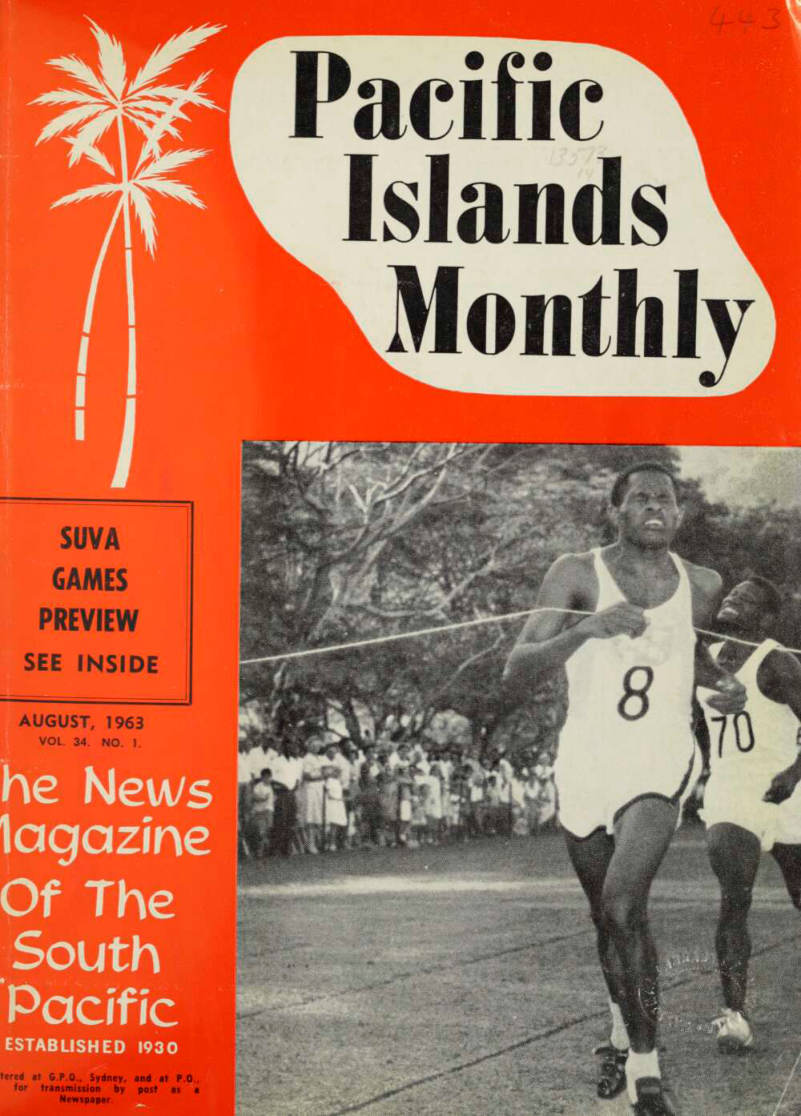 1
1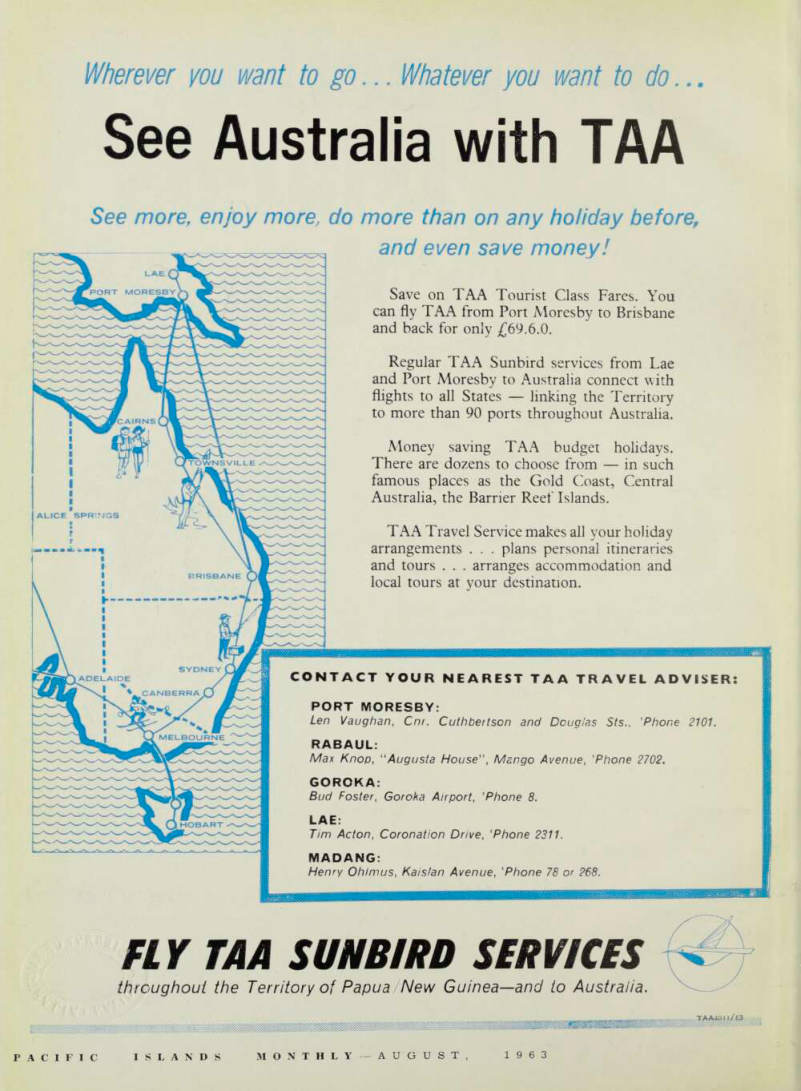 2
2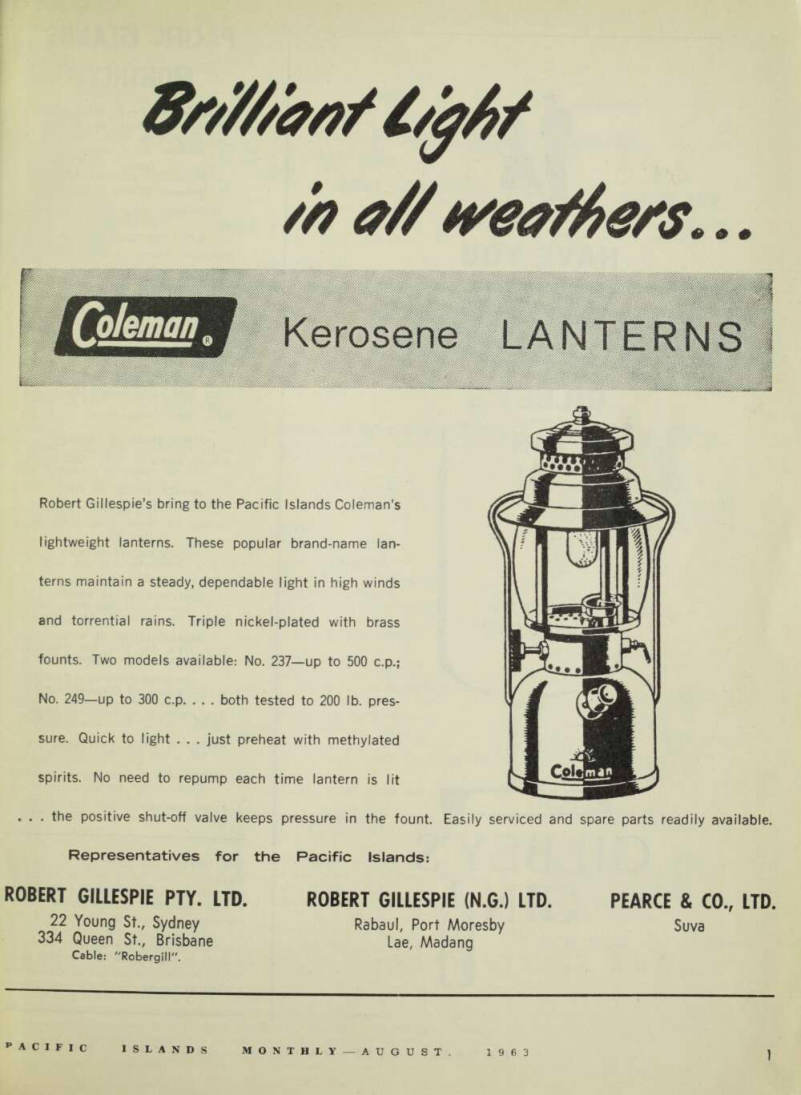 3
3 4
4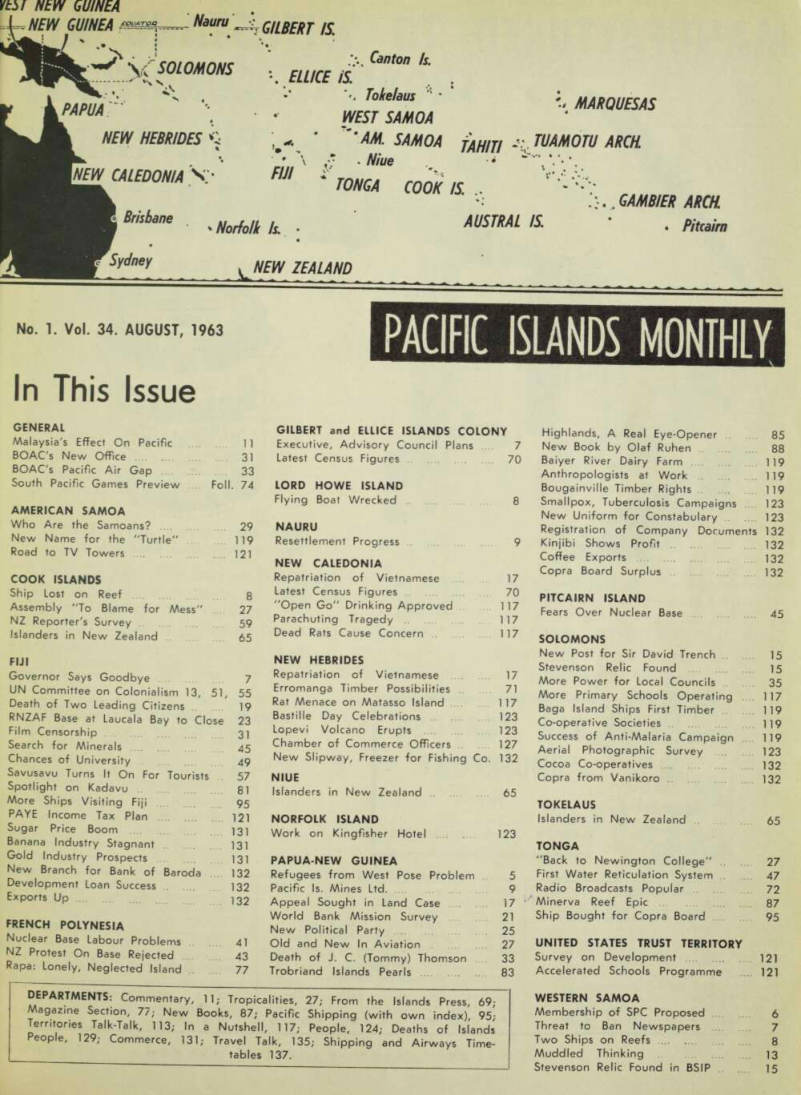 5
5 6
6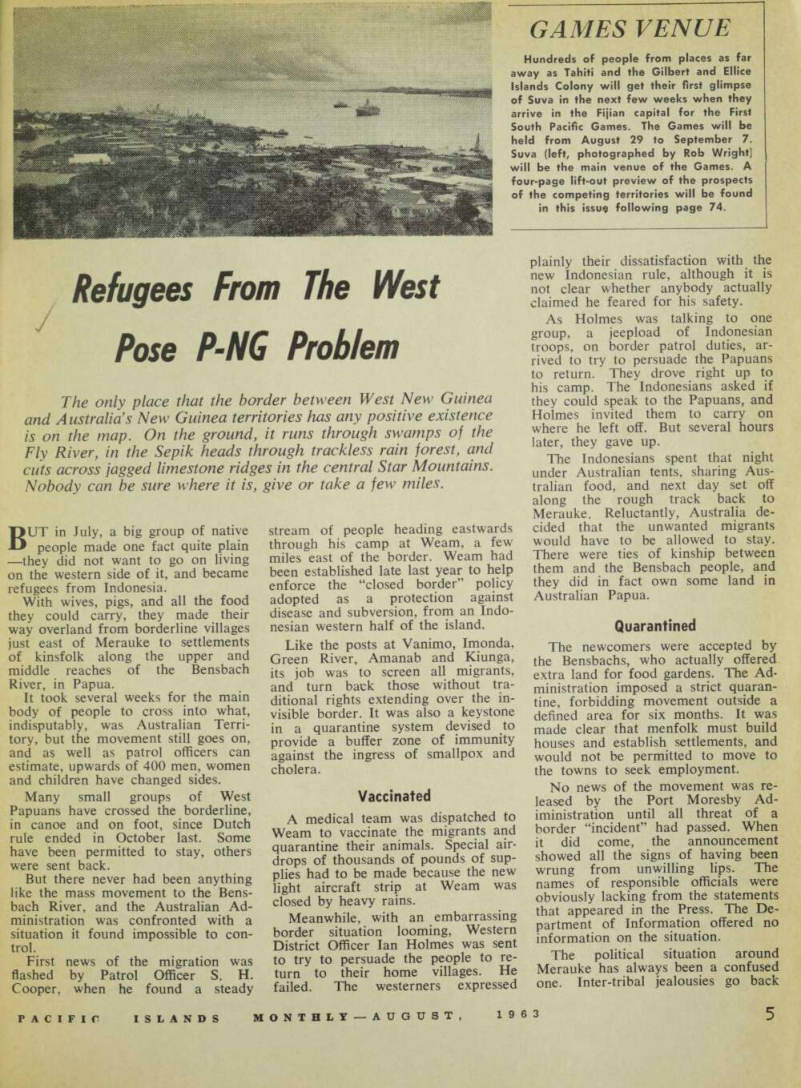 7
7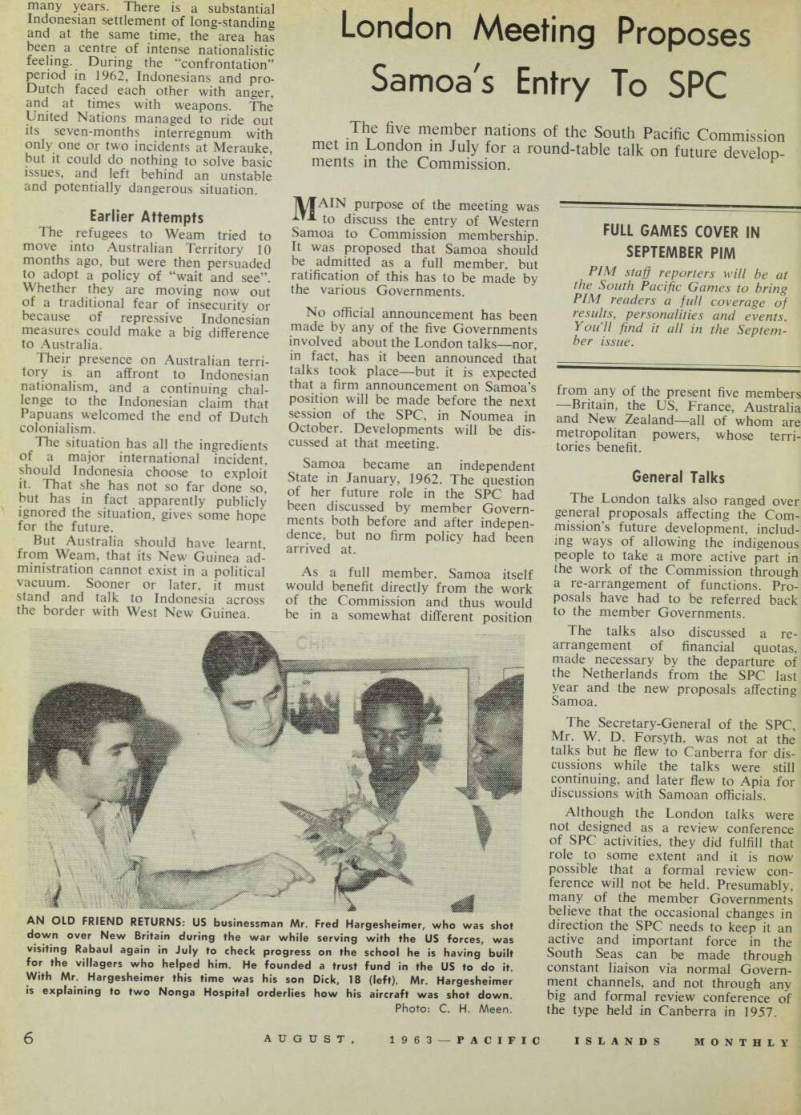 8
8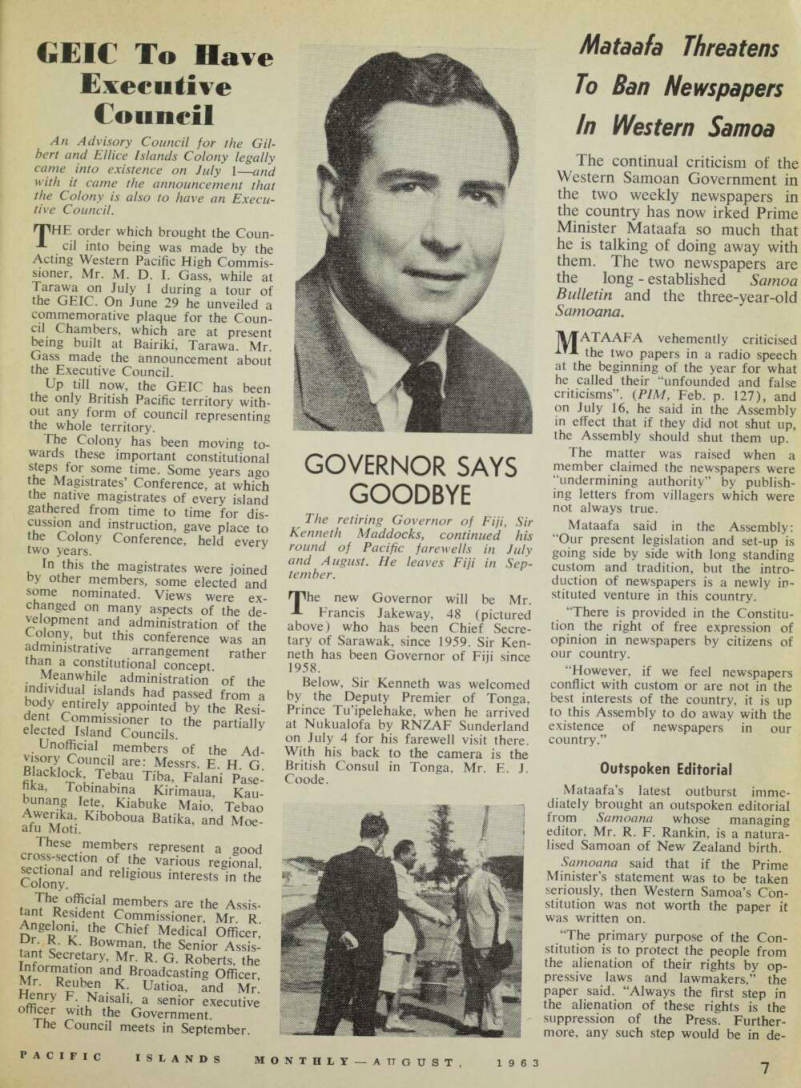 9
9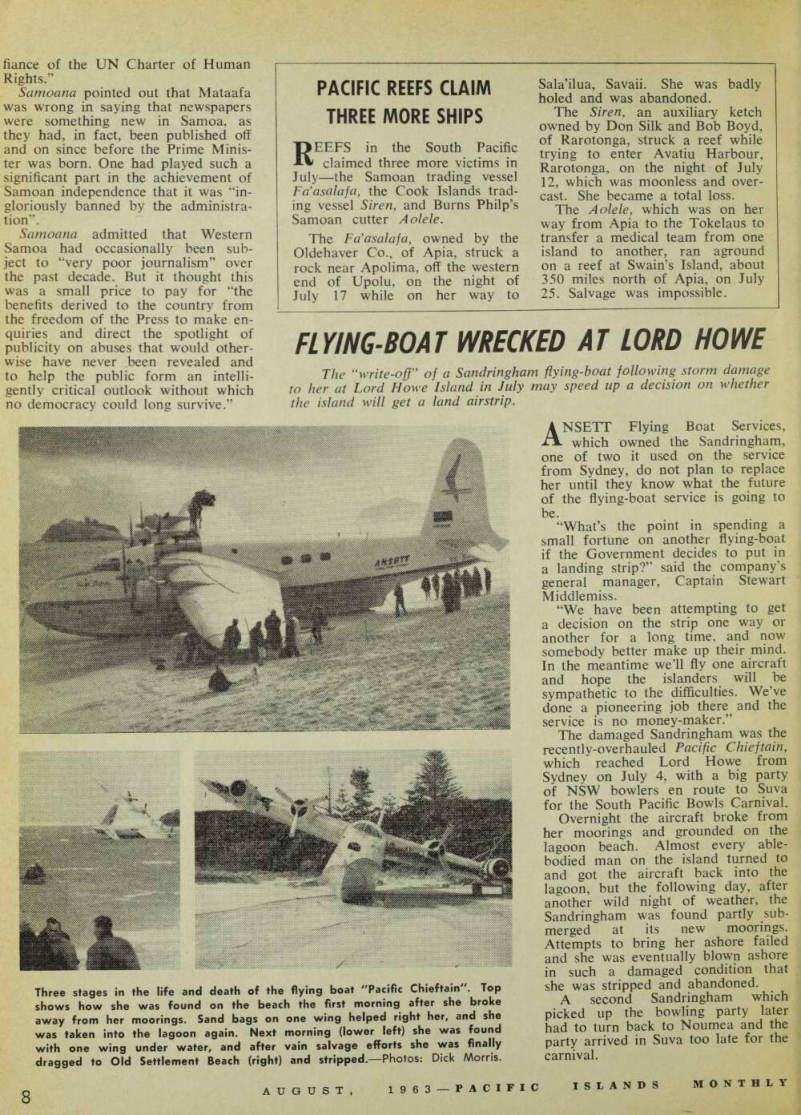 10
10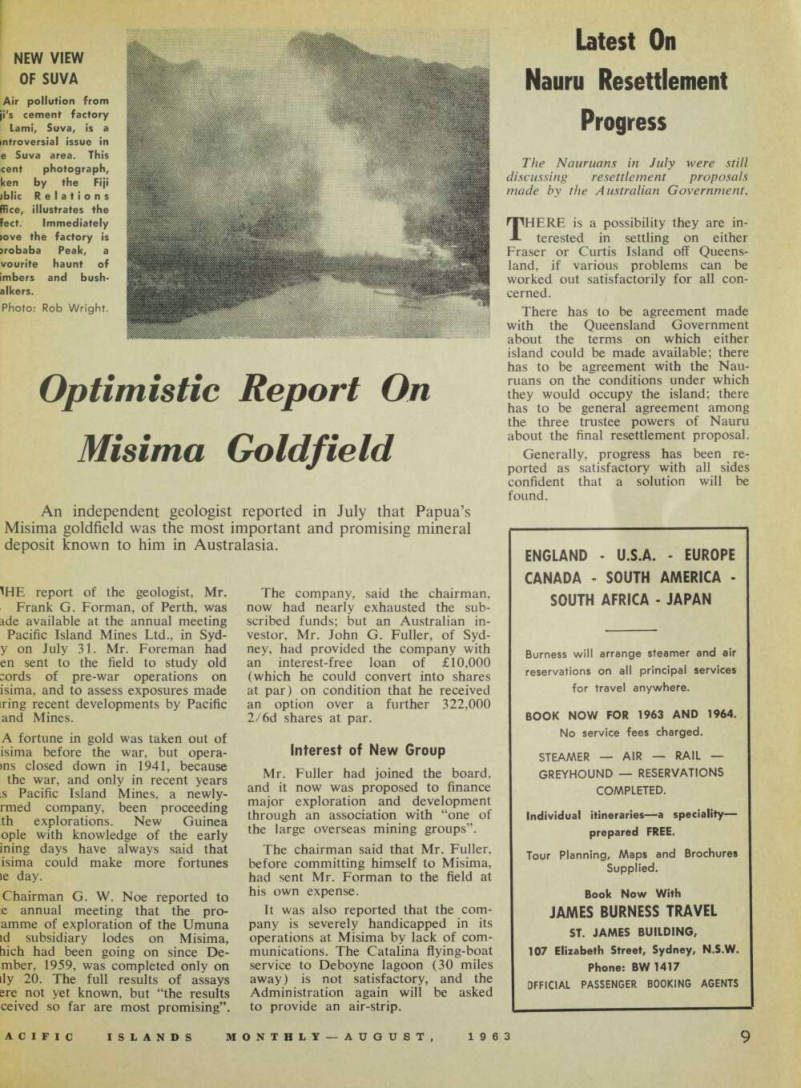 11
11 12
12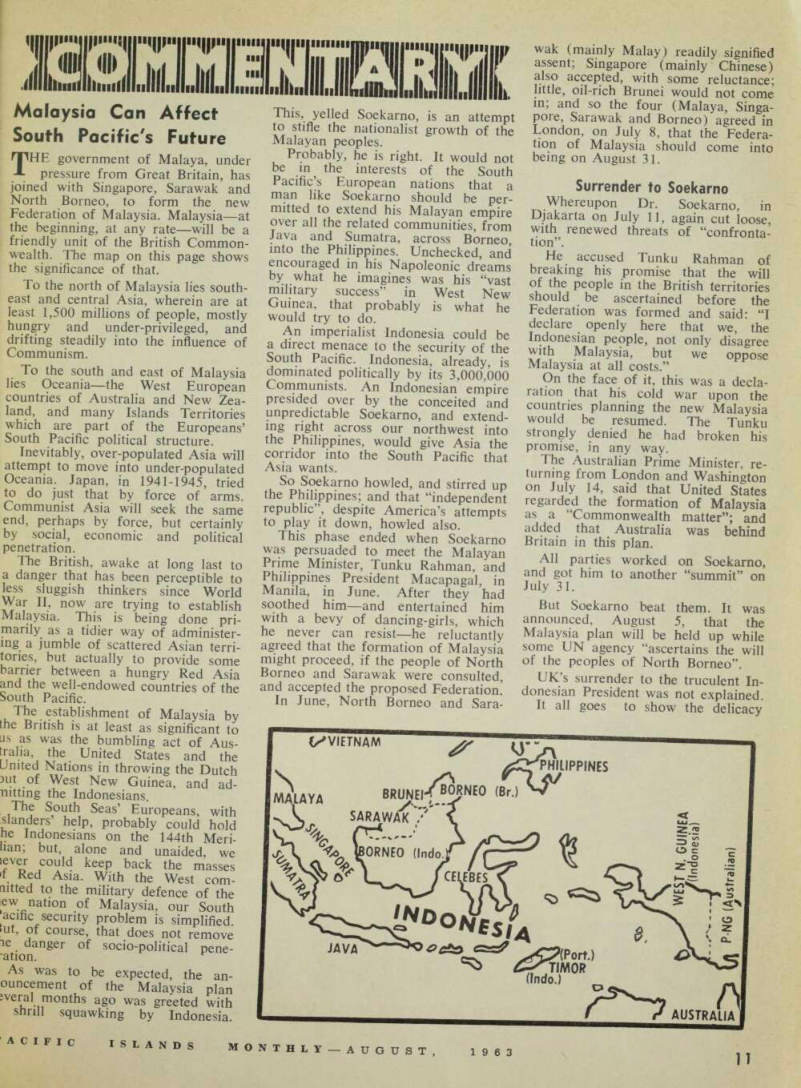 13
13 14
14 15
15 16
16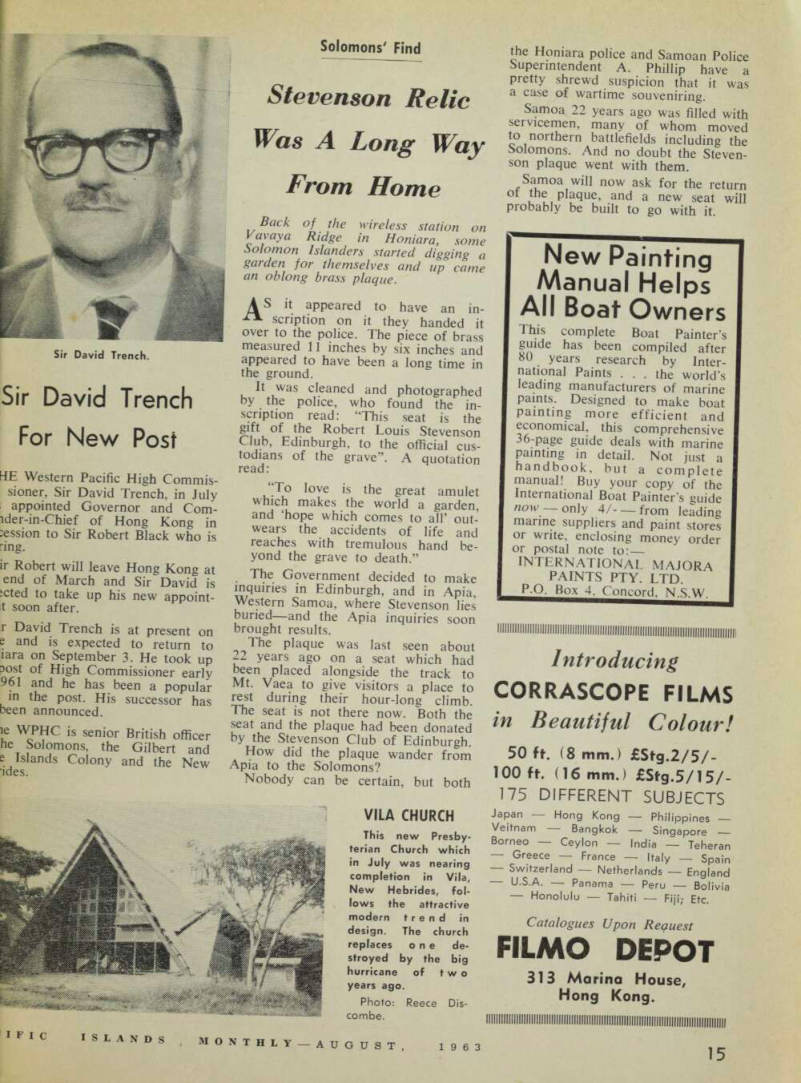 17
17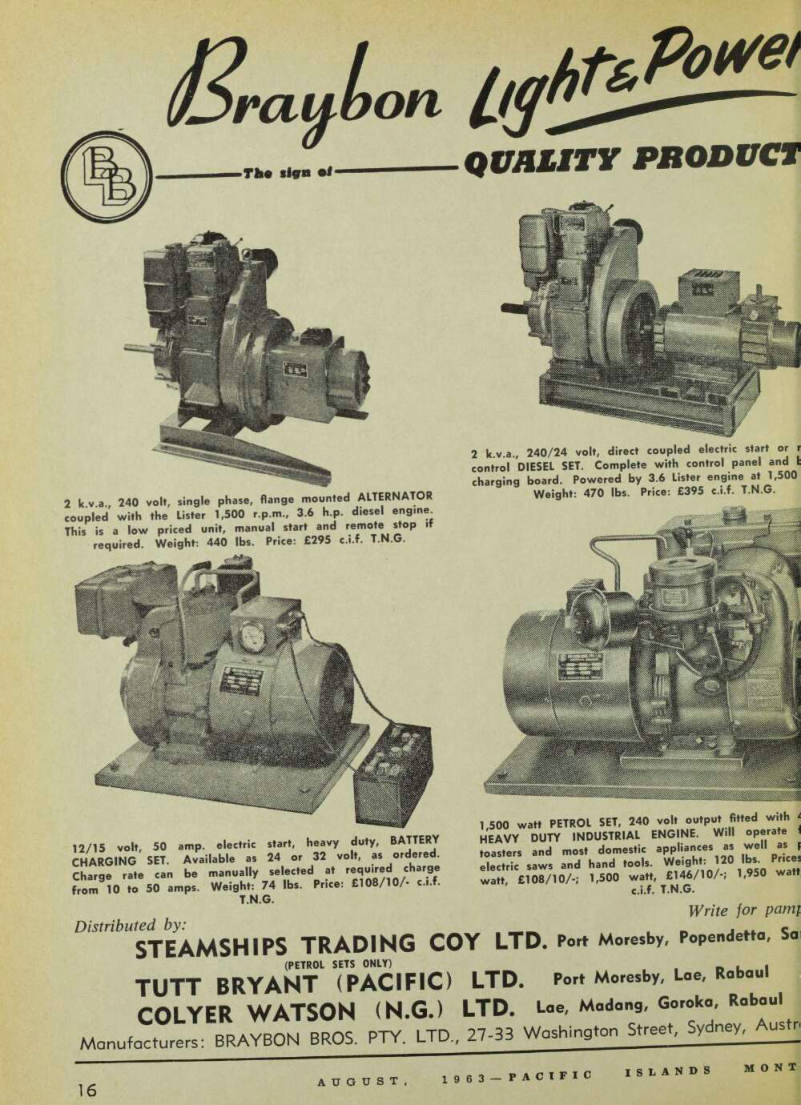 18
18 19
19 20
20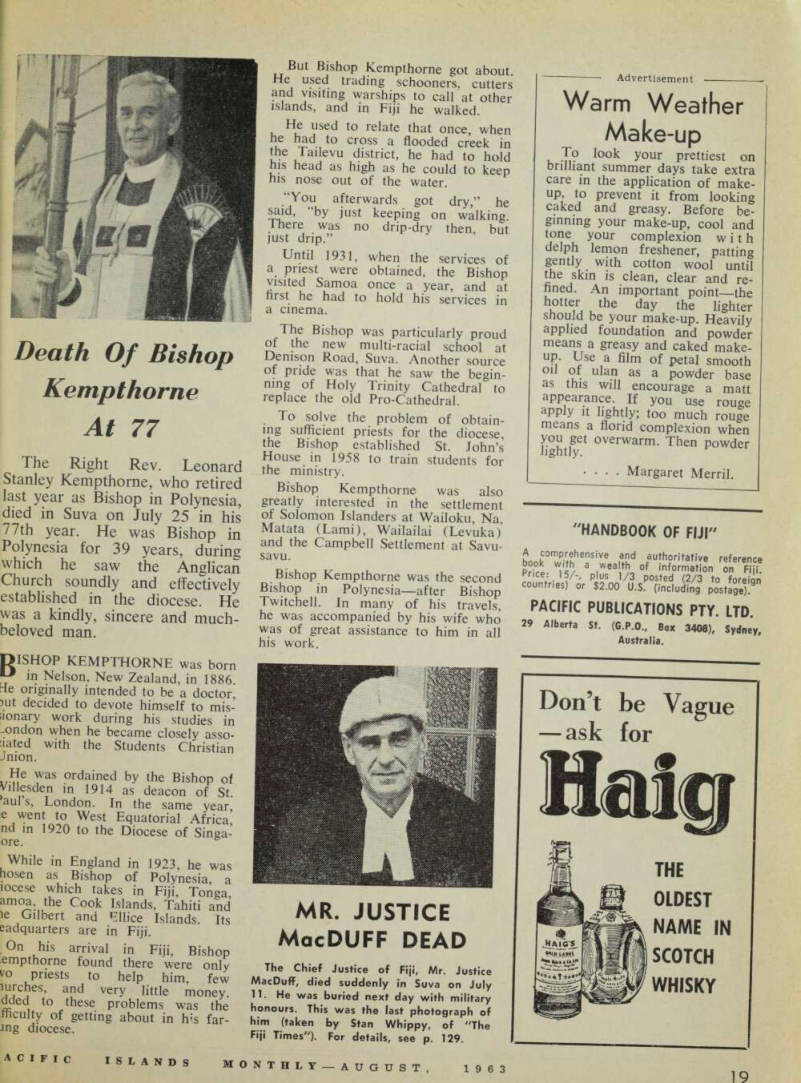 21
21 22
22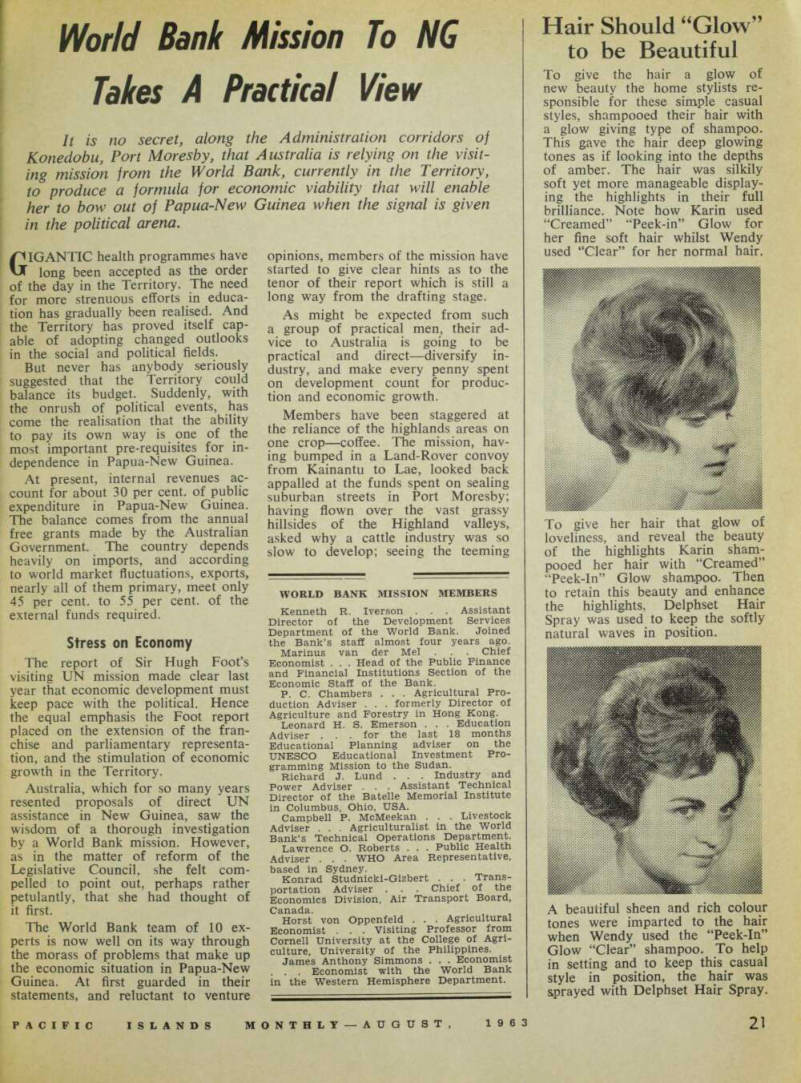 23
23 24
24 25
25 26
26 27
27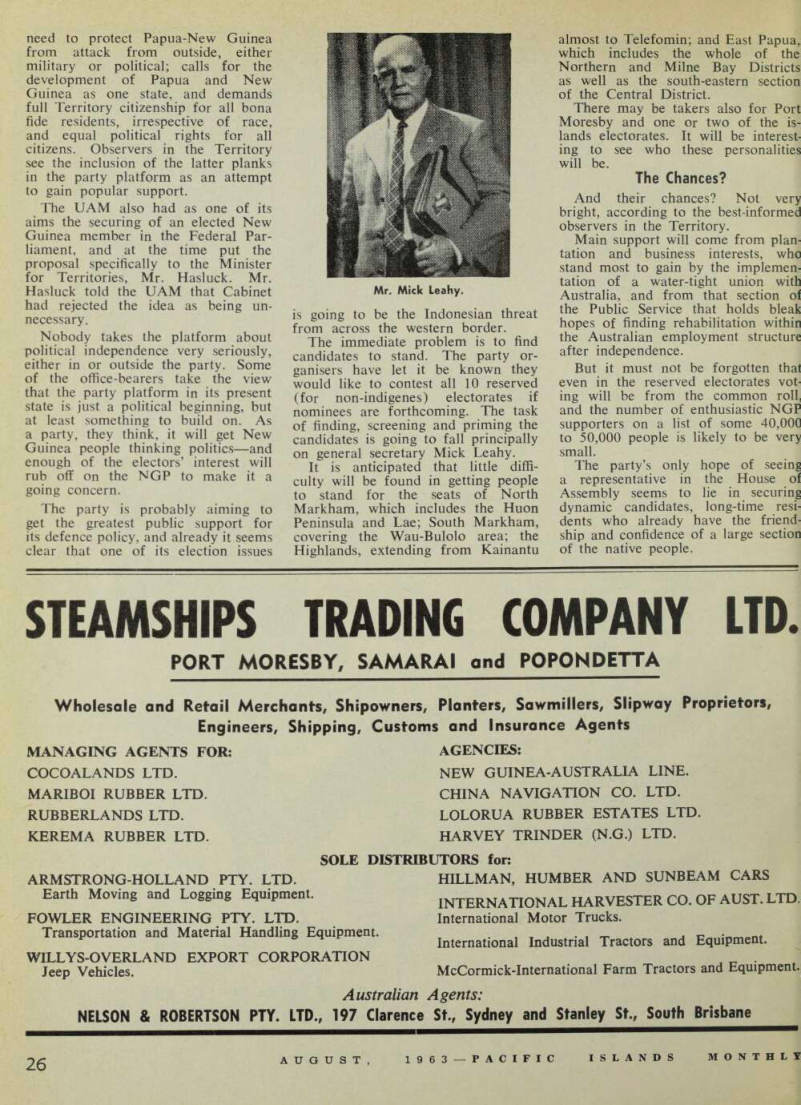 28
28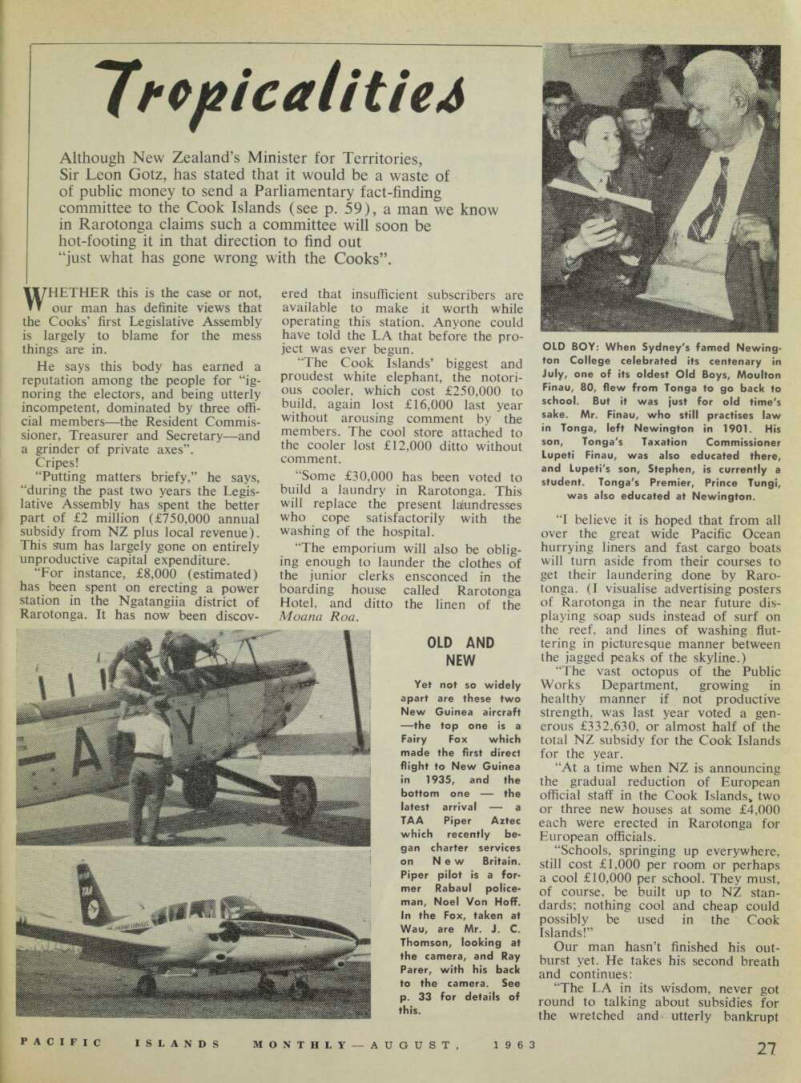 29
29 30
30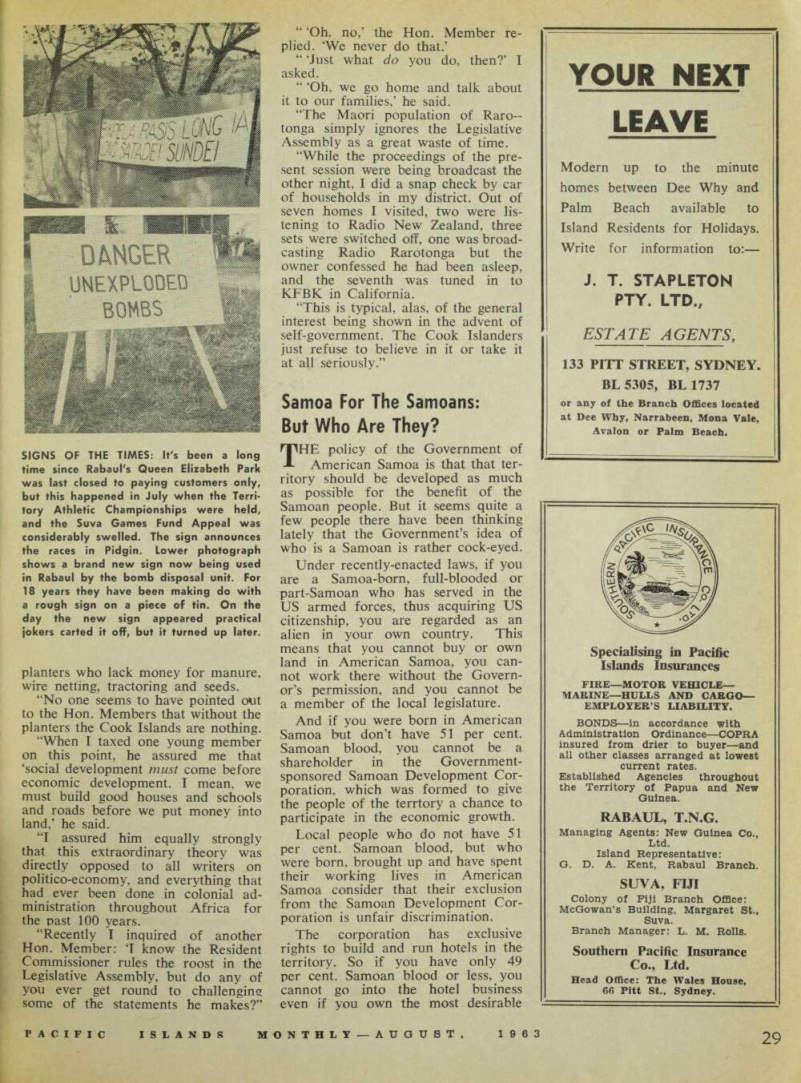 31
31 32
32 33
33 34
34 35
35 36
36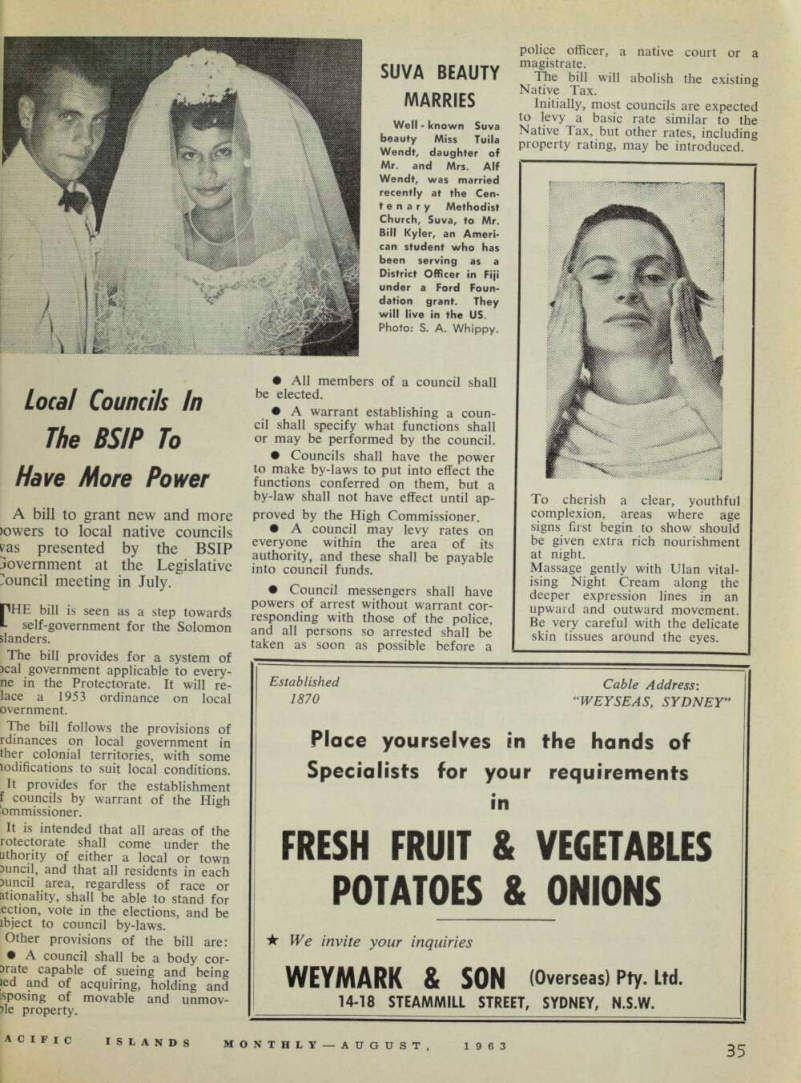 37
37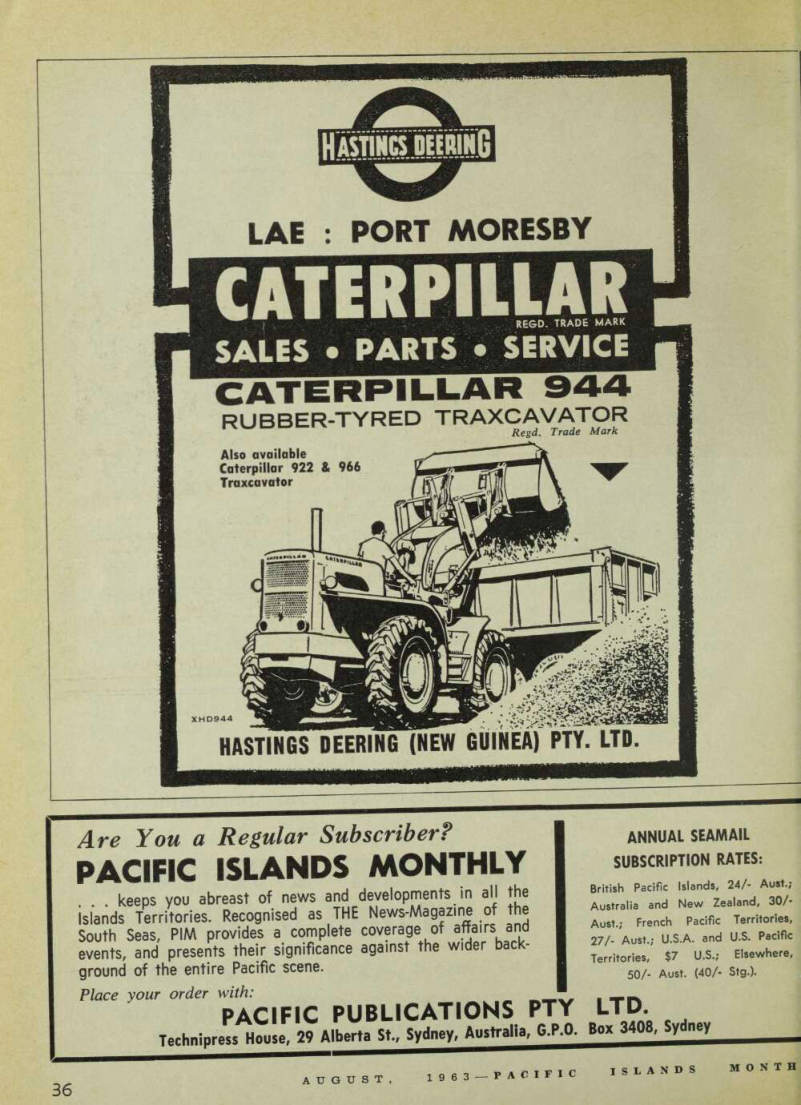 38
38 39
39 40
40 41
41 42
42 43
43 44
44 45
45 46
46 47
47 48
48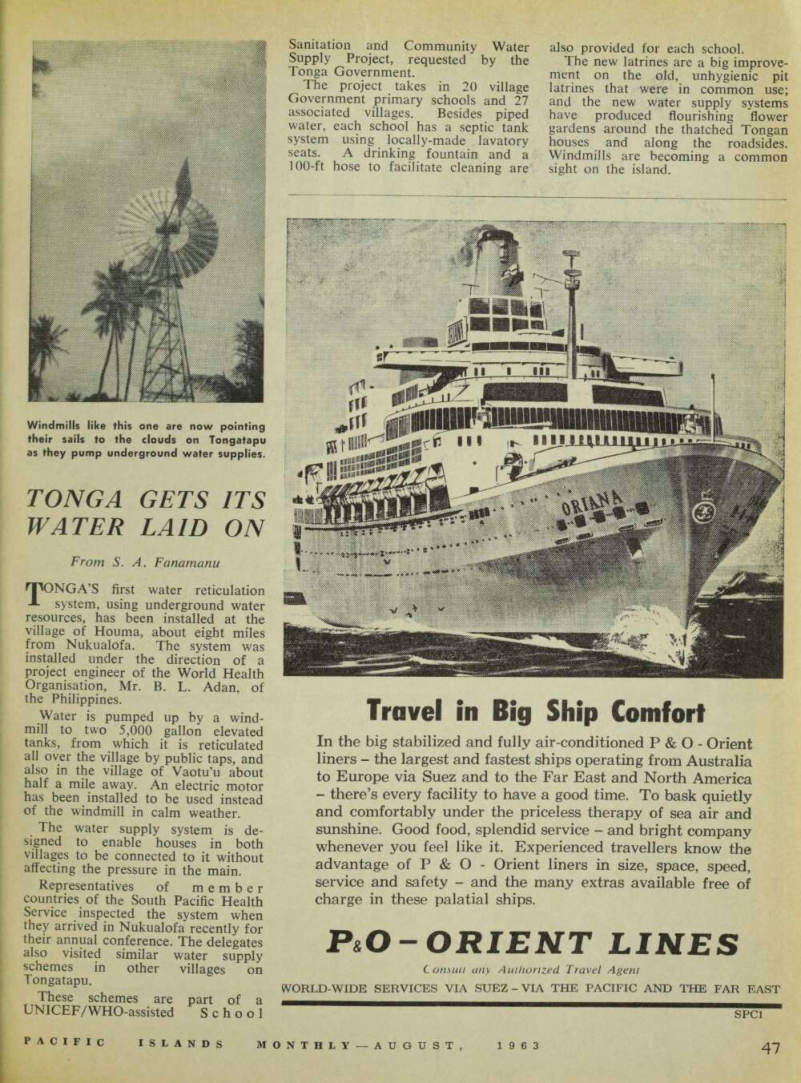 49
49 50
50 51
51 52
52 53
53 54
54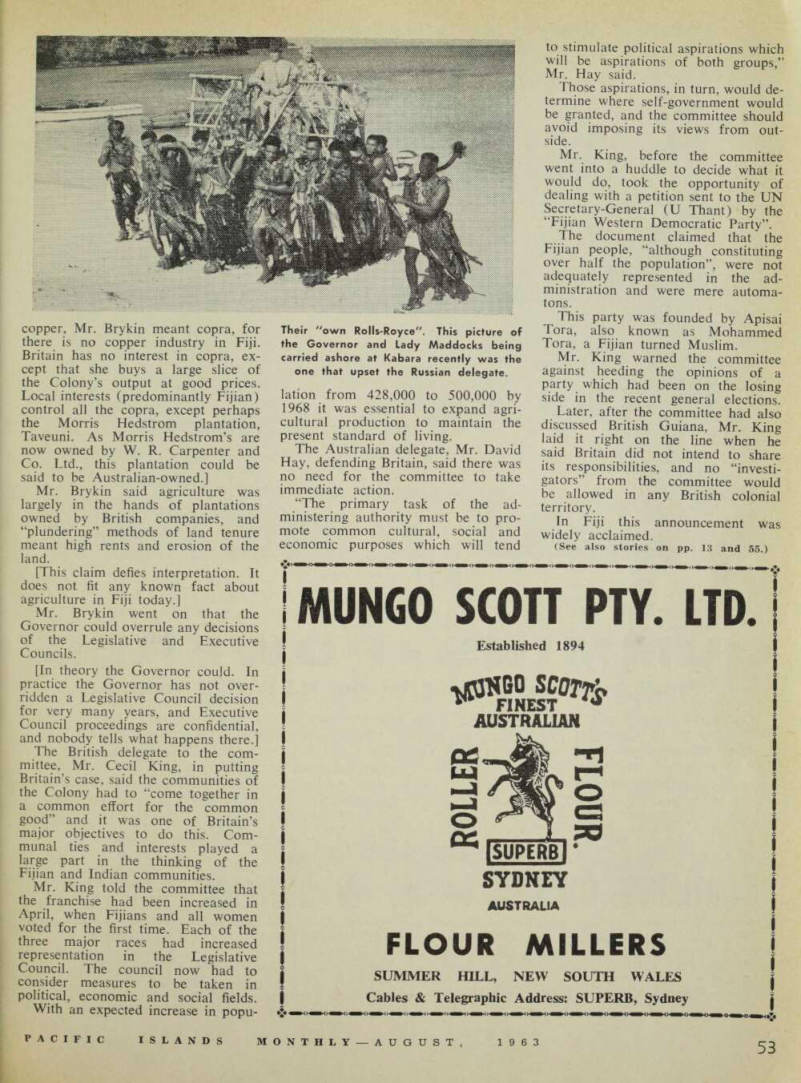 55
55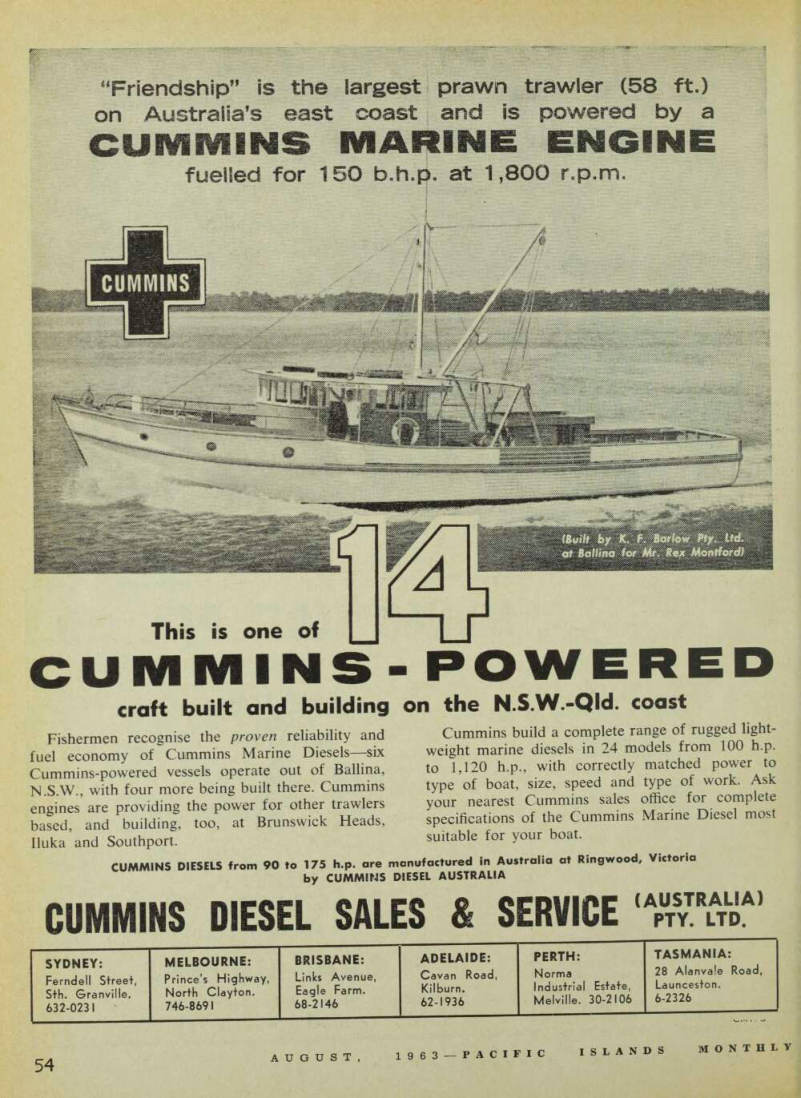 56
56 57
57 58
58 59
59 60
60 61
61 62
62 63
63 64
64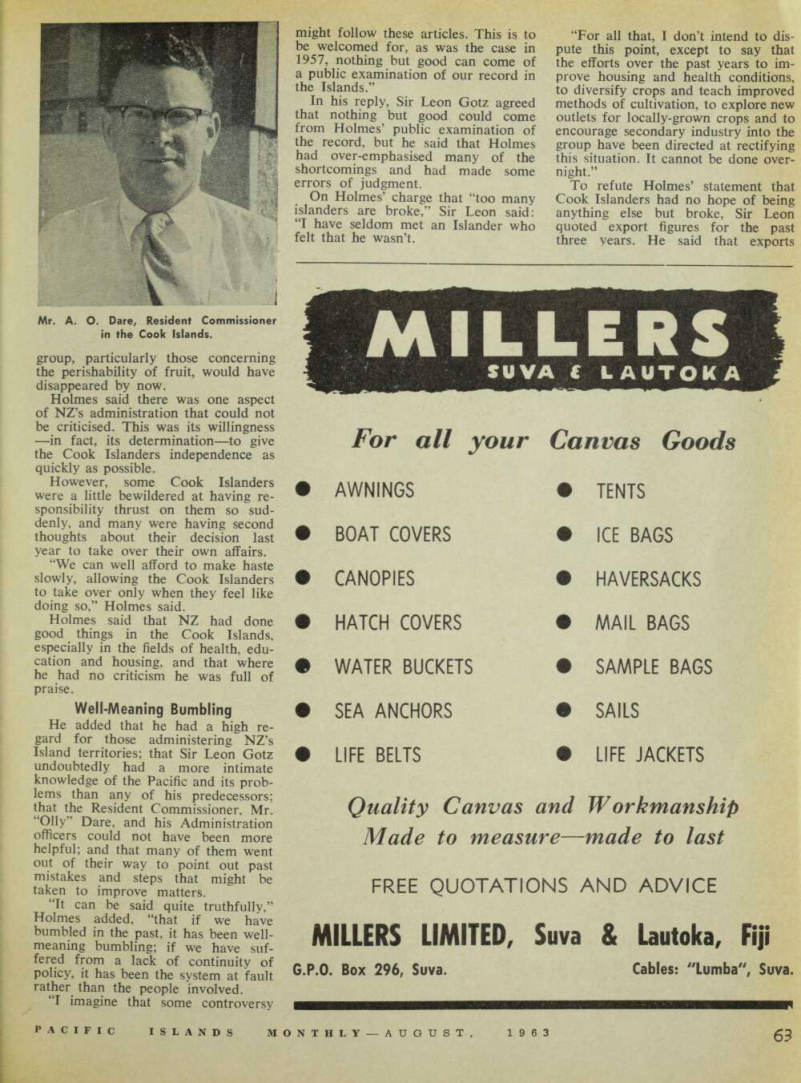 65
65 66
66 67
67 68
68 69
69 70
70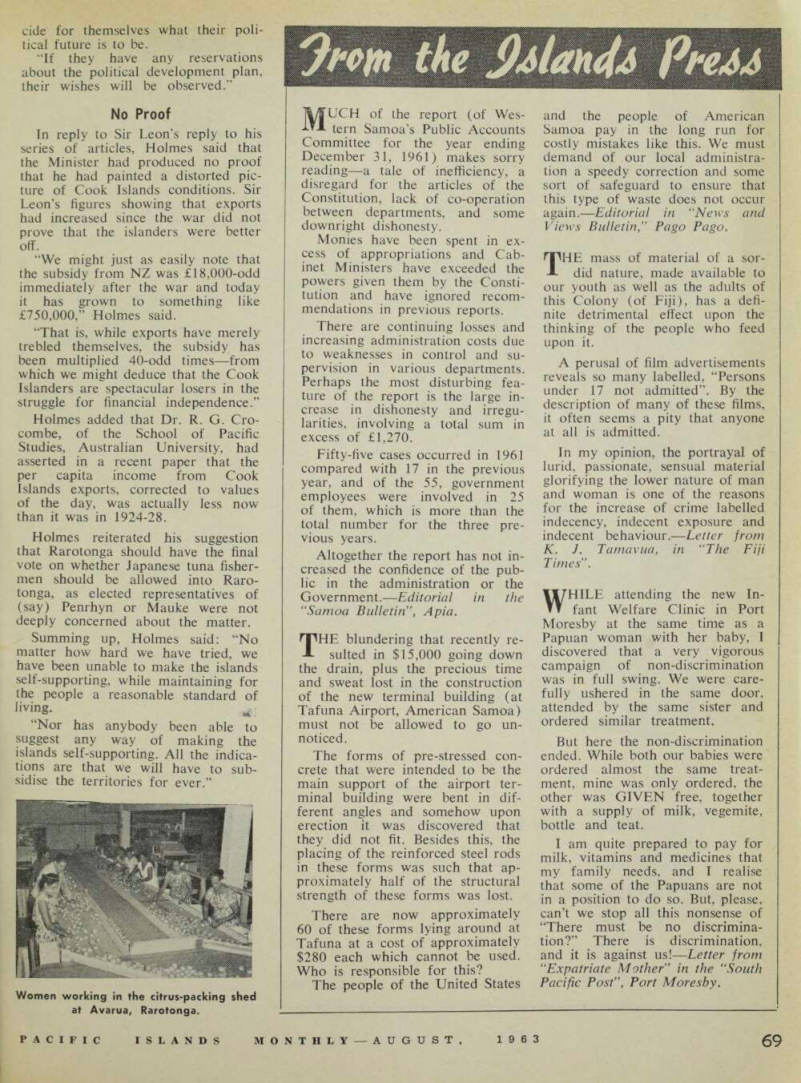 71
71 72
72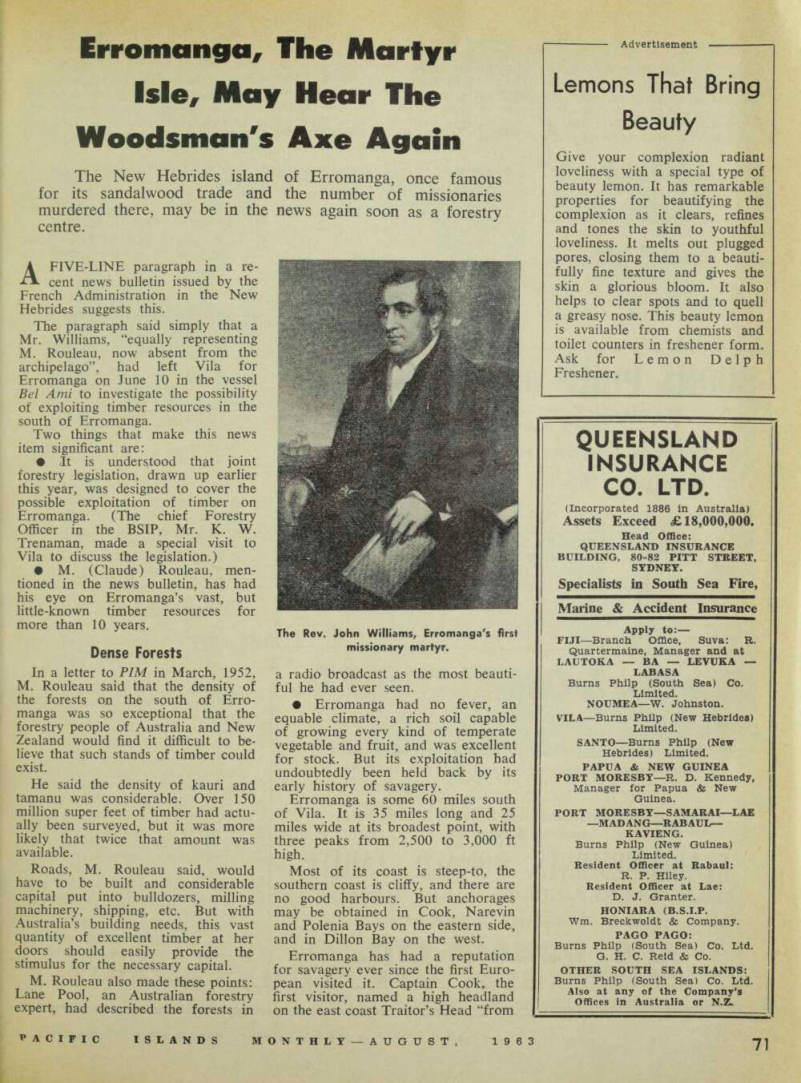 73
73 74
74 75
75 76
76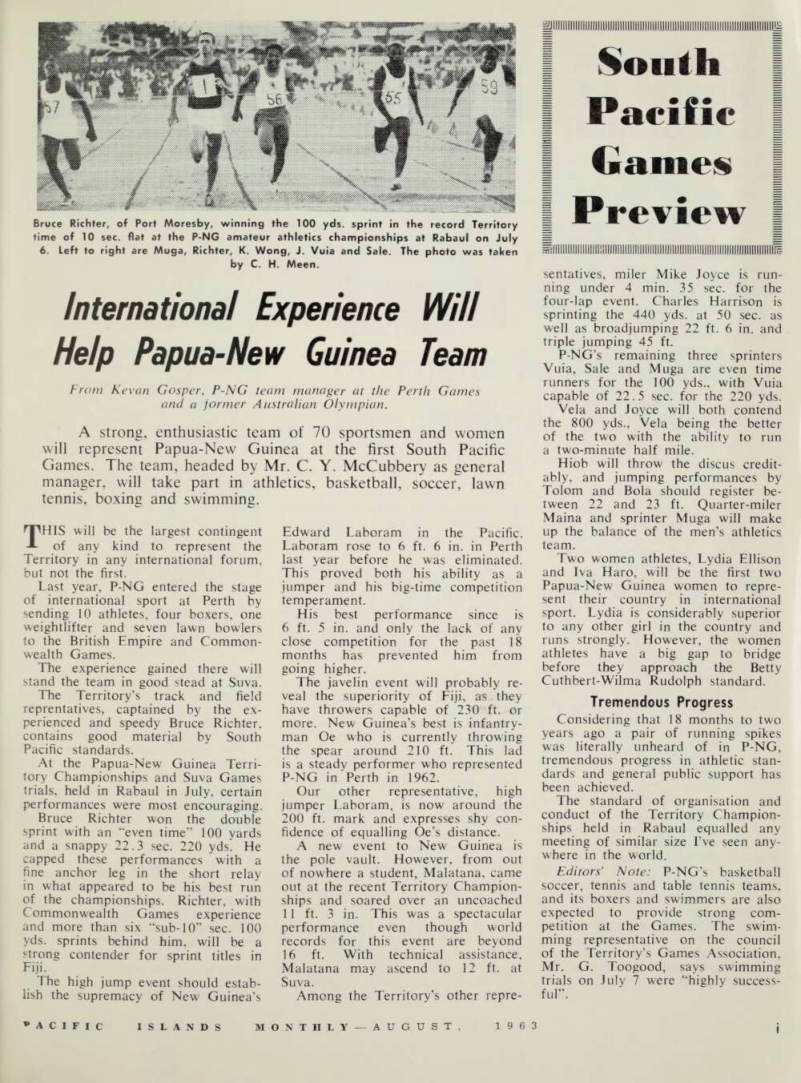 77
77 78
78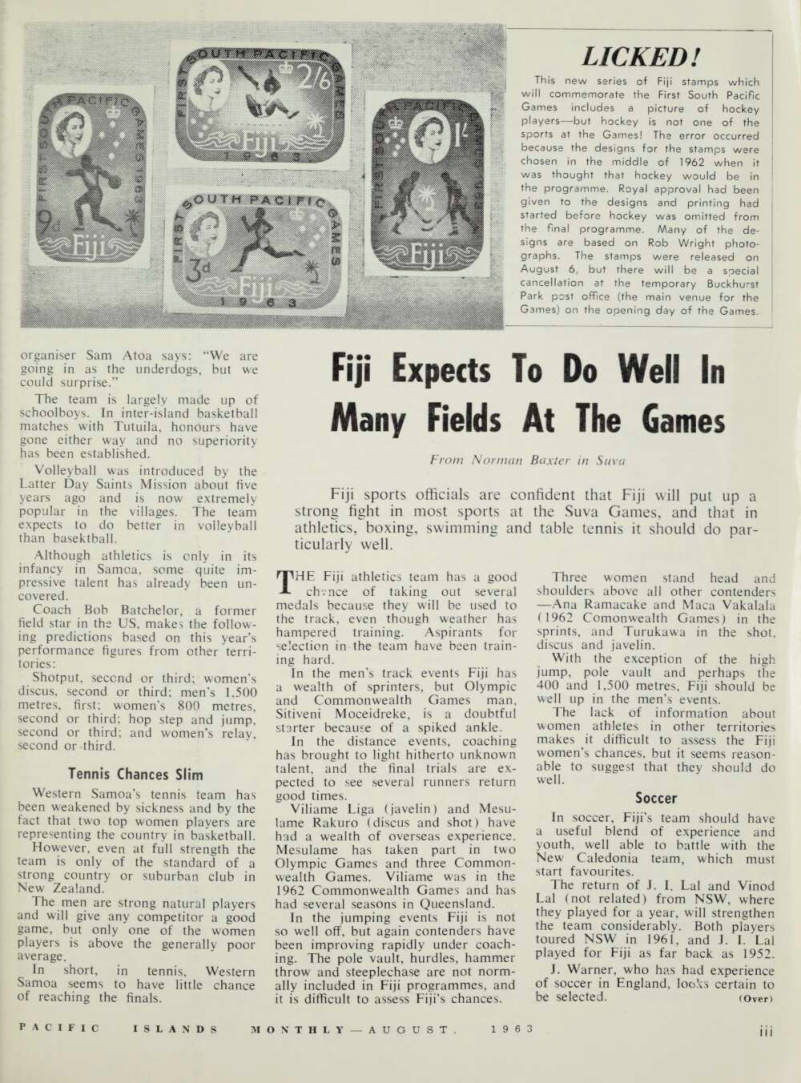 79
79 80
80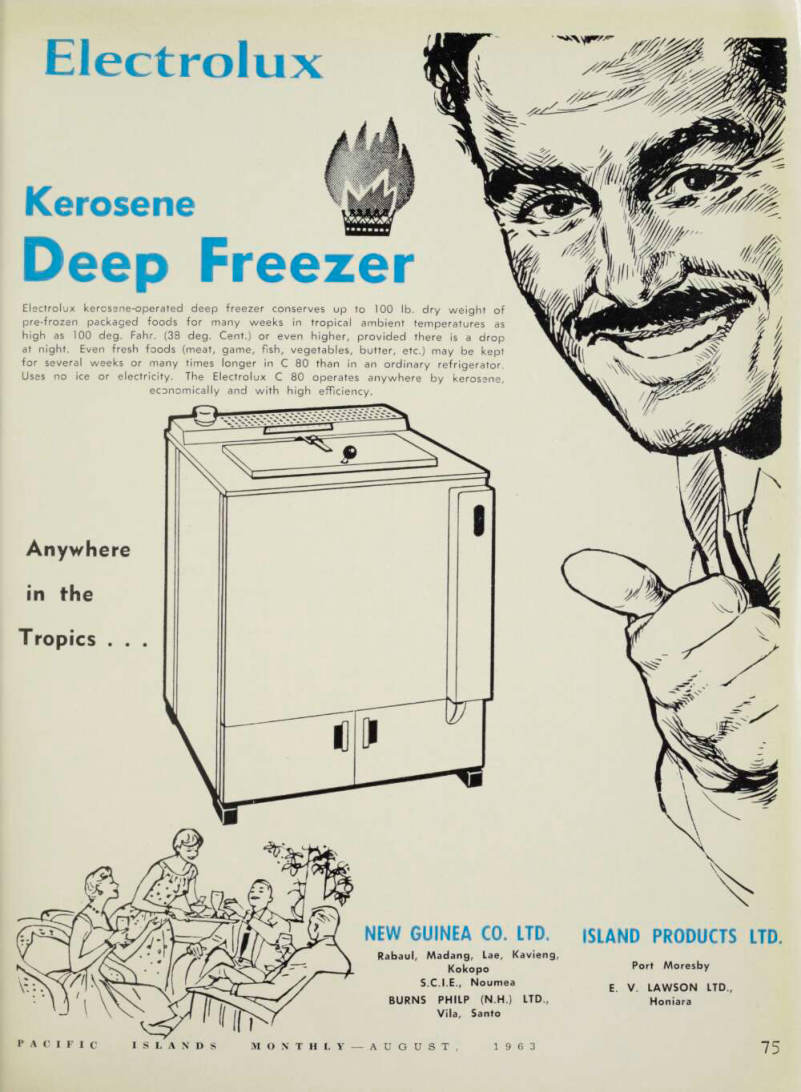 81
81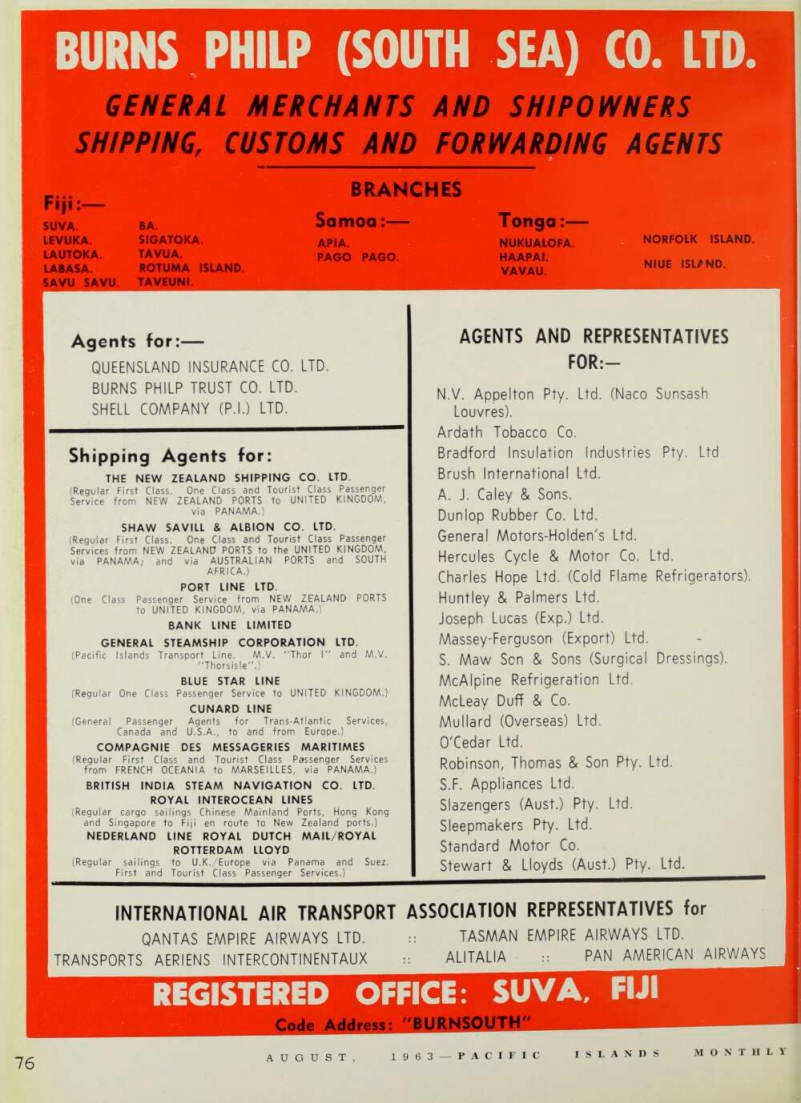 82
82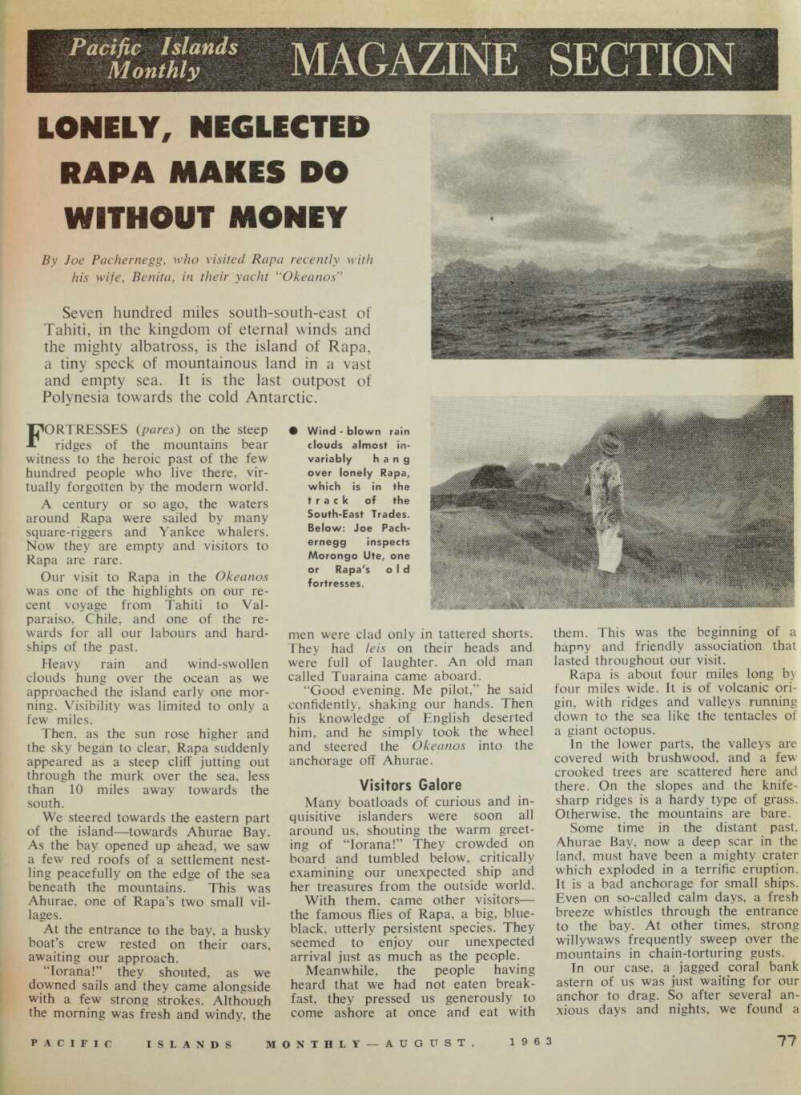 83
83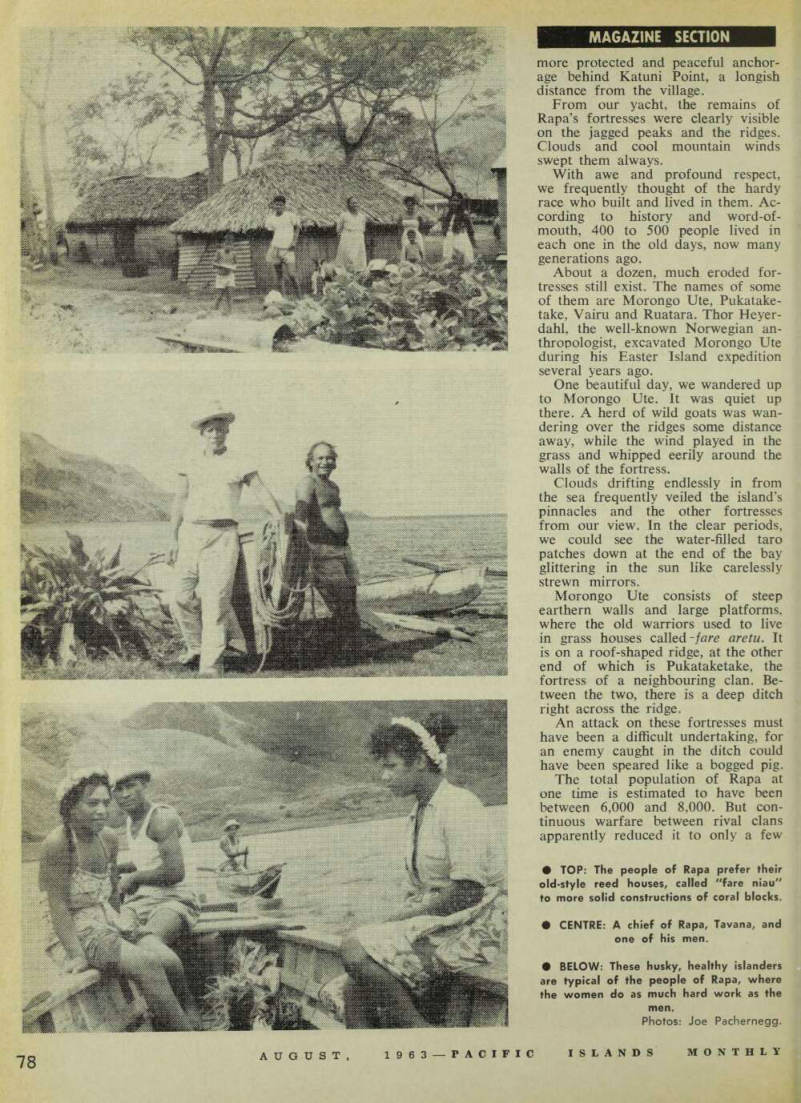 84
84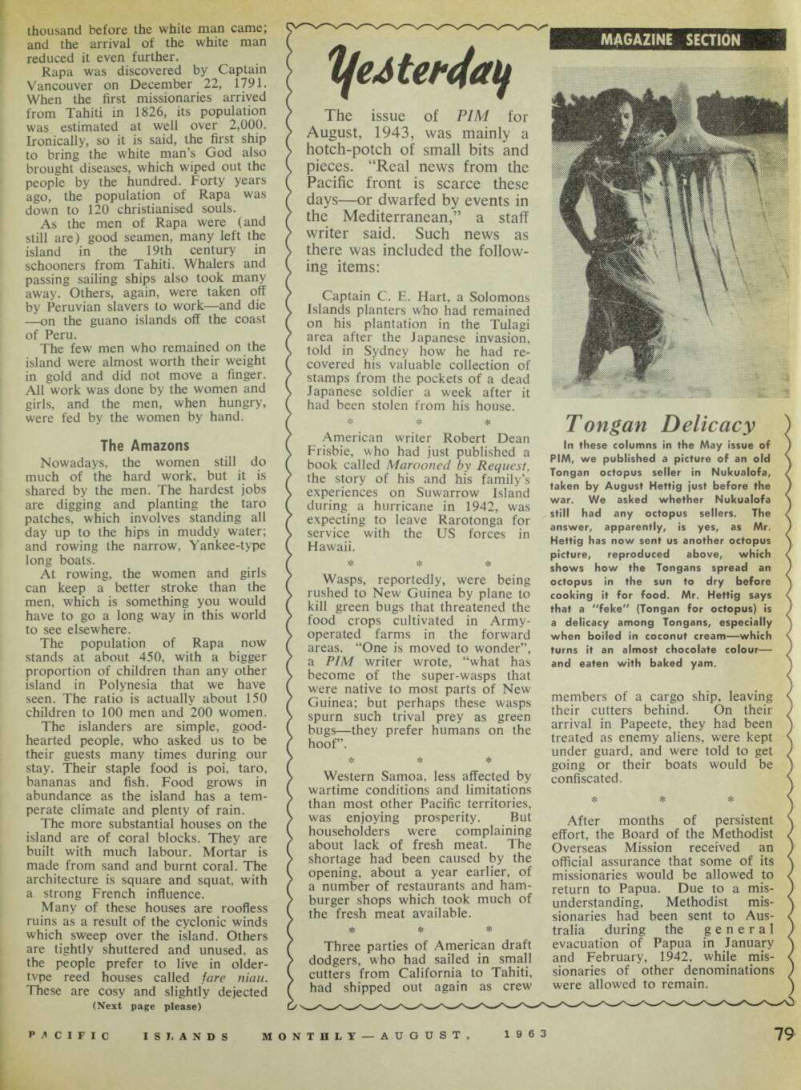 85
85 86
86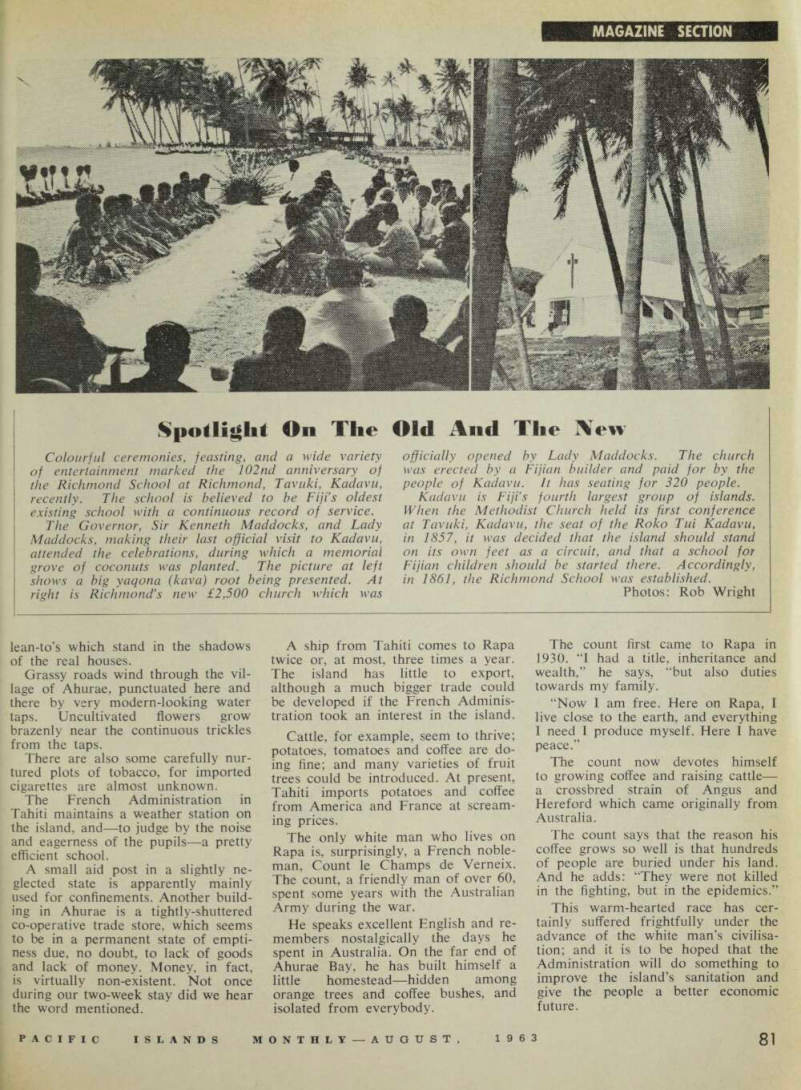 87
87 88
88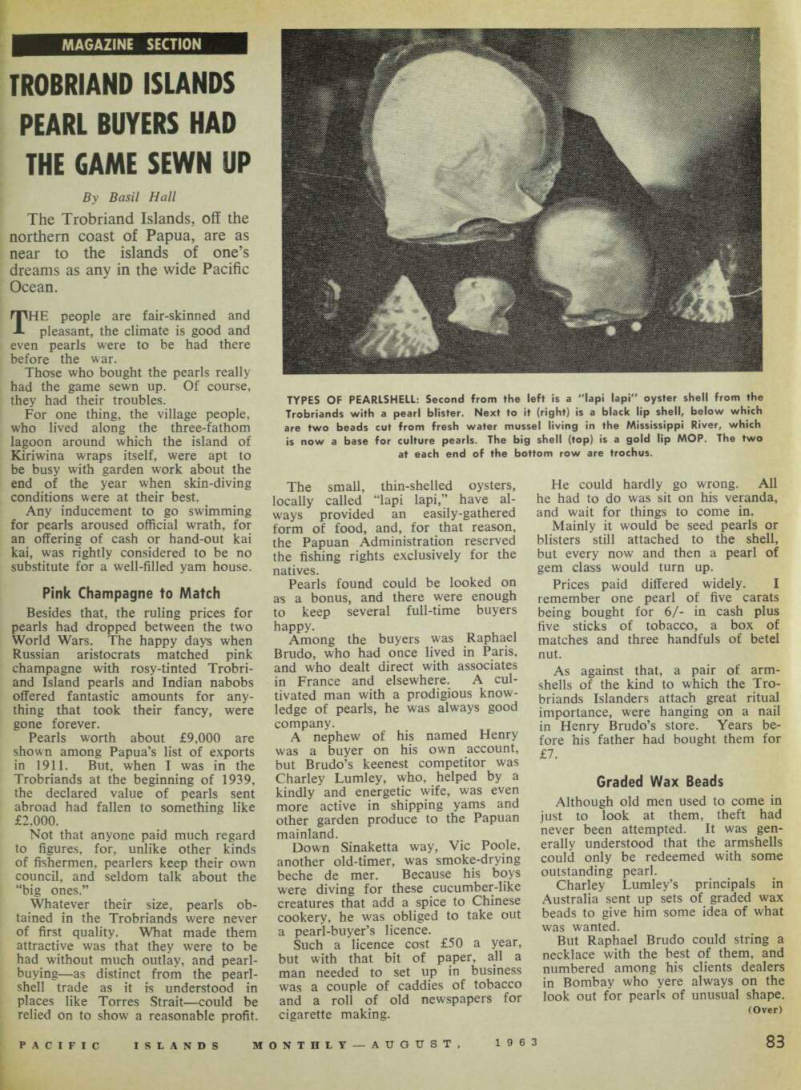 89
89 90
90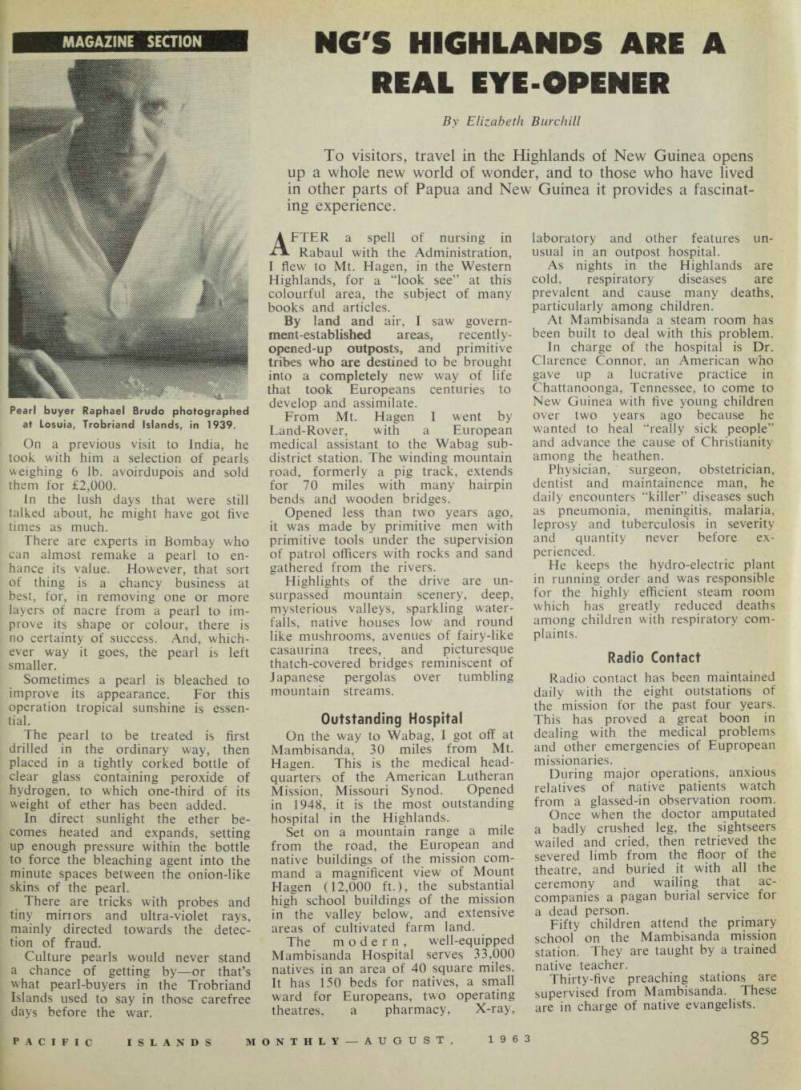 91
91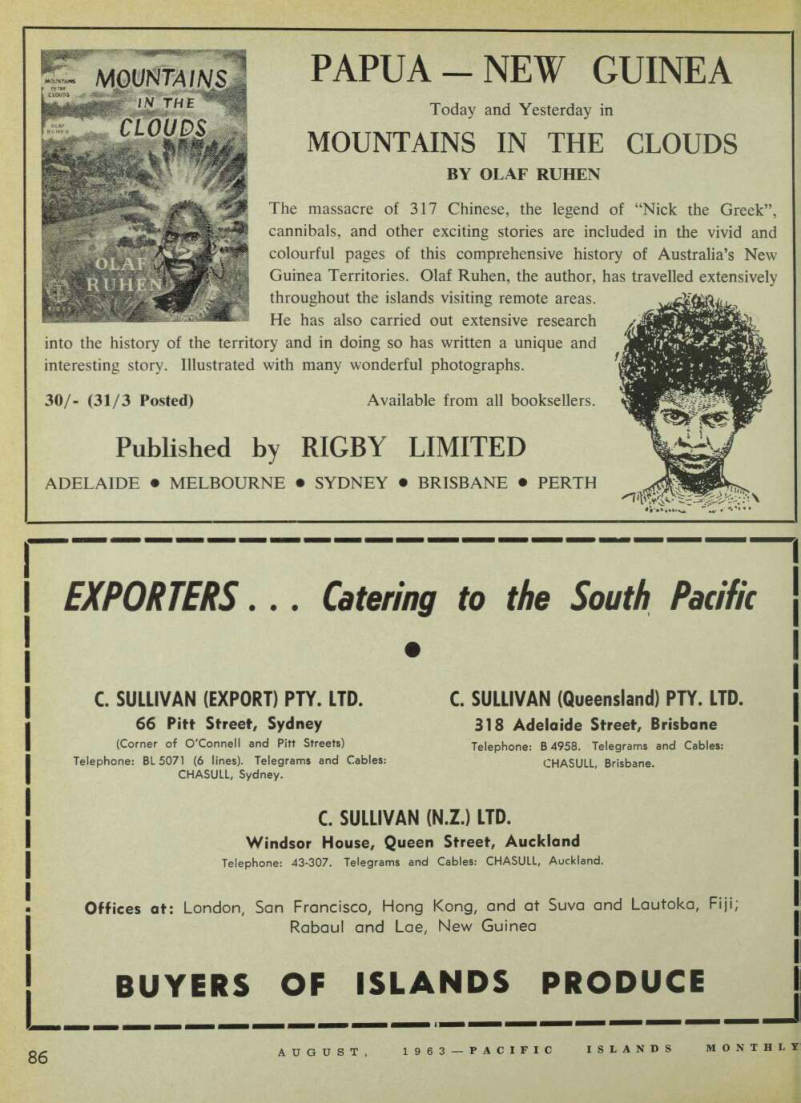 92
92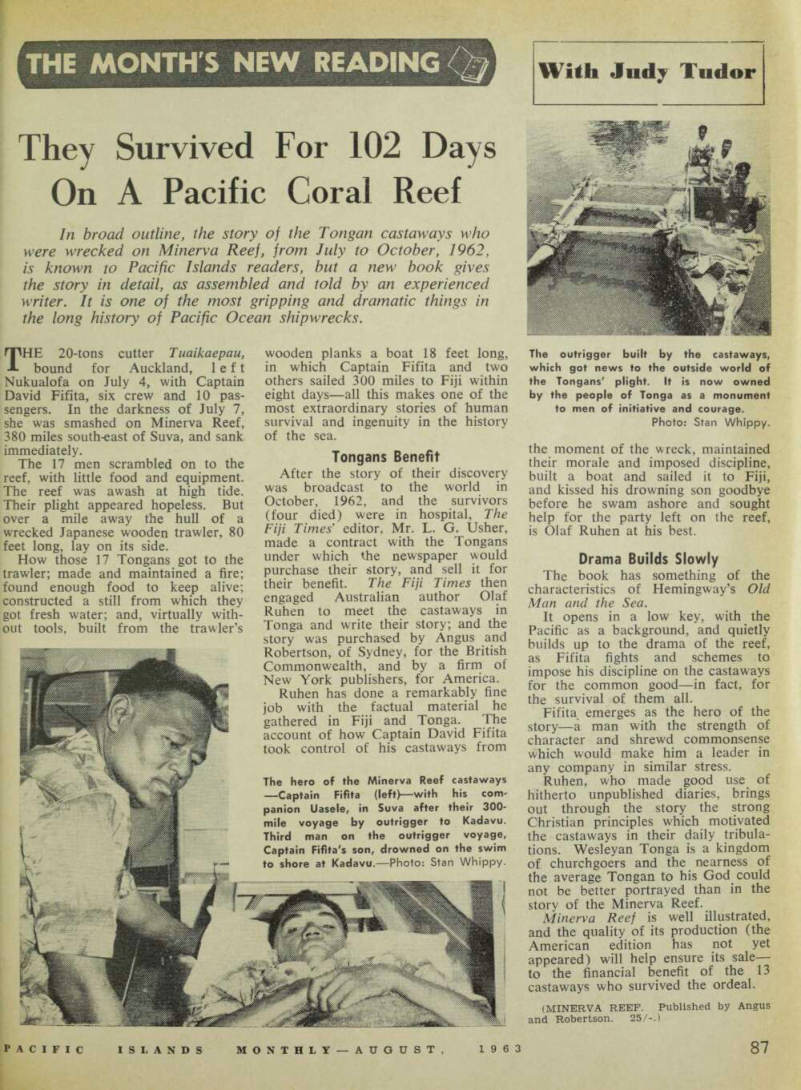 93
93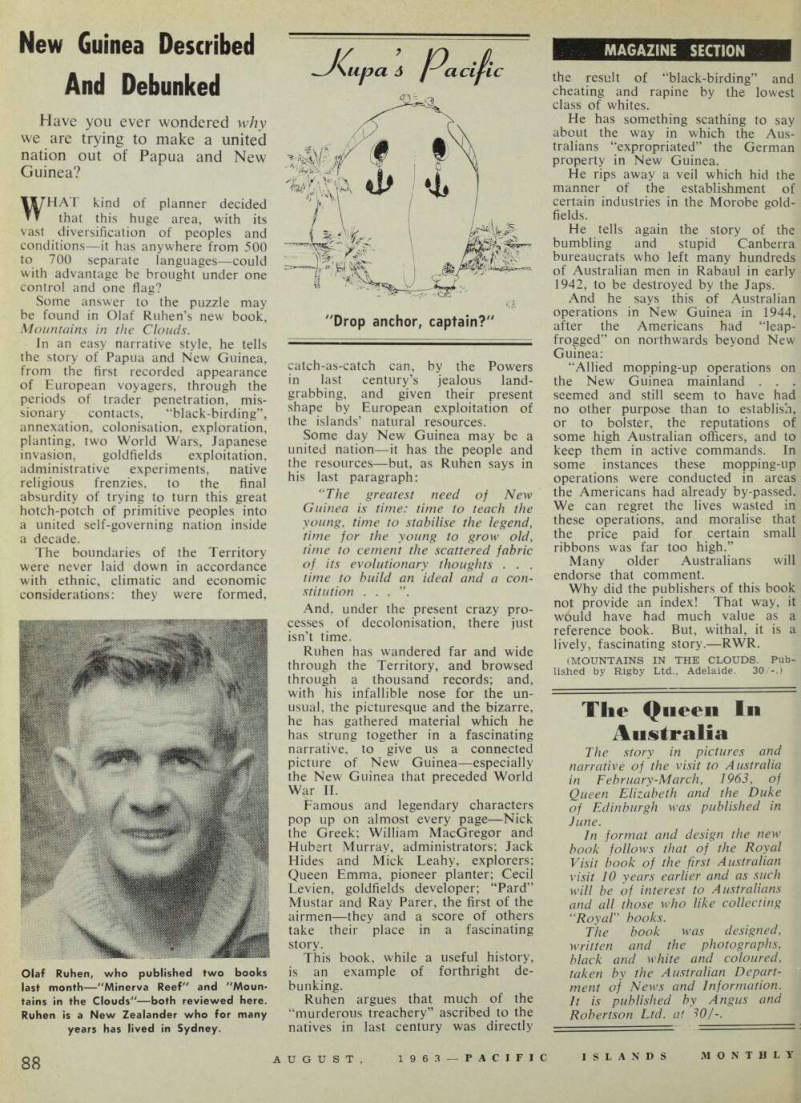 94
94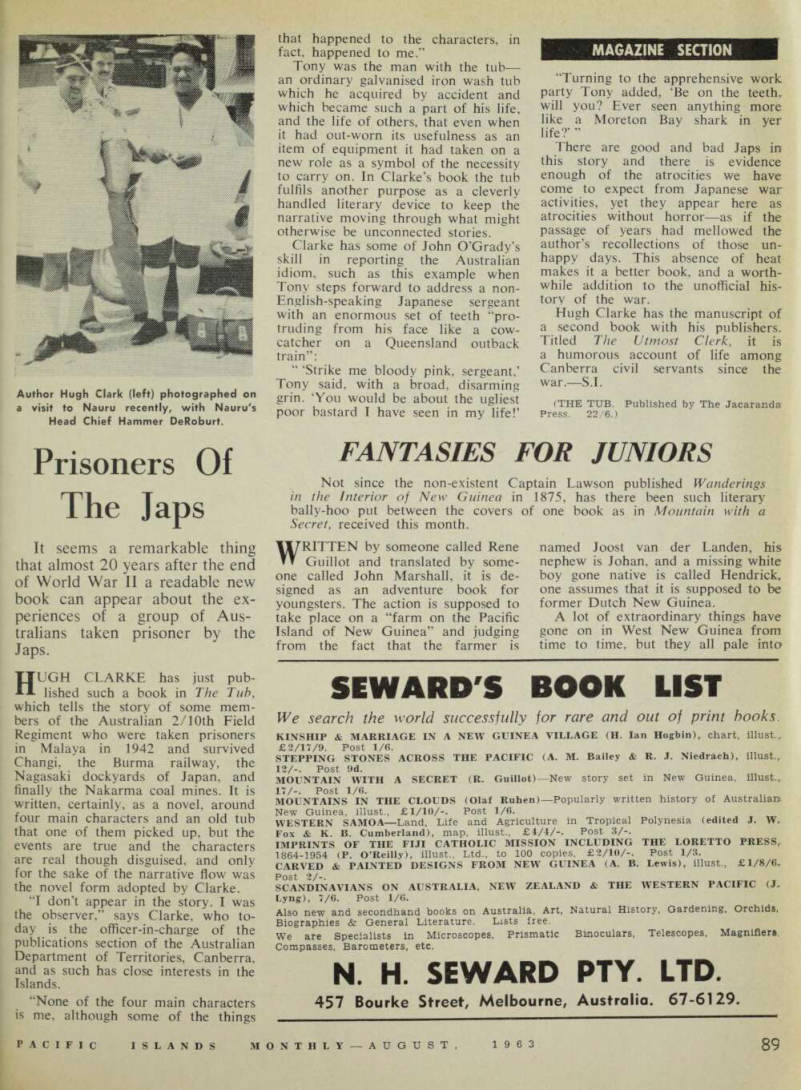 95
95 96
96 97
97 98
98 99
99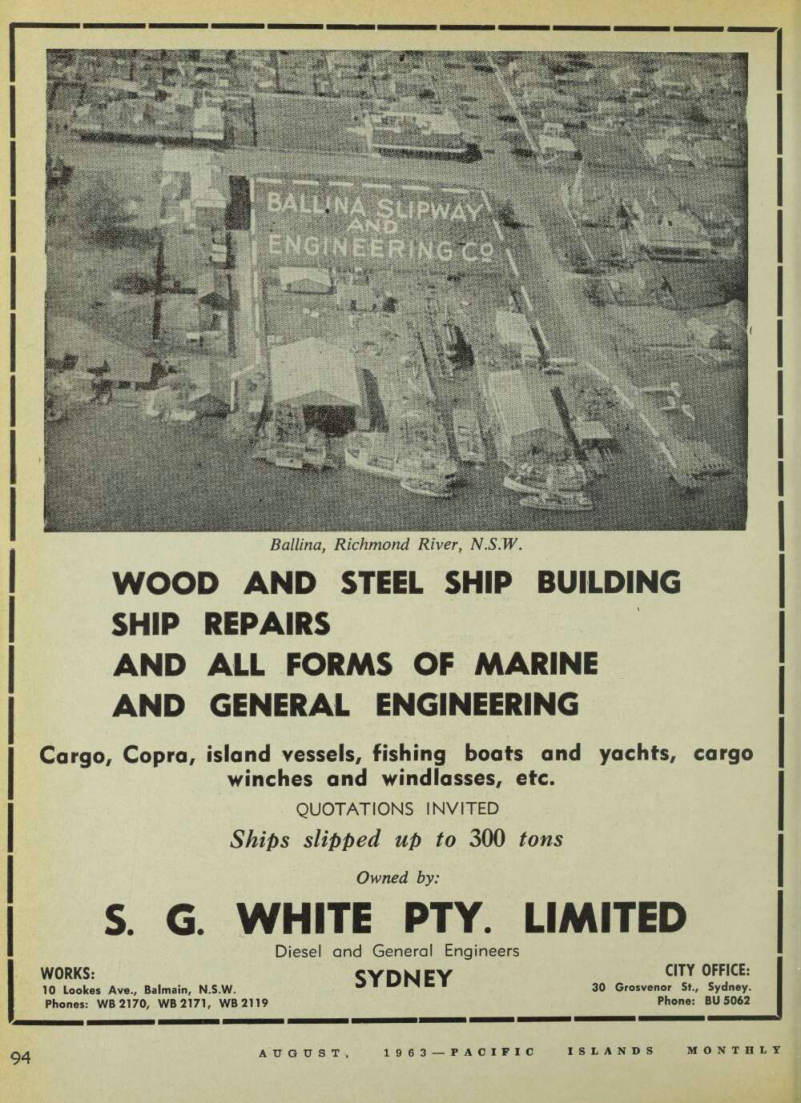 100
100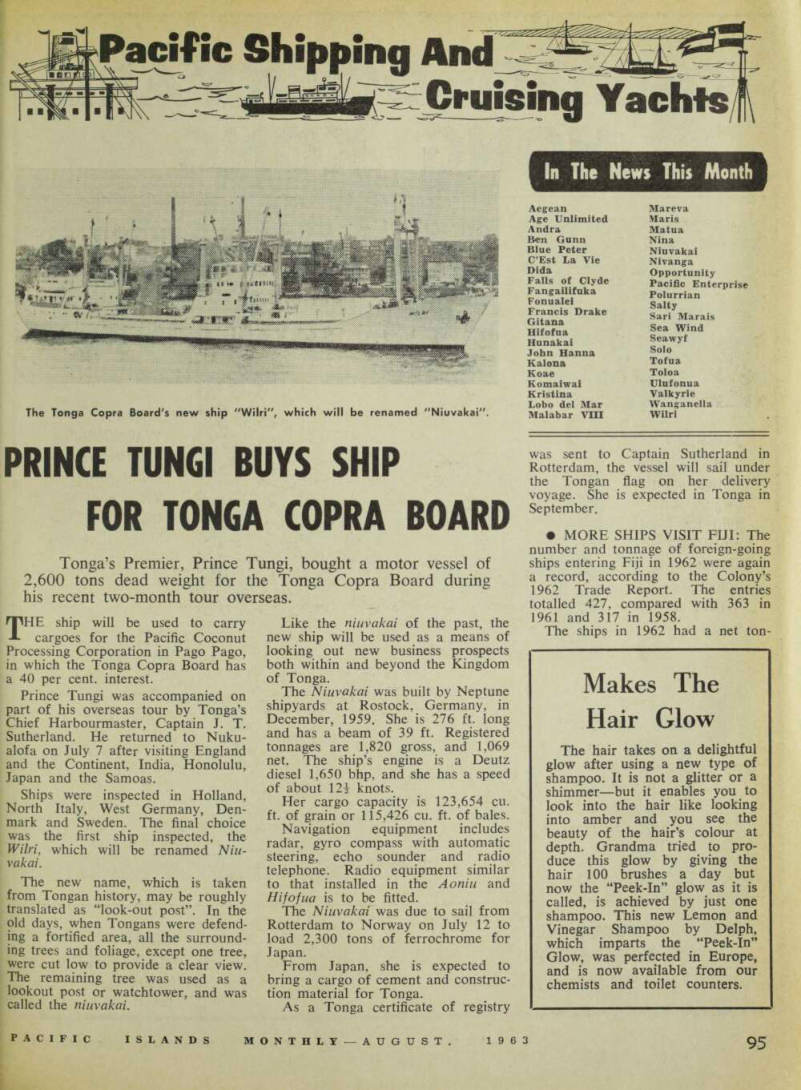 101
101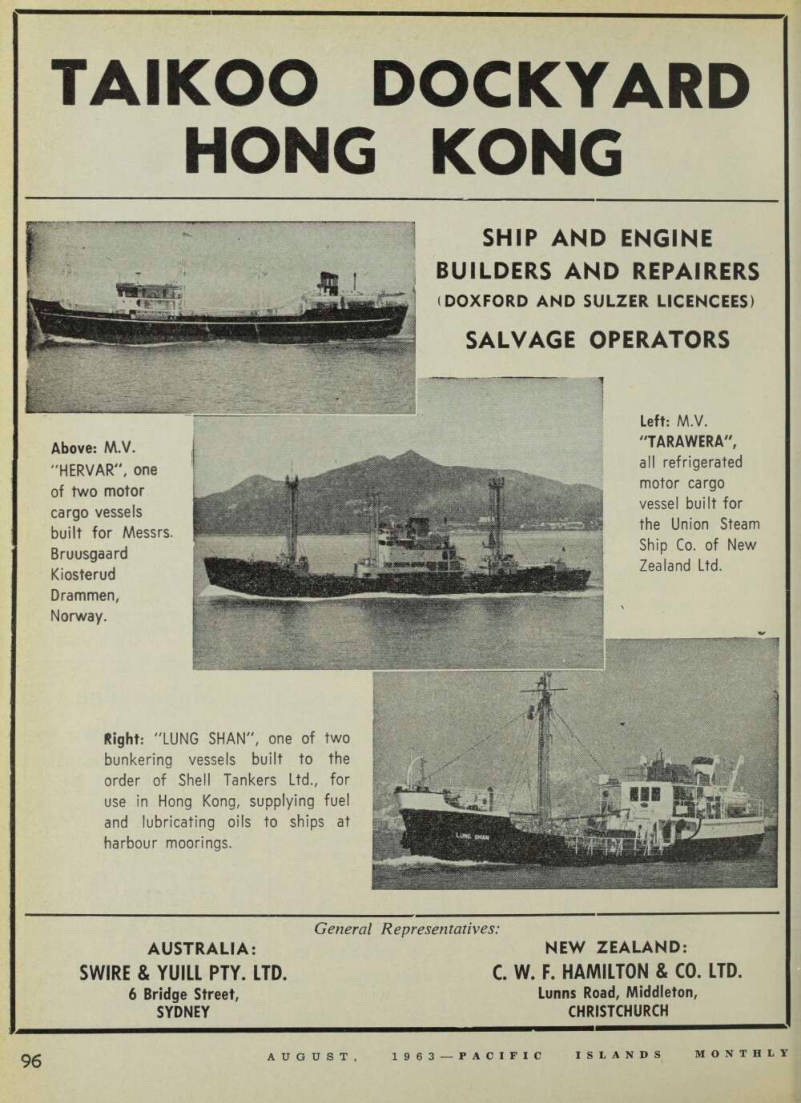 102
102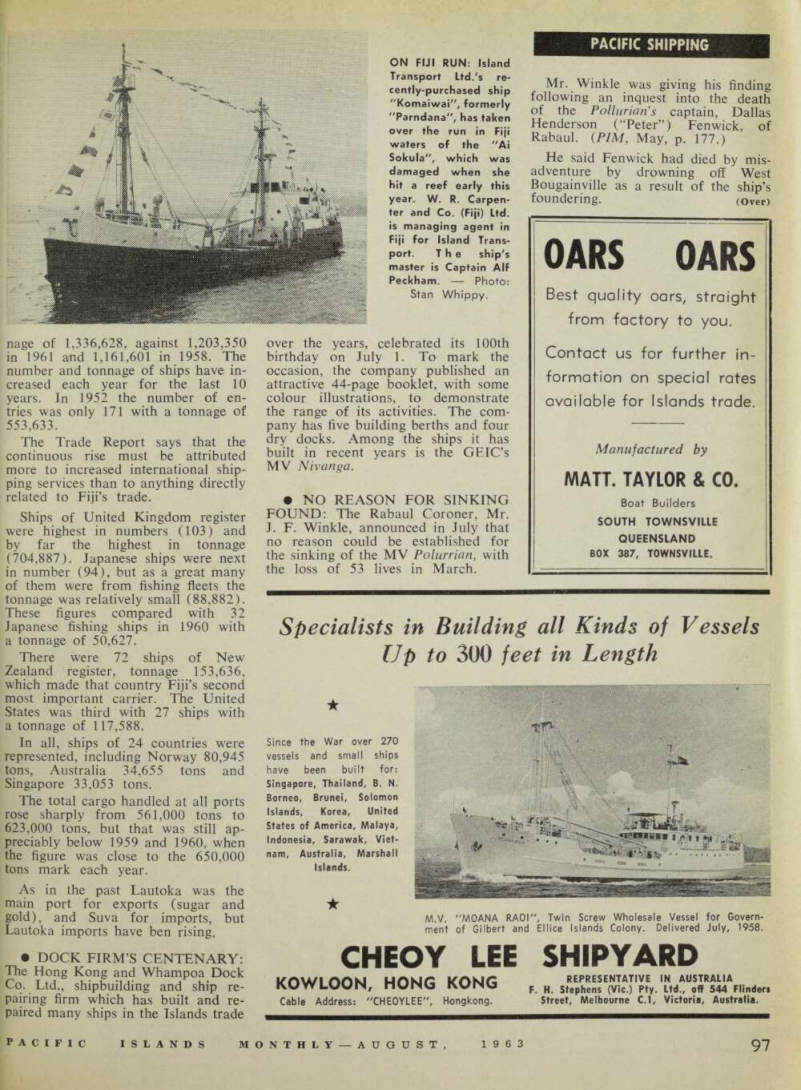 103
103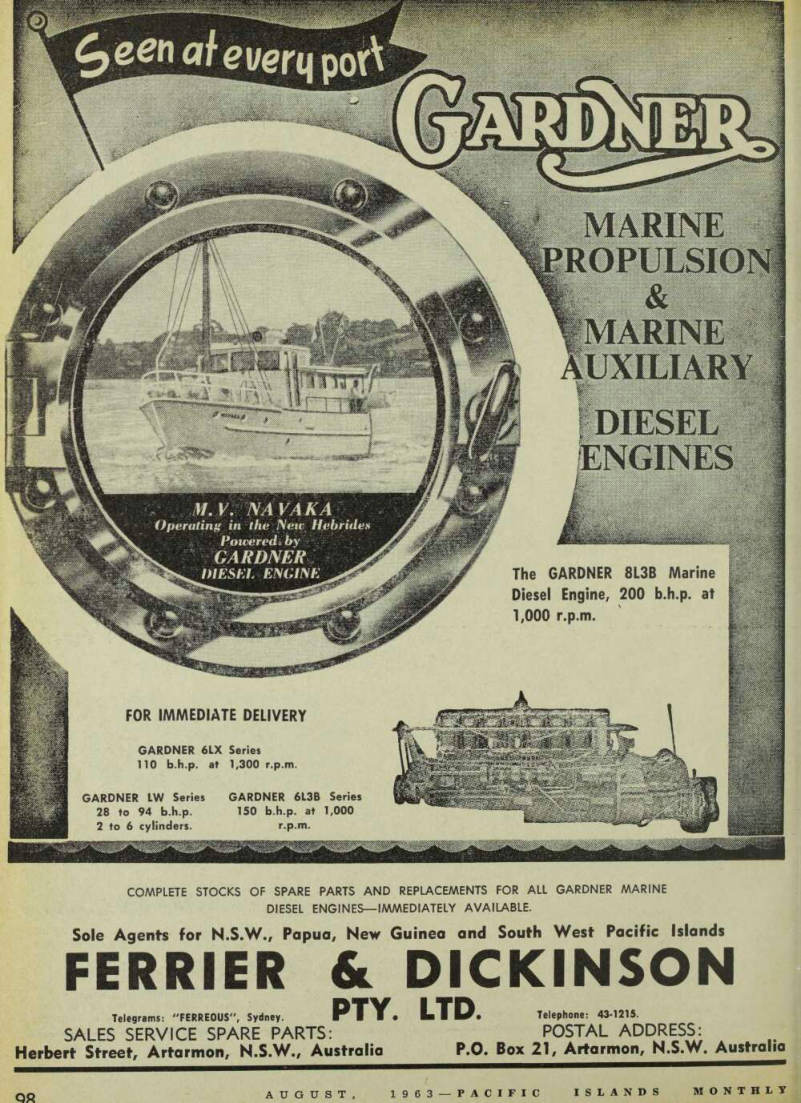 104
104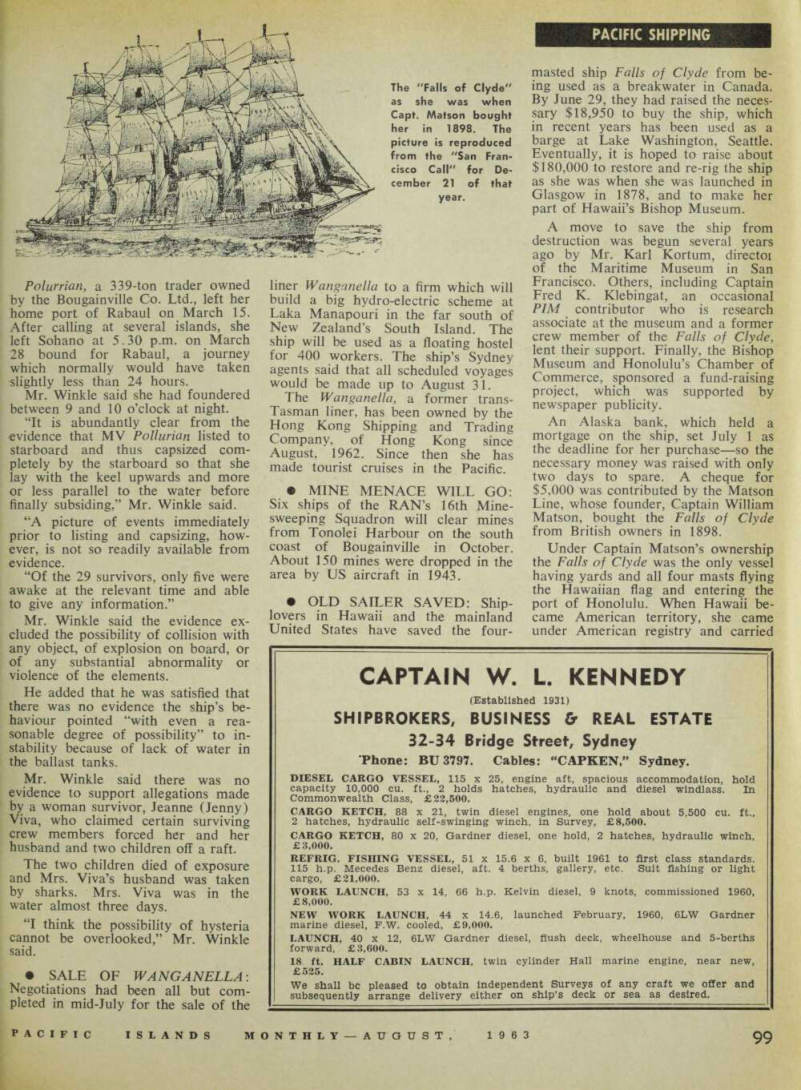 105
105 106
106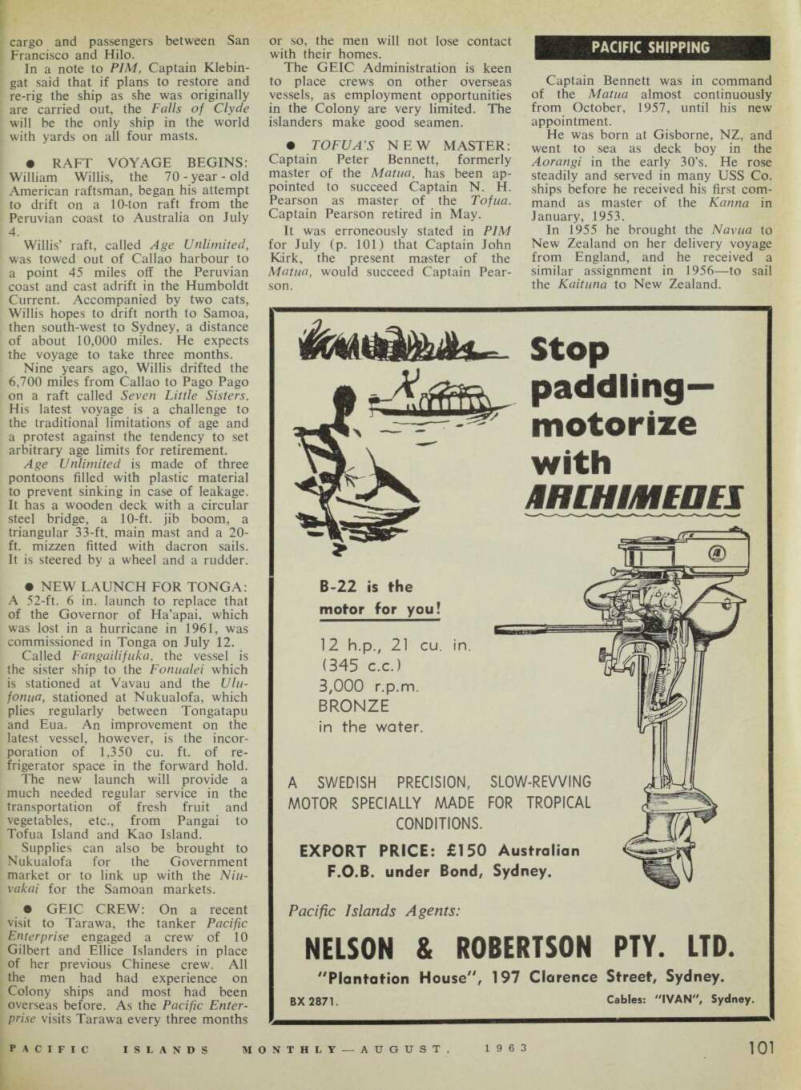 107
107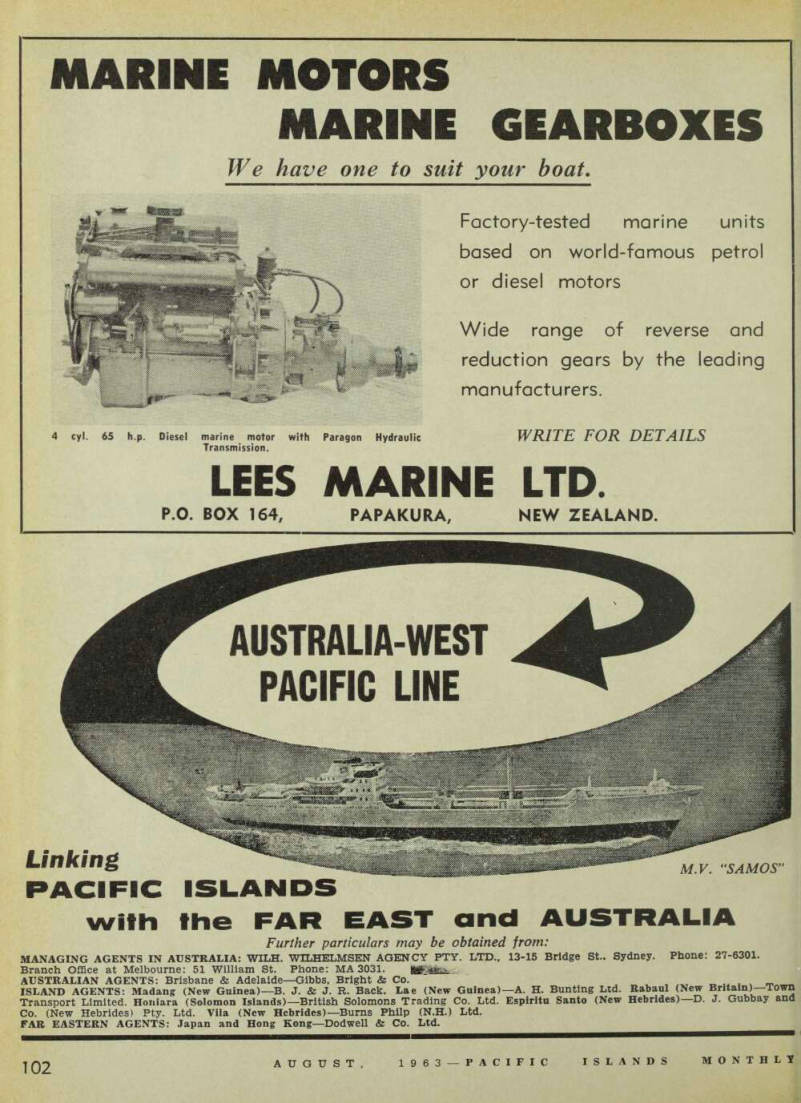 108
108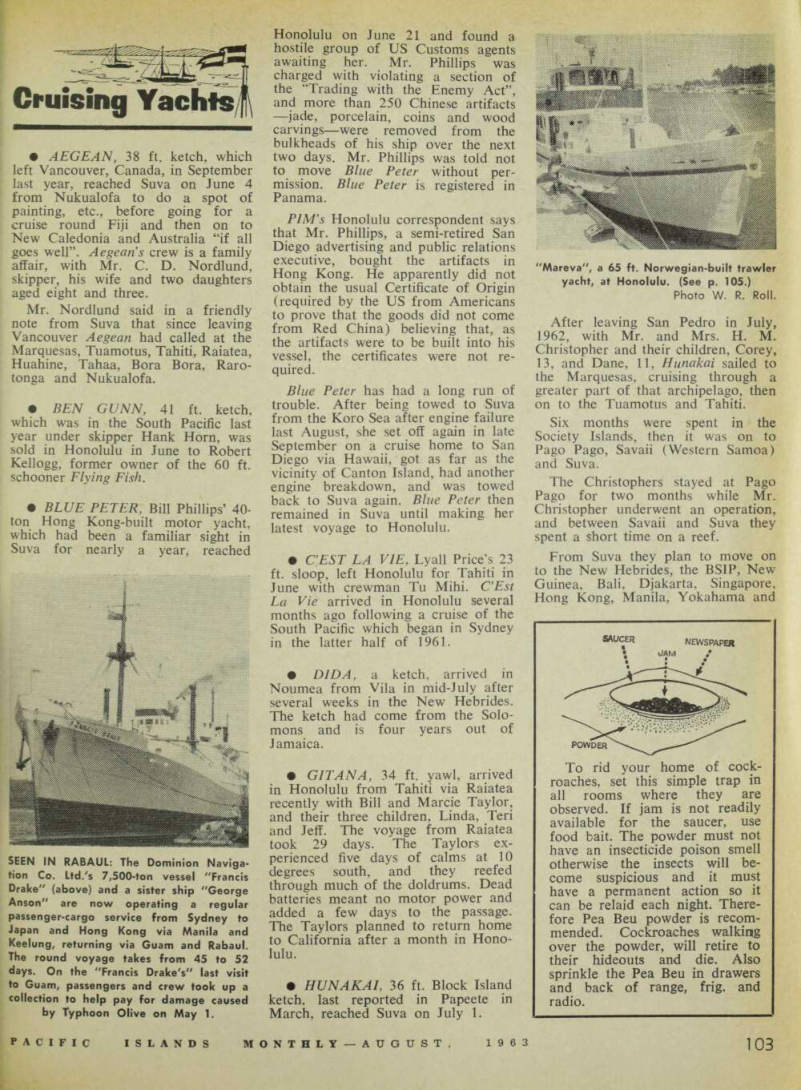 109
109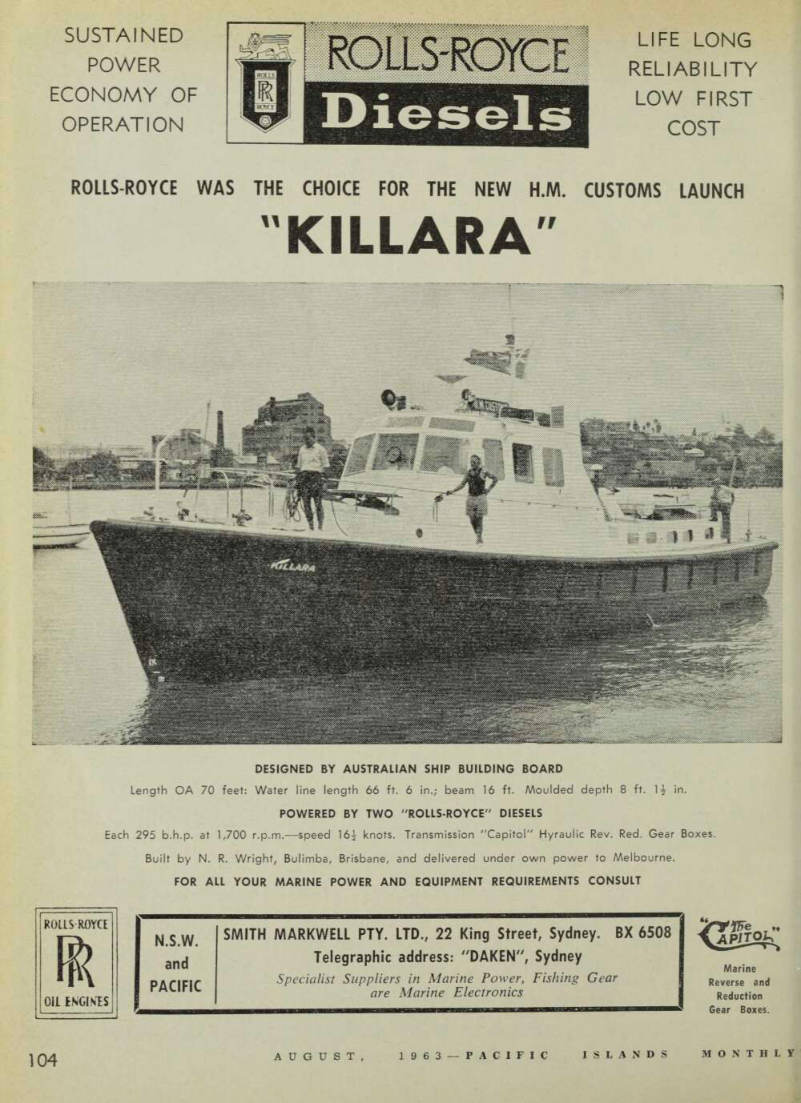 110
110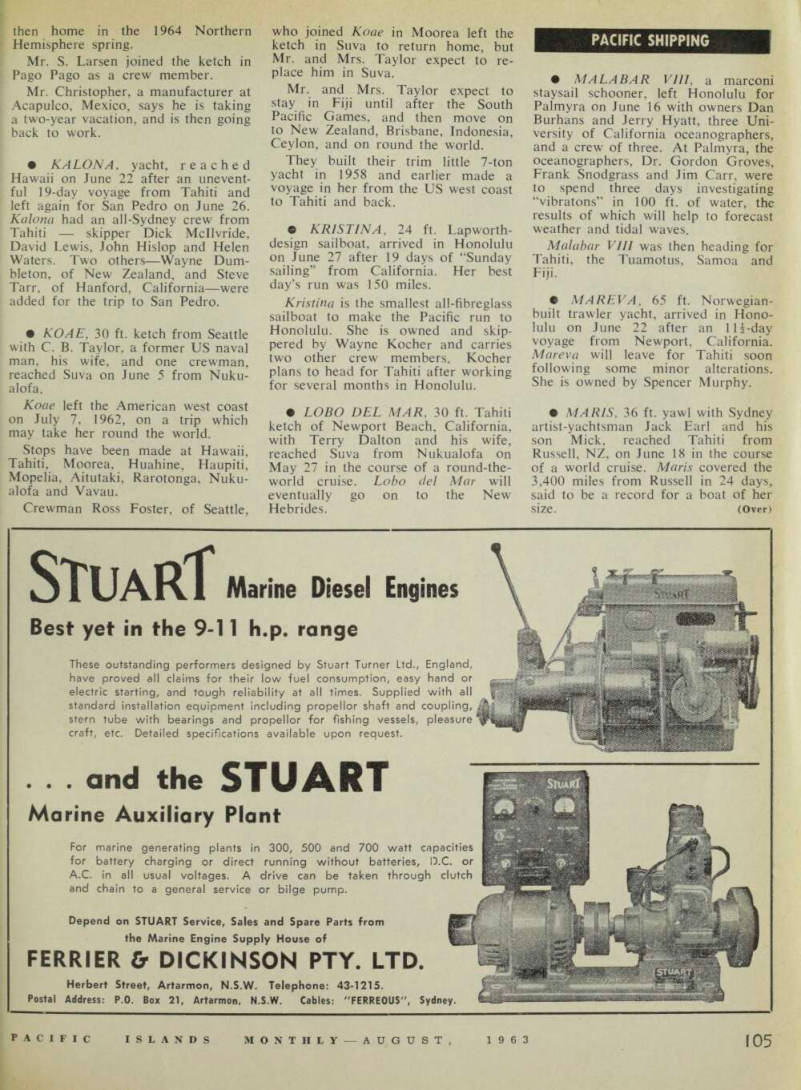 111
111 112
112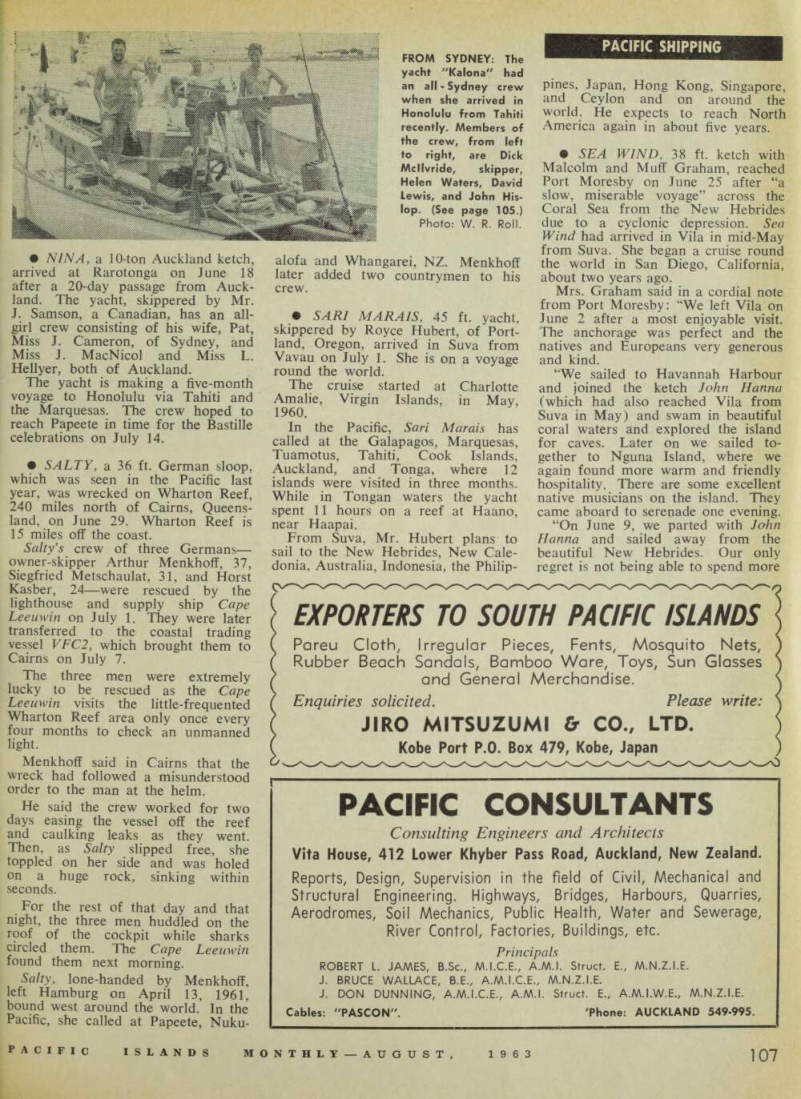 113
113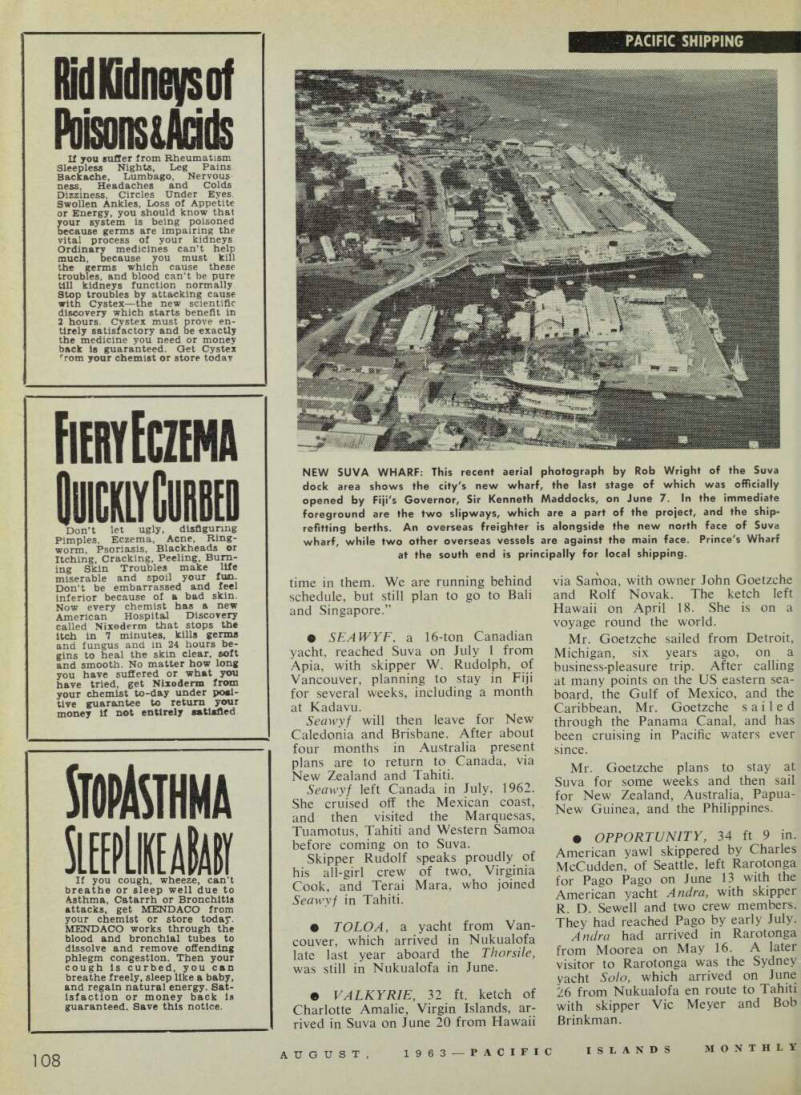 114
114 115
115 116
116 117
117 118
118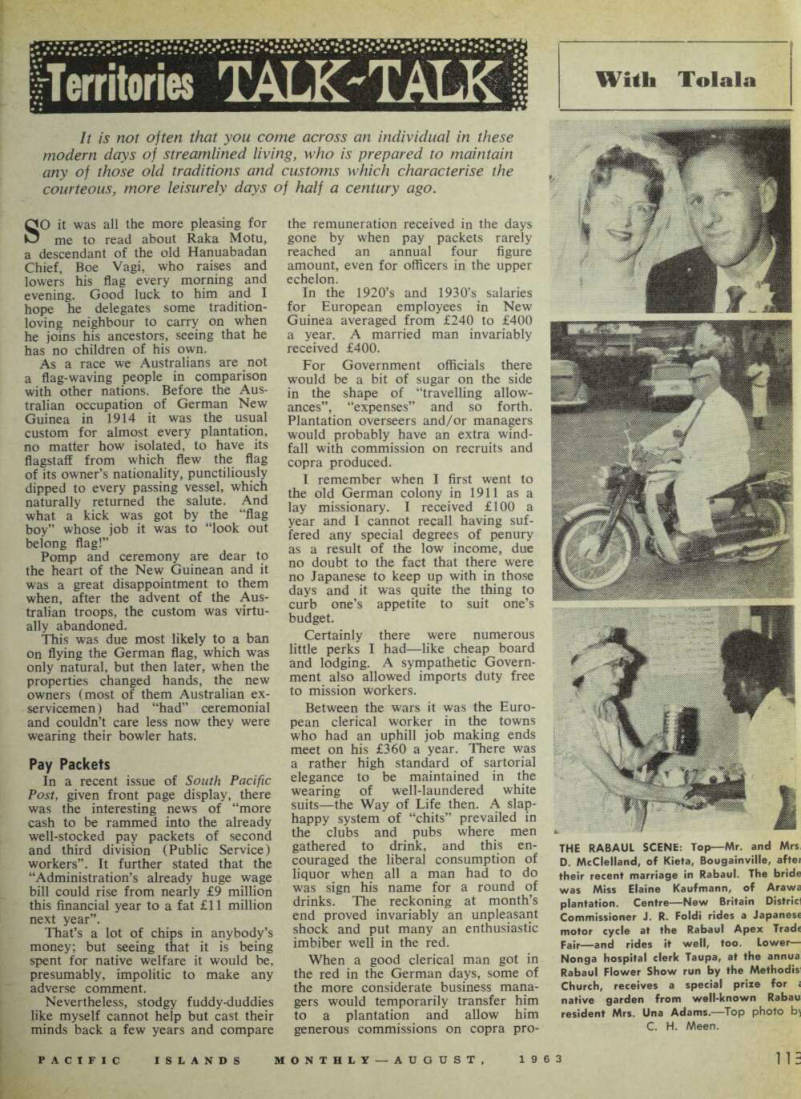 119
119 120
120 121
121 122
122 123
123 124
124 125
125 126
126 127
127 128
128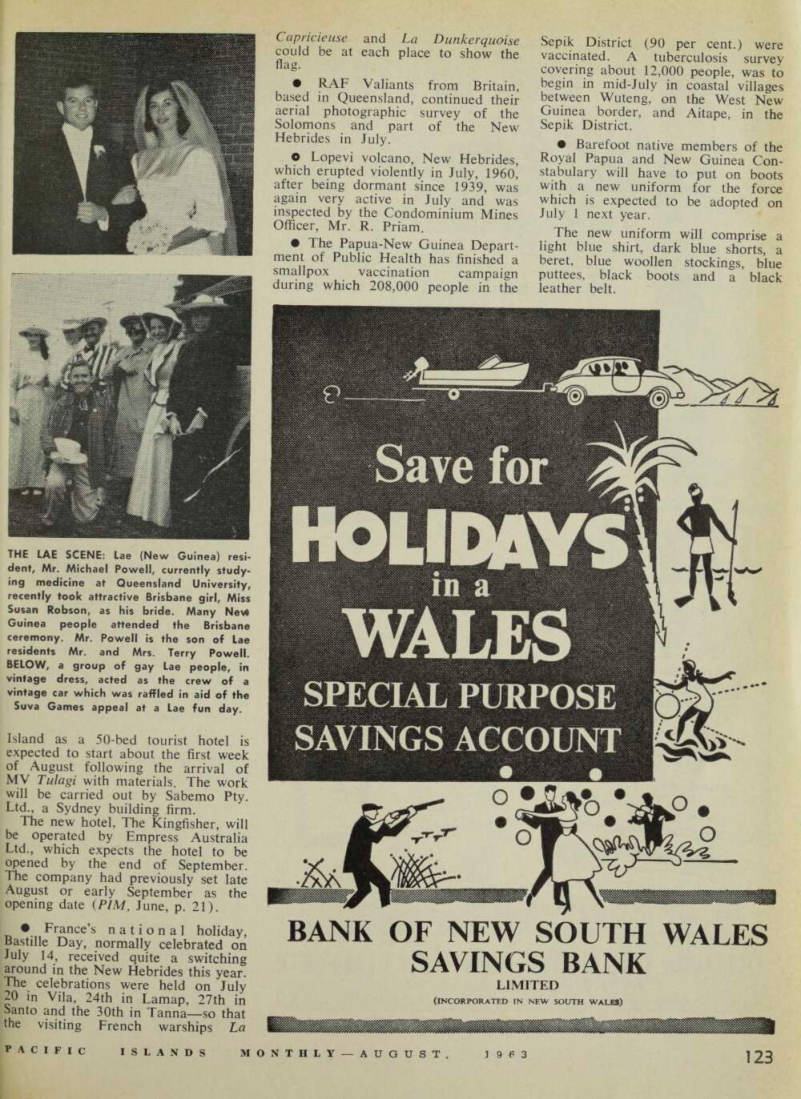 129
129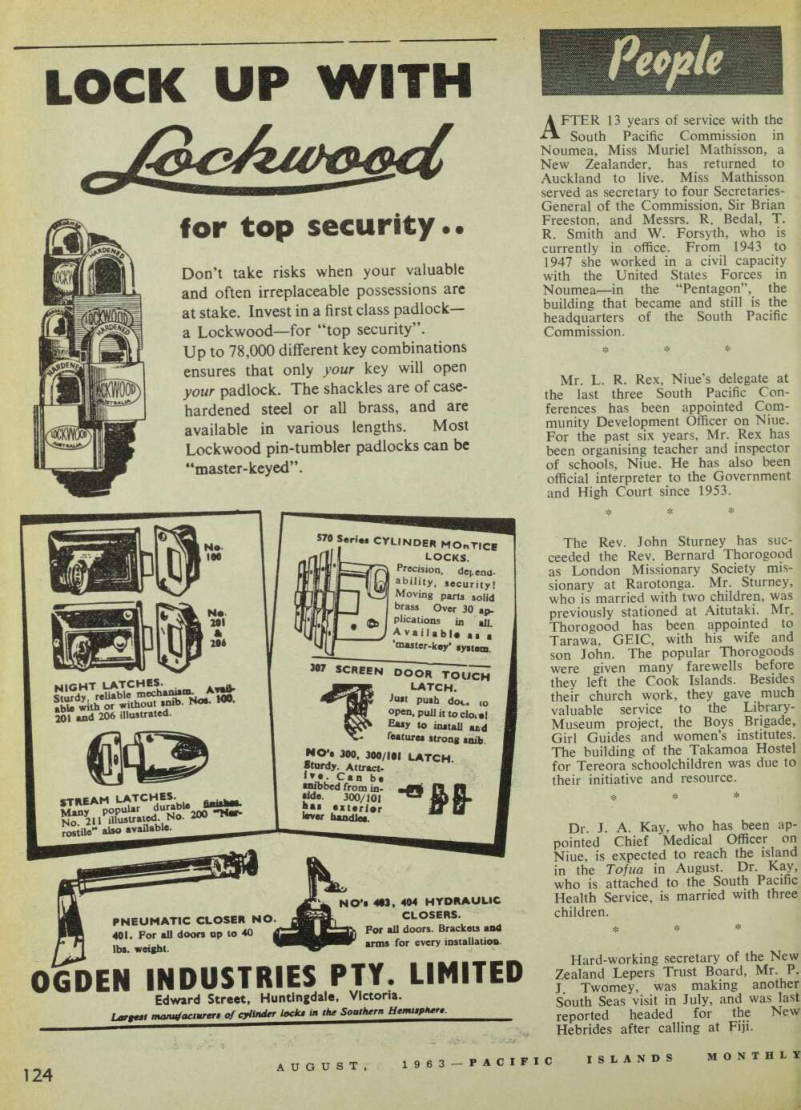 130
130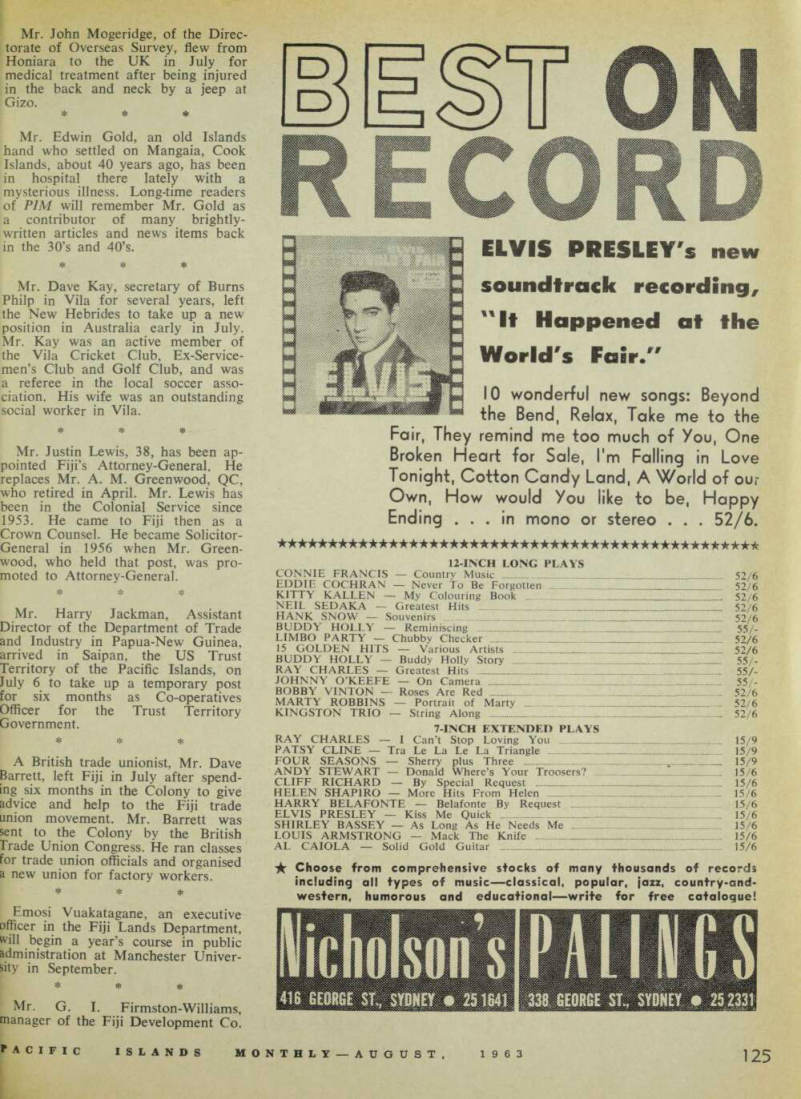 131
131 132
132 133
133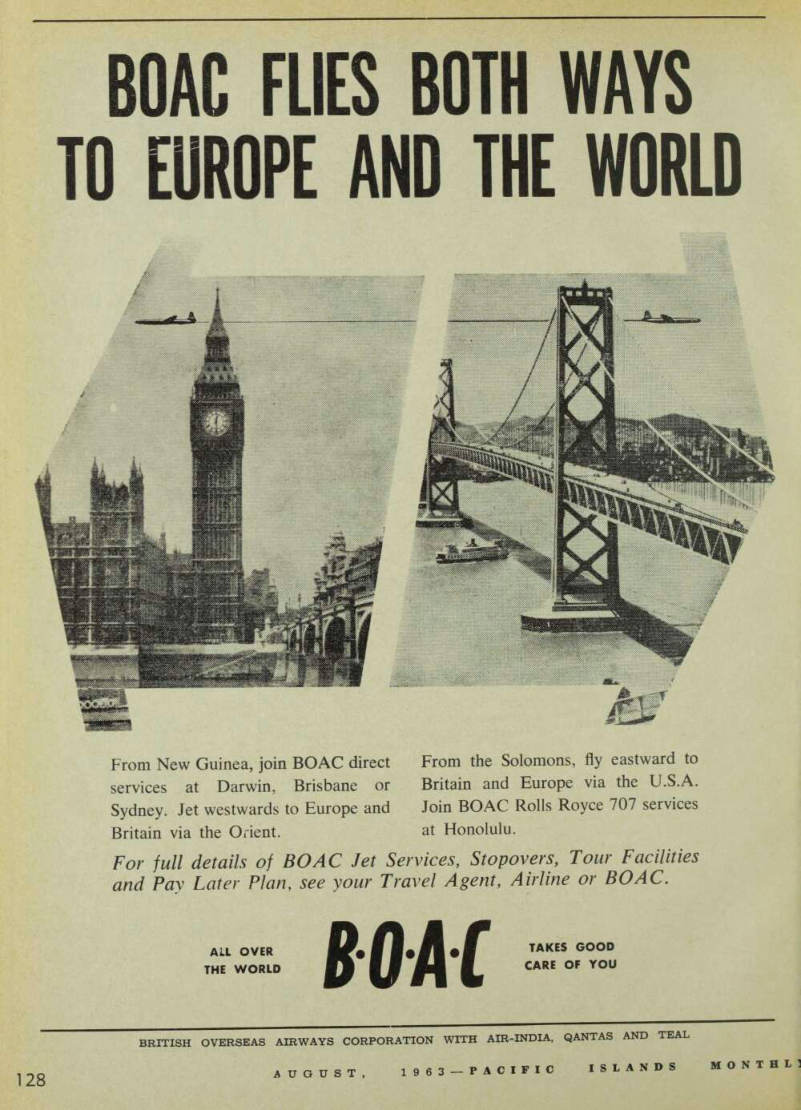 134
134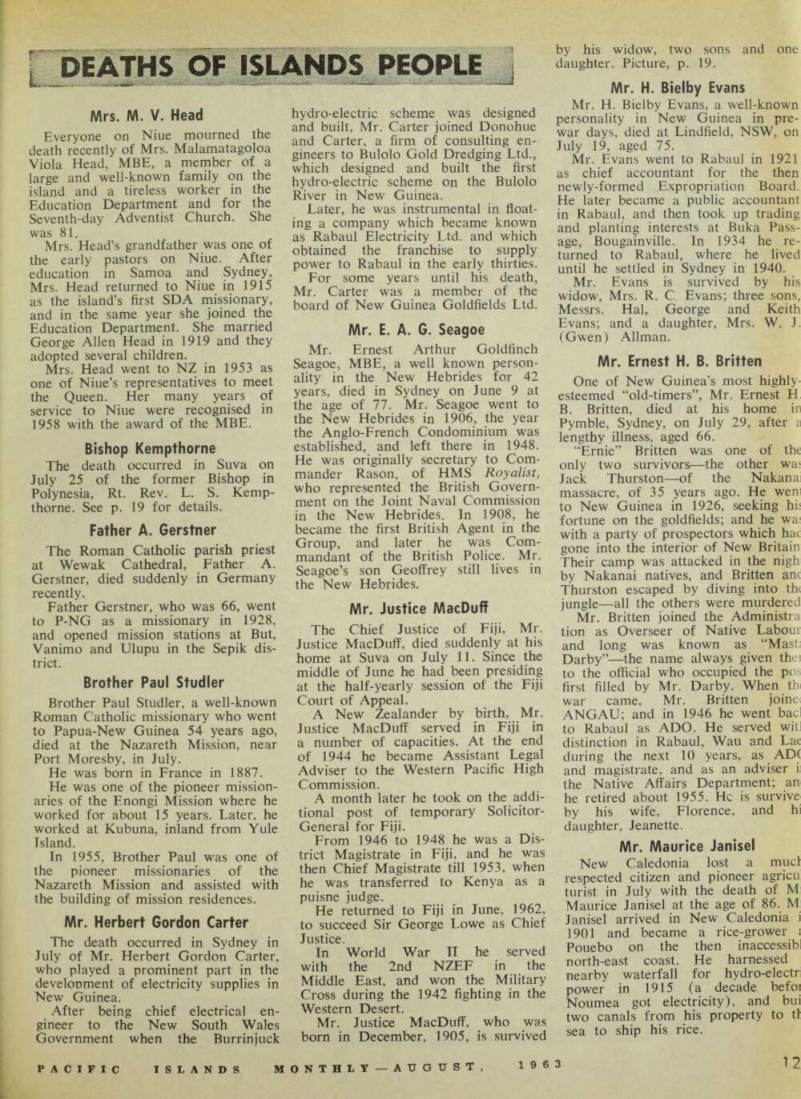 135
135 136
136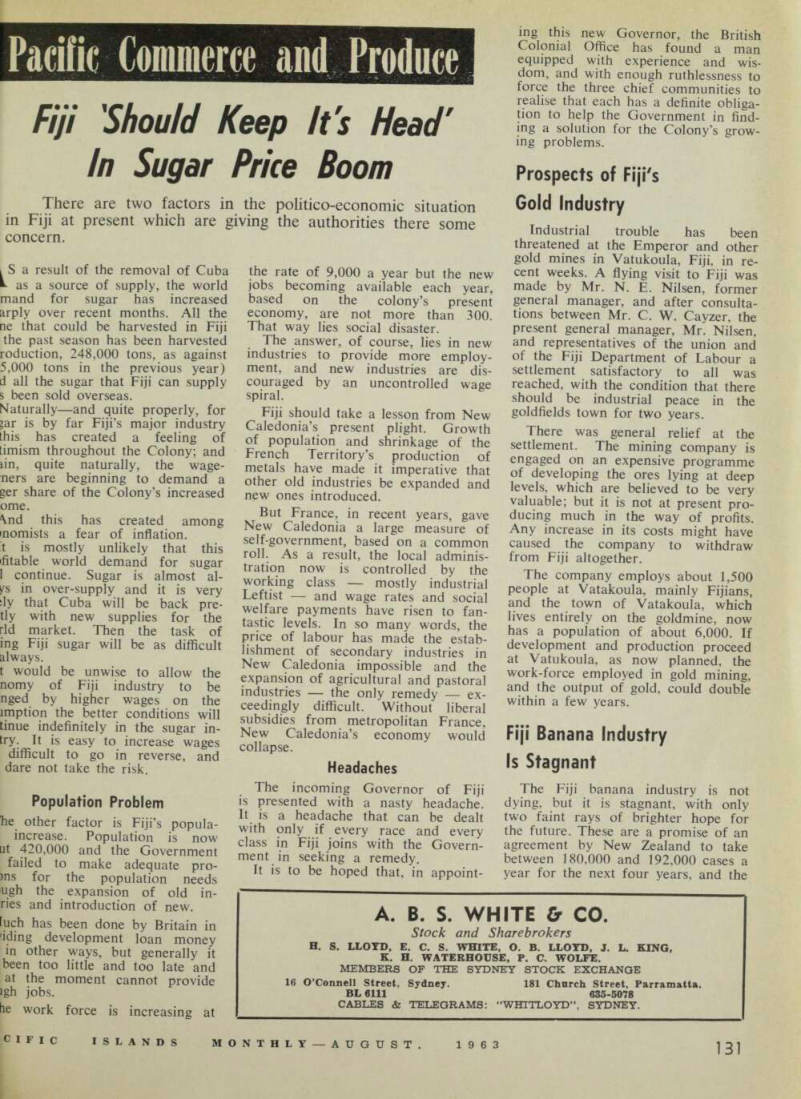 137
137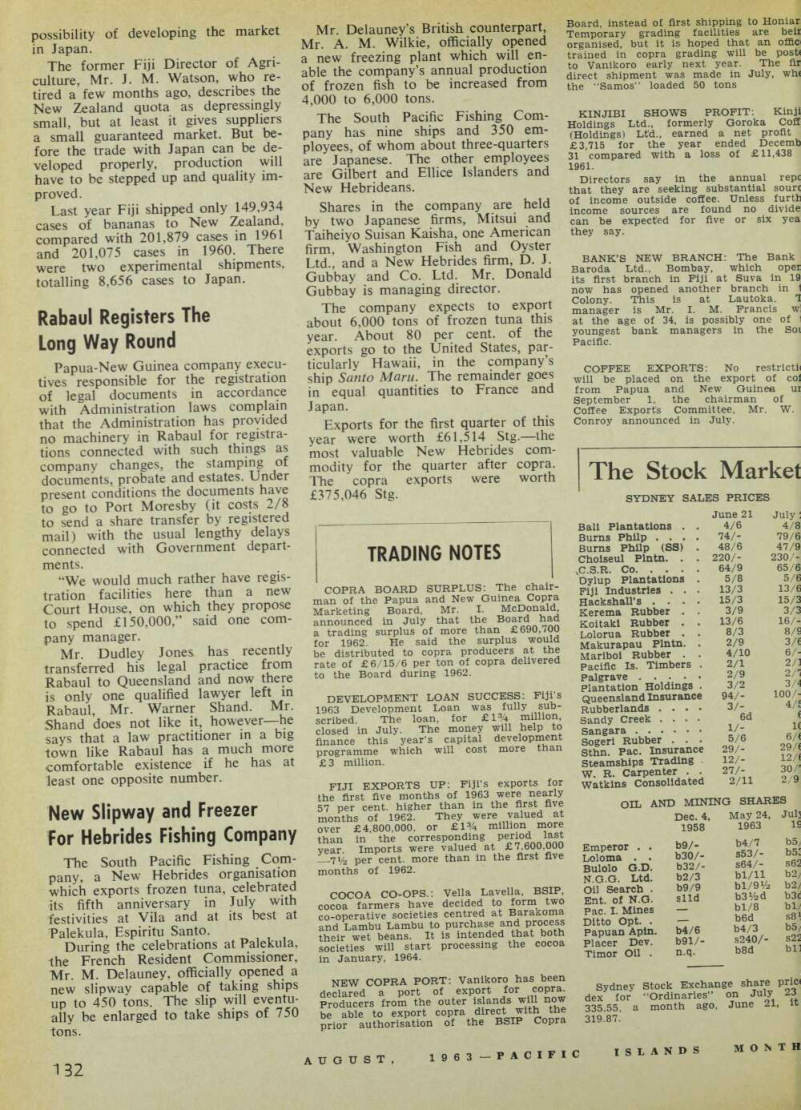 138
138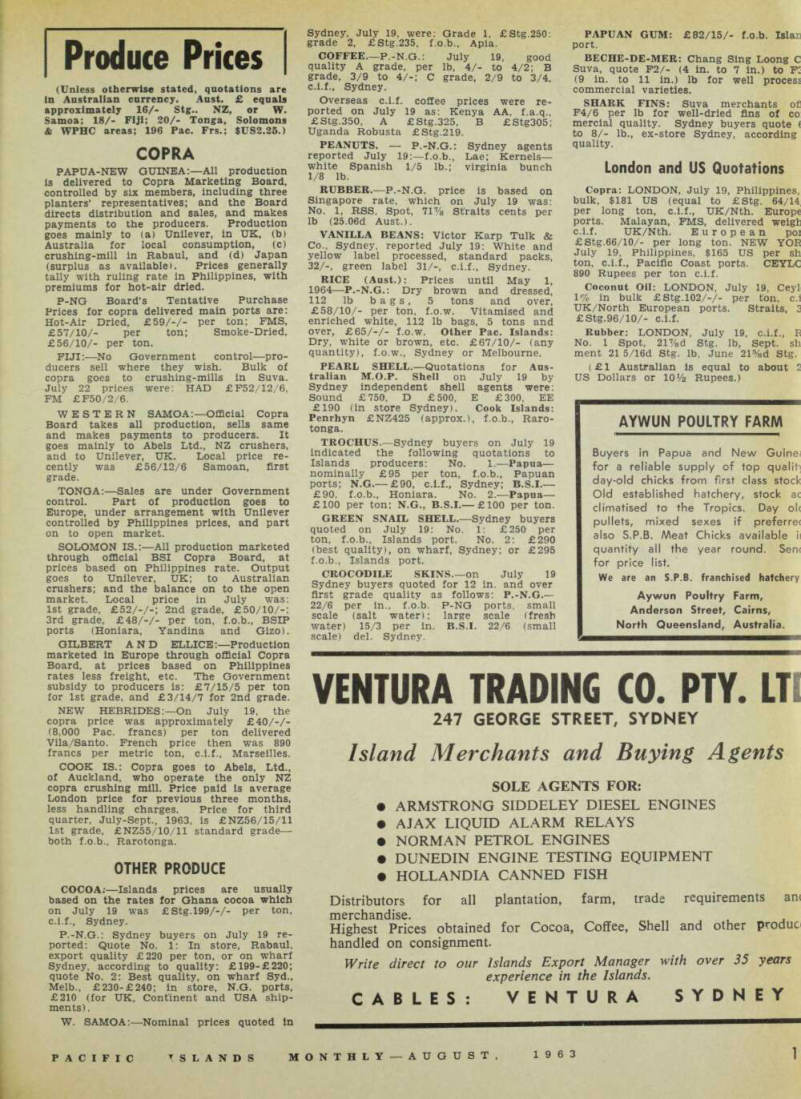 139
139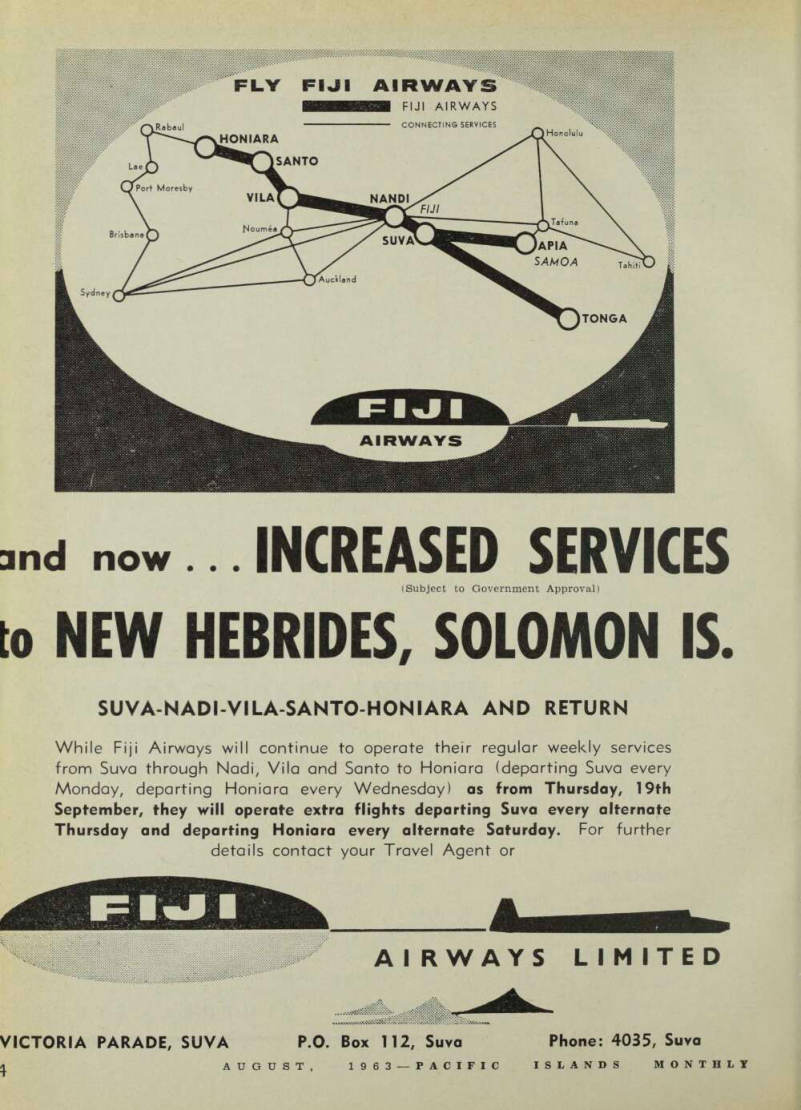 140
140 141
141 142
142 143
143 144
144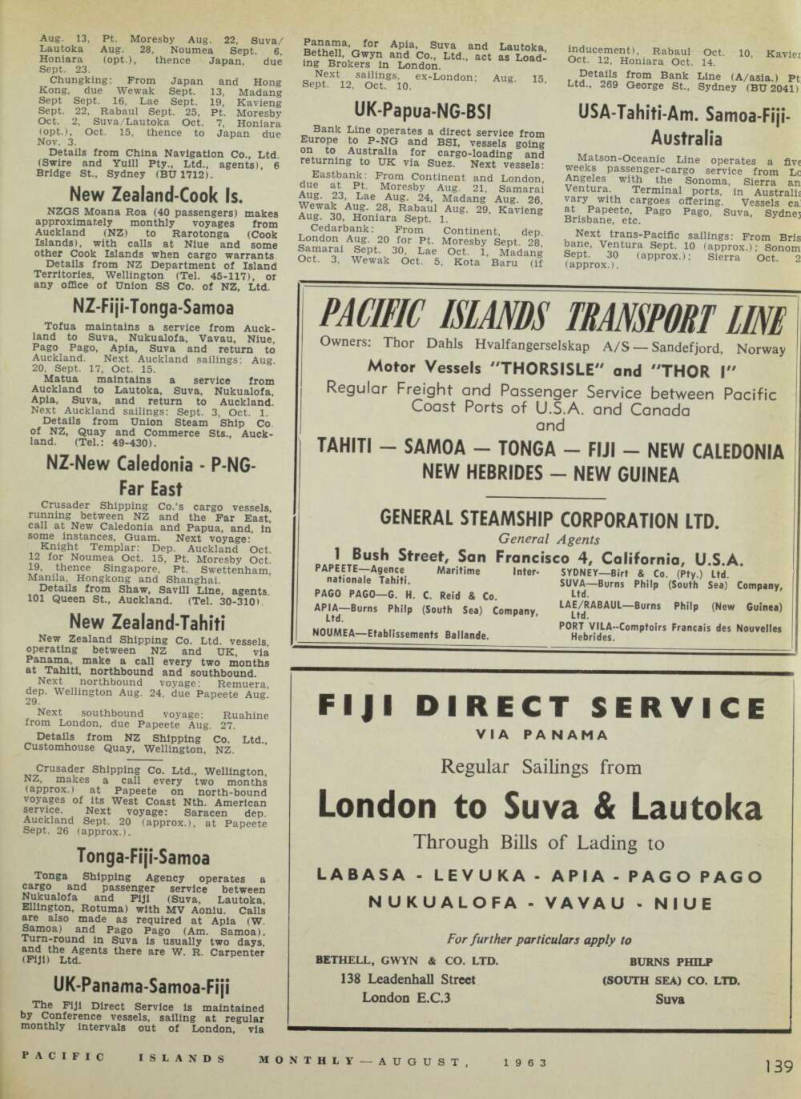 145
145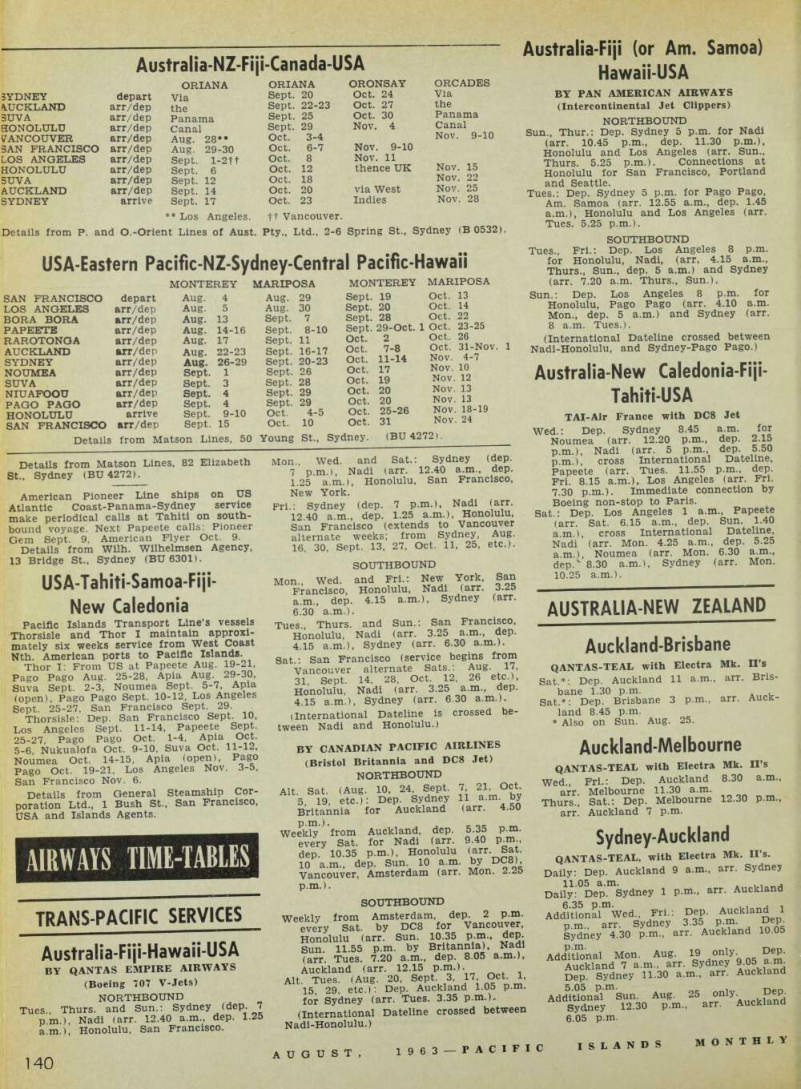 146
146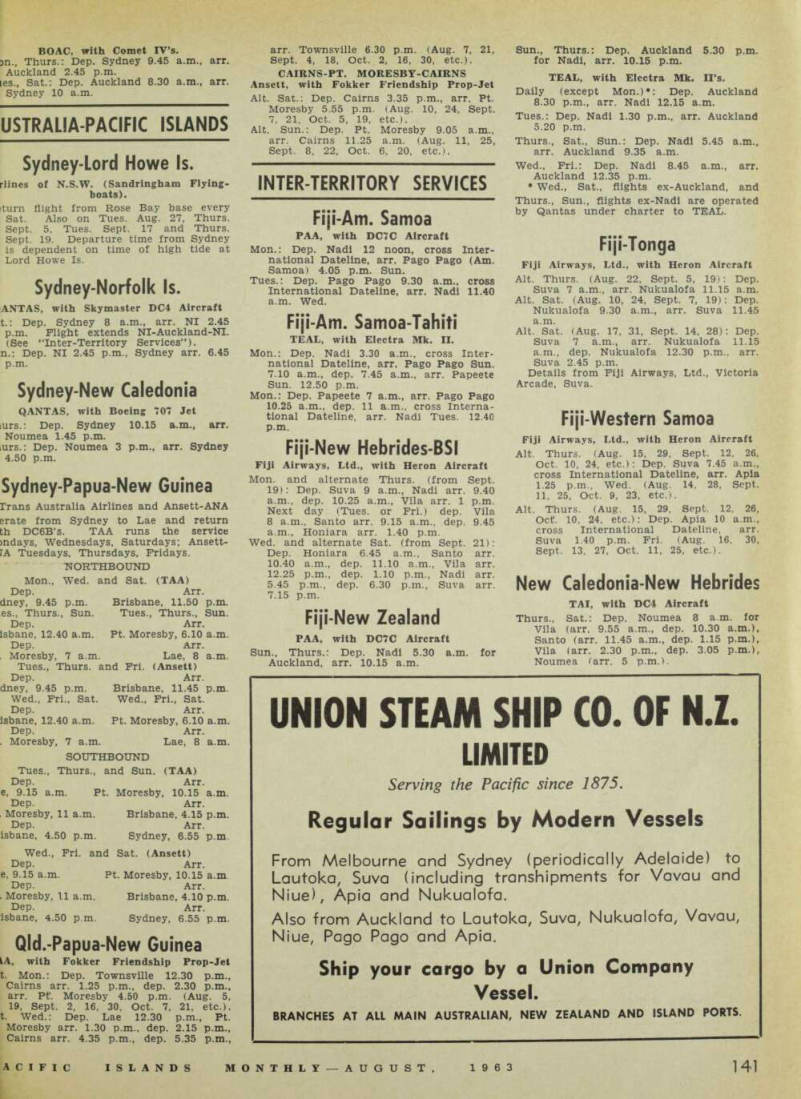 147
147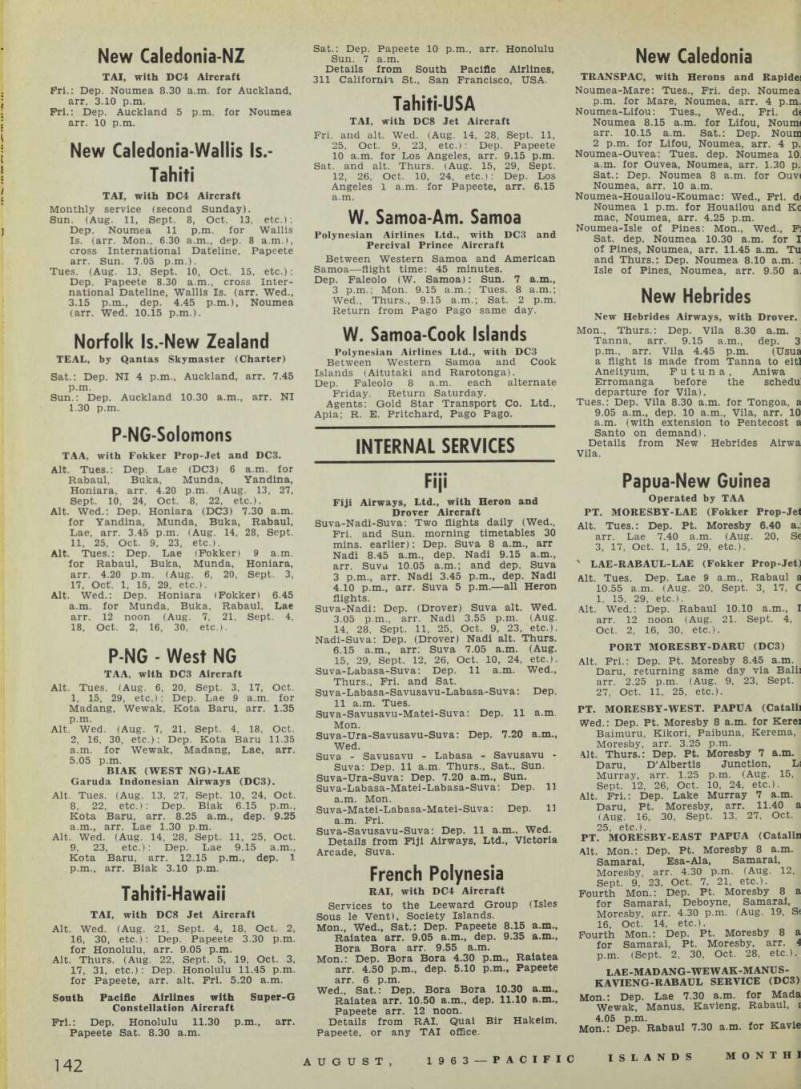 148
148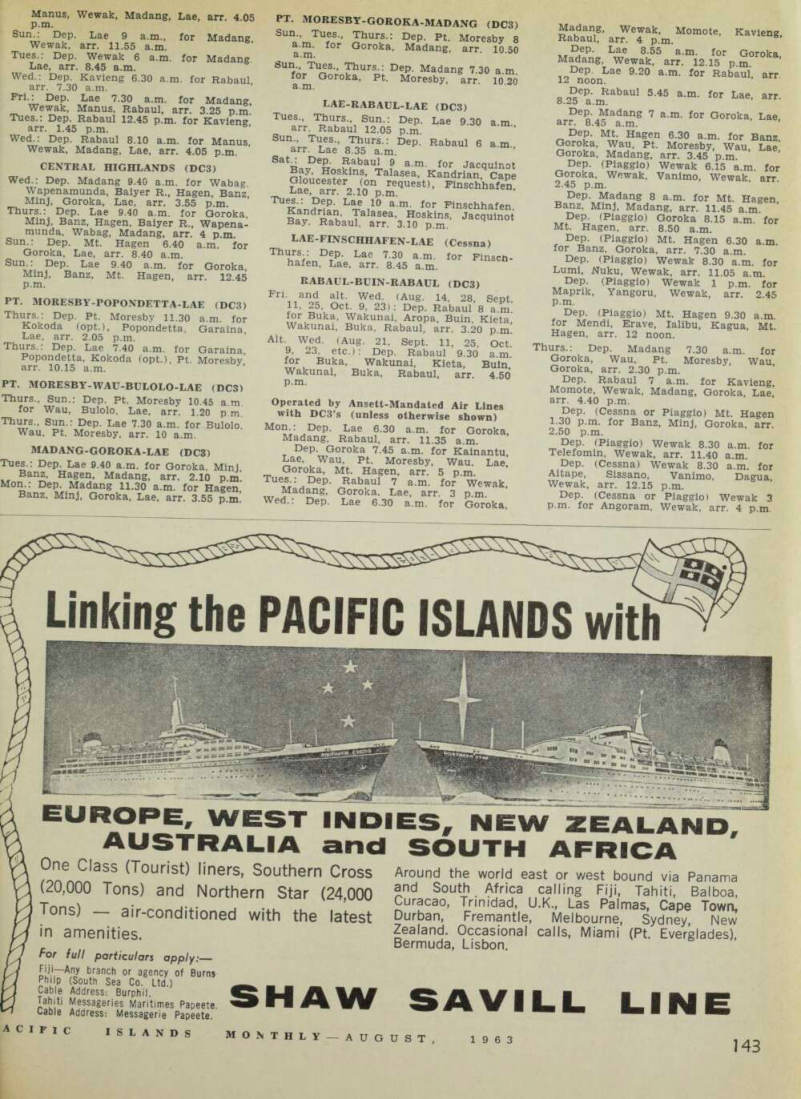 149
149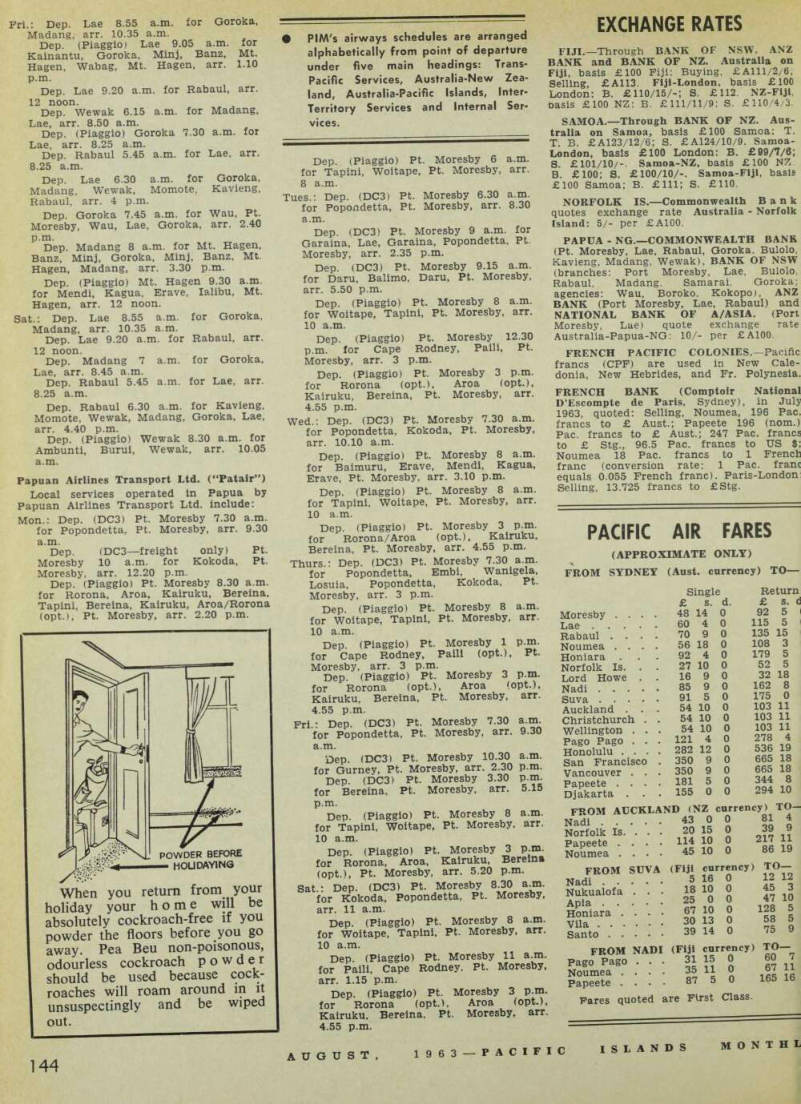 150
150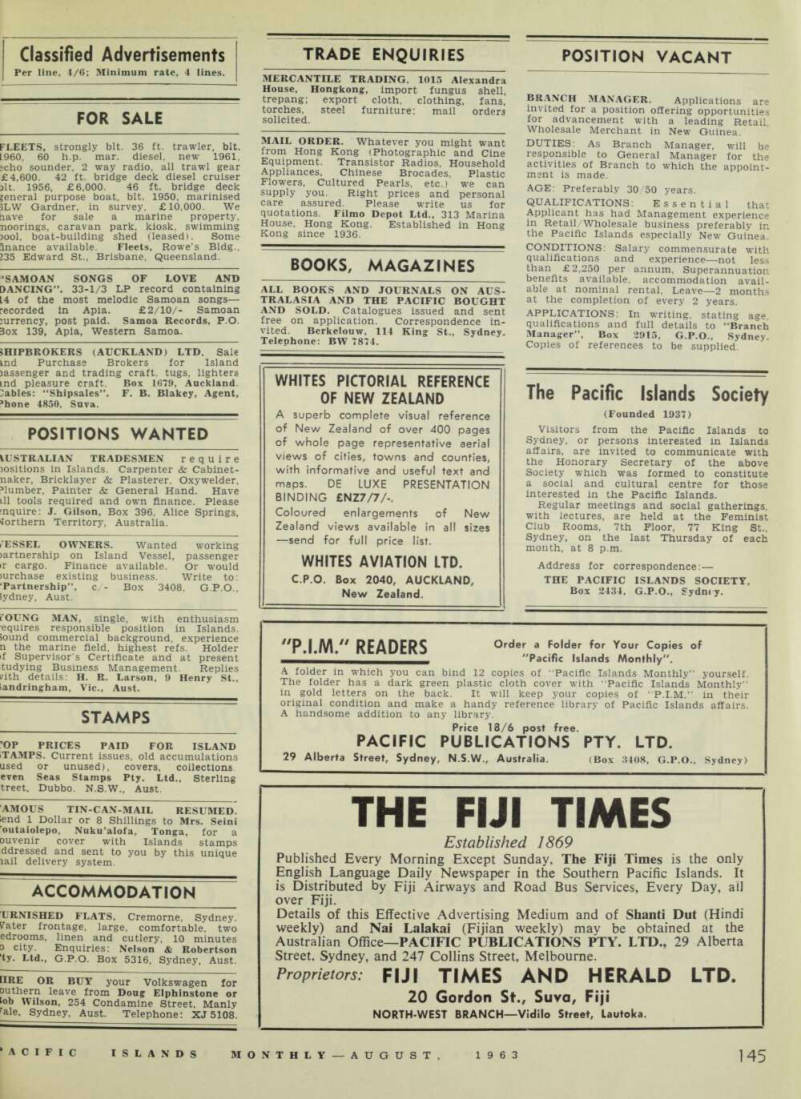 151
151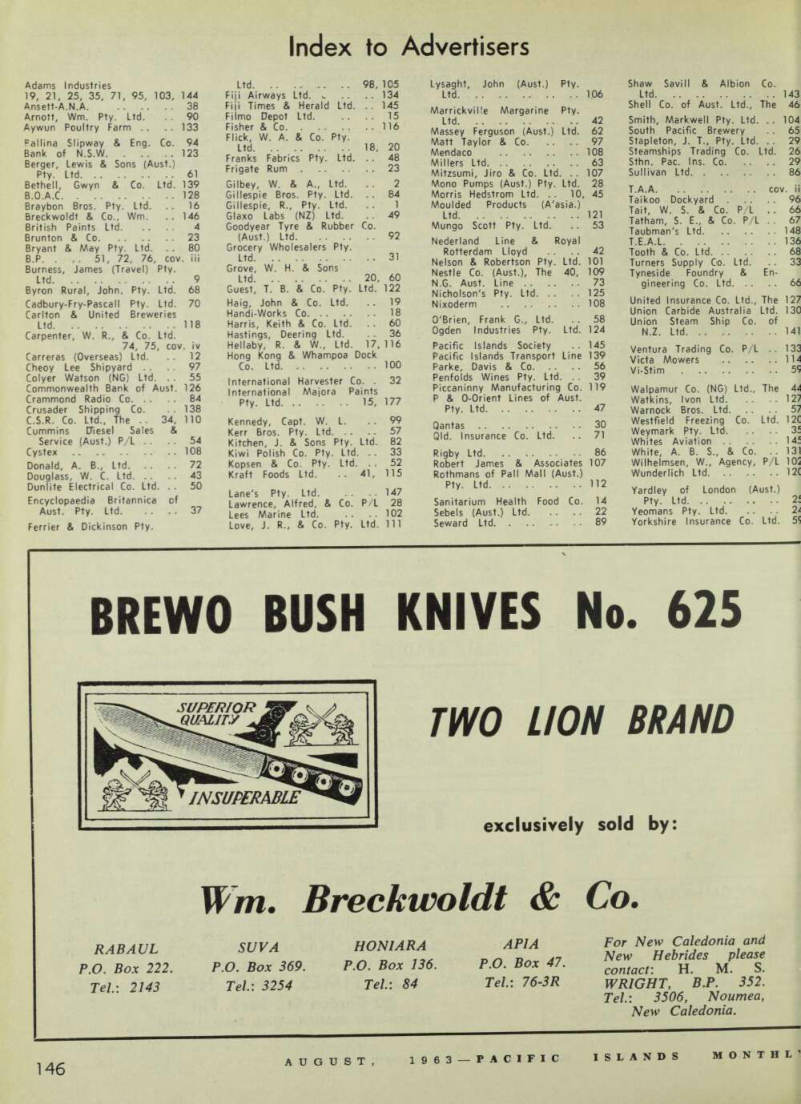 152
152 153
153 154
154 155
155 156
156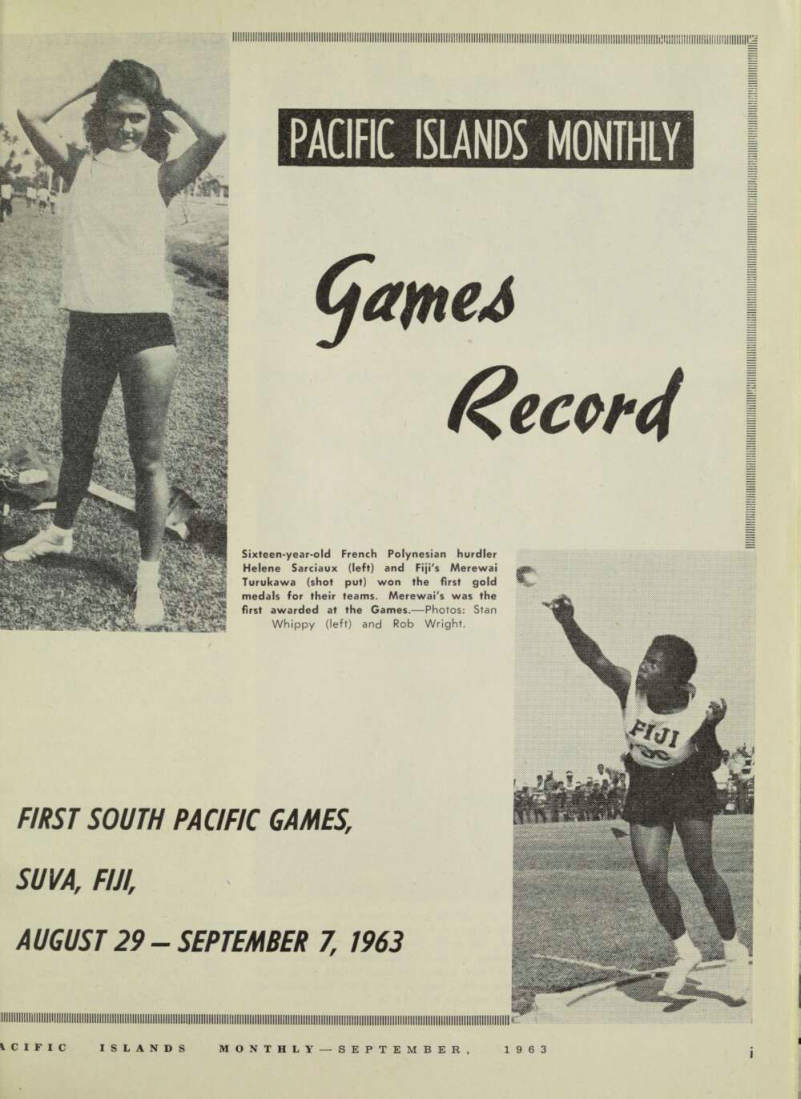 157
157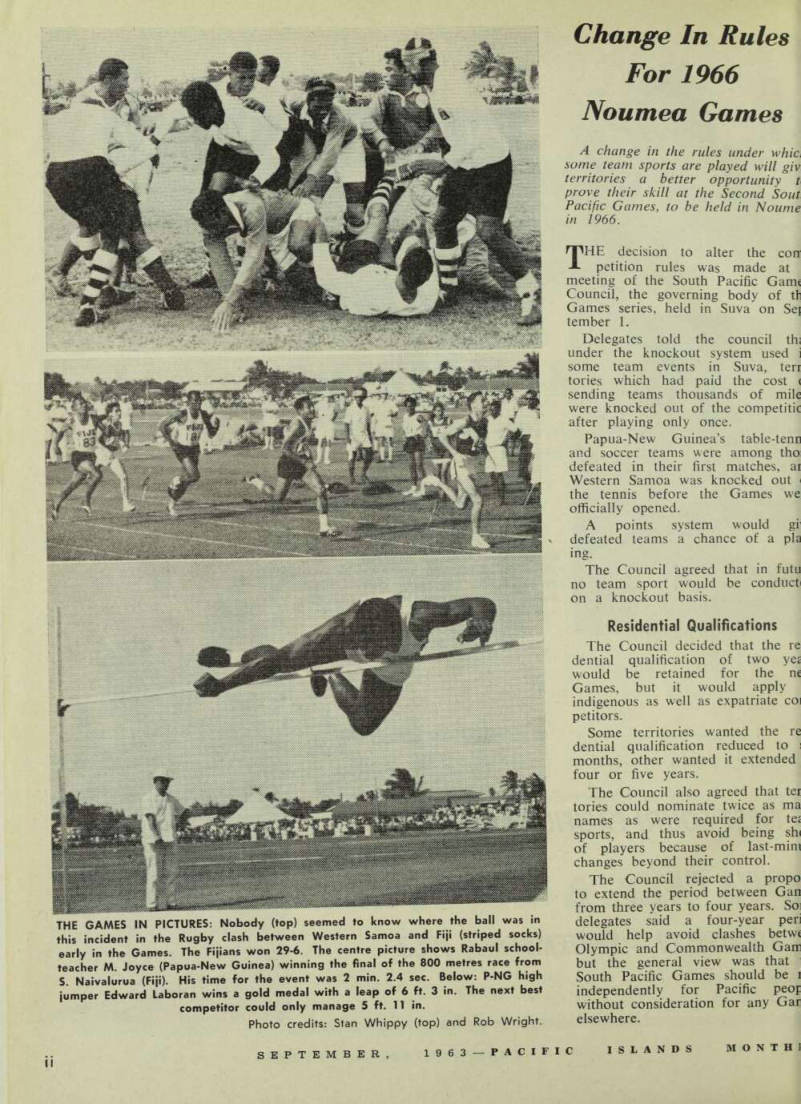 158
158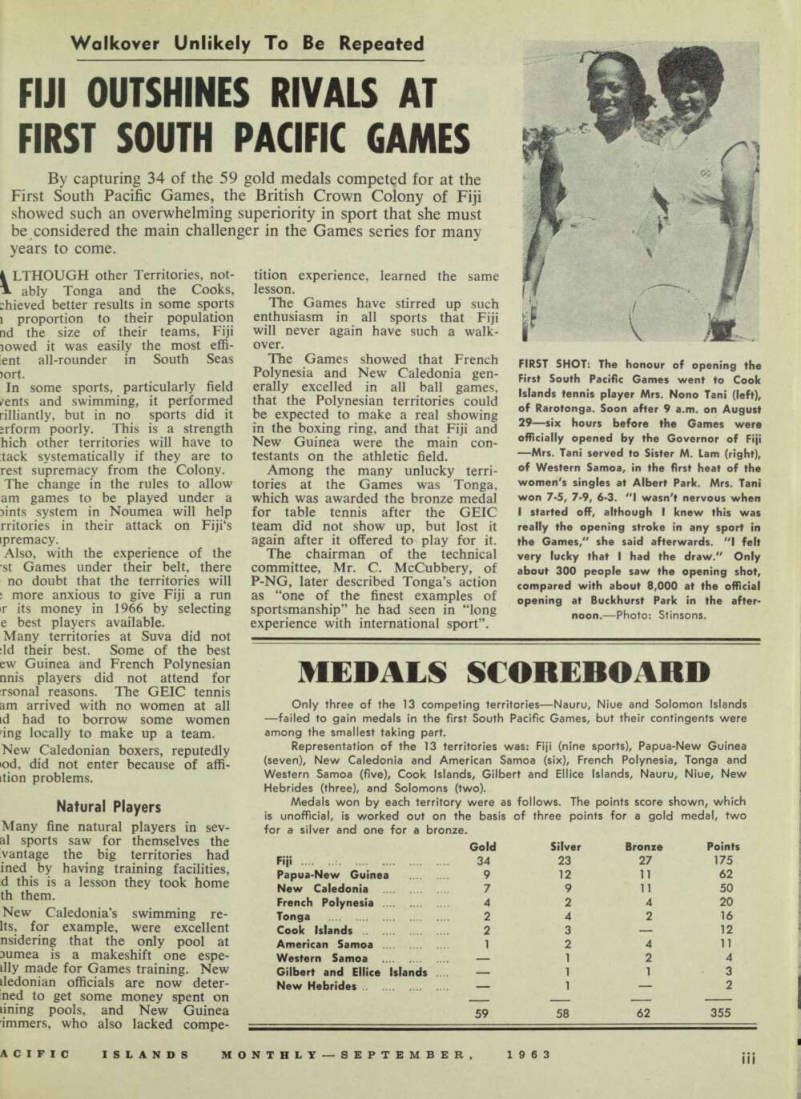 159
159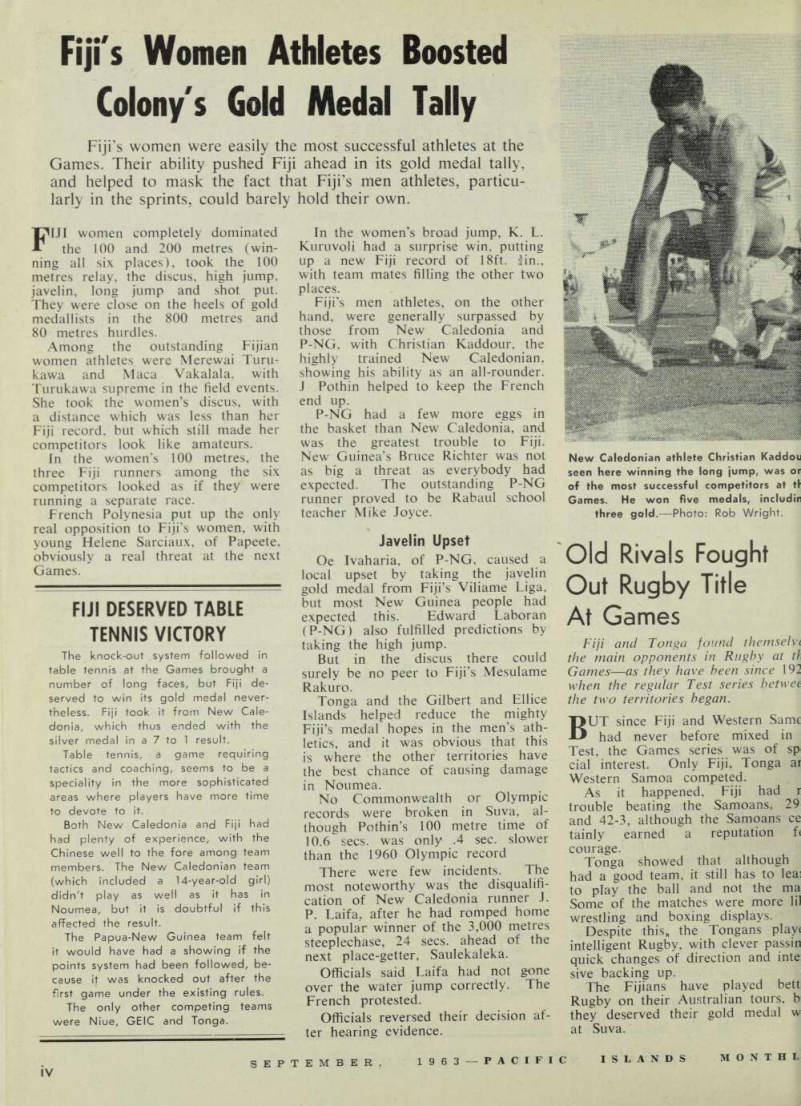 160
160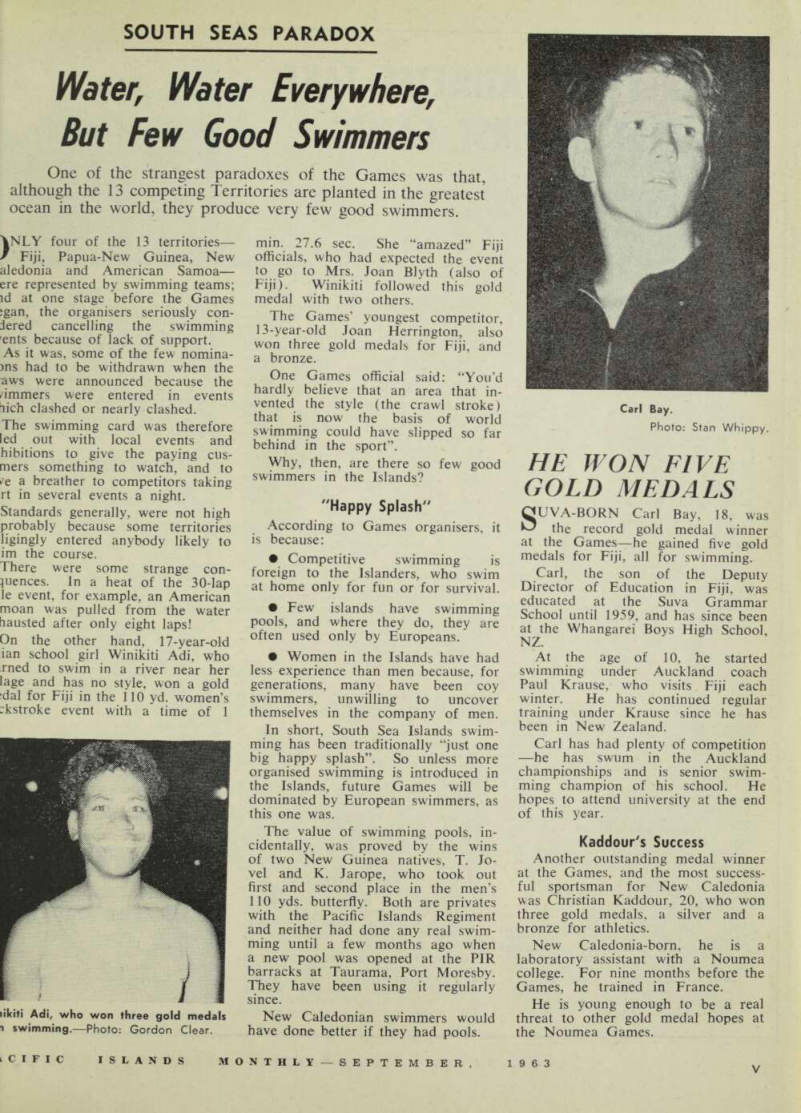 161
161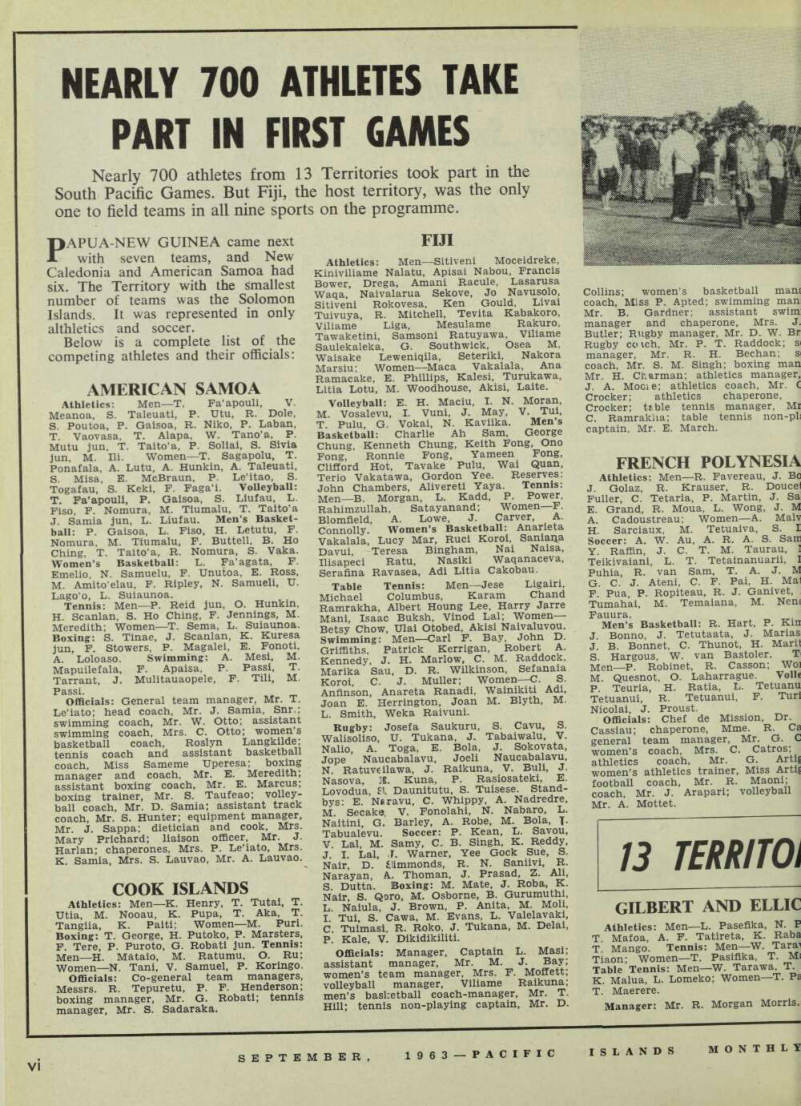 162
162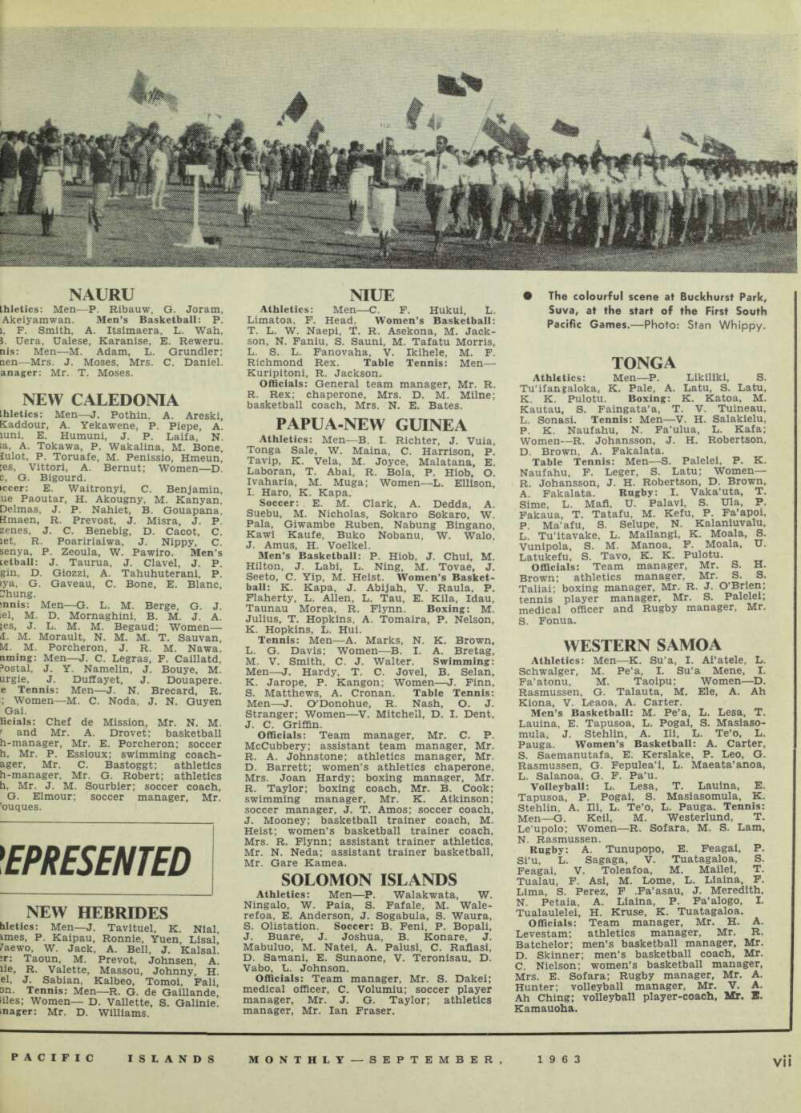 163
163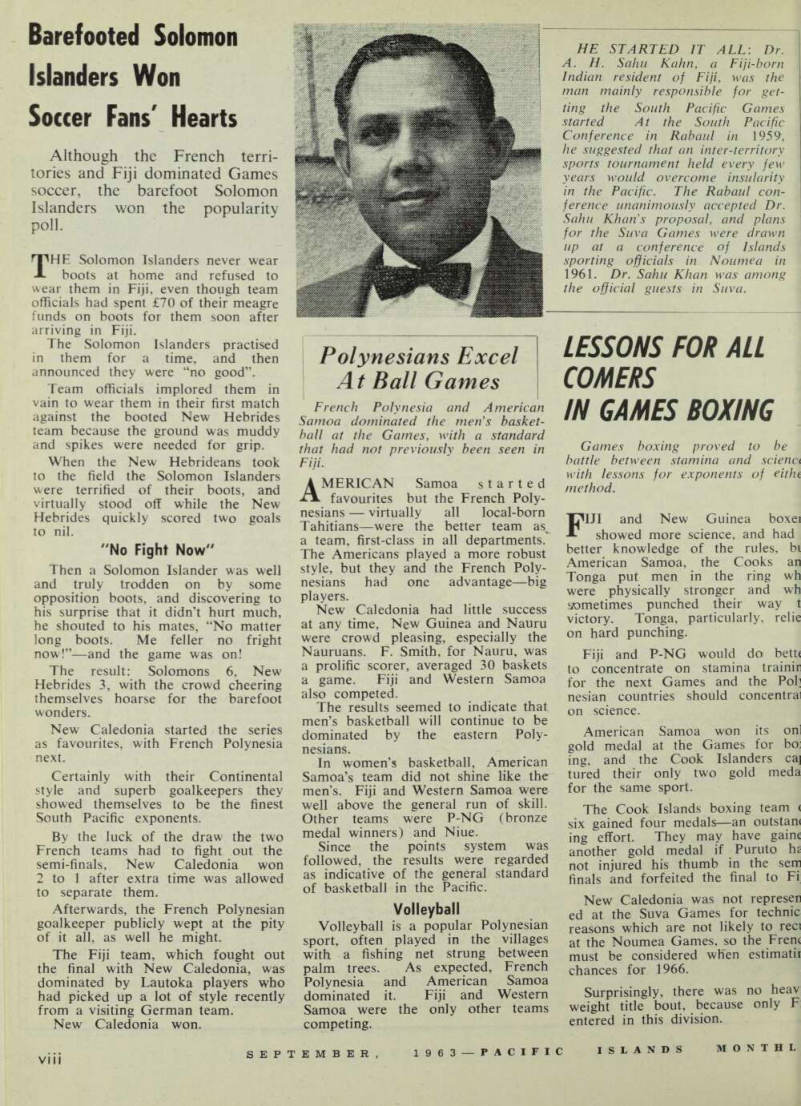 164
164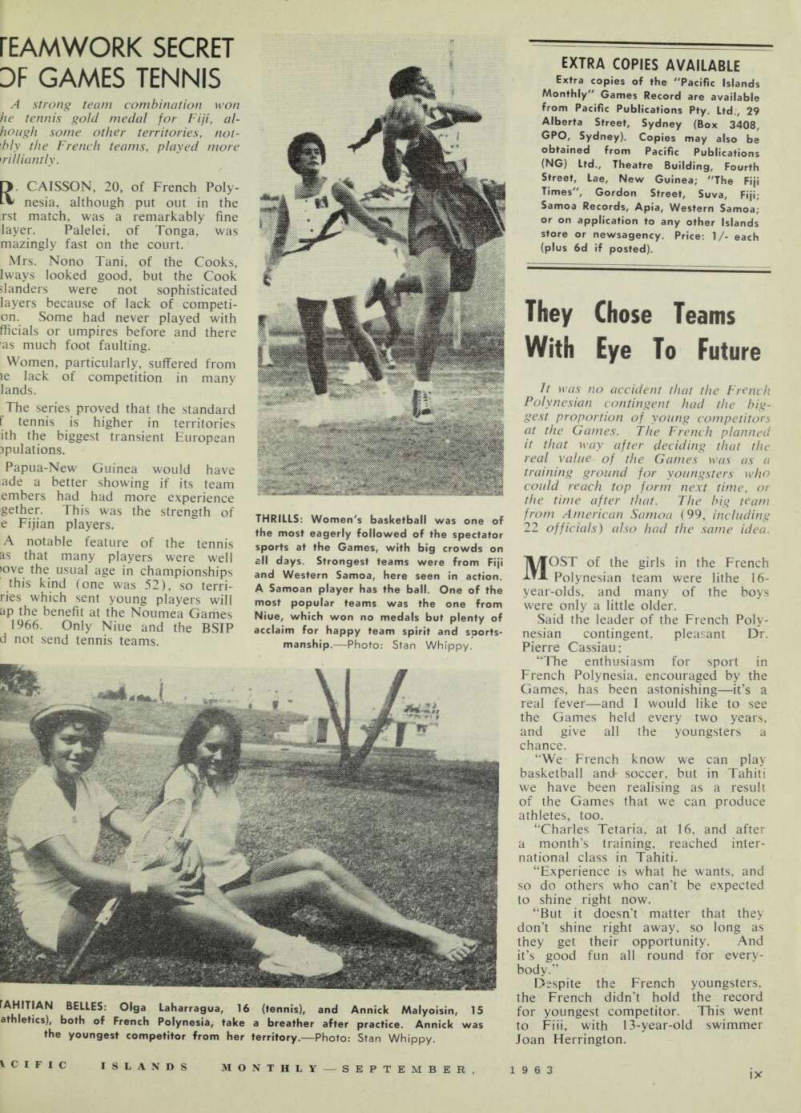 165
165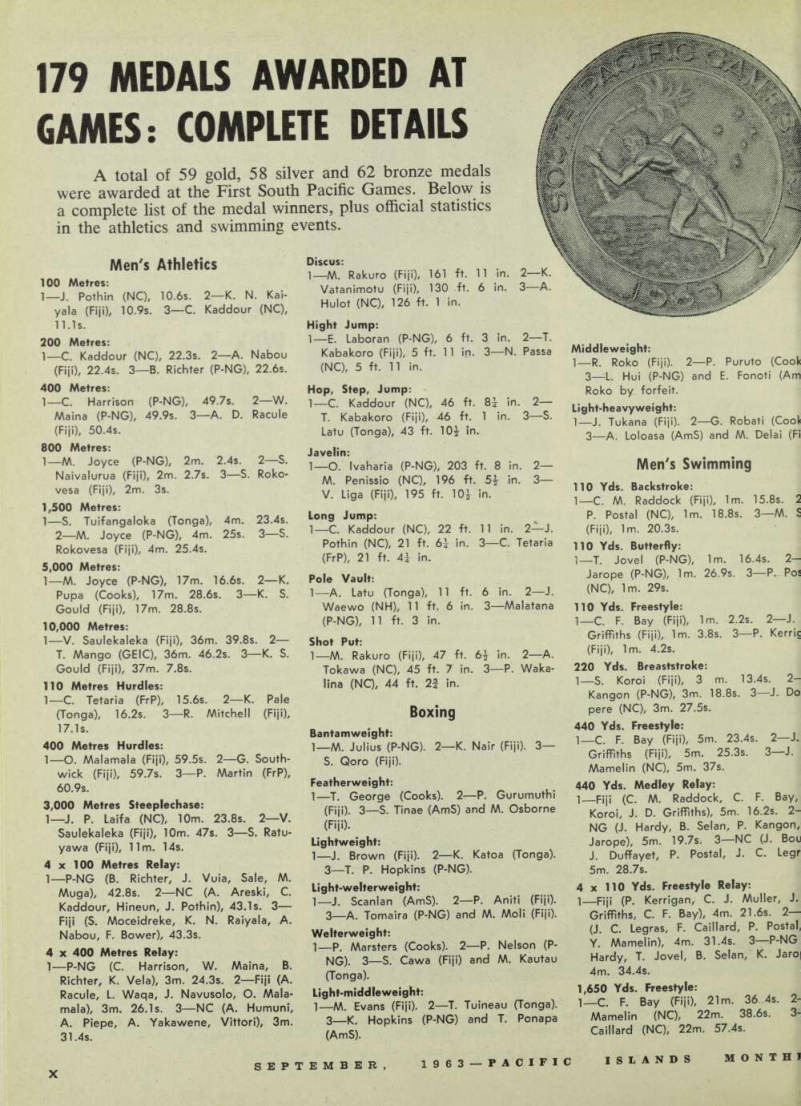 166
166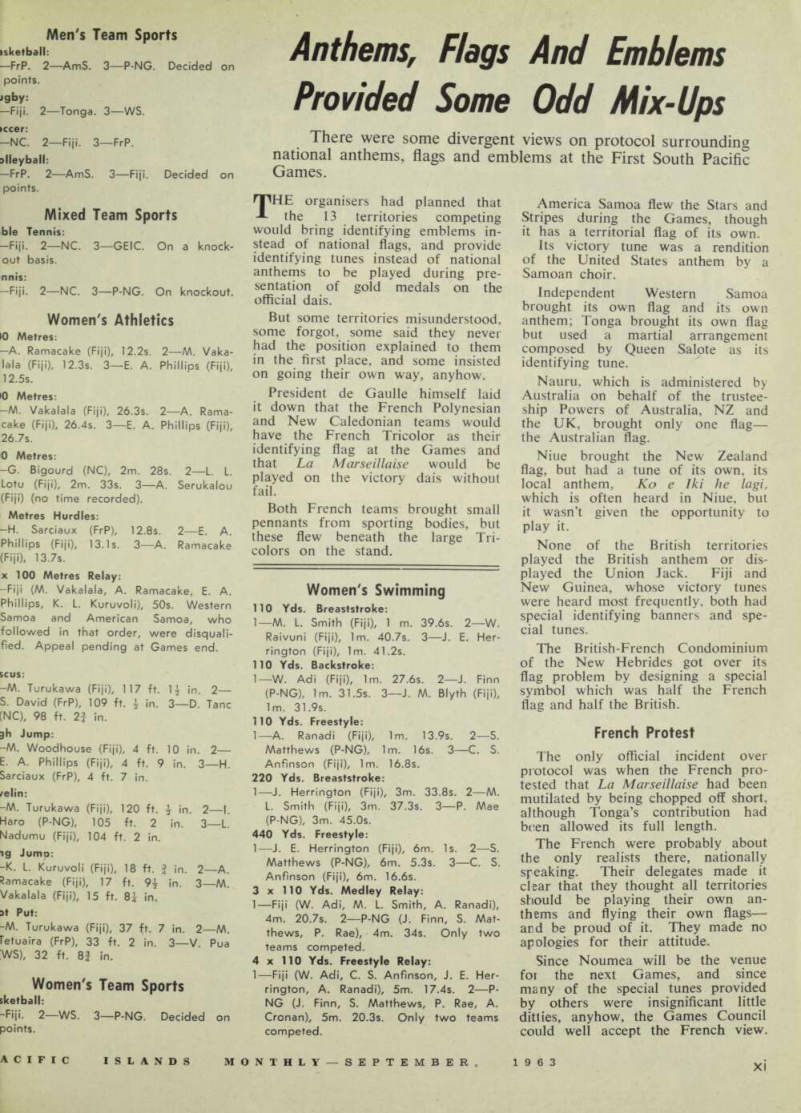 167
167 168
168