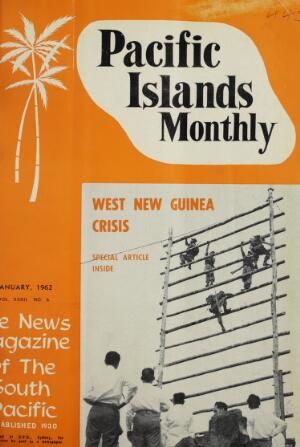
Monthly
Advertisements & other items, pp. 2-4 (3 items)
Sunbird Serv
FLY
y
throughout the Territory of Papua New Guinea and to Australia Sunbird Services throughout the Territory TAA operates ‘Sunbird Services’ throughout the Territory of Papua New Guinea and to adjacent islands. Whether your destination is Mt. Hagen in the New Guinea Highlands, Honiara on Guadalcanal or any other of the 40 Territory ports served by TAA you will enjoy friendly service WHEREVER you fly with TAA Sunbird Services.
Sunbird Services to Australia Regular TAA services from Lae and Port Moresby to the mainland link the Territory to more than 90 ports throughout Australia. From any location in the Territory you need only one call, one ticket, one airline. TAA operates a huge network of more than 40,000 miles throughout the Territory, to Australia and within Australia.
For your flight to anywhere in Australia, low cost Tourist or Luxury First Class, TAA is the Friendly Way.
SAVE ON TAA TOURIST CLASS FARES BETWEEN PORT MORESBY AND AUSTRALIA For example, you save £B/15/0 (return) when you fly TOURIST to Brisbane with TAA.
Tourist fares from Port Moresby to Brisbane . . . £34/13/0 single, £69/6/0 return.
First Class fares from Port Moresby to Brisbane . . . £4l/4/0 single, £7B/1/0 return
Trans-Australia
TAA is genera l sales Agent for QANTAS throughout Guinea.
BOOKINGS;
GOROKA: Airport, Phone 8. LAE: Coronation Drive. Airport Centre, Phone 2311.
MADANG: Kaislan Avenue, Phone 78 or 166. PORT MORESBY; Musgrave Street, Phone 2101 RABAUL: Mango Avenue. Phone 2567 or 2702 or any authorised TAA Agent.
/h 0// weartess.,,
© f
Kerosene LANTERNS
>ert Gillespie’s bring to the Pacific Islands Coleman’s itweight lanterns. These popular brand-name lanis maintain a steady, dependable light in high winds I torrential rains. Triple nickel-plated with brass nts. Two models available: No. 237—up to 500 c.p.; 249—up to 300 c.p. .. . both tested to 200 lb. prese. Quick to light . . . just preheat with methylated rits. No need to repump each time lantern is lit he positive shut-off valve keeps pressure in the fount. Easily Representatives for the Pacific Islands; **••• C Col serviced and spare parts readily available.
T GILLESPIE PTY. LTD. ROBERT GILLESPIE (N.G.) LTD. PEARCE & CO., LTD. 2 Young St., Sydney Rabaul, Port Moresby Suva \ Queen St., Brisbane Lae, Madang Cable: "Robergill".
You can Depend on
CRAMMOND
The Crammond CTR2S is designed to operate as a mobile unit or a fixed land station, providing long distance communication for all Marine Services, Flying Doctor, Bush Fire Control, Geological and Oil Search Parties, Pastoral Properties, Outpost Radio and similar
Services in the Pacific Islands.
CTR2S TRANSCEIVER
TRANSISTOR POWERED
P.M.G. approved
throughout
Australia
Papua and
New Guinea
Width: 17 in. Depth; 11 in.
Height: 10 in. Weight: 30 lbs.
Special Features
of
CRAMMOND CTR2S
1. Transmission on any of five crystal controlled channels in the tuning range of 1.6 to 10 megacycles. 2. Switched Noise Limiter designed to suppress static, ignition, and other noises of the impulsive type. 3. The receiver tunes the broadcast band, 540 to 1,600 Kc’s, 2-6 Megacycles, and 6-18 megacycles. 4. Meter for efficient transmitter tuning. 5. Provision for the connection of extension speakers. 6. Pi tuning network for leading all types of aerials. 7. The CTR2S is completely self-contained and is enclosed in a robust steel cabinet for protection against entry of dust and moisture. The cabinet is cadmium plated, primed, and finished in a hammerdoc lacquer. 8. The receiver is equipped with a slow motion dial, having a ratio of 55 to 1. 9. Reverse polarity relay protection device to prevent accidental damage to the transistors from reverse connection to the primary supply, which can have either a “Negative” or “Positive” earth. The change-over being carried out in seconds. 10. Standby-by switch saves power when the receiver only is operating. 11. The Carbon microphone with “Press to Talk” switch clips to a bracket on the side of the cabinet.
Designed and Engineered by
CRAMMOND RADIO
MNFG. CO. PTY. LTD.,
BRISBANE, QUEENSLAND.
Territory Distributors
AMALGAMATED ELECTRONICS LTD.
PORT MORESBY
NEW BRITAIN ELECTRONICS RABAUL.
NEW GUINEA ELECTRONICS LAE.
1
F 1 C ISLANDS MONTHLY JANUARY, 1962
2
JANUARY, 1962 PACIFIC ISLANDS MONT
Pacific Islands Monthly
üblisher: R. W. ROBSON.
Editors:
I Tudor Stuart Inder
lanager: SELWYN HUGHES.
ONES: General Business, Editorial,
9197-8, Ma 7101, Ma 4369.
.P.O. Box 3408, Sydney.
)hic Address: PACPUB, Sydney.
Lual Subscription Rates:
Includes surface postage) ific Is.—Papua-N.G., Samoa, Norfolk, i, 8.5.1., Cook Is., i, G.&E. Grp., Niue, Hebrides, and other acific Islands .. .. £1 4 0 ch Pacific Territories Dutch N.G £1 7 0 •alia and N.Z. . £llO 0 British Common -11 h Countries, and in (40/- Stg.) . .. £2 10 0 A. and U.S. Pacific aries ($6.50 U.S.) . £2 17 0 opies (postage extra) 2 6
Nch Office In Papua-Ng
Publications (NG) Ltd., Theatre , Fourth St., LAE. Tel.: 2577. s Pat Robertson, Manager.
Ranch Office In Fiji:
ji Times Building, 20 Gordon St.
Tel.; 4043.
Epresentative In N.Z.:
Whitcombe, P.O. Box 5179 Auckland. Tel.: 22.570.
Ipresentatives In U.K.
shburn, 13 Rood Lane, London, . Tel.: Mincing Lane 8633.
Jckenzie, 4A Bloomsbury Square, W.C.I. Tel.: Holborn 3779.
RNE OFFICE; Newspaper House, Collins St. Tel.: 63.7053.
All main trading firms and bs in the Pacific Islands.
Publications Pty., Ltd., is the m agent for THE FIJI TIMES.
Contents
No. 6. Vol. Xxxii.
January, 19(
People 5
Danger of Red Indonesia on Our NW Frontier 15 Australia's Reaction to War Talk 15 Significant Fijian-lndian Clashes in Legco 17 Fiji has New Control for Sugar In dustry 18 Teams in Lae for Eclipse 19 The French Pacific and Francs 19 New Hebrides is Fighting Mad— and has Beer and Wine, too 20
Editors' Mailbag 21
Commentary 23
West Samoa Runs Up Flag of Inde pendence 24
Territories Talk-Talk 27
In BSIP It's Beer for All 31 New Year Honours 32 Canberra Commentary 33
"Pim" Special Report On West
New Guinea 35
How Strong is Indonesia's Air Force? 40 New Guinea "Vital to Australia" 41
Rarotonga Says "Get the Tourists in First"
And Fiji Has a Word or Two on Tourism He Sees Danger in those P-NG Menus Why Tongans Wear Mats What Does Norfolk Is. Want?
Sydneysider At Home Base
Indonesian Hospitality Can be Overwhelming Calendar Girls are Nice Girls Now
Magazine Section: Native Cor
respondence School, 69; Glory that was Herbertshoehe, 71; No Food Shortage in the Friendly Islands, 72; Brett Hilder Profile, 74; Book Reviews
News Of Pacific Shipping And
Yachts
PACIFIC REPORT (index p. 16) ... 1 Deaths of Islands People 1
Travel Talk 1
Airways and Shipping Timetables 1 Commerce and Produce 1
Advertisements & other items, pp. 5-6 (3 items)
A Product of Pacific Publications Pty. Ltd., 29 Alberta Street, Sydm
4
JANUARY, 1962-PACIFIC ISLANDS MONT
Volvo-Penti
W. KOPSEN
& CO. PTV. LTD.
★ Presents THE HUSKY BABY MARINE
DIESEL MDI at 6 B.H.P.
Ideal for boats from 18 feet to 25 feet Conservatively rated a 6 B.H.P. the MDI provides power equivalent to any 10 H.P. petrol engine. Ideal for, yachts auxiliary, commercial or fishing boats and great for cabin cruisers. It includes every modern feature. • Fuel Economy • Reliable • Quiet and Smooth • Easily Maintained • Easily Started • Compact • Efficient • Built-in reverse gear • Power packed.
A JEWEL OF AN ENGINE
Volvo Penta of Sweden has a full range available including the amazing new Aquamatic the inboard engine with outboard drive. *
NEW from the USA h
FOR THE BOATMAN
m a p
SUPPORTED VINYL
MARINE FACRIC
DEKOL DECAY PREVENTOR
Guards wood and canvas from white ants, borers, dry rot, mildew, etc. Ideal for the Islands and easily applied by brush. Prevention is better than cure.
CUTS YOUR
BOAT MAINTENANC
TO A MINIMU
• PAINS DISTRESS SIGNALS
A must on all boats for safety first. Rockets and flares packed in watertight compact cases. English made. Approved for all small boats and ships lifeboats.
• WATER SKIS
A full selection of skis from championship to learners.
Doubles, slaloms and childrens. All gear available also, ski-ropes, handles, fittings and floating vests.
T 8 Ends seasons
sanding, scrapi
painting, varnish
Vinyl decking, floorini cabin topping withs scuffs, stains, sun weather... easy to without special tools, shipshape with an sional swabbing.
Please post further details on the following : [ 1 VOLVO PENTA HDI [ 1 NAUTOLEX I 1 DEKOL [ 1 PAINS DISTRESS SIGNALS [ ] WATER SKIS A Australia’s Leading Marine Specialists
NAME
ADDRESS
P.l
W. KOPSEN & CO. PTY. LIT
376-382 Kent Street, Sydney. BX 6331 (11 lines). Cobles: "Kopsen" Sydney.
[?]Eople
> years the waterfront of Suva >ved and the Pier Hotel has the Garrick—but Mine Host lained the same—popular hotel , Mr. Vince Costello, youngest Costello brothers who found tid fortune in Fiji, irrived in Fiji from Australia 9, and in 1931 joined his Mr. D. Costello, in the (then known as the Pier is assistant manager. On New Day, 1937, Vince and another Mr. J. Costello, became joint and it was during their regime ne was changed. The water ed been shifted when land :laimed and Pier was hardly )le name. The hotel took its ime from the owners of a ock of property, the Garrick In 1947, Vince Costello be lle proprietor of the hotel, a keen sportsman, and almost 'ear makes a pilgrimage to me for the Melbourne Cup.
leparture from Fiji in mid zr of Mr. and Mrs, A. E. i removed another link with days” of the Colony’s copra hey have gone to live in re at Napier, New Zealand, ti he was a son of the late Beddows, of Vunivasa Estate, . a pioneer copra producer.
Nelson, son of Mr. Norman Nelson [?]son of the late Ivan Nelson, who Nelson and Robertson Pty. Ltd., [?]ers, 60 years ago. He is a director [?], and made a special visit to Apia [?] for Western Samoa's Independence celebrations.
died at an advanced age in Mr. Beddows did not follow tion life. Instead, he joined the nment service, and worked in s parts of the Colony until “re nt” in 1954. Then, on the com i of his leave, he joined the Service, and served the last six in the Registrar-General’s De :nt.
ga has enlisted four dogs in its force—Shane, Rocky, Caesar 'ammy—under the control of nt ’Akau’ola and Constable who have just completed an ex ; course in Australia on hand nd training police dogs. The nen took the dogs back with to Tonga. Kennels have been acted out of Nukualofa at the idustrial area of Havelu. * * * 3ngst the hundreds of Christmas igs we received this year there me, as usual, from the Rev. ■ E. Tremblay, SM, now of i but once of Tonga. Father day’s message took the form pint-sized sermon—which he a “parable for all fallout ■ dwellers.” So far we haven’t of even one fallout shelter in outh Pacific islands—although
Ian H. St. Clair with his wife and his three young daughters. They [?]ed in Apia, Western Samoa, in Decem [?]ere he becomes Anglican Chaplain, formerly Vicar of St. Stephen's Church [?]f England, Portland, Victoria.
ave become very fashonable in ulu. Nonetheless his admonition ep on trying no matter what” )ably good medicine down here 1 as up there.
laim was made in PIM some igo that a young man in the Islands was the first Polynesian :ain a sea-going master’s cer . This is challenged by young Moors, of Samoa, who has aken over duty as Harbour at Apia, Capt. Moors got his ’s certificate several years ago. ere should be a qualification in aim. The Cook Islander was a fiynesian, whereas Capt. Moors ember of the European-Samoan unity, which now is an im t factor in Samoa’s new al life. * ♦ * Rev. Father Guichet, MSC, Apostolic designate of the t Islands, was consecrated in s Cathedral, in France, in No r. > Vicariate—which is entrusted e Missionaries of the Sacred —was established in 1888; and nteresting at this time to note n November, Sister Hermilande ated the diamond jubilee of her us profession, and of her 1 in the colony. She arrived in ilbert Islands in 1901, and has nee returned to France during ) years of seivice. (Over)
[?]ute-miler John Landy (centre) left Lae, Wau, in late December with two [?] companions, John McFarlane and [?]Oliver (both Melbourne University [?] Club and Citizen Air Force members). [?]re they planned to walk to the mouth Markham River, near Lae, by way of [?]. The three men expect this to take [?] days then they will fly to Popondetta [?]ere they will walk across the Kokoda Port Moresby. Landy will spend an [?]o weeks in P-NG to advise aspirants P-NG native athletic team which will in the Commonwealth Games in Perth, WA, this year.
e international airlines—for le, Swissair—maintain offices in lia although they have no services thereto. More recently a took a page out of this book pened an office in Suva, Fiji, gh the Italian airline has no liate intention of routing any services through there. Sydney ives say that it is just in line the policy of opening more outlets—two offices have re been opened in New Zealand lore in Australia. Mr, S. W. car has been the man chosen n the office in Suva (which is ns Philp’s building) and from he will function as area man ror the Pacific Islands. * * * to Montreal to take up a m with the International Civil on Association is popular n I. S. Shephard, well known r island groups along the Coral operated by TEAL. “Joe” familiar figure in Fiji, Western i, the Cook Islands and Tahiti, ve years he was senior route n for the airline, and he was of honour at many farewell ons when the last Tasman e Airways Solent flying-boat its final trip from Laucala Bay peete and return in September, it was not the end of the genial i the route for he returned later
Koilonga, 11 months, from Guadal [?]SIP, just back from five months in in Sydney where he had successful [?]urgery for a double cleft palate and [?]. He returned home in the care of Espagne who is holding him, and a stess whose fare was paid by the Red Cross.
i he had completed his con on course to TEAL’s turbo prop :ras. But his ports of call were r. When he passed through Fiji is through Nadi, and on the way apeete there were no stops at ill TEAL started to use the air at Tafuna in American Samoa, e crowning achievement in his r as an airman, both in the me Air Force and with TEAL he award in 1961 of the Brackley orial Trophy for his outstanding vements in operating flying-boats 10 years. Joe made a special ;o London to receive the award the hands of the Duke of mrgh. recreation, he took up bowls he went to Suva to live in 1955. >57 he won the Pineapple Cup, nised as the singles supremacy swls in the South Seas, and a e of years later he looked like ting his success, but lost con ation slightly when rain came and he had to use a Pan ican umbrella, loaned by Noel :um, then PAA sales manager at * * « :k in his home town of Sydney jack again in a journalistic job r. Colin Thwaites, who a few ago was the first editor of the Guinea Courier, of Lae. Mr. ites did not go to New Guinea journalist but while there joined 'outh Pacific Post, later trans -1 to Lae to start a new paper le same company. He left Lae in the Shell Company in Mel e but now has become editor e printing trade’s journal, The alasian Printer.
A. J. Stewart, one of the Pacific's [?]own missionaries, celebrated his 80th
[?] at SDA headquarters, Wahroonga,
recently. Celebrating with him were [?]e, a sister aged 76, two brothers aged [?]86, and 250 other friends and relatives. photo he is shown, with Pastor Salau, [?], with whom he made a world tour some years ago.
Advertisements & other items, pp. 7-16 (10 items)
5
R Y , 19 6 2
F I C ISLANDS MONTHLY JANUA
Shopping
.<f r 9
SYDNEY
<6* 9 0 0 0 0 \i/
PERSONAL
SHOPPING
BUREAU
THE BEST MAIL ORDER PLAN
for people who live a long way from Sydney. Farmer’s sells almost everything, housewares and furniture, electricals, women’s fashions, children’s clothes and menswear. All you have to do is write to Miss Nugent, describing clearly what you want, and she will send a trained shopper into the store to personally select your goods. They are wrapped and sent straight back to you.
When you come to Sydney, call on our Personal Shopping Bureau (it’s on Farmer’s eighth floor).
ARMER’S PERSONAL SHOPPING BUREAU, BOX 497, G.P.0., SYONEY, AUSTRALIA .
ir
15AVe S
YoUR.
HAiR.
So Son
v 4' & -2Z- 'y- <S5>
JW.VBI
sr/M
HAIR
THE THEORY OF HAIR CARE
THE HAIR
When the hair is magnified it will reveal millions of small overlapping scales of horny, translucent substances called Cuticle. When the hair is brushed or combed, the hair bends, and one scale slides freely over the next, giving the hair flexibility. The sliding movement of the scales is helped by nature's lubricant, called Sebum. The small cuticle scales have millions of recesses, each capable of holding a few specks of dirt or dust collected from the air. Now, if the hair is cleansed with a good shampoo, it will remove dust, dirt, and nature's lubricant. The removal of nature's lubricant is a great disadvantage, as it prevents the free sliding action of the scales, making the hair difficult to manage. The best way to rectify this and restore the hair to a soft, controllable lustre and a stimulating sheen, is to put back nature's lubricant in between the hair scales, where it was originally. This is exactly what happens when Figaro Hair Stim Cream is applied; it stimulates the hair on the inside, where nature does.
A little different from some of the hair conditioning creams which merely lay a coating of brilliantine on the outside of the hair, making it look artificial. A crude type of conditioning cream may ruin the hair; others simply rinse off, leaving the hair no better than before. But you can always rely on Figaro Hair Stim to give your scalp that healthy look, and the hair a stimulating lustre.
ANATOMY OF THE SKIN AND HAIR
THE THEORY OF SCALP CARE
THE SCALP
The scratching of an irritating scalp will cause damage to the surface of the skin by breaking down nature's own barrier of protection against infectious microorganisms. Now, these organisms may give rise to inflammation, starting disorders in the fat glands, which are called Sebaceous. These in turn, produce a variation in nature's lubricant, which forms an oily, waxy or scaly accumulation on the surface of the scalp, popularly called Dandruff. The best way to keep the scalp healthy is to remove all dandruff and stop the scalp irritation with an application of an effective Bacteriostat most suitable for this condition. This will be done with a treatment of Figaro Hair Stim.
Figaro Hair Stim is a luxury hairdressing for the family. Non-greasy, gives hair youthful look—improves permanent waves and natural curls removes baby s cradle cap and father's dandruff, stops falling hair, tones up dry and oily scalps. No other Vitalising Hair Conditioner has these amazing qualities, so be sure that you insist on Figaro when next you buy a Hair Care Product. In more acute cases of hair and scalp disorders your professional hairdresser or chemist will advise you to consult your local doctor.
Sole Distributors for
MEDULLA
CORTEX
. CUTICLE
z
SWEAT
DUCT
SEBACEOUS
GLAND
HAIR PAPILLA
PILI MUSCLE
HAIR FOLLICLE
the Pacific Islands:
BURNS PHILP & CO LTD.
' “ •'""ifcl.
The wise way to
secure your nest eg t
OPEN A CONVENIENT
A.N.Z. SAVINGS BANK ACCOUNT
Wise people save regular amounts each week for special purposes; education, holidays or a bicycle are some of the good things savings can provide. Your “nest egg” grows bigger when you save with A.N.Z. Savings Bank as interest at current rates is added each year. Keep your “nest egg” safe and make it grow by regular saving at your nearest branch of A.N.Z. Savings Bank.
Call at any of the following A.N.Z. Bank branches and see how easily you can start an A.N.Z. Savings Bank Account Port Moresby: Mr. C. G. Teitzel, Manager Lae: Mr. G. P. Poulsen, Manager Rabaul: Mr. K. J. Macnish, Manager Suva: Mr. A. K. Jackson, Manager Lautoka: Mr. J. A. Mace, Manager A#Z W
A-N-Z BANK
AUSTRALIA AND NEW ZEALAND BANK LIMITED
AUSTRALIA AND NEW ZEALAND SAVINGS BANK LIMITED iiii
TRUCKS with TRACTION
INTERNATIONAL AA-120 and aa-160 4 WHEEL DRIVE TRUCKS Where bad roads and rough tracks make work difficult then an International allwheel-drive truck is the answer. You will travel safer, too, for the 4-wheel drive gives outstanding traction and, as well, better control on wet, muddy roads.
Powerful, reliable, 6 cylinder, engines that are flexible, economical, and easy to service. The AA-120 4-wheel drive model carries one-ton payload and has a 135 H.P. engine. The AA-160 4-wheel drive model! has ton capacity and a 142 H.P. engine.
Power take-off from both trucks transfercase drives pumps, generators or winches.
Buy a truck designed for rugged conditions. But an International all-wheel! drive truck. l -m m ry t 1 □ II To move big payloads safer, and more reliably in rugged conditions, buy 4-wheel-drive International Trucks
DISTRIBUTORS
DUTCH NEW GUINEA; H. Englebert n.v., Hollandia. SOLOMON ISLANDS; Solomon Motors Pty. Ltd., Honiara. NEW CALEDONIA: Agence Automobile, Noumea. TAHITI: Hintze & Company, Papeete.
NEW HEBRIDES: Kerr Bros. Limited, Sydney. FIJI: Niranjan's Service Station, Suva. PAPUA AND NEW GUINEA: Steamships; Trading Company Limited, Port Moresby and Samarai. Dealers; New Guinea Goldfields Ltd., Wau, N.6.G. Trading Co., Lae, Rabaul Trading Co. Ltd., Rabaui.
INTERNATIONAL HARVESTER
International Harvester Company of Australia Pty. Ltd. District Sales Offices in Capital Cities of Australia. Works: Dandenong, Geelong and Port Melbourne, Victoria.
STATISTICS
Over 22 years of research and manufacturing technique are your guarantee that all A.C.M. products are made from only highest quality raw materials. A.C.AA. cater to the ever-increasing demands of the buying publics needs for durability, longer life, strength and extra comfort from your products. Remember, when you think of cotton, think of A.C.M.
• FLOCK AND GARNETTED WADDING
Supplied: In rolls or to your specifications from all NEW high-grade material.
O GLAZED WADDING AND BORDER WADDING
Supplied: Single or double glazed—in rolls or to suit your specifications from all NEW material.
• NU-FELT (approved)
Supplied: From only ALL NEW material —to your specifications or in rolls.
&J.M J
for COTTON WASTE, CLEANING CLOTH,
STOCKINETS, TEASED FIBRE, FIBRE PADS
AUSTRALIAN COTTON
MANUFACTURING (0. LTD.
90-92 O'RIORDAN ST., ALEXANDRIA.
Phones: MU 2505-6-7, MU 1301-2-3.
NAME OR COMPANY
ADDRESS
FOR DETAILS OF AGENCY PLEASE SEND ME CONDITIONS
R
MCI
32 COLOURS
SPECIALLY
MANUFACTURED
FOR TROPICAL
CONDITIONS
COLORAMIC GLOSS
★ A superb olkyd enamel, flows smoothly, evenly. ★ Brilliant gloss finish. ★ Outstanding durability, both outside and inside. ★ Captivating range of modern colours.
COLORAMIC SATIN
★ An outstanding satin finish. ★ Steam resistant, washable, quick drying. ★ Ideal for Children's rooms, kitchens, bathrooms. ★ Matching shades in matt and gloss. m
n COLOURS
aLKYD ENAMEL
s^ou AL/r y 4* THE W ALP AMUR CO. (N.G.) LTD.
LAWES ROAD, PORT MORESBY
A MEMBER OF THE WORLD-WIDE WALPAMUR GROUP OF PAINT COMPANIES.
1C Ml L 1* oM =S3 I
p ys
. . . because there is a glass and a half of pure, fresh, full-cream milk in every half pound of Cadbury’s Dairy Milk Chocolate
M025/HP/9
Fastest Jets in international service a
QANTAS
AUSTRALIA'S ROUND-WORLD AIRLINS
11
GIN
Gilbey’s Gin is one of those travelled people you will meet everywhere ... a true international, the same in all lands, not least Australia.
Gilbey’s Gin is an accommodating spirit, happy to be consumed in many ways.
It can be drunk with water and with bitters, with lime juice or ginger ale, with tonic water or that popular newcomer, bitter lemon, and in a host of cocktails, chief of them the ever-popular Martini, not forgetting the new Gilbey’s and Dubonnet.
In mixed drinks Gilbey’s Gin is supreme whether you are an old timer from Out East thirsting for a Singapore Sling or a hostess meditating what to serve
PERSONALITY
OF THE
MONTH
at a young people’s party when heavy drinks and potent drinks are definitely out.
To lace a fruit cup, a very discreet quantity of Gilbey’s will provide a beverage to please everyone, harmless yet sophisticated, refreshing as a breeze off the sea on a summer night.
Everywhere young people are coming to recognize a hostess who doesn’t believe in the “do it yourself” system for her guests, who is willing to go to just that little extra trouble with a good mixed drink.
The basis of the best mixed drinks of the world, for tycoons or for teenagers, is Gilbey’s Gin.
Try it yourself ... we know you’ll agree.
GILBEY’S LIMITED
MANUFACTURED TO GIVE
LONG LASTING BEAUTY & PROTECTIOI
UNDER ALL TROPICAL
CONDITIONS
You Won't Repaint
For Years
if You Paint With
(PamiA
SEE*
. I linn Paints
EXTI»S
l u »*er
ENAM
e *ior
GLOSS
So
COLOURS
/ V. r
T*nrl
/ 0 i SUPALUSTA will stand up to the most rigorous climatic conditions.
SUPALUSTA is reinforced with the new sensational resin, Penta-Alkyd, w guarantees longer lustre life —a toughness and flexibility which prevents pe< and cracking under the harshest weather conditions.
SUPALUSTA gives the easiest brushing of all enamelised finishes. Its smc OUrALUoiA gives me easiest uiusimiy ui an cnomcn«« ... —— porcelain-like finish that resists dust and dirt, is the highest, finest gleaming I of anv exterior house paint.
BRITISH PAINTS
LIMITED
It actually washes clean every time it rains.
SUPALUSTA withstands burning sun and salt sea spray, and is highly resistar all fungus and mould growth.
Sopalosfa
EXTERIOR GLOSS PAINT
See the delightful range of colour fast shades at your ne British Paints Limited depot or store.
IMPORTANT:
For maximum protection against fungus and mould growth a' treat new or previously painted surfaces with British Paints Lmni anti-mould solution.
Enquiries are invited from storekeepers to act as authorised a for British Paints quality products.
Write to British Paints Limited, Box 43, P. 0., Bankstown, N.S.W., Australia.
HONIARA, 8.5.1. P.
A. C. Blair Ltd., Honiara.
R. C. Symes Pty. Ltd., Honiara.
Burns Philp (South Sea) Co. Ltd., Suva.
Burns Philp (South Sea) Co. Ltd., Lauto Narain Construction Co., Suva.
NORFOLK ISLAND
Burns Philp (South Sea) Co. Ltd., Nc Island.
Burns Philp (New Guinea) Limited: Rabaul.
Burns Philp (New Guinea) Limited: Kokopo.
Burns Philp (New Guinea) Limited; Daru.
Burns Philp (New Guinea) Limited: Kainantu.
Steamships Trading Company: Port Moresby.
Kam Hong: Lae.
Scotts New Guinea; Lae.
Tang Mow: Wewak.
Laurie Chan: Rabaul.
Wong You: Buka Passage—Bougainville.
SOLD AND RECOMMENDED BY:
Burns Phi Ip (New Guinea) Limited: Port Moresby.
Burns Philp (New Guinea) Limited: Samarai.
Burns Philp (New Guinea) Limited: Wau.
Burns Philp (New Guinea) Limited: Bulolo.
Burns Philp (New Guinea) Limited: Lae.
Burns Philp (New Guinea) Limited: Madang.
Burns Philp (New Guinea) Limited: Goroka.
Burns Philp (New Guinea) Limited: Wewak.
Burns Philp (New Guinea) Limited: Kavieng.
6
JANUARY. 1962-PACIFIC ISLANDS MONTj
7
1 FI C ISLANDS MONTHLY JANUARY, 1962
8
JANUARY, 1962 PACIFIC ISLANDS MONTH LJ
9
1 F I C ISLANDS MONTHLY JANUARY, 1962
10
JANUARY, 1962 PACIFIC ISLANDS MONTH!
11
!IFIC ISLANDS MONTHLY JANUARY, 1963
13
JFJC ISLANDS MONTHLY JANUARY, 1962
14
JANUARY, 1962 PACIFIC ISLANDS MONTH
Danger of a Red Indonesia on
Our Northwest Frontier
In December, the Cold War moved perceptibly closer to” le South Pacific countries at three points; and in Indonesia it ive signs of becoming hot.
ENTS in Indonesia have been— and still are, at the time of this ng— confused and contradictory, could mean early danger for Guinea in particular, and for ralia and New Zealand and the ds generally. they could be little more than w phase of posturing by Indo ’s President, over-emphasised by lewspapers’ headline-writers dur the holidays’ “silly season”, e three developments of signifle to us are: Indonesia is demanding that Netherlands immediately hand the administration of Western Guinea, otherwise Indonesia nvade.
United States and Britain have ited probable early resumption large-scale atomic tests at tmas Island (near centre of South c).
United States has announced the ition of a new system of patrols, ►ver the South Pacific Islands, r years, Soekarno has been de ing possession of Dutch New ja, but at first none took him isly; for the last 12 months the ire has been increased, culmin in a threat of force, in late De sr. his youth, Soekarno was im ted by the Dutch in their ious Digoel River camp as a :rous agitator During World 11, he collaborated with the Jap , and the Japanese put him in e of a nationalist, anti-Dutch nment before they left in 1946. irno, understandably, is moti by hatred of the Dutch, ng denied Western help, the i could not restore their fignty over the Netherlands i and oust Soekarno in 1946-50; ley did resume their full admin on over West New Guinea at nd of 1945. (See page 35 for round of dispute). >m the early ’Fifties, Soekarno ently demanded Dutch New :a but got little support from nations or UNO as there are no historical, racial or political, en New Guinea and Indonesia, wever, in 1961, as Soekarno’s nds were stepped up he was in
creasingly supported by the numer ous new Afro-Asian nations which had joined UNO, After India, in December, invaded and seized Goa, Soekarno began to threaten war. Goa was a Portuguese enclave on the coast of India, south wards of Bombay. (A commentator has described an enclave as “a small, foreign-controlled area, entirely sur rounded by trouble”.) The Dutch (believed to be willing to get rid of their expensive territory) said they were ready to negotiate, provided the rights of West New Guinea people to self-determination were protected.
The Indonesians said they would negotiate but would accept no settle ment which did not provide for the transfer of West New Guinea to In donesia.
Headline News On December 19, Soekarno called on Indonesia to prepare for war, and be ready to invade West New Guinea when he gave the order. Thenceforth, all through the Christmas-New Year, the “threat to New Guinea” was headline news.
The situation seemed to cnange every day and it is difficult to tell whether Soekarno intends his war of nerves and propaganda to really lead to fighting.
There is no doubt that the Com munist countries in 1961 had sup plied Indonesia with a lot of modern armaments (the West also supplied some) and were now actively en couraging Soekarno in his daily yelling.
There also is no doubt that official Australia was disturbed by the situa tion; that Mr. Menzies radiophoned the British Prime Minister on the eve of his departure to confer with Pre sident Kennedy in Bermuda; and that immediately after Bermuda the United States put strong pressure on both Indonesia and Netherlands to settle their dispute by negotiation.
Both countries again said they would negotiate. Bu t Netherlands (probably conscious of the tens of thousands of Dutch-Indonesians who had settled there) still insisted that New Guineans should have the right to “self-determination”; whereas In donesia said it would agree to nothing that did not mean a transfer of sovereignty.
On December 23, a very forthright Note, directed to Indonesia and Holland, was issued by Australia, in which Indonesia was categorically accused of bad faith, and of breach of promises given the Australian Prime Minister. (See article below by our Canberra correspondent.) In the ensuing week, there were (Continued over page)
contradictory reports about the at titude of the Dutch. On January 3, in a rabble-rousing speech, Soekarno directed abuse at Australia, denied Australia’s charge of bad faith, and ordered his Air Force onto “alert”.
During this period, all airlines (although it affected only Australia’s major airline, Qantas), were ordered by Indonesia to keep clear of the Moluccas-Celebes area, when flying the Darwin-Manila-Hongkong route.
The apparent reason was that Indo nesia’s air and sea forces were active in the Celebes-Moluccas islands, from which an invasion of West New Guinea presumably would be launched.
Noting the extraordinary, day-to day changes in the reports, it could be assumed that Australia, either directly or through Britain, was asking United States to prevent an outbreak in the New Guinea region; and that United States, either directly or through United Nations, was really putting the pressure on Indonesia.
Up to January 10, no warlike act had occurred in the New Guinea area, although the headlines of a fortnight before had insisted that invasion was inevitable and imminent.
On January 5-6, Soekarno, with a large party of diplomats and officials, was over in Celebes, making inflam matory speeches. He had with him a group of Russians, and two educated Papuans—Frits Kiriheo (who some how disappeared from Leydin Uni versity, in Holland, and turned up in Indonesia) and a J. Dimara. Re ports said that Dimara was “the new Indonesian governor of West New Guinea,” although other reports said the “Governor” was already in WNG.
There seems little doubt, by the year’s end, Soekarno had assembled a respectable Air Force and a num ber of quite modern small warships, and anything up to 100,000 troops, and was rearin’ to go.
It is assumed that, like most dictators, he is anxious for military glory.
He still may strike—he has both the means and the will, and it was
reported he had set January 6 as D Day—but something appears to have restrained him. It probably was Washington.
On January 10, Indonesia’s Foreign Minister, Dr. Subandrio, said that Indonesia would make a “final de cision” within 10 days whether the West New Guinea issue would be settled by diplomatic means. At the same time, some correspondents on the spot in Jakarta set the “in vasion” as far ahead as “next August.”
Up to Christmas Eve, Britain and America were too deeply concerned with events elsewhere around the world to bother with Indonesia. They probably awakened to the danger when Australia made her urgent appeal in December, Britain and America seemingly cared little about the argument over the ownership of New Guinea.
But their outlook changed sharply when they were reminded that Indo nesia is being armed and encouraged by the Communists, and that the Communist Party now is the strongest political organisation in Indonesia, and is using Soekarno as a puppet.
An Indonesian invasion of New Guinea would not immediately endanger the security of Australia and the Islands Territories but be cause of the Communist angle, it would represent an enormous and ex pensive nuisance potential for Aus ti alia in the Northwest Pacific.
Australia's Embarrassment That probably was why Australian Foreign Minister Barwick, on Jan uary 4, issued a statement calculated to placate Indonesia, as a probable near neighbour in New Guinea. But in view of Australia’s strong Note of Christmas Eve, it was unfortunately phrased, and caused much irritation among the Government’s best friends.
Its timing—following the blustering statement by Soekarno abusing Aus tralia in general and Prime Minister Menzies in particular—was even more unfortunate. Its probable result was tc give the Indonesians the idea that v/hen Soekarno yells, Australia pipes down.
The probabilities are that I Dutch will abandon New Guinea I that Indonesia eventually will m in. But Australia will be savec lot of embarrassment and trouble the change is kept slow and orde Meantime in West New Gui there is calm while the Governn makes preparations in case of atti Scores of women and children f left West New Guinea in the last weeks and there has, over the ] year, been a steady exodus.
The Dutch believe that it will anything but a push-over for Ii nesia if the Indonesians attack; many believe that Soekarno is leally prepared to go to war.
Flans for the official visit of Pa] New Guinea Director of Na Affairs, Mr. J. K. McCarthy,: Hollandia on January 19, will go The visit was planned some moi ago. Australia’s liaison officer Hollandia is Mr. P. J. Mollison; h keeping the P-NG Administration fait with developments in WNG.
Herman Womsiwor and Nick Jouwe, repre[?] ing Biak and Hollandia, respectively, of West New Guinea Legislative Council. P[?] graph was taken in New York in Nove when the two West New Guinea men there on a goodwill tour. Womsiwor has described as WNG's first native-born bus tycoon. (See "RIM", August, 1961) attached himself to a US unit in Holl[?] during the war, and later went with the[?] Japan, while still a youngster. The que[?] is what happens to men like this when Indonesia takes over West New Guine[?] Photo: Leonard Sh[?]
Australia's Reaction To War-Talk
From our Canberra Correspondent What did the Indonesian Ambassador, Brigadier-General Saadi, expect when he asked for a personal interview with Australia's Prime Minister, Mr. Menzies, at a time when Australian Government activity was virtually closed down for the Christmas-New Year holidays?
E VENTS suggest that he wanted to probe the Prime Minister’s mind on Australian reaction to the war-talk that had been pouring almost daily from the lips of Indonesian leaders since President Soekarno delivered his “People’s Command” on December 19.
The Indonesian approach obviously had to be made to the Prime Minister personally, rather than to his new Minister for External Affairs, Sir Garfield Barwick.
Mr. Menzies was the man to whom Indonesia had given its solemn assurances that it would not use force to achieve its objectives in West New Guinea.
The assurances had been given to
Mr. Menzies personally in Jakarta by President Soekarno and in Canberra subsequently by the Foreign Minister, Dr. Subandrio, and by the Minister for National Security and Army Chief of Staff, General Abdul Haris Nasution.
So that if those promises were to be repudiated, they must be repudia ted to Mr. Menzies himself, If General Suadi wanted to catch Mr. Menzies unprepared, he timed his request for an interview badly.
Because Mr. Menzies was spending Christmas in Melbourne and several days elapsed before he found h con " venient to be back in Canberra.
Meanwhile, the External Affairs
(Continued on page 130)
Department was preparing a stiff vlote on Australia’s attitude to Indo lesian war threats.
High Australian authorities have issured PIM that General Suadi’s equest for an interview had NOT aused the writing of the Note which At. Menzies handed to him.
The authorities maintain that the would have been presented in ,ny event: the interview merely pro ided a convenient opportunity for [elivering it.
It seems certain that General luadi hardly expected to be handed uch a Note. To Australian news nen who saw him emerge from the nterview, he appeared depressed.
Tie Ambassador refused to discuss le interview with them, but promised statement later in the day.
His statement appeared to have een prepared in some haste—or erhaps the haste was in the trans ition.
Most Indonesian propaganda ulletins are carefully prepared, but i this major statement not one jntence was in idiomatic English.
It broke no new ground and the nly thing of consequence was the ;atement that Indonesia was still repared for a negotiated settlement on the condition of transfer of uthority over West Irian to the idonesians”.
Australia's Strong Words The text of the Australian Note as not been disclosed.
But its substance was announced i a statement issued the same day y Sir Garfield Barwick.
“Australians are shocked and dis layed that Indonesia should openly sclare its intention to resort to force a means of concluding the issue i its own favour,” Sir Garfield iid.
“For any country to resort diberately to bloodshed to gain such i objective could not fail to lose respect and sympathy within the ternational community.”
Then followed a statement which epitomised Australia’s fears the dreadful consequences to the South Pacific if war should break out be tween white and non-white races.
Sir Garfield’s words were carefully chosen.
But they carried the clear implica tion that Indonesia would be respon sible if, by using force, she stirred up race hatreds from which the Pacific has fortunately so far been free.
He said: “To introduce warfare and the abiding animosities which it is prone to generate into this hitherto peaceful region could create intolerable burdens for all the peoples of the area, and for their descendants for generations to come.
"Direct Breach of Faith"
“The threat or use of force is ex pressly forbidden by the UN Charter, “But in this case the use of force would be a direct breach of faith with Australia having regard to the assurances which have been given at the highest level.”
The Minister introduced a new phrase in place of the time-worn expression “self-determination”.
He referred to the “ability of the indigenous people of West New Guinea to have the ultimate choice of their own future, whether it be for integration with Indonesia or for independence—with or without any relationship with the people of East New Guinea”.
This new expression of the senti ment of “self-determination” was clearly designed to allay Indonesian fears.
The Republic of Indonesia already contains several distinct ethnic groups, and Australia clearly could not suggest that existing Indonesian minorities too had the right to self determination.
Hence the Note (and one must assume that it used the same phrase as the Minister’s statement) preferred the unambiguous expression “ultimate choice of their own future”.
Australia's Position The statement said that Australia intended to lead the peoples of Papua and New Guinea (East New Guinea) to the point of exercising their own choice and added: “Australia finds it difficult to be lieve . . . that Indonesia would wish ultimately to deny the people of West New Guinea a like opportunity for national choice”
On Australia’s position, the Note was deliberately vague.
Sir Garfield’s statement said:' “While the path to negotiation is open, it is neither helpful nor appropriate to canvass publicly those courses of action which Australia might pursue in other eventualities. ' “In some, at least, of those eventualities, the interest and course of action of Governments of countries outside the immediate region would have great significance.”
The unnamed “countries outside the immediate region” were obviously the United States and Britain.
And Australia must face up to realities.
There appears to be no prospecd of either the UK or the US embroiling itself in the dispute over West New Guinea.
If they were sufficiently interested to take sides Australia could then take a very different course.
But as matters stand, we are in no position to indulge in sabre rattling, no matter how vigorously our Indonesian neighbours indulge in such tactics.
Advertisements & other items, p. 17 (1 item)
15
' I F I C ISLANDS MONTHLY JANUARY, 1962
Turn To These Pages:
Will P-NG Villages Sing Indonesian Anthem? —2l.
Indonesia Prances on our NW Frontier —23.
“PIM” Special Report — History behind the West NG Crisis —3s.
Why not Timor, T 0 0—36.
Strength of Indonesian Air Force and Navy —4o.
Look For These In
Pacific Report
Nadi Hotel too Grand, 111; Tongan Building with a Mystery,!
Better Farming Among Islanders, 112; Fiji’s Battle with the Beetlef —and Lau Starlings, 113; Linotypes in the South Pacific, Short Cuts in Papua-New Guinea, 114.
You Must Have a Coat in Tonga, Banana Santa Claus for Somoa, 115; More Samoans in the United States, 116; How to Save Tahiti from Lousing-Up, Blasting Atoll Anchorages, 117; Rural Healtlj Course in W. Samoa, Coffee Pro-; duction in NG Highlands, Noumea’s (and France’s) First Drive-In, 118.
Fiji’s Vital Need is Roads, 118; Irritating Strikes in Suva, 119; Norfolk is a Tax Free Refuge, No Official Help for Bean-Seed Growers! 120; Tom French Flies a PiperJ GEIC Plans Census, NG Certificate and Tongan Scholar, 121.
How Fiji Plans to Settle and Develop, What a Date-Line Can do for the Sabbath, 122; Grave Menacd to P-NG Cocoa, 123; Is Oil to be found in Papua, 124; Air Services to Norfolk, More to be Spent in American Samoa, Aircraft for Fiji Airways, 125; Copra Training for Sepik Villagers, Advancement for P-NG Native Public Servants!
News Briefs, 126.
Advertisements & other items, p. 18 (1 item)
16
JANUARY, 1962 PACIFIC ISLANDS MONTH
Significant Fiji-Indian Clashes
In Legco Debates
A new development in Fijian-Indian relationship, in re rd to the future government of Fiji, became apparent during e Budget Session debate of the Fiji Legislative Council in member.
i discussions ranged over inance, possible constitutional ;es, land control and the con- Df the sugar industry; and at they were among the stormiest heard in that Chamber. ; the most significant statement uade by Ratu Penaia Ganilau he expressed his disappoint that a Fijian recommendation le future constitutional struc had been rejected. The Fijians daimed that they should have, ; Legislative Council, one more ;entative than those allowed to ther racial communities (Euro and Indian). This had been op by the Indians and rejected e Government. u Penaia Ganilau stands high g the younger Fijian chiefs. well known as the last Corn er (Lieut.-Colonel) of the Fiji ion in Malaya, u Penaia said: long as the present system of ament exists in Fiji, the Fijians welcome parity in the numbers official members who sit here, se this will safeguard and atee their legitimate interests, t when the time comes—and e it will not come soon—when is a new form of government
to replace the British system, then the Fijians would like the composi tion of the Legislative Council to be reviewed.
“I would like it recorded here that when that time comes, the running of this Colony must be handed over into the hands of the Fijians—by that, I mean administratively and politically .’
Ratu George Cakobau and Ravu ama Vunivalu were quick to echo Ratu Penaia’s statement.
Shrewdly, Penaia had made no de mand for independence by any given date. In fact, he said he hoped there would be no early change in the form of Government. But Ratu George Cakobau (who is one of the chiefs of highest rank) did not mince words: “The ultimate aim—and let us put it bluntly—is independence,” he said, “I have nothing aganst inde pendence—let independence come! -—but I would like it to be recorded in this House that when indepen dence comes, let the British Govern ment return Fiji to the Fijians, in the same spirit as that in which the Fijians gave Fiji to Great Britain.”
Ravuama is Fierce Ravuama, who has acquired a reputation as an “Indian baiter”, was quick to support the two chiefs; and he took the opportunity to direct some forthright words at the Indian members.
His chief target was the loquacious Mr. B. D. Lakshman, who represents the major cane-growing districts; but another to feel the lash of his tongue was Mr. A. I. N. Deoki, an Indian lawyer, whose constituents are in the south of the Group, and who is a member of the Governor’s Executive Council, which is Fiji’s nearest ap proach to Cabinet Government.
The five Indian members seemed stunned by Ratu Penaia’s statement, and their position became more miserable as Ratu George and Ravuama backed up Penaia. There was little they could do about it, however, for they had already taken part in the debate and could not speak again.
The mere mention of Fijian land is enough to make Ravuama see red; and after brief remarks on the Con stitution, he turned on a full-scale attack on what he believed to be Indian aspirations towards land con trol.
Accused by Mr. Deoki of having an obsession about Fijian land, Ravuama readily admitted it. He frankly confessed that, if Mr. Deoki meant he was worried about the future of the Fijians in relation to their own land, he was more ob sessed than Mr. Deoki imagined. (Over),
[?] Penaia Ganilau with his wife.
TOP: Ratu George Cakobau. LOWER: Ravuama Vunivalu. — Photo: S. A. Whippy.
He was concerned about the future of Fijian land, and he charged that there was an obsession among Indian members about the ownership and usage of it.
When Mr. Deoki protested that the Indians had never asked for land ownership, Ravuama challenged him sharply.
Mr. Deoki sat and fumed as Ravuama turned the screw. He re minded Mr. Deoki and the House that Mr. Deoki, when appearing be fore the Burns Commission on be half of the Indian Association, had been asked pointblank by Sir Alan Burns, in a question about land, whether he meant “usage” or “owner ship” (by Indians). Mr. Deoki had replied “both”.
Ravuama then attacked Mr. Laksh man on a racial issue. He said that Mr. Lakshman had very subtly suc ceeded in persuading some people that there was already a division be tween the Fijians and Indians on the one side, and the Europeans on the other.
Mr. Lakshman had created the impression that Fijians and Indians were patting the Europeans on the back and saying, worry, everything will be all right .
Mr. Lakshman angrily challenged Ravuama to give a proper reference, and prove his charges.
Ravuama did not have the refer ence, but he quoted cases where Mr.
Lakshman had made anti-European statements.
“Now he comes here and says the Europeans are good fellows. It makes me sick!” Ravuama ex claimed.
Recriminations continued almost until the end of the session.
Mr. Lakshman Under Fire A debate on proposals to increase medical charges and education tui tion and boarding-fees saw the Coun cil turned almost into a bear-garden.
Mr. Lakshman, when attacking the proposals, was subjected to many hostile interjections, even from Fijians who themselves were against any increase in medical charges Probably because he had irritated
the Council by frequent very lor speeches, this barrage was abo: the worst Mr. Lakshman ever hi to face. Official and non-offici members joined freely in badgerii him.
Then the interjectors tried ne tactics. They began to walk out oi by one, and finally the five Fijiai rose together and solemnly departe This left Mr. Lakshman talking ■= the Speaker (Mr. Maurice Scotl five Indian members, one and a few officials.
However, the atmosphere becai cooler, the measure was passed, a: as the Council dispersed the memb< cordially wished each other t Season’s Compliments.
Advertisements & other items, p. 19 (1 item)
17
IFIC ISLANDS MONTHLY JANUARY, 1962
Appointment of Sir Arthur Sanders
Announcement of the appointment of Sir Arthur Sanders as chair man of the Sugar Board and publication of his record came as a distmci shock in Fiji. A tough businessman, with specialised knowledge of sugai production, had been expected. A man of 63, who had spent a J'f**'™. 611 Air Force administration, did not seem to have the qualifications needed.
But it was pointed out that a man could not become a Chief Marshal a Knight, and the holder of a Grand Cross, without outstanding merit am achievement and strength in command, and that he certainly would navi been “vetted” by the very realistic Sir Trustram Eve before being offeree the job. Moreover, the quality most needed by anyone undertaking th task of keeping Fiji’s sugar industry efficient and peaceful was strength rather than technical know-how.
Fiji has decided to wait and see.
Fiji's Sugar Industry
New Control System For Fiji's Sugar Industry
The sugar industry of Fiji, which provides the Colony with more than half its exports—i.e., over £7 millions in £l4 millions —meets the New Year (1962) with an almost completely new control system.
WITHIN the last few weeks of 1961, Fiji passed anew Sugar Industry Ordinance, based on the recommendations of the Trustram Eve Commission, which during early 1961 examined the Fiji sugar in dustry. . 4 Then the Governor appointed a Sugar Industry Board, with statutory and executive powers over the in dustry, and consisting of; Chairman: Air Chief Marshal Sir Arthur Sanders, GCB, KBE, who retired from the Royal Air Force in 1956. , , Deputy Chairman: Ratu Edward Cakobau, OBE, MC, ED, who has
been Commissioner Eastern during 1961.
Accountant: Mr. J. W. M. Tidex, DEC, AC A (Aust.), a member of the firm of Price Waterhouse and Cos.
Preparations now are afoot to set up a Sugar Advisory Council, which will consist of the three members of the Sugar Board, representatives of the millers (five), cane-growers (five), mill-workers (two) and of the Government (two); and to quickly supervise the signing of new contracts between the CSR Cos. and the growers.
Meanwhile, again following the
recommendations of the Trust!
Eve Commission, the CSR < registered in Fiji a wholly-owi subsidiary, South Pacific Sugar M: Ltd., with a nominal capital £15,000,000, which is to take o the whole of the assets and activi of the CSR Co. in Fiji. But this 1 not done until the Sugar Indui Ordinance was law.
The new company’s first direct are: Messrs. H. G. Nicholls (ch man), chief inspector of the division of the CSR Co., Ltd., Sydi J. C. Potts (deputy chairman), c manager of the company in Fiji M. Aitken, manager of the Laut mill; G. F. Adams, manager of Rarawai mill; and A. S. Her! manager of the Labasa mill.
"Trouble-Makers" Fight Bad
There was sharp fighting in Le over the Ordinance.
The Trustram Eve Report “rough” on some sections of the dustry—especially on certain asp of the CSR Co.’s Australis structure, and on the activities
(Continued on page 130)
that Indian section responsible for the strike of cane-growers in 1960- 61.
One recommendation was that the CSR Co.’s Fiji enterprises be formed into a sparate company.
Another was that the cane-growers’ representatives on the Advisory Council be selected from a panel prepared by the Sirdars of the cane cutting gangs (who are elected by the growers) and that no practising barrister or solicitor, and no member or candidate for membership of the Legislative Council, could be a mem ber of the Advisory Council. This, of course, was directed at Indian lawyers and politicians, many of whom are notorious mischief-makers.
The CSR Cos., although obviously angry and indignant at some sections of the Report, decided to accept the recommendations, on condition that they were implemented in toto, so that a workable plan of industry control might be got into operation.
But the Indian trouble-makers de cided to fight against the recom mendations regarding Sirdars, and the exclusion of lawyers and poli ticians, as embodied in the Bill. They organised a series of what they called “farmers’ protest meetings”—which were not impressively attended; and, when these were ignored, they carried their opposition to the Council.
Tie Governor earned some icism by trying to placate the ible-makers. He indicated that if cane-farmers would accept one :wo alternatives (that all registered ners’ associations together should mit a panel of 10 names, or that h registered association —there are I to be 15—should submit three les) he would suggest a variation the Commission’s recommended ;hod (through the Sirdars) of cting the growers’ representatives the Council. t is believed that this angered the R. Cos., which had made its ac tance of the Commission’s plan tingent on the whole plan being bodied in the Bill, lowever, there was no need for :ry. The 12,500 Indian growers v are so disunited, and so sus ious of the trouble-makers re nsible for the recent strike, that y can agree on nothing.
Tie Indian members, in Legco, ved amendment after amendment, ng to have various provisions re ved from the Bill—but all were eated, mostly by 26 to 4 (Indian mbers against the rest of the ancil) and the Ordinance was ap ived, in the form originally drafted, tfr. C. W. Cayzer (European ninated member) remarked: “It been suggested that our Indian :nds have had a change of heart, 1 will try now to assist the in itry. This has been a clear demon ition that there has been no change heart, and I feel certain that there people who foresee that there will trouble again.”
Mext developments will be seen er the new Sugar Industry Board es over in January.
Because of the urgency of certain lustry matters —the signing of the v cane purchase contract between ; company and the growers, for imple—the chairman of the Sugar ard Sir Arthur Sanders arranged proceed immediately to Fiji, and s due there on January 3. He mned to remain a few weeks, to ; organisational activities started — and then to return briefly to England, settle personal affairs before tak ; up permanent Fiji residence.
Grave Threat to World Market Rates The outlook for the sugar industry very uncertain—due partly to )mmunist-dominated Cuba having n amok, and partly to the increas l world production of beet sugar, lich is less costly than cane sugar.
A conference in Geneva of sugar oducing countries which were trying renew the International Sugar
Agreement (which limits individual national production by a quota system) broke down on December 14 —mostly as the result of unreason able demands by Cuba. Cuba in 1961 marketed more than 1,000,000 tons beyond her quota, and threw the world sugar-control situation into confusion.
During the remainder of December, efforts still were being made to re establish control; but the likelihood at the month’s end was that the world’s sugar market henceforth would be “an open go”, with a serious fall in prices.
The break-down of the Inter national Agreement does not affect the British Commonwealth sugar control system, which has just been extended for several years. This means a stabilised market for a large proportion of Fiji’s sugar; but the balance must be sold in the world’s open market, which could mean disastrously low prices.
Advertisements & other items, p. 20 (1 item)
18
JANUARY. 19 6 2 -PACIFIC ISLANDS MONTH
[?]ying the Value of
the Pacific Franc
Merchants and property-owners New Caledonia do not sleep \ndly at nights just now. There persistent rumours afoot that Pacific franc will be de-valued, i taxation of incomes may be r oduced as a set-off to what r economic dislocation is caused a recession in the nickel in try. fH things appear still to be >ased on rumours; but both ally are feared in the big French iy. ; Noumea Chamber of Com : may have started the Pacific rumour. It pointed out that conduct of commercial and “ial enterprises were complicated e wide difference in value be the New Metropolitan French and the French Pacific franc, jublicly suggested some reform. to the end of 1959, the £ sterl vas worth between 1,100 and French Metropolitan francs, round 250 Pacific francs. Then e decided to tidy up her icy, and did it by the simple ient of dropping two o’s from ice value of the printed paper For example, 100 francs be -1 franc; and that one franc, of ;, increased 100 times in value, is the New Franc—as it now is —has been stabilised as worth 3 £1 Stg. (about 1/6 each), or £ 1 Australian. the Pacific franc retained its due, which is now 245 to £1 that is, each Pacific franc is almost exactly Id, as compared he 18d value of the New Franc.
Noumea Chamber of Commerce ged, not that the Pacific francs ■valued, but that they be made and more convenient by replac em with New Francs (or “heavy” )■ years, prior to Metropolitan re-valuation, French public ts benefited by working in the : area. They were paid in Pacific ; and, when they carried their France, they found they could 50 Metropolitan francs for each ' franc. Thus, for years, such ' were called “five-fifty-ers”—a )f derision. Now, the conversion s 18.8 Pacific francs for one Franc; and, for the public t, the old halcyon days are long over.
The New Guinea Co.'s retail store in Rabaul, NG, at the height of the fire that destroyed it on the night of December 19.
It was one of Rabaul's three major retail stores and was situated in the town's main shopping area. Christmas stocks worth an estimated £50,000 were lost in the blaze which drew crowds of up to 2,000 Europeans and natives.
Three fire tankers fought to control the blaze and prevent it from spreading but were hampered by lack of a town water supply.
The NG Company is W. R. Carpenter & Co.'s New Guinea subsidiary. Just before war broke out in 1939, fire destroyed the store the company had on the same site. A number of Rabaul residents who lived there before the war were able to see history repeat itself in December, 1961.
Teams In Position For Lae Eclipse
Australia is not sending a team to NG but other nations are well represented at the eclipse-viewing that will take place (weather permitting) in Lae, in early February.
TEN Japanese scientists and four technicians arrived in Lae, New Guinea, on December 28, in the Kagoshima University fishing training ship Kagoshima Maru to prepare to study the complete eclipse of the sun on February 5.
They brought with them more than 100 tons of scientific equipment, building materials and special foodstuffs. * . , , , , t, r The party is headed by Professor Yoshio Kato, who said three observation stations would be erected at Lae during the next few weeks as Lae is the best part of the world to observe this coming eclipse.
A party of eight scientists from American observatories were expected in Lae in early January.
The American party is being led by Dr. Richard Dunn. It has one Australian member, Mr. John Jeffries, formerly of the CSIRO, now with the National Bureau of Standards at Boulder Colorado.
Lae has been "impressed by the speed with which the Japanese party
do things. Reports our Lae corre spondent: “One hour the ship was off the beach, the next, the stores were unloaded and they were playing foot ball. By afternoon all their huts were erected.
“They have brought with them the modern bicycles, their own lolly w ater and everything they will need -including sand and gravel which the Customs Department made them dump in case it carried some sort of wog or t we don’t happen to have jj ere » With all this activity from overseas scientists, all there is now left to do j s to hope Lae’s very chancy weather plays ball, and remains clear for the occasion. Lae has a very high rainfall, and although February is in the official ‘ dry season that fact does not necessarily mean very much. (Average rainfall for Lae is 184 in. a year, and its wet season, because of the configuration of the coast and the mountains behind, is the reverse to the usual run of things in the tropical South Pacific).
Advertisements & other items, p. 21 (1 item)
19
IFIC ISLANDS MONTHLY JANUARY, 1962
Is Worse
New Hebrides Are Angry
Pandemonium Is Worse Confounded
Recent low prices for New Hebrides copra have affected planters and traders there where it hurts most. Neither have their tempers been improved by recent increases in import duties, or by the advice from the Gov ernment that planters should try to weather the present economic crisis by cutting down on expenses.
A NUMBER of New Hebrides residents have written to us, pointing out that in the Condominium where there are no local newspapers —except Government run news-sheets —non-official residents can “howl their heads off’ about grievances, and not the slightest notice is taken of them.
One resident has sent us a copy of an open letter that was signed by 60 prominent French and British planters, traders and businessmen and sent to all members of the Advisory Council before it met at the begin ning of December.
The letter says (in part): We, the undersigned, have been noti fied that Government Import Tax on many non-luxury commodities has been raised again. This time in most cases by per cent.
In view of the fact that the New [Hebrides, especially Santo and its de pendent islands, is suffering an acute depression because of low values of our main exports, your decision to increase Import Taxes at this stage can only be classed ... as ill-timed . . .
It must be evident, even to civil ser vants, that when the going is tough one has to economise; to cut down on over head. You, Gentlemen, appear to think that the solution to your problem of re plenishing Government coffers, made ■empty by 10 years of uncontrolled over spending in the cause of invalid, political ideas, and in support of an evergrowing unnecessary army of Condominium officials, is to increase taxes. This of course, is a typical bureaucratic "solution" and speaks extremely poorly for the mentality and intelligence of the bureau crats concerned . . .
Why cannot the Government cut down on their overhead expenses? Why cannot the ever-growing army of civil servants be reduced? Why must so much money
be spent so unnecessarily with so much abandon?
Right up until late in December, no official reply seems to have been made—which, in view of the circum stances, perhaps is not surprising. As one correspondent put it, it was “an apparent waste of good ink and autographs. No strong-man has yet risen to save us from tyranny”.
Another reader, commenting on the present situation, says that the present seven European and seven native members of the Council are just a “bunch of school-boys” doing what their masters —the French and British Resident Commissioners —tell them to do. Of the seven native members, he claims that only one has the “faintest idea what is going on”.
This Makes Them Boil Another reader writes that “the Condominium government is going full blast for the ‘brown brother idea’, at the moment. Both admini strations are falling over themselves to please the natives, even though there is no pressure from the New Hebrideans for any reforms of any sort. This pandering to natives even goes to the length of “throwing cock tail parties for them”, although up until the end of 1961 it was illegal for New Hebrideans to drink intoxicants. (See next column).
But probably what makes Euro pean settlers in the NH boil over
(Continued on page 131)
most is Government expenditure. At a time of economic crisis, the estimated expenditure for 1962 has been upped by £60,000 to £760,000, and 59 per cent, of this will go on salaries, housing, leave, furniture, etc., for government servants. About 78 per cent, of all Condominium officials [there are, in effect, in the NH, three administrations —French, British and Condominium] are alleged to be French and these are paid, in comparison with British rates, fantastic salaries. The Condominium Chief of the Agricultural Service, for example, is paid £A870 per month, plus house, furniture, leave privileges, etc. —or so our informants allege.
Another reader says that the Public Works Department cost the Con dominium £220,000 last year and the money mostly went in building and refitting government officials’ houses, etc. . . . “In 1961, the Condominium taxpayer provided the British District Agent at Santo with a house that cost £55.000, and in 1962 a similar house is to be provided for the French District Agent in Santo. . . .
At present there are five government ships, chasing around the Group attending to the wants of the natives, and there is another on order at a cost of £25,000.” [Figures quoted are as supplied; they seem extraordinary —Ed.] This man claims that it costs £23 to ship a ton of copra from Santo* NH, to Marseilles £ls for Messageries Maritimes, in freight* and the rest in taxes and wharfage.
He claims that Philippines ships that call at Santo to pick up copra for South America charge only $lO ton for freight. “Altogether”, he concludes, “the Condominium is now really living up to its name of ‘Pandemonium.’ ” [The above constitute a fraction of the accusations levelled at the Con-, dominium Government in letters re ceived this month. But if even half of those we have published are correct, the French and British settlers have got ample reason to kick. In times of boom the economy of this backward group can barely support the three-headed monster of New Hebrides administration; in times of economic stringency, as at present, it is an intolerable burden.
Perhaps the NH would be better off if President Soekarno “liberated” them, too.]
They Say Increases
Are Feasible
The official “speech from the throne” offered to members of the New Hebrides Advisory Council at its early December meeting, stated, inter alia: “In regard to imports, it seemed feasible to make certain changes in the Customs tariff, and they have commended themselves to the Standing Committee since they concern almost exclusively liquor and articles which are not strictly essential”.
A correspondent from Vila, who has sent us the whole speech, says that this is not true —increases did not commend themselves to the Committee.
Moreover, the “not strictly essential” articles include crockery, glassware, cutlery, clothing, piece goods and tooth brushes.
For Hebrideans
Beer And Wine For Hebrideans
A SELECT Committee on drin ing submitted its report to t British and French Resident Coi missioners of the New Hebrid some months back. The same Re dent Commissioners in Decernl made a public announcement, lifti the blanket ban on drink for Nt Hebrideans which has been in foi until now.
As a preface to this annoum ment they said; “After considering the Report] the Committee which was set up advise on liquor policy and i views expressed in the debate I the Report at the Fourth Session Advisory Council in Decemb 1960, the Resident Commission have reached the conclusion that would be in the public interest to lax forthwith some of the exist; restrictions on the consumption alcohol by natives of the New H rides and that it should be decla an aim of policy to remove them tirely in due course.”
Under the new regulations b Hebrideans of either sex, over age of 21, will be allowed to j chase beer or wine from off-lice premises for consumption at hoi to consume beer or wine at pu functions where alcohol is sen and to consume beer or wine \ meals in licensed restaurants.
New Hebrideans will not be ] mitted to buy or consume liquoi bars or hotels; selling liquor to ready intoxicated persons, whate their race, will be severely frow upon; brewing or distilling alee is prohibited; and cases of pu drunkenness will be “prosecuted i vigour”.
The statement by the two F was sent us by a resident of 1 who adds a note to say that new regulations differ from what Select Committee recommended several vital ways. The Commi recommended that only New F ridean males over 25 should allowed to drink and that their ] chases for home consumption limited to 12 bottles per month. [We presume our correspond means 12 bottles of beer or equivalent amount of alcohol wine.] It was recommended by Committee that natives should d in bars —where better control j liquor consumption can be kept; that driving under the influt should be regarded as a particul serious offence.
Advertisements & other items, p. 22 (1 item)
20
JANUARY, 1962 PACIFIC ISLANDS MONTH
The Editors' Mailbag
iomething,
ays
hope you can do something it,” Mr. George Adams wrote Noumea, New Caledonia, on iber 20, after tearing strips .adio Australia for what he :d was “playing Soekarno’s game m.” What he took exception to news item that Indonesia was ng the airspace over the cas; that Western nations were Indonesia to settle the West Guinea dispute by peaceful , and that the Dutch were pre to evacuate civilians from NG gs got worse, lat sort of a nation is Australia y,” asks Mr. Adams, “to let a spate of pure propaganda ver her overseas transmissions icr eventual grave detriment.” didn’t hear the broadcast from Australia but we imagine it “actual enough. Australian il radio takes the impersonal, i o ti o n a 1, disembodied BBC ch to news broadcasting— is better than the ranting, one ariety employed by most other countries, if it comforts Mr. Adams any, he ABC “voice” seems to im i what Australians really think two different things, and Aus ; are reacting to this particular as they haven’t reacted in a ion. Traditionally, they are ) international situations blow on the other side of the world is the first time since the Jap invasion of New Britain that happened so close to home. 942, the invasion of Rabaul garded as small beer by the wers; they regard Indonesia’s to West New Guinea in the ight in 1962. But the average ian is hopping mad about it ever the Voice of Australia night sound like to a listener imea.
nation Wanted
)urd Growing
any old gourd seeds about? If 'Jew Zealand artist, Mr. Theo > 12 Home Street, Grey Lynn, id, NZ, would like to hear au. kind of gourds Mr. Schoon is arly interested in are the large s of the Lagenaria family, and
although these appear to be extinct in New Zealand he thinks that they may still be grown in the Islands.
You may be surprised to know that there is, in America, a Gourd Society, of which our correspondent is a member. Members are interested in them as an artistic medium—some gourds such as those in the picture have intricate designs on them; and others are used as vehicles for dried flower arrangements. Some American enthusiasts grow gourds in plaster moulds so they will assume even more peculiar shapes than they do natur ally. Any information about gourds or availability of their seeds will be welcomed by Mr. Schoon and the American society. (The only enthusiastic gourd users
that we know are in New Guinea, where they are made into containers for the lime that betel chewers mix with the nut. These are small gourds but some are decoiated.)
Decorated gourds.
In Australian NG?
Will They Sing Indonesian Anthems In Australian NG?
One of the most interesting letters of the month, in view of the West New Guinea situation, was from Mr. Stuart Bruce, of California , who recently spent some months in the Netherlands territory, and a few weeks in Aus tralia 9 s. He writes: “In September . 1961, / was with a Dutch patrol for some weeks, We left from Oebroeb, which is about 90 miles SSE of Hollandia, and covered about 80 land miles. Except for the first and last days of patrolling, we spent the entire time in Australian New Guinea.
“While in there we found a number of villages flying the Dutch flag, a number of natives wearing Dutch badges and some of the school children were taught to sing the Dutch national anthem! I was told Australian patrols rarely, if ever, go in there and that the natives of the area consider the Dutch patrol-officer as the official representative of government. There is no question of the location of the border in this matter and the Dutch are well aware that they are in Aus tralian Territory. I was amused and interested to have this experi ence in what must be a unique situation in international relations —the administration of a portion
of one countiy by another foreign power and nobody could care less”
Mr. Bruce is right: no one has cared much—up to date. Every one knows that there is inter mingling of natives on both sides of the border and as “PIM” pointed out in a commentary in October, it has gone even further than that with a drift from south east NNG. It is known that about 150 West New Guinea natives are regularly employed in Port Moresby—and no one has cared.
But we can ask again as we asked in October—what happens when the Indonesians have moved in? Because natives on our side of the border think they are Dutch, it isn’t too hard to image President Soekarno claiming them for himself and engineering border incidents.
The current crisis has already thrown up its native West New Guinea quislings and no imagin ation at all is necessary to see the possible consequence of the present Australian “laissez faire” attitude to over-the-border drifts.
We could even live to see the day when President Soekarno moves his war machine in on Port Moresby in order to “liberate” the West New Guineans living there.
Advertisements & other items, pp. 23-24 (3 items)
21
F 1 C ISLANDS MONTHLY JANUARY, 1962
January, 1962 Pacific Islands Mont
Morris Hedstrom Ltd
General Merchants, Produce Buyers, Importers and
Exporters, Ship Owners, Plantation Owners, Commission
and Insurance Agents.
HEAD OFFICE :: SUVA, Fill
AUSTRALIAN REPRESENTATIVE;
Morris Hedstrom (Aust.) Pty. Limited, Wales House, 27 O'Connell Street,
SYDNEY
LONDON OFFICE;
Morris Hedstrom Limited, Barclay's Bank Buildings, 73 Cheapside,
LONDON, E.C.2
REGISTERED CABLE ADDRESS: .
Deuba—Suva, Morrished-levuke, Mors,rom-S,dney, Es Su.amark_London, Mornsco-Nukualofa, Deuba_Ap,a.
SOLE AGENTS FOR:
A. B. Bahco Primus Products British Drug Houses Ltd.
China Navigation Co. ‘Chula’ Copra Dryers Electrolux Limited Ford Motor Co.
General Electric Co., Ltd.
Goodyear Tyre & Rubber Co.
Imperial Chemical Industries Ltd.
Matson Navigation Company Max Factor & Co., Inc.
Pacific Islands Transport Line Ransomes Sims & Jefferies Ltd.
Rootes Ltd.
Vacuum Oil Co. Pty. Ltd.
Yorkshire Imperial Metals Morris Hedstrom ’ Limited are LLOYD’S AGENTS in Fiji and Samoa For Friendly Service and Complete Satisfaction ids Morris Hedstrom Limited in
FIJI
SAMOA
TONGi
Commentary
nesia Prances
Dur NW Frontier
1 is being written on January 6, >2, while Mr. Soekarno is mak irious martial noises on our western frontier, and calling his ce and his navy onto the alert, i the latter are so new that ave still upon them the smell : Communist factories from they recently came, the time this is read, Mr. no’s forces may be actually in against the Dutch. Or they e still exercising around the ;as. It does not matter. :r Mr. Soekarno is shooting, •ely yelling, the fact remains 1 the South Pacific countries ral, and Australia in particular, ow see clearly the shape of to come. er or later, there will be Indo in West New Guinea, right threshold of the South Pacific; strongest political influence in lia today is Communist, vitally affects the future of tish and French here in the Pacific, and of the indigenous in their control. But Britain lited States and France could e less. latter have had many oppor in the past 15 years, of put r. Soekarno firmly back in t, where he would have no ban nuisance value; but they hing. have allowed Mr. Soekarno flish an affectionate relation th Moscow and Berlin, and Red armaments. (The U.S., ermany, Italy and others who know better have also had in supplying his military re nts). The Western Powers lored the strong protests which :en made by Australia, from time, against this dangerous • of strength in the archi i connecting overcrowded (and Red) Asia, with the unpro louth Pacific. alia got the first real taste of her Prime Minister sharply d Soekarno that he had / promised that Indonesia lot resort to violence in her it with The Netherlands, o’s retort was fully in char fituperative, and a typically ■epudiation of what he had cen.
Australia and Australian New Guinea need be under no delusions.
Fighting or no fighting, there is plenty more of this kind of thing to come.
And what Australia must grimly accept, today, will be the portion of the other South Pacific countries to morrow. For, by themselves, the South Pacific countries, under present circumstances, are defenceless.
There is little menace in Indo nesians, as Indonesians; they can be dealt with expeditiously. The danger lies in the efficient Red organisation which is slowly taking control of the 95 million Indonesians, and in the Communist nations which supplied the bulk of Indonesia’s armaments, and, with the majority of the countries that make up UN’s Afro-Asian bloc, promised Soekarno all necessary sup port.
If the Dutch really wanted to hold on in West New Guinea, the problem for us would be simplified.
But the Dutch are heartily sick of the Territory, into which they have sunk probably hundreds of millions of pounds, since 1945, but which is
economically valueless. Their main concern now is the welfare of the many thousands of Dutch-Indonesians v/ho sought succour there when they fled from Indonesian persecution in the late Netherlands Indies; and the promises of “s e 1 f-determination” which they gave the native New Guineans (or Papuans). But both of those considerations will count little v/hen the pressure is on.
Young Fiji Prefers The
Devil We Know'
THE opinion was expressed in the Fiji Legislative Council in mid- December, by Ratu Penaia Ganilau, and supported strongly by two other Fijian representatives, that if the present form of government (absolute rule by the British Colonial Office) is to be changed, the responsibility for government must be placed in the hands of the Fijians. Until otherwise indicated, this can be taken as an official Fiji viewpoint, marking a new stage in the history of the Crown Colony.
Hitherto, government has been a benevolent autocracy British Colonial Office administration, guided to a degree by advice from a
Legislative Council in which Euro peans, Fijians and Indians have equal representation. It has worked well enough—except that Colonial Office bureaucrats have failed rather dis mally to provide for a very rapid increase in the Fijian and Indian communities.
The Indians, although now out numbering all other races, and ever lastingly adjured by irresponsible demagogues to “remember the principles of democracy”, have been politically silent and inactive. But they have watched, with liveliest interest, the disintegration of the British Colonial Office under lam Macleod, lately lamented Colonial Secretary. They felt that a common roll, and “democratic government”, was just around the corner.
But, slowly and firmly, control of Fijian native affairs is being taken over by a younger class of educated Fijians, who have at least all the political awareness and sophistica tion of Europeans. They, also, have seen the brutality of the winds of change that are blowing through the British Empire. Probably, they have noted recent events in Mauritius.
Maybe, there was a period when the younger Fijian leaders thought that political union with the Indians was possible. If so, all such ideas disappeared in 1960-61, when the mass of Indian cane-growers allowed themselves to be led like sheep, by a small gang of bigots and hate mongers, into a war against the Colonial Sugar Refining Company, to the confusion and heavy economic loss of the whole Colony.
Silent and thoughtful, over these many months, the Fijians watched the 200,000 Indians of Fiji fighting among themselves, hopelessly divided by modern greeds and ancient prejudices into a score of squabbling sections. Fijians applied the obvious moral. , . , One easily may make good mends of individual Indians. There can be much merit in Indian citizenship.
But, to a degree that is truly remark able, Indians lack political nous— that peculiar quality needed when an administrative organisation has to be applied fairly and justly to widely differing classes. I The Fijians, growing up politically, now have spoken. J So far as they are concerned, there will be no common roll —with all that it implies—in Fiji. The Colonial Office had best abandon any ideas it may have been cherishing about a government based on adult suffrage.
The Fijians prefer the present system —and the old adage, “better the devil you know tian the devil you don’t”.
How Happy Will This
New Year Be?
Many months ago, Khrushchev said that, if the Berlin issue were not settled, he would sign a peace treaty with East Germany “before the end of December”. He said that was “final and irrevocable”.
Well, December 31 has come and gone, and the Berlin matter is not settled, and there is no war — yet.
But the New Year dawns on an indescribably tortured world.
The Communist bloc is carrying on the Cold War with undiminished vigour. The West seems to have no answer.
Behind a rallying-cry of “Down with Colonialism” . the Com munists have aroused a large proportion of the non-European races against the West. As fast as the West smoothes out a trouble here, a new one bobs up there. Never did our leaders seem more inept and helpless. The United Nations, which was to have policed the world against war, appears now in a state of disintegration. Germany is withdrawn and unco-operative, preparing for her inevitable clash with Russia. France is so completely bogged down in Algeria that she is o. menace, rather than a help, to the West.
The Western Alliance, in practical fact, consists today of United States and British Commonwealth—and there are basic differences between them that are dangerous and perhaps irreconcilable.
The only comforting thing in sight is the condition of Red China —fiercely antagonistic to Russia, plans for world power smothered under a “population explosion”, a series of natural disasters ( drought and famine ) destroying the plans of the Red leaders.
Has China’s helplessness induced Khrushchev to return to his co existence policy? Or has he decided that the Cold War is doing so well that a Hot War is not necessary, after all?
Advertisements & other items, p. 25 (1 item)
23
FIC ISLANDS MONTHLY JANUARY, 1862
Western Samoa Achieves Independence
With Colourful Ceremonies
APIA, January 1,19 i The lowering of the New Zealand flag, which has flown in WesU Samoa for more than 40 years, and the raising of the Western Same flag was the highlight of the ceremonies bringing independence to former New Zealand territory today.
THE two flags had flown together on a single flagpole before the Prime Minister of New Zealand, Mr.
K. Holyoake, brought down the NZ flag; shortly afterwards High Chiefs Malietoa and Tamasese, Joint Heads of State, together hoisted the Western Samoa flag to the strains of Western Samoa’s national anthem.
The swearing-in of the Heads of State by the retiring Chief Justice of Western Samoa, Judge C. C.
Marsack, followed and so did the speeches, usual to such an occasion.
Mr. Holyoake said: “Samoa, ancient in its traditions and customs, is be ing reborn as a sovereign state. New Zealand, the former administering authority, is laying down its trust.
“The United Nations, which has played a formative role in bringing Western Samoa to independence, has completed its task.”
On a more practical note he told the people that as a symbol of the continuing concern of New Zealand for the well-being of the Samoan people he had asked the Western Samoan Government to join with New Zealand in a new scheme of ad ministrative assistance.
“My Government,” he said, “is willing, for a period of five years, to contribute up to £45,000 annually to such a scheme which will help Western Samoa strengthen its admin istrative system and prepare for the many onerous tasks which will con front you.”
High Chief Tamasese replied, thanking the New Zealand Govern ment for what it had done for Western Samoa, and urging the people to support the new Government.
Later this morning, the first P ment of the independent stal Western Samoa was opened h] Joint Heads of State, the Malietoa and the Hon. Tamases< five European members of the sembly, in their tropical suits, ■ greatly outshone by the Samoan bers in traditional dresses of 1 The morning’s events were wa by many distinguished guests ii ing Prince Tungi of Tonga, the ] of the Opposition in New Ze; Mr. W. Nash; the Australian ister for Territories, Mr. Hasluck, who was accompany Vice-Admiral Sir John Collins, tralian High Commissioner in and Mauri Kiki, a pathologist hospital in Port Moresby, who sented the people of P-NG.
Dr. Dwight Heine, Chairm; the Council of Micronesia, wa; there, representing the US Territory of Micronesia; and fessor J. W. Davidson, one c architects of the new state’s < tution, was a special guest.
Weather during today’s cerer could only be described as p About two weeks before the inds ence date the weather in Samo warm and sunny, but on New Eve it broke with heavy show This morning was bleak and was every sign of more rai though there were only a few during the ceremonies at Mulii Prince Tungi stole the shov ing the ceremonies. When the of rain came down he unfol large umbrella, obviously of Ja] manufacture, which also sh< the people sitting close to hin
The flag of the new Independent State of Western Samoa, now flies alone, instead of alongside that of New Zealand as it had since it was designed over 10 years ago.
Advertisements & other items, pp. 26-28 (4 items)
24
JANUARY, 1962 PACIFIC ISLANDS MONT
25
1 F 1 c ISLANDS MONTHLY JANUARY, 1962
Canned Meats
;uch as: Jams of all descriptions, frankfurt sausages, ocktail sausages, Vienna sausages, pate de fois, uncheon meats, etc.
P elicious in taste 3 nd I nown throughout the Pacific
DEMRA PTV. LTD.
2-12 Carrington Street, Sydney, Australia Cable Address: "DEMKA", Sydney
\W/ 'rf A D 1
BEREC
i
■REC
rRADI MARK
radio batteries with longer life —they save you money TORY REPRESENTATIVES:— OEMKA PTY LTD SHELL HOUSE 2-12 CARRINGTON ST SYDNEY N.S.W.
II "Specialists in Service" to the SOUTH PACIFIC Makers of the famous
SPLASHE" and "CITRACLOUD
range of flavours from which drinks
are made with the permanent cloud
SJI
m bl P V m •i mm For expert help approach W. J. BUSH & CO. (Austra Proprietary Limited Sydney All glass distillation plant. joles Promotional Representatives for the Pacific Islands DEMKA PTY. LTD. 2-12 Carrington Street, Sydney, Aust UM' 1 To lable Address: "Demka", Sydney Telephone: BX 3695, BX
26
JANUARY, 1962-PACIFIC ISLANDS MON T 1
Territories TALK-TALK
With Tolala
The year 1962 has already started by the time you open these >es; nonetheless I wish that it may bring you Joy and Health and, we all, Peace of Mind and Peaceful Living. Happy Days . . . vays.
matter whether you are 17 or your thoughts at Christmas are inclined to become retro ve, and you have thought •es of other, older Christmases icr places, with other faces.
I write it is Christmas Eve and in a Sydney suburb but, not un ally, my thoughts go back to Guinea Christmases of other ere was my first Christmas party , and it was on Mioko Island e Duke of Yorks in 1911—just ;ars ago! was at the home of Mr. and Hellfritz. He was manager of XH.&P.G. in New Guinea; and were a charming couple who ously had lived also in Tonga Samoa. Hospitality with them dways spelt with a capital H. e company’s recruiting schooner, m, was in port and jovial, black led Capt. Peters was the Master exuded good-fellowship wherever ent. The newly-arrived assistant Ir. Hellfritz, Herr Keidel, was with various other members of Samoa; and, last but by no is least in interest to me, was ist Engleh a r d t , the sun hipper from the adjacent island ’abakon, whose creed demanded ;y and a diet of coconuts, ical hostesses, when brave enough ivite him to a party, invariably dated (with often mixed feel as to the manner of the dress /ould adopt (if any), and with he could be dined and wined. i this occasion he was most ;ing. He arrived in a white and white lavalava. For him, :xplained, it was an evening of ng for he had clothed himself abandoned his coconut diet and : justice to the beer and wine.
Welcome Relief tie of the happiest Noels was that 914, down in Bougainville. I was ting up Arigua but happened to d Soraken, the head station of iseul Plantations, helping with
the annual returns. World War I was on, and since end of July we had been cut off from our base and supplies at Faisi, brought us by the old Mindini from Sydney.
Rabaul had been captured in mid- September by the Aussies, but Bougainville was still awaiting the “take-over” up to first week in December when the steamer Meklong dropped anchor at Soraken, en route to Kieta.
Colonel Watson and some hundreds of troops were aboard. The siege was lifted! We were at last living under our own flag; and living off the land and the smell of an oily rag was about finished.
The ketch Actaea was hastily despatched to Faisi for supplies and
returned in time for Christmas. And did the welkin ring!
The Mad Twenties There was a Christmas time at the Kokopo Hotel one year in the early twenties when a gathering of Exproboard lads made whoopee to some extent, and there was an itinerant anthropologist by the name of Pitt-Rivers staying there.
He was married to a daughter of Australia’s Governor-General, Lord Forster, and had recently been doing “research work” on Maty Island. He wore a shaggy beard, which at one stage of the celebrations was not at all popular with the young Board Bloods. They promptly started to operate on the hirsute appendage with a hoop-iron sarif, but without much success.
In Rabaul from the late Twenties to the early Forties the two clubs — the Rabaul and the New Guinea — were the main centres of Christmas festivities; the former with its fancy dress ball, and the latter with its Childrens’ Party, when each child in the town received a present.
In 1941 all presents had been bought and arrangements well in hand when the evacuation of all European women and children was
When looking through some old photographs Marco the daughter of the late Clark of pre-war Tolala ’came upon this old photograph of Council of New Guinea. It was opened in May,\933, by me then Minister for Territories, Sir Charles Man. Of the 15 me - IZnlnTe Ino to, only six are still six were victims of the Japanese. Shown left to right, V. A. Pratt. Dr. E. T. Brennan, W. G.
H. H. Page, A. N. McLennan, E. W. P. Chmnery, and B.
Perriman.
Seated-. N. P. H. Neal, J. C. MullalyE. P.
Tom Griffiths ( Administrator), R. L. Clark, G. H. M y H. O. Townsend. (: The survivors are McLennan. Chinnery, Perriman, Neal, Mullaly and Holmes.)
ordered. The presents were loaded on board Macdhui with the evacuees and the party was held at sea.
A Sad Season While the women and children were having their party on the high seas, the male section of Rabaul was cracking hardy and forced to reconcile itself with buck parties held in black-outs.
Jap reconnaissances and air-raids added excitement but it was, I think, about the saddest Christmas Rabaul had ever experienced: Family ties broken and an air of brooding appre
hension and uncertainty over every gathering—no matter how liberally the bowl might flow.
The existing conditions were not conducive for celebrating the Birth of the Prince of Peace or the dis semination of the Message: Goodwill Towards Men.
Lever Wanderings
The story by Supercargo told in the December Editors' Mailbag (p. 22) of a Lever scout giving the Gilbert Islands the “once over” re minds me of the time some years later (probably 1923) when George
Fulton (manager of L.P.P.) came i to New Guinea in Koonakara (whi( succeeded Kolombangara ) with tv of his lieutenants, the Chief Plant tion Inspector Harrigan (it cou] have been O’Harrigan) and Chi( Medical Assistant Pinching.
I was sent along with them on tour of inspecting Board plantation particularly in the Witu and Kavien districts. Levers were toying with th idea of acquiring the old Germa estates, but it would be in a big wa] so Fulton explained.
He was impressed with the Wit properties; Kavieng did not appe£ to him so much and when he gc around to studying the native labou conditions he was not too happy a all.
Chief Officer Nils Manson, of t[?] Australia-West Pacific Line ves[?] “Milos”, married petite Grace See[?] nursing sister at Nonga Base Hos[?] tal, Rabaul, in December. The we[?] ding was at the Rabaul Method Memorial Church. The couple m[?] while the bride was returning [?] “Milos” from Hongkong some tin[?] ago, and the wedding was arrang[?] to coincide with the latest visit the ship to Rabaul.
Photo: C. H. Me[?]
othing eventuated from the tour, sitting down on a coral patch 14 hours in the Albatross Channel of Kavieng (much to the chagrin tie Skipper, Capt. Swanson), and some interesting reminiscences me from Medical Man Pinching, was a one-time Jamieson Raider iouth Africa and was once sen :d to be hanged! ibour conditions were not too :ult in 1923. It was about this that Sepik labourers first came the market. The Highlands itry had not even been dis red. Whatever George Fulton Id think now (were he alive), of ;nt conditions is, perhaps, better recorded. Anyway, the BSIP has roblems of labour . . . And so, the Gilberts, the Unilever in ts did not expand in NG.
According to Hoyle
(eryone realises, I think, that the linistration in P-NG is doing /thing possible to bring about J integration within the Territory, ited. But surely such a publicity iaign as that launched over the tion of a half-caste Chinese-New nd’s application for membership Port Moresby club is carrying :ampaign beyond all reason; quite t from its very non-U aspect, ost Europeans living in Papua or New Guinea have experienced life of some description and v the usual procedure that before ;mber is proposed it is customary it out a “feeler” before the ballot if there is an unfavourable re n, then the nomination is with is a foolhardy member who in on forcing the ballot, irrespective nng forewarned. > the casual observer, reading the ants in the Sydney Press on the n Chan incident, it would appear the club in question is being ; a whipping-post for racial dis ination, and it is hard to believe a Public Service club is con ed compelled to accent an appli n because it comes from a civil mt and that it has no discrimina powers at all. :atures of the incident which I :t: The local paper blazoning the nal business of a club in a three nn head-line on its front page; iey newspapers’ splash head-lines: our Bar War Splits Club”, il Looms for Us in New Guinea”, Colour Bar, says Club Man”, hat sort of an impression is that g to make on the reading public ydney? More especially as Aus ans are now becoming slightly ur conscious in respect to their
own abos, and what they don’t do for them.
I go all the way with President Cox, who is reported to have said: “Ours is a private club. The com mittee has the right to accept or re ject any nomination”. If a private club has not that right, then it im mediately ceases to be a club and becomes merely a pub.
As a postscript: If certain govern ment officials and the Press are so concerned about the rejection of a Mixed Race’s nomination to a club, why is it they do not do something about giving them Australian naturali sation? Or is that something which only can be granted by Paul Meernaa Caedwalla Hasluck in his own good time?
A Happy Man Here in my little back-water the other day I met up with a rubber planter from Papua—one Steve Peter son, who has a place not far from Moresby. He told me he was quite content with present conditions; no labour troubles, especially; the price had dropped a bit, but he was opti mistic, And what was more, happy about the prospects.
It was a change to listen to a contented planter. I wonder why that same optimism does not seem to pre vail on the other side of the border?
Do they feel more secure within the Australian territory than in that of the United Nations? (Over)
Sectarianism For years now in P-NG (nm especially since World War II) ■ nominationalism has become r amongst the fallowed fields of prit tive people. All the latest Amerio gimmicks are being used. The lat is an accusation levelled againstl certain sect as attempting to ms capital out of the old, old stunt of eclipse of the sun.
If I remember rightly it was fil exploited by whites amongst 1 blacks in a novel by Rider Haggac Alan Quartermain.
I well remember, back in 19* pulling the same stunt on a village' Buka natives over an eclipse of 1 moon, which I prophesied (with i aid of an almanac) and gained mu prestige thereby.
I suppose, in view of current even I can count myself lucky that tho were no news-hounds on my trail 1 the time, and that my rival tradl did not lodge a complaint.
But I suppose that, after the box with wine and beer bottles Christian Church dignitaries, stag over the birthplace of Christ l;t Christmas Day, one should not I surprised at anything occurri amongst the ranks of rival religionii anywhere. Little wonder that, w.\ 30-odd so-called Christian denomin tions jockeying for souls in P-Nt that tactical steps are attempted eliminate some of them.
Gerald K. H. Chan, aged 23, has succes completed his final year at the Sydney versity graduating B.Sc. (Agric.). He is first Chinese born in New Guinea to H[?] gained such a degree. He received his pri[?] education at the Rabaul Sacred Heart Se[?] before going to Australia to the Chris[?] Brothers College, Waverley, NSW. He now joined the NG Department of Agricult[?] He is the son of Mr. and Mrs. G. Chan, Bailu Plantation, Kokopo.—Photo: C. H. M[?]
Advertisements & other items, pp. 29-32 (3 items)
27
CIFIC ISLANDS MONTHLY JANUARY, 1962
Grown Brand
HELLABV
tr 0 • M 0 t/l V
HFT GARY'S
GROWN BRAND
canned meats -
HELLA B LTD.
v AUCKLAND
The "Know-How''
That Saves You
Time and Money
'VHA 7*
The Twenty-two years ago, Burns Philp Trust Company Limited began to handle other people’s financial affairs; to administer Estates, act as Trustee and, under Power of Attorney, to free others from all responsibilities for limited or indefinite periods.
Today, the Company controls assets worth £30,000,000 —convincing proof that it possesses the “Know-how”, initiative, and energy to accomplish every task imposed by Wills, Deeds of Settlement, De~ds of Trust, and similar obligations.
As Executor of your Estate (or assuming your duties as a private Executor), it offers dependable, tireless service. The Company will also prove invaluable as your Trustee. Before you retire or go overseas, it can take over your responsibilities.
A 20-page booklet, free on request, explains these specialised services. Ask for your copy at any branch of Burns Philp (South S~a) Limited, Burns Philp (New Guinea) Limited, Burns Philp (New Hebrides) Limited, or from the Trust Company’s nearest office.
DIRECTORS: James Burns Joseph Mitchell P. T. W. Black Eric Priestley Lee MANAGER; L. S. Parker
SECRETARY; E. R. Overton, F.A.S.A.
BURNS PHILP TRUST
Executor • Trustee • Attorney Custodian Trustee • Administrator Head Office: 7 Bridge Street. Sydney.
Telegraphic Address: “BURNSTRUST”. Sydney. Box 543. G.P.O.
Tel.; 2-0547
COMPANY LIMITED
* ie n Registered Offices at Melbourne, Brisbane, Port Moresby (Papua)f and Vila (New Hebrides) Canberra Agent: BUrnS Philp Trustee Company (Canberra) Limited.
LOCK UP WITH
Qp/uo&ocC
IDE*
for top security
• • Don’t take risks when your valuable
and often irreplaceable possessions are
at stake. Invest in a first class padlock—
a Lockwood —for “top security”.
Up to 78,000 different key combinations
ensures that only your key will open your padlock. The shackles are of casehardened steel or all brass, and are
available in various lengths. Most
Lockwood pin-tumbler padlocks can be
“master-keyed”.
No. 100 night latches.
Sturdy, reliable mechanism. Available with or without smb. Nos. 100. 201 and 206 illustrated.
No 211 illustrated. No. 200 war rostile” also available.
CVUNIJEBMORTrci
LOCKS.
Precision, depend a bility, security Moving parts soJi(j brass Over 30 applications in a]j Available a. . master-key' system.
DOOR touch latch. •lust push door to open, p u jji t to close!
Easy to install and features strong snib.
NO'. 300, 300/101 LATCH
Sturdy. Attract- ,v .f- Can be stubbed from in- * ,de - 300/101 , * exterior lever handles.
PNEUMATIC CLOSER NO.
401. For all doors up to 40 lbs. weight.
NO’t 403, 404 HYDRAULIC
CLOSERS.
For all doors. Brackets and arms for every installation.
OGDEN INDUSTRIES PTY. LIMITED
Edward Street, Huntingdale, Victoria.
Largest manufacturers of cylinder locks in the Southern Hemisphere.
29
I c I F I c ISLANDS MONTHLY JANUARY, 1962
Bsip Now Has
Beer For All
The BSIP’s new liquor laws vere passed by the Legislative Council at a session which ended i n December 18. Melanesians vill be able to commence drink ng as much beer as they want m a date yet to be fixed by the Ugh Commissioner.
EiE new liquor legislation was passed with one or two minor mdments. Under the new regula is all Melanesians over 21 years age will be able to drink beer, but sumption of spirits will continue be illegal except for a very small nber who are able to obtain a :ial permit.
Tie Bishop of Melanesia, Right '. A. T. Hill, who is a member the Council, missed the first two Jings of the Liquor Bill as he ; ill in hospital. Mr. C. Reece, ther member, attempted to delay second reading of the bill until aop Hill was able to attend the mcil and deliver his views on this iortant matter, but could not find icient support to delay the passage he Bill and it was ushered through i little comment.
Cigarettes Cost Even More he Bill had received widespread ilicity and comment before it came are Council, and by the time it i passed, most people showed little rest in it. t was altogether a fairly mild i weeks’ session. The Financial retary, Mr. A. M. Wilkie, de red the Government’s Budget for
1962, which contained the usual blow against cigarette smokers. Import duty on all cigarettes and tobaccos was increased by approximately 50 per cent, which means that a large packet of cigarettes now retails at 3/-, which is a retail increase of 6d.
The Government relaxed import duties on certain foodstuffs, and ex pects to lose revenue of £7,000 per annum on this. (However, it expects to collect another £30,000 per annum from its increase on cigarettes and tobacco duties.) The Government has budgeted for expenditure totalling £1,904,505 for 1962. Of this, £875,420 is expected
from direct and indirect taxation and sundry revenue. The remaining £1,029,085, will be provided from Grants-in-Aid, Overseas Service Aid Scheme Grants, Colonial Develop ment and Welfare Grants and trans fers from Special Funds.
Dr. A. L. Anderson, who is to re place Dr. Knox Jamieson as Medical Superintendent at the Paton Memorial Hospital, New Hebrides, arrived in Vila by air from Sydney on De cember 22. Dr. Andersin has served in the Cemeroons, and in the Aus tralian Flying Doctor service.
Rev. Eran T. Voivoi, a New Guinea Native [?]ster, who was recently ordained by the Wesley Lutton at the Methodist Church, Rabaul.—Photo: C. H. Meen.
Advertisements & other items, pp. 33-34 (2 items)
31
CIFIC ISLANDS MONTHLY JANUARY, 1962
radios
CAPTAIN W. L. KENNEDY
(Established 1931)
SHIPBROKERS, BUSINESS Cr REAL ESTATE
32-34 Bridge Street, Sydney
’Phone: BU 3797. Cables: “CAPKEN,” Sydney.
STEEL AUXILIARY SCHOONER, in full Commonwealth Survey and working, carry 225 tons cargo. Good gear and accommodation, £26,000.
TWIN SCREW DIESEL CARGO VESSEL, about 200 tons dwt., engines aft, 2 holds/ hatches, 2 winches/derricks, accommodation suitable Island Trading, 2 lifeboats and equipment, condition generally good throughout, £7,350 Aust.
CARGO VESSEL, about 200 tons dwt., diesel, 2 holds/hatches, good cargo gear and accommodation. Owners definite sellers, £10,500 Aust. Consider offer.
WORKBOAT, 66 x 18—100 h.p. diesel, carry about 40 tons, in Survey, £B,OOO.
WORKBOAT, 40 ft. x 13 ft., launched new 1959, 6LW Gardner Marine Diesel, accommodation for four toilet, £6,500.
LAUNCH, 30 x 10, Lister Diesel, large cockpit, new 1956, £2,275.
WE HAVE SEVERAL HULLS, under construction from 36 to 45 ft. In some cases these can be finished to buyers’ requirements. Further details on application.
We shall be pleased to obtain independent Surveys of any craft we offer and subsequently arrange delivery either on ship’s deck or sea as desired.
dutch
precision
* T> kr mm »* RV
O. BOX 1591 • AMSTERDAM
TAHITI: Paul Conscience. Papeete
ERRES
radios
HOLLAN D
PAPUA & NEW GUINEA; Global Agencies (N.G.) Ltd., P. Moresby NOUVELLE CALEDONIE: Electric Radio, Noumea NOUVELLES HEBRIDES: Agence Pentecost, Port Vila WESTERN SAMOA; H. & J. Retzlaff. Apia RABAUL, N.G.: Colyer Watson (N.G.) Ltd.
FIJI: Kapadia & Co. Ltd., Suva; Ferko Radio - Lautoka Enquiries invited' for Santo, N.H., Tonga, SolomonJsL
Choose from these elegant models
Left, right and centre, they’re all Sparklets Syphons, the sodamaking syphons, superbly designed, beautifully finished. Part of modern life in any home or bar today.
With a Sparklets Syphon and a supply of Sparklets bulbs your soda-water problems are solved you make it yourself: the purest, freshest soda you ever tasted. Just as much as you want.
Whenever you want it.
Sparklets syphons
THE BRITISH OXYGEN COMPANY LTD
SPARKLETS WORKS* LONDON Nl7 • ENGLAND
New Year Honours
THE Fiji New Year Honours List.' was a small one as usual, withi the top award, a OBE, going to the?
Director of Public Works, Mr. Johm Common. Mr. Common’s award was well deserved for he has always beem an energetic departmental head.
The other awards were: MBE—Anne Grace Mansell and Tulsi Ram Sharma.
BEM—Arthur Frank Valentine, ft Colonial Police Medal—Acting Superintendent Arthur Dudley Pyster and Inspector Peni Vere.
The award to Mrs. Mansell waa for 50 years’ service to the Boy Scou(j and Girl Guide movement.
Mr. Sharma is a Lautoka barrister and solicitor, and has been closely associated with the trade uniom movement.
Mr. Valentine, a shipwright, has done excellent work as foreman of the marine hull repair section of the RNZAF at Laucala Bay.
Acting Superintendent Pystei served for 20 years in the Indiam Police before going to Fiji in 1949.' He did outstanding work during the 1959 riots.
Inspector Vere has been in the Fiji Police Force since 1938, and has become one of its leading per- sonalities.
Western Samoan The following awards of New Year Honours to residents of Wes-; tern Samoa is interesting, in that Western Samoa becomes independent as from January 1, and (it is under- stood) is no longer able to receive Honours from British Royalty: CBE—Mr. J. B. Wright, NZ Higtt Commissioner in Western Samoa;; and Chief Judge C. C. Marsack, who has just concluded his service ini Samoa.
OBE—Mr. G. F. D. Betham,i Minister for Finance; Mr. L. M.
Cook, Finance Secretary; Mr. Harold Gow, for many years manager ol Burns Philp (SS) Ltd. in Samoa;; Mr. W. H. Kelly, General Manager of Western Samoan Estates Corpora-; tion, and Mr. Eugene F. Paul, former Head of the Government.
MBE—Messrs. Tapeni loelu and) Mipu Maiava. education officers;; T. T. Laban, Collector of Customs;; and Taula Anesi Malefou, medical; officer.
New Guinea In P-NG a CBE was awarded) to Mr. Robert Frederick Bunting.;; OBE, State President of the P-NG' Branch of the RSSAILA. (Seo opposite).
Canberra
Commentary
rom our Canberra Correspondent The winds of change for -NG very nearly blew out f the ballot box on Decem er 9. [E unexpected surge in support for the Australian Labour Party it to within an ace of being the eminent —with all the changes would have meant for Australian :y in P-NG. le Government’s two-seat margin i narrow that the long-term issue ill in doubt, hether the 24th Parliament will its full term will depend on many >rs: The death or even the ill :h of a member, the ability of the Dsition to force an election, a irnment decision to bring on a election in the belief that its sects have improved, though the general policies of the jrnment and the Opposition on j are close, there are major dif ices in accent. le ALP policy provides for UN ort in developing the area, an im ate common roll, and a review le Government’s plan for a new ial system. leaders also favour develop of an “elite” to hasten the jss of self-government rather the uniform development policy hich the present Government has y 3* iw External Affairs Minister lother effect of the election on tory policy is the appointment of Attorney-General, Sir Garfield 'ick, as Minister for External rs. le drawback in the new arrange will be that Sir Garfield, like sredecessor in External Affairs, *rime Minister, Mr. Menzies, will •urdened with two major port 5. t in each portfolio he will have lid of an Assistant Minister who take over administrative detail so leave him free to devote him to policy.
Garfield had barely taken the of office before he was con ed with his first big problem— aesian threats against West New ea. t he did not come to External rs as a complete tyro. He had 1 in the portfolio during Mr.
Menzies absences abroad and ever since he had kept himself abreast of day-to-day policy developments "Niqqardliness"
Award of the CBE to the P-NG State President of the RSL, Mr. Bob Bunting, is another reminder of the Federal Government’s niggardliness in recognising the work being done by Territory citizens.
It could, of course, be argued that the knighthood which the Administrator, Sir Donald Cleland, received in last year’s Birthday Honours was an indirect tribute to his staff.
The Government occasionally pays lip service to the work being done by
Administration officers under trying conditions in lonely outposts It could easily mark its’ appreci ation—as British administrations have always done in similar circumstances —by including more Territory names in Honours Lists.
And by the same token, it could at appropriate times, recognise the part being played by Papuan and New Guinea native leaders.
The time may not yet be ripe for the first native knight, but help given to the Crown by some of the Queen’s native peoples in P-NG surely merits recognition just as much as long service by the head of a typists’ pool or charitable work by a social matron.
Advertisements & other items, pp. 35-36 (3 items)
33
DIFIC ISLANDS MONTHLY JANUARY, 1962
Thornburgh
PRESBYTERIAN AND METHODIST SCHOOLS' ASSOCIATION
AND
BIACKHEATH COLIEGES
CHARTERS TOWERS, NORTH QUEENSLAND
For BOYS AND GIRLS from GRADE 3-UNIVERSITY-MATRICULATION
Courses available:—ACADEMlC, COMMERCIAL, INDUSTRIAL, HOME SCIENCE.
MUSIC and ART OF SPEECH taught.
Bursaries available for two years, boys and girls enrolling in 1962 with best scholarship results. Application forms available from the Principal.
Excellent sporting facilities, swimming pool, good climate.
First term 1962 commences on January 30 Prospectus from the Principal, 6. E. Thomson, 8.C0m., or Secretary, City Mutual Bigs., 90 Queen Street, Brisbane, Queensland.
Established Cable Address:
1870 “ WEYSEAS, SYDNEY "
Place yourselves in the hands of Specialists for your requirements in
FRESH FRUIT & VEGETABLES
POTATOES & ONIONS
★ We invite your enquiries WEYMARK & SON (Overseas) Pty. Ltd.
14-18 STEAMMILL STREET, SYDNEY, N.S.W.
The
mm %
stands out
for service in the Islands
Throughout the islands you’ll find Bank of New Zealand branches and agencies giving a complete commercial and personal banking service. The 8.N.Z., the Dominion’s Leading Bank, has been serving the Islands since 1876.
Bank** New Zealand
Full branches at: SUVA. LAUTOKA. LABASA. NADI. BA (Fiji) Agencies in Fiji at: MARKS ST. (Suva). NAUSORI. NADI AIRPORT. TA VUA Represented at Apia (Bank of Western Samoa).
Establish©
in t|
Pacifl Islano since 187(’
AA.9
Reach for Swallow's
QUALITY BISCUITS
• • • % * C •r Windsor Shortbread crisp buttery shortbread.
Perfect for morning and afternoon teas.
Tic Toes are the children's special with the big adult appeal. Raspberry, vanilla, banana flavoured icing.
Saybon biscuits, with just a sprinkling of salt. The perfect savoury base with cheese and tomato. 0&V
34
JANUARY, 1962 PACIFIC ISLANDS MONTH II
PIM Special
Report
Some pretty fantastic claims to ither nations' territories are being ngued around the world today.
Host of those claims were never leard of until the Western Powers jegan tearing each other to pieces n World War I, World War II ind the Cold War.
Now, while the European mtagonists watch each other iercely on radar screens around he globe, all sorts of little people tre bobbing up to exercise “pride >f nationhood”, and “demand” this md that.
Afghanistan wants a bit of the Vestern Himalaya region; irgentine insists that the Falkland ’stands are hers; Iraq wants Cuwait; Guatemala demands British Honduras —the list is ilmost endless.
Some claims make out a good ase. Most are indefensible. Of he lot, none is more imaginative md absurd than the claim of Indo lesia to West New Guinea.
For several years, after it was irst raised in the early ’ Fifties, lone took the claim seriously.
Whenever the issue of West pJew Guinea (“Irian”) was raised, t simply was dismissed as a device ised by President Soekarno to Uvert the attention of his under privileged and frequently hungry >5 millions from their many domestic woes.
Year by year, Indonesia's conomic condition has become vorse, but also year by year, there i as been increasing shrillness in he Jakarta demand about its laim to New Guinea. Jakarta gnores the fact that every time he claim has gone before inter mtional conferences and I specially the United Nations—it vas dismissed because neither thnically, historically, nor politically could Indonesia estab ish any claim to the Territory.
But Indonesia kept on howling; md finally, in 1960-61, Soekarno stablished some sort of under tanding with the Communist ountries.
Then, late in 1961 and •specially after India attacked Goa —newspaper and radio commenta ors began to treat the Indonesian iemonstrations seriously. Here we five you the background of the iispute.
The History Behind The West New Guinea Crisis
West New Guinea Crisis
To get the present situation in West New Guinea into focus, we must go back before World War 11, when the Netherlands Indies had been held and administered by the Dutch for over 300 years.
THE groups of far-flung archipelagoes of what is now known as Indonesia, had never been in any sense a united nation until the Dutch for administrative convenience, brought together into one organisation the various small sultanates through which their influence had spread from the 16th century onwarc j s The government of the Indies was at first in the hands of the Dutch East India Company which had been formed in 1602 and which established a trading centre at Batavia, Java, in 1611. And, apart from some efforts of the British East India Company to horn in on the Indies, the Dutch had little interference with their trade from outside, but the Company did have considerable trouble from insurrections by native princes and sultans In 1789 the Netherlands Government took over the adminis- .ration, and the Company was dis- In a more recent period, the Indies were divided, for ease of administration, into sections—Java, Sumatra, Borneo, Celebes and Moluccas etc.
Western New Guinea was added to this administrative organisation in the IsS,«ntoy and initially formed a •division of the Residency of the
Moluccas, In the early 1930’5, how ever, it became an independent ad ministration, quite separate from the Moluccas, as the Dutch by then had begun to take more interest in this primitive area and, as the people were ethnically completely dissimilar to the people of the Indies, making New Guinea a separate entity was con sidered the best solution in the cir cumstances. The people of West New Guinea were the same as those in Australian New Guinea—primitive Melanesians, with no racial relation ship with the people of the Indies.
From 1616 when the Dutch navi gators Le Maire and Schouten made an accidental landing m New Guinea, the Dutch made sporadic visits to the country and it had also been visited regularly by the wandering praus of the natives of the Indies No one took much interest in the primitive and apparently useless tern to a no-one were the first Europeans to lay clam, to any part of the big island-through proximity more than for any other reason.
In August, 1828, the Dutch tablished Fort Dubus, in Triton Eav, West New Guinea and formally claimed possession of the region as
Photograph recently received from Hollandia of the Papuan Volunteer Corps, of Native West New Guinea troops. The aim is to train about 200 of these jungle fighters each year.
ar west as the 141st Meridian. Some >0 years later, this frontier was con irmed by the British and the Germans. tu i • , i he huge area remained almost un- ■ n <r,“d undeveloped until he iarl y 1930 s, when oil rights in the /ogelkop Peninsula were leased for 5 years to the New Guinea Oil .ompany (a combination ofDutch American and British interests) which >egan an extensive oil search. By 941, when World War II caused evacuation, this Company had located i couple of promising oilfields in the lorong-McCluer Gulf area of Vogel- :op. But development had to await he end of the war.
Isolation of The Dutch 1116 1945-50 era was a time of great international confusion. The West had planned general dis armament and that international re ,ations should in future be controlled by UNO; and UNO was dominated by Western and especially American ideaHstSj who immediately set their faces most reso utely a / ainst what th called “colonialism”
But by 1947-48, all UNO plans were awry—it was seen that the Red nations, refusing disarmament, had launched the Cold War.
The Dutch attempted with great resolution to save their East Indies
empire but they had been greathl weakened by the German occupation of Holland in 1940-45 and they fought alone.
The Japanese had occupied Indo: nesia from early 1942 until well int< 1946. They should have been ejected in 1945, just as they were ejected by the Allies from other Pacific ano Asian countries, but neither the new/ born UNO, Britain nor America did anything to help the Dutch.
There had been, even before thir war, a strong movement among somir sections of Indonesians for sell determination and strong efforts b?f the Japanese during their occupatior went a long way towards scramblinj the Dutch eggs permanently, and paw ing the way for an Indonesian takes over. In 1945-46 the Japanese enci couraged Indonesian nationalism to
Map Of the trouble area. . . f ... , en o up a puppet adration at me head ot which laced Soekarno, who like many araent nationalists had seen 3ra ion witn the Japanese as a
I *° m T-* i
•ut March, 1946, the Dutch, some reluctant help from the , began to return to the East ihey soon established an adration over the Outer Archies, and Western New Guinea; ley were strongly resisted in and Sumatra by a loose orlon ! ecl , Republican nment , headed by Soekarno. p Ahnrtivo "Anroamantt"
" end of this phase came in , 1947, when Dutch and licans signed the Cheribon nent whereby the Dutch recogthe de facto authority of the lie over Java, Sumatra and a; and the Indonesians accepted •rinc i p 1 e of Netherlandsjsian Union.
Republicans proceeded, howto interpret the Agreement in own way and began to enter ndent agreements with other
countries. The Dutch resisted this challenge to their sovereignty by instituting a blockade and, as disorder i ncrea sed. they took action with armed forces . The UN int ervened and th j s resu ited in the Renville Agreement of January, 1948, which recognised Dutch sovereignty, but provided that sovereignty, in due course, be transferred to a Dutch- Indonesian Federation.
The Renville Agreement was again sabotaged by the Indonesians, and there was more confusion. UNO intervened again, appointed a “Commission for Indonesia”, which eventually forced both sides to accept The Hague Agreement of December, 1949. The latter provided for (and we quote from a document of that time) “the establishment on Decernber 27, 1949, of the former Netherlands Indies, without Dutch New Guinea, as the Republic of the United States of Indonesia”. The Kingdom of the Netherlands, and the Republic of the United States of Indonesia, were to constitute, as equal partners, the Netherlands-Indonesian Union.
The Hague Agreement never actually was brought into operation, and the Netherlands - Indonesian Union never functioned.
Between 1949 and 1954, the machinery set up to “settle” the East Indies problem was systematically undermined and destroyed by the Soekarno-led party, The UNO never again intervened; while during the ’fifties the Dutch were steadily pushed out of the whole of the Indies. Step by step, their property was seized, and they were deprived of citizenship—even the tens of thousands of persons in the Dutch- Indonesian mixed blood community, who declined to accept Indonesian citizenship, were systematically per secuted, and driven away.
It was somewhere in the early ’fifties, as economic chaos in Indo nesia became worse confounded, that the Jakarta regime began to raise its outcry for possesion of Dutch New Guinea.
In the discussions which preceded the Renville (1947) and The Hague (1949) “Agreements”, West New Guinea rarely, if ever, was men tioned. It has, however, been claimed in recent months by Indonesia that the 1949 Agreement specifically P r ® vided for a time to be fixed when the Dutch would hand New Guinea over to Indonesia. The Indonesians now claim that, with them, it has never
i question of whether New belongs to them —but when therlands can be persuaded to back. believed, however, by every ;e who has thought about the that no matter what claims ionesians might have had for ; their own country, they had aims whatever—on ethnic s, alone—on West New . The only real reason they jntinued to claim it is because atch. 5 they now do, use the Hague lent of 1949 to bolster their they are on pretty tenuous , as it was the Indonesians ves who sabotaged that Agree i 1955 onwards the Indo ’ campaign against the Dutch ir claim for West New Guinea more active form. In 1956 >ia refused to pay her debts land and in 1957 started a gn of reprisal against Dutch Is and property in Indonesia, y was seized and compensa fused—the Indonesian govern tating that this could not be ;d until such time as West minea was handed over. itical Effect of Oilfields e could be some connection i the Indonesian attitude to- Vest New Guinea and the oil n the Vogelkop peninsula— ;se must have been a minor ration in the larger campaign to embarrass the Dutch, sdiately the war was over, the rests which held the concession i the development of the field. 10 years, they had opened up imono field, from which a 6 fine was laid 60 miles to the f Sorong; and the Mogoi field, from which oil was 1 22 miles through an 8 in. the port of Maturi. the early ’fifties, when they ited their first public claim tch New Guinea, the Indo may have decided that this valuable oilfield. By this time, ere systematically persecuting tch, and the Indonesian-Dutch; ; increased confusion in ad ation and the country’s lie condition; and trying to with widespread rebellions them in the Celebes, the as and Sumatra, from about 1955-56 onwards, Vogelkop oilfields declined ’ in value, the result of a re low, poor quality, and a world
By 1960, it was clear that the Dutch would be glad to be rid of New Guinea if they could do so with honour. It has a very limited eco nomic value now, and its administra tion costs the Netherlands Govern ment at least £l2 millions Australian per annum.
Only two things have stood in the way of a transfer of the Territory by the Dutch—namely, Dutch reluctance to submit to any demand by Indo nesians; and Australia’s unwillingness to have an Indonesian set-up (which is increasingly under Communist in fluence) on her northwest frontier.
Whatever has been Australia’s diplomatic and official attitude on the matter, it has long been recognised that the continued presence of the Dutch in their half of New Guinea was of far greater benefit to Australia than to the Dutch. But at the same time, Australia has been exceedingly careful not to commit herself to the defence of NNG against Indonesia.
Australia’s official attitude has been, and is, that (a) she recognises the Netherlands sovereignty of West New Guinea; (b) she sympathises with the Netherlands expressed intention that the natives of West New Guinea shall ultimately be allowed self-determina tion; (c) if the Netherlands should, however, come to some freely negotiated agreement with Indonesia over West New Guinea, Australia will not oppose it; and (d) should, at some future time, the natives of West New Guinea choose freely to throw in their lot with Indonesia, she will not dispute that, either.
Whatever happens in the immediate future, whatever line the Dutch take —no blame can attach to them. New Guinea has been a continual source of expense to them and has shown no profits; and although Australia has given them moral support in their aspirations for the progress of their native peoples, they have got no support of any description from any one else. New Guinea has, moreover, provided one of the convenient pegs on which Indonesia has hung the re fusal to pay the Dutch reparations for property confiscation in Indo nesia.
If Indonesia does get its way over West New Guinea —which seems en tirely likely at this stage—it may clear the way for the Netherlands to recover compensation for assets con fiscated in Indonesia; and to claim the amount they have spent in New Guinea since 1945.
The probable course of events in West New Guinea was not clear until late in 1961. These are described and discussed in an article on page 15, this issue.
Advertisements & other items, p. 37 (1 item)
35
CIFIC ISLANDS MONTHLY JANUARY, 1962
Why Not Timor, Too?
If the Indonesians can argue that they are entitled to West New Guinea, as part of Indo-\ nesia, why do they consistently j ignore Eastern Timor, which is right in the middle of Indonesia —and is a Portuguese Territory?
Timor is a well-wooded, mountainous island, 300 miles long by an average of 50 miles wide. It is divided almost\ equally between Indonesian Timor, in the west, and Portuguese Timor, in the east, and there are about 400,000 people in each half.
Incidentally, Portuguese Timor is much better governed and developed, now, than the Indo nesian half, and the people there most probably would resist a take-over by Indonesia.
The 800,000 or more people in Timor are of the Indo- Malayan types — lndonesians, in other words—in contrast with the West New Guinea people, who mostly are much more primitive, and classified as Papuans (Melanesians).
If Indonesia has been inspired by India's seizure of Goa (which after all is a bit of India, in habited by Indians), why does it ignore Eastern Timor (which is a bit of Indonesia inhabited by Indonesians) and try instead to grab Western New Guinea, which is not a part of Indonesia, and is inhabited by Melanesians? (They have thought about Timor, of course, as “PIM” re ported in August, p. 71.)
Advertisements & other items, pp. 38-41 (2 items)
The
Cuts fine lawn and jungle growth with equal ease!
• Instant Height Adjustor
• Foldaway Handle • Safety Ring Guard • 3.6 H.P. Victa Engine Obtainable from: SUVA MOTORS LTD., Suva, Lautoka.
ISLAND PRODUCTS LTD., Port Moresby.
NEW GUINEA CO. LTD., Rabaul, Madang, Lae, Kavieng, Kokopo.
BORE PUMPS, FLOODLIFTERS, CHANNELIFTERS
Self co«»o<nijd and partobie. tHss tT‘ Cho one lifter will operate at any eagle far Hows to 6 eusce ot lifts to & feet fat electric motor, engine or P.T.O, drive.
One of three high heed o»ri each pumpiag ap to 2s| Imp, G.P.H. fat Coorm|ft New South Wales, town w< supply and a tractor drib Om«! at Tans, QucensJi)|i» pumping very hot and g« corrosive water from deepig a,d. artesian bores, U A typical Floodtiftar engineered to contend with high level, bigh velocity Hash Hoods the former, lower left, indicates tb« si*a of the iastaliotiem, 24"
Flaodlitters will pump to 35 tutdc at heeds to 90 l«e*. 17 of the 40 high head Oraci ss trap pumps on the Snowy Mountains Mr, 'Oakey' Sfehm, Tunnelling Protect Supt.: "These pomps do the job," Photograph by courtesy oi Kaiser-PeriniMorrison'&oyrnand.
Five similar Omcfs os pumping 44,000 Imp, <•»,?, brine obout 400 per cant. concentrated than sea wdb f<»» 140-ft, deep, 6”; |t casings ot Central Qnac«*j|l Salt Industries, Recfcham|iti QwaensSond.
GUARANTEES THE GREATEST ECONOMY PUMPING
c m Orael pumps used hy the Electricity Commission at Haw South Wales, include 6"
Floodlifters, each pumping ESQ Imp, G.P.M, »f tidal seo water tot spraying ashes of Mascot Airport.
A IE" Fiaodlllter 90 feet from suction to eagiac pumping 5,000 Imp, Ei.P,M, at 30 feet lift from the Darling Hirer at "Curronyolpo", Tilpo via Bpurhe. New Sooth Woles.
Horizontal spiral bsrvo! gear drive head didv coupled to o diesel eagiae's fiyw% pumping 40,000 Imp. S<PH. for fie rrrigatian and 30-000 imp, G.f.H. for spf< irrigation at a constant speed. ' ia* OBNIL PUMP COMPANY PTY.ITD. 110 HIGH STREET, MASCOT. N.S.W. '•°»«« JUMr s y»c Sa
Advertisement
Cockroaches:
What To Do
The most simple, effective and economical measure to take against cockroaches is to lay paper in every cupboard and drawer in the house, under which sprinkle a layer of everlasting cockroach proofing powder. Also sprinkle behind refrigerators, heating system range and in the back of the radio. Cockroaches entering the house will take shelter under the paper covering the Pea Beu Powder and will die out. Block tile cracks and spaces round the kitchen tap or along door jambs with plaster of paris.
Place Pea Beu on sheets of newspaper and spread on the kitchen floor each evening. This enables you to use the powder over and over again. You will find that these simple measures are all that you will require to clear premises of cockroaches.
QUEENSLAND
INSURANCE
CO. LTD.
(Incorporated 1886 in Australia) Assets Exceed £15,500,000.
Head Office;
QUEENSLAND INSURANCE
BUILDING. 80-82 PITT STREET,
SYDNEY.
Specialists in South Sea Fire, Marine & Accident Insurance Apply to:— FlJl.—Branch Office: J. F. Drury, Manager.
Burns Phllp (South Sea) Co. Ltd.
NOUMEA.—W. Johnston.
VILA. —Burns Philp (N.H.) Ltd.
SANTO. —Burns Philp (N.H.) Ltd.
NEW GUINEA.— Manager for the Territory of Papua and New Guinea. R. D. Kennedy.
PORT MORESBY—SAMARAI—LAE
—MADANG—KAVIENG—RABAUL.
Burns Philp (New Guinea) Ltd.
Resident Officer at Rabanl: R. P. Hiley.
Resident Officer at Lae: D. J. Granter.
HONIARA (8.5.1. P.)
Wm. Breckwoldt & Company.
PAGO PAGO.
Burns Philp (South Sea) Co. Ltd.
G. H. C. Reid & Co.
OTHER SOUTH SEA ISLANDS
Burns Philp (South Sea) Co. Ltd.
Also to any of the Company’s Offices in Australia or N.Z.
39
IFIC ISLANDS MONTHLY JANUARY, 1962
Indonesia's
How Strong Is
Air Force?
In any Indonesian attack on West
New Guinea the first clashes would
occur in the air—and probably very
close to Australian New Guinea.
AT first glance, the advantage
would seem to lie with Indo
nesia. So far as is known, the Dutch have not got much in the way of modern fighting aircraft, whereas the
Communist countries have been
steadily feeding new aircraft to Indo
nesia. USA has supplied others.
According to data just received
from London, the following repre
sents the approximate air strength
of the two countries:
Indonesia
Received In—
-1958-59 ... 60 MiG-17 jet fighters and MiG-15 UTI jet trainers —from Russia. 28 11-14 transports—from Russia.
Recently . . . Number of Douglas 826 light bombers —from USA.
Latter half of 1961 . . . Number of modern Tupolev Tu-16 bombers —from Russia. 5 Lockheed C-1308 Hercules heavy transports—from USA. 3 Antonov An-12 transports—from Russia.
Netherlands New Guinea
Received In—
Late ’Fifties . . Squadron of Fairey Firefly MK4—from Holland. 17 Martin PBM—SA Mariners—from Holland —mostly discarded. 1961 ... 15 Lockheed P2V-7 Neptunes very modern —from Holland. 4 Douglas C-47 transports—from Holland.
Squadron of old Grumman TB-3 Avengers—from Holland. 24 Hunter FMk4 —from Holland.
Few Alouette II helicopters.
Those Tu-16 bombers (how many, is not known) began to arrive in Indonesia, from Russia, in July, 1961; and, if they are effectively handled, they will be a real menace to West New Guinea. But that is the 64-dollars question: Are they being handled by Russians or Indo nesians?
Aviation men generally have no respect whatever for Indonesian air men. They can be taught to fly— but inability to service machines of any kind is a racial weakness.
It is said that Indonesians cannot maintain a steamroller efficiently, let alone a complex thing like a Tu-16.
Jakarta’s waterworks now rarely function, the locomotives seized from the Dutch are beyond repair, and the power-stations frequently break down through overloading.
One of the funny stories of air men in the East describes how Presi dent Soekarno, in his frequent junket ings abroad, refuses to fly on Indo nesian-operated plans—he travels on chartered planes.
Airfields and Navigation Hazards An enormous quantity of modern armaments has been sent to Indonesia lately by the Communists, as part of the Cold War campaign of embarrass ing the West. But the cynical Dutch declare that they can deal with most of it, so long as it is operated by Indonesians. They piously hope that the Tu-16’s were flown to Java, as Indonesia recently boasted, by Indo nesians.
Another factor of importance is the number, situation and availability of airfields in this region, suitable for modern jet aircraft.
It is reported that the Indoneslli have put in some new modern I fields in the Moluccas, only 200-; miles west of New Guinea, ancfif the Celebes, another 200 miles furtif west. But New Guinea is avr mountainous, heavily jungled counjf often mist-swathed (especially ini monsoonal season); and the p pointing of targets along the brolf coasts calls for the highest nil gational skill.
A lost Indonesian bomber fn the Moluccas, for example, seek- Hollandia, could easily mistake AI tralian Wewak or Madang for I missing Dutch capital!
The Dutch air force is said toj handicapped by the absence a modern air bases. There is a gc: one on the mainland, at Sentani, hi Hollandia; and there are two 0 civil base of Mokmer and the na: establishment of Boroetoe) on island of Biak.
Russian Tupolev Tu-16 bombers which the Indonesian Air Force received last July, shown over Java. It is estimated that Russian aid to Indo nesia's military build up runs into several hundred million dollars.
And The Navy
It was reported at the end December that the Indonesians w using Russian warships in their Nil in an effort to get it to parity ¥/ the Dutch. It also has got ott warships from other Iron Curt - : countries and from others, notas West Germany and Italy who supposed to be on the Western s of the fence and partners w/ Holland in NATO.
The warships in use or on orden Indonesia include heavy cruisi? destroyers and submarines. Not;]
i have been delivered yet but »ected by mid-1962.
Indonesians, claimed in De that they could already match therlands at sea in the New area—and that the total of all their forces and all their nts made the task of “liberat ;st New Guinea one of a few ration only.
Advertisements & other items, p. 42 (1 item)
40
JANUARY, 1962 PACIFIC ISLANDS MONTH LI
[?] Guinea “Vitae
To Australia"
TEVER may be the official e taken by Australia in the ed conflict over possession of ew Guinea, individual Aus are not so restrained. There n a flood of letters to news -almost without exception in of a firmer stand against a. g the month the following s sent us by the Royal Aus irmoured Corps Association, ranch, which takes the view stralia must continue to be oncerned with New Guinea. ttached resolution was passed nth at the Annual Federal > of this Association. We feel iders may be interested in it. resolved that the dependence :curity of the Commonwealth alia on control of the United Trusteeship Territory of inea and the Australian Terri- Papua by Australia, is self egardless of what may be the disposition of the territories Netherlands Government in ew Guinea, either through of those territories by the nds, or by unilateral control •ther nation or by any system d Nations control, the foreign he defence, and the internal of the Territories of Papua ' Guinea must remain firmly e control of the Government Commonwealth of Australia me, his Association, including in nbership Australians who i New Guinea in World War ;serve Australian freedom, is ;tic towards the welfare and aspirations of the native of Papua and New Guinea, annot view with equanimity •osals from whatever quarter i control of the three vital contained in the previous hs should be in any way
He's Said It Before
SAID Papua-New Guinea Assistant Administrator, Dr. John Gunther, on December 20, when Indonesia first announced it would use force, if necessary, to get West New Guinea: “President Soekarno has said this 25 times before and, that’s all there is to it.” He refused further comment. The Administrator, Sir Donald Cleland, said the Dutch in Netherlands New Guinea had not officially asked Australia to help in arrangements for evacuation if attacked.
The Netherlands liaison officer in Port Moresby, Djakarta-born Mr.
C. A. B. Pley, said: “I didn’t think the Indonesians would do anything yesterday. Not even a canoe could reach the Dutch New Guinea shore.
The area is being too well patrolled.
And, anyway, our destroyer fire power is greater than theirs.
“President Soekarno has promised mobilisation but it will take time— I think the danger period will be the middle of 1962.”
Advertisements & other items, pp. 43-44 (3 items)
41
F I C ISLANDS MONTHLY JANUARY, 1962
Warnock Bros. Limited
LANGUAGES
GERMAN FRENCH ITALIAN
Learn your favourite language by correspondence.
Studying a language with our most up-to-date method is a real pleasure.
Write for details to:
LAGODA SCHOOL OF LANGUAGES,
366 Bourke Street, Melbourne.
We also specialise in Foreign Books and language records
Warnock Bros. Limited
AUCKLAND, N.Z.
Manufacturers of well known brands of Laundry Soap
KIA ORA" AND NATURU"
Also: "Foam" Soap Powder Detergent "Electric" Pumice Sand Soap Obtainable from Auckland and Island Merchants
Always ask for the ...
TOORALAC
CONDENSED MILK
, r '>/ **V ’
2 McLAREN-BRUSH 69 K.V.A. DIESEL SET
• 130-220 volt, 3 phase, 50- 60 cycle, 1,000-1,200 r.p.m. • Available immediate delivery, packed ready for shipment. • Reconditioned and tested. • Price: £1,650 f.0.b., each.
For further particulars write:
BRAYBON BROS. PTY. IT
Manufacturing Engineers.
27-33 WASHINGTON STREET, SYDNEY
Cable: Braybonian, Sydney. r ' & ! -m ' r m 'i P » SC
W. H. GROVE & SONS LTD.
Established 1896
Islond Merchants
16-18 FANSHAWE STREET, AUCKLAND
Telegraphic and Cable Address: “Grove”, Auckland. P.O. Box 490, Auckland, New Zealand Entrust your requirements to the firm with more than 60 years practical experience in the Island trade.
REPRESENTING MANUFACTURERS
THROUGHOUT FIJI, SAMOA, TONGA, NEW HEBRIDES, NEW CALEDONIA, SOLOMON ISLANDS, SOCIETY ISLANDS, COOK ISLANDS, NIUE, PAPUA,
NEW GUINEA, ETC.
SHIPPERS OF ALL CLASSES OF NEW ZEALAND MANUFACTURES AND PRODUCTS SPECIALLY PREPARED FOR THE ISLAND TRADE WE HANDLE ALL KINDS OF ISLAND PRODUCE IN FIJI as: W. H. GROVE & SONS (FIJI) LIMITED
January, 1962 Pacific Islands Monti
Rarotonga Says: Get the Tourists
Tourists In First!
From a Rarotonga Correspondent When Mr. F. L. A. Gotz became New Zealand’s Minister sland Territories, in December, 1960, he quickly made it yn that he was interested in promoting the tourist trade for jtonga. Other people share this interest, among them the dent Commissioner, Mr. A. O. Dare, Cook Islands nessmen, and members of the Legislative Assembly.
subject was discussed at the ie meeting of the Legislative ly ( PIM, July, p. 139) and N. McKay, MP, one of the party from New Zealand, at lack of transport was one main problems, and that New I would be unable to vote a sum for the extension of iga’s airstrip because of il difficulties. The largest air lat can land at the airstrip at are piston-engined types such Hastings. mbly Member Makea Nui :?BE, said that the Rarotongan “did not entirely object to i”, but did not want Rarotonga ilamourised. her woman member of the ffy, Mrs. Poko Morgan, said e Cook Islands wanted to keep dentity. This can be taken n that they do not want Raro to become another Tahiti with hotels, night spots and res :s lining the Avarua waterfront. r want to keep Rarotonga quiet, ;ly uncommercialised —and yet tourists. )tonga, only 21 miles round the possesses great natural beauty, 'sically another Tahiti scaled to one-quarter size. There are , bush-covered volcanic peaks , a flat, fertile coastal belt and attractive lagoon beach where g, sailing and picnics can be d. more energetic can hike h native bush or climb the ft. high peaks. There is a club and a golf club. Rugby 11, cricket and basketball are layed. main settlement of Avarua has nemas where native style dances requently held, an unlicensed a market place, and several g stores stocking a wide range xls. New Zealand meats, fish egetables can be bought at the nment-run freezer, and spirits,
wines and beers at the Bond Store on a monthly ration system.
In the villages there are small stores and some rather primitive cinemas. There are also spots of historical interest, the marae, or open-air temples of heathen days where religious and state ceremonies were performed.
The population is friendly, happy natured and hospitable. Maori and European mix freely and there is no inter-racial strife.
The climate is tropical but healthy, and there is a definite cool season when cardigans and jackets become necessary.
In the recent past the visits of the luxury liner, Bergensfiord, have proved Rarotonga’s popularity with tourists. The passengers disembark about 7 a.m. and are driven round the island in a motorcade of private cars and decorated trucks.
During the leisurely scenic drive there is a half-hour break to watch native dancing in the picturesque locality of Muri lagoon, then the tourists return to Avarua where curios are inspected and bought before rejoining the ship. The consensus of passenger opinion was that Raro tonga was the most fascinating spot visited during the entire voyage.
At present, passenger shipping con nections which would allow tourists a few days or weeks at Rarotonga, are lacking. Rarotonga is hard to reach and sometimes just as hard to leave.
The NZ Government’s 40 passenger Moana Roa makes regular monthly voyages from Auckland, but is always overbooked. However, a limited number of berths from and to New Zealand in the winter months are now being reserved for bona fide tourists.
However, these will cater for only a small percentage of those who would like to go. If this bottleneck were overcome New Zealand tourists would be attracted.
The Matson luxury liners Monterey and Mariposa call at Rarotonga en
route from Tahiti to New Zealand.
They anchor in the roadstead for a few hours and parties of hula dancers visit the ships and entertain the pas sengers. Berths from Rarotonga to Auckland are usually available.
Locally manufactured curios taken on board find a ready sale and pas sengers show great interest in Raro tonga. They bombard the dancers with questions about themselves, their islands and their way of life.
Cook Islanders emigrating to New Zealand fill the vacant berths offered by these ships, and in this way the Matson Line makes worthwhile sums in a few hours and without the ex pense of harbour dues.
More shipping calls at Rarotonga are needed to boost a tourist trade, but the attempts by the Rarotonga Chamber of Commerce to interest shipping companies in this have been mainly unsuccessful due to un developed tourist potentialities. (Over)
mother passenger shipping line be induced to call at Rarotonga jrthbound voyages from Aus a to Panama and the UK, would start to happen. Aus an tourists could then spend a ays or weeks at Rarotonga and on one of the Matson liners, this kind of thing started, suit iccommodation would soon be But get those tourists first! self-contained flat for four ts was built recently at Avarua, itains two bedrooms, a living bathroom and kitchen, and is equipped with linen, cutlery ooking utensils. It has electric hot and cold water, electric and refrigerator. The tariff is /10/- per day, £l2 weekly, £lO y for a month’s stay, or /- for longer periods. ;re is another comfortable ng facing the islet-studded i at Muri, five miles from the ing and business centre of la. Power does not extend this 3Ut the flat is equipped with me pressure lamps and a me refrigerator and water '. The weekly rate is £B, and 5 reduced to £7 for those stay month or longer. About a mile there is a similar type of guest Two taxis and rental cars vailable. sum up : Most people in Raro are in favour of tourists and land is one of the most attractive e South Pacific with an almost ;l climate. It is a good place quiet holiday, but is unlikely :ome a sophisticated resort noted :s night life.
Rarotonga
This is the cover of a small book that has been produced in Rarotonga, Cook Islands by Denis E. McMahon, with illustrations by John Brown, a young Rarotongan, self-taught, who shows quite re markable promise.
In the text, McMahon tells something of the modern life of the Rarotongans in a way that, as he says himself, shows the truth with out entirely dispelling the romance.
The book is produced by some roneo process and in this first edition has been collated and bound by hand. Nonetheless it is quite attractive for the purpose for which it was produced—giving visitors and tourists a quick glimpse of Rarotonga. The booklet has already become popular amongst passengers on cruise ships and the Matson vessels.
Mr. McMahon sells the booklets for 5/6NZ or 6/6 Aust., including postage. Anyone interested should contact him direct Rarotonga, Cook Islands, is sufficient address.
Advertisements & other items, pp. 45-46 (3 items)
43
I F I C ISLANDS MONTHLY JANUARY.
44
JANUARY, 1962 PACIFIC ISLANDS MONTHL
Kodak
EXPORTERS. . . Catering to the South Pacific C. SULLIVAN (Queensland) PTY. LTD. 318 Adelaide Street, Brisbane Telephone: B 4958. Telegrams & Cables: CHASULL, Brisbane.
C. SULLIVAN (N.Z.) LTD.
Windsor House, Queen Street, Auckland Telephone: 43-307. Telegrams & Cables: CHASULL, Auckland.
Offices at: London, San Francisco, Hong Kong, and at Suva and Lautoka, Fiji; Rabaul and Lae, New Guinea
BUYERS OF ISLANDS PRODUCE
C. SULLIVAN (EXPORT) PTY. LTD.
66 Pitt Street, Sydney (Corner of O’Connell and Pitt Streets) Telephone: 8L5071 (6 lines). Telegrams & Cables: CHASULL, Sydney.
KODAK
FILM
the best film for your camera
Koflak Verichrome Pan Film tor clear, bright black-andwhite snapshots, even on dull days - for all roll-film cameras.
Kodachrome Colour Film for brilliant, true-to-life colour transparencies and colour prints - for all 35 mm. and 828 cameras.
Kodachrome Colour Film for sparkling, action-packed, full colour movies - for Bmm. and 16mm. movie cameras.
Kodak Tri-X is super-fast, ideal for those difficult pictures in dull light or under ordinary home lighting conditions - for all roll-film cameras.
Kodak Ektachrome Film for sharp definition, brilliant high-speed colour transparencies - for all 35mm. cameras,
Always look for the
familiar yellow box
Kodak
From all Kodak Dealers
throughout the Islands.
KODAK (AUSTRALASIA) PTY. LTD..
Cruise to the Cooks
December, a cruise on "AAoana , to Rarotonga and the Northern :s (Penrhyn, Rakahanga, Manihiki, Pukapuka) was being advertised ew Zealand newspapers, will leave Auckland on March return there on April 7, after D miles of "leisurely South Seas ing", at a cost of from £NZI3S. is is a real turn-up for tourism, (ems that "Moana Roa" isn't so i up with travelling Cook ders as we have been led to ive.
Tourism-Should The
Now Fiji Has a Word or Two . . .
Government Pay The Rill?
From a Fiji Correspondent Fiji is one of the South Pacific territories which has made a real effort to develop a tourist industry since the end of World War II but that no one is complacent or even happy about it is evident from the hotly partisan views of this special correspondent who takes up typewriter to have a few plain words on the subject.
FIJI’S first local conference on tourism came and went late November, and while there may have been the usual explosions of hot air, which are expected at nearly every conference, some statements made by delegates were worth noting.
For instance, Mr. Ron Gould of Pan American Airways, warned that unless Fiji’s tourist trade was fur ther developed, aircraft might by pass Fiji in the future because the landing charges are amongst the highest in the world.
Although the United States is not a member of the South Pacific Air Transport Council which administers Nadi, this caution from a paying cus tomer seemed worth heeding, parti cularly in the light of Mr. Gould’s estimate that putting down at Nadi
costs an airline company about $200,000 a year.
At present, Mr, Gould said, it cost only 25 dollars to land at Tafuna, American Samoa, and while he did not imply that charges would be any thing as low as that when the new jet runway is completed by mid -1962, his statement that Nadi could expect some keen competiton then seemed timely. It does not take much imagination to realise that the bulk of PAA’s passenger tourists would settle for Samoa as their haven in the South Seas if their welcome were pleasant enough and that was where PAA landed them.
As TEAL’s commercial manager Mr. H. Denton pointed out, airlines are in business to operate economi cally and profitably, and matters such as landing fees are vital con siderations. Mr. Denton also warned that Fiji must be quick to encourage operators to come to the Colony.
Having digested all this, explana tions by the Fiji Controller of Civil Aviation, Mr. G. Smith, as to why Nadi costs so much to land on seemed cold comfort.
The most controversial and probably the most unpopular sug gestion made at the conference was that Fiji should establish a gambling casino—but even this subject had its value if it stimulated public interest in the industry. [Said the Fiji Times editorially and with somewhat grandmotherly con cern; “If Fiji has to be a tourist ‘paradise’ of one kind or another, a duty-free shoppers’ paradise is in finitely preferable to a gamblers’ paradise. If Noumea chooses to turn itself into an imitation Las Vegas that is no reason for Fiji’s following suit.”] Fiji Broadcasting Corporation rep resentative, Mr. J. S. W. Stannage, thought it a great pity that delegates continued to “whine” about the Gov ernment not doing this and that when it was yet to be proved that the people who got most out of the industry were contributing most to it (Over)
ss Laurayne Thurley, recently n as “Miss Hibiscus, 1961” of photographed on board the on Liner “Mariposa” when she
d Sydney in early December.
Thurley’s prize was a round trip in Francisco by Matson Liner.
Conference chairman Mr. cJ Stinson admitted that some bi nesses had incurred his criticism ! that he was critical of Governmei too. And when someone like J Stinson, well-known for his volil tary efforts as mayor and businei man to stimulate the tourist ini try, says the Government’s attiti to tourism “lacks drive” one fe he knows what he is talking abou According to PIM (Travel Is October, 1961) tourism in Hau gives the US Government 20 or times as much as the Governmr spends on it, and when a counti finances are in such a parlous cc dition as Fiji’s it does not seemii much to expect Fiji’s Governmr to take the initiative instead of wr ing for one or a number of cuj shops to jump first.
As to the Governor’s cautionr note in his speech in LegccJ November about the social effe of tourism having to be “watch© there are many who feel that i social effects of unemployment* the much greater evil.
Advertisements & other items, p. 47 (1 item)
45
MFIC ISLANDS MONTHLY JANUARY, 1962
He Says Suva
is Jealous
The correspondent who in Octo PIM (p. 15) said, in effect, thai\ was a good thing that Suva shot take precedence over other parts the Colony of Fiji as a tourist cen has, according to one correspondd aroused the ire of the whole Nor West of Viti Levu. about it, except being “amused”. W generally amused”.
Our correspondent thinks that\ anyone indulges in petty rivalry a scramble for tourist bodies it’s Si and not towns in the N-W like L toka and Nadi. And he makes tF other points: 9 The Fiji Visits Bureau has been promising the N> a tourist booklet for years but it 1 never eventuated. 9 Tourist agenc abroad are encouraged to book th clients on tour that leave Nadi J port immediately on arrival for Sr or Korolevu and the clients neven* a chance to know there are any am natives.
He then takes these arguments: bit further ; LAUTOKA believes that not o are Suva interests trying to all the tourist trade, but by influeß on overseas shipping interests, f actively opposing any visits to L toka by tourist vessels. One reasi given is that the new Lautoka whr
mgerous of access. And that ika has not enough taxis and to handle the large number of igers. is sort of thing leads to the lying feeling by the North-West in everything pertaining to m and in all things such as tals, schools, wharves and a er of other amenities, Suva gets ty. e North-West feels, irrespective iva’s position as the capital and ndoubted attractions for shop that, since the bulk of the iy’s income comes from the i-West, the Government should ilise the spending of available y and put some to good use ie Suva. ne months ago there appeared j Fiji Times two or three articles his subject, when the Govern attempted to show with some ully prepared figures that Suva mly its fair share. The figures discredited by the North-West, va can feel assured that the i-West is quite happy about its ing as the capital of Fiji and 1961 Hibiscus Festival showed by the numbers of Lautoka and people who went specially to for it. iere are many tourist attractions e North-West, and these will be oped in time. >ur correspondent has his facts d in places. Nadi’s Commerce c was in July, well clear of Hibiscus Festival and Lautoka’s r Queen Festival was during the al Cession celebrations—neither
were invented to detract from Suva’s September Hisbiscus Festival. It is true that Lautoka’s festival in October, so soon after Suva’s, was somewhat of an anti-climax and suffered financially accordingly, but Nadi’s Commerce Week, at the beginning of the tourist season from New Zealand and Australia, did well and is sticking to the same date for next year.
Nadi is not primarily an airport as the PIM correspondent said. It is a town in its own right and nothing to do with the airport, five miles away. Your correspondent should also read New Zealand papers, for in the last year nearly every town of
any prominence had its own Festival.
What’s wrong with that?
It is true that the programme of the Nadi Week was sent all over Australia and New Zealand, with the intention of bringing publicity to Nadi and to Fiji, There is no muddled thinking on the part of the organisers of any of the North-West Festivals. They have learned the hard way that unless they shout, and shout hard, no one hears them in Fiji, and that the Visitors’
Bureau is especially deaf, Petty rivalry! The North-West chuckles at this view from Suva. It knows better!
Advertisements & other items, p. 48 (2 items)
46
JANUARY, 1962 PACIFIC ISLANDS MONTH I!
Mungo Scott Pty. Ltd.
TRAVEL TROUBLE FREE
IN SYDNEY
RENT A CAR from a modern fleet of vehicles and know the exact cost.
Take advantage of:
• COMPREHENSIVE SERVICE.
• MODERATE CHARGES.
• ACCURATE QUOTING (guaranteed).
ACADEMY DRIVE YOURSELF PTY. LTD.
110 Pacific Highway, North Sydney, Aust.
PHONE: XB 2693.
• DELIVERY ON ARRIVAL
• FULL INSURANCE.
• COLLECTION ON DEPARTURE.
MUNGO SCOTT PTY. LTD.
Established 1894
AUSTRALIAN
oc U 4 HffiHrTil
SYDNEY
AUSTRALIA
FLOUR MILLERS
SUMMER HILL, NEW SOUTH WALES
Cables & Telegraphic Address; SUPERB, Sydney
Triangle Beer Garden
Is No More
( Noumea city landmark, the , covered-in markets, is being pt away by the town coun to make room for a new lie-market building, of iern design. ’his area always has been a '■ket-place; but in the later rs of the Pacific War, it was ?n over by the Americans and ame the Triangle Beer Gar , and a famous resort for erican servicemen.
"he original structure fell into ■epair in recent years. It had finally been built of native material, and later covered h asbestos sheeting.
Advertisements & other items, pp. 49-50 (3 items)
47
CIFIC ISLANDS MONTHLY JANUARY, 1962
frigate
If it's a
BETTER RUM
you're wanting...
in
frigate
/Ys Yt/endec/ Overproof, underproof, in quarts, pints and 5 oz. flasks r// /y y~>
A. B. DONALD LTD.
AUCKLAND, NEW ZEALAND
Cables and T'grams,: '’KINGDOM" Auckland. P.O. Box 1509.
Fruit, Grain Cr Produce Merchants. General Merchants. Shipowners & Island Traders
PACIFIC ISLANDS BRANCHES
General Merchants (Wholesale & Retail) & Shipowners Importers & Exporters
ETABLISSEMENTS DONALD TAHITI
QUAI DU COMMERCE, PAPEETE. Telegraphic address: "DONALD, PAPEETE"
Branches throughout the Marquesas Islands.
A. B. DONALD LTD.
RAROTONGA COOK ISLANDS
Branches throughout the Cook Islands.
: XT3 m The portable BILLY-HUT is being used in Australia and New Guinea by Construction and Repair Gangs, Geological and Oil Exploration Parties, Government Departments and the Armed Forces.
Manufactured from specially tested and proven high-grade materials and fibre glass screening.
Prices from £142 F. 0.8. BRISBANE with special discounts for quantities.
Write for illustrated brochure.
Portable^
IT'S IN
THE BOX!
Billy-hiiT
Patent Applied for ]
Lightweight,
Weatherproof
Exceptionally Strong
Here is the answer to your problem of providing easily-transported] quickly-erected, comfortable all-weather accommodation for men whd have to work on the job . . . Completely weatherproof 8 ft. x 8 ft. housing which folds away into a carrying case! Anybody can erect it, no tools needed.
Seismic supply (aust.) pty. ltd.
DUNCAN & KURILPA STS., WEST END, BRISBANE
Hfe have been providing efficient:
BUYING
and SELLI
W. S. TAIT & CO
PTY. LTD.
22 Jamison Street, Sydney Cables: "SUCCESS"
SERVICE
Since 1890
48
JANUARY. 1962 PACIFIC ISLANDS M O N T H L
Those Menu
Headline-Hunters Wander in P-NG
Here's Danger In
Numbers
iere is an increasing number of national observers who believe half of the world’s troubles 'd be solved if Press, radio and ision were muzzled for six ths. Certainly, Australia’s task • ringing New Guinea natives to ige where they can be expected overn themselves is made a great harder by some newspaper es that appear under banner lines in Australian and overseas papers and subtly show Austra in a perpetually unfavourable . There is usually a grain of ! in these stories but when that i is blown up into a mountain presented out of context for its itional value it becomes a erous and mischievous weapon he hands of those who wish us •ood.
ADERS of Sydney’s Sunday Mirror were recently startled by g headline, Peril Looms for Us r ew Guinea, over a story written Brian Hogben, “Sunday Mirror rter who visited New Guinea itly”. ley were probably even more zed when they read the story h began: have just returned from New lea, proud, disgusted . . . and ;y frightened. . , .” hat disgusted and frightened Hogben was what he saw as il discrimination, including the that in hotels the dishes on the u are numbered and customers r by those numbers and not es. He felt that P-NG native ers resented this as a slur on intelligence, e can tell him that representa of the PIM have been going in out of the Territory since 1930 with a few exceptions, the num d menus are as great a con ence in 1961 as they were 31 s ago—as you find pretty smartly ju try any fancy variations with set dishes. [But the thing that y beats us is how you find out i a native NG waiter that he its, as racial discrimination, be asked for “Number three”, in- J of, say, “Lobster Thermidor”.]
Early in December, another news paper wanderer, Homer Bigart, a New York Times correspondent, re ported from Port Moresby that Papuans were beginning to show growing resentment against the Aus tralian administration, especially in connection with “discriminatory” ap plication of liquor laws. This un balanced comment was published in New York, and widely distributed across the world by news agencies, and given headlines unfavourable to Australia.
New Guinea, for many years, has been suffering under an increasing plague of newspaper wanderers, whose summary of conditions there are published as if they were the
authoritative and responsible conclu sions of experienced people. They are, of course, almost always the opinions of headline-hunters, who spend a few hours in the Territories, listen to beach and bar-room conver sation and then race to plane or radio office to send a generally cock-eyed view of Papua-New Guinea.
There are in the Territories many problems relating to political, admin istrative and sociological conditions, and the more light that can be thrown on them the better. But this is not a task for people who cannot see beyond the “Europeans only” rule of the Konedobu Club, or the Papuan Hotel practice of asking their guests to order from the menu by
bers, because the native waiters are generally illiterate. r ter innumerable experiences of kind, the P-NG Administration d be quite justified in refusing lission to wandering pressmen to the Territory, unless they 1 show that they have sufficient dedge and experience to write >etently about conditions in a itive place like Papua and New ea.
But even this may not be enough; Mr. Hogben’s piece of deathless prose might have had a different slant if his editor, although knowing that it wasn’t “news”, had chosen to give him a headline which said: We Should be Proud of New Guinea.
You remember he did say he was “proud”—as well as “disgusted” and “frightened’—when he left the Terri tory.
Advertisements & other items, pp. 51-52 (2 items)
49
CIFIC ISLANDS MONTHLY JANUARY, 1962
Grocery Wholesalers
PTY. LTD.
(formerly Mcllrath's Fty. Ltd.)
ALWAYS WELCOME YOUR GROCERY ORDERS.
QUALITY BRANDS AT ECONOMY PRICES.
SPECIAL ATTENTION TO EVERY ORDER.
We stock and supply a complete selection of quality groceries and provisions at competitive prices—together with leading brands of Australian ales, wines, spirits, tobacco and cigarettes at competitive 7/ in bond 7 prices.
Wheat, bran, pollard, laying mash, poultry pellets, potatoes and onions also available.
All prices F. 0.8. Sydney—no buying commission or additional charges for ordinary cases or packing.
Sydney’s Leading Export Grocery and
Provision House
ROSS AND HEREFORD STS., GLEBE
SYDNEY, AUSTRALIA
PUT THESE
MASSEY-
FERGUSON
POWER-MATCHED
HU
TO WORK
ON YOUR PROPERTY
ere's the team to handle all your farm bs a Massey-Ferguson 35 diesel actor with implements specially degned to make full use of its greater >wer. This MF 35 diesel tractor will ) more work on a gallon of fuel than ly other tractor in the 30/40 HP class. he 3-cylinder engine with its 17.4 to 1 »mpression ratio delivers terrific lugng power with fewer moving parts, eonomy is outstanding on light loads, well as the toughest ploughing, 'hat’s more, with the exclusive Ferison System of implement control, )u get unequalled versatility with ounted implements. ake this 564 disc plough for instance . . the MF 35 diesel handles the 4rrow size comfortably in medium mditions, and the 2 and 3-furrow zes in the toughest conditions. The ason is, it’s perfectly matched to the actor ... a real power-matched part- :r to help you farm easier and more ofitably. It’s a member of the 'assey-Ferguson team which also eludes: I mm.
eld tillers, heavy-duty field tillers, mouldboard
id disc ploughs, subsoiler, tandem and offset
isc harrows, front-end loader, post-hole digger,
earth scoop, multi-purpose blade, transporte trailers . . . and the Massey-Ferguson line goe on, and on, and on!
ook, Compare...you’ll see why
MASSEY-FERGUSON
is the world leader in farm mechanisation!
— DISTRIBUTORS:
Papua and New Guinea Fiji, Tonga, Western New Caledonia Burns Philp . . Samoa Societe Meto, Noumea /kl . and other Sth. Pacific territories (New Guinea) Lrd. Burns Philp (Sth. Sea) Tahiti Co. Ltd.
Ets. Donald, Papeete New Hebrides Condominion Agence Pentecost Santo and Vila British Solomon Islands R. C. Symes Pty. Ltd.
Honiara Protectorate
MF5955 EB
Belgians Hold The Key, After All
Eighteen months ago when the Congo situation blew up to show at self-government “too early rather than too late” could be dangerous r some primitive countries, the reputations of Belgium, and those of her European colonial powers, were trailed in the mud. The United ations was at pains to exclude Belgians and any other suspect Euro ans from its forces and as advisers; and those who have in recent onths fought for Katanga have been labelled “mercenaries—although ? only true mercenaries in the Congo war are UN troops who are hting someone else’s battles and being paid for it.
As a result of this international discredit, as well as through the ss of investments in the Congo, there followed the disastrous strikes d riots in Belgium that rocked the Government and the Monarchy.
But now there are signs that the climate is again changing. In a e-Christmas BBC television interview in the Panorama series, a Congo pert said: “There is not one high placed UN official in the Congo who mid not give anything to have the Belgians back . . .Belgian experts e the only ones who will ever get order out of this chaos”.
In a post-Christmas despatch from New York, Walter Lippmann, reign affairs expert, says in his syndicated column: “. . . There can be solution except through some kind of tutelage . . There is only e nation qualified to supply the tutors . . . Belgium. The objections the Belgians are obvious . . . but apart from that they are uniquely alified by knowledge and experience”.
Why do the Tongans
Wear Mats?
VTO one knows why Tongans, men or women, may not be regarded as properly or formally dressed un less they have around their waist a piece of matting.
When the Queen of Tonga was departing by ship from Nukualofa in November, and parties of Tongans were gathering on the shore and wharf to shout their farewells, all except the most lowly wore the mat.
These people were typical. Even the stevedores’ labourers, working the cargo, carried the emblem. “A European, at a formal gathering, must wear a tie and a coat,” said an educated Tongan. “It is the same with us—we must wear a mat.”
On joyful occasions, the mats worn are well-made and gay. But when it is an unhappy time, doleful ness is expressed through the mats.
Tongans at a funeral, for example, indicate their sorrow by wearing old, tattered and soiled mats.
Persons of high degree wear big mats, two or three feet in depth.
Ordinary people have smaller em blems.
In the photograph below some Nukualofa residents looking quite happy, show what’s currently being worn in the way of mats by the ordinary man in the street.
[?]ua-N. Guinea is Warned
Against Giant Toad
correspondent in a New Guinea paper has been urgently warning itories folk against the intro on of the Queensland cane toad— t late, as the reptile was estab d in the New Britain area just re the war. ; says the toads have spread >s the Bundaberg area of Queens in countless millions, and now i pest of a kind far more serious the canefields insects they were ght in to destroy. He says they ite freshwater streams, and have d out the kookaburra (jackass), h feeds upon them, lis, presumably, is the same kind jad that was introduced to Fiji protect the sugar-cane against ;ts. It did the job assigned to i Fiji, and it now is extremely erous; but it is not the great ince that it is alleged to be in ral Queensland.
Advertisements & other items, pp. 53-54 (3 items)
51
CIFIC ISLANDS MONTHLY JANUARY, 1962
52
JANUARY. 1962 PACIFIC ISLANDS MONTHL
“Seafoam”
“DOMINION”
“SIEVED SPRAY”
Flours
MILLED FROM PRIME SELECTED QUEENSLAND WHEATS.
QUALITY ENSURED BY CAREFUL BLENDING AND TESTING IN OUR MODERN
LABORATORY.
ENTOLETED FOR PURITY.
FLOUR AND MEALS
IN ALL PACKS INCLUDING
TINS AND DRUMS.
AVAILABLE THROUGH YOUR
LOCAL MERCHANT OR
QUEENSLAND BUYER.
THE QUEENSLAND CO-OPERATIVE MILLING ASSOC. LTD., Sth. Brisbane
CABLE ADDRESS: "DOMINION", BRISBANE.
w fA mi
W. H. GROVE
& SONS LTD.
Established 1896.
P.O. BOX 490, AUCKLAND,
NEW ZEALAND.
ISLAND
MERCHANTS
REPRESENTING
MANUFACTURERS
THROUGHOUT THE
PACIFIC ISLANDS
In Fiji as:
W. H. GROVE & SONS
(FIJI) LTD.
Want?
[?]Hat Does
Norfolk
hen one of "PlM's" editors was in Norfolk Island in early August he told the >nt of the Norfolk Island Council, Mr. F. J. Needham, that "PlM's" columns ilways open for the expression of views of responsible people, and he invited ledham to contribute an article giving the Council's point of view on the island's I requirements. There has been much controversy on Norfolk on this subject last 12 months, and the Federal Government has promised Norfolk a referendum 3 help settle the matter. Mr. Needham's article was received in December, too r the December issue.
F. J. Needham, President, Norfolk Island Council e editors of PIM have f offered to publish this i from an elected repre ive of the Norfolk Island e. This is appropriate after
Dnths of most extraordinary
ts emanating from sources
than the elected representa- TST a divergence of opinion is he basis of a healthy demo community, Norfolk Island has emarkably consistent in know hat form of government it Pitcairners, when they came to k Island, requested and were ;ed the same form of self ment they had exercised in n Island. This promise was lly kept by Queen Victoria and jresentative, the then Governor ;f of New South Wales, Sir n Denison. Under the wise ution of Governor Denison, the governed itself satisfactorily years. In 1896, using a noisy ty as a pretext, Governor ien abrogated this constitution eated the first of a long series ecessary administrations (some limilar is happening today when jthorities have ears only for r noisy minority. Is the motive me?). lemorial signed by the elected Hors and many Elders of the was forwarded to Her Majesty arch 27, 1896. This petition inter alia: humbly beg Your Majesty to er seriously the changes that be made by the Governor; as 'nk that they will prove detri f to the welfare of Your loyal ts, the community of Norfolk After assuring Your Majesty that we are progressing com ply, financially, and education we humbly beg that Your
Majesty will not think us unreason able in soliciting Your assistance to prevent the proposed changes, which will prove disastrous to our nearest and dearest interest both spiritually and temporally.
It is interesting to note the com ments of an independent observer, the Earl of Glasgow, then Governor of New Zealand, in a letter dated May, 1896, to the Colonial Office: I am further advised to bring to your notice the agreement which was originally made with the islanders, that, while their island was and would remain, an integral portion of the Empire, they should enjoy local self government without interference; also that, as far as my advisers have been able to ascertain, there has not been sufficient ground for the contem plated abrogation of the rights and privileges of the islanders.
Royal Commission
In 1926 as a result of much dis satisfaction with the form of govern ment, a Royal Commission was ap pointed to investigate the island’s complaints.
The Commission in its finding said that a great deal of benefit would accrue both to the Administration and to the community from the estab lishment of a self-contained code of legislation. The Commission found that the justification for the enquiry into the administrative affairs of Norfolk Island and complaints of the residents had been clearly established.
The evidence revealed that the Ad ministrator’s tendency throughout had been to usurp the powers vested in
Mr. F. J. Needham.
)r the protection of the people, d disregard the need of en ing sympathetic understanding D-operation. The sworn state indicated that his actions dis , if not destroyed, that esprit de so essential to the satisfactory stration of this remote territory Commonwealth, unsatisfactory form of govern through the years enables this considered applicable to most strators. jite the Commission’s recom tions, no real effort was made ablish a satisfactory form of ment. The dissatisfaction again jlated until 1935 when a ;ntative body of citizens ap to Sir George Pearce, the ;r.
Trouble in 1935 iote briefly from the petition: iresent system of administration Territory is responsible for f the unrest and discontent pre on the island. It is repugnant residents and to British institu )f justice and democratic gov it. It places excessive and un ited powers in the hands of the istrator and his staff, and is to very grave abuses of ity. empowers the Administrator to e the welfare and interests of isidents to his own personal ices and advantages, and to one section of the community expense of the others. In the liture of public revenue con d by them, residents have no latever.” ay we have exactly the same s when we have no say what n the spending of the island’s evenue, and in 1955 the vast ty of the island citizens again tied Her Majesty the Queen store to us the democratic right trol over our domestic affairs”. t is what Norfolk Island wants, sad, after all this, another quite [factory form of government ffered, but was firmly rejected citizens in the first election of orfolk Island Council in 1960. clearly stated policy of the ty of this council (six out of was, inter alia, “to achieve te control over the raising and liture of all forms of revenue )rfolk Island to enable the will 2 people to be the basis of ity”. 5 mandate was further thened at the 1961 election three out of the four seats were
won by candidates who firmly sup port this policy.
PIM in October reported the Minister for Territories, Mr. Hasluck, as saying that he did not regard the political views held by the majority (seven out of eight) of the present Council as necessarily being the will of the people. The Council, he said, did not have a mandate because people voted for different reasons.
If Mr. Hasluck’s party had the same majority in the Federal Govern ment, would he consider it did not have a mandate from the people?
And our policy, after all, has been consistent for 65 years. Can it be more clearly stated in any other form?
We have suggested a democratic form of government which, we are sure, will enable the island to be happily administered.
We have proposed an elected council, with the Administrator as ex officio chairman, that would give directions as to the island’s own revenue. We do not ask for any control over the grant. It is felt that (Over)
g as Australia wishes to keep dministrator here, his senior should continue to manage vernmental activities, i a population of less than 500 the Island cannot possibly a second Administration in the )f clerk to the council and his as laid down in the present k Island Act and Ordinance. administrations with their in tendencies to increase in size pense would be most impractic- Present Administrators who amost vice regal style cannot untained by the island, and of the grant is absorbed in g this expense. ot “Primitive Savages" tone of recent Press articles indicate that Norfolk Island dated by primitive savages who ?e led very slowly along the atic path. a century ago the Pitcairners 100 per cent, literate, which lot be said about Great Britain r other colonies. Further, k Island exercised self ment 50 years before Aus- A considerable proportion of and’s present population en lemocratic rights and responsi until coming to Norfolk and all residents are con competent to exercise demo rights should they take up ce in Australia, statement in a recent PIM that Norfolk Island lives on juts” from Australia, is as i most recent Press statements, ulk Island buys and pays for to the value of some £286,000 ly from Australia, and local to the amount of over is collected annually. The grant of some £32,000 ob is not the island’s main source ime. e clearly the island has in -5 some of which, incidentally, e not inconsiderable amounts sign currency. Given a little n to follow a more progressive these industries could be expanded, to the benefit of k Island and Australia. But lot be done with short term, itent, career Administrators ;ver understand Norfolk Island. 65 years public-spirited citizens tried unsuccessfully to make ted forms of government work, real majority of residents are itermined to establish a happy 'atic government here.
Advertisements & other items, pp. 55-58 (5 items)
53
I F I C ISLANDS MONTHLY JANUARY, 1962
Furnished
We are specialists in all types of
FRESH FROZEN
FOODS
Amongst others we are agents for the Pacific Islands for : Danish PELICAN Fish.
Norwegian FRIONOR Fish.
Dutch IGLO Vegetables and Fruit. (in Bulk and Decorated Consumer Packs)
MEVRA PTY. LTD.
182 Collins Street, Melbourne.
Telephone; 63-2392, 63-5620.
The Pacific Islands Society
(Founded 1937) Visitors from the Pacific Islands to Sydney, or persons interested in Islands affairs, are invited to communicate with the Honorary Secretary of the above Society which was formed to constitute a social and cultural centre for those Interested in the Pacific Islands.
Regular meetings and social gatherings, with lectures, are held at the Feminist Club Rooms, 7th Floor, 77 King St., Sydney, on the last Thursday of each month, at 8 p.m.
Address for correspondence:—
THE PACIFIC ISLANDS SOCIETY,
Box 2434, G.P.0., Sydney.
Furnished
Serviced
Suites
In Sydney
Kanimbla Hall, 19-29 Tusculum St., Potts Point, 5 minutes city, next Kings Cross, modern, 9 floors, harbour views, restaurant, S.C., furn. serviced suite, s with separate Lounge, Bed and Bath Rms. and Kitchenettes, Refrig., H.W., from £3/3/- daily for 1, plus £l/1/- extra per day for each extra person. Some leased flats for longer periods from £l7/17/- weekly. Write or Phone; FL4141 (9 lines); after hours, FL 4149.
Telegrams: ‘Kanimblahall”, Sydney.
Kerosene
Deep Freezer
Electrolux kerosene-operated deep freezer conserves up to 100 lb. dry weight of pre-frozen packaged foods for many weeks in tropical ambient temperatures as high as 100 deg. Fahr. (38 deg. Cent.) or even higher, provided there is a drop at night. Even fresh foods (meat, game, fish, vegetables, butter, etc.) may be kept for several weeks or many times longer in C 80 than in an ordinary refrigerator.
Uses no ice or electricity. The Electrolux C 80 operates anywhere by kerosene, economically and with high efficiency. 9
Anywhere
in the
Tropics . . n > r a & 3k %
NEW GUINEA CO. LTD.
Rabaul, Madang, Lae, Kavieng, Kokopo 5.C.1.E., Noumea
BURNS PHILP (N.H.) LTD.,
Vila, Santo
ISLAND PRODUCTS LT
Port Moresby
8.5.1. P. TRADING CORP., Honlii
Gizo F.J.R. SIMMONDS, Norfolk IsU
CM A HEALTHY CHILD . . .
THANKS TO GLAXO BABY FOOD
Glaxo milk-food gave me the right •tart to a healthy, happy childhood.
It's pure, nourishing and easily digested. There's no check to baby's steady progress with Glaxv*.
PERFECT MILK-FOOD FOR BABIES
1.8 GLAXO LABORATORIES (N.Z.) LTD., PALMERSTON NORTH, N.Z. \ \ \\\S\ \\ mwwvu
AUTOMATIC
PHOTOGRAPHY
Completely automatic exposure control with filter compensation does away with all exposure worries and makes photo technical knowledge unnecessary. Black and white or color with the fully automatic ROLLEI-MAGIC requires simply: a glance, a click for a perfect ROLLEI picture. Nothing could be easier or quicker.
Every problem is solved for you. No guessing about sharpness or composition. The future picture is seen on the super clear focusing screen with bright corners, clear and full of color. It is sharp and in full size just as itwill appear finally as it is automatically photographed by
ROLLEI-MAGIC.
AUTOMATIC
PROJ ECTOR
The new ROLLEI PROJECTOR for all sizes of slides, from miniature to 6x6 cm image size.
Further ROLLEI programs: ROLLEI- FLEX T • 3.5 F • 2.8 F TELE-ROLLEI-
FLEX • ROLLEI PENTA PRISM
ROLLEI MICRO ATTACHMENT
Visit your photo dealer, he will gladly advise you.
Qollei
YOU SEE WHAT YOU GET
FRANKE & HEIDECKE . BRAUNSCHWEIG • GERMANY
GREGORY
PUMPS
FOR ALL
APPLICATIONS
Gregory Pumps are low in cost, fully guaranteed and ideal for every domestic,
agricultural or industrial application,
including . . . • Septic tanks • Swimming pools • Household water supplies • Irrigation • Booster pumps • Self priming sump pumps • Chlorinators for sterilization of household water supplies or swimming pools For full details and literature of a Gregory Pump to suit your specific requirements contact.
H. P. GREGORY & CO. LTD.
Established 1875
74 CLARENCE STREET, SYDNEY. 29-2551
January, 1962 Pacific Islands Month W
55
IFIC ISLANDS MONTHLY JANUARY, 1962
56
JANUARY, 1962 PACIFIC ISLANDS MONTH L.
Big Jap Influx For Fiji Fishing Scheme?
A party of seven Japanese arrived in Fiji early in December to look at the proposal to establish a fish canning factory at Levuka, and the
development of fishing grounds. They
are all associated with the recently Co ; the men are members of the Japanese j}j et * The industry, it established, may mean employment for 200 people at Levuka, but it could also mean the arrival of about 500 Japanese, 400 of them fishermen, and 100 who will be employed in the cannery.
The MP’s were Messrs. Tetsuzo Matsuda, chairman of the company, Etsujiro Uehara and Tadashi Kuranari. The others were Mr. Tasao Toshiyuki, a representative of the Cold storage and Canning C o„ Manichi Fechinsi, a representative of *fr lapanes * Agriculture and Forestry Ministry, Mr. Hideo Murakami, a ™ ember of the H ° kka j, d ° Prefectural Government, and Mr Nobuaki Usami, a representative of the Taiyo fishery Co.
The party also visited American Samoa and New Zealand.
Advertisements & other items, pp. 59-60 (3 items)
57
[ F I C ISLANDS MONTHLY JANUARY, 1962
Nuts?
Unlike the monkey in our illustration,
whose service is somewhat whimsical, we, at Colyer Watson, offer a service which you can thoroughly rely on.
Also, unlike the monkey, we are able to offer you a complete range of first class products to satisfy your every need. So, if you do want nuts, you can have them,but, if you want a car too (Humber, Hillman or Sunbeam) it's yours—through Colyer Watson, of course.
Our prices are most competitive, tool Colyer Watson for —Efficient Service —Top Quality Products
—FOR EVERYTHING YOU NEED
Distributors of: Humber, Hillman and Sunbeam Cars. Commer Trucks. Willys Jeeps and Trucks. Bentall Coffee Machinery. Coventry-Victor Diesel Engines. Metters Refrigerators. Sherwin- Williams Paints. Killrust Paints. Primus Appliances. Vaughan Radio-Telephones.
V.B.W. Tools. Rental Soaps. British Ropes Ltd. Ushers Green Stripe Scotch Whisky.
RABAUL • MADANG • GOROKA • LAE
COLYER WATSON (o&) LTD
GENERAL MERCHANTS
PLANTATION PROPRIETORS
ASSOCIATED WITH:
Colyer Watson Pty. Ltd., Sydney, Melbourne.
Brisbane, Fremantle
SHIP OWNERS
Colyer Watson & Co. Ltd., Wellington, Auckland, Christchurch
c- -4,\ lV 'V»r (fl V vuts '> \
FINEST SERVICE TO THE MAINLAND
A NS ETTA NA
GOLDEN ORCHID SERVICE
y<?w7/ /ove the luxury of the big Ansett-ANA DC6B airliners, and the delicious Golden Orchid Service meals. 3 flights weekly to Brisbane and Sydney by big DC6B aircraft. Plus speedy jet Fokker Friendship services to Cairns and Townsville. 5180
ANSETTAN/
GOLDEN ORCHID SERVICI
every time
Corner 4th Street and Coronation Drive, Lae, Phone 229\ Champion Parade, Port Moresby, Phone 2113.
58
JANUARY, 1962 PACIFIC ISLANDS MONT Be
[?]dneysider
At Home Base
You Can Have It Duty-Free
In the middle of 1961, Kingsford-Smith International Air rt in Sydney joined the ranks of those offering a bonus to
vellers: It opened a duty-free shop.
5 was by no means original. luty-free shops—a gimmick like golden beads across the for the edification of air travelmay, for all I know, have been ed by the Dutch in their Schiairport near Amsterdam, but [ea soon caught on elsewhere, gh the national economics of it always escaped me. the goods most in demand, er at Shannon, Ireland, or Fiji, are French perfume and i whisky, the idea seems to be t is better to reef the last shilaff the traveller, even if the ry’s coffers must forego the ms duty, than allow him to ; to spend it elsewhere. iney’s shop differs from many of id elswhere, in that it is estabright in the vestibule and is ;ible to the public. Unless bona ravellers they may not buy—but :an look; and those who come to remain to curse. All Australians d visit Kingsford-Smith dutyshop at least once in a life-time der to see how much the Gov- ;nt makes from their living in mported luxury to which they become accustomed. with most airport duty-free , this one too fobs off the fesex with French perfume and 5 on the principle that 95 per of air travellers are male and for Scotch whisky, cognac, 5, cigarettes, electric shavers and :ulars. I have yet to see any of , anywhere, offering female utili- -like mink coats—duty-free at ous bargain rates. den you leave Sydney, because shop is now there, you may lug the plane with you bottles of
Scotch, guaranteed bottled amongst the bonny heather and 86 proof, at a mere quid (Australian) a bottle, or French cognac at £AI/6/-; or Australian gm at AB/-. Cartons ot US, UK or local cigarettes work out at from 1/6 to 2/- for a packet of 20; electric shavers at about halt Australian retail prices; pocket sized transistor radios at £6/15/-; cameras at a fraction of their price in the ci y.
But when I want to cheer myself up, I go to look at the tape-recorders, About six months ago, in Aden, bought a Grundig transistor tape recorder for £Stg.l9. The same machine m the United Kingdom costs £Stg.29/10/-; the retail price m Sy ney is £A93; and the price from e airport’s duty-free shop, £A4S Taking the Aden price as a starter, it is probable that the ex-factory price of the machine m Germany is about £Stg.l2 a price that permi s even the most rabid protectionist wonder how the multiplication ot t e cost-price by six can be justified.
Australians and others may indulge freely from the shop so long as they have the necessary overseas air ticket and they may pay in any sort of currency. Australian friends may purchase gifts from the shop for de parting travellers and these are de livered to the traveller as he the aircraft. Only the poor old, put upon traveller to Papua an Guinea is specifically excluded from the benefits of a pre-embar duty-free spree—a quirk of t cial mind that takes some under ing as the Territory pays du y Australian imports at the sa P a^s on im P° s where, Whatever else is suffering from
recession in the airline business, that shop isn’t and may in itself, in time, constitute an additional boost to in ternational travel. As things stand even at the moment, it is getting close to the point where it is actually pro fitable for the Australian to take a short trip to, for example, New Zea land.
He could, before he left Kingsford- Smith airport, strap a new watch to his wrist (from £6/10/- in local money); hang binoculars (from £6/5/-) around his neck; clutch a tape-recorder (from £22) and a camera (from £5/10/-) in his hands; toss an electric shaver (about £8), into his brief-case; sprinkle himself with Dior, Lancombe, Carven, Moly neux or Chanel (from £l/8/-); and hold a couple of bottles of Scotch (£1 each) to his breast. If that lot doesn’t represent a saving of more than the return fare to Auckland, my mathe matics are not what they were.
Or he could take the short, com
paratively cheap, jet-propelled pop
over to New Caledonia.
To New Caledonia For Tea When Qantas started its new Boeing 707 jet services to Tontouta, New Caledonia, on December 7 « invited a party of Sydney journalists to go along for the ride. The journa lists were quick to see the advantages of the duty-free shop (which was available to them although they were only on a day excursion), and they immediately did their Christmas grog and present buying.
They saw something too, of the speed of the jet age and some prob lems attendant thereto —like how to serve lunch to a plane load of pas
There was a crowd at Tontouta Airport, New Caledonia, on December 7 when Qantas began a 707 jet service from Sydney. The terminal building is also new.
s when you are no sooner up you’re down. o, they saw the Australian lentation that overseas tourists ain about—cards to fill in go ld coming, written customs de ions, health certificates, pass and a tax clearance. It seemed for a day trip—and the French looked at them. The Austra did—it probably provides work le boys. en I first went to New Cale , after the war, the flying-boat Lose Bay, Sydney, between nine ten one night and arrived in lea about six next morning—if inds were coming from the right ;r.
December 7, we left Sydney at m. and the cabin staff had to hard to get the elaborate meal, ts fore and aft trimmings, served :leared away before we landed ntouta just over two hours later, pent an hour and a half on New lonian soil and were back to ly a little after 5 p.m. local time. of which proves that any Syd der with the right amount of change can now run over to Caledonia and back for after -tea (or free champagne) in time than it takes to cross the and visit a friend in an outer :b.
Advertisements & other items, pp. 61-62 (3 items)
59
CIFIC ISLANDS MONTHLY— JANUARY,
60
JANUARY, 1962 PACIFIC ISLANDS MONTHL
Draybon
/ m
BRAYBON 2KVA 240 VOLT. A.C.
Diesel Electric Lighting Set, fully self contained. Price packed f.o.b. Sydney: £265. /
BRAYBON "JUNIOR" ►
750 Watt 240 Volt, portable electric petrol set, weight only 90 lbs. Price: £lOB/10/- f.o.b. Sydney. i y x oo
i BRAYBON "MAJOR"
240 Volt 1,500 Watt portable petrol electric set. Weight 158 lbs. Price: £166/10/f.o.b. Sydney.
BRAYBON BROS. PTY. LTD.
27-33 Washington Street, Sydney
TELEPHONE: MA 6853. TELEGRAMS: "BRAYBONIAN", SYDff
Distributed by: TUTT BRYANT (PACIFIC) LTD., Port Moresby, Rabaul and Goroka.
The sign of Quality Products
Blind Tongan Boy
Is “Sensational”
there, among PIM readers, distributor of bright, new, dal items for radio pro nmes? If so, he might find it th while to make an inquiry ut a blind boy who lives in ga. is name is Sione Aleki, and is aged 16, and he has been ost blind since birth. He has extraordinarily clear singing •e, and a sense of music close genius. He has been tutored the Catholic Brothers on a Island. ecently, during ceremonies Nukualofa, he was in luced in a programme of igan music and songs. His ing of a Tongan version of d River Valley”, in which he ympanied himself on a guitar, sensational.
'he Tongan Broadcasting ion made a record of the i and those experts who have rd it declare that the song, the singer, are worthy of a :h wider audience.
Fiji Organises For S. Pacific Games
At a meeting in Suva on November 27 of the Organising Committee for the first South Pacific Games, it was decided to accept a local construction company’s tender of £F13,250 to provide an additional pavilion and other facilities at Buckhurst Park, where the Games will be held in September, 1963.
The new pavilion will seat about 720 people, and will have 10 changing rooms and 30 showers. A floodlit
court for basketball and tennis, with seating, will also be provided, while terraced accommodation opposite the maln . s, ? nd ml P rov,de im P roved vtew.ng for spectators.
Work on improvements to provide an all-weather track to international standards will begin shortly. All weather “run-ups” for the jumping pits, and concrete circles for the throwing events, will also be in stalled. Four more football fields will be provided, making six in all.
cording to reports in "PIAA's" yacht section from cruising yachtsmen in ast few years, a warm welcome is always guaranteed yachtsmen who found themselves passing through lesian waters. But the latest report, Mr. Homer O. Parrish, of the ketch Santana", tells another story—a story ospitality and friendship—and Mr. h asks us to publish it to alleviate loubts and fears of other yachtsmen ling to sail in Indonesian waters.
Parrish and his ketch in December at the Singapore Boatel.
Advertisements & other items, pp. 63-64 (3 items)
61
CIFIC ISLANDS MONTHLY JANUARY, 1962
Morris Hedstrom
(AUST.) PTY. LTD.
We are Australian Agents for:
MORRIS HEDSTROM LTD., Fiji, Tonga,
West Samoa.
W. R. CARPENTER (FIJI) & CO. LTD., Suva.
MILLERS LTD., Fiji.
NEW GUINEA CO. LTD,, Rabaul, Kavieng, Madang, Lae.
ISLAND PRODUCTS LTD., Port Moresby.
8.5.1. TRADING CORPORATION, Honiara,
Guadalcanal.
G.&E.I.C. WHOLESALE SOCIETY, Tarawa.
MORRIS HEDSTROM
(AUST.) PTY. LTD.
ISLAND MERCHANTS
Wales House, 27 O'Connell St., Sydney Box No. 2512, G.P.0., Sydney. Phone: BL 5421 Cable Address: "Morstrom", Sydney Bank of New Zealand, Sydney: Bank of New South Wales, Sydney.
DISTRIBUTORS WANTED for the BYRNE & DAVIDSON
GROUP OF COMPANIES’ PRODUCTS and SERVICES
m C3 , LLER SHUTT^ R DOOR u S: ROLL-A-DOOR”— a new type of roller shutter. This new design is a more economical approach to this type of door. Available in 98 standard sizes for every application ~f.?™ ges ’ xf Cton f S ’ , Sh ° pS ’ tr V c 1 ks ’ • s ® rvice stati ons, bars, etc. Double door arrangements with removable mullions. New de luxe model with waist-high locking and waist-high lifting. Patent No 209922 Aus^aha^^lephone'vT-tW^'^Unes)^ 20^ ** Marig °' d Stre£t ' ReV£Sby ’ N ' S ' W ’
BARBECOOL: A combination portable cooler, ideal four-in-one unit for picnic or party. It is a portable cooler, a table, a storage hamper, a party bar (ideal for barbecues). A large-capacity portable cooler converted to a picnic table for six in seconds. Attractive vinyl fabric finish in selective colour range Goes anywhere—stows anywhere. Fits into your car boot. Manufactured by Technical Units Ptv’
Ltd., 5-11 Bay Street, Botany, N.S.W., Australia. Telephones 666-8144, 666-9642 (8 lines).
FABRICATING ENGINEERING: Specialists in the fabrication of equipment in stainless steel, monel metal, aluminium, nickel-clad metals, mild steel and other non-ferrous metals. Designers and manufacturers m all the above metals of pressure vessels, heat exchangers, storage tanks, equipment for the chemical and food industries, plant installation and metal fabrication of all types. Tenders submitted tor complete package deals. Also designers and manufacturers of monorails, cranes, conveyors (all types) and general handling equipment. Byrne & Davidson Pty. Ltd., 19-25 Wilson Street, Botanv NSW Australia. Telephone 666-9642 (8 lines). ’’
PLANT AND LABOUR HIRING: Skilled workmen and equipment hired for all types of plant installation, factory maintenance and erection. Contractors to leaders in Australia’s industry. Full details of specially calculated rates on application. Contracts Division, Byrne & Davidson Pty. Ltd., 19-25 Wilson Street Botany, N.S.W., Australia. Telephone 666-9642 (8 lines).
EASY WAY TO KILL
COCKROACHES & AHTS
BEDBUGS, FLEAS, TICKS
JOHNSTON'S NO-ROACH:
•II
kilL%
SOACHES-ANTS
Simply brush No-Roach on chairs, beds, and furniture to kill bedbugs.
Brush on cabinets and sinks to kill cockroaches. Apply to table legs and windowsills to control ants.
Brush on bookshelves to kill silverfish. Brush where dogs lie, and dab on fur, to kill ticks and fleas. Colourless, odourless coating is effective for months. No need to move dishes or breathe harmful sprays, when you apply No-Roach, the modem way to control household insects. Available in 8 ounce, and pint bottles.
Also ask for Johnston's HADABUG—the safe to breathe, pleasantly scented fly and mosquito killer.
Brush on once lasts for months.
Distributed exclusively by:
BURNS PHILP CO., INC.
Available at All Branches.
Manufactured by: Gaston Johnston Corporation, LIC 3, N.Y., U.S.A.
62
JANUARY, 1962 PACIFIC ISLANDS MONTHLI
Hospitality Was
Indonesian Hospitality Was Overwhelming
By Homer O. Parrish
y wife, Julie, our twelve-years iaughter, Kathy, and I embarked Los Angeles, California, on 31, 1960, in our 30-foot Tahiti i, “M’S Santana’’. Our itinerary ded the Marquesas, Tuamotus, ti, Moorea, Fiji, New Hebrides, Guinea, Torres Strait, Thursday d, Indonesia; and our present i\er at Singapore. \NY adverse reports concern ing the reception of yachts sail the Indonesian waters had been ght to our attention; but, having in mankind, we wanted to see ourselves. iling from Thursday Island on 12, 1961, we set our course for port of entry, Dili, in Portuguese or—a port we never reached. Five out of TI a blow struck us h ripped the seams of both miz and jib sails. We used our motor, the fates were seemingly against as the exhaust pipe blew out, 'ing carbon monoxide into the a and blackening the interior as as the cockpit, eeding a port where we could plete repairs on the sails and ex it pipe, we put in to the beautiful of Saumlaki, Jamdena, in the imbar group. :ores of villagers traipsed down half-mile-long coral pier to look >ver. Officials questioned us and, n satisfied of our need to stay, ed their superiors in the Moluc capital of Ambon to obtain per ion for our stay. All such matters 5 to be relayed to Djakarta for authorisation, s the transfer of messages is very
slow, we did not receive either consent to remain in Saumlaki, or to continue through Indonesian waters, until two weeks had elapsed. Those two weeks on that outpost island of Jamdena turned out to be one of the happiest periods of our H years of sailing.
Though Saumlaki had been severely struck by a hurricane in December of 1960, and was short of supplies, the people insisted on giving us flour, rice, dried beans, dried peas, eggs, macaroni, what little fresh fruits they had, and tinned foods of margarine, powdered milk, and jams.
Time and again we were invited to their homes for tea, chocolate drinks, and to share some of the most delicious meals we have eaten, Dances and song feasts were given in the evenings, and friendships were formed. When the cable from the port of entry of Ambon was received at Saumlaki, giving us permission to proceed, we departed with heavy hearts.
Four or five days later, we dropped our hook in the bay of the lush green Spice Island of Ambon. Offi cials showed us courtesy and con sideration, and we were presented
the official cable from Djakarta, ling the door to the many islands ndonesia. little southeast of Buton Island e is a small island called Wangi igi. We anchored off the coral , enclosing a peaceful lagoon of uoise waters. Beyond, lay white Is with picturesque island boats I on their sides, waiting to be ned and painted. And beyond that med the dome of the Mohamme mosque of the village of Wandji. s we have been the first yacht in ly bays throughout the Pacific, we i usually deluged by young and visitors until a system of ex ige visits was worked out. The
inhabitants of Wandji were the most enthusiastic welcomers we have ever met. Later we were informed that, before we went ashore, all villagers had swept and cleaned their attrac tive, well-laid-out streets, in our honour.
Wandji is a beautiful village. A short walk through the town brings one to a secluded, emerald-green, fresh-water pool amidst towering rocks and trickling waterfalls.
We were invited to dinner at the home of one of the elders of Wandji, and that evening native dances were performed on a large, flat square at one end of the village. About a
thousand men, women, and children attended—all sitting around the square on chairs or benches pro vided. We enjoyed participating in the first dance, the popular “joget” of the islands. After this followed the hypnotic rhythms of the various dances of the outer Indonesian group.
When the time came for depar ture our friends showered us with limes, bananas, papayas, and coco nuts.
After a few days’ sail among the Tiger Islands and along the coasts of Soembawa, Lombok, and Bali, we pointed M’S Santana’s bow towards Surabaja—the naval base of Indo
She is Indonesian, too—but [?]n expatriate one, in New [?]aledonia. The photograph [?]as taken by F. E. Dunn, who [?]ends along a note to say that [?]t proves there is no segrega [?]ion problem in New Cale donian schools. On break-up [?]ay, pupils were asked to wear [?]ational costume. Our young [?]odel is holding a French [?]tory-book—a prize for her [?]ear’s school work.
a. During this leg of our journey, e had been little wind, and a tering sun beat down upon us y. Late one afternoon, we grate y dropped our hook west of the ivac pier, at Surabaja, fext morning we prepared to or to the Harbourmaster’s wharf ►btain clearance; but found, to our lay, that the anchor chain was ed on a sunken wreck, /e hailed a passing speed-boat for i and pretty soon Mr. Bleszynski PORAS, (the Surabaja Yacht b) came to our assistance. He Mrs. Bleszynski sent out iges, bananas, eggs, milk, and 1 chicken—which was better than istmas to us! iter futile attempts by the yacht > workers to untangle us, Mr. izynski contacted Major Nataku ia, of the Indonesian Navy. The or and his Under-water Rescue amand sped out to our boat, and >0 minutes the anchor was freed n the sunken wreck.
Wonderful Hospitality
/e were invited to tie up at the it club wharf, where we were ed and dined for two weeks. Pre ;d meals were delivered on board us, sails and rigging were care y gone over. M’S Santana’s top s were painted from stem to stern, the exhaust pipe of our engine replaced with a new one of ible, stainless steel. In addition, official entry into Surabaja was :n care of by Major Natakusuma. >ne evening we gave a lecture to naval cadets and yacht club nbers on the problems at sea of p-water sailing. Next day a long ance call came from the secretary the yacht club in Semarang, in ig us to stop there on our way to karta. Young club members ex ised their desire to hear our lec : and hoped we might stay to en the hospitality of Semarang. As were a little concerned about the isoon season setting in, we de ed the invitation with regret. )ur two weeks’ sojourn in Dja ta was the same story. We were wn the same wonderful Indonesian erosity and hospitality by offi s and yacht club members. Mr.
Mrs. Roosmin, their charming etary, Dari, Mr. Wahjudi, Mr.
Mrs. Joustra, Captain Asnam, e a few of the many who invited to luncheons and dinners, and wed us points of interest in their ital. )ur three months’ period of travel ang the Indonesian islands was y a most wonderful experience.
Advertisements & other items, pp. 65-68 (3 items)
63
CIFIC ISLANDS MONTHLY JANUARY. 1962
Kiwi
For that
special occasion -
- or for any occasion. Under any conditions Kiwi Shoe Polish Black or Tan, is best for your shoes! Kiwi protects against moisture and gives a shine that lasts the whole day through. ns 1
KIWI
SHOE POLISH
CLYDE "DRYPAK"
THE ULTIMATE IN CAR, TRUCK AND TRACTOR
BATTERIES
WILL NOT GO FLAT IN STORAGE
NO CHARGING NECESSARY IN TROPICAL AREAS
WILL ONLY COME TO LIFE WHEN ACID IS ADDED Write for particulars to Sole Pacific Islands Distributors
KERR BROS. PTY. LIMITED
4 O'Connell Street Sydney P.O. 80. 3838, G.P.0., Sydney Addres!: " C>re,ulnßS '
CM
LOGS TO LUMBER
atAAIMIMUAAcost:
yj\ Ki H=m Si w All Caterpillar track-type Tractors are available with Hyster Towing Winches, for increased pull and easier logging even across hills or swamps. The further addition of a Hyster Logging Arch allows a greater volume to be hauled faster and cleaner. t o
CATERPILLAR
Caterpillar and Cat a n Regislered Trademarks of Caterpillar Tractor Co.. I H 0437 For loading logs, Caterpillar builds log and lumber lift forks, interchangeable with the buckets of its Traxcavators. The buckets are useful in road building, sawdust handling and many other jobs.
Whether powering a tractor or a sawmill, a Cat Diesel Engine is a real profit-maker. It burns non-premium fuel without fouling, and it responds quickly to load changes, its component parts are made for the most severe duty.
The proper choice, application and maintenance of machinery help the logger to operate at minimum cost. Our equipment specialists will gladly supply the facts for your consideration.
Full information & prices from
HASTINGS DEERING
(NEW GUINEA) PTY. LIMITED
Milford Haven Road, Lae, New Guinea Box No. 61 Telephone: Lae 2487 Port Moresby, Papua Box No. 138 Telephone: Kone 4328
I 43 beans in every cup i IP N 4714-12
STEAMSHIPS TRADING COMPANY LTD
PORT MORESBY, SAMARA! and POPONDETTA
Wholesale & Retail Merchants, Shipowners, Planters, Sawmillers, Slipway Proprietors, Engineers Shipping, Customs and Insurance Agents
MANAGING AGENTS for;
COCOALANDS LTD.
MARIBOI RUBBER LTD.
RUBBERLANDS LTD.
KEREMA RUBBER LTD.
AGENCIES:
NEW GUINEA-AUSTRALIA LINE
CHINA NAVIGATION CO. LTD.
LOLORUA RUBBER ESTATES LTD.
HARVEY TRINDER (N.G.) LTD.
ARMSTRONG-HOLLAND PTY. LTD.
Earth Moving and Logging Equipment.
SOLE DISTRIBUTORS for;
INTERNATIONAL HARVESTER CO. OF AUST. LTE
FOWLER ENGINEERING PTY. LTD.
Transportation and Material Handling Equipment.
WILLYS-OVERLAND EXPORT CORPORATION
Jeep Vehicles.
HILLMAN, HUMBER AND SUNBEAM CARS
International Motor Trucks.
International Industrial Tractors and Equipment, j McCormick-International Farm Tractors am Equipment. South Brisbane Australian Agents : NELSON & ROBERTSON PTY. LTD., 197 Clarence St., Sydney and Stanley St
Attention, Essence Users!
BLUE ARK" ESSENCES WILL PRODUCE
A BETTER PRODUCT
Established 1882 Unsurpassed for— *» G * 9r if* O -A u. kj r v
Our
★ AERATED WATERS AND CORDIALS
★ SYRUPS
★ CONFECTIONERY
★ CAKES, BISCUITS AND PASTRY
Orders should be placed through your usual Islands' Agents
ALFRED LAWRENCE
& COMPANY PTY. LTD.,
437 Kent Street, Sydney, Australia World-wide Suppliers of Essences and Edible Colours
65
CIFIC ISLANDS MONTHLY JANUARY, 1962
Girls Now
Calendar Girls Are Nice Girls Now
The old Papua-New Guinea con troversy on clothe s-making morals continues, and now extends to pin-up calendar girls, with which tired business-men amuse themselves at this time of the year. This year’s calendars are being censored in P NG, so they won’t put ideas into the natives’ heads.
Let’s hope the UN Soviet-Afro- Asian bloc doesn’t get to hear about it. It no doubt would take the view that it’s an old colonial trick to in terfere with the liberty of the sub ject; and that said subject should be permitted to look at pin-up girls if he wishes, and get ideas if he must.
In the meantime, this report from the Territory: Tom Hennessy, of Rabaul, NG, has had to put a sunsuit on his calendar girl for 1962.
Eighteen stone Hennessy, who describes himself as “the greatest bookmaker north of Sydney”, took New Guinea by storm with the calendar he issued at Rabaul 12 months ago.
It showed a bathing beauty wear ing a little piece of seaweed . . . and nothing else.
“A danger to native morals and a slur on white women in a black man’s country,” ruled members of the Rabaul Town Advisory Council.
Senior officials of the Administra tion listened to the complaints and announced later from Port Moresby that they would watch the situation.
For nine months now the public has forgotten the controversy, but the story apparently has not ended.
It was revived with the issue of Mr. Hennessy’s calendar girl for 1962 . . . and she has clothes on.
Mr. Matt Foley, another Rabaul man who was criticised over his choice of calendar girls, explained the background.
He said: “When the calendar salesman came around to see Tom and me recently he brought his usual sheet of samples.
“But all the whistle-catching pictures had been crossed out.
“He told us the Government in Port Moresby had checked his samples first —and that wasn’t all—when the calendars themselves arrived they had to be opened for inspection before we could take delivery.”
Advertisements & other items, pp. 69-70 (2 items)
67
CIFIC ISLANDS MONTHLY JANUARY. 1962
Cool,
REFRESHING-
The lager that really satisfies...
Weatherboard Danger Area.^j Most paints fail here, exposing corner and lower side to weather erosion. But Butex is made to grip, not drip.
SURE! Taubmans Butex is durable.
It flows on with the greatest of ease— good paints do. The important difference . . . the big plus . . . you will notice is that glistening Butex grips every corner and sharp edge of the weatherboards. This holding quality is vital as you go down and underneath each weatherboard. The more paint shrinks away from corners and edges the less paint there is left to protect those danger spots. Check with any builder or architect and you will be told that wood erosion usually starts from exposed edges. Butex is made to grip, not drip. Protects those edges. *
TaUBMflNj
butex
umbrella your weatherboards and trims with
TORTURE TESTED
BUTEX
FULL GLOSS
HOUSE PAINT
T 89648
"M y Dear Pre-Entry ..."
Pacific Islands Monthly
Magazine Section
From a Special Port Moresby Correspondent What would you do if you were a native Naval cadet in Manus, a clerk in Madang, a Co )peratives worker in Bougainville or a teacher in Wau, and decided it was more than time you mproved your education? The chances are—remembering you are a native—that you would hink of The Correspondence School.
You wouldn't know the correct official title of the school—which happens to be the Pre-Entry and' Auxiliary Training Branch of the Department of Education, Port Moresby—but it’s a certainty you would have some friends doing some lessons there and you would remember that help was waiting for you just for the asking.
WING thus decided on your course of action you would be a letter requesting that you be lied. If you’d already had some -primary education you’d prob begin the letter (in your best Iwriting), Dear Sir. (You may i have access to a typewriter ugh your boss, or a friendly ol officer). you had less know-how you Id perhaps begin Dear Officer-in rge, or even (and it has been wn) Dear Pre-Entry, or Dear ter. aving stated your request for les , you would sign off (again de ling on your own particular ;), Yours Faithfully, Your De d Student, or Your Loving Son. 3me days or weeks later you re e a form which you laboriously iplete and return. Then, some time :e, you receive your first parcel—
a brownish OHMS envelope, contain ing an instruction sheet, a letter of welcome, lesson notes, exercise books and a pre-paid addressed envelope, so that return postage won’t hurt your pocket.
The way has been opened. The rest is up to you. . . .
But that is where so many of the students fall down!
Due to a combination of difficulties —infrequent mails, insufficient free time (particularly in the case of schoolteachers with lessons to pre pare)—too long spent out on patrols, etc.—only the keenest students satis factorily complete the course.
This branch of the Papua-New Guinea Education Department may be unique in the Islands. No one seems to have heard of any similar organisation elsewhere.
For the last three years, the branch has been catering for ex-school
youths and adults requiring education in English and Mathematics from Grade 4 to Grade 9. Those requiring secondary education apply to the Secondary Correspondence School in Brisbane.
The current New Guinea enrolment is approximately 1,700. Very few of the students are girls. Originally, all that was necessary to secure enrol ment was a pass at the Grade 3 level, but because of ever-increasing num bers and ever-dwindling staff, it has reluctantly been confined since last May to Administration personnel only.
The work for each grade is divided into a series of lessons which can be comfortably covered in a year, but there is no limit (within reason) to the time taken to complete the course.
All materials are supplied to stu dents. All lessons are prepared and roneoed in the single large office.
An instructor at work (left) on one of the hundreds of papers that come in from Papua-New Guinea correspondence students. At right, an assistant runs off instruction sheets.
built on stilts over the water, and once the Port Moresby native hospital. It is staffed mainly by women teachers, but presided over by a male, with two or three clerks and typists, and three Papuan office boys. There is a European staff of approximately 16 when at full strength (which isn’t often).
In larger centres, where the numbers are sufficient, correspondence students may be banded together in afternoon or night classes and given some assistance with their work, although still working from the same lesson notes as those working “solo” an out-stations.
The most-wanted examinations are for Grades 7 and 9, as these are the Hajor gateways to promotion, higher aay, etc. Many students ask specifically for these grades, regardless of ;heir previous standards, and some aecome hurt or even indignant at beng accepted only for a lower level.
Phey complain bitterly about having ;o “waste time” in another grade vhen it is the 7 or 9 examination ;hey want to pass!
As with all school-teaching, the vork has its lighter side, such as this •ecent “howler”: Q. “Use the word ‘invented’ in a sentence.”
A. “Breasts were in use long before inned milk was invented.”
There was also the student who complained to his teacher because
she wrote in red ink all over his work. He informed her that if she in sisted in thus disfiguring his books he couldn’t see the point of sending any more in. The teacher agreed with him, and the enrolment was re duced by one.
Through the students’ work, and more particularly their letters, real personalities emerge. Take for in stance the woman teacher who had not sent in any work for some months, and finally wrote: Dear Sir, I feel in my heart I must inform you about the reason of my lessons not coming to you lately. It is be cause I have been in hospital await in& m y fourth child to born. Also in absence one other teacher {name supplied] stole my papers. That is why, Sir, so 1 am sorry, Your Faithful Servant, Mrs. S.P.
The baby’s name is Anna.
One of the greatest difficulties is with students who, for no apparent reason, change their name. Some times it is only one of two names which are changed. The names may be reversed or the name of a friend may be adopted instead. There is the case of a student who, after receiving lessons for some months, sent a hasty note to inform of a change of name, He apologised profusely, but he had enrolled in his sister’s name “by mistake”.
Advertisements & other items, p. 71 (1 item)
69
CIFIC ISLANDS MONTHLY JANUARY, 1962
Animal Crackers in the Soup
Camel Rock it’s called, and no wonder. The natural formation is a rocky outcrop in the sea near the Northern Mamanuca group of Fiji. Rob Wright, of the Fiji PRO, took the picture when passing that way recently.
yesterday
The Pacific was feeling the
first effects of total war in this month 20 years ago, as the
Japanese, after having treacher
ously attacked Pearl Harbour
early in December, 1941, were
pushing southward. By the
time “PIM” went to press in
January, 1942, the British
battleships “Prince of Wales”
and “Repulse” had been sunk;
Guam and Wake Islands seized;
Hongkong captured; most of the
Philippines and Malaya
occupied; the Northern Gilberts
occupied and Nauru and Ocean
Island bombed; Pago Pago,
American Samoa shelled; and
Rabaul invaded.
Here are some other items
from “PIM” of that disastrous
month:
Because of the Pacific war, the Pacific copra situation was said to be in a “confused condition”— and as most of the Philippines were in Japanese hands, it was believed that it would become even more so. It was already obvious that such South Pacific copra as re mained in Allied hands would be in demand—but the difficulty still was ships to shift it. In spite of expected demand, the price had not improved—planters were re ceiving £6/10/- per ton, delivered Suva. ♦ * * The long drought in Port Moresby, that had continued from the previous April and had been one of the driest periods in the history of the town, had/ ended.
Residents agreed that it could have been worse if “it had not been for the supply of water from the new water scheme”. (Before that they had rainwater tanks). ♦ * * The Australian High Court up held the appeal of the people of Kila Kila, near Port Moresby, for almost £5,000 in compensation for 89 acres of their land that the Administration had resumed for an airstrip. The Administration had offered £269 as compensation. (Whether the Kila Kila natives ever got their £5,000 we cannot say; the war intervened and the Port Moresby airport is now at Jackson’s Airfield, much further inland). * * * The Free French Colonies in the Pacific, were, we reported, settling down under the direction of High Commissioner d’Argenlieu, and their exports—particularly the growing nickel exports from New Caledonia —were being directed towards Australia and the United States. The French colonies were also “co-operating completely with the Allies in fighting the Japanese in the Pacific”.
The Glory That Was
Herbertshoehe
By “Tolala”
Annie Kuster’s recent painting of the old Kokopo Hotel, ew Britain, reproduced here, must revive many happy emories (and hang-overs) for old-time residents.
MAKING personally I remem ber the time in 1911 when I »ht it was the most beautiful ing in the world. I had just discharged from the Govern- Hospital on the hill, after lying bandaged eyes for two weeks, wing the explosion of a shot in my face. The skill of Dr. ;e gave me back my sight, erything looks beautiful after be blinded. I sat in the cement ed Drink Hall, located in the e building, awaiting whale-boat port back to the Duke of York 3. en there were the days in the ’Twenties when the newly ed Expropriation Board took control of all things German the hotel became practically a -shipment depot for the newly inted board overseers awaiting port to outlying plantations; g, adventurous Diggers, but re y returned from the First War, ig their first taste of Islands y. They were housed, for the part, in the double-storied build m the far left of the picture, the more ornate edifice on the were the sleeping quarters of nanager and VIP guests. The im ig design of this building was ; or less common during the Ger time. Several of the more im mt Government offices in Rabaul ornate structures.
There were Government House on Namanula Hill, Kuhn’s Bungalow and the NDL Bungalow overlooking Sulphur Creek. Both the latter, in cidentally, improperly named because they were two-storied buildings.
Probably the most impressive build ing in the colony, then or even since then, was H. R. Wahlen’s home at Maron in the Western Islands group.
Annie Kuster has done a good job with her 6 ft by 4 ft oil. The immacu late landscape garden, which she so ably portrays, is not exaggerated. One must remember that transport in the earlier days was of the horse and puggy type.
"Realistic"
Mrs. Kuster’s painting is realistic; a quality no doubt inherited from her father, Charlie Munster, than whom there were few better-known men throughout that part of the Pacific in those early days. A long-sighted pioneer and about the only German in the colony who was a naturalised British subject. He was executed by the Japs during the Pacific War. His property formed a big portion of that extensive American base on Manus.
Of the history of the hotel I know little now. From memory I should say it was erected by Queen Emma some time before Herbertshoehe be came the colonial capital in 1899, when the Imperial German govern ment took over the administration
from the Neu Guinea Kompagnie.
The hotel was demolished sometime in the early ’Thirties.
It used to be a very live link with the past—in the days when Herbert shoehe (and why named Herbert’s Heights?) was the capital of the Protectorate; when Capt. Rondahl was at Kabakaul and the Parkinsons at Kuradui (both married to sisters of Queen Emma.) Time passes on and now . . . All we have to remember the old Bis marck Hof (I think it was called) is Annie Kuster’s painting with the buggy tracks between the trim hedges . , . and our memories.
Well known Rabaul artist, Annie Kuster, did this painting of the old German Hotel at Kokopo. The painting is a 6 ft x 4 ft oil, and was recently sold. It brought back memories for "Tolala".
Funny Stories?
Do Polynesians Tell Funny Stories?
Mr. T. F. Williams, a former Member of the Commonwealth Parliament, and now Attorney - General in Tonga, is one of the few Australians resident in the Kingdom; and, like most Aus tralians, he is a raconteur.
“But,” he complains, “while I tell some funny stories to Ton gans, with occasional success, no Tongan yet has told me one.
So I wonder—have Tongans got a sense of humour, as under stood by Europeans? Can any one produce a Tongan who will tell a Tongan funny story?”
The editors of PIM, broad casting Mr. Williams’ appeal, could broaden the base. Do Polynesians appreciate the Euro peans’ sense of humour? Will some of our Polynesian friends send to Mr. Williams, or to us, a funny story, based on Poly nesian incident or outlook?
Advertisements & other items, p. 73 (1 item)
71
CIFIC ISLANDS MONTHLY JANUARY, 1962
No Food Shortage In
The Friendly Isles
Written by R. W. ROBSON while he was recently in Tonga Of all the reigning monarchs in the world today, there is none in less danger of starvation than Queen Salote of Tonga.
the last two hours I have sat on this motor vessel, Tofua, and watched parties of men and women, singing their famous native choruses as they prance down the wharf with vast baskets of roast pigs, chickens, fish, lobsters, yams, all to be care fully carried aboard and piled happily around Stateroom 9, wherein their Queen is travelling to Samoa, Fiji, Auckland and Sydney.
Chief Steward Gifford is biting his finger-nails. “I don’t know where to stow it”, he wails. “There’s enough food here to victual a small army— and, anyhow, the Tofua’s a well-found ship”.
But the tactful Tofua officers have to smile and bear it. This ancient practice of making lavish gifts of food to a departing Tongan VIP is one with which no one dare interfere.
And Salote is much more than a VlP—she is not only the unchallenged ruler of 60,000 people, but she is very deeply loved and venerated. When ever she leaves or returns to Tonga, they show their devotion in these public farewells and greetings.
The Queen boarded the Tofual Nukualofa yesterday, from her fame* wooden palace—which is not 1 yards from the gangway.
Massed choirs, a first-class baa a smart little company of arni police, marched down the wharf sa lined up; a small cannon on the se shore banged 21 times; and as t tenth bang echoed across the lib town, the Queen’s large blai limousine emerged from the palai grounds, and very slowly broug the famous, handsome lady, wavb and kissing her hand to her delight! subjects, along to the gangway, ai a spirited rendering of her nation anthem.
In Nukualofa, there was no d play of food, but princes and col mercial tycoons, consuls and chun heads and bureaucrats, crowded i decks, to say au revoir to the smilii Salote, for whom all “foreigner have great affection.
Food Conscious But Vavau, where Tofua made 6-hours’ stop, and the Queen a rap; inspection of the island’s village took no chances on the ship’s larde That perhaps is because Vavau I very food-conscious, at present.
Last March’s hurricane not on took off much of Neiafu’s collects roof—it also destroyed most 9 Vavau’s plantations and food-gardeci Since then, this community has bef on very short rations indeed. 1 talked it over with Dr. Mathesor
Here is part of a cargo of thousands of water-melons which the "Tofua" recently carried from Vavau to the New Zealand market, where they command quite profitable prices. Usually, the damage done by a hurricane is accentuated by a following drought. But Vavau's calamity last March was followed by soaking rains, and consequently Vavau hopes to make a coconut recovery in 1962.
One of the singing parties which approached the "Tofua" at Vavau with gifts of food for Queen Salote. This party carried several hundredweight of roasted pigs, chicken, fish, lobsters, taro, etc.
:al medical officer, and a store er. heard they were really up t it,” I remarked, pointing to •owd in Neiafu’s one street, they look well fed.” ven’t got a shilling to spend,” ed the storekeeper. “They’ve Dthing to sell, and won’t have for another 18 months.” sy’ve merely gone back to their le foods,” said the doctor. : was heavy rain after the and the gardens produced in mce within a very short time, was some distress at first, but nger after they got organised, ey’ll always sell their copra, or iffs for cash, if the chance and then they buy canned and fish, and flour, of course love stuff made out of :n flour, this has done ’em good,” added ictor. “They’re all down a bit ight, and in the right places, ey were never healthier.”
Biggest Pig
n, speechless, we watched a lo past, carrying to the Vavau the biggest pig I ever have n a roasted condition. The ng stevedores used a ship’s to get it aboard, for Salote’s mce, during her perilous ricane or no hurricane, no one :an say that Vavau neglected rer may be its obligation to the Tongan Royal Family itely nourished. ua, in Vavau, picked up nds of huge water-melons, to
join Nukualofa’s 14,000 cases of bananas and hundreds of cases of pineapples, in the New Zealand market.
LATER: The food from “starving”
Vavau was not wasted. The Queen handed it over to the 60 or 70 deck passengers on Tofua, who are expected to victual themselves.
Advertisements & other items, p. 74 (1 item)
72
JANUARY, 1962 PACIFIC ISLANDS MONTH!
How Did Those Flies
Get In There?
And No Food Shortage
HERE, EITHER. “Too many cooks” doesn’t apply to the Islands, for all these Fijians helped make the “lovo”, or ground oven, which cooked these kurnalas at a recent Fiji village gathering. Relow, near Nukualofa, Tonga, sucking pigs are prepared for another gathering. Hot work, but the results were worth it. Photos Rob Wright.
They were showing me around their fine, new, broadcasting station in Tonga, and they paused to describe their “prize entomological puzzle".
BETWEEN the sound-proofed studio and the adjoining operat ing-room there is the usual large window, consisting of two panes of glass, three inches apart, sealed in a window-frame. On the bottom of the frame, inside, between the panes of glass, were a dozen large, dead flies.
“How do you think those damned flies got in there?” asked the station manager.
“Obvious,” said I. “The carpenters left ’em there when they put the thing together”.
“Wrong,” said he. “We thought that had happened, the first time.
So we had the window taken out, and the bodies removed, and the frame carefully sealed up again. But there they are again—and yet they couldn’t have got in.”
They gloom over it, on the odd occasions when there is nothing else to do. The office theorist argues that there were fly-eggs in the wood of the window-frame, and they hatch out at intervals. But no one really believes it.—RWR.
Mr. A. L. Borrows, assistant to the general manager of the British New Guinea Development Co. Ltd., is one of the 30 selected by Australia for the Duke of Edinburgh’s Study Conference in Canada in May.
Advertisements & other items, p. 75 (1 item)
73
FIC ISLANDS MONTHLY JANUARY, 1962
The Tolais'
A Brett Hilder Profile
Mentor
Harry Hugo, of Rabaul, is a Territorian of long residence and he is respected for his many good deeds in the district.
HE was born in Melbourne in 1907, educated at Prahran High School and Wesley College. He went to the Territory in 1925, and served as a teacher at the new Malaguna Techni cal School in Rabaul for five years.
After that he became a Customs offi cer, stationed at the old Coal Wharf for two years.
He then joined the Medical Sec tion as a Medical Assistant, but 18 months of this were enough. Harry bought an auxiliary cutter and went shell-diving, for trochus and green snail, exploring the possibilities in all the smaller islands, from Witu and Siassi in the west, to the Mortlocks and the Tasmans in the east.
From this he drifted through a series of Islands’ occupations, plant ing coconuts on different properties, working for Carpenter’s at intervals, relieving Vic Blanch as purser of BP’s Mirani, and cutting timber with Tom Flower.
In 1940 he went South and joined the AIF Armoured Division, and later transferred to the RAE Small Ships, some of which he took up to Milne Bay in 1942.
His next move was to FELO, who lent him to different units for various nefarious duties in many parts of the Territory.
In late 1945 he was returning native labour from Bougainville to Manus, and from New Britain to all islands except the mainland of New Guinea.
He was given his discharge from the army in Rabaul in early 1946.
After the war Harry worked for the big firms in turn. First came Colyer Watson’s then the New Guinea Company labour force, who lent him to CPL for the building of the copra mill, and then to Burns, Philp.
After being in charge of the native labour for some years he has now become the delivery clerk. His rich and colourful life is reflected in his expressive diction, which might even bring a blush to the cheek of Lady Chatterley, but which does produce results.
Since 1950 he has spent most of his spare time, and a lot of his
money, in organising and training native sports teams.
Harry has been known to purchase equipment and uniform clothing for the teams which he coaches, and these at present number two cricket teams, five baseball teams, eight Rugby League teams, and 22 soccer teams.
His trainees have a record of sports manship and correct behaviour which is often lacking in the teams of more civilised countries. This valuable con tribution to native citizenship is based on the Hugo philosophy—“lf they learn to play by the rules they will live by the rules”.
His work is bearing good fruit: his teams are being integrated in Euro pean sporting programmes, and some of his boys are playing in European teams.
The Administration is assisting with finance for the proper equip ment and clothing for native teams, thereby blessing the sometimes pro fane but always zealous efforts of the one-and-only Harry Hugo. —Brett Milder. 22/9/61
New Samoa's Choice On
Public Holidays
The Western Samoa Assembly in December, preparing for independent nationhood in January, formally passed resolutions abolishing public holidays on the Queen’s Birthday and on New Zealand “flag-raising days”.
But a motion that Anzac Day (April 25) be no longer observed in Samoa as a public holiday was defeated.
Mouldy Mike
Mrs. “Billy” Wisdell,
Of Samarai
The Defeat Of Mouldy Mike
By “Toaguba”
AMONG the useful and succt ful North Queenslanders vj pioneered and settled Papua and N Guinea, were the Wisdell family, Platts and the Clunns of Samarai,' Grahamslaws, Ambits, Gillilands, i others.
One must not forget that the t and for long the only auctioneer i soft drink brewer was Mr. Patchi of Samarai.
As the Wisdells were about the fl to reach New Guinea and settle; Samarai, this article deals with t) family. Both husband and wife w of inestimable help to the miners 2 pearlers of that day. Their he: quarters in Samarai generally w> at “Billy the Cook’s” (in other woe the “old” Samarai Hotel). Mr. dell was always referred to, affecti(i ately as “Billy the Cook”, and M Wisdell as Mrs. “Billy”. She was 1 miners’ Florence Nightingale.
Billy was originally the cook on 1 Burns Philp schooners which rani tween Cooktown and Samarai. P Moresby then was only a name] the map—Samarai was the hub New Guinea, and most recruitf was done through that port.
In the years from 1890 onwai Billy served on a number of I schooners. The last one, it is uni stood, was the Myrtle. In addin to being cook, he acted as gene factotum, and was more or less J supercargo and ship’s clerk. Even those days, he was ever ready! help anyone in need. Similarly, M Wisdell, when she took over j hotel, would do everything in I power to make her roomers a mealers feel at home.
After Billy passed on, Mrs. Wisd< with four children (two boys and b girls), with the help of her sisu (later to become Mrs. Frederk Norman Fans) carried on the “pul The two boys, Willie and Chari were not sturdy—they were too lo: in the tropics. The elder girl, aff a trip South, became quite a “goc looker”, and eventually married Government man, Mr. Rogerson. T youngest, Edith, with the help of ft Anglican missionaries, was educate
(Continued on page 93)
that she became a well-known se at the hospital on the hill. The s were able to speak several ects of the Eastern Division, and ked for some of the storekeepers.
Mouldy Mike's Feud frs. Wisdell had her hands full i the miners—there always was a complement of them in Samarai, ;ing for new recruits or preparing :cruiting campaign. Amongst her ilar guests were Jack O’Toole, Joe rke, Matt Crowe, the Pryke hers, Fred Kruger, and a most ctionable public official, known ic “Beach” as Mouldy Mike. No liked him and he was a thorn frs. Wisdell’s side. Everything she ared for him was wrong, and he hed every move made by Mrs. lell, so that he could “pin” some -5 on her. 1 the boarders were sympathetic Mrs. Wisdell, and everything ble was done to induce Mouldy : to quit, but to no avail, le of her boarders was a Greek birth, known affectionately as ge—he was cousin to Nicholas Jreek, of Kiriwina fame. George Mrs. Wisdell he would get rid ouldy. len the boy was taking hot water /fouldy’s room, next morning, ge slipped out and, taking the put into it a liberal supply of ime. As the water was fairly the lime melted. >uldy started to wash his face, had whiskers, and insisted iving a jug of water for rinsing ice, after his bath, is morning he washed but could et the towel to function. As his :ooled, the lime hardened. Asa , he lost his magnificent beard, hich he was proud. He had an impressive figure, but without card, he looked like a chicken had lost all its feathers, did not visit the dining room, ad his meals upstairs, and finally ft the hotel. But he continued y on Mrs. Wisdell, determined tch her out in some breach of w. ing in the hotel was an ican, Rupert Nugent Leslie, who xally became merchandise buyer urns Philp. He was almost a i of William F. Cody, known the 1900’s as “Buffalo Bill”, eventually married Mrs. Wis uldy was very interested in this • The morning after the Rev.
Mr. Ramsay had joined them in matrimony, Mouldy walked back and forth near the verandah, and finally peered hard at the name over the entrance. Then he made off to the RM’s office.
The law was that any change in the name of a hotel licensee must be notified forthwith, and the painted name altered within 48 hours.
Mouldy was on the spot.
But Leslie had an inkling of what was afoot, and the next morning, just before the 48 hours expired, he painted the name “Leslie”, in place of Wisdell”. When Mouldy person ally brought the summons, he got the
proverbial raspberry, and a blast o: good Yankee opprobrium.
After this incident, the RM (‘Cocky” Higginson) had Mould} shifted to Cape Nelson. Even in that out-of-the-way spot he continued tc cause trouble.
Mrs. Wisdell-Leslie carried on her job and her kindly activities—she seemed never to be idle.
Unfortunately, the hotel seemed to produce no fortune and she could not send her boys to the mainland for education.
She was a real pioneer and should have her place on any roll-of-honour for early Territory women.
Advertisements & other items, pp. 76-80 (5 items)
74
JANUARY, 1962 PACIFIC ISLANDS MONTHL
75
ACIFIC ISLANDS MONTHLY— JANUARY
He China Navigation Co Ltd
(A British Company incorporated within the United Kingdom) L\4*C \ Passenger Liners:
M.S. "SINKIANG"
M.S. "SHANSI"
M.S. "SOOCHOW"
Regular services between Australia, Papua-New Guinea and Solomon Islands.
Regular monthly service with he modern motorships:
'CHENGTU"
"CHEFOO"
"CHEKIANG"
Cargo only) Connecting Japan, Hong Kong, Jew Guinea, Solomon islands, New Hebrides, New Caledonia, Fiji and fonga, returning Japan direct. * s < or further particulars please apply to Agents or refer to the weekly advertisements in the South Pac'fi APUA: Steamships Trading Co. Ltd., Pert Moresby, Samarai.
Cables; "Steamships".
EW GUINEA: Colyer Watson (N.G.) Ltd., Lae, Madang, Rabaul.
Cables: "Colyeram".
OUMEA. Etablissements Ballande, Rue de L'Alma, Boite Postale 18, Noumea.
AGENTS
JAPAN; Butterfield S. Swire (Japan) ltd., Tokyo, Yokohama, Osaka Kobe. Cables; "Swire".
FIJI: Morris Hedstrom Ltd.
SANTO: Les Comptoirs Francaise des Nouvelles-Hebndes.
APIA: Morris Hedstrom Ltd.
NUKUALOFA: Morris Hedstrom Ltd.
TAHITI: Etablissements Donald.
EASTERN MANAGERS; Butterfield & Swire Ltd.. 9 Connaurjht Road Central, Hong Kong. Cables: Swire DNIARA: British Solomon Islands Trading Corporation.
ILA: Les Comptoirs Francaise des Nouvelles-Hebrides.
General Agents in Australia & YU ILL PTY. LTD. ‘e^4SSaJ? M S.m
Canberra” Sprinkler “Torrens” Sprinkler “Rainwave”
Oscillating Spray
ROBERT GILLESPIE PTY. I
22 Young Street, Sydney. 334 Queen Street, Brisbane.
GILLESPI
BRING TO
THE W O R
FINEST PROD
Pope’s 3V4 h.p. Lawnmowe
ERT GILLESPIE (N.G.) LTD., ROBERT GILLESPIE (FIJI) LTD., Madang, Rabaul and Port Moresby. Victoria Parade, Suva.
For easier living, more leisure hours, it will pay you to buy Pope. Pope’s extensive range of popular lines include: GARDEN EQUIPMENT-full coverage sprinklers, sprinklers to fit existent fittings, oscillating sprays, and a full range of hose fittings; a power-packed 3Va h.p. LAWNMOWER to give your lawn a billiard table-top finish; a compact 9, 10 or 12 cu. ft. size REFRIGERATOR with abundant storage space; and a choice of 3 hard-working WASHING MACHINES which provide deep-down turbulence for the fast removal of stubborn dirt. 10 cu. ft. Model Refrigerator
U=Uf^
m Pope Twin-o-matic Washing Machine
BUMS PHIIP (SOUTH SEA) CO. 110.
GENERAL MERCHANTS AND SHIPOWNERS
SHIPPING, CUSTOMS AND FORWARDING AGENTS
Fiji:—
SUVA.
LEVUKA.
LAUTOKA.
LABASA.
SAVU SAVU.
BA.
SIGATOKA.
TAVUA.
ROTUMA ISLAND.
TAVEUNI.
BRANCHES
Samoa:—
APIA.
PAGO PAGO.
Tonga:—
NUKUALOFA.
HAAPAI.
VAVAU.
NORFOLK
NIUE ISLAND
ISLAND.
Agents for:—
QUEENSLAND INSURANCE CO. LTD.
BURNS PHILP TRUST CO. LTD.
SHELL COMPANY (P. 1.) LTD.
Shipping Agents for:
THE NEW ZEALAND SHIPPING CO. LTD.
(Regular First Class. One Class and Tourist Class Passenger Services from NEW ZEALAND PORTS to UNITED KINGDOM via PANAMA.)
SHAW SAVILL & ALBION CO. LTD.
(Regular First Class. One Class and Tourist Class Passenger S ? rv,c ®;» from NEW ZEALAND PORTS to the UNITED KINGDOM via PANAMA; and via AUSTRALIAN PORTS and SOUTH
AFRICA.)
PORT LINE LTD.
(One Class Passenger Service from NEW ZEALAND PORTS
to UNITED KINGDOM, via PANAMA.)
BANK LINE LIMITED
GENERAL STEAMSHIP CORPORATION LTD
(Pacific Islands Transport Line. M.V. "Thor I" and M.V "Thorsisle".)
BLUE STAR LINE
(Regular One Class Passenger Service to UNITED KINGDOM.)
CUNARD LINE
(General Passenger Agents for Trans-Atlantic Services, Canada and U.S.A., to and from Europe.)
COMPAGNIE DES MESSAGERIES MARITIMES
(Regular First Class and Tourist Class Passenger Services from FRENCH OCEANIA to MARSEILLES, via PANAMA.)
BRITISH INDIA STEAM NAVIGATION CO. LTD.
ROYAL INTEROCEAN LINES
(Regular sailings to U.K./EUROPE, via PANAMA and SUEZ.
First Class, Tourist Class and One Class Passenger Services.)
AGENTS AND REPRESENTATIVES
FOR:-
N.V. Appelton Pty. Ltd. (Naco Sunsash
Louvres).
Ardath Tobacco Co.
Bradford Insulation Industries Pty. Ltd.
Brush International Ltd.
A. J. Caley & Sons.
Dunlop Rubber Co. Ltd.
General Motors-Holden's Ltd.
Hercules Cycle & Motor Co. Ltd.
Charles Hope Ltd. (Cold Flame Refrigerators).
Huntley & Palmers Ltd.
Joseph Lucas (Exp.) Ltd.
Massey-Ferguson (Export) Ltd.
S. Maw Son & Sons (Surgical Dressings).
McAlpine Refrigeration Ltd.
McLeay Duff & Co.
Mu Hard (Overseas) Ltd.
O'Cedar Ltd.
Robinson, Thomas & Son Pty. Ltd.
S.F. Appliances Ltd.
Slazengers (Aust.) Pty. Ltd.
Sleepmakers Pty. Ltd.
Standard Motor Co.
Stewart & Lloyds (Aust.) Pty. Ltd.
INTERNATIONAL AIR TRANSPORT ASSOCIATION REPRESENTATIVES for
QANTAS EMPIRE AIRWAYS LTD. TASMAN EMPIRE AIRWAYS LTD.
TRANSPORTS AERIENS INTERCONTINENTAL^
REGISTERED OFFICE: SUVA. FIJI
Code Address: "BURNSOUTH"
77
iCIFIC ISLANDS MONTHLY JANUARY
78
JANUARY, 1962 P ACIFIC ISLANDS MONTHLY
More Long Pig
The Month's New Reading
With Judy Tudor
Russell Foreman’s first novel, Long Pig, which described ie Fijians as they were before they became the friendly sople they are today, was a grim document. And we have > report now that its sequel, Sandalwood Island, is pretty iuch the mixture as before.
ERE is nothing wrong with Foreman’s literary craftsmanship not even his best friends could >e him of having a sense of 3ur, as far as his novels are jrned. The pre-European Fiji of ibalism, murder, massacre and is much more authentic than the ■floss, love idylls that are usually d up as South Seas literature, i steady diet of horror, after it to two-book length, begins to be ssing. left Long Pig where Oliver , Mate of the wrecked Ameri hip Argo, had found haven in a Levu after an incredible canoe ey from Oneata, in Central Lau, another American sailor and a i girl. e years later, as Sandalwood I begins, the American sailor een gathered to his fathers and is the Fijian girl, although not s giving Oliver a son. ver, after living for several in Fiji under the protection of an chief, had been rescued by sing ship and eventually found ay to Sydney. Here he set about g the right sort of ship to return nua Levu to his son and what robably more important, to the (wood which grew thickly on sland and was, at that time, as us as gold. * right ship was the Union but tie Argo before her, she ended i a Fiji reef. There began again attles against the savage Mela world that were a feature of lan’s first novel, and there sails lis second novel, also, Solomon , the villain of Long Pig, *s enemy from the old Argo.
'■ departure from the original ve icre is, however, and that’s the action of a white woman into >ry—Elizabeth, who was rescued e crew of the Union from a n island where she had been
cast away. Her love story with a member of the party is incidental to the general narrative but does some thing to lighten the overall sombre note of the whole novel.
It was announced some time back that the film rights of Long Pig had been sold but it probably would make better cinema if Long Pig and Sandalwood Island were compressed into one for this purpose—and the part of Elizabeth considerably en larged.
In fact, you could go further and say that it might have been better if the two novels had been presented as one. It was obvious from the way the first novel ended that there would be a sequel; what wasn’t so obvious was that the sequel would follow so slavishly in the old pat tern. Together they cover about five years of time in old Fiji and at this rate of progress, the author is going to have sufficient novel material to last for the rest of his life.
In a final burst of mayhem, Fore man eliminates Oliver in the last
pages of the second book but leaves the stage set for a continuation of the story through other characters.
We’ll hope that when this third in the series appears, time in Fiji will have leapt forward at least half a century. Two books of primitive horrors are as much as the average reader is likely to stand. (SANDALWOOD ISLAND. Published by Heinemann. Australian price, 20/-.)
Eating Like
An Asian
Hungarian parentage, an Aus tralian husband, an American education and years of living in foreign countries are some of the ingredients Maria Kozslik Dono van puts into her cookery books.
The result is a gale of garlic as soon as you open the pages, but what she writes and how she writes it make interesting read ding even for those who take a minimum interest in food or the culinary arts.
“The Far Eastern Epicure”, is her second book dealing with cookery for gourmets and, as the name indicates, it deals with Asian dishes — Malayan, Indian, Indonesian, Chinese and Japan ese.
Maria, who writes with a light pen, supplies entertainment as well as recipes and amusing drawings. Her book, emerging as it did at the festive season, no doubt made a handsome present for many a hostess who aspires beyond roast beef and Yorkshire pud.
(The Far Eastern Epicure. Pub
lished by Heinemann. Aust. price, 25/-.)
Chaos With Peggy In Laos
The possession of a famous foreign correspondent as a husband must be style-cramping for any girl with literary inclinations—particularly when she invades the territory on which her spouse is an acknowledged expert.
PERHAPS this is why Peggy Warner, wife of syndicated Asian expert Denis Warner, presents herself as the occasional butterflybrained traveller in her very readable book Asia is People.
She may be the perennial unfortunate funny woman who gets bitten by the wrong things, eats the wrong things and does the wrong things— but her observations on the people who are Australia’s near neighbours to north and Far East are down-toearth, commonsense and even, as
book-reviewers are fond of saying these days, penetrating.
The journey described was probably a routine inspection of his territory by Denis but turned out to be busi ness for Peggy also when at the end of the piece they ended up at the world’s (then) newest war, in Laos, At Vientiane, on the banks of the Meklong River, she became for a spell (brief) correspondent of the London Daily Mail.
If, as she says, a foreign corres pondent is a “reporter with dysentery”
>he had that in common with the rest 3ut there all resemblance stopped, as he Daily Mail soon found out. They >ent a relief—a veteran of many wars, Noel Barber, who arrived with the Chronicles of Aristotle in his brief -ase and thenceforth churned out many words for his unclassical readers back in the United Kingdom.
But the dozens of big-name cor respondents who came from all quar ters of the newspaper world, descended on the unhappy Laotian capital and tried to locate the very luke-warm hot war, provided copy for Peggy, in their turn.
Laos is perhaps one of the most backward countries in the world and the facilities of Vientiane were not sufficient to accommodate the flood of correspondents, newsreel men, tele vision and radio commentators. The Warners thus found themselves in a double room in a hotel of what might be described as the second category, which was used also as a house of assignation by some of the girls of the city.
Between bouts of dysentry and sending despatches to the Daily Mail, Peggy was able to lie in the bed and read Lady Chatterley's Lover which she found tame in comparison with the antics of the overworked girls next door, and their customers, whom she could hear through the thin par titions of the room.
But if Vientiane was oddly educa tional, up country was chaos —in all, a country, as she says, least calculated to appeal to the foreign visitor.
So far as this book is concerned, Laos offers a tail-piece to a journey that first took in Manila, Japan, Hongkong, Taiwan, Thailand and South Vietnam and gave great scope for the talent Peggy has in abun dance —that of comment, sympathy and seeing the ridiculous in most (ASIA IS PEOPLE. Published by F. W.
Cheshire Ltd., Melbourne. Aust. price, 27/6.)
Advertisements & other items, p. 81 (1 item)
79
1 F 1 C ISLANDS MONTHLY JANUARY, 1962
The Best Of Merger
Emile Mercier has a blend of Franco- Austral humour that is all his own and it comes from having a French New Caledonian family and long resi dence in Sydney.
He appears in the Sydney "Sun" daily and once a year brings out a small Christmas book of his collected "works". At right is a sample of this year's effort which is called "Don't Shove!" All Emile's Christmas books have zany titles, and his humour may make more sense to Sydneysiders than to anyone else— but even foreigners should get some laughs. (Published by Angus and Robertson, Ltd., at 6/6.)
“ Watch it Harry!—You don’t see stunts like this every day!”
Daily Newspapers
Rise And Fall Of Australian Daily Newspapers
Between 1921 and 1961, many quaint and interesting things happened among the Australian metropolitan newspapers, in Sydney, Melbourne, and Brisbane.
ISAW them happen. In 1921 I was a reporter-turned-executive, and right in among them. In 1961, I am a grizzled publisher, very far re moved from the daily newspaper circus—thank God —but deeply in terested in newspaper events.
So I warmly commend, to other casual onlookers interested in Aus tralian newspapers, the book just writ ten by Claude McKay, This Is The Life. As journalist and publisher, he was contemporary with me; and I knew most of the personalities and politico-newspaper situations he de scribes so entertainingly.
After World War I, Australia’s city newspapers were universally staid and sober —there was not a suggestion of journalistic larrikinism among them.
In their order of sobriety and in fluence, in the main cities, they were: Sydney: Sydney Morning Herald, Daily Telegraph, Evening News, The Sun.
Melbourne: The Argus, The Age, The Herald.
Adelaide: The Advertiser, The Register, and an inconspicuous even ing newspaper.
Brisbane: The Courier, The Tele graph, The Daily Mail.
In 40 years, the changes have been
remarkable. The Melbourne Argm\ which in 1921 was Australia’s leadinp and most highly-respected newspaper is gone. So, also, are Sydney’s Even ing News, Adelaide’s Register anr Brisbane’s Daily Mail (the latter not< merged with Courier) Others (Sy6 ney’s Daily Telegraph and The Sur Adelaide’s Advertiser, Brisbane's Courier ) have in some degr& changed ownership, but remain in thi top rank.
The Sydney Morning Herald, Mes bourne Age, Melbourne Herald am Brisbane Telegraph apparently ar owned much as before, but some have changed character. Melboum Herald, for example, a poor rag i 1921, now is a leading national. Twi newcomers —evening newspapers i Sydney and Adelaide—have been es tablished.
That newspaper world sufferer convulsions in 40 years. The cause; in their order of importance, were The withering and death of stronc personalities among publishers act editors; the arrival and developmeis of fiercely-competitive Sunday papers; the introduction and wi©i adoption of the Hearst type of jouu nalism, which does not hssitate t “angle the news” and sacrifice a dr
of truth in order to get a sensa -1 headline or serve a selfish pur and, more recently, the intro on of radio and television, which :s so much newspaper publishing fluous. aude McKay saw all this happen. >2l he was a pressman who had ferred, as a public relations man, e theatre industry. In 1914-18, elped Joynton Smith (Sydney’s me Lord Mayor) to raise huge funds, which gave Joynton a thood. After the war, when le McKay, and the brilliant > Robert Clyde Packer, launched ■s Weekly, it was Sir Joynton supplied both the capital and the Kay was prominent in the news kaleidoscope of the next 20 He saw his weekly rise to great ss, and his equally successful Guardian disappear into The all-absorbing maw. He saw the fabulously-rich Daily Telegraph 3aper Co. Ltd., go into liquida only the name remaining to ain continuous publication. He the Evening News disappear, he Daily Mirror come into a -specialised existence . , . even reached the point of ting from Joynton Smith, and rarily bringing the formidable rialist “Gunboat” Smith into >wnership, to give “ Smiths” y a backing and a name, all entertainingly told—Claude Y, even as an octogenarian, has quals as a humorous writer— s great fund of anecdotes and al memories will be of incal ; help to the man who. some dll write this century’s history
jstralian newspapers.
R. W.
[?]ON
3 IS THE LIFE, by Claude McKay, ed by Angus and Robertson, Ltd.
Advertisements & other items, p. 82 (1 item)
80
JANUARY, 1962-PACIFIC ISLANDS MONTHI,
[?]isting The Islands
Of The World
e have been informed by H. S. Perry, of Columbia, USA, that he is compiling Glossary of the Islands of World”. ■though no doubt it will be iseful reference book, it ds like a life-time chore, islands in the South Pacific ? run into thousands—over of them in the Fiji Group ?, ranging in size from big ? to the island of Viti Levu h is over 4,000 square miles rea.
This Was Gvsther’S War
One precious component in the business of writing books Gunther Bahnemann has in plenty — time. In fact, seven years of it. He is billed as the only successful author in Australia who is writing books in gaol.
I>UT a life of adventure began for Gunther long before he was committed to Boggo Road Gaol, Bris bane, in September, 1959, found guilty on a charge of attempting to kill. It began in the Western Desert in mid-1941, when Rommel’s Afrika Corps was on top in North Africa, as Hitler was in Europe.
He chose this inappropriate time to “shoot through” and for months lived in the desert, dodging not only British and Arabs but Germans and Italians as well. This is the period he describes in his first book, I Deserted Rommel.
At 14 Gunther went to sea in the four-masted barque Pamir, later changed to steam. Ships have been his life for a great part of the 28 years since, but in 1939 he joined the German Army.
He had already won the Iron Cross, first and second class, at the time in 1941 when he decided to leave, so whatever the reason for this it is un likely to have been cowardice. He says it was because he heard that the Gestapo had hanged his father.
He was one grade better than a despatch rider at the time—a courier, in an armoured car—and his idea was to head towards Lake Chad and then to some neutral territory in Africa.
He soon found that it was one thing to give the war away, and quite an other, stuck out in the desert between Derna and Benghazi, to escape it.
For three months, until taken by a British patrol at Bir El Hacheim, he saw more action than in Hitler’s blitz on the Low Countries and France; and except for a posse of Arab free booters who befriended him and with whom he lived in a cave, all men were against him.
The way Gunther tells it, it was a period of wild adventure in which only ruthlessness and physical en durance allowed him to survive but in which there were also sufficient moments of introspection and loneli ness to drive him to despair. In the last 20 years he has learned to read and write English fluently, and although his grafting of the Aus tralian idiom onto Germanic thought processes is initially irritating (although perhaps only to another Australian), the story as it whips breathlessly from one swift-moving incident to the next, holds in terest throughout.
How much of this colour can be attributed to natural literary flair is a matter of opinion, but judging by what is known elsewhere of Gunther Bahnemann, the Western Desert epi sode is very much of a pattern with the rest of his life.
When German MB’s caught up with him in a “luxury hotel” in Barce, Cyrenaica, he set the time-fuse of a hand-grenade, put it on the bed room floor just as they began to batter down the door and was over the balcony and into the street (toss ing another grenade into the hotel entrance as delaying tactics), before the bedroom-door and the grenade burst simultaneously.
In 1959, in Brisbane, when four policemen called at his home in order to settle what appeared to be a late night domestic argument, Gunther got his rifle and prepared to repel boarders. Somehow in the ensuing argument a shot was fired, no one was hurt, and the police were sub sequently decorated for bravery in arresting him. (The Judge took a very dim view of the whole thing and that is why Gunther is at his present address.) Towards the end of 1941, as a prisoner of war of the British, he was sent to Australia for internment.
He was released in 1947, and pre sumably because he was a deserter, was allowed to remain in Australia.
He returned to the sea—first deliver
Gunther Bahnemann.
nail ships to the Pacific Islands, operating a mail run between 5 and Thursday Island. For a he was captain of the Catholic >n vessel Stella Maris between i. Port Moresby and Madang, le Mission and Gunther soon and he became owner of the ig vessel Lochiel and operated ►rres Strait and New Guinea also went crocodile shooting in srn Australia and around the ke area of Netherlands New
Guinea; has owned four ocean-going yachts (and sunk two); and worked at Mt. Isa Mines.
In the last two years, since he has the time for it, he has completed the manuscript of a second book which describes his post-war adventures in North Australian and Island waters.
Called Sail Softly Stranger, it is to be published in 1962 and could be even more adventure-packed than his first literary effort. (I DESERTED ROMMEL. Published by t Jarrolds. Australian price, 26/6.)
Advertisements & other items, pp. 83-84 (3 items)
81
FIC ISLANDS MONTHLY JANUARY, 1962
82
JANUARY, 19 6 2 -PACIFIC ISLANDS MONTH
Nchor
He'd do better with a
HANOI
KERO-PET
Stormproof
LANTERN
Twice as bright as electric light!
HANOI —the handiest and most reliable lantern you can possibly buy! Its 300 candle power will give you brilliant lighting everywhere and anywhere; indoors or outdoors —and it's absolutely stormproof! Pressure operated—one filling of kerosene will last for at least 12 hours—it's simple to operate, efficient and safe. is available in either or direct from the The attractively finished, rustproofed HANOI Pressure Lantern kerosene or petrol burning models from your local store manufacturers.
Other quality HANOI products for comfortable, convenient outdoor living include; The HANOI Portable Twin Burner Stovette and the HANOI Pumpless Petrol Iron.
Ask for them—you can't buy better! n A \ \ / I a* \ / \ /
(H.L.I)
GEEE
WORKS n, M .
Compo Road, Rocklea, phone 47 212
BRISBANE QUEENSLAND AUSTRALIA
Gillespie’s Anchor Flour i milled from selected higi quality Australian wheats am is entoleted for purity. I consistent high quality hu made it the best-known, mo» asked-for brand of flour in tlf Islands. (Entoletion is a special purify®! process which reduces the rflb of insect infection).
GILLESPIE'S
NCHOR
FLOUR ]
GILLESPIE BROS. PTY. LTD., ANCHOR FLOUR MILLS, SYDNEY Cable Address: Gillespie, Sydney L
High Noon In Tuscany
In the international sense Morris West has come a long / since Kundu (about the Highlands of New Guinea), and lows on the Sand (about Queensland’s Barrier Reef), al ugh in the literary sense, then as now, he was mostly con ned with human motives.
iR the fanfares of praise that eeted The Devils Advocate year ago, he has returned to or Daughter of Silence, and gainst a background steeped in sin, plays out a modern psy drama in the best traditions iham Greene—and at times, as incomprehensible. knows Italy, the scene of literary triumphs, and loves it s any artist in words might of ry where man and nature have d to meet along the line of (and only man is responsible squalor). vas bright noon,” he says, summer, in the upland valleys :any: a torpid time, a season and languor, of stripped flax ks in the wheat-stubble, and nes coming to vintage in the of the elder gods.” of West’s main characters are one is French and one Aus- The last, Peter Landon, is tly a tribute to the land of own birth; Landon’s nation unimportant and he might as ve been American, English or er British colonial, ensions between three of the characters supply the leit- Valeria, spoiled daughter of father who collects lovers as omen collect china tea-cups; Ascolini, her Machiavellian /ho takes a vicarious interest flairs and is the most accom and successful lawyer in md Carlo, who feels equally he as Valeria’s husband and lini’s junior partner.
Anna Albertini, by shooting the local mayor because of a vow she made as a child of eight, supplies the modus operandi whereby Carlos, tak ing her obviously hopeless case’, can prove himself a greater advocate’than his distinguished father-in-law. Peter, also driven by ambition, supplies the psychiatry and Ninette, the young French artist, a love interest for Peter.
There are plenty of side issues such as ,he unhealthy bonds that grow up between Carlos and his clien ‘. and the real state of Anna's
mmd. But West is a great believer in the redemption of immortal souls and this is the dominant theme in this as well as most of his other novels It is fortunate for Mr. West’s interna tional reputation that this soul grap pling is done with great sophistica tion and it is for this reason that we can these days describe him as a writer”, and forget about the qualify ing adjective “Australian”. (DAUGHTER OF SILENCE. Published by Hememann. Australian price, 20/-.) (Over)
Advertisements & other items, pp. 85-86 (3 items)
83
F 1 C ISLANDS MONTHLY JANUARY, 1962
Book List
Advertisement
Elbow
Softening
It is so easy to improve the elbows should they have that “crinkled” crepe paper look.
This shows that they are in need of a rich vitalising oil, so work in ulan night cream regularly before retiring. When making up, do not forget your elbows when applying your youth retaining film of oil of ulan; apply liberally on the elbows and work well in. You should see an immediate improvement. Your chemist will have oil of ulan.
Margaret Merril.
BOOK LIST
We search the world successfully for rare and out of print books.
ASIA ITS PEOPLE (Peggy Warner), a penerating and witty analysis of Asian Moods and Motives, £l/7/6. Post 1/3.
WITH HOOVES OF BRASS (Robert Close), new novel, set in the tall timbers of Victoria (Australia), 18/9. Post 1/3.
THE HISTORY OF THE TAHITIAN MISSION 1799-1830 (edited C. W. Newbury), illst., £3/4/9, Post 2/6.
A HISTORY OF AUSTRALIAN LITERATURE (H. M. Green), 1789-1950, 2 vols., £B/8/-.
Post 5/-.
RIDERS IN THE CHARIOT (Patrick White), new novel, £l/6/-. Post 1/9.
IN A DARK GLASS—THE STORY OF PAUL EDMUND STRZELECKI, Australian Explorer (H. M. E. Heney), £2/5/-. Post 1/6.
Also new and secondhand books on Australia, Art, Natural History, Gardening, Orchids, Biographies & General Literature. Lists free.
We are Specialists in Microscopes, Prismatic Binoculars, Day and Astronomical Telescopes, Magnifiers, Compasses, Barometers, etc.
N. H. SEWARD PTY. LTD.
457 Bourke Street, Melbourne, Australia. MU 6129
$
erkkl
HOT PACKS
16-oz. Vegetables & Steak. 16-oz. Steak & Kidney Pudding. 16-oz. Irish Stew. 16-oz. Vegetables & Sausages. 8-oz. Irish Stew. 8-oz. Vegetables & Steak. 8-oz. Vegetables & Sausages.
COLD MEATS
12-oz. Trim {Pork & Beef). 12-oz. Camp Pie. 12-oz. Corned Beef W/C 12-oz. Taper Corned Beef. 6-lb. Taper Corned Beef W/C. 6- Taper Corned Beef. 12-oz. Taper Corned Beef W/C. 12-oz. Al-Tayib Halal Corned Mutton. 12 oz. Al-Tayib Halal Curried Mutton.
SAUSAGES
16-ow Beef Sausages. 16-oz. Oxford Sausages. 16-oz. Cambridge Sausages. 16-oz. Pork Sausages. 8-oz. Vienna Sausages. 4-oz. Vienna Sausages. 8-oz. Frankfurters.
TONGUES
12-oz. Sheep Tongues. 12-oz. Lamb Tongues. 12-oz. Calves' Tongues. 12-oz. Lunch Tongues. 2-lb. Ox Tongues.
CONDENSED MILK
14-oz. Sweetened Condensed Milk Unsweetened Evaporated Milk. 12-oz. Chocream. 8-oz. Reduced Cream. 14-oz. Natural Milk. 7- Tubes Sweetened Condensed Milk.
CANNED FISH
12-oz. Flair Fish Cutlets.
MUSHROOMS
8- Sliced Mushrooms.
CANNED FRUITS
16-oz. Peaches. 16-oz. Pears 16-oz. Apricots. 16-oz. Grapes. 16-oz. Two Fruits. 16-oz. Cherries. 16-oz. Loganberries. 16-oz. Gooseberries. 16-oz. Raspberries. 16-oz. Solid Pack Apple. 29-oz. Peaches. 29-oz. Pears. 29-oz. Apricots. 29-oz. Two Fruits. 29- Grapes. 30- Crushed Apples.
"RIVERMEDE" BUTTER
56-lb. boxes Bulk Butter. 1-lb. pats Butter. £-lb. pats Butter. 12-oz. tins Butter. 16-oz. tins Butter.
PEEK FREANS BISCUITS
In 4-lb Tins and 8-oz Packets.
Caramel Crunch, Cheddar Crackers, Digestive Ovals, Ginger Slice, Honey Snaps, Lattice, Vita Wheat, Wafers, Dairy Milk Arrowroot, Wheat Crunch, Dainty Creams, Mocha Creams, Custard Creams, Coquette Creams, Petite Creams.
FRUIT JUICES
16-oz. "Berri" Tomato Juice. 30-oz. “Berri" Tomato Juice. 16-oz. "Berri" Orange Juice. 30-oz. "Berri" Orange Juice. 16-oz. "Berri" Grapefruit Juice. 30-oz. "Berri" Grapefruit Juice. 16-oz. "Berri" Apricot Nectar. 30-oz. "Berri" Apricot Nectar.
MARGARINE
56-lb. boxes Cake Margarine. 56-lb. boxes Pastry Margarine
DRIPPING
16-oz. Tins Dripping. 37-lb. Tins Dripping.
AGENCIES: EASTERN TASMANIAN
FISHERMAN'S CO.OP. SOCIETY. (Flailii
Canned Fish). TONGALA MILK COMPANY!
Victoria. ("Jersey Cow" and "Mont Blanc?: Condensed Milk). PORT HUON FRUIT,!
GROWERS CO-OP. ASSOCIATION LTCfll
Tasmania. ("Huoncry" Canned Fruit anor
Jams). PEEK FREAN (AUST.) PTY. LTDC
(Biscuit Manufacturers).
HOT NEWS
Economical, conveniiii 8-oz. cans are now avs able in the Pacific Islann Choose your favourite db from Irish St e \ Vegetables and Steo Vegetables and Sausage
W. ANCLISS
& CO. {AUST.} PTY. LTD.
RIVERSTONE MEAT CO. PTY. LTD.
Imperial" House, 255-257 George Street
Sydney, N.S.W.
REOBANK MEAT WORKS PTY, LTD
154-206 Stanley Street South Brisbane. Queensland
January, 1962 Pacific Islands Mont
[?] The Bread
[?]re Book Reviews . . .
Tearaway Seeds
’ Rowland’s second book, > of the World” will have two ■it will give readers some ? hours of enjoyment and a great yen in most travel isit that least known of sub mntries, Finland.
Y’S first book, Why Can’t English?, which described ■ntures of an Australian in lidn’t get past first base with aps, because we weren’t in 1. But this one not only sup week-end of entertainment t of information about Fin lich previously had been nto that category of coun imagined least likely to in lost small countries—popu lar five milion—Finland has troubles. Not only is the i divided into Finnish-Fin- Swedish-Finnish speaking, second language taught in as been changed at various iccording to which Great is dominating the Finns at Finns have Russian as a anguage; others German, last war, English has been I language taught in schools
is increasingly become the
of commerce. Finns can’t o the markets of the world their wood-pulp, paper, latches and textiles unless speak English. And this is ley came in. s current Finnish habit to er in societies, or groups ciations of industries is and import an English lose job it is to not only this language but advise is letters and arrange lec other British cultural ac er clear what qualifications for this job—and probab were more exacting than iow — but the way she tells nployers were concerned she should have an en ie than that they should eir odd, English conversa- Finnish, on the other hand, at even slower rate, and
consisted at the end as at the begin ning, of two words (yes and no) and two sentences (“Are there any cara way seeds in it”; and “Will you please pump up my bicycle tyre”).
These unlikely conversational gam bits however sufficed as she had a fanatical aversion to caraway seeds m her bread and her employers had kindly equipped her with a bicycle.
Finland has other worries than language—including sex. Because of the disastrous war with Russia there is a huge preponderance of females and not nearly enough husbands to go around. A girl has to be dead lucky to be the partner in a man's extra-marital experiences and doubly lucky, plus other advantages than good looks, to land a wedding-ring.
Lesley found this out when the 90 degrees Centigrade heat of the sauna had loosened more than sweat glands.
Katrina then explained about Al phonse. “I don’t think he would marry me even if he is the free man.
He has had one wife and she has gone mad and that is enough for Alphonse, he is a very cautious man.
But he is a good friend and of course we have a relationship because he is like all men and likes the sex.”
Although the Finns could be broadminded about the necessities of life, they could also be exceedingly conventional, as Lesley and another English Missie learned when two young men saw them back to their flat after a ball. With coffee and records
playing, time passed and so did the swift, Arctic, summer night. It was 7 a.m. when they recollected them selves, by which time, according to the two evening-dressed young men, it would be social suicide to be seen leaving the flat. Muttering Finnish and behaving like characters from a Greek tragedy, they insisted on lurk mg in the flat until it was again dark which at that time of the year oc curred after 10 p.m.
Probably the Finns don’t find life in Finland as exhilarating as Lesley and her friends but her version should pay dividends for them in an influx of Australian tourists. (ON TOP OP THE WORLD. Published by Ure Smith, Sydney. Aust. price 22/6?
He Fancied An
Earl For Jenny
TN a spate of Regency novels that A have now pleased two generations, authoress Georgette Heyer has con centrated on heroes and heroines whose veins carry blood of only the inkiest blue and whose manner is, as her own heroes have it, too ton lofty by half.
But the horrible intrusion of mid 20th century democracy seems to be having an influence at last, and in A Civil Contract we find the hero, a sixth Viscount, marrying the daughter of someone in trade.
The someone in trade is Jonathan Chawleigh, a man of oppressively bounding personality, large wealth, flamboyant tastes and low-voltage sensibility. What he had fancied for his plain, dumpy Jenny had been an Earl. What he got was Adam
Deveril, sixth Viscount Lynton, of the Duke of Wellington’s capti in the Iberian campaigns, who < turned to England to find that j lately deceased papa had left family fortunes a sadly mir quantity. The only way he can reo the situation is to turn his bacbl the love of his life and marry pj Jenny.
The rest of the book is devoteie proving that everything is for! best in the best of all possible wok even to the extent of Jenny proc ing a son—a feat accomplished) mirrors as at that stage Adam she appeared to be no quainted than Mr. Chawleigh and Regent himself.
Also as a departure from ft] Adam takes an interest in his fax lands—up to the point of indulj in do-it-yourself by working ini fields with the hired-help; and, fim by backing military knowll against City men’s panic he beatd father-in-law at his own game. I A nice soothing book to reac the end of a normal 1961 day-|know it will all turn out happily!’ after.
Georgette Heyer has a lite; split-personality. As well as famous Regency novels, she w excellent modern mystery stories? are completely different in cons tion and presentation.
(A Civil Contract. Wm. Heines
Ltd. 19/6.)
Bull on TV
IN England Mr. Peter Bull hd reputation as a comic-—om stage and as a writer of biograjf (7 Know the Face, but . . f This is his first novel and it’s o Not on Your Telly. There will I ably be others which some p<c will find a pity.
As the title indicates, it’s £ television (the Telly, as they ss< Britain); about Adam who hatrj because he’s an actor at the Oldt Audrey who becomes a national f as a member of a panel game;' their charlady who is equally d) guished as a contender for a jaox prize on “the other channel”, j It’s a mildly irritating piece : a few funny lines based on En class consciousness and a sir! bawdy wit.
A taste for this sort of thiii probably congenital and can’fi acquired.
(Not On Your Telly. Publish!
Peter Davies Ltd. Aust. price, 20/\(
Advertisements & other items, pp. 87-88 (3 items)
85
C ISLANDS MONTHLY JANUARY, 1962
For Your Holiday Enjoyment!
ASIA IS PEOPLE by Peggy Warner
Wife of Denis Warner, well-known commentator on S.E.- Asian affairs, Peggy gives us her view of oriental life—a most entertaining and understanding book about our Asian neighbours. 27/6 Aust
THE AUSTRALIAN UGLINESS by Robin Boyd
This most-discussed book of 1961, by the famous architect and author, has gone through three printings and is now completely revised and reissued for your holiday reading. 35/- Aust.
Published by
CHESHIRES 338 Little Collins Street, Melbourne
m
Thinking
of
Leave?
If you're planning a trip don't overlook the money angle.
Start a "Holiday Account'' at the Commonwealth Savings Bank.
Save something every week.
That's the way to ensure your money lasts longer than your leave.
V. iiW X
January. 1962-Pacific Islands Monte
[?]E Many Faces
Of Love
time, the period we are living in may come to be led as the renaissance of
alian writing. No month
>asses without a first novel )mise by a writer hitherto
etely unknown.
)RE the first World War, Aus ilia had what might be re as its classical period, fathered e degree by the old Bulletin. n the wars, and up until the cade, Australian writing was y unfashionable, but most of completey boring, change has been staggering ift—and might be attributed •eater sophistication following ic stability that allows of more the migrant invasion and sev ter factors.
Stirling’s The Scarlet Blossom ie in point. It is a first novel on what might have been an bitious plan had not the con sunlight and shadow of the an and German sequences sus t over some sticky patches, writer has, also, a hilarious f humour, purely Australian n, that is as natural in its as the Australian background, is a story of two sets of two generations and two Wars but mostly the story McGregor, who was an in arms in August, 1918, when ler was killed in France in ting around the Somme, need by her mother, who de a psychopathic resentment early widowhood, Ann grew a natural detestation of war waste— tempered by a hearty nt of life itself and a robust -sense.
Jt only this Australian family fenced by that August, 1918, the Somme. It affected even ' lives of young Willi Johann uth Hoffman and Ernst Id of Hamburg, who grew i defeated Germany which >ver, amost before they had lescence, into Hitler’s Ger heir’s was a much more real f political thought than that and her contemporaries who in an academic “ism” or ie process of growing up. wo separate stories, German tralian, are linked ultimately Ernst and Ann after several ntures in love, and although
the authors German characters are an unrelieved sombre lot, there is compensation in the very human bemgs that populate the Australian story—and particularly in Ann.
Whether as the scruffy eight year old who finds the attentions of her young, male teacher urk ; or as the university student who decides it is time to give up her virginity, she is wholly alive and delightful. (THE SCARLET BLOSSOM. Published by Heinemann. Aust. price 21/- ) \
Who, Wmo Or
A/r ,\,l
Wry V
Ynii’vc j r UU VE probably never heard of the IPU (it means Inter- Parliamentary Union and is not the
brand-name of some Iron Curtain secret police, as you might expect)but UNICEF, ILO and SPC no doubt ring a bell In this age of alphabetical nomen clature, it’s likely that not more than half the citizens who reel these code names off their tongues have a precise idea what the letters stand for or why or how the organisations func tion.
To the rescue of nponlp wtin Ti , , lllc ICi>Lue . OI people WHO nave to know these things, now comes the Central Office of Information, Lon don’ with a book called Guide to In ternational Organisations. This lists ever y world organisation of impor
* World Health Organisation; World Meteorological Organisation; World Refugee Year.
both governmental and non imental, setting out its full shorter initial title, if any; its carters, chief executive officer, srship; its creation and purpose; ;anisation and its activities up the government side there is ling from Arab League to for World Metorological sation; and on the non ment side, from ATA for c Treaty Association to WUS orld University Service, i certain insecticide advertise rs it about the carpet-beetles your rug, international organ are also “breeding, breeding”! net result is that it’s a pretty )k to begin with, with more to With this in mind the pub have supplied it in an in form of binding, complete gadget called a “comb” so i add more pages about more itions as the new information to you. copy came to us through the ' of the United Kingdom In m Service, Sydney, but it can chased from Her Majesty’s ry Office, York House, Kings ondon WC2, or any other of the same organisation.
Upon Q
2d Ocean
urse of some latter-day An it Mariner lies heavily on waway, a novel by Lawrence Hall, Lieutenant-Commander et’d. ieutenant-Commander is now sor of English and his story le influence of the professor han of the sailor—a neo piece of prose that is heavily iric in the tradition of writers sa in a past generation, ils the story of the Liberty ie of the more beat-up of rty ships to survive the war. iths, she meandered around anean ports with only half and without any direction ?r owners and then was across the Indian Ocean to e (which the Professor spells e’s). aptain is old and sick and his cabin. The Mate is young iant but, peeved because he -Pt responsibility without the ding authority, he takes to 'St of the officers and crew e completely until the ves lowing, for all practical pur relict in the middle of the cean.
This is not a modern tale of the sea, except in time. But should have merit for those who can overlook reason and commonsense in the cause of good writing and atmosphere. (THE STOWAWAY. Published by Macmillans. Aust. price, 20/-.)
Advertisements & other items, pp. 89-90 (3 items)
87
? ,C ISLANDS MONTHLY JANUARY. 1962
Sealed
|2J£h
testEJS
EN
TRIPLE
SEALED
' •> . ' - r
for the
TROPICS
The superior quality of Foumain Self-Raising Flour is maintained from the mill to your kitchen by the special 3-individual wrap* ping-for-the-tropics packs. 2 lb. packets or 2 lb. and 7 lb. tins.
FOUNTAIN Self-Raising FLOUR
Fountain Self-Raising Flour is a FIRS!
PRIZE WINNER at the ROYAL EASTER
SHOW, SYDNEY.
Try this Prize-Winning
Recipe for Scones 3 cups Fountain Self-Raising Flour 1 teaspoon of salt 1 teaspoon of butter, f pint of milk Sift flour three times with salt added. Rub in butter with fingertips. Mix with a knife.
Knead well and bake for 15 minutes in a moderate oven.
W. C. DOUGLASS LIMITED, FOVEAUX STREET, SYDNEY, AUSTRALIA. 1121/
STOP BAD BREATH
with COLGATE
WHILE YOU
Fight Tooth Decay All Day!
% ■jto / \ / "V J-f \
JUST ONE BRUSHING
WITH COLGATE
STOPS BAD BREATH INSTANTLY
FIGHTS TOOTH DECAY ALL DAY
AS NO OTHER TOOTHPASTE CAN
any colour, ANY KIND
Colgate Dental Cream
CLEANS YOUR BREATH
while it
CLEANS YOUR TEETH
Use Colgate Dental Cream to stop bad breath and fight tooth decay. Colgate’s active, penetrating foam gets into hidden crevices between your teeth, removing decaying food particles, the cause of much bad breath and tooth decay.
Protect your teeth the Colgate way.
To stop bad breath, to fight tooth decay, to keep your teeth sparkling white, brush your teeth with Colgate.
Children love its extra minty flavour.
You will love it too.
TEETH
AND
WHITE
FOR
FRESH BREATH . . . MORE
PEOPLE BUY COLGATE
0 THAN ANY OTHER DENTAL
CREAM IN THE WORLD!
Ql7l
January, 1962 Pacific Islands Month
What’s New in Paper Backs
Back Of Sunset, By Jon
Cleary, was first published by Collins a couple of years ago. It is the story of a successful young Sydney doctor who gave it all away—and his rich, beautiful fiancee, too—in order to be a Flying Doctor. In spite of this corny theme, it is one of Cleary’s best Aus tralian novels. (Fontana, 4/-.)
The Loneliness Of The
Long Distance Runner, By
Alan Sillitoe. Sillietoe is the author of the sensational Saturday Night and Sunday Morning, which was so much more sensational when made into a
movie that it was banned in Australia.
Long Distance Runner is the title story of a collection of short stories, and each of them is an earthy tale of human rebellion against the status quo of established respectability. (Great Pan, 4/-.)
Never A Dull Moment, By
Peter Cheyney. This is the fourth paper back impression of this Lemmy Caution thriller—and the customer can’t possibly be wrong. (Fontana, 4/-.) HARD FACTS, by Howard Spring. This also is a book that has been reprinted many times and is one of an interlocking series about Man chester and the founding of a nation al newspaper by Daniel Dunkerley.
Spring’s books are always long and involved with numerous characters who spill over into other novels. This one is of early vintage and begins in the year 1885. (Fontana, 4/-.)
Commandant Of Ausch
WITZ, by Rudolf Hoess. The confes
of a mass murderer for those till have stomach for this sort ng. Hoess was in charge of witz, the infamous concentra amp 160 miles from Warsaw, it is calculated three million and many others were de sly exterminated during the I World War in Europe. In all. n five and six million Jews xterminated by Hitler in con ion camps and about seven
other people—l 2 million in
>wever one may rationalise the aur of Germans during the regime, this is an undeniable at will never be forgotten or n by the rest of the world. -Ord Russell of Liverpool says areword, the Germans in this seem to have a schizophrenic Y for sentiment and sadism. end Hoess appears to have I the enormity of what he did, nevertheless, while in charge camp, carried out the orders master to the last letter and ride in doing his job well. 18 was tried for his war crimes ind and executed in 1947. He
wrote this book while in prison await ing trial. (PAN GIANT, 5/6.)
The Footsteps Of Anne
FRANK, by Ernst Schnabel. This is by way of being a sequel to the Diary of Anne Frank, for those who require their feelings to be further harried on this subject. Anne was the youngster who died in the German concentra tion camp at Belsen when she was 16. Millions have read her diary, which she kept for over two years in a back room of an office building in Amsterdam where she and her family hid from the Nazis. The diary was published after the war, and she became a symbol for other Jews who had suffered and died like her. The diary told of Anne as Anne saw her self; the present volume shows Anne as others saw her.
The Gestapo finally found the Frank’s hideout. They sent Anne and her sister to Belsen; the others to Auschwitz. Today only the father sur vives. (Great Pan, 4/-.)
Celia’S House, By D. E.
Stevenson. By comparison with the last two books, this is a dulcet piece which contains no bigger problem than that of the natural revolt of the rising generation over the reigning one. Place: Scottish Border country; Time: 1905-1942. (Fontana, 4/-.) YOUNG MR. KEEFE, by Stephen Birmingham. A very modern number, a first novel, about young America, easy marriage, easy sex and easy money. It’s a recipe that makes for neurotics—so if you like reading about them, this is your dish. (Fon tana, 5/6.)
Death In The Clouds And
4.50 From Paddington, Both
by Agatha Christie. The former is a vintage piece, first published circa 1935, and reprinted many times since. Planes have changed a lot since then, but M. Poirot’s detec tive methods haven’t. An MGM film was made from 4.50 From Padding ton (which was renamed Murder She Said ) and the book itself was published only in 1957. Film-goers will probably remember Margaret Rutherford as Mrs. McGillicuddy, who saw murder committed through the window of a passing train. (Both Fontana, price 4/- each.)
Passage Of Arms, By Eric
Ambler, is a contemporary thriller written with a great sense of humour and a sceptic’s wit. The characters are scattered about from Hongkong to Malaya and from Indonesia to Manila but ambition on the part of an Indian clerk on a Malayan rubber plantation, who has found a cache of terroist weapons, brings them all to gether. (Great Pan, 4/-,)
Advertisements & other items, pp. 91-92 (3 items)
89
1C ISLANDS MONTHLY JANUARY, 1962
BURNS PHILP (New Hebrides) LTD.
REGISTERED Office; VILA, NEW HEBRIDES
Branch office at SANTO
Exporters, Importers and General Merchants
Commission, Shipping and Customs Agents
Representatives for BURNS PHILP TRUST CO. LTD., QUEENS- LAND INSURANCE CO. LTD., and LLOYD’S OF LONDON, Agents for SOCIETE DES PETROLES SHELL DES ILES FRANCAISES DU PACIFIQUE, and numerous overseas manufacturers of all classes of merchandise.
Sydney Agents: BURNS, PHILP & CO., LTD., 7 Bridge St.
San Francisco Agents: BURNS-PHILP CO. OF SAN FRANCISCO INC., 215 Market St.
London Agents: BURNS, PHILP & CO., LTD., 35 Crutched Friars, E.C.3.
dfd
SINCE 19 J 4
★ Columbine Caramels ★ Macßobertson's Confectionery ★ Lifeguard Condensed Milk ★ Keidon Canned Meat ★ Preservene Soap Products ★ Mac's Lilydale Cider ★ Twisties Cheese Krackle Snaps ★ Wing Lee Chinese Foods Available at all Leading Stores throughout the Pacific Export Agents for Pacific Islands: S. E. TATHAM & CO. PTY. LTD.
Phone: 601125 414 COLLINS STREET, MELBOURNE Cobles: "Set", Melbourne ★ Buyers and Shippers ★ Pacific Island Traders
fresh ... sparkling,... cooling
RESCH’S
SPECIAL EXPORT
PILSENER
Specially brewed for tropical climates . . . never affected by even the hottest temperatures . . . refreshing . . . cooling . . . invigorating.
January, 19 6 2 -Pacific Islands Month
other Sailor's
[?]ry
we’ve said before, the literary style of a sailor is unmistakable. are convinced beforehand that, addicts of this sort of story, a approach and the vagaries of sea itself are sufficient without
lickery.
ey are probably right, although a recipe that produces a certain ness of diet, particularly when mthor is a deep-sea yachtsman he story is about a long journey small boat. e Log of the Maken by lan son, comes within the general ications but is probably a book the yachtsman as well as the lair adventurer will want to add s library. ken was a Norwegian-built 45- -tch of drafthorse proportions was owned by a Canadian, Fitz-James, and sailed by him, uthor and a Norwegian com ti from England via the West and the Panama Canal to Van r. The lives of the men afloat shore and the antics of the ship \ full range of weather which oute can produce, is the sub of the book.
: Log Of The Maken. Peter
22/6.)
Advertisements & other items, pp. 93-96 (5 items)
91
F 1 C ISLANDS MONTHLY JANUARY, 1962
Mthma
If you cough, wheeze, can’t breathe or sicep well due to Asthma, Catarrh or Bronchitis attacks, get MENDACO from your chemist or store today MENpACO works through the b ood and bronchial tubes to dissolve and remove offending phlegm congestion. Then your cough is curbed, you can breathe freely, sleep like a baby and regain natural energy. Satisfaction or money back is guaranteed. Save this notice.
SMI ITCH
MJHins
Don’t let ugly, disfiguring Pimples, Eczema, Acne, Ringworm, Psoriasis, Blackheads or Itching. Cracking, Peeling, Burning Skin Troubles make life miserable and spoil your fun.
Don’t be embarrassed and feel inferior because of a bad skin.
Now every chemist has a new American Hospital Discovery called Nizoderm that stops the Itch in 7 minutes, kills germs and fungus and in 24 hours begins to heal the skin clear, soft and smooth. No matter how long you have suffered or what you have tried, get Nizoderm from your chemist to-day under positive guarantee to return your money if not entirely satisfied
Stop Kidney
PoisoningTodw
II you suffer from Rheumatism.
Sleepless Nights, Leg Pains, Backache, Lumbago, Nervousness, Headaches and Colds.
Dizziness, Circles under Eyes, Swollen Ankles, Loss of Appetite or Energy, you should know that your svstem is being poisoned because germs are impairing the vital process of your kidneys.
Ordinary medicines can’t help much, because you must kill the germs which cause these troubles, and blood can’t be pure till kidneys function normally.
Stop troubles by attacking cause with Cystex—the new scientific discovery which starts benefit in 2 hours. Cystex must prove entirely satisfactory and be exactly the medicine you need or money back is guaranteed. Get Cystex f rom your chemist or store today
TEAL
TEAL pioneered air travel through the South Pacific and provides swift, frequent air services in pressurised airliners from fabulous Tahiti
FROM TAHITI
to the friendly and colourful islands of Fiji; from serene Norfolk Island
TO FIJI, NORFOLK
through to Cosmopolitan Australia, a vast and varied vacationland,
AUSTRALIA AND
and to luxuriant evergreen New Zealand where there are
NEW ZEALAND
more scenic surprises per square mile than any place under the sun. mi New Zealand’s International Airline
SERVING THE SOUTH PACIFIC
CoMhehhai *?
• t t . STAY AT A
rrr?
UB HOTEL
where you will enjoy superb accommodation
and cuisine in an atmosphere of distinction emd comfort. Personal attention to every detail is a feature of Rex service . - <:<• «<$ vv % .«.*»* <<*£&> At. -SX
REX INTERNATIONAL HOTELS
THE CARLTON-REX HOTEL, in
the heart of Sydney. Fully air-conditioned. Ail suites and bedrooms with private bath, TV, radio and phone.
‘THE REX AT CANBERRA”
HOTEL. In the Nation's Capital. Fully air-conditioned.
Ail suites and bedrooms with private bath, radio and phone.
FOR HOLIDAYS AND BUSINESS
First choice for families and businessmen
THE HOTEL REX, KING’S
CROSS. In cosmopolitan Macleay Street. Continental cuisine, luxury lounges' nightly entertainment in the Canberra Lounge.
THE AINSLIE-REX HOTEL at
Canberra. Spacious suites, bedrooms and lounges. Ideal facilities for receptions, conventions and weddings.
THE REX AT BONDI, at Sydney’s favourite seaside resort. Superlative convention, function and entertainment facilities.
CONVENTIONS
REX hotels in Sydney and Canberra are acclaimed for dignified and efficient staging of conventions and receptions. REX provides convention facilities and accommodation for up to 400 guests.
BOOKING OFFICES
CARLTON-REX HOTEL, 56 Castle-
reagh Street, Sydney. Phone: 28-5541. Cables: “HOCAR.”
"THE REX AT CANBERRA’’
HOTEL, Northbourne Avenue, Braddon, A.C.T. Phone; 4-5311.
Cables: “REXBRAD.” or through your usual Travel Agent REX HOTELS —one of the HOOKER GROUP of Companies T£j R.E.2
AN ENTIRELY NEW
MARINE TWO-WAY
RADIO OF SUPERIOR
PERFORMANCE AND
FINISH AT A NEW
LOW PRICE
SEAFARERZi
IWXRIIME RADIOTELEPHONE
5 CRYSTAL-CONTROLLED TRANSMITTING AND
RECEIVING CHANNELS AND TUNABLE
BROADCAST BAND.
COMPACT AND LIGHTWEIGHT
Front panel 10" x 6"; weight 12 lbs. Equally suitable fon installation in all types and sizes of craft from ocean racing? yachts to outboard runabouts.
DEPENDABLE PERFORMANCE
With a Bendix Auto-
matic Pilot it's "like
having an extra hand
aboard". Ask us to send
you details and prices.
Call, Phone or Write for more details of the Through robust construction and partly transistorised circuit with all components working well within manufacturer's recommended ratings.
SIMPLIFIED OPERATION
Crystal locked receiver positively ensures simple and accurate tuning.
UNIVERSAL MOUNTING BRACKET
Optionally available for mounting set against a bulkhead oi other vertical surface; may also be used as illustrated.
EXTERNAL SPEAKER
7" x 5" Unit included in basic equipment ensures better quality and durability. Inbuilt speaker alternatively available.
"Seafarer 20".
Manufactured and Guaranteed by:
AMALGAMATED
SYDNEY: 47
MELBOURNE,
Street. 4 1631 30 Mouatt
WIRELESS (AUSTRALASIA) LIMITED
Street 2 0233. NEWCASTLE, Wharf Road. B 3791.
Queen Street. 67 9161. SOUTH BRISBANE, 70 Menvale 3RT ADELAIDE, I McLaren Parade. 4 2305 *3303!’ -eet L 2881. HOBART 123 Murray Street. 3 3836.
92
JANUARY, 1962 PACIFIC ISLANDS MONTH
louldy Mike's Defeat
93
1 F 1 C ISLANDS MONTHLY JANUARY, 1962
louldy Mike's Defeat (Continued from page 74)
94
JANUARY, 19 6 2 -PACIFIC ISLANDS MONTH
Pacific Shipping And Cruising Yachts
Search and rescue operations for ships missing at sea iave concerned all Pacific Administrations in recent years, ►ut there still are no hard and fast methods of procedure that over the whole area. Fiji recently has been trying to regularise he local approach.
IE search and rescue organisation in Fiji waters has run into :ulties at times because of lack nformation about vessels which be missing. As far as a local :h is concerned, it starts with police. Often a vessel may lose ower of navigation because of an ne failure or loss of sail. In y of these cases the drift may be a few miles to safety, i other cases, such as with the imai, which drifted from the ;rn Viti Levu coast to a remote iwas island, in October, much able time can be lost because of of detail. iere is a recognised formula to t the police and search and rescue orities, but it does not have the ing of law. le police in Fiji have prepared rm which they hope secretaries 'achting and boating clubs will •t and have on hand at all times, lis happy state of affairs comes it, the police will soon have all details required should it be ssary to launch a search through Search and Rescue Organisation, h is based on Nadi Airport, le Deputy Commissioner of :e in Fiji (Mr. T. A. Handford) PIM in December that the ideal d be for yachtsmen, when ig out on a cruise, to leave with Dolice all the details required, r, Handford mentioned that in search for the Yacomai, the final ification rested on the position of ■adio mast.
"his is the sort of detail which be valuable in the early stages search,” he said. “It may well i the difference between life and i.” r. Handford said it was surpris once a search started, how little of information drifted in. All > fitted into the search procedure id to direct a search in the er direction. lis is the information about sail which, Mr. Handford suggests, ting and boating clubs should about their members’ vessels: ? tails of craft: 1, Name of boat; ny number visible (e.g., sails or
hull); 3, home port; 4, name of owner and address; 5, colour of hull, cabin, deck, sails, dinghy (if carried), canopy (if carried); 6, length; 7, beam; 8, hull type; 9, rig; 10, any distinguishing features (e.g., structure, davits, ventilators, lights, location of cabin or canopy); 11, engine details (where applicable), type (e.g., inboard, out board), speed; 12, communication facilities radio, frequencies, schedules, signalling lamp (if radio, give position of aerial on boat); 13, emergency equipment carried (yes or no) —first aid, raft, flares, sea dye marker, life jackets, other; 14, would the craft float, or would it sink, if filled with water?
Sailing Details: 15, departure port or place (including date and time); 16, proposed route (direct or other wise); 17, estimated time of voyage; 18, port or place of destination (and give an alternative destination); 19, purpose of voyage; 20, fuel carried (engine hours); food carried (days), water carried (days); 22, last known position (as close as possible); 23, any other boats known in vicinity.
Weather: 24, Conditions of sea (heavy, choppy, calm, etc.); 25, what currents prevailing; 26, wind/rain (direction, force, fine or rain).
Persons: 27, Name of skipper; 28, passengers, crew (to 27 and 28 give sex and age); 29, person to be con tacted at destination (name and address).
This sort of thing has been tried before, of course, in other ports of the world and usually has broken down on the attitude of the people it seeks to protect—cruising yachtsmen.
Many of these take the view that it takes the last freedom out of cruising and forces them to keep to a schedule.
• Mien A’S War History:
The trading schooner Miena, which was scrapped at Honiara, BSIP, some months ago when she reached the end of her usefulness, is still featured on the Protectorate’s 6d stamp.
Some interesting details of her war service in P-NG waters have been sent to us by Mr. J. Carfax-Foster, of Nadi, Fiji, who was skipper of
the schooner at periods between 1942-44.
Miena sailed well in the forward areas during the Buna shows at the end of 1942 and early 1943. She was credited with a “ smoker” in the attack on small ships in Douglas Harbour in June, 1943, when the Melanesia and another Australian small ship was sunk. (Ray Parer was engineer of Melanesia at that time. She was after wards salvaged and returned to service. She appeared in Fiji some years after the war).
Miena also was salvaged in July, 1943, from under the noses of the Japs after three weeks on the beach just south of Cape Ward Hunt.
Miena also was in Fiji waters about 1952-53, and went later to the Gilbert and Ellice Is., and then to BSIP. (Over)
The ketch "Yankee", about 40-ft at the water line, and specially built in Holland to the order of owner Irving M. Johnson. She has two centre boards and folding masts that allow her to cruise the rivers and canals of Europe as well as Mediterranean, Baltic and North Seas. (See story page 107).
was originally built for George Auckland, and carried cement Portland to Auckland. In New , under full sail with the Diesel going, she once logged 7 knots from Buna-Gona area e Ward Hunt. Later she was i down to lower masts and jailed again. On diesel alone eight knots. She was bombed afed repeatedly in early 1943, » never hit. Once she was fired i PT boat and retaliated, for y without casualties. PT boats wiously sunk three small ships !est by mistake. 94 feet long, with a nominal is capacity, she, at times, over 200-tons of stores on rips up the coast, hiding out t day in the mangrove swamps river mouths. She was by far »est ship in the forward areas y 1943, and was a hard ship was permanently armed with calibre Brownings and, also, ith two Oerlikons, “borrowed” le Yanks. ming well aft, she was hard at nights into strange harbours, arfax-Foster says he used to n top of the wheelhouse, where Id see over the bows, and tap khead with a stick to direct the t the helm.
• Those Inflatable
RAFTS: There was much talk in these columns a year or so ago about inflatable rafts for coastal and inter island ships. These it was thought would be more suitable in some
circumstances than conventional life boats.
One of the drawbacks against in flatable rafts is to be sure they are inflatable when the time comes to use them. Therefore they must be kept carefully and inspected regularly. We have now been informed by Perrier & Dickinson Pty. Ltd., who are agents in Australia and the SW Pacific area for. English Dunlop inflatable rafts, that they have appointed an inspector and instructor to their staff. He qualified for the job in the UK by passing the Ministry of Transport examination.
• Strathaird’S Last Port:
Old liners never die, it seems—and some of them become skyscrapers.
The 30-year-old P & O liner Strathaird, which in her day carried thousands of Australasians to Europe, and thousands of European migrants to Australia went to the breakers in Hongkong in the middle of this year.
It seems she yielded no less than 15,000-tons of steel, which melted down, re-rolled and made into re inforcing rods now helps keep up some of Hongkongs’ newest sky scrapers.
Hongkong is one of the world’s busiest and biggest ship-breaking ports —tonnage broken up in a year runs into hundreds of thousands of tons.
A lot of it is remade into reinforcing for the mighty building boom that has been in full blast in this small Colony for the last few years, and still is continuing. Even the new terminal at Tai Shek airport, HK,
the old-time capital of Fiji, enjoyed the distinction of being the Colony's busiest copra port for long years after the political and commercial centre shifted to Suva. In [?]ears, however, and particularly since the establishment of a copra-crushing mill at Suva, has seen few overseas copra ships, so it seemed like old times when the China Navigation [?]o.'s "Chengtu" (above) called in there recently to load copra for the Far East.
Photo: Rob Wright
a lot of overseas visitors these nake their first acquaintance Hongkong, was reinforced with that started life in a ship.
Doner Than Expected:
will be three fewer voyages i Australia and UK available dlers in 1962. Owing to fewer migrants expected by Australia fast half of this year, the Aus- Government has cancelled tions it had made on outward > of the vessels Orontes and aver. The P & O Orient ny, in its turn, has cancelled yages these vessels were to nade from Sydney in April, nd August. It had been in that these ships, the oldest mpany has in the Australia i passenger service, would ieen withdrawn from service lis year. Now they will be wn earlier—after their current > which begin from Sydney on ry 18 and 23 respectively.
Easter Cruise planned from on April 19, by Strathnaver, o be cancelled.
Company is trying to place :ers who have booked on the voyages and the cruise on )f the company’s ships.
• WANG A NELL A CRUISE 15 ON. It was announced by the Union Steam Ship Company, newlyappointed agents for the ex Huddart Parker liner Wanganella, that the cruise arranged to the Pacific for mid- 1962 is to proceed. Wanganella, veteran of the trans-Tasman passenger service, acquired new owners during 1961 and there was some doubt as to whether she would carry out the cruise that had been arranged, just as there was doubt as to whether she would continue in the Tasman service. She now will do both.
Ihe cruise will commence from
Auckland, NZ, but Australian customers will leave Sydney on June 29 and spend a day or so in Auckland first. Wanganella will then leave Auckland for Suva, Fiji on July 5 spend a couple of days there and' then visit Apia, Western Samoa Vavau and Nukualofa in Tonga the Bay of Islands, North Auckland ’ and reach the port of Auckland on July 20. She will sail next day for Sydney and arrive on July 25.
• A Glutton For Punish
MENT: The way we remember it there was quite a lot of bother, before
[?]anese fisheries training vessel "Koyo
[?]alled at Rabaul for a three days visit About 75 cadets were on board and [?]k the opportunity of having a look [?]l while in port and even found time baseball with a team from the [?] Technical School. The vessel is of [?]s and was built in 1958; she was [?]e of a 16.000 miles training cruise [?]e visited Rabaul and will make calls Papeete, Tahiti, Brisbane, Old., and She was open to the public in [?]nd the picture shows some of the taking advantage of the invitation.
r the event, when the replica fayflower sailed from England rica in 1957. But Australian aptain Alan Villiers, who was ;e of that voyage now wants a replica of Captain Cook’s mr on a voyage of discovery alia. •s got the idea when he read le Sydney interests had toyed 2 notion of purchasing the eplica of the Bounty as a d or marine museum, s Endeavour was of about and, according to Villiers, a could be built in Whitby, e, where the original was r about £Stg. 100,000. She eed a crew of 25 to handle the voyage, round Cape Horn ling at Tahiti, would most ke six months. He sees her lica in every detail—even to eing no auxiliary engine, ight or refrigeration—and no navigational aids other than dsted upon by maritime law.
After the voyage was complete, the ship would be left in Sydney as a permanent memorial to Cook and his men.
Villiers feels that the money for the venture could be raised and that the voyage would stir the imagination of every Australian. He could be right but Australians have shown in the past that they are pretty short on imagination when it comes to gimmicks of the sort that would probably take a quarter of a million pounds to put into action.
Nonetheless, the Australian Historical Society, Sydney, was showing interest in the project in December— but they want the voyage in 1970 — 200 years after Cook’s. Villiers, on the other hand, says he will be too old then. (He’ll be 67).
• The Things Tuna Do:
The United States Fish and Wildlife Service, operating out of Honolulu, just never lets up on its researches into the behaviour of all species of
tuna—for which the United States and other countries have an insatiable appetite.
The Service’s research vessel, Charles H. Gilbert, returned to base in Honolulu early December after two months in the Marquesas, Tuamotu, Society and Line Islands, Skipjack tuna was the variety that most concerned this particular voyage.
In one of the experiments plastic decoy skipjack were towed in the vicinity of schools in an effort to see what the real tuna would think of them. Result: The scientists say cannily that it is too early to judge but the real fish “weren’t repelled” by the artificial ones, Experiments are also being carried out in Hawaiian waters on new methods of catching tuna, particularly with a semi-transparent nylon gill net.
To date, all tuna have been caught with either the pole method or by long-line. No one seems to have made any effort to net them, probably because in the ordinary way of things
TOP LEFT: "Tovata“-ex "Purple Sea"-ex "SC67I", which has been with us since 1948 won't be much longer— except in fond memory.
This is all that is left now of the once adventurous Fairmile which survived to become for a few years the pride of W. R. Carpenter's local Fiji fleet. Mr. Walter Whippy bought her some months ago, minus engines, and has been breaking her up slowly. Her remains, like something left over from a giant cannibal feast, lie outside the boatyard of Charles Whippy and Co., Suva.
In 1948 Ronald Johnson bought the ex sub-chaser as war surplus in Hawaii. She had no engine and he got a tow but when rough weather was encountered en route to Tahiti, the tow captain and Johnson had a difference of opinion as to what should be done.
Johnson decided to remain with his ship and on her he drifted for months until he turned up north of Fiji. He was towed into Suva, fixed the vessel up and finally sold her to Carpenters.
Photo: S. A. Whippy
ABOVE: The MV "Huon", owned by the Papua-New Guinea Administration, is equipped with a portable X-ray unit and used to conduct anti-TB surveys in NG coastal and island areas. There is accommodation on board for European X-ray technicians.
LOWER LEFT: Honolulu in the background, Ala Wai yacht basin in the foreground, and Peter Tangvald's 31-ft cutter “Dorothea", centre, getting some assistance from "Celeste", left, in a mast removal operation. Don Cameron of “Celeste" and Jean Froment, of “Marie Celine"—both yachts well known in Tahiti and to "PIM" readers— were there to give Tangvald a hand. Photo: Bill Schallenberg
this method of fishing is not usedt surface feeding fish. The reasonr trying it now is because tuna ing around Hawaii by traditid methods is proving uneconomic. I
• Sea Miracle: The Bn
freighter, Celtic Monarch, got as from Suva in November with usual quota of stowaways on b<r (they were discovered while stili port), and a new cylinder fitted) Millers Ltd., of that port, vessel had been loading] phosphati Nauru and developed engine tros on the way to Auckland, NZ. f was the nearest port.
Celtic Monarch is not a u visitor to Suva but her Mae Captain John Coutts, had been t before—in British Monarch, of! same Line, in August, 1957, shir after that ship had made world H lines.
Captain Coutts had been MastiJ British Monarch in 1957 whenc second mate, Douglas Wardrojg Kent, UK, lost his balance andb overboard while reading the log. 1 was serious for Douglas as it; 4 a.m., no one knew he was X board and the ship was 1,000 1 out in the Pacific Ocean frorm entrance of the Panama Canaljl heading towards Japan.
As he fell from the stern ol( vessel he was able to grasp a line clung to it for 15 min. till the fri forced him to let go. He wasj missed until 8 a.m. when he wasi to go on watch again. A search! made of the ship and when he « not be found, the course was retd and five hours later the third cd sighted a tiny speck in a swelling!
Captain Coutts says that he dii doubt that they would find Wan but he was concerned, at the that Wardrop might panic ah sight of the ship and perhag drowned. Wardrop did sighli ship about a quarter of a mile* and tried to attract attention by ' ing and splashing, but manage stay afloat.
When the ship was close enn a boat was lowered and Was picked up. In spite of his orde was able to climb into the boas then up a rope ladder of the sH;
• Charting New Gui
REEFS: As master mariners wl\ there know, some of the charts ( Papua and New Guinea ares; based on data over a century oM gathered by such pioneers as CC Owen Stanley and others of thes vintage. But the Royal Austt: Navy is to change all that.
small survey vessel HMAS has already worked for about around China Strait, which > the extreme south-east tip a from its adjacent group of and in the course of that s, as the official jargon had :overed many navigational . These included 26 shoals reefs, previously not marked Admiralty charts although ivigators presumably knew ibout them to keep off. (tember, Palurna returned to for refit and in December th again. She will work for nine months just west of rait and then concentrate on of coastline 90 miles south from Port Moresby—this is a )iece of coast, and ships keep to sea to avoid uncharted Paluma will be away until gust, when she will return Sydney for a spell. It is 3 that there is at least five )rk for the vessel in P-NG graphers in Sydney are now up new charts for the China ised on the survey vessel’s veys.
Years Of Ran: The
istralian Navy celebrated its versary in 1961, and brought iolden Jubilee souvenir—a dsome magazine-type book
that will be of interest to everyone who has served in the Australian Navy or who is interested in fighting ships.
The book is illustrated by about one hundred photographs, in black and white and in colour, and shows the ships of the Navy from the strange shoe-box variety fashionable in 1911, to the pride of the Australian fleet today—aircraft carrier HMAS Mel bourne. Personalities and shore activities of the RAN are also covered.
Looking into the future, Navy soothsayers see the eventual transition
to nuclear power as “inevitable as the advance from sail to steam;” describe the two new guided-weapons destroyers that the RAN is to get from the US; and show an artist’s impression of the new survey vessel that will go into service in 1964.
• The Ships That Waited:
It is just 21 years since German raiders caught half a dozen ships off Nauru and sank them like sitting ducks. Bad westerly gales in that December of 1940 had piled up the shipping hanging off and on Nauru’s giant, phosphate-loading cantilever—
with owner Norman E. Young, CB, [?] both dressed for the occasion— [?] party for friends in Suva where was for a few weeks before pushing [?]e next leg of the journey which [?]e New Zealand. Mr. Young retired post of Comptroller of the National [?]e, UK, in 1954 and he and "Diana" sailing ever since. This is their [?]t to Suva.— Photo: S. A. Whippy.
it was the chance long-awaited 3erman raiders that had preyed ously on shipping in the Pacific for the previous six The world knew of the js of these hit-and-run enemy inly when nearly 500 cast- -passengers and crew from Allied ships—were found on Island, New Guinea.
December of 1961 produced weather for Nauru, the worst :ade, with strong westerly conthat lasted three weeks and up the ships waiting off the er until there were eight.
Do Many Captains:
Islands are not all converted et-age—on some of them the life of small ships, bad ges and tricky reefs still exist his is doubly so in the Cook A correspondent, writing Cook Islands News— a newsued daily in Rarotonga gave ) this from Mitiaro, one of them islands of the Group ie told how a number of
Domw
’ decl up . ' incident,” he says, “was the too many people telling the and crew of the surf-boat is the proper time to row the it through the passage to While half were shouting ie other half were shouting , and the result of this was :n they did start rowing they ■eady nearly reached the • tO . passa 8 e an d were in the breakers. The boat imped and everyone in it— I a fowl and a billy-goat—
were half-drowned. Cameras, a radio and other valuables were soaked.”
All the customers eventually got on board and a week later the ship was back again on her rounds to pick up for Rarotonga. Messrs. W. Ryan and Tei Shepherd were amongst those embarking—during their spell on the island they had exploded 50 depth charges, hundreds of sticks of gelignite and other explosives to blast out a bigger passage through the reef.
Their successful efforts in this direc tion had earned them the grateful thanks of the local residents, who almost killed them with kindness in a series of farewell parties and feasts.
Also embarked was Chief Judge Fraser, who had been holding court ! n tbe local Sunday School and mak in 8 judgments in cases of drunken ness > assau lt, animal trespass and one c . ase of (believe it or not) “fornica tion”- Cook Islands courts can still be courts of morals as well as law, though in other parts of the world this sort of htig a tion was dispensed with about the time the Y g a ve up witch-hunting.
* More Tenders For
It was expected in December that unless the 700-ton motorship Viti was soon sold by private treaty, she would be again put up for tender, She was lying idle at Bledisloe Wharf, Auckland, and is in the hands of the receivers.
Originally a Fiji Government ship she was sold to a group of ex servicemen after the war, who traded under the name of Tasman Steam Ship Company.
She went into receivership to the State Advances Corporation earlier in 1961 because of a £15,000 debt on a rehabilitation loan. (Over)
[?]del of "Miena" [?]ade by Mr. J. [?]osier, and is [?]re by his young Richard. (See [?]y page 95).
• PIRATES: The pride of the Bougainville Company’s fleet in New Guinea, the motorship Pollurian, re turned to Rabaul just before Christmas. She has been absent for some months in Hongkong where she has been undergoing extensive overhaul, and by all accounts she had an eventful voyage home.
For three days after leaving Hong kong she bucketed around in dirty weather and as a result of it a pipe burst in the engine room. The captain decided that it could more easily be fixed if they were hove-to and this manoeuvre was carried out close to the coast of the Philippines.
They were visited by a few of the local small craft from the shore and finally by a fast, powered boat
equipped with a machine gun which opened fire as soon as it was within range.
The Pollurian didn’t wait to see what happened next. The anchor was got up after some preliminary excite ment and they left in a hurry to carry out the remainder of the repairs at sea.
The section of the South China Sea between Hongkong and the northern Philippines is traditionally the haunt of pirates, and some of them these days have some untraditional modern equipment. Small vessels try to give the area a wide berth or keep out of sight of land during daylight hours.
• Southern Cross Ix, Now
nearing completion for the Melan-
esian Mission at the Ballina Sli]i and Engineering Co.’s establish: in Northern NSW, will not leave for the Solomons to tab duty until April.
She will be dedicated in Sy on April 7 by Archbishop Gouji Sydney, and will leave shortly ■ wards for Honiara.
It had been hoped to get her by end of December beforea worst of the North West seaso gales sets in. But when this p: not possible it was decided toe until April when the weather proves.
News of Cruising Yacl
• Fair Weather , West I
built, American owned schoones in Suva, Fiji, in December am pected to leave for New Zt> between Christmas and New v She is owned by Mr. Bill A who is accompanied by his« Suttie, four children and two < members —Ray Pettigroye, who Sydneysider but who joined thu in Tahiti; and Vern Hans© Hawaii.
From Auckland Fair Weather probably cross the Tasman to ney and likely go on from thei a world circumnavigation.
Adams has the time—he’s a ; San Francisco businessman —aif family seems to have the inclin
© Karen Margrethe,,
port San Diego, and owned 1
"Karen Margrethe" in Suva. (See H[?] Photo: S. A. [?]
nport family, was in January prepared to leave Suva where have been for the last six is. Next port, Auckland, NZ.
NORDLYS, well-known Pacific ig yacht, was in Suva in De ;r in company with Fair ter ■ —they had sailed together Papeete, Tahiti, Next port of /ill be Auckland, NZ. In Suva vas slipped by Millers Ltd., d and painted. Amongst a :r of people travelling on her rold Stevens, a Life Magazine pondent.
VARUA, beautiful Papeete brigantine, was the only arrival sd at the Ala Wai boat ir, Honolulu, during the month December 15. She is owned A. Robinson who has written I books in which Varna was doubted heroine.
WHITE SQUALL, the 33-ft md, NZ ketch, owned by Ross oreen Norgrove is at Sausalito, nia, and they will probably here a year before moving to Mexico and the Caribbean.
YANKEE: A Christmas mes rom Irving and Exy Johnson an exciting description of a an summer spent with their vhich is easily convertible with ible centre boards from ocean I to river cruising.
Johnsons are now back in the States for the northern winter Yankee waits it out in a ship ; Ischia in the Bay of Naples.
' and the Johnsons began their sason in March with a cruise Greek Islands; they followed • with a visit to Sicily and e were ready to make their European crossing—up the
Rhone, over the mountains of Swit zerland by waterways built in Napoleon’s time, and down the Rhine to Holland. The Baltic, the island and inland waterways of Scandinavia occupied them until September when they commenced their second trans continental crossing. Up the Rhine this time, across the Vosges Moun tains, down the Doubs and Saone Rivers and into the Rhone again, exit at Marseilles and Mediterranean cruising.
It sounds like a delightful way to
Paul Hurst's "Staghound", now in Madang, New Guinea, after three months in Rabaul and a few weeks in the Witu Grouo. (See page 109).
living and the Johnsons have amusing things to say about ing from Rhine barge cap » bikinis (which are “spelt with small b” in Europe). : beautiful warm calm Octo they record, “we anchored vhile off the famous Mediter- Ile du Levant. There, to our lent, this late in the season, hundred or more completely people playing around the shore, paddling canoes or a dip in the sea. In the past I thought that we had seen r ery small bikinis, but here In’t bother with bikinis at all. were they bothered about our / . . . one imaginative couple aying American Indian.”
'ARINERO, American yacht m Diego, spent some time in )fa harbour, Tonga, in No- On board were owner Floyd son, his wife Doris, two small (Keith and Karen) and n Fred Sibthorpe. They later kualofa for Auckland, NZ.
BURON, a shapely Ameri it which had just arrived from d, via Tonga, was lying in go in November. The owner, Vessey, married Volita, a Eastern Samoa while there way southwards, early in iburon was going eastwards, i. \CHT CLUB; The Power d Yacht Club, formed in w Guinea, in 1960, hasn’t ib house but recently it was
granted the lease of a block of land near the small-ships’ wharf at Voco Point. First task will be to build a ramp and slipway there—club build ings can maybe come later.
The club will cater for both power and sailing boat members and the latter will be under the leadership of Vice Commodore Des Ashton— otherwise Morobe District Officer who, as owner-skipper of the 33-ft sloop Lahara, is a veteran of Trans- Tasman, Sydney-to-Hobart and other blue-ribbon sailing events as well as an accomplished cruising yachtsman. • STAGHOUND, owned by American Paul Hurst, was in Madang, New Guinea, when he wrote us a note on December 12. Paul and his attractive wife (from Tahiti) have spent the last three months in Rabaul after a long Pacific cruise but are now heading in the general direction of the Far East. On the way from Rabaul to Madang they spent a couple of weeks in the Vitu Group.
"Fair Weather" in Suva in December—see page 106.— Photo: S. A. Whippy.
"Nordlys", in Suva in December, and scraped down ready for painting in the boatyard of Millers Ltd. (See page 107).
Photo: S. A. Whippy
In The News This Month
Bounty British Monarch Charles H. Gilbert Celtic Monarch Diana Endeavour Fair Weather Karen Margrethe Lahara Miena Melanesia Mayflower Melbourne Mariner© Nordlys
Orontes Paluma Pollurian Strathaird Strathnaver Staghound Southern Cross IX Tiburon Viti Varua Wanganella White Squall Yacomai Yankee
Advertisements & other items, pp. 97-108 (13 items)
95
C I F I C ISLANDS MONTHLY JANUARY, 1962
96
JANUARY, 1962 PACIFIC ISLANDS MONTHL
Outright Dependability
Strength, safety and seaworthiness are an integral part of the completely functional Fisherman 15. Of smart design and rugged construction, the hull of imperishable Fibre Glass is completely maintenance free, ideally suited to tropical conditions. Designed primarily for use in coastal and open water, the Fisherman 15 has inbuilt buoyancy tanks an additional safety feature. Hull with standard equipment includes, deck hardware, engine beds, after locker, rudder and tiller. Price: £342 ex factory Melbourne (plus Sales Tax if applicable). j Please forward additional information on the ‘Fisherman 15’ to: — I I Name I I Address I 5084P1M * Also available with 4 h.p. to 8 h.p. marine engine installed.
Length overall, 15'. Beam, 6'. Draft, V 4".
For full particulars please fill in coupon provided and post to:
SAVAGE FIBREGLASS INDUSTRIES PTY. LTD.
100-110 MASON STREET, NEWPORT, VICTORIA.
All trade enquiries should be directed to the above address.
TESTED AND PROVED
Photo shows the 60 feet "K"
Class Copra Vessel "Keba", built by us for Steamships Trading Co. Ltd. of Port Moresby.
This is the seventh "K" boat built for this company and the fourteenth built in recent times.
Is any better recommendation needed?
These vessels and also 40 feet Army Workboats are in regular production in our yards. i I IB
For all types of Island vessels
BJARNE HALVORSEN LTD.
John Street, North Sydney, N.S.W. Cable Address: "BERRYSBOAT , Sydney.
Specialists in Building all Kinds of Vessels
Up to 300 feet in Length
«i» J tm** mV***' : m * Since the War ove. - 270 vessels and small ships have been built for: Singapore, Thailand, B. N.
Borneo, Brunei, Solomon Islands, Korea, United States of America, Malaya, Indonesia, Sarawak, Vietnam, Australia, Marshall Islands.
M.V. "AKTlNA"—Lighthouse and Buoy Vessel for the ★ Federation of Malaya, Penng. Delivered to Penang on 25/6/1958.
CHEOY LEE SHIPYARD
ISr\\AJ I nAkl UAkjr l/Akjr REPRESENTATIVE IN AUSTRALIA KOWLOON, MONO KONO F H . Stephens (Vic.) Pty. Ltd., off 544 Flinders Cable Address: "CHEOYLEE", Hongkong. Street, Melbourne C.T, Victoria, Australia.
hate; ■ and
IH Hi ■ Ballina, Richmond River, N.S.W.
WOOD AND STEEL SHIP BUILDING.
SHIP REPAIRS
AND ALL FORMS OF MARINE
AND GENERAL ENGINEERING
Cargo, Copra, island vessels, fishing boats and yachts, cargo winches and windlasses, etc.
QUOTATIONS INVITED
Ships slipped up to 300 tons Owned by:
S. G. WHITE PTY. LIMITED
WORKS;
10 Lookes Ave., Balmain, N.S.W.
Phones: WB 2170, W 82171, WB 2119.
Diesel and General Engineers
SYDNEY
CITY OFFICE:
30 Grosvenor St., Sydney.
Phone: BU 5062.
Genuine Arborite, Canada s finest plastic laminate, defies chipping and cracking . . . resists heat . . . wipes clean in a jiffy! Beautify your kitchen, bathroom . . . every room in your home with carefree, life-lasting Genuine Arborite!
GENUINE ARBORITE for:
COUNTER TOPS, CUPBOARD DOORS, SHELVES, WALLS, SKIRTING BOARDS, TABLE TOPS, VANITIES, PARTITIONS, BAR TOPS.
For more information contact
MILLERS LIMITED,
General Merchant’s, Suva and Lautoka, Fiji OR The Arborite Company Limited, 385 Lafleur Ave., La Salle (Montreal) Quebec, Canada.
—RELIABILITY
That's what you get with Blaxland
Chapman marine engines.
Renowned for over 50 years for their economical power and smooth operation, Blaxland Chapman engines are designed to give top performance in all climates under all conditions. There are 9 models to choose from to suit all craft from 9 ft. to 40 ft. and each is completely equipped and ready for installation.
Sole Pacific Distributors:
10 H.P. SEADOG
KERR BROTHERS PTY. LTD. 4 OC = STREET Box 3838, G.P.O. Cables: "Carefulness", Sydney KB3
11l
MARINE
PROPULSIOI
MARINE
AUXILIARY
v t v Sydney Motor Tug GOLDEN FLEECE Powered by GARDNER BL3 Diesel Engine 0 It. 8 Cylinders 132 b.h.p. at 900 r.p.m. 0
DIESEL
ENGINES
The GARDNER BL3B Marine Diesel Engine, 200 b.h.p. at 000 r.p.m.
FOR IMMEDIATE DELIVERY.
GARDNER 4L3 Series 76 b.h.p. at 900 r.p.m GARDNER LW Series 28 to 94 b.h.p. 2 to 6 cylinders GARDNER 6LX Series 110 b.h.p. at 1,300 r.p.m.
COMPLETE STOCKS OF SPARE PARTS AND REPLACEMENTS FOR ALL GARDNER MARINE
DIESEL ENGINES—IMMEDIATELY AVAILABLE.
Sole Agents for Papua-New Guinea and South West Pacific Islands
FERRIER & DICKINSON
Telegrams: "FERREOUS", Sydney. PTY. LTD.
SALES SERVICE SPARE PARTS: ,f°! T * L ADC S?Si Herbert Street, Artarmon, N.S.W., Australia P.O. Box 21, Artarmon, N.S.W. Austro
PARKE-DAVIS
CAMOQUIN ...»
Effective Single Dose Treatment for
MALARIA
SPECIALLY FLAVOURED TABLETS AVAILABLE FOR
CHILDREN
Adult Dose —2 Tablets to be taken on the same day of every week.
CHILDREN:
Infants and Toddlers— Up to 2 years of age—% tablet (50 mgm) of INFANT FORMULA CAMOQUIN, as a single weekly dose. -From 3 to 4 years—l tablet (100 mgm) of INFANT FORMULA CAMOQUIN, as a single weekly dose.
Older Children -7 to 10 years—l ADULT FORMULA Tablet as a single weekly dose. —ll to 16 years—lV2 ADULT FORMULA Tablets as a single weekly dose. —Over 16 years—2 ADULT FORMULA Tablets as a single weekly dose.
IMPORTANT: — CAMOQUIN should be taker immediately after or during a full meal.
Obtainable from all chemists and suppliers of
PARKE-DAVIS products
PARKE, DAVIS & CO., SYDNEY
TURNERS & GROWERS LTD.
AUCTIONEERS FRUIT & PRODUCE MERCHANTS
AUCKLAND NEW ZEALAND
WE SPECIALISE IN THE EXPORT TO THE TROPICS
OF NEW ZEALAND PRODUCE, POTATOES, ONIONS,
APPLES AND FRUITS IN SEASON
All Inquiries to our Export Organisation:
Turners Supply Company Limited
Box 1370, Cables: Auckland, N.Z. “Tusco”, Auckland.
FOR OVER
FOR OVER 50 YEARS
tough, reliable S. & L.
PIPES and FITTINGS have been specially made for gas, water, steam, etc.
STEEL MERCHANTS and
DISTRIBUTORS also of
GALVANISED IRON
plain or corrugated
ELECTRODES and WELD-
ING EQUIPMENT JOHN
VALVES and SAUNDERS
VALVES (specially suited for difficult fluids).
50 YEARS
STEWARTS AND LLOYDS
(DISTRIBUTORS) PTY. LIMITED
Agent* for Isjcw Guinea Territory;
Burns Philp (N.G.) Ltd. '
Fiji Agents:
Burns Philp (S.S.) Co. Ltd., Suva
TAIKOO DOCKYARD
HONG KONG
«FTI
fisiSH
SHIP AND ENGINE
BUILDERS AND REPAIRERS
(DOXFORD AND SULZER LICENCEESI
SALVAGE OPERATORS
Above: M.V.
"HERVAR", one of two motor cargo vessels built for Messrs.
Bruusgaard Kiosterud Drammen, Norway.
Left: M.V.
"TARAWERA",
all refrigerated motor cargo vessel built for the Union Steam Ship Co. of New' Zealand Ltd.
Right: "LUNG SHAN", one of two bunkering vessels built to the order of Shell Tankers Ltd., for use in Hong Kong, supplying fuel and lubricating oils to ships at harbour moorings. ;,tr 111
AUSTRALIA:
SWIRE & YUILL PTY. LTD.
6 Bridge Street,
SYDNEY
General Representatives :
NEW ZEALAND:
C. W. F. HAMILTON & CO., LTD.
Lunns Road, Middleton,
CHRISTCHURCH
(Advertisement)
Cockroach
Discovery
During a non-related manufacturing procedure it was noted in a laboratory that a great number of cockroaches had an irresistible desire to touch a talclooking powder with their feelers after which their death followed within a short period. Tests have since proved that premises can be proofed against cockroaches with this Pea Beu Powder indefinitely, It is everlasting in action, non-poisonous and odourless, in fact Pea Beu Powder is now the standard method of cockroach control in most parts of the world where there is a major cockroach problem.
"PACIFIC ISLANDS YEAR BOOK"
BTH EDITION
Price 37/6. Postage: British Commonwealth, 2/3; Foreign, 4/-; when ordering direct. (In U.S. Currency, $5.00 including postage.)
PACIFIC PUBLICATIONS PTY. LTD.,
Technipress House, 29 Alberta St., Sydney. (Box 3408, G.P.0., Sydney, N.S.W., Aust.)
L*s.
Specialising in Pacific
Islands Insurances.
FIRE—MOTOR VEHICLE—MARINE
—HULLS AND CARGO-
EMPLOYER’S LIABILITY.
BONDS —in accordance with Administration Ordinance —COPRA insured from drier to buyer—and all other classes arranged at lowest current rates.
Established Agencies throughout the Territory of Papua and New Guinea.
RABAUL, T.N.G.
Managing Agents: New Guinea Co., Ltd.
Island Representative: G. D. A. Kent, Rabaul Branch.
SUVA, FIJI.
Colony of Fiji Branch Office: McGowan’s Building, Margaret St., Suva.
Branch Manager: L. M. K^lls.
Southern Pacific Insurance
Co., Ltd.
Head Office: The Wales House, 66 Pitt St., Sydney.
SHIPWRIGHTS AND SAILMAKERS
ENGINEERS AND BOILERMAKERS
MOTOR DEALERS AND MECHANICS
HARDWARE MERCHANTS
JOINERY AND FURNITURE MANUFACTURERS
TIMBER MERCHANTS
BUILDING CONTRACTORS
PLUMBERS
No job is too big nor too small for
us to tackle
A KEEN PRICE AND FIRST-CLASS WORKMANSHIP
GUARANTEED
Sole Distributors for:-
Vauxhall Cars Bedford Trucks Chevrolet Cars Rover Cars Land Rovers Frigidaire Refrigerators Johnson Outboard Motors Firestone Tyres Vesta Batteries Cosley Prefab, Buildings Allis Chalmers Tractors McKinnon Rice, Cocoa, Coffee and Sugar Milling Machinery Nu-Swift Fire Extinguishers
MILLERS LIMITED,
G.P.O. Box 296, Suva Pioneer Chain Saws Telehoist Tipping Gear Cressi Underwater Fishing Gear Priestman Excavators "Coles" Diesel Electric Cranes Galion Graders Taylor "Jumbo" Cranes Broomwade Compressors Ruston & Hornsby Engines Hoover Appliances Belling Electric Stoves B.A.L.M. Paints Arborite Panels.
S.K.F. Ball Bearings
Suva & Lautoka, Fiji
Cables: "LUMBA", ‘
97
FIC ISLANDS MONTHLY —.JANUARY, 1962
98
JANUARY, 1962 PACIFIC ISLANDS MONTH
99
FTC ISLANDS MONTHLY JANUARY. 1962
100
JANUARY, 1962 PACIFIC ISLANDS MONTHI
101
FI C ISLANDS MONTHLY JANUARY, 1962
102
JANUARY, 1962 PACIFIC ISLANDS MONT
103
1 C ISLANDS MONTHLY JANUARY. 1962
104
JANUARY. 1962-PACIFIC ISLANDS MONT’
105
F 1 C ISLANDS MONTHLY JANUARY, 1962
January, 1962-Pacific Islands Monti
[?]ere Are You?
iere are you, yachtsman? long will you be there? e are you headed for next? are the names of your “PlM’s” yachting columns for the convenience of s cruising the South Pacific, ’ears they have been a post in which cruising yachts keep in touch with each s movements. The best way ve the movements of your listed in “PIM” is to drop line regularly yourself. Do m port to port. A few lines card will do.
I others, through “PIM”!
Advertisements & other items, pp. 109-112 (3 items)
107
F 1 C ISLANDS MONTHLY JANUARY, 1962
The Genuine
Australia's No. 1 portable cooler offers you:— 1. Exclusive 'Eskimo' insulation to keep your food cooler. 2.
Glamorous new basket-weave finish. 3. Gold-anodised food tray. 4. Tough steel body, zinc-chromate sprayed. 5. Airtight lid with permanent seal, locks firmly when handle is set in carrying position 6.
Reversible rack holds bottles firmly. 7. Handy bottle opener. 8. Choice of 4 beautiful colours.
For hot drinks and food anytime, anywhere . . .
MALLEYS PICNIC KETTLE. Holds enough water for 12 cups of tea. Burns any fuel twigs, paper, etc. Boils water in minutes, safely. Heats food, too. Only 14 ins. high.
FOR TRADESMEN and HANDYMEN . . .
MALLEYS
PORTABOX"
Robust multi* purpose carrier box, made in 22-gauge steel, durable enamel finish. Saves time, temper and tools.
MALLEYS TOOL BOX
Rugged construction, durable enamel finish. Cantilever tray moves into lid when closed.
Holds screws small tools.
QD etc., securely.
Order through your usual Islands’ Agents
BUILT BETTER TO SERVE YOU BEST
SYDNEY • MELBOURNE • BRISBANE • ADELAIDE
AUSTRALIA-WEST
PACIFIC LINE
M.V. “ S
Linking
PACIFIC ISLANDS
with the FAR EAST and AUSTRALIA
Further particulars may be obtained from: MANAGING AGENTS IN AUSTRALIA: WILH. WILHELMSEN AGENCY PTY. LTD.. 13-15 Bridge St.. Sydney. Phone: 27-6301.
Branch Office at Melbourne: 51 William St. Phone: MA 3031.
Gubbay and Co. (New Hebrides) Pty. Ltd. Vila (New Hebrides)—Burns Philp (N.H.) Ltd.
FAR EASTERN AGENTS: Japan and Hong Kong—Dodwell & Co. Ltd.
PsO
are all too short
Big P& O - Orient liners have all the normal charms and comforts . . but they also have an extra touch of distinction that makes them perfect havens of relaxation and enchantment.
The handsome lounges and galleries, colourful cafes, high-style restaurants, theatres and libraries are thoughtfully designed for the gentler displays of animation. There are Swimming Pools and vast Games Decks for more energetic pastimes. Cabins, many with private bath or shower, are supremely comfortable. The service is both personal and complete.
Against this gracious background you will meet ; companionable, fun-loving people from all over the world in light-hearted shipboard social and t sporting activities. p & 0 - ORIENT LINE S'
WORLD-WIDE SERVICES
Left: s.s. ‘Canberra,’ 45,000 tons, in Sydney Cove-. .-
CROP DRYING
PROBLEMS?
ilBl
methods developed by W By new nr cereals, coff can be dried q er er an ' m ak omlcatiy and ei you In ea a higher quality prod climate and for catal W
WOODS
COFFEE DRYING • TEA WITHERING • COCOA DRYINO
GRAIN DRYING • RUBBER DRYING
WOODS OF COLCHESTER LTD AGRICULTURAL DlVlSlOf
HCDT ri COLCHESTER • ESSEX • ENGLAND
January, 19 6 2 -Pacific Islands Mont
Sydney-Hobart
Yacht Race
A record number of 34 yachts left Sydney in the 680 -miles Sydney-Hob art, yacht race on Boxing Day in some of the worst weather conditions for years.
While parts of Australia and the North Island of New Zealand have been having drought condi tions, Sydney and the NSW eastern coast have had one of the wettest and stormiest Springs and Summers on record. Anti cyclones that have given Sou thern States dry conditions have produced on-shore, moisture laden winds along the Eastern sea-board. This has been further complicated by an earlier than usual appearance of depressions and cyclones from the tropics.
Consequently, Sydney and adja cent coasts have been getting bad weather from all directions.
Two of the 34 yachts had to withdraw from the race in the early stages. Line honours went to the 72-//. schooner “Astor” in a dramatic finish 48 minutes ahead of “Solo” which had led for most of the race.
On corrected-time, the 37 -ft.
NSW sloop “Rival” was declared the winner of the race, with the 42 -ft. sloop “Janzoon ll” second and the 36-//. sloop “Joanne Brodie”, third.
“Astor” snatched the prize from “Solo” in the last night of the race by sailing an off-shore course. “Solo” kept in close to the coast of Tasmania.
Advertisements & other items, pp. 111-112 (2 items)
109
FIC ISLANDS MONTHLY JANUARY, 1962
January, 1962 Pacific Islands Month.
Pacific Report
The month’s round-up of news and pictures of people and vents, from PIM correspondents in the South Pacific.
li Hotel Too
nd for Them
ost overseas visitors would re- Nadi Hotel, in Nadi township, as a very modest establishment, when in December, Mr. M. J.
Saunders, Senior Magistrate, ted a rival hotel company a ce to operate the Coral Hotel, :he same locality, he said in t that local residents were em assed by Nadi Hotel because it too grand for them, lis was the reason why he ted Coral Hotel Ltd. a licence, aral Hotel Ltd. originally applied lune, 1961, and was opposed igly by Northern Hotels Ltd. by the owners of the Mocambo ;1, then operating in old premises Nfadi airport. r. R. G. Kermode made two ;1 objections on their behalf. One that the proposed licensee, Mrs. smary Jamnadas, under Fiji and as a female was debarred i entering the hotel at all! The being accessible from all the nd floor rooms, she would be mitting an offence every time went into the building, is second objection was that the ication was out of order as, un the English reading of Fiji laws, icences could be granted except he annual Licensing Court in ember. ther objections raised were that hotel design was below adequate lards, having only the minimum ber of letting rooms, and com al toilets and lavatories. Objec i by Mr. Kermode were later, iffy, over-ruled and judgment on application was reserved by Mr. iders. It was given on December md in granting the licence Mr. iders said: U 1 the objectors to this applica tive been organised by Northern fls Ltd., who fear that competi in Nadi may force them to :r their overheads and thus re
duce the standard of their Nadi Hotel. That company has spent a certain capital outlay to supply a reasonable hotel for tourists and they object to a lower standard hotel being built which may take away their trade.
“I can see the point of their ob jections but I do not think they are valid. They show, quite clearly, that there is a need for another hotel in Nadi district to cater for those who feel embarrassed at Nadi Hotel. And there is no point in shutting one’s eyes to the fact that some Fijians and Indians are embarrassed to go into the lounge of the Nadi Hotel, unless they do so while drunk or de liberately to provoke comment. The management of the Nadi Hotel is not
to be blamed for this. It can’t be helped, “As for the standard of the rooms and sufficiency of lavatories in the proposed hotel, I can only comment that it is being built for the local population and apparently the de signers do not consider that each
The New Zealand Minister of Island Territories, the Hon. F. L. A. Gotz (left) congratulates Mr. L. A. Shanks after the latter had taken the Oath of Allegiance and the Judicial Oath.
Mr. Shanks will succeed Mr. D. W. R. Heatley as Resident Commissioner of Niue Island. Mr.
Shanks has been New Zealand's Acting Assistant Secretary of Island Territories since Decem ber, 1960. He has made several visits to Western Samoa, the Cook Islands and Niue.
He will be accompanied to Niue by his wife and three children.
THEY'RE IN THE ARMY NOW. These young Fiji girls joined the British Army during the recent recruiting drive in the Colony and left Fiji right after Christmas by P lan -j ust in time to arrive in London during the worst freeze-up the British Isles have had in a century. The girls (all but one are stenographers), were photographed just as they were deputing Queen Elizabeth Barracks for Nadi Airport. For most it is the first time they have been away from home They are (left to right): Tausia Cakyawa, Vaciseva Tabua, Mumvai Aisake, Vicky Grant, H Betty Foster, Louisa Peckham, Doreen Petersen Fane Sivoki, Emma Heffernan, Laurel Bentley.— Photo: Rob Wright.
bedroom should have its own lava: tory. ... It is a standard which T have no doubt a very large percem tage of the population of Fiji is pre: pared to accept, and is, in fact, look ing for. At the moment they have t< choose between a doss-house will ‘hotel’ written outside, or Nad Hotel.”
Meanwhile the luxury Mocambj' on Namaka Hill, which opened iii October, has a second block of bed; rooms nearing completion.
It was announced late Decembefc that it had been bought by Fiji Hold ings Ltd., which was established i| the Colony in August.
A spokesman of Fiji Holding Ltd., said that the capital had beer subscribed principally by Unitec States citizens and many of thu shareholders were interested, direct! or indirectly, in international travel The company was registered witl: a nominal capital of £200,000. Th« first directors are to be Mr. Georg?
Wilson, of Seattle, Washington, Mr Fred McLaughlin of San Francisdj; and Mr. John Falvey of Suva.
Tongan Building
With a Mystery
A plain, two-storeyed buildinj which, for 60 years, has housed thr offices of the rulers of Tonga, ii Nukualofa, contains an architectura puzzle.
The stairway which leads from thr ground floor to the Premier’s Office on the first floor, has a bend in i which even small, slender men fina difficult to negotiate. It is strange tha it has been so devised, because thr ruling class in Tonga, almost always are tall, very broad men; and Premie Prince Tugi is certainly no exception It is this writer’s theory that the stain way was built for protection agains assassins.
A discontented knave might snear up, without hindrance; but if hr wanted to leave in a hurry, his gel: away would be much retarded.
For Better Farming
Among Islanders
Comprehensive plans to encourage modern farming methods amonji Pacific Islanders were made by agrit cultural experts from 12 Soutl Pacific territories, at Rabaul, from November 15-27. The meeting was arranged by the South Pacific Cornr mission and opened by the Adminii strator of Papua and New Guineas Brigadier Sir Donald Cleland.
Delegates, who were directors ox senior officers of agriculture attendee;
American Samoa, British on Islands, Fiji, French Poly- Netherlands New Guinea, New les, New Caledonia, Niue, and and New Guinea. Dean C. ang, UNO Agricultural Adviser sia and the Far East, and a ist in extension methods and g of personnel, took part. meeting recommended better es for training Islanders as tural extension field workers.
ia Thriving in Tarawa
irther attempt to introduce the : fresh-water pond-fish, t mossambica, to Tarawa Atoll, and Ellice Group, has brought aging results. An earlier at failed because of the water’s dinky. This time a new pond ig at Betio for the experiment, fingerlings were recently re by air from Fiji, and nearly ; now thriving, intended to stock a large pro i of the numerous fish-ponds Colony with Tilapia, which ready been successfully intro to Christmas Island.
)ls Broadcast
ZCO Tonga
idcasting station ZCO, Nuku jperated by the Tongan Broad- Commission, will shortly e a schools broadcast service, y in 1961 an experienced i school teacher, Masiu Moala, nt to New Zealand for train this field, and is now spending months in Fiji and Western , studying the established s there, before returning to to set up a similar service.
Fiji's Battle With
The Beetle
The “beetle” tax of 21/- per ton on copra produced in Fiji is to con tinue in the interests of containing, if not eradicating, the rhinoceros beetle pest.
The money raised finances the Coconut Pests and Diseases Board which for eight years has been con ducting the campaign against the beetle. It has been corralled on the big island of Viti Levu, which pro duces little copra, and kept out of the copra producing areas of Vanua Levu, Taveuni and the Lau Islands, Some members of the Legislative Council, which decided to retain the tax, are not convinced that the Board’s efforts are keeping the copra growing areas free of rhino beetle— they think that it is more luck than anything else that it has not spread that far.
The Board has tried various methods of dealing with rhino beetles —including destruction of breeding places, inspection of trading vessels, dusting the crowns of coconut palms with insecticide, and aerial spraying —but it pins its hope of eventual control through a predator. Predators have been introduced from West Africa and Zanzibar but it is too soon yet to know the results.
Exit Those
Lau Starlings
Another war in which the Fiji Department of Agriculture is engaged is concluding more successfully.
This is against the thousands of starlings which in recent years have become a pest in the Lau Islands where they damage fruit and crops. (Several articles have been published
[?]remier's Office, [?]fa, with the [?]us winding (See page 112).
in PIM about them in the last 1 years).
The anti-starling campaign starte seven years ago and latest advice! that the thousands have been reduce to hundreds and that by next yej; they should be eradicated altogethe The Lau Islands are isolated spec]: out in the Pacific Ocean and ho: these English starlings got there-r they were first noticed about 20 yeai ago—is a mystery. The most reasojt able explanation is that a few of tl birds flew ashore from a passil ship, liked what they found in Lat and started to breed in vast number
Linotypes in the South
Pacific Islands
A technical newspaper has bee making a fuss about the installatw of new linotype machines in tl: Islands. It is announced that ok now is operating in Noumea, ai another is setting hymn-books, etd for the Lutheran Mission at Madari But there long have been linotyp in the Islands—they were in Fiji ai New Guinea 30 or 40 years ag Modern batteries (lines of linotype now function in the offices of T Fiji Times, Suva, and South Pad\ Post, Port Moresby.
Study of 'Short Cuts'
In Papua-N. Guinea
Various kinds of experts continr seriously to discuss what they c: the determination of the Australii Government —under pressure fro international interests —to give Pap: and New Guinea self-government at independence within a matter ] five or 10 years.
A long Reuter article from P< Moresby in December quoted 1 length Mr. C. J. Lynch, descritt as “Crown Law Department’s Ass tant Secretary for Legislative Drat ing”. Mr. Lynch, in grave officiate sets out in detail all the techniii difficulties in the way of teachi the present generation of Nt Guineans to govern themselves, indicated that it could be do eventually, but appeared to argue tl it could not be done within the till limits being set by the idealists a: the planners.
He said that the Assistant Admit strator, Dr. John Gunther, hi estimated 1984 as the earliest pract; able year for self-government.
“My study largely is limited to: discussion of short-cuts,” he marked.
Practical, do w n-to-earth K©
thy, old Territorian and now Jr of Native Affairs, was outspoken on the subject of vernment. “Too soon for New Guinea”, he said. ; must realise the tribes and iere still are suspicious of each -if international pressure forces lia out too soon, the tribes :vert to tribal warfare.”
Have a
in Tonga
IM corespondent in hot No •, walking through Nukualofa, of the small Kingdom of noticed that a police court was session. So he entered, removed politely, bowed to the magis md seated himself, was promptly approached by and very courteously but firmly d outside again. He was wear hite shirt, white shorts and gs the customary daytime e nowadays in the tropical it will not do for protocol us Tonga. “Very sorry—if you 1 go into court, you must wear id tie,” explained the Tongan lan.
iana Santa Claus
amoan Growers
)ugh the Western Samoa industry suffered a severe set arly in 1961 as the result of gales, the growers managed ort 547,000 cases to New [ in the year from December >, to November 30, 1961. uaring-up by the Department iculture showed that enough ad accumulated in the export to allow a bonus of 6d per all growers. Cheques totalling 1 were distributed before las.
Banana production now has re covered in Western Samoa. The ship African Reefer left Apia on Decem ber 6 for NZ with 33,124 cases—an all time record shipment,
Honiara C of C Gets
After Customs Dept.
The BSI Chamber of Commerce held its Annual Meeting at Honiara recently and Mr. A. J. Blum was elected president; Mr. W. Quan be came vice-president, Mrs, D. Fal coner secretary, and the following committee members: Mr. A. Bern hardt, Mr. E. V. Lawson, Mr. R.
Dyer, Mr. E. Evans, Mr. W. Mont gomery, Mr. Chan Chee and Mr.
P. Lowe.
The Chamber discussed some common problems, and seems likely to make an all out effort against the red-tape that is presently tying-up the Customs Department.
The Chamber feels that the De partment delays the release of car goes because of the time it takes to pass Customs Import entries. At the
moment, importers have to wait up to four days until their entries are “checked”.
Old Territorian
Leaves Rabaul
At the end of October, Mr. Frank Holloway finished up at the Govern ment Stores at Rabaul, New Guinea, and he and Mrs. Holloway flew to Australia where they will live at Redcliff, near Brisbane, in retire ment. Old friends in the Territory miss them both.
He went to New Guinea in 1935 and worked for Burns Philp & Co.
Ltd. Some years ago he entered the Government service and remained there for the rest of his stay in NG.
He was much interested in all sport ing activities—a member of New Guinea Club, Returned Soldiers’
League and a Life Member of Rabaul Golf Club.
He was born in NSW but as a youngster went to Roma in Far Western Queensland. It was a wild frontier town in those days and he learned a deal about horses, shooting and bush lore. This stood him in good stead later.
Came the first World War, and he was the first man to enlist in south-west Queensland, and the 223rd man in Queensland. He laer became No. 516 in “B” Coy in the famous “Fighting Ninth” Battalion of the AIF.
He is an original Anzac, in that he landed at Anzac Beach with his battalion on the morning of April 25, 1915. He was wounded in the leg by shrapnel that day but carried on, and was with the troops all through the Gallipoli hardships until near the evacuation, when he went to hospital in England. There he
Police Court, Nukualofa, out of which our corres pondent was ordered because he did not wear coat or tie. (See this page).
Three guesses—what is it? A honeycomb?
Oil drums? No —the photographer says it's "a pleasing pattern with light and shade made up by voivoi leaves drying on the village green at Tavua Island in the Mama nuca Group, Fiji".
Voivoi, or pandanus leaves, are used in making mats and other handicraft.
Photo: Rob Wright
read of his death in an Australl paper.
Subsequently he fought with •; battalion all through France; £ was wounded seven times in all!
More Samoans
In the United States
Samoan communities are estJ lished all along the Pacific seabo* of America (see December PI Ml 53), and now we have news of group in the State of Washingt and their social activities.
The Samoan Community of Pu Sound was organised by Sam| families living in the Seattle, Wa ington, USA, area. Membership( open to all Polynesians and to thr interested in retaining contact w the culture of the home islands. Monthly meetings are held on first Sunday of each month at 2|; South 146th Street, Seattle, I Washington.
With the Century 21 World’s P taking place in Seattle start April 1, 1962, the club hopes that visitors from down in the South P;' fic will feel free to contact the gr« for assistance in finding lodging: any aid possible.
The club held its annual Christ! party in December, when the I sident, Mr. John Reid, and his v Donna (formerly of Apia, West Samoa) were in charge of proce ings. They were assisted by M President Otto Galeai, who jcoi' originally from Leone, Tutuila. 1
Dr. G. Mukherji, President, Fiji Indian Tennis Association with D. D. Sharma, Ca[?] of the Nadi Tennis team, which succeede winning the Carfax-Foster Trophy for the time recently. The trophy was donate 1953, as an inter-district competitions
e model for Fiji’s famous, ■winning 4 /- stamp, the t from Kadavu, died a e of months ago far from native land. The bird, y, was the pet of Sir Id Garvey and his family he was Governor of Fiji, ten Sir Ronald’s term of ended, Cocky went with first to England and Sir Ronald became rnor of the Isle of Man, vernment House, Douglas, s there that he died—in indings as unike Kadavu vthing on this earth. even after he renounced 7 iji citizenship and had ie a New Manxman, 1 continued to get a lot of ’on. The Garveys have known to complain that apermen who went to nment House to discuss hing else, were usually ried away with the idea ? exotic bird from the luth Seas they couldn’t of much else. 4 /- Fiji stamp that bears ’s portrait is in full and won an inter il award last year for the beautiful stamp in a.
Save Tahiti
ousing-Up'
George McCadden, a well nerican journalist, left New French Polynesia, he was / an Australian friend that
ricans . . . are proceeding
ip Tahiti”, and that “Tahiti to become a suburb of and that “it won’t be long s bulldozers and concrete 5 in”. :Cadden, after spending a weeks in Tahiti, took a nistic view. He was sure :te’s new air-strip meant in ►urist traffic, but that “the iministration shows ample
determination to preserve Tahiti’s unique Franco-Polynesian character”.
Writing in Sydney’s Daily Mirror, Mr. McCadden said that “Tahiti will continue to delight tourists, so long as these conditions continue: • There must never be a town clock in Papeete. • The French continue to keep the lush and sparsely settled land for Tahitians and themselves and not for foreign opportunists, so that Tahitian newlyweds can buy land cheaply, as they do now. • Tahiti will never really be a land of the fast buck so long as the French maintain —or even shorten the existing six-months maximum residence allowance per head for foreign visitors. • Stringent foreign investment policies will continue to help the French preserve the unique Franco-Polynesian character of the islands.
“Today the only land foreigners can buy must be owned by other foreigners—who acquired it years ago.”
To Blast Coral for
G&E Atoll Anchorages
The tiny British Colony of Gilbert and Ellice Islands has lived for half a century mainly on the phosphatic rock dug out of Ocean Island—which geographically is not part of the double archipelago, but the isolated equatorial home of the Banabans.
The late Sir Albert Ellis stumbled upon the mighty mass of precious fertiliser in 1901; Ocean Island sub sequently was added to the G&E.
Royalties from same have kept the G&E Colony’s exchequer churning ever since. Now the mass is dwind ling, and in another 25 years it will be gone.
Then, how will the long string of G&E atolls support their people?
Already, they have increased to 45,000, and their maintenance is the chief problem of the British adminis tration.
The Colonial Office has made plans. The atolls, already notable mostly for coconuts, might grow a lot more coconuts, and produce a lot more copra. Atolls will produce little except coconuts that is commer cially useful.
But copra demands transport; and very few—if any—of the lagoons which the atolls enclose have en trances suitable for big, copra-carry
ing ships. Loading mostly is done in the uncertain sea, outside the reefs.
This month, it is reported, eight British soldiers, skilled in the use of explosives, sail for the Gilbert and Ellice Islands. Their job is to go from atoll to atoll; blast deep entrances into the lagoons; and, wherever necessary, blast away the coral heads within the lagoons, so that big ships may approach a wharf, or anchor safely.
It is part of the long-term plan under which copra production will be stepped up to replace phosphatic rock production, when the latter runs out.
D ura Health Course in
* Urai neaiTn m
VV. Samoa
For six weeks from November 2, IV assistant medical officers from nine Pacific territories studied the latest advances in rural health practice at a refresher course held at Apia, Western Samoa.
It was organised jointly by the World Health Organisation and the South Pacific Commission, and was directed by the acting Executive Officer for Health of the latter body, Dr. W. Norman-Taylor.
The first four weeks of the Course
were spent in lectures and discussf with practical exercises in cl laboratories or in the villages. I fifth week was given to a exercise, in which staff spent a week in a district ing the local health problem j existing facilities.
Coffee Production in
N. Guinea Highlands
In the Western Highlands of' Guinea, approximately two m coffee trees are bearing, or appi ing maturity. It is estimated!
European coffee production 1961-62 will be worth £400,000: native coffee production, £25,00 By 1965-66 European coffee: duction is expected to more double, to a value of £900,000 native production to increast times, to a value of £250,000.’
Noumea's and France's
First Drive-in Theatre
Final arrangements have I made for the construction in No of a Drive-in Cinema — the fii be constructed on French ten either in France or overseas.
An Australian architect is and ing the installation, and Aust equipment will be used. Di theatres are commonplace in tralia and in countries when climate is suitable, but not in B or Britain. The new site is c few minutes from the heaj Noumea.
The area originally was giver to a salt treatment plant, ru Japanese until World War 11. the extensive cement pans, which sea-water was evapo were abandoned. A large hill has been cut away, and shifteo to cover the salt-pans area, anc the level of the reclamation: an is now a fine site for the Drh A meeting of the adminis; body which controls entertain had to be adjourned recently, it was found that there is noth the French regulations to t Drive-in theatres. The promoi the new enterprise has tactful! gested that perhaps the officials \ get a copy of Sydney’s regull and apply them.
Fiji's Vital Need:
First-Class Roads
The interesting announcemen attempts are being made to get; the Colonial Development Fuir
inance to allow the construc a good motor road from Suva i was made by the Colonial er during a Legislative Coun ite in Suva in December, absence of such highways is gest single factor in retard icultural development in Fiji, ire very large areas of good land in the interiors of both m and Vanua Levu; but even are available for use, little lone with them because of in ility. said that, during World War Americans proposed to drive road right through the middle Levu, to connect the main with the capital; but for some Colonial Office Bumbledom and killed the plan. Anyone he inland Fiji Airways flight what such a highway could jant to Fiji today. vays must always be in the t of agricultural development , even in an archipelago like resent “motor roads” between d Nadi—whether the Queen’s king’s—are a motorist’s night really good highway would least £2,000,000.
Series of Irritating
Strikes in Suva
December 7 is “the day of infamy” which people in the Pacific remem ber, because of the “sneak” Japanese attack on Pearl Harbour 20 years ago. It since has acquired other un pleasant memories for Fiji.
December 7, 1959, saw the start of a strike by oil-workers at Suva and Vuda Point—followed on De cember 9 and 10 by serious rioting at Suva.
December 7, 1961, brought more strikes; and closely associated with them was Mr. Mohammed Tora, one of the leaders of the troubles in
1959. At the Carreras cigarette fac tory Tora called out about 50 em ployees (all but five of them women) and at Wahley’s Butchery he induced another 40-odd to go on strike.
Wahley’s Butchery agreed to T’ora’s demands for higher wages, etc.; but he found Carreras harder to crack. This “dispute” quickly got into a legal tangle as to whether the strikers could be members of Tora’s Wholesale and Retail Workers’ Gen eral Union. Tora said “Yes” and Carreras said “No”; and, after giving the strikers a day or two to return to work, Carreras began engaging new staff.
Mr. Tora then tried to paralyse the Suva transport system, but failed.
[?] years ago as the Japanese invasion [?]er New Britain, an army officer [?]ed an A/A battery on the hill near [?]ul observatory. He escaped with the of the Australian forces, after they [?]n up their guns, and they made [?] down the coast on foot, where they [?]er rescued in the "Laurabada I". [?] officer was David Selby, an Australian He returned to Rabaul in November [?]stice (Acting) of the Supreme Court [?]-New Guinea. Some years ago he [?]is war exploits in "Hell and High which was reviewed in "PIM" at the time.—Press-Pic Photo.
The fuel-station workers are now in another union, and plans made months ago ensure no stoppage of buses, even if all the drivers walk off.
Tora then marched his placard carrying strikers through Suva to Albert Park for a public meeting. But 20 police—one for every two strikers —marched with them, and insisted
the proceedings be limited to i hour. The event attracted little \ lie attention.
There was a third strike when Government Store employees wal off the job at Suva, demanding bt wages and conditions; but after m tiations with the Government returned four days later.
Mr. Tora worked hard, I achieved little. Most of the mi tobacco factory workers (worn lost their jobs.
Norfolk Is as a
Tax-Free Refuge
What is probably one of the i “desirable” places of residence in world lies within a short plane fi of Eastern Australia. It is salubi Norfolk Island.
It is a fertile and beautiful is! with an equable, sub-tropical din It has a permanent community over 1,000 friendly British peop partly retired Europeans, and p the descendants of the Pitcaii who settled there a century ago,.
Above all, it is probably cheapest place in the South Ps in which to live. There is no ino taxation, and a very light Cus; tax on imports—entry into the H tory is so easy that a visitor 01 tending resident pays no duty on introduction of a motor car.
A good many people are inten in settling in Norfolk Island, ano Administration now has annou that it will provide facilities for ting intending settlers know a available land. Persons who wis sell their Norfolk Island pro] have been invited to send all d< to the Government Secretary, Non Island; and such properties wil listed and sent to inquirers.
Norfolk Island is so situated miles from Sydney and 630 i from Auckland, with which citi is in regular air communication is such a pleasant place in whic live that it is surprising that population never has exceeded 1 Within its fertile 18,000 acres ( five miles long by three miles br it has room for thousands of p* who may be seeking a refuge : this increasingly tortured world.,
No Official Help for
Nl Bean-Seed Growers
Those who grow French beam the Australian vegetable market— their name is legion—usually sh<i preference for bean-seed from ■ seas; and the best quality, disease
is said to come from Norfolk J Norfolk Islanders want a sed price equal to £7/10/- to ;r bushel, and appealed to the alian authorities to arrange or subsidies accordingly. But ficial inquiry showed that “im of beans into Australia are too for increased duty to have a cant effect”; and “the Tariff could see no way of protect orfolk Island from the vagaries ; market”. ! Islanders were told they “must to produce a bean seed com -1 free from disease and of high f'. Which is what they thought lad been doing.
Colony to
Census in 1962
iew census of the population of ilbert and Ellice Islands Colony 5e taken in 1962. The last was taken in 1947, when the ition was 30,000. It is esti that, since 1947, the popula
tion has increased by 10,000. The two groups of atolls now are heavily peopled; and the problem of how to find more land for an increasing population is one of the major head aches of this Administration.
N. Guinea Certificate
And Tongan Scholar
The story of Roger Hau’ofa’s scholarship, as published in Austra lian newspapers, has added no glamour to the Australian Depart ment of Territories.
A year ago, Roger Hau’ofa, the
son of a Tongan missionary in New Guinea, was awarded a scholarship worth £4OO per annum by the Terri tories Department, and became a student at the Armidale High School, in NSW.
Recently, the Department dis covered that the Intermediate Certi ficate which Roger held in New Guinea was of a lower standard than the Australian Intermediate, which the Department requires. So Roger was informed that he must forthwith surrender the scholarship and return to New Guinea.
The Methodist Church promptly took action on behalf of the boy. It
was ascertained from the Armidas headmaster that he had been a ve: good student in all respects, and H examination results confirmed I The Church not only vigorously i sisted the Department’s ukase, b also offered to refund the £4OO i volved if the lad were allowed I carry through with the second ye of his studies.
The Department then had I change of heart and decided tl scholarship should run its full courr Why it was necessary to have tl performance in the open air, wr full publicity, when the matter cob have been adjusted privately with t Headmaster and the Method Church, is one of the min mysteries.
How Fiji Plans to "Settle
And Develop 7
The first task to which the n Fiji Development Commissioner 1 applied himself is that of ascerta ing where and how lands, which m are not effectively used, may 1 brought into use, for the aid of Fi growing population.
In this task, Mr. Bevington is ing helped by the Fiji Developmi Company. The FDC is a subsidi; of the Colonial Development C poration; and the latter is acting the manager of the Colony’s new created Land Development Author The FDC has issued a pampl explaining how a land developm scheme would work.
First, a group of selected sett! who have had land made availa to them would build a village,: which houses would be allocated! them by ballot.
Next, under the direction of Land Authority official, they wo cultivate plots of land around tl houses, for their own sustenance.
Then they would plant short-te cash crops; and then long-term crc such as oil-palms, rubber, coc coffee. When crops have b planted, the planted areas are 1 lotted out among the individ settlers.
All this is done under guidance LDA officials. The establishment; such a settlement might take years. The first cost is met by lo from the LDA, and each settler • repay his loan, over a period years, from the sale of his crops.*
What a Date-Line
Does To The Sabbath
Here are the ingredients of sociological mix-up, which some :
in the Central South Pacific nds find a little intriguing. > Samoa and Tonga are rather nly ruled by their Christian tors, especially in relation to bath observance. t Most Christian sects observe bath on Sundays; but the Seventh ' Adventist Church, which has a siderable following in the Islands, jrves Sabbath on Saturday. ► The “date-line” (180th degree Longitude) runs between Tonga ich lines up with New Zealand Fiji time) and Samoa (which s with the Hawaii or Tahiti ngement of the days). Conse itly, when it is Sunday in Tonga Saturday in Samoa; when Sun in Samoa, it is Monday in ga.
Both countries now have broad ng stations—Tonga’s is new and modern—and each broadcasts rtainment in English and in its language. Samoan and Tongan different languages, but not ly separated.
Tongan listeners easily pick up Samoan station, and the Samoans ide an increasing audience for ?a’s lively sessions. Transistor re ng sets have flooded into both ipelagoes. In Tonga, there is no ler’s licence—but the sale of ;istors is a Government mon- Y ', in Samoa, the dullness of a lay is relieved by listening in Tonga’s Monday programmes; on the Sabbath of “Holy
Tonga”, the bored villager can, if he dare, tune in to the rock-and-roll sessions of Samoa’s Saturday pro gramme.
In this radio-dominated age, the transistor-equipped SDA noncon formists seem to have the best of both worlds.
Some Good Horses
For N. Guinea Mainland
Two well-known residents of New Guinea Mainland, Mr. R. F. Bunt ing (Goroka) and Mr. Jack Maloney (Lae) have imported some thorough bred horses, the progeny of which may meet a growing need in the
Territory.
Mr. Bunting spent more than £I,OOO in shipping an Arab stallion and mare from Australia to Lae, and sending them in to Goroka by air.
Mr. Maloney imported three Arabs,
a stallion and two mares—and has established a stud near Lae. He hopes to breed not only pure Arabs, but also a worthy line of stock horses, for which a demand is grow ing, as the cattle industry becomes established in New Guinea. The cost of bringing in the two fillies alone was £7OO. (Over)
Fijian cricket team which is currently [?]ing a series of matches in New Zealand, [?]ing at Auckland from the TEAL plane in [?]ember. They played their first match [?]nst an Auckland team on December 18 lost handsomely to the home side by no than 206 runs. However, like Fiji foot [?]ers they are a cheerful lot, even in defeat, [?]land sporting commentators described them [?]a team of big hitters but said that their [?]ling, fielding and running between the wickets was weak.
Grave Menace to
P-NG Cocoa Industry
Although some years have passed since the fungus called “wilt”, or “die-back” began to attack the cocoa trees in New Britain plantations, and plant pathologists are supposed to have been working on the menace for two years, little seems to have been accomplished in halting the disease, and there is a mounting tide of criticism of “official inertia”.
Australia every year gives Papua and New Guinea at least £15 million for development, yet seems to be un aware that an industry valued at £8 millions (cocoa planting is now in second place to coconuts) is in really grave danger.
Wilt, or cocoa die-back, is a tropical fungus, and no stranger. Un til recent years it was found only in the dead wood of cocoa trees, and planters controlled it by cutting back.
Then, suddenly and without warning, it began to attack and destroy the green foliage of the cocoa trees, and now it is showing alarming activity among all the plantations of the eastern islands—it is especially virulent along 40 miles of New Britain’s northern coastline, between
Cape Hoskings and Talasea. It is reported that one plantation there has lost 30,000 trees since the disease appeared some four years ago.
After trying to shut their eyes to the danger for years, planters now have taken alarm and, through the New Britain Advisory Council, and other bodies, they are demanding that the affected areas be policed, to re duce the risk of infection; that Aus tralia’s CSIRO be invited to examine the situation; and that an expert plant pathologist be placed on the job of finding a means of checking the pest.
It is stated that there are 20 million cocoa trees now established in the New Britain area, and that three millions of them are owned by natives, as part of their developing agricultural economy.
Is Oil Ever to be
Found in Papua?
There is learned controversy in Australia on the questions; “Is Oil Search Ltd. Holding Back Informa-
Among pre-Christmas weddings in Rabaul, NG, were (Top), that of Mr. Malcolm Reid, of Bougainville, to Miss Heather Jane Rawson, of Christchurch, NZ. They were married by the Rev. Fr. A. Haley at St. George the Martyr's Church, Rabaul. They will live at Rugen Plantation, New Britain. — Photo: L. Chin.
Lower: Mr. Tony Redwood and Miss M[?] Stevenson were married at St. Francis Xavie[?] Church, Rabaul, by Father Franke. They [?] live in Buin.— Photo: Chin H. Meen.
n about Its New Guinea Opera ns? Has It Been More Successful ian It Is Prepared Publicly To Imit?”
Those are two headlines from Iney Financial Review of Decem • 5. They refer to statements by . G. B. Kater, chairman of Oil irch; Dr. Gerrit Mulder, of the stralian National University; and lator Justin O’Byrne; and the nt at issue is the testing of the i bore, in Papua. fhe discussions are very technical, 1 convey little to the layman. To legree, they give expression to re ts, heard now and again over the 30 years, to the effect that the spects of finding payable oil in ua really are better than so far been officially admitted, laybe, now that a big and ap mtly payable oil-flow has been overed and proven in South ensland, some final decision will reached about the 30-years-old ch for oil in Papua.
Services to
folk Island
be Ansett-ANA Airline still is ig to get from the Australian De ment of Civil Aviation permis to operate a regular air-service r een Australia and Norfolk id. le Norfolk Island Council re y appealed again to the two sters concerned (Civil Aviation Territories) for a licence for :tt-ANA, on the ground that the st trade can be best developed n organisation prepared to pro accommodation as well as trans-
The official reply was that so long as Qantas continued to provide a service to Norfolk Island, and on to New Zealand, it would not be fea sible to admit another operator to this field.
More to be Spent
In American Samoa
The American Samoan budget for 1962 will be $9.6 million, and much higher than any previous budget.
The bulk of the funds will go toward construction, including $1.3 million for building a new high school, five junior high schools and an auditorium. Samoa’s junior and
senior high schools are said to be “shamefully inadequate”.
About $H million will go for roads, including asphalt and heavy road building machinery, $2.3 million for completion of a jet runway, and $79 5 ,000 for rebuilding Samoa’s dilapidated power system.
Aircraft for
Fiji Airways
Fiji Airways may settle on the Max Holste Super Broussard to fulfil its needs for a more modern aircraft which can fly into rough fields under tropical conditions, says Aviation News Digest. Speculation
tias been rife in Fiji aviation circles about possible replacements for Fiji Airways’ regional fleet of three Herons, Series I, and two Drovers.
The airline’s management has been studying the matter for some time, without being able to find something suitable to meet all local needs and the needs of the inter-group services to the BSIP, Tonga and Western Samoa. The airline has compara tively long hauls and a low density of potential traffic.
It is possible that the airline may decide on the Heron, Series 11, when the time comes. The final decision will be made by Qantas, which manages the airline for itself,
Boac And Teal.
The Super Broussard, powered by two Bastan IV turbo-prop engines has a cruise speed of 210 knots, a range of 858 nautical miles, requires 985 feet for the take-off run and 720 for landing.
Copra Training for
Sepik Villagers
A marked improvement in the quantity and quality of village copra produced in the Sepik District of New Guinea is claimed, following the setting up early in 1961 of a copra training school at Aitape.
The school enrols 16 trainees at a time. Each group is given a six weeks’ practical course in setting out and managing village coconut planta tions, and in building and operating New Ireland-type copra driers.
The influence of the school is apparent in many villages, and there is now a waiting list of men wanting to enrol. The villagers are selecting the leaders of their communities to attend, explaining that the older men have the necessary authority and in fluence in the villages to ensure that what they learn during the course is put into general practice when they return.
Fertiliser for Fiji Farmers
A subsidy for fertilisers, weedicides and fencing wire is one of the ways in which the Fiji Government helps farmers.
Between the inception of the scheme in July, 1961, and the end of September, more than 3,250 applica tions under the scheme were ap proved by the Department of Agri culture. The cost, £5,341, was almost all devoted to the purchase of fertilisers.
The Department is now increasing its efforts to persuade farmers to use more fertiliser.
Advancement for P-NG
Native Public Servants
Twenty Papua-New Guinea natives next year will begin full time special
scholarship studies to equip them fo a greater role in the Territory’s Pub lie Service.
This was announced in Poi Moresby in mid-November by th Territory’s Public Service Commis sioner, Mr. N. Thomson.
“This is a very significant step i the Government’s policy to gh capable native officers a chance t improve their qualifications and s prepare themselves to accept great* responsibility in the Public Servic and in the Government,” M Thomson said.
Those eligible for scholarships ai already members of the Public Se vice.
Some News Items in Brief
Four Gilbert and Ellice Islanders le Tarawa recently in the motor vess "AAoanaroi" for further study in Fi They are the 1962 entrants to the Cent* Medical School for AMO training. Due lack of shipping all will travel via Ai * * * Mr. J. Holland, new G&EIC assista superintendent of police, arrived at Oce.
Island on December 14. He will becor Officer in charge of Ocean Island Divisic Colony Constabulary. Police headquarte will be transferred to Tarawa early 1962. (Continued p. 1*
Students of Adi Cakobau School at work weaving and making traditional costumes whic[?] were used by the school choir on its recent NZ tour. Fans, leis, tapa, and grass skirt[?] are some of the articles being made by the girls. The thirty-four members o f the cho[?] arrived at Whenuapai, Auckland, by TEAL on December 23 for a month in the North Islands The choir flew directly to Napier where they gave their first NZ P er formance. The N[?] visit was sponsored by Napier's 30,000 Club. The itinerary, which allowed for approximate[?] 18 concerts and church services, included Hastings, Waipukurau, Gisborne, Wairoa, Palmersto North, Wanganui, New Plymouth, Hamilton and Rotorua.
The choir returned to Fin on January 23. Photo. Rob Wrigh
* Vatukoula, Fiji, woman, Mrs. James tg, made a heroic attempt to rescue grandson who had touched a live e. The boy, James Nicholson, aged 8, 0 lives in Sydney and was on a visit, 1 climbed on to an outhouse and was ching for a pawpaw when he touched wire. companion ran for assistance and Ragg, showing great presence of id, wrapped a dry towel round his st and pulled him from the wire, ler work was in vain; although a :tor worked on the boy for an hour h oxygen apparatus, he was unable revive him. ♦ * * his month, the Tonga Broadcasting nmission commenced Sunday broad ting for the first time. This will be on ming transmission only and Tongan irch services and major musical works I be parr of the programmes. * * * Ar. and Mrs. F. S. Baker who spent 26 irs in Fiji before retiring 13 years ago, te to say that they have moved from erell, NSW, to Woolgoolga, NSW North ast —thus joining a number of ex-NG ritorians who live in the same district. ;y say they would be happy to supply :up of tea, etc., to any old Fiji friends ising that way. The name of the jse is "Korovou" and it's in Ocean eet. * * * Fhe GEIC's first publican's licence der the new liquor ordinance, was mted to the Wholesale Society's public r on Betio at a meeting of the Liquor ntrol Board on December 19. * * * Suva residents are now assured of a od, clean, water supply, since the ening, by the Governor, of a new ,040,000 water treatment plant. The mt, which is claimed to be as good, better than any other in the Southern misphere, is capable of purifying )00,000 gallons of water a day. * * * Tasmania's oldest island trading ketch, 5 "Margaret Twaits" (now at King and) may be sold to the Catholic ssion at Kavieng, New Ireland. Her /ner, Mr. E. C. Frecklington of Roma, jeensland, has just returned to Aus ilia following negotiations. * * * Monsieur Cohic, entomologist of the HO, New Caledonia, may pay a visit the New Hebrides group, to investi ite an insect, Axiagastus, which in its terpillar stage attacks the flowers of
coconuts and causes premature nut-fall.
Some parts of the New Hebrides are suffering from a plague of this insect.
There is no market for Piper methy sticum—from the roots of which the South Pacific native drink of kava is made—in either the United States or United Kingdom. Inquiries have recently been made on behalf of New Hebrides planters. It was hoped the tree might contain some anaesthetic drug. * * * The primitive art objects collected by American explorer Michael Rockefeller before he was lost off the south coast of West New Guinea last month have ar rived in Hollandia.
The art collection bought from native villagers of the Asmat region for tobacco and axes will be sent on to the Museum of Primitive Art, New York, and the Peabody Museum, Boston. Some items will be retained for a museum in Hol landia to be established with the aid of a $20,000 grant from Governor Rocke feller. * * * Eight students from the British Solomon Islands Protectorate are, with 201 Papuan and New Guineans, training as nurses in Port Moresby. * * * Port Moresby's 25,000 Papuans and New Guineans will be asked to fill in census forms in the Administration's latest attempt to find out how many are living in each home, and how many have de serted their villages for the lure of "city life". * * * A native team won the Papua Baseball Association's 1961 Title, when the Gazelles (Papuans and New Guineans) beat the Hawks (Europeans) 9-8 after being down 2-5. The Hawks held the Title in 1959 and 1960. The Gazelles were captained by John Kaputin. * * * Mr. W. F. Carter, Director of Posts and Telegraphs for P-NG, announced recently that there will be three commemorative issues of stamps made during 1962. These will be: An issue featuring the World Health Organisation's programme of Malaria Eradication (released on April 7); the Fifth Conference of the South Pacific Commission, to be held at Pago Pago, American Samoa, in July (release date July 9); and the issue featuring the British Commonwealth and Empire Games to be held at Perth in November (no fixed release date yet). * * * TEAL, NZ's international airline, has now opened its own office in Papeete, capital of Tahiti. The airline has been repre-
sented in Tahiti since it first pioneerec the island-hopping Coral Route by Solen flying-boat in December, 1951, but thi? is the first time it has had its own office * * * On December 14 the £250,000 Qanta: Airways international air cargo termina capable of handling up to 100 tons o cargo a day to and from 27 differen countries was opened at the Qantas Je Base, Sydney Airport. * * * The war against the toad has lapse< ("RIM", Oct., p. 19) and the battle agains giant termites has begun in Lae, Nevj Guinea. The hunt began when the La Chamber of Commerce, backed by tH P-NG Administration's Department cl Agriculture, offered £5 to those wh< found and reported new giant termit infestations. Termites have riddled tree in Lae, and have been particularly activj on the site reserved for a new nativj
hospital.
* * * The disappearance of Michael Rock* feller, son of New York's Governor, hg caused both Dutch and Australia
Mr. Alaric Maude, the scholarly son of Mr. and Mrs. H. E. Maude, well known in the British South Pacific Islands, and now of Canberra, is at present in Tonga, and engage[?] in a research project which will occupy about two years. He and his attractive young wife moved into a bungalow in Nukualofa i[?] November. Whatever the outcome of the re[?] search work, the young European community in the Tongan capital has been socially strengthened.
officials in New Guinea to take a "sharper look" at the anthropologists, art collectors and missionaries who are going there in increasing numbers. Missionaries sus pected the Harvard University-Peabody Museum expedition of stirring up tribes men to violence. The missionaries contend that the films taken by the expedition, of warriors of a particularly warlike tribe, attained too great a realism.
Advertisements & other items, pp. 113-122 (9 items)
111
CIFIC ISLANDS MONTHLY JANUARY. 1962
Notice
EXTRA MATURED
OLD
WHISKY
EDWD. WATERS & SONS
NOTICE
IS HEREBY GIVEN that the Label shown in the margin is the sole and exclusive property and proper TRADE
MARK of THE DISTILLERS CORPORA-
TION PROPRIETARY LIMITED, of
Byrne Street, South Melbourne, Victoria, Australia, Distillers; used by them in respect of
WHISKY
and the Trade and Public are hereby cautioned against any infringement or improper use of the same.
Legal proceedings will be instituted against any person or persons selling or offering for sale goods, not the manufacture of the aforesaid The Distillers Corporation Proprietary Limited, bearing any representation of the said Trade Mark or any colourable imitation thereof.
Patent and Trade Mark Attorneys, 422-428 Collins Street, Melbourne, Victoria, Australia
i
EDWD. WATERS & SONS
AVIS
L'etikuette ci-contre est la propriete et la veritable marque de fabrique
de la DISTILLERS CORPORATION
PROPRIETARY LIMITED, de Byrne
Street, South Melbourne, Victoria, Australie, Societe de distillation, et utilisee par elle pour le
WHISKY
et les commercants et le public sont mis en garde par le presente contre toute contrefacon ou tout usage impropre de ladite estiquette. Des poursuites legales seront entamees contre toute personne vendant ou offrant pour le vente des produits non-manufactures par la Distillers marque de fabrique ou toute imitation.
Avoues aux Brevets et Marques de fabrique, 422-428 Collins Street, Melbourne, Victoria, Australia
THE
YORKSHIRE
INSURANCE
CO. LTD.
(Incorporated in England)
ALL CLASSES OF
INSURANCE
Including Fire Accident Guarantee Motor Workers Marine
PAPUA AND NEW GUINEA BRANCH
James Arcade, Cuthbertson St., Port Moresby.
Manager, K. S. Ewing.
CHIEF ISLAND REPRESENTATIVES
OlandsMadeYound
Vigour Renewed
WITHOUT OPERATION
If you feel old before your time or suffer from nerves, brain and physical weakness, vou will find new happiness and health in an American medical discovery which restores youthful vim and vigour Quicker than gland operation. It Is a simple home treatment In tablet form, discovered by an American doctor. Absolutely harmless and easy to take, but the newest and most powerful Invigorator known to science. It sots directly on your glands, nerves and vital organs, builds new. pure blood, and works so fast that you can see and feel new body power and vigour In 24 to 48 hours. Because of its natural action on glands and nerves, your power and memory often Improve amasingly.
And this amazing new eland and vigour restorer, called Vl- Stlm, has been tested and proved by thousands in America, and is now available at all chemists here. Get Vl-Btlm from your chemist to-dav. Put it to the test. See the big improvement in 24 hours. Take the full bottle under the guarantee that it must make you full of vim, vigour and energy, and feel 10 to 20 years younger, or money back. money oac*.. ,
Vi-Stim
To restore I Vise and
L Vlgoar
that’s the number of creamy rich caramels you enjoy in every a long packet of JgT 1 /' > hi \
MAC. ROBERTSON’S
Columbines
BUY ENERGY RICH . . . GLUCOSE RICH
“COLUMBINES” TODAY . . .
SOLE PACIFIC AGENTS:
S. E. TATHAM & CO. PTY. LTD. 414 Collins Street, Melbourne Z 716
t* 4 rma W h
CCA
S'* OR ?ov
noo^
<525: wm»> SkS uua
PiccaninNY
PRFPADFH WAY
PREPARED WAX
FLOOR POLISH
FDR LINO. FLOORS. FURNITURE. LEATHER e MOTOR CARS "Twice the shine in half the time"
Piccaninny imparts a glow of youth and beauty to floor surfaces that might otherwise soon begin to show their age. There is nothing more perfect for linoleum or natural wood floors.
Piccaninny's tough wax skin protects surfaces from tropical moisture, wear and tear —saves you hours of work and gives Twice the Shine in Half the Time!
ASK FOR
PICCANINNY I
BROWN STAIN FLOOR POLISH
For Jarrah, Cedar, Stained Floors & Woodwork Piccaninny Polishes are manufactured by
PICCANINKY MANUFACTURING CO.
254 Pittwater Road, Manly, N.S.W., Australia
Advertisement
A Smooth
Neck
For sheer loveliness in womanhood there is little to equal a beautiful well-cared-for neck.
If your neck is short, help to lengthen it with off-theshoulder hair styles and low “V” necks. Keep your neck scrupulously conditioned.
Bleach, tone and refine with lemon delph and soften and protect against wrinkle dryness with oil of ulan. This will give the skin that becoming dewy look and check the drying effect of powder on the bare skin. ... Margaret Merril
WHITES PICTORIAL REFERENCE
OF NEW ZEALAND
A superb complete visual reference of New Zealand of over 400 pages of whole page representative aerial views of cities, towns and counties, with informative and useful text and maps. Standard binding, ENZ6/6-. De Luxe presentation, £NZ7/7/-.
Also available 10 in. x 8 in. (NZ7/6d) or larger aerial black and white prints Norfolk Island, Apia, Rarotonga, Papeete, Moorea. Coloured enlargements suitable decoration—send for full price list.
WHITES AVIATION LTD.
C.P.O. Box 2040, AUCKLAND,
New Zealand
Introducing
CORRASCOPE FILMS
in Beautiful Colour!
50 ft. (Bmm.) £Stg. 2.5 100 ft. (16mm.) £Stg. 5.15
80 DIFFERENT SUBJECTS
Japan Hong Kong Macao Formosa Bali Bangkok Angkor Malaya Singapore India Suez Riviera Paris Rome Venice Spain Coronation England Switzerland, etc.
Catalogues Upon Request
FILMO DEPOT
313 Marina House, Hong Kong
WORLD-WIDE
Bale iSmP.
TLI2O
100% British Made
light
in every
corner...
Abundant light throughout the house with the Tilley Table Lamp. Practical and elegant, entirely safe and self-contained, it burns for 12 hours on only pints of ordinary kerosene.
For economical lighting wherever and whenever it’s needed, you can put your trust in TILLEY.
In case of difficulty write for name of your nearest stockists to : FIJI: Mr. K. Witherington, 2 Burns Philp Building, Suva AUSTRALIA & NEW GUINEA: T. H. BENTLEY PTY LTD., 1092 Mt. Alexander Rd., Essendon, W. 5. Australia
CHIP BATH HEATERS
' “ODEL "A" (Down-draught type) »/es you steaming hot water in abundance, at low >t. Easy to install and operate. Solidly constructed give a lifetime of dependable service. Available in Ivanised or chrome-plated finish. With or without md. ting a Malleys ii ii shower.
Order through your usual Islands' Agents.
BUILT BETTER TO SERVE YOU BEST
SYDNEY • MELBOURNE • BRISBANE • ADELAIDE
) "INSTANTA" t
high or low pressure water supply.
Uo-drauaht principle with in-built venience you can convert your Malleys Model "A"
Chip Bath Heater to kerosene burning simply by put- For added con-
dsf
IN JARS
OR TUBES
SKIN
BALM
of A your hands deserve the
PROTECTION of
PARKE-DAVIS
SKIN BALM
Available from Your Chemist
113
,FIC ISLANDS MONTHLY JANUARY, 1962
114
JANUARY, 1962-PACIFIC ISLANDS MONTH I!
115
FIC ISLANDS MONTHLY JANUARY, 1962
116
JANUARY, 1962 PACIFIC ISLANDS MONTH
117
1 c ISLANDS MONTHLY JANUARY, 1962
119
F I C ISLANDS MONTHLY JANUARY, 1962
120
JANUARY, 19 6 2 -PACIFIC ISLANDS MONTH
His Piper Caribbean
Correction Tom French and His Piper Caribbean
Fiji’s Korolevu Air Trans rt Company which has been ilding a new airstrip near itadola Beach, about 16 miles rth of Sigatoka, completed the ) on December 20 when it s officially opened by Messrs, m French and W. J. Clark ing in the Piper Caribbean craft which the company crates. Repeat —Piper Carib in aircraft, and not a Cessna ich PIM gave them in a para ph on page 7, of December ic.
Vlr. French has written us aewhat tersely about that. His npany is Fiji agent for Piper :raft —and fie flies one, too. fhe trouble is that the fellow 0 wrote that paragraph for us bably wouldn’t know the dif mce between a Boeing 707 1 a Fox Moth. lut back to Natadola—it is posed to be one of the eliest beaches and lagoons on i Levu and is not accessible road. Now, with the new trip, tourists and others will able to get a look at this un ited piece of Fiji.
Advertisements & other items, pp. 123-124 (3 items)
121
IFIC ISLANDS MONTHLY— JANUARY. 1962
Savings Bank
• • o o o o
BANK OF NEW SOUTH WALES
LIMITED
(incorporated in new south wales) • o
What rust resisting
miracle lies in this
plastic tube ?
Actually
doubles the life of
new rainwater tanks!
Simply hang a TECT-A-TANK unit inside each new tank before its first filling. As water flows in, the unit becomes activated to deposit a lasting anti-corrosive film on the inside walls. Cannot harm water in any way.
Never needs replacing. Costs only a few shillings. At all plumbers and hardware stores.
LYSAGHT
ORB
fCHHP'
Trade Enquiries: John Lysaght (Australia) Limited, Head Office: 50 Young Street. Sydney N.S.W.
TTB6MC
122
JANUARY, 1 9 6 2 -PACIFIC ISLANDS MONTH
The Halls Of The Bounty
Members of the family of the late James Norman Hall were on the ge staff maintained for several months in Tahiti by Metro-Goldwyn iyer during the refilming of “Mutiny of the Bounty”.
J. Norman Hall and Charles B. Nordhoff wrote the famous trilogy, futiny”, “Men Against the Sea”, and “Pitcairn’s Island”, in the ’Thirties, die they lived in Tahiti.
Conrad Hall was one of the camera-men in the recent filming. Nancy dl {Mrs. Nick Rutgers ) was a translator, and assisted the many French hitians who took part. Nick Rutgers was a liaison man, who helped emble talent and props.
Mrs. James Norman Hall, in Honolulu in November, saw some early tions of the new film, and praised them very highly. Mrs. Hall was on r way to United States from the Orient, and expects to return to her me in Tahiti in February or March.
Advertisements & other items, pp. 125-126 (3 items)
123
IFIC ISLANDS MONTHLY JANUARY, 1962
For Sale
DIESEL KETCH WITH
AUXILIARY SAIL
—at present in the trade in Tasmanian waters carrying fuels, stock, timber, superphosphate, groceries, stores, etc.
Length, 82 ft.; Beam, 21 ft.; Draft, 7 ft. 6 in. loaded, 6 ft. empty; Speed, 9 knots (engine only); Hold, 33 ft. 6 in. x 19 ft. 6 in.; Hatch Opening, 21 ft. x 9 ft. 6 in.
Fitted with radio, life raft, boat, etc.
PRICE £15,000
Any suitable terms or security.
If interested reply immediately to
E. C. FRECKLINGTON,
c/- P. 0., Port Moresby, P-NG.
happy crispness always
• • i i
for every party I
guests! or just to please yourself
CRISPO
If quality is Important to you, insist on Webster’s Crispo: quality first biscuits from DAVID WEBSTER & SONS PTY. LIMITED, BRISBANE.
“Hi folks! I’m a biscuit . . . f Webster’s CRISPO . . . fresh, crisp and happy, and if you haven’t already met me. let me tell you that I’m really quite different from other biscuits similar to me.
“First is my size: although I’m big enough to take a whole round of tomato, I’m quite compact, easy to handle and to eat; and I don’t crumble when you bite me. Yet I stay more crisply fresh . . There’s Cenovis Yeast in me too . . . for vitamins 81, B 2 and D. Webster’s CRISPO . . . ask for me by name or look for my pack at your store: you'll find you can save money on me; Webster’s CRISPO . . . my manufacturers guarantee my quality . . . and ... oh yes ... I taste better.”
124
JANUARY. 1 9 6 2 -PACIFIC ISLANDS M O N T H L
Some Conscience!
A letter enclosing 10/- con ence money was recently re ved by Mr. R. Reece, mager of Lever’s plantation Tenaru, Guadalcanal, BSIP outermost outpost of the Uni er empire that made some ng like £A6S millions profit in last year.
The letter, written by a native ourer who had worked in the a ten years previously, ex ined that he had taken an belonging to the firm in . This had troubled his con 'ice, and recently when he was ending a course of Bible ching he had felt that he must ke restitution.
Advertisements & other items, p. 127 (2 items)
125
NTHLY JANUARY, 1962
IFIC ISLANDS M
n
W&t A Challenger kerosine-operated Bath Heater means genuine pay-as-you-go economy ... 3 to 4 steaming hot baths and numerous showers from one single quart of kerosine . . . no unpleasant quarterly electricity or gas bills.
The Challenger is heavily plated in gleaming nickel over sturdy, corrosion-proof and brass construction for durability and trouble-free operation.
Challenger is attractive . . . easy to instal . . . and suitable for tank or mains supply. • Price complete with flu and cowl £22/7/6 F.O.R. Sydney. & <\ OBTAINABLE FROM THE BATH HEATER DEPT. OF YOUR
LOCAL STORE
Manufactured by:
EVERYDAY PRODUCTS PTY. LTD.
105 RESERVE ROAD, ARTARMON, N.S.W.
Murder, She Said!
Riot talk has been on in Rabaul, New Guinea, again recently—and as usual, the local “bung”, or native market, was the place it was most likely to happen. It was therefore a case of taking up panic stations when, just before Christmas, in the middle of a busy morning at the market, a Tolai woman began to scream in terror.
Other natives, thoroughly jit tery from a week of rumours about the impending trouble, started to run and the police moved in armed with rifles to eject everyone swiftly from the market and seal off the area.
It was only then that it was found that the cause of the alarm was a snake that had fallen down from the roof of a thatched house and started the native woman off into some ladylike hysterics.
Advertisements & other items, pp. 128-134 (6 items)
126
JANUARY. 1962 PACIFIC ISLANDS MONTHL
127
ACIFIC ISLANDS MONTHLY JANUARY. 1962
Kriewaldt’S
RENAULT DAUPHINE AND PEUGEOT 403 CAN BE WHATEVER YOU WANT THEM TO BE. Count up the reasons why the Dauphine and Peugeot 403 are two of the most versatile “performance” cars in the world: NEW "AEROSTABLE” SUSPENSION on Dauphine and TRANSVERSE FRONT SUSPENSION on Peugeot flatten the bumps; economy running; park and manoeuvre easily; 4 DOORS . . . easy in, easy out; RALLY- WINNING PERFORMANCE in some of the toughest tests in the world; you get trouble-free motoring; the most comprehensive new car service; a full six months’ warranty regardless of mileage . . . INCLUDING FREE LABOUR AND PARTS. Whatever your driving likes, nothing’s quite so likely to please you as the Renualt Dauphine and Peugeot 403. A test drive will prove that you can’t get as much unless you pay a great deal more. Why not come in, see for yourself, at . . .
RENAULT DAUPHINE
PEUGEOT 403
3696 'FP
KRIEWALDT’S
PORT MORESBY, PAPUA, NEW GUINEA. PHONES: 5388, 5256
prrrryrx
IT®
JLqu) CcM
SWEDISH
Electrolux
Specially designed to give more cooling power from less electricity, the new range of Electrolux refrigerators is the ideal choice.
These elegant refrigerators have many luxury features and all are fitted with the economical new Electrolux cooling unit to keep down running costs.
And there's a size of cabinet in this superb Electrolux range that's just right for you — come to our showrooms and choose it now!
We also have available a full range of Swedish Electrolux electric and kerosene operated refrigerators as well as a complete range of household appliances.
Distributed bv: a
NEW GUINEA CO. LTD.
ISLAND PRODUCTS LTD.
Rabaul, Madang, Lae, Kavieng, Kokopo 5.C.1.E., Noumea
BURNS PHILP (N.H.) LTD., Vila, Santo
Port Moresby 8.5.1. P. TRADING CORP., Honiara, Gizo F.J.R. SIMMONDS, Norfolk Island
(Advertisement)
Hair Setting
Tip
For your hair to dry quickly and with a nicer wave, don’t dampen with water but rather use a little lemon delph skin freshener. The delph gives a firm wave without being hard and it dries very quickly. It also removes film and adds pretty highlights. To tame unruly tresses, just touch here and there with your oil of ulan and your waves will be neat and pretty. ... Margaret Merril
Always ask for the best
A PA/NT
THAT IS
TRULY
REMARKABLE
9 -i <2
P UST
PAI
WA exte* 1
PINK
gossamer every
BRUSHES
EASIEST
TO
STIR
EASY
TO
APPLY
WASH
CLEAN
i■ ■ i >»i
WATER
TOUGH!
WASHABLE!
EVEN TURPS
CANT HARM IT!
NO
PAINTY
SMELL
b'>
NEEDS NO
UNDERCOAT
o 86 174 Colours, the greatest and loveliest range of plastic paint colours you can buy. All the most popular colours are available, ready mixed and ready ,°„s e B| Q COLOUR CARDS 45 Colours. FREE!
Giant Colour Cards.
Now Australia’s most beautiful colours presented on a big new DULUX Super - Latex Colour Card. FREE.
C 2 8P690.1
News In Brief
129
News In Brief (From p. 126)
ACIFIC ISLANDS MONTHLY JANUARY, 1962
Fiji’s Sugar Industry
130
Fiji’s Sugar Industry (Continued from page 18)
JANUARY, 1962 PACIFIC ISLANDS MONTHLY
Australia’s Reaction (Continued from page 15)
Angry
131
The Hebrides Are Angry (Continued from page 20)
ACIFIC ISLANDS MONTHLY JANUARY, 1962
Deaths Of Islands People
Mr. Arthur P. Lyons ■. Arthur P. Lyons, who retired iperannuation from the position )irector of Public Works and ber of the Legislative and Exe ; Councils of Papua on Feb -12, 1943, died in St. Martin’s ital, Brisbane, on December 14. ad been ill for a month. *. Lyons was aged 81 and had in Queensland since his retire rn at Bundaburg in Queensland educated in Sydney, Mr. Lyons 1 the Papuan public service in , when Captain F. R. Barton Administrator and Mr. (later Hubert Murray was Judge, in a few months he went to the hern Division as ARM, and for years he was at Buna, Kokoda Mambare. en he specialised in gold-mining and when the famous Lakekamu was proclaimed early in 1910, fas the goldfield’s first Warden Magistrate, with headquarters at en came long spells in the field Resident Magistrate from 1913 1930 when he became Director üblic Works. He carried out, in ion, the duties of Director of mlture for some years, and he the first chairman of the Petro- Advisory Board, ice his retirement he had written dically for PIM on old Papuan ry and related subjects. ; is survived by his wife and one hter, Erma, who is now Mrs. son Lee.
Mr. W. J. Lahore ie sudden death in Sydney on mber 13 of Mr. W. J. Lahore, known Chief Manager of the ! Bank in New South Wales, was lere mourned with greater sin y than in Fiji. im” was sent to Suva in 1951 to duce the Australian and NZ : Ltd. to the Colony; and he only succeeded well in his mis but he also established himself ne of Fiji’s most popular busi executives. This was demon sd in 1956, when he was trans d to a Brisbane managership; in 1957, when he became ager of the big Hunter Street ch in Sydney, he had an endless of callers from Fiji, r. Lahore was promoted to be f Manager in NSW in August,
1960. It was known then that he had a bad heart condition, but he never spared himself, either as top execu tive, or socially. He died at his desk, suddenly. He was 59.
Mr. Lahore rose through the ranks in Victoria, to managership, and he was an inspector in Victoria when selected in 1951 for the onerous job in Fiji. He is survived by his wife, and one son.
Mr. E. H. Griffiths Mr. E. Harvey Griffiths, who was chief manager of the CSR Co. Ltd. in Fiji from 1947 to 1951, died at Sydney on December 30, aged about 70. He was the first manager of the Penang mill when the CSR Company took it over in 1926.
Successively he became manager of the Rarawai mill at Ba and Lau toka mill before becoming chief manager, stationed at Nausori.
Mr. and Mrs. Griffiths were popu lar at each place they lived and made many friends.
When Mr, Griffiths retired they went to live at Bay View, Pittwater.
Sydney, Mr. Alfred E. Stephen Mr. Alfred E. Stephen, who was one of the founders, and twice was President of the Pacific Islands Society, died in Sydney on November 25, aged 82. He had been in failing health for some time.
Mr. Stephen was a skilled assayer and chemical analyst, who had specialised on the examination of Pacific Islands rocks which became the basis of fertilisers, and his work took him to Chile and to many of the equatorial islands of the Pacific. He was a keen observer and collector, and so he acquired a far-reaching in terest in Pacific Islands affairs and conditions. He was closely associated with men like the late Sir Albert Ellis in the discovery and development of the phosphate deposits on Ocean and Nauru Islands—out of which arose the present empire of the British Phosphate Commission.
Mr. Stephen was a regular visitor at the meetings of the Pacific Islands Society. He was a bachelor.
Advertisements & other items, p. 135 (2 items)
133
CIFIC ISLANDS MONTHLY JANUARY, 1962
Mark 111 Welder
T
introduce their
NEW
Mark 111 Welder
d
NEW
concept in
A.C.
arc welding
★ Continuous "'smooth arc" welding up to 225 amps. ★ High power factor. ★ No voltage-correction condensers needed. ★ Low-cost operation. ★ Air cooled. ★ Half the size of equivalent rated units. ★ Welds cast iron, sheet metal, stainless steel; brazes, cuts and hard-surfaces. ★ 12 months' unconditional guarantee. 275-amp. output continuous welding 16g. to 6g. plus accessories
POST NOW
To Abel Arc Industries Pty. Ltd., Buckland St., Alexandria, N.S.W. Phone; 69-6961 (3 lines) Please send full details of the Mark 111 Welder to;—
NAME
ADDRESS
P.I.M. JAN.
Try Perth for the Games—
You'll Like It
The seventh Commonwealth Games will be held in Perth, Western Australia, from November 22 to December 1, 1962, so if you are think ing of going, it is time to do something about it. Even if you are not athletic, it will be a good time to visit Perth, as the whole State of Western Australia will be putting its best foot forward, making it easy for visitors to see as much as they can and for businessmen to learn something of the State's potential. The weather should be sunny and warm, but not scorching, at that time of the year.
Western Australia Is The
biggest Australian State and it has a little of everything: The tem perate rain forests of the south, the semi-arid sheep and wheat lands east of Perth; the tropical north. It is typically Australian—plus something else. While Sydney and Brisbane, on the other side of the Continent, face the Pacific and have something of the Islands about them, Western Australia turns its face to the Indian Ocean and has the promise of other lands about it. By ship from Perth, Colombo is closer in elapsed time than Sydney; by land, the border of the next State, South Australia, is 750 miles—a great many of them are desert and near-desert.
Less than three-quarters of a million people live in the vast State, 400,000 of them in the Perth- Fremantle metropolitan area. Because of these figures there is a feeling of space, of there being plenty of room for everyone. Seven miles from the city centre is considered outer suburbia and visitors will be charmed by the new ranch-style domestic architecture that is suburban Perth; and be amazed that the large sections of land and the houses that sit on them cost thousands less than similar dwellings in the Eastern States of Australia.
Western Australia, too, is the one State where it is still possible to buy farming land with reasonable access, at a reasonable price on reasonable
terms, and for this and other reasons it’s perhaps the State with the greatest appeal to young men and women with their way to make in the world.
But back to the Games.
How To Get There
You can fly, go by ship, road or plane. The Federal Government has spent £A 1,100,000 to develop Perth’s international airport to jet standard— including £A480,000 for a new pas senger terminal. Two of Qantas’ regular jet services to London on the Kangaroo Route are to be routed
through Perth instead of Darwin am in addition, during the Games, Pert will be able to handle any of tf aircraft of any of the internatiom airlines that come along.
From November 8 to November 2 and again between November 28 ar December 9, the trans-Continent; railway will run daily instead of tl normal fives times a week. Tl journey originates at the eastern er in Melbourne and goes via Adelaic and Port Augusta in South Austral On the Western Australian sectic passengers will be crossing tl Nullarbor Plain in air-conditiom comfort.
Thousands of motorists a expected to drive to Perth from tl Eastern States—a journey that uni recently was adventure but which no is becoming more commonplac Automobile Associations in evei State are combining to provide roj service patrols in Operation Hoi Your-Hand, to see motorists aero the long crossing of the dese stretches. It is expected that grou] of up to 50 caravanners and othe will travel in convoys. Special plai are being made to provide faciliti for them at rest-stops along tl road. The so-called Eyre Highwi between Port Augusta in SA ai Norseman in WA (which takes the Nullarbor stretch) has been mui improved.
Two Dutch Mail liners, the Johi van Oldenbarnevelt and the Groo Beer will be used as floating hote at Fremantle during the Game They will sail from New Zealai via Sydney and Melbourne and retui to these ports after the Games. Du ing the Games, passengers will lr on board. Fares for these cruise all inclusive, are from £99 to £lB
The "Pacific Islands Monthly" is a member of the Australian National Travel Association (ANTA) and the Pacific Area Travel Association (PATA), which are pledged to promote tourist travel in their areas.
Perth, Western Australia, is host city for the 1962 Commonwealth Games. This view of t[?] city is from King's Park, 1,000 acres of bushland within a mile of the heart of the ci[?]
Accommodation
jrth hotels are being redecorated the event but hotel accommoda is limited, and a lot of visitors expected to make use of the ite home hospitality scheme, ms available are in good-class es close to the Games stadiums efforts will be made to match ts to hosts on a basis of general ratability—so when you write, your likes and dislikes and ;rences. All rooms are graded are let on a bed-and-breakfast . from 25/- to 30/- per person night. her visitors will be able to stay ottnest Island, a nearby holiday t, and commute the 28 miles Perth to watch the Games, ors will have a choice of flying ‘erth or taking a 20-knot 150 mger catamaran which will 5 the run from Rottnest to Fre tle in 30 minutes. »r accommodation reservations in of these categories you should ict tourist bureaus, travel cies, the Australian Travel au, Challis House, Sydney, NSW, le Commonwealth Games Office, U 1961, GPO, Perth, WA.
The Games
>st of the Games will be about 500.000 which includes £400,000 the main stadium and £641,000 a unique aquatic centre. The stadium at Bold Park, five miles the centre of the city, has been ed from virgin Australian bush, will provide permanent seating 10.000 spectators and temporary ag for more than 10,000. le aquatic centre is at Beatty , two miles from the heart of i. It will have a standard size ipic pool for international corn ion, a separate water-polo size g pool. (A third, shallow pool h is included in the design, is earners.) sred, U-shaped, spectator galleries give 5,550 people an un rupted view of the main pool diving pool and every seat will dthin 130 feet of the water.
Visiting athletes and officials will be accommodated in a Village, which, it is claimed, will be the most attrac tive built for any Games, Com monwealth or Olympic—and this we can believe if it is up to the usual Perth housing standard.
This Village is being built at a cost of £900,000 alongside Wembley Downs golf course and less than a mile from Indian Ocean surf beaches.
The velodrome for track cycling was the first venue completed. This is on the shore of Lake Monger, less than three miles from the city, and will accommodate more than 5,600 spectators.
The 120-miles road cycling championship of the British Common wealth will be fought out in King’s Park, a 1,000-acre bushland reserve near the city and overlooking the beautiful Swan River.
Rowing events will be contested on an all-weather course on the Canning River, four miles from Perth and £20,000 is being spent on preparation of the course and facilities.
The venue for lawn bowls is Dalkeith Bowling Club.
Boxing, wrestling, fencing and weightlifting will take place in halls close to the centre of Perth.
Programme
The official opening ceremony will be in the afternoon of November 22 and no other events will be held that day.
Athletics: November 24, 26, 29 and on the afternoon of December 1, followed by the closing ceremony.
Boxing: Evenings of November 23, 26, 28 and 30.
Track cycling: Evenings of Novem ber 26, 27, 28 and 29; the road cycling race will be on the morning of December 1.
Fencing: Afternoon and evening each day from November 23 to November 30.
Lawn bowls will begin on Novem ber 19—the only sport to begin before the official opening—and will continue until November 30.
Rowing: Mornings of November 24, 26 and 27.
Swimming: November 23, 24, 26, 27, 28 and 30.
Weightlifting: Evenings of Novem ber 24, 26, 27, 28 and 29.
Wrestling: Evenings of November 24, 27 and 29.
Tickets
More than 450,000 tickets for seat ing at all venues are available and the first bookings have been received.
Bookings are made on application forms obtainable from tourist bureaus
and travel agencies, or from the Commonwealth Games Office, Box U 1961, GPO, Perth.
Prices per session are: Opening and closing ceremonies 10/- to £2 with a few seats at £5; athletics (other than the final day) 5/- to £l, with a few seats at £2/10/-; boxing 10/to £2/10/-; cycling 5/- to £l/10/-; road cycling 10/-; fencing 10/-; lawn bowls 10/-; rowing 5/- to £l/10/-; swimming £1 to £3, training sessions 3/-; weightlifting 8/- to £1; wrestling 5/- to £l/10/-.
Other Attractions
Many other important sporting events will also be held in Perth at Games-time. These include: The Queen’s Cup horse race; international Surf carnival; the 1962 Australian International Grand Prix motor race; the international Prince Philip Cup race for Dragon-class yachts; the first British Empire and Common wealth Paraplegic Games for wheel chair sportsmen who will engage in archery, table tennis, javelin throw ing, snooker and other contests; World amateur billiards titles; Commonwealth rifle matches.
The Adelaide Harriers’ Club will organise a marathon run of 1,738 miles from Adelaide to Perth start ing 11 days before the Games and planned to finish for the opening.
Twenty-four runners will make up the team for this tough job, and the club has already been inundated with applicants.
The special Games poster issued by ANTA to overseas agencies.
Advertisements & other items, p. 136 (1 item)
134
JANUARY, 1962 PACIFIC ISLANDS MONTHL
Re-Ni-Wai Withdrawn
After this section was printed December, we were informed ’ the Fiji Visitors’ Bureau that e Fiji cruise launch “Sere-Ni di” had been withdrawn.
Something about this vessel 'A its three-day cruises to wuka was contained in our ecember Travel section.
Advertisements & other items, pp. 137-138 (3 items)
135
CIFIC ISLANDS MONTHLY JANUARY, 1962
136
JANUARY, 1962 PACIFIC ISLANDS MONTH!
3? Most Modem
NEDERLAND LINE ROYAL DUTCH MAIL ROYAL ROTTERDAM LLOYD
AMSTERDAM, HOLLAND ROTTERDAM, HOLLAND
Regular sailings by Fast, Modern, Cargo Vessels from
EUROPEAN PORTS and U.K. via PANAMA
to
PAPEETE, NOUMEA, HONIARA, PORT MORESBY, RABAUL
LAE and MADANG
Vessels are equipped with refrigerated and (deep) freezing cargo space.
Also equipped with facilities for self-loading and discharging of heavy cargo of up to 240 tons.
Most vessels are equipped with comfortable, air-conditioned, passenger accommodation.
For further particulars apply to Agents — ETS. DONALD TAHITI, AGENCE MARITIME PENTECOST, BURNS PHILP {NEW GUINEA) LTD., Papeete. Noumea. Port Moresby and Lae.
WM. BRECKWOLDT & CO., NEW GUINEA COMPANY LTD., Honiara. Rabaul and Madang.
3? Most Modem
Sid Consign retrigerateo ana genera, cargo Crusader, ror rast. efficient delivery to leadi Pacific Ports.
Regular services connect
NfcW ZEALAND. PACInC SLANDS. NEW GUINE
JAPAN, SINGAPORE, MALAYA INDONESIA
HONG KONG, MANILA
Apply to Managing Agents
SHAW SAVILL & ALB.ON CO. LTD.
Branches and Agents throughout the Pacific. *
SHfPPiNG CO. LTD.
mm I » as *
Pipping Time-Tables
ydney-Papua-N. Guinea
sailings are approximate and may vary by as much as two weeks. lekula sails from Sydney for ane, Townsville, Port Moresby, ul, Wewak, Alexishafen, Madang, Sydney. Last Sydney sailing: Jan.
Next Sydney sailing: Mar. 2 (after ag at Melbourne and Davenport), laita sails from Sydney, Bris- Cairns. Port Moresby, Samarai, al, Lombrum, Lorengau, Madang, Lae, rai, Brisbane, Sydney. Next Sydney gs: Jan. 31, Mar. 23 (approx.), 010 sails about every six weeks: «y, Brisbane, Nth. Qld. ports, Port >by, Samarai, Lae, Madang, Rabaul, rai, Pt. Moresby. Last Sydney sail- Dec. 13. Next Sydney sailings; Jan. lar. 9 (approx.). ntoro sails from Melbourne for ;y, Brisbane, Nth. Qld. ports, Port sby, Samarai, Rabaul, Kavieng, ik, Madang, Lae, Port Moresby. Next ;y sailings; Jan. 27, Mar. 31 ■ox.). ails from Burns, Philp and Co., Ltd., idge Street, Sydney (B 0547).
Idang: Leaves Sydney for Brisbane, Moresby, Samarai, Rabaul, Madang, Port Moresby, Sydney. Last Sydney g; Dec. 12 (Samarai omitted). Next sy sailings: Jan. 23, Mar. 6 ox.). ,nsi: Leaves Melbourne about every weeks for Sydney, Brisbane, Port ;by, Samarai, Lae, Madang, Wewak, mg, Rabaul, Port Moresby, Sydney.
Sydney sailing: Nov. 14. Next iy sailings: Feb. 6 (then to Hong for docking), May 18. chow: Leaves Melbourne for Sydney, me, Pt. Moresby, Rabaul, Madang, Pt. Moresby, Sydney. Next Sydney gs: Feb. 13, Mar. 20 (approx.), ails from New Guinea Australia Line e and Yuill Pty.. Ltd., agents), 6 e St., Sydney (BU 1712). :abeth Boye: Leaves Sydney ap nately every five weeks for Port iby, Rabaul, Madang, Lae. Next ;y sailing: Feb. 9 (approx.). /ik; Leaves Sydney monthly for Moresby, Lae and Rabaul (calling Howe Is. en route, occasionally).
Sydney sailing: Feb. 16 (approx.). ?en: Leaves Melbourne or Sydney every five weeks for Pt. Moresby, al, Wewak, Madang, Lae. Next iy sailing: Feb. 6. ails from Karlander NG Line (P. ephens Pty., Ltd., agents), 13 Bridge Sydney. (BU8311). itasia Line vessels run between alian ports (turn round at Adelaide) Papua-New Guinea, with every third e extending to Borneo, lacca: From Sydney, due Pt. Moresby 29, Rabaul Feb. 2, Lae Feb. 6, ng Feb. 8, thence Borneo and vak ports. Dep. Tanjong Mani Feb. rect to Sydney, arr. Mar. 30. tupi: Dep. Adelaide Feb. 2, Mel le Feb. 4-8, Sydney Feb. 10-14, ane Feb. 16-17, Pt. Moresby Feb. 22, ul Feb. 26, Madang Mar. 2, Lae Mar. ten returns direct to Sydney, arr. 13. ails from Blue Star Line (Aust.) Pty., 17-19 Bridge St., Sydney. (BU 1271).
Sydney-NG-Far East
Australia-West Pacific Line’s motor vessels maintain services between Aus tralia and Japan via Islands ports.
Southbound vessels call at: Hongkong, Manila, Sandakan, NG, BSI (quarterly), New Hebrides (irregularly), and Australian ports. Northbound vessels from Sydney call regularly at NG ports, Manila and Hongkong.
Samos: From Sydney, at Lae Jan. 23-24, Madang Jan. 25-26, Rabaul Jan. 27-29, thence Manila, Hongkong and Japan (where she will go into drydock). Dep.
Kobe, southwards, Mar. 3 direct to Sydney, arr. Mar. 14.
Delos: From Japan, Hongkong and Borneo, at Rabaul Feb. 9-10, Lae Feb. 11-13, Brisbane Feb. 17-20, Sydney Feb. 22-24, Adelaide Feb. 27-Mar. 2, Melbourne Mar. 4-10.
Tenos: Dep. Sydney Feb. 5 direct to
Japan; she will call at Rabaul (Mar. 15-16) and Lae (Mar. 17-18) on next southwards voyage.
Milos: Dep. Sydney Feb. 10, Brisbane Feb. 12-13, Lae Feb. 17-18, Madang Feb. 19, Rabaul Feb. 20-21, thence Manila, Hongkong and Japanese ports; dep. Moji Mar. 14 for Sydney via Madang, Lae, Rabaul, Honiara and Vanikoro.
Arcs; Dep. Japan (Kobe) Feb. 2 direct to Sydney, arr. Feb. 15, thence southern Australian ports; dep. Sydney again Mar. 6 for Japan, omitting Islands ports.
Details from Wilh. Wilhelmsen Agency, 13 Bridge St., Sydney. (BU 6301).
Sydney-Netherlands NG
Four weeks service by Dutch motor vessels carrying passengers and cargo from East Australian ports to Hollandia, Biak and Sorong (every two months),
Australia-NZ-Fiji-Canada-USA
USA-Tahiti-Cook Is.-NZ-Sydney-Fiji-Samoa-Hawaii
NNG; thence Manila, Hongkong and China thence West Africa and return to Aus tralia. Last Sydney sailing: Tjitarum Jan. 13. Next Sydney sailing: Roggeveen Mar. 2 (approx.).
Details from Royal Interocean Lines, 255 George St., Sydney. (8U6771).
Sydney-Tahiti-Europe
Nederland Line Royal Dutch Mail’s Johan van Oldenbarnevelt and Oranje sail regularly from Sydney for Europe, via NZ, Suva (irregularly), Papeete and Panama Canal; occasionally calls are made at Papeete on southbound trips.
Next outward voyage: Johan van Oldenbarnevelt dep. Sydney Feb. 9 (at Papeete Feb. 19-20).
Details from Royal Interocean Lines, 255 George St., Sydney. (BU 6771).
Sitmar Line (Italian) vessels from Sydney for Europe, via NZ and Panama, which made several eastbound calls in 1961 at Tahiti, will not make any scheduled calls there during 1962.
New Zealand-Tahiti
New Zealand Shipping Co. Ltd. vessels, operating between NZ and UK, via Panama, make a two-monthly call at Tahiti, northbound and southbound.
Next northbound voyage: Rangitoto, ex- Wellington, due Papeete Feb. 12 (approx.).
Next southbound voyage: Ruahine, ex- London, due Papeete Mar. 6 (approx.).
Details from NZ Shipping Co. Ltd., Customhouse Quay, Wellington, NZ.
Regular two-monthly calls at Papeete and occasionally at Suva are made by Tasman Pacific Services (a West German shipping company) with its vessels Cap Corientes and Cap Domingo, running between NZ ports (including Napier) and the west coast of Nth. America.
Tonga-Fiji-Samoa
The Tonga Shipping Agency operates a regular cargo and passenger service between Nukualofa and Fiji (Suva, Lautoka. Ellington, Rotuma) with MV Aoniu (500 tons). Calls are made as required at Haapai, Vavau, Niuatoputapu
and Niuafoou; also regularly at Apia (Western Samoa) and Pago Pago (American Samoa). Turn-round in Suva is usually two days, and the Agents there are W. R. Carpenter (Fiji) Ltd.
Next voyage: Dep. Nukualofa Feb. 24, Suva Feb. 26-27, Rotuma Feb. 27-Mar. 5, Suva Mar. 5-7, Nukualofa Mar. 9-12, Haapai Mar. 13, Vavau Mar. 14, Niuatoputapu Mar. 15, Apia Mar. 16, Pago Pago Mar. 17, Niuatoputapu Mar. 19, Niuafoou Mar. 20, Vavau Mar. 21, Nukualofa Mar. 22.
Netherlands NG - P-NG
MV Karossa (Dutch KPM Line) operates from Singapore about every three months to Portuguese Timor, Netherlands New Guinea ports (Sorong, Manokwari, Biak, Seroei, Sarmi, Hollandia, Fak-Fak, Kaimana, Kokonao, Merauke), and Port Moresby in Papua-New Guinea; return by same route. Next call at Pt. Moresby: Mar. 5.
MV’s Kaloekoe and Kasimbar, three monthly service on route as above —but omitting call at Port Moresby.
MV Sungei Bila operates from Manokwari to Geelvink Bay ports; and occasionally from Hollandia to Wewak, Madang, Lae and Rabaul, in P-NG.
UK-Papua-NG-BSI
Bank Line operates a direct service from Europe to P-NG and BSI, vessels going on to Australia for cargo-loading and returning to UK via Suez. Next vessels: Streambank: From Continent and UK, due Pt. Moresby Feb. 15, Samarai Feb. 17, Lae Feb. 19, Madang Feb. 21, Wewak Feb. 23, Rabaul Feb. 23, Kavieng (opt.), Honiara Feb. 28.
Springbank: From Continent, dep.
London Feb. 8, due Pt. Moresby Mar. 15, Samarai Mar. 16, Lae Mar. 17, Madang Mar. 19, Wewak Mar. 20, Rabaul Mar. 23, Kavieng (opt.), Honiara Mar. 27.
Details from Bank Line (A/asia.) Pty.
Ltd., 269 George St., Sydney. (BU2041).
Europe-Noumea-BSI-P-NG-
Netherlands NG
A regular service from the Continent and UK, via Panama, to New Caledonia, BSI, P-NG and Netherlands NG is operated
jointly by Nederland Line Royal Dut Mail and Royal Rotterdam Lloyd.
Roepat (NL): From Continent and U due Noumea Feb. 25, Honiara Mar.
Pt. Moresby Mar. 5, Rabaul Mar. 9, I Mar. 11, Madang Mar. 13, Hollandia Mi 14, Biak Mar. 22, Manokwari Mar. ; Sorong Apr. 1, thence Europe via Bonn Far East and Suez.
Details from Royal Interocean Lin 255 George St., Sydney. (BU 6771). 1
Europe-Tahiti-NZ
A joint service by Nederland Line Ro; Dutch Mail and Royal Rotterdam Lie from Europe to New Zealand, via Panai Canal, includes a regular visit on soul bound voyages to Tahiti.
Next calls at Papeete: Mussi Lloyd (B Feb. 14, Balong (NL) Mar. 18.
Details from Royal Interocean Lir 255 George St., Sydney. (BU 6771). JJ
NZ-Papua-N. Guinea
Cargo vessels of Crusader Shipping I (UK), running between New Zeala and Japan, call at Pt. Moresby (Papi and Lae and Rabaul (New Guinea) their northbound run.
Next vessel: Torakina dep. Auckls Mar. 16, due Pt. Moresby Mar. 21, j Mar. 22, Rabaul Mar. 23, thence Japan ports.
Details from Shaw, Savill Line, ager 101 Queen St., Auckland. (Tel. 30-31 C
Far East-Sth. West. & Cent!
Pacific
China Navigation Co., Ltd., vess maintain monthly service from Jaj southwards through P-NG, BSI, r Hebrides, Fiji and N. Caledonia; usui return to Japan direct.
Chungking: From Japan and Hongko due Madang Jan. 29, Lae Feb. 1, Kavi Feb. 4, Rabaul Feb. 6, Pt. Moresby I 14, Honiara Feb. 17, Suva/Lautoka I 21, Apia (date to be fixed), Noumea ht 7, thence direct to Japan, arr. Mar. i Chekiang; Dep. Japan Jan. 29 Hongkong Feb. 7, Wewak Feb. 15. Madi Feb. 18, Lae Feb. 21, Rabaul Feb.
Pt. Moresby Mar. 3, Honiara Mar, Suva/Lautoka Mar. 10, Noumea Mar. thence direct to Japan, arr. Apr. 9.
Chengtu: Dep. Japan Mar. 9 for Ho kong Mar. 17, Madang Mar. 25, Lae hi 28, Rabaul Mar. 31, Samarai Apr. 2, Moresby Apr. 8, Santo Apr. 12, Vila /. 14, Suva/Lautoka Apr. 17, Noumea / 25, thence direct to Japan, arr. May 15, Details from China Navigation Co., I (Swire and Yuill Pty.. Ltd., agents), Bridge St., Sydney. (BU1712).
Sydney-New Hebrides-BSI
Bougainville, Etc.
MV Tulagi makes a round trip Nor!
Is., Vila. Santo. Honiara and BSI po Bougainville ports, leaving Sydney ab once every six weeks. Last Sydney s ing: Dec. 28 (but later delayed n Norfolk Is., owing to mechanical troub Next Sydney sailing: Feb. 11 (approx Details from Burns, Philp and Co. L 7 Bridge Street, Sydney. (B 0547). I
Sydney-New Caledonia-
New Hebrides-Tahiti
Vessels of Messageries Maritimes Li from Marseilles, via West Indies 1 Panama, call about every six weeks
Canberra
Iberia
Oriana
Orsova
Sydney
depart Jan. 29 Feb. 17 Mar. 4 Apr. 10
Auckland
arr/dep Feb. 1 Feb. 20 Mar. 7 Apr. 13
Suva
arr/dep — Feb. 23 Mar. 10 Apr. 16
Honolulu
arr/dep Feb. 7 Feb. 28 Mar. 14 Apr. 21
Vancouver
arr/dep Feb. 11-12 Mar. 5-6 Mar. 18- 19 Apr. 26-27
San Francisco
arr/dep Feb. 14-15 Mar. 8-9 Mar. 21- 22 Apr. 29-May 1
Los Angeles
arr/dep Feb. 16 Mar. 10 Mar. 23 May 2
Honolulu
arr/dep Feb. 20-21 Mar. 15 Mar. 27 thence
Suva
arr/dep — thence Apr. 2 UK, via
Auckland
arr/dep Feb. 28 to Far Apr. 5 Panama
Sydney
arrive Mar. 2 East Apr. 7 Canal Details from P. and O.-Orient Lines of Aust.
Pty., Ltd., 2-6 Spring St., Sydney. (B0532).
Monterey
Mariposa
Monterey
Mariposa
San Francisco
depart Jan. 31 Feb. 21 Mar. 18 Apr. 8
Los Angeles
arr/dep Feb. 1 Feb. 22 Mar. 19 Apr. 9
Papeete
arr/dep Feb. 9-11 Mar. 2-4 Mar. 27-29 Apr. 17-19
Rarotonga
arr/dep Feb. 12 Mar. 5 Mar. 30 Apr. 20
Auckland
arr/dep Feb. 17 Mar. 10 Apr. 4-5 Apr. 25-26
Sydney
arr/dep Feb. 20-23 Mar. 13-16 Apr. 8-11 Apr. 29-May 2
Auckland
arr/dep Feb. 26-27 Mar. 19-20 Apr. 14 May 5
Suva
arr/dep Mar. 2 Mar. 23 Apr. 17 May 8
Pago Pago
arr/dep Mar. 3 Mar. 24 Apr. 18 May 9
Honolulu
arr/dep Mar. 8-9 Mar. 29-30 Apr. 23-24 May 14-15
San Francisco
arrive Mar. 14 Apr. 4 Apr. 29 May 20 Details from Matson Lines, Berger House, 82 Elizabeth St..
Sydney. (BU 4272).
»te. Vila, Noumea and Sydney, and n by same route, st inwards voyage, ex-Marseilles; lanesien: Papeete Feb. 22-26, Vila 7-8, Noumea Mar. 9-13, Sydney Mar. ct outwards voyage, ex-Sydney: lanesien: Dep. Sydney Mar. 18, lea Mar. 21-25, Vila Mar. 26-Apr. 4, jte Apr. 10-15. ynesie maintains monthly passenger gs between Sydney, Noumea, Vila Santo. Next Sydney sailings: Feb. ar. 2. ;ails from Messageries Maritimes, 36 renor St., Sydney. (8U2654).
NZ-Noumea-Vila
sels of Crusader Shipping Co. (UK) ;all at Noumea and Vila (as required) ieir way from NZ to the Far East, vessel: Crusader dep. Auckland Feb. foumea Feb. 15, Vila Feb. 16. ails from Shaw Savill Line, Agents, Jueen St., Auckland. (Tel. 30-310).
Europe-Sydney-Noumea
■go vessels of Messageries Mari run monthly between France and iea via Fr. East Africa and Australian From Sydney, vessels go to ane and Noumea; return to France Australian coastal ports. :t sailings from Sydney for Noumea: ais Feb. 9, Vanoise Mar. 9. ier MM vessels run between France Sydney, via Panama Canal and c ports. Next vessel: ouaddy: Papeete Mar. 13, Noumea 23, Melbourne Mar. 30, Sydney Apr. la Apr. 8, Noumea Apr. 10, return o Dunkirk via Australian ports and ;ails from Messageries Maritimes, 36 enor St., Sydney. (8U2654).
NZ-Fiji-Tonga-Samoa
ua maintains a service from Auck to Suva, Nukualofa, Vavau, Niue, Pago, Apia, Suva and return to Next Auckland sailings; Feb. ir. 6. tua maintains a service from land to Lautoka, Suva, Nukualofa, Suva, Lyttelton, Wellington and re to Auckland. Next Auckland sailings: 20, Mar. 20. ;ails from Union Steam Ship Co. 2, Quay and Commerce Sts., Auck (Tel 49-430).
Sydney-Pacific Ports-
Panama-UK
iw Savill’s liner Southern Cross makes round-the-world voyages per year, west-bound, then two east-bound, g at Fiji and Tahiti every trip, ct voyage; Dep. Southampton Feb. ia Panama, due Papeete Mar. 23-24, Mar. 29, Wellington Apr. 2-4, ey Apr. 7-9, thence via Sth. Africa juthampton, arr. May 14. tails from Shaw Savill Line, 8a ereagh St., Sydney. (BW 1828).
New Zealand-Cook Is.
3S Moana Roa (40 passengers) makes (Ximately monthly voyages from land (NZ) to Rarotonga (Cook ds), with calls at Niue and some Cook Islands when cargo warrants, tails from NZ Department of Island tories, Wellington (Tel. 45-117), or afflce of Union SS Co. of NZ. Ltd.
N. America-Tahiti-Central
Pacific-NG
Pacific Islands Transport Line’s vessels Thorsisle and Thor I maintain approxi mately six weeks service from West Coast Nth. American ports to Pacific Islands.
Thorsisle: From US and Pacific ports, at Apia Jan. 28-29, Nukualofa Feb. 1-2, Suva Feb. 3-4, Noumea Feb. 6-8, Vila Feb. 9-10, Santo Feb. 11, Lae Feb. 14-16, Apia (open), Pago Pago Feb. 23-24, Los Angeles Mar. 10-14, San Francisco Mar. 15.
Thor 1: Dep. San Francisco Feb. 14, Los Angeles Feb. 15-17, Papeete Feb. 27-Mar. 1, Pago Pago Mar. 4-6, Apia Mar. 7-8, Suva Mar. 11-12, Lautoka Mar. 13-14, Noumea Mar. 16-20, Rabaul Mar. 24-27, Lae Mar. 29-31, Apia (open), Pago Pago Apr. 7-10, Los Angeles Apr. 23-24, San Francisco Apr. 25.
Details from General Steamships Cor
poration Ltd., 432 California St., Sat Francisco, USA, and Islands Agents.
US-Tahiti-Pago Pago-Fiji-
Australia
Matson-Oceanic Line of San Francisco operates a regular five-weeks passenger cargo service from Los Angeles with the Sonoma, Sierra and Ventura. Terminal ports, in Australia, vary with cargoes offering. Vessels call at Papeete, Pago Pago, Suva, Sydney, Brisbane, etc.
Next trans-Pacific sailings from Bris bane: Ventura Jan. 27, Sonoma Mar. 8 (approx.).
Details from Matson Lines, 82 Elizabeth St., Sydney. (8U4272).
American Pioneer Line has seven ships (Pioneer Gem, Isle, Glen, Reef, Surf, Star Tide) on US Atlantic Coast-Panama-
Sydney service with periodical calls at Tahiti on southbound voyage. Next Papeete calls: Pioneer Star Feb. 9, Pioneer Gem Apr. 22.
Details from Wilh Wilhelmsen Agency, 13 Bridge St., Sydney. (BU 6301).
Sydney-Fiji-Vancouver
Pacific Shipowners, Ltd., of Suva (sub sidiary of W. R. Carpenter and Co.) operate a service three times yearly with the 10,000 ton, 98-passenger vessel Lakemba along the above route with calls at Suva, Lautoka and Honolulu. Next Sydney sailing: Jan. 27 (approx.).
Details from American Trading and Shipping Co. Pty., Ltd., 19 Bridge St., Sydney. (8U4147).
Sydney-Fiji
MV Rona (4,500 tons) leaves Sydney approximately every three weeks for Suva and Lautoka with cargo and passengers (accommodation for eight). Next Sydney sailing: Feb. 8.
Details from Colonial Sugar Refining Co Ltd., 9 Bent St., Sydney. (B 0151).
SydneyFiji-Tonga-Samoa
Union Steam Ship Co. of NZ Ltd. maintains regular monthly services from Melbourne and Sydney, and periodically from Adelaide, to Lautoka, Suva (in cluding transhipments for Vavau and Niue), Apia and Nukualofa.
Next sailings: Waiana from Melbourne and Sydney (Jan. 25 approx.); Kawaroa late February from Adelaide, Melbourne and Sydney.
Details from Union Steam Ship Co. of NZ Ltd., 247 George Street, Sydney (B 0528); or other branches and agents.
Sydney-(or NZ)-North
America
Cargo vessels Waihemo and Waltomo, operated by the Union Steam Ship Co. of NZ, Ltd., maintain a two-monthly service across the Pacific, from Melbourne and Sydney to Vancouver and USA ports.
Occasionally calls are made at Fanning Island, en route.
Next sailing; Waihemo from Melbourne, Adelaide and Sydney for Vancouver, via Fanning Is. She will commence loading at Melbourne late Feb., and clear from Sydney mid-Mar.
Waitemata, from NZ ports, makes three or four trips yearly to Vancouver (via Rarotonga and Papeete).
Details from Union Steam Ship Co. of NZ Ltd., 247 George St., Sydney (B 0528); and other branches and agents.
UK-Panama-Samoa-Fiji
The Fiji Direct Service is maintained by Conference vessels, sailing at regular monthly intervals out of London, via Panama, for Apia, Suva and Lautoka Bethell, Gwyn and Co., Ltd., act as Load ing Brokers in London.
Next sailing dates from London (subject to alteration): Feb. 1, Mar. 1.
Far East-Fiji-NZ-Sydney
Royal Interocean Lines operate a service from Singapore to Fiji, NZ, and Aus tralia, with three vessels (Van Cloon, Van Noort and Van Neck) calling periodically at Suva and/or Lautoka.
Next call at Fiji: Van Noort Suva/ Lautoka Feb. 17-18.
Details from Royal Interocean Lines. 255 George Street, Sydney. (BU 6771).
Advertisements & other items, pp. 139-141 (4 items)
137
CIFIC ISLANDS MONTHLY JANUARY, I M 2
Pacific Islands Transport Line
Owners: Thor Dahls Hvalfangerselskap A/S Sandefjord, Norway Motor Vessels "THORSISLE" and "THOR I"
Regular Freight and Passenger Service between Pacific Coast Ports of U.S.A. and Canada and TAHITI - SAMOA - TONGA - FIJI - NEW CALEDONIA
NEW HEBRIDES - NEW GUINEA
GENERAL STEAMSHIP CORPORATION LTD.
General Agents 432 California Street, San Francisco 4, California, U.S.A.
PAPEETE—Etablissements Donald Tahiti. SUVA—Burns Philp (South Sea) Company, PAGO PAGO—G. H. C. Reid & Co. Ltd.
APlA—Burns Philp (South Sea) Company, LAE/RABAUL—Burns Philp (New Guinea) Ltd. Ltd.
NOUMEA—Etablissements Ballande. PORT VILA-Comptoirs Francais des Nouvelles SYDNEY—Birt & Co. (Pty.) Ltd. Hebrides.
FIJI DIRECT SERVICE
VIA PANAMA
Regular Sailings every four weeks
London to Suva & Lautoka
Through Bills of Lading to LABASA - LEVUKA - APIA - PAGO PAGO
NUKUALOFA - VAVAU - NIUE
For further particulars apply to BETHELL, GWYN & CO. LTD. BURNS PHILP 138 Leadenhall Street < SOUTH SEA > CO ' Lm London E.C.3 uva
S.S. SOUTHERN CROSS
Ljl
— : -- v The 20,000 tons all Tourist Class liner s.s. SOUTHERN CROSS emphasise* the modern trend in travel with the latest in amenities: • Every cabin air-conditioned • Two swimming pools « Unencumbered sports decks • Children's play rooms and deck • Spacious lounges • Airconditioned Dining Rooms • Orchestra • Cinema Theatre • Stabilisers. r /S For full particular* apply FIJI —Any branch or agency of Burns Philp (South Sea Co. Ltd.).
Cable Address: Burphil. TAHITI— Messageries Maritime*, Papeete. Cable Address: Messagerie, Papeete.
138
JANUARY, 1962 PACIFIC ISLANDS MONTHI
139
CIFIC ISLANDS MONTHLY JANUARY, 1862
Airways Time-Tables
Transpacific Services
1. Australia (or NZ)-Fiji-
Hawaii-N. America
By Qantas Empire Airways
(Boeing 707 V-Jets)
Northbound
Tues., Thurs. and Sun.: Sydney (dep. 7 p.m.), Nadi (arr. 12.35 a.m., dep. 1.20 a m.), Honolulu, San Francisco.
Wed. and Sat.: Sydney (dep. 7 p.m.), Nadi (arr. 12.35 a.m., dep. 1.20 a.m.). Hono lulu, San Francisco, New York, London.
Fri.: Sydney (dep. 7 p.m.), Nadi (arr. 12.35 a.m., dep. 1.20 a.m.), Honolulu, San Francisco, extending to Vancouver.
Southbound
Mon. and Fri.: London. New York, San Francisco, Honolulu, Nadi (arr. 4.25 a.m., dep. 5.15 a.m.), Sydney (arr. 7.15 а.
Tues., Thurs. and Sun.: San Francisco, Honolulu, Nadi (arr. 4.25 a.m., dep. 5.15 a.m.), Sydney (arr. 7.15 a.m.).
Sat.: Vancouver. San Francisco. Honolulu, Nadi (arr. 4.25 a.m., dep. 5.15 a.m.), Sydney (arr. 7.15 a.m.). (International Dateline is crossed be tween Nadi and Honolulu.) Qantas Electra International Mk. II aircraft, under charter to TEAL, from Auckland, connect at Nadi on Thursday and Saturday with Qantas northbound flights, and on Thursday and Saturday with southbound flights (see Table 18), TEAL Electra International Mk. II air craft from Auckland, New Zealand, con nect with Qantas northbound flights at Nadi on Wednesday, Sunday and Monday and Thursday (from Christchurch con necting at Auckland with chartered Qantas aircraft) and at Nadi on Tuesday and Sunday (to Auckland) and Wednesday (to Christchurch) for southbound flights.
By Pan American Airways
(Intercontinental Jet Clippers*) Thurs. and Sun.: Dep. Sydney 5 p.m. for Nadi (arr. 10.55 p.m., dep. 11.59 pm.), Honolulu and Los Angeles (arr.
Thurs. and Sun. 4.30 p.m.). Con nections at Honolulu for San Francisco.
Portland and Seattle.
Tues. and Fri.: Dep. Los Angeles 8.30 p.m. for Honolulu, Nadi (arr. 5.45 a.m.
Thurs. and Sun., dep. 7 a.m.) and Sydney (arr. 9.15 a.m., Thurs and Sun.). (International Dateline is crossed be tween Nadi and Honolulu.) * PAA use DC7C aircraft on connecting services Auckland, Nadi, Tafuna (Am.
Samoa), and Honolulu (see table 21).
By Canadian Pacific Airlines
(Super DC6B, Bristol Britannia and DCS Jet) Fri.; Dep. Sydney 11 a.m. by DC6B for Auckland, Nadi (arr. 12.01 a.m., dep. 1 a.m.), Honolulu (arr. Fri. 3 p.m., dep. Sun. 12.30 a.m. by DCS), arr.
Vancouver 7.35 a.m.. dep. Sun. 3 p.m. by Bristol Britannia for Edmonton, Amsterdam (arr. Mon. 4.10 p.m.).
Sat.; Dep. Amsterdam 1.25 p.m. by DCS for Edmonton, Calgary, Vancouver, Honolulu (arr. 10.50 p.m., dep. Sun. б. p.m. by DC6B) Nadi (arr. Tues. 5 a.m., dep. 6 a.m.), Auckland, Sydney (arr. 4 p.m.). (International Dateline is crossed be tween Nadi and Honolulu.)
Far East Service
IA. Sydney-Pt. Moresby-
Manila
By Qantas Empire Airways
(Super Constellation) From Jan. 14 Thurs.; Dep. Sydney 12 noon, Pt. Mord arr. 7 p.m.. dep. 8 p.m., Mai arr. 4 a.m. (Fri.).
Pri.; Dep. Manila 12 midnight, Pt. More arr. 12 noon (Sat.), dep. 1 p Sydney arr. 7.45 p.m. [Note: This is an International seri — Qantas is not permitted to ca Sydney-Pt. Moresby or Pt. Moresby-Syd passenger traffic.]
Sectional Services In
Pacific
2. Sydney-New Guinea
Trans Australia Airlines and Ansett-./ operate from Sydney to Lae and ret with DC6B’s. TAA runs the ser Mondays, Wednesdays, Saturdays; Ans ANA Tuesdays, Thursdays, Fridays. 1
Northbound
Mon., Wed. and Sat. (TAA) Dep. Arr.
Sydney, 9.45 p.m. Brisbane, 11.50 I Tues., Thurs., Sun. Tues., Thurs., £
Dep. Arr.j
Brisbane, 12.40 a.m. Pt. Moresby, 6.10 s Dep. Arr.
Pt. Moresby, 7 a.m. Lae. 8 s Tues., Thurs. and Fri. (Ansett) Dep. Arr.i Sydney, 9.45 p.m. Brisbane, 11.45 i Wed., Fri., Sat. Wed., Fri., Sat.
Dep. Arr.: Brisbane, 12.45 a.m. Pt. Moresby, 6.05 i Dep. Arr.
Pt. Moresby, 6.50 a.m. Lae, 7.50 j
Southbound
Tues., Thurs., and Sun. (TAA) Dep. Arr.' Lae, 9.15 a.m. Pt. Moresby, 10.15 j
Dep. Arr.j
Pt. Moresby, 11 a.m. Brisbane, 4.15 i Dep. Arr.
Brisbane, 4.50 p.m. Sydney, 6.55 i Wed., Fri. and Sat. (Ansett) Dep. Arr.
Lae, 9.30 a.m. Pt. Moresby, 10.30 1 Dep. Arr.; Pt. Moresby, 11.30 a.m. Brisbane, 4.40 j
Dep. Arr.]
Brisbane. 5.30 p.m. Sydney, 7.35
2A. Qld.-New Guinea
Townsville-P-Ng-Townsville
TAA, with Fokker Friendship Prop-, Alt. Mon.: Dep. Townsville 12.40 p Cairns arr. 1.40 p.m., dep. 2.45 p arr. Pt. Moresby 5.05 p.m. (Feb. 19, Mar. 5, 19, etc.).
Alt. Wed.; Dep. Lae 12.30 p.m., j Moresby arr. 1.30 p.m., dep. 2.15 p.
Cairns arr. 4.45 p.m., dep. 5.30 p arr. Townsville 6.30 p.m. (Feb. 7,1 Mar. 7, 21, etc.).
Cairxs-Pt. Moresby-Cairns I
Ansett, with Fokker Friendship Prop- Alt. Sat.: Dep. Cairns 3.35 p.m., arr.i Moresby 5.45 p.m. (Feb. 10, 24, ft 10, 24, etc.).
Alt. Sun.: Dep. Pt. Moresby 9.05 a. arr. Cairns 11.15 a.m. (Feb. 11,1 Mar. 11, 25, etc.).
Cairns-Pt. Moresby-Brisbane
Ansett, with DC4 (Air Cargo Only) Alt. Mon. (Feb. 12, 26, Mar. 12, 26, et( Dep. Cairns 6.30 a.m., arrive F
bresby 9.25 a.m. Dep. Port Moresby .30 a.m. (same day), arr. Brisbane р.
. P-NG Internal Services
Operated bv TAA
T. Moresby-Lae-Pt. Moresby
(Fokker Friendship Prop-Jet) Tues.: Dep. Pt. Moresby 6 a.m., arr. le 7 a.m. (Feb. 6, 20, Mar. 6, 20, с.
Tues.; Dep. Lae 6 a.m., arr. Pt. oresby 7 a.m. (Feb. 6, 20, Mar. 6, 20, c.).
E-RABAUL-LAE (Fokker Prop-Jet) rues.; Dep. Lae 8.45 a.m. Rabaul arr. .45 a.m. (Feb. 6, 20, Mar. 6, 20, etc.).
Wed.: Dep. Rabaul 10.10 a.m., Lae r. 12 noon (Feb. 7, 21, Mar. 7, 21, :•).
Rt Moresby-Baimuru-Kikori
(Catalina) Dep. Pt. Moresby 8 a.m. for rema, Baimuru, Kikori, returning ne day via Baimuru, Kerema.
Port Moresby-Daru (Dcs)
'hi.: Dep. Pt. Moresby 8.45 a.m. for iru, returning same day via Balimo eb. 9, 23, Mar. 9, 23, etc.). (Catalina) Thurs.: Dep. Port Moresby 6 a.m. , Daru, Lake Murray, D’Albertis, arr. 10 a.m., returning same day via ,ru, Kerema (Feb. 1, 15, Mar. 1, 15, :.).
T MORESBY-SAMARAI (Catalina) fourth Mon., dep. Port Moresby 8 i. for Samarai. returning same day in. 29, Feb. 26, Mar. 26, etc.).
Mon.: Dep. Port Moresby 8 a.m. ■ Samarai, Esa’ala, returning same y (Feb. 5, 19, Mar. 5, 19. etc.), fourth Monday, dep. Port Moresby a.m. for Samarai, Deboyne, return ; same day (Feb. 12, Mar. 12, etc.).
. Ae-Madang-Wewak-Manus
Vieng-Rabaul Service (Dcs)
Fri.: Dep. Lae 7 a.m., Madang arr. 5 a.m., Wewak, Manus, Kavieng, haul, arr. 3.45 p.m.
Sat.: Dep. Rabaul 7 a.m., Kavieng .nus, Wewak, Madang, Lae, arr. 3.55 a.
Central Highlands (Dcs)
Dep. Lae 7 a.m. for Wabag, calling at V of; Goroka, Minj, Banz, Mt. Hagen, iyer River, Wapenamanda, Wabag. rival back at Lae depends on stops de.
Dwer Highlands (Dh Otter)
Dep. Lae 7.30 a.m. for Goroka, ling at any of; Aiyura, Kaiaplt, inantu, Gusap, Goroka, Arona. •ival back at Lae depends on stops le. (Note: Fortnightly calls at mpu—Feb. 6, 20, Mar. 6, 20, etc.).
[Oresby-Wau-Bulolo-Lae (Dcs)
, Sun.: Dep. Pt. Moresby 10.30 a.m., u arr. 11.25 a.m., dep. 11.45 a.m., 010 arr. 12 noon, dep. 12.15 p.m., arr. 12.45 p.m. , Sun.; Dep. Lae 7 a.m., Bulolo . 7.30 a.m., dep. 7.45 a.m., Wau arr. i.m., dep. 8.20 a.m., Pt. Moresby , 9.25 a.m.
Madang-Mt. Hagen (Dcs)
Dep. Madang 10.30 a.m., Banz arr. :0 a.m., dep. 11.40 a.m. Mt. Hagen 12 noon, dep. 12.30 p.m., Madang 1.30 p.m.
Dep. Madang 3 p.m., arr. Mt. jen 4 p.m.
-Ae-Goroka-Madang (Dcs)
Dep. Lae 9 a.m., Goroka 9.55 then via Minj, Banz, Mt. Hagen, iang arr. 1.30 p.m.
[Oresby-Goroka-Madang (Dcs)
Tues., Thurs.: Dep. Pt. Moresby 8 :., Goroka arr. 9.50 a.m., dep. 10.30 Madang arr. 11.05 a.m.
Sun., Tues., Thurs.: Dep. Madang 7 a.m., Goroka arr. 7.35 a.m., dep. 8.05 a.m., Port Moresby arr. 9.55 a.m.
Lae-Rabaul-Lae (Dcs)
Tues., Thurs., Sun.: Dep. Lae 9.30 a.m., arr. Rabaul 12.05 p.m.
Sun., Tues., Thurs.: Dep. Rabaul 6 a.m., arr. Lae 8.35 a.m.
Sat.*: Dep. Rabaul 8 a.m., Jacquinot Bay 9.15 a.m., Talasea 10.20 a.m., Finsch hafen 11.50 a.m., arr. Lae 12.25 a.m.
Thurs.*; Dep. Lae 9.45 a.m., Finschhafen 10.35 a.m., Talasea 12.10 p.m., Jacquinot Bay 1.15 p.m., Rabaul 2.10 p.m. * Calls at Hoskins and Kandrian on request.
Mt. Hagen-Lae (Dcs)
Thurs.: Dep. Mt. Hagen 6 a.m., then Banz, Minj, Goroka, Lae arr. 8.45 a.m.
Lae-Finschhafen (Cessna)
Tues.: Dep. Lae 7.15 a.m., arr. Finsch hafen 7.50 a.m., dep. 8.10 a.m., Lae arr. 8.45 a.m.
Rabaul-Buin-Rabaul (Dcs)
Fri. and alt. Mon. (Feb. 5, 19, Mar. 5, 19, Apr. 2, etc.): Dep. Rabaul 7 a.m., Buka, Wakanai, Aropa, Buin arr. 11 a.m., dep. 11.30 a.m., Aropa, Wakanai, Buka, Rabaul arr. 3.30 p.m.
Operated by Ansett-Mandated Air Lines Ansett-MAL DC3’s, connect at Lae with the Sydney-Lae-Sydney DC6B services as follows: Wed.: Dep. Rabaul 5.45 a.m., Lae arr. 8.25 a.m., dep. 9.20 a.m., Rabaul arr. 12 noon, dep. 12.30 p.m., Kavieng arr. 1.30 p.m.
Wed.: Dep. Madang 7 a.m., Goroka arr. 7.35 a.m., dep. 7.50 a.m., Lae arr. 8.45 a.m., dep. 8.55 a.m., Goroka arr. 9.45 a.m., dep. 10.05 a.m., Madang arr. 10.35 a.m., dep. 11 a.m., Wewak arr. 12.15 p.m.
Thurs.: Dep. Kavieng 3 p.m., Rabaul arr. 4 p.m.
Fri., Sat.: Dep. Rabaul 5.45 a.m., Lae arr. 8.25 a.m., dep. 9.20 a.m., Rabaul arr. 12 noon.
Fri.: Dep. Wewak 6.15 a.m,, Madang arr. 7.30 a.m., dep. 7.45 a.m., Lae arr. 8.50 a.m., dep. 8.55 a.m., Wau arr. 9.25 a.m., dep. 9.45 a.m., Madang arr. 10.55 a.m.
Fri.: Dep. Goroka 7.30 a.m., Lae arr. 8.25 a.m., dep. 9.05 a.m., Kainantu arr. 9.45 a.m., dep. 10 a.m., Goroka arr. 10.20 a.m,, dep. 10.40 a.m., Minj arr. 11.10 a.m., dep. 11.20 a.m., Banz arr. 11.25 a.m., dep. 11.35 a.m., Mt.
Hagen arr. 12 noon, dep. 12.10 p.m., Wabag arr. 12.35 p.m., dep. 12.45 p.m., Mt. Hagen arr. 1.45 p.m., dep. 1.55 p.m., Minj arr. 2 p.m., dep. 2.25 p.m., Goroka arr. 2.55 p.m.
Sat.: Dep. Madang 7 a.m., Goroka arr. 7.35 a.m., dep. 7.55 a.m., Lae arr. 8.45 a.m., dep. 8.55 a.m., Goroka arr. 9.45 a.m., dep. 10.05 a.m., Madang arr. 10.35 a.m.
Other Ansett-MAL scheduled internal P-NG services include: Mon.: Dep. Lae 6.30 a.m. for Goroka, Kainantu, Wau, Pt. Moresby, Wau, Goroka, Lae.
Dep. Lae 6.30 a.m. for Goroka Madang, Wewak, Rabaul.
Tues.: Dep. Rabaul 7 a.m. for Madang, Wewak, Madang, Goroka, Lae.
Wed.; Dep. 6.30 a.m. for Goroka, Wau, Pt. Moresby, Wau, Goroka, Lae.
Dep. Lae 8.55 a.m. for Goroka, Madang, Wewak.
Dep. Lae 6.30 a.m. for Goroka, Madang, Wewak, Momote, Kavieng, Rabaul.
Dep. Madang 8 a.m. for Minj, Banz, Mt. Hagen, Madang.
Thurs.; Dep. Madang 7.30 a.m. for Goroka, Wau, Pt. Moresby, Wau, Goroka, Madang.
Dep. Rabaul 7 a.m. for Kavieng.
Momote, Wewak, Madang, Goroka, Lae.
Dep. Kavieng 3 p.m. for Rabaul.
Fri.; Dep. Wewak 6.15 a.m. for Madang, Lae, Rabaul.
Dep. Lae 6.30 a.m. for Goroka, Wau, Pt. Moresby, Wau, Goroka, Kainantu, Lae.
Dep. Lae 6.30 a.m. for Goroka, Madang, Wewak, Momote, Kavieng, Rabaul.
Dep. Lae 8.55 a.m. for Wau, Madang.
Dep. Lae 9.05 a.m. (by Piaggio) for Kainantu, Goroka, Minj, Banz, Mt.
Hagen, Wabag, Mt. Hagen, Banz, Minj, Goroka.
Dep. Goroka 7.30 a.m. for Lae.
Dep. Madang 8 a.m. for Minj, Banz, Mt. Hagen, Madang.
Sat.: Dep. Rabaul 5.45 a.m. for Lae.
Dep. Madang 7 a.m. for Goroka, Lae; Dep. Rabaul 7 a.m. for Kavieng, Momote, Wewak, Madang, Goroka, Lae.
Dep. Lae 9.20 a.m. for Rabaul.
Dep. Lae 8.55 a.m. for Goroka,- Madang.
3A. P-NG - Netherlands NG
LAE-HOLLANDIA (Neth. New Guinea) TAA, with DCS aircraft Dep. Lae 6 a.m. alt. Fri. (Feb. 9, 23, Mar, 9, 23, etc.), calls at Madang, Wewak. and arr. Hollandia 10.35 a.m.
Dep. Hollandia 11.35 a.m. same day and with calls at Wewak and Madang, arr. Lae 5.05 p.m.
Biak (Nng)-Lae
NNG Airlines with DCS Aircraft De Kroonduif NV (Netherlands New Guinea Airlines) maintains a fortnightly service between Biak, Hollandia and Lae" with DC3 aircraft. It connects with KLM’s DCS service to Europe (see table 4).
Alt. Thurs. (Feb. 1, 15, Mar. 1, 15, etc.): Dep. Biak 7.30 a.m., Hollandia arr. 9.35 a.m., dep. 10.20 a.m., arr. Lae 1.50 p.m.
Alt. Fri. (Feb. 2, 16, Mar. 2, 16, etc.); Dep. Lae 9 a.m., Hollandia arr. 12 noon, dep. 12.50 p.m., arr. Biak 3 p.m.
Nng Internal Services
NNG Airlines DC3 aircraft link Biak with Hollandia (see above), Sorong, Merauke, Tenah Merah, Kaimana, Manokwari, Kebar, Wamena, Ransiki, Genjem; Twin Pioneer to Seroei, Steenkool, Manokwari, Noemfoer, Inawatan, Teminabuan, Sorong; Beaver to Wasior, Fakfak, Kaimana, Teminabuan, Ajamaroe, Napan, Wisselmeren, Kokonao, Inawatan.
4. Aust.-Netherlands NG
KLM Royal Dutch Airlines Weekly DCS service between Sydney (dep. Fri. 10.45 a.m.) and Holland, calling at Biak, NNG (arr. Fri. 3.40 p.m., dep. 4.40 p.m.), Manila (Philippines) and Amsterdam (arr. Sat. 12.25 p.m.). Dep.
Amsterdam Wed. 2 p.m., via Manila and Biak (arr. Fri. 12.35 a.m.) for Sydney (arr. Fri. 7.30 a.m.).
DC7C aircraft dep. Biak Mon. (9.45 a.m.) and Fri. (5.15 p.m.) for Japan, en route to Amsterdam (arr. Tues. 4.20 p.m. and Sat. 11.30 p.m.). Dep.
Amsterdam Tues. and Fri. 9 p.m. for Japan and Biak, arr. Thurs. and Sun. 11.59 p.m.
5. N. Guinea-Solomons
TAA, with Fokker Friendship Prop-Jet and DCS Aircraft Alt. Tues. (Fokker); Dep. Lae 8.45 a.m. for Rabaul, Buka, Munda (BSD, Honiara arr. 4.10 p.m. (Feb. 6, 20, Mar. 6, 20, etc.).
Alt. Wed. (Fokker): Dep. Honiara 6.45 a.m. for Munda, Buka, Rabaul (NG), Lae arr. 12 noon (Feb. 7, 21, Mar. 7, 21, etc.). (Over)
Alt. Mon. (DCS): Dep. Lae 6 a.m.
Rabaul, Buka, Munda, Yandln Honiara arr. 4.20 p.m. same day (Fe 12, 26, Mar. 12, 26, etc.).
Alt. Tues. (DCS); Dep. Honiara 7 a.m., f Yandina, Munda, Buka, Rabaul, Li arr. 3.05 p.m. same day (Feb. 13, 5 Mar. 13, 27, etc.).
6. Sydney-Noumea
QANTAS, with Boeing 707 Jet Thurs.: Dep. Sydney 11 a.m., arr. Noum 2.20 p.m.
Thurs.: Dep. Noumea 3.45 p.m., a: Sydney 5.30 p.m.
7. Paris-Sydney-Noumea-Fiji
Tahiti-USA-Paris
TAI, with DCS Jet Aircraft Dep. Paris Mon. 2 p.m., eastbound j Athens, Teheran, Karachi, Bangki Saigon, Darwin, Sydney (arr. Wi 7.05 a.m.).
Dep. Sydney Wed. 8.20 a.m. for Noun (arr. 12.05 a.m., dep. 3 p.m.), Nadi (a 5.50 p.m., dep. 6.50 p.m.), cros!
International Dateline, Papeete (a Wed. 1.10 a.m., dep. 10 a.m.). I Angeles, Montreal, Paris (arr. Thu 9.35 p.m.).
Dep. Paris Wed. 4.45 p.m. westbound I Montreal, Los Angeles, Papeete (a Thurs. 7.20 a.m., dep. Sat. 1.40 a.n crosses International Dateline, Ni (arr. Sun. 4.20 a.m., dep. 5.20 a.n Noumea (arr. Sun. 6.30 a.m., d 8.30 a.m.), Sydney (arr. 10.30 a.m.) Dep. Sydney Sun. 11.40 a.m. for Djakarta, Saigon, Bangkok, Karac Teheran, Rome, Paris (arr. Mon. p.m.).
7A. Tahiti-Hawaii
TAI, with DCS Jet Aircraft Thurs.: Dep. Papeete 11 a.m. for Ho: lulu, arr. 4.50 p.m. same day.
Thurs.: Dep. Honolulu 6.20 p.m.
Papeete, arr. 11.55 p.m. same day. \
8. Sydney-Lord Howe Is.
Ansett Flying Boat Services Pty. Ltd with Sandringham Flyingboats Regular return flight from Rose Bay b each Tues. and Sat. (with extra fli each Thurs. during Jan. and Feb.;
9. Sydney-Norfolk Is.
QANTAS, with Skymaster DC4 aircrs Sat.: Dep. Sydney 8 a.m., arr. NI ! p.m.; dep. NI next day, Si 2.45 p.m. for Sydney, arr. 6.45 p Flight extends NI-Auckland-NI. ( table 12.)
10. New Caledonia-New
Hebrides
TAI with DC4 aircraft Tues., Fri.; Dep. Noumea (N. C 7 a.m. for Vila (arr. 8.55 a.m., ( 9.30 a.m.), Santo (arr. 10.45 a.m., ( 12.15 p.m.), Vila (arr. 1.30 p.m., ( 2.05 p.m.), Noumea (arr. 4 p.m.).j
11. N. Caledonia-Wallis li
TAI with DC4 aircraft Monthly (second Wednesday), f: Noumea on Feb. 14, Mar. 14, etc.
Dep. Noumea, Wed., 7 a.m., arr. Wi Is. 2.30 p.m.; dep. Wallis Is. Th 11.30 a.m., arr. Noumea 5 p.m. si day.
12. Norfolk Is.-Auckland
AL, by Qantas Skymaster (Charter) : Dep. Norfolk 4 p.m., arr. Auckland .45 p.m. Ret. next day, Sun.: dep. luckland 10.30 a.m., arr. Norfolk 1.30 i.m. (See Table 9).
13. Auckland-Sydney
TAS and TEAL jointly, with Electra International Mk. ll’s y: Dep. Auckland 9 a.m., arr. Sydney l. a.m. Tues.: Dep. Auckland 8 a.m., arr. ydney 10.20 a.m. (Service curtailed uring Jan. only—viz., Jan. 16, 30.). •s.: Dep. Auckland 10.30 a.m., arr. pdney 12.50 p.m.
Sun.: Dep. Auckland 7 p.m., arr. rdney 9.20 p.m. t: Dep. Sydney 1 p.m., arr. Auckland 35 p.m. r (except Thurs. and Sat.): Dep. pdney 12.30 a.m.. arr. Auckland 6.05 m. (Service curtailed during January ily—viz., Jan. 16, 17, 19, 21, 30, 31).
14. Sydney-Christchurch
fAS AND TEAL jointly, with Electra International Mk. ll’s , Wed., Thurs., Sat., Sun.: Dep. r dney 9 a.m., arr. Christchurch 2.50 m. , Wed., Pri., Sat., Sun.: Dep. Christ urch 4 p.m., arr. Sydney 6.20 p.m.
. Christchurch-Melbourne
PAS and TEAL jointly, with Electra International Mk. II Thurs.: Dep. Christchurch 4 p.m., r. Melbourne 6.55 p.m.
Fri.: Dep. Melbourne 8.30 a.m., r. Christchurch 2.40 p.m.
16. Sydney-Wellington
AS and TEAL jointly, with Electra International Mk. II Dep. Sydney 12.15 p.m., arr. dlington 6.15 p.m. !.*: Dep. Sydney 9.30 a.m., arr. dlington 3.30 p.m.
Dep. Sydney 12.30 a.m., arr. Welling i 6.30 a.m.
Dep. Wellington 7.30 p.m., arr. 3ney 10.05 p.m. !•*: Dep. Wellington 4.30 p.m., arr. dney 7.05 p.m.
Dep. Wellington 8 a.m., arr. Sydney 35 a.m. jmmmencing Jan. 18.
7. Auckland-Melbourne
AS and TEAL jointly, with Electra International Mk. II Fri.: Dep. Auckland 6.30 p.m., arr.
Ibourne 9.50 p.m.
Dep. Auckland 10.30 a.m., arr. Mel irne 1.50 p.m.
Sun.: Dep. Melbourne 11 a.m., arr. :kland 5.25 p.m.
Dep. Melbourne 11.59 p.m., arr. :kland 6.25 a.m. (Sat.).
18. Auckland-Fiji
with Electra International Mk. ll’s Sat., Sun.; Dep. Auckland 8.30 p.m., . Nadi 12.15 a.m.
Fri.*: Dep. Auckland 8.30 p.m. arr li 12.15 a.m.
Fri. Sun.: Dep. Nadi 8.45 a.m., arr. :kland 12.35 p.m.
Dep. Nadi 1.30 p.m., arr. Auckland i p.m.
Sat.*: Dep. Nadi 5.30 a.m., arr. :kland 9.25 a.m.
Jd Fri. flights ex-Auckland, and , Sat. flights ex-Nadi are operated ntas under charter to TEAL.
19. Fiji-Christchurch
TEAL, with Electra International Mk. II Wed.*: Dep. Nadi 8.45 a.m., arr. Auckland 12.35 p.m., dep. Auckland 2.20 p.m., arr. Christchurch 4 p.m.
Wed.*: Dep. Christchurch 6 p.m., arr.
Auckland 7.30 p.m., dep. Auckland 8.30 p.m., arr. Nadi 12.15 a.m. * Operated by Qantas under charter to TEAL.
20. Fiji-Am. Samoa-Tahiti
TEAL, with Electra International Mk. II Mon.: Dep. Nadi 3.30 a.m., crosses Inter national Dateline, arr. Tafuna Sun 7.10 a.m., dep. 7.45 a.m., arr. Papeete Sun. 12.50 p.m.
Mon.: Dep. Papeete 7 a.m., arr. Tafuna 10.25 a.m.. dep. 11 a.m., crosses Date line, arr. Nadi Tues. 12.40 p.m.
21. NZ-Fiji-Am. Samoa-
Hawaii
PAA, with DC7C Aircraft Dep. Auckland 5.30 p.m., Sun. and Thurs.. arr. Nadi 10.15 p.m.: dep. Nadi Mon. only 12 noon, crosses International Dateline, arr. Tafuna (American Samoa) 4.05 p.m., Sun., dep. Tafuna 5 p.m.. arr. Honolulu 5 a.m. Mon.
Dep. Honolulu 12.45 a.m. Tues.. arr. Tafuna 8.30 a.m. Tues., dep. Tafuna 9.15 a.m.. crosses International Dateline, arr. Nad) 11.20 a.m. Wed.: dep. Nadi 7.15 a.m Sun., Thurs., arr. Auckland 12.05 p.m.
22. Fiji Internal Services
Fiji Airways. Ltd., with Heron and Drover Aircraft and Beaver Amphibian Suva-Nadl-Suva: Two flights dally (Wed. and Sun. morning timetables half-hour earlier): Dep. Suva 8 a.m.. arr. Nadi 8.45 a.m., dep. Nadi 9.15 a.m.. arr. Suva 10.05 a.m.; and dep. Suva 3 p.m., arr.
Nadi 3.45 p.m.. dep. Nadi 4.10 p.m., arr. Suva 5 p.m.
Suva-Labasa-Suva: Dep. 11 a.m. Wed..
Thurs., Fri., Sat.
Suva-Labasa-Savusavu-Labasa-Suva: Dep. 11 a.m. Tues.
Suva-Savusavu-Matel-Suvar Den 11 a.m.
Mon.
Suva-Savusavu-Matei-Savusavu-Suva: Dep. 11 a.m. Wed.
Suva - Savusavu - Labasa - Savusavu - Suva: Dep. 11 a.m. Thurs.. Sat.. Sun.
Suva-Ura-Suva: Dep. 7.45 am Thurs..
Sun.
Suva-Labasa-Matei-Labasa-Suva: Dep. 11 a.m. Mon.
Suva-Matei-Labasa-Matei-Suva: Dep. 11 a.m. Pri Suva-Levuka-Suva; Dep. 8 a.m. Tues., Wed.
Suva-Kadavu-Suva: Alternate Pri.. dep. 2.30 p.m. (Feb. 2, 16, Mar. 2, 16, etc.) and alternate Mon. dep. 8 a.m. (Feb. 5. 19, Mar. 5. 19. etc.).
Details from Fiji Airways, Ltd., Victoria Arcade, Suva.
23. Fiji-Tonqa
Fiji Airwave Ltd with TTrron alroraft Alt. Thurs. (Feb. 8. 22. Mar. 8. 22, etc.): Den. Suva CNausori) 7 a.m.. arr.
Nukualofa iPua’amotu airfield, Tonga tapu) 11.15 a.m.
Alt. Pri. )Feb. 2, 16. Mar. 2, 16. etc.): Dep. Suva 7 a.m., Nukualofa arr 11.15 a.m., dep. 12.30 p.m., arr. Suva 245 p.m.
Alt Sat. fPeb. 10. 24. Mar. 10. 24. etc.); Dep. Nukualofa 9.30 a.m.. arr. Suva 11.45 a.m.
Details from Fiji Airways, Ltd.. Victoria Arcade. Suva.
24. Fiji-Western Samoa
Fiji Airways Ltd., with Heron aircraft Alt. Thurs. (Feb. 1, 15, Mar. 1, 15, etc.): Dep. Suva 7.45 a.m., crosses Inter national Dateline, arr. Apia (Paleolo airfield, Upolu) 1.25 p.m. alt. Wed. (Jan. 31, Feb. 14, 28, Mar. 14, etc.).
Alt. Thurs. (Feb. 1, 15, Mar. 1, 15, etc.): Dep. Apia 10 a.m., crosses Inter national Dateline, arr. Suva, alt. Pri. (Feb. 2. 16, Mar. 2, 16, etc.).
25. Fiji-New Hebrides-BSI
Fiji Airways Ltd., with Heron aircraft Alt. Sun. (Feb. 11, 25, Mar. 11, 25, etc.); Dep. Nausori 8.30 a.m., Nadi arr. 9.15 a.m., dep. 10 a.m., Vila arr. 1 p.m.
Next day (alt. Mon.) dep. Vila 8 a.m., Santo arr. 9.20 a.m., dep. 10 a.m., Honiara arr. 2.45 p.m.
Alt. Tues. (Feb. 13, 27, Mar. 13, 27, etc.): Dep. Honiara 7 a.m., Santo arr. 11.45 p.m., dep. 12.30 p.m., Vila arr. 1.50 p.m. Next day (alt. Wed.) dep. Vila 8 a.m., Nadi arr. 1 p.m., dep. 1.45 p.m., Nausori arr. 2.35 p.m
26. Hawaii-Tahiti
South Pacific Air Lines with Super-G Constellation aircraft Weekly from Honolulu to Paaa Inter national Airport, Papeete.
Wed.: Dep. Honolulu 8.30 p.m., arr. Papeete Thurs 6 a.m.
Sat.; Dep. Papeete 10 p.m., arr. Honolulu Sun. 7.30 a.m.
Details from South Pacific Air Lines, 311 California St., San Francisco, USA.
27. New Caledonia-NZ
TAI with DC4 Aircraft Sun.: Dep. Noumea 9.45 a.m. for Auckland, arr. 4.25 p.m. (Over)
Mon.: Dep. Auckland 9.30 a.m. f Noumea arr. 2.30 p.m.
28. Samoan Inter-Island
Polynesian Airlines Ltd., with Perch Prince aircraft Between Western Samoa (Faleolo airfiel and American Samoa (Tafuna aerodromi Dep. Faleolo (W. Samoa): Sun. 1.30 p.r Mon. 9 a.m., 2 p.m.; Tues. 8 a.r Wed., Thurs. 10 a.m.; Fri. 10 a.i 2 p.m.; Sat. 10 a.m., 3 p.m.
Dep. Tafuna (Am. Samoa): Sun. 8 a.m., 4.30 p.m.; Mon. 11 a.m., 3.15 p.i Tues. 9.30 a.m.; Wed., Thurs. 11 a.m.; Fri. 11.15 a.m., 3.15 p.m.; S 11.15 a.m.
Booking agents: Gold Star Travel Send Apia; R. E. Pritchard, Pago Pago.
29. French Polynesia
Reseaa Aerien Interinsulaire with Bermuda flyingboat Services to the Leeward Group (Is Sous le Vent), Society Islands.
Mon.: Dep. Papeete 7.30 a.m., Raiatea j 8.30 a.m., dep. 8.50 a.m., Huahine i 9.10 a.m., dep. 9.40 a.m., Bora B arr. 10.10 a.m., dep. 10.30 a.m., Raia arr. 10.45 a.m., dep. 11.05 a.m., Pape arr. 12.05 p.m.
Tues., Sun.: Dep. Papeete 7.30 a.
Raiatea arr. 8.30 a.m., dep. 9.15 a.
Bora Bora arr. 9.30 a.m., dep. 3 p, Raiatea arr. 3.15 p.m., dep. 3.30 p, Papeete arr. 4.30 p.m.
Wed.: Dep. Papeete 7.30 a.m., Huah arr. 8.20 a.m., dep. 8.50 a.m., Raia arr. 9.10 a.m., dep. 9.30 a.m., Bora B arr. 9.45 a.m., dep. 3 p.m., Raia arr. 3.15 p.m., dep. 3.30 p.m., Pap< arr. 4.30 p.m.
Thurs.: Dep. Papeete 7.30 a.m., Bora B arr. 8.25 a.m., dep. 8.45 a.m., Rais arr. 9 a.m., dep. 9.15 a.m., Papi arr. 10.15 a.m.
Sat.: Dep. Papeete 1 p.m., Raiatea 2 p.m., dep. 2.15 p.m., Bora Bora 2.30 p.m., dep. 3 p.m., Raiatea ■■ 3.15 p.m., dep. 3.30 p.m., Papeete 4.30 p.m.
Details from RAI, Quai Bir Hak( Papeete, or any TAI office.
30. New Caledonia
TRANSPAC, with Herons and Rapid Noumea-Mare: Tues., Wed. dep. Noum< p.m., Mare arr. 2.50 p.m., dep. p.m., Noumea arr. 4 p.m.
Noumea-Lifou: Tues., Wed., Fri.
Noumea 8 a.m., Lifou arr. 8.50 a dep. 9.10 a.m., Noumea arr. 10 i Sat.: Dep. Noumea 2 p.m., Lifou 2.50 p.m., dep. 3.10 p.m., Nou; arr. 4 p.m.
Noumea-Ouvea; Tues. dep. Noumea a.m., Ouvea arr. 11.50 a.m., dep. 1 p.m., Noumea arr. 1.30 p.m. Sat.: 1 Noumea 8 a.m., Ouvea arr. 8.50 a dep. 9.10 a.m., Noumea arr. 10 a.i Noumea-Koumac: Wed., Sat. dep. Nou 1 p.m., Koumac arr. 2.30 p.m., 3 p.m., Noumea arr. 4.30 p.m.
Noumea-Isle of Pines: Mon., Wed., J Sat. dep. Noumea 10.45 a.m., Pines 11.15 a.m., dep. 11.30 a.m., Noumea 12 noon. Sun.: Dep. Noumea 8 a Pines arr. 8.15 a.m., dep. 4.30 F Noumea arr. 5 p.m.
31. Micronesia
Trans Ocean Airways Using Grumman Albatross twin-mob amphibian flyingboats, TOA operate! service throughout the Trust Territory Micronesia (Caroline, Marshall Mariana groups) on behalf of the Government.
Details from Trans Ocean Air\ Agana, Guam.
Advertisements & other items, pp. 142-146 (6 items)
140
JANUARY, 1962 PACIFIC ISLANDS MONTH!
141
IFIC ISLANDS MONTHLY JANUARY, 1962
142
JANUARY, 1962 PACIFIC ISLANDS MONTHI
With Boac
FLY ABROAD-ER
£ -■< if
msr*^
FAR-AWAY PLACES COST FAR LESS
... BY BOAC ECONOMY FARES!
From Australia, BOAC’s world-wide jetliner services speed you in superb comfort to more places in more countries than you ever imagined. BOACs vast global network offers you such a wonderful choice of routes.
Save pounds and pounds on BOAC’s low economy fares, yet stopover for as long as you like, wherever you like . . . there’s no extra air fare.
Enjoy superb BOAC First Class service—or save on Economy Class fares —to London and on around the world. 7 Comet Jet Services weekly from Sydney—3 from Melbourne For full details of BO AC's First Class and Economy services , stopover facilities and “Fly Now — Pay Later ” plan, consult your local Travel Agent or Airline Office.
ALL OVER
THE
WORLD
mi
TAKES
GOOD CARE
OF YOU
BRITISH OVERSEAS AIRWAYS CORPORATION in association with Air-India Oantas (BOAC General Sales Agents for Australia) and TEAL.
A73AU.84
ENGLAND - U.S.A. - EUROPE
CANADA - SOUTH AMERICA -
JAPAN
Burness will arrange steamer and air reservations on all principal services for travel anywhere.
BOOK NOW FOR 1962 AND 1963.
No service fees charged To see AMERICA travel GREYHOUND
STEAMER AIR RAIL
GREYHOUND RESERVATIONS
COMPLETED.
Itineraries Prepared Free Tour Planning, Maps and Brochures Supplied Book Now With
JAMES BURNESS TRAVEL
Direction: John Rigg
ST. JAMES BUILDING,
107 Elizabeth Street, Sydney, N.S.W.
Phone BW 1417
OFFICIAL PASSENGER BOOKING AGENTS
I I » r k 9 » k
CORPORATION LIMITED
Incorporated under the Companies Act of New South Wales Bth March, 1950.
(ASSETS EXCEED £9,000,000)
1
PER ANNUM
5 OR 6 YEARS
REGISTERED
FIRST MORTGAGE
DEBENTURE
STOCK
INTEREST PERIOD
9Vi%P.A. 5 or G years 9% P.A 4 years BVz% P.A.- 3 years 8% P.A 2 years 7!/2% P.A 12 months 6Vi% P.A B months
REGISTERED
REDEEMABLE DEPOSIT
NOTES
FUNDS MAY BE WITHDRAWN IN
A PERSONAL EMERGENCY
Applications for debenture stock and notes accepted only on form of application attached to prospectus, obtainable from: Any Branch of the BANK OF N.S.W.
OR The Company's Offices, Suite 53a, sth Floor, T. & G. Building. 137 Queen Street. Brisbane 'Phones: 24-509. 26-981 OR Any Member of a Stock Exchange Underwriting Brokers: RALPH W. KING & YUILL, 340 Queen Street, Brisbane (Members of the Sydney Stock Exchange) CORRIE & CO., 400 Queen Street, Brisbane (Members of the Brisbane Stock Exchange) LEONARD G. MAY & SON (Members of the Stock Exchange of Melbourne)
CC.IIB/G
143
IFIC ISLANDS MONTHLY JANUARY, 1962
144
JANUARY, 1111-MCIFIC ISLANDS MONTH
Pacific Commerce and Produce
w Subsidiary For
R's Fiji Mills
ITH a nominal capital of £F15,000,000, the biggest yet any Fiji private company, South fie Sugar Mills Ltd. was tered in Suva on December 19, a wholly-owned subsidiary of mial Sugar Refining Co. Ltd. is planned that the new com ’, when the various steps can be Factorily completed, will take CSR’s assets and activities in including its four sugar mills ancillary equipment, lareholders in South Pacific Sugar > are the chief inspector of the division of CSR in Sydney, Mr. j. Nicholls, and the chief man for CSR in Fiji, Mr. J. C. Potts, rectors are Messrs. Nicholls and ;, and the three managers of mills in Fiji, Messrs, J. M. sn (Lautoka), G. F. Adams •awai), and A. S. Hermes >asa). irmation of the new company s, in part, one of the recom- Jations of the Sugar Inquiry mission (under Sir Malcolm tram Eve) last year. It suggested the proposed subsidiary should ish its accounts in Fiji (which has offered to do) and also CSR might be prepared to int, say, three local directors, linent in business or in other ities in Fiji, and “at least one Id be a Fijian and one an Indo n”. CSR, instead of the latter estion, has appointed its three experienced European mill agers as directors in the first in :e—though there is provision for asing the number of directors to
pra And Oil
irket Is Static
IRING December the world copra market did not fall to any t extent—but it made no tacular rises either, and the price the month averaged out at about less than in November, le month’s highest point was on unber 19, when the c.i.f. price ion was £StgsB/l/2; the low— ess than £Stg.ss—was at the nning of the month. Average : —on which payments for
January will be calculated in such places as Papua and New Guinea— was £Stg.s6/5/-.
During December, the United States offered 7,000 tons of stock piled coconut oil and accepted bids for less than half of it (at prices near ruling market rates). The US, as part of its plan to help feed fat starved nations, purchased about 100,000 tons of soyabean and cotton seed oil for May-September shipment overseas; and the United Arab Re public bought heavily of cottonseed oil for immediate delivery.
All these moves are believed to have had some effect on the fat and oil market—but it would need a witch-doctor to work out just what.
The oil market, and with it the copra market, remains as uncertain as the international situation.
With populations in already over
populated countries exploding at
frightening rate, there should be a market for every pint of edible oil the world can produce, but the trick to that one is to produce at a price that the under-privileged can afford.
It is possible that if President Soekarno starts his war, the copra position may be affected. But this is by no means sure either, as Indo nesia has been an unknown copra quanitity in recent years and needs a great deal of what it can produce to feed its rapidly increasing millions.
The Papua-New Guinea Copra Marketing Board has announced that it has renewed, for 1962, all the contracts for copra that it held in 1961, so at least producers in the Territory can be assured that they can sell all their copra at world price.
Norfolk Is. Whaling Co.
Passes Dividend
Showing a consolidated net loss of £41,713 for the year ended October 31, 1961, Norfolk Island and Byron Bay Whaling Co. Ltd. will not pay a dividend.
The loss compared with profits of £64,842 the previous year and £63,063 in 1958-59.
Last year the company paid a 10 per cent, dividend, three months late, after it had received a takeover offer from Whale Industries Ltd.
The latest result is after higher pro visions for tax £8,382 (up £885) and depreciation £48,110 (up £3,297).
In December directors stated that both the Norfolk Island and Byron Bay stations were profitable for the year, but the over all result was adversely affected by difficulties encountered by the NZ sub sidiary.
Loloma (Fiji) Gold NL
Now Profitable Investment Co.
Profit rose from £98,672 to £116,670 for Loloma (Fiji) Gold Mines NL for the year ended June 30, 1961, said Mr. M. J. Cody (chairman) at the annual meeting in Melbourne recently. The company has disposed of its Fijian gold mining opera tions to Emperor Gold Mining Co. Ltd. and now is virtually an investment concern.
Dividend was held at last year’s in creased level of 2/6 a share and re quired £103,125.
Loloma’s investments at June 30 were worth £2,614,185 —obtained at a cost price of £1,545,330.
Mr. Cody told shareholders that Loloma directors during the year examined a number of mining prospects but none had been of sufficient interest to warrant support. The company has considerable holdings in several of the more promising oil exploration concerns in Australia.
Mine Development Costs Push
Down Emperor's Profit
Emperor Mines Ltd., operating com pany of Emperor Gold Mining Co. Ltd., Fiji, earned net profit of only £F8,799
for the year ended June 14, 1961, com pared with £F33,871 the previous year.
Operating profit rose from £F278,866 to £ F 319.963, including subsidy of £F148,275 paid by the Fiji Government.
However, mine development charges rose steeply from £P165,061 to £F274,169, mainly from deepening the Wallace Smith shaft and sinking a new eastern shaft from the surface to connect with the internal shaft. This trimmed the net figure, though depreciation was down from £ F 74.387 to £F36,732.
Ore reserves fell from 845,000 tons to 827.000 tons, averaging 8.6 dwt.
No dividend was again declared, at the annual meeting.
Since the end of the financial year, a record throughput of 19,358 tons in four weeks was achieved with the new plant, compared with the maximum of about 15.000 tons from the old plant.
Bali Plantations Ltd. Splits
Its Shares to 5/- Units
At meetings of Bali Plantations Ltd., New Guinea, in Rabaul on December 15 and 29, shareholders agreed to resolutions to sub-divide its 10/- shares into two 5/- stock units.
The company’s final results for the year to August 31, 1961, varied slightly from announced preliminary results.
Directors advised that the profit fell from £54,243 in 1960 to £46,784 in 1961.
Dividend was cut from 12 to eight per cent, (with a final distribution of three per cent. —previous year, final dividend was seven per cent., after an interim five per cent.).
Tax provision was reduced from £8,743 to £ 1,804, and depreciation charge in creased from £5,914 to £10,946. Develop ment of the company’s plantations cost £ 12,086, which was credited to develop ment reserve. Carry-forward was £22,904.
The downward trend of world market prices affected the year’s results—Bali’s income is derived entirely from copra and cocoa. The company’s copra output is around 1,860 tons per annum but is being increased to an eventual production target of 2,050 tons. Large scale plantings of cocoa trees were carried out last year.
Papuan Seismic Oil
Survey Fails
A seismic survey carried out south of Puri in Papua has shown no signs of oil, said the Minister for National Develop ment, Senator Spooner, in Canberra early in December.
There appeared to be no structure worth drilling south of Puri and Kereru anti clines.
Seimograph Services Ltd. made the survey for Australasian Petroleum Co. Pty.
Ltd.
AFC’s chairman, Mr. Bruce W. Graham, made only brief reference to Papua in his annual report to shareholders on November 21—“ every opportunity is being sought to re-establish activity in Permit No. 22, Papua”. His report was taken up mainly with details of the added £ 1,800,000 Federal Government’s subsidy for oil drilling generally (making £2.7 millions for 1961-62), and particulars of APC’s participation in the “Associated Group’s” programme in Queensland and NT.
TEAL's Balance Sheet
Is an Eye-Catcher
Balance sheet of TEAL, of New Zealand, issued at the end of 1961, would win any prize for the most attractively presented annual report of companies in the South Pacific.
With a coloured frontispiece of a TEAL jet-prop Electra airliner at Nadi, Fiji, and a profusion of photographs and easily understood graphs and illustrations, it is more like a travel booklet than a report to shareholders. It shows them how a profit of £ NZ155.458 (before adjusted tax of £NZ29,535) was earned for the year to March 31, 1961, and how the revenue of £NZ3,755,379 was spent.
Losses of £ NZ29.942 on the Coral Route service to Tahiti (including the period of changeover from Solent flying-boats to Electras) and of £NZSSO on the Norfolk Island service were reported. The Hibiscus service to Fiji carried just over 14 per cent, more traffic. The company’s shares in Fiji Airways Ltd. are shown at cost, £NZ54,240.
During the year TEAL produced a new travelogue film on French Polynesia, “Tahiti—The Beloved Isles”, its earlier, one, “Tiare Tahiti” having proved its worth as a travel lure.
Torres Strait Cultured Pearl
Industry Gets Under Way
A start has been made on Horne Island, Torres Strait, with the new industry to produce cultured pearls.
Aucher Pearling Pty. Ltd. (a sub sidiary of Associated Rural Industries Ltd., of Sydney, parent holding concern for a number of inter-locking companies) joined late last year with the Taiyo Fishery Co. Ltd., of Japan, on a 50-50 partnership basis, to establish the in dustry. Taiyo is one of the largest fishery companies in the world and has extensive interests in pearl culture.
Chairman of Associated Rural, Mr.
Peter Farley told shareholders at the recent annual meeting that the company shared Japanese confidence that this new industry would be successful. Income would begin in the second year of opera tions but full production would not be achieved for five years, he said.
P-NG and New Hebrides
Shell Exports From
Trochus, mother-of-pearl and green snail shell still are export earners for Papua-New Guinea, but, according to the Territory’s Bureau of Statistics, value of these exports has dropped seriously in the last five years.
In 1956, more than 19,320 cwt, worth £441,153, was exported. In the 1960 year ended June 30 last, the territory exported only 7,760 cwt, worth £109,579.
Meanwhile, over in the New Hebrides there has been a relaxation of the ban on green snail fishing. The NH Agri cultural Department reports receiving its second shipment of green snail shell, which came from Erromanga.
As with the recent first shipment, it conforms to the regulation size of six and three-quarter inches. It will go to France.
A third shipment of a ton of gr snail shell is expected to take pi shortly, to Australia, where it is fet ing around £A4SO per ton.
Advertisements & other items, pp. 147-148 (2 items)
145
CIFIC ISLANDS MONTHLY JANUARY, 1962
Gold, Silver
Purchasers at Full Market Prices on Assay Value of
and PLATINUM
Also Platinum Group Metals
Some of Our Services:
ASSAYERS & ANALYSTS.—Assays
of Bullion, Ores. etc. Analyses of Metals, Minerals, Alloys, etc.
SCIENTIFIC AND INDUSTRIAL
METALLURGISTS.—Our range of precious metal manufactures covers all industries Gold and Silversmiths, Electrical Trades, Dental Profession, Glass Silverers. Electro- Platers. etc., etc.
REFlNERS.—Purchasers and Re finers of Bullion, Scrap, Mining By-Products, and Trade Residues of every description carrying Precious Metals.
GARRETT, DAVIDSON &
MATTHEY PTY., LTD.,
824 George St., Sydney. Works: Kogarah, New South Wales.
Assayers to the Bank of N.S.W. and the Reserve Bank of Australia.
CLARENCE DEGENHARDT & CO.
Stock & Share Brokers
C HUMPHREYS J. W. DUNCAN
MEMBERS OF THE SYDNEY STOCK EXCHANGE
Mercantile Mutual Building, 117 Pitt Street, Sydney.
Telephones: BW 1751 (5 lines). BL 3327 (3 lines) Telegrams: WARDANKO, Sydney. Cable Address: OGIANT, Sydney
A. B. S. WHITE Cr CO.
Stock and Sharebrokers
H. S. LLOYD, E. C. S. WHITE, O. B. LLOYD,
J. L. KING, K. H. WATERHOUSE.
MEMBERS OP THE SYDNEY STOCK EXCHANGE
16 O’Connell Street. Sydney. 181 Church Street, Parramatta.
BL 6111, BW 1246 YL 0478
CABLES & TELEGRAMS: “WHITLOYD”, SYDNEY.
Economic Outlook
AFTER the Christmas-New Year rec Sydney Stock Exchange re-opened January 2 to a day of frenzied bidding oil shares —the 5/- shares of Austra Oil and Gas Corporation Ltd. (which m an oil strike in December at Moonie, C and now is testing) rocketed to 75/-1 Prices of all other oil-seeking c panies lifted, too, including Pap Apinaipi which has an interest in 1 “Associated Group”, one partner of wl in December drilled a well yielding record flow of gas at Injune, Qld.
Within a few days, however, the exj ment had subsided —and prices, too;] most oil shares were still being qui in early January at well above their j closing prices.
The investment share market op« well; at January 5 “ordinaries” index! 304.3 (1961 index finished at 299.07). j tralia’s trade surplus of £117.2 mil for the six months, July 1 to Decen 31, 1961 (compared with a deficit £ 146.4 million for the correspom period of 1960) was one of the fac that encouraged stronger supportj industrials.
Market commenators say that this li like being the busiest merger year] Within a week of reopening, four m takeover bids were notified to the S Exchange, including a £23 mil proposal by Associated Securities Ltd. which W. R. Carpenter’s have an inter to a similar hire-purchase concern, 1 tralian Guarantee Corporation (40 cent, held by the Bank of NSW).
Sydney Sales Prices
Dec. 6. '61 Jan. 5j Bali Plantations . . 9/6 4/4 Burns Philp ... 91/- 92/6 Burns Philp (SS) . . 47/6 48/3 Choiseul Plntn. . . . 180/- 180/
C.S.R. Co
£58/5/- £ 59/1 Dylup Plantations . 7/- 6/8 Fiji Industries . . . 17/3 15/9 Hackshall’s ... 13/6 13/11 Kauri Timber ... 11/6 11/1 Kerema Rubber . . . 6/- 6/4 Koitaki Rubber . . . 15/3 15/1 Lolorua Rubber . . . 7/9 8/8 Makurapau Plntn. . 2/4 2/1 Mariboi Rubber . . . 7/1 8/3 Norfolk Is. Whaling . 2/4 2/6 Pacific Is. Timbers . 4/9 4/6 Palgrave 3/11 4/3 Plantation Holdings . 2/10 3/9; Queensland Insurance 110/- 112/6 Rubberlands ... 4/10 5/6 Sangara 2/3 2/9 Sogeri Rubber . . . 8/- 8/- Sthn. Pac. Insurance 32/6 38/i Steamships Trading . 42/6 40/- W. R. Carpenter Hold. 29/lOVa 30/3 Watkins Consolidated 5/5 5/3 Timor Oil 5/- 4/3! * Now 5/- share units
Oil And Mining Shares
Fiji
Dec. 4. ’58 Dec. 6. ’61 Jan. £ Emperor . . b9/b3/9 s6/4 Loloma . . b30/s45/b42/
Papua-New
Guinea
Bulolo G.D. b32/b65/b70/ N.G.G. Ltd. b2/3 bl/9 bl/1 Oil Search . b9/9 b2/5 b2/4 Oriomo Exp. — b3d b3d Ent. of N.G. slid s2y a d s4d Pac. I. Mines — b86/blOS Papuan Apin. b4/6 b3/l b4/l Placer Dev. b91/b229/b22S
Advertisements & other items, p. 148 (1 item)
146
JANUARY, 1962 PACIFIC ISLANDS MONTH
Lands Produce
Jnless otherwise stated, quotations are Australian currency. Aust. £ equals roximately 16/- Stg., NZ, or W ioa; 18/- Fiji; 20/- Tonga, Solomons & HC areas; 196 Pac. Frs.; 5U52.25.)
Copra
he British Ministry of Food 0-years tract, which governed copra prices 3 apua and New Guinea, Fiji, Western ioa, Solomon Islands, and Gilbert and :e Colony (and. to some extent, in ga and Cook Islands) expired on De ber 31, 1957; since when each Terrl has made its own arrangements for ;ction and marketing of copra. \PUA - NEW GUINEA:—AII production lellvered to Copra Marketing Board, ;rolled by six members, including three iters’ representatives; and the Board cts distribution and sales, and makes ments to the producers. Production ; mainly to (a) Unilever (30,000 tons ing 1961), (b) Australia (30,000 tons local consumption), (c) crushing-mill Rabaul (40,000 tons), and (d) Japan •plus as available). Prices generally f with ruling rate in Philippines, with niums for hot-air dried, ar January and February, 1962, P-NG ra Board’s Tentative Purchase Prices. copra delivered main ports remain hanged at: Hot-Air Dried, £AS4/10/ton; FMS, £AS3 per ton; Smoke-Dried, 52 per ton.
IJI: —No Government control—producers where they wish. Bulk of copra goes crushing-mills in Suva. On Jan. 1 es were HAD £P4S/5/-: FM 12/15/-.
EST E R N SAMOA:—Official Copra rd takes all production, sells same and :es payments to producers. In 1961, 0-4,000 tons went to Abels Ltd., NZ ihers, and about 6,000 tons to Unilever, DNGA: —Sales are under Government :rol. Part of production goes to Europe, er arrangement with Unilever con led by Philippines prices, and part to open market.
DLOMON IS.:—All production marketed iugh official BSI Copra Board, at prices :d on Philippines rates. Of the ;ectorate’s 1961 output (about 20,000 s), 14,000 tons was to go to Unilever, 4,000 tons to Australian crushers; the balance sold on the open market. a.l price in Dec. was: Ist grade, 1/-/-; 2nd grade, £46/10/-; 3rd grade, (/-/- per ton, f.0.b., BSIP ports.
ILBERT AND ELLlCE:—Production keted in Europe through official Copra rd, at prices based on Philippines s, less “stabilisation fund” charges.
EW HEBRIDES: —On Jan. 3, the copra e was reported as £A33/-/- (6,600 . francs) per ton delivered Vila/Santo. uch price then was 77 heavy ics per metric ton, c.i.f., Marseilles.
DOK IS.:—Subject to the copra ;ract provisions between Cook Is. ipers and Abels, Ltd., of Auckland, operate the only NZ copra crushing . the price paid is average London e for previous three months, less dling charges. Price fixed for last rter of 1961 was £NZS2/13/3 Ist grade, Z5l/8/3 standard grade—both f.0.b., o tonga.
Other Produce
»coa: —Islands prices are usually based the rates for Ghana Cocoa which on . 5 had dropped to £ Stg.lBB/15/- per c.i.f., Sydney.
SAMOA:—Nominal price ouoted in ney on Dec. 7: grade 1 £5265, grade i 5255, f.0.b., Apia.
PNG.: Jan. s—Quote No. 1: £230 (top grade), £220 (medium), £2lO (low): quote No. 2: £220 (good quality), £2lO (medium), £2OO (low) —nominal prices; no Sydney sales during Xmas-New Year period when Australian cocoa-using factories were closed.
COFFEE.—P.-N.G.: Jan. 5, good quality A grade, per lb, 4/- to 4/2; B grade, 4/-; C grade, 2/6 to 3/-, c.i.f., Sydney.
Overseas c.i.f. coffee prices were reported in late Dec. as: Kenya A, f.a.q., £Stg.44l, B £ Stg.36l, C £ 5tg.326; Tanganyika A £ Stg.43l, B £ Stg.3sl, C £Stg.32l; Buguishu AA £ 5tg.395, A £ 5tg.375, B £Stg.3ss; Uganda Robusta £ Stg.l4B.
Peanuts: P.-N.G.; F.0.B., Lae. Jan. 5
Kernels: White Spanish, 1/4 lb; Red Spanish, 1/2; Virginia Bunch, 1/7, in shell 1/1.
RUBBER: —P.-N.G price is based on Singapore rate, which on Jan. 4 was; No. 1 RSS, Spot, 78*A Straits cents per lb (27.29 d Aust.).
VANILLA BEANS: Victor Karp, Tulk & Co., Sydney, reported Jan. 5: White and yellow label, processed, standard packs 44/-; green label, 43/-, c.i.f., Sydney.
RICE (Aust.): Prices as from May, 1961—P.-N.G.: Dry brown and dressed. 112 lb bags, 5 tons and over, £56/10/- per ton, f.0.w.; under 5 tons £57. Vitamised and enriched white, 112 lb bags, 5 tons and over, £63 f.0.w.; under 5 tons, £63/10/-. Other Pac.
Islands: Dry, brown, etc., 5 tons and over, £64/10/-; under 5 tons, £65 per ton f.0.w., Sydney or Melbourne.
PEARL SHELL.—Quotations for Aus tralian M.O.P. Shell on Jan. 5 by Svdney independent shell agents were: Sound £ A 825, D £ASSO, E £A3OO, EE £AI9O (in store Sydney). Cook Islands: Penrhyn £NZSOO (approx.), fob., Raro tonga.
TROCHUS: Quote No. I—Papua-N.G. £145 per ton, c.i.f., Sydney; 8.5.1. £l5O per ton, c.i.f., Sydney. Quote No. 2: Papua-NG, 8.5.1. £l5O per ton, with downward price trend.
Green Snail Shell.—Quote No. 1:
£450 per ton; Quote No. 2: £460.
CROCODILE SKINS: 12 in. and over, small scale, first quality: P.-N.G. —Quote No. 1 13/- per in., f.0.b., P-NG port; Quote No. 2 16/-; B.S.l.—Quote No. 1 15/- per in., del. Sydney: Quote No. 2 16/-.
PAPUAN GUM: £95 per ton delivered buyer’s store, Sydney.
BECHE-DE-MER; Chang Sing Loong Co.,
Suva, quote F 2- to F 4- lb for well processed commercial varieties.
SHARK FINS: Suva merchants offer P3/per lb for well-dried fins of commercial quality.
London and US Quotations
Copra: LONDON Jan. 4, Philippines, in bulk. $165 US per long ton, c.i.f., UK/ Nth. European ports. Malayan, FMS, delivered weights c.i.f. UK/Nth. European ports, £Stg.s9/10/- per long ton. NEW YORK; Jan. 4, Philippines $l5l US per short ton, c.i.f. Pacific Coast ports CEYLON: 755 Rupees per ton, c.i.f. (£1 Australian is equal to about 2.25 US Dollars; £1 Aust. equals approx. 10Va Rupees).
Coconut Oil: LONDON, Jan. 4, Ceylon, 1%, in bulk, £Stg.B7/10/- per ton, c.i.f., UK/North European ports. Straits, 3%, £Stg.B2/-/-, c.i.f.
Rubber: LONDON, Jan. 5. c.i.f., RSS No. 1, Spot, 23 5 /sd. Stg. per lb.
Advertisements & other items, pp. 149-150 (3 items)
147
A C I F I C ISLANDS MONTHLY JANUARY, 1962
Ventura Trading Co. Pty. Ltd.
Advertisement
Face Spots
The quickest and easiest way to remedy these little skin blemishes and pimples is to dab them over with lemon delph and then, before powdering or making up, see that they are protected against possible infection and the entry of acne germs by smoothing on your oil of ulan. This, in itself, is mildly antiseptic and covers the area with a protective film. You will be delighted to see how quickly your skin will clear using this method. ... Margaret Merril.
VENTURA TRADING CO. PTY. LTD.
247 GEORGE STREET, SYDNEY
Island Merchants and Buying Agents
SOLE AGENTS FOR:
• ARMSTRONG SIDDELEY DIESEL ENGINES
• AJAX LIQUID ALARM RELAYS
• NORMAN PETROL ENGINES
• DUNEDIN ENGINE TESTING EQUIPMENT
• HOLLANDIA CANNED FISH
Distributors for all plantation, farm, trade requirements and Sfgheri” Prices obtained for Cocoa, Coffee, Shell and other produce handled on consignment.
Write direct to our Islands Export Manager with over 35 years experience in the Islands.
CABLES: VENTURA SY DNEY
Classified Advertisements
Per line, 4/-; Minimum rate, 4 lines.
WANTED
OLD COINS, currency, tokens, primitive moneys. Excellent condition only. Write details and prices desired before sending.
Mrs. J. C. Ostheimer, 811 West 7th St., Los Angeles 17, California, U.S.A.
FOR SALE
COMPOSITE CARGO LIGHTER, length
114 ft., beam 23 ft. 6 ins., draws 10 ft. 6 ins., 143 net tons, carries 240 tons cargo. Planking 3 in. New Zealand Kauri, twin Gleniffer diesel engines 160 h.p. each.
Two winches and four derricks. Price: £7,000. Please reply: Matt Taylor & Co., Palmer St., Townsville, Q’ld., Australia.
FIJI, 4V 2 acres freehold property the whole in lawns and shade trees. Ideally situated on main road halfway Suva/Nadi. Approx, ten chains beach frontage. Excellent site for beach hotel. Ample water. Further particulars from: E. F. Corbett, Box 2, Sigatoka, Fiji.
BOXER PUPS. Orders taken, litter expected late February from Championship Blood Line. Dep. taken. 15 gns.
Enquiries; E. Williamson. 117 Penshurst St., Penshurst, N.S.W.
FLEETS 31 ft. diesel sports cruiser, big self baling cockpit, well-furnished, fully found, £4,500. 45 ft. refrigerated trawler and fishing boat, carvel, bit. Norman Wright 1958, in survey, big deck accommodation, £lO,OOO. 48 ft. carvel coaster passenger boat, bit. 1956, in survey, £7,350. 40 ton, 60 ton, 300 ton cargo boats. Fleets, Rowe’s Building, Edward St., Brisbane, Qld., Aust. Cable: “Fleets”, Brisbane.
DIESEL ENGINES, A.E.C. 130 HP. 6
cylinder, complete with all electrical equipment, 5 speed gear box and extra generator £390 N.Z., freight paid. Also G.M. 6.71 model, 6 cylinder, 2 stroke, £525. These motors are ex-Army run approx. 300 hours, many now in launches, sawmills, tractors, etc. Giltrap Motors, Mount Mounganui, New Zealand.
SHIPBROKERS (AUCKLAND) LTD., offer
a wide range of craft. Consult us for your requirements. Box 1679, Cables: "Shipsales”, Auckland. Fiji representative F. B. Blakey. Phone 4850, Suva.
PENFRIENDS WANTED
FIJI—“The Crossroads of the Pacific”.
Headquarters, World’s leading Society (Est. 1033) providing world-wide correspondents Interested in British Colonies and Pacific Islands study and friendly exchange of ideas and hobbles as Philately, Conchology, etc. Write for specimen copy Club journal “Island Life” and application form, to Secretary, South Sea Island Correspondence Club, Natuvu, Fiji Is.
TRADE ENQUIRIES
MAIL ORDER. Whatever you might want from Hong Kong (Photographic and Cine Equipment, Transistor Radios, Household Appliances, Chinese Brocades, Plastic Flowers, Mikimoto Pearls, etc.) we can supply you with. Right prices and personal care assured. Please write us for quotations. Filmo Depot Ltd., 313, Marina House, Hong Kong. Established in Hong Kong since 1936.
ACCOMMODATION
STAY NEAR WATSONS BAY for your
next leave or business trip to Sydney.
Island families specially catered for.
Terms most reasonable. Equiries: “Mark Schultz”, c/- Box 3408, G.P.0., Sydney, Aust.
FURNISHED FLATS, Cremorne, Sydney Water frontage, large, comfortable, two bedrooms, linen and cutlery, 10 minutes to city. Enquiries: Nelson & Robertson Pty. Ltd., G.P.O. Box 5316, Sydney. Aust.
STAMPS WANTED
TOP PRICES PAID FOR ISLAK
STAMPS. Current issues, old accumulatio (used or unused), covers, collectioi Seven Seas Stamps Pty. Ltd., Sterli Street. Dubbo, N.S.W., Aust.
BOOKS, MAGAZINES
ALL BOOKS AND JOURNALS ON AU
TRALASIA AND THE PACIFIC BOUGI
AND SOLD. Catalogues issued and se free on application. Correspondence vited. Berkelouw, 114 King St., Sydn Telephone: BW 7874.
“LEGENDS OF FIJI AND ROTUMA",
Inez Hames; illustrated by Ruth Poi Price 15/- at Brookings Book Shop, Customs St. East, Auckland, NZ and Methodist Book Depot, Suva, at 15/9.
THE FIJI TIMES
Established 1869 Published Every Morning Except Sundi The Fiji Times is the only Engl: Language Daily Newspaper in the Sou Pacific Islands. It is Distributed by Airways and Road Bus Services, Ev Day, all over Fiji.
Details of this Effective Advertisj Medium May Be Obtained at The Times’ Australian Office—PACIFIC PUBI CATIONS PTY. LTD., Technipress Hou 29 Alberta St., Sydney, and Newspaj House, Collins St., Melbourne.
Proprietors:
FIJI TIMES AND HERALD LT
Gordon Sf., Suva, Fiji
COMPLETE
REFERENCE BOOK
ON PAPUA
AND NEW GUINEA
"Handbook of Papua and
New Guinea"
3rd edition.
Still on sale—order your copy now either direct from the publishers:
PACIFIC PUBLICATIONS PTY.
LTD.,
Technipress House, 29 Alberta Street (G.P.O. Box 3408), Sydney, Aust. or through your bookseller.
PRICE: 15/-
(Plus postage 1/3 within British Commonwealth; 2/3 Foreign) or $2 U.S. including postage.)
YOUR NEXT
LEAVE
Modern up to the minute homes between Dee Why and Palm Beach available to Island Residents for Holidays.
Write for information to: —
J. T. STAPLETON
PTY. LTD.,
ESTATE AGENTS,
133 PITT STREET, SYDNEY.
BL 5305, BL 1737
or any of the Branch Offices located at Dee Why, Narrabeen, Mona Vale, Avalon or Palm Beach.
POSITION WANTED
EXPERIENCED, middle aged. North Queenslander, ex-serviceman, is interested in obtaining a suitable position in islands or tropical area.
Wide practical experience in agriculture, administration white and native staff. Sound knowledge of plantation management, sawmilling and mechanical equipment.
Replies: "SETTLEMENT MANAGER",
c/- Box 3408, G.P.0., Sydney, Aust.
148
JANUARY, 1962 PACIFIC ISLANDS MONTH L
Index to Advertisers
Arc Industries Pty. Ltd. 133 ;my Drive Yourself P/L 46 is Industries 39, 83, 105, 117, 131, 147 ss, W., & Co 84
T-A.N.A 58
:. Bank Ltd 7 ite Co. Ltd., The . . 99 t, William, Pty. Ltd. .. 151 Cotton Manufacturing Ltd 9 imex (Nederland) NV .. 31 94 la Slipway & Eng. Co. 98 .M. Paints Pty. Ltd. .. 132 of N.S.W 121 of N.Z 38 25 11, Gwyn & Co. Ltd. .. 137 and-Rae Pty. Ltd. . . 99 .C 142 for Sale 123 on Bros. Pty. Ltd. 42, 60 h Paints Ltd 14 h United Dairies 41, 120, 131 on & Co 89 ss, J. (Travel) Pty. Ltd. 143 W. J. & Co. (Aust.) P/L 26 . . 29, 78, 89, cov. iii & Davidson Pty. Ltd. 62 ry-Fry-Pascall Pty. Ltd. 11 •idge Credit Corp. Ltd. 144 nter Ltd. 54, 128, cov. iv Lee Shipyard .. .. 97 ire, F. W„ Pty. Ltd. .. 85 te Palmolive Pty. Ltd. 88 ial Meat Co. Pty. Ltd. 150 ■ Watson (NG) Ltd. . . 57
Commonwealth Bank of Aust. 86 Crammond Radio Co 2 Crusader Shipping Co. .. 136 Cystex 91
D.A.K 25
Degenhardt, C., & Co. ..145 Donald, A. B„ Ltd 47 Douglass, W. C, Ltd 87 Everyday Products .. .. 125 Farmer & Co 5 Figaro Products 6 Filmo Depot 117 Franke & Heidecke 56 Frigate Rum 47 Gardner Engineering .. 100,149 Garrett, Davidson & Mathey 145 Gilbey, W. & A., Ltd. .. 13 Gillespie Bros. Pty. Ltd. . . 82 Gillespie, R., Pty. Ltd. 1,76, 77 Glaxo Labs (NZ) Ltd. .. 55 Gregory, H. P. & Co. Ltd. 56 Grocery Wholesalers Pty. Ltd. 49 Grove, W. H. & Sons Ltd 42, 52 Halvorsen, 8., Ltd 96 Handi-Works Co 82 Hastings Peering Ltd 64 Hellaby, R. & W„ Ltd. . . 28
1.C.1.A.N.Z. Ltd 152
International Harvester Co. 8 Johnston, Gaston, Corporation 62 Kanimbla Hall 53 Kennedy, Capt 31
Kerr Bros. Pty. Ltd 63 Kiwi Polish Co. Pty. Ltd. .. 63 Kodak (A'sia.) Pty. Ltd. . . 44 Kopsen & Co. Pty. Ltd. . . 4 Kriewaldt, E. E. & Co. Ltd. 127 School of Languages 41 Lawrence, Alfred, & Co. P/L 66 Lysaght, John (Aust.) Ltd. .. 122 Mac. Robertson Pty. Ltd. .. 114 Malleys Ltd 107,119 Massey Ferguson (Aust.) Ltd. 50 Mendaco 91 Mevra Pty. Ltd 53 Millers Ltd 106 Morris Hedstrom Ltd. . 22, 61 Mungo Soott Pty. Ltd. . . 46 Nestle Co. (Aust.) Ltd. . . 65 N.G. Aust. Line 75 Nixoderm 91 Ogden Industries Pty. Ltd. .. 30 Ornel Pump Co 34 Pacific Islands Transport Line 137 Pacific Islands Society .. 53 Parke Davis & Co. .. 102,120 Piccaninny Manufacturing Co. 116 P & 0.-Orient Lines .. . . 108 Old. Insurance Co. Ltd. .. 39 Qantas 12 Queensland Co-operative Milling Association, The 52 Rex Hotels 93 Royal Interocean Lines .. 136 Savage Fibreglass Industries Pty. Ltd 96
Seismic Supply (Aust.) Pty.
Ltd 48 Seward Ltd 83 Shaw Savill & Albion Co. Ltd. 139 South Pacific Brewery .. 67 Sparklets Ltd 32 Stapleton, J. T., Pty. Ltd. .. 148 Steamships Trading Co. Ltd. 66 Stewarts & Lloyds Pty. Ltd. 103 Sthn. Pac. Ins. Co 105 Sullivan Ltd 44 Swallow's Biscuits Pty. Ltd. 38 T.A.A cov. ii Taubman's Ltd 68 Taikoo Dockyard 104 Tait, W. S. & Co. P/L . . 48 Tatham, S. E. & Co. P/L .. 90
T.E.A.L 92
Thornburgh College 33 Tilley Lamp Co 118 Tooth & Co. Ltd 90 Turners Supply Co. Ltd. . . 103 Ventura Trading Co. P/L .. 147 Victa Mowers 36 Vi-stim 113 Walpamur, The Co. (NG) Ltd. 10 Warnock Bros. Ltd 41 Waters, Edwd., & Sons .. 112 Webster, David, & Sons P/L 124 Weymark Pty. Ltd 33 White, A. B. S. & Co. ..146 Whites Aviation 117 Wilhelmsen, W., Agency, P/L 108 Wilson, W. L„ & Co. .. 120 Woods of Colchester Ltd. .. 110 Yorkshire Insurance Co. Ltd. 113
Advertisements & other items, pp. 151-156 (4 items)
149
CIFIC ISLANDS MONTHLY JANUARY. 1962
tinncuHcemeHt from
FERRIER & DICKINSON
PTY. LTD.
As from January Ist, 1962, this Company has taken over from Thornycroft (Aust,) Pty. Ltd. as representatives in N.S.W., Queensland, New Guinea and the Pacific Islands for
STUART TURNER LIMITED
Manufacturers of
MARINE and STATIONARY ENGINES
PUMPS and PUMPING PLANTS
LIGHTING PLANTS
ALES: Call, write or telephone your nquiries for detailed information, terature, etc.
SPARE PARTS: Genuine replacement parts readily available for all products.
SERVICE: Qualified engineers for technical assistance, maintenance and repairs.
All Enquiries FERRIER & DICKINSON PTY. LTD. to — Herbert St., Artarmon, N.S.W. Telephone 43-1215 Postal Address: P.O. Box 21, Artarmon, N.S.W. Cables; "FERREOUS", SYDNEY.
B R
COLONIAL
N So T E " m
fco.l .
6 es c </
d>
MUTt^
CORNED
BRONTE" & COLONIAL BRAND
SPECIALLY PICKED FOR THE PACIFIC ISLANDS
ORNED BEEF CORNED MUTTON SHEEP TONGUI
ORNED BEEF with CEREAL ROAST MUTTON OX TONGUE
UNCED BEEF LOAF CURRIED MUTTON
OAST BEEF
URRIED BEEF
Available in / 2-oz., and cans.
Products of THE COLONIAL WHOLESALE MEAT CO. PTY. LTD.
Canning Factory:
STATE ABATTOIRS, HOMEBUSH, SYDNEY
NSW, AUSTRALIA
TELEPHONE: 76-0397. CABLES: "WOOLMILL", SYDNEY.
TRIPIE-WRAPPED
MOISTURE-PROOF
PACKETS
*** K % % t 4 0 *o** m 0s w M * *
WHEN NOT IN USE
KEEP IN A CLOSED
TIN TO MAINTAIN
CRISP FRESHNESS
Qrnott's
jkmouA
Biscuits
There is no Substitute for Quality
X/EXS/6
c
AMMUNITION
FOR EVERY SHOOTER’S NEER
m
SHOTGUN CARTRIDGES
All-purpose ‘Blue Star’.
Long Range ‘lcil Special’ and Mcil Magnum’. ‘Maximum’ (including Rifled Slug). ‘Grand Prix’ 12, 16 & 20 gauge. ‘Fourten’ & ‘Fourlong’ .410 gauge.
.22 (UMPIRES
New improved ‘Civic’ Long Rifle Solid. ‘lmperial’ Hollow Point. ‘Standard’. ‘Civic’ Short Solid. ‘Regulus’. ‘Pennant’. ‘Tenex’. .22 Shotted.
CENTREFIRE METALLICS
‘lmperial’ .22 Hornet. .243 W.
COMPONENTS
A complete range of re-loading components is available for .22 ‘Hornet’ and .243 W.
SLUGS & PELLETS
‘Wasp’ Pellets No. 1 and No. 2 and ‘Blackboy’ Slugs.
ICI Sporting Cartridges are
backed by a company with years of experience in making cartridges of
unsurpassed quality and
value.
There’s an ICI Cartridge
specially designed and
perfected for your particular
shooting need.
AM. 1402 Ask for and insist on
ass
SPORTING
manufactured by
IMPERIAL CHEMICAL INDUSTRIES
AMMUNITIOIN
OF AUSTRALIA AND NEW ZEALAND LIMITE
(URNS PHILP (NEW GUINEA) LTD
■NEPAL MERCHANTS
ENERAL SHIPPING
CUSTOMS AGENTS
Agents for: ns Philp (South Sea) Co. Ltd. ns Philp (New Hebrides) Ltd. ns Philp Trust Co. Ltd. jensland Insurance Co. Ltd. i Shell Co. of Australia Ltd. /6s of London warts & Lloyds (Distributors) Uy. Ltd.
Australian Agents: ns, Philp & Co. Ltd. (All States) London Agents ns, Philp & Co. Ltd., London, .C. 3.
San Francisco Agents: ns Philp Co. of San Francisco
EXPORTERS OF:
FFEE BEANS, COCOA
WS, PEANUTS, RUBBER
i TROCAS SHELL
OVERSEAS
TRADE
ENQUIRIES
NVITED
DEPOTS:
Koinantu Popondetto For service throughout the Islands
HEAD OFFICE:
PORT MORESBY
BRANCHES:
Port Moresby Kainantu Samarai Madang Kavieng Kokopo Wewok y Goroko / \ Rabaul / \ Bulolo / \ Daru /
\\Wou /
Lae Av /w baf \ • • ¥ BUtOto 0 ©
\ P6RTU.ISEK
>O.
G o BP o?
ELECTRICAL
GOODS
TRACTORS
AND
machinery or,
STATIONERY
W/A-- **s <£+<*■
FLOOR COVERINGS
Sugar
URNS PHILP (NEW GUINEA) LTD.
miani 6UM t PC Pi i
APITAL £1 0,000,000
ASSOCIATED
COMPANIES:
NEW GUINEA:
New Guinea Co. Ltd., Rabaul, Madang, Lae, Kavieng.
Coconut Products Ltd., Rabaul.
PAPUA:
Island Products Ltd., Port Moresby.
FIJI:
W. R. Carpenter & Co. (Fiji) Ltd.
Morris Hedstrom Ltd., Suva.
Suva Motors Ltd., Suva.
Island industries Ltd., Suva.
Established 1914
GENERAL MERCHAN
u Forty-six years of Development and Service In th Pacific Islands Wholesalers and Retailers.
Buyers for Island trade of all classes of merchandise from World Markets.
Buyers of Island Produce: Copra, Cocoa and Coffeebeans, etc.
Agents for Austral European and Ameri Manufacturers includi Electrolux, Chrysler, Fo McCallum's Whisky, Vi Mowers, Enfield Engin
BUYING ENQUIRIES
LONDON: Morris Hedstrom Ltd., 73 Cheapside, London, E.C.2 SYDNEY: Morris Hedstrom (Australia) Pty. Ltd., 27 O'Con St., Sydney.
CARPENTER & CO. LTD
27 O'Connell St., Sydney, Australia Cable Address:
"CAMOHE"
Telephone BL 5421 Postal Address: G.P.O Box 168, Sy
150
JANUARY, 1962 PACIFIC ISLANDS MONTHLI
152
JANUARY, 1 9 6 2 PACIFIC ISLANDS MONTHL
s^ i sr&ssr f ss&. a s£%. up and
Page scans (156)
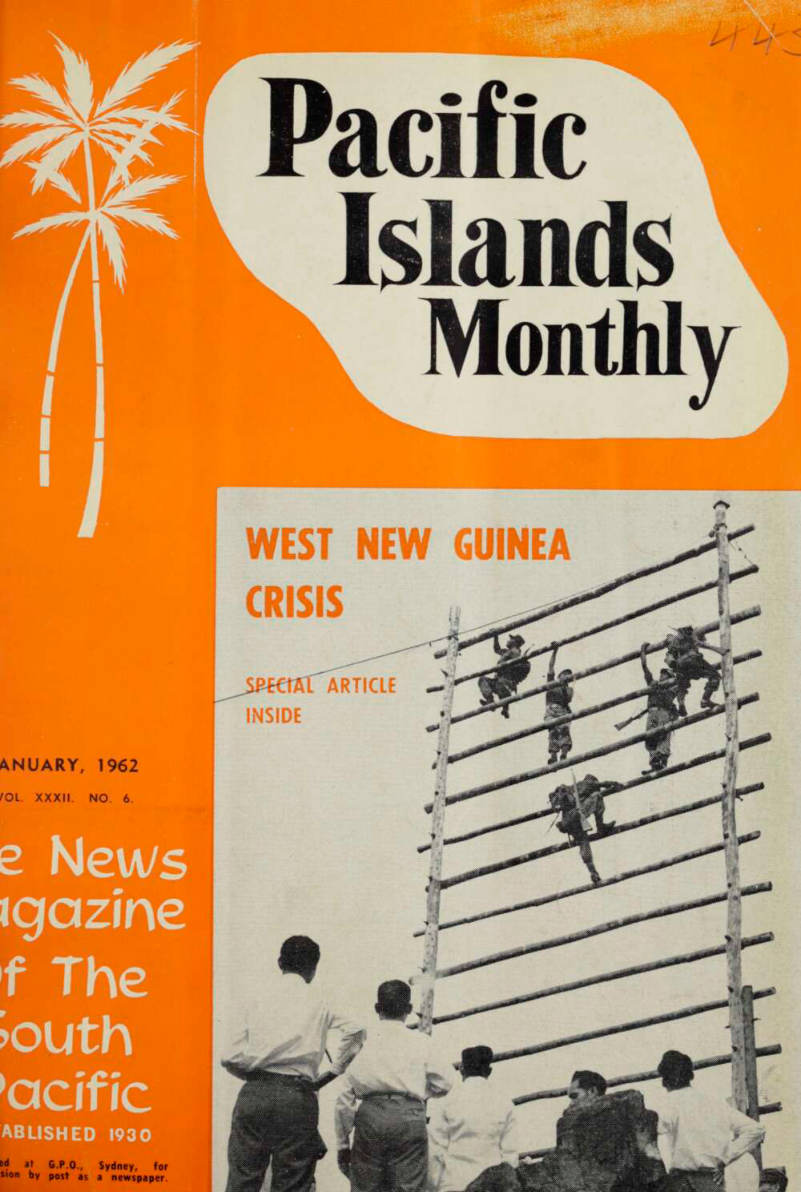 1
1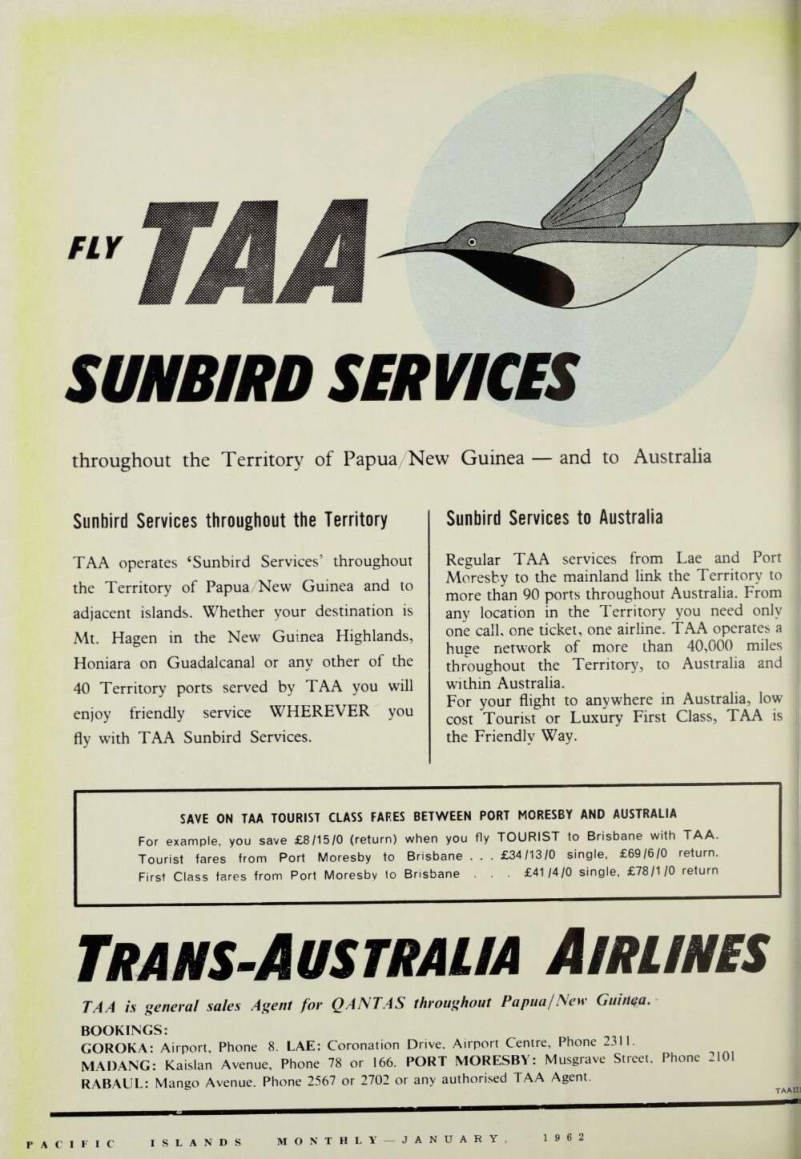 2
2 3
3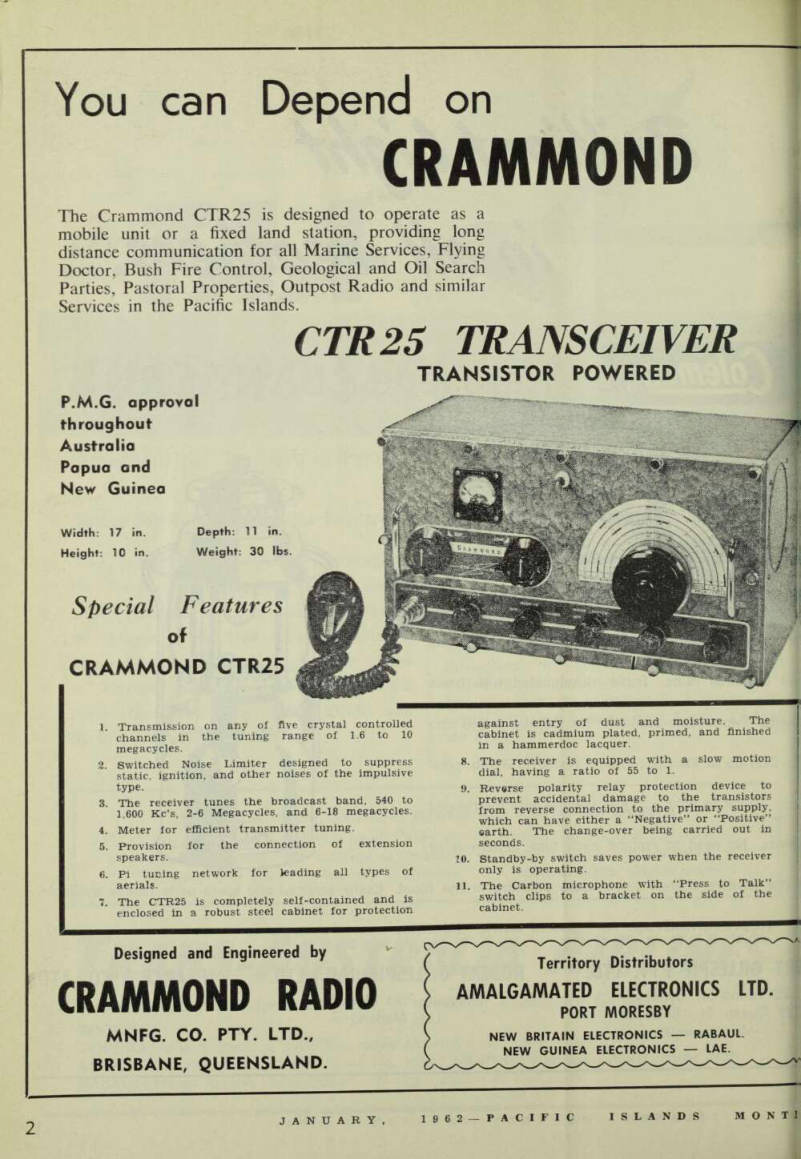 4
4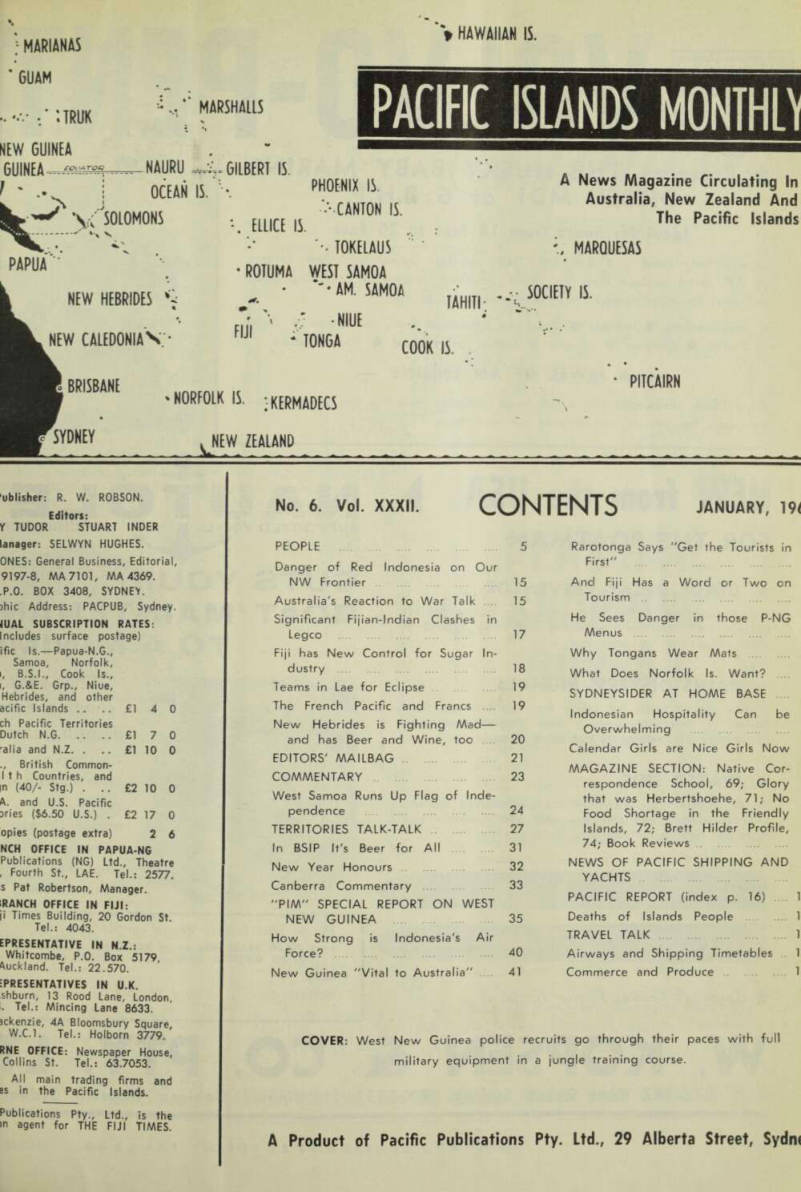 5
5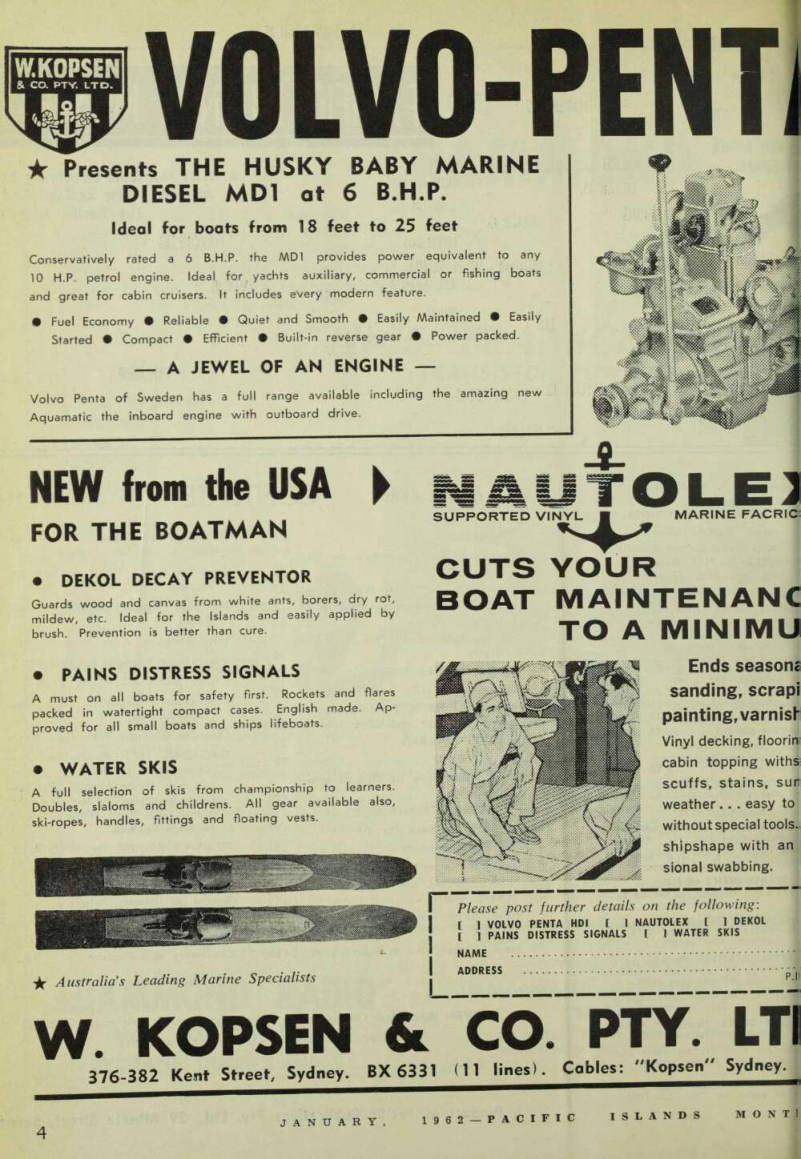 6
6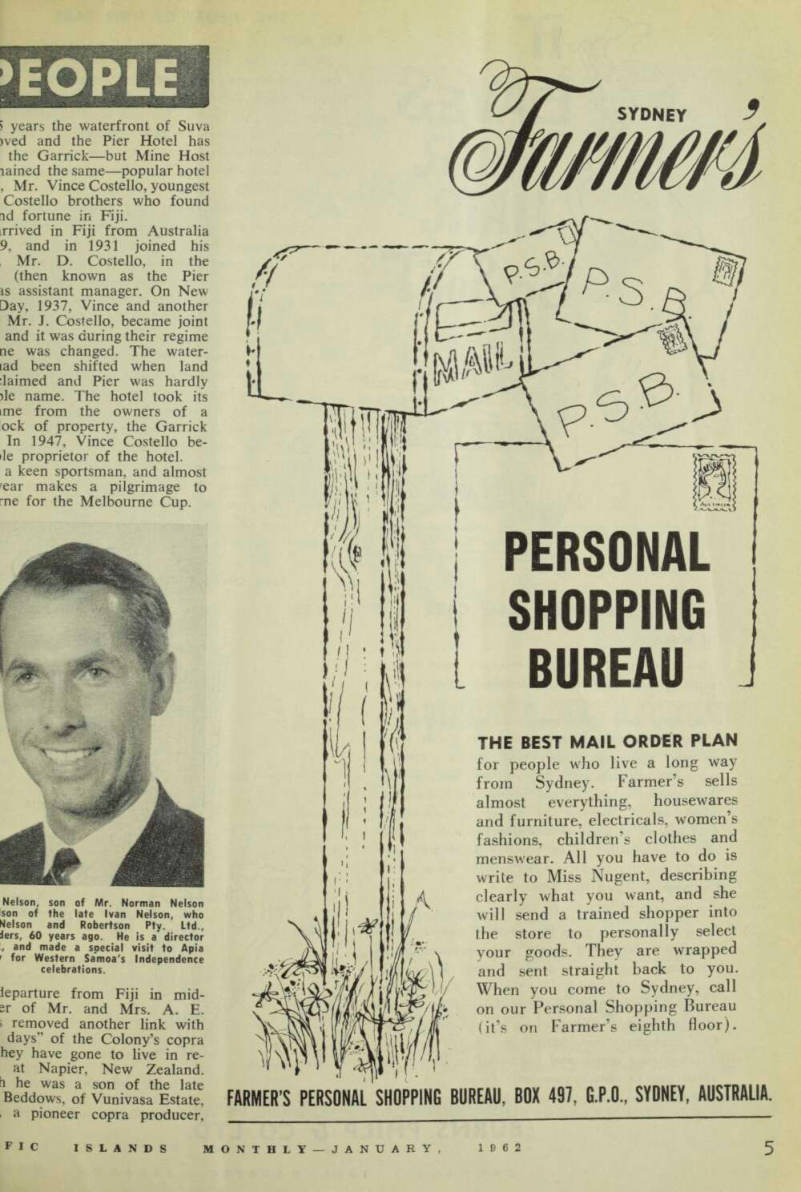 7
7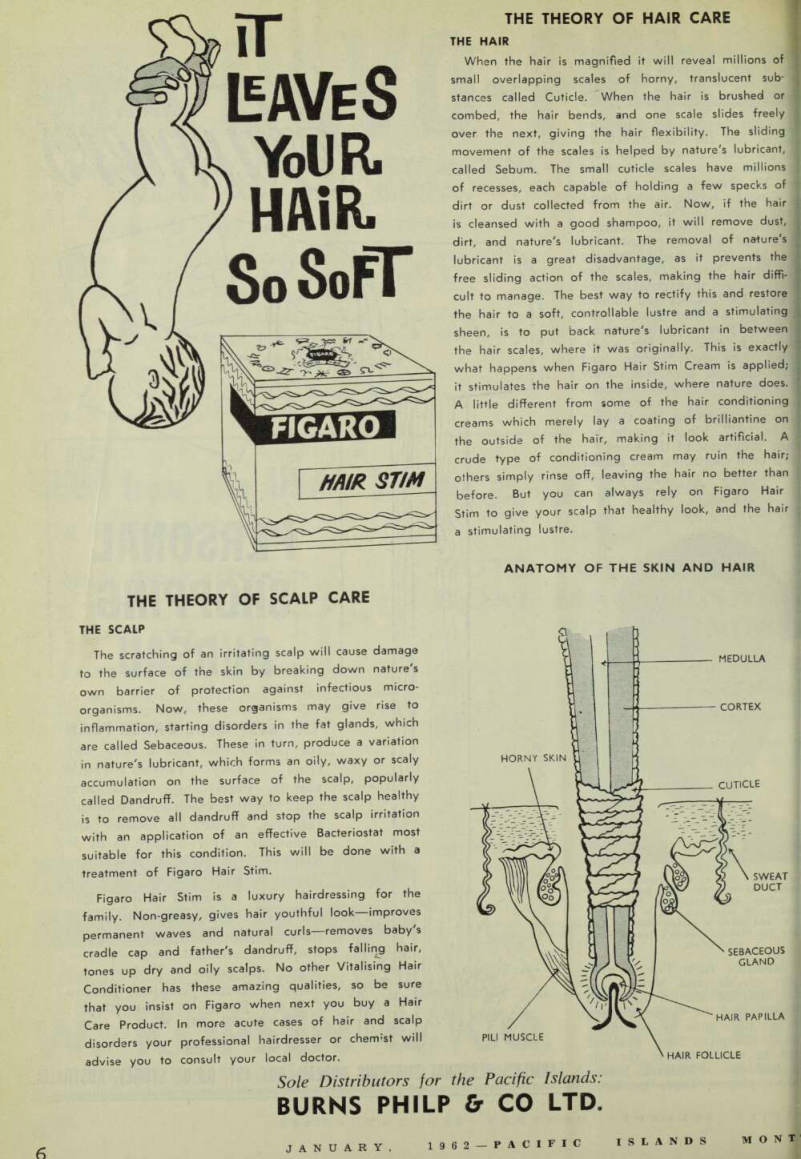 8
8 9
9 10
10 11
11 12
12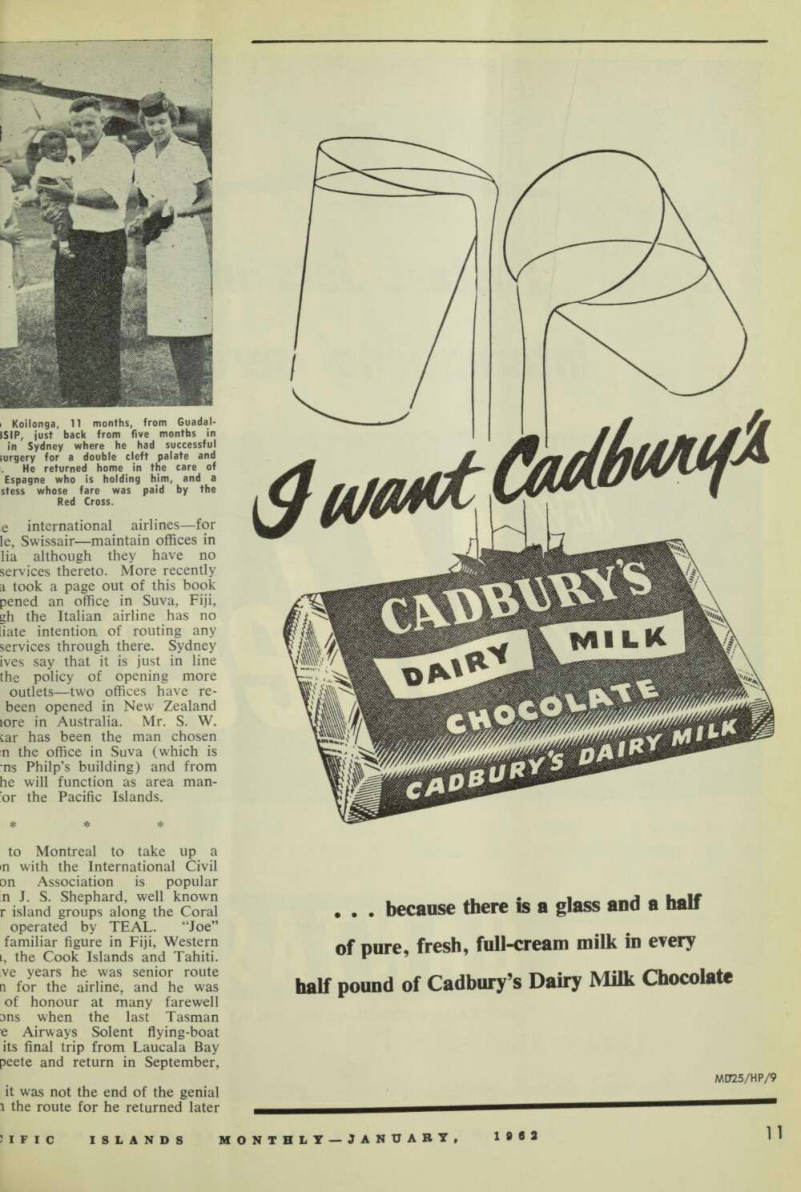 13
13 14
14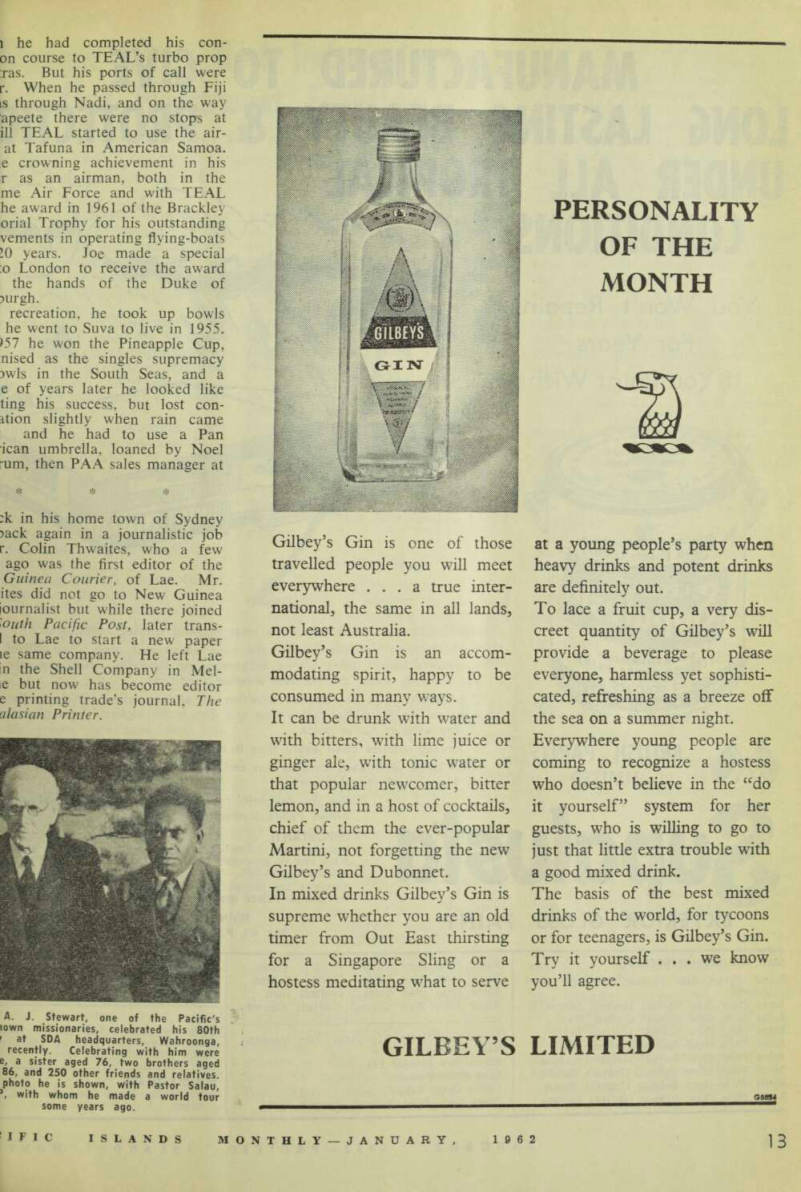 15
15 16
16 17
17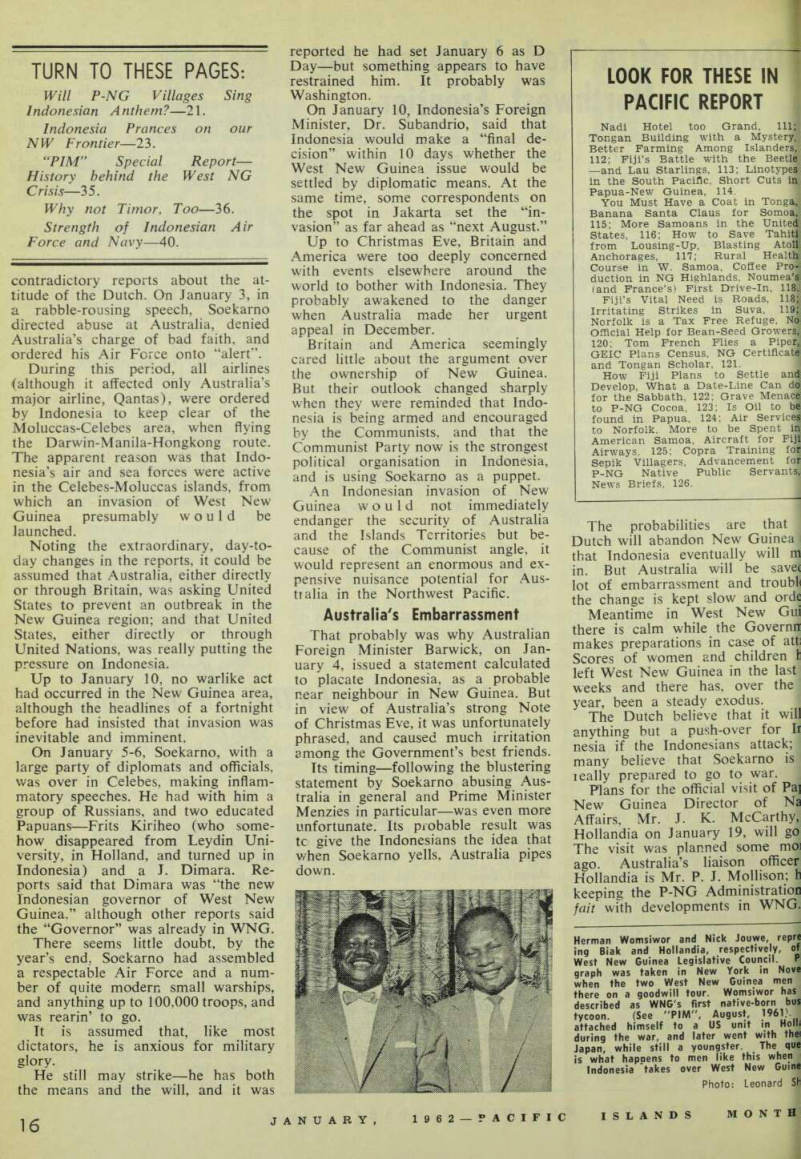 18
18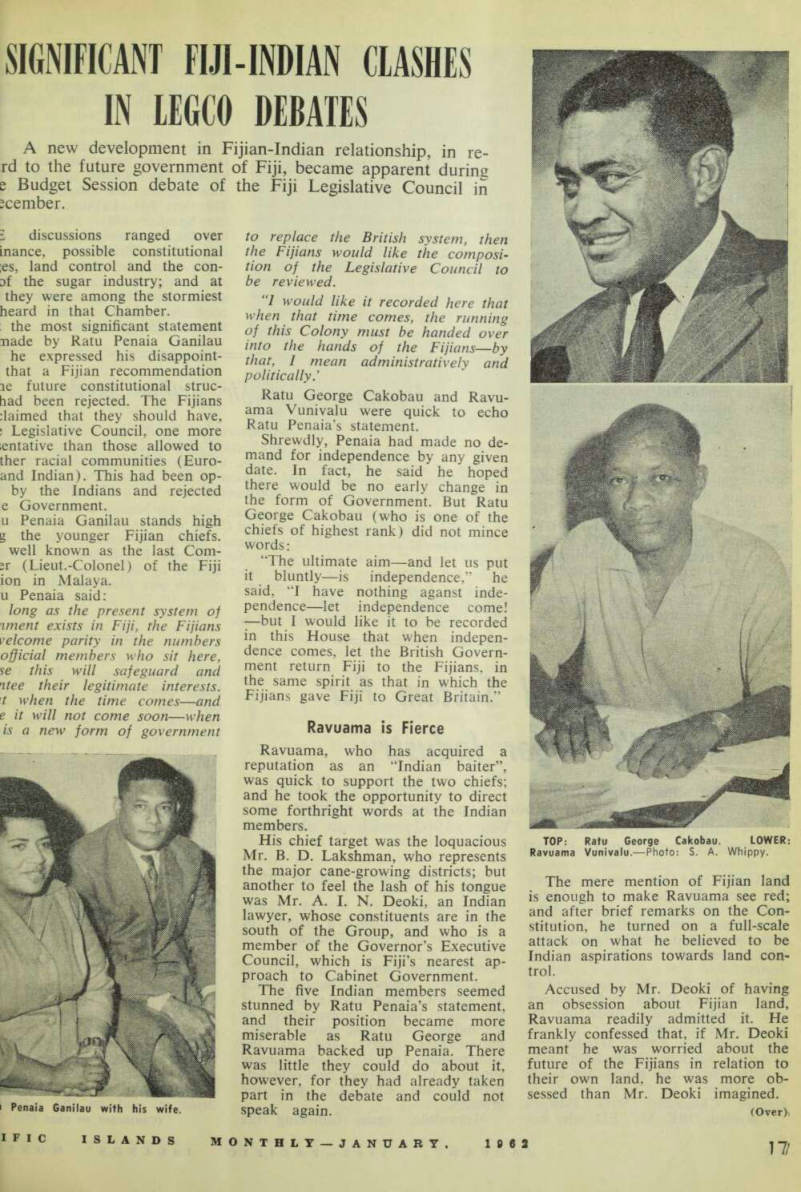 19
19 20
20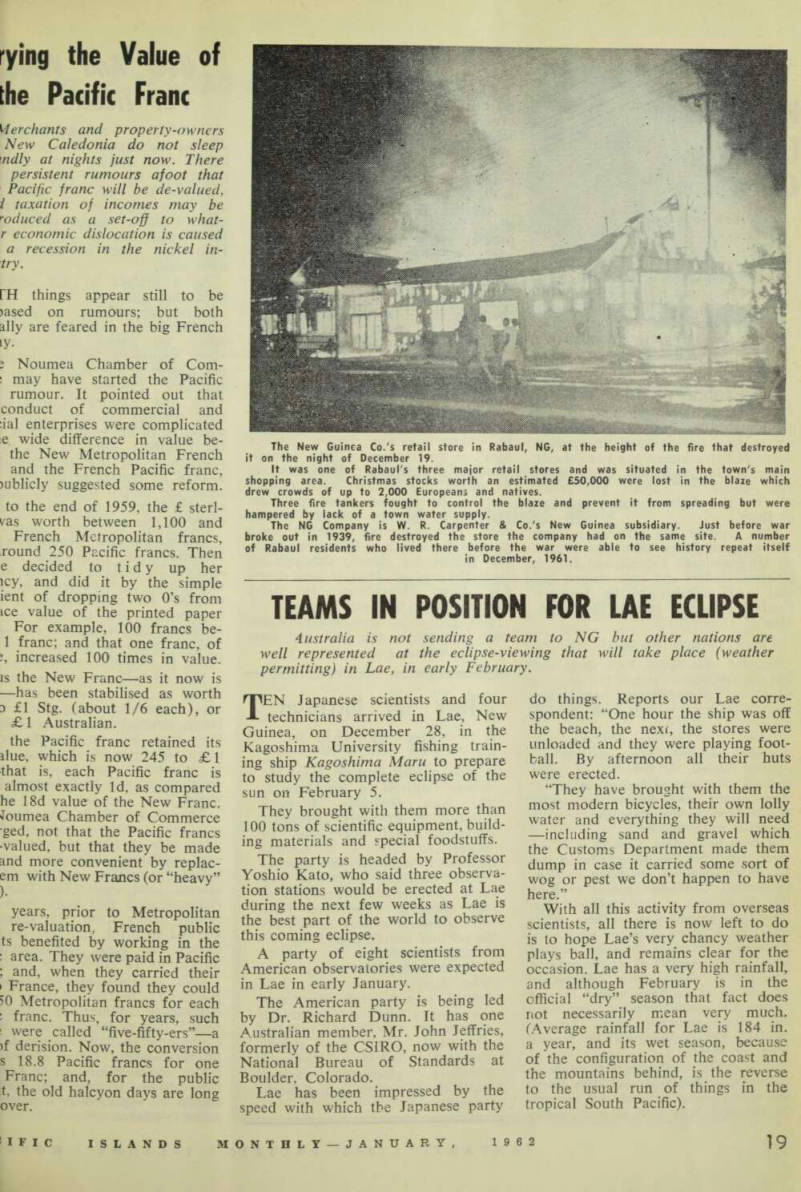 21
21 22
22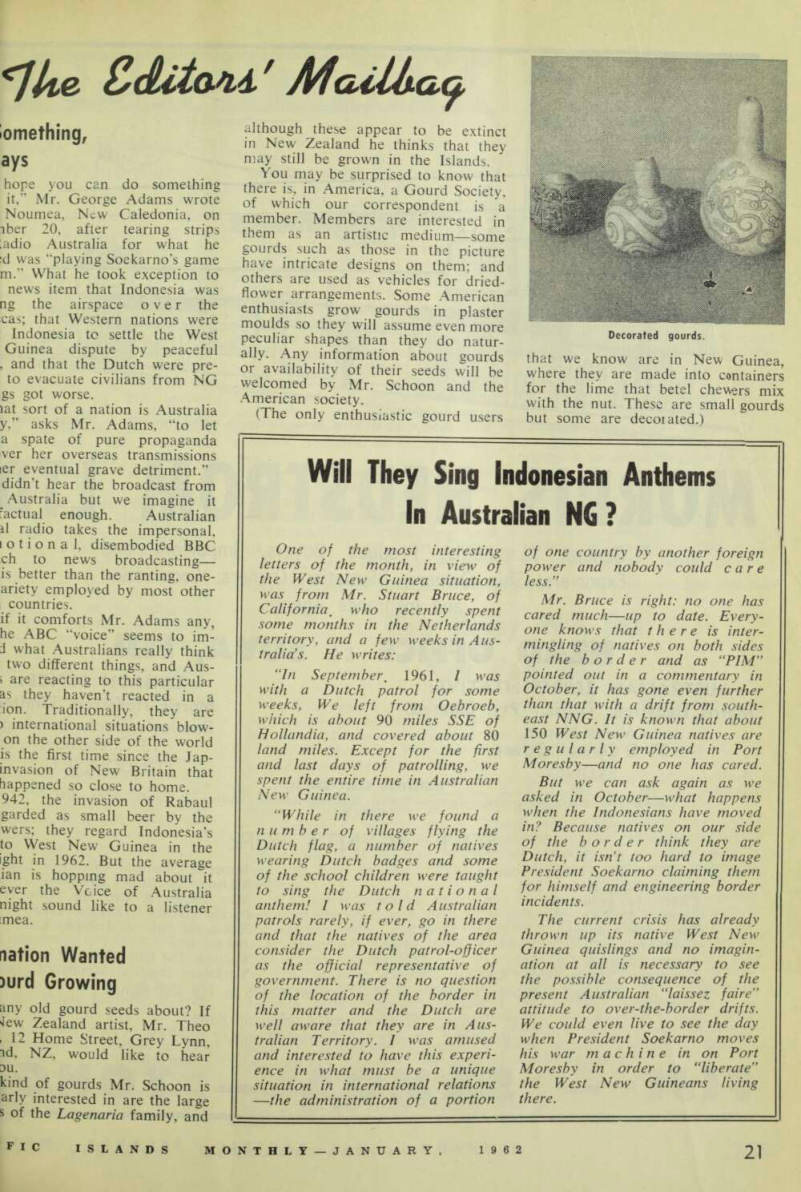 23
23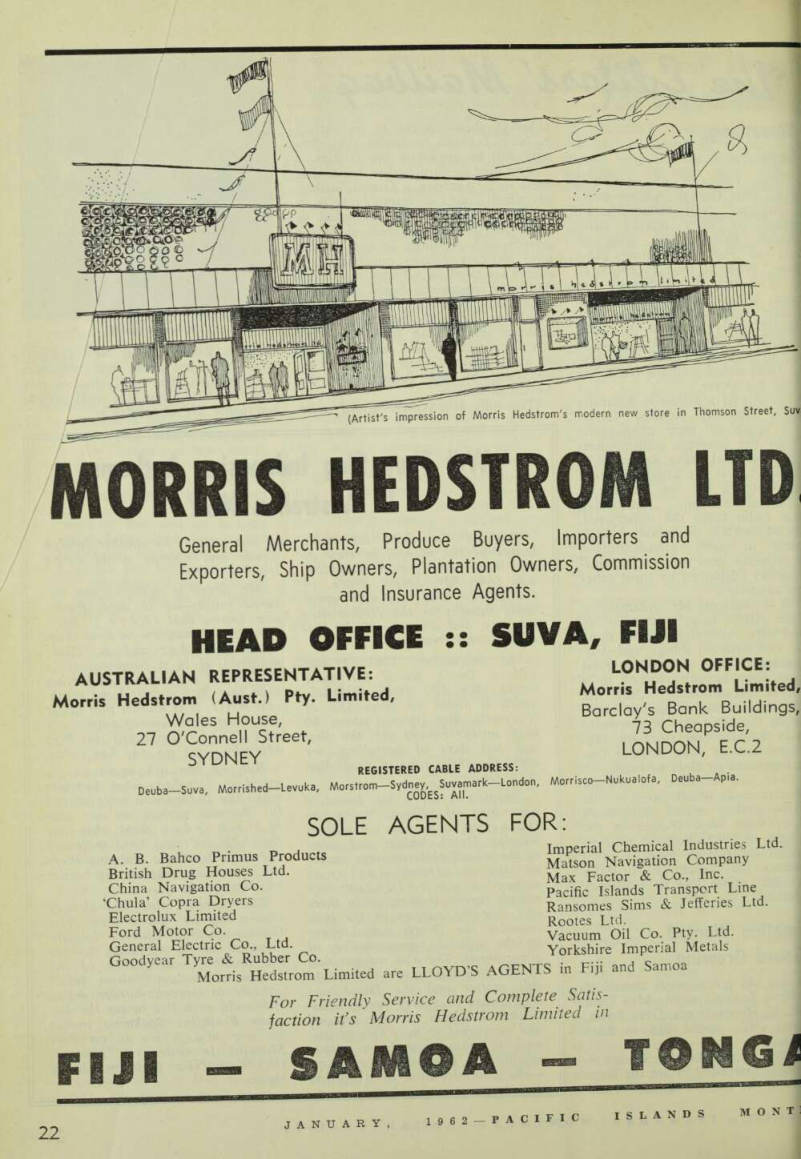 24
24 25
25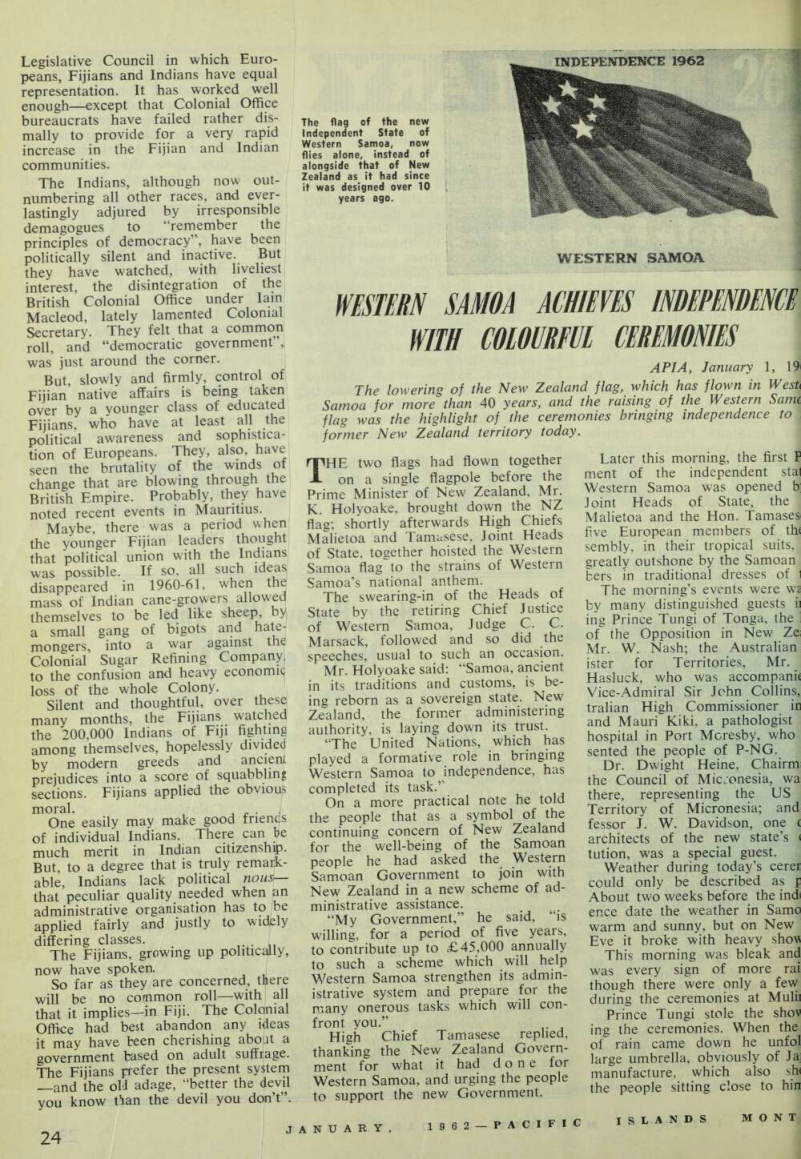 26
26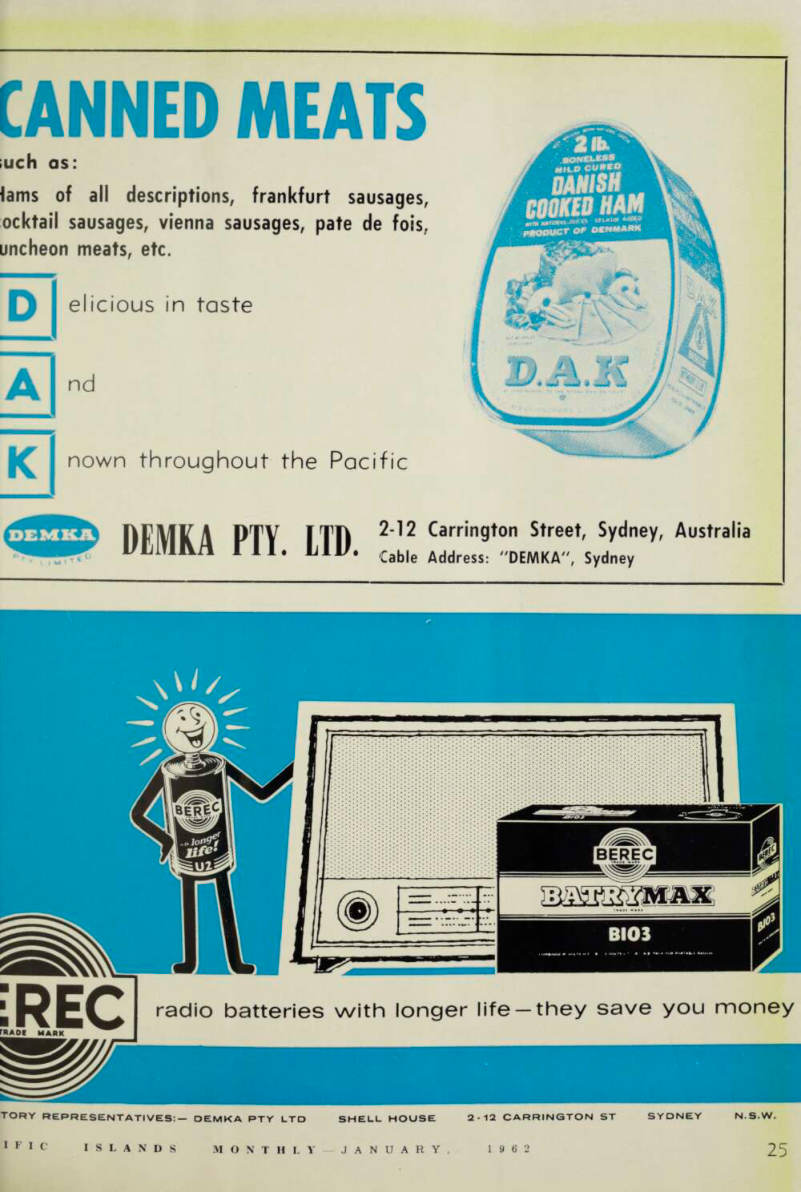 27
27 28
28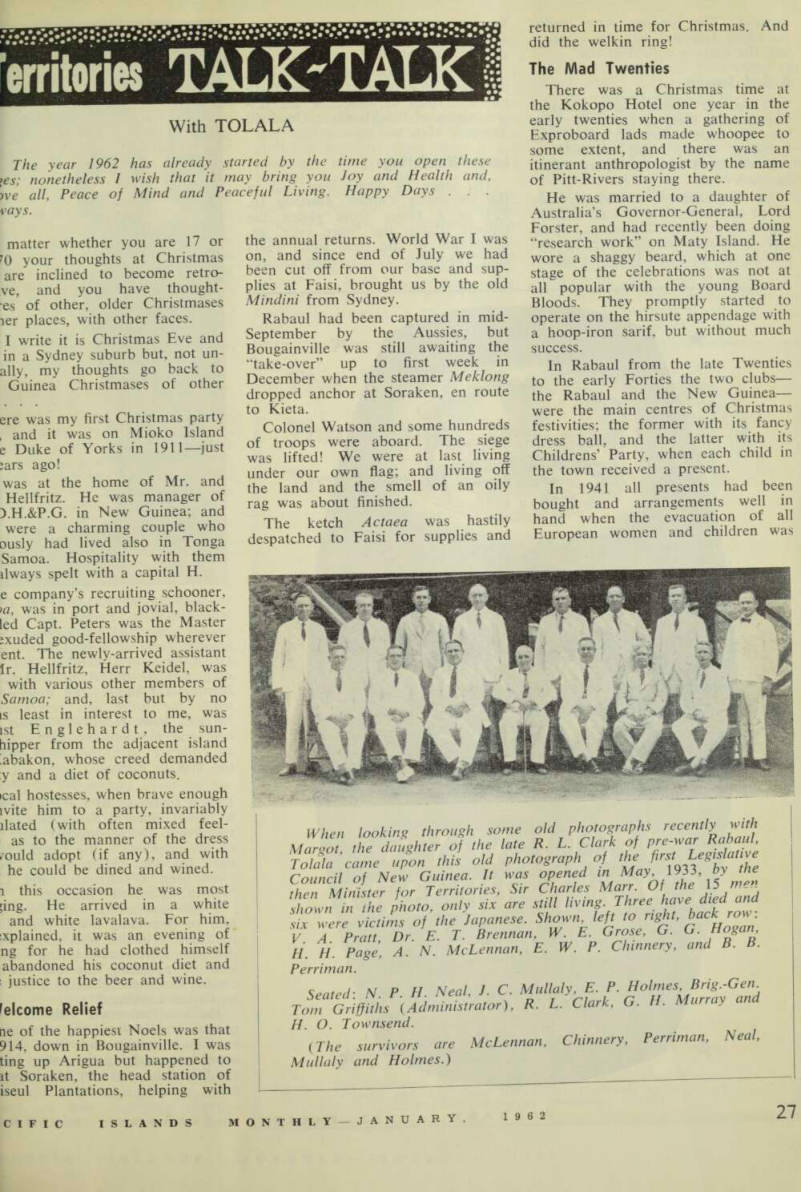 29
29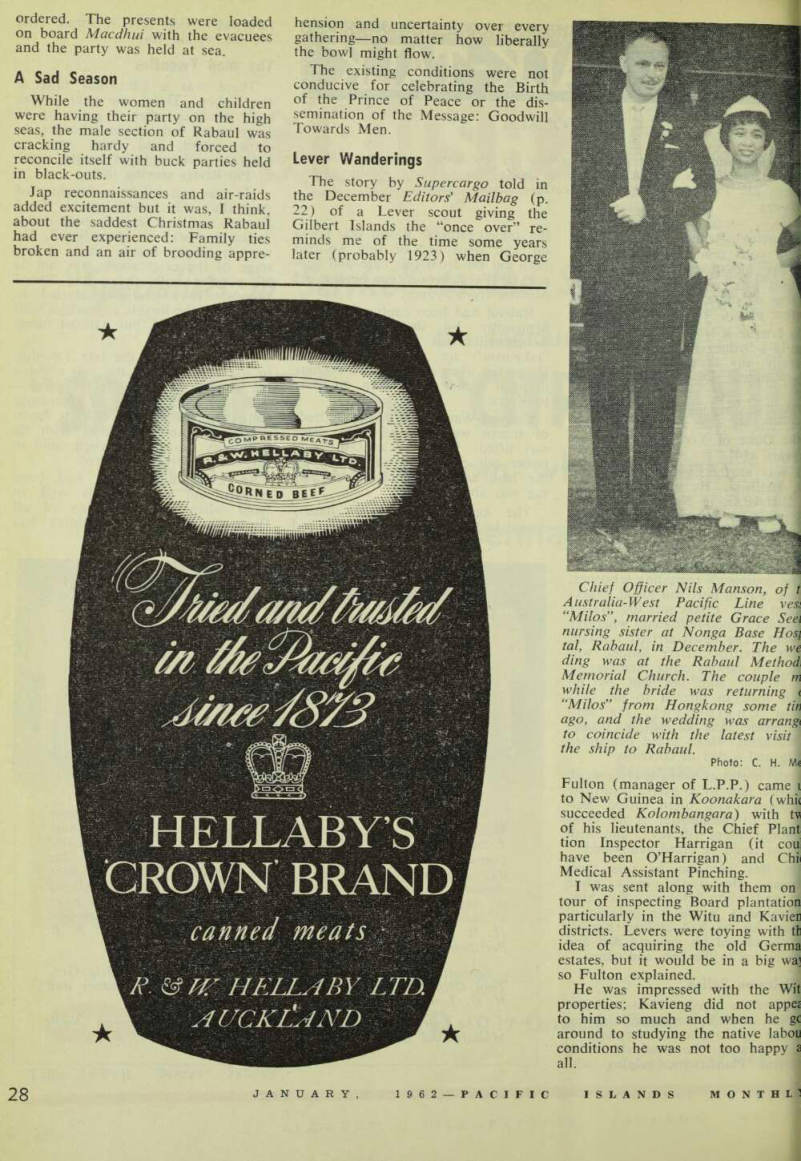 30
30 31
31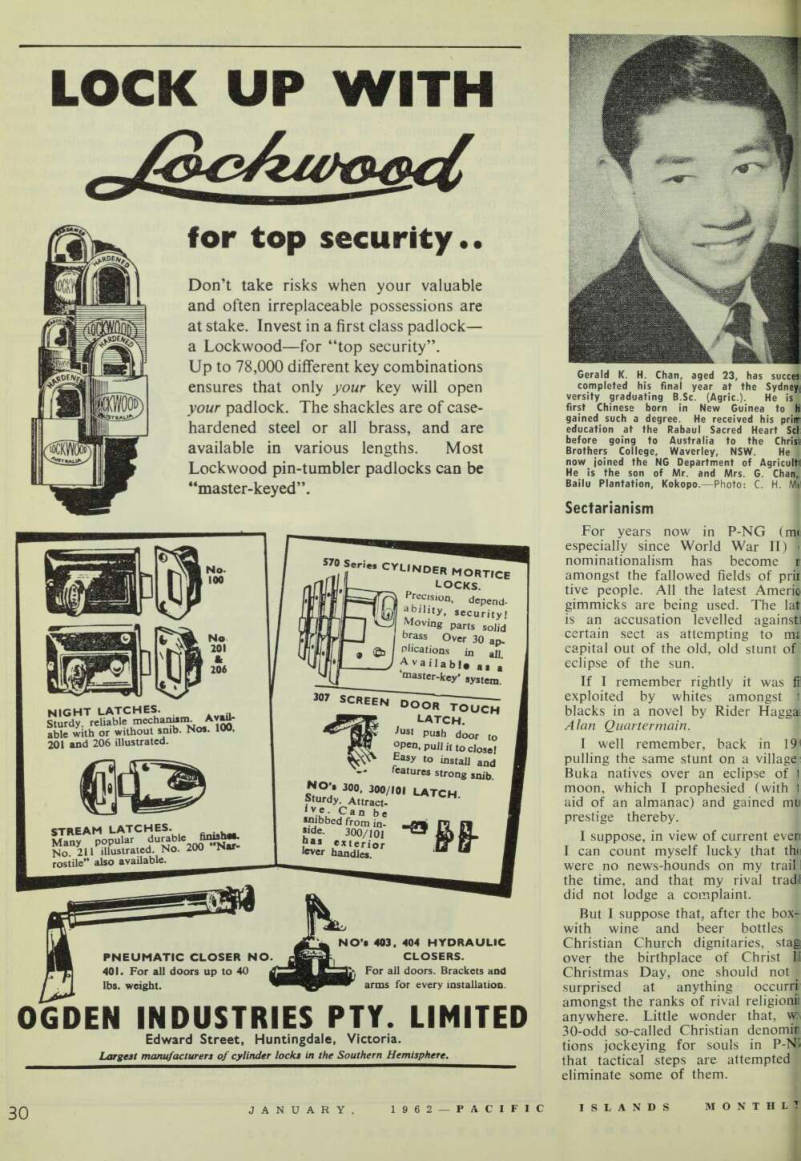 32
32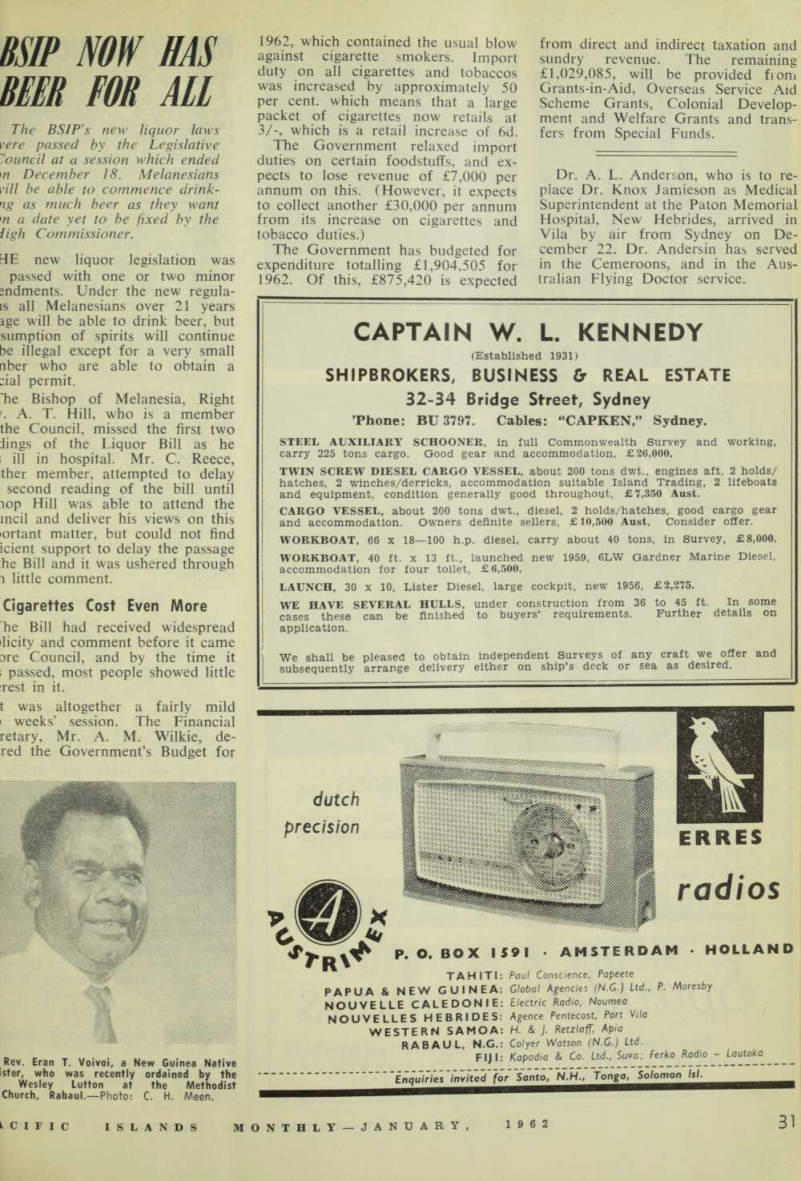 33
33 34
34 35
35 36
36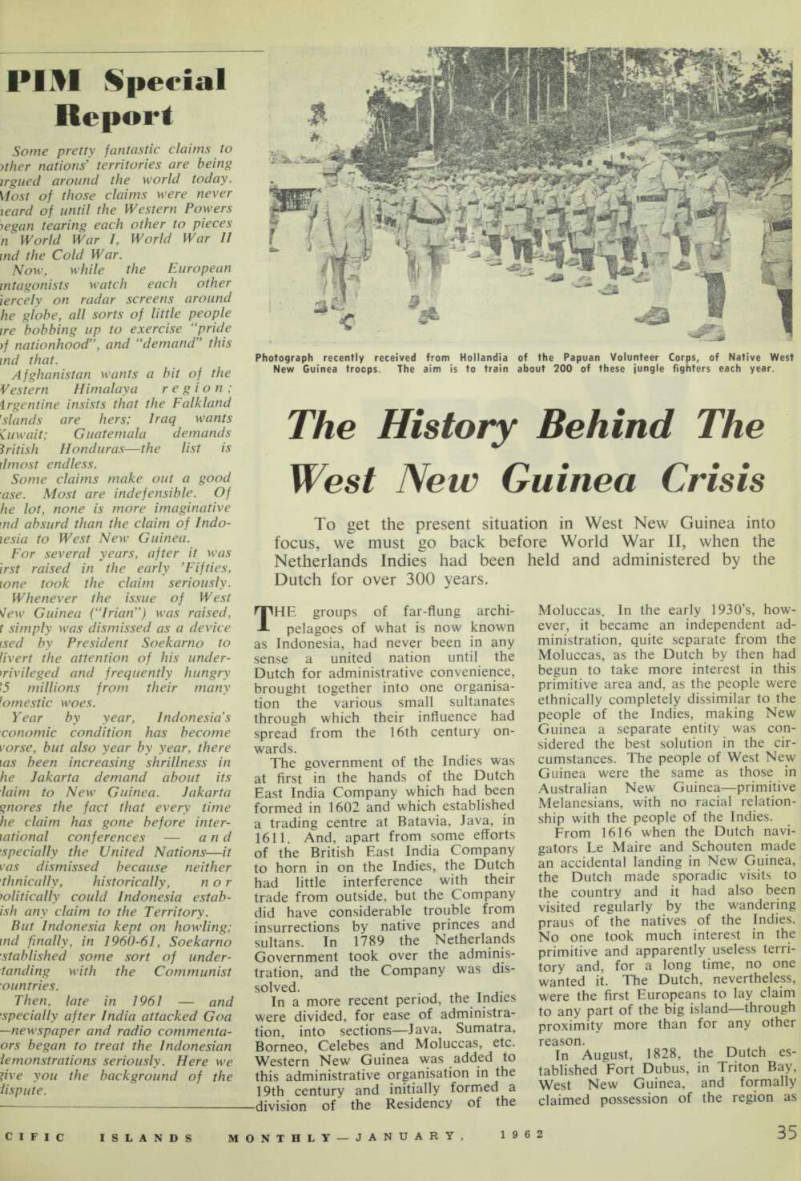 37
37 38
38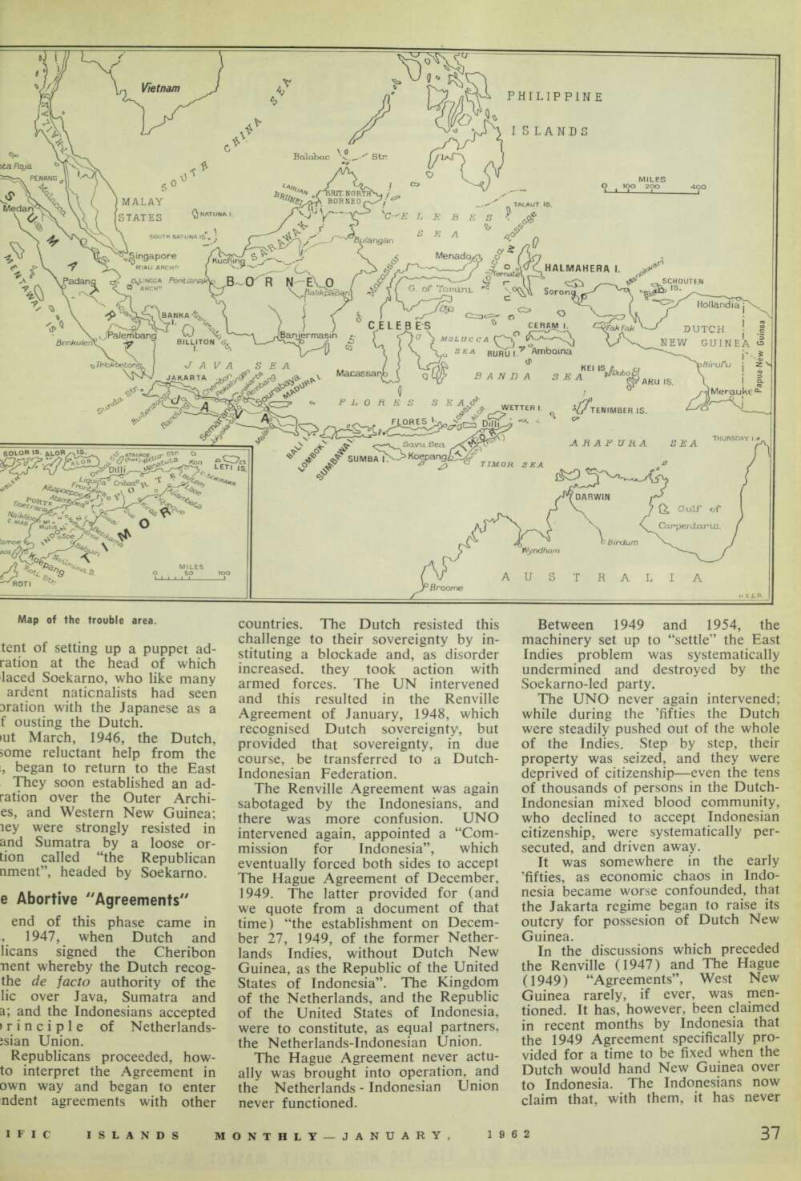 39
39 40
40 41
41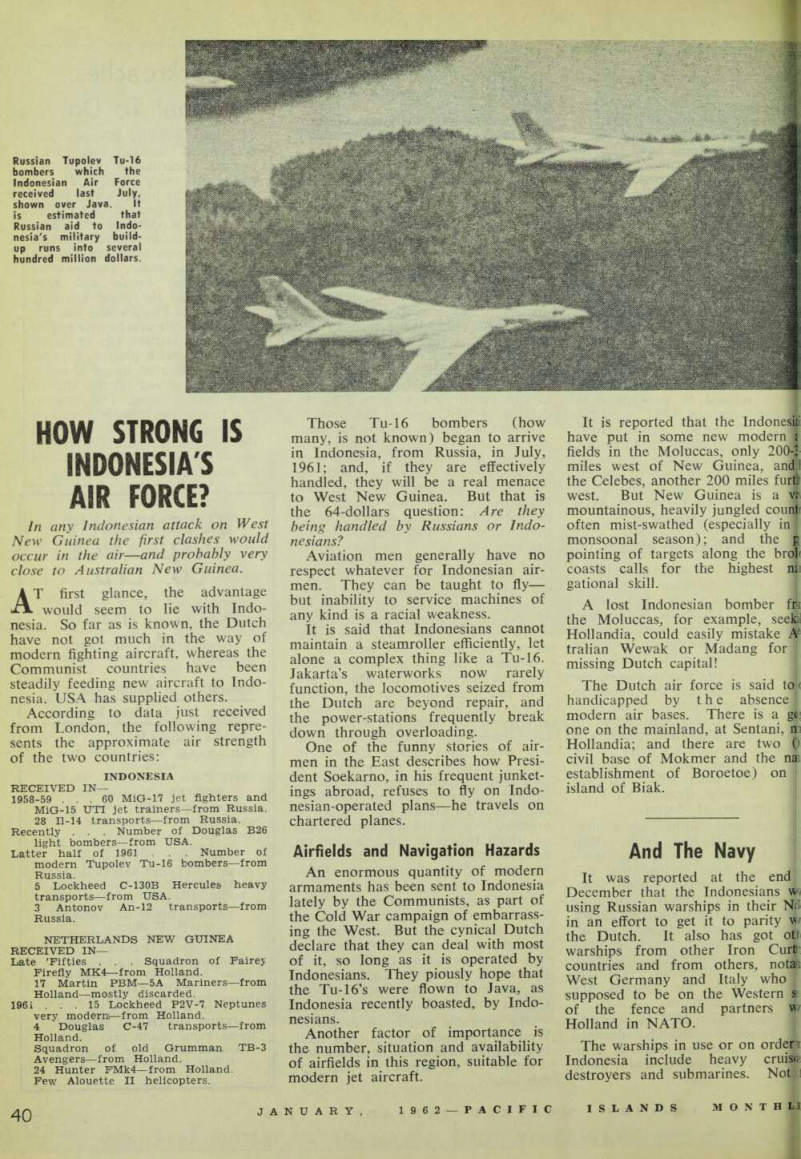 42
42 43
43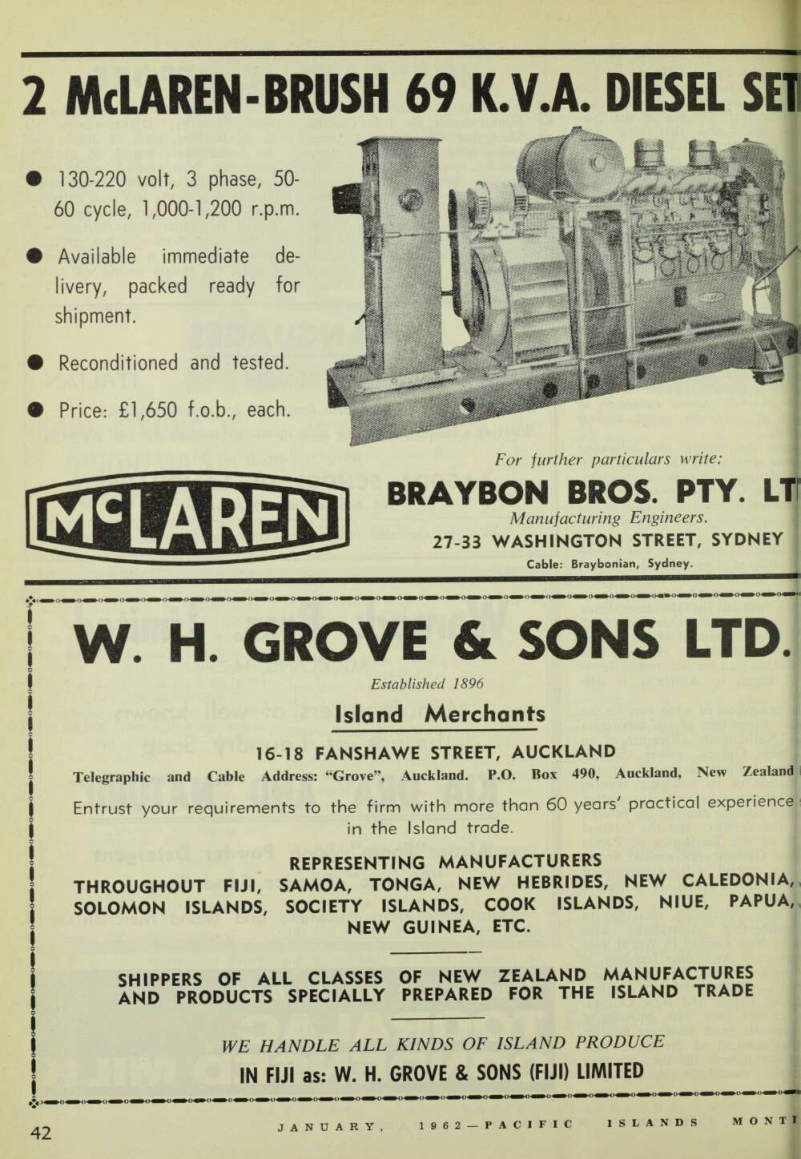 44
44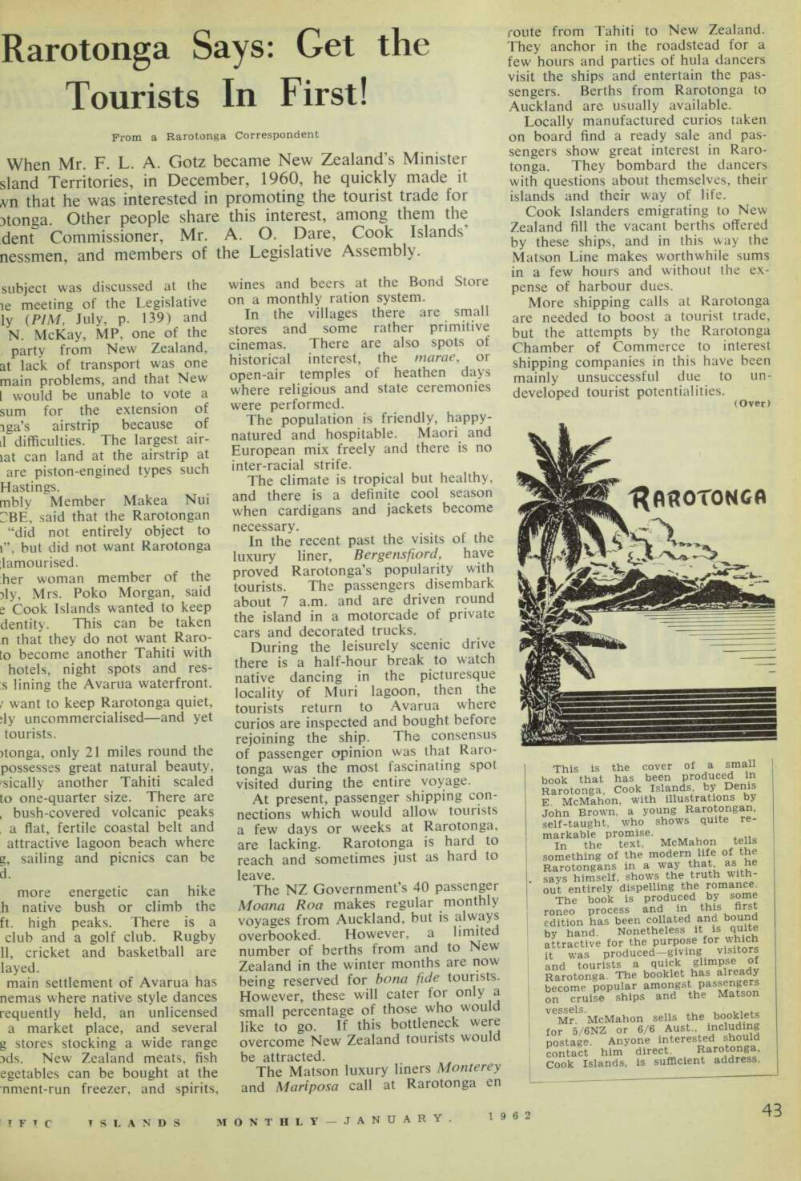 45
45 46
46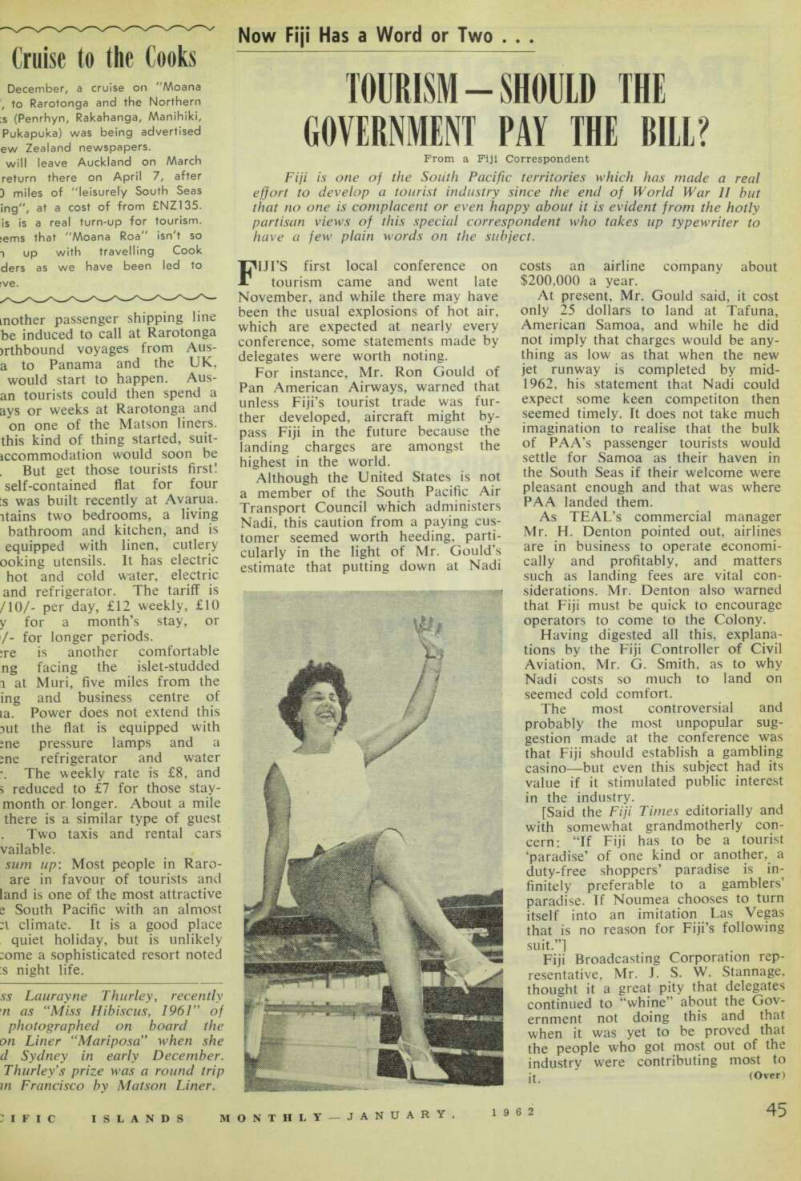 47
47 48
48 49
49 50
50 51
51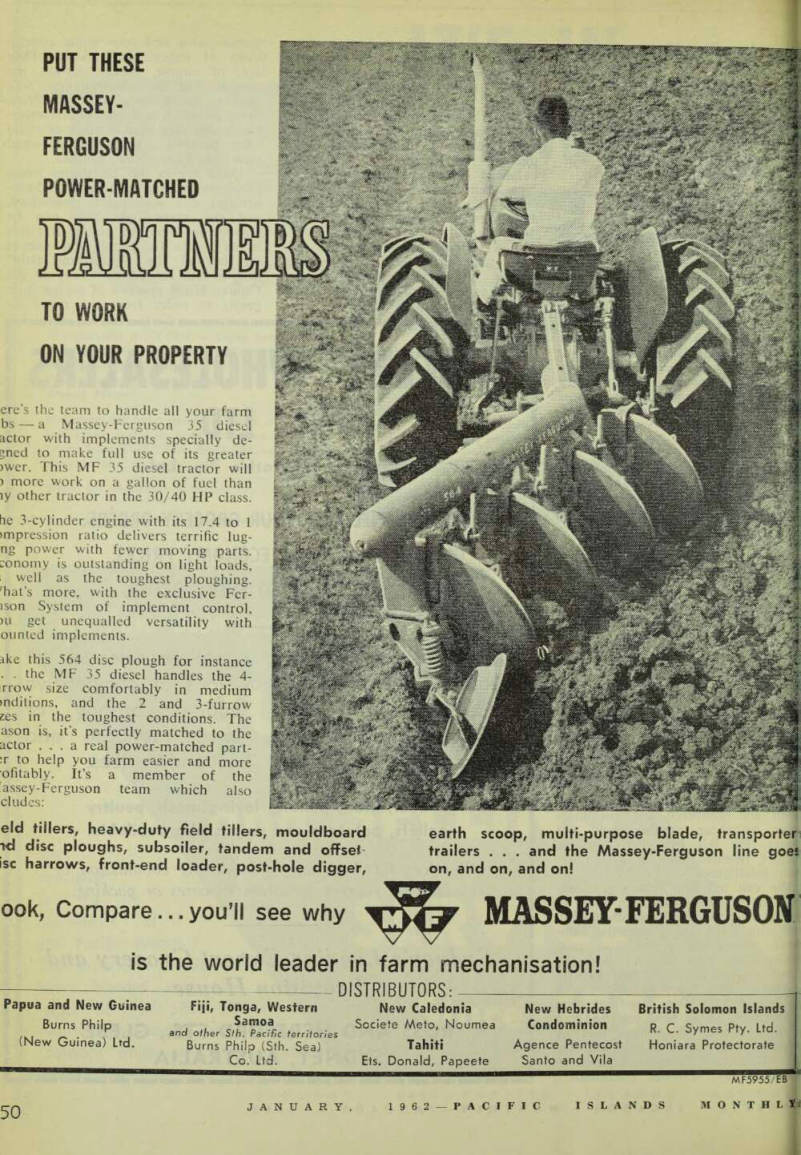 52
52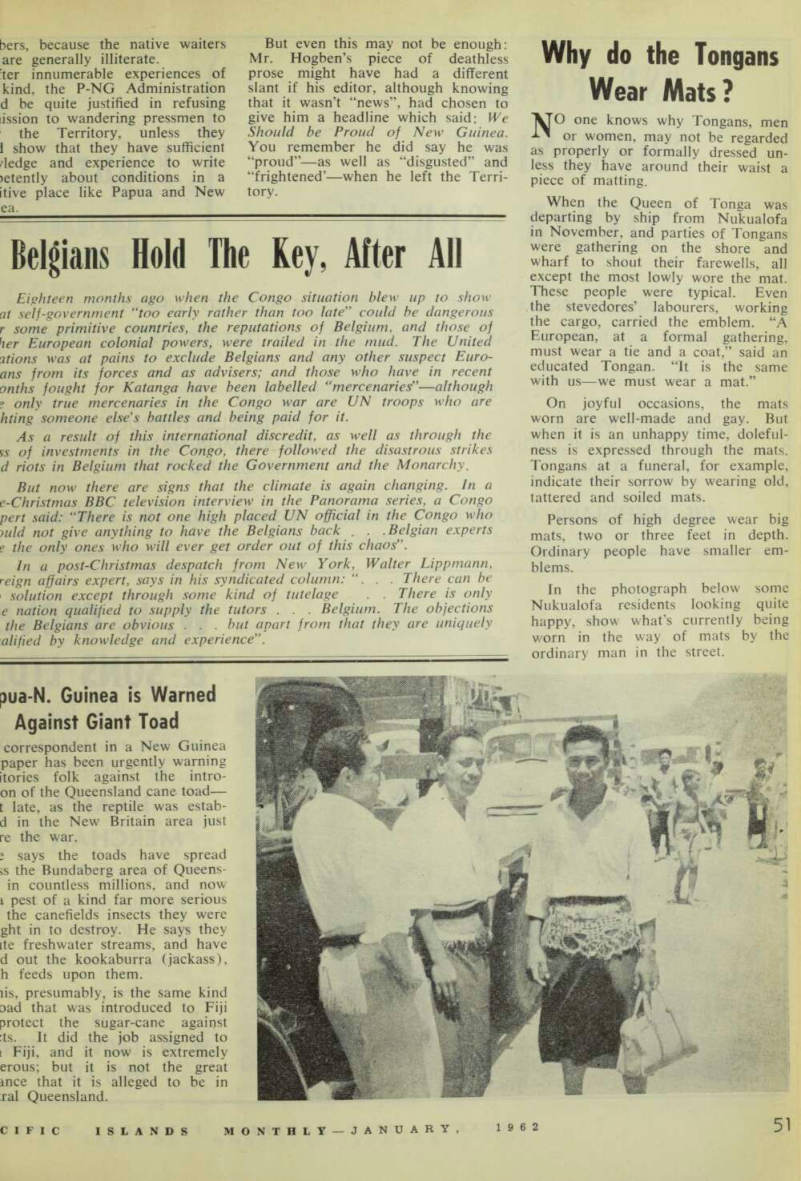 53
53 54
54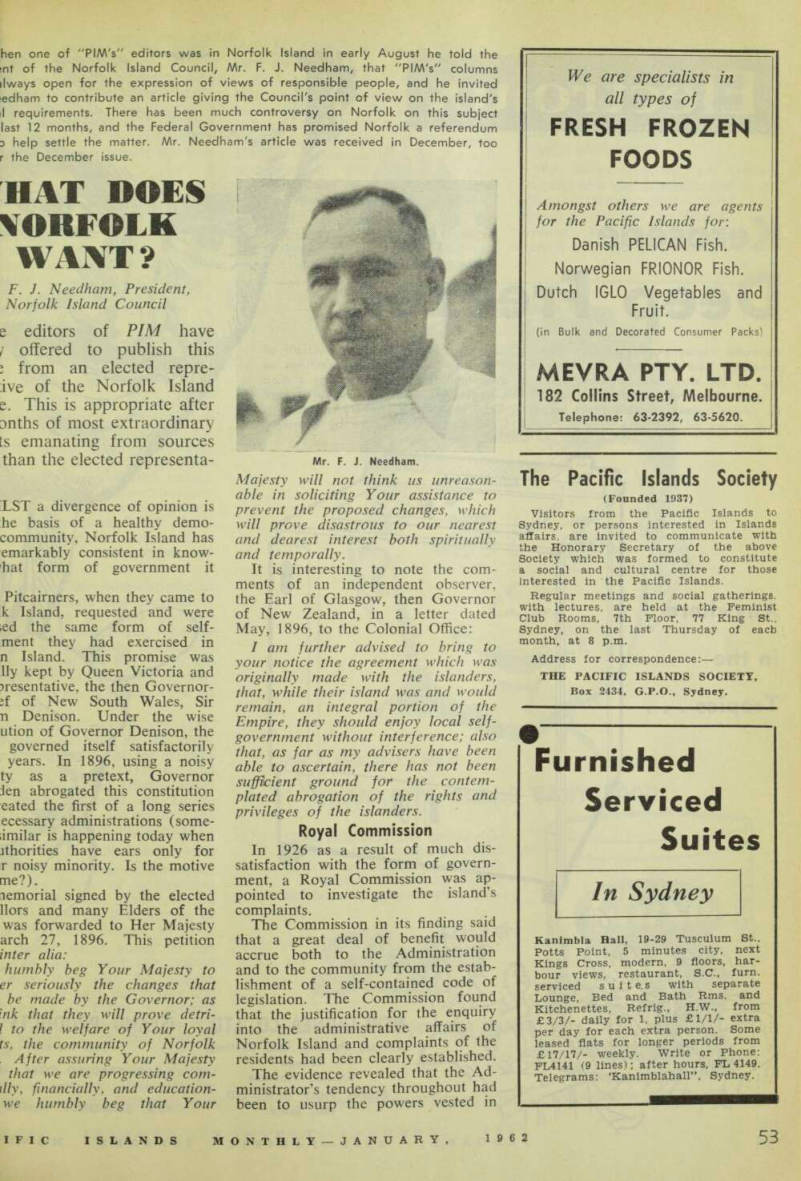 55
55 56
56 57
57 58
58 59
59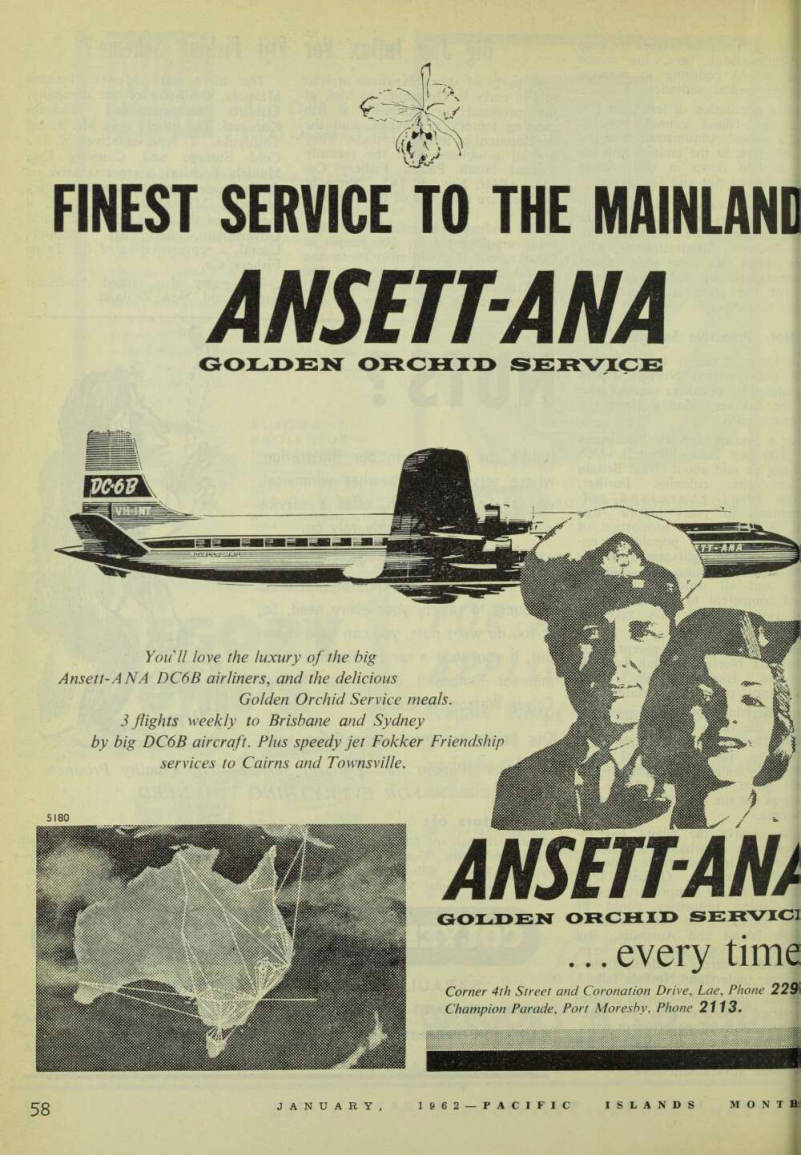 60
60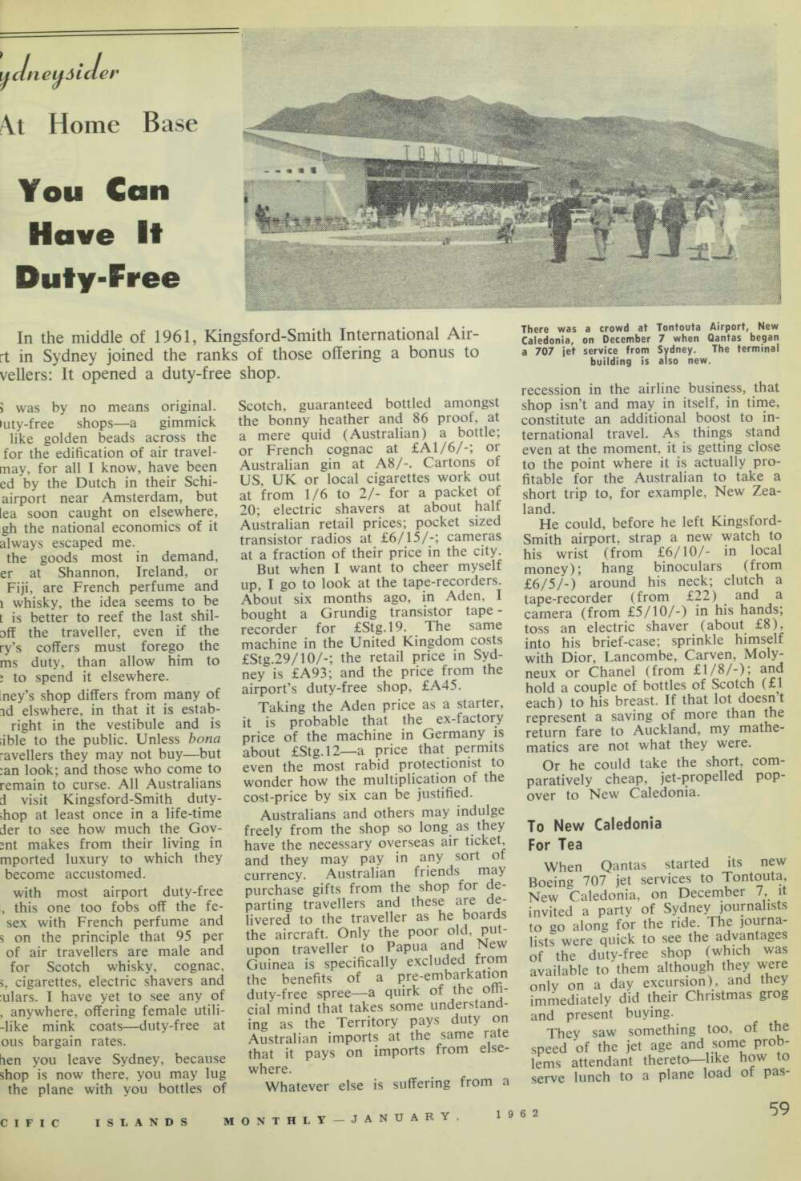 61
61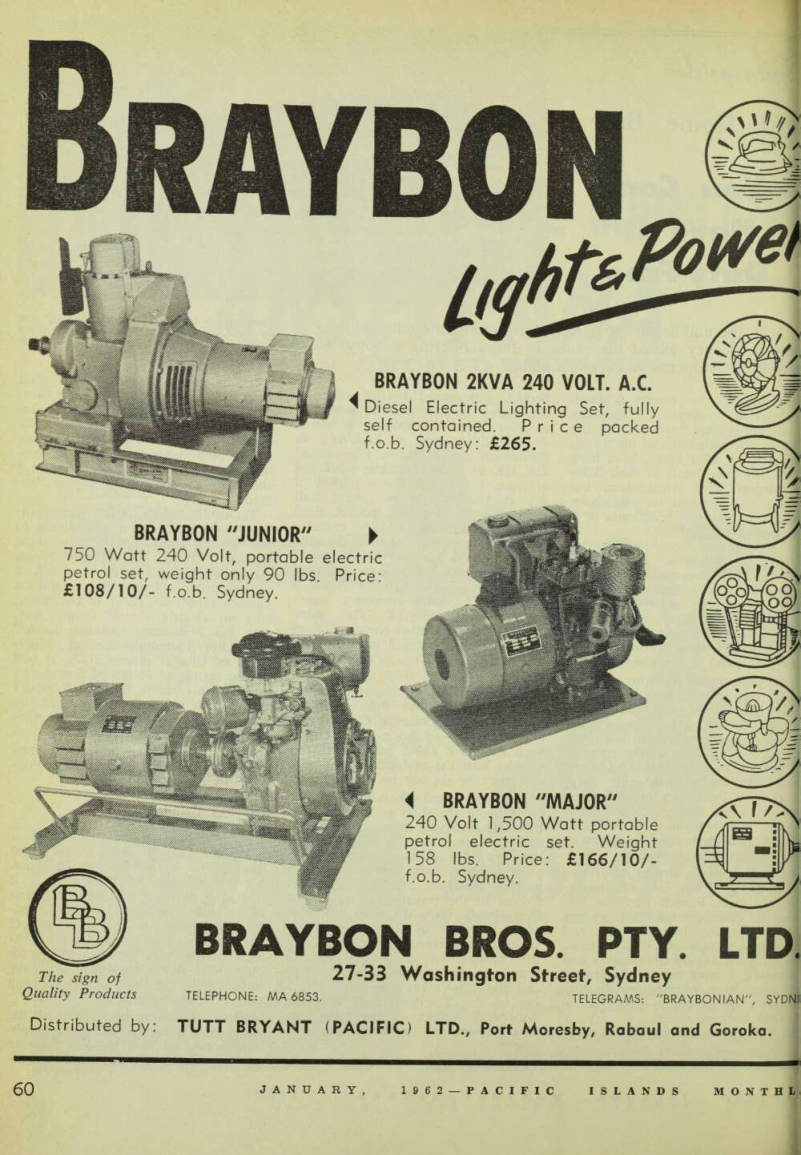 62
62 63
63 64
64 65
65 66
66 67
67 68
68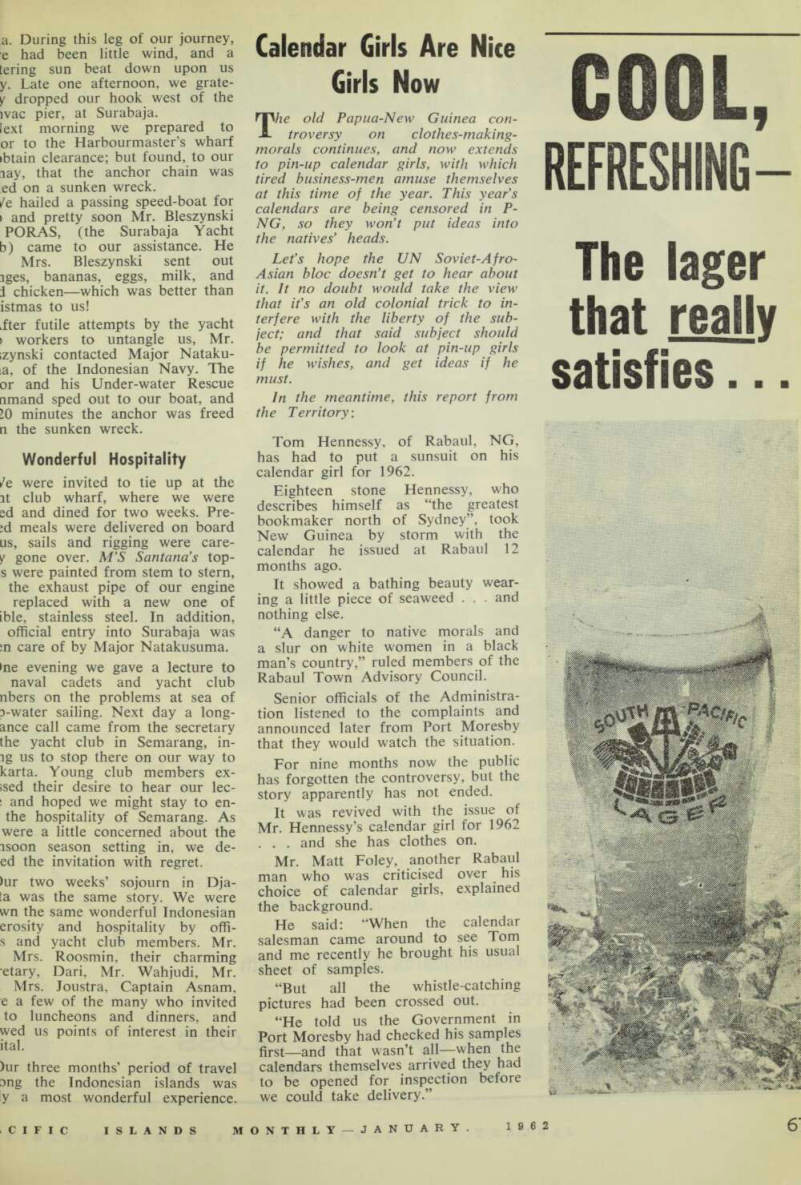 69
69 70
70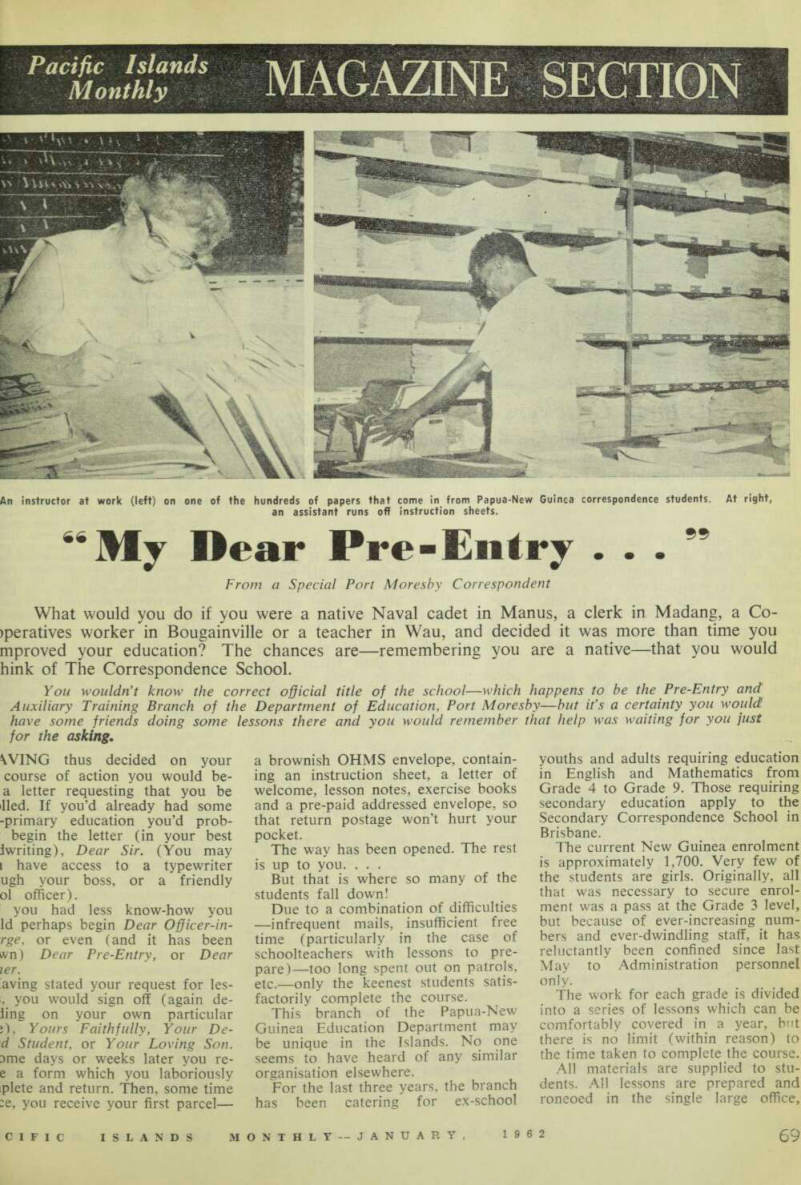 71
71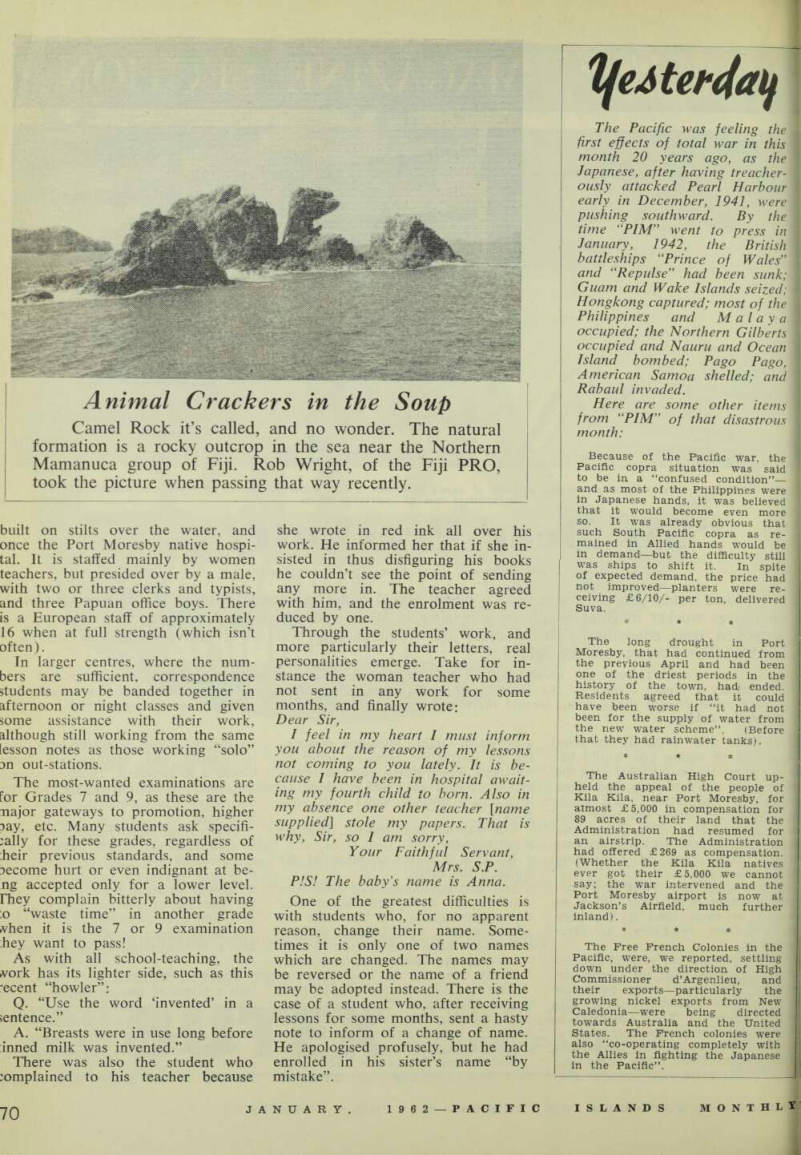 72
72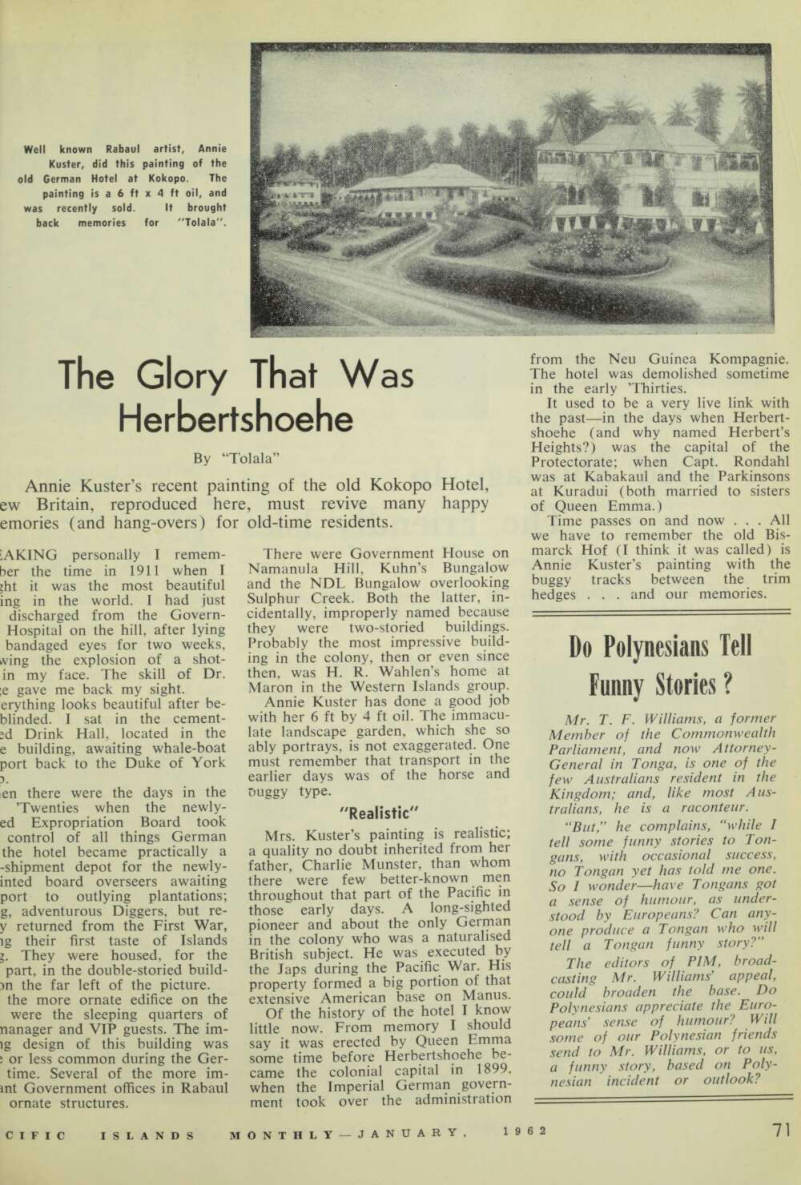 73
73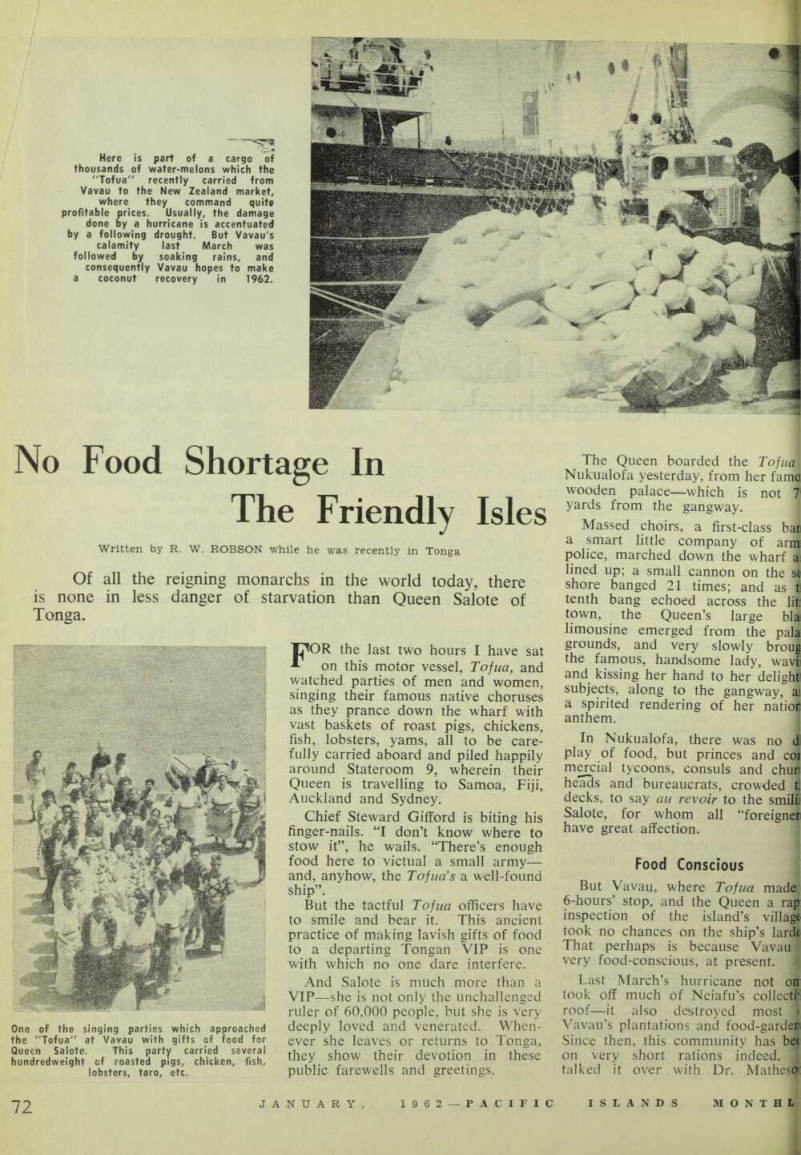 74
74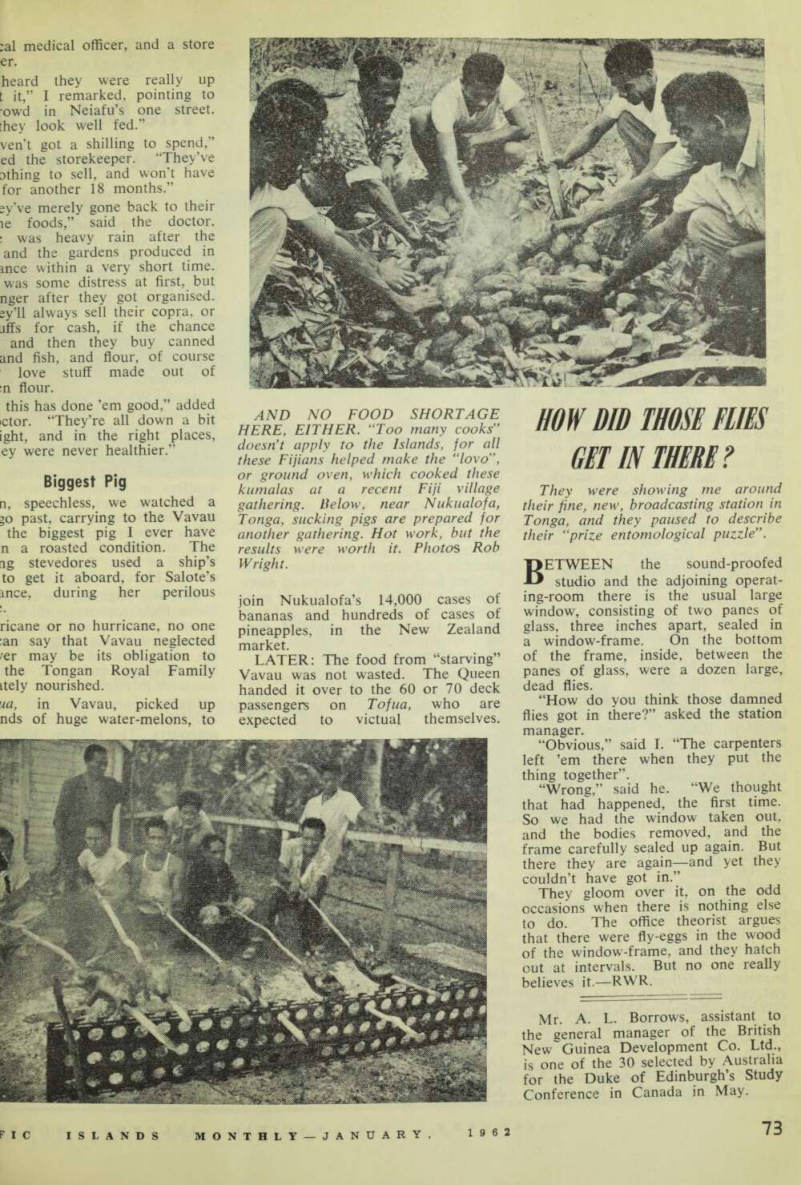 75
75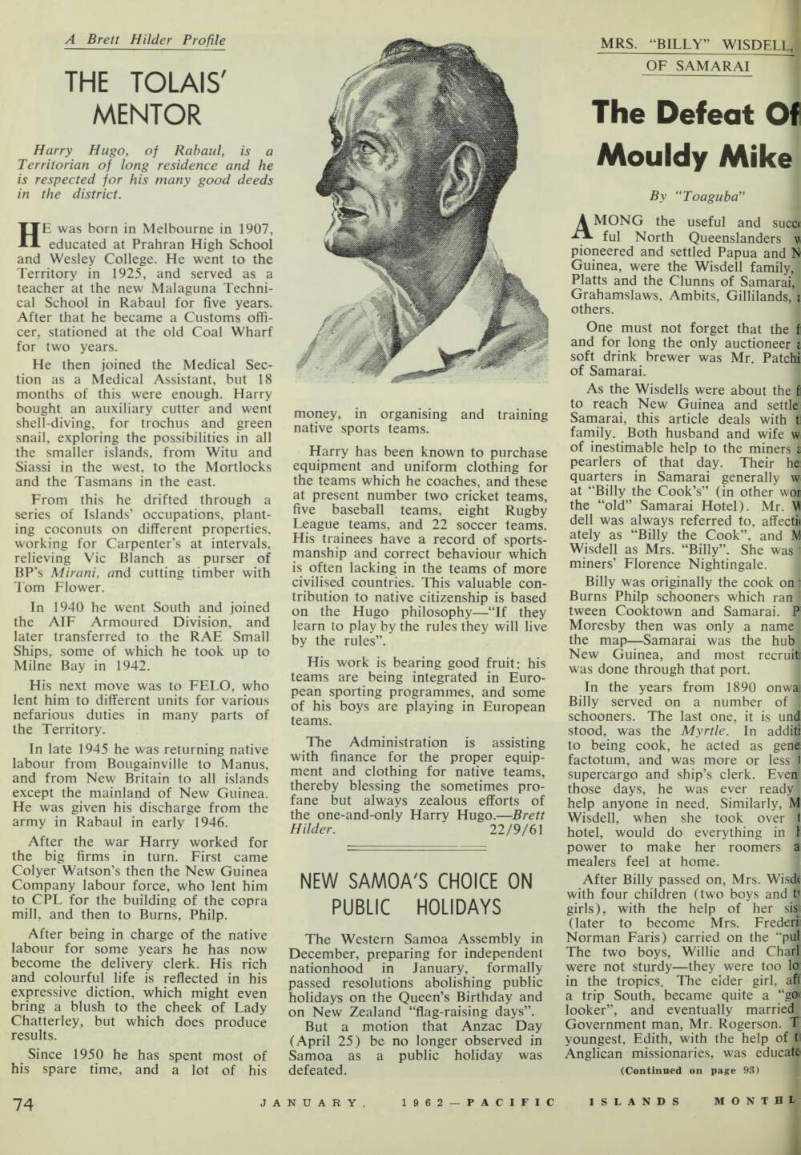 76
76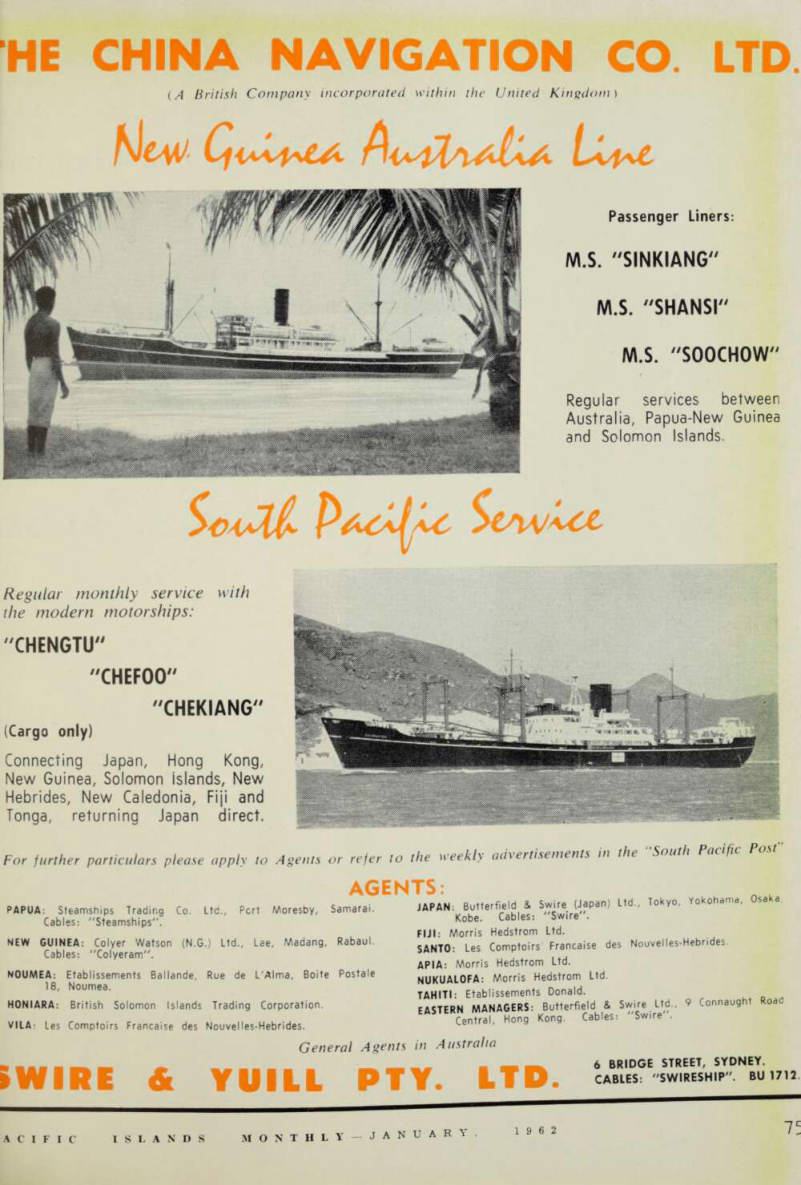 77
77 78
78 79
79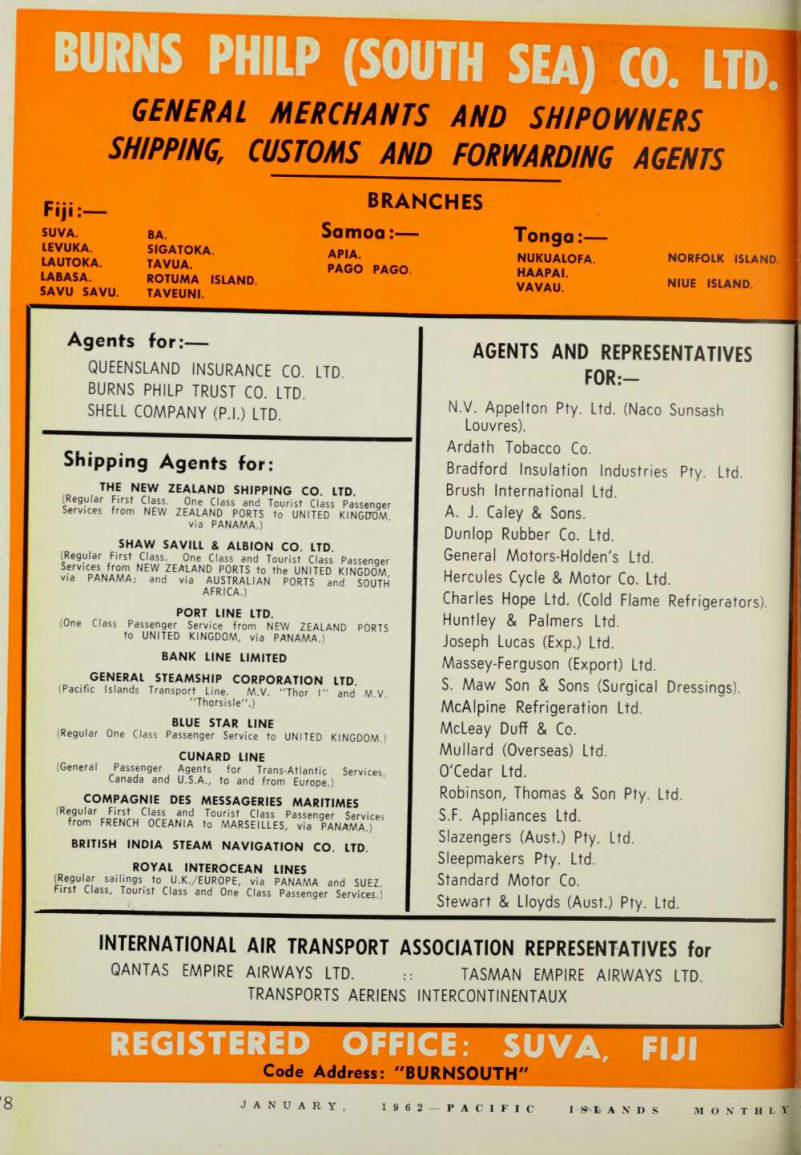 80
80 81
81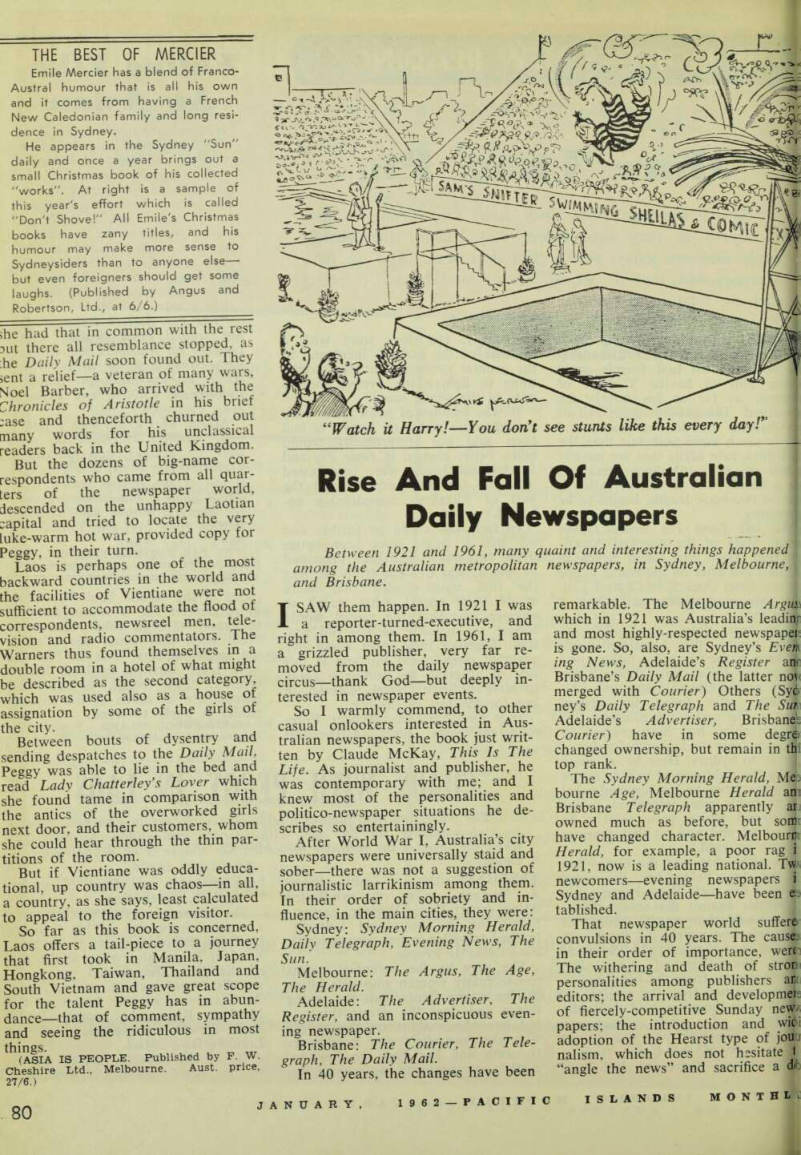 82
82 83
83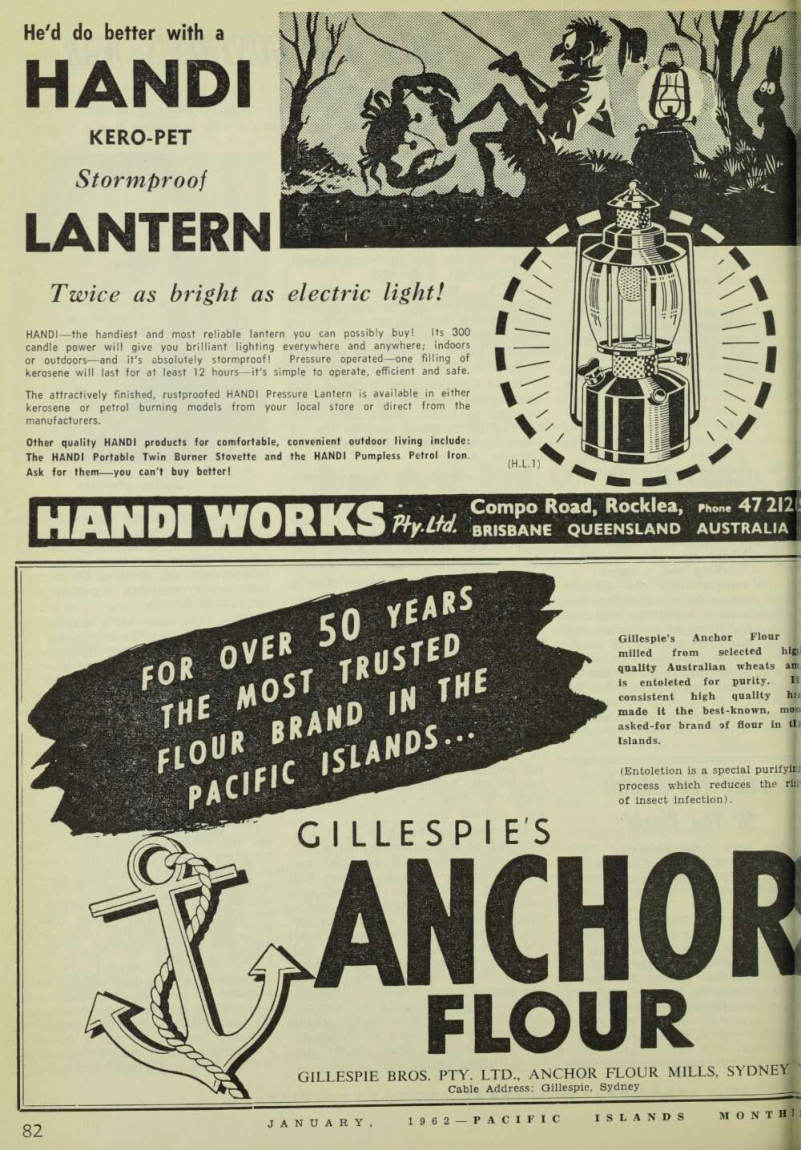 84
84 85
85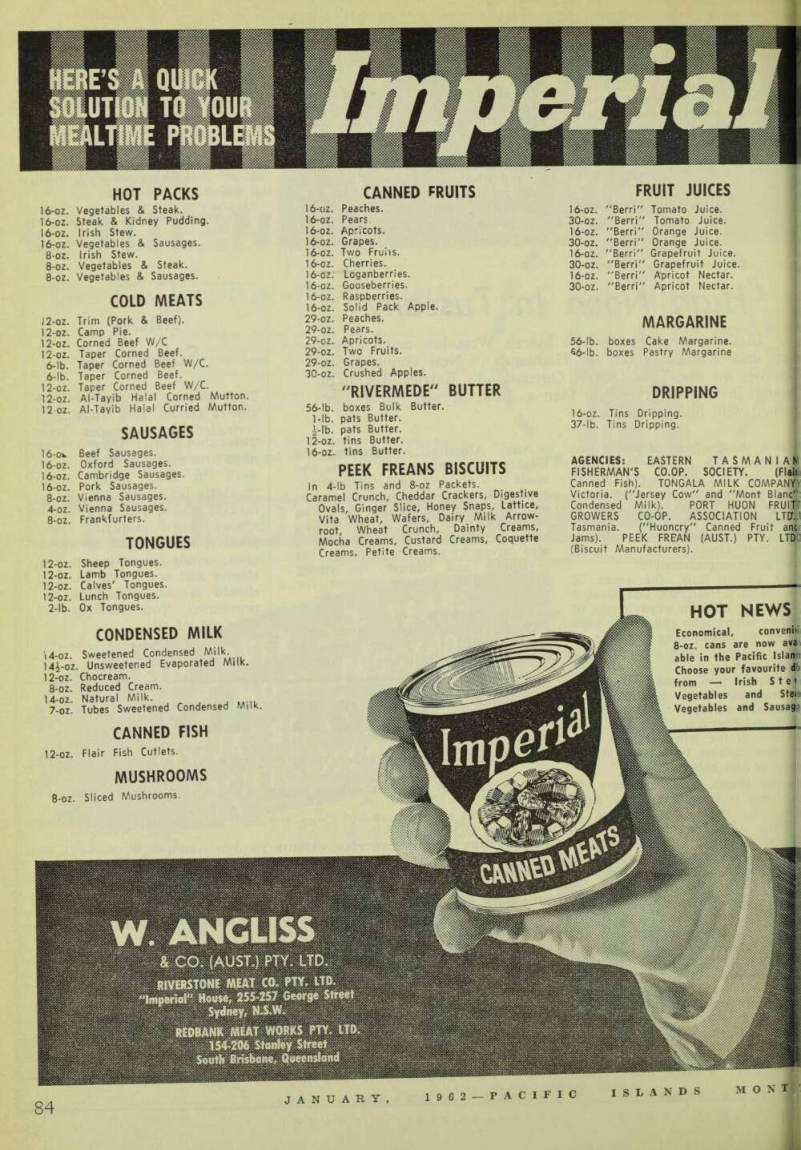 86
86 87
87 88
88 89
89 90
90 91
91 92
92 93
93 94
94 95
95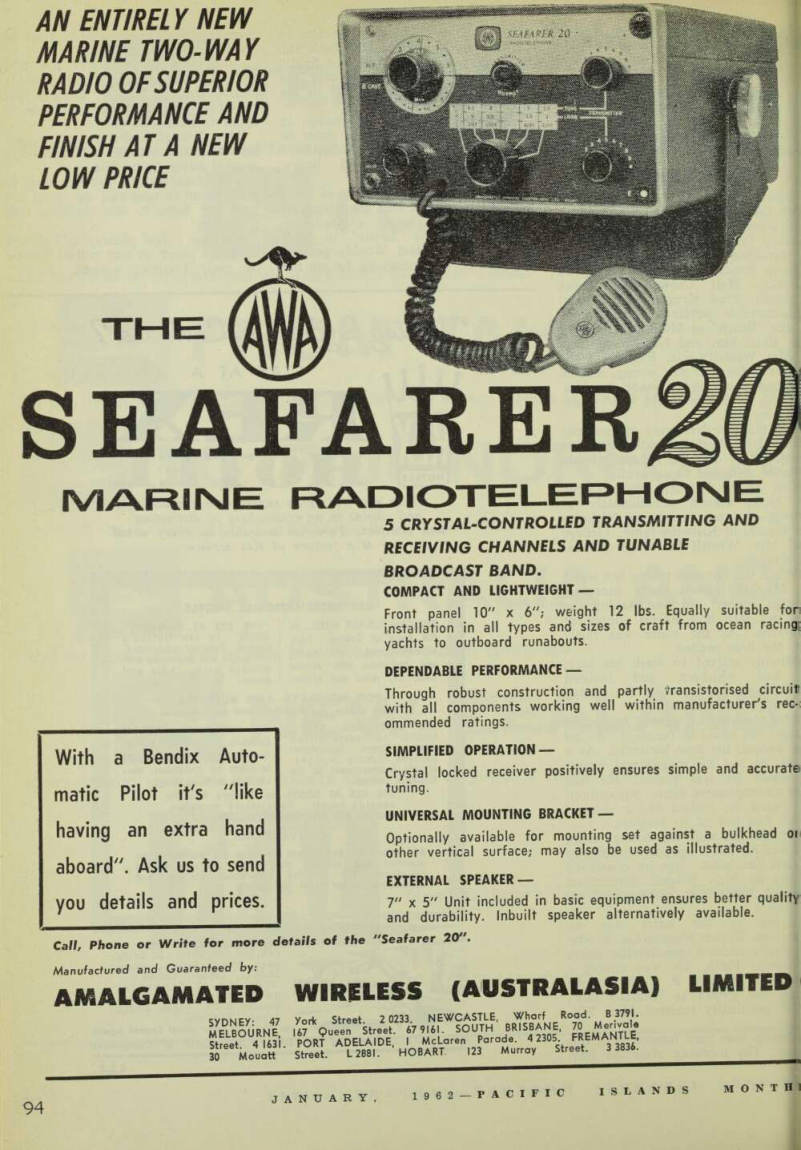 96
96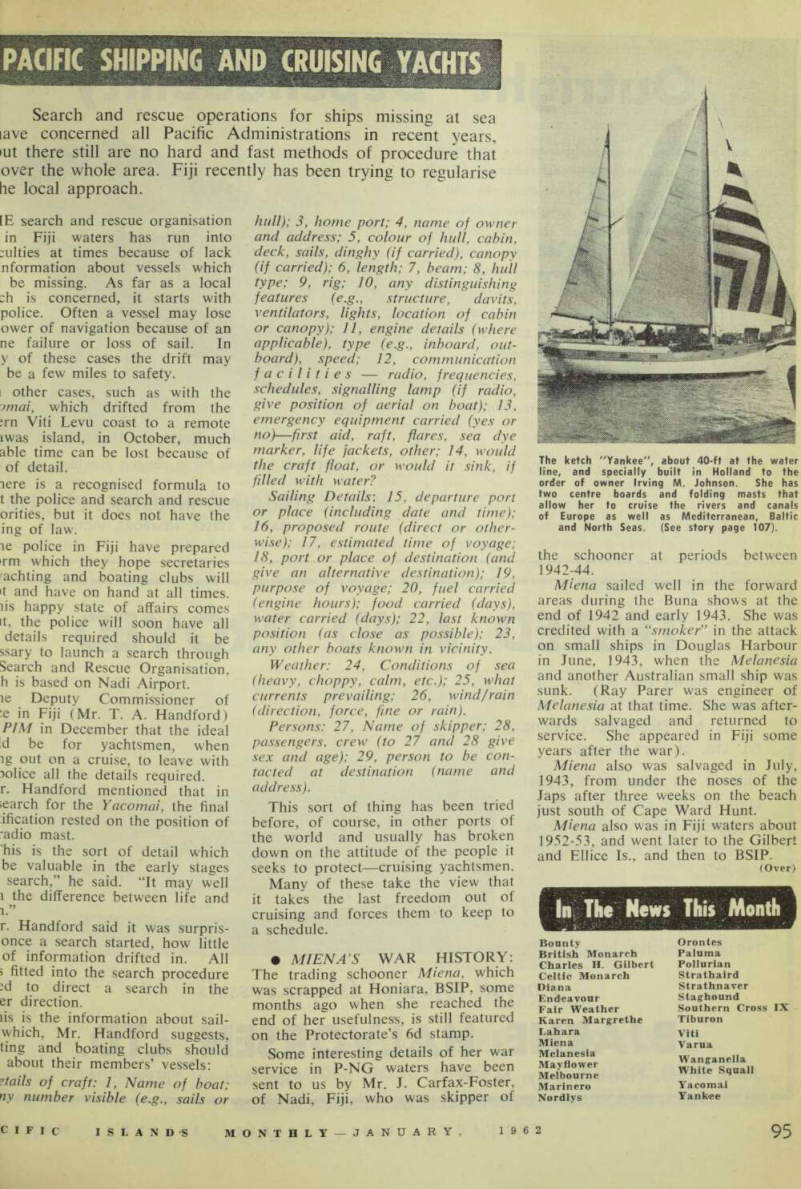 97
97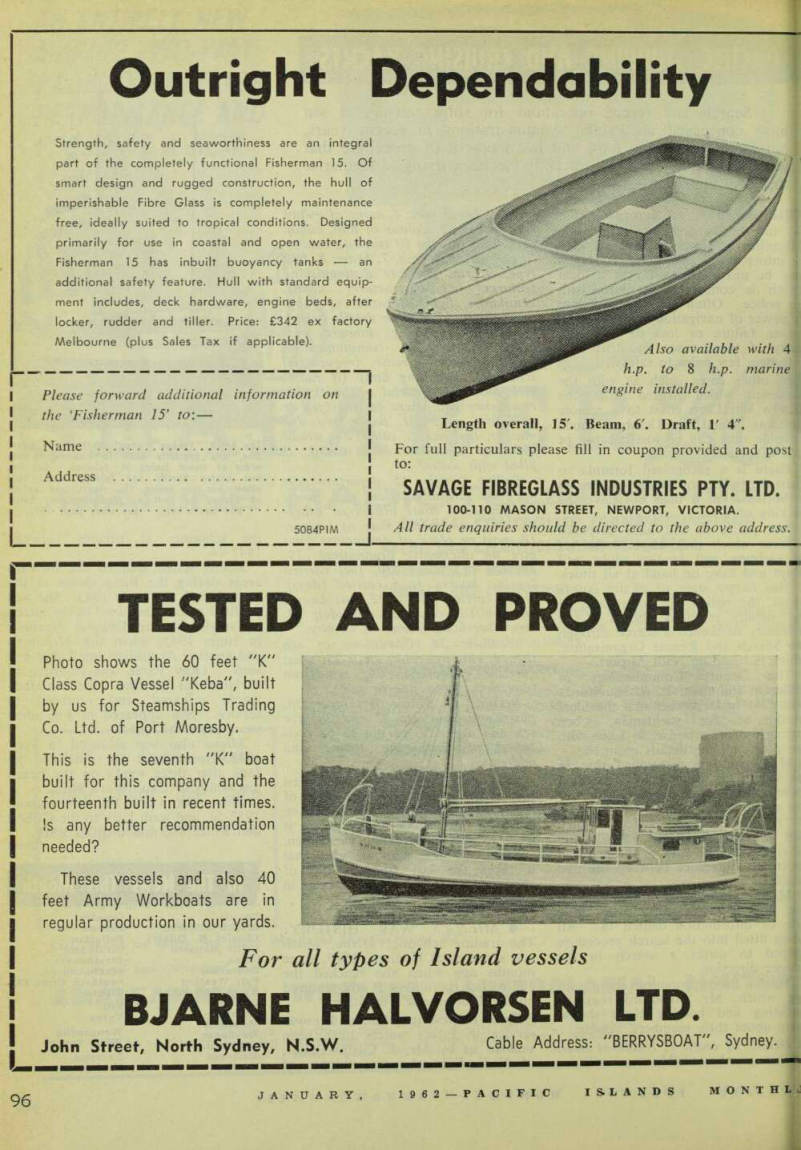 98
98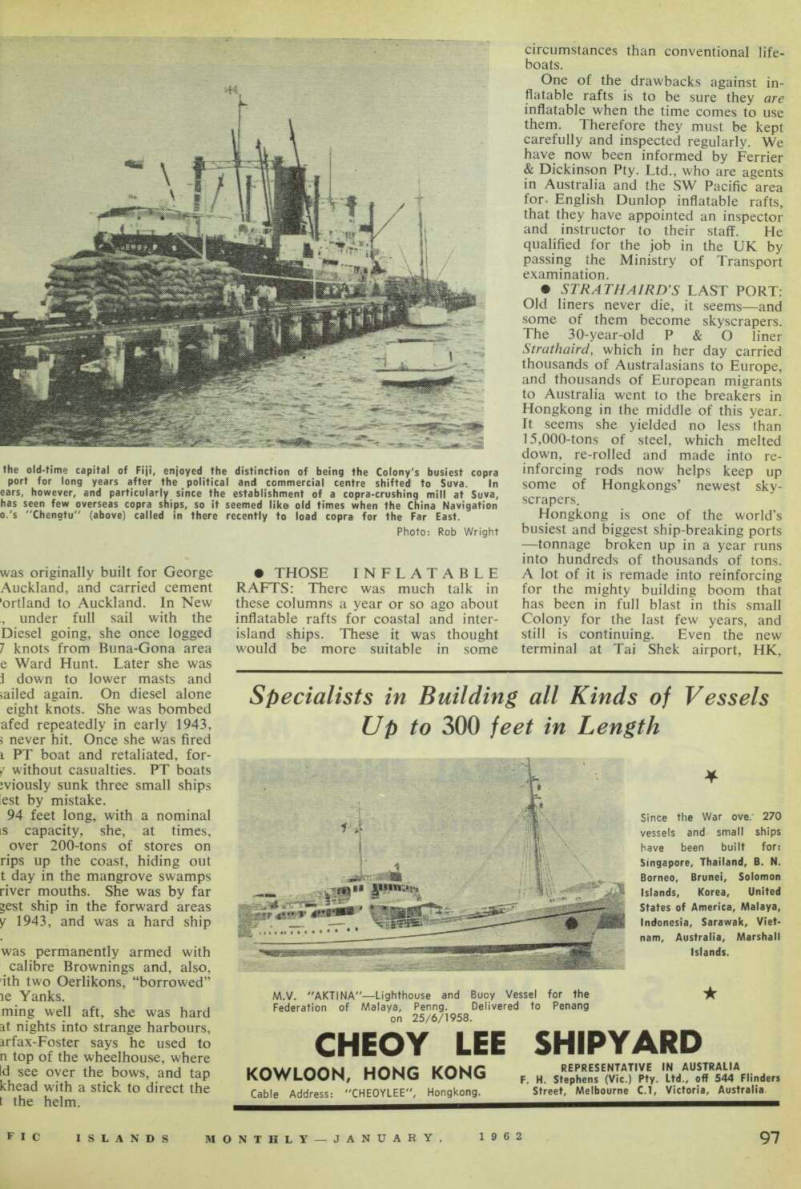 99
99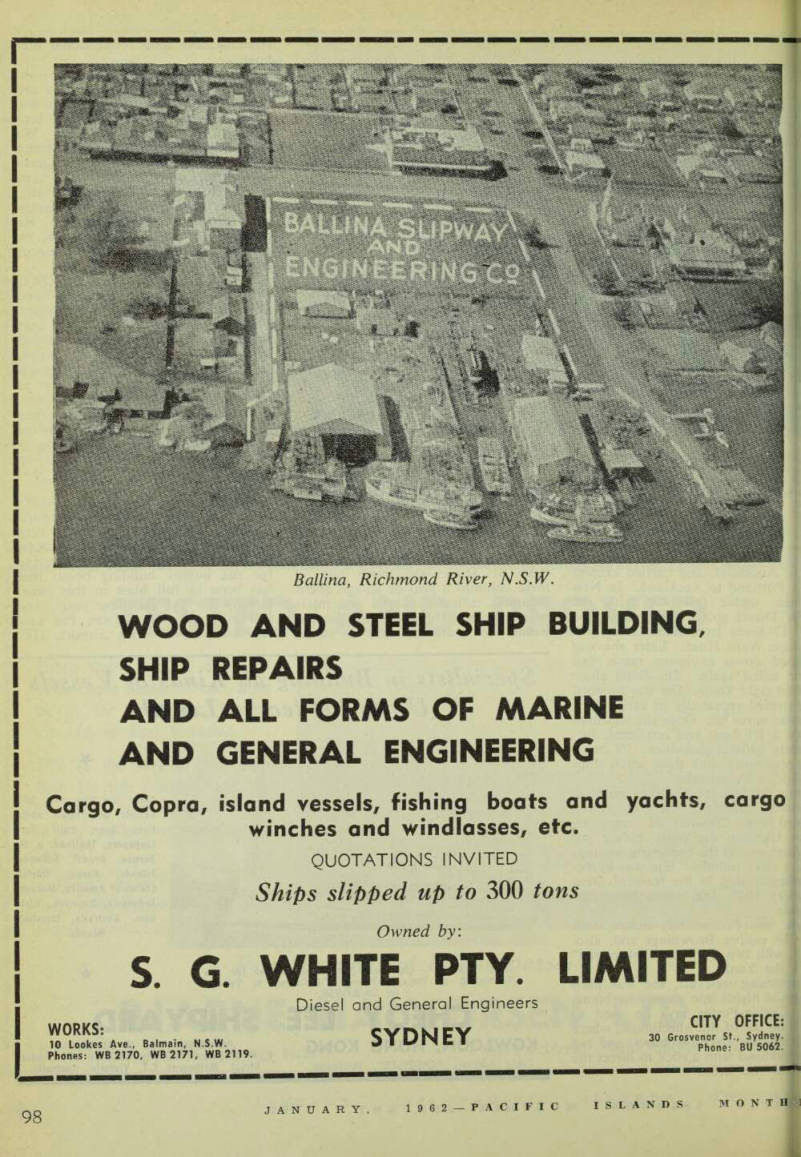 100
100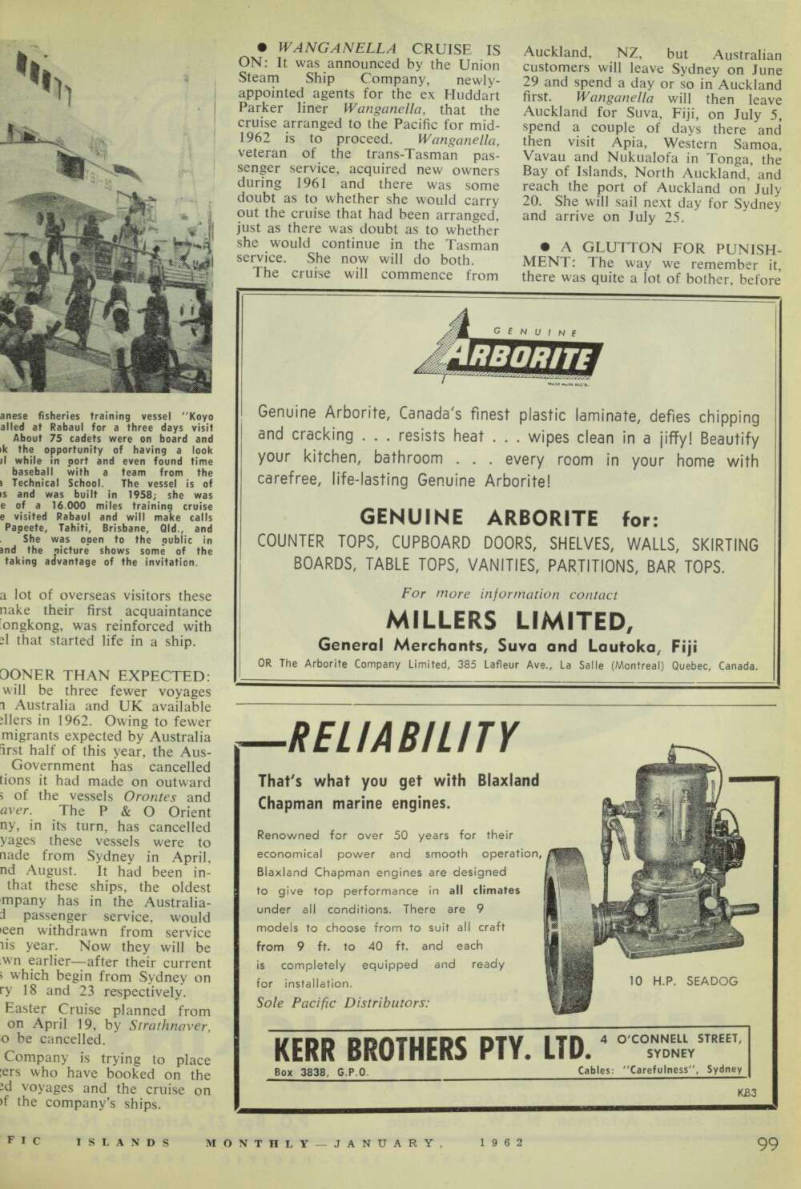 101
101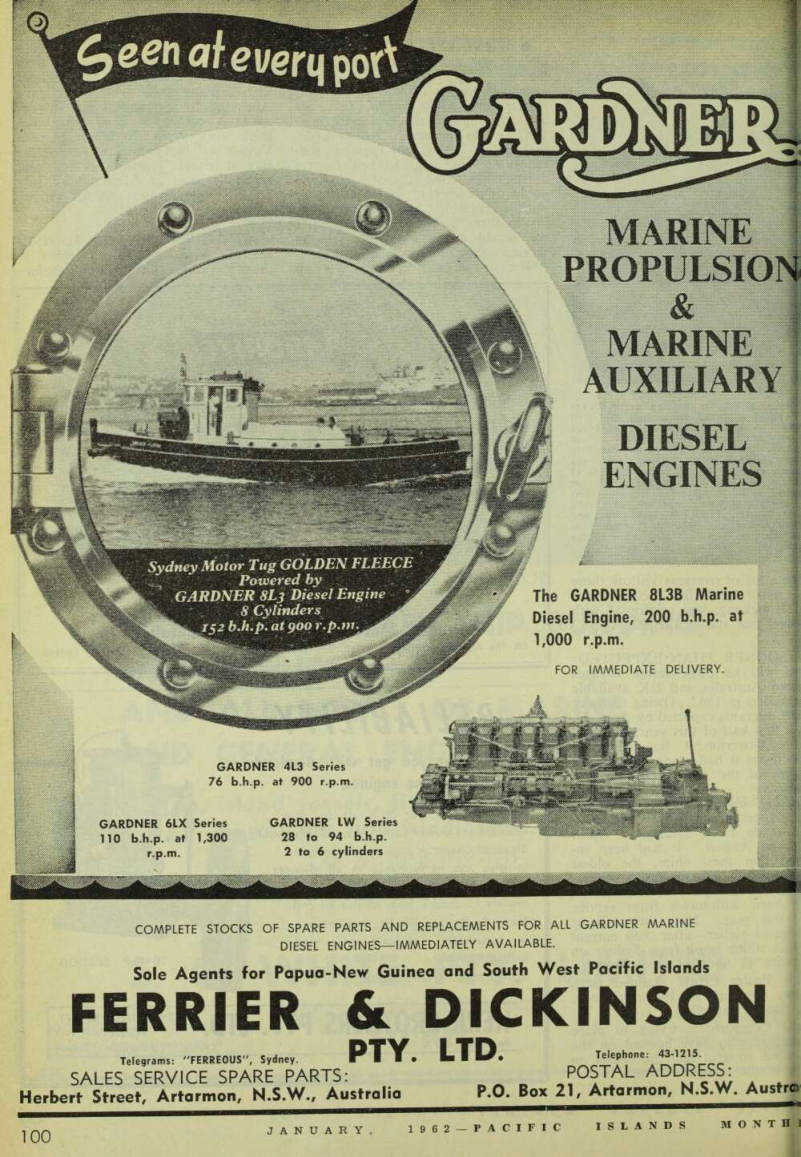 102
102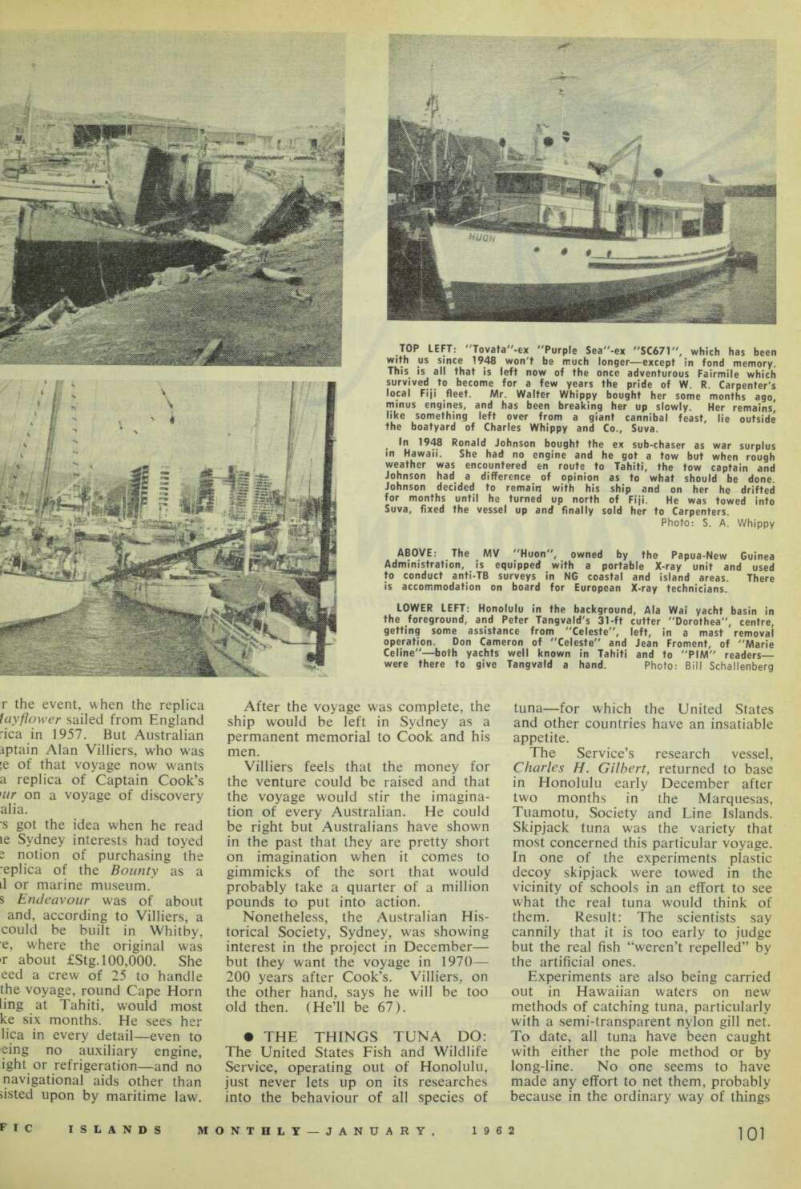 103
103 104
104 105
105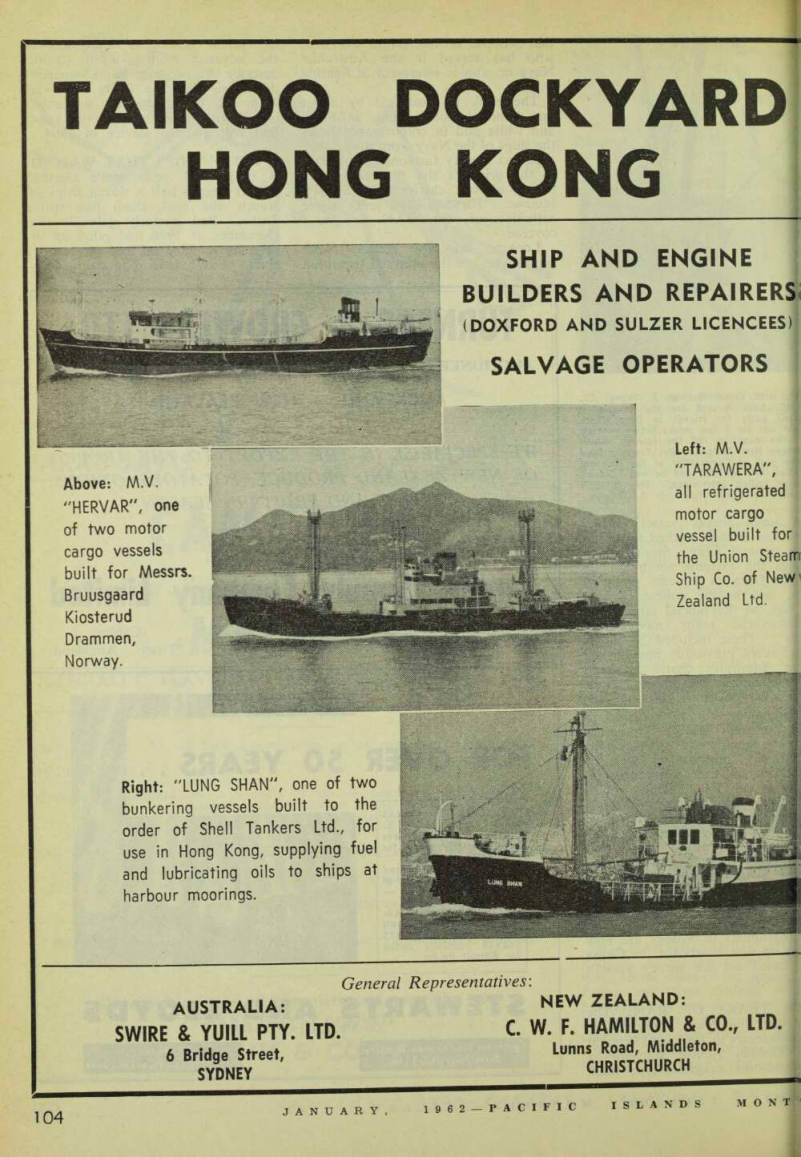 106
106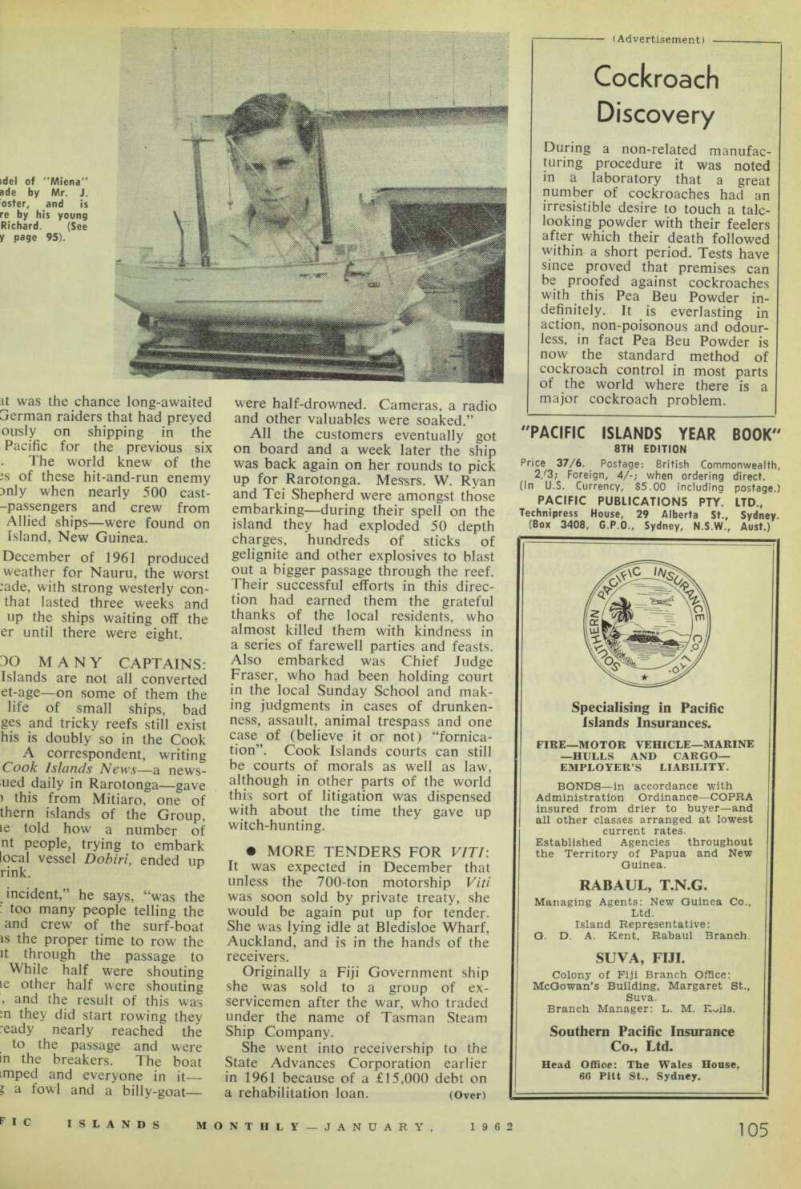 107
107 108
108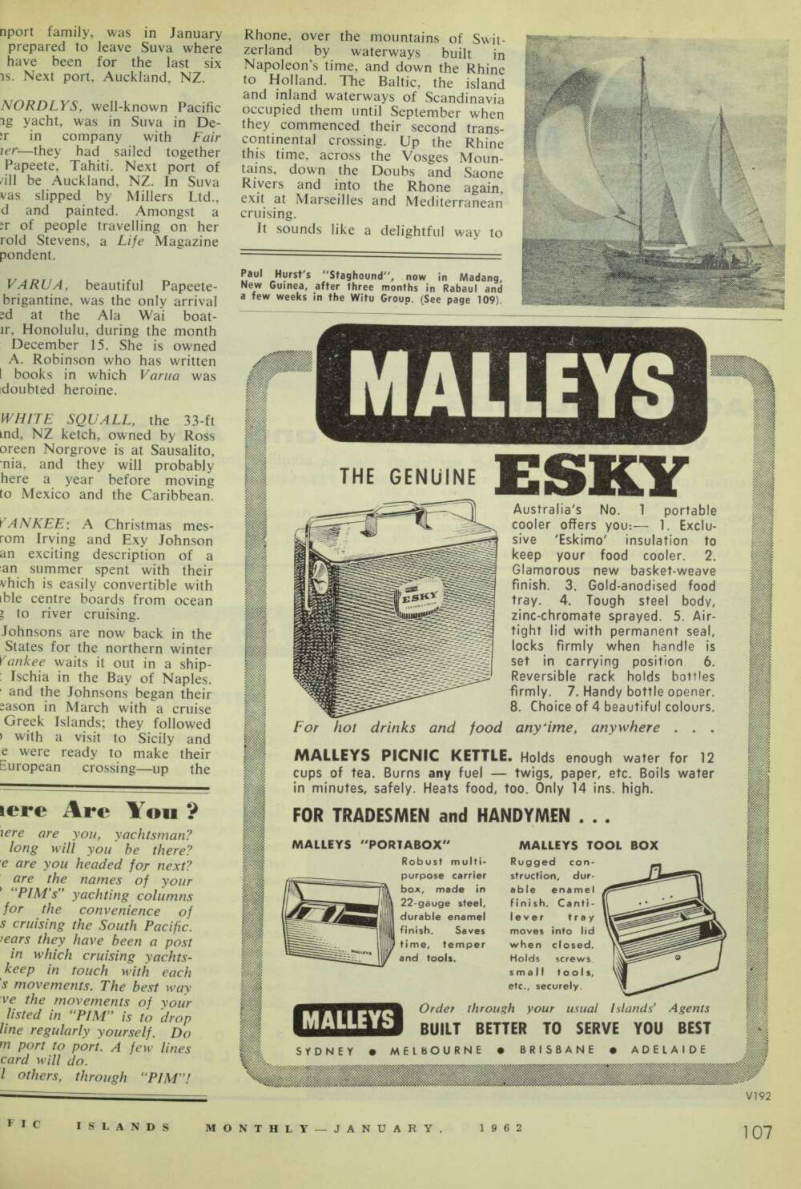 109
109 110
110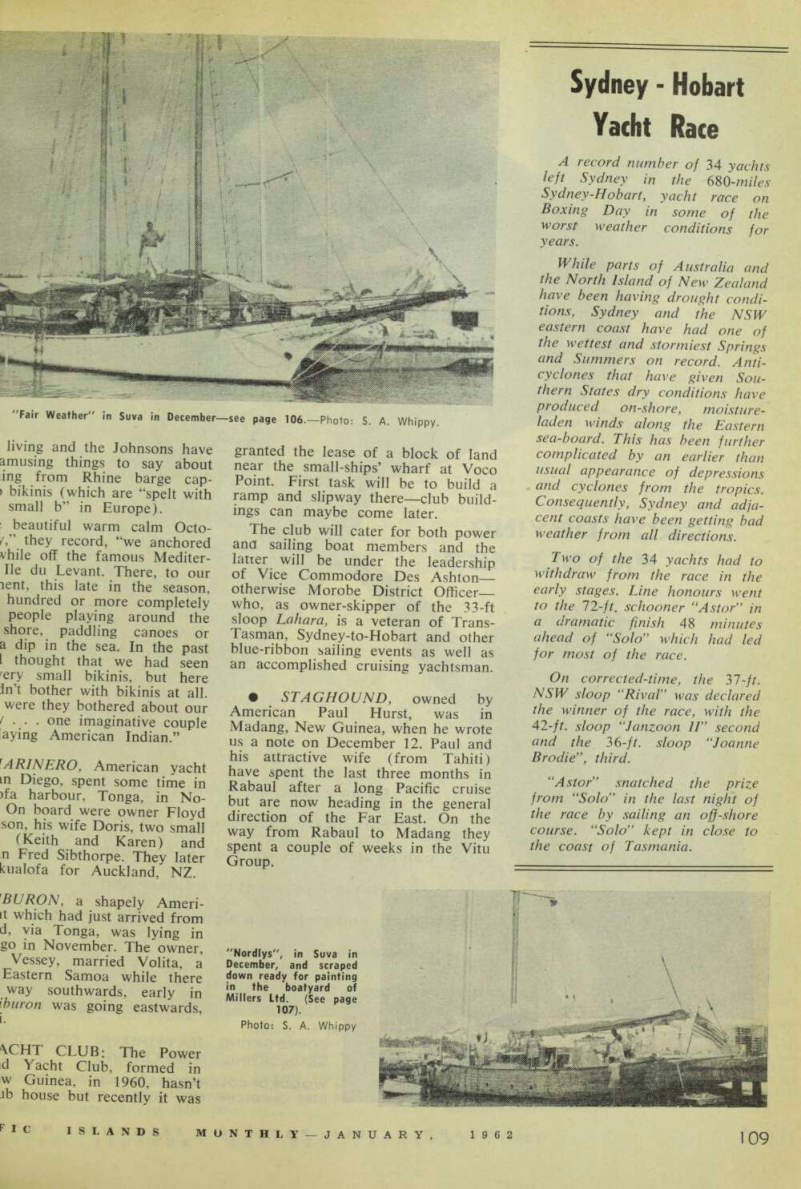 111
111 112
112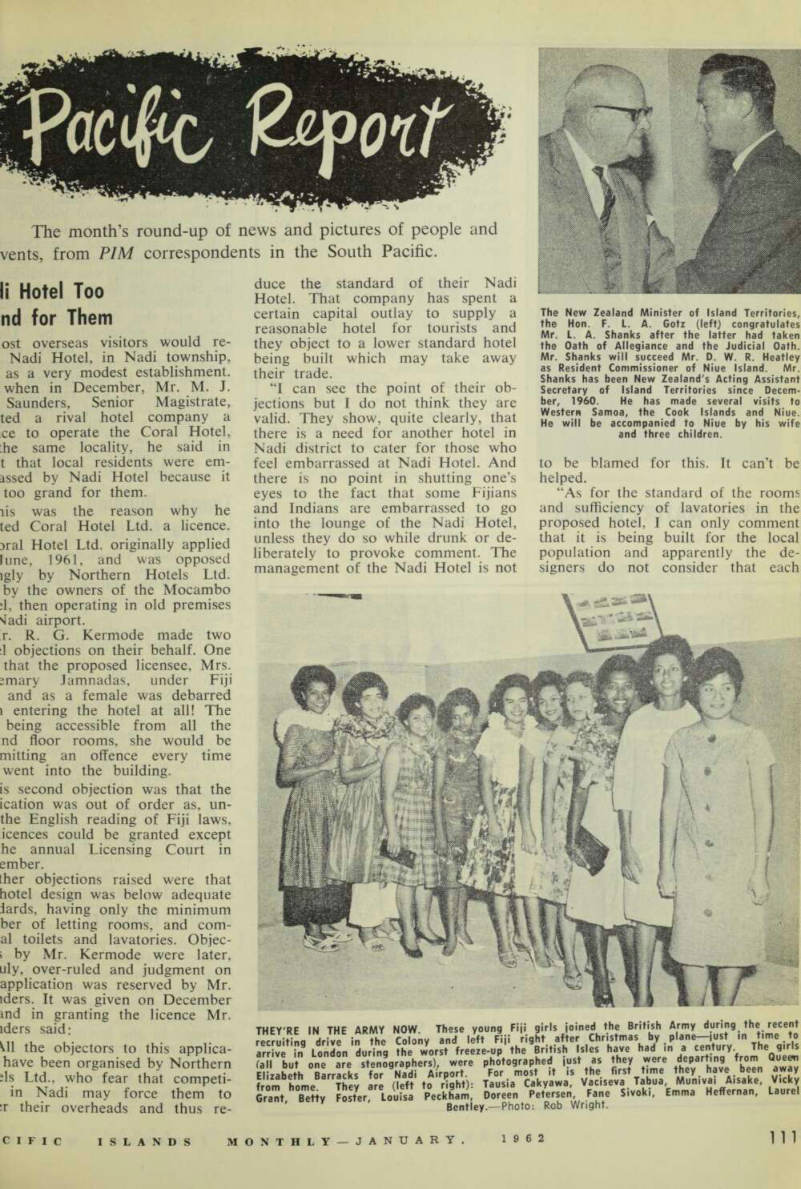 113
113 114
114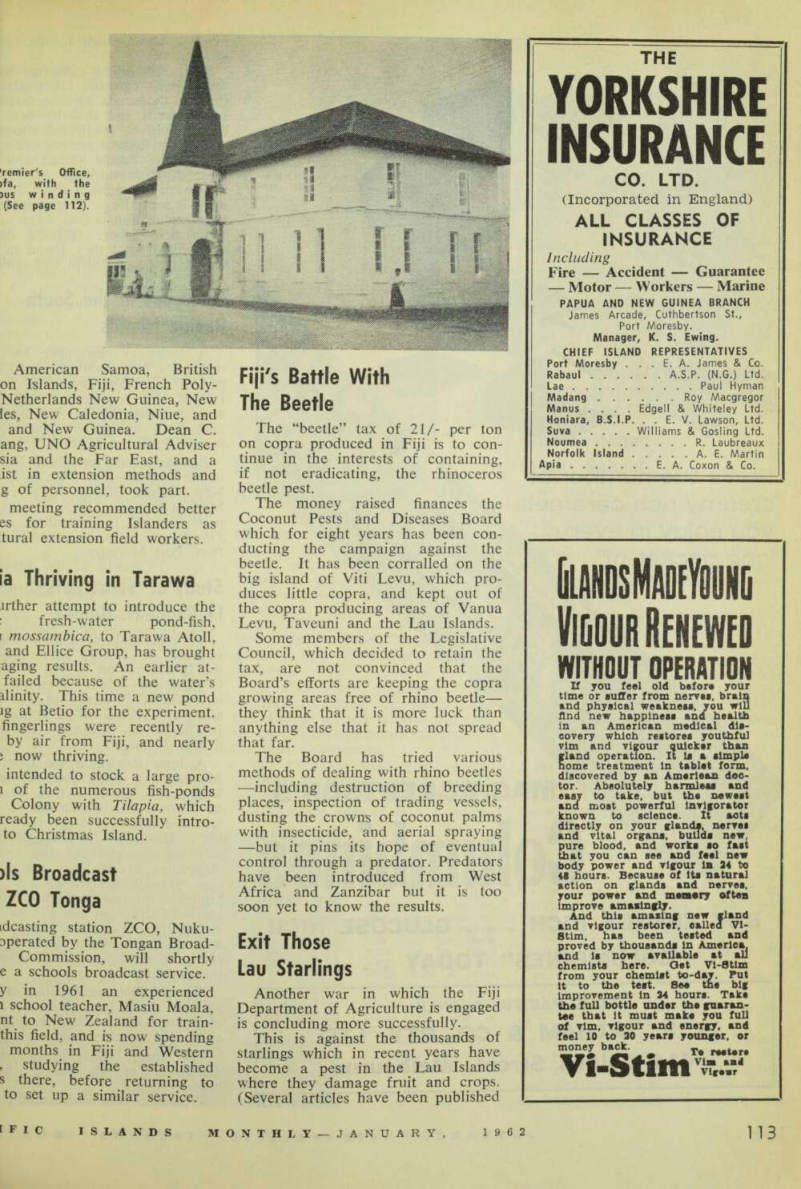 115
115 116
116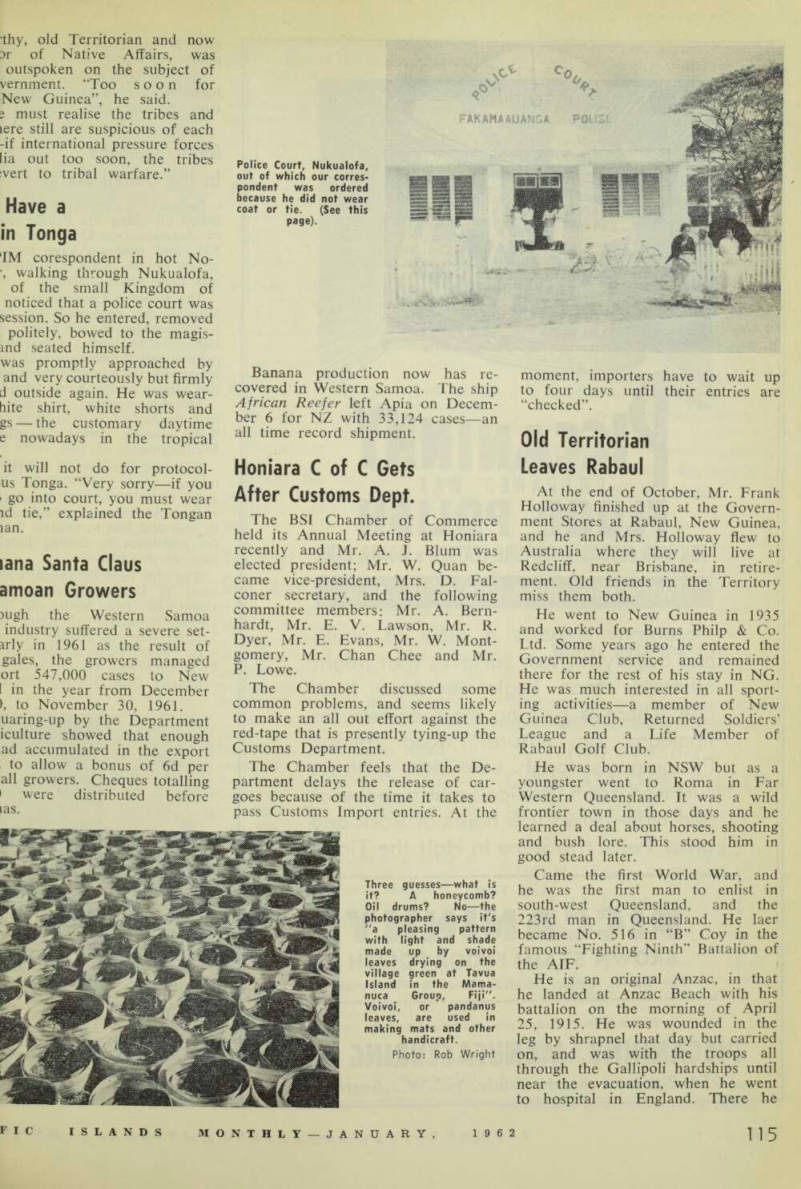 117
117 118
118 119
119 120
120 121
121 122
122 123
123 124
124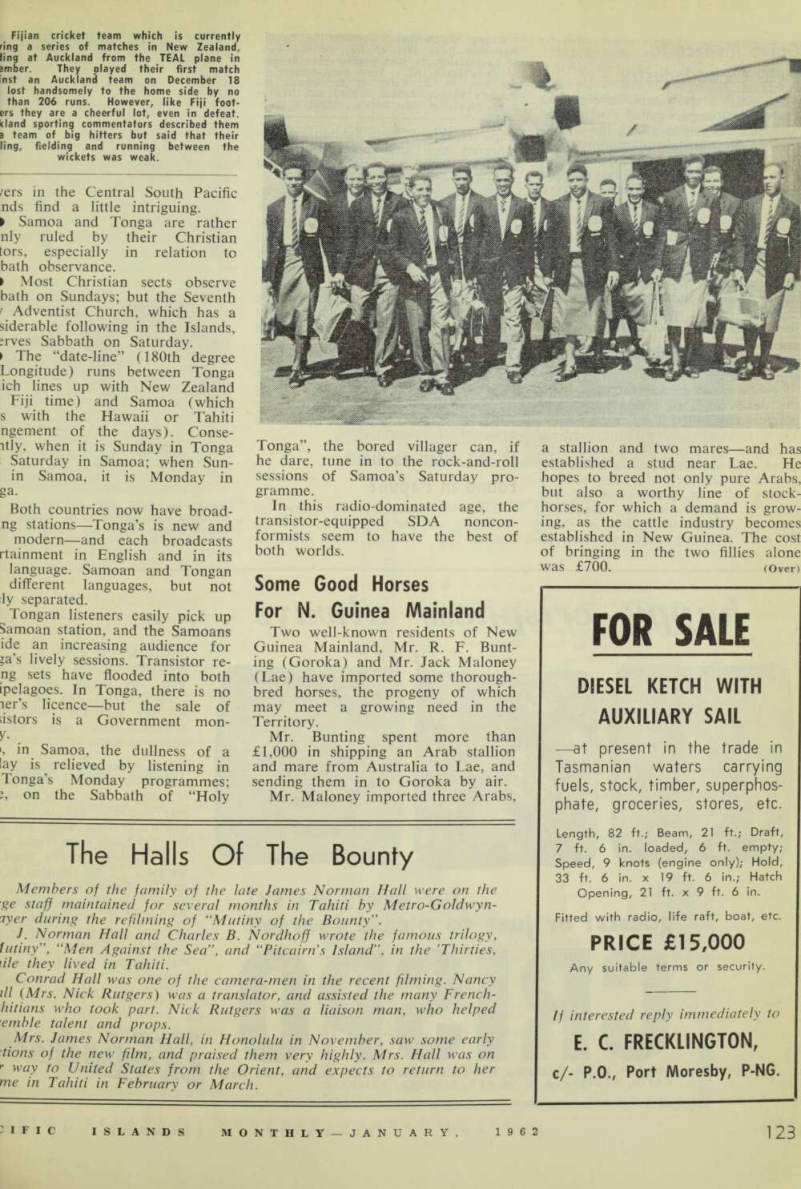 125
125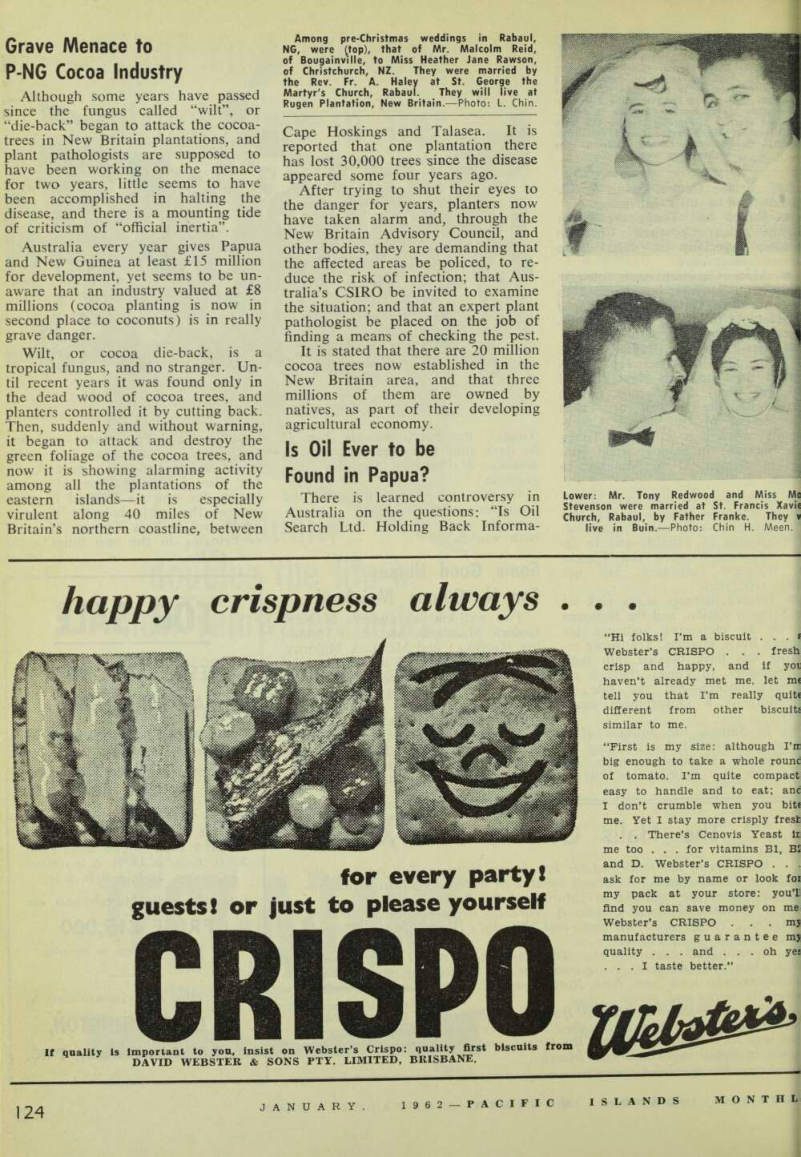 126
126 127
127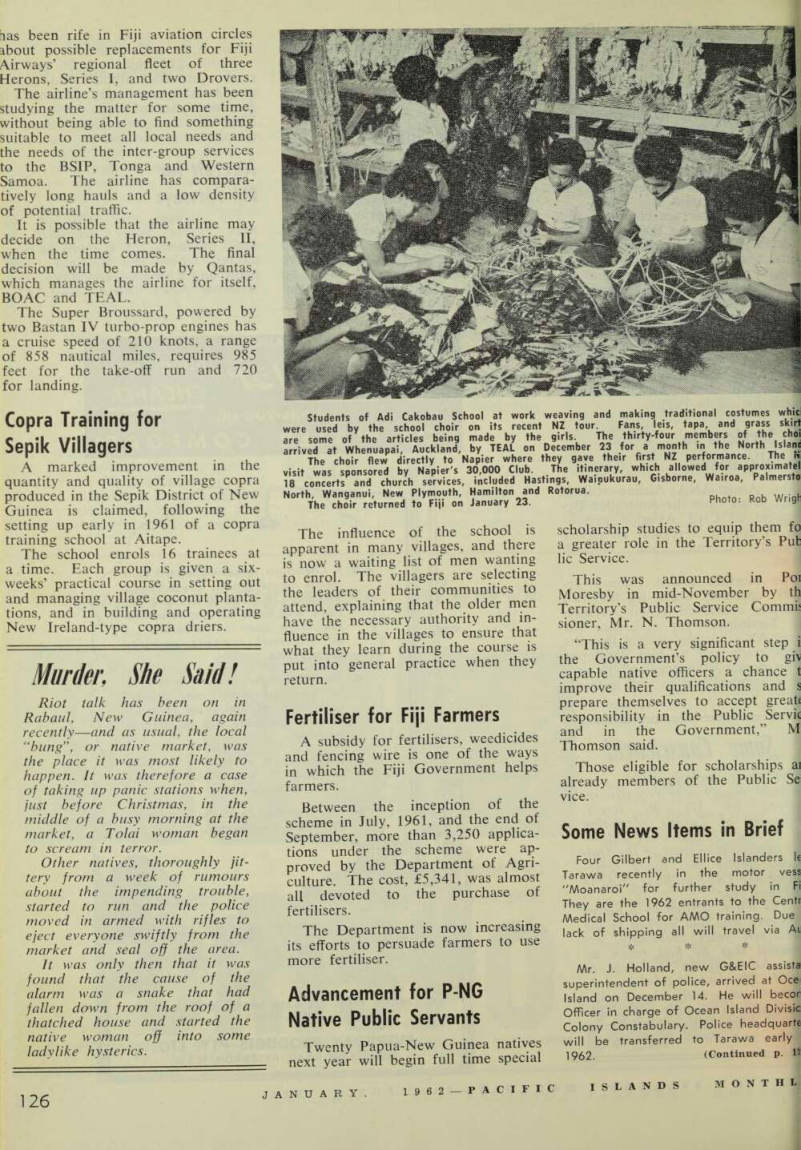 128
128 129
129 130
130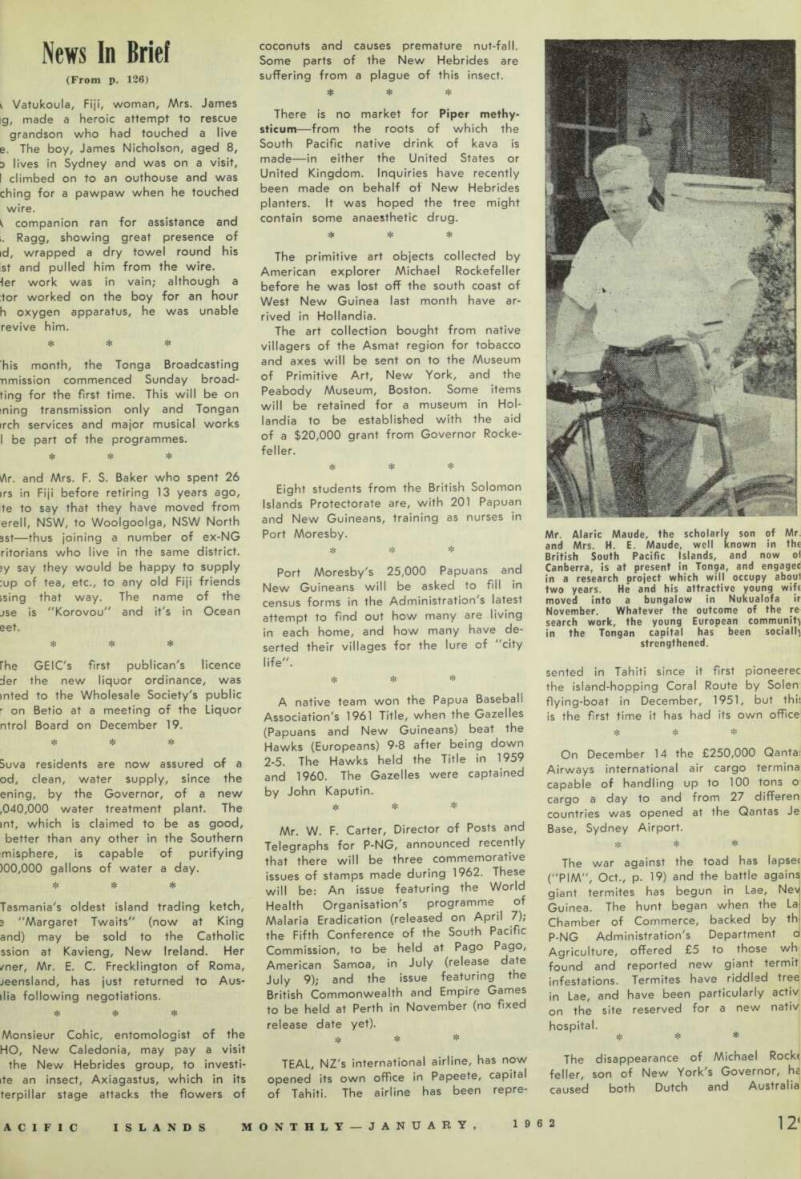 131
131 132
132 133
133 134
134 135
135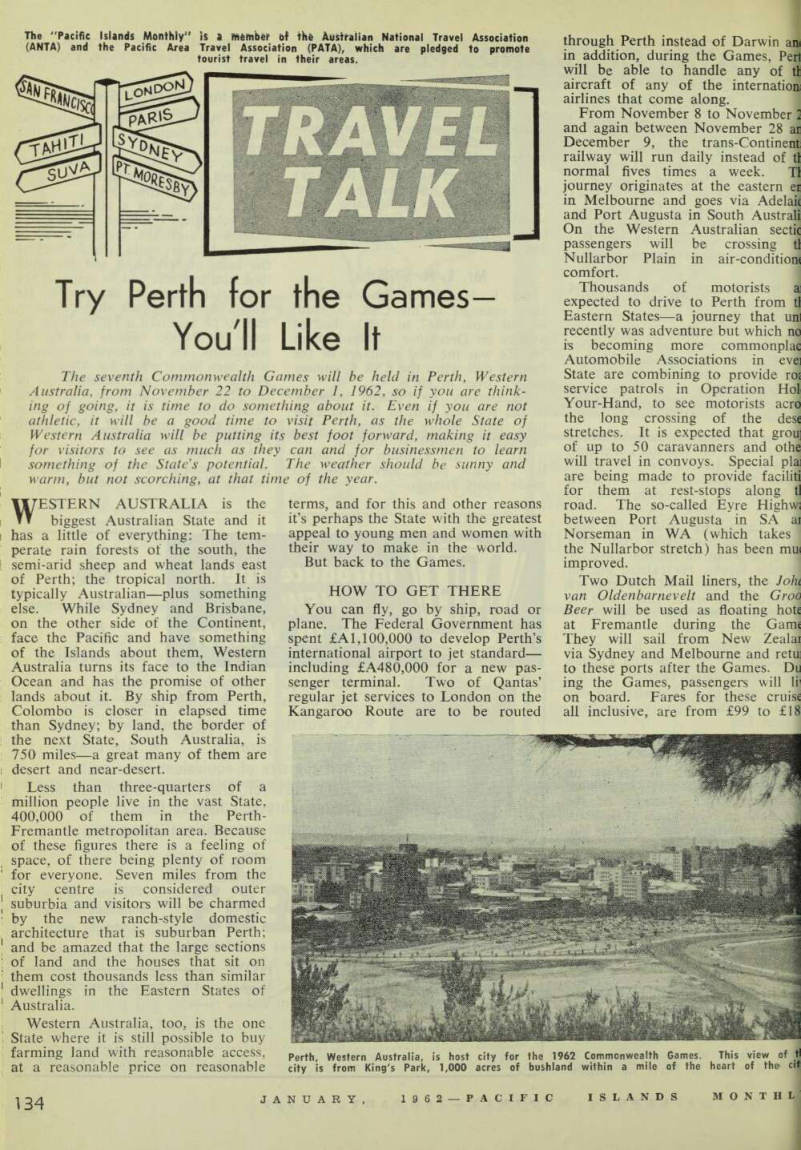 136
136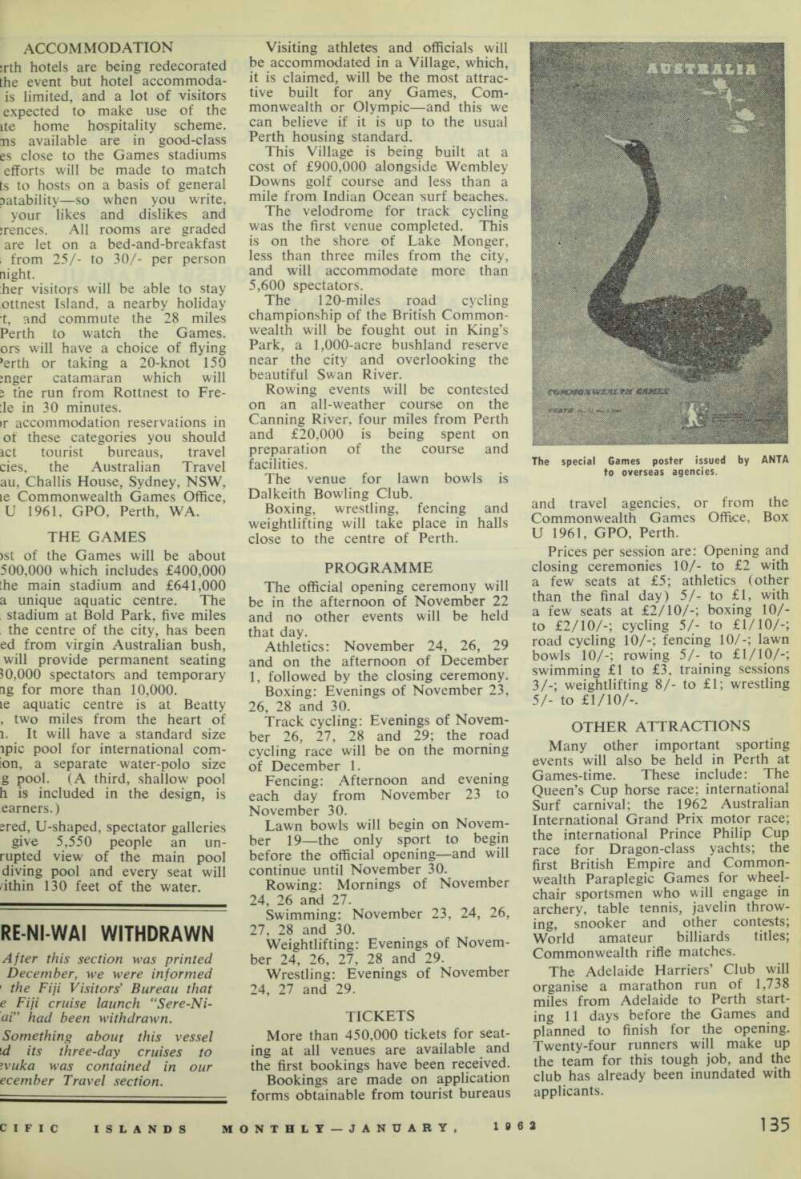 137
137 138
138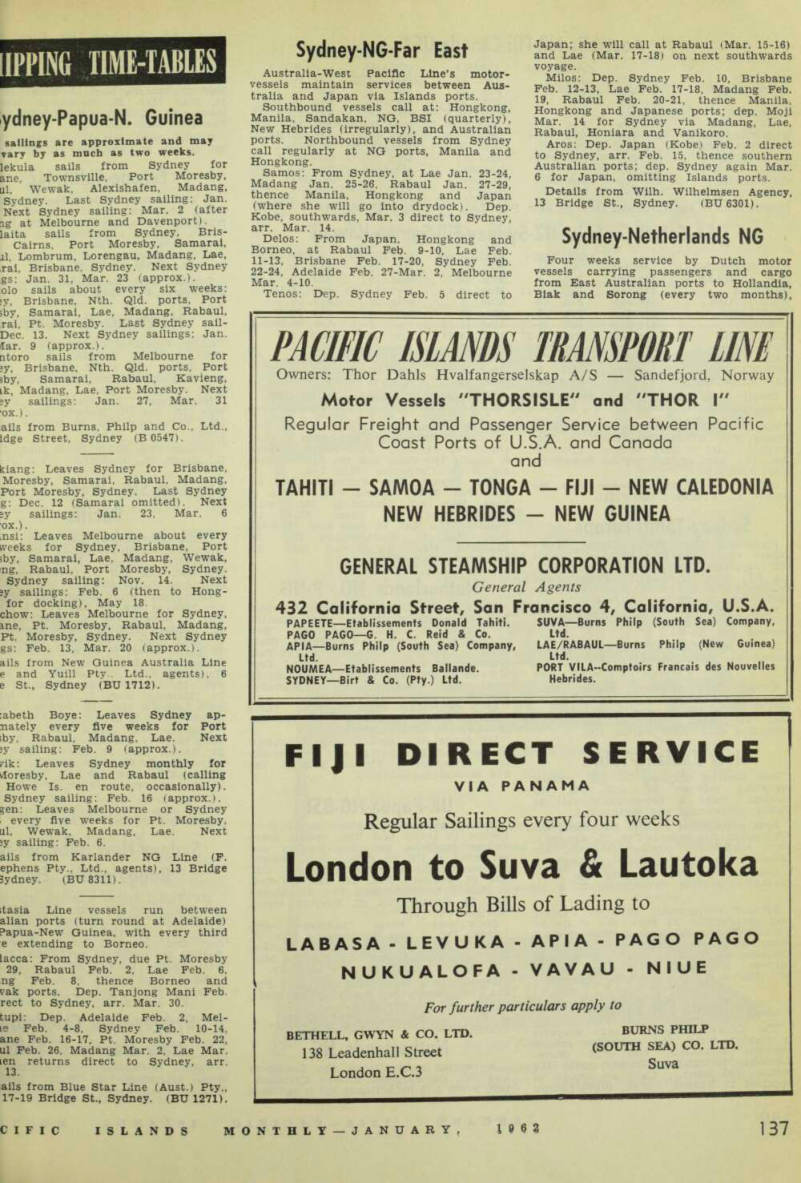 139
139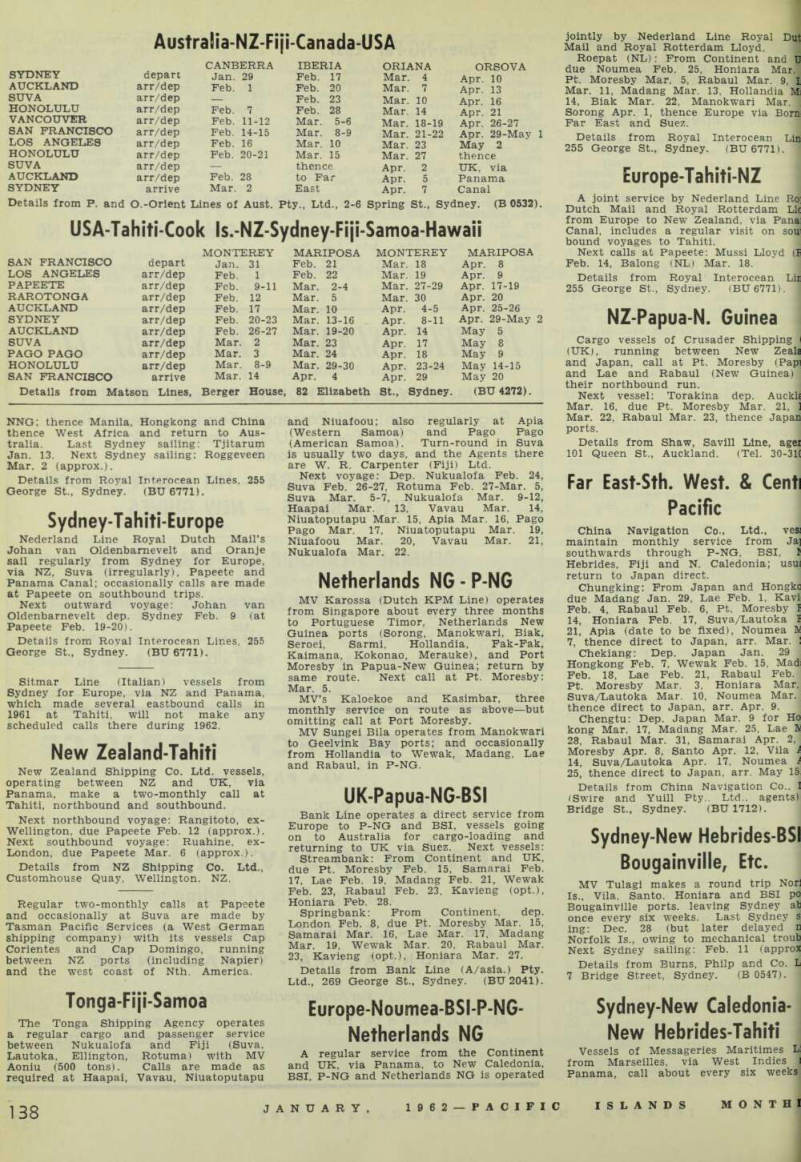 140
140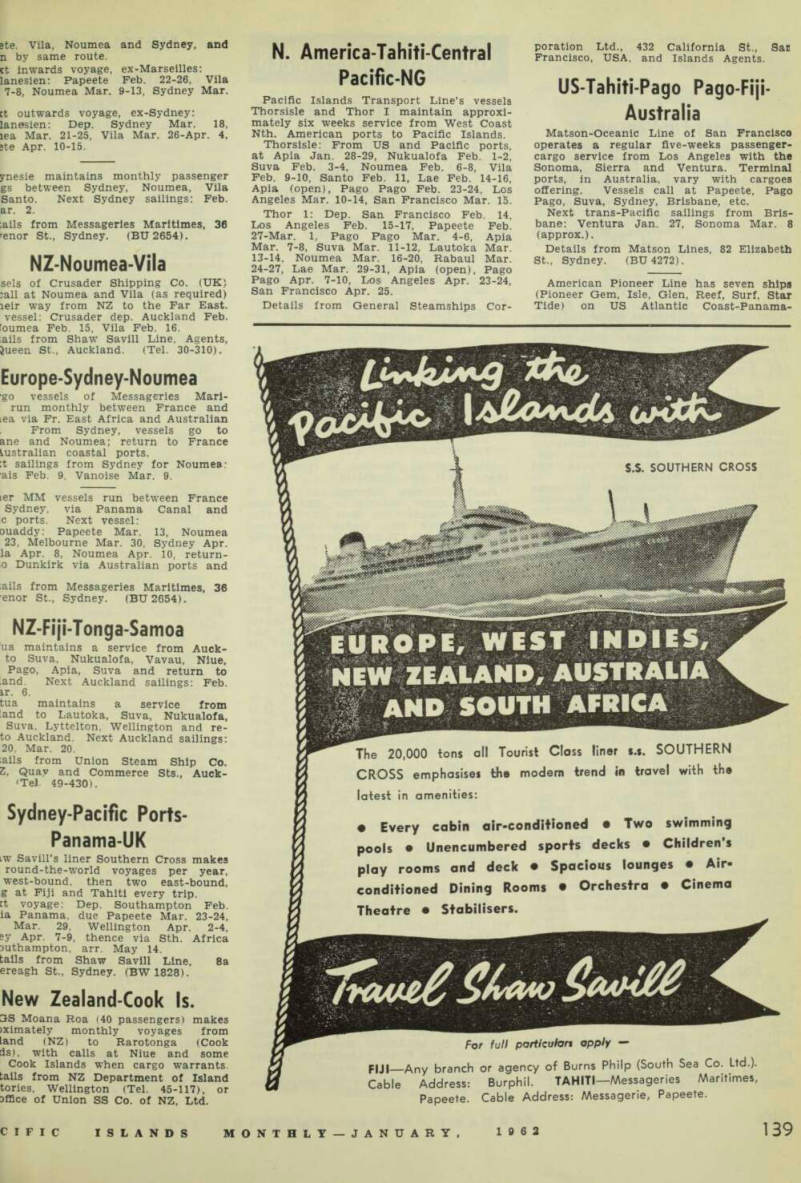 141
141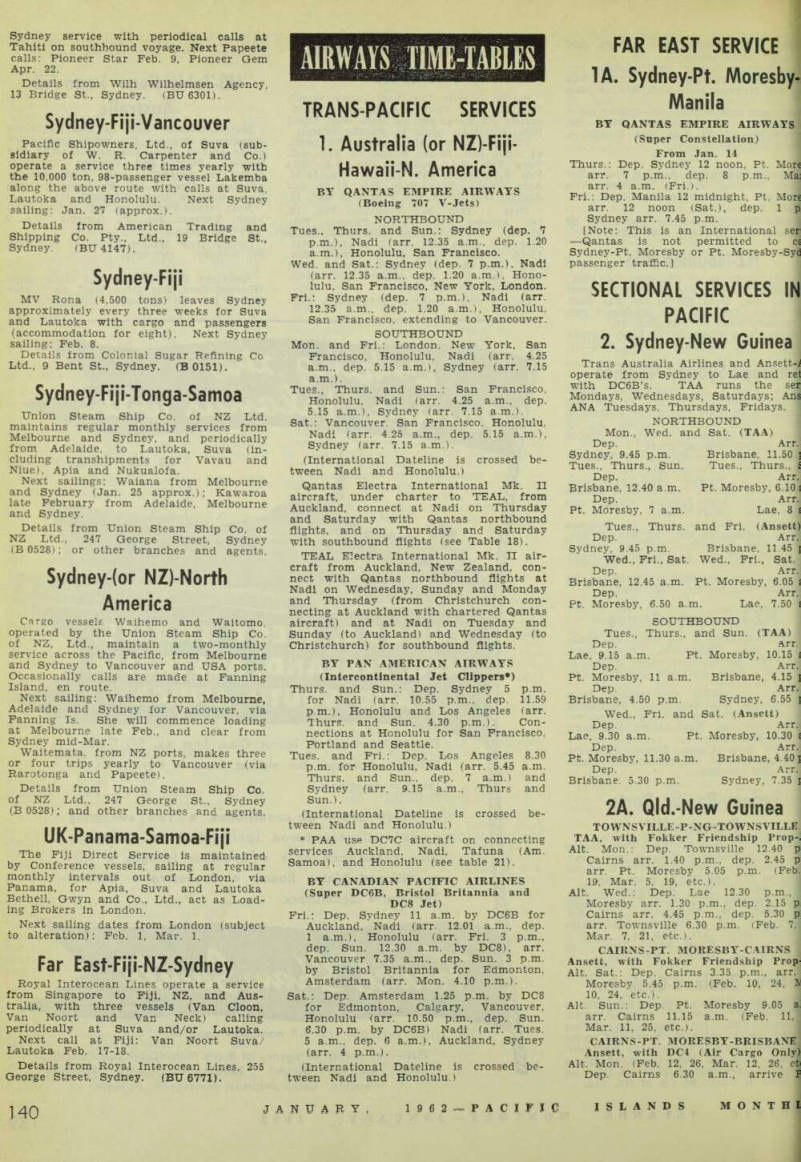 142
142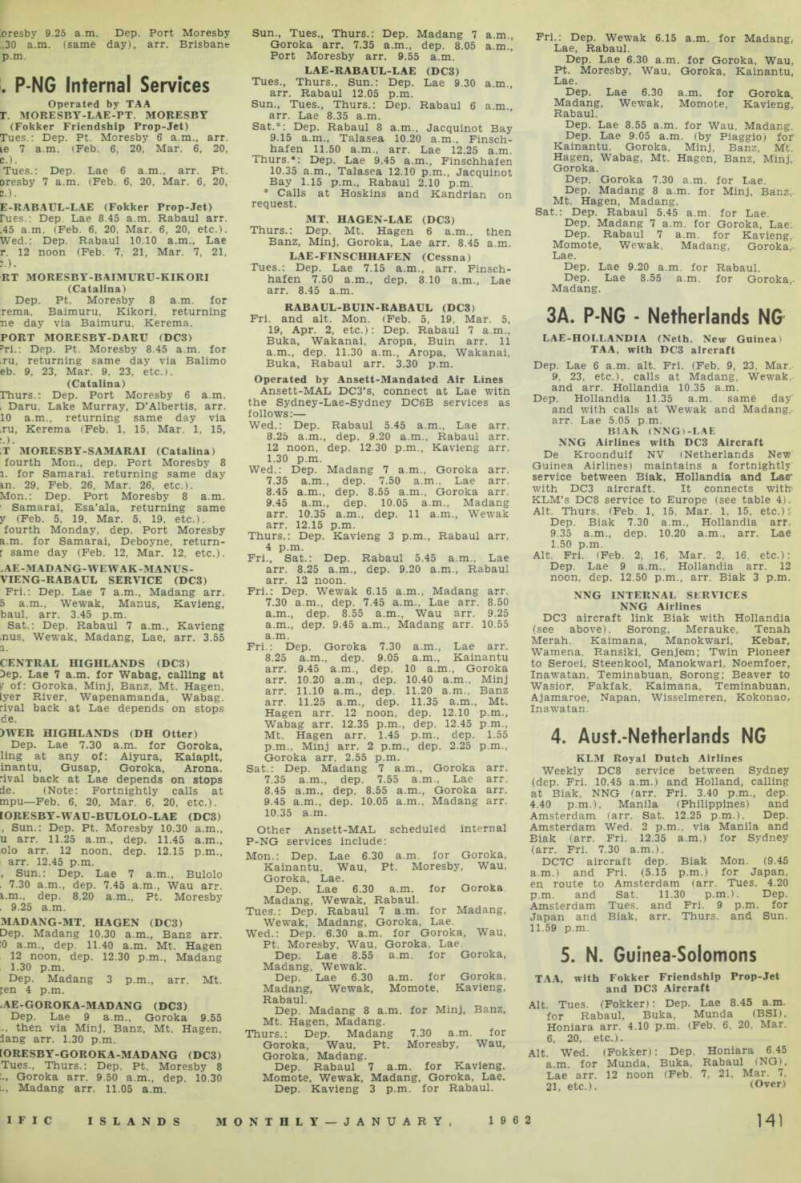 143
143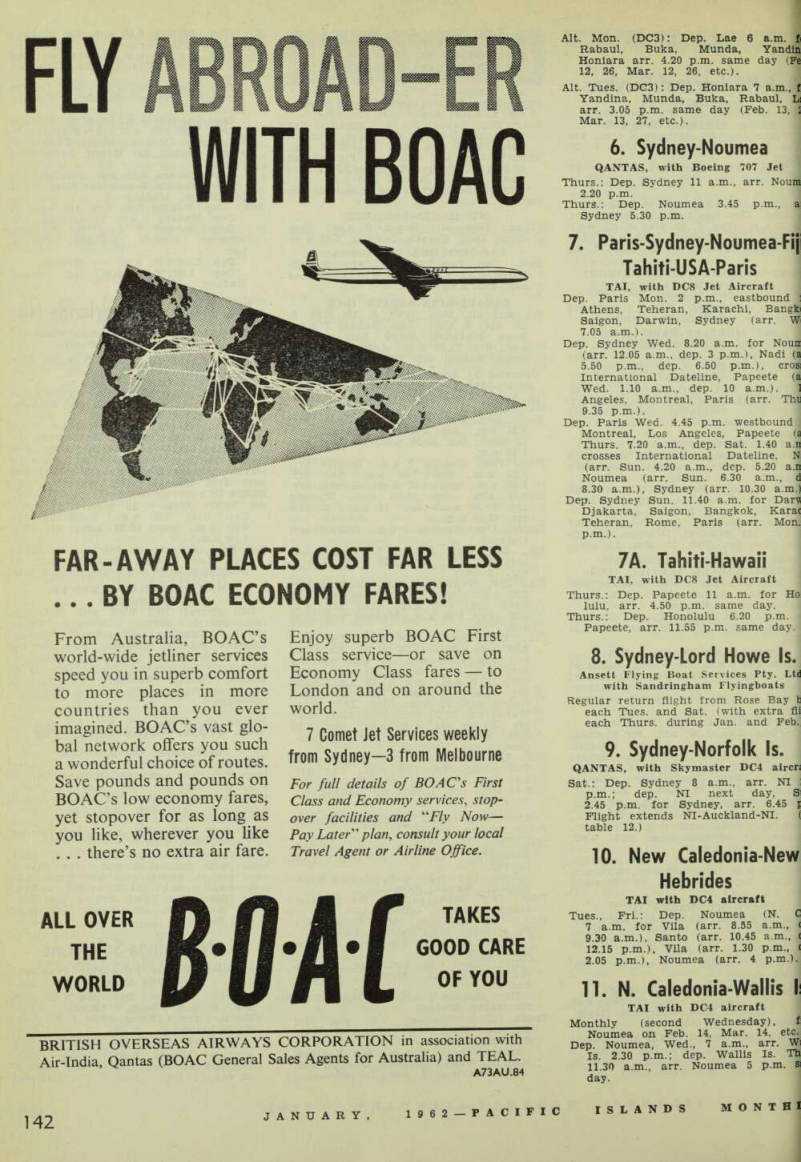 144
144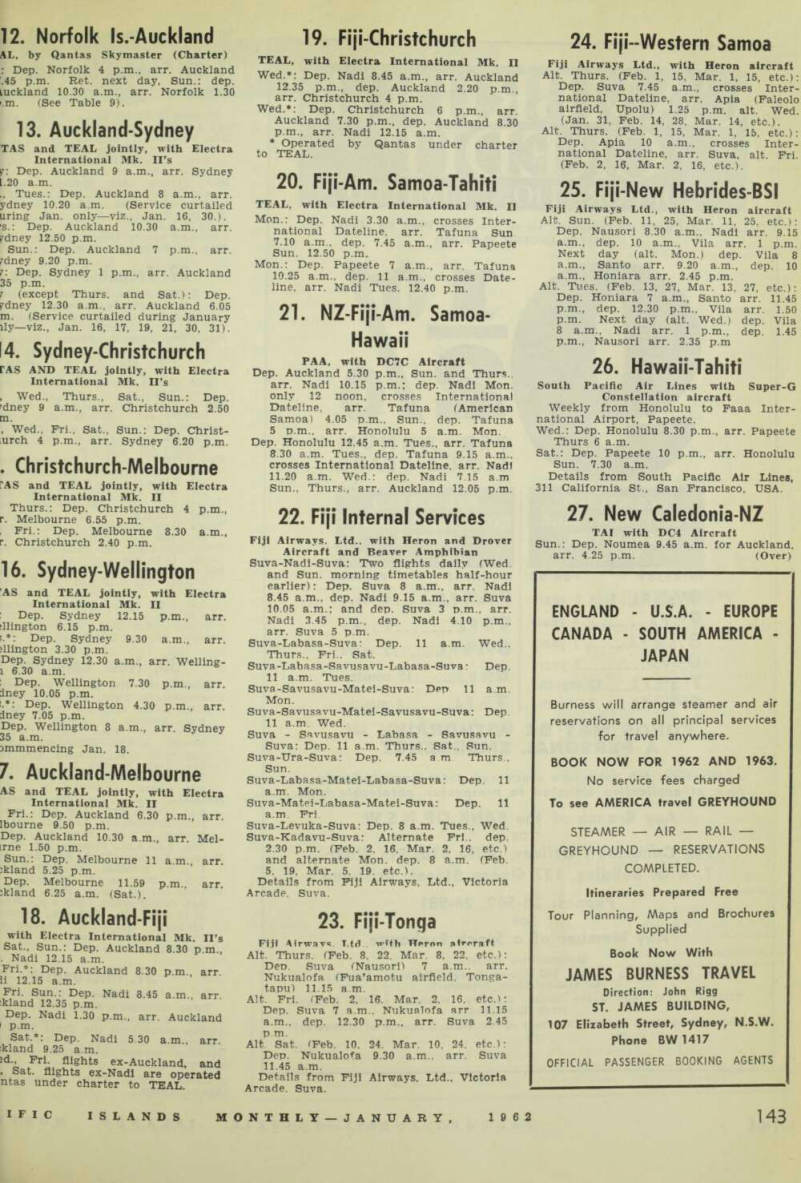 145
145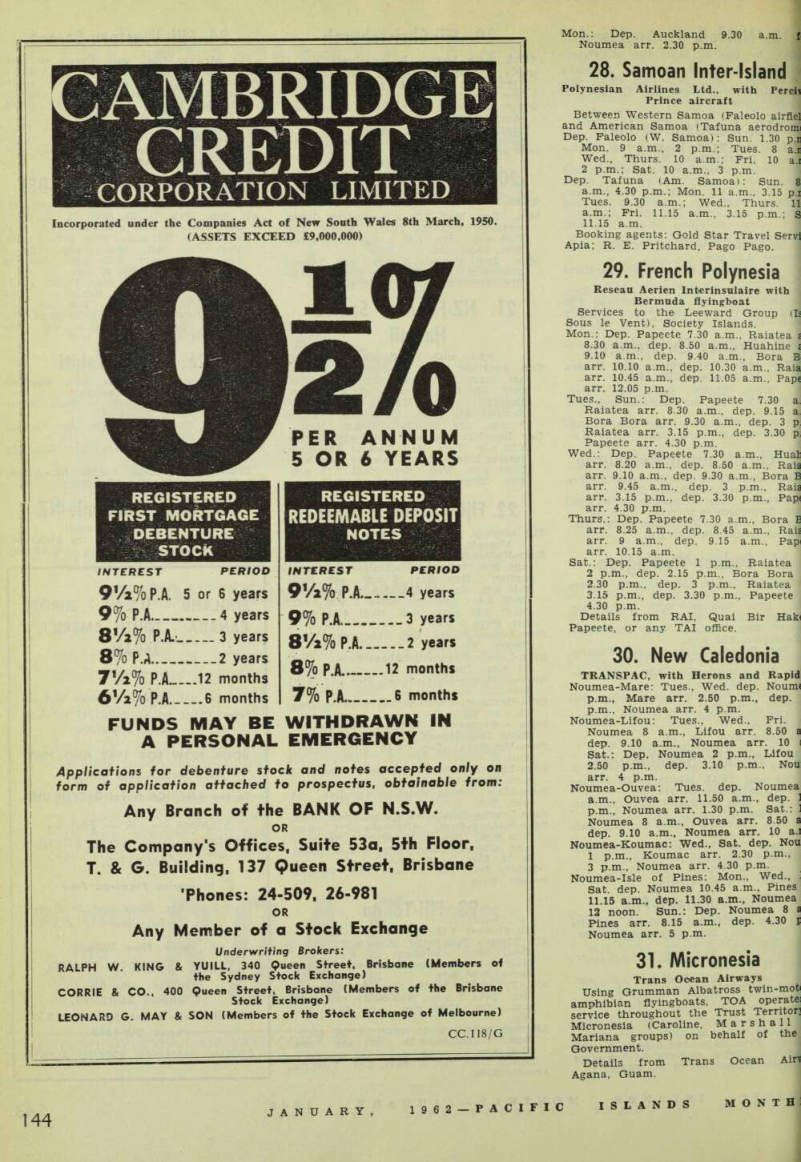 146
146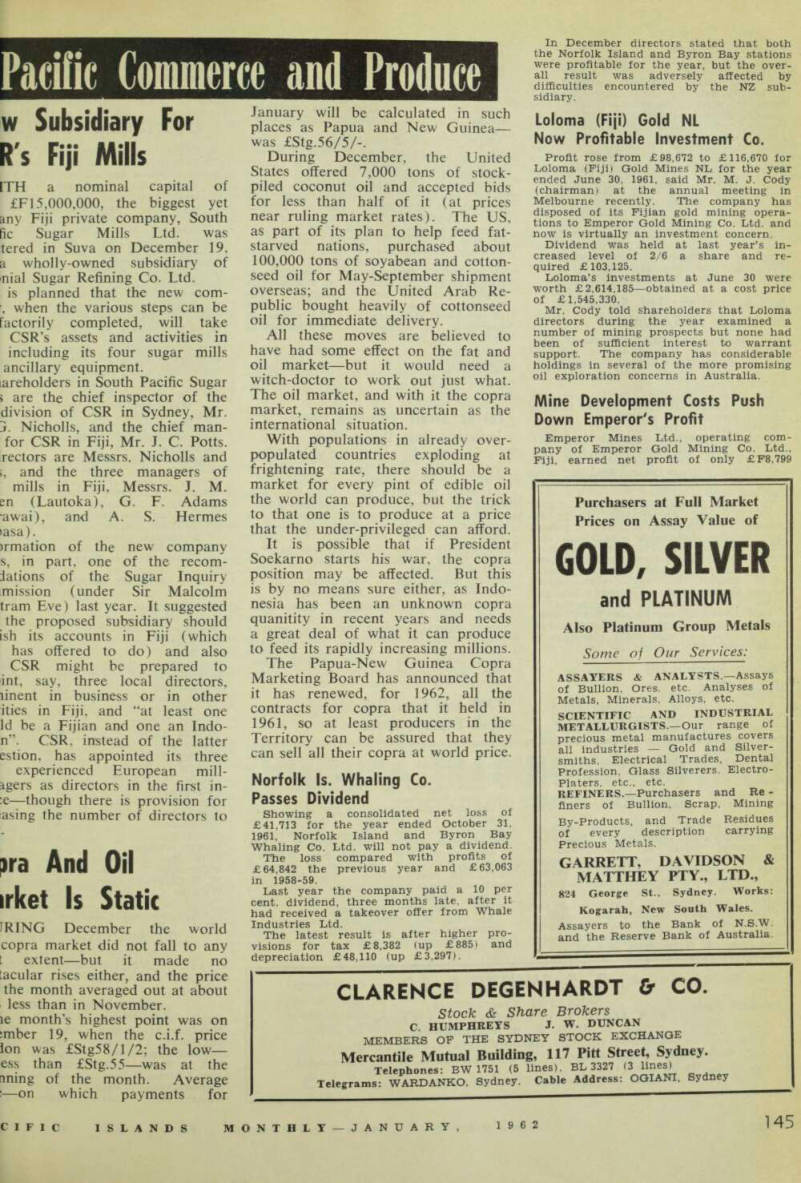 147
147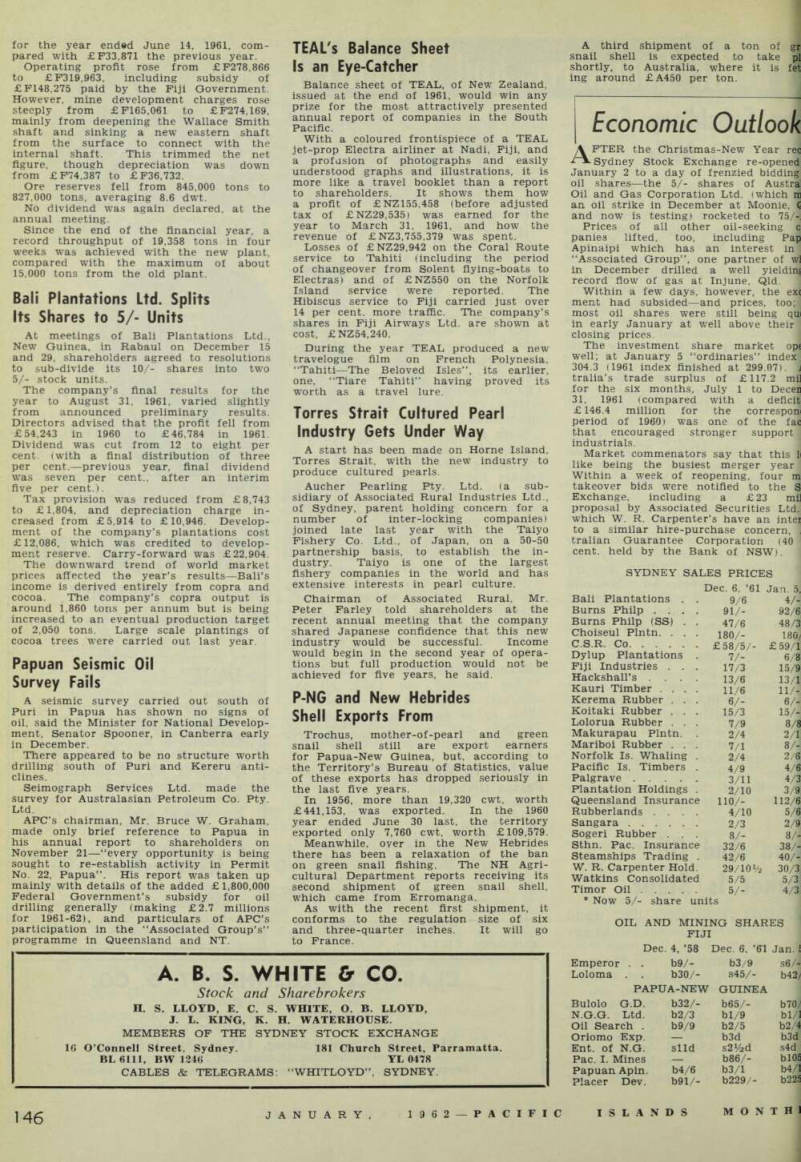 148
148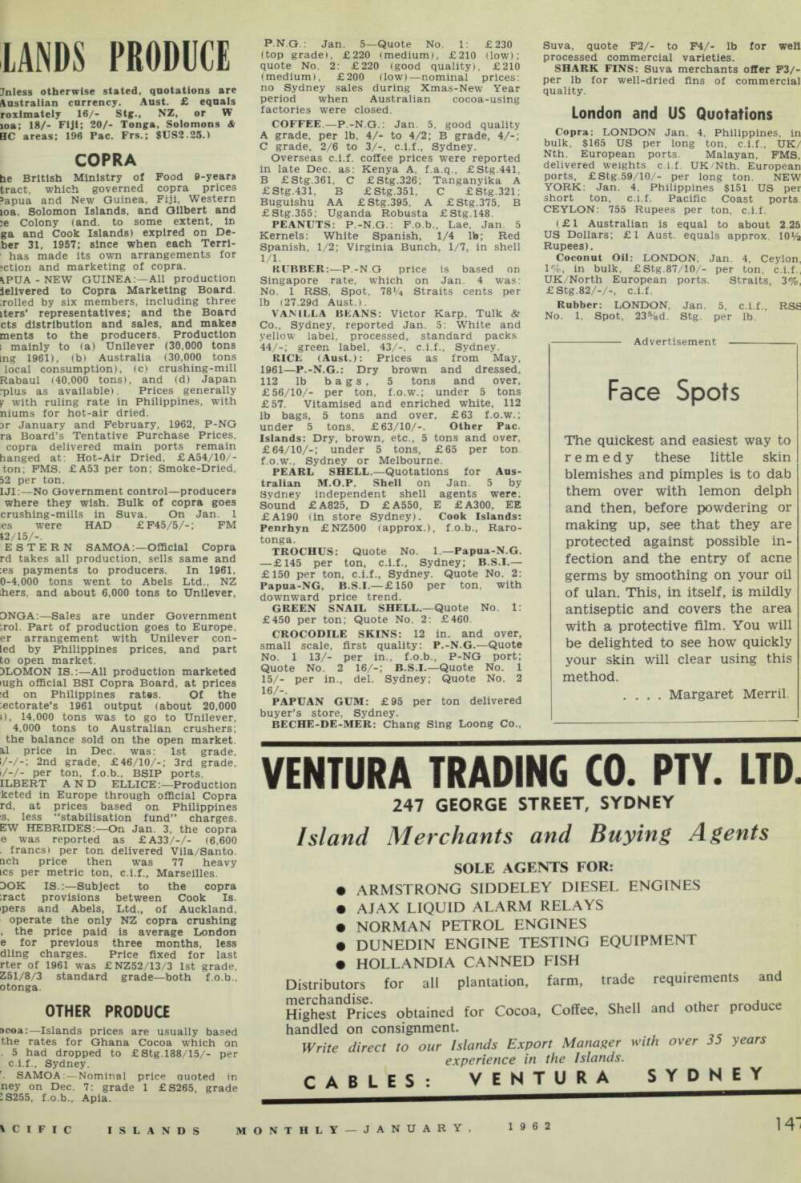 149
149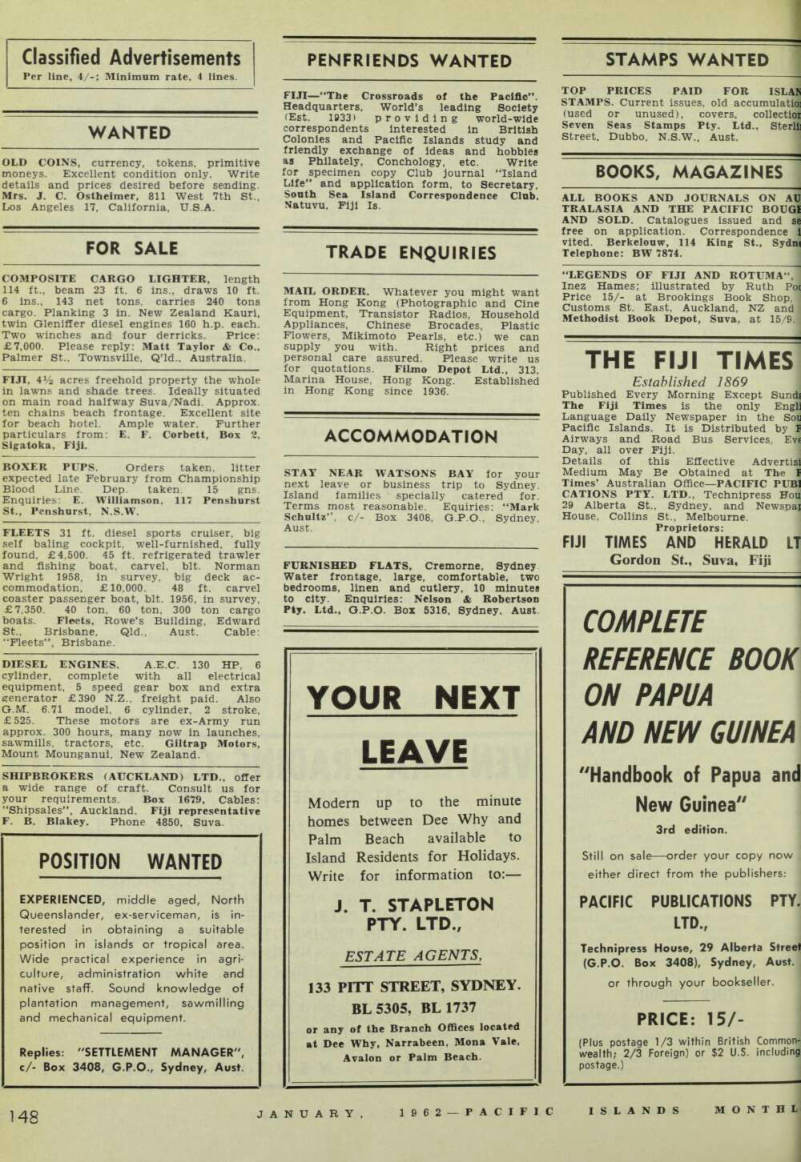 150
150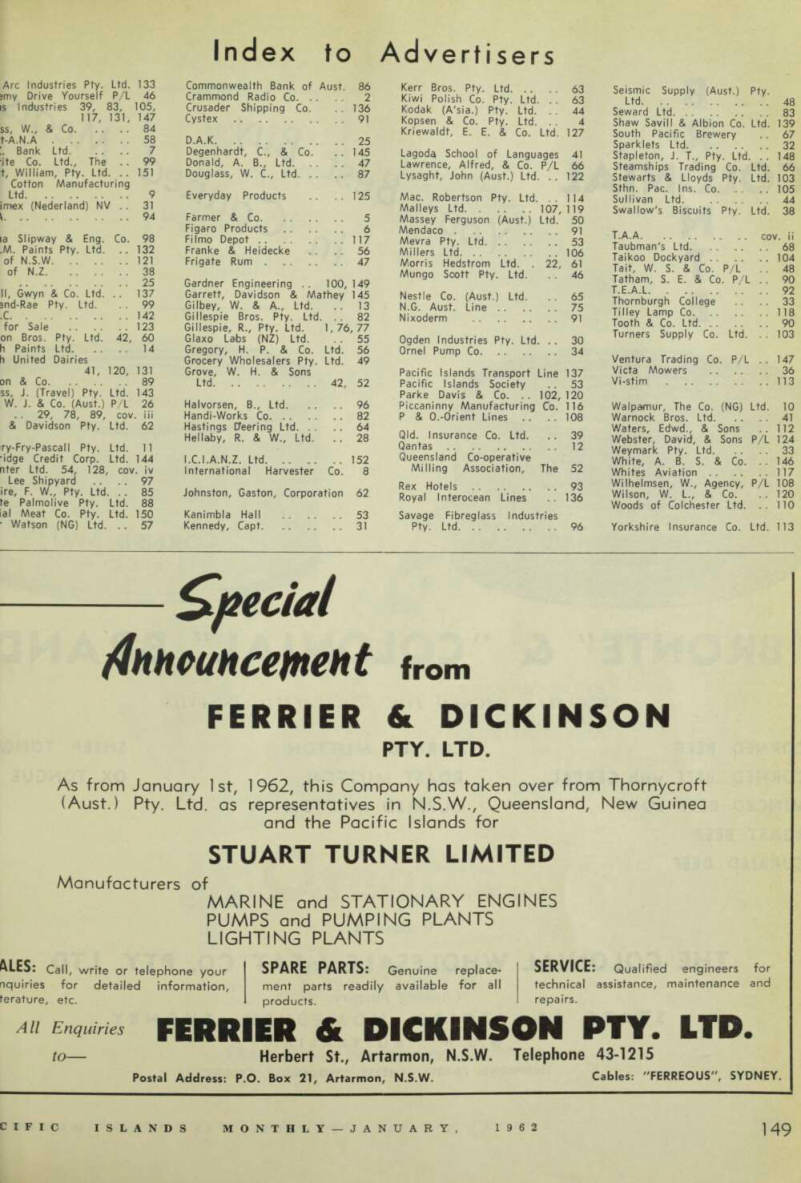 151
151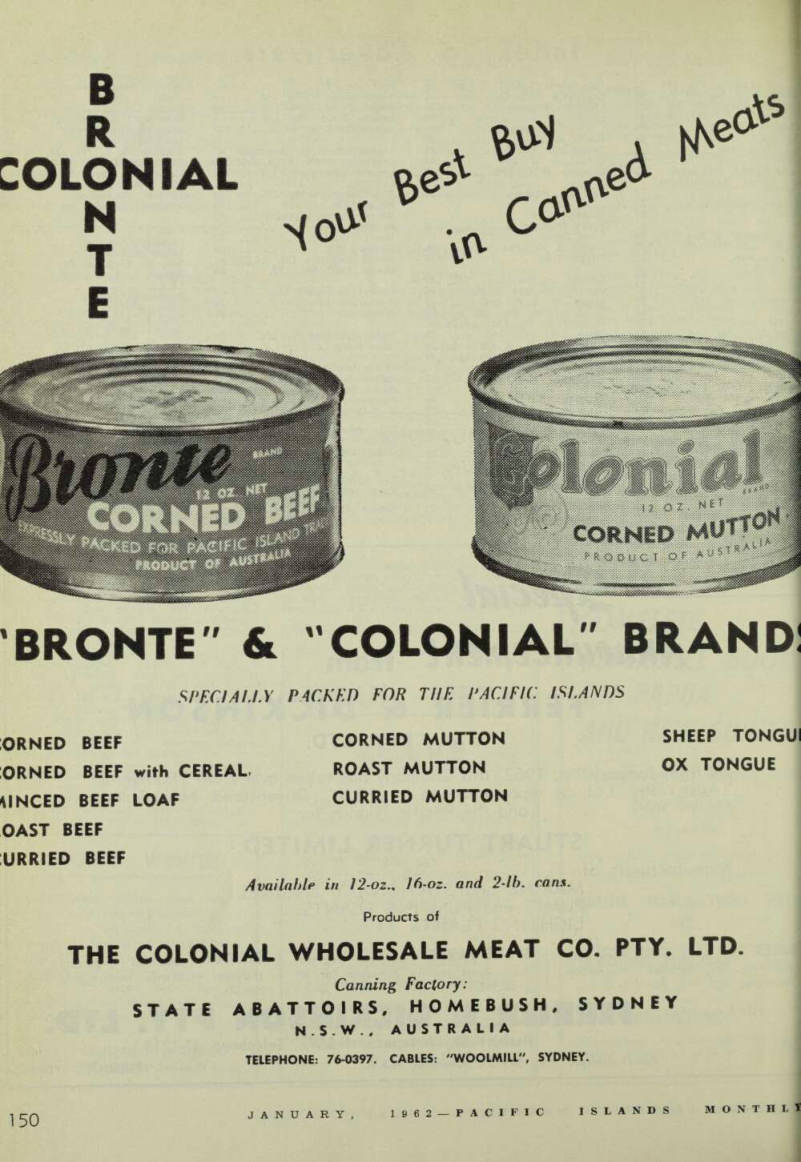 152
152 153
153 154
154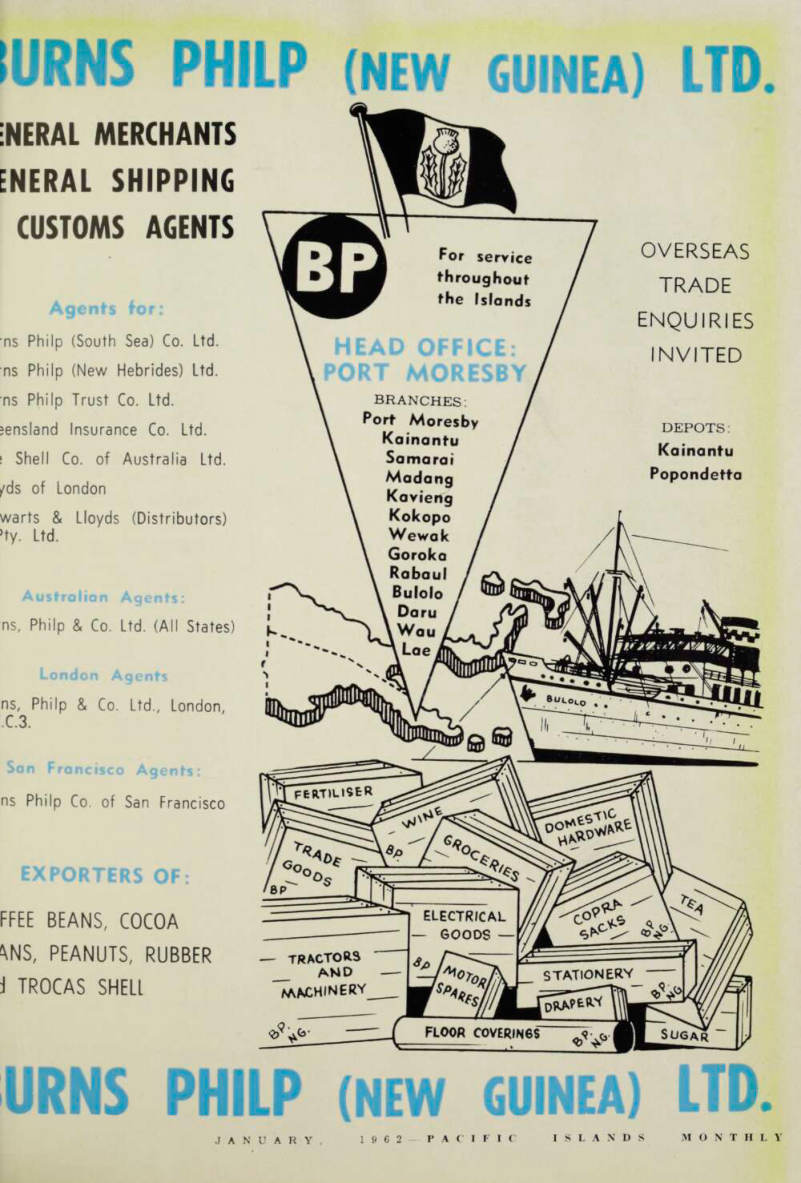 155
155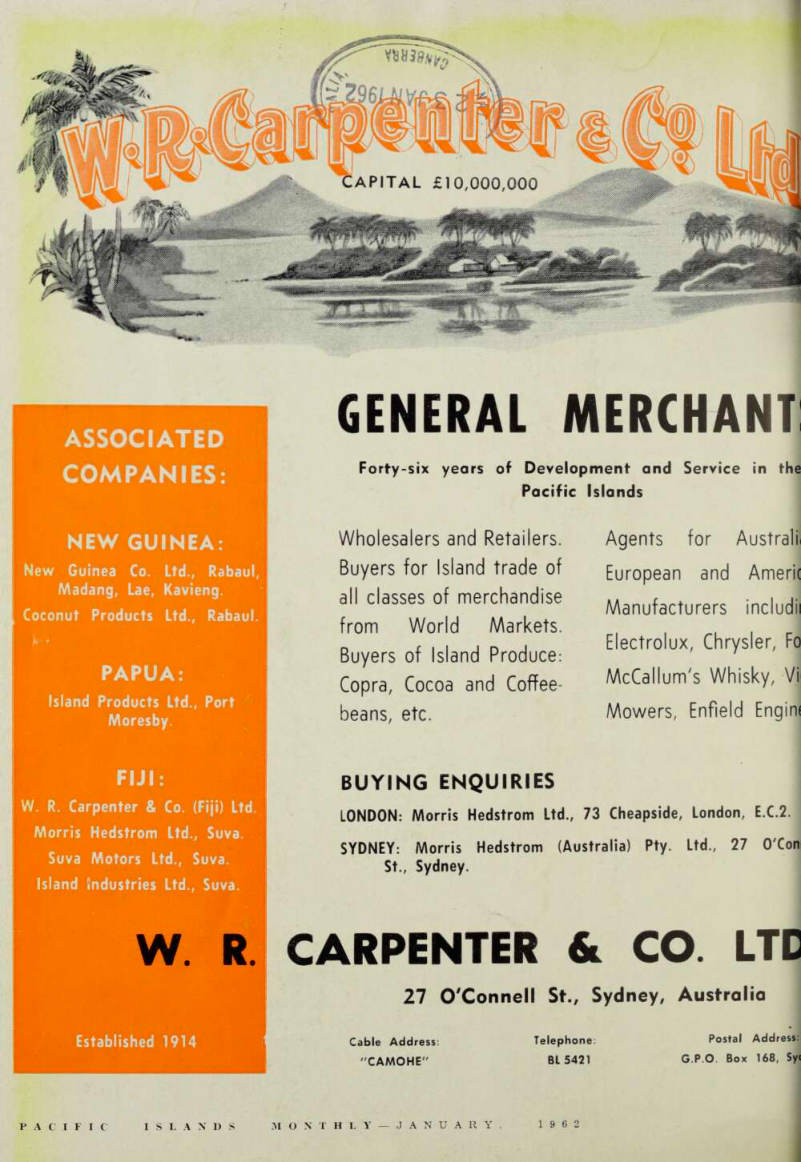 156
156