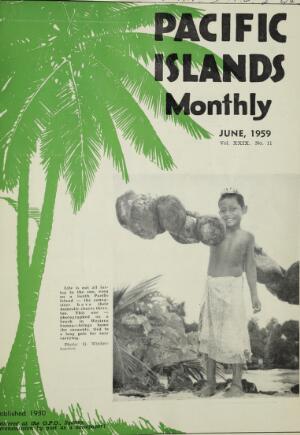
Pacific
Islands
Monthly
June, 1959
Vol. XXIX. No. 11
□blished 1930 nstered at the GP.O., Sydney, transmission by post as a newspaper
Life is not all laz ing in the sun, even on a South Pacific Island - the young sters have their domestic chores there, too. This one photographed on a beach in Western Samoa—brings home the coconuts, tied to a long pole for easy carrying.
Photo: G. Winkel koetter.
Advertisements & other items, pp. 2-6 (5 items)
East
ygxsi
THIS WAY'S BEST!
8 flights weekly around the world
Circle the globe with the sun or travel round the other way—B.O.A.C.-QANTAS is the best way to go.
Offering a choice of eight weekly flights, the 8.0.A.C.-QANTAS round-the-world route via Australia enables you to fly directly between San Francisco and New York without changing airlines. Experienced travellers will appreciate what it means in terms of convenience, comfort, cuisine and service to fly all the way by intercontinental airliners operating to international standards.
See your 8.0.A.C.-QANTAS travel agent.
BOM
THE WORLD-WIDE AIRLINE
WITH MNW
J82.84.58A
u
STOVES
sow
MADE IN ENGLAND
These two Coleman Stoves are of the one burner kerosene type and are available in both silent and roarer models. Their dimensions are height 8} inches, diameter 8} inches, approximate weight 2| lb. Both models have the same outstanding features.
Model No. 532 E
SILENT TYPE
Full-Size Fount with Filler Plug of wing type Air release on side of Filler Plug Heavy Brass pressure-tested Tanks.
Fount and Burner firmly soldered together. p uropeon-type pump.
Grate and Grate Supports detachable to reduce shipping space.
Soare parts interchangeable with similar Furopean Stoves.
Model No. 531 E
ROARER TYPE
Representatives for the Pacific Islands
2 YOUNG ST.,
SYDNEY
ROBERT GILLESPIE Pty. Ltd.
Phone: BU 2221 Cables “RobergilP y LSO 334 QUEEN STREET. BRISBANE, QUEENSLAND.
ROBERT GILLESPIE (N.G.) LTD. PEARCE & CO. LTD., Lae, Madang. Rahanl. Port Moresby Suva for Fiji Islands
AIITHE
0 0
latest
HEVIS FROM
feft . v.v.w.-.-.-MO
Order now from your Nearest Supplier
HOT PACKS
CANNED FRUITS
16-oz. Vegetables & Steak. 16-oz. Steak & Kidney Pudding. 16-oz. Steak & Tomato. 16-oz. Irish Stew. 16-oz. Beef Steak Pudding. 8-oz. Irish Stew. 8-oz. Steak & Kidney. 8-oz. Vegetables & Steak. 8-oz. Vegetables & Sausages.
COLD MEATS
12-oz. Trim (Pork & Beef). 12-oz. Camp Pie. 12-oz. Corned Beef W/C. 12-oz. Taper Corned Beef. 6-lb. T aper Corned Beef W/C. 6-lb. Taper Corned Beef. 12-oz. Taper Corned Beef W/C. 12-oz. Al-Tayib Halal Corned Mutton. (2-oz. Al-Tayib Halal Curried Mutton. 16-oz, 16-oz. 16-oz. 16-oz. 16-oz. 16-oz. 16-oz. 16-oz. 16-oz. 16-oz. 16-oz. 29-oz. 29-oz. 29-oz. 29-oz. 29- 30- Peaches.
Pears.
Apricots.
Grapes.
Grapefruit Segments.
Fruit Cocktail, Cherries.
Loganberries.
Gooseberries.
Raspberries.
Solid Pack Apple.
Peaches.
Pears.
Apricots.
Two Fruits.
Grapes.
Crushed Apples.
'RIVERMEDE" BUTTER
SAUSAGES
16-oz. Beef Sausages. 16-oz. Oxford Sausages. 16-oz. Cambridge Sausages. 16-oz. Pork Sausages. 8-oz. Vienna Sausages. 4-oz. Vienna Sausages. 8-oz. Frankfurters. 56-lb. boxes Bulk Butter, 1-lb. pats Butter.
J-lb. pats Butter. 12-oz. tins Butter. 16-oz, tins Butter.
MUSHROOMS
-oz. Sliced Mushrooms.
TONGUES
FRUIT JUICES
12-oz. Sheep Tongues. 12-oz. Lamb Tongues. 12-oz. Calves' Tongues. 12-oz. Lunch Tongues. 2-Ib. Ox Tongues.
CONDENSED MILK
14-oz. Sweetened Condensed Milk.
Unsweetened Evaporated 16-oz. 30-oz. 16-oz. 30-oz. 16-oz. 30-oz. 16-oz. 30-oz.
'Berri' 'Berri"
'Berri' 'Berri"
'Berri' 'Berri' "Berri' 'Berri' Tomato Juice.
Tomato Juice.
Orange Juice.
Orange Juice.
Grapefruit Juice.
Grapefruit Juice.
Apricot Nectar.
Apricot Nectar.
PEEK FREANS BISCUITS
Milk. 12-oz. Chocream. 8-oz, Reduced Cream. 14-oz. Natural Milk. 7-oz. Tubes Sweetened densed Milk.
Con-
CANNED FISH
12-oz. Flair Fish Cutlets.
In 4 lb. Tins and 8 oz Packets.
Bourn Vita Cream, Caramel ,Crunch, Cheddar Crackers, City Crackerette, Custoda, Custard Creams, Digestive Ovals, Ginger ."Slice, Honey Snaps, Lattice, Treasure, Vita Weat, Wafers, Wilton Raspberry Cream, Dairy Milk Arrowroot, Wheat Crunch.
STOP PRESS
NOW! REAL
BREAKFAST WINNERS
Imperial Hot Meals in
8 oz. Cans
Imagine a delicious hot breakfast prepared in less time than it takes to shave. Economical, convenient 8-oz. cans are now available in the Pacific Islands.
Choose your favourite dish from—lrish Stew, Vegetables
and Steak, Vegetables and
Sausages, Steak and Kidney.
MARGARINE
DRIPPING
56-lb. boxes Cake Margarine 56-lb. boxes Pastry Margarine. 16-oz. Tins Dripping. 37-lb. Tins Dripping.
AGENCIES: eastern Tasmania fisherman's co-op. societ Tasmania. (Flair Canned Fish). TONGALA MILK COMPANY, Victorr ("Jersey Cow" and "Mont Blanc" Condensed Milk). PORT HUD
FRUITGROWERS CO-OP. ASSOCIATION LTD., Tasmania. ("Huoncnu
Canned Fruit and Jams). PEEK FREAN (AUST.) PTY. LTD. (Bisci Manufacturers).
W. ANGLISS & co. (aust.) pty. lti
RIVERSTONE MEAT CO. PTY. LTD.
'lmperial" House, 255-257 George Street, Sydney, N.S.W.
REDBANK MEAT WORKS PTY. LTD.
154-206 Stanley Street, South Brisbane, Queensland.
SAMP
PIEO*
You get tJQHP with this compact,
all-purpose tractor!
m Here’s real power—built into a crawler tractor less than 9 feet long! This International BTD-6 has an easystarting, economical diesel engine with a drawbar pull of 10,250 lbs. Clutch, transmission, final drive and tracks have features for long life and easy operation.
There are 5 forward speeds (from 1.5 to 5.4 m.p.h.) and a ground pressure of only 5.40 lbs. per square inch.
Check up on the wide range of
matched equipment, including the
A-69 D-4 combination toolbar and light dozer. 50.5 Brake H.P. gives a /nighty pull!
INTERNATIONAL BTD-6
DISTRIBUTORS:
TCH NEW GUINEA: H. Englebert n.v.
Hollandia.
L 0 'ON ISLANDS: Mr. K. H. Dalrymple Hay, Honiara.
W CALEDONIA: Agence Automobile, Noumea.
HITI: Hintze & Company, Papeete.
W HEBRIDES: Kerr Bros. Limited, Sydney.
I: Niranjan's Service Station, Suva.
PUA AND NEW GUINEA:
lamships Trading Company Limited, Port Moresby and Samarai. alers; New Guinea Goldfields Ltd., Wau and Lae. Rabaul Trading Co. Ltd., Rabaul.
A-69 D-4 DOZER for light dozing, clearing and tilling. 14 S 5
A-69 D-4 TOOLBAR for
ripping or cultivating tools.
INTERNATIONAL HARVESTER
bourne, Victoria.
Ngaxj. Quima Jlitte
Passenger and Cargo Liners:
M.S. "SINKIANG"
M.S. "SHANSI"
M.S. "SOOCHOW"
S.S. "PAKHOI"
Regular services between Australia, Papua-New Guinea and Solomon Islands.
I
THE CHINA NAVIGATION CO. LTD.
(A British Company incorporated within the United Kingdom.)
South Pacific Service
JAPAN, SHANGHAI, HONGKONG TO NEW GUINEA AND FIJI,
THENCE RETURN JAPAN DIRECT
Regular monthly service with the modern motorships:
"CHUNGKING", "CHEFOO", "CHEKIANG"
Japan, Shanghai, Hong Kong, Kavieng, Rabaul, Madang, Lae, Samarai, Port Moresby, Honiara, Santo, Suva, Lautoka, Apia (as necessary), Noumea thence return Japan direct.
For further details please apply to Agents or refer to the weekly advertisements in the “South Pacific Post”.
AGENTS
PAPUA: Steamships Trading Co. Ltd., Port Moresby, Samarai.
Cables: "Steamships".
NEW GUINEA: Co'yer Watson (N.G.) Ltd., Lae, Madang, Rabaul.
Cables: "Colyeram", NOUMEA: Etab’issements Ballande, Rue de L'Alma, Boite Postale 18, Noumea.
HONIARA: British Solomon Islands Trading Corporation.
JAPAN: Butterfield & Swire (Japan) Ltd., Tokyo, Yokohama, Osaka, Kobe. Cables: "Swire"
FIJI: Morris Hedstrom Ltd.
SANTO: Les Comptoirs Francaise des Nouvelles-Hebrides.
APIA: Morris Hedstrom Ltd.
MANAGING AGENTS: Butterfield & Swire Ltd., 1 Connaught Road Central, Hong Kong. Cables: "Swire".
General Agents in Australia
SWIRE & YUILL PTY. LTD
6 BRIDGE STREET, SYDNEY.
• CABLES: "SWIRESHIP" BU 1712
1
[FIC ISLANDS MONTHLY JUNE. 1959
2
JUNE, 195 9 PACIFIC ISLANDS MONTHt
3
IF I C ISLANDS MONTHLY JUNE. 1959
4
JUNE, 1959 PACIFIC ISLANDS M O N T H I ®
People
rd Cobham, Governor-General ew Zealand, and Lady Cobham. pay an official visit to Western ca on board the NZ cruiser list on August 8 to 10. They will go to the Tokelau Group, 270 > north of Apia, and spend three there. ♦ * ♦ ■ Alan Burns, who will preside the Burns Commission of In r in Fiji, will arrive in Sydney me by the Oronsay, on his way iji, with Lady Burns. The two • members of the Commission, T. Y. Watson and Professor '. Peacock will reach Suva by 1, in time for the formal open >f the Commission in the Legis b Council on July 3.
. Alexander R. Bruce, OBE, :lpal United Kingdom Trade missioner in Australia, returned ydney from Papua and New ea centres on June 1, after ng a personal investigation of jrospects for increasing British ; with the Territory.
[?]tment of Dr. Jacques Barrau as Director [?] Economic Development Section of the [?] Pacific Commission, announced in May, [?] seven years of service to the SPC for [?]rrau. He has been best known for his introduction work in the Pacific. Dr. is a New Caledonian. He has a degree [?]icultural Engineering from the Toulouse [?]sity, and is also a Doctor of Natural Sciences.
Dr. Lindsay Verrier, of the Fiji Medical Department, will shortly go overseas on leave, during which he will attend an International Tuber culosis Conference in Turkey in mid-September. An Englishman with a passion for medical statistics, he has been engaged for many years in the compilation of a health index of the Fijians. While he is away, Suva residents will particularly miss the familiar sight of the erudite doctor put-putting around the city streets on his little motor scooter. * * * Mr. and Mrs. Bill Matthew, late of Kinjibi coffee plantation, in the Western Highlands, P-NG, sailed from Adelaide, SA, on the Oceanic in mid-May on an extended tour of Europe. They disembarked at Genoa on June 12, and in their own car which was aboard the ship with them, they set off to travel north through Europe to Scotland.
Mr. Herbert E. Faddy, one time of New Guinea and now on the staff of the Tailevu Hotel, Fiji, collected the first prize in an Australian lottery in May, making him £15,000 richer. * * * Dr. E. Wright, of the P-NG De partment of Health, has a formid able task ahead of him—as the medical officer in charge of the Ad ministration’s training scheme, he has this year started nine native students on the long road to becom ing the Territory’s first locally trained medical practitioners. Five are boys and four girls, and they all are doing their initial training in Pt. Moresby. Eventually a large medical centre will be set up at Taurama to accommodate, at first, 300 students, then later 600. The P-NG Administration will not send students to the Central Medical School, Suva, Fiji, in future.
This fine character study by an official KVR photographer in Netherlands New Guinea, is of Father P. Drabbe, one of NNG's outstanding linguists.
Ir. L. F. Handley, who was mty Shire Clerk at Guyra, NSW, <■ up duties as Lautoka Town rk, Fiji, early this month. * * * astor Lester Hawkes, of the \ Mission, has returned to Aus ia after three years on Pitcairn nd, with Mrs. Hawkes, to send r three children (Lyndon, 12; meth, 8; and Robyn, 3) to )ol in Sydney. The Hawkes have it all their 14 years of married in medical mission work in the [fie Islands, their previous ion being in the Eastern High l District of Papua-New Guinea.
Robert Narruhn arrived in Francisco from Fiji on June 7 the Orsova to meet his brother, erick—they had not seen each r for 58 years, since Fred uhn left the Caroline Islands. )01, and finally settled in USA. jrt Narruhn is on long leave . Burns Philp (SS) Co. Ltd., in >e employ he has been for »st 40 years. In the Carolines, fas under three flags: Spanish il 1899), (German (till 1918), Japanese. He moved south vards into the Gilberts when Japanese made it plain that their nationals could remain le Carolines, and for years he aged BP’s store on Makin id. The Japs over-ran Makin rorld War 11, but Mr. Narruhn ved precariously: at war’s end, rent to Fiji to recuperate and lived there ever since. * * ♦ '. Fred Pritchard, who has [led TEAL airline business at , Western Samoa, since the in-
happy smile belongs to Miss Annie Enosa [?]otonga, who passed through Suva in May [?]e way to seek a job in New Zealand— [?]ected with an agricultural school", she hoped.
Islands in April-May.
Mr. Hynd was engaged through the South Pacific Commission tt study and report on propagation: problems associated with the MOK industry in the Cooks. He wem north to Manihiki with the Coot Islands fishery officer, Mr. Ronald Powell, where it was planned to colt lect the spat of oysters for transs planting to new areas of the Cook: Islands lagoons. * * * Satisfying the demands of oven seas radio “hams”, Mr. Wyn. McGee; formerly with Nadi Aeradio in Fiji and latterly of New Zealand, madd a quick loop round the Fiji-Tonga* Niue-Samoa circuit in May, travel! ling by TEAL, Fiji Airways, ana Matua, at the expense of Americau and New Zealand radio amateun and with the intention of supplying them with radio contacts—and com firmation cards—from these hard* to-get territories.
The Americans sent special portd able radio equipment down to for him to pick up there. Only s few hours was available ashore a each place for setting up the equip* ment and making contact with thu maximum number of overseas* stations.
Mr. H. J. Smythe took up am appointment as New Zealand Civlr Aviation Administration Works Officer at Faleolo Airport, Westerm Samoa, early in May. Mr. Smythe is known in the Cooks, where he was engineer in Mr. D. C. Brown’s two-masted schooner Tahitienm\ some years ago. He left there to> join the RNZAF. * * * Mr. H, Ellis, a diesel engineer fon Cable and Wireless Ltd., went to Fanning Island, Central Pacific, in May, by the USS Co.’s transit Pacific vessel Waihemo. Three large!, diesel motors, transhipped from UK, ■ to provide more electric power at the Fanning cable station werev landed, and Mr. Ellis will install them in the three or four monthse period before the next north -boundo ship calls to pick him up for en route to another cable station job in Cape Verde Islands, in the Atlantic.
Married in the Lutheran Church, Lae, NG, i[?] May, Mr. and Mrs. Don Cresswell. Mr. Cress well is with Qantas—his pretty bride was Hele[?] Waters.
Db Niederholzer and his attrac wife Nancy have returned e to Berkeley, California, after Bar at Rarotonga. Mr. Nieder er did research for his doctor’s ee in education and his wife ht at St. Joseph’s Catholic ion School. Mr. Niederholzer : the University of California anxious to get back to the :s one day.
iix M. Keesing, former US )r Commissioner of the South ic Commission, is now lectur on “Administration of Pacific tories” at Stanford University, e he is executive head of the rtment of Anthropology, Dr. ing, a native New Zealander, grandson of a Fiji mission er, is now regarded as one of principal American experts on Pacific world.
nember of the Malayan office e Colonial Development Cor ition, Mr. G. I. Firmston ims, was in the BSIP in May >sing possibility of development cts in which the CDC can
[?]ing from a business visit to Western [?]—where he found the market possibilities [?]able —Mr. G. H. Barton, manager of [?]tional Paints of NZ, Ltd., left, was met [?]a by Mr. Peter Derbyshire, manager of Hutchinsons (Fiji), Ltd.
[?]ble in Suva at present are these two members of the 50-man Nauru Police Under a scheme commenced last year, [?]en will take special training each year [?]e Fiji Police. First Class Constable Derog left, and Constable John D. Olsson, the pair to come, had to travel in the phos [?]ship “Golden Master" to Napier, NZ, [?]y bus to Auckland, by TEAL to Nadi, [?]ally by bus to Suva —where they arrived [?]ary. The route home —in July—is likely to be equally round-about.
Mr. R. Burrows-Wilkes, former Collector of Customs in Nyasaland, has taken an appointment as Col lector of Customs in the BSIP, and has arrived at Honiara .
Dr. William Matheson, well known to many old-timers in the Pacific, has been on a visit to his brother, Dr. Farquhar Matheson, and his family at their home in Utulei, Vavau, Tonga. Mr. Matheson was in Samoa around Word War I period, when he acted as British Government Receiver of German properties.
Mr. R. A. Derrick, curator of the Fiji Museum, paid a visit to the Bishop Museum, Honolulu, and the Peabody Museum at Salem, Mass., USA, in May-June. Both of these museums have a great deal of material associated with Fiji which Mr. Derrick was interested in studying. He was also to pay brief visits to museums at Chicago, New York, and Washington, DC. 4 s Mr. J. L. Chalmers, a high executive in Fiji of Colonial Sugar Refining Co. Ltd., will be transferred soon from Fiji to the company’s Technology Division in Sydney. Mr.
Chalmers has spent many years in Fiji, and for the past two years he has been in charge of the large operation under which the CSR Co., following its decision to close the Nausori sugar mill, is seeking to in troduce a new economy to the Rewa Valley and Delta.
A large community of Indians has been growing cane in this area for several decades; and at present the Company and the Government, in co-operation, are trying to induce the farmers to change from sugar to the growing of rice, and other subsistence crops. Mr. Chalmers is connected by marriage with the Ragg family of Fiji—he married a daughter of Sir Hugh Ragg.
With Mrs. Irene Byron (centre), business secre tary of the Polynesian Association, in Sydney recently were these two charming young New Zealand visitors—Miss Yvonne Douglass and Miss Mary Carmond, both of Auckland. —Tele-Photo.
A son was born to Mr. and Mrs )on Reid in the Chatham Islands arly m April. Mr. Reid, well known n New Zealand’s Island Territories ecently took up an appointment as le si dent Commissioner of the Jhathams.
Messrs. C. and L. Baker, two New alanders, recently visited Raro- Q ga to investigate the possibility setting up fruit processing in istry.
[r - Frank Reeves, general man v of Tasman Empire Airways •, and Mr. G. N. Roberts, TEAL ctor, were in Tahiti early in 1 on a business visit. * * ♦ rs. Mary Croudace, of Western ioa, who had been residing in 1 York for some time, returned in May, and took over lagership of the Casino Hotel
ned by the Administration!.
[?]s. M. M. Enright left Sydney for Sohano, [?]ugamville, where she will stay with her [?]ghter, Mrs. A. Green, for about six months, was Mrs. Enright's first trip to the Islands.
[?]erlands New Guinea Government Secretary. [?]A. Loosjes, who attended the Fourth South [?]ic Conference in Rabaul in May, is at [?]nt spending three months leave in Aus [?]a. The Assistant Government Secretary, J. A. Welleman, is acting in his place in Hollandia.
Advertisements & other items, pp. 7-16 (9 items)
5
CIFIC ISLANDS MONTHLY JUNE. 1959
Davison Paints Limited
DAVISON PAINTS AND FINISHES
used on
UNILEVER HOUSE, Sydney
i For the ultra modern Unilever House, Circular Quay, Sydney, Davison Paints were approved (architects Turner & Stephenson) where only the highest quality materials were used throughout.
Davison Paints are proud of this fact. Davison manufacture a full range of paints, giving every satisfaction under severe
tropical conditions.
So see that Davison Paints and Finishes are specified for your new building.
DAVISON PAINTS LIMITED
Box 24, P. 0., AUBURN, N.S.W.
Obtainable from:— A.
Buntings H Bunting Ltd.. SAMARAI. Madang Slipways Ltd.. MADANG.
LAE, GOROKA, POPONDETTA. K. H. Dalrymple Hay. HONIARA, B.
Norfolk Trading Coy., NORFOLK IS.
SI.
Sole Agents for Territories of Papua, New Guinea, New Britain: LES CLARK & SON PTY. LTD., 27-29 King Street, Sydney
\ 4.
A cow
In my
kitchen
) Yes, madam! Well ... the next best thing . . . and that’s a tin of TOORALAC FULL CREAM POWDERED MILK !
Genuine dairy milk, powdered for economy and convenience, with all milk’s sweetness and goodness. . . ready at the stir of a spoon! Delicious for drinking, a wonder for cooking! Who’d bother with less than the best —when it’s so easily yours!
As good as a “cow” in your kitchen, madam ! . . .
TOORALAC
FULL CREAM
POWDERED
MILK “ !l "
Manufactured by
BRITISH UNITED DAIRIES PTY. LTD.,
33 King Street, Melbourne, Victoria.
Australia.
Cable Address; “HANDBURY”.
Enquiries direct or through our Sales Promotional Representatives for the Pacific Islands:
DEMKA PTY. LTD.
2-12 Carrington Street, Sydney, New South Wales, Australia.
FULL CREAM
POWDERED
MILK v#
SPRAY DRIED
Adduce of austral^
Organised and Directed for the Comfort
and Pleasure of
TRA VELLERS IN FIJI
Lautoka Hotel,
LAUTOKA
30 Bedrooms and Suites Ba Hotel, BA 15 Bedrooms and Suites Nodi Hotel,
NADI
16 Bedrooms and Suites Roki Roki Hotel,
RAKI RAKI
15 Bedrooms and Suites Sigotoko Hotel,
SIGATOKA
12 Bedrooms and Suites Tovuo Hotel,
TAVUA
9 Bedrooms “(
BEACHCOMBER HOTEL
Deuba, South Coast Attractively Situated—Only One Hour’s Drive from Suva Opened on December 1
NEW CLUB HOTEL, SUVA
Modern and Luxurious Centrally Situated—Overlooking Suva Harbour 18 Air-Conditioned Rooms and Suites
KOROLEVU HOTEL
On Southwest Coast of Viti Levu Most Famous Pleasure Resort in The South Seas 26 Separate Bures (Modernly- Equipped Suites) Under the Palm Trees Facing the Lagoon Luxurious Central Dining Rooms, Lounges, Ballroom, Etc.
All Equipped in Modern Fashion . . .All Licensed to Sell the Best Brands of Liquor . . . Any Kind of Transport (Private Hire Cars, Special Tourist Coaches, Taxis) Can Be Arranged.
For a Leisurely Tropical Holiday, or an Islands Tour, under the Most Pleasant Conditions, Consult—
NORTHERN HOTELS LIMITED
SUVA OR LAUTOKA, FIJI—OR
WHITES TRAVEL SERVICE HUNTS TRAVEL SERVICE
Sydney— Fiji—New Zealand Suva, Fiji
10 K.V.A. BRAYBON
Armstrong-Siddeley
415/240V 3 phase
DIESEL SET
X ■9 Completely r e conditioned—near new complete with switchboard. £485 f.o.b. Sydney.
Suitable for home lighting or power unit for cocoa, copra dryers and other plantation use.
Your enquiries solicited:
BRAYBON BROS. PTY. LTD.
27-33 Washington Street, Sydney, N.S.W.
Phone: MA 6853 (4 lines). Telegrams: "Braybonian", Sydney.
*$ f X / -M h.
A> u 'r C m
SUPERIOR HOTELS
So Well Liked
So Economical
HOTEL CECIL, Lae. P.O. Box 12. Tel., 2321. Cables: "Mortel", Lae Some rooms air-conditioned and private showers.
Filtered Swimming Pool.
GOROKA HOTEL, Goroka. Tel.: Gor. 18. Cables: "Mortel", Goroka Rooms with Showers and Toilets.
WAU HOTEL, Wau. Tel.: Wau 25 All Hotels are famous for: • Modern and Comfortable Accommodation. • Quality Meals. • Luncheons, Dinners, Weddings, Cocktail Parties, Conventions, etc.
Inter Hotel accommodation service on request to MOROBE HOTELS LTD., P.O. Box 12, Lae, T.N.G.
THE MACNAUGHT
44 GALLON DRUM
mm
B§sn
per
\\n of
eft
SV
QtRHOSt
rub
SIR
ct^?.
PUMP
w* Pumps and strains petrol, distillate, oil, kerosene.
Correct single-acting pump action pumps one quart per full stroke empties 44 gallon drum in 3 minutes without fatigue.
Easily removable filter in the suction pipe.
Superior packing gland design ensures that it never leaks.
U* Includes 1" synthetic rubber hose. Completely petrol and distillate resistant. u* All metal construction no perishable parts. No diaphragms or buckets to replace. Piston and ring operated 44"
Safety hose hanger protects hose nozzle from dust and hose cannot fall to ground. Pump is always ready. Can be locked.
Will syphon with lever forward cuts off flow immediately lever moved back. Handle lever mechanically operates outlet valve. v* Lever back seals off pump. No evaporation through pump.
No spillage, no waste. Saves both time and money.
FULLY GUARANTEED AGAINST ANY COMPLAINTS WHATEVER
AVAILABLE FROM YOUR
ISLAND TRADER
On all forms of
Insurance
you will be
tv ell served by
Harvey
Everybody should have insurance the right insurance for their particular needs. As experts in insurance we can arrange policies especially to meet your requirements.
Our advice is Free and without obligation.
HARVEY TRINDER
Insurance Brokers
HUNTER STREET, PORT MORESBY
Box 104 P.O. Port Moresby. Phone 2241-2 Agents PORT MORESBY & SAMARAI . Steamships Trading Co. Ltd.
LAE & WAU New Guinea Goldfields Ltd.
RABAUL .. .. A. Hopper. BULOLO .. A. McKinlay.
HONIARA, 8.5.1. P MADANG
E. V. Lawson. C. W. D. Rock.
Insurances at Lloyd’s and Companies
(hint tllalifli.
is a “must” for
tropical baking
T k MA mm Aunt Mary’s Baking Powder is always fresh and maintains its full strength. It never deteriorates in its airtight container, that’s why your cakes and pastries will have extra lightness, and stay fresh longer when you use Aunt Mary’s Baking Powder. You also cook with the important, and in the tropics, the vital advantage of adding the rising agent when you do your mixing—that is the right time the best time for sure results.
A bowl of piping hot, smooth, creamy Aunt Mary’s Tomato Soup is an ever welcome treat.
It contains only the choicest, just ripe tomatoes retains the flavoursome zest of the fresh fruits.
US *»r,
SOUP
M
MADE IN AUSTRALIA
AA-120 4 x 4—114 in. and 126 in. w.b
See TRACTION in ACTION
See the one ton, 4-wheel-drive International truck This is a NEW truck from headlights to tail-light—built for comfort, safety, economy and a long life of trouble-free work. A look at the picture will show you why International is justly proud of this stylish new truck.
Study the modern twin headlights, wide, curved windscreen, new air vent and dual self-parking electric wipers. Inside the cab is an ash tray, key controlled starter switch, oil fuel generator and heat gauges, pendant-type pedals,- 4-spoke safety steering wheel and deluxe trim.
There is a powerful NEW 6 cylinder tilt valve engine with "full-flow oil filter and increased capacity generator, a strengthened chassis frame, new front cross member, new cab mountings. This is a really NEW International 4x4 with 1959 features and
styling.
INTERNATIONAL
HARVESTER
DISTRIBUTORS
International Harvester Company of Australia Pty. Ltd. District Sales Offices in Capital Cities of Australia.
Works: Dandenong, Geelong and Port Melbourne, Victoria.
DUTCH NEW GUINEA: H. Englebert n.v. Hollandia.
SOLOMON ISLANDS: Mr. K. H. Dalrymple Hay, Honiara.
NEW CALEDONIA: Agence Automobile, Noumea.
TAHITI; Hintze & Company, Papeete.
NEW HEBRIDES: Kerr Bros. Limited, Sydney.
FIJI: Niranjan's Service Station, Suva.
PAPUA AND NEW GUINEA:
Steamships Trading Company Limited, Port Moresby and Odmdrdi. , - Dealers: New Guinea Goldfields Ltd., Wau and Lae. Rabaul Trading Co. Ltd., Rabaul.
PIM. 333-3
distributed in AUSTRALIA,
NEW ZEALAND and the
Mowing PACIFIC ISLANDS:
stralian Territories: Papua. Norfolk Island. Cocos Island. st. Trust Territories: New Guinea.
Nauru. tish Crown Colonies: Fiji. Gilbert and Ellice. tish Protectorate: Solomon Islands.
British Protected State: Tonga.
Territories: Cook Islands. Niue. :. Trust Territory: Western Samoa. nch Territories; New Caledonia.
French Polynesia. - French Condominium: New Hebrides. . Territories: Eastern Samoa. Hawaii. . Trust Territory: Micronesia (Caroline, Marshall and Mariana). utch Territory: West New Guinea.
Publisher:
R. W. ROBSON.
Editors:
JUDY TUDOR STUART INDER
Manager:
SELWYN HUGHES.
EPHONES: General Business, Editorial, Advertising, Subscriptions:
MA 9197-8, MA 7101, MA 4369,
MAI 395.
G.P.O. BOX 3408, SYDNEY.
jgistered Address for Telegrams, idiograms, and Cables: "Pacpub", Sydney.
SUBSCRIPTION RATES:
British Pacific Islands, Z., Australia, annual bscription (includes surce mail postage) .. £1 4 0 French Pacific Islands, nual subscription (in- Jdes surface mail stage) £1 7 0 (280 Pac. frs.) vhere, per annum, $5 S. or (Sterling) .. .. £J 10 0 e Copies 2 6
BRANCH OFFICE, PAPUA-
NEW GUINEA
ic Publications (New Guinea) Ltd., Ire Building, Fourth St., LAE, New Guinea. Tel.: Lae 2577.
Miss Pat Robertson, Manager.
BRANCH OFFICE IN FIJI;
Times Building, Gordon St., Suva.
Tel.: 4043.
REPRESENTATIVE IN N.Z.;
D. Whitcombe, P.0. Box 5179, Auckland. Tel.: 42.384.
REPRESENTATIVE IN U.K.:
Wallis, 13 Rood Lane, London, C.3. Tel.: Mincing Lane 8633.
OURNE OFFICE: Newspaper House, Collins St., Melbourne, Victoria.
Tel.: 63.7053.
TS: All main trading firms and tores in the Pacific Islands.
TIMES AGENCY IN AUSTRALIA
Pacific Publications Pty. Ltd., •press House, 29 Alberta St., Y (Telephone MA 9197-8), is the alian Agent for THE FIJI TIMES, of Suva, Fiji.
7
CIFIC ISLANDS MONTHLY-JUNE 1959
11
CIFIC ISLANDS MONTHL Y - J U N E 1959
13
C I F I C ISLANDS MONTHLY JUNE, 1958
14
JUNE, 19 5 9 -PACIFIC ISLANDS MONTHLI
:
PEOPLE: Personal Para graphs of Islands’ Interest 5 They’re Building Up For A Showdown In New Guinea 17 The Future of P-NG: White Domination “Doomed to Failure” 17 Air Services: Tahiti Will Be Better Off 18 Unusual Position Over Sale Of Grand Pacific Hotel .. 18 Burns Commission In Fiji Soon 19 Reginald Sear: New Guinea Farmer In the Public Eye 19 South Pacific Commission Discusses Money; America Wants To Give More ... 20 Fiji Indians Turn Their Eyes Towards New Hebrides .. 20 Fiji Sugar Inquiry Opens .. 21 New Sugar Company Wants The Old Quota ... 21 HOME BASE: Sydneysider Reports 22 M. Lenormand Has a Major Election Victory 23 Two Survivors of the Busama Explosion: 21 Dead 23
COMMENTARY: The Pub
lisher and The Editors Look At Pacific and World Affairs 25 The Editors’ Mailbag .. .. 27
TERRITORIES TALK
TALK: With Tolala .. .. 32 The Greigs of Fanning Island Have a Memorial Now 37 Five Castaways See the World 41 Tonga Is Going Ahead: In terview with Prince Tungi 43 New War History Reviewed; At Last, a Clear Account of the War in NG 45 Ten Yards Start Was All They Wanted .. .. .. .. 47
There’s Peace and Family Spirit In West Nakanai .. 50 Full Report On What the South Pacific Conference Decided 53 Twenty-five Thoughts on a Changing Pacific 55 Portrait Of Two SPC Men In a Taxi 59 And How Are the Airlines Faring? Latest Round-up 61 NG Airstrips Are Getting Steeper and Tougher .. 61 More Honour For NG Man John Cox 66
FIJI TALA N O A: With
Vakatawa 69 Grand Pacific Hotel’s New Manager 75 The Problems Of a Fiji Wood Industry 77
MAGAZINE SECTION:
Tropicalities, 81; Crossquiz, 82; There She Blows, 83; Nadi To Suva Via The Slipped Disc Route, 84; Brett Hilder’s Profile, 85; He’s On The Job, 86; Do You Remember? 86; George Murdoch Of The GEIC, 87; Book Reviews 88 The Month’s News Of Ships and Yachts .. .. .. .. 101
PACIFIC REPORT: Round
up of Pacific News and Pictures (Index p. 17) .. 117
OBITUARIES:
Mrs. R. Duncan, Mr. S.
Yeoman; Mr. T. Robinson; Mr. A. L. Byrne; Father W.
Connors; Mr. W. J. Hart; Mr. B. W. Crookshanks; Rev.
Father Edward Meyer; Dr.
William Paley 151 Sports Review 152 Shipping and Airways Time tables 155 Commerce and Produce .. 165
A Product of Pacific Publications Pty. Ltd., Tecbnfpress
House, 29 Alberta Street, Sydney. (29 Alberta Street is 10 yards from the intersection of Goulburn Street antf Wentworth Avenue.)
British Paints Limited
By Appointment to Her Majesty Queen Elizabeth 11.
Manufacturers of Paint.
British Paints Limited, Newcastle Upon Tyne.
British Paints Limited
WORLD FAMOUS
MARINE FINISHES
As used on the world's leading shipping lines for tougher protection . . . longer life both above and below the water line.
BRITISH PAINTS LIMITED
Guaranteed Quality costs you no more, saves you so much in better protection. w Z Tl
FOULING
:om. ,li»l
Ml ’ll COLOURS
KOPLASTIK
Anti-Fouling
for all wooden vessels
GIANT" BRAND
Anti-Fouling & Deck Paints for all small craft and island vessels
SUPALUSTA
Super Enamelised
Exterior Gloss Paint for topside and superstructure decoraton and protection iquiries are invited
IMPO
ANTI-MOULD SOLUTION
VESSEL INTERIORS: On new unpainted or previously painted surfaces, where mould or fungus growth is evident or suspected always apply British Paints Ltd. ANTI-MOULD SOLUTION before paint application. from storekeepers to act as authorised agents for British Paints Ltd. quality products. Write to British Paints Ltd., Box 43.
P. 0., Bankstown, N.S.W.
They're Building Up For
Tax Battle Started It, But That's Only Half The Story They're Building Up For A Showdown In N. Guinea
As the inevitable moment approaches for the introduction of income tax into Papua-New Guinea, the Territory’s eight year-old Legislative Council is set for the liveliest session in its history in June.
HHE session starts on June 22 so L that the tax ordinance and re lated bills may be steam illered another stage further, the any amendments debated, and e whole thing adjourned until July I —when taxation will finally be troduced. It will be made retro lective from July 1.
Decision to postpone the final issage of the bill until July was minor victory for the opposition rces and about the only sur ise in NG tax-fight developments oce April 20, when the only three ected members of the 29-man ‘gislative Council walked out, and mounced they intended to resign soon as the tax bill becomes law.
The three made it clear that they ?re taking action not as a protest ainst taxation, but as a protest ainst the “undemocratic use of e official majority to pass the v without a prior independent in iry” and “in objection to the lack sufficient representation of the ople of the Territory in their uslature”.
Fhe postponement decision, made ter a deputation from NG saw
Acting Prime Minister McEwen in Canberra in May, is of little real help to the taxpayers. Its stated purpose is to give the Canberra politicians a better chance to “sympathetically consider” all the amendments, but nobody expects the leopard will change his spots during the considering process, although in future, he may think more carefully before springing.
What the postponement might do —and Canberra well knows it —is take a little of the thunder out of the June session. With the tax bill still not finalised at that session, Canberra is hoping that the elected members —and some of the nominated members, too—will not cause them embarrassment by re signing, as they threaten.
But there will be more ways than one of causing embarrassment at that session if need be, as Canberra might soon find. And whether a boycott of the P-NG Legislative Council begins in June, July or the month afterwards is not of great consequence.
The fact remains that Canberra’s handling of this tax matter has precipitated a public revolt against the machinery that controls the big territory, and a showdown is on the way. That revolt will be working it self out even though Territorians may have settled down to paying their money to the Tax Collector.
Meanwhile, In NG it’s a case of while there’s time there’s hope on the tax fight itself, and throughout May taxation was still the biggest single topic throughout the Terri tory. One meeting of the New Guinea Taxpayers’ Association held in Rabaul drew 480 people.
Other developments: • The association is professionally briefing Sydney tax expert J.
Mackellar White to assist it on tax amendment proposals, and he will be in Port Moresby for the June Legco session. • Territorians have been warned they can expect prices for many goods to go up if tax is introduced, and Administration officials have already threatened to police price controls. • Many business people have an nounced their intention of return ing to Australia when tax is in troduced.
Port Moresby people no doubt read many things into this inscription when it suddenly appeared in May outside the Port Moresby post office, where building work is going on. —Papuan Prints.
Pacific Report
Turn to these inside pages
for more highlights of the
month's news: 21 Killed in NG Ship Explosion -117; Fiji’s Manganese Outlook, NNG Doctor Retires After 16 Years — 118; Control of Fiji Lot teries—ll 9; Tonga’s Accommoda tion Problem— l2l; The Dutch Spread the Word in the US; Pro gress on Madang Memorial — 123.
Oil Should Be Cheaper in the S.
Pacific— l 27; They’re Settling Back Into Tin Can Island— l 29; Need for Birth Control; US Trust Territory Under Fire— l3l; Brighter Signs in N. Caledonia; Cook Oranges Leave Sour Taste — 133; How to Re-enter Fiji— l3s; War of the Zebra Crossings— l 37.
Another Airline for the Two Samoas —137; P-NG Will Appeal in Tick Case, After All; No TV for Suva -141: NG Bars a Croc Shooter; New Nadi Strip in Use— l 43; Two Cannibal Reports— l 44; Latest on Copra Prices— l4B; Canberra Man in NNG; Goroka Show Keeps Up High Standard — 149.
White Domination Is "Doomed To Failure"
Papua-New Guinea must bring into its Legislative Council the elected voices of the people, who will otherwise “be forced to take unilateral action themselves”. That’s the view of Mr. lan Downs, planter and elected member for the NG Mainland in the Council. He suggests that the Legislative Council should be expanded, and contain elected native members.
xn answer to a PIM query in May, I Mr Downs explained that this is how he sees New Guinea s future: ™ntinuine “The only Australia close association Oetw e b „ ( or suc . and New G. um n e 5 a Xal non-raciai cessful and
stuck fast in prepared positions, from which they are unlikely to Downs says that reasonable people realise that “white domina- Son. and neo-Victorian paternalism by the Administration, are doomed to failure”. The situation has been acce lerated “by conflicting Govern ment policies, w^h^aje^lready opinion that
we have been forced by these policies to take a major step forward to regain the initiative, and renew the confidence of the people. To this end, I believe we must bring into the Legislative Council the elected voices of the people, who will otherwise be forced to take unilateral action themselves.”
Mr. Downs says extension of the franchise is inevitable, but what ever method is used, NG should make sure it is not used too late.
NG people are not yet ready for self-government. But there was work for all to try to make non racial democracy and a common loyalty to Australia, work. P-NG
Advertisements & other items, p. 17 (1 item)
17
ACIFIC ISLANDS MONTHLY JUNE,
Tahiti Will Soon
Pacific Air Services
Be Better Off
• Papeete, Tahiti, which has been out on a limb as far as air ser vices are concerned, will begin to get the full benefit of the air age after the end of this year.
FFiji, in May, Mr. Jacques Sutton, representative for TAI in French Polynesia and Fiji, was confidently forecasting that at the end of this year, TAI would be extending its present service beyond Bora Bora to Honolulu and San Francisco—although talks on re ciprocal landing rights to cover this area will not take place till August. (See page 61, this issue.) When this extension is in opera tion it will be possible to fly by TAI all the way from Paris to San Francisco via Middle East and Asia, New Caledonia, Fiji, Tahiti and Hawaii—with a side trip to Auck land, NZ, if you want it.
Papeete Airport
Mr. Sutton said that preliminary work had started on the new inter national airport at Papeete and that when the contractors (Societe de Travaux Publics) got into full operation, they would be working 24 hours round the clock, seven days a week. It was expected that a 6,000 ft runway capable of taking Super Constellations and DC7c’s would be ready by June, 1960, and that by early 1961, it would be ex tended 4,000 ft further, to take jets.
TAI recently transferred its head quarters from Nadi, Fiji, to Papeete.
Pan American Airways are TAI representatives in Fiji; Mr. Sutton visits the Colony from Papeete about once every two months.
could still be a new Australian State.
Mr. Downs offers these sugges tions for reconstituting the Legis lative Council: • Creation of three electorates on the NG Mainland — Morobe, Madang-Sepik, the Highlands—one European and one New Guinean member to be elected from each. • Creation of three electorates in Papua—Central, Western and Eastern —each with one European and one Papuan. • Creation of two electorates em bracing New Britain and the Islands, each with dual representa tion, but plus one Asiatic member.
Mr. Jones' Views
New Britain solicitor Mr. Dudley Jones, who is elected member for the New Guinea Islands in the Legislative Council, sees the im mediate need in New Guinea as more than a reconstitution of the Council.
But as far as recomposition goes he would consider as probably still sound the recommendations made by the Select Committee of 1954 (nine elected members, an official majority of one, eight nominated members and any number of native observers who would take part in debates).
“We must face up to the fact that for the present the Govern ment is entitled to have a majority in the Council,” says Mr. Jones.
“The grave defect in the present system is that non-officials have no voice whatever in policy framing, either political or financial.
“This is where the reforms should come in, as it does not matter very much whether there is a majority of one or more in the Council.”
These are the desired consti tutional reforms needed in NG, as Mr. Jones sees them: • At least one non-official, probably more, on the Executive Council. • A Standing Committee on finance, consisting of, say, three official and two non-official mem bers. • A standing policy by the Gov ernment that on major legislation it will call a conference of in terested persons to discuss the pro jected legislation (which was quite successfully done in the case of the Native Labour Ordinance). • Representation in the Aus tralian House of Representatives.
On this last suggestion. Mr. Jones says that up until the last few months he has been luke-warm on this proposal. But he has since come to realise what a “tremendous help” NG people could have had in fighting the tax measure had there been a capable man at Can berra to present NG views.
Whether the member possessed a vote or not would not be import ant, his main job would be that of lobbying.
Three-Cornered
Sale Of The GPH Unusual Three-Cornered Position
• An unusual situation has de veloped out of the surrender of the Grand Pacific Hotel, Suva, Fiji, by the Union SS Co. Ltd. to the Gov ernment of Fiji, and the subsequent sale of the property by the Gov ernment to Cathay Hotels Limited, a unit of the Cathay Organisation, of Singapore.
UP to June 5, no money had been received by the Union SS Co., and no price agreement had been reached between Government and Union Co., despite a series of requests by the Union Co. for settle ment.
Yet, at June 5, the hotel had been in possession of Cathay directors and management for nearly two months.
The Union Co. built the hotel 50 years ago on land rented from the Government. In November, 1958, the company advised that it would not seek renewal of the lease, and notified its intention of accepting from the Government, in terms of the original agreement, payment for the hotel property “at current valu ation”.
Not Disclosed
It appeared that the two parties must agree on a valuation. The Union Co. sent a valuer from New Zealand. The company subsequently informed the Government that his valuation was £120,000, for the hotel as a going concern.
The Government obtained at least two valuations, but did not disclose the figures to anyone. They are be lieved to have been under £lOO,OOO.
The Government, at the end of 1958, decided to sell the hotel im mediately by tender, which closed on March 31, 1959. Cathay Hotels Limited offered to pay whatever price was paid by the Government to the Union SS Co. There were two other tenders.
The Union Co. at the end of March formally handed over the hotel to the Government and, for a very brief period, the Govern-, ment owned the hotel, and the name of one of its high officials > appeared as the holder of the liquor licence.
The Government accepted the Cathay tender, and the Cathay i people (headed by Mrs. Loke, a senior director of the Cathay Organ isation) who had come from Singa pore, entered into possession early in April.
Up to June 5, it was not known
(Continued on page 150)
why no money had passed; butt it was known that Union Co. had: made requests for settlement and had indicated its determination tcc remove furniture and equipment fon sale elsewhere.
As the hotel is now running iir the midst of the tourist season, this* could have caused and it was agreed between th© parties that Cathay, pending final, settlement, should pay Union Co.( £75 per month for hire of furnitur© and equipment.
The Fiji Legislative Council was to meet in mid-June and It was expected that someone would seetol an explanation of why the Govern ment allowed the successful tend erer into occupation of the hotel; before the Government and th© Union Co. had agreed upon th© amount of compensation to be paid) —which amount, of course, governedb the amount to be paid by Cathay to the Government.
The two unsuccessful tenderers were interests representing Mm Barry Philp, the Mocambo hotel owner, and interests associated withn Mr. H. B. Gibson, who is a mem ber of the Legislative Council.
Advertisements & other items, p. 18 (1 item)
Dudley Jones Says, We
18
JUNE, 1959 PACIFIC ISLANDS MONTHLY
Dudley Jones Says, We Need A Voice In Policy’ (Continued from previous page)
It Seeks A New
Burns Commission
Arriving
It Seeks A New Plan For Fiji
• The official inquiry into the re sources and future development of Fiji, in relation to its growing population, will commence this month in Suva.
THE chairman, Sir Alan Burns, who is accompanied by Lady Burns, is due in Sydney by Orient liner Oronsay on June 19, and tie probably will meet some of the tieads of the big Australian cor porations with interests in Fiji be fore he and Lady Burns continue ;heir journey to Suva.
The other members of the Com nission are proceeding independ ently to Fiji. The Commission’s iecretary, Mr. R. C. G. Strick, has )een at work in Suva for several veeks, arranging sittings and organ sing the in-flow of evidence that vill be submitted.
It is expected that the recom nendations of the Burns Com nission will be of major importance n the history of Fiji.
(Continued on page 150)
The three outstanding facts among Fiji conditions, which now provide the Government with its major problems are (1) the rapidly growing Indian population in Fiji; (2) the Fijians’ land ownership rights, as recognised in the Cession of the archipelago by the Chiefs to Britain in 1874; and (3) the re luctance of the Fijians to change their social order (which is based on village communal life, controlled and directed by the chiefs) to meet entirely new conditions created by industrial development and the growth of the Indian population.
The members of the Commission are:
Man In The Public Eye
New Guinea man most in the public eye in May was Re g m . al 4 o f° hn nl ®® a d r ’ farmer, here photographed by “PIM” on his 1.000-acre lease at Yaluou side Lae, with his wife and their son Richard. They are expecting anotoercMd soon. On March 24, Sear was charged with having at Yalu the h J? ban! unlawfully killed a native named Surumbani. The evidence was that had been helping to fix a truckload of kau-kau, which had slipped, that S had struck him (Sear denied it): that Surumbani had gone off and p later found dead in the kunai by other natives, from a fuSie keltf who had of the P-NG Supreme Court held in Lae on May 20, Mr. Justice Kelly, wl been a NG solicitor of wide experience before his to the Supreme a few years ago, found Sear guilty of the charge—which Is an q manslaughter. He decided, because of all the clrcumstancesnotto ga but to fine him £l5O in default 12 months gaol. Mr. Dudley Jones (for Bear) had fhefine, submitting that the . blow -oderate the native s spleen was eight times the normal size, and in 10 years p y g there had been no complaint against Sear. .
The Judge’s decision aroused no particular interest in.NO In Australia it created an outcry. Churchmen, trade un * on s. pohticians, bitterness amongst as injustice by the white mu agailnstthe black: pJS JSehSk”the native people because of its ienlency Terrltorles ln June dared he would examine the papers to see if the Craw that having looked the Australian Cabinet discussed the matter and ann , . ’h e did and no at it closely, it had decided the Judge was entitled to do what he did ana n appeal was justified. Reginald John Sear con- As all this went on in Australia, up at xaiu. . He has tinued to work his property, and hls Liesand poiSltry P owns a trade store 250 acres of coconuts planted, runs catUe, pi g s a P' miry most and a petrol pump. Noted as a hard worker he is on the jod * Jesi weeks, with the help of a labour line of 60 natives— mciuaing (right) who has been with him in NG for 10 years. Aeured Since the trouble, none of his boys has left him iabQur Une co i lec ted. in court evidence. During his absence at J*e t . kau . kau which Sear loaded and delivered—without European supervision the k staff. His contracts to supply the P-NG Administration for some oi two-year kau-kau contract was renewed during th worklng with saw .
Sear is a Queenslander who went toP NO ioined the P-NG Forestry De millers at Port Romilly, Papua. After the a . J lu for eight years before he partment and was at the Government sawmill himself in May. 1959, resigned and took over his present lease and tn the NG man most in the public eye.
Advertisements & other items, p. 19 (1 item)
19
ACI F I C ISLANDS MONTHLY JUNE,
But They Won't Call The
“ You Say Yes, And I Say No”
But They Won't Call The Whole Thing Off
It might seem surprising that Pacific Governments have to “lobby” to get increased funds for the work of the South Pacific Commission. But they have been lobbying for that lately.
THE San Francisco report on the views of the senior US Com missioner for the SPC, Dean Knowles A. Ryerson (see story at right) merely brings into the open a subject which has already been discussed behind the scenes, and will be for some time yet.
The US is interested in giving more money to the Commission, and is feeling its way among the other five governments. But, as it no doubt expected, it is not finding it easy to be open-handed.
An increase in the US grant would upset the percentages of all the government contributions, or the total ceiling—or both. Whatever happens, the member governments would have to take a closer look at their commitments, and that is not an easy thing to get them to do.
"Canberra Ceiling"
The immediate stumbling block is that the 1957 Canberra Review Con ference decided that a ceiling should be set for three years, and that the total annual contributions from governments should not be higher than this although contributions from new sources, such as Founda tions, would be permissible. That ceiling doesn’t expire until 1960.
It’s too early yet to say just where each Government stands on the matter of continuing the ceil ing after 1960, for firm Government policies would not have been worked out. But at the moment it looks as if Britain is rather hoping to keep the ceiling where it is for the next three years, too. She is not in terested in spending any more money in this part of the world.
The Netherlands likes saving guilders no less than Britain likes her sterling, but the Dutch would not object to the ceiling going up.
Neither would the French. The French attitude seems to be that they will go along with the majority, without complaint.
The most interesting attitude is easily that of Australia, which finds the biggest proportion (30 per cent.) of Government funds. There appears to be an argument going on.
The Department of External Affairs (which among other things
(Continued on page 150)
administers Australia’s contributions to Asia under the Colombo Plan) says Australia should give more to the SPC; the Department of Territories says she shouldn’t.
The way the Territories Depart ment looks at it, Papua-New Guinea —the main Australian territory re quiring aid —already has plenty of its own, and Australia doesn’t have to spend more money to get the SPC to help it.
No doubt the Americans will hope that the Territories Department’s opinions won’t prevail.
SIR ALAN BURNS, GCMG, former British Colonial Governor, and (1947-19561 Britain’s representative on Trusteeship Council, United Nations.
PROFESSOR A. T. PEACOCK, Professor oi Economics at University of Edinburgh.
MR. T. Y. WATSON, CMG, a former Agri culture Officer in Uganda and Kenya and now retired.
Secretary Op Commission: Mr. R. Cl
G. Strick, formerly District Officer at Ra.
Fiji.
The Commission’s terms of refer ence provide that they are “to ex amine the surveys of the Colony’s natural resources and population trends and, having regard to the need to ensure the maintenance of a good standard of living for all sections of the community, to recom mend how the development of the Colony and its resources should pro ceed”.
A special meeting of the Council of Chiefs (the body which directs and, to a degree, controls Fijian native administration, under the Government) was held in Suva late in May, to consider and prepare material for presentation to the Burns Commission.
Material also has been prepared by representative groups of Indians, and by leading members of the European community.
Up to May 28, the Secretary of the Commission, in Suva, had re ceived representations from 96 in dividual Fijians, 50 Indians and 2fi Europeans. Naturally, there is a wide diversity of opinion about the future political and economic de velopment of the country.
Contribution
America Moves To Increase Its SPC Contribution
From Ralph Craib, in San Francisco The South Pacific Commission may get more money as a result of its latest meeting in Rabaul, held in conjunction with the South Pacific Conference. This is the view of senior US Commissioner Knowles A. Ryerson, speaking on his return here from the meetings.
DEAN Ryerson, who is Dean of the University of California College of Agriculture, said the Americans had urged that the US share of 12i per cent., or $62,700, of the SPC’s annual budget be in creased, and he thought the matter was “on the way to solution”. (It’s a fact that increases to SPC have been sought from Congress in the past but they have been blocked.
This is probably because they have been considered at the time as appropriations for other inter national agencies, and the US has
felt it was paying the lion’s share of the costs. It may have been, over all, but 12 i per cent, is not the lion’s share of the SPC budget.
France and America both pay 12 h per cent., but the Dutch, NZ and UK Governments pay 15 per cent, each and Australia pays 30 per cent.)
"Not Doing Its Share"
Dean Ryerson pointed out that the American share was based on membership only for American Samoa, but since that was estab lished the US Trust Territory of the Pacific Islands had been brought in and had received “great benefits and has requested even more assist ance’’. Yet there has been no in crease in contributions.
America was “not doing its share,’’ said Dean Ryerson, but apart from that, it was in the selfish interest of America to contribute more, for the following reasons: • Americans learned during World War II how costly could be the lack of knowledge of the Pacific Islands when they were in un friendly hands. • Americans were concerned with the welfare of New Zealand and Australia and in keeping the vital lines of communication to them in tact. • America was obliged to help Pacific territories towards self-gov ernment: with Western Samoa’s in dependence apparently imminent, the rest “were all looking and say ing, when does our turn come?— as they should.” It was in the US interest to have friendly Island gov ernments. • America would benefit in its own Islands territories from know ledge gained elsewhere, because problems all the way across the Pacific were the same.
Fiji-Indians Looking At The New Hebrides
• On June 6. a small party of leading Fiji-Indian business men left Nadi, Fiji, for New Hebrides, to make a private survey of business opportunities in that large archipelago.
THIS could be an event of economic and political signific ance. Fiji is ruled by the British Colonial Office, and is becoming a little overcrowded, in relation of racial needs and land availability.
The New Hebrides (an Anglo- French Condominium) has a great deal of unoccupied land, especially in the large, climatically-desirable islands of the Southern Hebrides.
The Fiji-Indians in the party in cluded Mr. Sathis Narain, managing director of the Narain Construction Co. Ltd., Mr. Udit Narain, archi tect; and Mr. Abdul Lateef, barrister and solicitor. They all are Fiji-born
men, typical of the young Indians who have been educated in Fiji and Australia, and all are well known and esteemed in the Fiji business world.
New Hebrides is a rich and spaci ous archipelago. It is capable of much additional settlement and de velopment; but it has lain for 60 years under the paralysis of the Condominium. French influence! there is now strong; and the atti-i tude of the French partner in the Condominium therefore would be an important factor in any scheme to encourage Fiji-Indian enterprise to go in there.
Sugar Worker Worth?
Inquiry Begins Into Fiji's "Explosive" Sugar Industry How Much Is An Indian Sugar Worker Worth?
Mr. B. D. Lakshman and long discussions on the rations of Indian prisoners in Her Majesty’s gaols in Fiji, dominated the early part of the Fiji Sugar Industry Inquiry that got away to a wordy start on May 25, and was continuing into June.
CHE Governor of Fiji, Sir Kenneth Maddocks, set up the Board of Inquiry in April when it became pparent that, with the new sugar rushing season approaching, in ustrial unrest in the sugar in ustry was close to explosion point.
Chairman of the board, Mr. G. G. [oneyman, CBE, QC, MA, LLB, ime from the United Kingdom to reside. (He has previously made similar inquiry into the sugar idustry of British Guiana). Also a the board are Mr. D. M. N. [cFarlane, Ratu K. K. T. Mara ad Mr. P. K. Bhindi, all of Fiji.
The Sugar Industry Employees’ ssociation appointed five dele ites, led by Mr. Lakshman, to pre ait its case. And Mr. J. C. Potts, lief manager in Fiji of the olonial Sugar Refining Co., will resent the case for the company.
Minimum 3/- an Hour On several occasions, early in the iquiry, Mr. Koneyman had to lestion Mr. Lakshman closely to ad out what the employees did ant—it was not always clear from ie speeches that Mr. Lakshman ade.
It appears, however, that what t. Lakshman and his union want
is a 40-hour week, at a minimum rate of 3/- per hour. This, accord ing to his calculations, would just cover the cost of food for an Indian family of husband, wife and five children. (At another stage, Mr.
Lakshman claimed that the weekly wage should also be sufficient for every worker to be able to buy an adequate house).
Present wage rate is 1/5 per hour, an d there is a 48-hour week, Because there are no official cost -of_nving figures in Fiji, Mr.
Lakshman based his calculations on the cost 0 f the daily rations of an Indian prisoner in a Fiji gaol, Evidence was taken from Mr.
B M sellers, Superintendent of prisons on Indian prisoners’ rations w hicli include vegetables, rice, b ead sharps, fish, meat, fruit and cur ry’ He said that the average cost of feeding a prisoner—all races —was calculated at . £2l/6/4 p^ C e^ ta gg h of P its °food and bought from Government stores”). tn e re T , hman claimed that it Mr. Laxsnmd, buy the cost W / & prisoner > s ration, equ of writing, the Board had taken little or no evidence from had , delegate. the comp<u y
The board of inquiry which was looking into the circumstances surrounding a wages dispute between the Fiji Sugar Industry Employees' Association and the Colonial Sugar Refining Co. in Fiji in May-June. The board will make no rulings but will tender recommendations to the Fiji Government. From left: Mr. P. K. Bhindi; Mr. G. G. Honeyman, QC, chairman of the board —from the United Kingdom; Ratu K. K. T. Mara, and Mr. D. M. N. McFarlane. Hearings commenced in Suva on May 25 and transferred a few days later to the north-west of Viti Levu.
Photo: Stinsons.
New Company Wants
If Or When It Gets Going New Company Wants Old Sugar Quota
While the Colonial Sugar Re fining Co. goes ahead with pre parations to establish a rice-mill in place of its old Nausori sugar cane crushing mill, which will close down permanently at the end of the current crushing sea son some time next December,
the Fiji Sugar Milling Co. Ltd.,
which planned to step into the
breach, is having some difficulty
in raising the necessary money.
THE new company, with a nominal capital of £1,000,000, was regist ered in Suva last December, and was formed by Indian cane planters and others interested in the sugar industry in the Rewa Valley.
The company’s share issue is divided into 40,000, £25 shares. No confirmation of the number of shares sold could be obtained early in June.
Mr. S. Clarke, a representative of one of Australia’s largest engineer ing combines —Associated Engineer ing Manufacturers of Australia Pty.
Ltd—was in Fiji late in May to in vestigate the company’s machinery requirements and to prepare a quote at their invitation.
A quote had earlier been received from an American company for mill machinery capable of crushing 500 tons of cane each 24 hours (present
CSR Nausori capacity 1,200 tons).
The price, delivered and erected, was £250,000, and arrangements had been made for the necessary dollar allocation. Delivery would be with in 16 months of ordering, and the mill would be ready for operation four months after that.
"Unreasonable," He Says
Assuming that the finance is forthcoming, there is the question of a sugar quota. In the past the entire Fiji quota—fixed at 184,000 tons for 1959 under the Inter national Sugar Agreement has automatically gone to the CSR as the only millers in the Colony.
Mr. Ram Jati Singh, secretary of the new company, said late in May that it would be “most unreason able” for the CSR to be permitted to transfer the Nausori portion of the Fiji quota to other areas, if another company was prepared to handle the sugar of local farmers.
Much of the Rewa Valley cane land was owned by the CSR, but the 10,000 tons required by the pro posed mill would be available from other areas. In Mauritius, Mr.
Singh said, there were over 20 mill ing concerns amicably sharing that country’s sugar quota and the same could apply in Fiji.
It was true that the sugar content of the Rewa Valley cane was lower than elsewhere, Mr. Singh said, but the growers had said that they were prepared to receive propor tionately less from the CSR for such cane.
Mr. Singh said that the new company was confident that a modern mill could easily pay its way in the Rewa Valley, especially as it will have the support of the majority of farmers who are re luctant to change over to rice or other crops.
However, a good many other people in Fiji are saying, “We’ll believe it when we see it.”
Mr. S. Clarke, representative of Associated En gineering Manufacturers of Australia Pty., Ltd. (left), flew to Nausori in May to look into the possibility of tendering for sugar mill machinery for Fiji Sugar Milling Co., Ltd. He was met by Mr. K. B. Singh, OBE, JP, secretary of the Nausori Kisan Sangh (sugar workers' union) and by Mr. Ram Jati Singh (right), secretary of the newly formed sugar milling company.
Perturbed
Csr Is Not
Sydney headquarters of CBR did not ; ->em unduly perturbed about the Fiji ugar quota when asked about it In June. The quota Is given to a country and not to any particular firm. As the only crushers in Fiji for the last 32 years, the CSR Co. has naturally supplied all Fiji’s export sugar. How ever, they said if or when a new company goes the Fiji sugar business “presumably the allocation of the quota would be a matter for the Fiji Government”.
Having more than one sugar com pany in Fiji is not new, of course.
'There were numerous companies in the early days but only three survived the ruinously low at the end last century: The CSR Co.; the Fiji Sugar Co., that later became the Vancouver-Flji Sugar Co and finally succumbed in 1922; and the Penang Sugar Co., that had started life in Mago Island and was later removed, factory and all. to the Ra coast. The CSR acquired the Penang establish ment in 1927.
Advertisements & other items, p. 21 (1 item)
21
ACIFIC ISLANDS MONTHLY JUNE.
Home Base
By Sydneysider
Sydney is the hub of the South Pacific, and its news is your news. Here are some of the things that made May-June headlines.
The abortive effort of garage proprietors to get another Id. a gallon out of petrol buyers has let some air into the question of the multiplicity of service stations in this fair city—five to the mile, according to one newspaper esti mate.
Since the oil companies intro duced one-brand stations, the number has increased at least five-fold, with the result that operators (who lease them from the oil companies) find it hard to make labourer’s wages even working a 70-hour week—again according to the newspapers.
Previous to the solo-site era, service stations sold all brands; now when one brand starts, five others selling different brands, all pop up like weeds in the same locality.
In one mile of road that your Sydneysider travels twice daily, there were no petrol stations two years ago. Then there was one; immediately a rival company acquired a block of land and a house opposite—sawed the house in half and carted it away. Then there were two. A third soon appeared at the other end of the mile, and now three more are in course of erection—one required three houses to be cut in half and towed away. This is a road along which cars travel by inches at week-ends (it leads to a popular beach); and bumper-to bumper on week-days. Unless in dire want, no one pulls out of that sort of traffic to buy a fav ourite brand of petrol. Most Australians learned during the long years of rationing that any car will manage to move on a judicious blend of kerosene and white spirit. So, in spite of ad vertising and “additives,” as far as the average motorist is con cerned the oil companies might as well have continued to dis pense Pool petrol—the brew they combined to produce during the war. * * *
Secret Weapon: Dr. Billy
Graham preached to 3,242,000 during his 4 months Australasian campaign, and departed these shores May 31, leaving behind 142,000 people who had seen the Light, and saying that he might go to Moscow “next month or maybe later this year”. * * *
You Could Be Still In
DUTCH: Australia’s famous “dictation test” (a device for keeping undesirable migrants out
by subjecting them to a written test in any recognised language, never their own) ceased on May 31. The doors are no wider open, however. You now have to get a Permit to Land—and if you aren’t wanted, that’s just as hard to acquire as an Honours pass in Tagalog. * * * UP AND UP: Third Party in surance (compulsory) that started out as 35/- a year when it was introduced less than 20 years ago, is now £7/18/- a year for a pri vate car, and, if the insurance companies have their way. will go up another £2 shortly. The Government Insurance Office which handles 82 per cent, of this business (most of the other com panies won’t touch it) has lost £4 million. Introduced to protect the innocent, it has resulted in fabulous sums being awarded by juries to those injured in traffic accidents. It is common for a child, riding in his parent’s car at the time of an accident, to sue the parent for damage if in jured. A completely irresponsible attitude to damage payments— because the insurance company “can afford to pay”, has re bounded on motorists generally until an average insurance bill (3rd party and comprehensive) is now around £3O per year. * * * BASIC INFLATION: Although the Unions put on a big front of complaining that it “should be 23/-”, employers cursed and even the man in the street thought of it as a two-edged sword, when the Federal Basic Wage went up by 15/- per week in June.
The mathematicians were soon busily at work showing that it would cost the whole country an extra £50,000,000 in wages per annum—which would mean more income tax, more payroll tax, higher cost of goods, thus more sales tax; the philosophers were saying that no matter what benefits accrue to the individual, the tax-man gets it in the end; and the people who have been waiting for the cost of living to fall have no doubt all decided to jump over the Gap en masse.
The priceless words of one of our best-known politicians—that management should organise better, labour should work harder, and everyone should produce more so that this 15/- will really be a benefit —has just got a horse-laugh.
Viet Question
Solved?
New Caledonia’s Senator Henry Lafleur was reported in Noumea in May as saying that the question of repatriating New Caledonia’s unwanted Viet namese had just about been solved, thanks mainly to his in tervention in Paris, plus local support. He said it was “practic ally certain” a ship load of Viets would leave Noumea before the end of the year.
The attitude of New Caledoni ans, who have heard all this before, was still, “We’ll believe it when we see it!”
Major Election Victory
Support For Meddling" Policy
Major Election Victory For Lenormand
The result of the May 24 elections in New Caledonia and the French section of the New Hebrides, for a Deputy to the French Parliament, resulted in a resounding victory for M.
Maurice Lenormand, who was re-elected.
A FEW weeks ago he flew off to Paris threatening to resign from New Caledonian politics, as a protest against what he declared was
the “whittling down” of New Caledonia’s political rights by the present French government. He later reconsidered resignation.
He apparently now has, however, to resign as Vice President of the New Caledonian Council of Min isters as he cannot hold this post and also that of Deputy. (This pre sumably is a new regulation, as he held the two posts previously; per haps it is part of the whittling down process he complained about in March).
The electoral campaign that pre ceded May 24 has been described by a Noumea correspondent as the “quietest ever. There were no pamphlets, no newspaper abuse, no posters slapped all over public and private buildings, and everyone con cerned behaved like gentlemen,”
About 48 hours before the poll, M. Parasols, an independent candi date, abandoned the struggle and declared that he was no longer run ning for office.
However, under French law his candidature still had to stand and although he polled 429 votes (even though he was not in the race), he lost his deposit, and had to pay all his electoral expenses.
Nearly 24,000 of the 36,000 en rolled electors exercised their privilege and voted—7o per cent, of them for Lenormand, except in New Hebrides where the French residents were solidly behind the New Re public Union party candidate.
Lenormand polled 4,000 votes more than he did at the last elections for Deputy, and a lot of the gain was in Noumea, previously dominated by the opposition party.
Observers think that this swing of European votes indicates that the bulk of New Caledonians, native or European, and in spite of their “Oui” vote at the September referendum, want no meddling in New Caledonian domestic affairs from Metropolitan France.
It also probably shows that after you scramble the political eggs and produce something in the nature of the Loi Cadre, it is. in these days, virtually impossible for even a de Gaulle to unscramble them.
He Denies It
When the 300-ton coastal ve f el 7 “£ US t fives Harbour, NG, in May, 21 people lost p™* f them— despite ship’s chief engineer, Dan Anthonson, was no aTnon g the widely published Press reports nammg h>'™ or “ s espond 9 ent> Patricia dead. Thus it was that PIM Lae Anthonson reading Robertson, was able to take this V^otoi trap f Anthonson is the his own obituary in a Sydney new spape . (left), to whom “ Busama’s" acting Second Engineer.Tan paci/!c Anthonson says he owes his life. For t Report, p. 117.
Advertisements & other items, pp. 23-24 (2 items)
23
JUNE. 1959
ACIFIC ISLANDS M O N T H L
Morris Hedsirom Ltd.
(Artist s impression of Morris Hedstrom's modern new store under construction Thomas Street, Suva.)
General Merchants, Produce Buyers, Importers and
Exporters, Ship Owners, Plantation Owners, Commission
and Insurance Agents.
HEAD OFFICE :: SUVA, FIJI
AUSTRALIAN REPRESENTATIVE:
Morris Hedstrom (Aust.) Pfy. Limited, Wales House, 27 O'Connell Street,
SYDNEY
REGISTERED CABLE ADDRESS:
LONDON OFFICE:
Morris Hedstrom Limited,
Barclay's Bank Buildings,
73 Cheapside,
LONDON, E.C.2.
Deuba —Suva, Morrished—Levuka, Morstrom —Sydney, Suvamark—London, Morrisco—Nukualofa, Deuba —Apia.
CODES: All.
SOLE AGENTS FOR:
A. B. Bahco Primus Products British Drug Houses Ltd.
China Navigation Co. ‘Chula’ Copra Dryers Electrolux Limited Ford Motor Co.
General Electric Co., Ltd.
Goodyear Tyre & Rubber Co.
Morris Hedstrom Limited are Imperial Chemical Industries Ltd.
Matson Navigation Company Max Factor & Co., Inc.
Pacific Islands Transport Line Ransomes Sims & Jefferies Ltd.
Rootes Ltd.
Vacuum Oil Co. Pty. Ltd.
Yorkshire Imperial Metals •’S AGENTS in Fiji and Samoa For Friendly Service and Complete Satisfaction it's Morris Hedstrom Limited in
FIJI - SAMOA - TONGA
Commentary
Death of a New
Guinea Native
ONE day last March, a farmer in the Lae District of New Guinea, Mr. Reginald John Sear, 39, ad ministered a “moderately heavy punch” to the body of Surumbani, me of his native labourers. The aative’s spleen was ruptured, and le died.
The planter was charged with un awful killing. Mr. Justice Kelly, in Clay, found that Sear had punched ;he native, and that this was a actor in his death; but in view of ill the circumstances, he imposed l fine of £l5O.
Immediately, there was a storm hroughout the Australian news )aper Press. The suggestion was hat Sear had been “let off with a ine” because Surumbani was only , native, with a life of little value.
It was a good example of Aus tralia's difficulties in governing this 'erritory. Conditions in New Guinea re so different from those in Aus ralia that 99.9 per cent, of Aus ralians are quite incapable of mak ig a fair judgment in a case like lis.
A very large proportion of New ruinea natives who suffer from un seated malaria have enlarged pleens, and quite a light blow will ipture the spleen and cause death, he Director of Native Affairs (Mr. . Roberts) in a formal statement i Port Moresby on May 22 (when e said that the natives generally sit that justice had been done in ie Sear case) said that natives ith enlarged spleens often died as ie result of sharp exertion in their tmes and village activities. He had en a native die, following a jump om a 4-feet fence.
The Judges in Papua and New uinea—and not the Australian iliticians and the Administration ficials —are, in the ultimate lalysis, the real guardians of life, w and liberty in the Territory, ae Territory Judges are today— id, with one possible exception, ive been since Australia took over men who command the respect id confidence of all classes, native eluded. They receive their Com issions directly from the Gov nor-General—they are not in any ty responsible to either the Ad inistration, or the politicians and reaucrats who run the Adminis ition.
VTost people who know New Guinea 11 support the judgment of Mr. stice Kelly. 3ear broke the law; he may not ike a native, or anyone else. The
natives of Papua-New Guinea have the same protection from the law as anyone else. In Australia, if a person assaults another, he takes the full responsibility for his act.
In New Guinea, if a white man strikes a native he also takes full responsibility for his act. There are few natives, indeed, who do not these days know their legal rights in this matter, or hesitate about “making court”. Further, there are 3,000 Public Servants in the Terri tory, paid something like £7,000,000 per annum in salaries whose funda mental purpose in being there is to look after the interests of the natives, in the instances where they are incapable of looking after them selves.
Sear’s act apparently led to the death of the native he assaulted; but the Judge found that the cir cumstances mitigated the crime— that the death was accidental. He pointed out that if the punishment was to be a gaol sentence it would have to be more than six months: and that, in turn, according to the Judge, meant Sear’s automatic ex clusion from the Territory where he was a hard working farmer who had invested his capital in the Territory and had a wife and family to support.
The fine, the publicity and ex pense, no doubt, have been a heavy punishment for Mr. Sear, in the circumstances.
It will be a day of disaster for the Territory when Australian pro fessors and other self-appointed experts, whose shouting in this in stance has given the case wholly undeserved prominence in the news papers, are allowed to over-ride the Judges. ☆ ☆ ☆
NG Tax Outlook Seems
Hopeless and Grim
A STRONG, irrefutable case for the postponement of the income tax system was presented by New Guinea interests to Australia s Acting Prime Minister late in May.
The answer —that the Bill will be pushed through at the June and July sittings of Legco, and will
operate retrospectively Ju jy **
1959—was a rejection of the well reasoned arguments of the New Guinea community, and ment of the bulldozing methods by which Minister Hasluck is trymg to impose this system upon the Tern tory without expert inquiry and without sufficient notice to the people chiefly concerned.
Canberra yet may have a change of heart; but the indications, early in June, are that the tax will operate from July 1.
The Minister’s continuous plea,, repeated by the Acting Prime Min ister, that the most careful con sideration will be given to all sug gested amendments, means nothing —except that New Guinea’s most urgent request (that the applica tion of the new system be post poned until an expert, independent examination be made of the probable effect of the system, and P-NG interests affected may have an opportunity to adjust their or ganisation to the new conditions) has been rejected.
We rarely have seen a worse ex ample of the ruthless application of a taxation system to a people who are without any means of resisting the imposition. It puts the coping stone on the record of Hasluck dictatorship in Papua and New Guinea. It shows the character of the Menzies Government which, in spite of every plea, apparently is content to allow this very stubborn Minister to play around with New Guinea in whatever manner he thinks fit.
The New Guinea community is not opposing income tax, as this clever Minister so persistently sug gests. The New Guineans merely ask that the whole effect of the new system be expertly examined, and sufficient notice given of its application.
For example, what is the position of companies with large accumula tions of profits from past years of trading, which have not yet been distributed to shareholders? The Bill, as it is now, makes all future distributions taxable. Yet Australia, when introducing income taxation in 1914, acknowledged the justice of the plea that shareholders’ funds, accumulated in tax-free years, should be ear-marked as funds not liable to taxation on distribution; and it took 20 years, in some cases, to clear those funds out of the capital structure of the companies.
The Bill, as it now stands, makes no provision for the legal complica tions which obviously must arise out of the different status of Papua (a Territory of Australia) and New Guinea (a Trusteeship Territory).
What is to be done in regard to absentee shareholders, who are liable to taxation in their own countries?
Australia has treaties and agree ments with various other countries, tc ensure that justice is done to absentee shareholders. The New Guinea Bill makes no adequate pro vision.
These are only a few of the many deficiencies shown by a quick ex amination of the Bill. They are part of signs which suggest that the Bill was prepared and rushed into the Legislative Council, not as part of a carefully-prepared, co ordinated plan, but in order that
Dictator Hasluck and his power drunk bureaucrats could quickly put an end to the abuse by certain com panies of the Territory’s tax freedom.
There is no doubt that some Aus tralian companies were using New Guinea registration to dodge income tax—the market-places, for years, have echoed to stories of it. But the bureaucrats, in fashioning this weapon for reform—and, we fear, revenge—in regard to a few tax dodgers, are going to impose cruel injustice upon a large number of people who simply cannot defend themselves.
Mr. Hasluck and Mr. Reeve, most ingenuously, argue that, although income tax goes on, all export taxes, and about a tenth of the import taxes, come off.
They surely cannot imagine that the removal of export and import taxes is going to benefit the middle man. He will start paying income tax immediately; but he will not be affected by the removal of ex port taxes, and any reduction in the price of common goods, through removal of import duties, will not reach him for years, if ever. ☆ ☆ ☆
Should Judges Be
Allowed to Judge?
TWO Territories in the Pacific have been involved in con troversies over what might be regarded as the usurping of the power of the Courts by a higher authority which is not a Court.
In Western Samoa, in May, a considerable amount of civil and judicial annoyance manifested it self when the High Commissioner, Mr. G. R. Powles, ordered the re hearing of a case wherein a Samoan salesman had been convicted by Judge Roth well of stealing one shilling from Morris Hedstrom Ltd. and sentenced to 14 days’ gaol. Mr.
Powles presumably thought the sentence excessive in view of the amount involved, although he also knew the background was that petty thieving—particularly of employees from their employers whom they evidently regard as fair game—is so rife in Western Samoa that it has come to be almost an occupational disease.
Judge Rothwell (presumably be cause there was no other Judge available at the time) re-heard the case, and found exactly as he had on the previous occasion—but this time he had something to say about it.
In a fairly lengthy statement he said, in part: “The section (No. 245 of the Samoa Act, 1921) makes possible the exercise of a semi
judicial power without any of the safeguards of hearing, or proper in vestigation, and must of necessity tend to capricious and irresponsible order for a new trial, and paves the way for the application of pressure whether political, personal or other wise. The prestige of the court is necessarily weakened.”
The Samoan salesman, he made clear, had the same right to appeal to a higher court after the second hearing, as he had had after the first.
The other Territory involved in judicial differences of opinion was, or course, New Guinea, where the now celebrated Sear case has created a 14-days wonder in Aus tralia.
In this event, it was not the Ad ministrator of Papua-New Guinea who attempted to (as Judge Roth well, of W. Samoa, might have put it) ‘‘exercise semi-judicial power”— he did not have time to get around to it before Minister for Territories Hasluck was on the job.
Although Judge Kelly did not de liver his verdict until May 20, by May 22 the Public Relations Office in Port Moresby was able to issue a statement on behalf of Mr.
Hasluck (who was in Australia), not only to the effect that Mr. Hasluck had called for an examination of the documents relating to the trial, but that the purpose of the exam ination conducted through the P-NG Crown Law Office, was to find whether it would be possible to successfully “bring an appeal to have the sentence increased”
It is obvious that Mr. Hasluck was —as they say in Australia — sweating this one out, and that when a verdict was delivered that he did not like, he simply put into motion the machinery that could, perhaps, undo it.
And, in case the Press should leap to the conclusion that Mr.
Hasluck was making a practice of these things, on the same Press hand-out that outlined his inten tions in the Sear case, this para graph was appended: Some editorial comment has referred to the case of Namatjira. [Namatjira, cele brated aboriginal artist, was found guilty of having supplied liquor to other abo rigines.] The intervention of the Minister in that case was not an intervention into the work of the Courts. After the Courts had completed their work and the sen tenced man had been handed into custody, the Executive made a decision in con formity with the Prison Regulations re garding the place where the sentence should be served.
It’s ancient history now, but as we remember it, it was before Namatjira’s appeal casa had been decided that Mr. Hasluck announced that “no matter what the verdict”, Namatjira would never serve his sentence locked up in an ordinary gaol.
It is obvious, of course, that Mr, Powles and Mr. Hasluck have acted with the highest principles, in both cases cited here.
But if this sort of over-riding authority can be exercised on the courts of the Territories of Papua- New Guinea and West Samoa; if citizens of either Territory have to stand trial, not only before the Courts but before officials and Cabinet Ministers; then why not do away with the expensive trappings of fully constituted Courts—even when they are presided over (as they are in most cases) by men who not only know the law, but have had long experience in the Territories in which they perform their judicial functions?
Some sort of Supreme Being, who will take his orders direct from the Government of the day, might fill the official bill a lot better. Although it is doubtful if even the academic experts who have had so much to say in the Sear case, would regard that as being according to the best principles of Democracy. ☆ ☆ ☆
How Not To Help The
S. Pacific Commission
THERE is evidence lately that the South Pacific Commission has been profiting by experience.
It’s been learning that a few things done well are better than many things only half-done; that an avalanche of paper from Noumea is far less valuable than a per sonal contact across a desk; that South Pacific Governments are fickle bodies, led by politicians and public servants who are brim full of little jealousies and parochial arrog ance, so that a wily approach is called for. Unfortunately, because of the bad will engendered by some of its earlier mistakes, the SPC is having some difficulty in spreading news of its new attitude, but there is reason to believe that it will win out in the end.
Member Governments will help the SPC in its comeback if they revise their attitudes and at least meet the SPC half-way. For in stance, PIM understands that one factor that is holding up the work of the Commission is the insistence by Canberra that all SPC com munications to Australian territories must go through that capital city, instead of direct. This is frustrat ing and time-wasting.
Canberra should either (a) ex plain how anybody gains by this insistence on maintaining a bureaucratic bottleneck (b) give SPC and territory officials credit for having a little bit of intelligence, and wipe the system right away.
Advertisements & other items, pp. 25-26 (2 items)
25
ICIFIC ISLANDS MONTHLY JUNE,
26
JUNE, 1959 PACIFIC ISLANDS MONTHLI
* Skippers
The Editors' Mailbag
lose Old
Tolala, in his Talk-Talk column, is issue, has something to say out that old 1920 photo of Burns Up skippers. Now Captain Brett
Ider, representing the present
neration of BP Masters, adds a more information: Captain Maclnnes made two mis :es. He confused the two Williams razz and Taffy. Number five in i standing row is Taffy. And Capt.
Maclnnes is not the only sur er. Captain G. E. Williams is 1 living at Roseville, Sydney, lere is something about the rest them: Inset, left, Teddy Hillman, ired and died in the 1930’5. Inset, ht, J. Maclnnes, living in Queens nd. Standing: Georges Ewart Jyril” or “Jazz”) Williams, retired m BP about 1937, later in MS ard; Captain Weatherall, of ss kambo, 1918; Norman Smith, Marsina, retired and became a rine Surveyor, died about 1950; idy Griffiths; D. J. (‘‘Taffy”) lliams, still serving with BP’s in irld War II; Surtees Rothery, ,ster of Malaiia when he retired, d 1957. eated: Alex Donaldson, who went sea 1891, joined BP in 1913 as ster of Morinda, died as Master Mangola, in 1949 while his auto
biography Fifty Years Too Soon was in the press; Sam Mortimer, re tired from ss Marella about 1937 and died only of recent years: Stanley G. Green, Marine Superin tendent until his death about 1942 when he was 88; William Voy, of ss Mindini and ss Mataram, 1920-30.
When Shirley Baker
Became Anglican
The following interesting note has come from Mrs. Clara Elizabeth Cameron, of Southport, Queens land. She was a daughter of the Cocker family, still well known in Tonga.
I was interested in reading in April PIM, “Fascinating Memories of a Turbulent Phase of Tongan Historv” bv J. D. Whitcombe, who fafd- ‘‘Mr Baker, who had departed from Tonga as a Wesleyan, re turned to Tonga, with his daughter, as a Church of England minister.
The Rev. Shirley Baker christened me in the Wesleyan Church on the little hill of Saiome, Nukualofa The church is not there now. My Sther, Joshua Cocker, had the con tract to remove it to Naiuaiu Wesleyan College for Boys two or three miles out of Nukualofa, o th M. H ßakefleft the Church to be
come the Prime Minister, and the Rev, J. B. Watkin became the Min ister of the new Tauataina Church (Free Church), of King George Tubou I, of Tonga.
When Mr. Baker went away from Tonga, he returned some years later, and lived in Lifuka, Ha’apai; with his daughters, Alice, Beatrice, and Laura.
Ofa, the daughter of Ma’atu, Chief of Niua Toputapu, informed Mr. Baker there were many Tongans, including herself, in Nukulalofa who wished to become members of the Church of England. They would be happy if he came over to Nukualofa to be their Minister.
Mr. Baker came and lived in Mango Cottage. At one side of the property a large tin shed was built, and there the first Church of Eng land service was held.
Then Mr. Baker invited Bishop Willis, of Honolulu, to come to Nukualofa and take charge.
Bishop Willis accepted, and Mr.
Baker returned to his home in Ha’apai.
When Mr. Jack Whitcombe’s father left the Government College he opened a school for European children known as “Finefekai”, Nukualofa. I was a pupil at that school. It did not last long. Many years later “Finefekai” became the boarding-house of Mrs. Smith.
Nl "Likes
Mr. Hasluck"
Mr. Hasluck, Australian Minister for Territories, likes Norfolk Island; and writes a correspondent, Norfolk Island likes him—it is felt that he
This old photo of early BP skippers was published by "PIM" in April. This month.
Captain Brett Hilder (see below) and "Tolala" (see page 32) have something to say on the matter.
And there will be further interesting per sonal memories of the "old skippers", in an early issue, by "Super cargo".
He Defends New Guinea Hotels More Letters From The Editors’ Mailbag
is working for the best interests of residents “with never the wave of the big stick”.
Latest occasion for this mutual admiration was in late May when Mr. Hasluck accompanied Cardinal Gilroy to the Island to officiate at the opening of the new Roman Catholic church. After these cere monies, the Administrator and Mrs.
Leydin gave a luncheon party, etc.
Earlier the same day, Mr. Hasluck ... “met members of the NI Ad visory Council and discussed various matters with them. It transpires, as we have thought for some time, that the Council is not happy about the proposed Norfolk Island Council Ordinance, to the tune of 7 to 1, and would prefer to carry on with the existing form of Administration, with preferred, a little more say in the matter of spending locally raised moneys. One gets the impression that Mr. Hasluck has no desire to force the issue and impose un popular legislation and the out come may be that a referendum will be held.”
Wacko—as they say in the purlieus of Woolloomooloo. But what a pity Mr. Hasluck doesn’t extend this beneficence to New Guinea and hold a couple of referendums there.
Mr. Gibson's
Fan-Mail
The fact that the Fiji Govern ment sent a European—Mr. H. B.
Gibson—to the South Pacific Con ference at Rabaul as one of its three
delegates, came in for a lot of critic ism from some quarters. So did Mr.
Gibson. But he also had his fans.
No less than two Rabaul Terri torial (and that’s a pretty big score for the Territory on such a subject as the SPC) have written letters about it. One calls himself White Territorian; the other Old Territorian.
Says White Territorian: “The delegate who spoke most sense at the SPC was Harold Gibson—the European from Fiji who moved to delete the word ‘indigenous’ from the recommendations regarding the various suggestions for the advance ment of the peoples of the Pacific, and the substitution of the word ‘locally born’. If the SPC is de signed only to help and protect the indigenous people, I see no sense in continuing it.”
Old Territorian expresses much the same sentiments and concludes: “I am sorry that the motion to delete was defeated for I think that the South Pacific Commission will fail if the idea ever becomes current that it will help ‘indigenous’ people but will do nothing to promote the welfare of the countless immigrant population which abounds in so many parts of the Pacific. It is typical of the spirit existing in Fiji that Mr. Gibson was backed by his own ‘indigenous’ Fijian delegate.”
Every Want Supplied
(He Says)
Mr. Charles J. Fonceca springs to the defence of hotels in Papua and New Guinea in a letter from Rabaul —as a follow-up to an article that appeared in March PIM, and a letter to the Editor in April PIM.
But just for the record, let us get this straight: The original PIM article was about Tourism—with a capital T—as a money-earning in dustry catering for international tourists who, irrationally perhaps, expect to find a dim relationship between the hotels in Pacific Islands and those they get in, say, Rome, London or Hawaii. And in this con text we are very much afraid that the majority of P-NG hotels do not “cater for every possible want of the traveller”.
This is what Mr. Fonceca says: As a resident of New Guinea since 1946, when I joined the Adminis tration straight from the Army after seven years of active war service with the Permanent Army in Aus tralia, and slightly later with the 2nd AIF (also service in 1914-1918 show), I take very strong excep
tion to the remarks of your corre spondent, Malcolm McDougall.
Right throughout the years I have been resident in this Territory I have received nothing but courtesy and all the possible amenities from the various) hotels.
From the days (1946) of the old Hotel Moresby (Bottom Hotel) through the Hotel Papua to the old Cecil, commanded by dear old Ma Stewart (you will remember it was the AWAS barracks during the war) ; across the Butibum (one plank bridge) right up to the up to-date pubs at Boroko (Port Moresby), New Cecil (Lae), Madang, Goroka, Wau, Pine Lodge (Bulolo), Rabaul Ascot (with six air-con ditioned rooms); Cosmopolitan (Rabaul); Kappi’s new pub at Kavieng—every possible want of the traveller is catered for.
I detest people without real Terri tory experience expressing uncon firmed opinion. I might add I have just completed 3 h years manage ment of Rabaul’s leading hotel and feel qualified to express my opinion.
A Lot of Fun
At Bd. A Day
In a letter dated April 7, Mr. K., P. Wright, now of Quirindi, NSW,, but once a banana grower and. pastoralist in Fiji, goes back over 1 some ancient history in an entry made in his diary of precisely 53: years before.
He says, by way of explana tion, that at that time labour was: either indentured Indian, under a, five years’ contract, at one shilling: a day; or Fijian, mostly from,.
Kadavu, at 8d per day.
Evidently some of the Fijians hadJ been playing up, because under the; entry of April 7, 1906, Mr. Wright; wrote: “Delivered to Joeli, Seru and!
Qio their summonses. They refused to take them so I got my father as witness, and called out each mam and read his summons then put it: on the door-step. Joeli, the; turanga ni cakacaka put them out; with a stick”.
An entry two days later says: “Father went to Suva and engaged* Humphrey Berkeley’s services for the 11th”.
And under April 11: “Court cases; heard, Berkeley appeared. Defen- • dants fined 6/- ea.”
After the passage of 53 years it is; still possible to see that Joeli, Sera j and Qio must have had a lot of;; fun; but it cost them the equivalent]; of nine days’ pay to have it.
A note from Mrs. Elsie Noble.
Caldwell, of Los Angeles, reports}? that her new R. L. Stevenson book,!, in which much new biographical ! material is incorporated, will be published in August, by the Uni versity of Oklahoma Press.
Advertisements & other items, pp. 27-29 (3 items)
27
ICIFIC ISLANDS MONTHLY JUNE
Generating Plant
FOR SALE
Two “National” R4AB, 400/440 H.P., 600 R.P.M. Diesel Engines direct coupled to 275 KW, 415/240 volt, 50 cycle “Brush” alternators, complete with switch-gear, voltage regulators, water coolers and air 'bottles.
First class condition. Have only run 1,800 hours each. Will sell as complete unit including air compressor, connecting cables and station meters for £lO,OOO as and where they stand or will consider best offer for all or part.
Further 'particulars from :
General Manager,
BOND'S INDUSTRIES LTD.,
P.O. Box 36 Camperdown, N.S.W., Aust.
BY APPOINTMENT
TO HER MAJESTY THE QUEEN • MANUFACTURERS OF PAINT
THE WALPAMUR CO LTD
DARWEN • LANCS • ENGLAND
is happy to announce that its Subsidiary
THE WALPAMUR CO (N.G.) LTD
(formerly TIP TOP PAINTS) was officially opened by His Honour, The Administrator
BRIGADIER D. M. CLELAND, C.B.E,
on Friday/ May 15th, 1959
29
« TH L Y JUNE. 1959
ICIFIC ISLANDS M O N T H L r
U.K. Capital Investment
Advertisement
proves faith in future of New Guinea
Consistent with the growing trend of British Manufacturers to expand -within the British Commonwealth of Nations, The Walpamur Company Limited of England, through its subsidiary company, The Walpamur Co. (Australia) Limited, has now opened its latest factory in Port Moresby. The opening ceremony was performed on May 15 by His Honour, the Administrator of Papua and New Guinea, Brigadier D. M. Cleland, C.B.E.
The march forward in the South Eastern area by the Walpamur Com pany started in October, 1956, when they bought Tip Top Paints (Aust.) Ltd. and all its subsidiaries.
The Birth Of A Huge Industry
The Walpamur Company Ltd. is a subsidiary of the Wall Paper Manufacturers Ltd. whose history dates back to 1844 when Charles and Harold Potter acquired the Hilton Paper Mills at Darwen, England, at that time one of the world’s largest paper mills. Paper staining was added to their manufac ture and the wall papers they pro duced were of such quality that they soon became world famous.
paint was carried by the travellers simply as an additional line. As the demand for this product grew, extra staff was necessary. The manufacture of oil paint was com menced and the first exports made to South Africa. After these successes, a decision was made to give the product a more individual name. The Manufacturers’ title (Wal-Pa-Mur) was selected and the name Walpamur was born. It is pronounced Wall-pamure.
Management Turns To
Progressive Australia
In 1956 a decision was made to examine the possibilities of spreading the activities of the Company to Australia. Two Directors N. Jepson and A. Brook arrived in Australia during October of that year and began enquiries. An interview with the energetic founder and Managing Director of Tip Top Paints (Australia) Limited (Mr. P. A. Morawetz) had its culmination when a formal public announcement of the incorporation of the Tip Top Paints (Australia) Limited by the Walpamur Company (England) Limited was made.
Tribute To The Tip Top
Paint Company
When the Walpamur Directors came to Australia, their mission was to locate a vigorous, young Company that had been modelled along the same lines as their own Company.
When they learnt that the extensive Australian network of Tip Top factories had been established in the short span of 17 years they knew their mission had been achieved.
Smooth Take-Over Effected
Negotiations resulted in acceptance of Walpamur’s offer and Mr. P. A.
Morawetz was retained as Managing Director together with the complete Tip Top staff. A gradual change over that would not disrupt the excellent Tip Top organisation was decided upon. As the considerably larger Walpamur financial and technical resources became available,
It was from their business that there developed a great combine known as the Wall Paper Manu facturers Limited—today one of England’s leading industrialists.
Move Into Paint Manufacture
In 1906 a decision was made to branch into paint manufacture.
Working in primitive conditions, the small staff produced a water paint of the distemper type. Twenty tons a week was the total output and the
the laboratories began an intensiv testing of Australian made Walpamui products made under Australian con ditions. It is most important tha the public should know that neithe time, technical skill nor money ha been spared in its preparation.
International Status
Of Walpamur
The overseas business of Walpamu forms an important part of th organisation. A subsidiary was se up in Eire in 1933 as a separal manufacturing company. A few year earlier a warehouse and office ha c been opened in Montreal to hand! paint shipped from Darwen. In 193? the Crown Diamond Paint Compair Limited was formed for the locr manufacture of Walpamur Paints t Outremont, P.Q., to where tW business of the Company was tram ferred from Montreal in 1932.
A South African subsidiary ws' opened at Port Elizabeth in 195;< This factory manufactures a fiu range of Walpamur products am distributes them throughout th! union. The venture has all expectations. The acquirement o Tip Top Paints (Australia) Ltd. placf; Walpamur very solidly on the ma in the Southern Hemisphere.
To achieve and maintain the hig Walpamur standard of quality, rar materials are brought literally, froir the four corners of the earth.
Mr. A. Whittle, K
Chairman of Directors, The Walpamur Co., Ltd., England.
Walpamur have been leaders in the more varied use of colour in domestic decoration, factories and all types of public buildings. A large staff of artists is constantly occupied in the Studios, preparing colour schemes for many important projects.
With the opening of the Walpamur factory in Port Moresby comes to a close a chapter in the history of a remarkable immigrant industrialist.
Paul Morawetz arrived in Australia in early 1940 bought machines and set up in business making Paint in Victoria.
In 1942 Morawetz met Sir Robert Cosgrove, the then Premier of Tasmania and after many important discussions established a factory in Hobart. Tip Top Paints became the first State aided enterprise in Tasmania and the example of their success has no doubt attracted many others.
In his belief that the smaller states of Australia offered greater scope (though smaller markets) Morawetz went off to Perth in 1945.
The outcome of his visit saw the be ginning of the third Tip Top factory which to this day remains the largest and most important in the group supplying over half of all the paint made in Western Australia.
In early 1952 Tip Top established its fourth manufacturing unit in
'ownsville. When Mr. V. C. Gair he then Premier of Queensland ipened the factory, it was the first econdary industry that had ventured o far North. Today Townsville is n important centre of secondary ndustry—a mere 7 years from Tip 'op’s venture.
In the search for further small territories Morawetz decided to have a look at New Guinea. The market was small, but it had great potential wealth and it was important
strategically.
While he was negotiating how to raise the necessary funds, he found a large English Company who were interested to obtain a share of the Australian market. In November, 1956, the Walpamur Company of Darwen bought all the issued share capital of Tip Top Paints. New Guinea did not sound an attractive proposition to many of his colleagues, so Morawetz flew to England to plead and won. “And so”, he says now, “I have achieved my last territorial ambition”. After twenty years of watching over the destinies of Tip Top Paints, of building it from a turnover of £.10,000 to approaching the million mark, Morawetz is laying down the reins at the end ot the year to devote his time and energies to other matters.
Mr. E. J. Emery
Mr E J Emery, who has been designated to succeed Mr. P. A.
Morawetz as Managing Director of The Walpamur Co. (Aust.) Ltd. when the latter retires on December 31, 1959 was born in Vienna, 42 years aeo He was educated on the Continent and in England and started career with a machine India He foined the tool hetoy the J out-break nf Wodd War ll Sd saw active oc a n infantry officer and later' iif the lintelligence Service in
the Middle East and Europe. After the Armistice he was seconded to the British Foreign Office for special duties in occupied Austria and was demobilised with the rank of Major, M r. Emery came to Australia in 1947 to take up the position of Sales Manager for a Swiss machine tool company, and entered the paint in dustry in 1951 as Victorian Sales Manager for Tip Top Paints. He became Manager for Victoria a couple of years later and was appointed to the Board of The Walpamur Co. (Aust.) Ltd. soon after the acquisition of Tip Top Paints by The Walpamur Co. Ltd. of Darwen, Lancs., England.
Mr. G. R. Mann
He came QUt fmm England in 1950 Having wor ked with 1.C.1. at si OU gh, he applied for a job at Tip paints and worked in the Laboratory until an opening occured w hen the new factory in Townsville was being considered. He installed the mach > nes ’ supervised the initial establishment and became the first factory manager. He stayed until 1958 by which time the factory had trebled its output. When the New Guinea factory was first mooted, Geoff volunteered again.
Since Ocober last year he has been living in Port Moresby, meeting people and making friends. Once again the installation from scratch was his responsibility. Now he watches over a team of Papuans aided by John Ellis as factory manager and spends his time between production sales and administration.
Mr. P. A. Morawetz,
Managing Director for The Walpamur Co. (Aust.) Ltd.
The New Walpamur Paint Factory
At Port Moresby.
Advertisements & other items, p. 31 (1 item)
Walpamur-New Guinea
31
Advertisement
PACIFIC ISLANDS MONTHLY JUNE. 195.
WALPAMUR-NEW GUINEA
Territories Talk-Talk
By Tolata
Old photographs certainly awake old memories of the past, and the one published in April PIM (p. Ill) of the B.P. skippers, said to have been taken about 1920, was no exception.
Captain “Teddy” Hillman (left inset) was for years Master of the good ship Mataram; Cyril or “Jazz” (■not “Taffy) Williams skippered the Montoro ; 2, 3 and 4 in the back row I cannot place, but the fifth is “Taffy” (D. J.) Williams, one of the last skippers to leave Rabaul when the Japs were knocking at the door. He was Master of Matafele and made a good get-away with Judge Bathgate, Auditor Paddy George and some bank officials.
Rothery was equally well known as Master of Melusia and Montoro.
I think it was the Marsina on which I first met Mclnnes. A most popular man with the passengers, a good bridge player. He swallowed the anchor back in the late thirties to handle a miner’s pick on the Morobe goldfields.
As for Donaldson, he was the first BP skipper I travelled with on the ill-fated Matunga in 1915, and Willy Dupain was aboard, proceeding to Rabaul to look after the BP in terests in that military centre.
Thirty years later it was Donald son who skippered the Marella, which took me out of Lae after 3 1 years in the Jap boob in Rabaul.
At Cairns Willy Dupain stepped aboard again. He was BP manager there.
W. (“Billy”) Voy I first travelled with in December, 1915, when Corrigan was his chief engineer in the Mindini, an old-time favourite with the Solomon Islanders. Phil Coote (later manager of BP’s at Rabaul) was a passenger as was also the famed Manning Straits diver, Jimmy Gibson.
They were a good crowd these old-time skippers; always obliging and wonderful for the owners of these chequer-board funnelled steamers ploughing through the Southern seas. A wonder that some facile pen has not recorded their doings over the past three decades. Their logs would make interesting reading.
Twenty-Two
Years Ago
“I have an old souvenir of the Rabaul eruption, and I thought you might like to have it—knowing that all your own records were de stroyed,” said Leo Baillie to me a few days ago. Leo is manager of
the local Bank of New South Wales in this neck of the NSW woods. I met him first in Rabaul just prior to the Big Quria, when he was on the bank staff there.
It was good to see this old souvenir, dated June 4, 1937, with its mast-head sketched by “Tony”
Anthony, who is still with Lands at Moresby.
How well do I remember churn ing out this first Eruption Edition of The Rabaul Times, typing the stencils, assisted by Bishop Vesters and his staff at Vunapope, who brought rest and relief to so many nerve-wracked folk, refugees from Rabaul as Vulcan and Matupi blew their tops.
The frangipanis bloomed again in Rabaul and, despite individual optimism, the official dictum was
to move the Capital to Lae, but before that action was completed.
Nippon put its oar in and in ’42 made the town and harbour its southern base of operations. By ’44 the town was a mass of rubble from Allied bombing and yet. . . Once again Rabaul reared its head and has, in these post-war years, be come a flourishing modern town ship.
Surely Rabaul’s capacity, within two decades, to overcome the wrath of Nature and of Modern Warfare, is unique.
Thoughts On The
SP Conference
From what I gather from the SP gathering at Rabaul, it seems that natural native IL'\ being gradually absorbed by western civilisation, claims the highest marks. And I wonder what im pression many of the highly-civil ised Polynesian delegates—wearing their native costumes —made upon the trousered Melanesians.
Why must we Westerners delight in putting our so-called converts into shirts and trousers?
Those responsible for drawing up the SP Conference agenda must be congratulated on the good timing for the speech delivered by Chimbu Headman, Kondon, who added just
Some of the 22 students and ex-students from Tudor House, Moss Vale, NSW, who were given a 10 day trip through P-NG in May, photographed in Goroka. At left is Mr. R. A. Kearney, senior master, who accompanied the group. Details were organised by Mr. Bob Bunting, MIC.
"Tolala" says: "Hats off to the organisers of the tour. The itinerary included Wau, Bulolo, Goroka, Lae and Popondetta. Now this IS something that Australians badly need: A first-hand realistic contact with a country and its conditions so little known by the people of the Main land. Especially is it of value at the impressive Teenage, and if Bob Bunting had anything to do with it the boys would have a good insight into true New Guinea life, not just the window dressing which accompanies so many of these officially-arranged tours, high-lighting only what the Administration has done for the country."
it soupcon of primitiveness to phasise the general advancement the more sophisticated delegates m P-NG. It was an admirable tical move. )f course, you can’t please every , and Rabaul critics were some it caustic about the Adminis :or’s SP party in Rabaul which, trary to his past policy of sup ting the loosening of alcoholic s, was “dry”—with tomato juice, e and lemonade predominating! : ull Dish here’s no doubt that Minister luck has had a well-filled dish digest for some months past, here was the NT Legco “strike”; Namatjira incident and the )gation of judicial power; the uneram Inquiry; P-NG Taxation the subsequent stand of the :o Members: the consumption a village constable by “Tiger ntry” natives in the Upper ari area. (Fortunately, not in Trust Territory, so it’s none of )’s business). And now the Sear :en case, with its attendant icity and protests, launched by »le and organisations whose ranee of NG makes their hbes nothing less than farcical, ;ical or fanatical, ies (the Ram), governing the logical destinies of Paul uck—he was born April I—must ■ had some bad aspects during period!
Hines
’. Hasluck’s Department never much of a go from the Press, an example of unsympathetic • work take the headings of the ley papers when the Spleen “broke”: ined £l5O for Slaying Native,” ing Verdict. Judge Tries ler,” “Judge Refuses to Jail e Killer in NG.” “Fine, No Gaol, European Who Killed NG re,” “Minister Requests NG h Probe,” “Inquiry on NG Fine billing,” anted, the Judge’s candid com s were unwise in face of nt-day global racial conscious granted, also, that the ;ed’s action contributed to the ental death of the native. Was sufficient justification for such tional headings? A “Slayer” a “Killer” is usually connected one who deliberately causes i. This was not applicable to I repeat, the publicity iring in the Sydney Press was unfair and unfortunate, one can blame the Minister ie speed with which he called full Inquiry. Possible reper >ns to P-NG incidents in UNO, i Union and Church quarters )nly too well appreciated by Hasluck and his Department, the danger lies not in the
but how the event is wvfSii b6d^u by P olitical opponents, whether they be Afro-Asian Mem bers of UNO, Trade Union Officials or Missionary organisations with a chip on their shoulder Developments in recent months have made many jittery over the Racial Question, but picking on the P-NG Administration for some imagined act hostile to racial in tegration, is not going to make the slightest difference in the global at titude towards the Colour Question The real cause goes back long be fore our life-time, and these Aus tralian political critics are offering nothing to ameliorate the general attitude.
They are years too late. We are merely carrying the sins of our fathers “unto the third and fourth generation.’’
The writing is already on the wall in Singapore. And what red spot on the map has been better hand-fed than that area, where they are now shouting: “Out with the Whites!”
Some Personalities
A trip to Sydney Town last month gave me a few contacts with some of the B4s who still gather at the popular caravanserai that caters to P-NG tastes: There was big Syd Pasley from Kavieng-way, with divided interests between sporting events and Dr.
Calov’s consulting rooms; there was genial Vic Pennefather, looking re markably fit considering that Vic served in the Boer War; Tex Roberts (Vic’s mate) taking life easy these days. And there was Colin Marr, down from his property at Orange to attend the Sheep Show, looking as hale and hearty as ever, but reported his Dad (Sir Charles) was not in good health.
In a recent letter from Up Yonder my correspondent wrote that Bishop Wade had come out of hos pital, but was to receive further treatment amongst relatives in the USA, and have a “good holiday.”
He left at the end of April en route for St. Joseph’s Hospital, at Orange, California, which is conducted by the same Sisters as those at Haheila (Buka). If anyone is deserving of a good rest it is Bishop Wade, who for just on 30 years as Bishop of the Northern Solomons has devoted himself unsparingly to the work.
We were next-door neighbours down in Buka, before he was con secrated as a Bishop, and we tried our skill as hair-dressers on each other I was not too hot with the shears “Never mind,” he consoled me “what’s the difference between a good and a bad hair-cut?”
I didn’t know. “Three days, he renlied with a chuckle.
In a letter which the Bishop wrote not long ago to another well known Buka identity—Fred Archer he said: “I remember you coming
Advertisements & other items, pp. 33-34 (2 items)
33
JIFIC ISLANDS MONTHLY JUNE. ' 9 3 9
/fyootM
YOO'U tOVt
goipW
LAGBR
jO/Trot
WAYS
Jay**'* o *« tie difference
ECONO
ALUMINIUM
BUILDINGS
• precision cut for simple, speedy erection • structural members eliminated • standardised sections give added economy
CUT
BUILDING
COSTS
lightweight—easier and cheaper to transport • ECONO—Frameless Aluminium w Store r • ECONO—Frameless Aluminium 5-room Cottage Kingstrand Frameless Aluminium Buildings by ECONO are designed for erection on any level foundation, quickly and easily, by unskilled labour —a spanner and screwdriver are the only tools required.
Specially formed aluminium sheet walls are load-bearing, thereby eliminating all columns, studs and framework. Constructed entirely of standard sections and parts that do not require painting means reduced material, erection and maintenance costs. And transportation costs are considerably less—a typical 750 sq. ft. unit packs into a single crate weighing less than 2,000 lbs. gross, measuring only 39 cu. ft. Termite proof, corrosion resistant, ECONO Frameless Aluminium Buildings are ideal for houses, stores, hospitals, garages, etc. Write for full details and prices.
ECONO STEEL COMPANY
Division of Tulloch Limited
AUSTRALIAN MANUFACTURERS Of KINGSTRAND FRAMELESS BUILDINGS
Concord Road, Rhodes, N.S.W.—UF 1231 • 140 Robinson Road, Geebung, Q'ld.—LX 3021 DOWSETT ENGINEERING (AUSTRALIA) PTY. LIMITED, 12 Crescent St., Hunter's Hill.
Distributors for Australasia, Papua, New Guinea & South Pacific Islands.
Tolala Says: "Splenetics
Are Dangerous"
It is time that a realistic attitude )e adopted where splenetics, en gaged for plantation work, are con ;erned.
For years in Rabaul I listened to nuch court evidence in various rials of “unlawful killing” when a lative worker had died from a uptured spleen, and medical evid nce emphasised the degrees of [anger which faced both the worker nd the employer. A ruptured spleen ccurs often on the slightest move ment of the body—a twist, a turn, sudden jar. It does not require blow.
But the greatest dangers of a plenetic, insofar as the employer or overseer) is concerned, are the eneral bad temper, laziness, sulki es s and disturbing influence mongst his co-workers which seem 3 be part and parcel of the sut ler’s ailment. All these traits cause me person in authority to become rejudiced towards the individual ith such temperamental qualities.
As a worker of native labour Dme years ago, it took me some me to discover this danger but, aving done so, I detailed these ifferers to special light duties and •ied to avoid any arguments with le gentry.
In order to protect both the Dlenetics and their employers, I ould suggest, with all due rever ice and respect to Administration Ticialdom, that when natives suf iring from enlarged spleens are 'esented for “signing-on” they 3 rejected as “medically unfit.” hat would be a safeguard for rerybody. i Buka in late 1927—a tall young an, in topee and wearing white icks and a bow tie. Your ambition as to work hard at Jame, repay mr debts to the financing firm, id then go and tell the manager bat You wanted. You aimed to t on his desk and spit on the )or as a preliminary! Congratu tions on having achieved your ►jective! The years are passing, *ed, and few of us Old Timers re am”.
i Top Of
le Wave According to financial writers in e Sydney Press, P-NG is in for boom period owing to the high ice of copra and despite (or be use of) the contemplated infra ction of taxation with hoped-for lief from export duties. Let’s all pe the optimism is justified and spanners are thrown in the >rks.
boom * T of th certain amount leserve.
Latest plantation flotation to receive publicity is that of Bali, a property as famed at one time’ in TNG (for its high copra production) as its name-sake, off the east oS st ° - Java (for its dusky maids and their dancing).
Bali, located on Unea Island in the Witu Group was a prize plantation of the old Neu Guinea Kompagnie and if my memory serves me right, was the highest copraproducing estate in the territory at one time, When Expro-board properties were disposed of this gem went to Harold Coldham, and in years just prior to War 11, Harry
(Red) Murra y was manager. At one time the labour supply of Bali presented no problems, there were sufficient “locals” available as it as the onl y plantation on the island. What the position is now, 1 wouldn’t have a clue, It would seem that the good Old Firm of BP are optimistic as to Islands prospects and contemplate expansion. Their crystal ball is in variably accurate and deserving respect. I notice that Choiseul Plantations (a BP pup) is still able to m aintain its 30 per cent, divvy, Another NG company, Dylup Plantations Ltd., is getting along very nicely. And the proposed tax, as reported by Chairman Warner Shand, will not affect its profits.
Advertisements & other items, pp. 35-36 (2 items)
35
ACIFIC ISLANDS MONTHLY JUNE
Dietz
LANTERNS
by
\ / \ / \ Burn Brighter, Steadier, Longer!
Over a Century of Unfailing Reliability Sole Distributors Pacific :
TALLERMAN & CO. PTY. LTD.
60-62 York Street, Sydney, Australia Cable; "Freshet", Sydney. Phone; 8X3411
Make YOUR Holiday a Happy One
OWN YOUR OWN CAR
Buy it from us!
Each of these selected cars is covered by a written 30-day GUARANTEE-each is mechanically perfect-your costs will be considerably lower than normal hiring rates-and there is no restriction on your enjoyment
• Use our SPECIAL HOLIDAY PLAN-
NORMAN G. BOOTH
PT Y. LTD.
(Metropolitan HOLDEN PEALERS of Mosmao)
USED CAR DIVISION
259 PACIFIC HIGHWAY, NORTH
Sell it back to us!
SAVE MONEY
Buy one of our guaranteed cars.
Drive anywhere you like.
Drive your own holiday car.
When your holiday is over
BOOTHS will buy it back!
it will cost LESS for that fascinating Holiday
PHONES
XB 8049 XB 9232
SYDHEY
The Manager, NORMAN G. BOOTH PTY. LTD., 259 Pacific Highway, NORTH SYDNEY.
Without obligation, please send me free particulars of your
SPECIAL HOLIDAY PLAN
TewUnn&M
1 / L.
J- § « £
TcU***
%am g&y®*® **4lt tMAMfI Swf3
foi Ott&lMt OttcC MMltfa
• Sparkling Enamelised BUTEX resists sun and sea air. Leadfree!
Luxurious practical REVELITE Wonder interior matt finish!
WALL ENAMEL lasts for years GAYDEC can be washed again, longer. and again.
Sole Distributing Agents: —and they’re both lead-free.
NEW GUINEA; NEW GUINEA CO. LTD. Kavieng, Rabaul, Kokopo, Madang, Lae.
PAPUA: STEAMSHIPS TRADING CO. LTD Port Moresby and Samarai.
Now The Greigs Have
A Memorial
For over 100 years there were Greigs on Fanning Island four generations of them in direct descent from the original William, who landed there and took over the island about 1857. When Hugh Greig, the last of them died in 1956, we said it was the end of an era.
IT wasn’t, of course, the end of the story: As long as Pacific history continues to be recorded and read, the Greigs will have a place in it—with memory helped out now by the memorial navigation beacon built at the entrance to English Harbour, Fanning Island.
The beacon has been there now for many months — it was unveiled by Air Vice Marshal T. A. B. Parcelle, CBE (commander of one of the mysterious task-forces that operate around the central Pacific these days) last September. But mail and news travel slowly from those parts. Mr. P. F. D. Palmer, manager of Fanning Island Plantations Ltd. has recently supplied details of the memorial, which in intent is a composite one, although named the Greig Memorial.
The purpose of the truncated pyramid of water-worn beach-rock is to perpetuate the memory of: • Four generations of the Greig family (1857-1956), who owned the atoll and saved it for the British Crown. • The discoverer, a US citizen, Captain Edmund Fanning, of the ship Betsy, who saw and named the island in 1798. • HM ships Dido and Caroline who were instrumental in the annexation and who supported the Greigs in their holdings; and to • Captain English, the first British settler (1848- 1857). after whom the harbour is named. (Over)
Historic Shot
A real honest-to-goodness George III cannon, loaded with grape and propelled by signal flares, was used as a salute at the opening of the Greig Memorial on Fan ning Island. Below is the memorial plaque, which is seen in the bottom picture covered by a flag just prior to the unveiling. Above the flag is the bronze propeller from the schooner "Fanning".
The memorial has, as well, a ractical purpose and shows a fixed hite light for navigational pur ges, and a trigonometrical fix lat is visible from most parts : the atoll and by ships standing f English Harbour. (The memorial in Latitude 3 degrees, 51 minutes, seconds North; and Longitude 159 agrees, 21 minutes, 52 seconds r est).
The cairn is built of water-worn ;ach rock and is 30 feet above ean tide. The construction was rried out by Rakoroa, the step n of Hugh, who died in 1956.
The bronze diver’s helmet on the est was used by Hugh to recover e severed ends of the trans icific cable that had been cut ar Fanning by Admiral von Spec’s lina Squadron in 1914. The wind cheater on top of the pyramid was esented by the Scripps Oceano aphic Institute field-chief, Dr. artin Vitousek; the bronze pro llers, affixed to two of the sides the memorial, are from the )tor-ship Fanning the first wered interisland vessel based on nning, about the 1910-14 period.
Fhe plaque, which is on the shore le, was designed and presented by 's. P. F. D. Palmer, rhere are several versions of how ? first Greig, William, came to tie on Fanning; and two versions the name of his early partner. it the time of Hugh Greig’s death 3 was a grandson of William), tvas stated that William’s partner Fanning (and Washington) was American called George Bicknell, 1 that they had taken over from ptain English. In a version writ l by R. W. Robson (PIM, August,
Ji 9 nni, : o H Wl J ich v, was based on notes supplied to him years ago bv the Walter Gors, who was manager at Fanning for a long time, the partner’s name was King At all events, whatever his name, it was this partner who caused the Griegs a great deal of trouble The partner moved off, and his heirs sold their share in Fanning and Washington (which Gre i g had planted up) to “a man in Suva”.
The man in Suva was none other than our old friend Humphrey Berkeley, Suva lawyer, whose high cost of living got him into the clutches of the shrewd Father Rougier. This particular chapter of the Greig story was told in the Robson article in PIM last August.
[?]ith a garland of frangipanni, tuber roses and [?]rnations presented by Polynesian Club mem [?]ers, Mrs. Ida Campbell, and husband Joe [?]mpbell, recently went back to Fiji after a long holiday in Sydney.— Tele-Photos.
Advertisements & other items, pp. 37-39 (2 items)
37
ICI F I C ISLANDS MONTHLY JUNE, 195
pidare* -
3
ffc&T* ptay
Wf»
Collet
Taking pictures with a ROLLEI is pure joy.
With this camera, no photographic problem will leave you puzzled, you take no chances when focusing for sharpness, and framing is no problem either. At all times, the superbright focusing screen renders the image of the pictureto-be in exact size and perfect sharpness: colorful, bright and brilliant as the finished picture.
You see what you get!
FRANKE & HEIDECKE • BRAUNSCHWEIG • GERMANY
mm m
GROVE
smmiNCs 1 I ? if m 11 "XTi- W» %mMU
PI P
m 0
W. H. GROVE
& SONS LTD.
Established 1896.
P.O. BOX 490, AUCKLAND,
NEW ZEALAND.
ISLAND
MERCHANTS
REPRESENTING
MANUFACTURERS
THROUGHOUT THE
PACIFIC ISLANDS
In Fiji as;
W. H. GROVE & SONS
(FIJI) LTD.
Bank of New South Wales Chambers, Suva, Fiji.
Office and Sample Room
INSURANCE
Chief Agency for New Guinea
and Papua
Old-established FIRE, ACCIDENT & MARINE Insurance Office with world-wide business, invites applications from persons, firms or companies of good standing and business capacity for Chief Agency representation in New Guinea and Papua.
Company representative will visit Papua and New Guinea to interview principals who should address their applications in the first instance to—
UNDERWRITER.
BOX 3408, G.P.0., SYDNEY, AUSTRALIA
All applications, which will be treated in strict confidence, should contain all background detail necessary to warrant full consideration.
Around Polynesia With
A Little Black Box
Toting his own version of the little black box” beloved by IGY scientists, Mr. J. w. Beagley, head of the NZ Department of Scientific and Industrial Research’s geo physical laboratory at Christchurch, made a quick circuit of Polynesia in April-May with a Gravimeter as the main item of his luggage. He travelled from Auckland to Raro tonga and Aitutaki in Maui Pomare, thence by TEAL through Western Samoa and Fiji, taking measure ments of the earth’s gravity at each point en route.
Advertisements & other items, pp. 39-41 (3 items)
39
ICIFIC ISLANDS MONTHLY JUNE.
Pytmx)
RIGHT DOWN
TO THE
LAST
MELLOW DROP
AMBB-FP
L» S
Kotfeli
Pytmx)
ftisn rean)
BLENDED SCOTCH WHISKY
Distributed by: AUSTRALIAN, MERCANTILE, LAND & FINANCE CO. LTD.
(INC. IN ENGLAND 1863)
SYDNEY • MELBOURNE • BRISBANE
iSHSr!:
THEY SAW THE DUKE, TOO
Seeing The World
By Canoe
Five Laughlan Islanders recently saw a little bit of the world they never expected to see but they saw it the hard
way. 'MI
TTEMPTING to make a trade L visit by canoe to an island 30 miles to the west, they finished 200 miles to the east, in the itish Solomon Islands Pro *torate bhe Laughlan Islands are 40 miles the east of Woodlark Island, in j Milne Bay District of Eastern
Papua. The island drifters, com prising three pothers aged 35 20 and 15 their sister u, the brothers, set out for Woodlark (3Q miles from their own particular island) In March, where they were
iSHSr!:
They were in a canoe fitted with w it h er sa wn pianks about a dug-out. an d driven out of sight of land.
Exhausted
and 200 miles t 0 the
the natives of Tapori village, ™ the northern tip of Simbo Island on the sighted a strange Snoe to the westward, apparently canoe They paddled out to investigate an^ n g u £ d the Laughlan Islanders’ ana jou drifting under sall) with five occupants exhausted. They suffering from privation—but also ver y frightened of very dark rescuers (for the
Laughlan Islanders were small, docile people with light brown skins and curly hair).
They were helped aboard the Tapori canoe, their own canoe was taken in tow and they were landed in Tapori, where they came under the care of the Headman.
If they had not been seen when they were, they would have drifted a lot longer without being rescued.
They had been much too weak to paddle ashore even when they had sighted land.
Their canoe was in such a bad condition after the voyage that it was broken up (although not be fore the leader took off the shell ornament from the bow, which he regarded as a lucky charm).
All The Sights
After a week with their rescuers, the District Commissioner’s vessel Myrtle brought the castaways to Gizo where —a week later —they witnessed the vast reception to Prince Philip, Duke of Edinburgh, when he made his first landing in the Solomons from the Britannia.
From there they travelled in the MV Tulagi to Sohano, on Bougain ville, where they were guests of the Government until they got further transport to Rabaul on their long journey back to their home islands.
The leader, who had improved his Pidgin quite a lot, mentioned a previous canoe drift from the Laughlans, which ended on Treasury Island, in the Shortlands.
By now, I presume, they are safely back home, with a fund of stories of the outside world, including Prince Philip’s Royal Visit, and of the care and kindness they received everywhere. — Brett Milder.
The five Laughlan Island castaways, looking much healthier on their homeward trip.
Captain Brett Milder who here reports on the Laughlan Island castaways. privately takes an interest in native art in the Pacific and art includes tattoo marks. So he took a note of some of the markings on the castaways to gether with a design on a lime spatula which the leader presented to him. The pattern that is like a capital E (above) was on the arm of the young girl.
Thirty Days
These Five Lasted Thirty Days
The five Laughlan Islanders lid not have it entirely on their non. Five Pulap Islanders, of he US Pacific Trust Territory, oho went for a canoe trip to my some cigarettes, were picked ip in May 300 miles off course md 30 days later.
The five had been attempting o go from Pulap to Truk, but oere found by an Administra ion vessel drifting 40 miles outh-east of Ifalik Island in he Yap district. They were 'very skinny”, otherwise all ight.
Advertisements & other items, pp. 41-42 (2 items)
41
ICIFIC ISLANDS MONTHLY JUNE.
the logical, practical step
w- H.R.I. Successful
Career Training
Covers: Accountancy Secretaryship Cost Accountancy and Factory Organisation Banker's Institute Examinations Practical Banking and Securities Local Government Examinations Bookkeeping (all grades) Farm, Station and Dairy Bookkeeping Effective Correspondence Private Secretaries (for ladies) Commercial Shorthand (Pitman's) Business Fundamentals Advertising Salesmanship Retail Practice and Selling Wholesale Softgoods Course Hardware Distributors' Course Ticket and Showcard Writing Business Administration Merchandising Management All Business Subjects.
Under H.R.I.
You Make No Experiment
the logical, practical step
to an assured future
Merchants, Bankers and business organisations are always seeking the fully qualified man. YOU can be that man successful prosperous with an assured future, simply by studying at home in your spare time. The Hemingway Robertson Institute will gladly assist you in your ambition.
Since 1897, H.R.I. has been preparing ambitious men and women for successful positions in business. Tuition is practical, time-saving, modern and up-to-the-minute with the latest procedures to ensure a successful result.
ilentinyu’utj Kubertsnn Institute
Consulting Accountants - - - Professional Tutors g* 126 BANK HOUSE - BANK PLACE - MELBOURNE Offices all Capital Cities, Newcastle and Launceston To H.R.l.—Please send me informative literature FREE!
Name Address Interested In Age 126/8186
% COTTON WASTE
STOCKINETTE <
CLEANING CLOTHS
& BEDDING MATERIALS
Quality raw materials,
improved techniques and
the modern equipment of
a large factory combine
to make AUSTRALIAN COTTON products the first choice of Australian industry. When you re-
quire Cotton Waste,
Stockinette, Industrial
Cleaning Cloths and Up-
holstery & Bedding
Materials, always specify
AUSTRALIAN COTTON.
Service is prompt and efficient. tOjrtPAHV U/W« tE
AUSTRALIAN COTTON
MANUFACTURING CO. LTD.
90 O'Riordan Street, Alexandria, N.S.W.
Tonga Is
Going Ahead
FRINGE Tungi, Tonga’s energetic Premier, returned to Tonga in May after a quick look at Japan and he liked what he saw in the ist.
He visited Tokyo, Osaka, Kobe, e great tuna fishing port of Misaki id Ise Bay, where the late Miki- Dto established the cultured pearl dustry. He stayed mainly at Jap lese-style hotels.
The Japanese diet, with a pre ference of fish dishes, suited m very well.
A few things surprised him, bow er. One was the common Jap ese business practice of supply l full-time secretaries to visiting erseas businessmen of rank jretaries able to speak the visitors’ iguage.
Tongan Affairs
He had these points to make out Tongan affairs: * A broadcasting station in ikualofa will be on the air by the d of the year if the work con iues according to plan, and good Dgress is being made. There will a new 5 kil. transmitter, on a squency in the standard broadcast nd which should cover the whole nga group. • Tonga still hopes that part of 3 finance for a hotel in Nukualofa hich hasn’t one) will be obtained •m overseas’ interests. Finance s “now offering”, but it was a estion of deciding which interest uld be invited to join the pro :t, and on what terms. The
matter is still under discussion, but should be settled soon. • It was still the Government’s intention to replace the Royal Palace “in due course”. But when and where it would be erected were still matters for consideration. (Plans were drawn up by New Zealand architects a year or so ago, but nothing came of them). • Petrol users in Tonga should have the pleasure of experiencing a drop of perhaps 5d per gallon in the price when bulk shipments commence, probably early next year.
At present it costs Tonga 1/1 per gallon handling charges to import petrol in drums from Fiji. This sum would, it is estimated, be reduced to 8d per gallon when bulk ship ments commence.
Oil Storage
Negotiations are now completed with Shell Oil Co. and Vacuum Oil Co. for the establishment of oil storage tanks at Nukualofa. These tanks will be ready for use by the end of the year. The Tonga Gov ernment’s oil barge, now building in Auckland, will be ready well be fore then. Discussions are still pro ceedings in regard to the delivery of bulk oil by this barge to Apia also —but this rests on negotiations be tween the oil companies and the Western Samoa Government, which were still in progress in May.
Main purpose of Prince Tungi’s visit to Japan was to negotiate pur chase of a fishing vessel. (See ship ping news, and also p. 121).
Prince Tungi.
Now Ratified
Tonga's Treaty Is Now Ratified
The new Treaty of Friendship, signed last year between Tonga and the United Kingdom, was formally sealed at Nukualofa in May when the official instruments of ratification were ex changed between the Prime Minister of Tonga. Prince Tungi, and the Governor of Fiji. Sir Kenneth Mad docks, who with Lady Maddocks, paid a semi-official visit to Tonga in the government motor-yacht “Ra Marama .
Prior to the visit, the much publi cised ‘‘Ra Marama” had to undergo a sort of purification.
The vessel was despatched from Suva’s Rhinoceros - beetle infested shores to Levuka, Ovalau Island, a beetle-free area, to comply with Tongan regulations whereby a vessel must be more than three> weeks away from an infested port before she may remain at Nukualofa wharf overmghh Normally vessels proceeding from Suva to Nukualofa are required to move well out into the harbour an hour before sunset and not return to the berth until an hour after The Governor and Lady Maddocks joined ‘‘Ra Marama” at Levuka at the end of its quarantine period.
Following the Nukualofa visit and a fr.nr nf Tongatapu Island, a visit was So paid ?o Vavau to the north before returning to Fiji.
Advertisements & other items, pp. 43-44 (2 items)
43
ICIFIC ISLANDS MONTHLY JUNE.
Sots
Mihiu
breathe or sleep well due to Asthma, Catarrh or Bronchitis attacks, get MENDAOO from your chemist or store today.
MENDACO works through the blood and bronchial tubes to dissolve and remove offending phlegm congestion. Then your cough Is curbed, you can breathe freely, sleep like a baby, and regain natural energy. Satisfaction or money back is guaranteed. Save this notice.
WHen Kidneys
Moo Often
Are you embarrassed and bothered by too frequent elimination during the day and night? These symptoms, as well as Bladder Irritation, Backache, Swollen Ankles, Leg Pains, Nervousness, Dizziness, Lumbago, Interrupted Sleep, Circles Under the Eyes and a generally rundown feeling, are usually due to germ-caused kidney and bladder troubles. The very first dose of Cystex, the scientifically compounded medicine, goes right to work overcoming these troubles in 3 ways. 1. Quickly kills germs causing troubles. 2. Gets rid of poisonous acids. 3. Strengthens and reinvigorates the kidneys and bladder. Get Cystex from your chemist to-day under the guarantee of comolete satisfaction or money back
FOOT ITCH
Helped IstDay
Do your feet itch so badly that they nearly drive you crazy? Does the skin crack and peel? Are there blisters between your toes and on the soles of your feet? If you suffer from these foot troubles the real cause is a germ or fungus which you must kill to get rid of the trouble. Fortunately it is at last possible to end these foot troubles. Tinea and stubborn cases of Eczema. Ringworm etc,, with an American Hospital Discovery called Nixoderm. Nixoderm stops the itch in 7 minutes, kills germs and fungus and in 24 hours the skin begins to heal clear and smooth. Get Nixoderm from your chemist to-day under
positive guarantee to re^ u ™
your money if not satisfied-
Wherever it’s used-
GENUINE WARDEN PROOFED |)|JGK
Genuine Warden'Proof Duck is Australia's best protective covering. Best because genuine WARDEN is conditioned against sun, rain and mildew. Best because WARDEN is fully waterproof, rotproof and colourfast.
Genuine Warden Proof Duck is always available from your usual canvas goods supplier, who will advise the type of cover best suited to your |ob. Be sure of protection specify Genuine Warden Proof Duck.
IT'S BRANDED
WARDEN
ON THE SELVEDGE
Manufactured by BRADFORD COTTON MILLS LTD.
414 Collins Street, Melbourne, Vic. * Parramatta Road, Camperdown, N.S.W.
At Last, A Clear Account
An Official History Written With Full Sense of Drama At Last, A Clear Account Of The War In New Guinea
Today, after a lapse of 17 years, in a book entitled tralia in the War, 1939-45, Southwest Pacific Area First Year we get the first clear, authentic, well-documented account of what actually happened in New Guinea and the Solomons in
lITHERTO, it has been a patch work story, assembled from many sources, inadequate in aces, over-emphasised in others.
All we knew in 1942-43 was that e Japs, in their treacherous at ck on Pearl Harbour in December, 11, without declaration of war, had aced the United States at a ?mendous military disadvantage, id caught the small South Pacific tions unprepared and undefended, ithin a few days, this cruel and thless enemy was sweeping down •on us through the New Guinea d Solomons archipelagoes, and the iropean communities there were her prisoners or refugees.
The Japs came south in a two □nged thrust through Micronesia Dne prong extending into lomons and intended for Fiji and w Zealand, and the other through w Guinea, and pointed towards pua and North Australia.
Strength Crippled
America’s naval strength was nporarily crippled at Pearl Har ar, and she had little wherewith convoy troops to the South cific. The appearance of General tch’s division in New Caledonia :ly in March, 1942, was a miracle improvisation and swift action.
Australia’s good fighting divisions re either in the Middle East or ight in Singapore.
All we knew in those bleak days 17 years ago was that we in the nth Pacific were practically de iceless, and that Japanese land, . and air forces were rolling down an us, in a terrifying way. 7he picture was all confusion lecially in the early half of 1942.
Ve heard of battles and cam gns in the Solomons, in Midway md, in Milne Bay, in the Coral t, in the Kokoda, Buna and Wau as of New Guinea; but we had means of knowing if or why or v they were inter-related. All we
Stralian War History—South
-3T Pacific Area—First Year. By
ley McCarthy, 30/-. Published by Aus tralian War Memorial, Canberra.
knew was that although the Japs were hammering hard in the New Guinea-Solomons area, we some how were escaping invasion south of the Australia-New Caledonia-Fiji line.
Presently, as 1942 passed, Ameri cans came southeast-about in ever growing numbers, and those excel lent, battle-trained Australian divisions came home from the Middle East, and went straight into the New Guinea jungles; and our danger slowly faded.
We Weren't Told But we never were told exactly how it all happened. Necessary censorship, on the one hand, and the very human anxiety of Top Brass to cover up its mistakes and
muddling, on the other, threw a sort of veil over the whole picture.
Here is the full story, set out very clearly, every incident and de velopment in sequence, and told in good literary style, with a full sense of its great dramatic value.
The writer is Dudley McCarthy, well known in New Guinea Admin istration, and now an Assistant Secretary in the Department of Territories. He worked 10 years on this book.
In scholarship, in Army experi ence, and in knowledge of the Southwest Pacific, he is well quali fied for this historical work; and he has produced a book that should be preserved upon the shelves of every man and woman who, as civilian or serviceman, was in any way interested in this war era in the Southwest Pacific.
It is not only an authentic history.
It also is a fascinating story of how Americans and Australians, in partnership, turned chaos and de feat into overwhelming victory.
We Were Expendable Interesting angles of strategy show up in places, although not necessarily emphasised by the author.
For example, in the view of the British war-lords, we of the South Pacific were expendable—we, along with other over-run countries, would have to await liberation until the end of the war, if the war lords considered it necessary. (Over)
This, probably the most famous photo graph to come out of the Pacific War, is one of the many fine illustrations in McCarthy's War His tory. It shows a wounded Australian soldier, Private G.
C. Whittington, of the 2/10th Bat talion, groping his way to an aid station, guided by a Papuan boy. It was Christmas Day at Buna, 1942. An emergency field dressing covers Pte. Whittington's wounds, from which he later died.
Perhaps, in the opinion of Ameri n leaders, also, we were expend le. Possibly, the Americans did t come racing around through the utheast Pacific to save us from 3 Japs because America loved us, t because Australia and the ath Pacific countries were the ;al jumping-off place for the at :k on Japan.
Ve shall never know. What we know is that, in the most critical ir of our South Pacific history, »st of the South Pacific countries re saved by the Americans from 3 horrors of invasion by Japanese, rhis book shows us the close ationship between the Solomons 1 the New Guinea campaigns— d by what narrow margins we aped disaster in those campaigns, the early days before the lericans and Australians had ated their organisations for re orcement and supplies.
Jany people have wondered why I Japanese blundered so badly in iding their forces into Milne Bay, i why they fought the battle ;re so inefficiently. This book es the answer. Much of the Jap ce ear-marked for Milne Bay was erted elsewhere, because of Jap ses in the Solomons; and the ces which were sent there were ; ashore in the wrong place, t is clear that the successes ned, at great sacrifice by the tericans in the Solomons, dis ated and weakened the cherished
Japanese plan for the capture of Port Moresby and North Australia.
What induced the Japanese to undertake that lunatic expedition across the Owen Stanley mountains, via Kokoda? This, again, was con nected with Japanese set-backs in the Solomons.
The margin between victory and defeat of the Americans in the Solomons which actually meant the margin between invasion and non-invasion of Australia—was so narrow that we look for the decid ing factors in the Solomons cam paign.
The book shows that one was the grim fighting quality of the United States Marines, who battered their way into Tulagi and Guadalcanal; and another was the fact that Coast watchers Paul Mason and W. J.
Read, although hunted and harried by Jap scouts and native traitors, somehow stayed there for months in the jungles on top of Bougain ville, and counted the Jap bombers flying south.
Thus the American Air Force had two hours’ radio notice of what was coming; and what arrived was decimated by American fighters which fell upon them out of the high clouds.
This careful book shows, as noth ing else could have done, the value of the service rendered by Mason and Read.
The hammering they received at Guadalcanal crippled the Jap effort at Kokoda and Milne Bay and Buna. Their final withdrawal from Guadalcanal caused them to try again for Port Moresby by building up their forces at Lae and Wau— there seems little doubt, in the face of this record, that the Jap High Command believed it could reach the South Coast of Papua via the Morobe Valley and Lakekamu-Bull dog route; hence that strange thrust from the New Guinea coast, via Mubo and the long-forgotten track past the Black Cat mine into Wau.
There is no more fascinating chapter in the book than the events
rrounding the Battle of Wau, and e description of the way the Aus alian gunners came straight off e big planes on Wau airfield, id began blazing away with their -pounders at the Japs, now swarm- I over the Crystal Creek-Wilde antation area.
New Angles on Old Story This is a volume of over 600 pages, id every page holds a story of in rest to every South Pacific man 10 lived through that critical riod. It is impossible to summarise But here are some of the events and conditions that are clearly and thoritatively described, in most ses for the first time: • The ignorance of the General aff of conditions on the Kokoda ail. • The way in which the Anglican ssionaries from Gona were cap red, and tortured and murdered the Japs. • How crack Japanese troops at Ine Bay were defeated in that igle battle by inexperienced Aus ilian militia-men. • The way in which Commander- Chief Douglas MacArthur nagged the Australian generals, who re doing their best with untrained sn and inadequate equipment. » How Australians and Ameri is put through that road from i Lakekamu and Bulldog, across iredible country, to the back of ie Creek —now, presumably, for :ten and overgrown.
• * th ? Kan ga force, built up in the Morobe district at first from untrained, scattered Australian volunteers, grew into a deadly weapon, which played an important part in the ultimate defeat of the Japs in the Wau-Lae area.
It is generally known that some general officers, both American and Australian, broke rather pitifully under the terrific strain of jungle warfare. (When one reads Mr McCarthy’s description of the con ditions under which these armies had to fight and march and sleep, one wonders that more personnel did not collapse.) But the author says little of the failures of Top Brass. On the contrary, his book—which, of course,
becomes the permanent official re cord of this section of a great war —presents practically all the gen erals in a very favourable light.
There is a little section of the book which describes General Tom Blarney as a commander of “sagacity”, “strength”, “ability”, “greatness”, and “generally un appreciated humanity.” The “old man” would himself have been the first to call that a rather-one-sided picture.
This reviewer, having examined scores of war histories, would de scribe Mr. McCarthy’s war history as the most accurate, well-balanced and readable book of the kind he ever has seen. Our congratulations
to the author
Rwr.
Advertisements & other items, pp. 45-46 (2 items)
45
CIFIC ISLANDS MONTHLY JUNE
Biscuits
NEW
DOUBLE-WRAPPED
MOISTURE-PROOF
PACKETS
m % % 0 $ K O m m h m
WHEN NOT IN USE.
KEEP IN A CLOSED
TIN TO MAINTAIN
CRISP FRESHNESS.
Qrnott's
Biscuits
There is no Substitute for Quality
X/EXS/2
Ten Yards Start Was All They Wanted
McCarthy’s War History reports on many of the exninftc i Volunteer Rifles the militia-type battalion which had been raLed in 1939 Guinea residents had vigorously demanded that some effort be made to arm and tram civilians to defend themselves and their homes and „ ° ne °L the stories is of the NGVR scout section under Forestry Officer I n McAdam, then a sergeant. After the Japanese had taken over Salamauf McAdam led !? IS + se / :tior ?. d °wn into the area to find out what they were doing’ He had asked to be allowed to pick his own men for the job. says McCarthy and ‘‘had chosen Jim Cavanaugh, a forester like himself but younger in the service ? ai ? haired and blue eyed; Geoff Archer, a welder with the Bulolo Gold Dredging Com pany and a wanderer by instinct; Bert Jentzsch, older than the others. I mine manager; Gordon Kinsey [building contractor!; Bob Day [gold miner! • and lim Currie [gold miner] These were all men who love/ the bush and had ” distinctive understanding of its ways” began moving on March 30, 1942, and began to edge his lookouts closer nhlrn cno r 1? the Japanes ? untll eventually they were able to overlook Salamaua, where scarcely a movement escaped them. In their early days the nearest wireless was at Mubo, but later they brought one closer and were able to radio their inforf nati ° n i k a J ck to Port Moresby in a few minutes. To collect the information they linked their various lookouts and camps with a telephone network contrived mostly Jf salvaged wire taken from abandoned camps, and burnt transformers from Wau.
Records the War History: ‘‘They were continuously watching, scouting tirelessly into the very fringes of the garrison area itself. They survived by adapting them selves completely to their circumstances, with cool courage, intelligence physical lardihood and superb bushcraft. McAdam said later, ‘we only used our own tracks ind we took pains never to mark the main tracks so that, whenever we saw them, :hey were a book telling us what the Japs had been doing . . . Our tracks were so ightly marked that it took a good bushman to find them. We left no marks in that orward country. We walked carefully on roots, stones. We had the heels taken off >ur boots. Where necessary we walked our natives behind us to put their tracks )ver ours . . . We went there with three automatic revolvers, only one of which we ;ou!d rely on. We couldn’t carry our rifles because they caught in the bush, so, in ;orw 7 ard scouting in pairs, we took a pistol each, the good one and one uncertain me. Our sole defence was our speed. We could see a Jap before he could see us md if we had 10 yards’ start we could get away. What I wanted was a Tommy-gun o that our forward scouts could put the Japs flat and so get a 10 yards’ start on hem. All the four months I was there we were unable to get a Tommy-gun. There vere about six in NGVR but we didn’t have one’.”
After the war, McAdam was appointed P-NG Director of Forests and died in larness only three months ago.
Advertisements & other items, pp. 47-48 (2 items)
47
Y JUNE, 1959
ICIFIC ISLANDS MONTHLY
Philips
designed for your country,
your home, your family-
Representatives in the South Pacific areas British Solomon Islands Trading Corp. Honiorn, Solomon (slw*.
F 3 Burns Phitp South p . td p flao p aqo , Eastern Sa«'«o, Burns Phllp (South Sea Co. Ltd , mp Western Soim>a| Fiji Trading Co. Ltd., Suva, F«|f htands. *•—* *■**» •*» iff? So,m9 - M °" okwar '' Biak : Sero "' See also advertisement on page 32.
JUST ONE BRUSHING WITH
Colgate
Dental Cream
CLEANS
YOUR BREATH
o* H Vw'
while it CLEANS
YOUR TEETH
m Your very first brushing with Colgate’s each morning removes up to 85% of the bacteria that cause bad breath! Yes, scientific tests prove that Colgate Dental Cream stops bad breath instantly in 7 out of 10 cases that originate in the mouth! When you brush your teeth with Colgate Dental Cream, you can actually feel how smooth and clean they are.
Scientific tests over a 2-year period show a startling reduction in tooth decay for those who brushed their teeth with Colgate’s right after eating! In fact, X-rays showed no new cavities whatever for almost 2 out of 3 people.
GET THE FAMILY ECONOMY SIZE
AND SAVE!
$
STOPS
TOOTH DECAY
BEST
COLGATE DENTAL CREAM IS AUSTRALIA’S LARGEST-AMERICA’S LARGEST
KEEPS CHILDREN'S TEETH HEALTHY
Scientific tests showed that the Colgate way of brushing teeth right after eating stopped decay for more people than ever before reported in all dentifrice history.
Your teeth are whiter—brighter—and you are assured of round-the-clock protection against decay-causing enzymes.
-THE WORLD’S LARGEST SELLING DENTAL CREAM
W23IC
Angoram Tragedy
Recalled
One of the many tragic side lights on the war in New Guinea, told by Dudley McCarthy in his War History, is of the time an assistant district officer at Angoram became mental.
In March, 1942, he refused to leave his station, and armed and entrenched with about 40 of his native police, he fought a pitched battle for more than two hours with ADO J. L. Taylor and a party, shot Taylor and drove them away from the station. A few days later District Officer J. H. Jones closed in on the station with seven other Euro peans and seven other natives, but found the ADO had shot himself dead, and his police had fled.
Later some of the rebel police killed a patrol officer, three European miners, two Chinese and many natives, ravaged a wide area, fomented local up risings and caused serious dis orders amongst the natives generally before they them selves were finally killed or apprehended.
Advertisements & other items, pp. 49-50 (2 items)
49
LCIFIC ISLANDS MONTHLY jUNE.
St. Mary’S Boarding School
Gorokd, Ne Guinea
Conducted by the Sisters of Mercy, in conjunction with the Catholic Mission, Alexishafen Children, Boys and Girls, will be accepted in their seventh year.
Boys may remain until the year in which they turn eleven.
For further particulars apply to
MOTHER SUPERIOR, ST. MARY’S SCHOOL
GOROKA, T.N.G.
A. B. DONALD LTD.
AUCKLAND, NEW ZEALAND
Cables and T'grams.: "KINGDOM" Auckland. P.O. Box 1509.
Fruit Grain Cr Produce Merchants. General Merchants. Shipowners Cr Island Traders
PACIFIC ISLANDS BRANCHES
General Merchants (Wholesale & Retail) & Shipowners Importers & Exporters
ETABLISSEMENIS DONALD TAHITI
QUAI DU COMMERCE, PAPEETE. Tciegr.ph.c «Mms: -donaid, Papeete- Branches throughout the Marquesas Islands.
A. B. DONALD LTD.
RAROTONGA COOK ISLANDS
Branches throughout the Cook
m
PARKE-DAVIS
(AMOQUIN TABUTS
Effective Single Dose Treatment for
MALARIA
SPECIALLY FLAVOURED TABLETS AVAILABLE FOR
CHILDREN
SUPPRESSIVE DOSE—
For Adults: 3 tablets to be taken as a single dose once weekly, or 1 tablet three times weekly.
For Children: 1-2 years, one INFANT ' FORMULA TABLET once weekly or half-tablet twice weekly. 3-5 years, two INFANT FORMULA TABLETS once weekly or one INFANT FORMULA TABLET twice weekly.
TREATMENT DOSE—
For Adults: 3 tablets taken as a single dose. A second dose of 3 tablets may be given in from 24-72 hours if fever has not subsided completely.
For Children: 1-2 years, one INFANT FORMULA TABLET as a single dose. 3-5 years, two INFANT FORMULA TABLETS as a single dose.
IMPORTANT;—CAMOQUIN should be taken immediately after or during a full meal.
Obtainable from all chemists and suppliers of
PARKE-DAVIS products
PARKE, DAVIS & CO., LTD., SYDNEY
Family Spirit
UNO Needn't Worry There's Peace And Family Spirit In Nakanai
The West Nakanai natives who
got themselves headlines when
the United Nations Trusteeship
Mission visited New Guinea in
March (PIM, April, p. 21), were
only half of the story, according
to Father B. Stapleman, writing
from a New Britain mission
station.
Here is Father Staple-man's version, which gives another side to the picture: — pi M’S article does not make it clear, that two different groups of West-Nakanai natives aired their views before the members of the Mission.
The first group, that got all the highlights in the Press, was led by Tomuga, nominated member of the New Britain District Advisory Council. He spent 22 years away from Nakanai in the Native Police Force, returned home after serving a six months gaol sentence and then ( post hoc ergo propter hoc ) was nominated member of the New Britain DAC.
He has no standing with the Nakanai people on account of his long absence. Tomuga and two other natives showed me their petition when they called at my house on their way to Cape Hoskins Airstrip to meet the UN Mission. I told them more or less what they heard a few hours later from the Leader of the UNO Delegation and the DC, Mr. Foldi, All three are not of my parish.
The second group, not mentioned, in your article at all and in the; local Press in very confused terms,; only, had as speaker the luluai of!
Kasia village, Rapa. He spoke oni behalf of the Nakanai Native Move ment, called the Family Kivung.
"Spoke For 4,000"
He gave a report of their activ-j -ities and their aims, the foremost]: of them, to keep peace and family' spirit in Nakanai, abolish the old i customs of sorcery and crude en-|forcement of pagan marriage laws): and procure social progress for the big Nakanai Family.
He spoke on behalf of about 4,000|( Nakanais. After he finished, nearly' all the natives present jumped up c and shouted to the chairman, Mrl.
Kiang: “That was our opinion, not" what the three others before told >
du.” This important fact has been rer-looked by the newspaper cor ;spondents. It would have spoilt ime juicy headlines.
After the hearing, the delegation id party drove in jeeps and Land ivers to my place for an hour’s rest id refreshments.
In the meantime a big group of itives gathered under the mango ees and showed signs of great ex tement. They were wild over the tper presented by Tomuga, the intents of which dawned only owly on them, as they know little ■ no English. I pointed this out Mr. Foldi and members of the elegation.
A few days later I was given the liable information, that only six itives knew of Tomuga’s petition he ones with dogs, rats, dirty Duses and missing trousers), in Idition to a Tolai schoolteacher, tio later claimed that he was essed to do the translation from dgin English into English.
It is a pity, that so much ink has sen wasted on six rebellious ikanais, though I understand that r a zealous journalist they are tter headlines than 4,000 peaceful ikanais, who pay their taxes with it any hitch.
Comment
Editors’ Comment : Father
apleman here presents some new cts which ought to be published fairness to the Nakanai people 10 do not subscribe to the opinions pressed in Tomuga’s petition, id Father Stapleman says most of em don’t.
It is a fact that NG correspond ts did not report all the additional formation mentioned by Father apleman, presumably because they ire not aware of it, any more, parently, than was Father Staple an until he made later enquiries, ms the Australian newspapers on is occasion ought not to be cused of suppressing facts.
Nevertheless, if Father Stapleman s been watching the slow develop mt of New Guinea events as long PIM, he might concede that imuga, the Nakanai who led the ssentient group, was worthy of his adline. [f any Nakanai, 25 years ago, had d the temerity to present such a tition before a visiting batch of P’s it would have caused a greater isation amongst the hard-boiled rritorians of that day than it did March, 1959. That was the in ’esting point, not what the tition said —which was mostly ivel, as PIM indicated. And the :t that Tomuga has, according to . Stapleman, spent a lot of time ay from home, and some of it time in gaol, has little to do th the point at issue, either, tere are no lack of examples in 3 ex-colonial territories, of swelled aded gentlemen, with the same id of background, now ruling the )st.
Advertisements & other items, p. 50 (1 item)
50
JUNE, 1959 PACIFIC ISLANDS MONTHL:
Are Fiji 's Bures The Gimmick ?
An idea that the Fiji Visitors’
Bureau is looking into now was put forward last month by a former US Army major, William W. Lytle, head of a firm of Cleveland (Ohio) engineers. Proposal is that a reasonably cheap “package tour’’ of Fiji be developed to appeal to ex- Gl’s who served in Fiji and the South Pacific during World War 11.
Mr. Lytle thinks that such a deal, with reduced round-trip air fares, some cruising among the islands, a spot of surface and under-water
fishing, and a spell of living in Fijian bures, would be a winner.
He, himself, is trying to organise a party of six or so to spend three months in Fiji and the bure- living appeals to him so much that he is prepared to have Fijians build them if none is available.
The success of Northern Hotels Ltd.’s all-mod.-cons, bures at Korolevu certainly suggests that this might be the gimmick that will bring about another Yank invasion, this time as tourists.
Advertisements & other items, pp. 51-52 (3 items)
51
v T TH I Y JUNE, 1959
ACIFIC ISLANDS MONTH
with equal ease!
THE
Cuts fine lawn and jungle
• Automatic Height Adjustor
• Foldaway Handle • Safety Ring Guard • 3.6 H.P. Victa Engine btaimblc from: VA MOTORS LTD., Suva, Lautoka.
AND PRODUCTS LTD., Port Moresby. w GUINEA CO. LTD., Rabaul, Madang, Lae, Kavieng, Kokopo.
STINCS
HASTINGS PEERING
(NEW GUINEA) PTY. LTD.
Lae : Port Moresby : Rabaul
DISTRIBUTORS FOR
These world-famous British power units are now available to you from stock for pumping, power or lighting on your property or in your home. The Lister range as illustrated is now available as well as other models. Contact Hastings Peering (New Guinea) Pty. Ltd. for genuine Lister parts end service by trained personnel.
Ml m
Bk/tish
LISTER Engines have been operating in Australia for almost 50 years, providing nearly 1-million h.p. for all industries. PETROL and DIESEL in H to 80 h.p.
MODEL "HA3"
30 h.p. (illustrated) [ Aircooled Diesel.
Also "HA2" 20 h.p. ■
MODEL "D*
(Petrol) 2 h.p.
MODEL "FRI"
(Diesel) 9 h.p.
WRITE TO HASTINGS DEERING
WITH LISTER ENQUIRIES
4Z m
MODEL ~S Lr*
4* h.p. (illustrated) Aircooled diesel Also MODEL "SL2 I —B| h.p.
MODEL M SL3"
-12 i h.p.
MODEL "6/V
(Diesel) 9 h.p. m
MODEL "FR6"
(Diesel) 54 h.p
52
JUNE, 1959 PACIFIC ISLANDS 3IONTHLY
[?]hey Want Improved Land ,
What The South Pacific Conference Decided [?]hey Want Improved Land , And Better Organised Tourism
When the 65 delegates and advisers, from 18 non-self ;oveming Pacific territories and the independent Kingdom of fonga, finished having their say at the Fourth South Pacific conference in Rabaul in May, the South Pacific Commission net to officially hear the details.
was merely an official act, be cause the Commissioners had been present in Rabaul through the fortnight’s conference any , and knew very well how things t. All of them agreed: “It was best conference yet”—or, to use more colourful expression of ’erence chairman and Senior tralian Commissioner, J. R. igan, “the finest flower of the imission’s achievements.” le SPC meeting—its nineteenth ion —surveyed the resolutions of conference, and decided what m, if any, it would take on them. how far-reaching this action be, will depend as usual on how perative the member govern ts are in the three years to the - conference. lese are the main resolutions forward by the Fourth Confer ; during its fortnight-long sit , together with the comments e by the Commission after ying them at its own meeting.
The Resolutions
The conference thought it was ood idea for the Commission rain selected assistant medical ers in public health work, and ght the SPC ought to do Some s' about getting the scheme :ing right away. ie SPC replied that it had idy worked out a project for a ling course in preventative icine and was now getting the ms Governments to comment t. The results should be ready the SPC to discuss further at 10th session in October.
The conference thanked the for its fisheries and plant in action work and the “energetic” it had tackled the rhinoceros e problem, and suggested it up its support for the coconut trch station which is studying lut growing under atoll condi e SPC said it would make ler plans for all these projects ctober. The work on the rhino e had opened up “promising bilities”, but it was now obvious
a. i a that the SPC had to work to a Pl an over a number of years before the beetle could be brought under control. • The conference thought there was need of special training for co-operative personnel; that where co-operatives were well-established there were now possibilities of extending them to small-scale secondary industries if capital could be provided (by Government loans, perhaps); and that there was need for training indigenous people in business methods “because private
enterprise plays an important part m their progress.”
Co-operatives
The SPC said that following its meeting on co-operatives in Port Moresby last year it had decided to help co-operatives in many ways— by providing local training courses and material and helping co operatives’ officers to travel. But it would also, now, prepare a paper on how capital could be provided to extend co-operatives, and bring the paper to the attention of the gov ernments. The SPC had men avail able to advise governments on the training of indigenous people in business methods. • The conference was critical of the fact that some delegates weren’t sent the introductory papers to the agenda items in time to study them properly, and said this “prejudiced” the effectiveness of discussion. It added that, in future, papers should be put in simpler language.
The SPC had a watertight excuse.
It blamed the situation on the lack of co-operation from some of the governments. It said the rule of the conference laid down that gov ernments should supply the SPC with the papers in time for it to cir culate them at least eight months in advance. The agenda for this conference had been circulated 12
The big crowd of delegates, observer and others who aţtended the Fourt South Pcific Conference in Rabaul in May presented a big problem for the local laundry boys, particularly as most of the comference people "lived in" at the Malguna Technical CEntre, where the talke were held. But the technical students themselves volunteered to help out-and with the aid of a battery of washing machines and ironing boards they gave a first-class same day service. Here are some of the students putting their best arms forward-interests of education, nodoubt.
mths in advance, with a request 1 papers, but some had not turned until three weeks before the con ence.
I he SPC had nothing to say about i conference’s request for simpler iguage, which is a pity. Here is a nple sentence from the intro jtory paper on land tenure, pre 'ed by the P-NG delegation: iras (1) and (2) above describe efly the position of large bodies people throughout the tropics, or to the impact of external terns of administration bringing v concepts of law and social re onships, and to the impact of the hange economies from the out s world that have either accom lied or preceded these adminis tions.” l whole paper written in this le, as this one was, can be hard ng. 1 There should be prepared a ies of graded readers with a ific setting, for all primary school groups, the conference said. ’he SPC thought this a good idea I will examine it with member ernments. It said that meanwhile Pacific Reader suitable for the 15 age group (recommended by Third Conference) was now well 'anced and that this could well part of the series.
The conference said it “re :ted” the limitations imposed on SPC by its restricted budget, asked that the contributions ;he governments be increased; it 1 stressed the value of more and •e personal visits to territories by 2 officers.
More Finance Perhaps? he SPC said this view about the 1 budget would be sent to the ernments.
Tiat it did not say, but discussed fficially at its, meeting, was that •e could soon be a review of gov nent contributions. The Ameri -5 are anxious to make a larger ;ribution. At present America ddes 12i per cent, of the budget i percentages are: Australia, 30 cent.; Netherlands, NZ, UK, 15 cent each; France and America per cent). [See page 20]. le American contribution was down before America intro >d the US Trust Territories into SPC. When the SPC was first ffished, the only American terri connected with it was East oa. A review of percentages Id naturally concern all govern ts, and presumably involve some ;ical wrangling.
The conference made a whole ss of resolutions involving land lems—a paper on which was most important matter dis
cussed during the fortnight. The debate on it at times became almost political. The conference recognised that one of the big dangers of traditional land tenure systems in an altering society was that they could hinder the advancement of natives attempting to become pro gressive, or independent of the herd.
These are the resolutions: (a) that where changes are necessary, they
must come from the community itself, and should only be instituted after full investigation of the community’s views; (b) that to facilitate the progression of unskilled labourers to the stage of skilled labourers, and to facilitate the acceptance of these necessary changes, higher level education should be in stituted: such education can be pro moted through the establishment of agricultural schools, experimental stations and extension services; (c) that governments should establish a land and genealogical registry system and provide the machinery to deal with cases where communities are will ing to exchange their traditional form of tenure for a modem system, accom panied by an equitable redistribution
of land to permit progressive methods of farming; d) that where appreciable, every effort should be made by governments to provide for the settlement of progres sive farmers on individually owned holdings outside the traditional system of tenure. Governments should take into account the availability of land suitable for specialised agriculture, in cluding tree crop farming, having re gard to the effects of population pres sure in various areas; e) that where traditional forms of land tenure provide for the purchase or exchange of land amongst indigenous people, provision should be made for the recognition of such purchases or exchanges in the laws of the country concerned and their legal registration; f) that where planting of perennial cash crops is to take place on land owned according to traditional tenure, active extension work should be carried out in both the technical and social fields to ensure that the crops are planted in the best way.
The Conference further recommends ?) that the Commission undertake a study of land tenure systems in the Pacific area and other parts of the world and make full information available to governments and invite them to con sider sending experienced, indigenous, territorial representatives to selected territories to study the position on the spot with a view to helping them to reach solutions to their own problems, and that the Commission facilitate inter-territorial visits for the purpose of gathering information insofar as territories will ask for them.
The SPC agreed that modifications f land tenure systems might be ssential in some cases, and will get
he Secretary-General to consult
overnments on the conference reso ■itions and report back to the SPC.
Pacific Tourism
• The conference decided that ie advantages of Pacific tourism sually outweighed the disadvant ages, and suggested establishment of irritorial tourist offices: exchange f information between territories nd the organisation of joint travel mrs; establishment of catering :hools; and the consideration of iws to protect territories from ime of the disadvantages of tour m—such as danger to customs, arts
nd crafts and property.
The SPC will pass this on, and nil ask governments how it can elp. • The conference said it wanted jrritories to establish, increase or nprove broadcasting services and ive more emphasis to the use of le vernacular. Broadcasting was 'owing in importance in the Pacific.
The SPC agreed, and said it was Iready doing something to help, nth the circulation of recorded ilks and Pacific music.
South Pacific Games
• The conference listed a number I points which it thought should 3 considered in selecting and train ig leaders in aided self-help pro rammes, and suggested the com lission should prepare a booklet
giving details of successful schemes elsewhere.
The SPC said it would try to do something about the booklet. • The SPC should investigate the chances of organising an inter territory sports tournament every three years, said the conference. It would be a kind of South Pacific Olympic Games.
The SPC will look into this, and also the question of finance — vihether the tournaments could be financed by sports bodies in the Island administrations, or even by the SPC. • The conference pointed out that evolution towards industrial isation was inevitable in the South Pacific, and that this affected exist ing social structures and meant that some natives would have a problem
to adapt themselves. It recom mended that governments encourage new industries while at the same time recognising the problems. Sub sistence economies should not be overlooked, but developed by new methods. The conference added that governments could do something ta pool their resources and establish ad vanced schools to train natives in modern industry—as the Central Medical School was training them in medicine.
The SPC did not buy into any of this, it said these matters were ones for the governments, although the SPC would continue to look for ways to help. • The conference wasn’t very happy about the fact that resolu tions touching on infant and maternal welfare problems, moved at the Third Conference, had not
, Tf ;en acted upon by governments. It id it still wanted a ciDinparative iluation of the various infant and aternal welfare programmes m ie Pacific Islands.
The SPC requested the Secretary iTte* prepare a plan for this General to V . f tQ govern . evalua request for com mens ww a project. menis, una y
Advertisements & other items, pp. 53-54 (3 items)
53
CIFIC ISLANDS MONTHLY JUNE, 195
54
JUNE, 1959 PACIFIC ISLANDS MONTHL
Philips
Jr, % 1 if »r ■ < % hi# / US fi j - L 3 * 78 T All-transistorized portable y a
and quality in
every priceclass of
philips radio
No matter what you consider the most important property or function of a radioset, Philips, in designing and manufacturing the set have seen to it that you requirements are satisfied.
I mm m I * « ***•
B 4 x 78 BT
j Luxury Battery world-receiver
lu Philips sets of every priceclass
you'll find Luxury in tuning comforts^j
K ) f ■ i / A V f Luxury in accoustical qualities Luxury in appearance 7 Luxury in exclusive features like Infinite electrical bandspread Lowpriced Luxury!
PHILIPS
BT 75 Transistorized Battery table-radiogram M rf *-
PHILIPS
B 2 x 85 UB
Mains or Battery world-receiver
VALUE FOR MONEY !
Names of Philips' Representatives can be found on page 47 L x 75 T Personal (pocket)
portable, f
All fransistoriz m
25 Thoughts On A Changing Pacific
What are the problems that occupy the minds of intelligent South Sea islanders? There is a clue in the following list, which comprises 25 proposals which the Fourth South Pacific Conference delegates thought should be discussed by the Fifth Conference to be held in three years time. The site has not yet been selected, but it will most likely he Pago Pago, American Samoa. The agenda for the conference will probably be selected from this list.
(1) Methods of training Pacific islanders in business methods and practices. (2) The value and feasibility of ex changing indigenous on-the-job trainees among territorial ad ministrations in such activities as introduction of new plants, improvements in fishing methods and practices, improvement of poultry and livestock breeding, control of animal and plant pests, and other similar pro jects. (3) A study of the role of artificial trade barriers in restricting inter-island commercial develop ment among inter-related Pacific areas. (4i A recommendation that govern ments be encouraged to give support on marketing problems and cropping programmes. (5) The problem of inter-island transport systems within the Pacific area and their rationali sation. (6) Industrial and private fishing, possibilities of economic and social role of fisheries. (7) improvement of the quality of produce (copra, cocoa) by rational methods of preparation and by the establishment of a sound system of processing. (81 The promotion of * n^e /” ( territorial trade within the Pacific region as a necessary step towards more effective par ticipation in world trade. (9i The changing role of women in the South Pacific territories, noi The role of witchcraft in the ( fives of the indigenous peoples of the South Pacific. (11) The influence of occidental (U) medicine on the lives of the Pacific peoples. (12) The building of strong an (12) healthy houses in the villages^ dances and consequences of ( ’ alcoholism among the population Of the Pacific. ,
(14) How to keep a reasonable balance between social advance ment and territorial economy. (15) The influence of modern enter tainment with special reference to picture shows on the indi genous youth of the South Pacific. (16) The place and development of the Press in the South Pacific. (17) The influence of tourism on the lives of the indigenous people of the South Pacific. (18) The importance of organised adult education schemes in South Pacific territories. (19) The desirability of establishing inter-territorial youth organisa tions and tourist hostels as a means of fostering better under standing among South Pacific peoples. (20) The function and role of teacher training centres in the lives and development of South Pacific peoples. (211 Problems of over-population in territories of the South Pacific with special reference to those resulting from improving social services and Immigration, to gether with consideration of possible solutions. (22) A study of the role of mission, church, or other religious activities in the social and economic development of South Pacific peoples. (23) Labour, wages and working con ditions, the incidence of un employment in urbanised areas, and the function and role of trade unionism in the economy and social life of the Pacific peoples. (24) In relation to the study of the problems retarding the success ful progress of co-operative societies in the South Pacific, consideration of the development of private enterprise and co operative societies with special attention to the need for credit facilities. (25) The Importance of relating agri cultural and technical education to the needs of each territory.
Advertisements & other items, pp. 55-58 (2 items)
"SPC Should More More Money"
55
CIFIC ISLANDS MONTHLY JUNE.
"SPC Should More More Money" (Continued from previous page)
W. H. Grove & Sons Ltd.
f"OLAUD
RY C n SSPeatett^v*'#'' W*io
IMPORTED FROM LONDON. ENGLAND
★ Because of the superfc quality, drinks never taste thin with Gordon‘s Gin The secret of masterly distilling, maintained through the years, is the reason why to-day, as ever Gordon’s Gin stands supreme. 68»?
W. H. GROVE & SONS LTD.
Established 1896.
Island Merchonts
16-18 FANSHAWE ST., AUCKLAND
Telegraphic and Cable Address: “Grove,” Auckland. P.O. Box 490, Auckland, New Zealand Entrust your requirements to the firm with more than 60 years' practical experience in the Island trade.
REPRESENTING MANUFACTURERS
THROUGHOUT FIJI, SAMOA, TONGA, NEW HEBRIDES, NEW CALEDONIA, SOLOMON ISLANDS, SOCIETY ISLANDS, COOK ISLANDS, NIUE, PAPUA,
NEW GUINEA. ETC.
SHIPPERS OF ALL CLASSES OF NEW ZEALAND MANUFACTURES AND PRODUCTS SPECIALLY PREPARED FOR THE ISLAND TRADE WE HANDLE ALL KINDS OF ISLAND PRODUCE IN FIJI as: W. H. GROVE & SONS (FIJI) LIMITED Office and Sample Room: Bank of New South Wales Chambers, Suva, Fiji.
Everyone adtniref a
fine, he baby
And Glaxo babies are perfect specimens of health and happiness because Glaxo has all the nourishment of mother’s milk at its best.
FULL CREAK
It’s beautiful
and it’s beautifully made : What I like best about my Parker “51” pen so individual before. Ten years from time I use it I shall remember that my Parker “51” was one of the nicest presents I was ever given.
Parker “51” Rolled Gold Cap Pen: 177/6. Pencil: 103/9.; Ballpoint: 90/-. Parker “51” Lustraloy Cap Pen: 135/-. Pencil: 61/3; Ballpoint: 55/-. Parker “17” Pens from 58/9 to 90/-. Parker Lady: 48/3; Parker Slimfold: 48/3. Other Parker Pencils and Ballpoints: 32/6 to 50/-.
Distributor and Repair Service Station: Brozvn & Dureau Ltd., James Arcade, Port Moresby.
A PRODUCT OF THE PARKER PEN COMPANY though is its personality. I’ve never had a now I shall still be writing with it and every
Portrait Of Two Men In Taxi
In Pago Pago, American Samoa, last year, a touring “PIM” man had trouble with a taxi. He wanted this taxi to take him, and an affable American companion, up a hill, but the taxi wouldn’t. It started off all right, but half-way up the hill the taxi —or perhaps the Samoan driver—gave up in a cloud of steam. In the next ten minutes quite a lot was done to encourage that taxi —or perhaps the driver—to get up that hill; but it was of no account. The “PIM” man and the American walked. The “PIM” man’s comment was, “I thought America had plenty of good transport. This wouldn t happen even in New Guinea!”
He ivas wrong, of course.
The two men who are not riding in a taxi in the above Picture are Americans—Harold J. Coolidge. Executive Director of f the Pacific Science Board of the National Academy of Science Washington Dr. Alexander Spoehr. Director of the Bishop Mi L *™m. and all's Commissioner for the South Pacific They w P graphed by the same “PIM” man as the three of them were —up a hill 20 miles outside of Rabaul in May, where they haa been attending the South Pacific Conference.
The taxi is not exactly in the Picture because it two at the bottom of the hill. The taxi had s Guinea driver — but half-way up the hill it-or perhaps the New Guinea anver gave up in a cloud of steam.
The Americans dAdn’t say a J} ytJ ing ’ nonage ? It could probably best be put in the American language, it is. shoot your mouth off too early, sonl
Advertisements & other items, pp. 59-60 (2 items)
59
ACIFIC ISLANDS MONTHLY - J U N E . 1959
toiDSIMM
Furnished
Serviced
Suites
In Sydney
Kanimbla Hall, 19-29 Tusculum St., Potts Point, 5 minutes city, next Kings Cross, modern, 9 floors, harbour views, restaurant, S.C., furn. serviced suites with separate Lounge, Bed and Bath Rms. and Kitchenettes. Refrig., H.W., from £2/15/- dally for 2, from £3/15/for 3. Under new management.
Write or Phone: PL 4141 (9 lines); after hours, FL 4149. Telegrams; “Kanimblahall”, Sydney.
toiDSIMM
Vigour Renewed
WITHOUT OPERATION
If you feel old before your time or suffer from nerves, brain and physical weakness, you will find new happiness and health In an American medical discovery which restores youthful vim and vigour quicker than gland operation. It Is a simple home treatment In tablet form, discovered by an American doctor. Absolutely harmless and easy to take, but the newest and most powerful invlgorator known to science. If acts directly on your glands, nerves and vital organs, builds new, pure blood, and works so fast that you can see and feel new body power and vigour in 24 to 48 hours. Because of Its natural action on glands and nerves, your power and memory often Improve amaalnglv.
And this amazing new aland and vigour restorer, called VI- Stim, has been tested and proved by thousands In America, and is now available at all chemists here. Get Vl-Btlm from your chemist to-dav. Put It to the test. See the big improvement In 24 hours. Take the full bottle under the guarantee that it must make you full of vim, vigour and energy, and feel 10 to 20 years younger, or money back. raster.
Vi-Stlmw
■ ■ . & O <o u» o N.
Over 60 Years Experience as
SHIP OWNERS - ISLAND MERCHANTS -
IMPORTERS & EXPORTERS
Merchandise Purchased For Cocoa Beans, Coffee, Trocas Clients From All Parts Of Shell and All Island Produce The World At Best Factory Sold on World Markets At Best & Wholesale Prices. Prices.
Original invoices supplied—Quotations on request.
SOLE AGENTS FOR:
Skandia Diesel Engines.
Archimedes Outboard Motors.
Aster Canned Fish.
El Trust Shot Guns.
Avrika Axes.
New Hudson Bicycles.
DISTRIBUTORS OF;
Trade Blankets.
Bush Knives.
Cotton Piece Goods.
Rayon Piece Goods.
Copra Sacks.
• And All Trade Requirements.
Take Advantage of Our Branch Office: NELSON & ROBERTSON PTY. LIMITED, Stanley Street, South Brisbane—Cables: “Ivan,” Brisbane. or onr N.G. Representatives RABAUL TRADING CO. LIMITED, Rabaul and Lae, New Guinea—Cables; “Ivan”, Rabaul; “Ivan”, Lae.
NELSON and ROBERTSON PTY. LTD.
PLANTATION HOUSE, 197 CLARENCE ST., SYDNEY. BOX 5316 G.P.O.
Cables: “Ivan”, Sydney.
No other tread
looks like it...
grips like it...
wears like
it...
DUNLOP B 5
DUNLOP
100% FRESH
DUNLOP
Dry-charged
BATTERY
The life and guarantee do not begin until your dealer adds the acid.
Can’t get old before it’s sold.
Tractive Tread!
Only B 5 has it Tractive Tread, the active tread that puts more rubber flat on the road, beating slide and wheel spin, ending fear of skids.
See DUNLOP B 5 tyres at your service station tyre dealer today!
packed
power
High Quality Oxfords for men and boys
DUNLOP
if
WELDONS
// Sturdy, long wearing shoes with pressure welded soles that will not scuff at the toes.
Black or Tan.
Men’s sizes 5-11 Youths’ 2-4 6915/A
Faring?
Transocean
Starts Something
And How Are The Airlines
Faring?
Most people in Fiji, or else
where, are apparently unaware
lat at present it is theoreti
ally possible to visit Ameri an Samoa on a flight to Hono ilu or on a flight from, say, ydney to the United States —- : a saving of more than $lOO
i the direct Nadi-Honolulu
>urist class fare.
THIS situation has come about . through Transocean Airlines of Honolulu establishing a “non heduled” Honolulu-Pago Pago urist class service with Boeing rcraft in recent months. Trans- Ban has been doing a roaring busi ss. The service opened on a Dnthly basis, then became fort ?htly and in May there was a dting list of over 100 passengers Pago Pago. rransocean’s service could have curious effect on Pan American rways’ Nadi - Pago Pago fort ?htly service. rhis was established several years 0 to provide an air connection American Samoan residents ;h Honolulu and the US. A lot those residents are now in ating that they are prepared to :ept tourist class conditions, save le, forego a look at Fiji, and ;ket the change by taking the ect Transocean flight. 7o date, people in Fiji and south rd have not realised the situ- Dn, but it could be that Pan lerican might find itself acting a feeder service for Transocean her than for its own trans ;ific main-line service. Conversely could be said that Transocean fht develop into a feeder service Pan American’s shuttle service, ecially if Transocean clears the jo Pago bottle-neck by operating skly flights, as a Suva report says Id happen soon.
Some Pitfalls 'owever, while there may be a stantial saving by passengers welling between Fiji and Hono -1 via Samoa, there are some pit s which intending passengers uld be aware of.
is involved, and that certainl? is possible if either carrier fa?l s to operate on the day promised due to weather or other causes—the cost of accommodation at Pago Pago fn U f^rA ea m^ a Ti} y the saving of f Q f’ 3£en there is the question Sarnnn permit for American d t £ ese are not handed ° U Th°p I J ; p d t l S? n l' kt
alii Sh fhS, Problems associ-
IpySJSS through-bookings.
bcheduled airlines cannot, under existing agreements, arrange through-bookmgs where a nonscheduled operator is included in part of the passenger’s proposed „ Most traffic from Fiji or southward would be bound for destinations beyond Hawaii, where through-
nnectine servlces SS ■^ on , ol^ lu r 9 ute should be ahead Watchmg m the months c • , .. ..
experienced Airline
Transocean, though an ‘irregular” operator, is no fly-by-night concern.
It provides passenger services throughout the US Trust Territory ? f the Pacific Islands. It was formed by a group of civilian pilots for the Air Transport Command who hap pened to find themselves on Wake Island at the end of World War II and decided to exploit opportunities they foresaw.
The company has wide Pacific experience, having provided crews for Philippine Air Lines and Japan Air Lines when those firms started It has also provided American
ight crew for Lufthansa, Air ordan, Pakistan Airlines, the enezuelan and Iranian airlines.
A San Francisco report says the ire saving is even greater on the ew route for anybody wanting to y from Honolulu to Pago Pago.
Previously, passengers have had ) fly from Honolulu to Nadi via PA, PAA or Qantas, then await le TEAL service to West Samoa ’ the fortnightly PAA service to merican Samoa.
The fare was $352 one-way, first ass, compared with the new direct •ute fare of $149 for tourist class, his is the only fare schedule fered, although the 65 passenger rcraft being used have both tourist id first class accommodation.
Short of Aircraft?
The Transocean company has sen using Boeing Stratocruisers squired from BOAC, but it is not 0 sure if it will be able to produce weekly or fortnightly service when e Pacific and Atlantic tourist rush ally starts.
A Transocean official said in San •ancisco last month, “We’ve got 10 ratocruisers, but only six have so r completed certification by the ideral Aviation Agency. We’ve got enty of business for those planes 1 our Atlantic runs and our US iwaii-Far East runs for the mmer. We will certainly maintain Dnthly services, but fortnightly ns to Samoa will depend on avail ility of aircraft.”
Meanwhile, there has been little ogress towards establishment of her South Pacific air routes.
Hawaiian Airlines, which pro vides inter-island services with Con vans and DC3’s, and which has sought permission to serve the US West Coast, Hawaii, Tahiti and/or other South Pacific territories, is still waiting, and is likely to be for another 18 months yet. This is the length of time expected to be taken by the US Civil Aeronautics Board in reaching a decision on air services involving the whole of the Pacific.
The Board has already started hearings, but a lot of airlines and would-be air services are involved, and routes touching all parts of the Pacific, north and south, will be discussed. The US Government has initiated the inquiry. It apparently
wants to find out just which of its airlines can do what, so that it can be ready when foreign carriers start to bargain for landing rights on American territory in exchange for others in the Pacific.
New Routes Hawaiian Airlines’ application in volves a number of routes.
The South Pacific ones would operate from Los Angeles and Honolulu, and take in Tahiti, and possibly include American Samoa, Fiji, Noumea, Auckland and Sydney.
It is doubtful if the airline would have any luck in getting as far as Auckland and Sydney, but it would probably be happy enough with the Tahiti route. (Over)
What's the big flap about," six-months' old [?]raura Tinirau of Aitutaki, Cook Islands, must [?]e asking the cameraman who snapped her in [?]e arms of TEAL hostess Joan Mitchell after [?]oth had alighted from the TEAL flying-boat at [?]aucala Bay, Suva. With her parents, Uraura was on her way to New Zealand.
Photo: Stinsons.
lawaii plans, at this distance, yway, to use jets on the South cific routes. jast year Hawaiian Airlines was peful of running a direct Hono ii-Tahiti service, using a permit it had been granted to South :ific Air Lines, which had no table aircraft. There was talk of merger, but that arrangement v appears to have fallen through, ith Pacific doesn’t have the nch part of the permit any more, y the American part, which is iut as good as having a plane hout wings. South Pacific’s three ents, bought in the UK and Aus ,ia, are meanwhile wasting away the Oakland and San Francisco ports. outh Pacific, owned by the lar steamship interests, was to e access to a Super Constellation led by another Dollar firm, but ; apparently has fallen through, nother American firm which ears to be making no headway the air is Samoan Airlines, of o Pago.
Airline, But No Route he company has had a DC3 er charter since January at a re reported to be in the vicinity $2,000 a month, but it hasn’t •ied any fare-paying passengers veen East and West Samoa yet.
DC3 is still sitting at Tafuna. !any airline interests are in ued as to why anybody would it to charter an aircraft and set in the airline business without ; confirming the route he was
going to fly, but that apparently is what has happened.
Lots of people would be pleased
if one day soon Samoan Airlines really does begin flying the much needed Pago-Apia service. At the same time, they won’t be surprised, either, if that chartered DC3 goes back to Honolulu without having gone into business.
Fiji Airways
Fiji Airways’ aircraft were grounded at Nausori for a period m May through flooding. Shortly afterwards the Fiji PWD commenced to strip off a thick layer of mulch that has for years been accumulat ing on top of the steel matting— which has been inches below the surface. Stripping is unlikely to be a cure-all for this airfield, but it might help under moderately wet conditions, assisting in the drying of the strip.
Fiji Airways seemed to turn thumbs down on a suggestion that an amphibious aircraft could be the answer to the Suva-Nadi problem at times when Nausori airfield is “out”. An amphibious aircraft, they
While Fiji Airways aircraft sat bogged down at Naosori Airfield during Suva's wet weather in mid-May, Air Viti's amphibian, barred from stepping into the breech on the Suva-Nadi main service, was busy operating from the pontoon outside the Harbour Master's office to other points in the Fiji Group.
(Continued from previous page) indicated, could not be a profitabli proposition.
Whether it was or not, the: showed no disposition towards let ting Air Viti demonstrate that thu public interest could be served b, supplying some charter work fot their amphibious Cessna during thj Nausori wash-out in May.
Throughout the bad weather, Aii Viti continued to operate its nom scheduled flights to nearby islands Fiji Airways let it be knowis however, that they were discussing the possibility of bringing in a dil Havilland Beaver of the wheelei; type. They can be fitted with floats or floats and wheels to providf amphibious operations. They ait capable of operating on very shoijj airstrips with a full load of sever passengers, and this one would b used to provide connection witit small airstrips—in existence or tr be built —throughout Fiji.
Its arrival, if decided upon, woulji apparently not ease the Nauso* problem, as this wheeled versiot< would still have to use that airstrifi which is Suva’s only land airport
toria Cross and a commission in field; the less conspicuous Cox the Distinguished Conduct ial. ion after that, in the Somme le, Cox crawled out into No i’s Land and carried in some nded comrades. He somehow ped enemy fire, and was awarded Military Medal. ix got mixed up with more it-iine stuff at Hill 60 and sines, and collected a lungful of a Mention in Despatches, and scharge. 3 was a roadmaster in New lea when the Pacific section of Id War II started; and, of se, an experienced Sergeant ir and native-labour director id many ways of being useful. r 1944, John was in the North leo-Sarawak area, with FELO, he spent some time in behind Jap lines there, training Dyaks Borneo Malays in a special ation.
Headhunters tese Dykas are natural head ers; and when they found that long, thin Munsterman would them £3 for each Jap head de ed, business really flourished. i’s supply of sovereigns ran out, he had to reduce the rate to >er head; but still the heads 5 in, ry few people—not even John’s ades—knew of what was going and everyone looked innocent i Japanese HQ furiously de ced this “barbarous” method of ng war. John, meantime, was n the back country, in charge vo 38-ft, twin-engined motor 1, with which they hunted Jap iport canoes up and down the
Baram River—hiding by day and operating at night. y iofc St T u fter the Jap surrender, in 1946, John was sent by Commander (Black Jack) Proud, of FELO, with a US Task Force to observe the surrender of a truculent Jap garri son of 3,000, on Sell Baba Island, 90 miles north of Moratai.
The Americans took along some Nisei Japanese to inform the infamous Colonel Koba that Japan had surrendered and that the Em- Perpr had ordered a cease-fire. Koba could not understand the Niseis, and prepared for battle. Cox then went forward and, in his best Hakadote dialect, helped by local Malay, he persuaded the Japs that the war really was over. The Americans, in gratitude, gave John the Colonel’s sword.
Colonel Koda was later hung for
atrocities committed upon English and Australian soldiers, and for his extremely brutal treatment of Jav anese.
From this war, John collected two more decorations.
John Cox now has the usual lot pt campaign ribbons, plus the fol mwmg special decorations: Dis tinguished Conduct Medal; Croix ?f-,? uerre (French); Mons Star; Military Medal; Bar to Military Medal; Mentioned in Despatches.
Under a new water-saving law in Rarotonga, the occupier of a property and not the actual servant responsible, will be liable to penalty for wastage of water through any tap being left running on that pro perty.
John Cox.
They’re Getting Steeper and Tougher
New Guinea’s Wan airstrip, long famous because the bottom end of it is 200 ft. lower than the top end. thus giving plane passengers an uphill ride has lost out to Omkolai, In the New Guinea Highlands—which is shown in the phatostrip on , y rec ently completed, is 250 ft lower at one end the other—and in addition the slope In between is almost twice as steep as Waus.
Wau is 2,620 ft. long, and has an 8 per cent, slope. But Omkolai is only 1 800 ft long and has a slope of 13.4 per cent., or 1 in -. Both Wau and Omkolai are one-way strips—the planes come In at the bottom end and go out thC Ornkolai* perches on a mountainside at an altitude of 5,500 ft. It’s in the midst of rugged country. One side of the strip drops sheer away 1,500 ft. to the Wahgi River, which flows through a gigantic gorge at that point. * In the photograph, the Qantas Otter is parked sideways on a specially levelled out P of the top of the mountain. It had first touched down at the bottom of the strip, seen In the distance. On the left-hand side of the strip ,S 'WiiT'n ST&SSJT'* P-NG bord.r, .. Ih. on,, o.h.r T e „«.r, wlth’a snecial claim to slope fame. It is 2,150 ft. long and has a . per cent! dope. fiSt the strip has a hump, so that sections of It probably have a mUC According S to D the Aeronautical Information Publication put out by the Aus- Denartment of Civil Aviation as a pilot guide to airstrips Kagua strip in th? SoXrT Highlands has a 13 per cent, slope, which puts it Into the ° mk R, l^ l pilot who landed there decided he must have got Into the wrong place-it was almost flat. The printers of the AIP had dropped a point. It should read 1.8.
Advertisements & other items, pp. 61-66 (5 items)
61
CIFIC ISLANDS MONTHLY JUNE, 1959
62
JUNE, 1959 PACIFIC ISLANDS MONTHLI
Columbine" Caramels
SINCE 1924
Rich Creamy
made by
Macßo bertsons
The Great Name in Confectionery Factory Fresh. Available at all leading Stores and Confectionery Bars Throughout the Pacific Export Agents for Pacific Islands:
E. TATHAM & CO. PTY. LTD.
178 COLLINS STREET, MELBOURNE Cables: “Set”, Melbourne ★ Buyers and Shippers ★ Pacific Island Traders
THE CRACKER BISCUIT
exactly right in size, shape and crispness for perfect savoury servings Made by DAVID WEBSTER & SONS PTY. LTD., Annerley Rd., Sth. Brisbane. Phone: J 1253.
NESTLSi
V. \ v
9# OowL
N44GOV
fe iatopAi !
S.B.HARIs
»v|P
special service
at normal prices
' Dn a n mm- Your suit or slacks can be made within six hours of your placing the order. When passing through Suva, call at G. B. Hari's and select your materials from their wide range.
Mail orders are also promptly attended. Send for samples and self-measurement chart.
Cables: “NIVAS”, Suva.
G. B. HARI & CO. LTD
RENWICK ROAD, SUVA, FIJI
G.PO. Box No. 170, Suva.
A j<jOteV€h~ijO
({mplexwfv
ii
PARKE.
DAVIS
BEAUTY
AIDS
1 Available from Your Chemist
n %
She's wise.. • she fights tooth
decay and bad breath
with
the toothpaste
recommended by
8 out of 10 dentists
Yes, she's following sound advice indeed when she uses Ipana tooth paste, because Ipana contains WD 9 (sodium lauryl sulphate^—the antienzyme which destroys decay-causing bacteria better than any other. And Ipana's refreshing flavour leaves the mouth clean and breath sweet for hours.
Be wise and always use Ipana, the toothpaste recommended by 8 out of 10 dentists.
A product of Bristol-Myers.
8M.12.57 SIL ROHU, 143 ELIZABETH ST., SYDNEY —MA 3540 To our many Friends and Clients in the Islands. We invite you to consult us in your problems and wants in Shooting requirements—Rifles, Ammunition and Accessories, etc.
Also Fishing Tackle to tackle your fishing—large or small. Queries, etc., promptly answered.
Underwater Spear Fishermen also very adequately catered for.
Mail Orders Our Speciality Write For Our Catalogue
63
ACIFIC ISLANDS MONTHLY JUNE.
65
CIFIC ISLANDS MONTHLY JUNE, 1959
Always In
An Embarrassment of Decorations
The Wars
When the top men of the Re turned Soldiers’ League of Papm and New Guinea decided recently t award Life Membership to Ser geant-Major John W. Cox—bette known to the present generation a a New Guinea roadbuilder rathe than a soldier—they overlooked on important thing. There already ar so many ribbons on the veteran’ tunic that it will be difficult to fi.ru room for the gold badge.
Back before World War I, Join was a thin six-footer in the Roya Munster Fusiliers. He was a bon soldier; and when the Battle o Mons developed, with the Fusilier in the front line, he already wa a corporal. The British, retirinj at Mons, in 1914, were charged re peatedly by the Uhlans; and Johi was involved in hard fighting, an< got immediate promotion to ser geant, and the Mons Star.
In 1916, on the Western Front, a Givenchy, the Fusiliers got inti savage hand-to-hand fighting; am Sergeant Cox and Corporal Michae O’Leary together attacked two Ger man pill-boxes, and took then both, killing the 22 occupants. Thi famous O’Leary was awarded thj
Advertisements & other items, pp. 66-68 (4 items)
66
JUNE, 1959 PACIFIC ISLANDS MONTH!®
67
CIFIC ISLANDS MONT II L \
Fountain
Ist Prizes
Royal Show
R
OTRCI
1957 & 1958
FAMOUS
FOURTAIR
PRODUCTS
sponges
& scones
k/7 &V
IiSTED
by won
FOUNTAIN
SELF-RAISING FLOUR
The high prize-winning standard set at last year's Royal Easter Show is maintained in special triple-sealed-for-thetropics 2-lb. packets and in 2-lb. and 7-lb. tins.
Try this Prize-winning Recipe for Scones: 3 cups Fountain Self-Raising Flour 1 teaspoon of salt 1 teaspoon of butter Sift'flou°/three times with salt added. Rub in butter with Fingertips. Mix with a knife. Knead well and bake for 15 minutes in a moderate oven.
FOUNTAIN
H. C. Douglass Limited, Foveaux St.. Sydney. Australia Rich, Red Fountain Brand Tomato Sauce is vacuum sealed to retain its freshness of flavour.
Vitamin-filled Fountain Brand Tomato Juice, served chilled, is a delicious, thirstquenching drink.
Because
its VACUUM PA6KCD
*■ <» 'o\ m ■> 9 m ■ mm* tS t H4\ m O H %
CM PSTAW
tH G u )■ me VACUUM PACKED, your Capstan fine cut Tobacco is always fresh in the new Vacuum Sealed Tin.
TO OPEN, TWIST A COIN. The patented sealed lid is easily opened by merely inserting a ~, . coin and twisting. ... its CI&pCHCIQu!C
CAPSTAN
FLAKE FINE CUT & NAVY CUT —FRAGRANT VIRGINIA
TOBACCO
68
JUNE, 195 9 PACIFIC ISLANDS MONTHL
fiji talanoa
Vakatawa Talks Of This And That
After years of complaint that the shortage of hotels has been crippling the tourist trade, the recent sequence of events left Fiji somewhat staggered.
>LANS for an expanded Grand Pacific Hotel at Suva; plans for a new tourist hotel at maka to replace the Fiji Mocambo Nadi Airport: plans for a new mry resort hotel (with cheaper stages for Fiji people with modest rses); revived plans for a hotel Saweni beach—all were an unced within a few days of each ler. Then a week or two later, Australian group arrived with scheme for another Suva city
tel, incorporating the Waimanu
ilding, opposite the Lilac theatre.
Cathay Hotels Ltd., who have :en over the GPH, have long been ablished in Singapore and one of i terms for the tender for the *H, acceptance of which triggered the Saweni beach hotel project, h promise of more to come, was it the immigration authorities re to allow the company to bring inese from Singapore to fill key its, and to train local staff, rhe idea of a hotel at Saweni ,ch (about half-way between itoka and Nadi airport) is not v. Last year, a group of indus il consultants visited Fiji and pared detailed plans for the Gen eration of potential investors in lada. But things moved slowly, I when Cathay showed interest, Northern Club, of Lautoka, ich held the lease of an essential tion of the beach, was able to nsfer negotiations from the ladians to the Singapore com iy.
Tie sale of the lease is a wind for the club. There were iodical murmurs from some mbers in past years that the se—which was designed to give club a beach recreation spot— ; an unnecessary luxury. Now an sxpected £B,OOO is added to the d’s assets and a long-talked-of mming pool at the club house
omes a possibility.
■he price paid by Cathay puts lew value on the lease of the ch and the Fijian owners will efit by getting a higher rent in ire.
Hotel Drought
Becomes Hotel Flood Hotels of the Crown Colony of Fiji Ltd. were among the unsuc cessful tenderers for the Grand Pacific Hotel. They had planned a three-link chain—the GPH at Suva, a resort hotel at Yanuca Island, Cuvu, near Sigatoka, and a hotel at Namaka, overlooking Nadi Airport.
Not getting the GPH did not affect the plans for the other two hotels.
The Namaka project is designed to fill the gap which will be left when passenger accommodation is no longer available on Nadi Airport.
The Fiji Mocambo, converted from the war-time officers’ quarters, has provided food and bed for many thousands of travellers through the airport, but it was never intended to be a permanent affair. With the
conversion of Nadi into a jet handling airport and the construc tion of a new terminal building, the Mocambo group of buildings will go.
Mr. Barry Philp, who has had the Mocambo concession for most of the post-war years, has had in mind for a long time a hotel on Namaka hill.
He is associated with an American financial group assembled by Mr.
Carl Rehnborg, head of the Nutrilite Corporation, who fell in love with the South Pacific on a visit to Tahiti, bought Les Tropiques hotel, and conceived the idea of a chain of hotels from Tahiti to the New Hebrides.
This plan hung fire for a time, but has moved into new life with the Fiji scheme for Namaka and Yanuca Island.
Yanuca is one of those lovely palm-covered islands with reef fringed white beaches that bring moon, soon and swoon to Tin Pan Alley lips, and Paradise to the pens of the writers of South Seas travel folders.
It has some special advantages.
It is separated from the Queen’s Road section of the main Viti Levu highway by only 100 yds. of reef and easily-bridged sea. It has sheltered waters for swimming and boating and it is on a coastal strip that has one of the best climates in Fiji.
Korolevu, in the same strip and with similar attractions of reef and beach, has earned a world-wide reputation which keeps a steady
Bowling has plenty of followers in Fiji. Here Sir Kenneth Maddocks, Governor of the Colany, and Lady Maddocks are meeting members at the opening of the new Tamavua Bowling Club.
Left to reght: Mr. L. Barnett, Mr. J. B. Stinson (through whose efforts the new club was estab lished), Mr. Bruce Lawler shaking hands with Sir Kenneth, Mr. A. Beddows, Sir Kenneth and Lady Maddocks, and Sir Hugh Ragg.
tream of visitors flowing into that otel, even in the off-season.
If the prophets are right and if tie jet age is going to bring »urists to the South Pacific in ever icreasing numbers in the next few ears, if Fiji has a permanent jurist future—then the faith of the lanners of the new hotels and the lith of Sir Hugh Ragg, who, by loughing back Northern Hotels rofits year after year has built a lain of well-run, comfortable hotels jund Viti Levu, will be more than istified.
But all this is high-priced, tourist jcommodation. There are plenty of sople—and I’m one of them—who )are a sigh for the old days when iu could get full board in Suva for » a month! igh Cost of
he Right Thing
The recommendations of the cDougall report on the finances of ie Fijian administrative system ive now nearly all been translated to law.
The central purpose is clear. To rengthen the finances of the jian administration, and in par ;ular to open the way for Fijian •ovinces to control their own fairs.
Since the war, the Fijians have come used to the special copra x of £lO a ton, from which the jian Development Fund has been lit up. This fund has given in ridual Fijians, and Fijian com unities in the copra areas, cash sources of a size they seldom inaged to accumulate previously.
Following a McDougall recom mdation, and with the agreement the Council of Chiefs and all the ovincial Councils, the scheme has w been extended to enable taxes be levied on practically all forms agricultural produce, including ?ar cane and bananas, and on iber royalties and the rent of tive land. [t is undoubtedly a good thing ■ any local body—and Fijian mcils occupy a position roughly livalent to County Councils ever ts —to be financially self-support- But anything which requires re money from Fijians in general, irs with particular force on wage •ners —and particularly the lower ge earners—in the main towns, rhe gifts in kind, demanded by ian custom for the entertain nt of guests or for such things funerals, were in simpler days >vided from food gardens or the Jow, when a call comes from a ne village or from a family in i name of custom it has to be >wered in the form of expensive ►ds bought from shops—kerosene, p, flour and the like. 7he call cannot be denied, but for family man with few, or no, ings it is difficult to meet. A
solution is found usually by borrow mg from employers or friends, or at high rates from a money-lender, but there seems little doubt that at least some of the periodical cases of embezzlement have their origin in the heavy financial demands of custom.
An introduced custom which is becoming a particularly heavy drain on Fijian cash resources is that of the expensive wedding. It is not hard for the number of guests at a Fijian wedding to reach out of hand proportions, and when food—and sometimes drink—has to be bought for the occasion the cost can be come a very great burden.
Recent reports from India have told of a move by some of the younger men and women to do away with elaborate weddings and so cut down the heavy financial load forced on families in the past by age old custom.
There is something there for the younger Fijian people to ponder.
All His
Own Work
It is sometimes possible to point to an institution or organisation and say, “That is the work of one man’’. This can be said of the newly formed Fiji Crippled Chil dren’s Society.
The “onlie begetter” is Dr. A. H.
Sahu Khan, of Lautoka, a nomin ated member of the Legislative Council.
He has had the idea of such a society in mind for over a year.
His enthusiasm has been infecti ous and so he gathered a strong committee together. His planning has been thorough and so the society should be effective.
The need for such a society was made clearer by the poliomyelitis epidemic last year, which increased the number of crippled or partially crippled children in hospital. (Over)
Dr. Sahu Khan has pointed out, )wever, that there are many more villages scattered throughout Fiji a number of them possibly stims of earlier epidemics which tracted little notice because edical services and news services jre not as well organised as they e today. ranHfather’c icuiuidinci s idAcs ii 7 ii * t j ,
5 Well As Todays
For more than 70 years, merchants id others engaged in various mey-making occupations in Fiji ,ve been paying fees each year for siness licences. The rates have en changed from time to time, t the general distinction between ose for “town” and “country” has en preserved.
Meanwhile, Suva has become a ;y; towns and townships have tne into being in the former isuntiy”; and local rates have en added to Colony-wide taxes.
Apparently, nobody has thought asking why the business licence stem has been continued—nobody, at is, until Mr. Jim Crawford, co- Dprietor of the Phoenix Theatre Suva wrote to the Fiji Times a >nth or two ago and enquired why ms had to pay for business ences when they already paid micipal rates on their property d income taxes on their profits.
Te asked what special services re rendered in return for the ence fee, and, as an afterthought, asked who started this licence siness anyhow, and why. rhere has since been resolute mce from the Government Buildr ,s, but rumour reports that a irch is going further and further zk into the archives to discover iy a baker, a butcher, an aerated
water manufacturer, a chemist, a cinematograph theatre owner, a pawnbroker, a tailor, a surveyor, a photographer, an architect, an auctioneer, a waterman, a keeper of a kava saloon or a hop beer saloon; an operator of a shooting gallery or a public billiards table should have to pay widely varying rates to carry on business.
There is the Q uestion - too > as to why a h aw ker (general) is charged three times as much as a hawker (wild birds).
In 30 years of moving about Fiji i have not seen a hawker of wild birds nor a hop beer saloon and the formal trade of waterman is no t the most widely practised in the Group. jt seems pretty obvious that the business licence system is a sur- V ival of the days of Fiji’s com mercial and fiscal youth, when there were watermen and hawkers of wild birds, and when revenue was raised through specific fees instead 0 f the more flexible modern forms of taxation based on income or the value of property, One licence which causes con stantly recurring irritation is tnax payable by an agent for a foreign firm. Business men coming to Fiji to explore the possibility of expana ing the Colony’s overseas trade, fina it particularly annoying to oe greeted at airport or customs with a sudden den J a J™.n^hiisiness for the privilege of doing business in Fiji. „ ornl Qnpnt offices in Agents with p pe ™ a r e|son wS. if the Colony see fees these short they havei to Jpay these snor
period
This an• y mo re reasonable P oin L°* V would be that posed by qu es tion f d “Why should an inform of taxation be con arehaic form oi tinned at an.
w. R. Carpenter and Co. (Fiji), Ltd., moved into their new Suva headquarters in Rodwell Road in May. The building is a handsome addition to Suva's many new buildings. The street-level finish is red tiling and glass with timber panels in natural finish. Above the verandah are vertical blue sunshade louvres on the Rodwell Road frontage. The upper portions are in pastel shades of pale green and grey-blue. Photo: Stinsons.
Advertisements & other items, pp. 69-74 (5 items)
69
ICIFIC ISLANDS MONXHLY - J U N E . 1959
Cocoabean And Coffee Machinery
Looking for the best ?Then invest wisely
McKinnons
Manufactured by: WM. McKINNON & CO. LTD., Aberdeen, Scotland (Established since 1798) McKINNON'S MACHINERY IS NOT A NEW MANUFACTURE Its efficiency is known throughout the main COCOA and COFFEE Producing Areas of the World. The present range of machinery is the result of many years of experience in this field and its QUALITY and DESIGN are outstanding.
McKinnon "STERLING Cocoabean Driers have set the Standard of QUALITY for the New Guinea Market For full particulars of McKinnon's COCOA and COFFEE Machinery consult your nearest representatives: — NEW GUINEA CO. LTD. at Rabaul, Madang, Lae, Kavieng and Kokopo.
ISLAND PRODUCTS LTD. at Port Moresby.
Or the Agents:
W. R. CARPENTER & CO. LTD
THE WALES HOUSE", 27 O'CONNELL STREET, SYDNEY Cable address: "CAMOHE' Telephone: BL 5421
POWER & GAS INCREASES
WON'T AFFECT
YOU
WITH YOUR . . .
~r
Kerosine-operated
BATH
Challenger now shows greater savings than ever, giving three to four steaming hot baths or numerous showers from one quart ot kcrosine —pay as you go and cut out big quarterly bills. . .
Slim, attractive appearance, corrosion-proot copper construction . . heavily nickel-plated.
No priming—no pumping. , Easy to iostal and suitable for tank or main pressure. Complete with nine feet of flue and cowl.
From Local Stores or Island Traders.
Distributed by
VERYDAY PRODUCTS PTY. LTD.
105-107 Reserve Rd. ( Artarmon, Sydney.
Phone: JF 2014.
■PcflDEmij
REGD TRADE MARK
i~tT* -►i .Ur cote M
MADE BY BLUNDELL RULES LTD
LYNCH LANE,
WEYMOUTH, ENGLAND.
J • 300—Simplified Reitz
• 302—Log-Log/Trigonometrical
• 303—Reitz • 304—Darmstadt ® 305—Electricians’ System Sole Agents in New Zealand and South Pacific:
THE D. J. ROBERTSON COY. LTD.
P.O. Tto\ 2454, Auckland, New Zealand
COLOUR
Designed specially for the outside
Tested and Used
for many years
in the Tropics
Dulux Hi-Gloss House Paint is the hardest-wearing, longest-lasting paint you will ever use. It resists tropical sun and rain . . . flows on easily and smoothly . . . retains its rich colour and gloss for years and years.
The Pacific Islands Society
(Founded 1937) Visitors from the Pacific Islands to Sydney, or persons interested in Islands affairs, are invited to communicate with the Honorary Secretary of the above Society which was formed to constitute a social and cultural centre for those interested in the Pacific Islands.
Regular meetings and social gatherings, with lectures, are held at the Feminist Club Rooms, 7th Floor, 77 King St., Sydney, on the fourth Thursday of each month, at 8 p.m.
Address for correspondence:—
THE PACIFIC ISLANDS SOCIETY,
Box 2434, G.P.0., Sydney.
AIR PHOTOGRAPHS
Every city and town in New Zealand, including rural and scenic areas.
Norfolk Is., Lord Howe, Noumea, Suva, Lautoka, Nukualofa, Apia, Aitutaki, Rarotonga, Papeete.
Moorea, Kermadecs, Rabaul, Port Moresby, Lae.
Size 10 by 8 inches—7/6 (N.Z.) ea., plus 1/- pack and post. Enquiries invited for colour or larger sizes.
WHITES AVIATION LTD.
P.O. Box 2040, Auckland, New Zealand.
QUEENSLAND
INSURANCE
CO. LTD.
(Incorporated 1886 In Australia) Assets Exceed £12,500,000 Head Office:
QUEENSLAND INSURANCE
BUILDING, 80-82 PITT STREET,
SYDNEY.
Specialists in South Sea Fire, Marine & Accident Insurance Apply to:— FlJl.—Branch Office: J. F. Drury, Manager.
Burns Phllp (South Sea) Co. Ltd.
NOUMEA.—W. Johnston.
VlLA.—Burns Phllp (N.H.) Ltd.
SANTO.—Burns Phllp (N.H.) Ltd.
NEW GUINEA.— Manager for the Territory of Papua and New Guinea, R. D. Kennedy.
PORT MORESBY—SAMARAI—LAE
—MADANG—KAVIENG—RABAUL,
Burns Phllp (New Guinea) Ltd.
Resident Officer at Rabanl; K. Johnson.
Resident Officer at Lae: D. J. Granter.
PAGO PAGO.
Burns Phllp (South Sea) Co. Ltd.
O. H. C. Reid & Co.
OTHER SOUTH SEA ISLANDS
Burns Phllp (South Sea) Co. Ltd.
Also to any of the Company’!
Offices in Australia or N.Z.
simple) efficient
I 1 I ' I p
ON LAND
The A.W.A. Teleradio 5A breaks down the barrier of isolation in outback areas. In the remote islands of the Pacific, or in the many undeveloped areas of the world, the 5A can be an invaluable help.
AT SEA
Small ships engaged in any trade can benefit by fitting the A.W.A. 5A radiotelephone. There is a widespread network of shore stations available for speech communications. Trained operators are not required.
The Teleradio 5A uses the most modern valves and design features to provide simplicity of operation and
efficiency.
Further information gladly given
Manufactured and Guaranteed by
SIMPLICITY
Only six controls, no technical skill required.
COMPLETE
SERVICE
A.W.A. provides a complete equipment ready for connecting to the battery. Full details BATTERY POWER given on aerials The 5A works on a 12 Volt battery. Only 3.2 Amps, drain when re- RECEPTION ceiving. High - performance receiver tunes over a SIZE useful portion of the In one attractively fini- short-wave band, to shed case, 9" x 16" provide general enter- A 20". teinment.
AMALGAMATED WIRELESS (AUSTRALASIA) LIMITED
47 YORK STREET, SYDNEY
ES 27-87
71
CIFIC ISLANDS MONTHLY JUNE, 1959
73
AVtII I, Y JUNE 1959
ICIFIC ISLANDS MONTHLY
74
JUNE, 1959 PACIFIC ISLANDS MONTHLIi
Dangerous
Gph's New Manager
She Was Too Dangerous For The Japs
From a Staff Writer in Suva
Taking over a big hotel in a
istant country is no simple task
- especially when there is a
jssibility of all the furnishings hng whisked away at short no
:e if negotiations for their pur
lase from the previous tenant
eak down.
IHAT was the situation when I called on Mrs. Margaret Webb, MBE, manageress of Suva’s •and Pacific Hotel, early in May. it that sort of situation is well thin Mrs. Webb’s capabilities and perience.
Born in Kuching, Sarawak, Mrs. ebb is a third-generation mem r of the Brodie family, founders the major export-import Borneo mpany. She was educated in rneo and at Singapore and speaks ir dialects of Chinese—Cantonese 3 spoken by most South Pacific inese), Hakka, Hokien, and ochew —as well as Malayan. Her sband, Mr. G. W. Webb, has re itly retired after 29 years in the ilayan Civil Service. r or many years Mrs. Webb was retary of the women’s and girls’ tion of Singapore’s government nal Welfare Service, The un tried mothers, the abandoned )hans, and the girl delinquents re her care and Interest.
Vhen war broke out she was man ng the government home for )hans. Had she fled when the lanese Army arrived, most of ise orphans would have starved death, as the Japanese weren’t erested in them, and made no vision for their care. They seemed spared, however, to let Mrs. Webb lain in the home, and to tramp i city begging food —which was perately short from business ns, produce vendors, or whoever ild help.
Driven Out loon she was joined at the home three Irish nuns of the Good jpherd Order who had been yen out of their own orphanage, aring identifying arm-bands, s. Webb’s indicating that she 3 an enemy internee, and the ih Sisters’ indicating that they *e neutrals, the group would pre t themselves to a Japanese cer each day to get a permit to •chase rice for the home, or to
obtain possession of other foodstuffs.
They were invariably made to wait outside the office for two hours or more, then, when admitted, to stand for another quarter-hour while the officer studied papers on his desk and ignored them.
If they were lucky they might get the permit—but they still had to find the means of obtaining the
food, which was never sufficient.
Even when canned milk could be obtained for the infants, the neces sity of using different brands and grades was the cause of constant digestive ailments and, indirectly, the death of many young babies.
After ten months of this the Japanese declared Mrs. Webb to be “too dangerous”, mainly through her linguistic abilities, so she spent the remainder of the war as an in mate of Changi Gaol and Sime Road internment camp.
When released, she got busy once again reorganising the women’s and girls’ section of Social Services, continuing in that work until 1952.
In 1948, Mrs. Webb was awarded the MBE, the first women in Singa pore to receive this honour post war, for distinguished social ser vice. In 1954 her husband was transferred to Penang, and later to Kuala Lumpur and she went with him. It was in 1956 that she was offered the management of the 62room Ocean Park Hotel in Singapore —one of the two hotels owned there by the Cathay organisation. From there she comes to what will soon be Suva’s largest hotel —when the planned extensions to the famous old GPH have been completed.
Late in May, Mr. Webb, and daughters Margaret, 17, Rosemary, 12, and Eleanor, 8, will arrive in Suva to settle —but the responsibility of managing the famous GPH will rest with Mrs. Margaret Webb, MBE.
Mrs. Margaret Webb.
Advertisements & other items, pp. 75-76 (3 items)
75
LCIFIC ISLANDS MONTHLY JUNE. 1959
wrap
up.. . your packaging and protecting troubles in economical Sisalkraft the only material that protects against all conditions. In the home, in industry.
Sisalkraft uses are limited only by your ingenuity. Take home a roll to-day!
At leading stores everywhere.
for service
GENERAL MERCHANTS PLANTATION PROPRIETORS
SHIP OWNERS
Direct Exporters of Cocoa, Coffee, Trocos and green Snail Shell to world markets
Agents for
The China Navigation Co. Ltd New Guinea Australia Line Distributors of Chrysler Cars, Dodge Trucks Humber and Hillman Cars Commer Trucks Willvs Jeeps, Trucks V.B.W. Tools Coventry-Victor Engines Bentall Coffee Machinery British Ropes Ltd.
Pental Soaps G.E.C. Refrigerators The Hong Kong New Guinea Line Lombard Insurance Co. Ltd.
Union Assurance Society Ltd.
Charles Hope Refrigerators Primus Appliances Erres Radios Vaughan Radio-Telephones Sherwin-Williams Paints Robbialac Paints Killrust Paints Lodge Spark Plugs Nordex Hardboard Panelyte Ushers Green Stripe Scotch Whisky
GOLYER WATSON (guinea) LTD.
RABAUL, MADANG, GOROKA, LAE
Associated with COLYER WATSON PTY. LTD., Sydney, COLYER WATSON & CO. LTD., Wellington, Melbourne, Brisbane, Fremantle Auckland, Christchurch
tcKferas/ovfike &/
How refreshing to sit at ease with a glass of sparkling cool K.B. Lager . . . truly "lager as you like it" . . . truly the favourite of men and women everywhere!
Tooth's
Lagei
•REWED AND BOTTLED BY TOOTH & CO. LIMITED
June, 1959 Pacific Islands Monthlt?
Fiji Industry
Trays, Bowls And Totem Poles
Problems Of A New Fiji Industry
From a Staff Correspondent in Suva u s , a un iq ue dollar-earning industry struggling along here in Fiji that might one day help make Fijian arts and crafts famous that is, if Japanese competition doesn’t beat it at its own game.
rT all started when the late Harold L Gatty, always interested in new business enterprises, saw the ossibility of establishing an ex ert trade in wooden trays, fruit awls, salad bowls and servers, coffee ibles, and other items manu ictured from attractive timbers.
During his visits to Hawaii he had oted the brisk tourist trade in lese lines, manufactured from the mber of what is known there as le Monkeypod tree, and he had a unch that this same tree, under n alias, might be found in Fiji.
He took careful note of the variety -there are several —being used in onolulu, and he discussed the pos bility of supplying the Honolulu arket from Fiji with Mr. Lawrence [. Judd, Jr., the “king-pin” in this idustry in Hawaii.
Back in Fiji, Gatty spotted a stand ' the trees, known to the Fijians > Vaivai-ni-vavalagi (“tree of the hite man” —or non-indigenous ee) and to Europeans as Rain ree, at Navuso Methodist Mission ?ar Nausori.
Which Were They?
But which of the two common pes were they; the yellow flowered, the desirable pink flowered -riety? Mr. John McFadyen, who id been associated with Gatty in s earlier fishing ventures, was legated to keep a watch on the ses, which eventually flowered one ovem be r and proved to be •parently identical to those on fich the Hawaiian industry was sed.
This small stand of trees was quired and felled—but no local ill would handle them. They were 1 logs, with knarled and twisted ain, and they had grown over a rbed-wire fence with strands of re embedded deep in their trunks.
So they had to be pit-sawed by nd on the spot, and the slabs ire shipped off to Lawrence M. dd, Jr.’s Hawaiian Lumber Com ny for a report on their texture, could have been that these trees, Dwn in a somewhat different mate to that of Hawaii, might t have all the same desirable aracteristics in their timber.
Fhe shipping of these slabs con lued through 1955-56, and mean
while Gatty organised an aerial search of Viti Levu for more such trees. Originally from India, their dark green wide-spread ing branches above very irregularly shaped trunks, are fairly easily identified from the air. A mature tree averages about five feet in diameter.
Tests Satisfactory
The Honolulu tests of the timber proved satisfactory and late in 1956 Fiji Woods Ltd. was registered in Suva. It was substantially owned by Hawaiian Lumber Company, which then sent down the machinery for a mill established at Lami, near Suva.
When Harold Gatty died in August, 1957, his death slowed up the establishment of the industry.
What interest he had in Fiji Woods Ltd. was taken over by the Hono lulu company which, early in 1958, judged that the time had come to establish the manufacturing side of
the business in Fiji and not merely the milling of the logs.
Machines—lathes, routers, and sanders, and the various special tools required—were shipped in to Lami early in 1958, and late in 1958 Mr Paul A. Blackford, an American, better known in PIM’S yachting news columns as a former owner of the yacht then called Kona, be came managing director of Fill Woods Ltd.
Training Craftsmen
With the arrival of the special tools the work of training crafts men is now continuing. This side of the business is not something that can be handled quickly, even with the full play of American efficiency —for the men on this work are craftsmen with an artistic sense as well as with skill of hand and eye.
Some men have proved quite un suitable. All racial groups—Chinese, Indian, Fijian, and other Islanders —have tried their hand.
Some have been skilled cabinet makers, but they all find this type of work very different, and more exacting. So the period of training will be prolonged, and to keep the kettle boiling slabs of timber are still being shipped out to Honolulu.
Japanese Competition
Another major problem for the company has been that the trees are mostly in very small stands in widely scattered areas, which means that their felling and hauling out is costly. At present, most logs are coming from the Tailevu area. Rain often halts the bush work, the ground being too soft for hauling out work.
And now, as a further problem.
The sour expressions on the faces of these Tikis could be expressive of the trouble that this Fiji enterprise is having at present. These three—and the one on which the Fijian craftsman is still working with an adze-are part of a special order for an American client in Hawaii. They are not painted-the outer sapwood of the logs is a lighter shade than the deep brown heartwood.
lother company has entered the g market, sending the logs to ipan as the raw material for a nilar industry there, which may ?11 compete with the Fiji industry.
The price of the logs has gone ), Fiji Woods at present pay g 40/- per 100 superficial feet for r ,s delivered to the Lami mill. Only ghtly over half of this quantity of nber Is usable.
The company is now seeking from e government some kind of pro jtion from the Japanese competi m, maintaining that the industry, lich currently employs about 25 m at Lami and others in the Id, could develop into a greatly panded dollar earner once crafts ;n have been found and trained, tere is also the claim that the pply of logs in Fiji is limited.
Fhe form of protection that could given poses something of a Dblem. If the export of unsawn ;s was prohibited the other ex rters would, no doubt, saw the :s into slabs before shipment, d if the export of slabs was aned this would deprive Fiji )ods of much needed income from waii during the training period, fo further aid in keeping the npany on its feet in this costly tial stage it has taken a contract make fabricated buildings for the atoka wharf contractors in asso tion with another company, Beco i., which is owned by Mrs. Black d, and in association with Mr.
S. Herrington, another American merly connected with the United mber Co. of Suva. Beco is also )plying shingle to the Nadi Air t and Lautoka wharf contractors, n May, Lawrence M. Judd, Jr., expected in Suva to discuss the •blems of Fiji Woods with the i Government. It would be a y if this promising industry is )wed to die after all the hard :k that has been put into it.
Advertisements & other items, pp. 77-78 (2 items)
77
ICIFIC ISLANDS MONTHLY JUNE.
Colonial
B R
N So T E ?> e< €>o» i (P 10jv®
mwtt^
CORNED
u
BRONTE" & "COLONIAL" BRAND!
SPECIALLY PACKED FOR THE PACIFIC ISLANDS
CORNED BEEF CORNED MUTTON SHEEP TONGUE!
CORNED BEEF with CEREAL. ROAST MUTTON OX TONGUE
MINCED BEEF LOAF CURRIED MUTTON
ROAST BEEF
CURRIED BEEF
Available in 12-oz and 2-th. cans.
Products of THE COLONIAL WHOLESALE MEAT CO. PTY. LTD.
Canning Factory:
STATE ABATTOIRS. HOMEBUSH, SYDNEY
N.S.W., AUSTRALIA
TELEPHONE: UM 8436. CABLES: "WOOLMILL." SYDNEY
And HE'S Staked His
Faith in Fiji
ast September Mr. G. Walkerden, Australian by birth, was in the Jtroplating business in Sydney in a friend of his, returning from rip to Fiji, told him that there med to be an opening for a ting business in Suva. ■he picture painted of Fiji must r e been a bright one, because Mr.
Ikerden was in business in Suva November—and there seems to every reason to suppose that he not regret the move. /hen in May a PIM staff corre ndent visited his works —Fiji In trial & Plating Co. —occupying t of a new building in Suva’s r Walu Bay industrial area, re was an air of quiet confidence ut manager Walkerden. here are no plush offices yet;
o?? b g workshop with a triple I?w of large oblong tanks brimming with acid solutions, and further back of ,f rin ding and buffing machines where three men were busy preparing metal objects for the plating process.
“Naturally we’re having our problems, and also our surprises,”
Mr. Walkerden said. “First of all, the boys here have to be trained; and in spite of the fact that there’s a lot of unemployment around at present, it isn’t always easy to hold men.
“Then there’s the very humid climate which introduces a few minor problems. Before any item can be plated it has to be absolutely clean and free from rust—and rust
will appear here in hours.”
Until this industry was estab lished, all plating work had to be sent to New Zealand or Australia at considerable cost. It’s establishment could open the way to other new businesses, . O ne suggested by Mr. Walkerden is the manufacture of tubular steel furniture. It could, he thinks, be produced for the local market at a price well below the imported pro duct, and provide employment for tradesmen. No expensive machinery is involved.
As such industries spring up all concerned should benefit from this plating industry, which is at present set up for plating in chrome, nickel, copper, and silver.
Advertisements & other items, pp. 79-80 (2 items)
79
ICIFIC ISLANDS MONTHLY - J U N E , 1959
lamps
burn
brighter
longer!
100% BRITISH.
SOLID BRASS CONTAINER.
HIGHLY-POLISHED PLATED FINISH.
BURNS 12 HOURS ON I* PINTS OF KEROSENE.
300 BRILLIANT CANDLEPOWER.
FEW SPARES NEEDED.
i If you have an « difficulty in obtaining TILLEY Products, please contact your nearest representative for further information. representatives Mr. K. WITHERINGTON, 2 Burn* Philp Buildinf*. SUVA.
AUSTRALIA & NEW GUINEA:
T. H. BENTLEY Pty. LTD. 1092 Mt. Alexander Rd.. E.sendon, V.ctona
BEREC
TRADE MARK
K
M A A*
lasting
|ong® p The
batten*® 8
money save pcsiiy that
FACTORY REPRESENTATIVES:-
DEMKA PTY. LIMITED
Shell House, 2-12 Carrington St., Sydney
Tropicalities
Pacific Islands Monthly
Magazine Section
Tie-time in Suva! lOME of Suva’s residents are still I unfamiliar with the ground rules in the city’s comparatively ;w Club Hotel. At the hour when 3w Zealand’s hotel bars are hoing with the cry “Time gentle en, please!” a discreet card is ing proffered to clients in the üb’s elegant cocktail bar advising em that it’s six o’clock and that is are now called for.
An American guest receiving the rd one recent evening, bridled mewhat, surveyed the room, anted an accusing finger at a cal couple who had also been ken unawares.
“Say, how about them?” the man Dm America demanded firmly and idly of the card-tenderer.
While the accused hastened to Dth the tourist with the explana m that they were drinking as fast they could and then getting out, tray with a selection of ties rived and the hard-currency in, still snorting, was fitted out cording to the rules!
Suva's Hibiscus Festival
Now Established
IHE business-promotion gimmick oi tne annual “festival” is now firmly established in Suva, icre organisational work is already full swing for the fourth ccessive Hibiscus Festival sche led to take place from September to October 3. rhe Adelaide Steamship Co. is aning a special cruise to Fiji from stralia this year to coincide with ; big event. The cruise ship moor a, 11,000 tons, will be in Suva ir the last three days of Septem- Svents will include a barbecue fht at Nukulau Island when there 1 be a major exodus from the city join the fun. The little island 1 be flood-lit and two dance ads will dispense music to suit mood.
'Jumciors other events, from flat and power-boat regattas to npetitions and parades ~a P ts, and special Fijian and Indian rhts in Albert Park will irantee an almost non-stop ipo. The Festival will end with ball and the election of Miss )iscus 1959.
The Governor, Sir Kenneth Maddocks, is patron. Mr. Reg Spowart, of the reporting staff of Fiji Times, has been appointed or ganiser, and Mr. Peter Tourell, deputy Town Clerk, is secretary.
Never Send A Boy On A Man's Job THERE’S a tale that came in from New Guinea the other day that we’d like to hear the finish of.
It’s the story of the native con stable who was given the job of escorting an indigene from one of the coastal corrective institutions to a calaboose in the Highlands.
When the pair got to the air strip, the purser reported that the
aircraft was overweight and there was only room for one on the High lands flight.
So the constable took the seat himself.
Two days later, after a walkabout in strange surroundings, the foot sore and hungry indigene presented himself at the District Office and asked what happened next. . . .
These Robbers
This is not an Islands story. But it is written by veteran Islander Christopher Wager; and it wins a place herein because of the humour of it: I USED to call, a few years ago, on a man who had an office in a building handy to one of the big Sydney newspapers.
On one call, I had that day’s paper open at the page showing details of the current cricket match “Find the Ball” competition where the newspaper had removed the flying ball from a cricket photo-
What are they all searching for? the weekend joint, that's The scene is a regular one at Mr. Hagen, 5,000 ft. in the NG Highlands, wher there is no road to the coast if you want you weekend meat supply you order it from one of the stores on the coast and have it flown in wint the mail-that is if the airstrip isn't "out" or the airline doesn't offload it, or the store doesn'tforget to send it in the first place, Anyhow, root about among those packages on the strip, and you'll son know!
graph and the reader had to put it back.
My friend asked me if I was put ting in for it and said: “Let me tell you something. I know a bloke in the office over there. I got to know him at the pub on the corner and, every day, we used to have a yarn over a few beers.
“One day, he asked me if I wanted to win £350 and, when I said ‘Too right’, he said he could bring a copy of the untouched photograph over to me during the lunch-hour with the ball still in it, if I would undertake to put in and go halves with him.
“I jumped at it, and the photo graph was duly produced. We got
to work on it with a pair of com passes, measured it carefully and got the ball absolutely on the spot, on one of the forms.
“Although I put in fourteen of them, most of them just missing it, and one or two right off it, just to make it not too glaring. Seven bob it cost me, and I never got a cracker.
“Don’t you touch it,” he added.
“The Bloody Game’s Crook!”
First Highlands Council
Is a Mouthful IN the presence of the visiting UN mission and 5,000 natives, the Agulizakiva - Gwivahani Council, first Native Local Govern ment Council in NG Highlands, came into being at Goroka recently, when District Commissioner H. P.
Seale presented badges of office to newly-elected councillors.
With a population of 10,000, the Council area covers 190 square miles in Asaro Valley, mainly north-east and south-east of Goroka township.
The unwieldly name was selected because it combines the word
“leader” in two prominent local dialects.
Not since last year’s agricultural show ( PIM, July, 1958) has Goroka seen such a colourful, ceremonial occasion of dancing and feasting.
It represented, too, the slow but continuous blending of new customs and old in the Highlands—each councillor wore neat khaki shorts and shirt or tailored rami, while half the huge concourse of native spectators wore European-style clothing and half the traditional elaborate head-dress and dance garb.
Not overlooked in the excitement of the new council, retiring village officials (luluais and tultuls ) re-j ceived certificates recording their services, when they handed in their; badges. The DC thanked them for their work in preparing the Asaro people for the new system of local government.
How To Assimilate Them TWO P-NG Administration blokes j were talking about plans for new native liquor laws, accord-i ing to the story that we heard. The two couldn’t come to an agreement on whether it was sensible that only natives living permanently “after the European fashion” should be allowed to drink.
“How can anybody tell whether they are going to live that way permanently?”, demanded one chap, leaning on the bar.
“I can give you 47 names right now!” said the other bloke, eyeing him off coldly.
“They’re serving life sentences in New Guinea boobs!”
Mr. Chiping H. C. Kiang, leader of the recent UN Visiting Mission to New Guinea, believes in efficiency plus comfort. This was his garb at Goroka, before visiting the Local Government Council. With him is Inspector F. Hoeter and District Commissioner H. Seale—both wearing something longer. Photo: E. Bolton.
Advertisements & other items, pp. 81-82 (2 items)
81
JUNE, 1959
ACIFIC ISLANDS MONT
NG Lament
They tax us and we’ve got no reps, How jar will Hasluck go?
I wonder how worse off we’d be Under that chap Soekarno? —Tui
Crossquiz
Across
I. —ln Shakespeare's will, who received only his second-best bedstead? 7. —Who was the first man to fly solo across the Atlantic? 9. —What is the term for a hole at golf played in two strokes under par? 10. —What, in popular belief, are con sidered to be birds of ill-omen? 11. —Which river does the lay Bridge cross? 13. —What is the name of the broad, gaily embroidered sash worn by Japanese women? 14. —Who was the star of the film "Modern Times"? 15. —What musical term means "un-
(Solution on page 95) accompanied"? 16. —What phrase describes helium, neon, argon, krypton and zenon? 19. —What type of animal do you associate with Kilkenny in Ireland? 20. —About whose Cabin did Harriet Beecher Stowe write? 21. —What is osteology the science of? 22. What is the only living repre sentative of the giraffe family except the giraffe itself?
Down
1. —What legendary continent is believed to have existed centuries B.C. in the Atlantic? 2. —How many Muses were there? 3. —What writ ensures that a person is
not imprisoned without official enquiry into the legality of the deten tion? 4. —ln ancient Rome, from where were persons guilty of treason hurled to death? 5. —Since 1882, what have England and Australia been fighting each other for? 6. —What city in France was the seat of the Papacy in the 14th Century?
B.—What sheep were first introduced into Australia by John Macarthur in 1796? 12. —What peninsula in Central America divides the Gulf of Mexico from the Carib bean? 17. —What nationality was Homer? 18. —A type of vessel seen in pools? 19. —Which island is the largest of the West Indies?
Harpoons Ahoy—At A
"There She Blows! There's Our Lunch!"
Shilling A Pound
By J. Edward Brown
The old whaling days have passed today’s whales are caught by expensive, scientifically equipped commercial ex peditions. But not in Tonga. In that mid-Pacific Kingdom, a glimpse of spouting whale vapour, the swirl of foam and a grey hump on the horizon are the signal for excited shouts from the native crew of a tiny sailing boat which promptly
gives chase.
iHERE is nothing commercialised about Tongan whaling. The Tongans catch whales for the Die —whale meat is a popular item Tongan menus—and many tales are caught by primitive jthods during a season lasting )rn about June to September, en the whales are passing Tonga their annual migration from the ith to the warm tropical waters, rhe whales are chased in a sail ; cutter and harpooned by hand the old-fashioned manner —ex- >t for one modern touch —a stick explosive tied to the harpoon id. The fuse is lit before the rpoon is thrown, and the charge Diodes inside the whale. [The whalers, of which there are d groups operating from Tonga »u, the main island, are allowed catch as many as they can get. 7he blubber which contains the uable oil is disregarded—only the at is wanted. But even so, idreds of pounds, mostly in four lling notes, are made from the b of meat in each whale.
Sews Up The Mouth
Viiales are caught just off-shore, 1 the first task after the whale dead is to keep it afloat. So lebody leaps overboard and sews its mouth. ’he cutter hoists a black flag and s the whale in to the beach. It sn’t matter whether it is day or ht, but news soon spreads that r hale has been caught.
'ongans in hundreds flock to the ch with their containers —baskets ie of palm fronds, enamel basins, /anised iron buckets and even eases, or just a piece of stick ch is stabbed through the flesh :wo people can carry it off. ; is a picturesque night time it to see the whalers cut into blubber and flesh by the light flaring gasoline lanterns. More :erns dot the beach and the reef people wait impatiently while amateur butchers slip and slide dss the carcase to produce nks of fatty looking meat.
The meat is sold at about 1/- a pound, far cheaper than imported fresh or tinned meat. But there are no scales and the “salesman” grabs a chunk of meat in his hand, calls out “four shillings”, or whatever he thinks it’s worth, and willing hands wave money in his face.
Trucks loaded with meat roar out to sell to the remote villages.
That Old Familiar Smell
If the wind is blowing in from the sea, people who live along the beach front have to live with the smell of whale —an oily, musty smell.
Also, no matter how much trouble the whalers take to prevent it, sections of blubber drift off and come ashore on the beach. This blubber is free, and is said to make good cooking fat. I’ve seen a boy riding a horse along the road with a chunk of white blubber a couple of feet square, and nearly a foot thick, resting in front of him.
The whalers have to work fast on the beach, for they are only given a limited time by the Health De partment to sell the meat. It soon deteriorates in the tropical heat.
When they’ve sold all they can, the stripped skeleton is towed to sea and then the sharks have their turn.
But shark meat is also popular with the Tongans, and fishermen in launches wait around the drift ing carcase with poised harpoons for hungry sharks, and take them ashore to sell.
A good sized shark is worth any thing from £6 to £lO as it lies on the beach.
If the fisherman doesn’t want to bother with selling the shark piece meal, some astute Tongan will usually buy it off the fisherman, chop it into pieces and make £lO for his initiative.
Eye Sees
What The Royal Eye Sees
Prince Philip, Duke of Edinburgh, is a man who says what he means.
In his recent tour of the Gilbert and Ellice Islands Colony he was having a talk with some New Zealand guests at a reception aboard the Britannia, when he drew at tention to the ex-servicemen’s association badges they were wearing. The badges were ones which carry a clip in dicating the year the associ ation’s due were last paid, and these were sadly out of date.
“You are unfinancial,” safd the Duke, to the men’s em barrassment. “You are not entitled to wear those badges!”
Later, the Duke was heard saying in an aside to some body: “I always like to look at badges. It’s surprising the things you find people wear ing!”
SPBSsSSakfris z s aar-
Will Tongan Whaling Go Commercial?
May is the month when the migratory whales start to move north from the Antarctic to the tropics. and early in May the whale-men of Tonga—one of the very few places in the world where whales are still hunted in open boats and launches —were busy sharpening their harpoons and knives.
Though Tongan whaling is still operated only for the local dinner f n hle and for the production of some home-made soap, there is a feeling in Tonga that it will not be long now before Prince Tur l ’ feeling in xu n f establishing a tuna fishing industry, will Tvrt>nmrhile the Tongans are eating their whales, and extending Meanwhile tn fhjf vurvose For many years whales were only iftezr / S( F vera i seasons ago interest sprang up in some fi £ ed n f fhe arouv Znd last season 37 whales were taken off other areas of Q ■R’ Q ff Tongatapu. Friendly rivalry exists
SPBSsSSakfris z s aar-
Advertisements & other items, p. 83 (1 item)
83
LCIFIC ISLANDS MONTHLY JUNE.
Off The Badly Beaten Track: From Nadi To Suva
Via The Slipped Disc Route
From J. P. Short All
“Everyone” travels from Nadi to Suva via the Queen’s Road the south coast road via the tourist resorts accord ing to the tourist people. But a few still travel, for good reason or bad, the King’s Road via Raki Raki, though it might at present be better named the Slipped Disc Route.
There are people who pit themselves against mountain peaks or deep limestone caves, but the same kind of stamina—in shorter bursts— is called for in an Indian bus on the road to Raki Raki, where the dust comes in choking clouds and the sweat flows freely, and a certain memory of a neighbour’s curried lunch or well garlicked dinner rends the air. This is not top-class tourist stuff, but it’s all experience, and after all, don’t tourists want something different?
THERE is no one more obstinate to change than the designer of the Fiji bus. The wooden straight-backed seats close-spaced, the canvas side screens let down to flap loosely when it rains, are still there, as they were 20 years ago.
But at least the main-line buses now run to timetable, supervised by the police, and at least there appears to be some check on mechanical condition There is progress, too, in the signals system. Where before you shouted for a stop, there, is now a bicycle bell mounted on the roof near the driver, with a nylon fishing cord extending aft above the centre alleyway. The bell is usually of the double type which rotates when rung. Bathing beauties are painted on either dome.
And More Progress; The larger varieties of live-stock are now generally confined to a screenedoff luggage compartment at the rear and not accepted as equals in the passenger section, though the odd sack of produce is persona grata there, depending on the particular driver’s ideas on the subject.
In short, the Fiji bus—always
Indian operated—has made some progress this century. The engine and chassis are generally stronger and better fitted to climbing the corrugations and pot-holes on the King’s Highway—but whether the frail-looking CSR bridges have progressed with the size and weight of the buses is a moot point. It is always a tense moment when a heavily laden bus falls from the crest of the last corrugation onto the patchwork decking of one of these bridges, T l D| n r rftn “ "
After two poor years, it is very evident that this year’s sugar cane crop is a bumper one all along this north coast. The road is a narrow channel cutting through the dense cane fields which stand eight and nine feet high—blocking the view and the breeze on the flat areas, At intervals in this sea of cane, and with no visible reason for their existence, shabby Indian stores stand at the roadside, The bike bell jangles, the bathing beauties do a loop, and the bus grinds to a halt to unload some Indian farmer or his wife, and as
the bus takes off again the late passenger disappears up some narrow, stifling lane through the cane crop to an almost hidden farm house. The bus makes a sudder side-slip onto another cane-railway bridge, then resumes its course parallel with the railway through the waving sea of cane.
In this area progress across streams is almost always by courtesj of The Company. Just now there is little rail traffic, but when the mills start up the cane trains will take priority.
Worry In The Ricefields
Though the sugar crop seems at its best right through this ares from Nadi to Raki Raki, all is not well with the rice crop which pro vides a part of the staple diet, j Wherever the cane fields pause to give way to rice the Indian farmers riding the buses broke into animated conversation as they scanned the rice plantings. Many areas of yellow, dying rice stalks were evident amongst the greem and in a few places damage was extensive. In Lautoka the District Agricultural Officer, Mr. Norman Williams, said that after a lull since about 1952, “Rice Yellow”—as the pest is loosely called —reappeared in the North-West last May and at present is increasing in that area.
Liquid Refreshment
As everywhere in the tropics? beer is always an acceptable topic of conversation—and a touchy one at Ba, where it costs 1/2 per 8 ok glass to those who drink it acrosi the bar of the only hotel. That’s; why business is brisk at the clubi where they sell it at 9d per glassj?
But everyone still sneaks in for: one across the bar now and againjt A feature of the non-alcoholi© liquid refreshment situation in ref cent years has been the appearance of clean, well-run iced-drink bad
Business is dull along the Slipped Disc Route at present, but the buildings still go up. Here are some new ones. Left, Burns Philp's new Ba headquarters. Centre, the new Motibhal buildin g—a store—at Varoka, Ba township. Right, two new buildings being erected next to the Bank of New Zealand at Tavua. Nearest is a store for Wong On.
Shlrn to^ns CWneSe ta theSe Still remaining, however, is the nystery of why no local fruit juices re ever available here or anywhere Ise in Fiji and why they could ton el juices a * C ° St Call for a glass of iced pineppie juice and out of the freezer ill probably come a can of Queensmd juice. It will certainly not be resh juice from local fruit, of any time of the year - Wouldn t it pay to crush local ineapples?” “No, we need-a special icpensive machine—and we couldn’t e sure of getting the pineapples.’’
Well then, how about other fruit t different times of the year, deending on what was in season. easier to buy the canned lice.”
So that’s the way it is, and that’s le way it’s going to be, until some right boy comes in from overseas » show them in Suva how to sell esh fruit juice to a sweltering ty with an increasing number of lurists who expect this as one of le more fundamental items of he Islands ii..,. d.-sus,.-, ii n
New Buildings Go Up
“Try to get us a comprehensive loto of each of the towns of Ba, avua, and Vaileka” had said the litor of Shanti Dut, the Suva indi newspaper, before I left. But lyone who has visited those places ill know that short of aerial asstance a comprehensive photo is ipossible. These towns have grown patchwork form, with gaps bereen.
Gradually, however, these gaps are ing filled, and although business this part of Fiji is probably iller than it has been for a long
LTdiSgf SHn
are a glod deal less the type of building 3 of a few years ago. But, for the present Tnvwav the multi-level footpaths and the halards^ 8 dangerous ni^ht One old block of wooden build ings right in the centre of Ba close to the town bridge was in the last stages of demolition, and a new store building will be re placing it soon for Lum Lock & Sons, on what is presumably one of the most valuable business sites in the town.
Other new buildings there, now going up or recently completed in elude Burns Philp (SS) Co. Ltd.’s handsome new establishment, Probably, for its size, more build ing is going on in Vaileka than in any other northern town. Easily the most handsome building in the town area there is the new furni ture factory with attached resid ence built by and for Shru Narayan.
First of the Season? . . . , Surprisingly, Fiji’s youth have been slow in accepting the bodgie widgie fashions of the outside world a nd many are grat eful for that; but in Ba a brace of something closely approaching the female version were parading the town and causing some twisted necks. Could it be that the cult is seeping in from the north side of the island, all unawares?
Though Fiji has few bodgies it does have some hooligans, and Vaileka was in the throes of an outbreak. It was taking the form of stone throwing and of jostling passers-by in the unhghted mam street at night. A stone was thrown (Continued next page)
Korovou from the air—the Tailevu Hotel is on the hill at the left of the river.
Yank In Honiara
MR. ALVIN J. BLUM, well-known businessman of Honiara, in the Solomons, was born in New Jersey, USA in 1912. He spent 10 years in the Southern States, as a commercial traveller, mostly at the now famous town of Little Rock, Arkansas.
When war broke out he joined the American Army and became a Sergeant in the Medical Corps, serv ing four years in the Pacific cam paigns. This took him to New Zealand, New Caledonia, Santo, Guadalcanal, Finschhafen, Manus, and Hollandia, and to Takloban and Manila in the Philippines.
After the war he married Gertrude Gewertz, of New York, and when their daughter Keithie was born at Little Rock they moved to New Zealand and entered the “Rag Trade”.
In 1953, the Blum family set out on a tour to Ceylon, India, Pakistan and Israel, being interested in the traditional religions of those countries. The next move was to Honiara, where the family arrived on March 1, 1954, in the “Malaita”.
During the past five years they have established a laundry and dry-clean ing service, a bakery and a general store. They also make aerated waters and are about to establish a small oil mill to extract oil from peanuts or copra for local con sumption.
The firm of Blum has taken Mr. & Mrs. John Mills as partners, and is extending its activities to Auki. on Malaita Island, where they are erecting a picture theatre and a general store.
The Blums and the Mills are members of the Baha’i World Faith, and it was partly on this account that Mr. & Mrs. Blum were in May on a visit to Australia and Fiji.
Mr. Blum is a member of the Honiara Town Council and the Public Health Committee. In all his activities he has had the untiring assistance of his wife. — BRETT
Hilder.
through the closed window of the living quarters of the District Ad ministrative Clerk, striking him on the back of the head as he lay asleep. This was within a short distance of the police station. There was talk of the local movie house closing if the trouble continued.
To meet the problem there were proposals to form a youth club in the town. A soccer club had just been formed, and a hockey team was forming.
Towards A Union
It was obvious that there was also something else doing in Vaileka. Groups of Fijians were in conversation everywhere and then there was a general movement towards the administration build ings.
There, District Officer D. S. C.
Levie explained that the 80-odd registered Fijian cane growers in the district had asked him to dis
cuss with them the technicalities and problems of forming a growers’ union.
Its objects would include the establishment of unity amongst the Fijian farmers, the assurance of fair cane quotas and the proper use of cane land reverting to native ownership, to ensure that cane is grown on this land and that no drop in quota results. The court room meeting was fully attended and all points were discussed. This is a new trend, so far as Fijian farmers are concerned.
Tavua residents —or some of them —are feeling a little guilty about the state of Garvey Park, opened by Sir Ronald not long before he left the Colony. It may be that the football season had not then opened and that there would be a general clean-up when that happened, but weeds were well above waist-high in places on the football field in mid-April and perhaps it is for tunate that a photo of Mr. G.
Cathcart, manager of the nearby Tavua Hotel, standing in the middle of this wilderness, could not be satisfactorily reproduced.
They Know of Raki Raki
Raki Raki may be somewhat off the present tourist circuit, but a lot of people in a lot of overseas places know a good deal about its exist ence—thanks to Fred Carter, man ager of the pleasant Raki Raki Hotel.
In his spare time, Fred is splitting the kilocycles from his quarters in a handsome big bure nearby. He’s a radio “ham”, and any night of the week, whether you live in Chicago or Scott Base you’ll hear him signing to the name of Victor Roger Two Charlie Charlie his radio call-sign.
Every Sunday morning at nine, Fred will be well to the fore in the Fiji Round Table, the weekly pow wow by the local “hams” on 7 mega cycles. The conversation is mainly of pie-couplers and SX-28’s and other such mysteries, but occasion ally a rhinoceros beetle or the out look for the sugar crop, or some such more earthy subject, creeps in for a while, and in time of trouble Fred and his cobbers can prove mighty useful when regular com munications are down.
Streamlining The Dairy
Down the road apiece at Korovou, H. S. Faddy, late of New Guinea, is in command of the Tailevu Hotel, perched on its pleasant hillock as a happy landmark to weary bus travellers.
By now their lower jaws have adopted a sort of rhythmic snapping reminiscent of the facial move
(Continued on page 99)
its of a freshly gaffed salmon, to the pot-hole jumping of the on the long run south and the mce of refreshment stops en e. Thus the Tailevu pub is more i welcome for a half-hour break, f the sandwiches and beer, ager Faddy talks of local affairs. ie big news is Mr. Tom ward’s streamlined cow bails, the new Tamavua milk factory ;h will soon start the homo sation of milk supplied by the V farmers in this area for dis ition in Suva. rtain machinery was expected ome to hand from overseas in for the Rewa Co-operative y Co. to start up this new plant uly. This will be a major de iment in Suva’s progress, te company’s dairy factory at a, which has operated for many 3, is being dismantled and part ie equipment transferred to the site which is near Suva. The inder is offered for sale. Fiji •rted about £lBO,OOO worth of ed milk in 1957, the last year which statistics are available,
riu?m t ? e *f! r ! sent aims at re ducmg that amount by exoandino the l° cal dairying lndLtry P d g But, returning to Mr tr, m Gat ward's streamlined cowbails with covered yard. Something like 150 cows are being milked by hand as is the case with many Fiji dairy farms, though some haVe machines
By The Way
snm?iv re ii S public electric power IpJPcJJL III ! thls area > but in New Zealand long before electricity had their own motor milking plants. However, hand milking has the virtue of providing employment, and costs may bl comparable with machines in Fiji Winding over the hill-country south towards Nausori many Fijian
women, stooped with huge loads of tlcks on their backs moved to the edge and swung their loads in tn ttrTJi h fh the K roadwa y so as not bus - standin g stooped they were suggestive of aircraft revving up their motors at the end of the strip prior to take off. Invariably they faced outward from the roadway.
Along this stretch, 50 miles out from Suva, was one of Fiji’s prettiest sights. Big African tulip trees over hang the road, their tops a blaze 01 orange-coloured flowers, which were also falling thickly on the roadway to give the kind of display seen more often in the travel fold ers than in nature. But that’s one of the many pleasant surprises of the Slipped Disc Route.
Advertisements & other items, p. 85 (1 item)
"Why Don't They Sell Fresh Juice?
85
ICIFIC ISLANDS MONTHLY JUNE.
"Why Don't They Sell Fresh Juice? (Continued from opposite page)
On The Job
This is Norman Mullins, of the F-NG Administration, stationed at Goroka, where I met him. He and District Officer lan Holmes had just paid a visit to Omkolai, and while there they saw a native woman who was due to give birth, but couldn’t.
They decided to take her out with them in the next plane—a three passenger Cessna—for hospital at tention. But the plane was late.
When it finally turned up, they left the patient for a minute to speak to the pilot. When they re turned, the woman was giving birth to a son.
They were, to say the least of it, very relieved, because it’s diffi cult to deliver a baby in a three passenger Cessna. But they weren’t embarrassed.
“After all,” explained Norman Mullins, poker-faced. “This is up my alley. I’m a Native Labour In spector. aren’t I?”—S.I.
Remember?
Do You Remember?
“ What now in New Guinea?” asked
“PIM” of June, 1939. “New Guinea
finances are such that there must
either he reduced Government ex
penditure or increased taxation. Is
there to be an increase in customs
duties—or an income tax?” Now, 20
years later, NG is about to get both.
Here are some more extracts from that issue: “PIM” was filled with photos of the official opening by Sir Harry Luke of Suva’s new Government Buildings, facing Albert Park. Very nice they looked—no dirty grey stains of the kind that spoil them these days. * He A young Tongan ex-clerk of the Tonga Treasury was in serious trouble for steal ing money from the Treasury, and for forgery. He was given 10 years, but not before Chief Justice Stuart had gravely censured the Treasurer, Hon. W. G. Bag nail, for failing to take proper measures to prevent the shortages.
Hs H* -f It was announced that New Caledonia would get a new Governor—M. Pierre Pages, who would be about the 20th Governor in about 10 to 15 years. * * * The Solomons was in the grip of “gold fever”—at least Melbourne Exchange was, with all kinds of companies speculating on gold on Guadalcanal, and a whole jumble of quotations. But the bubble soon burst.
One group of shares dropped suddenly from £26 to £l/10/-. * ❖ ❖ NG was having a labour shortage—in fact a crisis was approaching, said “PIM”.
The Administration was suffering as much as private planters and goldminers, and some employers were advocating intro duction of Asiatics.
Suva was working on “defence plans”, but wasn’t giving out any details. An official said Port Moresby was “foolishly” giving out every detail of her fortifications, but Fiji wasn’t that silly. But the Fiji Chamber of Commerce suggested it was possible to be too secretive, and the civilian population would like to be told how it could co-operate. * * * “PIM” reported that during a row in the US Congress about whether America should convert Guam into a big navy base, the State Department was asked what in formation it had about the Japanese man dated islands surrounding Guam. The De partment assured Congress that as far as it knew, Japan had not fortified the) islands. But a “PIM” Honolulu corres-j pondent reported that the US Navy knew a lot more about what was going on than the State Department apparently did. * * ♦ Canned beer—from Melbourne —appears to be a fashionable Islands drink these days. But canned beer isn’t new. “PIM” in the issue of 20 years ago advertised “Pabst Canned Beer—in genuine Keglined non-reflllable cans—in two-dozen cartons ( sold throughout the Pacific”.
Advertisements & other items, p. 86 (1 item)
Raki Raki Is Famous To The Hams
86
JUNE, 1959 PACIFIC ISLANDS MONTHLY
Raki Raki Is Famous To The Hams (Continued from previous page)
Some New Light On A Colourful Character
Dfonous Abemama king, Tern Binoka. But these m t |y a sketchy picture of the real man. Now an han'd who tew Murdoch presents a more detailed account, which rightly gives urdoch credit as a remarkable man. 9 y 9 ves
George Murdoch: The Man Who
Arrested Pirate Mortelmans
By “Supercargo "
George Murdoch probably was the most able District Officer ever to serve in the Gilbert and Ellice Colony His efficiency was probably due to the fact that he did not join the service until he had gained much experience of that archi pelago as a trader.
THINK he was originally selected for administrative work by Swain, the first Resident Com ssioner there, and to my personal owledge he was held in high eem by W. Telfer Campbell, ptain John Quayle Dickson and Carlyon Eliot, all of whom lowed Swain, in that order, ibout the year 1892, Murdoch, i his friend Peter Garrick, of aian, went to Guatemala as irseers in charge of a party of bert Islands labourers, who had n engaged to work on the coffee ntations. Murdoch had married »irl of Tabituea, and they had > children, Agnes and Charles, i they accompanied him to atemala. )n their way back, the Murdochs it to San Francisco, and they left les at a convent near the Tamento River, in California, to educated, *n her way home to the Gilberts, les Murdoch arrived in Sydney the Ventura on December 7, 1901, I George Murdoch and his wife ie to Sydney to meet her. They went home by the ss Brunner, ch had been chartered by the ific Islands Company, and which arted in January, 1902. y now, her father’s position r the head of the G. & E. ainistration was well established, Agnes, as his attractive, well cated daughter, became well wn in that area. Murdoch was i in such high regard that nger officers appointed to this ice—like Wakeman, Davies, nble and McDermot —were sent hm for a period of preliminary aing. On occasion, he acted as stant Resident Commissioner, urdoch had had a sound educa , and his handwriting was like it. Because he knew the
language and the people so well, he could understand the working of the native mind—to the chagrin of many a native offender who had to appear before him in court.
He Arrested Mortelmans He was singularly successful in the lay-out of villages. They were well-planned and hygienic—a model for the District Officers—and they were built long before the first Health Officer (Dr. Alex Robertson) arrived in 1906.
Murdoch came from a good family. He told me that he thought his cousin was first officer
on the Titanic, when she struck the Iceberg and sank In April, 1912.
It was Murdoch who arrested the pirate Mortelmans on board the Louise J. Kenny at Tarawa; and Agnes was with her father at Abemama when he inspected the wrecked pirate schooner Nueva Tigre, or White Rose.
The story of Mortelmans, the pirate and murderer, is one of the most remarkable in the Pacific records.
He was a big, brutal Belgian, and an English lad named Skerritt and he were the crew of a little 45-tons schooner called Nueva Tigre, trading on the coast of Peru. One day in November, 1907, Mortelmans suddenly attacked and murdered both captain and mate of the schooner, and forced Skerritt to assist him in dumping the schooner’s cargo, and sailing her westwards, towards Australia.
They were two months at sea, during which they painted the schooner white, and changed her name to White Rose. On January 24, 1908, they piled her up on the reef on the east coast of Abemama, in the Gilberts.
The Gilbertese magistrate there arranged that Mortelmans and Skerritt should go as shipwrecked mariners on the Louise J. Kenny, a trading schooner, to Tarawa.
Mortelmans decided to seize the Kenny, made ready to murder the three white men, and gave Skerritt certain instructions. He suspected Skerritt, and never let the youth out of his sight.
(Continued on page 95)
Joseph Mortelmans.
The wrecked schooner "White Rose", as she lay on the reef at Abemama—from a photo graph taken 50 years ago.
However, Skerritt managed to whisper a few things to the cooksteward, and the latter warned the captain and supercargo. They grabbed Mortelmans, and tied him up in a cabin, and sent word ashore as soon as they reached Tarawa, on February 15, 1907.
G o f lif e The man who came aboard and gf S lm G a eo S r with five native p^fd^nc e was the
unsupported 0 word^^SkerrLtt 8
sentenced Nortel-
Court cprvitude for life
Skerritt w?th witnesses from Callao;
fc>Kernn, wiui w t, 1 h 6 fl d s explained why ’ the then Chief h Justice,Charles Major,
did not impose the death sentence, The full story is told by Gilchrist Alexander, formerly a magistrate in Fiji, in his book From the Middle Temple to the South Seas. Alexander was sent from Suva to South America to get the evidence which convicted Mortelmans.
Agnes Dolores Murdoch, who was born in 1885, eventually married a
soTUTtK
« 1951 ’ a & ed 66 - (The story of “ch 195*8.) *°“ m Her brother, Charles Murdoch, travelled with us in the Titus, from the Gilberts to Sydney, in October. 19Q3 to be ec j U cated.
He was a successful student, and he later joined a firm of engineers
Advertisements & other items, p. 87 (1 item)
87
CIFIC ISLANDS MONTHLY JUNE, 1959
The Month's New Reading
With Judy Tudor
The book drought that has persisted almost since the new year, broke this month into a flood of near-pre-Christmas proportions.
HALF the new books come from well-known authors, and with the exception of one —a light novel about contemporary India by an Indian author —present no unusual styles, and few eccentricities.
John P. Marquand is back; so are Jon Cleary and Alistair Maclean; the new-comers write like veterans and everything is right in the best of worlds. Or as near as darn it.
The Matriarchal
Stranglehold
Perhaps things would be a little less confusing for his readers if John P. Marquand, like Graham Greene, divided his books into “enter tainments” and novels.
Marquand has two distinct phases: The Mr. Moto type of thriller (Stopover Tokyo ); and his serious novels in which he turns a jaundiced although slightly indulgent eye upon the American way of life.
Women and Thomas Harrow is of the latter type and although Mr.
Marquand seems tied up and a little ponderous with his own weight of words at the beginning, the story develops under the sure hand of a master into one of the best Ameri can novels for a considerable time.
For once in a while we can endorse the decision of that disembodied voice, the Book Society, which made it their “Choice”.
Harrow was brought up by relatives after the death of his parents, and latterly by a spinster aunt in a New England country town. Without too much effort he became, while very young, a successful playwright.
Harrow is devoted to his work — or his art, if you like that better.
It is, as with most men and few women, the real core of his exist ence. But he also has all the desires, urges, native curiosity and talent for dalliance that beset the male.
Women, therefore, impinge them selves upon the existence of Tom Harrow and although they may still not touch that inner core, they effect enough of the outer casing to alter the whole sequence of events.
When the story opens, Harrow, in late middle age, is living with his third wife, in a period-piece house that he has set up in the New Eng land town where he once lived with his aunt.
Due to over-generous divorce settlements on wives One and Two;
and a complete disregard of economic affairs in general, he finds himself at this stage of his life virtually on the verge of bankruptcy, and haunted by the idea that, as a play wright, he may be on the downward grade.
From the portrait of wife Three, there emerges a woman who is com pletely unsure of herself but con vinced that as Number Three in stead of One or Two, she has man aged to get the worst of the Harrow bargain.
Of wife Two there is little re corded, beyond a general opinion in
the Harrow circle that she was a bitch.
Of wife One, Laura, there is a great deal, as most of the narrative is in retrospect and she is the love of his life. There is, of course, a tremendous effort on the part of Harrow, if not Marquand, to ration alise Laura’s extraordinary obses sion with security into some form of fine character, when she is, in fact, no more attractive as a per son than wife Three, and distinctly less honest than wife Two.
If Laura is supposed to represent any kind of peak in the hag-ridden American social pattern, the state of that Nation is even worse than we thought.
In a more civilised country than America, Thomas Harrow’s various escapades would not have led in evitably to matrimony and thus he would have escaped most of physical and economic consequences that threatened to wreck the thing with which he is most concerned —the writing of plays.
The American preoccupation with marriage is extraordinary. As a sacrament it must lose most of its value after three or four trials and easy dissolutions; and even as a legal contract it has value only for the female partner in that it gives her a weapon with which she can extort blood-money of one sort or another.
Maybe when the American male can get the better of the American female he’ll do a better job of deal ing with more complicated human mechanisms like Mr. Khruschev and his friends.
(Women And Thomas Harrow.
Published by Collins. Australian price, 20/-.)
The Bastard Country
ALTHOUGH Jon Cleary has never been our very favourite Aus tralian writer, we’ll go so far as to say that his latest —Back of Sunset —gets highest marks yet for readability and makes a great deal more sense than his previous effort (Green Helmet ) which was about the life and loves of a professional racing-car driver.
Film rights of the new novel have already been bought by Paramount, who should be suited admirably as the story has all the angles, the incident and drama necessary for; a successful movie. It is based on the Flying Doctor Service, a piece' on Australiana which has won a lot of deserved attention, although notj previously from any of Australia’s best writers —too many of whom are concerned with producing artistic! novels, rigorously purged of tha gum-tree element which in ourj highest cultural circles is something too unspeakably parochial to thinla about.
Cleary’s story is of a young Macquarie Street specialist who goes to Winnaminka on a whim, and be|
Frank Foufou Hegotule Rex is aged seven. Here he is looking out across the land he will one day own on Niue Island, where he is one of eight children of the Rex family. His father, Mr.
Leslie Rex, posed this photograph at Frank's request because Frank had seen a similar photograph, of another young fellow on another island, in an old copy of "RIM". That might have been the end of the story, except that fond father Rex had Frank's photo with him in his wallet when he visited Rabaul in May as sole delegate from Niue to the South Pacific Conference. A "RIM” man saw it —and thus seven-year-old Frank may now see HIMSELF in print.
ire he can do much about It finds mself with the job of local Flying octor in a practice as large as 'ance but somewhat less popu ted.
It was, as he was told by every le within his first 24 hours in innaminka (which has a lot of e characteristics of Derby, WA) bastard of a country. He .11 thought so, even when he de led that it offered something more tisfying, if less lucrative, than acquarie Street.
It is said that Cleary will write 3 next novel with a New Guinea :ting. This should be interesting, only to see if he has learned ything since he wrote his first he Climate Of Courage ), and lieved scrub typhus was a con gous disease.
BACK OF SUNSET. Published by lins. Australian price. 18/9.)
gger Than Life,
id Twice The Fun
ROBABLY the book critics will be full cry after Alistair Maclean for having turned out hriller again ( The Last Frontier) tead of another grim documentary 3 HMS Ulysses, the book that de him famous overnight.
Jut if the new novel does not ain those first dizzy heights, at st it gets as far back along the d as The Guns Of Navarone (the ond Maclean) and blots out the rd ( South By Java Head ) that leared merely silly, t is a great advantage when read of strange countries and in dible happenings not to know y much about either. It is pos e, therefore, that to anyone liv in Hungary, The Last Frontier Id be as clearly ridiculous as ■th By Java Head was to any who had lived out the war rs in that part of the globe. ;’s a cinch, anyway, that Maclean I’t have too many readers be d the Iron Curtain, and all the ers will probably find it exciting ugh to forget whether it is iible. People with logical minds aid stick to reading philosophy leave thrillers for those whose ginations have the required mnt of airlift. r. Jennings, a gifted scientist, has e over behind the Iron Cutrain it becomes the task of Michael nolds to snitch him back. The ie set for the snitching is a atific congress held in Budapest the goings on that take place ireen the time Reynolds gets into igary and when he returns safely >ss the border, on the last page, enough to boggle the imagina it as Jimmy Edwards might say, t’s wrong with a good old fie now and then?
HE LAST FRONTIER. Published by ns. Australian price, 18/9.)
Something to
Tempt the Appetite
I IKE a good Parisian gown, The i Tangerine has flair, sophistica non, cut and line—and a basic down-to-earth practicability.
Most novels written in one language lose something when translated into another, but if this one does it shows to no discernible extent—for which we can perhaps thank the good craftsmanship of the author, Christine de Rivoyre, and the sensitive understanding of her translator, Norman Denny.
i Tangerine has the particular Kind of craziness that Anglo- Saxons dismiss as “French”, for want of a better description; the Kind of zany sophistication that set apart Gigi from most of the other motion pictures produced in the last 12 months.
D Li , ke J Gigi>s famil y. the menage Honiara was two sizes larger than life unconventional, extraordinary and wholly delightful. All except Georges, husband as well as cousin of Severeine, for he was all realistic French hotel-keeper, and also kept the family equilibrium. Georges, however, is rather the surprise packet of the piece and produces in the end a fine appreciation
life a la Boulard which must unique in the annals of holy itrimony, even when it’s with a ench touch. staking love made Severine ngry; that is why she frequently t Georges to sleep it off while 3 descended to the big kitchens the hotel in the small hours of ; night. These early morning sts became family social events which younger brother and sister i Grandmama made frequent Dearances to eat and drink glori ;ly until the morning. ’o one of these parties, bidden re by young sister Baba, came ii, a Spanish duke, who was a sst at the hotel. Toni and erine seemed destined by Fate to lovers, and the fact was gener r accepted, particularly by Toni I Severine. ut fate had already been at work, k in Spain a few months previ ly, when Toni and Baba had I a very brief encounter, un ;unately, with permanent results. >a’s expected baby may not have nged Toni’s habits but it changed thinking, with far-reaching ct on the Boulard family, he climax of the whole story les when the tribe accompanies 1a to the “best nursing home” in is, and having routed the two ched nurses and the doctor, take session of the labour-ward and st Baba to be delivered of her d. there is a moral in this story s probably that strong person ti e s like Grandmama and erine can sometimes be short in ihology. oubtless nothing like The gerine could happen except in rench novel; but it is pleasant his dull world to just imagine, etimes, that it could.
HE TANGERINE. Published by Hart 3. Australian price, 18/9.)
re I'Amour
Fahiti
’TER all the millions of words that have been spilled about Tahiti it is a surprise to have )w author, Robert Langdon, say he was inspired to write a : on the same subject because liti’s varied and colourful story never been told before in a ie book.” hat wasn’t a surprise was the of the book —hold your breath wait for it — Island of Love! hat this reviewer has been Ing for, for years, of course, is ok about Tahiti which does not ain, somewhere in the title ir the word “love” or the word adise”. 1953, so the story goes, Lang visited Papeete for the first as a fireman on a New Zea ship. From that chance en
counter Tahiti become something ?LnifoH bby r anc * the Present volume resulted. Langdon does not, of course write like a ship’s fireman, and it is unlikely that he is one, except in so far as it helps him to get from here to there.
Apart from the title, which is a matter of personal prejudice, there is nothing wrong with his book.
It is a well-written, easy to read, chronology of Tahiti from the time that it was discovered by Europeans up to the present. It even does what the author says he set out to do in the beginning (and which this severe critic thought impossible), that is, unearthed new facts about Tahiti and collects just about everything that had ever been known about the island into one book.
The research that Mr. Langdon undertook to do this must have been prodigious, and although one suspects that he was not very long in Tahiti himself he has managed to winkle out from somewhere ex haustive details of certain incidents of Tahiti history that are little known even to students of Pacific history. For example, he goes fully into the Prichard affair, a cause celebre that at the time brought France and England almost to the brink of war.
Tahiti produces things other than love. Phosphate, vanilla, coconuts — for instance. But so far as the rest of the world is concerned, it might just as well not. The pattern of things was set from the moment Captain Wallis discovered Tahiti in June, 1767.
It took a few days for things to be straightened out between the sailors and the natives, but from there on, according to George Robertson, master of one of the two vessels in the expedition, every one caught on very well.
The sailors could not “help feast ing their Eyes with so agreeable a sight” as the young girls, and per ceiving this, and to help the entente cordiale along, “the old men made them stand in Rank, and made signs for our people to take which they lyked best and as many as they lyked. And for fear our men have Tgnorant and not know how to use the poor young Girls, the old men made signs how we should behave to the Young Women. This all the boat’s crew seemed to understand perfectly well, and begd the Officer would receive a few of the Young Girls on board. At the same tune they made signs to the Young Girls that they were not so Ignorant as the old men supposed them Which all goes to show, of course, how useful sign-language can be when travelling in a foreign C °But thus encouraged, an Irishman had soon set up price, as Master Robertson put it, being one small nail “each time ’. ted It was perhaps to be expectea that a certain amount of fame
road should accrue to Tahiti :er the men of Wallis’ expedition t back home and spread the news Dund; what is more surprising, rhaps, is that the fame has jwballed down the centuries until hiti has become no more and no s than the astral manifestation some masculine dream-state, out all proportion to the small tnd’s economic and strategic im :t upon the world. ..angdon’s book is not particularly icerned with love; it might better described as a short, and quite :ellent, history of the Island and me of its more famous visitors, t publishers these days have a y exact idea of the cash value title and dust-jacket—and the tics who think love in the South is is much the same as love any ere else are outnumbered by usands of avid book buyers who )w better.
SLAND OF LOVE. Published by sell. Australian price, 27/3.)
3 Girl Who Had
ht Luck Signs
IE fact that it is the alien poppy amongst this month’s crop of more orthodox wheat, ild mark Music For Mohini out, my event, but the story has its i merits, simply as a novel, i the last few years there have i dozens of books by Indians, ;t Indians, and Africans, most of ch have earned praise from the ics, if for no other reason than : the critics were not sure what 7 were about, or understood little he strange idiom in which they 5 presented. Primitive art has a of appeal to certain people, tiere is no mistaking Bhabani ttacharya for a Western writer, his story of Mohini, the young an girl caught up in the ggle between old and new a, is essentially a story and it Dt necessary to enter some extra msion in order to appreciate the t of it.
Although Mohini at 17 was a radio singer, daughter of ’ an en
lightened University professor, Til
the ancient devices had to be em ployed in order to arrange her marriage. There followed the bride viewmg, the long and intricate pre nuptial rites, the comparing of horoscopes and the “luck” signg, and finally the marriage and the journey to the husband’s Big House ox-car t and palanquin.
Although the journey took a couple of days in time, Mohini’s journey in effect is back through a couple of generations to a house hold ruled by the old-fashioned orthodoxy of a mother-in-law. How ever, this is no story of a spiritless child-wife forced to conform to the ancient patterns. Mohini is a charming heroine with a mind of her own. Time marches on, even in India, although the immediate result often is, as elsewhere, com promise. (MUSIC FOR MOHINI. Published by Angus and Robertson, Ltd. Australian price, 17/6.)
Sex Fiend
In the Epicene
AS it remarks on the dust jacket that Dominant Third is the first time that Elizabeth Hely has ventured into this field of writ ing, it is obvious that she has written also in some other genre— as they call it. She does very nicely with her first venture with a psychological thriller, however, and so far as we are concerned, she may continue.
The psychological thriller may be distinguished from the common-or garden Whodunnit by the fact that it is not necessary not to know who did it. So, it is clear, early
m the piece who strangled Laura, and so changed the life and character of her husband Mark Needham.
The story then resolves itself into what Needham is going to do about it; what Antoine Cirret, of the Surete, is going to do about it: what Andree, who is half in love with Mark, and Alec Trevor, do about it.
Finally there are the reactions and thought-processes of sex maniac Jean Theodore Bondet, on the surface, the ultra respectable grocer of the eighth arrondissement in Paris.
Most of the action of the story takes place in Paris —probably be cause such a large band of eccentrics feel more at home with that back ground. Dominant Third has all the characteristics of a good thriller —suspense, pace, action and plot.
It also has wit and excellent characterisation. (DOMINANT THIRD. Published by Heinemann. Australian price, 18/9.)
The End of
The Rainbow
ALTHOUGH it has a theme that a Reader’s Digest editor might have conceived, Ralph Allen manages to deliver Peace River Country without slopping over into sentimentality, and in so doing presents a North American way of life as different from Mr.
Marquand’s as the moon is from green-cheese.
This is not a story about the Peace River Country—apparently a large tract of land in the Canadian Rockies. But is the story of an unattainable land of milk and honey that Peace River came to mean to Bea Sondern and her two
lildren; and to a lesser extent, to *r husband, Chris.
Perhaps the best thing about this ory is its portrayal of human silience. If Allen had treated it lother way, he could have had all s characters as subjects for the ychiatrist’s couch: They all had asons enough.
Chris Sondern was a compulsive inker, and although they all loved si, Bea was convinced that they d to leave him. Chris, for his rt didn’t mean to follow them, t he usually did and when he Light up, they moved on again, rhey moved on across the route the Canadian Pacific Railway vays towards the Peace River untry, through a string of un 'ely prairie towns indistinguish le one from the other, except by hr utilitarian names Elevator, >ose Jaw, Dobie, etc.
Sally, aged 10, was the natural ;rovert; Harold, at 11 suffered the tures of hell in his buifetings h life (but would likely have fered similarly should he have ?d the fur-lined life of a ilionaire’s son); Bea’s super imism was out-distanced only her lack of talent on the prac il side. ler obvious helplessness black iled the ladies of one town into ing her their washing—and they 'e morally terrorised into con ning to do so even when she led coloured sox with their best ;n sheets. he also was a sucker for get i-quick advertisements and at time is knitting a lot of odd •d sox on a patent knitting shine. When we leave them —at gary—it’s April, and they are ;ing out to sell Christmas cards commission. s old ladies are fond of saying, ; early acquaintance with the e facts of their own peculiar might “come back” on the dren later on. But it is hard imagine any person who had d in such close intimacy with haracter like Bea turning out be anything but a first class :en.
EACE RIVER COUNTRY. Published Hodder and Stoughton. Australian , 15/6.)
at's New in Paper Backs
JONGST the spate of paper backs this month, these new releases from Pan and Fontana ;e a varied collection to suit all ss. (Ours from William Collins Limited).
ETTA: By Erskine Caldwell who has ararily deserted the Tobacco Road of >awdy South to present something a more sophisticated—if still sex ry. As it says on the cover—for her d become a drug, an insatiable crav- That should please the Caldwell fans •nn into some tens of millions. (Great
THE BODY IN THF iircidv .
Agatha Christie, written in the golden period of Christie, before she had been formed into a limited liability company Miss Marple officiates at this one whs was first published in 1942. (Great END OF THE CHAPTER, by Nicholas Blake, one of the latter-day experts in the Whodunnit business who in his spare time " * P° et - <° r maybe he’s a poet and writes Whodunnits to keep the wolf from the door). This one is about a publishing firm —very respectable, until someone was found on the premises with her throat slit (Fontana, yellow). ' th N Tn E ? A i? GE: by Norma "
W«f»r L k K th f l! te , indicates this is a Western about Montana where the bad from it (starring new teenager’s heart-
Digest Hardy Kruger), and the Reader’s K condensation. German pilot von Shot d ° Wn durin & the Battle of fhlt S g f j ned more fame by the fact I* Was ‘ he ° nly POW of the British Si 0 “ anaged t ® Mca Pe to fight again with Germans. (Fontana, yellow). . T ” E AFRICAN CHILD, a book of child h°°d m f™ orie s by Camara Laye, a young „ eg r° of Fren ch West Africa who went to Pans and becam e completely bewildered * different set of cultural values, (Fontana, yellow).
YOU CAN ALWAYS nrrrif o WNISTBR ERRAND are two offerings ly Pet er Cheyney. (Both Fontana, yellow).
LETTER FROM PFKrvr' k « , „ (Great Pan). (Over)
From Here To Eternity, By James
n p S ’ t l h t, St u ry ° f America on the verge Pearl Harbour, that does not need any reduction in the English-speaking world ie novel was first published in 1950 and w makes its appearance unabridged in ; new Fontana Monarch series. f Y , EARLY LIEE ’ by Winston Churchill. i s „ b ° ok as originally published in 1930 en the Churchill star was somewhat in ipse. It has got more attention in its ter years when it has been republished various forms. It is, of course, the r y of the great man’s first 25 years !? a iM 1S » o*nS 0 * nS were Just beginning to stallise. (Fontana Monarch). :HE LONG ECHO, by Douglas Ruther d, who follows the modern practice of ng abroad for interesting background murder. This one takes place in the lian mountans. (Fontana, yellow).
HE LONG WALK, by Slavomir Rawicz , pr °J . sev |" Poles who escaped from I- y , ®l beria and the Russians by klnBf -r,u° oo miles through Mongolia, na , Tibet and to safety in India. Only r of them survived but this, has with -h been described as the greatest escape y in history. (Great Pan).
™ Plain Man’S Book Of
IYERS, by Dr, William Barclay, a dis uished British scholar and preacher. written to help those who wish to '-and apparently don’t know how to itana, black). )ok s that have been reviewed before in VI over the last few years, in library ions, and which now appear as paper is are: THE BIG STORY, by Morris t (Great Pan); THE GREEN HELMET.
Jon Cleary (Fontana, yellow); THE E OF THE FIERY FINGERS, by Earle iley Gardner (Great Pan); and THE *LD OF SUZY WONG, by Richard »n (Fontana, yellow). istralian price of above are: Fontana arch, 7/6; Yellow, 3/6. Pan, 3/-; Pan it, 3/6; Great Pan, 5/-.
Advertisements & other items, pp. 89-115 (14 items)
89
CIFIC ISLANDS MONTHLY JUNE, 1959
Burns Philp (£J Ltd.
GENERAL MERCHANTS, GENERAL AGENTS
SHIPPING, CUSTOMS
Known everywhere os
DISTRIBUTORS OF:
Trucks, cars, motorcycles and all automotive equipment.
Tractors, machinery fertilisers and chemicals for production and processing copra, rice, coffee, peanuts, cocoa, rubber.
Building Materials.
Tools, radios, stationary engines, motors, lighting plants.
General hardware Photographic materials, piecegoods, drapery and native trade lines.
Wines and spirits and groceries, etc., etc.
The
HEAD OFFICE:
PORT MORESBY,
BRANCHES:
\ Port Moresby / \ Somorai /
\ Madang /
\ Kavieng /
\ Kokopo /
\ Wewak /
\ Goroka /
\ Rabaul / cC\*r
\ Bulolo / **s
\ rU /
\\ Wau Ly^jA l
Lae iW sign of service
AGENTS FOR:
Burns Philp (South Sea) Co. Ltd.
Burns Philp (New Hebrides) Ltd.
Burns Philp Trust Co.
Ltd.
Queensland Insurance Co. Ltd.
The Shell Co. of Australia Ltd.
Lloyds of London.
AUSTRALIAN
AGENTS;
Burns, Philp & Co.
Ltd.
All States
LONDON AGENTS:
Burns, Philp & Co.
Ltd., London House, 35, Crutched Friars, London. E.C.3.
SAN FRANCISCO
AGENTS:
Burns-Philp Co., of San Francisco, 510 Matson Building, 215 Market Street.
San Francisco 5.
Exporters of Island Produce
COCOABEANS, COFFEEBEANS, PEANUTS,
RUBBER AND TROCAS SHELL
OVERSEAS TRADE ENQUIRIES
INVITED
BURNS PHILP (£J LTD.
A. H. BUNTING LTD.
SAMARA! and POPONDETTA
Huntings
LAE and GOROKA
WHOLESALE AND RETAIL MERCHANTS SHIPOWNERS IMPORTERS AND EXPORTERS, PLANTERS SHIPPING, CUSTOMS, AND INSURANCE AGENTS
SAMARAI & POPONDETTA
LAE
Vacuum Oil Co. Pty. Ltd.
South British Insurance Co.
National Mutual Life Association.
Webley & Scott Ltd.
Ecko Radio.
Davison Paints Ltd., N.S.W.
South British Ins. Co.
Ecko Radio.
Webley & Scott Ltd.
Davison Paints Ltd,
Agents: BUNTINGS BISCUITS
GOROKA
Vacuum Oil Co. Pty. Ltd.
Mandated Air Lines.
South British Ins. Co.
Ecko Radio.
Webley & Scott Ltd.
LTD. rabaul
FOK
GILLESPIES
Gillespie’s Anchor Floor is milled from selected high quality Australian wheats and is entoleted for purity. Its consistent high quality has made it the best-known, most asked-for brand of flour In the Islands. (Entoletlon Is a special new purifying process which reduces the risk of Insect infection).
NCHOR
FLOUR
GILLESPIE BROS. PTY. LTD., ANCHOR FLOUR MILLS, SYDNEY nablfi Address; Gillespie, Sydney. G. 1.97
Cg> o
O J D
CD 0)0 o o JT
and
you think of
HUTTENBAGH
RUBBER
MACHINERY
Producers throughout the Tropics have learned to depend upon Huttenbach.
They know that Huttenbach Sheeters —hand or power driven, high or moderate speed—all work on the same principle: to produce the thinnest, toughest sheet rubber in minimum time.
COPRA PRODUCERS !
“Chula” Copra Dryers give purer copra and cut labour costs. Power, Natural Draught and Oil Fired.
Huttenbach can help you, too. Sheeters are constructed to suit all sizes of plantations. Creping Batteries, and Dryers for crepe or sheet rubber, also give high grade results in less time, for less money.
TYNESIDE FOUNDRY & ENGINEERING GO. LTD.
SKINNERBURN ROAD, NEWCASTLE UPON TYNE, 4, ENGLAND Agents : PAPUA: The B.N.G. Trading Co. Ltd., Port Moresby.
NEW GUINEA: Burns Philp (New Guinea) Ltd., Port Moresby, Rabaul, Lae, Madang and Kavieng.
FIJI SAMOA, TONGA: Morris Hedstrom Ltd., Suva, Fiji.
SOLOMON ISLANDS: Mendana Enterprises Pty. Ltd., P.O. Box 73, Honiara.
m
T HE
je Rju % mm
MONT BLANC
MILK PRODUCTS
Yours For Qualify Flavour and Value
Pasture fresh Products from one of Australia’s
most modern Milk Food Producers.
MONT BLANC and JERSEY COW Sweetened Condensed MILK.
Prepared from pure, creamy cow’s milk, keeps its wonderful flavour right to the bottom of the can.
MONT BLANC Evaporated unsweetened MILK.
It’s richer, creamier and retains all its smooth, farmfresh flavour right to the last drop.
SWEETENED condensed MILK in TUBES.
Stops waste. Just the thing for picnics, boating, camping. Keeps for a long period, stays fresh.
TONGALA MILK PRODUCTS LIMITED
MELBOURNE AUSTRALIA
MONT BLANC. Natural pure whole MILK.
Use straight from the can. Sterilised for added purity and long lasting qualities.
MONT BLANC CHOCREAM.
A delicious blend of milk and chocolate that may be used for iced drinks or as a topping for Ice Cream or desserts.
MONT BLANC Reduced Cream.
It’s rich—it’s pure —it’s wholesome —Serve it straight from its flavour-saving gold-lined can.
Associate of BERNESE ALPS MILK CO.,
SWITZERLAND
TMB/240
YOUR NEXT
LEAVE
Modern up to the minute homes between Dee Why and Palm Beach available to Island Residents for Holidays.
Write for information to:—
J. T. STAPLETON
PTY. LTD.,
ESTATE AGENTS,
133 PITT STREET, SYDNEY.
BL 5305, BL 1737
or any of the Branch Offices located at Dee Why, Narrabeen, Mona Vale, Avalon or Palm Beach.
Introducing
CORRASCOPE FILMS
in Beautiful Colour!
50 ft. (Bmm.) £Stg. 2.5 100 ft. (16mm.) £Stg. 5.15
60 DIFFERENT SUBJECTS
Japan Hong Kong Macao Formosa Bali Bangkok Angkor Malaya Singapore India Suez Riviera Paris Rome Venice Spain Coronation England Switzerland, etc.
Catalogues Upon Request
FILMO DEPOT
313 Marina House, Hong Kong
Maintain your plantation
equipment efficiently!
Let Power Farming and Better Farming Digest assist you with your technical problems.
Box 1813, G.P.0., Sydney Aust. 37/6 per annum (Aust., N.Z. and Pacific Islands); 43/- per annum elsewhere.
Cable: 'Tangerine", Sydney.
Also at Melbourne, Brisbane.
Adelaide, Perth.
W. J. BUSH & CO. (AUST.) PTY. LTD. 129 Parramatta Rd., Five Dock, Sydney, Australia.
For Lemonade
Creaming Soda
Kola
Raspberry
World Wanted
ESSENCES
COLOURS • ESSENTIAL OILS • PERFUME COMPOUNDS
FREE TECHNICAL SERVICE
Don’t Hesitate to Write Immediately on all your Technical Problems.
Orange
Grenadine
Sarsaparilla
Ginger Ale
Islands Representatives: DEMKA PTY. LTD., 2-12 Carrington Street, Sydney.
STEAMSHIPS TRADING COMPANY LTD.
PAPUA, PORT MORESBY and SAMARAI
Wholesale & Retail Merchants, Shipowners, Planters, Sawmillers, Slipway Proprietors, Engineers!
Cordial Manufacturers, Bakers and Pastrycooks, Cold Store and Ice Manufacturers, Shippin
Customs and Insurance Agents.
MANAGING AGENTS for:
AGENCIES:
COCOALANDS LTD.
ACME BAKERY COMPANY
MARIBOI RUBBER LTD.
RUBBERLANDS LTD.
KEREMA RUBBER LTD.
NEW GUINEA -AU STR ALIA LINE
CHINA NAVIGATION CO. LTD.
LOLORUA RUBBER ESTATES LTD.
HARVEY TRINDER (N.G.) LTD.
SOLE DISTRIBUTORS for;
INTERNATIONAL HARVESTER CO. OP AUST. LTC
ARMSTRONG-HOLLAND PTY. LTD.
Earth Moving and Logging Equipment.
FOWLER ENGINEERING PTY. LTD.
Transportation and Material Handling Equipment.
WILLYS-OVERLAND EXPORT CORPORATION
Jeep Vehicles.
HILLMAN, HUMBER AND SUNBEAM CARS
International Motor Trucks.
International Industrial Tractors and Equipment McCormick-International Farm Tractors am Equipment.
Australian Agents:
NELSON & ROBERTSON PTY. LTD., 197 Clarence St., Sydney and Stanley St., South Brisbane
91
CIFIC ISLANDS MONTHLY JUNE. 1959
92
JUNE, 1959 PACIFIC ISLANDS MONTHL
93
IF I C ISLANDS MONTHLY JUNE
94
JUNE, 1959 PACIFIC ISLANDS MONTH ll
Rossquiz Solution From P. 82
The Man Who Arrested Pirate Mortelmans
95
The Man Who Arrested Pirate Mortelmans (Continued from page 87)
CIFIC ISLANDS MONTHLY JUNE. 1959
96
JUNE, 1959 PACIFIC ISLANDS MONTHL
Burns Philp (South Sea) Co. Ltd.
Registered Office: SUVA, Fiji
Code Address: “BURNSOUTH.”
GENERAL MERCHANTS AND SHIPOWNERS
BRANCHES:
Fiji:-
Suva.
Levuka.
Lautoka.
Labasa.
Savu Savu.
• Queensland
Samoa
Ba. Apia.
Sigatoka. Pago Pago.
Tavua.
Rotuma Island.
Taveuni.
Norfolk Island. Niue Island.
Agents for:—
Tonga
Nukualofa.
Haapai.
Vavau.
Insurance Co. Ltd. • Burns Philp Trust Co. Ltd.
Shell Company (P. 1,) Ltd.
ALSO AGENTS AND REPRESENTATIVES FOR:
• N. V. Appelton Pty. Ltd. (Naco Sun-
sash Louvres).
• Ardath Tobacco Co. • Brush International Ltd. • A. J. Caley & Sons (Confectionery). • Dunlop Rubber Co. Ltd. • General Motors-Holden's Ltd. • Charles Hope Ltd.-Cold Flame
Refrigerators.
• Hercules Cycle & Motor Co. Ltd. • Huntley & Palmers Ltd. (Biscuits). • Joseph Lucas (Exp.) Ltd.
Shipping, Customs c
• Massey-Ferguson (Export) Ltd.
• S. Maw Son & Sons (Surgical
Dressings).
• McAlpine Refrigeration Ltd.
• McLeay Duff & Co. (Whisky). • Mullard (Overseas) Ltd. (Radios). • OXedar Ltd. (Oils & Mops). • S.F. Appliances Ltd.
• Slazengers (Aust.) Pty. Ltd.
• Sleepmakers Pty. Ltd.
• Standard Motor Co. • Stewarts & Lloyds (Aust.) Pty. Ltd.
Forwarding Agents
Shipping Agents for
THE NEW ZEALAND SHIPPING CO.
LTD.
(Regular First, Class, One Class and Tourist Class Passenger Services from NEW ZEALAND
PORTS to UNITED KINGDOM, via PANAMA.)
SHAW SAVILL & ALBION CO. LTD.
(Regular First Class, One Class and Tourist Class Passenger Services from NEW ZEALAND PORTS to the UNITED KINGDOM, via PANAMA; and
via AUSTRALIAN PORTS and SOUTH AFRICA.)
PORT LINE LTD.
/One Class Passenger Services from NEW ZEA-
LAND PORTS TO UNITED KINGDOM, via
PANAMA.)
Also INTERNATIONAL AIR TRANSPORT
BLUE STAR LINE
(Regular One Class Passenger Service to UNITED
KINGDOM.)
CUNARD LINE
(General Passenger Agents for Trans-Atlantic Services, Canada and U.S.A., to and from Europe.)
COMPAGNIE DES MESSAGERIES
MARITIME S
(Regular First Class and Tourist Class Passenger Services from FRENCH OCEANIA to MAR-
SEILLES, via PANAMA.)
BANK LINE LIMITED
BRITISH INDIA STEAM NAVIGATION
CO. LTD.
ASSOCIATION REPRESENTATIVES for
lANTAS EMPIRE AIRWAYS LTD. TASMAN EMPIRE AIRWAYS LTD.
TRANSPORTS AERIENS INTERCONTINENTAUX
MARINE DIESEL ENGINES
We offer a range of Marine Diesels—l 2 to 145 H.P. 16 B.H.P. 2-cylinder. Robust, positive, 2-1 Reverse Reduction gear. Simple Automatic Hand Starting. Fresh Water Cooling. Very accessible. CAV Equipment.
Economical and easily operated. Accepted by Lloyds
& M.O.T.
This 100 per cent. Marine Diesel engine has been based on the design of the Worldfamous Handybilly petrol kerosene engine which has proved so successful over the past 20/25 years and retains all the most desirable features and characteristics. Ideal for Islands operation.
Type RJD2 GOOD DTLIVERIES. GOOD SERVICE. AMPLE SPARES AVAILABLE
STuarT
MARINE DIESEL ENGINE
9-11 H.P.
This unique little engine is available with diesel drive (13 in. propeller) or reduction gear (17 in. propeller). It is of compact size and reasonable weight.
Economical to run and simple to operate.
THORNYCROFT (Aust.) PTY. LTD.
Box 2622 G.P.0., Sydney. FF 4224. Cables: "Thornmotor", Sydney.
FEEL REALLY WELL
better than you have ever felt before
DRINK DELICIOUS, VITAMIN-FULL
To feel “really well” you need the right vitamin intake. You need ‘akta-vtte’, ‘akta-vtte’ contains the four important vitamins A, B ls C and D which are essential to your good health and vigour. Vitamins that make you feel “really well”, better than you have ever felt before. The daily loss of the fortifying vitamins B x and C through perspiration is a major cause of this need for ‘akta-vue’.
And the taste of ‘akta-ytte’ is delicious— chocolatey, thirst-quenching and satisfying.
You’ll enjoy a glass many times a day.
TRY ‘AKTA-VITE* TODAY!
l r l«*r*nte«d of
MI,CO
ft
OS2IO/6649
Attention, Essence Users!
U
BLUE ARK" ESSENCES WILL PRODUCE
A BETTER PRODUCT ■
Established 1882 *' G H * <P O A U.
I kj < -7 V * °U R Unsurpassed for—
★ AERATED WATERS AND CORDIALS
★ SYRUPS
★ CONFECTIONERY
★ CAKES, BISCUITS AND PASTRY
Orders should be placed through your usual Islands * Agents.
ALFRED LAWRENCE
b COMPANY LIMITED
439 Kent Street, Sydney, Australia World-wide Suppliers of Essences and Edible Colours
MILLERS LIMITED
Suva and Loutoka,
Fiji.
G.P.O. Box 296, Sura—Cables; “LUMBA”, Sura
SHIPWRIGHTS AND SAILMAKERS
ENGINEERS AND BOILERMAKERS
MOTOR DEALERS AND MECHANICS
HARDWARE MERCHANTS
JOINERY AND FURNITURE MANUFACTURERS
TIMBER MERCHANTS
BUILDING CONTRACTORS
PLUMBERS
No job is too big nor too small for
A KEEN PRICE AND FIRST-CLASS WORKMANSHIP
GUARANTEED
Sole Distributors for: —
us to tackle Chevrolet Cars Rover Cars Land Rovers Frigidaire Refrigerators Johnson Outboard Motors Firestone Tyres Vesta Batteries Broomwade Compressors Ruston & Hornsby Engines Hoover Appliances B.A.L.M. Paints G.E.C. Radios S.K.F. Ball Bearings Vauxhall Cars Allis Chalmers Tractors Bedford Trucks Priestman Excavators Chevrolet Cars Gallon Graders Rover Cars Broomwade Compressors Land Rovers Ruston & Hornsby Engines Frigidaire Refrigerators Hoover Appliances Johnson Outboard Motors B.A.L.M. Paints Firoctnnp Tvres G.E.C. Radios
ill *' U
& I i Ji 5 S
HI V
Si n m m - s *■ is I «tti . as ■ i W 2 ■ - Mi m m I ... iaiß A “ :% \ * - -3*
nil '**»“■#£
WOOD AND STEEL
SHIP BUILDING, SHIP
REPAIRS AND ALL
FORMS OF MARINE AND
GENERAL ENGINEERING
Cargo, copra, island vessels fishing boats and yachts.
Cargo winches and windlasses, etc.
Quotations invited. v\ .1 *..v»
vyl *' ■ ■
: s ' x -_-cr--'=^S Baltina, Richmond River, N.S.W. v» ~. ■ s II < as h mmm AA.V. "Southern Cross" built for the Melanesian Mission, 1958.
Ships slipped up to 300 tons
Owned by:
S. G. WHITE PTY. LIMITED
Diesel and General Engineers
SYDNEY
WORKS:
10 Lookes Ave., Balmain, N.S.W.
Phones: WB 2170, W 82171, WB 2119.
CITY OFFICE:
30 Grosvenor St., Sydney.
Phone; BU 5062.
97
DIFIC ISLANDS MONTHLY JUNE,
lipped Disc Route
99
lIFIC ISLANDS MONTHLY - J U N E , 1959
lipped Disc Route (Continued from page 86)
100
JUNE, 1959 PACIFIC ISLANDS MONTHL
onXSydnly?
PACIFIC SHIPPING AND CRUISING YACHTS
In the ordinary way, the South West Pacific does not produce as much shipping “news” as the rest of the area but when it does it is usually of a tragic nature.
JOME aspects of the Busama 5 tragedy are dealt with in the news section, this issue.
Busama, with her distinctive goal- Dst masts, has been a well known jssel around New Guinea ports nee shortly after the war, when le was bought by New Guinea In istries from disposals.
The 225 gross tons steel ship was lilt during the war by Tulloch Ltd, ■who were then temporarily in the lipbuilding business. She did her artime service under the name of r ica and had a name-change after ew Guinea Industries purchased jr.
Her job has been primarily the ansportation of Vacuum Oil Co. oducts from her home port in Lae in which job she was assisted for me years by the Swedish-built, 0 -gross tons Viria, which is now in e sugar trade on the Australian ast.
When Busama dropped anchor off ewak early on May 12 she was rrying 200 drums of aviation trol, 170 drums of distillate and er 450 drums of petrol. Shortly ter she had anchored, her Master, iptain M. J. Greggor, went ashore companied by the Second Mate attend to business. The first ex- Dsion took place about 10.30 a.m., ortly after local stevedore John ewart had gone on board with a ie of local natives to start unload y 3 • As a result of this explosion, and bsequent explosions from a sort
of chain reaction in the drums of fuel, 21 men, including the Euro- P e .^ n , First Mate, George Riik, were Killed and an almost equal number were admitted to the local hospital.
After the Busama had burned herself out, she was towed off and anchored out of the way of other shipping. She was declared a “con structive total loss”. At an inquest after the explosion, one of the en gineers who recently joined the vessel, said that he had smelled petrol fumes for about two days be fore the tragedy. It may never be known just what caused the ex plosion, although it is feasible to guess that someone lit one match or one cigarette too many.
Wewak “harbour” is a fully open
thought of a fall in the price of ship’s fares is quite unnerving these days.
Burns Philp call their recent manoeuvre in this direction, so far as Australia to New Guinea fares are concerned, a rationalisation—and it
stretch of water sheltered between Wewak and Moem Pt. The tragedy might have been worse if burning petrol and oil had spread over the surface of the water. As it was, the burning vessel and isolated patches of burning wreckage and fuel looked sprinus enough for townspeople to rts themSe ‘ VeS lnt ° flre ' flght ' The t ß re S wf k h “a P t r o me a of her notably Cadet Edwards (si3e < sl sew a magnificent job in ,ur
VIV .°BP FARES ARE “RATIONAL-
afisSion W or et jlSt °
probably does amount to that as cost of the round trip voyage re mains the same—but for some, it is going to make a big difference in cold cash. (For some, however, there will be a slight increase), Those who will get the biggest benefit are those who travel be
onXSydnly?
SOT-fK S&. «
teSC
and that is a very big saving, The mechan i cs of it are that elapsed abound about four days. It takes
An artist's impression of the new vessel that will replace the old, NZ Government-owned "Maui Pomare", in the Cook Islands fruit trade—see page 107.
The "Busama" loading petrol. She was involved in May's shipping tragedy at Wewak.
ust another four days from Bris iane to reach Port Moresby. The Brisbane passenger is now going to et the benefit of the fact that the ompany has not had to keep him or the four extra days it has had o keep the Sydney passenger.
Passages from Sydney to Port loresby by Malaita and Malekula ill be £4O (and from Brisbane £25, le same as on Bulolo) . The round ip on Malaita will now be £l3o— matter whether you have a cabin q the promenade deck or down slow. The cabins on the promenade eck have always had a surcharge [ 10 per cent., although the cabins slow are larger and certainly more rivate. Most people failed to see le advantage of a cabin with a indow opening onto the main lorcughfare, and the lower cabins ere always in demand from those ho had tried out both types.
• SLIPWAY READY: The new
ago Pago marine slipway should ; in operation by the time this spears, thus providing valuable )cking facilities for the tuna long lers and other craft in Samoan aters —though probably, like most sable Islands slipways, it will be capable of handling all the work fering. Owned by the Public orks Department, the new Pago igo slipway has a 140-ft cradle th a lifting capacity of 450 tons id is located across the harbour sm the town.
• APIA HARBOUR NEARER;
iree representatives of a London m were due at Apia late May to rry out preliminary investigations to the possibility of establishing harbour with berthage for large ips there and at Savaii Island, te Western Samoan Government s made available a preliminary m of £10,300 to cover the survey.
• BOAT HARBOUR AT MAN
VIA: A dragline machine was ten to Mangaia Island, Cooks, in iril to complete the work of estab liing a cargo-lighter harbour Bre. Considerable blasting was ne there a year or more ago, and dragline is now hauling the re ting coral debris from the basin produced.
► THE NATIVES WERE
)STILE: Captain L. V. Rowe, a irdy goateed mariner of Bristol, gland, journeyed north from va as a passenger in MV Kuri \ran in May to take command of ship for the GEIC government.
Uso aboard as passenger was : rimarau’s late Chief Engineer, . E. Lancaster, heading for rawa to take up a similar post in ! GEIC Wholesale Society’s new ana Raio. His place in Kuri rau was taken by Mr. Clarry ,tson, lately of the Suva-regist d tanker Verao, which operates the Tasman Sea trade.
STSteSLSZ £? of ch ‘ na
&rS*2f&*
i« 3! a f te £\ U „S£ g A r S? aouot oi their intentions should he buttons to a thPir l,mdf SSary COntrl ' Duuons to their funds. frSf S^P S w e r e machined-gunned ;™ m . « • b „ anks ° n numerous occasions in peace time”, although wpvp not SIw C H a i f° n ’ fi ßri i ships were not allowed to fire back.
lr S l \ y „M ab * e e
SrISiRSS
sa= Cor^ h |„d toe Flying
Clouds Tong s * ? n Suva - Captain Rowe met Cap tain S. Polkinghorne of Burns Philp's Vanawat who was in com mand of a naval craft at Shanghai when the Japanese took over and had his ship blasted from under him when he refused to surrender it. He
it years in the China pilot ser so they were able to compare s. The Pacific Islands trade has moments of tension, but Cap- Rowe should find the Gilberts e a little quieter than the Pearl r.
FUELLING STOP: Under com d of Captain J. G. Franklin, royer Division 111, US Navy, ped in to Suva for 24 hours in •May en route from Melbourne *earl Harbour and San Diego.
Division consisted of four ring Class destroyers, the flag being USS Wiltsie-DD7I6. The rs were USS Chevalier-DDRBOS, •ecial radar picket vessel; USS fdore E. Chandler-DDT 17, and Hamner-DD7IB. They were eward bound after six months in Far East waters, plus par ation in the Battle of the Coral commemoration celebrations in )ourne. They represented half estroyer Squadron ll—the other consisting of another four de fers forming Destroyer Division These vessels were expected in i late in May. Though Com ic r e Franklin’s flagship Is sie, he controls all eight vessels. ie Suva call went something :his; 0830 hours, all fast to Suva :f; 0840 hours, Operation Ice m. This consisted of successive :s of officers and ratings de ling upon the ice cream trolleys ?side. These trolleys, with their and their white-capped and id Indian attendants are a ire of Suva. Wherever there’s owd, there are the ice cream jys. The local ice cream com r later estimated that a mini
mum of 100 dozen chocolate-coatedife mB fell to this naval on siaught before supplies at the wharf
failed temporarily.
The men regrouped, and seem to have caught a sniff of something stronger up town, for the ice cream vendors were near killed in the rush towards the vendors of Suva’s locally brewed beer when the shore parties were piped away a little later. . B y 1600 hours Suva was develop ing a holiday atmosphere. At 2000 hours a dance started in the Town Hall, scheduled to run until mid night. At 2230 hours, there being no room for dancers between the groups of embattled navy men, the hall was closed. Hostilities, strictly inter-American, continued outside.
“The boys were just having a little work-out” an officer said at 0800 hours next day, just before the vessels headed for sea, with all hands present and correct, but minus quite a lot of dollars. Brisk trading in curios continued at the ship’s side right up until H-Hour.
Approaching Fiji from Australia the vessels had carried out a shadowing exercise with RNZAF Sunderlands from Laucala Bay.
• BLOW TO FIJI RNVR: The
May announcement that the Fiji RNVR establishment was to be dis banded came as a blow to the offic ers and ratings who have put a great deal of work and enthusiasm into the development of the unit.
Financial belt-tightening on the part of New Zealand, within whose defence areas Fiji falls, was given as the reason.
Away back in about 1934-35, Cap tain J. Mullins, one of Fiji’s best known master mariners (still very
much on deck) urged the powers that-be to establish a Fiji RNVR unit, but it was not until the war that it came into life under the Emergency Regulations, only to be disbanded again about 1946, when these Regualtions were revoked.
There were still plenty of keen men, however, and following negoti ations with New Zealand the first sod of a base to be known as HMS Viti was turned at Lami on August 11, 1954—0 n the site of the unsuc cessful South Seas Marine Products fishery base. HMS Viti was com missioned on November 21, 1955 Trafalgar Day.
The rating strength has been gradually built up to 125 men. The permitted strength was 18 officers and 150 ratings.
HMNZS Viti, the Seaward Defence
The flagship "Wiltsie" of Destroyer Division III. US Navy, prepares to berth at suva whart in May while the fiji band gets ready to give the Americans the traditional harbour-side welcome. TOP: Captain J. G granklin, USN, Commodore of Destroyer Squadron II, which visited Suva in May. (US Navy photo.)
tor Launch on loan to the unit n the Royal New Zealand Navy, I just reached the last stages of ig refit, including extensive re cking of her hull, when the ;ure came. She will be taken k to Auckland. he Fiji RNVR is not dying easily, if New Zealand cannot supply necessary finance there is talk making an approach to Aus ia. Mr, Menizes showed sympa ;ic interest on passing through in May. he disbandment of the FRNVR ns to end one controversy—the ming of the government motor it Ra Marama, now under lie Works Department owner and therefore a civilian craft, was on a voyage to Nukualofa l the Governor of Fiji late in —under FRNVR manning, pre ably for the last time, ime 20 ratings are still stationed he British nuclear testing base Christmas Island, and it may hat they will eventually arrive e to find themselves the sole Ivors, with the officers already iisbanded.
ONE OF A KIND: One of the 3 interesting vessels in New lea waters is MV Wallach, only -house tender stationed in the , and owned by the Marine ich of the Australian Depart t of Shipping & Transport. : for the Australian Army as >ara-AV2280 by Botterill & er, of Melbourne, in 1945, she taken over by her present ;rs on August 11, 1949. supplying details of this vessel )0.22 tons gross and 44.66 tons the Marine Branch says “no Is of any war service are able”—but some reader may be position to fill that gap. illach, although acquired in ist, 1949, did not receive her ;nt name until December 12 of year, presumably after altera for her present work. She is xlen transverse-planked copper :hed vessel, powered by a e 150 hp, 6-cylinder Crossley 1 and has a service speed of nots. She measures 85 ft x t x 20J ft x 71 ft depth of hold, with a normal loaded draft of “It is regretted,” says the • providing details requested by “that a suitable photograph ot be supplied.” lerever there are lights in New ea waters (dim as some of are!) MV Wallach shows up at vals, but her home port is d on as Samarai, about the central point of her cruising id.
MAUI POM ARE REPLACE-
T ORDERED: Refuting specu i that New Zealand’s present >mic recession might again de , replacement for NZGS Maui ire, Island Territories Depart
ment announced in Wellington in May that a new vessel, for which tenders closed last December 31, has been ordered from Grangemouth Dockyard Ltd., of Scotland, at a price of £750,000-£BOO,OOO for de livery August, 1960. A 134-knot vessel, she will carry 40 passengers and have an insulated cargo capacity of 85,000 cubic feet. The gross tonnage is given as 2,750 tons.
No name has yet been mentioned but it would be reasonable that a Cook Islands native name be selected
this time. Why not the Cook Islands name of some sea-bird, fish, or mountain peak?
• ACROSS THE REEF: It was
not only copra and trade goods which crossed the reef at Atafu dur ing the latest government charter voyage of MV Kurimarau to the ceeded a marriage took place ashore between the vessel’s Second En gineer and a lady of Atafu, an LMS Pastor presiding, and the Chief Engineer as best man. (Over)
ere followed a real Tokelau iage celebration with various bers of the ship’s company in , and when it was all over the came aboard and travelled iva as First Mate for a Second leer.
DONGA MERCHANT FLEET
iVS STEADILY: Tonga’s brand merchant fleet continues to Due to arrive at Nukualofa d Empire Star from the UK in June was Tonga Produce i’s 54 ft x 12 ft x 3 h ft steel launch Ulufonua, intended to port cased bananas from Eua 1 south of Tongatapu to alofa. Built by Thames Launch s, London, with two holds, nua is slightly larger than ilei delivered by the same to Tonga Copra Board at the f 1957. Both are powered with p Kelvin diesels. Ulufonua will about 400 cases of bananas, urning from Japan in May. 3 Tungi said that he had called rs there for a tuna long-liner named Teiko, which happens i a girl’s name in Japanese > also the Tongan name of a common in the tropics, s will be a wooden vessel of is gross, single screw and with dee speed of 10 knots, powered 320 hp diesel. She will have -hold capacity of 45 tons. She De ordered soon for delivery i six months. •tain Isamu Naoi, Tonga’s iese fishery officer, followed ; Tungi to Japan and will over le construction of the vessel eventually deliver her. Prince said that he was negotiating Japanese fishing interests in Pago regarding the delivery aably the radio officer would :o be repatriated but the other ers of the crew might join s at Pago Pago as part of a .r crew exchange arrangement
pe h rsonnl? e t S he°re. b6tWeen Japanese
long-Uning fish
e »He oto n^? eS o? W °^
afmWrtaSy 6
would cost between £30,000 and • *° ,o °2. S^ ling ’ equipped for fish 'S and delivered to Tonga.
Prince Tungi said with satisfac faction that at the present moment AnSS" nH e J Al(^ m g ana the foi mer Auckland trawler Pearhn 18 operating very successfully with an entirely T ongan crew. i pr <> bably the first com pletely Island-manned tuna long liner to operate in the South Pacific.
In American Samoa after a number of years of tuna fishing operations employing Japanese vessels there
ba u 5 ld be £ «* development. It thr T gh the useV"japlnese''te^h-' b TLZ "tTo FnTSs h ° me and 0TO ““ flsh '
• HIFOFUA WAS WAITING-
The new Hifofua was in suvn tn transport Prince Tungi home to Tonga. Her normal master Can tain D. MacCallum, is in Auckland overseeing work on the new oil barge being built there by Cable- Price Corporation, and in his absence Captain J. T. Sutherland, Marine Superintendent of the Tonga Ship ping Agency and Harbour Master and pilot at Nukualofa, was in com mand. Mr. C. Ploegman, Staff En gineer for the Shipping Agency, who
[?]n A. A. Visser of Holland (right), who [?]ommand of Tonga Copra Board's "Aoniu" [?]il, and his Chief Officer, Mr. Davita Fiflta of Tonga. See this page.
ed as Chief Engineer in both the ch-built Tongan ships on their very voyages, came to Suva for pital treatment. arlier in the month, Aoniu had i one of her regular visits to a under the command of Cap- A. A. Visser, of Rotterdam, flew out from Holland to take the post in mid-April. His chief :er was Mr. David Fifita.
SEEKING THE PEDIGREE:
Leo Parer, of Sydney, sent an resting note along to PIM seek details of the Suva-based mesia— and supplying some de , too. Mr. Parer says that a ion publisher has arranged with voman writer to compile a raphy of his brother, Ray, so known in New Guinea. iring the war, Melanesia was n over as a supply boat for the rican forces and Ray was en er in her at this time. Leo says the vessel had to be beached me occasion as the result of age from cannon fire by Jap e “Zeros”. He says that the lers have lost all records of this ship. ii Marine Board details show she was built by W. M. Ford Jerry’s Bay, Sydney, in 1917. msions are given as 54 ft x 15 in. x 5 ft. She is of the clipper and counter stern type and ength given is presumably over- According to Suva measure : she is of 38.71 tons gross 26.06 tons nett. She is, mrse, a wooden vessel, copper :hed, and powered with a e Morris Henty 85 bhp motor, ne time she was attractively d with sails and had pleasing but additional superstructures appeared through the yeprs vhile these may have added to ort and earning power they not improved her appearance. 3 has a copra carrying capacity aout 121 tons weight, and a capacity of 16 tons, and is ;ed to carry 29 deck passengers. j is now owned in Suva by Mr. irley—who purchased her from F. Cliffe in about September, -who purchased her from Mr. rewen about December, 1954 — traded her from the Seventh Adventist Mission for his •-yacht Viking Ahoy (with cash tment by the Mission) about 1949, after the latter craft aeen serving as a supply boat dim company making the film Lagoon, in the Yasawa Islands. these transactions took place va. s Mission headquarters there in the earlier picture. The ship was built for the Mission ommanded up to some time in 330’s by Captain G. F. Jones, lomons-Bismarcks waters. She
was taken over in the Solomons by the Americans and after the war was offered for sale in Australia with other war-surplus vessels (about 1945-46). , . . . r A/riccinn Purchased again by the Mission she was brought directly to F j after undergoing alterations. have nothing on her war expe ences. Her registration number in Fiji is 136432.
The motor cruiser Viking Ahoy was sold by the Seventh Day Ad r ventist Mission about a year ago to Mr Burns Hubber, of Invercargill, NZ for use between Bluff and Stewart Island—but she still lies in Suva Mr. Hubber purchased another craft from the same mission in Tahiti last year—the Americanbuilt schooner yacht Maranatha— and lost her on Huahine last August en route to New Zealand.
• KNOCK, KNOCK!: Anchored evidently a little close inshore, Burns Philp’s Fiji flagship Yanawai, 434 tons, commanded by Captain S. Polkinghorne, bumped the coral bottom with her rudder as she lay off Navaga> Koro> in M ay. The rudder was bent out of alignment about nine inches but the ship was able tQ proceed to Suva for docking wit hout any assistance. * O NE FOR THE RADAR LOG: as a by-product of a new meteor -ological radar station at Nikao, Rarotonga, a radar reflector beacon has appe ared on the reef at Black R OC k, near the north-west corner 0 f the island. This beacon provides a standard bearing for the adjust ment 0 f the radar equipment—but it should also prove a useful target for ma rine radar sets and will no doubt soon appear on navigation
All dressed up in shore-rig, the three Fergusons, Jacque, Lonny and Jack, with two young would-be Rarotonga stowaways (in the foreground), Tony and Veronica Berry. The Fergusons and their "Te Matangi" have been in and out of "PIM" pages for over a year now. They were in Rarotonga in April-May, expected to stay a while and then wander on —probably with Tonga next on the agenda, and Sydney the ultimate destination. (See page 114.) Photo: D. C. Berry.
ERSONAL: Mrs. Aggie Grey, 1 known and popular Apia hotel prietress—lately living at Suva, ?re she has bought a house—has intly purchased the 38-ft launch rau as a replacement for her 'y Vaisigano passenger launch. owned in Suva by PAA in -war years, was used by the late old Gatty for experimental fish operations and as communica is craft in the Lau Group, aptain H. Atlar, formerly well wn in Thorsisle, has transferred he new Thor I, which is not one the vessels in Pacific Islands nsport Line service. 12-ft. fibreglass runabout was veered by a Sydney firm—as i’s cargo—to Mr. Barry Philp, of Mocambo Hotel, Nadi Airport, May. White, with green decks, craft is named Bermeda.
EX-PEARLING LUGGER FOR
Mr. Oscar Newman, of New rides, acted as agent in Sydney ntly for the purchase of a 65earling lugger, Saratoga, which urrently being overhauled and ified for NH trading conditions he Sydney shipyards of Bjarne mrsen Ltd. le is having deck cabins built, copper sheathing and a banical overhaul to her Cater r diesel engines. The vessel will apable of carrying about 30 tons argo. le is expected to be ready for
ahn.ft y , vO / age t 0 New Hebrides about end of June; probably a crew win come over to Sydney to do the
nrT™£ R £J ROUBLE for CORAL
QUEEN : This BSIP vessel (officially she is the High Commissioner’s personal ship) was in trouble again m May, when she sat on a Witu reef for three days.
Coral Queen was delivered to Honiara from her Hongkong build ers last December; during the Duke of Edinburgh’s visit to the Solomons m March she carried VlP’s to Gizo and had a brush with the coral there—as a result of which she was sent to Madang, NG, for slipping
and inspection.
On her way back to Honiara in May she ran aground off the tip of Unea Island, in the Witu Group, and as the weather was heavy she took a pounding. The local vessel Katika went to her aid and after some trouble succeeded in freeing the BSIP ship—which then pro ceeded to Rabaul, where she was slipped for examination.
• RATIONALISING THE
LAKATOIS: Strange things occupy the attention of the Papua-New Guinea Administration at times. In May it was considering “moving against a number of native skippers for unfair competition and lack of
52-ft. yacht “Nereides", arrived in Rare a on April 28, after a fast 14 days voyage [?] Auckland. She left again in May bound [?]ti, and after that, probably Hawaii. On [?]d were owner-skipper Ted Copsey, of Auck [?], Bill Boyd, Bill McKinley, Jim Bailey, Bill [?]ie, Brian Loe and John Denly; Loe visited tonga previously, on "Marco Polo", in and McKinley was there in 1956 on "Hope". (Photo: D. C. Berry.)
safety precautions” in operating
Lakatois between Port Moresby and Rigo—a distance of 60 miles.
Natives usually prefer to travel on them —because they are cheaper.
The P-NG Administrator said that the Administration was considering “rationalising” ships on the run be cause the Administration must be “fair to established transport.”
News of Cruising Yachts
• L A.-HONOLULU OCEAN RACE: New
Guinea will have a representative in this blue water event this year (scheduled to start from Los Angeles on July 4) in Des Ashton, until he went on leave in April, District Officer, Lae, New Guinea. He will be a crew member of ANITRA, the 38 ft. cutter owned and sailed by Trygve and Mick Halvorsen. Mr. and Mrs. Ashton left Lae on April 26 and sailed to the United States aboard the Swedish vessel MONGA BARRA in May. ANITRA also went along in the same ship. After the race—which usually takes about three weeks—ANITRA will cruise home, but the Ashtons will fly back.
Other entries in the classic (up to May 1) are NO HU HU, of Honolulu, SEA
DRIFT. QUEEN MAB, JADA, ORIENT,
DIABLO, KIALOA, CRITERION, GOOD
NEWS, DEBIT and CLOUD NINE.
• LA CLE DE SOL: This French yacht reached Honolulu in March after a 40 days passage from Tahiti. Skipper Jean de L’Espee is accompanied by Jean Jouany and Rene Groznykh. The yacht expects to stay in Honolulu until the end of 1959 while the skipper catches up on his writing —he is an author and a composer. • ALTAIR; This yacht, owned by Slim Lambert, arrived Honolulu March 30 after an absence of 18 months in the Society Islands. • CHIRIQUI, owned by Lowell Thomp son, called in briefly at Honolulu from Tahiti and left on April 19 for the US mainland. • TYPEE: Bob Grant and crew mem-j bers Bill Frew and Howard Millbrandt ar rived in Honolulu after a 50 day trip from Bora Bora (and a much longer trip from New Zealand, of course) on April 21. When last we heard of this outfit, Bob Grant’s new bride (he married the lass who nursedj him in hospital in Auckland where he was recovering from the bad burns he sus-J tained when VE TEGA blew up in the New!
Hebrides) was with them. However, Mariej was in Honolulu to meet the yacht—she; must have left it somewhere along the wayj and for the usual reason with these young cruising yacht parties. A brand new ad-j dition to the Grant outfit has probablyj made his or her appearance by now. • INTREPID, with owner-skipper All Phifer in command, left Honolulu on April! 15, bound Tahiti and after that probably! other South Pacific Islands. • TAHITI WESTWARD HO also left!
Honolulu in April for cruises in the South!
Pacific islands. • GEMINI: Jack and Leah Wheeler| have sold this yacht but they have another! under construction in the United States. ■ • TE MATANGI: This US yacht, withl owners Jack and Jacque Ferguson and; young son aboard (we left them some-*
sre in French Oceania a few months k) reached Rarotonga, Cl. in April and it there. They intend to stay till June n go on to Tonga.
TAHOE, last mentioned here last ember when she had just cleared Auck i for Sydney, “and eventually the US”, lently had a change of plans and is 1 back in New Zealand having crossed Tasman again in April—23 days of it rriving in New Plymouth on April 27 ;r a very bad crossing. Plans were to iir some of the effects of her beating (an estimated three weeks) and then is on towards the US. Presumably Suva other ports along the well-worn titsmen’s route will be seeing TAHOE tly.
ADIOS, of Newport, Cal., with Tom Janet Steele aboard was to clear eete April 1 for Moorea, Huahine, itea, Tahaa, Borabora, Mopelia, itaki, Niue, Vavau, Suva, the New rides, Solomons, and Cairns. The les report that the French Polynesia lorities now require yachtmasters to in a visa from an overseas French ulate before heading for Tahiti —if wish to remain in Polynesian waters more than three months.
LORNA D, of Victoria, BC. which sed the Islands some time back has her skipper. Mrs. Lorna Davidge re s that her husband Joe died in uary, aged 45. The Davidges will be jmbered by many people.
NINA of Auckland, second in the tland-Suva Race of 1956, was to clear eland in mid-May for Suva with J. iy as skipper and two Christchurch in the crew. With Ken Mildon ex- EE, who arrived in Suva per ship RSHALL from Papeete in May as Jer, these two men will crew MOON JT on a voyage to Auckland from Suva une-July where she will be delivered ;r owner—still Petty Officer Alan Gray, N.
WANDERER and actor Stirling Hay-
J!n«f Chi l dre £ and tUtor ’ were still at Papeete in May, but two American crew £!f d u, d f °™ orne via Is,and in the freighter THORSHALL as crew members and some others have also left.
Hayden was still uncertain as to future m^ V hi rae r tS ' T^ Cre Were re P or ts that he might leave the yacht at Papeete and feature in a film to be made in Japan, and other reports that a film might be made in Tahiti. • MARY K, with Geoff Rawson and companions, cleared Vavau for Pago Pago early in May, according to a Nukualofa report. • KOCHAB, of England, with Dr. Frank en Evans and two New Zealand crewmen, left Suva for Fiji outposts in mid-May. • VIVEKA, 73-ft. staysail schooner Wl *i C^ n ?; obe r t D - Fr aser sailed to Tahiti in mid-1956 with a large crew, was reported
cruising: the Mexican coast and off-shore islands In April. • VIKING II is on the way from Sweden with that popular couple Sten and Brlta Holmdahl, who circumnavigated the world VIKING in 1952-54. The new yacht is a rebuilt 55-ft. fishing trawler, ketch rigged, very comfortably fitted out. They were tarrying a while at English Harbour, Antigua, skimming some of the cream off the local tourist cruise trade early this year and It was uncertain when they would push on for Panama and the Pacific. It will be remembered that Joe Pachernegg lost VlKlNG—renamed SUNRISE by then —in the Galapagos in 1956 following the purchase of the 33-footer at the conclu sion of the Holmdahl cruise. • NELLIE BRUSH, of Balboa, with For rest and Friedel Nelson aboard, lately in the Galapagos, was to clear for Acapulco, Mexico, on May 1.
[?] in Rarotonga in April was "Sea Chanty", [?]ded south to Samoa, Fiji and Sydney. She come from Canada via Tahiti. On board owner Roy Kemple, Al Charrington and Lyle Monk.
Photo: D. C. Berry.
In The News This Month
itra air os lama 010 ;valier mdler terion ud Nine riqui bio it pire Star •d News nini nner :o Marti •epid a imarau loa hab Cle de Sol fia D aita ekula 11 Pomare
Moonfleet Mary K Melanesia Marau No Hu Hu Nina Nellie Brush Nereides Orient Queen Mab Sea Chanty Sea Drift Saratoga Typee Tahiti Te Matangi Tahoe Teiko Vlafonua Viti Viveka Viking II Wiltsie Wallach Westward Ho Wanderer Yanawai
Advertisements & other items, pp. 101-104 (4 items)
101
CIFIC ISLANDS MONTHLY JUNE, 1959
Only Mone/ Shafting
Gives You All These Advantages
CORROSION-RESISTANT..NON-RUSTING
and 72 to 105% STRONGER . . 42% STIFFER .. OVER 85% TOUGHER . . . 57% HARDER . . . than shafting of other materials.
In your boat, you want a propeller shaft on which you can always depend—no other shafting offers such an outstanding combination of properties as Monel.* So ... if you're building a new boat or replacing a shaft, make sure your new shaft is just as safe and dependable as possible by specifying MONEL.
Further information about Monel propeller shafting will gladly he forwarded hy : WRIGHT & COMPANY PTY. LTD., 81 Clarence St., Sydney Sole Australian Distributors of Monel :: :: Phone: BXI2II (Six Lines) •Monel is a registered trade-mark covering a rich nickel illoy, mined in Canada and rolled in Great Britain.
• TUGS
• PUNTS
• BARGES
• LAUNCHES
• COASTERS
• PONTOONS
• WORKBOATS
u Cf^ t
•V by m One of two 150 H.P. Pusher tugs for service in N.G.
In full technical collaboration with: One of four Dumb Barges 60 ft. long by 20 ft. beam.
THE FAIRMILE CONSTRUCTION CO. LTD.
ENGLAND
Enquiries welcomed—advice freely given.
WALKERS LIMITED
P.O. Box 211, Maryborough,
QUEENSLAND, AUST.
CAPTAIN W. L. KENNEDY
(Established 1031)
SHIPBROKERS, BUSINESS & REAL ESTATE
63 Pitt Street, Sydney
’Phone: BU 3797. Cables: “CAPKEN,” Sydney.
LISTING:
CARGO VESSEL, carry around 680 tons, built 1948, diesel, accommodation aft, 2 hatches, 1 hold, 6 electric winches. £40,000 Stg.
CARGO VESSEL, 106 ft. x 23 ft., built 1948, twin diesels aft, carry around 250 tons in two holds, 4 derricks, condition generally good. £13,000.
AUXILIARY TRADING KETCH, 85 ft. x 22 ft., built 1946, wood, copper sheathed, 120 h.p. heavy duty diesel, has carried 100 tons dwt. cargo, accommodation for crew and several passengers. £lO,OOO.
CARGO BOAT, 85 ft. x 20 ft., built 1947, diesel aft, good deck accommodation, large hatch/hold. £20,000.
CARGO VESSEL, 82 ft. x 22 ft., built 1941, new Gardner BL3 1953, large hatch/hold. £14,000.
NEAR NEW G.P.V., 75 ft. x 19 ft., excellent condition throughout, 120 h.p.
Atlas diesel. £12,600.
WORKBOAT, 53 ft. x 14 ft. x 5 ft., built 1958 professionally, 66 h.p. H.D. Kelvin diesel, well designed, solidly built. £8,500.
WORK LAUNCH, 24-cyl. Universal Marine Engine, 2/1 reduction, large cockpit. £B5O.
We shall be pleased to obtain independent Surveys of any craft we offer and subsequently arrange delivery either on ship’s deck or sea as desired.
Pacific Islands Shipbuilding Co. Ltd.
■long Kong
SPECIALISTS IN THE DESIGN
AND CONSTRUCTION OF:
• Trawlers • Steel Tugs • Barges Backed by sound experience and early prompt delivery service to any point.
New Zealand & Pacific Islands Representative:
CAPTAIN G. W. DUNSFORD
M.1.N., Marine Surveyor, Nautical Adviser, Assessor-Adjuster, Broker, Navigation Correspondence Courses.
FA.C. BUILDINGS, CUSTOM STREET
EAST, BOX 3269, AUCKLAND, N.Z.
Cable and Telegraphic Address: "Dunshlp PHONES: Business 34-043; Private 547-637. • Dredges • Coasters • Pilot and Buoy Vessels • Launches and Small Craft Zinc sprayed as desired Inquiries are invited for construction of wooden vessels.
Fibreglass craft supplied.
Suppliers of ship chandlery and nautical instruments.
Ocean towage contracted.
TAIKOO DOCKYARD
HONG KONG
1 nm i Ml - :!*■?
Above: M.V.
"HERVAR", one of two motor cargo vessels built for Messrs.
Bruusgaard Kiosterud Drammen, Norway.
SHIP AND ENGINE
BUILDERS AND REPAIRERS
(DOXFORD AND SULZER LICENCEES)
SALVAGE OPERATORS
Left: M.V.
"TARAWERA",
all refrigerated motor cargo vessel built for the Union Steam Ship Co. of New Zealand Ltd. ■ m mm I 111 a Right: "LUNG SHAN", one of two bunkering vessels built to the order of Shell Tankers Ltd., for use in Hong Kong, supplying fuel and lubricating oils to ships at harbour moorings.
General Representatives:
AUSTRALIA:
SWIRE & YUILL PTY. LTD.
6 Bridge Street,
SYDNEY
NEW ZEALAND;
C. W. F. HAMILTON & CO., LTD.
Lunns Road, Middleton,
CHRISTCHURCH
103
CIFIC ISLANDS MONTHLY JUNE, 1959
104
JUNE, 1959 PACIFIC ISLANDS MONTHLI
Slipped
No Typewriter Slipped
Just to prove that he was trrect, our Hollandia, Nether nds New Guinea, correspondent as sent us a whole sheaf of r ochures, pictures and whatnot > prove that the new broadside ipway at Manokwari has got a fting capacity of 3,500 tons (see ige 117, April “PIM”, where we iggested it might he a mis rint.) It therefore is the biggest slip ay in these parts, most Pacific lands Slipways being capable : accommodating little more lan 300 tonners.
Length of the slipway is 400 and the whole establishment modernly equipped with re aving, travelling cranes, over bad travelling cranes, mobile anes, trolleys, compressors and obile welders; 125 skilled Euro !ans, Chinese and natives are aployed there, plus 250 un tiled natives.
Advertisements & other items, pp. 105-116 (12 items)
105
3IFIC ISLANDS MONTHLY - J U N E . 19 5 «
106
JUNE, 1959 PACIFIC ISLANDS MONTHL
Cargo Vessels
Photo shows the 60 feet K Class Copra Vessel, built by us for Steamships Trading Co. Ltd. of Port Moresby, here carrying 420 bags of copra on a draft of only 5 feet 6 inches These vessels and also 40 feet Army Workboats are in regular production in our yards.
For all types of Island vessels
BJARNE HALVORSEN LTD.
John Street North Sydney, N.S.W. Cable Address: "BERRYSBOAT", Sydney. \ *L
.' i m
MW Sfe i
PALE ALE
i 19 - Hi <o^ Sr flr B,tt r ale At* 1 . .
HUS
Stocks available from
Hotels, Clubs and the following
distributors :-
PORT MORESBY: E. E. Kriewaldt & Co. Ltd.
LAE, BULOLO, WAU; Whittons, Lae.
MADANG, GOROKA: R. Bensley, Madang.
RABAUL, KAVIENG; New Guinea Exports Ltd., Rabaul.
HONIARA: Mendana Enterprises Pty. Ltd.
WEWAK: Sepik Trading Co. Ltd.
Sole Agents —
NEEDHAM & CO. PTY. LTD.
40 Leichhardt Street, Brisbane G.P.O. Box 908, Brisbane. Cable Address —"Bruceco" Brisbane.
Specialists in Building all Kinds of Vessels
Up to 300 feet in Length
★ Since the War over 270 vessels and small ships have been built for: Singapore, Thailand, B.
N. Borneo, Brunei, Solomon Islands, Korea, United States of America, Malaya, Indonesia, Sarawak, Vietnam, Australia, Marshall Islands. •mart: m Jk
W * ■ inr*
★ Ferry "PULAU AAAAN", launched February, 1959, for Penang, Malaya. Seats 460 passengers, 32 cars. Voith-Schneider propulsion.
CHEOY LEE SHIPYARD
i/AU/l nOKI HOMf, KONfi REPRESENTATIVE IN AUSTRALIA KOWLUUN, nUINU I\UINU F H . Stephens (Vic.) Pty. Ltd., off 544 Flinders Cable Address: "CHEOYLEE", Hongkong. Street, Melbourne C.l, Victoria, Australia.
KERR BROTHERS PTY. LTD. FOR .
★ Blaxland Chapman marine engines ★ Famous Chapman launches ★ "B.Rpumping units ★ "8.R." engineering products Engineered for heavy sustained operation, minimum up-keep, Blaxland Rae’s products are ideal for Island service.
Sole Pacific Distributors:
KERR BROTHERS PTY. LTD.,
4 O'Connell Street Sydney Box 3838, G.P.O.
Cables: "Carefulness" Sydney
Q I#, %
fitt/HifaliQSehA>€ >
SHIP-TO-SHIP
SHSP-TO-SHORE
INTER-ISLAND
RADIO
COMMUNICATION
CRAMMONDS "CTR 8"
Range of more than 500 miles. Most powerful and operates under most hazardous conditions.
Twelve volt D.C. Can be supplied with 1 to 4 fixed frequencies for transmitting.
CRAAAMONDS "CTR 14"
This transciever provides amazing results when used on coastal fishing boats and pleasure-craft.
Most suited, too, for inter-island communication.
It will receive and transmit up to and over 300 miles. Operates on 12 volt D.C.
CRAMMONDS "CTR 20"
Latest in the Crammond range is that 50 watt CTR 20, the most powerful radio telephone manufactured. It is designed and built specially for the Fishing Industry. Available in 24 volt D.C., 240 volt A.C.
CRAMMOND
RADIO
Manufacturing Co. Pty., Ltd.,
103 WICKHAM ST., VALLEY,
QUEENSLAND
PAPUA & NEW GUINEA AGENTS:
PACIFIC RADIO & ELECTRICAL
P.O. Box 193, Port Moresby
For Qualify and Flavour
be sure its
MEATS
Famous in the Pacific
for over 80 years
P U AKATORO
APINGA TIKAI
If
PISUPO LOLOLO
TELE
R&W HELLABY LTD.
AUCKLAND
NEW ZEALAND
BUIAMAKAU
VINAKA SARA
PUAATORO
NUMERA HOE
Enjoy COLUMBINES
-the glucose-rich caramel that gives
quick energy!
\VS-» 5 In the long, long packet.
A Z 576
ANOTHER REASON YOU'LL SAY
to* •*•*<. m/xAe . .
We have been providing efficient:
BUYING
and
WE
W. S. TAIT & CO.
PTY. LTD.
8 Spring Street, Sydney Cables: "SUCCESS' specialise in the requirements of the Pacific Islands.
The experience of 69 years blended with the vigour of youth offers YOU a World-Wide buying and selling network which cannot be excelled.
SELLING
SERVICE
nee 1890
fiARIftJER,
MARINE DIESEL
ENGINES
ANOTHER FINE VESSEL M.V. "MAGI"
BUILT FOR THE INSTITUTE
OF ECONOMIC SERVICES,
PAPUA
By
CAPRICORN CHARTERS
Maryborough, Q'!d.
Powered with
GARDNER MARINE
LW Series
6 CYLINDER ENGINE
72 BHP at 1200 RPM
New Rating for Heavy Duty Commercial Use: 28-42-56-70-84 B.H.P.
Available from Stock and Short Delivery.
SALES SERVICE SPARE PARTS
From V 5
FERRIER & DICKINSON PTY. LTD.
SOLE AGENTS FOR PAPUA-NEW GUINEA & SOUTH WEST PACIFIC ISLANDS Herbert St. St. Leonards, N.S.W.
Telegrams: “FERREOUS”, Sydney Telephone: JF 1215
Warnock Bros. Limited
AUCKLAND, N.Z.
Manufacturers of well known brands of Laundry Soap
KIA ORA" AND "NATURO
★ Obtainable from Auckland and Island Merchants
PIMMS
4 V
cup
1 Ho base G\N
THE
WITH
N© 4
CUP
WITH
the *Um base Available:— Hotels, Clubs & Stores
ry. £ % m l'/n
The Best Protection
—for YOUR Savings
The Commonwealth Savings Bank offers you the best protection for your savings right throughout the Islands.
No matter where you go, you will find an office of the Bank.
There are branches at the following places: Port Moresby Rabaul Bulolo Goroka Kavieng Lae Madang Wewak Norfolk Island Honiara In addition, 64 agencies operate throughout Papua- New Guinea, 6 agencies in the Solomon Islands, and others at Fanning Island, Norfolk Island, Lord Howe Island, Nauru, and at Vila and Santo (New Hebrides).
For all your savings bank needs, use the Commonwealth Savings Bank the bank that serves you best throughout the Islands and Australia.
COMMONWEALTH
Guaranteed by the Commonwealth Government of Australia
INQUIRIES ARE INVITED
Concerning the Distribution and
Sale of All Types of
Merchandise in the
Pacific Islands
WE ARE AGENTS
MILLERS LTD., Fiji.
8.5.1. TRADING CORPORATION
G. & E.I.C. WHOLESALE SOCIETY, Tarawa
MAX HALECK, Pago Pago, American Samoa.
Original Invoices Supplied. Quotations on Request. ☆
Morris Hedstrom (A«st.) Prr. Ltd.
ISLAND MERCHANTS
Woles House, 27 O'Connell St, Sydney Box No. Ml*. 0.P.0., Sydoey. C.bl. ••MORSTBOM". Syd-.y,
BANKERS: BANK OP NEW ZEALAND. SYDNEY.
beer in
handy cans
FOSTER'S LAGER
VICTORIA BITTER
Enjoy the convenience of beer in cans. HANDY CANS are ideal for all occasions, especially out-of-doors, because , they’re light to carry, compact, and unbreakable. HANDY CANS are quick to chill, too, and retain all the world famous flavour of Foster’s Lager and Victoria Bitter. You’ll like them.
Distributed throughout the Pacific Islands by: — Burns Philp & Co. Ltd., W. R. Carpenter Cr Co. Ltd., Morris, Hedstrom Ltd., Nelson Cr Robertson Pty. Ltd., Steamships Trading Co. Ltd.
107
IF I C ISLANDS MONTHLY JUNE.
108
JUNE, 1559 PACIFIC ISLANDS MONTHLf
109
IF I C ISLANDS MONTHLY JUNE, 1958
110
JUNE, 1959 PACIFIC ISLANDS MONTHLj
111
IF I C ISLANDS MONTHLY JUNE, 19 5
112
JUNE, 1959 PACIFIC ISLANDS MONTHI
113
CIFIC ISLANDS MONTHLY JUNE. 1959
114
JUNE, 1959 PACIFIC ISLANDS MONTHLw
115
CIFIC ISLANDS MONTHLY JUNE, 195
Pocific Report
. , Th f mon th’s round-up of news and pictures of people and .vents, from PIM correspondents in the South Pacific.
Killed in NG
p Explosion
wenty-one people were killed the same number injured in vak Harbour on May 12 when 300-ton Busama blew up in a es of violent explosions. ie was unloading drums of fuel Vewak, which has no port facil ;. A winch lifted drums from the 1 into the water where natives tn to the beach pushing the ns ahead of them, lere was a first shattering ex ion aboard the Busama shortly r 10 a.m., with flames soon roar -200 feet into the air and sur d’s struggling in the water among ling cargo ; the time, a 20-year-old cadet ’s officer, John Edwards, was ag a motor boat from his ship, Malekula to the shore. He im iately turned back, and with e native Police bandsmen he with him, began to rescue the uggling men, despite the tendons heat from the burning and danger from further ex ons. The party rescued six sur rs. tiile Edwards and the bandsmen ed out rescue work, the Dis- Officer, Mr. T. W. Ellis, and Agricultural Officer, Mr. J. :e, and a native crew, leapt into >rkboat and started to pick up vors at no lesser risk to them s. d the townspeople of Wewak organised themselves into iteer fire-fighting units, ly one of the 21 dead was a op e a n—the Busama’s First er, George Riik, of Sydney. But reports of the tragedy were ised and many early Press re published in Australia and eas gaves the names of other peans as being “dead”, too. 3 included Mr. Dan Anthonson, B usama’s chief engineer, who his death report in Lae a few later. 5 Busama’s master, Captain Greggor, told a PIM corre lent in Lae when he arrived
from Wewak, still shocked, that there was no doubt in his mind that the explosion had been caused by one of the natives lighting a match and exploding the fumes.
He said that they had had a leak ing drum on board and the hatch had been sealed down and crew members warned of the danger.
During the nine years of carrying fuel they had often experienced leaking drums.
Captain Greggor was ashore when the explosion occurred and heard the first explosion at breakfast. But somebody had suggested that the locals were dynamiting fish and no notice was taken until more ex plosions occurred.
Acting Second Engineer Tan Mok Sing, dazed and shocked, had just come ashore and he indicated all the crew had been caught on the ship.
It was from this information that the confused report of Anthonson’s death arose.
Captain Greggor said he owed his life to Mr. George Rio, who had delayed him ashore to have break fast. Rio, crocodile shooter and col lector, had signed on as crew.
Dan Anthonson said he owed his life to Mok Sing. He explained he had been in his cabin when the first explosion occurred. He had rushed out and was met by a wall of flames. But he got to the deck and found Mok Sing there looking for the first mate, George Riik.
He and Mok Sing had both jumped into the water where Mok Sing had climbed into a nearby dinghy and pulled Anthonson —who cannot swim—a board. But the
Capt. M. J. Greggor, Master of the "Busama".
The "Busama" blazes fiercely in Wewak Harbour after the series of explosions had rocked the township. Twenty-one died and about 20 were ijured the tragedy.
dinghy was too hot and they both got into the water again, and eventually got ashore.
A marine enquiry into the tragedy began at Wewak in late May.
Fiji Manganese Has Its
Ups and Downs
Although 22,500 tons of manganese ore valued at £F402,400 were ex ported from Fiji in 1958, lowei overseas prices this year wil probably mean a considerable droj in the value of ore shipped. The quantity exported is not expectec to reach last year’s figure.
Most Fiji manganese goes to USA to United Steel Corporation (o: one of its camouflaged subsidiaries) Nowadays, USC can pick and choosj its source of supply at lowest rates since world supply exceeds presenl demand. Indicative is the price o: around £FI2 per ton, f.0.b., Lautoka against last year’s £FIB and £FI9.
One large mine at Nasaucoko Sigatoka Valley, operated by Con solidated Manganese and Mining Co of Fiji Ltd., closed down at the em of 1958 because it was uneconomical Ore is still being shipped inter mittently by another concern, Fijial Ore Co. Ltd., but is mainly from the accumulated stockpile. Charterd vessels usually load the manganese in drums lightered out to the shij off-shore at Lautoka.
Latest development was the shira ment from Suva to Japan of 88( sacks of manganese from diggings at Cicia, Lau Group Banno Bros. (Fiji) Ltd., (off-shoa of a well known pre-war JapaneiS Pacific firm) handled the consign ment.
The presence of manganese in th| Colony was long known but it wan not until 1948 that exports got undel way, as a result of exploitation ii a primitive way by a Fiji-Indiai company. Other companies, sorn> with overseas capital, became In terested and a managanese “boona ensued for a few years, with creasing exports at good prices. I Most of the manganese is from open cut mines, often not readi® accessible. Haulage costs to the shin ping point have taken any creaiji off the returns. Weather in tit north-west section of Viti Levu h£ at times been against the industrr too: mines were flooded and toe rential rain caused road washawayr
He Spent 16 Years
In Netherlands NG
More than 400 people attended! farewell function in Hollandia t Netherlands New Guinea’s Direct® of Health, Dr. J. Bierdrager, wit left NNG last month after mofi than 16 years service in the tem tory. High tributes were paid t Dr. Bierdrager as a man of forte sight, who has clearly left his mam in the Dutch Territory.
Ithough the real development of G did not start until 1950, Dr. rdrager first came to the Terri -7 as far back as 1932, when he i director of Mission Hospital at oei. He was in that position il 1936. e spent the war years as a ;oner-of-war, but was back in G in 1947 as medical adviser to Netherlands Petroleum Company Sorong, where he remained until I. e was appointed Director of Ith at Hollandia in 1954. r. Bierdrager was a member of Research Council of the South ific Commission and has repre :ed the Netherlands at other in .ational meetings.
Button Factory
r a Song
ie Fiji trochus button industry, blished by two separate com ics under a restricted licence ngement granted by the gov nent as a protection to a new :rprise, is just about dead. )me batches of unfinished iks are being made and exported -sionally, but the Laut o k a hinery—or most of it —is avail to anyone elsewhere in the ids w r ho feels that conditions such that an industry could ive. ie price of trochus in Fiji, even ts present rather low level, is to be too high to permit corn ion on the world market. Mr.
D. Lakshman, owner of the :oka factory, said that the hinery was of the most modern nan type when installed, lere was a great deal of secrecy jealousy in the button making ness and his operatives had to
a lot of experimenting befpre
mastered the art of producing hed buttons. He would be glad ain the staff of any co-operative
or organisation which took over the plant.
Mr. Lakshman said that there appeared to be a possible opening tor a button making industry based in New Zealand territory, with the present import restrictions into that country limiting imports from Fiji and elsewhere. No doubt New Zea land would give protection to such an industry based,' say, in the Cook Islands.
They're Going to Control
Fiji Lotteries
Laws governing the control of lotteries in Fiji come into force on July I—but, in some directions, their effect may be the reverse of
what was intended.
One of the purposes of the new law is to limit operators’ profits and to divert a larger share to charities which derive a useful percentage of their operating funds from this source.
Now, however, there are already signs that fewer lotteries will be operated and that less, instead of more, funds will be available for charitable work, because operators just won’t operate if they don’t get enough profit—and it seems that under the new laws no profit is allowed.
The amount allowed for expenses “must not exceed those actually in curred, or 10 per cent, of the whole proceeds, which ever is the less”.
Whatever the merits or demerits of
Dr. J. Bierdrager.
lotteries, the share that goes t( charity will certainly be reduced ij the number of lotteries operated bj various organisations falls sub stantially—as seems likely to be th( case.
The new law provides for threi categories of lotteries —the bazaa: lottery where tickets must be sol( and the lottery drawn during som( entertainment; a society’s privah lottery—where the sale of tickets i confined to the membership of th) particular society and the proceed! are for purposes not connected witl gaming; and a society’s publii lottery—where tickets may be soU publicly and the proceeds are in tended for sports, cultural activities or other purposes of a non-com mercial nature.
The prizes are limited to a tota of £l,OOO, the total value of ticket to £5,000, and no ticket may b( sold to a person under 16 or by i person under 14. There is a regis tration fee payable by the promote! of a public lottery. There an numerous other minor provisions.
An agent for an overseas lottery-] Australian State lotteries pleas« note—will be required to pay i registration fee of £250 per annum and in this case no tickets may bi sold to a person under 21.
The new regulations have been on the way for a couple of year; and are the outcome of a campaign against lotteries instituted by Polid Commissioner Beaumont in 1957 Mr. Beaumont was of the opinion that Fiji had far too many lotteries and that there was far too littj control over a practice that had goi out of hand—and PIM was inclined to agree with him.
However, he displeased a lot o) people, including the local Suvi daily newspaper, which wrotj
torials about him and what he >posed to do. The crux of the ole thing appears to be that Fiji ; no social security system, and -t some charitable institutions re therefore come to rely heavily the profits that come from ;eries. In the same way, as Fiji i small community with the over elming majority of people in the y low income brackets, it has J been a convenient way for sing money for sports clubs and er social enterprises, n the ultimate analysis it is trly wrong that sport or charit s institutions should be financed this way. But in Fiji, as else 3re, organisers have taken the ms that come readily to hand ivercome a problem that is more te than the rightness or wrong s of gambling. Most countries done gambling in one form or 'ther, and divert profits or taxes reon to good works, he answer might be, of course, a State lottery of some kind, may once a year instead of all the dl lotteries that now take place, i all the charities that now efit from the small lotteries get : their share of the big one. ut as was pointed out in Fiji he time of the 1957 controversy, Colony is probably not large ugh to support a State lottery how—even if the missions didn’t the idea in the bud at the out
:ommodation is Tonga's
irist Problem, Too
lot of people would like to visit ga for more than just the few rs that the Union Company s have in port—and Fiji Air s is ready to take them there, at the present time there is a single hotel or boarding house lable to tourists at Nukualofa, le former Beach House board
i?«W«SS?^pJSfby a a , ?£jS were P drawn*?® *11” the "request* 1 of Zealand" 88 " G ° Ve “ 6 in N it Tet n^ecently a the ee Tongan
ernment^as^een^havS™?alks with
an overseas hotel organisation to could* h? rS^fw?* 01 ? a £rangement can tal woufd^hniiH^ 7 ? vei ? eas good hotel ld (Sep d n f£ te a gooarounst notch (See p.4S). moment Tonga is virtually closed to tourists, unless they have friends there who are able and willing to accommodate
S““i "* i 4 ls necessary that the When aFiji Airways aircraft made » “ pr “ Whe^fo^ofe
¥o°r£a? ".«S? JWV£
males. On this occLton thP tSiJJ Government made available a gov ernment house, temporarily g£n °ccupied pending the arrival of an official from overseas, but this arrangement would not be available regularly Mr. C. Ritchie, Manager of Fiji Airways in Suva, who travelled to
nga in the April flight, said that a’amotu Airfield—now only used ularly by New Zealand Civil lation Administration DC3 air ft in the course of their quarterly :ck of Islands radio facilities — 5 in first-class condition, and ild be completely satisfactory for :on aircraft operations. The •on was just the aircraft to idle the traffic that would appear be offering if the accommodation blem could be overcome. The fare ,rged on the April flight was that ; charged by Teal —£Fl 7 single ut that would not necessarily be fare if fairly regular non eduled flights were made. The rter rate, for anyone organising 3ur party, was £5O per hour for Herons, and on this 400-miles tit from Nausori the payload ild be 2,500 lbs. The payload ies from 3,300 lbs for a 100e flight to 1,400 lbs for a maxi n range flight of 900 miles. On Nausori-Tonga route this would resent about a dozen passengers . their luggage, and the flying e is about 21 hours.
'eading the Dutch
ssage in America
acification of Dutch New Guinea be completed within seven to :h t years, Dr. Jean Victor Jruijn is currently telling Ameri radio and luncheon meeting iences. eßruijn, Director of Native lirs in the Netherlands New nea Government at Hollandia, is man who achieved fame as the ogle Pimpernel” of World War he was a one-man commando ; behind Japanese forces in Wissel Lake region of Dutch r Guinea, playing hide-and-sepk i large forces of Japanese who ted him without, fortunately,
Succoss
i the United States to deliver Netherlands New Guinea re ; to the UN Committee on Non f Governing Territories, Dr.
Deßruijn also made a speaking tour across the nation, part of a Netherlands Government scheme to combat anti-colonialist belief, which makes many Americans favour Indonesia in the continuing dispute over NNG. In San Francisco, where he began his tour, Dr. Deßruijn made numerous radio and television and public-speaking appearances.
One-third of NNG is not yet con trolled, he said. But the intensive
Dutch patrolling programme will re sult in complete pacification by 1967 “should Netherlands sov ereignty be continued”. Self-gov ernment for Dutch New Guinea will follow pacification at a time when the people are able to express them selves on the form their independ ence will take.
“It is beyond human power to predict the shape of future human behaviour,” the anthropologist said.
And, he continued, it is thus beyond human power now to predict when the native people of Dutch New Guinea will be ready to determine their own future and the form their government will take.
One of the most important and ■essential steps that will precede this, Dr. Deßruijn said, is the need for Papuan peoples to learn to work regularly and to save, instead of following the working habits of village life. “If they are to stand alone in the modern world, they must learn to produce for world markets things the world wants: this can only be done with regular and systematised working habits.”
Racially, culturally and even in flora and fauna, Netherlands New Guinea is not related to Indonesia, Dr. Deßruijn has been telling American audiences. Indonesian de mands for West New Guinea, he
work is progressing steadily on Madang's 86-foot-high bomb-shaped Coastwatcher's Memorial lingthouse, being built in memory of the men who kept track of enemy troop and ship move ments along the New Guinea coast during the war.The is how it looked in early May.
The latest of a pair of International ambulances just sent from Australia to Lae, New Guinea.
This makes a total of eight Inter national ambulances now being operated throughout P-NG by the Administration.
The latest two have been built on a shorter wheel base than the previous six, and are ex pected to be even more suited to the twisting NG roads.
s, are based on demands for otiations, with a requirement t negotiations begin with Dutch cement to surrender sovereignty. 3 cannot even talk to them on premise—that we yield — be se we cannot sell people like mch of cattle,” the Dutch official 3. s part of the Papuan education ards self-government, he said, 35 the 65 administrative districts, ilar to sub-districts in Papua r Guinea, are now in charge of :ve patrol officers. The native "ol officers, trained in a school Hollandia, are fully responsible their districts and for admin ring justice in the areas, he said, ch district officers, he said, 3rvise their work and offer ad
no Beetles Don't
id The Estimates
)r every ton of copra produced, growers pay 17/6 to a fund to e war on the Rhinoceros beetle /ctes Rhinoceros ) on Viti Levu id, which by damaging coco palms is a real threat to the ny’s £F3,000,000 a year copra ■stry. though the beetle infested part imoa and Tonga for years, none found in Fiji—until 1952. With K loan of £20,000, the Rhino, le Eradication Board was set to control and wipe out the A tax (subsidised by the Gov ient) of £2 per ton was levied jopra-growers, reduced to 10/- 954 as the original loan was id, but subsequently increased
Vi 1958 when it was seen that further control efforts were necessary (The UK loan was paid back, early in the period).
Copra producers learnt with dis may in April that, because of lower income due to reduced production of copra, the Rhino. Beetle Board had curtailed the activities of its control teams. Some 60 field workers were recently retrenched and anti beetle treatment ceased in a number cf infested areas.
Control work now is being con centrated on vessels and port areas (so the beetles won’t be carried to Vanua Levu, Taveuni or Lau, the main copra islands) and in the most beetle-infested districts.
The onus now is more than ever on land-holders to carry out their obligations to destroy potential breeding-places (rubbish heaps, rotten logs, stumps, etc.).
Fiji’s finances might indeed be tight but Rhinoceros beetles couldn’t care less and will merrily go on breeding. Beetle control does seem to be one direction in which a little more Government money might be channelled: or the planters themselves should raise the ante— the jackpot at stake is too valuable to let go by “too little, too late”.
Sago Industry
Planned for NNG
Two Dutch experts from a big starch factory in Holland have just completed investigations that may lead to the establishment of anew sago industry in Western Nether lands New Guinea, in the Vogelkop region.
Working with a team of 25 natives, they found that good quality sago could be produced mechanically and that the raw material pre sented few processing problems.
The product would be sold on West European markets.
Their report recommended that a factory building be started in 1960 near Jamarema village, on Metamani River, Inanwatan. There are enormous sago areas in this swampy coastal area, and the palms are a variety without horns, making the trunks easier to handle.
When the sago mill goes into production, probably in 1961, it is calculated that 20 Dutch tech nicians and 750 NNG labourers will be employed.
What's HE Looking At-
-Them!
the chap with the bag over his head is a BBC television cameraman in action with all his gear at the Royal Hotel, Levuka, fiji. The occasion was an islands night of dancing and singing by Rotuman and Samoan girls and men. As the BBC man pointed his camera at the attractive Rotuman dancers. Fiji PRO cameraman Rob Wright pointed HIS camera at the BBC man.
to Ex-Servicemen
Some Action
French Ex-Servicemen’s Asso on was formed at Santo, New rides, in April and Gallic )ur was appeased. It happened way: st before Easter, M. Pechoux, i Commissioner for France in Pacific, went across from nea to New Hebrides, and a tail party was given in his >ur at Santo Club, grettably, the local French inistration forgot to invite any ree French veterans to the affair; ey made a strong protest against fact that while those who ht in North Africa and France Vorld War II were ignored, J-quarters of the 125 guests non-Frenchmen. Among them, ritisher heading a delegation the Japanese fishing estab lent at Palikuio and a number hinese residents, noyed and irritated, some ex cemen went uninvited to see High Commissioner and ex ed their displeasure. A former French fighter himself, M. oux ordered an immediate in cation. Soon afterwards, the d French Administration edly requested the locals to a French ex-Servicemen’s nation. They won’t miss out time.
Should Be Cheaper
he S. Pacific
present developments in the i Pacific petroleum products
distribution system are any indica mn^ 0ll 4?°V ld be Reaper soon in Tonga Western Samoa, and the Cook Islands.
Shell and Vacuum have been looking into the matter of establish ing huik oil tanks at Apia and Nukualofa, the oil to be hauled from Suva by the new Tonga govern ment ocean-going tug Hifofua, and associated oil barge still building in Auckland.
So far as Apia is concerned, oil has been supplied there in drums from Suva by Shell and Vacuum.
The recent freeing of dollar cur rency in Western Samoa has had the effect of allowing Standard Oil of California, who already supply Papeete and Pago Pago, to supply Western Samoa with oil in drums at a somewhat lower price than the opposition.
To meet this challenge, Shell and Vacuum would supply in bulk—if the technical details can be ironed out.
Across in Rarotonga the Resident Commissioner indicated to the Island Council at a recent meeting that South Pacific Trading Co., a local firm, would be given sympa thetic consideration in their applica tion for the lease of a piece of crown land for a bulk oil installa tion on the foreshore between Avarua and Avatiu, opposite the Mormon Mission station.
This company’s schooner, Tiare Maori, has been bringing in oil in drums from Standard Oil’s Papeete terminal over the past two years, and this has been retailing at a substantially lower price than the Shell product supplied in drums from New Zealand.
One of the reasons for this is that the freight rate on empty drums from the Cooks to New Zealand is prohibitive, whereas the empties can be sent from Rarotonga for filling at Papeete at an economic figure.
It is not known what provision South Pacific Trading Co. is mak ing for the transport of bulk oil to the proposed Rarotonga tanks, but there have been coconut radio reports that the company has been looking into the relative merits of a plastic oil bag for the schooner’s hold, or a plastic towing-tank, or some other type of oil barge. There have also been reports from New Zealand that Southern Cross Ship pi n g Company’s Suva-registered 470-ton tanker Verao, probably the only tanker in South Pacific waters not owned by an oil company, normally running molasses and whale oil across the Tasman, might be available for the movement of oil cargoes to small ports from time to time. Verao, however, was reported to be for sale, complete with her work contracts, in recent months.
Over the past year or so bulk oil installations have estabhshed of wnninra and at Palikuio tuna, flshtag base in the New Hebrides,
ing underfed about this healthy Nether- New Guinea baby. Holding him is Dr. D, [?]elaar, who is head of the malarial control section of the NNG Government.
of which have brought the of certain oil products down ;antially.
ich Frieds on Menu
in—From Tasmania
restricted export of Australian oes to New Caledonia has been led after a break of 18 months, g which few consignments were rted by Noumea merchants. :rency difficulties were the n given by the French Gov ent for the almost-total em- I. )-level negotiations went on in for the resumption of the , and the recent easing of im prohibitions in France was red by the lifting of the potato stions, and some others, in Caledonia. j man who breathed a sigh of at the announcement was Rt. lohn McEwen, Australian Min for Trade —now he will have peace from Mr. Gilbert e, Labour Whip in Federal ment and member for Wilmot, mia. Acting on behalf of the mian Potato Marketing Board, >uthie has been questioning, ig and pressing in the House le New Caledonia trade re ion for more than a year, mia normally sends about sacks of potatoes to the i Colony each year.
They're Settling Back
Into Tin Can Island
A permanent settlement has been re-established on Niuafo’ou, north-western-most island of the Tonga group, and soon there will be a radio communications station there again.
Just after the war there was a major volcanic eruption on this island. A good deal of damage was done and the population was evacu ated to Eua Island, south of Tonga tapu. For a year or so there was no one living on the island—which is better known as Tin Can Island from its former method of trans ferring mails by sealed can from ship to shore with the aid of a swimmer. After most of the volcanic activity had died down, copra making teams were taken back for short-terms, but no women or children were allowed to return and there was no permanent settlement.
Now some 300 people, including children, have returned perman ently.
The Copra Board’s new Aoniu is taking stores there and uplifting copra every two months. Lately production has been at the rate of
about 150 tons per trip and it is ex pected that a radio station for com munication with Nukualofa will be re-established this year. There have also been discussions on the pos sibility of sending a school teacher to the island.
At Niuafo’ou all cargo has to be handled by boat. Two surf boats for this are left at a sheltered port on Keppel’s Island to the eastward.
At right, on board the "Tulagi" from Sydney to Honiara, Mr. and Mrs. J. A . Rrooks. With sons David, 6 , and Allan, 5, and daughter, Heather, 2. Mr. Brooks will work as a carpenter in Honiara and Mrs. Brooks will take a post as teacher.
y are picked up by Aoniu there taken to Niuafo’ou and later irned to Keppel’s, as it would be cult to haul them out at afo’ou.
ricuitural Science
iws The Way
iat money spent on agricultural arch is money well spent for the re community, is shown in a 5W of progress in Hawaii made he Dean of the College of Agri
ire, University of Hawaii.
; a result of advances in tech gy over the past 25 years, the iw says, the average farm worker lawaii now produces 2.4 times tiuch food and fibre than was - a quarter century ago. Crop Is per acre have been increased 3 per cent., and the productivity ivestock and poultry has been Jased by 50 per cent, i hour’s take-home pay, despite tion, now purchases nearly J as much bread, 33 per cent. ! steak, twice as much chicken, ; as much milk, three times as V oranges, and three times as V canned tomatoes. t only has the price of food i in relation to earnings, but selection of food is much more d, and it is claimed that the ige “homemaker” who works save several hours per day now archasing packaged pre-cooked ; and even entire meals, us, says the review, agricul research in Hawaii has bene the city dweller as much or than the farmer who produces staples of life. search in Hawaii has not been ;ed only to increasing output quality of farm products, but to the marketing side and all spects.
i of Birth
frol in Pacific
making at the Fourth South ic Conference in Rabaul a a delegate, Mr, Semesa Sikivou,
£ hat acceleration of health nnnS 5 . Could result in overpopulation in some of the Pacifir ?esourn^ es ™ hich had limited resources. This was a very bie problem which placed the people in a dilemma. p p He said: “Your conscience tells you that social services are good and make for better living, but on the other hand you have to deal with the natural consequences of such services. If you promote increased population through health projects you must also make provision for these additional people”
Mr. Sikivou explained that he was not for a nmment advocating a return to primitive customs as regards the health and care of women and children, but pointing out that improved health care presented problems which had to be faced.
The answer for those Territories which could not support a larger population lay, of course, in family planning—birth control—but experience had shown that the less educated people were, the more difficult it was to get them to realise that brakes on population increase must be applied when there were not the resources to provide for more people.
Mrs. H. Jacquemin, representing French Polynesia, said that in some of the Eastern Pacific Territories, progress in infant and maternal welfare services was already creating a serious problem of excess population. On Wallis Island during a three month period in 1958 there had been three deaths as against 100 births.
Both delegates were discussing a paper on the role and function of customs and beliefs in relation to infant and maternal welfare.
nr -r
US Trust Territory
hi.. '
Under Fire
„ ? n ® + of • tha best known anthro pologists in the United States says r ne S lect of the Pacific * sla rf ds Trusteeship Territory is a national disgrace”, ■ la ’ he said, “is making a relatively greater effort” in the Territory of New Guinea than the united States is making with its Ce n tral Pacific dependencies. The t i P e °P le of the Micronesian Isl ands, he says, were far better off nnder Japanese rule than they are today.
Professor George P. Murdock, Yal f University anthropologist and past president of the American Anthropological Association, spoke m San Francisco at a University of California lecture series on “The Pacific World.” He has been a recognised authority on Truk, due north of New Britain in the Central Carolines, since he headed the huge us Naval anthropological expedi tion to the Pacific in 1947.
“ The United States has done a perfectly abysmal job in the Trust Territory,” he said. “We have been niggardly, have given the people much less than the Japanese gave them, have allowed altogether too little for resources to do an effective job and have left the administration completely understaffed.”
While pouring out mililons in foreign economic and military aid, he said, the United States “is fail ing miserably in the two areas—the Ryukus and the Micronesian Islands—where we have local and moral responsibilities to the people.”
When the islands were under De
ahitian member of the Polynesian Associa of Sydney, Mademoiselle Vilna Hinano [?]anui (right), at an Association function Miss Pauline Sullivan, of New Zealand [?]d M. Celestin Tokoragi, of Faaa, Tahiti. —Tele-Photo.
rtment of the Navy control before •1, he said, the administration s able to do a better job because not only had more money but ild call on all the Pacific re irces of the Navy. Since the De rtment of the Interior took over ponsibility, he said, “almost noth ' in the way of funds” has been »vided. j ack of money, he said, has ced the administration to drop staff anthropologists it formerly intained in each administrative trict. The excellent tropical agri tural station established by the )anese at Ponape in the Eastern •olines “has been allowed to go ruin.”
'here have been only “limited •rts” at fostering native trade I industry although handicrafts uld and could be fostered for Drt income. Fisheries and cannery astries should be promoted as 1, he continued.
'he administration, he said, is i out of step with the Micro ians’ desire for education. There said, and some students are be sent to the Hawaiian Islands higher education. “But schools the islands are below what the Ditions of the natives call for, quality of the teaching is smal and the opportunities (for lents) are just not there,” he ed.
:ord Sugar Crop
Fiji
ccording to an estimate of the i of sugar-cane in the Fiji 3 season now about to corn ice, the crop in the Lautoka and awai mill areas should alone ied the total crop record of past •s. reatest yield for the total crop in 1958, when 1,531,304 tons of 3 was crushed. The total for is predicted to be 2,075,000 tons ane. le estimates for the individual areas, and the dates on which 3 mills were to commence crush are as follows: Nausori, 141,000 , June 16; Rarawai, 562,000 tons, 26; Labasa, 282,000 tons, May Lautoka, 954,000 tons, May 26: mg, 136,000 tons, June 2. vourable weather, new varieties cane, and good cultivation tices are responsible for the rd crop.
|hter Signs
tew Caledonia
sign of New Caledonia’s brighter omic outlook is the re-entry service of the Nickel Corn ’s motor ship Quebec, which been laid up for nearly a year ise of the slackening demand lickel.
Rushwood. which has been on charter to the Nickel Company ° re and coal between Caledonia and Australia, has and o^h» retU , r , n ! d , t 0 her owners and Quebec will take over.
Cooks Oranges Leaving
Sourer Taste
Mr. C. Ross Walker, general manager of Fruit Distributors Ltd., the organisation importing the entire Cook Islands citrus crop into New Zealand, made an inspection tour of the plantations in May— and was less than enthusiastic about Cook Islands oranges.
Mr. Walker said that the Cook oranges were falling a good deal desirable standards but that his organisation—a company formed by all the main fruit im porting and wholesaling firms—was forced to accept them as New Zea land was committed to supporting the Cooks citrus industry.
There were better oranges avail able—from Australia for example— and they could be landed more readily at a greater variety of New Zealand ports due to better shipping connections, thus greatly facilitat ing distribution throughout the country.
Because Cook Islands oranges are not up to the general standard of
other imported oranges, the price this year had been slightly reduced A Cook Islands announcement said that the price to growers this year would remain the same as last year and that the Fruit Control Scheme —and the New Zealand tax payer—would absord the loss re sulting from the lower price agreed by Fruit Distributors Ltd.
The price to growers varies frorr a maximum of 17/7 per li bushel case of oranges in the size-rangf of 126 to 250 fruit per case, foi first grade fruit, down to 10/10 pel case for smaller fruit in the second grade category. Sound mandarins and tangerines bring 13/11 per two thirds bushel case, regardless oi fruit-size.
The price payable to Cook Islands growers for bananas—which are still in low production—is fixed at 11/2 per ll bushel case. From the abov« prices the growers have to find the cost of cases—about 7/6 —and mee certain other costs.
Changed His Residence
Lost His Trip
Clause 94 of the French laboui code raised its ugly head again ii New Caledonia in April—but wa suitably dealt with.
This clause, which gave Nen Caledonian employers quite a shod when it was brought out for aj airing some months ago, provides that, under certain circumstances employees from Metropolitan France are entitled to paid holiday in France every three years.
In April, a M. Jean Casarol appeared before the Noumea!
Labour Tribunal, and appealed tc the authorities to direct hi employer to pay for his and hf wife’s repatriation expenses a stipulated in Clause 94.
The Tribunal denied M. Casarolil application on the grounds tha after eight years’ residence in Nef Caledonia, in which time he ha himself brought out his wife, i could fairly be considered that M Casaroli had changed his resident*, habituelle, and could now be com sidered to be a real New Caledonian!
And Was It The Last
Of The Great Singsings?
The NG Highlands’ singsing tc end all singsings (predicted in PlM\ May, p. 143) came off at the be ginning of May. It was at Ogelben# airstrip, four miles from Mourn
Hagen. I
There was one day of spectacular dancing, when 1,500 Mogei with ceremonial dress and spears?; met another 1,500 Jiga tribesmelt on the strip. They are traditional* enemies—or they were until civilisarj tion came to the Highlands just be fore the war. But although 3,000' warriors took part in the dancings
lother 20,000 to 25,000 natives rned up to see the tribesmen go rough their act.
That made it the biggest native ganised singsing at Hagen since 41, when George Greathead was DO there.
There was possibly a bigger crowd 1957, when the Australian Gov nor-General, Field Marshal Sir illiam Slim, paid an official visit, it that was an officially organised igsing, and the May effort was e which started in the minds of e native participants seven years o.
Since then, the preparations have en going on, quietly at first, but ilding steadily, until three years □ anybody closely connected with 3 native people in that area knew it what was developing was going be big. There were small cere mies as part of the mounting emonial cycle, with gift exchanges pigs and shell to settle outstand r, debts. \s the time for the culminating ■emony in May came closer, on id outside Hagen the native jple drove thousands of pegs into i ground, each peg representing pig for payment.
Deneral restlessness was felt as ■ away as Port Moresby, where jhlands men working as con act labourers, received im ■fect reports of what was happen : and wanted to go home and be it. But as it turned out, the big gsing affected very few of these t wasn’t in their area, it Hagen, in May, after the emony on the airstrip had ended. ;y were saying that the finale to i seven years of activity would ae in the following few weeks en thousands of pigs would be ed—some men killing as many 10, 50 or even 90, such was their ilth.
biJ h Hagra re staXr%£ > a a OfThe SSSVSgi in JSS Civilisation is catching up in NG and the Highlands people are becoming more involved in trade and outside interests, and cannot afford
SSi °® eheji l?
Sid thov 1 ag / e i- They nuf on ey pv°p°n d « b hi»° Unt d d 0n t 0 return d bBB dance m TW-. eu . . . ,-eo«l? tS w saic *’ kut civilisation for them is advancing so
‘ ast that ‘hey may eventually find hombings. 6 telklng thr ° Ugh their tl /ii i ■■
They II Leam HOW To
TU«:. n 'Tint I noir Own orate Government and UNESCO, Islanders will be trained to use small off-set Panting plants cost lnB between EA2.000 and £A9,OOO— which are within the reach of Pacific Islands requiring an in
idual small press-run printing ers. They can be used to pro ;e everything from Government mmstration forms to coloured 00l text books, and will enable duction of booklets, pamphlets I other material at low cost for ill language groups. .ccording to a preliminary report de by the SPC, the Honiara itre is to be run for three years ning groups of 12 students for year periods. Territories send students will be required to pay 7 part of their transportation no other expenses, erritories will be asked to isor two trainees each so that 7 will not only be dependent on student and also so that lents will have companionship, he course will be open to per ; nominated by SPC member jrnments and may be selected a government employ, the sions or private printing com ies.
r of the
)ra Crossings
iva cynics were having a lot of )le fun in May over the Battle he Giants, who were trying to some advantage out of Suva’s particular type of zebra street sings.
April there had been cries of from Suva pedestrians when were confronted with new ing obstacles like the lanes and dabouts that suddenly appeared the Triangle, in the centre of city. te anguished cries in May, how came from Suva business hi ts—or some of them —when saw pedestrians being chan d away from their doors, va’s main stream of pedestrian ic flows from the centre be city to and from the bus inal and nearby markets. Like strian traffic everywhere, it
tends to follow the shortest route which in this case involves some lengthy jay-walking outside Burns Philp’s store.
The city fathers and the police decided that this pedestrian stream should be routed via two pedestrian crossings.
W. R. Carpenter & Co. were just then opening their big new store in Rodwell Road, located some distance off the jay-walkers’ route, and a shade off the route governed by the new pedestrian crossing which would offer the shortest route to the waterfront and markets,
though not necessarily to the bus terminal.
So located, W. R. Carpenter & Co. naturally sought to have this par ticular pedestrian crossing moved along Rodwell Road to draw the main stream of pedestrian traffic to their door. Such traffic would have had to cross an intervening street—Robertson Road—to reach the Rodwell Road crossing outside Carpenter’s.
Apart from that, there seemed plenty of evidence that pedestrians bound for the wharf and markets would not, in fact, make the further diversion to Carpenter’s crossing but would keep right on jay-walking across Rodwell Road outside BP’s— though a few of the more law abiding might have taken the extra walk.
But the city fathers turned thumbs down on the Carpenter crossing and established it on the other side of Robertson Road, and nearer BP’s corner.
Then came the opening day for Carpenter’s new store. The rest is told in the minutes of the City Traffic Committee’s May 20 meet ing: “The Committee discussed the actions of W. R. Carpenter & Co.’s publicity campaign on its opening day . . . when . . . both by verbal exhortations over an amplifier system, and also in a brochure cir culated to the public, invited them to disregard the pedestrian crossing
Naked rebellion in Suva streets. The City Fathers think it's to be "deplored" (that's official), but Suva citizens got a lot of laughs out of it. See below.
nd to walk straight across Rod rell Road to Carpenters shop ntrances; but in addition . . . placed utside the council car park . . . lacards . . . right in the entrance 3 the pedestrian crossing, thereby artly blocking it, which notices in ited the public to disregard this rossing. , . .
“The committee considers that ich a means of publicity is to be eplored . . . particularly since it ivited the public to disregard the roper safety mesaures and traffic lies of the council. . . and re >mmends that a strong letter of msure be sent. , .”
There were some further very rong sentences calling for an )ology from the company, and tere the matter stood at the end May.
Meanwhile the other crossing :arer the city was transferred from argaret Street to Marks Street, lere it just happens to feed the destrian traffic right to the doors Deputy Mayor (currently Acting ayor) Stinson’s business premises with the accusations which that volved.
ji Water Has
II Turned Sour
Suva city’s water supply developed very bitter taste in the latter rt of May. The cause: A report a firm of overseas consultants, ;ssrs. Price, Waterhouse and Co., it the present cost to the rate yer of 3/9 per 1,000 gallons is newhat less than adequate. [Tie Fiji Government, as a result the heavy criticism of pricing thods used by the local Public >rks Department, brought the isultants into the picture.
Tie consultant s independent re ‘t proved a shocker. The public re expecting some reduction of
Insf P nH iSti |i g heavy water barges, instead, it seems the PWD is Bmounf a 2 g *J y a subst antial f a ». Q a ?l ra epayers are now T he PW° had found that the present 3/9 per 1,000 gallons should be laised to 3/11 to cover costs. But the consultants have fixed the figure at 4/6.
Lautoka and Labasa received even worse shocks.
In the case of Lautoka, the exist ing charge is 3/9. The PWD had conceded that this could be reduced by a penny, but the consultants, turning a heavy thumb down on
that figure, have fixed the actual cost to the government at 4/75.
Labasa’s present charge of 3 6 deemed to be correct by the PWD—but the consultants found that 4/45 is called for.
The water supplies in Fiji’s other mam towns were to have been similarly investigated but the gov ernment decided to save the cost when the three above investigations had indicated the shortcomings of the PWD’s own methods of price fixing.
The cool evening shower has moved into the luxury bracket, and a number of people are feeling that a return to the old galvanised tank might be a good idea. (Over)
When Mr. Keith Bradford of Port Moresby ar [?]ived in Lae recently with a contract to con [?]rete the deck of the Lae wharf, he decided [?]hat what Lae also needed was another bus. [?]lere it is. It takes all-comers on town circuits, and also makes a weekly trip to Bulolo and [?]ack—fare 15/- each way. The Bulolo service is especially popular with the natives.
Photo: Pat Robertson.
NG Will Appeal
Tick Case
Mr. Mick Leahy, of Zenag, has t got his tick-damages (£4,000 and sts), yet—although when he ssed through Sydney in late April thought that he had. (May PIM. 138).
Mr. Leahy sued the Administra n for what he alleged was neglect his cattle in that Administration vants had allowed them to become ested with ticks.] ?he Secretary for Law in the rritory has, very courteously, •ught us up to date on the sub t, as follows; On January 23, 1959, the Chief tice delivered judgment in the ipn M. J. Leahy v. The Adminis iion and others, and at the same e granted a six weeks stay of cution to enable the Adminis ;ion to consider an appeal, rhe application for leave to appeal made ex parte to the High Court Sydney and on April 16, 1959, an si* was made granting leave to eal. A copy Notice of Appeal was ed on Mr. Leahy on May 1, , by delivering it to his address service at the offices of Messrs, ley Jones and Kirke, Port esby. It is expected that the sal will be heard at the sittings tie High Court, commencing at ley on August 18, 1959. : will be seen therefore that the sment appearing in the Pacific ids Monthly is not true. As the ication for leave to appeal was
made within the time allowed by the High Court Rules, the only ex planation which is conceivable, is
that Mr. Leahy assumed that when exnirS S i ay v, of execution had xw thout hlm being served ?. Notlce ° f Appeal, that the <■ f 0r +v, appe fi had ex P ire d and Administration had accepted the judgment of the Chief Justice as a final determination of the matter.”
TV For Suva—
Maybe Later, Not Yet
“TV? For Suva?” Mr. John Stannage, manager of the Fiji Broadcasting Commission, made a rude noise. “That’s my answer to that rumour,” he said.
With him in his Suva office at the time was Mr. W. L. Harrison, chief engineer of the New Zealand Broadcasting Service, who had just arrived in the liner Orcades. His appearance had fanned rumours that there was some talk of a Suva television service in the offing.
The rumour had generated some heat, as a lot of people felt that with the PWD paying off men by the hundred in recent months, now was scarcely the time for contem plating the extravagance of a TV service in the Colony.
Mr. Stannage laid the rumour firmly to rest. “To the best of my knowledge, he said, there hasn’t even been the faintest suggestion
[?]OLLANDIA's Gig NIG NEW HOSPITAL. A view of the new pospital at Hollnadia, Dutch New Guinea, which will be opened on july I. Comprising 34 brick buildings, on a hillside plateau over- Looking Humboldt Bay and the port area, it cost the equivalent of over A1,050,000. In the [?]eneral hospital, 12 wards named after famous medical men can accommodate 350 patients. In [?]ont, the red-tiled main building houses the administrative section and library, specialists [?]-ray division. Houses have been completed of senior doctors, as well as living quarters for he matrom and 23 murse. Native murses-in-training and laboratory assistants are housed in hree roomy boarding buildings, with separate school-rooms.Fifteed more house will be con structed for members of the technical division and for marred mative male nurses.
that we, or any other organisation, would institute television transmissions here.”
had'
broadcasting “system ThouVvTry
rS be tog made to the training of local people, especially on the technical side.
Would a TV service be necessarily very costly? Wasn’t it true that the American Armed Forces Radio Service had stations operating at such places as Midway Island; and hadn’t they recently developed a compact, self-contained, push-button type of TV transmitter?
Mr. Stannage and Mr. Harrison agreed that a low-power transmitter with a signal radius of, say, five age from a properly placed trans mitter.
But the matter of programming Y° Uld /i r i? ed v. F ? rces Ra ?i° bably had access re sources of film uld be h TV services, except at great cost, There were also many other things to be taken into considera
tion. New Zealand was about to come to grips with these, Mr.
Harrison said. There were the questions of who was to control such a service, whether it was to be self supporting, and whether the country could afford the overseas currency involved in the importation of re ceivers, or parts for the manu facture of TV receivers.
Then there might be strong opposition from movie theatre operators, and from newspapers which feared encroachment on their advertising resources—unless, as in Australia, the newspapers were allowed to buy into the TV services.
All in all, there’s nothing to in dicate that Suva will be having a TV service for a long time yet.
No Five-Day
Week Yet
Rejection of a five-day week for Fiji mine workers (but with the right to appeal on this issue after the sugar industry inquiry’s find ings had been published); the same pay rates for Indians and other Islanders, as for Fijians; and a premium of 3d a shift for workers
1 the midnight to 8 a.m. shift; ere the main features of a ruling ven by Mr. D. M. N. McFarlane. le arbitrator in a labour dispute tween the Fijian Mine Workers lion and the Emperor Goldmin g Company in May.
Mr. McFarlane has been accepted sole arbitrator by both parties.
Mr. McFarlane said in his find ?s that no figures, worth taking ;o consideration, had been pro ced by the Union showing any preciable rise in the cost of liv > since the last Award, rhe Union had sought a five-day >ut not necessarily 40-hour—week : the arbitrator found that this s not justified “having regard to \ method of work at the mines”
Tie arbitrator said in his judg nt that he noted that from Me mber, 1957, to December, 1958, the ployer had made increases in pay 421 persons other than Euro ns, and that the mining com y was in the habit of systematic reviewing wages and had con ied to make increases in specific is month by month, he matter of sick pay benefits, it agreed between the parties, ild be held over until after a ng had been given by the board bring into the sugar industry, r. McFarlane ruled that the iges in conditions embodied in present judgment would apply rom March 15, 1959, until March 1960.
Second Thoughts
On "Rice Yellow"
A pest called “Rice Yellow” has been attacking rice crops in Fiji again this year—and seems to be increasing.
Areas worst hit have been the
Sa ™?avu districts of &^’v?S d Lfvu 1S PreValeM ln thf?H?L y 5? rs ago ifc was thought tack hv dlS6ase was a simple It iSsect b wi?h V ?J7 Small lea f-hopper • nan l e of Sogata /urcz/era. These insects are almost pre^nt ’ but under certain denh^Jn 115 their numt) ers will sud denly increase enormously. In small numbers, their activities sucking f®f ces trom the base of the riel thp unimportant, but when nionf l mes increase greatly the plants become “anaemic” and die lln ™f, at least was the theory— until this season. Now the experts are not so sure. are areas in the North West where the hoppers are not in excessive numbers but the disease is present, and the circumstances under which it occurs are far from clearly defined.
There seems to be some evidence that where the rice is growing in stagnant water the disease strikes heaviest—but then again there are badly affected areas on dry land.
Fortunately, the disease can be easily controlled with the use of DDT or Dieldrin, so long as these insecti cides are used at the first signs of trouble. The badly affected rice plots are those where this action has not been taken. (Over)
Mr. N. Lament, Deputy-Director of Agriculture, said that his Depart ment was not greatly perturbed; the betting was that within a month, the disease, which was generally seasonal, would be well on the de cline.
Would it be an important factor in connection with the proposed CSR rice project in the Rewa Valley? No. . .. .
Nevertheless, many individual Indian farmers are going to be down on their rice harvest this year.
However, the Department of Agri culture was apparently making a new assessment of the situation in mid-May and was ready to admit that the disease might be somewhat more serious than first thought.
A statement said “it is confirmed that the position is serious for some people” and indicated that the De partment was making efforts to arrange a measure of relief, perhaps by finding some farmers other plots for temporary use. The situation was worse in the Bua area of Vanua Levu.
Two Reports of
"Long Pig"
They have been eating people in the South Pacific again. Two re ports in May, from Vila and Port Moresby, told how a small group of Big Nambas employed on a Santo Plantation killed and apparently ate a Wallis Islander who was a fellow employee; and how a group of Papuan hillmen swooped on a village in the upper Purari River area and killed and ate the village policeman.
The details: Some Big Nambas, who can be a treacherous people (they are from Malekula Island) were employed on the New Hebrides plantation, to gether with Wallis Islanders (Polynesians, and superior to the
primitive Big Nambas). J
One day in April, the plantation management gave two W all i s Islanders a gun and ammumtionj and sent them into the bush after pigeons; and, for some reason, a few Big Nambas were with them.
Deep in the bush, the Big Nambas suddenly attacked the Wallis Island ers. One was killed, and the othea escaped.
Some time later, the second Wallis Islander led a party back to the spot. There they found parts of the body of the Wallis Islanders and evidence that other parts of the body had been eaten. 1 Police were soon on the job, ana a search commenced for the Bil Nambas; but PIM, in late May, hai had no report on whether they ha<| been found. , , , J The Papuan cannibals are irons an area not under direct Adminia tration control. It is in the Gun District, and the dead man, ObU, received a token wage from trw
for the responsibility ■ reporting any trouble in the llage—Matuari, which is not far om Bwata, an APC oil search site.
After they had attacked the llage, the cannibals chased the re aming villagers to the APC Camp.
Later ADO A. Jeffries and 10 tive police went out from Kikori d arrested the killers after an
;ht-day walk.
rhe incident was the first reported anibal killing in P-NG in almost "ee years.
ley're Performing Over
e Performing Rights
n Sydney in May a suburban her shop owner got his name in newspapers following his ha lation with the Australasian Per ning Right Association, which ited to charge him a fee for ping a radio in his barber shop.
! Association collects copyright
for composers and musicians, he barber said he had the radio his own entertainment, not his omers’, and if the Association I’t like it, he would move the o into the hall of his own house, re, it so happened, he and his omers could still hear it, any hile this was going on, Mr. D. B. innon, Wellington (NZ) repre ssive of the Association, was iji and Western Samoa, taking ik at barber shops and places * said in Suva on the return
journey that he had found “very little’’ infringement of copyright taking place in Samoa. But in Fiji— ah, that was a different story!
“Have you noticed a strange hush about some of the larger buses to day,” he asked a PIM representative. (Normally, Indian music is blaring from many of these Indian-owned vehicles as they travel the roads).
“Well, I’ve just informed the bus proprietors that henceforth they’ll be paying the copyright fees on the music,” said Mr. McKinnon.
The 40-odd radio equipped buses in Fiji are now liable to pay one guinea per annum each.
The same applies to factories em ploying up to 50 persons.
In future, thanks to Mr.
McKinnon, Fiji’s clubs will have to pay 2/- per 100 persons hall capacity for each dance or entertainment using music—unless the music is composed locally by a person not wanting copyright coverage.
Adaptations of other existing music, “swing” arrangements and similar variations on some old com positions will be all chargeable; in fact virtually all music will be chargeable.
For performances taking place in public halls, the body conducting the functions is liable to pay. but the collection of copyright fees is
simplified (explained Mr. Mc-
Kinnon) , if the owner of the hall can be induced to raise his hiring charges—so as to include the fee.
Negotiations to have this done are now taking place with the Suva Town Hall people. The City Council
Miss Gina Thomsen, daughter of Mr.and Mr. and Mrs. Herman Thomse, of Apia, was recently married in the Catholic Cathedral, Mulivai, Apia, to Mr. James Moore In this wedding group (left to right) Mr.Loyd Noble, Miss Florence rasmussen, the groom and bride, Miss Myra Helg and Mr.Bill willians.Flower girl and page bou ate are wins Daphne Thomson and Clarence Nelson.Mr.
Moore is senior technician at Apia Radio.
would pay a flat annual rate, based on the size of the hall and the average number of functions which take place there each year.
Owners of juke boxes will have to pay £6/10/- a year—but from in quiries made by PIM the very few jute boxes operating in Suva are grossing something like £I,OOO a year each —so the owners are not likely to whimper unduly.
“Of course,” Mr. McKinnon said when this figure was mentioned, “you’ll find this fact will very soon become known—then everyone will rush to buy juke boxes and no one will make anything.”
High Copra Price is
Not News Any More
During early May the price for copra, c.i.f. London, reached nearly £St.lo3 per ton —a price that a year ago would have produced a sensa tion (it was then £Stg.7o per ton).
This year, after months of boom prices it produced scarcely a ripple on the mill-pond.
By the end of May, price was back to £Stg.94/5/3 per ton, but the aver age for the month was £Stg.99/17/6, c.i.f. UK/Continental port.
It is on this average that the
New Guinea Copra Board will calculate its final payments tc planters for May, 1959. According tc the chairman of the P-NG Copra Board, in his monthly bulletin, the final price to producers will be something like £ABS per ton, de livered P-NG main ports.
During May, the final payments in respect of 1958 were credited tc producers’ accounts by the CMB: and during June a price adjustmenl of £A2O per ton (that is, £A7S foi top grade) on copra delivered ir January, February and March, 1959 will be credited to planters. Mean time, the tentative main ports price remain unchanged—£Ass, £AS4, anc £AS3/7/6 for the three grades.
Upon looking into his crystal-bal in May, Mr. McDonald made these observations re future trends: Some first-hand probing into the Philip pine’s copra position gives the impressioi that the fall in production is almost en tirely due to drought conditions that hav prevailed for about two years.
However, the wet season has just se in, with good rains, and indications ar that the long drought has broken. It wil take at least until January, 1960, however before there will be any marked improve ment. with production probably up t 1956 levels, but well below the peak o 1957, Exports in recent years have been: 1954 tons oil equivalent. 1955 597,000 tons oil equivalent. 1956 727,000 tons oil equivalent. 1957 784,000 tons partly estimated. 1958 tons forecast. 1959 Exports in the first quarter totalle only 89,000 tons against 135,000 ton in January-March, 1958.
The way was cleared in May fo: the Suva copra crushing mill t( handle copra other than from Fij (meaning, presumably, Tonga anc Western Samoa). A port anc customs service tax of 3i per cent, which would have to be imposed or any copra imported for crushing was lifted by proclamation.
“It is hoped that this may resul in extra earnings for the Colony from processing of copra fron other territories,” said a Govern' ment statement issued at the time, The copra mill operated in Rabaul
of P-NG. We are a private enter prise people, and the fostering of in dividual enterprise is a basic tenet of our economic philosophy ”
He revealed that eight years ago an arbitrary ruling” had placed a severe curb on European develop ment through what is now the Eastern Western and Southern Highlands—not more than 10 blocks were to be made available to Euro pean settlers throughout the whole area. But he had considered this too restrictive”, and today, he said, there were 94 European-owned plantations in the Eastern Highlands and 40 in the Western Highlands.
ViP Treatment For A
Canberra Man
For some time now, ever since the Dutch and Australians started a closer liaison between their two New Guinea territories, the Dutch have been anxious to get senior Can berra officials to have a close look at things on the NNG side of the border. Australian External Affairs Minister Richard Casey has paid a brief visit, and many senior officials from the P-NG Administration have made tours, but there has been nobody from the Australian De partment of Territories in Can berra.
In May, the Dutch finally got the kind of visitor they wanted —Territories Department Secretary C. R.
j, by Coconut Products Ltd, (a bsidiary of W. R. Carpenter) re med crushing in May after a nporary shut-down in March >ril. However, it is not being >rked at full production.
ill The Greatest
iow On Earth
joroka Annual Show, in the NG ghlands, has come in four years be looked on as a spectacular jnt, and this year’s show, at the i of May, didn’t let the side down. >re than 1,000 Europeans and 000 natives turned up—the Euro ms from all parts of P-NG— :ing the town’s accommodation to ; hilt. Goroka airstrip became najor air terminal, for there are proper roads in from the coast. ?he mud men came to town again latives wearing mud masks and h their bodies covered in clay, ike and Lizard men from Ryufa appeared for the first time, idministrator D. M. Cleland, who med it. took the opportunity to ;h a barrow about the Adminis tion’s treatment of settlers —a tter calculated to arouse interest the Highlands, where many ilers have varied complaints •ut Administration neglect and : of sympathy for their problems. 1 would like again to give the to the old canard which keeps pping up,” he said. “It is not the icy of the Australian Govern it to drive private enterprise out
Lambert, who was given VIP treat as ferried from one end of NNG to the other In a fortnight, they showed him everything from Merauke and Fakfak (where Indonesians made an armed landing in 1953), to Sorong, Manokwan, Biak, Seroei and Hollandia and to places which nobody looks at much. 0 1 a high ranking official from Canberra may be con sidered as being most important ” said an NNG official release. And the Indonesian newspapers were quick to discuss its implications, too •Australia, not Holland”, reported one newsagency, “is now the main obstacle to a just solution of the West New Guinea question.”
These Customers
Were Satisfied
Once in a while some American millionaire or near-millionaire goes grizzling back home to the States complaining about everything asso ciated with South Pacific tourism, and he often gets a lot of news paper space to say so. So it’s pleas ing to have the tour director of a top ranking American organisation speak nothing but praise on behalf of himself and his party of wealthy tourists.
The tour director in this case was Edward P. Goodnow, representing Donald L. Ferguson conducted tours
of New York. The interests of the party were handled in Fiji by Hunt’s Travel Service.
Mr. Goodnow said that the tour had its misfortunes —but not in the South Pacific. Originally a party of 20 men was booked, but through death and misadventure, urgent business matters, etc., the party was reduced to a mere five by the time that it reached Fiji early April.
From there on things had been “the best—just the best”. The Iparty was absolutely satisfied with the hotels where they had stopped in Fiji, Western Samoa, and Tahiti.
How about the political troubles in Tahiti?
That question created a roar of laughter from the Americans.
“Political troubles—h ec k! You mean to say they’ve had political troubles? No siree, I don’t believe it. They’re too much occupied with having fun over there to bother about politics, that’s for sure,” one
of the party volunteered. “Man, that’s really an island, yes sir, really an island. We’ve been wandering round for 3i months—Africa, Aus tralia, New Zealand. Heading back home now—but these parts will do me. Man!”
Fire Destroys BP's
Santo Headquarters
A fire on May 8 completely de stroyed the store, bulk-store, and offices of Burns Philp (New Hebrides) Cos. Ltd. at Luganville, Espiritu Santo. There was sub stantial loss of stock.
The 248-ton Nikau, which had just completed an extensive overhaul in Suva and was loading for Vila, was standing by on May 9 for further advice from the New Hebrides as to urgent cargo required there as a result of the fire. Her loading pro gramme was to be amended accord
ingly.
The first co-operatively owned kiln-type copra dryer recently went into production at Aitutaki Island, Cooks.
Advertisements & other items, pp. 118-120 (3 items)
118
JUNE, 1959 PACIFIC ISLANDS MONTHL
A Complete
IN EVERY
A 0
BOTTLE!
0 o □ o □
j Or
yJi 0 u 3,
DON’T SAY GIN .
SAY
THE INTERNATIONAL
FAVOURITE
39C9 9
BURNS PHILP (New Hebrides) LTD.
Registered Office: VILA, NEW HEBRIDES Branch office at SANTO
Exporters, Importers and General Merchants
Commission, Shipping and Customs Agents
Representatives for BURNS PHILP TRUST CO. LTD., QUEENS- LAND INSURANCE CO. LTD., and LLOYD’S OF LONDON, Agents for SOCIETE DES PETROLES SHELL DES ILES FRANCAISES DU PACIFIQUE, and numerous overseas manufacturers of all classes of merchandise.
Sydney Agents: BURNS PHILP & CO., LTD.. 7 Bridge St.
San Francisco Agents: BURNS-PHILP CO. OF SAN FRANCISCO INC., 215 Market St.
London Agents; BURNS, PHILP & CO.. LTD., 35 Crutched Friars. E.C.3.
HV
The Test of Time
Manufacturers for over 50 years of tough, reliable "S. & L" PIPES and FITTINGS specially made for GAS, WATER, STEAM and other purposes.
Distributors, also, of GALVANISED IRON —plain or corrugated—NUTS and BOLTS,
ELECTRODES AND WELDING EQUIP-
MENT—JOHN VALVES AND SAUNDERS
VALVES (SPECIALLY SUITED FOR
DIFFICULT FLUIDS.)
STEWARTS AND LLOYDS
, \ (DISTRIBUTORS) PTY. LIMITED
Agents for New Guinea Territory: Burns Philp (N.S.) Ltd.
A \
WRIGLEY S
CHEWING CUM
F.ll
ENJOY WHAT
YOU’RE DOING!
Feel satisfied ...
Chew P.K. Gum.
Helps relieve monotony, boredom.
Makes time pass pleasantly.
You feel better do better.
Healthful-
Refreshing!
Delicious!
Established Cable Address:
1870 “WEYSEAS, SYDNEY
Place yourselves in the hands of Specialists for your requirements in
FRESH FRUIT & VEGETABLES
POTATOES & ONIONS
★ We invite your enquiries WEYMARK & SON (Overseas) Pty. ltd.
14-18 STEAMMILL STREET, SYDNEY, N.S.W.
119
„ JUNE, 1959
ICIFIC ISLANDS MONTHLY
For This One
Can't Blame TV For This One
Movie theatre operators in Suva are experiencing a slump, and theatres are reducing the number of shows per week — which makes the place seem more than ever like Sydney, where a similar slump is at tributed to late closing of pubs and (mostly) to TV.
The Suva slump is due to a variety of causes —lack of ready cash at the present time, too many theatres for the present population, and too many free movie shows by private or public organisations using that medium for educational or money making purposes. The estab lished theatre owners have been complaining bitterly on the latter score, and some want government action to restrict the number of picture theatres that may be built.
Noumea Has
A “Slasher”
Sydney, which for years has been plagued by somebody known as the “ Slasher” who has been entering homes and cutting the clothing of sleeping vomen, is having a parallel in Noumea, New Caledonia.
The Noumea “Slasher” slashes nothes in wardrobes, and has dashed women’s clothes to rib ions, destroying whole ward ’obes.
A new twist, however, is that he Noumea “Slasher” occasion ally attempts to burn clothes md one house came near to lestruction because of his ex ploits.
Advertisements & other items, pp. 121-128 (9 items)
121
CIFIC ISLANDS MONTHLY JUNE, 1959
Mungo Scott Pty. Ltd
Pistols, Revolvers
Rifles & Shotguns
Ammunition & Accessories
(Licenses required for Handguns)
HANDGUN REPAIRS BY EXPERIENCED
LICENSED PISTOLSAAITHS
Australia’s Finest Service for Firearms and Equipment
P. G. MORTON FIREARMS
Box No. 28, P. 0., Port Kembla, N.S.W., Aust.
FREE LIST. Write today for Free List and your requirements.
MUNGO SCOTT PTY. LTD
Established 1894
AUSTRALIAN
cc UJ nn
SYDNEY
AUSTRALIA
FLOUR MILLERS
SUMMER HILL, NEW SOUTH WALES
Cable & Telegraphic Addresf SUPERB, Sydney
NILE
7<M fl
NILE
AERO UNDERWEAR
NILE
NILE
iff «r ETS and
LLOW
CASES
NILE
CATERPILLAR
TT 5^
55 6 ** -1 KTT ■
\ s*. %.. . k*, : *: %. .•S’Si&v'S when, where and the way you need it! . . . No. you’ll not need mechanical service on Cat Diesel Tractors very often, but, when you do, service is close by. Give us a call, and our factory-trained serviceman will be there in short order, equipped with labour-and-money-saving tools to cut your down time to a minimum. He’ll carry the Caterpillar spare parts you need for a perfect repair job, too. And these parts have the precision fit and fitness of ones that came on your Caterpillar Diesel Tractor.
Full information & prices from
HASTINGS PEERING
(NEW GUINEA) PTY. LIMITED
• Milford Haven Road, Lae, New Guinea Box No. 61 Telephone: Lae 2487 • Blanche Street, Rabaul, New Guinea Telephone: Kone 4328
CATERPILLAR
Caterpillar and Cal are Registered Trademarks ol Caterpillar Tractor Ca, U.SA HD425 Port Moresby, Papua Box No. 138
m
HOMER & HERON
FOR
ACCURATE RADIO
DIRECTION FINDING
AT LOW COST
★ COMPACT ★PORTABLE ★WATERPROOF
★ GUARANTEED 5 YEARS ★ POSITION FINDING
BY RADIO BEACONS & BROADCAST STATIONS
SELF-CONTAINED
NO POWER NEEDED
DESIGNED FOR
LIGHT AIRCRAFT & SMALL SHIPS
PRICE ON APPLICATION. Literature available giving specifications & performance data.
NATIONAL INSTRUMENT CO. PTY LTD
are sole distributing agents for all stales in Australia (Except Victoria)
MULLALY & BYRNE PTY. LTD.
9 QUEEN ST., MELBOURNE. Tel. MA 3631 TELEGRAMS , CABLES 'BYRNE', MELBOURNE , VICTORIA
SMASHmto COL
wm AS PRO
AtMe M
first- sniffle
or feeling of
heaW head
do this--*
!• Take 2or 3 ‘aspro’ tablets immediately. 2. Repeat the dose every three hours. 3. Before going to sleep take your 2 or 3 ‘aspro’ tablets with a hot, stimulating drink. ‘aspro’ acts quickly. It breaks up the cold and ‘flu symptoms, clears that heavy head, relieves you of all trace of trouble and discomfort. The important thing is to have ‘aspro’ handy and get in early. Then keep on taking ‘aspro’ as long as the symptoms remain. This way you’ll save yourself days of misery.
FOR SORE THROAT
Mix two ‘aspro’ tablets in half a glass of water, gargle then swallow. The tiny ‘aspro’ particles adhere to the lining of the throat and soothe away the soreness. m % m §. m
The UNITED
Insurance Co. Ltd.
(Inc. In New South Wales)
Mil SHtO
FIRE, MARINE AND ACCIDENT
INSURANCES EXPERTLY
ARRANGED
PAPUA AND NEW GUINEA
Branch: 18a Central Ave., Lae.
O. V. Spurrier, Manager.
FIJI
Branch: McGowan Building, Thomson Street, Suva.
C. H. Cornish, Manager.
The Fiji Times
Established 1869 Published Every Morning Except Sunday, The Fiji Times is the only English Language Daily Newspaper in the South Pacific Islands. It is Distributed by Fiji Airways and Road Bus Services, Every Day, all over Fiji.
Details of this Effective Advertising Medium May Be Obtained at The Fiji Times’
Australian Office PACIFIC
PUBLICATIONS PTY. LTD.,
Technipress House, 29 Alberta St., Sydney, and Newspaper House, Collins St., Melbourne.
Proprietors:
FIJI TIMES AND HERALD LTD.
Gordon St., Suva, Fiji
Seum
Buying Agents for all Pacific Territories
and Authorised Agents for
AGCO
SUPALUVRES
Windows or doors—Agco Supoluvres offer the most modern, most practical form of glazing on opening since building began.
Views are completely unspoiled by heavy woodwork. All Supaluvres models have cream baked enamel finish.
POPE
PRODUCTS
Pope products are made in the largest and most modern organisation of its kind in the Southern Hemisphere. They include: Washing Machines, Wringmaster Wringers, Refrigerators, Wimbledon Lawn Mowers and Electric Motors.
MASSE
DRY-FRESH
BATTERIES
They're One-Pak. Everything including dry charged battery, polythene bottles, each with its own pourer, containing acid of correct specific gravity ready to pour.
Springs into life immediately acid is added. Has Permassep Separators and Massaloy Plate grids.
ROBERT GILLESPIE PTY. LTD.
22 YOUNG STREET, SYDNEY
Phone: BU 2221 Cables: “Robergill”
ALSO 334 QUEEN STREET, BRISBANE, QUEENSLAND.
Associate Companies ROBERT GILLESPIE (N.G.) LTD. ROBERT GILLESPIE (FIJI) LTD.
Lae, Madang, Rabaul, Port Moresby Victoria Parade, Suva
122
JUNE, 1959 PACIFIC ISLANDS MONTHL
123
CIFIC ISLANDS MONTHLY JUNE.
124
JUNE, 1 959-PACIFIC ISLANDS MONTHL*
125
3IF I C ISLANDS MONTHLY JUNE, 1959
126
j u n”e~ 1959 PACIFIC ISLANDS MONTH Lfl
127
IF I C ISLANDS MONTHLY JUNE, 1959
128
JUNE. 1959 PACIFIC ISLANDS MONTHLIf
Smoked Fish Was Off
For The Duration
The recent visit of the Duke f Edinburgh caused a major immotion at Tarawa, G & E olony, in April, not only in te tailoring sphere but in her ways. The following official otice tells part of the story.
“The co-operation of govern ent officials at Bairiki, Betio, n d Bikenibeu is earnestly ' tight . . . in particular in the Rowing ways: in removing om sight all dust-bins, wash g, clothes and clothes-lines', trimming hedges and bushes id generally tidying gardens id surroundings, in keeping all ndows wide open (unless the lather is inclement) and in aiding the smoking of fish at e following times: Bairiki, irch 25/26, before 2.30 p.m.; tio, March 26, before 5.15 p.m.; kenibeu, March 26, before .15 p.m.; and also by generally "upuious attention to proper rbage disposal, to prevent the read of flies.”
Advertisements & other items, pp. 129-134 (7 items)
129
IF I C ISLANDS MONTHLY JUNE, 1959
mi
secret agents like
GRANT’S
Stand Fast Scotch Whisky Agents for Fiji, Tonga, New Hebrides, Gilbert & Ellice Islands and Western Samoa: CORRIE & COMPANY, P.O. Box 45, Suva, Fiji.
ELECTROLUX
7k yss t- -1
ifS-TLIJ
MODEL L 73
... the refrigerator
with a difference...
ELECTROLUX
the universal
refrigerator
for every
household need.
• A convenient full-width frozen storage section. • Trays with easy release handles for ice cubes, ice cream, frozen desserts. • Rustless food shelves with special provision for upright bottle storage. • Vita Users to keep fruit and vegetables fresh and dewy crisp. • Glacier blue porcelain enamel lining with oven-baked enamel exterior in Cream or Polar White. • A special compartment in the door for butter or cheese . . . racks for eggs and for bottles. Chrome plated cover strips protect the front edges of these racks. • The cabinet interior is illuminated with an electric light which comes on and goes off automatically when the cabinet door is opened or shut. The light can be connected to a 6v. or 12v. battery ... to your own homelighting plant ... or to a town supply.
Motorless, ever-silent freezing unit has no moving parts and is guaranteed
for FIVE (5) YEARS.
See your local Electrolux agent now: NEW GUINEA CO. LTD., Rabaul, Madang, Lae, Kavieng, Kokopo. ISLAND PRODUCTS LTD., Port Moresby. 5.C.1.E., Noumea. R. C. SYMES PTY. LTD., Honiara. F. J. R. SIMMONDS, Norfolk Island
W. R. CARPENTER & CO. LTD.
THE WALES HOUSE, 27 O'CONNELL STREET, SYDNEY, NSW PHONE BL 5421
DFDFDFD
Ammo Andy
/ft
L If
“WHATEVER
YOU SHOOT..
' Grand Prix * 25
kCf2C
M lUlfi "Maximum Icil Magnum AM6372 ; . . THE CHOICE IS EASY!”
'lcil Special' Blue tar Whether it's pests or game, for consistency and accuracy always choose ICI SPORTING AMMUNITION.
Take Ammo Andy's tip and stock up now, before your next shooting trip ICI SPORTING AMMUNITION is available in shot sizes and loads to meet the needs of every shooter.
MPERIAL CHEMICAL INDUSTRIES OF AUSTRALIA & NEW ZEALAND LIMITED
All over the world Smart people —
START the day right
with a Kiwi Shine
From New York to Timbuctoo— From Birmingham to Hawaii— From London to Papua Smart people start the day right with a Kiwi Shine.
Kiwi puts a gleam on your shoes that lasts all day. - They’re weil worn, but they’ve worn well, thanks to
KIWI
8156
TURNERS & GROWERS LTD.
AUCTIONEERS FRUIT & PRODUCE merchant
AUCKLAND NEW ZEALAND
WE SPECIALISE IN THE EXPORT TO THE TROPICS
OF NEW ZEALAND PRODUCE, POTATOES, ONIONS,
APPLES AND FRUITS IN SEASON
All Inquiries to our Export Organisation:
Turners Supply Company Limited
Box 1370.
Auckland, N.Z.
Cables: “Tusco”, Auckland.
• . . because there is a glass and a half of pure, fresh, full-cream milk in every half pound of Cadbury's Dairy Milk Chocolate
130
JUNE, 1959 PACIFIC ISLANDS MONTH L f
131
IF I C ISLANDS MONTHLY JUNE, 1909
132
JUNE, 1959 PACIFIC ISLANDS MONTHL
133
me ISLANDS MONTHLY-JUNE, in.
134
JUNE. 1959 PACIFIC ISLANDS MONTHL*
Re-entering Fiji According
To The Book
Following a number of in cidents where persons not born in Fiji but possessing residential status there were refused auto matic re-entry, the matter has been clarified by a statement from the Immigration section of the Fiji Police.
Although British subjects not born in Fiji gain residential status there after five years, they are barred from returning to Fiji, no matter how long they have lived there, if they remain away from the Colony for more than a year.
If such persons plan to return to Fiji, they will save themselves delay and bother in obtaining a new landing permit if they get the necessary passport en dorsement before leaving.
Advertisements & other items, pp. 135-136 (2 items)
135
CIFIC ISLANDS MONTHLY JUNE, 1 * ° 8
"New Deep " Corrugated
A Roofing Material
that lasts a lifetime!
Saves assem and greater coverage economical I.' s*.-
"New Deep " Corrugated
Manufactured by
/ Baptist Street/ REDFERN, SYDNEY
62.DC.P
out rodents
with
aluminium rat guards
* s N< OW is the time to protect your coconut trees by installing 2S Aluminium Rat Guards.
These Aluminium Strips can be placed around trees at convenient heights from the ground to prevent attacks on coconuts by rats.
These guards are easy to install, do not involve much cost or labour, are a deterrent to the rat population and can save valuable coconut crops from destruction.
Further details about Aluminium Rat Guards can be obtained from
our Agents;
OCEAN
(INCORPORATED IN CANADA)
HOUSE 34 MARTIN PLACE SYDNEY N.S.W.
New Zealand: RICHARDSON, McCABE Wellington, Auckland, Christchurch.
ETABUSSEMENTS DONALD TAHITI,
Cook Islands: A.
LONDON
Sales Agents: CO. LTD., French Oceania; Papeete, Tahiti.
New Caledonia and New Hebrides: ESTABLISSEMENTS BALLANDE, Noumea, New Caledonia.
Territory of Papua-New Guinea: BURNS PHILP (NEW DONALD LTD., Rarotonga, Cook Islands. GUINEA) LIMITED, Port Moresby.
BRUSSELS
Fiji, Western Samoa and Tonga: MORRIS HEDSIROM LIMITED, Suva, Fiji.
MONTREAL CALCUTTA SYDNEY
Another Airline For The Two Samoas
I new airline company has been formed in Western Samoa with capital bribed locality . The company, so the report goes, is to operate from 010 airport, W. Samoa, to Tafuna, American ill be purchased overseas, will arrive in July and will begin operations lhe*aiwrafTwill carry 11 at a cruising speed of 160 mph. making g time between the two points 32 minutes. rhe announcement made by the new Apia company, Polynesian A - Ltd., surprised a few people. As reported in recent PI Ms and'.on this issue, Samoan Airlines of Pago Pago has been trying to get a tered DCS into the air between Tafuna and Faleolo for and r has not succeeded. The trouble seems to be connecteddieted to s, a point that the principals of the Pago Pago company neglected to up before they hired their plane. hn<! fallen Vs unlikely that, with this object lesson, the Apia company has fallen %ofnt of view of the travelling p ory runs the air service. It’s a service that has been needed for years.
Advertisements & other items, pp. 137-142 (6 items)
137
IF I C ISLANDS MONTHLY - JUNE, 1959
138
JUNE, 1959 PACIFIC ISLANDS MONTHL*
Tyfors
HOME MOVIES for EVERYONE
It's so easy with the new
BROWNIE Bm.m. MOVIE CAMERA
The new Brownie brings push-button, full colour movies of top quality within the reach of everyone. Fitted with f/2.7 lens and quick-sight viewfinder. Comes complete in handsome leather always-ready case. and the
KODASCOPE
8/500 PROJECTOR
The latest Kodak 8 mm. projector. Efficient, compact, stylish. All-in-one case. Easy to operate.
KODAK (Australasia) Pty. Ltd.
Branches in all Slates
KODAK DEALERS THROUGHOUT THE ISLANDS
Sanitaryware Specialists
Since 1777
Whether you are building a new home or renovating your bathroom, laundry or kitchen; insist on modern sanitaryware that is not only distinctive and graceful, but completely practical. Tylors will gladly help you in the choosing of those wares and offer you Australia’s largest range of imported and locally-made baths, basins, tiles, etc., to select from.
Tyfors
(AUSTRALIA) P,TY. LTD,
17a BRIDGE STREET, SYDNEY
TELEGRAMS; "SANITARY" SYDNEY
SEND COUPON NOW
TYLORS (AUST.) PTY. LTD., BOX 1328, G.P.O , SYDNEY Please forward me without obligation, coloured illustrated booklet showing your large modern range of Sanitaryware and P.C. Items.
NAME
I
AD'DRESS
If it s a
BETTER RUM
you're wanting
ZZZ2
//s S/ended
Overptoof. underproof, in quarts, pints and 5 oz. flasks P. 4.6 ✓ //V/7 jyYyiTdJtJ xJCziy r 3JiXjCxX7^jO^OLCC
FAITHFUL
HALLSTROM S.K.
KERO. REFRIGERATORS
Amazing Low Price One Year G'tee . . . any breakdown, we send you a complete freezer replacement. All reconditioned throughout, NEW baked enamel (colour cream). NEW burner and fittings. Price £Aust.24/10/- F.O.W.
WRITE NOW
for leaflets anil more details.
EAST COAST AGENCY CO.
PTY. ITD.
Box 4809, G.P.0., Sydney Reg'd Office: 17 Macquarie
Place, Sydney
w
Bii
, ■ i I Pa % m . m
3-T means safety in rough going
This scene exaggerates road conditions, but it is no exaggeration to say that Goodyear tyies will stand up to any road conditions better and longer than other tyres. The reason is simple only Goodyear tyres have miracle 3-T cord the strongest tyre cord in the world. 3-T puts Goodyear tyres way ahead for strength
and safety.
insist on
Here’s why you are SAFER on 3-T tyres In strength lies safety and Goodyear 3-T cord is the strongest tyre cord in the world! The chance of bruise breaks and consequent blowouts is materially reduced. Tyre heat greatest cause of premature tyre failure is reduced to a minimum by 3-T cord.
Here’s why you get MORE MILES from 3-T tyres The extra strength of 3-T cord means Goodyear tyres meet modern highway conditions better give thousands of extra miles. The stronger body carries the new. tougher X*M tread rubber giving up to 20 % more miles on the original tread and allows more recaps.
Since the extra value, extra safety of Goodyear 3-T Tyres cost no more to buy .. insist on Goodyear
GOOD/
TYRES
f «EO MORE PEOPLE, THE WORLD OVER, RIDE ON GOODYEAR TYRES THAN ON ANY OTHER MAKE
MIO3F
Industrial r \
BRAYBON X
WMINOR
240 VOLT A.C. LIGHTING PLANT
. £135 r m* Domestic j , - Your gt/ze/YeS
BRAYBON BROS.
23-27 Washington St.. Sydney Phone. MA6853 (4 lines) Telegrams; Brayboman, Sydney
Does Your Will
Stop
"Halfway" ?
Every Will has the same basic purpose; to effectively safeguard the interests of those who are to benefit.
Unless it provides for efficient Executorship, your Will goes only half way. Its Executor must take full responsibility for probate, taxation, property management, and decisions regarding the sale of assets!
You can make certain that your Estate will be promptly and prudently administered. See your Solicitor and appoint Burns Philp Trust Company Limited as your Executor. Then you can tell your family that their future security will never become a part-time responsibility for one man. The Company’s services as Executor, Trustee, Attorney, and Administrator are fully explained in a 20-page booklet. Your copy is available at any branch of Burns Philp (South Sea) Limited, Burns Philp (New Guinea) Limited, Burns Philp (New Hebrides) Limited, or from the Trust Company’s nearest office.
DIRECTORS: James Burns Joseph Mitchell P. T. W. Black Eric Priestley Lee MANAGER: L. S. Parker
SECRETARY: E. R. Overton, F.A.S.A.
BURNS PHILP TRUST COMPANY
LIMITED
Executor • Trustee • Attorney Head Office: 7 Bridge Street, Sydney Telegraphic Address: “BURNSTRUST”. Box 543, 0.P.0.
Also Registered Offices at Melbourne, Brisbane, Port Moresby (Papua), and Vila (New Hebrides)
xHATL
The
139
CIFIC ISLANDS MONTHLY JUNP
140
JUNE, 1959 PACIFIC: ISLANDS MONTHLY
141
IF I C ISLANDS MONTHLY JUNE. 195
Bad Break For Norfolk
Old-Timer
Norfolk Island’s spry est “oldster”, Mrs. Ellen von Moltke, who is S 9 this month, broke her leg at her home in Mission Road, NI, in May. A lady young in heart and active in body and mind, she could not tolerate the thought of inactivity—so she came to Sydney by Qantas air craft late May to have the bone pegged together.
Unfortunately, her leg bone was too shattered to be pinned and she is now in ward D 2, Prince Alfred Hospital, Sydney, trying to resign herself to a long period of convalescence while the fracture knits.
Mrs. Moltke possesses a re markable memory and can re call vividly events and people met, not only during her 30 years on Norfolk (for 21 of ivhich she conducted the store and newsagency known as “The Little Shop”) but also during her long period of residence in Fiji (she and her late husband lived near Nausori for 30 years).
Her brother, Sir Alport Barker, QBE, who died in 1956, was a former Mayor of Suva, Legis lative Councillor, and pro prietor of the “Fiji Times” for many years', Mrs. Moltke’s sister, Miss Holly Barker, an in valid, lived on Norfolk Island with her until her death in 1957.
NG Bars Croc And Dog Shooter
o/ laving a lot was having its own legal controvert// ,a^>au }> New Guinea, clubs and the pubs over Mr i mostly carried out in the Solomon resident, who a British prohibited immigrant" and sentenced bein ° a appeal sentence was lat <* suspended, following the lodging of an of UoumTone wayand^h^ Where he had « “>t his neighbours’ dogs. ’ mth th * tank manager’s hens and himself a boat 'the V did sc ne \ ater he built he went to Rabaul in his boad intern In tnf* lle shootm 9- Recently ing there. He had a butZ the GovZ , nment" U and h it t wTs becausi istration an adverse report on him and so he was charged.? Admm
First To Land On New Jet Strip
When the first portion of the new Nadi jet airstrip came into peration on May 31 Mr. D. E. Morgan, manager of Qantas ai adi (in shorts) met those aboard the first aircraft to toucn Jwn —a Fiji Airways Heron, piloted by Captain Peter Frame nth cap). Others, from left: Mr. C. Ritchie, manager of Fi|i irways and his two boys; Reg Spowart of 'Fiji Times , Mr ck Hackett, Fiji Government's Public Relations Officer plus e "PIM " representative Jim Shortall behind the Above idi's new control tower —inside and out. It has a double glas ell to keep temperatures constant and engine noise down
Advertisements & other items, pp. 143-148 (5 items)
143
IFIf ISLANDS MONTHLY JUNE.
144
JUNE, 1959 - PACIFIC ISLANDS MONTHIJ
Going places?
DIESEL ELECTRIC GENERATING SETS. AT LESS THAN HALF THE ORIGINAL PRICE. S.H. ALL IN EXCELLENT CONDITION.
LISTER ALTERNATOR, Direct-Coupled to 15 h.p. Diesel Engine.
CATERPILLAR ALTERNATOR. Direct-Coupled to 80 h.p. Diesel Engine.
CUMMINGS ALTERNATOR, Direct-Coupled to 35 h.p. Diesel Engine.
GENERAL ELECTRIC ALTERNATOR, Direct-Coupled to 500 h.p. Diesel Engine- Also quantity of 90 Gallon Stainless Steel Tanks.
For Details Contact RmOBCM Machinery Depot, 184 Flood Street, Leichhardt, Sydney. • LUKDEm LM 8204 (any hour).
Going places?
Your trip will be much happier if you know that every detail Bank of New South Wales Travel Department assist you What the “Wales” Travel Department offers you Whether your journey is in Australia or overseas, the “Wales’ will gladly plan itineraries, make transport bookings and hotel reservations, arrange travel finance, and, for trips overseas, advise on passport, visa, and taxation clearance procedure.
Travel finance The modern way to carry money safely is by Bank of New South Wales Travellers’ Cheques, which are readily accepted by all bankt and by principal tourist bureaux, transport offices, hotels, restaurants and stores.
FIRST AND LARGEST TRADING BANK OPERATING IN AUSTRALIA.
NEW ZEALAND. FIJI, PAPUA AND NEW GUINEA has been settled in advance but there is no need to do it yourself. Much time and trouble can be saved by letting the These services are available through all branches of the
BANK OF
NEW SOUTH WALES
(INCORPORATED IN NEW POFTH WALES WITH LIMITED LIABILITY 1 »54470
ELLIOT
Distributors ; W Kopsen & Co. Pf y. 376 Kent St.. SYDNEY Ltd.
Factory Reps, in Australia: Maxwell King & Co. Pty. Ltd. 81 York Street. Sydney. ucim
MAIL ORDER
SERVICE
Formal Suits, Lounge Suits, Sports Coats, Sports Trousers, Dress Trousers Khaki or White Drill Trousers, Shorts, etc.
Tailored-to-measure in the latest Fashon, Fitting and Fabrics by:
TIP TOP TAILORS
G.P.O. Box No. 234, Pratt St.,
Suva, Fiji
Recognised by DISCERNING people throughout the Pacific Islands:
APPLY FOR SAMPLES AND SELF
MEASUREMENT FORMS.
Riiiiiiiiiiiiiiiiinim
6uox 6ucj_j 'asnoH ouuoyv
!Od3G OWHd
siujtiy 9/os
'SJJUJ put) jtISoiVIOJ JOf 9/IJM 9SD9/J
•SIU|!J »!AOyy aiuOH 31JLSVD
•t.j.0,.3 3ii 3jjV 9 X3UVXV ££ sejawajfuejuiojqns uiiu 91 WV O sejau/e) „pur|„ aioaviod •3I» 'sjopa!ojd-»p!is siapoiu isajp| puff sjopa|oj(j puno; pue ju*ns *uiiu 91 pup luui 8 113M0H S 1138 I S|»pow Oioqj qnv auQ *uiui 91 pue ’tuiu 8 U| B|qff|!ffAff sejawe} //3A3 D181D313//
113AA0H 3 1138 i i M3N
Suojf Suo // ui
;S3(lV3llO 3X17 S3JUJ
JlllllllllllllllllllllllllllllllllH
C. SULLIVAN (PACIFIC ISLANDS) LTD
Bank of N.S.W. Chambers, Victoria Parade, Suva, Fiji G.P.O. Box 427. Cables: "SULLIVAN", Suva Serving traders in Fiji, Tonga and Samoa
Representing
ENGLAND
ALLIED IRONFOUNDERS LTD.
BAERLEIN BROTHERS LTD.
THE BEANSTALK CO. LTD.
BLACK BROS. & BODEN LTD.
DEMA GLASS LTD.
KIWI POLISH CO. LTD.
SCOTLAND
JOHN HAIG & CO. LTD.
Cast Iron Ware Sewing Cottons Shelving—display Mosquito Netting Glassware Shoe Polish, etc.
Scotch Whisky
LAMB HINGLEY & CO. LTD
J. & G. MEAKIN LTD.
GEORGE ROBINSON LTD.
STAR BRUSH CO. LTD.
STEVENSON & SON LTD.
TIMEX LTD.
NEW ZEALAND
DOWNS & POOLE LTD
Galv. Hollow Ware Crockery Cotton Textiles Brushware Linen and Rayon Goods Watches Plastic Ware
SOUTH AFRICA
FEDERAL FISH PACKERS LTD. Canned Fish
AUSTRALIA
ARDMONA FRUIT CO-OP. LTD. Canned Fruits BRUNTON & CO. LTD. Flour, Sharps
COLUMBIA PICTURES LTD. 16mm Films
HOME PRODUCTS INTERNATIONAL Kolynos Tooth-
paste, etc.
KINNEAR'S ROPES LTD. Manila & Sisal Ropes
ALFRED LAWRENCE LTD. Essences
EDWARD LUMLEY & SONS (N.Z.) LTD. Insurance WYETH INTERNATIONAL LTD. Ethical Products
YARDLEY OF LONDON (AUSTRALIA) LTD. Toiletries
PHILIP MORRIS (AUSTRALIA) LTD. Cigarettes
Distributors for leading Australian and Overseas Manufacturers.
All types of merchandise indented on commission Suppliers original invoices furnished Associate Houses at Sydney, Brisbane, Auckland, Hong Kong, San Francisco and London.
TIMEX
Olie t Vorlj 6 most Popular Watch
Shockproof Dustproof ™ Waterproof
In the United States of America TIMEX watch sales are easily first, while in England in 1957 more TIMEX watches were sold than all other makes combined.
MlllllllllllllllllllllllllillllllllllllllMllllllllllllllllllllllliiiiiHiiiiiiiiiiiiiiniHiiiiijm
w 0 Jeiiiiiiiiiiiiiiiiiiiiiiiiiuii Made in a wide range of styles from Boyproofs to mens' self winding models, also in glamorous new models for the modern miss—beautifully styled and splendid timekeepers—all with unbreakable mainsprings.
Agents: — C. SULLIVAN (Export) PTY. LTD. 66 PITT st., SYDNEY
ENQUIRIES FROM DISTRIBUTORS INVITED
Exporters Catering to South Pacific Areas with Branch Offices in Fiji and New Guinea C. SULLIVAN (EXPORT) PTY. LTD. C. SULLIVAN (Queensland) PTY. LTD. 66 Pitt Street, Sydney 318 Adelaide Street, Brisbane (Corner of O’Connell and Pitt streets) Telephone: B 4958. Telegrams & Cables: Telephone: 8L5071 (6 lines). Telegrams & CHASULL, Brisbane.
Cables: CHASULL, Sydney.
C. SULLIVAN (N.Z.) LTD.
20-22 Swanson Street, Auckland Telephone: 43-307. Telegrams & Cables: CHASULL. Auckland. buyers of islands produce
The
-v
NOT JUST ANOTHER ROTARY BUT A
Ransomes
An ideal machine for dealing with grass areas where only infrequent attention is possible. Write for details of the keenly priced “mower with the hummock disc”.
SAFE TO USE, and being made by Ransomes . . .
SAFE TO BUY.
RANSOMES SIMS & JEFFERIES LTD.,
IPSWICH, ENGLAND.
DISTRIBUTORS; Morris Hedstrom Ltd., Suva, Lautoka and Ba, Levuka, Nukualofa, Apia.
If you buy tyres
You cannot buy BETTER QUALITY than
HARDIE
. . . the BEST TYRE for miles.
Prices are keenly competitive and the range includes passenger, truck, tractor, grader and industrial tyres in all wanted sizes.
Write for details!
Sole distributors throughout the Pacific Islands:
KERR BROS. PTY. LTD.
4 O’CONNELL STREET, SYDNEY
P.O. Box 3838. G.P.0., Sydney. Cable Address: "Carefulness”.
146
JUNE. 1959 PACIFIC ISLANDS MONT H L I
147
3IF I C ISLANDS MONTHLY-JUNE. 1959
New Guinea Meeting
The New Guinea Women’s Club of Sydney will hold its annual general meeting in the Feminist Club Rooms, 77 King Street, Sydney, on the morning \ of July 30. Morning tea will be served at 10.30 a.m., before the meeting begins.
On July 2, members of the j Club and their friends are in- j vited to meet at the Cenotaph, I Martin Place, at 10 a.m. when j wreaths will be laid in memory J of the New Guinea men who j were lost on the “Montevideo I Mary”. This will be followed by a short service heild in the 1 Feminist Club Rooms.
Advertisements & other items, p. 148 (1 item)
148
JUNE, 1959 PACIFIC ISLANDS MONT H L 1
They’ll Get It
Just The Same
It turns out that the Fiji ex port tax on sugar collected dur ing the period December 8, 1955, to the present, has been illegal—all £F207,596 of it.
However, the Government will get it just the same. At the current meeting of Fiji Legco, a bill will be introduced to validate the tax collected', and another will reintroduce the tax.
One day in late May, while he was in his counting house count ing over his money, the Comptroller of Customs sud denly found that he had no authority for collecting the tax.
The Law Officers at once gave instructions to cease collecting it.
All very legally proper, of course, but the end result is the same—because the Estimates for 1959 take collections from sugar export tax into consideration, and if the money were not forthcoming from that quarter it would just have to be screwed out of someone else.
Advertisements & other items, pp. 149-150 (3 items)
149
ICIFIC ISLANDS MONTHLY JUNE
Current Books
MR. JOHN F. MONTEFIORE of GILBEYS LTD., Australia, would like to express his thanks to all concerned for their courteous welcome and many kindnesses extended to him on his recent visit to the Islands.
We search the world successfully for rare and out-of-print books A BLACK CIVILISATION (W. Lloyd Warner). A Study of an Australian Tribe In North- Eastern Arnhem Land. Illustrated. £3/18/-, postage 1/6. titf PACIFIC-OCEAN OF ISLANDS (edited Charles Barrett), The contributors of the different chapters are authorities on their subject. Including W. J. Dakin Evelyn Cheesman Peter H. Buck, Frederick D. McCarthy. Dr. C. Irving Benson and others.
Illustrated. Limited edition. £5/5/-, postage 2/-.
'TUP FNPLORATION OF CAPTAIN JAMES COOK IN THE PACIFIC. As told by his own Journals (edited Grenfell Price). Illustrated by Geoffrey Ingleton. £3/10/-, postage 2/-. rs PFARCY MOUNTFORD. An Annotated Bibliography. Chronology and Check- TROMCAL PLANTING AND GARDENING (H. F. Macmillan). Well illustrated. £2/9/9.
H,,torr - ° ,rde ing, Orchids.B g P Microscopes, Prismatic Binoculars and Day and Astronomical Telescopes!"Magnifiers? “mpesseC. Barometers, etc. Wrtt. tor Hsu.
N. H. SEWARD PTY. LTD.
457 BOURKE ST., MELBOURNE, AUSTRALIA. MU 6129
WANTED
Authentic
NATIVE ART
Single pieces or collections (Convert them into cash) OSCAR EDWARDS, 330 Alison Road, Coogee, Sydney, Aust.
zst
Specialising in Pacific
Islands Insurances.
FIRE—MOTOR VEHICLE—MARINE
—HULLS AND CARGO-
EMPLOYER’S LIABILITY.
BONDS— in accordance with Administration Ordinances— COPßA insured from drier to buyer—and all other classes arranged at lowest current rates.
Established Agencies throughout the Territory of Papua and New Guinea.
RABAUL, T.N.G.
Managing Agents; New Guinea Co., Ltd.
Island Representative; Q. D. A. Kent, Rabaul Branch.
SUVA, FIJI.
Colony of Fiji Branch Office; W. R. Carpenter & Co. (Fiji), Ltd..
Bldg., Suva.
Branch Manager: R. W. Connolly.
Southern Pacific Insurance
Co., Ltd.
Head Office; The Wales House. 66 Pitt St., Sydney.
Burns Inquiry
150
GPH Decision (Continued from page 18)
Burns Inquiry (Continued from page 19)
SPC Finance (Continued from page 20)
JUNE, 1959 PACIFIC ISLANDS MONT H I x|
Deaths Of Islands People
Mrs. R. Duncan
An old respected pioneer, born ,t Lami, in Fiji, before its cession 0 Britain, Mrs. Rose Duncan, died a hospital in Suva after a long ill ess in May, aged 89.
She was a twin daughter of Mr. ohn G. Pfluger, cotton planter on tie Upper Rewa who had moved own-river to Lami after the then erce mountain Fijians had attacked nd burnt his home at Nailega. ater, the family went to Ba, where gain Mr. Pfluger had brushes with le mountain warriors and took art in punitive expeditions that )llowed the Ba massacres.
Rose Pfluger grew up at Varoka, a, and married Edward Duncan, a SR Co. sugar-cane inspector. They ved for 30 years at Labasa and at avua, where Mr. Duncan became anager respectively for the CSR 0. and the Vancouver Sugar Co. iter, the Duncans acquired Mua antation, on Taveuni —it was he ho introduced the Malayan dwarf iconut palm into the Colony. They id seven children—four of whom ill are living (Mrs. Leila Caldwell id Miss Lily Duncan, of Suva, and rs. Mollie England and Mr. Alan Lincan, of Australia).
Her twin sister (they were the *st European twins born in Fiji), rs. Lily Wignall, lives in Sydney.
Mr. S. H. Yeoman
While on his way to Europe on ive, Mr. Sydney Harold (“Bunny”) joman, Assistant District Officer Angoram, New Guinea, died ddenly at Fremantle, Western istralia, on May 9. He was 55. His fe, Mrs. Jessie Yeoman, was Yelling with him on the ship. (See bute, this page).
Mr. T. Robinson
rhe man responsible for building my of the numerous bridges in basa district, Fiji, Mr. Thomas hinson, died on May 21, aged 65. 1 built bridges for the Colonial gar Refining Co. Ltd. for over 30 its; then, handing over to his 1, James, retired in 1956 and went live on the small island of agica, off the north coast of nua Levu, which he had acquired tie years ago. le is survived by his wife, Mrs.
Robinson, two daughters (Maria i Mrs. Ada Whippy), and four is (Benjamin, James, Arthur and rvis).
Mr. A. L. Byrne
l resident of New Guinea for 25 ts, Mr. Archie Leech Byrne, istant Collector of Customs in robe district, died in Lae hos il on May 5, aged 49. Pre-war, Byrne was an employee of
whpn ea r'* i T a / s “d. at Lae, but when GA did not return to the drivp^niif 8 — 6 Ja P ane se were driven out he joined the Customs Department. Mrs, Byrne and a young son, Chris, survive him.
Father W. Connors
Many pre-war residents of Papua will recall the colourful person ality of Father W. Connors, who died in Sydney late in April.
A missionary of the Sacred Heart order, he was stationed at Port Moresby in the late 1920’s and then served at Ononge, in the hills near Goilala, and at other sations. He was one of the first RC missionaries to cross the Owen Stanley Ranges, aiong the route that became known as the Kokoda Trail. He was trans ferred later to Palm Island, off the Queensland coast, and then went to Melville Island, off Darwin.
Mr. B. W. Crookshanks
Mr. Baden William Crookshanks, who some years ago was a resident of New Guinea and then the Solomon Islands, died in Brisbane, Queensland, on May 11, at the age of 60. He served with the Royal Flying Corps and with the First AIF. His wife, Alice, two daughters (John and Marcia) and a son (Ronald) survive him.
Mr. W. J. Hart
After a short Illness, Mr. W J Hart, a well-known resident of Papua, died in Port Moresby on May 17, aged 88. A plumber by trade, he had been in the Territory since 1910 and spent much of his life in Eastern Papua, at Woodlark Island and at Samarai.
Rev. Father Edward Meyer
The Reverend Father Edward Meyer, Society of Mary, died in Western Samoa on April 25 after 35 years of service in the Mulivai parish. He was 77.
As Vicar General of the Catholic Church in Samoa, Father Meyer had, m recent years, being charged with the administration of financial affairs. He was in charge of all catechists. Born in Alsace Lorraine, Father Meyer went to W. Samoa im mediately after his ordination.
Dr. W. N. A. Paley
Dr. William N. A. Paley, QBE, in practice in Suva from 1920 until recently, died there at the age of 75 on May 8.
A South African, Dr. Paley came to Fiji in 1913 as a government medical officer, taking up his own practice seven years later. He be came widely known and respected by all races in Fiji. He was awarded the OBE for distinguished medical services several years ago.
Dr. Paley is survived by a daughter Pat, child of his first wife, and by his second wife.
A Tribute to “Bunny” Yeoman of the Sepik
Sydney Harold (“Bunny”) Yeoman was a lovable fellow. Those many who loved him were shocked and saddened to hear that he died suddenly on board ship at Fremantle, on May 9, on the very first leg of a long-projected trip to Europe.
He had been four years with us as Assistant District Officer here at Angoram, and the loss to us is a very personal one. It is only a few weeks since we said good-bye and bon voyage at a farewell party, which included the presentation of a plaster rabbit.
That pleased him greatly, he was proud of his nick-name. He was very proud, too, of his somewhat distant Scottish ancestry and one of the highlights of his holiday was to have been a tour of Scotland.
We shall miss “Bunny” coming down the road in the morning and the afternoon, always in immaculate white shirt and shorts with fringed tabs at the turn-down of his long socks, walking stick, and two polished brass badges on his Gurkha hat—“Me and Montgomery!” he would say.
We shall miss him at the afternoon social session at the Angoram pub. We shall miss him at those delightful parties which Jessie Yeoman used to give at their home, when “Bunny” having started to doze, would suddenly wake up and in a loud voice: Jessie haven’t these people any homes to go to?”
Or on being challenged in one of his extravagant arguments, would glare at the offender in a manner almost Johnsonian and clinch matters with: "Drop dead!"
To newcomers he was a trifle startling. It took quite a while to get used to him; to discern that beneath that outward manner alternately dictatorial, argumentative, or disarmingly genial, there lay a childlike simplicity of heart.
I do not know if it is true that (as they say) some people have hearts of gold. But if there are hearts of gold, “Bunny” Yeoman had one of them.— PETER ENGLAND.
Advertisements & other items, p. 151 (1 item)
151
CIFIC ISLANDS MONTHLY JUNE, 1959
Sports Review
Ashes Decided
By Stratagem
IT TAKES more than a heavy ground to dampen the ardour of some Suva cricketers, especi ally when there is a “blood” match scheduled between rival hotel elevens —the Club and the Garrick.
So it was on a heavy Albert Park ground that the two teams met towards the end of April to decide the fate of the 1958-59 “Ashes”.
Each team had won a match earlier this season.
The Club had a shrewd non playing mentor in Fred Hay, who decided after the first over with the Club batting, that the Garrick fieldsmen needed some refreshment from a specially-rigged nine-gallon keg.
Fred knows a little about the stratagems of sport, not only cricket, for he once ran a string of race horses and only a few years ago was co-manager of a Fijian rugby team which toured Samoa. But those were mere sidelines when compared with a Club-Garrick “battle”.
With a couple of able assistants, Fred kept the refreshments flowing for a couple of hours, and the Garrick team did not say “no”, even though the score was mounting.
And, of course, the Club players had not been mere onlookers dur
ing this dispensing of hospitality.
Except for those who had something serious to attend to (batsmen, umpires and scorers) they helped to lower the level of the keg, which eventually had to be replenished twice.
Garrick’s troubles soon became apparent when some of the bats men began to say they could not see the ball clearly, although none had the wit to appeal against the light.
The odd straight ball that the Club bowlers managed to project at the wickets generally got through, and the Garrick soon found that Fred Hay’s strategy, in addition to the Club total, was too much for them.
Nadi Rugby On
The Up And Up
fIIHE young, but enterprising, Nadi J. Rugby Union, now in its second season as an autonomous body, is going from strength to strength.
Some idea of its progress may be gauged from the fact that in 1957 there were but three teams from the Nadi area playing in the Northern Districts competition at Lautoka. Now there are 16 teams, made up of players from the dis tricts, or if you like it in figures, 240 players against only 45 in 1957.
The Nadi union has three grounds under its control, whereas last season they had to struggle to keep two going.
A few months ago the union opened negotiations for a visit by a New Zealand side, but had to give the proposal up as they did not think they could handle it.
Most rugby followers in Fiji thought that the Nadi Union could overcome any obstacle which barred the way to progress, so don’t be
After 19 months work in his back yard, Apia Agricultural Officer Mr. Alan Higgins launched his Bermudan sloop "Samoana" in Apia Harbour recently. The yacht is 25 ft. long with a 6½ ft. beam and carries 250 sq. ft. of sail. It is built of twin skinned kauri with a fibre-glass overlay.
Mr. Higgins also made the sails and cast the keel from car battery lead. The yacht is here entering Beach Road prior to the successful launching. —H. Forsgren Studio.
The Fiji Easter Motor Rally increases in popularity year by year. Here Mr. J. D. McLauchlan, president of the Fiji Motor Club, has just presented the Pirelli Trophy and other prizes to Mr. Wally Faithfull (driver) centre, and Mr. Peter Frame (navigator) right, at the conclusion of this year's event. The winning car was a Volkswagen. —Stinson.
irprised if, in the next season or vo, Nadi gives everybody a lesson ■ how to arrange for a visiting de to come to Fiji, and have a ur go like clockwork.
s Chaos In Apia,
? Says
'EW Zealand lawyer, Mr. G, D Rice, takes a dim view of inter club rugby in Western Samoa thinks it ought to be stopped til the club or association can itrol the game properly.
Jr. Rice was in Apia in May. In i, on his way back, Mr. Rice d that the rugby games at Apia *k were merely an occasion for mblic brawl, with feelings run g high and the spectators pour on the field to join in the melee. )ne brawl took place between an a hospital team and their sup ters and an Apia village team I their supporters. This disturb e was broken up by the police later in the streets of Apia the agement was renewed —between pital nurses and women of the age. his resulted in 21 girls facing rges in front of Judge Rothwell the High Court, said Mr. Rice, tr. Rice represented one of these sons, and he said that the Judge agreed with him that if foot authorities could not control game, the game should be ted.
Fight—But
> Fighter
From Norman Baxter, in Suva DXING fans in Fiji would be interested to learn what hap pened to the proposed profes al heavyweight boxing bout
between Kitione Lave and Mosese Varasikete, which was scheduled for Fiadi on May 23.
Mosese, it will be remembered, sensationally knocked out Lave in cne round in April, and then ran into a little trouble, which pre vented him from gaining a permit to go to New Zealand for a bout. . Lave’s programme was rather full in April, and he was unable to fit m a return bout before he went home to Tonga. But certain pro moters announced he would fight a return bout at Nadi on May 23.
The Aoniu and Hifofua arrived from Tonga before April 23, but close inspections did not reveal any
Lave among the passengers. The promoters kept quiet, and the fans were left lamenting.
However, there is a whisper that Lave will seek his revenge here in Fiji some time in August.
Polocrosse, first introduced into Papua a year ago, has now spread to New Guinea. The NG Highlands saw their first display at the Goroka Agricultural Show in May, when a visiting team from the Koitaki Country Club, in the ranges above Port Moresby, showed a Goroka team how. The result: Koitaki 13 to 3.
G. D. Rice, a lawyer of Papakura, NZ, has some critical comments on the de [?]e r ioration of the game of Rugby in Apia.
Advertisements & other items, pp. 153-154 (2 items)
153
CIFIC ISLANDS MONTHLI-JUNE, 19 5 ’
Mcilrath's
Always send your grocery order to
202 Pitt St., Sydney, Australia Sydneys leading grocery house for
=>'o 'O- & M
Enjoy the
friendliest service
afloat
to and from America
S.S. MARIPOSA S.S. MONTEREY
When jvom go Matson it’s more than just a trip it’s a marvellous carefree vacation, American style. You enjoy those Matson extras more space, more comfort Matson limits its passenger list to fewer than 365. It’s all First Class . . . your lounge converts to a bedroom by night, has a private bath, an air-conditioned temperature you select.
Unsurpassed cuisine, service and entertainment... on liners stabilized for your comfort.
Sailing Dates Northbound And sailings approx, every three weeks thereafter.
SYDNEY: 82 Elizabeth Street. FIJI: Morris Hedstrom Ltd., Suva.
AUCKLAND: 73 Queen Street. SAMOA: B. F. Kneubuhl, Pago Pago.
TAHITI: Etablissements Baldwin, Papeete. f
ill
m
EIISH!
mmmi ss
The Oceanic Steamship Company (Limited Liability, Inc. in U.S.A.) NlO5
Shipping Time-Tables
All sailings are approximate and may vary by as much as two weeks.
Sydney-Papua-N. Guinea
MV Montoro sails from Melbourne for Sydney, Brisbane, Port Moresby, Samarai, labaul, Kavieng, Madang. Lae, Port Moresby (optional). Next Sydney sailings uly 24, Sept. 18.
MV Malekula sails from Sydney for Brisbane, Port Moresby, Samarai, Rabaul, yewak, Alexishafen, Madang, Lae, Sydney, lext Sydney sailings July 28, Sept. 8.
MV Malaita sails from Sydney for Bris ane, Port Moresby, Samarai, Rabaul, kavieng, Lombrum, Lorengau, Madang, ,ae, Samarai, Sydney. Next Sydney sail tigs July 14, Aug. 5.
MV Bulolo, modern liner, sails about very six weeks: Sydney, Brisbane, Port foresby, Samarai, Lae, Madang, Lom rum, Rabaul. Next Sydney sailings July . Aug. 12, Sept. 23.
Details from Burns, Philp and Cos., Ltd., Bridge Street, Sydney.
MV Pak Hoi: Leaves Sydney for Brls ane, Port Moresby, Rabaul, Lae. Next ydney sailings July 7 (Moresby shuttle ;rvice). Aug. 14.
MV Soochow: Leaves Sydney for Bris ane, Port Moresby. Samarai. Next Sydney ailings June 26, July 29.
MV Sinkiang: Leaves Sydney June 16 for risbane, Honiara (BSIP), Lae, Madang, iavieng, Rabaul, Hongkong, then on lecial charter to British Phosphate Com tissioners for recruiting trip to Gilbert nd Ellice Is., Nauru and Ocean Is.
MV Shansi: Leaves Melbourne for ydney, Brisbane, Port Moresby, Samarai, ae, Madang. Kavieng, Rabaul. Next sail igs July 10, Aug. 26 (approx.).
Details from Swire and Yuill Pty., Ltd., Bridge St., Sydney.
Sydney Netherlands N.G.
Three weeks service by MV’s Sigli, Silin >eng, Sibigo and Sinabang carrying pas ;ngers and cargo from East Australian >rts to Hollandia and Sorong. NNG (with iak and/or Manokwari if inducement), icnce Borneo, Bangkok, Singapore, thence iistralia direct. Next Sydney sailings, lindoeng June 26. Sibigo July 17, Sigh ig. 6, Sinabang Aug. 29 (approx.).
Details from Royal Interocean Lines. 255 eorge St., Sydney.
Far East-S.W. Pacific-Fiji-
Noumea
falling S.W. Pacific ports on south-bound journeys only.) Chefoo: Dep. Sydney June 24 for pan, sailing again from Japan July 20, ence Hongkong, Sandakan, Tarakan, ;w Guinea ports, Honiara. Santo, Suva, .utoka, Noumea, thence return to Japan mitting Australian ports).
Chunking: Dep. Japan June 30, Hong ng, thence Sandakan, Tarakan, New iinea ports, Suva, Lautoka, Noumea.
Chekiang: Dep. Japan Aug. 24. thence mgkong, P-NG ports, BSI, Santo, Fiji, mmea and return direct to Japan.
Chengtu: Left Japan late May. thence mgkong, Sandakan, New Guinea ports, nto, Suva, Lautoka, Noumea, arrive
July - He nceforth, will be on Australia-Japan direct route. anH ol r-v?f£ Cing ly ’ Ch ungking, Chefoo S' Chekiang will not call at Australian ports on their south-bound trip, but will PoSfi r ° Und in New Caledonia after the Pacific voyage and return direct to Japan ( “i ro v ?,? w <? uinea Australia Line S? and J™ 11 Pty - Ltd - agents). 6 Bridge St., Sydney.
The Australia-West Pacific Line motor vessels Aros, Citos, Delos and Milos main tain regular services between Australian ports and Japan. Northbound vessels call at Manila, Hongkong and Japan; south bound vessels call at any or all of the following: Hongkong, Manila, Sandakan Rabaul, Lae, Brisbane, Sydney, Melbourne and Adelaide, with quarterly calls at Glzo (opt.), Honiara and Vanikoro, in BSIP; end at Santo and Vila, New Hebrides.
Aros: Madang July 7, Lae July 9. Rabaul July 12, Honiara July 15, Vanikoro July 19,
Santo July 21, Vila July 23, Brisbane Julv 26. Sydney July 30.
Delos: Lae July 7-9, Brisbane July 13.
Sydney July 17.
Milos: Lae Aug. 2, Rabaul Aug. 5, Honiara Aug. 8, Vanikoro Aug. 11, Santo Aug. 13. Vila Aug. 14, Brisbane Aug. 17.
Sydney Aug. 20.
Citos: Lae Aug. 16-18, Brisbane Aug. 22 Sydney Aug. 27.
Details from Wilh. Wilhelmsen Agency Pty., Ltd., 30 Pitt St., Sydney, or Islands agents (R. Tebb. Lae; Town Transport, Rabaul; A. Strachan, Madang; BSIP Trad ing Corp., Honiara: D. J. Gubbay and Cos..
Santo; Wm. Breckwoldt and Cos., Vila).
N. Zealand-Fiji-Tonga-Samoa
MV Tofua maintains a service from Auckland to Suva, Nukualofa, Vavau, Niue, Pago Pago, Apia, Suva and return to Auckland. Next sailing from Auckland: Aug. 11 rafter undergoing survey in July).
MV Matua maintains a service from
Australia-NZ-Fiji-Canada-USA
From Los Angeles thence Panama, Colon, Trinidad. Madeira Le Havr P innrtnn From affanSTS Japa T n ’ Hongkong, Manila, arr. Sydney Sept. 21
:kland to Lautoka. Suva, Apia, Nuku 'a, Lyttleton, Wellington, and return Auckland. Next sailings from Auckland e 30, July 28, Aug. 27. etails from all offices of Union Steam p Cos. of NZ.
Sydney-New Hebrides-BSI-
Bougainville, Etc.
V Tulagi, 10 passengers, makes a round Norfolk Is., Vila. Santo, Honiara ESI ports, Bougainville ports, leaving aey about once every six weeks. Sailed i Sydney June 11; next Sydney sailing 27 (tentatively*. ;tails from Burns, Philp and Cos., 7 !ge Street, Sydney.
ydney-N. Caledonia-Tahiti
■ssels of Messageries Maritimes Line, ing from Marseilles, via West Indies Panama, call about every six weeks 'apeete, Vila (New Hebrides). Noumea Sydney, and return by same route, present on this run are the motor 5, Tahitien and Caledonien and a tered vessel, Melanesien. Next Sydney igs: Tahitien July 2, Melanesian Aug Caledonien Sept. 27. 1 Polynesia (Messageries Maritimes) itains about monthly passenger sail between Sydney and Noumea and New Hebrides. Next Sydney sailings: 10, 31, Aug. 28. tails from Sydney agents: Messageries times. 36 Grosvenor Street, Sydney.
'dney-S. Africa-UK-Pacific
Ports-Sydney
iw Savill’s one-class all-passenger Southern Cross makes four round forld voyages per year, two west 1, then two east-bound, calling at and Papeete every trip. Present :e left Southampton late May. via l Africa, for Sydney, arriving July 3, Sydney July 5. bound Liverpool, via (July 14), Papeete (July 18-19) and na. ails from agents; Shaw Savill and i Cos., Ltd.. 8a Castlereagh Street, y; Burns Philp (SS) Cos., Ltd., Suva, Etablissements Donald Tahiti, te. Tahiti.
N. Zealand-Cook Is.
passenger vessel Maui Pomare ains a regular service between ind and the Cook Islands.
Details on application to NZ Govern ment Department of Island Territories.
Wellington, or to any office of the Union SS Cos. of NZ. Ltd.
N. America-Tahiti-Central
Pacific-NG
Pacific Islands Transport Line’s vessels Thorsisle and Thorshall maintain a regular service from Pacific Coast North American ports, with sailings over 35-40 days. Some ports depend on cargoes offering.
Thorshall. Dep. New Westminster June 19, San Francisco June 25-29, Los Angeles June 30-July 3. Papeete July 14-15, Pago Pago July 19-21. Apia July 22-23, Suva July 26-28. Noumea July 30-31, Lae Aug. 5-6 Pago Pago Aug. 14-15, Los Angeles Aug'. 28-31, San Francisco Sept. 1.
Thorslsle: Dep. New Westminster Aug 6. San Francisco Aug. 10-13, Los Angeles Aug. 14-15, Papeete Aug. 26-27, Pago Pago Aug. 31-Sept, l, Apia Sept. 2-3, Suva Sept. 6-7, Noumea 9-10, Pago Pago Sept. 15-16, Los Angeles Sept. 29-30. San Francisco Oct. 1-2.
Details from General Steamships Cor poration Ltd., 432 California St San Francisco. USA. and Island Agents
Sailings of Orient and P. & o.
Line
Passenger Ships 1959
Orcades
Oronsay
Himalaya
Orsova
Orsova
T>Ney
Rckland
VA
>Nolulu
Ncouver
N Francisco
S Angeles
►Nolulu
VA
Ckland
Dney
Prnm T.nc Anool depart arr/dep arr/dep arr/dep arr/dep arr/dep arr/dep arr/dep arr/dep arr/dep arrive June 9 June 12 June 15 June 20 June .‘'5-26 June 28-29 June 30 Thence Panama.
Trinidad.
UK+ June 23 June 26 June 29 July 4 July 9-10 July 12-13 July 14 July 19 July 26 July 29 Aug. 1 Aug. 7 Aug. 10 Aug. 13 Aug. 18 Aug. 23-24 Aug. 26-27 Aug. 28 Sept. 2 Then Nth.
Pacific* Sept. 27 From UK via Panama!
Sept. 17 Sept. 24 Sept. 27 Sept. 30 Oct.
Oct.
Oct.
Oct.
Oct.
Oct.
Oct.
Oct.
Nov.
Nov.
Nov. 4 7 10 15 20-21 23-24 25 30 6 9 12
US-Tahiti-Pago Pago-Fiji-
Australia
Matson-Oceanic Line of San Francisco operates a regular five-weeks passenger cargo service from Los Angeles with the Ventura, Alameda, Sierra and Sonoma.
Southern terminal ports vary with cargoes offering. Vessels call at Papeete, Pago Pago and Suva, depending on cargoes. I Next Sydney sailings (approx.): Ventura I July 15, Sierra Aug. 20.
American Pioneer Line has eight ships 1 (Pioneer Gem, Isle, Glen, Reef, Cove, Star, : Tide, Gulf) on Australia - Panama -US Atlantic Coast service with calls at ' Papeete on southbound voyage. Sailings I approx, every 3 weeks.
Sydney-Fiji-Vancouver
Pacific Shipowners, Ltd., of Suva (sub-1 sidlary of W. R. Carpenter and Cos.) operate a service three times yearly with j the 10,000 ton, 98-passenger vessel Lakemba ; along the above route. Accommodation is entirely First Class, two-berth cabins, with calls at Suva, Lautoka and Honolulu. Next sailing from Sydney Sept. 301 i approx. 1.
Details from American Trading and Shipping Cos. Pty„ Ltd.. 19 Bridge St.,l Sydney.
Sydney-(or NZ)-North
America
Cargo vessels Waihemo, Waiana and!
Waitomo, owned and operated by the Union Steam Ship Cos. of NZ, Ltd., main tain a monthly service across the Pacific, from Sydney to Vancouver and USA ports,! via Suva, Lautoka, Nukualofa and Apia,! as cargoes offer. Occasional calls are made! at Fanning Island. They have limited ( passenger accommodation. Last Sydney! sailing: Waiana June 10. Next Sydney! sailings: Waitomo, early July; Waihemo,! mid-August.
The Waitemata, from NZ ports, makes! 3-4 trips yearly to Vancouver (via Raro-j tonga and Papeete).
North America-Tahiti-N.Z.-
Sydney-Fiji-Samoa-Hawaii
Matson Line’s Mariposa and Monterey] ’ make round passenger trips from Pacific ; North Coast American ports to New; ' Zealand and Australia, via Pacific Islands; : ports.
Mariposa; Dep. San Francisco June] ( 21, Los Angeles June 22, Papeete!; June 30-July 2, Auckland July 8-9, Sydneyr July 12-15, Auckland July 18, Suva Julyr 21, Pago Pago July 22, Honolulu July 27-|- 28, San Francisco Aug. 2. K Monterey: Dep. San Francisco July 12J, Los Angeles July 13, Papeete July 21-23,1.
Auckland July 29-30, Sydney Aug. 2-5, , Auckland Aug. 8, Suva Aug. 11, Pago Pago t Aug. 12, Honolulu Aug. 17-18, San, r Francisco Aug. 23.
Details from Matson Lines. Berger i House, 82 Elizabeth Street, Sydney.
Sydney-Tahiti-Europe
The Italian Sitmar Line (Panama flag)J( motor-vessel Fairsea, a passenger liner of(i 14,500 tons, fully air-conditioned, wilHI. sail from Sydney for Europe, via Auck land, Papeete and Panama on Dec. 23. The Sitmar Line recently commenced an irregu#-
r service along this route, providing a :w moderately priced sea connection the eastbound direction only with lhiti - t - A . 1 . 50 on the run is the Line’s l May PeIlC6, whlch sailed from Sydney Details from Navcot Aust. Pty Ltd Margaret St., Sydney.
United Kingdom-Australia-
Port Moresby
Fhe Federal Steam Navigation Cos.. Ltd., s extended its regular quarterly UKservice to Port Moresby rhe vessels sail from Liverpool via Suez Sydney, Brisbane. Townsville, Cairns rt Moresby.
Surrey: Due Port Moresby Aug 29 jprox.). 6 Sydney agents: Birt and Cos. Pty.. Ltd Bridge St. Port Moresby agents; Burns Up (New Guinea), Ltd.
fonga-Fiji Shipping Service
’he Tonga Shipping Agency, as agents the Tonga Copra Board, operates a ular monthly cargo and passenger vice between Nukualofa and Suva with Aoniu, 500 tons gross. Turn-round in ’a is usually two days, and the Agents re are W. R. Carpenter and Cos. (FIJI).
Advertisements & other items, pp. 155-158 (3 items)
155
ACIFIC ISLANDS MONTHLY JUNE. 1.5.
Linking the
EUROPE
WEST INDIES
NEW ZEALAND
AUSTRALIA AND
SOUTH AFRICA
Linking the
Pacific
Islands with
The 20,000 tons all Tourist Class liner 8.8. Southern Cross emphasises the modern trend in travel with the latest in amenities: Ki 4
SOUTHERN CROS
A r *■ • Every cabin air-conditioned • Two swimming pools • Unencumbered sports decks • Children’s play rooms and deck • Spacious lounges • Air-conditioned Dining Boom • Orchestra • Cinema Theatre • Stabilisers For full particulars apply
Aw.’- Add;?;.': A £ss
,pe«te.
at
stay
V ♦ m Delightfully situated in magnificent grounds overlooking Suva's beautiful harbour, the Grand Pacific Hotel is the social centre of Fiji.
Specially designed for the tropics. Excellent cuisine, attentive service by trained Indian waiters and servants. Tariff: Singles £2/15/- to £3/15/-; Doubles £7/10/- to £B/10/-.
Telephones in every room.
Hotel in the process of complete modernisation.
Under the new Management of: CATHAY HOTELS LTD., Singapore
Cables: GRANPACIF SUVA
AUSTRALIA-WEST PACIFIC LINE
f- r + " • i < m < « «t . nnmrMw
M.V. MILOS”
THE A.W.P.L. FLEET comprising the modern Motor Vessels "Arcs", "Cltos", "Delos", and "Milos" offers the fastest regular passenger-cargo service from Australia to Main Japanese Ports and Shanghai via Manila and Hong Kong. On the return voyage regular calls are made at Kong Kong, Manila, North Borneo, Madang, Lae, Rabaul, Honiara, Vanikoro and New Hebrides.
Further particulars may be obtained from: MANAGING AGENTS IN AUSTRALIA: WILH. WILHELMSEN AGENCY PTY. LTD., 30-32 Pitt St., Sydney. Phone BU 6301.
Branch Office at Melbourne: 51 William St. Phone: MA 3031.
AUSTRALIAN AGENTS: Brisbane & Adelaide: Gibbs. Bright & Co.
ISLAND AGENTS: Madang (New Guinea) —Allan Strachan. Lae (New Guinea) —R. W. Tebb. Rabaul (New Britain) —Town Transport Limited. Honiara (Solomon Islands) —British Solomon Islands Trading Corporation. Espiritu Santo (New Hebrides) —D. J. Gubbay and Co. (New Hebrides) Pty. Ltd. Vila (New Hebrides) —Wm. Breckwoldt & Co.
FAR EASTERN AGENTS: Dodwell & Co. Ltd., Manila. Hong Kong & Japan.
LON DON-SUVA
DIRECT S£^,
<<\V vi* K/ CV.
v PANAMA V
For Sailings and Further Particulars Apply To: — BETHELL, GWYN & CO. LTD., BURNS PHILP (SOUTH SEA)
138 LEADENHALL ST., CO. LTD.,
LONDON, E.C.3. SUVA, FIJI
pacific ismos transport um
Owners: Thor Dahls Hvalfangerselskap A/S Sandefjord, Norway Motor Vessels "THORSISLE" and "THORSHALL"
Regular Freight and Passenger Service between Pacific Coast Ports of U.S.A. and Canada and
TAHITI SAMOA FIJI NEW CALEDONIA
NEW HEBRIDES - NEW GUINEA
GENERAL STEAMSHIP CORPORATION LTD.
General Agents 432 California Street, San Francisco 4, California, U.S.A, PAPEETE —Etabllssements Donald Tahiti.
SUVA —Morris Hedstrom Ltd.
PORT VILA— Comptoirs Francals des Nouvelles Hebrides.
APlA—Morris Hedstrom Ltd.
NOUMEA—Etabllssements Ballande.
LAE—Burns Phllp (New Guinea) Ltd.
SYDNEY—BIrt & Co. (Pty.) Ltd.
WHEREVER IN THE WORLD YOU’RE GOING
BOAC
WILL JET YOU THERE!
CHOOSE VALUE, fly BOAC
next time you travel by air !
BOAC has a world-wide reputation. That is why it builds its fleet with the world’s finest airliners-such as the incomparable new Comet 4 jetliners and the famous jet-prop Britannias on world-wide routes. That is why it makes sure that service aboard these airliners is unsurpassed— offering you a unique blend of comfort, good food and truly personal attention.
Thanks to BOAC’s farreaching route network, you can enjoy this supreme air travel right round the world.
Make BOAC your link with cities on all six continents !
Consult your local Travel Agent or any BOAC , Qantas , TEAL Booking Office.
BOAC
World Leader in Jet Travel
BRITISH OVERSEAS AIRWAYS CORPORATION WITH QANTAS, TEAL, S.A.A. AND C.A.A.
AIO/AU
157
JIFIC ISLANDS MONTHLY— JUNE, 1959
Mays Time-Tables
Rans-Pacific Services
1. Australia (or NZ)-Fiji-
Hawaii-N. America
(First and Tourist Class available all Services)
By Pan-American Airways
th Super 7 Clippers, using Sleeperettes and Berths*) Tues., Thurs., Frl.; Dep. Melbourne 2 p.m.), Sydney (4.50 p.m.), Nadi, Hono ■ilu, San Francisco or Los Angeles. Thurs.. Sat.: Dep. Los Angeles for lelbourne (same route). .: Dep. Seattle for Melbourne via ortland (same route).
PAA Skymasters are used on a con ing service between Auckland and i (see table 18); and also twice thly between Nadi and Tafuna, rican Samoa (see table 20).
By Qantas Empire Airways
(Super Constellation Service)
Northwards
and Sat.: Melbourne (9 a.m.), ydney (12 noon), Nadi (Fiji), Hono ilu, San Francisco, New York, London. : Melbourne (9 a.m.), Sydney (12 son), Nadi, Honolulu, San Francisco.
Sydney (12 noon), Nadi, Honolulu, in Francisco extending to Vancouver. : Sydney (12 noon), Nadi, Honolulu, in Francisco.
Southwards
. and Frl.; London, New York, San ■anclsco. Honolulu, Nadi, Sydney, Mel •urne (Tues. service only), s.: San Francisco, Honolulu, Nadi, r dney, Melbourne.
San Francisco, Honolulu Nadi,
Sydney. Melbourne (commencing at Vancouver on Saturdays).
M °Sydne S y n Pranclsco > Honolulu. Nadi. international Dateline crossed be tween Nadi and Honolulu).
Super-Constellation aircraft.
w re / t 0 fror n Melbourne “ Pd K Auckland connect at Nadi on Sundays with Qantas northbound flights, and on Mondays with southbound flights (see table teal Super DC6 aircraft from Auck land NZ connect with the Qantas north bound flights at Nadi on Tues. and Prl • and on Sat. and Wed. at Nadi for the southbound flights.
Qantas Wed. and Frl. services ex- Sydney connect with BOAC London services at San Francisco (dep. Thurs. and Sat.).
BOAC services ex-London Mon. and Sat. connect at San Francisco Wed. and Mon. with southbound Qantas ser vices.
By Canadian Pacific Airlines
(With Super DC-6B Aircraft) Every Wed.: Sydney (dep. 3 p.m.), Auck land, Nadi, Honolulu, Vancouver.
Every Prl.: Dep. Auckland 9.45 p.m. for Nadi, Honolulu, Vancouver (then on to Amsterdam).
Every Sat.: Dep. Amsterdam at 11 p.m. for Vancouver (dep. 1.30 p.m. Sun.), Honolulu, Nadi and Melbourne.
Every Frl.: Dep. Vancouver 9 p.m. for Honolulu, Nadi and Sydney. (Note Crosses International Dateline en route.)
Sectional Services In
Pacific
2. Sydney-New Guinea
Service by Qantas Empire Airways (Super-Constellations)
Northbound
First Class Tues. & Sat.
Dep. Arr.
Sydney, 9.30 p.m. Brisbane, 11.45 p.m.
Wed. & Sun.
Dep. Arr.
Brisbane, 12.45 a.m. Ft. Moresby. 6 a.m.
Dep. Arr.
Pt. Moresby*, 7 a.m. Lae, 8.20 a.m.
First & Tourist Class Mon.
Dep. Arr.
Sydney, 9.30 p.m. Brisbane. 11.45 p.m.
Tues.
Dep. Arr.
Brisbane, 12.45 a.m. Ft. Moresby. 6 a.m.
Dep. Arr.
Pt. Moresby*. 7 a.m. Lae, 8.20 a.m.
First & Tourist Class Thurs. Arr.
Sydney P 8 p.m. Brisbane. 10.15 p.m.
Den Arr.
Brisbane. 11.15 a.m. Townsville. 2.15 a.m.
De D Arr.
Townsville. 3.15 a.m. Ft. Moresby. 6 a.m. n Arr.
Pt. Moresby*, 7 a.m. Lae. 8.20 a.m.
Southbound
First & Tourist Frl.
De P- Arr Lae*. 9.10 a.m. pt. Moresby, 10.30 a.m De P. Arr Ft. Moresby. 11.30 a.m. T’vllle, 2.10 p m Dep. Arr Townsville, 3.10 p.m. Brisbane, 6 p.m.
Dep. Arr.
Brisbane, 7 p.m. Sydney. 9 p.m.
First Class Wed. & Sun. p ® p ' Arr Lae*. 9.10 a.m. pt. Moresby, 10.30 a m. p ® p ’ Arr Pt. Moresby, 11.30 a.m. Brisbane, 4.45 p.m.
Dep. Arr Brisbane, 5.45 p.m. Sydney, 7.45 p.m.
First & Tourist Class Tues.
DeP- Arr.
Lae*, 9.10 a.m. Pt. Moresby, 10.30 a.m.
Dep. Arr.
Pt. Moresby, 11.30 a.m. Brisbane, 4.45 p.m.
Dep. Arr.
Brisbane, 5.45 p.m. Sydney, 7.45 p.m. • Between Lae and Port Moresby pas sengers are carried In DC4 aircraft.
Pt. Moresby-Cairns-Townsville
Pt. Moresby
Douglas DC4. Dep. Port Moresby Sun. 12.15 p.m., arr. Cairns 3.05 p.m., dep.
Cairns 3.50 p.m., arr. Townsville 5 p.m., dep. Townsville Mon. 9.15 a.m., arr. Cairns 10.25 a.m., dep. Cairns 11.15 a.m., arr.
Port Moresby 2.05 p.m.
3. P NG Internal Services
Operated by Qantas LAE-HOLLANDIA (Dutch New Guinea)
(Dcs)
Alt. Wed. (July 8, 22. Aug. 5. 19. etc.).
Departs Lae 11 a.m., calls at Madang and Wewak, and arrives at Hollandla 3.30 p.m. Every alternative Thurs. (July 9, 23, Aug. 6, 20, etc.) dep.
Hollandla at 10 a.m., and, with calls at Wewak and Madang, arrives Lae at 3.50 p.m.
Port Moresby-Kikori-Baimuru
(DH Otter) Via Yule Island, Kerema, Balmuru, Klkorl: Alt. Tues., returning same day via Balmuru, Kerema, Yule Is. (June 30, July 14, 28. Aug. 11, 25, etc.).
Port Moresby-Kikori (Dh Otter)
Via Yule Is.. Balmuru: Alt. Tues. return ing same day (July 7, 21, Aug. 4, 18, etc.).
Via Kerema, Balmuru. Klkorl. Balmuru; Alt. Thurs. (July 2, 16, 30, Aug. 13. 27. etc), returning via Balmuru. Klkorl.
Kerema the following day (July 3. 17. 31, Aug. 14. 28, etc.).
Port Moresby-Daru (Dcs)
Via Balmuru: Alt. Thurs. returning same day via Balimo (July 2. 16, 30, Aug. 13, 27, etc.) Via Kerema, Balmuru: Alt. Wed. (July 8 22, Aug. 5, 19. etc i. returning alt.
Frl. (July 10. 24, Aug. 7, 21, etc.).
Port Moresby-Samarai (Dh Otter)
Port Moresby. Abau, Samaral each Mon., departing Port Moresby 8.15 a m., re turning same day.
Alt. Wed ; Port Moresby, Samaral, depart ing Port Moresby 8.15 a.m., returning same day (July 1. 15. 29, Aug 12. 26, etc.).
Alt. Sat.: Port Moresby. Samaral. depart
ing Port Moresby 8.15 a.m., returning same day (July 11, 25, Aug. 8, 22, etc.).
Alt. Sat.: Port Moresby, Samarai, Esa’ala, departing Port Moresby 8.15 a.m., re turning same day (July 4, 18, Aug. 1, 15. 29. etc.).
Lae-Madang-Wewak-Manus
Kavieng-Rabaul Service
(Dcs)
Mon.: Dep. Lae 6.30 a.m., Madang arr. 7.35 a.m. Wewak. Manus, Kavieng, Rabaul, arr. 3.45 p.m.
Tues.: Dep. Rabaul 6.30 a.m., Kavieng, Manus, Wewak. Madang, Lae, arr 3.55 p.m.
Thurs.: Dep. Lae 6.30 a.m., Madang, Awar, Wewak, Manus, Kavieng, Rabaul, arr. 4.05 p.m.
Fri.: Dep. Rabaul 6.30 a.m. Kavieng, Manus, Wewak, Madang, Lae, arr. 3.55 p.m.
Central Highlands (Dcs)
Pri.: Lae (7.45 a.m.) to Baiyer River, calling at any of: Goroka, Nondugl, Minj, Mt. Hagen, Baiyer R., Kainantu.
Arrival back at Lae dependent on stops made.
Lower Highlands
(DH Otter) Pri.: Lae (7.30 a.m.) to Goroka, calling at any of Nadzab, Gusap, Alyura, Rln tebe, Kainantu, Goroka, Arena. Arrival back at Lae depends on stops made.
Lae-Bulolo-Wau
(DH Otter) Mon.: Dep. Lae 7.30 a.m., arr. Wau 8.10 a.m.
Mon.: Dep. Wau 8.25 a.m., via Bulolo, arr.
Lae 9.25 a.m.
Wed., Sat.: Dep. Lae 8.30 a.m., arr. Wau 9.10 a.m.
Wed., Sat.: Dep. Wau 9.25 a.m., via Bulolo, arr. Lae 10.25 a.m.
Pt. Moresby-Wau-Bulolo (Dcs)
Wed., Sun.: Dep. Pt. Moresby 7.20 a.m., arr. Bulolo 8.30 a.m.
Wed.. Sun.: Dep. Bulolo 850 a.m., arr.
Wau 9.05 a.m., dep. Wau 9.35 a.m., arr. Pt. Moresby 10.40 a.m.
Madang-Goroka-Madang (Dcs)
Mon.. Thurs.: Dep. Madang 10 a.m., via Mt. Hagen and Minj, arr. Goroka 12.30 p.m., dep. Goroka 12.50 p.m., arr.
Madang 1.25 p.m.
Madang-Lae (Dcs)
Sun.: Dep. Madang 7 a.m., arr. Lae 8.05 a.m.
Pt. Moresby-Mt. Hagen-Madang
(Dcs)
Tues. and Fri.: Dep. Pt. Moresby 7.30 a.m., via Goroka, Minj, arr. Mt. Hagen 11.10 a.m.; dep. Mt. Hagen for Madang (either direct or via airfields as re quired) 11.40 a.m.
Madang-Pt. Moresby (Dcs)
Tues. and Fri.: Dep. Madang 7.30 a.m., via Goroka, arr. Port Moresby 10.20 a.m.
New Guinea-New Britain
(Dcs)
Wed., Sun.: Dep. Rabaul 5.45 a.m., direct to Lae, arr. 8.15 a.m.
Wed., Sun.: Dep. Lae 10.30 a.m., Finsch hafen 11.30 a.m., Rabaul 1.45 p.m.
Tues, Pri.; Dep. Rabaul 5.45 am.. Finsch4 hafen 8.10 a.m., arrive Lae 8.45 a.m.
Tues., Fri.: Dep.. Lae 10.30 a.m., Finsch-| hafen 11.30 a.m., Rabaul arr. 1.45 p.m..
Rabaul-Buin-Rabaul (Dcs)
Alt. Thurs.: Dep. Rabaul 9 a.m., arr. Bukai 10.20 a.m., dep. Buka 10.50 a.m., arr., Buin 11.45 a.m., dep. Buin 12.15 p.m.,, arr. Buka 1.10 p.m., dep. Buka 1.40: p.m.. arr. Rabaul 3 p.m. (June 11, July 9, 23, etc.).
Rabaul-Hoskins-Rabaul (Dcs) 1
Alt. Thurs.: Dep. Rabaul 9 a.m., via?
Jacquinot Bay, arr. Hoskins 10.55 a.m., dep. Hoskins 11.15 a.m., arr. RabauE 12.20 p.m. (June 18, July 2, 16, 30, etc.}!
Services By Mandated Airlines
(Scheduled flights with DCS Aircraft) Mon.: Depart Lae at 7 a.m. for Gorokai Madang, Wewak, Madang, Rabaul-4 remaining overnight. Depart Lae 1 a.m. for Goroka, Wau, Port Moresby, Wau, Goroka, Lae.
Tues.: Depart Rabaul at 7 a.m. for Madang, Wewak, Madang, Goroka, Laei Wed.: Depart Lae 7 a.m. for Goroka, Madang. Wewak. Momote, Kavieng* Rabaul. Depart Lae 7 a.m. for Goroka, Wau, Port Moresby, Wau, Goroka, Lae.
Thurs.: Depart Rabaul 7 a.m. for Kavleng,: Momote, Wewak, Madang, Goroka, Lae.
Fri.: Dep. Lae at 7 a.m. for Goroka] Madang, Wewak, Momote, Kaviengj Rabaul—remaining overnight. Depart Lae 7 a.m. for Goroka, Wau, Port Moresby, Wau, Goroka, Lae.
■tj Depart Rabaul at 7 am for Kavieng. Momote. Wewak, Madanp Goroka, Lae.
4. Aust.-Netherlands N.G.
By KLM Royal Dutch Airlines (Super Constellation Service) t weekly service between Sydney (dep. . 3.45 p.m.) and Amsterdam with call Biak (NNG) and Manilla (Philippines). )C3 aircraft link Biak with Hollandla •ong, Merauke, Tenah Merah. Manok n, Niemfoer and Ransiki; Beaver to konao; and Twin Pioneer to Seroei. >C7C aircraft dep. Biak Tues. and Sat. 2.45 a.m. for Japan, Alaska and Amster tr.
5. N. Guinea-Solomons
By Qantas with DCS Aircraft ry Monday depart Lae 6 a.m.: Rabaul Buka, Munda, Yandina, Honiara (BSD irriving 5 p.m. ry Tuesday depart Honiara 7 a.m. fandina, Munda, Buka, Rabaul. Lae irriving 3.45 p.m.
6. Paris-Saigon-Brisbane-
Noumea-NZ-Fiji-Papeete
Transports Aeriens Intercontinental B aircraft depart Paris every Sun. for thens, Cairo, Karachi, Saigon, Djakarta, •arwin. Brisbane, Noumea, thence uckland, Noumea, Nadi, Bora Bora, ransfer to flying-boat for flight to apeete. Dep. Papeete on return flight >mittlng Auckland) every Thurs.
7. Sydney-Lord Howe Is.
By c Flyl i* Boat Services Pty. Ltd with Sandringham Flying-boats S U a?uMi| ht USUa “ r each Tuesda >’ <“>d
8. Sydney-Norfolk Is.
Qantas, with Skymasters Ait nf« l ‘ L JI i ly 3 ’ 17, 31> Aug - 14 - 28 - etc.).
Dep. Sydney midnight, arr. NI 6 45 a.m Sat.; dep. NI 5.30 p.m. same day £nH? yd MT y * a IT' 930 P- m - ( Plight ex tends NI-Auckland-NI. See table 12 below).
9. Sydney-Noumea
By Qantas, with Skymasters Dep. Sydney alt. Wed. 11.45 p.m., arr Noumea 7 a.m. Thurs. Dep. Noumea 8.30 a.m. same day arr. Sydney 2pm Service operates from Sydney on July 8, 22, Aug. 5. 19, etc., departing from NC the following day in each case.
10. New Caledonia-New
Hebrides
TAI with DCS Aircraft Tues. and Fri.; Dep. Tontouta (N. Cal.) at 7 a.m., arr. Vila 9.15 a.m., dep.
Vila 9.45 a.m., arr. Santo 11 a.m., dep. 12.30 p.m., arr. Vila 1.45 p.m., dep. 2.15 p.m., arr. Tontouta 4.30 p.m.
11. New Caledonia-Fiji-
Wallis Is.
TAI with DCS Aircraft Dep. Noumea 6 a.m. second Sat. each month (July 11, Aug. 8, etc.), arr.
Wallis Is. (via Nadi. Fiji) at 3.45 p.m., dep Wallis 7 a.m. following Mon. (Jul y 13, Aug. 11, etc.), arr. Noumea -5.45 p.m. same day.
12. Norfolk Is.-Auckland
TEAL, by Qantas (Charter) Alt. Sat. (July 4. 18, Aug. 1, 15 29 etc ) Return flight Norfolk (dep’ s' a.m.) Auckland (arr. 11.45 am., dep. 115 p.m.) Norfolk (arr. 4.15 p.m.). (See Table 8 above).
13. Auckland-Sydney
Tasman Empire Airways, with DC6 aircraft Daily Service (except Thurs., Sat): Dep Auckland 9.30 a.m., arr. Sydney 1.15 p.m.
Sat.; Dep. Auckland 6 p.m., arr. Sydney 9.45 p.m.
Daily Service (except Wed., Sat.): Dep.
Sydney 3 p.m., arr. Auckland 9.55 p.m.
Tues.; Dep. Sydney 7 a.m., arr. Auckland 1.55 p.m.
14. Christchurch-Sydney
Tasman Empire Airways, with DC6 aircraft Mon.: Dep. Christchurch 7.45 p.m, arr.
Sydney 11.20 p.m.
Thurs.: Dep. Christchurch 9.30 a.m., arr.
Sydney 1.05 p.m.
Wed.: Dep. Sydney 3 p.m., arr. Christ church 10.05 p.m.
Sun.: Dep. Sydney 8 a.m., arr. Christ church 3.05 p.m.
5. Christchurch-Melbourne
Tasman Empire Airways, with DC6 aircraft .: Dep. Christchurch 5 p.m., arr Mel journe 9.35 p.m. i.: Dep. Melbourne 10.15 am arr Christchurch 5.50 p.m.
16. Auckland-Melbourne
Tasman Empire Airways, with DC6 aircraft rs.: Dep. Auckland 8 a.m., arr. Mel ourne 1 p.m. r.: Dep. Melbourne 2.30 p.m., arr mckland 10.15 p.m.
17. Melbourne-Auckland-
Nadi (Fiji)
By Tasman Empire Airways, with Super Constellation aircraft chartered from Qantas : Dep. Melbourne 7 a.m., arr. Auck ind 2.45 p.m., dep. Auckland 4 p.m.. rr. Nadi 9.15 p.m. Return, same route, blowing day. ote: This service connects with Qantas r Constellation service from Sydney S.
18. New Zealand-Fiji
ian Empire Airways, with Super DC6 aft and Qantas Super Constellations .. Fri.. Sun.: Dep. Auckland 4 p.m., T. Nadi 9 p.m. . Wed.. Sat.: Dep. Nadi 10.30 a.m, r. Auckland 3.30 p.m. iday flights ex-Auckland, and Monday ;s ex-Nadi are operated by Qantas r charter to TEAL and arrive Nadi p.m. and Auckland 3.45 p.m. -American Airways, with Skymasters Tues., Thurs.: Dep. Auckland 5.45 n., arr. Nadi 1 a.m.
Wed.. Sat.: Dep. Nadi, 5.10 a.m., r. Auckland 12.55 p.m.
19. Fiji-W. Samoa
Tasman Empire Airways, with Solent Flying-boats Suva Thurs., 9 a.m., crosses Date e, arr. Satapuala (Western Samoa) :d. 1.55 p.m.
Satapuala Mon. at 8 a.m., crosses teline, arr. Suva Tues. 10.55 a.m.
Suva July 2. 9, 16, 23. 30, Aug. 13, 20, 27, etc.; dep. Apia July 6, 20, 27, Aug. 3, 10, 17. 24, 31, etc.)
0. Fiji-American Samoa
Pan American Airways with DC4 aircraft ’ri.; Dep. Nadi 7 a.m., arr. Tafuna 10 p.m. (Thurs.). liurs.: Dep. Tafuna 1.30 p.m., arr. di 5.05 p.m. (Fri.). te: This all - tourist class service s International Dateline —the two light is actually made on the one
21. Fiji-Tahiti
fasman Empire Airways, with Solent Flying-boats Suva 9 a.m. Thurs., crosses Inter ional Dateline, arr. Satapuala (W.
Samoa) 1 55 p . m . Wed.; dep. Satapuala 7 tn'^'nJ hU 5 S ' arr - Aitutaki (Cook Is.) 7.30 a m., dep. Aitutaki 9.30 a.m. arr lnvf et r 6 i (Tahlti) 2 P m - Services dep.' fo etc y ’ 9 ’ 16 ’ 23 ’ 30 ’ Aug ’ 6 ’ 12 > Dep Papeete 7.30 a.m. Sun., arr. Aitutaki ** am -j d c ep ' Altutakl 12.30 p.m., arr.
Satapuala 5 p.m.; dep. Satapuala 8 a.m.
Mon., crosses International Dateline, arr. Suva 10.55 a.m. Tues. Services dep. fe 23 etc y 5 ’ 12 ’ 19, 26, Aug - 2 ’ 9 ’
22. Fiji Internal Airways
Fiji Airways, Ltd., with Heron and Drover Aircraft Suva-Nadi-Suva: Two flights daily morning and afternoon.
Suva-Labasa-Suva: One flight daily.
Suva-Labasa-Suva (via Savusavu): One flight—Mon., Wed., Thurs., Sat., Sun.
Suva-Taveanl-Suva (via Labasa): One flight Mon., Wed., Sat.
Suva-Savusavu-Taveuni-Suva: One flight— Tues.
Suva-Taveuni-Savusavu-Suva; One flight— Fri.
23. N. Caledonia-Loyalty Is.
Internal Service
Societe Caledonienne de Transports Aeriens (TRANSPAC), with Heron and Rapide aircraft.
Noumea-Mare: Tues. (dep. Noumea 2 p.m., Mare 4 p.m.) and Thurs. (dep.
Noumea 8 a.m., dep Mare 10 a.m.).
Noumea-Ouvea: Wed., Thurs. and Sat. (dep. Noumea 8 a.m., dep. Ouvea 10.30 a.m.).
Noumea-Llfou: Tues., Wed., Sat., (dep.
Noumea 8 a.m., dep. Llfou 10 a.m.), Thurs. (dep. Noumea 11 a.m., dep. Llfou 1 p.m.).
Noumea-Kounie (Isle of Pines): Mon., Sat. (dep. Noumea 10.30 a.m,, dep.
Kounie, noon).
Noumea-Koumac: Mon., Sat. (dep. Noumea 1 p.m., dep. Koumac 4 p.m.); Wed. (dep. Noumea 2 p.m., dep. Koumac 5 p.m.). Note; On this flight a call will be made at Plaine des Galacs if re quired.
24. French Polynesia Inter-
Island Service
Reseau Aerien Interinsulaire with flying-boats Twice weekly service to the Leeward Group.
Wed.: Papeete, Huahlne, Raiatea, Bora Bora, Raiatea. Papeete.
Thurs.: Papeete, Raiatea. Bora Bora.
Papeete.
Fri.: Bora Bora. Papeete.
Booking agents in Tahiti: Messagerles Maritimes, Quai Bir Hakelm, Papeete.
25. Hawaii-American Samoa
Trans Ocean Airways Every second Wednesday, a Boeing Stratocruiser operated by Trans Ocean Airways. ll of Honolulu. Hawaii, makes a return flight from Honolulu to Pago Pago (American Samoa).
26. Micronesia
Trans Ocean Airways Using Grumman Albatross twin-motored amphibious flying-boats. TOA operates a service throughout the Trust Territory of ** °, n , behalf of the US Govern ment. Details from Trans Ocean Airways Agana, Guam. J
Advertisements & other items, pp. 159-162 (4 items)
159
CIFIC ISLANDS MONTHLY JUNE, 1959
160
JUNE, 1959-PACIFIC ISLANDS MONTH it
First-Class Hotel Accommodation
IN PORT MORESRY
■ l Well - Appointed Dining - Room, with Trained and Courteous Service.
A Glimpse of One of the Hotel’s Cool and Pleasant Lounges.
ROROKO HOTEL
Phone: Port Moresby, 5181 Under the Personal Management of Mr. and Mrs. Wal. Morrisey.
The New, Modern, Bungalow-Type Hotel Established in the New Port Moresby Suburb of Boroko Caters for Every Need.
SPECIAL DINNER PARTIES ARRANGED :: ORCHESTRA
EVERY WEDNESDAY AND FRIDAY EVENING
a
The Great Pacific Triangle
Orient & Pacific Lines’ far-reaching Pacific Services link Australia, New Zealand, Fiji, Hawaii, Canada, U.S.A. and the Far East.
There are frequent sailings both ways, between Australia and North America, in the express Trans-Pacific Service; triangular voyages between Australia, North America and the Far East (and in the reverse direction); round world sailings via Australia, North America and Panama to the U.K., or via Aus-
Orient & Pacific X/
I T XII? C
tralia, North America, the Far East and Suez to the U.K. . . f There are many O & P travel opportunities for both business and pleasure. r %
L INES
ORIENT S.N. CO. LTD., Incorporated in England.
P &- o S.N. CO., Inc in England with limited liability.
FOR ALL
NOW ...
THE NEW
PENTA
5
HP 4 CYCLE
DIESEL
EQUIPMENT
WATERCOOLED
REVERSE AND
REDUCTION GEAR
WEIGHT ONLY 285 LB.
THE PERFECT ENGINE FOR BOATS UP TO 20 FT.
OR AS AUXILIARY FOR SAILING CRAFT
Write for Details and Leaflet: —
PENTA THE WORLD'S FINEST MARINE ENGINES
PROPELLORS~|
Best quality bronze, two or three blades, fully balanced, taper bored with keyway if required—we will gladly advise on propeller sizes.
Also brass, manganese bronze, stainless steel and monel shafting, stuffing boxes, stern bearings, etc.
VORTEX BILGE PUMP
The large capacity hand bilge pump—3o gallons per minute.
Strongly constructed bronze throughout. Easy to operate — always positive in action.
Excellent bilge pump for yachts or larger boats. Price: £l7/4/- ea.
AGENTS FOR SIMPLEX AND AILS A CRAIG MARINE ENGINES
W. KOPSEN & CO. PTY. LTD
376-380 Kent St., Sydney
Phone: BX 6331 (11 lines) Cables; KOPSEN”, Sydney
161
CIFIC ISLANDS MONTHLY JUNE 1959
Pacific Air Fares
(Approximate Only)
NOTE: To obtain the equivalent of Australian currency in other currencies (Sterling, Fiji, New Zea land, French Pacific francs) see page 167.
Fares quoted are First-Class. Cheaper Tourist Class fares (approx. 20 per cent, lower) are available to most ports. Fares to points east of Nadi Include air con nection to Suva by Fiji Airways. Ltd.
From Sydney (Anst.
currency) TO— Single Return Table £ s. d. £ s. d . No.
Moresby . . .
51 5 0 92 5 0 2 Lae 62 15 0 112 19 0 2 Rabaul . . . . 72 9 0 130 9 0 2. 3 Noumea . . . 42 4 0* 76 0 0* 6. 9 Honiara . . . 94 5 0 169 13 0 2. 8 Norfolk Is. . . 27 10 0 49 10 0 8 Lord Howe . . 14 15 0 29 10 0 7 Nadi 85 9 0 153 17 0 1 Suva 92 0 0 166 19 0 1, *7 Auckland . . . 52 10 0 94 10 0 13 Christchurch 52 10 0 94 10 0 14 Honolulu . . . 282 12 0 508 14 0 1 San Francisco 350 9 0 630 17 0 1 Vancouver . . 350 9 0 630 17 0 1 Apia 118 14 0 214 14 0 1, 17 Papeete . . . 178 2 0 320 12 0 1, 21 Aitutakl . . . 155 12 0 281 2 0 1. 21 Biak 103 15 0 186 15 0 4 * Tourist class.
From Auckland (Nz
currency) 1 TO— Apia 62 0 0 111 12 0 18. 19 Aitutaki . . . 93 10 0 168 6 0 18. 21 Nadi 39 7 0 70 17 0 18 Norfolk I». . . 19 15 0 35 11 0 12 Papeete . . . 114 10 0 206 2 0 18, 21
From Suva (Fiji
currency) TO Apia 25 0 0 45 0 0 19. 21 Aitutaki . . . 57 15 0 103 19 0 17. 21 Nadi 4 0 0 8 0 0 22
Papeete . . .
82 14 0 148 18 0 17. 21
Handy Sydney Addresses for Islands Visitors
Islands Visitors
Australian Territories Depart
MENT, Commonwealth Buildings. Circular Quay West (B 0537)—a massive brown stone building on the right side of lower George Street, Millers Point.
PAPUA-NG COPRA BOARD Representa tive (Mr. Winn, B 0537, extension 59A)— located in Commonwealth Building, above.
New Zealand Government Offices:
Colonial Mutual Building, 14 Martin Place, opposite GPO. Tourist Bureau on ground floor. Trade Commissioner’s Office and library elsewhere in building.
FIJI GOVERNMENT Representative: Dalgety and Co., Ltd., 15 Bent Street. (B 0524, extension 342. Mr. Menzles).
Bent Street is an extension of Spring Street.
South Pacific Commission: City
office for publications, etc.: 115 Pitt Street (Tels. BW 3400 BW 5487). West side of Pitt Street between Martin Place and Hunter Street.
Advertisements & other items, pp. 163-164 (3 items)
163
DIFIC ISLANDS MONTHLY JUNE, 1959
164
JUNE, 1959 PACIFIC ISLANDS MONTHLi
Cahill's
FOR SALE
BOOT REPAIR BUSINESS, for sale in Port Moresby, P.-N.G. Address genuine enquiries only to; E. Loder, Hunter St., Port Moresby, or ’phone 2503.
OCEAN CRUISING YACHT, cutter rigged, 46 ft. x 12 ft. x 6 ft. Very heavily constructed, 7 years old, raised deck construction would make tremendous hold leaving two bunks in Dog House. New 50 h.p. Diesel, 2 to 1 reduction gear, only run 20 hours, perfect condition. Ready to leave for anywhere. Price £7.950. Further details; J. Gilliam, 3 The High Tor, Castlecrag, N.S.W.
ISLAND VESSELS under construction. 40 ft. army-type workboat, wheelhouse and accommodation fwd., and large open cockpit. 40 ft. raised-deck workboat wheelhouse, and large hold for cargo below decks. 45 ft. raised-deck workboat, for cargo and personnel. Above vessels are of sturdy construction, built to rigid specifications. Delivery at short notice.
Specifications, price, etc., will be supplied on request. Builders: Wynne S. Breden Pty. Ltd., “Phoenix Shipyards”, Newcastle,
N.S.W.
FLEETS. 42 ft. bridge deck cruiser, carvel, coppered, built 1946, near new 90 h.p. marine diesel, 9 berths, toilet, galley, polished furnishings, refrig., power winch, £6,000. 49 ft. launch, fitted for tourist cruises, 72 h.p. Gardner diesel. £7,500.
Fleets, 525 Stanley St., South Brisbane, Queensland, Australia.
BOOKS, MAGAZINES
ALL BOOKS AND JOURNALS ON AUS-
TRALASIA AND THE PACIFIC BOUGHT
AND SOLD. Catalogues issued and sent free on application. Correspondence invited. Berkelouw, 114 King St., Sydney.
Telephone: BW 7874.
READERS OF ENGLISH are invited to apply for a free book entitled “Preaching the Truth” which makes clear the teaching of the Bible. Write to: Room “P”, Bible Mission. 21 Glamis Avenue, Northbourne, Bournemouth, England.
STAMPS
COLONY AND ISLAND STAMPS used.
Highest prices paid, minimum 500 one time, preferred on part envelope. J.
Nobles, 1903 Arendell. Morehead City, N.C.,
U.S.A.
Classified Advertisements
Per line. 3/-; Minimum, 4 lines.
PENFRIENDS WANTED
FIJI—“The Crossroads of the Pacific”.
Headquarters, World’s leading Society (Est. 1933) providing world-wide correspondents interested in British Colonies and Pacific Islands study and friendly exchange of ideas and hobbles as Philately, Conchology, etc. Write for specimen copy Club journal "Island Life” and application form, to Secretary, South Sea Island Correspondence Club, Natuvu, Fiji Is.
AGENTS WANTED
THIS IS HONG KONG CALLING, offering
you the opportunity of building sound relations with established exporting house, handling all Hong Kong products. We wish to appoint agents, samples supplied free. Write: P.O. Box 3446, Hong Kong.
SERVICES
WATCH REPAIRS to all brands of watches. Send your repairs directly to the only Swiss watchmaker giving service to the Pacific Islands. Rapid service—all work guaranteed. Swiss - Clox Watch Service, 9 Garner Avenue, French’s Forest.
Sydney, Australia.
DRIVE YOURSELF CARS
DRIVE TOURSELF CARS.—At your service in Brisbane. Lloyd-De Lanrier Pty.
Ltd., Rowes Cafe Lane, Edward St., Brisbane, Queensland. Phone: PA 1091.
Enquiries invited.
FIJI HIRE - DRIVE LTD. Modern cars accommodating 5, 6 and 9 passengers.
Minimum formalities. Rates include insurance and free mileage plan. Aircraft and ships met. Queen’s Road, Walu Bay, Suva (P.O. Box 299). Cables: “Hiredrive”, Suva. Also at Lautoka.
CAHILL'S
DRIVE YOURSELF CARS
93 GEORGE ST., BRISBANE
B 0505—8 0506—8 4132
1958 HOLDEN SEDANS
Unlimited Insurance Cover Available.
Open Sat.-Sun. 8 a.m. to 12 noon.
AFTER HOURS, PHONE NOS.
38.1596—98.3414 91.4323 6.2476 Write or Phone for Price List.
TO LET
A VERY DELIGHTFUL HOME to let withi accommodation for six people, five milesfrom Gosford, in an area that is unsurpassed. Handy to beaches, The Entrance, Wamberal, Gosford, Terrigal,, Cameron’s Bay, Toukley, half-way between!
Sydney and Newcastle and has all the benefits of living in the South-in-Central!
Coastal areas of N.S.W. This property is made available for people who are requiring accommodation from Territorial areas; at a cost of £lO per week. For an additional £lO per week a Holden can will be supplied with a mileage limit of 100 miles per week; handy to transport! facilities. Property has electric light, sewerage and all modern conveniences that are required to have a very happy; holiday. Conditions are for lease for Iff or 12 weeks, car optional. For furthen detailed information write to: G. Cowan, P.O. Box 628, Newcastle, N.S.W., Australia.
ACCOMMODATION
HOLIDAY FLATS, at famous Manly Beach,!
Sydney. Comfortable two bedroom units with all facilities handy to Sydney. Regent Flats, P.O. Box 92, Manly. N.S.W., Aust; FURNISHED FLATS, Cremorne. Sydneys Water frontage, large, comfortable, two bedrooms, linen and cutlery, 10 minute!' to city. Enquiries: Nelson & Robertson Pty. Ltd., 0.P.0. Box 5316, Sydney. Austi
POSITION WANTED
EXECUTIVE, 32 years, married. 8.C0m,, A.A.S.A., A.C.I.S. Sound experience all aspects of accounting and top management. Interested in opening witlf prospects in the Pacific Islands —threi; vears previous residence. Replies toe ‘‘Executive”, c/o Box 3408, G.P.0., Sydney Australia. ■4
POSITION WANTED
PLUMBER, with previous Islands experience, used to responsibility, seeks post. References, young, single. Replies: 2 Marine Terrace, Bayswater, Auckland, N. 3, New Zealand.
AMERICAN DOLLARS
FOR BUTTERFLIES
From all islands in the Pacific
Any boy or girl scout, student, teacher, hobbiest or nature lover, in fact anyone on any island in the Pacific can earn American dollars from this fascinating hobby. We would like to receive butterflies from any Islanders who are now collecting and know how to send perfect butterflies. Specimens from New Guinea, Indonesia, Borneo and Maiaya, especially required. Will pay for any perfect specimens received. Write for free instructions, concerning collecting, packing, etc.
BUTTERFLY ART
289-297 East 98th Street, Brooklyn 12, N.Y., U.S.A.
Pacific Commerce and Produce
Impressive Strength Of The Burns Philp Empire
The width and the strength of e Bums Philp empire in the )uth Pacific Islands were more an ever apparent in the com
iny’s 76th annual balance-sheet,
id the speech of the chairman
lr. James Burns) at the annual
neral meeting, published in
ay.
ISTABLISHED modestly, over 80 I years ago, by the late Sir James Burns, with a few little trading res and chartered sailing-ships, ;ssrs. Burns Philp & Co. Ltd., *ough scores of big and little apanies and organisations—chiefly Australia and the Islands —has iwn into a huge corporation with ets worth nominally (official ance-sheet) £18,415,000 but worth ually perhaps double that sum.
BP empire now covers not y stores and ships, but also ntations and hotels, insurance I finance companies, cinemas and kyards, mainland chain-stores I factories—in fact, there are few ds in commerce, transport, plant and finance which this organ don has not entered.
Another Big Bonus Issue •wing to its enormous holdings all kinds of property, the cease spiral of inflation has been a rce of real embarrassment to the KJtors in recent years, ecessary revaluations of assets in 7 forced the owners, a year ago, distribute 1,000,000 £1 bonus res (one for four). The chair 1, in an explanation of this gift ch was almost apologetic in tone, icated that it would not soon pen again. ut here again, in 1958, the in ion ogre has forced another re lation of assets upon the board; here again is another distri on of 1,000,000 £1 bonus shares e for five). This will bring the ed capital to £6 millions, with it £9 millions of reserves still king in the business, dis tidying-up process presum ' must go on, while inflation dnues. But no conservative ’d likes it. le net profit for last year, from ;ources, was £B33,9o6—which was
about a quarter-million larger than the previous year’s profit. The dividend remains at 10 per cent, but the carry-forward in the P/L Appropriation Account is increased °y the said quarter-million to ty t)7,700.
Because there are BP establish ments in practically every Islands centre from New Guinea to Samoa, and substantial BP money circulat
mg everywhere in the South Pacific, these point 8 from the chairman’s speech to shareholders have common interest: Since 1948, BP’s have spent over 15 millions on plantation develop ment in Papua and New Guinea, and about £750,000 in recent years on expansion in Fiji, Tonga and Samoa.
Factor in Islands Life
During the past ten years, the company has exported from its own plantations copra worth about £2O millions.
It is becoming increasingly dif ficult to find in Australia and the South Seas suitable young men to staff the various Islands estab lishments. The selection in Scot land of suitable men, and their transportation to the Islands for training in specialised work, were proving successful.
The company was now getting a better return from its ships, as the result of quicker turnaround in the ports. “When ships cost up to £1,500 per day to run, a few days saved here and there make a lot of dif ference.”
The members of the board which handles this huge organisation are Messrs. James Burns, Joseph Mitchell and P. T. W. Black (active executives of the company), F. E.
Loxton, G. R. Rickards, and Sir William Crawford Currie, GBE, who represents important overseas ship ping interests.
Enterprise and
Oil Permits Enterprise of New Guinea Gold and Petroleum Development received advice from the Administrator of Papua and New Guinea In mid-May, that the company’s application to prospect for oil on Permit No. 25 area of the Seplk River would not be granted. The company subsequently lodged an application for Permit 29 areaj which covers an area of approximately
3.600 sq. miles of the Bewain-Paul de pression near Aitape and Vanimo.
The company originally was granted No. 21 permit area in the Upper Sepik area in 1954, but for some reason, this permit was not renewed bv the Adminis tration in mid-1958. In February, 1959, the Administration reversed this decision, provided the company could show that it had sufficient funds to carry out an aerial photographic survey and complete certain gravity traverses.
The company’s report on gold-mining for the four weeks ended May 19. was to the effect that 57 oz of bullion had been recovered from 70 tons of ore crushed and that 31 oz had been recovered from alluvial workings.
Placer Dividend
Placer declared a dividend of 25 Canadian cents per share in May—payable at Sydney office of the company on June 23, at rate of exchange ruling on May 30.
Choiseurs Steady
30 Per Cent.
Choiseul Plantations, Ltd. (one of the Burns Philp group) paid the usual divi dend of 30 per cent, in spite of the fact that profits were slightly down on the previous year.
When accounts were closed at November 30, 1958, the company had not felt the benefit of the boom prices for copra that started late last year and are still con tinuing.
Net profit for the year ending Novem ber 30, 1958, was £84,381 down about £7.000 on the previous year. Replanting reserves received £5,000 more (£20,000); and £2B 598 was allowed for depreciation —about £16,000 more than last year.
A Good Time
To Float a Company
The current copra boom Is making Aus tralian investors look very favourably on
Papua-New Guinea plantation companies— which will remain largely unaffected by income taxation, as the former tax on all copra exported will be removed.
It is expected that Bali Plantations, Ltd., owned bv Harold Coldham who bought the property from the Fxpro-Board in the 20’s, will shortly be floated into a public company. Something like £250.000 is mentioned in regards to this trans action. Bali is located on Unea, one of the Wltu group off New Britain, and is not only a bumper copra producer, but is in a favourable position with regard to labour which is still almost entirely local.
Garua Plantation. In the Talasea area of New Britain which is owned by Mr.
Dyson Hore-Lacy, has been bought by W. R. Carpenter and Co. interests. It was reported towards the end of last year that this property would be floated into a public company. But this did not eventuate.
Not in the plantation business, but rumoured as a new public company is a “chain of hotels in important centres in Papua-New Guinea”.
Still Got Faith in Oil
In spite of disappointing results from Puri’s first deviated hole, and a slump in the price of Oil Search shares, residents of Papua-New Guinea are still confident that payable oil will be struck eventually Australasian Petroleum Company com menced a second deviated hole at Puri in May: and will also shortly start to drill at Bwata, 15 miles north-west of Puri.
Papuan Aoinaioi Company
Case Dismissed
The Papuan Apinaipi Petroleum Co., Ltd., advises that, with the consent of all parties, the suit against the company and its directors, and against Associated Freney Oil Fields, NL. and Associated Australian Oilfields. NL. challenging the validity of the joint agreement between the three companies, was dismissed by the Equity Court of NSW on June 3.
Counsel for the plaintiff announced to the Court that the plaintiff, for himself and those on whose behalf he claimed to sue, desired it to be noted by the Court that, when he instituted those proceedings, he did so upon the basis of what he be lieved to be the joint venture arrangements between the companies. Since the suit was commenced, the plaintiff had learnt much more about the nature of those ar rangements and now believes that those arrangements were entered into by the companies and their directors in the best interests of those companies and of the shareholders generally.
Counsel for the defendants announced to the Court that the companies are satis fied that the plaintiff instituted the pro ceedings under a misapprehension of the joint venture arrangements as they ap peared in the pleadings filed by the de fendants.
As a corollary to the rise, and the con-i sequent boost in Treasury takings, optimists are already forecasting that there will be distinct benefits to industry! (even the total removal of pay-roll tax),j in the up-coming Federal Budget. More conservative souls are adopting a policy, of wait-and-see.
No perceptible effect of the basic wage rise was seen on the Stock ~xchange, which seems to pursue its own course these days to higher and higher peaks— share index for all ordinaries on June 5 was 253.41, in spite of a temporary set back on the overseas wool market.
Sydney Sales Prices
Oil And Mining Shares
Fiji
Papua-New Guinea
Mav 7 June 5 Burns Phllp . . . . 75/- 83/6 Burns Phllp (SS) . . 54/- 57/- £52/7/6 £58/5/ Dylup Plantations . 19/6 27/6 Hackshalls 50/9 51/- Kauri Timber ... 18/6 18/4Vz Ktrema Rubber . . . 11/- 17/- Koltakl 15/- 15/1^2 Lolorua 7/3 9/- Mariboi 6/3 7/6 Norfolk Is. Whaling 3/1 4/1 Queensland Insurance 70/- 73/6 Rubberlands . . . . 5/5 6/3 Sthn. Pac Insurance 17/6 18/9 Steamships Trading . 51/9 54 W. R. Carpenter Hold. 17/1 Vz 18/- Timor Oil 6/3 6/4
July 9. *58 M*v 7 June 5 Emperor . b5/9 s7/3 b7/6 Loloma . - b33/- b34/-
Bulolo . . . b35/b35 s40/- NOG Ltd. bl/9VS» b2/3 Y2 '5 Oil Search b2 6 b6/10 b6/ll Ent. of N O b7d b6d Papuan Apln bad b4/4 s4/3 do. opt b6 >/2d b2/2 b2/l Placer Dev b86/6 b 00 /b08/6 Sandy Creek b4d b2d s6d
There's Nothing to Howl
Howl About
These are opinions expressed by one of the leaders of Australian trade and finance, who has substantial Islands interests: FlJl—This country has nothing to cry about for the present. There is going to be a record sugar crop, at good prices. And the price the planters have been getting for copra for many months have brought a huge amount of additional money into the Colony.
But the longer view is bad. There will be very grave trouble unless something Is done soon to force into productive ness a lot of the land held idle by the Fijians—and also a lot of the ex cellent alienated land held idle by the CSR Company and one or two private owners.
NEW GUINEA—It is utter nonsense to say that the new taxation will cripple private enterprise. Big firms, carrying on big development, actually will be better off. Two classes of people really will get it in the neck, however —first, individual traders and professional practitioners, like lawyers, doctors, dentists, accountants; and, second, all those clever Australian concerns which registered subsidiary companies in the Territory in order to dodge Australian income tax. But the new system should have been introduced after Parliamentary dis cussion. The Government did the right thing, in the wrong way.
Advertisements & other items, p. 165 (2 items)
165
CIFIC ISLANDS MONTHLY JUNE, 195
Flour,
SELF
PLAIN AND
RAISING
FLOUR,
CUk fcrt it/
ESTABLISHED 1868
Arrnts for FIJI, Tonga and Samoa:
SULLIVAN (PACIFIC ISLANDS> LTD. Suva,
FIJI.
Economic Outlook
' N early June, economic experts in Aus - - tralia were trying to access the impact of the 15/- per week rise in the Federal basic wage, which will put an extra £50.000,000 per annum into the Nation’s pocket.
Most of the experts were coming up with the inevitable conclusion that, in spite of all the wishful thinking on the subject, it would inevitably mean a further twist of the inflationary spiral: Higher prices, more funds pouring into the Treasury through income taxes, sales taxes, etc.
Islands Prodice
(Unless otherwise stated, quotations are In Australian currency Aust. £ equals t approximately !«/- Slg.. NZ. or W. .
Samoa; 18/- Fiji; 20/- Tonga. Solomons & WPHC areas: l«H Pac. Frs.; SUS 2.20-2.30.)
Copra
The British Ministry of Pood 9-yearsJe Contract, which governed Copra prices a in Papua and New Guinea, Fiji, Westerner Samoa. Solomon Islands, and Gilbert and!
Ellice Colony tand to some extent, idi Tonga and Cook Islands i expired on Den cember 31 1957, since when each Terrl+ tory has made its own arrangements font collection and marketing of copra PAPUA-NEW GUINEA—AII production is delivered to Copra Marketing Board!., controlled by six members, including three? planters’ representatives: and the Board directs distribution and sales, and makes* payments to the producers. Production goes mainly to (at Unilever .'under con tract covering 1959). (b) Australia (for' local consumption* and (Cl crushmg-mlll In Rabaul. Prices generally arranged in accordance with ruling rate in Philippines market, with premiums for hot-air dried!!
From April 1, 1959 P-NG Coprlfi Board announced “Tentative Prices”, for' copra delivered main ports; Hot-Air Dried|,l £ A 55 per ton: FMS. £AS4 per ton;:i Smoke-Dried £AS3/7/6 FIJI:—No Government control—producers*'
11 where they wish. Bulk of copra goes i crushing-mill in Suva, whose price i wharf, Suva, is announced each week. a June 1, prices were HAD £FB3/15/-
Yti. £Fb2/7/6; Fm2, £Fbi/2/6.
WESTERN SAMOA:—Official Copra )ard receives all production, and sells me and makes payments to producers, irge proportion goes to Unilever, at lillpplnes FM grade rates, plus pre lums up to £ Stg 3 per ton for hot r dried. Prices announced in March, 59. to operate till further notice: Hot r dried. £867/13/8 per ton; sun-dried >. 1. £865/3/8; sun-dried, No. 2.
S6l/13/8.
TONGA: —Sales are under Government ntrol. Part of production goes to Europe ider arrangement with Unilever con ailed by Philippines prices, and part to open market.
SOLOMONS:—AII production marketed rough official Copra Board, at prices sed on Philippines market. Price de ired early June: Ist grade, £A80; 2nd ade, £A7B; 3rd grade, £A6B per ton, .b., BSIP ports.
GILBERT AND ELLlCE;—Production irketed in Europe through official Copra iard, at prices based on Philippines tes, less “stabilisation fund” charges, ). SAMOA:—Producers receive 4 cents lb.
J 589.6 or £A4O approx per long ton), ■iodic bonus, if average proceeds exceed vt. buying price and expenses.
JEW HEBRIDES:—On June 2. local Ping price was £63/15/- per ton, de sred Vila/Santo. On same date, price s 123,000 Metrop. francs per metric ton, f. Marseilles.
JOOK IS./NIUE/TOKELAU: Price fixed first half of 1959, by Abels, Ltd., of :kland, who mill it, was announced in iruary as follows: Standard Grade: 1Z66/15/6 plus £1 for bags. plus /5/- premium, totalling £NZ69/0/6. st Grade: £NZ66/15/6 plus £1 for s, plus £l/5/- premium, plus £l/5/cial premium for hot air dried, total £ NZ7O/5/6. f.0.b., Rarotonga.
Other Produce
OCOA: —lslands prices are based on the e for Ghana cocoa which, on June 8, ! £ Stg.2Bs per ton, c.i.f . Sydney T. SAMOA:—Nominal price quoted in ney June 8: £S2BS, f.0.b., Apia. -N.G.: June 8, £A335 ex-wharf, ney.
OFFEE:—P.-N G.; June 8, 4/5 per lb, ’., Sydney, for good quality A grade, arly June (with no change expected be ; new crop in early July) price quoted Kenya, c.i.f. Sydney, was- A grade. tg.510 per ton; B grade, £Stg.4Bo; C 3e. none available. Undergradings: tg.255-285. Tanganyika: A grade, tg.400 per ton, c.i.f. Sydney. Uganda usta, c.i.f. Sydney, £Stg.2s9-275 per EANUTS:—P.-N.G.: June 8. Kernels lb ex-wharf; no sale in Sydney at lent for nuts in shell.
ÜBBER: P.-N.G price is based on fapore rate, which June 5 was No.
ISS, spot, 98 Vz Straits cents per lb. 2d Aust.).
ANILLA BEANS: Victor Karp. Tulk & Sydney, reported on June 8- New >, c.i.f., Sydney, Tahiti White and ow label, processed standard packs , Green 73/-.
ICE (Australian):—Price from May 1, —P.-N.G.: Dry brown and dressed, lb bags, 5 tons and over, £6l/10/ton, f.0.w.; under 5 tons £62 per
lh ho t X lt «; l d and enrich ed white. 112 lb bags, 5 tons and over £6B per ton 1?. W ’ „ under 5 tons £6B/10/- per ton!
Pa f’ Islands: Dry. brown, etc., £7O per ton, f.o w.. Sydney or Melbourne. , SHFLL Jun e quotations by £ A 750” d n nt pa An r i e r s were : Sound” £ A 750, D. £ A 550; E, £A225; EE, £AISO (in store Sydney). Manlhlki lagoon still Penrhyn, £Stg.4oo (nominal, i.o d.. Rarotonga.
TROCHUS:—No demand—nominal £A2BO, ex-wharf, Sydney.
GREEN SNAIL:—No movement in market—nominal quote £A32O per ton ex-wharf. H
London and US Quotations
Copra: London, June 5, Philippines In bulk, $252, c.i.f. UK/Nth. European ports.
Straits/Borneo. FMS, del. weights, c.i.f.
UK/Nth. 1 uropean ports, £Stg.93-94.
New York: June 5, Philippines $254 c.i.f.. Pacific Coast ports. (£1 Australian is equal to about 2.25 US Dollars.) Coconut Oil:—London, June 5. Ceylon in bulk. £ Stg.l43, per ton, c.i.f., UK/ North European ports. Straits/Borneo, £Stg.l43 per ton, c i.f., June/July.
Rubber: London, c.i.f., June 5, RSS No. 1. spot, 28y 4 d Stg. per lb; Oct./Dec., 28y 3 d Stg.; June, 1960, 28V 3 d Stg.
Advertisements & other items, p. 166 (2 items)
166
JUNE, 1959— PACIFIC ISLANDS MONTHLj
Yorkshire
THE
INSURANCE
CO. LTD.
(Incorporated in England)
ALL CLASSES OF
INSURANCE
Including
Fire Accident Guarantee Motor Workers Marine
PAPUA AND NEW GUINEA BRANCH
James Arcade, Cuthbertson St., Port Moresby.
Manager: 0. S. Pudney.
CHIEF ISLAND REPRESENTATIVES
Port Moresby . . . E. A. James & Co.
Rabaol A.S.P. (N.G.) Ltd.
Lae Paul Hyman Madang Roy Macgregor Manus ... Edgell & Whiteley Ltd.
Honiara, 8.5.1. P. . . E. V. Lawson, Ltd.
Suva Williams & Gosling Ltd.
Noumea R. Laubreaux Norfolk Island A. E. Martin Apia E. A. Coxon & Co.
Exchange Rates
FlJl.—Through BANK OF NSW, ANZ BANK and BANK OF NZ. Australia on Fiji, basis £lOO Fiji: Buying, £Alll/2/6; Selling, £ All 3 Fiji-London, basis £lOO London; B. £llO/15/-; S. £ll2. NZ-Fiji, basis £lOO NZ: B. £lll/11/9; S. £llO/4/3.
SAMOA—Through BANK OF NZ. Aus tralia on Samoa, basis £lOO Samoa: B. £ A123/12/6; 8. £124/10/9 Samoa- London, basis £lOO London: B. £99/7/6; S. £lOl/10/ Samoa-NZ. basis £lOO NZ: B. £100; 8. £lOO/10/-. Samoa-Fiji. basis £lOO Samoa; B. £111; S. £llO.
NORFOLK IS.—Commonwealth Bank quotes exchange rate Australia - Norfolk Island: 5/- per £AIOO.
Papua - Ng.—Commonwealth Bank
<Pt. Moresby. Lae, Rabaul. Ooroka. Bulolo Kav-.eng, Madang, Wewaki. BANK OF NSW (branches: Port Moresby, Lae. Bulolo Rabaul. Madang, Samaral Ooroka’ agencies Wau Boroko Kokopo), ANZ Lae - Rabaul) and
National Bank Of A/Asia. (Port
Moresby! ouote exchange rate Australla- Papua-NO 10/- per £AIOO.
FR. PACIFIC COLONIES.—Pacific francs, most valuable of the three franc groups In French Union are used In New Cale- New Hebrides, and Fr Pnlvnps.a FRENCH BANK (Comptolr National Syd-ey June. 1 9"9, quotes: Selling. Noumea. 195 Pac. francs to £ Aust.; Papeete. 194.75 Pac. francs ne 5 francs £ stp ; 89.05 Pac. francs to US $. Selling 13 76 heavy frt ncs (1.376 ordinary Metrop. francs) tr £ Stg.
Samoa Imports Island Fruit
Many people outside the Islands, but with flx°d ideas regarding them, would! find some surprise in the manifest of the Union Co.’s “Tarawera” which arrived at Apia from Rarotonga in May. The vessel had a consignment of 100 cases of oranges and 30 of tomatoes to land there for local sale. Cook Is. have exported oranges and tomatoes by sea and air to Tahiti in post-war years and they could probably considerably extend the inter-island trade in these fruits if shipping connections provided better opportunity. Past direct shipping services between Rarotonga and other Island Groups such as French Poly nesia, Tonga, and Samoa, are almost non existent.
Comparatively few citrus fruits are grown in Island areas other than the Cooks and Hawaii, and the same probably applies for tomatoes in any quantity sufficient for an export trade.
Most of the “Tarawera’s” cargo was for NZ, and she diverted to Apia to load bananas too for the same destination.
Engineers from the contracting
firm of Ellis, Hardie & Symington arrived in Rarotonga, Cook Is., re cently to commence the installation of the freezing machinery in the new produce cool store.
Advertisements & other items, pp. 167-168 (1 item)
Ventura Trading Co. Pty. Ltd.
247 GEORGE STREET, SYDNEY
Island Merchants and /laying Agents
SOLE AGENTS FOR:
• ARMSTRONG SIDDELEV DIESEL ENGINES
• AJAX MARINE DIESEL ENGINES
• NORMAN PETROL ENGINES
• SALDANHA CANNED FISH
• V.I.C. CORNED BEEF
Distributors tor all plantation, farm, trade requirements and merchandise.
Highest Prices obtained tor Cocoa, Cortee. Shell and other produce handled on consignment.
Write direct to our Idunds Upon Manager »over J 3 veoe. experience ,n lslands.
TABLES: VENTURA SYDNEY
Influenza colds
Children’s coughs
Rasping throat
Croup
CHECKED INSTANTLY WITH
Woods
GREAT
PEPPERMINT
COMPOUND
Provides wonderful relief and is completely free from habit forming drugs. to Always keep a bottle in the home
THE
FAMILY
REMEDY
Index to Advertisers
Agent Wanted . . 39 Akta-Vite ... 93 Aluminium Union 136
A.M.L. & F. ... 40
Angliss, W. & Co. 2 Arnott, Wm. ... 46 Aspro 126 A. 74 Aust. Cotton ... 42 Ballina Slipway . 100 BALM Paints . . 7?
Bank of NSW . 144 Berec Ltd 80 Bethel I, Gwyn . 157 Blaxland-Rae . .. l r 7 Booth, N. G. . . . 36 B. 158 Boroko Hotel . . 160 Bond's Industries Ltd 28 Bradford Mills . . 44 Braybon Bros. 10, 141 Bristol Myers . . 66 British Paints . . 16 British United Dairies ... 6 Bunton & Co. . 165 Bunting, A. H. . 90 Bush, W. J. . . .94 Butterfly Supply . 164 B.P. 89, 96, 119, 142 Cadbury . . . .134 Carlton Breweries 116 Carpenter Ltd. cov. 4 70, 130 Cheoy, Lee . .. . 107 Colgate ... 40 Colonial Meat . . 78 Colyer Watson . . 76 C'wealth Bank . 114 Corben, R. . . .144 Crammond Co. . 108 Cystex 43 Davison Paints . . 5 Dona'd Ltd. ... 49 Douglass, W. Co. 67 Dunlop Rubber . . 60 Dunsford, Capt.
G 103 Econo Steel .. . .34 East Coast Agency 13« Edwards, 0. . . 150 Everyday Prods. . 71 Fi'mo Depot . 93, 145 Franke & Heidecke 38 Frigate Rum . .139 Gardner Eng. . . 112 Gil'espie Bros. . . 90 Gilbey, W. & A. 118 Gillespie, R. . 1, 128 Glaxo Lab. ... 57 Goodyear Tyre & Rubber Co. . . 140 Gordon's Gin . . 56 G.P.H. (Suva) . . 156 Grant's Whisky . 129 Grove Ltd. . . 38, 56 Halvorsen, B. . . 106 Hari, G. B. . . . 64 Harvey Trinder . . 12 Hastings Diesels . 52, 124 Hellaby Ltd. . . 109 Hemingway Robert son Institute . 42 Ho'brooks (A/asia.) P/L 131 1.C.1 132 International Harvester . . 3, 14 Kanimbla Hall . . 59 Kennedy, Capt. . 103 Kerr Bros. ... 148
King, M. & Co.
P/L 145 Kiwi Polish ... 133 Kodak 138 Kopsen & Co. .. 162 Lawrence, A. ... 98 Macßobertson Pty. Ltd. . . .110 Mcllrath's ... 153 Matson Line . .154 Mendaco 43 Mil'ers Ltd. ... 99 Morobe Mote's . .10 Morton, P. G. . 121 M. H. Ltd. . 24, 115 Mullaly & Byrne 126 Mungo Scott . . 121 Nathan & Wyeth 113 Needham, F. J. . 106 Nestles 63 N. & R 60 N.G. Aust. Line . 4 Nile Products . . 122 Nixoderm ... 43 Northern Hotels . 7 Orient Line ... 161 Parke Davis . 50, 65 Parker Pen Co. . 58 Philips ... 47, 54 P. I. Line ... 157 Piccaninny Wax . 9 P. I. Society . . 59 Qantas ... cov. 2 Qld. Insurance . . 73 Ransomes, Simms & Jeffries Ltd. 148 Robertson, D. J.
Co 8, 72 Rohu, Sil . . . . 66 Seward Ltd. . . 149 Shaw Savill . . 155 Sisalcraft ... 75 St. Mary's School 49
S.T.C. Co 94
Stapleton, J. ... 93 Stewarts Lloyds . 119 S. P. Brewery . . 33 Sthn. Pac. Ins. . 150 Sullivan Ltd. 146, 147 Tait, W. S. . . . 110 Taikoo Dockyard 104 Ta’lerman & Co. . 35 Tatham, S. E. . . 62 i Taubmans Ltd. . 150 i T. . . . cov. 3 Thornycroft Co. . 97 Ti I lock & Co. . . 13 Tilley Lamps . . -79 Tip Top Tailors . 145 Tooth & Co. . . 76 Tongala Milk . 92 I Turner & Growers . . . 133 Ty'or's (Aust.) P/L 138 Tyneside Eng. . . 91 United Insurance Co 127 Ventura ... 167 Victa Mowers . . 51 Vi-Stim 59 Walkers Ltd. . . 102 1 Wall McNaught . 11 Walpamur Co. . 29, j 30, 31 Warnock . . . .113 Weymark P/L . 120 J Webster, D. ... 62 Wills Ltd 68 Wilhe'msen, W. . 156 Woods, W. E. . .168
Wright & Co. . . 1021
Wrigley's ... 120 Wunder'ich . . . 135 Yorkshire Ins. . 166
Advertisements & other items, pp. 168-170 (4 items)
by PACIFIC PUBLICATIONS PTY. LTD., 29 Alberta Street, Sydney. (Telephone; MA9197). Wholly set up and 'rinted
'rinted in Australia by the Sydney and Melbourne Publishing Co. Pty. Ltd., 29 Alberta Street, Sydney.
Joh E , 1959 Pac.Fic Islands Mo N T L V
What is a neighbour?
c \ S Who can say? Definitions change with time. People separated by hundreds of miles of Pacific Ocean can rightfully claim to be neighbours.
Flying by TEAL you can, in a matter ot hours , visit a distant friend, make an overseas business trip or send merchandise to once remote places in the South Pacific.
TEAL’S business—and pleasure —is serving the South Pacific making near neighbours ol widely separated peoples.
Enquiries or reservations your Travel Agent or nearest TEAL office
mi New Zealand's International Airline
SERVING THE SOUTH PACIFIC
IN ASSOCIATION
WITH QANTAS AND
.O.A . C .
TTmTST
GENERAL MERCHANTS
w
iffl
CAPITAL £2.500.000
ESTABLISHED 1914
GENERAL MERCHANTS
and
PROVIDORES
TRADE THROUGHOUT THE PACIFIC
OVER FORTY YEARS OF PACIFIC ISLANDS DEVELOPME
WHOLESALERS AND RETAILERS
BUYERS AND EXPORTERS OF ALL KINDS
OF ISLAND PRODUCE, COPRA, COCOA,
M.O.P. SHELL, TROCAS SHELL, ETC.
Cable Address:
“CAMOHE.”
In London:
ASSOCIATED COMPANIES THROUGHOUT THE PACIFIC:
IN NEW GUINEA: IN PAPUA:
evv Guinea Company Limited, Rabaul, Island Products Ltd., Lae, Madang, Kavieng, Kokopo. Port Moresby. ‘3 & x ri A r Ujf . J I$ ( *V
T AND SERVICE
TRA
AGENTS FOR
ILIAN, EUROPEAN
AND AMERICAN MANUFACTURERS.
DISTRIBUTORS OF EVERY DESCRIPTION
OF MERCHANDISE.
Through our Sydney office, branches and agents, we distribute a wide and comprehensive range of general merchandise
W. R. CARPENTER & CO. LTD
Head Offite THE WALES HOUSE, 27 O'CONNELL STREET, SYDNEY, N.S.W.
Telephone: BL 5421 Postal Address: G P. 0., Box 168, Sydney.
W. R. Carpenter tx Co, (London) Ltd., 13 Rood Lane, London, E.C.3
IN FIJI:
Morris Hedstrom Ltd., Suva.
W. R. Carpenter & Co. (Fiji) Ltd., Suvajs
Acific Islands Monthly— June, 1959
Page scans (170)
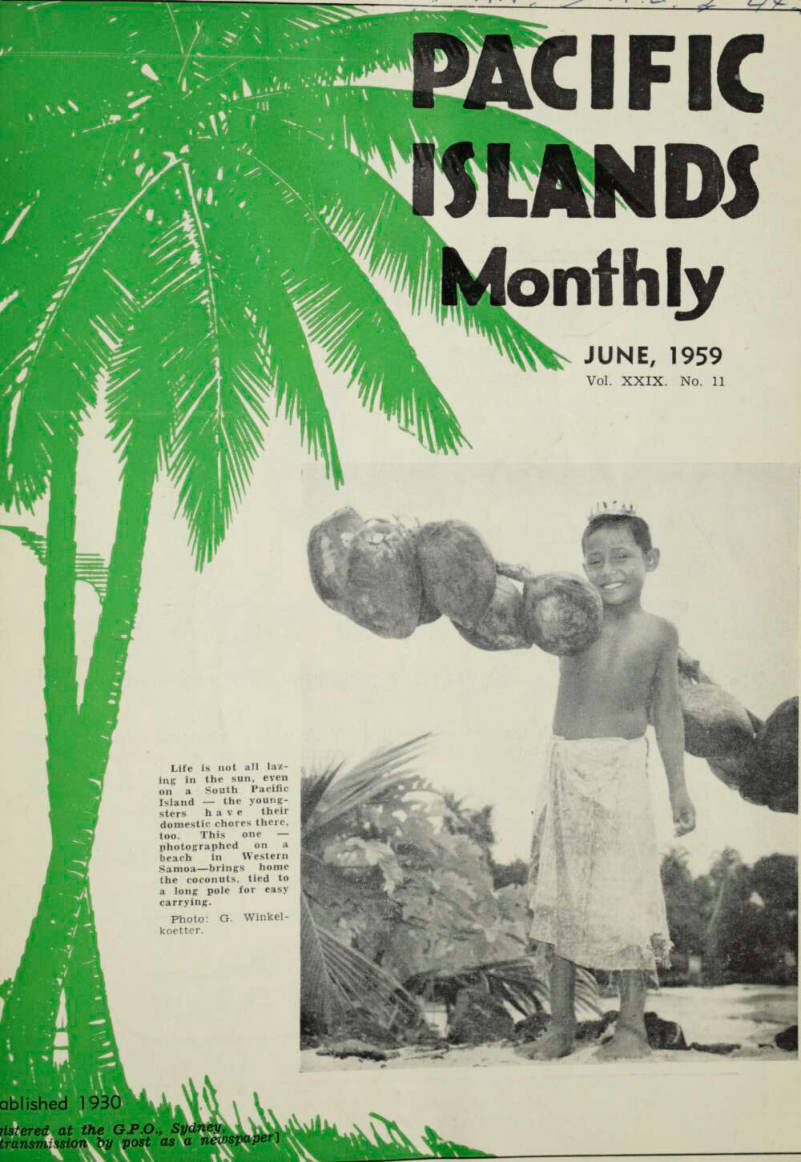 1
1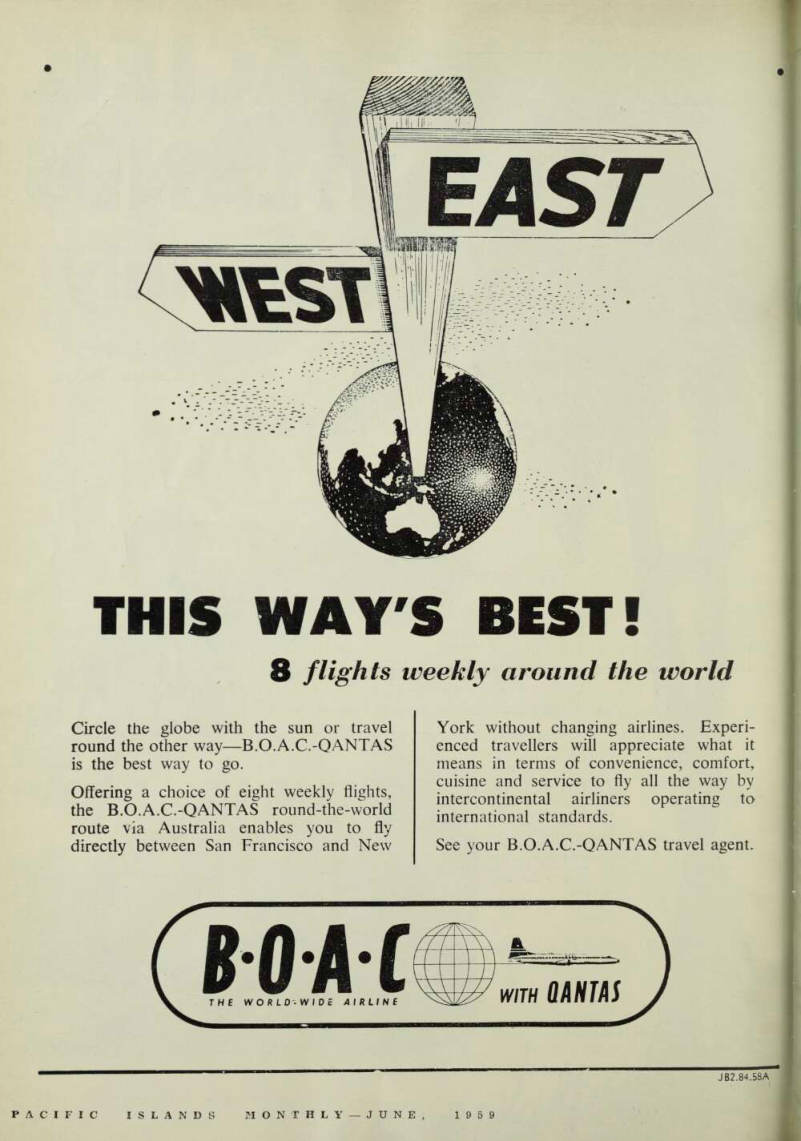 2
2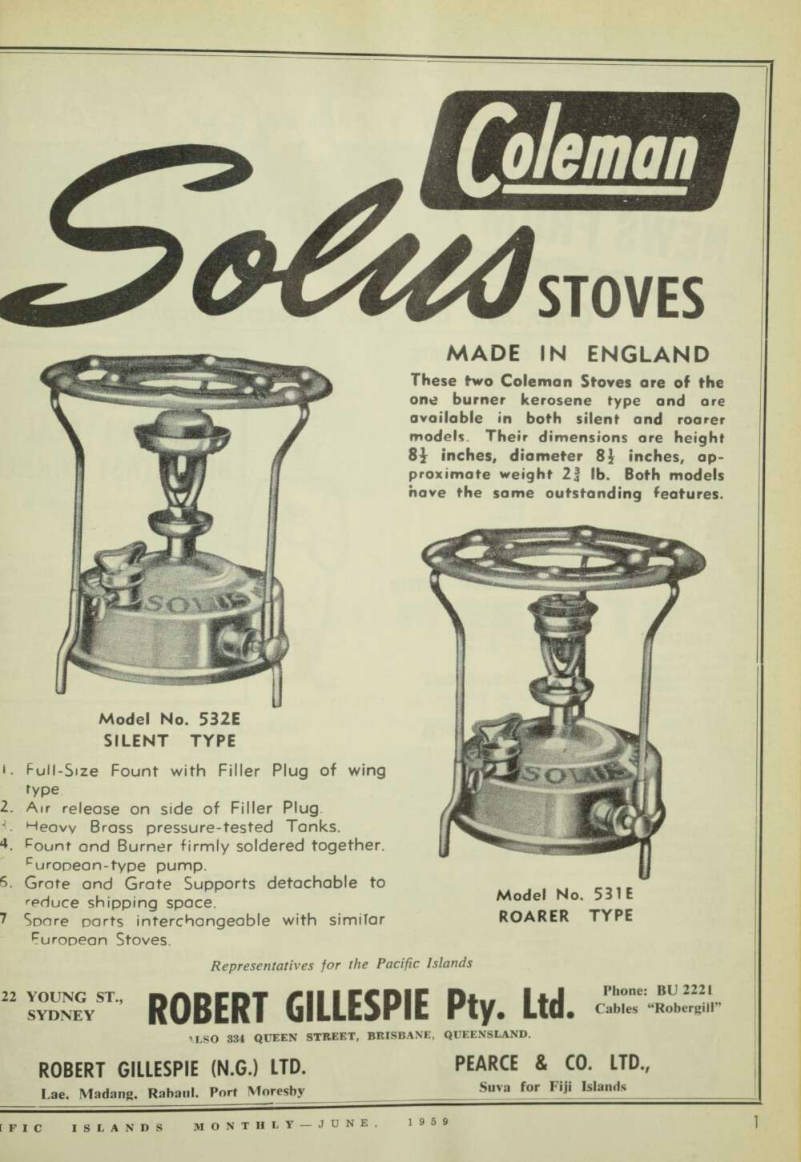 3
3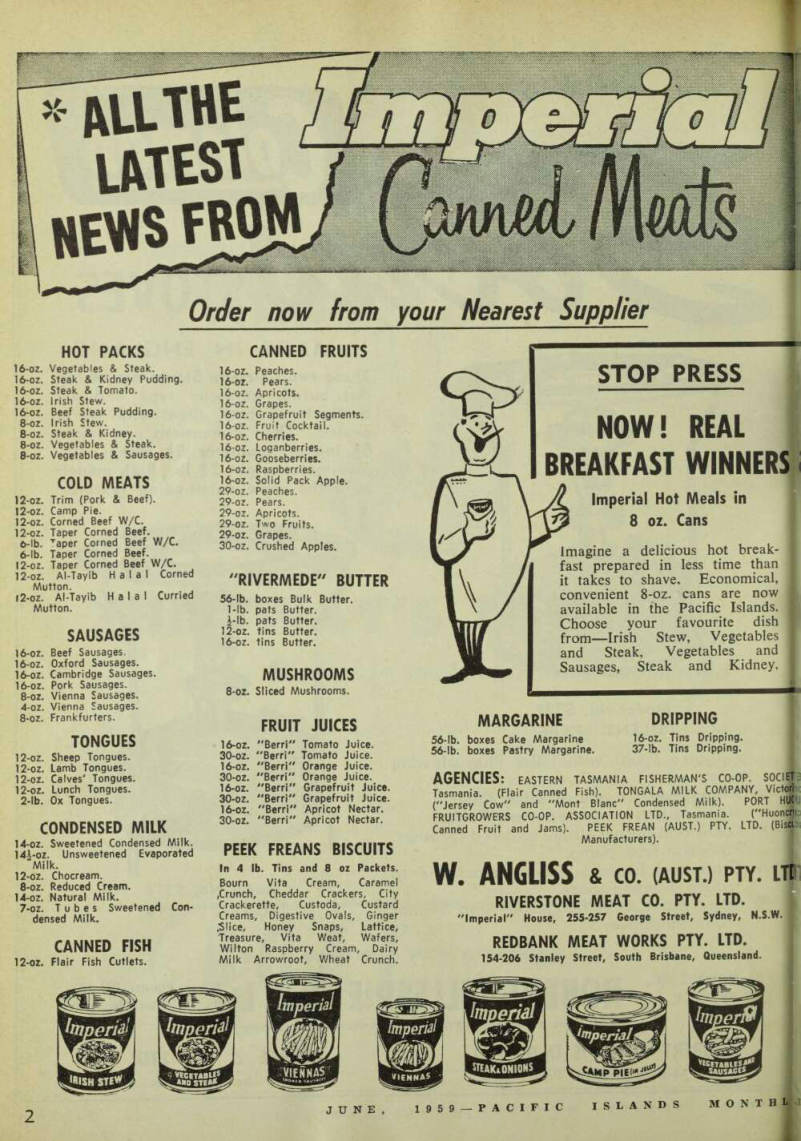 4
4 5
5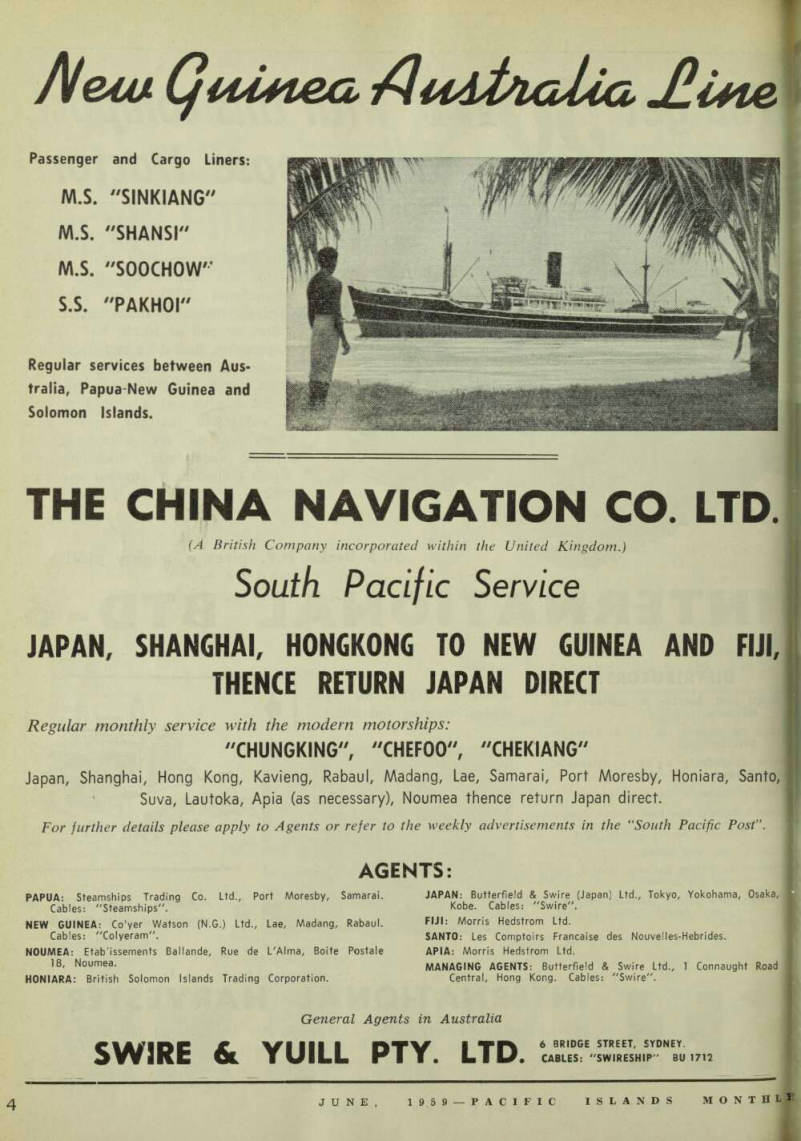 6
6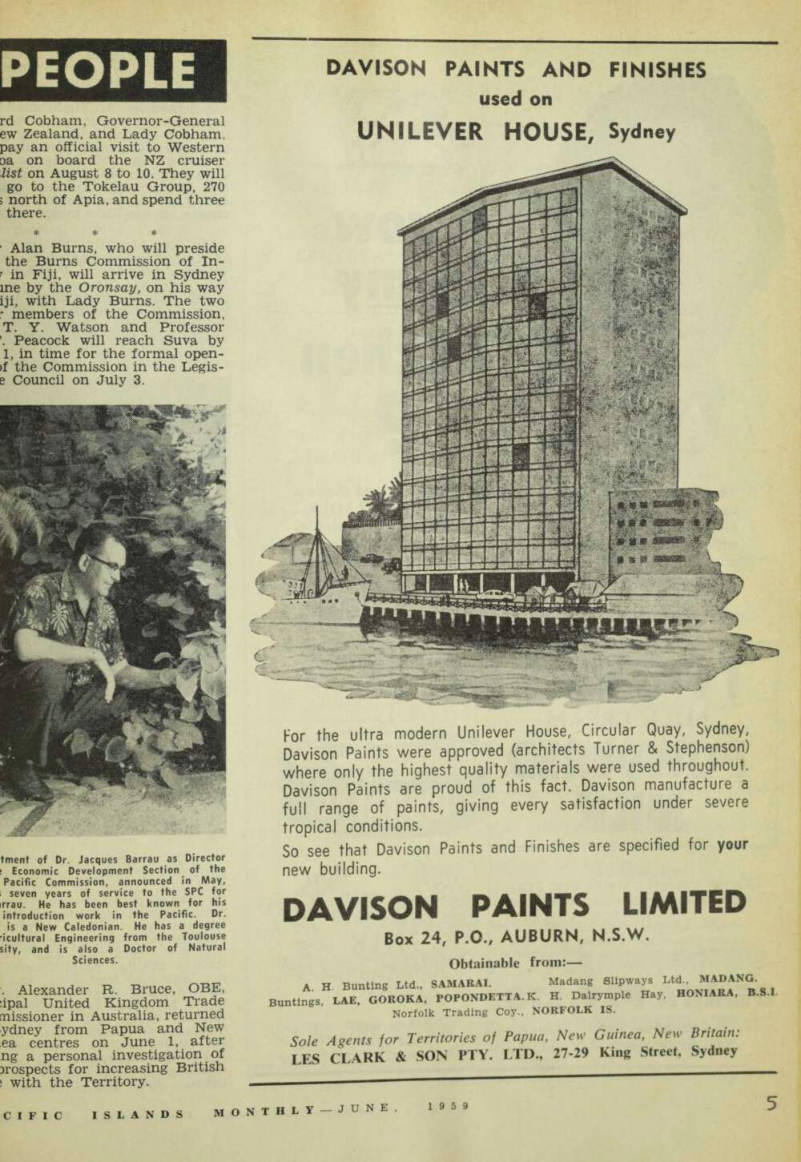 7
7 8
8 9
9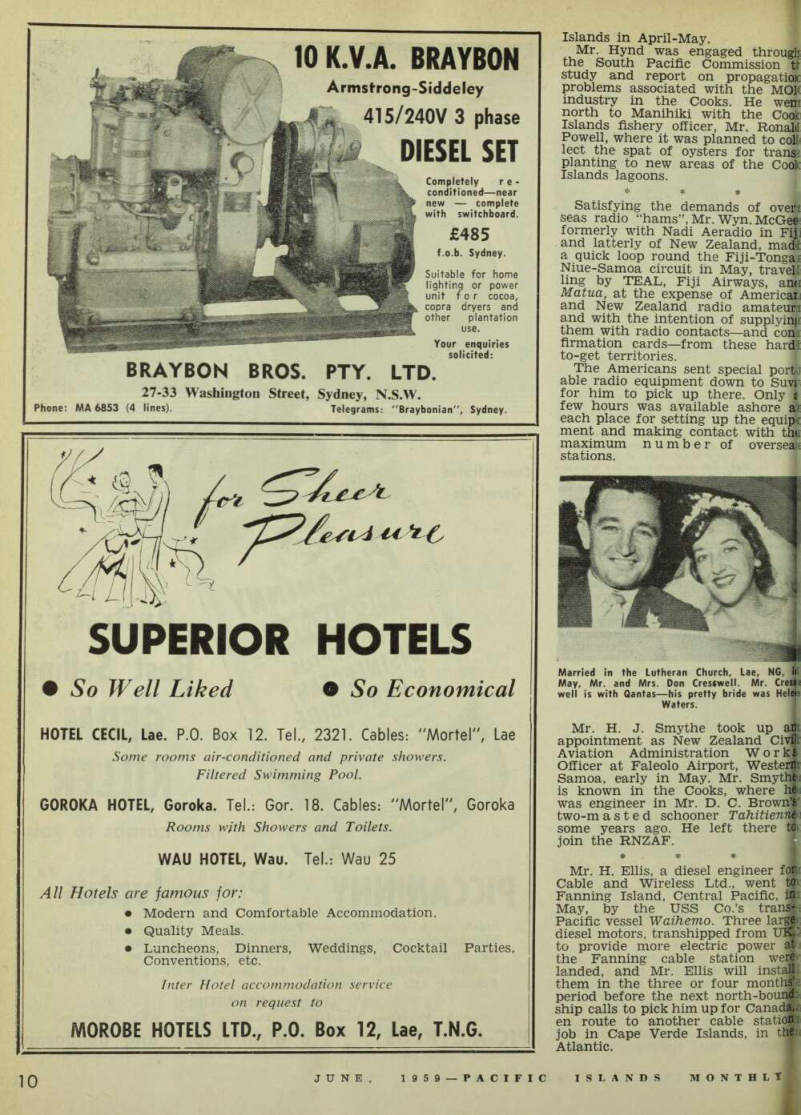 10
10 11
11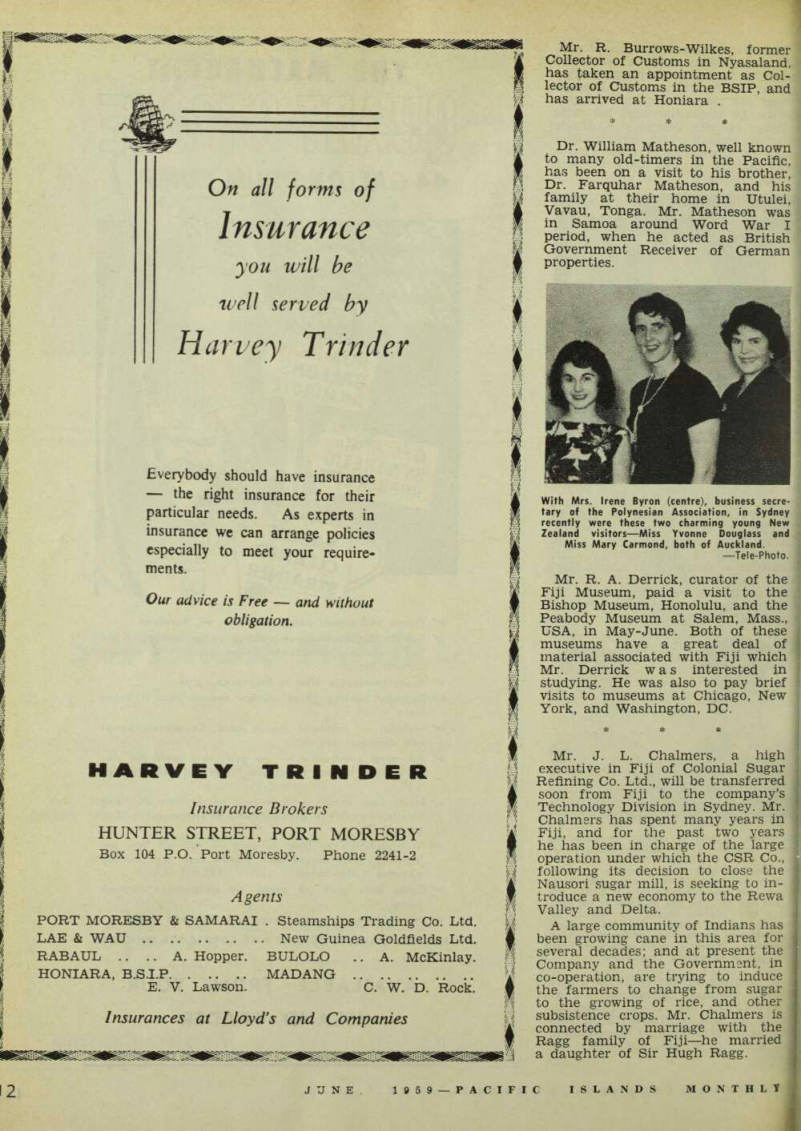 12
12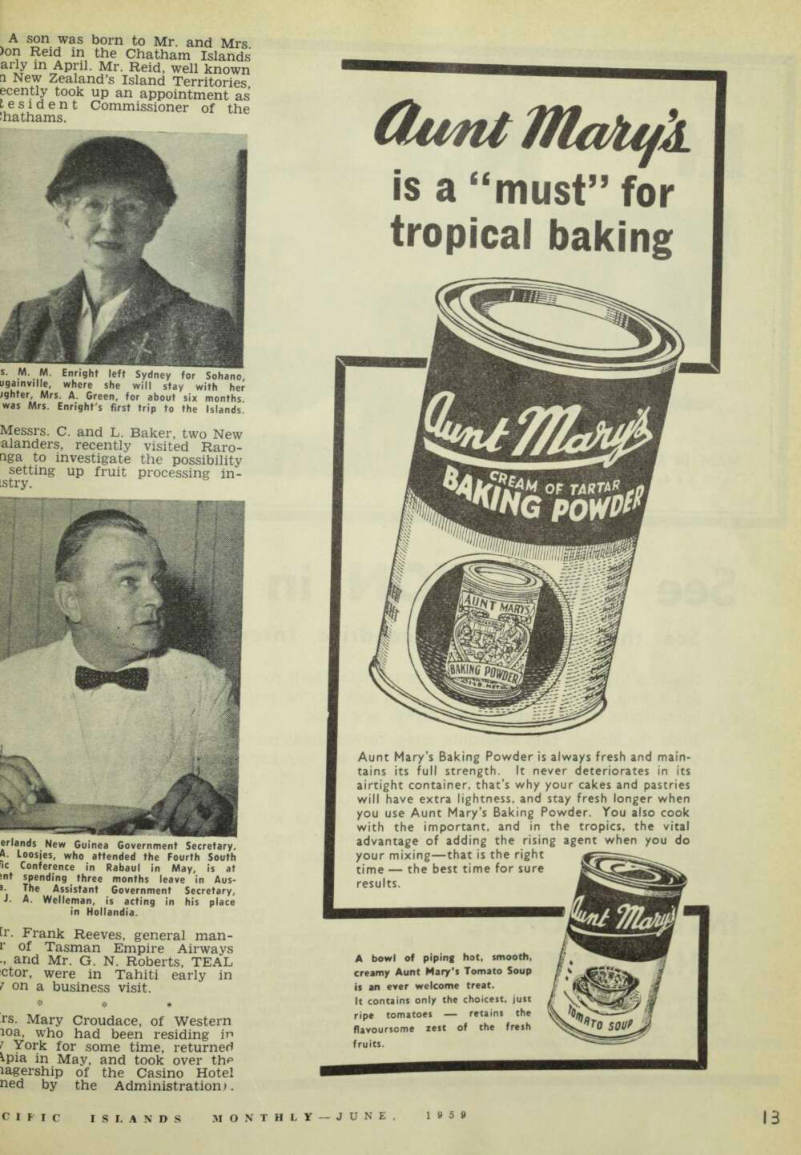 13
13 14
14 15
15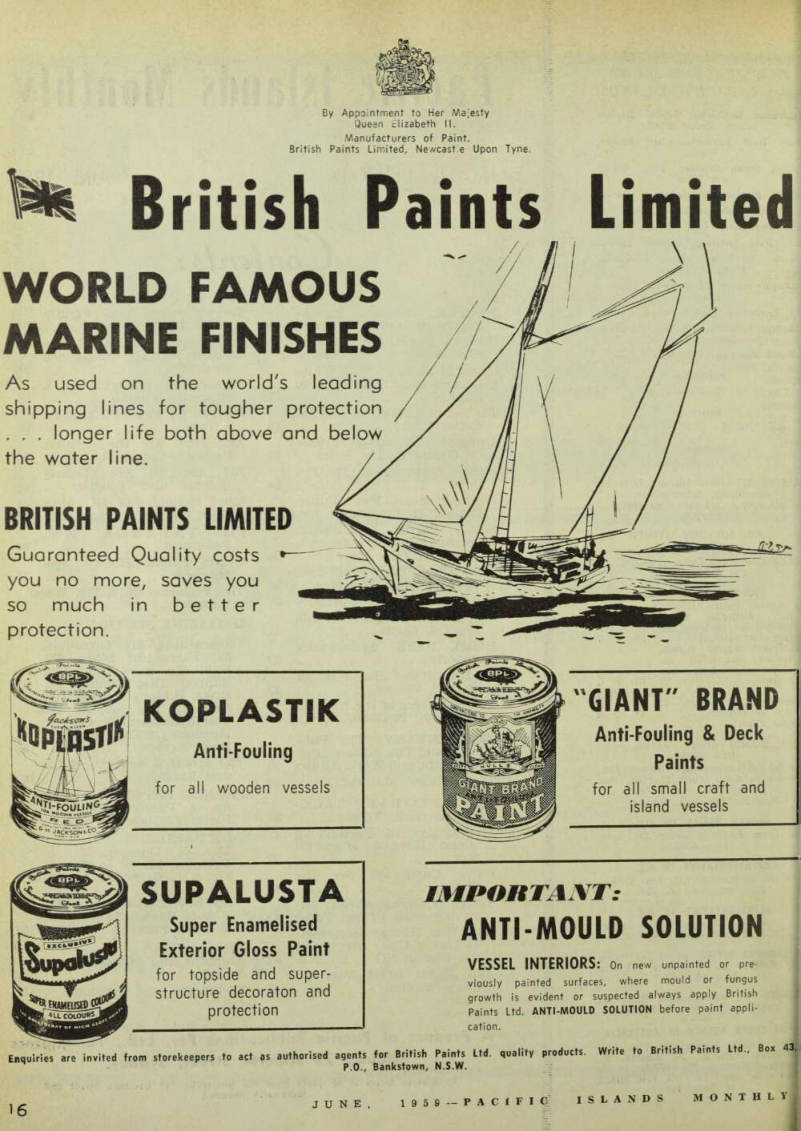 16
16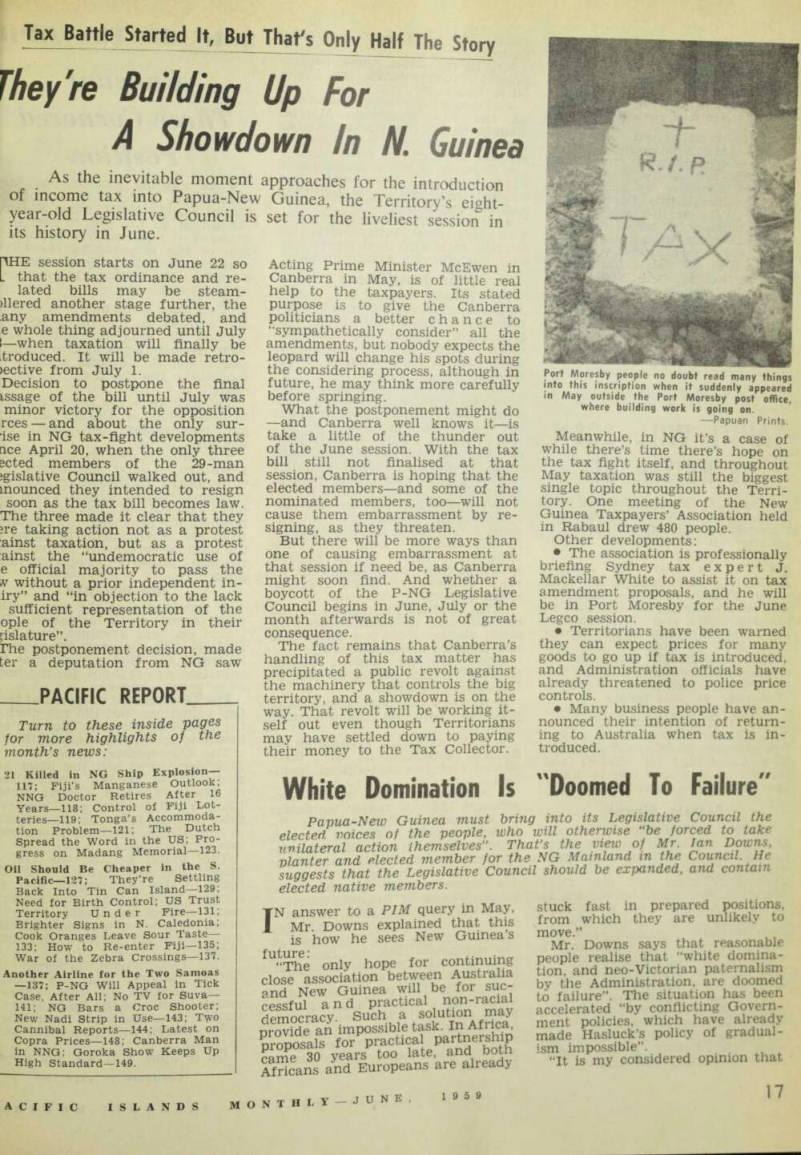 17
17 18
18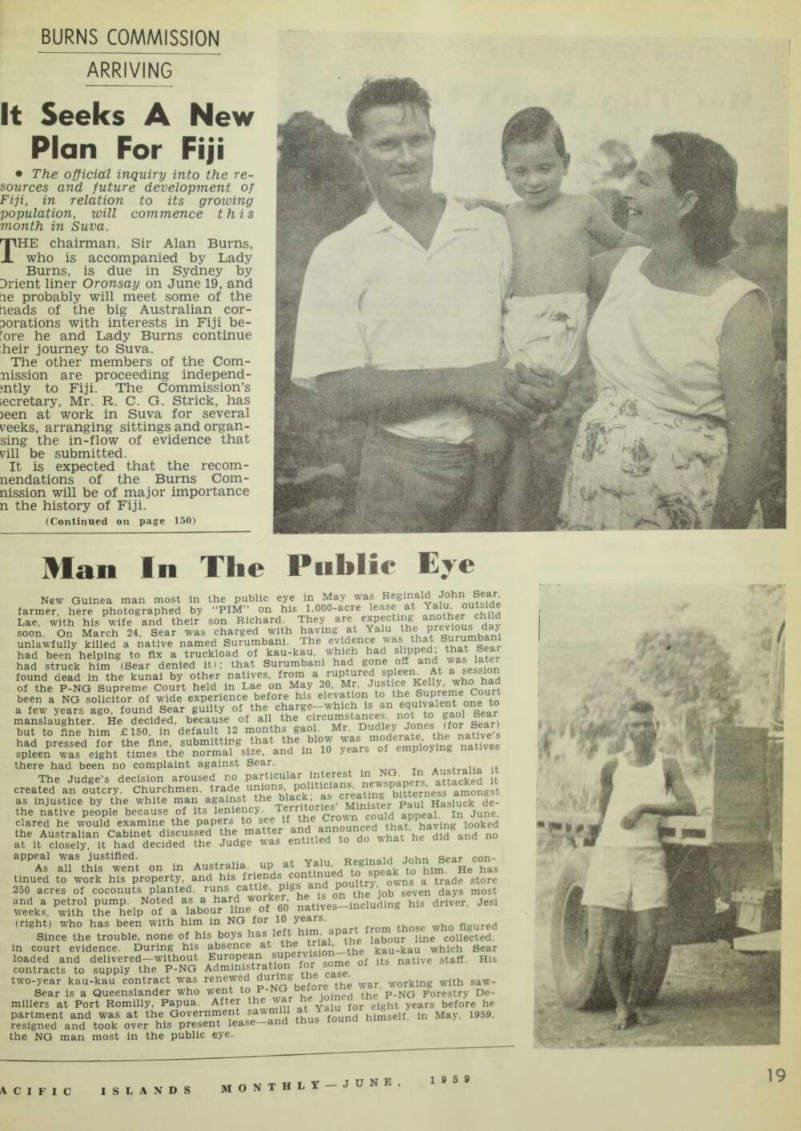 19
19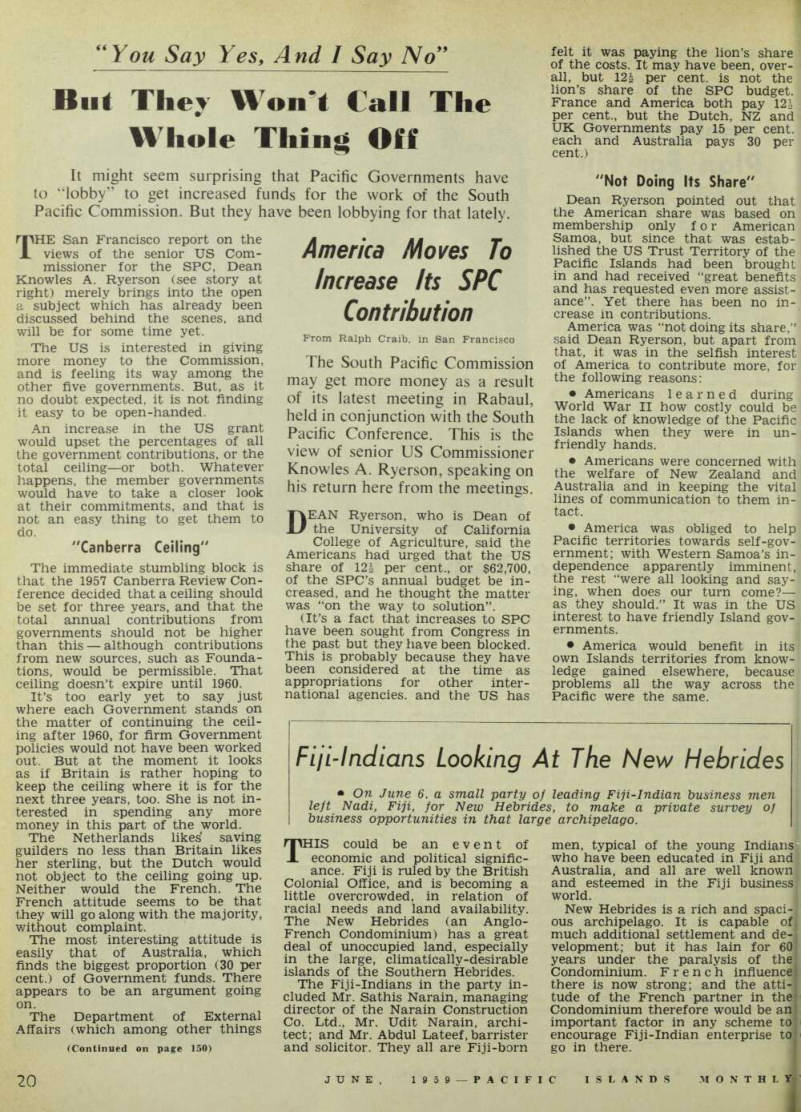 20
20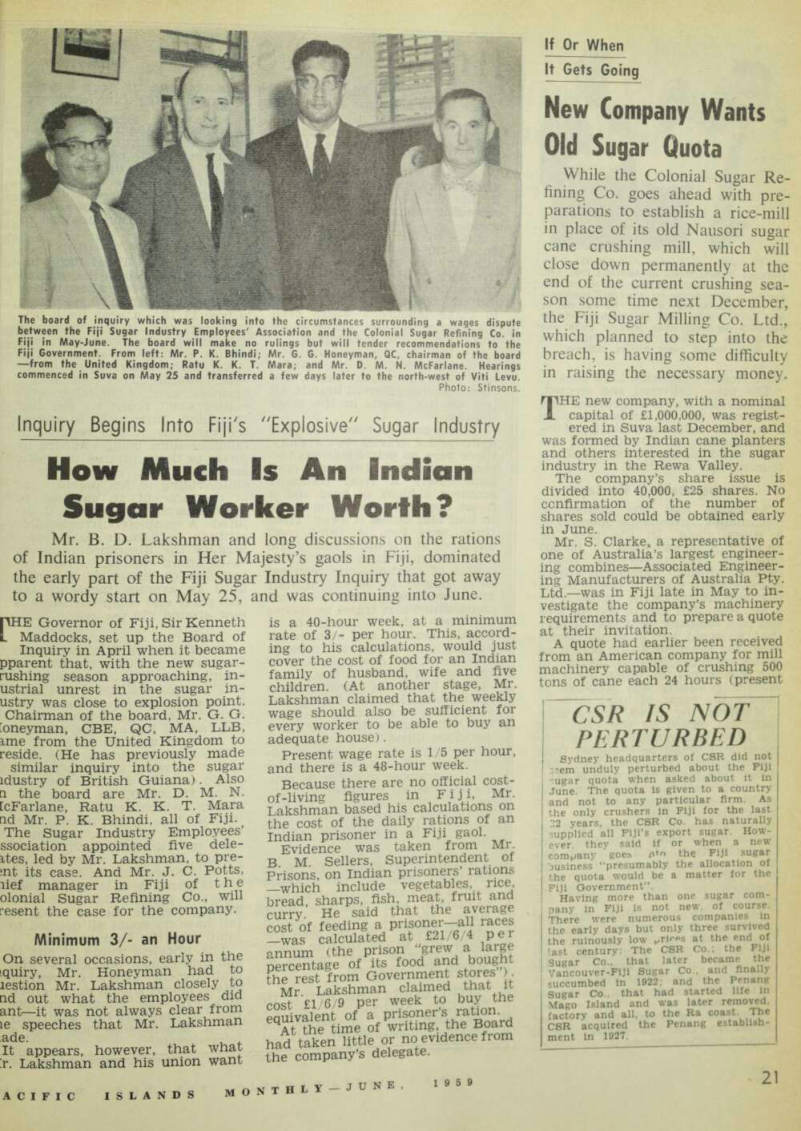 21
21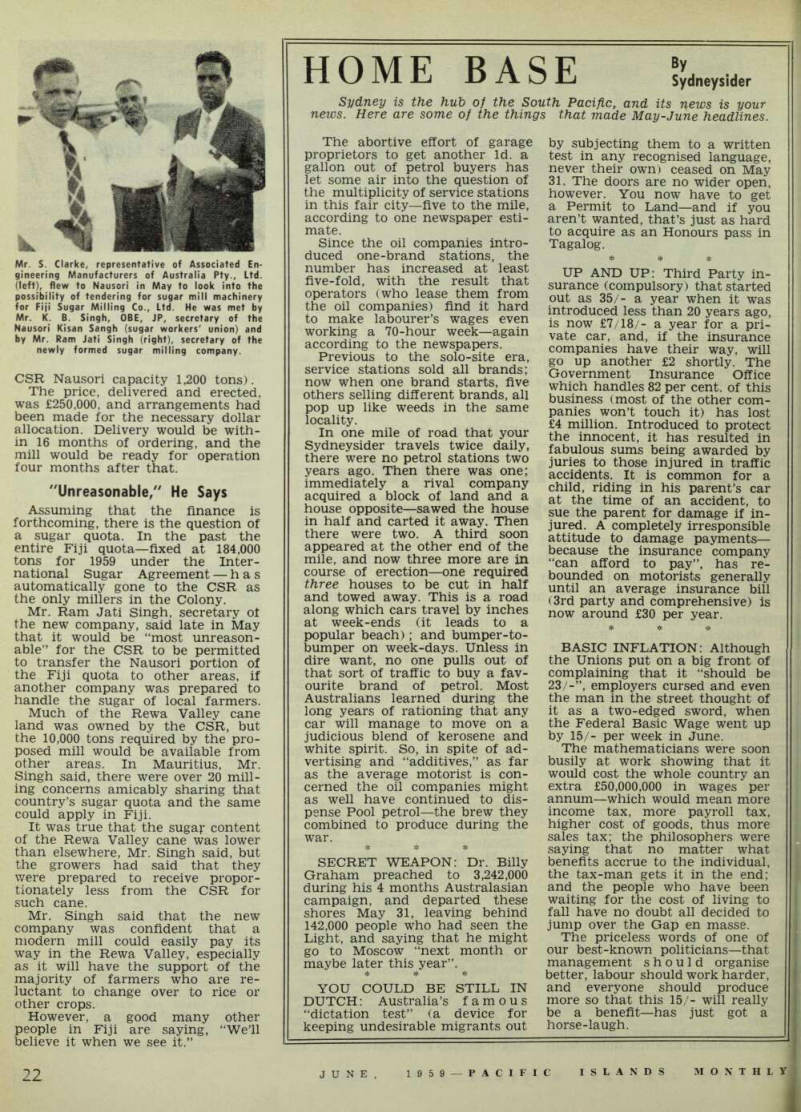 22
22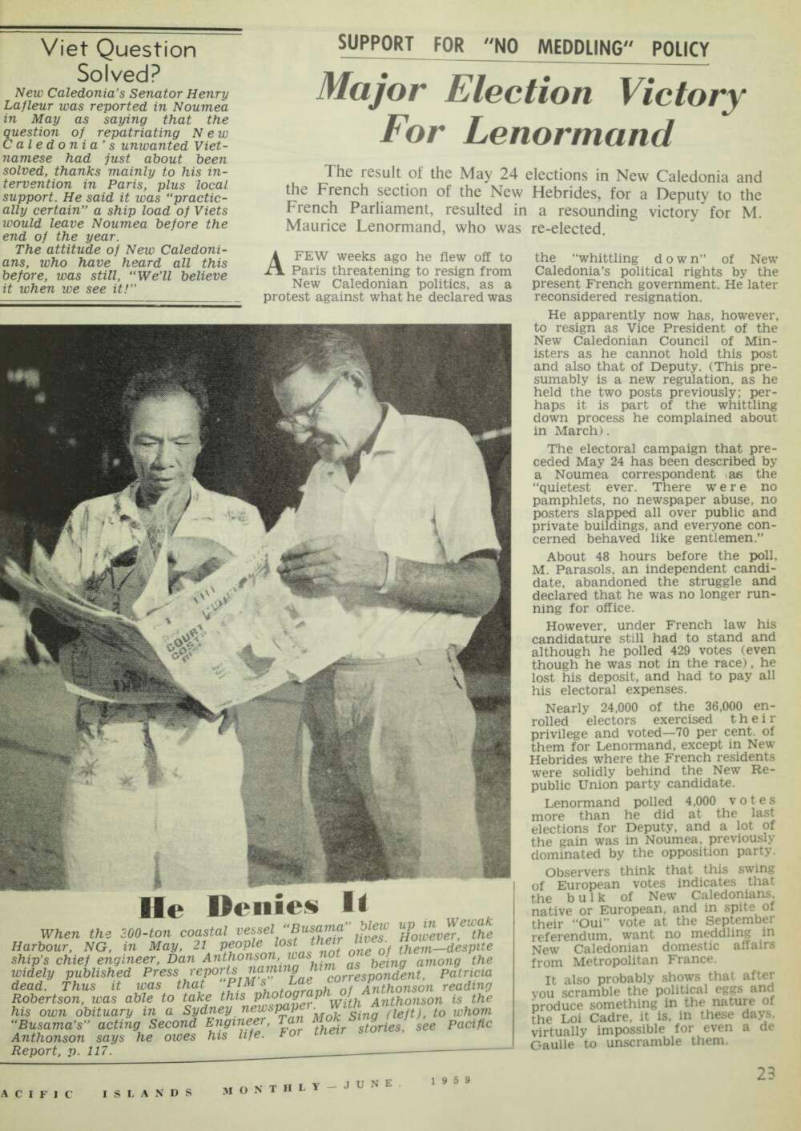 23
23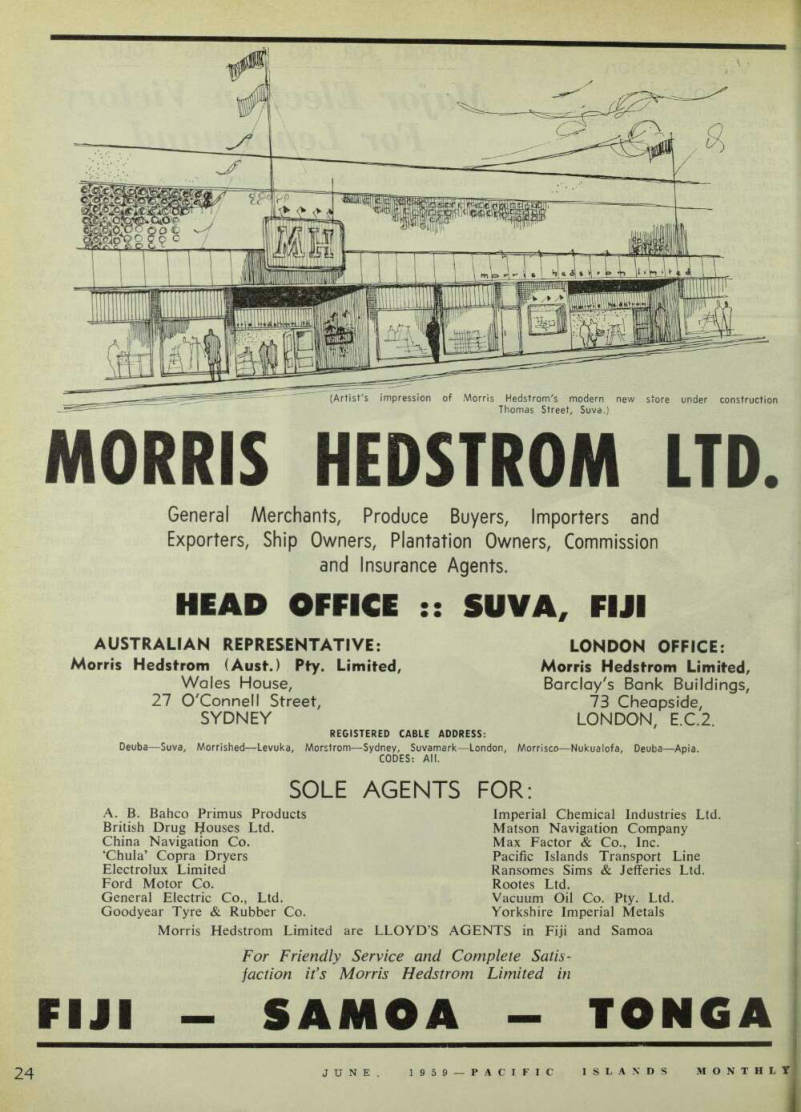 24
24 25
25 26
26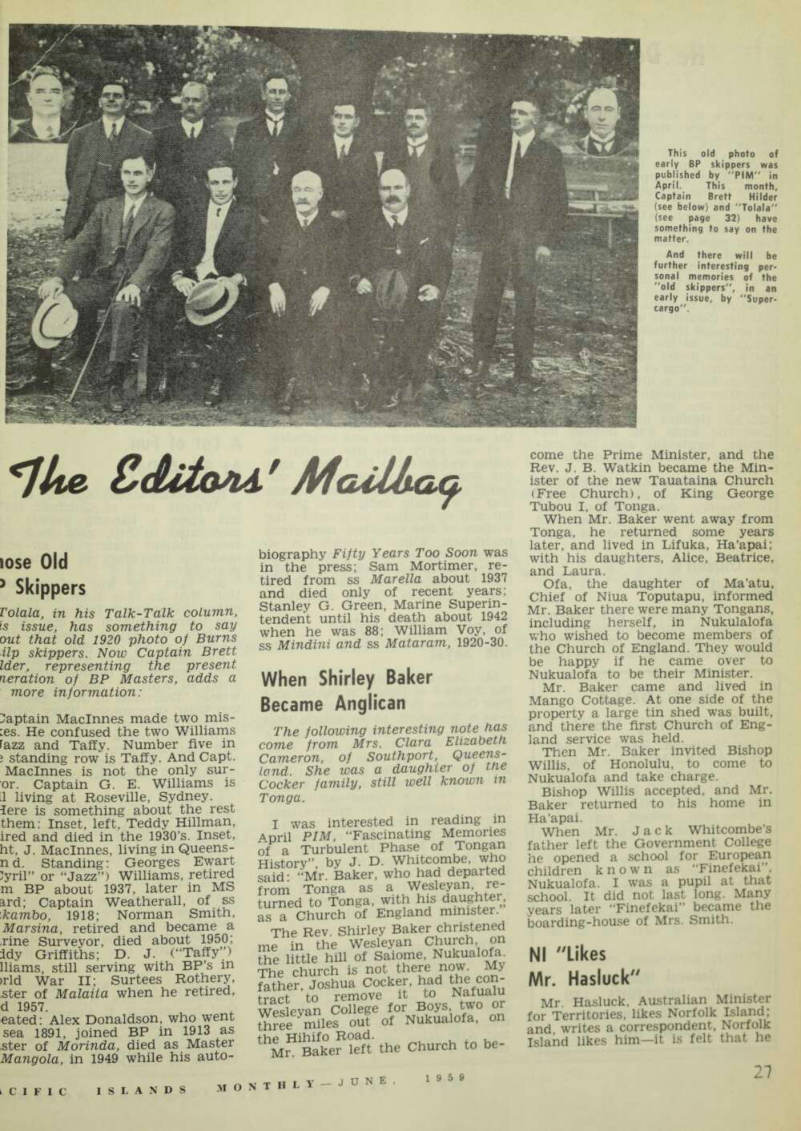 27
27 28
28 29
29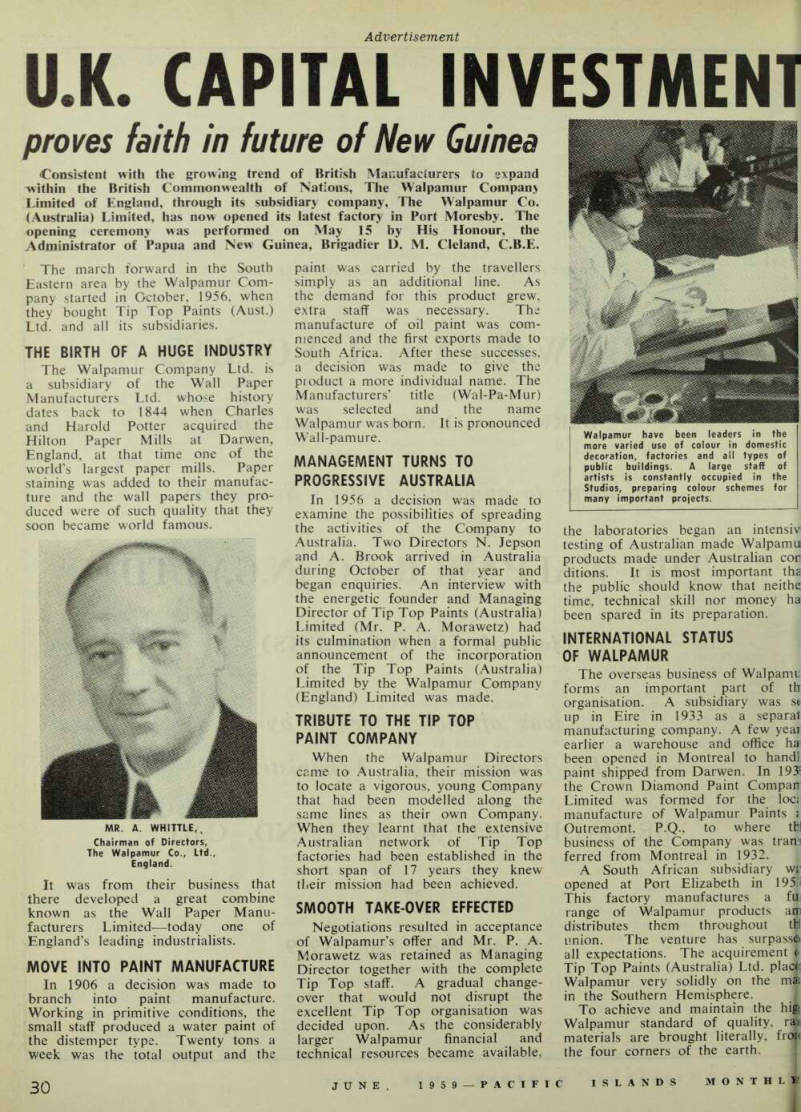 30
30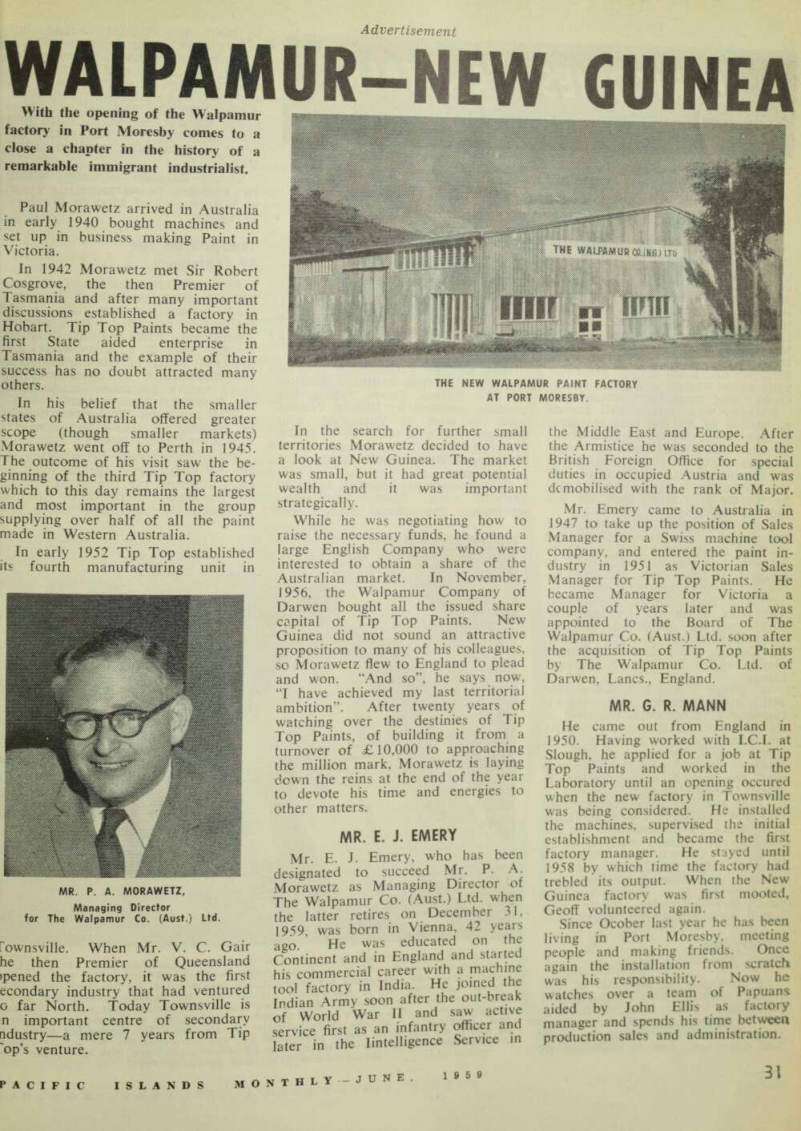 31
31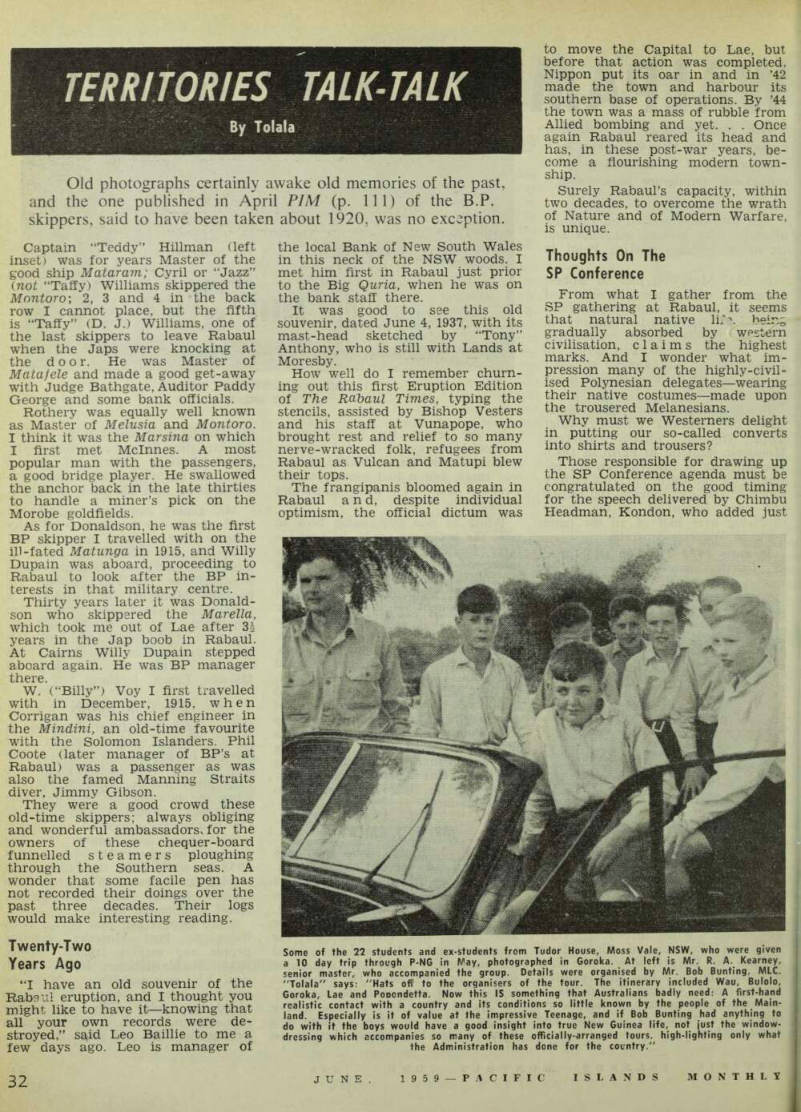 32
32 33
33 34
34 35
35 36
36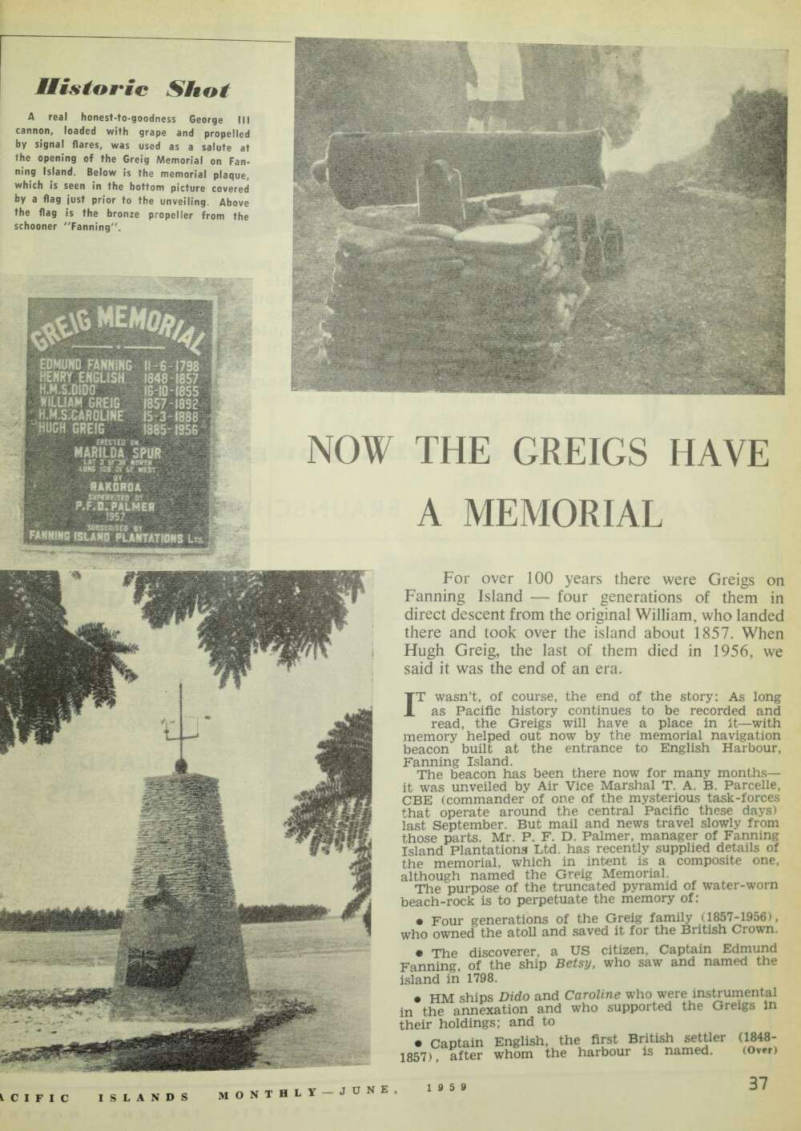 37
37 38
38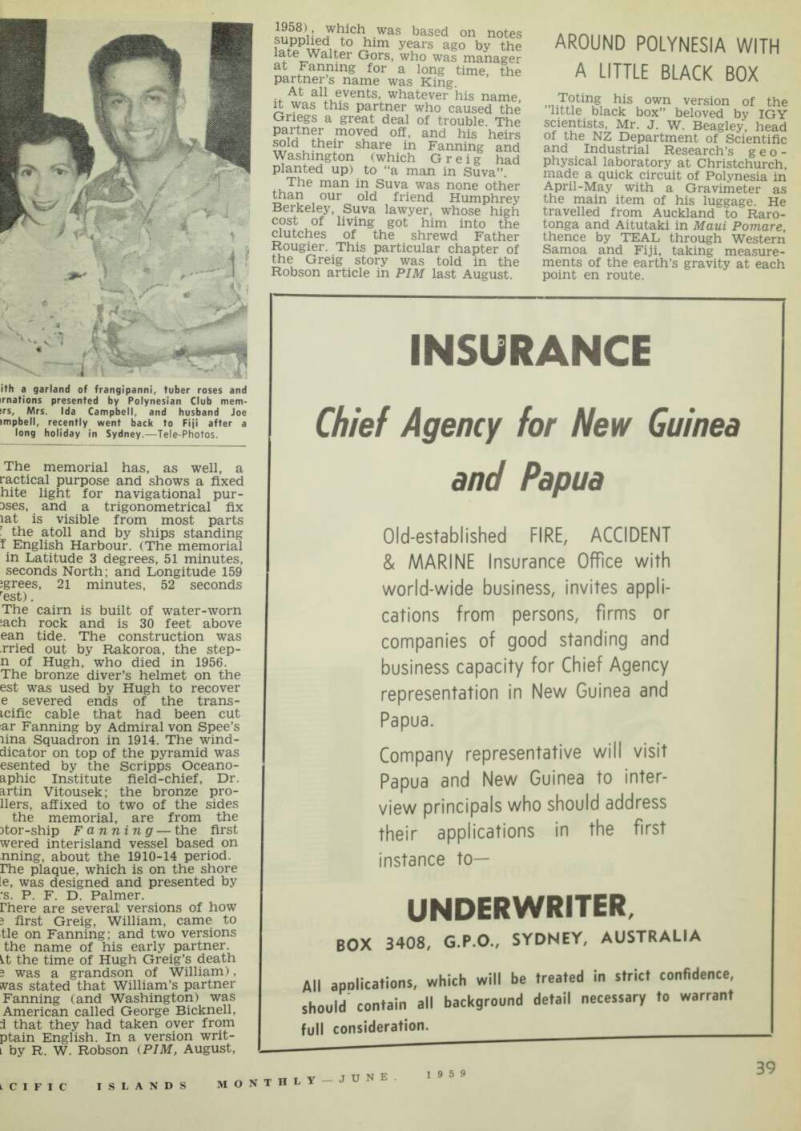 39
39 40
40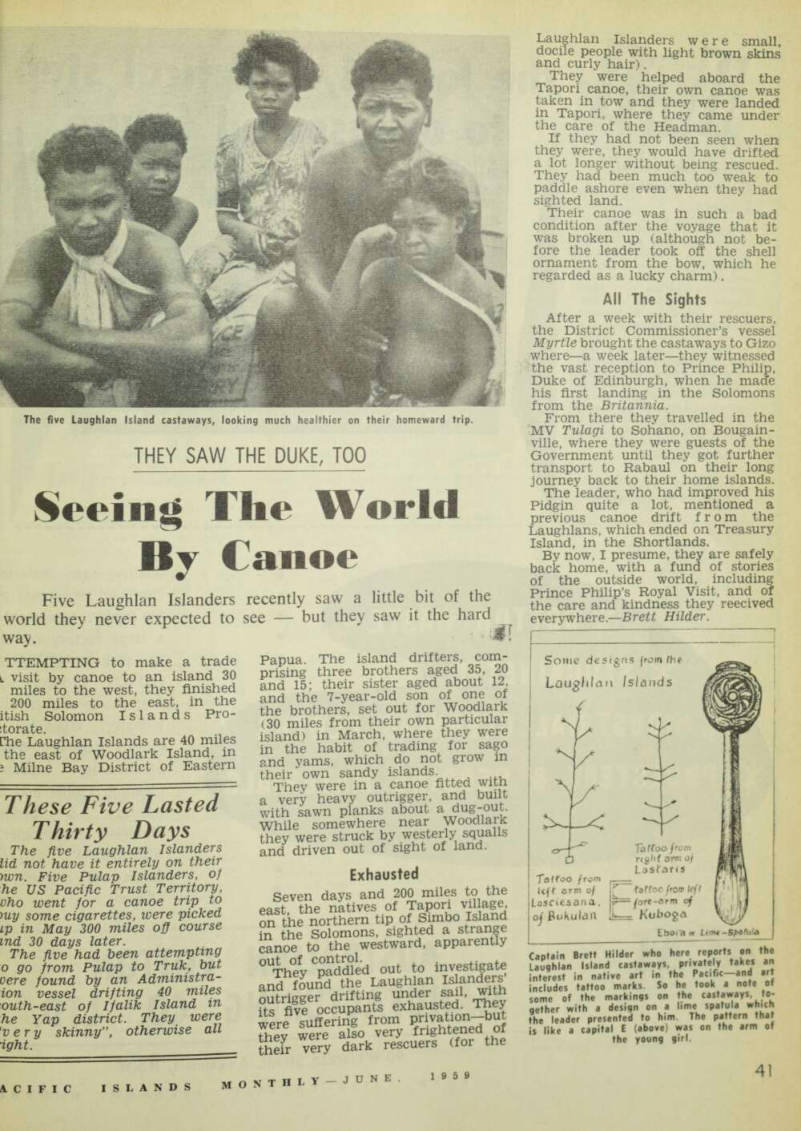 41
41 42
42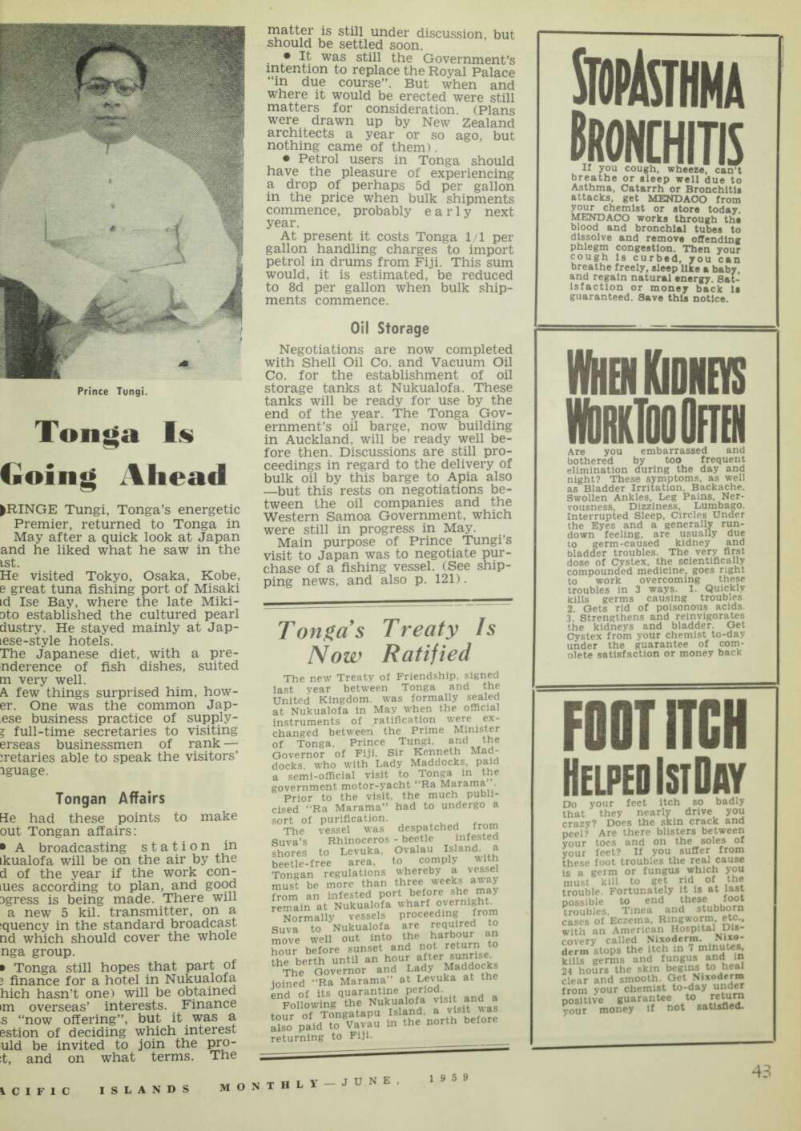 43
43 44
44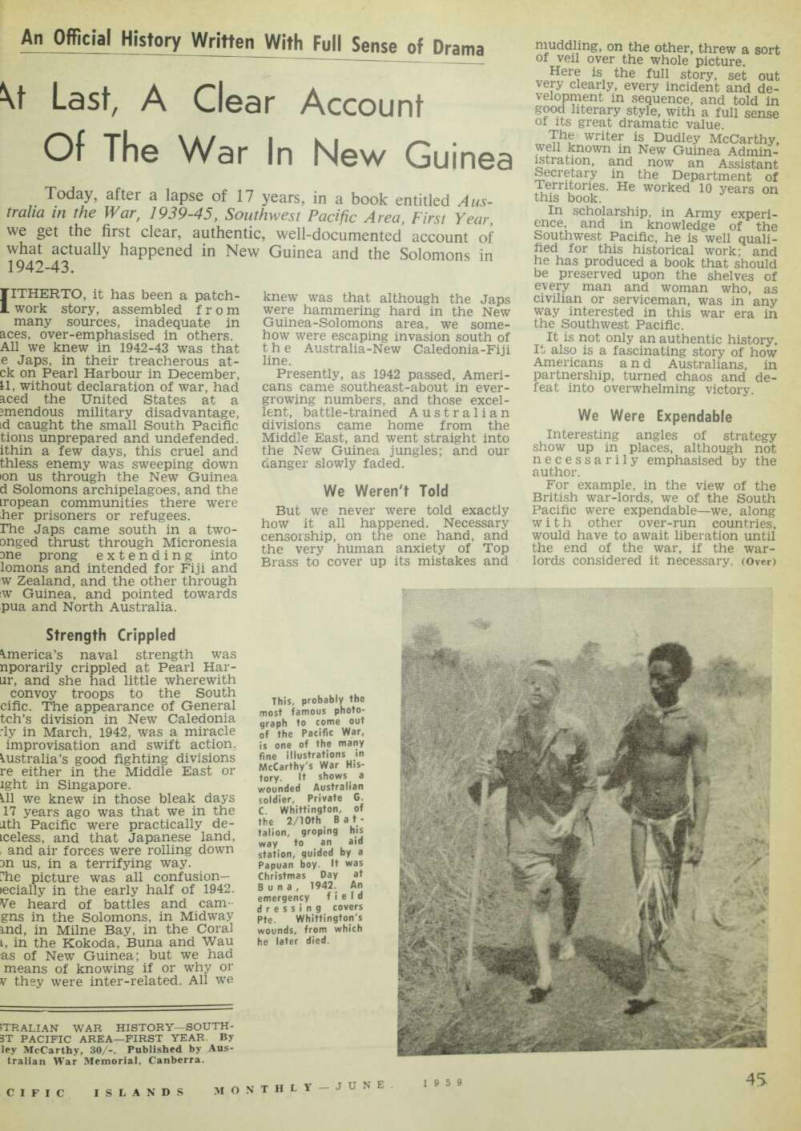 45
45 46
46 47
47 48
48 49
49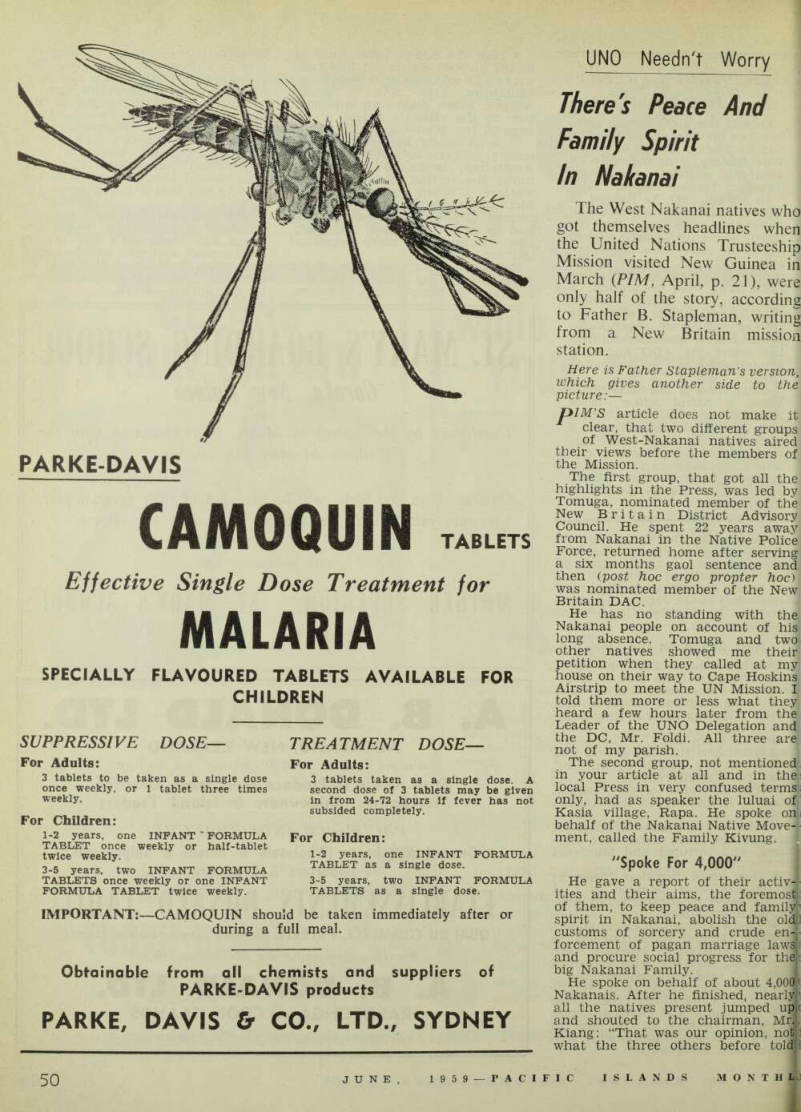 50
50 51
51 52
52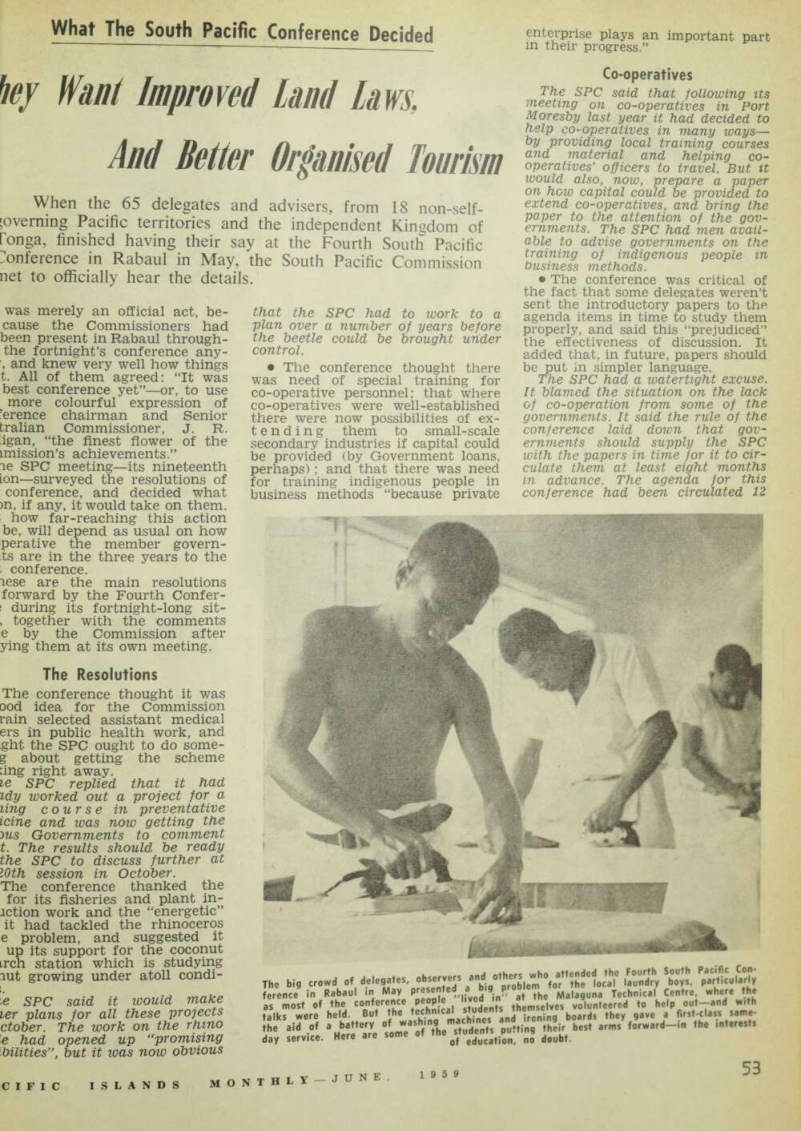 53
53 54
54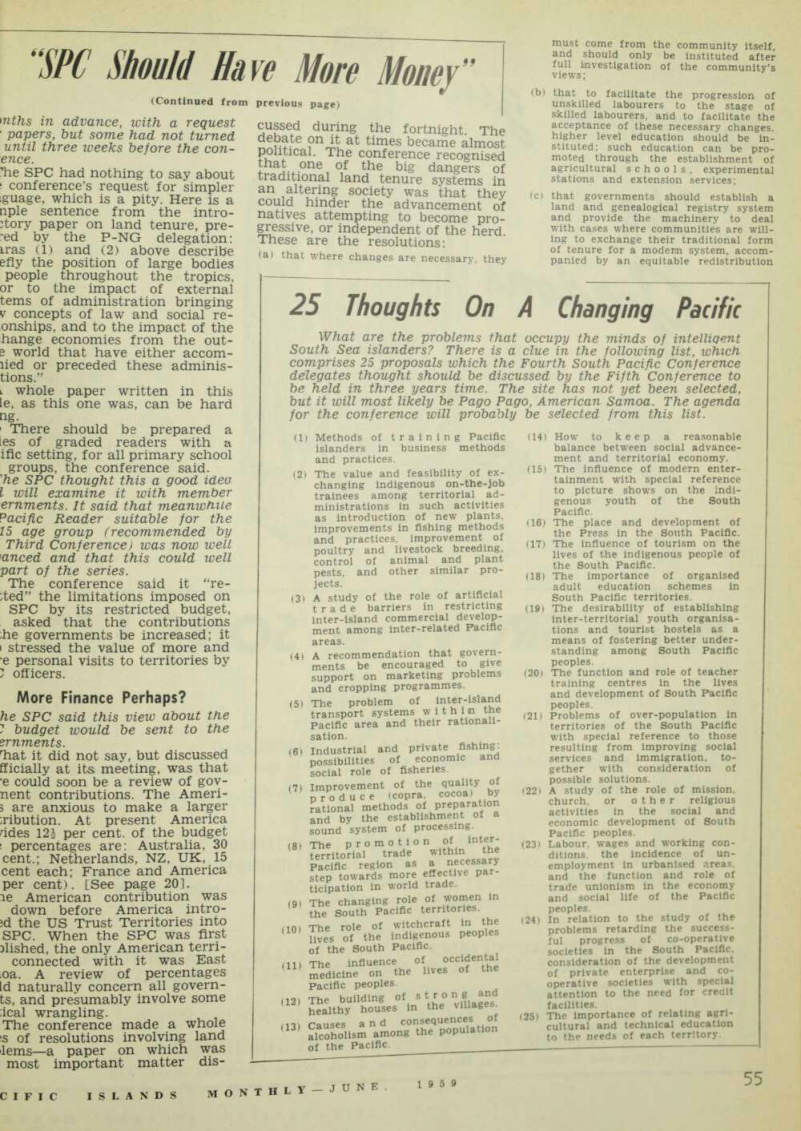 55
55 56
56 57
57 58
58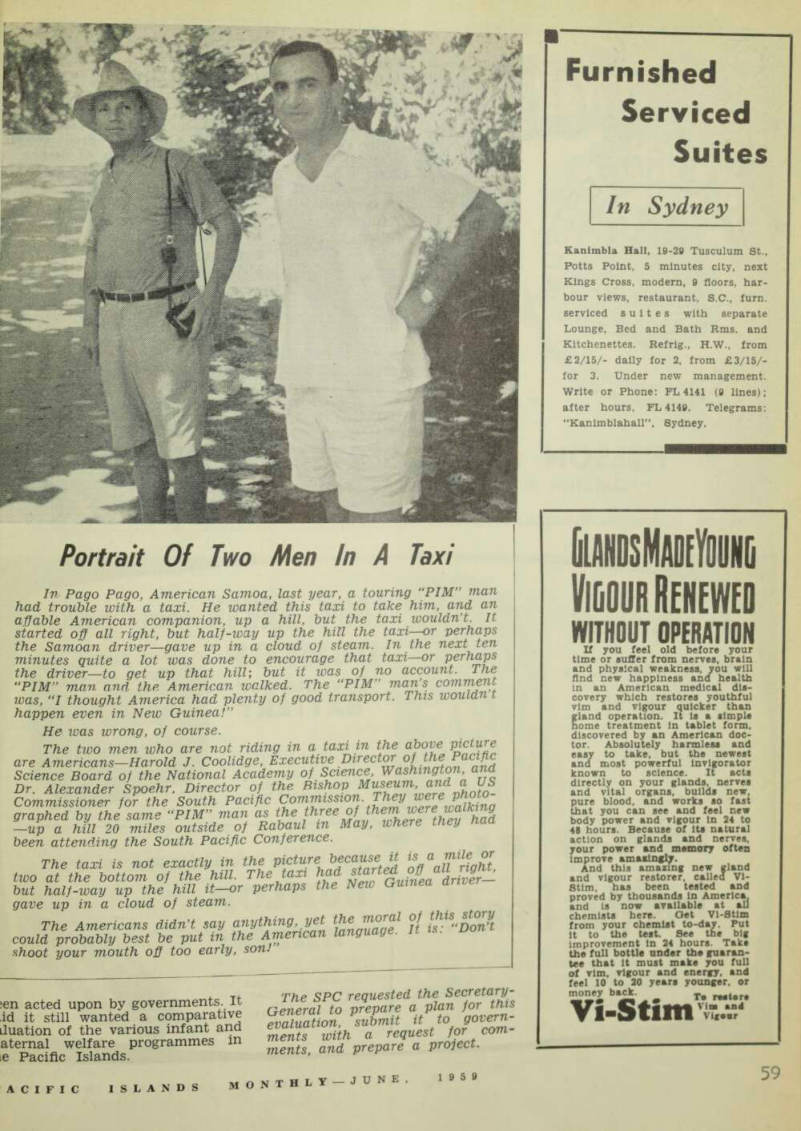 59
59 60
60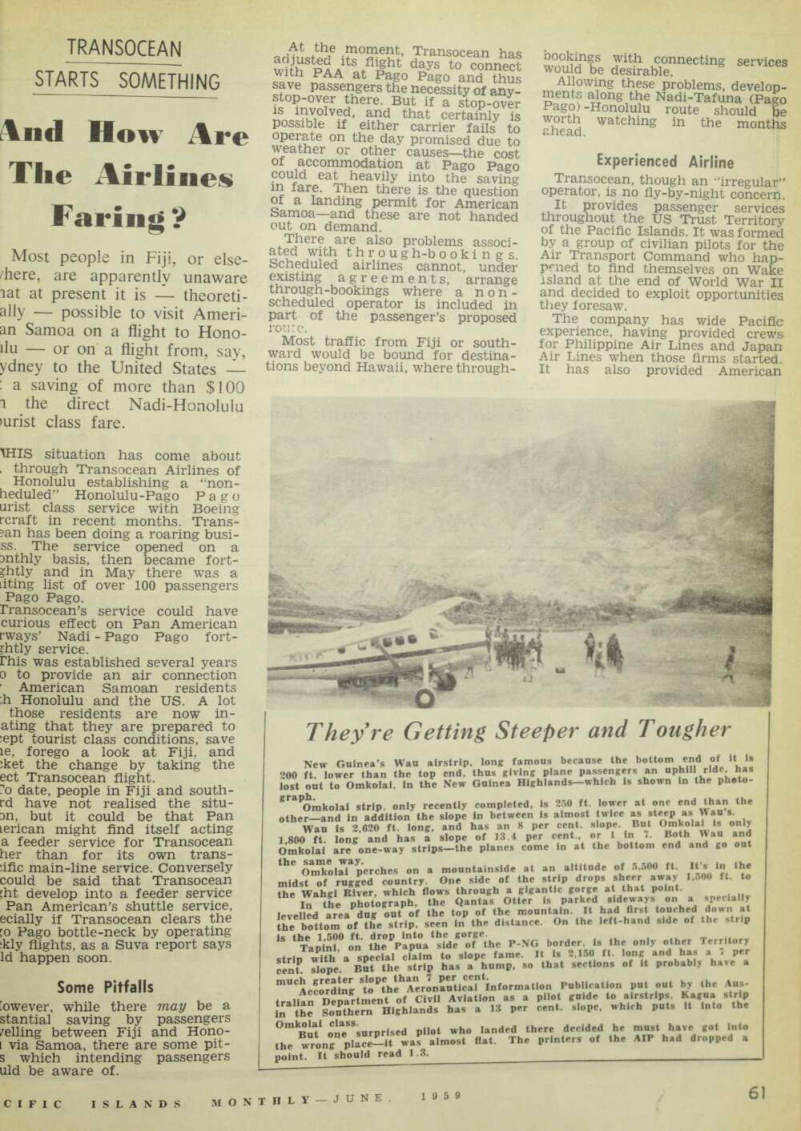 61
61 62
62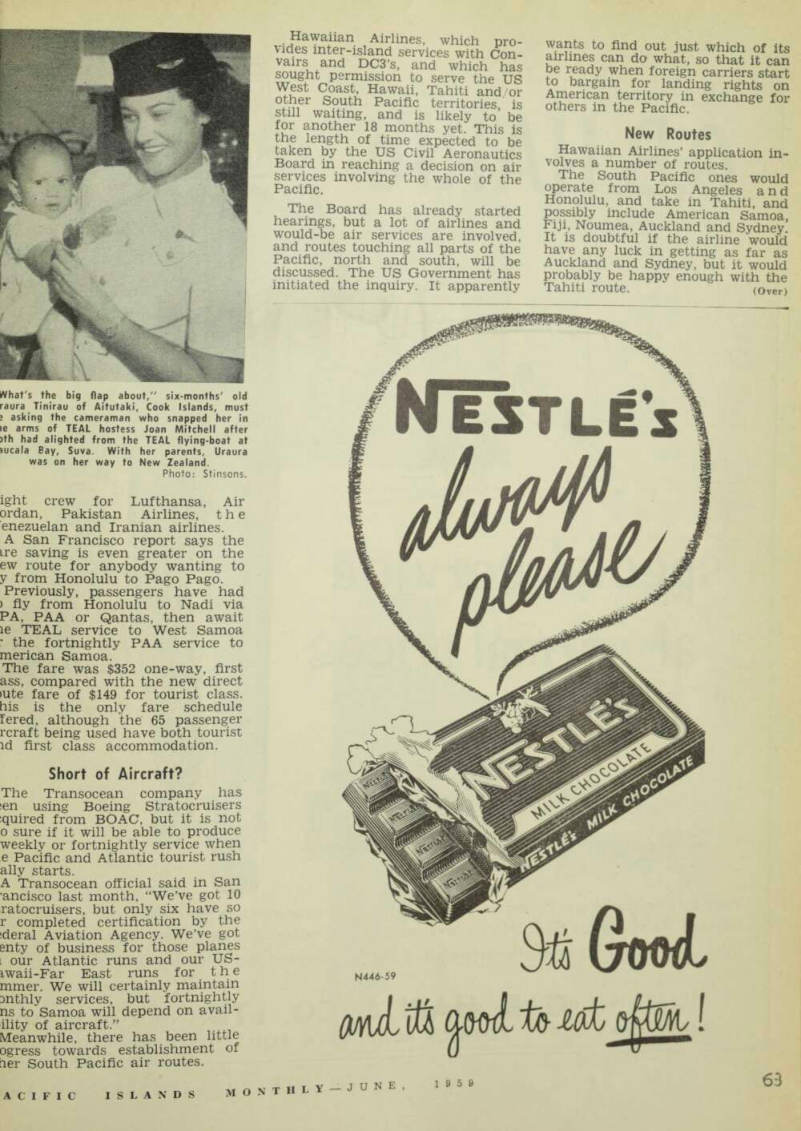 63
63 64
64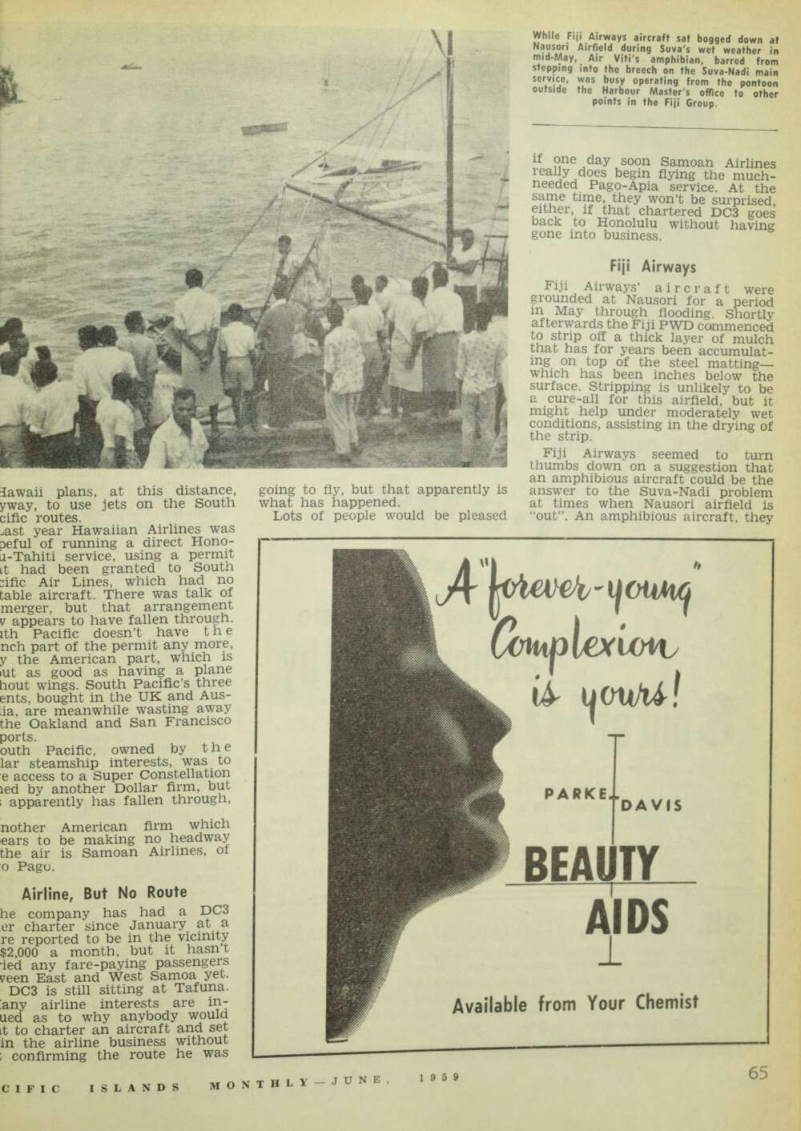 65
65 66
66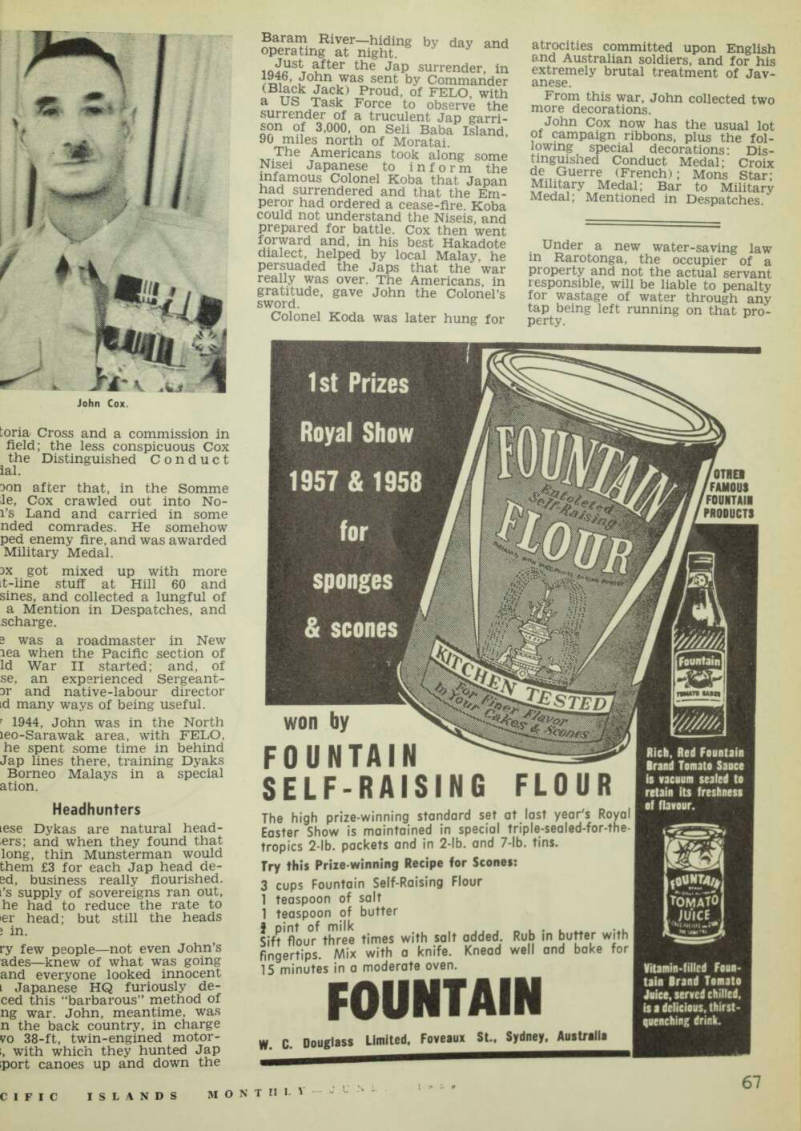 67
67 68
68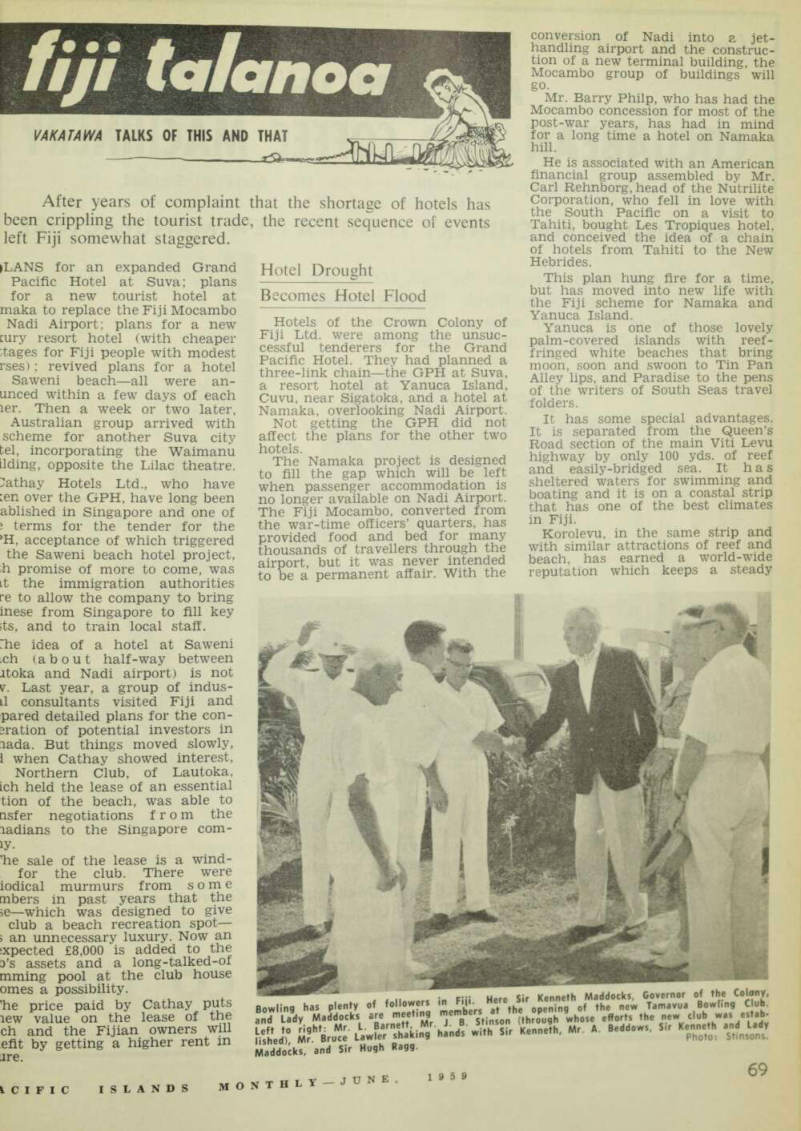 69
69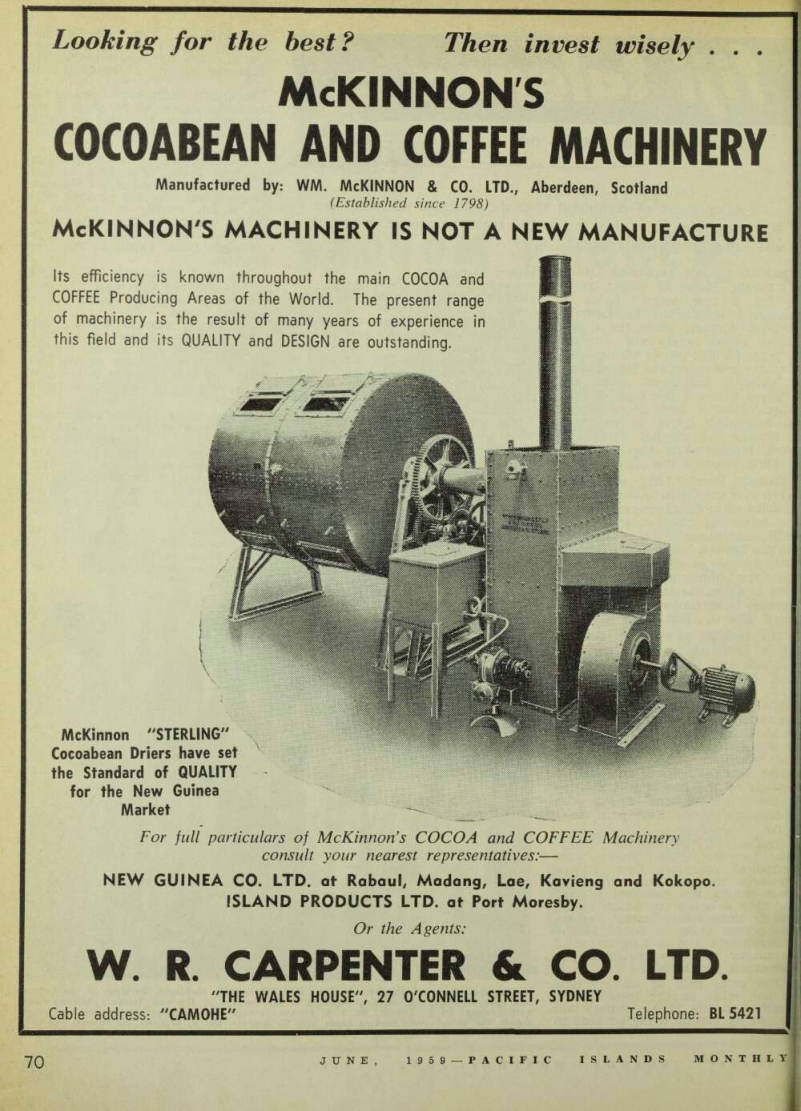 70
70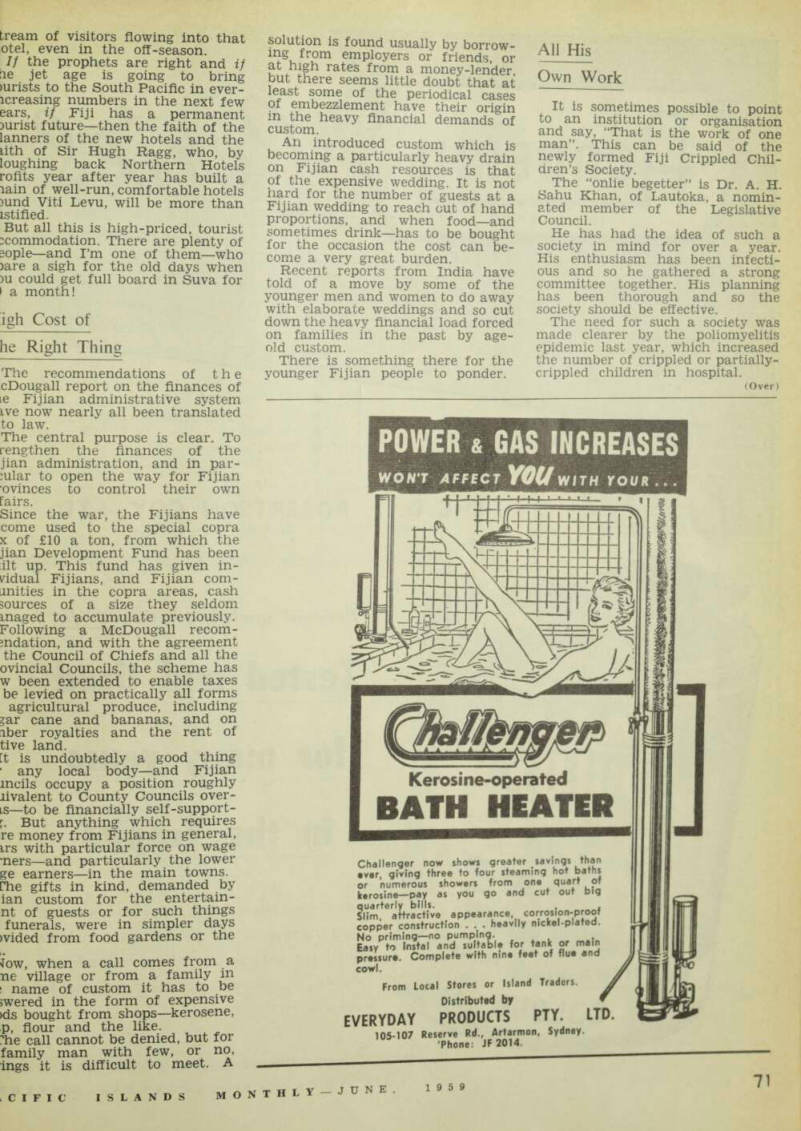 71
71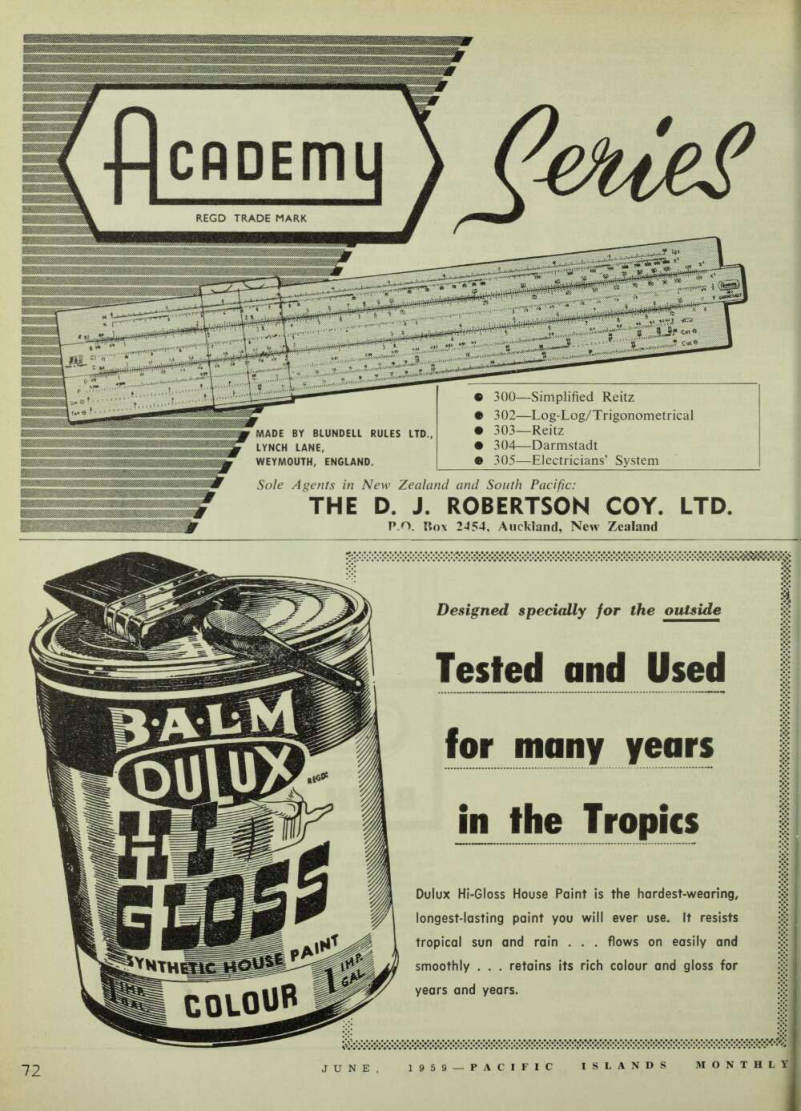 72
72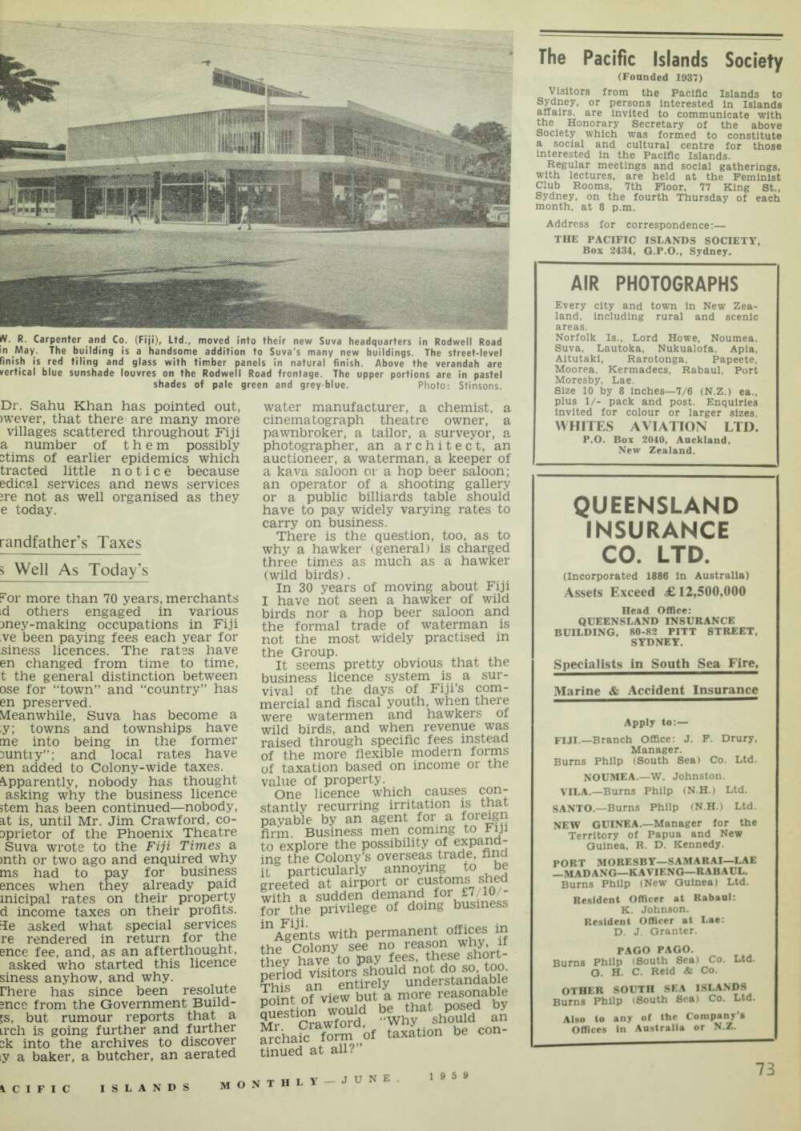 73
73 74
74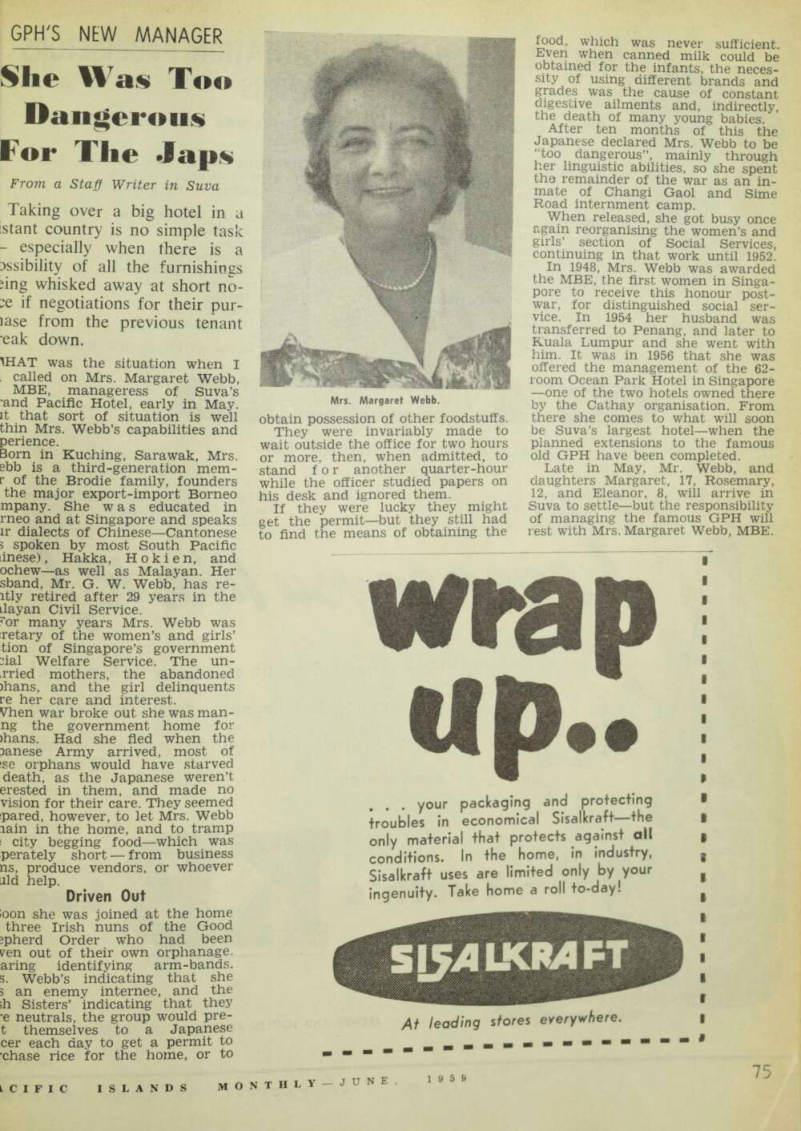 75
75 76
76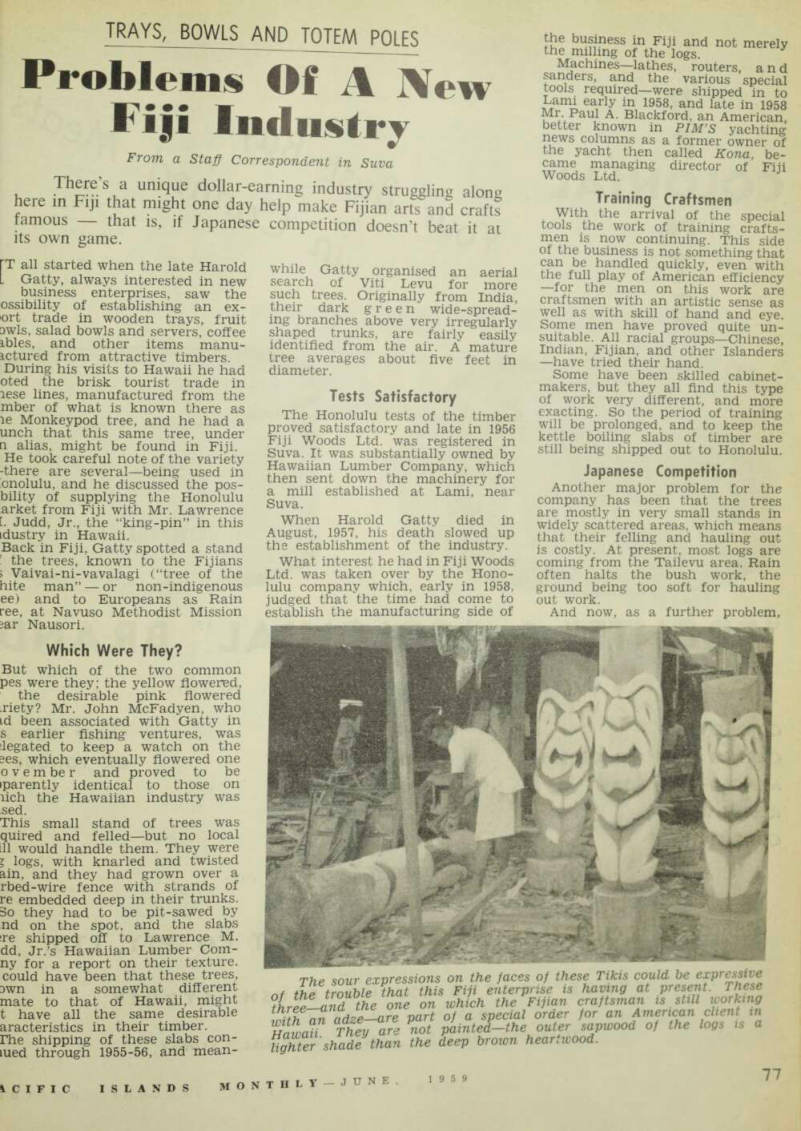 77
77 78
78 79
79 80
80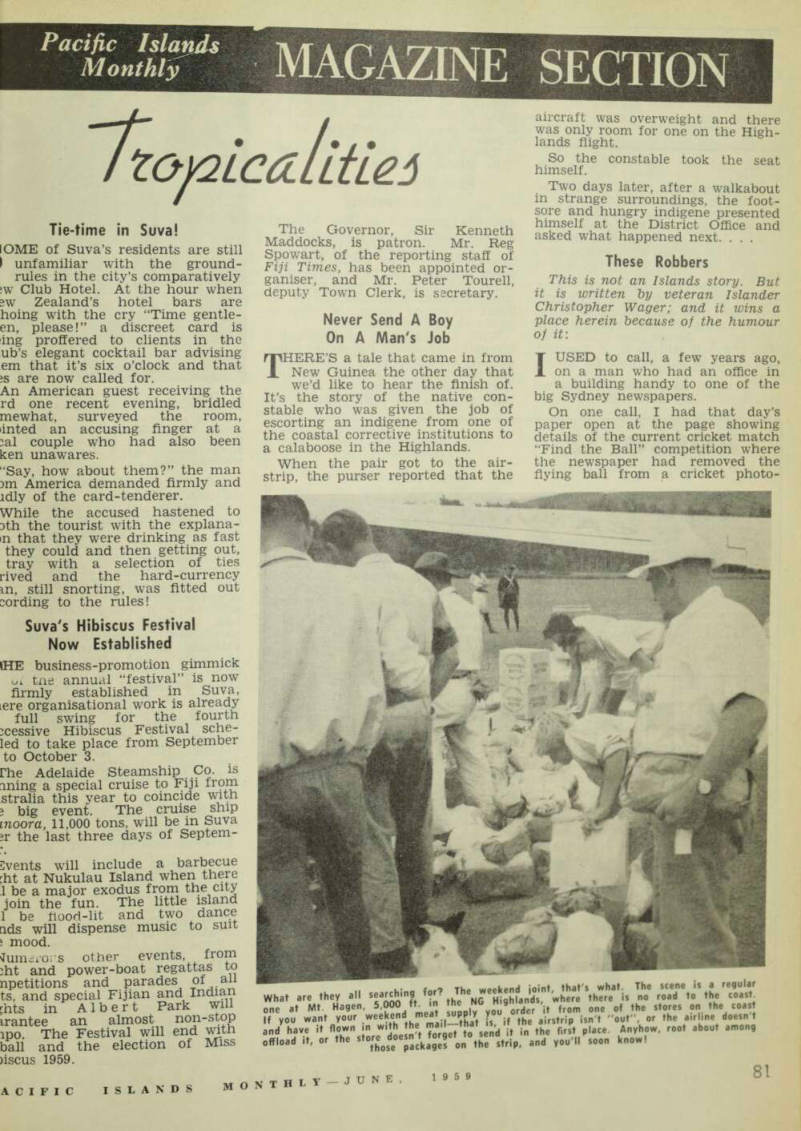 81
81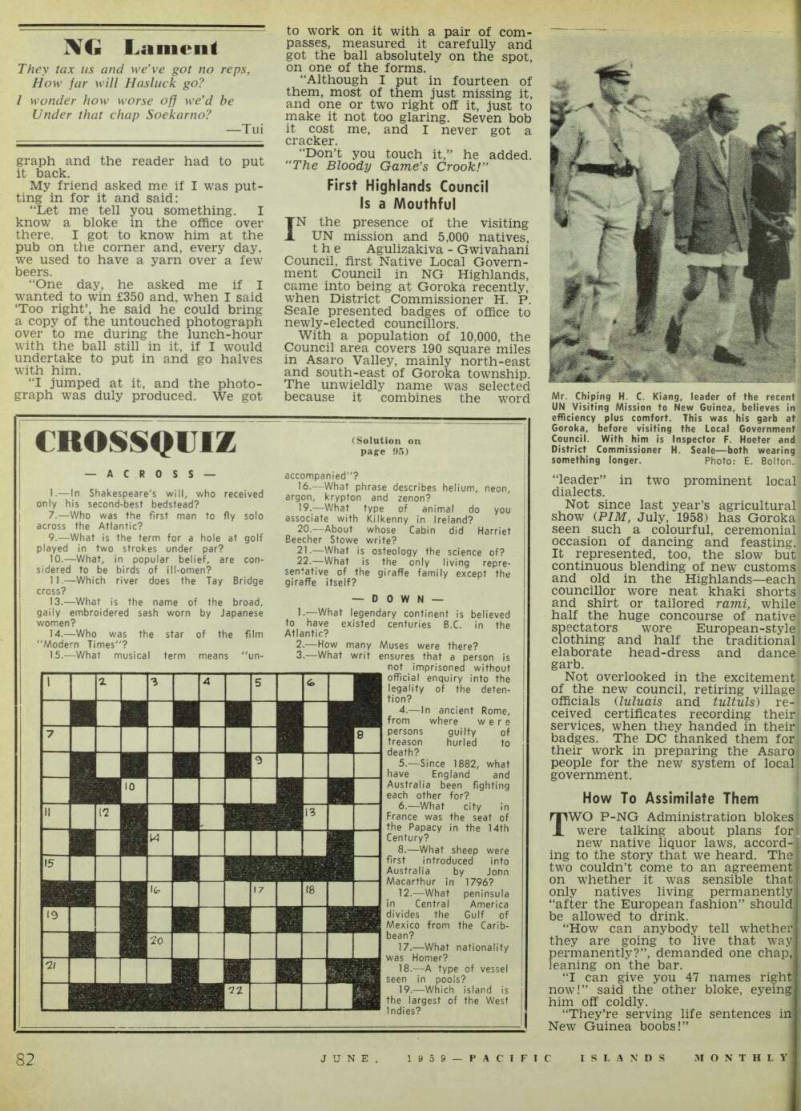 82
82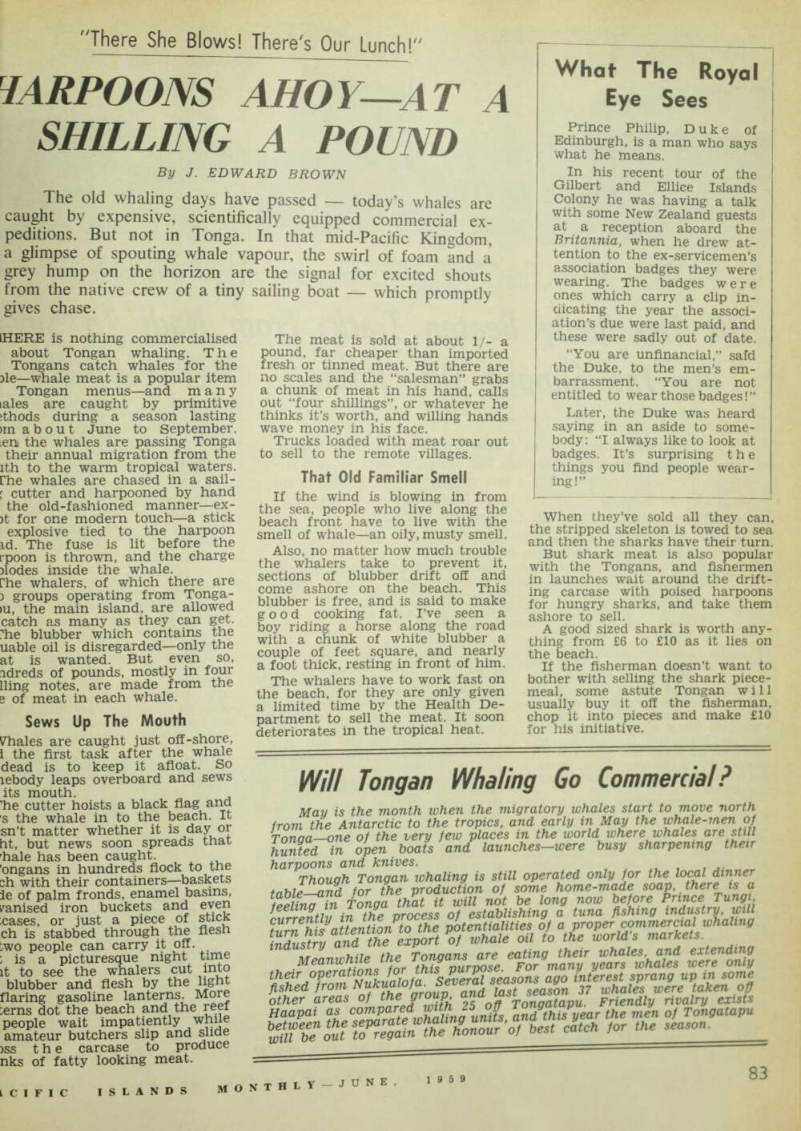 83
83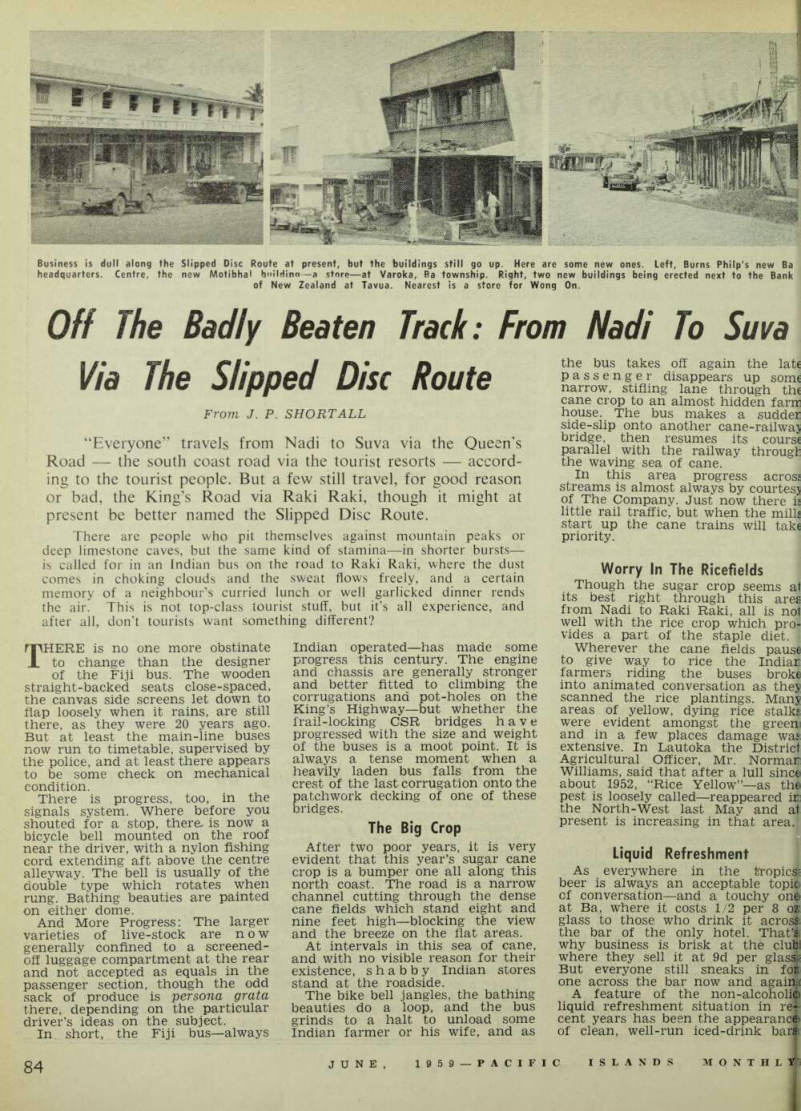 84
84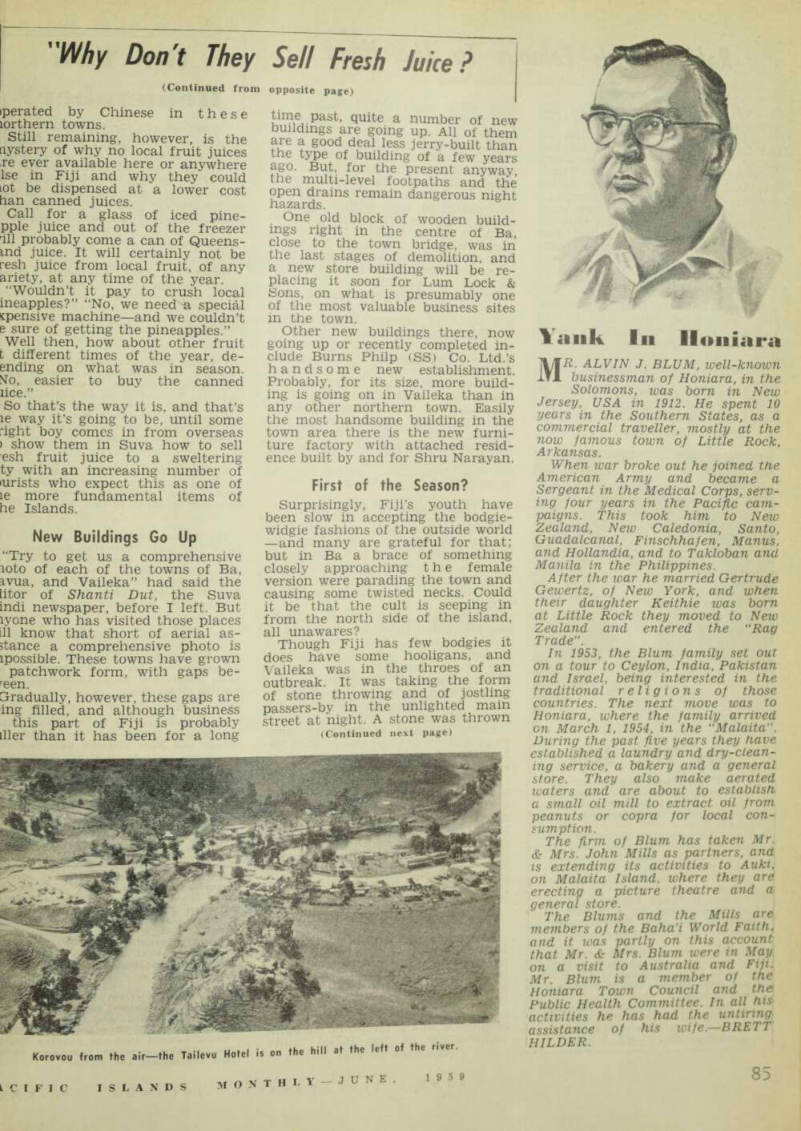 85
85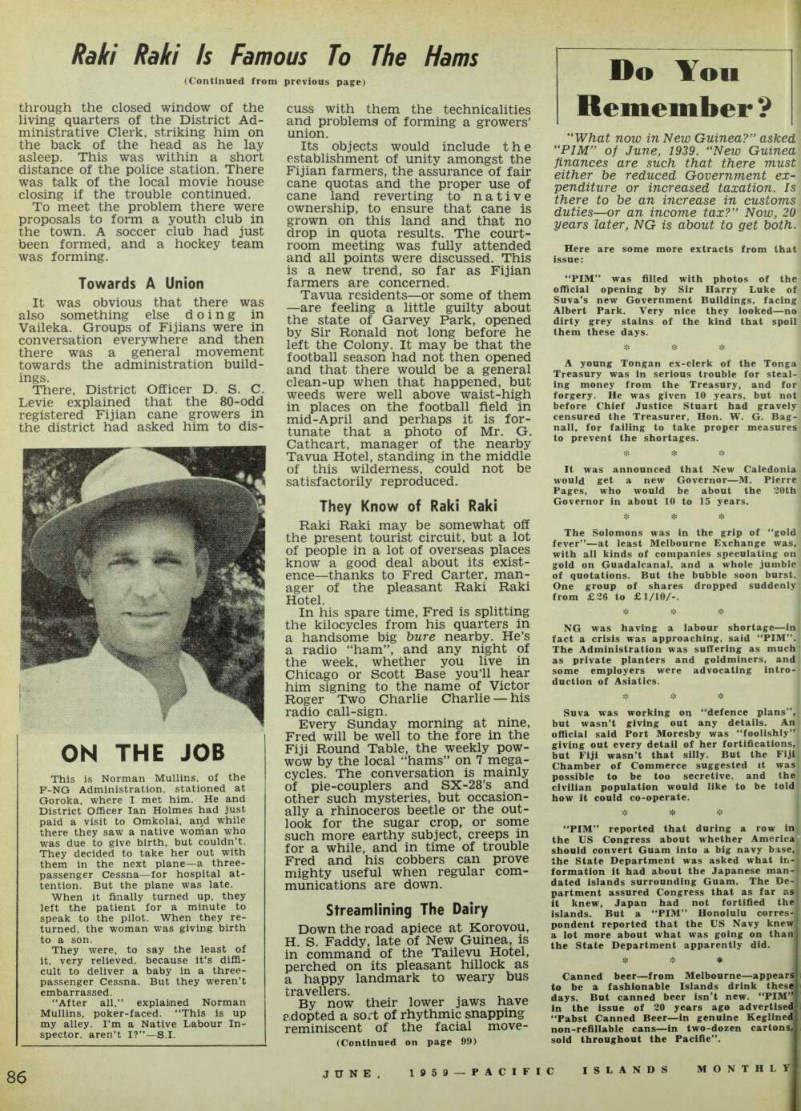 86
86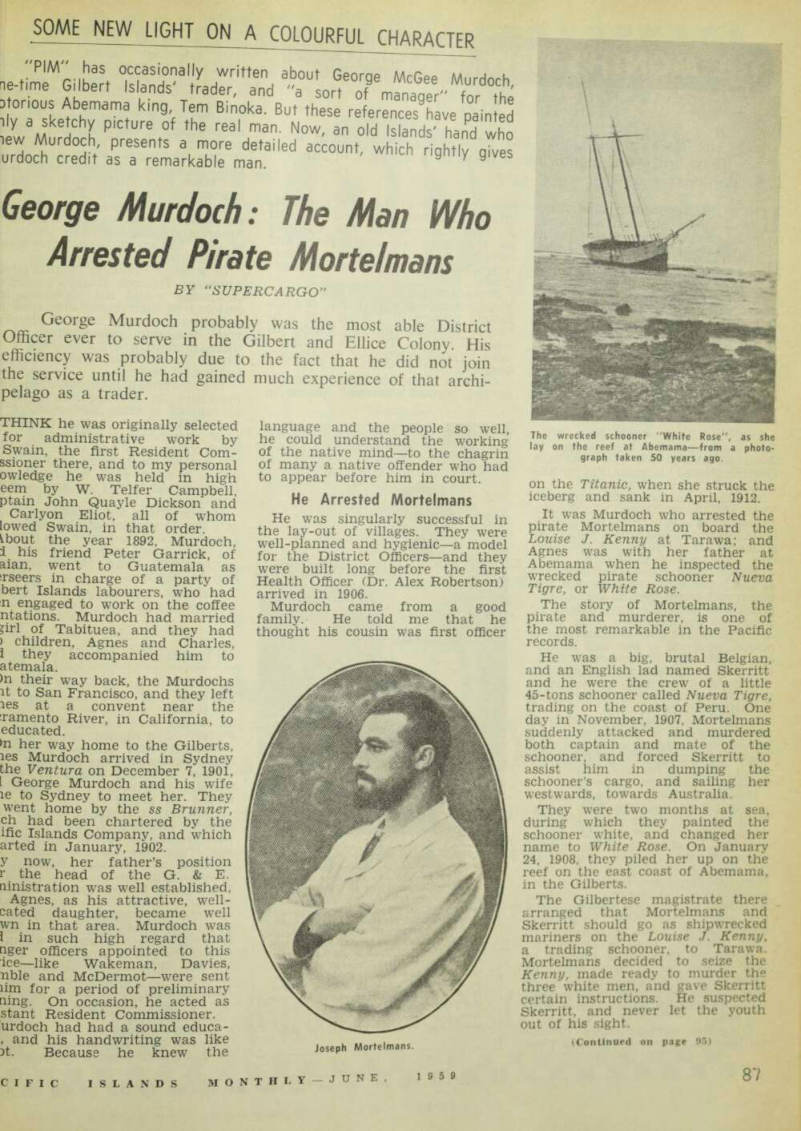 87
87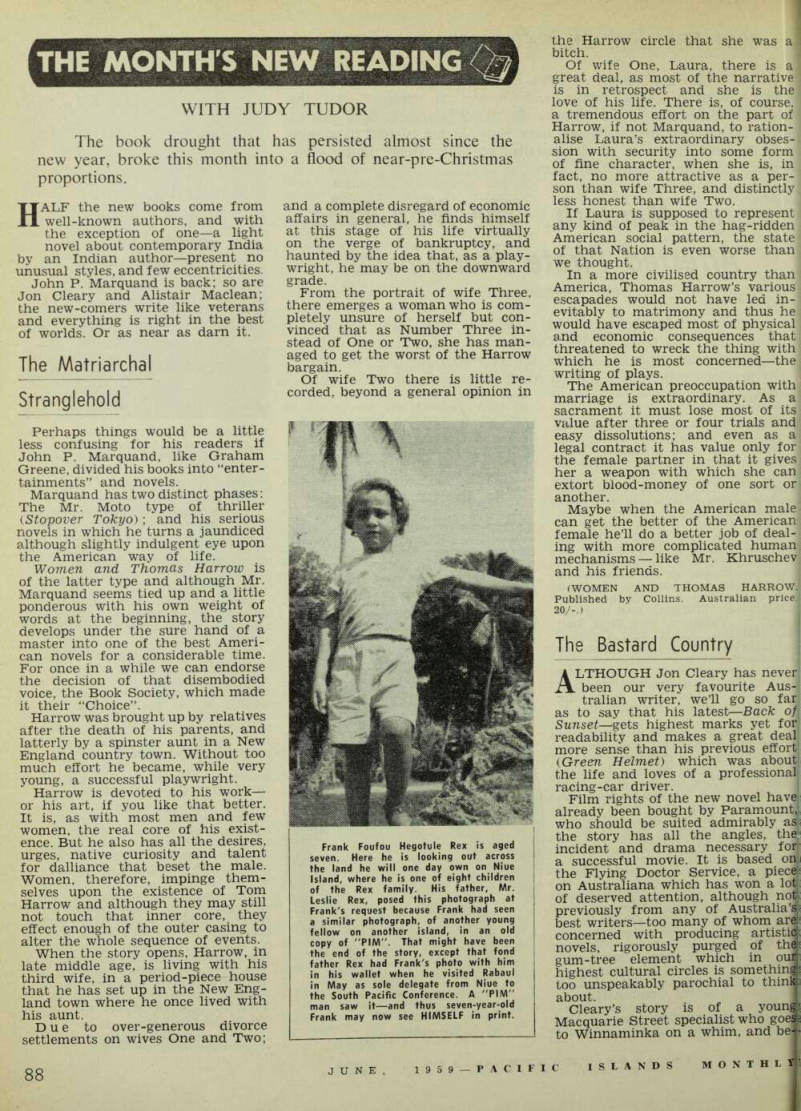 88
88 89
89 90
90 91
91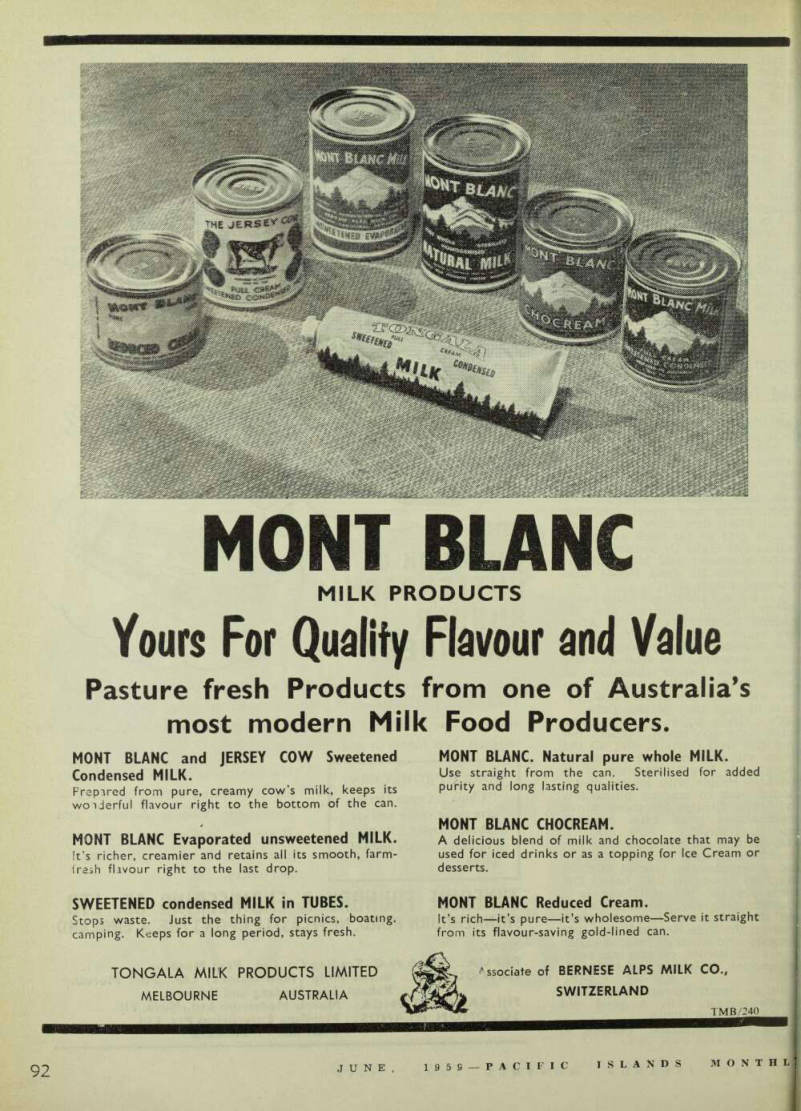 92
92 93
93 94
94 95
95 96
96 97
97 98
98 99
99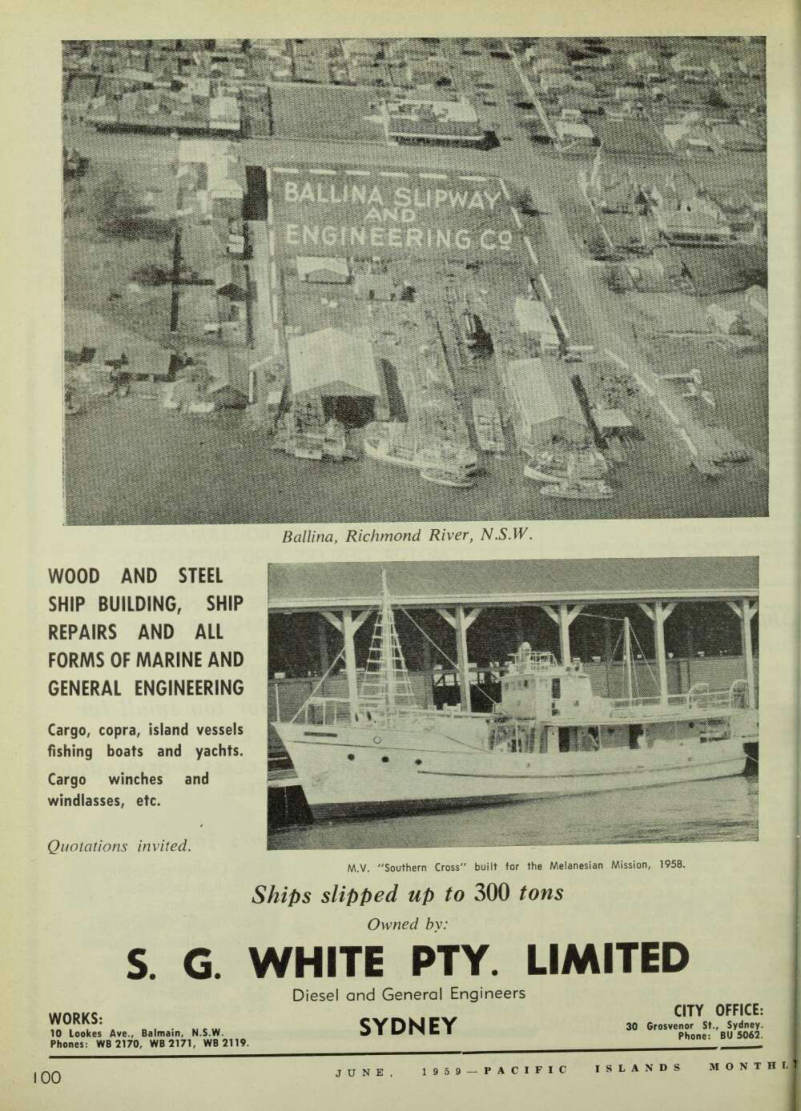 100
100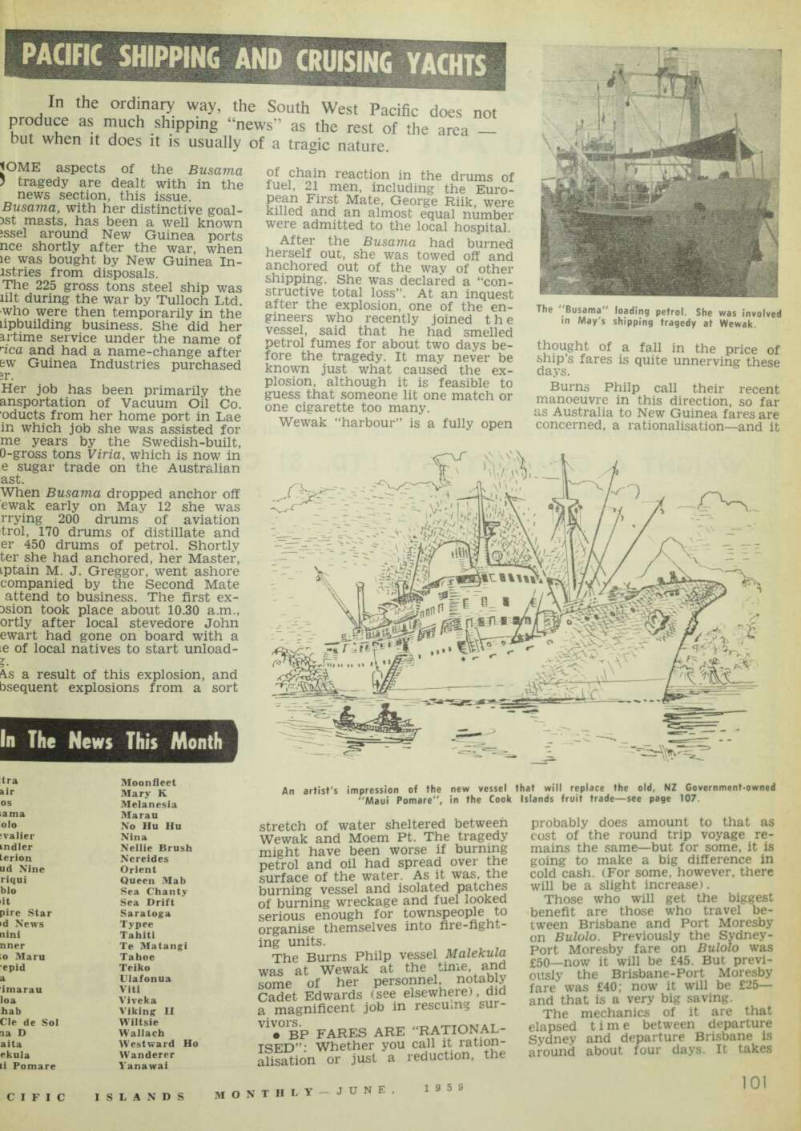 101
101 102
102 103
103 104
104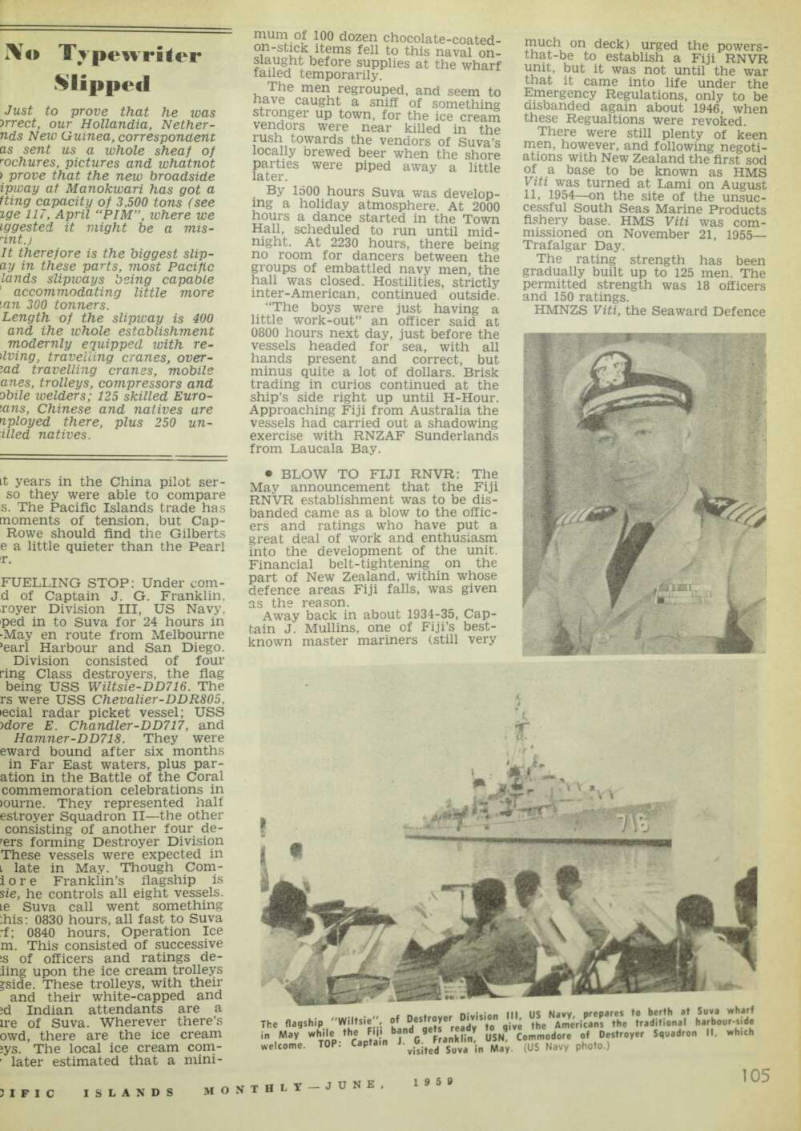 105
105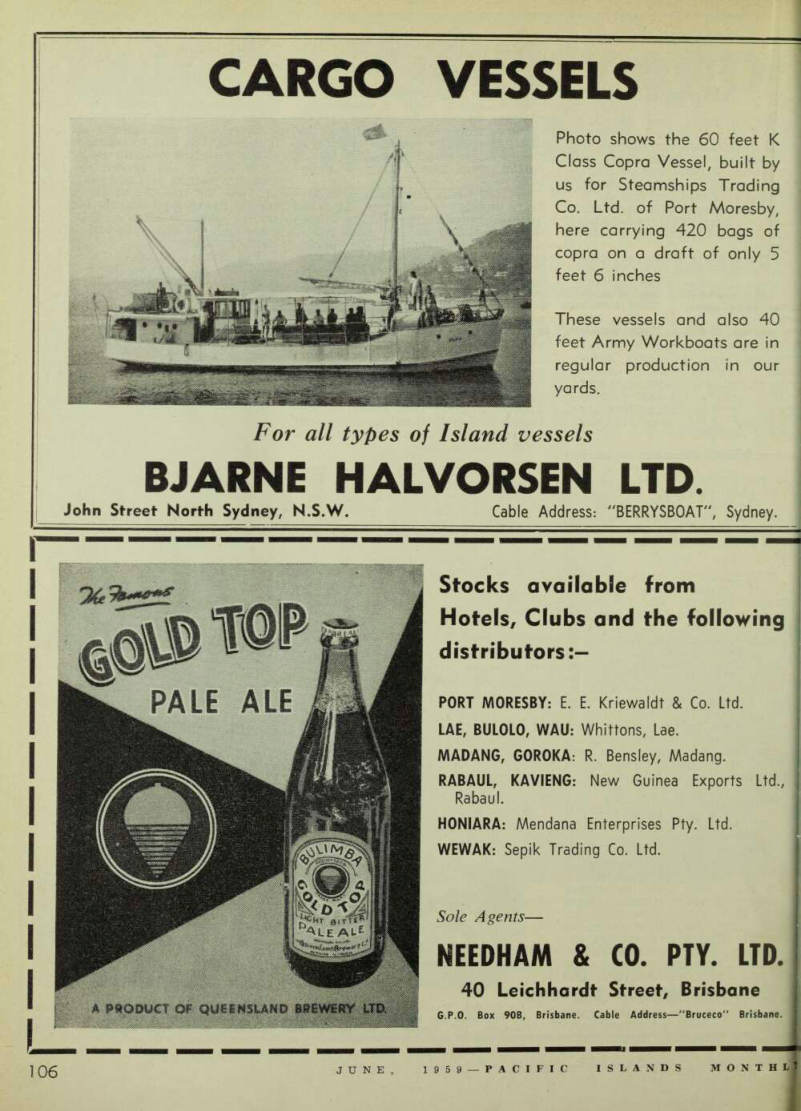 106
106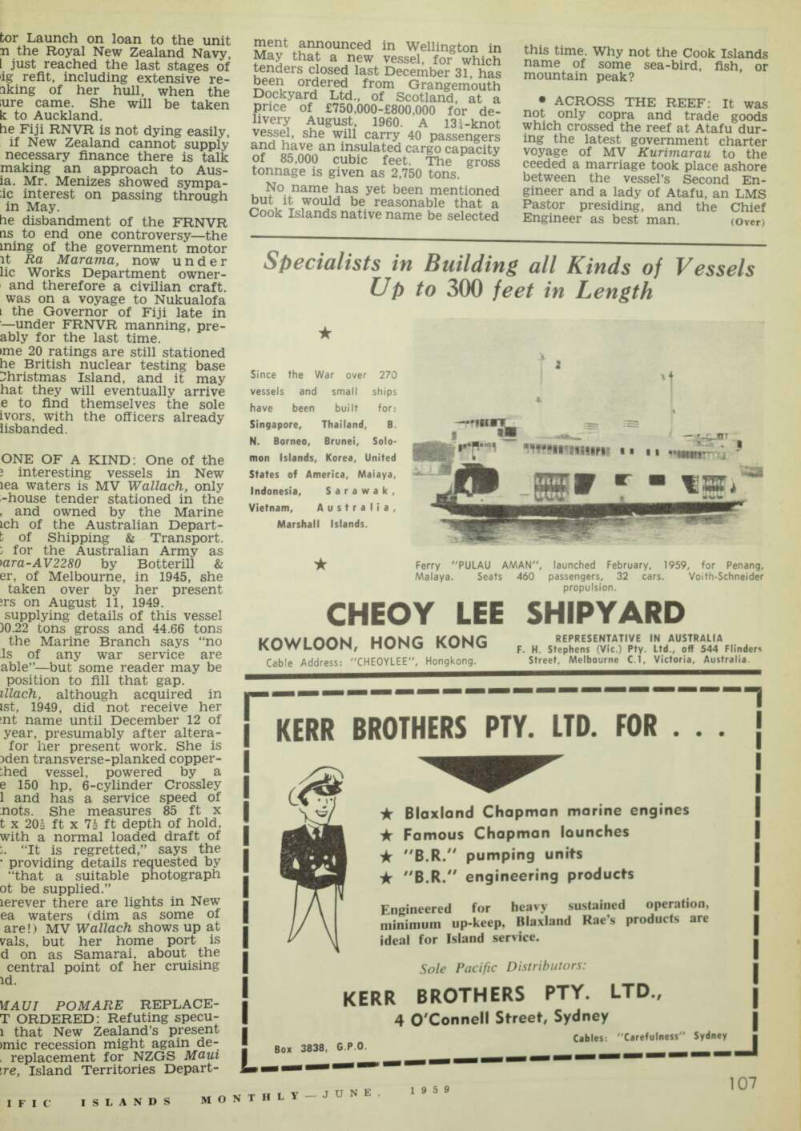 107
107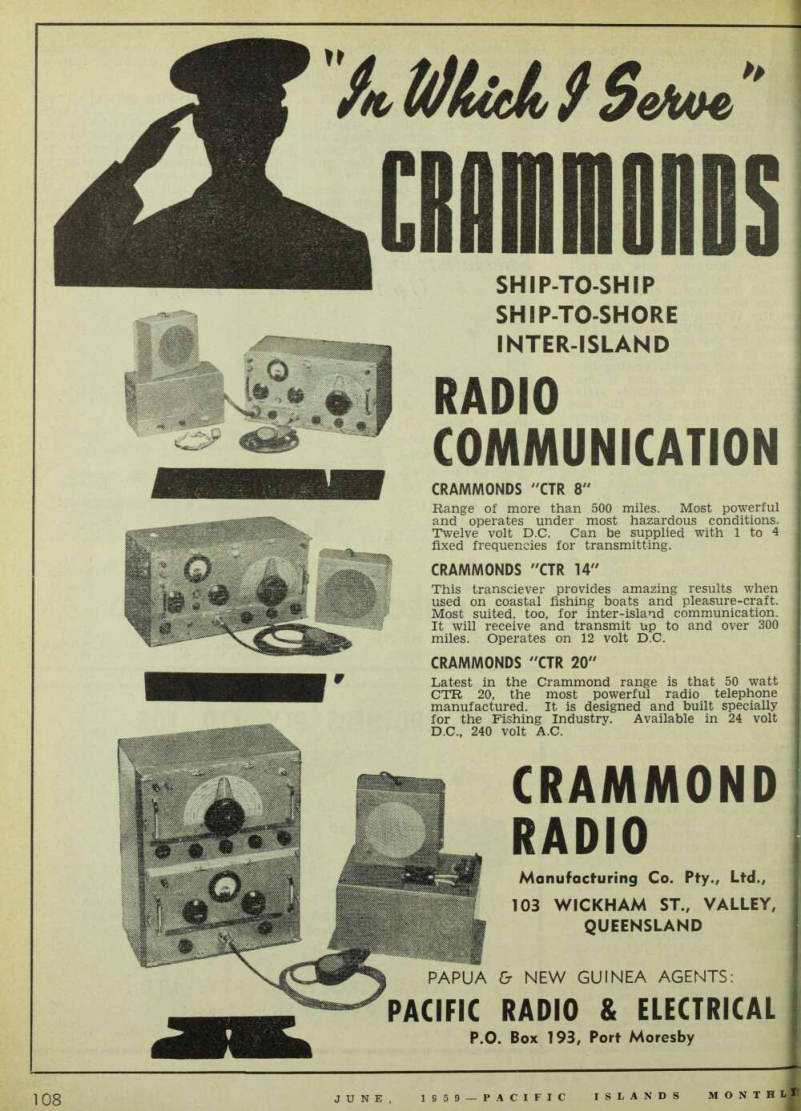 108
108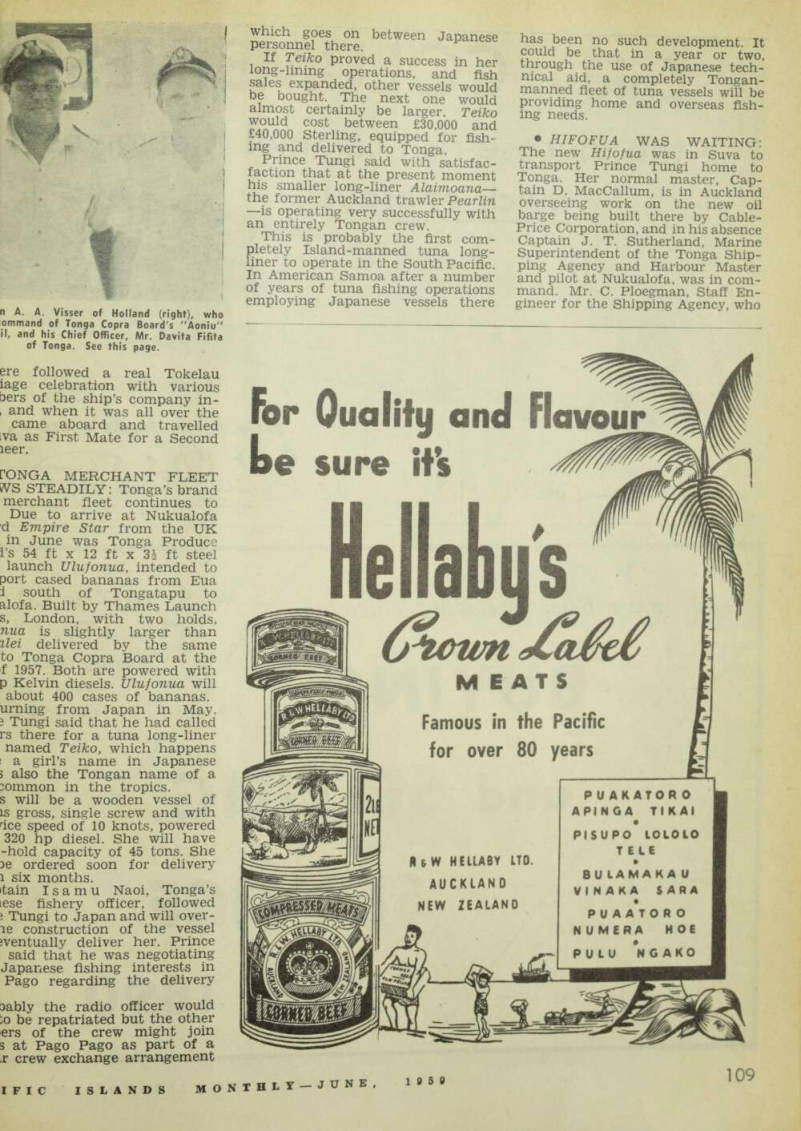 109
109 110
110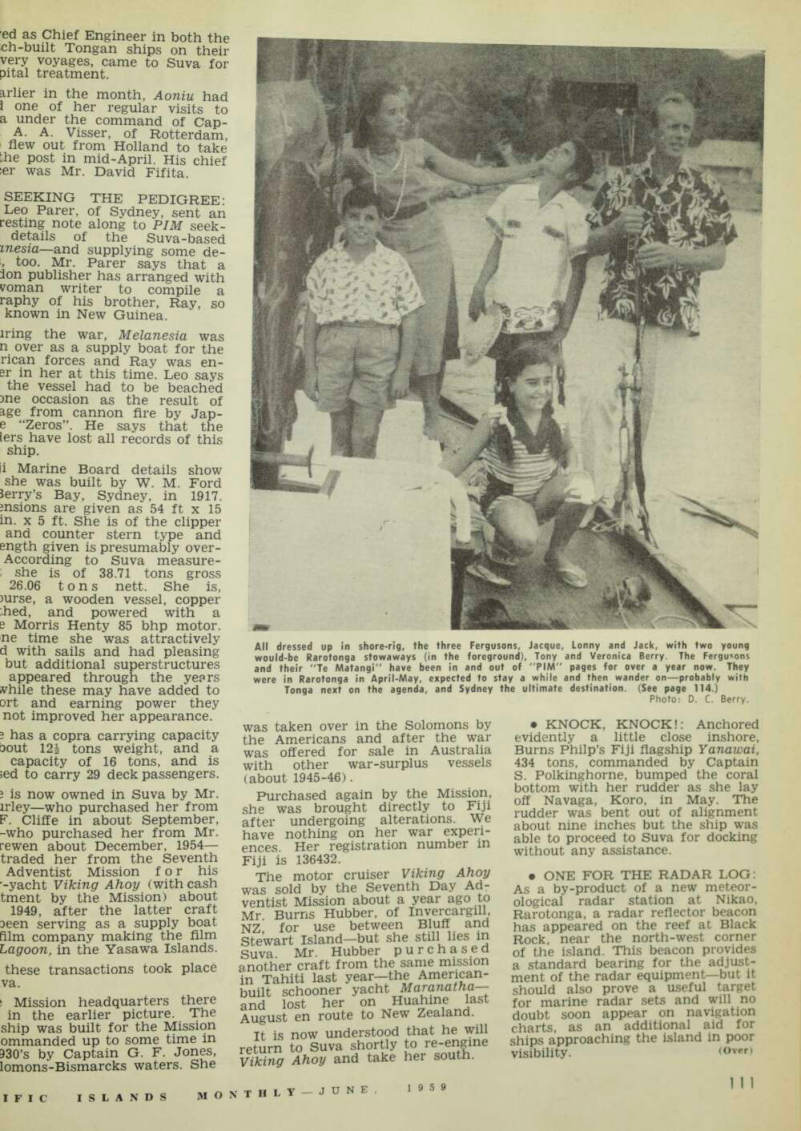 111
111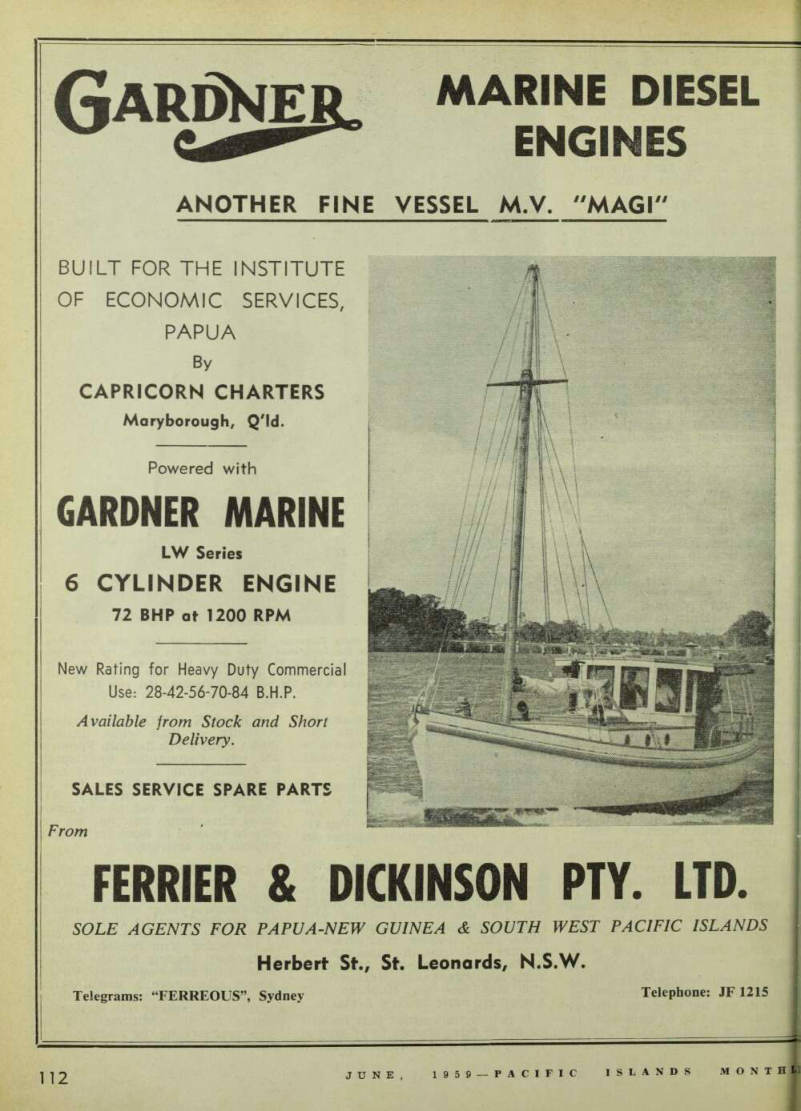 112
112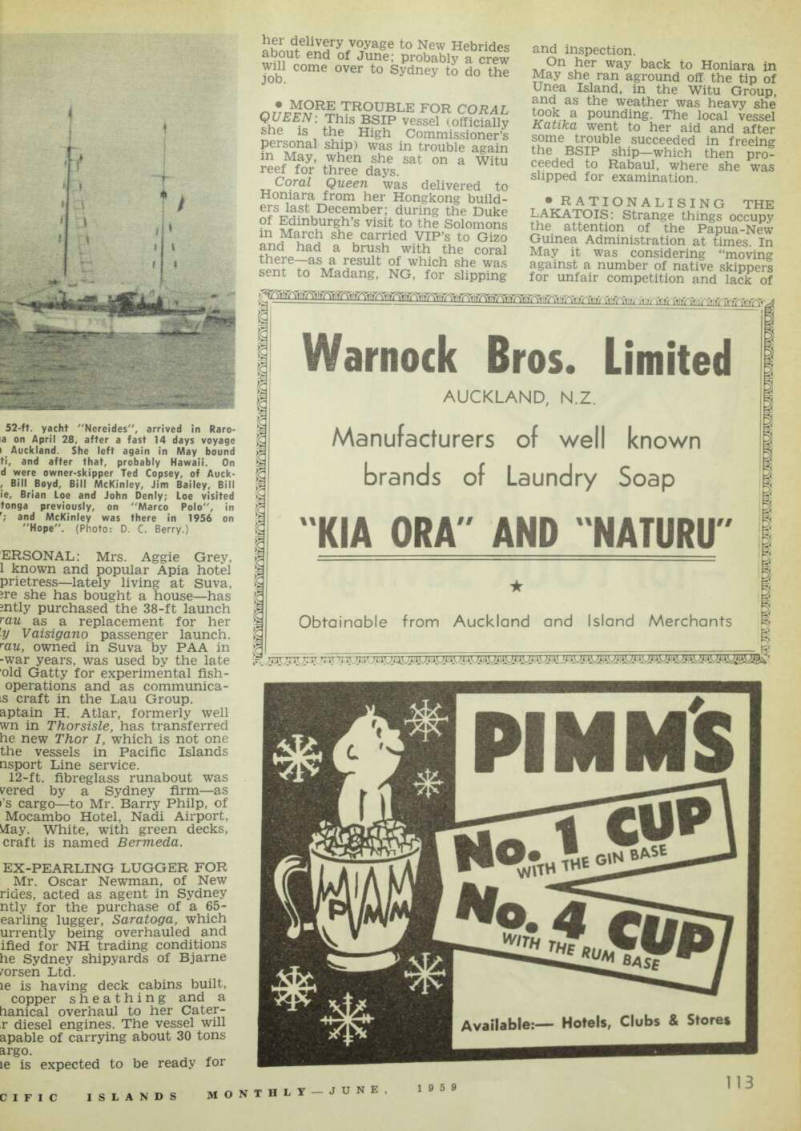 113
113 114
114 115
115 116
116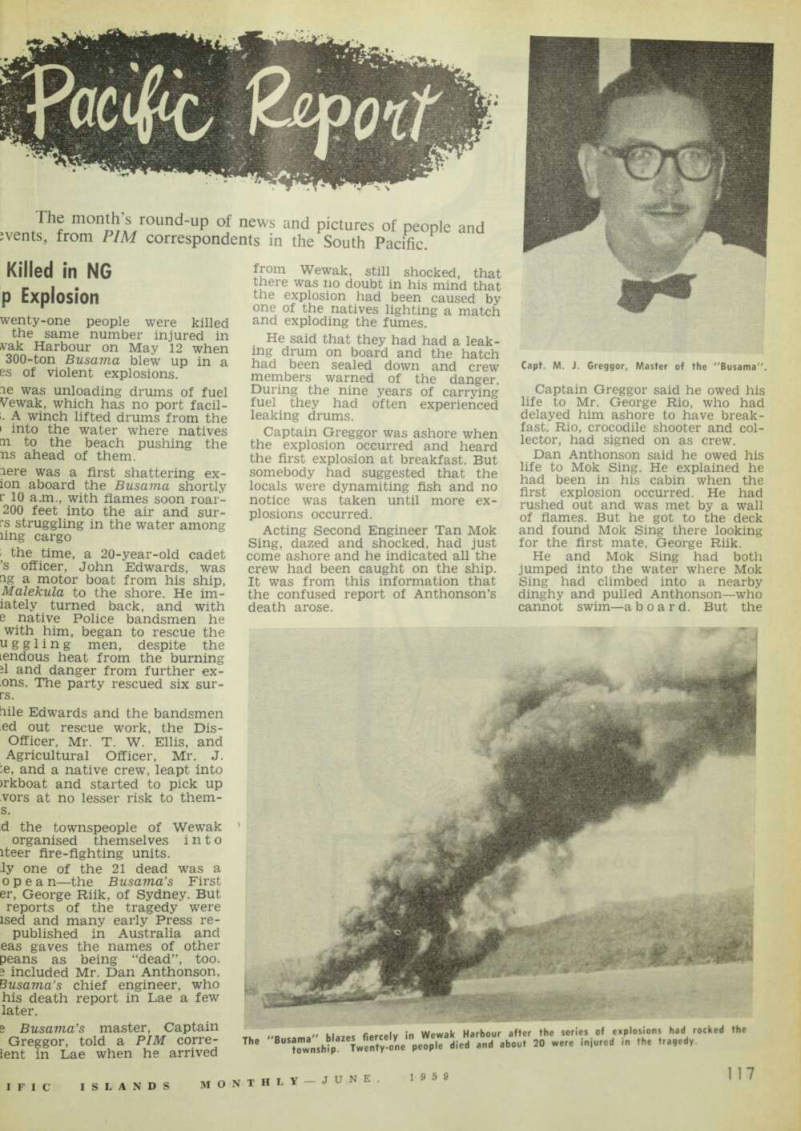 117
117 118
118 119
119 120
120 121
121 122
122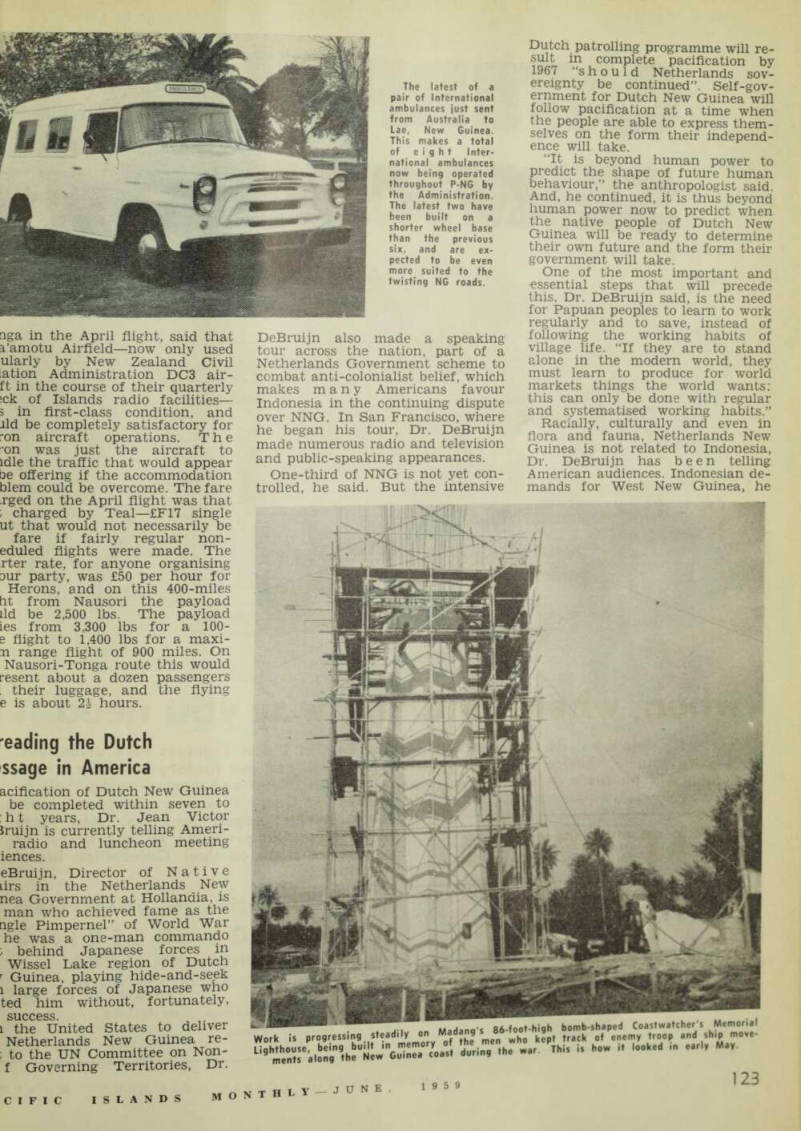 123
123 124
124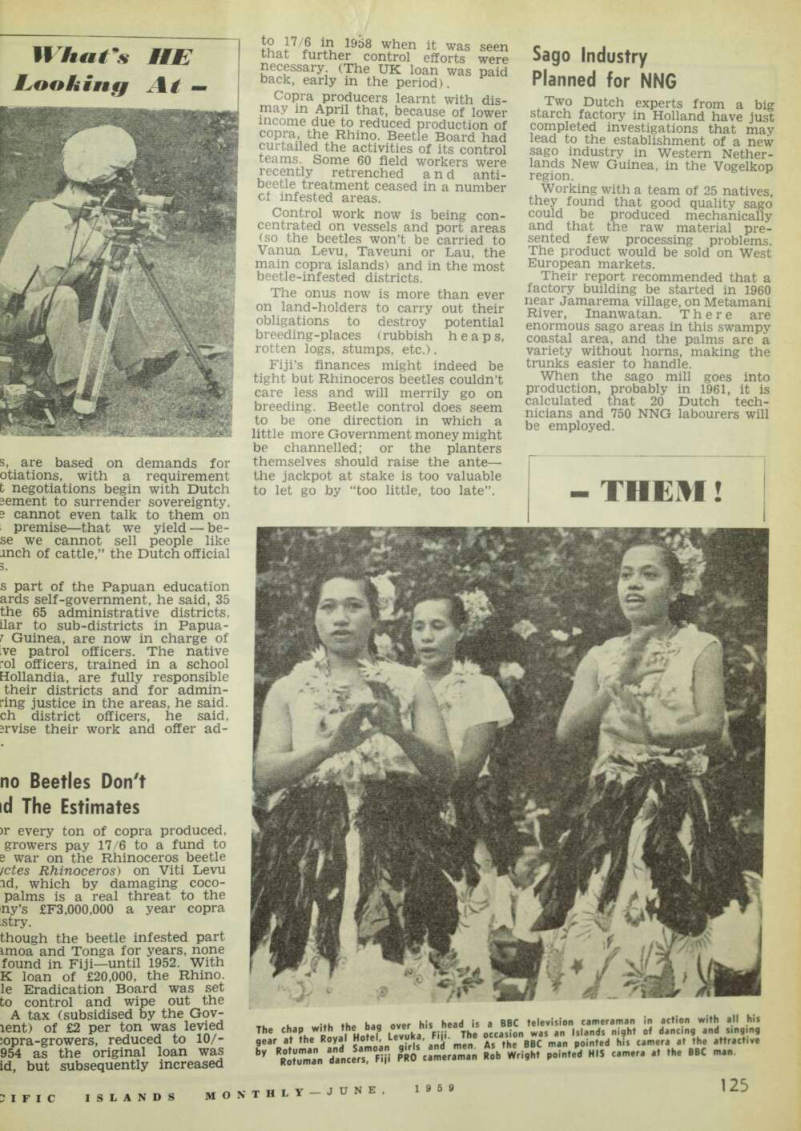 125
125 126
126 127
127 128
128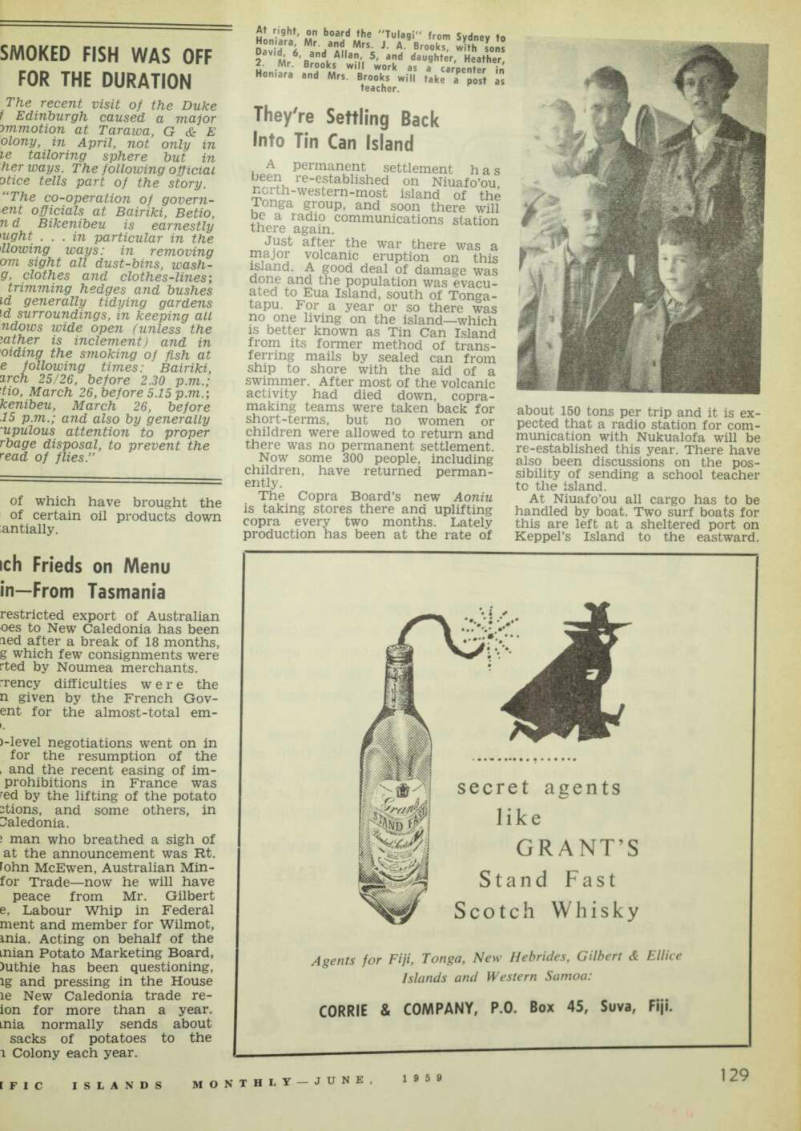 129
129 130
130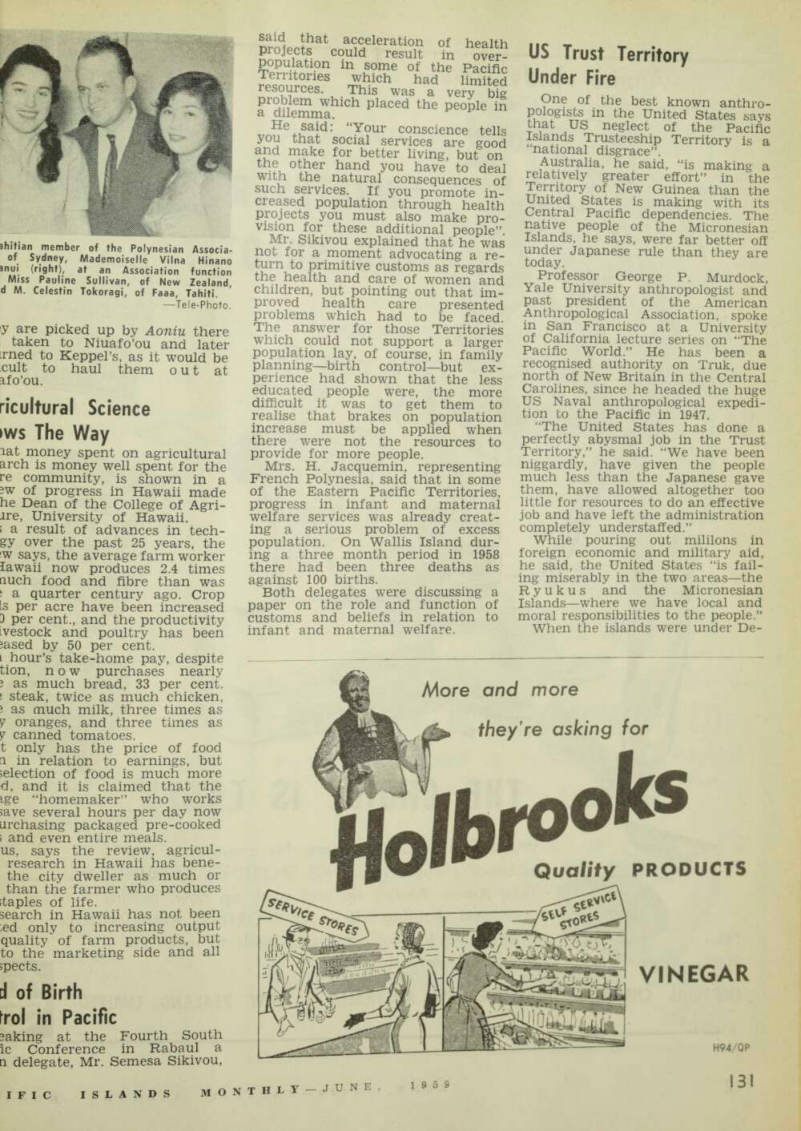 131
131 132
132 133
133 134
134 135
135 136
136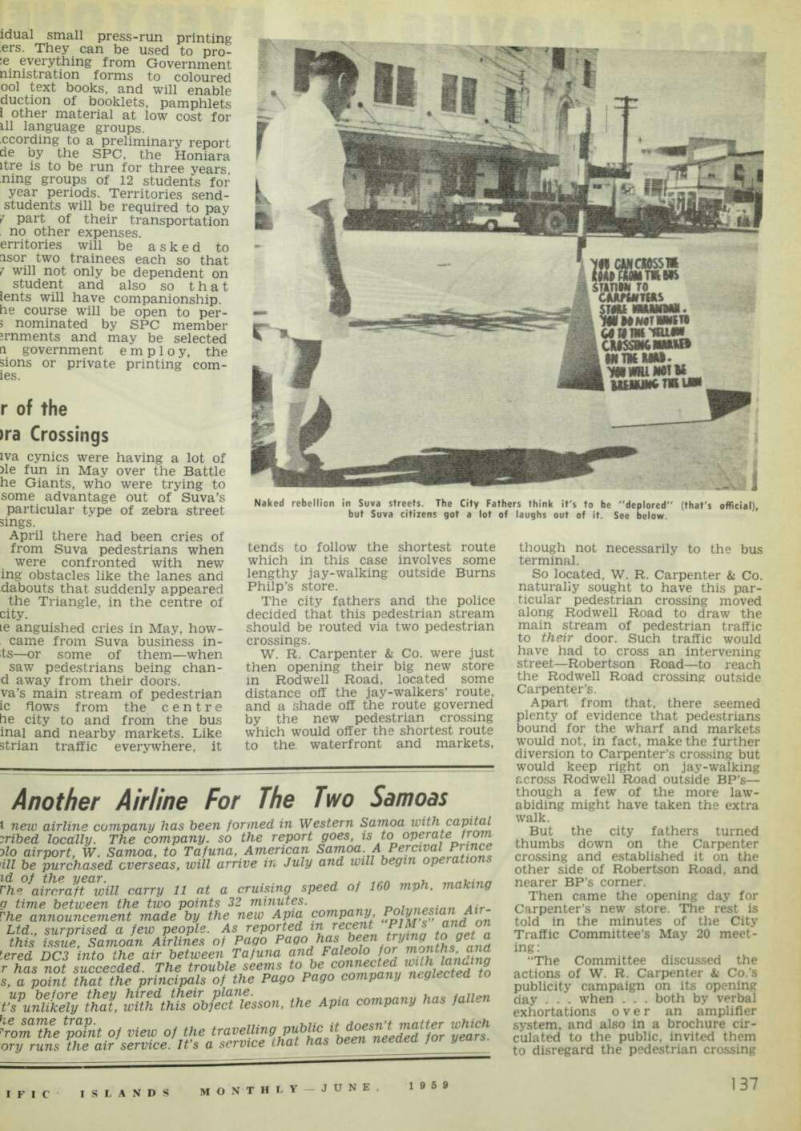 137
137 138
138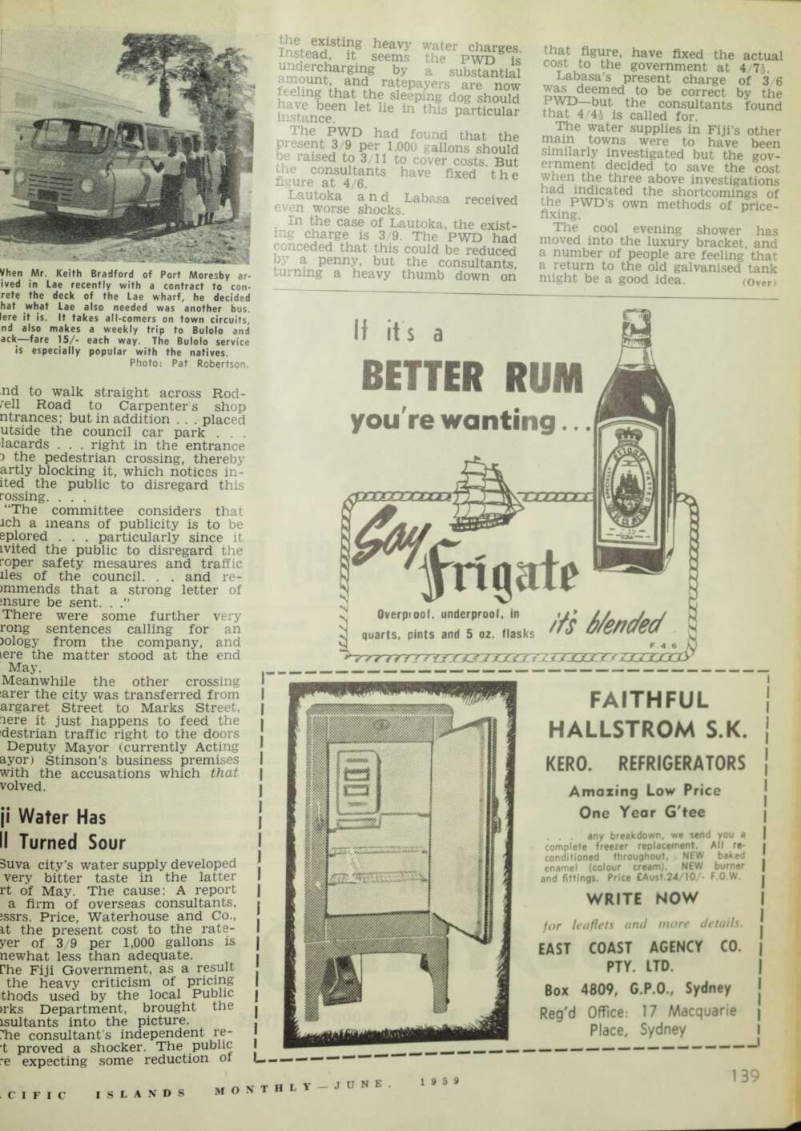 139
139 140
140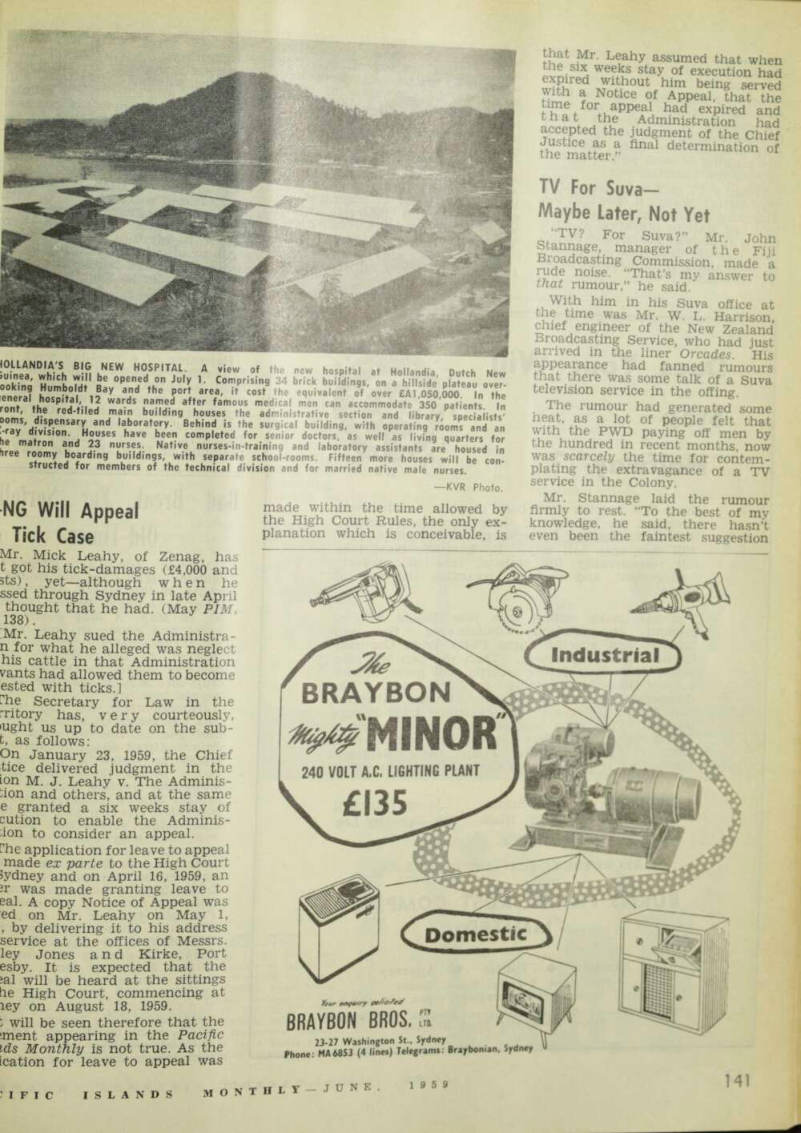 141
141 142
142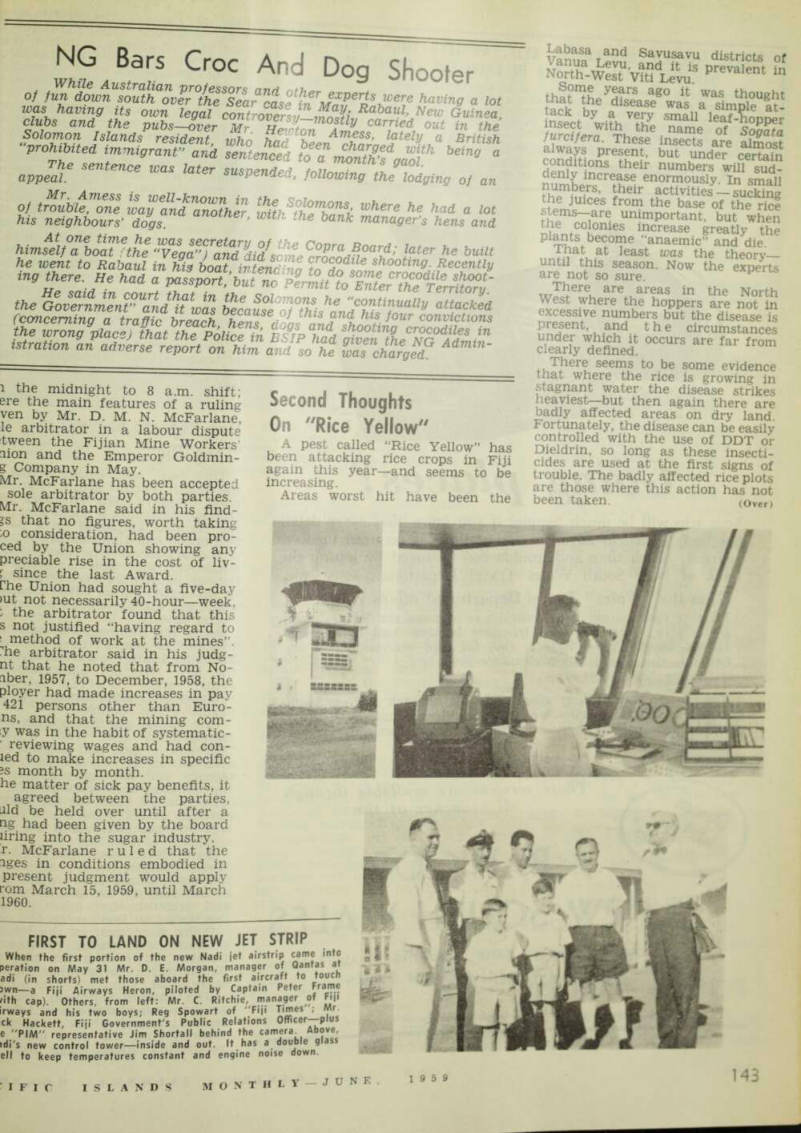 143
143 144
144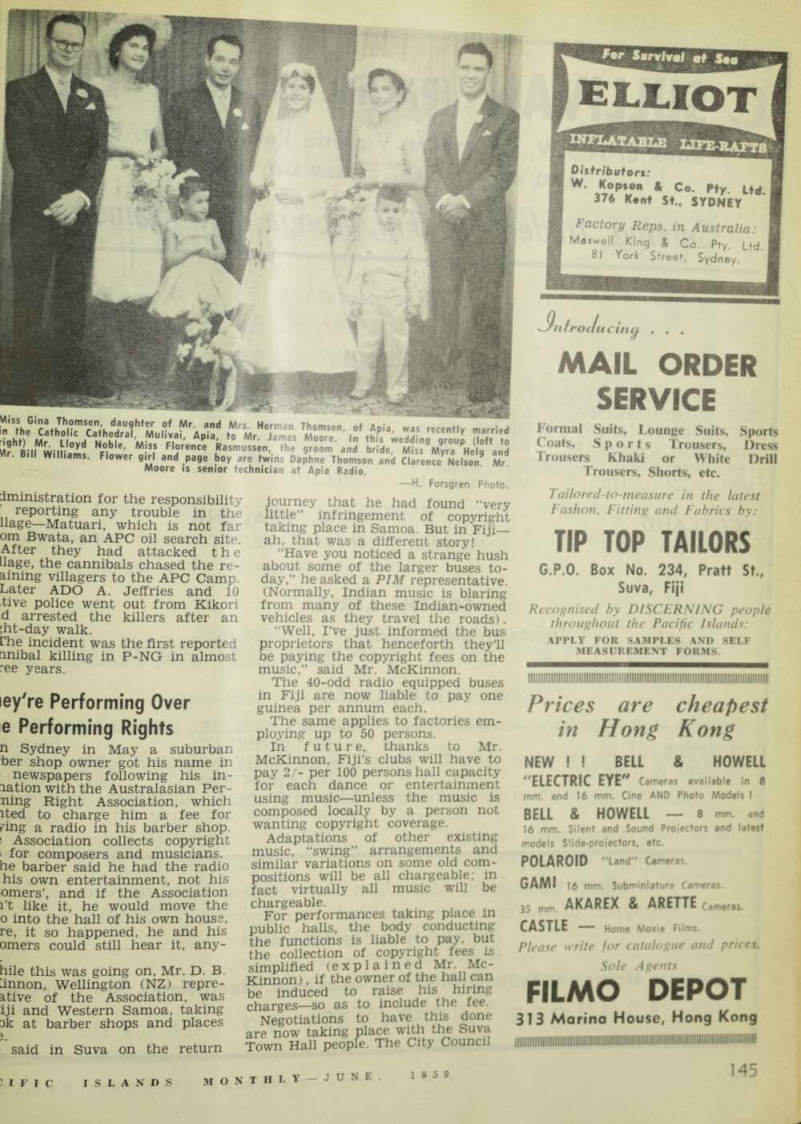 145
145 146
146 147
147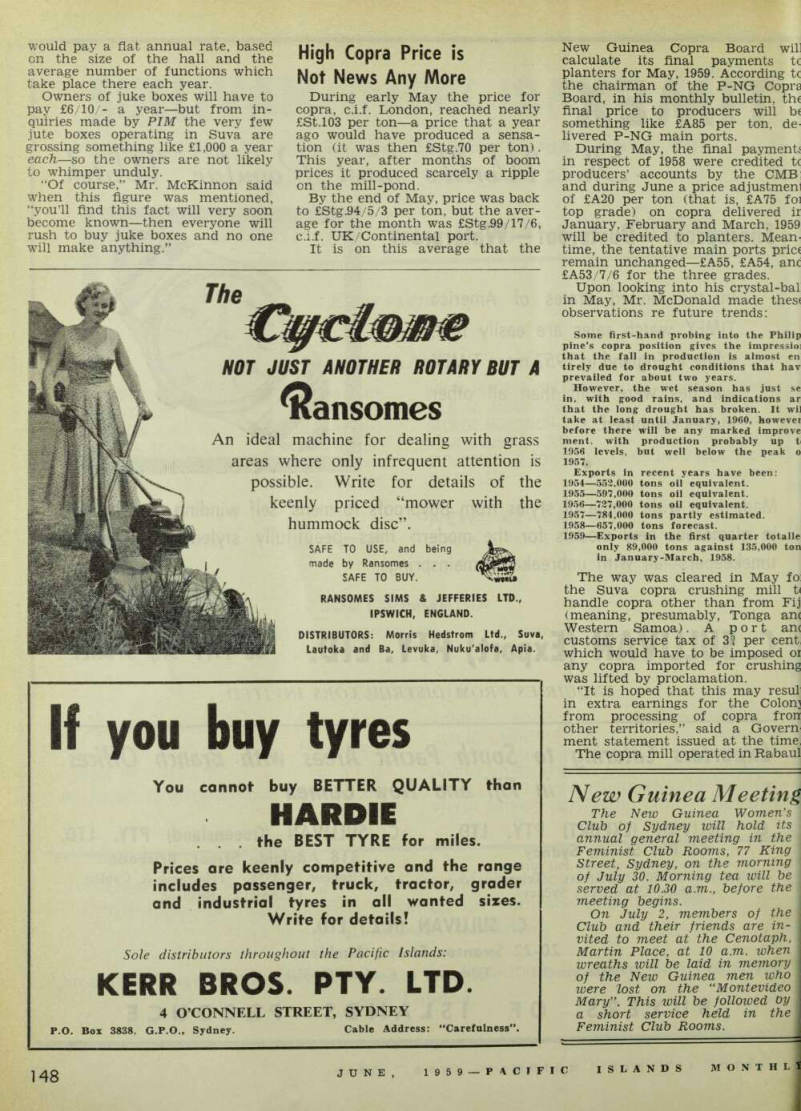 148
148 149
149 150
150 151
151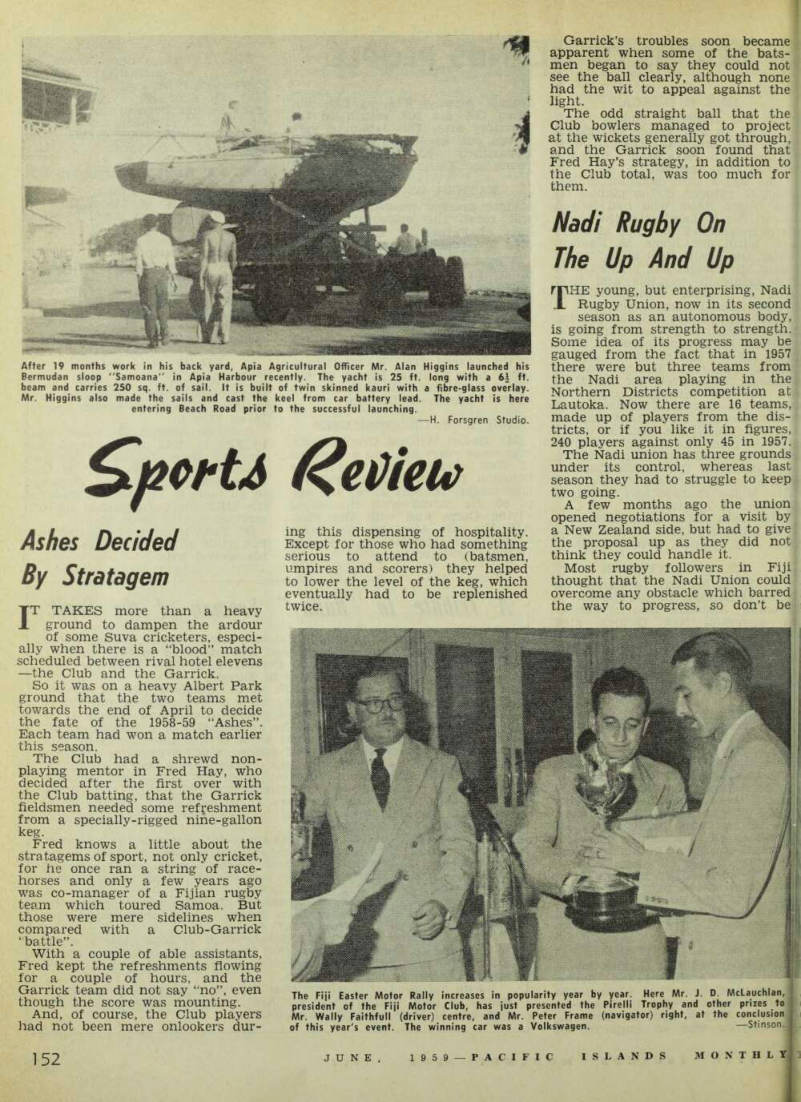 152
152 153
153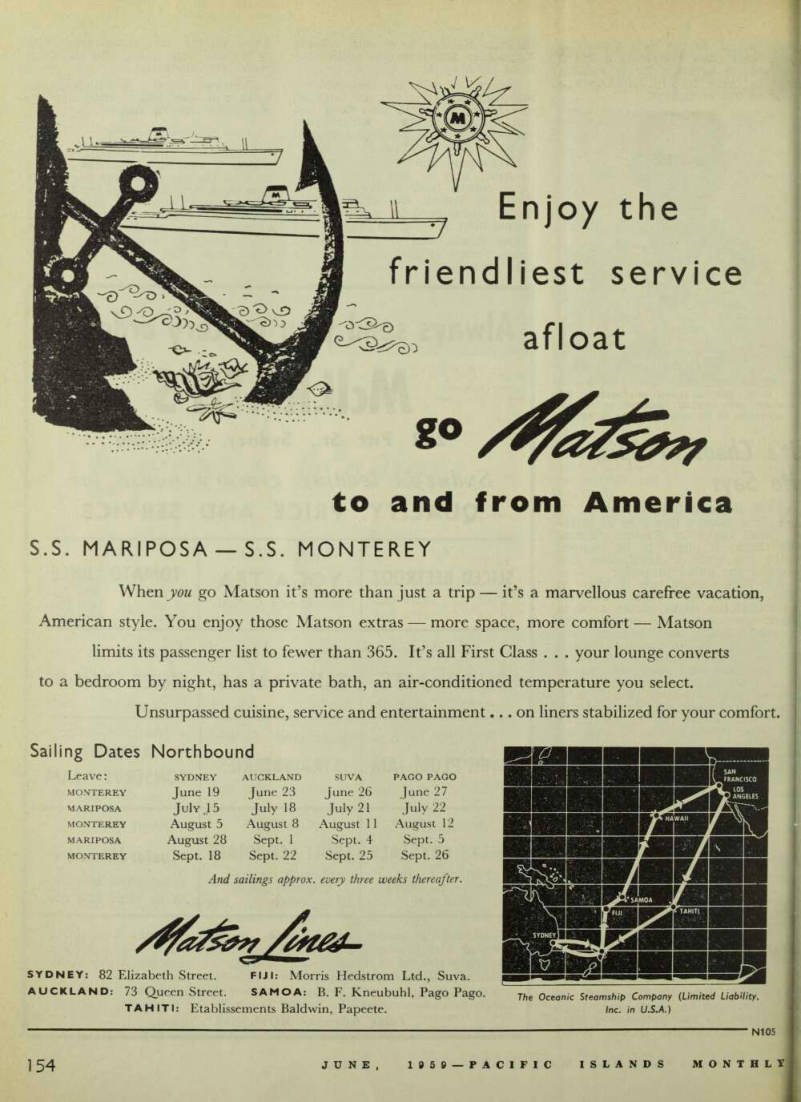 154
154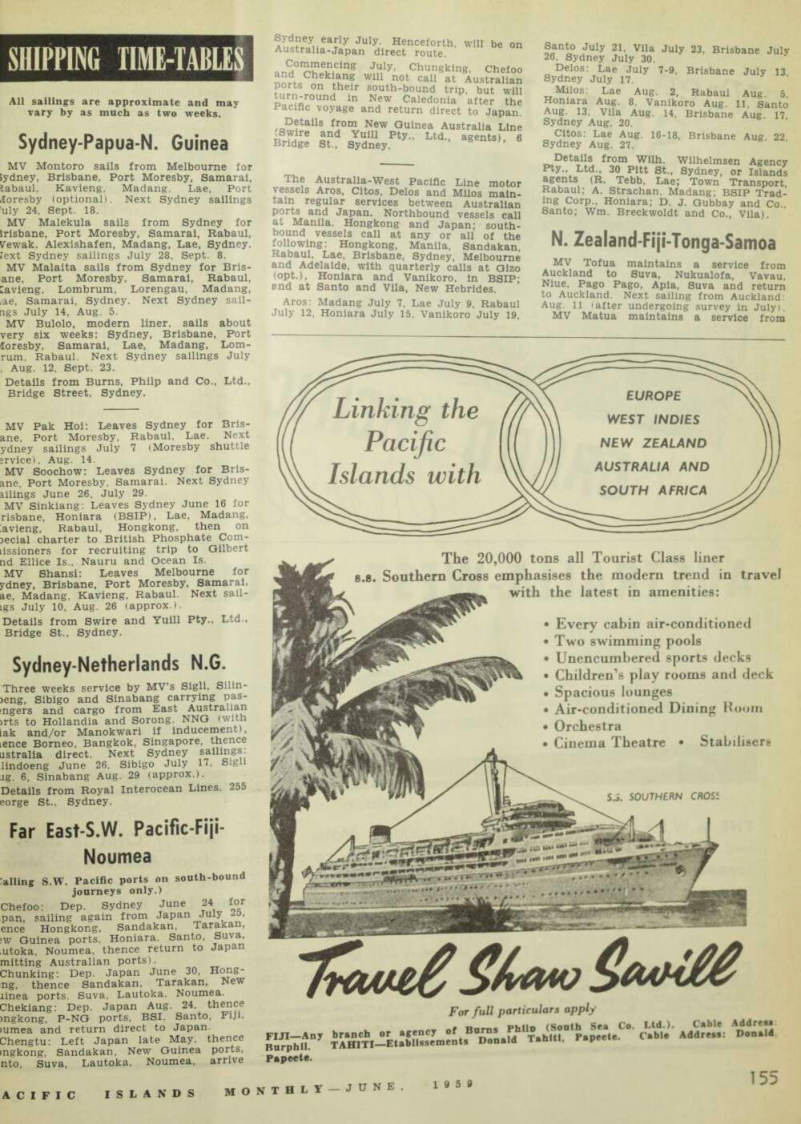 155
155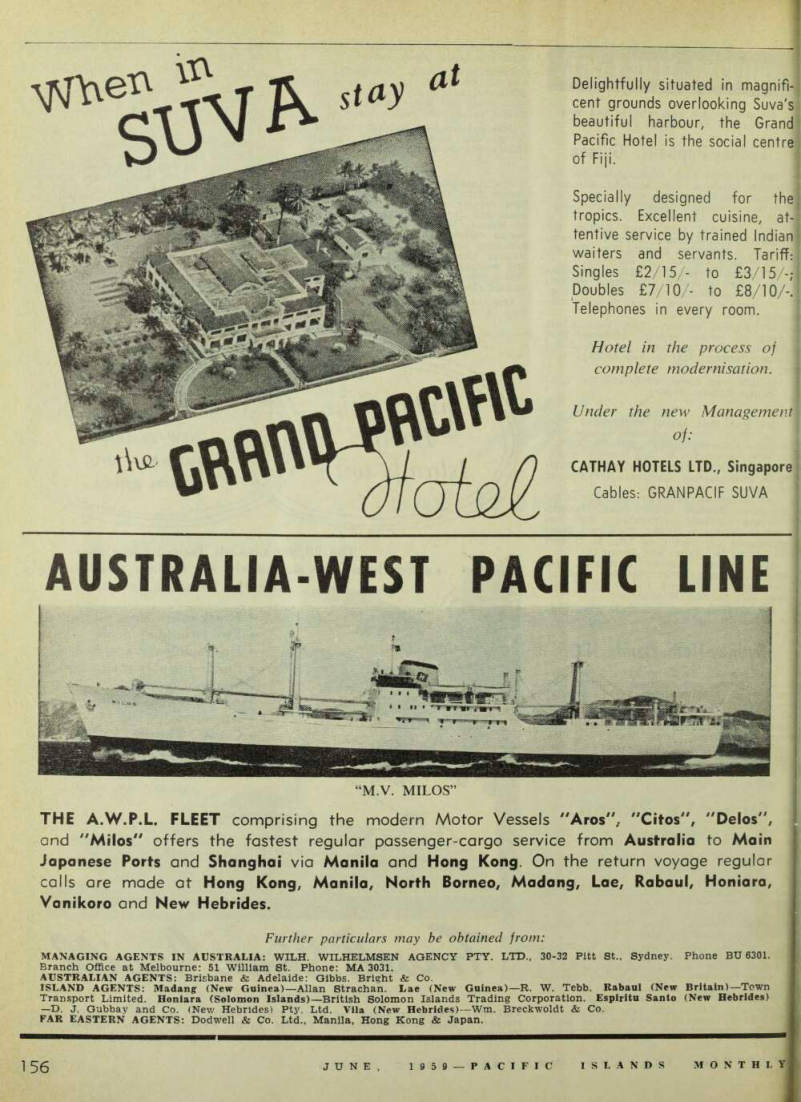 156
156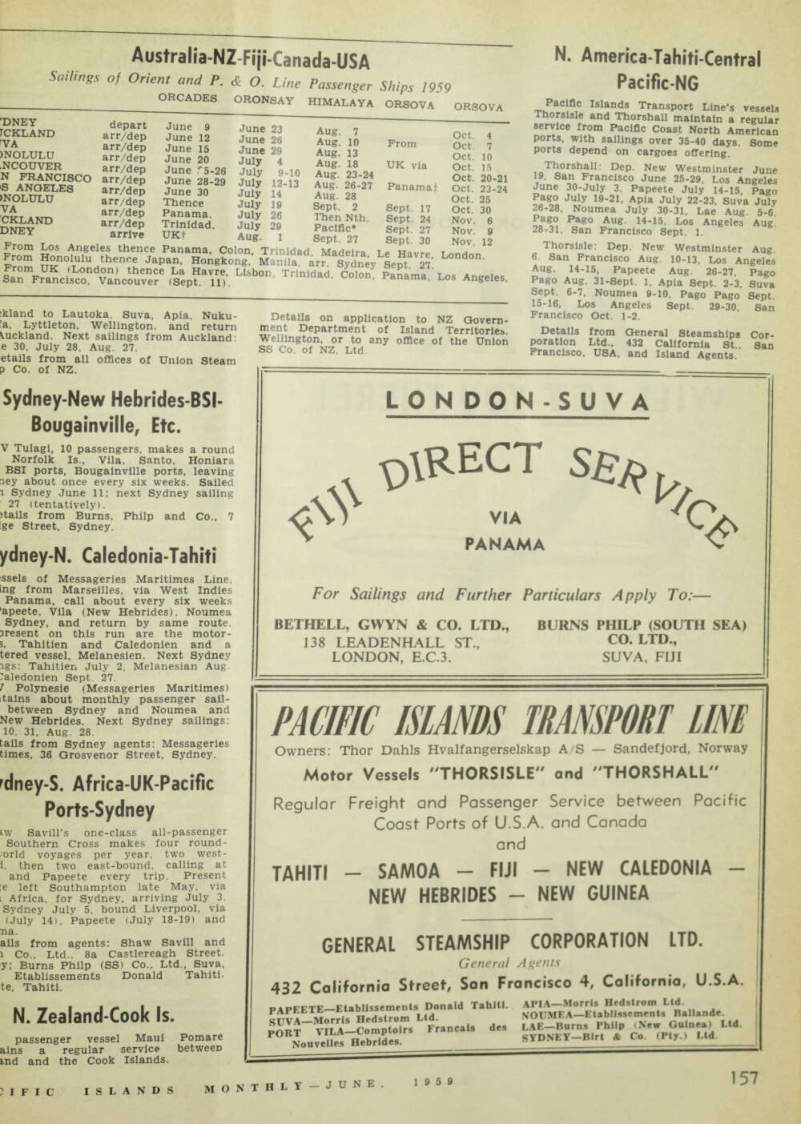 157
157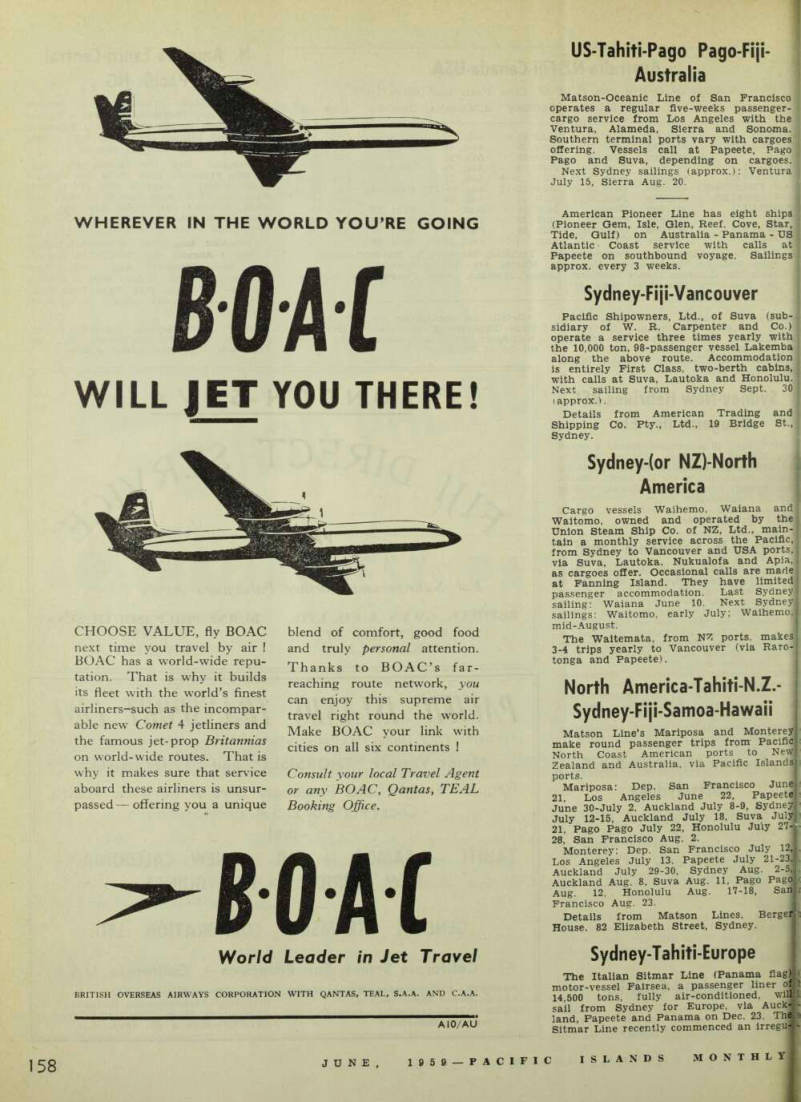 158
158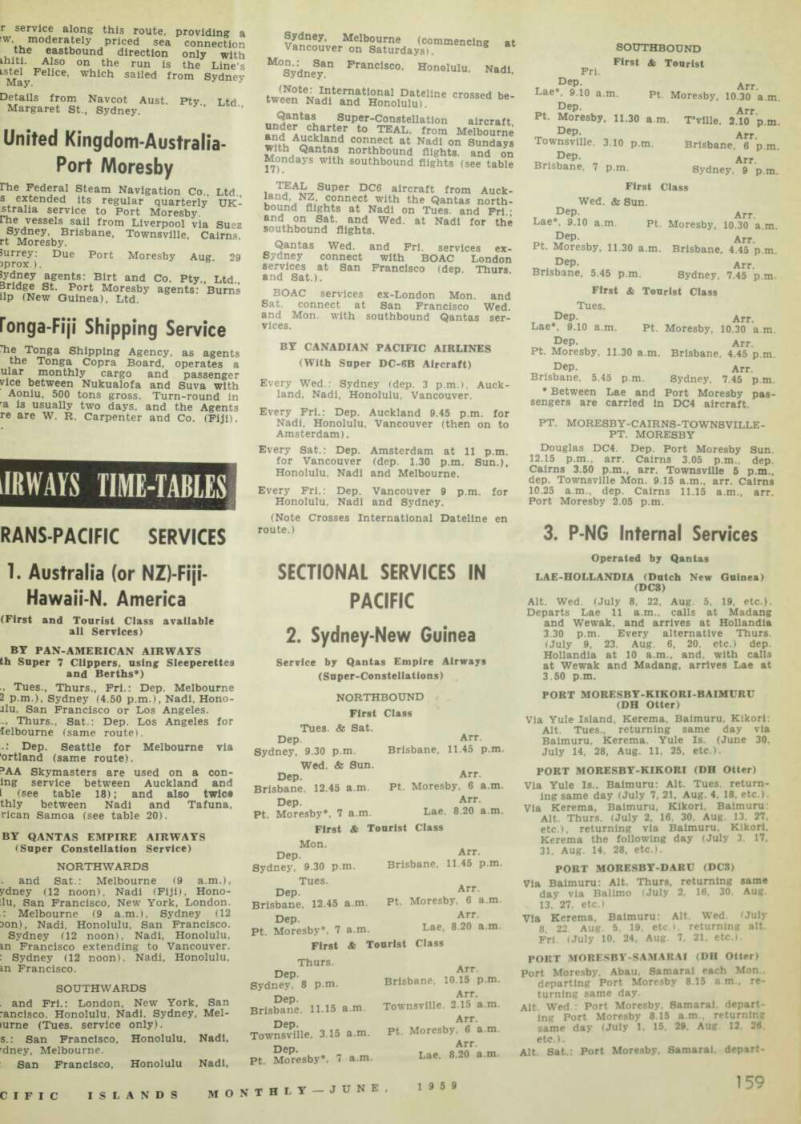 159
159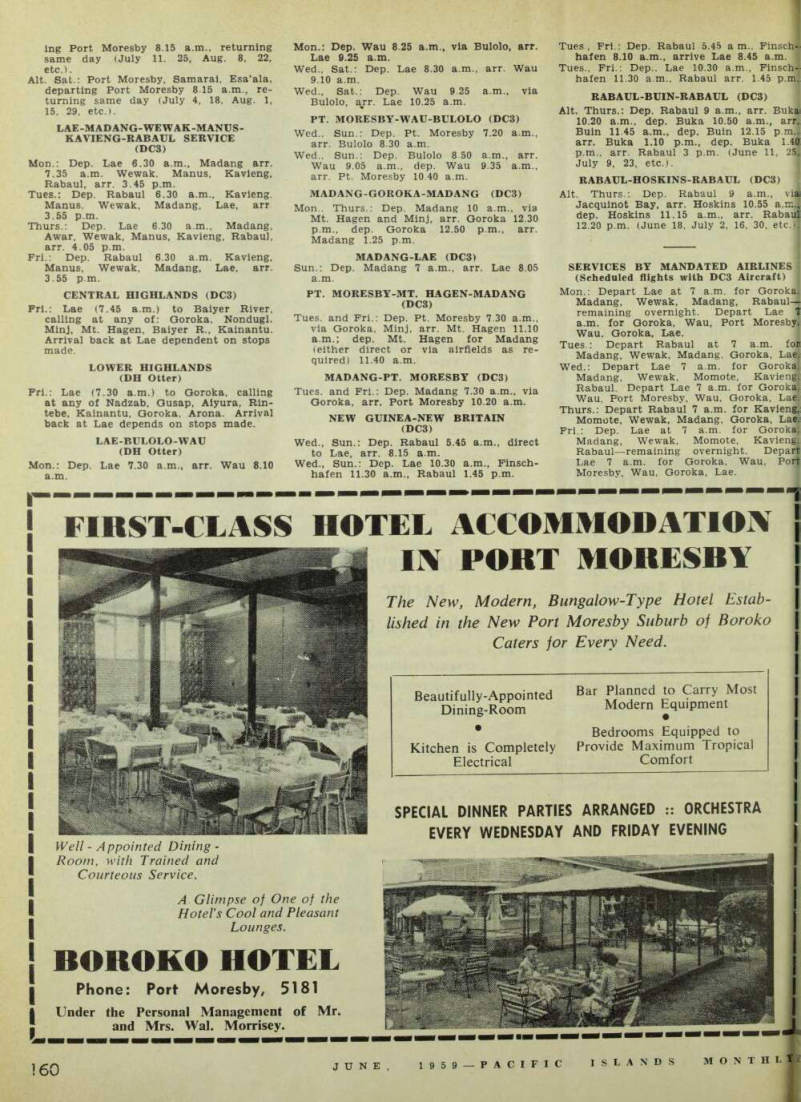 160
160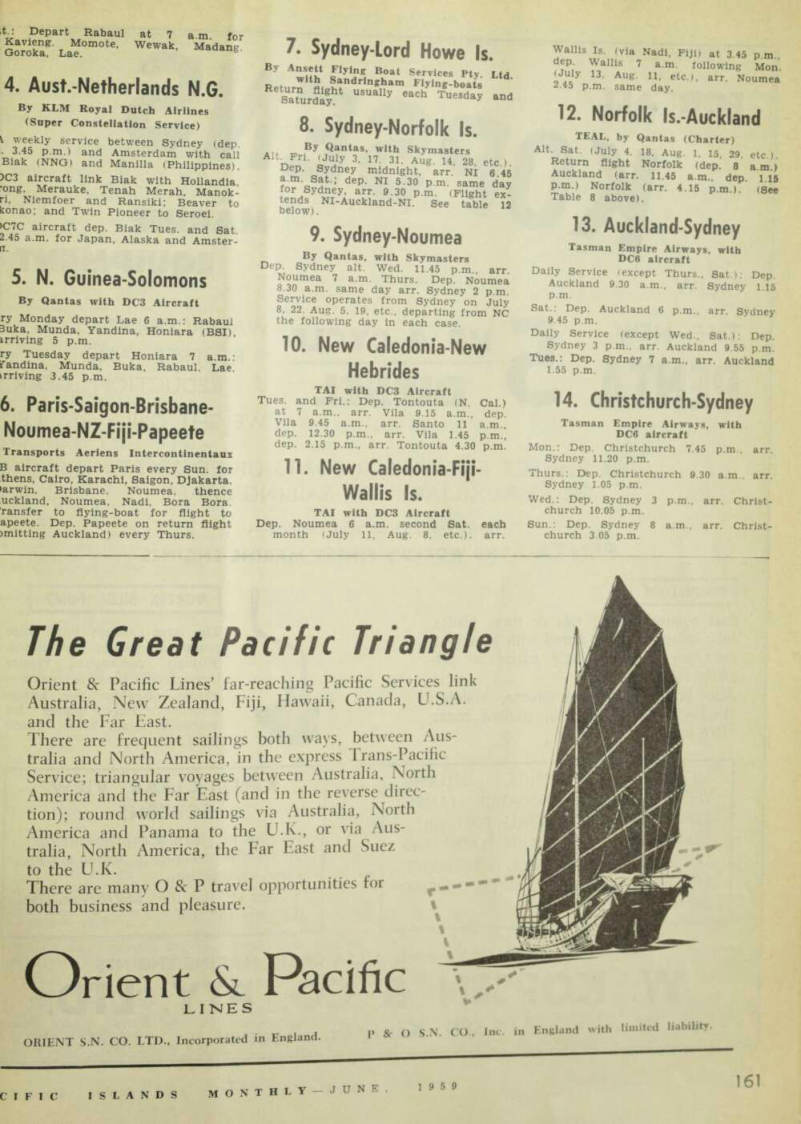 161
161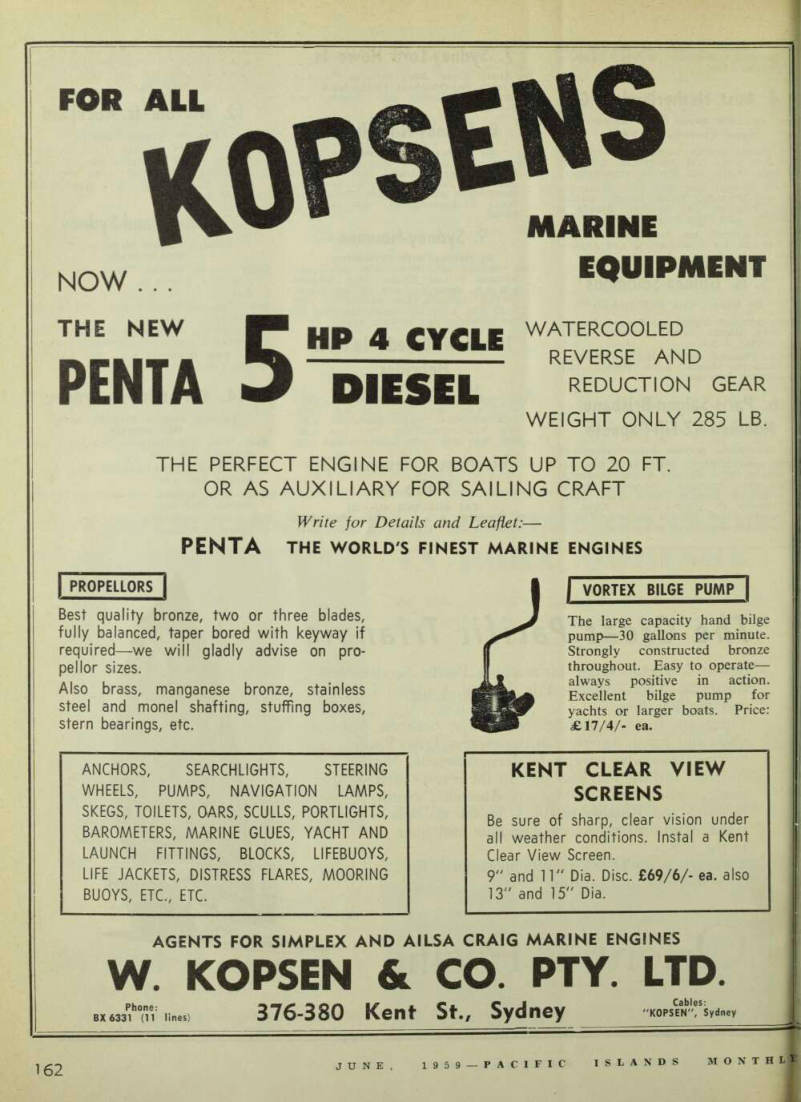 162
162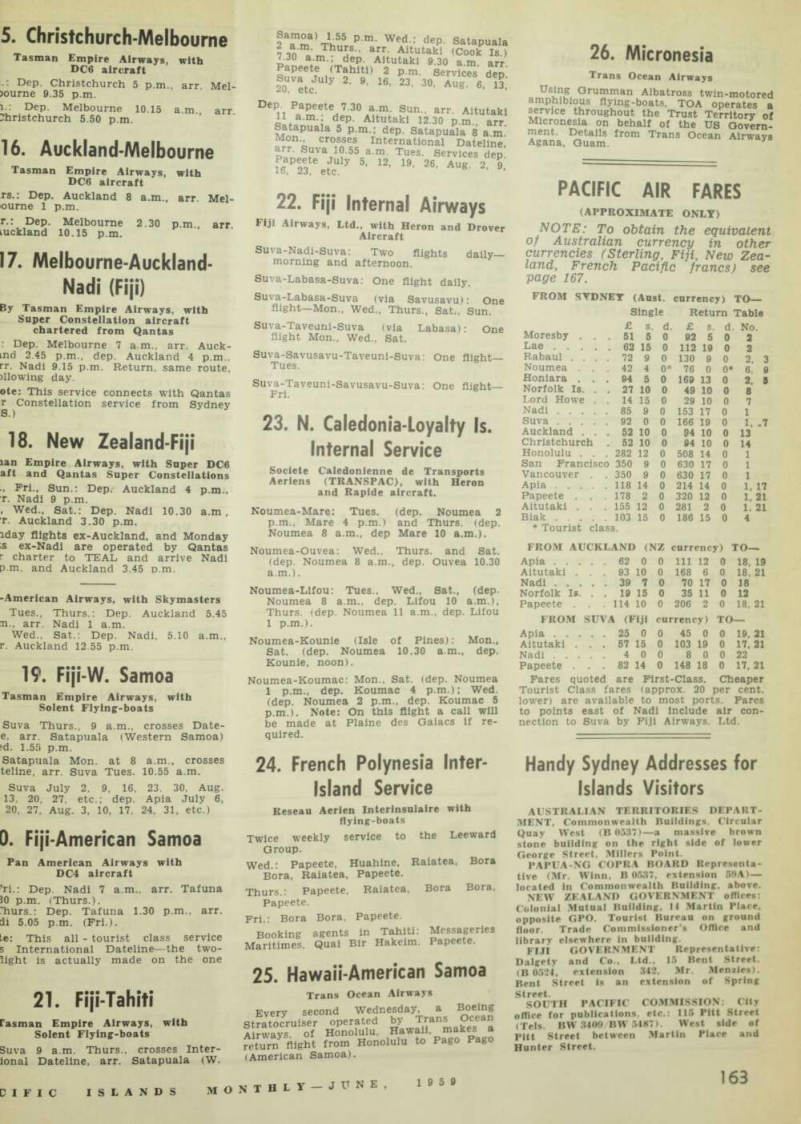 163
163 164
164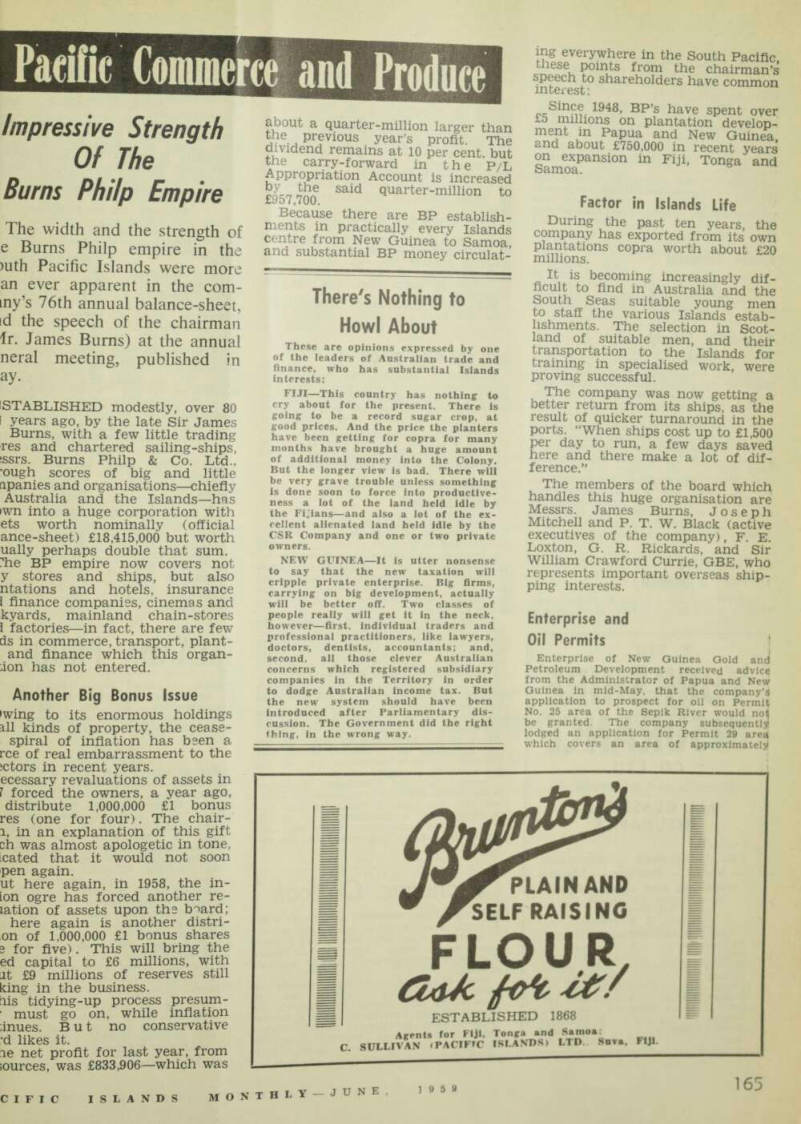 165
165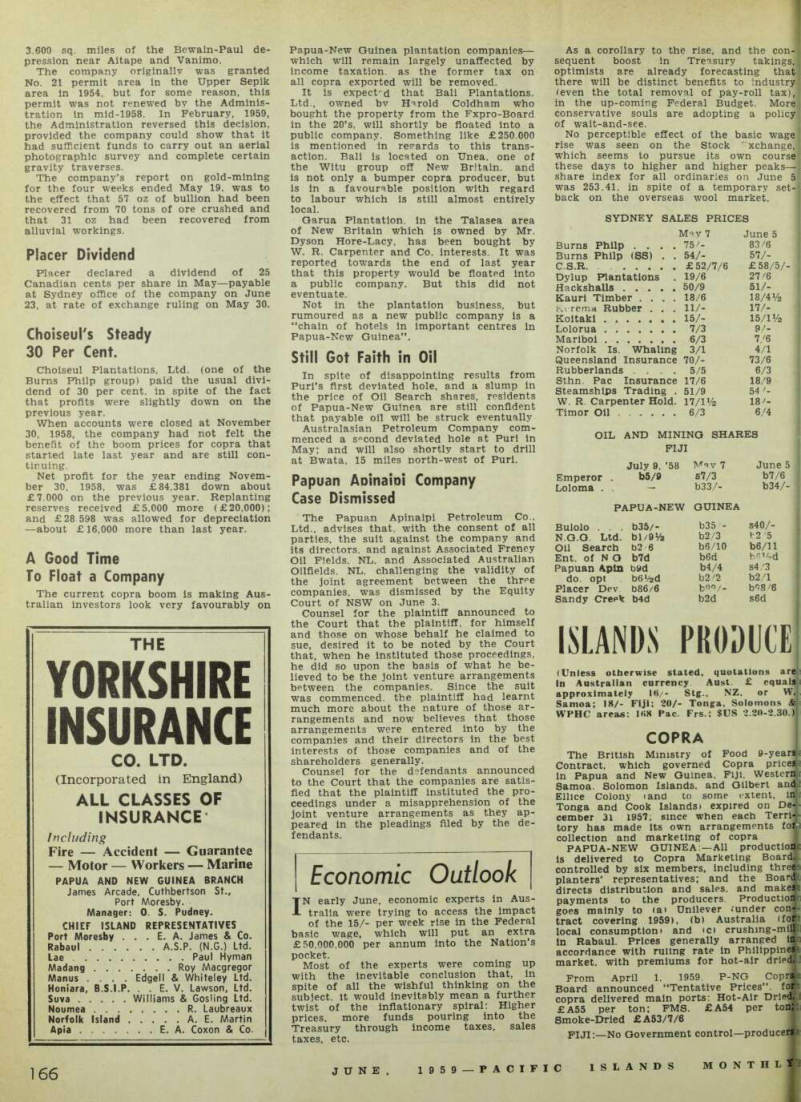 166
166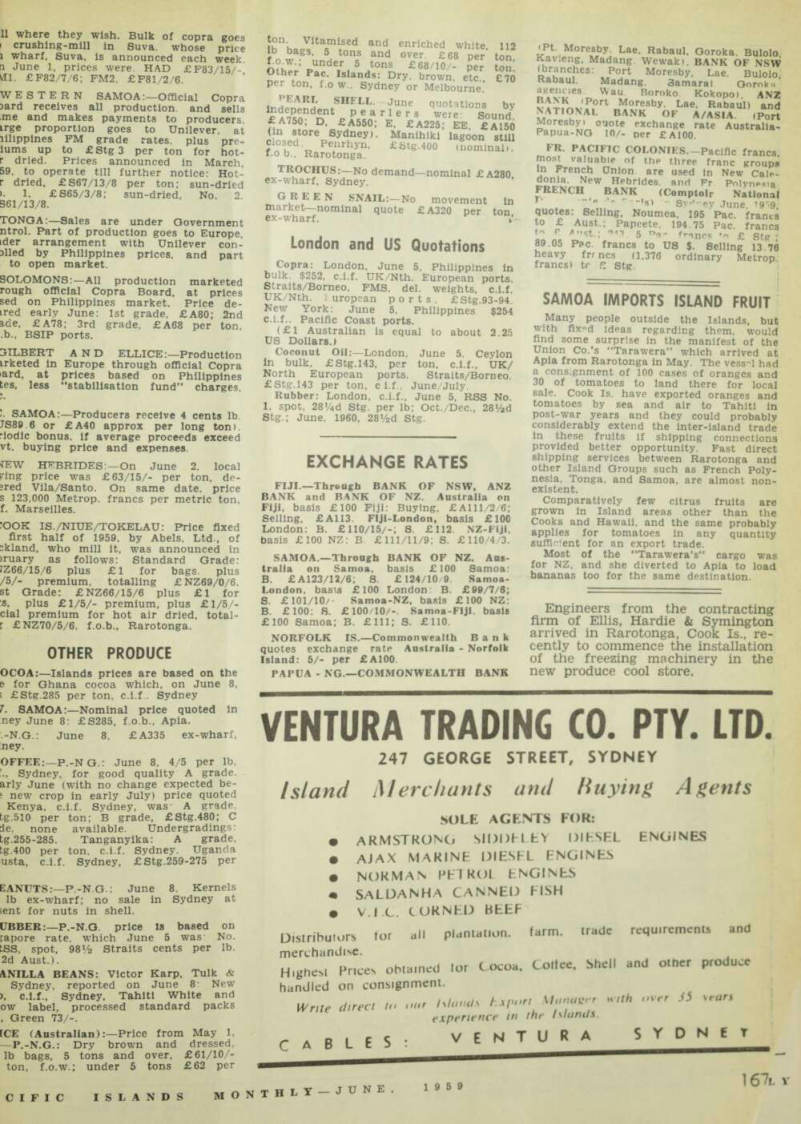 167
167 168
168 169
169 170
170