Islands
Pacific
Monthly
1954
Vol. XXV. No. 4.
iblished 1930.
I° r transmission by a newspaper l
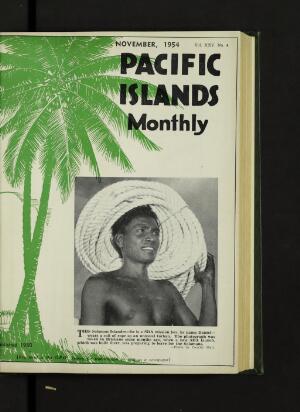
THIS Solomon Islander—he is a SDA mission boy, by name Daniel— wears a coil of rope as an unusual turban. The photograph was taken in Brisbane some months ago, when a new SDA launch, which was built there, was preparing to leave for the Solomons. —Photo by Courier Mail.
Advertisements & other items, pp. 2-4 (3 items)
pacific islands monthlt-novembeb,
Oantaj
From Local Routes to World Wide Travel
Unking the Pacific
With AUSTRALIA AND THE WORLD
4
MANUS
KAVIENG
4 WR
EWAK
RABAUL
Si
MADANG
TALASEA
BUKA
WABAG
P^JACQUINOT
HARBOUR
BAY
X^ M °U fiT HAGEN
nonougN^. goro % ka
MOE
WE
KEROWAGI >1 aARONA
<3l kainantu\^ K lake kutubu aiyura / I \ /
WAN A \ S
7
KIETA
BUIN
KIKORI
VELLA LAVELLA
KEREMA
w
OARLI
yanoina^^^
HONIARA
PORT MORESBY
ESA ALA
"-"^SAMARAI
PORT
MORESBY
ESPIRITU SANTO
Q FIJI
CAIRNS
Tnoumea
NORFOLK
ISLAND
BRISBANE
SYDNEY
Over 50 ports of call in the South-West Pacific and now linked with Australia and the world by QANTAS
Australia’s Overseas Airline. From Australia fast,
frequent services radiate to Europe, U.S.A. and Canada, the Orient and South Africa. Both First Class and Tourist Travel are available to most ports of call on the Qantas
overseas network of air services.
OANTAJ
AUSTRALIA’S OVERSEAS AIRLINE
Qantas Empire Airways Limited
in association with 8.0.A.C. and TEAL
STOVES
MADE IN ENGLAND
These two Coleman Stoves are of the one burner kerosene type and are available in both silent and roarer models. Their dimensions are height 8i inches, diameter 82 inches, approximate weight 2| lb. Both models have the same outstanding features.
Model No. 532 E
SILENT TYPE
1. Full-Size Fount with Filler Plug of wing type. 2. Air release on side of Filler Plug. 3. Heavy Brass pressure-tested Tanks. 4. Fount and Burner firmly soldered together. 5. European-type pump. 6. Grate and Grate Supports detachable to reduce shipping space. 7. Spare parts interchangeable with similar European Stoves. Representatives for the Pacific Islands: Model No. 531 E
ROARER TYPE
54a PITT STREET
SYDNEY
ROBERT GILLESPIE P T JL™
PEARCE & CO. LTD.
SUVA
FOR FIJI ISLANDS
There's so much to do
NEW ZEALAND
Imagine a holiday in this land of breathtaking beauty!
At any time of the year there’s so much to do . . . watching geysers play in wondrous thermal regions . . . fishing in placid lake or swift-running stream or spectacular big-game waters . . . climbing in the towering Southern Alps . . . deer shooting in virgin forest . . . slaloming on perfect ski runs . . . swimming and boating in fascinating fiordlands!
flying gives you so
much more time
Air travel will save you days in which to play, lei you see so much more of this scenic wonderland.
And it’s so much more comfortable.
JfAC
\ Linking all principal New Zealand cities and extending to Norfolk Island. Offices and Agents throughout New Zealand, Australia and the South-West Pacific.
I I *
«IAL A N O
ATIO N A L
AIRWAYS
COR PORATIO
. R,»R’Tittr Islands Month
NOVEMBER, i 9 04-PACIFIC ISL A in a
Shipping Time-Tables
Sydney-Papua-N. Guinea
(There was a complete tie-up of Islands ships, due to wharf strike, in November.
See page 17.) MV Bulolo, modern liner, sails about every six weeks: Sydney-Brisbane-Moresby- Samarai - Lae - Madang - Manus - Rabaul -
Samarai-Moresby-Brisbane-Sydney.
Next sailing about November 12.
MV Malekula sails from Sydney for Samarai, Rabaul. Kavieng, Manus, Wewak, Alexishafen, Madang, Lae, Samarai and return to Sydney. Next sailing about December 1.
Details from Burns Philp & Co. Ltd., 7 Bridge Street, Sydney.
MV’s Soochow, Shansi and Sinkiang, each 3,000 tons, provide regular service between Sydney and Papua-New Guinea ports: Sinkiang now provides a fast service Sydney-Brlsbane-Port Moresby and return by same route. Soochow and Shansi will continue Sydney - Brisbane - Moresby - Samarai - Lae - Madang - Kavieng - Rabaul and return, with calls at Mel bourne as required.
Next Sydney sailing, Soochow: Nov. 12, Dec. 21.
Next Sydney sailing, Sinkiang: Nov. 16.
Next Sydney sailing, Shansi: Dec. 3, Jan. 7.
Details from New Guinea Australia Line (G. S. Yuill & Co., Ltd., agents), 6 Bridge St., Sydney.
N. Zealand-Fiji-Samoa-Tonga
Motor vessels Tofua and Matua, from New Zealand, serve Suva (Fiji), Nukua lofa and Vavau (Tonga), Niue Is.. Pago Pago (American Samoa), Apia (Western Samoa). Tofua leaves Auckland for any or all above ports at approx, five weeks
Australia - New Zealand - Canada - USA Sailings of Orient Line Passenger Ships, 1954-55.
iq«^ Th OrQivt rS , S( ? Va Orcades will each make an additional Pacific crossing in Suva U vl ave Syd o Cy for London on J une 3 and will call at: Auckland.
Suva Honolulu, Vancouver, San Francisco, Los Angeles, Panama Colon Trinidad Cherbourg. She will reach London on July 13. Orcades will sail from London on August 22 bound for Sydney via the same route. She will arrive on October 1
intervals. Matua calls at Wellington and Lyttelton (NZ), Lautoka (Fiji) and sup plements Tofua’s schedule in Islands, calling at ports as directed by owners.
Tofua’s next voyages scheduled to leave Auckland December 7 and January 4.
Matua will leave Auckland December 23 and January 22.
N. Zealand-Cook Is.
The NZ Government’s old motor vessel Maui Pomare is scheduled to leave Auck land every month for Rarotonga and other Islands in the Lower Cooks, subject to requirements of trade. This vessel carries 30 passengers.
Full details on application to NZ Government Department of Island Terri tories in Wellington, or to any office ®f the Union SS Co. of NZ, Ltd., which Company acts as Agents for this vessel at some ports.
Sydney-New Hebrides-BSI-
Rabaul, Etc.
MV Malaita makes a round trip at about 8-weeks intervals from Sydney to Norfolk Is.-New Hebrides Ports-BSI ports-
Bougainville-Rabaul-Samarai-Sydney.
Sailing from Sydney about November 20.
Details from Burns Philp & Co 7 Bridge Street, Sydney.
Sydney-N. Caledonia-Tahiti
Vessels of Messageries Maritimes Line coming from Marseilles, via West Indies and Panama, call about every six weeks at Papeete, Vila (New Hebrides), Noumea and Sydney, and return by same route.
Details from Messageries Maritimes Luxurious new liners Caledonlen and
OR 9£S AY ORCADES ORSOVA Orion ORONSAY SYDNEY Hpnarf i q xt 1954/5 1955 1955 1955 aupkt and a l?H 0n o 9 0V 17 Dec 28 Jan - 25 Mar. 15 July SUVA A «rr/3f P of S 0V 20 Dec 31 Jan - 29 Mar. 18 July SUVA arr/dep 25 Nov. 23 Dec 3 Feb ? Ani oi va 0 n N c°ou U v L e U r 3 -Si JS jg Sg SAN » g£ 6 Sn.‘ }? Kb! 18 Apl. 2 a5| !
HONO LU LU arr/dep 14 Dec! J SS 22 Kb. 24 Apl 9 A^g AUCKLAND Sfl? 5 SSi gft J }J g SYDNEY arrive 27 Dec. 24 Jan. 7 Sar 9 MaJ 22 Aug!
Tahitien recently added to this service.
Sailing dates:— From Sydney, Northbound—Caledonien November 23, April 11; Tahitien: January 7, May 24.
From Papeete, southbound Tahitien December 14, April 30; Caledonien; October 31, March 18.
Small motor-ships Polynesien (Messa
geries Maritimes) and Neo Hebrides (H.
C. Sleigh, Ltd.) maintain fairly regular service between Noumea and Sydney.
Sydney-S. Africa-UK-Pacific
Pcrts-Sydney
A service by Shaw Savill, with their new all-passenger liner Southern Cross, will commence from the UK early in 1955.
Calls on maiden voyage will be made at West Indies ports, Panama, Papeete (Tahiti), Suva, Auckland, Sydney, Aus tralian ports, South African ports, Canary Islands, UK.
Four round trips per year will be made and direction of service will alternate (i.e. the second voyage from UK will go South Africa about); about 1,200 one-class passengers will be carried. Single, two berth and multi-berth cabins are avail able. Fares Sydney-UK are from £ll5 Stg.; Suva-UK, via Panama, from £lO5 Stg.; via the Cape, from £132 Stg.; Papeete-UK, via Panama, from £lOO Stg.; via Cape, £l5l Stg.
Tentative sailing dates for maiden voyage; Papeete, April 22-23. 1955.
Suva, April 28, 1955.
Auckland, May 2-3, 1955.
Sydney, May 6-9, 1955.
N. America-Fiji-Hebrides, etc.
Norwegian motor vessel Thorsisle, carry ing cargo and passengers, maintains a regular service between North American ports and French Oceania, Samoa, Fiji, New Caledonia and New Hebrides.
Suggested sailing dates for the M\ Thorsisle are as follows: San Francisco (Southbound) .. Jan. J
Papeete %
Apia Jan ' z Nukualofa Suva 2 Lautoka (Vatia) , ST ea . :: :: :: :: :: 52: i: San Francisco (Inbound) . •• Mar.
Details from General Steamships Cor poration Ltd., 432 California St., Sai Francisco, U.S.A.
Advertisements & other items, pp. 5-6 (2 items)
New Guinea Australia Line
Regular Service from MELBOURNE, SYDNEY AND BRISBANE TO PORT MORESBY,
SAMARA), LAE, MADANG, KAVIENG, AND RABAUL
“SOOCHOW” “SHANSI”
“SINKIANG”
Agents for PAPUA: Agents for NEW GUINEA: STEAMSHIPS TRADING CO. LTD. COLYER WATSON (NEW GUINEA) LTD General Agents: G. S. YUILL & CO. PTY. LTD.
6 BRIDGE ST. ( SYDNEY
Telephones: BW 2731 BU 6313 (Freight only, Cable Address: “YUILL”
PACIFIC ISLANDS TRANSPORT LINE
Owners: Thor Dahls Hvalfangerselskap A/S Sandefjord, Norway
- M.V. "THORSISLE" -
Regular Freight and Passenger Service between Pacific Coast Ports of U.S.A. and Canada and
TAHITI SAMOA FIJI NEW CALEDONIA
NEW HEBRIDES NEW GUINEA
GENERAL STEAMSHIP CORPORATION, LTD.
General Agents 432 California Street, San Francisco 4, Calif., PAPEETE —Etablissements Donald Tahiti.
SUVA—Morris Hedstrom Ltd, PORT VILA —Comptoirs Francais des Nouvelles Hebrides.
APIA —Morris Hedstrom Ltd.
NOUMEA— Etablissements Ballande.
LAE—Burns Philp (New Guinea) Ltd.
SYDNEY—Birt & Co. (Pty.) Ltd.
Linking the
Pacific Islands with Europe, West Indies,
New Zealand,
Australia and South Africa
The new Shaw Savill I Tourist Class Liner
S. S. \ SOUTHERN CROSS
The one class tourist liner “Southern Cross” on the maiden voyage calls at Papeete (23rd April, 1955) and Suva (28th April, 1955), thence to England via New Zealand, Australia and South Africa. On the second voyage calls at Suva (Ist November, 1955) and Papeete (sth November, 1955), en route to England via Panama, Curacao and Trinidad; thereafter two eastbound and two westbound voyages each year form this vessel s round-the-world itinerary.
Dates subject to alteration without notice.
Minimum Fares: To England from Suva via Panama £O5 stg. via South Africa £132 stg.
From Tahiti via Panama £lOO stg. via South Africa £l5l stg.
For full particulars apply: /j A 7j / Any Branch or Agency of Burns Philp (South Sea) Co. Ltd., Head Office: Suva.
Cable address: Burnsouth.
Tahiti Etablissements Donald Tahiti, Papeete Cable address; Donald Papeete.
Iv
. day' , tc'tc' islands m o n x h l NOVEMBER, 1 9 5 4 -PACIFIC I h I. A « « a
Airways Time-Tables
Trans-Pacific Services
1. Australia (or NZ)-Fiji-
Hawaii-N. America
By Pan-American Airways
With Strato Clippers, using Sleeperettes and Berths* Tues., Fri. and Sun.*—Sydney-Nadi (Pijl)- Canton Is - Honolulu - S. Francisco - Seattle - Portland.
Tues., Thur.* and Sat.—Return via same route. * Additional departure days which will operate from October 3 till December 31 1954. t Tues. and Fri.—Auckland - Nadi (Fiji). i Thurs. and Mon.—Nadi (Fiji) - Auckland 1 Connecting with Strato Clipper at Nadi.
By Qantas Empire Airways
(Super Constellation Service)
Northwards
Tues., Thurs.* and Sat.*—Sydney - Nadi (Fiji)-Canton Is.-Honolulu-San Francisco —with every Saturday service extending to Vancouver.
Southwards
Mon.*, Wed. and Fri.*—San Francisco- Honolulu - Canton Is. - Nadi (Fiji) - Sydney. Monday service commences from Vancouver, leaving Vancouver on Sunday.
TEAL DC6 services between Auckland and Nadi connect at Nadi Tuesdays and Saturdays northward; Wednesdays and Sunday southwards.
By Canadian Pacific Airlines
(Cpal)
(With Super DC-6B Aircraft)* Every Tuesday—Sydney - Auckland - Nadi (Fiji) - Honolulu - Vancouver.
Every Friday return from Vancouver by same route. • Tourist Class Services are available on these planes at 20 per cent, less normal fares.
Sectional Services In
Pacific
2. Sydney-New Guinea
Service by Qantas Empire Airways
Northwards
Tuesdays, Thursdays and Saturdays (Skymasters)* Depart: Arrive: Sydney, 8.00 pm Brisbane, 10.45 pm
Brisbane, 11.45 pm Moresby, 6.35 am (Wed., Fri., Sun.) Moresby, 7.55 am Lae, 9.10 am Connecting services north of Lae by D.C.3 to Bulolo and Wau on Wednesdays. * DC3 operating Moresby-Lae sector.
Sundays (Sandringhams) Depart: Arrive: Sydney. 7.30 pm Brisbane, 10.50 pm Brisbane, 12.20 am Cairns, 6.35 am (Mon.) Cairns, 8.05 am Moresby, 11.55 am (Night stop) Moresby,* 8.30 am Samarai, 10.30 am (Tue.)
Samarai, 11.00 am Esa’ala, 11.40 am (Alt. weeks* Esa’ala, 11.55 am Rabaul, 2.55 pm When Esa’ala is omitted, arrival Rabaul is 2.00 pm.
Southwards
Sundays, Wednesdays and Fridays (Skymaster)* Depart: Arrive: Lae, 5.45 am Moresby, 7.05 am Moresby, 8.30 am Brisbane, 3.05 pm Brisbane, 4.30 pm Sydney, 7.15 pm Connecting services from Wau by Drover.
Arrives Lae 9.35 am Saturday. * DC3 operating Lae-Moresby sector.
Alt. Thursdays (Sandringham) (Nov. 18, Dec. 2, etc ) Depart: Arrive; Rabaul, 5.30 am Samarai, 8.45 am Samarai, 9.15 am Moresby, 11.15 am Moresby, 12.15 pm Cairns, 3.40 pm (Night stop) Cairns. 8.30 am Brisbane, 2.15 pm (alt. Fri.) Brisbane, 3.45 pm Sydney, 7.05 pm Alt, Thursdays (Nov. 25, Dec. 9, etc.) (Sandringhams) Rabaul, 5.30 am Samarai, 8.45 am Samarai, 9.15 am Moresby, 11.15 am Passengers wait in Moresby until alt.
Sat. (Nov. 27, Dec. 11, etc.) then; Depart: Arrive; Moresby, 6 am Cairns, 9.25 am Cairns, 10.55 am Brisbane, 4.40 pm Brisbane, 6.10 pm Sydney. 9.30 pm
3. N. Guinea Internal
Services
Operated by Qantas LAE— HOLLANDIA (Dutch New Guinea)
(Dcs)
Alternate Wed. (Nov. 17, Dec. 1. etc.) Departs Lae 10.30 am. calls at Madang and Wewak, and arrives at Hollandia 3.0 pm. Every alt. Thursday (Nov.
Dec. 2, etc.), depart Hollandia at 9 am, and, with calls at Wewak and arrives Lae at 2.40 pm.
Lae-Manus (Dcs)
Every Wednesday.
Dep. Lae, 10.45 am; Finschhafen, Rabaul, Kavieng, arr. Manus 5.45 pm.
Returns Saturdays (dep. 8 am), via Kavieng, Rabaul and Finschhafen; arr.
Lae, 2.55 pm.
MORESBY-DARU (Sandringham) Via Yule Is., Kerema, Wana (optional), Kikori, L. Kutubu.— Every alternate Friday, returning same day (Nov. 12, 26, Dec. 10, 24. etc.).
Rabaul-Moewe Harbour
(Sandringham) Alt. Wed.— Rabaul-Jacquinot Bay-Moewe Harbour - Talasea - Rabaul Nov. 10, 24, Dec. 8, 22, etc.
N.b. —The direction of operation changes with each service, i.e., each alternate service operates Rabaul-Talasea-Moewe Harbour- Jacqulnot Bay-Rabaul. new britain-bougainville (Sandringham) Alt. Wed. —Rabaul - -Buka - Kieta - Buln Nov. 3, 17, Dec. 1, 15. etc.
Alt. Wed. (same day) Buin-Kieta-Buka- Rabaul.
lae-madang-wewak-manus-
Kavieng-Rabaul Service
(Dcs)
Mon.. Thur. Dep. Lae 6.30 am, Madang arr. 7.35 am Wewak. Manus Is., Kavieng, Rabaul arr. 3.40 pm.
Tue. only Dep. Rabaul 8.00 am direct Madang, arr. 10.50 am, Wewak, Madang, Lae arr. 4.35 pm.
Central Highlands
(Dcs)
Fridays.—Lae (8,30 am) to Wabamunda, calling at any of: Nabzab, Kainantu, Goroka, Nondugl, Banz, Minj; Mt.
Hagen. Baiyer R„ Wabag, Wabamunda.
Return to Lae arriving 6 pm.
Lower Highlands
(Drover) Fridays.—Lae (7.30 am) to Gusap, calling at any of: Nadzab, Kaiapit, Arona, Kainantu. Return to Lae arriving 10.30 am.
Lae-Bulolo-Wau (Drover)
Dep. Lae.—Tues. 3 pm.—Mon. & Sat. 7.30 am.
Dep. Wau.—Tues. 4.30 pm—Mon, 9.00 am —Wed. 1.00 pm. Direct to Lae in 35 minutes.
Madang-Goroka (Dcs)
Fridays.—Depart Madang 8.25 am, arrive Goroka 9.00 am, returning same day; depart Goroka 9.30 am, arrive Madang 10.5 am.
New Guinea-New Britain
(Dcs)
Fridays—Depart Lae 12 noon, Finschhafen 1.0 pm, arrive Rabaul 3.10 pm.
Saturdays—Depart Rabaul 9.0 am, Madang 12.25 pm, arrive Lae 1.30 pm.
Services By Mandated Airlines
With headquarters at Lae, this company runs regular services for passengers, freight and mails to all New Guinea settlements.
Scheduled Flights with DCS Aircraft Mon.: Depart Lae at 7.30 am for Goroka, Madang, Wewak, Madang, Rabaul remaining overnight.
Tues.: Depart Rabaul at 6.30 am for Madang, Wewak, Madang, Goroka, Lae.
Depart Lae 7.30 am for Goroka, Wau, Port Moresby, Wau, Goroka, Lae.
Thurs.: Depart Lae at 7.30 am for Goroka, Wau, Port Moresby, Wau, Goroka, Lae.
Fri.: Depart Lae at 7 am for Madang, Wewak, Momote, Kavieng, Rabaul remaining overnight.
Sat.: Depart Rabaul at 7 am for Kavieng Momote, Wewak, Madang, Goroka, Lae.
4. Aust.-Dutch N. Guinea
By KLM Royal Dutch Airlines.
A weekly service with Constellations between Sydney and Amsterdam with a call at Biak, DNG, and Manila, Philippines.
DC3 aircraft link Biak with Hollandla, Sorong, Merauke and Tannah Merah,
5. N. Guinea-Solomons
By Qantas with DCS Mon. (Nov. 15, 22, Dec. 6, 13, 20, etc ), Lae (dep. 6 am) Finschhafen Rabaul Buka Vellalavella Yandina Honiara, BSI (arriving 5 25 pm).
Tuesday (Nov. 16, 23, Dec. 7, 14, 21 etc.), Honiara (dep. 7 am) Yandina —Vellalavella Buka Rabaul Finschhafen Lae (arriving 3.50 pm).
6. Indo-China-Brisbane-
N. Caledonia
By Air France, Monthly.
Constellation aircraft depart Saigon November 15 for Darwin - Brisbane - Noumea and 5 return.
Australian agents: Messageries Maritimes.
7. Sydney-Lord Howe Is.
By Ansett Flying-boat Service, with Sandringhams Eight services per month, return same day.
8. Sydney-Norfolk Is.
By Qantas, with Skymasters Alternate Thursdays (Nov. 18, Dec 2 16 etc.), returning same day.
9. Sydney-New Hebrides
By Qantas with Sandringham Flying Boats—Weekly Depart: Arrive; Syd., Wed. 8.30 pm Brisbane, 11.50 pm Bns., Thu. 1.20 am Noumea, 8.00 am Noumea, 9.30 am Vila, 12.05 pm Vila, 1.20 pm Santo, 2.35 pm . (Night stop) Santo, Pri. 6.00 am Vila. 7.15 am Vila, 7.45 am Noumea, 10.25 am* Noumea, 1.00 pmt Sydney. 8.40 pm * Every second service night stops at Noumea to allow connection with Noumea- Suva service—see below, Table 10. t Alternate Friday, Nov. 12, 26 On alternate Saturdays (Nov. 20, Dec 4) plane departs Noumea 2 pm. arriving Sydney 9.40 pm.
10. Sydney-Noumea-Suva
By Qantas with Sandringham Flying Boats—Fortnightly Depart: Arrive: Noumea, 11.25 am Suva. 5.55 pm Alt. Fri.» (Night stop) Suva, 8.00 am Alt. Noumea, 12.30 pm Sat.f * Alt. Fri. Nov. 19, Dec. 3, 17, etc. f Alt Sat., Nov. 20, Dec. 4, 18, etc. (Service allows connection at Noumea with Sydney-New Hebrides Service—see above.)
11. Auckland-Norfolk Is.
By NZ National Airways, with DCS’s Double services each Sunday from Sept. 30 to Feb. 27, 1955.
12. Sydney-Auckland
Tasman E, Airways, with DC6 Aircraft Mon., Fri., Sat.: Dep. Sydney 9.00 am,
arr. Auckland 4.15 pm. Wed. only; Dep. Sydney 12.30 am, arr. Auckland 7.45 am. Mon., Wed., Thur., Sun.: Dep.
Auckland 11.00 am, arr. Sydney 2.45 pm.
13. Sydney-Christchurch
Tasman E. Airways, with DC6’s Dep. Sydney 12.30 am and arr. Christ church 7.40 am Tuesday and Thursday, Dep. Christchurch 11.00 am, arr. Sydney 2.40 pm Tuesday and Friday.
14. Melbourne-Christchurch
Tasman E. Airways, with DOS’s Thur.—Dep. Melb., midnight; arr. Ch’ch., 8 am next day.
Thur.—Dep. Ch’ch., 10 am; arr. Melb., 2.30 pm.
15. New Zealand-Fiji
Tasman Empire Airways, Ltd., with DCS’s Dep. Auckland every Wed. and Sat.
Return to Auckland every Wed. and Sun.
Dep. Auckland: Wed. 10.15 am. Sat. 2.00 pm. Arr. Nadi: Wed. 3.30 pm, Sat. 7.15 pm.
Dep. Nadi: Wed. 5.00 pm, Sun. 2.00 pm.
Arr. Auckland: Wed. 10.25 pm, Sun. 7.25 pm.
16. Fiji-Tahiti
Tasman E. Airways Ltd., with Solents.
Services will depart Suva for Apia, Aitutaki, Papeete and return fortnightly or more frequently if required.
Dep. Suva (Mon.) 9.00 am, cross Inter national Date Line; arr. Apia (Sun.) 1.55 pm; dep. Apia (Mon.) 2.00 am; arr. Aitutaki 7.30 am; dep. Aitutaki 8.30 am; arr. Papeete 1.00 pm. Re turn flight dep. Papeete 7.30 am on Thursdays.
Next flights, northbound, November 11, 22, etc.
Next flights, southbound, November 14, 25, etc.
17. Fiji-Tonga
Tasman E. Airways with Solents Dep. Suva November 30.
Depart Arrive Suva, 6.30 am Nukualofa, 9.50 am Nukualofa, 2.45 pm Suva. 4.35 pm
18. Micronesia
Civilian services, based on Guam, usin£ 2-engined amphibious Catalinas, run re gularly to Koror (Palau), Yap (West Carolines), Truk (Central Carolines), Ponape (E. Carolines), Majuro (Marshals) and Saipan (Marianas). Details from Trans-Ocean Airlines, Guam, via Honolulu.
19, Fiji Internal Airways
By Fiji Airways, with 3-engined Drovers Suva-Nadi: 1 flight on Monday. 2 flights on Tuesday, Wednes day, Thursday, Friday, Sun day. 3 flights on Saturday.
Nadi-Suva: 1 flight on Monday, Tuesday. 2 fights on Thursday, Friday, Saturday. 3 flights on Wednesday, Sun day.
Suva - Labasa - Savusavu - Labasa - Suva: Monday, Wednesday, Saturday.
Suva - Savusavu - Suva; Monday, Thurs day. Saturday.
Suva - Taveuni - Labasa - Savusavu - Taveuni - Suva: Tuesday, Friday.
Suva - Labasa - Suva: Tuesday, Thursday, Friday.
20. French Oceania Inter-
Island Service
Regie Aerienne Interinsulaire (Catalina) Twice weekly service to the Leeward Group.
Wednesday: Papeete-Raiatea-Bora Bora- Raiatea-Papeete.
Friday: Papeete-Huahine-Raiatea-Papeete.
Booking agents in Papeete; Messageries Maritimes, Ltd.
Approximate Airways Fares
The following figures are not guaranteed accurate, but they are approximately correct. Details should be obtained from the Air Company named in the Table.
Unless otherwise indicated, figures are in Australian currency. (Tourist class accommodation available on trans-Pacific services at 20 per cent, less).
From Sydney To— Table
Single Return No.
Moresby . £46 11 0 £83 16 0 2, 2a Lae . . bf. 7 0 99 13 0 2, 3 Rabaul .. 64 19 0 116 19 0 2, 3 Honiara,
Esi
80 7 0 144 13 0 5 Vila, N.
Hebrides 51 9 0 92 13 0 9 Noumea, NC . .. 43 3 0 77 14 0 10, 9. « Norfolk Is. 27 10 0 49 10 0 8 L. Howe . 12 15 0 25 10 0 7 Nadi (Fiji) . 73 5 0 131 17 0 1 Suva (Fiji) . 70 12 0 127 2 0 10 Auckland 47 5 0 85 1 0 12 Wellington . .. 47 5 0 85 1 0 13 Christch. (from Melb.) .
Honolulu 52 243 18 6 0 0 95 5 431 19 0 0 1 S. Fran’co 301 7 0 542 9 0 1 Vancouver 301 7 0 542 9 0 1 Papeete (via Suva direct) . 136 8 0 245 11 6 18
From Brisbane
Noumea 36 5 TO: 0 67 5 0 6 to:
From Auckland
(NZ Currency i
Table Single Return No.
Norf. Is. . 18 0 0 32 8 0 11 Fiji ... 39 7 0 70 17 0 1. 15, 18 Samoa . . 47 2 0 84 16 0 16 Aitutaki . 67 11 0 121 12 0 18
Advertisements & other items, pp. 7-10 (1 item)
Own your OWN
LONDON - SUVA
S£^
\) VIA A
PANAMA
C <* For Sailings and Further Particulars Apply To:
BETHELL, GWYN & CO. LTD.,
138 LEADENHALL ST.,
LONDON, E.C.3.
BURNS PHILP (SOUTH SEA)
CO. LTD.,
SUVA, FIJI
MAKE THE MOST OF YOUR LEAVE!
Own your OWN
CAR!
Yes, for the full duration of your stay and we’ll buy it back when you leave!
Many SELECT FROM OVER 100 NEW AND USED CARS! fpn l * COme * nd g 0 a ? y° u P lease * wh ere you please, when you please, Unii U the type of car you’d like and we ll have a good new or used model Vi r u arriVa iT»? ractlcally all our used cars are cove red by a mechanical guarantee and all by an N.R.M.A. Certificate. We can save you £’s! A \ deposit is all we f„ sl i , «S* mter ?fi? n ne w cars and we buy back even though the purchase price lly P d T ed us what you need —we do the rest! It’s cheaper than a hire car and you can select the car of your choice not some high mileage “hack”. hundreds of clients have been satisfied by our “Special Island Arrangement”—so write particulars now to Sales Manager. for
BROADWAY MOTORS (N.S.W.) Pty. ltd.
,o, BROADWAY, SYDNEY, N.S.W., AUSTRALIA.
184-200
amazing value in
GERMAN JH*
BINOCULARS
m \
MAIL ORDER
SPECIALS
3
I lii||
I«SI1
each
Take advantage of this really sensational offer!
Specially imported, precision, German binoculars. Very sturdy—most accurate.
Also, excellent magnification of 3h x 40 or 2.5 x 28.
GUARANTEED to
give years of service.
Ideal for all sports lovers.
Sorry, no C.O.D.
LA Y-BY NOW FOR CHRISTMAS!
only 10/- deposit will secure
MAIL ORDERS TO Dept. 53.
PREMIER WATCH CENTRE
14 Oxford Street, Sydney. N.S.W.
TIIC GARRICK MOTEL
SUVA, FIJI
m m
mntmm
■L uJBk
This well-known Hotel is centrally situated in Suva’s main business quarter Modern accommodation provides comfort in all climatic conditions :: Only the best of Beers, Spirits and Wines is served.
Telephone: 80. VINCE COSTELLO, Proprietor.
If it
Insurance
Has anyone really checked over your insurances of late really brought them upto-date or have they just been renewed from year to If they haven’t we’ll be happy to check them and prepare a quotation for It’s a service without
obligation.
HARVEY TRINDER (N.G.)
LIMITED
Insurance Brokers
PORT ROAD, PORT MORESBY
Box 104 P.O. Port Moresby Agents in all Main Towns Insurances effected at Lloyds of London talk it over us year. you.
More Australians
Simogun Wants More Land for More Australians
Port Moresby, Nov. 6.
IT was a new experience this week to have Simogun, a native mem ber of the Legislative Council, complain about the Territory’s land policy—although most other people have done it.
And it was hot from the point of view of natives not having land, but from the point of view of Aus tralians not having it.
Simogun’s statement will make it difficult for the Territories Minister, Mr. Paul Hasluck, when next he says that native interests must be respected “at all costs.”
Simogun told the council during an adjournment that in the past the United Nations had prevailed on the Australian Government to make certain prohibitions, and it appeared now that “there was to be a prohibition on natives selling land.” He did not agree with this.
He said he would like to see the Australian Government buy land from the natives and make it avail able to Australian settlers. There were many natives, but too few Australians.
He said that there was much land throughout the Territory not being used. Although, with the increase in health, future native needs had to be provided for, he felt there was still enough land for the Govern ment to buy, and that Australians and the natives together could de velop the country.
He said, “If the Commonwealth Government does not take action to purchase land and make it available to Australians, there are other countries who are looking with covetous eyes on the open spaces of the Territory.
“I have heard that the Chinese would like to buy land in the Terri tory, and I also have heard that the Japanese have similar ideas. It is imperative that the Common wealth act and secure land for Aus tralian settlers.”
Mr. Whittaker States His
Views
Mr. George Whittaker, speaking on the same subject, said the Min ister for Territories took no cognis ance of the fact that an enormous mass of Asiatic and non-Asiatic people is likely soon to spill over :he lands of the South West Pacific.
Asiatic countries knew that New
Guinea land was empty land by their standards.
He said one mostly heard that natives were the paramount con sideration in all land matters and to a limited extent he agreed.
But the protection of European settlement in Australia and countries eastwards was an equally important consideration.
He added, “I submit that the welfare of the natives is not the most important consideration, but the national view is, and any policy which subjects our ultimate security and plans of defence to the theory that all European claims for land in this country must take a secondary place to native claims, is unsound and must lead ultimately to disaster.”
Mr. Whittaker has been an ex tremely busy man since his election to the Legislative Council on Oc tober 9. Between that date and the LegCo meeting which commenced on November 1, he visited Japan and Korea, and represented P-NG at the Federal Conference of the RSSAILA in Canberra.
Photograph
£25 for a Colour Photograph
PIM will be 25 years old next year; and in August, 1955, we shall publish a special anniversary issue.
For this issue we want colour photographs and we will pay £25 for the one we consider best for our purpose; plus £5 each for any others used.
Anyone may enter and submit up to a maximum of three ordinary colour transparencies, 35 MM or larger. Subjects, of course, must be Pacific islands subjects.
They should be typical of your
Territory or Group, and not be merely “pretty”. Points will be given for originality, presentation, reader appeal and interest value.
Scenes are, of course, not ruled out, but remember that bold subjects are better for reproduction than those with a lot of fussy detail.
Write your name and address clearly and attach it to EACH of your entries—and, as well, give a clear description of the subject matter. Address entries to; The Editor, Pacific Islands Monthly, Box 3408, Sydney, and endorse them “Colour Photograph Competition.”
All transparencies not used will be returned. All entries must be in by March 31, 1955.
Advertisements & other items, pp. 11-12 (2 items)
Budge
YOUR NEXT
LEAVE
Modern up to the minute homes between Dee Why and Palm Beach available to Island Residents for Holidays.
Write for information to:—
J. T. STAPLETON
PTY. LTD.,
ESTATE AGENTS,
133 PITT STREET, SYDNEY.
BU 3420, BL 1737.
or any of the Branch Offices located at Dee Why, Narrabeen, Mona Vale, Avalon or Palm Beach.
See Your Local Agents: APIA, SAMOA.—E. A. Coxon «fe Co.
Ltd.
VAVAU. TONGA.—O. G. Sanft.
NUKUALOFA. TONGA,—HaIe Vetl.
BUDGE
Britain's Best Bicyeh Made by the World’s Largest Cycle Factory,
RALEIGH INDUSTRIES LTD.,
Nottingham, England. • Stainless Steel Spokes. • Rust Proofed Frame. • Dyno Hub Lighting. • Sturmey Archer 3-Speed Gears. • Available in De Luxe and Standard Cycles.
Call and See these First Rate Bicycles, or Write to Stinsons for free
pamphlets
Sole Distributors :
STINSONS, SUVA, FIJI (P.O, Box 130)
are
complete suppliers
of (i s V.
MECHANICAL ENGINEERING
ELECTRICAL PLANT
ELECTRICAL SUPPLIES
Noyes Bros. (Sydney) Ltd.
engineers and merchants, are one of the oldest engineering houses in Australia. They are specialists in the three fields mentioned at
right. If you're interested
in any of the equipment mentioned or have any problems in any of the three fields, contact Noyes Bros.
Their Sales Engineers will be pleased to assist.
Electrical Supplies: — Domestic Appliances, including "Morphy-Richards, ' "Hecla," "Credo," "Eskimo," "Revelair"; "Flashfreeze" quick-freezers; hot water services and systems, washing machines; bath heaters; heaters- "Sterlec" commercial cooking and heating equipment; "Crompton ceiling ' fans; "Crompton" lamps and lighting equipment; contractors' supplies; cables and insulating materials; non-ferrous metals.
Electrical Plant:— C.P. "Minor" and "Major" A.C. motors; C.P.
"Security" motor starters oad motor control auxiliaries; D.C. motors; alternators and generators; auto-synchronous motors; transformers; C.P. "Security" custom-built control equipment and switchgear; C.P. switchboard instruments and meters; C.P. "Security" electronic control equipment; Ferranti instruments and meters; Mather & Platt electrical plant.
Mechanical Engineering: — Hopkinsons & Audco injector valves; Morns pulley blocks and electric hoists; Cooper split roller bearings; handling equipment of all types; Ransomes & Rapier mobile cranes and excavators; Mavor & Coulson belt conveyors; Hick Hargreaves compressors, vacuum equipment, turbines, power house equipment, deaerators; Symons screens, cone crushers, etc.; Gardner-Denver mining and quarrying equipment; Ross chain feeders and grizzleys; "Okill" pressure indicators; Fleming & Ferguson dredgers and dredging equipment; Mather & Platt boiler feed pumps, food machinery; Stokes diaphragm pumps and mining and metallurgical equipment; Edgar Allen crushers, etc.; British Rema crushing grinding and pulverising machinery; Buell dust collecting and precipitation plant; Hunslet diesel undergrousd and surface locomotives; Radley & Venables rotary drilling bits and rods and contractors tools.
Rip Bits percussive drilling bits and stems; Parry oxycuttmg torches and tips.
WOYCf BROr. (fYDRFV) IT®.
115 CLARENCE STREET. SYDNEY B 0254
and at NEWCASTLE • WOLLONGONG • BRISBANE • MACKAY
November. 18 5 4 -Pacific Islands Monthlv
Index To Advertisers
A.G.E 43
A. & R. Ltd. . 35
A.M.L. & F. . 148
Achun Co. . 29, 125 Akta-Vite ... 89 Aluminium Ltd. 92 Amalg. Dairies . 38 Armstrong, Sp. 146 Arnott, Wm. . . 34 Aspaxadrene . . 23 Aspro 62 Assoc. Tr. Jnls. 31 A/asian. Sales . 57 Bank of NSW . 123 Bank of NZ . . 74 Barnes Milling 152 Bethell. Gwyn . 1 Blaxland-Rae . 114 Blundell-Spence 160 Borthwicks Ltd. 70 Bowmer, R. C. 141 Braybon Bros . 114 Breckwoldt . 58, 156 Breden, W. S. 102 Breekveldt, G. 108 Bristol Myers . 47 British Paints . 76 Broadway Motors 1 Brunton & Co. 87 Bunge Pty. . . 131 Bunting, A. H. 97 B. 33, 85, 112, 122 Carpenter . 63, 136, cov, iv Caine’s Studios 35 Cheshire, F. W. 124 C. of E. Schools 98 Classified ... 162 Colgate 48. 127, 134 Collins Books . 30 Colonial Meat . 104 Colyer W’s’n. 46, 132 Cooke Bros. . . 121 Crammond Co. 120 Crowley . . . 145 Cystex ... 73 D. 7 Darling, J. Ltd. 66 Donald Ltd. . . 58 Douglass, W. C. 71 Dunlop Rubber . 36 Ellams ... 126 Et. Donald . . 151 Eveready ... 27 Everyday Pro ducts ... 53 Farrer, Wm. . . 43 Fiji Society . . 89 Ford Sherington 103 Frigate Rum . . 61 Gardner Eng. . 105 Garrett, D. M. 164 Garrick Hotel . 3 Gibson Battle . 101 Gilbey, W. & A. 69 Gillespie Bros. . 98 Gillespie, R. i, 53, 99, 113, 130, 158 Gillette Ltd. . . 154 Gordon’s Gin . 109 Graham Books 50 Grant & Co. . 24 G.P.H. (Suva) 8 Grove Ltd. . 32, 122 Hamilton, P. . . 2
Hardie Tyres . . 93
Harvey Trinder 4
Halvorsen, B. . 101
Halvorsen, Sons 107 Hardman & Hall 110 Hart’s Agencies 74 Hastings Diesels 144
Hawleys Ltd. . 100
Hellaby Ltd. . ill Holbrooks Ltd. 31 Holman Bros. . 87 Hygeia Co. ... 70 Hytest ... 94
Is. Industries . 95
Is. Transport . 110 Johnson’s Wax 150 Kasper Refrig. . 91 Kennedy, Capt. 106 Kerr Bros. . . 50 Kerry, M. Pty. 137 Kiwi Polish . . 149 Knox Grammar 37 Kodak ... 39 Kopsen & Co. . 116 La Pastorale . . 75 Lillis & Co. . . 56 Macßobertson . 86 Mcllrath’s Ltd. 139 Mendaco ... 93 Millers Ltd. . . 118 M. H. Ltd. 22, 119 Morgan Vernex 44 Mungo Scott . . 143 National College 49 N. & R. . 102, 115 Needham & Co. 90 Nestle’s ... 140 NG Aust. Line . iii Nile Products . 72 Nirex 44 Nixoderm ... 45 Noyes Bros. . . 6
Nznac ... Ii
Oliver Dist. . 142 P. I. Line . . . iv Papuan Prints 141 Parke Davis . . 66 Parker Pens . 61 Penfold, W. C. 37 Piccaninny Wax 42 Qantas . . . cov. ii Qld. Insurance . 26 Qld. Milling . . 54 Quirk’s Co. . . 128 Ransomes Co. . 155 Reed, W. E. 26, 105 Refrig. Inst. Co. 73 Riette, A. ... 40 Riverstone Co. . 96 Rohu, Sil . . . 69 Sails & Covers 113 Seppelt & Son . 88 Seward Ltd. . . 157 Shaw Savill . . iv Shell Co. . . . 51 Smith, Rees . . 118 Spartan Co. 59. 90 Spruso Co. ... 27 S. Ltd. . . 129 Stapelton ... 5 Stewarts-Lloyds 62 Stinsons ... 5 Sthn. Pac. Ins. 159 Sullivan Ltd. . . 65 Tait, W. S. . . 45 Taylor & Co. . 39 T. . . cov. iii Thornburgh . . 54 Thornycroft Co. 28 Tilley Lamps . 55 Tillock & Co. . 138 Tongan Photos . 65 Tooheys Ltd. . . 64 Tooth & Co. . 106 Turners Supply 40 Tusculum ... 94 Tyneside Eng. . 41 Typewriter Eff. 135 United Radio . 121 Uni. Graham . 104 Vacuum Oil Co. 60 Ventura . 117, 164 Vi-Stim ... 109 Vincents APC . 25 Westfield Meats 52 Westinghouse Roseberry . . 46 Willis. Ltd. . . 68 Wrigley’s ... 131 Wunderlich Co. 67 Yorkshire Ins. . 49
Advertisements & other items, p. 13 (1 item)
best hands
One of the
j.
XX &
about the place
Use if anywhere on fhe farm, in the milking shed, in a bail or even in fhe paddocks and save
fime, money and drudgery.
The "Dangar-Gem" is the "great" little milker specially designed for that small herd. It is simple to operate, completely self-contained, and available with either 1 h.p.
J.A.P. engine or 1/3 h.p. electric motor. No special installations or shed conditions are required, and the "Dangar-Gem" can be thoroughly washed and cleaned in about five minutes. £ A "DANGAR-GEM" equipped as a fwo-unit milker will milk 20 or more cows an hour with ease.
Full Details from
Dakar, Gedye & Mailoch Ltd.
10-14 YOUNG STREET, CIRCULAR QUAY, SYDNEY.
P.O. Box 509. Radiograms: Dangars, Sydney.
Local Agents: R. Gillespie (N.G. • Ltd., RABAUL. Century Motors. LAE. Pacific Island Motors. PORT MORESBY. A. H. Bunting Ltd., SAMARAI F. L. Kwock Cheong, RABAUL. Madang Slipways Ltd., MADANG W. J. Meehan, KAVIENG. J. H. Ellis, GOROKA.
SMDIB/1
In This Issue:
Editorial; An Appraisement of the South Pacific Commission 9 Simogun Wants More Land for More Australians 10 P-NG Legco Considers How to Spend £lOl Millions 11 BSI Residents Try Again to Oust Income Tax 12 Pool Gives Only Evidence at Sydney Rubber Inquiry ... 12 BSIP’s 5-Years’ Plan Begins Next April 13 High Resignation Rate Allegedly Due to Poor P-NG Service Conditions 13 Editors’ Mailbag 14 Sukuna’s Call for Equality of Sacrifice 15 Man and Cat Against the Sea .. 16 Unionists Threaten Another Waterfront War Many Islands Ships Tied*- Up in
Australia X,./ .. 17
Unilever in Coco a-Growing Partnership With BSIP Government? 18 Do You Remember? —Extracts From PIM of 20 Years Ago 18 An American at Head of South Pacific Commission 20 P-NG Land Settlement Policy Is Inadequate—Narrow, Rigid and Unrealistic 21
The Copra and Cocoa Markets 26 Jack Hides and the Hidden Valley 24 Territories’ Talk-Talk 28 Current News Items from Our Correspondents in P-NG .. 33 Harold Gatty on Future of Pacific Tuna 41 Ex-Police Commissioner Leaves
P-Ng 42
Disposing of BSIPs Trade Scheme 43 Suitability of Drover Aircraft in Fiji 47 What the Atomic Age Means to the Marshallese 48 MV Bulolo Goes to the Cup! 50 The Great Mangaia Experiment 51 Inducements for Cl Banana Growers 54 Tilipia and Trout for NG Highlands 55 Mr. Webb’s Last Word on the Cooks 58 Turning NG Grasslands into Forests 62 Australians Now Have Unique Collection of NG Mammals and Birds 65 Education Headaches in New Guinea 67 Jap Horseshoes for Luck! ... 71 He Showed Oysters How to Produce Pearls ■ 74
Magazine Section: Fifty Years of Sea, Sail and Reef, 78; Only the Europeans Have Changed at Tari, 79; All at Sea, 80; Flag-Raising in Moresby, 82 Wide Interest in Better Copra Driers 99 News of The Smallships .. .. 101 Polynesian Boxers in Big Money 115 New Caledonia’s Incredible Mass Of Iron Ore 117 News For Pacific Radio Amateurs 121 Passionfruits’ Long Journey .. 125 How Lae has Risen from the Shambles of 1946 —and Why 137 Fiji’s New Booming Button Industry 145 Progress and Plenty in New Caledonia 148 OBITUARY: Sam Mervin; Earnest Weaver; Paul Poznanski; Mrs. Janet Snow; J. J. Real; G. R. Robertson; Rev. Fr. Theophile; J. Clark son; Mrs. Blanche Helsen; William Riley, 149-150.
Credit Unions Popular With Fijians 155 New Hebrdies Labour Problem 157 Cheap Tea from NG —Australian Pipe-Dream 159 Norfolk Is. Notes 160 Samoan Permanent Residence
In Nz 161
News About the Coffee Industry 163 Commercial, Markets 164
Advertisements & other items, p. 14 (1 item)
stay
at
i * ■ m m* Cea, ‘%Z y ds Si,u^ct be a P *CiSc *ti(ul ia ° f Fiji. * o ",s tbe s Pe £S ,y b *rbZ7' ooki 'ig a st n ' B - - ■ Ur ‘ ibe Z Uv <> , s s °dal centre liters SQrVice bv\- Quis in for the Per
yat
W L, 3o^ ser
■o * y*S," r « N?
Pacific Islands Monthly
The Newspaper-Magazine of the South Seas Distributed in AUSTRALIA, NEW ZEALAND and the following PACIFIC ISLANDS:
Australian Territories: Papua. Norfolk Is.
Cocos Is.
Aust. Trustee Territories: New Guinea.
Nauru.
British Protectorates: Solomon Is. Tonga.
British Crown Colonies: Fiji. Gilbert & Ellice.
N.Z. Territories: Cook Is. Niue.
N.Z. Trust Territory: w. Samoa.
French Territories: N. Caledonia. French Oceania.
Anglo-French Condominium: New Hebrides.
U.S, Territories: E. Samoa. Hawaii.
U.S. Trust Territory: Micronesia (Caroline, Marshall and Mariana).
Dutch Territory: w. New Guinea.
A Product of Pacific Publications Pty. Ltd., Technipress House, 29 Alberta Street Sydney (29 Alberta Street is 10 yards from the intersection of Goulburn Street and Wentworth Avenue.) ' 7 ’
Contributions:
Articles. Stories, and Photographs dealing with Pacific Islands subjects are Invited and will be paid for on publication.
Subscription Rates:
In Australia and New Zealand and Australian, NZ, and British Pacific Islands £ 1 4 0 New Caledonia, Tahiti .. .. £1,7 0 Elsewhere .. .. 3V 2 US Dollars £1 10 0
TELEPHONES: General Business, Editorial, Advertising, Subscriptions: MA 9197 MA 9198.
G.P.O. Box 3408, Sydney.
Registered Address for Telegrams, Radio grams, and Cables: “Pacpub,” Sydney.
Editor and Publisher: R. W. ROBSON.
Assistant Editor: JUDY TUDOR.
Business Manager: SELWYN HUGHES.
Representative In New Zealand
J. D. Whltcombe, P.o. Box 5179. Auckland.
Representative In London, U.K.:
J. T. Wallis, 13 Rood Lane, London, E.C.3., England.
MELBOURNE OFFICE: Newspaper House 247 Collins St.—Tel.: Cent. 2053.
AGENTS: All main trading firms and stores in the Pacific Islands.
Vol. XXV. No. 4.
November, 1954
PRICE: 2/- Per Copy.
An Appraisement Of The
South Pacific Commission
CONDITIONS have changed very much since the South Pacific Commission was established (after World War II) to improve the standards and conditions of life in the South Pacific Islands, but the work of the Commission goes on without disturbance.
Because the problems of defence and survival now have become so very important, in a world torn be tween fiercely antagonistic ideologies, the six Western nations which formed the Commission might have been excused if they had set aside the minor matter of Islands’ wel fare, to be dealt with at a more convenient time. It is a measure of their good faith, and of their sincere wish to help the 2,000,000 folk for whom they are responsible in the South Pacific, that they con tinue to provide funds for research and education, and to keep first class specialists busy on social, economic and health problems, although such skilled people are in demand for the grimmer and more argent duties of a struggle that seems inevitable.
Although the Council of the Com mission does a good deal of original research, its chief responsibility is :hat of maintaining liaison between the specialist Departments of the several Territories, and co-ordinat ng their activities and the results )f their work. To a degree that 'ew people realise, the various
[slands Administrations already are
helping each other through the South Pacific Commission, and lin ing up vital data for the benefit of all.
FOR example, it looks as if the Blue Bariki, discovered and de veloped in Fiji as a sound and useful tropical Islands grass, may assist in removing the main obstacle in the way of the establishment of the cattle industry in New Guinea —n ame 1 y, the introduction of pastures which can replace and hold their own against the tough and useless natives grasses. New Guinea’s specialised work on rice culture will help every Islands’ community in the South Pacific. Mr. Eden’s achievement in Western Samoa, in discovering and fixing a disease resistant type of cocoa, is going to help cocoa planters, not only in other South Seas Islands, but throughout the world. The benefits received from the good work done in French Oceania, in combating Filaria, is already being felt throughout Polynesia, and in more distant places like Southeast Asia, where it has been a scourge from time immemorial.
Probably, these achievements would have been made eventually by the individual governments, under the old system; but liaison between all Territories, through the SPC, has stimulated research, as sisted the scientists by greatly
widening the field from which they have received vital information, and made the application of the lessons learned immeasurably faster.
The Commission, surveying the results of four years’ work, must feel that the effort has been well justified. And the work is only just commencing. In all the three fields of social betterment, economics and health there is a great deal still to be done. The most important task is that of bringing literacy to Islands peoples who are simply cry ing for more education.
SOME critics, because of communi cations difficulties, deplore the fact that SPC headquarters were placed in New Caledonia. There should be very free and increasing intercourse between the skilled men of the Commission and the experts of the several Islands Administra tions. The agriculture, education and health advisers from Moresby and Suva and Tahiti and Honiara and Apia should be frequently in Noumea; and the SPC Research Council experts should move with equal frequency through the South Pacific Territories. The printed re sults of their work, gathered and co ordinated by the SPC, should go out constantly to all interests concerned wffh Pacific Islands administration.
But because Noumea is away off the regular air-mail and passenger tracks, these communications are not as simple and easy as they should be. 9 As against that, the Noumea location has some definite advant ages for the SPC, The co-operation and goodwill of French high official dom are very helpful. The accom
modation, for both offices and staff, provided by the huge, war-built Pentagon could not be found any where else, except at crippling cost.
The site beside Anse Vata beach may be far from city amenities; but it is beautiful and spacious and —those concerned will please forgive us! —there is nothing at all to dis tract the attention of the ladies and gentlemen of the staff from the im portant tasks which they face.
Near the Pentagon, at Anse Vata, generously housed also in war-time buildings, is the New Caledonia branch of the great Institut Francais d’Oceania, which is charged
with the duties of scientific re search within the French Terri tories of the Pacific, and is part of a French Empire-wide organisation that functions in no less than 14 French Territories throughout the world. Here, within a few hundred yards of the Pentagon, the eminent scientists of the Institute control six laboratories, wherein they conduct research into matters affecting soil values and conditions, insect pests, various aspects of agriculture, ocean conditions and the values of fish, minerals, ethnology, and so on. There is a good and valuable liaison between the Institute and the SPC Research Council.
The weakness of the whole set-up lies in the fact that it is dependent for its existence and the culmina tion of its work (the implement ation of its findings through legis lative action in each of the six Par liaments concerned) upon the good will of politicians: and that is a flimsy foundation for any such in stitution. Thanks to popular press and professional politics, most of the nations of the Western world hold their Parliaments in increasing con tempt; but they seem unable to devise a better system of govern ment. ...
Therefore, it is important that the scope, character and effect of the work of the South Pacific Com mission be kept constantly and pro minently before press and politicians.
In that respect, the Commission in the past has seemed a little remote and withdrawn from the hurly burly of mundane affairs.
If The Rev. S. H. Dewdney arrived in Sydney from New Guinea re cently after spending more than 20 years as a missionary in the Islands. He will take 12 months holiday in England.
If A son was born to John and Phyllis Keenan, in Sydney on No vember 7. The Keenans are well known ex-residents of Papua-New Guinea, now living in Sydney. They have another son, aged 21.
See page 5 this issue for Late news —including land policy views of Members of PNG Legislative Council.
Lands Policy
Aus. Minister Defends Lands Policy Reply to PIM Criticism
A COPY of the case made by the Pacific Islands Monthly (see page 21) against the new P-NG Lands Policy was sent in October to the Australian Minister for Terri tories; and Mr. Hasluck, with his usual courtesy, has sent the Editor of PIM his comments on the argu ments used and the points made.
“While I do not agree with every point you make,” he says, “I do not think there is going to be as wide a difference as you appear to think between your hopes for the Terri tory and the consequences of the directions I have given on lands administration.”
“There may be some difficulties during the transitional period and there will not be the same freedom for individuals as in the past to pick out any piece of land they wanted and to obtain it. As the result of the new system, however, I feel confident that the eventual result will be that more land will be brought under European settle ment in a more orderly fashion and with much less waste of effort and of resources and without the risk of setting up conditions which will be harmful to our future in the Territory.”
The Minister then quotes numer ous figures to show the areas of land of different suitability made available every year since 1947-48 for European settlement, with this result as on June 30, 1954; Acreages of land available to Europeans
Agricultural 97,016
Pastoral 26,911 Dairying 2,650 Total 126,577 The Minister claims that under the new system a man who wishes, not to speculate, but to work his land, has “a better and fairer chance of obtaining a suitable area.”
He then says that the matter is one on which judgments seem to differ; and asks us to accept his assurance that he and his advisers have the interests of the Territory as deeply at heart as has the PIM.
COMMENT: The Minister’s letter is typical of the conditions of which we have written at length on pages 21. etc. Except that he quotes total acreages of “available” land (which may or may not be suitable ) the Minister gives no facts to support the drastic action he has taken— only theory, and an expression of his own wishes. As we have ex plained elsewhere at length, we be lieve his new Lands Policy puts a
crippling handicap upon the Terri tory and that the only way now to escape it is an appeal directly to the Prime Minister for an inde pendent inquiry into P-NG land settlement and development.
The Hasluck policy represents frustration and suffocation.
Services
End Of Flyingboat
Sky masters for Noumea, N. Hebrides, Fiji
Q ANT AS Empire Airways have de cided to discontinue, at the end of March, 1955, the Qantas flyingboat service which now con nects Sydney with Noumea and New Hebrides once a week, and Sydney with Noumea and Suva (Fiji) once a fortnight.
In place of this, Qantas will run a landplane (a Sky master) on a “Y” service, once weekly, connecting Sydney with Tontouta (New Cale donia) , Vila and Santo (New Hebrides) and Nadi (Fiji). Air fields near Vila, and in Santo, are now being inspected, to ascertain their suitability.
A proposal that the plane should run on from Santo to Henderson Airfield (Guadalcanal), thus giving the Solomons a much-needed direct link, is being examined.
The Skymaster will return from New Hebrides to Tontouta, and run over to Nadi and back each week, before returning to Sydney.
The landplane will give faster transit, but travellers for Noumea will lose the advantage in the long car ride from Tontouta, while those for Suva (who now are landed in Laucala Bay) will have to go to Nadi (at the other end of Viti Levu, more than 100 miles from Suva).
MacRobertsons Buy NG
Cocoa Plantation
IT was officially announced on No vember 10, that Macßobertson Pty. Ltd., Australia’s biggest chocolate manufacturers, had pur chased a 1,000-acre cocoa plantation in the Markham Valley, New Guinea. (See PIM, Oct., page 42).
II Mr. Harold Gow, Burns Philp’s well known and respected manager at Apia, Samoa, has gone to New Zealand for urgent medical atten tion. „ , If The inspection by Mr. Hayden Smith (British Australian Tobacco Co.) of tobacco-growing lands in the Sigatoka area is being followed with keen interest in Fiji.
IT Mr. and Mrs. F. D. Palmer of Levuka, Fiji, recently celebrated their Golden Wedding Anniversary.
They were married in Levuka in 1904.
Advertisements & other items, p. 16 (1 item)
November, 15 54-Pac.Fic Islands Monthly
Record Budget
P-NG LegCo Discusses: How to Spend the £10.5 Millions Record Budget
P. Moresby, Nov. 6.
THERE were only three new faces amongst the non-official mem bers of the Papuan-New Guinea Legislative Council which met in Port Moresby for days at the be ginning of November.
They were Mr. G. Whittaker, elected member for New Guinea Mainland; Mr. Robert Bunting, a businessman with interests in Samarai. Lae and the New Guinea Highlands who replaces Mr. J.
Sedgers, who did not seek re appointment; and John Vuia, native representative who replaces Aisoli Salin. Vuia is president of the Rabaul native village council.
The full list of non-official nom inated members of this, the second post-war Legislative Council of P NG, is:
Mission Representatives
The Very Reverend James Dwyer The Reverend D. E. Ure The Reverend F. G. Lewis
The Native Members
Simogun Peta Merari Dickson John Vuia
Other Non-Official Members
Mr. B. Fairfax-Ross Mrs. Doris Booth Mr. Robert Bunting The elected European members are: Mr. E. A. James (Papua) Mr. G. Whittaker (NG Mainland) Mr. D. Barrett (NG Islands) The most important work of the Council’s first meeting and the work which took the longest to achieve, was the passing of this year’s record budget of £10,000,000. Apart from passing a few minor Bills, including one which provides £lOO penalty for any non-natives found in certain native villages between 9 p.m. and 6 a.m., there was nothing of great significance in the routine work.
The colour, as usual was added by the adjournment speeches of the elected and nominated members, which provided a varied collection of suggestions, most of them good, but which will, as usual, probably get little attention from Canberra.
One of the most insistent pleas made at the present meeting was pne to change the title of Admin istrator to High Commissioner, to bring this office into line with the titles of various other, and smaller, Pacific Territories.
This was moved by Mr. James (Papua) and supported by Mr.
Barrett (Islands), Mr. Whittaker
(new member for the Mainland) and a number of nominated mem bers, including Mrs. Doris Booth, who remarked that she hoped that on this occasion “Canberra would
hear the voice of Papua-New
DoS?;
Rather along the same lines was another suggestion, also made bv the elected and nominated members, led by _a Mission representative, Father Dwyer, that the Administrator’s salary (£3,500) was “parsimonious in the extreme.’
The meeting will probably bring a few shocks to the Minister for
esoecfallyt'he plea bv 1 ~a£*SS?’
bCT sfmogun
AusteSs to be livenm£re tend in the Territory land The newlv-elected member Mr Whittaker, had a lot to sly on many subjects during the meeting, and w e hfc e h d to be continually waging during these Councils. B As Mr James nointed out pnriv in the week: “I have often heard it said that all the elected members do is criticise. Well, what can we do but criticise? What else can we do to help develop Papua-New Guinea?”
Mr. James made the very pertinent point that the unofficial members were never invited to help plan the works programme and the gen- Sent P ' anS f ° l ' Terrltory develop-
It’s likely that the next meeting will last at least 10 days. It will probably begin on March 14, 1955.
(There are at least a dozen different varieties of Christian Missions working in Papua-New Guinea. But when a member of PIM’s printing factory staff saw a proof of this Bill Gill cartoon, he came in with a broad grin to demand where was “Menzies’ mob”. "Menzies’ mob” are Presbyterians—and our printer was amazed to learn that their only mission field in the Pacific is in the New Hebrides.)
London Moves—After
Fiji Population.
London Moves—After Two Years!
London, Nov. 5.
OECRETARY for the Colonies was O asked by a Labour member what steps had been taken to meet the request of the Fiji Legislative Council in 1952 for a British com mission to report on the problem created in Fiji by the rapid rise in population.
The Minister said the Governor <pf Fiji had been informed that more information on the basic economic and agricultural resources of the colony was needed before the appointment of a commission would be justified, and a reply from the Governor was awaited.
500 Students Going Home
By Air for Xmas
ABOUT 500 school-children from Australia, returning to their homes in Papua-New Guinea,
Singapore, Solo mons, New Cale donia and New Hebrides and Fiji, for the Christmas holidays, will be carried by Qantas planes in the first three weeks o f December. In some cases, special planes will be put on, and the first of the “Kids’
Specials” is due out of Sydney on December 5.
tl The marriage of Miss Evelyn Eugenia Wadding ham, daughter of Mr. and Mrs. A. E.
Waddingham, o f Lautoka, Fiji, to Mr. Keith Gordon Ussher, will take place at St. Peter’s Church, Lautoka, on November 20.
If Rev. H. L. Fiebig, president of the New Zealand Methodist Confer ence, arrived in Sydney late June from the Solomon Islands to make a goodwill tour of the Eastern States.
BSI Residents Try Again
to Oust Income-Tax
Residents of the British Solomon Islands Protectorate are making another effort to rid themselves of income taxation. A petition signed by local residents, traders and business-men has been forwarded to the Secretary of State for the Colonies asking that income tax be removed.
THE power of the BSIP Govern ment to levy income tax was challenged in 1952 when some residents, on legal advice, refused to pay their tax.
Learned counsel held that the BSI was not a Sovereign State with the privilege of levying taxes, but a Protectorate, which governed only under an Order in Council and had power to legislate only for peace, order and good government.
It was realised, of course, that if the constitution was faulty in re gard to income tax, laws to remedy the situation would speedily be made. But it was hoped by chal lenging the power, to give publicity to the dissatisfaction of residents.
The case was finally brought be fore the Judicial Commissioner in Honiara in March, 1953, Mr. R. C.
Symes as president of the BSI Planters’ and Commercial Associa tion, being the nominal defendant.
The case was lost and an appeal was lodged. But subsequently the appeal was not proceeded with.
Copra is the BSIP’s only export industry and on this planters pay a high export tax. In addition, every one pays a high rate of in come tax. Income tax has pro duced a certain amount of revenue but it has done nothing to attract new capital, development or re sidents and consequently, in com parison with its neighbour, Papua- New Guinea, the BSIP remains a backwater. There have, of course, been endless complaints that the development of P-NG has not been pushed as vigorously as it might, but in comparison with the Pro tectorate the Territory flourishes.
No one in their right mind would begin new enterprises in the Solo mons if they could do the same thing in P-NG, and without the added burden of taxation. fl An Australian girl, Miss Anne Hendy-Pooley, who went to Noumea to do secretarial work with the South Pacific Commission, will marry the Vice-Consul for the US in Noumea at the end of October. He is Mr. John Wheeler, of Peoria, Illinois, USA. The couple will live in Noumea until January, when Mr.
Wheeler’s term will be completed.
They will return to America for three months before he receives his next posting.
Sydney Evidence
Aid to Papua's Rubber Industry: Pool Gives Only Sydney Evidence
AUSTRALIAN rubber manufac turers were co-operative in that
they would always take delivery of
Papuan rubber even when it arrived earlier than expected. There was no written agreement between them and the Rubber Pool or the producers in respect of Australian primage which continued to be paid by manufac turers, although technically it is not payable on Papuan rubber. (The primage, in effect, goes back to the
producers, as a “bounty”).
This evidence was given by Mr. C.
S. Healy, secretary of the Rubber Pool, in Sydney, on October 18, when the Australian Tariff Board re sumed its hearing.
The Tariff Board’s terms of refer ence are: Whether, having regard to the Com monwealth’s responsibility for the develop ment of its Territories, the production of crude rubber and rubber latex in the Territory of Papua-New Guinea and the importation of those products of the Territory into the Commonwealth of Aus tralia, should be accorded assistance and if so found, the extent of such assistance.
The Rubber Pool consists of Burns Philp and Co. Ltd., Colyer Watson Pty. Ltd.. F. C. Tracy & Co. pty. Ltd., and Harrisons Ramsay Pty. Ltd. The Pool was formed and took over the selling of all Papuan rubber at the end of 1949, when selling difficulties were experienced in Australia. The Pool members get agency commission and Mr. Healy’s salary and other costs come out of this. .
Mr. Healy said that baling of Papuan rubber had once been “terrible” but that since the Mann Report, two years ago, it had im proved tremendously.
The Sydney session of the inquiry lasted less than one hour and was then adjourned to Brisbane, on November 9. It is expected that Australian rubber manufacturers will give evidence there.
On the night of November 9, three members of the Board and the Secretary, will fly to Port
Moresby, where further evidence will be given by planting interests.
Regulations For Rubber
Producers
Regulations under the Rubber Ordinance, 1953, have been pub lished in Papua, and set out in considerable detail descriptions of each of the 34 classes of rubber which may be exported from the Territory.
The classifications range from the usual RSS grades IX to No. 5, plus various grades of Thick and Thin Pale Crepe and Estate Brown Crepe In spite of the copious details it appears that each estate manager or owner will be required to be a rubber expert in order to .classify his rubber accurately, However, he may be helped in this by the Director of Agriculture whom the Regulations instruct to supply sample sheets to interested parties.
These regulations should please the Tariff Board which, in Sydney, was anxious to know whether planters had standardised samples with which to compare their pro duct.
Sale Of Us Synthetis
Plants
The Rubber Producing Facilities Disposal Commission, the group set up in the United States to sell the Government-owned synthetic rubber plants, has until November 27 to complete negotiations.
It is believed that a number of companies are interested and are prepared to pay more now than they were a few months ago.
Disposal of plants, and the terms at which they change hands, are of interest to all natural rubber producing countries because the price at which American synthetic rubber is sold puts a virtual ceiling on the price of natural rubber.
J. P. Bayly Clinic Opens
rE J. P. Bayly Clinic, established by Mr. Bayly, a leading Fiji land-owner and business man, to provide medical services for Suva’s lowest-paid workers, is nearing completion in Suva, ad jacent to the new bus terminal. It was expected that it would be ready to open on November 1.
Dr. G. Hemmings, a medical practitioner and an ordained minister of the Anglican Church, has relinquished his private practice to take charge. There is provision, also, for a full-time nurse, other staff being provided by Anglican voluntary workers.
There will be a small charge for service but only in accordance with the patient’s means.
The building is attractively de signed, and is decorated with paintings which have been donated by local artists.
Bsip’S 5-Years Plan
Begins In 1955
Preparation work for a Five Years’ Development Plan for the British Solomon Islands is now well in hand. The plan is expected to be put into operation on April 1, 1955, and to cost about <£H million.
The Plan will be pruned or ex panded, depending on the generosity of the UK Government. The exact amount of money that will be available is not yet known, but total cost of projects drawn up in Honiara for the Plan, including a possible reserve fund, is £A 1,433,204. Part of this will be financed by BSIP’s share of Japanese assets, viz, £470,000.
In his address to the BSIP Advisory Council in Honiara in October, the High Commissioner, Sir Robert Stanley, outlined the main projects covered by the plan as follows; • A cocoa-growing scheme, in partnership with Levers Pacific Plantations (see elsewhere this issue). ° Establishment of an Agri cultural and Industrial Loans Board whose function will be to give financial assistance for the purpose of expanding or starting agricultural or industrial enterprise. This Board will not normally deal in short-term loans which might be attractive to commercial banks; it will accept risks slightly greater than a commercial bank. • Communications including £55,000 for roads and bridges, plus improved Fort facilities at Honiara.
(In connection with the latter, two experts, one from Ceylon and one from the UK Ministry of Transport, will shortly visit BSIP). • Establishment of a Teachers’
Training and Vocational Centre and a project for the training of nurses.
Advertisements & other items, p. 19 (1 item)
New Landmark on Apia Waterfront
The newly-completed Methodist Church in Apia, Western Samoa. —Photo: Stinsons, Suva.
High Resignation Rate Due
P.NG Public Service Inquiry: High Resignation Rate Due to Poor Service Conditions
Over 70 resignations of field staff in the P-NG District Services and Native Affairs Dept, had occurred in the last four years—due mainly to the fact than the men found it impossible to live on the salaries paid.
THIS evidence was given by the Director of DDS & NA, Mr.
Alan A. Roberts, at an inquiry into Public Service wages and hours which began in Port Moresby on October 27.
The inquiry was before a Com monwealth Conciliation Committee, under the chairmanship of Mr. E.
Chambers.
It will later hear evidence in other parts of the Territory.
Its terms of reference are to in quire into whether salaries and all allowances paid to Territory public services are adequate in relation to living costs, special local conditions and the need to attract more re cruits; and to inquire into whether any change should be made in the spread of public service working hours. The committee is to fur nish its report by December 31 or by any later date determined by Mr.
Hasluck following the advice of the committee.
Other members of the committee are Mr. L. Butler, representing the Public Service Commissioner’s de partment, and Mr. R. B. Brennan representing the public service as sociation.
The committee was set up by the Minister for Territories, Mr. Paul Hasluck, following demands by the Public Service Association for an in crease in cost of living payments and a five-days’ week.
In opening its case, the PSA sub mitted facts and figures on general living costs in Port Moresby as at September, 1954, and stated that a man, wife and two children in the Territory needed an annual salary of not less than £1,360 to keep up a reasonable standard of life. A man and his wife alone needed £1,165.
Neither estimates allowed foi sav ings.
In speaking about resignations in his department, Mr. Roberts said that District Service officers’ salaries were inadequate. Many recruits were attracted to the life in this service but when the novelty wore off, and they realised they had re sponsibilities to their families which they could not meet on their salaries, many resigned. They could earn the same money under better conditions elsewhere.
Mr. Roberts said that field officers cost about £3,000 to train, and that 71 officers who had resigned would cost a quarter-million pounds to re place.
Evidence was given on conditions in single hostels in Port Moresby, notably those for Administration women. The Committee was-told of one of the Port Moresby hostels that had all its walls of paper, which, besides being a fire-risk, meant that girls who wanted to go to sleep early had to take sleeping drugs or use ear plugs.
Tf Frank Coleman, late of Hilalon and Belik Plantations, New Ireland, now is with Stapletons, a real estate firm at Avalon Beach, NSW> Aus tralia. He will be glad to help any Islanders requiring accommodation while on leave.
If Mrs. H. B. Burrell, of Anson Bay, Norfolk Island, recently won first prize in the NI Agricultural, and Horticultural Society’s butter mak ing contest. The prize was one year’s' subscription to PIM.
The Editors' Mailbag
Something We Said
in 1940 An old friend, writing from Noumea, said he had been looking through copies of the PIM, and had noticed our article headed, “This is Not a Merry Christmas”, in the issue of December, 1940. Britain then was fighting alone, after the collapse of France. She had won the Battle of Britain, but the out look was grim, indeed. Our friend quotes back at us this section of the article; “But, at least, there is consolation in the thought that the spirit of our race has been proved, refined and hardened in this cruel fire of war. These people who, with such gallant courage, fought off the apparently irresistible onslaught of the, Hun, will not be content with the muddled, selfish organisation of society which ruled their lives prior to 1939.
They will—and rightly—demand the new world that already they have earned.
There is a bad time coming for pro fessional politicians, ‘guinea-pig’ directors, privileged nincompoops, and all the rest of the parasitical rubbish which has fastened itself upon our national economy in the fat easy days of peace. Sometimes, to this writer, the possibilities of the peace of tomorrow appear more terrifying than the activities of the war of to-day.”
“Your article was very outspoken,” says our friend, “but you miscalcu lated when you thought there would be a bad time coming for the ‘parasitical rubbish’ of society. They are stronger, and they have a terrible grip on this world of 1954.
Practically half the population are doing nothing essential to a civilised state, but the parasites are control ling the roost —more and more.
Where do we go from here?”
It is easy, now, to see what hap pened—difficult to foresee it in 1940.
When the war was over, the masses naturally rebelled against their gov ernments, which they blindly blamed for the gross imperfections of the pre-war politico-economic system.
Thus they admitted to power the Attlee Socialists in Britain; the New Dealers in USA; the semi-Reds in France; the Chifley-ites in Australia —and in the pathetic confusion thus created, the Muscovite Reds crept in and took the world by the throat.
These Socialistic post-war govern ments might have opened the way to something better in 1945-50 if the world had then been free. But the folk who believe in true de mocracy have no chance of cleaning up our system while there is an Iron Curtain across the world, and our fundamental freedoms are in danger.
Two Pools of
Red Prawns
Mrs. E. M. Ducknell, of Sydney (formerly of Korolevu, Fiji) supplies a new variant of the legend of the
“Red Prawns of Vatulele” (PIM, June, 1954).
There are only two places in the world where red prawns are found —in the pool at Vatulele (as de scribed in June PIM) and in a similar pool at Vatulailai, on the mainland opposite Vatulele.
A long time ago (according to legend) a great chief who lived at Vatulailai fell into love with a girl who lived on Vatulele. He told her he would go across to her and bring her a delightful gift; and he started thereupon upon a mighty task— namely, the building of a causeway of stones from his village to Vatulele.
But, although his love persisted, his back grew weary, for the stones he carried from the mainland were big and heavy; and he bethought him of a better way of conveying his gift. He went to the pool and, from the tree which grew there, he cut a forked shaft; and then he placed a couple of the red prawns from the pool in the fork and, with a mighty effort, he cast the spear from his causeway. It fell beside the girl, who was standing beside the pool in Vatulele; and the piece of wood took root and grew into a fine tree, while the chief’s gift (the prawns) fell into the pool and there established themselves. And thus we have the sacred prawns in their pools, and the fine overhanging trees, of Vatulele and Vatulailai.
Our correspondent does not say what happened to the man and the maid. But she does note that she personally has seen these red prawns, and they are different from all other prawns in that they have the habit of swimming on their backs, with their whiskers waving in the air. We don’t believe her!
Deductions from Sale of
P-NG Coastal Fleet
What did Commander Evans (lately manager of the P-NG Gov ernment Shipping Service, and now en route to England) really feel about the sale and break-up of the fleet? A friend sends this extract from an article written by him not long ago: “Though I am sorry that we did not remain in the Shipping business, as we were rapidly getting on our feet, I think it was a wise move of the present Government to dispose of the wooden vessels.
“From my experience of coastal ships in tropical waters, particularly in waters abounding with reefs, I am not in favour of this type of wooden ship at all and would stipu late, if I had any say in the matter, steel ships with slow-revving direct reversing diesel engines and not, as these ships are, fitted with gear boxes. The type of engine in these
ships is far more satisfactory and actually designed for use in a static role in shore commerce work and not primarily for marine duties.
“However, even the present ships, which have now been sold to pri vate enterprise, have played an active part post-war in putting the Territory on its feet and have given sterling service in spite of their teething troubles. The addition of steel masts and derricks, which have recently replaced the wooden ones originally fitted, will definitely lengthen the life of the ships.
“Shipping must play an even more important part in future develop ment and it is for the benefit of all concerned that ships are run by small individual companies and private owners, rather than that the big firms should hold a monopoly."
Calling Heinrich
Rudolph Wahlen
When Mr. K. H. McColl decided to leave the more strenuous business of the New Guinea mainland for the peace of plantation life on one of the Islands, he chose as his pre sent home Maty Island (Wuvulu), which is among the archipelagoes north-west of Manus.
Mr. McColl found on Maty Island, where incidentally he was a Coast watcher during the war, the graves of two Germans; but he was not able to learn anything of their history. So he has sent, through us, with a request for information, a letter addressed to Heinrich Rudolph Wahlen. Mr. Wahlen was the man who established a famous planta tion home on Maty in the days be fore World War I and he now is a resident of Hamburg—from which, incidentally, he is backing the claim of the Waria Syndicate against the Commonwealth Government of Aus tralia.
We have sent the letter on to Mr.
Wahlen. Mr. McColl has had the graves cleaned up and, if he can get the names he asks for, he will have them inscribed on slabs of coral rock, to be used as headstones.
And here is another enquiry for the address of Heinrich Rudolph Wahlen. This one is from young Bernd Lohse. Mr. Lohse was through Australia and the South Pacific Islands a couple of years ago and he has written an outstanding book on what he saw and photographed.
He is a close and clever observer of present-day conditions, and old Mr.
Wahlen doubtless will be deeply in terested in having a chat about New Guinea with his young compatriot.
Another Von Luckner Story
“Your readers perhaps are tired of hearing about the capture of Count von Luckner in Fiji in World War I; but this little episode, which occurred while I was in Suva, has never been told,” writes “Birk.”
“One afternoon I was walking home with Mr. D. R. Stewart, As
sistant Colonial Secretary, and he told me he was worried because Billy Caldwell, who was then Post master and Collector of Customs at Levuka, had telephoned that a lad had arrived from the island of Wakaya, 9 miles away, and reported the presence there of 4 or 5 Ger mans, in naval uniform. Stewart said that the Governor and the C.
S. rather ridiculed the idea. How ever, Caldwell rang repeatedly and assured them it was true, and asked the C.S. for permission to take a party over in the Customs lifeboat.
“While Caldwell was waiting for a reply, the AUSN Co’s vessel, S.S.
Amra arrived. Caldwell asked the Captain if he would arrange with his agent in Suva to take the ship to Wakaya. The Captain said he would not have sufficient coal to go there, and on to Suva. Caldwell then suggested to Stewart that he make arrangements for the Amra’s agents to take some coal from the hulk at Levuka—the coal to be re placed later, if necessary.
And that is how the Amra got away to Wakaya, with about six native policemen and a European Officer, just in time to prevent Von Luckner from escaping.
“All credit should go to Mr. D. R.
Stewart and Mr. William Caldwell, both of whom have since gone hence.”
How Deer Got To
Wakaya Island
Reference to Mrs. Langdale’s death (Jan. PIM) and to Captain Langdale and Wakaya (Fiji) recalls other days of early Fiji, and my father’s connection with the island (writes Mrs. Lilian Hazard, of Magnetic Is., Q.) My father, H. H. Steinmetz, first met Captain Langdale when the latter was serving in HMS Sapphire, in Sydney. Father was then in the course of what we call a Grand Tour. This was in 1877; and in 1879 he came out from England to join Langdale and a Captain H.
Olive, as a partner on Wakaya Island.
Their original intention was to make the island a sportman’s paradise. I am afraid they were 60 years too soon in this venture, which was not a success. The deer they introduced became a pest to later owners of the island, although the deer provided sport for many in later years.
Captain Langdale became a Dis trict administrator. Captain Olive (RM), before his coconut planting days, was Commandant of Native Constabulary in Fiji, and arrived with the first Governor (Sir Arthur Gordon) in June, ’75. I do not know what happened to him.
By patrimony, my father was a Freeman of the City of London.
His German surname had been on
the register of the Grocers’ Com pany, in London, since Adam Stein metz was admitted in 1780. Father was an old Harrovian.
After the Wakaya venture, and a few years’ trading, he bought Munia, one of the loveliest islands in the Lau Group. He died nearly 20 years ago.
Equality
Sukuna’s Call for Equality Of Sacrifice
NO section of the community should be permitted to take more than its just share of the available resources and therefore the Indians of Fiji must, as their sacrifice for the common good, watch their birthrate.
These admonitions were part of the speech of Ratu Sir Lala Sukuna, at Levuka on October 10, on the 80th anniversary of the signing oT the Deed of Cession.
On this occasion, Sir Lala took the place of the Governor, Sir Ronald Garvey, who was attending the 13th session of the South Pacific Commission, in Noumea.
In his speech Sir Lala recalled the doubts of many of the Chiefs before and at the time of Cession. He compared the Deed of Cession with the Treaty of Waitangi in New
Zealand, which was followed by the tragic Maori war.
“After 1875”, he said, “we were saved from a similar situation by the wise policy of Sir Arthur Gordon, the then Governor, when the Government of the Colony handed back to the native owners the half-million acres of land that were being claimed by speculators.
Npthing that has been done before or since has served more firmly to establish the Queen’s Government in the hearts of the Fijian people than this one act of high generosity and princely goodwill”.
For many years the Fijian popu lation was on the wane while the Indian population was increasing, and at the same time the Fijian was well behind in the Colony’s economic march. It was only in recent years that Fijians had been given the advice and help necessary to the production of cash crops.
But by giving areas of their land for settlement, the Fijians had made appreciable contributions to the common welfare of all races in Fiji —and now it was not too much to ask that other races should make theirs also.
Private Samuela Vakaruru and Private Apenisa Waqamatia of the Fiji Miliary Forces in Malaya were killed, and two other men injured in a freak accident on October 2 A heavy tree limb fell onto the “D” Company base in the jungle, without warning.
Sir Lala Sukuna giving an address during the Cession Day ceremonies at Nasova, Levuka. The plaque and stone commemorating the occasion is in the centre of the photograph. —Photo: Fiji Public Relations Office.
Man and Cat Against the Sea!
No Theories—It Was
Just A Case Of
Suva and Apia and Pago Pago still are rocking slightly under the newspaper earthquake started by Sydney Daily Telegraph , in its quest for world rights of the story of William Willis, “I-won’t talk” raft-drifter from Peru.
IT started when Willis, somewhere off Pago Pago, feebly radioed his arrival. Immediately, various folk in Suva and Apia, who repre sent newspaper organisations, began to receive long, urgent radiograms.
They found it hard to make Syd ney, London and New York under stand that Pago Pago, Tutuila, where Willis and his cat had arrived were far away and quite isolated.
The Man . . .
Then Tom Farrell came thunder ing in with photographer John Jones, and carte blanche from Syd ney’s big newspaper. Within minutes, Suva was staggered by the news that the spare TEAL fiyingtaoat at
Laucala Bay had been hired by Mr. Farrell at £l6O Australia per hour for 24 hours, with a reduced rate per hour for each subsequent period: and that it was off to fetch Mr. Willis and his cat.
Sydney, which hitherto had not been particularly interested in Mr.
Willis or his cat, got the benefit of this adventure —mostly in a lavish double-spread of photographs. Be cause when Farrell and photographer caught up with Willis, they found that he was already sewn up by a New York newspaper—Willis’ wife had done that job for him there.
The DT men flew from Sydney to Nadi by PAA, did a 140-mile taxi dash from Nadi to Suva, hired the TEAL plane there for the trip to Western Samoa; another 20-mile taxi dash, and then nine hours across the 80 miles of broken sea between Apia and Pago in a BP launch; then the trip in reverse, this time with Willis as guest. Anyone who knows that piece of sea between the Samoas, knows that the DT men will not forget it quickly.
Willis gave his balsa raft away in Pago—and he had also given away Meeki, his cat. But there were so many howls from New York about the cat that it was hurriedly retrieved and finished the journey back to the US with Willis; it was “worth 10,000 dollars to him.”
Meeki, a fine black cat with yellow green eyes, looked in good condition despite a straight diet of fish —and one parrot. Originally there had been a parrot on the raft, as well as Meeki and Willis, but Meeki ate the parrot two days off Pago. It was this eccentricity that probably endeared Meeki to her newspaper fans. Although laymen have vari ous opinions about drift voyages in general, and Willis’ in particular, everyone is agreed that Meeki is a cute puss.
By the time the cavalcade of cat, Willis, Farrell and Jones got back to Suva, local news-hawks could only stand and stare —but PlM’s Suva correspondent prised some words out of Willis, and another correspondent got an exclusive in terview with The Cat.
The Man Who Would
Not Talk
By PlM’s Suva Correspondent.
IMET Mr. William Willis, who had just finished a 6,000-miles journey by raft, with a cat for
company. Having an autographed copy of Kontiki Expedition, bearing a tribute from the author to the memory of my late father (an ethnologist with the same ideas as Thor Hyerdahl himself), I was anxi ous to meet this latest raft-voyager and find out what makes him “tick.”
I met my match.
He is a tall man, with dark-brown, swept-back hair, face and arms tanned to a rich mahogany. He looked extraordinarily well nourished for a man of 61 whose sole diet had been ground corn, sugar, raw fish for 115 days. He regarded me with narrowed eyes and said, obstinately; “I’m not talking, ma’am.”
“No?” I said, slightly nettled, and added that it must have been rather like the Kontiki voyage, anyway.
That stung him.
“Oh, no, nothing like that!” he assured me.
“Are you interested in the origin of Pacific Islanders?” No, he was not an ethnologist.
“Did you make any marine obser vations or study ocean currents?”
No, he was not a scientist.
“Why did you do it, then?”
“Well,” he said slowly, “I’m keep ing the story till I hit Noo York.”
“Yes, I know that, but why did you do it?”
“Well,” he drawled, measuring his words, “I wanted to test man’s en durance (he called it endoorance) against Nature, and see how long a man can endure without sleep.”
“Did you have any terrifying ex periences?” His eyes narrowed again, his jaw tightened.
“No deep-sea monsters?” I wheedled.
“No.”
“What, no mermaids?”
“No mermaids.”
“A pity. How did Meeki, the cat, stand the voyage?”
“Alright, I guess.”
“Well, that’s fine.”
“Fine, I guess.”
I tried again. “Did you find human voices confusing when you landed, after all that time by your self?”
“Well no, ma’am, I can’t say I did. Just strange.”
“I suppose you are very fond of your cat?”
For the first time a little warmth crept into his voice. “There’ll sure be a welcome when I hit Noo York with that cat. Meeki’s worth 10,000 dollars to me!”
“So you’ve again proved a theory,”
I tried again, desperately.
“No, I’ve proved no theory.”
“Will you write a book?”
“Yes, it will be out in about a year.”
I can hardly wait. No theory. No terrifying adventures. No deep-sea monsters. No mermaids. What will the New York “scoop” be?
Mr. William Willis and his cat proved a theory, whether they like it or not —that migrations could have been accidental; that anyone, provided they can sit still long enough, on a bit of balsa wood, can get a long way in a long time.
—Photo by Fiji Public Relations Office.
An Exclusive Interview
With Meeki
APAKUKI TUITAVUA is one of my Fijian friends. Rugby fans will remember him as the popular captain of Fiji’s 1952 and 1954 tour ing teams. He is also a government meat inspector, and at present is in charge of the Animal Quarantine Station at Vatuwaga, about four miles from Suva.
I am always in sympathy with underdogs (and cats), especially when they are being hounded and badgered by unintelligent humans, so when William Willis arrived in Fiji from Samoa during his flight back to New York, I decided to see his cat first.
Thanks to Apakuki, I was granted an exclusive interview with Meeki in a cage in the quarantine station to which she had been whisked during Willis’ brief time in Fiji.
Carrying a fish, which did not tempt Meeki, who seemed to be suffering from air-sickness, I arrived at the cage, then looked quickly away.
Meekie was scratching the concrete floor.
After a discreet lapse of time I glanced back to the cage. Meeki was washing her ears, so I strode to the wire-netting gate, unlocked it and let myself in.
“Madam,” I said, hoping I had guessed right, for Meeke’s head did not look like a tom’s, “I represent The Nine Lives News and The Society for the Preservation of In telligent Individuals. Have you any thing to say?”
Meeki arched her back and glar ed angrily with green eyes at my poised pencil. Then she stalked to a corner, where she sat looking wist fully through the netting at the
(Continued on Page 142)
brown earth outside while comment ing cattily about humans; “For a hundred and fifteen days, from Peru to Pago Pago, I dreamt about earth —and then what happened? Locked up in Fiji, with a concrete floor!
Haven’t you humans got any con sideration for travelling cats?” —
Jack Thornton.
What It Was All About
WHEN wiry 61-year-old New Yorker William Willis released the tow line of a Peruvian naval tug on June 22, ten miles off Callao, the news was flashed to the world that Seven Little Brothers was on the way. But by the time he released the tow line of Manu’a Tele off Pago Pago wharf soon after midnight on October 21, 5,900 miles and 115 days later, the name of the 34-ft, seven-log balsa raft had be come established as Seven Little Sisters. The Port Captain at Callao advised PIM that the raft was named 7 Hermanitas — and the dictionary says that Hermanitas may be little brothers or little sisters.
This —or the Kon-Tiki venture— could not be described as a true drift voyage. Willis”s raft carried a substantial sail area, which drove him at a surprising speed. Kon- Tiki made only 42.6 miles per day; Willis averaged 51.3 miles per day with his smaller raft. Willis appar ently passed very close to the south of the Marquesas, which he did not sight, close past uninhabited Flint, which was the only land he sighted before the Manua Islands, and close north of Suwarrow.
Though he carried the latest type of Marconi Salvita lifeboat trans mitter he used it only on June 30 when he reported all well to Callao naval base; and again when, unable to make a landing on the Tutuila coast and carried on to the north west.
Through the alertness of Mr.
Doug Cunnold, officer-in-charge of Rarotonga Radio, these signals were picked up from the little hand
turned-generator set. He promptly
contacted Tutuila Radio through commercial radio channels, and Manua Tele, about to sail for her annual refit in Suva, was despatched.
When located, Willis was nearer Upolu than Tutuila and the tow back against the Trades to Pago Pago took 13 hours.
Two months out of Peru, his cans of fresh water rusted and to eke out supplies he thereafter drank 3 glasses of sea water per day.
Like the Kon-Tiki men, Willis found the ocean alive with dolphins which provided him with a steady fresh diet, supplementing his corn meal.
Willis’ raft was well equipped with nativational gear, although he seems to have been extraordinarily ignorant of its use. He did not find
out how to wind his chronometer before sailing, and, though it was faulty, used a watch instead. Nor did he know' how to put distilled water in his radio receiver battery (the emergency transmitter did not use a battery.) There was nothing amazing in the voyage as a feat of navigation. But, if only accidentally, he has demon strated again that some people could have reached Polynesia from east as
well as from west.
Jps.
Advertisements & other items, p. 23 (1 item)
... The Cat
—Photo: Liberty Studios.
Many Islands Ships
Tied-Up
By Australian Strike
SHIPPING services from Aus tralia to the Pacific islands are already disrupted by the Aus tralian waterside strike which com menced on November 2.
Waterside workers are striking against amendments to the Steve doring Industry Act. now before Parliament, which, for the first time in seven years, proposes to give shipowners some rights to nominate their waterside workers.
Under the present set-up, introduced during a former Labour Govern ment, the Union has sole right to choose who shall or shall not work on the wharves.
The present Government says that the Union has abused its privileges by not allowing sufficient men to work on the wharves and by selecting only militant workers who will support any trouble-making Union policy.
The Burns Philp vessel Bulolo, which made a special excursion to Melbourne carrying cup visitors, was still there on November 8, and the company expects her to be there until at least the 16th. Bulolo was due back in Sydney on November 5, and was due to sail for P-NG on November 9. (See page 50.) Passengers who went to Mel bourne on her, are permitted to stay on board at no extra expense; or the Company will pay their their fares by alternative transport back to Sydney.
Malaita is due in Sydney on No vember 10 and her next sailing is indefinite. Mangola is tied up in Sydney.
Soochow, of the Australia-New Guinea line, is tied up in Sydney.
The Company can make no definite plans for her sailing until the strike ends.
Sinkiang, of the same line, is due in Sydney in mid-November.
All these islands ships were ex pected to carry Christmas mails, parcels and stores for Papua-New Guinea and other parts of the SW Pacific.
Australian Waterfront War
If BP’s Application is Granted:— Unionists Threaten Another Australian Waterfront War
i ? u i ns and Company have applied to the Common wealth Department of Shipping and Transport for permission to (a) transfer the registration of their moter-vessels Bulolo, Male kula and Malaita from Australian to United Kingdom registry; (b) to sell any vessel at a satisfactory price; and (c) generally manage unprofitable shipping in the best interests of the company and stockholders.
AUSTRALIAN maritime Unions attach great importance to the move and are prepared to fight it vigorously. The Company would not comment, other than to state that the move is to counteract the losses which their vessels have in curred each year.
Union officials were not so re ticent. They interpret BP’s applica tion as the first move towards re placing the present all-Australian crews on these three Islands ships with Asians, who will work under less stringent conditions and at low wages.
They have enlisted the services of the Rt. Hon. Eddie Ward, and this former Minister for Territories has promised to bring the matter before Parliament and to endeavour to frustrate the company’s plans.
An announcement that eight new vessels will soon be put into the Australian coastal service by the Commonwealth Government, and will accommodate any men dis placed by possible changes in the Burns Philp fleet, has done nothing to soothe antagonistic union officials.
The company, by re-registering or selling the vessels, will place the population of New Guinea in a very precarious position, should any trouble eventuate in the East, they say.
Territorians, no doubt, will be surprised at this sudden concern for their welfare. However, the next move seems to be up to the Com monwealth Shipping Department. (Burns Philp’s ships run on the New Guinea service in competition with the three ships of the New Guinea Australia Line, which have Chinese crews. Although the NG-A ships are half the tonnage of the Bulolo, they are very popular with Territorians who appreciate the standard of service they get. Aus tralian-manned ships, they say, are “run by the stewards” who practic ally dictate when passengers may eat, sleep, rise and drink.)
Advertisements & other items, p. 23 (1 item)
17
ACIFIC ISLANDS MONTHLY NOVEMBER, 1954
Partnership with BSIP Government?
Unilever in Cocoa-Growing Partnership with BSIP Government?
Levers Pacific Plantations may enter into partnership with the British Solomon Islands Protectorate Government, and begin large-scale production of cocoa in the BSIP.
LEVERS Pacific Plantations is a unit of Unilever, the inter national combine which played a large part in depressing the price of copra in the years between the wars. , „ Little has been heard of Unilever since World War ll—supply of copra is only now approaching demand, and the long years of the UK Min istry of Food Agreement has given stability to the industry in British territories in the South Pacific. But old-time planters have not forgotten Unilever: and they expect to hear of it again after 1957, when the MOF Agreement ends.
Mr. B. Fairfax-Ross, a member of P-NG Legislative Council, in May this year, urged that some instru mentality such as the present P-NG Copra Board, be retained after the Agreement expires. He said that it would be more than ever necessary then, when Unilever was likely to take over bulk buying, to have someone with the voice of Govern ment to speak on behalf of pro ducers.
It is believed that even now, Unilever has considerable influence with the MOF.
SW Pacific planters are unlikely to be pleased to see a Unilever tentacle reaching out towards the booming new cocoa industry, even if it is to the remote Solomons.
With Levers to supply the know how, the enterprise would likely succeed —which would be in contrast to any of the pther commercial enterprises in which the BSI gov ernment has engaged. The new scheme —if it comes to fruition —is to be part of the BSI Five-Years De velopment Plan (see elsewhere this issue) and this is financed in part by the £470,000 realised from Jap anese assets confiscated during the war, and which the BSI received at the end of last year.
At that time, it was suggested that private planters who lost everything during the war, and who received no war damage compensa tion, might be given some of this money. But the Government re fused to consider the idea —although certain funds have been set aside for people in straitened circum stances. An advertisement setting out who may apply, and where, appears in this issue.
Whether local planters will be any more pleased to see some of this money now used by the Goy ernment to enter into partnership with Levers, is doubtful. The idea may seem expedient now, in 1954. as a sound way of getting the Solo mons away from an economy still
based solely on copra. But this may not have been necessary if the Government, right after the war, had seen fit to encourage residents to return and new settlers to go in and develop the country.
The reverse was the case—private interests were actively discouraged: and the Government, following in structions from Socialist Britain, embarked on a policy designed to make the Protectorate fit only for public servants and natives to live in. r Mr. and Mrs. James Judd, long time residents of Fiji, departed per October sailing of Orion to settle in Sydney. Mr. Judd was first with Pacific Cable Board in Suva, and later joined the government service.
New Mayor of Suva
MR. A. D. Leys has been elected Mayor of Suva, in succession to- Mr. D. M. N. McFarlane who did not seek re-election.
Mr. W. E. Goodsir was elected deputy Mayor.
Mr. Leys is a New Zealander; he was educated at the Auckland Grammar School and Auckland Uni versity College, graduating Bachelor of Laws. He went to Fiji in 1937 and is now a member of the Suva legal firm of Ellis, Munro, Warren and Leys. r Mr. Alan M. MacQuarrie, Sec retary of American Samoa, left for Suva on October 6, en route to Washington. DC, USA. He repre sented Governor R. B. Lowe at a series of conferences with Washing ton officials on the 1956 Samoan Budget. r Mr. C. L. Regan of the Fiji Government Service has been pro moted a Senior Magistrate in the Colony.
Do You Remember?
From PIM of 20 Years ago.
BOOM times make for short memories—but there is a lot to be learned by consulting
history. Twenty years ago producers
of Pacific products were concerned about their markets, just as pro ducers are today. It was from a different angle ... but those times
might come again!
Here are some of the matters discussed in our issue of November, 1934: Messrs. Ray Parer and G. E. Hemsworth had been forced to withdraw their Fairey Fox plane from the London-Melbonrno Centenary air-race because of radiator trouble.
Another aviation note was to the effect that Sir Charles Kingsford-Smith, with Navigator P. G. Taylor, had completed a Sydney - Suva - Honolulu - Oakland (Cal.) flight in Lady Southern Cross. In Fiji, they had landed at Albert Park. Suva: and taken off from Naselai beach. * * * “Mr. Jack Hides. ARM. well-known for his remarkable patrols into the interior of Papua and New Guinea, leaves Moresby this month with Patrol-Officer O’Malley, and will undertake a lengthy patrol into the district between the I'pper Strickland and Purari Rivers.”
At the same time the Leahy brothers, Mick and Danny, were reported on a walkabout in an unknown region west of Mt. Hagen. * Some scathing comment came from some planters in the BSIP. No adminis trator. however able, they said, was capable of combining the dual offices ot
Governor of Fiji and that of High Com missioner for the Western Pacific—and that the “sooner the shackles which fetter the island administration to a bureaucracy at Suva, are severed, the better.” (However they had to wait about 18 years more before these particular shackles were severed in the arrival of Sir Robert Stanley who was the first HCWP w r ho was not also Governor of Fiji.) * * Hi Another note from the BSIP stated that residents appreciated the new flogging laws which enabled certain types of natives to be dealt with in the “only way likely to impress them.” (From a distance of io years we can only remark, “Tut.
Tut!”) * * * Asa reprisal for “submarining” their banana export trade to Australia, Fiji put a 60 per cent, prohibitive tariff on Australian flour. This caused some panic in Australia and at the end of the month, Australian officialdom was trying to re trieve the position by announcing that Fiji bananas entering Australia would, in future, not be subject to sales tax, and probably not to primage. * * * A London correspondent commented on the copra market thus: “Our friends of Unilever are annoyed and refuse to buy.
We just have to meet their wishes, as they are the only buyers in the market. * * * “Svdnev interests are making a strong effort to organise in Australia, a market for New Guinea cocoa beans. It is re ported that Australian confectionery manufacturers have displayed indifference, if not hostility to the NG product and a move is afoot to urge that a tariff be placed on beans other than from Aus tralian sources.”
Comm’C’L Traveller
Tonga’S Royal
Tugi Returns from USA With Varied Ideas
Suva, Oct. 25.
OOMEONE asked Tugi, Crown Prince of Tonga, if he had
enjoyed his tour. (He had just
arrived by plane on his way back from North America.) ‘T am not a tourist” he said, “I am a market investigator!”
AS everyone knows, Tugi is not only Queen Salote’s oldest son, and heir—he also is the Premier of the State. But, being also a thoughtful man of practical com monsense, he has made himself also the country’s chief economic ad viser. He has never been happy about Tonga’s economic set-up—its dependence upon one crop, coco nuts.
So, in America, he has been among some of the leading men in in dustry, studying markets, seeking information about things which his country could produce. Here are some of the ideas which he has brought back with him: Tuna fishing in Tongan waters for the American market: He has been with the Van Camp people in USA, and has studied the industry they have successfully established with Jap long-line fishermen in Pago Pago. Pago Pago is close to Tonga, and the Americans there will take tuna from anyone who can catch them. Tugi argues that, with tuition —and some help in acquir ing that queer, garfish-like bait used by the Japanese—the Tongans can catch sufficient tuna for the Pago Pago depot, in return for dollars, to appreciably affect Tonga’s income.
New uses for coconut ; Tugi brought back with him samples of two delicious confections, which have become popular in America— :oconut chips, which many prefer to potato chips; and coconut syrup, which is like honey, with a strong coconut flavour. Both are made, and luxuriously packed in Hawaii; and sell at astonishing prices. Tugi also insists that he can get, in the Western American market, a better price for Tongan copra than he ?ets under the British Ministry of r ood plan; and he already has asked vhat his chances are of getting free )f the MOF copra contract.
Macadamia nuts: These nuts (well known in parts of Queens and) are now being increasingly )roduced in Hawaii, and the Ameri cans prepare them and pack them n a way that makes them very >opular. The samples brought back >y Tugi were delicious: “and so,” ays the Royal commercial traveller.
“if they can be grown so success fully by Hawaii for America, why cannot they be grown by Tonga for Australia and New Zealand?” Why not, indeed?
Tugi also has some ideas about cocoa; but is warily studying the fact that practically every other South Pacific country lately has be come cocoa-conscious. There may be some danger of over supply. (Next to the table occupied by Tugi in the Grand Pacific Hotel, as he talked to his friends, was a table occupied by Mr. Paul Cadbury, head of the world-famous cocoa firm, now in the South Pacific on what he modestly described as an “ex ploratory” tour. As Tugi, next day, took off for Tonga, Mr. Cadbury left for Western Samoa.)
is Out
The Third Adam is Out
A FEW pre-view copies of Colin Xi Simpson’s third Adam book— —Adam In Plumes —were issued on November 4. Official publication is, however, November B—after we go to press with this issue.
This book will be reviewed in De cember. It seems, at first glance, fully up to the standard of Adam In Ochre and Adam With Arrows; and is lavishly illustrated with coloured and black and white photo graphs. Australian price is 25/-.
1955 Budget
BSIP Plans Its 1955 Budget
IT is estimated that the British Solomon Islands Government will have £891,000 to spend in 1955. For the same period, revenue will be £672,267, which includes £158,250 from the Colonial Develop ment and Welfare Fund. Presum ably the deficit between revenue and expenditure will be made up by a Grant-in-Aid.
Local revenue is expected to in crease in 1955, from higher Customs duty, fees, posts and telegraphs and miscellaneous revenue and despite an expected decrease in the price received for copra. It is expected that the 1954 production of 18,000 tons of copra will not be equalled next year.
In common with other Pacific Islands governments, the BSIP is faced with a huge bill for overseas leave of staff. The cost of overseas passages for Protectorate officers go ing on leave is expected to be £lB,OOO more in 1955 than in the present year. This is said to be due partly to the improved recruitment position, partly to the high incid ence of leave in that year, and partly to rises in the cost of fares.
Governors Meet in Noumea
When Sir Ronald Garvey (centre, carrying hat) arrived in Noumea, New Caledonia, for the 13th Session of the South Pacific Commission, he was met by the new Governor of New Caledonia (extreme left), Monsieur K. Hoffherr, and a guard of honour. —Photo: F. Dunn.
Advertisements & other items, p. 25 (1 item)
19
* A C I F I C ISLANDS MONTHLY NOVEMBER, 1954
South Pacific Commission
An American at the Head of the South Pacific Commission
The next Secretary-General of the South Pacific Commission will be an American—Dr. Ralph Clairon Bedell; and the 3rd.
Pacific Conference will be held in Fiji, in 1956.
THESE announcements were made from Noumea on October 28 shortly before the thirteenth session of the Commission ended tllere - Dr. Bedell, who succeeds Sir Brian Freeston, is 51 and is at present in Washington as Director of the programme development and review branch in the Division of International Education, United States Office of Education. In this capacity he is responsible for recommending technical assistance programmes in education for 33 countries and dependent areas.
He has had many years of administrative experience in American Universities, particularly in the fields of education, vocational training and sociology. He has taken an active part in the work of the Carribean Commission and the West Indian Conference and is widely travelled, especially in Canada, Mexico, Central and South America and the West Indies.
It is anticipated that Dr. Bedell will take up his new duties in March, 1955. Meanwhile Mr. John Ryan, of Australia, and Deputy Secretar y-G ener a 1, has been appointed to act as Secretary-General.
The Pacific Conference, which is a meeting of representatives of the native peoples in the Territories in the SPC’s field of activity, will meet at a time yet to be fixed in 1956.
Some surprise was felt at the choice of Fiji for the second time; many people thought that the honour would fall to Port Moresby.
The first Conference was held at Nasinu, near Suva, in 1950; and the second was held at Noumea in 1953.
The 13Th Session
Noumea, Oct. 28.
Although six important delegations from the six nations which con stitute the South Pacific Commission (see October PIM) worked for many hours per day for three weeks, there was httle in this Session of spec tacular interest for the newspapers, Split into a series of committees, under the driving force of the Pre sident (Mr. Reg. Halligan, of Aus tralia) the delegations, with mem hers and staff of the Commission’s Research Council, worked long and hard. , The y dealt mainly wi t h budgetary problems, and with the Research Council s programme of work for the coming year, The relations between the delega tions were excellent. Because of the language handicap, and some dif ferences of view in political policies, misunderstandings could easily arise between the French and the Eng lish-speaking people. But there was not a suggestion of that. On the contrary there was apparent on both sides an eagerness for co-operation and in relation to the work of the Commission, Each of the six delegations gave a cocktail party and reception— placing rather a strain upon the VlP’s who were expected to attend the lot—and the most important was that given in the Pentagon by the President (Australia) ; and here the Entente Cordiale really was seen.
Mr Halligan’s most important guest was the new Governor of New Caledonia and France’s High Com missioner for the Pacific—Monsieur R. Hoffherr, who has just succeeded
M. Angamarre. Another important French guest was M. Henri Sautot, famous here in 1940 when, as French Commissioner in New Hebrides, he was the first high official in the French Empire to defy Vichy and declare for De Gaulle. He now lives here in retirement, and has just been created an Honorary Governor- General of the French Empire—a high honour for a notable man.
Mr. Halligan, in a neat speech, presented the Commission’s thanks to the French Administration for courteous readiness always to help the Commission’s establishment at Anse Vata; and M. Hoffherr ex pressed the Colony’s pleasure that such good relations existed, and that so much important work was being done.
The social activities included a week-end picnic along New Cale donia’s shores, and a full-blooded deer-hunt. The outstanding kill of the day fell to the rifle of Professor Keesing (USA); and, when amateur photographers had been satisfied (“Professor Keesing, complete with stag”) the body was carted to the Pentagon kitchens, to provide some variety in the menu. The staff, a week later, was a little blasphemous on the subject of frequent venison steak and pies. But all found com pensation in the proud smile of the popular Professor.
The Governor of Fiji (Sir Ronald Garvey) was head of the United Kingdom delegation, and he and Lady Garvey were prominent figures in Noumea for a fortnight. They had the use of the residence of the British Consul (Mr. Johnson), at present absent in Australia. A smart and efficient section of the Colony’s Defence Force turned out to provide a guard of honour for the British Governor, on his arrival and de parture.
If The Anglican Bishop in Poly nesia, the Rt. Rev. R. S. Kemp thorne, and Mrs. Kempthorne, returned to Suva per Orion late October. Bishop Kempthorne had been attending the Pan-American Anglican congress at Minneapolis,
Usa.
Some of those who attended—left, the French delegation; centre, Mr. J. H. Jones and Dr. J. Cumpston of Australia; right, the UK delegates—Sir Ronald Garvey, second from right.—Photo: F. Dunn.
Pacific Plans
Matso Makes
THERE have been new develop ments in regard to the re establishment of the Matson Line’s trans-Pacific passenger ser vice.
The latest plan, released late in October, received great publicity in Australia, but once again there is a proviso: If the US Maritime Commission approves.
But if it does, two 14,000-ton, $40,000,000, 360-passenger liners will be built in time to commence the run in mid-1956. Under the proposed plan they will operate a 17 i -days, 20-knot service from San Francisco through Honolulu, Fago Pago, Suva and Wellington to Sydney south bound, and through Auckland, Papeete, Honolulu and Los Angeles northbound, with a 5-days stop-over in Sydney and a full 24-hours in Papeete.
The vessels will have 200,000 cubic feet of cargo space, including 28,000 feet for refrigerated cargo.
The design allows for a low streamlined profile, with raked bow, cruiser stern, and single funnel.
If approval is given—and the approval involves subsidies, and the subsidies may be conditional upon the results of the November Con gressional elections which took place after the Matson announcement was released—the news will certainly be very welcome in Suva, Pago Pago, and Papeete.
Christmas Parties in Sydney
The New Guinea Women’s Club of Sydney will hold two Christmas parties, as usual this year.
The Children’s Party will be held on the afternoon of December 13. Parents of all New Guinea children who will be in Sydney at that time should send their names and ages, as soon as possible, to the secretary of the Club, at 77 Kins Street.
The following donations for the Children’s Party have been received:
The cocktail party for adults will be held in the Club room, 77 King Street, on December 17. AH visitors will be welcome.
The Pacific Islands Society will hold a party, also at 77 King Street, at 6.30 p.m., on November 25.
In Melbourne
The NG Women’s Association in Mel bourn will hold a Christmas cocktail party at the Business & Professional Women’s Club, on December 4, at 6 p.m.
All Territorians are welcome, but they should ring Windsor 4586 for an entree card.
The Budget Session of the Fiji Legislative Council will be opened by the Governor on November 26.
Mrs.
Wallace Brown £ s 2 d o Mrs.
Northam . . 1 0 Mr. and Mrs. Green . . o 2 o Mrs.
A. Innis o 2 o Mrs.
F, Harvey . 10 ft Mrs.
C. Perichon 9 2 ft £9 19 6
Inadequate
Png Land-Settlement Policy Is
Described as Narrow, Rigid and Unrealistic
A Survey By R. W. Robson
I am of opinion that responsible Europeans and Chinese in Papua-New Guinea will regard the Australian Minister’s newly-appointed policy covering land availability and settlement as too rigid, idealistic and unrealistic.
If I am right, the responsible citizens of the Dual Territory should lose no time in making a strong protest to the Prime Minister of Australia.
Mr. Menzies should be asked to examine the known facts, international as well as those connected only with Territorial issues; and, in the light of what may be disclosed, to consider whether the best interests of Australia and Papua-New Guinea are being served by a continuance of his apparent practice of leaving Mr. Hasluck to govern the Dual Territory as a little dictator, in accordance with Mr. Hasluck’s well-known ideas in the field of native administration.
How This Position
Developed
BEFORE World War 11, there were occasional attacks by Leftist politicians on Australian admin istration in Papua and New Guinea (then separate Territories), on the general ground that it permitted “exploitation” of natives.
From 1930 onwards I had a close personal knowledge of the Terri tories and I was one who did not take that criticism seriously. It was Socialist propaganda, built up for a political purpose.
No doubt, more could have been done in the fields of native educa tion and technical training: but these primitive folk, on the whole, were well guarded by the Govern ment officials and the Missions, and well treated by the great majority of employers. Under those condi tions, they were making substantial progress towards that “Europeanisa tion” that is frequently termed “a higher standard of living.”
In occasional controversies, how ever, I found it quite impossible to say this to people who had never seen the Melanesian Territories.
They would -howl with indignation, for example, when told that prim itive bush kanakas were employed for 5/- per month, and all found.
Yet that was then a perfectly sound arrangement, from all points of view.
Then came the war, and Socialist Government, with that champion Leftist, Mr. Eddie Ward, in charge of Territories. He surrounded him self with “advisers” of a very pro native, anti-capitalist colour. Most of us still have a lively recollection of how a University student and a
notable anthropologist, each wearing the red tabs of a Colonel of the General Staff, perambulated the Territories on behalf of Minister Eddie Ward, rpHE Ward-Murray era followed, X It started as an intensely pro native, anti-private enterprise Administration, in which private traders were to be more or less out lawed and all shipping was to be a State monopoly. But by the time ended (with the defeat of the Australian. Socialist Government in „ e campaign had collapsed under its own weak npssp': , . But the laws regulating the use °*. labour had been drastic ad Y a lLered (higher wages, looser contracts, abolition of penal clauses in relation to contracts), and an £!?S? atl0 ? "? l lft „ tho A^Y 0 ? to higher standards of life had been RP. in the forefront of policy; and highlighted by the dis tnbution of about £2,000,000 to the natives as war damage compensa
whfch
fantastic things occurred, and which mos tlv went to the enrichment nf Chinese traders. enrichment of Simultaneously came the UNO Trusteeship for New Guinea, under which all kinds of queer people from countries which had barely reached the status of nationhood were givln the right to wander through New Guinea at frequent intervals, and insist that Australia was not helping the natives, and was exploiting them,
QTILL, these developments of
O native policy might have been generally accepted, and imple mented, had it not been for another
development, unforeseen in 1945-46.
By the time the Ward-Murray regime ended, and the Menzies Government was in charge, the international situation had changed profoundly. Instead of World 'War II being the “war to end war”, to provide machinery for the maintenance of permanent peace, it proved merely to be the door-opener for the Cold War —a Muscovite conspiracy under which the whole world, with the help of a Red Asia, is to be brought under the control of International Communism.
It looked, for a time, as if anti- Socialist Minister Spender would restore to the P-NG administrative policy, the rule of practical common sense; and there came into the picture Brigadier Donald Cleland. who was accepted as an Admin istrator with a well-balanced ex perience of the Territories, and a fair appreciation of the respective claims upon the Government of native welfare and private enter prise.
But Mr. Spender went ofi across the seas as a titled Ambassador; and there arrived, as the new Terri tories Minister, Mr. Paul Hasluck— a young man of ability, notable as a theorist and writer, and a tireless worker. He showed the liveliest in terest in the Territories and their affairs. The present difficult situa tion developed from that point.
IITITH the end of the Ward -11 Murray regime, the Territories had eagerly awaited the measures promised to promote European soldier-settlement and encouragement of private enter prise in developing the resources of the Dual Territory.
There was no suggestion of set ting aside Australia’s responsibility for native welfare. It was, and still is believed that that can be taken care of easily within the frame work of the Trusteeship, and need not conflict in any way with the encouragement of private enterprise.
In fact, private enterprise, under sound official direction, can do far more to promote native welfare than all the heavily-subsidised Adminis tration schemes which have been produced.
Those measures did not come.
Practically nothing was done to amend the harsher provisions of the native labour regulations which the Socialists had introduced. It is noted that much of the big de velopment that has taken place is closely tied to the Government enterprise (like the new plywood in dustry in the Bulolo Valley). There has been great Government ex penditure, in personnel and money,
in establishing native co-operative
societies. But straight-out Admin istration effort to make land and other basic facilities available has been limited.
OF planned soldier-settlement— demanded by all non-official Europeans since 1946, and in
ferentially promised again and again by Canberra—there has been very little. Most of what has been done has been done through the personal initiative of the District Com missioners.
For example, Mr. lan Downs, in Eastern Highlands, went ahead with plans under which carefully selected Europeans were encouraged to seek suitable lands: encouraged to estab lish good relations with the native owners; and then, before the Euro pean could buy the land and settle there, the whole proposition had to be vetted by the Administration, to ensure that (a) the land would not be needed by the natives, (b) that the price was right, and (c) that this close contact between this par ticular European and the natives would be beneficial to the natives.
That was the best settlement plan yet operated in the Territory, and it had excellent results in Eastern Highlands.
But towards the end of 1953, Min isterial orders came that all such land-settlement activities must cease, while Canberra worked out
the terms of a co-ordinated and comprehensive land and settlement policy.
The Dual Territory, for a year, has awaited this plan, with grow ing impatience. In a recent tour I found, in all Districts visited, men of a good type waiting and cursing, because they wanted land, wanted to get on with development, but could get no official information or help. Everyone, officials and non officials, was waiting on Canberra.
And, now, here is the precious .plan, outlined by Minister Hasluck on October 11 in a letter to Mr.
P. W. Reilly, secretary of the High lands Farmers’ and Settlers’ Asso ciation, in the Eastern Highlands.
The Association has been strongly urging the Minister to give some ruling on land availability and settlement.
Minister Defines Land Policy
THE plan is set out in a letter of nearly five closely-typed pages; and it is devoted mostly to a
(Continued on Page 129)
defence, in relation to native wel fare, of the system which the Min ister now has finally decided upon, and proposes to implement. Here
is the introductory paragraph;
“There has been no change in land policy. That policy is to respect the native ownership of land, and to ensure that enough land is reserved to the natives to meet their present and prospective needs. Land can only be acquired from the natives by the Administration; and the Administration will not acquire land unless the natives themselves are willing to sell, and unless the Administration is satisfied that the land to be acquired is surplus to the present and prospective needs of the natives. Having acquired the land, the Administration will make it available on leasehold in accordance with the land laws of the Territory.”
The Minister then goes on to make a series of statements, of which the following is a summary: In future, the Lands Department is to handle all lands questions, including acquisition from the natives and leasing to the settler. It is recognised that the Department has not the required staff at present, and he hopes that land-seekers therefore will recognise the officials’ diffi culties.
The process of acquisition has been haphazard, different officers at different times applying their own rules to deter mine whether land was required by the natives. This is to cease—the Lands De partment will handle all such matters in accordance with Government policy.
The system of acquiring particular
areas of land at the initiative of the land seeker is condemned, because this tends to make European settlement widely dis persed, and out of range of services and facilities. The Lands Department will make land available only near existing services and facilities.
Department will not be encouraged to acquire new areas of land until it is satis fied that the land already acquired is insufficient for current demand and that sufficient use is being made of it.
It is considered necessary, before acquir more native land, “to know far more than the Administration appears to know about actual native ownership of land . . . Until policy on this point can be made more precise, and sound procedures can be developed to serve that policy, we feel obliged to proceed carefully.”
Some “minor acquisitions” may be per mitted in order to clear up transactions under way; but “the Lands Department will have to take the responsibility of en suring that the long-term achievement of policy would not be hampered or limited in any locality by further acquisition of land”.
The Minister says' that the following procedures have been laid down: (a) The further acquisition of land from the natives should be supervised by the Lands Department acting in consultation with the Departments of District Services, Health, Agriculture and Forests, regarding present and prospective needs, and the best economic use of any land acquired. (b) Land held or acquired by the Ad ministration should be examined by the Lands Department, in consultation with the other Departments concerned, to determine the best use to be made of it, and a land-use plan prepared.
(c) Land available for disposal in accordance with a land-use plan should be advertised as open to application, and; applications should be considered by a Land Board.
Points Against Minister’s Plan
THE Minister, with the courtesy
characteristic of him, sent a copy of his Reilly letter to the Editor of the PIM. On October 15',
just before departure for Fiji and
places east, I acknowledged the
Minister’s communication, and I said that I believed the reaction of most Territorians to his outline of policy and procedure would be un favourable, for these reasons: I.—Your approach to this basic problem of the administration of Papua-New Guinea by Australia is unrealistic and idealistic, and does not take sufficient cognisance of the facts that an enormous and growing mass of Asiatic and semi- Asiatic peoples is likely soon to spill over into the empty lands of the Western Pacific: that Papua-New Guinea is in the category of empty lands—they IVz million natives when, according t* Indonesian or Borneo or Philippines standards they could maintain 50 times that number—and the Asiatic countries, especially Japan, are well aware of it; and that in discussing lands policy and availability you treat Papua-New Guinea as if it were a thickly settled country, whereas, even taking mountains into account, it actually is one of the most thinly settled countries in this part of the world. • 2.—Most of your discussion in this out line of policy is dominated by the pro position that the needs of the natives are
in all circumstances a paramount con sideration. I respectfully but most strongly submit that this is not so. The protection of European settlement in Australia and countries eastward thereof is an equally important consideration.
The point is that if there is not in New Guinea a strong enough European settle ment and economy to tie Papua-New Guinea irrevocably to Australia, then Aus tralia inevitably must surrender Papua- New Guinea to the Asiatic races; and once established in Papua-New Guinea those Asiatic races are only one short step from Australia.
The welfare of the Papua-New Guinea natives is a most important consideration but I maintain that, in the overall view, it is not the paramount consideration; and any policy which subverts our ulti mate security and our plans of defence to the theory that all European claims for land in Papua-New Guinea must take a secondary place to native claims, is unsound and must lead ultimately to disaster. 3.—1 submit that it is impossible now, in view of what has happened in Asia in the past 10 years, and still is happen ing. to maintain the United Nations pro position that native welfare in Papua-New Guinea must be our paramount considera tion. The availability and use of land in Papua-New Guinea represent the core of the problem of what is to be done in Papua-New Guinea by Australia —and the security of Australia and all South Pacific Europeans is now of greater importance than any arguments put forward by the Trusteeship Council.
We must treat New Guinea now, not so much as a Trusteeship, but as the first bulwark of our defence against the grow ing menace in Asia. If New Guinea is to be thus regarded—and I base my whole argument on acceptance of the fact that it cannot be regarded in any other way—we must establish in New Guinea in the shortest possible time the strongest possible community of Europeans; and in that regard the first essential is the en couragement of land settlement by Euro peans.
There is no reason why native welfare and the rapid training of natives to a higher standard of life should not be adequately provided for within the frame work of an administrative policy based on the paramount need for European settlement; and I contend that such a policy is quite feasible within the terms of the Trusteeship Agreement and that no challenge to the authority of the United Nations is necessary. It is merely a matter of a realistic interpretation of the Trusteeship Agreement and a realistic acceptance of international conditions as they have developed since the United Nations Charter was accepted at San Francisco in 1945.
My contention is based on my belief that the survival of the European countries in the South Pacific is of more importance, in our view, than the con ceptions of the United Nations and the Trusteeship Council, no matter how praise worthy they may have been in 1945, when we believed that international relationships could and would be controlled by an international body. 4.—1 cannot imagine how even the very limited amount of European land settle ment in Papua-New Guinea which you now apparently envisage can be handled bv the Department of Lands—a procedure which you emphasise on every page of your letter to Mr. Reilly. In May, 1954. the total personnel of your Lands Depart ment (apart from draughtsmen, surveyors, mines and geologists) totalled nine, in cluding three typists. It is difficult now to get skilled personnel for your Papua- New Guinea Public Service. If land selection and settlement are to be entirely
the responsibility of the Department of Lands, years must pass before sufficient trained personnel is available to allow any perceptible increase in European settlement in the different Districts. s.—The procedure proposed, even if Lands officers were available for the 15 Districts, seems to me—in view of what I have seen personally in recent times in the different centres of administration — far too rigid. Different Districts clearly demand different methods—conditions vary widely—and obviously the man who should be in control of land settlement machinery should be the District Commissioner, sub ject only to the Administrator.
Any attempt to deprive the District Commissioner and the Administrator of this responsibility, and to channel all European land settlement plans through a Lands Board, tightly controlled by Trusteeship-based regulations and a Can berra Minister of definitely fixed ideas, is going to be strongly resisted by both official and non-official Europeans through out the Territories. With all respect, I agree in advance with the viewpoint which I know they will express.
I think I should have accepted their point of view and their arguments even if there had been no danger from Asia; but with that danger so plain, and de veloping so rapidly, I feel that it is the duty of all publicists who knew anything of the circumstances, to resist this policy that you have outlined by all the means available to them.
Appeal to Prime Minister
FOLLOWING the foregoing facts
and argument, here are what
appear to be the outstanding
points, as they affect the present
life and probable future of the
European residents of Papua and
New Guinea.
In Mr. Hasluck, the Australian
Territories probably have the best
educated, most eager and interested,
and most sincere Minister they ever
have known.
In Brigadier Cleland, the Terri
tories have an Administrator of great ability, with an outlook capable of holding the balance fairly as between the Missions and Trustee ship Council (who put too much em phasis on native welfare) and non official residents, who naturally measure all administrative problems from the private enterprise angle.
Brigadier Cleland has the gener ally loyal support and goodwill of what I think is the most competent and honest administrative personnel in the South Pacific Islands. These young Australians are doing a fine job; and, given a clear-cut policy that they can believe in, they will establish in P-NG an economic set up that will be a credit to Aus
tralia and some guarantee of security for the rest of the South Pacific countries.
ALL sections, official and non official, have suffered for about two years under a sense of frustration. The cause is the in ability of all classes to get on with the task of settlement and develop ment; and there is growing recog nition of the facts that this is due to Canberra’s failure to understand the real character of Australia’s obligation in P-NG, and to Can berra’s temperamental inability in any case to hand over complete re sponsibility to the Administrator and his competent and experienced
District Commissioners and Depart mental heads.
Evidence of this is provided, for example, in the Canberra decisions to (a) send each year to Australia 20 natives for secondary education, for four years, in Australian schools: and (b) the hamstringing of land acquisition and settlement through the rigid and unimaginative system just devised and announced by the Minister. These indicate that Can berra’s line of thinking on P-NG’s two fundamental problems (native education and land settlement) is put right out of focus by Canberra’s undue sensitiveness on the subject of native welfare.
Minister Hasluck’s intense—almost fanatical —preoccupation with native welfare is seen in various directions —in a book he wrote on Australian aborigines, for example; in notes he compiled for the 1954 Budget de bate; in the speech he made in the Budget debate on September 1, 1954; and especially in this recent letter to Mr. Reilly. It is most un fair to Australia—and especially to both official and non-official re sidents of P-NG —that anything of such importance to the whole South Pacific as the future control of New Guinea should be subjected to Mr.
Hasluck’s undue preoccupation with natives and a personal interest in P-NG administration so intense that he is unable to leave the task with out unnecessary interference to the experienced and competent officers \n the Territories.
THE Minister quotes—and can continue to quote—endless stat istics to prove marked “pro gress” in P-NG. But analysis shows that the “progress” is due mainly to (a) the distribution of enormous Australian subsidies there; (b) the expenditure by private companies on oil search; (c) the phenomenal profits accruing to old-established plantations from high copra, cocoa and coffee prices. If progress is to be measured in terms of develop ment based on new planting and new settlement and increased Euro pean production therefrom —which in our view is all that really matters —the picture is quite different.
These are the facts (irreconcilable under present conditions) to which the attention of the Australian Prime Minister should be directed.
Some people are certain to de scribe this article as anti-native, and an attempt to argue that Aus tralia’s responsibility for native wel fare should be ignored.
It is not. It is, however, a plea that Australia’s responsibility in re lation to these natives should be seen in better focus, and against the really terrifying picture of the Cold War.
Australia, as a defence measure, has an important obligation towards the P-NG natives. It is vital, as part of Australia’s bastion of de fence in New Guinea, that the natives be given some degree of
literacy, that their standard of liv ing he improved and that their goodwill and loyalty he cultivated.
That is an important part of our security plan; hut it is not para mount. And the job of implement ing it should he left to the trained and experienced men in the field, and not made the subject of far reaching, over-riding plans and de cisions by high official theorists in Canberra, who too often are guided by deeply implanted prejudices, or by advisers who have not that practical knowledge that can be gained only by long residence in
F-Ng.
(See Minister’s defence of policy, page 10, this issue.)
Advertisements & other items, pp. 28-29 (3 items)
22
NOVEMBER, 19 5 4 PACIFIC ISLANDS MONTHLI
Morris Hedstrom Limited
General Merchants, Importers and Exporters,
Shipowners, Plantation Owners,
Commission and Insurance Agents
MORRIS HEDSTROM Limited
HEAD OFFICE
SUVA, FIJI
Established 1868
SERVICE IN THE SOUTH PACIFIC
TERRITORIES
our Large Establishments in Suva and our Numerous Branches, we distribute a wide and comprehensive range of General Merchandise and provide almost every kind of service. Our deportments and associated businesses include:
TIMBER AND HARDWARE
BUILDING ELECTRICAL
GROCERY LIQUORS
CONFECTIONERY DRUGS
DRAPERY
MOTOR SALES
AND SERVICE
TOBACCO
Branches Throughout Fiji, Samoa and Tonga
There is a Branch or Agent of Morris Hedstrom Limited in every Town in the Three Territories. We ore Sole Agents in these Territories for British Drug Houses Ltd. Imperial Chemical Industries Ltd.
"Chula" Copra Dryers. International Harvester Export Co.
Matson Navigation Company.
Electrolux Ltd. Max Factor Qnd Co , nc Ford Motor Co. Pacific Islands Transport Line.
General Electric Co. Ltd. Ransomes, Sims & Jefferies Ltd.
Goodyear Tyre and Rubber Co. Vacuum Oil Co. Pty . Ltd.
B. A. Hjorth & Co. (Primus Products). Yorkshire Copper Works Ltd.
Morris Hedstrom Limited are LLOYD'S AGENTS in Fiji and Samoa.
IN AUSTRALIA:
Morris Hedstrom Limited,
(Incorporated in Fiji.) Asbestos House, 65 York Street, SYDNEY
IN GREAT BRITAIN:
Morris Hedstrom Limited, Barclay's Bank Buildings, 73 Cheapside, LONDON, E.C.2
THE ONE DAY IN 365
There was a “Crundall The Chemist”—over 100 years
ago—when the immortal Dickens wrote:
There are people who tell you that Xmas is not to them what it used to be. That each succeeding Xmas has found some cherished hope or happy prospect of the year before dimmed or passed away. Never heed such dismal reminiscences. There are few men who have lived long enough in the world who cannot call up such thoughts any day of the year. Then do not select the merriest day of the 365 for your doleful recollections, but draw your chair nearer the blazing fire, fill the glass and send round the song.”
It is with these thoughts in mind that the discoverer of
ASPAXADRENE
(the present “Crundall The Chemist”) offers this sincere wish to you: “A Merry, Merry Xmas”. May this Xmas be a rich addition to your store of memories, may it
forecast a most successful New Year.
Incidentally—if there is an asthmatic in the family or amongst your friends—the ideal Xmas gift is an Aspaxadrene outfit (38/6) or, if as probable they have the atomiser—just a bottle of Aspaxadrene liquid (12/6).
There’s no dieting when you use Aspaxadrene—so a ‘‘Happy Xmas may be had by all”.
Obtainable at Chemists (T. W. Johnston & Co., Pt. Moresby, Papua, Swann & Co., Suva, and others) or Island Stores A. H. CRUNDALL, Box 58, Prahran, Victoria, Aust.
23
ACIPIC ISLANDS MONTHLY NOVEMBER. 1954
Mr. E. V. Crisp Planning
Retirement
Mr. E. V. Crisp, the managing director of Steamships Trading Co.
Ltd. (which shares Burns Philp interests the major trade of the Australian Territory of Papua), proposes to retire from the active management of the Company in De cember, after 30 years’ service— although he probably will continue in harness for a little time there after as chairman of the Company..
Steamships Trading Co. Ltd. was established in Papua after World War I by Captain A. S. Fitch, who took the old steamer Queenscliff from Tasmania to Port Moresby on a speculative trading venture. From modest beginnings, the enterprise grew steadily into an organisation of some importance, and added to its strength by taking a prominent part in the establishment of the rubber growing industry in Papua.
Mr. Crisp, who had gone to Papua as the representative of Holder Bros., an English firm with interests in the Territory, joined Captain Fitch as manager of his new Samarai Branch on December 12, 1924; and he succeeded “Gappy” as Managing Director when the latter retired, after the rehabilitation of the Company following the Japanese invasion.
Mr. Crisp will be succeeded in the post of Managing Director by Mr.
J. M. Mitchell, who was for many years on the staff of Bulolo Gold Dredging Ltd. as Commercial Manager, and who five years ago joined the staff of STC Ltd. and became General Manager.
U Mr. R. W. Robson returned to Sydney, November 8, after visiting Fiji and N. Caledonia.
Mr. Mitchell.
Hidden Valley
Letter to the Editor: Jack Hides and the
(See also article on page 79.)
A REFERENCE in October PIM to a flight I made, with others, into the Lavani ,(“Shangri-la”) Valley west of Tari, Papua, is fol lowed by this statement; “Meanwhile, in Sydney, Mrs.
Jean Crofts, sister of the late Jack Hides, of Papua, refutes published reports that APC geologist, John Zehnder was the first (white) man to enter the valley. Mrs. Crofts claims that Hides and O’Malley visited the valley as part of the Tari-Strickland patrol in 1935.
She says that she has pictures and maps to prove it and that Hides described these natives, their dress and mode of living in his book, Papuan Wonderland.”
It is so easy, by the making of statements and the reporting of them to do people injustices, as well as deny them due credit, in matters of who-was-there-first in Papua- New Guinea.
The Hides-O’Malley patrol of 1935 did discover what I would call the Tari-type (Huri, or Huh, tribes) people, the people who wear hair wigs, decorated with purple and yellow flowers. Of that there is no question, and I was careful to men tion it in articles I wrote recently about the area.
I have at my elbow, as I write, a copy of Jack Hides’ patrol report and a map showing his route, which passed south of Tari, and south of the route taken by the patrol from which Mr. Zehnder made a side trip. (The escort patrol led by Mr.
D. J. Clancy, ADO, followed closely on the route taken by the Hagen- Sepik patrol of Mr. J. L. Taylor in 1938-39 ) If Mrs. Crofts can prove to my satisfaction or the satisfaction of any competent authority in District Services that her brother entered the Lavani valley I shall donate £lOO to any charity she cares to name.
The fact that Hides, who passed through so much new country, did not happen to go into this particular valley, in no way detracts from the measure of credit due to him and to O’Malley.
What people never quite seem to understand is that the most a patrol can do is cut a corridor. In that country patrols taking routes 20 miles apart will cut quite dif ferent sectors of population, which may or may not be people of the same type. Both Ivan and Claude Champion did most valuable patrols into this same wide region.
The irony of it is that Jack Hides himself suffered from ill-informed statements that the country he found had previously been pene
trated by Michael and Daniel Leahy in 1933—a statement which the Leahy brothers would be the first to deny.
Even my own trips into New Guinea—which I have never sug gested amounted to exploration have drawn the most curious “re futations.” One correspondent, who got himself published in the ABC Weekly, claimed that I said in a broadcast that a patrol I accom plished discovered the wigmen of Wabag. This was in 1949, years after the Gpvernment station had been established there. He said these people had been discovered by Hides, “whom he had once been privileged to meet.” In fact, the Wabag-area wigmen were first visited by Mick and Dan Leahy in 1934, when Jim Taylor was not with them. The next Europeans into the area were the Fox brothers.
I am, etc.,
Colin Simpson.
East Gordon, NSW, October 27, 1954.
ff Miss Norah Harris, daughter of Mr. Tom Harris, of Santo, New Hebrides, has announced her en gagement to Mr. Arnold. They will marry in the New Year.
Advertisements & other items, p. 30 (1 item)
Crant & Company
PRAKTICA FX:
35mm. Single-lens Reflex miniature with interchangeable lens, large ground-glass viewfinder, body shutter release coupled with film transport. Focal plane shutter, i sec. to 1/500 sec. F 2.8 Tessar.
PRICE
Praktica F 2.8 Tessar £6B/-/-
FOR ALL PHOTOGRAPHIC REQUIREMENTS
CRANT & COMPANY
43 Belmore Road, Randwick, N.S.W.
Port Moresby Weddings
Upper: Mr. and Mrs. Philip Head after their marriage at Ela Protestant Church, Port Moresby on October 6. The bride, formerly Miss Marjorie Moss, arrived recently from England.
Lower: Mr. and Mrs. George Green who Were married at Port Moresby Catholic Church on October 2. The bride was formerly Miss Marie Woods. —Photos by Papuan Prints.
Advertisements & other items, p. 31 (1 item)
Vince
Take a Vincent’s
and Feel Better!
:vw 1 ■ 55 9 s
HEADACHE
PflIM NERVOUS
■ Hill DEPRESSION
The famous prescription of genuine Vincent’s a.p.c has stood the test of over 30 years’ experience as a safe and effective treatment for Headache and all nerve and muscular pain!
Start taking Vincent’s a.p.c to-day and prove for yourself how effective it is! Vincent’s better-balanced prescription acts in 3 ways: Relieves pain! Reduces temperature! Stimulates the nervous system!
ONE DOSE BRINGS RELIEF!
Vincent’s a.p.c produces a rapid change from Headache, pain, tired feeling and depression to bright, smiling alertness! Get Vincent’s now and feel hotter and brighter in a few minutes! Vincent’s a.p.c is yy Safe, Speedy and Reliable!
VINCE
POWDERS
TABLETS
|-EnB~SAfETY-S._s&m
N.BD/30(A)
VINCENTS 3
SAFEST & BEST!
£10 Between First
Improving BSI Copra: £10 Between First and 3rd Grades
THE BSIP Copra Board has announced that in 1955 there will be a price spread of about £lO per ton between the highest grade Solomon Islands copra and the lowest. The measure is designed to improve the quality of Protectorate copra.
First grade copra will be either very good hot-air dried or very good sun-dried; this will command
the top price. Third-grade will be the lowest grade smoke-dried — copra that is just good enough to be passed for export; this will be worth £lO less than first grade. In between these two will be a second grade, price for which has not yet been fixed.
New regulations came into effect in BSIP on November 1, whereby Government copra inspectors are empowered to divide all BSIP copra into three grades. They will be graded and paid for as follows: Hot-air: £A69.5 per ton, at Honiara and Gizo; £69.10 at Yandina. .
BSIP Mixed Fair Merchantable; £A68.5 at Honiara and Gizo; £A6B.- 10 at Yandina.
BSIP Fair Merchantable: £A67.5 at Honiara and Gizo; £A67.10 at Yandina. , , These prices will be payable for the remainder of this year or until the new price with the £lO dif ferential comes into operation.
Improvement
Fixing the 1955 Price: Free Market Copra Shows Small Improvement
PACIFIC Islands producers who are selling their copra under the UK Ministry of Food Agreement, still were in a happy position at the end of October, when (Oct. 25), free market price for Straits copra was £74 Stg. cu.f.
European ports. The 1954 MOF price is £Stg7o. f.o.b. Islands ports— which is equivalent to about £B2 c.i.f.
Continental ports. , , ‘ The free market price has tended to rise in the past month, and if it follows the pattern of the closing months of the last two years and continues this trend, it will give South Pacific copra producers a better bargaining point when the matter comes up for review m De cember- January.
Under the agreement with the
MOF, the price cannot rise or fall more than 10 per cent, in any one year.
Tlie MOF has had the worst of the bargain in 1954 (when the price was raised by 71 per cent, over the 1953 price) but the Ministry is still well on the right side of the ledger over the six years the Agreement has been in operation; in the early years of the contract, Pacific plan ters were getting about half the free market price.
Because free market price in 1954 has been consistently lower than last vear. producers are anticipating that' the MOF will press for a re duction in 1955. If the MOF is successful, it will be the first fall since the Agreement came into operation, although in 1953 the price remained the same as in 1952.
Ng Stabilisation Funds
THE amount in the Papua-New Guinea Copra Fund at June 30 1954 was £470,244. Con tributions (at £2 per ton) during the previous year amounted to £197,100.
In addition to the above, an amount of £1.452,000 is held by the Commonwealth Government this represents collections made from producers of copra between Decem ber 1946. and October 31, 1951, when the present scheme came into operation. The early collections were called a “Stabilisation Fund ; the purpose was to cushion the industry in times of depressed prices. ' Over the years, the com pulsory deductions have varied from as low as £1 per ton to as high as £8 5 - per ton.
Fluctuating Prices
Cocoa Position: Planting Boom and Fluctuating Prices
rE cocoa-planting boom con tinues in the South Pacific and there is, at present, scarcely one island territory that. isi no either planting up or planning tc d °ViSting Fiji and Western Samoa in October were Mr. Paul Cadburj
vice-chairman of the chocolate firm of Cadbury Bros. Ltd, and his nephew Mr. Adrian Cadbury. They will later visit Australia, and cocoa growing areas in new Guinea.
There was considerable fluctuation in the cocoa market in early November. On November 2, Accra was quoted at £Stg3Bs, on November 4, at £Stg4o7 (equal to Australian £510), New Guinea was quoted on November 4, as around £A42O.
However, at this quote the price obviously had not caught up with the steep rise in Accra.
Australian manufacturers in November were not interested in Accra at £ASIO; they were waiting to see if there were further fluctua tions. This is the slack season for Australian chocolate manufacture.
The Accra crop is expected to be larger than at first expected but according to advice from New York, heavy Russian buying could be a new factor in skyrocketing prices— although, so far as the United States is concerned, a likely result would be a speed up in research for a substitute for the cocoa bean.
Advertisements & other items, p. 32 (2 items)
26
,o-a PACIFIC ISLANDS MONTHL!
NOVEMBER, 1954-PACIMi
William E.
QUEENSLAND
INSURANCE
CO. LTD.
(Incorporated 1886 in Australia) Assets Exceed £8,500,000 Head Office;
QUEENSLAND INSURANCE
BUILDING. 80-82 PITT STREET,
SYDNEY.
Specialists in South Sea Fire.
Marine & Accident Insurances Apply to;— FlJl.—Branch Office: J. P. Drury, Manager.
Burns Philp (South Sea) Co. Ltd.
VlLA.—Burns Philp (N.H.) Ltd.
Comptoirs Francais Des Nouvelles Hebrides.
NOUMEA.—L. & W. Johnston.
NEW GUlNEA.—Manager of the Territory of Papua and New Guinea. W. A. Anderson.
PORT MORESBY —SAMARAI —LAE
—MADANG—KAVIENG— RABAUL.
Burns Philp (New Guinea) Ltd.
PAGO PAGO
Burns Philp (South Seal Co. Ltd.
G. H. C. Reid & Co.
OTHER SOUTH SEA ISLANDS
Burns Philp (South Sea) Co. Ltd.
Also to any of the Company’s Offices in Australia or N.Z.
William E.
(Est. 1913)
145a GEORGE ST., CIRCULAR QUA
Cables: “Willreed, Sydney”.
ISLAND AGENTS - M A BINE
Reed
Y , SYDNEY.
Phones: BU 3505 (3 lines)
brokers
Goldmining Industry
Commonwealth Aid to Goldmining Industry
GOLD producers in Papua and New Guinea may benefit from the Goldmining Industry As sistance Bill which was on its way through the Commonwealth Parlia ment in November.
Producers of less than 500 ounces of gold per year will get a subsidy of £l/10/0 per ounce. Others will get a subsidy rate depending on the cost of production—i.e., if their gold costs less than £l3 10 0 per ounce to produce they will get no subsidy at all. Where the cost of production is £l5 per ounce, the subsidy will be £l/2/6; and the maximum subsidy of £2 will be paid when the cost of production is £l6 3 4 an ounce or more.
Official price of gold at present is £l5/12/6 Australian per ounce.
This assistance may stimulate production from borderline mines and leases and generally assist the industry which (according to Mr.
Menzies) is facing difficulties over which it has little control.
Of New Guinea
Interest
Left, Miss Pat Loonan, of Port Moresby, who recently announced her en gagement to Mr. Jim Thompson of Steam ships Trading Co.
And, right, Mr. and Mrs. Gordon Carter of Papuan Prints, Ltd., Port Moresby, who recently left for Australia and over seas on vacation. —Photo by Papuan Prints.
Advertisements & other items, p. 33 (1 item)
Eveready
20% MORE
POWER
in the new
EVEREADY
trade-mark
NINE LIVES
FLASHLIGHT
BATTERIES
\ >£TW[[llo Just as an active cat takes a catnap—then BOUNCES BACK into new life, so the new “Eveready” Flashlight Battery recovers power in between uses and bounces back with extra life.
TECHNICAL EXPLANATION: “Ever-
eady” (No. 950) “Nine Lives”
Batteries have 20% more power due to the new formula. Power recovery between uses is due to the electro-chemical regeneration of the depolariser.
“Eveready” “Nine Lives” and the “Cat Symbol” are the registered trade-marks of Eveready (Australia) Pty. Ltd., Rosebery, N.S.W.
pnuee up on
S«SO
/7f V Ji~ *
J/our
SPRUSO LIQUID, SPRUSO LIQUIDSHEEN, and SPRUSO
CRYSTALLISED SHEEN.
SPRUSO is the best selling Hairdressing in Australia TRADERS: write for samples.
SPRUSO COMPANY, Redfern, New South Wales, Australia.
Territories Talk-Talk
By Tolala
The Modern Pidgin
For the first time, I recently had an opportunity of reading, and en deavouring to understand a native newspaper produced by the Depart ment of Education at Rabaul.
I can realise now why so many folk look down their noses at Pid gin, as it is to-day set down, pre sumably, for the information and instruction of the studious indigine.
It was pleased to read, in refer ence to secondary school students that: Ol despela native students iaol i go Australia bilong kisim secondary education bikos i nogat secondary school bilong native long Territory. Long taim Terri tory i gat secondary school bilong en yet bihain baimbai ol despela students i noken go moa Australia bilong kisim moa bigpella save.
Welcome touches of human in terest managed to rear their heads occasionally above the sea of de partmental and political verbosity.
One advocating the stamping of letters; another advertising a Land Rover for sale by a native village Council (for £750) and yet another advt. proclaiming settings of “Syd ney faol” eggs for 8 - a dozen.
If Tolai native students are ablo
to fully digest the feast served up in the pages of this “pidgin” (and I quote pidgin) publication, then they have certainly made gigantic strides along the Road to Know ledge during the past decade, and their teachers are to be congratu lated.
On the same subject—more or less —comes a report from a meeting of the Rabaul Advisory Council asking for at least a page in the “Rabaul News” to be printed ip simple Eng lish. The suggestion was made by the Rev. F. G. Lewis, of the local Methodist Mission and the chair man of the TNG Methodists. He is a chap who has, incidentally, a lot of Islands’ experience and was for five years Secretary of the Native Affairs Dept, in Samoa (1926-31) as well as being a pre war MLC in TNG, and a good cove.
I don’t blame him one little bit for wanting something more in the “News” than what there is now, be cause at present it’s neither Pidgin nor English, and I am quite sure if native readers can understand the
present publication, they could
understand a simple English version of the Government propaganda.
If the object of the “News” is simply propaganda, then the editor would reach a far greater public bv
printing his Government “hand outs” in the Gazelle dialect which would be understood by all natives who have had education in both the Methodist and RC schools, and they are legion.
Mr. Lewis hits the nail on the head when he said: “I am sure that if officers with contact with natives of various denartments were able to master the language of these people, their task would be simpler, more dignified and a credit to the Territory.”
The DC then uttered the usual Government excuse that owing to constant changes (“exigencies of the service,” as it is usually termed) a Government official could not be ex pected to learn the language of every place to which he is posted.
Which only brings up the question of allowing a Government official to remain in the one area so that he will learn to know the native and his language.
In pre-War days in Rabaul there were only a few Government officials who knew the local dialect —the tinata Konua, yet many of them had been living there for years. One was J. H. L. Waterhouse, the teacher (and he had learnt it while with the Mission), others were the Court Interpretter, Mr. Wayne (also an ex-Missionary) and the Supt. of Police, W. B. Ball.
Learning the tinata does not require a high degree of IQ as you will re alise when I tell you that I learnt it within six months.
Link With "Quetta”
Mention was made last month in the review of the book, The Romance of the Barrier Reef (PIM, p. 86) of Emily Lacy and her epic swim. To old islanders this recalls two well-known Territory identities, Lt.-Colonel and Mrs. L. F. S. Hore, of Rabaul, Kokopo, and later of New Ireland. I did not know the Colonel was ever a Papuan RM, as stated. For some years he was Crown Prosecutor with the Military Occupation Forces in Rabaul, and was later DO at Rabaul and at Kokopo, eventually acquiring a plantation on the New Ireland coast. There were two sons, Dyson and Basil, and a daughter, who married the late W. E. Grose, MLC.
Dyson’s plantation at Garua, in the Talasea district, is reckoned one of the Territory’s show places.
If You Are Born In a Mandate It was with interest I read of the case of a ‘“New Zealand Protected Person,” born In Western Samoa in 1924, with apparently doubtful national status, and not recognised either of Samoan or New Zealand nationality because born in a Man dated Territory. If that is the posi tion in Western Samoa, what then is the position of children born in TNG? I know the question cropped up some years ago, but I don’t know whether it was ever clarified.
The person seeking a ruling on his national status—Stanley Annandale —is, no doubt, the son of Stanley Annandale, a pioneer of Bougain ville, who, with the late J. W. Camp bell, planted the first coconuts of the now-extensive CPL plantations on that island. His headquarters were at Soraken, and nothing dis turbed his proverbial British phlegm.
I remember him when, during War I, our supplies in Bougainville were cut off, he would cheerfully enquire at the early morning “eye-opener” hour: “What’ll you have, Old Man, a chlorodyne or a laudanum?” Beer, whisky and the other essentials had long been exhausted. Prior to
joining the CPL he was with the BSIP Government as a District Officer. He was a cousin of Lord Haldane who, at the time, was Britain’s Lord Chancellor.
And now, apparently, his son has to plead to remain in NZ. Somehow it doesn’t add up. To me, at any rate.
Land Policy—German
and Australian
The need for a live, practical, down-to-earth land policy giving the non-indigenes a fair crack of the whip in TNG has been a topic of discussion and Government evasion ever since 1921 when Civil Admin istration took over control after the First War.
I often wonder what the position would have been in the Territory now if any other Colonial Power had been in the box seat since War I.
The Germans made a point of encouraging settlement by every means possible in areas where native unrest had occurred, and I recall to mind the Government action fol lowing the fearful massacre at St.
Paul’s mission in the Bainings in 1904 when nine Europeans and five native students were killed by To Maria and his followers.
The men of the villages concerned in the massacre were put to work terracing the hills of Old Massawa for coconut planting; and, further more, the Government decided to civilise the Bainings by intensive European settlement, and gave every incentive to small German settlers, many of whom came from Queens land.
Thus came into being such estates as Guntershohe, New Mobisberg, Lassul, Neinduk, Nambung, Galtum, Gavite, Lilinakaia, Rangarare and possibly a few others the names of which have slipped my memory.
Anyway, they were a fine lot of plantations and I’ll wager that the present owners have little to com plain of.
The south-west coast of New Ire land was made available by the Ger
mans for the settlement of Chinese planters about 1911-12. and that was the only area available to Asiatics with planting ambitions, at that time.
Too Many Spoon-Fed
Natives
In a recent issue of the South Pacific Post I noticed that a planter is advocating that Administration officials’ help in developing a sense of responsibility amongst the natives —both as regards their labour and copra production.
For years now the native has had many of the advantages of civilisa tion without incurring any of the burdens concomitant with their en joyment.
The labour contract is anything but an equitable document, and Ad ministration officials too often go out of their way to point this out to the employee whose benefits are legion and liabilities none, with the power of veto at the drop of the hat.
The whole system does not appear to be one which will successfully enable any race to become self-sup porting in a modern world. You can’t have it all one way—and the primitive native knows this. He is
accustomed to the “eye for an eye” policy. He is due for a rude awaken ing when the time comes for him to stand on his own feet economic ally and hold his own in world markets against hardened competi tion.
The many native co-operative societies have been lucky with a sellers’ market and high prices for their produce. It would be an entirely different story had these societies been forced to face the prices prevailing in the ’3o’s. (Over)
Captain Ray Taylor of Steamships Trading Co.’s “Muniara” and his wife, nee Lucy English of Samarai, recently married at Samarai. They returned from a Sydney honeymoon late October,
Trade From the North Sugar arriving in P-NG from Hongkong is said to be better packed and sells at about £3 a ton less than the Australian product. With such advantages it would indicate that Australian sugar interests will have to look to their laurels. Or will it be a case of the Government de claring Hongkong sugar a pro hibited import, as it did with Saigon rice?
Village Councils Again
Once again there was a clash re cently in the New Britain Advisory Council between official and non official members when Don Barrett, MLC, tackled DC Foldi on the matter of natives defying the Administra tion by refusing to enter the native village Council system.
The Administration attitude now is, apparently, to accept such defi ance with a good grace and avoid incidents. No names, no pack drill.
Apparently there are other villages &ow wanting to step out of the lystem. All very confusing, laka?
The DC mentioned that one village desired “to revert to the days when the Government was their father and they had to pay the odd 10/-” (headtax). Continuing, he said; “When the Japs invaded their land the Australians fought
for them.” I’m not so sure whether this was a happy remark or not (to make of the Tolai country.) A refer ence to the country’s recapture by the Australians might have been better. We haven’t got much to be proud of in the defence which was put up when the invaders came in.
Plans for Planning
Such a simple way of overcoming problems isn’t it—this planning business? We now have for P-NG a Three-Years Plan (spelt with capitals to make it look more solid) and Assistant-Administrator Wilson clarified the development last month to the Rabaul TAG. Said he in conclusion: “Planning of the three-year scheme must be done by a central body. . . . We must get balance be tween the various centres with the amount of finance available. There must be a central body which will get that balance and make a plan.
“We will try to look ahead to forecast requirements, with proper technical men who can plan ahead, and try to the best of our ability to provide those require ments.”
That makes everything so simple.
Or does it?
Advertisements & other items, p. 34 (1 item)
THORNYCROFT (Aust.) Pty. Ltd. *«>* g.p.0..
WORLD
WIDE
COMPACT LIGHT WEIGHT
Two Efficient Utility Units
MARINE ENGINES
RTR4/DI 30 H.P. MARINE DIESEL ENGINE
\ m l -a m The New 9/11 H.P. STUART Marine Diesel Engine Enquiries Excellent service and spares facilities available.
Installation equipment available to owner’s requirements.
THORNYCROFT (Aust.) Pty. Ltd. *«>* g.p.0..
Telephone : FF4224.
Cables “ThornmotorSydney.
Christening in Papua
Papua
(We do not know whether Tolala’s Stanley Annandale and ours were related; nor, as stated in October PIM, do we know upon what point of law the case hinged. In the report we saw, Annan dale’s father was stated to have been a natural-born British subject; but the nationality of his mother was not men tioned. There is, in Samoa, the necessary machinery whereby parents, themselves nationals of a Sovereign State, may pre serve the national status of their children born m the Territory. And elsewhere this issue, you will see that NZ has now amended her laws to permit the per manent residence of Samoans.) (OVER)
Dael Karen, infant daughter of Captain and Mrs. Battersby of Taurama Barracks, Port Moresby, was christened there by Padre Boxham on October 17 - first christening at the Regiment Head quarters. —Photo by Papuan Prints.
Advertisements & other items, pp. 35-37 (2 items)
Gabriel Achun & Co. Ltd.
PACIFIC ISLANDS
AIR PHOTOGRAPHS
Norfolk Is., Lord Howe, Noumea Suva, Lautoka, Nukualofa, Apia’
Altutaki, Rarotonga. Papeete!
Moorea. Kermadecs. Also Rabaul Port Moresby, Lae.
Size 10 by 8 inches—7/6 (N.Z.) ea. plu f. V~* pack & Post- Enquiries invited for colour or larger sizes.
WHITES AVIATION LTD.
P.o. Box 2040, Auckland, New Zealand.
s, mi V' SP «
- IT'S TIME YOU HAD A
Sole Agents for Papua & New Guinea
GABRIEL ACHUN & CO. LTD.
Molaguno Road, Rabaui P.O. Box 96 Telegrams: “GABRIEL ACHUN,” RABAUL.
■A
UNIQUE
OFffR B 1
* WORLD BOOKS CLUB-
»i-25 % w
/ -THE WORLD OVER
W. SOMERSET MAUGHAM
4 COUICTION Of WE AUTHOH'SbtST [I KMS] All New Members of the World Books Club ore entitled to obtain Somerset Maugham's stories at this Reduced Price.
HOW TO JOIN THE CLUB
Simply complete and sign the enrolment form below, enclose your cheque, postal note or money order for 12 months’ (or 6 months’) subscription and mail to any branch of COLLINS’ BOOK DEPOT PTY.
LTD MELBOURNE. Remember, it costs nothing to join the WORLD BOOKS CLUB—the book club of quality. Your subscription covers cost of books and postage—there are no fees or dues whatsoever. ppCC f Each member introducing a new ■ E • member to the Club is entitled to one FREE book from previous selections in stock.
Members are also able to purchase past selections at the privilege prices.
COLLINS’ BOOK DEPOT PTY. LTD.
I 86 BOURKE ST., MELBOURNE, VICTORIA.
Date 19 Please enrol me as a member of the WORLD CLUB. I agree to accept and pay for at least six secutive monthly books, and to continue my membership after that until I cancel it by one month’s written notice.
Mr., Mrs., Miss (I n block letters) Address 12 Months’ Subscription, tion, £2/5/-. Subscription posted regularly. £4/10/-. 6 Months’ Subscripto be paid in advance. Books
AND LOOK at these Reductions
NEW PROGRAMME ciub
“A Year of Space” by Eric Linklater “Desiree” by Annemarie Selinko “The Age of Elegance 1812-1822” by Arthur Bryant “Guard Your Daughters” by Diana Tutton . .
“The Silent World” by Captain J. H. Cousteau “Sundry Creditors” by Nigel Balchin “Annapurna” by Maurice Herzog
SOME OF THE
PREVIOUS SELECTIONS
“The Cruel Sea” by Nicolas Monsarrat ..
“The Caine Mutiny” by Herman Wouk “The Little World of Don Camillo” by Giovanni Guareschi “My Cousin Rachel” by Daphne Du Maurier ..
“The Meaning of Treason” by Rebecca West ..
“Appointment With Venus” by Jerrard Tickell .
“Great Morning” by Osbert Sitwell Ask for a complete list of previous selections and rules of the Club.
SPECIAL ADDITIONAL SELECTIONS
Usual Club Price Price “Churchill’s War Memoirs” Volumes I, 11, HI, IV £9/6/3 “Gone With The Wind” by Margaret Mitchell . 34/9 “A King’s Story—Duke of Windsor’s Memoirs” 31/6 “Boswell’s London Journal, 1762-63” 26/6 “The Drawings of Leonardo Da Vinci” 42/- “The England of Elizabeth” by Rowse • • •• 41/6 “The Struggle for Europe” by Chester Wilmot 35/- “The Fortunes of Richard Mahony” by Henry Handel Richardson Plu/ Postage 61/6 13/6 11/6 11/6 25/- 12/6 13/6
COYNES
Technical books on:
PRACTICAL
ELECTRICITY
RADIO &
TELEVISION
The Coyne Electrical, Radio & Television School, U.S.A.
Write for Lists Giving Contents of each book. To the Exclusive Representatives for Australia & New Zealand.
ASSOCIATED TRADE JOURNALS
CO. PTY. LTD.
N.Z.L. House, 43 Bridge Street, Sydney, N.S.W.
jOUßk^s
' °%uVT OS^O t S S
» >oH - -7/7 the 24 0%. fi
mily
Sl \ e and the
handy
tins Hii/4.2
30
1 „ - j pacific islands monthly
NOVEMBER, 1954 PACirii.
Training
P-NG Medical Cadetships: £1,000 a Year While Training
ABOUT 70 students have applied for cadetships under the Papua-New Guinea medical training scheme which win be started in the new year.
Successful applicants, who must be from fourth to final year medical students, will be paid a salary and have all their fees paid as well.
Fourth-year students will receive a salary of £l5 a week and final year students about £l,OOO a year.
After the final year, students will be expected to serve a year’s resi dence at an approved Australian hospital, and then spend from two to five years in the Territory, depending on the length of the cadetship. The scheme will ensure that students with little financial backing will not have to look for jobs to pay for their way through university.
The Territory Director of Health (Dr. John Gunther) visited Aus tralia in October to choose the first students from Sydney, Brisbane, Melbourne and Adelaide universities.
P-NG is offering cadetships in District Services, Education, Agri culture and Forestry also.
Advertisements & other items, p. 38 (1 item)
& Sons Ltd.
a* ■
GROVE
88IUHK&S
W. H. GROVE
& SONS LTD.
Established 1896
P.O. BOX 490, AUCKLAND,
NEW ZEALAND.
ISLAND
MERCHANTS
REPRESENTING
ENGLISH
MANUFACTURERS
THROUGHOUT THE
PACIFIC ISLANDS
In Fiji as;
W. H. GROVE & SONS
(FIJI) LTD.
Office and Sample Room: Bank of New South Wales Chambers. Suva, Fiji.
In Papua-New Guinea
Current News Items From Our Correspondents In Papua-New Guinea
C Of C For Moresby
At a public meeting in Port Moresby on October 19, a group of businessmen formed a Port Moresby Chamber of Commerce.
The meeting elected an interim committee to draw up a constitu tion. It also, after long discussion, sent a radio message to the Prime Minister, Mr. Menzies, thus: “In view of indications that no tenders for new major wharves, roads or bridges are likely to be let this year in the Territory, will the Prime Minister kindly review the works programme to ensure a balanced development.”
Sepik Visit By
Administrator
The Administrator of Papua-New Guinea—Brigadier D. M. Cleland— began an extensive tour of the Sepik district in October. It was his first since 1952.
Accompanied by the District Com missioner, Mr. S. Elliott-Smith, he visited nearly every out-station and was received by big groups of natives everywhere he went.
At the beginning of his tour he opened a new native welfare clinic and maternity hospital at Wewak, which was built by the natives of the district with Administration co operation. Thousands of natives turned up for the ceremonial open ing and danced into dawn next day Leading natives of the District, Simogun, MLC and Youwiga, took a leading part in the hospital’s estab lishment.
The main ward of the hospital was named, “The Sister McAlister” ward after Sister E. McAlister, of Wewak General Hospital, who encouraged the project since its beginning.
Telefomin—“A Mistake”
The Administrator included Tele fomin in his itinerary, and he had this to say about it: “The Tele fomin Post should never have been established where it was and when it was, six years ago. It is remote, isolated, and sparsely populated. The only access is by air, and because of weather conditions, more flights are abortive than successful. The Station presents a real problem in main tenance. However, we are there, and there we must remain, par ticularly after recent events. It would be contrary to all the tenets of good administration to withdraw and close the Post. , “Although the Telefomin Valley is geographically in what is gener ally known as the Highland region, it is very unlike the Goroka-Hagen area. The valley, while scenically rugged and grand, is poor and de void of any good agricultural land, rhe people themselves are amongst me most primitive I have seen in me Territory. They need close matching with care and patience.
They are still suspicious of new ways but it is evident that thev do now know that the Administra- Uon does mean something beneficial m their lives. The policy must be one of consolidation in the present areas, which are as yet only parti ally controlled. While this period of consolidation is proceeding a process of assimilation must—and is m bomg followed—by taking selected Telefomins to other centres for periods so they can see for them distrfcts 7 ” at 18 happenin S in other
Wau—Three Kinds Only
The Wau Bulolo Town Advisory Council decided at a meeting in October that it wanted only three varieties of coffee grown in the Wau Valley.
Members said they wanted legis lation passed to restrict the varieties to Blue Mountains, Jamaica and Arabica, which had proved them selves. There was danger of cross pollination if new types were intro duced.
The Blue Mountain variety has an assured Australian market and is used for blending because of its distinctive flavour.
No Skymasters For Lae, Yet
The Department of Civil Aviation reopened Lae airport for Skymasters
on October 11, after it had been closed for about five weeks.
However, there was no immediate rush by Qantas to make use of it — and apparently they have no inten tion of using it for some time. (A Sydney spokesman said “mavbe months.”) Main trouble was slippery grass and weed, probably brought on by the wet season.
Indian Trade Expert Sees
No Future In Kenaf
The Indian Trade Commissioner m Australia, M. S. V. Patel, who followed the Indian High Commis sioner, General Chariappa, on a tour of the Territory, said in Port Moresby in October that there would probably be a big increase in trade between India and the Territory in the next few years.
There seemed to be good prospects for Indian
trade goods of all kinds in the Territory, e s p eci a 11 y hardware.
India, for her part, would be Interested i n getting man grove bark, which at pre se n t is im ported from Kenya, and India would probably be a
good market for copra when the British Ministry of Food contract expired in 1957.
Mr. Patel also had a word to say on Kenaf. In his opinion, it could hardly compete with Indian jute unless producers could do something about reducing production costs. Jute had already been reduced consider ably in price during the last twelve months.
They Say They Can’T Hear It
Following comment—some of it by the Administraor, Brigadier D M Cleland—the Territory’s ABC station 9PA, with short-wave station VLT6, recently sent out a technician pn a survey of reception conditions in various areas of New Guinea The technician will make a report to the Director of Posts and Tele graphs in Queensland whether re ception can be improved. The PMG operates the technical services for the ABC.
The Administrator said in Sep tember that he knew VLT6 was not being heard in various areas of the Territory and he would like to see an improvement.
There has also been agitation in Rabaul for a commercial station to be set up there, but the Administra tion has said that this is “against policy.”
New Roads
After being closed for about a year because of washaways, the Wau-Edie Creek Road was opened
to heavy traffic in late October. A lot of good work has been put in on the lower Edie, a bad trouble spot, which has been strengthened with wire baskets.
The Port Moresby to Brown River Road which has been in course of construction for a year or two, was completed right to Brown River about the same time.
Commonwealth Works officers are now making plans for the bridge across the river.
Lack Of Funds Halts
Hydro Scheme
Work on the hydro-electric scheme at Goroka stopped about mid-October, and most Common wealth Works officers were with drawn. Some were left to keep an eye on the earth works in case any damage was done to the installation during the coming wet season.
The stoppage was sudden, and was due to the usual trouble—lack of money to finish the work. The plan had been extended to about
Mr. S. V. Patel. (Photo by C. H. Meen)
double the original size and the early part of the plan had been completed when the money ran out.
Its probable that the money will come through shortly, but mean while there has been agitation from Goroka people, including the Farm ers’ & Settlers’ Association.
Postal Chief On Job
The new director of Posts and Telegraphs in the Territory, Mr. W.
Carter, arrived in Port Moresby from Sydney on October 27 to take up his new duties. . • Mr. Carter, who is 30, has the job of re-organising the Posts and Tele graph branch, formerly under the Treasury, into an entirely new and
separate department.
Volcanoes Must Wait
Mr Murphy’S Return
Both the Rabaul Town Advisory Council and the New Britain Dis trict Advisory Council have lately discussed the “Escape Plan,” in the event of an eruption.
The Town Council would like to see a simplified plan that g9t away from the mass of detailed instruc tions that would confuse the aver age person.
Both Councils have deplored the lack of a publicity medium to keep the townsfolk advised on what could be a matter of life and death.
Administrator Mr. Cleland, But h is against the policy to allow a B class R, a dio Station to function in the Territory. This was the medium weier . y d ed not only
by Ce'cound” also by. New
Britain’s District Commissioner,
Why “policy” should be rated higher than safety, no one can say.
The local Administration is also strongly to blame for its casual out look. “Funds (to implement the scheme) have dried up,” said Mr.
John Murphy, the District Officer, recently.
Rabaul girls dance the Can-Can for the customers at the Rabaul Golf Club Ball in September. Dancers are, left to right: Jill O'Farrell, Betty Briese, Gwen Tacon, Shirley Ogilvie, Margot Edge. -Photo by C. H. Meen.
Money ran out after Mr. Murphy went on leave and no one gave further thought to the Evacuation Plan, which had been Murphy’s “baby.” No money was requisitioned for, and, of course, no money was supplied. What would have hap pened had disaster struck during Mr. Murphy’s vacation is anyone’s guess,
Rabaul—And 3-Years Plan
The Assistant Administrator, Mr.
Rupert Wilson, told the October meeting of the Rabaul town advisory council that its views did not go unheeded—that minutes of advisory councils were followed closely by the Administration when it wanted to gauge requirements for the dif ferent districts. This came as a sur prise to many Rabaul residents who have had a lot to say recently on the subject of lop-sided expendi ture in favour of Moresby.
Mr. Wilson also commented on the Government’s new three-year plan of development in the Terri tory, and said he was anxious to hear all he could of Rabaul’s views, so that Rabaul would be included m the plan, in its proper place.
TAG members were pleased to oblige. He was queried on wharves roads, water reticulation, buildings’
Land Settlement, electricity, and Budgetary Control.
Mr. Wilson then spoke of an “even balance with the amount of finance
available,” which leaves Rabaul re sidents still unsure of what they might expect.
It was Mr. Wilson’s first official visit to Rabaul.
Wau Show—And Former
Ado’S Success As Farmer
Many visitors came from Bulolo, Slate Creek and Lae for the sth Annual Wau District Show on Oc tober 3. Despite the rain early in the day (which caused some of the sporting events to be abandoned) the Show was successful. Common wealth-NG Timbers Ltd., of Bulolo, had a very excellent exhibit depict ing the manufacture of plywood, from the log of timber to the
Rear Admiral R. Dowling, accompanied by his aide, Lt.-Comdr. John Austin, are greeted by New Britain District Com missioner, Mr. J. R. Foldi and District Officer John Murphy after they had arrived by helicopter in Queen Elizabeth Park, on October 3. The occasion was a short visit by destroyers “Tobruk” and “Quadrant”, and Aircraft-Carrier "Sydney” to Rabaul while en route to Manus for naval manoeuvres. Rear- Admiral Dowling is obscured by Mr. Foldi in this photograph; Mr. Murphy in shorts and felt hat. —Photo by C. H. Meen.
finished product; this exhibit drew many interested spectators.
New Guinea Goldfields Ltd., of Wau, also had a very fine exhibit of timber products and also of gold production, in their pavilion.
On the Agricultural side, Mr. A. L.
Hurrell, former Assistant District Officer, won the Gold & Power Ltd. trophy for the most successful ex hibitor in the Show. He also won the O. P. Blanden Memorial trophy for the most successful exhibitor in the Agricultural and Livestock Sections. , Th e Show was officially opened by the District Commissioner of the Morobe District, Mr. H L R Niall.
Following on the recent Fiji Government decision to ease the entry formalities for United States tourists to the Colony, the United States Government announced in September that Fiji citizens visiting that country would no longer have t<3 pay for visas. These free visitors’ visas will be usable over a two-year period and for more than one visit during that period if so required.
Students from Fiji entering the States under an exchange scheme will, however, have to reapply should they leave the country within the two year period and wish to again return.
Advertisements & other items, pp. 39-44 (4 items)
Pacific Islands Montbly-Novembeb, 1954
How often do you
look at
your
will ?
HANDS
THAT NEVER LEAVE
THE
WHEEL
Wlll has never emerged from the safe, it cannot be regarded as a true indication of your intentions. Changes in assets—the purchase or sale of real w® ta JL e ; th ? “ at^ l J lg °. f securities, or alterations in your share portfolio—must oe recognised. Otherwise your specific legacies can become hopelessly outdated. 3?,? re «^ y chan S es to °- in y°ur beneficiaries. Let your solicitor “overhaul” your wil! at once, then make a check every six months. You can also safef£ mily m another practical way; the appointment as Executor of Bums Philp Trust Company Limited avoids all risk of costly maladministration.
In case you are not familiar with the Company’s far-flung and efficient organisation you should read “Hands That Never Leave The Wheel”. This 20-page booklet explains how your family can be protected. Complimentary copies are obtainable from any branch of Burns Philp (South Sea) Company, Burns Philp (New Guinea) Limited. Burns Philp (New Hebrides) Limited or from any of the Company’s own offices.
James Burns P.T.W. Black
DIRECTORS:
MANAGER: L. S. Parker.
Joseph Mitchell Eric Priestley Lee
SECRETARY: E. R. Overton, F.A.S.A.
BURNS PHILP TRUST
COMPANY LIMITED
Executor • Trustee • Attorney
Head Office: 7 Bridge Street, Sydney.
Telegraphic Address: “BURNSTRUST”. Box 543, GJ».O.
Also Registered Offices at Melbourne, Brisbane, Port Moresby {Papua), and Vila {New Hebrides).
Qrnotts am ° a Biscuits
There is no Substitute for Quality
The following varieties are now available for export in No. 8 size soldered tins (8 tins crated, 3 ft. 6 in. cu.) and Mb. waxed packets in Cartons of permissible shipping weight (1 ft. 3 in. cu.).
VARIETY:
Adora Cream Wafer Afternoon Tea Amelia Crunch Arno Shortbread Butter Oat Cake Cherry Ripe Cocoanut Creamy Chocolate Custard Cream Delta Cream Ginger Nut Golden Grain Jatz Cracker Lacto Malted Milk Milk Arrowroot Milk Coffee Nice Orange Slice Orange Tea Osborne Princess Raspberry Fruit Cream Sao (Carton 1 ft. 5 in. cu.).
Scotch Finger Shredded Wheatmeal Spicy Fruit Roll Tea Cake Thin Captain No. 8 tins Net wt. bisc. approx. 5i lb. 6i 5i 9i 7-f 6 5* 7f 8* 6 10 5i 5 o 5i 7i 7i 6* 8 7 i 5i 6 4i 9i 5 101 o 4i No. of i-lb. pkts. per carton. x 40 x 54 53 45 40 52 x 40 62 40 x 48 40 43 52 45 58 x 40 40 32 54 33 62 33 x o Not available in No. 8 tins, x Not available in packets.
CABIN BISCUITS (As Supplied to the Royal Australian Navy) Single Tins. Approximately 30 lb. net weight per tin of I.C. plate 121 Hermetically "sealed with tagger top Slip on lid spojj-soldered in cartons made of No. 2 Board Silicate P x lg shipping uncrated, to hold one tin size approximately 13 in. x in. = i ft. 10 in. cu. (22 equal one shipping ton).
Or crated.— 4 tins without cartons, crate size 19 in. x 26 in. x 28 m. 8 cu. ft.
WILLIAM ARNOTT PTY., LIMITED
HOMEBUSH, N.S.W.
We specialise In
COPYING AND ENLARGING FROM OLD
PHOTOGRAPHS AND COLOURING IN
NATURAL COLOURS.
Mail orders solicited.
CAINE’S STUDIOS, SUVA
P.O. Box 8, Suva, FIJI. (Estb. 1904). ’Phone: 68.
It s Time to Order Books for Christmas!
FICTION:
r OBE, by Lloyd C. Douglas.—new illustrated edition. 31/- (post 9d).
THE MG FISHERMAN, by Lloyd C. Douglas— new illustrated edition. 31/- (post 9d).
SOWERS OF THE WIND, by TAG. Hungerford. —a novel of Australian Occupation troops in Japan. 16/- (post 7d). p
BIOGRAPHY AND TRAVEL:
A „ N , ANT I ; AND - »y Julian Huxley.- 20/-* » k ack and w^te Photographs.
REACH FOR THE SKY, by Paul Brickhill —the story of Douglas Bader, war hero. 21/- (post 9d) INDEFINITE, by Noel Coward. 26/-
ART, MUSIC AND DRAMA:
THE GILBERT AND SULLIVAN BOOK, by
Leslie Baily. 52/- (post 2/5). y MODERN ABORIGINAL ART, by Rex Battarbee. —2l colour plates by Namltjira and 9 other painters. 21/- (post 1/5).
THE BURNING GLASS,
Morgan. 15/9 (post 7d). a new play by Charles
PRACTICAL:
HOW TO PLAV YOUR BEST GOLF, by Tommy Armour.—an expert’s authoritative advice. 15/6
ESQUIRE’S HANDBOOK FOR HOSTS, by the
editors of Esquire. 42/- (post 1/3). y RECIPES OF ALL NATIONS, by Countess Morphy. 24/3 (post 1/5).
Order your Christmas books early! These and hundreds of other books are included in our Christmas Catalogue — write now, and we’ll send it by airmail if requested.
ANGUS & ROBERTSON LTD.
89-95 CASTLEREAGH ST. SYDNEY.
66-68 ELIZABETH ST. MELBOURNE, C.l.
fcmo- \ Give yourself a champion’s chance with
DUNLOP
SPORTING EQUIPMENT
© t • . y* 00 97 7 8
Knox Grammar School
Boarding School For Boys
Owned and Governed by the • Presbyterian Church.
Primary and Secondary Education up to Leaving Certificate.
Write for Prospectus.
The Bursar, Knox Grammar School, Wahroonga, N.S.W.
The Regna
Cash Register
meets all
requirements
Records Credit Sales.
Records Cash Paid Out.
Identity of 6 Operators.
Lock Control. m Price: Hand Model £(52/12/6 Operated by electricity for £lBO/7/6
®W.C PENFOLD&C».P IY L 11 ’.
>hone PRINTERS, stationers, systematists
5L3211 88 PITT ST.. SYDNEY.
anchor
COHO** 5 *
ILK
I lb. nett
Ike \efcaßdc
W' The Famous "ANCHOR MILK" Family includes
• ANCHOR UNSWEETENED (EVAPORATED)
CONDENSED MILK
• ANCHOR FULL CREAM MILK POWDER
• ANCHOR SKIM MILK POWDER
• ANCHOR PAT BUTTER
• ANCHOR CHEDDAR CHEESE
Also ACORN BUTTER (in tins) and SNOWFLAKE
UNSWEETENED CONDENSED MILK
r SOLE DISTRIBUTORS: AMALGAMATED DAIRIES LTD., AUCKLAND, N.Z.
34
NOVEMBER, 1954 PACIFIC .SLANDS MONXHL!
T R Islands Monthly
NOVEMBER, 1954 PACIFIC
NG war widows
Rise in pensions for NG war widows
THE widows of New Guinea civilians who were lost during the war—mostly victims of the Montevideo Maru sinking—have had their pensions increased by 15 - ner fortnight.
The New Guinea Civilian War Pension Scheme was established by the Commonwealth Government in 1946 to provide pensions for de pendants of Australian civilians who lost their lives as a result of the Japanese invasion of the Territory of New Guinea. The pensions are paid at the same rates and on the same conditions as are provided in the Australian Soldiers’ Repatriation Act for a soldier with the rank of private.
There would have been few, if any, of these NG widows if the Government of the day had evacu
ated the men, as they were urged to do, instead of abandoning them to their fate.
Fiji Development Fund Close
to ½ Million
THE Fiji Development Fund, which compels native copra pro ducers to contribute part of their profits towards providing per manent improvements for the Fijian community, showed at September 30, 1954, a balance of £425,926/15/5.
This is an increase of nearly £42,500 on the figure at June 30— despite the fact that withdrawals in the three month period totalled £29,784.
Compulsory contributions amounted to £185,925, of which the provinces Cakaudrove and Lau pro vided £62,459 and £48,835 respec tively. The balance came from 12 other provinces.
Advertisements & other items, p. 45 (1 item)
KODAK for everything photographic
Allen Taylor & Co. Ltd.
COMMERCIAL ROAD. ROZELLE, SYDNEY.
Sawmillers and Wholesale Suppliers of Hardwoods for Constructional Purposes GIRDERS . PILES . POLES . SLEEPERS, Etc.
Exporting to the Pacific Islands Since 1893.
KODAK for everything photographic
Six-20 Brownie 7 D' Camera
A popular box camera, ideal for beginners.
Has sharp Kodak lens, B and I shutter, 2 large view-finders and all metal body. Built in flash and portrait lens.
Six-20 Kodak Junior II Camera
An elegant lightweight camera with both "beauty and brains" to suit the keenest camera fan. Has Kodak Anaston f/6.3 lens, flash-synchronised Dakon Shutter to 1 /50 sec. 8 pictures 2\ x 3J in.
KODAK DEALERS THROUGHOUT THE ISLANDS
Kodak (Australasia) Pty. Ltd. 3
Hostel for Fijian Girls
in Suva
KEEN Fijian support is being given to a proposal by Lady Garvey, wife of Fiji’s Governor, that a hostel be established near Suva for the housing of Fijian girls who are employed there but who live in distant villages.
Some Provincial Councils have undertaken to impose levies of from 1/- to 3/- per head to help the pro posed fund.
Lady Garvey stressed the urgent need for a hostel in a broadcast early in October. Pointing to the pitfalls of city life for young girls, and the adverse effect on their health from crowded living condi tions and poor food, Lady Garvey said she felt the time had come when there should be some thought to organising hostels, where the parents of the girls will know that they are being well cared for, well fed, and have the right companion ship, recreation and guidance.
The idea was to erect as a be ginning a building to house 20 girls, with a permanent Matron and Under-Matron.
A fund-raising committee has since been formed with Lady Garvey as President and Lady Maraia, Vice-President.
H Mr. Andrew Naturel, son of the late Andre Naturel, well-known Hebridean resident, will marry Miss Jacqueline Brossier in December.
Miss Brossier is the daughter of Dr.
Brossier, a medical officer in Santo for many years before he retired to his plantation.
H The Rt. Rev. Bishop Baddeley, well remembered as Anglican Bishop of Melanesia, from 1932 through World War 11, and lately Suffra gan Bishop of Whitby, England, has been nominated by the Queen as Bishop of Blackburn. He left the Solomons in 1947.
Advertisements & other items, p. 46 (1 item)
Turners Supply Company Limited
TURNERS & GROWERS LTD.
AUCTIONEERS FRUIT & PRODUCE MERCHANTS
AUCKLAND NEW ZEALAND
WE SPECIALISE IN THE EXPORT TO THE TROPICS
OF NEW ZEALAND PRODUCE, POTATOES, ONIONS,
APPLES AND FRUITS IN SEASON
All Inquiries to our Export Organisation:
Turners Supply Company Limited
Box 1370, Cables: Auckland, N.Z. “TuscoAuckland
BE WISE SELECT
“THE SANDY”
All Aluminium Louvre
A. RIETTE
16 Bridge Sh, Sydney
Cables: “Ramaritime”
• RUSTPROOF • WEATHERPROOF
• SAVES LABOUR & PAINT
• SO COOL • SO ATTRACTIVE
IMPORTERS EXPORTERS
INDENT & BUYING AGENTS
SUPPLIERS OF.— Tinned and Other Foodstuffs—Cattle and Poultry Foods Fresh Fruit— Confectionery—Australian Beer—Building Supplies—Hardware—Milk Products—Tallow —Wearing Apparel—Piecegoods —Footwear —Trade Goods Paints Eastern Goods Our Specialty—Motor Parts, Etc., Etc.
PACIFIC SUPPLIERS FOR. —"Rivermede" Butter and Cheese. "Golden Fleece"
Kerosene, Motor Spirit and Oils. "KMG" Athletic Vests and Knitwear. Sandy Aluminium Louvres. Etc., Etc.
ALL ISLAND PRODUCE SOLD AT BEST PRICES ON COMMISSION We Require Reliable Agents in Rabaul, Madang, Lae, Port Moresby, Samarai, Hollaadia and Fij.,
Future
Harold Gatty on Future Of Pacific Tuna
SUVA, October 25.
HAROLD Gatty, whose vision and energy brought about the first organised tuna-fishing industry in the South Pacific, and who philosophi cally watched his company’s effort being wrecked on the natives’ lack of knowledge of tuna-catching, had some interesting comments to make on later and recent developments in the industry.
The fact that the Van Camp Company, of America, by using Japanese fishermen and a special technique, is getting huge quantities of tuna for the preserving works at Pago Pago, is regarded by Mr. Gatty with satisfaction —it proves that his theories and calculations (that the South Pacific carries large quanti ties of edible fish) were correct.
“The tuna of the Pacific Ocean is going to be one of the most im portant factors in the feeding of the future world,” he said, “and the most important and valuable kind of tuna is the albacore. Wherever in the world—especially in the Paci fic—the water temperature is about 64-66 degrees, the sea, from the sur face right down to 200 fathoms or more, is thick with albacore. You can get them over a very wide area —from New Zealand and the Chat hams, through the Kermadecs, for example, right up to the Equator.
“The Japanese, last August, fish ing at 16 South and 129 East (just east of the Solomons) took 2,200 tons of albacore. Few people rea lise the enormous quantities of this excellent food that are available to any people, once they acquire the knowledge of how to catch it.
“The Japanese work on the basis that they will average from 4 to 5 fish per 100 baited hooks. They select their area; starting in the early morning they put out some 20 miles of lines, carrying thousands of hooks; and they begin to pick up in the afternoon, “The Americans have found some areas around Christmas Island where the average per 100 hooks is 12 fish—that is literally a harvest of the sea.
“The thing goes down to basic economics. The Japanese put about 35 men on each small vessel. Most of the heavy work is by hand —there are few mechanical aids in putting out and hauling in those miles of lines. There is very limited accom modation for the men—not enough bunks —and they have no fixed wage. They are paid on results, rheir average pay, last season, was about 70/- Fijian (79/- Australian) per month. All fish canned in Pago Pago (an American Territory) are i
free of local tax and, being of American origin, the food enters USA without tax penalty. The en terprise we tried to found in Phi had none of those advantages.”
He thought that, if tuna-fishing flourishes in the future, it would be due to mechanisation. Two Ameri
can tuna-fishing boats, working
out of Hawaii, had each a crew of only 6 men—the little vessels were mechanised to do the work done on other boats by 35 Japanese.
Mr. Gatty believes that the Jap anese will be the first to exploit this great wealth of fish food. Before the War there were 7 million Jap fishermen—because of the crowded character of their small country ttjey Simply had to go out and get what they could out of the sea.
Correction—No Vegetables
AN article in September PIM stated that Mrs. Nesbitt and Mr. A. Ireland, both of Wau, New Guinea, grew vegetables and fruit and supplied Bulolo. We are informed, by our Wau correspondent, that this is not so. Mrs. Nesbitt grows a little citrus but is mostly occupied growing coffee. Mr. Ireland grows no vegetables, either.
Disposal of sawdust, a prolific breeding ground for Rhinoceros beetles, is proving a problem in Fiji, due to the danger of fire spreading to the mills when the heaps are set alight. Chemical treatment would be very costly.
Advertisements & other items, pp. 47-48 (2 items)
41
PACIFIC ISLANDS MONTHL Y-NOVEMBER. 1854
And Produce
SAVE TIME..
Chula Copra Dryers are graded in capacity and output to suit any size of plantation, ensuring regulated and constant production. The machines operate continuously in all weathers.
SAVE MONEY..
Using Chula’ Copra Dryers, labour costs are cut by at least 40% and one man can keep four machines in full operation. Virtually nomaintenance is required.
AND PRODUCE
BETTER COPRA
Only the highest grade copra is produced.
Write to us for full details of ‘Chula’ Copra Dryers and other coconut processing machinery.
And if you grow rubber .. * ... we will be pleased to show you how the latest Huttenbach Rubber Machinery can help you to improve quality and increase output.
TYNESIDE FOUNDRY
& ENGINEERING CO. LTD
Patentees and Sole Manufacturers Established 1898 clswick • Newcastle upon Tyne • England Cables: “Foundry, Newcastle-on-TyneCodes: ABC sth and 6th Editions.
Agents: Papua : The B.N.G. Trading Co. Ltd. Port Moresby, New Guinea: Burns Philp (New Guinea) Ltd. Rabaul, Lae, Madang and Kavienc Fiji, Samoa Tonga; Morris Hedstrom. Ltd. Suva, Fiji 9 Solomon Islands ; K. H. Dalrymple Hay Esq., Honiara.
PICCANINNY
OUTSHINES THEM
ALL!
m * s»j »ov
noo^
& t\sm> \.\m
ICCANINNY
PREPARED WAX
FLOOR POLISH
FOR LINO, FLOORS, FURNITURE, LEATHER e MOTOR CARS Twice the shine in half the time Timber floors and linoleums respond like magic to Piccaninny prepared Wax floor polish. Piccaninny s gleaming bright, and transparent film protects surfaces from tropical moisture, wear and tear. You'll save yourself hours of work and save your floors if you use the easy Piccaninny method.
Manufactured by the Piccaninny Mfg. Co. 254 Pittwater Road, Manly, N.S.W., Australia, For Jarrah, Cedar and all stained floors use Piccaninny Prepared Wax Brown Stain.
ASK FOR PICCANINNY AT YOUR LOCAL STORE
Ex-Police Commissioner
Leaves Papua-N. Guinea
WHEN the Bulolo sailed from Port Moresby, on October 18, Colonel J. S. Grimshaw, who had been Police Commissioner in Papua and New Guinea since 1947, together with Mrs. Grimshaw, left the Terri tory.
Two days later, Col. Grimshaw’s resignation from the Administration became effective.
His resignation followed his suspension from office in September and a departmental inquiry, after which he was demoted to a job (un specified) in the Department of District Services. His suspension concerned £25 worth of ' clothing (see October PIM).
Official secrecy surrounds the in quiry and what transpired there.
Neither Col. Grimshaw nor the Ad ministration would comment on any of the events which led up to his leaving the Territory.
Port Moresby and other Territory residents are naturally interested and there had been some public misgivings on the score that the Police Commissioner might have been “got at.”
The Grimshaw affair had its only public airing in a brief debate at the October meeting of the Moresby Advisory Council when Mr. Vince Sanders sought to have the find ings made public. He said that there had been rumours that the whole incident was due to personal dis like or had been politically en gineered. , The president of the TAG, Mr.
E. A. James, said that it was out side the province of the Council— as far as he knew no action had been taken against Colonel Grim shaw as a citizen. .
Other members said that Grim shaw had the right to appeal against his demotion but had not exefcised this right. And at that stage the matter was dropped.
Acting Commissioner
Superintendent C. Normoyle has been provisionally promoted to the position of P-NG Police Commis sioner. „ . , This has generally pleased re sidents of the Territory—par ticularly those on the “other side where the Superintendent and his wife are well-known and popular.
fl A son was born to Dr. and Mrs.
Romans, of Rarotonga, on Sp.P" tember 22. Dr. Romans is Cruel Medical Officer in the Cooks.
Nauru’s remaining phosphate re sources were recently estimated at 60 million tons, which is 60 years supplies at the present rate of shipment.
Advertisements & other items, p. 48 (1 item)
42
ioßd PACIFIC ISLANDS MONTHLY
N O V E MBER, 1 9 5 4 - PACIFIC
Well-Known Folk in Papeete
Phoptographed recently in Tahiti, from left: Mlle. Germaine Lehartel, now in New Zealand, who is engaged to Mr. Harry Duane (extreme right) who was formerly in business on Niue for seven years. Mr. Sam Burnett. Island Inspector for the well-known Auckland and Polynesian Donald organisation. Mile. Madeleine Columbani —her father is chief engineer in the well-known schooner “Oiseau des Iies”. Mlle. Juliet Teore; Mr. Oscar Nordman; Mr, Stan Waters of the Auckland firm of Atwaters, Ltd.; Mrs. Waters; and Mr. T. Brothers, a visitor to Tahiti.
Advertisements & other items, pp. 49-50 (2 items)
thjtpaint
m THE FAMOUS
CLOTHES WASHER
It's quick, clean
and gentle
with your clothes!
Even if you have servants to do your weekly wash it's so much better to have your clothes looking cleaner and wearing longer. Hotpoint does just that—and it's so simple to operate; so economical to buy 220/240V. A/C model £BB/4/- Petrol-driven model £137/10/-.
Capital City Prices, Packing Extra.
AUSTRALIAN
GENERAL ELECTRIC
In Any Aust. Capital City
thjtpaint
and use.
PROPRIETARY LIMITED
F»C
WILLIAM FARRER PTY. LTD.
(formerly Jacketts Pty. Ltd.) Flour Millers
1 BERESFORD RD„ STRATHFIELD, N.S.W.
Cable Address: “Butterfly”
JFINEST
SHARPS
“FIG TREE” BRAND.
IT
■IBEX” BRAND.
Fiji Representatives: OCEANIA AGENCIES CO., P.O. Box 284, Suva.
MORGAN YERNEX CIE
PAPEETE, E.F.O.
Commission Import Export
REPRESENTANT ET AGENTS EXCLUSIFS POUR LES E.F.O. de NIREX PTY. LTD., Australia —WARREN COY., U.S.A. —HAAS BROS, U.S.A.
THE ENFIELD CYCLES CO., England —JOHN McINTOSH G r SONS, England CARLSBERG BRYGGERIERNE, Denmark —PER LUSTUCRU, France —lTßACO, Suisse Beurre "Waratoh"
Petrole "Ampol"
Savon "Waratah"
Margarine "Meadow-Lea"
Confiserie Mclntosh, chocolat "Caley"
Refrigerateurs "Quicfrez"
Motocyclettes "Royal Enfield"
Bombes Insecticides "Eston"
MONTRES: “Itra,” “Sicura” “I Conserve "Trupak"
Biere Carlsberg Pates aux oeufs frais Old Bell's Scotch Whisky
THROUGHOUT THE PACIFIC
L A S o UlarataV3g
PURE CREAMS!
N.
EX
CREAN&XL
PURE CREAM
SHIP THE
GOODS
545 GEORGE ST., SYDNEY, AUSTRALIA Cables: “Nirex, Sydney”.
44
NOVEMBER. 19 5 4 -PACIFIC ISLANDS MONTH**
Disposal of BSI's
Clearing the Decks for— Disposal of BSI's Trade Scheme
SPECIAL legislation will shortly be
enacted in the BSIP to in corporate the Government Trade Scheme as a separate institution. At present it is just a Department of Government.
After the war, BSl’s Trade Scheme (not - so - affectionately known as the Trade Shame; took the place of the Big Firms which functioned in the Solomons pre viously. The post-war condition of the Solomons; the policy of the then Socialist UK Government in regard to the Protectorate; and the fact that there was no war-damage conspensation scheme were factors in the Firms’ decision not to re establish themselves there.
The Trade Scheme therefore, runs retail stores, buys produce, conducts a lighter service and has various other functions previously taken care of by private enterprise.
It has not operated at a profit.
In recent years the BSI Govern ment has been anxious to dispose of the Scheme—but to date there have been no takers.
In his address at the October
meeting of the Advisory Council the High Commissioner said that the Government believed that it should not trade in competition with private enterprise and that Govern ment therefore wanted to dispose of the Scheme altogether or re organise it to permit Government partnership with private investors To these ends the Scheme’s
finances must be strengthened to an extent that would provide in ducement for purchase or invest ment; and it must cease being a Department of Government and assume its own legal identity. In order to achieve the latter, certain legislation would shortly be brought down.
New Consul in Tonga
Mr. and Mrs. C. R. H. Nott, photo graphed (by Hettig) shortly after their arrival in Nukualofa, Tonga, in September.
Mr. Nott is now British Consul there, in succession to Mr. J. E. Windrum.
Advertisements & other items, p. 51 (1 item)
Fin Itch
HeuedlstDw
Do your feet Itch so badly that they nearly drive you crazy? Doe* the skin crack and peel? Are there blUters between your toes and on the soles of your feet? If you suffer from these foot troubles the real cause is a germ or fungus which you must kill to get rid of the trouble. Fortunately it Is at last possible to end these foot troubles. Tinea and stubborn cases of Eczema. Ringworm, etc., with an American Hospital Discovery called Nixoderm. Nixoderm stops the Itch In 7 minutes, kills germs and fungus and in 24 hours the skin begins to heal clear and smooth. Get Nixoderm from your chemist to-day under positive guarantee to return your money If not satisfied
Experience Counts
in the Purchose or
Disposol of Your
Goods and Produce!
W. S. Tait £r Co. Pty. Ltd., with over 60 years 7 experience dealing with the requirements of the South Sea Islands, buy and sell your goods at the best prices!
Established in 1890, W. S. Tait Gr Co. Pty. Ltd. have built their name on honest trading as General Importers, Exporters, Indent, Buying and Selling Agents.
Their Textile Department specialises in Cottons and Rayons of attractive Island designs.
Write Sydney Office for all enquiries.
8 SPRING ST., SYDNEY, N.S.W.
Cable & Telegraphic Address: “SUCCESS” SYDNEY. Codes Used: A.B.C. (4th, sth & 6th Ed.), Bentley’s, Duo, Al, Acme, Private Codes.
Associate Co.: W. S. TAIT (Hongkong) Co.
CORRECTION—Mr. Gold Did
NOT Write It
MR. EDWIN GOLD, of Mangaia, Cook Islands, wants it known that the article that appeared on page 121 of August PIM, with the letters “EG” appended, was not written by him. The views expressed therein are not his—to the contrary.
What is more, he does not believe that the figures quoted there are authentic.
The article was written by a staff member: the initials got there by accident, and for this we are sorry.
But as far as the article itself is concerned, it stands, as is. p ur opinion then was, and still remains, that if Mr. Syme or anyone else can help the Cook Islanders to help themselves, then it will be an ex cellent thing. Like a number of other interested parties we now wait with open minds to see the re sult of this Mangaia experiment.
No Uplift
THE Exquisite Form Garment Cos., of the USA, which has been planning the establishment of a foundation garment industry at Pago Pago (as reported in August PIM) has apparently shelved the project.
It was unable to secure the con cessions it sought from the Ameri can Government in Eastern Samoa.
It is reported that the tax con
cessions and relaxation of import duties on raw materials sought by the company were such that the project, had it materialised, would have been more in the nature of a socialistic scheme than represent ative of normal methods of private
enterprise.-
Jack Thornton.
II Chief Palepoi Mauga of Mauputasi County, Eastern Somoa. has been reinstated as County Chief following a Conditional Pardon by Governor Lowe. Chief Mauga, who was also a former District Governor, was demoted 18 months ago when he was convicted of attempting to smuggle liquor.
Advertisements & other items, p. 52 (1 item)
ental soap
ROSEBERY
Petrol/Kerosine Engines
• 2,3, 4 & 6 H.P. • Hopper or Tank Cooled.
These sturdy medium speed engines are well suited to operation in the Tropics and thousands are in use on lighting sets, pumps, saw benches, refrigerating machinery, -write now for concrete mixers and hoists our Catalogue.
Rosebery and Buzacott Engine Owners —full stocks H of spare parts are readily available for all models —write for a free Parts List, Parts Diagram and Price List for your engine.
WESTINGHOUSE ROSEBERY PTY. LTD,
Dunning Avenue, Rosebery, Sydney.
IS
v
ental soap
a tough soap with a geutle action!
Yes, tough with dirt, but mighty gentle with dainty washables.
It's the all-purpose economical soap with husky dirt-chasing suds that give you the cleanest wash possible.
Costs less, too —check the price.
M COLYER WATSON PTY. LTD, 22 5S5 ST
Suitability Of
Fiji Airways Believe In—
Drover
Aircraft For Fiji
Suva, Oct. 27.
“QOME people have the impression O that, because these Drovers were found not suitable for New Guinea conditions, they may be unsuitable in Fiji,” said Mr.
Harold Gatty, head of Fiji Airways, in a chat to-day.
“The original Drover was an all metal, 3-engined plane designed around the variable-pitch propeller, which gave it terrific lift and speed.
But that arrangement was unsuit able, and they were all grounded.
De Havilland re-d esig n e d the machine with propellers of fixed pitch and, to make up for the changed performance of the props, they provided slotted flaps on the wings.
“This proved to be an excellent machine —except under New Guinea conditions. These Drovers will not take off comfortably with a high load, at a high altitude, such as the innumerable airstrips of the Central Highlands of New Guinea, many of them at 5,000 feet. Once air borne, they can fly safely at any reasonable altitude: but the take off at 5,000 feet was so uncertain that they could not be used in New Guinea.
“But conditions here in Fiji are quite different. All our air-strips are at sea-level—no trouble about take-off—and the Drovers fly quite satisfactorily at any height required here. Thus we have in the Drover a small aircraft that represents low capital cost, flies normally at 116 mph, has great strength and power, and is as economical in operation (7 passengers and a lot of cargo) as anything in the world.
“We bought 3 Drovers, and lost one through no fault of the machine.
One of that three is not yet de liyered. We now are carrying on with one Rapide and one Drover.
Another Rapide is being prepared.
By the end of December we shall be operating 2 Drovers and 2 Rapides; and another Drover will arrive next year, making our fleet 3 Drovers and 2 Rapides.”
Unprofitable Waiting
Mr. Gatty said that one of Fiji Airways’ biggest problems was the undependableness of the Trans pacific air-services. To give Fiji good service they tried to meet all arrivals at Nadi with an FA aircraft. But these arrivals frequently were off schedule, and then the planes carry ing on the internal Fiji services had either to be brought away (so that passengers and mails arriving at Nadi were held up there), or kept standing at Nadi airfield for long and very unprofitable hours.
Suva Point Airfield?
Another problem was Nausori, through which Suva was serviced Nausori was a bad airfield, requir ing heavy maintenance to avoid serious deterioration. It was not well equipped and it was 14 harassing miles from Suva. The only answer in Mr, Gatty’s opinion, is the con struction of the long-discussed air
field at Suva Point, equipped to permit night-flying. It must be constructed someday—why not now?
One learns that plans and con trols in relation to the large, and now permanently-established inter national airport at Nadi are a little chaotic. Australia and New Zea land are fighting over the proposed third runway—one wants it and the other thinks it unnecessary.—R.
Advertisements & other items, p. 53 (2 items)
47
PACIFIC ISLANDS MONTHLY-N O V E M B E R , 1054
w
/ S 3 h > 9 \ 0 O n Q
A PRODUCT OF
Clean your teeth with IPANA directly after eating . . . that’s the surest way to prevent tooth decay and gum troubles! Cool, refreshing IPANA has extra cleansing power . . . keeps your teeth sparkling white...your whole mouth fresh and wholesome. Use IPANA always!
BRISTOL-MYERS
BM2-53
To Marshallese
What The Atomic
Age Means
TO be isolated does not mean to be safe, when isolated spots are chosen for atomic experiments —with unexpected results.
On March 1, 1954, the meteorog ists of the US Atomic Energy Com mission miscalculated the upper winds and gave the OK signal for the firing of the first hydrogen bomb. The result, as all the world knows, was an atomic “fall-out” on the Japanese tuna fishing vessel named unappropriately Fortunate Dragon (F ukuryo Maru ) and other vessels outside the official danger zone. As well, two small in habited islands were polluted, but about this a good deal less was heard. m m Dr. S. H. Riesenberg, Trust Terri tory Staff Anthropologist, writing in a recent Micronesian Monthly, tells what the accident meant to 238 Micronesians, residents of Rongelap and Utirik in the Northern Marshalls, and explains why they recently sent a representative to UN Head quarters in Washington to plead for the termination of atomic tests in the neighbourhood of their islands.
Immediately following the acci dent, the US Navy brought the en tire population of the two atolls to Kwajalein, housed them in barracks, gave them free rations, candy, movies, and medical attention.
The 156 Utirik people, less severely affected, were soon declared medically fit and were temporarily transferred to a tent city on nearby Ebeye Island .
Early in May, an AEG survey party visited the polluted atolls.
Rongelap was found still danger ously radio-active. On Utirik, all the poultry were dead, the dogs had gone wild, and the pigs “hostile and dangerous.” Water in village tanks was “probably dangerous” and had to be drained off and replaced, but this atoll was again habitable, so the Utirik people were returned home aboard Navy LST-1157. All live animals that could be located were shot as the first job, on land ing. Everything required by the people for resettlement was supplied, and they were given cash compensa tion for loss of copra production during their enforced absence.
The Rongelap people, now with out a home, and fit for discharge from Navy medical care at Kwaja lein in June, were taken to Ejit Island, one of the Majuro group, where a 15-house village had been prepared, complete with church, school, dispensary, cookhouse and storehouse.
Livestock was supplied by AEC, 300 fowls being flown in from Hawaii. The people hope eventu ally to return home to Rongelap.
Meanwhile they are being paid com pensation for loss of copra earn ings.
Advertisements & other items, p. 54 (1 item)
Doctors TttfSf
■4* m
Prove
Palmolive
Can Bring You
0
in 14 Days
mmm WM
too
You
LOOK
CAN
COMPLEXION
THESE
OR
DAYS
14 'esher, brighter omplexion! ess oiliness! ,dded softness and moothness! : ewer tiny blemishesmd incipient blackheads. jmplexion clearer, ore radiant!
THIS IS ALL YOU DO!
Wash your face with Palmolive soap. Then for 60 seconds massage your clean face with Palmolive’s soft lovely lather. Rinse!
Do this twice a day for 14 days. This cleansing massage will bring your skin Palmolive’s beautifying effect.
PALMOLIVE.. .BY FAR THE BIGGEST
SELLIHG TOILET SOAP IN AUSTRALIA
Wedding
W. Samoan Wedding
H Mr. A. M. Sinclair, of the P-NG Police Department, with Mrs.
Sinclair, returned to Port Moresby by Sinkiang late September after 6 months vacation in Sydney.
fl Miss Margaret Bishton, of Syd ney, left recently for Rabaul, where she will spend seven weeks holiday ing with her father, Mr. Bishton is a New Guinea planter.
Dr. Hyrum Marshall, Director of Public Health in American Micro nesia since 1951, recently resigned and is now on a world vacation tour with his wife. The position has been filled by Dr. Eugene Mac donald, who is known to Health authorities in the South Pacific.
An Auckland man, Mr. Josiah Phethean, was married to Miss Fetuna Seira Epi Enari of Vaila village, W. Samoa, in August. The wedding took place in the LMS church at Vaila and a reception was held in the Tivoli Theatre, Apia. The couple plan to visit Auckland prior to settling in W. Samoa.
Photo shows the bridal group. —From H. Forsgren.
Advertisements & other items, p. 55 (1 item)
Insurance
THE
YORKSHIRE
CO. LTD.
(Incorporated in England)
ALL CLASSES OF
INSURANCE
Including Fire Accident Guarantee Motor Workers Marine Island Representatives: PORT MORESBY . . E. A. James RABAUL G. B. Black LAE . New Guinea Industries Ltd.
MADANG R. Macgregor MANUS . . Edgell & Whlteley Ltd.
HONIARA, 8.5.1. P. . P. V. Lawson SUVA . Williams & Gosling Ltd.
NOUMEA Y. Mortensen
NORFOLK ISLAND . A. E. Martin
*5 Sf £ •a C ;
PEG
GY
BROOKS
ROYAL
Vocal Guitarist Australian A 8.8. C. fame. An N.C.M. Success Student Singer, Ukulele 8.8. C. Europe, Australian fame.
An N.C.M. Success Student.
SMQKY DAWSONfee
Singer, Guitarist 'Kellog Show' 8.8. C. Radio, Television fame. Another N.C.M.
Success Student.
WRITE TOD A Y FOR
FREE SUCCESS BOOKLET
We brought Success to these
World Famous Artists !
WE < \\ DO THE SAME FOR YOU!
Hill-Billy, Guitar, Banjo-Mandolin, Ukulele, Hawaiian Guitar Courses are taught quickly, correctly, inexpensively the N.C.M. way. Instruments supplied. Write today !
NATIONAL COLLEGE OF MUSIC
BOX 5387 88. DEPT. P.C.I. G.P.O. MELBOURNE
The Cup!
MV Bulolo Goes to The Cup!
BURNS PHILP’S island trading vessel, the MV Bulolo, began an unusual voyage on October 27 when she left Sydney bound for Melbourne—and the Cup.
On board were 160 eager punters —part of the large crowd of racing enthusiasts who leave Sydney about this time each year for Australia’s most spectacular turf event.
For fares ranging from £35 a head they were to be trans ported to Melbourne and back, and would be permitted to live on board while in Melbourne. A cheap holiday, indeed.
The excursion—believed to be the first of its kind ever undertaken by the Bulolo —was planned when Burns Philp found they had 1,200 tons of cargo (mostly Carlton beer) lying in Melbourne. It will be de livered to island destinations before Christmas.
The Bulolo returned to Sydney on November 5 and was scheduled to sail again for P-NG on November 9.
Mr. Frederick Wood-Jones, famous English Anthropologist, died re cently in England, aged 75. During his varied career Wood-Jones, a B.Sc. of London University, was a Medical officer on the Keeling-
Cocos Islands, where he married a daughter of George Clunies-Ross; also Professor of Anatomy at Ade -lai d e University, Professor of Anthropology at the University of Hawaii, Professor of Anatomy at Melbourne University, and lastly, curator of the Hunterian collection of anatomical specimens at the Royal College of Surgeons, London.
U A Dutch botanist, Professor H. J.
Lam, left Australia for New Guinea in September to make a botanical survey of Dutch Territory there.
Professor Lam, who is director of the National Herbarium of Holland, said that botanical exploration in other parts of New Guinea had been carried on before, but had lapsed during the war.
Advertisements & other items, p. 56 (1 item)
Kerr Bros.
P.O. Box 3838, G.P.0., Sydney. Cable Address: CAREFULNESS
255 a GEORGE STREET, SYDNEY.
Selling and Buying Agents Since 1895 of
COCOA, COFFEE & VANILLA BEANS—
TROCAS & GREEN SNAIL SHELL
and
ALL ISLAND PRODUCE
Local & World Market Reports sent FREE to all Interested Parties.
WRITE TO US
c H R I S T M A S C A R D S
LET US HELP YOU WITH YOUR
CHRISTMAS PRESENT PROBLEMS
THROUGH OUR SPECIALISED MAIL SERVICE, WE ARE AS CLOSE TO YOU AS YOUR LETTER BOX. BOOKS OR GIFT ORDERS CAN BE FORWARDED TO ANY ADDRESS, WITH A SUITABLE
CARD, IF DESIRED.
WRITE FOR OUR CATALOGUE
SOME GIFT SUGGESTIONS—
“ESQUIRE TREASURY”, edited by Arnold Gingrich, 20/-, post 1/9. “A TIME TO LOVE AND A TIME TO DIE”, by Erich Maria Remarque, 15/6, post 1/1.
“SINGER SEWING BOOK”, by Mary Brooks Picken, 39/6, post 2/1. “A GALLERY OF AUSTRALIAN ART”, chosen and introduced by Herbert Badham, 73/6, reg, post 2/6.
GIFT ORDERS. LONG PLAYING GRAMOPHONE RECORDS.
GRAHAM! BOOK COMPANY
C H R
39 49 MARTIN PLACE, SYDNEY.
STMAS CARDS CHRISTMAS CARDS
C H R I S T M A S C A R D S
Experiment
Know-how v. Know-all The Great Mangaian Experiment
Experiments in self-help, now
being undertaken at Mangaia,
Cook Islands, are being watched with considerable interest by old Cl residents. While many believe that the Mangaians will soon tire, others are wondering if all that has been lacking in the past are leadership and know-how.
In August (PIM), we reported that Mr. Ronald Syme of New Zealand had gone there determined to demonstate, in a practical way, that it is within the Islanders’ power to increase their earnings and improve their living standards.
Mr. Syme has apparently satisfied the Administration, and the Island Council of Mangaia, that his motives are genuine and evidently the Administration has given him its blessing although reserving judgment on the results. Others with bright ideas have been to the Cooks; and gone, too!
Syme’s interim report suggests that he is causing interest, and some annoyance in established trade circles. • Project-A set out to prove to the Mangaians that unreasonable profit and unethical trade practices are taking place on this and other islands of the Cooks. The co-opera tion of one native-owned trade store was obtained to prove it.
Fair profits were set at 33 per cent, above landed costs, credit is completely banned, and Syme super vised the buying from regular wholesalers overseas.
Only essential lines are stocked— ready-made clothing, materials, canvas shoes, toilet articles, fishing gear etc. Some textiles are selling in this store at less than half the price of similar materials in Rarotonga—after the specified profit has been made. Documents are available for inspection by the doubting. • Project-B was received with pessimism in Rarotonga: Syme set out to show that the copra output of Mangaia, or any other island, could be greatly boosted by the establishment of a public copra drier, whether Administration or privately owned.
The Mangaians are notoriously independent, spurning new-fangled ideas or any project that seems to suggest a forceable encouragement to earn more money. A simple hot air drier, capable of handling only half-a-ton per week, was built.
Dry nuts were then called for at the ruling price of d each, de livered at the drier. At this price there is a clear profit of £lO per ton,
after paying the labour involved in opening nuts and opera ting the drier. The support given by the population was said to be “almost disastrous”, 10,250 nuts arriving in the first four days.
Buying was halted while the drier was re organised. Still far too small,
Syme’s demonstra tion copra drier on Mangaia.
it was handling a steady 5,000 nuts per week, or about a ton of copra, on last report. “The lesson derived”, says Syme, “is that copra making without any modern facilities is a laborious, tedious, and disappointing task, which the Mangaians and any Islanders, use only as a final resort to make money. They would sooner collect their nuts and hand them over for quick money, and turn their energies to something more profit able and less irksome.”
Syme is convinced that an Ad ministration-owned drier on each of the outer islands could stimulate the export of copra and the well being of the population. Alternately, the drier could be co-operatively owned by the people and under supervision of a local Maori official.
The present Mangaian output from Syme’s drier is being sold to a local firm at a premium because of its good quality. The ultimate aim would be for the people to market direct to New Zealand. • Project-C has still to be proved, though indications appear favour able. Syme’s suggestion that the people could be stimulated to develop an export trade in coffee which is growing wild, was received without optimism in Rarotonga.
But so far, the Aronga Mana —or Maori land court of Mangaia—has given the project great moral sup
port. Already there is a deal of activity, for the first time in years, in pruning coffee trees. The present crop will be available next April.
Processing equipment will be on hand.
There are all the signs that the Mangaians are going to respond to re-developing this valuable alter native crop.
Equipment for experimental pine apple crushing is ready and the commercial possibilities of this ex port will be demonstrated soon.
Syme is convinced that only prac tical demonstrations will convince these people that their prosperity rests largely with themselves.
Advertisements & other items, pp. 57-58 (2 items)
51
THLY NOVEMBER, 1954
PACIFIC ISLANDS MON
An Assurance from
Shell-patented I.C.A releases the full power of the new higher anti-knock petrol . . . that’s why
SHELL WI I.C.A
IS THE MOST POWERFUL PETROL
YOU CAN BUY
Prove it yourself.
Drive into your Shell Dealer TODAY!
The Shell Co. of Aust. Ltd. (Inc. in Gt. Britain) M55423H
Look for this
i
CORNED
CfuaruM&e
"SALISBURY" canned meats, SPECIALLY PACKED for the PACIFIC ISLANDS are the popular choice, ALWAYS.
SAUSAGES b TOMATO
STEAK & KIDNEY PUDDING
LAMB & GREEN PEAS
MIDGET (Cocktail) SAUSAGES Also "WESTFIELD" Brand
CORNED BEEF
CORNED MUTTON
MEATREAT
SHEEP TONGUES
OX TONGUES
SANDWICH PASTES
CORNED BEEF
CORNED BEEF WITH CEREAL
KEGGED MEATS
CORNED MUTTON
CORNED MUTTON WITH CEREAL
DRIPPING AND LARD
WESTFIELD FREEZING CO. LTD.
Postal Address: Private Bag, C.P.0., Auckland, N.Z.
Cable Address: Filalora, Auckland.
Papeete “Move on Please!”
AN unusual notice appeared in the official Government Gazette of French Oceania early in August, wherein it was stated that the visiting permits of two British and two American citizens had ex pired and would not be renewed.
The chief of police was charged with seeing that the persons con cerned were out of Tahiti by not later than the sailing of the liner Tahitien, on September 10.
Our Tahiti correspondent re ported that it was understood that a further list of deportees would shortly appear in the Gazette.
Advertisements & other items, p. 59 (1 item)
Slum
The
ONLY
Kerosine
Operated
BATH HEATER
with ALL these
worthwhile features
Obtainable trom
leading City and
Country Stores.
BRASS AND
COPPER
CONSTRUCTION
THROUGHOUT.
LIFETIME
DURABILITY.
HEAVILY
NICKEL-PLATED.
NEAT AND
COMPACT DESIGN
—easily installed.
SUPPLIED
COMPLETE WITH
ANTI-
DOWNDRAUGHT
COWL AND 9
FEET OF FLUE.
Manufactured by
EVERYDAY PRODUCTS PTY. LID.
337 KENT STREET
8X2291 SYDNEY BXI6OO
-"A l *- Slum I 9*'V* \9 S oSc^-
WHOLESALE MERCHANTS
GENERAL AGENTS
\fS*\ FORWARDING. SHIPPING fi C USTOMS AG E NTS
Inducements For Ci
Banana Growers
UNLESS Rarotonga is prepared
to revive banana growing, which has declined to virtually nothing in the last 20 years, there appears to be little hope of a greatly augmented shipping service to the Cooks.
This is the opinion of Mr. Ross Walker, general manager of NZ Government-backed fruit-importing organisation, Fruit Distributors Ltd.
To encourage Cook Islands grow ers to produce bananas, an import ant guarantee was made to them by Fruit Distributors in October, All bananas will henceforth be accepted and paid for on the beach, provided that they come up to an export standard. All risks will thus be taken by the New Zealand taxpayer and the growers can go ahead and plant in the certain knowledge that everything they produce will be purchased.
The Cooks’ banana industry was falling into a decline even before the war. In its heyday nearly 112,000 cases were shipped in one record year. As the main harvest season for bananas does not conflict with the citrus crop harvest, re vival of the banana industry on a big scale could assure a regular all year-round shipping service.
Mr. Walker considers that an easy
10,000 cases per month could be pro duced in the Cooks.
He is opposed, however, to the idea of Rarotonga becoming a central shipping point for export.
Fruit brought in from outer islands by local craft and trans-shipped at Rarotonga would involve a great deal of bruising of fruit. On the other hand, direct pickup of fruit at
outer islands calls for substantial quantities to be available. Frequent calls for small quantities would be uneconomic for large export vessels.
This year’s tomato crop had been greatly over-estimated by the Cook Islands Department of Agriculture and growers, Mr. Walker said.
Early in the season a crop of 150,000 cases was estimated; this
was later reduced to 100,000 cases, but not more than 70,000 cases would actually be exported.
The citrus total for the season was 55,018 cases, as compared with 49,808 cases in the previous season.
Advertisements & other items, p. 60 (2 items)
54
NOVEMBER, 1954 PACIFIC ISLANDS MONTHLI
Thornburgh College
SCHOOLS FOR ISLAND CHILDREN
FOR BOYS
’Phone: Charters Towers, 164.
Blackheath College
FOR GIRLS
’Phone: Charters Towers, 110.
Kindergarten to University Courses available: Academic, Commercial, Industrial, and Domestic Science, Music and Art of Speech.
Excellent Sporting Facilities, including Swimming Pool.
Prospectus and full information from the Principal, REV. C. D. ALCORN, 8.A., 8.D., or Secretary,
PRESBYTERIAN AND METHODIST SCHOOLS
ASSOCIATION
City Mutual Building, 309 Queen Street, Brisbane, Queensland.
SEAFOAM
DOMINION
SILVER SPRAY
TOPIC (Gluten Rich)
Flours
MILLED FROM PRIME SELECTED QUEENSLAND WHEATS.
QUALITY ENSURED BY CAREFUL BLENDING AND TESTING IN OUR MODERN
LABORATORY.
ENTOLETED FOR PURITY AND KEEPING QUALITY.
FLOUR, MEALS AND SHARPS IN ALL PACKS, INC. TINS AND DRUMS.
THE QUEENSLAND CO-OPERATIVE MILLING ASSOC. LTD., Sth. Brisbane.
NG Highlands
Tilapia and Trout for NG Highlands
From Our Own Correspondent
FISH ponds are being constructed
at Goroka, NG Eastern High lands, to receive a consignment of Tilapia. PIM readers have heard of these fish, from Fiji and elsewhere.
Their first claim to fame is that they multiply faster than any calculating machine and like to live in compara
tively small ponds.
This Highlands area has also got trout. On September 22, Goroka Farmers’ and Settlers’ Association with the assistance of Bulolo Gold Dredging Ltd., took delivery of 4,000 Rainbow Trout fingerlings. The fish were brought to Goroka by Mr. P.
Edmonds, who has been responsible for their development at Bulolo.
BGD General Manager Lars Berg strand, has earned the gratitude of the Farmers’ and Settlers’ for his assistance.
The young fish were distributed in two streams at high altitude, in water temperatures of less than 55 degrees.
District Services and Agricultural Officer Jim Sharpe co-operated with the Association to provide quick transport and protection. No fish were lost before they entered the water.
In four months’ time the result of this trial will be known. Larger quantities can then be obtained in the egg stage and hatched in the Highlands.
Meanwhile, the first of three one acre Tilapia fish ponds has been completed at Goroka by the District Commissioner. The Department of Agriculture has promised to stock the pool. Pools are also to be con structed at Nondugl and Minj.
The introduction of pond fisheries, if successful, will provide the nucleus of a new source of protein for local natives.
It should later be possible to re distribute the fish to other pools which settlers and natives will both be prepared to make if the Goroka venture pays off. (Ed. Note: Trout fingerlings were released at Nondugl several years ago. We have never heard what happened to them.) II M. Michel Coppenrath, son of a very well known and old-established family in Tahiti, was ordained a Catholic priest in Poitiers Cathedral, France, recently. His parents were present at the ordination. Another son, Hubert, is also studying for the priesthood.
Tragic Story Of Manus
THE Australian Minister for Air formally stated on September 22 that Manus, under Australian control, is “not regarded as an air base but is merely a form of base for refuelling and servicing.” The Government had extended, surfaced and widened the air strip at Momote and now could put large aircraft down there for refuelling and servic ing.
This is a remarkable change from the day in 1946 when Dr. H. V.
Evatt (then Australian Minister for Foreign Affairs but now mostly notable for his performances before the Petrov Commission) refused the United States permission to con
tinue the operation of the Manus base, then one of the biggest and most powerful in the Pacific Islands.
The Americans thereupon aband oned the base, to the delight and profit of various kinds of salvage folk; and when Australia, under the rapidly growing menace of Red Asia, later tried to re-establish the powerful organisation there, it was too late, and beyond Australia’s capacity to restore and maintain.
II Mr. Hugh H. Hickling has retired from the position of Education Officer, Cook Islands, and has acquired a property at Glendowie, Auckland. It is understood that Mr.
Hickling plans to write a book.
Advertisements & other items, pp. 61-62 (1 item)
longer!
KEROSENE
PRESSURE
lamps
burn
brighter
longer!
★ 100% BRITISH.
★ SOLID BRASS CONTAINER.
★ HIGHLY-POLISHED PLATED FINISH.
★ BURNS 12 HOURS ON |i PINTS OF KEROSENE.
★ 300 BRILLIANT CANDLEPOWER.
★ FEW SPARES NEEDED.
If you have any difficulty in obtaining TILLEY Products, please contact your nearest representative for further information.
REPRESENTATIVES
FIJI:
Mr. K. WITHERI NGTON, 2 Burns Philp Buildings, SUVA
AUSTRALIA & NEW GUINEA:
T. H. BENTLEY Pty. LTD. 123-125 William Sc. t MELBOURNE. C.I.
£ANTA R€COMMENP£
* Whether you’re celebrating Christmas or seeing the New Year in, here’s the cake for your festivities. A dark, rich treasure of a cake, mellowed with fine old rum and brandy, "Big Sister” Fruit Cake is choc-a-bloc with goodness. * & ? ■Mt x .V * as IS s’V Sic* y >v k-s - SS: ST* ♦ to WO4 7sS>
RICH ■ FRUIT CAKE
£1 % A
AND "BIG SISTER" PLUM PUDDING
the finest ever I
made!
Festively wrapped for Christmas, "Big Sister” Rich Fruit Cake is in 3-lb. and 6-lb.
"Keep-Fresh” cartons.
Laced with a grand old brandy and rum, and studded with succulent, I sun-rich fruit, "Big J Made by I ULUS & CO. LTD., BALMAIN, SYDNEY. N.S.W. v r;Tar, c vlrand” j -«» w™«« ™ 3-lb. "Keep Fresh” tins, j Mushroom Soup, Cocktail Cherries, Chutney, etc.
What Western Samoa is Doing in House-building
TO cope with an acute housing shortage brought about by the influx of NZ public servants concerned in Western Samoa’s de velopment plan, the Public Works Department is in the process of building 9 new houses. Most of these are in the Moto’otua area and to cut costs are of a standard design.
All the timber is pre-cut at Public Works, and transported to each job for erection. This mass-production technique has kept the cost down
to about £Stg.3,ooo per unit.
The houses are well-designed, cool and comfortable. They consist of servant’s room with shower and toilet, wash-house, kitchen, dining alcove, living room, 2 or 3 bedrooms, with a shower in the main bedroom, bathroom, toilet and garage-cum
workshop. They are all-electric,
with hot and cold water. They have ample cupboard space with some useful built-in furniture such as book-case, sofa, wardrobes and dress
ing tables. They are completely in sect-proofed with removable plastic screens.
The kitchen and bathrooms are finished in tile-board and this with the pastel tints of other walls helps preserve a cool atmosphere through out the houses.
Our photographs show, left, a completed unit; they have 5-ft roof overhang. And right, the living room of one of the houses, with its built
in fitments.-
R. F. Rankin.
Advertisements & other items, p. 63 (1 item)
Prefabricated Steel Buildings
Planters! Traders! Manufacturers!
Low-Priced Permanent Fire Proof
Complete and ready to erect f^E R AL PURPOSE OR STORAGE BUILDINGS PACKING SHEDS COPRA iMbUb FACTORIES From 20 ft. to 100 ft. in span, by any length; Eaves Heights from 10 ft. to 20 ft.
We will supply Frame only, and Frame and Roof sheeted only, or completely sheeted in Galvanised Corrugated Iron, or other specified material.
IMMEDIATE DELIVERY
Specially designed for Pacific conditions. Can be quickly erected by unskilled labour.
Easy to transport. Fire Proof and permanent.
For Further Details Write or Cable
AUSTRALASIAN SALES CORPORATION LTD.
P.O. BOX 499, AUCKLAND, NEW ZEALAND.
Cable Address: “AUSALES, Auckland”
Mr. Webb’s Last Word
Report to NZ: Mr. Webb’s Last Word on Cook Is.
RESIDENTS of the Cook Islands, who described NZ Territory Minister Webb’s visit to the Group in August as a “waste of time,” may be agreeably surprised at the report and recommendations he recently made to the New Zealand Parliament. They will be interested to see whether they are acted upon, or filed away out of
sight.
Since his August trip, Mr. Webb has been made High Commissioner for New Zealand in London. It is understood that he will not be leaving for the UK until after the NZ November elections.
Some of the points he made are: o There has been some valid criticism of New Zealand’s adminis tration of the Group, and some remedial action is necessary. • Residents feel a degree of un certainty in their future, due in part to rapid expansion of the Admin istrative staff since the war, caus ing it to become more impersonal and not sufficiently alive to the
necessity of consulting the people and explaining Government activ ities and plans. • Every means must be sought to increase the participation of the Islanders in the Executive and Legis lative sides of local government. • The New Zealand Government has been unable to interest any private concern in a satisfactory shipping service from NZ, to replace
the aged and expensive Maui Pomare. Though at present adequate, she soon will not be capable of handling the citrus crop. None the-less, the only short-term solu tion is to keep her in service while continuing negotiations. • Although some differed, the Minister was inclined to believe that, when the Cool Store at Raro tonga is complete, the NZ vessel
should be able to load there, in stead of calling at individual islands.
He believed that this would be practicable if private owners could be induced to operate small re frigerated inter-island vessels. • The subsidy at present being paid to TEAL to call at Aitutaki might be more profitably diverted to shipping, which would serve all islands instead of only one which was not even the administrative centre. • No one can be in a position to make suggestions on plans for rais ing living standards by development of alternative crops, etc., until economic and social studies cover ing population and migration trends, available resources, land tenure, and social customs, have been made. (The report did not say why they have not been made long ago, but, as food for thought, a table is given showing peak exports of commod ities in past years. It shows that bananas reached an export figure of 111,780 cases one year, as against 99 last year; oranges 138,857 cases as against 32,429; orange juice, 20,214 gallons as against nil; lime juice, 57,255 gallons as against nil; mandarins 5,820 cases as against 1,304; grape-fruit 3,544 as against 421. Only tomato and pineapple exports have increased). • The Minister agrees with Mr.
H. E. Maude’s report on co-opera tives, in that they should be en couraged and fostered; it is hoped that a co-operatives officer will be appointed “in the near future.’’ • The 1939 amendment to the New Zealand taxation laws, making them apply fully to the Cooks, is “ill-conceived.” The Cook Islands Legislative Council is now investi gating other forms of taxation and its recommendations should receive Government consideration. • In line with policy in Western Samoa, consideration might be given to the appointment of Maori Judges, to handle only minor offences at first. • A request by the people that a New Zealand MP attend every session of the Cooks LegCo has been agreed upon. The Minister believes that eventually the Cook Islands will need direct representation in the NZ Parliament but that time is not yet. • The Minister, quoting from a ■eport by Messrs. Hunn and Graham, Df the Public Service Commission, which recently studied problems in the Cooks, said that solutions had been offered which will cost New Zealand money. These included a single salary scale, dependent only Dn qualifications and not on race, md the employment wherever pos sible, of local Maoris.
Selected Fijian, Indian and Euro- Dean women will be trained as ieaconesses for special service in ;he Methodist Church of Fiji. The ieaconnesses will assist in pastoral iuties in certain circuits.
Advertisements & other items, p. 64 (2 items)
58
NOVEMBER, 1954 PACIFIC ISLANDS MONTHLI
A. B. Donald
LTD.
AUCKLAND, NEW ZEALAND
ISLAND TRADERS AND GENERAL
MERCHANTS
P.O. Box 1509. Cables and Telegrams; “Kingdom,” Auckland.
0.
WM. BRECKWOLDT & CO.
CABLES: "BREWO"
RABAUL,
New Guinea.
P.O. Box 22.
SUVA,
Fiji Islands.
P.O. Box 369.
HONIARA,
Brit. Solomon Is.
P.O. Box 42.
APIA,
Western Samoa.
P.O. Box 47
VOLKSWAGEN
Cars—Pick-ups
GRUNDIG
Radios
REPRESENTING
Breckwoldt & Co., Hamburg, Germany.
Brewo-Italia 5.r.1., Milano, Italy.
Konishi & Co., Ltd., Osaka, Japan.
India & East Asia Exp. Co. S.A., Antwerp.
MERCEDES BENZ
Cars and Trucks
BAYER
Medicines Olympia Typewriters—NSU Motor Cycles—Continental Tyres and Tubes—HMG Diesel Marine Engines—Taifun Bicycles—Rolleiflex and Rolleicord Cameras —Petromax Pressure Lamps—Feuerhand Hurricane Lanterns— “Two Lions” Butcher Knives—Becks’ Beer— BREWO Canned Fish—Cigarettes—Provisions—Trade Beads —Cotton Piecegoods Copra Sacks—Mosquito Nets and Blankets for native issue—BßEWO Brand Perion Fishing Lmes BREWO Brand Briar Tobacco Pipes and a variety of other trade goods.
Shark—at Luxury Prices!
ISLANDS fishermen will find it difficult to believe that ordinary school shark —the kind that grows to about 5 ft long—was selling in the Sydney fish markets at 4/6 per pound in October, while imported Danish flounder fillets were retail ing at 4/- and New Zealand gurnard at 3/6 to 3/9 per pound.
This looks like an opportunity for an Islands shark-meat export trade —but isn’t. The Sydney fishermen see to that. All imports are rigidly controlled —to keep the price at 4/6 or thereabouts!
If Police Constable Best and Mrs.
Best, of Rarotonga, journeyed to New Zealand on vacation in October.
Fijian Minister for Honiara
THE REV. AESAKI VULA of Fiji was inducted on Sunday, September 12, by the Rev. T. Shepherd, as Methodist Minister in Honiara. BSIP. Mr.
Vula has been in the Protectorate for about three months, staying at Banga Methodist Mission School with the Rev.
A. Hall.
He is an outstanding footballer, and was selected for the Fijian football team which recently toured Australia, but decided in stead to do Mission work in the Solomons.
His Fijian wife, Tutulia, is a trained nurse, and has been nursing for some years in Fiji. fl Mr. F. F. Wheener, who has been export manager for Nirex Pty. Ltd. for the past six years, has retired from that company and is at pre
sent holidaying near Sydney.
Advertisements & other items, pp. 65-67 (2 items)
59
ACIFIC ISLANDS MONTHLY NOVEMBER, 1954
Hardex
The Proved Paint for the Tropics . . . n
HARDEX
Enamelised High
PAINT
Gloss A really drag free paint for all exterior wood and metal surfaces. Toughest, yet the longest lasting, a great advancement in the paint field.
Other Spartan products include — SPARTAN "Plastic" PAINT
VELOX GLOSS ENAMELS
SPARTAN ROOFING PAINTS
ALUMINIUM PAINTS
SPARTAN PAINTS PTY. LIMITED
Cnr. Kavanagh and Ireland Streets, South Melbourne, Victoria, Australia.
Mobilgas
The only Gasoline
DOUBLE
POWERED
with
Mobil Power
Compound
Highest
Anti-Knock
Mobilgas with Mobil Power Compound gives these benefits to every motorist
UP TO 25* MORE ENGINE POWER
CHECKS PRE-IGNITION PING.
CORRECTS SPARK PLUG MISFIRING
ELIMINATES STALLING COMBATS GUM.
<0 >- -N. a 1 0 s m m 2 do *oj po M
Mobilga
Moblhibriumon (■WP'*' 1 Mobil 90» B3V mm Buy Mo bilgas
Foi those who prefer
A Better Rim
&&ndec6 RU
CHOSEN GIFT OF
FAMOUS PEOPLE EVERYWHERE
new
mod? j
The most beautiful and practical of gifts, far advanced in design and technical achievement! Give the new Parker “51” Pen. At all good dealers.
Distributors to th* Trad*:
BROWN AND DUREAU LIMITED
J n 7%. 7'/ y Quint For best results in this and all other pens, use Parker Quink with SOLV-X. 251 Charlotte Street, Brisbane, 8.15, Queensland. (Also Repair Service Station) And at Port Moresby and Rabaul. P34/R
Apia Wedding of Political Note
A photograph taken following the Gurau-Tualoulelei wedding in Apia, W. Samoa, on September 9 (see October PIM). The bride was Miss Annie Gurau, adopted daughter of Mr. A. M. Gurau, MLA (standing second from left) and Mrs. Gurau.
The groom is the son of the Hon. Tauloulelei, MLA, standing, centre. —Photo by Forsgren.
They Turn Grass
In the NG Highlands— They Turn Grass lands into Forests
From Our Own Correspondent EVER since the war there have been grave warnings and pessimistic predictions that very soon the Highlands of New Guinea would be without timber of any kind.
Visiting experts (some who made only brief inspections and some who have not made even a post-war visit) have blamed the steel axe, the settlers and the Administra tion. Most of them are wide of the mark.
The fact is that deforestation is a disease which has already been arrested, but it began before any European or steel axe was seen in these parts. It was the natural consequence of tribal fighting and irresponsible hunting, and both of these pastimes have virtually ceased, thanks to a firm application of law and or d e r—particularly in the Eastern Highlands where one puff of smoke brings a hundred in formers to the nearest patrol officer.
The natives themselves are now tree-conscious and an axe wound in a tree is regarded by the Dis
trict Commissioner at Goroka as almost as bad as murder.
The steel axe may enable a native to clear a garden quicker but test checks have shown that the areas cleared under the normal practice of shifting agriculture are not neces sarily more extensive because the
axes are made of steel.
In the densely populated Chimbu. sub-District Administration policy and education have already clothed with trees hillsides which pre-war photographs showed as barren and eroded. Every “old” garden in Chimbu now carries hundreds of
young casuarinas. And firewood is obtained by lopping branches and not by cutting trees.
The most denuded areas are the Goroka and Bena Bena grasslands and the Asaro valley below Goroka airfield. It is in this area that each wet season “Operation Tree Dis tribution” gets under way. Already this year, plans are well advanced and each week since the beginning of September boxes of pine and other seedlings are coming in from the Forestry Department’s Nursery at Lae. The trees are rushed to the holding nursery at Goroka, where the officer in charge of the Highland Labour Pool, Mr. Norm.
Mullins, works overtime. He is care taker and chief planter of trees.
When the wet season sets in, streams of natives collect the seed lings and the Assistant District Officer takes them out four times a week to the Administration Meet ing Centres where they are care fully allocated to those most in need.
European farmers are also plant ing trees and with such co-opera tion it is easy to understood how the Administration, the coffee farmers and the natives have already planted an estimated 900,000 trees in the Eastern Highlands Dis trict.
This season the target is one million before 30th June, 1955, and within 5 years the hillsides now be ing contoured by natives should carry a wealth of timber.
Around Goroka itself the plant ing scheme should provide not only a future stand of commercial trees but a place of great beauty which will be a fitting memorial to those who have quietly got something done while the experts continue to urge a cessation of European settlement and refuse to believe the facts now unfolding.
Advertisements & other items, p. 68 (1 item)
AsprO
Stewarts and Lloyds (Australia) Pty. Ltd.
Manufacturers of “S&L" PIPES and FITTINGS far GAS, WATER, STEAM and other purposes.
AND Distributors of:
GALVANISED IRON; BOLTS and NUTS; ELECTRODES
and WELDING EQUIPMENT.
Stewarts and Lloyds (Australia) pt y . Ltd.
Fiji Agents:
BURNS PHILP (S.S.) Co. Ltd., SUVA
Agents for New Guinea Territory:
BURNS PHILP (N.G.) Ltd.
SOOTHE away
TROPIC TROUBLES
There is no need to suffer many tropic health troubles and discomforts when 'ASPRO' tablets are here, ready to help you. 'ASPRO' is a most valuable medicine in the tropics because it has so many uses—for feverishness, the pangs of rheumatism, heat and humidity headaches, lassitude, nerve pains and nerviness, sleeplessness, colds and 'flu, 'ASPRO* is equally effective. Take two 'ASPRO' tablets with * your favourite drink to overcome heat enervation.
Another feature which makes 'ASPRO' the desirable method of treating tropic troubles Is its SOOTHING action. Irritability accompanies so many discomforts that 'ASPRO,' in addition to giving swift relief, has a soothing, calming effect. There are NO unpleasant after-effects to disturb you.
TWO IMPORTANT POINTS:-
The purity ot 'ASPRO' conforms to the standards laid down by the British Pharmacopoeia—a guiding authority of the Medical Profession.
'ASPRO' tablets can be taken as often as necessary without FEAR ot harm to heart or stomach.
AsprO
\ A /
AsprO
REC . TRADE MARK
'ASPRO' IS SWIFT. CERTAIN and SAFE for—Headache, rheumatism, all nerve pains, irritability, neuritis, lumbago, earache, sciatica, toothache, sleeplessness, feverishness, sore throat, periodic pains, coids and 'flu, mornings after." Even a child can safely take ’ASPRO'—directions on every packet.
N.G.7.
More Shocks On The
Fiji Rhino Front
“MOST alarming” was the official If X comment following the dis covery of 5 male adult rhino ceros beetles, 14 pupae, and 18 grubs under the rotted floor matting of a Fijian bure in the Tailevu Dis trict of Viti Levu, during October.
The Tailevu coast is the sailing point for numbers of small craft heading for other copra islands in Fiji, and it is an area where there is little or no quarantine exam ination of boats.
Mr. C. A. Stokes, organiser of the Fiji anti-beetle campaign, noting these facts, says that it is not dif ficult to imagine baskets of yams, etc., standing in this and similar bures overnight, then being taken aboard some small craft next morn ing as probable bearers of beetles.
The latest find suggests that it will be surprising if beetle colonies have not already been established on other islands.
Post Office Weddings in Apia
H Dr. V. W. T. McGusty, former Director of Medical Services in Fiji and now a resident of Auckland, together with Mrs. McGusty, were guests at Government House, Suva, in August-September. Lady Garvey, wife of Fiji’s Governor, is their daughter.
There are no registry offices in Western Samoa, but the postmaster at Apia can
officiate at weddings. Banns are displayed on the notice-board outside the post office, and there is a licence fee of £1, payable after the ceremony in the postmaster’s office. In addition to residents at Apia (including Europeans) many couples travel from outlying districts to be married in the post office. Accompanying photograph shows Iki Fruen, of Segi village, and Tautega Fualaau, of Nafoalii, immediately after their wedding in the postmaster’s office.—JACK THORNTON.
Advertisements & other items, pp. 69-70 (1 item)
W. R. Carpenter & Co. (Fiji) Ltd.
TIMBER.
BUILDERS’ HARDWARE.
TOOLS.
PAINT. CEMENT.
STEEL.
AGRICULTURAL and GARDEN TOOLS and IMPLEMENTS
GROCERIES
and WHOLESALE PLANTATION FOODSTUFFS
QUALITY and PRICES RIGHT
W. R. CARPENTER & CO. (Fiji) LTD.
SUVA, FIJI
P.O. Box 299. Telephone: 114 (6 lines).
. ' 'i V , €”S *7T»**
too
&6»* The pleasant refreshing al
Australians Have Unique Collection
Late in the Field, but now— Australians Have Unique Collection Of NG Mammals and Birds
With possibly one exception, there are no privately endowed Scientific institutions in Australia—so lack of funds has until July, 1954, kept Aus tralian collectors out of the rich New Guinea field. Overseas institutions have, however, been quick to investigate NG’s bird and mammal life.
AN expedition has recently been completed in the Highlands of New Guinea by Mr. Ellis LeG.
Troughton, Curator of Mammals at the Australian Museum, accom panied by Preparator Norman Camps.
Starting off from Korn Agricul tural Station in the Mount Hagen area, and led by well-known Terri torial!, Mr. N. B. Blood, they visited Menjim, the Jimmi River area, Mageh, Tomba and the Kubor Ranges. Approximately one month was spent in actual collecting.
Apart from the Fly River expedi tion by the NSW branch of the Royal Geographical Society in the ’Bos, this two-man expedition re presents the only attempt this cen tury by any Australian museum to undertake field work in general zoology. There have, of course, been numerous overseas expeditions before and following on the last war, such as those of Archbold and Gilliard for the American Museum
of Natural History, Count Glyden stolpe of the Stockholm Museum, and others.
During the Sydney expedition, the accent has been especially on mammals and birds, according to Mr. Troughton—not only because of the rich radiation of marsupial life, paralleling that of the Aus tralian mainland, but also the re markable deployment of rodents, suggesting a primitive infiltration of furred animals through the Phillipines.
Following German annexation of the NG Territory, the Director of the Berlin Museum, Paul Matschie, described a number of marsupials.
The most spectacular of all, the red-brown ahd orange-yellow tree climbing kangaroo (Dendrolagus— tree-hare), bears his name.
A fine species of both bright and sombre species of the tree-haunting kangaroos had already been col lected for the Australian Museum by Mr. Blood, under whose experi
enced guidance the Museum party was successful in obtaining repre sentatives of every marsupial family occurring in New Guinea, includ ing the spotted native cat and large and small marsupial mice (family Dasyuridae), bandicoots (Perameli dae), and numbers of possum species (Phalangeridae). The latter included three kinds of Cuscus or “karpul”, three of Ringtail possums, the small glider possums, beloved of servicemen during the last war, and pigmy and feather-tailed species.
The giant rodents included the genus Mallomys, a species of which was named rothschildi in 1898, and which was not represented in the Australian Museum until a pair was presented by Mr. Blood after the last war. The present party was fortunate in obtaining two speci mens of this arboreal giant rat, with an average total length of 2 ft 6 in. It is file-like, and func tions as a kind of “climbing-iron” for its arboreal leafeating existence.
Birds of Paradise collected num bered 32, including 9 species, with
an average of three, and not more than five of any one kind. Con trary to a popular belief, museums do not seek huge collections or ex ercise an exterminating influence, the specimens being regarded as scientific treasures not requiring constant renewal, as with the ex hibition of live animals and birds.
About 1,000 specimens were col lected in little over a month in the field.
There were at least 220 birds’ skins and over 170 furred animals, including a number of marsupials and rodents hitherto not repre sented in any Australian museum.
Such excellent results could not have been obtained without much preliminary planning and the gen erous co-operation of the Adminis tration of Papua and New Guinea and their various Services, in sup plying preservatives and materials, and the services of an experienced officer.
Since becoming Mammalogist at the Australian Museum, Mr.
Troughton has acquired a variety of specimens with the aid of offi cials and residents in New Guinea and adjacent island groups. Col lections were also received in con nection with Dr. C. E. M. Gunther’s investigation of the animal hosts of scrub typhus, prior to the last war, and by Troughton himself during three months’ study of the animal carriers of the infection in the Ter ritories and Dutch New Guinea, to wards the end of the war.
However, the present brief period of intensive collecting marks a forward step in the study of the fauna of the South-West Pacific which should expedite Administrative plans for a proposed Museum on the Territories, to be located at Port Moresby. A cross-section of the recent collections is to be retained
at the Australian Museum on be half of the Territories’ Administra tion. With similar contributions from foreign and British museum collectors, a comprehensive repre sentation of fauna should be avail able to stock the Port Moresby Museum when a building is avail able for it.
Advertisements & other items, pp. 71-72 (1 item)
C. Sullivan (Export) Pty. Ltd.
ART POSTCARDS OF TONGA
Per Dozen (Including a Tin-Can Mail Cover), Postage Paid: 6/- (or one US Dollar).
TONGAN PHOTOS BUREAU,
Nukualofa, Tonga
C. Sullivan (Export) Pty. Ltd.
379 KENT STREET, SYDNEY, N.S.W.
Telegrams and Cables: “CHASULL,” Sydney. Telephone: 8X6381 (6 lines) And at Melbourne, and Brisbane.
Associated Companies: C. SULLIVAN (Export) PTY. LTD., 66 Victorio St., London, S.W.I, England.
C. SULLIVAN (N.Z.) LTD., 22 Swanson St., Auckland, N.Z.
C. SULLIVAN (PACIFIC ISLANDS) LTD., Suva, Fiji, v.. SULLIVAN INC., 230 California Street, Son Francisco, U.S.A.
Over 30 Years' Pacific Island Experience
Expert Buying Service
Original Invoices Furnished Overseas Indents Arranged BEST PRICES FOR COPRA, COCOA, SHELLS AND GENERAL ISLAND PRODUCE
CAHOQIIN
A New Antimalarial Highly Effective Treatment for all Types of Malaria.
Available from all Suppliers of Parke-Davis Products.
Full Technical Information on Request from
PARKE, DAVIS & CO., LTD.,
Box 4198, G.P.0., Sydney.
Good Baking begins with Good Flour From all parts of New South Wales come the finest wheats for the manufacture of Darling’s Eclipse Flour. They are blended in the largest mill silos in the State at port mills.
Combined Flour Output: 888,000 lb. per 24 hours Combined Silo Capacity: 1,000,000 bushels.
JOHN DARLING AND SON
PTY. LTD.
Millers of Fine Flour
mm j
? I : I*** j . r-
RENOWNED FOR ITS STRENGTH AND QUALITY
Tc?
Education Headaches In N
N. Guinea Promising Experiments Among Tolais
By R. W. Robson.
DESPITE various smooth Minis terial statements, issued in Canberra, I have found little evidence in a tour of Papua and New Guinea that much genuine progress is being made there in the solution of the South Pacific’s toughest administrative problem.
That problem is the creation of a system which will serve efficiently to provide the natives with the simplest form of literacy. It has been before Australia for 30 years.
As a sort of community cross section test, I tried everywhere to find natives who could (a) carry on a conversation in sunniest English and/or (b) write a letter in simplest English. I found three —two in Moresby and one in Madang. I could have found more, of course, by going to training centres and Mission schools; but I was simply testing the rank and file.
Since World War 11, Canberra has been insisting that “the native standard of life must be raised”.
But Canberra seems generally to have ignored the obvious facts that natives cannot be trained to better ways of living unless some medium is found through which they can be instructed, and that the exist ance of at least 700 separate languages among the Territories’ 1| million puts an almost insuperable f obstacle in the way of finding such a medium.
There is really a double problem -—that of finding a medium for teaching the primary or village children, and that of providing an organisation for carrying on educa tion beyond the early primary stage.
Canberra has set up in the Terri tories a Department of Education, complete with an experienced Director and a large staff of experts.
But I can find very little evidence that Canberra is providing that Departmental set-up with the authority and money necessary for a huge job, while leaving the De partment alone to get on with it.
There is evidence, however, that Canberra interferes unnecessarily with the Education programme.
For example, who made the decision— condemned by everyone who knows the Territories, and especially by those who really know natives—to send each year a score of young natives to live for at least four years among Europeans in Australia, and undergo a kind of secondary education? High official dom in Port Moresby won’t discuss or criticise that precious innova
tion: but I am satisfied that the decision was taken in Canberra under the influence of the “starry eyed dreamers” who cluster around the Top Brass there.
I have no doubt that the young natives will acquire an education and behave themselves admirably in Australia. But what becomes of them, physically and psychologic ally, when they return home?
SEARCHING among the shreds and patches of a Mission-cum- Department school system for evidence of a comprehensible, co ordinated plan of native education, I came almost by accident upon a bit of education organisation which has more commonsense and realism in it than anything emanating from
Canberra, and which is actually working—but which does not seem to be part of high officialdom’s planning. It is Mr. Frank N.
Boisen’s system of “area education”.
He is New Britain District Educa tion Officer.
Working in with the Department of Agriculture, and with native headmen in the Tolai villages (eastern end of New Britain) Mr.
Boisen started, in Vunanami, a village higher school in a building provided by the villagers, in which the educational programme ignores the usual curriculum (which is based mostly on European history and ways of life), and centres around land usage, animal hus bandry and the practical facts of village domestic life. It proved so
successful that it is being extended to all the Tolai village higher schools throughout the Gazelle Peninsula. (Native schools, in order upwards, are: Village (vernacular), Village
Higher (English); Area (English);
Central (usually boarding schools); followed by secondary education.) The village councils, with funds raised themselves by taxation, are constructing suitable buildings for these Village Higher Schools—some t© take 120 students, some 200.
The plan is that the schools shall be self-supporting the students, under guidance, learn how to grow their own foodstuffs or to grow other crops which they may sell —and thus they learn the rudiments of sound agriculture, while acquir ing a very simple education.
In some cases, the school estab lishment includes dormitories, and the students live in. In others, they are day students. But the whole system is based on self support.
It has been found that the system encourages intelligence and initiative and develops a capacity for learn ing. Other points in its favour are that the villagers, erecting their own schools with their own money, take a keen interest in their welfare.
The children also take a personal interest in the school’s activities, so that it tends to become a village cultural centre. Some of the
teachers are European, but—with the demand steadily growing—for all these native communities are hungry for simple education and technical training—more and more native teachers are coming forward.
Important points are that this system of education is allied closely with native life (in which land usage must come first); that it is based on a liaison between the two Departments primarily designed to lift native economic conditions— namely, Education and Agriculture, and that the native village councils will co-operate by providing the school buildings, and supporting the school.
Even while enthusiastic Rabaul people (especially Mr. Don Barrett, MLC) were telling me about this new system, and its possibilities, Minister Hasluck was announcing the selection of another 20 natives to go to Queensland for four years’ education. Gazelle Peninsula re
action was sharp and unfavourable.
“Why in God’s name can’t they put these selected natives into self supporting higher schools like these Tolai places?” asked one Kokopo planter. “They would learn some thing useful, and help the whole native economy. But in this Queensland training they will prob ably be ruined—they will return to New Guinea with their ways of liv ing and their outlook so completely changed that there will be a place for them in neither community.”
Fund raising is no problem to the Boy Scouts of the 2nd Papuan Troop. They pay their subscriptions in coconuts—two per week. When 400 have been collected copra is made and sold for approximately £4. The troop also raises money for uniforms, etc., by working for a local planter. In order to buy a boat costing £3O, they dived for trochus shell.
Advertisements & other items, pp. 73-75 (2 items)
Replace that
The LIGHTWEIGHT
COLOURFUL ROOFING
OLD, LEAKY ROOF
. . . easily and economically with a roof of Russet-Red Wunderlich Metal Tile no costly alterations to roofing timbers are involved. Ideal also for new homes, this delightful tile-like roofing Is inexpensive to transport, easy to fix and watertight; it does not pollute rainwater for drinking purposes. Ask for a descriptive folder and quotation send your roof plan to
WUNDERLICH LIMITED, Box 474, G.P.0.,
SYDNEY, or enquire from your local hardware merchant.
letal tile roofing
I STAMPED AND STOVE ENAMELLED ZINCANNEAL
because
it’s VA6UUM PAC/K€o
Kk .
'• 9 •='.
Hi \N o Qt % H a RtH / VACUUM PACKED, your Capstan fine cut Tobacco is always fresh in the new Vacuum Sealed Tin.
TO OPEN. TWIST A COIN. The patented sealed lid is easily opened by merely inserting a coin and twisting.
... cl&pendeble
CAPSTAN
FLAKE FINE CUT & NAVY CUT—FRAGRANT VIRGINIA
TOBACCO
OUR HANDS MAKE GOOD ARMS.”
For your Fishing and Shooting Wants Consult Di.
Llthgow .22 Cal. Repeating Rifle .. .. £l5 19 6 i Post Lithgow .22 Cal. Single Shot £8 19 6 (Extra. (Pric « Subject to Change Without Notice.) L ROH U, 143 ELIZABETH STREET, SYDNEY.
(|iv
ee/t
(jIIBEYS
W. & A. GILBEY LIMITED
Cnr. Pyrmont Street and Pyrmont Bridge Road, Pyrmont, N.S.W.
CN/1450 "’t J ——^ —5.77 T I Iwh ?
November, 1954-P A C I F I C Islands Monthly
Ng Liquor Laws Need
Attention
THERE are some strange anomalies in the liquor laws in Papua and New Guinea. For example, hotels in Papua do not pay any licence fees. Barmaids are not allowed to serve in hotels in New Guinea, but they are employed in hotels in Papua. Another regulation quaint in a country where so much social life congregates in the lounges of the hotel, is that which says that there may be only one bar in each hotel one bar specially equipped to attend to lounge de mands is not allowed.
The whole liquor position in Papua-New Guinea needs revision.
The liquor evil definitely is creep ing in among the sophisticated natives of the Kokopo District, in the Rabaul area. Generally, official supervision over the liquor laws is conscientious and efficient—but some poor types have been given authority at times, and one result is seen in the way in which some Chinese traders of the Kokopo District have been permitted to supply liquor to natives. These Chinese stores stock up with a very bad type of whisky and gin—not for the European trade but to serve the sophisticated natives. Some Europeans complain of howling and yelling, drunkenness and insolence among natives, as a result of this new traffic in booze.
Fishermen of Levuka, Fiji, have formed themselves into an Anglers’
Club, whose objects are to en courage fishing and the study of fish. They will hold quarterly and annual points competitions. Captain S. F. Sanders has been elected president and Messrs. C. Sorensen and E. O. Sundin as vice-presidents.
Mr. K. Thorpe is the new secretary.
Fifty nurses from territories throughout the Western Pacific region of the World Health Organ isation will attend a seminar at Suva next July or August. The seminar will last from three to four weeks. Amongst the subjects dis cussed will be aspects of the train ing of local girls, health problems and welfare services in the tropics.
Advertisements & other items, p. 76 (1 item)
let yarn Home,
A Self Contained Sanitary System
Approved by the N.S.W. Board of Health.
THE HYGEIA DISSOLVENATOR
Established 1927.
No Water Supply Required
The Sewage matter Is chemically transformed Into a sterile solution which Is absorbed by the surrounding soli.
NO FLIES—NO GERMS—NO
SMELLS—NO EMPTYING-
AUTOMATIC.
Any handy man can install.
Correspondence Invited.
HYGEIA SANITARY CO. PTY. LTD.
26-30 BRIDGE STREET, SYDNEY, N.S.W.
Phone: BU 2521 Cables: “Berbl,” Sydney &V &
let yarn Home,
Protect its attractive exterior against nature's destructive forces with Borthwicks 7/ AB paint, specially fortified for tropical weather resistance.
You'll find lasting satisfaction in its color permanency and mellow, even weathering.
HIGH
BORTHWICKS
GRADE
OWL
n m i SS3 REINFORCED HOUSE PAINT CONDITIONED FOR THE TROPICS Morris Hedstrom (Aust.) Pty. Ltd. Agents for
BORTHWICKS PTY. CO., SYDNEY
Suppliers to Defence Specifications.
Jap Horse-Shoes For
Luck!
J. L. Chipper’s Warangoi Enterprise
Rabaul, Sept. 9.
WHEN the Japanese occupied Rabaul area, and were growing rice and other food-crops up Toma way, they brought in a ship load of Manchurian ponies to assist transportation. There is a quaint connection between the ponies and John Chipper’s timber-getting enter prise over by the Warangoi Valley.
The ponies’ headquarters were on the shore of Blanche Bay, near Kokopo. There, you will find to-day a large and increasing patch of growing millet—outcome of the im ported fodder which the Japs threw away when Yank and Aussie bombs rendered the neighbourhood un inhabitable. There, too, you may see a large heap of rusted iron strips— the remains of the ponies’ pack saddles, similarly abandoned. . .
Having put in miles of road, from Kokopo, J. L. Chipper is now in pro fitable contact with the Kamarere forest. He has bridged the Neg-
mutka River, just before it joins the Kavasas River to form the Warangoi; and, continuing the road across the land between the two streams, he is in process of con structing a flyingfox over the Kavasas, whereby to bring logs from the area beyond.
Our inspection car stopped there, and Chipper proceeded to drag about two hundred-weight of large iron staples out of the boot. I asked what they were for. He merely pointed to some very tall, growing Kamarere trees, which provide the framework for the flyingfox. The staples had been driven into the trunks at 12-inch intervals, and thus
the workers climbed up 60 or 100 feet, to fix the wire ropes.
But what about the Manchurian ponies? Well, quite a lot of those iron staples were needed. JLC sud denly remembered the Jap dump at Kokopo. Among other things brought in for the ponies ten years ago were hundreds of small iron horse-shoes, now a desolate, rusty heap. JLC loaded them into a lorry; took them to his Toboi work shops; had the ends straightened out and pointed; and now they serve a useful purpose in the Warangoi forests.
Mr. Chipper has some 15,000 acres under timber-lease in this area. It is
Using relics of Jap invasion, J. L.
Chipper (Rabaul) climbs a Kamarere tree in Warangoi district, where a huge flyingfox is being installed.
estimated he has spent at least £40,000 opening up and reading this country for logging, and he hopes eventually that it may be a closer settlement area for Euro peans. It is good land and would grow excellent cocoa. He has used some fine logs in building his new bridge.
One of them, forming a pier near the centre of the river, had a girth of nearly 16 feet.
This Kamarere tree is a type of eucalypt, described as a eucalyptus hardwood peculiar to New Britain— although a few specimens have been found in the Southern Philip pines; and it takes at least 120 years
to reach maturity. The Forestry De partment has been out there gather ing seeds and spreading them around the Territory, in the hope that forests will be established.
Mr. George Whittaker—that tire less RSL fighter for more and better servicemen settlement in New Guinea —was out there with us; and I think he very much liked what
he saw of the Warangoi. I think that he will be Whittaker, MLC, before this appears in print; and, from such a forum, I hope that, with Warangoi as his text, he will con tinue to remind the Administra tion that European settlement in New Guinea is immensely more im portant to our future than any bureaucratic fixations about native rights.—RWß.
The bridge across the Negmutka (tributary of Warangoi) built by Chipper interests (Rabaul) as part of timber-getting enterprise and (it is hoped) to promote new European settle ment.
Advertisements & other items, pp. 77-79 (1 item)
Trade inquiries are welcome
and all orders are promptly despatched.
ML m VS m
BRAND
W. C. DOUGLASS LIMITED
Box 512 G.P.0., Sydney, Australia
BUY
NILE
PRODUCTS
FROM YOUR
SYDNEY AGENT
NILE ATHLETIC AND T SHIRTS
Available in all sizes (men and boys), in white, navy and a large range of bright, attractive colours.
NILE SLEEKS & TRUNKS
Masculine comfort calls for the "freedom fit" of Nile sleeks and trunks.
Fashioned from the finest Egyptian yarns, Nile underwear withstands constant laundering . . . gives lasting satisfaction.
LADIES’ BRIEFS AND SINGLETS
Nile offers a particularly fine range of ladies’ and children’s cotton and rayon cotton briefs, pantccs and singlets.
NILE HANDKERCHIEFS
Nile products include a beautifully varied range of ladies’ and men’s handkerchiefs, including printed bandana in assorted designs and colours.
qxrj
Erin^nrtr*
PUA£ LINEN FINISH
I aurora Towels
SHEETS
Nile Distributors Pty. Ltd., 125 York St., Sydney, N.S.W.
NILE SHEETS, PILLOW CASES AND TOWELS
An attractive range of Erin-Art sheets and pillow cases in all sizes; tea towels and brightly coloured bungalow cloths are offered by Nile. Furthermore, there are cotton prints suitable for lap laps or cotton frocks, as well as all sizes and colours in Nile jacquard towels, Nile beach towels and bath towels. NL2A-52
Stop Kidney
PoisoningTodhy
If you suffer from Rheumatism, Sleepless Nights, Leg Pains, Backache, Lumbago, Nervousness, Headaches and Colds, Dizziness, Circles under Eyes, Swollen Ankles, Loss of Appetite or Energy, you should know that vour system is being poisoned because germs are impairing the vital process of your kidneys.
Ordinary medicines can’t help much, because you must kill the germs which cause these troubles, and blood can't be pure till kidneys function normally.
Stop troubles by attacking cause with Cystex—the new scientific discovery which starts benefit in 2 hours. Cystex must prove entirely satisfactory and be exactly the medicine you need or money back is guaranteed. Get Cystex from your chemist or store today.
Coldstream Refrigerators
N.S.W. Representatives : Refrigerator Installation and Service Go. Pty. Ltd. 8 Bridge Road, Glebe, Sydney.
Cables and Telegrams “Colstrim,” Sydney.
ALL EQUIPMENT ENGINEERED SPECIFICALLY FOR
TROPICAL CONDITIONS.
EAH
We specialise in the following: Ice Cream Cabinets for transportation, hardening and storing of Ice Cream. All types of food storage Cabinets and Refrigerated Glass Display Showcases, Milk Bars, Deep Freeze, Water Coolers and Domestic Refrigerators. Prefabricated Coolrooms and Freezing Rooms. All mechanical equipment available for electric (all voltage) or engine driven operation.
All enquiries through your Island Trader will receive our prompt attention.
He Showed Oysters
How To
Produce Pearls
KOKICHI Mikimoto—the man who developed the art of inducing reluctant oysters to produce pearls, built it into a major industry with world-wide connections, and himself made a fortune from it—died in Japan on September 23, aged 96.
Mikimoto set up in business in about 1905, after 15 years of experi mentation. So far no one seems to have succeded in imitating his enterprise on a commercial scale.
His pearls have been wrongly called artificial. All pearls are an unnatural development in an oyster, but, from a chemical aspect, Mikimoto’s products are in every sense natural pearls. Even the seed on which the oyster built was a pearl—not a grain of sand as has so often been stated. These seed pearls were usually imported from the United States where they are obtained from small shell fish in the Mississippi and other rivers.
A pearl’s value depends largely on its lustre —and lustre depends on the chemical constituents of the water in which it is produced.
Mikimoto’s pearls are thus, in this respect, equal to the best Japanese un-cultured pearls—but cultured
pearls, produced, say, in the Persian Gulf, an area noted for its beautiful pearls, might be superior in lustre to Mikimoto’s. The same may be true of pearls cultured at, say, Thursday Island.
The secret, or art, is in the highly skilled job of correctly placing the seed pearl in the oyster without killing the oyster.
One of the war reparations Aus tralia gained from Japan was the secret of this artificial pearl culture, but Mikimoto must have smiled as
he conducted the Aussies over his pearl farm and laboratories.
In Australia—Unsuccessful
Side-Line
It is one thing to explain the process or to put down on paper, and another to develop the skills re quired—as the Australian CSIRO has discovered at its Thursday Island experimental station during post-war years.
The CSIRO’s fishery research officer, at Sydney, said in September that no great effort had been made
at Thursday Island. The experi ments were being conducted more or less as a side-line.
In fact, there was some opposi tion to the development of culture pearls on the part of Australia. A lot of technical difficulties had been encountered, and Australia did not have one pearl to show for the effort so far put into the project.
The officer conceded that, if suc cessful, a worth-while industry might be developed by some in terested private enterprise.
Meanwhile the Australian culture pearl industry is in about the same condition as the Australian MOP industry.
Advertisements & other items, p. 80 (1 item)
Hart’S Pacific Agencies
Island Merchants, Importers, Exporters P.O. Box 1416. 27 Queen Street, Auckland, C. 1., New Zealand.
Shippers of all First Class New Zealand Products for Island Traders and Merchants.
Trade enquiries invited. Original Invoices Supplied.
Current prices for Island Produce.
Cables “HARTSEAS, AUCKLAND.”
5 • • • Pi j i X s BN2
To simplify
EXPORT and
IMPORT TRADE
with the Islands—
use
B.N.Z. facilities!
With the Bank of New Zealand handling your transactions your interests are fully protected and dozens of different contacts which would otherwise need individual attention can be profitably channelled through the B.N.Z.
Any B.N.Z. Manager can explain the services to you fully, without obligation. You are invited to enquire at any B.N.Z. Branch.
Branches at SUVA. LAUTOKA, LABASA. NADI and BA, (FIJI), and at
APIA, (SAMOA).
Agencies at NAUSORI, LAUCALA BAY AIRPORT and MARKS
STREET. Suva
Established
throughout
the Islands
By Air
It's Becoming Safer By Air
THE 1953 safety statistics just re leased by the International Air Transport Association and re lating tp a survey made by its 70 international member operators, show a continuous improvement in air safety records.
Although the actual number of accidents has increased slightly, this is more than offset by the large in crease in traffic generated by lATA members. An analysis of the figures discloses fewer major calamities but more accidents to smaller aircraft which were not completely fatal. The average number of fatalities per ac cident dropped from 18.4 in 1952 to 12.0 in 1953.
Of the 25 accidents reported in 1953, five resulted in no passenger fatalities and in only one accident were more than 40 passengers killed.
This showed an average of 7.57 pas senger fatalities per million passen gers carried, as compared with 9.04 in 1952 and 17.19 in 1949. (All of which is highly encourag ing to air-travellers, of course. But who wants to be a statistic anv how?)
Royal Visit to Tonga
BY arrangement with the Tongan Government, a book called The Royal Visit to Tonga will be published in London in late October by Pitkin Pictorials Limited.
This official record of the recent visit to Tonga by Her Majesty Queen Elizabeth and His Royal Highness the Duke of Edinburgh is written by the Secretary to the Government of Tonga, Mr. K. R.
Bain, who was also Secretary of the Tonga Royal Visit Committee. It contains a Foreword by Queen Salote and over 50 illustrations, many of which are the work of Fiji’s Official Photographer, Rob Wright.
Some hitherto unpublished photos from Queen Salote’s private album are also included.
Retail price within the UK will be 9/6, and a special edition in the Tongan language will be printed for sale within the Kingdom of Tonga.
Advertisements & other items, pp. 81-82 (1 item)
hutd-p l wQtd
r »v*u»n*»
In Washable
' uscm
< >d :jl||k
£39 6 Send
FOR FREE
SUMMER
FASHION
CATALOGUE
lb® su*" 1 .so' 1 c ovV wb'C* j a W ' n lh 'V^ ated a feaW®* bod' 06, bo«o° $
w-*£sr^r&-*^sss
U&ly*
k f\ap* ■\erfa *gU- °sn> nd r«9' d. P os ,ta9 e 196 COD Ordert Accepted + ~*S Glamour-packed sunfrock in beautiful quality washable linen. Bare topped for sun-kissed shoulders, it has a detachable halter strap, hand-fringed bands on the smartly pleated bodice and big patch pockets, and buttons right through from neck to hem. Colours: Pale Blue. Lime, Strawberry, Teal or White. Sizes : XSSW. SSW, SW, W. £4/19/6, plus packaging and regd. postage 3/6. - ■ Please send me
PLAYSUIT. L/67
121 COLLINS STREET
MELBOURNE, VICTORIA
-/-» 2nd Choice I enclose
PROTECT YOUR PROPERTIES
WITH THE FULLY GUARANTEED PRODUCTS OF
THE BRITISH PAINTS LTD. GROUP OF COMPANIES
For AH Exterior Painting
r UI •u anou'l
Super
Enomelised Colours
Are guaranteed by British Paints to have five times the lustre life of ordinary paint in any climate.
AND FOR INTERIOR DECORATION
AH® %ss o N
VELVET FLAT ENAMEL
ALSO AVAILABLE
Completely washable
No primer or sealer paint
S'JH6 s
"BRITISH" BRAND
ROOF Cr STRUCTURAL
PAINTS
To Protect All Types of Metalwork.
Mano
"BRITISH" BRAND
PREPARED PAINTS
For Lasting Protection of Your Home.
KOPLASTIK
Marine Anti- Fouling For Wooden Vessels.
And a complete range of fully guaranteed paint products for all requirements.
You are cordially invited to write for FREE ADVICE on any paint problems.
WE SEEK TO APPOINT REPUTABLE HOUSES AS
AGENTS FOR OUR FULLY GUARANTEED PRO-
DUCTS. YOUR ENQUIRY WILL BE WELCOME.
BRITISH PAINTS (AUST.) PTY. LTD.
GOW STREET, BANKSTOWN, SYDNEY, N.S.W. Telegrams: Britpaint, Sydney.
Tropicalities
Magazine Section
Jekyll-And-Hyde Mynahs
THE mynah bird, as well known in the Pacific islands as the sparrow in European countries, is a native of southern India and Ceylon. It was brought into Tahiti early in the century to exterminate insect pests, particularly wasps.
At that time the coconut palms of Rarotonga were being attacked by the “stick” insect, a creature three or four inches in length which was causing great damage to the trees.
This prompted Colonel Gudgeon, the then Resident Commissioner for the Cl, to write, in about 1906, to the British Consul in Tahiti re questing information about the habits of the mynah bird.
The birds were subsequently im ported into Rarotonga, where they killed off the “stick” insect with
commendable efficiency and rapidly increased in numbers. They then turned their attention to the local birds, which they harried out of the sky, so that to-day most of the few remain ing native birds are only to be found in the in land valleys. The exception is the fairy tern, which continues to lay its eggs on the midribs of coco nut leaves, defying the mynahs, and winds alike.
The mynahs have acquired a taste for ripe to matoes, paw paws and citrus fruit, but do not harm unripe crops. As all fruit is, of course, ex ported before ripening, the mynahs have not affected the Cl export trade, and this fact, to gether with the mynah’s useful qualities, have prevented an “open season” for them in the C®ok Islands. W. H.
Percival.
Wild Irishman Of
Rarotonga
ENTERING the Union Steam Ship Company office in Raro tonga one morning, I found the place virtually in a state of siege.
There was old William Mcßierney pounding the counter with his heavy walking stick, and laying down the law in no uncertain terms to the Rarotongan clerk, who was not enjoying the performance.
But then Mcßierney is almost a law unto himself. Even at his ad vanced age he strikes terror into the hearts of clerks and departmental officials every time he’s sighted in town. For there’s going to be trouble for someone!
Through half-closed doors or from behind some filing cabinet, all
hands watch his progress—slow as it is to-day—from the time he alights from his cart until it is clear which way he’s heading. Then some relax —and the unfortunates who are “for it” brace themselves for the storm.
Though fearful for the victim, to hear old Mac in action is an educa tion and a delight to the onlookers.
Truly he is one of the most out standing characters of the South Seas to-day. The story of his life is amazing, unbelievable, and largely untenable. He is extraordinarily well-read, a poet in his own right —and the classical Wild Irishman that one reads of but rarely meets.
He has always been a thorn in the side of the Administration, but he knows his rights and entitle ments and certainly stands up for them. Perhaps he’s lost a little of his fire as Father Time creeps up on him—but not so much that you’d notice! His like will probably never again be seen in the Islands, or, indeed, elsewhere.— JPS.
Sorry, Wrong Number
CORRESPONDENT Nordman, of Tahiti, reminiscing oh his ser vice in Matson trans-Pacific vessels in the immediate pre-World War I days, recalls an occasion
when Governor Schultz, of German Samoa, was one of his charges.
First day at sea he knocked on the door of the Governor’s cabin to take his breakfast order. The Governor was in his berth reading.
“Would you care for an orange before breakfast,” asked Steward Nordman. “Nine,” said the Gov ernor, without so much as a glance.
Nordman quietly closed the door, somewhat surprised, but neverthe less soon returned with the nine oranges in a dish.
Again entering the cabin, the Governor glanced at him in amaze ment —then roared with laughter.
“I said ‘nein,’ ” he explained— “that means, ‘No.’ ”
Which reminds us that it is not difficult for the uninitiated to get himself deadlocked in the Islands even when both parties are speak ing English. The Islander’s affirm ative reply to a European’s negative question has trapped more than one.
Concerning Fig Jam, Etc.
IHAVE just left the Noumea restaurant waitress after five in tense minutes, in which I tried to explain to her that I do not like fig jam for breakfast, for distress ing reasons well known to wearers of dentures. I feel completely thwarted; and, from the girl’s now guarded behaviour towards me, I am afraid that she is convinced that I am eager to bite her, but am de terred only by the gallant thought that I may hurt her. How does one discuss fig jam in relation to dentures, in French, anyhow?
A while ago my immediate neigh bour here, a shy woman from Bris bane, retired hurriedly Within her bungalow bedroom with an ex pression that sounded like “God Almighty.” She had made some re quest of the servant, and the willing girl had quickly—and coyly—re turned with a partially covered article. I do not know what the lady really wanted, but it obviously was not a chamber-pot.
There is a great deal to interest and amuse the tourist in this charm ing country of New Caledonia. But if the mutually profitable traffic is to develop, our French friends should learn a little more English —and the language-lazy Australians should learn a lot more French. —
Rwr.
Fun With Words
AS Shakespeare asked, “What’s in a name?” Certainly, some of the things that 59me native people have done to staid old Eng lish, brighten it up quite a lot.
In much-despised SW Pacific Pidgin, a lady’s brassiere is some times described as a “banis belong su-su.” Banis being a “fence” or something similar: and su-su, of course, being “milk.”
Now, in a recent issue of Carona, a homecraft officer tells of her dif ficulties with a sewing-circle of native women in Kenya. The women
were enthusiastic sewers and had one burning ambition—to make an “apron-ya-titty”—which, after much puzzling, their instructor found to be the local name for brassiere.
Tragedy Of Half-Castes
COUNTLESS articles have been written about the unhappy status of the half-castes in the Pacific Islands, and it is not much use adding here to that tragic record.
I do hope that, as the years pass, a more suitable place will be found in this community for the many people in Papua and New Guinea— especially New Guinea—of part European and part Asiatic blood. I refer particularly to half-Malays and half-Indians, born usually of a European father and an Asiatic or mixed-race mother.
The children of such unions are usually equal in quality to the best European average in the Territories, and it is a cruel thing that they are so often pushed away into a community by themselves. There are a number of instances of girls of an attractive type, with a reasonably good education, who have been compelled either to marry natives or part-natives of a grade considerably below their own, or to tie up with some of the poor-class Europeans introduced in the im mediate post-war, simply because of what some folk regard as “the stigma of mixed blood”—R.
This Happened in Port Moresby 70 Years Ago
This photograph, and the one on page 82, have been loaned to us by Mr. A. P. Lyons, formerly a well-known resident of Papua. These photos were taken on an historic occasion—November 6, 1884, when Commodore Erskine raised the flag at Port Moresby and proclaimed what we
now know as Papua to be a British Protectorate, This was the ac tual flag-raising ceremony. The n atives in the f ore ground could be the great grandfathers of the Hanuabada natives—but the present Hanuabadans wear a lot more clothes.
A Tragedy of Rarotonga
\ RASH young man, in Tropic Climes, Just wouldn’t keep up with the times.
His Permit dear was left to waste— And from the tap he’d slake his taste.
The water looked so clean and fresh, But wasn’t filtered through a mesh.
The Plumber, in a cunning way.
Just swopped some pipes, then crept away.
Of Elixir of youth and joy, A glass-full took, this sober bey.
The liquid made him writhe and cough— To see the Quack he staggered off.
This Roman Doc, the works to hear, A stethoscope put to his ear.
A pitying look came to his eye— He said: “Young man, prepare to die!”
The anguish, and the screaming pain, The Annexe dogs would put to shame.
He lasted thus but for a day; Then, mercifully, passed away.
The Inquest was a gory sight, And went on far into the night.
For, from this young man’s miles of guts.
Came eels and tadpoles, bolts and nuts!
This warning, please, take care to heed: For if your stomach has a need, The water, here, comes from a pond— The better stuff comes from the Bond!
—A Passing Mosquito.
Fifty Years of Sea,
Capt. Carl Oscar Anderson:
Sail and Reef
By Jack Thornton
BORN in Sweden, reared in Copen hagen—a true Norseman and proud of it. British by adoption —and proud of that, too. That is what Captain Carl Oscar Anderson, 76-years-old ex-harbourmaster of Apia, W. Samoa, says about himself —usually with a hearty slap on the shoulder of his listener.
“I’ve got two boys at sea and five girls married to Americans —not bad for a Britisher, eh?” is another of the skipper’s favourite quips. He is one of the old-timers who served in square-riggers, and as there are only a few of them left I feel that some of his life story (it would re quire ten books to record it all) should be recorded.
“I’m from a long line of seafar ing ancestors,” Captain Anderson said. “My father visited the Fiji islands as master of a sailing ship, and one of my uncles sailed the China coast for many years. An other uncle became part-owner and master of a fishing smack and lost his life when he was swept over board during a North Atlantic gale about 50 years ago. My brother re tired from the Navy last year. So that’s that.
“At 14 I joined the Danish train ing ship George Stage, as cadet for the annual cruise. She was a smart little full-rigged ship and became famous many years afterwards as the Joseph Conrad and ended her days in the United States Navy during the Second World War. At the end of the cruise, I signed on as boy in the Danish barque Puck, under the command of my father.
She was a handy vessel carrying
just over 1,000 tons deadweight. We left Hamburg for Rio with general cargo and returned with coffee to Liverpool.
“I made only one voyage with the Old Man. We didn’t get along too well together! One day at the be ginning of the trip I heard the Old Man telling the second mate to keep me busy and never show me any favours. I was at the wheel when he said it. The second mate took him at his word, and whenever a dirtier job than usual turned up, I was for it, especially on Sundays.
But I got a bit of my own back one Sunday on the return voyage.
“Coming down from aloft I saw the second’s seaboots hanging on the pinrail at the mainmast, well greased with whale oil, so I un hitched ’em and tossed ’em over board. Only the cook saw me do ing it, and as he hated the second’s guts it was alright. After we’d paid off at the Danish Consulate in Liverpool, I tapped the second mate on the shoulder and asked if he’d lost anything at sea and if he knew where they’d gone.
“He said, ‘Of course not!’ So I said, ‘Well, your seaboots went over the side at 47 degrees 30 North and 20 degrees 40 West!’ Then I ran like hell.
“My uncle offered me a well-paid job on his smack but the smell of several thousand fish didn’t appeal to me so I shipped out of Liver pool on the British clipper Pass of Melford for New York, and from there to Shanghai with case oil.
Years after, when I’d got my mate’s ticket, Dad happened to be home when I berthed and we had a great time together. When I reminded him of my first trip he said: ‘So what? It didn’t do you any harm.’
He was good at heart, and his bark was worse than his bite. I only saw him twice after that before he went West.
“T SERVED in deep sea sail until J. shortly before the First World War, when I came to small ships in the Islands, lived through a hurricane in Tongan waters and met Jack London when he came to Samoa on the Snark. I was master of the German schooner Elfrieda when the British cruiser Encounter captured us in Tongan waters. It was quite a friendly affair, for the Navy had known for months that we carried nothing but copra, trade goods and mail, and the captain put me ashore at Nuku’alofa where the German Agent told me: ‘They can’t take your ship—you’re not a Ger man. Go and protest.’ So I said, •Well, they’ve done it and I’m happy.
You can damn well protest yourself if you want to.’
“The cruiser’s commander gave me the choice of staying free in Tonga or taking the Elfrieda to Fiji as a prize-of-war on Admiralty pay.
I took the job and stayed on as master after she’d been auctioned
(Continued on Page 90)
to the new owner, till after the war, when I shipped as first mate on the American four-masted schooner Etseltane from Suva to ’Frisco, where I stevedored for a year then joined my first steam ship—the Australian —for a trip to China, Japan, India and Australia, where I joined the Dawn —she was quite famous in the South-West Pacific —and brought her back to the islands, where I’ve served ever since.
A lot of water’s passed under the keel since then. I sailed about six years in Fiji and Wallis Island waters, navigating reef passages at night to keep up with company schedules, and never piled up on the reef. I’m proud of that record, just as I’m proud of being able to say that I’ve never lost a life, though I’ve saved more than one at sea.
“After two years as master of the Dawn they couldn’t kill her naturally and eventually took her out of Suva and sank her outside the reef —I joined the Fiji Shipping Company and skippered the Sir John Forrest and the Matusa. If some of the old-time skippers hap pen to read this they’ll understand the terrific strain of maintaining a day and night cargo service when we had no radar.
“It was an experience that de cided me to take a spell ashore,
50 when 1 heard about a sailmaking business up for sale in Levuka I bought it, and did very well until 1 was offered a good billet as master Tongan Government’s Hl M ua > the call of th e sea proved
too strong so I sold out and became master of the Hifufua for 3J years.
She was specially designed with accommodation for Tongan Royalty, and Queen Salote made many visits to outlying islands aboard my ship.
I look back on this, and my previ ous voyages in Tongan waters, as the most satisfying parts of my life at sea. When my contract expired I would have renewed it if I’d got on better with the British Consul in Nukualofa, but as things turned out I swallowed the anchor on April Fool’s Day, 1932—0 r at least I thought I had until I came to Apia the same year, and for the next seven years did charter trips for the Western Samoa adminis tration and commercial firms trad ing to the Tokelaus, Puka Puka and Niue. Navigation on these voyages was child’s play after sailing in Tongan and Fiji waters.
“On the outbreak of the Second World War I was appointed harbour master and pilot at Apia, a job I held till the end of the war, after which I gracefully swallowed the anchor for the very last time.”
Captain Anderson in retirement is a familiar figure as he walks with sprightly step into Apia each day.
Many Europeans remark upon his physical resemblance to Sir Winston Churchill.
Europeans Change at Tari
Old Books Re-Read
19 Years On—And Only
NINETEEN years ago two young officers of the Papuan Admini stration, Hides and O’Malley, under took a patrol between the headwaters of the Strickland and Kikori Rivers, It was the only large tract of Papua left unexplored, and in writing after wards of their task, Sir Hubert Murray, Lieut.-Governor of Papua, said that it was high time that the “ugly blank on the map should be filled in.”
In the course of this patrol, the men, the police and their carriers, came down off the treacherous lime stone barrier that straggles across N-W Papua, and into the beautiful valey which they were told was the Tarifuroro.
Today, it is simply known as Tari —part of the Southern Highlands district of Papua—and, in part of it, 10 minutes’ flight from the patrol post at Tari, is the valley called Lavani—also the Hidden Valley, Shangri-La and other fanciful names.
Heaven alone knows what sets some incidents apart to become newspaper sensations. But that is what happened in relation to Lavani in May this year, when first it was visited, as part of a much bigger project, by a geologist, John Zehnder; and flown over shortly afterwards by the P-NG Directors of District Services and Civil Aviation.
Lavani is only one of many small pockets of population in an esti mated, unvisited 60,000 people in this Highlands area, but as usual in such affairs, there have been the various side reactions to the great publicity build-up it, received.
One reaction came from a sister of the late Jack Hides, now residing in Sydney. She claims that Zehnder did not discover Lavani; that, in fact, Hides did and that his writ ings, photographs and maps prove it. Much of this material was pub lished in a book by Hides in 1936 called PapvWonderland. I have had a amount of pleasure in re-reading it in the last few weeks.
Although, it is obvious from what he says in this book, that Hides never did go down into the valley of Lavani, it is remarkable that virtually nothing has been said about him, in the last few months, in connection with the Southern Highlands.
For Hides was the Colin Simpson of the 30’s; his books, and he wrote several, were best-sellers: and what he wrote made the world Papua conscious. It would be interesting
to know how many post-war Terri torians have heard of him, or have read his books.
This has its amusing side —because Hides, in his day, had a bigger blast of publicity than Lavani or Zehnder and, turning back recently through the PIMs of that time, I came on a sort of apology for the fact that Hides’ patrol had been selected for headlines; it was a matter of luck, we said, and no one would begrudge him his fame although there had been other fine patrols, both in Papua and New Guinea.
I went to New Guinea during the days of Hides, and one of the first things told me there was that there had been just as meritorious patrols on that side of the border—but that the Administration did not en courage its staff to write books about them!
And the Melbourne Herald of that time told how this patrol of
(Continued on Page 91)
Jack Hides and Mambu converse by signs. Mambu is wearing a wig.
Hides’ had discovered an entirely new race of people beyond the lime-stone barrier tall, intelligent agricul turalists —w ith near-white skins.
Whether the Tari people have ever been proved to be more intelligent than the rest of the P-NG natives I do not know; but Hides himself, when he reached Australia, denied that they were tall or white. The photo, page 79, taken of Hides and Mambu (which in local language still means “friend) proved that point. But in 1936 Hides certainly got his full measure of publicity, shaken down and running over. If he is a forgotten man in the Terri tories to-day, we can blame the war which divides “before” from “be hind” as surely as any limestone barrier. Too many Territorians of to-day believe that history began, in P-NG, in 1946.
Reams have been written in the last few months by Colin Simpson and others, about Tari and the Lavani Valley, much of it making the same observations as Hides made in Papuan Wonderland. One of the first men Hides met in the Tari valley told him, in sign language, that they had never seen a Euro pean, but they had heard of them.
The old man who led Zehnder into Lavani is reported to have said much the same thing.
There are the same descriptions of the agriculture and the men’s wigs decorated with bachelor but tons and edelweiss: the same dis posal of the dead.
When Hides’ party left the lime stone barrier they had their first glimpse of the Tari Valley and the river they called the Ryan (or the Tari) but they had a ten-hours’ crossing of what they named Land
slide Mountain before they followed a spur running northwards into the vn 11pv v , . ~, 1 , It was here they found the land of cultivated squares, the scattered farm houses and the friendly people who fed the spent party on sweetpotatoes, spinach and sugar-cane, The canyon they first entered opened out into a valley and for days they marched across it, northwards and eastwards over great rolling slopes, always rising until they had gained the tableland, From the tableland, Hides looked back over the valley and described it thus; The two main sources of the Tarlfuroro appeared to lie north-west and north-east of the majestic peak we called Mt. Jubilee, and from the broad valleys thus formed
on both sides of it, the Tarifuroro came down between valley slopes 15 to 35 miles wide. It then carried on south, drawing to it the waters of numerous small streams of the cultivated lands, and then this mighty mountain river could be seen sweeping south-east to thunder through a deep limestone gorge of the barrier, and from there out to the plains of the great plateau. I had no doubt that it was the Kikori.
Across the tableland, after many days their path led them over Mt. Champion by a pass 11,000 feet high and down into the Wagi Furari. . . “We had passed through the backdoor of the Purari and I knew by the countless number of little spirals of smoke going up, that we had found an even greater population than the Tarifuroro.”
(Continued on Page 93)
In order to get back again into the headwaters of the Kikori, Hides and his party crossed the limestone barrier for the second time and in due course reached the coast at Kikori Government station, opera tion completed.
One is struck, of course, in re reading this 20 years’ old book, at the difference that air transport— then in its infancy—and radio have made to this type of patrolling, even in darkest Papua. Struck, too, by a few lines in Sir Hubert Murray’s foreword to the book. He said; “The country traversed is too far from the coast, and too difficult of access to admit of agricultural develop ment by European enterprise, or the production of base metals; and it would appear, therefore, that as far as white capital is concerned, it must remain undeveloped.”
Sir Hubert’s prophecy has held for 19 years. But the search for oil has been extended to that area; planes fly in to Mendi and Tari; and it is anyone’s guess what the next 19 years will bring.—J.T.
B. F. Hooper, who joined the Fiji Police Force in 1929, recently left the Colony on pre retirement leave. fl Brigadier A. E. Brown, Secretary- General of the Anzac Agency of the Imperial War Graves Commission, was visiting Fiji in October, in specting the Suva military cemetry.
All At
Sea
By Peter England
(Illustrations by Bill Gill)
LOOK, you can go by plane if you want to, but not me. Even a psychologist knows that the answer to “islands” is “boats”; the answer to planes is jets, bombs, plastic ashtrays, radio serials, and bacon in cellophane wrappers, and all that muck. Now listen.
The tale of the New Guinea islands is a long one, and the biggest part of it is tied up in one way or another with boats. Schooners, luggers, gunboats, lakatois, mail boats, copra tramps, luxury liners.
British boats, Chinese boats, Ger man boats, Dutch boats, boats of every nationality under the sun. Big overseas boats, little coastal boats, crazy plantation pinnaces crossing impossible distances of blue water, patrol launches on the Sepik, mission boats on the Fly, rafts on the Purari, pors on the Ramu. Ad venturers’ boats, beachcombers’
boats, millionaires’ boats, pirates’ and blackbirders’ boats. And the Bulolo.
The Bulolo is a beautiful white ship which says good-bye to Sydney once every six weeks makes a dignified exit through the Heads, takes a quick look round to see that nobody is watching, then turns sharply to the left and heads like a homing pigeon for the sun—and the Islands.
This beautiful white ship is com manded by a small boy named Bill Wilding, who dresses up as a sea captain and has the time of his life steering it through tropic seas and bullying his passengers into enjoy ing the trip whether they like it or not. As a hobby he collects tropical fish, and for all I know, probably also cigarette cards, snakes, stamps, butterflies and bull-ants. ☆ Well—the siren has given a warn ing blast, the bells are ringing, and everyone is moving towards the gangway. “All visitors ashore!”
Friends, relations, wives, uncles, mothers-in-law, sweethearts and children have finished their tour of the ship. Examined the lounge, the cabins, the smoke room, the swim ming pool; criticised the furniture, the weather, the library, the colour of the seamen’s pants; read all the notices on the notice board, and pocketed large quantities of the ship’s stationery. Kids have been lost, found, slapped, told to come here. Last-m inu t e admonitions, greetings, advice, are still being ex changed.
But the siren has sounded, the bells are ringing—“ All visitors ashore.” and everybody’s shoving and pushing along the deck. Those down on the wharf are starting to throw streamers. Here’s a cove rac
ing around taking last minute shots with a camera, followed by a giraffe taking last-minute notes in a little note-book. Yes, certainly you can put me in your paper, r m a missionary on my way to Turkestan.
What? This boat doesn’t go to Turkestan? Well, I’m sorry about that, I’ve always wanted to see Turkestan.
“Streamers! Streamers! Any more streamers? Three for two shillings. Here you are, lady.” They started at threepence each, but as the excitement mounts the vendors are thoughtfully matching the price to the demand. Now we all hold a bunch in each hand—at the other end friends, wives, kiddies, uncles, sweethearts, mother s-in-law. A plump and expensively dressed woman walking backwards and talk ing at the same time gets tangled up with a bunch held by a little girl with corn-coloured pigtails. A grandmother sizzles her with a look.
We shout to each other and make signs, but are only half heard. Why don’t they hurry up—hell. We glance this way and that, feigning an in terest in the bustle around us, the last-minute officials going ashore, the little tug that is manoeuvring under our bows. Then we just look at each other.
At last. The gangway is up, the moorings cast off, and a little space of water appears and widens be tween the ship and the wharf.
“Good-bye, darling, good-bye, good-bye!” ☆ Down the harbour the wind is cold and biting. Grey winter Sydney skies, ugh! Groups of tourists are doing things with binoculars and cameras.
In the lounge the Second Steward is taking names and allotting tables for the dining room, a dozen or so people waiting their turn. Bending
“Streamers —any more streamers?”
“... Started to come out in shorts.”
over him, a slinky black-haired Foreign Spy type in one of those close-fitting costumes which make it necessary to have the skirt slit up to the knee in order that the wearer may move her legs.
She gives her name in a husky whisper, just loud enough to make sure that nobody missed it. A liklik doctor from Wau, a storeman from Kavieng, a brace of patrol-officers, and a tourist have a quick startled look and then self-consciously re sume their attitudes of polite bore dom.
Now people are going down to their cabins, ringing bells, chatting with stewards about baths and meal hours. Others are chatting with the Purser, rather more vehemently, about missing luggage and why they hadn’t got that lower bunk that was promised them.
Presently the bar opens. The tourists are still doing things with binoculars and cameras, but the old hands file into the smoke room like miners going on shift. . .
So. The musical gong is chiming its summons to dinner. We all snatch a quick one for the road, the ladies pay a quick visit to their cabins, and now we’re being drafted to our respective tables. As usual, at every table there is a Life-and- Soul-of-the-Party type who insists that everybody exchange Christian names and life histories immedi ately. Yes, how d’y’do, how d’y’do.
Most at my table appear to be round-trippers.
Who, me? No, I’m just—well, I’m sort of going home. This was a mis take, I had to explain at length that I lived at Wewak, and so was disembarking at Madang, but I wasn’t really going to Wewak be cause I didn’t live there any longer.
No, I’m not in the Administration, I’m a sort of agent—well, I don’t
have any agencies at the moment but . . . Everybody was starting to look at me a little queerly, and there was an awkward pause. Only a girl on my left, with glasses, gave me a twinkle, she thought I was do ing it on purpose. I kicked her on the shin. hard. ☆ The first morning at sea. This is the life! Nothing like a brisk walk round the deck before breakfast.
Wild Bill was tumbling down the ladder from the bridge. Calm sea, everybody down for breakfast. What the devil are riffled eggs? The loud speaker was burbling something about a Sports Committee.
The advantage of being in the first sitting is that you can stroll up on deck, grab a deck-chair, and then look suitably unconcerned when the second-sitters arrive to search vainly for somewhere to park them selves. Like musical chairs.
We were about four or five miles off-shore. Long white sandy beaches. Occasional clusters of clean-cut, summery looking houses, usually on rising ground or pro montories, the sort of thing you see in coloured holiday posters. I thought, idly, one day I shall get off right here and live for the rest of my life.
Some sort of fish were causing a commotion in the distance —throwing up small clouds of spray. There were various conjectures—whales? sharks? porpoise? Up forward a rather strange young man in a navy blue suit was focussing a pair of Bill Wilding’s giant binoculars on the distant shore. He had a peculiar, furtive manner, and every time anyone passed he jumped hastily aside.
Lunch. Dozing under a watery sun. Afternoon session in the smoke room. Dinner. The Foreign Spy was working on an ADO from New Ire land. Housie-housie in the lounge.
But me, I took a book and a drink and went to bed.
Brisbane. There’s something about Brisbane. The sun, the colour, the design of the houses, an air of -carnival of gaiety. None of the frantic strain and bustle of the Isouthern capitals. The policemen on point duty, in smart white helmets, smile as they wave you across the street, look as if they’re ready to break into a song and dance routine at any moment.
For some unexplained reason we were held up for an extra day here, then we were preparing to move off again. The last of the Brisbane passengers were aboard, and a little bunch of well-wishers was standing on the wharf ready to say good-bye.
A couple of seedy-looking streamer sellers. It was Sunday and the river was quiet. A few hundred yards above us a little ferry crossed and re-crossed, like a dragon-fly over a summer pool, lazily. Only we bustle.
The siren gave a blast, answered politely by the ships moored above
and below —and we were off. A couple of little tugs helped us around the first sharp bend, and then, with a shrill toot, answered by our deep bass, left us to carry on alone.
We passed a small cargo boat with a solitary drowsy-looking seaman hanging over the rail. A girl near me waved a scarf. She said; “Isn’t he mean, he won’t even wave.”
Somebody touched me on the elbow to tell me that the mouth of the river was silting up. What the hell am I supposed to do about that?
An excursion launch, crowded with trippers, overtook us, and somebody started playing a piano-accordion; half-a-dozen cine-cameras sprang into action. Near the mouth there were miniature lighthouses, like toys.
The weather was glorious, enough fresh breeze to make it exhilarating.
There was a throwing off of re straint, an increase in tempo, a sort of excitement, since leaving Bris bane. Summer was here, holidays were here, shyness and awkward politeness had disappeared. At table, if you wanted the pepper and salt, you just reached across and grabbed them.
We were still following the coast, and now we were passing those peculiar peaks appropriately named the Glasshouse Mountains. They rise straight from the plain in queer pyramidal and cuboid shapes. At close quarters they are rather frightening.
Pictures to-night. An ancient newsreel, a cartoon, then one of those psychological dramas full of American journalists, Russian secret police, and a beautiful girl of un certain nationality who was trying to play both sides at once. Well, I didn’t have to see it out. I got up and borrowed a book and went to bed. ☆ Up at six, bathed and shaved, and did ten rounds of the boat deck.
We were in the open sea now, out of sight of land, with a fresh breeze and the ship moving pleasantly to an easterly swell.
Breakfasted off a couple of excel lent kippers, which are, of course, the only possible alternative to bacon. The book I have been read ing mentioned the fact that many great historical figures ate very sparingly, especially early in the day. Bismark, the Iron Chancellor, barely touched breakfast, frequently contented himself with a raw egg cracked on the hilt of his sword.
My morning siesta was disturbed by the report of firearms, strange cries, and the dull thump of bodies hitting the deck. All the little boys on board had one or more pistols of the Hopalong Cassidy type, and had apparently replenished their supply of ammunition at Brisbane.
Bill Wilding looked down from the bridge, wistfully.
(Continued on Page 93)
“Foreign-spy type ...”
After lunch we had boat drill — “a succession of short blasts on the siren; alarm bells will ring through out the ship.” After some confusion in finding our right stations (some body had painted over the num bers on the boats), we stood around looking sheepish and passing weak witticisms on the subject of ship wrecks. Nobody ever remembers whether it is the front or the back strings of a lifebelt that should be tied. Presently a junior officer with a very much more up-to-date life belt than ours came along and dis missed us.
By dinner time quite a number of people had retired to their cabins.
The sea was quite moderate, but we were rolling a bit. My own room mate was curled up in his bunk, groaning gently. When I asked him if I could do anything for him, he turned over and groaned rather more loudly.
After dinner, dancing on the Lido deck. A few young couples shrugged their way around the floor to some of those weird sounds that pass for modern dance music. Then the skipper turned up, re-shuffled the gramophone records, and led a pretty girl off in an old-fashioned barn dance. After a few minutes everybody was on the floor and encoring it for half an hour.
I got stuck with a cove who said
his name was Henry. He came from Tasmania. We had a whisky to gether and talked. Or, at least, he talked.
He had lost his wife a year ago.
She had been a true mate, a wonderful woman, in twenty years they had never had a quarrel, he had vowed to devote the rest of his life to her memory. He was a
violinist, he had five violins, all old masters, he loved them all. But most of all he loved his wife who had left him twelve months ago.
At night he played to her on his violin, he more than played, his very soul went into every note, every chord, and she came back to him. Came back to him, every night, wonderful wife, wonderful music. He sagged slightly in his chair and started to snore gently. ☆ Beautiful morning. Whispy clouds, light breeze, warm sun. The ship’s officers had changed into whites, the girls were starting to come out in shorts and sun suits, the men in violently striped tee-shirts and loose jackets covered with palm trees, hula girls, and other tropical motifs.
Interest turned to the swimming pool, which had just been filled for the first time. This is a sort of huge tank set on the boat deck and reached by a ladder leading to another flying deck of its own. Its walls on the boat deck, however, contained a number of large glass panels, so that from here you get a sort of Esther Williams underwater ballet of flashing swim suits, bubbles and various shaped legs.
About a mile away on our port side was a long and winding line of breakers —Jolief Reef. Deep-sea navigation is always a miracle to me. That we should be able to
travel six or seven hundred miles over this trackless waste, and then pass a lonely reef with exactly the clearance indicated by the pencil line on the chart in the smokeroom, fills me with the greatest admiration. Don’t tell me that it is perfectly simple with modern inmathen "
directional radio, etc., I know—but I prefer to believe it is done by magic.
We had a birthday at lunch. The placid, motherly-looking woman opposite me was ensconced behind a large and highly decorated cake.
We stood up and sang, “Happy birthday,” rather self-consciously.
Her husband, a greying estate agent with bi-focal glasses, from Manly, Sydney, squeezed her hand, sur repitiously, under the table. We all felt very happy.
The loud-speaker said there would be a fancy dress ball to-night, and then went on to draw our atten tion to the necessity of filling in Customs Declarations and handing them to the Purser before reaching Port Moresby.
The sea was calmer. We had turned on a more northerly course after passing the reef this morn ing, and there was now only a light following swell. Everyone was be coming very matey. Introductions were no longer needed. We nodded, smiled, chatted, borrowed cigarettes, and had drinks with anyone we bumped into. This would have been impossible a week ago, now it seemed the only natural thing to do.
A few dinner jackets appeared to-night, for the first time. The ladies, of course, have been using war paint ever since we left Syd ney. The estate agent from Manly was in elegant pearl grey. His daughter, who sat on my right— rather attractive —called it “Daddy’s tux.” For some reason the fancy dress ball had been postponed. ☆ There w r ere strange noises com ing from the overflow in my hand basin—gurglings, with an occasional sharp metallic ding. At breakfast we discussed rumours that we should reach Moresby at five this evening The loud-speaker said it would like to see everybody in the lounge, at eleven-fifteen.
I had a talk with an old chap, his name was Joe, he would be 75 next birthday, he was going up to visit his married daughter in Lae.
He had been a young engineer on the boat that laid the first cable from Australia to Vancouver via Fiji, Australia, and Honolulu in 1902.
He told me quite a lot about cable laying. Recently the Australian end of his old cable had been renewed, and he had made a pilgrimage to the shore station, near Brisbane, on the occasion. He had been very tickled to be interviewed and photo graphed by the local press.
The Lido deck was justifying its name. Loungers in bath robes and towels sipped long drinks on their way up to, or down from, the swim ming pool. The sitters on deck, when they got tired of reading, sun ning, or gazing at the empty ex panse of sea, turned their deck chairs round to watch the lower ex tremities of the swimmers pedalling past the windows. For an hour or so each day the water was lowered to about thirty inches to let the kiddies have a splash.
As we got nearer to New Guinea, Territorians were starting to fall into well-defined groups. Senior
Administration officers were get ting more exclusive, and greeted their subordinates with an increas ingly glassy eye. On leave in Aus tralia they are just ordinary frogs; at home in New Guinea they are very large frogs, in a very small pool. Now they were back in their tropical uniform of starched whites they were swelling visibly, their voices were becoming richer, fruitier.
They discussed obscure points of law, racial problems, long-term policies. . .
The planters and traders were dropping their reminiscences of golf, night clubs, sports cars, and Castle reagh Street hotels, and starting to get together on the respective merits of hot-air and Ceylon driers, the iniquities of BP’s and WRC, and
who knows what the hell the Ad ministration will do next?
A lik-lik doctor, a brace of Treasury clerks, an Agricultural officer and a native labour overseer had formed a small protective asso ciation of their own, and had their heads together on questions of seniority, postings, family allow ances, and how they put the District Commissioner in his place.
At four o’clock we had medical inspection. Show me your hands, please. Thank you. Next please.
Rumour now says we shall berth at seven.
At five o’clock the smoke room was packed. Excitement. The frogs had swollen to an incredible size and threatened to burst at any moment. I had a drink with a party
of tourists. They were very anxious to know what points of interest they should visit. The Moresbyites were packed, ready to go ashore, their hand-luggage on the deck near the gangway.
Actually we got in about nine— and anchored off-shore for the night. An anti-climax. Everybody returned to the smoke room, the frogs first carefully removing their best suits of whites and putting them on hangers for the morning.
Mr. Daniel W. Montenegro, Ameri can Consul at Noumea, is to make an official routine visit to Papeete, one of the areas under his care, in November. The American Consul was withdrawn from Papeete in 1948.
Two CSIRO experts are now visit ing Netherlands New Guinea ex changing information and experi ences with the Dutch. They are Dr. R. Pilgrim, Botanist, and Mr.
H. A. Haantjes, soil expert and head of the P-NG Regional Land Survey Unit.
A Public Works programme is go ing ahead in Aitutaki. The islanders are assisting the Administration by renovating the water catchments of the outer villages and by collecting the thousands of stones needed for levelling off the site of the new hospital. Voluntary labour has com pleted a 10,000 gallon water tank at Reureu, and a second tank, at Nikaupara, is under construction
The Experienced
Flan from Port Moresby
APPARENTLY Australian newspapers —in relation to New Guinea—were not a great deal different 70 years ago than they are to-dav rnninf rnpdirkp van Asten who with this story is now living in Auckland^N Z.
He spent most of his adult years in Tonga but between this Port Moresby incident, and his Tonga residence , he spent some time, during Queen Emma’s era , in what is now the Trusteeship Territory of New Guinea. The Count inherited his Dutch one — after World War 11. c; o ,, onh , vpnr( . nPT , nn November 6 British flag* was hoisted by Commodore Erskine, at Port Moresby, in what is now Papua.
Shortly before that time I was living in Adelaide. It was a period when all the Australian papers predicted a brilliant future for New
Guinea. It would be a second El Dorado, they said, where enterprising young men would go to seek their fortunes.
I believed myself to be one of these en terprising young fools. I left Ade laide, went to Thursday Island, and took passage in the Else, one of Burns Phi 1 p & Comoany’s boats, for New Guinea.
When I arrived in Port Moresby it was November 5, 1884, but I was the
most disappointed
man living. I ex pected to find there a village or some kind of settlement.
But Port Moresby boasted only eight European buildings; the European popu lation was six—the Rev. Dr. Lawson, Mrs. Lawson, the Rev. Mr. Chalmers, of the London Missionary Society; Mr. Goldie, a trader for BP’s, who was dealing with the many Indonesian pearl fishers, and a German named Hanstein.
I told Mr. Goldie of my great dis appointment and how I wished I had not come and was inxious to return to
civilisation. He invited me to stay with him. The Else would be back within a few days, he said, and I could return to Thursday Island.
The following morning I had a long chat with Mr. Hanstein, who told me he had come to New Guinea to shoot Bird of Paradise for export to Queensland. Hanstein said that New Guinea had gold. He had proof of it, but it had not really been investigated. One day while shooting Birds of Paradise near the Fly River, he found in the stomach of one of the birds two small pieces of gold which it must have picked up near by, as these birds are not long-distance fliers.
That day—November 6, 1884 —the whole of the Australian fleet arrived —HMS Nelson, Espeigel, Raven, Dart, Harrier, and Sivinger —and at 10 a.m. Captain Erskine, commander of the flagship Nelson, accompanied by his officers, and the ship’s band, landed and hoisted the British flag, declaring certain parts of New Guinea a British Protectorate.
In honour of the occasion, Cap tain Erskine then gave a lunch aboard Nelson. The local Europeans were invited but only Mr. Chalmers and myself accepted.
After the lunch, most of the officers went ashore to mingle with the natives and to collect curios.
There I made the acquaintance of the captain of Swinger. I told him, too, of my great disappointment with New Guinea and that I was awaiting a boat to return to civil isation.
He immediately said, “Why don’t you come with me? I am heading for Newcastle and it will be a pleasure for me to have you as my guest aboard.” Thus I left Port Moresby to arrive at Newcastle the following Friday.
As soon as HMS Swinger dropped anchor there, a reporter came aboard to interview the Paymaster, who immediately referred him to me as having been longer in New Guinea than he. He was right—l had been there two days to his one!
So I told the reporter of Han stein’s extraordinary gold find, then I departed for Sydney.
On the Sunday morning, while still in bed, I heard the newspaper boys calling, “Sunday Times; extra edition; gold in New Guinea!”
After breakfast I picked up a Sun day “Morning Star’ and found an
Commodore Erskine presents a walking-stick to a local native, Boa Vagi, on board “Nelson”. (See also Page 77)
interesting story—quoted from the Newcastle “Courier.” HMS Swinger, it said, had just arrived from New Guinea with a passenger who had reported that gold had been found near the Fly River.
But what the story did not say was that the gold had been found in the stomach of a bird.
Two Fijian boys, Petero Mataca, of Vuaka, Yasawas, and Ilario Nale. of Votua, and a Gilbert Islander, Sione Klies, recently began theii 7-year studies for the Catholic priesthood at Holy Cross College, Mosgiel, NZ. Two Rotumans at the College have completed their second year. Also in NZ at the Marist Fathers’ Seminary at Green meadows are a Fijian, a Rotuman and an Indian. It is expected that all will eventually return to the Islands.
Pim Crossquiz No. 57
Solution on Page 89.
Across
1. —What weapon has been named after the lightest element known? 7. —What is the capital of New Caledonia? 8. —Who wrote the words of “The Star Spangled Banner”? 9. —Who wrote the earliest of the Gospels? 10. —What was the name given to the body of reformers under the leadership of John Wycliflfe? 12. —To what would you apply the names Wedgwood and Delft? 13. —Of what precious stone is Burma the chief producer? 14. —What word means near or towards the stern of a ship?
19. —What disease affecting the thyroid gland is caused by a deficiency of iodine in the diet? 20. —What would you call a member of the very old race living in the Pyrenees and speaking a language of their own? 22.—0 f which distinguished Greek philosopher was Plato a pupil? 24. —From where on board ship were mutineers or pirates hung? 25. —What is the main in gredient in the making of glass?
Down
1. —Which Australian aviator lost his life in the Apennine Mountains? 2. —What is the deepest toned instrument in the violin family? 3. —Which is the last letter in the Greek alphabet.
4. —Which famous Hungarian conductor had so much Influence over his players that he was accused of mesmerising them? 5. Where were the first Olympic Games held? 6. Which war broke out in 1899 and ended in 1902? 11.—What is the name of Singapore’s most famous hotel? 15. —What is the name of the strait between Cape York and New Guinea? 16. —Which island forms the most southern portion of New York State? 17. —ln Alfred Noyes’ poem “The High wayman” what was the name of the land lord’s black-eyed daughter? 18. —Which wood is very hard and jet black? 21.—What is the term for a piece of tobacco chewed in the mouth? 23.—What is the unit by which electrical resistance is measured?
This Month’S New Reading
(Conducted by the Assistant Editor)
Between War And
Peace
EVIDENTLY we are on the threshold of an era of books on the Occupation of Japan.
Sowers of the Wind, by T. A. G.
Hungerford, is the third we have received within as many weeks; it is unlikely that there will be an other quite like it. Perhaps, not another as good.
Not for Sunday School prize giving, this one. The theme is crude —sordid, if you like. Much of the narrative is in the vernacular of the Australian Army; there is no moral uplift and mighty little moral, except perhaps in its demon stration that all large-scale human experiments are reduced, inevitably,
to their lowest common denomin ator, which, in this case, was the common soldier.
General Douglas MacArthur, who sat in his ivory-tower and designed the Occupation, believed that it was the greatest spiritual revolution of all time. The Occupation to these Australians meant Jap women, the blackmarket, revenge—in that order. And although the General’s picture is a much prettier one, Hungerford’s gives a greater sense of reality.
Sergeant Rod McNaughton (who is as much a hero as a novel of this type will permit) and his outfit, went straight from Islands cam paigning to Japan. This swift transition from the dangers of jungle warfare to the uneasy un reality of Occuption would be suf ficient to unbalance the most moral of men, and the Australians accepted what was offering without restraint.
McNaughton alone retains his in born sense of responsibility and an awareness of where they were go ing. But he, too, is ultimately caught in the web, in his affair with the Japanese girl, Fumie.
Hungerford does not make the mistake of endowing this with the trappings of a grand passion; it was as permanent and as temporary as all such liaisons: its end fore shadowed in its beginning. Yet it is the central theme of McNaughton’s year in Japan and had, in the end, unexpected consequences.
Technically, the book cannot be faulted, and this and his other novels ( The Ridge and the River and River slake) put Hungerford in the top bracket of modern writers.
It was written about six years ago and won a Sydney Morning Herald literary prize in 1949, but, surpris ingly has not been published until now. Surprisingly—because a great deal of literary tripe by Australian writers has seen print in those years.
Nothing had been heard of this writer until Ridge and the River, but his product has never been in the amateur class; nor, praise the gods, has it any of the arty-crafti ness that characterises most Aus tralian writing.
The present book should find a place along with The Cruel Sea and From Here To Eternity. (Published by Angus and Robertson.
Australian price, 16/-.)
What Happened When
The Lake Went Out
ANOTHER portrayer of the Aus tralian scene with a growing international reputation is Arthur Upfield. His Death of a Lake will not disappoint admirers, either: it is one of the best of his Detective-Inspector Napoleon Bona parte mysteries.
(Continued on Page 86)
However, Upfield’s mysteries are not of the most mysterious: where he excells is in placing them so accurately into the Australian set ting without making his characters into caricatures or his situations ridiculous.
“Bony” is, of course, a trifle larger than life; but all thriller writers are allowed their eccentric sleuth as the pivot on which the plot revolves.
The other characters are satis factorily true-to-type.
The lake, one of those phenomena peculiar to Australia, which carries water perhaps once in a generation, is in the far west of New South Wales. It had been dying ever since it was born three years before the story opens, and in the heat of high summer it was shrinking daily be fore the eyes of the half dozen who waited.
When it was gone, when the hollow that cradled it was once more a dust-bowl, what would be re vealed? That was what Bony, newly-arrived at the out-station of Porchester Station in the guise of horse-breaker, was there to find out.
It is a slender thread of plot that runs throughout the story yet it never palls. Here is the Australian outback: unglamorised but not re pellent. We din our lid, Mr.
Upfield—and look forv/ard to our next meeting with Inspector Bona parte. (Published by William Heinemann, Ltd.
Australian price, 12/-.»
Life And Love Among
The Fish
NOW, Lady with a Spear is a very different kettle of fish —in fact, a whole Pacific Ocean and a Red Sea full of them.
If, like the reviewer, you w<3uld rather roost in a cage full of lions than go creeping around the sea bottom equipped with a snorkel and a face-mask, then this will be a trip into the unknown for you.
If, on the other hand, you are interested in marine biology as an amateur or professional, then this really will be your dish. There are the most entrancing passages con cerning the love-life of various fish; to say nothing of how same can be inseminated artificially without any love-life whatsoever.
The lady with the spear is Eugenie Clark, part-European, part Japanese, all American, and ex tremely good looking, at that. On her own confession, she was com pletely fascinated by fish from the age of nine and in the course of time became a diploma-ed icythyologist. In this capacity she did research in Micronesia and later in the Red Sea.
The greater part of her book is taken up with her Pacific ad ventures and this will be of con siderable interest to Pacific dwellers
who want to know more about the inhabitants of their reefs and lagoons. Some of her encounters with the islanders who were called in to assist in her work, are amus ing; and in this connection she learned to eat and enjoy raw, not quite-dead squid.
Surprisingly, the book has a romantic ending at the altar, when Eugenie married Ilias Themistokles Papakonstantinou which, as the lady remarked, made the scientific names of fishes look trivial. He was a young Greek MD, living in America and “had a personality that could tempt a female ichthyologist’s interests away from fish.”
Ilias went to Cairo at the end of Eugenie’s Red Sea assignment, to claim her. For their honeymoon— you’ve guessed it—they went spear fishing ! (Published by William Heinemann, Ltd.
Australian price, 15/6.)
A Naturalist Looks
At P-Ng
NO book which has a foreword by a reigning Administrator is likely to be controversial, or over-critical of government. There fore, it is useless expecting any thing of that sort from Charles Barrett’s Isles of the Sun, which has an introduction by Adminis trator D. M. Cleland, of Papua and New Guinea.
The book has other virtues, how
ever, although more as an account of a naturalist’s wander than as a literary masterpiece. Even residents of long-standing will find consider able interest in Barrett’s descrip tion of some of the Territory’s natural phenomena, because, as the author says, Territorians are singularly unobservant on the whole —possibly as a hangover from the old-time idea that everything native was beneath the dignity of a Euro pean. • For the rest, it is pretty safe to say that Barrett Snr.’s overall opinion of the Territory differs con siderably from that of Barrett Jnr.
For Barrett Jnr. is Don Barrett, MLC, one of the Territory’s best known citizens, and he contributes to his father’s book a tail-piece, the burden of which is: “What New Guinea might be —but isn’t.”
Barrett pere, on the other hand, is content to leave politics to fils, and, reading between the lines, I think found the natural and native inhabitants of the Territory con siderably more fascinating than some of its European residents. And in this respect I couldn’t agree with him more: Those Territorians who insist on carrying the Blood-House traditions of the 20’s and 30’s into
the 50’s can be more than a little tedious.
Most parts of the Territory are covered in the narrative, as the author, on one of his visits to his son, was persuaded to become tem porarily an entomologist for the Department of Agriculture. In this capacity, he received and released the Zanzibar wasps in which P-NG pins its hope of getting rid of Rhinoceros beetle, pest of coconuts.
And, at a later stage, he travelled extensively in the Territory seeking pests of other crops.
In the course of these duties he learned that any travel in P-NG usually involves considerable dis comfort; he probably knows now, too, that if he doesn’t want to stay awake half the night listening to other people’s parties, he should equip himself with some Super- Double-X knock-out drops for a bed-time tipple.
The book is illustrated with scores of excellent photographs. (Published by Heinemann; Australian price, 22/6.) The two Tongan dancers, Palu Tatupu and Veiongo Fakaua, nieces of Queen Salote, who recently scored a London Cabaret success, have now made the first of three recordings, with an accompaniment of flute, ukulele, guitars and handclapping by a Tongan chorus.
Building an Economical
Poultry Keeping in the Tropics.
Building an Economical Fowl-House
R. F. Rankin, of Western Samoa , who wrote this article, worked for two years in one of the largest and most progressive chicken and duck hatcheries in NZ and has visited
poultry installations throughout NZ,
Australia, England and Japan, where
he studied poultry genetics and
chicken sexing for four months
under Dr. Masui, one of the world’s foremost authorities in this field.
A REGULAR supply of fresh eggs pro vides a great saving to the housewife both in time and money. However, many would-be poultry keepers going first to the tropics are discouraged by reports of sodden death and disease among poultry.
It is my experience that if fowls are properly looked after, they will provide eggs as regularly as they do in more temperate climates. But careless treat ment, forgetfulness about food and water, etc., have more disastrous results in the tropics than elsewhere.
This article is not intended for the pro fessional but for the ordinary backyard poultry farmer. The construction of the house is simple and the costs are kept as low as possible. By using flattened cement drums, obtainable cheaply in Samoa from the PWD, the cost of the house, and a run large enough for a dozen hens was only £l3. It has only a dirt floor and naturally a dry situation must be chosen for dampness is very bad for hens.
It need be cleaned only once or twice a year as it has been found that the bacteria of dropping mould is beneficial.
Coolness is achieved by being open on three sides and painting the whole outside with aluminium paint to reflect the heat.
The inside can also be painted black.
Over the past four months I have kept
eight NZ-bred white leghorn pullets in the house pictured, with an average daily production of 5Vz eggs. We had an abnormally wet muggy speill but my pullets showed no sign of cold or sick ness that was prevalent elsewhere on the island. Last year I had 30 birds in a similar house with similarly good results.
I feel sure that having proved success ful in Samoa the design should be suit able elsewhere in the tropics.
Materials required, given in order of construction, are as follows: 4, 1 ft 4 x 4 hardwood corner blocks. 2, 6 ft 6 x 1 plinths. 2, 9 ft 6 x 1 plinths. 3, 6 ft 6 in. 3 x 2 front studs. 4, 5 ft 3 x 2 back studs. 2, 9 ft 3 x 2 top plates. 4. 8 ft 3 x 2 rafters. 2, 9 ft 3 x 2 front braces. 2, 6 ft 3 x 2 side braces. 2, 6 ft 6 x 1 back braces. 3, 10 ft 3 x 1 purlins. 1, 5 ft 6 x 1 door. 1, 9 ft 3 x 2 perch. 1, 5 ft 6 x 1 nest box. 1, 6 ft 3 x 1 odds and ends.
The first two hardwood blocks are joined by the 6xl plinth projecting IVz in. over the top of the block. This is well set level into the ground and the other blocks and 6 x Is set level from it, giving a fairly solid 9 ft x 6 ft foundation. Make sure that the back of the house faces the prevailing wind to avoid rain being blown in the open front.
Once the foundation is laid the front studs and the top wall plate are cut and erected. The same procedure is then followed with the shorter back studs and wall plate, the whole being stabilised by the four rafters running across sfnd projecting 18 inches over the front plate and a little over the back plate as seen in the photo.
Braces are then inserted all round as high as the drums or other covering is wide. More braces are inserted 3 ft higher so that the wire netting can be attached. The three 3xl purlins are nailed across the rafters and the roof nailed on with roofing nails.
Galvanised 2 in. and 4 in. nails are
used elsewhere. The sides and one inch mesh wire netting are now put on and the house is finished except for a door and yard exit for the hens.
The yard exit need only be a foot square on one side and opened by a sliding panel from inside. The door is made from 6xl with an ordinary Z frame of 3 x 1. Only two nest boxes are needed for up to a dozen hens. Two boxes about the size of butter boxes are attached to the lower front brace with a board projecting out four inches beneath and in front so that the birds can walk along it and enter the nest with no trouble. The single 3x2 perch is set the same height as the nest boxes 2 ft from the back wall and as long as will allow the door to open freely.
I think a small run is essential. Most people like to see their hens scratching
about and fresh air and exercise is essen tial to a hen’s healthy growth, and 18 yards perimeter will just use up your 50 yard roll of wire netting, some of which has already been used on the house. I used gatai trees for posts as they take root and sprout further shade.
Lime the ground well two weeks before putting hens into the run. And if you want consistent health and high produc tion never let the hens out of the run.
Most tropic soils are infested with para sitical worms which play havoc with a hen’s productive capacity.
Green feed is considered a necessity.
Grow some Chinese cabbage and give the
(Continued on Page 89)
Back and front views of the house.
The laying boxes.
hens one a day. It grows very easily and besides food for the hens, is a healthy food raw or cooked for the whole family.
If you havn’t the time or energy to grow cabbage, paw-paw is easy to get and as good a food as any for the hens.
However, given the best home possible, unless properly looked after no hen will lay well. They must have plenty of fresh clean water at all times and they must be fed with the same type of food at regular hours. I have found that a
separate grain food is not necessary.
Over the past year I have fed only standard laying mash (approx. NZ £l/16/- for 135 lb sack) and laying pellets (approx. NZ £l/10/- for 100 lb sack) entirely disregarding wheat and maize and the hens are laying well. I feed wet mash at 7 a.m. and 5 p.m. and have a hopper full of pellets before the hens at all times.
Economising by using local foodstuffs definitely does not pay. Resulting bodily growth is slow and fewer and smaller eggs are laid. Coconut and bananas may be cheap and plentiful but they should be used sparingly and supplementary to regular laying mash. Given care, good food and housing, hens will maintain pro duction as well in the tropics as any where.
Advertisements & other items, pp. 91-102 (8 items)
Burns Phot (New Guinea) Limited
General Merchants, Shipping, Customs and General Agents
HEAD OFFICE: PORT MORESBY, PAPUA.
Code Address: Burphil.
Bentley’s Complete Phrase Code.
Branches
NEW GUINEA:
Rabaul (Kavieng, Kokopo) Lae (Wau, Bulolo) Madang
PAPUA:
Port Moresby Samara!
Associated Pacific Island Companies Bums Philp (South Sea) Co. Ltd. Bums Phllp (New Hebrides) Ltd.
Australian Agents:
Bums, Philp & Co. Ltd.
ALL STATES
London Agents:
Burns, Philp & Co. Ltd., London House, 35 Crutched Friars, E.C.3.
San Francisco Agents: Burns Philp Coy. of San Francisco Inc., 510 Matson Bldg.
LLOYD'S AGENTS
Agents for; THE SHELL COMPANY OF AUSTRALIA LIMITED
Representatives for;
QUEENSLAND INSURANCE CO. LTD. BURNS PHILP TRUST CO. LTD, BUYERS AND EXPORTERS OF ALL TERRITORY PRODUCE, TROCAS,
GREEN SNAIL SHELL
Distributors of: Motor Vehicles, Tractors and Machinery for: Copra, Desiccated Coconut, Rubber, Coffee, Rice, Cocoa, Peanut
Production, Sawmilling and General Farming
/ WHY ARE
COLUMBINES
50 GOOD
\V; J for us ?
'ey 2.
AvM
'CAUSE
THEY'RE
RICH IN
GLUCOSE
AND
BUTTER./
-5 '
Enjoy their
goodness
—often! .aa as® I—— —e: ANYJIME-enfov cocomm —the tastiest caramel of all
COLUMBINE
CARAMELS
Made by The Great Name in Confectionery.
PLAIN AND
SELF RAISING
FLOUR
EST.
HEP 1868
Agents for Fiji, Tonga and Samoa:
SULLIVAN (PACIFIC ISLANDS) LTD., Suva. Fiji.
HOLMAN BROS.
(AUST.) PTY. LTD.
ANNOUNCE THAT
NEW GUINEA GOLDFIELDS LIMITED,
OF WAU, T.N.G.
have been appointed representatives for all
HOLMAN
Machinery, including Rock Drilling Equipment, Pneumatic Tools Air Compressors, and Allied Equipment, for
NEW GUINEA, PAPUA, NEW BRITAIN
and Adjoining Areas HOLMAN BROS. (AUST.) PTY. LTD., 360 Collins Street, Melbourne.
A PRODUCT OF THE HOUSE OF SEPPELT
EST. 1851
HO c,o£ 2f» \OV*f
Sol e|, °
B B t IS *** pB A?
C't pB BB P B 6 v
Unexce lied (djua
cJdouai(y uja in
Seppelts —the sherry people of Australia —are famous for their Extra Dry Solero. a 1 ■ :« ■' va-
86
Book Reviews (Continued from Page 83)
NOVEMBER, 1954 PACIFIC ISLANDS MONTHLY
Solution from Page 83
Poultry in the Tropics
89
Poultry in the Tropics Continued from Page 84)
PACIFIC ISLANDS MONTHLY NOVEMBER, 1954
Aktayite
FIJI SOCIETY
Transactions and
Proceedings
(Papers on anthropology, botany, geology, history, meteorology and zoology, etc.) Volumes 2, 3 and 4 (1940-50) now available. Price, 21/- per volume —post free, Fijian currency.
Volume 1 (1938-40) to be reprinted in near future.
Volume 5 (1951-53) in preparation.
Address orders to: Treasurer, Fiji Society, Box 358, Suva, Fiji.
ii\& palatable vifamin swppbnertt alHhe family
fop les>?> 1W 4' pop daq pep pef&Ci\ Each average dose (two teaspoonfuls) contains : Vitamin A
Vitamin Bj
Vitamin C Vitamin D 2000 International Units 300 International Units 300 International Units 1000 International Units
feiffi
Combined with calcium and phosphorus in tasty chocolate-malt flavoured granules.
AKTA-VITE can be -taken
I'm
tp DV>
AKTAYITE
TRADE MARK
NUTRITIVE FOOD TONIC
0 Mixed with hot or chilled milk to make a delicious drink. 0 Sprinkled on (not cooked with) cereals, desserts, fruit dishes, junkets, etc. 9 Sprinkled on icecream. 0 Asa sandwich filling 0 Direct from the jar.
Ethical Division NICHOLAS PROPRIETARY LIMITED
MELBOURNE SYDNEY BRISBANE ADELAIDE PERTH
REPO
The Easy
auto
POLISH
CLEANS
£ POLICHEE
/N ONE
OPE PAT ION!
FOR THAT MIRROR-LIRE FINISH
Ensures a fine lustrous finish and imparts a lasting freshness.
Removes Road Stains Q Prevents Staining.
Easily and quickly applied.
Spartan Paints Pty. Ltd.
Cnr. Kavanagh and Ireland Streets, South Melbourne, Victoria, Australia.
NEEDHAM & CO. PTY. LTD.
307-309 QUEEN STREET, BRISBANE, AUSTRALIA.
G.P.O. Box 908. Cable Address: “BRUCECO,” Brisbane.
IMPORTERS - EXPORTERS
MANUFACTURERS' REPRESENTATIVES
Distributors for Leading Australian and Overseas Manufacturers.
Sole Agents : Papua-New Guinea and Solomon Islands for — Docke & Co., Bremen (Cardock Bush Knives, Palm Brilliantine.
Hatchets, Axes, etc., including AH Trade Ashby Bicycles.
Lines). Webster’s Biscuits.
“Geo” Spanish Shot Guns. “Columbia” Canned Fish.
Dominion Flour and Wheatmeal. Northgate Axe and Hammer Handles.
Sunnyside Canned Fruit. Inner Spring Mattresses, Pillows, etc.
Specialising in Piecegoods and Mosquito Nets for Native Issue.
TRADE ENQUIRIES INVITED—ALL TYPES OF MERCHANDISE SUPPLIED.
OVERSEAS INDENTS ARRANGED,
ICE-CREAM MAKING UNITS
FOR THE ISLANDS
KASPER Ice Cream Making Machines, specially designed for tropical conditions, feature new stainless steel welded surfaces and chrome-plated fittings. They’ll last a lifetime. For appearance, for convenience and dependability, for low operating costs, and for profit-making power, Kasper Units stand supreme in the Islands today. © © €> P e£ “ Kasper " units for the Islands are mode in 8- Hole Models (illustrated) or 4-Hole Models.
ISLANDS STOREKEEPERS AND TRADERS! Increase your sales and turnover DURING THE WARMER MONTHS by installing one of these modern Ice Cream Making and Dispensing Cabinets— specially insulated for the tropics and self-contained with r frigerator unit and electric motors (to suit your local power supply).
Contact us direct for full particulars
KASPER REFRIGERATORS PTY. LTD.
77 Railway Parade, Erskineville, N.S.W., Australia
Telephone: LA 1326
m
Build
with
roofs that
last a lifetime
Rogerstone Aluminium Alloy Building Sheet
First cost is last cost when you roof or build garages, sheds and other outbuildings with these light, strong Nora! Alloy Building Sheets. They are weather-proof right through. Unpainted, uncared for, these versatile corrugated sheets will look after themselves for a lifetime. Rogerstone building sheets are exceptionally easy to assemble and are punched ready for bolting. The sheets will span up to 10 ft. without extra support.
Construction is simple and fast.
Rogerstone building sheet is produced in two standard widths and a range of lengths. The standard lengths of joining and trimming sections are also
given below:—
Commodity Full-width sheet (30 ins.) Half-width sheet (15 ins.l Standard angle ..
Corner piece Roof end section Rafter angle Ridge capping Ridge angle Lengths 8. 9. 10, 11, 12 8. 9. 10. 11. 12 12 10 12 12
mmmw m nil
(Incorporated in Canada) Principal British Commonwealth Distributor of Aluminium Ocean House, 34 Martin Place, Sydney, N.S.W.
An ALUMINIUM LIMITED Company
SALES AGENTS:
New Zealand: RICHARDSON, McCABE & CO. LTD., Wellington, Auckland, Christchurch.
Fiji, Western Samoa and Tonga: MORRIS HEDSTROM LIMITED, Suva, Fiji. w Cook Islands: A. B. DONALD LTD., Rarotonga, Cook Islands.
French Oceania: ETABLISSEMENTS DONALD TAHITI, Papeete.
Tahiti.
New Caledonia and New He AGENCE ALMA, Noumea, New Caledonia. ♦ Territory of Papua—New Guinea—BUßNS PHILP (NEW GUINEA) LIMITED, Port Moresby.
LONDON
MONTREAL
CALCUTTA
SYDNEY
KARACHI
Asm Con
Give Thanks For
iDCKY DISCOVERY
Yes, thousands who coughed and coughed, sneezed, gasped and wheezed with Asthma and Bronchitis give thanks for their lucky discovery of Mendaco.
Mendaco, a famous new American scientific medicine, starts immediately to circulate through the blood, quickly curbing the attacks. The very first day the thick phlegm is dissolved, thus giving free, easy breathing and letting you sleep the night through in peace and comfort. Get Mendaco from your chemist or store to-day under positive guarantee to return your money if not entirely satisfied
On the roughest road whatever the 10ad... *
YorM
Slaxudiß
PROGRESS
TRUCK TYRES
///so 3t/a//a/*Se sn /C/& TYP£ anc/ /Yon
Stay at TUSCULUM in Sydney
Ideally situated in its own delightful gardens, Tusculum is only five minutes from the business and social centres of the City. It is renowned among ISLAND VISITORS for its comfort, restful atmosphere, and personal service.
Double and single serviced flats and flatettes latest American cooking facilities in each.
TUSCULUM PRIVATE HOTEL, 3 Manning Street, Pott’s Point.
Write or cable for reservations.
Managing Agents: T. Elliott and Co., 8 Bayswater Rd., Kings Cross.
All the Axes and Tomahawks
with the
Thinnest. , Sharpest Blades
Are Forged by Hytest!
Hytest and Fern Axes, Three-Quarter Axes, and Tomahawks are recognised at a glance. Their thin blades and attractively coloured heads —Green and Bright or Red and Bright—hold every customer’s eye!
All Hytest Axes and Tools are distributed through your local merchants and traders. You can obtain an illustrated list of all Hytest products by writing direct to
HYTEST AXE & TOOL PTY. LTD.
Collins Street, Alexandria, N.S.W., Australia
Uniform With Internationa! Standard
"DELANA" MARJARINE
An Island Product for Everyone!
MADE BY
ISLAND INDUSTRIES LIMITED
Deiana has a Delightful Dairy Product Flavour and is Really Economical.
"DELANA" IS SOLD IN
i lb. Pats —1 lb. Waxed Punnets, which keep in beautiful condition in hot weather, and also 1 lb. tins.
EXPORT ENQUIRIES WELCOMED
By
ISLAND INDUSTRIES LIMITED
P.O. BOX 299, SUVA, FIJI
M Hj
m
Take your choice • • •
from this list of quality canned foods . . . tasty hot meals and cold meats ready for any occasion. Stock up with
Imperial, the Friendly Foods.
HOT PACKS
16-01. Braised Beef Steak Stew. 16-oz. Steak and Kidney Pudding. 16-01. Sausages and Vegetables. 16-01. Steak and Tomato. 16-01. Irish Stew. 16-01. Beef Steak Pudding. ★
COLD MEATS
12-oi. Trim (Pork and Beef). 12-ei. Meatreat. 12-oi. Hampe. 12-oi. Camp Pie. 12-oi. Corned Beef W/C. 12-oi. Taper Corned Beef. 6-lb. Taper Corned Beef W/C. 6-lb. Taper Corned Beef. ★
CONDENSED MILK
14-oi. Sweetened Condensed Milk. 12-oi. Unsweetened Evaporated Milk. ★
CANNED FISH
8-oi. Flair Fish Cutlets. 12-oi. Flair Fish Cutlets. ★ 16-oz. Tins Dripping. ★
SWEET PUDDINGS
12-oi. Chocolate Pudding.
TOMATO PRODUCTS
8-01. Tomato Soup. 16-01. Tomato Soup. 10-oz, Tomato Sauce. 13-oz, Tomato Sauce. 28-oi. Peeled Tomatoes. ★
SAUSAGES
16-01. Beef Sausages. 16-01. Oxford Sausages. 16-ci. Cambridge Sausages. 16-01. Pork Sausages. 10-oi. Vienna Sausages. ★
TONGUES
12-oi. Sheep Tongues. 12-oi. Lamb Tongues. 12-oi. Calves' Tongues. 12-oi. Lunch Tongues. 2-lb. Ox Tongues. ★
MARGARINE
56-lb. boxes Cake Margarine. 56-lb. boxes Pastry Margarine. ★
"RIVERMEDE" BUTTER
56-lb. boxes Bulk Butter. 16-oz. pats Butter, f-lb. pats Butter. 12-oz. tins Butter. 16-oz. tins Butter.
CANNED FRUITS
16-01. Grapes. 30-oi. Peaches. 30-oz. Pears. 30-oi. Apricots. 16-oz. Raspberries. 30-oz. Raspberries. 16-oz. Loganberries. 30-oz. Loganberries. 16-oz. Gooseberries. 30-oz. Gooseberries. 16-oz. Cherries. 16-oz. fruit Cocktail. 12-oz. & 12-oz. & 12-oz. & 12-oz. & 12-oz. & 12-oz. & 12-oz. & 12-oz. & 12-oz. & 12-oz. & ★
CANNED JAMS
24-oz. Gooseberry. 24-oz. Blackcurrant. 24-oz. Loganberry. 24-oz. Plum. 24-oz. Raspberry. 24-oz. Apple Jelly. 24-oz. Quince. 24-oz. Quince Jelly. 24-oz. Marmalade. 24-oz. Sweet Orange. 24-oz. Strawberry. 24-oz. Redcurrant Jelly.
AGENCIES
Fish Canneries of Tasmania Pty. Ltd., Tasmania. ••Flair" Canned Fish.
Gartside Products Pty. Ltd., Victoria.
"Gartside" Canned Vegetables.
Tongala Milk Company, Victoria. ‘Jersey Cow" and "Mont Blanc"
Condensed Milk.
Mtldura Co-op. Fruit Co. Ltd., N.S.W.
"Mildnra" Canned Orange and Grapefruit Juices.
Port Huon Fruitgrowers' Co-op. Association Ltd., Tasmania.
"Huoncry" Canned Fruits and Jams.
Maize Products Ltd., N.S.W.
"Kream" Cornflour.
"Acme" Starch.
"Cameo" Custard Powder.
Peek Frean (Aust.) Pty. Ltd., Biscuit Manufacturers.
RIVERSTONE MEAT CO. PTY. LTD.
5-7 O'CONNELL STREET, SYDNEY
Fifty Years of Sail
90
NOVEMBER, 1954 PACIFIC ISLANDS MONTHLY
Fifty Years of Sail (Continued from Page 79)
An Old Book Reread
91
An Old Book Reread (Continued from Page 79)
PACIFIC ISLANDS MONTHLY NOVEMBER, 1954
93
All at Sea (Continued from Page 81)
PACIFIC ISLANDS MONTHLY NOVEMBER, 1954
Mayne-Dodge Wedding
IT Miss Susan Holmes, nutritionist for South Pacific Commission, visited various islands in the Cooks in September, studying and advis ing on diet. Miss Holmes has re cently also visited the Solomons and Gilberts.
Baptist and Lutheran Missions will use a small, light aircraft for missionary work in New Guinea, the South Australian Baptist Union annual assembly was told recently.
Leader of the Young Men’s Missionary League (the Rev. A. S.
Tinsley) said the cost would be £2,500 —or less —initially, compared with £8,900 for the present system of charter aircraft. The pilot (Mr.
G. McArthur) will be ordained be fore leaving, and the engineer will be Mr. B. Vaughan. Both men will serve as missionaries.
Cook Islanders will be interested to know that their film, Moana Roa was being screened in the Gilberts in September.
Mr. and Mrs. Peter Mayne leaving St.
Andrew’s Church, Suva, after their wedding on September 25.
Mr. Mayne is the son of Mr. and Mrs.
Stan Mayne, of Suva. He is an optometrist with a practice at Lautoka.
The bride was Miss Meryl Dodge, of Christchurch. —C. L. Cheng.
Advertisements & other items, p. 103 (1 item)
A. H. Bunting Ltd.
The Pacific Islands Sociefy
(Founded 1937) Visitors from the Pacific Islands to Sydney, or persons interested in Islands affairs, are invited to communicate with the Honorary Secretary of the above Society which was formed to constitute a social and cultural centre for those interested in the Pacific Islands.
Regular meetings and social gatherings, with lectures, are held at the Feminist Club Rooms, 7th Floor, 77 King St., Sydney, on the fourth Thursday of each month, at 8 p.m.
Address for correspondence:—
THE PACIFIC ISLANDS SOCIETY,
Box 2434, G.P.0., Sydney. (The President may be contacted by telephone at XJ 3205.)
A. H. BUNTING LTD.
SAMARAI PAPUA
Branches at: ORO BAY AND POPONDETTA.
SAMARAI AGENTS FOR:—
Vacuum Oil Co. Pty. Ltd.
South British Insurance Co.
National Mutual Life Association
SOLE AGENTS IN PAPUA/NEW GUINEA FOR;
Polarizers (U.K.), Ltd.—Polaroid Sun Glasses.* C.S.A. Industries, Eng.—Dual Freeze Refrigerators.
Webley & Scott, Ltd.—Shot Guns, Air Pistols, etc.
E. K. Cole, Ltd., London —“Ekco” Radio Receivers.
“Getula.”—Nylon Monofilament Fish Lines.
Davison Paints, Ltd., N.S.W.—Paint for Tropical Conditions. • Trade mark patented in U.S.A., Great Britain, and other countries.
REGULAR SUPPLIES OF EASTERN GOODS
WHOLESALE & RETAIL MERCHANTS IMPORTERS PLANTERS
Apia LDS Ball
Because of government town plan ning schemes, people on some mission land in Apia, Western Samoa, will have to be shifted to other property. This must first be surveyed and the Catholic Church recently advertised for the voluntary services of a retired surveyor to do
the job. Bishop Dieter, Vicar Apostolic of Samoa, said it would also be necessary for the surveyor to go over the boundaries of mission property in outlying areas. The surveyor would be paid travelling and out-of-pocket expenses and would be provided with accommoda tion.
One of the social events annually looked forward to by residents of Apia, W.
Samoa, is the Latter Day Saints’ Gold and Green Ball. Here President Stone of the mission crowns Miss Penina Gi as queen of the ball. —Photo by R. P. Rankin.
Advertisements & other items, p. 104 (1 item)
Nchor
Children from the Pacific Islands are particularly welcome at the
CHURCH OF ENGLAND BOARDING SCHOOLS OF
NORTH QUEENSLAND
BOYS: All Souls’, Charters Towers (1,000 ft. above Sea level). A Registered Public School from Kindergarten to Matriculation St. Barnabas’, Ravenshoe (Atherton Tableland). An agricultural prep. School, in buildings erected 1953.
GIRLS: St. Anne’s, Townsville.
St. Mary’s, Herberton. (Atherton Tableland) St. Gabriel’s, Charters Towers (Home Science Department) Pupils prepared for all public examinations, special tuition in all cultural subjects.
Fees are generally found to be considerably lower than those charged by similar Southern schools.
A Prospectus will be sent on application to the Head of the School.
A limited number of vacancies exist for 1955; early registration is advisable.
Visitor: The Bishop of North Queensland.
z »«s Gillespie’s Anchor Flour is milled from selected high quality Aus* tralian wheals and is enfolded for purity. Its consistent high quality has made it the best-known, most asked-for brand of flour in the Islands. (Entoletion is a special new purify ing process which reduces the risk
GILLESPIE'S
of insect infestation).
NCHOR
FLOUR
GILLESPIE BROS. PTY. LTD.. ANCHOR FLOUR MILLS. SYDNEY G.1*57
Passengers
Shansi October Passengers
Right: Mrs. Les Webb of Rabaul—her husband is on Health Department staff there—returned with her mother, Mrs. P.
Tomks, after vaca tion in Sydney.
Left: All well-known in Rabaul, the three ladies on the right and the little girl— Miss Betty Lee, Miss Beatrice Chang. Miss
Helen Poon, and young Anna Lam—were being farewelled in Sydney by friends.
These are, left to right, Brian, Betty and Jimmie Liu, Mr. Timothy Chang, Mr.
Allan Lung, and Mrs. Dang.
Copra Driers
Wide Interest In
Better
AN Australian built copra-drier has recently been shipped from Sydney to Rabaul where it will be installed on one of the planta tions of the Adams family, in New Britain.
Marshall’s Foundry of Ryde, Sydney, who built the drier, say that they would rather not make any comment on the drier or give a description of it until they see how it works on the plantation. But they are confident that it will be a success.
The drier was in course of con struction for several months in Sydney. It is understood that if it is a success others will be built.
In the BSIP, the local Department of Agriculture has designed a cheap and easily assembled small hot-air drier suitable for use by small native or European producers.
Essential parts of the new drier will be made locally in Honiara.
Fiji Could Become Big
Rice Producer
An expert appointed by the Fiji Government to investigate the pos sibilities of large-scale rice produc tion in certain areas of the Colony, has reported favourably.
The expert is Mr. P. McNee, Direc tor of Irrigation and Drainage in Malaya, who found, as a result of an inspection earlier this year, that the potentialities of Toga, Navua, and some other small areas are worth full investigation.
The areas concerned are waste swamp land which would have to be drained. Mr. McNee estimates that a drainage survey would cost about £66,000 for the 35,000 acres involved or somewhat less than £2 per acre.
Funds, if approved, would be pro vided by the British Government’s Rice Investigation Fund.
Advertisements & other items, pp. 105-106 (1 item)
u
s % K 88 i i i Vj All classes of merchandise purchased for Islands clients, throughout the South-west Pacific.
Islands produce sold on Australian and overseas markets on a commission basis.
ROBERT GILLESPIE PTY.LTD.
54a PITT ST. SYDNEY
CABLE ADDRESS "roBERGILL'SYDNEY PHONE 8U2221
HAWLEYS
headquarters in the Pacific for
Coventry
VICTOR
4 C illustrated
3.K.V.A. 140 V. A.C.
plant with remote control /J i i
Electric FOWfR for (|omt home!
DIESEL DRIVEN
GENERATING
PLANTS
For full information on Coventry VICTOR engines, lighting plants, marine auxiliaries, etc., and free literature and expert, helpful advice, write or wire now to . . .
GIVES A CONSTANT, LOW COST SUPPLY OF
A.C. OR D.C. ELECTRICITY FOR LIGHTING,
HOME APPLIANCES, FARM IMPLEMENTS, etc.
Our range of standard sets include: I - 5 and 2 kilowatt 32 and 110 volt D.C. and 3 K.V.A., 5 K.V.A., and 6 K.V.A. 240 volt A.C. Details of larger sets will be supplied on request.
HAWLEYS
PTY. LTD.
52 BOWEN ST., BRISBANE Telegrams “Covic'
News of the Small-Ships
It Happened In This Month:
—Ninety years ago on November 25, two years before William Marsters and his wives settled on the atoll, the American barque Julia Cobb, bound Adelaide from ’Frisco, piled up on Palmerston Island and be came a total loss. All hands landed safely, but as early help seemed un likely a boat was despatched to Aitutaki, 200 miles to windward. No succour was available so the life boat put about and ran an extra 750 miles north-west to Apia, arriv ing there on January 27, 1865. The schooner Annie Laurie was then de spatched to rescue the marooned seamen.
Also in November —25 years ago— came the tragic end to the non magnetic research ship Carnegie as she lay refuelling with gasoline in Apia Harbour. A photo of her afire appeared in PIM, February (p. 59).
Commander J. P. Ault, her master, was killed in the explosion and many valuable magnetic survey re cords were lost. Commander Ault’s wife is still alive.
Mary Winkleman:— For
Arthur C. Johnson, of Yankee, who sought information on this vessel (PIM, July, p. 103), Oscar Nordman, of Tahiti, has news. His diary, kept aboard Galilee records lying at anchor in Honolulu alongside Mary
Winkleman in 1907. She was then said to be a thorn in the side of the Customs authorities through her Honolulu-Mainland smuggling activities. Cigars and opium were her specialty and one of her Masters took his life through the worries of the trade. Nordman recalls the vessel in Papeete in 1900 when he was a young boy. Even then she was known as Tragedy Barque. He believes she was about 500 tons gross.
Captain Martin Nagle, of the Tahiti Police, and one-time skipper of the New York Museum of Natural History’s France, handed over that command to a Captain Harris, joint owner with his brother of Mary Winkleman, shortly after the latter vessel had been lost as she sailed from Pago Pago in 1923.
An unsuccessful attempt was made by USS Ontario to pull her off the reef but she became a total loss.
The Women Object:—Us
Weather Bureau Chief is having women trouble. For years it has been normal practice for his fore casters to allocate women’s names to the seasonal hurricanes of the Southern States and North Pacific areas. They are allotted in alpha betical order— “ Annie,” “Betty,” etc., for easy identification from day to day, in shipping forecasts par
ticularly. Lately the Bureau has been flooded with protests from angry females wanting to know why.
The Chief’s reply is: “Because they’re unpredictable.” But he will consider another naming system.
DOWN THE DRAlN:—Another Island project foundered with the sinking of the 50-foot schooner
Awatea north of Newcastle, NSW, on October 9, a few hours after clearing for New Guinea. Joint owners, Alex Cunningham and David Jeebes, who made a safe landing on the beach in their dinghy, said they had invested £6,000 and a lot of work in the vessel. Pearl shell fishing, ornamental shell ex porting and crocodile hide trading were intended. Cunningham was described as a sawmill manager and Jeebes a diesel engineer of Port Moresby. Meanwhile, in Sydney, within cooee of the writ-laden Cygnet crayfisher, at least two other large yachts were reported prepar ing for various trading ventures in New Guinea waters.
HUAHINE JETTY;—As part of a scheme for improving smallship facilities in the outer islands, the French Oceania Public Works De partment recently sent their LCT Te Porionuu with a work party to complete construction of a jetty at Haapu, Huahine. Preparatory work had been undertaken by the local people over the past three years.
The Works team completed the job in 8 days.
Western Samoa’S Flag
SHIP:—BuiIt in Apia for O. F.
Nelson & Co. by their chief ship wright, Mr. A. Krause, the Sulimoni recently entered the Western Samoa coastal trade. The keel was laid in January and the vessel launched
in July. Built of Australian hard wood with Kauri planking, some of it from Fiji, the vessel has her wheel-house set high amidships.
Just under 70 ft long, with a beam of 19 ft, Sulimoni has a gross ton nage of 54.73, a cargo capacity of 80 tons, and passenger accommoda
tion for 15. She is powered with twin 88 hp Kelvin diesels giving her a service speed of 11 knots. She is believed to be the largest vessel ever built in Western Samoa, and probably the largest built in either Eastern or Western Samoa. Captain F. Strickland is in command.
Floating Dock For Wphc?:
—Western Pacific High Commission is considering the purchase of a floating dock, to be stationed at Tulagi, Solomons, for the servicing of BSIP and G & E smallships.
Mo Ala Damaged;—Bp’S Suva
built and based 126-ton wooden auxiliary ketch Moala suffered some hull damage in September when, in darkness, she grounded on Vatu Lele reef. She came off on the rising tide and though leaking badly made Suva, where repairs were carried out in about 10 days.
Junk Tries Her Wings:
Ronald Johnson’s fishing junk, brought as deck cargo from Hong kong some months ago, now named Bung Ho, caused interest on Syd ney Harbour when she sailed down from Rushcutter’s Bay to Manly, Octoper 9. She was possibly the first craft of her type to sail on this harbour. Johnson will likely head her for the Islands next Autumn.
JAPS DEPART:—Reaching their agreed quota of 950 tons of MOP shell, the Jap pearling fleet which has operated off Arnhem Land and Bathurst Island, sailed for Japan, October 10. There were 25 fishing vessels, a mother-ship and a Jap Fishery Department inspection vessel.
SORENGANA ;—This interesting Baltic ketch, jointly owned by Capt.
Scott-Eliot and Mr. Pearson, which has been trading in the Solomons for some months past, was reported laid up at Honiara and likely to require a new diesel.
Slow—But Not That Slow!
—Sensitive of the reputation of his former ship—like all old sailors — Mr. J. L. Russell springs to the de fence of On Chong’s former Alexa (PIM, Sept., p. 105), declaring that Captain Boulton’s assessment was unduly harsh. “She was no Cutty Sark,” admits Mr. Russell, “but I made a passage Sydney-Butaritari in 35 days, and return to Sydney in 33 days loaded to the coamings with 500 tons of copra.” He en closed a photo taken immediately after that voyage.
Mr. Russell also refutes a Rabaul correspondent’s suggestion that the Catholic Mission’s Waimana was ever square-rigged. “To the best of my knowledge she has always heen a fore-and-aft schooner. , . .
It is possible that ... he has con fused her with the topsail schooner Alma Doepel.” A photo of Waimana taken 1924 was enclosed as evid ence.
Maureen Resumes:—Follow
ing refit in Suva, WPHCs’ Maureen resumed her G & E trampings in October. In error, in July, we con fused this 60-footer with Margaret, which was the one sunk at Nanu mea some years ago.
Wrongly Charted: —Re
cently we reported that Cook Islands survey department had at
last “fixed” the positions of the main landings at Mauke and Atiu.
Late September, Second Officer Daniel J. O’Leary, of the United States freighter Pioneer Star, said in Fremantle that his careful sights
“Sulimoni”. latest addition to W. Samoa fleet and largest vessel in the coasting trade. —Photo: R. F.
Rankin.
taken on two trans-Pacific runs, placed the nearby Manuae group six miles from their charted position.
His sight-workings have gone to US Hydrographic Office.
Pearling Luggers: Aus
tralia has about 100 pearling luggers to-day as compared with 250 in 1939, and they now cost £lO,OOO each tq build. These facts were given in a recent Parliamentary debate in which some members appealed for financial aid to this “complex and risky industry.”
How risky, was indicated at about the same time when it was reported from Darwin that a diver, Fred Motlop, had lost his life when his lines became tangled in the lugger Pram’s propeller while he was be ing slowly towed along at 17 fathoms. Motlop was wound up to 6 fathoms, before the motor could be stopped, then in the excitement the tender on deck was knocked overboard causing the diver to again plummet to the bottom, rupturing his lungs. Throwing off his helmet in panic, he shot to the surface, was hastily fitted with an other helmet and sent down again m hope of saving his life by equalising the pressures slowly but when brought up an hour later the diver was dead. Following the accident, the Haritos Brothers’ fleet returned to port.
Fishing Dutch New Guinea
WATERS;—The latest SPC Quart
erly Bulletin reports that Nether la n d s New Guinea’s Fisheries Branch at present has 5 small vessels engaged in experimental fishing of coastal waters. Operating from Sorong is De Goede Hoop, a 72 ft. x 18i ft x 8 ft riveted-steel North Sea trawler, equipped with latest electronic fish-locator, echo sounder, etc. This vessel, manned by Dutch officers and Papuan crew has been regularly taking i ton per day of various kinds of fish from a shoal area off the north coast.
From Manokwari the experi mental tuna fisher Hollandia is operating. She is described as a combined long-liner and live bait troller, 82 ft x 18 ft x 81 ft, with refrigerated fish-hold and a fuel capacity for 14-day cruises. Two small launches are trolling, trawling and beach-seining along the south coast, and a third, operating out of Manokwari, in the north, is sur veying tuna-bait resources.
Mr. D. C. Zwollo is in overall charge of operations.
For Rabaul Fleet:—After
six months in building, the 57 ft motor vessel Gazelle took the water at Crowley’s Bulimba yard, Bris bane, late September and was ex pected to sail for Rabaul, her in tended base, late October. Modernly equipped, the 35-tons vessel will carry 70 tons of copra for her owner, Mr. Bernard Chan.
He Built Wind-Ships:—Once
connected with the famous yard of Mathew Turner, Benecia, California, from whence many a fine wind ship headed into the Pacific, Mr.
Charles Brown Petersen, long re sident in Tahiti, reports that he is still keenly interest in the craft that sail and steam in these waters.
Charlie Brown—as he is generally known—has launched from his Tahiti boat-yard many little craft trading in French Oceania,
Tahiti Launchings: —Cap
tain Louis Carlson, Papeete’s Assist ant Harbour Master, kindly supplies details of craft commissioned there
this year. Largest is Vaitaporo, 83 GT, 53 nett, powered with an 85-hp Atlas, and built by Adrien Le Prado for Societe Polynesienne de Naviga tion. Schooner rigged, this vessel is for the inter-island passenger and cargo trade.
For the Papeete-Moorea passenger and freight service Tamarii Eimeo, of 22 GT, was launched by Ellacott Brothers for M. John Teariki. This motor vessel is powered by a 60-hp Lister.
Fareute, a 7 GT fishing vessel, has been launched by T. Aumeran for M. Robert Aumeran. This craft has a 27-hp Lister. Another 4tonner powered by a 50-hp Red Wing motor has been delivered to M.
Francis Smidt by M. Theophile Fuller, and a third fishing craft, Aorai, has been rebuilt.
Aorai, of 28 GT, was formerly Tamarii Auura. The conversion was undertaken by M. Jean Le Caill, a leading boat-builder, as an addition to M. Robert Aumeran’s fishing fleet.
A new company named Societe de Peche Polynesienne was registered in September with a capital of 150,000 francs, to engage in sport and com mercial fishing. The 11-ton vessel Vaiote, built in Auckland in 1931, and recently registered in the name of M. Emile Martin, has been pur chased. Operations base will be the Pirae country hotel of Mr.
Somerset Brooke. Manager of the enterprise is M. Jules Grossmann, of Faaa. It is assumed that operations
will be directed mainly towards the tourist trade.
Another N. C. Disaster:
Making the same voyage from Mare Island to Noumea as the ill-fated Monique which disappeared last year, another smaller vessel was lost late September —Generale le Clerc, a craft of about 40 ft and 10
tons. Jointly owned by the High- Chief of Mare, M. Naisseline, and M. Buaha, and skippered by Cap tain Underwood, this petrol-motored craft was about an hour out from Mare when a heavy roll caused an open drum of gasoline on deck to spill down onto the engine. De spite an explosion and fire, the 17 passengers and 6 crew got clear,
though the one tiny boat could not carry all. After a long struggle to land, it was found that four of the swimmers were missing.
The naval sloop Tiare and an air craft on photographic work made a search next day but found no trace of men or vessel.
SAVOIE NEWS:—In Sydney, mid-October, Captain Henri Courtois reported that his charge, Maria del Mar, narrowly escaped the July fate of Jacques del Mar, the wreck of which has now broken into three pieces on Lord Howe. While dis charging cargo in bad weather in October, Maria was caught by a terrific squall which all but set her on the reef alongside Jacques. Cap tain Courtois thereupon abandoned operations and proceeded to Syd ney.
Captain Savoie has not yet de cided on a name-change for Wom bat, still in Melbourne and expected to enter Savoie service in No vember. M. Kollen, of Noumea, will be chief engineer, with Captain Savoie in command, when she com missions.
Colorado del Mar has not been sold but is running for Compagnie Francaise Nouvelle Hebrides on a monthly charter basis, their own Albert Bonneaud now ageing and in poor condition since her July stranding on Malekula. She may be replaced.
In Service In Noumea
WATERS:— Lorraine, ex Maid of Pinto, latest addition to the Noumea fleet, is now in service for M. Rene Reuter, Captain Henri Helme being in command of the English-built ex-trawler.
Salvage In Solomons:—Fol
lowing advertisements for salvage of derelict war vessels on Solomons beaches earlier this year, a Rabaul organisation known as Michael Morgan Engineers, operating the LCT Keravia, recently removed non ferrous propellers from eight of the derelicts, five near Buin and three near Honiara. Mr. Harry Brutnal, ex-RAN diver, and skipper of Coral Star when she recently turned turtle near Manus, is in charge of opera tions. It is understood that the only scrap worth handling at pre sent is non-ferrous and that little is likely to be done regarding the hulls of these vessels.
Harbour Cleared;—Us Navy
demolition teams recently completed work on clearing wrecks from Rota Harbour, Marianas.
RECRUITING: —T h e freighter Czechuen, under charter to British Phosphate Commissioners, made the rounds of 15 islands in the Gilbert and Ellice in October, repatriating and recruiting labour for the phos phate workings on Ocean and Nauru.
Annual Dog Watch:—Fuiiy
up to its usual standard of interest, the Ship Lovers’ Society of Victoria has just published its 11th Annual
Dog Watch. Though there are no articles this year dealing with what could be classed as Island ships of other days, there is a contribution to the earlier history of the fine sailing ship Salamis which later,
under the Nor wegian flag, ended her days on Malden, the former guano island away north of the Cooks.
Copies of the Annual are avail able from Aus tralian booksellers (not from PIM) or from the Society, Box 1169 k,
GPO, Melbourne, at 4/6, plus post age.
Ng Fishing Survey:—The
P-NG Administration’s Fisheries Division was endeavouring in Oc tober to charter in Queensland a
Left, “Alexa” and right, “Waimana”, mentioned in notes.
fishing vessel of not less than 50 ft to carry out a survey of Gulf of Papua waters between December and March.
REFITTING:—The Netherlands naval corvette Ternate from the Dutch New Guinea station was re fitting at Garden Island, Sydney, in October. While in port, Leading Writer Cais Koppenol married a Dutch girl whom he had met some time ago when he came south from New Guinea in Van Kinsbergen.
Japs Return To Pago Pago:
—Six more Japanese fishing Sam pans from Tokyo have been con tracted for by the Van Camp Sea food Company, and will arrive dur ing November under a six months’ contract to supply tuna for the fish cannery at Pago Pago. A new man ager for the Pago plant is also due in November—Mr. Donald Doran, of Astoria, Oregon, who relieves Mr.
C. Hedrick. The latter has been ill and will return to the US when he is sufficiently recovered.
The incoming Sampans range from 60 to 80 feet in length and are fully equipped for long-line fishing. They are; Taiyo Maru, Takutaka Maru, 2-Fuyo, 1-Seisho, 1-Shoho and 1-Sansei Maru. Two Japanese representatives from Tokyo will also call at Pago in conjunction with the fishing enterprise. They are Etsue Kobayashi and Kan zaimo Matsu Sayashi, both from Mitsubishi Shoji Kaisha Company.
Hurricane Huddle:—Though
leading meteorologists have re peatedly said that atom bomb tests could not be the cause of violent storms or unseasonable weather throughout the world in recent years, the US Government has now directed nuclear and meteorological scientists to make a thorough in vestigation. They will also make further research into the possibility of breaking up and dissipating hurricanes such as those which re cently did great damage in Japan, the West Indies and the United States.
Byrd Heading South:—Ad
miral Richard Byrd will head a United States Antarctic expedition again next Autumn.
Unidentified Craft In N.
HEBRIDES:—Between the end of August and mid-October strange vessels have been sighted in the New Hebrides. They are assumed to be Japanese fishing vessels. Late August, Mare natives reported that a strange vessel had been loitering off the west coast of that island for several days. A Japanese fishing vessel put in to Santo with a sick man aboard at about that time. On September 21, a vessel was sighted off Canala, east coast of New Cale donia, using a searchlight on the sea. On October 16 the master of Colorado del Mar, bound from Erromango to Noumea, was fol lowed by a small vessel for about
two hours, when she was 70 miles from Erromanga. Though not over taking the Colorado del Mar, a searchlight was directed on her, then the unknown craft turned away. At 3 a.m. next morning, when 119 miles from Erromanga, another larger vessel of about 300 tons approached, her lights extinguished.
When close, the stranger put on her lights and passed on an opposite course. At 6 a.m. a third strange vessel was seen coming out of a bay on Lifou Island. It altered course 45 degrees and the master of Colorado del Mar considered that this was the vessel that had called at Santo in August.
There is, of course, nothing illegal in the behaviour of these vessels
so long as they comply with inter national navigation laws and keep outside the 3-mile limit in those waters. A Japanese tuna fishing fleet operated very profitably last year in the Solomons-New Hebrides- GEIC area. Searchlights and flood lights are used in connection with their fishing operations. With trochus at its present high price some Jap skippers may also be try ing their luck for shell in illegal areas, when they think they can get away with it.
PERSONAL: —Captain Ray Taylor, lately of Steamships Trading Co.’s Muniara, who was recently married to Miss Lucy English, of Samarai, returned to New Guinea late Oc
tober with his wife after fur lough in Sydney.
Mr. Max Hor ton, active and long-time member of WFHC ship ping staff, re cently resigned his position in the Solomons and has now joined Fiji
Salvaged propellers from Solomons war derelicts. Mr. Harry Brutnall, centre, has been in charge of operations. Left is Brian Hollis, and right, John Lawson, of “Keravia”. (See page 107). —Photo: C. H. Meen.
Public Works Department, who operate and maintain all Fiji Gov ernment vessels.
Rarotonga Harbour:—If
recommendations made to the New Zealand Government by a senior member of the Works Department who visited that island with Min ister Webb in August are put into effect. Rarotonga may yet have a smallship harbour. Soundings are to be taken to decide whether Avarua or Avatiu would be most easily de veloped. A coral wall, or a pile breastwork alongside which inter island 300-tonners could lie, seems the best that is likely to eventu ate. Certain legal matters are in volved, Union Steamship Co. claim ing prior rights in Avarua harbour and A. B. Donald & Co. at Avatiu.
The Union Co.’s right to have small craft ejected from the very re stricted harbour when their lighters are working an overseas vessel out side, has long been a source of friction. That company owns the only jetty at Avarua; Donalds, the one at Avatiu. A wall alongside which vessels could tie up should eliminate the present obstruction of Avarua caused by mooring lines extending to both sides.
Tasman Steamships: The
future of Tasman Steamship Co.’s vessels Madonna, Viti and Vasu was still unsettled in mid-October. From Rarotonga it had been reported that
the refrigerated, one-time Fiji Gov ernment yacht, Viti, was to make three runs to the Cooks for to matoes and pineapples in October- November, and Papeete reported that she was expected there with 24 round-trip passengers (presum ably from Rarotonga), 380 tons of cargo late October. Latest advice
was that though Vasu was busy somewhere in central Polynesia, the other vessels were idle in Auckland pending discussions on the com pany’s finances.
Doing The Rounds: —T H E
LMS supply ship John Williams VI was making her annual round of
the Cooks, Niue, Samoa, in October.
The 420-tonner is normally stationed in Gilbert and Ellice waters.
DEPORTED:—Tony Morrell, of
Suva, a survivor of the Nukulau foundering in the Tasman re cently, “somehow got into New Zealand” according to a legal spokesman for the New Zealand
Customs Department. They were
taking action to have him deported as an illegal immigrant in October.
Brisbane Visitor: Apc’S
Papuan Explorer, under command
of Captain Sinclair, and with her crew of mainly Daru men, caused interest in Brisbane in October. The 1,000-tonner was South to load a full cargo of distillate for Port
Moresby.
News of Cruising Yachts
• TOHU BOHU, mentioned in February, has commenced her circumnavigation.
This partly welded and partly riveted steel catamaran is 31 ft x 13 ft. ketch-rigged with 660 sq ft of canvas. There are bunks in each of the twin hulls and another ’thwartships in a shallow "cabin” between the hulls. Designed and skippered by Frenchman Claude Genet, this craft has three other men also aboard. A call was made at Gosport, England, in July, before heading down across Biscay. • RENEGADE, 35 ft Auckland schooner, sailed from there October 6, with owner builder Wilfred Brinsbury, his brother Allan, Peter Cohen, Bill Howse, and Ray Morrish aboard, bound for Noumea, thence Cairns. • VARUA, American William A. Robin son’s Papeete-based schooner, which left that port mid-April for Hawaii, arrived back September 17 from Hilo. Robinson, who wrote “Deep Water and Shoal” after cruising the world in SVAAP, has per manently settled in Tahiti. Last year he had a run to South America and Panama
In Varua.
• TAHITI RACE: Next race to Tahiti will probably be directly from California
and not from Honolulu, according to Mr.
Eugene Overton who is planning the 1956 event. He expects a good field four owners have already indicated their inten tion to enter and others have signified their interest. Mr. Overton, who has made four past voyages to Tahiti in his yachts DWYNN WENN and TIARE, hopes to sail the course himself. • PAGAN will be remembered in the Islands as having cruised from the US to Australia two years ago. Friends of lone-hander Bill Weld will be shocked to learn that he was found dead, shot through the head, aboard the 25 ft cutter at Hobart on October 20. A .45 revolver lay near the body. Police are investigating. Weld had settled at Hobart and was employed as a shipwright. • Further support of Ernst Lamberty’s praise of French Oceania officialdom (PIM Aug.) comes from James McConnaughey
of Dayton, Ohio, owner of the big motor sailer MAREVA (ex SEARCH) now based in Tahiti, where her owner has a property.
Mr. McConnaughey affirms that from his experience he has found the authorities there—port, customs, and government— extremely sympathetic to yachtsmen. We are inclined to agree with Mr. Mc- Connaughey that too many yachtsmen— and other visitors—look on Tahiti as a place where they can get away with any thing, and that their troubles with official dom can be traced to their own misbehaviour.
Movements:
Latest movements (fuller details in PIM of bracketed date): • ANNA ELIZABETH, Dutch, d. Raro tonga Oct. 11 for Noumea via Niue, Tonga. (April, ’54). • LADYBIRD, NZ, a. Rarotonga Sept.
Miss Rebecca Frebault of the Mar quesas and Mr. Ernst Lamberty, owner of “Anna Elizabeth”, who were married at St. Paul’s Catholic Church, Titikaveka, Rarotonga, on September 21, The yacht continued its westward course on October 11.
5 from Papeete. To return Auckland via Tonga. Fiji. (Aug., ’54). • LES 4 VENTS, French, d. Noumea Oct. 9, b. Port Moresby and France via Reunion, Madagascar, Capetown, West Indies, New York, Canada. • LANDFALL, US, a. Pago Pago Oct. 4 from Papeete via Aitutaki, Palmerston.
To d. late Oct. b. Apia, Suva. (Oct., ’54).
Further details: Built Vancouver, Wash., 1934; correct dimensions 45.7 x 13.9 x 8.3 ft. • LADY STIRLING, NZ, unsold in Fiji, d. Suva Oct. 7, a. Whangarei Oct. 20, b.
Auckland. • LADYBIRD, NZ, d. Suva for Auck land late Oct. • KONA, US, a. Suva from Wallis late Oct. to d. Auckland early Nov. via Kadavu. • MARINER, US, a. Suva late Oct. from Wallis. • HO HO 11, Norwegian, at Auckland since February, sold to buyer in far south jf NZ. Bryhn family will remain Auck land.
! During the absence on leave in ;he United States of Mr. R. M. L.
Uladney, Resident Agent of Aitutaki island, Mr. Don Reid, former Official Secretary, Cook Islands Adminis ;ration, and now of Island Terri ;or i e s Department, Wellington, vill take over that Aitutaki posi ;ion, Mr. Reid was one of the Slew Zealand representatives at the October South Pacific Commission neeting in Noumea.
Advertisements & other items, pp. 107-118 (2 items)
By Blackstone.
BJARNE
HALVORSEN
LIMITED
Specialists in Island vessels.
All kinds of boat-building and repairing.
New and used boats and engines for sale.
Quotations and estimates free Australian Distributors for Gray Marine Engines and Spare Parts
JOHN STREET, BERRY’S BAY,
NORTH SYDNEY, N.S.W.
by BLACKSTONE.
Wherever Diesel power is required, Blackstone will meet the demand. Pioneers in the manufacture of oil engines, and backed by 50 years’ experience in this field, Blackstone produce equipment renowned for efficient and dependable operation.
An extremely comprehensive range is offered, from 10 to 600 rated horse-power. Turbo-charger equipment is available for 4, 6 and 8-cylinder engines, giving increased overall efficiency.
All engines are rated in accordance with British Standard Specifications, i.e., they will develop their rated power for a period of 12 hours, including an overload of 10 per cent, for 1 hour. In continuous day and night operation the rating should be reduced by 10 per cent.
For further details concerning this equipment, contact
GIBSON BATTLE & CO. LIMITED
IN ASSOCIATION WITH HEAD, WRIGHTSON & CO. LIMITED,
ENGLAND.
535 Kent Street, Sydney. Tel.; M 6661.
Kemp and Union Sts., Newcastle. Tel. MA 2600.
WYNNE S. BREDEN ™
PHOENIX SHIPYARDS - NEWCASTLE, N.S.W.
770 cu. ft. in Hold.
SHIPWRIGHTS, BOAT BUILDERS, MARINE ENGINEERS.
Builders of Island Vessels up to 150 tons gross. 40 ft. Workboats of 180 Bag Capacity and Other Commercial Craft. Complete and Beady for Sea. (“A Good Boat Is a Lasting Asset and not a Liability”) 60 HP. Diesel.
Ocean-Going Aux Ketch. 25 ton gross.
Speed 8h Knots.
This and other types of vessels always under construction. 350 cu. ft. in Aft. Cabin
SKANDIA
DIESEL MARINE AND STATIONARY ENGINES
Sole Agents:
FOR:
Power Range 3 H.P.—425 H.P.
Acclaimed by hundreds of satisfied owners.
Ideal for Island use.
Built to last. ■■ .
Faithful Service.
Low fuel consumption. • Easy starting
NELSON 6l ROBERTSON PTY. LTD.
12 SPRING STREET, SYDNEY, AUSTRALIA.
Cables: “IVAN”, SYDNEY.
(SwSsK /
I I I I 1 1 t I I 1
SAVE COST
SAVE WEIGHT!
I And save on the long service smart, hard- I you get from wearing, economy-priced FORDITE Suit Case or Attache in glossy, grained, weatherproof fibre.
STORES
OBTAINABLE AT LEADING
MADE BY
FORD SHERINGTON LIMITED, SYDNEY
(Wholesale only)
nS^ r i urn!!! >ll 3 1^44)11111 1U i>»? 2* % s : w \ so
NETT
12
OZS
sheeps ton
LUSTRA L*2
vy>, sr/x
into the
Bronte tin
Sheep's Tongues, Braised Steak and Onions, Boiled and Roast Beef, Beef Steak Pudding, Mutton and Peas, Steak and Onions, Chili Con Came, Curried Mutton, Curried Beef, Irish Stew available in 12 oz. and 16 oz. cans. Also Corned Beef in 12 oz., 16 oz., and 6 lb. packs.
Products of THE COLONIAL WHOLESALE MEAT CO. PTY., LTD.
Canning Factory: State Abattoirs, Homebush, Sydney, N.S.W., Australia.
Phone: UM 8436. Cables: Woolmlll, Sydney, Australia.
SMALL SHIPS
for
ISLAND TRADE
William E. Reed
Consulting Marine Brokers, offer the largest range of vessels for work or pleasure.
Consult us for new construction; expert supervision arranged.
Write or call in when South.
145 a George St., Sydney
Cables: “Wilreed Sydney”.
Phone: 8U3505 (3 lines).
Gardner,
FERRIER & DICKINSON
LIMITED
SALES
SERVICE
AND
SPARE PARTS
170 PARRAMATTA ROAD,
CAMPERDOWN,
SYDNEY.
CABLES: PHONES:
“Ferreous, Sydney.” LA 3701-2.
MARINE AND STATIONARY
ENGINES
24 to 150 BMP LW & L 3 Series • X. 2 —.1!
Many Sizes in Stock Others Early Delivery
CAPTAIN W. L. KENNEDY
(Established 1831.)
SHIPBROKERS, BUSINESS & REAL ESTATE
63 Pitt Street, Sydney.
’Phone: BW 6461. Cables: “CAPKEN,” Sydney.
LISTING:
MODERN TWIN DIESEL CARGO VESSEL.—BuiIt 1944, 700 tons dwt. Classed B.V. accommodation amidships, two 500 H.P. G.M. diesels, 12 knots, 4 winches at 5 tons, 2 at 2 tons. £45,000 Sterling.
TWIN DIESEL CARGO VESSEL.—IIO ft. x 22 ft., carry about 150 tons dwt., large hatch, diesel winch, etc. £7,000 Aust.
TRAWLER. —45 ft. x 13 ft., 6-LW Gardner Marine diesel, 2/1 reduction, suit cargo or work. £6,300. 46 FT. FAST SUPPLY VESSEL.—G.M. diesel, about 13 K.. good accommodation. £5,800.
FLUSH DECK LAUNCH.—34 ft. x 12 ft. x 3 ft., 30 H.P. Dorman Marine diesel. £1,500.
WORK LAUNCH.—2B ft. x 10 ft., twin cyl. RN diesel. £1,155. 21 FT. x 8 FT. COACHHOUSE AUXILIARY, 10/12 Simplex. £565.
WE ARE ALSO AGENTS FOR MOST MAKES OF MARINE DIESELS.
Inquiries Invited.
We shall be pleased to arrange independent Surveyor’s Reports on any vessels we offer and if delivery is required we can arrange shipment as deck cargo or delivery under vessel’s own power.
M & Tk SS-
yod/tke
layer**
$ % than thirst leal trap ench qu Lager eshing and women Ja way sfiner ref no There 9 kling spar alike with with men
favourite
firm KB
lager
tooth
T 6 co oo
OTT
REWS
BOAT EQUIPMENT
SURPLUS STOCK
The following surplus equipment, brand new. is offered for sale at greatly reduced prices:— iran A Ventilators, sizes 6"-16' diam. Galvanized.
B 7" Sirius Standard Compass.
C 2-gallon foam Fire Extinguisher.
D 5" Sirius Card Steering Compass, in binnacle.
Also 30" Steering Wheels, International Code Flags, Deck Pumps, Oil-burning Stoves, engine-room telegraphs.
HALVORSEN
LARS HALVORSEN SONS PTY. LTD.
Building Yard: Waterview St., Ryde, N.S.W.
Telegrams: "Halvorsens" Sydney 'Phone WY 3248
BUILDERS
HALVORSEN BOATS
LH.I2.HPM
G. BREEKVELDT
-Architect lljarine &roLer
72 City Chambers, Auckland,
New Zealand
C.P.O. Box 2642. Phone: 44-745 Agent for shipyards in Denmark. West Germany, and Holland. Let us quote on your new project.
FOII SALE
Modern Dutch built Motorvessels
•:V , : •/•/■■■ ' .
I. 1
“INSPECTEUR MELLEMA
Raised Quarter deck ship; 146 ft. x 24 ft. x 10 ft. 6 in. with Bolnes diesel, 300 H.P.; speed 9 kn.; 450 tons D.W.; 23,000/20.000 cub. ft. grain/bale cap • 1 hold; 2 hatches; single mast with 2 derricks; built ’49; last survey ’53- Class: Veritas. Price: £Stg.4o,ooo.
R.Q. deck ship; 164 ft. x 24 ft. x 9 ft. 6 in. with Brons diesel, 360 H.P.; speed 9.5 kn.; 500 tons D.W.; 1 hold; 2 hatches; 2 masts with 1 derrick each- built ’49; last survey ’53; Class: Veritas. Price; £5tg.44,600.
R.Q. deck ship, “Inspecteur Mellema” (see photo above), 174 ft. x 26 ft. 6 in. x 11 ft. with M.A.N. diesel, 500 H.P.; speed 10 kn.; 635 tons D.W.; 36,000/33,000 cub. ft. gr./bl. cap.; 1 hold; 2 hatches; built ’52 by the famous Combined North Netherlands Shipyards; last survey Jan. ’54; Class; Veritas. Price; £5tg.64,000.
Flush Deck ship, “Admiraal Courbet” (see photo below), 160 ft. x 27 ft. 6 in. x 10 ft. 6 in. with Bolnes diesel, 400 H.P.; speed 9.5 kn.; 690 tons D.W.; 31,000/29,000 cub. ft. gr./bl. cap.; 1 hold; 2 hatches; built ’53; first survey Sept. ’54; Class: Veritas. Price: £5tg.68,350.
F.D. ship, 184 ft. x 28 ft. x 11 ft. 6 in. with Werkspoor diesel, 540 H.P.; speed 10 kn.; 1 hold; 2 hatches; 2 masts; 850 tons D.W.; 36,500/34,500 cub. ft. gr./bl. cap.; built ’5O; last survey Jan. ’54; Class; Lloyds +lOO AI. Price: £5tg.76,000.
F.D. ship, 186 ft. x 28 ft. x 11 ft, with M.A.N. diesel, 480 H.P.; speed 10 kn.; 765 tons D.W.; 35,250/32,780 cub. ft. gr./bl. cap.; built ’52; Class: Veritas.
Delivery anywhere. Offer. 4 tm
ADMIRAAL COURBET’
Gland Discovery
Restores Youth
in24Hours
Sufferers from loss of vigour, nervousness, weak body, impure blood, failing memory, and who are old and wom-out before their time will be delighted to learn of a new gland discovery by an American doctor.
This new discovery makes it possible to quickly and easily restore vigour to your glands and body, to build rich, pure blood, to strengthen your mind and memory and feel like a new man in only 8 days. In fact, this discovery, which is a home medicine in pleasant, easyto-take tablet form, does away with gland operations and begins to build new vigour and energy in 24 hours, yet it is absolutely harmless in action.
The success of this amazing discovery, called VI-STIM, has been so great that it is now being distributed by all chemists here under a guarantee of complete satisfaction or money back.
In other words, VI-STIM must make you feel full of vigour and energy and from 10 to 20 years younger, or return the empty package and get your money back.
VI-STIM costs little, and the WWZ C* guarantee w ■ 11 rwt protects Restores Manhood and Vitality
?5# G° 0$ \)s sa« r-T-' By Appointment Oln Distillers to the late King George VI Tanqueray, Gordon & Co. Ltd.
C^ua/i^
Gordon's
Stands Sufk&mx,
SERVING ALL PARTS OF FIJI.
Carrying Passengers and Cargo
S.S. "Al SOKULA"
Motor Vessels: "KOMAIWAI," "TOVATA" (t/s) All equipped with Radio telephone. Operating to time-tables published in the Press and announced from VRH Broadcasting Station.
ISLAND TRANSPORT LIMITED.
Managing Agents: W. R. CARPENTER & CO. (Fiji) LTD.
SUVA, FIJI.
Telephone: 114—6 lines. P.O. Box 299.
SIMPLEX
LIGHTING SETS
J.A.P. ENGINES
2/S Model, 14 HP.. 4stroke, air-cooled. £39/17/6. 4/3 Model, 3 HP., 4stroke, air-cooled, £75.
J.A.P. Spares stocked. 32 Volt, 1500 watt 32 Volt, 1000 watt .
300 WATT, I
£255 £165 J.A.P. 14 HP. air-cooled, 4-stroke petrol engine. Vee belt coupled to D.C. Generator. Battery start. Complete self-contai n e d set.
Easily portable. A sturdy reliable unit.
Weight 76 lb.
PRICE £75
Also available: 32-volt, same price.
WIGO MAGNETOS
SIMPLEX
CENTRIFUGAL GOVERNORS
For the accurate speed control of internal combustion engines.
Flyweight type, precision built.
Can be mounted either vertical or horizontal position. Can be supplied with Vee belt pulleys and belts to your specification.
Price . . . £B/10/-, plus Sales Tax.
All spares available. All prices plus Sales Tax in Australia.
161 MISSENDEN ROAD, NEWTOWN,
SYDNEY, AUSTRALIA.
For original or replacement equipment on engines. Clockwise or anticlock rotation, all with impulse coupling.
Prices: 4 Cyl., £ll/13/8.
Twin, £lO/6/8. Single Cyl. £lO/15/6. 61 in. Flywheel type, £6/17/6.
Vertical, £22/5/-.
VOLT
HARDMAN & HALL
For Qualify and Flavour
be sure its
MEATS
Famous in the Pacific
for over 50 years
P UAKATORO
APINGA TIKAI
IB
PISUPO LOLOLO
TELE
R&W HEUABY LTD
AUCKLAND
NEW ZEALAND
BULAMAKAU
VI NAKA SARA
""SC *•3
BURNS PHILP (SOUTH SEA) CO. LTD.
Registered Office; SUVA, Fiji.
Code Address; “BURNSOUTH”
GENERAL MERCHANTS AND SHIPOWNERS
BRANCHES:
Fiji
Suva.
Levuka.
Lautoka Labasa.
Samoa
Apia.
Pago Pago.
Tonga:-
Nukualofa.
Haapai.
Vavau.
Ba.
Sigatoka.
Tavua.
Rotuma Island.
Norfolk Island. Niue Island.
Agents for:— Queensland Insurance Co. Ltd. • Burns Philp Trust Go.
• Shell Company (P. 1.) Ltd.
ALSO AGENTS AND REPRESENTATIVES FOR:
Ltd.
Ardath Tobacco Co.
Associated British Oil Engines (Exp.) Ltd.
Dunlop Rubber Co. Ltd.
Ferguson Tractors (Exp.) Ltd.
Hercules Cycle & Motor Co. Ltd.
A. J. Caley £r Sons (Confectionery) .
Charles Hope Ltd.-Cold Flame Refrigerators.
Huntley & Palmers Ltd. (Biscuits) .
International Harvester Co.
Jantzen (Aust.) Pty. Ltd.
Joseph Lucas (Exp.) Ltd.
McAlpine Refrigeration Ltd.
McLeay Duff & Co. (Whisky).
S. Maw Son & Sons (Surgical Dressings).
Mullard (Overseas) Ltd. (Radios).
O'Cedar Ltd. (Oils & Mops).
Reckitt £r Colman Ltd.
S.F. Appliances Ltd.
Slazengers (Aust.) Pty. Ltd.
Standard Motor Co.
Stewarts & Lloyds (Aust.) Pty.
Ltd.
Shipping, Customs and Forwarding Agents
Shipping Agents for
THE NEW ZEALAND SHIPPING CO.
LTD.
(Regular First Class, One Class and Tourist Class Passenger Services from NEW ZEALAND
PORTS to UNITED KINGDOM, via PANAMA).
SHAW SAVILL & ALBION CO. LTD.
(Regular First Class. One Class and Tourist Class Passenger Services from NEW ZEALAND PORTS to the UNITED KINGDOM, via PANAMA: and
via AUSTRALIAN PORTS and SOUTH AFRICA).
PORT LINE LTD.
(One Class Passenger Services from NEW ZEA-
LAND PORTS TO UNITED KINGDOM, via
PANAMA).
COMPAGNIE DES MESSAGERIES
MARITIMES
(Regular First Class and Tourist Class Passenger Services from FRENCH OCEANIA to MAR-
SEILLES, via PANAMA).
BANK LINE LIMITED
BRITISH INDIA STEAM NAVIGATION
CO. LTD.
Also INTERNATIONAL AIR TRANSPORT ASSOCIATION REPRESENTATIVES for
QANTAS EMPIRE AIRWAYS LTD.
TASMAN EMPIRE AIRWAYS LTD.
BRITISH COMMONWEALTH PACIFIC AIRLINES
Agents Throughout the World.
106
NOVEMBER, 19 5 4 -PACIFIC ISLANDS MONTHLT
Fiji Royal Visit Book
and Films
THE Fiji Government has issued a well-illustrated record of the Royal Visit to that Colony. The text has been provided by Mr. J. W.
Sykes, who was Tour Manager, and the photographic coverage is by Mr. Rob Wright, official Public Re lations Office photographer. The price (from the Fiji Government Printer) is 12/6. (Mr. Sykes has recently been transferred to Cyprus).
A very fine film, made for the Fiji Government by the New Zea land National Film Unit, has also now been received in Suva. It was given its premiere at the Cession Day celebrations at Levuka in Oc tober and will be shown throughout the Colony by the Public Relations Office.
H Mr. P. F. Henderson, “father” of the Adult Education Movement in the Cook Islands, was farewelled from Rarotonga recently. Through his enthusiasm, Mr. Henderson con tributed more towards fostering a community spirit and an interest in local and overseas affairs than any one has done for years. After he went to the Cooks, several com munity centres were established, educational films became a regular feature of village life, the magazine Tumu Korero appeared, and radio broadcasting commenced.
Ninety patients have been dis charged as cured from the central leprosy hospital at Makogai, Fiji, during the last few months, reports Mr. P. J. Twomey, secretary of the NZ Lepers' Trust Board. Up to date, 1,221 patients have been cured and discharged at Makogai. It is ex pected that another 51 patients will be discharged towards the end of the year.
Advertisements & other items, p. 119 (2 items)
113
’ ACIFIC ISLANDS MONTHLY NOVEMBER, 1954
Batteries
SAILS & COVERS
LTD.
Box 415/ Auckland, New Zealand Largest Sail Loft in Australasia.
We also stock all widths and weights of canvas.
Tarpaulins supplied at short notice.
r 2?
BATTERIES
‘are tigers for
It Is impossible to build a better battery than the Masse. Every part of a Masse Battery is of one hundred per cent, quality . . . every stage of its manufacture is carried out in the Masse factory. When you recommend a Masse Battery to your customer, you can do so, with the utmost confidence that it will give him more starts and longer service.
GILLESPIE is, LTD
RABAUL AND LAE
Harris Must Serve Full
Sentence
A FORMER officer of the Papua- New Guinea Department of Civil Aviation, convicted for theft in December, 1953, and sentenced by the Supreme Court of the Territory to four years’ gaol, will have to serve his whole sentence unless the Commonwealth Executive intervenes.
The Full High Court of Australia decided this recently when it re jected an appeal by Edward Norman Rarris against the severity of his sentence. Harris had confessed to stealing £3,620 from the Aviat Club at Port Moresby.
He was appointed treasurer of the club in 1952. He got into financial difficulties and began taking the club’s money, first in small amounts, and then in large sums to bet on horses.
Members did not want to prosecute and would not accept long-service pay, superannuation or life assur ance which Harris offered as repay ment. But a charge was laid by Government authorities and Harris pleaded guilty.
The High Court ruled that although Harris would probably have received a lighter sentence in an Australian Court, they could not re duce it unless it was established that the trial judge had been un reasonable or unsound in the exercise of his discretion.
if Mr. Jack Turner is back at Nadi, Fiji, as manager of the International Airport. He was in charge there a few years ago, during an important formative period, and then had a spell in New Zealand. He is popular in Fiji, and his return was warmly welcomed. Before World War 11, Mr. Turner was a well known pilot in New Guinea, and a mountain
near the notorious Lamington is named after him. The PIM editor, recently in Fiji, had to an swer many question about NG “old hands”; and Mr. Turner was deeply interested in accounts of progress in the Highlands. In his day, they knew only Chimbu and Mount Hagen. “Where exactly is Goroka, and how big is it?” he asked!
Advertisements & other items, p. 120 (1 item)
Braybon Bros., Pit, Ltd.
BLAXLAND - CHAPMAN
MARINE ENGINES • WONDER LAUNCHES • PUMPING UNITS
• ENGINEERING PRODUCTS
W 1 v ;; ■ iiii m Whatever your requirements in this field—you can be SURE of Blaxland Rae Products.
Contact the Sole Pacific Distributors.
KERR BROS.
PTY.
LTD.
255 a GEORGE STREET, SYDNEY, N.S.W.
Box 3838, G.P.O.
Cables: “Carefulness”, Sydney.
WHY Be Without Standard 240 Volt A.C. Power?
JM4
!NSTAL A 1,500 WATT DIRECT COUPLED
DIESEL DRIVEN GENERATING SET,
COMPLETE READY TO RUN
New Reduced Price £247/10/- F.0.W., Sydney.
For all Household Appliances, Lighting (incl.
Fluorescent), Drills & Grinders, Film Projectors and for Driving Electric Motors up to 1 /3 horsepower—Starting on full load. Compact & Portable. 8 Hours Running on 1 Gallon of Diesel Fuel
A Braybon Quality Product
WE HAVE A GENERATING SET TO SUIT
YOUR REQUIREMENTS
Send Your Enquiries & Electrical Problems To:
BRAYBON BROS., PIT, LTD.
27-33 WASHINGTON ST., SYDNEY
Electrical & Mechanical Engineers, Manufacturers & Contractors.
Distributors of all types of Electrical Machinery.
in Big Money
Polynesian Boxers Now in Big Money
WEST SAMOAN heavyweight boxer, Fosi Schmidt, seems overdue to be matched against more qualified fighters than he has encountered in the last few months.
On October 7, Schmidt secured the quickest victory of his Australian visit when he floored Sydney heavy weight A 1 McCoy in 40 seconds. The
Australian remained in the ring for some time after the bout and then had to be helped to his dressing room. This is Schmidt’s 51st win in as many professional bouts.
Schmidt (alias Brownhawk) is a protege of Australian promoter Art Mawson, who recently visited Western Samoa again in search of fresh talent. Special bouts of likely prospects were held and were watched by Mawson and local pro moter Eugene Paul.
Two Samoan boxers have done well in New Zealand this year. P.
Ah Van won the Dominion amateur flyweight title, and Pusi Tau Leota is now the New Zealand amateur light-heavyweight champion.
In Auckland, NZ boxing officials have decided that Tongan heavy weight, John Halafihi, will meet the NZ heavyweight champ (Chubb Keith) in an open-air contest on December 7. Neither fighter has been guaranteed a minimum purse, but if they draw as big a crowd as that which attended the Lave-Brady fight in Auckland they should be splitting about £2,500.
Postage rates from the Gilbert and Ellice Islands Colony to over seas destinations rose sharply as from November 1.
Fosi Schmidt with Jimmy Ripley before the two boxers’ departure to Australia. —Photo by H. Forsggren.
Scouting Movement Grows
in P-NG
THE Boy Scout Movement in P-NG has, in the last few years, made remarkable increases in its membership. Native boys as well as European and Chinese are con tinually being enrolled, and this, with active leadership and wise management, resulted early this year in the Association attaining County status.
There are now 1,859 Scouts in the Territory—an increase of over 45 per cent, in the last 12 months. The number of groups throughout the Territory is 41, as against 27 in the previous year, and for the first time in its history the Movement has
two permanent buildings. They are the Territorial Scout Headquarters at Port Moresby and the Rover Den at Boroka (see PIM, September).
The HQ building was prefabricated in Australia and supplied at cost by the Queensland Pastoral Co. A small sail-boat was also given to the Rabaul Sea Scouts by the Chinese community. (See October
Pim).
At the October Synod of the Fiji Methodist Overseas Mission, it was announced that there are now 30,000 Fijian members of the church, with 146 ministers, 510 catechists, and 5,512 local preachers; Youth Fellowships have increased by 286 last year to a total of 9,819.
Advertisements & other items, pp. 121-122 (1 item)
Nelson And Robertson Pty. Ltd.
Established 1895.
P.O. Box 5316, G.P.0., Sydney.
Address: 12 SPRING STREET, SYDNEY
ISLANDS MERCHANTS, IMPORTERS
AND EXPORTERS
Merchandise purchased for Clients from any part of the World at best factory and wholesale prices.
Cocoa Beans, Coffee Beans, Trocas Shell and all Island produce sold on commission.
Representing throughout the Pacific Islands
SKANDIA DIESEL ENGINES.
ARCHIMEDES OUTBOARD
ENGINES.
FAMOUS EL TRUST SHOT
GUNS.
NANDR QUALITY PRODUCTS.
ASTER CANNED FISH.
For your New South Wales and Victorian Requirements: Communicate with our HEAD OFFICE. Cables: “Ivan”, Sydney.
For your Queensland Requirements: Communicate with our Brisbane Office: NELSON & ROBERTSON PTY. LTD., Stanley Street, SOUTH BRISBANE. Cables: “Ivan”, Brisbane.
New Guinea Representatives: Rabaul Hotel & Trading Co. Ltd.
Park Street, RABAUL. Cables: “Ivan”, Rabaul.
GENERAL MERCHANDISE
E. WHITEAWAY & CO.,
England.
KUNST & ALBERS, Germany.
AGIMER & COMPANY, Italy.
INCOVER COMPANY, Italy.
CALVERT & COMPANY,
Sweden.
KANEMATSU & CO., Japan.
PENTA
MARINE ENGINES
PETROL Cr DIESEL
Penta 100 H.P. diesel. The new heavy duty diesel for commercial boats. Beautifully equipped with every feature and most cheaply priced. Ask for catalogue.
Penta petrol engine, 4 cylinder 35 H.P. A fine job for boats up to 30 ft. Beautifully equipped for salt water work.
KAYEN KEROSENE LAMPS
Kayen storm lantern complete with 12” reflector is the finest lamp for use inside or outside in wind or rain. Full 300 candle power. Bums for 10 hours on H pints of kerosene. All brass burners and pumps. Insect proof and free from smoke, smell or fumes.
Fitted with pyrex globe and the reliable double tie mantle which will not bump or shake off. Kayen lamps may be carried around anywhere or hung up as required. Easy to light and maintain. j
KAYEN
TALL TABLE LAMP
is the most attractive
lamp for the home
All brass with brass column, and fitted with pyrex white opal shade. Provides a brilliant 300 candle power light without glare. Can be used on table or shelf wherever required. Stands 24” high and can be fitted with parchment shade if required.
INGRAM PETROL IRONS
The Ingram is the most reliable and most simple iron made. Suitable for heaviest or lightest fabrics. Easy control adjustment for temperature. Heats quickly and is comfortable and convenient to use. No pump and only one control knob. Attractive pastel shades with chrome-plated base. Ask for catalogue.
ASK FOR CATALOGUE AND PRICE LIST
W. KOPSEN & CO. PTY. LTD.
Cables—Kopsen, Sydney. BX 6331 (11 lines) 376-382 KENT STREET, SYDNEY.
of Iron Ore
Incredible Mass of Iron Ore Interesting Moves in New Caledonia
By R. W. Robson
Noumea, Oct. 22.
mHE enormous mass of iron ore — J. mixed with chromium, nickel, cobalt, manganese and various other metals —that constitutes a large part of the French island of New Caledonia is beginning to as sume international significance. In a world which, while declaring its hatred of war, is daily preparing for "‘the final arbitrament of arms,” the availability of metals is a factor which the major countries dare not ignore.
Iron ore is vital. Some people say that New Caledonia’s deposit is the largest and richest in the world.
Metal concerns in various countries, for long years before World War 11, showed a lively in terest in NC’s iron ore. Australia’s BHP has looked at it again and again. Important people in United States and Germany have investi gated. But all nations except one appear to have been scared off by the political and industrial set-up here, and the unpredictability of the French governing authority.
The exception was Japan. The Japanese got a large mining conces sion at Goro (on the southeast coast, nearly opposite Noumea) and they formed the Societe La Fer, registered it as a New Caledonian Company, brought in much equip ment and a large labour force, and began to ship something like 10,000 tons of ore per month. There was an open cut, a mile long, worked in six benches, each 30 feet high and 100 ft long; and the ore went straight from the faces, along con veyor belts, down into the ships’ holds.
At one time, not long before Pearl Harbour, there were from 15 to 20 Japanese ships to be counted at any one time at Goro, awaiting their turn at the loading bank.
After war broke out, the French Government seized and froze the property and interned the Japanese; and it is still “frozen.”
IHAVE had a day in a Land rover traversing the southeast corner of New Caledonia. We went through various ranges of low mountains, across the great Plain of Lakes (at least 50 miles long and 20 miles wide), and along the eas tern coast, liberally broken up into deep, landlocked harbours. I saw an occasional patch of bush in the valleys: some lovely wild orchids on the plains; one bird like a swallow; and one honey-bee which hung ex citedly around the rim of my glass
as we picnicked beside lovely Care nage Bay; but otherwise, for eight dusty, parched, jolted hours we saw not one sign of life —not one human being, not an animal, not even a scavenging ant.
This is one vast mass of iron oxide and the whole country is so heavily mineralised that it cannot sustain life. It is neither beautiful nor in viting—but the value of it, in a
world growing hungry for metals, is beyond computation.
Every expert that comes along— and hundreds have made this journey in recent years—sees the same thing; easily-worked, rich ore in such a position that it can almost be made to slide itself down to the ships, which lie beside the shore in deep water in a sheltered harbour.
Why, then, does one find a virtual desert, no human movement, in a region that should be teeming with industrial life?
There was a certain amount of activity and development before World War ll—a number of local shows, in addition to the big Jap anese installation at Goro —but all ceased when Asia invaded the South Seas in 1942. Since then there has been little more than manoeuvring by a variety of national interests for possession of the mining leases.
But, as the Cold War continues, and the nations are increasingly reaching out after metal supplies, the picture is changing.
A LARGE part of the Plain of Lakes is held securely by Ed ward Griffiths (a tough old Australian who came here 30 years ago to cut kauri timber, and became deeply interested in mining) and his associates: the great French Nickel Company has substantial areas; and some leading French
citizens of Noumea also are in on this iron floor.
All are eagerly awaiting the next moves. Mr. Griffiths, for example, has endless cobalt-bearing areas for sale. Cobalt is in demand in the new world of atom power; and is used much in connection with jet
propelled planes.
It seems most unlikely that Aus tralia can stay out of this picture.
Australia’s need for ore, and her production of steel, are growing every year. But Australia’s reserves of iron ore are not impressive.
At present there is an extra ordinary one-way traffic between Australia and New Caledonia. Ships run regularly from Eastern Austra lia with coal for Noumea’s large smelting-works, and go back empty.
Everyone asks, why don’t those ships carry back NC iron ore to the hungry steel-works at Newcastle and Fort Kembla? It is a much greater distance from Newcastle to Iron Knob, in South Australia, (whence comes much of Newcastle’s iron ore) than from Newcastle to Noumea. There is an explanation.
one supposes, but none here can give it.
SINCE 1952, the Japanese have been trying, with increasing urgency, to regain possession of their Goro iron ore concession, to assist in the re-establishment of their metal industries. The French do not appear to have been very co operative ; and so Goro remains “frozen.” But one hears that the United States, as part of her policy of building up Japan as a major bulwark of the Western world against Red Asia, is asking France to expedite Japan’s plan of regain ing access to these vast iron ore reserves.
One hears whispers, also, of other interesting angles on this metals situation. French administrative and top commercial people here are staunchly conservative and very definitely anti-Red; but, in recent years, there has been an intrusion into local government affairs here of a political element which, if not Red, is far around to the Left.
These latter people are quite aware of the international signi cance of NC’s huge mineral re sources; and some moves which have taken place here recently, in the fields both of politics and mine ownership, are construed as an at tempt to block the free movement of metals towards the Western and anti-Red nations.
With much of the world so eager to purchase rich metal ore, it is dif ficult to understand why France does not encourage the exploitation of these huge deposits, for the great enrichment of her old Pacific colony.
One expert has calculated that NC could sell one thousand million tons of this 50 per cent iron ore —and then probably could scarcely see the places it had been taken from.
I travelled for many hours across country that was solid iron ore; but otherwise it was so useless, from the viewpoint of sustaining life, that it might as well have been a hole.
Advertisements & other items, pp. 123-124 (1 item)
Island Merchants
Still Available
“WHERE THE TRADE
WINDS BLOW”
A COLLECTION of fascinating tales and sketches of the South Pacific Islands by
R. W. ROBSON & JUDY TUDOR.
Well Bound and Profusely Illustrated.
Price: 7/6 (Posted 8/3 or $1 U.S.) Prom most Island stores or direct from—
Pacific Publications Pty, Ltd.
29 Alberta St., Sydney, N.S.W. (Box 3408, G.P.0., Sydney.)
VENTURA TRADING CO. PTY. LTD.
26 BRIDGE STREET, SYDNEY.
ISLAND MERCHANTS
Suppliers of "Goodyear" Tyres, Batteries and Automotive Products.
Island Distributors for Armstrong- Siddeley Diesel Engines. Mercedes- Benz Diesel Marine Engines.
We invite your inquiries for goods of all description—Prompt and careful attention given to all orders and inquiries.
CABLES:—"VENTURA/' SYDNEY.
• All Classes of Merchandise Purchased • at Lowest Wholesale Prices. • Original Invoices Supplied to Island Clients. • Island Produce Sold on Commission.
MILLERS LTD.
SUVA and LAUTOKA, FIJI.
Every Branch of Engineering and Building
Construction
Sawmillers and Timber Merchants; Shipwrights and Sailmakers; Joinery and Furniture Manufacturers; Upholsterers; Plumbers; Electricians; Hardware Merchants; Motor Dealers.
Agencies: Chevrolet, Bedford, Vauxhall, Nash Motors, Land Rovers and Rover Cars.
Firestone Tyres. Frigidaire Refrigerators. G.E.G. Radio Sets. Priestman Excavators. British Australian Lead Manufacturers Pty. Ltd. Atlas Assurance Co. Ltd.
There is no need to send to Australia or New Zealand for Repairs or Replacements. We can give yon a sound Quotation and guarantee First-Class Workmanship.
e
ENGINES & GENERAL SPAICE PARTS.
★ Authorised Service Agents for Engine Overhauls & Reconditions. ★ Genuine Spare Parts Service covering all models. ★ Technical Data & Spare parts booklets available free upon request.
VILLIERS engines form the power unit on more industrial, agricultural and auxiliary equipment in the low HP. petrol field than any other make.
Contact your Agent or
THE VILLIERS DIVISION (Ground Floor).
SMITH, SONS & REES LTD.
30-32 Wentworth Avenue, Sydney, N.S.W., Australia.
Cable Address: “Speedomet,” Sydney.
To Study Native Gardening
A SUBSISTENCE Agriculturalist of the South Pacific Com mission, M. Jacques Barrau, arrived in Honiara, BSIP, in mid- October. He will remain in the Pro tectorate for about a month, and will study native gardens on Guadal canal and Malaita and in the Western Solomons, to find out what plants are usually grown, how they are grown, and how far they pro vide a balanced diet in conjunction with other foods available.
He will also consider what new food plants could be grown, if there is need for additional food plants, and whether improved types or im proved production methods of plants already cultivated would give a better result. M. Barrau was formerly in charge of the Depart
ment of Agriculture in New Cale donia, and joined the South Pacific Commission about two years ago.
He will also visit New Guinea.
Not Enough Women on Kioa Island
Kioa Island
THE transfer of 52 Ellice Islanders from over-populated Vaitupu atoll to Kioa, an island in the Fiji Group, took place in October, and experienced observers are critical of the apparent lack of foresight and common sense in the selection of these settlers.
Since the Vaitupu islanders bought and first started settling Kioa some
years ago, the resettled population has developed a preponderance of males, and the settlers have re quested, and G & EIC HQ has been officially advised, that future groups of settlers from Vaitupu should con sist of married couples, or single people with females predominant.
Yet this latest batch of settlers with the approval of G & EIC officialdom, included a heavy pre
ponderance of single males,-
Jack
Thornton.
The Administration Leave Centre at Wau, New Guinea, is proving very popular, especially for honey moons. It was established some months ago for short leave periods for public servants.
Advertisements & other items, pp. 125-126 (1 item)
Inquiries Are Invited
V
Concerning the Distribution and
Sale of All Types of
Merchandise in the
Pacific Islands
WE ARE AUSTRALIAN AGENTS FOR—
MILLERS LTD., Fiji.
8.5.1. P. GOVERNMENT TRADE SCHEME, Honiara.
6. & E.I.C. WHOLESALE SOCIETY, Tarawa.
MAX HALECK, Pago Pago, American Samoa.
Original Invoices Supplied. Quotations on Request. ★
MORRIS HEDSTROM LIMITED
(Incorporated in Fiji)
ISLAND MERCHANTS
Asbestos House, 65 York St., Sydney.
Box No. 2512. G.P.0., Sydney. Cable Address: "MORSTBOM,” Sydney.
BANKERS: BANK OP NEW ZEALAND, SYDNEY.
The Ultimate
IN SHIP TO SHIP
SHIP TO SHORE
RADIO COMMUNICATION
Recent development has enabled us to this wonder of the radio age. A compact, crystal locked transceiver, which has features not available in other types of receivers and also incorporates facilities for the remote operation of the transceiver, thus permitting the unit to be installed in a safe and dry location. 0* m
★ Easy Terms
CRAMMONDS CTR 12
£llO (ex. fac. Brisbane) Vessels now equipped with this transceiver have communicated with other fishing boats over 600 miles The broadcast band is provided and the two working frequencies used by fishing boats are crystal controlled and therefore do not require tuning. Press to talk switch in microphone automatically changes from receive to transmit when pressed. Operation is from 12 Volt D.C. All steel cadmium plated enamelled cabinet to prevent harm from salt spray. Loud speaker in cadmium plated enamel box for bulk head mounting,
YOUR ENQUIRY WELCOMED
GUARANTEED 12 MONTHS
CRAM MONO
MANUFACTURING CO. PTY. LTD.
No. 8-10 Queen Street, Brisbane. f
For Pacific Radio Amateurs
Conducted By Ex Zk-1-Ac/Vr-2-Ak.
FROM W. Samoa comes word that Les Reid. ZM6AS, hopes to appear on the air from the Tokelaus for one or two nights round December 6-7. Frequencies will be around 3.6/7.1 mc/s only. From which we judge that Barry, VR2BZ, will also appear at the same time. He hoped to have 14 mc/s available on last advice.
Exact date will depend on RNZAF plans re the Sunderland flight. Call-signs to be used will not necessarily be the same as last time.
Barry is, of course, a member of the RNZAF. Les is an Apia bank clerk.
Here is the Samoan situation at present: ZM6AB, J. D. S. Fahey, Apia Radio— inactive.
ZM6AK, R. Guthrie, Faleolo Airbase inactive.
ZM6AL, E. Bethan, PO Box 57, Apia active 14 mc/s CW/phone.
ZM6AP, B. M. Tarlton, PO Box 23, Apia —active all bands, including 10/15-metre bands, when open. Currently preparing for 6-metre operation.
ZM6AQ, I. M. Tarlton (father of 6AP) less active. Believed new gear being pre pared.
ZM6AR, R. E. Berry. Apia Radio—inter mittently active. Believed new gear building.
ZM6AS, L. Reid. Bank of New Zealand, Apia—active 3.5/7/14 mc/s, CW and phone, with ARC-5.
ZM6AT, N. R. Saggers, Broadcast Station 2AP, Apia—very active, mainly 14 mc/s phone, 813 final, and V-beam.
It is understood in Apia that Ray Cald well, KS6AB, officer in charge of Tutuila Radio communications station, American Samoa, is not at present active. Ray is the only licensed American Samoa station.
We’re hoping possibly to have a photo of the ZM6 boys—or some of them —by next month.
From Fiji Wyn-VR2CG checks in from the Nadi side, with his summary of the situation as he hears it: VR2AP, Al, too busy boat-building to touch radio—and the XYL is “agin it”.
VR2AS, Stan, active 7/14 mc/s CW.
VR2CB, Bruce, inactive, but being prodded onto 6 metres by VR2CG, so may appear there.
VR2CG, Wyn, active 80 metres through to 6 metres, CW/phone, with SSB on 20/80 metres. Reports requested on sigs auto keyed on 50.68 mc/s, 0500-0700 GMT daily—with another 100-watt 144 mc/s transmitter soon to be paralleled. Also active mobile from car. on 21 mc/s, 20watts input. Has worked six countries with this latter rig.
YR2CJ, Keith, active with SSB phone on 3.8 mc/s, with many contacts.
VR2CS, Keith, recently departed from Fiji, so that call may be deleted.
Doug, ZK-l-AB, maintains the Raro tonga reputation for hearing rafts that Gordon Hitch, ex-ZK-l-AB, originally established with the “Kon-Tiki”. Doug appears to be the only person to have heard the Willis raft as it neared Samoa in October. He passed the word on through his commercial channels to Ray Caldwell, his opposite number in Pago Pago—and the rest is history! Many tired of listening for Willis, who apparently did
not make any more signals with his hand cranked lifeboat set since a few days after clearing Callao. We assume that Doug picked up the 8364 kc/s signal (he also had 500 kc/s). One report said that Willis never put water in the receiver accumulator all the way across—as he “could not remember whether it was to go in Just one hole, or all the holes in the battery-top”! Most surprising was the speed made by Willis—well in excess of the Kon-Tiki speed.
According to “Break In”, Palmyra came alive in July when
KP6AK started up —and is presum ab 1 y now on 14,220 kc/s phone.
Whether Palmyra stays alive will probably depend on what luck the tuna-fishing com pany has there (PIM, October, p. 51).
Though we have nothing to add to the VR6 rumours, W6MUR reports receiving a letter from VR6AC in which he said that he expected to be on the air July. Our report of September from SMBBJO seems to suggest that again it never happened.
According to “Amateur Radio’’, Ray Baty, VR3A, is keeping Fanning on the map—with over 4,000 contacts since arriv ing on the island early this year. Writing to his father he reports that Phil-VR3C has gone to Washington Island for six months. Like the commercial coconut plantation on Fanning, Washington is
owned by a Burns Philp subsidiary of which Phil is local area manager. His Fanning headquarters are some miles across the lagoon from the VR3A QTH at the cable station. There is a radio link.
For those who’ve been working FKBAP, Marcel Legal’s QTH is Hydro Base, Noumea.
First Micronesian ever to receive a Ham license, Kodep Raber, has been a technician with the Administration there since 1947. He was responsible for the installation of a station on Lukonor Island, Truk Group, some time ago, and has since been engaged on a new receiv ing station at Truk headquarters—and helping to train other young Micronesia operators.
Photos of Island Hams—in groups or
Mr. Doug Cunnold, ZK-l-AB. of Raro tonga, who inter cepted signals from the Willis raft as it neared Samoa.
singles—are sought for use in this column —and news of what’s happening in your area.
Advertisements & other items, p. 127 (1 item)
Cooke Bros.
ATTENTION
All Musical and
Radio Dealers . . .
COOKE BROS.
(Q’LAND PTT. LTD.)
(Completely owned and controlled by Queensland Interests) Est. 26 Tears.
SUPPLIERS TO THE
TRADE ONLY
Capitol Records —Peter Pan Radios —Hohner Accordions—Borslnl Plano Accordions —Social Plano Accordions—Cookslea Portable Gramophones—Cookslea Mandolin Banjos —Violins—AßC Sapphire Needles— Songster Gramo and Pick Dp- Nylon Radiogram Needles. Hawaiian and Hill Billy Guitars. A complete range of instrument strings and all accessories.
COOKE BROS. (Q’LD.)
PTY., LTD.
464 George St., Brisbane.
Obtain 220V.A.C. 50 CPS from
your Home Lighting Plant!
• Have you seen the ‘SECURE’ 30 AMP 3 pin plug and socket?
Ideal for Home Lighting plants.
The model 3253 FF VAN RUYTEN INVERTER is designed and guaranteed to give 100 Watts at 50 cps enabling you to use a standard A.C. radio or radiogram, while the unshielded model 12TR is designed to accommodate tape recorders or amplifiers. A special model 32140 can be used to light 40 watt fluorescent tubes.
All vibrator units are of special heavy duty type with adjustable reeds and replaceable l A" contacts. k 3253 FF Price £25/13/0 12TR Price £lB/4/0
United Radio Distributors Pty. Ltd.
175 Phillip St., Sydney—Box 3456, G.P.O.
Anglican Church
Jubilee of Levuka’s Anglican Church
THE Anglican Diocese of Polynesia will celebrate the golden jubilee of its oldest church —the pic turesque Church of the Holy Re deemer at Levuka —on November 7.
The parish of Levuka was founded on November 15, 1869, and in the following year the Rev. William Floyd of Ballarat, Vic., was ap pointed Vicar. He became Arch deacon of Fiji in 1908 and died in 1909 after 40 years as vicar of Levuka.
Levuka’s first Anglican church was built in 1873 (the year before Cession), and the second in 1887.
The present Church of the Holy Re deemer was built in 1904.
The beautiful carving of the altar and lectern is believed to have been done by an Italian craftsman living in Fiji 50 years ago, and another famous feature of the church is a series of about 26 stained-glass win dows of excellent quality.
The Diocese of Polynesia was es tablished in 1908 under the wing of the Anglican Province of New Zea land.
The present Vicar of Levuka is the Rev. F. C. Bastian.
The Bishop in Polynesia (the Right Rev. L. S. Kempthorne) will return from visiting the USA in time to preside at the jubilee ser vices.
More than 24,000 plant specimens, £ cl s u c^‘"|e so “® h r l *^ l ° y “nested collected Fiji Albert C. Smith, curator of the Smithsonian Institutlon > Washington, USA. Dr. Smith completed a nine months collecting
trip to Fiji in January this year.
Fiji is of special interest because it appears to represent the eastern rim of an ancient land mass that pre sumably extended westward from Fiji to Indo-Malaysian regions. The modern, isolated remnants of that great continent —Fiji, New Hebrides, the Solomons and New Caledonia— are, in effect, refuges where a great number of distinct species of plant life have evolved. New Guinea was apparently the centre from which much of the plant life spread east ward.
Advertisements & other items, p. 128 (1 item)
W. H. Grove & Sons Ltd.
BURNS PHILP (New Hebrides) LTD.
Registered Office: VILA, NEW HEBRIDES.
Branch Office at SANTO.
Exporters, Importers and General Merchants,
Commission, Shipping and Customs Agents.
Representatives for BURNS PHILP TRUST CO. LTD., QUEENS- LAND INSURANCE CO. LTD., and LLOYD’S OF LONDON, Agents for SOCIETE DES PETROLES SHELL DES ILES FRANCAISES DU PACIFIQUE, and numerous overseas manufactures of all classes of merchandise.
Sydney Agents: BURNS, PHILP & CO., LTD., 7 Bridge St.
San Francisco Agents: BURNS-PHILP CO. OF SAN FRANCISCO INC., 215 Market St.
London Agents: BURNS, PHILP & CO., LTD., 35 Crutched Friars. E.C.3.
W. H. GROVE & SONS LTD.
Established 1896.
Island Merchants
16-18 FANSHAWE ST., AUCKLAND.
Telegraphic and Cable Address: “Grove,” Auckland. P.O. Box 490, Auckland. New Zealand.
Entrust your requirements to the firm with more than 55 years practical experience in the Island trade,
REPRESENTING ENGLISH MANUFACTURERS
THROUGHOUT FIJI, SAMOA, TONGA, NEW HEBRIDES, NEW CALEDONIA, SOLOMON ISLANDS, SOCIETY ISLANDS, COOK ISLANDS, NIUE, ETC.
SHIPPERS OF ALL CLASSES OF NEW ZEALAND MANUFACTURES AND PRODUCTS SPECIALLY PREPARED FOR THE ISLAND TRADE WE HANDLE ALL KINDS OF ISLAND PRODUCE.
IN FIJI as : W. H. GROVE & SONS (FIJI) LIMITED.
Office and Sample Room: Bank of New South Wales Chambers, Suva, FIJI.
Two Other Cakobau Clubs
Back in Fiji
TWO Fijian war clubs, which once belonged to Cakobau, Fiji’s first and last “King,” have been returned to Fiji. They have been presented to the new Methodist Centenary Church which was officially opened in Suva on October 9.
About 80 years ago Cakobau gave the clubs to Dr. Frederick Langham, who played an important role in the development of Fiji.
When Dr. Langham died in England, the clubs passed to the Rev. Mr. Bloomfield, whose son later took them to New Zealand.
They were given to the official representative of the New Zealand Methodist Church (Mr. R. A.
Garlick) for formal presentation to the Fijian Church during its recent centenary celebrations.
Cakabau’s favourite club —now in use as the Mace of the Fiji Legislative Council —was presented to Queen Victoria on October 10, 1874, when the Deed of Cession by which the sovereignty of Fiji passed to the British Crown, was signed.
The late King George V, returned the war club to Fiji on October 3, 1932, for ceremonial use in the Fijian Legislative Council. Although, formerly bathed in human blood, it is now handsomly decorated with silver olive branches and doves, as symbols of peace.
More Radio-Active Fish
TWO tons of tuna taken to Japan by a vessel which had fished off Australia, and a further ten tons from another vessel which had fished off New Britain and Truk, had to be dumped at the end of October when declared to be too radio-active for human consump tion.
Nuclear scientists have said re peatedly since the March Bikini H bomb explosion that any dangerous flow of radio-active water through ocean currents was impossible, but they seem to have overlooked the fact that radio-active fish might travel great distances.
There have been differences of opinion, however, between Japanese and non-Japanese nuclear scientists on the definition of “dangerously” radio-active.
H Miss Noelle Sandwith, a young English artist, is spending several months in Tonga where she is re cording native village life in a series of charcoal drawings. Last year she made studies of the aborigines in outback Australia which created great interest among art followers.
At the end of her time in Tonga, she will return to England where she will show her South Seas col lection.
H Mr. and Mrs. I. B. Chalmers, pro minent residents of Fiji, are leaving the Colony. Mr. Chalmers was born there, worked for a time in Government service, then entered the insurance field as represent ative for Edward Lumley and Sons (NZ) Ltd. During the war he be came commander of the Suva Bat tery with the rank of Major in the Fiji Military Forces. Since then he has served as a member of the Fiji Copra Board, the Fiji Town Planning Board, and the Rhinoceros Beetle Eradication Board, as Local Authority for the Suva Rural San
itary District, and as a member of the staff of the Fijian Development Fund Board at various times. Mrs.
Chalmers has taken a leading part in Suva amateur theatricals, in cluding many broadcast perform ances, and has been an enthusiastic member of the Fiji Arts Club. She has been a member of the Fiji Broadcasting Commission since its formation last year.
A son (Paul Jnr.) was born to Mr. and Mrs. Paul Mason, of Inus Plantation, Bougainville, T-NG, in August.
Advertisements & other items, pp. 129-130 (1 item)
Trade
To promote
The Bank of New South Wales offers these services:— • Introductions to importers and exporters in oversea countries. • Credit information about residents of those countries, with whom you may wish to trade.
Facilities for making payments abroad and for receiving payments from overseas.
Arrangements for business visits overseas.
Consult any branch of the
BANK OF
NEW SOUTH WALES
FIRST AND LARGEST COMMERCIAL BANK IN THE SOUTH-WEST PACIFIC.
HEAD OFFICE: SYDNEY, AUSTRALIA.
Islands Branches and Agencies: FIJI. —Branches: Suva, Lautoka, Nadi, Ba. Agencies: Laucala Bay (Airport), Nadi (Airport), Sigatoka, Raki Raki, Tavua, Vatukoula.
PAPUA.—Branches: Port Moresby, Samaral. NEW GUlNEA.—Branches: Bulolo, Lae, Madang, Rabaul. Agencies: Kokopo, Goroka, Wau. (Incorporated in New South Wales with limited liability.)
PON T BE SORRY
at having missed the
published and distributed
Use the privilege coupon
delightful issues of
GOOD BOOKS previously
by The World Books Club,
below and share in future
WORLD BOOKS ONLY 7'6
ea.
FORTHCOMING TITLES:—
Tutton GUARD YOUR DAUGHTERS. Nov. Herzog ANNAPURNA. Feb Costeau THE SILENT WORLD. Dec. Lindop THE SINGER NOT THE SONG. Mar.
Balchin SUNDRY CREDITORS. Jan. Wilkins FANFARE OF A WITCH. Apr.
Bryant STORY OF ENGLAND. May FIVE COOP KEASONS WHY YOU SHOULD JOIN 1. As Britain’s leading book club, World Books has the pick of the current best-sellers and publishes one each month. 2- The superbly produced volumes are richly bound in buckram with leather panels embossed in real gold. Uniform in size, their varied harmonising colours make a gaily decorated feature in any room. 3 At only 7/6 a volume these fine books represent unbeatable value for money. You would save £4/15/- on the next six issues alone. 4. A special privilege of membership, unique among book clubs, allows you to reject one choice in any four. 5. Other famous books are available to members from time to time at their option, at a fraction of normal price.
World Books alone offer these advantages
OTHER OUTSTANDING BOOKS (Optional
CHURCHILL MEMOIRS
Volumes 1 to 3 11/6 ea. Vol. 4. 13/3 Vol. 5. 13/6 WILMOT Struggle for Europe, 13/6 ROUSE Elizabeth of England, 12/6 Extras) Available Only to Members.
NOTEBOOKS OF LEONARDO DA VINCI, 35/-
MAUGHAM World Over 2 vols. 25/- set GRAHAM Wind in the Willows, 10/- Simply fill in the privilege voucher below ordering at least six monthly books. THERE IS NO JOINING FEE. You may reject one choice in four by giving one month’s notice.
After the first six issues supplied you may resign at any time by giving one month’s notice.
HOW TO JOIN
A WORLD BOOK SUBSCRIPTION MAKES A DELIGHTFUL CHRISTMAS GIFT.
F. W. CHESHIRE PTY. LTD. privilege COUPON
338 LITTLE COLLINS STREET,
MELBOURNE, VICTORIA.
Please enrol me as a member of the WORLD BOOKS CLUB. I agree to accept and pay for at least six monthly issues and I enclose: £2. 5. 0 for six issues £4. 10. 0 for twelve issues Mr. Mrs. Miss Block Letters Please Address
SUBSCRIPTIONS ARE PAYABLE IN ADVANCE.
Long Journey
Passion-Fruit’s Long Journey Romantic Setting for P-NG’s New Industry
By R. W. Robson
THE schooner, all night, had bucked a south-west swell.
Kokoda Bob, the precious even ing, had had more than his share.
So, when he crept out at dawn for a look around, he really was not prepared to believe in anything he saw, at first.
He sensed something strange about the sea. It wasn’t the Papuan Gulf’s dirty grey-green—it was purple, and curiously sluggish.
“Gripes,” said Kokoda Bob, “I wonder whether it was gin or rat poison!”
But the sea stayed purple. The ship ploughed through a kind of scum. A Papuan yelled something about floating berries, and scooped a net-full off the top of a wave.
Kokoda Bob glared at the things in horror. Passionfruit-skins — covering the surface of the sea! No —it couldn’t be! He groped his way below and reached for the medicine chest. This must be a hangover mixed with malaria—and the worst he had ever known. They had told him in the Snake-Pit in Moresby the previous night that it was time he left the Dual Territory. They were right. * ♦ * BUT the things he saw were not chimerae. They were passion fruit skins; and, late in August, I saw them sent off to the Gulf of Papua. Little did I dream they presently would scare old Kokoda Bob into the ranks of Alcoholics Anonymous. . ..
As everyone knows, passionfruit growing was introduced to the Eastern Highlands of New Guinea by Mr. George Greathead, for Cottees Ltd., after he had retired from his trail-blazing job as Central Highlands District Commissioner.
This region will produce passion fruit twice as big and juicy as normal Australi an fruit; the vines need a minimum of at tention; the natives around Goroka are rapidly extend i n g their passionfruit cul tivations; and, even under the handicap of air freighting—there
is no road yet into the Highlands —there is a good market in Aus tralia and overseas for all juice sent out. . . .
Cottees (who have registered in the Territory as Cottees Passiona
(New Guinea) Ltd, with Messrs.
Greathead and James Leahy as local directors) now have installed, a couple of miles out of Goroka, a new, specially-designed pulping plant, capable of handling almost
TOP—Mr. Great head and small daughter look on, while native workers start the passionfruit skins on their long, long journey to the Gulf of Papua. The skins are shot out of the pulping machine, just inside the door; fall into a stream of fresh water, flowing in the ditch; and the natives are pushing them down the ditch into a larger channel, which eventually reaches the Wahgi River.
ABOVE - Basksts and tins of large
passionfruit, just
unloaded from trucks, being emptied by native labourers into the receiving end of the large new pulp ing machine. The fruit passes right through the build ing, while it is separated into skins, seed and juice.
any quantity of fruit. I cannot see now it can be economic, as yet. It had to be pre-fabricated, flown in, erected, synchronised by experts (also flown in), and specially powered; and, although production Q uickly and Steadily increasing, it still is idle a large part of the time.
But it is going to have a marked effect on Eastern Highlands
6C ?^°i ny '
Under the guidance of a proud and happy Mr. Greathead, I saw it put through 1,450 lb of fruit in 40 In the ye , ar , ended April, !954 they processed (by primitive methods) 120 tons of fruit. In the year > this may be trebled.
With the new plant, 300 tons could be put through in 300 hours—which means that even now the machine ls not working at 15 per cent, of capacity.
But its introduction also means an unlimited market and regular revenue for a new and excellent product, which fits in admirably with the Administration’s Highlands native development programme.
Already, 95 per cent, of the fruit coming into the mill is grown by natives. The steadily increasing Euronean settlers thereabouts are mostly going for coffee.
THE bag and basket containers off the Cottee collecting trucks (which go around the district) are tipped straight into the mill’s first container, where they are vigorously stirred in ever-changing water. From collecting truck to sealed can, the whole process is automatic —no hand touches the fruit.
Then the fruit is carried over into another bath—chlorine, to remove anything unpleasant left by the water. Thence it is carried across wire strainers, widely spread, where trained natives watch for defective fruits and remove them. Thence up to the roof in an ingenious elevator; tipped into a chute; and thence by gravitation into a cun ning gadget, which (using the paper-bag principle) sharply squeezes the fruit in such a way that the resulting explosion blows the pulp clear out of the skin. The skins go down an outside chute; the pulp carries on into another gadget.
The latter is also ingenious. Some how, inside, it quickly separates the juice from the seeds; and the seeds also are sent off along an outside chute. The juice now appears in a large container, low down. An other section of the big machine
comes into action, and sucks the juice up into a third gadget, where it is de-aerated —apparently, in the earlier stages, it has become too freely mixed with air for effective canning.
Thence it is discharged into a tank, where it is forced under pressure into 4-gallon cans (brought in by air at some little cost); where it is immediately sealed, and re moved to cold store, to await trans portation, under chill conditions, to the South.
All quick, clean and labour-saving.
The 1,450 lbs of fruit produced be tween 14 and 15 4-gallon cans of juice. The native growers are paid a price per pound, arranged between Company and Administration, on the natives’ behalf. The future de pends upon the market for juice, the willingness of the natives to produce the fruit at the price that the Co. can pay, and the freight costs.
IWAS interested in the by-pro ducts —waste, at present. The seeds are cleaned and dried, mostly, and distributed among the natives, for new plantings. But there is a growing surplus. While I was there, they were carting some of the seed
over to Mr. Jerry Pentland’s place.
One of his activities is the prepara tion of mashes, wherewith to feed the increasing fowl population of those altitudes. Some believe that crushed PF seeds will feed fowls.
Mr. Larry Dwyer insists that the biggest by-product, the skins, can be mulched, as a good fertiliser.
They are discussing it, now, in the Highlands.
Meanwhile, the skins are shot out of a chute into a ditch; the ditch carries them into a water-race; tne latter runs into a creek: the creek presently reaches the Wahgi; and, as we all know now, the Wahgi is the big tributary of the bigger Purari, which ultimately finds its way southwards through the vast mountains of New Guinea, into the Gulf of Papua. Goroka’s PF skins in the Gulf of Papua? Far-fetched, hut why not?
Advertisements & other items, pp. 131-132 (1 item)
Aerated Waters
HYGIENIC • HIGH-CLASS • HEALTHFUL
Manufactured by the
BABAOL CORDIAL FACTORY
Malaguna Road, RABAUL. NEW BRITAIN
OUTSTATION ORDERS WILL RECEIVE SPECIAL ATTENTION.
Proprietors: GABRIEL ACHUN & CO. LTD. Telegrams: “GABRIEL ACHUN,” RABAUL.
nm ct propuction fi mm rppropuctioh
rypimm ribbons
'i
CARBON PAPtRS
m itmg R o Plastic handwr ta ry Vellam
TYPEWRITER RIBBONS
Single and Double Colour for all typewriters.
Finest sea-island cotton fabric ensures long life.
Light, Medium and Heavy Inkings.
When ordering state make of typewriter, colour and inking required.
CARBON PAPER
Type, Pen and Pencil for every purpose.
New plastic back prevents curling and facilitates handling.
In all weights for single and multiple copy work.
Advise number of copies usually required when ordering and mention if using a noiseless typewriter.
DUPLICATORS
Models from £5O £230 Stencils: White for typing, Bichrome Headings and Transparent Green for tracing, to fit all duplicators.
Sample Heading would ensure correct fitting.
ELLAMS DUPLICATOR CO. (Sydney) PTY. LTD.
52 MARGARET ST., SYDNEY TEL. BX 1998
Ladd-Swinburne Wedding
Mr. Charles Swinburne was married to Miss Patricia Ladd, daughter of Captain and Mrs. Fred Ladd, at the Anglican Cathedral, Suva, on October 4. Bride and groom are both on the staff of the Bank of New Zealand, Suva. The photograph shows Mr. and Mrs. Swinburne leaving the Cathedral after the ceremony. The little boy (nearly out of the photo), waiting to hand the bride a horse-shoe for luck, is Peter Blanchard. —Photo by C. L. Cheng.
Advertisements & other items, pp. 133-138 (2 items)
Somebody
Ought
to
Nuzzle
i
Her
WHY PO YOU SNARL \
ANPSNAPAT ME ALL
, THE TIME, JUPY. WHAT
\ HAVE / ROHE ? A
YOUR PEHT/ST CAN TELL
YOU WHAT YOU HAVE >
NOT PONE/ /T 'S SO )
V HAHP FORMS >
TO EXPLAIN
TO YOU ABOUT
■JK BAP BREATH .
ITS ASAD TALE
TO STOP BAP BREATH
f RECOMMEND COLGATE ■
PENTAL CREAM BRUSHING J
TEETH RIGHT AFTER \
S?] EATING WITH COLGATSS
MAXES YOUR MOUTH
FEEL CLEANER LONGER
G/YES YOU A 4
&MU. «*V\ CLEAN FRESuI
&f\K W yAOUTHAU 5
PX VlZ— PAY LONG
u>* < CO**
/WOULPNT KNOW
BUT TO A POOCH
THAT SURE
LOORS L/XEA
1 COLGATE SMOOCH
% v -m Tests Publis'ied in Authoritative Dental Literature Show That Brushing Teeth Right After Eating with
COLGATE DENTAL
CREAM STOPS TOOTH
DECAY BEST
Most thoroughly proved and a cce pted home method of oral hygiene known today.
Yes, and 2 years’ research showed the Colgate way stopped more decay for more people than ever before reported in dentifrice history! No other dentifrice offers such proof the most conclusive proof ever reported for a dentifrice of any type.
AMERICA’S LARGEST, AUSTRALIA’S LARGEST.
THE WORLD’S LARGEST SELLING DENTAL CREAM
USB COLGATE DEHTAL CREAM
\S TO CLEAN YOUR BREATH
/ WHILE YOU CLEAN YOUR TEETH,
V AND HELP STOP TOOTH
DECAY BEST
Buy the Big
Family
Economy Size
and SAVE 1/5
Cooking Without Tears in
QUIRK’S
r 0 Cook hot meals, any-
where—anytime with
Quirk's Kitchen Kook. m
BENZINE OR KEROSENE OPERATED, AND BURN-
ING ONLY 2% FUEL AND 98% FREE AIR, THE
KITCHEN KOOK IS MORE ECONOMICAL THAN
GAS OR ELECTRIC STOVES.
• Four full sized saucepans fit on two large burners. • Sufficient room in spacious oven for a full family dinner. • Oven temperature easily read from the temperature gauge on drop-down door. • Needs no special extra fittings . . . complete as one unit.
QUIRK’S PUMPLESS PETROL IRON
Proved in over 50 years of constant use, the Quirk’s Pumpless Petrol Iron is safe, clean, economical, and far easier to use than an old-fashioned flat iron. Just fill with pure petrol, light, and away you go . . . doing two hours’ ironing without interruption. Spare parts always available.
Benzine or Kerosene Operated
STOVES
€> E
QUIRKS
FKONOMEE kqoka
Reaches Cooking Heat in 5 Minutes GRILL, ROAST, BAKE, FRY, BOIL IN JUST A
MATTER OF MINUTES. USE AT MAXIMUM
PRESSURE FOR 6 HOURS ON ONLY 1* PINTS OF
KEROSENE OR PETROL.
• Steel constructed throughout, with high baked cream or green finish. • Even temperature, heat sealing door, and heat indicator ensure perfect baking. • Big enough to cook for four adults. • Three adjustable self cleaning burners. • Armour plate glass window in oven door. • Odourless Silent Smokeless. • Overall measurements; 15£in. wide; 12in. deep; 16iin. high. • Spare parts always available. • Aluminium grilling plate FREE with each unit.
Available from
QUIRK’S VICTORY LIGHT COMPANY
229 CASTLEREAGH STREET, SYDNEY. M 3114
Factory at 19 Rosebery Avenue, Rosebery. FF1467.
STEAMSHIPS TRADING COMPANY LTD.
PORT MORESBY AND SAMARAI
PAPUA
NEW GUINEA AUSTRALIA LINE OF THE CHINA
NAVIGATION CO. LTD.
Wholesale & Retail Merchants, Shipowners, Planters, Sawmillers, Engineers, Slip Proprietors,
Shipping, Customs and Insurance Agents.
MANAGING AGENTS for: AGENCIES:
SAWMILLERS & TRADERS LTD.
COCOALANDS LTD.
ACME BAKERY COMPANY.
MARIBOI RUBBER LTD.
RUBBERLANDS LTD.
KEREMA RUBBER PLANTATIONS LTD.
surances effected at Lloyd’s.)
DISTRIBUTORS IN PAPUA for:
ARMSTRONG-HOLLAND PTY., LTD. INTERNATIONAL HARVESTER CO. OF AUST. LTD.
Earth Moving and Logging Equipment. International Trucks, WILLYS-OVERLAND EXPORT CORPORATION. McCormick-Deering Farming Machinery, Defender Refrigerators.
ROYAL INTEROCEAN LINE.
KOKE BAGU PTY., LTD.
LOLORUA RUBBER ESTATES LTD.
HARVEY TRINDER (N.S.W.) PTY.,
LTD. (In-
Jeep cars, etc.
HILLMAN MOTOR CARS.
SYDNEY AGENTS: NELSON & ROBERTSON PTY. LTD., 12 SPRING STREET.
No Boiling, No Toiling,
No Hand Wringing I
JUST THE BRIGHTEST
" WHITEST
CLOTHES
All parts completely enclosed for safety . . . Soap and acidproof baked enamel . . .Rustproof inside and out . . .
Aluminium tub and aquavene cannot chip, buckle or break All parts fully insulated Power wringer with mated rubber rollers for gentler, more thorough squeezing action . . . Hands and fabrics fully protected by safety releOse bar.
ELECTRIC
WASHING
MACHINES
Wringmaster
Finished in soap-resistant baked enamel . . . smooth contours eliminate dust collection . . . Trays and fittings rustproof and stainless . . . can be regulated to any degree of pressure.
Representatives for Pacific Islands
ROBERT GILLESPIE PTY. LTD.
540 PITT STREET, SYDNEY.
Perfectly balanced
BAKER’S FLOUR
specially milled for Pacific Islands requirements in our own FLOUR MILLS. Combined capacity of over 3 million bushels of wheat per annum at Albury and Murrumburrah
(N.S.W.)
Heritage Brand Warwick (Qld.) and Ballarat (Victoria)
BUNGE
(AUSTRALIA)
PTY., 45 Market Street,
LTD. SYDNEY.
Cable Address: “Bnngeco, Sydney.”
w
MODEL PLANES ARE FUN!
SsiiiiiiiS ANY HOBBY is more enjoyable whenever you chew Wrigley's Spearmint. Outdoors, indoors it cools your mouth, moistens your throat and doubles your pleasure.
Encourage your children to chew some every day. Wrigley's Spearmint helps polish their teeth, develop their gums. /c *s C(/ Af
1 w
CARS PLYMOUTH.
HUMBER and HILLMAN
■* UT? *«ACTOR»
COVENTRYVICTOB
ENGINES
\\ a;
AmOiM’.,.
\ Perhaps a Plymouth—or a bottle of Pepsi. Whatever you want, wherever you are, we'd be glad to help you. CW stands for service.
AGENTS FOR:
New Guinea Australia Line of the China Navigation Co. Ltd.
Lombard Insurance Company Ltd.
Union Assurance Society Ltd.
Aust. T. & G. Mutual Life Society Ltd.
New Britain Shipping & Docking Co. Ltd.
COLTER WATSON ( c r.) LTD.
• RABAUL • MADANG • KAVIENG • LAE Associated with: COLYER WATSON PTY. LTD., COLYER WATSON & CO. LTD..
Sydney, Melbourne, Brisbane. Wellington, Auckland, Christchurch.
P-NG Land Settlement Policy is Inadequate
129
P-NG Land Settlement Policy is Inadequate (Continued from Page 23)
PACIFIC ISLANDS MONTHLY NOVEMBER, 1954
New Stores in Madang
These are part of a dozen large corru gated iron stores being built by the Administration near the waterfront in Madang, at a cost of £12,000. The structures were formerly placed at Manus by the Americans, and were taken to pieces and brought here. The Highlands are still dependent on air transport, so there is much demand in Madang, the nearest sea-port, for storage space for goods going in, and produce going out.
Madang has doubled in size in two years. District Commissioner F. A. Ben sted is working on a road in through the Ramu country, to the Highlands, He hopes to get through soon to Dumpu, which is only 30 miles air-line from Goroka—but there is a lot of mountain country in that 30 miles. The Japs made a jeep road right through from Madang to the Highlands, and the DC is trying to re-locate it.
The increasing number of people who have to spend from four to 24 hours in Madang bless the enterprise of Mrs.
Flo Giimore, whose new hotel provides commodious and cool lounges and dining room, and can accommodate 30 comfort ably, “and 50 at a pinch”. Apparently ample a couple of years ago, the accom modation now is insufficient, and a sub stantial addition to the bar, and more bungalow bedrooms in the grounds, are being provided.
!f Miss Kiran Mishra, 8.A., Dip. Ed., has returned to Fiji after studying at the Universities of Delhi and London. She went to India on a Government of India scholarship, gaining her B.A. and Dip. Ed. at Delhi. Later she went to London on a Colonial Development and Welfare Scholarship where she gained an Associateship at London University following post-graduate studies in education. Miss Mishra is the daughter of Mr. and Mrs. Ram Narayan Mishra of Viseisei.
Advertisements & other items, pp. 139-140 (1 item)
Handbook of Papua
Now On Sale
& New Guinea
1954 The Handbook of Papua and New Guinea, just issued, is now on sale throughout the Pacific Islands and Australia. Price is 15/- (posted: 17extra within British Empire; Foreign, 1/9) or $2.00 U.S. (in-
cluding postage).
Comprising 320 pages, with a special map of the two Territories, it contains all details of the administrative and commercial organisation in both Papua and New Guinea, plus a complete list of all European residents.
There is a description of each of the 15 Districts, with some local maps; a list of all Departmental officers, showing correct names, titles and positions; lists ol all trading firms in each District; details of all communications—such as airfields, radiophone networks, timetables; lists ol fees and taxes; the Customs tariff.
The structure of the Administration is described, with an outline of the activities and responsibilities of each Department.
A section is devoted to the Statistics of the combined Territory.
There are particulars of commerce and industry, and of the Missions.
This is a Handbook which any person dealing in any way with Papua and New Guinea must have on his desk.
Copies may be obtained at most bookstores in Australia; at all stores in Papua and New Guinea; and from the publisher:
Pacific Publications Pty. Ltd.,
Technipress House, 29 Alberta
Street, (PO Box 3408), Sydney.
If Sydney bookstores cannot supply, copies may be obtained at Pacific Publications’ branch office, Room No. 7, 11th floor, Uhion House, 247 George St., Sydney.
In Melbourne: Pacific Publications Pty., Ltd., Newspaper House, 247 Collins St.
ORDER FORM
Please send copy (copies) I I of the Handbook of Papua and New .
Guinea, 1954, to the address below. , Remittance (cheque, M/O, P/N) is i attached for , to cover I cost of the Handbook and postage.
I NAME 1
i ADDRESS
A
m >m r f
KEEP FRESHER! Pint, Bath*. Then ihak* Cashmere Bouquet Talcum all over th body. How freih it leaves you. And cool I Divinely cool.
FEEL SMOOTHER! Pamper th* sensitive toot* with extra Cashmere Bouquet Talcum. Its silken sheet of protection Inturet you against chafing.
STAY DAINTIER! If. an inexpensive luxury to us* Cashmere Bouquet Talcum lavlsnly and often. Giver vour person th* fragrajc * men /eve.
Cashmere
Bouquet
Talcum
with the fragrance men love
CASHMERE BOUQUET COSMETICS INCL'JOI
PACE POWDER, POWDER BASE, LIPSTICK.
ROUSE, CAKE MAKE-UP A BEAUTY CRCAMI
becauses of Mga®* “old^wri-
Interesting Tonga Weddings
H Mr. Mahendra Pratap, son of wpii-known Suva business man Shankar Pratap, recently left the Colony to continue ms studies at the London University. Mahendra is a former pupil of the Brothers School? Suva. P
H Mr. William H. Simpsonl PXI who left Port Moresby last year
becauses of Mga®* “old^wri-
He would like ,^° o . 7 om wi i c: e^ r i tonans visiting that city. dress is C/ - J. Roberts, 50 Payne St., Torwood, Brisbane.
Miss Ruby Caroline Skeen was married to Mr. Adolph Johansson at St. Anthony’s Catholic Church, Nukualofa, recently. This group shows, left to right, front, Miss E.
Johansson, Miss Norma Skeen, little Miss Patricia Skeen, the bride and groom, His Lordship Bishop Rogers who officiated at the marriage, and Miss Joyce Cocker. Back row, Mr. Albin Johansson (brother of the bridegroom’s late father), Mr. L. W. Robert son (groomsman), Mr. L. Denny (best man), and Mr. R. S. Skeen (father of the bride), —Photo by Hettig.
father and mother, Mr. and Mrs. A. A.
Denny (Mr. Denny is Nukualofa manager of Burns Philp (SS), Ltd.), and the bride's sister, Miss Jennifer Denny, -Photo by Hettig.
Miss Judith Denny, of Nukualofa, was recently married to Mr. S. P. Boulton.
This photo of the wedding group shows, left to right, Mr. I. T. Simmonds the best man, the groom and bride—now honeymooning in Australia the bride's
Advertisements & other items, p. 140 (1 item)
134
NOVEMBER, 1954 PACIFIC ISLANDS MONTH. Y
Recent Coral Route Travellers ...
Travellers on TEAL’s Coral Route Service recently included, left to right; .Judge Smith and Judge Pritchard who re turned to Auckland from the Cook Islands after holding Appelate Court sittings there. Miss Rose Quensell, who returned to Tonga after attending school in New Zealand and who was farewelled by Miss Ofa Schaumkel, also of Tonga. Mr. S.
Bukasoqo, of Moturika Island, Fiji, who went to New Zealand on holiday. —TEAL Photos.
JSS Jeft
Pacific Ialands Society
"11 EMBERS and guests of the
iVI
tober meeting by interesting coloured slides of Japan and Korea, photographed and presented by Major Basil Croft, Chief Signals
Officer with the Australian Forces in j apan who had recently returned to Sydney. marred e aiienadnce - The Society will hold its annual cocktail party on November 25, there being no December meeting.
The Marist Brothers celebrated the 66th anniversary of their estab lishment in Fiji, in August. One of
JSS Jeft
his eighties, is still stationed m Suva. He has seen the roll of Marist Brothers schools rise from 15 pupils. in 1885, to well over 1,000 in 1954.
Advertisements & other items, pp. 141-142 (1 item)
Typewriters
EVERY MAKE Repaired, Sold, Bought, Exchanged
WE OFFER UNPARALLELED SERVICE TO THE ISLANDS WF RFP AIR Every known make of typewriter sundry yy sii i\ re p a i rs overhauling, re-conditioning or complete re-fits. OUR CHEMICAL CLEANING DEPT, is especially equipped for efficient treatment of typewriters from tropical areas.
OUR REPAIR FACTORY is the best equipped in the Southern Hemisphere—Our “Know How” backed by 30 years of practical experience and kept up to the minute by Overseas visits to the plants of the world’s typewriter manufacturers places us in a position to offer the FINEST attention your typewriter can receive. NO JOB TOO SMALL, NONE TOO LARGE OR TOO DIFFICULT. Our charges are very reasonable our work is guaranteed. Service and replacements to all typewriters.
WF SFT T ALL THE LEADING MAKES of the finest re- \V Cj jell conditioned typewriters both portable and desk models. All carry two years guarantee at prices from £2O. We are sole agents for the world famous “Consul” portable office typewriter. This machine has all the features of a full office machine is built for heavy duty typing and will do all the work that any larger machine will do. Price £39/15/- FOB Sydney.
Supplied m a carrying case and most suitable for tropical conditions.
WE BUY AN c^dl S£ wri,er! lD anr
TYPEWRITER EFFICIENCY SERVICE
7th Floor, 310 George St., SYDNEY, (Opp. Wynyord) ’Phones: BL 3164 BW 7060. Established so years. Cable Address: “Typeserv,” Sydney.
CONSUL
If it’s about a typewriter—consign your typewriter and enquiries to us.
Tbe®3
ELECTROLUX
BUILT FOR
EFFICIENCY
Just What You’ve
Wanted . . .
Built-in wall-to-wall
Ice-making & Frozen
Storage Compart-
ment clear across
the top.
CAPACITY: 7.1 cu. ft.
SHELF AREA: 13 sq. ft. • Redesigned Interior gives easier access. • Removable rust - proof grid-type shelves. • One-piece porcelain interior lining glistening white and food-acid resistant. • Easy-release ice trays. • Exterior in gleaming oven - baked cream enamel. • Lower running cost with § new freezing unit designed for even greater efficiency. • Kerosene or electrically operated. It can be easily converted from one medium to another. • Precision-built freezing unit with no moving parts, trouble - free and guaranteed for five (5) years.
EARLY DELIVERY.
Ask your local Electrolux
agent for further particu-
lars now.
PAPUA:
ISLAND PRODUCTS
LTD., Port Moresby.
T.NG.:
NEW GUINEA CO. LTD.
' i S ■■ ■ Model LT 701
ELECTROLUX IS ALWAYS SILENT
—Or write to the Distributors:
W. R. CARPENTER & CO. LTD.
16 O'CONNELL STREET, SYDNEY.
How Lae Has Risen From the
Our Enthusiastic Lae Correspondent Tells Us — How Lae Has Risen From the 1946 Shambles -and Why
LAE town has grown so fast in the last few years that visitors from other centres in the Territory wonder at just how it has been done. The answer probably is that we have faith in the future of the Morobe District of which Lae is the port.
In 1948, Vacuum Oil Company set the ball rolling by building its Bulk installation on the southern side of the airport. This installation in cludes six 500,000 gallon tanks, oil stores, drum filling and cleaning departments, workshops, offices, residences for married employees and a mess and quarters for single men, plus a mile-long pipeline from the wharf area at Milfordhaven to the installation.
Qantas followed soon afterwards with its own little “township”, and since then other companies, big and small have followed suit while the Government too, has helped in shaping Lae as a model town. Lae’s overseas terminal at the airport, is the best in any of the South Pacific Islands.
Namanula which was once a bush covered plateau, is now a township in itself, for Namanula was chosen to replace the Lae flat area as the main residental and business section, and gradually it has taken shape, although in the beginning there was some opposition to the Idea.
However, there are more than 100 residences on top now, in the streets which run from First to Thirteenth plus Coronation Drive, Memorial Drive and Huon Road.
At the sea end of Namanula a business area is beginning to spread, and the beautiful War Cemetery and Botanical Garden takes up a large area of the other end of the plateau.
A European School and play centre and the Anglican and Reman Catholic churches are also on Namanula. The Catholic church has been built in the shape of a cross, to a South American design.
Lae’s Picture Theatre is up to city standards and its attached shop ping-block is very modern and a boon to shoppers.
There is no Chinatown in Lae— all business leases are now in the same section and already Chinese and European merchants are building side by side.
Kam Hong is erecting a general store, cafe and residence opposite the New Guinea Company’s new store and adjoining the block cleared by Burns Fhilp.
This new scheme did not at first meet with general approval but is now thought a good idea.
Lae is a town of clubs; right on the edge of Namanula, overlooking the sea, is the flourishing Returned Servicemen’s Club. The spacious, new boomerang-shaped Lae Club is being built on the adjoining block.
Mrs. Flora Stewart elected to build her large and modern Hotel Cecil on its pre-war site, down on the flat overlooking Voco Point, and it is often debated here whether her move was wise, as most of her “bar” customers will reside on Namanula; but when one sees the
amount of motor vehicles coming into Lae these days it seems now that it really does not matter where the hotel is situated, as the thirsty will be able to make their visits to the hotel without any undue dif ficulty.
Lae has a new permanent wharf (although it is not large enough); a fine airport (with the threat of a bigger and better one); and, at long last, will have a new hospital.
There is a nine hole golf course; a bowling green under construction; and a rifle club has been formed.
There is a swimming pool of a kind and much discussion at every meet ing of the Lae Town Advisory Council (but no real action) about a new one; and a sports reserve which could be the best in the Territory (but is not). (Over)
Lae picture theatre and shopping centre. —Island Arts Photo.
BUT a town has to have some thing to keep it living and growing (unless like Canberra or Moresby it lives on Government money) and Lae’s reason for existence is the richness of the Morobe district.
With the gradual decline of its gold producing potential new enter prises are springing up and although rice, coffee, cocoa, peanuts, beef and dairy cattle from Wau. the Mark ham Valley and Zenag have bright prospects, the industry with the big future is timber. Timber for ply-wood, for building, or for export as logs—we have it all.
While the ply-wood manufactured from klinki pine found in the large stands in the Bulolo-Watut area is being exported ready for the market, anisopteros (New Guinea Ash) peeling logs from another Morobe forest, the Trans-Busu, near Lae, are being shipped to Aus tralian manufacturers to be turned, into ply-wood there.
The two companies concerned in the export trade are Commonwealth New Guinea Timbers and South Pacific Lumber. The former com pany’s product is in great demand in the United States; and the South Pacific Lumber people have been working seven days a week to keep the supply of logs up to fulfil the Australian demand.
Representatives of two Cali fornian companies. Fiddes Moore and Pacific Coast, which have been importing the Bulolo product into America, recently visited the field and inspected the mill and re sources. They returned home greatly impressed.
Commonwealth New Guinea
Plywood ready for shipment to US. —Photo: Island Arts.
Timbers, the company formed by the Australian Federal Government and Bulolo Gold Dredging Limited in partnership, should soon be pro ducing 1,000 tons of ply-wood a month and when new men are trained a still greater output can be expected.
Although the ply-wood is be coming a great dollar-earner for Australia (more than $750,000 worth has been shipped since the first consignment left Lae in April last), the local and Australian markets have not been neglected.
Agents have been appointed at Port Moresby, Lae. Madang, and Rabaul to handle the product, while recent visitors, three members of the Ply-wood Association of Vic toria, said that the ply-wood has been well received in Australia and that the quality and finish of the product is top grade. Victoria is keen to purchase the ply-wood and they would like to see deliveries in creased.
Exports began in April when Suva loaded 219 tons for San Francisco.
Since then Lakemba has taken two shipments totalling 1,618 tons; Suva one shipment of 911 tons and Thorsisle has shipped two consign ments totalling 1,493 tons, making, in all, 4,271 tons exported to the United States of America.
During May last, the South Pacific Lumber Company made its first shipment of logs, which will be turned into ply-wood in Aus tralia, and since then the company has exported 1,000,000 super feet to Australia.
Before the trees could be felled the fast-flowing Busu River had to be bridged and the company swung an 85 foot suspension bridge (named the Dickie Moore Bridge after the company’s manager, Mr. R. Moore) in very smart time. A huge boulder is used as the base of a
pylon at one end while at the other end logs are crossed in tiers for this purpose. (See PIM for Oct.).
The company has contracted to cut ten million super feet a year.
Of this about 20,000 super feet a day is to be sawn for local consump tion while the remainder is being shipped in log form to Australia.
Besides ply-wood the exported Trans-Busu timber is being used for laths, lattice-work, slats in Venetian blinds, mouldings and as finishing timbers.
The company is shortly to instal
Logs of NG ash are trucked out across the Busu River. —Photo: Island Arts.
a modern new mill near the sea at Voco Point, Lae, where all types of building-timbers, including T and G and weatherboards, will be pre pared for the market.
Besides New Guinea Ash, fair quantities of Rosewood, Walnut, Brima, Taun, Maple, Cedar and Blackbean are found in the Trans- Busu area and in time the company intends to mill all these timbers.
South Pacific Lumber Company was formed by Messrs. Stan Murdock and Peter Murphy, long experienced timber men from Healesville, Victoria, where they conduct a mill, which cuts Mountain Ash, and two pallet manufacturing factories. They also conduct a timber yard in Melbourne.
The coconut estates on Ysabel owned by Solomon Islands Rubber Plantations Ltd. —a £70,000 Brisbane company—are now leased to BSI interests at a rental of approxi mately £3,000 per year. The pub lished balance sheet for the year ended July 31 shows that the directors are now paying dividends of approximately £2,400 per annum to preference holders. The directors are Messrs. W. E. & E. W. Savage, Mr. N, V. Whitehouse, and Colonel F. W. G. Annand.
Advertisements & other items, pp. 143-146 (1 item)
Mackay Kerry Pty. Ltd.
Mr. Planter
Mr. Trader
Mr. Storekeeper
Are you buying to the best advantage on the Australian market? Are you getting top prices for your Islands produce? In other words, are you satisfied with your present supplier or agent?
If not, then let us show you what Service really means.
Our Experience, Knowledge and Contacts enable us to buy and sell at prices that will save you pounds.
MACKAY KERRY PTY. LTD.
Islands Merchants and Traders
215 CLARENCE STREET, SYDNEY
Cable address: “MARNIKAY,” Sydney Papua-New Guinea Branch: LAE, N.G. (Manager : Ralph Albrecht)
Features that make
better home baking
in the tropics certain
t %
CAKES KEEP LONGER
U/yT
MARY
ftAHINC
m
AIRTIGHT CONTAINER
CONSTANT FULL STRENGTH
i’o give your cakes and pastries extra freshness and lightness you must be confident that the ingredients you use are fresh.
That’s why you can be sure of first-rate results with Aunt Mary’s Cream of Tartar Baking Powder. It never deteriorates and is always dependable. You also cook with the added advantage of adding the rising agent when you do your mixing—that is the right time—the best time for sure results.
Hunt ttiaU/1
Cream of Tartar
BAKING POWDER
ALWAYS ASK FOR AUNT MARY'S
SEND YOUR GROCERY ORDERS TO
"McILRATH'S" of SYDNEY
end always be assured of worthwhile savings “Edgell’s” SCOTCH BROTH, 16 oz., 14 - doz.; Cartons of 4 doz “Triangle” CHICKEN SOUP, 16 oz., 16/6 doz.; Cartons of 4 doz “Edgell’s” BOLOGNAISE (Meat & Spaghetti), 8 oz., 14 6 doz.; 16 oz. .
“Bronte” BEEF STEAK AND VEGS.
16 oz., 21 - doz.; Cartons of 4 doz. ..
“Bfonte” BRAISED BEEF STEW, 16
oz., 25 6 doz.; Cartons of 4 doz. ..
Choice Whole Cling PEACHES, 30 oz., 25 6 doz.; Cartons of 2 doz Choice Canned PEARS, 30 oz., 33/6 doz.; Cartons of 2 doz Choice Canned APRICOT HALVES, 30 oz.. 33 - doz.; Cartons of 2 doz. .
Choice DESSERT GRAPES, 16 oz., 10 6 doz.; Cartons of 4 doz “Mclllrath’s Rosa Brand JELLY CRYSTALS (1 pint packets) . ..
“Mcllrath’s” Rosa Brand JELLY POWDER, 16 oz. Cartons Choice PEELED TOMATOES, 28 oz., 27/- doz.; Cartons of 2 doz
Choice GREEN GARDEN PEAS, 16
oz., 22 - doz.; Cases of 4 doz “Mountain Maid” GREEN BEANS, 10 oz., 18 - doz.; Cartons of 4 doz. ..
Choice ASPARAGUS CUT TIPS, 10
oz., 28/- doz.; Cartons of 4 doz.
“Vacola” SPLIT CARROTS, 28 oz., 15 - doz.; Cartons of 2 doz “Mcllrath’s” Choice PLUM JAM, 24 oz., 22 6 doz.; Cartons of 3 doz.
“Capital” Choice PEACH JAM, 24 oz., 25/6 doz.; Cartons of 3 doz
Choice GOOSEBERRY CONSERVE,
24 oz.. 25/6 doz.; Cases of 3 doz. ..
“Mcllrath’s APRICOT CONSERVE, 24 oz., 27 - doz.; Cartons of 3 doz. ..
“Mcllrath’s’ PURE CREAM OF
TARTAR SR FLOUR. 2 lb Car-
tons, 18 6 doz.; 25 lb. bags, 17 6 bag, 25 lb. tins 25/6 doz. 21/- doz. 17/6 doz. 26/6 doz. 14/- doz. 21 - doz. 24 - doz. 24 - doz. 25/6 doz. 25/- tin.
A full range of general groceries and provisions available at lowest rates together with a full range of leading brands of Australian Wines from 4 9 per bottle. Also leading brands of Scotch Whisky, Rum, Gin, Brandy, Liqueurs at competitive in Bond Prices.
All prices F. 0.8. Sydney and Subject to Stocks and Market fluctuations. No additional charge for ordinary cases and packing.
McILRATH'S PTY. LTD.
202 Pitt St., Sydney, Australia
Cable Address "Rotunda”, Sydney.
TH* cK
p l Rf
NESTLE'S
CREAM
Costs so little . . . tastes so nice ... on all your sweets and cereals.
LACTOGEN
Next best to natural feeding for baby.
NESTLE'
MILK CHOCOLATE
A favourite with everyone, everywhere—rich milk chocolate as only Nestle's can make it.
HinshiN*
SUNSHINE
POWDERED
MILK
Rich country milk with only the moisture extracted—a tin in your pantry means a constant supply of fresh milk. m
i^rea*
y. I ’,<
Nered
If it’s Nestle’s
it’s good . . .very good!
NESTLE'S
SWEETENED
CONDENSED
MILK
Yes, always ask for — and make sure you get Nestle’s products.
Remember, Nestle’s are makers of foods worldfamous for taste . . . purity . . . and goodness.
Fresh milk concentrated —ideal wherever milk is required, with cereals, for ice cream and all your cooking.
NEST
i deAV
sweetene d m
IDEAL MILK
tv ap I** UN Always pure, always safe . . . the essential household milk.
You can always
depend on
NESTLE’S
Cook Islands Residents
in Auckland
These people from Rarotonga recently arrived in Auckland, via the TEAL Coral Route Service: Upper: Miss P. Tinirau and Miss N.
George. Lower: Miss N. Tauinekore and Miss T. Upoke. —TEAL Photos.
Qantas Passengers for P-NG
Left to right: Mr.
J. Hamilton-Fisher, a new “voice” for 9PA.
Moresby. He trans ferred from ABC staff in Perth. Mr.
J. L. Beach, who joined the staff of P-NG Department of Civil Aviation. Mr.
W. G. Jenkins, who arrived from London to join Australian Petroleum Co.’s staff.
Gamble
Mr. Webb Takes A
THE appointment of New Zealand Island Territories Minister Clifton Webb to the position of High Commissioner in London is conditional upon the National Party winning the NZ mid-November gen eral elections.
But as a remarkable manifesta tion of faith in just that, an ad vertisement appeared in a Welling ton newspaper in October announc ing the immediate sale of household effects and antique furniture on be half of “the Hon. T. Clifton Webb, who is leaving for London shortly.”
Should things go awry in No vember, and Mr. Webb is seeking a quiet place of retirement, no doubt some of the Rarotonga “beach Euro peans” will be happy to put him up! tl Mr. E. C. Rutt, accountant for the ANZ Bank, Suva, since the branch office was opened there, has been transferred to South Australia.
Miss Ivy Pullen, a double certi floated hospital Sister, left Brisbane for Papua on September 24. She Fields Mission. She has had slight training as a dental nurse and also trained for three years at the Mel bourne Bible Institute,
Advertisements & other items, pp. 147-148 (2 items)
jkju
ARE INVITED FROM ISLANDS
TRADERS AND STOREKEEPERS
ROBERT C. BOWMER
119-121 Pitt Street, Sydney, N.S.W.
Cables: “ANCHORIMPEX.” Postbox; 4528, G.P.0., Sydney.
and_ Merchants
Specialising in: Sewing Threads (Cotton, Nylon, Pure Silk and Linen) for Hand and Machine Sewing Webbings Beltings Ribbons Elastics Zipp-Fasteners Braids Cords and Fringes Crochet and Embroidery Threads Tinsel Threads and Ribbons in Gold & Silver Scissors Shears Secateurs Tin Snips Pocket Knives Pocket and Table Lighters Yarns Fishing Lines Rodbinding Silks, etc.
LARGE STOCKS ALWAYS AVAILABLE
OLIVER
AUTHORIZED
TODAY'S
BEST VALUES
O
LIVER
★ You need to look no further than Oliver for the best value for your money in Farm Tractors and Machinery.
With Oliver, quality is in-built, to give you years of dependable, honest performance—at prices that stand up favourably with ANY model.
That’s why it’s just good value to buy OLIVER—“The Finest in Farm Machinery”.
HARVEST
RICE
WITH THE
OLIVER
MODEL 15
COMBINE
The Oliver “Padi Rice” Combine is specially designed to handle rice, even down and tangled crops. Write to your distributor for full details of the •Oliver 15 Combine the first 6 ft. machine to strip and thresh your Tice crop with full efficiency.
★ VERSATILE OLIVER OC3
Use your OC3 with an ‘lmp’
Dozer for earthmoving and clearing jobs, or the tractor itself on hillsides or in sandy or boggy going. Oliver is to-day’s best value in Crawlers —and in Farm Machinery.
Distributors: NEW GUINEA: New Guinea Company Ltd., Rabaul, Lae, Madang, Kavieng; Port Moresby: Island Products Ltd.
BSI: W. R. Carpenter & Co. (Solomon Islands) Pty., Ltd., Tulagi.
NEW CALEDONIA: de Rouvray & Co. (agents for W. R. Carpenter & Co., Ltd.).
FRENCH OCEANIA: Magasin Roy, Papeete, Tahiti. *•"
Man and Cat Against the Sea
142
Man and Cat Against the Sea (Continued from Page 16)
NOVEMBER, 1954 PACIFIC ISLANDS MONTHLY
Bound for Papua-New Guinea per Sinkiang in October
From left to right: Mr. and Mrs. R. W. Eginton, who returned to Port Moresby. Mr. Eginton had been on sick-leave in Sydney. Mr. A. H. Buckland of the Department of Education, Port Moresby, who returned from furlough. Mr. and Mrs.
A. V. Blumberg, who returned from leave. Mr. Blumberg is with the Department of Lands at Port Moresby.
For “Steamies”
Another Bumper Year
LIKE other concerns in P-NG.
Steamships Trading Co. Ltd. of Papua is riding the boom very happily. It reports a profit of £l3B 477 in the year ended July 31: so that Preferences get 10 per cent, and Ordinaries 125 per cent, divi dend which distribution takes only £BO,OOO or so of the profit.
The subscribed capital is £662,500; and there now is £700,000 in general reserve and £132,000 in PVL account.
Sundry creditors are £184,000. The total on the assets side of the balance sheet shows £1,703 000, in cluding a substantial sum in “cash in hand and at bank”. Great growth since the days, three decades ago, when “Gappy” Fitch took the old Queenscliff to the Papuan coast on a hopeful trading expedition.
Captain A, S. Fitch, retired some years ago, resides in Sydney. His successor, Mr. E. V. Crisp, retires from the managing directorship next month, but probably will remain for a time in the Chairmanship.
Following a visit to Fiji by Mr.
Peter B. Watts, Vice-President for Oceania of Junior Chamber Inter national, a Junior Chamber of Com merce, is to be formed in Suva.
Undersize Trochus
From Bsip
And New Guinea
QUANTITIES of undersized “chic ken” trochus shell are being fished and exported from Papua-New Guinea and Solomons waters, according to Mr. Kennetn E.
White, Australian representative of an English shell-buying organi sation.
The legal minimum is 25 inches
diameter, but Mi 1 . White says that he recently saw large quantities of very much smaller trochus from those sources in button factories in Japan and Europe. A percentage of such shell is constantly reaching, Sydney en route to world markets.
He said that he drew the atten tion of the BSIP Government ta this situation some time ago.
The fishing of such shell, Mr, White points out, is bound to have an adverse long-range effect on the valuable reef beds of those Terri tories.
Advertisements & other items, pp. 149-150 (1 item)
Mungo Scon Pty. Ltd.
Established 1894
AUSTRALIAN
DC M
SYDNEY
AUSTRALIA
FLOUR MILLERS
SUMMER HILL, NEW SOUTH WALES
Cable & Telegraphic Address: SUPERB, Sydney
& a ir 4 % s> i fl 2! □=> 9 pioneer m
TRACK-TYPE
POWER
TRACKS
ON *tu V 1954 5904 YOU RE ON THE RIGHT TRACK WITH
CATERPILLAR POWER
For the half century 1904-1954 "Caterpillar" Track- Type Equipment has proved its value in industry, agriculture, earth moving and construction.
GENUINE
CATERPILLAR PARTS
"Caterpillar" Diesel traction is the most positive,
powerful and reliable. Every year "Caterpillar"
engineering design is enhancing "Caterpillar" to users the world over.
Available from stock. A comprehensive range of all parts is carried at She Hastings Diesels Sales and Service Branch at Milford Haven Road, Lae.
CATERPILLAR
BEG. TRADE MA 0 K
mm IMPORTANT! CATERPILLAR owners, please forward to Hastings Diesels I New Guineal Limited, Lae, the following information: — Your CATERPILLAR Model Serial No Immediate and future parts needed Details of work being performed Other equipment in use
YOUR NAME
YOUR ADDRESS
HASTINGS DIESELS (NEW GUINEA) LIMITED
MILFORD HAVEN ROAD, LAE. Service and Parts.
HD29
Industry Booms
Fiji's New Button
THE button-factory, established in
Levuka, Fiji, in 1953, is now producing 72,000 trochus-shell but
tons daily.
Mr. A. G. McCown, of Levuka, manager of Pacific Pearl Shell Pro ducts Ltd., which owns the factory, reports that the enterprise, using the most modern German machinery, is now prospering. As well as the daily output, 11 million blanks, ready for drilling and fashioning as re quired by buyers, are held in store.
There are orders on hand sufficient to keep the machinery running at present capacity for at least two years. Included in the 27 sizes of pearl-buttons being turned out, are some made from shell of a natural khaki colour to meet an Army order.
In addition to buttons there are also some interesting by-products being produced. The fine dust from the cutting and grinding opera tions, when mixed with explosives for gun ammunition, prevents or greatly reduces visible gun-flash, an important military use. Coarser grindings are sold as an iodine-rich fertiliser.
The cores from the centres of the cone-shaped trochus shells, after the button-blanks have been drilled from all over the outer sur face of the shells, are being sold to Cyprus to be made into neck laces, rosary beads, and artificial teeth.
The Levuka factory has machinery, not yet installed, for making terazzo tiles and sink-tops,
etc., from a mixture of plaster and shell-chips.
Markets for the factory’s products have been found in the United Kingdom, Canada, Australia, New Zealand, Kenya and South Africa.
Together with one other modernly equipped button factory at Lautoka, owned by an Indian business man, Mr. B. D. Laksham, the Levuka factory has a temporary monopoly in the Colony under the Protected Industries Ordinance. So long as favourable tariffs permit the in dustry to export to Commonwealth countries with an advantage over Japan, this new Fiji industry should thrive.
A Fijian operator cutting blanks from a trochus shell at Mr. A. G. McCown’s Levuka factory. —Photo: Fiji Public Relations Office.
Some of the products of Mr. McCown’s factory. Below right is seen the trochus shell and the successive steps required to turn out the high-quality finished product.
Dark shell at top supplies khaki buttons. —Photo: Fiji Public Relations Office.
Bean-Mills Wedding
w /fISS JOCELY HELEN BEAN, younger IVI daughter of Mr. and Mrs. L. C. Bean of Upper Rewa, Fiji, was married to William Thomas, youngest son of Mr and Mrs w x Mills of Hamilton.
NZ, at Holy Trinity Cathedral, Suva, on September 4.
The ceremony was performed by the Rev . Dr. g. Hemming and the reception, which was attended by a large number of guests from ail parts of vm Levu, was given at the home of Mr and Mrs ' v ‘ J ' costeiio.
Two popular teachers at the Brothers’ Schools in Tahiti de parted for France on leave recently, They were Brother Henri returning home on his first vacation for 22 years, and Brother Leophane who went to Tahiti in 1947.
Advertisements & other items, pp. 151-152 (1 item)
C E. Crowley
BOAT BUILDER AND
DESIGNER
ESTIMATES FOR ALL CLASSES
OF WORK
57 McConnell st., bulimba,
BRISBANE, QUEENSLAND
For Accurate
Adding—
Anywhere
the dependable hand operated 4
/ stS?^±i*ss3
■ JT-V : ' *
/ tf* •■ , .K*
Q/itattcrmil
ADDING MACHINE
Lack of electricity doesn’t prevent you from having one of the most invaluable of office helps—an adding machine. Here is the National 8-Bank Hand-operated Model —a machine you can literally count on anywhere. It will add and subtract either in Pounds, Shillings and Pence or in Decimal Currencies. No difficulties to anyone learning its operation. Let us tell you more of how this thoroughly dependable machine can be used to your advantage. i l. t / t m o
VICTORIA PARADE, SUVA
and twelve branches in New Zealand.
Married in Suva
Miss Anne Evetts of a well-known Suva family was recently married to Mr. Hans Furrer, a Swiss architect, now resident in Fiji. This photo was taken as they left the Anglican Cathedral.
Both bride and groom are keen members of the Fiji Arts Club music section—Mr.
Furrer is conductor of the Suva Orchestra.
Mrs. Furrer is an accomplished violinist. —Photo: C. L. Cheng.
Brigadier-general brown,
NZ War Cemetery in N. Caledonia
of New Zealand, recently spent a few days in New Caledonia in connection with the NZ War Cemetery at Bourail. He represented the War Graves Commission.
It is expected that the War Cemetery at Bourail (on the West coast of the island and about half way up the island from Noumea) will be opened next year, the tenta tive date being Anzac Day.
It is splendidly situated and the Brigadier has expressed satisfaction with it. He will despatch an Horticultural officer to supervise the planting of trees and shrubs.
If Mr. R. G. Roberts, District Officer, Ellice Islands, has been transferred to Ocean Island. Mr. P. B. Laxton has been appointed DO Ellice Islands.
Bogg-Graham Wedding at Mt. Hagen
The Fiji European cost-of-living index dropped by one point to 235 in the latest quarterly revision. The index is based on a cost of living of 100 points in August, 1939. It rose steadily to 236 in April, 1954, the present being the first decline since 1939. There was a slight easing in prices of fresh vegetables, flour and eggs. The Indian index also fell by
one point to 269 for Suva, and by eight points, to 298, for country dis tricts. fi Mr. Frank Hurrell, formerly of the Agricultural Department at Madang, NG, has gone to live in Wau where he is taking over a dairy farm. He intends to grow vegetables and to establish coffee on his land.
A wedding attended by guests from a wide area of New Guinea took place recently at Mt. Hagen, Western Highlands, when Miss Noreen Audrey Bogg was married to Mr. Kenneth James Graham at the Catholic Church there. The group shows, left to right, Mr. I. Thistlethwaite, Mrs. R. W. Dishon (Matron-of-Honour), Patricia Dishon, the bride and groom, Susan Blood, and Mr. W. R. Dishon.
Guests present at the Bogg-Graham wedding included, left to right, upper photo: Messrs. R. Wright, N. B. Blood. E. Burchett, W. G. Sippo. and K. Walters. Lower: Mesdames C. Pfarr, N. B. Blood, E. Burchett, and K. Walters.
Advertisements & other items, pp. 153-154 (1 item)
Technipress House,
SEND PI M AS
XMAS GIFT
TO YOUR FRIENDS
Here is a SPECIAL CHRISTMAS
OFFER. Any regular reader of PIM may have the Journal sent to any friend, for one year, at the following cost (in Australian currency): To an address in any British Country 20/- (Usual rate, 24/-).
To an address elsewhere .. 25/- (Usual rate, 30/-).
Simply send along an order headed “Xmas Gift” or use the Order Form below; set out clearly the names and addresses to whom you are making the gift; attach 20/- or 25/in respect of each one; and we shall: A. Commence the year’s Subscription with the December issue of
PIM.
B. —Send a Well-Designed Card separately to that address, conveying to the Recipient the Season’s Greetings from you, and advising that, as a Christmas Gift, you have arranged that the Pacific Islands Monthly be sent there for one year.
Oversea friends especially appreciate a Xmas Gift of this kind.
PLEASE SEND SUCH ORDERS
PROMPTLY, SO THAT THE
CARDS MAY BE DESPATCHED’
IN TIME FOR DELIVERY BY
CHRISTMAS.
Focific Publications Pty. Ltd.,
Technipress House,
29 Alberta Street,
(or P.O. Box 3408) SYDNEY.
ORDER FORM—XMAS GIFT
“Pacific Islands Monthly”, 1 Box 3408, G.P.0., Sydney, N.S.W., Australia. i Enclosed is , being I payment for a Xmas Gift I 1 subscription to “PIM” to be [* sent to: Name
I Address I
Sender’s Name Sender’s Address j. 1J
Ts
Spirit of the
lands!
Hei
Stottlsh
Cream
mcc 7 ' =/ i/T =\ r
BLENDED
WHISKY
BOTTLED IN SCOTLAND
Available in two
strengths to suit
the individual palate
of the discriminating
consumer Obtainable at all leading Merchants, Stores, Clubs and Hotels SOLE DISTRIBUTORS FOR AUSTRALIA AND PACIFIC ISLANDS AUSTRALIAN, MERCANTILE, LAND & FINANCE CO. LTD. (Inc. in England 1863)
35A YORK STREET, SYDNEY, N.S.W.
CABLES; “MERCHYORK SYDNEY” BOX 192 G.P.O. SYDNEY. N.S.W.
*OO% SCOTCH WHISKIES
BOTTLED EXPRESSL’ «• miia
mercantile, land and finance W
Sv BNET. MELBOURNE A BR'S®AN*
Disi.llery CoLtd.Glas 3 ow
CONTENT* PLUIO OUNCE S
Scod^
Progress and Plenty
Plenty in N. Caledonia
From R. W. Robson, in Noumea.
REMARKABLE progress has been made in the past two or three years in changing Noumea from a shabby and dilapidated little Islands seaside township into a neat and
orderly Territory metropolis, with
pride in itself and faith in the future.
Modern buildings are going up in every street, and the repulsive, shack-like structures of last century are being removed. The local-born population is increasing rapidly, and astonishing things are being done in the subdivision, reading and building of new residential areas.
There is no pick-and-shovel technique to be seen. Instead, one sees everywhere modern machinery at work —bulldozers, electric cranes, road-graders, huge lorries, all that kind of thing. Gangs of men are cutting ditches and tunnels for an automatic telephone system. More gangs are doubling the installation through which Noumea receives its electric light and power from mountain streams.
Wages are fantastic. A competent typist, or a well-trained native fore man —any really worthwhile opera tive —gets from £lOO to £l5O Aus tralian per month. A high official’s wife told me she pays her Indo- Chinese married couple, (house servants) 11,000 francs (£7B Aust.) per month.
Costs are equally fantastic. The same lady pays £1 per dozen for eggs. A taxi from Anse Vata to the town (II miles) cost me 100 francs (14/3); lunch at the Hotel du Pacific (garnished eggs, leg of a chicken that was mature when Captain Paddon was here in 1850, and cheese, with a glass of beer) was 135 francs (20/-).
The poulation is as varied as ever. There are four communities (European, Tonkinese, Javanese and Melanesian) and, as they mix freely, there are other communities in between; but —in contrast with past decades —they all seem happy and well-fed, and getting their full share of this wave of prosperity.
NATURALLY, there is little sign of social discontent. But there are peculiar echoes of recent great events in Asia. There still are 2,000-3,000 Javanese here; but the majority who were left here by war time interruption of their labour indentures have now obeyed the call home of the Indonesian “republic”.
The wise ones resisted the instruc tion; and they now seem convinced
that they are a lot better off here than in Java.
Immediately after the surrender of Northern Vietnam (Tonkin) to the Reds, the local Tonkinese (4,000 maybe) celebrated; and a con siderable number lined up for early air transportation to their “libera ted” homeland. One or two plane loads have gone; but the enthusiasm for some reason now is trickling out of the remainder and a proportion of the remaining air reservations have been cancelled.
Present demands for labour cannot be met, and the outlook in that respect—with the Asiatics in clined to go home or, being unindentured, disinclined to labour —is not encouraging to enterprise. .Every available Melanesian pre pared to work is fully eVnployed at very high wages; but the majority of them (there are less than 40,000 altogether) prefer to live in their own villages, on their own land.
The drastic political change made a couple of years ago—under which semi-literate Melanesians were given a vote and permitted thus to domin ate the General Council —has had some social repercussions. The Melanesian voice in local admini stration is obviously embarrassing to the French Government, and one end result is dislocation in public works and stagnation in some directions. But nothing can be done about it. French high officialdom, under political Socialist domination In Paris, continues to make these decisions.
Therefore, while this present boom and evidence of prosperity and progress are most gratifying, one wonders where it will lead and whether it will last.
However, just as Australians are sure that their phenomenal social and administrative costs will be carried so long as the wool market holds, so New Caledonia believes that all will be well while the world wants its abundant metals.
Leprosy Control
Further Progress in Leprosy Control
ANEW vaccine for the treatment of lepers has been discovered by Sister M. Suzanne, who spent many years at the Makogai Central Leprosy Hospital, Fiji, working under the hospital’s former medical superintendent, Dr. J. C.
Austin.
Recently she has been doing experimental work at the Pasteur Institute in Paris.
The vaccine, Basterium Marian num, is now being used at Makogai, and favourable results are expected. r Dr. A. E. Dugdale, recently of Timaru Public Hospital, NZ. staff, has been appointed a Medical Officer in Fiji and will commence duties early 1955.
Heaths Of Islands People
Mr. Sam Mervin
Mr. Sam Mervin, who with his brother John, has operated inter island vessels in French Oceania waters for many years, died in Papeete, October 5, aged 54.
He followed his father as master of local vessels before coming ashore to operate the fleet.
In recent years the Mervin com pany seems to have had its troubles and the fleet is now dispersed through loss or seizure.
Mr. Ernest Weaver
Mr. Ernest Weaver, well known resident of Suva, Fiji, died on Sep tember 11 at the Colonial War Memorial Hospital. He had been ill for some time.
Mr. Weaver was born in Downe, Kent. He migrated to Australia and, in 1914, at the outbreak of war, joined the 29th Battalion, AIF, as a quartermaster. In 1919 he and his sister, Isabel, went to Fiji where they both held positions in Walter Horne and Co.’s store. In the ensuing years Mr. Weaver held several posi tions with Island companies and worked for some time in the hotel business, both in Suva and Sigatoka.
He finally became caretaker at the Suva baths.
He is survived by his wife and five children, two brothers still in Kent, and two sisters.
Mr. Paul Poznanski
Mr. Paul Poznanski, a resident of the Gilbert and Ellice Is. Colony since 1923, died at Betio, Tarawa Island, on August 6, at the age of 53 years.
Mr. Poznanski was a well-known employee of Burns Philp Company until the outbreak of the Pacific
War in 1942. During the Japanese occupation of Tarawa he was cruelly treated by his captors, but at the end of hostilities he was the first man to attempt private trading in the Colony. He later worked for the Colony Wholesale Society and re mained with them until his death.
Mr. Poznanski was originally from the Marshall Group.
Mrs. Janet Snow
Mrs. Janet Snow, member of an old established Fiji familly, died at Viti Levu Bay on October 2, aged 86.
She was a daughter of the late Mr. and Mrs. T. Lawrie who went to the Colony in 1866 from Aus tralia. The family at various times lived in a great many different parts of Fiji. Mr. Snow died in 1934. There are two sons and six daughters all still living in the Colony.
Mr. J. J. Real
Mr. J. J. Real, a former Land Officer and Deputy-Registrar of Titles in the Fiji Lands Department (1938-46), died in September in Tanganyika, aged 57.
Mr. G. R. Robertson
Mr. G. R. Robertson, for many years with the Colonial Sugar Re fining Co. in Fiji, where he was born, died recently in Brisbane. He joined the CSR staff in 1910 as a junior clerk, transferring to the field staff at Sigatoka in 1912; at the outbreak of World War I, he joined the AIF, serving in France.
After the war he was appointed cane inspector and head overseer at Lautoka, becoming Assistant Man ager of the mill there in 1928. From then until his retirement in 1946 he
served as Manager at Lautoka or Labasa. He left the Colony after his retirement. His father was a mill manager with CSR in Fiji in the 1880-1890’s.
Rev. Father Theophile
Estibal, Sm
Rev. Father Estibal, SM, died at Moa Moa Catholic Mission head quarters in Samoa on October 13, aged 74. He was born in France and went to Samoa with retired Bishop Darnand 49 years ago. He retired, like Bishop Darnand, last year, after serving the mission at various stations in Eastern and Western Samoa.
Mr. J. Clarkson
Mr. J. Clarkson, 60, a resident of Fiji for 20 years, died suddenly on Fanning Island in October. He was foreman in charge of a team which went up there last year in the Vasu to carry out reconstruction work for Cable & Wireless Ltd.
He was employed by Whan Con struction Co. of Suva, the con tractors.
Mr. Clarkson is survived by his wife and two children.
Mrs. Blanche Helsen
Mrs. Blanche Helsen, mother of Mr. M. H. Helsen, Manager of Burns Philp (South Sea) Co., Suva, died in London recently, aged 87. She is survived by her daughters, the Marchioness M. de Goesbriant, of Nice; the Countess of Lubiensky, Salisbury: Mrs. Philip Oliver, of London: Mrs. G. Stocken, of Corn wall; and by her son in Suva.
Mr. William Riley
Mr. William Riley, a well known and respected resident of Fiji—he was born there on Naigani Island — died suddenly on October 22, aged 57.
Mr. Riley served his apprentice ship with Mr. Arthur Whippy, well known Fiji boatbuilder, and married Miss Julia Whippy, daughter of Mr. and Mrs. Everard Whippy, of Wainui. He was later employed by various firms in Suva and Levuka, and at the time of his death was a License Inspector for the Fijian Development Fund Board. He is sur vived by his wife, two sons, and two daughters.
Under the management of Aus tralian boxing promoter Mr. Joe Lynch, Doug Brown, Australian light heavyweight, and Bill Price, Indonesian middleweight champion, visited Papeete at the end of August. There Price was matched against Ernest Gavinet, the latter winning on points in a contest of 10 three-minute rounds. Brown fought Rene Teharuru, winning on a foul from the Tahitian. Teharuru, who made an unpopular showing against a Samoan visiting boxer in July, was again active with rabbit punches.
Advertisements & other items, pp. 155-156 (1 item)
Kiwi Shoe Polish
o
The shine that
keeps leather
ALIVE
Kiwi gives far more than a brilliant shine.
Kiwi goes aeep down into the pores. It softens and nourishes the leather . . . brings it back to life. Kiwi gives your shoes a glow of health that makes them look better, helps make them last longer. All colors.
KIWI SHOE POLISH
The Polish others try to be “Just as good as”
Brown • Black • Ox Blood . Mahogany • Dark Tan • Light Tan • Tan . Blue . Red . Neutral
V4BB
DAMPNESS AND HUMIDITY CAN
RUIN YOUR FLOORS!
& m By Appointment Suppliers of Wax Polishes to His Lpte Majesty King George VI. . . . and there are no other wax polishes in the world that can beautify and protect lino and floors as thoroughly as Johnson’s.
REMEMBER! Johnson’s Wax contains a greater percentage of genuine Brazilian Carnauba Wax, yet the cost per oz. is cheaper than most other wax
polishes sold.
JOHNSONS
WAX
"It c Ont
POUH
Johnson^ johnsoh* ... S -
WAX
Johnson* 1511 ea Li«an> .1 itWa^ ALL PRODUCTS OF S. C. JOHNSON & SON PTY. LTD, Established 1886 WORLD'S LARGEST AND ONLY WORLD-WIDE MAKERS OF WAX POLISHI
THERE MUST BE A REASON!
Island Distributors ex Sydney Burns, Philp & Co. Ltd.
W. R. Carpenter & Co, Ltd.
Colyer Watson (N.G.) Ltd.
Fiji Trading Co. Pty. Ltd.
Robert Gillespie Pty. Ltd.
International Trading Co.
Kerr Bros. Pty. Ltd.
J. C. Merrillees Pty. Ltd.
Nirex Pty. Ltd.
Morris, Hedstrom (Aust.) Pty. Ltd.
Nelson & Robertson Pty. Ltd.
Maurice Pelletier Pty. Ltd.
P, E. Scrivener & Co. Ltd.
C. Sullivan (Export) Pty. Ltd, W. S. Tait & Co. Pty. Ltd.
Tallerman & Co.
Stamping Out Leprosy
From Ng Highlands
UNDER wise supervision, and with the support of Government finance, the Hansenide Colony at Togoba, eight miles from Mt.
Hagen, in the New Guinea Western Highlands, has made remarkable progress in the five years of its exis tence.
Native lepers, or Hansenides, are continually arriving for treatment as the Colony’s influence spreads throughout ever-increasing areas of the Highlands. Up to June 30, 1954, 709 cases had been admitted, of which 363 were subsequently dis charged. These returned to their villages, increasing confidence and gaining the co-operation of the native people instead of driving the disease underground.
Situated on a typical highland plateau, the Colony was built by willing local workers. Temporary buildings were erected and gardens laid down. Within nine months the first patients had been admitted and a saw-mill was producing timber for permanent buildings.
Although some local Hansenides clamoured for admission even be fore the Colony opened, it was several months before the natural timidity of these primitive people began to break down. Before the year ended. 121 patients had re quested admission. By the end of 1951, 260 patients had been ad mitted, some being flown in, and others —often crippled with the dis ease—travelling on foot from great distances. By the end of 1952 the area within a 20-mile radius of the colony was considered reasonably free of the disease.
Most of the hospital is now operating in permanent buildings and is efficiently run by the Seventh-Day Adventist Mission. The main drug now being used is DDS (diamino-diphenyl-sulphone). It is easily administered, has no side re actions and has proved extremely effective.
Much work lies ahead of the
Colony. As the confidence of the native people increases, larger areas of thickly populated territory are coming under its control.
There are undoubtedly a great many Hansenides living in the thou sands of square miles which, as yet, have remained untouched. But a good start has been made. The Colony is being linked by road and will have its own airfield. It can be expected that the tempo of treat ment will be stepped up in the
future.
Lhb.
After the British destroyer Diamond hit the cruiser Swiftsure bows-on in manoeuvres a Court martial was held. The story came out of it that, as Swiftsure went astern out of the collision, the ad miral signalled to Diamond-. “What do you intend to do now?” Reply from Diamond's captain: “Buy a farm.”
Hansenide Colony, Mt. Hagen.
‘Europeanisation’ In The
Ng Highlands
AMONG the crowd which gathered to watch the plane come in to the Mount Hagen airstrip in Central New Guinea, I noticed a tall man of good bearing. He was pointed out to me as an interest ing example of how a man, after experience of European contact, re turns to village life. He gave some years of good service in the New Guinea Police Force, learned Pidgin English, lived in semi-European fashion and wore the well-known uniform: and when his term ex pired he returned to his village.
When I saw him he wore the com mon native costume—a small apron of plaited material, a bunch of leaves poised over his posterior, and a kind of net arrangement around his head, while draped around his neck was his wealth expressed in terms of gold-lip shell.
A primitive savage, perhaps; and yet a completely dignified citizen of the Highlands.
In the four years since I last saw the Highlands’ natives, the progress of Europeanisation has been rapid.
Four years ago very few of them had altered their attire. But, to day, at least 50 per cent of them around Goroka wear a laplap in stead of the small native apron and that rear bunch of green leaves. In one horrible instance, a man wore a pair of decrepit shorts. All, however, follow the ancient practice of plastering themselves with pig-fat as protection against the cold, and practically all of them still wear the plaited native hood hanging from the back of the head, which is so characteristic of the Highlands’
native.-
-Rwr.
Advertisements & other items, pp. 157-158 (1 item)
Etablissements Donald Tahiti
HEAD OFFICE QUAI DU COMMERCE PAPEETE.
Telegraphic Address: “DONALD, PAPEETE.”
General Merchants (Wholesale & Retail) & Shipowners
Importers & Exporters
Branches Throughout the Marquesas Islands ASSOCIATE HOUSES: A. B. Donald, Ltd., Auckland, N.Z.; A. B. Donald, Ltd., Rarotonga, Cook Is.; Dominion Fruit Co., Suva, Fiji.
Lloyd’s Agents. Booking and Handling Agents for Tasman Empire Airways, Ltd.
Agents and Distributors for:
FRANCE: Hennessy Cognacs; Marie Brizard & Roger Liqueurs; Charles Heidsieck Champagnes; Gruber Beer.
NEW ZEALAND: Vacuum Oil Co. (N.Z.), Ltd., Petroleum Products.
SWEDEN; Hjorth & Co., Primus Stoves; Elektrolux Refrigerators & Motors.
GERMANY: Breckwoldt & Co., Hamburg; Beck’s Beer, Bremen.
U.S.A.: General Steamship Corp.; Radio Corp. of America; Brown & Williamson, Ltd.; Cigarettes: Lucky Strike, Wings; Champion Spark Plug Co.; Steelcote Paints & Lacquers; Remington Rand Inc.
ENGLAND: Reckitt & Colman (Overseas), Ltd.; Hercules Bicycles; The Bank Line, Ltd.; The Shaw Savill & Albion Company, Ltd.
Sydney Agents: BURNS, PHILP & CO., LTD. San Francisco Agents: BURNS- PHILP CO. OF SAN FRANCISCO, INC. London Agents: BURNS, PHILP & CO., LTD. Agents in France: HARTH & CIE, PARIS; A. BICKART, MARSEILLES.
From Barnes Milling Limited comes the perfect
BAKERS
FLOUR
ALT*
SOVJ^
COMMONWEALTH
flour:
Milled from selected, hard Queensland Wheat, Commonwealth Flour is carefully blended, to give High Protein Content (12% min.).
Strength, Yield and Consistency.
BARNES MILLING LIMITED
344 Stanley Street, South Brisbane, Queensland Manufacturers also of Bakers Wheatmeal Flour and “ Marvel ” Gluten-rich Flour.
News from Lautoka
LAUTOKA, Fiji, has an active Red Cross Society unit which holds functions to raise local funds.
One such recent function was an afternoon tea party at the home of Mrs. M. Y. Sahu Khan, which was attended by European and Indian residents. The society has com menced production of a fortnightly news sheet entitled Red Cross News, produced by voluntary workers.
Profits from its sale will go to a Fiji disaster fund.
A greatly improved telephone system came into operation in Lautoka on October 16. In addition to new equipment, efficiency has been improved by the appointment of a supervisor.
The overseas freighter Nausica left Lautoka on October 23 with a shipment of manganese from this port, bound for the United States.
The manganese is being mined far up the Sigatoka valley and brought by truck over 100 miles.
Here, as elsewhere in Fiji, Hindus celebrated the annual Deepavali Festival, or Festival of Lights, on October 26. Homes are cleaned, de corated with flowers, incense is burned, festival lamps lit, all don new clothes and friends are invited in to eat rich foods. The festival, says our correspondent, is designed to promote the universal brother hood of man.
Elections for the Lautoka Town Council were to take place on No vember 6, to fill the vacancies of Mayor C. A. Adams and Deputy- Mayor M. B. Nityanand. Nominees are Mr. S. Hollander, Mr. J. Prasad, Mr. J. A. T. Hodgkinson, and Mr.
M. B. Nityanand.
The committee of the Lautoka Branch of the Fiji Teachers’ Union met recently to discuss voluntary donations to the Teachers’ Union Scholarship Fund, the Pandit Ami Chandra Memorial Fund, and the Lady Garvey Appeal. To aid these worthy causes the teachers decided also to organise a social evening.
Grievance
Tahiti Has a Mail Grievance
TAHITI business men are angered, by the fact that American air mails. brought south by PAA, are sometimes delayed at Nadi, Fiji.
They believe that the British TEAL Coral Route service gives preference to mails trans-shipped at Nadi by the British QANTAS and BOAC services. When the total mail offering at Nadi is more than can be carried, the American mail invariably is left behind, these business men say. They feel that all mails should be treated without discrimination, first come, first served. (It may be, however, that American air-services deal with British mails in the same way).
Sea Travellers to Papua and New Guinea
Northbound to P-NG by “Shansi” in October were, left to right: Mr. and Mrs. R. J. Dunn and child,
who returned to Lae where Mr. Dunn is in Robert Gillespie Pty.’s shipping department. Mrs. D. L. Robertson, bound for Madang where her husband is a pilot
with Madang Air Charters. Mr. and Mrs.
P. E. Holloway, who were bound for Goroka on a visit to their son. Inspector B. J. Holloway of the Police Department.
The Different Systems Of
Britain And France
A SYDNEY radio talk by Ameri can Judge William Douglas, wherein he compared the British and French colonial admini strative systems, to the disadvantage of France, recently brought strong comment from Senator Henri Lafleur, who represents New Cale donia in the French Senate.
Judge Douglas had compared the restlessness in Morocco and other French Territories with India’s peace and goodwill towards Britain.
This, he said, was because Britain had handed over to the Hindus, an India in which administration had functioned soundly and efficiently.
The Senator wondered where Mr.
Nehru had learned how to govern, seeing that he “had passed half his life in English gaols”. He appeared to challenge the suggestion that the British teach their subject peoples the fundamentals of good admini stration. “We French”, said the Senator, “prefer to form an elite among our natives and, through the play of our Constitution, give them equal political rights.”
That system can be seen at work today in New Caledonia and French Oceania. It has its critics. The British seek the same end, by dif ferent methods. The ultimate aim of both Powers is to keep these “liberated” countries permanently within their present Empires.
Britain seems reconciled to the probability that all will ultimately become completely independent.
France, up to the present, will not accept that.
As a further measure in the re organisation of Government in Western Samoa, the Samoan Affairs Office is to be abolished on Decem ber 31, and most of its functions will be taken over by the Secretariat Department.
Stephenson-Y elland Wedding
Recently, at the Roman Catholic Church, Port Moresby, Miss Lorraine Stephenson was married to Mr. Lloyd Yelland of PHD, Tari. From left to right: The bridesmaid, Miss Loretta Stephenson; the bride and groom; Mr. Ted Glover (best man); and Mr.
Claude Champion, who gave the bride away.—Photo: Papuan Prints.
Business Expansion in Fiji
Here is another sign of the present remarkable growth and development in Fiji.
This shows the official opening, in October, of the new workshop of the Island Electric Co. at Walu Bay, Suva. On the right is Mr. Con Maesepp, founder of the business and a highly-respected “old hand”: and, in the centre, Mr. Syd Gould, conveying to Mr. Maesepp the community’s congratulations and good wishes. (Stinson photo.)
Chinese Tax-Evaders'
Colony is Off
r BLOWING an October debate by the French Oceania Terri torial Assembly, a stay has beeen called on police plans to banish Chinese head-tax evaders to Mangareva (PIM, October, p. 162).
The original Gazette notice read like a new colonising enterprise, containing the names of bakers, mechanics, taxi drivers, labourers, employers of labour, etc. Curiously, there was no mention of the deportees being under arrest. They were merely informed that they must confine their residence to Mangareva and get there by the first maritime opportunity—and stay there until further notice.
Once there it seemed that they would be left entirely to their own devices. It may be that to the Chinese, the thought of going to Mangareva was so distasteful that they preferred somehow to pay their head-tax.
Fr. Oceania Air Service
TO augment the French Oceania inter-island air services, a Cata lina amphibian aircraft arrived at Papeete from France on Sep tember 28. It will enter the regular Papeete - Huahine - Raiatea - Bora Bora service which has been dis organised since a Gruman amphibi an was seriously damaged by fire in May. Spare parts are still awaited for that aircraft.
Formerly operating as Air Tahiti, the inter-island service was re organised last year and is now under the control of an organisation called Regie Arien Interinsulaire. All passenger arrangements are man aged by Compagnie Messageries Maritimes through their Papeete office, but the ownership of the air line appears to be closely connected with the Department of Public Works of French Oceania. Two pilots, one French and one New Zealander, are employed.
Amalgamate
Aerial Survey Companies Amalgamate
HUNTING Geophysics Ltd., a subsidiary of Hunting Aerial Surveys Ltd., of England, and Adastra Airways Pty. Ltd. of Aus tralia have amalgamated to form Adastra Hunting Geophysics Pty.
They will carry out uranium and oil aerial surveys in Australia on a charter basis.
Both these organisations have been on charter to the Fiji Govern ment in recent years, carrying out an aerial mapping of the Colony.
The English company started the job, but struck a bad year for cloud. Adastra continued, and now have almost completed it.
Advertisements & other items, p. 160 (1 item)
use Gillette
Successful men
g f cA S' \ s/ K /II iS They know that a good appearance is all important. So they’re always careful to be perfectly shaved. They understand value too. So the blade they choose is Blue Gillette, sharpest in the world, and, because it lasts so long, the most economical. c •//. iilit 3 *
Blue Gillette Blades
Credit Unions Are
Popular
With Fijians
a rather hesitant beginning, -*■ no less than 45 Credit Unions are now registered in Fiji and show indications of being, an important factor in economic development of the Fijians.
The idea was brought to Fiji in January, 1954, by the Rev. Father M. Ganey, SJ, of British Honduras, at the invitation of the Governor of Fiji.
On the occasion of World Credit Union Day, the third Thursday in October, the Fiji Central Commit tee of the move ment issued a summary of pro gress.
The 45 unions have a total of £12,500. Sixty new unions are await ing pre-registra tion investigation.
In Suva 12 dif ferent groups have been formed and several more
are awaiting
sanction.
Mr. Roy Bergengren, past-presi dent of the Credit Union National Association of America, commenting on the Ordinance to regulate credit unions which was enacted in Fiji in July, says, “When I think of how some of our most powerful leagues fumble the ball every time they seek legislation, I marvel that your legislators in Fiji were able to draft and pass such a good law so early in the game.”
The Fiji Ordinance was set up under the advice of a provisional committee headed by Mr. J. N.
Falvey, MLC, which assisted Father Ganey. A central Credit Union office has been established in Car narvon Street, Suva.
The Fiji report shows that there has been a surprising absence of delinquent loans. There is also a genuine eagerness of the people to assimilate accepted economic practices, and they have ability to develop management at an early stage.
Some extraneous capital may be required during the formulative years, says the report, but it is an ticipated that the unions will be self-sustained within five years.
U Sir Henry Milne Scott, of Suva, who had spent some weeks in Aus tralia, returned to his home in Fiji early in November.
Father M. Ganey with members of the newly-formed Fiji Police Credit Union when they opened an account recently at a bank in Suva. The Fijians shown in the picture are
Inspector Jiorji Sugaturaga (President), Constable Simione
Memoivalu (Secretary) and Sgt. Poasa Tuinakelo (Secretary).
Dr. Tom Brennan’S
An Appreciation Of
Life And Achievements
AN appreciation of the character and achievements of Dr. Edward Thomas Brennan, former Director of Public Health in New Guinea from 1928 to 1942, who died in August, 1953, aged 67, has been printed as a pamphlet and dis
tributed among his innumerable friends. It is exceedingly well written, and will be treasured as a fitting memento of a man who lived his life fully and worthily, loved his fellow-men irrespective of colour, and gave most generously of his skill and service.
Dr. Brennan’s life was full of highlights. For his services with the AIF in World War I he re ceived several decorations. Then he served with the Australian Navy.
For two years as captain and navigator of the Lady Betty, he travelled up and down New Guinea, organising and establishing a medical service in the new Mandated Terri tory; and it was there, on the 45-ft schooner that he and his bride (the charming American woman, Ruth Todd) made their first home. After a spell at Madang, in charge of the mainland division of the medical services, he became Director, and settled in Rabaul, where he and his wife became so well known, and where their three daughters were born.
Everyone knew Tom Brennan. He was intensely interested in people and had friends in all walks of life; and, although he loved to talk and theorise, he was a man of such rapid action that he often left the bureaucrats gasping. The Brennan hospitality was famous in three continents.
He tried hard to get into World War 11, but his health was deteri orating and he was allowed to serve only “behind the lines” —in import ant posts, but ill-fitted to his wishes.
Advertisements & other items, pp. 161-162 (1 item)
Qansomcs
I ■B* ' - * *** - gggi
„ b'\B way
(X PARKS
\* £L*> 8 VS \ o> <b <b c o- < % N «* For the efficient and economical cutting of large areas of grass Ransomes Gang Mowers are unsurpassed. The work is carried out in the shortest possible time, and a surprisingly good surface can be maintained. Latest models have easily detachable cutting cylinders and numerous other improvements. Two types Sportcutter for normal work Magna for rougher conditions.
Qansomcs
GANG MOWERS
Write for illustrated literature and all information MORRIS HEDSTROM LTD., Suva, Lautoka & Ba, Levuka, Nukualofa, Apia Made by RANSOMES SIMS & JEFFERIES LTD., IPSWICH, ENGLAND.
Good
behaviour
o on
bad
o o
roads
Jkk —/m You and every prospective Volkswagen buyer ought to have this convincing experience: driving the indefatigable Volkswagen over such extremely bumpy wooden tracks.
This demonstration proves the effectiveness of the shockabsorbing independent torsion bar suspension of the four wheels, it proves the sturdiness of the distortionresisting electrically spot-welded all-steel body and chassis of the Volkswagen.
Air-cooled 4-cylinder, 4-cycle O.H.V, Boxer type engine. Capacity: 72.740 cu. in. H.P., 14. Miles per gallon (Imperial), 38. The famous VW-engme forms one single unit with the gear-box, the differential, and the rear axle!
IE
GOOD ROADS OR BAD ONES—
THE VOLKSWAGEN MASTERS THEM ALL
For further information please contact one of our branches.
VW SOLE IMPORTERS
WM. BRECKWOLDT & CO.
P.O. Box 22, Rabaul, New Guinea.
P.O. Box 47, Apia, Western Samoa.
P.O. Box 42, Honiara, British Solomon Islands.
Another Attempt to
New Hebrides Labour: Another Attempt to Solve Vital Problem
Fan effort to solve the New Hebrides’ desperate labour problem, a move has been made to get 2,000 labourers from the north of Indo-China. The plan has yet to get the approval of the Con dominium Government and it is understood that it is not favoured by the British who have suggested Fiji- Indians as an alternative.
If the scheme is approved, it is understood that Mr. John Retard, of Aore, Santo, and a Vila lawyer, Mr. A. de Preville, will fly to Indo- China to recruit the required number of men and women for plantations, commercial houses and for others in need of workers.
Catholic Vietnamese are anxious to undertake long contracts and according to the RC Bishop in Vila, they have no leaning towards Communism.
If successful, the scheme would be controlled by the Condominium and both British and French in terests would share in the labour available. Before the war, Tonkinese labour was brought in but was available for the French community only. The British community had to make do with native Hebridean labour, or go without.
Most of the Tonkinese brought in before the war no longer work on plantations—they have set themselves up as shopkeepers and taxi drivers. The war and post-war trouble in Indo-China and the steep rise in the cost of shipping, prevented their repatriation and they have now become free settlers in the Condominium. A large pro portion of them are believed to be Communist.
The new scheme for imported labour embraces strict repatriation after fulfilment of the contract. But it seems doubtful whether the new scheme would work while the old Tonkinese remain under such different circumstances.
Fiji Indians May be Interested
Asian Labour In French
Islands
From R. W. Robson
Noumea, Oct. 22.
IT was widely published in Aus tralian and other papers a few weeks ago, on the assurance of a New Caledonia mine-owner (M. J.
Brochet), who had arrived in Dar win, that there were 5,000 Indo china Communists in New Hebrides
and 4,000 in New Caledonia, and that the outlook was not good.
Close inquiry here discloses no alarming picture. It is true, as stated repeatedly in PIM, that there are from 3,000 to 4,000 generally unde sirable Tonkinese now established as a permanent community in the New Hebrides (mostly in Santo) and that there is a mixed bag of Indo- Chinese and Javanese of perhaps the same size in New Caledonia. It is true, also, that these are people highly susceptible to Communist propaganda, and that Red agents are among them. But my impression is that the French authorities have the whole situation well under con trol.
There is no more Communist danger here, while present wage conditions last, than there is among the poorer types of restless, Red inspired trade unions in Australia, like wharf labourers and transport workers.
The French administration officials hate Communism and, given a free hand, they soon would root every sign of it out of the place. Un fortunately, in French politics—both metropolitan and local —the restless Reds have an influence out of pro portion to their numbers; and the officials, accordingly, walk warily and avoid open conflict with the bureaucrats who, in the sacred name
of democracy, are obliged to work in with Red politicians.
The plan to introduce Indian labourers and technicians from Fiji, to help meet the big labour short age in New Caledonia, is still under serious discussion. From an indus trial and economic viewpoint it has a great deal to recommend it and it would be good for both Fiji and New Caledonia. But again in this field there is an intrusion of political considerations. High officials of Britain and France do not wish to cause any perturbation in New Delhi. Australia is not sure that she can regard with equanimity the establishment of another Asiatic colony near her shores —although the permanent settlement of Fiji Indians in New Caledonia does not appear to be in the plan. So every one is being wary.
The outstanding facts are that New Caledonia needs the labour, the skill and the developmental impulse which Fiji Indians could supply, while Fiji has more of those qualities at present than it can pro fitably use.
Round the World and Home Again
These Cook Islanders, led by the Rev. Tua Pittman, standing right, passed through Sydney in October, homeward bound after attending a British Empire Boys’ Brigade camp in England. They left Rarotonga in May and travelled by sea.
Advertisements & other items, pp. 163-164 (1 item)
Write For These Books
Social Anthropology In Polynesia (F. M. Keesing).—A survey covering not only the Polynesian region of the Central and Eastern Pacific, but also Fiji and certain adjacent Micronesian areas, the Gilberts and Nauru. Map end-papers. £l/7/6, post, lid.
Primitive Heritage. —Writings in Anthropology collected and edited by Margaret Mead and Nicolas Galas. This work comprises: Funeral Ceremonies in Australia; Ceremonies by Natives Converted to Christianity; Precautions during Pregnancy in New Guinea; Marriage in Borneo; Aztec Human Sacrifice; Self-Mutilation; the Hebridean as an Artist, etc., etc. Available Soon—Orders Booked. £l/9/9, post, 1/6.
Fijian Way of Life (G. K. Roth). —A first hand account of the Fijians at home that will serve as a valuable source of information for inquirers. Illustrated. £l/1/-, post, lid.
FREE LISTS of Australiana and Pacific items, new and secondhand. Thousands of books in stock. Also Microscopes from £2 to £l5O. Surveying instruments, Binoculars.
Magnifiers, etc. Lists on application. Write for our lists of PENGUIN TITLES: Biography, Crime, Fiction, Plays, Travel. World Affairs, etc.: also famous KING PENGUIN series.
N. H. SEWARD PTY. LTD., 457 Bourke St., Melbourne, Aust. MU 6129.
NO MORE TUGGING AT LEVERS
WITH THE NEW
y / fully patented
• YOU
WIND TO OPEN
TO
WIND
FIRMLY CLOSE
The GEARBOX drive— that Is the secret of this newest, most outstanding Louvre window.
A simple handle—unique to the Agco Supaluvre—enables you to easily and quickly wind your louvres to any desired opening or to draught-proof closure.
LOOK AT
THESE NEW
FEATURES
—EXCLUSIVE
TO AGCO.
if Cream Baked fcnamel finish. if Gearbox drive— so easy to open and close. ir Absolutely rattleproof and weatherproof. ★ Improved glass holders.
WHY YOU SHOULD FIT AGCO SUPALUVRES
IN YOUR HOME!
• To control air —the amount of fresh air can be controlled to a nicety. Moreover, and this is most important, you can cause that air to be deflected upwards toward the ceiling so that direct draught U eliminated. • For safety —Even when fully open there Is only a 5" aperture—too small to enable a prowler to crawl in; too small for children to fall out. o no interference with Curtains or Blinds —Because Agco Supaluvre blades are swung from their edges, blinds and curtains —and fly screens, too —can be fitted without unsightly boxing out or other makeshift. o Ease of Fitting —Any handy man can fit Agco Supaluvres. Full Instructions are given with every set supplied— labour charges are eliminated.
Sole Agents Southwest Pacific:
ROBERT GILLESPIE PTY. LTD,
54a Pitt Street, Sydney. Cables: "Robergill."
Local Distributors for Fiji: FIJI BUILDERS LTD., G.P.0., Box No. 3, Suva.
Aniseed Liquors Out, But
You Can Have Beer
FRENCH colonies may soon find it is harder to come by hard liquors that are aniseed-based.
However, there should not be any difficulty with table wines, light aperitifs, beers and the like —which people in British colonies still naively associate with the Demon Drink!
The French Government recently passed legislation concerning the alcoholic drinks that can be im ported into French colonies. The restrictions are designed to prevent drunkenness amongst natives, and, in particular, to save them from the aniseed-based beverages which are closest to absinthe and highest in alcoholic content. The effect on natives, who frequently drink these liquors neat, can be disastrous. (According to the encyclopedia, absinthe is a spirit flavoured with the flowering tops and pounded leaves of wormwood and other aromatics. These are macerated for about eight days in alcohol and then distilled. The result is a green liquor, which turns white when water is added. The “evil effects” of drinking absinthe are described in some detail—everything from a •‘deranged digestive system” to hallucinations and madness. The best absinthe used to be made in Switzerland taut manufacture was prohibited years ago. Wormwood has, of course, nothing to do with worms or wood —it is a plant of the Artemisia family. The connection between absinthe and the aniseed based liquors we do not know.
Cheap Tea From
Australian Pipe-dream—
New Guinea
IN late October the price of tea in Australia rose to 7/4 per pound. This produced the usual angry howls from housewives and the usual inquiries as to how the tea growing business is progressing in New Guinea. There is, of course, a touching faith among Australians that NG will come good and produce tea —just like that! But, so far, NG
has produced only the odd pound;
not the odd ton.
But even if and when the tea starts flowing south there will be no guarantee that the Australian consumer will readily accept it. A Sydney man who knows about tea has made the thoughtful observation that New Guinea tea, though good, will, like all other teas, have a distinctive flavour. The public may not like that flavour, and a great deal of expensive publicity may be involved in making them drink it.
Tea is like tobacco—and everyone knows that even the New Guinea natives would not accept home grown twist while there was any chance of getting the old dollar source “Lord Beaconsfield”.
But assuming there are no marketing problems, plenty of others remain. Bushes take seven years to reach production from seed, four years from cuttings, so
apart from anything else, no large scale quick relief is in sight. Then the bushes are very fickle —sometimes declining after only one year’s production, or the quality of the buds may change for unexplained reasons.
Then, greatest problem of all, is the necessary labour force. This may be reduced by using mechanical plucking methods. Mr. Bobby Gibbes is experimenting with a tea-plucking machine (See Oct. PIM) run on rails, but no machine so far invented has proved as efficient as ex perienced human tea-pickers.
Experienced Ceylon tea-pickers can handle 30,000 buds per day.
New Guinea labour, even by tem perament, is unlikely ever to work at that speed, even if the numbers of pickers are available.
The art of tea-picking on overseas estates is handed down from gener ation to generation. Tea is the life and business of these people. It is
doubtful if any heavy-handed High lander will ever be brought to feel the same way about it.
Anyhow, no matter what quantity of tea is grown in NG it is unlikely to affect the Australian price. The Australian price of coffee and cocoa are not affected by the fact that they are grown in the Territory* Territory growers receive world price for whatever commodity they pro duce —and they would be horrified if anyone suggested otherwise.
A flourishing tea industry in NG might save Australia from going tea-less during a war. But even that cannot be guaranteed. tl Mr. Len Howie, who has been assisting the Roman Catholic Mission, 250 miles west of Lae, in the New Guinea Highlands, re turned to Adelaide recently. He will later return to New Guinea and continue his work.
Another
Papeete Hotel
Tahiti’s newest down-town hotel, the Hotel Polynesia, owned by Mr. Charles Brown Petersen.
NZ Gifts to Pacific’s Lepers
Part of an August consignment of 24 cases of gifts from the NZ Lepers’ Trust Board, to the leper patients of French Oceania. Also donated were 87,000 francs for additional modern equipment at the Orafara settlement, Tahiti. The gifts were divided between Orofara, and Reao in the Tuamotu Islands. Dr. Eric Bridgman, of Rotorua, NZ, centre, officially presented the gifts in Tahiti. Mr. Tony Bambridge, left, pro vided the transport.
Advertisements & other items, p. 165 (1 item)
Rabaul, T.N.G.
Specialising in Pacific Island Insurances.
FIRE—MOTOR VEHICLE—MARINE
—HULLS AND CARGO-
EMPLOYER’S LIABILITY,
BONDS—in accordance with Administration Ordinances —COPRA insured from drier to buyer—and all other classes arranged at lowest current rates.
Established Agencies throughout the Territory of Papua and New Guinea.
RABAUL, T.N.G.
Managing Agents: New Guinea Co., Ltd.
Island Representative: G. D. A. Kent, Rabaul Branch.
SUVA, FIJI
Colony of Fiji Branch Office: W. R. Carpenter & Co. (Fiji), Ltd., Bldg., Suva.
Branch Manager: R. W. Connolly.
Southern Pacific Insurance
Co., Ltd.
Head Office: 60 Hunter St., Sydney.
Norfolk Is. Notes
rpHE Norfolk Island Horticultural J. show took place in mid October and although entries were not as numerous as in previous years the quality of most exhibits was very high. Mrs. Monty Laing won the Administrator’s Cup for the most points scored and a former New Guinea resident Mrs. Marjory Davis was only 6 points behind.
Residents on the island met during the month to hear suggested improvements to tourist facilities.
They discussed means of improving fishing, tennis and other sporting facilities, Islands concerts, barbecues and accommodation. All agreed that the best advertisement for the island was an enthusiastic guest.
Heavy rain, a tin roof and bad acoustics provided players with some stiff competition during a Revue staged recently by the Norfolk Island Dramatic and Operatic Society. It was the Society’s annual performance and the large crowd which packed Rawson Hall was well entertained, in spite of the rain.
During June and July many poultry owners on the island were getting 7/- a dozen for eggs. But during September they had more eggs than they knew what to do with —and to make matters worse, there was no egg preserver in the stores.
Residents are becoming impatient with the lack of road maintenance.
Highly expensive Works Depart ment graders are used occasionally, but islanders would rather see one man with a lorry load of coral em ployed full time to fill in scours and pot holes before the roads become unusable. Petrol dropped in price to 6/1 a gallon during September.
The Department of Civil Avia tion’s recent demand of £250 per annum for the weekly broadcast of plane and shipping movements was refused. Residents are not happy about the service being discontinued as they no longer have news of delayed arrivals.
The MV Malaita experienced her first delay in years on her Sept, call at Norfolk Island. Big seas were running at both landing places and it was three days before un loading could commence. Round trip passengers were not incon venienced by the weather.
Late Mining Reports
APC report (9/11/54) their Omati No. 1 side-tracking bore, in Papua, now at 13,422 ft, close to gas level encountered in original hole at 13,743 ft. No. 2 bore at 7,500 ft.
NG Goldfields, in October, got 1,147 oz gold and 1,301 oz silver from Golden Ridges, nothing from Alluvials, 93 oz gold from Koranga, 106 oz from tributes, and 223.672 sup. ft of sawn timber.
Advertisements & other items, p. 166 (1 item)
With
PAINT
BLUNDELL
PAINTS
for results you'll be proud of Tl / ;/ r
BUINOEU*
Experienced users in more than 50 countries of the world know that Blundell Paints are unsurpassed for protection beauty and long life. They’re made by a British Company that has a 143-years’ reputation to uphold.
Decorators’ Enamel
For all interior surfaces. Dries quickly to an intensely hard finish.
Full range of colours for kitchens, bathrooms, laundries, furniture, cupboards, etc.
Blundell’s ROOF PAINT
Can be safely used on roofs which collect rain-water for tanks as it contains no lead. Big coverage, easy to apply. In bright, dark and tile red, green, grey and white.
Blundell’s BLUNPAVE
For all walked-on surfaces, such as floors, paths and courts—wood, lino, concrete, etc., inside or outside. In ferric red, bright red, blue, green, grey, cream and white.
Blundell’s PAMMEL
Pammel is not only tough and longlasting—it is by far the easiest to apply. Pammel brushes on smoothly, dries to a tile-like gloss. For inside or outside surfaces.
Blundell’s PAMMATT
If you want a matt finish that won't be ruined by ordinary marks and spots PAMMATT is the paint to buy. You really can wash PAM- MATT without marring its smart “velvet” surface.
SAVAKOTE Pigmented Sealer
SAVAKOTE is the first coat applied over stone, bricks, cement, asbestos cement sheeting or wallboards. On some surfaces the finishing coat can be applied directly over SAVAKOTE.
Agent for Pacific Islands
KERR BROS. PTY. LTD.
255 a George St., Sydney, N.S.W.
Samoan Residence in New Zealand
New Zealand
BY filling certain requirements
Western Somoans may now become permanent residents of New Zealand. (See PIM, Oct. P. 161).
It is now possible for suitably screened persons to remain in NZ, with a review of their case after six months and again after five years of residence. If these periods have been satisfactory, permanent resi dence will then be granted.
In addition, Samoans may now be issued with a 3-months’ visiting permit by the local authorities, without reference to New Zealand.
Applications for student entry per mits, or for permanent residence, must still be submitted to Welling ton. As in the past, permits will be issued only after an investigation of the health, character, police re cord. ability to speak reasonable English, and living habits of the applicant. Applicants must be accustomed to living in the Euro pean way, and they must not have more than 50 per cent Chinese blood. Their intended place of residence in New Zealand must by approved, as must also the character of the persons with whom they will reside. They must have work to go to, and the work must be approved.
Many Visitors to Sydney
Polynesian Association
VISITORS to Sydney are always welcome at Polynesian Associa tion functions, which are held at irregular intervals (inquiries to phone FW4661 or P.O. Box 2232, Sydney). Recent vistors included from Tonga Nina Brown, Truda Cameron, John Tukia, and Captain Carl Johnson. From Samoa, Fosi Schmidt and Jimmy Ripley—the two boxers lately in Australia, Mrs.
Augusta Lembke (nee Wetzel).
From the Gilbert and Ellice Islands, Captain Willie Schutz, Chas. Adams of Tarawa Radio, and former resi dents Mr. and Mrs. Keith Strachan and family, Captain Tom Milner and his wife, Dr. Helen Phillips.
From Fiji, Peter Miller, Hugh Aspinall Jack Garrett, Keith Bish, and Ray Thompson.
The Association met recently for a farewell party to Mr. and Mrs.
Ern. Wendt before their return to Suva where Mr. Wendt is engineer of Yanawai. The party was given at the home of former Levuka residents Mr. and Mrs. Monty Griffin of East Hills.
The Association has continued its regular charitable concerts to pro vide funds or entertainment for institutions in Sydney.
More Tabulated Facts
About New Guinea
AVERY valuable contribution to the geographical and historical records of New Guinea is con tained in Birds of Central New Guinea, by Ernst Mayr and E.
Thomas Gilliard.
It is described modestly as “Re sults of the American Museum of Natural History Expeditions to New Guinea in 1950 and 1952’’; but is more than a scientific compilation.
The authors have not only given in easily accessible detail a large amount of purely ornithological data; but, in arranging the back ground of their work they have pre pared, in both typographic and photographic form, a picture of Central New Guinea that commands high praise.
One learns, necessarily, a great deal about Highlands birds of which few of us ever suspected the exist ence; and one is also given a lot of fascinating natural history about the Highlands—the effect of the natives’ methods of cultivation, of the recent arrival of the Europeans, some interesting anthropological angles—in fact, anyone who keeps a reasonably complete library on New Guinea must have this book.
It is really a Bulletin of the American Museum of Natural History, New York, and it may be purchased for 2 dollars. There are over 100 large pages—and the repro duction of the large photographs is something one must see to believe.
Australia is under a debt of gratitude to this Museum and to Mr.
Tom Gilliard for the work that has been done over the past decade in making Central New Guinea better known, and in tabulating and arranging what is known. tl Goat meat from West Australia is selling in Fiji for 2/6 to 3/- per lb—which is 1/- under Fiji-grown goat-meat.
Story of a ‘Community
Development’ Project
A LTHOUGH the South Pacific Commission has been at work for some years, the term “Pilot Project in Community Develop ment” probably conveys nothing to the average Islands dweller. How ever, “community development” is very dear to the hearts of the earnest workers who are trying, under Commission direction, to plan higher standards of life for the Islands communities.
Mr - Howard Hayden, Director of in Fiji for many years, has written a book about an ex- Pfriment in Community Develop- SttrnpH vp 1 iifL r^2r b lf attractive volume, just published by of the Oxford university Press, Moturiki is a long, thin verdant island of pleasant appearance, sheltering under the shoulder of Ovalau, at the eastern end of Viti Levu, in the Fiji group. There is on Moturiki a community of some 650 Fijians, self-contained in that they grow most of their own food, and sell in nearby Levuka enough copra and surplus food to purchase their modest needs in manufactured goods.
They lived in the ancient Fijian way, almost untouched by “Euro peanisation,”
So, under joint Commission and Fiji Government direction, there went to Moturiki a carefully selected team, to show the Moturik ans how, by organised effort and less i a bour, they could get a good ri , ’ mi f of ]if ° without m their present method of living.
This new book tells the story and provides data of significance to all interested in native welfare in the Pacific Islands.
Julian Hillas Builds a House
Probably the most attractive privately-owned house in the Cook Islands, this coral-lime build ing was recently completed on Mauke Island by Captain Julian Dashwood for “under £1.000”, all the work, including the beautifully inlaid furniture, being done by the owner himself, with very little assistance.
Mr. Dashwood (right, with some of his children) wrote a number of interesting articles on life in the Cooks, which appeared in PIM under the name of “Julian Hillas” back in the 1930’s.
Advertisements & other items, p. 168 (1 item)
Queens College
Classified Advertisements Per line, 1/9; Minimum, 6 lines.
ACCOMMODATION
DR. AND MRS. H. L. ZIELE, New Zealanders, wish to announce they have opened their home, centrally situated in peaceful surroundings at Double Bay, for Pacific Islands and Interstate guests, for bed and breakfast. Laundry facilities; adjacent to excellent restaurants at Double Bay; 10 minutes from City.
Under the personal supervision of Mrs.
Ziele, 37 Manning Rd., Double Bay, Sydney. Phone: FM 2761.
FLAT AT MANLY, Sydney, Aust.—s min. surf, ferry, pool, shops, overlooks Manly, Ocean. Heads. LUXURY furn.. w./w. carpets, refrig., hot water, ’phone, garden & lawns. Accommodation: Dbl. 8., 2 5.8.; Day B. IMPORTANT: Due to difficulty experienced in arranging date of arrival with vacant accommodation, I am inviting applications and ALTERNATIVE DATES for after Feb. ’55; also state period required.
“Manly Holiday”, G.P.O. Box 417, Sydney.
HOLIDAY AT AVALON. NSW.—Five
minutes to Palm Beach —idyllic holiday or honeymoon spot in magnificent surroundings! Lovely rooms, flatettes; all facilities; Ist-class French and Aust. cuisine. No Xmas vacancies. Information from Desk P, Riviera Private Hotel, Avalon, N.S.W.
Telegrams: “Riviera, Avalon”.
STOP, when in Sydney, at the French Pension beautifully situated in Double Bay, within walking distance of the Cross; 10 minutes to the city.
ENJOY the large pleasant rooms, the convenience of having both breakfast and dinner, the cosmopolitan atmosphere and an opportunity to speak French as well as English.
WRITE or phone for reservations to: Mrs. M. Laigle, 6 South Ave., Double Bay, Sydney. Telephone: FB 3549.
NORFOLK ISLAND, “Burnt Pine” Real Estate Agency. Cable Address: “Adage, Norfolk Island”. Properties for sale in peaceful surroundings and beautiful climate of Norfolk Island. All enquiries promptly attended to.
WANTED TO PURCHASE
GUEST HOUSE or similar. —Middle - aged English couple, seeking semi-retirement within next 12 months, desire purchase Guest House, or any proposition giving small income with easy life; sub-tropics, Norfolk Island or similar climate. R.M.G.. 151 Sea St., Herne Bay, Kent, England.
ISLAND STAMPS WANTED
si U.S. per 200 paid for used British Pacific Is. Colony Stamps on pieces of envelopes undamaged. Double this price for stamps of 6d and over, and even higher rates for 2/- up. Send any amount. On lots of 500 and over I pay all postage. W. P. Strauss, 140 Morningside Dr., New York 27, N.Y., U.S.A.
PENFRIENDS
HELP yourself and another lonely person to a full life. Be introduced the modern way by correspondence. Members in Australia and overseas. All ages (from 18 on), faiths, nationalities and walks of life; cities and country. State age, sex, languages, etc., and write for free information brochure to be sent to you, in plain sealed envelope, to: Milton’s Friendship Club (Regd.), Dept. 5, G.P.0., Sydney.
Strictly confidential —No obligation—New Australians welcome.
DON’T BE LONELY,—Men and women all over Australia are finding happiness through my Friendship & Matrimonial Correspondence Club. Someone wants to be YOUR friend. Select and confidential.
Write TO-DAY. No obligation. Locker P, Dorothy Pope Friendship Club (regd.i, Box 182, Haymarket P. 0., Sydney, N.S.W.
BOOKS
SORRY WE MISSED out last month—we aim to have a regular corner in this column in future. This month there’s a new service for readers of French books —a selection of the best in contemporary French writing every month. Write and ask us about it. Not only do we locate any book, new or old, in English but in any other language, too, even American.
Quite a boast —but sooner or later we get our book! Do drop us a line; we can be quite nice when we’re not showing off like this. The Wakelys, C.P.O. Box 2656, Auckland, N.Z.
ANY NEW BOOK (English), which Is In print now, posted to you in a few days.
I also find rare and out-of-print books to order. Large Pacific clientele. Banking accounts at Sydney and Wellington. Write Philip R. Boulton, Bookseller, Westbury.
Wilts, England.
“WHERE THE TRADE WINDS BLOW,”
by R. W. Robson and Judy Tudor. —A collection of tales and sketches of the Pacific Islands, by PIM writers R. W.
Robson and Judy Tudor; well bound and profusely illustrated. 175 pages. Price: 7/6 (8/3 posted or $l.OO U.S. currency).
From booksellers in the Islands or direct from the publishers, Pacific Publications Pty., Ltd., P.O. Box 3408, Sydney.
SCHOOLS
TUARANGI SCHOOL, GISBORNE. N.Z.—
A Private, Progressive, Co-educational Boarding School will be opened in Gisborne, N.Z., on February 8, 1955. It will provide primary and secondary education for boys and girls from the age of six to eighteen in ideal surroundings. Inquiries should be addressed to: Mr. and Mrs. R. C. Rashbrooke, Kotinga Rd., Takaka, Nelson, New Zealand.
DRIVE YOURSELF CARS
SYDNEY VISITORS Drive yourself service.
All new Renaults, rates 6d per mile with free N.R.M.A. road service, free insurance, and free oil. This is the lowest rate in Sydney. Telegraph or Cable “Berkiladd”
Sydney. Ira L. & A. C. Berk Pty. Ltd., 72 William Street. ’Phone; M 4702.
IN SYDNEY.—Drive yourself—all Holdens; cheapest rates, N.R.M.A. road service.
Make the most of your leave. Sydney (late Wentworth) Drive Yourself, 77 Wentworth Ave., or 196 Elizabeth St., City.
MA 9204 (after hours, FM3113).
DRIVE YOURSELF CARS.—At your service in Brisbane. Lloyd-De Laurier Pty.
Ltd., Rowes Cafe Lane, Edward St., Brisbane, Queensland. Phone: FA 1091.
Enquiries invited.
PUBLIC NOTICE
British Solomon Islands Protectorate Assistance Board.—The Assistance Board has recently been created to provide some measure of relief to persons in straitened circumstances amounting to real hardship as a result of losses caused by the War in the Protectorate. The Board invites applications from persons who may be eligible for relief.
Application forms which can be obtained from Burns, Philp & Co. Ltd. (Island Agencies Department), 7 Bridge Street, Sydney, should be returned, completed, to The Secretary, 8.5.1. P. Assistance Board, P.O. Box 24, British Solomon Islands. Applications received later than six months from the date of publication of this notice will not be considered.
FOR SALE
LETTERPRESS PRINTING MACHINE.—
“Summit”, Fine Art Wharfdale. Makers, Wm. Dawson & Sons (Otley) Ltd. Excellent order and condition. Price, £B5O C.I.F. (Aust.), main shipping routes.
Further details: Steels & Metals Pty. Ltd., Railway Siding, North Carlton, Melbourne.
Telegrams: Coshig.
BEAUTIFUL tropic island property in Barrier Reef. 11l acres, freehold to low water mark; large, comfortable, furnished 4-bedroom house, refrigerator, sewerage, bathroom, laundry, etc.; 16 ft. cabin launch, slipway and winch, 2 dinghies; garden with tropical fruits and flowers.
Price: £A9,000. Inspection by appointment only to genuine buyers. Full details from J. H. Busst, Box 330, Tully, Q’land.
LAND FOR SALE
ERRAMANGO ISLAND, New
Hebrides, 4912 Acres, Condominion Title, near Polenis Bay. Large sea frontage. Any buyer interested should communicate with: — Grear, Box 515, G.P.0., Sydney, Australia.
POSITION WANTED
MAN, single, 10 years’ experience of Sydney hotels and country hotels and clubs, seeks employment as assistant to manager of club or hotel in any Pacific Island. Two years’ experience as overseer of natives during war years in Pacific.
Replies to: “Islandwise”, c/o Box 3408, G.P.0., Sydney.
QUEENS COLLEGE
Liverpool, N.S.W.
Boarding School for Girls to Intermediate and for Boys from 7-10 years. Vacancies for 1955, Special attention Islands children.
Mrs. T. F. Higgins, 8.A., Principal.
Some Memories of the Late Eric Weine
Late Eric Weine
STORIES once current about Eric Weine, former strong arm dentist in Wau, New Guinea, have come back into cir culation since Eric was unhappily killed in a road accident in NSW.
Bill Gill, formerly a rubber-grower at Milne Bay, reminds us of two of them.
The new Papuan Hotel had been built in Port Moresby, and much admired by all, and New Guinea ites, passing through on the steamers, made a point of inspec ting it. Eric Weine visited there one evening; and he spoke dis respectfully about the new pub. A loyal Papuan remonstrated with him; and the festive Eric, always happy to engage, knocked him down. His pal leaped forward, and the lusty dentist dealt similarly with him.
The hotel manager, Frank Mahony—a son of the famous Sudest family—came in and tried to quieten Weine. Weine grabbed him, turned him upside-down, and tore his shirt off. The outraged manager sent for the police.
The police at that time comprised one European, somewhat undersized.
He took one quick look at the brawling bar, and decided the matter called for consultation with his Superintendent: and he got on his horse and thankfully rode off to Konedobu, where the Super, lived.
After that, they decided to in
crease the size of their police in Port Moresby: and that was when “Big Tom Gough” was introduced— still favourably known to the pre sent generation of Port folk.
Here is a story that Eric himself liked to tell. The barman at a hotel in Wau induced Weine to make him an upper set of teeth; and then he quietly disappeared, with teeth not paid for.
Some time later, when in a hotel in Rabaul, Weine met the barman.
“And how is the plate?” he asked, genially.
The barman said it wasn’t too good— hurt him a lot.
“Let’s see it”, said the dentist.
The barman handed it over.
“Poor job—l’m ashamed of it”, said the dentist, and put it on the floor and ground it under his heel.
New Cook Islands Newspaper
The Cook Islands Administration, as a further move in its plans to im prove liaison with the people of the widely scattered group, plans to commence publication of a monthly journal before the end of the year.
Experimental broadcasts have been taking place with the same object.
It is not known yet whether the pages of the new publication will be open to public correspondence as well as to the official view.
The editing will be undertaken as a part-time job by Mr. Gordon F. Russell, meteorological officer.
In 1953, the Cook Islands Further Education Department commenced
publication of a monthly, entitled, Tumu Korero (This is the News ), which presents in the main facets of Cook Islands history, customs, etc., and has never attempted to be a “news” dispenser.
News from the Coffee Front
LATE in October, the US Federal Trade Commission filed a formal complaint against the New York Coffee and Sugar Ex change, which markets 40 per cent, of the 3 million pounds annual coffee consumption of USA.
The charge is that the Exchange had restrained coffee trading over the past year, causing prices to rise out of all proportion to supply and demand.
Twelve months ago “futures” for October, 1954, were quoted at 58 cents. The actual spot price, October, 1954. was about 68 cents for Santos No. 4—the grade on which US prices are based. The spot price went to 94 cents in February, since when it has fallen steadily through buyer resistance— buyers purchased from Brazil in the July-September quarter only half the 4 million sacks bought in the same period in 1953. The price halted at around 70 cents through August, but has since dropped steeply.
US prices, of course, affect world prices and early November Aus tralian buyers and sellers were adopting a “wait and see” policy, with no one prepared to quote. A further fall appeared certain.
Scouting in Fiji ...
Scoutmasters from all over Fiji attended the first Wood Badge training course at Nasim, Suva, from September 14 to 22. Despite heavy rain the course was successful and was conducted by Training Commissioner Edgar Derrick and Assistant Roy McLister. Photo shows all those present during the nine days of training. —Photo by Caine’s Studios.
Islands Produce
(Unless otherwise stated, quotations are in Australian currency. Aust. £ equals approximately 34/- Stg., NZ, or W.
Samoa; 22/6 Fiji; 20/- Tonga; 140 Pac.
Francs; 5U52.24.)
Copra
The official price paid by the British Ministry of Food for copra produced in British Territories in the South Pacific (Papua, New Guinea, Solomons, Gilbert and Ellice, Fiji, Tonga, Samoa, Cook Islands) for the year as from January 1, 1954, is approximately £7O Sterling per
ton. f.0.b., chief Territories ports. Each Governmental authority, handling and shipping the copra, makes deductions from the £7O Stg., such charges being different in each Territory. The following are the prices now being paid, per ton, to growers in different Territories;
Papua And New Guinea
At Main Crushers, Ex- Ports ship Sydney Hot Air £ A 75 0 0 £A97 0 0 FMS .. .. £ A 74 5 0 £A97 0 0 Smoke dried .. £A7I 10 0 £A96 0 0
Fiji
Pltn. . .. £F7O 15 6 (60 pts. & over) FMS . .. £F7O 10 0 (45-57y 2 pts.) W. SAMOA: —After deductions producers receive approx. £AS7/12/-, £AS7/5/-, and £ A56/15/- per ton under the three grad ings in use.
E. SAMOA: —Government pays $ll2 (£ A5O) per long ton, plus bonus at end of year if average proceeds higher.
SOLOMONS:—See page 26 this issue.
NEW HEBRIDES:—On October 12 £ASB/2/- per ton f.o.b. Vila. (Producers receive 84 Pac. francs per kilo.) COCOA.—lslands prices are usually based on rate for Accra cocoa (W.
Africa), quotation (from Colyer Watson.
Ltd., Sydney) for which on November 4 was £Stg.4o7/10/- ( £ A 509 approx.) c.i.f.. ton, Cont. ports.
N.G.— £A42O approx, per ton, in store, Sydney.
Samoa.—Sydney agents on November 6 quoted Samoa cocoa at £S3SO (£A42O approx.), f.o.b. per ton, first grade.
COFFEE. —P.-N.G. Market unsteady, no Sydney quotation.
PEANUTS.—P.-N.G.:—Ready sale Sydney for Virginia Bunch, in shell, large, well cleaned, at 1/6 per lb.
RUBBER.—P.-N.G. price is based on Singapore price, which on Nov. 3 was 79.506 cents lb. RSS (l/3d Aust. approx.).
No spot available. June shipment 23.37 d Stg. quoted to London.
VANILLA BEANS.—Sydney quotation by Victor Karp, Tulk & Co.: Tahiti. —Supplies very short. Quotation nominal, 85/6, c.i.f.
RICE, —New season’s (1954-1955) price is: P.-N.G. —Dry brown and dressed £B3 f.o.b. per ton. Other Pacific Islands, in cluding N.Z. dependencies, £9O.
PEARL SHELL.—Prices fixed between Torres Strait producers and Otto Gerdau Co. (USA) for 1954: Sound grades, £A735; D, £ A 390; E. £A3OO; EE, £A225, all f.o.b. Australian port. Manihiki: £A39O, c.i.f., Auckland, rising tendency.
TROCHUS SHELL. —Rising tendency.
First Grade NG and N. Hebrides quoted early Nov. £A34O per ton, ex wharf Sydney, less rejects.
Green Snail Shell.—N.G., Ist Grade
£ A 240 per ton less rejects, ex-wharf, Sydney. N.H.. £230, ditto. 8.5.1., No 1 grade £AIBO-£A2OO.
London And Us Prices
Copra: Straits, c.i.f. Cont. Ports, per ton, Oct. 25 spot, £Stg.74; Nov.-Dec. shipment, £Stg.72/10/-; New Hebrides, Nov. 4, afloat, 83,000 metrop. francs (£ AlO6/10/- approx.) Philippines, US quote Oct. 25 $2Ol, Nov. 4 $172.50, per short ton (£ AlOl and £AB6/5/- approx, per long ton).
Coconut Oil, c.i.f. Cont. Ports, in drums, per long ton. Straits, Nov. 4, £ A136/17/-.
Cocoa, Oct. 18, W. African, Nov.-Dec. shipment, £Stg.36o, c.i.f.; US quote: Bahia, Oct.-Nov. shipment, 39y 2 cents.
Accra, Dec. shipment, 42 cents.
Coffee, US quote, Oct. 15, Santos-No. 4 spot 68 cents, Dec. shipment 61.5 cents; Colombia, spot 71 cents.
Trochus, Singapore, Oct. 18, for ship ment £ Stg. 465, Maccassar £Stg. 380, Mergui £ 5tg.325, Padang £ Stg.3oo, all c.i.f.
Greensnail, Singapore Oct. 18, for ship ment, £ Stg.34o.
Islands Mining Shares
Fiji
Aug.. 1939 July l Nov. 3 Emperor . . b9/ll bl7/9 S16/9 Loloma . . .
S25/6 b27/s26/3
Papua-New
Guinea
Bulolo . . . bl24/s60/s58/- Mandated All. b3/8 bl/b9d N.G.G. Ltd. . bl/10 bi/ny 2 b2/3 Oil Search .
S3/11 b32/- S16/6 Ent. of N.G. . b4/6 Oriomo Oil . b5/slS/6 b8/ - Papuan Apin. b4/ll b7/2 s5/3 Placer Dev. . b68/6 b260/b257/6 Sandy Creek . bl/5 s6d s9d
Exchange Rates
FlJl—Through BANK OF NSW, AN2 BANK and BANK OF NZ. Australia on Fiji basis £lOO Fiji; Buying, £Alll/2/6; Selling £AII3. Fiji-London, basis £lOO London B. £llO/12/6; S. £ll2. NZ-Fiji, basis £10( NZ: B. £lll/11/9; S. £llO/4/3.
SAMOA.— Through BANK OF NZ. Aus tralia on Samoa, basis £lOO Samoa B. £ A123/12/6; S. £AI24/10/9. Samoa London, basis £lOO London: B. £lOO/7/6 S. £lOl/10/-. Samoa-NZ, basis £lOO NZ B. £100; S. £lOO/10/-. Samoa-Fiji, basi £lOO Samoa: B. £111; S. £llO.
Papua - Ng.—Commonwealth Ban!
(Port Moresby, Lae, Rabaul, Kavieng Madang), BANK OF NSW (branches: Pt Moresby, Lae, Bulolo, Rabaul, Madang Samarai; agency: Wau) and ANZ BANI (Port Moresby) quote exchange rat Australia-Papua-NG: 10/- per £lOO.
Bsi.—Commonwealth Bank (Brand
at Honiara) quotes exchange rate Aus tralia-BSI: 10/- per £lOO.
FR. PACIFIC COLONIES.—Pacific francs most valuable of the three franc group in French Union, are used in New Gale donia, New Hebrides, and Fr. Oceania FRENCH BANK (Comptoir Nationa D’Escompte de Paris) in Sydney quote (nominally): 140 Pac. fr. to £Aust. 168 Pac. fr. to £Stg.; 63 Fac. fi to US $.
Advertisements & other items, pp. 170-172 (2 items)
E»nhiuhPrt hv PACIFIC PUBLICATIONS PTY. LTD., 29 Alberta Street, Sydney. (Telephone: MA 9197.) Wholly se t U P and Published
Published and Melbourne Publishing Co. Pty. Ltd.. 2. Alberts Street, Sydney
Consign Your Shell
Purchasers at Full Market Prices on Assay Value of
GOLD, SILVER
and PLATINUM
Also Platinum Group Metals
Some of Our Services:
ASSAYERS & ANALYSTS.—Assays
of Bullion, Ores. etc. Analyses of Metals, Minerals, Alloys, etc.
SCIENTIFIC AND INDUSTRIAL
METALLURGISTS.—Our range of precious metal manufactures covers all industries—Gold and Silversmiths Electrical Trades, Dental Profession, Glass Silverers, Electro- Platers, etc., etc.
REFlNERS.—Purchasers and Refiners of Bullion, Scrap, Mining By-Products, and Trade Residues of every description carrying Precious Metals.
GARRETT, DAVIDSON &
MATTHEY PTY , LTD.,
824 George St., Sydney. Works: Surry Hills & Chippendale, N.S.W.
Official Assayers to Bank of N.S.W.
Gazetted Agents of Commonwealth Bank, under the Gold Regulations of the National Security Act.
Consign Your Shell
To
VENTURA TRADING CO. PTY. LTD.
26 BRIDGE STREET, SYDNEY
We can offer highest prices for ail types of Shell and Island Produce, and invite your inquiry.
Cables: “VENTURA,” Sydney.
FLY ON THE LUXURY LEVEL-FIJI-AUCKLAND
lV!
SERVICE
• TWICE WEEKLY SERVICE
• PRESSURIZED DC-6 AIRLINERS
• CHOICE OF LUXURY FIRST-CLASS
OR ECONOMY TOURIST SERVICE
TO U.S.A. AND CANADA
SAMOA
TAHITI
f
(FIJI
TONGA
AITUTAKI
SYDNEY
MELBOURNE
CHRISTCHURCH!
AUCKLAND
V
'WELLINGTON
aaaaa TEAL Hibiscus Service Other TEAL Services Connecting Routes A It costs no more to enjoy the extra comfort and convenience of TEAL pressurized DC-6 airliners on the Hibiscus service between Fiji and Auckland.
Twice weekly return service. Choice of luxury accommodation with superb TEAL cuisine and wine service or economical, comfortable, Tourist accommodation.
Arrive refreshed after a mere 5-hours over-the-weather flight in pressurized DC-6 comfort.
APS9
RESERVATIONS, INQUIRIES : LEADING TRAVEL
AGENTS EVERYWHERE AND TEAL OFFICES AT
SUVA, AUCKLAND, WELLINGTON AND
CHRISTCHURCH.
3 Trans-Tasman air routes and the Coral Route (incorporating Hibiscus Service Fiji — Auckland).
TASMAN EMPIRE AIRWAYS LIMITED in association with Qantas and 8.0.A.C.
«r
GENERAL MERCHANTS
Wmrnhm
Capitol £1,000,000
ESTABLISHED 1914
GENERAL MERCHANTS
and
PROVIDORES
TRADE THROUGHOUT THE PACIFIC
OVER THIRTY-FIVE YEARS OF PACIFIC ISLANDS DEVELOPMENT AND SERVICE
BUYERS AND EXPORTERS OF ALL KINDS
OF ISLAND PRODUCE, COPRA, COCOA,
M.O.P. SHELL, TROCAS SHELL, ETC.
AGENTS FOR AUSTRALIAN, EUROPEAN
AND AMERICAN MANUFACTURERS.
DISTRIBUTORS OF EVERY DESCRIPTION
OF MERCHANDISE.
Through our Sydney office, branches and agents, we distribute a wide and comprehensive range of general merchandise.
W. R. CARPENTER & CO. LTD.
Head Office: 16 O'CONNELL STREET, SYDNEY, N.S.W.
Cable Address: Telephone: Postal Address: “CAMOHE.” BW 4421. G.P.0., BOX 168, Sydney.
In London : W. R. Carpenter & Co. (London) Ltd., 13 Rood Lane, London, E.C.3.
ASSOCIATED COMPANIES THROUGHOUT THE PACIFIC: ’
IN NEW GUINEA: IN PAPUA: IN FIJI; New Guinea Company Limited, Island Products Ltd., W. R. Carpenter & Co. (Fiji) Rabaul, Lae, Madang, Kavieng. Port Moresby. Ltd., Suva.
Page scans (172)
 1
1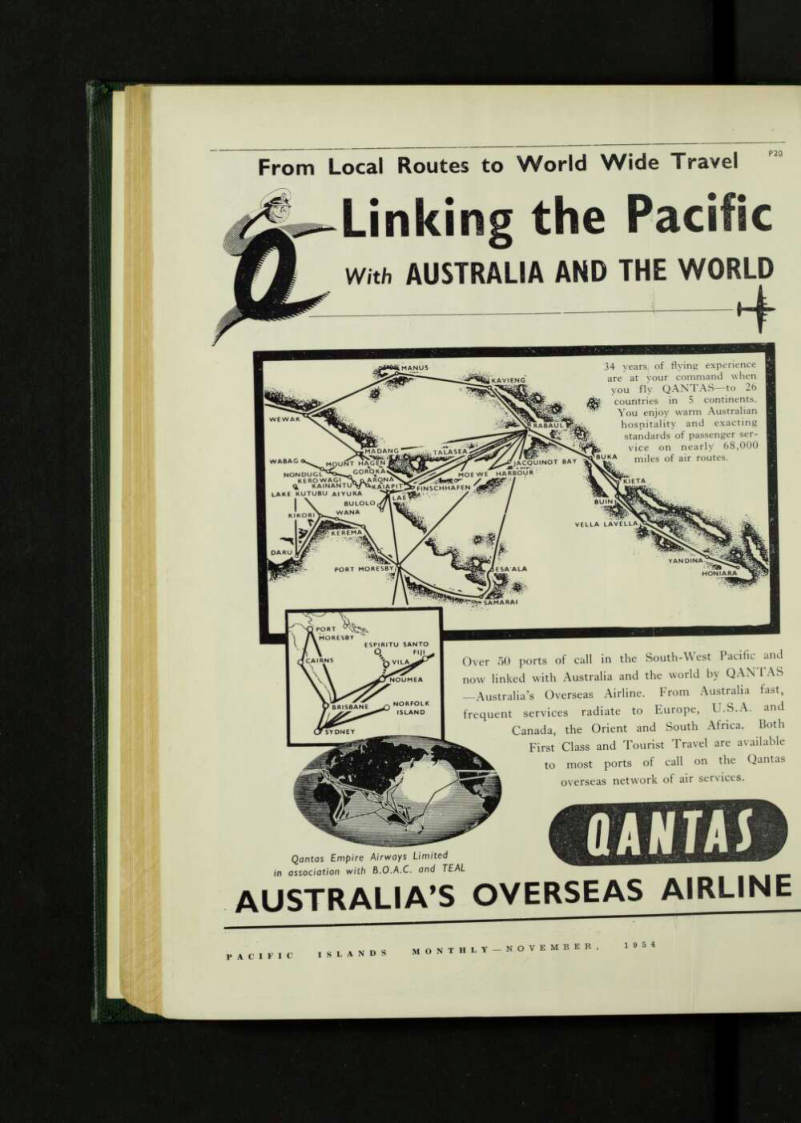 2
2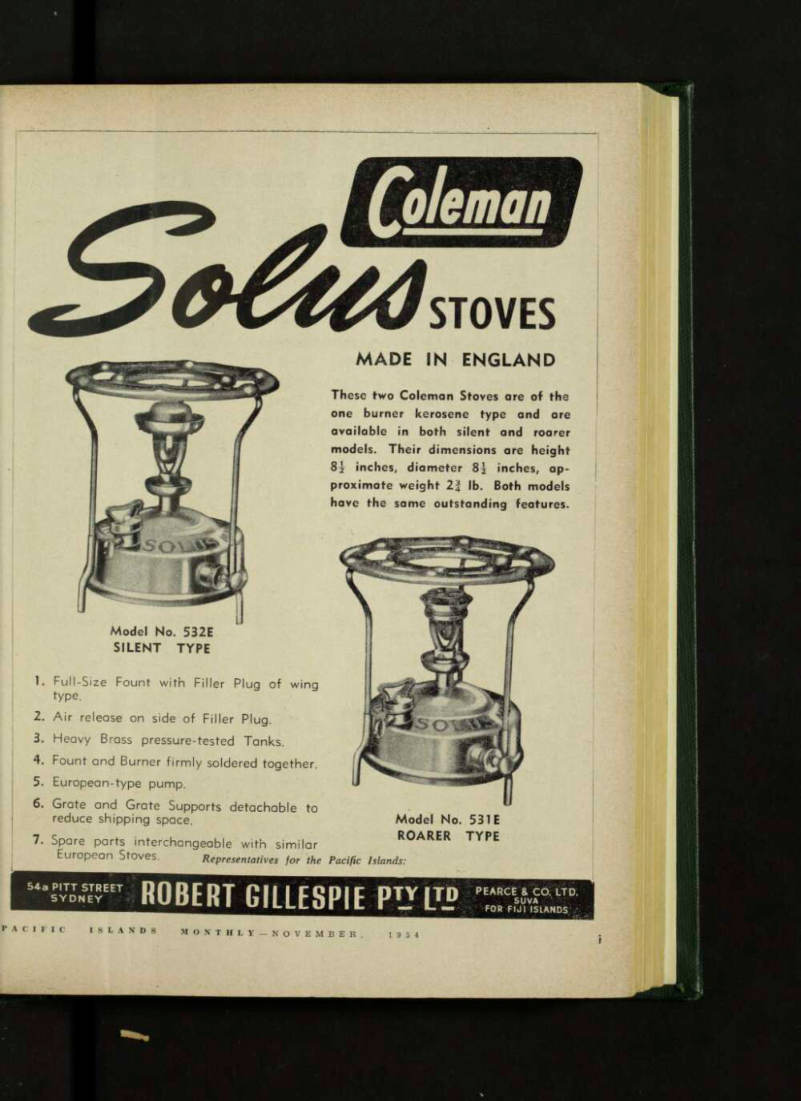 3
3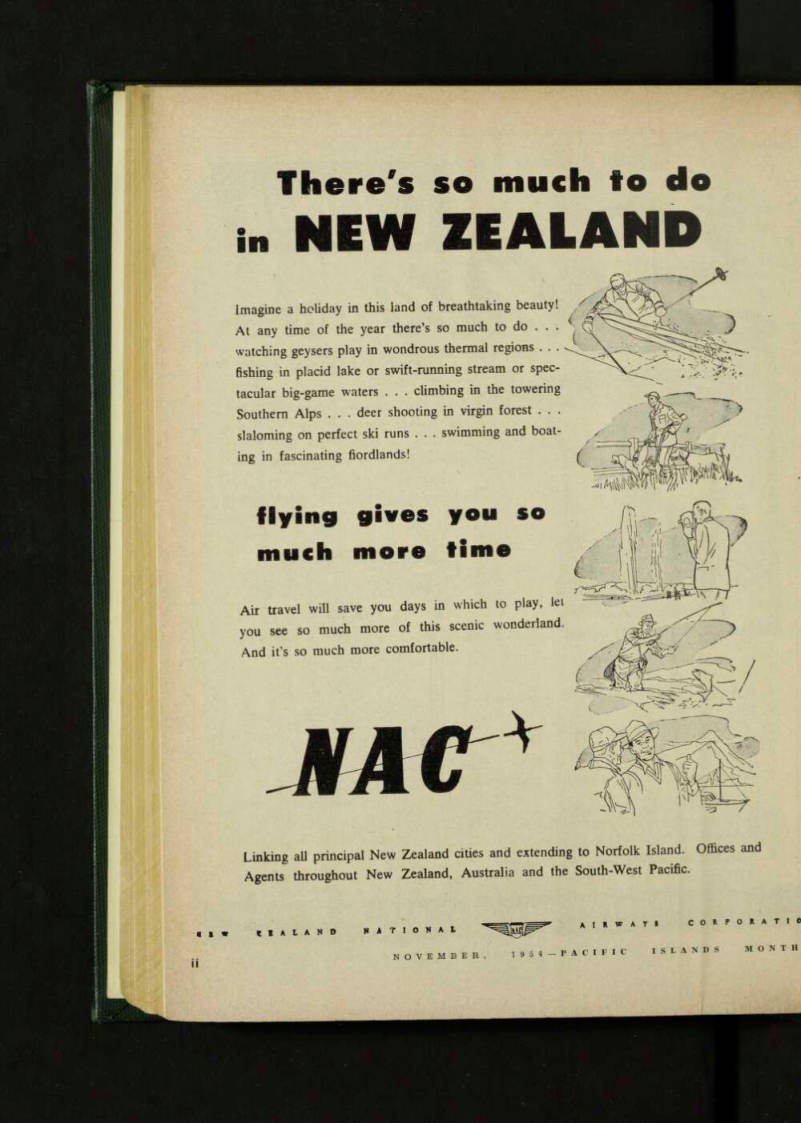 4
4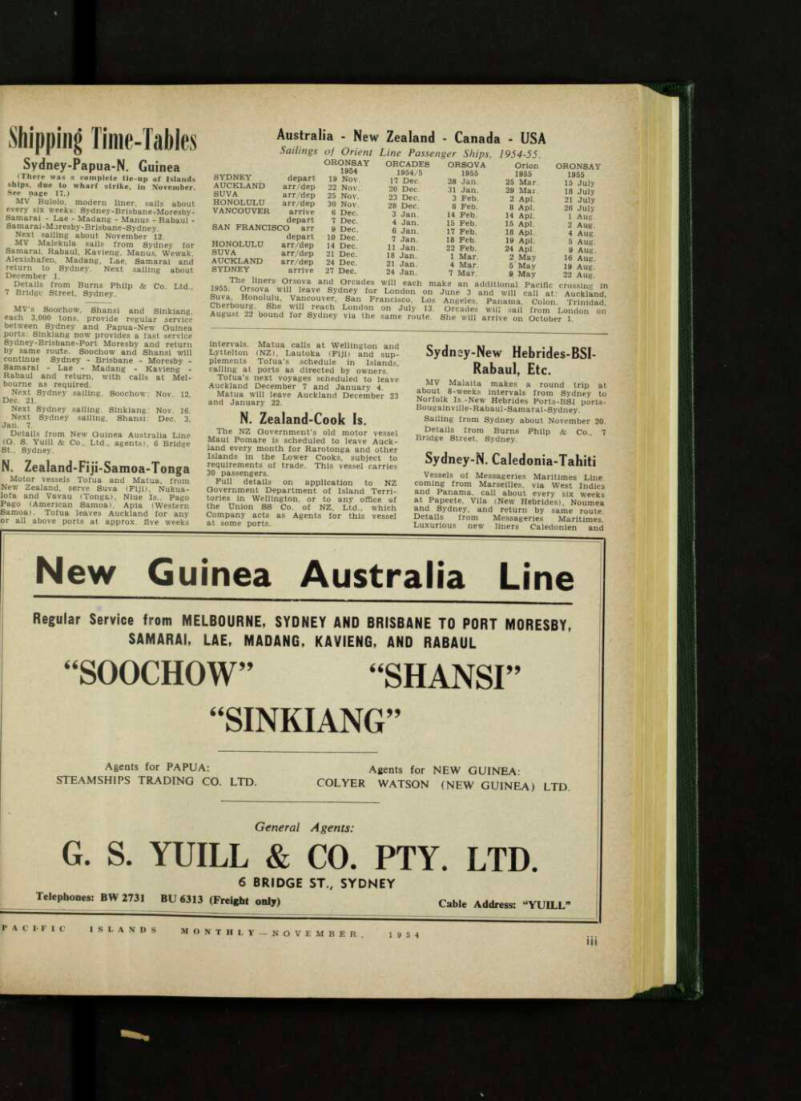 5
5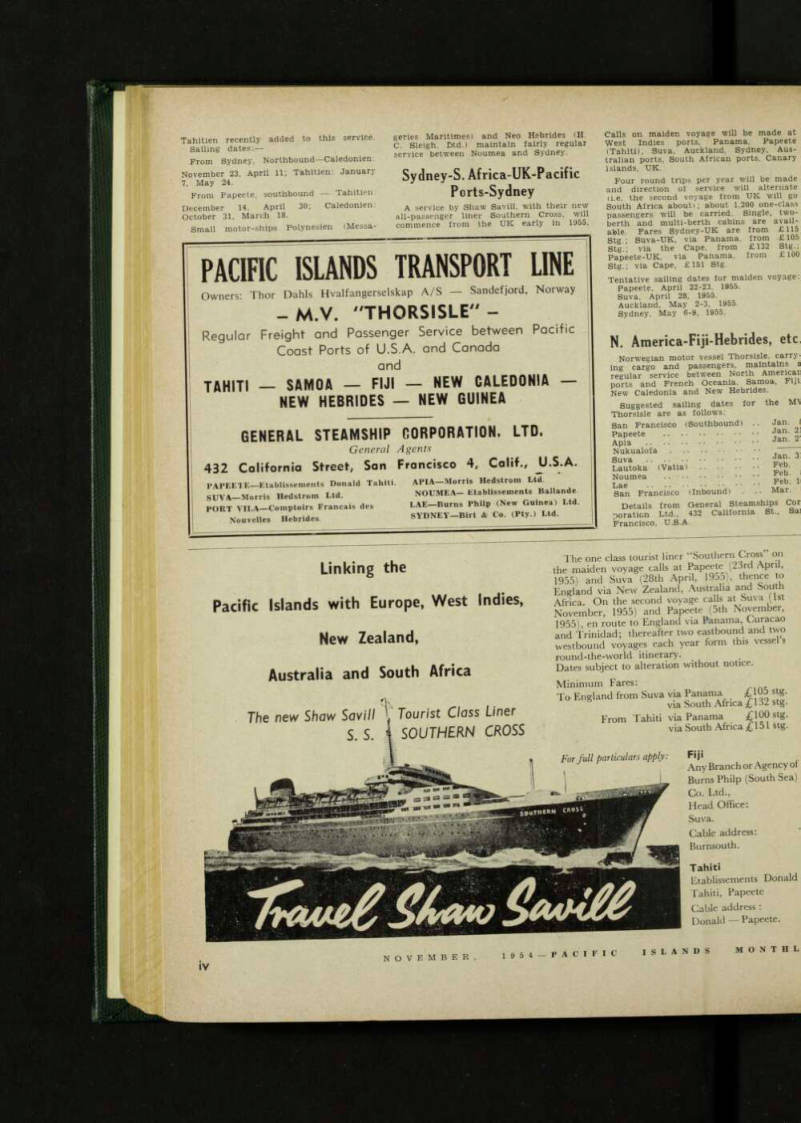 6
6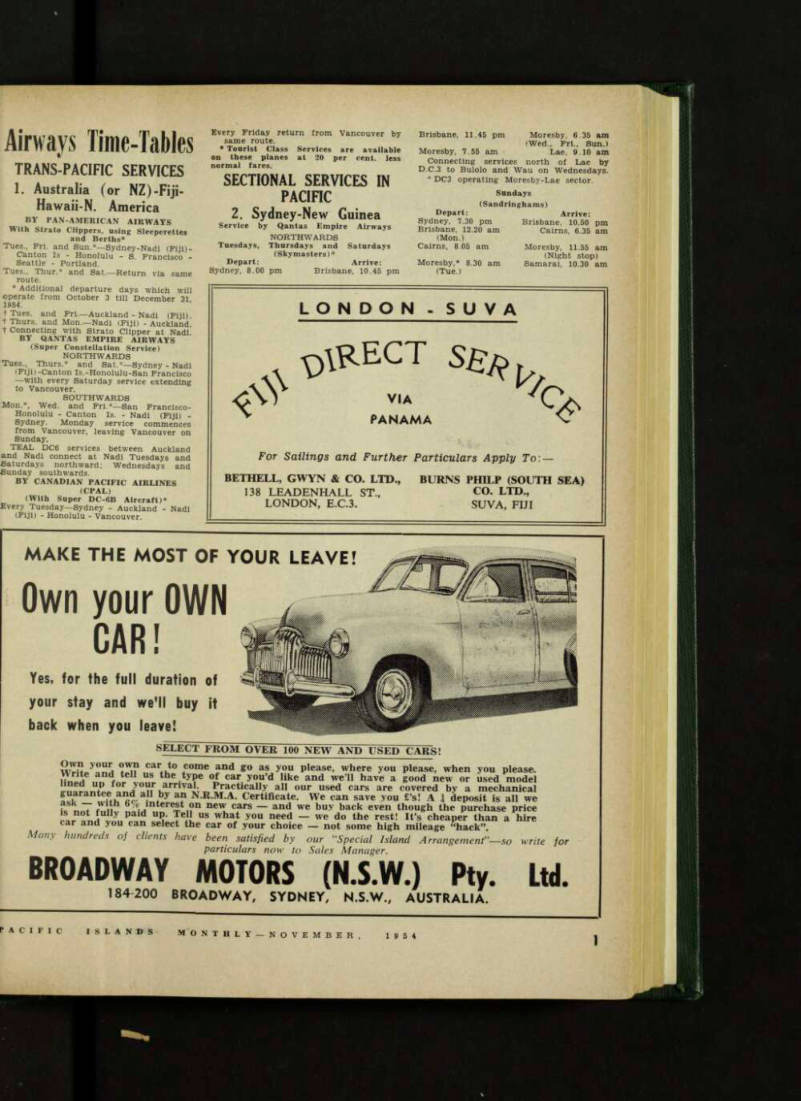 7
7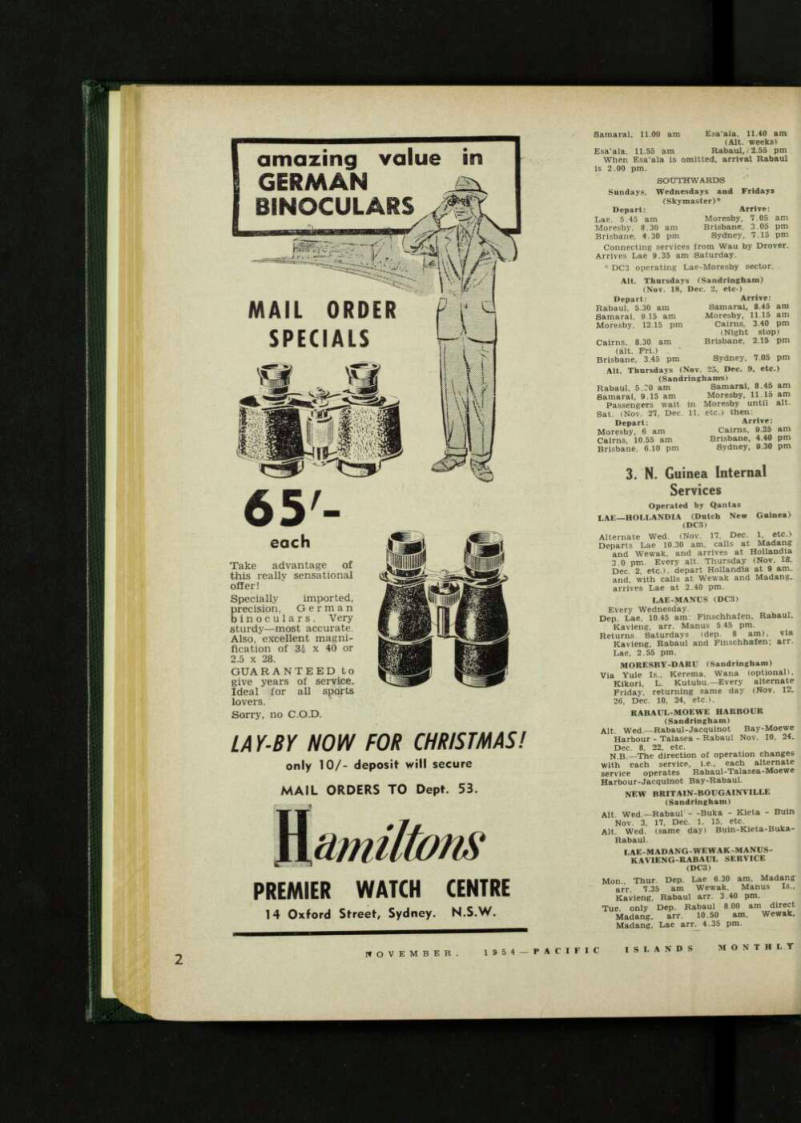 8
8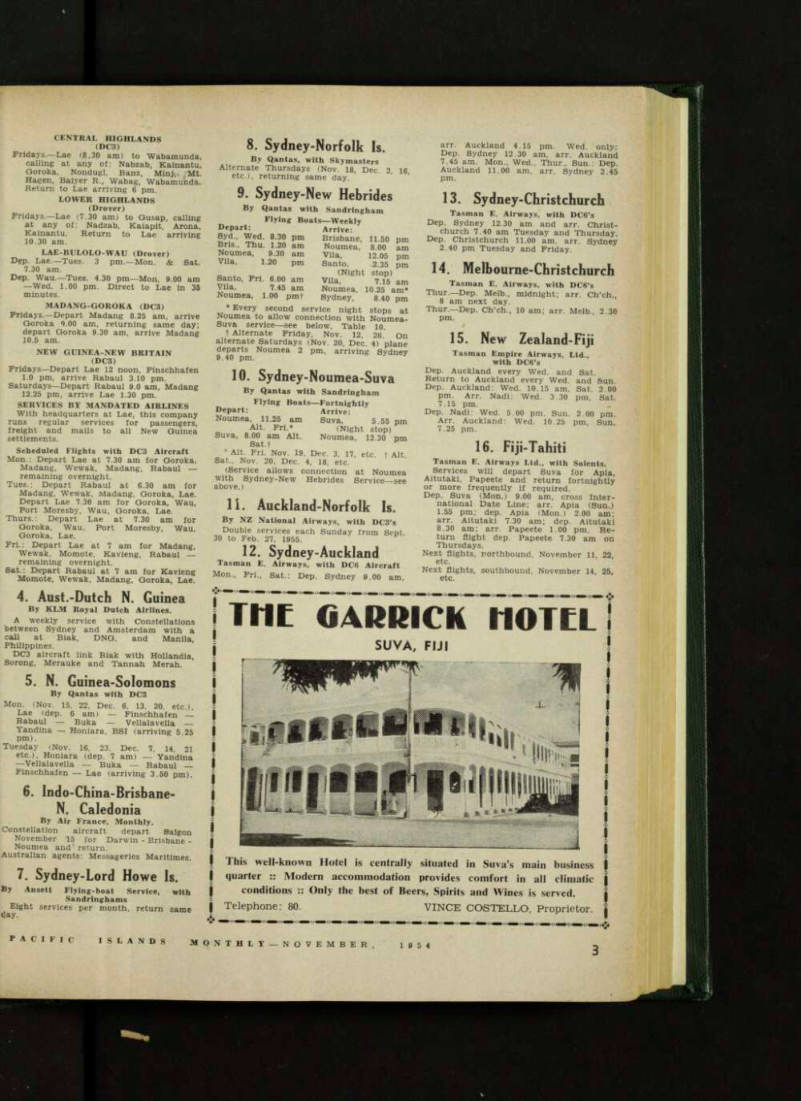 9
9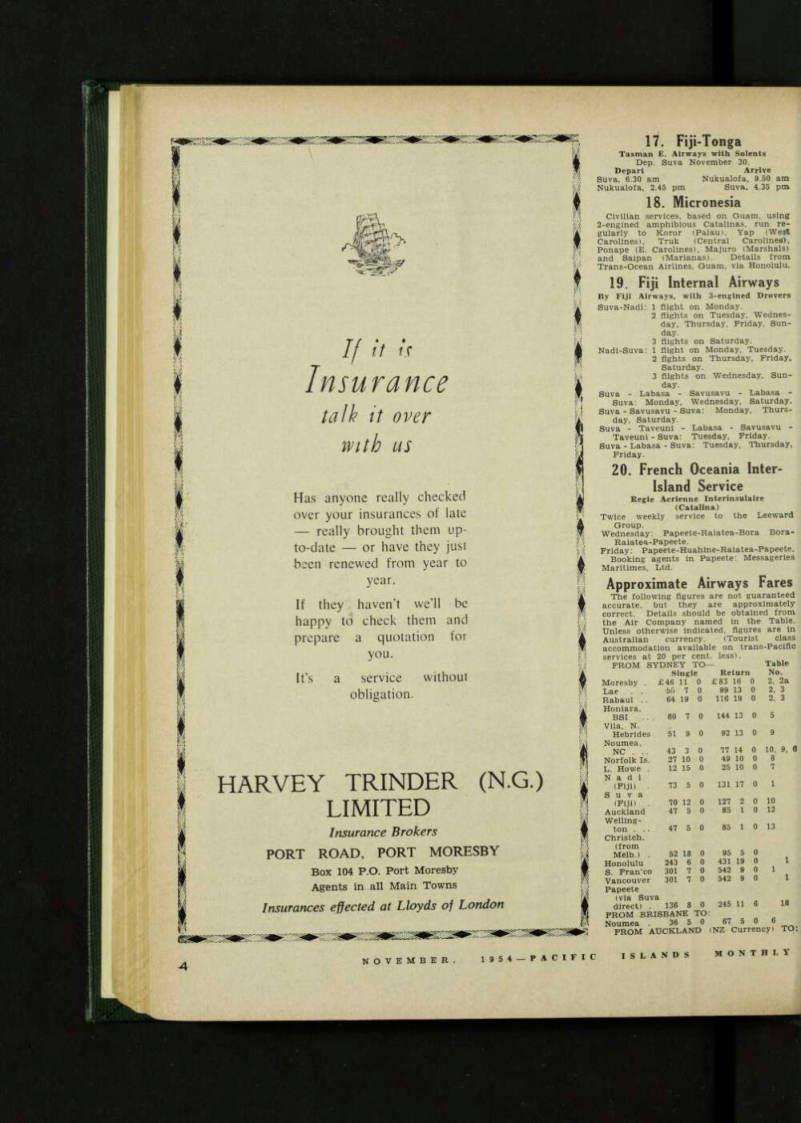 10
10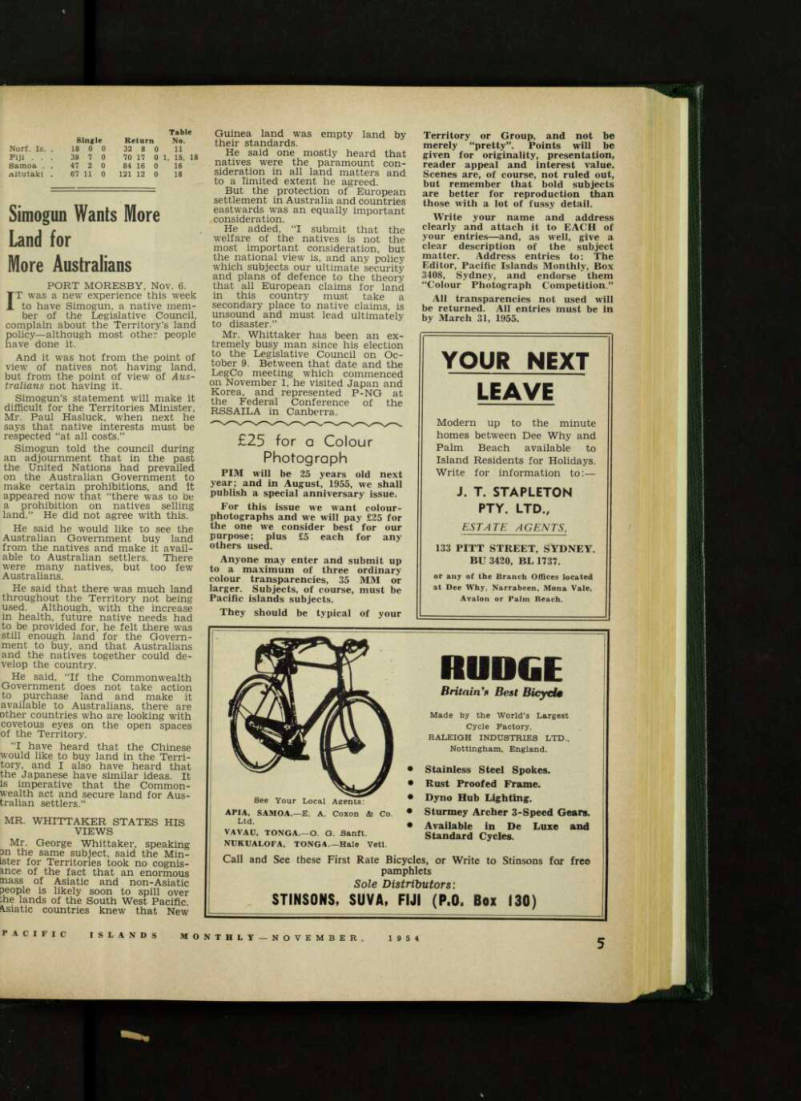 11
11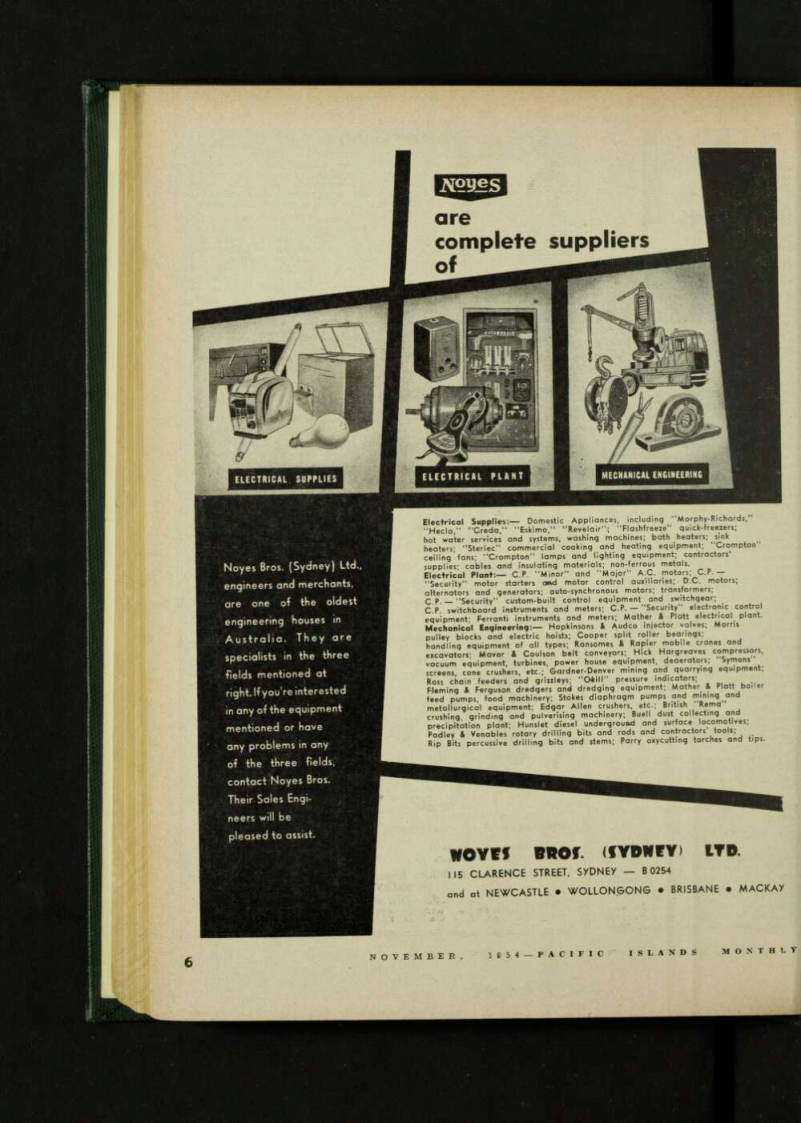 12
12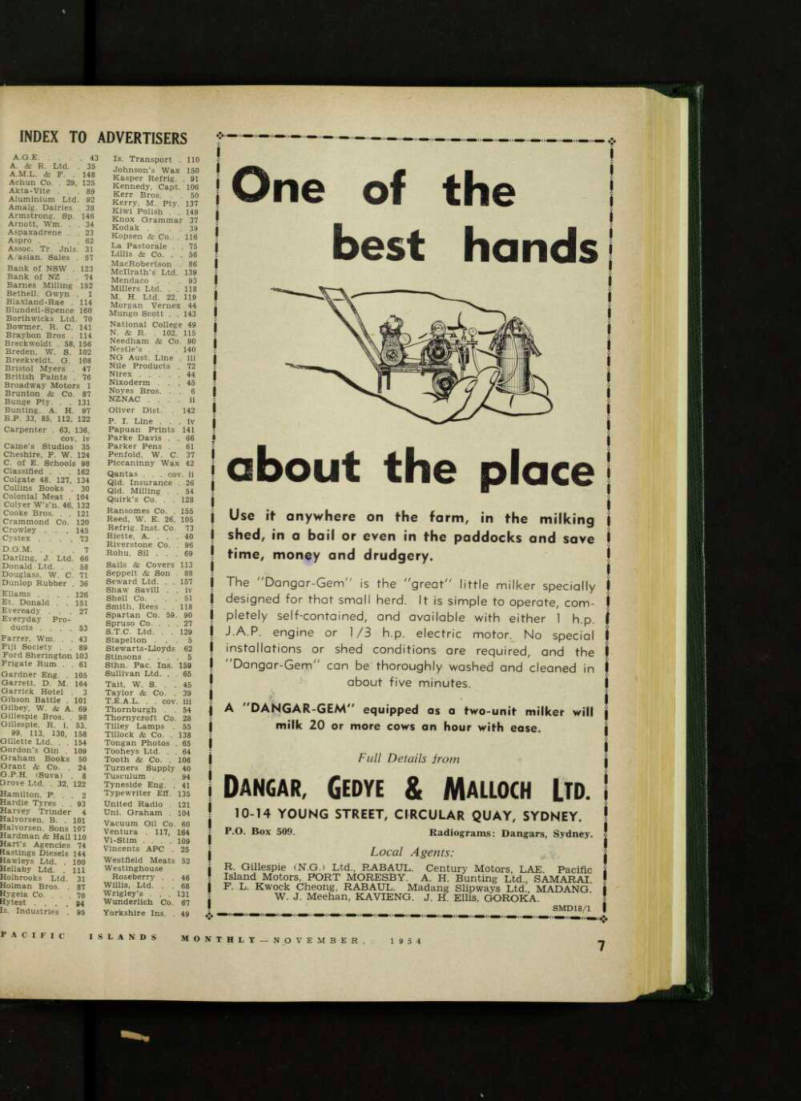 13
13 14
14 15
15 16
16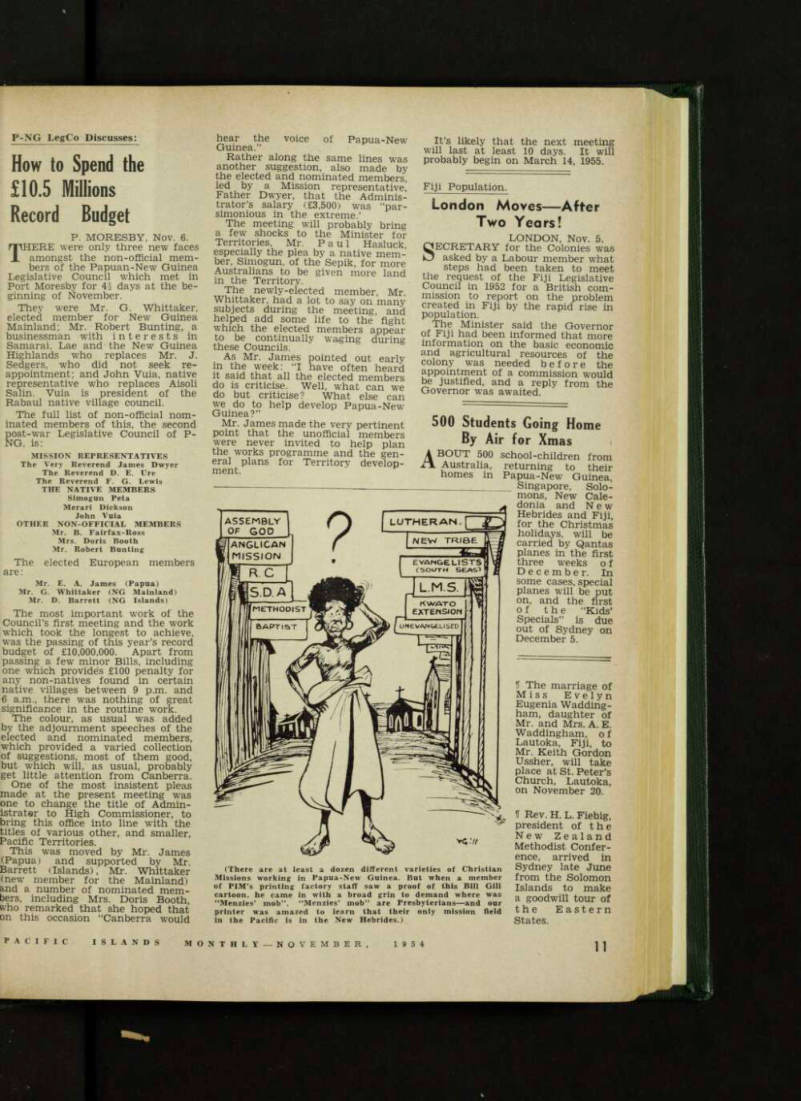 17
17 18
18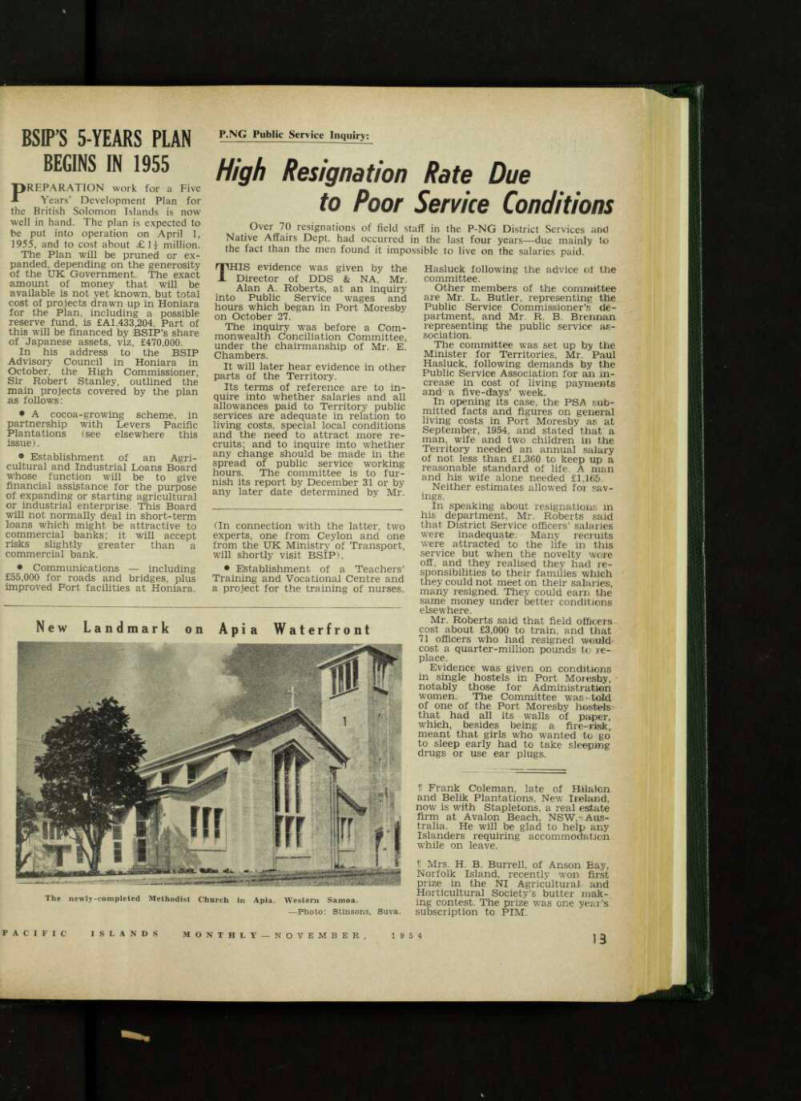 19
19 20
20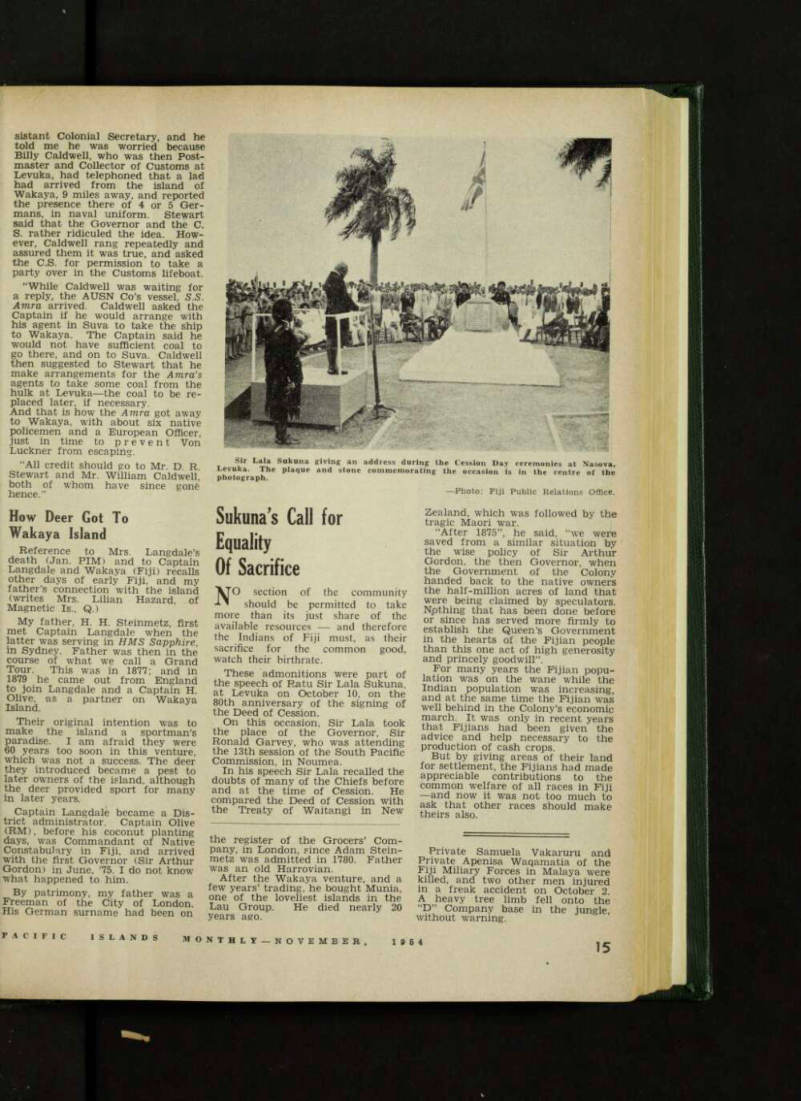 21
21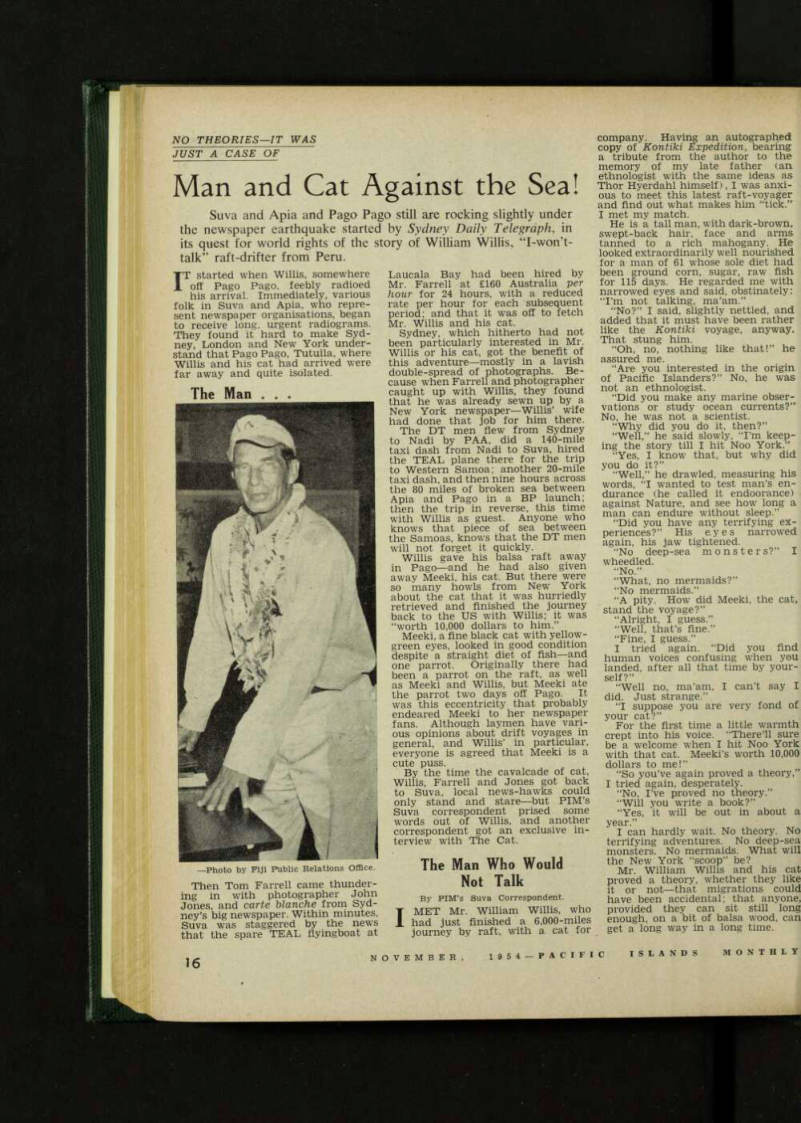 22
22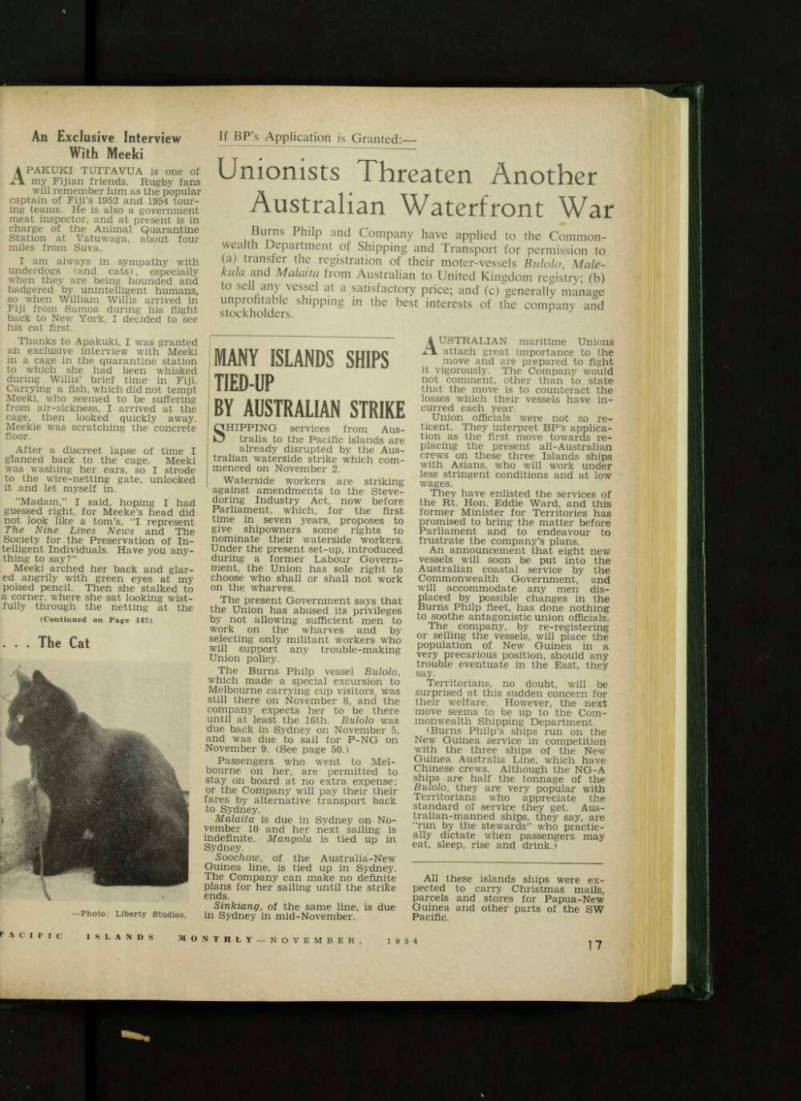 23
23 24
24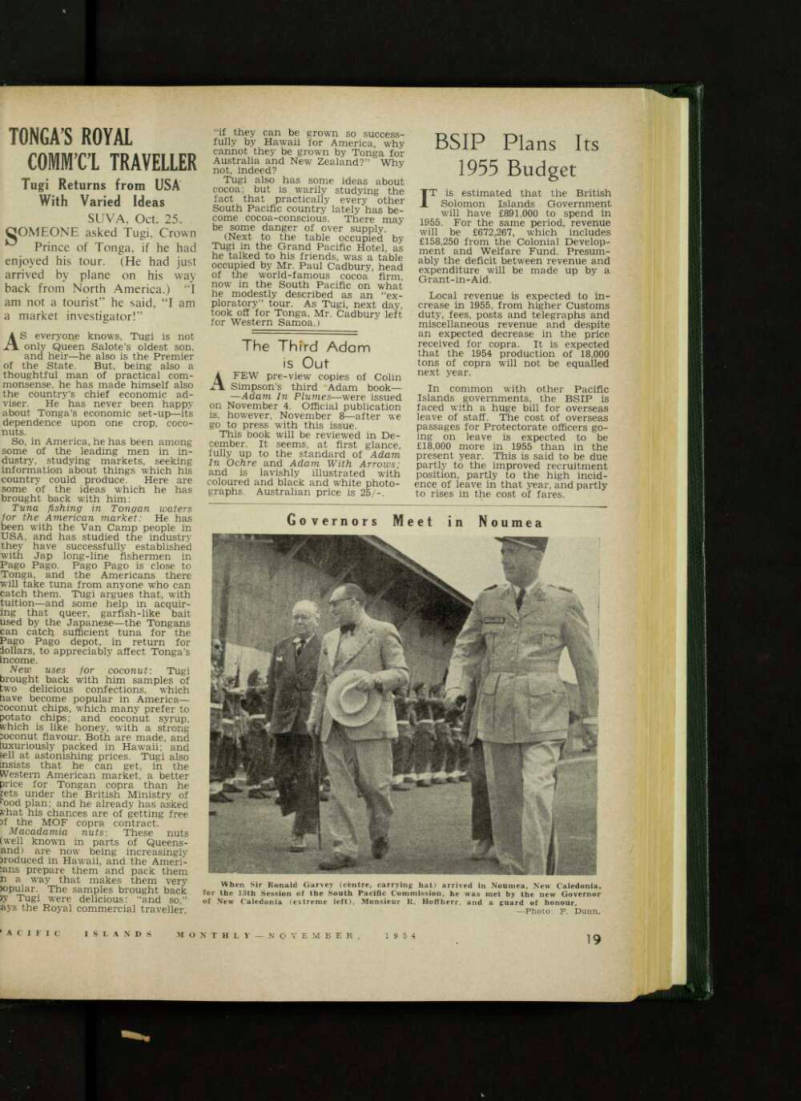 25
25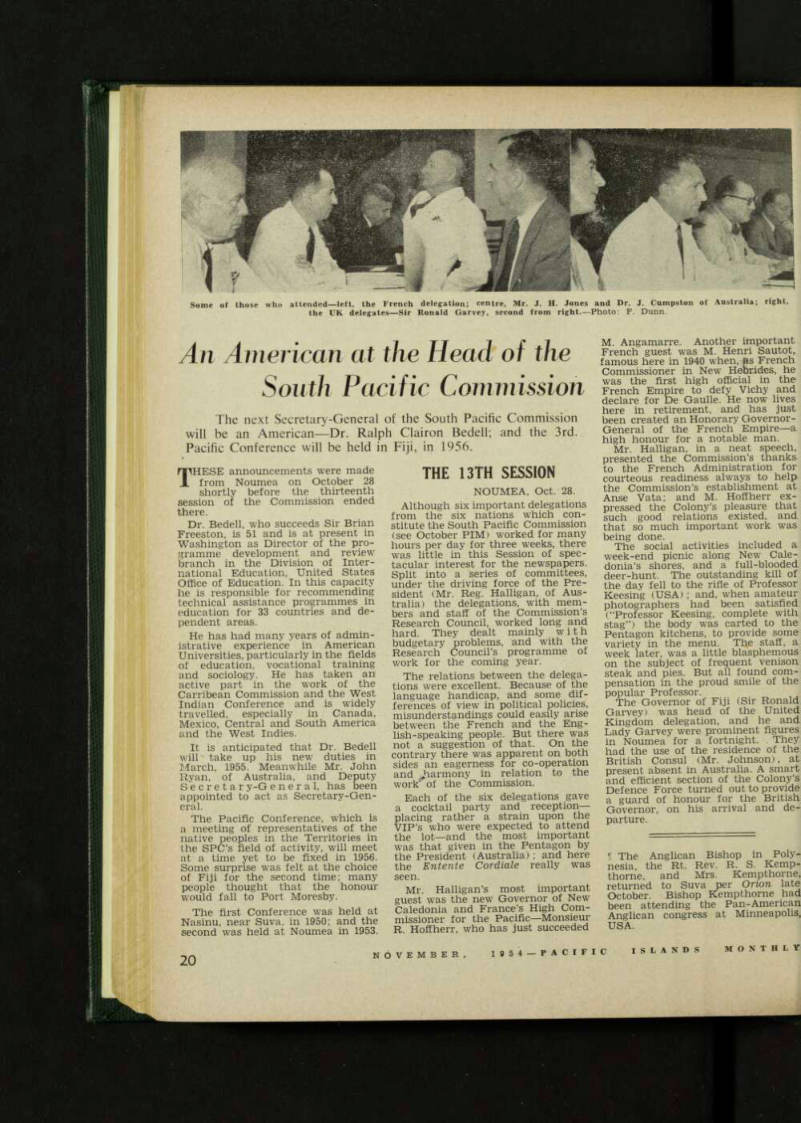 26
26 27
27 28
28 29
29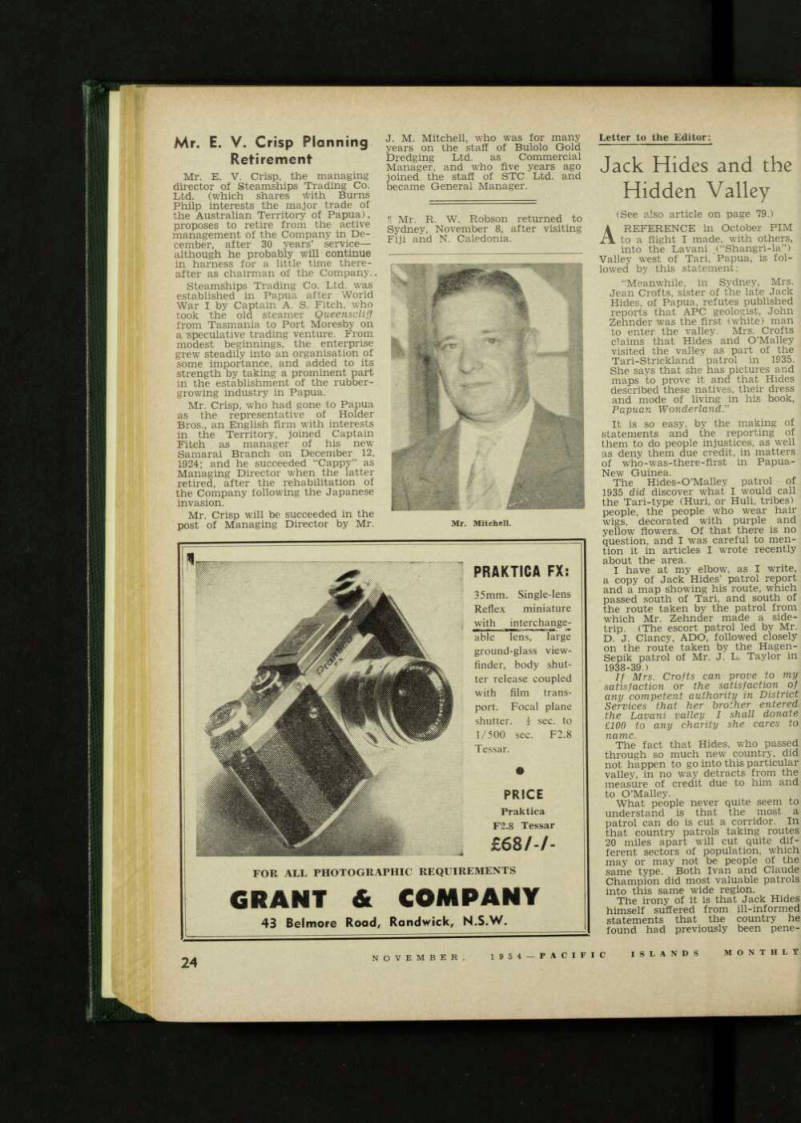 30
30 31
31 32
32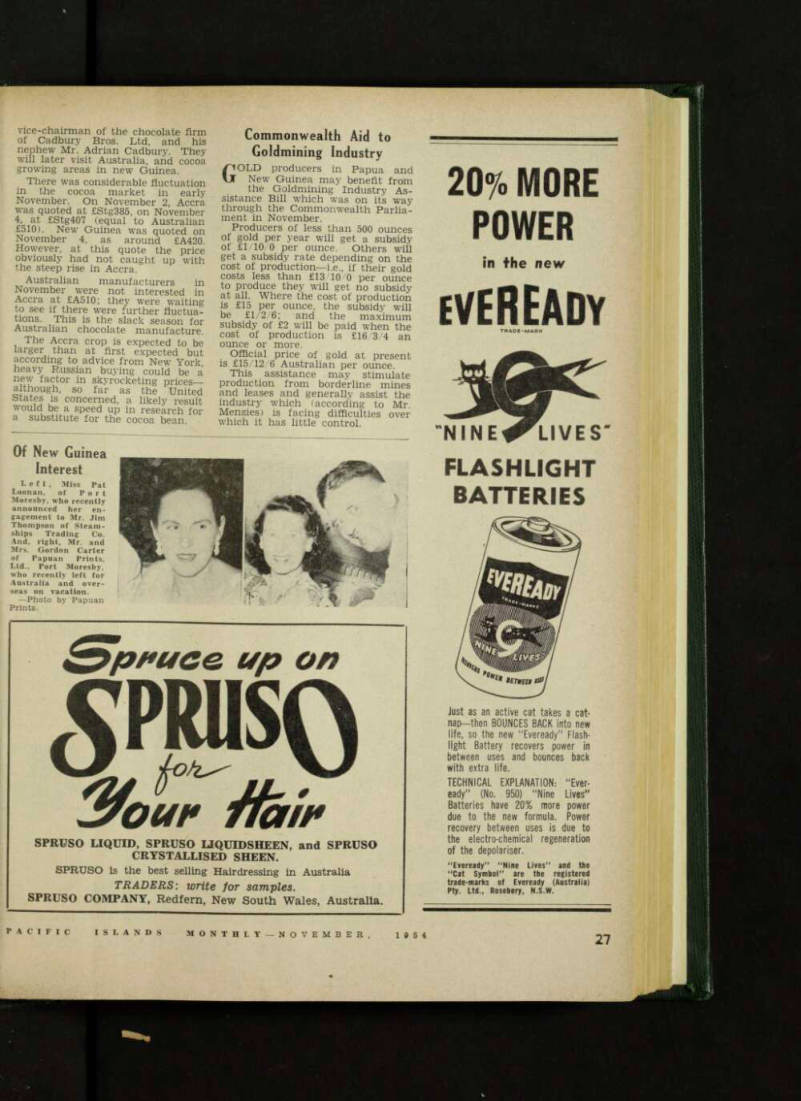 33
33 34
34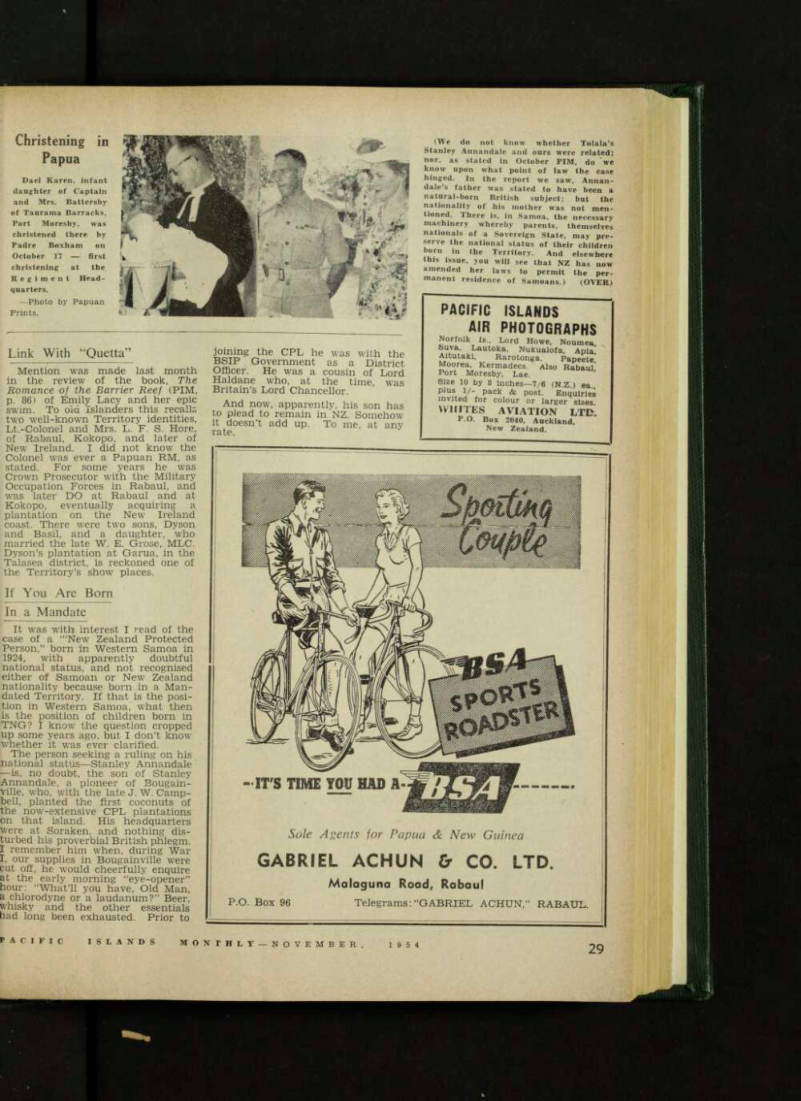 35
35 36
36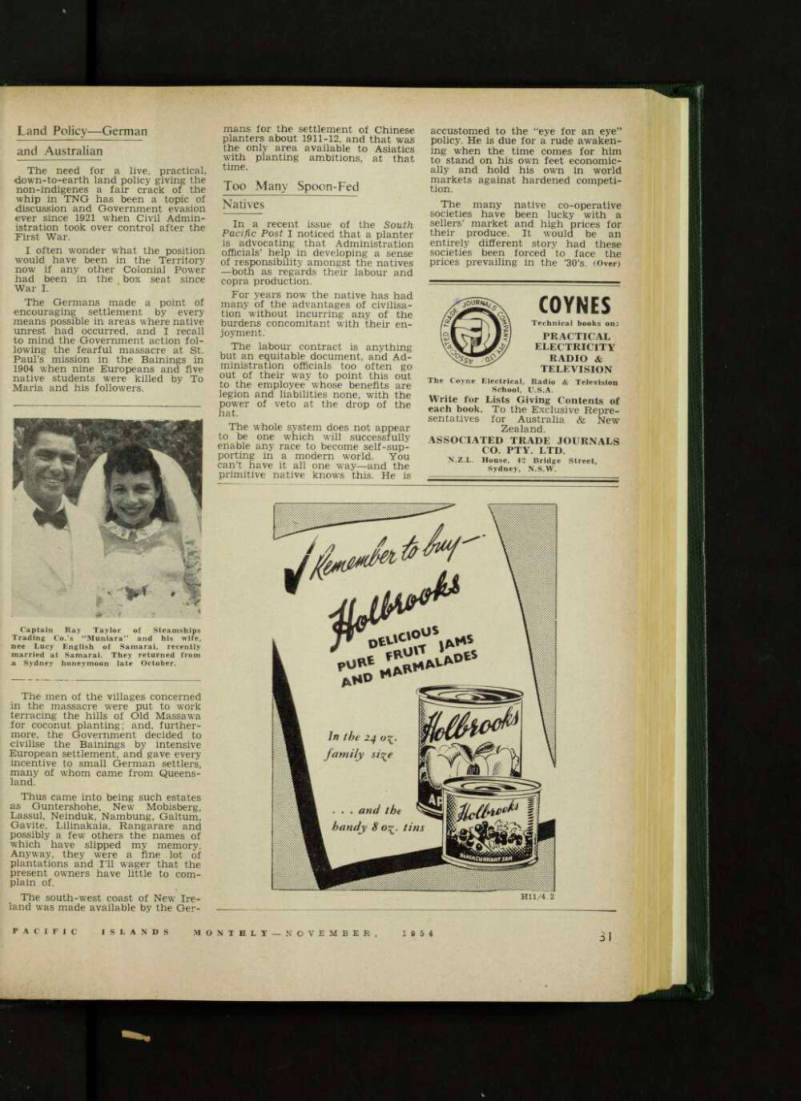 37
37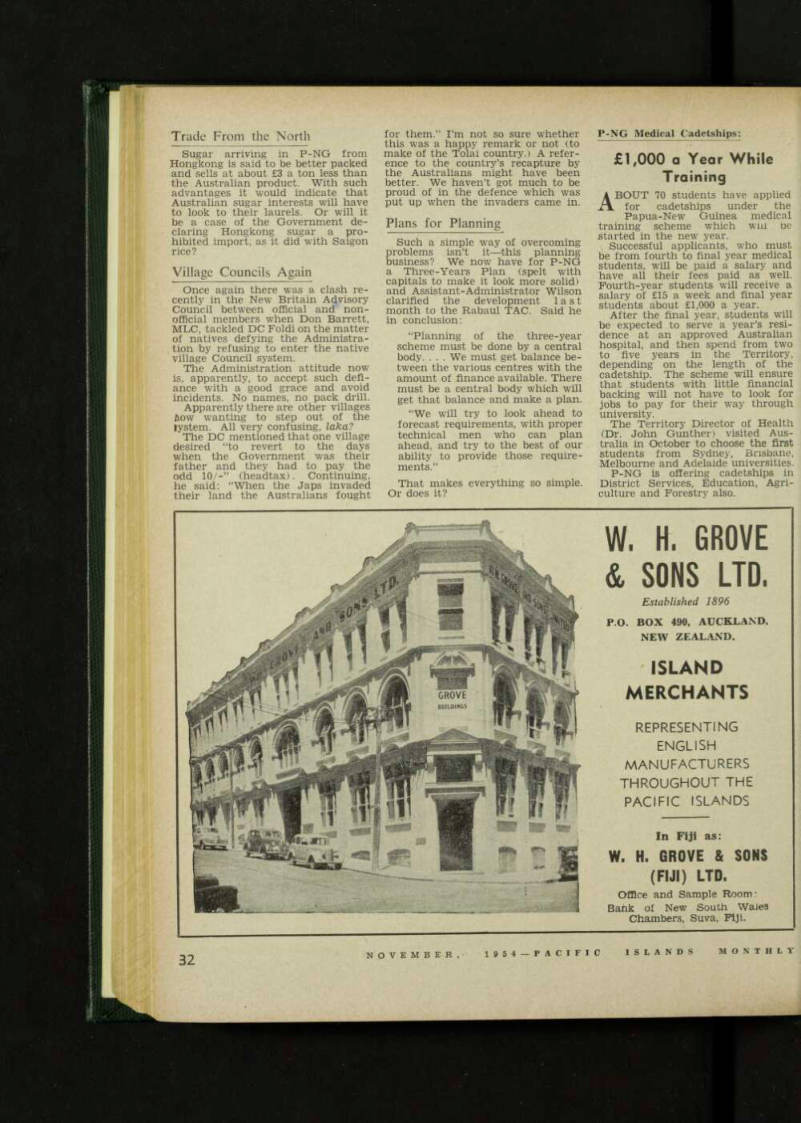 38
38 39
39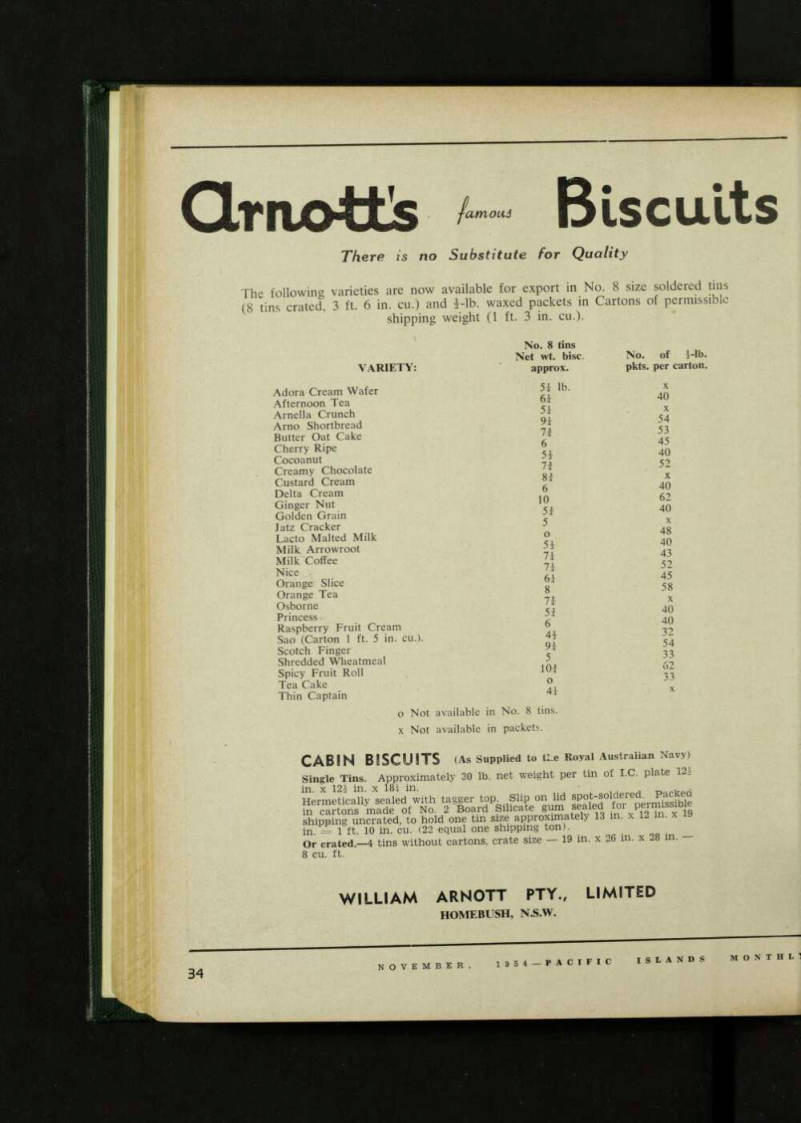 40
40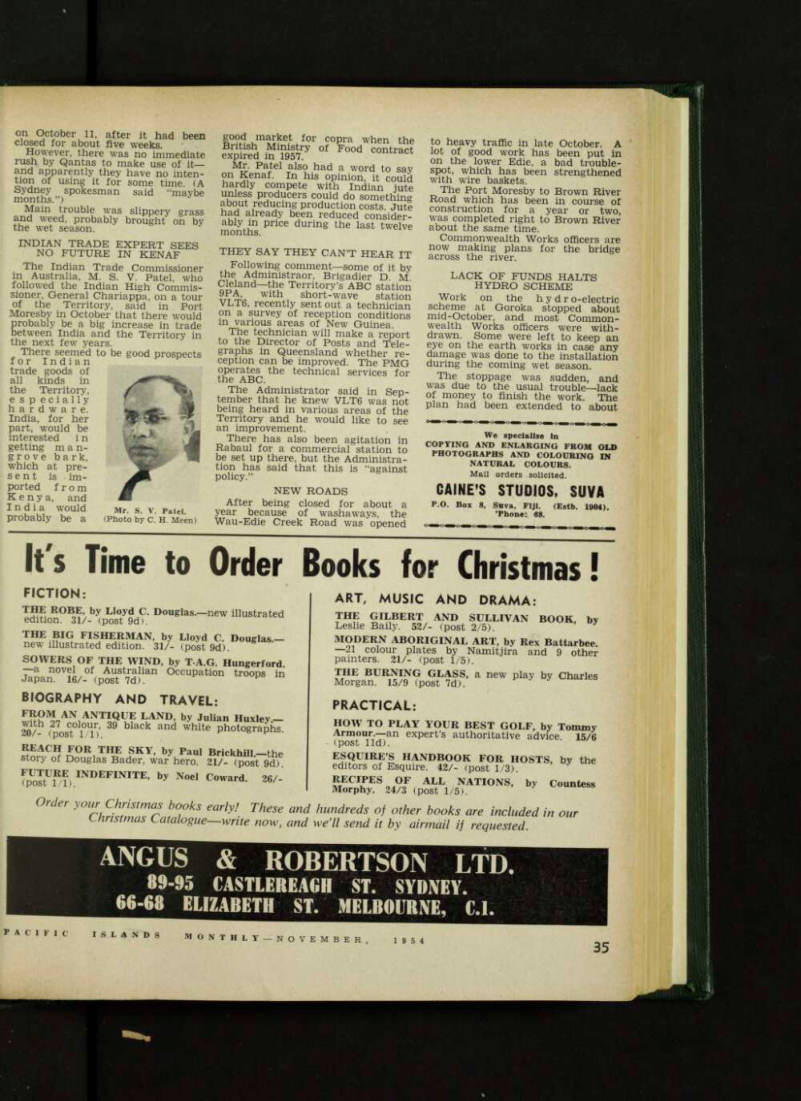 41
41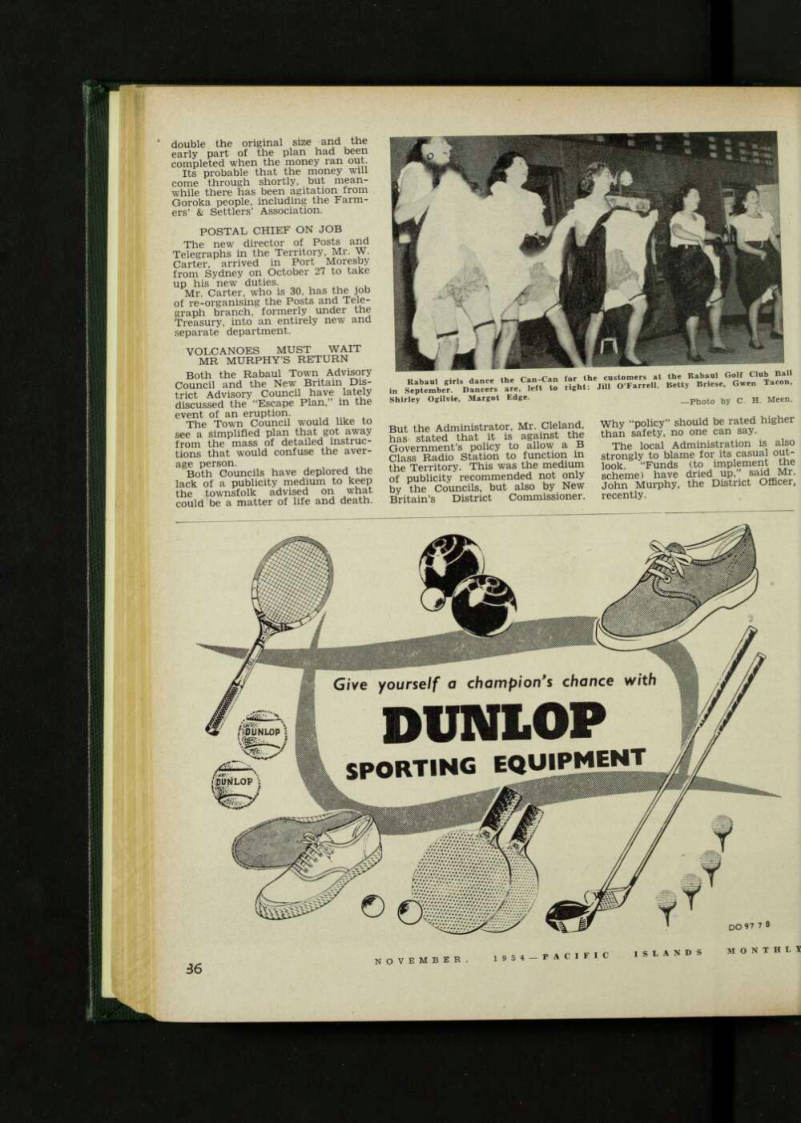 42
42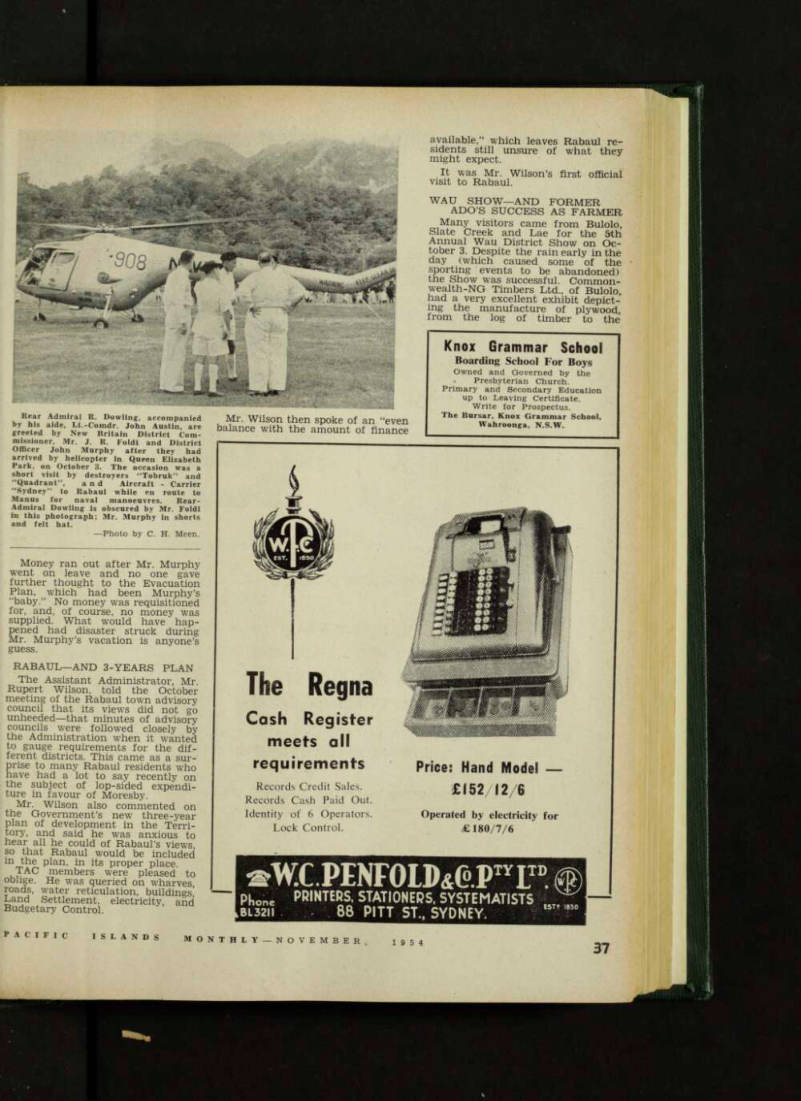 43
43 44
44 45
45 46
46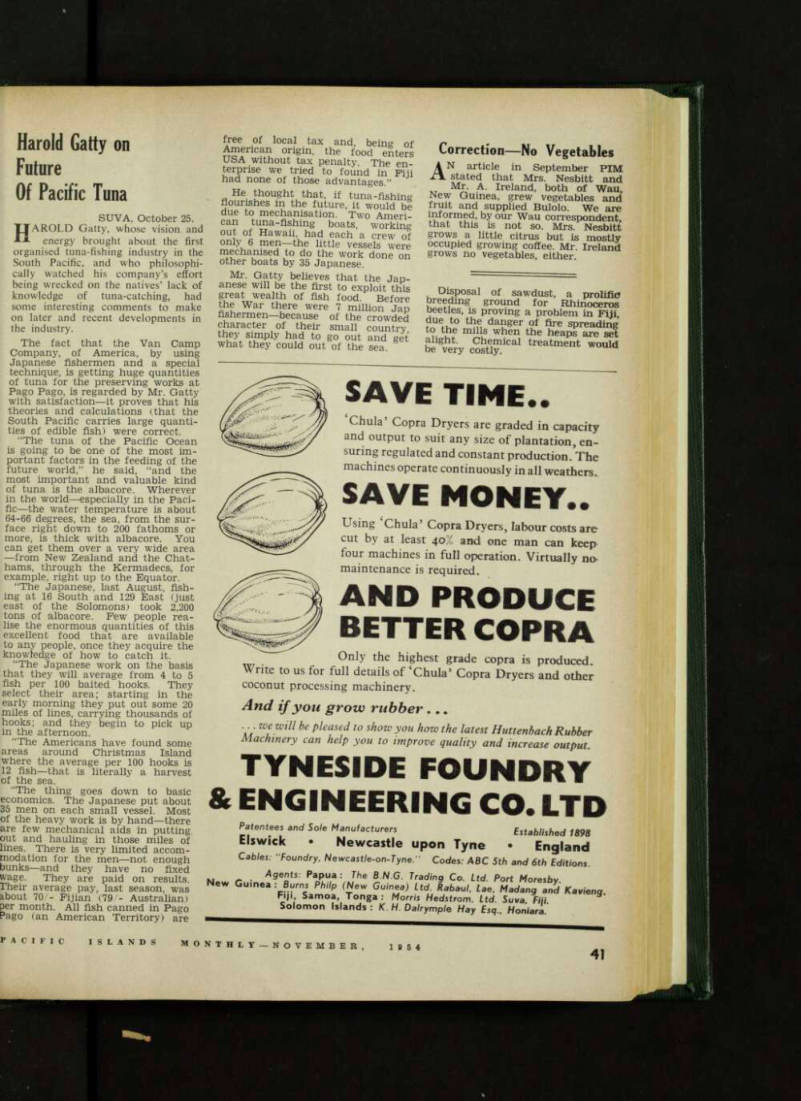 47
47 48
48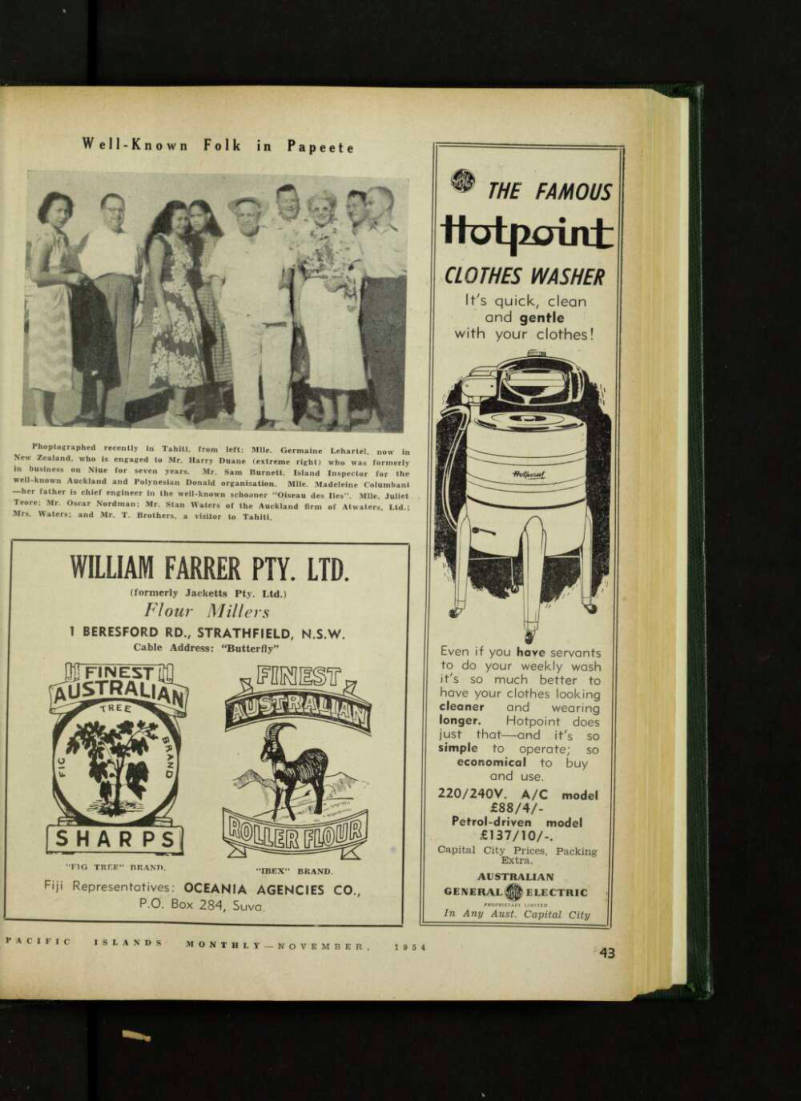 49
49 50
50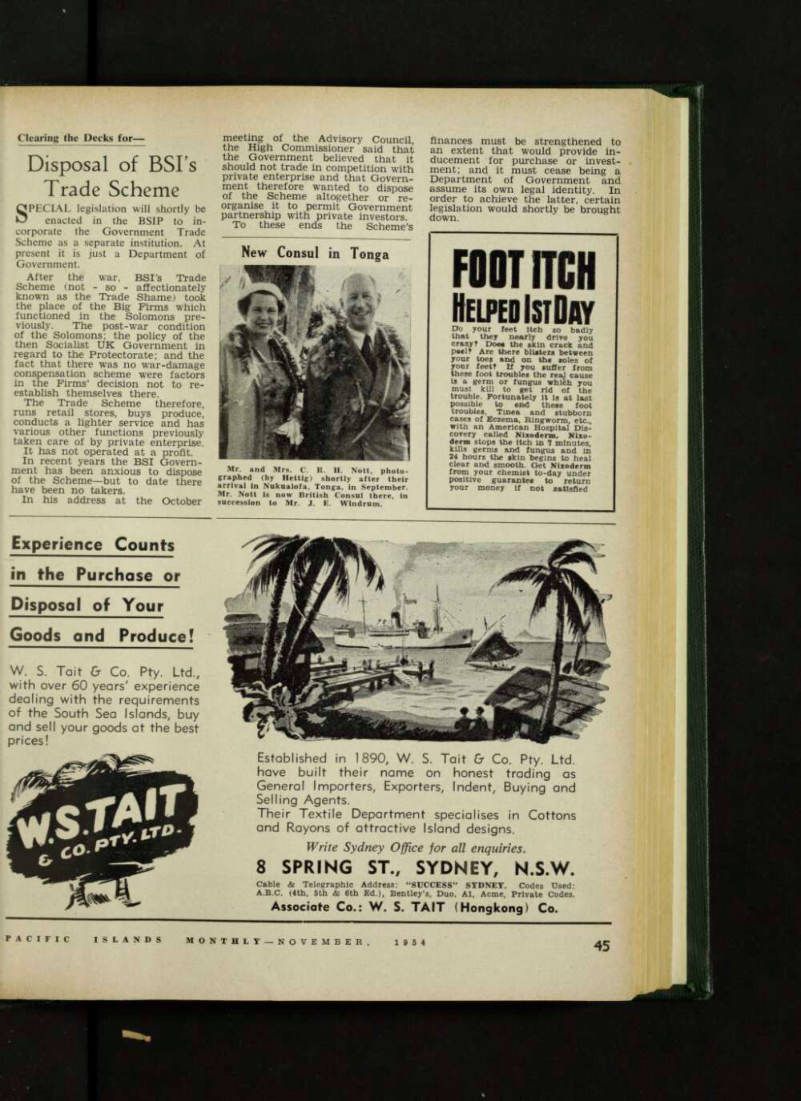 51
51 52
52 53
53 54
54 55
55 56
56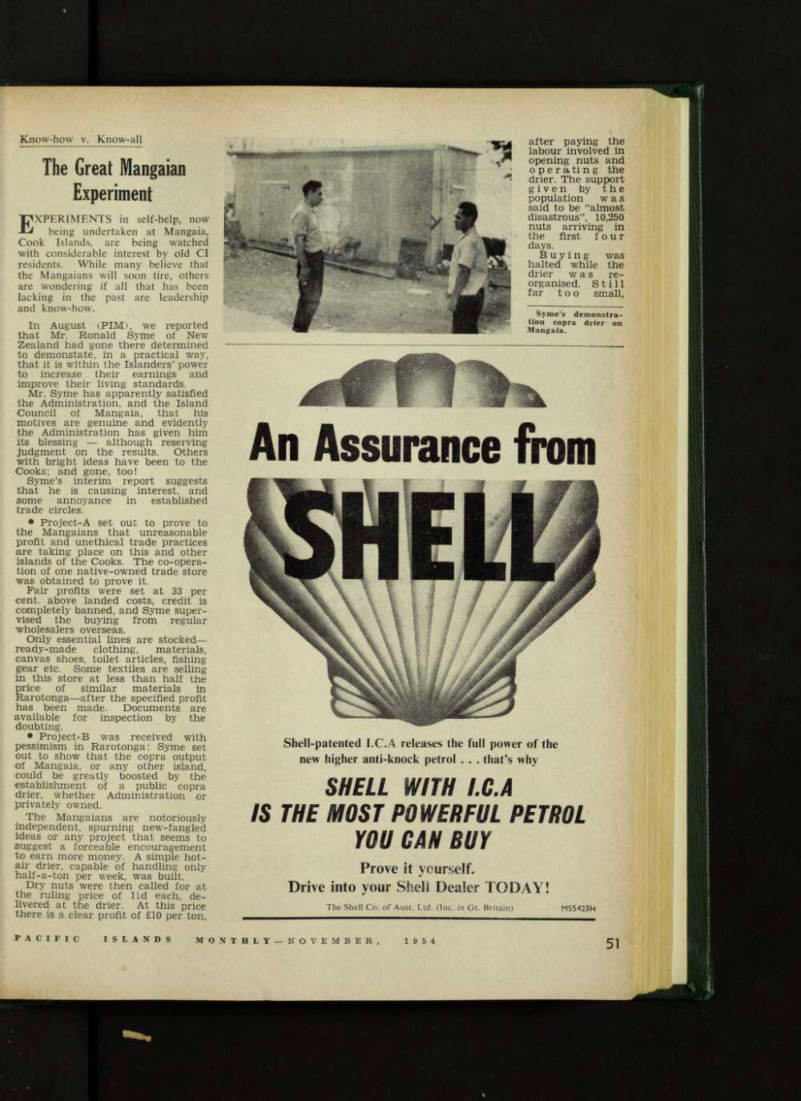 57
57 58
58 59
59 60
60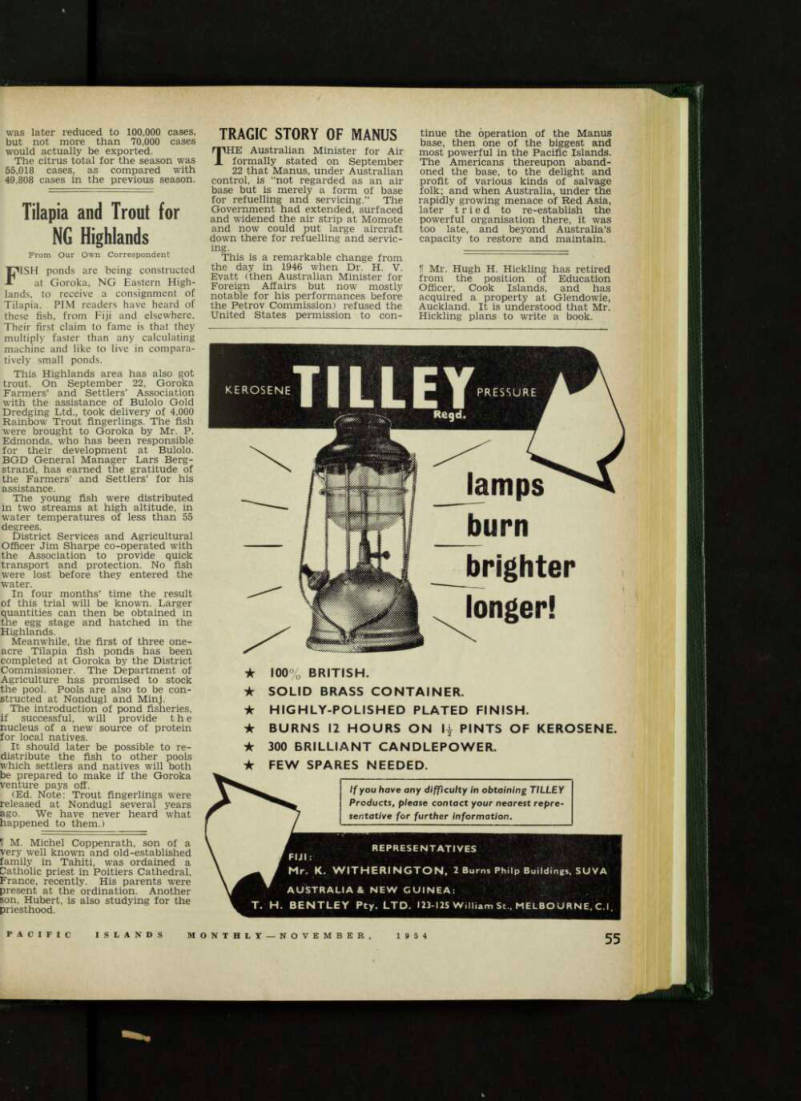 61
61 62
62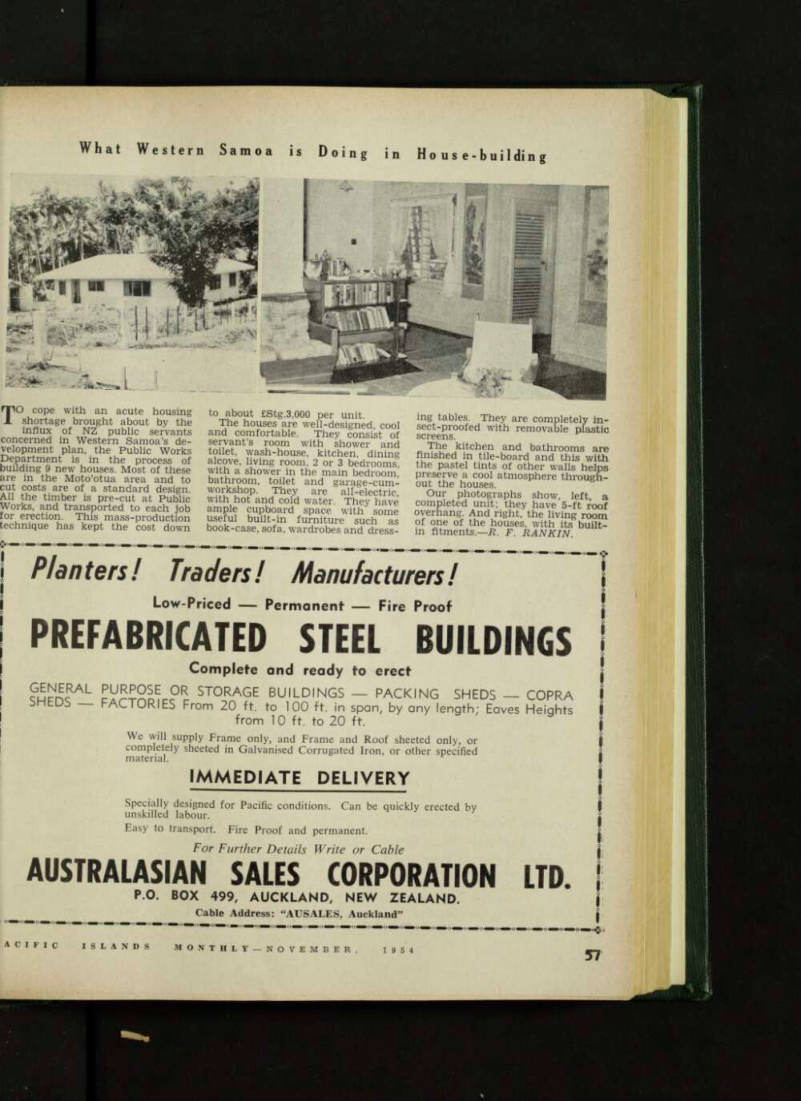 63
63 64
64 65
65 66
66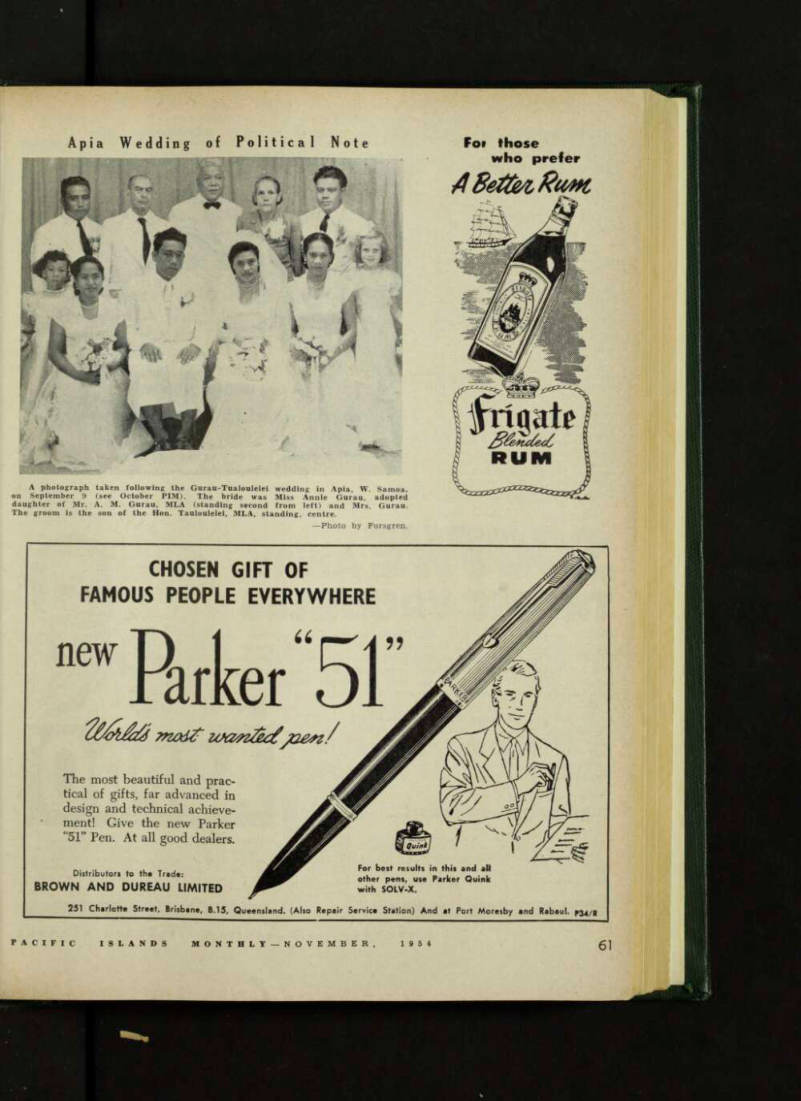 67
67 68
68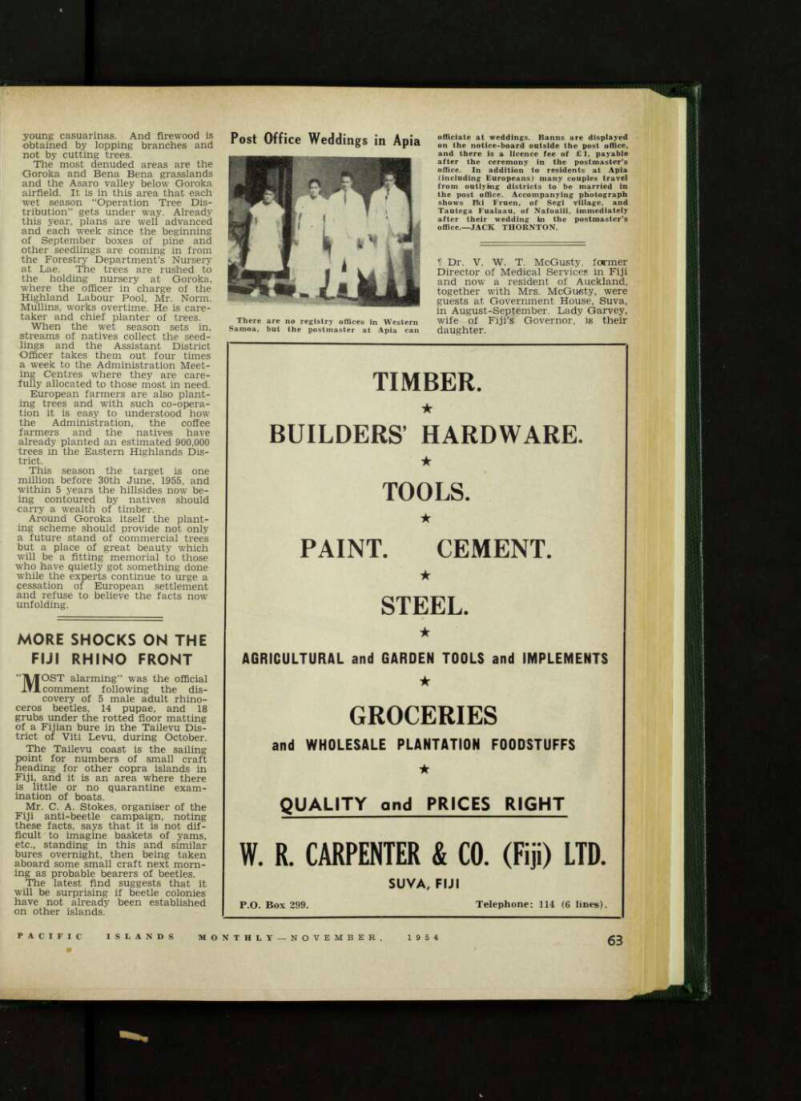 69
69 70
70 71
71 72
72 73
73 74
74 75
75 76
76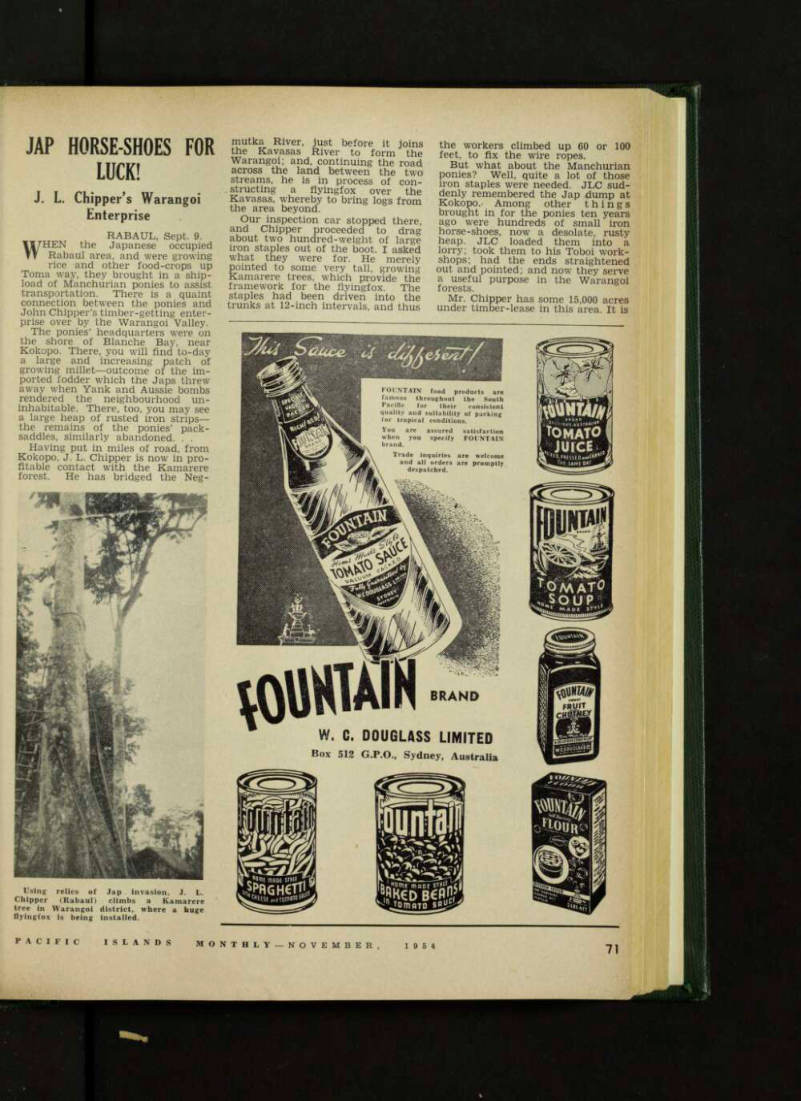 77
77 78
78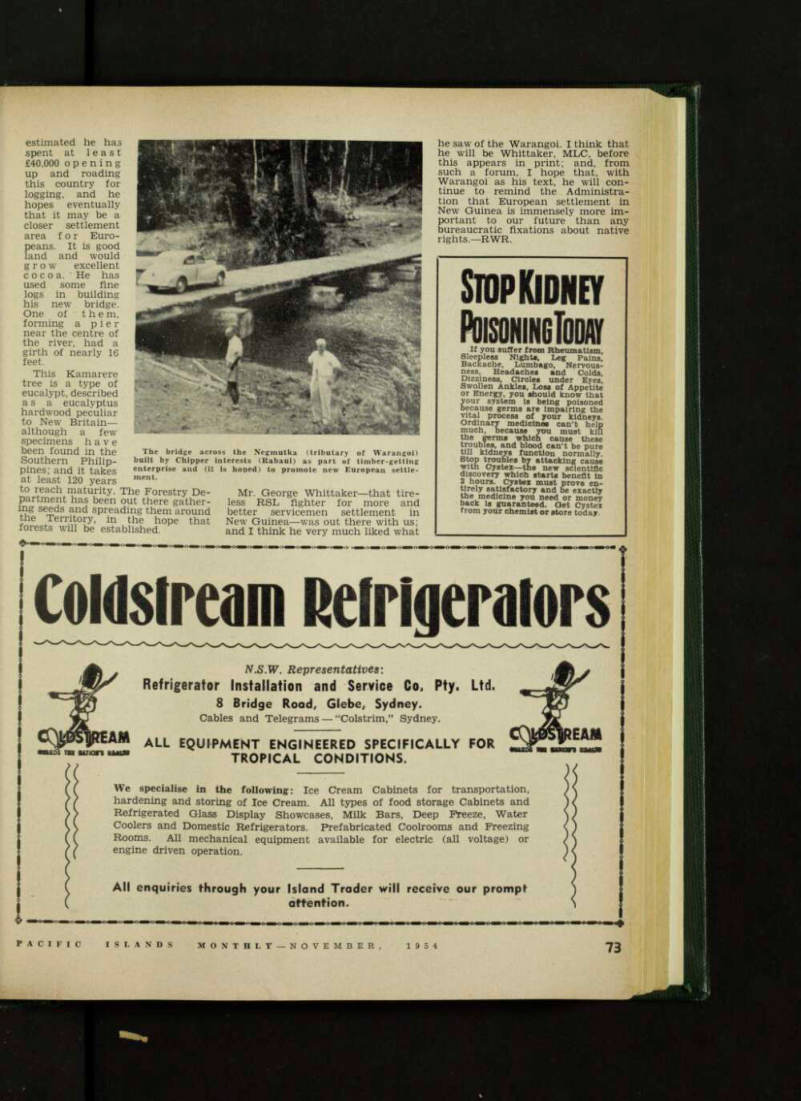 79
79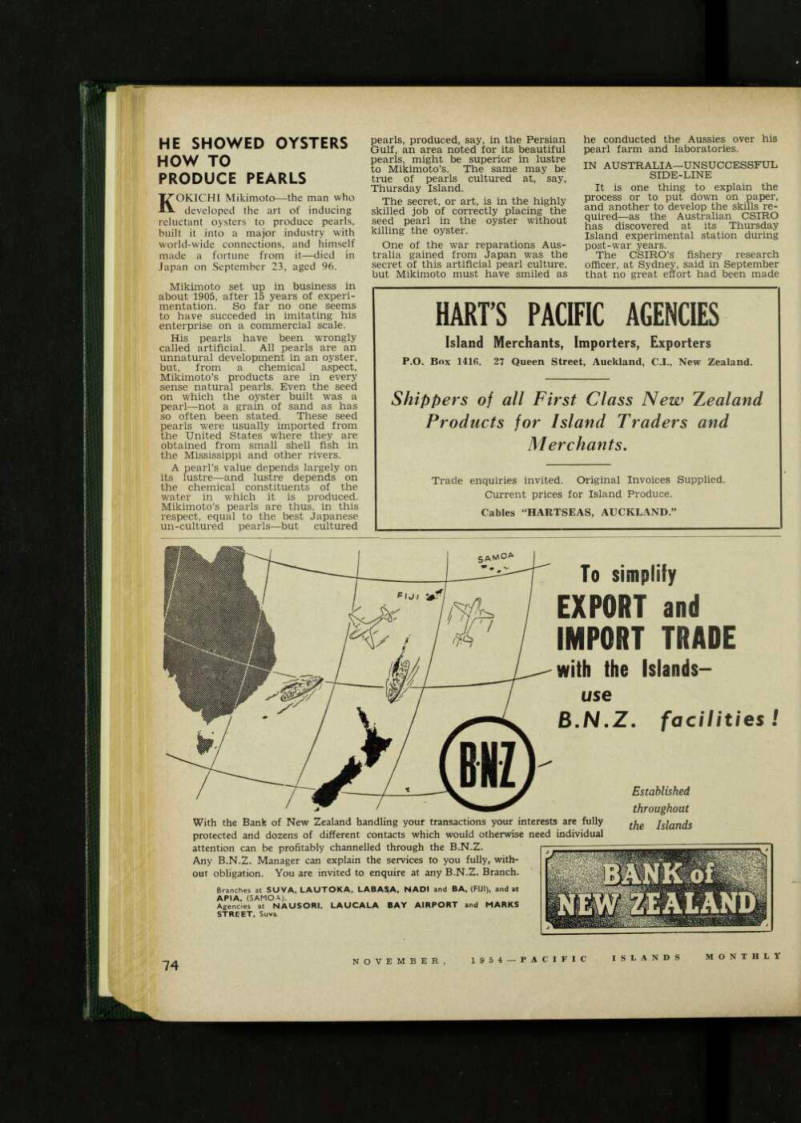 80
80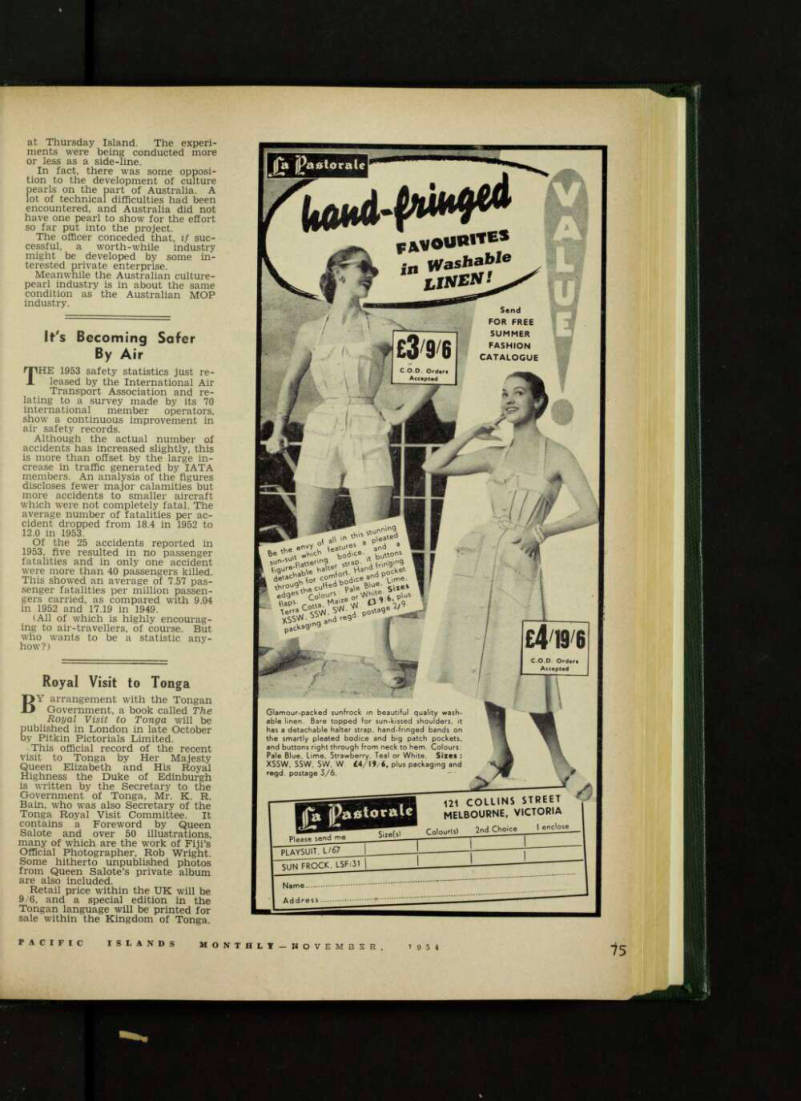 81
81 82
82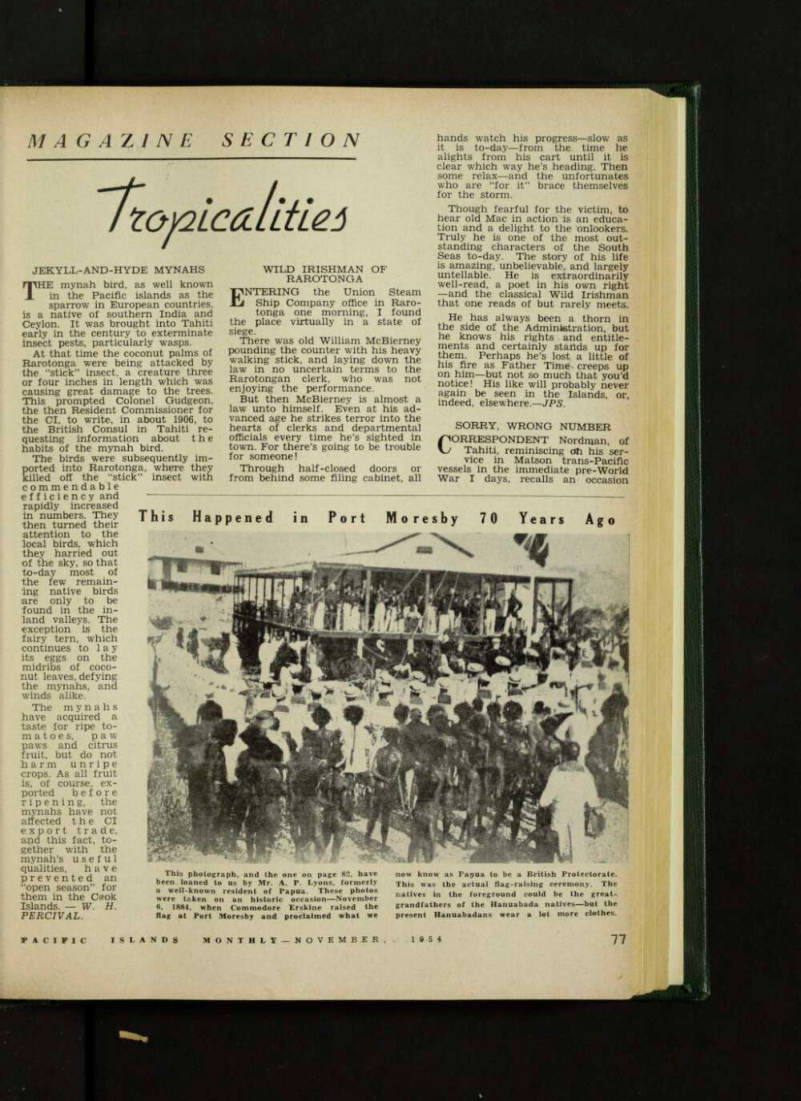 83
83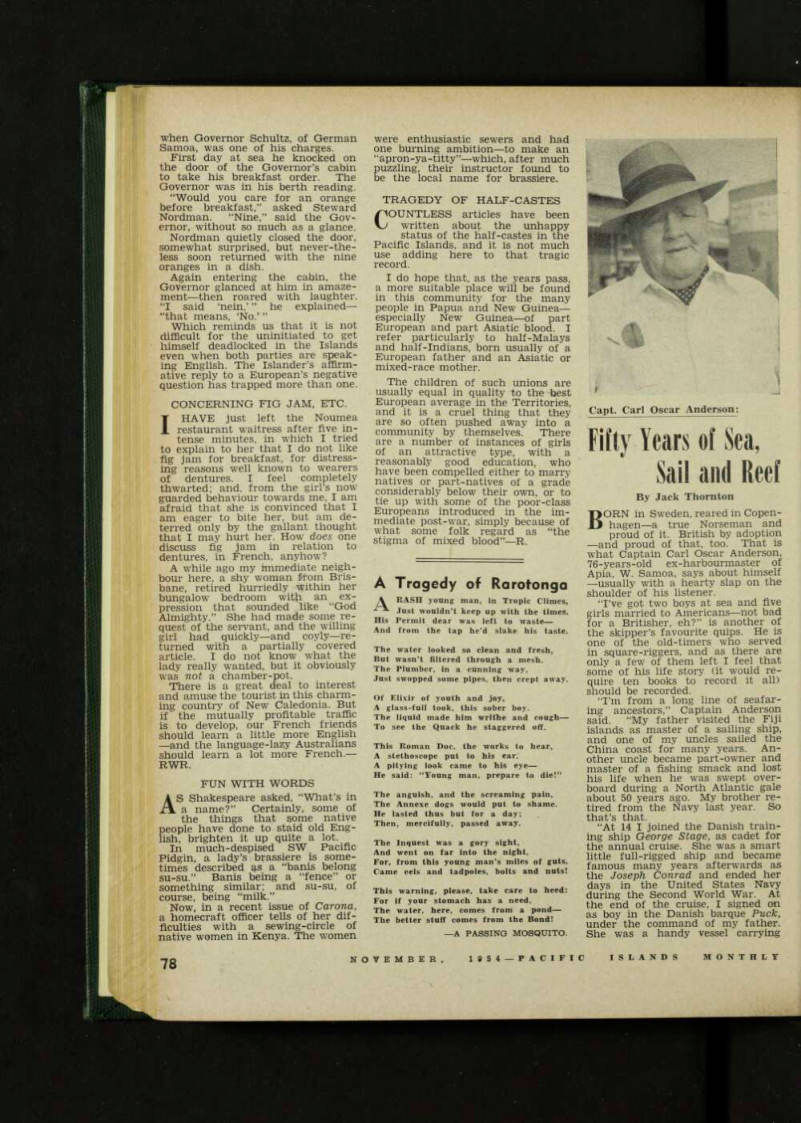 84
84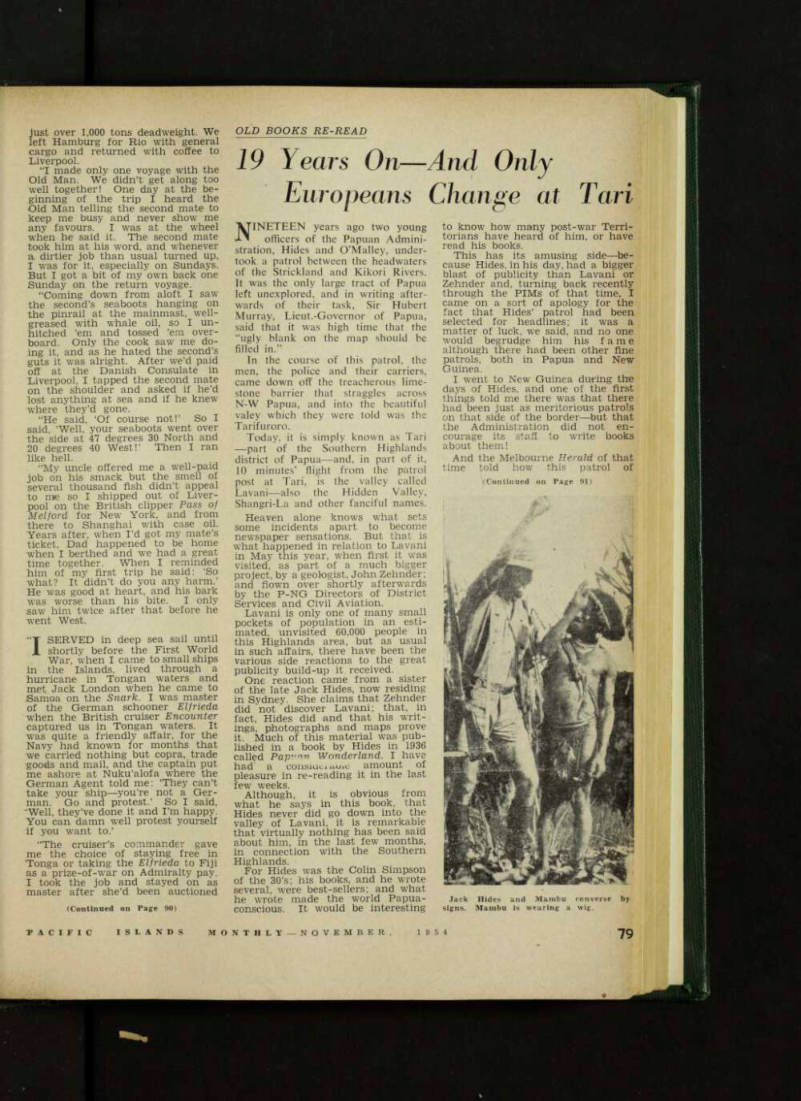 85
85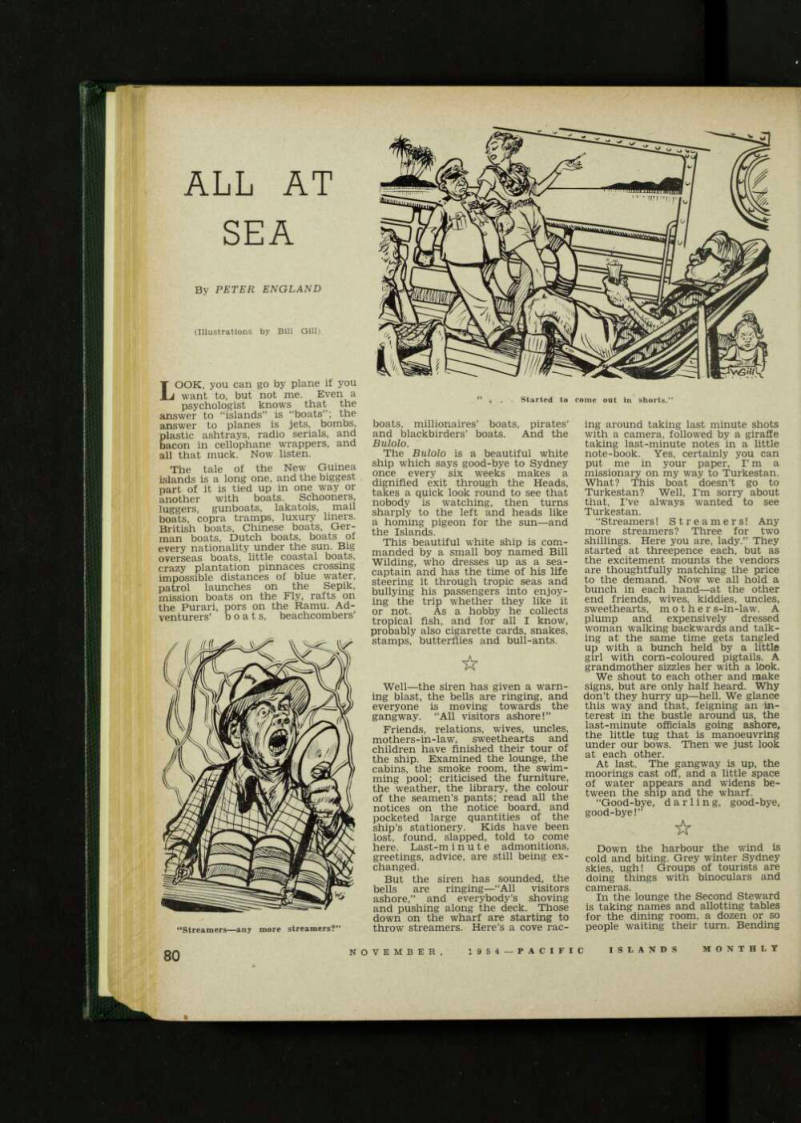 86
86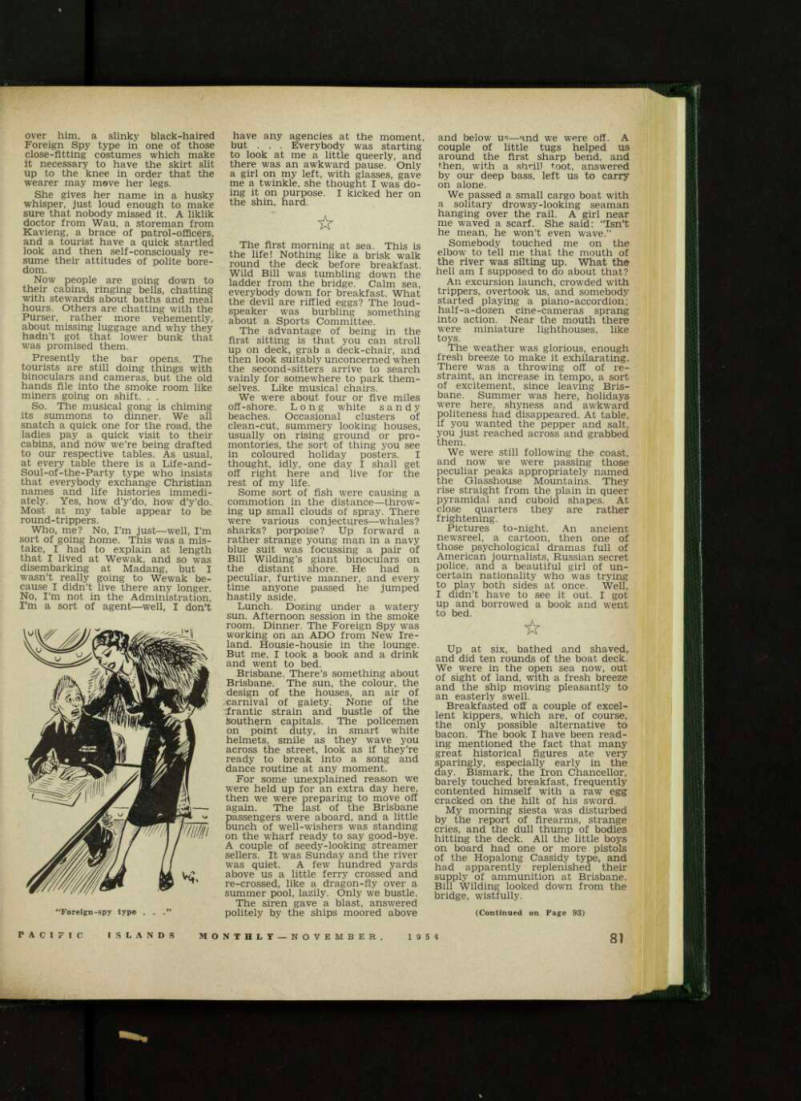 87
87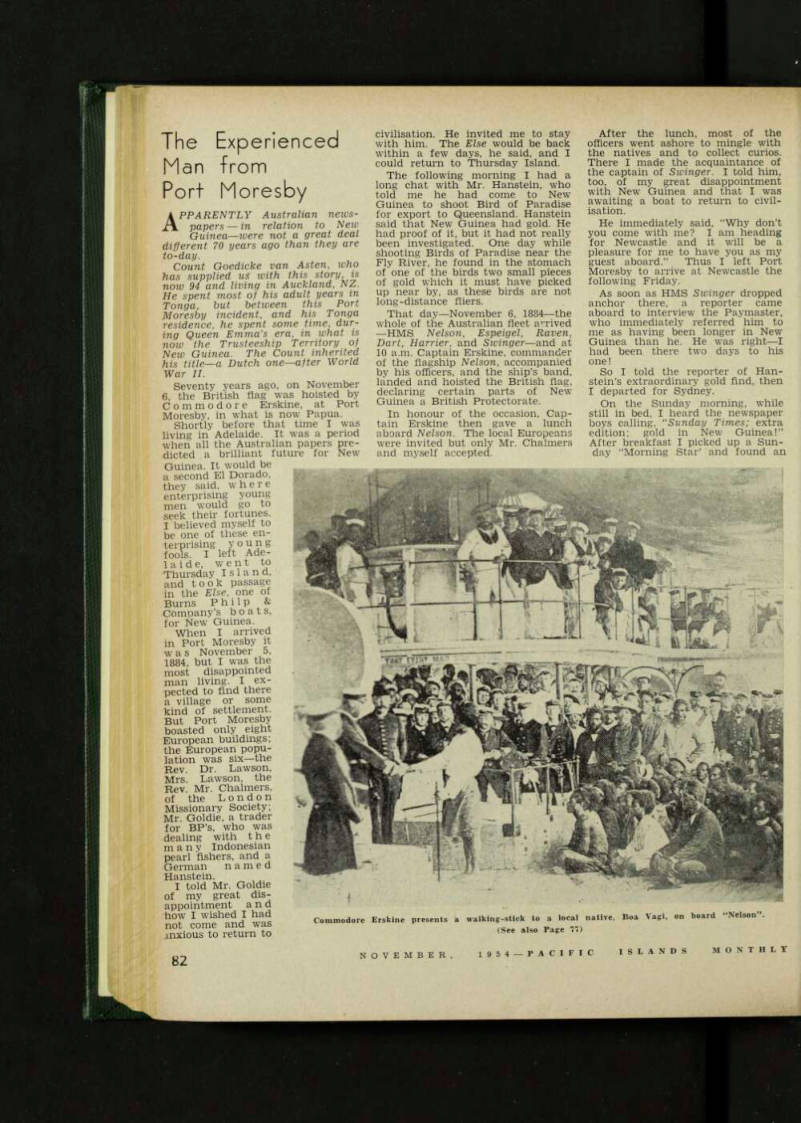 88
88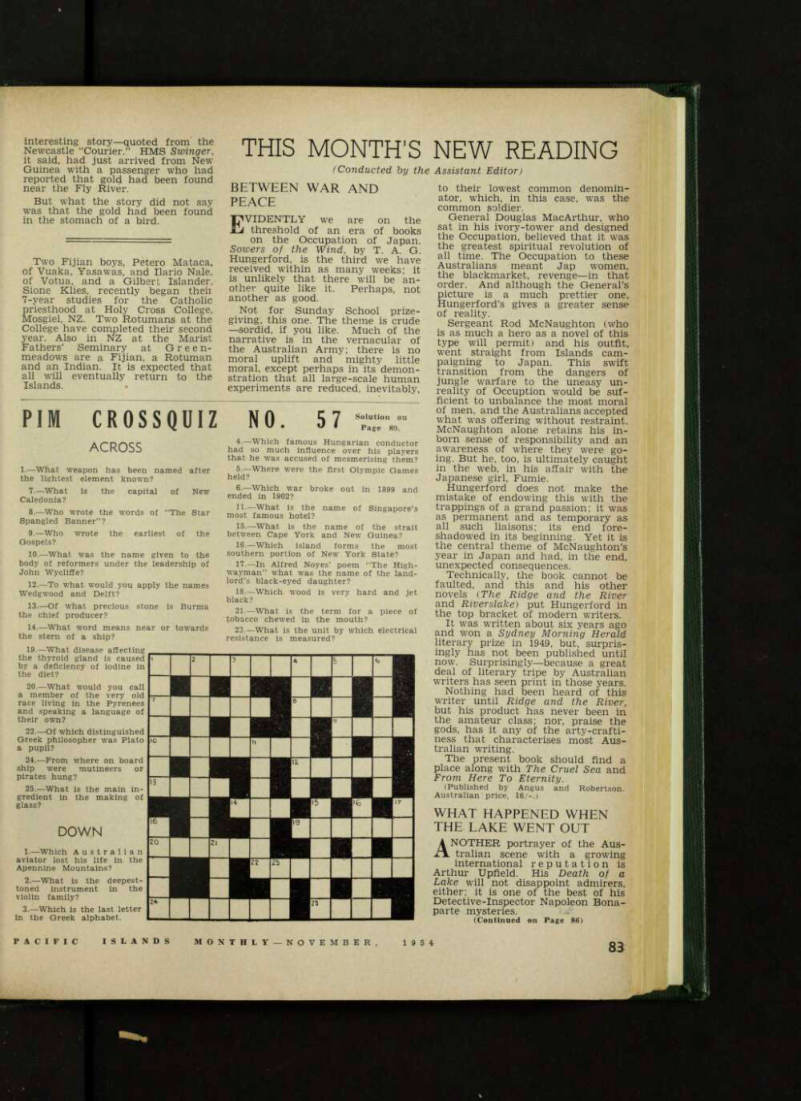 89
89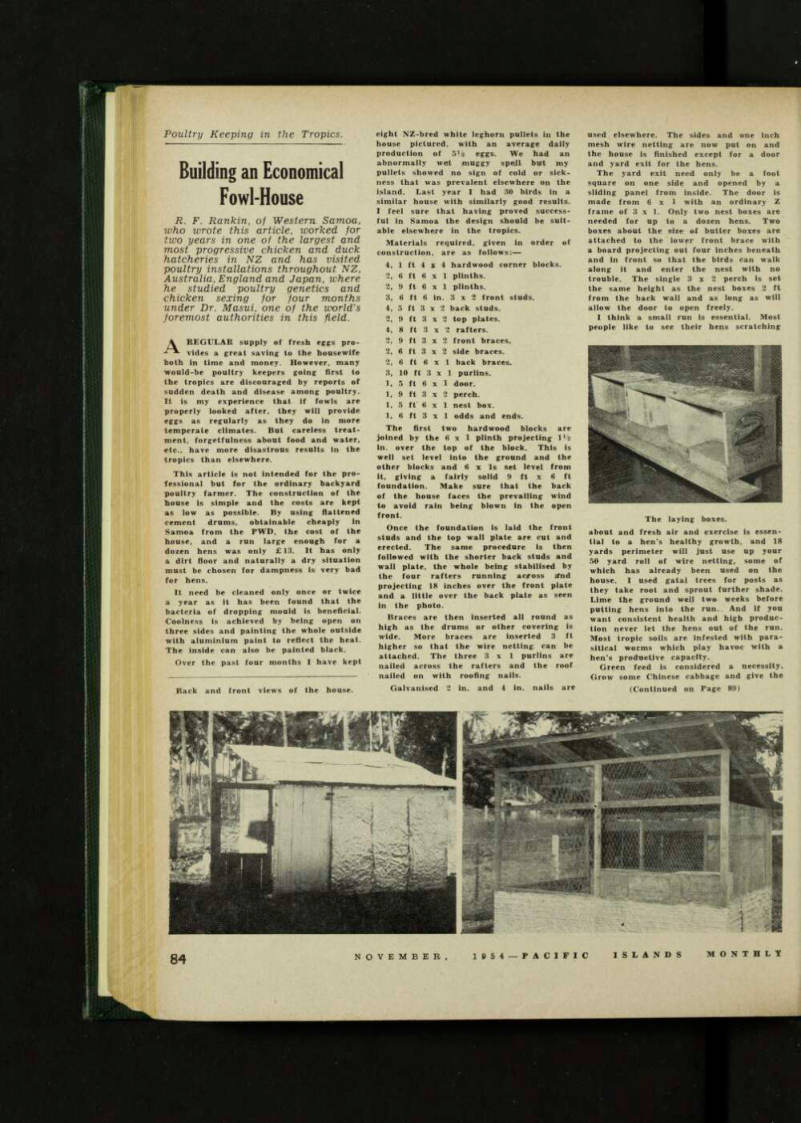 90
90 91
91 92
92 93
93 94
94 95
95 96
96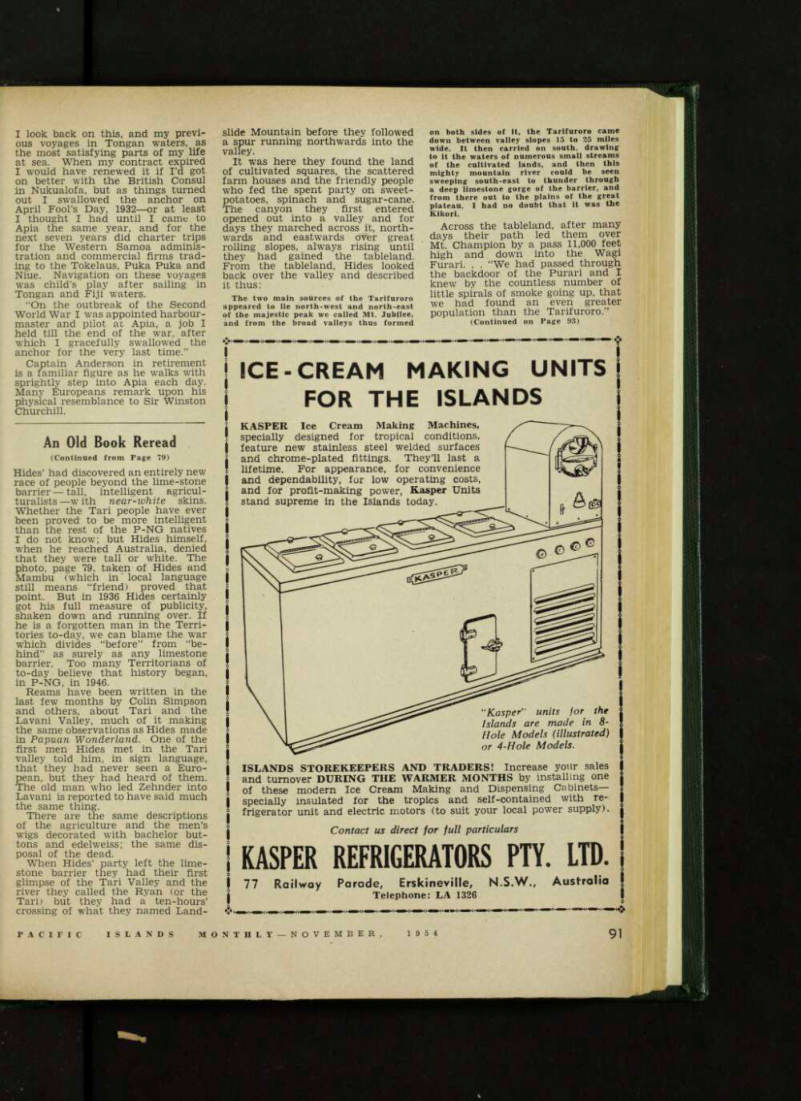 97
97 98
98 99
99 100
100 101
101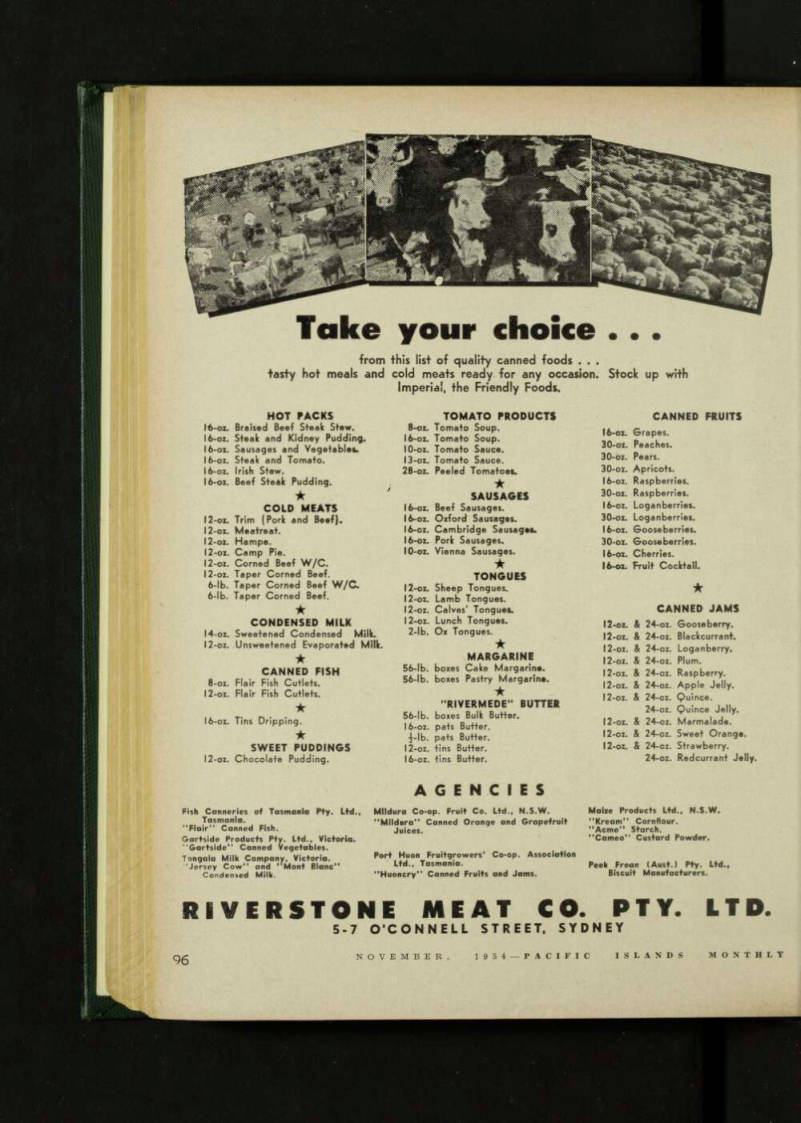 102
102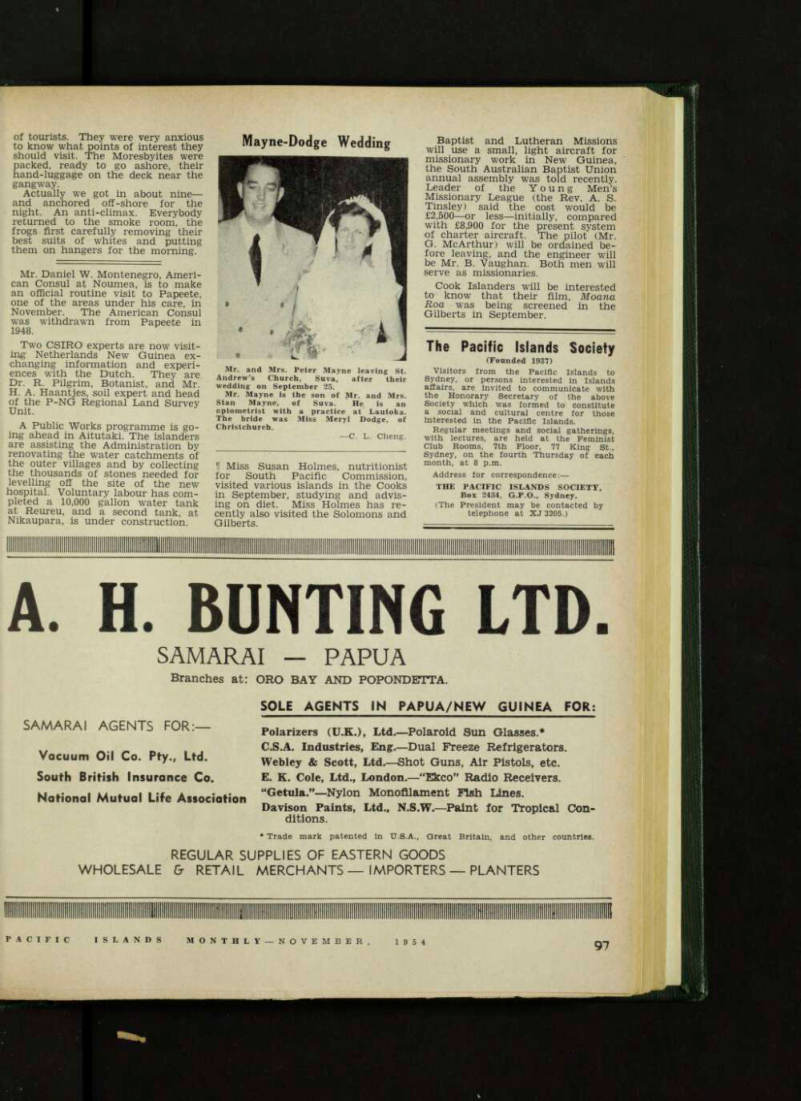 103
103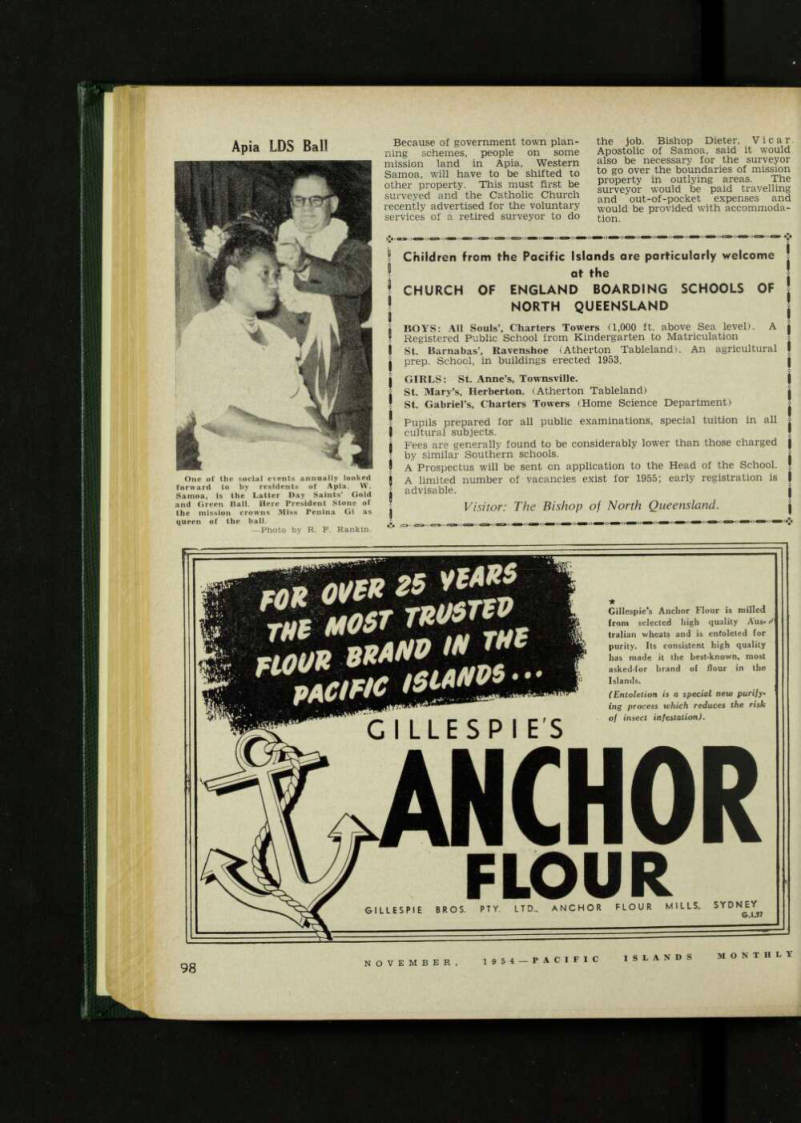 104
104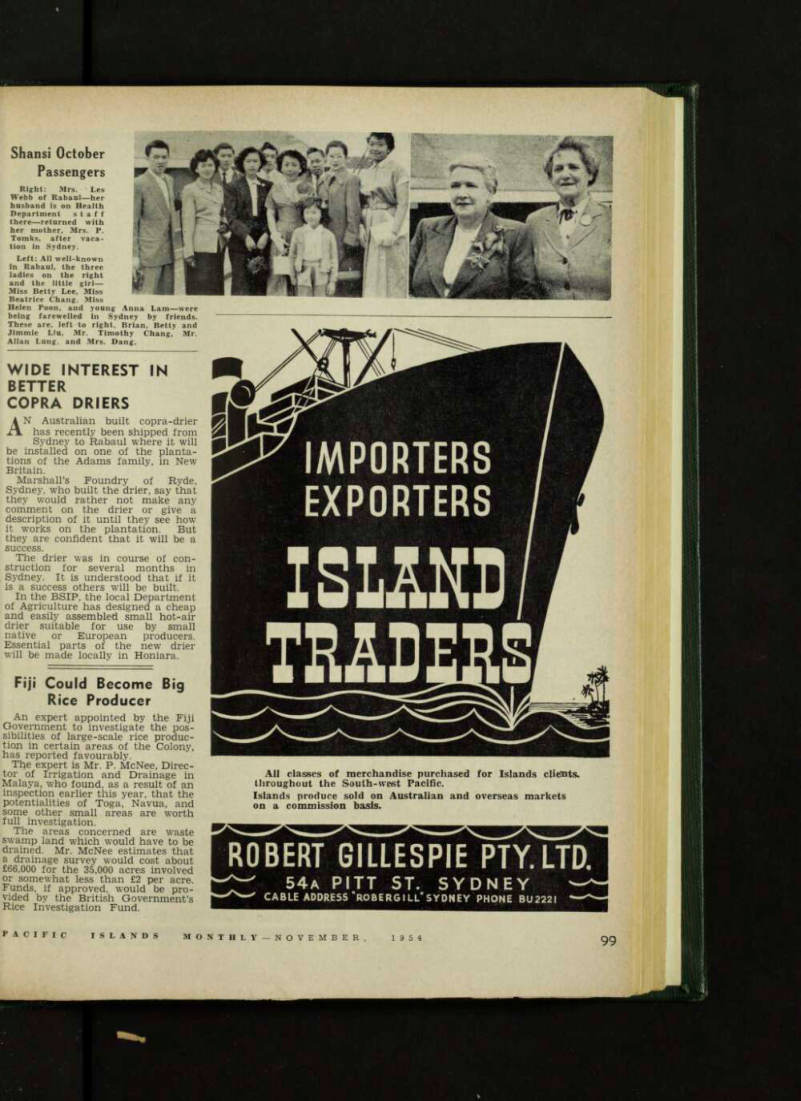 105
105 106
106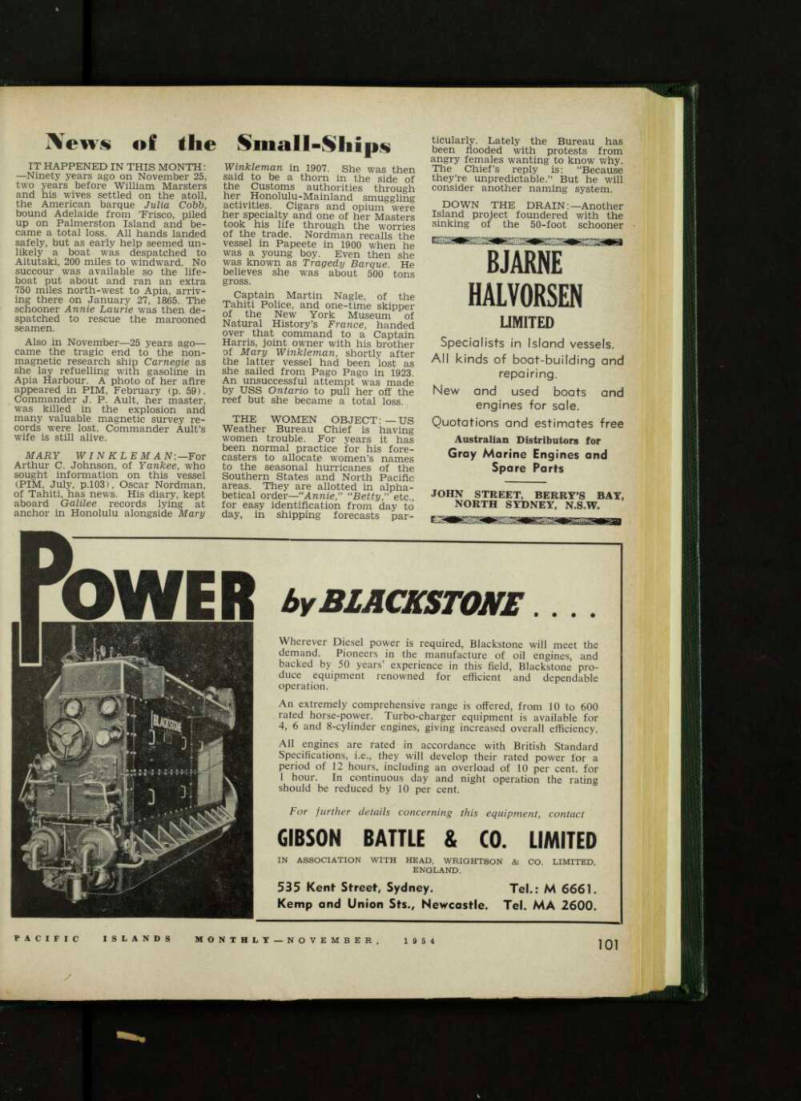 107
107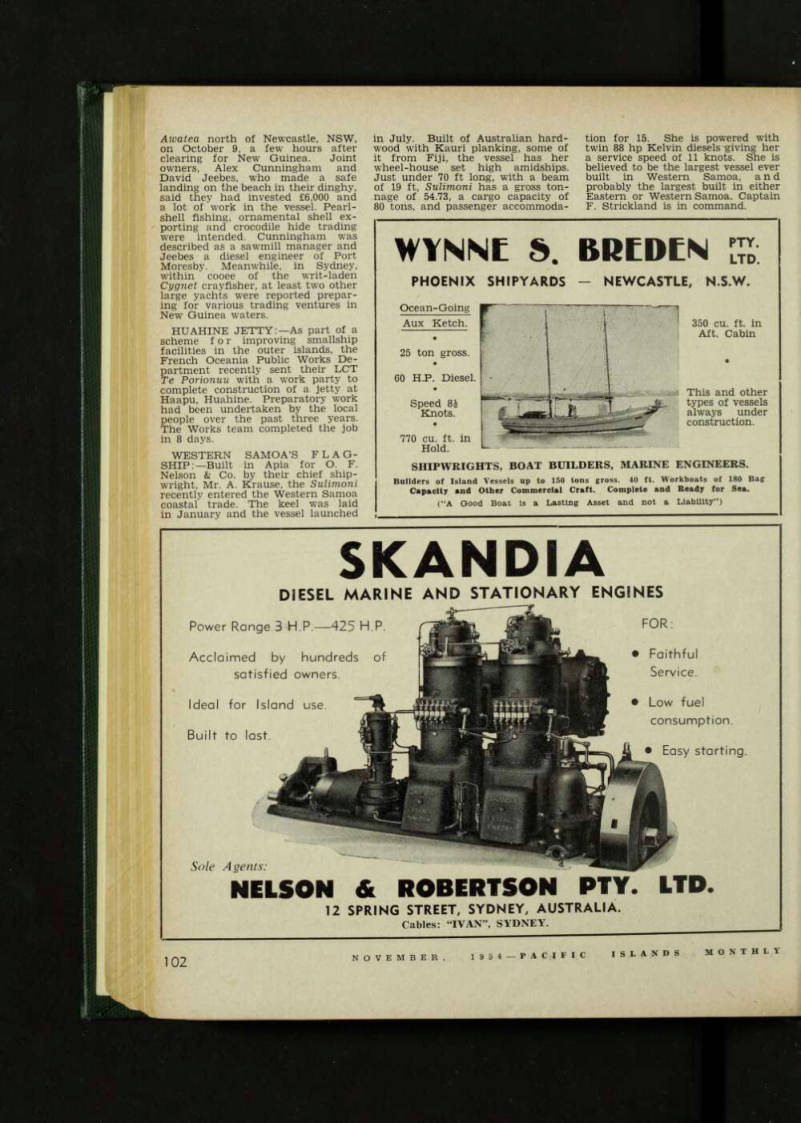 108
108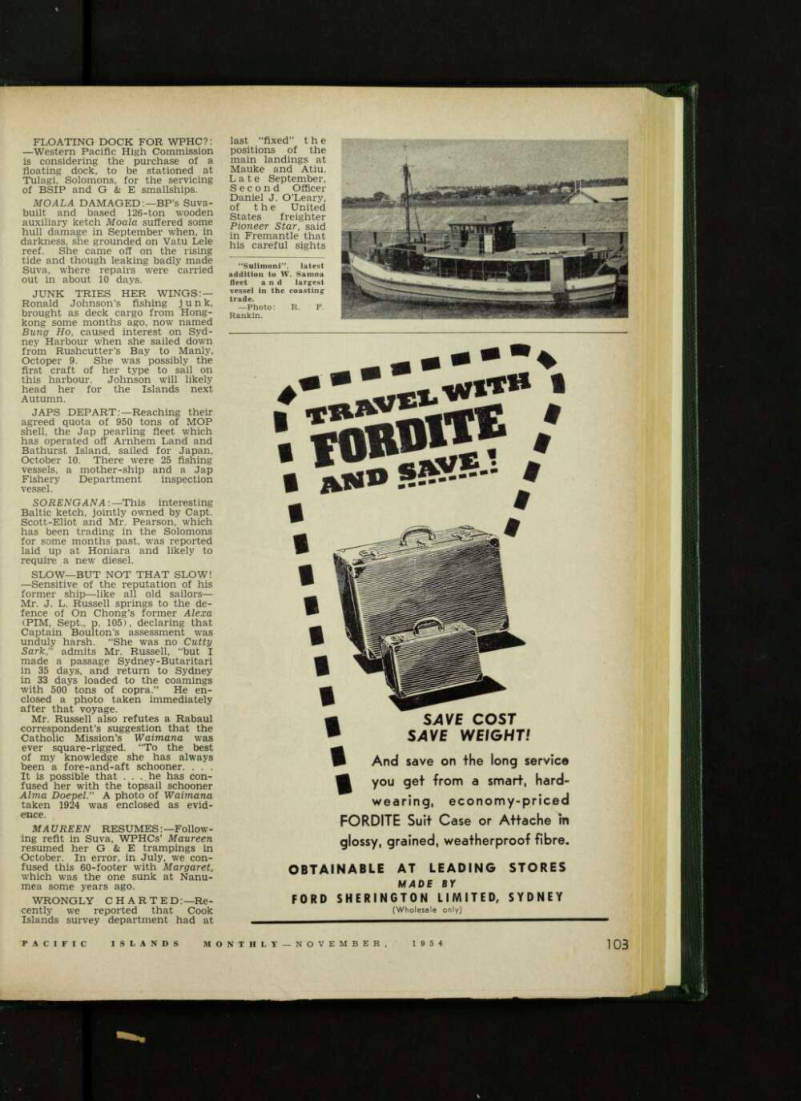 109
109 110
110 111
111 112
112 113
113 114
114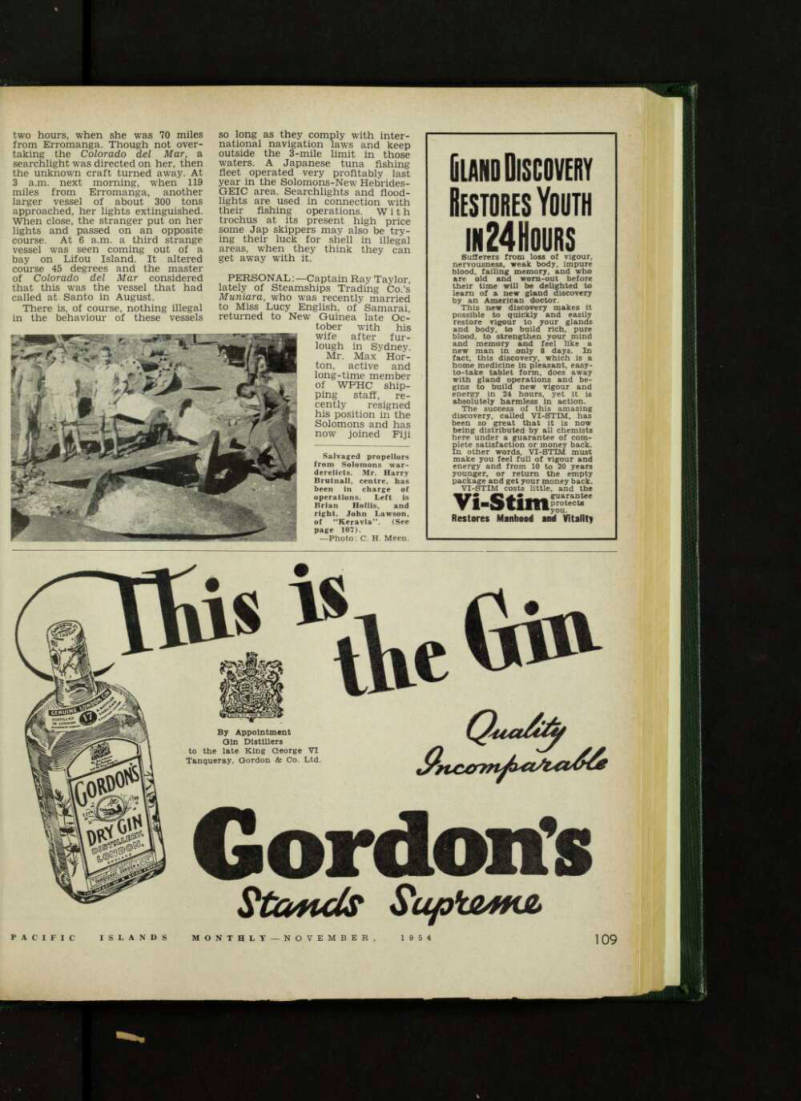 115
115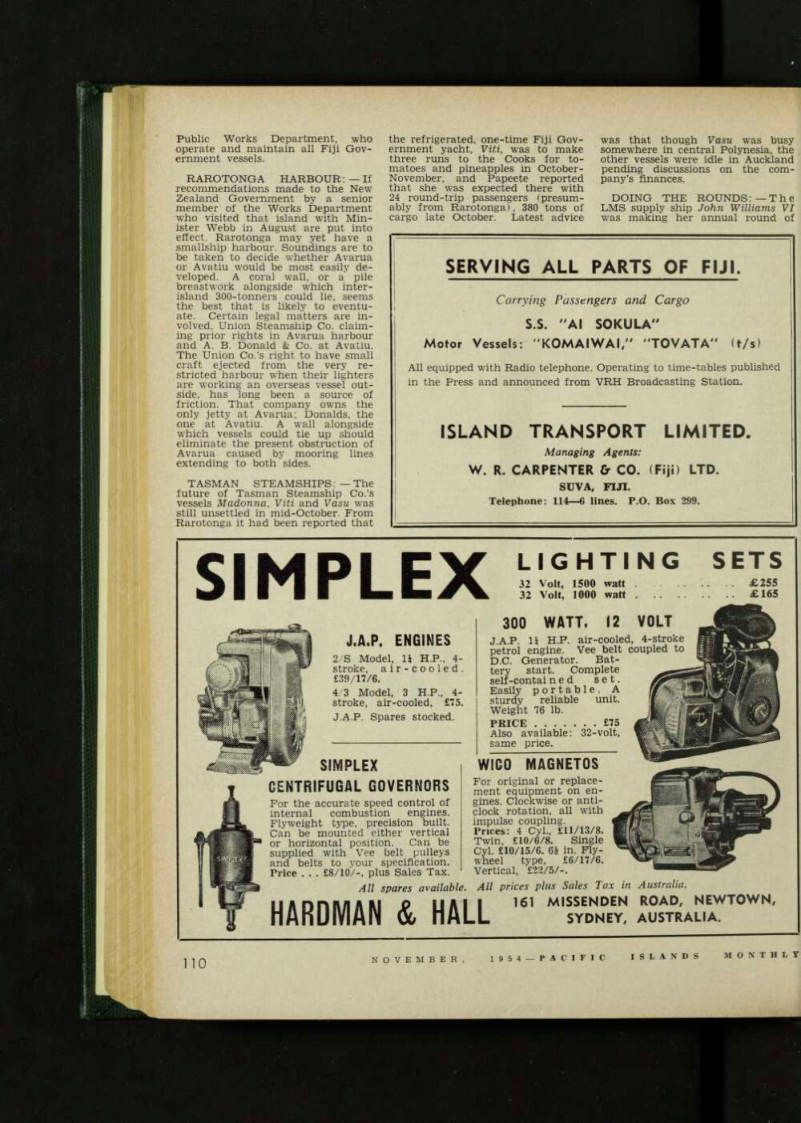 116
116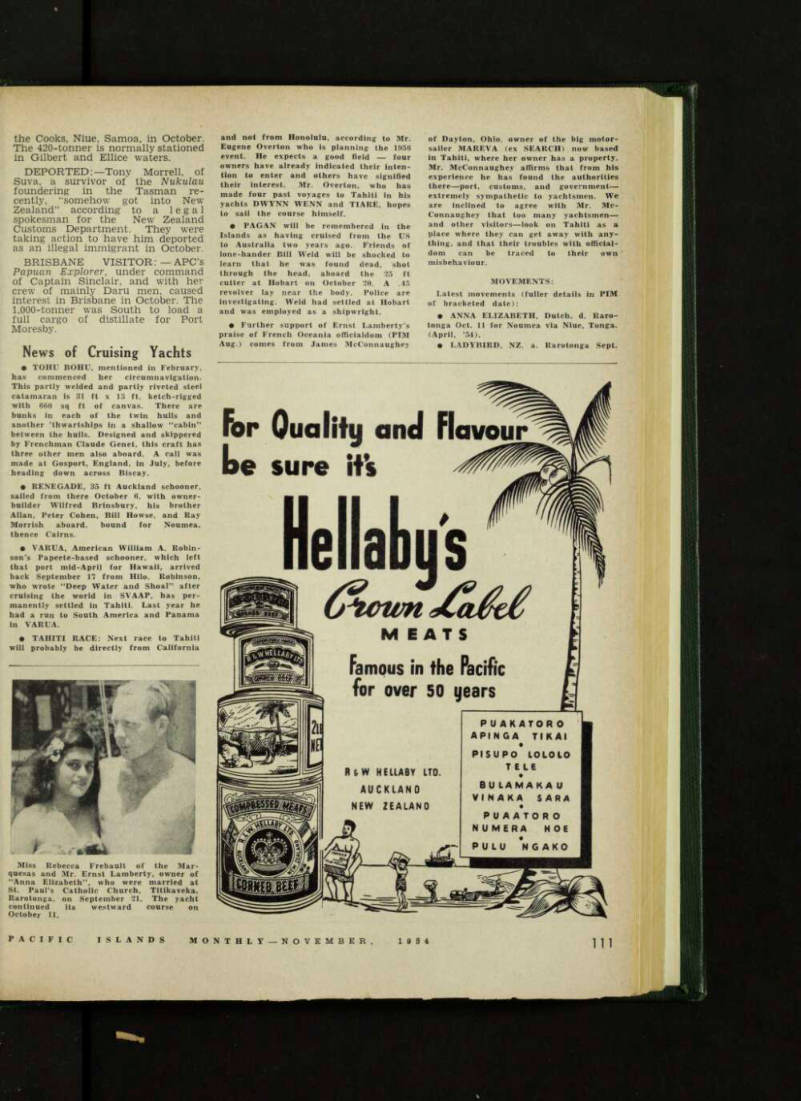 117
117 118
118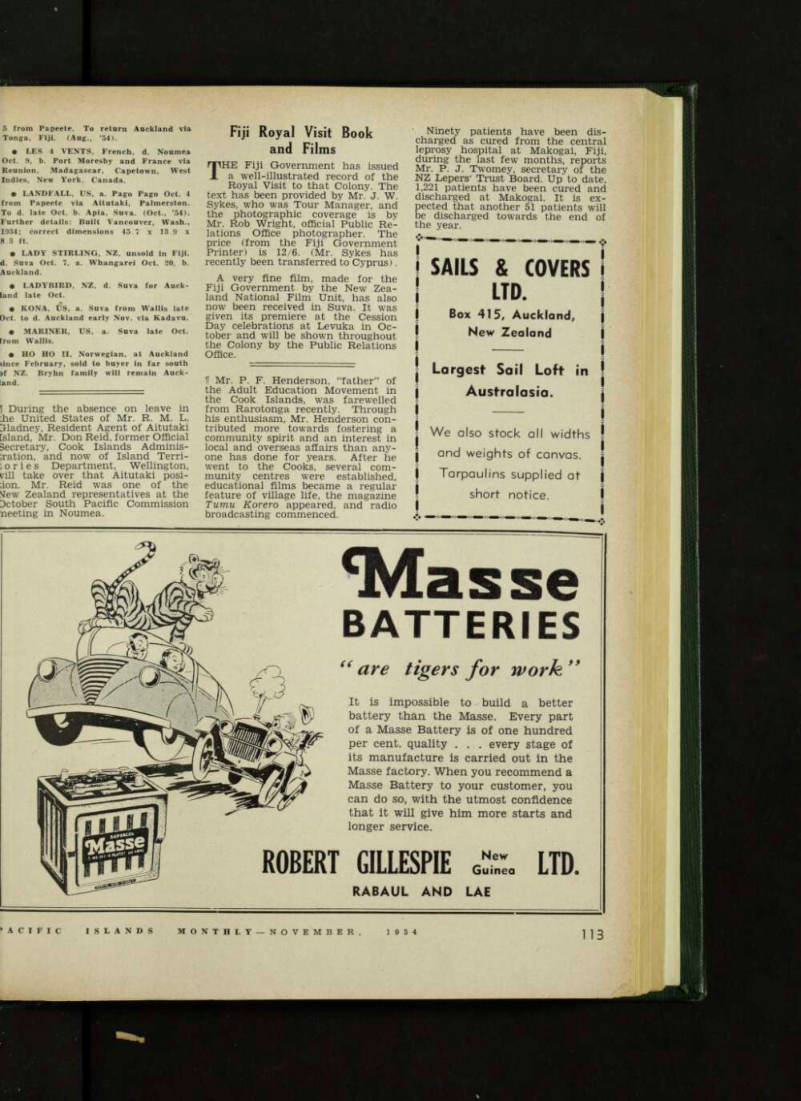 119
119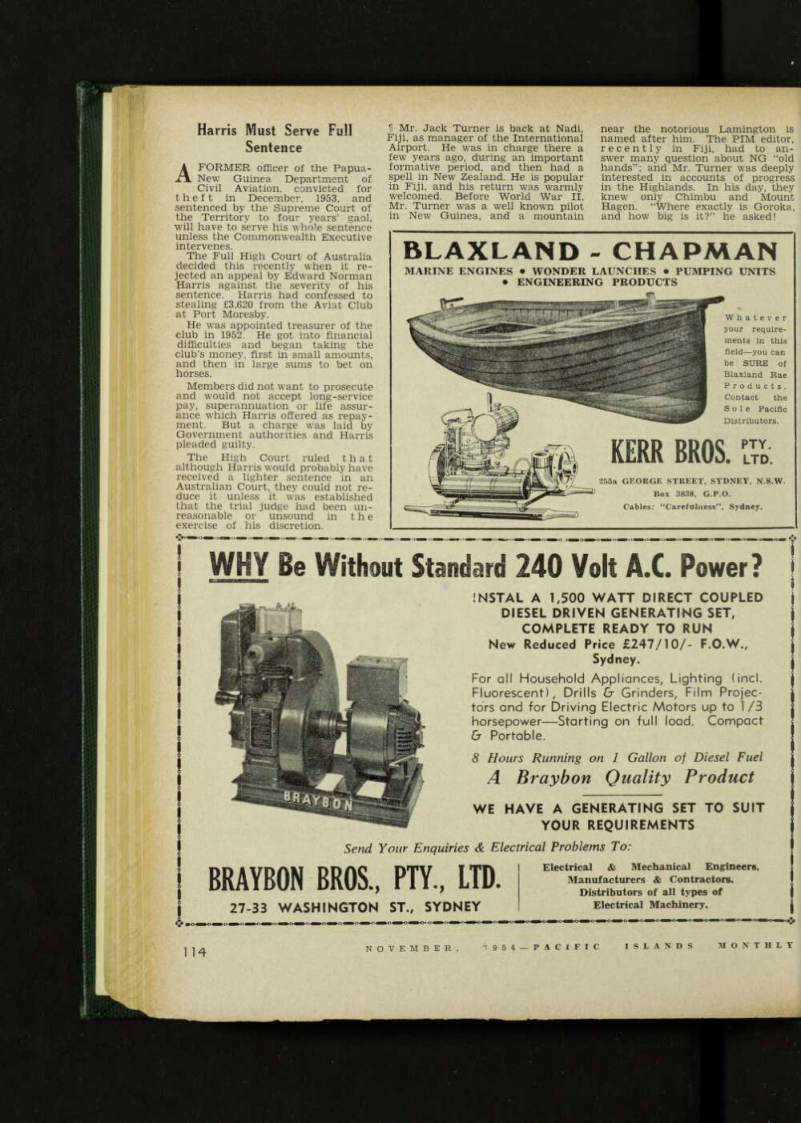 120
120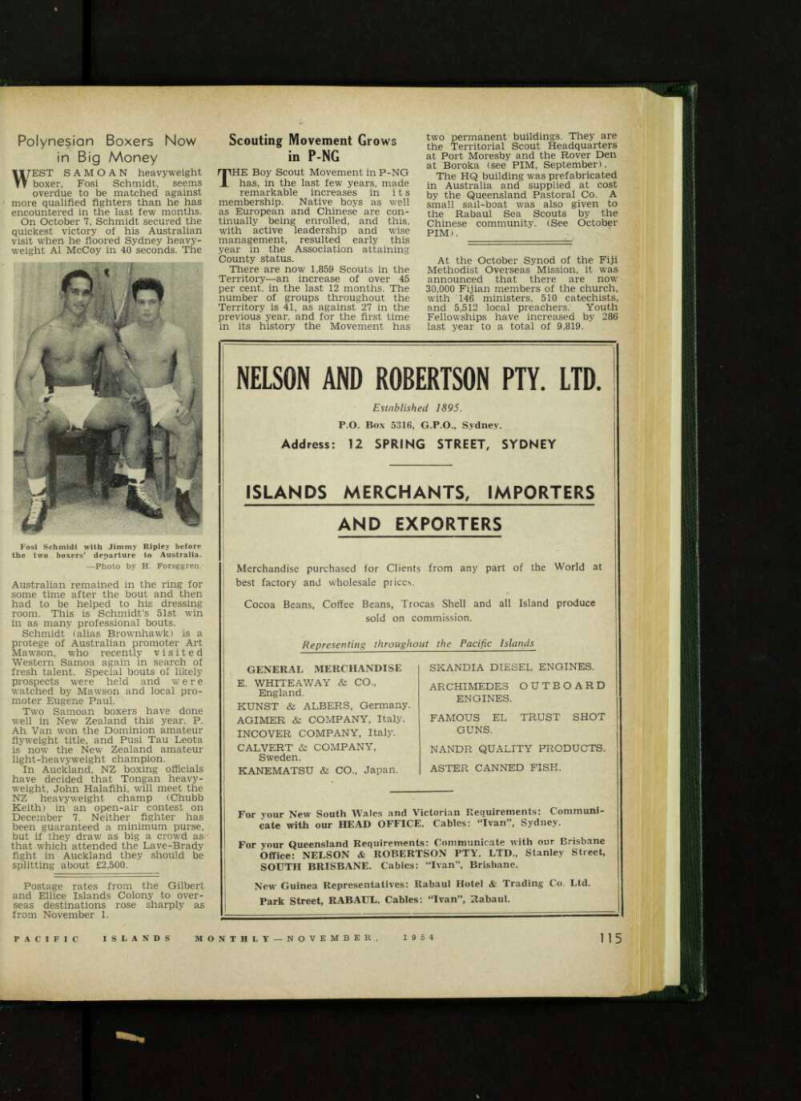 121
121 122
122 123
123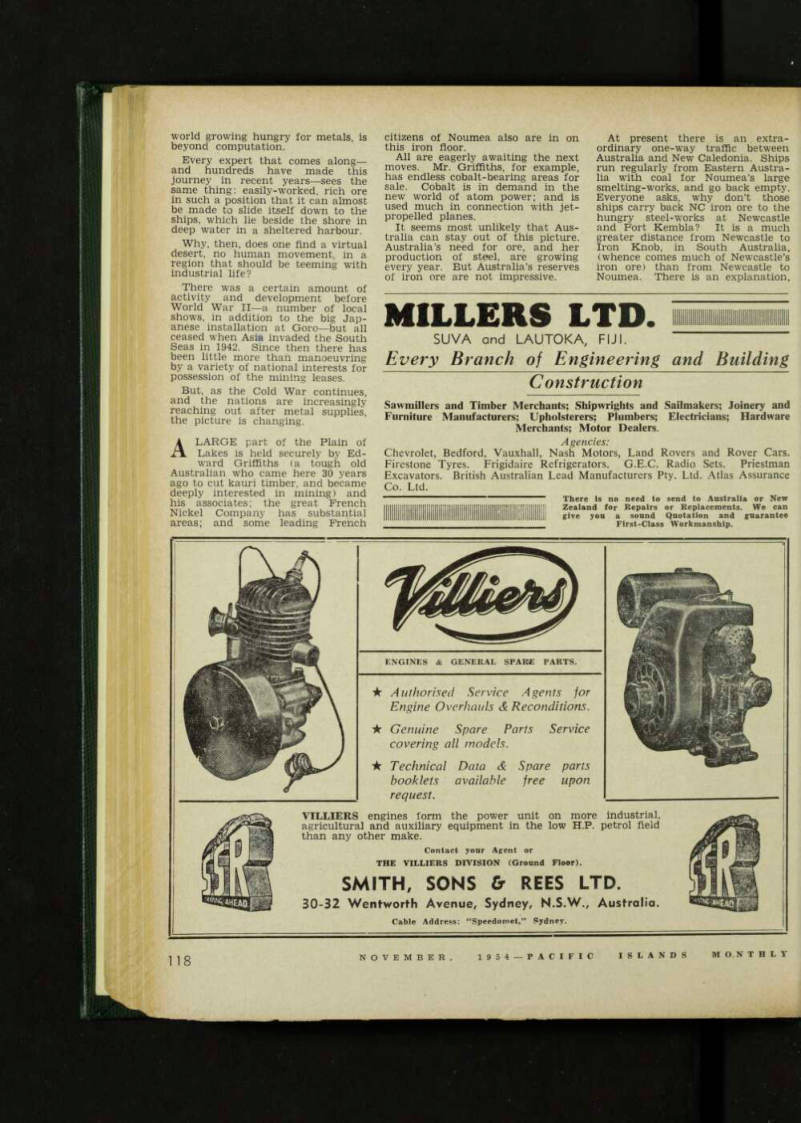 124
124 125
125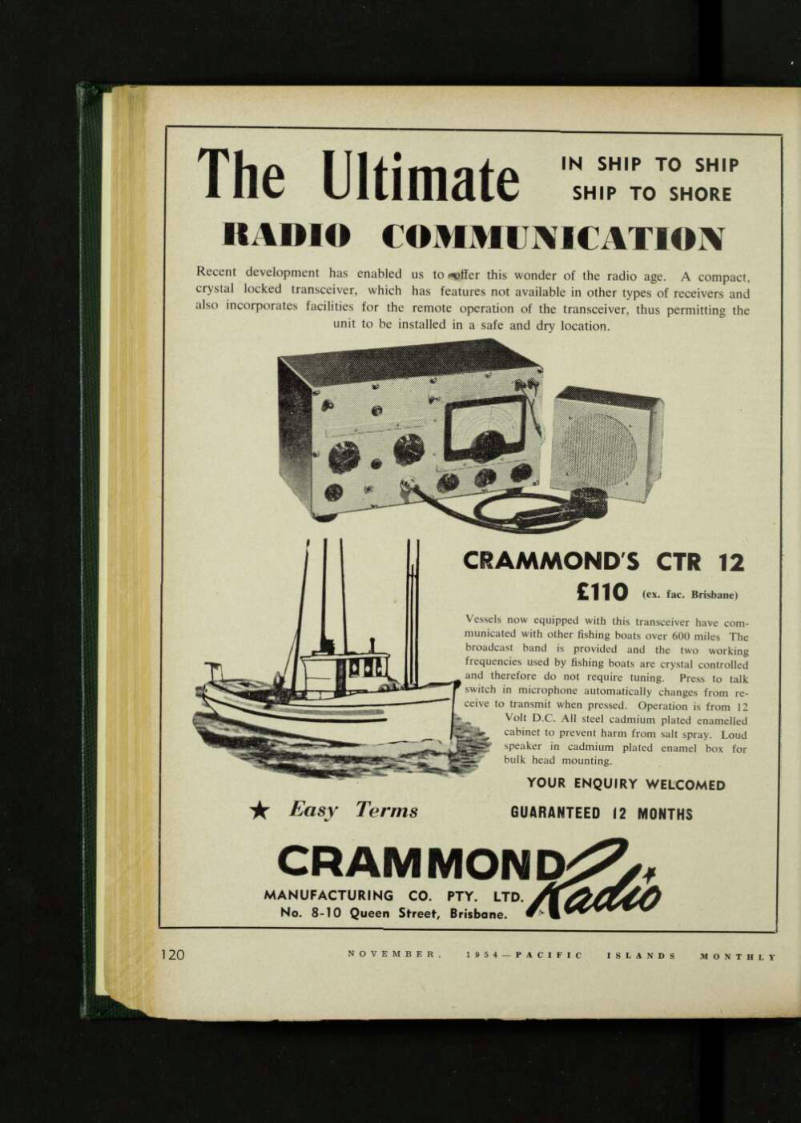 126
126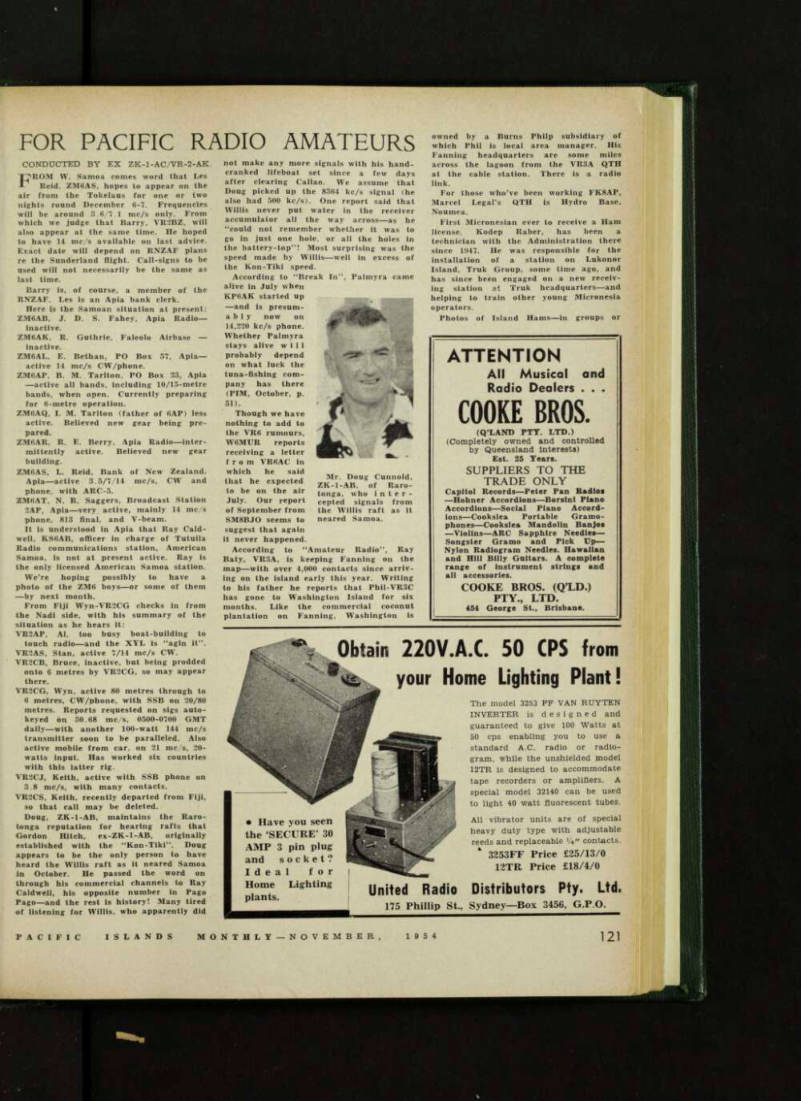 127
127 128
128 129
129 130
130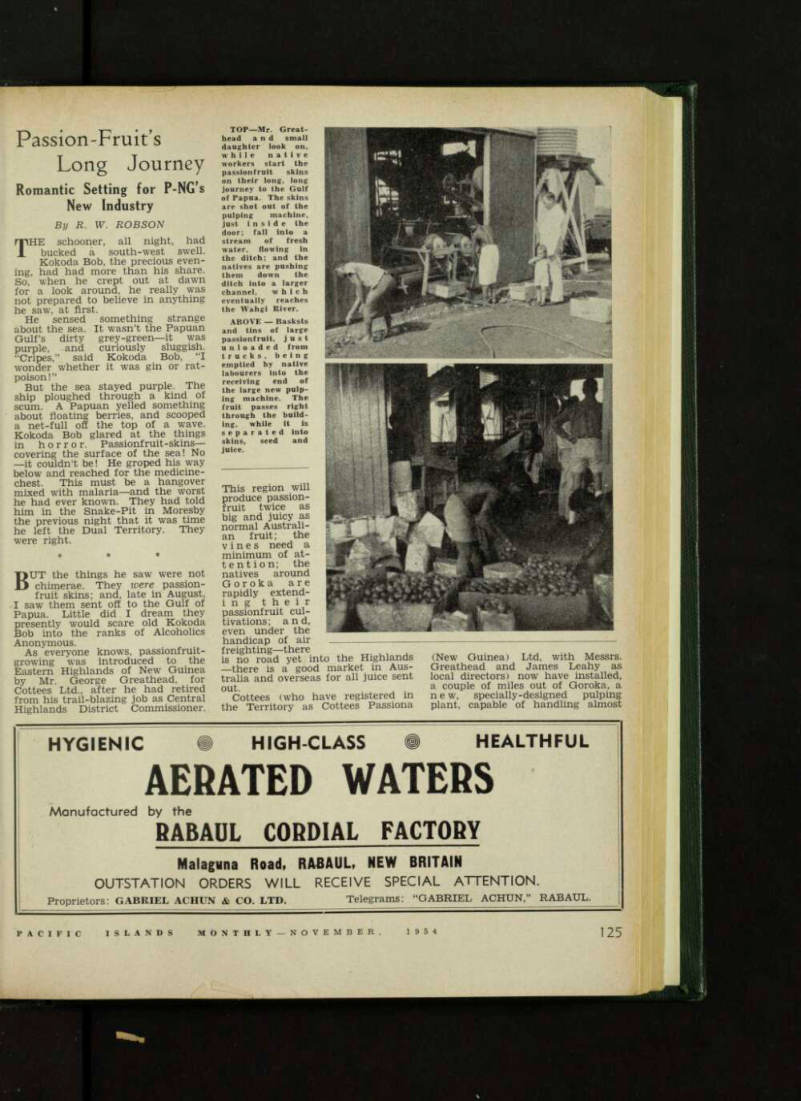 131
131 132
132 133
133 134
134 135
135 136
136 137
137 138
138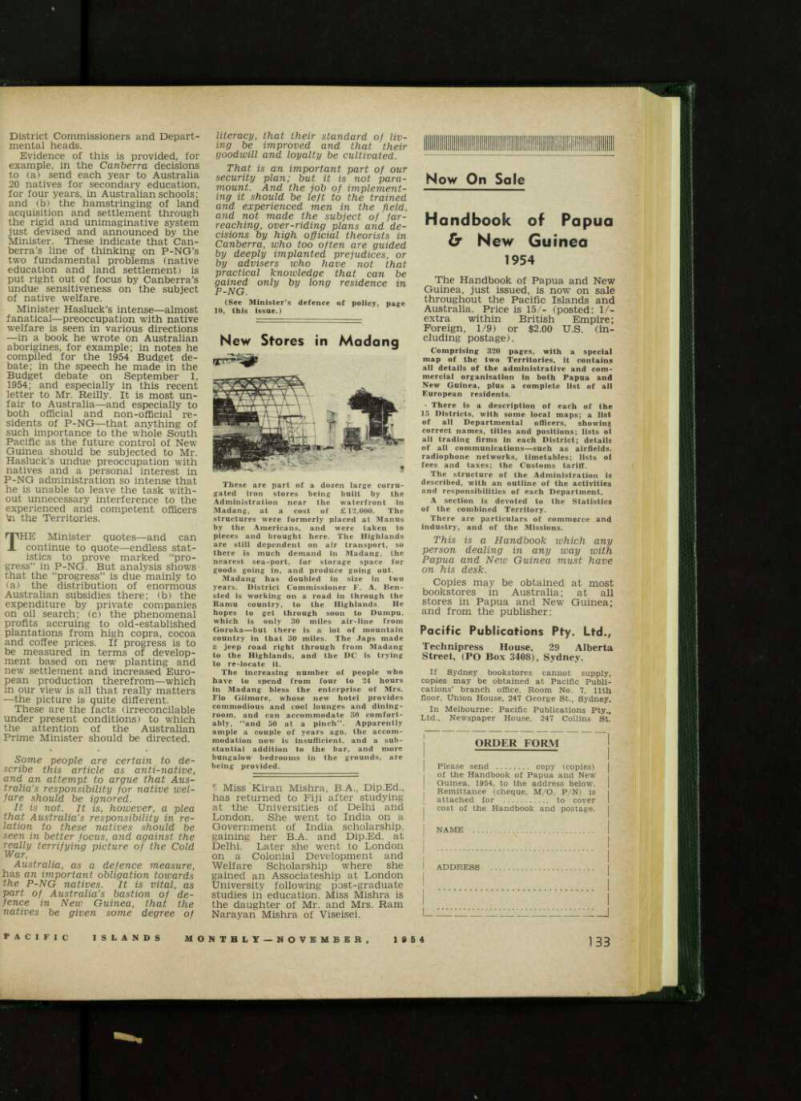 139
139 140
140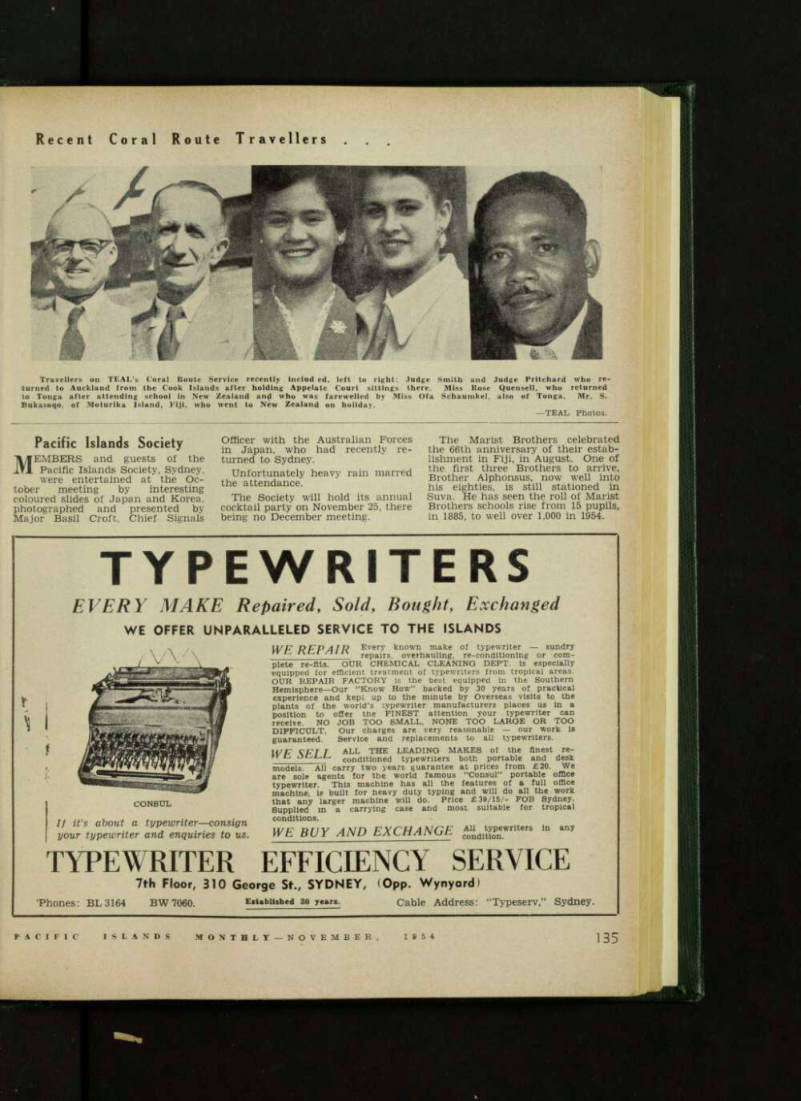 141
141 142
142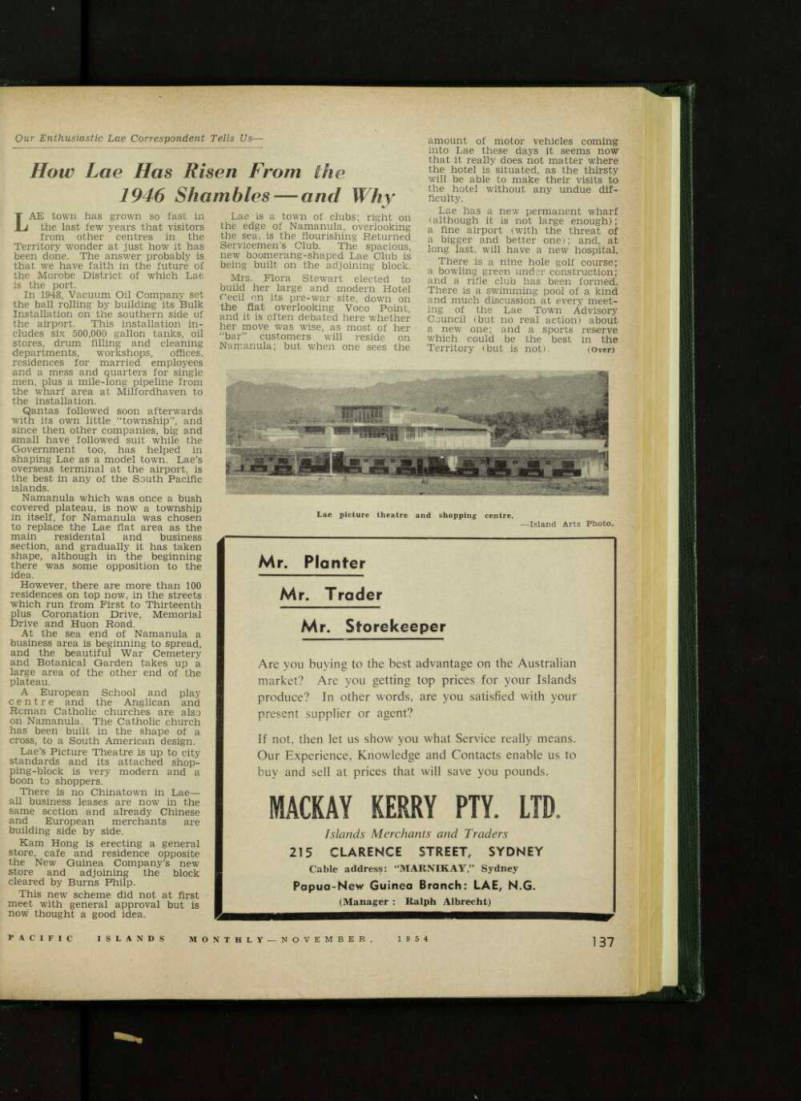 143
143 144
144 145
145 146
146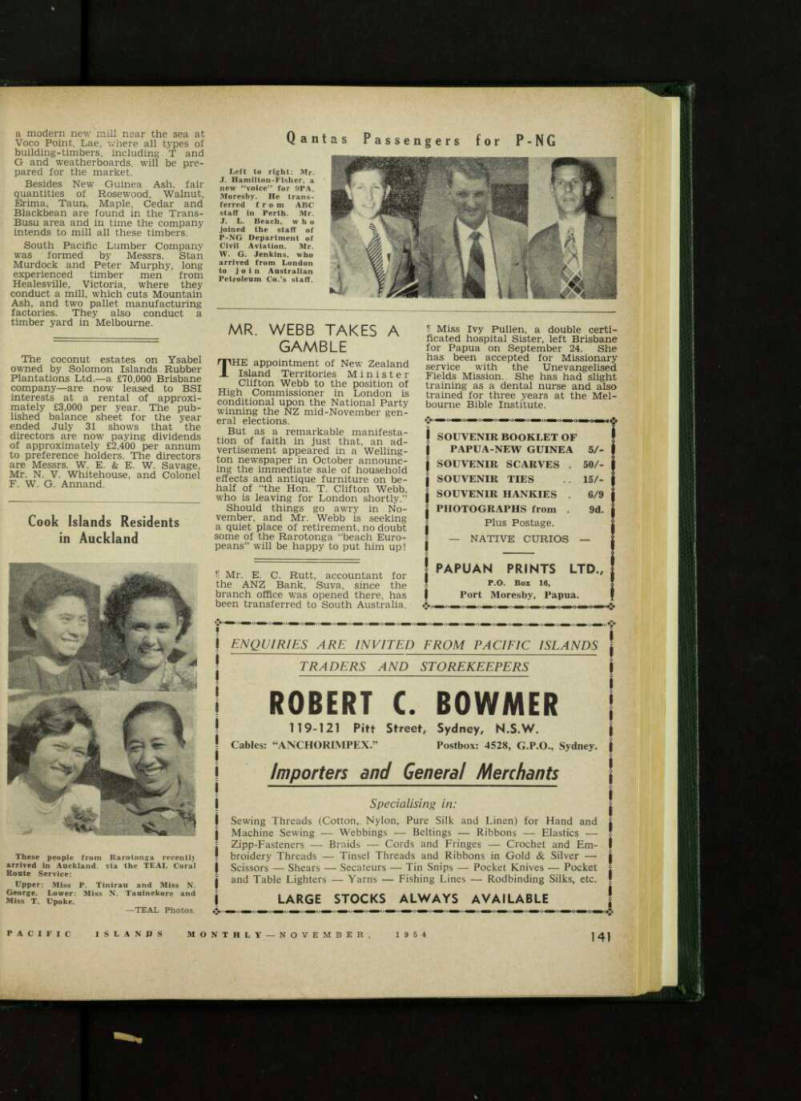 147
147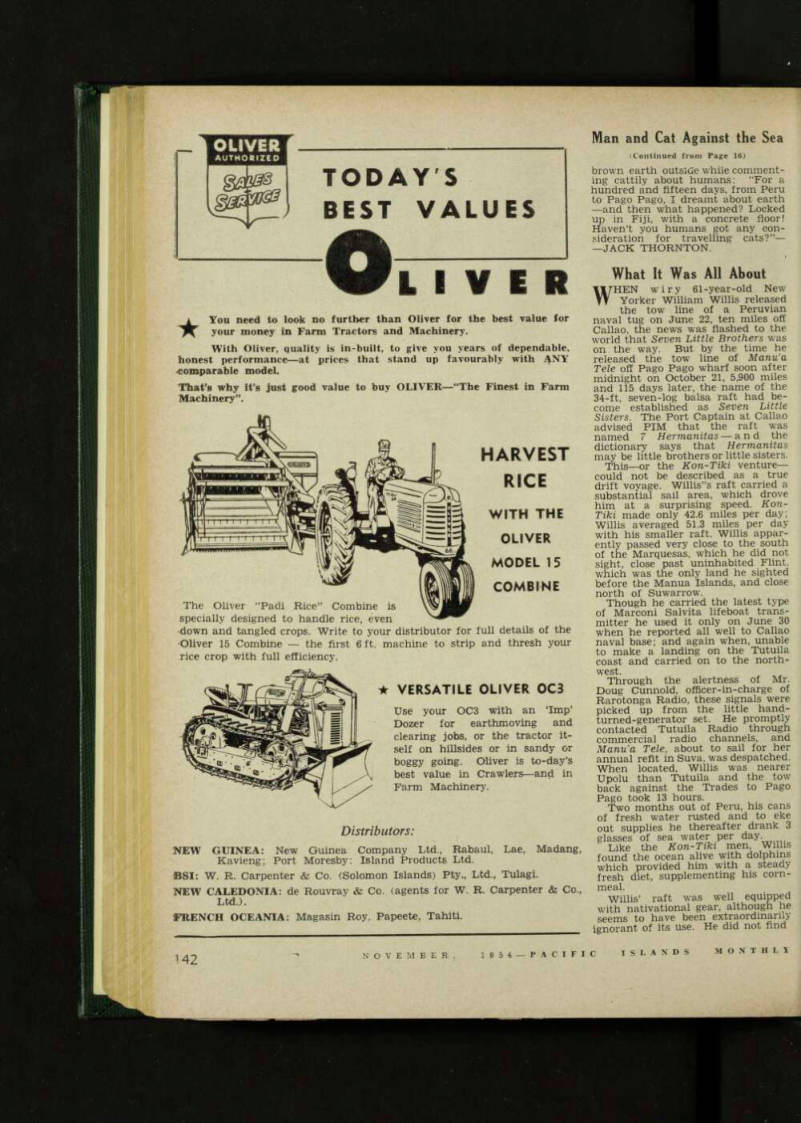 148
148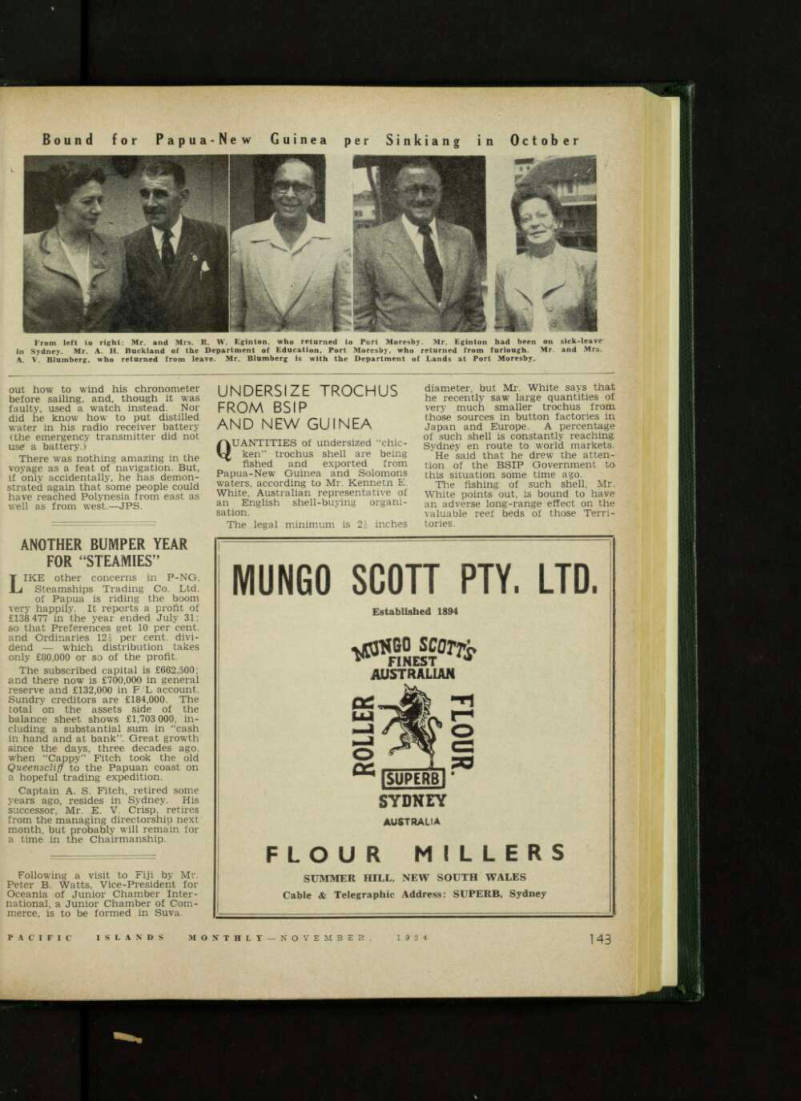 149
149 150
150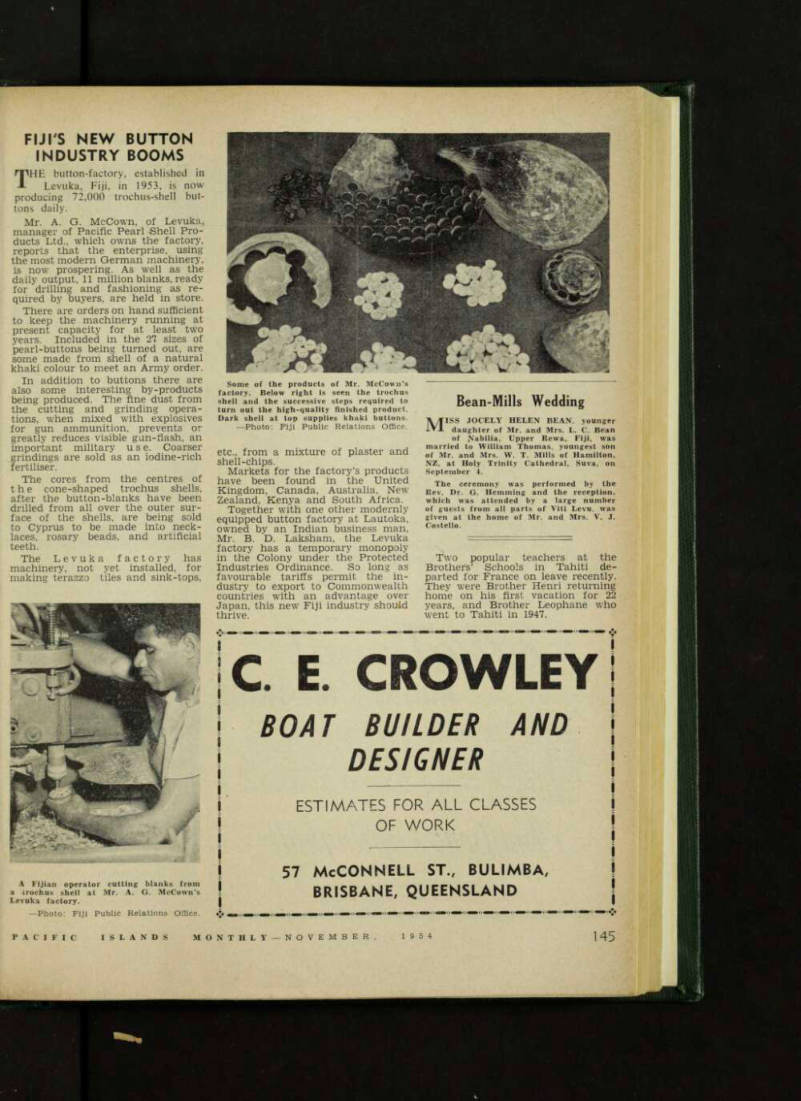 151
151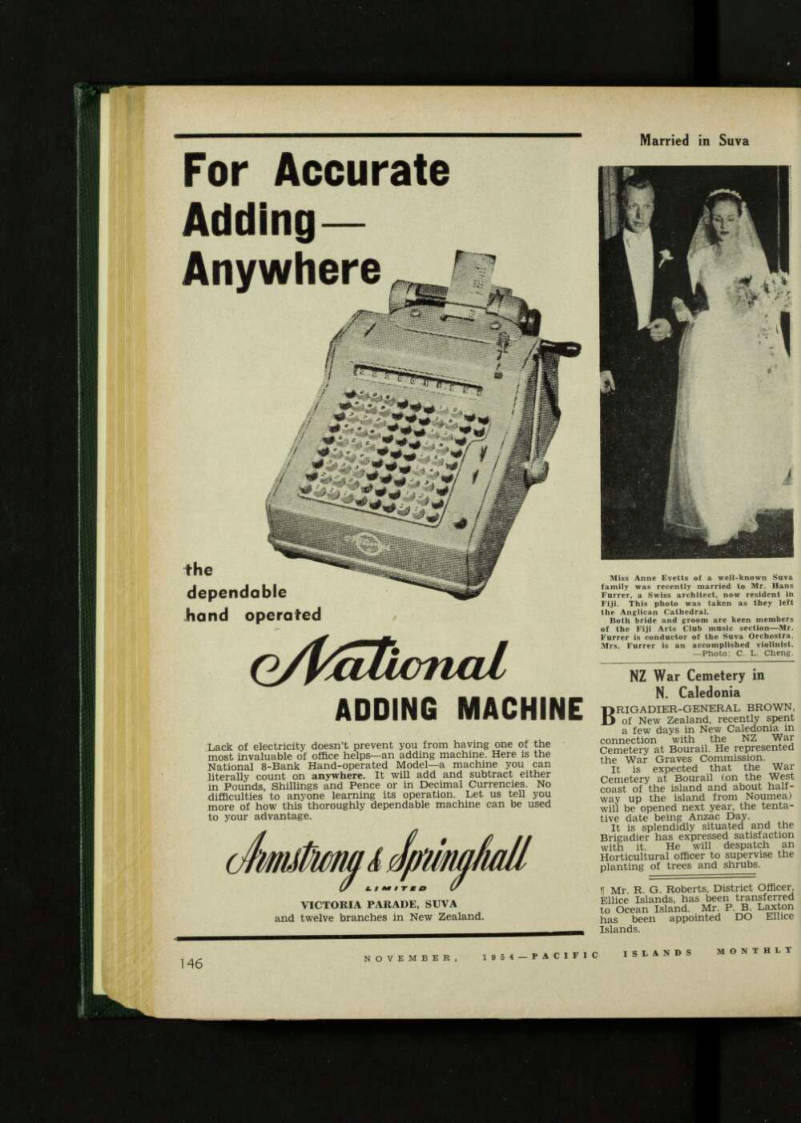 152
152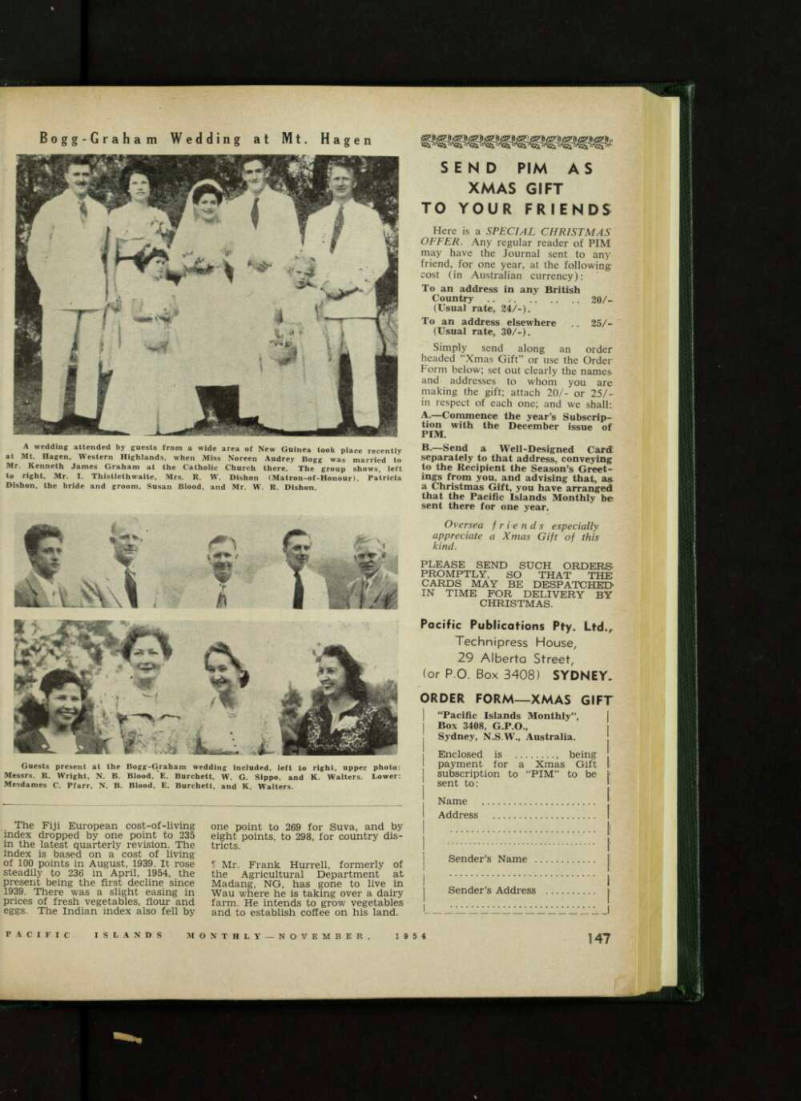 153
153 154
154 155
155 156
156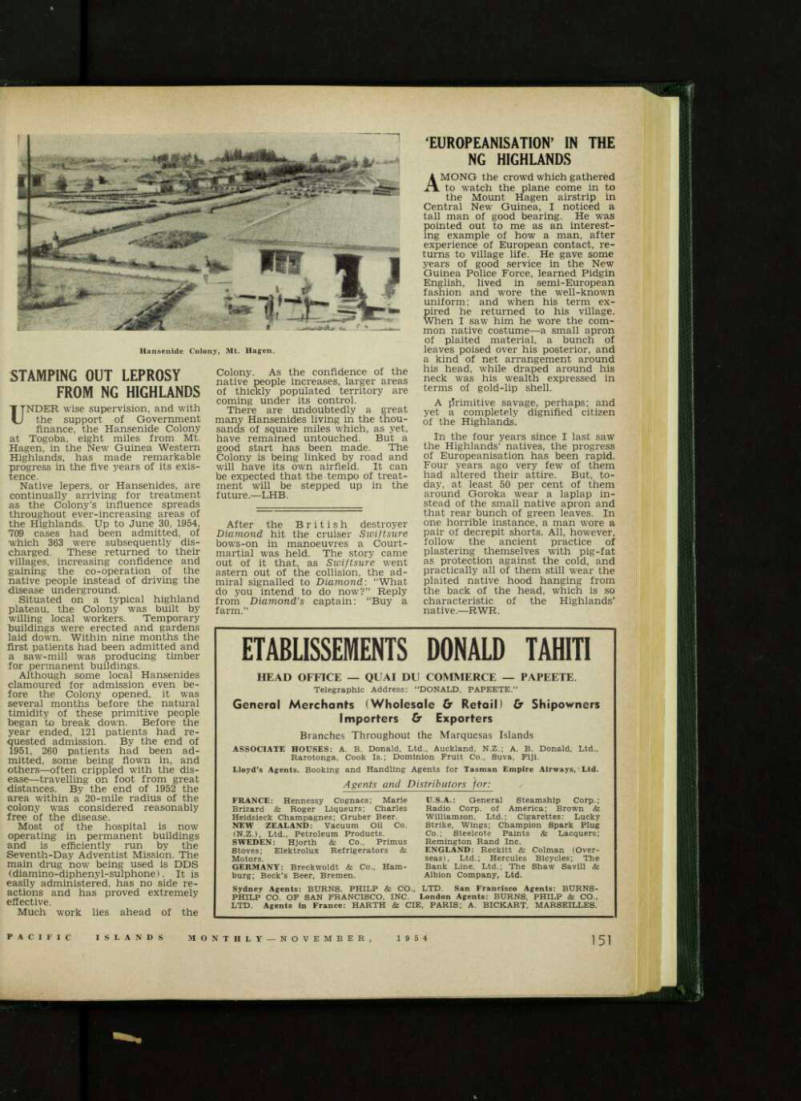 157
157 158
158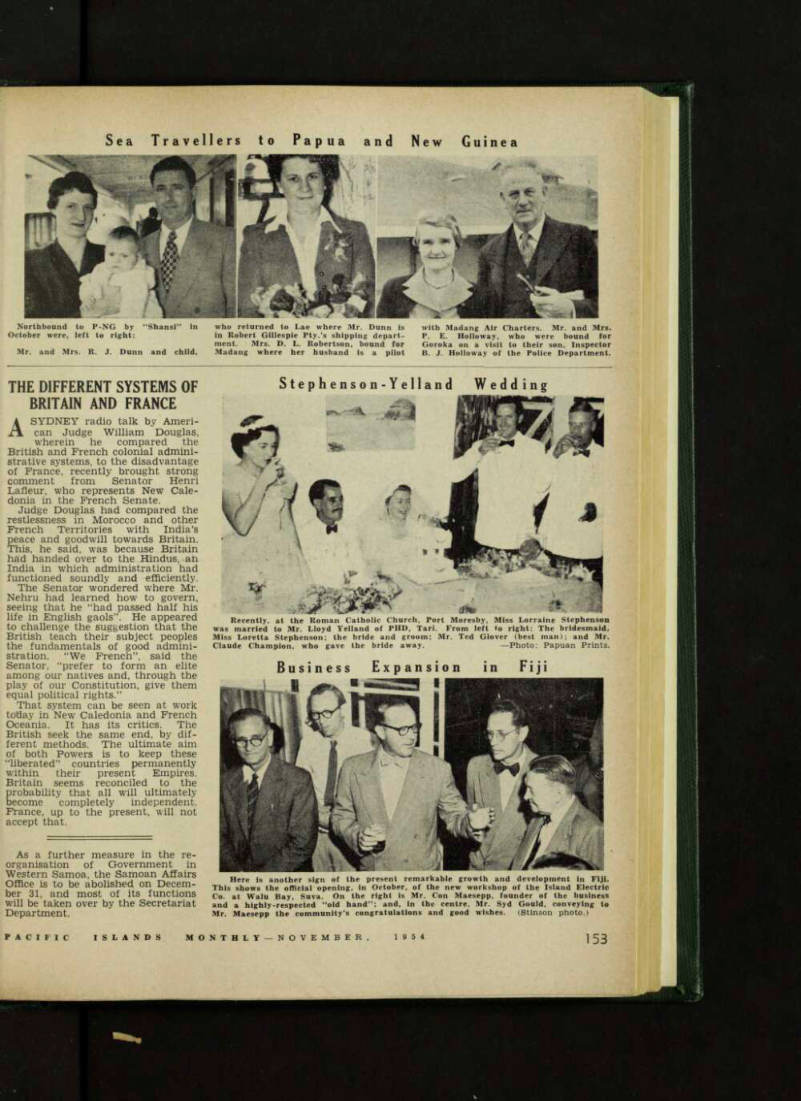 159
159 160
160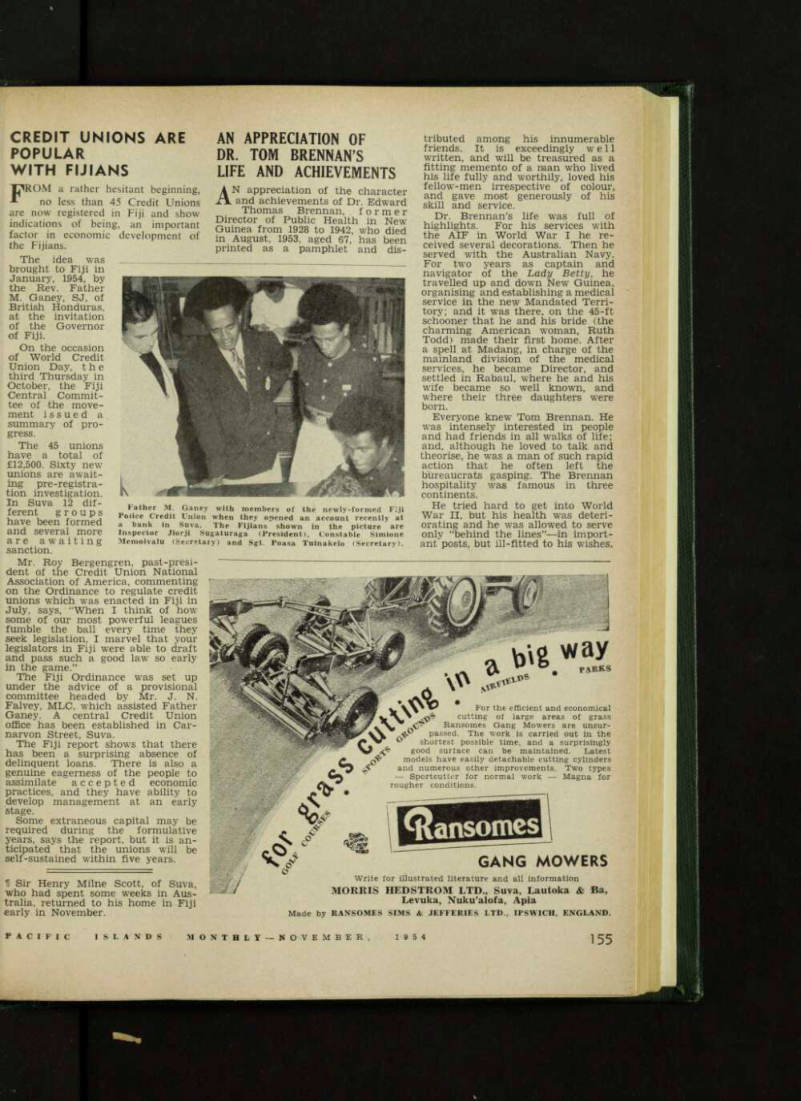 161
161 162
162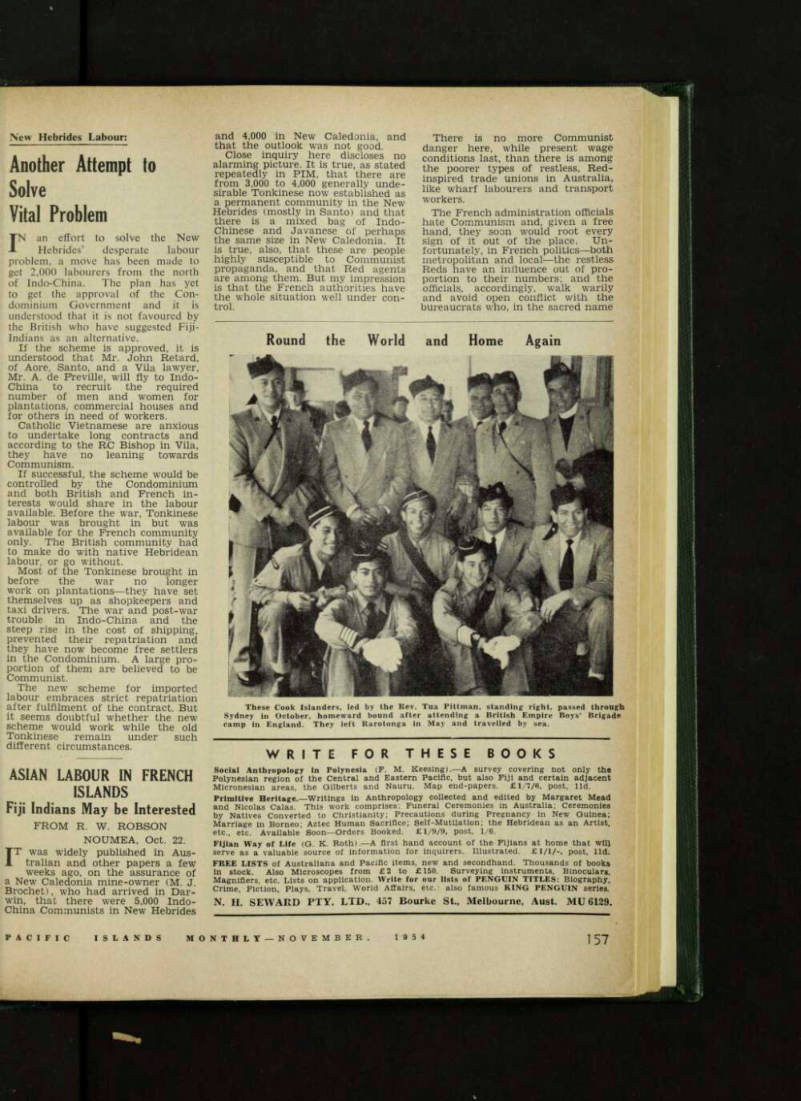 163
163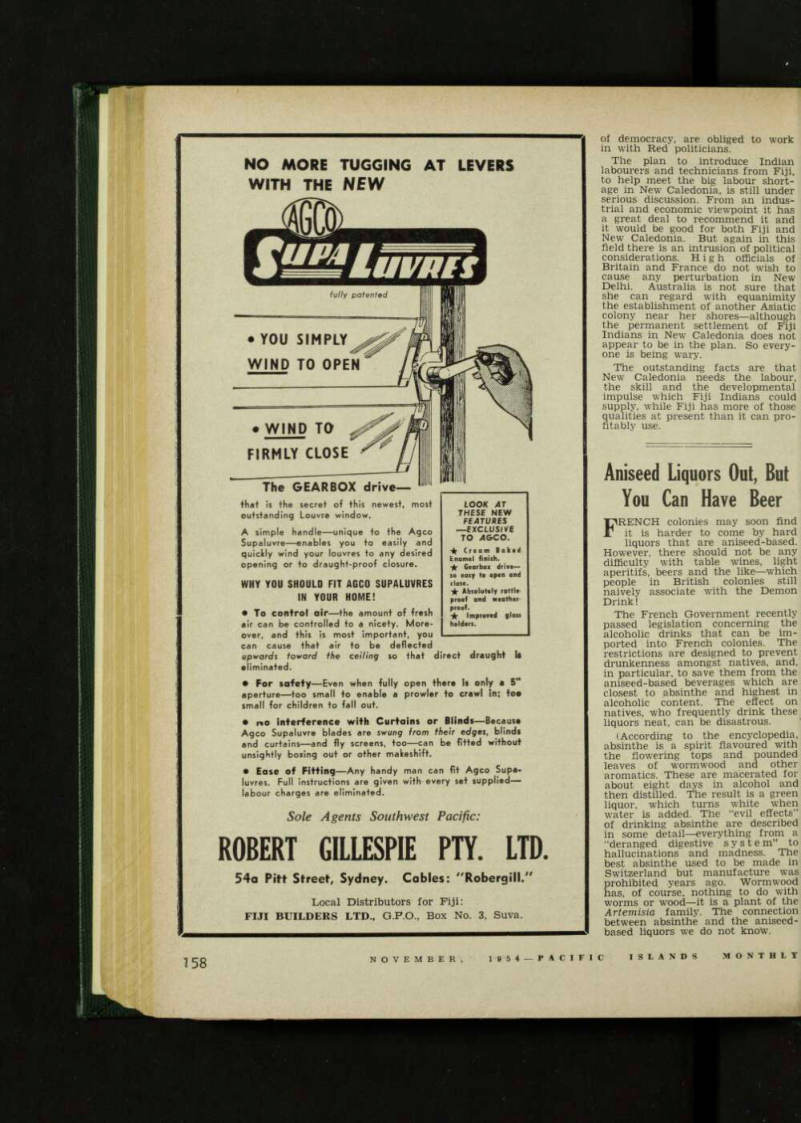 164
164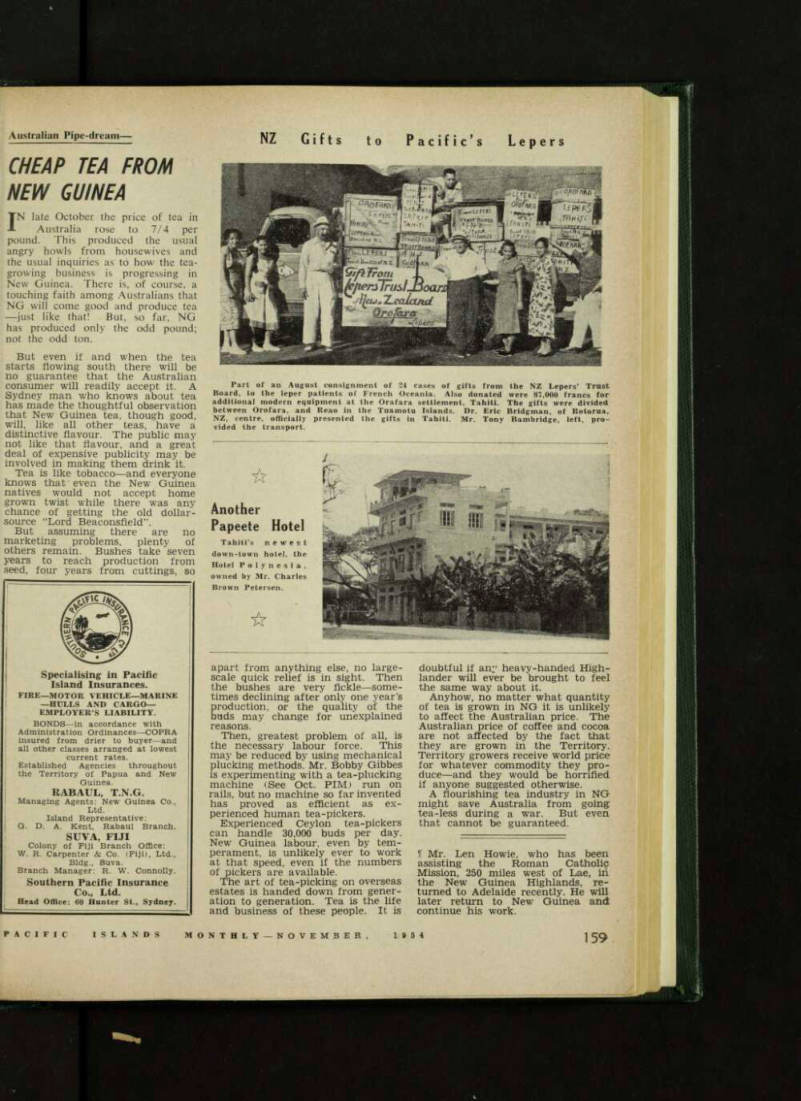 165
165 166
166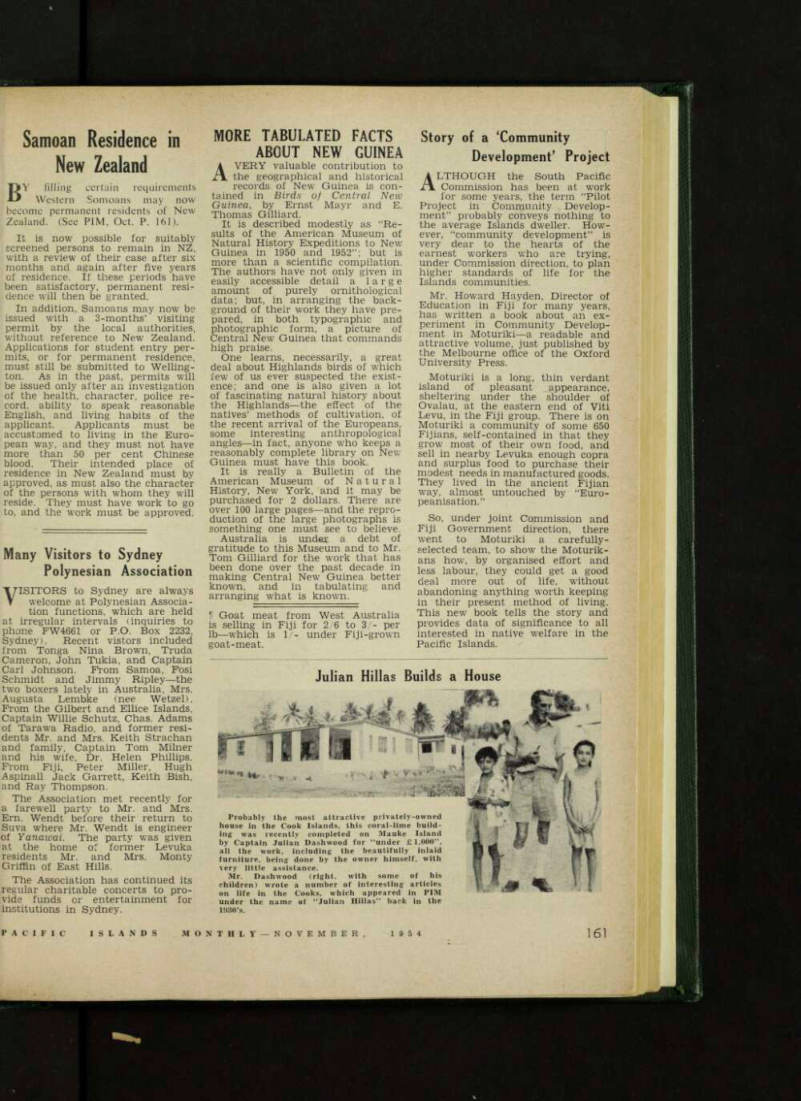 167
167 168
168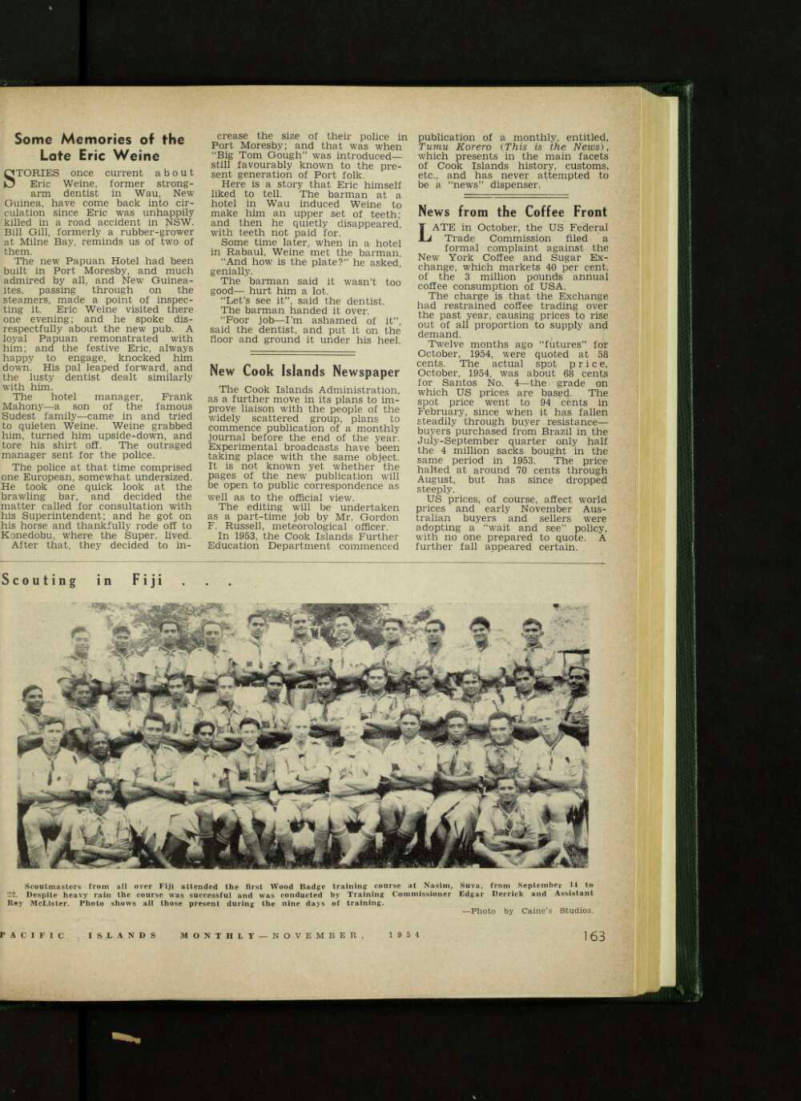 169
169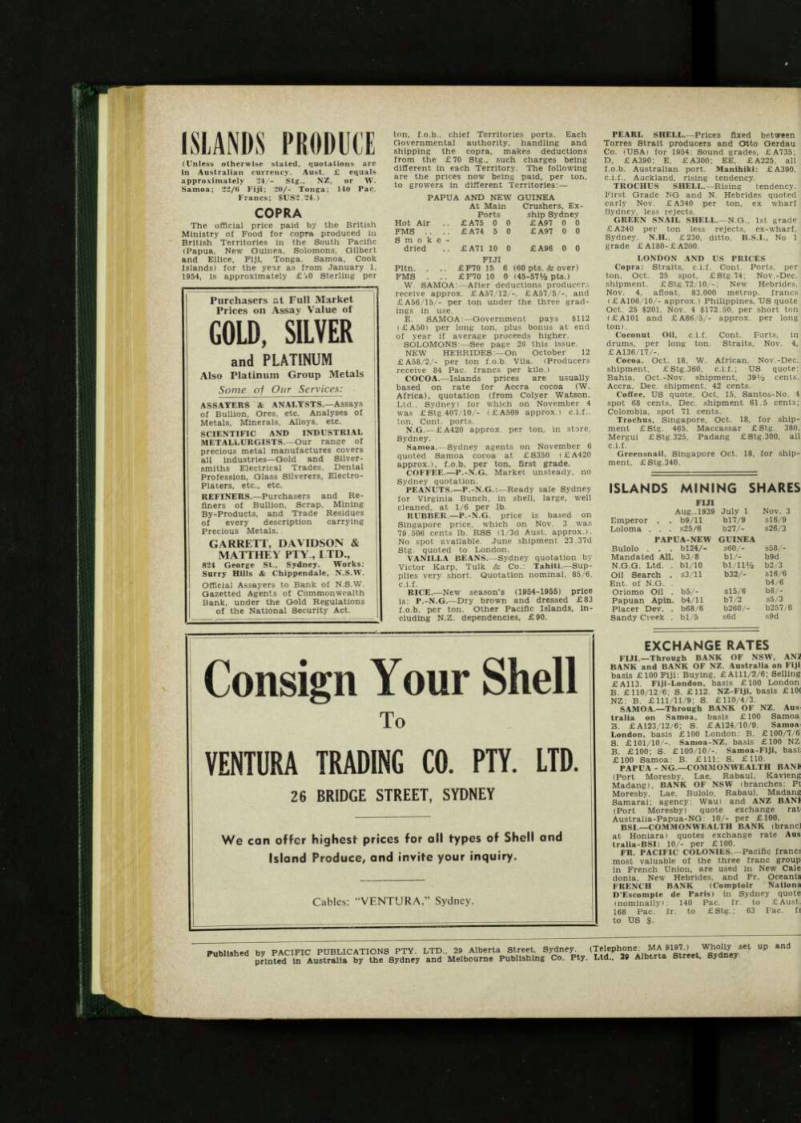 170
170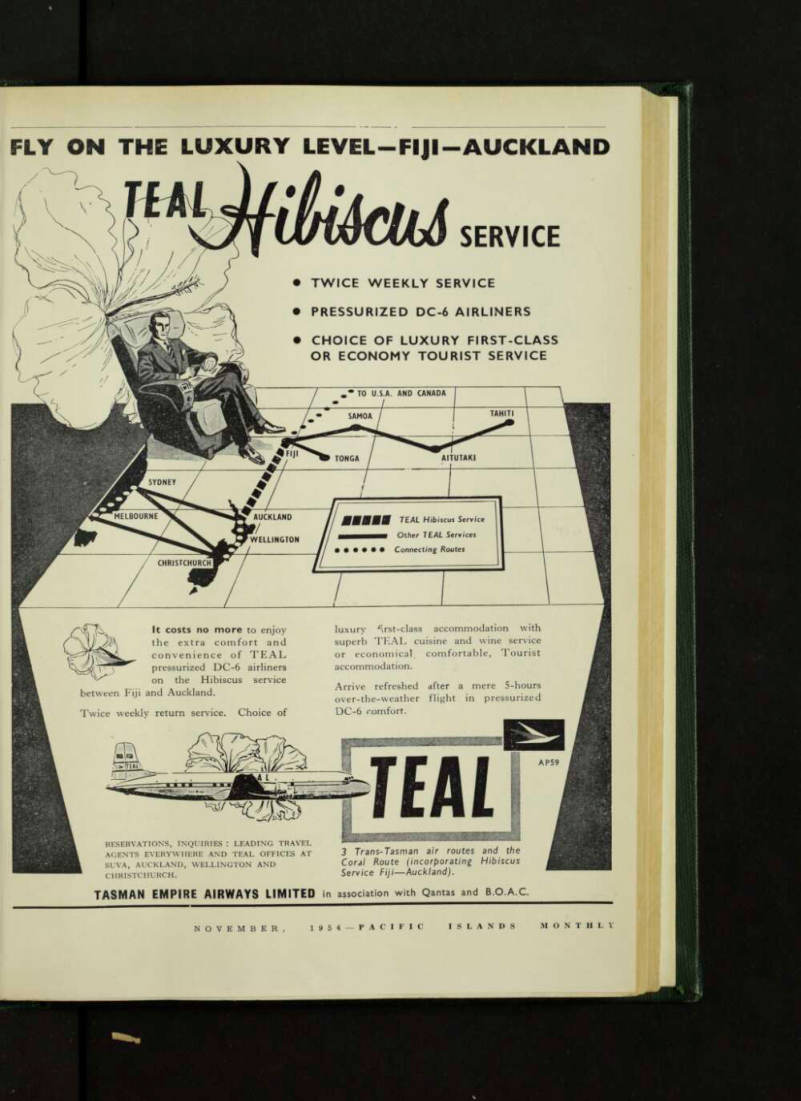 171
171 172
172