Time for a serious re-think of sport
Editorial
THE performance of Pacific Island teams at this year’s Rugby World Cup is, no doubt, one to be proud of.
Not only did teams from Fiji, Samoa, and Tonga make it to the tourna ment under great financial pressure, but they took the global vision of island rugby to new heights.
Island teams face great challenges in their bid to compete at International level.
First and foremost, many developed world teams do not want to play the small er nations, and when they do, a second, sometimes third, -string team is fielded.
Money is another problem, but one that has been a huge thorn in the side since the game’s march to professionalism.
Island nations can no longer hold their top players at home, and watch them leave their shores one by one.
But this may not be such a bad
thing, because it allows the rugby players to make a living, while at the same time, gaining valuable overseas experience. The only factor that the island rugby unions must contend with is whether or not, these players contracts allow for them to be released for Internationals.
As far as sponsorship goes, advertis ers have never really dished out big bucks for sport, and it seems unlikely that they ever will.
The relatively smaller population sizes in the region mean smaller markets, thus smaller advertising and sponsorship dollars.
Island rugby and other sports in the region seem to be getting penalised by the commercialisation of what was once an arena where all were equal - sport.
Today, you are only as equal as your merchandising, heart rate monitors and agent say you are, and for island players,
the high tech new world of sport is a far cry from the reality that they have to deal with every day.
Rugby, like many other sports in the region, needs to get its act together.
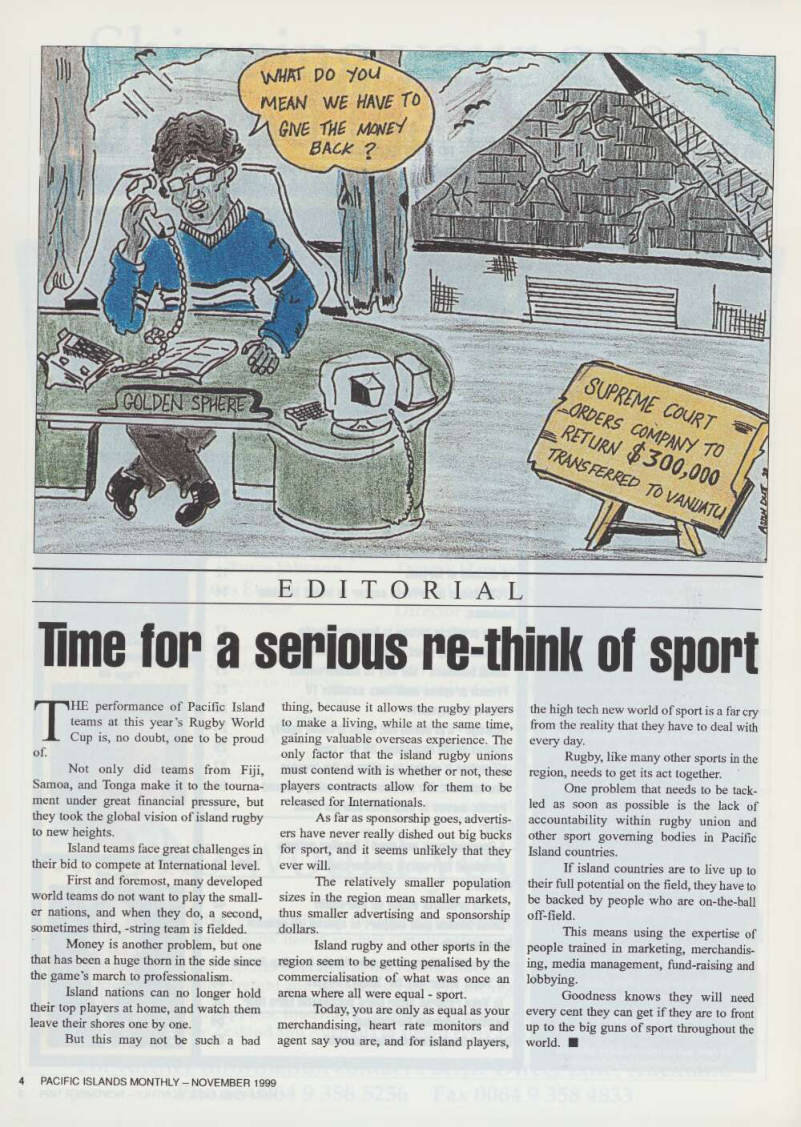
One problem that needs to be tack led as soon as possible is the lack of accountability within rugby union and other sport governing bodies in Pacific Island countries.
If island countries are to live up to their full potential on the field, they have to be backed by people who are on-the-ball off-field.
This means using the expertise of people trained in marketing, merchandis ing, media management, fund-raising and
lobbying.
Goodness knows they will need every cent they can get if they are to front up to the big guns of sport throughout the world. ■