Ok Tedi: a lesson for the Pacific
Editorial
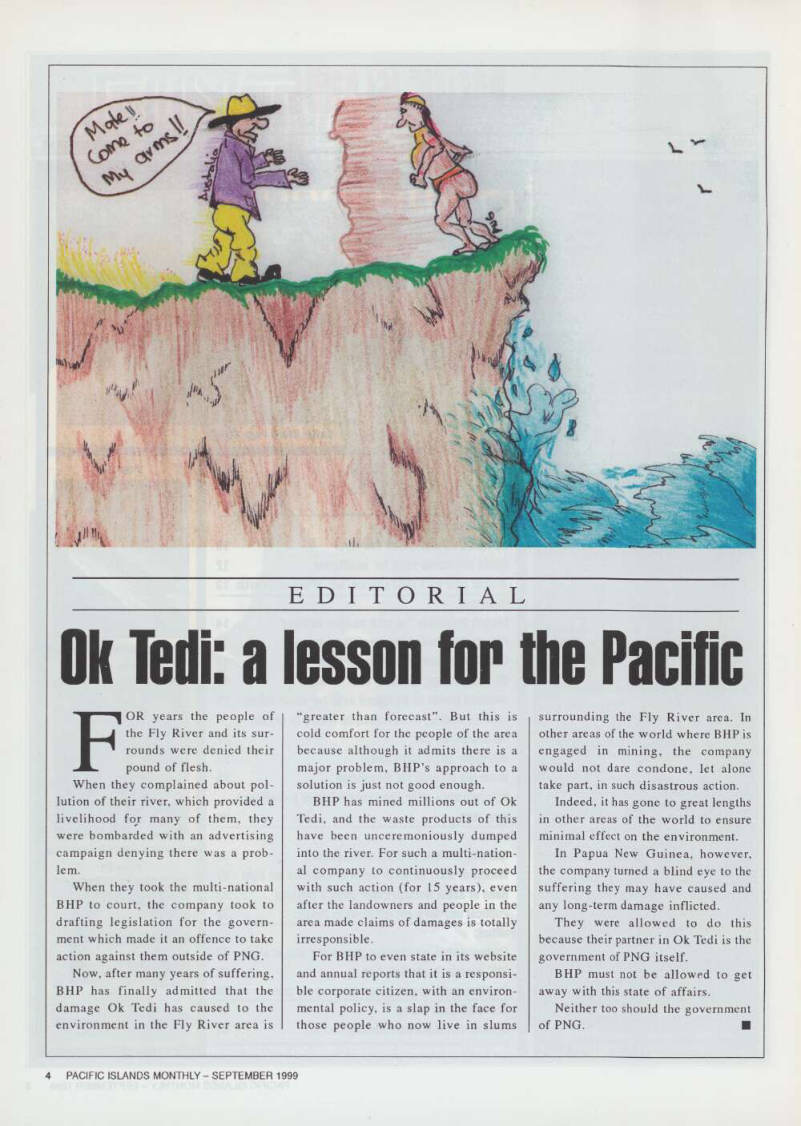
FOR years the people of the Fly River and its sur rounds were denied their pound of flesh.
When they complained about pol lution of their river, which provided a livelihood for many of them, they were bombarded with an advertising
campaign denying there was a prob
lem.
When they took the multi-national BHP to court, the company took to drafting legislation for the govern ment which made it an offence to take action against them outside of PNG.
Now, after many years of suffering, BHP has finally admitted that the damage Ok Tedi has caused to the environment in the Fly River area is
“greater than forecast”. But this is cold comfort for the people of the area because although it admits there is a major problem, BHP’s approach to a solution is just not good enough.
BHP has mined millions out of Ok Tedi, and the waste products of this have been unceremoniously dumped into the river. For such a multi-nation al company to continuously proceed with such action (for 15 years), even after the landowners and people in the area made claims of damages is totally irresponsible.
For BHP to even state in its website and annual reports that it is a responsi ble corporate citizen, with an environ mental policy, is a slap in the face for those people who now live in slums
surrounding the Fly River area. In other areas of the world where BMP is engaged in mining, the company would not dare condone, let alone take part, in such disastrous action.
Indeed, it has gone to great lengths in other areas of the world to ensure minimal effect on the environment.
In Papua New Guinea, however, the company turned a blind eye to the suffering they may have caused and
any long-term damage inflicted.
They were allowed to do this because their partner in Ok Tedi is the government of PNG itself.
BHP must not be allowed to get away with this state of affairs.
Neither too should the government of PNG. ■