Art For
pp. 93-94 · Read in the full issue
Aboriginal
Sake
Primitive art whether from Africa, the Amazon, New Guinea or Australia is in vogue today. It’s a gimmick that tends to become more intense as these areas are overtaken by the octo pus of civilisation.
IT’S something therefore to have an artist and academic like Roman Black find virtue in the new Austra lian aboriginal art. Arnhem Land natives and the Christian missions who act as their entrepreneurs make money from the aboriginal art busi ness and so do white Australian artists in the deserts and jungles of Sydney’s King’s Cross.
But instead of spurning the pro ducts of the latter for the purity of the former, Black sees in the pottery, wooden boxes, table-mats and textiles of aboriginal design a “breath of fresh air”. Here, he says, is some thing different, typical of the country and good.
Three-quarters of his book Old and New Australian Aboriginal Art is de voted to the “old” and in order to do so he has undertaken a great amount of research. Aboriginal art is not art for art’s sake. It is a story,
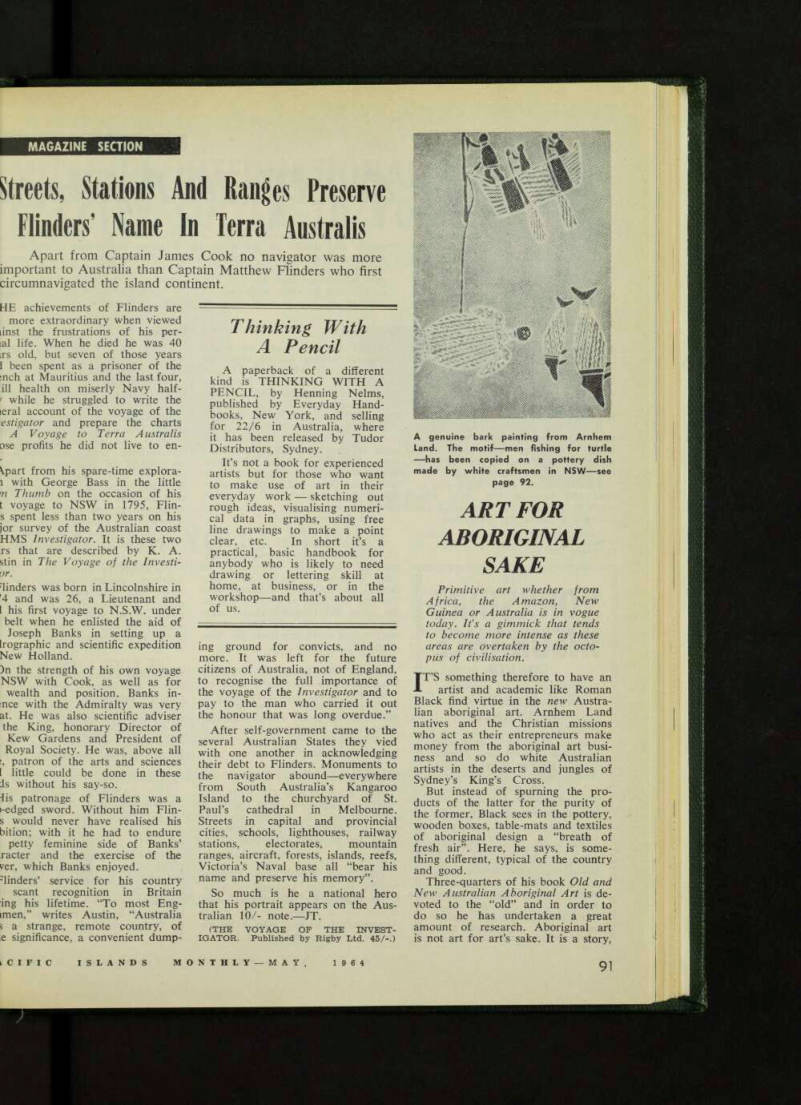
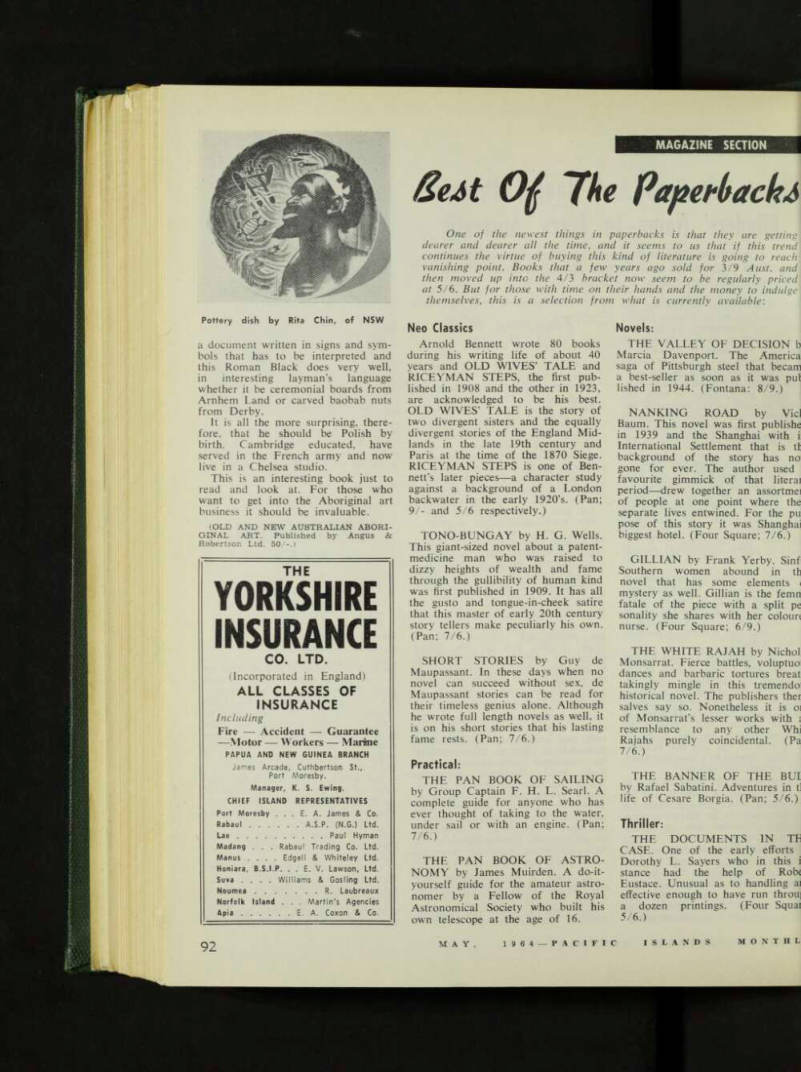
A genuine bark painting from Arnhem Land. The motif—men fishing for turtle —has been copied on a pottery dish made by white craftsmen in NSW-see page 92.
a document written in signs and sym bols that has to be interpreted and this Roman Black does very well, in interesting layman's language whether it be ceremonial boards from Arnhem Land or carved baobab nuts from Derby.
It is all the more surprising, there fore. that he should be Polish by birth. Cambridge educated, have served in the French army and now live in a Chelsea studio.
This is an interesting book just to read and look at. For those who want to get into the Aboriginal art business it should be invaluable.
(Old And New Australian Abori
GINAL ART. Published by Angus & Robertson Ltd. 50/-.)
Pottery dish by Rita Chin, of NSW