N.G. Insects
pp. 61-63 · Read in the full issue
Wide U.S. [?]esearch On N.G. Insects
By a Special Correspondent ere do New Guinea insects Tiey go to America! Hono- Bishop Museum now has
orld’s largest collection of
juinea insects, brought to
after nearly six man-years irk, and the collection is
\ bigger every month.
ne the Museum established its 1 field station in New Guinea— J. Mr. Josef Sedlacek is the t entomologist there. Mr. sk lives with his wife and their r-old son in a house on the Road rented from Mrs. makes field trips with the m’s Land-Rover and for the ;w months will work down to el before visiting other parts of ritory. The station might later ved.
Sedlacek, an Australian citizen, Uected in many parts of Aus md has worked for the Bishop 111 in Antarctica, New Zealand
and New Caledonia. His son, young Josef, is also a keen collector despite his age.
The New Guinea work which has resulted in the Museum’s huge collec tion started in 1955 when Dr. J. L.
Gressitt, chairman of the Museum’s Entomology Department, spent three months in the Territory and a month in NNG.
Earlier surveys on Polynesian and Micronesian insects, which had largely been carried on by the Bishop Museum before World War 11, and by the Pacific Science Board and the Museum after the war, had showed the urgent need for the work in the New Guinea area. It was required to clarify the relationships of Micro- Polynesian insects and also because an increased knowledge of New Guinea insects was vital to agriculture and public health.
Dr. Gressitt since then has made other visits to New Guinea and also visits to the BSIP and New Hebrides.
Other P-NG workers who have been fully or partly supported by the Bishop Museum since 1955 have in cluded Mr. E. J. Ford, Jr., of Honolulu; Dr. D. E. Hardy, of the University of Hawaii; Dr. John Smart, of Cambridge University; Dr.
Elizabeth Marks, of the University of Queensland; Dr. C. D. Michener, of the University of Kansas; Mr. T.
C. Maa, of Taiwan; Mr. C. W.
O’Brien; and Mr. William Brandt (CSIRO, Canberra).
Mr. Brandt, whose work in New Guinea has also been supported by the Department of Territories, has the
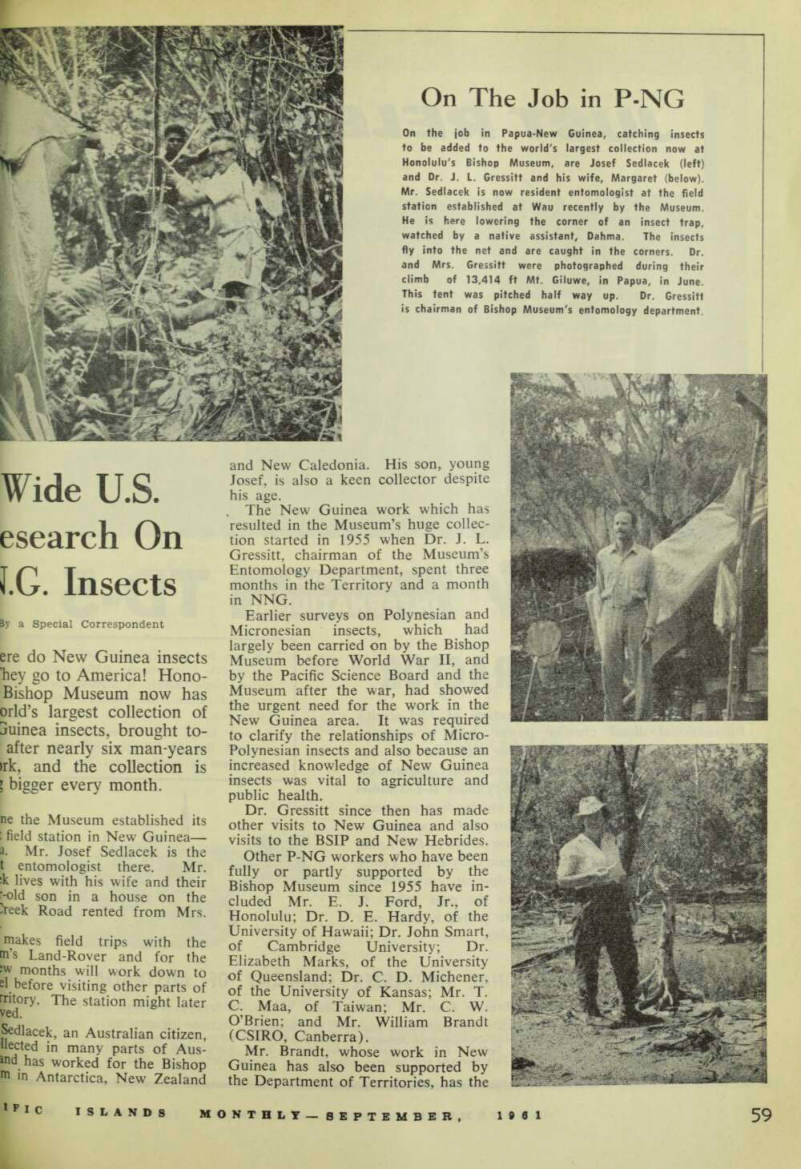
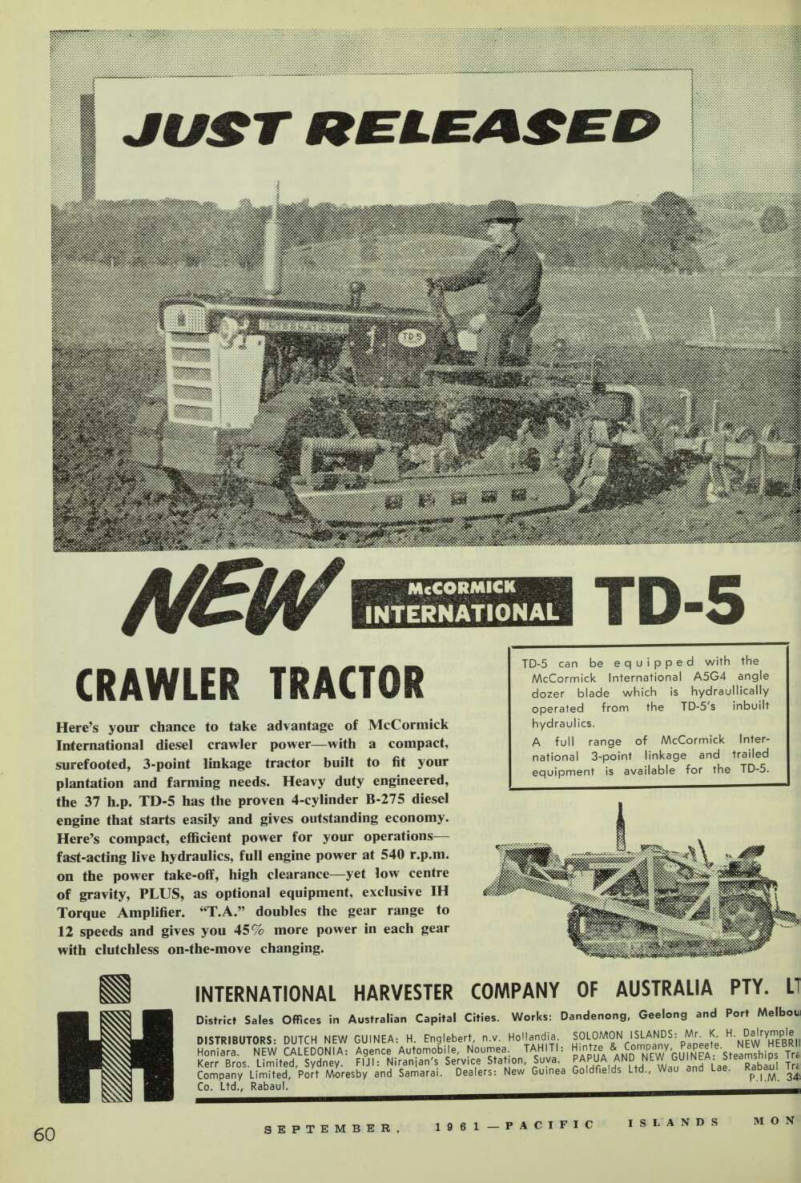
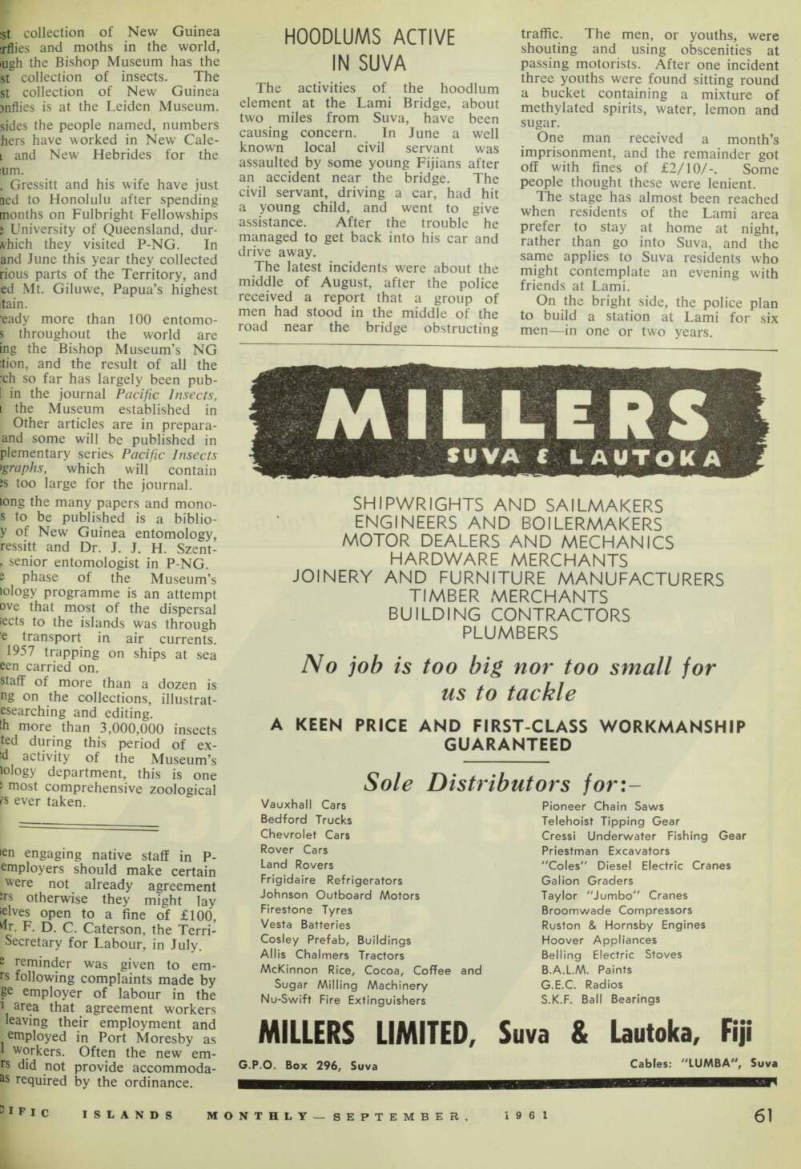
On The Job in P-NG
On the job in Papua-New Guinea, catching insects to be added to the world's largest collection now at Honolulu's Bishop Museum, are Josef Sedlacek (left) and Dr. J. L. Gressitt and his wife, Margaret (below).
Mr. Sedlacek is now resident entomologist at the field station established at Wau recently by the Museum.
He is here lowering the corner of an insect trap, watched by a native assistant, Dahma. The insects fly into the net and are caught in the corners. Dr. and Mrs. Gressitt were photographed during their climb of 13,414 ft Mt. Giluwe, in Papua, in June.
This tent was pitched half way up. Dr. Gressitt is chairman of Bishop Museum's entomology department.
;st collection of New Guinea ■rflies and moths in the world, >ugh the Bishop Museum has the st collection of insects. The st collection of New Guinea >nflies is at the Leiden Museum, sides the people named, numbers hers have worked in New Cale i and New Hebrides for the ;um. . Gressitt and his wife have just aed to Honolulu after spending months on Fulbright Fellowships 5 University of Queensland, dur vhich they visited P-NG. In and June this year they collected rious parts of the Territory, and ed Mt. Giluwe, Papua’s highest tain. ■eady more than 100 entomo s throughout the world are ing the Bishop Museum’s NG ition, and the result of all the •ch so far has largely been pub -1 in the journal Pacific Insects, [ the Museum established in Other articles are in prepara and some will be published in plementary series Pacific Insects \graphs, which will contain ;s too large for the journal, long the many papers and mono s to be published is a biblio y of New Guinea entomology, ressitt and Dr. J. J. H. Szent , senior entomologist in P-NG. phase of the Museum’s lology programme is an attempt ove that most of the dispersal lects to the islands was through e transport in air currents. 1957 trapping on ships at sea een carried on, staff of more than a dozen is ng on the collections, illustrat esearching and editing, th more than 3,000,000 insects ted during this period of ex *d activity of the Museum’s tology department, this is one ) most comprehensive zoological fs ever taken. ien engaging native staff in P employers should make certain were not already agreement irs otherwise they might lay ielves open to a fine of £lOO, Hr. F. D. C. Caterson, the Terri- Secretary for Labour, in July. e reminder was given to em rs following complaints made by ge employer of labour in the 1 area that agreement workers leaving their employment and employed in Port Moresby as 1 workers. Often the new em rs did not provide accommoda -18 required by the ordinance.