Fiji Finances In A
pp. 19-20 · Read in the full issue
Mixed State
From a Suva Correspondent Fiji’s savings, which were at a dangerously low level of about £500,000 reserves at the end of 1958, have increased to such an extent that the Acting Financial Secretary, Mr.
Harry Ritchie, expects the Colony's reserves to be about £2-million by the end of 1960—despite a drop in income tax revenue.
THE Government has budgeted for a deficit of £513,000 in 1961, the largest ever budgeted for, and Mr. Ritchie has warned that at the end of 1961 reserves will again be at the deadline level.
He says that if disruption and un settled conditions continue in the sugar industry, the Government could be faced with the unpalatable but inevitable task of reducing staff, daily paid employees and services, or of increasing taxation.
Two years ago the Financial Secretary, Mr. Eric Bevington, raised income tax, port and custom ser vice tax and duty on some other items to offset a sharp decline in the Colony’s reserves.
The Government expects, in 1961, to spend £7,290,341, about £36,000 more than the revised estimate for 1960. Revenue is estimated at £6,777,585. . AA , .
The current increase in total of the reserves is in no small measure attributable to the policies adopted by Mr. Bevington when he became Financial Secretary in October, 1958. The finances of Fiji when he returned to the Colony from Brunei
that year were anything but strong.
He put the pruning knife ruth lessly through unnecessary ex penditure, without interfering un duly with essential works and services. [At present Mr. Bevington is act ing as Colonial Secretary.] Main increases in expenditure for 1961 include: • Police, £llO,OOO (establishment increased by 100 in 1960, and a further increase of 102 proposed for 1961); • P and T Department, £33,000 (mainly for additional engineering staff and expanding communica tions) ; • PWD, £128,000 (maintenance of works, buildings, bridg e s and wharves and an increase of about £BO,OOO in wages; • Public debt, £35,000; • Education, £68,000 (to cater for the usual increment of teachers from the Nasinu Training College); and • Miscellaneous, £50,000.
“Miscellaneous” includes £23,000 for the Fiji Development Company (Over)
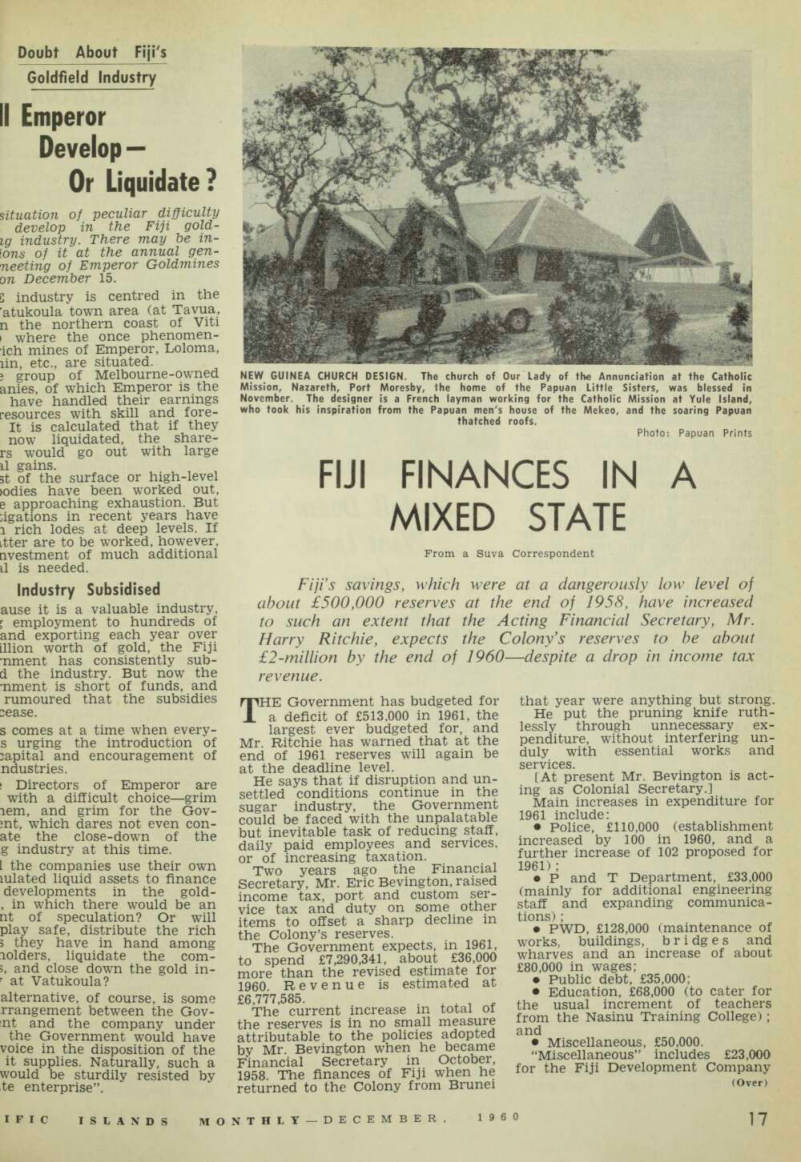
NEW GUINEA CHURCH DESIGN. The church of Our Lady of the Annunciation at the Catholic Mission, Nazareth, Port Moresby, the home of the Papuan Little Sisters, was blessed in November. The designer is a French layman working for the Catholic Mission at Yule Island, who took his inspiration from the Papuan men's house of the Mekeo, and the soaring Papuan thatched roofs.
Photo: Papuan Prints
(a Colonial Development Corpora tion subsidiary) for its work as managing agent for the Housing Authority, and £lO,OOO (estimated) for the sugar industry inquiry.
Income Will Drop
The Government expects income tax revenue to drop by about £530,000 and Customs revenue by about £200,000.
On the bright side, Post Office revenue should rise by about £50,000 through the issue of a new series of postage stamps, and new VHF telephone links between Suva and Lautoka.
In the capital (works) budget the proposed 1961 expenditure at £2,537,000 is about the same as 1960.
Mr. Ritchie expects capital budget receipts of £4,500,000 (£3,500,000 from capital loans, including £200,000 to be borrowed in London, a loan of £lOO,OOO for Viti Levu telecom munications development, another local development loan to be launched in 1961, and from the UK Government under the Colonial De velopment and Welfare scheme.
Mr. Ritchie warned that CD and WF grants were not automatic.
He said that 81 per cent, of the capital budget was for development servic e s, including agriculture, forestry, geology, civil aviation, feeder roads, land, posts and tele graphs, public works, etc., all de signed to increase production and the economic output of the Colony in accordance with Burns Com mission recommendations.
To Attract Capital In an effort to attract more cap ital investment in Fiji, the Gov ernment has extended tax con cession for companies pioneering new industries. If a company’s cap ital expenditure does not exceed £50,000, £5,000 of the chargeable in come will be free of income tax. If capital expenditure exceeds £50,000, exemption will be 10 per cent, of that expenditure.
Tax concessions approved will be for five years and losses incurred during the “tax holiday” may be carried forward to set off against income during the six years immedi ately after the concession period.
The concessions will be subject to conditions which may include the submission of annual accounts to the Government with a report to show that the industry is being actively carried on, and a require ment for the employment of a minimum proportion of local staff.