They're The Nouveau Riche
p. 47 · Read in the full issue
Nouveau Riche
From Pat Robertson in Lae he sight of a group of un
fisticated natives (including
len and children) with hands
of fresh, crisp pound notes,
n intriguing one in New lea.
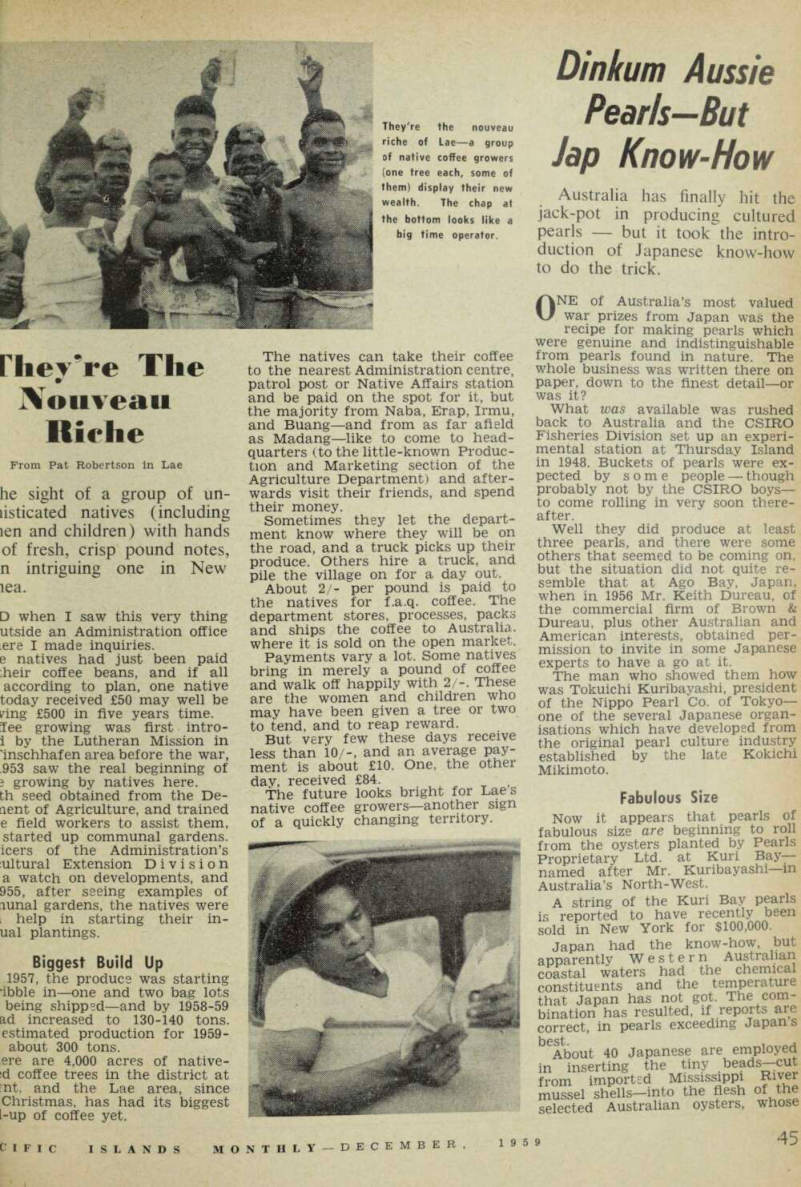
D when I saw this very thing utside an Administration office ere I made inquiries, e natives had just been paid ;heir coffee beans, and if all according to plan, one native today received £5O may well be ring £5OO in five years time.
Tee growing was first intro -1 by the Lutheran Mission in ’inschhafen area before the war, .953 saw the real beginning of ? growing by natives here, th seed obtained from the De cent of Agriculture, and trained e field workers to assist them, started up communal gardens, icers of the Administration’s ultural Extension Division a watch on developments, and 955, after seeing examples of lunal gardens, the natives were . help in starting their in ual plantings.
Biggest Build Up
1957, the produce was starting •ibble in—one and two bag lots being shipped—and by 1958-59 ad increased to 130-140 tons, estimated production for 1959about 300 tons. ere are 4,000 acres of native id coffee trees in the district at ■nt, and the Lae area, since Christmas, has had its biggest i-up of coffee yet.
The natives can take their coffee to the nearest Administration centre, patrol post or Native Affairs station and be paid on the spot for it, but the majority from Naba, Erap, Irmu, and Buang—and from as far afield as Madang—like to come to head quarters (to the little-known Produc tion and Marketing section of the Agriculture Department) and after wards visit their friends, and spend their money.
Sometimes they let the depart ment know where they will be on the road, and a truck picks up their produce. Others hire a truck, and pile the village on for a day out.
About 2/- per pound is paid to the natives for f.a.q. coffee. The department stores, processes, packs and ships the coffee to Australia, where it is sold on the open market.
Payments vary a lot. Some natives bring in merely a pound of coffee and walk off happily with 2/-. These are the women and children who may have been given a tree or two to tend, and to reap reward.
But very few these days receive less than 10/-, and an average pay ment is about £lO. One, the other day, received £B4.
The future looks bright for Laes native coffee growers—another sign of a quickly changing territory.
They're the nouveau riche of Lae—a group of native coffee growers (one tree each, some of them) display their new wealth. The chap at the bottom looks like a big time operator.