Minorities Will Depend
pp. 20-151 · Read in the full issue
On Samoan Goodwill
West Samoa’s European community is apprehensive that it may have to accept a second-class citizenship in the new indepei Samoa.
SUCH has been the speedy pace of Samoa’s move towards in dependence that the doors are now closed for any simple negotia tion by the European community on matters of common domestic status and electoral rights. How
they fare on these vital n will probably depend on the will of the Samoans.
The passing of the Citiz Bill, the formation of Cabinet ernment (with the appointm a Prime Minister and a chai the composition of the Ex( Council) have put the Samos such a position that they c they wish, disregard recomn tions for the European comn New Zealand, and especial High Commissioner, Mr. ( Powles, have had plenty of ( tunities in the last few yes assist the European commur they had wanted to.
A Bright Spot
The one bright spot in the p situation, in the view of Euro is that the post of Samoan Minister is held by the Hon.
Mataafa —a man of pleasant sonality, with ideas and a m: his own and an understand] Samoan and European attitud is not likely to take the t$ view that was expressed by of those Samoan members ( Legislative Assembly who chal the right of the five Eur members to vote for a Prime ister, and requested them to the chamber so that the could be made “accordin Samoan custom”.
Despite the present late tion, with the Working Com: on Self Government to sit shortly, probably in Januar:
(Continued on page 149)
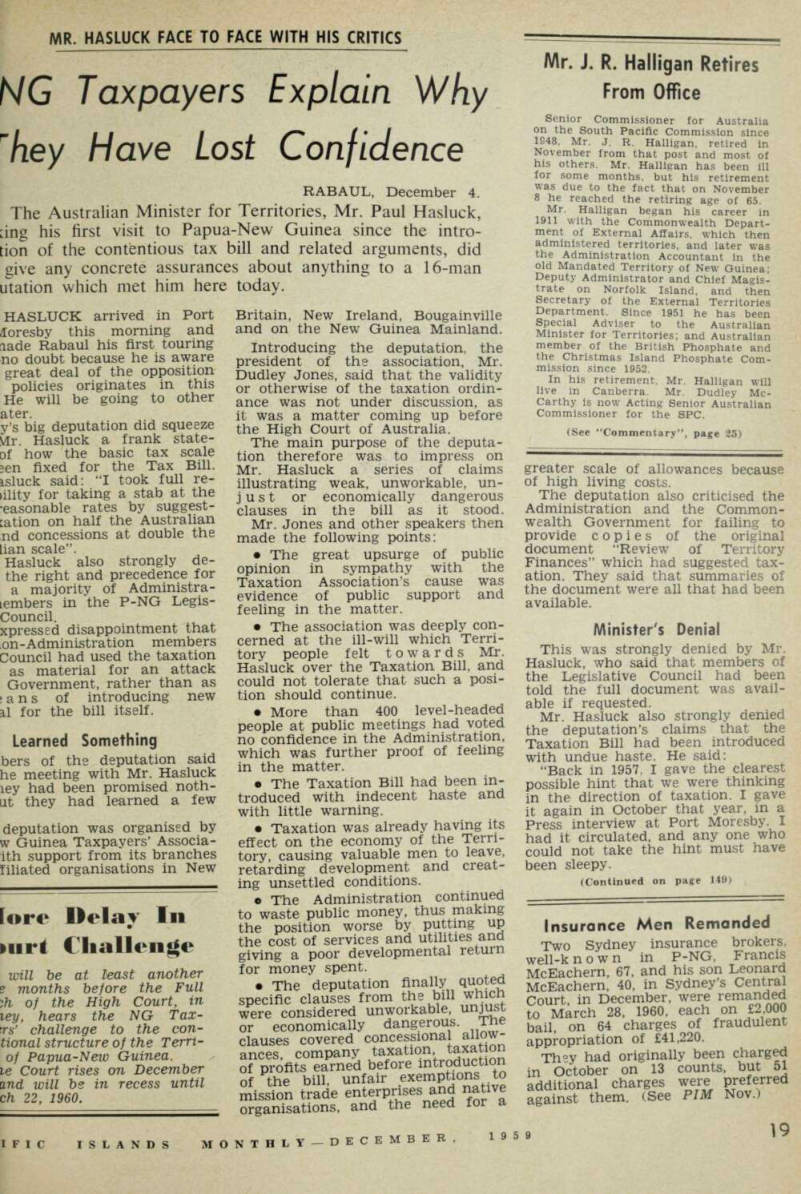
Venese and Naomi, two girls of modern Samoa, pose with a small visitor from Fiji, Riva Cohen, on West Samoa's most famous mountain, Mt.
Vaea. Behind them is the tomb of Robert Louis Stevenson.
in November had an in conference at Vailima with r e Europsan members of the sly.
Powles himself suggested the mce so that the European ; could decide to make what scrib.d as a “genuine and ght move towards national and so that the European e upon the problems of n status and electoral rights oe settled.
Deal Direct the Europeans told Mr. that the position had gone that they now preferred to rectly with the Samoans and 'ough him. e was, however, a discussion problems. Mr. Powles sug that the name “non matai hould be dropped as being factory, and an “individual roll” could be adopted.
UN Visiting Mission reported was not keen on a separate an roll because it was based cial distinction. The five an members at present are by universal adult sufferage, Samoan members by vote matais or heads of families.] Powles suggested that on an iual voters’ roll”, citizens of n Samoa of 21 years or over, re not enjoying the privileges matai system, could register, could be a provision by law arsons registered on the in -1 voters’ roll would be dis d from any use of matai five European seats, he sug could be abandoned and in here could be one individual seat for every 2,400 names roll (which, he said, would
be about equal to the representa tion of the Samoans.) Voting would be on the basis of universal suf ferage.
The European reaction to this was that since the roll would be opsn to all Samoans who did not want to vote on the matai system, they could swamp the Europeans altogether.
Some Europeans are now also wondering if there is any certainty that a European will be elected to Cabinet in future, although the 1959 Samoan Amendment Act states that at least one member of the Samoan Cabinet must be a European member.