Weather
pp. 19-20 · Read in the full issue
Damage in the BSIP, Cooks, New Caledonia, Fiji New Year Weather Havoc
Fierce January weather brought
floods to parts of the Cook Islands, the BSIP, and Fiji, and helped sink the freighter Natone north of Australia. But most havoc was caused by a cyclone which struck north-east New
Caledonia, causing £A50,000
damage.
THE floods in the Cooks inundated parts of Rarotonga, causing many hom°s to be evacuated and a serious loss of taro; in the BSIP, Henderson Field, near Honiara, was cut off when a bridge was damaged, and plantations were under water; in Fiji, the main road around Viti Levu was covered in parts by three feet of water. (See pages 111, 123).
The New Caledonia cyclone hit on the week-end of the 17th, after coming from the direction of the Banks Islands a few days before, missing the New Hebrides on the way. . , It struck the tourist centres of Hienghene, Touho, Poindimie. Pon crihouen and Houailou, which are also rich in coffee plantations, do-
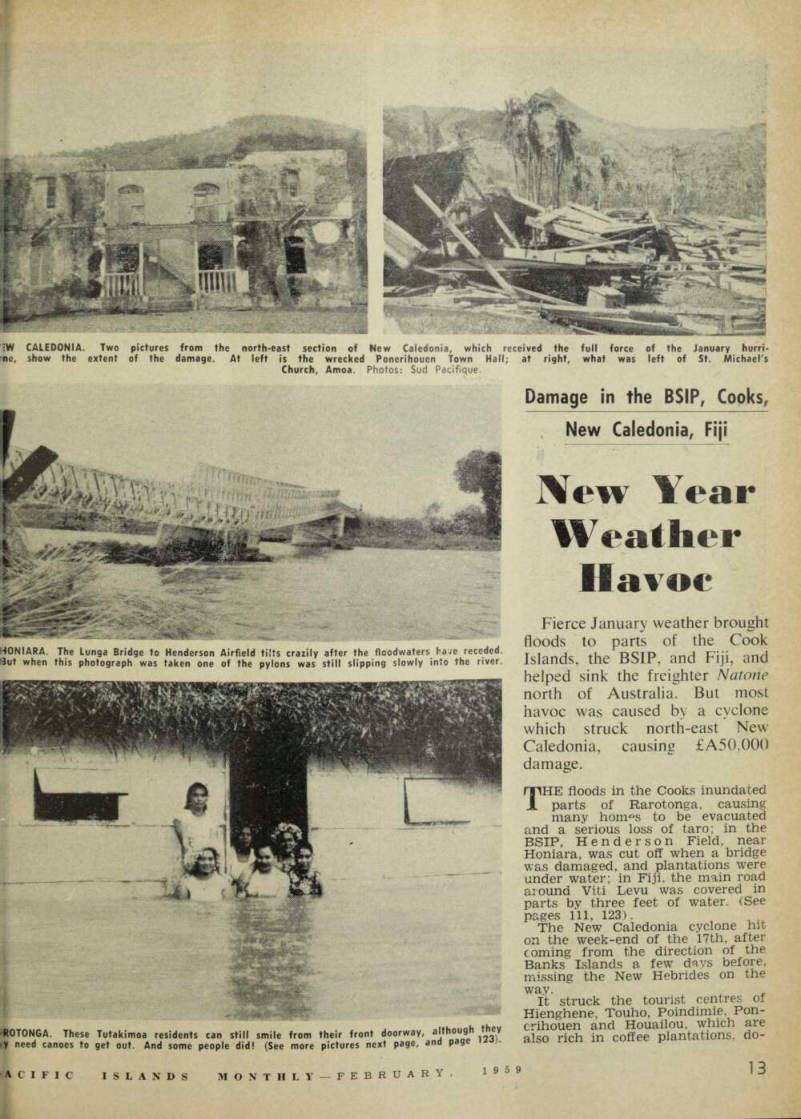
[?]W CALEDONIA. Two pictures from the north-east section of New Caledonia, which received the full force of the January hurri [?]ne, show the extent of the damage. At left is the wrecked Ponerihouen Town Hall; at right, what was left of St. Michael's Church, Amoa. Photos: Sud Pacifique.
HONIARA. The Lunga Bridge to Henderson Airfield tilts crazily after the floodwaters have receded.
But when this photograph was taken one of the pylons was still slipping slowly into the river.
[?]ROTONGA. These Tutakimoa residents can still smile from their front doorway, although [?]y need canoes to get out. And some people did! (See more pictures next page, and pagE 123).
ing extensive damage to buildings and crops.
It unroofed many homes, blocked roads, broke communications.
Down south, the flooded Yate River carried away two bridges, cut ting communications between the big dam area and Noumea for four days.
Noumea Escapes
But Noumea itself missed the centre of the blow, and received only heavy rain and a few squalls— all of which were welcomed, for southern New Caledonia has been suffering from a drought which was beginning to become serious.
There have been water restric tions in Noumea.
Southern New Caledonia, especi ally the Yate district, is normally the wettest part of the island.
Within hours of the damage be coming known, troops and Red Cross personnel were sent to the northern devastated areas to aid victims and help clear up.
Nobody had been killed but there were many narrow escapes.
In some areas few houses and native huts had been left standing.
Missions suffered badly.
One watrime quonset hut, made of steel and set in concrete, and being used as a coffee storehouse, was picked up bodily by the hurri cane and hurled a hundred yards away.
There will be little or no coffee harvested from the devastated area this year, and copra production will be small for the next three years.
Meanwhile arrangements are be ing made to feed native victims who lost all their food crops. People in ether towns have begun making generous donations.
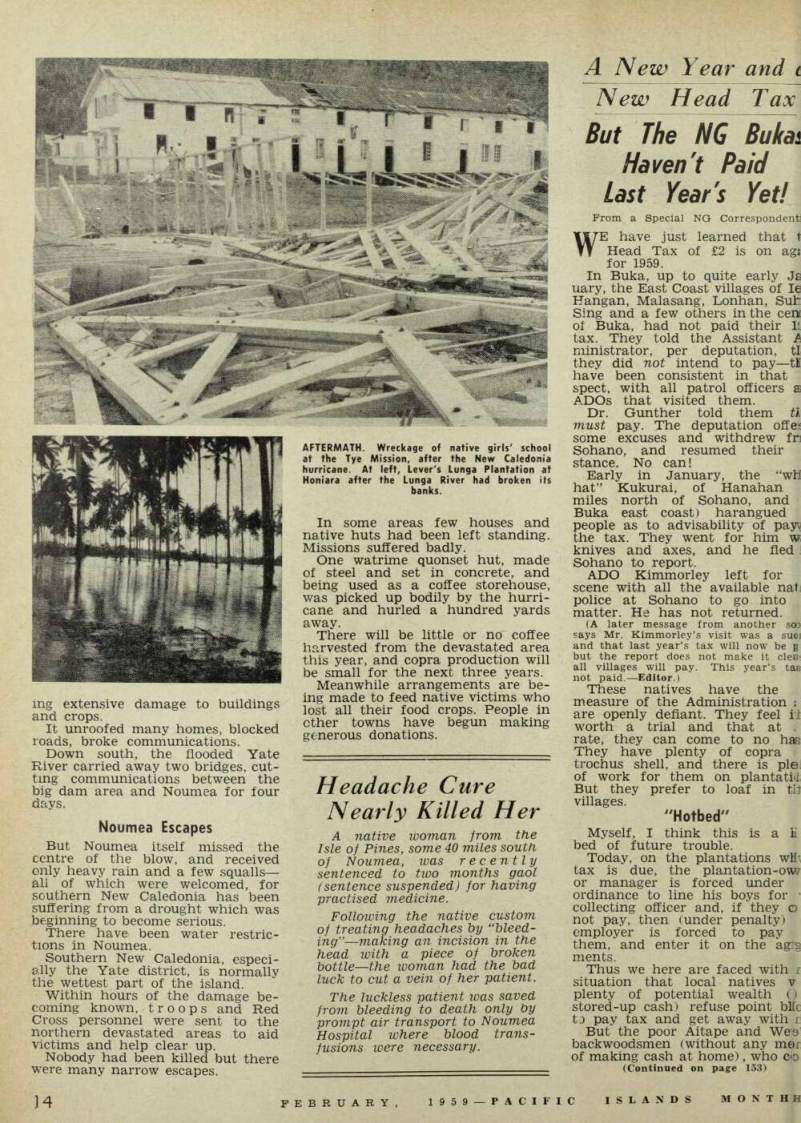
AFTERMATH. Wreckage of native girls' school at the Tye Mission, after the New Caledonia hurricane. At left, Lever's Lunga Plantation at Honiara after the Lunga River had broken its banks.