Dirty Hands v.
pp. 127-128 · Read in the full issue
Ative Apprentices
N P-Ng
White Collars
A scheme for training natives s qualified tradesmen appears to
»e overcoming the preference of
nany natives of Papua-New
juinea for “white collar” jobs.
PHIS is one of several important problems which the infant scheme is meeting in its form tive years.
One member of the Native .pprenticeship Board said recently hat he thought that as more natives ook up apprenticeships, the idea f being a tradesman would become lore popular.
Already, he said, he was receiving lany ’inquiries from boys eager to ecoine skilled artisans.
The scheme for apprenticing atfves came into being only in 1955, iut by 1957 there were 150 apprentices erving their time at various trades hroughout the Territory. Early in 958, the number will be about 200.
Chairman of the Apprenticeship Joard, Mr. J. Hohnen, who is gen ral manager of New Guinea Gold ields Ltd., and an MLC, said the loard is now looking for ways of iroadening the scheme.
Against Dirty Hands
It was studying the possibility of idding such avenues of employment is planter’s assistant and technical toreman to the list of trades to V'hich boys could become apprenticed. ; “The greatest danger I see is the lative who has been educated at school and then thinks he should lot get his hands dirty”, said Mr. rlohnen.
“These types of people have caused problems in other countries.”
In some parts of Africa, such natives were “churned out” by Missions and Government schools.
They had flooded the market be cause they had not been prepared to accept a trade.
“I don’t believe in the over-pro duction of literates unless they can at into the economy of the country,” he said.
“What we have to stress to the natives is pride in craftsmanship and show them that they don’t have to be ‘white collar’ workers to get good money. We must emphasise the dignity of trade training.”
Mr. W. C. Gee, chief engineer of the Posts and Telegraph Depart ment and a member of the Native Apprenticeship Board, said he thought the problem of natives seeking “white collar” jobs was already working itself out.
He said the problem arose because in the immediate post-war years clerks and office workers were needed by the administration and there were plenty of opportunities for natives to take up that kind of work.
"Not a Problem"
He found that apprentices who were satisfied with their jobs talked about the scheme to their young friends and interested them in be coming tradesmen.
“I don’t think native interest in white collar work will be a big problem in the future,” he said.
On another question, Mr. Hohnen said that European tradesmen m the Territory should not fear that native apprentices would displace them. .
He said that for some years to come there would be ample room
for native tradesmen —more so than for clerks.
When the time came that there were sufficient native tradesmen to do the work, Europeans would be needed to oversee as foremen and leading hands.
“If a European tradesman, with his background and educational ad vantages, is frightened that a native, starting from scratch, will take over his job he shouldn’t be here.
“If he can’t grade up when the time comes he should grade out, Mr. Hohnen added. — AAP-REUTER.
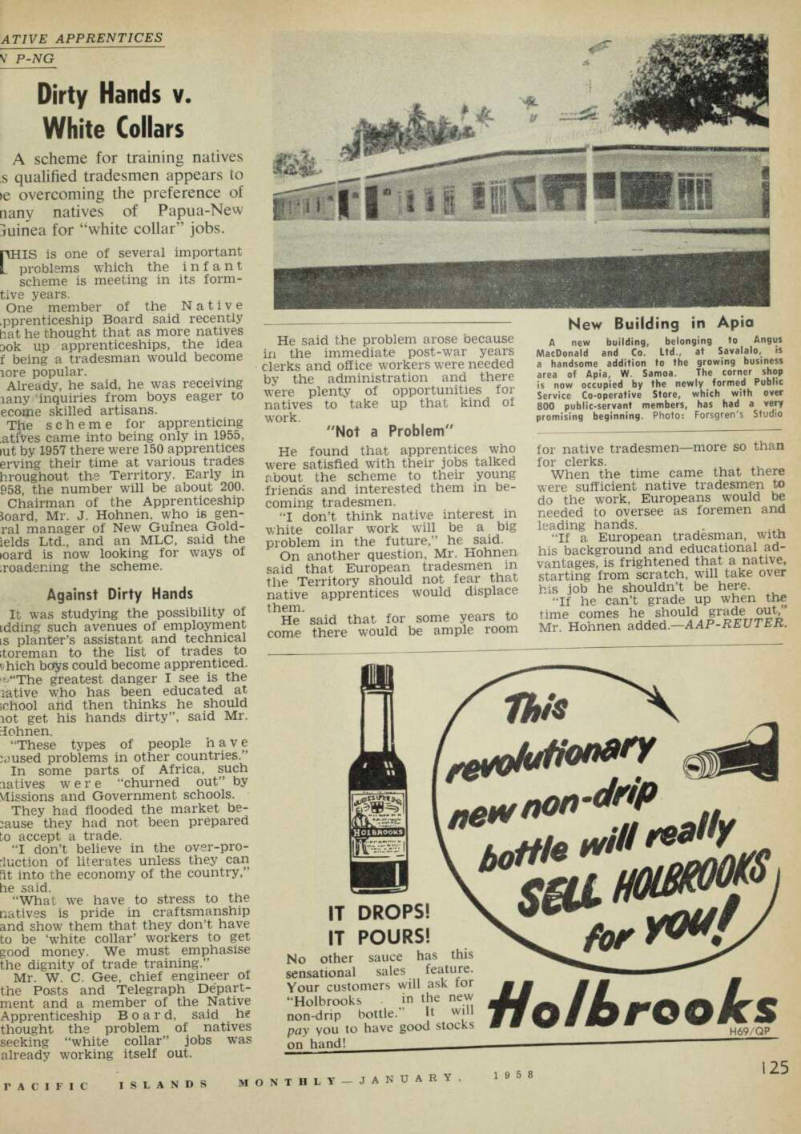
New Building in Apia
A new building, belonging to Angus MacDonald and Co. Ltd., at Savalalo, is a handsome addition to the growing business area of Apia, W. Samoa. The corner shop is now occupied by the newly formed Public Service Co-operative Store, which with over 800 public-servant members, has had a very promising beginning. Photo: Forsgren's Studio
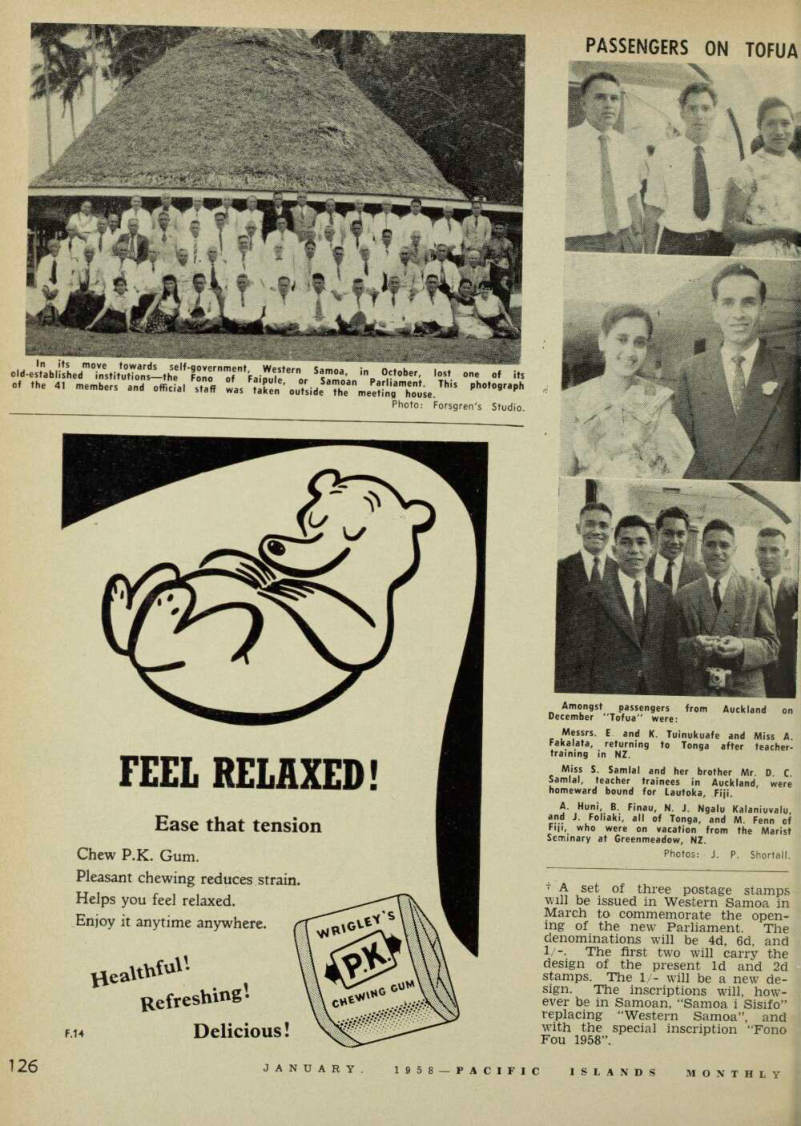
In its move towards selfg-governmemt, Western Samoa, in October, Iost one of its old-established institutions-the Fono of Faipule, or Samoan Parliament. This photograph of the 14. members and official was. taken outside the meeting huse.
Photo: Forsgren's Studio.