NG Europeans Take
p. 47 · Read in the full issue
Future Uncertain
NG Europeans Take The Cash in Hand
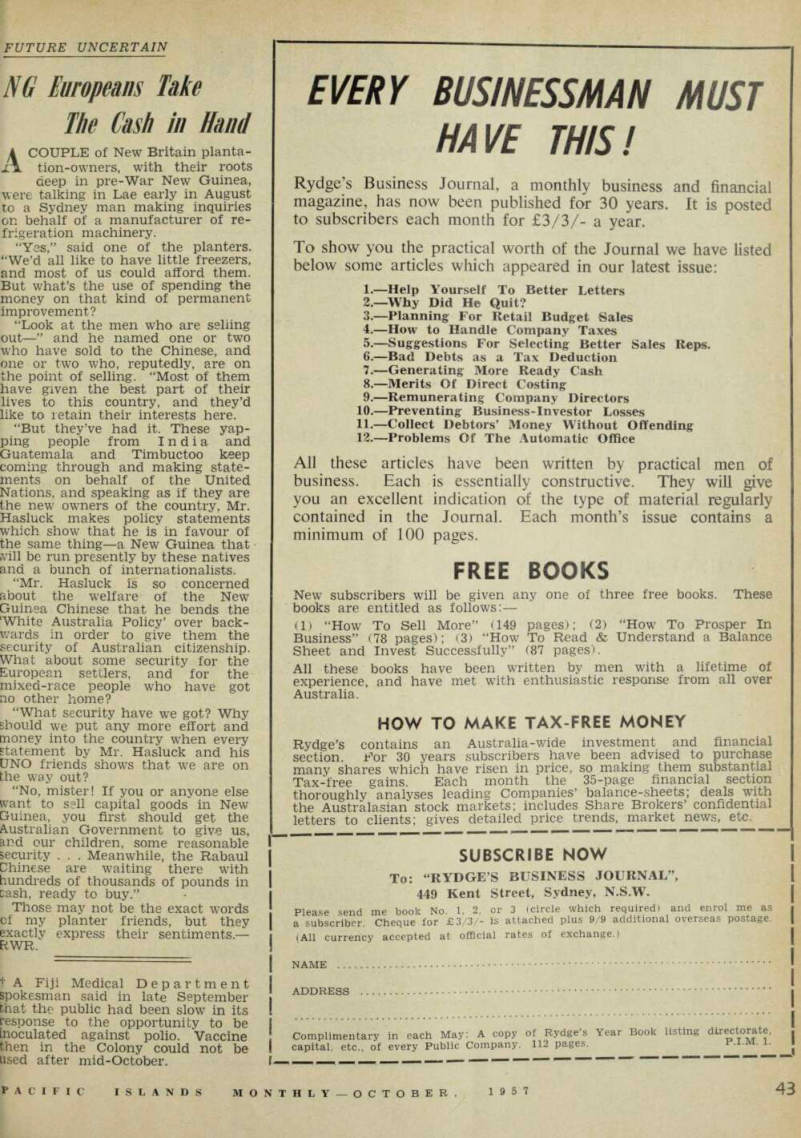
1 COUPLE of New Britain planta tion-owners, with their roots deep in pre-War New Guinea, were talking in Lae early in August to a Sydney man making inquiries on behalf of a manufacturer of re frigeration machinery.
“Yes,” said one of the planters.
“We’d all like to have little freezers, and most of us could afford them.
But what’s the use of spending the money on that kind of permanent improvement?
“Look at the men who are selling out —” and he named one or two who have sold to the Chinese, and one or two who, reputedly, are on the point of selling. “Most of them have given the best part of their lives to this country, and they’d like to retain their interests here.
“But they’ve had it. These yap ping people from India and Guatemala and Timbuctoo keep coming through and making state ments on behalf of the United Nations, and speaking as if they are the new owners of the country, Mr.
Hasluck makes policy statements which show that he is in favour of the same thing—a New Guinea that will be run presently by these natives and a bunch of internationalists.
“Mr. Hasluck is so concerned about the welfare of the New Guinea Chinese that he bends the ‘White Australia Policy’ over back wards in order to give them the security of Australian citizenship.
What about some security for the European settlers, and for the mixed-race people who have got no other home?
“What security have we got? Why should we put any more effort and money into the country when every statement by Mr. Hasluck and his UNO friends shows that we are on the way out?
“No, mister! If you or anyone else want to sell capital goods in New Guinea, you first should get the Australian Government to give us, and our children, some reasonable security . . . Meanwhile, the Rabaul Chinese are waiting there with hundreds of thousands of pounds in cash, ready to buy.”
Those may not be the exact words of my planter friends, but they exactly express their sentiments.—
Rwr.
t A Fiji Medical Department spokesman said in late September that the public had been slow in its response to the opportunity to be
inoculated against polio. Vaccine
then in the Colony could not be used after mid-October.