They Called It Shangri-La . .
pp. 86-88 · Read in the full issue
IN 1954, the “discovery” of the valley of Lavam the Southern Highlands district of Papua, cai a newspaper sensation. The inhabitants, it said, were seven feet tall, and about 20,000 of ft lived within their valley, which was described t paradise, or a Shangri-La.
Probably no one knows more about these p&
their valley than ADO J. P. Sinclair, now on in Australia. He has been into the valley— last occasion at the end of last year—and is med at Koroba, a new patrol post that was lished only in 1955 and is the furthest-out base i in what is known as the Duna sub-district. e Lavani people are similar to other Duna folk are probably around 5 ft 3 in. or 4 in. tall; valley is certainly no paradise. The population ly a fraction of that as first stated—because i of the local pig -houses were at first mistaken [wellings—the climate is cold, and wet; and a f the valley is marshy and grows only inferior -potatoes, which are the staple diet. . Sinclair took these photographs while he was
on patrol in the Duna-Lavani area and has kindly made them available to PIM.
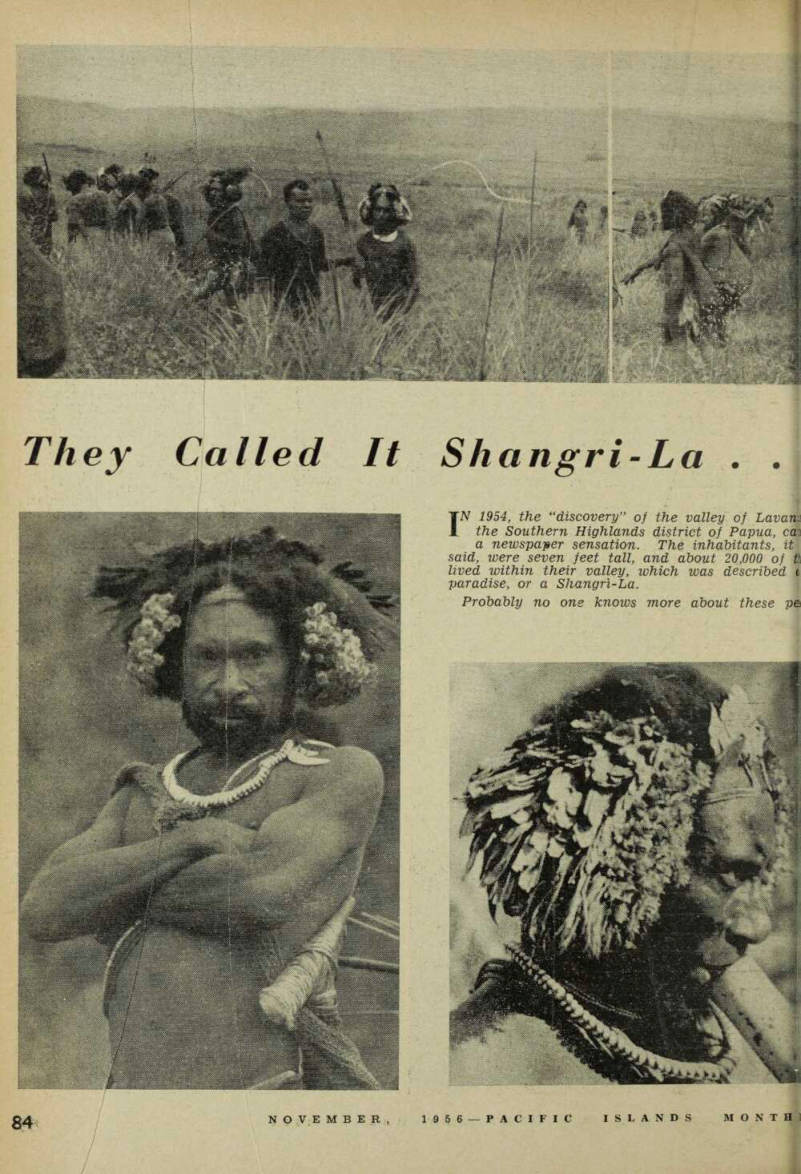
They show, across the top of the page: Sinclair’s patrol passing over the swampy ground of Lavani Valley. At extreme left the native carriers and right, Corporal Yagi, of the Royal P-NG Native Constabulary, with two Lavani natives. The Corporal is only 5 ft 2 in.—the Lavanis only slightly more.
The right half of this photograph shows the northern sweep of Lavani valley with local people approaching warily. The womenfolk are seen in distinctly in the background ; Sinclair could get no close shots of the women, and this photograph was taken with a telephoto-lens from a distance. The mountains in the background rise 1,250 feet above the valley floor, which is at 7,200 feet above sea-level.
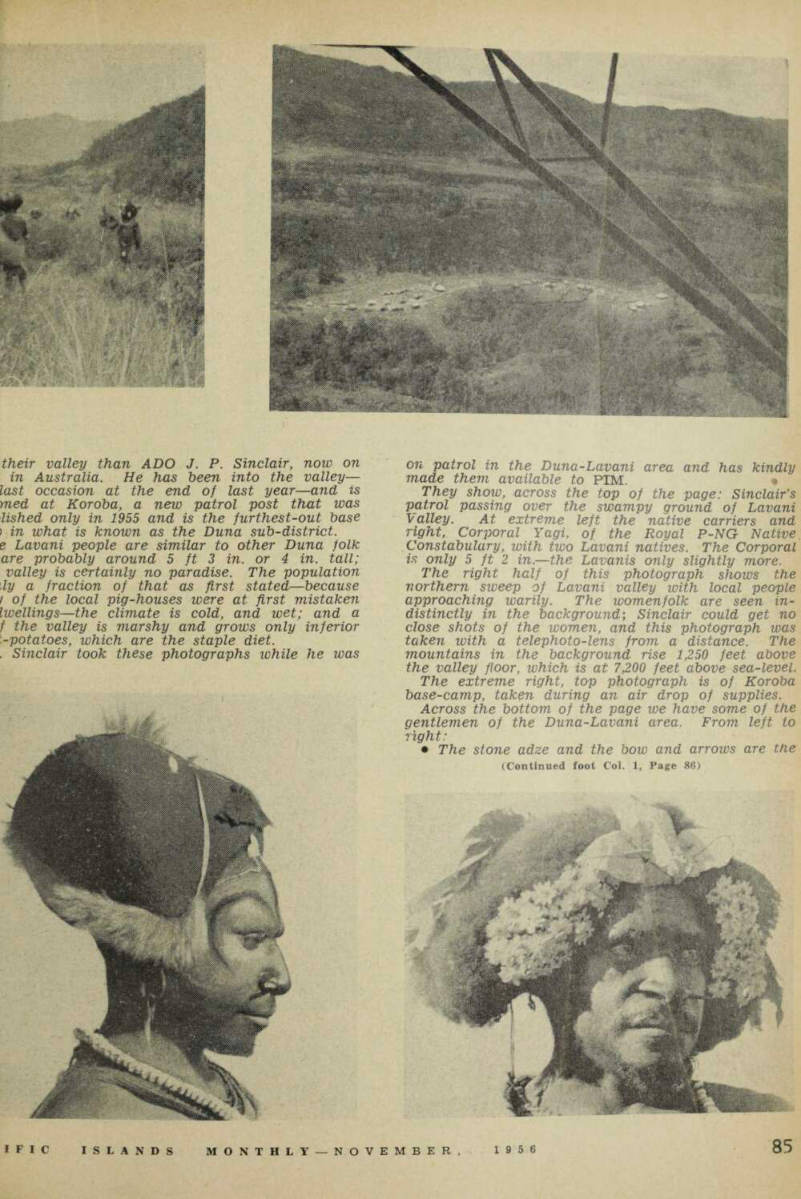
The extreme right, top photograph is of Koroba base-camp, taken during an air drop of supplies.
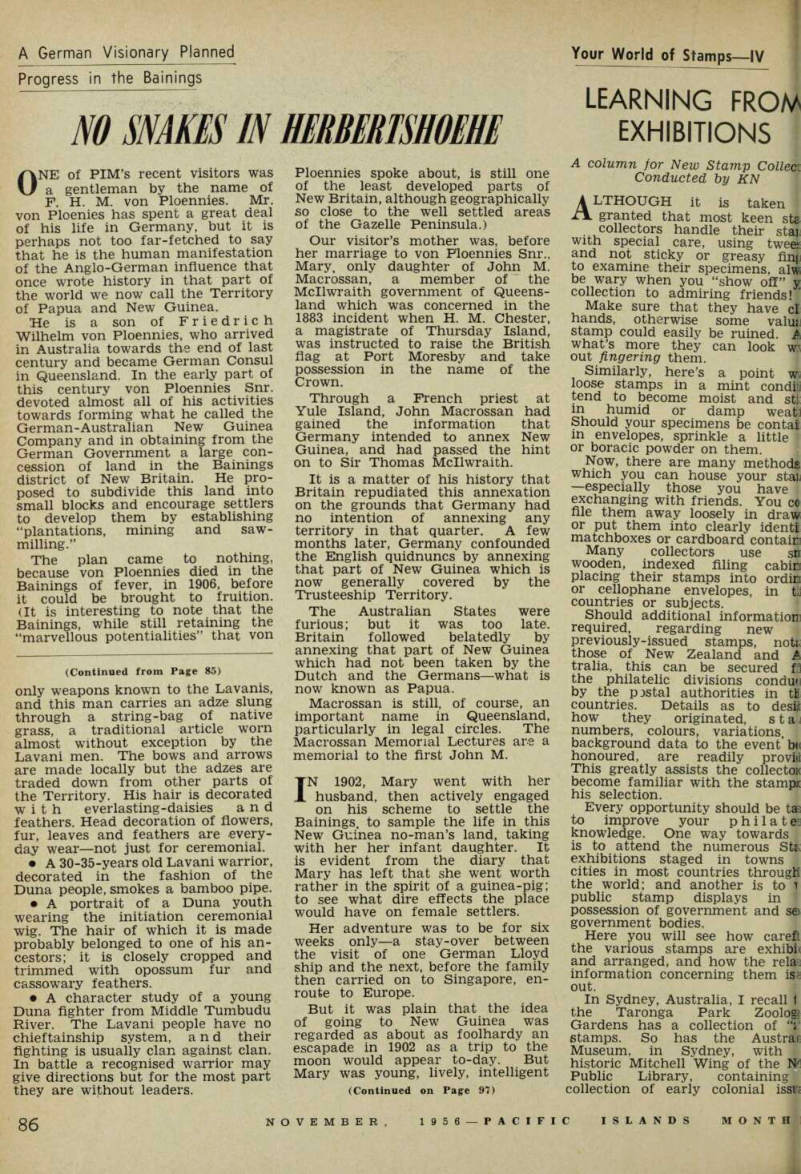
Across the bottom of the page we have some of the gentlemen of the Duna-Lavani area. From left to right: • The stone adze and the bow and arrows are the
(Continued foot Col. 1, Page 86)
only weapons known to the Lavanis, and this man carries an adze slung through a string-bag of native grass, a traditional article worn almost without exception by the Lavani men. The bows and arrows are made locally but the adzes are traded down from other parts of the Territory. His hair is decorated with everlasting-daisies and feathers. Head decoration of flowers, fur, leaves and feathers are every day wear—not just for ceremonial. • A 30-35-years old Lavani warrior, decorated in the fashion of the Duna people, smokes a bamboo pipe. • A portrait of a Duna youth wearing the initiation ceremonial wig. The hair of which it is made probably belonged to one of his an cestors; it is closely cropped and trimmed with opossum fur and cassowary feathers. • A character study of a young Duna fighter from Middle Tumbudu River. The Lavani people have no chieftainship system, and their fighting is usually clan against clan.
In battle a recognised warrior may give directions but for the most part they are without leaders.