Outline of the Suez-
pp. 31-32 · Read in the full issue
s Month's ernational Situation
Outline of the Suez- Aswan Trouble
3 Egypt’s seizure of the Suez Canal, and the developments arising out of the Aswan Dam, B bulked so largely in the news tey even may affect the course history—a description of these ors may not be out of place. 5 everyone knows, the enormous me of water which flows from tral Africa, down the Nile, pro s Egypt with irrigation, and ains the life of a population of nillion people. )lonel Nasser, now President of it, produced the High Aswan i project in October, 1955. It Id be built miles south of the ;ing Aswan Dam (see map), and Id conserve a yearly average of 0 million cubic metres of water, reating a vast reservoir cover -739 square miles, capable of ing the surplus water of several t years. It would add 2 million 1 acres to Egypt’s life-sustaining s, and double Egypt’s electricity ly. oan does not like the plan.
' Sudanese claim it would in re with their vital rights to water. They prefer the present m of smaller dams, at intervals, timates vary; but the project
probably would cost a b $1,350,000,000. The original plan . that United States and Brii' would provide the first cosh about $70,000,000; and the W Bank would then come in ' $200,000,000. While th e Wes authorities were trying to o away a multitude of difficulj President Nasser’s flirtation Moscow and the Communist became more intense and reaching, and his public utterae against the Westerners n offensive.
On July 19, United States Britain announced that they withdrawn all offers to assise the Aswan project.
Nine days later President Ns shocked the world by announ that he had seized the Suez C from the Suez Canal Company,, would use the great profits of enterprise to finance the As.
Dam.
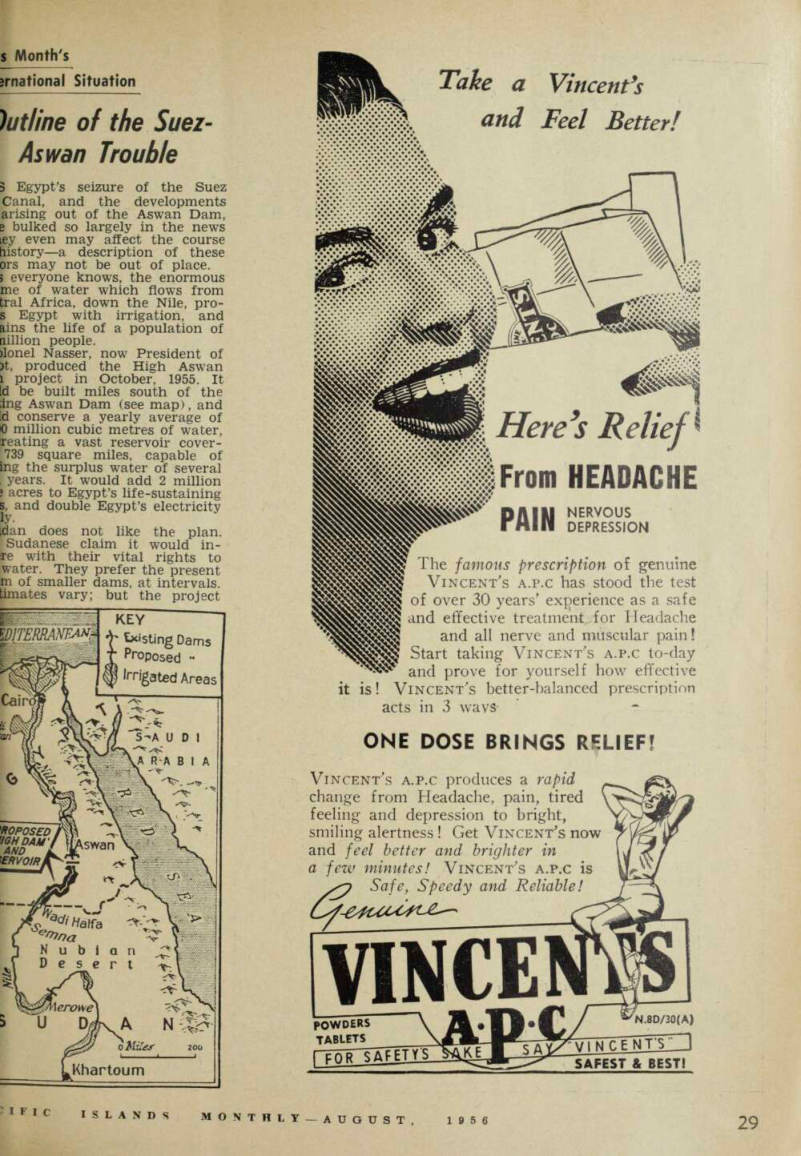
The accompanying map Si the Aswan Dam project, and!
Suez Canal.
Under a 100-years agreement) French-owned Suez Canal Corns built the waterway, 101 miles connecting the Mediterranean the Red Sea, and opened itt traffic on November 17, 1869.
British Government owns 35 shares out of a total of 800,000.( Canal is controlled by a seriii international agreements, u which it will be handed ove Egypt in 1968.
Nasser announced that I would pay all the Company’s sl< holders for their shares at last quoted value on the Bourse. But the Western Po reaction to the Egyptian grati an announcement that in no cumstances would Egypt be mitted sole control over the ♦ before 1968. The situation in August was tense.
The Suez Canal, built by pean enterprise with Eurr funds, runs through desert con just westwards of the Egyj Arabian border. There is a su tion that another canal, to the same purpose, be built froi< Gulf of Akaba (see map) „ eastwards of the border (and: within Palestine Territory,, clear of Egyptian influence connect the Gulf of Akaba an Red Sea with the Mediterrs; However, there are some diffiw about this—including a 31 range of mountains —and th«j that this canal would still
unpredictable Middle Eastern i
tory.
An article elsewhere these startling development i Middle East may directly affee future of the South Pacific. tf Judge T. Gore, of the Suj Court of Papua and New Cl with Mrs. Gore was Norfolk Island late July.