Decision On Bsip Taxation
p. 22 · Read in the full issue
Different Medicine, Same Result
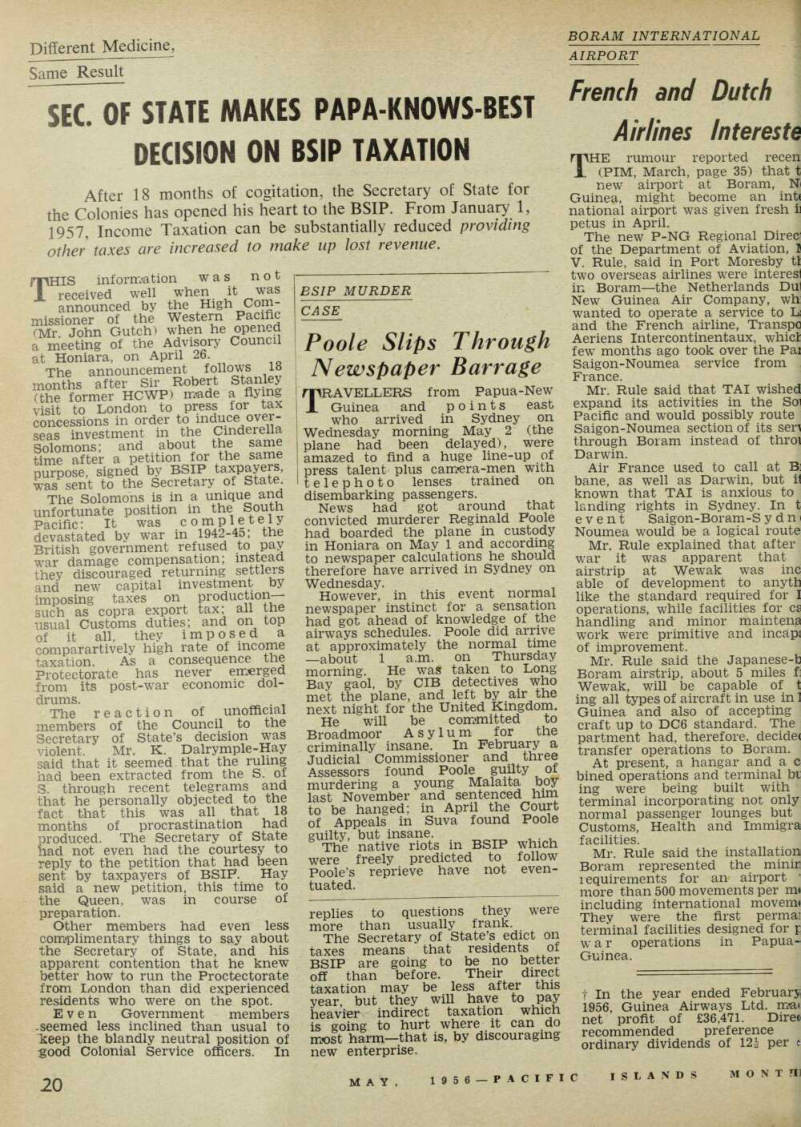
Sec. Of State Makes Papaknows-Best
After 18 months of cogitation, the Secretary of State for the Colonies has opened his heart to the BSIP. From January 1, 1957, Income Taxation can be substantially reduced providing other taxes are increased to make up lost revenue.
npHIS information was not 1 received well when it was announced by the High Com missioner of the Western Pacific (Mr. John Gutch) when he opened a meeting of the Advisory Council at Honiara, on April 26 The announcement follows 18 months after Sir Robert Stanley (the former HCWP) made a flying visit to London to press for tax concessions in order to induce over seas investment in the Cinderella Solomons: and about the same time after a petition for the same purpose, signed by BSIP taxpayers, was sent to the Secretary of State The Solomons is in a unique and unfortunate position in the South Pacific • It was complete 1 y devastated by war in 1942-45; the British government refused to pay war damage compensation; instead they discouraged returning settlers and new capital investment by imposing taxes on production— such as copra export tax; all the usual Customs duties; and on top of it all, they imposed a comparatively high rate of income taxation. As a consequence the Protectorate has never emerged from its post-war economic dol drums. .
The reaction of unofficial members of the Council to the Secretary of State’s decision was violent. Mr. K. Dalrymple-Hay said that it seemed that the ruling had been extracted from the S. of S. through recent telegrams and that he personally objected to the fact that this was all that 18 months of procrastination had produced. The Secretary of State had not even had the courtesy to reply to the petition that had been sent by taxpayers of BSIP. Hay said a new petition, this time to the Queen, was in course of preparation.
Other members had even less complimentary things to say about the Secretary of State, and his apparent contention that he knew better how to run the Proctectorate from London than did experienced residents who were on the spot.
Even Government members .seemed less inclined than usual to the blandly neutral position of good Colonial Service officers. In
replies to questions they were more than usually frank.
The Secretary of State’s edict on taxes means that residents of BSIP are going to be no better off than before. Their direct taxation may be less after this year, but they will have to pay heavier indirect taxation which is going to hurt where it can do most harm—that is, by discouraging new enterprise.