Rabaul, New Guinea, late 1953
pp. 82-83 · Read in the full issue
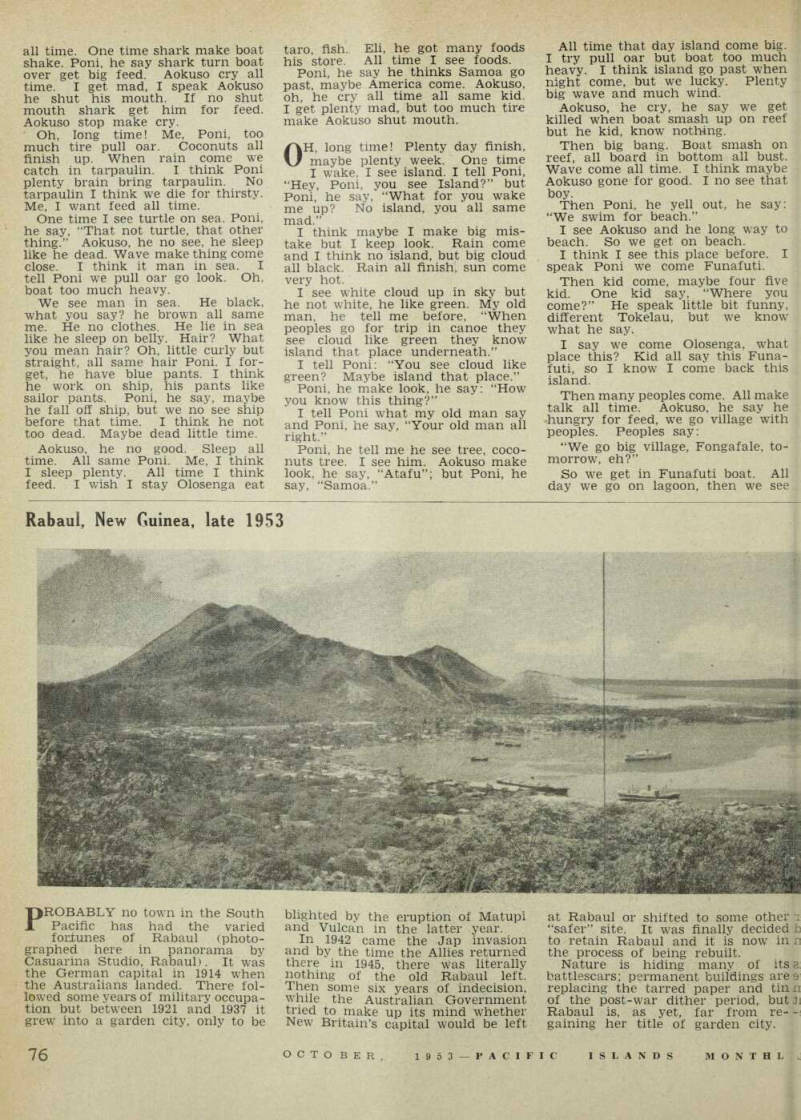
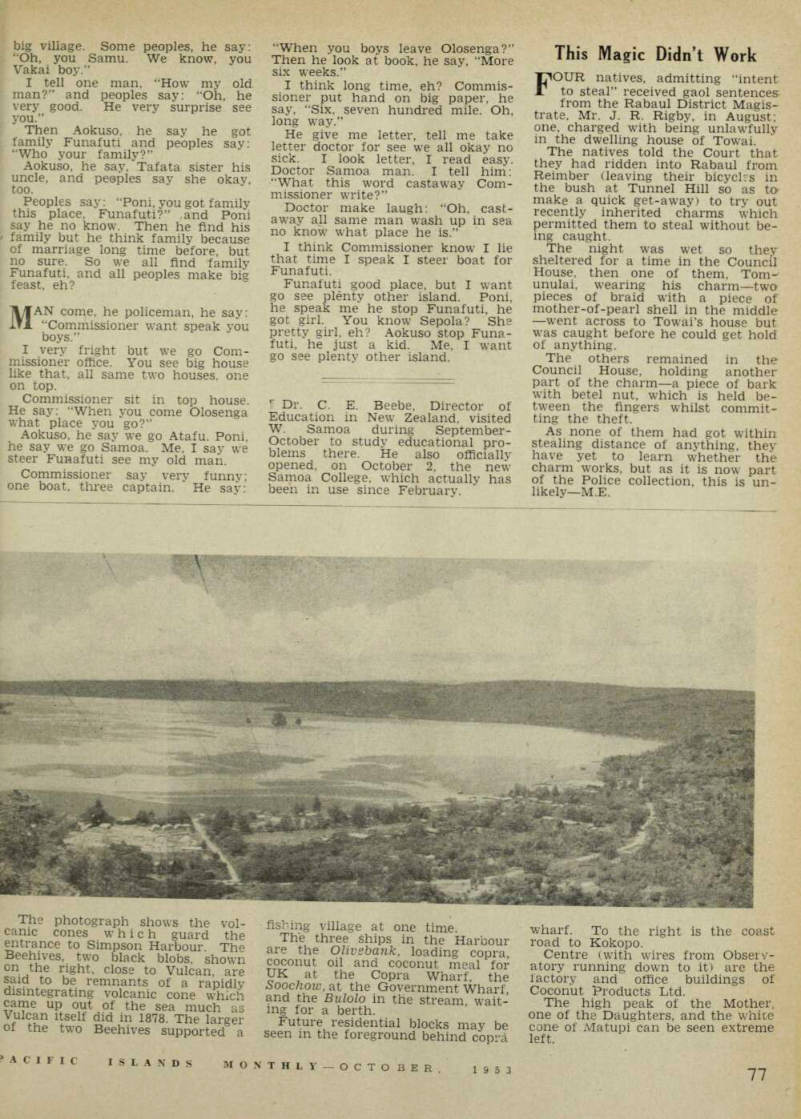
PROBABLY no town in the South Pacific has had the varied fortunes of Rabaul (photo graphed here in panorama by Casuarina Studio, Rabaul). It was the German capital in 1914 when the Australians landed. There fol lowed some years of military occupa tion but between 1921 and 1937 it grew into a garden city, only to be
blighted by the eruption of Matupi and Vulcan in the latter year.
In 1942 came the Jap invasion and by the time the Allies returned there in 1945, there was literally nothing of the old Rabaul left.
Then some six years of indecision, while the Australian Government tried to make up its mind whether New Britain’s capital would be left
at Rabaul or shifted to some other ■ “safer” site. It was finally decided J to retain Rabaul and it is now in j the process of being rebuilt.
Nature is hiding many of its; battlescars; permanent buildings arej replacing the tarred paper and tinj of the post-war dither period, but i Rabaul is, as yet, far from re- ■ gaining her title of garden city.
The photograph shows the vol canic cones which guard the entrance to Simpson Harbour. The Beehives, two black blobs, shown on . the right, close to Vulcan, are said to be remnants of a rapidly disintegrating volcanic cone which came up out of the sea much as Vulcan itself did in 1878. The larger of the two Beehives supported a
fishing village at one time.
The three ships in the Harbour are the Olivshank, loading copra, coconut oil and coconut meal for UK at the Copra Wharf, the boochow, at the Government Wharf and the Bulolo in the stream, wait ing for a berth.
Future residential blocks may be seen in the foreground behind copra
wharf. To the right is the coast road to Kokopo.
Centre (with wires from Observ atory running down to it) are the factory and office buildings of Coconut Products Ltd.
The high peak of the Mother, one of the Daughters, and the white cone of Matupi can be seen extreme left.