(And, Maybe, Pit-Pit)
p. 78 · Read in the full issue
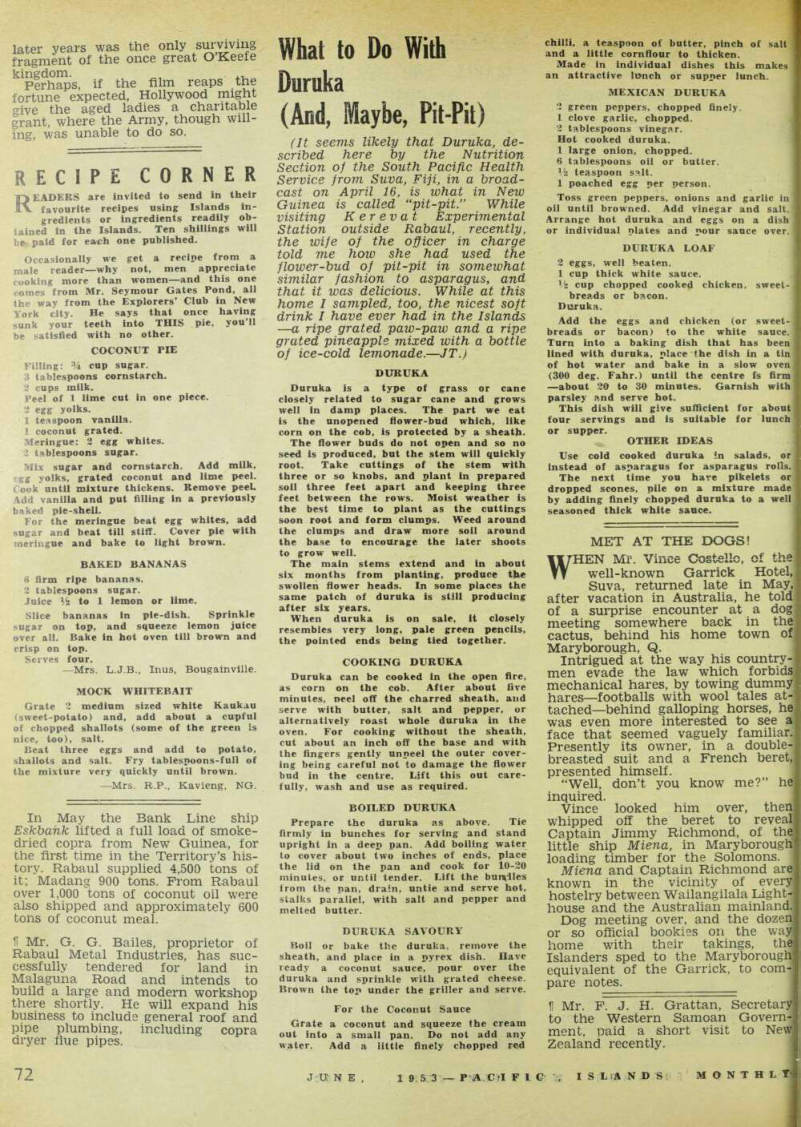
What to Do With Duruka (And, Maybe, Pit-Pit)
(It seems likely that Duruka, de
scribed here by the Nutrition
Section of the South Pacific Health
Service from Suva, Fiji, in a broad cast on April 16, is what in New
Guinea is called “pit-pit.” While
visiting Kerev at Experimental
Station outside Rabaul, recently,
the wife of the officer in charge told me how she had used the
flower-bud of pit-pit in somewhat
similar fashion to asparagus, and
that it was delicious. While at this home I sampled, too, the nicest soft drink I have ever had in the Islands —a ripe grated paw-paw and a ripe
grated pineapple mixed with a bottle
of ice-cold lemonade. — JT.)
Duruka
Duruka is a type of grass or cane closely related to sugar cane and grows well in damp places. The part we eat is the unopened flower-bud which, like corn on the cob, is protected by a sheath.
The flower buds do not open and so no seed is produced, but the stem will quickly root. Take cuttings of the stem with three or so knobs, and plant in prepared soil three feet apart and keeping three feet between the rows. Moist weather is the best time to plant as the cuttings soon root and form clumps. Weed around the clumps and draw more soil around the base to encourage the later shoots to grow well.
The main stems extend and in about six months from planting, produce the swollen flower heads. In some places the same patch of duruka is still producing after six years.
When duruka is on sale, it closely resembles very long, pale green pencils, the pointed ends being tied together.
Cooking Duruka
Duruka can be cooked in the open fire, as corn on the cob. After about five minutes, neel off the charred sheath, and serve with butter, salt and pepper, or alternatively roast whole duruka in the oven. For cooking without the sheath, cut about an inch off the base and with the fingers gently unpeel the outer cover ing being careful not to damage the flower bud in the centre. Lift this out care fully, wash and use as required.
Boiled Duruka
Prepare the duruka as above. Tie firmly in bunches for serving and stand upright in a deep pan. Add boiling water to cover about two inches of ends, place the lid on the pan and cook for 10-20 minutes, or until tender. Lift the bundles from the pan, drain, untie and serve hot, stalks parallel, with salt and pepper and melted butter.
Duruka Savoury
Boil or bake the duruka, remove the sheath, and place in a pyrex dish. Have ready a coconut sauce, pour over the duruka and sprinkle with grated cheese.
Brown the top under the griller and serve.
For the Coconut Sauce Grate a coconut and squeeze the cream out into a small pan. Do not add any water. Add a little finely chopped red
chilli, a teaspoon of butter, pinch of salt and a little cornflour to thicken.
Made in individual dishes this makes an attractive lunch or supper lunch.
Mexican Duruka
2 green peppers, chopped finely. 1 clove garlic, chopped. 2 tablespoons vinegar.
Hot cooked duruka. 1 large onion, chopped. 6 tablespoons oil or butter.
Vz teaspoon salt. 1 poached egg per person.
Toss green peppers, onions and garlic in oil until browned. Add vinegar and salt.
Arrange hot duruka and eggs on a dish or individual plates and pour sauce over.
Duruka Loaf
2 eggs, well beaten. 1 cup thick white sauce.
Vz cup chopped cooked chicken, sweet breads or bacon.
Duruka.
Add the eggs and chicken (or sweet breads or bacon) to the white sauce.
Turn into a baking dish that has been lined with duruka, place the dish in a tin of hot water and bake in a slow oven (300 deg. Fahr.) until the centre Is firm —about 20 to 30 minutes. Garnish with parsley and serve hot.
This dish will give sufficient for about four servings and is suitable for lunch or supper.
Other Ideas
Use cold cooked duruka in salads, or instead of asparagus for asparagus rolls.
The next time you have pikelets or dropped scones, pile on a mixture made by adding finely chopped duruka to a well seasoned thick white sauce.