‘Staggering’
p. 109 · Read in the full issue
Shipping Costs ‘Staggering’
Says BP Chairman
ALTHOUGH the operations and turnover of the biggest South Pacific Company, Burns Philp & Co., Ltd., have increased very much since World War 11, the profits of the Co. have not increased correspondingly— in fact, said the Chairman (Mr. lames Burns) at the annual meeting in Sydney on May 29, they tend to shrink. The Co. has been paying 12i per cent.; in future it may have lifiiculty in paying 10.
The rise in shipping costs was ‘staggering,” he said. To load cargo low cost as much as was received in reights in past years. Ships took 100 to 150 days on the Singapore ound trip, against 60 days pre-war.
The 40-hour week at sea made it Imost impossible to compete in iverseas trade. The Bulolo, which ost about £4OO to £450 a day to un in 1939, now cost £1,200 a day.
With a return to 1939 conditions if handling ships a good invisible xport trade could be worked up.
Mr. Burns said there were signs hat sales in branches and country
stores were beginning to fall, but costs were still rising.
Mr. Tony Thomson, eldest son of Captain Andy Thomson of Raro tonga, who has been serving as Second Officer in Maui Pomare for some time, recently gained his Mate’s ticket. He returned to Rarotonga per Maui Pomare in May as passenger and has rejoined his father in A. B.
Donald and Co’s inter-island vessel Charlotte Donald, as mate.
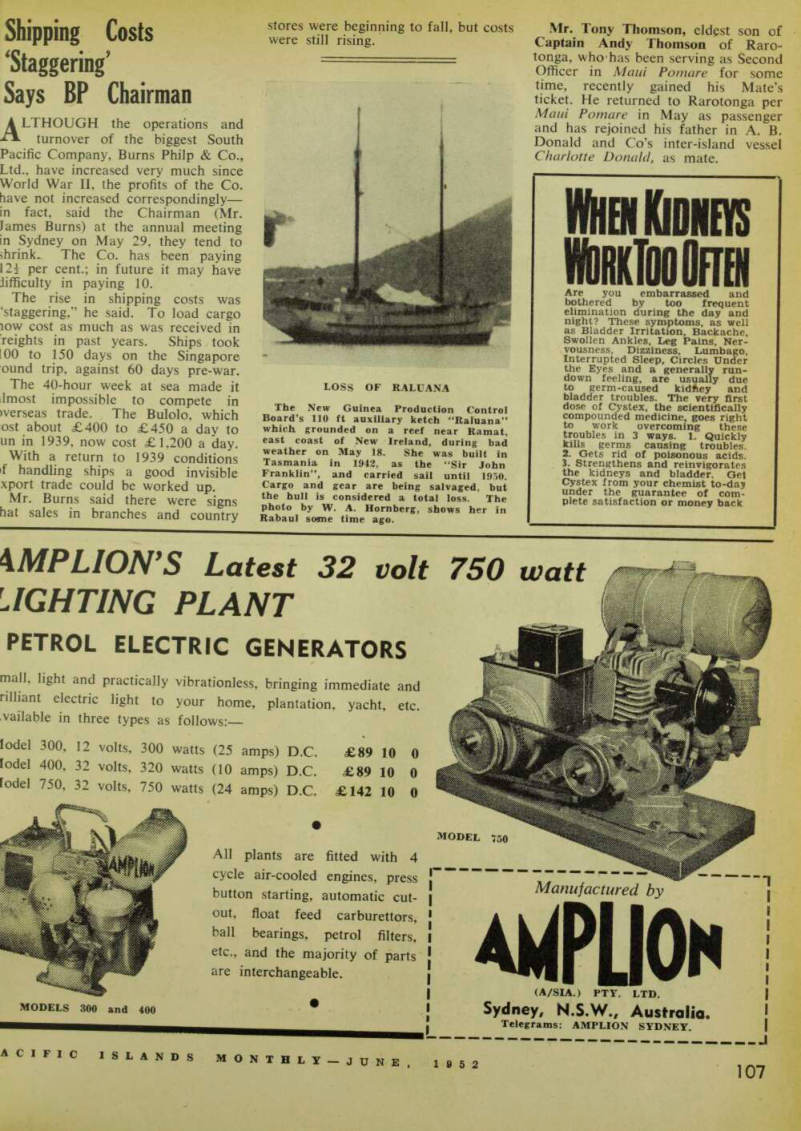
Loss Of Raluana
The New Guinea Production Control Board’s 110 ft auxiliary ketch “Raluana” which grounded on a reef near Ramat, east coast of New Ireland, during bad weather on May 18. She was built in Tasmania in 1942, as the “Sir John Franklin”, and carried sail until 1950.
Cargo and gear are being salvaged, but the hull is considered a total loss. The photo by W. A. Hornberg, shows her in Rabaul some time ago.