It's Boom Time for Islands' Timber
pp. 70-71 · Read in the full issue
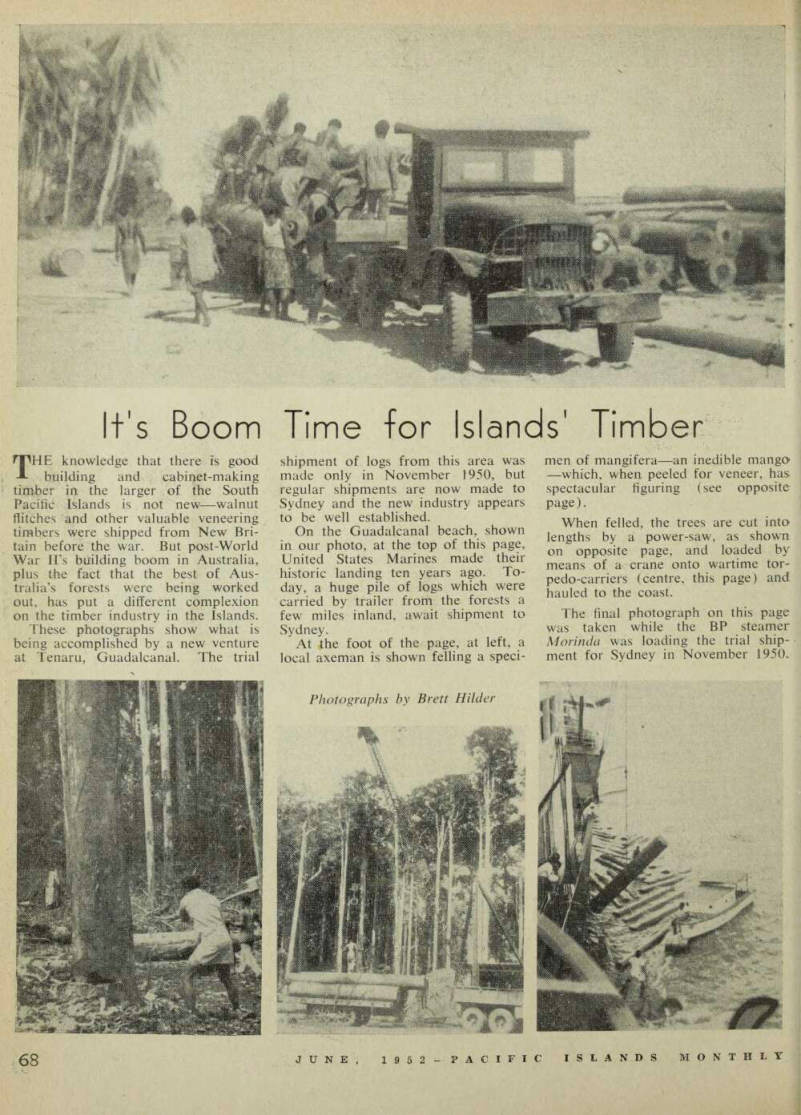
THE knowledge that there is good building and cabinet-making timber in the larger of the South Pacific Islands is not new—walnut flitches and other valuable veneering timbers were shipped from New Bri tain before the war. But post-World War IPs building boom in Australia, plus the fact that the best of Aus tralia’s forests were being worked out, has put a different complexion on the timber industry in the Islands.
These photographs show what is being accomplished by a new venture at Tenaru, Guadalcanal. The trial
shipment of logs from this area was made only in November 1950, but regular shipments are now made to Sydney and the new industry appears to be well established.
On the Guadalcanal beach, shown in our photo, at the top of this page, United States Marines made their historic landing ten years ago. To day, a huge pile of logs which were carried by trailer from the forests a few miles inland, await shipment to Sydney.
At the foot of the page, at left, a local axeman is shown felling a speci-
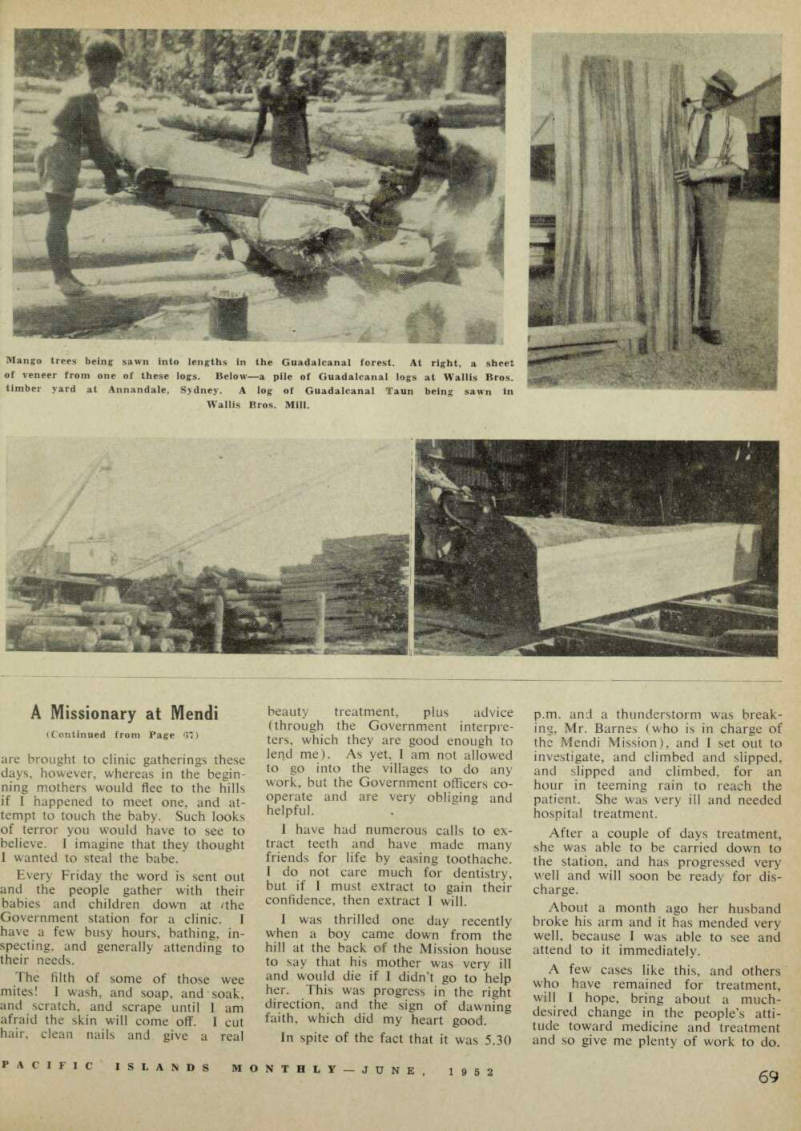
men of mangifera—an inedible mango —which, when peeled for veneer, has spectacular figuring (see opposite page).
When felled, the trees are cut into lengths by a power-saw, as shown on opposite page, and loaded by means of a crane onto wartime tor pedo-carriers (centre, this page) and hauled to the coast.
The final photograph on this page was taken while the BP steamer Morinda was loading the trial ship ment for Sydney in November 1950.
Photographs by Brett Hilder
Mango trees being sawn into lengths in the Guadalcanal forest. At right, a sheet of veneer from one of these logs. Below—a pile of Guadalcanal logs at Wallis Bros, timber yard at Annandale, Sydney. A log of Guadalcanal Taun being sawn in Wallis Bros. Mill.