Worth Money
p. 97 · Read in the full issue
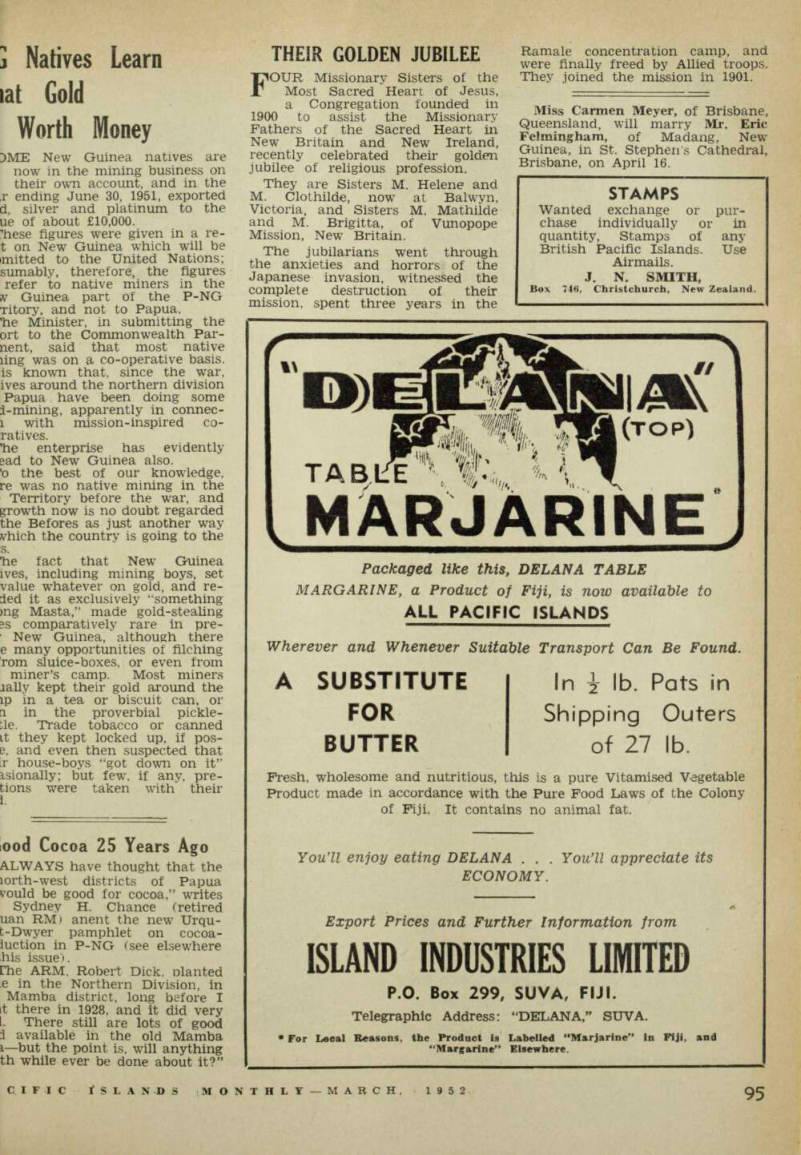
[?] Natives Learn [?]at Gold Worth Money
3ME New Guinea natives are now in the mining business on their own account, and in the ,r ending June 30, 1951, exported d, silver and platinum to the ue of about £lO,OOO.
Tiese figures were given in a re t on New Guinea which will be mitted to the United Nations; sumably, therefore, the figures refer to native miners in the w Guinea part of the P-NG Titory, and not to Papua.
Tie Minister, in submitting the ort to the Commonwealth Par nent, said that most native ling was on a co-operative basis, is known that, since the war, ives around the northern division Papua have been doing some i-mining, apparently in connec i with mission-inspired co ratives. tie enterprise has evidently ead to New Guinea also.
'o the best of our knowledge, re was no native mining in the Territory before the war, and growth now is no doubt regarded the Befores as just another way vhich the country is going to the s. tie fact that New Guinea ives, including mining boys, set value whatever on gold, and re led it as exclusively ‘‘something >ng Masta,” made gold-stealing bs comparatively rare in pre- New Guinea, although there e many opportunities of filching rom sluice-boxes, or even from miner’s camp. Most miners lally kept their gold around the ip in a tea or biscuit can, or i in the proverbial pickle :le. Trade tobacco or canned it they kept locked up, if pos e, and even then suspected that ir house-boys “got down on it” isionally; but few. if any, pre tions were taken with their