10th Anniversary
pp. 39-42 · Read in the full issue
Fail Of Rabaul
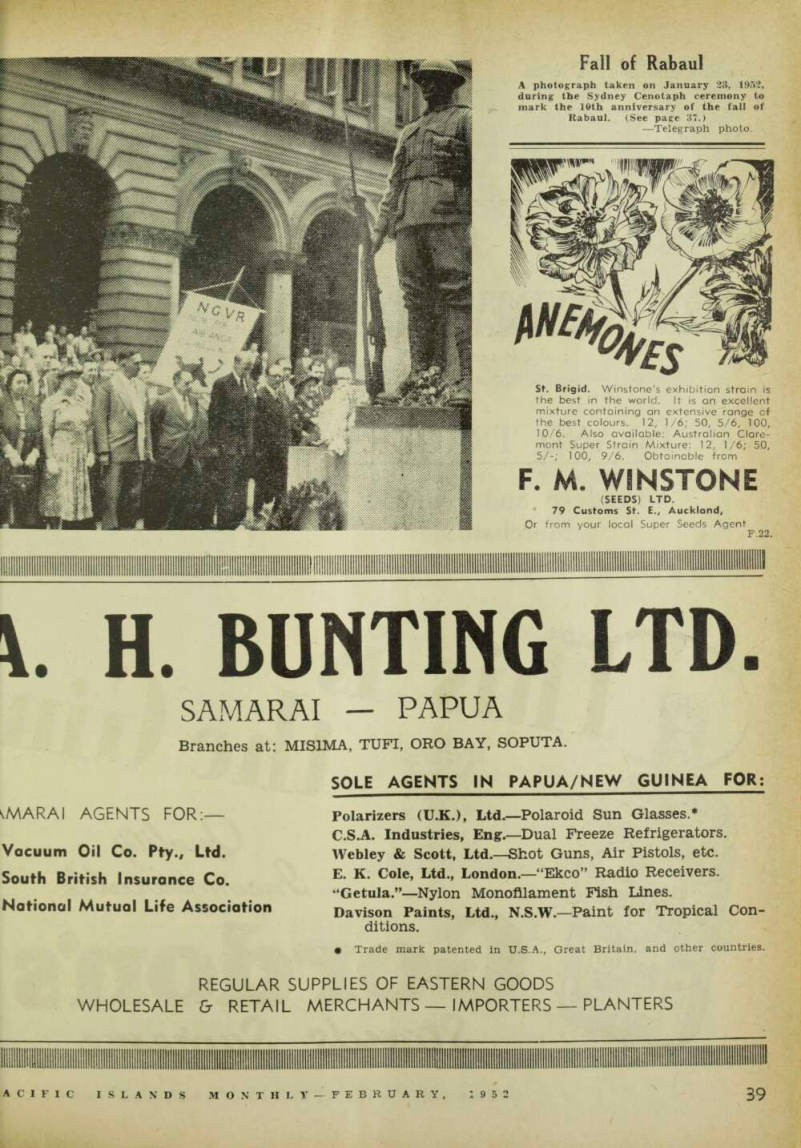
JHE largest attendance since the war years marked the 10th anniversary service of the Fall Rabaul, at Sydney Cenotaph, on e morning of January 23, 1952.
All traffic was stopped in Martin ace shortly before 8.15. Two mutes silepce followed the placing wreaths; and a bugler sounding e Last Post ended the short remony. rhere were many private wreaths, well as those from the NGVR, •w Guinea Ex-Servicemen’s Club, iw Guinea Women’s Club, 22nd ittalion, Island firms and Govern mtal bodies.
For the first time, there was a ■eath from the Australian Govern »nt (personally placed on the motaph by Mr. John Howse, M.P., irliamentary Under-Secretary to ‘partment) and another from the spartment of Territories and the [ministration, placed by Mr. A. S.
Pearse (head of the Sydney staff the Department).
Phe organisers of the ceremony, e New Guinea Ex-Servicemen’s ub of Sydney, and the NG omen’s Club, were much gratified the interest thus shown by the ivemment and the Department.
Until this year, the January 23 niversary, kept so faithfully by iw Guinea folk in Sydney on that y, has been consistently ignored both the Commonwealth Govern mt and officialdom generally. The 11 of Rabaul to the Japanese in nuary, 1942, and what led up to it, s been something they have been ppy to ignore or to forget.
“Not Of National
Importance’’
[HIS attitude is still reflected by the NSW State Branch of the RSSAILA. An invitation to be esent at this year’s ceremony was ued to the Branch by the NG -Servicemen’s Club. It received ;urt letter to the effect that as the il of Rabaul was “not of national portance” the Branch had decided t to take part in its commemora n.
Members of the Ex-Servicemen’s üb, New Guinea returned soldiers, r widows and others have taken ception to the wording of the; ter and the Branch’s attitude. iey point out that, at Rabaul, istralian soldiers fell for the first ne in defence of Australian Titory; that it was the first d only Australian territory be occupied by the enemy; and at, if the Japs had not been in consolidating their sition in Rabaul. but had at once atinued southwards, there was thing then in mainland defence prevent their landing in Aus tlia itself.
THE fact is, of course, that the 'story of the fall of Rabaul has been lost in the larger story of the Pacific War. Few Australians are aware of the resistance made against the Japs in the dawn of January 23, 1942, by the few men of the NGVR and the 22nd Battalion AIF; of the subsequent grim struggle of the survivors through the New Britain jungles and mountains; of the internment of the captured soldiers and the 300 civilians who were abandoned to their fate by the Government of the day; of their death some months later in the Jap prison ship Montevideo Maru. Few Australians have heard of the massacre of Aussie soldiers at Tol plantation; or the courage of the half-dozen
Wirraway pilots who took their obsolete planes into the air against modern Japanese fighters and, one by one, were shot down, Much of this phase of the Pacific war was lost in official hush-hush; the rest is quickly forgotten by the man-in-the-street. New Guinea folk expect no less; but New Guinea servicemen did expect something better from their brothers-in-arms in the NSW State Branch of the
Rsl.
It may be that it is NSW RSSAILA policy not to take part in the commemorations of various Service units. However, there are many ways of saying this, other than in the bald words of its letter to the Ex-Servicemen’s Club,
(See photograph, page 39.)
Fall of Rabaul
A photograph taken on January 23, 1952, during the Sydney Cenotaph ceremony to mark the 19th anniversary of the fall of Rabaul. (See page 37.) Telegraph photo.
Melbourne citizens raised over £l,OOO for native victims of the Mt.
Lamington disaster which occurred one year ago last month. The cheque was handed over recently to the Anglican mission. Bishop Strong of New Guinea returned to the Territory in early December after a four-months fund-raising lecture tour in Britain and the United States.