Magazine Section
pp. 67-68 · Read in the full issue
Well Done Calliope !
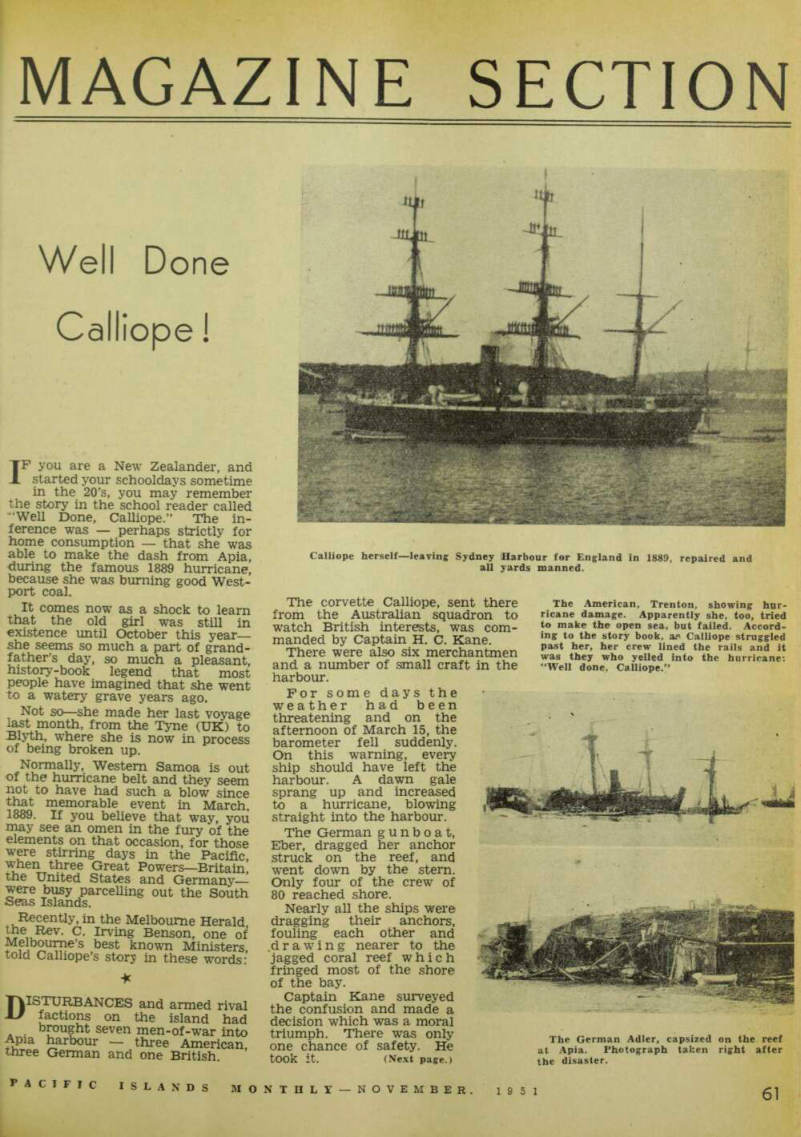
IF you are a New Zealander, and started your schooldays sometime in the 20’s, you may remember the story in the school reader called “Well Done, Calliope.” The in ference was perhaps strictly for home consumption that she was able to make the dash from Apia, during the famous 1889 hurricane, because she was burning good West port coal.
It comes now as a shock to learn that the old girl was still in existence until October this year— she seems so much a part of grand father’s day, so much a pleasant, history-book legend that most people have imagined that she went to a watery grave years ago.
Not so—she made her last voyage last month, from the Tyne (UK) to Blyth, where she is now in process of being broken up.
Normally, Western Samoa is out of the hurricane belt and they seem not to have had such a blow since that memorable event in March 1889. If you believe that way, you may see an omen in the fury of the elements on that occasion, for those were stirring days in the Pacific, when three Great Powers—Britain, the United States and Germany— were busy parcelling out the South Seas Islands.
Recently, in the Melbourne Herald the Rev. C. Irving Benson, one of e i b 2. u £ ie ’ s best known Ministers, told Calliope’s story in these words: * DISTURBANCES and armed rival factions on the island had . brought seven men-of-war into Apia harbour three American, three German and one British
The corvette Calliope, sent there from the Australian squadron to watch British interests, was com manded by Captain H. C. Kane.
There were also six merchantmen and a number of small craft in the harbour.
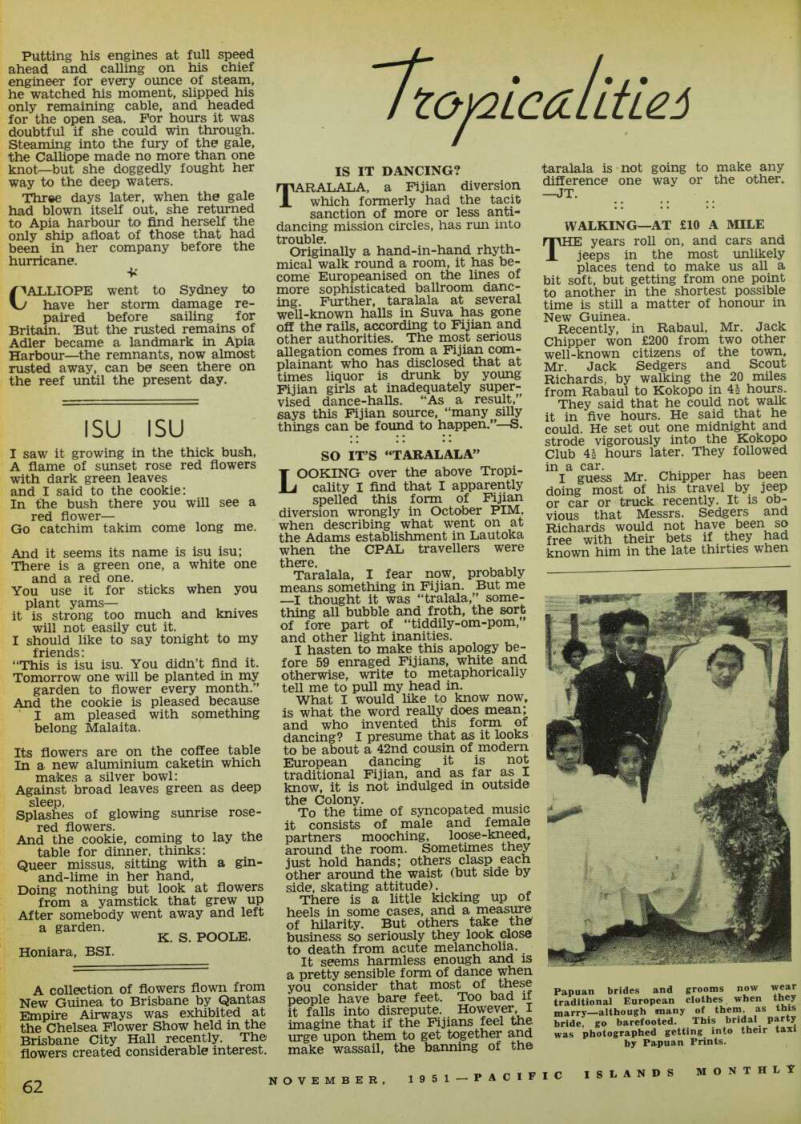
The American, Trenton, showing hur ricane damage. Apparently she, too, tried to make the open sea, but failed. Accord ing to the story book, Calliope struggled past her, her crew lined the rails and it was they who yelled into the hurricane; “Well done, Calliope.’’
For some days the weather had been threatening and on the afternoon of March 15, the barometer fell suddenly.
On this warning, every ship should have left the harbour. A dawn gale sprang up and increased to a hurricane, blowing straight into the harbour.
The German gunboat, Eber, dragged her anchor struck on the reef, and went down by the stem.
Only four of the crew of 80 reached shore.
Nearly all the ships were dragging their anchors, fouling each other and .drawing nearer to the jagged coral reef which fringed most of the shore of the bay.
Captain Kane surveyed the confusion and made a decision which was a moral triumph. There was only one chance of safety. He took It. (Next page.)
Calliope herself—leaving Sydney Harbour for England in 1889, repaired and all yards manned.
The German Adler, capsized on the reef at Apia. Photograph taken right after the disaster.
Putting his engines at full speed ahead and calling on his chief engineer for every ounce of steam, he watched his moment, slipped his only remaining cable, and headed for the open sea. For hours it was doubtful if she could win through.
Steaming into the fury of the gale, the Calliope made no more than one knot—but she doggedly fought her way to the deep waters.
Three days later, when the gale had blown itself out, she returned to Apia harbour to find herself the only ship afloat of those that had been in her company before the hurricane. * CALLIOPE went to Sydney to have her storm damage re paired before sailing for Britain. But the rusted remains of Adler became a landmark in Apia Harbour —the remnants, now almost rusted away, can be seen there on the reef until the present day.