N. Guinea Surplus
p. 18 · Read in the full issue
Now £78,000
Huge Sum In Trust Funds
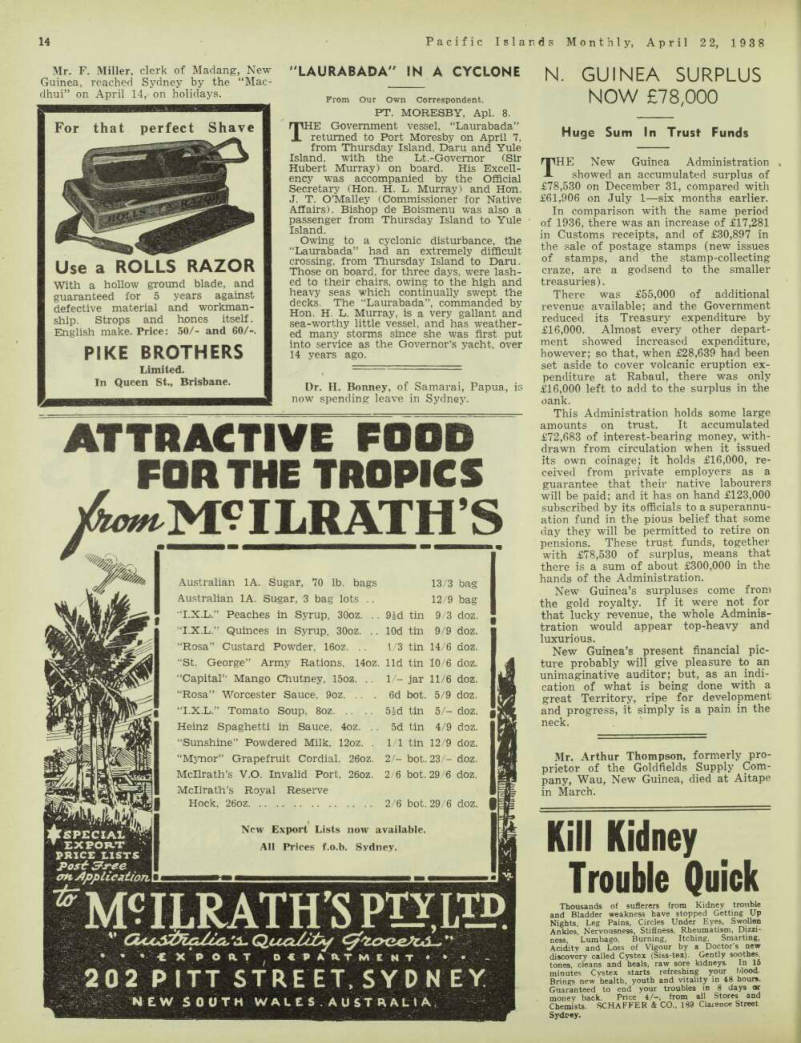
THE New Guinea Administration showed an accumulated surplus of £78,530 on December 31, compared with £61,906 on July I—six months earlier.
In comparison with the same period of 1936, there was an increase of £17,281 in Customs receipts, and of £30,897 in the sale of postage stamps (new issues of stamps, and the stamp-collecting craze, are a godsend to the smaller treasuries).
There was £55,000 of additional revenue available; and the Government reduced its Treasury expenditure by £16,000. Almost every other depart ment showed increased expenditure, however; so that, when £28,639 had been set aside to cover volcanic eruption ex penditure at Rabaul, there was only £16,000 left to add to the surplus in the oank.
This Administration holds some large amounts on trust. It accumulated £72,683 of interest-bearing money, with drawn from circulation when it issued its own coinage; it holds £16,000, re ceived from private employers as a guarantee that their native labourers will be paid; and it has on hand £123,000 subscribed by its officials to a superannu ation fund in the pious belief that some day they will be permitted to retire on pensions. These trust funds, together with £78,530 of surplus, means that there is a sum of about £300,000 in the hands of the Administration.
New Guinea’s surpluses come from the gold royalty. If it were not for that lucky revenue, the whole Adminis tration would appear top-heavy and luxurious.
New Guinea’s present financial pic ture probably will give pleasure to an unimaginative auditor; but, as an indi cation of what is being done with a great Territory, ripe for development and progress, it simply is a pain in the neck.
Mr. Arthur Thompson, formerly pro prietor of the Goldfields Supply Com pany, Wau, New Guinea, died at Aitape in March.