X-rays and Isolation
p. 76 · Read in the full issue
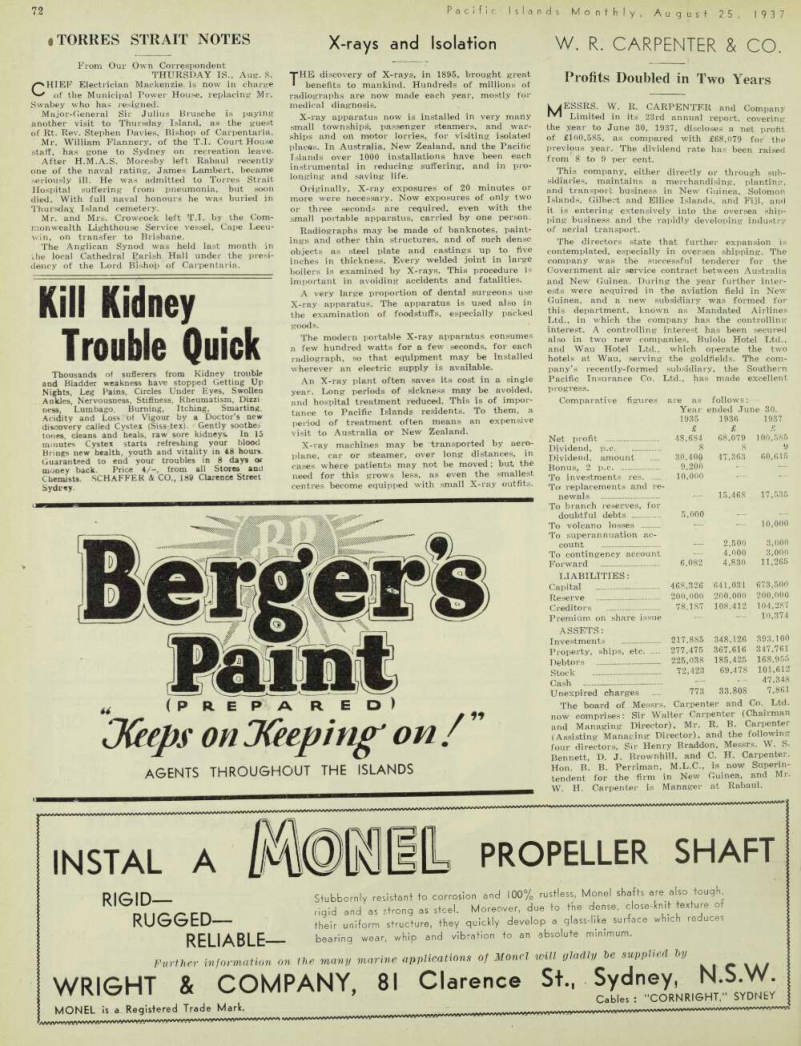
THE discovery of X-rays, in 1895, brought great benefits to mankind. Hundreds of millions of radiographs are now made each year, mostly for medical diagnosis.
X-ray apparatus now is installed in very many small passenger steamers, and war ships and on motor lorries, for visiting isolated places. In Australia, New Zealand, and the Pacific Islands over 1000 installations have been each instrumental in reducing suffering, and in pro longing and saving life.
Originally, X-ray exposures of 20 minutes or more were necessary. Now exposures of only two or three seconds are required, even with the small portable apparatus, carried by one person.
Radiographs may be made of banknotes, paint ings and other thin structures, and of such dense objects as steel plate and castings up to five inches in thickness. Every welded joint in large boilers is examined by X-rays. This procedure is important in avoiding accidents and fatalities.
A very large proportion of dental surgeons use X-ray apparatus. The apparatus is used also in the examination of foodstuffs, especially packed goods.
The modern portable X-ray apparatus consumes a few hundred watts for a few seconds, for each radiograph, so that equipment may be installed wherever an electric supply is available.
An X-ray plant often saves its cost in a single year. Long periods of sickness may be avoided, and hospital treatment reduced. This is of impor tance to Pacific Islands residents. To them, a period of treatment often means an expensive visit to Australia or New Zealand.
X-ray machines may be transported by aero plane, car or steamer, over long distances, in cases where patients may not be moved ; but the need for this grows less, as even the smallest centres become equipped with small X-ray outfits.