Unique Transport
Service
How Aeroplanes Supply N. G. Goldfields
Senior Company Makes
£22,000
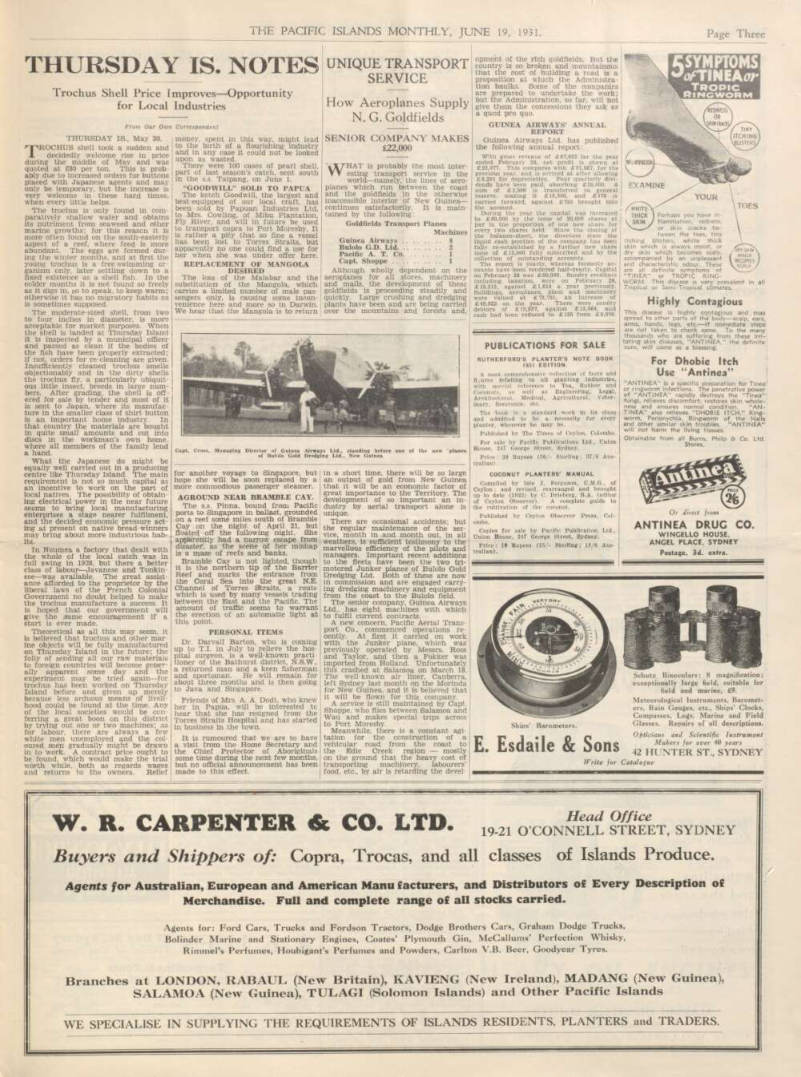
WHAT is probably the most inter esting transport service in the world—namely, the lines of aero planes which run between the coast and the goldfields in the otherwise inaccessible interior of New Guinea — continues satisfactorily. It is main tained by the following; Goldfields Transport Planes Machines Guinea Airways 8 Bulolo G.D. Ltd 2 Pacific A. T. Co I Capt. Shoppe 1 Although wholly dependent on the aeroplanes for all stores, machinery and mails, the development of these goldfields is proceeding steadily and quickly. Large crushing and dredging plants have been and are being carried over the mountains and forests and,
in a short time, there will be so large an output of gold from New Guinea that it will be an economic factor of great importance to the Territory. The development of so important an in dustry by aerial transport alone is unique.
There are occasional accidents; but the regular maintenance of the ser vice, month in and month out, in all weathers, is sufficient testimony to the marvellous efficiency of the pilots and managers. Important recent additions to the fleets have been the two tri motored Junker planes of Bulolo Gold Dredging Ltd. Both of these are now in commission and are engaged carry ing dredging machinery and equipment from the coast to the Bulolo field.
The senior company, Guinea Airways Ltd., has eight machines with which to fulfil current contracts.
A new concern, Pacific Aerial Trans port Co., commenced operations re cently. At first it carried on work with the Junker plane, which was previously operated by Messrs. Ross and Taylor, and then a Fokker was imported from Holland. Unfortunately this crashed at Salamoa on March 18.
The well-known air liner, Canberra, left Sydney last month on the Morinda for New Guinea, and it is believed that it will be flown for this company.
A service is still maintained by Capt.
Shoppe, who flies between Salamoa and Wau and makes special trips across to Port Moresby.
Meanwhile, there is a constant agi tation for the construction of a vehicular road from the coast to the Edie Creek region mostly on the ground that the heavy cost of transporting machinery, labourers’ food, etc., by air is retarding the devel
opment of the rich goldfields. But the country is so broken and mountainous that the cost of building a road is a proposition at which the Administra tion baulks. Some of the companies are prepared to undertake the work; but the Administration, so far, will not give them the concessions they ask as a qucd pro quo.
Guinea Airways’ Annual
Report
Guinea Airways Ltd. has published
the following annual report:
With gross revenue of £67,922 for the year ended February 28, net profit is shown at £22,077. This compares with £31,567, for the previous year, and is arrived at after allowing £8,291 for depreciation. Four quarterly divi dends have been paid, absorbing £20,000. A sum of £2,500 is transferred to general reserve, making it £10,300, and £370 is carried forward, against £793 brought into the account.
During the year the capital was increased to £60,000 by the issue of 20,000 shares at par in the proportion of one new share for every two shares held. Since the closing of the balance-sheet, the directors state the liquid cash position of the company has been fully re-established by a further new share issue of £15,000 fully subscribed and by the collection of outstanding accounts.
The report is yearly, whereas formerly ac counts have been rendered half-yearly. Capital on February 28 was £60,000. Sundry creditors including taxation, were on February 28, £19,213, against £1,619 a year previously.
Buildings, aeroplanes, plant and machinery were valued at £73,791, an increase of £48,922 on the year. There were sundry debtors of £15,937, against £13,584, and cash had been reduced to £155 from £8,959.